I got to hear Johnny Cash sing in person back in 1978 at a Billy Graham Crusade in Memphis. Here is a portion of an article about his Christian Testimony.
Cash also made major headlines when he shared his faith on The Johnny Cash Show, a popular variety program on ABC that ran from 1969 to 1971: “Well, folks,” he began, “I’ve introduced lots of hymns and gospel songs on this show. I just want to make it clear that I’m feeling what I’m singing about in this next one. I am a Christian … I want to dedicate this song to the proposition that God is the victor in my life. I’d be nothing without him. I want to get in a good lick right now for Number One.” (Yet there are those in the Church who questioned his decision, during one momentous episode of show, to sing the controversial lyric, “wishing Lord that I was stoned” from Kris Kristofferson’s hit “Sunday Morning Coming Down.”)
And while Cash longed to play only gospel music from the start—and would have if Sam Phillips hadn’t nixed his desires as economically unfeasible for Sun Records—he never shied away from performing secular-themed songs in the studio or on the concert stage throughout his career.
A huge influence on Cash in this potentially problematic area was, believe or not, evangelist Billy Graham, who sought out Johnny in the early ’70s when he heard of his commitment to God.
“He and I spent a lot of time talking the issues over, and we determined that I wasn’t called to be an evangelist …” Cash recalled of his first face-to-face conversations with Graham. “He had advised me to keep singing ‘Folsom Prison Blues’ and ‘A Boy Named Sue’ and all those other outlaw songs if that’s what people wanted to hear and then, when it came time to do a gospel song, give it everything I had. Put my heart and soul into all my music, in fact; never compromise; take no prisoners. ‘Don’t apologize for who you are and what you’ve done in the past,’ he told me. ‘Be who you are and do what you do.'”
“I think I just like to share my faith, you know?” he said in recent years. “I don’t preach to people. I don’t ever push it on anybody, and I wouldn’t sing a gospel song on any show if I didn’t think the people would enjoy it. They seem to enjoy those as much or more than anything else. It’s not that I’m proselytizing. I’m not out there tryin’ to convince people, just to spread a little good news.”
As it turns out, Cash quickly became a welcome figure at both Billy Graham Crusades and on the ostentatious stages of Las Vegas. And while he insisted that these (seemingly) diametrically opposed venues were equally home in his heart and mind, U2’s Bono wasn’t convinced: “Johnny Cash doesn’t sing to the damned, he sings with the damned, and sometimes you feel he might prefer their company … ”
Setting the record straight on the first presidential debate is very easy if you are a reader of the Heritage Foundation website!!! Here are some examples below taken from Romina Boccia‘s excellent article from October 4, 2012:
During last night’s presidential debate, claims were flying fast and furious. Some of these claims were true, others false. Here are the top 10—see which ones you can guess as either true or false.
4. Romney would cut taxes by $5 trillion.
Obama: “Governor Romney’s central economic plan calls for a $5 trillion tax cut.”
False.Governor Romney’s tax plan doesn’t cut taxes. His plan is revenue neutral.
5. Dodd–Frank promises to bail out “too-big-to-fail” firms.
Romney: “Dodd–Frank was passed. And it includes within it a number of provisions that I think has some unintended consequences that are harmful to the economy. One is it designates a number of banks as too big to fail, and they’re effectively guaranteed by the federal government.”
6. The oil industry receives $4 billion in corporate welfare that other businesses don’t get.
Obama: “The oil industry gets $4 billion a year in corporate welfare. Basically, they get deductions that those small businesses that Governor Romney refers to, they don’t get.”
False.A large part of that $4 billion figure comes from a broadly available tax provision and expensing options. These are neither subsidies nor corporate welfare. The tax deduction, under Internal Revenue Code Section 199, goes to all domestic manufacturing. Producers of clothing, roads, electricity, water, renewable energy projects, and many other things produced in the United States are eligible for the manufacturer’s tax deduction—including Hollywood movies.
__________
Thank you so much for your time. I know how valuable it is. I also appreciate the fine family that you have and your commitment as a father and a husband.
Sincerely,
Everette Hatcher III, 13900 Cottontail Lane, Alexander, AR 72002, ph 501-920-5733, lowcostsqueegees@yahoo.com
FIRST PRESIDENTIAL DEBATE – Barack Obama VS Mitt Romney (Part 4)
Duriez, Colin. Francis Schaeffer: An Authentic Life. Wheaton, IL: Crossway Books, 2008. Pp. 240.
Francis Schaeffer is one of the great evangelical theologians of our modern day. I was already familiar with some of his books and his published video series:How Should We Then Live? Having just read this biography of this great man of faith, authored by Colin Duriez, I now have even greater respect for Francis Schaeffer than before. This book takes the reader chronologically through his Schaeffer’s early beginnings from a bright young student at Westminster Theological Seminary (Presbyterian) into his last days in this world as an established and reknown theologian who was hugely influential within evangelical circles.
The author dived into some interesting details of Schaeffer’s early life during the days of the separatist movement away from Princeton Theological Seminary and the Presbyterian Church, USA. He makes mention of the theological disruption at Princeton Seminary, and the defrocking of J. Gresham Machen and the story of the founding of a new denomination, the Presbyterian Church of America.
Schaeffer’s early days of ministry as a separatist and the founding of the Presbyterian Church in America reminds me about the similar situation that is happening in many of our other mainline churches today that are currently undergoing theological disruption and separation, e.g., Episcopalian, Anglican, Methodist and Lutheran. The past of work of Francis Schaeffer has set the tone and ethos for the future of evangelical Reformed churches in the United States. His ministry to young people, and in particular, to children was a phenomenal success. Many of our churches would benefit from learning how this was done through his evangelistic and faith-building ministry called Children for Christ.
Schaeffer’s ministry in Champery, Switzerland was certainly very impressive. His example of hard work, dedication and calling is what is required today in most fledgling ministries. His work in establishing L’Abri, a ground-breaking ministry beginning in Switzerland, was foundational to his written works that were published later. Schaeffer’s personal life and his family’s involvement in this ministry was eye-opening for me. I deeply value learning about the wonderful family support that Schaeffer received during his entire ministry. It makes me yearn for the same type of family support that he had because I know that without it, effective ministry would be impossible. His ministry is an example of what is required of our modern day missionaries and pioneers of new ministries. If I was a missionary, I do not think I could do even half of what the Schaeffers have done without the empowering of God’s Holy Spirit.
Finally, what also impressed me was the sharp mind of Francis Schaeffer. His apologetic defence of the reality of God and the gospel of Christ has stirred within me a renewed passion to continue to pursue the training of the intellect. Who says the evangelical faith and the intellect were not compatible?! Christians with a pious evangelical faith will be deeply encouraged by Schaeffer’s deep intellectual discussion of the faith. His work in bringing many to faith through intellectual discussion was what attracted so many young intellectual people to his work of L’Abri. His work in Europe was what made Francis Schaeffer so well known in America later in his life. This biography of Francis Schaeffer, theologian and pastor, has sparked an interest in me to re-read some of his early works: Escape from Reason (1968), The God Who is There (1968), and He Is There and He Is Not Silent (1972). If you are an apologist, a Christian who is concerned the direction our society is moving toward, Francis Schaeffer is a man you ought to get to know better. Francis Schaeffer: An Authentic Life, is a fabulous biography on one of the greatest theologians of the late 20th century
Setting the record straight on the first presidential debate is very easy if you are a reader of the Heritage Foundation website!!! Here are some examples below taken from Romina Boccia‘s excellent article from October 4, 2012:
During last night’s presidential debate, claims were flying fast and furious. Some of these claims were true, others false. Here are the top 10—see which ones you can guess as either true or false.
1. Governor Mitt Romney’s tax plan would burden the middle class.
President Obama: “[I]ndependent studies looking at this said the only way to meet Governor Romney’s pledge of not reducing the deficit or—or—or not adding to the deficit is by burdening middle-class families.”
Former Governor Romney: “You’ve raised [taxes] by $1 trillion under Obamacare [and] cut Medicare by $716 billion.”
True.Over the coming decade, Obamacare’s taxes will reach $1 trillion, including new taxes on workers’ wages and capital income, as well as taxes on insurers and manufacturers of medical products. Obamacare also cuts Medicare by $716 billion from 2013 to 2022 and uses the savings to pay for other provisions in Obamacare, not to help shore up Medicare’s finances. Many of Obamacare’s 18 new or increased taxes and penalties would fall directly on the middle class—like the ever-controversial individual mandate tax, which is primarily paid by middle- and low-income Americans, as reported by the Congressional Budget Office.
3. Seniors would receive vouchers under Medicare reform.
Obama: “The idea, which was originally presented by Congressman Ryan, your running mate, is that we would give a voucher to seniors and they could go out in the private marketplace and buy their own health insurance.”
False.There is no premium support proposal that would issue seniors a voucher. The Ryan proposal, like all major premium support models, is a defined-contribution system that would provide direct payment from the government to a health plan of a person’s choice, including traditional Medicare. Health plans would have to meet government standards, including benefit standards of the traditional Medicare program, plus new and much-needed protections against the costs of catastrophic illness. Moreover, Congressman Ryan is not the first to propose premium support; its origins are bipartisan and date back to the 1990s.
_______
Thank you so much for your time. I know how valuable it is. I also appreciate the fine family that you have and your commitment as a father and a husband.
Sincerely,
Everette Hatcher III, 13900 Cottontail Lane, Alexander, AR 72002, ph 501-920-5733, lowcostsqueegees@yahoo.com
FIRST PRESIDENTIAL DEBATE – Barack Obama VS Mitt Romney (Part 2)
I truly believe that many of the problems we have today in the USA are due to the advancement of humanism in the last few decades in our society. Ronald Reagan appointed the evangelical Dr. C. Everett Koop to the position of Surgeon General in his administration. He partnered with Dr. Francis Schaeffer in making the video below. It is very valuable information for Christians to have. Actually I have included a video below that includes comments from him on this subject.
Picture of Francis Schaeffer and his wife from the 1930’s above.
Francis Schaeffer: “Whatever Happened to the Human Race” (Episode 1) ABORTION OF THE HUMAN RACE
Editor’s Note: For decades, professing Christians have been advocating the use of governmental power to achieve goals they desire, regardless of what the Bible says about the propriety of those goals or the proper function of government. Christians have supported public education, zoning ordinances, civil rights laws, unions, and government welfare programs. Now the chickens are coming home to roost. Churches and Christian schools are under attack from a government made powerful by the help of professing Christians. What follows is an account of the chickens’ homecoming.
Over the past decade the Christian community has found itself engaged in a continuous battle, legal and otherwise, with the government. The issues involved in this struggle are varied. This paper will focus on the current key areas of Christian concern.
Abortion
On June 30, 1980, in the companion cases of Harris v. McRae and Williams v. Zbaraz, the United States Supreme Court held in a 5-4 decision that neither the states nor the federal government must fund abortions through programs which subsidize other medical procedures. Justice Potter Stewart, in writing for the majority, stated: “Abortion is inherently different from other medical procedures, because no other procedure involves the purposeful termination of a potential life.” Stewart was joined in his opinion by Chief Justice Burger and Associate Justices White, Rehnquist, and Powell. Justices Brennan, Marshall, Blackmun, and Stevens each filed dissents. In specific, the court in Harris v. McRae ruled:
The Medicaid Act does not oblige states to pay for abortions;
The right to choose abortion does not create a right to have abortions paid for with public funds;
The Hyde amendment4 does not effect an establishment of religion; and,
The Hyde amendment does not violate the equal protection clause of the Fifth Amendment.
Harris
v. McRae is significant in its holding that the so-called “right” to abortion does not carry with it a collateral right to government financing of the exercise of that right. The fact that is not altered in McRae, however, is the Supreme Court’s declaration in 1973 in Roe v. Wade that in effect unborn children are not “persons” protected under the Constitution. Roe v. Wade remains to this date the most destructive decision any judicial body has ever made. Since that decision, more than eight million abortions have been committed-that is an average of 2,700 each and every day since 1973. Today there are three abortions for each live birth in Washington, D. C.
The importance of a proper Christian response to the abortion issue cannot be underscored. One’s position on abortion is in essence a statement on one’s position on the general sanctity of human life. It will also determine in many ways how the humanistic society we live in will respond to what the pre-World War II Nazis referred to as “useless eaters.” Logically, since life is being destroyed before birth, why not tamper with it on the other end of the spectrum? As Francis Schaeffer and C. Everett Koop have asked:
Will a society which has assumed the right to kill infants in the womb-because they are unwanted, imperfect, or merely inconvenient-have difficulty in assuming the right to kill other human beings, especially older adults who are judged unwanted, deemed imperfect physically or mentally, or considered a possible social nuisance? The next candidates for arbitrary classification as non-persons are the elderly…. As the demand for affluence continues and the economic crunch gets greater, the amount of compassion that the legislature and the courts will have for the old does not seem likely to be significant considering the precedent of the non protection given to unborn and newborn.
Finally, a proper Christian response to this issue will determine how God judges a nation (e.g., 2 Chronicles 7:14). As of this date, the church has failed to respond effectively to this issue. The United States is presently under the judgment of God; and if the church does not act on and resist the wholesale slaughter of the innocent, then there will be little hope for a true Christian future.
Church Autonomy
The right of the church to remain free from government interference is a freedom that was guaranteed from this country’s inception. It was once unthinkable that this concept could be challenged. In recent years, however, this fundamental principle has been brought into question.
Several illustrations point up this fact. First, on January 3, 1979, without prior notice or warning of any kind, an armed task force of the State of California descended on the headquarters complex of the Worldwide Church of God in Pasadena, California. It forcibly seized possession of and took over control of the church. The task force consisted of a court-appointed receiver, representatives of the California Attorney General, state investigators, and law enforcement officers. The property and assets of the church and its related ministries were summarily taken over; the offices and records were seized and their contents rifled; cartons and files of records were taken and carried off (without receipt, inventory, or accounting) by government officials. The church’s administrator was replaced with the receiver and his deputies so that the State of California technically became the head of the church. The State’s actions to date have been unsuccessfully contested in court by the church. As of this writing, the church has filed several appeals before the United States Supreme Court which have been unsuccessful.
Second, on March 16, 1980, Pastor Herman Fountain was arrested while conducting the worship service at Bethel Baptist Church in Lucedale, Mississippi, by a local sheriff who was accompanied by a female agent of the state Health, Education and Welfare Department. Pastor Fountain was immediately taken to jail and booked on assault and battery charges because, as director of the church’s children’s home for incorrigible youth, he had spanked a fifteen-year-old resident of the church home. Several ministers who attempted to continue the worship service were arrested for disorderly conduct because of their refusal to terminate the service when ordered to do so by the sheriff. Furthermore, “[t]he Sheriff’s Department also demanded the records of the Children’s Home which are church records. After finding these records, they confiscated them.” The charges brought in court were later dropped.
There are, of course, other cases along this line which give one cause for alarm. For example, a pastor of an independent Bible church in Texas was jailed in February 1980 by a federal district judge. The offense? The pastor refused to surrender church records to the Internal Revenue Service. The I. R. S. had demanded that the church surrender all its records and the names and addresses of church members and contributors for an administrative examination. The church was also required to complete an extensive questionnaire. On appeal, a United States Circuit Court of Appeals, in United States v. Holmes, ruled in favor of the church. The court, however, in denying the I. R. S. the authority to issue a blanket summons for information from the church, held that the church, in order to retain its tax-exempt status, “must allow the government access to information.”
In a case with very similar facts, United States v. Freedom Church, an I. R. S. summons seeking to require the pastor of a church to produce church records was held by a United States Circuit Court of Appeals to be within constitutional parameters and, therefore, not an infringement of the First Amendment. The question, therefore, of the I. R. S.’ power to compel the disclosure of the private records of churches is yet undecided.
In Walker v. First Orthodox Presbyterian Church of San Francisco, a significant decision, church autonomy was reaffirmed. In Walker, a church discharged its organist when it was discovered he was a practicing homosexual. The homosexual in turn sued the church under the authority of a provision of the San Francisco Police Code which prohibits discrimination in employment based upon “sexual orientation.” Having a practicing homosexual on the church staff, the church argued, was in violation of its religious beliefs (based on the Bible) and church documents. The church, therefore, urged that the Police Code be held unconstitutional as applied to it. A Superior Court in San Francisco ruled in favor of the church, stating that “[f]reedom of religion is so fundamental to American history that it must be preserved even at the expense of other rights which have become institutionalized by the democratic process.”
The cases discussed illustrate very clearly the growing mentality that it takes very little to justify attempted government invasions of the church. This trend must be reversed or in the very near future government regulations will entangle themselves further into the internal operation of the church.
Private Education
The private religious school is a traditional American institution which was established in this country some years before the public education system. With the arrival of the government-controlled public education system, private education dwindled drastically. In recent years, however, religious schools-primarily fundamentalist Christian schools-have expressed growth at a phenomenal rate, and this movement has been called the Christian school “explosion.” It has been predicted, if the present trend continues, that by 1990 over fifty percent of the school age children in the United States will be educated in private religious schools. 14 This movement has been accompanied by a growing number of confrontations with the government.
In 1925, in upholding parents’ rights to send their children to private schools, the United States Supreme Court proclaimed that the “child is not the mere creature of the state.” This conclusion was subsequently buttressed by the Supreme Court’s decision in Wisconsin v. Yoder in1972. In Yoder, the Court held that a school attendance law requiring parents to send their children to school until the age of sixteen violated Amish parents’ freedom of religion and infringed upon their right to direct the religious upbringing of their children.
In light of Yoder, one would have thought that the government would have accommodated private education. However, subsequent to Yoder, parents in Vermont were prosecuted criminally for truancy because their children were enrolled in a Christian school not approved by the state. In Ohio, parents, too, were prosecuted criminally for truancy for sending their children to a Christian school which refused to submit to the state’s “minimum standards” for educational institutions-the school argued that the standards were violative of its religious beliefs. In State of Michigan v. Peter and Ruth Nobel, parents who were teaching their children in the home and refused to accept state certification for their program were prosecuted criminally for truancy. In Kentucky, parents who had enrolled their children in Christian schools “unapproved” by the government were prosecuted criminally.21 Although these cases were decided favorably for the parents and schools involved (upon religious liberty grounds), it is indicative of the statist mentality concerning attempted control of private education.
Unionization and Unemployment Taxation
In N. L. R. B. v. Catholic Bishops of Chicago, a significant decision in 1978, the United States Supreme Court addressed the issue of the forced unionization of private religious schools by the government. 22 The National Labor Relations Board asserted jurisdiction over parochial schools for the purpose of deciding labor disputes. The schools protested on constitutional grounds, and the Court upheld the right of private religious schools to be free from such government regulation. The Court noted that there was no congressional statutory intent that allowed the N. L. R. B. to assume jurisdiction over such schools, and, even if such legislative intent were present, serious constitutional questions would be raised.
In another area of conflict, various state governmental agencies have, at the urging of the United States Department of Labor, attempted to levy an unemployment compensation tax on teachers who teach in private religious schools. The schools have argued that as integral ministries of the church, they cannot be taxed because such a tax would be a direct levy on the church itself. To date, the schools have generally been successful in the courts.
The Internal Revenue Service
The Internal Revenue Service has also viewed the rising private school movement with some consternation. By 1978, the I. R. S. had decided that its procedures for identifying schools with racially discriminatory policies were inadequate and that, despite having pledged an open admissions policy, many schools allegedly still practiced racial discrimination. Thereafter, the I. R. S. announced a proposed revenue procedure designed to identify these racially discriminatory schools and to deny such schools tax exempt status. 24 Because eighty percent of all private schools are religious and are integral parts of the Church, 25 the proposed regulation was met with substantial opposition from the religious community-primarily Christian school administrators who saw the proposed procedure as government interference with the Church. 26 Following this confrontation, the I. R. S. issued a revised proposed procedure in February 1979. 27 Opposition, however, remained unabated. Moreover, the issues raised by the religious opposition to the procedure did not concern the right of racially discriminatory schools to retain tax exemptions but concerned the method by which the I. R. S. sought to implement its policy and the fear of the growing trend toward government intervention in church affairs. 28
That the battle between the I. R. S. and private schools will continue is evidenced by a federal court’s decision on May 5, 1980, in Green v. Miller. 29 In this case, the court held that the United States Secretary of the Treasury was enjoined from according tax-exempt status to all Mississippi private schools which have been determined to be racially discriminatory in adversary proceedings or where a present inference of discrimination against blacks exists in such schools. 30 Moreover, in order to ensure that the government can gather information on the schools, the court required that all schools must print newspaper notices of nondiscriminatory intent four times annually and schools that advertise over radio must notify the I. R. S. of times and dates of transmission as well as a written transcript of suchannouncements. 31 Detailed information on the schools’ operations, the court held, must be supplied to the I. R. S. annually for three years. 32 It is interesting to note that “church-related schools” were specially mentioned and that the government must take “all reasonable steps” to determine if Christian schools are discriminatory and, if so, revoke their tax-exempt status. 33 As a consequence of Green v. Miller, the I. R. S. has mailed questionnaires requesting information from various private schools in Mississippi. The Christian schools to date have refused on First Amendment grounds to supply the information.
Zoning Laws
Zoning ordinances have long been a nemesis to one’s enjoyment of private property. In recent years, zoning ordinances have been utilized in various instances to exclude churches or Christian schools from various areas. In City of Concord v. New Testament Baptist Church, 34 a church appealed a denial of a permit to operate a school which was an integral part of it. It was finally held that the school was a permitted use under the city’s zoning ordinance and to require the school to obtain a permit separate from the church was a denial of the free exercise of religion.
An opposite result was reached in Damascus Community Church v. Clackamas County 35 where the Oregon Court of Appeals reversed a lower court’s opinion that the school was an integral part of the church and, therefore, that the use permit of the church was sufficient to encompass its school ministry. The court of appeals rejected the City of Concord case in stating that the ordinance was worded more broadly than the Oregon ordinance. The court also rejected the church’s argument that the ordinance applied to it interfered with its right to free exercise.
In a recent California case, a group of persons living communally in a residential district while operating a church were enjoined from doing so. 36 Although the church group argued religious liberty before the appeals court, the zoning ordinance was upheld.
It is obvious that governmental attempts to regulate Christian schools will continue for some time. The issue to be decided may rest on the right to private property itself. In any event, the right of parents to control the education of their children is fundamental, and the Christian education movement will be confronted by continuing governmental interference with its operation.
Parental Rights
Parental rights concerning their children have been called into question in recent years by a humanistic society that has forsaken the biblical absolutes upon which it was founded. In this respect, the courts have in the area of abortion rights and related issues curtailed the rights of parents to control the destiny of their children.
Tinker and Roe v. Wade
A signal case of concern was the decision rendered by the United States Supreme Court in the 1969 decision of Tinker v. Des Moines Independent School District. 37 In Tinker, the Court recognized that students have rights comparable to adults and that school officials do not have absolute control and authority over students. Implications for parental rights arise from Tinker in that the school historically has been and should be but an extension of the family. Logically, if the student can resist and challenge school officials, then the next step would be challenges to parental authority. The great breakthrough for individual autonomy, a foundation of secular humanism, 38 was the Supreme Court’s abortion-on-demand decision in Roe v. Wade.39 The implications of Roe v. Wade have been extended to other areas, and this decision is now a foundation for weakening the traditional family structure.
The Minor’s “Rights” to Abortion and Contraceptives
In Planned Parenthood v. Danforth, 40 the Supreme Court ruled, based upon the “right” to abortion discovered in Roe v. Wade, that a state statute was unconstitutional which required written consent of a parent or guardian to an abortion during the first twelve weeks of pregnancy with respect to an unmarried woman under the age of eighteen. Likewise, in Bellotti v. Baird, 41 the Court found unconstitutional a state statute requiring parental written consent before an abortion could be performed on an unmarried minor woman but providing that an abortion could be obtained under court order upon a showing of good cause if one or both parents refused consent.
The Supreme Court has now held in Carey v. Population Services International42 that a state statute which restricts the sale of contraceptives to those over sixteen years of age, and then only by a licensed pharmacist, is contrary to the right of privacy of minors and is, therefore, unconstitutional. Even more disturbing is the decision in Doe v. Irwin 43 where parents sought to prohibit the distribution of contraceptives to their children without notice to the parents. The federal court involved held that minors possess aright of privacy which includes the right to obtain contraceptives without having to consult their parents. Although acknowledging that parents are interested in contraceptives being distributed to their children, the court held there is no duty on the part of a family planning center to notify the parents concerned.
The Implications for Parental Rights
The concern with these decisions lies in what they are saying about parental rights as a whole. First, the rights of parents are subordinate to the rights of privacy of their children to have abortions and sex. Second, the family is no longer the basic institution for determining values for children-instead, that is the government’s province in and through its various agencies. In Wisconsin v. Yoder, Justice William O. Douglas in his dissent remarked:
If the parents in this case are allowed a religious exemption, the inevitable effect is to impose the parents’ notions of religious duty upon their children. Where the child is mature enough to express potentially conflicting desires, it would be invasion of the child’s rights to permit such an imposition without canvassing his views…. As the child has no other effective forum, it is in this litigation that his rights should be considered. And, if an Amish child desires to attend high school, and is mature enough to have that desire respected, the State may well be able to override the parents’ religiously motivated objections. 44
In reply to Douglas’ dissent in upholding the right of the Amish to withhold their children from school, the majority of justices stated: “The dissent argues that a child who expresses a desire to attend public high school in conflict with the wishes of the parents should not be prevented from doing so. There is no reason for the Court to consider that point since it is not an issue in the case.”
Therefore, the Supreme Court has left a question mark concerning whether or not a child has a constitutional right to refuse to attend a Christian school when his parents so direct. In light of the abortion and contraceptive cases, all decided since Yoder, the question mark looms even larger than originally thought. In fact, Harvard law professor Lawrence Tribe argues that when the parents “threaten the autonomous growth and expression of [family] members [i.e., children]…” then there is no longer any reason to continue to protect family authority. 46 Who, however, is going to exercise the authority to determine when children are threatened by the family? In the humanistic society, the government will then become the parent.
Public Education
Since the Supreme Court’s decisions in the early 1960’s banning state-mandated prayer and Bible reading from the public schools, 47 in one area after another the right of Christians to express themselves in public education has been challenged. This trend, however, seems to be slowing in light of several recent cases.
In Florey v. Sioux Falls School District, 48 a federal court of appeals held that the observance of religious holidays does not, if properly administered and construed, violate the First Amendment’s establishment or free exercises clauses. The court ruled that religious themes can be presented in holiday programs, such as Christmas pageants, if such themes are presented in a “prudent and objective manner” and as a traditional part of the cultural and religious heritage of the particular holiday.
The right of Christian students to meet on state university campuses has met with resistance over the past decade. 49 The rights of students to associate in furtherance of religious expression on the university campus were recently advanced in a federal court of appeals decision in Chess v. Widmar. 50 The facts in Chess concerned a recognized student religious group that had met on the campus of the University of Missouri at Kansas City for four years. Thereafter, the university terminated the group’s practice of meeting on the campus “on the ground that [the] meetings violated regulations adopted by the Board of Curators [of the university]” which prohibited university buildings or grounds from being used for purposes of religious worship or religious teaching by either student or non-student groups. 51 In voiding the university’s regulation, the court stated:
UMKC has the right, as do all public universities, to recognize student groups that seek to associate for the advancement of any and all ideas. It has exercised this right and has opened certain of its facilities to recognized student groups for lectures, discussions, symposiums, meetings, events and programs. But UMKC has denied access to these facilities to one such recognized student group based solely on its conclusion that the group’s meetings include either religious worship or religious teaching. This denial clearly burdens the constitutional rights of the group’s members and is not justified by a compelling state interest in avoiding an establishment of religion. A neutral accommodation of the many student groups active at UMKC would not constitute an establishment of religion even though some student groups may use the University’s facilities for religious worship or religious teaching. Therefore, UMKC’s regulation which prohibits religious worship and religious teaching in the University’s buildings or on its grounds is not required by the Establishment Clause. Because of the burden it imposes on the rights guaranteed to the appellants by the First and Fourteenth Amendments of the federal Constitution, the regulation is invalid. 52
The troubling aspect of Chess v. Widmar came from the court’s discussion of the rights of high school students to meet and discuss religious topics. The court stated:
This case is also distinguishable from those that involved the requested use of classrooms for prayer or Bible study by high school student groups. See, e.g., Brandon v. Board of Educ., 487 F. Supp. 1219 (N. D. N. Y. 1980); Hunt v. Board of Educ., 321 F. Supp. 1263 (S. D. W. Va. 1971). First, high school students necessarily require more supervision than do young adults of college age and this supervision necessarily poses a greater risk of entangling governmental authority in religious issues. Teachers ordinarily assigned to assist and supervise high school student groups may be thrust into an untenable position when assigned to supervise a prayer group. Even their presence in the room may suggest governmental approval of the religious activities of the group. There is no evidence in the record before us, however, that Cornerstone or any other student group at UMKC receives supervision or assistance from any member of the University’s faculty. 53
It should follow as a matter of course that students, regardless of age, should have the right to voluntarily meet and discuss their religious beliefs. If this is denied, then the most important form of knowledge is denied. To deny this knowledge is to deny reality.
Conclusion
Francis Schaeffer has aptly pointed out that contemporary society is characterized by its reliance on arbitrary absolutes: “This means that tremendous changes of direction can be made and the majority of the people tend to accept them without question-no matter how arbitrary the changes are or how big a break they make with past law or consensus.” Modern society is thus ripe for control from the top-an imposed order by an authoritarian government. The time to act is now. This means that those who hold to Biblical absolutes must reinsert themselves into society and confront the humanistic culture. If not, then we can only expect authoritarian control by the government.
1. 48 L. W. 4941 (1980).
2. 48 L. W. 4957 (1980).
3. 48 L. W. at 4949.
4. The Hyde amendment states: “[N]one of the funds provided by this joint resolution shall be used to perform abortions except where the life of the mother would be endangered if the fetus were carried to term; or except for such medical procedures necessary for the victims of rape or incest when such rape or incest has been reported promptly to a law enforcement agency or public health service (P. L. No. 96-123, & 109, 93 Stat. 926).
5. 410 U.S. 113 (1973).
6. Francis Schaeffer and C. Everett Koop, Whatever Happened to the Human Race? (Revell, 1979) 89-90.
13. Barton and Whitehead, Schools on Fire (Tyndale House, 1980) 45.
14. Kienel, ed., The Philosophy of Christian School Education (Western Association of Christian Schools, et al., 1977) 1.
15. Pierce v. Society of Sisters, 268 U. S. 510, 534 (1925).
16. 406 U. S. 205 (1972).
17. Id. at 214.
18. State of Vermont v. LaBarge 134 Vt. 276 (1976).
19. State of Ohio v. Whisner, 47 Ohio St. 2d 181 (176).
20. Nos. S-791-0114A, S-719-0115A (57th D. Ct. for the City of Allegan, Mich., filed Dec. 12, 1979).
21. Hinton v. Kentucky State Board of Education, aff’d. in part, rev’d in par tsub. nom., Kentucky Board of Education for Elementary and Secondary Education, et al. v. Rudasill, 589 S. W. 2d 877 (1979). A year earlier, however, in a similar fact situation, it was found by a court that the state’s actions were not in violation of religious liberty. North Carolina v. Columbus Christian Academy, et al., No. 78-CUS-1678 (Gen. Ct. of Justice, Super. Ct. Div., filed Sept. 1, 1978).Also, recently in State of North Dakota v. Shaver & Steinwand (N. D. S. Ct., Mem.Op., Nos. 705 and 706, June 20, 1980) the North Dakota Supreme Court held a statute which required state approval for private schools did not unconstitutionally infringe on the free exercise rights of the Christian school involved in the case.
22. 440 U. S. 490 (1978).
23. See generally Comment, “Bringing Christian Schools Within the Scope of the Unemployment Compensation Laws: Statutory and Free Exercise Issues,”25 Villanova Law Review 69 (1979-80).
25. Tax Exempt Status of Private Schools: Hearings Before the Subcommittee on Oversight of the House Committee on Ways and Means, 96th Congress, 1st Sess. (1979) 252.
26. Id. at 294-95, 511, 912.
27. The revenue procedure-with the stated purpose to identify certain private elementary and secondary schools that are racially discriminatory-is directed to two classifications of schools: those adjudicated to be discriminatory and those found to be reviewable. If a school is in either category, the I. R. S. will commence proceedings to revoke any previously granted tax exemption or to deny any pending application for such an exemption. Announcement 79-38, 1979-11 I. R. B. 204. The revenue procedure requires the I. R. S. to consider a school nondiscriminatory if the school can show either of the following: (1) that the school has a significant minority enrollment, or (2) that it has endeavored in good faith “to attract minority students on a continuing basis.” Id. at 4.01(a) and (b). However, in the latter case an adjudicated school must enroll some minority students to obtain a non-discriminatory rating from the I. R. S. Id. at 4.01(b).
28. Neuberger and Crumplar, “Tax Exempt Religious Schools Under Attack: Conflicting Goals of Religious Freedom and Racial Integration.” 48 Fordham Law Review 229, 232 (1979). In response to the furor raised, Congress voted in September of 1979 to amend a Treasury Department appropriations bill to deny the I. R. S.funding to implement the proposed procedure. Treasury, Postal Service, and General Government Appropriations Act, 1980, Pub. L. No. 96-74, & 615, 93 Stat. 559 (1979). This may be an illusory victory, even if the measure is reinstituted in1980, in that the appropriations limitation will remain in effect for only one year, after which the I. R. S. will have the opportunity to review attempts to put the revised procedure into effect.
29. Mem. Op. (C. A. 69-1355) May 5, 1980.
30. Id. at 2.
31. Id. at 3.
32. Id.
33. Id. at 5.
34. 382 A. 2d 377 (1978).
35. No. 78-10-182.
36. City of Chula Vista v. Pagard, 159 Cal. Rptr. 29 (1979). However, in City of Santa Barbara v. Adamson 97 Cal. App. 3d 627 (1980), the California Supreme Court held that the city of Santa Barbara did not demonstrate a sufficient compelling state interest to warrant its restrictions on communal living in face of fundamental constitutional rights to privacy. This ruling could have a positive effect on the Chula Vista case which is currently on appeal.
37. 393 U. S. 503 (1969).
38. See Whitehead and Conlan, “The Establishment of the Religion of Secular Humanism and Its First Amendment Implications,” 10 Texas Tech Law Review 1(1978).
39. 410 U. S. 113 (1973).
40. 428 U. S. 52 (1976).
41. 99 S. Ct. 3035 (1979). In H. L. v. Matheson, ____ P. 2d ____ (Dec. 6,1979), prob. juris. noted, No. 79-5903, 48 U. S. L. W. 3550, 3554 (U. S. S. Ct., Feb. 26, 1980), a statute requiring doctors to notify parents before performing an abortion on a minor was held unconstitutional.
42. 431 U. S. 678 (1977).
43. No. 78-1056, ____ F. 2d ____ (6th Cir. 1900).
44. 406 U. S. 205, 242 (1972).
45. Id. at 230-31.
46. Tribe, “Childhood, Suspect Classifications, and Conclusion Presumptions: Three Linked Riddles,” 39 Law & Contemporary Problems 8, 35, n. 85. See also Comment, “Adjudicating What Yoder Left Unresolved: Religious Rights For Minor Children After Danforth and Carey,” 26 University of Pennsylvania Law Review 1135 (1978).
47. Engel v. Vitale, 370 U.S. 421 (1962), and School District of Abington Township, Pa. v. Schempp, 374 U.S. 203 (1963).
48. _____ F. 2d _____ (8th Cir. 1980).
49. Toms and Whitehead, “The Religious Student in Public Education: Resolving a Constitutional Dilemma,” 27 Emory Law Journal 3 (1978).
51. Id. at 5. On the university’s request form, the student group stated that its purpose was to “promote a knowledge of Jesus Christ among students” and listed the subject of the proposed meetings to be “various topics relating to Christianity and the Bible.” Id. at 6.
52. Id. at 24-25.
53. Id. at 22-23.
54. Francis Schaeffer, How Should We Then Live? (Revell, 1976) 218
Francis Schaeffer: “Whatever Happened to the Human Race” (Episode 1) ABORTION OF THE HUMAN RACE Published on Oct 6, 2012 by AdamMetropolis The 45 minute video above is from the film series created from Francis Schaeffer’s book “Whatever Happened to the Human Race?” with Dr. C. Everett Koop. This book really helped develop my political views […]
E P I S O D E 1 0 Dr. Francis Schaeffer – Episode X – Final Choices 27 min FINAL CHOICES I. Authoritarianism the Only Humanistic Social Option One man or an elite giving authoritative arbitrary absolutes. A. Society is sole absolute in absence of other absolutes. B. But society has to be […]
E P I S O D E 9 Dr. Francis Schaeffer – Episode IX – The Age of Personal Peace and Affluence 27 min T h e Age of Personal Peace and Afflunce I. By the Early 1960s People Were Bombarded From Every Side by Modern Man’s Humanistic Thought II. Modern Form of Humanistic Thought Leads […]
E P I S O D E 8 Dr. Francis Schaeffer – Episode VIII – The Age of Fragmentation 27 min I saw this film series in 1979 and it had a major impact on me. T h e Age of FRAGMENTATION I. Art As a Vehicle Of Modern Thought A. Impressionism (Monet, Renoir, Pissarro, Sisley, […]
E P I S O D E 7 Dr. Francis Schaeffer – Episode VII – The Age of Non Reason I am thrilled to get this film series with you. I saw it first in 1979 and it had such a big impact on me. Today’s episode is where we see modern humanist man act […]
E P I S O D E 6 How Should We Then Live 6#1 Uploaded by NoMirrorHDDHrorriMoN on Oct 3, 2011 How Should We Then Live? Episode 6 of 12 ________ I am sharing with you a film series that I saw in 1979. In this film Francis Schaeffer asserted that was a shift in […]
E P I S O D E 5 How Should We Then Live? Episode 5: The Revolutionary Age I was impacted by this film series by Francis Schaeffer back in the 1970′s and I wanted to share it with you. Francis Schaeffer noted, “Reformation Did Not Bring Perfection. But gradually on basis of biblical teaching there […]
Dr. Francis Schaeffer – Episode IV – The Reformation 27 min I was impacted by this film series by Francis Schaeffer back in the 1970′s and I wanted to share it with you. Schaeffer makes three key points concerning the Reformation: “1. Erasmian Christian humanism rejected by Farel. 2. Bible gives needed answers not only as to […]
Francis Schaeffer’s “How should we then live?” Video and outline of episode 3 “The Renaissance” Francis Schaeffer: “How Should We Then Live?” (Episode 3) THE RENAISSANCE I was impacted by this film series by Francis Schaeffer back in the 1970′s and I wanted to share it with you. Schaeffer really shows why we have so […]
Francis Schaeffer: “How Should We Then Live?” (Episode 2) THE MIDDLE AGES I was impacted by this film series by Francis Schaeffer back in the 1970′s and I wanted to share it with you. Schaeffer points out that during this time period unfortunately we have the “Church’s deviation from early church’s teaching in regard […]
Francis Schaeffer: “How Should We Then Live?” (Episode 1) THE ROMAN AGE Today I am starting a series that really had a big impact on my life back in the 1970′s when I first saw it. There are ten parts and today is the first. Francis Schaeffer takes a look at Rome and why […]
Francis Schaeffer: “Whatever Happened to the Human Race” (Episode 5) TRUTH AND HISTORY Published on Oct 7, 2012 by AdamMetropolis This crucial series is narrated by the late Dr. Francis Schaeffer and former Surgeon General Dr. C. Everett Koop. Today, choices are being made that undermine human rights at their most basic level. Practices once […]
The opening song at the beginning of this episode is very insightful. Francis Schaeffer: “Whatever Happened to the Human Race” (Episode 4) THE BASIS FOR HUMAN DIGNITY Published on Oct 7, 2012 by AdamMetropolis This crucial series is narrated by the late Dr. Francis Schaeffer and former Surgeon General Dr. C. Everett Koop. Today, choices […]
Francis Schaeffer: “Whatever Happened to the Human Race” (Episode 3) DEATH BY SOMEONE’S CHOICE Published on Oct 6, 2012 by AdamMetropolis This crucial series is narrated by the late Dr. Francis Schaeffer and former Surgeon General Dr. C. Everett Koop. Today, choices are being made that undermine human rights at their most basic level. Practices […]
Francis Schaeffer: “Whatever Happened to the Human Race?” (Episode 2) SLAUGHTER OF THE INNOCENTS Published on Oct 6, 2012 by AdamMetropolis This crucial series is narrated by the late Dr. Francis Schaeffer and former Surgeon General Dr. C. Everett Koop. Today, choices are being made that undermine human rights at their most basic level. Practices […]
It is not possible to know where the pro-life evangelicals are coming from unless you look at the work of the person who inspired them the most. That person was Francis Schaeffer. I do care about economic issues but the pro-life issue is the most important to me. Several years ago Adrian Rogers (past president of […]
This essay below is worth the read. Schaeffer, Francis – “Francis Schaeffer and the Pro-Life Movement” [How Should We Then Live?, Whatever Happened to the Human Race?, A Christian Manifesto] Editor note: <p> </p> [The following essay explores the role that Francis Schaeffer played in the rise of the pro-life movement. It examines the place of […]
Great article on Schaeffer. Who was Dr. Francis A. Schaeffer? By Francis Schaeffer The unique contribution of Dr. Francis Schaeffer on a whole generation was the ability to communicate the truth of historic Biblical Christianity in a way that combined intellectual integrity with practical, loving care. This grew out of his extensive understanding of the Bible […]
But let’s think of this from Julia’s perspective and speculate about what it will mean for her life. Shouldn’t we worry whether a life on the dole will destroy her spirit?
Or perhaps that question is too abstract, so let’s make it more personal. Would we ever want any of our children and grandchildren to become wards of the state, living empty and hollow lives of dependency and never achieving anything?
The answer is no, of course, because we want our loved ones to have good and happy lives.
So why, then, would anybody want to impose that fate on a stranger? And this isn’t an abstract question. That’s what the welfare state does, every day, over and over again, subsidizing poverty and sloth.
Now we have another video, this one from the folks at The Commentator, showing a news report from London that should anger all taxpayers. But it also should upset all people who care about rescuing people from government-induced emptiness.
I’m almost at a loss for words. At the risk of making sweeping judgments based on a short news clip, it appears that this poor woman’s life has been destroyed by government dependency.
And if you’re wondering how someone could ever allow themselves to be caught in the quicksand of the welfare state, don’t forget the story of Natalija, as well the expose about Danny and Gina. They are all healthy young people who made rational economic decisions to mooch since they could enjoy more comfortable lives.
Just in case you think that’s an isolated example, look at this remarkable chart revealing how life on the dole can be much more remunerative than a life of striving and work (you can see similar charts for the U.K. by clicking here).
Let’s return to the woman in the video. I confess that I’m a bit conflicted. Should I feel sorry for Ms. MacDonald or should I look down on her?
The government has wrecked her life with handouts, yet there are probably people just like her who made the choice to avoid dependency and climb out of poverty. If you believe in free will, then she deserves some scorn.
That being said, I’m much more willing to heap abuse on Natalija, Gina, and Danny. They’re young and they should know better. Then again, in 30 years, how will they be different from the woman in the video?
These questions don’t have any good answers, so let’s close with a few examples of how the welfare state subsidizes some truly odd behavior.
John Allison,President and Chief Executive Officer,Cato Institute
Arthur Brooks, President, AMerican Enterprise Institute
Dr. Edwin Feulner, President The Heritage Foundation
Moderator: Lawson Bader, President, Competitive Enterprise
____________
I hope the conservatives can get their message out better the next time around.
Ed Feulner speaks during his panel at the 40th Annual CPAC
How do conservatives continue to advance their ideas?
That was the big question answered by retiring Heritage President Dr. Ed Feulner, who led off a panel discussion also featuring the presidents of other leading think tanks at the Conservative Political Action Conference (CPAC) over the weekend.
“One of our objectives coming out of CPAC has to be to add and multiply, not to divide and subtract,” said Feulner. “We’ve got to be able to talk fundamentally about what we agree on, and about what’s best for all the American people in terms of opening up that ladder of opportunity.”
Arthur Brooks, president of the American Enterprise Institute, said that often, conservatives are too busy fighting about policy instead of fighting for people.
“We’re doing exactly what it takes to lose the argument,” said Brooks. “Do you want to win? Start fighting for people, instead of fighting against things.”
Feulner emphasized that think tanks have a significant role in demonstrating how conservative ideas help people.
“There are basically two kinds of politics in the United States. There is what we all worked in and were involved in last November, electoral politics. Then there is what we now have, policy politics: what happens after the guys and gals are elected and sworn in,” he said.
John Allison, president of the Cato Institute, said he was optimistic about the future of limited government and liberty, because progressive policies are unsustainable.
“They have made huge promises that cannot be fulfilled. They have offered something that is a big lie,” said Allison. “So one of our tasks is really helping people see that what’s being offered won’t work.”
Feulner said one of the ways think tanks can help demonstrate that conservatives care about people is to change how policy organizations measure success.
“We measure inputs—how many people work for us, what’s the size of our budget, all that. Then you go through a stage and you measure outputs—how many conferences did you have, how papers did you produce, how many times were your gals and guys on TV,” he said. “What we have to get to, is how do we measure outcomes?”
“You’ve got to personalize things,” said Feulner. “You can’t talk to people about billions and trillions. You’ve got to bring it down to real numbers.”
Dr. C. Everett Koop on Baby Doe, euthanasia, abortion
Uploaded on Nov 3, 2008
Dr. Koop answers questions on Baby Doe, euthanasia and abortion during interview at Wheaton College, Wheaton, IL http://www.christianethics.org
Dr. Koop with Al Gore in the White House pictured above.
On 2-25-13 we lost a great man when we lost Dr. C. Everett Koop. I have written over and over the last few years quoting Dr. C. Everett Koop and his good friend Francis Schaeffer. They both came together for the first time in 1973 when Dr. Koop operated on Schaeffer’s daughter and as a result they became close friends. That led to their involvement together in the book and film series “WHATEVER HAPPENED TO THE HUMAN RACE?” in 1979.
The surgeon general of the United States needn’t be a surgeon. And he may be a general — or admiral — only in name. The rank is essentially a civil office — despite the dress whites and gold braid. Indeed, it was largely an honorary title before Ronald Reagan chose a physician by the name of C. Everett Koop for the appointment.
Dr. Koop, who died last week at the grand old age of 96, was indeed a surgeon and a fine one (his specialty was pediatric surgery at Children’s Hospital in Philadelphia), and he soon became a household name. And a target of equal-but-opposite denunciations from both ends of the political spectrum.
The rabid right didn’t like his crusade against AIDS — he spoke of it openly and treated it as a disease instead of a moral failing — and his campaign for sex education, saying words like condom out loud. Shocking. As for the pro-abortion left — excuse us, the pro-choice left — it objected to his unswerving reverence for human life.
Together with Francis Schaeffer, the doctor would write a small classic of the pro-life movement (“Whatever Happened to the Human Race?”) in which he would say all manner of politically incorrect things, however prophetic. For example:
“Once the value of human life has been depreciated, as in Roe v. Wade and the Baby Doe Case, no one is safe. Once ‘quality of life’ is substituted for the absolute value of human life itself, we all are endangered. Already respected scientists are calling for a time period following birth (a week or so) to decide if newborns have ‘sufficient quality of life’ to be allowed to live. Already committees of ‘medical professionals’ would like to decide whether the ‘quality of life’ of the elderly or anyone seriously ill is high enough to allow them to go on living.”
Dr. Koop had foreseen “death panels” long before the idea had become a volatile topic of political debate — and understood the fatal potentialities in stylish clichés like quality-of-life. It wasn’t just in the medical journals, where he documented his pioneering work as a pediatric surgeon in numerous articles, but in the nation’s conscience that C. Everett Koop left his mark.
The doctor never let his faith interfere with his science, or his science with his faith. He was true to both. He never saw any need to reconcile them because they didn’t conflict. But supported each other. Like intelligence and conscience.
If any of the good doctor’s stands aroused more ire than his views on abortion and the rights of handicapped children, it was his campaign against smoking, which did not please the tobacco industry and powerful lobby, not at all. It was during his tenure as surgeon general — in 1988 — that his office released an irrefutable study on the addictive powers of tobacco.
As early as 1984, the doctor had challenged Americans to “create a smoke-free society in the United States by the year 2000.” The prospect seemed a fantasy then, but year by year, it became closer to reality as this country led the world in fighting the noxious weed. Just during his time as surgeon general, smoking rates in this country dropped from 38 percent to 27 percent. He fought Big Tobacco with scientific evidence, political savvy and, perhaps most effective, social ostracism. He helped made smoking unfashionable, and fashion can be all in such a fight.
Dr. Koop may have made his errors of judgment. For example, he got entirely too close, too profitably to the manufacturers of some of the health products he’d helped develop. But his campaign against smoking, including the second-hand variety, was no mistake; it was more a vision achieved.
As surgeon-in-chief at Children’s, he not only established innovative programs but taught, wrote and generally educated. He proceeded to do much the same as surgeon general of the United States, only on a larger scale and with a host of critics attacking his every pronouncement as he turned his office into a bully pulpit. He remained undaunted. And the target of angry critics. Like any man who takes a stand on moral issues.
Dr. Koop caught it from both sides — the Advanced Thinkers and the Bible Thumpers, too. And he didn’t seem to mind at all. Neither did President Reagan, who stuck by the doc throughout his long and controversial tenure as surgeon general. By its end, whatever Americans might think about his science or religion (he was what used to be called an Iron Presbyterian), he was universally admired and trusted. With that Amish-style beard and family-doctor manner, he’d become a kind of American institution. They called him the nation’s doctor — which is what he had become.
Dr. Koop Gary Brookings of the Richmond Times Dispatch did a very funny editorial cartoon about the time in 1988 when Dr. C. Everett Koop sent the unapproved mail piece out to millions of homes about AIDS. There were many such cartoons at the time since everyone knew Dr. Koop got the mail piece out […]
Dr. Koop with Hillary Clinton In 1980 I really was influenced at my highschool by a teacher of mine named Mark Brink. He introduced me to the film series “Whatever happened to the human race?” by Francis Schaeffer and Dr. C. Everett Koop. In this film series that came out in 1979 they dealt with […]
Dr. Koop On 2-25-13 we lost a great man when we lost Dr. C. Everett Koop. I have written over and over the last few years quoting Dr. C. Everett Koop and his good friend Francis Schaeffer. They both came together for the first time in 1973 when Dr. Koop operated on Schaeffer’s daughter and […]
Dr. C. Everett Koop is pictured above. Francis Schaeffer: “Whatever Happened to the Human Race” (Episode 1) ABORTION OF THE HUMAN RACE Published on Oct 6, 2012 by AdamMetropolis Dr. Koop On 2-25-13 we lost a great man when we lost Dr. C. Everett Koop. I have written over and over the last few years […]
Dr. C. Everett Koop with Ronald Reagan. Dr. Koop was delayed in his confirmation by Ted Kennedy because of his film Whatever Happened to the Human Race? President Obama c/o The White House 1600 Pennsylvania Avenue NW Washington, DC 20500 Dear Mr. President, I know that you receive 20,000 letters a day and that you […]
In the film series “WHATEVER HAPPENED TO THE HUMAN RACE?” the arguments are presented against abortion (Episode 1), infanticide (Episode 2), euthenasia (Episode 3), and then there is a discussion of the Christian versus Humanist worldview concerning the issue of “the basis for human dignity” in Episode 4 and then in the last episode a close […]
Dr. C. Everett Koop with Ronald Reagan. Dr. Koop was delayed in his confirmation by Ted Kennedy because of his film Whatever Happened to the Human Race? Watch the film below starting at the 19 minute mark and that will lead into a powerful question from Dr. C. Everett Koop. This 1979 film is WHATEVER […]
Dr. Koop was delayed in his confirmation by Ted Kennedy because of his film Whatever Happened to the Human Race? Francis Schaeffer February 21, 1982 (Part 1) Uploaded by DeBunker7 on Feb 21, 2008 READ THIS FIRST: In decline of all civilizations we first see a war against the freedom of ideas. Discussion is limited […]
Dr. C. Everett Koop was appointed to the Reagan administration but was held up in the Senate in his confirmation hearings by Ted Kennedy because of his work in pro-life causes. I was thinking about the March for Life that is coming up on Jan 20, 2013 and that is why I posted this today […]
High resolution version (11,426,583 Bytes) Description: The photograph is signed by President Ronald Reagan with the inscription “To Chick Koop, With Best Wishes.” Chick, from chicken coop, was the nickname Koop gained will attending Dartmouth College in the mid-1930s. Koop maintained a cordial relationship with President Reagan, despite his disappointment over Reagan’s refusal to address […]
Francis Schaeffer and C. Everett Koop were prophetic (jh29) What Ever Happened to the Human Race? I recently heard this Breakpoint Commentary by Chuck Colson and it just reminded me of how prophetic Francis Schaeffer and C. Everett Koop were in the late 1970′s with their book and film series “Whatever happened to the human […]
Dr. C. Everett Koop I was thinking about the March for Life that is coming up on Jan 20, 2013 and that is why I posted this today Secular leaps of faith 39 Comments Written by Janie B. Cheaney August 15, 2011, 2:17 PM I’m willing to cut Ryan Lizza some slack. His profile […]
Francis Schaeffer: “Whatever Happened to the Human Race?” (Episode 2) SLAUGHTER OF THE INNOCENTS Published on Oct 6, 2012 by AdamMetropolis The 45 minute video above is from the film series created from Francis Schaeffer’s book “Whatever Happened to the Human Race?” with Dr. C. Everett Koop. This book really helped develop my political views concerning […]
I truly believe that many of the problems we have today in the USA are due to the advancement of humanism in the last few decades in our society. Ronald Reagan appointed the evangelical Dr. C. Everett Koop to the position of Surgeon General in his administration. He partnered with Dr. Francis Schaeffer in making […]
The best pro-life film I have ever seen below by Francis Schaeffer and Dr. C. Everett Koop “Whatever happened to the human race?” Over the years I have taken on the Ark Times liberal bloggers over and over and over concerning the issue of abortion. I asked over and over again for one liberal blogger […]
Francis Schaeffer pictured above._________ The best pro-life film I have ever seen below by Francis Schaeffer and Dr. C. Everett Koop “Whatever happened to the human race?” Over the years I have taken on the Ark Times liberal bloggers over and over and over concerning the issue of abortion. I asked over and over again […]
The best pro-life film I have ever seen below by Francis Schaeffer and Dr. C. Everett Koop “Whatever happened to the human race?” On 1-24-13 I took on the child abuse argument put forth by Ark Times Blogger “Deathbyinches,” and the day before I pointed out that because the unborn baby has all the genetic code […]
PHOTO BY STATON BREIDENTHAL from Pro-life march in Little Rock on 1-20-13. Tim Tebow on pro-life super bowl commercial. Over the years I have taken on the Ark Times liberal bloggers over and over and over concerning the issue of abortion. Here is another encounter below. On January 22, 2013 (on the 40th anniversary of the […]
The best pro-life film I have ever seen below by Francis Schaeffer and Dr. C. Everett Koop “Whatever happened to the human race?” Francis Schaeffer pictured above._________ The 45 minute video above is from the film series created from Francis Schaeffer’s book “Whatever Happened to the Human Race?” with Dr. C. Everett Koop. This book really […]
Dr Richard Land discusses abortion and slavery – 10/14/2004 – part 3 The best pro-life film I have ever seen below by Francis Schaeffer and Dr. C. Everett Koop “Whatever happened to the human race?” Over the years I have taken on the Ark Times liberal bloggers over and over and over concerning the issue […]
Dr Richard Land discusses abortion and slavery – 10/14/2004 – part 3 The best pro-life film I have ever seen below by Francis Schaeffer and Dr. C. Everett Koop “Whatever happened to the human race?” Over the years I have taken on the Ark Times liberal bloggers over and over and over concerning the issue […]
On January 20, 2013 I heard Paul Greenberg talk about the words of Thomas Jefferson that we are all “endowed with certain unalienable rights” and the most important one is the right to life. He mentioned this also in this speech below from 2011: Paul Greenberg Dinner Speech 2011 Fall 2011 Issue Some of you […]
It is not possible to know where the pro-life evangelicals are coming from unless you look at the work of the person who inspired them the most. That person was Francis Schaeffer. I do care about economic issues but the pro-life issue is the most important to me. Several years ago Adrian Rogers (past president of […]
Nobel Laureate Dr. Milton Friedman discusses the principles of Ronald Reagan during this talk for students at Young America’s Foundation’s 25th annual National Conservative Student Conference
_______________
President Obama c/o The White House
1600 Pennsylvania Avenue NW
Washington, DC 20500
Passing the Balanced Budget Amendment would be what the founding fathers would have wanted. Look at what my favorite economist once said.
“The amendment is very much in the spirit of the first 10 amendments — the Bill of Rights. Their purpose was to limit the government in order to free the people. Similarly, the purpose of the balanced-budget-and-tax-limitation amendment is to limit the government in order to free the people — this time from excessive taxation.”
“The balanced budget amendment has good aspects, but it is simply not good enough in dealing with fundamental constitutional change for our country.” And thus with that 23-word statement in 1997, Democrat Sen. Robert Torricelli of New Jersey sunk conservative spirits. No longer did the U.S. Senate have the two-thirds it needed to enshrine a fundamental principle of governing into the highest law of the land: that politicians should pay for what they spend.
Controversial, I know. Pfft.
Due to Democrat Torricelli’s jellyfish backbone, the 1997 Balanced Budget Amendment fell one vote short of hitting the needed threshold, which was the same margin of failure as just one year before. And liberals couldnt have been happier. Their penchant for obligating the taxpayers of tomorrow to pay for the spending binges of today remained unbroken.
Not that the dissenting senators worded their objections that way. Nope. To Vermont’s incorrigible leftist Sen. Patrick Leahy, inserting a mechanism into the Constitution that would enable our government’s books to mirror the realities American businesses and families face daily was “bumper sticker politics” and “sloganeering.” The way toward rectifying Uncle Sam’s balance sheet was, according to Leahy, “political courage,” not tinkering with the Constitution. Thirty-three of Leahy’s Democratic colleagues agreed.
Mind-Boggling Debt
Of course, by “political courage,” Leahy didnt mean reforming our insolvent entitlement systems or abolishing many of the improvident, senseless, and unconstitutional government bureaucracies and programs in existence. Nah. He meant tax increases on the rich. You know the drill, people.
Prescience, however, is not a valued commodity in Washington, D.C., as lawmakers pursue policies that are in the best interest of their reelection, not of the republic.
When the balanced budget amendment failed in 1997, the federal deficit stood at just $22 billion and the national debt hovered around 5.5 trillion — meager compared with today’s obscene figures, where we have a deficit topping $1.6 trillion this year alone accompanied by a mind-boggling debt of $14 trillion and growing.
To put our debt in perspective, Kobe Bryant makes $25 million playing for the Los Angeles Lakers. Any guesses on how many seasons Kobe would have to play in order to pay off today’s national debt? How about a whopping 560,000. That’s chilling, and quite frankly, incomprehensible.
Heck, we’ve run deficits in 54 of the last 60 years, as the National Taxpayer Union points out. That’s a figure that would make Keynes himself blink.
Ironically, Leahy was on the right track when he spoke of the need for political courage. This country desperately needs it, but it must manifest itself in the form of politicians who will defend the property rights of all Americans as opposed to the current lawmaking that treats this nation’s treasury as a personal ATM card.
The brute political courage we need is for politicians to plug Congress’s desire to ransack the appropriations process to engineer winners and losers in the marketplace and thus perpetuate a class of constituents whose inspiration to vote is driven by keeping the government gravy train on a track straight to their bank accounts.
Thanks to the midterm elections, the time for real political courage is now: The balanced budget amendment is making a comeback thanks to one veteran and one freshman senator.
“The people are calling for it. They are clamoring for it. They’re demanding it,” said newly elected Utah Sen. Mike Lee, who has 19 of his colleagues, including Jim DeMint and Rand Paul, rallying in support of his balanced budget amendment. “The American people overwhelmingly demand it, and if members of Congress value their jobs, they are going to vote for it,” he told Human Events in an exclusive interview.
Lee’s a Tea Party faithful who believes his job boils down to this bare-bones task: produce a government in the original mold of the Constitution, which is to say, one whose legislative reach is restricted and clearly defined. In other words, a federal government that looks absolutely nothing like what we have today.
Opportune Time Needed
Lee is so intent on getting a vote on his balanced budget amendment that he’s ready to filibuster the vote on whether or not to raise the debt ceiling as a tactical move.
“I can tell you that there are a lot of people who will not even consider it [a vote on the debt limit] without a balanced budget amendment first being proposed by Congress,” he said emphatically.
That’s certainly one approach — to hold the Senate hostage until real, austere statutory spending limits are adopted.
Utah’s senior Sen. Orrin Hatch doesnt see it that way. He’s looking for a vote on his balanced budget amendment too, but at a time believed to be the most opportune for passage. He hasn’t set firm timetables or made any strict demands.
“You have to have a bipartisan vote. You have to have a President that does care, and you have to have a setting in time where people can’t do anything but vote for it,” Hatch explained. “Right now, I don’t think we have that.”
If youre keeping score, the two senators from Utah both have competing balanced budget amendments floating around the Senate. In some ways, these jockeying amendments are a reflection of the Tea Party being a big kid on the block within the GOP.
Hatch, though, has been in the Senate for more than three decades, and is confident that he can get a balanced budget amendment through, which is why he’s taking a softer tone and insisting on waiting for the best moment to accomplish that.
And there’s something to be said for Hatch’s, well, “political,” approach. He’s shepherded the balanced budget amendment since 1982, when it was approved in the Senate, but torpedoed in the House by then-Speaker Tip O’Neill. And, as noted above, Hatch came painstakingly close twice in the Senate, both in 1996 and 1997.
“It’s every bit as difficult now, but it’s important that we bring it up and that we make all the strides we can,” he said.
The long-serving senator has 32 co-sponsors for his bill, including Chuck Grassley of Iowa, who is the ranking member on the Judiciary Committee.
When it comes down to it, both Hatch and Lee’s amendments have the same goal: ending profligate spending. In fact, as Nobel Laureate James Buchanan said, “The balanced budget norm is ultimately based on the acceptance of the classic principles of public finance, meaning that politicians shouldn’t spend more than they are willing to generate in tax revenues, except during periods of extreme and temporary emergency.”
Wait, why is this concept controversial again? Because it handcuffs Big Government believers from exerting influence over our personal decision making, thats why.
Courts Involved
There are notable differences between the balanced budget amendments of Hatch and Lee, which we lay out in detail in the accompanying chart. While Mike Lee would restrict government spending to 18% of the gross domestic product (GDP), Hatch’s limits the figure to 20%. The 40-year average of tax receipts to GDP is around 18%, and Hatch knows this to be the case, but, to quote him, “If you get it too low, then you lose any chance with the Democrats.” And that, right there, encapsulates the internal friction the GOP will face with this budding Tea Party caucus going head-to-head with those who are willing to work with Democrats to deliver a final product.
But there’s more: Hatch’s proposal allows a simple majority vote to waive the balanced budget requirement when there’s a declaration of war or a designated military conflict, whereas Lee’s amendment provides no such exception. His threshold is much higher — a two-thirds vote.
When aren’t we in a military conflict? Lee quips.
There are also differences in the enforcement mechanism. Lee would grant standing in federal court to members of Congress if flagrant violations of the amendment occur. Hatch doesnt want the courts anywhere near enforcement, believing that public pressure placed on politicians instead provides the best form of accountability. Plus, “Who wants the courts doing it?” asked Hatch, alluding to their predilection toward activism.
Lee himself acknowledges that court intervention would be rare, but that the mere possibility that it could occur would add some additional incentive to Congress to make sure that it stays within their restrictions.
So far, so good.
But procedurally, how would our gargantuan budget ever get balanced? We’re dealing with trillions of dollars here, after all, a highly complex web of arithmetic. Congress must make a good-faith effort, say Hatch and Lee, to use the best possible projections of spending and receipts. Even with the accurate projections, economic conditions change throughout the year that may inhibit the Feds’ budget from being balanced, such as underestimating costs, which happens more frequently than not these days. If such a scenario plays out, and a fiscal year does end with a deficit, such spending cuts can be incorporated into the next fiscal year’s budget and make up the difference on the back end. Under both plans, by the way, two-thirds of Congress would be needed to raise taxes, so it would be more likely than not that the budget would be balanced by spending cuts, not tax increases.
Hey, were all game for that.
Naturally, getting a balanced budget amendment adopted as part of the Constitution will not be an easy feat. And not because of the numerical hurdles and multiple steps needed to get any amendment through the Constitution (the process should be difficult). It’s because Democrats will kick and scream over the severe cuts to spending that would ensue after the adoption of a balanced budget amendment.
Heck, Senate Majority Leader Harry Reid and his left-wing posse went apoplectic at a proposed spending reduction of $61 billion over the next seven months, calling it “extreme” and “draconian.” Just $61 billion. Thats it. To realize just how absurd such objections were, $61 billion is only a one-third of the money needed to cover the interest payments for U.S. bondholders this year alone.
Imagine when formal debate begins on the need to cut trillions in spending to rein in our deficit? Democrats may cut off their right arms in protest.
“This is exhibit A for why we need a balanced budget amendment,” responded Lee. “Politicians have reached the conclusion that they are the bad guys unless they say ‘yes’ to more spending, and it’s in light of that aspect of human nature that particularly tends to affect politicians, and that’s why we need a constitutional amendment.”
Unified GOP Caucus
“If this is going to get passed in the next two years,” says Hatch, “President Obama will have to step to the plate. Ultimately you’ll need presidential leadership because everybody knows that you’re not going to get spending under control until we take on entitlements as well. You cannot do it without presidential leadership.”
Remider: There’s always new presidential leadership come 2012. Well, we hope so anyway.
In the end, expect the GOP to have a unified caucus on a merger of the Hatch and Lee balanced budget amendments. It’s hard enough (almost impossible) to get one through when Democrats are in control of the Senate and the presidency, so the Republicans will need a unified front like they’ve had in the past.
A balanced budget amendment restricts the power of lawmakers, and that’s why the left despises it, and will work vigorously to defeat it. Get ready.
In the end, it is exactly what the Constitution needs. And esteemed economist Milton Friedman identified why two decades ago.
Said Friedman: “The amendment is very much in the spirit of the first 10 amendments — the Bill of Rights. Their purpose was to limit the government in order to free the people. Similarly, the purpose of the balanced-budget-and-tax-limitation amendment is to limit the government in order to free the people — this time from excessive taxation.”
If we cannot cut the Welfare State under these distressing economic conditions, then we’ll never do it. Now’s the time.
____________
Thank you so much for your time. I know how valuable it is. I also appreciate the fine family that you have and your commitment as a father and a husband.
Sincerely,
Everette Hatcher III, 13900 Cottontail Lane, Alexander, AR 72002, ph 501-920-5733, lowcostsqueegees@yahoo.com
For those who failed to recognize the ideological stakes of the recent election, Merriam-Webster Dictionary has revealed that many Americans were well aware of the confrontation between the ideas of capitalism and socialism.
The terms “socialism” and “capitalism” received more searches on Merriam-Webster’s popular online dictionary than any other terms this year. Expectedly, the spikes in interest corresponded with the national party conventions and televised presidential debates. Online users found the below Merriam-Webster definitions:
Socialism—
1: any of various economic and political theories advocating collective or governmental ownership and administration of the means of production and distribution of goods
2 a: a system of society or group living in which there is no private property
b: a system or condition of society in which the means of production are owned and controlled by the state
3: a stage of society in Marxist theory transitional between capitalism and communism and distinguished by unequal distribution of goods and pay according to work done
Capitalism—
1: an economic system characterized by private or corporate ownership of capital goods, by investments that are determined by private decision, and by prices, production, and the distribution of goods that are determined mainly by competition in a free market
As it relates to public policy, it is hard to improve on Margaret Thatcher’s incisive definition of socialism as a system that would rather “the poor were poorer, provided the rich were less rich” (see video above). It is a mistake to focus on the income gap rather than overall economic growth; according to Thatcher, “you do not create wealth and opportunity that way; you do not create a property-owning democracy that way.”
Even if it were not unjust morally, Thatcher pointed out why redistributionist economic policies don’t work as a practical matter: “The problem with socialism is that eventually you run out of other people’s money.”




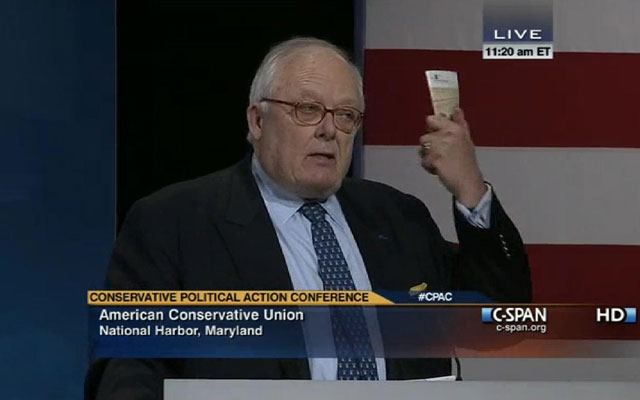


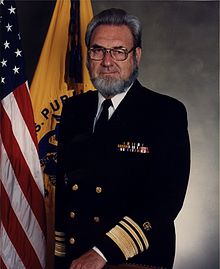
 To put our debt in perspective, Kobe Bryant makes $25 million playing for the Los Angeles Lakers. Any guesses on how many seasons Kobe would have to play in order to pay off today’s national debt? How about a whopping 560,000. That’s chilling, and quite frankly, incomprehensible.
 Utah’s senior Sen. Orrin Hatch doesnt see it that way. He’s looking for a vote on his balanced budget amendment too, but at a time believed to be the most opportune for passage. He hasn’t set firm timetables or made any strict demands.
 “If this is going to get passed in the next two years,” says Hatch, “President Obama will have to step to the plate. Ultimately you’ll need presidential leadership because everybody knows that you’re not going to get spending under control until we take on entitlements as well. You cannot do it without presidential leadership.”


 The Daily Hatch
