Monthly Archives: February 2013

Robert Dick Wilson’s talk “Is the Higher Criticism Scholarly?” (part 1 of transcript)

Robert Dick Wilson at the Grove City Bible Conference in 1909.

Several years ago I listened to a lengthy series of messages by Dr. Francis Schaeffer on the Book of Daniel. In this series he quoted Robert Dick Wilson several times. Since then I have had the opportunity to look up some very interesting information of the amazing Dr. Robert Dick Wilson. Below is some of that information.

The Remarkable Robert Dick Wilson

By Wayne Jackson

Robert Dick Wilson was truly a remarkable gentleman. Bible students are indebted to him for the masterful work he did in helping to confirm the credibility of the Old Testament.

Robert Wilson was born in 1856; he graduated from Princeton University at the age of twenty. He went on to earn both a Masters degree and a PhD. He then did further post-graduate work in Germany for two years. He was a brilliant language student; when he was still in college he could read his New Testament in nine languages.

Wilson was but twenty-five years of age when he determined that he would invest years of careful study in the text of the Old Testament so that he could speak with authority as to whether or not it has been preserved in an accurate format.

The body of Old Testament literature was completed by 400 B.C., and yet prior to 1946 (when the Dead Sea Scrolls were discovered), the oldest copies of the Old Testament Scriptures we possessed dated to about the tenth century A.D. There was, therefore, a gap of some twelve hundred years between the last of the Old Testament books and the extant manuscripts.

Could we be sure that the writings at our disposal had been faithfully preserved? After all, even if one is confident that the original Scriptures were inspired of God, that would amount to little if they have been grossly corrupted across the centuries. This was the task, therefore, to which young Wilson dedicated himself. And he was a wonderfully disciplined person.

Based upon the longevity of his immediate ancestors, Robert Wilson estimated that he might live to about seventy years of age. Since he was twenty-five at the time, that would give him about forty-five years remaining to accomplish his goal. Accordingly, he divided his projected remaining years into three periods of fifteen years each. Here is how he would pursue his plan:

For the first fifteen years, he would study every language that had a bearing on the text of the Old Testament. He set himself to the task. During that time he mastered forty-five languages! He not only became an expert in Hebrew and its kindred tongues, but he learned all the languages into which the Scriptures had been translated down to the year A.D. 600.

During the next fifteen years Wilson dedicated himself to studying the text of the Old Testament itself. He looked at every consonant in the Old Testament text (the Hebrew Old Testament has no vowels)—about one and a quarter million of them. He made a thorough scientific investigation of the Old Testament text, as compared to other writings of antiquity.

Wilson noted that there are twenty-nine ancient, pagan kings of various nations which are mentioned in the Bible. Their names are also found in the writings of their own lands. The names of these kings consist of 195 consonants. He discovered that in the Old Testament there are only two or three letters—of the entire 195—that are in question as to spelling. By way of contrast, in the secular literature of the same period, the names of those rulers frequently are so garbled that one can scarcely identify the person.

For example, Ptolemy, an ancient writer, drew up a list of eighteen Babylonian kings, and not a one of them is spelled correctly. The text of the Bible was amazingly precise.

Wilson then spent his remaining years writing down the results of his long research. He authored a marvelous book titled, A Scientific Investigation of the Old Testament, in which he confidently affirmed “we are scientifically certain that we have substantially the same [Old Testament] text that was in the possession of Christ and the apostles and, so far as anybody knows, the same as that written by the original composers of the Old Testament documents.”

We ought to be grateful for those who have gone before us, and who have provided us with evidence for the integrity of the biblical text. By the way, Wilson died at the age of seventy-four.

 
Wjphoto

About the Author

Wayne Jackson has written for and edited the Christian Courier since its inception in 1965. He has also written several books on a variety of biblical topics including The Bible and Science, Creation, Evolution, and the Age of the Earth, The Bible on Trial, and a number of commentaries. He lives in Stockton, California with his dear wife, and life-long partner, Betty.

The Bible and Archaeology (1/5)

The Bible maintains several characteristics that prove it is from God. One of those is the fact that the Bible is accurate in every one of its details. The field of archaeology brings to light this amazing accuracy.

_________________________-

Many people have questioned the accuracy of the Bible, but I have posted many videos and articles with evidence pointing out that the Bible has many pieces of evidence from archaeology supporting the view that the Bible is historically accurate. Take a look at the video above and below.

The Bible and Archaeology (2/5)

———————————————————–

Robert Dick Wilson is one of my heroes and I wanted to pass on a portion of his talk in transcript form:

Clearly attested facts showing that the

destructive “assured results of

modern scholarship”

are indefensible

By the late

Robert Dick Wilson, Ph.D., D.D.

Professor of Semitic Philology in

Princeton Theological Seminary

THE SUNDAY SCHOOL TIMES COMPANY

325 N. 13th Street

Philadelphia 5, Pa.

Copyright, 1922 and 1950, by

THE SUNDAY SCHOOL TIMES COMPANY

Second Edition …………………………..1922

Tenth Edition ……………………….…… .1953


FOREWORD

“As man is interested in his roses, and doesn’t think of the thorns,” so he studied language. That was Professor Wilson’s answer to my query, when I expressed amazement at the range of his linguistic explorations, covering some forty-five languages and dialects. His answer helped me to understand.

And as we sat by the fire in his study at Princeton, with the signs of his labors all around us, on shelves, and tables, and desk––yes, and on the floor, I came to understand still better the stories I had heard of his learning, and of his masterly methods in the defense of the Scriptures.

When he was a little chap, four years old, son of a leading merchant in the little town of Indiana, Pa., he could read. He began to go to school at five, and at eight he had read, among other books, Rawlinson’s “Ancient Monarchies.”

That merchant father was a man of sound culture and good sense. He was president of the Board of Trade of his county, and president of the local school board––with ten children in his own home.

When Robert was nine years old he and a brother were taken by their father on a journey to Philadelphia. One of the exciting and memorable experiences of the trip was the visit to a bookstore on Chestnut Street, where the father left the boys for a little while, so that they might select a number of books of their own choosing. When he returned they had gathered about fifty volumes, including Prescott, Robertson, J. S. C. Abbott, and similar standard works,––examples of the “light reading” that these children enjoyed.

Robert prepared for college in the Indiana public school, and was ready for the sophomore class at Princeton when he was fourteen years old. However, he did not enter his class–the class of 1876–until he was at the advanced age of seventeen, for as he naïvely and rather apologetically remarked: “I had a good deal of headache between my fourteenth and twentieth years, and then typhoid. After that my headache disappeared. I really couldn’t half do my work before that.”

In college young Wilson specialized in language, psychology, and mathematics. In such Bible courses as he then studied he says that he got “a very low grade of 90, which pulled down my average.”

To him language was the gateway into alluring fields that drew him strongly. He prepared himself for college in French, German, and Greek, learned Hebrew by himself, and took a hundred dollar prize in Hebrew when he entered the seminary.

“But how did you ever do it?” I asked. The professor’s eyes twinkled, and he smiled at my surprise.

“Well, you see,” he replied, “I used my spare time. When I went out for a walk I would take a grammar with me, and when I sat down to rest, I would take out the book, study it a little, and learn what I could. I made up my mind that I wanted to read the great classics in the originals, so I just learned the languages in order to do that.

“I would read a grammar through, look up the examples, making notes as I went along, and I wouldn’t pass by anything until I could explain it. I never learned long lists of words, but I would read a page through, recall the words I didn’t know, and then look them up. I read anything that I thought would be interesting to me if it were in English. I got so interested in the story that I was unconscious of the labor,––as a man is interested in his roses, and doesn’t think of the thorns. So I learned Greek, Latin, French, German, Hebrew, Italian, Spanish, Portuguese, Biblical Aramaic, Syriac, Arabic, and so on.”

Now Robert Dick Wilson in all these crowded years was not clear concerning his true calling in life. Before he went to the seminary, he and a brother of his gave much time to evangelism. At Indiana they were in such work for a year and a half, and with ample evidence of God’s blessings upon their labors in great numbers of souls led to Christ. That work was particularly attractive to young Wilson, on fire as he was, and is today, for the furtherance of the Gospel.

But his seminary studies caused him to feel that there was a great need for a type of Biblical scholarship that was not so subjective as much of the teaching he heard, but objective and thorough in dealing with facts that could be known only by exhaustive research over the whole range of the ancient languages related to the Bible. He faced the question seriously,––should he go on in the highly attractive and necessary work preaching in which he had been so greatly blessed, or was God calling him to years of  toil in comparative obscurity and seclusion, in order to let his life count for the defense of the Scriptures on the basis of linguistic and historical facts, which only arduous and patient toil could reveal? He chose under God’s guiding hand the life of the scholar, and thousands have thanked God, and oth

What Robert Dick Wilson then believed, and now believes with all his heart is this: that textual and historical Biblical controversies should be taken out of the region of subjective personal opinion, into the region of objective, clearly attested fact. It was to this task that he set himself, and no labor was to be too long or too tedious or exacting to enable him to reach that goal.

He could not at that time learn Babylonian in America, so he went to Heidelberg, determined to learn every language that would enable him the better to understand the Scriptures, and to make his investigations in original documents.

So to Babylonian he added Ethiopic, Phoenician, all the Aramaic dialects, and Egyptian, Coptic, Persian, and Armenian. He studied in Berlin with Schrader, who was Delitzsch’s teacher, called the father of Assyriology. He studied his Arabic and Syriac under Sachau, and Arabic under Jahn and Dieterichi; Hebrew under Dillmann and Strack, and Egyptian under Brugsch. He became conversant with some twenty six languages in these years devoted to language acquisition.

For Professor Wilson had a plan, carefully worked out during his student days in Germany, under which he proposed to spend fifteen years in language study, fifteen years in Biblical textual study in the light of the findings of his studies in philology, and then, God willing, fifteen years of writing out his findings, so that others might share them with him. And now it is our privilege in this booklet to read, in terms that we all can understand, some of the gloriously reassuring facts that he has found in his long pilgrimage through ancient days.

Just a single glimpse of how long it has been startles the superficial and the scholarly student as well, when either learns that in order to answer a single sentence of a noted destructive critic, Professor Wilson read all the extant ancient literature of the period under discussion in numerous languages, and collated no less than one hundred found showed that the critic was wrong. It was largely a case of superior scholarship—accordance with a good definition of the scholarly temperament—”that rare combination

Professor Wilson’s productive work has been presented hitherto almost entirely to his students, some two thousand of whom have been in his seminary classes through the years; in scholarly journals of restricted circulation; and in a few books, one of the most remarkable of which is his “Studies in the Book of Daniel.”

“Professor,” I asked, “what do you try to do for your students?”

Instantly he replied, with quiet earnestness, “I try to give them such an intelligent faith in the Old Testament Scriptures that they will never doubt them as long as they live. I try to give them

evidence. I try to show them that there is a reasonable ground for belief in the history of the Old Testament.” (He has not specialized on the New

“I’ve seen the day,” he went on, “when I’ve just trembled at undertaking a new investigation, but I’ve gotten over that. I have come now to the conviction that

no man knows enough to assail the truthfulness of the Old Testament. Whenever there is sufficient documentary evidence to make an invest

That is a significant statement from one who does not have to trust to hearsay in matters of criticism, and who has worked for so many years in devout self-denying study of the sources and the text of the Old Testament. “When a man says to me, ‘I don’t believe the Old Testament,’” exclaimed Dr. Wilson, “he makes no impression upon me. When he points out something there that he doesn’t believe, he makes no impression

in the original texts, have stood the test.” gation, the statements of the Bible, i Testament.) great historian.” coverer or the disinterested pursuit of truth, which characterizes the great scientific disof profound insight, sustained attention, microscopic accuracy, iron tenacity, and in sand citations from that literature in order to get at the basic facts, which when thou upon me. But if he comes to me and says, ‘I’ve got the evidence here to show that the Old Testament is wrong at this or that point’—then that’s where my work begins! I’m ready for him!” And the professor laughed in his hearty way, in evident enjoyment of the prospect of such an encounter.

I think perhaps one reason why I have been so stirred by many personal talks with this stalwart scholar is the habit he has of putting proof before you as he goes, and not standing on his dignity as though no one had a right to ask questions of him about his findings. But when a

scholar challenges him, then the Professor is a roused lion,—no, an aroused attorney for the defense, massing his facts so overwhelmingly, proving them, driving them home, and disclosing the weakness of his opponent’s case so convincingly, that I should think the attorney for the plaintiff in the attack on the Old Testament would wish for the sake of his reputation that he had not ventured on ground where his own ignorance would be so manifest to the court. For it is made very evident by a study of any of Professor Wilson’s keen critiques of the destructive critics’ work that much of the material so often called by the critics “the assured results of modern scholarship” is nothing more than the quicksand footsteps of a really inexcusable, downright ignorance. “Criticism,” says Dr. Wilson, “is not a matter of brains, but a matter of knowledge.”

But let Professor Wilson lay before you his findings. He is concerned only with evidence, and it will gladden your heart to know even a little of what he has found, as he unfolds some of his experiences in the following studies.

PHILIP E. HOWARD,

Former Publisher of The Sunday School times.

IS THE HIGHER CRITICISM

SCHOLARLY?

Robert Dick Wilson

The history of the preparation of the world for the Gospel as set forth in the Old Testament is simple and clear, and in the light of the New Testament eminently reasonable. In fact, it has been considered so reasonable, so harmonious with what was to have been expected, that Christ and the apostles seem never to have doubted its veracity, and the Christian Church which they founded has up to our times accepted it as fully consonant with the facts. Within the last two centuries, however, largely as a the so-called critical method, there has arisen a widespread doubt of the truthfulness of the Old Testament records. To such doubt many have

Countering With Proof, Defensive and Offensive

But there are many whose faith in the veracity of the Scriptures has been shaken; and the best, and in some cases the only, way to re-establish their faith is to show them that the charges which are brought against the Bible are untrue and unwarranted.

The attempt to show this may be made along two lines. We may take the purely defensive line and endeavor to show that the general and particular attacks upon the truthfulness of the Old Testament narratives are unsupported by facts. Or, we may take the offensive and show that the Old Testament narratives are in harmony with all that is really known of the history of the world in the times described in the Old Testament records, and that these records themselves contain the ineffaceable evidence that the time and place of their origin agree with the facts recorded. The best method, perhaps, will be to make an offensive-defensive, showing not merely that the attacks are futile, but that the events recorded and the persons and things described are true to history,—that is, that they harmonize in general with what we learn from the contemporaneous

This is true of the very earliest narratives of the Old Testament. Even when we look at the two great events occurring before the time of Abraham—the Creation and the Flood—we find that these events are the same that are emphasized among the Babylonians, from the midst of whom Abraham went out. For it is certain, that, however we may account for the difference between the Babylonian and Hebrew accounts of the Creation and of the Deluge, there is sufficient resemblance between them to point to a common origin antedating the time of Abraham’s departure from Ur of the Chaldees.

1

The Old Testament Derived From Written Sources Based on Contemporary Documents

From this time downward there is no good reason for doubting that the Biblical narrative is derived from

written sources based on contemporaneous documents. For, first, Abraham came out of that part of Babylonia in which writing had been in use for hundreds of years; and he lived during the time of Hammurapi, from whose reign we

Babylonische Mythen und Epen – syrisckAs

and Jensen, The Seven Tablets of Creation; See King, 1 documents of other nations. all those who have no doubts. refused to listen, and blessed are result of the Deistical movement in England and of the application to sacred history of 2 have scores of letters, contracts, and other records, of which by far the most important is the so-called code of laws which bears his name.

2Besides, writing had been in existence in Egypt already for two thousand years or more, so that we can well believe that the family of Abraham, traveling from Babylonia to Egypt and at last settling in Palestine, in between these two great literary peoples, had also formed the habit of conducting business and keeping records in writing.3 Abraham would naturally use the cuneiform system of writing, since this is known to have existed in Western Asia long before the time of Hammurapi, and the Amarna letters show clearly that Hebrew was sometimes written in that script.4

But not only do we know that there was a script in which to write; we know, also, that the Hebrew language was used in Palestine before the time of Moses. This is clear not merely from more than a hundred common words embedded in the Amarna letters but from the fact that the names of the places mentioned in them are largely Hebrew.

5In the geographical lists of the Egyptian king, Thothmes III, and of other kings of Egypt we find more than thirty good Hebrew words as the names of the cities of Palestine and Syria that they conquered.

6 From these facts we conclude that books may have been written in Hebrew at that early period. Further, we see that the sons of Abraham, Isaac, and Jacob may have been called by Hebrew names, as the Biblical record assures us.7

In “Bible Student and Teacher” for 1905.

Was Abraham a Myth? See article 7 iste thutmoses III. Die PalastinalSee Max Muller, 6 1545f. p. loc. cit., Knudtzon, 5 Tafeln. -Amarna-Die EIand Knudtzon, Amarna Letters; -eI-TelSee Winckler, 4 Rechts. -und ProzessUrkunden des altbabylonischen ZivilSee especially Schorr, 3 The Code of Hammurabi and Harper, The Letters and Inscriptions of Hammurobi; See King, 2
Charlie Henneman on the Balanced Budget Amendment

We need to pass a Balanced Budget Amendment!!!! It is obvious to me that if President Obama gets his hands on more money then he will continue to spend away our children’s future. He has already taken the national debt from 11 trillion to 16 trillion in just 4 years. Over, and over, and over, and over, and over and over I have written Speaker Boehner and the Congressmen (Griffin, Womack, Crawford) in Arkansas concerning this. I am hoping they will stand up against this reckless spending that our federal government has done and will continue to do if given the chance.

I have written and emailed Senator Pryor over, and over again with spending cut suggestions but he has ignored all of these good ideas in favor of keeping the printing presses going as we plunge our future generations further in debt. I am convinced if he does not change his liberal voting record that he will no longer be our senator in 2014.

I have written hundreds of letters and emails to President Obama and I must say that I have been impressed that he has had the White House staff answer so many of my letters. However, his policies have not changed. He is committed to cutting nothing from the budget that I can tell. 

Below is an excellent article on the Balanced Budget Amendment.

Nov 6, 2012

The Case for a Balanced Budget Amendment

Lacy Hunt, executive director at Hoisington Investment Management, believes the debt problem in the United States and the other major economies is far worse than most realize, and he thinks an amendment to the constitution mandating a balanced Federal budget may be the only thing that can save us from a disastrous outcome.

“The ‘Keynesian Endgame’ that is increasingly part of the lexicon refers to a government becoming so excessively indebted that it loses access to credit,” he said at the Fixed-Income Management 2012 conference in San Francisco.

While historically low yields on US Treasury debt would seem to indicate that losing access to credit markets is not an imminent prospect for the United States, Hunt warned that debt accumulation trends in the United States are having increasingly negative economic effects that could take a long time to reverse.

Worse, interest rates won’t provide the early warning system many expect, a consequence of financially repressive Fed policies. By the time rates signal a problem, it may be too late to do anything about it, according to Hunt, who previously served as the chief economist for HSBC and a senior economist for the Federal Reserve Bank of Dallas.

Hunt traced the roots of the US debt problems to the election of 1960, when both major political parties favored greater government involvement in the economy, a policy advocated at the time by Yale economist James Tobin. But contrary to what many believe, deficit spending has not improved the economic outcome.

“Physical investment must equal savings and income over the long term,” Hunt said, citing two studies that suggest that debt accumulation beyond certain thresholds negatively impacts economic growth. In a 2011 study published in the Journal of Economic Surveys, Andreas Bergh of Lund University and Magnus Henrekson of the Research Institute of Industrial Economics found “an increase in government size by 10 percentage points is associated with a 0.5% to 1% lower annual growth rate.” This reinforced the findings of a study commissioned by the ECB, which concluded that the “negative growth rate effect of high debt may start from levels of around 70–80% of GDP.”

US aggregate public and private debt is now upwards of 350% of GDP (not including unfunded liabilities, which would bring debt-to-GDP to 750%), and Hunt noted that much of this is what he called “unproductive debt,” taken on to fuel consumption rather than generate lasting economic benefit.

“We’re in way over our head, and the mix is wrong,” he said, referring to the amount of US debt. According to Hunt, consumptive debt crowds out productive investment and weakens the overall economy over time, as the velocity of money falls despite increasing government spending. This is happening now.

“The business cycle is no longer really operating, and GDP growth is being misinterpreted. GDP measures spending, not prosperity,” Hunt said. “While GDP has gone up, real incomes have declined,” and the symptoms of economic dysfunction in the United States are becoming all too apparent:

The way out of this mess? The solution, according to Hunt, is a sustained increase in savings, sometimes referred to as “austerity.”

“The way you reverse over-indebtedness is by living within your means,” he said, suggesting that economist David Hume was correct when he wrote in 1752 that “the normal course of government activity should be to run a surplus.”

As Hunt sees it, the only way to achieve a balanced Federal budget is by enacting a Constitutional amendment, as advocated by economist Milton Friedman almost 30 years ago.

Japan, meanwhile, presents an example of what not to do, according to Hunt. “Japan has reduced the savings rate, trying to reduce indebtedness,” and over two decades has failed to generate sustainable economic growth, he said. The United States is “now on that path.”


Please note that the content of this site should not be construed as investment advice, nor do the opinions expressed necessarily reflect the views of CFA Institute.

Photo credit: ©iStockphoto.com/VanWyckExpress

Taking on Ark Times bloggers on the issue of “gun control” (Part 3) “Did Hitler advocate gun control?”

Gun Free Zones????

Stalin and gun control

On 1-31-13 ”Arkie” on the Arkansas Times Blog the following:

“Remember that the biggest gun control advocate was Hitler and every other tyrant that every lived.”

Except that under Hitler, Germany liberalized its gun control laws.

__________

After reading the link  from Wikipedia that Arkie provided then I responded:

HITLER JUST WANTED TO TAKE THE GUNS AWAY FROM THOSE PEOPLE WHO WERE NOT SUPPORTERS OF HIS!!!! Of course, those people happened to be groups of people that he threw in jail and later killed mostly. I guess he wanted to make sure that those friendly to him had the ability to subdue those traitors that he wanted to question before throwing them in jail. By the way that list was a pretty big list. Therefore, I would say that Hitler was one of the most fanatical gun control supporters of all time. I think that everyone should have guns (excluding just a small list of people).

InfamousAmos, here is another good article that challenges your assertions about Hitler and his support of gun rights.

A Salon.com article by Alex Seitz-Wald called “The Hitler Gun Control Lie” is making the rounds, purporting to challenge a myth Second Amendment enthusiasts spread that blames the Holocaust on Hitler’s policies of civilian disarmament. The thrust of the argument is that Hitler’s 1938 firearms law indeed ratcheted back restrictions from the Weimar era. But here is the most telling paragraph:

The law did prohibit Jews and other persecuted classes from owning guns, but this should not be an indictment of gun control in general. Does the fact that Nazis forced Jews into horrendous ghettos indict urban planning? Should we eliminate all police officers because the Nazis used police officers to oppress and kill the Jews? What about public works — Hitler loved public works projects? Of course not. These are merely implements that can be used for good or ill, much as gun advocates like to argue about guns themselves. If guns don’t kill people, then neither does gun control cause genocide (genocidal regimes cause genocide).

As a libertarian, I actually would argue that the violence of Hitler’s statism can be seen in such areas as his militarized police forces, and the totalitarian potential of a heavily policed society is one reason I’ve been so critical of America’s police.

Honing in on the gun rights issue, we see a most curious argument: Hitler was actually pro-gun rights—except for the minor issue of the Jews. We can get the same nuanced information from Wikipedia, which cites work by Stephen Halbrook and sums up Hitler’s gun control policy in this seemingly important area:

On November 11, 1938, the Minister of the Interior, Wilhelm Frick, passed Regulations Against Jews’ Possession of Weapons. This regulation effectively deprived all Jews of the right to possess firearms or other weapons.

Yes, Hitler did loosen some restrictions on firearms—except for the people he exterminated! The Seitz-Wald pieces relies heavily on a University of Chicago working paper by Bernard Harcourt, which includes this seemingly cursory dismissal of Hitler’s disarming of the Jews in the context of the Holocaust:

How to characterize their treatment of Jewish persons for purposes of gun control—banning the possession of dangerous weapons, including guns, in 1938, and subsequently exterminating Jewish persons—is, in truth, an absurd question. The Nazis sought to disarm and kill Jews, and their treatment of Jews is, for all intents and purposes, orthogonal to their gun-control tendencies.

Even if you don’t accept the standard “gun control = genocide” line coming from gun-rights advocates, this passage is just bizarre. If the question being debated is whether Hitler enacted gun control that enabled his murderous policies, it seems rather odd to me to concede that the “Nazis sought to disarm and kill Jews” yet assert in passing that genocide was “orthogonal to their gun-control tendencies.” Within a couple days of Kristalnacht, Hitler disarmed the very group he was most determined to eliminate. Even if this correlation is not causal, there is a relationship here. It is not random. It is not “orthogonal.”

Harcourt continues, writing that “if forced to weigh in, it actually seems, somewhat surprisingly, that the white supremacist Pierce may have the better of the argument: the Nazis were probably more pro-gun than their predecessors.”

He’s referring to one of the primary scholars behind the thesis that Hitler was pro-gun—William L. Pierce, “a pro-gun white supremacist” whose ”ideological commitments are so flagrant” that he cannot be “trusted entirely in these historical and statutory debates.” Harcourt says the same about Halbrook, “a pro-gun litigator.”

This raises interesting questions. Surely we could expect someone with a soft-spot for white supremacy to be at least as biased as a pro-gun lawyer like Halbrook. This is not to say that a writer with extreme views is incapable of producing useful scholarship. Yet I would suspect that Pierce’s efforts to vindicate Hitler as a gun-rights champion in Gun Control in Germany, 1928–1945 might suffer from a fatal flaw, if indeed the gravamen that has made its way from that book to the Harcourt piece to the Salon.com article is: Hitler supported the right to bear arms. . . except for the Jews and other people he wanted to kill, but that’s a minor detail.

Harcourt weighs the evidence and argues that Pierce’s account is more accurate than Halbrook’s, but I think this all turns on a question of emphasis. Consider this revealing paragraph:

To be sure, the Nazis were intent on killing Jewish persons and used the gun laws and regulations to further the genocide. But it appears that the Nazis aspired to a certain relaxation of gun laws for the “ordinary” or “law-abiding” German citizen, for those who were not, in their minds, “enemies of the National Socialist state.” Stephen Halbrook, in fact, seems to acknowledges as much.

Yes, Halbrook does admit it—because Halbrook’s point isn’t that Hitler disarmed everybody; it’s that he disarmed the people he wanted to exterminate. We can glean this from the very title of his paper: “Nazi Firearms Law and the Disarming of the German Jews.”

I hate seeing poor history used in defense of liberty, and I hate seeing the false Nazi and Hitler quotes floating around. On the other hand, it seems to me that disarming Jews was indeed clearly one of the precursors to the Final Solution, as Harcourt admits, and as Seitz-Wald mysteriously ignores by dismissing the importance of Hitler’s prohibition of “Jews and other persecuted classes from owning guns.” If the only revisionist response to the core thesis that disarming the Jews facilitated the Holocaust is something like “Hitler only disarmed the Jews and his enemies,” one wonders what the policy implication is, especially considering that most people happily citing the Salon.com piece without reading it carefully or digging deeper seem to want to go even further and disarm the general population.

Related posts:

Great gun control posters from Dan Mitchell’s blog

Poster for November 2008 benefit for Pressly family, held at Peabody Hotel in Little Rock. ______________ Max Brantley of the Ark Times Blog often attacks those on my side of the gun control debate and that makes me argue even harder for the 2nd amendment. Several months ago Lindsey Miller and Max Brantley were talking […]

Funny gun control posters!!!

I have posted some cartoons featured on Dan Mitchell’s blog before and they are very funny. An Amusing Look at Gun-Free Zones September 26, 2012 by Dan Mitchell I’ve shared a very clever Chuck Asay cartoon about gun-free zones, so let’s now enjoy four posters on the topic. Let’s begin with a good jab at one […]

There is no safety crisis in schools as far as mass shootings go!!!

The recent killing by a mad gunman in CT is not indicating a trend. School killings have gone down and probably peaked in 1929. Nick Gillespie reported in the below video, “Across the board, schools are less dangerous than they used be. Over the past 20 years, the rate of theft per 1,000 students dropped […]

The Atlantic’s Jeffrey Goldberg abandons his liberal friends on gun control.

Pretty shocking admissions from the liberal Jeffrey Goldberg on gun control. An Honest Liberal Writes about Gun Control December 16, 2012 by Dan Mitchell I wrote earlier this month about an honest liberal who acknowledged the problems created by government dependency. Well, it happened again. First, some background. Like every other decent person, I was horrified […]

Gun control does not make since unless you suspend your reasoning ability

Despite what Max Brantley of the Arkansas Times Blog (1-9-13) would have you believe gun control does not make since unless you suspend your reasoning ability. There are so many examples that show how silly gun control is. Mocking Gun Control Fanatics October 18, 2012 by Dan Mitchell Last month, I shared some very amusing images […]

Gun control arguments very logical?

It seems to me that most of the gun control arguments I have heard are not very logical. Deciphering How Statists Think about Gun Control September 9, 2012 by Dan Mitchell Even though I don’t own that many guns, I’m an unyielding supporter of the 2nd Amendment. Indeed, I use gun control as a quick and […]

Charlie Collins versus Max Brantley on Gun Control

John Stossel report “Myth: Gun Control Reduces Crime After this horrible shooting in the school the other day it seems the gun control debate has fired up again.  Max Brantley of the Arkansas Times jumped on Charlie Collins concerning his position on concealed weapons but I think that would lower gun crimes and not raise […]

Bob Costas needs to think gun control logic through

Liberals love to talk a lot about taking up all the guns and how the world would be such a better place. Even Bob Costas jumped in yesterday and got into the mix. An IQ Test for Criminals and Liberals November 8, 2012 by Dan Mitchell A lot of people say Obama is anti-business, but there’s […]

Abortion supporters lying in order to further their cause? Article: “Window to the Womb” (includes video ABORTION OF THE HUMAN RACE)

It is truly sad to me that liberals will lie in order to attack good Christian people like state senator Jason Rapert of Conway, Arkansas because he headed a group of pro-life senators that got a pro-life bill through the Arkansas State Senate the last week of January in 2013. I have gone back and forth with the liberals at the Arkansas Times Blog over this issue of Jason Rapert’s comments.

I can understand national publications like the Huffington Post, NY Magazine, and other liberal blogs being mislead by this hack job on Jason Rapert done by The Nation, but it is truly amazing to me that Max Brantley of the Arkansas Times Blog who prides himself in always being completely honest would buy into this hack job on Jason Rapert, but my conclusion is very simple: MAX BRANTLEY WILL DO WHATEVER IT TAKES TO HELP THE PROCHOICE FORCES AND IF THAT MEANS MISLEAD HIS FLOCK TO BELIEVE THAT PRO-LIFE STATE SENATOR JASON RAPERT IS RACIST THEN HE WILL EVEN DO THAT.  In his weekly podcast on 2-1-13 at the 7 min mark Brantley said he listened to Rapert’s comment in context and contends  it was a racial comment. Brantley said that Tea Party speakers like to talk about the “negro black” President Obama, but Rapert no comment concerning the president’s race in his talk to the Tea Party in 2011 at the Capitol.  Furthermore on his blog Brantley asserted, “Rapert defenders contend he was talking about minority political interests, not minorities, references to the Obama birth certificate, Muslims and a Ramadan event notwithstanding.”

But the truth always does come out eventually. John Lyon of Stephens Media did have a balanced article that included an explantion from Jason Rapert and Jason Tolbert also gave both sides and it is obvious that Rapert was talking about minority political interests and not different people’s races!!!! 

Did that cause pro-choice supporters like Michael Cook and Max Brantley to apologize? No way, but they led the flock to continue the party line!!!

Bernard Nathanson was a founder of NARAL and he often lied in order to allow himself to continue to run the largest abortion clinic in the nation. Here is a portion of an article by Robert George concerning his interaction with Dr. Nathanson about this:

There are many lessons in Bernard Nathanson’s life for those of us who recognize the worth and dignity of all human lives and who seek to win hearts and change laws. Two in particular stand out for me.

First is the luminous power of truth. As I have written elsewhere, and as Nathanson’s own testimony confirms, the edifice of abortion is built on a foundation of lies. Nathanson told those lies; indeed, he helped to invent them. But others witnessed to truth. And when he was exposed to their bold, un-intimidated, self-sacrificial witness, the truth overcame the darkness in Nathanson’s heart and convicted him in the court of his own conscience.

Bernie and I became friends in the early 1990s, shortly after my own pro-life writings came to his attention. Once during the question-and-answer session following a speech he gave at Princeton, I asked him: “When you were promoting abortion, you were willing to lie in what you regarded as a good cause. Now that you have been converted to the cause of life, would you be willing to lie to save babies? How do those who hear your speeches and read your books and articles know that you are not lying now?” It was, I confess, an impertinently phrased question, but also, I believe, an important one. He seemed a bit stunned by it, and after a moment said, very quietly, “No, I wouldn’t lie, even to save babies.” At the dinner he and I had with students afterward, he explained himself further: “You said that I was converted to the cause of life; and that’s true. But you must remember that I was converted to the cause of life only because I was converted to the cause of truth. That’s why I wouldn’t lie, even in a good cause.”

The second lesson is this: We in the pro-life movement have no enemies to destroy. Our weapons are chaste weapons of the spirit: truth and love. Our task is less to defeat our opponents than to win them to the cause of life. To be sure, we must oppose the culture and politics of death resolutely and with a determination to win. But there is no one–no one–whose heart is so hard that he or she cannot be won over. Let us not lose faith in the power of our weapons to transform even the most resolute abortion advocates. The most dedicated abortion supporters are potential allies in the cause of life. It is the loving, prayerful, self-sacrificing witness of Joan Bell Andrews and so many other dedicated pro-life activists that softens the hearts and changes the lives of people like Dr. Bernard Nathanson.

May he rest in peace.

LifeNews.com Note: Robert P. George is McCormick Professor of Jurisprudence and Director of the James Madison Program in American Ideals and Institutions at Princeton University. He is a member of the President’s Council on Bioethics and previously served on the United States Commission on Civil Rights. This article previously appeared in Public Discourse.

The Silent Scream (Full Length)

In the film series “WHATEVER HAPPENED TO THE HUMAN RACE?” the arguments are presented  against abortion (Episode 1),  infanticide (Episode 2),   euthenasia (Episode 3), and then there is a discussion of the Christian versus Humanist worldview concerning the issue of “the basis for human dignity” in Episode 4 and then in the last episode a close look at the truth claims of the Bible.


In the film series “WHATEVER HAPPENED TO THE HUMAN RACE?” the arguments are presented  against abortion (Episode 1),  infanticide (Episode 2),   euthanasia (Episode 3), and then there is a discussion of the Christian versus Humanist worldview concerning the issue of “the basis for human dignity” in Episode 4 and then in the last episode a close look at the truth claims of the Bible.

Francis Schaeffer: How Should We Then Live? (Full-Length Documentary)

Francis Schaeffer Whatever Happened to the Human Race (Episode 1) ABORTION

Francis Schaeffer: What Ever Happened to the Human Race? (Full-Length Documentary)

Part 1 on abortion runs from 00:00 to 39:50, Part 2 on Infanticide runs from 39:50 to 1:21:30, Part 3 on Youth Euthanasia runs from 1:21:30 to 1:45:40, Part 4 on the basis of human dignity runs from 1:45:40 to 2:24:45 and Part 5 on the basis of truth runs from 2:24:45 to 3:00:04

Dr. Francis schaeffer – The flow of Materialism(from Part 4 of Whatever happened to human race?)

Dr. Francis Schaeffer – The Biblical flow of Truth & History (intro)

Francis Schaeffer – The Biblical Flow of History & Truth (1)

Dr. Francis Schaeffer – The Biblical Flow of Truth & History (part 2)

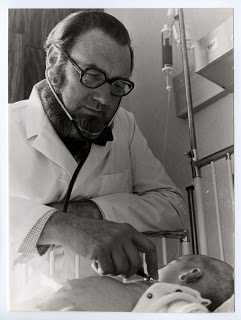
Dr. C. Everett Koop pictured above.

Window to the Womb:
Science gives us a glimpse of human life before birth


Copyright © 1982 Dr. Rainer Jonas
56 Days Old (8 weeks)
The heart has been beating for more than a month, the stomach produces digestive juices and the kidneys have begun to function. Forty muscle sets begin to operate in conjunction with the nervous system. The fetus’ body responds to touch, although the mother will not feel movement yet.

Copyright © 1982 Dr. Rainer Jonas
91 Days Old (13 weeks)
The fetus now sleeps awakens and exercises its muscles energetically– turning its head, curling its toes, and opening and closing its mouth. The fetus breathes amniotic fluid to develop its respiratory system. Fine hair has begun to grow on head and sexual differentiation has become apparent.

Copyright © 1982 Dr. Rainer Jonas
142 Days Old (19 weeks)
Half the pregnancy has past, and the fetus is about 12 inches long. The mother has definitely begun to feel movement by now. If a sound is especially loud or startling the fetus may jump in reaction to it.
2/3 of all abortions take place between 6 and 8 weeks Abortion is now legal for any reason up until birth!
Related posts:

Taking on Ark Times bloggers about abortion on the 40th anniversary date of Roe v. Wade (Part 7) “Poverty not good reason for abortion, why not give up for adoption?”

Dr Richard Land discusses abortion and slavery – 10/14/2004 – part 3 The best pro-life film I have ever seen below by Francis Schaeffer and Dr. C. Everett Koop “Whatever happened to the human race?” Over the years I have taken on the Ark Times liberal bloggers over and over and over concerning the issue […]

Taking on Ark Times bloggers about abortion on the 40th anniversary date of Roe v. Wade (Part 6) For many pro-abortionists ” …the problem is not determining when actual human life begins, but when the value of that life begins to out weigh other considerations”

The best pro-life film I have ever seen below by Francis Schaeffer and Dr. C. Everett Koop “Whatever happened to the human race?” Francis Schaeffer pictured above._________ The 45 minute video above is from the film series created from Francis Schaeffer’s book “Whatever Happened to the Human Race?” with Dr. C. Everett Koop. This book  really […]

Taking on Ark Times bloggers about abortion on the 40th anniversary date of Roe v. Wade (Part 5) “Slavery issue compared to rights of unborn child”

The best pro-life film I have ever seen below by Francis Schaeffer and Dr. C. Everett Koop “Whatever happened to the human race?” Over the years I have taken on the Ark Times liberal bloggers over and over and over concerning the issue of abortion. I asked over and over again for one liberal blogger […]

Taking on Ark Times bloggers about abortion on the 40th anniversary date of Roe v. Wade (Part 4) “How do pro-lifers react to the movie THE CIDER HOUSE RULES?”

Francis Schaeffer pictured above._________ The best pro-life film I have ever seen below by Francis Schaeffer and Dr. C. Everett Koop “Whatever happened to the human race?” Over the years I have taken on the Ark Times liberal bloggers over and over and over concerning the issue of abortion. I asked over and over again […]

Taking on Ark Times bloggers about abortion on the 40th anniversary date of Roe v. Wade (Part 3) “What should be the punishment for abortion doctors?”

The best pro-life film I have ever seen below by Francis Schaeffer and Dr. C. Everett Koop “Whatever happened to the human race?” On 1-24-13 I took on the child abuse argument put forth by Ark Times Blogger “Deathbyinches,” and the day before I pointed out that because the unborn baby has all the genetic code […]

Taking on Ark Times bloggers about abortion on the 40th anniversary date of Roe v. Wade (Part 2) “The pro-abortion child abuse argument destroyed here”

PHOTO BY STATON BREIDENTHAL from Pro-life march in Little Rock on 1-20-13. Tim Tebow on pro-life super bowl commercial. Over the years I have taken on the Ark Times liberal bloggers over and over and over concerning the issue of abortion. Here is another encounter below. On January 22, 2013 (on the 40th anniversary of the […]

Taking on Ark Times bloggers about abortion on the 40th anniversary date of Roe v. Wade (Part 1)

Dr Richard Land discusses abortion and slavery – 10/14/2004 – part 3 The best pro-life film I have ever seen below by Francis Schaeffer and Dr. C. Everett Koop “Whatever happened to the human race?” Over the years I have taken on the Ark Times liberal bloggers over and over and over concerning the issue […]

Somebody has got to win: Hogs take down Vols in basketball 73-60

I enjoyed watching the game since I was pulling for the Hogs but I must admit that neither team looked any good. Maybe next year both teams will be better.

Somebody has got to win: Hogs take down Vols in basketball 73-60. I think both teams were 0-5 on the road and both had looks pitiful in the SEC this year even though the SEC is the worst I can remember it and I have been following games since around 1970.

Florida and Missouri are the only sure things to get in the NCAA tournament at this point and some people think that Missouri may start stumbling eventually.

Back when Bruce Pearl was at Tennessee the question every year was how high a seed they would get in the tournament. In fact, Pearl was just one tip away from the final four in his next to last year in Knoxville.

This is what the Knoxville paper had to say about the game.

FAYETTEVILLE, Ark. — Slumped behind a microphone Saturday,

Cuonzo Martin laid out a golden rule of

basketball.

“As a guard you have to be able to handle the pressure, make plays,” Tennessee’s men’s coach said. “If they’re pressuring you, then attack the rim. The best way to relieve pressure is to get to the rim.”

B.J. Young got to the rim Saturday. Made a handful of 3-pointers, too.

Martin’s guards? Not so much.

Despite serving as Beelzebub in Arkansas’s frantic “40 Minutes of Hell,” Young followed Martin’s golden rule. He torched Tennessee for 25 points on 9-of-15 shooting to lead his Razorbacks to a 73-60 win.

Then there were Martin’s six guards. Each suffered from whiplash. They left Bud Walton Arena with a combined 28 points on 9-of-33 shooting and 11 turnovers.

“Turnovers,” UT guard Josh Richardson said. “We had way too many.”

“There was pressure, a lot of it,” added backcourt mate

Jordan McRae.

Tennessee didn’t have the horses to keep up with Arkansas’ Hogs. The Vols committed 20 turnovers leading to 27 Arkansas points and were outscored by 14 in transition.

Ballgame, right there. Tennessee (11-9, 3-5 SEC) fell to 0-6 on the road.

After 12 lead changes highlighted the game’s opening 12 minutes, the Razorbacks sped away. The Vols never trailed by less than seven in the second half.

“Winning road games, it’s mental,” Martin said.

After leading 35-25 at halftime, Arkansas (13-8, 4-4) built its largest lead of the day just 2 minutes, 35 seconds into the second half. Four straight turnovers by the Vols aided a quick 6-0 spurt by the host.

Tennessee forwards Kenny Hall and Jarnell Stokes scored 12 and 10 second-half points, respectively, to keep the Vols alive. Defensive stops, though, were hard to come by.

And perimeter shooting was nowhere to be found.

McRae, the SEC’s second-leading scorer at 18.9 points per game, finished 2-for-11 from the field for six points. He was face-guarded much of the day and bothered by Arkansas’ smaller, quicker guards. Only Richardson (11 points) reached double-figures from the Vols’ backcourt.

“I’ve got to do a better job of not letting them speed me up so much and taking better shots,” McRae said.

Eight different UT players, McRae and Richardson included, committed at least two turnovers.

Stokes notched his third straight double-double with 16 points and 10 rebounds, while Hall played his best game of the season with 14 points and five rebounds.

“I was in the flow of the game, feeling pretty good out there,” Hall said.

In nearly matching the UT frontline, Arkansas’ Marshawn Powell, who finished with 12 points and five rebounds, was joined by fellow forward Hunter Mickelson (10 points, five rebounds).

Martin said late last week he wanted his offense to attack the Arkansas press. Instead, it was eaten.

The Razorbacks scored 14 fast-break points. The Vols scored zero.

After the game, Arkansas coach Mike Anderson said he wanted his team to take get up “60 or 70” field-goal attempts against UT. He got 60 and 29 went in. Seventeen came off assists.

UT finished with eight assists.

It didn’t help that Trae Golden (strained hamstring) watched the game out of uniform, sitting at the end of the UT bench.

Arkansas built it’s 10-point halftime lead by scoring 16 points off 12 Tennessee turnovers. The Razorbacks outscored UT 18-7 to close the half after the Vols built an 18-17 lead with 7:47 to go.

Like they will in any game, all those turnovers ultimately weighed UT down.

FAYETTEVILLE

“Against the press you have to be smart, you have to be patient,” said Vols guard Derek Reese, who scored six points to go with eight rebounds. “The way (Arkansas) plays, they try to make you play fast. You have to be smart.”

Young played smart despite entering the game having missed 19 of his last 51 shots and all of his previous 13 3-point attempts. He started out on the bench as a result.

Seemed to work. His 25 points helped Anderson’s reserves outscore Martin’s bench, 46-9.

“It’s all about confidence,” Anderson said of Young. “He played with that swag.”

Brendan F. Quinn covers Tennessee men’s basketball. Follow him at Twitter.com/BFQuinn

Taking on Ark Times bloggers on the issue of “gun control” (Part 2) “Did Hitler advocate gun control?”

On 1-31-13 I posted on the Arkansas Times Blog the following:

I like the poster of the lady holding the rifle and next to her are these words: I am compensating for being smaller and weaker than more violent criminals.

__________

Then I gave a link to this poster below:

On 1-31-13 also I posted on the Arkansas Times Blog the following:

What are we compensating for you ask. Let me tell you 70%er, how about slow response times by police to 911 calls. The response time of a .357 is 1400 ft per second while in Atlanta last year it took, on average, 11 minutes and 12 seconds from the time a high-priority 911 call was received until an Atlanta police officer showed up at the scene. The response times reported by the El Paso (Texas) Police Department were only one second quicker than Atlanta’s, with an average of 11 minutes and 11 seconds. The Denver Police Department posted a response time of 11 minutes flat. According to the Journal Constitution story, police in Tucson, Ariz., responded, on average, in 10 minutes and 11 seconds. DO YOU THINK WE SHOULD COMPENSATE FOR THESE SLOW RESPONSES OR NOT?

On 1-31-13 “the Outlier” posted on the Arkansas Times Blog the following:

Saline worries about the USA becoming like Greece. I think it’s more likely that we will become Somalia if he and the gun fetishists have their way.

On 1-31-13 I posted on the Arkansas Times Blog the following:

I did want to respond to the outlier. We will not become like Somalia because we have too many guns in the hands of honest people. TAKING GUNS AWAY FROM HONEST PEOPLE TO LOWER CRIME IS LIKE TAKING CARS AWAY FROM PEOPLE WHO DON’T DRINK IN ORDER TO LOWER DRUNK DRIVING.
Remember that the biggest gun control advocate was Hitler and every other tyrant that every lived. We need guns in the hands of honest people to protect us.

On 1-31-13 “Arkie” on the Arkansas Times Blog the following:

Saline

“We will not become like Somalia because we have too many guns in the hands of honest people.”

Were the people of Somalia not honest? Most took up arms to defend their families and clans following the disintegration of the Barre regime. It was the absence of a strong government that could provide security that has caused the situation in Somalia over the past 22 years. BTW, I recently returned from Burundi where I was training a Burundian infantry brigade prior to its deployment to Mogadishu as part of the peacekeeping force.

“Remember that the biggest gun control advocate was Hitler and every other tyrant that every lived.”

Except that under Hitler, Germany liberalized its gun control laws:

From Wikipedia (http://en.wikipedia.org/wiki/Gun_politics_…

The 1938 German Weapons Act, the precursor of the current weapons law, superseded the 1928 law. As under the 1928 law, citizens were required to have a permit to carry a firearm and a separate permit to acquire a firearm. Furthermore, the law restricted ownership of firearms to “…persons whose trustworthiness is not in question and who can show a need for a (gun) permit.”

…Jews were forbidden from the manufacturing or dealing of firearms and ammunition.[4]…

On 1-31-13 I posted on the Arkansas Times Blog the following:

What I have read seems to point out that the Nazis took over a population that did not have many guns and they took advantage of that. The previous regime had strict controls and Hitler was very glad of that.

Then I provided a link to the following article:

Drudge Links Obama and Hitler on Gun Control. Left Cries, ‘Foul!’

by Gary North
Tea Party Economist

Recently by Gary North: How Keynesians Hijacked Milton Friedman’s Helicopter

Hitler imposed gun control on Jews. This is a matter of record. The thought of a bunch of Jews owning guns really upset him. The man was intolerant of Jews with guns.

Drudge ran a photo of Hitler and Stalin right above this headline: White House Threatens ‘Executive Orders’ on Gun Control.

Leftists in the print media went ballistic. Why, the very outrage of implying such a connection between tyranny and gun control! That guy Drudge: he is a disgrace! Read this article.

Then the Left-wing Salon published an article insisting that Hitler was not really against the private ownership of guns. Not really. It just sort of seems that way when you look at the historical record.

Did Hitler prohibit Jews from owning them? Well, yes, he did. Was this significant? In no way. In fact, it’s irrelevant. Why? Because the Jews were already a target. So, gun control had nothing to do with it. Gun control was peripheral. Ignore gun control.

Besides, the writer continued, the Left-wing Weimar Republic – whose leaders held views close to Salon’s on gun control – was the real culprit. It disarmed people. Don’t blame Hitler. The idea that Hitler disarmed Germans is a myth. Pay no attention to it.

University of Chicago law professor Bernard Harcourt explored this myth in depth in a 2004 article published in the Fordham Law Review. As it turns out, the Weimar Republic, the German government that immediately preceded Hitler’s, actually had tougher gun laws than the Nazi regime. After its defeat in World War I, and agreeing to the harsh surrender terms laid out in the Treaty of Versailles, the German legislature in 1919 passed a law that effectively banned all private firearm possession, leading the government to confiscate guns already in circulation.

So, we learn that because the Weimar Republic was hated by voters for having signed the Treaty of surrender (which the military that had started the war and lost it had refused to sign), the Weimar government was hated. So, it banned guns. But this in no way should be regarded as an act of an unpopular government that was trying to keep power. No, no, no.

The author did let this cat out of the bag: gun registration was part of a program of gun control. “In 1928, the Reichstag relaxed the regulation a bit, but put in place a strict registration regime that required citizens to acquire separate permits to own guns, sell them or carry them.

As everyone with any knowledge of German history in the 1920s knows, the Nazis ignored this law. In 1933, they took over. They suppressed all dissent. How? Because they were armed, while the rest of the population wasn’t. Is there cause and effect here? Salon does not mention this causal sequence. It’s clearly irrelevant, assuming you are a gun control promoter along Weimar lines.

You want to see the logic of these people. Follow this line of reasoning. This is the best that the author can come up with.

The law did prohibit Jews and other persecuted classes from owning guns, but this should not be an indictment of gun control in general. Does the fact that Nazis forced Jews into horrendous ghettos indict urban planning? Should we eliminate all police officers because the Nazis used police officers to oppress and kill the Jews? What about public works — Hitler loved public works projects? Of course not.

I am not making this up. See for yourself.

Drudge has more readers than any other journalist. His headlines shape the reading habits of tens of millions of readers. He runs links like these:

This sort of thing outrages obscure journalists on the Left, whose outlets have little influence. One of them even mounted a campaign not to link to Drudge’s site to show the hated image of Hitler and Stalin. He linked to some other site, which had lifted it from Drudge’s site. “Also, don’t link to Drudge – link to twitpic,” the Washington Post’s James Downie added. There! That will show him!

It really is amusing. Leftist journalism has not only lost its mojo, it has lost its sense of reality. To understand the Left’s position on gun control, watch this.

Gary North [send him mail] is the author of Mises on Money. Visit http://www.garynorth.com. He is also the author of a free 31-volume series, An Economic Commentary on the Bible.

Related posts:

Great gun control posters from Dan Mitchell’s blog

Poster for November 2008 benefit for Pressly family, held at Peabody Hotel in Little Rock. ______________ Max Brantley of the Ark Times Blog often attacks those on my side of the gun control debate and that makes me argue even harder for the 2nd amendment. Several months ago Lindsey Miller and Max Brantley were talking […]

Funny gun control posters!!!

I have posted some cartoons featured on Dan Mitchell’s blog before and they are very funny. An Amusing Look at Gun-Free Zones September 26, 2012 by Dan Mitchell I’ve shared a very clever Chuck Asay cartoon about gun-free zones, so let’s now enjoy four posters on the topic. Let’s begin with a good jab at one […]

There is no safety crisis in schools as far as mass shootings go!!!

The recent killing by a mad gunman in CT is not indicating a trend. School killings have gone down and probably peaked in 1929. Nick Gillespie reported in the below video, “Across the board, schools are less dangerous than they used be. Over the past 20 years, the rate of theft per 1,000 students dropped […]

The Atlantic’s Jeffrey Goldberg abandons his liberal friends on gun control.

Pretty shocking admissions from the liberal Jeffrey Goldberg on gun control. An Honest Liberal Writes about Gun Control December 16, 2012 by Dan Mitchell I wrote earlier this month about an honest liberal who acknowledged the problems created by government dependency. Well, it happened again. First, some background. Like every other decent person, I was horrified […]

Gun control does not make since unless you suspend your reasoning ability

Despite what Max Brantley of the Arkansas Times Blog (1-9-13) would have you believe gun control does not make since unless you suspend your reasoning ability. There are so many examples that show how silly gun control is. Mocking Gun Control Fanatics October 18, 2012 by Dan Mitchell Last month, I shared some very amusing images […]

Gun control arguments very logical?

It seems to me that most of the gun control arguments I have heard are not very logical. Deciphering How Statists Think about Gun Control September 9, 2012 by Dan Mitchell Even though I don’t own that many guns, I’m an unyielding supporter of the 2nd Amendment. Indeed, I use gun control as a quick and […]

Charlie Collins versus Max Brantley on Gun Control

John Stossel report “Myth: Gun Control Reduces Crime After this horrible shooting in the school the other day it seems the gun control debate has fired up again.  Max Brantley of the Arkansas Times jumped on Charlie Collins concerning his position on concealed weapons but I think that would lower gun crimes and not raise […]

Bob Costas needs to think gun control logic through

Liberals love to talk a lot about taking up all the guns and how the world would be such a better place. Even Bob Costas jumped in yesterday and got into the mix. An IQ Test for Criminals and Liberals November 8, 2012 by Dan Mitchell A lot of people say Obama is anti-business, but there’s […]

“Music Monday” People in the Johnny Cash video “God’s Gonna Cut You Down”

Wikipedia noted:

Johnny Cash recorded a version of “God’s Gonna Cut You Down” on American V: A Hundred Highways in 2003, with an arrangement quite different from most known gospel versions of the song.

A music video, directed by Tony Kaye,[1] was made for this version in late 2006. It featured a number of celebrities, including:

In order of appearance; Iggy Pop, Kanye West, Chris Martin, Kris Kristofferson, Patti Smith, Terrence Howard, Flea, Q-Tip, Adam Levine, Chris Rock, Justin Timberlake, Kate Moss, Sir Peter Blake, Sheryl Crow, Dennis Hopper, Woody Harrelson, Amy Lee, Tommy Lee, the Dixie Chicks, Mick Jones, Sharon Stone, Bono, Shelby Lynne, Anthony Kiedis, Travis Barker, Lisa Marie Presley, Kid Rock, Jay-Z, Keith Richards, Billy Gibbons, Corinne Bailey Rae, Johnny Depp, Graham Nash (holding photos of Johnny Cash), Brian Wilson.

It also briefly features archive footage of Cash himself. The video was shot entirely in black and white. Since its release, both the song and video have seen moderate airplay.

The video won the 2008 Grammy Award for Best Short Form Music Video.

The video was also covered by Rebel Son, Adding a little bit more upbeat sound to the song, Released on the “All my Demons” album.

The Johnny Cash version can also be heard in the following:

  • In the opening of the second mission of the video game Battlefield 3
  • In a 2011 commercial for Jeep Grand Cherokee
  • In the 2007 documentary:The Most Hated Family in America.
  • As bumper music for the Alex Jones radio show.
  • In promotional commercials for the hit CW series Supernatural.
  • In the trailer for the 2006 documentary Deliver Us from Evil.
  • As entrance music for UFC Fighters Spencer Fisher and Jason Lambert, as well as professional wrestlers Tyson Dux, Brodie Lee, and “The Southern States Outlaw” Michael Cross.
  • As the entrance song for left handed relief pitcher Joe Beimel of the Pittsburgh Pirates.
  • As the entrance song for Lance Berkman, right fielder of the St. Louis Cardinals.
  • As the entrance song for Arizona State pitcher Josh McAlister.
  • EastEnders used the recording in a 2008 promotional video for Max Branning‘s Judgement Day.
  • During the opening sequence and closing credits of David Ridgen‘s documentary Mississippi Cold Case made for the Canadian Broadcasting Corporation.
  • In the release trailer of the game Splinter Cell: Conviction.[2]
  • In 2010, the recording was used in the opening titles sequence of the ITV (UK) series Father and Son.
  • As of June 16, 2010, a sample of the rhythm from this version is used as background music for a series of television commercials for the 2011 Jeep Grand Cherokee; most notably the “Manifesto” advertisement.[3]
  • In a video entitled “The Death of Liverpool FC” intended to highlight the protest against the owners of the club at the time.[4]
  • Rapper RL sampled this version in his track, entitled “God’s Gonna Cut Us Down”, on his album “T.H.R.E.E.”
  • In a trailer for the Coen brothers‘s film True Grit.
  • In December 2010 in a trailer for ESPN‘s 30 for 30 film Pony Excess.
  • In March 2011 in the Being Human episode “Though the Heavens Fall,” as performed by Detroit Social Club.
  • Sampled by J-Clash on the track “Cut You Down” [5]
  • In a dramatic scene of Republic of Doyle, season 2, episode 9.
  • TIMBERLAKE’S BRAINSTORM: JOHNNY CASH VIDEO WITH KANYE, JIGGA, DEPP, OTHERS

    CLIP ALSO STARS BONO, CHRIS MARTIN, TERRENCE HOWARD, CHRIS ROCK, ADAM LEVINE, AMY LEE, TOMMY LEE.

    If Justin Timberlake adds any more titles to his résumé, we’re not going to be able to fit them all onto a single line. The singer/actor/dancer/producer/clothing designer has tacked video-treatment writer onto his long list of recent endeavors, courtesy of the moody new clip for the Johnny Cash song “God’s Gonna Cut You Down.”The concept for the all-star video came to Timberlake while he was taking a break from recording with producer Rick Rubin, who helmed Cash’s award-winning Americanalbum series and Timberlake’s “(Another Song) All Over Again.”

    “We were in the studio and we took a break to listen to the new Johnny Cash album [American V: A Hundred Highways], which was not yet released at that point,” Rubin said. “And when we got to that song, [Justin] said, ‘Stop!’ ”

    Timberlake then laid out a plan for a video to accompany the spare, moody song, which would feature a series of stars dressed in Cash’s signature black. “And he said, ‘I’m signing up to be the first one,’ ” Rubin said.

    Timberlake tops a list of 36 stars who appear in the clip, including Iggy Pop, Kanye West, Coldplay’s Chris Martin, actor Terrence Howard, Anthony Kiedis and Flea from the Red Hot Chili Peppers, Chris Rock, Maroon 5’s Adam Levine, Kate Moss, Sheryl Crow, Woody Harrelson, Amy Lee of Evanescence, Tommy Lee, the Dixie Chicks, Keith Richards, Bono, (+44)’s Travis Barker, Kid Rock, Jay-Z and Johnny Depp.

    “I had no idea yet how to market the album, which I’d just finished, since Johnny [Cash, who passed away in 2003] was not there and I wasn’t thinking about doing a video,” Rubin said (see “Johnny Cash Dead At 71”).

    Inspired by Timberlake’s brainstorm, Rubin called up acclaimed video director Mark Romanek, who helmed the award-winning clip for Cash’s cover of Nine Inch Nails’ “Hurt” (see “Johnny Cash Says Unlike Most Videos, ‘Hurt’ Wasn’t Too Painful”). Though Romanek loved the concept and added some ideas to it, he couldn’t sign on due to scheduling conflicts, so he suggested controversial director Tony Kaye (“American History X”). Kaye, who directed the time-tripping clip for the Chili Peppers’ “Dani California” (which is from an album also produced by Rubin), hasn’t directed many rock videos, but like many of the celebs in the shoot, he’s among the luminaries in Rubin’s thick address book of friends and professional acquaintances.

    “I got together with Tony — he loved Johnny and he’s really interested in the idea of music driving images,” Rubin said. Once they agreed on the concept, Rubin asked a few friends to make a list of the 10 coolest people on the planet. “At least five of the people in the video were on everyone’s list,” he said, “and Iggy was on a lot of lists, so it just felt right to open with him. I don’t know what that message is, but it just feels right.”

    Like the other stars, punk icon Pop is filmed wearing all black. The film’s lightning-fast, blink-and-you-might-miss-it series of quick-edit shots (many of which are close-ups of the stars’ faces) contrast with the slow tempo of the song.

    The video progresses through a series of quick mini-dramas, most of which were improvised, including Howard in a limo reading a Bible, Rock singing along with the lyrics, Timberlake staring at the camera, Depp standing on a balcony playing guitar, and Bono leaning on a graffiti-filled wall between angel’s wings and a halo while wearing a paper hat. The segments were filmed in Los Angeles, New York, London and (in Richards’ case) Amsterdam.

    Rubin said that for many of the artists in the clip — who also include Kris Kristofferson, Patti Smith, Q-Tip, Dennis Hopper, the Clash’s Mick Jones, Sharon Stone, Shelby Lynne, Lisa Marie Presley, ZZ Top’s Billy Gibbons, Corinne Bailey Rae, Graham Nash and the Beach Boys’ Brian Wilson — their reactions capture reflective moments spurred by hearing the song for the first time. Lynne sheds tears in an intense closeup, and a serious-looking Kid Rock stomps and claps his hands along to the funereal beat. “Each person got to design their own moment,” Rubin said. “But Tony was looking more for the instant emotional impact than a pre-planned skit. Nobody was asked to lip-sync, so pretty much everything was spontaneous.”

    After a slide-show-like recap of all the famous faces, the clip ends with Rubin and actor Owen Wilson sitting somberly in the back of a limousine.

    We get Iggy and Bono, but what’s Wilson’s connection to the whole thing? “It just made sense that if I was honoring Johnny, I’d have a friend there with me,” Rubin said.

    He also said Kaye has directed a clip for the Cash tune “Help Me” that is not celebrity-driven, but is equally gripping and slated for release in the coming months.

  • Related posts:
  • Johnny Cash (Part 4)

    I got to hear Johnny Cash sing in person back in 1978.  Here is a portion of an article about his Christian Testimony. The Man Came Around   “Being a Christian isn’t for sissies,” Cash said once. “It takes a real man to live for God—a lot more man than to live for the devil, […]

    Johnny Cash (Part 3)

    I got to hear Johnny Cash sing in person back in 1978.  Here is a portion of an article about his Christian Testimony. The Man Came Around   A Walking Contradiction Cash’s daughter, singer-songwriter Rosanne Cash, once pointed out that “my father was raised a Baptist, but he has the soul of a mystic. He’s […]

    Johnny Cash (Part 2)

    I got to hear Johnny Cash sing in person back in 1978 at a Billy Graham Crusade in Memphis. Here is a portion of an article about his Christian Testimony. The Man Came Around Cash also made major headlines when he shared his faith on The Johnny Cash Show, a popular variety program on ABC […]

    Johnny Cash (Part 1)

    I got to hear Johnny Cash sing in person back in 1978. Here is a portion of an article about his Christian Testimony. The Man Came Around Johnny Cash was not ashamed of his Christian faith—though it was sometimes a messy faith—and even got some encouragement from Billy Graham along the way. Dave Urbanski | […]

  • People in the Johnny Cash video “God’s Gonna Cut You Down”

    Wikipedia noted: Johnny Cash recorded a version of “God’s Gonna Cut You Down” on American V: A Hundred Highways in 2003, with an arrangement quite different from most known gospel versions of the song. A music video, directed by Tony Kaye,[1] was made for this version in late 2006. It featured a number of celebrities, […]

If you encourage people to stay home and be lazy then they will be

Real Time with Bill Maher March 16 2012 – Alexandra Pelosi Interviews Welfare Recipients in NYC

Published on Mar 18, 2012 by

Real Time with Bill Maher March 16 2012 – Alexandra Pelosi Interviews Welfare Recipients

____________

If you encourage people to stay home and be lazy then they will be.

The welfare state creates some amazingly pathetic and disgusting individuals.

But I’ve never found a match for Olga, a Greek woman who thinks it is government’s job to take care of her from cradle to grave.

At least not until now. I’m excited to announce that Olga has a soulmate named Natalija. She’s from Lithuania, but she now lives in England, and she doubtlessly will inspire Olga on how to live off the state.

UK Welfare Horror StoryHere’s some of what The Sun reported about this very successful moocher.

Natalija Belova, 33, told The Sun how she spurns full-time work — yet can afford foreign holidays and buys designer clothes. The Lithuanian said: “British benefits give me and my daughter a good life.” She has milked soft-touch Britain for £50,000 in benefits and yesterday said: “I simply take what is given to me.”

And what is given to her? Quite a lot.

The graduate, who became a single mum after she arrived here, rakes in more than £1,000 a month in handouts — £14,508 a year — to fund her love of designer clothes, jaunts to the Spanish sun and nightclubbing. She bragged: “I have a lovely, fully-furnished flat and money to live properly on. …Her handouts total £279 a week — with housing benefit contributing £183, child tax credit adding £56, child benefit £20 and her council tax being paid to the tune of £20.

UK Welfare HandoutsYou might expect Natalija to be grateful, but you’d be wrong.

But she does have one criticism. Natalija moaned: “I think they should help pay for private nannies, rather than just free nursery.” …Natalija vowed: “I am not going to work like a dog on minimum wage.” She added: “I don’t care what anyone thinks. I’m not doing anything wrong. “I know people won’t like to read this, but what would they do? “Would they not take the money that was being handed to them to stay with their child all day?”

I’ve written about the benefits of tax competition between nations. Well, this story shows the perverse impact of welfare competition between countries.

Speaking at her two-bedroom pad that came fully furnished in Watford, Herts, courtesy of the taxpayer, grateful Natalija said: “In Lithuania the benefits system does not pay enough. “I have a friend over there who is a single mother. “She only gets £20 a month in child benefit, plus some discounted help with gas and electricity — and some housing help. “It’s not enough to keep a normal level of life, like here. “If I was on benefits there, I couldn’t afford nice clothes or the holidays abroad.” She went on: “I am sure people will say I should return to Lithuania. But that won’t be happening. Being in Britain offers me far better benefits.”

We also have a remarkable example of labor supply economics. This is the real-world example of these charts showing how the British welfare state destroys incentives.

She is careful to work fewer than 16 hours a week so that the benefits keep rolling in. But her wages boost her income to more than £400 a week. On top of that she gets free childcare, fruit and milk vouchers — and even a clothes allowance for “job interviews”. Natalija said: “It is a strange system in this country. Basically, the fewer hours I work, the more I can earn on benefits. But that’s the way it is and it is not my fault.” …She insisted she would be prepared to get a full-time job — but only if the salary tops £25,000. …”Some people may think I am picky. But I am a realist. I need a full-time job that pays at least £25,000 — that is just enough to cover all my living costs that benefits currently pay for. “Otherwise working full time is not worth my while. “If I worked full time, I’d have to pay for childcare costs as well as rent and all my bills. “The benefits system in this country means that I do not have to do this.”

By the way, here’s a chart showing the same destructive policies in the United States.

Let’s look at one last excerpt about Natalija. British taxpayers can take comfort in the fact that this human tick is living a nice life.

In September she escaped the dreary British summer by jetting off with her daughter for a sun-kissed week in Spain. Last month she enjoyed a second holiday — back in her Lithuanian homeland. Natalija, who has three credit cards and loves to go on sprees at designer clothes stores, crowed: “After our holiday to Malaga, we went to Lithuania over Christmas and spent £1,000.” She continued: “I love to buy clothes on my credit cards and often have a blow-out at stores like Roberto Cavalli and the Armani Exchange. …”I also enjoy going to nightclubs and parties with my friends. It’s important to go out and get dressed up. It’s good for my self-esteem.”

Her self esteem has been boosted? Oh, joy!

And I can just imagine how much self esteem her daughter will have after growing up with a moocher for a mother.

John Hinderaker of Powerline was first on this horrific story and his analysis is very much worth reading as well. But since imitation is the sincerest form of flattery, I figured I would share the story and add some of my thoughts.

By the way, if you want more than just horrifying anecdotes, click here for a video that looks at the dismal impact of the American welfare state and click here to see how Obama has exacerbated the negative effects of such policies in America.

Open letter to President Obama (Part 231)

President Obama c/o The White House
1600 Pennsylvania Avenue NW
Washington, DC 20500

Dear Mr. President,

I know that you receive 20,000 letters a day and that you actually read 10 of them every day. I really do respect you for trying to get a pulse on what is going on out here.

We got to stop all the red ink. How can keep our federal spending at the high level it is at now and not end up in Greece? As the president you should take the bull by the horns and balance the budget!!!!

The burden of federal spending in the United States was down to 18.2 percent of gross domestic product when Bill Clinton left office.

But this progress didn’t last long. Thanks to George Bush’s reckless spending policies, the federal budget grew about twice as fast as the economy, jumping by nearly 90 percent in just eight years This pushed federal spending up to about 25 percent of GDP.

President Obama promised hope and change, but he has kept spending at this high level rather than undoing the mistakes of his predecessor.

This new video from the Center for Freedom and Prosperity Foundation uses examples of waste, fraud, and abuse to highlight President Obama’s failed fiscal policy.

Published on Aug 12, 2012 by

This mini-documentary from the Center for Freedom and Prosperity Foundation highlights egregious examples of wasteful spending from the so-called stimulus legislation and explains why government spending hurts economic performance.

____________________

Good stuff, though the video actually understates the indictment against Obama. There is no mention, for instance, about all the new spending for Obamacare that will begin to take effect over the next few years.

But not everything can be covered in a 5-minute video. And I suspect the video is more effective because it closes instead with some discussion of the corrupt insider dealing of Obama’s so-called green energy programs.

__________

Thank you so much for your time. I know how valuable it is. I also appreciate the fine family that you have and your commitment as a father and a husband.

Sincerely,

Everette Hatcher III, 13900 Cottontail Lane, Alexander, AR 72002, ph 501-920-5733, lowcostsqueegees@yahoo.com

Ghosts of Ole Miss broadcast Part 6

 I am doing a series on the “Ghosts of Ole Miss broadcast.” I enjoyed watching the Ghosts of Ole Miss broadcast on ESPN on 1-27-13 with my mother. She went to Ole Miss in the early 1960’s. Also living in Little Rock my wife has relatives that were also present and involved at Central High during the 1957 Little Rock Central High School Crisis. It is amazing that the neighboring states Arkansas and Mississippi both were a part of history like this.

James Meredith, Central Figure In Ole Miss Integration, Reflects On 50th Anniversary, Resents ‘Civil Rights’ Moniker (PHOTOS)

By EMILY WAGSTER PETTUS 10/01/12 01:

James Meredith Ole Miss

In this Oct. 2, 1962 photo provided by the University of Mississippi, James Meredith, right, attends class for the first time in Peabody Hall on The University of Mississippi campus, in Oxford, Miss. Meredith, the first black student to attend the University of Mississippi after integration, says he doesn’t plan to participate in the university’s commemoration of his history-making enrollment 50 years ago, which prompted a state-federal standoff, sparked deadly mob violence and ultimately ended.

JACKSON, Miss. — James Meredith is a civil-rights icon who hates the term “civil rights.”

It’s as if civil rights were somehow set apart from – well, rights.

“When it comes to my rights as an American citizen, and yours, I am a triumphalist and an absolutist. Anything less is an insult,” said the black man who 50 years ago inflamed the anger of white Mississippi by quietly demanding admission to the state’s segregated flagship university.

Now 79 and living in Jackson, Meredith sees himself as a messenger of God – a warrior who crippled the beast of white supremacy by integrating the University of Mississippi.

These days, he frequently wears an Ole Miss baseball hat in public. When the university’s football team recently played the University of Texas in Oxford, Meredith was a guest in the chancellor’s stadium skybox, and the crowd applauded when that was announced over the loudspeakers.

Yet he says he doesn’t plan to participate in the university’s commemoration of his history-making enrollment, which prompted a state-federal standoff, sparked deadly mob violence and ultimately ended the university’s official policy of racial segregation.

The university says Meredith has been invited to take part in events to mark the anniversary, including a walk that student leaders will take Monday to retrace his first day on campus.

Meredith says he doesn’t see the point.

“I ain’t never heard of the French celebrating Waterloo,” he told The Associated Press. “I ain’t never heard of the Germans celebrating the invasion of Normandy, or … the bombing and destruction of Berlin. I ain’t never heard of the Spanish celebrating the destruction of the Armada.”

Asked to clarify, Meredith said: “Did you find anything 50 years ago that I should be celebrating?”

Ole Miss administrators today don’t shy away from the history of a half century ago. For the past year, Ole Miss has sponsored lectures and other events to commemorate Meredith’s Oct. 1, 1962, enrollment and the ensuing changes that have made the university more diverse.

In a state with a 37 percent black population, Ole Miss now has a black enrollment of about 16.6 percent, and the current student body president, Kim Dandridge, is black – the fourth black person elected to the post.

University officials are careful to say the events are for commemoration, not celebration.

Mississippi’s segregationist governor in 1962, Ross Barnett declared that no school would be integrated on his watch. He denounced the federal government as “evil and illegal forces of tyranny” for ordering Ole Miss to enroll Meredith, a 29-year-old Air Force veteran who had already taken classes at historically black Jackson State College.

But even as Barnett whipped the white populace into a segregationist frenzy, he privately negotiated with President John F. Kennedy and his brother, Attorney General Robert Kennedy, to try to save face as it became clear that federal authorities would escort Meredith onto campus and make sure he enrolled.

In the face of Mississippi’s defiance, federal authorities deployed more than 3,000 soldiers and more than 500 law enforcement officers to Oxford. An angry mob of students and outsiders yelled and hurled bricks. Tear gas canisters exploded amid the oaks and magnolias. Two white men were killed. More than 200 people were injured, including 160 U.S. marshals.

In his new book, “A Mission from God: A Memoir and Challenge for America,” Meredith and co-author William Doyle recall the court battle and mob violence.

“I chose as my target the University of Mississippi, which in 1960 was the holiest temple of white supremacy in America, next to the U.S. Capitol and the White House, both of which were under the control of segregationists and their collaborators,” Meredith writes.

“I reasoned that if I could enter the University of Mississippi as its first known black student, I would fracture the system of state-enforced white supremacy in Mississippi. It would drive a stake into the heart of the beast.”

At Ole Miss today, many fraternities and sororities remain all-white or all-black, but it’s common to see students socialize across racial lines. When Dandridge ran for student body president, she said race was not an issue because the only other candidate also was black.

“Students don’t really look at color when they choose their friends,” said Dandridge, who’s the only black member of her sorority, Phi Mu.

“I want people to know that this university has made a lot of progress,” she said in a phone interview from Oxford.

Ole Miss has distanced itself from some Old South imagery. Although its sports teams are still called the Rebels, the university a few years ago retired the Colonel Rebel mascot, a cane-wielding, white bearded old man who looked to many observers like the caricature of a plantation owner.

Meredith – who sometimes goes on campus wearing a white suit that bears more than a passing resemblance to Colonel Reb’s outfit – saw the change as an effort to downplay his triumph over the old Ole Miss. He suggested that he “captured” the colonel when segregation fell.

Meredith writes that although people consider him a “civil rights hero,” that’s not how he sees himself: “I’ve always found the rhetoric of mainstream civil rights leaders and organizations to be far too timid, accommodationist and gradualist. It always seemed to me that they behaved like meek and gentle supplicants begging the oppressor for a few crumbs of justice, for a few molecules of citizenship rights.”

During an hour-long AP interview at a Jackson restaurant, two white men interrupted to shake Meredith’s hand. Both men, who were strangers to Meredith, appeared to be in their 40s.

“Thank you for all you’ve done over the years,” one man said. “Thank you for your message.”

However, when the man mentioned Attorney General Robert Kennedy, Meredith shook his head and replied: “Bobby died and still didn’t get it.”

The man looked puzzled. Meredith chuckled, and the man walked away.

Rather than talking, for the umpteenth time, about what things were like in 1962, Meredith expounds on what he sees as his current mission from God. He wants every black congregation in Mississippi to take responsibility for each child born within two miles of the church and make sure each receives a good education and proper moral upbringing.

“The real problem in Mississippi is almost a complete moral breakdown,” Meredith told the AP. “In order to move Mississippi from the bottom to the top, all we have to do is just get people to do a little more what they know, to practice a little more of what they preach.”

Meredith is now memorialized by a bronze statue near the University of Mississippi’s main administrative building. Yet he calls it “hideous,” and wants it destroyed.

Meredith says the monument glosses over the magnitude of Mississippi’s resistance to his exercise of what should have been recognized as his obvious, inherent rights as an American citizen.

It was, he said, a war.

“Mississippi has so humiliated me – they ain’t never acknowledged that there was a war,” Meredith said.

Chancellor Dan Jones says the university won’t destroy the statue, which was dedicated in 2006.

In a letter to Meredith in August, Jones wrote that the monument recognizes Meredith’s courage.

“Your determination to enroll under the most difficult conditions and to successfully complete your degree in the midst of constant hostility was a turning point in the life of our University, State and Nation,” Jones wrote. “It was instrumental in changing lives not just for black Americans, but for all of us.”