Gun Free Zones???? Stalin and gun control On 1-31-13 ”Arkie” on the Arkansas Times Blog the following: “Remember that the biggest gun control advocate was Hitler and every other tyrant that every lived.” Except that under Hitler, Germany liberalized its gun control laws. __________ After reading the link from Wikipedia that Arkie provided then I responded: […]
On 1-31-13 I posted on the Arkansas Times Blog the following: I like the poster of the lady holding the rifle and next to her are these words: I am compensating for being smaller and weaker than more violent criminals. __________ Then I gave a link to this poster below: On 1-31-13 also I posted […]
Will “CARRYING HANDGUN IS PROHIBITED” poster work? Dan Mitchell of the Cato Institute on gun control On 1-13-13 on the Arkansas Times Blog the person with the username “ArkDemocrat” stated, “I visited a church in another state that allows guns, and there was a sign similar to the “No Smoking” signs (i.e. smoking cigarette with […]
Poster for November 2008 benefit for Pressly family, held at Peabody Hotel in Little Rock. ______________ Max Brantley of the Ark Times Blog often attacks those on my side of the gun control debate and that makes me argue even harder for the 2nd amendment. Several months ago Lindsey Miller and Max Brantley were talking […]
I have posted some cartoons featured on Dan Mitchell’s blog before and they are very funny. An Amusing Look at Gun-Free Zones September 26, 2012 by Dan Mitchell I’ve shared a very clever Chuck Asay cartoon about gun-free zones, so let’s now enjoy four posters on the topic. Let’s begin with a good jab at one […]
The recent killing by a mad gunman in CT is not indicating a trend. School killings have gone down and probably peaked in 1929. Nick Gillespie reported in the below video, “Across the board, schools are less dangerous than they used be. Over the past 20 years, the rate of theft per 1,000 students dropped […]
Pretty shocking admissions from the liberal Jeffrey Goldberg on gun control. An Honest Liberal Writes about Gun Control December 16, 2012 by Dan Mitchell I wrote earlier this month about an honest liberal who acknowledged the problems created by government dependency. Well, it happened again. First, some background. Like every other decent person, I was horrified […]
Despite what Max Brantley of the Arkansas Times Blog (1-9-13) would have you believe gun control does not make since unless you suspend your reasoning ability. There are so many examples that show how silly gun control is. Mocking Gun Control Fanatics October 18, 2012 by Dan Mitchell Last month, I shared some very amusing images […]
It seems to me that most of the gun control arguments I have heard are not very logical. Deciphering How Statists Think about Gun Control September 9, 2012 by Dan Mitchell Even though I don’t own that many guns, I’m an unyielding supporter of the 2nd Amendment. Indeed, I use gun control as a quick and […]
John Stossel report “Myth: Gun Control Reduces Crime After this horrible shooting in the school the other day it seems the gun control debate has fired up again. Max Brantley of the Arkansas Times jumped on Charlie Collins concerning his position on concealed weapons but I think that would lower gun crimes and not raise […]
Richard Melville Hall (born September 11, 1965),[1] known by his stage name Moby, is an American musician, DJ, and photographer. He is well known for his sample-based electronic music, vegan lifestyle, and support of animal rights. Moby has sold over 20 million albums worldwide.[2]Allmusic considers him “one of the most important dance music figures of the early ’90s, helping bring the music to a mainstream audience both in the UK and in America”.[3]
Moby gained attention in the early 1990s with his electronic dance music work, which experimented in the techno and breakbeat hardcore genres. With his fifth studio album, the electronica and house-influenced Play, he gained international success. Originally released in mid-1999, selling 6000 copies in its first week, it re-entered the charts in early 2000 and became an unexpected hit, producing eight singles and selling over 10 million copies worldwide.[4] Moby followed the album in 2002 with 18, which was also successful, selling over 5 million copies worldwide and receiving mostly positive reviews, though some criticized it for being too similar to Play.
His next offer, 2005’s mostly upbeat Hotel was a stylistic departure, incorporating more alternative rock elements than previous albums, and received mixed reviews. It sold around 2 million copies worldwide. After 2008’s dance-influenced Last Night (2008), he returned to the downtempo electronica of Play and 18 with 2009’s mostly-ambient Wait for Me, finding higher critical acclaim and moderate sales. Moby’s latest album Destroyed., was released on May 13, 2011.
Hall was born in the Harlem neighborhood of New York City, the son of Elizabeth McBride (née Warner), a medical secretary, and James Frederick Hall, a chemistry professor.[6][7][8] He was raised by his mother in Darien, Connecticut.[9][10]
According to Hall, his middle name and the nickname “Moby” were given to him by his parents because of an ancestral relationship to Moby Dick author Herman Melville: “The basis for Richard Melville Hall—and for Moby—is that supposedly Herman Melville was my great-great-great-granduncle.”[11]
He has released music under the names “Voodoo Child”,[12] “Schaumgummi”,[13] and as a member of the bands Vatican Commandos, AWOL, Caeli Seoul, and Gin Train.[1]
Moby started playing music when he was nine years old, originally learning classical guitar and music theory, then piano and drums.[citation needed]
From 1982 to 1985, he played in a hardcore punk band called the Vatican Commandos, who released an EP called Hit Squad for God. He also played in a Joy Division-inspired post-punk group called AWOL who released an eponymous album in 1983. Circa 1988, Moby performed briefly with Ultra Vivid Scene. He can be seen playing guitar in UVS’ video for “Mercy Seat”, which appears on the band’s 1988 self-titled record.[citation needed]
After years of pursuing a record deal, he signed a recording contract with Instinct Records in 1989. During this time, Instinct Records “did not actually exist“, Moby stated in his 2005 iTunes Originals interviews. When he was signed, the company did not have a logo, name, or an office.[citation needed]
Moby’s first live solo performance was witnessed by future longtime manager Eric Härle, who later described the occasion to HitQuarters by saying: “The music was amazing, but the show was riddled with technical mishaps. It left me very intrigued and impressed in a strange way.”[14]
His first single for Instinct was “Mobility“, but it was the second single, “Go“, a progressive house track using the string line from “Laura Palmer’s Theme” from the TV drama Twin Peaks, which was his first breakthrough, reaching the UK top ten in October 1991 and earning him his first appearance on Top of the Pops.[14] Some of his other singles in 1992 and 1993 were “Next Is the E”, “Thousand”, and “Voodoo Child”.[1] It was when Moby started releasing records in the UK that he paired up with local-based manager Eric Härle.[citation needed]
[edit] 1993–1998: Everything Is Wrong, Animal Rights, and I Like to Score
In 1993, Moby signed with Mute Records and released an EP entitled Move. This became his second appearance on Top of the Pops. During this time he also went on tour with Orbital and Aphex Twin in North America.[citation needed]
He then released his first album on Mute Records, Everything Is Wrong, in 1995. Early copies (in the UK and Germany at least) came with a special bonus CD called Underwater. This was a 43-minute five-track instrumental ambient CD. Everything Is Wrong earned early critical praise (Spin magazine named it “Album of the Year”)[15] and some commercial success. He followed this up in early 1996 with the double album Everything Is Wrong—Mixed and Remixed. In 1995, Moby headlined the second stage at Lollapalooza, playing alongside Beck, Sonic Youth, Hole, and Pavement.[citation needed]
Disillusioned by the lack of feedback he was receiving from the music media, who struggled to comprehend the artist’s new electronic music and refused to take it very seriously, Moby decided to release a punk rock album.[14] Released in 1996 Animal Rights included a cover version of Mission of Burma‘s “That’s When I Reach for My Revolver” and was followed by a tour of Europe with the Red Hot Chili Peppers and Soundgarden. The single “Come on Baby” from Animal Rights was Moby’s third Top of the Pops performance. It was notable for its very aggressive look and sound. Ironically, just as Moby decided to change direction, the electronic music he had moved away from started to gain recognition and popularity through artists like The Chemical Brothers and The Prodigy.[14] Also in 1996, Moby contributed the song “Republican Party” to the AIDS benefit album Offbeat: A Red Hot Soundtrip produced by the Red Hot Organization.
According to manager Eric Härle, the album almost ruined his career, because the new direction not only left audiences cold—with music media uninterested and his existing fan base largely alienated—but led to people being confused as to what kind of artist Moby really was.[14] Having wiped out all his early good work in establishing himself, Moby was left struggling for any kind of recognition and quickly became seen as a “has-been” in the eyes of a lot of people in the industry.[14]
In 1997, he released I Like to Score, a collection of his music that had been used in movies. Among those tracks were an updated version of “The James Bond Theme” used for the James Bond film Tomorrow Never Dies, and “New Dawn Fades” (a cover of Joy Division’s original) which had appeared without vocals in Michael Mann‘s film Heat.
Moby performs a rare DJ set at NASA Rewind March 4, 2004 in New York City
Moby’s success in the late 1990s led him to launch the Area One festival; he is seen here performing in 2001
In 1999, Moby released the album Play. The album had moderate sales after its release, but eventually went on to sell over ten million records worldwide a year later.[4] Every song on the album was licensed internationally to various films, advertisements, and TV shows, as well as independent films and non-profit groups. Moby performed three times on Top of the Pops with singles from the album. Play mixes songs from Alan Lomax‘s 1993 Atlantic recording Sounds of the South: A Musical Journey From the Georgia Sea Islands to the Mississippi Delta. For the song “Natural Blues”, Moby mixes “Trouble So Hard” from the Alan Lomax Sounds of the South compilation.[16]
In July 2001, Moby: PlaytheDVD was released. Produced by Moby and Jeff Rogers (Swell), the DVD was nominated for a 2002 Grammy award. The DVD included various sections: “Live on TV”, most of the music videos from the album (excluding “South Side” with Gwen Stefani), “Give An Idiot a Camcorder” (Moby was given a camcorder and the tape was later edited by Tara Bethune-Leaman), and an 88-minute “Mega Mix” of all the remixes created for the album. The “Mega Mix” was accompanied by visuals created in Toronto at Crush, led by director Kathi Prosser.[17]
In 2002 Moby released the follow-up to Play, 18, which earned gold and platinum awards in over 30 countries, and sold more than four million copies. Moby toured extensively for both Play and 18, playing well over 500 shows in the course of four years.[citation needed]
In the next few years, Moby co-wrote “Is It Any Wonder” with Sophie Ellis-Bextor, remixed the Beastie Boys, David Bowie, Nas and Metallica, produced and co-wrote the track “Early Mornin'” for Britney Spears‘ fourth studio album In the Zone, and collaborated with Public Enemy on “Make Love, Fuck War”, which was released prior to the 2004 U.S. presidential election. Moby also had his song “Extreme Ways” used in the Bourne movies. Although not a hit when it was released, “Extreme Ways” has gone on to become one of Moby’s most-downloaded songs.[citation needed]
In 2003, Moby headlined the Pyramid stage at Glastonbury. In 2004, he worked on the John Kerry presidential campaign, and also worked extensively with Liberal group MoveOn.org.[citation needed]
[edit] 2005–2008: Hotel, Last Night, and other work
Moby posing in Japan
In 2005, Moby released Hotel under the label Pacha. Instead of his relying on samples for vocals, all of the vocals and instruments were performed live in the studio, by Moby and vocalist Laura Dawn.
Hotel spawned two of Moby’s biggest European hits, “Lift Me Up” and “Slipping Away“, both of which were number 1 European singles.[citation needed]Hotel went on to earn gold and platinum awards in over twenty countries, with global sales of over two million copies.[citation needed]
In the UK, ITV used a specially remixed version of “Lift Me Up” as its Formula 1 coverage theme music.
In 2006, he accepted an offer to score the soundtrack for Richard Kelly‘s 2007 movie Southland Tales because he was a fan of Kelly’s previous film, Donnie Darko.
In 2007, he produced and performed on The Bongos‘ remake of “The Bulrushes”, for the Special Edition re-issue of their debut album, Drums Along the Hudson (Cooking Vinyl Records), and appeared in the promo video of the song.
In 2007, Moby also started a rock band, The Little Death, NYC, with his friends Laura Dawn, Daron Murphy, and Aaron A. Brooks.[citation needed] In 2008, Moby released Last Night, an eclectic album of electronic dance music inspired by a night out in his New York neighborhood (the Lower East Side). The singles from Last Night include “Alice“, “Disco Lies“, “I Love to Move in Here”, and “Ooh Yeah”. The album was recorded in Moby’s home studio in Manhattan, New York and features a number of guest vocalists, including Wendy Starland, MC Grandmaster Caz (one of the writers of “Rapper’s Delight“), Sylvia from the band Kudu, British MC Aynzli, and the Nigerian 419 Squad.[18]
From 2007 to 2008 he ran a series of New York club events titled “Degenerates”.[19][20]
In collaboration with The Sunday Times, Moby released an exclusive mix album titled A Night in NYC, which appeared on the newspaper’s cover. It was a compilation of Moby tracks spanning his career and included videos from his new album Last Night.
In a November 2008 interview with SuicideGirls, Moby spoke about the follow-up album to Last Night: “I want to make a really emotional, beautiful record. I don’t know if I will succeed, but my goal is to make something very personal, very melodic, very beautiful.”[21] On April 14, Moby confirmed that the album would be released on June 30.[22]
I recorded the album here in my studio on the lower east side (although ‘studio’ always seems like an overly grand word for a bunch of equipment set up in a small bedroom). In the past I’ve worked in large and small studios, but for this record I wanted to record everything at home by myself”, Moby said on his journal.[22] “I started working on the album about a year ago, and the creative impetus behind the record was hearing a David Lynch speech at BAFTA, in the UK. David was talking about creativity, and to paraphrase, about how creativity in and of itself, and without market pressures, is fine and good. It seems as if too often an artist’s, musician’s or writer’s creative output is judged by how well it accommodates the marketplace, and how much market share it commands and how much money it generates. In making this record I wanted to focus on making something that I loved, without really being concerned about how it might be received by the marketplace. As a result it’s a quieter and more melodic and more mournful and more personal record than some of the records I’ve made in the past.[22]
Moby performing at the David Lynch Weekend, Maharishi University of Management in Fairfield, Iowa, April 26, 08.
Moby and David Lynch discussed the recording process of the album on Lynch’s online channel, David Lynch Foundation Television Beta.[25] The first single off the album was “Shot in the Back of the Head“, and the video was directed David Lynch.[22] The single was available for free download from Moby’s website.
Ken Thomas, who had previously produced some Sigur Rós albums, mixed Wait for Me.[22] According to Moby,
mixing the record with him [Thomas] was really nice, as he’s creatively open to trying anything (like recording an old broken bakelite radio and running it through some broken old effects pedals to see what it would sound like. It’s on the record as a 45 second long track called “Stock Radio”). And as a geeky technical aside, we mixed the record using purely analog equipment in true stereo, akin to how records were mixed in the late ’60s, some of the songs sound pretty amazing in headphones, if I do say so myself…[22]
Moby toured for the album with a full band, something that occurred rarely during Moby’s Last Night promotion, except for selected festival performances.[26] Moby raised between $75,000 and $100,000 to help those affected by domestic violence[27] after all funding for the state’s domestic violence program was cut in July. To do this, he donated the profits from his upcoming shows in California (San Diego, San Francisco, and Los Angeles). Moby headlined the Australian 2009 Falls Festival,[citation needed] as well as the other Sunset Sounds festivals.[citation needed]
Moby played a minor role in Canadian black comedy film Suck, released in September 2009.
On February 22, 2010, Moby announced a UGC competition with Genero.TV asking his fans to create a videoclip, that will be serviced worldwide as the official videoclip for his upcoming single “Wait for Me”, the last single from the album. On April 19, Moby chose the winning videoclip out of 500 entries, “based on its creativity, production value, concept, and humor”.[28] The chosen videoclip, written and directed by Nimrod Shapira from Israel, portrays the story of a girl who decides to invite Moby into her life. She attempts to do so by using a book called How to Summon Moby Guide for Dummies, putting herself through 10 bizarre and comical steps (each is a tribute to a different Moby videoclip). The single was released on May 4, 2010.
In March 2010, Moby released a new single “Wait for Me”, the title track from the album. It was released on May 3, 2010.[29]
Moby promoting the Destroyed. book and album at a performance and discussion in the Brooklyn Museum, 2011
In January 2010, Moby announced that he was to begin working on his next record. He said “the mood for this record will be more acoustic and less electronic than before”.[30]
On February 15, 2011, Moby announced the release of his new album, Destroyed. It was released on May 16, 2011.[31][32] A photography book with the same name was also released around the time of the album.[32] “Musically”, he said, “it’s very melodic and atmospheric and electronic, and if i had to sum it up i would describe it as: ‘broken down melodic electronic music for empty cities at 2 a.m’.” The album cover, which was released with the new information, was taken in LaGuardia Airport. It is a picture of a sign that reads ‘destroyed’, it’s used in the airport to notify passengers when the unclaimed baggage has been disposed of.[32] The album consists of 15 tracks, one of them previously featured on the compilation A Night in NYC, titled “Rockets”. Along with the album’s announcement came the release of the EP Be the One, which contains 3 of the tracks from Destroyed.[32] The EP was released for free for those who signed up for Moby’s mailing list.[31] “The Day” is an English cover of “Bleu Noir” by Mylène Farmer. For the next single, Moby put a poll on his website for fans to choose which single should be released next, and it came to be “Lie Down in Darkness“.[33] So far, it has proved to be the most successful single from the album, charting on various dance charts and in Belgium.[citation needed] On August 30, Moby posted another request for the third official single, this time asking fans to say which should be next, without a poll.[34] After this, he announced the following day through his Twitter that the next singles are “After” and “The Right Thing”.[35]
Moby has collaborated live with many of his heroes while on tour or at fundraisers. He has performed “Walk on the Wild Side” with Lou Reed, “Me and Bobby McGee” with Kris Kristofferson, “Heroes” and “Cactus” with David Bowie, “Helpless” with Bono and Michael Stipe, “New Dawn Fades” with New Order, “Make Love, Fuck War” with Public Enemy, “Whole Lotta Love” with Slash, and “That’s When I Reach For My Revolver” with Mission of Burma.
He has performed two duets with the French singer Mylène Farmer (“Slipping Away (Crier la vie)” in 2006 and “Looking for My Name” in 2008) and produced seven songs on her eighth album, Bleu Noir, released on December 6, 2010.[36]
In 2007, he became one of the few well-known commercial artists to produce work for a video game, collaborating with DJ Oscar the Punk on all three tracks of The BioShock EP, included with limited edition copies of the Xbox 360 and PC game BioShock.
In 2012 he collaborated with Spain-based group Dubsidia, making dubstep and electro house.
Until around June 2009, Moby co-owned a small restaurant and tea shop called Teany, where he occasionally would wait tables. He also organized a group of artists known as the Little Idiot Collective. Moby lives a vegan lifestyle and supports animal rights.
In an interview with Psychology Today, Moby admitted that when he was 19, he tried LSD and began suffering from panic attacks. He claims that he no longer experiences them as frequently as he used to, but occasionally he will “have too much caffeine, be stressed out about work and be in a relationship that’s not going well, and it will happen again”. He is very open about this in an attempt to help fans who suffer from similar panic disorders.[37]
When asked about drugs, he responded: “I’m sort of a libertarian. People should be able to do what they want. I ultimately defer the wisdom to an adult to make their own choices. If someone wants to do drugs, I think it’s their own business and not the business of the state.”[38]Although Moby himself is a teetotaller who admitted in 2011 that “It’s one of the lowest depths of misery to be completely destroyed and hungover in an airport at 8am in the morning [sic] after a long rough night.”[39]
In my own strange way, I’m a Christian, in that I really love Christ, and I think that the wisdom of Christ is the highest, strongest wisdom I’ve ever encountered, and I think that his description of the human condition is about the best description or understanding of the human condition I’ve ever encountered… I wouldn’t necessarily consider myself a Christian in the conventional sense of the word, where I go to church or believe in cultural Christianity, but I really do love Christ and recognize him in whatever capacity as I can understand it as God. One of my problems with the church and conventional Christianity is it seems like their focus doesn’t have much to do with the teachings of Christ, but rather with their own social agenda. So that’s why I tend to be sort of outspoken about how much I dislike conventional cultural Christianity.
—Animal Rights liner notes
In a 2003 BBC interview, Moby spoke about his encounter with the Gospels: “In about 1985 I read the teachings of Christ and was instantly struck by the idea that Christ was somehow divine. When I say I love Christ and love the teachings of Christ, I mean that in the most simple and naïve and subjective way. I’m not saying I’m right, and I certainly wouldn’t criticize anyone else’s beliefs.”[40] In an interview with Amazon.com, Moby said, “I can’t really know anything. Having said that, though, on a very subjective level I love Christ. I perceive Christ to be God, but I predicate that with the knowledge that I’m small and not nearly as old as the universe that I live in. I take my beliefs seriously for myself, but I would be very uncomfortable trying to tell anyone that I was right.”[41]
In a September 20, 2006 audio interview with Sojourners magazine, he says, “I read the New Testament, specifically the gospels and I was struck at their divinity, feeling that humans could not have figured this out on their own. We’re just not bright enough.”[42] He also discusses his faith on his own blog. On January 19, 2007, in his reaction to seeing Alexandra Pelosi‘s Friends of God, a film about evangelicalism in the United States, Moby writes, “The movie reminded me just how utterly disconnected the agenda of the evangelical Christian right is from the teachings of Christ.”[43] At times, he has been reluctant to use the word “Christian” to define himself, due to its ambiguity, but has self-identified as a Christian in interviews related to his faith.[44]
In March 2008, after Gary Gygax‘s death, Moby was one of several celebrities identifying themselves as former Dungeons & Dragons players.[45][46]
In March 2010, Moby made his debut as an author when Gristle: From Factory Farms to Food Safety (Thinking Twice About the Meat We Eat), a collection of essays from people in the food industry, was published.[47]
Moby is an advocate for a variety of causes, working with MoveOn.org and The Humane Society, among others. His MobyGratis.com website, which licenses film music for free for non-profit and independent films, funnels proceeds[21] from films which do go on to produce revenue to The Humane Society. He created MoveOn Voter Fund’s Bush in 30 Seconds contest along with singer and MoveOn Cultural Director Laura Dawn and MoveOn Executive Director Eli Pariser. The music video for the song “Disco Lies” from Last Night has heavy anti-meat industrial themes.
He also actively engages in nonpartisan activism and serves on the Board of Directors of Amend.org, a nonprofit organization that implements injury prevention programs in Africa.[48]
Moby is a member of the Board of Directors of the Institute for Music and Neurologic Function (IMNF), a not-for-profit organization dedicated to advancing scientific inquiry on music and the brain and to developing clinical treatments to benefit people of all ages.[49] He has also performed on various benefit concerts to help increase awareness for music therapy and raise funds for the Institute. In 2004, he was honored with the IMNF’s Music Has Power Award for his advocacy of music therapy and for his dedication and support to its recording studio program.[citation needed].
In 2007 Moby started a website called MobyGratis.com, designed for independent and non-profit filmmakers, film students, and anyone in need of free music for their independent, non-profit film, video, or short; it allows users to apply for free licences to use Moby music in their film. However, if a film is commercially successful, all revenue from commercial licence fees granted via MobyGratis is passed on to the Humane Society.[52]
In 2009, after hearing about California cutting its funding to domestic violence programs, Moby decided to donate the fees from his tour shows in L.A. and San Francisco to the California Partnership to End Domestic Violence Salement.[citation needed]
On June 20, 2009, Moby posted on his blog in response to the RIAA‘s decision to sue Minnesota suburban mother Jammie Thomas-Rasset for $2,000,000 for illegally downloading music from Kazaa. He called this “utter nonsense” and asserted that “the RIAA needs to be disbanded.”[53]
Many of Moby albums include essays that he has written himself in the inlay card. Everything Is Wrong had essays on over-consumption (“We use toxic chlorinebleach to keep our underpants white”) and U.S. religious leaders (“Why doesn’t the Christian right go out and spread mercy, compassion and selflessness?”), and End of Everything discussed being a vegan (“Could you look an animal in the eyes and say to it, ‘My appetite is more important than your suffering’?”). In “Animal Rights” Moby discussed the granting of basic rights in western society, and called for readers to grant such basic rights to homosexuals and animals. (“a long time ago only kings had rights. then rights were extended to property-owning white men. then all men. then women. then children. then the mentally retarded. now we’re agonizing over the extension of basic rights to homosexuals and animals.”)
He was interviewed by Lucy Walker for a chapter in Sound Unbound: Sampling Digital Music and Culture (The MIT Press, 2008) edited by Paul D. Miller a.k.a. DJ Spooky.
Moby has been a photographer since he was 10 years old, growing up around film and darkrooms.[54] Moby’s uncle was a photographer for the New York Times.[55]
In 2011, Moby released a book of photography entitled Destroyed. The books features the artist’s own images from his international tours.[56] An album with the same name was released in the same year.
Max Brantley is wrong about Tom Cotton’s accusation concerning the rise of welfare spending under President Obama. Actually welfare spending has been increasing for the last 12 years and Obama did nothing during his first four years to slow down the rate of increase of welfare spending.
The number of Americans on food stamps (or, as it is now called, the Supplemental Nutrition Assistance Program, or SNAP) is higher than ever before, according to a new Congressional Budget Office report. Since 2007, rolls have grown by 70 percent. And participation rates are expected to increase over the next two years.
A similar theme can be found in this great new cartoon from Chuck Asay.
And just in case you think Asay is being unfair, keep in mind that folks like Obama and Pelosi actually have claimed that more unemployment benefits is “stimulus.” Yes, you read correctly. Subsidizing unemployment is good for growth to these strange ideologues.
Dan Mitchell Discussing Dishonest Budget Numbers with John Stossel Uploaded by danmitchellcato on Feb 11, 2012 No description available. ______________ Dan Mitchell of the Cato Institute has shown before how excessive spending at the federal level has increased in recent years. A Humorous Look at Obama’s Screwy Budget Math May 31, 2012 by Dan Mitchell I’ve […]
Another great carton on President Obama’s efforts to create jobs!!! A Simple Lesson about Job Creation for Barack Obama December 7, 2011 by Dan Mitchell Even though leftist economists such as Paul Krugman and Larry Summers have admitted that unemployment insurance benefits are a recipe for more joblessness, the White House is arguing that Congress should […]
Dan Mitchell hits the nail on the head and sometimes it gets so sad that you just have to laugh at it like Conan does. In order to correct this mess we got to get people off of government support and get them in the private market place!!!! Chuck Asay’s New Cartoon Nicely Captures Mentality […]
Sometimes it is so crazy that you just have to laugh a little. The European Mess, Captured by a Cartoon June 22, 2012 by Dan Mitchell The self-inflicted economic crisis in Europe has generated some good humor, as you can see from these cartoons by Michael Ramirez and Chuck Asay. But for pure laughter, I don’t […]
Dan Mitchell Discussing Dishonest Budget Numbers with John Stossel Uploaded by danmitchellcato on Feb 11, 2012 No description available. ______________ Dan Mitchell of the Cato Institute has shown before how excessive spending at the federal level has increased in recent years. A Humorous Look at Obama’s Screwy Budget Math May 31, 2012 by Dan Mitchell I’ve […]
Another great carton on President Obama’s efforts to create jobs!!! A Simple Lesson about Job Creation for Barack Obama December 7, 2011 by Dan Mitchell Even though leftist economists such as Paul Krugman and Larry Summers have admitted that unemployment insurance benefits are a recipe for more joblessness, the White House is arguing that Congress should […]
Cato Institute scholar Dan Mitchell is right about Greece and the fate of socialism: Two Pictures that Perfectly Capture the Rise and Fall of the Welfare State July 15, 2011 by Dan Mitchell In my speeches, especially when talking about the fiscal crisis in Europe (or the future fiscal crisis in America), I often warn that […]
Cato Institute scholar Dan Mitchell is right about Greece and the fate of socialism: Two Pictures that Perfectly Capture the Rise and Fall of the Welfare State July 15, 2011 by Dan Mitchell In my speeches, especially when talking about the fiscal crisis in Europe (or the future fiscal crisis in America), I often warn that […]
Below is an excellent plan to balance the budget through spending cuts from Chris Edwards of the Cato Institute written in April of 2011. Here is the fourth and final part. I hope you will take advantage at least of some of these suggestions below.
The projected growth in Medicare, Medicaid, and Social Security is the main cause of America’s looming fiscal crisis. Budget experts and policymakers across the political spectrum understand the need to restructure these programs. The reforms listed in Table 1 include repealing the 2010 health care law and some initial efforts to control health care and Social Security costs.
For Social Security, the growth in initial benefits would be indexed to prices rather than wages, which would slow benefit growth over time. The proposal would save $41 billion annually by 2021 and growing amounts after that, according to the CBO.14 The plan also includes a CBO option to modestly raise the program’s normal retirement age.15
Medicaid should be converted from an open-ended matching grant program to a block grant, which would provide a fixed amount of funds to each state but allow state policymakers more program flexibility. That was the successful approach used for welfare reform in 1996. Converting Medicaid to a block grant would reduce federal costs, while encouraging innovation and cost reductions by the states. Setting the Medicaid block grant at the 2011 level of Medicaid spending would result in saving more than $200 billion annually within a decade.
The plan includes some modest Medicare changes based on CBO estimates, including increasing deductibles for services and increasing premiums for Part B to cover 35 percent of the program’s costs.16 The plan would repeal the 2010 health care law, including the higher revenues and spending. It further assumes that the Medicare improper payment rate, which is at least 10 percent, would be cut in half.
However, much larger reforms to the program are needed. Cato scholars have proposed moving to a system based on individual vouchers, personal savings, and consumer choice for elderly health care.17 The House Budget Committee has similarly proposed a plan to convert Medicare into a consumer-driven health system.18 Such reforms would create strong incentives for providers and patients to improve system quality and efficiency.
In recent decades, governments around the world have sold off state-owned assets to private investors.19 Airports, railroads, electric utilities, post offices, and other assets have been privatized. Privatization generally leads to reduced costs, higher-quality services, and increased innovation in formerly moribund government industries.
There are many federal assets that should be privatized. Table 1 includes the privatization of Amtrak, the air traffic control system, and the Army Corps of Engineers. Such reforms would reduce federal budget deficits and help spur economic growth.
Consider the nation’s air traffic control system, which is run by the Federal Aviation Administration.20 The FAA has struggled to expand capacity and upgrade its technology, and its modernization efforts have often fallen behind schedule and gone over budget. A series of incidents in 2011 indicated that the agency has serious workforce management problems. The air traffic control system needs major improvements to meet rising travel demands, but the FAA may not be capable of meeting the challenge.
The good news is that a number of countries have restructured their air traffic control systems and provide good models for U.S. reforms. Canada privatized its air traffic control system in 1996, setting up a private, nonprofit corporation, Nav Canada. The company is self-supporting from charges on aviation users. The Canadian system has received high marks for sound finances, solid management, and investment in new technologies.21 Aside from those advantages, a privatized system in the United States would save about $6 billion a year in general fund taxpayer costs.
Official projections show that without reforms federal spending will soar to more than 40 percent of GDP by 2050, and even higher after that. State and local spending comes on top of that, with the result that governments would consume more than half of the entire U.S. economy.
However, it seems inconceivable that voters and taxpayers would let the government grow to anywhere near that large. Indeed, the results of the 2010 elections indicate that there is already widespread disapproval of big government. It is also unlikely that the government would be able to raise taxes much above current levels to support higher spending because of our increasingly globalized economy.22
The upshot is that we will have to make major spending cuts sooner or later, and it would be better to make them sooner before we accumulate even more debt. Policymakers can start with the menu of cuts presented here, and then they should pursue other reforms such as restructuring Medicare. Leaders of other industrial nations have pursued vigorous cost-cutting when their government debt got out of control, and there is no reason why our political leaders shouldn’t do the same.
2 Congressional Budget Office, “Preliminary Analysis of the President’s Budget for 2012,” March 2011.
3 For these estimates, see Congressional Budget Office, “The Budget and Economic Outlook: Fiscal Years 2011 to 2021,” January 2011, p. 22.
4 For estimates of these adjustments, see Congressional Budget Office, “The Budget and Economic Outlook: Fiscal Years 2011 to 2021,” January 2011, p. 22.
5 This is the president’s budget as estimated by the CBO. See Congressional Budget Office, “Preliminary Analysis of the President’s Budget for 2012,” March 2011.
6 I assume that discretionary spending cuts are phased-in over 10 years, one-tenth each year. The proposed changes to Medicaid, Medicare, and Social Security would begin right away, but the savings would increase over time.
7 I modeled interest costs using CBO baseline projections regarding interest rates. I adjusted for the fact that public debt is projected to grow faster than indicated by the compounding of annual deficits in coming years.
8 In particular, see Budget of the U.S. Government, Fiscal Year 2012, Analytical Perspectives (Washington: Government Printing Office, February 2011), Table 33-1.
10Budget of the U.S. Government, Fiscal Year 2012, Analytical Perspectives (Washington: Government Printing Office, February 2011). See also Chris Edwards, “Federal Aid-to-State Programs Top 1,100,” Cato Institute Tax and Budget Bulletin no. 63, February 2011. Note that these state aid programs are a subset of the 2,000 total subsidy programs mentioned earlier.
13 Aside from the costs of the Iraq and Afghanistan wars, Department of Defense spending will be about $560 billion in fiscal 2011, up from $290 billion in fiscal 2001.
14 Congressional Budget Office, “Reducing the Deficit: Spending and Revenue Options,” March 2011.
15 Congressional Budget Office, “Reducing the Deficit: Spending and Revenue Options,” March 2011.
16 The savings for these options are from Congressional Budget Office, “Reducing the Deficit: Spending and Revenue Options,” March 2011.
18 House Committee on the Budget, “The Path to Prosperity,” April 2011. See also Rep. Paul Ryan (R-WI), “A Roadmap for America’s Future, Version 2.0,” January 2010.
21 For example, see Glen McDougall and Alasdair S. Roberts, “Commercializing Air Traffic Control: Have the Reforms Worked?” Suffolk University Law School, February 17, 2009.
22 This theme is explored in Chris Edwards and Daniel Mitchell, Global Tax Revolution (Washington: Cato Institute, 2008).
___________
Thank you so much for your time. I know how valuable it is. I also appreciate the fine family that you have and your commitment as a father and a husband.
Sincerely,
Everette Hatcher III, 13900 Cottontail Lane, Alexander, AR 72002, ph 501-920-5733, lowcostsqueegees@yahoo.com
Big government programs and special tax-code carve-outs often lead to corrupting ties between government officials and private interests. The Washington Post today discusses the municipal bond industry:
In just about every election, local governments put measures on their ballots asking voters to allow the sale of bonds so that municipalities can finance roads, schools or other projects. Interested parties often form campaigns to help pass or crush these initiatives.
And sometimes the investment banks that donate to those campaigns get hired to sell the bonds to investors after an initiative passes, raising the possibility that they got a leg up in the selection process because of their monetary support for the ballot bond measure — not because they offered taxpayers the best deal.
…[A] review by the Bond Buyer publication … found “a nearly perfect correlation between broker-dealer contributions to California school bond efforts in 2010 and their underwriting subsequent bond sales.”
…Jay Goldstone, [the] Municipal Securities Ruling Board’s chairman, said he’s concerned about the pattern. “There seems to be a strong relationship between contributions and underwriting business.”
The article discusses solving these problems with greater disclosure and transparency. But the real solution is to eliminate the underlying government preference that creates the influence peddling in the first place.
In this case, the federal income tax exemption for state and local bond interest should be repealed. That could be matched with a reduction in general tax rates on capital income.
As I argue here, state and local governments should dramatically scale back bond issuance. Bonds are just sneaky tax increases. State and local capital investments should be financed “pay-as-you-go,” which would cut out the costly middlemen in the finance industry.
The chart below shows that state and local bond debt has soared to more than $3 trillion. That not only represents a huge deferred tax increase, but it has also created a large playing field for special-interest cronyism. (For chart info, see here).
Below is an excellent plan to balance the budget through spending cuts from Chris Edwards of the Cato Institute written in April of 2011. Why not take advantage of this paper to help balance the budget? Here is the third part.
The federal government operates more than 2,000 separate subsidy programs, a doubling of subsidy programs since the mid-1980s.9 The scope of federal activities has greatly expanded in recent decades, along with the size of the federal budget. The federal government subsidizes farm businesses, retirees, school lunches, rural utilities, the energy industry, rental housing, public broadcasting, job training, foreign aid activities, foreign purchases of weapons, urban transit services, and many other types of activities and people.
Each subsidy program costs money, generates a bureaucracy, spawns lobby groups, and encourages more people to demand freebies from the government. Individuals, businesses, and nonprofit groups that become hooked on federal subsidies essentially become tools of the state. They lose their independence, they have less incentive to innovate, and they shy away from criticizing the government.
Table 1 includes cuts to subsidies in agriculture, commerce, energy, housing, foreign aid, and other areas. These cuts wouldn’t eliminate all of the unjustified subsidies in the federal budget, but they would be a good start. Government subsidies are like addictive drugs, undermining America’s traditions of individual reliance, voluntary charity, and entrepreneurialism.
Under the Constitution, the federal government was assigned specific limited powers, and most government functions were left to the states. To ensure that people understood the limits on federal power, the Framers added the Constitution’s Tenth Amendment: “The powers not delegated to the United States by the Constitution, nor prohibited by it to the States, are reserved to the States respectively, or to the people.” The amendment embodies federalism, the idea that federal and state governments have separate areas of activity and that federal responsibilities are supposed to be “few and defined,” as James Madison noted.
Unfortunately, policymakers and the courts have mainly discarded federalism in recent decades. Congress has undertaken many activities that were traditionally reserved to state and local governments through the mechanism of “grants-in-aid.” Grant programs are subsidies that are combined with federal regulatory controls to micromanage state and local activities. In fiscal 2011, federal aid to the states will total $625 billion, which will be distributed through more than 1,100 separate programs.10
The theory behind grants-in-aid is that the federal government can operate programs in the national interest to efficiently solve local problems. However, the federal aid system does not work that way in practice. Most federal politicians are consumed by the competitive scramble to maximize subsidies for their states, regardless of efficiency, fairness, or any appreciation of overall budget limitations.
Furthermore, federal aid stimulates overspending by state governments and creates a web of complex federal regulations that destroy state innovation. At all levels of the aid system, the focus is on regulatory compliance and spending, not on delivering quality public services. The aid system destroys government accountability because each level of government can blame the other levels when programs fail. It is a “triumph of expenditure without responsibility.”
The federal aid system is a roundabout funding system for state and local activities. It serves no important economic purpose. By federalizing state and local activities, we are asking Congress to do the impossible—to efficiently plan for the competing needs of a diverse country of more than 300 million people.
The grants-in-aid system should be dramatically cut. Policymakers need to revive federalism and begin to terminate grant programs. Table 1 includes cuts to grants in the areas of agriculture, education, health care, justice, and transportation. The justice grants, for example, are for funding such items as bulletproof vests for local police.11 There is no reason why such activities should not be funded at the city or county level.
Cato Institute defense experts Christopher Preble and Benjamin Friedman have proposed a lengthy list of cuts to U.S. military spending totaling $1.2 trillion over 10 years.12 Within 10 years, their proposal would reduce spending by about $150 billion annually, based on a strategy of restraint and reduced intervention abroad.
In proposing their plan, Preble and Friedman argue that the United States would be better off taking a wait-and-see approach to distant threats, while letting friendly nations bear more of the costs of their own defense. They note that U.S. policymakers support many extraneous missions for the military aside from the basic requirement to defend the nation. There is no doubt that America’s military budget is bloated. Even aside from the wars in Iraq and Afghanistan, Department of Defense spending roughly doubled between 2001 and 2011.13
___________
Thank you so much for your time. I know how valuable it is. I also appreciate the fine family that you have and your commitment as a father and a husband.
Sincerely,
Everette Hatcher III, 13900 Cottontail Lane, Alexander, AR 72002, ph 501-920-5733, lowcostsqueegees@yahoo.com
I have never read such a great overview of the pro-life movement as the one below. I learned a lot from it and wanted to pass it on to you.
I truly believe that many of the problems we have today in the USA are due to the advancement of humanism in the last few decades in our society. Ronald Reagan appointed the evangelical Dr. C. Everett Koop to the position of Surgeon General in his administration. He partnered with Dr. Francis Schaeffer in making the video below. It is very valuable information for Christians to have. Actually I have included a video below that includes comments from him on this subject.
___________
Francis Schaeffer: “Whatever Happened to the Human Race” (Episode 5) TRUTH AND HISTORY
Today more than 3,000 children will be murdered in the womb through surgical abortion. These dead children will be heaped on the more than 54 million others who have preceded them since the darkest day in American legal history which occurred when the Roe v. Wade decision was rendered by the U.S. Supreme Court. Forty years ago today, our nation’s highest court legally sanctioned the killing of the unborn.
As we consider this bloody slaughter, it behooves us to ask three key questions: How did Roe v. Wade come about? What has been the Church’s response over the last forty years? And, where do we go from here?
The Legal Backdrop for Roe: The Abandonment of Original Intent
In examining America’s legal history, it is clear that Roe v. Wade did not arise out of a vacuum. The decision flowed from a legal trend that had been in motion for more a hundred years in which the meaning of the U.S. Constitution was being increasingly redefined based on the view that it was an “evolving document.” Rather than defending its original intent as envisioned by the drafters of the Constitution, the black robed judges who presided over our nation’s courts were interpreting it to suit their own personal notions of what they deemed best for society.
This trend is pointedly illustrated in a seminal case that the Supreme Court handed down in 1965, eight years before Roe was decided — Griswold v. Connecticut.
Doug Phillips, a constitutional attorney and the founder of Vision Forum Ministries, notes the significance of this earlier landmark decision: “You cannot understand Roe unless you understand Griswold, and you cannot understand Griswold unless you understand the changing nature of judicial interpretation.”
In Griswold v. Connecticut, the Supreme Court struck down a law which forbade contraception use on the basis of “the right to privacy,” a doctrine found nowhere in the Constitution, yet one the justices derived from the “penumbras” and “emanations” of the document.
Phillips explains the Court’s strategy in invoking these terms in Griswold:
[The court] is speaking of little glowing halos around the broad-sweeping principles that are somehow emitted from the Constitution. In point of fact, they are telling us there is nothing in the Constitution that grants ‘the right to privacy,’ but it sure seems like it should be there. . . . What happened in Griswold laid the groundwork for Roe and the murder of unborn children.
The Hammer Falls: “Unborn Children are Not Persons”
The case of Roe v. Wade involved a suit made on behalf of Norma McCorvey (under the alias of “Jane Roe ”) who was unable to secure an abortion in Texas based on the state’s law at the time. While she had already given birth to her child by the time the case was heard, the Supreme Court ruled in favor of McCorvey on appeal in a 7-2 decision, invoking the “right of privacy” rationale that had been invented in Griswold.
While the Court was less than confident in defending the “right of privacy” doctrine from the Constitution itself, it nonetheless expanded it to include the right of a mother to murder her unborn child. In writing the majority opinion for the court, Justice Harry Blackmun stated:
[The] right of privacy, whether it be founded in the Fourteenth Amendment’s concept of personal liberty and restrictions upon state action, as we feel it is, or . . . in the Ninth Amendment’s reservation of rights to the people, is broad enough to encompass a woman’s decision whether or not to terminate her pregnancy.
Even as the justices in the majority invoked the Fourteenth Amendment as a purported “source” for the so-called “right to privacy,” the Supreme Court did an in-run around the Amendment’s Equal Protection Clause — which stipulates that “no state shall . . . deny to any person within its jurisdiction the equal protection of the laws” — by denying the personhood of children in the womb.
Blackmun wrote: “the word ‘person,’ as used in the Fourteenth Amendment, does not include the unborn.”
Justice Byron White and William Rehnquist — the two judges who opposed the decision — took the majority’s reasoning to task in their dissent:
I find nothing in the language or history of the Constitution to support the Court’s judgment. The Court simply fashions and announces a new constitutional right for pregnant women and, with scarcely any reason or authority for its action, invests that right with sufficient substance to override most existing state abortion statutes.
The Cultural Landscape: A Weak and Abdicated Church
Though the legal trends that lead to Roe v. Wade are important to examine, even more important is where the Church was during this time.
Dan Becker, President of Georgia Right to Life and Field Director of Personhood USA, puts the matter bluntly: “How did [Roe] come about? It came about because of the absence of the Church.”
Doug Phillips agrees:
The Church completely abdicated from speaking to the legal, ethical, and biblical principles that apply to culture and to law. When Roe was ultimately declared by the Court, many Evangelical Christians had nothing to say to it, because they didn’t have a biblical worldview. For more than a century, the Church had increasingly resorted to a form of religious pietism which had no practical application to life and important cultural issues. The result was lamentable — the withdraw of the Church from every area of society meant the demise of our culture and our law system.
Dr. George Grant, a pro-life advocate who has written prolifically in defense of the unborn, offers a similar view.
As the Church, Grant states, “we were not preaching the Word of God, we were not training and equipping disciples, we were not reinforcing and strengthening the family and the other spheres.”
This led, argues Grant, to “a Church that had so marginalized itself intellectually and culturally that it was constitutionally incapable of speaking to the problems [of the day] articulately. That set up Roe v. Wade.”
Delving deeper, Phillips points to the blights of social Darwinism, utilitarianism, and radical feminism as key cultural forces that paved the way for Roe.
While the Church, for example, has historically embraced the sanctity of life from conception to death and welcomed children as a blessing, American Evangelicals in the twentieth century forsook these roots for a selfish course rooted in humanistic, evolutionary theory. Phillips observes:
The Church embraced the basic tenets of Margaret Sanger’s vision for the eugenic age which said that some people life is not worth living; that men can lawfully manipulate their reproduction; and that some babies shouldn’t be brought into this world.
One result attending this shift was that, by the middle decades of the twentieth century, mainline evangelical churches had embraced contraceptive use as a legitimate practice. In 1960, the Church accepted use of the Pill, which is known to act as an abortifacient. This occurred despite the fact that, prior to the last century, the orthodox Church has universally condemned contraceptive use as a selfish perversion of God’s design for human intimacy between husband and wife.
To paraphrase Hosea’s indictment: We sowed the wind — and when Roe was handed down on January 22, 1973 — we reaped the worldwind.
The Church Awakes: Whatever Happened to the Human Race?
Though the pall of death loomed over America’s unborn with the Roedecision, the Evangelical Church was not quick to wake from its slumber. While Roman Catholics were faster on point in the battle over the sanctity of human life, Protestants throughout the ’70s largely stayed on the sidelines.
Many longstanding leaders in the pro-life movement who are still active today credit Francis Schaeffer as a key prod who prompted Protestants to enter the fight. Dr. George Grant notes the significance of Schaeffer’s 1979 book and accompanying video, Whatever Happened to the Human Race?, which confronted the issues of abortion, euthanasia, and infanticide; as well as Schaeffer’s best-selling book, A Christian Manifesto, released in 1981, as works that spurred many Evangelicals to engage the arena in defense of life.
Dan Becker of Georgia Right to Life offers these comments:
“Francis Schaeffer was the one who brought most of the evangelical church to the pro-life movement itself back in the early ’80s. It was totally absent from the culture completely, prior to anything having to do with the sanctity of life. It wasn’t on the radar of [most] churches” until Schaeffer brought it to their attention.
Jim Zes, a Reformed Baptist who has been fighting for the sanctity of life for many years in the St. Louis area, remembers a billboard Schaeffer took out in a major Florida city that said, in essence, “Abortions clinics are open with permission by the Church of Jesus Christ.”
Schaeffer’s salvo on the Church’s lethargy is a theme that has motivated Zes to remain engaged in this battle for the long haul.
The Roaring ’80s: Progress and Compromise
As the ’80s progressed, pro-life Evangelicals gained more traction, notoriety, and influence. 1988 was a particularly noteworthy year for the movement on several fronts. On the fifteenth anniversary of Roe, Dr. George Grant published Grand Illusions, an earth-shattering expose of the legacy of Planned Parenthood that became a best-seller which has since been reissued in numerous languages and editions.
Also that year, Operation Rescue, under Randall Terry’s leadership, staged a series of controversial abortion clinic blockades in Atlanta, Georgia, surrounding the Democratic National Convention which resulting in more than 1,200 arrests.
Yet while the pro-life movement gained remarkable ascendancy and public awareness at this time, it was during this same general period that the movement on the whole took a turn for the worse, in terms of its core commitments.
The derailment occurred in conjunction with proposed changes to the Hyde Amendment, which since 1976 had banned federal Medicaid funding for abortion. In 1981, pro-lifers strenuously fought for rape, incest, and health of the mother exceptions of the mother to be dropped from the Hyde Amendment and won. Throughout the ’80s, the advocacy of such exceptions was deemed unacceptable by the major pro-life organizations, both Catholic and Protestant.
However, as the ’80s were coming to a close, the debate over the Hyde Amendment was reopened on Capitol Hill, and the exceptions of rape and incest came to the fore of the discussion.
“This led to a debate within the [pro-life] movement about whether or not it would damage the underlying presupposition that all life is sacred and should be protected as an inalienable right,” notes Dan Becker.
In a radical departure, the U.S. Conference of Catholic Bishops, the National Right to Life Committee, and other leading pro-life organizations signed off on the changes and created a “new normal” of what it means to be pro-life — that a politician or other operative in the political arena can support the murder of one category of children and still be deemed “pro-life.”
Looking back on this titanic sea-change, Becker notes the fall-out that resulted: “By abandoning the basic Christian premise of imago Dei, we invited a pragmatism based on natural law. We compromised and capitulated to the point in the pro-life movement where it became ineffectual—both politically and as a preservative agent as salt.”
Becker explains the folly of the rape and incest exception according to God’s law, a principle long recognized in English common law:
Deuteronomy 24:16 says that a child shall not be put to death for the crimes of its father. That means that if a rapist commits an act of violence against a woman, and she conceives, we [must] protect that child, and we [must] advocate that that child should not pay the penalty for its father’s sin.
In assenting to the Hyde Amendment exceptions, a Pandora’s box of compromise was opened. From it came a broader unbiblical strategy that included support of parental notification laws, 24-hour waiting periods, and various other legislation that conceded the premise of the debate.
Pro-lifers were now supporting bills which said in so many words, “You can kill your child, so long as your parents approve; you can kill your child, so long as you wait 24 hours before the knife falls.”
Incrementalism: The Good and the Bad
Many critical of such compromises don’t suggest that incrementalism in the fight for of life is wrong in all cases, but that incrementalism should only be pursued when the core principles of the sanctity of all human life are maintained, not undermined.
Doug Phillips remarks: “If we can pass pro-life laws that don’t ratify the foundation of abortion’s ‘lawfulness,’ or reinforce the wickedness of abortion as a practice, this is something worth pursuing.”
Dan Becker notes that creating tension over competing legal precedents has warrant when done on the right terms: “You can identify a class of human life that you can protect, as long as you don’t name a physical class that you won’t protect, and therefore become complicit.”
In considering positive examples of incrementalism, Dr. Grant commends William Wilberforce for consideration: “When you look at the incrementalism strategies of someone like a Wilberforce . . . the incrementalism reforms were never couched in such a way as to concede the original premise.”
Grant also highlights the wrong approach to incrementalism that officials in Amsterdam took in response to prostitution, “They said we are not going to be able to ban prostitution, so we’ll isolate it and stigmatize it. So what happens then is that it becomes a tourist attraction. You can’t concede the premise of an opponent’s argument.”
Phillips warns of the danger of so-called “victories” that concede the foundation:
The idea that we are accomplishing a victory by ratifying the execution of children on the condition that the mother or father of the baby have sort of warning of the emotional or psychological effect that may occur if they murder their child, or that a cancerous effect may result — that it’s okay to kill as long as we “notify” — is simply horrific. It’s an ethical nightmare which reinforces the very thing we are fighting against.
Score-Card Gamesmanship: Pro-Death is the New Pro-Life
A prominent feature of the compromised political strategy employed by Evangelical pro-life groups is how they have score-carded candidates on the issues.
The National Right to Life Committee has been particularly notorious in this regard. The NRLC, for example, endorsed Republican presidential candidates Sen. John McCain and Gov. Mitt Romney as “pro-life” when their past track records as well as contemporary statements provided no defensible basis for such recognition. Both McCain and Romney have consistently supported the murder of children conceived by rape and incest, and have vocally advocated weakening the Republican Party Platform on abortion, among other troubling actions on their part that have threatened the sanctity of life.
But it’s not just presidential races where National Right to Life has gone askew. Last year, the NRLC got well-deserved blowback from the Boston Globe when they spent $45,000 sending out mailers in support of Sen. Scott Brown, who openly supports legalized abortion.
Globe columnist Yvonne Abraham leveled the boom on NRLC: “Even though Brown has been loudly proclaiming that he favors abortion rights, the antiabortion group gave him a 100 percent rating in his first year as a senator, and an 80 percent rating in his second. And it continues to shower him with paper roses.”[1]
The flier that the NRLC mailed in support of Sen. Brown showed a picture of a fetus, a little baby, and an older woman. The flier’s headline was hardly subtle: “It’s time to take America back. . . for LIFE!”[2]
When confronted on this hypocrisy, David O’Steen, executive director of the National Right to Life, admitted that the NRLC sometime supports candidates who favor legalized abortion.
“He is pro-choice,” O’Steen stated. But “if you look at the two candidates, Elizabeth Warren’s position is very extreme. She can only be characterized as pro-abortion.”[3]
Dr. George Grant comments on this trend which he has observed for more than two decades.
The reality is that Al Gore was never pro-life. When he was a [U.S.] rep and then a Senator [from Tennessee], he was never the pro-life, southern Conservative he was made out to be,” who then “converted” to become pro-choice when he was tagged to run as Bill Clinton’s running mate in 1992.
“It was the silly scorecards that took such a shallow representations of [Gore’s] voting record and declared him to be pro-life,” remarks Grant. “But he was always . . . rooted in Bismarkian, Nietzschean, real politick.”
The way a policy group scores candidates reveals their priorities, Grant maintains.
“Most scorecards emerge from institutions that have agendas, and the scorecards usually say more about the agenda of the organization than the candidates themselves,” he notes. “The onus is on pastors to inform their congregations that this is the case.”
This said, Grant does see some value in scorecards, but encourages them to be used only as a first to step getting an education about a particular candidate or candidates, as they have inherent limitations.“There are always hazards to any kind of shorthand, any kind of abbreviated declaration.”
Doug Phillips argues that policy groups should stop misleading others about candidates’ positions when life is at stake and simply tell the truth. “What we need to be saying is not, ‘This candidate is pro-life with exceptions; but this candidate is pro-death with exceptions. This person believes that it’s okay to kill some babies, but not all of them.’”
Appealing to the fundamentals, Phillips offers this as the benchmark in endorsing candidates for public office:
We should never support a candidate who supports the murder of any children through abortion. And until our candidates know that, they are going to keep saying and doing only as much as they have to in order to appease us.
Back on Track: Saving the 100, Not Just the 99
Despite negative trends among various leading pro-life groups, the leadership of a number of state organizations has openly repented of past compromise and purposed to return to biblical foundations and definitions in the battle for human life.
Among them is Georgia Right to Life who, in the year 2000, jettisoned the “rape and incest exception” as an acceptable “pro-life” position and has self-consciously sought to return the national debate back to the foundational argument of “personhood” that was a main focus of the pro-life movement prior to the Hyde Amendment compromise.
Tennessee and Alabama’s pro-life groups have followed suit in rejecting “rape and incest exception” in their candidate endorsement policy.
Dan Becker, who is the current president of Georgia Right to Life, notes the blessing that has occurred since GRL made this change twelve years ago.
“Georgia is the only state in the nation where all nine statewide offices that are elected by the voters statewide are pro-life without exception,” he observes. “We have gone from the 50th most protected state in the nation to the 9th.”
Becker adds this salvo: “No longer do we say, ‘We’re going to save the 99 and pray for the 1.’ We’re going to save all 100.”
While GRL’s position is not without major detractors in the movement, Becker is positive about the opportunities that their stand for principle has opened up for them.
“We are impacting the movement in ways that are exciting, new, and effective,” he remarks. “I’ve [now] been tasked to implement the Georgia model in other states. The [fight for personhood] is the new paradigm of pro-life activity for the 21st Century.”
Personhood Is the Battle: The Challenges that Lie Ahead
Becker’s insistence that “personhood” return to the center of the debate is based squarely on principle — yet it also anticipates the future horrors on the horizon that will come if this standard is not thoroughly defended and upheld. And the battleground, Becker maintains, is far broader than simply abortion.
“Because we’ve only been anti-abortion — instead of thoroughly defending the doctrine of imago Dei [in all that it entails] — we are only operating on one cylinder, while the culture is running on twelve cylinders,” Becker notes.
He then explains the implications:
We have ceded a lot of battleground in the emerging technologies and on the issue of personhood for the elderly. Because of the burgeoning [aging Baby Boomers], we will see the fight for personhood become increasing important for the elderly, as their personhood is denied through rationed healthcare decisions that define who is protected under the law and who is not.
Great challenges already exist in the field of genetics, as arguments for trans-humanism are being advanced by medical practitioners and ethicists who deny that man is created in God’s image with certain inherent limitations that he, as a creature, is not free to manipulate.
“’When are we human?’ is being debated — what is a human being? — the definition is up for grabs right now,” remarks Becker. “What if we’re okay with trans-genic animal/human hybrids, and we start tinkering with that in our law to allow for it?”
He also comments on the popularity of Spiderman, the Hulk, Ironman, etc. and states that the genetic-manipulation and “enhancements” of these Comic Book icons so popular on the big screen reflect part of a real, raging debate in academia that is hardly fiction.
As complicated and thorny as all of this is, Becker argues that the answer at its core is really quite simple.
“It’s the doctrine of imago Dei,” he says. “As a culture and as a political system . . . [we must call on all] to recognize what God has already granted — an inalienable right to life based on the doctrinal teaching we have understood that has shaped Western history two or three times over the last two thousand years.”
A Blueprint for Victory: Humble Repentance for Our Sins
The last forty years have been one of horror and bloodshed for the unborn.
The question now is: Where do we go from here?
Dr. George Grant asserts that the Evangelical Church must begin by getting its priorities straight.
Commenting on the recent Newtown massacre, he laments, “More Christians are concerned that their Second Amendment gun rights are being taken away than seeing the inconsistencies in this rhetoric, given the murder today of 3,300 children, and tomorrow of 3,300 children, and the next day of 3,300 children.”
Jim Zes emphasizes the need for the Church to not only focus on missions of mercy, such as crisis pregnancies centers and adoption — both of which play an important role in Christian outreach — but for the Church to reclaim its prophetic voice and, once again, call good, “good” and evil “evil” and to confront the culture courageously.
Zes says we must affirm God’s law as the standard as part of a clear Gospel message of repentance and hope.
Dr. Grant agrees with this assessment, but says our voice of confrontation to the culture should only sound once we as the Church confess our own sins and repent. “The need in our day is to not so much practice Jeremiads, but Nehemiads.”
He then explains the quandary. “There’s much to lament; there’s much to critique in our culture,” he confesses. “[Y]et the Church is in no position to give our culture Jeremiads because we are so compromised. We can’t give Jeremiads of substance because we are guilty of virtually anything we might lament.”
Our first step, Grant asserts, is for Christians “to come to the ruin and cry out to Almighty God in all humility, as Nehemiah does in Nehemiah 1, and get busy with the hard work of cleaning up the rubble.”
Grant’s main point is this: We can’t take our axe to the culture’s idols until we’ve cleaned up our own house.
Doug Phillips offers these sobering words in closing the discussion: “How can we possibly expect to win the battle for life when we are killing our own children in the womb through abortifacient contraception-when we’re refusing to take an uncompromising stand for all of life?”
Hosea’s pointed words are timely for today’s wayward Church:
Come, and let us return unto the LORD: for he hath torn, and he will heal us; he hath smitten, and he will bind us up. . . . Then shall we know, if we follow on to know the LORD: his going forth is prepared as the morning; and he shall come unto us as the rain, as the latter and former rain unto the earth.” (Hosea 6:1-3)
As we battle for the sanctity of all human life, we as the Church must forsake our wickedness, fall on our face in humility, and repent.
Only then should we expect God’s favor on our land.
[1] Yvonne Abraham, “Senator Brown trying to have it both ways,” Boston Globe, October 28, 2012. [2] Noah Bierman, “Antiabortion group sends out mailers for Scott Brown, who favors legalized abortion,” Boston Globe, October 25, 2012. [3]Ibid.
Francis Schaeffer: “Whatever Happened to the Human Race” (Episode 1) ABORTION OF THE HUMAN RACE Published on Oct 6, 2012 by AdamMetropolis The 45 minute video above is from the film series created from Francis Schaeffer’s book “Whatever Happened to the Human Race?” with Dr. C. Everett Koop. This book really helped develop my political views […]
E P I S O D E 1 0 Dr. Francis Schaeffer – Episode X – Final Choices 27 min FINAL CHOICES I. Authoritarianism the Only Humanistic Social Option One man or an elite giving authoritative arbitrary absolutes. A. Society is sole absolute in absence of other absolutes. B. But society has to be […]
E P I S O D E 9 Dr. Francis Schaeffer – Episode IX – The Age of Personal Peace and Affluence 27 min T h e Age of Personal Peace and Afflunce I. By the Early 1960s People Were Bombarded From Every Side by Modern Man’s Humanistic Thought II. Modern Form of Humanistic Thought Leads […]
E P I S O D E 8 Dr. Francis Schaeffer – Episode VIII – The Age of Fragmentation 27 min I saw this film series in 1979 and it had a major impact on me. T h e Age of FRAGMENTATION I. Art As a Vehicle Of Modern Thought A. Impressionism (Monet, Renoir, Pissarro, Sisley, […]
E P I S O D E 7 Dr. Francis Schaeffer – Episode VII – The Age of Non Reason I am thrilled to get this film series with you. I saw it first in 1979 and it had such a big impact on me. Today’s episode is where we see modern humanist man act […]
E P I S O D E 6 How Should We Then Live 6#1 Uploaded by NoMirrorHDDHrorriMoN on Oct 3, 2011 How Should We Then Live? Episode 6 of 12 ________ I am sharing with you a film series that I saw in 1979. In this film Francis Schaeffer asserted that was a shift in […]
E P I S O D E 5 How Should We Then Live? Episode 5: The Revolutionary Age I was impacted by this film series by Francis Schaeffer back in the 1970′s and I wanted to share it with you. Francis Schaeffer noted, “Reformation Did Not Bring Perfection. But gradually on basis of biblical teaching there […]
Dr. Francis Schaeffer – Episode IV – The Reformation 27 min I was impacted by this film series by Francis Schaeffer back in the 1970′s and I wanted to share it with you. Schaeffer makes three key points concerning the Reformation: “1. Erasmian Christian humanism rejected by Farel. 2. Bible gives needed answers not only as to […]
Francis Schaeffer’s “How should we then live?” Video and outline of episode 3 “The Renaissance” Francis Schaeffer: “How Should We Then Live?” (Episode 3) THE RENAISSANCE I was impacted by this film series by Francis Schaeffer back in the 1970′s and I wanted to share it with you. Schaeffer really shows why we have so […]
Francis Schaeffer: “How Should We Then Live?” (Episode 2) THE MIDDLE AGES I was impacted by this film series by Francis Schaeffer back in the 1970′s and I wanted to share it with you. Schaeffer points out that during this time period unfortunately we have the “Church’s deviation from early church’s teaching in regard […]
Francis Schaeffer: “How Should We Then Live?” (Episode 1) THE ROMAN AGE Today I am starting a series that really had a big impact on my life back in the 1970′s when I first saw it. There are ten parts and today is the first. Francis Schaeffer takes a look at Rome and why […]
Francis Schaeffer: “Whatever Happened to the Human Race” (Episode 5) TRUTH AND HISTORY Published on Oct 7, 2012 by AdamMetropolis This crucial series is narrated by the late Dr. Francis Schaeffer and former Surgeon General Dr. C. Everett Koop. Today, choices are being made that undermine human rights at their most basic level. Practices once […]
The opening song at the beginning of this episode is very insightful. Francis Schaeffer: “Whatever Happened to the Human Race” (Episode 4) THE BASIS FOR HUMAN DIGNITY Published on Oct 7, 2012 by AdamMetropolis This crucial series is narrated by the late Dr. Francis Schaeffer and former Surgeon General Dr. C. Everett Koop. Today, choices […]
Francis Schaeffer: “Whatever Happened to the Human Race” (Episode 3) DEATH BY SOMEONE’S CHOICE Published on Oct 6, 2012 by AdamMetropolis This crucial series is narrated by the late Dr. Francis Schaeffer and former Surgeon General Dr. C. Everett Koop. Today, choices are being made that undermine human rights at their most basic level. Practices […]
Francis Schaeffer: “Whatever Happened to the Human Race?” (Episode 2) SLAUGHTER OF THE INNOCENTS Published on Oct 6, 2012 by AdamMetropolis This crucial series is narrated by the late Dr. Francis Schaeffer and former Surgeon General Dr. C. Everett Koop. Today, choices are being made that undermine human rights at their most basic level. Practices […]
It is not possible to know where the pro-life evangelicals are coming from unless you look at the work of the person who inspired them the most. That person was Francis Schaeffer. I do care about economic issues but the pro-life issue is the most important to me. Several years ago Adrian Rogers (past president of […]
This essay below is worth the read. Schaeffer, Francis – “Francis Schaeffer and the Pro-Life Movement” [How Should We Then Live?, Whatever Happened to the Human Race?, A Christian Manifesto] Editor note: <p> </p> [The following essay explores the role that Francis Schaeffer played in the rise of the pro-life movement. It examines the place of […]
Great article on Schaeffer. Who was Dr. Francis A. Schaeffer? By Francis Schaeffer The unique contribution of Dr. Francis Schaeffer on a whole generation was the ability to communicate the truth of historic Biblical Christianity in a way that combined intellectual integrity with practical, loving care. This grew out of his extensive understanding of the Bible […]
At the rate the federal government spends, it runs out of money on July 31. What programs should be cut to balance the budget and fund the government for the remaining five months of the year? Cutting NASA might buy two days; cutting the Navy could buy fifteen. It seems that balancing the budget may require more than just cutting government programs. What should be done?
What’s more realistic: A unicorn, Bigfoot, the Loch Ness Monster, or a successful government program?
This isn’t a trick question. Even though I’ve presented both theoretical and empirical arguments against government spending, that doesn’t mean every government program is a failure.
I suppose the answer depends on the definition of success.
Government roads do enable me to get from Virginia to Washington every day. And the Post Office usually gets mail from one side of the country to another. By that standard, many government programs and activities yield positive results.
But if the question is whether government achieves anything in a cost-efficient manner, you’re probably better off searching under your bed for unicorns.
If you pose this question to someone on the left, however, don’t be surprised if they point to Head Start. The conventional wisdom in Washington is that this program gives low-income kids a critical leg up before they start school.
I would like this to be true. I may not be fond of big and bloated government, but the best interests of these kids are more important than my desire for a talking point against the welfare state.
So what does the evidence say?
Here’s what the Washington Examiner wrote about the program, starting with an explanation of what the program is supposed to accomplish.
There are few institutions more sacrosanct in Washington than President Johnson’s Head Start program. The federal government spent more than $7.9 billion on the program in 2012 alone to provide preschool services for nearly 1 million low-income Americans. The program represents everything that is supposedly great about the liberal welfare state. It redistributes resources from wealthy to poor. It uses the power of the federal government to combat inequality by giving poor and minority students an educational boost before they fall behind their wealthier peers. There’s just one problem: It doesn’t work.
Is that an empty assertion? Nope, it’s the evidence from the government’s own research.
The ongoing randomized study of Head Start was based on a nationally representative sample of 5,000 children who applied for the program in 2002. Approximately half of the subjects received Head Start services, while the other half did not. The students were then tested on their language, literacy, math and school performance skills. …the 2010 Head Start Impact Study report notes, “the benefits of access to Head Start at age four are largely absent by 1st grade for the program population as a whole.” Specifically, the language, literacy, math and school performance skills of the Head Start children all failed to improve. …Now, the HHS has finally published a follow-up to its 2010 study that follows the same children through the end of third grade. And again, the HHS has concluded that Head Start is ineffective, concluding that Heat Start resulted in “very few impacts … in any of the four domains of cognitive, social-emotional, health and parenting practices.” And those impacts that were found “did not show a clear pattern of favorable or unfavorable impacts for children.”
So what’s this costing the nation (above and beyond the failure to improve the lives of children)?
Since 1965, the federal government has spent $180 billion on Head Start. …Does that sound like a program you’d want to spend $8 billion on next year?
Now imagine the good things that would have happened if that money was left in the economy’s productive sector.
Or, if you like government, but at least want good results, imagine the good things that would have happened if state and local governments shifted $180 billion from the failed school monopoly into genuine school choice programs.
But let’s close on an optimistic note. As far as I know, there’s no evidence that Head Start actually damages children. It’s just wasted money.
On the Arkansas Times Blog the person using the username “Jake da Snake” noted, “Friedman also railed long and hard for school vouchers to be adopted, to little avail…” (June 11, 2011). Milton Friedman firmly believed, “competition is a way in which both public and private schools can be required to satisfy their customers.” Here […]
Everywhere school vouchers have been tried they have been met with great success. Why do you think President Obama got rid of them in Washington D.C.? It was a political disaster for him because the school unions had always opposed them and their success made Obama’s allies look bad. In 1980 when I first sat […]
The best way to destroy the welfare trap is to put in Milton Friedman’s negative income tax. A Picture of How Redistribution Programs Trap the Less Fortunate in Lives of Dependency I wrote last year about the way in which welfare programs lead to very high implicit marginal tax rates on low-income people. More specifically, they […]
Everywhere school vouchers have been tried they have been met with great success. Why do you think President Obama got rid of them in Washington D.C.? It was a political disaster for him because the school unions had always opposed them and their success made Obama’s allies look bad. In 1980 when I first sat […]
Broun Introduces Balanced Budget Amendment Uploaded by RepPaulBroun on Feb 23, 2010 No description available. _______________ Dear Senator Pryor, Why not pass the Balanced Budget Amendment? As you know that federal deficit is at all time high (1.6 trillion deficit with revenues of 2.2 trillion and spending at 3.8 trillion). On my blog http://www.HaltingArkansasLiberalswithTruth.com I took […]
Everywhere school vouchers have been tried they have been met with great success. Why do you think President Obama got rid of them in Washington D.C.? It was a political disaster for him because the school unions had always opposed them and their success made Obama’s allies look bad. In 1980 when I first sat […]
Below is an excellent plan to balance the budget through spending cuts from Chris Edwards of the Cato Institute written in April of 2011. I thought you might find these suggestions helpful. Here is the second part.
Table 1 lists the proposed annual cuts for the balanced budget plan. By 2021, these include $150 billion in defense cuts and $490 billion in cuts to Medicare, Medicaid, Social Security, and the 2010 health care law. The table also includes other discretionary and entitlement cuts valued at $445 billion in 2011. With the assumed revenues, all these spending cuts would be saving the government $260 billion in annual interest costs by 2021.7 All in all, total spending in 2021 under this plan would be about $1.4 trillion lower than under either the CBO baseline or the president’s budget.
As a technical note, most of the figures in Table 1 are outlays for fiscal 2011 from President Obama’s fiscal 2012 budget.8 These cuts are expressed in 2011 dollars, but I’ve assumed that the value of these cuts would grow over time at the same rate as discretionary spending in the CBO baseline. The cuts in Table 1 marked with an asterisk are expressed in 2021 dollars and are generally based on CBO estimates.
The reforms listed in the table are deeper than the “duplication” and “waste” items often mentioned by federal policymakers, such as earmarks. The reality is that the nation faces a fiscal emergency, and we need to cut hundreds of billions of dollars of “meat” from federal departments, not just the obvious “fat.” If the activities to be cut are useful to society, then state governments or private groups should fund them, and those entities would probably be more efficient at doing so.
The cuts in Table 1 are illustrative of how to begin getting the federal budget under control. Further reforms are needed in addition to these cuts, particularly structural changes to Medicare. But the important thing is to start cutting right away because the longer we wait, the deeper the pile of debt we will have to dig out from.
Table 1 includes cuts to individual and business subsidies, cuts to state aid, cuts to military expenses, cuts to the growth in entitlement programs, and privatization of federal activities. The sections following the table discuss these various types of cuts, and further analysis of the cuts is available at www.DownsizingGovernment.org.
Table 1
Proposed Federal Budget Cuts
Agency and Activity
Annual Savings
$ billion
Department of Agriculture
End farm subsidies
29.5
Cut food subsidies by 50 percent
52.7
End rural subsidies
4.2
Total cuts
86.4
Department of Commerce
End telecom subsidies
2.3
End economic development subsidies
0.6
Total cuts
2.9
Department of Defense
Enact Preble/Friedman reforms**
150.0
Department of Education
End K-12 education subsidies
52.7
End student aid and all other programs
33.1
Total cuts (terminate the department)
85.8
Department of Energy
End subsidies for energy efficiency
10.2
End subsidies for vehicle technologies
5.2
End the technology loan program
1.2
End electricity research subsidies
2.0
End fossil energy research
1.1
Privatize the power marketing administrations
0.5
End nuclear energy subsidies
0.6
Total cuts
20.8
Department of Health and Human Services
Block grant Medicaid and freeze spending**
226.0
Repeal 2010 health care law**
87.0
Increase Medicare premiums**
39.8
Cut non-Medicaid state/local grants by 50%
37.7
Cut Medicare payment error rate by 50%
28.6
Increase Medicare deductibles**
12.6
Tort reform
10.0
Total cuts
441.7
Department of Housing and Urban Development
End rental assistance
28.6
End community development subsidies
15.0
End public housing subsidies
8.9
End housing finance and all other programs
8.3
Total cuts (terminate the department)
60.8
Department of Justice
End state and local grants
5.0
Department of Labor
End employment and training services
4.8
End Job Corps
1.7
End Community Service for Seniors
0.8
End trade adjustment assistance
1.3
Total cuts
8.6
Social Security
Price index initial benefits**
41.1
Raise the normal retirement age**
31.4
Cut Social Security disability program by 10%
13.2
Total cuts
85.7
Department of Transportation
End urban transit grants (federal fund savings)
5.8
Privatize air traffic control (federal fund savings)
5.8
Privatize Amtrak and end rail subsidies
2.9
Total cuts
14.5
Department of the Treasury
Cut earned income tax credit by 50%
22.5
End refundable part of child tax credit
22.9
Total cuts
45.4
Other Savings
Cut federal civilian compensation costs 10%
29.6
Cut foreign development aid by 50%
5.2
Cut NASA spending by 50%
9.8
Privatize the Corps of Engineers (Civil Works)
10.6
Repeal Davis-Bacon labor rules
9.0
End EPA state and local grants
6.5
End foreign military financing
5.4
End subsidies for the Corp. for Nat. Comm. Srv.
0.6
End subsidies to the Corp. for Public Broadcasting
0.5
End the Neighborhood Reinvestment Corp.
0.2
Total cuts
77.4
Grand total annual spending cuts
$1,084.9
Note: Data items are outlays for fiscal 2011, but items with ** refer to the value of savings in 2021.
Thank you so much for your time. I know how valuable it is. I also appreciate the fine family that you have and your commitment as a father and a husband.
Sincerely,
Everette Hatcher III, 13900 Cottontail Lane, Alexander, AR 72002, ph 501-920-5733, lowcostsqueegees@yahoo.com




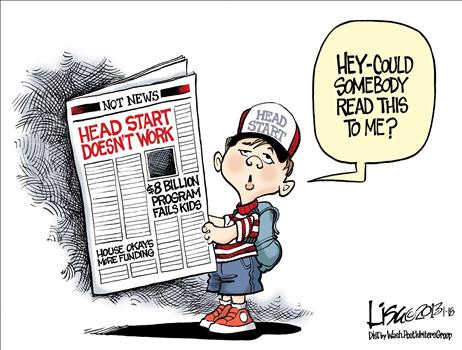


 The Daily Hatch