Yearly Archives: 2012

An open letter to President Obama (Part 50, A response to your budget)

On Bloomberg, Sessions Discusses Astounding Gimmicks In President’s Budget

Uploaded by on Feb 13, 2012

___

President Obama c/o The White House
1600 Pennsylvania Avenue NW
Washington, DC 20500

Dear Mr. President,

I know that you receive 20,000 letters a day and that you actually read 10 of them every day. I really do respect you for trying to get a pulse on what is going on out here.

You claim your budget reduces debt $4 trillion over the next 10 years? Let’s look at some facts from the Cato Institute:

Obama’s Busted Budget

by Michael D. Tanner

Michael Tanner is a senior fellow at the Cato Institute and author of Leviathan on the Right: How Big-Government Conservatism Brought Down the Republican Revolution.

Added to cato.org on February 15, 2012

This article appeared on National Review (Online) on February 15, 2012

In a town where bipartisan budget chicanery has been raised to an art form, President Obama’s latest budget proposal should be hailed as the da Vinci of fiscal obfuscation.

The president claims that his budget proposal reduces debt by $4 trillion over the next 10 years, combining $2.4 trillion in spending cuts with $1.6 trillion in tax hikes. Almost none of that is true.

Let’s start with the idea that the president’s budget would reduce the debt. That is true only using Washington math, under which a smaller increase is actually a decrease. In reality, the president’s budget adds $6.7 trillion to the national debt over the next 10 years, bringing it to nearly $25.5 trillion by 2022. That would be more than 100 percent of our GDP.

The president’s budget is dishonest and irresponsible.

And those spending cuts? The president actually counts $681 billion in cuts that were agreed to last year as part of the deal to raise the debt ceiling. Shouldn’t there be some sort of statute of limitations for how long you can claim credit for cuts that you have already made? And it should probably be shorter for cuts that you fought against every step of the way. The president also counts as a cut the $741 billion we will save from not occupying Iraq over the next 10 years, and from not being in Afghanistan a decade from now. Considering that we were never going to spend that money in the first place, that seems like slightly dishonest accounting. After all, think of all the savings we can claim by not invading Syria. And, finally, $595 billion of the claimed budget cuts is actually interest savings resulting from not having to borrow for the other phony cuts.

On the other hand, the president’s budget does include plenty of new spending. For example, there is $476 billion in new spending over 10 years for transportation projects, including the president’s favorite boondoggle, “high-speed rail.” There are also the usual bailouts for profligate state governments and teachers’ unions, including $30 billion to build more schools and $30 billion to hire teachers. Another stimulus anyone?

Overall, the president would increase federal spending from $3.8 trillion in 2013 to $5.82 trillion in 2022. That might not be as big an increase there might otherwise be, but in no way can it be called a cut.

The president isn’t even honest about his tax proposals. In the speech announcing his budget plan, President Obama devoted several paragraphs to a renewed push for the so-called Buffett rule, a new 30 percent minimum tax on the rich, based on the misleading claim that Warren Buffett pays a lower tax rate than his secretary. There is only one small problem: The president’s budget does not actually include any revenue from the Buffett rule. In fact, the budget provides no clue as to when or how such a tax might be implemented. The Buffett Rule isn’t even listed in the document’s summary of revenues and outlays. A cynic might believe that the Buffett Rule has more to do with campaign rhetoric than an actual budget plan.

Instead, what the budget does contain is a renewed call for tax increases on people and small businesses making as little as $200,000 per year. In addition, there’s the usual panoply of tax hikes on energy products, businesses, investment, and pretty much anything else the president can think of. The budget also helpfully points out that 2013 is the year in which most of the new taxes under Obamacare will take effect. Overall, the president would increase tax revenue to 20.1 percent of GDP. That’s a huge increase from the current 15.4 percent, and higher than the post–World War II average of 18.0 percent. Tax increases of that magnitude cannot help but slow economic growth and job creation.

But even if the president were to get every penny of the tax hikes he wants, his budget would never balance. The closest he would ever come would be in 2018, when the deficit would be only $575 billion. After that, deficits begin rising again, reaching $704 billion by 2022.

Fortunately for the president, he stops counting after 2022, about the time that the costs of entitlements such as Medicare and Social Security really begin to kick in, and his proposed budget does almost nothing to reform these troubled programs. One only has to look at the upward trajectory of both spending and taxes at the end of the budget window to see that president’s budget leaves us on the road to future bankruptcy.

Appearing last Sunday on Meet the Press, the president’s chief of staff — and former budget director — Jack Lew, declared that “The time for austerity is not now.” Judging by the president’s budget proposal, it’s not ever.

_____________

I don’t see any reductions in the debt but I do see a lot more tax and spend in your budget. Don’t you think we need to balance the budget now before we end up like Greece?

Thank you so much for your time. I know how valuable it is. I also appreciate the fine family that you have and your committment as a father and a husband.Sincerely,Everette Hatcher III, 13900 Cottontail Lane, Alexander, AR 72002, ph 501-920-5733, lowcostsqueegees@yahoo.com

2012 Press Conferences with Pitino and Calipari

John Calipari Pre-Louisville Press Conference

Uploaded by on Mar 27, 2012

Kentucky head basketball coach John Calipari talks about the upcoming game with Louisville in the Final 4.

______

Related posts:

Calipari’s been to 4 final fours and his record is 1-3 so far

> Kentucky Wildcats head coach John Calipari celebrated with the team after the University of Kentucky defeated Baylor University in the NCAA South Regional final played in the Georgia Dome in Atlanta, Ga., Sunday, March 25, 2012. This is second half action. UK won 82-70. Charles Bertram | Staff HERALD-LEADER Buy Photo Calipari is going […]

SEC gets one in final four: Kentucky

We came close to get two in but only Kentucky got in. Calipari’s wife and son can be seen in this picture below:     > Kentucky Wildcats head coach John Calipari hugged his son, Bradley, and his wife Ellen after the University of Kentucky defeated Baylor University in the NCAA South Regional final played […]

Are you ready for Calipari versus Pitino?

Here we go for the battle of the best two teams in Kentucky and possibly this game on March 31st will determine our national champion. USA Today reported in October 2011: Louisville’s Rick Pitino responds to John Calipari’s Kentucky taunt Rick Pitino isn’t going to take John Calipari’s taunts lying down. Louisville coach Rick Pitino […]

Hogs, Vols, Bulldogs and other SEC teams miss NCAA Tournament

Earlier I wrote the article Who gets in NCAA Tournament from SEC, Calipari and Martin say 5, I say 4, and everybody seemed to be saying the SEC would get in 5 or 6 and I even heard Rick Schaffer say it could be 7 if the SEC was lucky. Unfortunately, the SEC did not do […]

What the new SEC football schedule might look like in 2013

I have been wondering what the result will be in the SEC football rotation in upcoming schedules after 2012. Basketball is working great and the old SEC football schedule rotation worked great but what are they going to do with the 14 schools now? I think it will work best if they go to the […]

Arkansas ladybacks win first game ever in Knoxville

After getting beat at home by Florida by 30 points (the worst ever loss at Bud Walton) and then getting beat by Alabama at Bud Walton, it appears we have nothing to cheer about at Arkansas. However, hold the presses. The Arkansas ladybacks beat Tennessee for the first time ever in basketball last night. The […]

Who gets in NCAA Tournament from SEC, Calipari and Martin say 5, I say 4

Photo by Adam Brimer, copyright © 2012 Tennessee forward Jordan McRae (52), forward Jarnell Stokes (5) and guard Cameron Tatum (23) go up for a rebound during the first half against Arkansas at Thompson-Boling Arena Wednesday, Feb. 15, 2012. Tennessee won 77-58 over Arkansas. (ADAM BRIMER/NEWS SENTINEL) ______________________ I just don’t see 5 SEC schools […]

John Calipari’s tribute to mentor Gene Bartow

Photo by Wayne Crosslin Memphis State coach Gene Bartow comforts Larry Finch at the awards ceremony after the Tigers lost the NCAA final to UCLA in St. Louis in March 1973. Bartow died Tuesday after a long fight with cancer. _______________________ In 1972 I was 11 and I shot the basketball with a side arm […]

Sad for Hog and Tiger fans but Jarnell Stokes signs with Vols

Photo by Justin A. Shaw, Special to the News Sentinel Jarnell’s mother Shunta Stokes said his college decision was “solely up to him. I support his decision wholeheartedly, he’s the one that has to attend the school, not me. His dad and I are behind him 100%.” Yesterday when I got in the car at […]


Videos from Cato Institute on Obamacare

Cato’s Michael F. Cannon Discusses ObamaCare’s Individual Mandate

Uploaded by on Mar 26, 2012

http://www.cato.org/event.php?eventid=9074

The individual mandate to purchase health insurance is the linchpin of the Patient Protection and Affordable Care Act. It is among the issues to be handled by the Supreme Court beginning March 26, 2012.

Michael F. Cannon is the director of health policy studies at the Cato Institute.

____________________

Tim Sandefur Discusses ObamaCare’s Medicaid Expansion

Uploaded by on Mar 26, 2012

http://www.cato.org/event.php?eventid=9074

Tim Sandefur of the Pacific Legal Foundation explains some of the implications of the Affordable Care Act’s Medicaid expansion.

___________________

Randy Barnett Discusses ObamaCare at the Supreme Court

Uploaded by on Mar 26, 2012

http://www.cato.org/event.php?eventid=9074

Cato Institute Senior Fellow and Georgetown University law professor Randy E. Barnett discusses the arguments to be presented to the Supreme Court beginning March 26.

__________

Milton Friedman – Socialized Medicine at Mayo Clinic in 1978

People have been counting UL Cardinals out all along, Pressure on Calipari to win


Over and over in the 2012 NCAA Tournament the Louisville Cardinals have been counted out.  Now John Clay has counted them out again. (Wally Hall of the Arkansas Democrat-Gazette is picking Kentucky.)

The tables are now turned. Calipari’s program has the advantage in tradition, fan base and, in this case, talent. To whom much is given, much is expected.
A younger Calipari might have psyched himself out this week. The thought of playing his program’s in-state archrival, the thought of coaching against his “friendly acquaintance” for a spot in the championship game might have thrown him off his game.
Now, Calipari is 53. He’s older and wiser. He’s a better coach. Three years here, he’s done an incredible job.
He’s recruited fabulous players. He’s captured SEC titles and is now in his second Final Four in as many years, his fourth as a head coach.
He’s done everything the Big Blue Nation hoped he would do.
Except win the title.
If he doesn’t win this year, it doesn’t mean he’s not a terrific coach. It doesn’t mean he won’t get another shot. It doesn’t mean he won’t win one or two or three championships down the road.
But this is the one shot for this fabulous team. These 12 players won’t be together as a team again. Winning the championship, said freshman point guard Marquis Teague on Tuesday, has been what this team has thought about “since the first day.”
For Kentucky fans, the thought of Louisville, and Rick Pitino, keeping the Cats from the title is too much to bear.
In the minds of the most passionate, and irrational, it would be enough to ruin what has been a tremendous season.
Calipari can say whatever he wants about that — “A win or a loss doesn’t matter if the school is 12 miles from you or 1,000 miles from you,” Cal said Tuesday — and much of what he says may actually be true.
But this too is true: John Calipari has worked all his life to be in the position he will be in this weekend.
Now all he has to do is win.
John Clay: (859) 231-3226. Email: jclay@herald-leader.com. Twitter: @johnclayiv. Blog: johnclay.bloginky.com
Copyright 2012 Herald-Leader.

Calipari’s been to 4 final fours and his record is 1-3 so far

> Kentucky Wildcats head coach John Calipari celebrated with the team after the University of Kentucky defeated Baylor University in the NCAA South Regional final played in the Georgia Dome in Atlanta, Ga., Sunday, March 25, 2012. This is second half action. UK won 82-70. Charles Bertram | Staff HERALD-LEADER Buy Photo Calipari is going […]

SEC gets one in final four: Kentucky

We came close to get two in but only Kentucky got in. Calipari’s wife and son can be seen in this picture below:     > Kentucky Wildcats head coach John Calipari hugged his son, Bradley, and his wife Ellen after the University of Kentucky defeated Baylor University in the NCAA South Regional final played […]

Are you ready for Calipari versus Pitino?

Here we go for the battle of the best two teams in Kentucky and possibly this game on March 31st will determine our national champion. USA Today reported in October 2011: Louisville’s Rick Pitino responds to John Calipari’s Kentucky taunt Rick Pitino isn’t going to take John Calipari’s taunts lying down. Louisville coach Rick Pitino […]

Hogs, Vols, Bulldogs and other SEC teams miss NCAA Tournament

Earlier I wrote the article Who gets in NCAA Tournament from SEC, Calipari and Martin say 5, I say 4, and everybody seemed to be saying the SEC would get in 5 or 6 and I even heard Rick Schaffer say it could be 7 if the SEC was lucky. Unfortunately, the SEC did not do […]

What the new SEC football schedule might look like in 2013

I have been wondering what the result will be in the SEC football rotation in upcoming schedules after 2012. Basketball is working great and the old SEC football schedule rotation worked great but what are they going to do with the 14 schools now? I think it will work best if they go to the […]

Arkansas ladybacks win first game ever in Knoxville

After getting beat at home by Florida by 30 points (the worst ever loss at Bud Walton) and then getting beat by Alabama at Bud Walton, it appears we have nothing to cheer about at Arkansas. However, hold the presses. The Arkansas ladybacks beat Tennessee for the first time ever in basketball last night. The […]

Who gets in NCAA Tournament from SEC, Calipari and Martin say 5, I say 4

Photo by Adam Brimer, copyright © 2012 Tennessee forward Jordan McRae (52), forward Jarnell Stokes (5) and guard Cameron Tatum (23) go up for a rebound during the first half against Arkansas at Thompson-Boling Arena Wednesday, Feb. 15, 2012. Tennessee won 77-58 over Arkansas. (ADAM BRIMER/NEWS SENTINEL) ______________________ I just don’t see 5 SEC schools […]

John Calipari’s tribute to mentor Gene Bartow

Photo by Wayne Crosslin Memphis State coach Gene Bartow comforts Larry Finch at the awards ceremony after the Tigers lost the NCAA final to UCLA in St. Louis in March 1973. Bartow died Tuesday after a long fight with cancer. _______________________ In 1972 I was 11 and I shot the basketball with a side arm […]

Sad for Hog and Tiger fans but Jarnell Stokes signs with Vols

Photo by Justin A. Shaw, Special to the News Sentinel Jarnell’s mother Shunta Stokes said his college decision was “solely up to him. I support his decision wholeheartedly, he’s the one that has to attend the school, not me. His dad and I are behind him 100%.” Yesterday when I got in the car at […]


Woody Allen does it again “Woody Wednesday”

Annie Hall (1977) 
Annie Hall (1977)

Diane Keaton starred in the director’s New York-set film, which won both him and the actress Oscars. “Annie Hall was a wonderful experience for me,” Keaton said in her acceptance speech. “I would just like to say thanks to Woody and thank you.” 

Woody Allen does it again.

Oscars 2012: Woody Allen wins for original screenplay

February 26, 2012 |  7:30 pm

Woody Allen

“Midnight in Paris” writer-director Woody Allen won the Oscar for original screenplay at the 84th Academy Awards on Sunday night.

The Paris-set film stars Owen Wilson as a successful Hollywood screenwriter who roams the streets of the French city encountering literary and artistic megaliths of the past in his present. Allen directed the love letter to Paris, which also stars Rachel McAdams, Marion Cotillard, Adrien Brody, Tom Hiddleston and Kathy Bates.

Allen’s original screenplay won the Golden Globe and Writers Guild of America award and earned a nod at the BAFTA Film Awards. At the Oscars, Allen was nominated for director and the film was nominated  for best picture and art direction.

Oscars: Red Carpet | Quotes | Key Scenes Ballot | Cheat Sheet | Winners

The director previously won Oscars for “Hannah and Her Sisters” and “Annie Hall.”

“Midnight in Paris” bested “The Artist” writer-director Michel Hazanavicius, “Bridesmaids” writers Annie Mumolo & Kristen Wiig, “Margin Call” writer-director J.C. Chandor and “A Separation” writer-director Asghar Farhadi.

The Academy Awards are taking place in Hollywood and are being televised live on ABC. They are presented by the Academy of Motion Picture Arts and Sciences, whose membership was recently examined in depth by the Los Angeles Times.

For more Oscars breaking news and analysis, check back on 24 Frames.

Related posts:

According to Woody Allen Life is meaningless (Woody Wednesday Part 2)

Woody Allen, the film writer, director, and actor, has consistently populated his scripts with characters who exchange dialogue concerning meaning and purpose. In Hannah and Her Sisters a character named Mickey says, “Do you realize what a thread were all hanging by? Can you understand how meaningless everything is? Everything. I gotta get some answers.”{7} […]

“Woody Wednesday” Part 1 starts today, Complete listing of all posts on the historical people mentioned in “Midnight in Paris”

I have gone to see Woody Allen’s latest movie “Midnight in Paris” three times and taken lots of notes during the films. I have attempted since June 12th when I first started posting to give a historical rundown on every person mentioned in the film. Below are the results of my study. I welcome any […]

What can we learn from Woody Allen Films?

Looking at the (sometimes skewed) morality of Woody Allen’s best films. In the late ’60s, Woody Allen left the world of stand-up comedy behind for the movies. Since then, he’s become one of American cinema’s most celebrated filmmakers. Sure, he’s had his stinkers and his private life hasn’t been without controversy. But he’s also crafted […]

Nihilism can be seen in Woody Allen’s latest film “Midnight in Paris”

In one of his philosophical and melancholy musings Woody Allen once drily observed: “More than any other time in history, mankind faces a crossroads. One path leads to despair and utter hopelessness. The other, to total extinction. Let us pray we have the wisdom to choose correctly.” Life tortures Woody Allen posted by Rod Dreher […]

Movie Review of “Midnight in Paris” lastest movie by Woody Allen

Midnight in Paris – a delightfully entertaining film of wit, wonder and love Have you ever thought that you were born in the wrong time? Since I was a child, I found my love for MGM musicals set me apart from my friends. Are we really out of place, or is a sense of nostalgia […]

“Midnight in Paris” movie review plus review of 5 Woody Allen classics (video clips from Annie Hall)

Five favorite Woody Allen classics Add a comment Sean Kernan , Davenport Classic Movies Examiner June 11, 2011 Woody Allen’s new film “Midnight in Paris” starring Owen Wilson, Rachel McAdams and Oscar winner Marion Cotillard opened Friday, June 10th at Rave Motion Pictures in Davenport, Iowa. “Midnight in Paris” stars Owen Wilson as a blocked […]

Spending cut suggestions sent to Senator Mark Pryor electronically every Monday and displayed here on the www.thedailyhatch.org

Senator Mark Pryor wants our ideas on how to cut federal spending. Take a look at this video clip below:

I have faithfully sent spending cut suggestions to Senator Mark Pryor every Monday for almost a year now and at the same time I have posted all of them on www.thedailyhatch.org every monday after they have been sent electronically.

I have suggested cutting out the complete Dept of Education on several occasions.

Here are a few more I just emailed to him myself:

GUIDELINE #4: Terminate failed, outdated, and irrelevant programs.
President Ronald Reagan once pointed out that “a government bureau is the closest thing to eternal life we’ll ever see on earth.” A large portion of the current federal bureaucracy was created during the 1900s, 1930s, and 1960s in attempts to solve the unique problems of those eras.
Instead of replacing the outdated programs of the past, however, each period of government activism has built new programs on top of them. Ford Motor Company would not waste money today by building outdated Model T’s alongside their current Mustangs and Explorers. However, in 2004, the federal government still refuses to close down old agencies such as the Rural Utilities Service (designed to bring phones to rural America) and the U.S. Geological Survey (created to explore and detail the nation’s geography).
Government must be made light and flexible, adaptable to the new challenges the country will face in the 21st century. Weeding out the failed and outdated bureaucracies of the past will free resources to modernize the government.
Status Quo Bias. Lawmakers often acknowledge that certain programs show no positive effects. Regrettably, they also refuse to terminate even the most irrelevant programs. The most obvious reason for this timidity is an aversion to fighting the special interests that refuse to let their pet programs end without a bloody fight.
A less obvious reason is that eliminating government programs seems reckless and bold to legislators who have never known a federal government without them. Although thousands of programs have come and gone in the nation’s 228-year history, virtually all current programs were created before most lawmakers came to Washington. For legislators who are charged with budgeting and implementing the same familiar programs year after year, a sense of permanency sets in, and termination seems unfathomable.7 No one even remembers when a non-government entity addressed the problems.
The Department of Energy, for example, has existed for just one-tenth of the country’s history, yet closing it down seems ridiculous to those who cannot remember the federal government before 1977 and for whom appropriating and overseeing the department has been an annual ritual for years. Lawmakers need a long-term perspective to assure them the sky does not fall when a program is terminated. For example, the Bureau of Mines and the U.S. Travel and Tourism Administration, both closed in 1996, are barely remembered today.8
Instead of just assuming that whoever created the programs decades ago must have been filling some important need that probably exists today, lawmakers should focus on the future by asking themselves the following question: If this program did not exist, would I vote to create it? Because the answer for scores of programs would likely be “no,” Congress should:
  • Close down failed or outdated agencies, programs, and facilities, including:
  1. The U.S. Geological Survey9 (2004 spending: $841 million, discretionary);10
  2. The Maritime Administration ($633 million, discretionary);
  3. The International Trade Commission ($61 million, discretionary);
  4. The Economic Development Administration ($417 million, discretionary);
  5. The Low-Income Home Energy Assistance Program ($1,892 million, discretionary);
  6. The Technology Opportunities Program ($12 million, discretionary);
  7. Obsolete military bases;
  8. The Appalachian Regional Commission ($94 million, discretionary);
  9. Obsolete Veterans Affairs facilities;
  10. The Rural Utilities Service (-$1,493 million,11 mandatory); and
  11. Repeal Public Law 480′s non-emergency international food programs ($127 million, discretionary)

This is how bad it is getting:

  • Discretionary spending is the portion of the annual budget that Congress actually determines.
  • Since 2000, discretionary outlays surged 79 percent faster than inflation, to $1,408 billion. The “stimulus” is responsible for $111 billion of 2010 discretionary spending.
  • Between 1990 and 2000, $80 billion annually in new domestic spending was more than fully offset by a $100 billion cut in annual defense and homeland security spending, leaving (inflation-adjusted) discretionary spending slightly lower.
  • Since 2000, all types of discretionary spending have grown rapidly.
  • Overall, since 1990, domestic discretionary spending has risen 104 percent faster than inflation and defense/security discretionary spending has risen 51 percent.

Check out some of the links below:

Senator Pryor asks for Spending Cut Suggestions! Here are a few!(Part 139)

Senator Mark Pryor wants our ideas on how to cut federal spending. Take a look at this video clip below: Senator Pryor has asked us to send our ideas to him at cutspending@pryor.senate.gov and I have done so in the past and will continue to do so in the future. On May 11, 2011,  I emailed to […]

Senator Pryor asks for Spending Cut Suggestions! Here are a few!(Part 138)

Senator Mark Pryor wants our ideas on how to cut federal spending. Take a look at this video clip below: Senator Pryor has asked us to send our ideas to him at cutspending@pryor.senate.gov and I have done so in the past and will continue to do so in the future. On May 11, 2011,  I emailed to […]

Senator Pryor asks for Spending Cut Suggestions! Here are a few!(Part 137)

Senator Mark Pryor wants our ideas on how to cut federal spending. Take a look at this video clip below: Senator Pryor has asked us to send our ideas to him at cutspending@pryor.senate.gov and I have done so in the past and will continue to do so in the future. On May 11, 2011,  I emailed to […]

Senator Pryor asks for Spending Cut Suggestions! Here are a few!(Part 136)

Senator Mark Pryor wants our ideas on how to cut federal spending. Take a look at this video clip below: Senator Pryor has asked us to send our ideas to him at cutspending@pryor.senate.gov and I have done so in the past and will continue to do so in the future. On May 11, 2011,  I emailed to […]

Senator Pryor asks for Spending Cut Suggestions! Here are a few!(Part 135)

Senator Mark Pryor wants our ideas on how to cut federal spending. Take a look at this video clip below: Senator Pryor has asked us to send our ideas to him at cutspending@pryor.senate.gov and I have done so in the past and will continue to do so in the future. On May 11, 2011,  I emailed to […]

Senator Pryor asks for Spending Cut Suggestions! Here are a few!(Part 134)

Senator Mark Pryor wants our ideas on how to cut federal spending. Take a look at this video clip below: Senator Pryor has asked us to send our ideas to him at cutspending@pryor.senate.gov and I have done so in the past and will continue to do so in the future. On May 11, 2011,  I emailed to […]

Senator Pryor asks for Spending Cut Suggestions! Here are a few!(Part 133)

  Senator Mark Pryor wants our ideas on how to cut federal spending. Take a look at this video clip below: Senator Pryor has asked us to send our ideas to him at cutspending@pryor.senate.gov and I have done so in the past and will continue to do so in the future. On May 11, 2011,  I emailed […]

Senator Pryor asks for Spending Cut Suggestions! Here are a few!(Part 132)

Senator Mark Pryor wants our ideas on how to cut federal spending. Take a look at this video clip below: Senator Pryor has asked us to send our ideas to him at cutspending@pryor.senate.gov and I have done so in the past and will continue to do so in the future. On May 11, 2011,  I emailed to […]

Senator Pryor asks for Spending Cut Suggestions! Here are a few!(Part 131)

Senator Mark Pryor wants our ideas on how to cut federal spending. Take a look at this video clip below: Senator Pryor has asked us to send our ideas to him at cutspending@pryor.senate.gov and I have done so in the past and will continue to do so in the future. On May 11, 2011,  I emailed to […]

An open letter to President Obama (Part 49, A response to your budget)

On Bloomberg, Sessions Discusses Astounding Gimmicks In President’s Budget

Uploaded by on Feb 13, 2012

__________________

Rep. James Lankford Responds to President Obama’s $3.8 Trillion Budget

Uploaded by on Feb 13, 2012

Rep. James Lankford (R-OK) responded to President Obama’s FY 2013 budget proposal that fails to cut the deficit in half by the end of his first term as promised. The budget also delayed the tough decisions to cut spending and reform entitlements that are needed to avoid a debt crisis.

_______________________

Senator Blunt Participates in Press Conference in Response to President Obama’s Budget 2/13/2012

Uploaded by on Feb 13, 2012

U.S. Senator Roy Blunt (Mo.) participated in a press conference with GOP Senators in response to President Obama’s budget proposal on February 13, 2012.

_________________________

Corker Says President’s 2012 Budget Proposal Shows “Lack of Urgency” on Spending

Uploaded by on Feb 14, 2011

In remarks on the Senate floor today, U.S. Senator Bob Corker, R-Tenn., expressed disappointment in President Obama’s 2012 budget proposal, saying it displayed a “lack of urgency” to get federal spending under control. Corker has introduced the CAP Act to dramatically cut federal spending over the next decade.

President Obama c/o The White House
1600 Pennsylvania Avenue NW
Washington, DC 20500

Dear Mr. President,

I know that you receive 20,000 letters a day and that you actually read 10 of them every day. I really do respect you for trying to get a pulse on what is going on out here.

Below is a portion of an article from the group “Americans for Prosperity” and I wanted to share it with you since it agrees with the principles that I believe in.

AFP Responds to President Obama’s Budget


President Obama’s Fiscal Year 2013 Budget

Just another Tax-and-Spend Proposal

On February 13, President Obama released his budget proposal for the fiscal year starting October 1, 2012.  Just like every budget he has offered, this proposal spends too much, taxes too much, uses budget and accounting gimmicks, and fails to address the nation’s biggest challenges.  Last year, the President’s budget was so unserious that the Senate rejected it 97-0; not even a single member of his own party supported the plan.  This year he hasn’t done much better.

Budget Tricks and Accounting Gimmicks: The President claims over $4 trillion in deficit reduction in his budget based on either budget tricks or policies that he had nothing to do with.  A few of the gimmicks include:

  • $1.2 trillion in spending reductions from the 2011 debt ceiling debate. However, it was conservatives and House Republicans that pushed and pushed for spending reductions during this debate; the President wanted a debt ceiling increase with no cuts at all.
  • $617 billion in so-called “war savings” from slowing U.S. involvement in Iraq and Afghanistan.  Counting money we never planned to spend as savings is disingenuous at best.
  • $1.9 trillion in tax hikes.  No surprise here, he’s just another tax-and-spend politician.
  • $429 in spending on the Medicare doctors fix is buried in the baseline, covering up this additional spending without paying for it with other cuts.

No Leadership on Nation’s Biggest Budget Challenges: The three big entitlement programs are the main drivers of the nation’s budget woes. The President has once again failed to offer a serious proposal to address these programs.

  • The President has already installed his vision to try to control Medicare costs.  In his health care takeover, the President empowered 15 unelected, unaccountable bureaucrats at the so-called Independent Payment Advisory Board (IPAB) to cut provider reimbursements.  This plan will have the predictable effect of putting bureaucrats between patients and doctors, and creating shortages as even more doctors refuse to take Medicare patients.
  • Enrollment in Medicaid was greatly expanded under the President’s health care law with no plan to control costs.  More than 15 million people will be added to the welfare medicine rolls starting in 2014.  Instead of block granting the program to states so they can use proven cost control mechanisms, the President didn’t offer any serious proposal to rein in spending.
  • The President clung to the failed pay-as-you-go Social Security system that is currently a terrible deal for workers.  Higher taxes, lower benefits or a later retirement age will all make Social Security an even worse bargain for workers. Instead, we should move to an optional private accounts system that will restore the solvency of the system, increase individuals’ rate of return and encourage a personal ownership mentality in a program that is currently at the whim of politicians.
  • _____________________
  • Thank you so much for your time. I know how valuable it is. I also appreciate the fine family that you have and your committment as a father and a husband.Sincerely,Everette Hatcher III, 13900 Cottontail Lane, Alexander, AR 72002, ph 501-920-5733, lowcostsqueegees@yahoo.com
Are there brave conservatives out there?

I wish there were more like those 66 brave conservatives that voted against the compromise that kept the government going (see links below). Now it seems that the Republicans could also stop this excessive regulations if they wanted to, but do they have the will power? I wish we had more like those 66!!!!

No More GOP Whining about Overregulation

by Richard W. Rahn

Richard W. Rahn is a senior fellow at the Cato Institute and chairman of the Institute for Global Economic Growth.

Added to cato.org on March 27, 2012

This article appeared in Washington Times on March 27, 2012

The Supreme Court last week ruled against the Environmental Protection Agency (EPA) in a unanimous decision. The EPA had charged a couple with violating the Clean Water Act. It claimed their property was a “wetland” and said it would fine them up to $75,000 per day — but there was no water on the property and there had been no judicial review of the charge. Where are the members of Congress whose funding enables the EPA to engage in this tyranny?

We are used to various government agencies overreaching and then seeing members of Congress go on TV and complain about what the government agencies are doing. The fact is, Congress (both parties are guilty) has failed in its oversight responsibilities and continues to fund agencies that ignore both the Constitution and the law.

Republicans whine that they cannot control spending because they only control one half of Congress. But the plain fact is that the Constitution is very specific. Any spending bill must be passed by both houses of Congress and signed into law by the president. Setting aside for the moment the budget agreements that House Republicans, Senate Democrats and the president made about the overall level of spending and funding of the entitlements, there is still much House Republicans can do through the appropriations process to prevent many of the excesses of government.

Richard W. Rahn is a senior fellow at the Cato Institute and chairman of the Institute for Global Economic Growth.


More by Richard W. Rahn


For instance, there is nothing to prevent the House Republicans from refusing to fund the EPA’s desired budget until the agency puts procedures in place to guarantee the basic constitutional rights of all Americans, including independent judicial review, before any fines or criminal charges are levied. These same rules also should apply to the Securities and Exchange Commission (well-known for its incompetence and overreaching), the Internal Revenue Service (IRS) and other agencies that have a record of abusing citizens.

Most federal agencies are required to do a cost-benefit analysis before issuing any major rule or regulation, normally defined as having an impact of $100 million. Many agencies only pay lip service to the requirement, rarely having truly independent and competent staff to do the required analysis. Another stunt used by bureaucrats to avoid doing cost-benefit studies is always to assume that the cost of the proposed regulation is under the $100 million threshold by ignoring many of the indirect costs of the regulation.

Some agencies claim they are not required to comply with the cost-benefit requirements — the IRS being one example. The IRS is now writing rules for the Foreign Account Tax Compliance Act (FATCA). The rules could drive out much of the more than $10 trillion foreign portfolio investment in the United States, which would cost millions of jobs. Has the IRS done an independent cost-benefit analysis of the regulation? No. Has the IRS looked at the impact of the regulation on Americans living abroad? No. Has the IRS done an assessment of the impact of the regulation on our relations with friendly foreign countries? No. Has the Republican House banned the IRS from spending funds on enforcing what is likely to be a very destructive regulation until a thorough and independent cost-benefit study on the regulation is done? No.

Wake up, congressional Republicans. When the foreign investments stop flowing freely next year and millions of Americans are losing jobs as a result, you are going to be blamed — and properly so — because you did nothing to stop it. You have the power to stop it and many other outrages. You don’t need Senate Majority Leader Harry Reid and Senate Democrats or the president to give you permission to stop this.

House Republicans, when are you going to find the guts to stop funding National Public Radio (NPR)? Much of its taxpayer-funded but liberally biased programming attacks only you and your base, but you sit there just waiting to be hit. The folks at NPR know that you are all talk and no action so they continue to misuse public funds to promote a Democrat-only agenda.

Many Republicans continue to vote for appropriations for international outfits such as the Organization for Economic Co-operation and Development, which has an anti-tax competition agenda and global minimum-tax agenda, and the International Monetary Fund, which indirectly helped fund the Greek bailout. Both organizations damage American interests. Members of Congress, please explain why U.S. taxpayers should have some of their hard-earned money spent to help the Greeks. The administration and members of Congress argue that no U.S. taxpayer money was directly used, but money is fungible. Just because it goes through several pockets does not mean that U.S. taxpayers did not contribute.

Tea Partyers and others who are concerned about the growth of abusive government need to pay attention and make it clear they will oppose those, including Republicans who call themselves fiscal conservatives, who vote to fund these abusive agencies and activities.

The Sixty Six who resisted “Sugar-coated Satan Sandwich” Debt Deal (Part 26)

The Sixty Six who resisted “Sugar-coated Satan Sandwich” Debt Deal (Part 26) This post today is a part of a series I am doing on the 66 Republican Tea Party favorites that resisted eating the “Sugar-coated Satan Sandwich” Debt Deal. Actually that name did not originate from a representative who agrees with the Tea Party, […]

The Sixty Six who resisted “Sugar-coated Satan Sandwich” Debt Deal (Part 25)

Uploaded by RepJoeWalsh on Jun 14, 2011 Our country’s debt continues to grow — it’s eating away at the American Dream. We need to make real cuts now. We need Cut, Cap, and Balance. The Sixty Six who resisted “Sugar-coated Satan Sandwich” Debt Deal (Part 25) This post today is a part of a series […]

The Sixty Six who resisted “Sugar-coated Satan Sandwich” Debt Deal (Part 23)

The Sixty Six who resisted “Sugar-coated Satan Sandwich” Debt Deal (Part 23) This post today is a part of a series I am doing on the 66 Republican Tea Party favorites that resisted eating the “Sugar-coated Satan Sandwich” Debt Deal. Actually that name did not originate from a representative who agrees with the Tea Party, […]

The Sixty Six who resisted “Sugar-coated Satan Sandwich” Debt Deal (Part 22)

The Sixty Six who resisted “Sugar-coated Satan Sandwich” Debt Deal (Part 22) This post today is a part of a series I am doing on the 66 Republican Tea Party favorites that resisted eating the “Sugar-coated Satan Sandwich” Debt Deal. Actually that name did not originate from a representative who agrees with the Tea Party, […]


Bill Clinton getting praise from Cato Institute

Spending Restraint, Part I: Lessons from Ronald Reagan and Bill Clinton

Uploaded by on Feb 14, 2011

Ronald Reagan and Bill Clinton both reduced the relative burden of government, largely because they were able to restrain the growth of domestic spending. The mini-documentary from the Center for Freedom and Prosperity uses data from the Historical Tables of the Budget to show how Reagan and Clinton succeeded and compares their record to the fiscal profligacy of the Bush-Obama years.

______________

I wish we could get a budget that did not spend away our children’s future. Dan Mitchell of the Cato Institute feels the same way about this issue and he actually praises Democratic President Bill Clinton from Arkansas for his efforts to keep spending down in the 1990’s. Take a look:

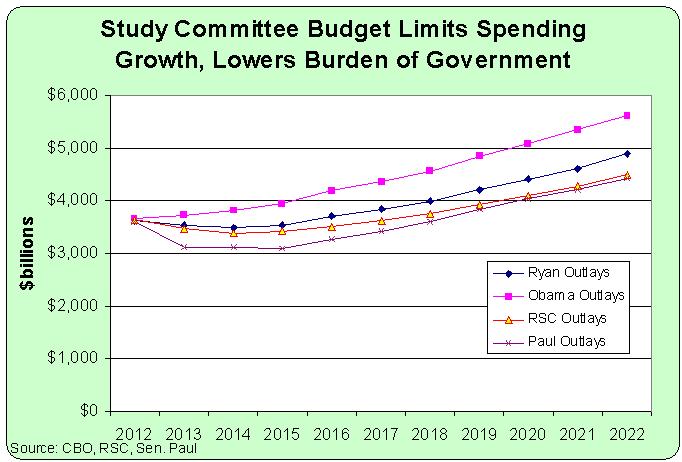
A couple of weeks ago, I offered some guarded praise for Paul Ryan’s budget, pointing out that it satisfies the most important requirement of fiscal policy by restraining spending – to an average of 3.1 percent per year over the next 10 years – so that government grows slower than the productive sector of the economy (I call this my Golden Rule).

I was more effusive in my comments about Senator Rand Paul’s budget, which limited the growth of the federal budget over the next 10 years to an average of 2.2 percent each year.

Now the Republican Study Committee from the House of Representatives has put forth a plan that also deserves considerable applause. Like Senator Paul, the RSC plan would impose immediate significant fiscal discipline such that spending in 2017 would be about the same level as it is this year.

Think of this as being similar to the very successful fiscal reforms of New Zealand and Canada in the 1990s.

After the initial period of spending restraint, the budget would be allowed to grow, but only about as fast as the private economy. This chart shows spending levels for the Obama budget, the Paul Ryan budget, the Rand Paul budget, and the RSC budget.

A couple of final points.

1. For all the whining and complaining from the pro-spending lobbies, the RSC budget is hardly draconian. Federal spending, measured as a share of GDP, would only drop to where it was when Bill Clinton left office.

2. One preferable feature of the Rand Paul budget is that the Kentucky Senator eliminates four needless and wasteful federal departments – Commerce, Education, Energy, and Housing and Urban Development. As far as I can tell, no departments are eliminated in the RSC plan. Also, Senator Paul’s plan is bolder on tax reform, scrapping the corrupt internal revenue code and replacing it with a simple and fair flat tax.

3. The RSC comes perilously close to winning a Bob Dole Award. The first chapter of their proposal fixates on symptoms of debt and deficits rather than the real problem of excessive government spending. Indeed, the first six charts all relate to deficits and debt, creating an easy opening for leftists to say they can solve the mis-defined problem with higher taxes.

There are lots of other details worth exploring, but the main lesson is that restraining spending is the key to good fiscal policy.

And that’s what’s happening.  Indeed, the good news is that policymakers have proposed several budget plans that would shrink the burden of spending as a share of GDP. It’s refreshing to debate the features of several good plans (rather than comparing the warts in the competing plans during the big-government Bush years).

The bad news is that Harry Reid and Barack Obama will succeed in blocking any progress this year, so America will move ever closer to becoming another Greece.

____________

Spending Restraint, Part II: Lessons from Canada, Ireland, Slovakia, and New Zealand

Uploaded by on Feb 22, 2011

Nations can make remarkable fiscal progress if policy makers simply limit the growth of government spending. This video, which is Part II of a series, uses examples from recent history in Canada, Ireland, Slovakia, and New Zealand to demonstrate how it is possible to achieve rapid improvements in fiscal policy by restraining the burden of government spending. Part I of the series examined how Ronald Reagan and Bill Clinton were successful in controlling government outlays — particularly the burden of domestic spending programs. www.freedomandprosperity.org

______________

Dan Mitchell of the Cato Institute takes on entitlement reform

It is the elephant in the room that nobody wants to talk about. Here Dan Mitchell takes it on.

Most people have a vague understanding that America has a huge long-run fiscal problem.

They’re right, though they probably don’t realize the seriousness of that looming crisis.

Here’s what you need to know: America’s fiscal crisis is actually a spending crisis, and that spending crisis is driven by entitlements.

More specifically, the vast majority of the problem is the result of Medicaid, Medicare, and Social Security, programs that are poorly designed and unsustainable.

America needs to fix these programs…or eventually become another Greece.

Fortunately, all of the problems can be solved, as these three videos demonstrate.

The first video explains how to fix Medicaid.

Promote Federalism and Replicate the Success of Welfare Reform with Medicaid Block Grants

Uploaded by on Jun 26, 2011

The Medicaid program imposes high costs while generating poor results. This Center for Freedom and Prosperity Foundation video explains how block grants, such as the one proposed by Congressman Paul Ryan, will save money and improve healthcare by giving states the freedom to innovate and compete.

The second video shows how to fix Medicare.

Saving Medicare: Free Market Reforms Are Better than Bureaucratic Rationing

Uploaded by on May 17, 2011

This Center for Freedom and Prosperity Foundation video explains how a “premium-support” plan would solve Medicare’s fiscal crisis and improve the overall healthcare system. This voucher-based system also would protect seniors from bureaucratic rationing. http://www.freedomandprosperity.org

And the final video shows how to fix Social Security.

Saving Social Security with Personal Retirement Accounts

Uploaded by on Jan 10, 2011

There are two crises facing Social Security. First the program has a gigantic unfunded liability, largely thanks to demographics. Second, the program is a very bad deal for younger workers, making them pay record amounts of tax in exchange for comparatively meager benefits. This video explains how personal accounts can solve both problems, and also notes that nations as varied as Australia, Chile, Sweden, and Hong Kong have implemented this pro-growth reform. www.freedomandprosperity.org

_______________________

Regular readers know I’m fairly gloomy about the future of liberty, but this is one area where there is a glimmer of hope.

The Chairman of the House Budget Committee actually put together a plan that addresses the two biggest problems (Medicare and Medicaid) and the House of Representatives actually adopted the proposal.

The Senate didn’t act, of course, and Obama would veto any good legislation anyhow, so I don’t want to be crazy optimistic. Depending on how things play out politically in the next six years, I’ll say there’s actually a 20 percent chance to save America.