Milton Friedman in his series “Free to Choose” used a pencil as a simple example to should have the “invisible hand” of the freemarket works (phrase originally used by Adam Smith).
“How grateful I have been over the years for the cogency of Friedman’s ideas which have influenced me. Cherishers of freedom will be indebted to him for generations to come.” —Alan Greenspan, former Chairman, Federal Reserve System
“Right at this moment there are people all over the land, I could put dots on the map, who are trying to prove Milton wrong. At some point, somebody else is trying to prove he’s right That’s what I call influence.” —Paul Samuelson, Nobel Laureate in Economic Science
In 1980 when I first sat down and read the book “Free to Choose” I was involved in Ronald Reagan’s campaign for president and excited about the race. Milton Friedman’s books and film series really helped form my conservative views. Take a look at one of my favorite films of his and if you take time to watch these episodes on inflation then you see how Ronald Reagan was able to bring inflation under control in the 1980’s with the help of Paul Volker of the Federal Reserve:
Milton Friedman’s Free to Choose (1980), episode 3 – Anatomy of a Crisis. part 1
FREE TO CHOOSE: Anatomy of Crisis
Friedman Delancy Street in New York’s lower east side, hardly one of the city’s best known sites, yet what happened in this street nearly 50 years ago continues to effect all of us today. Wall Street. Most of us know what happened here 50 years ago. Inside the Stock Exchange on October 29, 1929, the market collapsed. It came to be known as Black Thursday. The Wall Street crash was followed by the worst depression in American history. That depression has been blamed on the failure of capitalism. It was no such thing but the myth lives on. What really happened was very different.
Although things looked healthy on the surface, business had begun to turn down in mid 1929. The crash intensified the recession. So did continuing bank failures in the south and Midwest. But the recession only became a crisis when these failures spread to New York and in particular to this building, then the headquarters of the Bank of United States. The failure of this bank had far reaching effects and need never have happened.
It was something of a historical accident that this particular bank played the role it did. Why did it fail? It was a perfectly good bank. Banks that were in far worse financial shape had come under difficulties before it did and had, through the cooperation of other banks, been saved. The reason why it wasn’t saved has to do with its rather special character. First its name, Bank of United States, a name that made immigrants believe it was an official governmental bank although in fact it was an ordinary commercial bank. Second its ownership, Jewish, both its name and the character of its ownership which had so much to do with attracting the large number of depositors from the many Jewish businessmen in the city of New York. Both of them also had the effect of alienating other bankers who did not like the special advantage of the name and did not like the character of the ownership. As a result, other banks were all too ready to spread rumors, to help promote an atmosphere in which runs got started on the bank and which it came into difficulty. And they were less then usually willing to cooperate in the efforts that were made to save it.
Only a few blocks away is the Federal Reserve Bank of New York. It was here that the Bank of United States could have been saved. Indeed, the Federal Reserve System had been set up 17 years earlier precisely to prevent the worst consequences of bank failures.
The Federal Reserve Bank of New York, whose directors today meet in this room, devised a plan in cooperation with the superintendent of banking of the State of New York to save the Bank of United States. Their plan called for merging the Bank of United States with several other banks and also providing a guarantee fund to be subscribed to by still other bankers to assure the depositors that the assets of the Bank of United States were safe and sound. The Reserve Bank called meeting after meeting to try to put the plan into effect. It was on again, off again. But finally, after an all night meeting on December 10, 1930, the other bankers, including in particular John Pierpont Morgan, refused to subscribe to the guarantee fund and the plan was off. The next day the Bank of United States closed its doors, never again to open for business. For its depositors who saw their savings tied up and their businesses destroyed, the closing was tragic. Yet when the bank was finally liquidated, in the worst years of the depression, it paid back 92.5 cents on the dollar. Had the other banks cooperated to save it, no one would have lost a penny.
For the other New York banks, they thought closing the Bank of United States would have purely local effects. They were wrong. Partly because it had so many depositors, partly because so many of the depositors were small businessmen, partly because it was the largest bank that had ever been permitted to fail in the United States up to this time, the effects were far reaching. Depositors all over the country were frightened about the safety of their funds and rushed to withdraw them. There were runs. There were failures of banks by the droves. And all the time the Federal Reserve System stood idly by when it had the power and the duty and the responsibility to provide the cash that would have enabled the banks to meet the insistent demands of their depositors without closing their doors.
The way runs on banks can spread and can be stopped is a consequence of the way our bank system works. You may think that when you take some cash to a bank and deposit it, the bank takes that money and sticks it in a vault somewhere to wait until you need it again to turn it back over to you.
Bank teller: Okay, how would you like this? Two tens, one five and five ones. Okay.
Friedman: The bank does no such thing with it. It immediately takes a large part of what you put in and lends it out to somebody else. How do you suppose it earns interest, to pay its expenses, or pay you something for the use of your money? The result is that if all depositors in all the banks tried all at once to convert their deposits into cash, there wouldn’t be anything like enough cash in the banks of the country to meet their demands. In order to prevent such an outcome, in order to cut short a run, it is necessary to have some way either to stop people from asking for it, or to have some additional source from which cash can be obtained. That was intended to be the purpose of the Federal Reserve System. It was to provide the additional cash to meet the demands of the depositors when a run arose.
A classic example of how this system could and did work properly can be found over 2,000 miles from New York near the great Salt Lake in Utah.
In the early 30’s some banks in Salt Lake City and surrounding towns began to get into difficulties. The owners of one them were smart enough to see what had to be done to keep their banks open and courageous enough to do it. When fearful depositors began to clamor to withdraw all their money, one of George Eccles jobs was to brief his cashiers on how to handle the run.
TEMIN: We don’t think the big capital arose before the government did? VON HOFFMAN: Listen, what are we doing here? I mean __ defending big government is like defending death and taxes. When was the last time you met anybody that was in favor of big government? FRIEDMAN: Today, today I met Bob Lekachman, I […]
worked pretty well for a whole generation. Now anything that works well for a whole generation isn’t entirely bad. From the fact __ from that fact, and the undeniable fact that things are working poorly now, are we to conclude that the Keynesian sort of mixed regulation was wrong __ FRIEDMAN: Yes. LEKACHMAN: __ or […]
MCKENZIE: Ah, well, that’s not on our agenda actually. (Laughter) VOICE OFF SCREEN: Why not? MCKENZIE: I boldly repeat the question, though, the expectation having been __ having been raised in the public mind, can you reverse this process where government is expected to produce the happy result? LEKACHMAN: Oh, no way. And it would […]
The massive growth of central government that started after the depression has continued ever since. If anything, it has even speeded up in recent years. Each year there are more buildings in Washington occupied by more bureaucrats administering more laws. The Great Depression persuaded the public that private enterprise was a fundamentally unstable system. That […]
Worse still, America’s depression was to become worldwide because of what lies behind these doors. This is the vault of the Federal Reserve Bank of New York. Inside is the largest horde of gold in the world. Because the world was on a gold standard in 1929, these vaults, where the U.S. gold was stored, […]
George Eccles: Well, then we called all our employees together. And we told them to be at the bank at their place at 8:00 a.m. and just act as if nothing was happening, just have a smile on their face, if they could, and me too. And we have four savings windows and we […]
Milton Friedman’s Free to Choose (1980), episode 3 – Anatomy of a Crisis. part 1 FREE TO CHOOSE: Anatomy of Crisis Friedman Delancy Street in New York’s lower east side, hardly one of the city’s best known sites, yet what happened in this street nearly 50 years ago continues to effect all of us today. […]
This video is from Adrian Roger’s Memorial Service held at Bellevue Baptist Church in Memphis, TN in 2005. He was one of the greatest preachers of the past century and I praise God for the impact he has had on my life and ministry. To learn more about Adrian Rogers and his continuing ministry, visit: www.lwf.org
CORDOVA, Tenn. (BP)–Two longtime friends of Adrian Rogers were among those who stepped up to the pulpit at his funeral, in their case, to voice the admiration of fellow pastors for his influence in their lives.
“Let us pray that a double portion of Adrian Rogers’ spirit shall be upon us all,” said Jerry Vines, pastor of First Baptist Church in Jacksonville, Fla., and a former Southern Baptist Convention president -– as was Rogers, who died Nov. 15 at the age of 74 after a battle with cancer and pneumonia.
“He taught us preachers, ‘Holiness is not the way to Jesus, but Jesus is the way to holiness,’” Ken Whitten, pastor of Idlewild Baptist Church in Tampa, Fla., told the crowd at Rogers’ Nov. 18 funeral at Bellevue Baptist Church in suburban Memphis.
A transcript of their remarks follows:
JERRY VINES
“I’ve been asked to speak on behalf of Dr. Rogers’ friends and his brothers in the ministry. Joyce reminded me Tuesday night that very often he and I would sermonize in our telephone calls. I must say to you, on more than one occasion I was able to creatively disguise one of his outlines -– as have we all. You haven’t preached until you’ve preached an Adrian Rogers sermon.
“So permit me just briefly to sermonize. When Elisha saw the prophet Elijah carried into heaven, he cried, ‘My father, my father! The chariot of Israel and the horsemen thereof. It was a cry of sadness, a cry of witness, a cry of gladness.
“It is a cry of sadness. ‘My father, my father!’ Elisha speaking out of the deeply personal grief he is experiencing. There is something deeply personal about that word. We grieve this evening, not to the level or to the degree of the Rogers family, but we bring our grief alongside your grief. Who could not but grieve? Who could have a dry eye over the loss of this good and faithful man? The Bible says we’re to sorrow not as those who have no hope, but it does not say we are to sorrow not. Our Christian faith does not dehumanize us.
“It is a cry of witness. There is something definitely testimonial. Notice the language carefully. ‘The chariot of Israel and the horsemen thereof.’ Normally it was spoken of the chariots -– plural -– of Israel. And yet when God gets ready for Elijah to go to heaven, he sends a chariot and Elisha recognizes that this chariot represents this prophet of God, Elijah. One man, who challenged and conquered the prophets of Baal, who through the power of his prayers could call down fire or rain, whichever was needed on the occasion…. Adrian Rogers was our acknowledged leader…. He led us in the Southern Baptist Convention conservative resurgence. He led by the godliness of his character, the Christ-likeness of his behavior and the power of his spirit-filled life. It is a cry of witness. There is something testimonial.
“It is a cry of gladness. There is something delightfully supernal about it. I have chosen that word, Joyce, carefully — supernal. I think Adrian would like that word. It’s an old word. You pick it up in some of the hymns, Steve, of old. Supernal. Celestial. Coming from on high. ‘My father, my father! The chariot of Israel and the horsemen thereof. As he was propelled by a whirlwind, escorted by a chariot of fire into the presence…. When he went into the hospital, most of you read these things, he said, ‘I’m in a win-win situation.’ It sounds just like him…. He said many times, ‘When my time comes, don’t be sorry for me. I will be kicking up gold dust on the streets of glory.’
“So what’s left for us? Let us pray that a double portion of Adrian Rogers’ spirit shall be upon us all.”
America’s public education system is failing. We’re spending more money on education but not getting better results for our children.
That’s because the machine that runs the K-12 education system isn’t designed to produce better schools. It’s designed to produce more money for unions and more donations for politicians.
For decades, teachers’ unions have been among our nation’s largest political donors. As Reason Foundation’s Lisa Snell has noted, the National Education Association (NEA) alone spent $40 million on the 2010 election cycle (source: http://reason.org/news/printer/big-education-and-big-labor-electio). As the country’s largest teachers union, the NEA is only one cog in the infernal machine that robs parents of their tax dollars and students of their futures.
Students, teachers, parents, and hardworking Americans are all victims of this political machine–a system that takes money out of taxpayers’ wallets and gives it to union bosses, who put it in the pockets of politicians.
If you want to change this nation in a big way then you will at the fact that in the last 40 years we have increased our educational spending every year and our test scores have dropped. The problem is not money but education competition. We don’t need to spend over $29,000 per kid in the Washington D.C. district when we could give vouchers out (under $9000 per kid) and have better results. Take a look at this article from Milton Friedman.
Michelle: you are the grandfather of school vouchers do you feel victorious?
Mr. Friedman: Far from victorious, but very optimistic and hopeful. We are at the beginning of the task because as of the moment vouchers are available to only a very small amount of children. Our goal is to have a system in which every family in the U.S. will be able to choose for itself the school to which its children go we are far from that ultimate result. If we had that a system of free choice we would also have a system of competition, innovation which would change the character of education. You know our educational system is one of the most backwards things in our society in the may we teach people they did 200 years ago there is a person in the front of the room there are children sitting down at the bottom and they are being talked to can you name any other industry in the U.S. which is as technologically backward I can name one and only one..the legislature for the same reason. Both are monopolies the elementary and secondary school system is the single most Socialist industry in the U.S. leaving aside the military, but aside from the military its a major socialist industry, it is centralized and the control comes from the center and the difficulty of having a monopoly in which people cannot choose has been exacerbated by the fact that it has been largely taken over by teachers unions, the national education association and the american federation of teachers and the unions. Understandably I do not blame them but they are interested in the welfare of their members not the welfare of the children and the result is they have introduced a degree of rigidity which makes it impossible to reform the public school system from within. Reform has to come through competition from the outside and the only way you can get competition is by making it possible for parents to have the ability to choose.
Michelle: Give to me a model, an example of how it would work
Mr. Friedman: Very simple, take the extreme the government says we are willing to finance schooling for every child. The government compels children. If you look at the role of government in education there are 3 different levels there is a level of compulsory the government says every child must go to school until such and such and age. That is the equivalent of saying if you are going to drive a car you must have a license. The second stage is funding not only do we require you to have an education but the government is willing to pay for that schooling. That would be equivalent to saying the government is willing to pay for your car that you drive. The third level is running the educational industry that would be the equivalent of the government manufacturing the automobile or to put it in a different image consider food stamps today. Food stamps are funds provided by the government but if that were to be runned like the schools they would say everybody has to use these food stamps at a government grocery and each person with food stamps is assigned to a particular government grocers so the only way you can get your food stamps is by going to that grocer do you think those groceries would be very good? We know what the situation is in schooling people say why now and not 50-75 years ago? Well, when I went to high school t hat was a long time ago in the 1920s there were a 150,000 school districts in the U.S and the population was half what it is now. Today, there are fewer than 15,000 school districts. So it used to be that you really did have competition cause you had small school districts and parents had a good deal of control over those school districts, but increasingly we have shifted to very large school districts, to centralized control, to a system in which the governmental officials in which the educational professionals control it and like every socialist industry it produces a product that is very expensive and of very low quality. Of course it is not uniform there are some very good schools do not misunderstand me, but there are also some very bad ones.
Michelle: I interviewed some folks who are against school vouchers and they say that if you really want to help out a school what you should do is provide high quality early childhood education, small classes, small schools, summer school available to children who want it. Put money to those items which they claim would work.
Mr. Friedman: They don’t, we have been doing that. The amount of money spent per child adjusted for inflation has something like doubled or tripled over the last 20 years. Twenty years ago we had this report A Nation at Risk that pointed out all of the difficulties I just referred to and which pointed out this was a first generation that was going to be less schooled then its parents. We are now in the next generation and will be even less well schooled. We have had every possible effort you could have from reform from within. It is not just in schools it is in any area reform has to come from outside it has to come from competition. Let me illustrate that from within the school system. the united states from all accounts ranks #1 in higher education people from all over the world regard the United States colleges and universities the best and most varied. On the other hand in every other international comparison we rank near the bottom in elementary and secondary education why the difference?…one word..choice. The elementary and secondary education the school picks the child it picks its customer. In higher education the customer picks its school, you have choice that makes all the difference in the world. It means competition forces product. Look over the rest of the economy is there any area in the u.s. in which progress has not required progress from the outside. Look at the telephone industry when it was broken down into the little bells and opened up the competition it started a period of rapid innovation and development the key word is competition and the question is how can you get competition. only by having the customer choosing.
Michelle: There is concern that money is going to religious schools. That the majority of the students in voucher programs that exist use them to attend schools with religious affiliation?
Mr. Friedman: Why? Because the vouchers are so small in some cases. It is true that of the private schools in the u.s the great bulk of them are religious. that is for one simple reason here is someone selling something for nothing somebody down the street is giving away chocolate and you want to get into the business of selling chocolate that is kind of tough isn’t it here at schools children can attend them they are not free they are paying for it in the form of taxes but there is no specific charge for going to that school somebody else is going to offer it. The churches, the religious organizations have had a real advantage in that they were the only ones around who were in a position to subsidize the education and keep the fees down low. If you open it wide the most recent case was Ohio, cleveland case. The voucher that they had had a max value of $2,500 now it is not easy to provide a decent education at $2,500 and make money at it make it pay at the same time the state of Ohio was spending something like over $7,000 per child on schooling if that voucher had been $7,000 instead of $2,500 I have no doubt that there would have been a whole raft of new private, non-profit both profit and non-profit schools. That is what has happened in Milwaukee. Milwaukee has a voucher system and today the fraction of the voucher users in Milwaukee going to religious schools is less than the fraction going to religious schools was before this system started because there have been new schools developed and some of them have been religious but many of them are not. In any event, the Supreme Court has settled that issue they have said that if it is the choice of the parent if there are alternatives available there are government schools, charter schools, private non-denominational schools, private denominational schools so long as the choice is in the hands of the parent that is not a violation of the 1st amendment.
Michelle: You have a friend and an ally in the White House when it comes to vouchers
Mr. Friedman: I should say. Mr. Bush has always been in favor. He is in favor of free choice. Remember vouchers are a means not an end the purpose of vouchers is to enable parents to have free choice and the purpose of having free choice is to provide competition and allow the educational industry to get out of the 17th century and get into the 21st century and have more innovation and more evolvement. There is no reason why you cannot have the same kind of change in the provision of education as you have had in industries like the computer industry, the television industry and other things.
Michelle: Is it refreshing to have a President that, Bill Clinton was firmly against vouchers.
Mr. Friedman: No, it is a case of circumstances when he was Governor of Arkansas he was not against vouchers. He was in favor, but when he became President he came out against vouchers. I should say he did not oppose vouchers as Governor and he did as President and that was for political reasons. People don’t recognize how powerful politically the teachers unions are. Something like a quarter of all the delegates at the democratic national convention are from the teachers union. They are probably the most powerful pressure group in the U.S… very large funds, very large number of people and very active politically.
Michelle: We talk in the office about how President Bush has some very Friedmanesq ideas.
Mr. Friedman: They are not freidmanesq they are just good ideas. I hope that is true anyway. I think very highly of President Bush and I think in these areas don’t misunderstand me that is not a blanket statement there are some things he has done that I disagree with, but taken as a whole he has been moving in the right direction of trying to move toward a smaller more limited government trying to provide more freedom and more initiative in all areas. His philosophy on Medicare is the same as his philosophy in schools.
Michelle: Is that refreshing?
Mr. Friedman: It is an interesting thing, if you look at the facts the one area the area in which the low income people of this country, the blacks and the minority are most disadvantaged is with respect with the kinds of schools they can send their children to. The people who live in Harlem or the slums or the corresponding areas in LA or San Francisco they can go to the same stores, shop in the same stores everybody else can, they can buy the same automobiles, they can go to supermarket but they have very limited choice of schools everybody agrees that the schools in those areas are the worst they are poor. Yet, here you have a Democrat who allege their interest is to help the poor and the low income people here you have to take a different point every poll has shown that the strongest supporters of vouchers are the low income blacks and yet hardly a single black leader has been willing to come out for vouchers there were some exceptions Paul Williams in Milwaukee who was responsible for that…and a few others
Michelle: Why do you think that is?
Mr. Friedman: For obvious reasons, political. It has been to the self interest to the leaders the school system as long as its governmental its a source of power and jobs to hand around and funds to dispose of. If it is privatized that disappears and the other aspect of it is the power of the teachers unions. Right now those of us that are in the upper income classes have freedom of choice for our children in various ways we can decide where to live and we can choose places to live that have good schools or we can afford to pay twice for schooling once by taxes and once by paying tuition at a private school. It seems to me utterly unfair that those opportunities should not be open to everybody at all levels of income. If you had a system the kind I would like to see the government would say we require every child to get a certain number of years of schooling and in order to make that possible we are going to provide for every parent a voucher equal to a certain number of dollars which they can use only for schooling can’t use it for anything else. They can add to it, but they cannot subtract from it. Those will be those can be used in government schools let the government run the school but force them to be in competition so that all government schools charge tuition, but can be paid for by that voucher but that same voucher can also be used in private schools of all kinds and then you would have an open the teachers union complained and they insist they are doing a good job. if they are doing a good job then why are they so afraid of some competition?
No one did more to advance the cause of school vouchers than Milton and Rose Friedman. Friedman made it clear in his film series “Free to Choose” how sad he was that young people who live in the inner cities did not have good education opportunities available to them. Remembering Milton Friedman’s School Choice Legacy […]
Everywhere school vouchers have been tried they have been met with great success. Why do you think President Obama got rid of them in Washington D.C.? It was a political disaster for him because the school unions had always opposed them and their success made Obama’s allies look bad. In 1980 when I first sat […]
I ran across this very interesting article about Milton Friedman from 2002: Friedman: Market offers poor better learningBy Tamara Henry, USA TODAY By Doug Mills, AP President Bush honors influential economist Milton Friedman for his 90th birthday earlier this month. About an economist Name:Milton FriedmanAge: 90Background: Winner of the 1976 Nobel Prize for economic science; […]
Milton Friedman and Chile – The Power of Choice Uploaded by FreeToChooseNetwork on May 13, 2011 In this excerpt from Free To Choose Network’s “The Power of Choice (2006)”, we set the record straight on Milton Friedman’s dealings with Chile — including training the Chicago Boys and his meeting with Augusto Pinochet. Was the tremendous […]
The True Cost of Public Education Uploaded by catoinstitutevideo on Mar 5, 2010 What is the true cost of public education? According to a new study by the Cato Institute, some of the nation’s largest public school districts are underreporting the true cost of government-run education programs. http://www.cato.org/pub_display.php?pub_id=11432 Cato Education Analyst Adam B. Schaeffer explains […]
Max Brantley of the Arkansas Times Blog reports today that Mitt Romney is for school vouchers. I am glad to hear that. Over and over we hear that the reason private schools are better is because they don’t have to keep the troubling making kids. It reminds me of this short film that I saw many […]
John Brummett (10-26-11, Arkansas Democrat-Gazette online edition) does not want charter schools to put public schools out of business but he wants them to show public schools how to do it. (Paywall) I seek in these matters a kind of Clintonian third-way finesse: I support charter schools only to the extent that they should be […]
1. It Would Require the Federal Government to Balance Its Budget Every Year.
The federal budget deficit is a record high $1.6 trillion—more than 10 percent of the nation’s entire ouput, or Gross Domestic Product (GDP). We face such an enormous deficit because we spend too much, not because we tax too little. The Lee-Walsh Balanced Budget Amendment (BBA) would force Washington to live within its means.
2. It Would Prevent Tax Hikes.
The Lee-Walsh BBA would require a two-thirds majority vote in both chambers to raise taxes, which would help prevent the prosperity-killing tax hikes that years of trillion dollar deficits, as proposed by President Obama’s budget, would surely bring. The Lee-Walsh BBA would achieve a balanced budget by cutting spending instead of raising taxes.
3. It Would Make it More Difficult to Raise the Debt Ceiling.
The Lee-Walsh BBA would require a three-fifths majority vote in both chambers to raise the debt ceiling. The debt ceiling has been raised ten times in just the past decade. It’s clear that we need to make it more difficult to raise the debt ceiling. The Lee-Walsh BBA does this to ensure that Congress cannot raise the debt ceiling so carelessly.
4. It Would Limit Spending to 18 Percent of GDP.
Congressional spending currently consumes approximately 25 percent of GDP. Federal revenue from taxes over the past 40 years has averaged about 18 percent of GDP, making 18 percent a reasonable limit for spending if Congress is in fact interested in balancing the budget for the long haul.
5. It Would Reduce the Size and Scope of Government.
If we want economic growth to return and be a permanent part of American life, it is imperative that we dramatically reduce the size and scope of government. The Lee-Walsh BBA would put real restraints on the amount of money Washington can spend.
6. It Has a Good Chance of Passing.
The Lee-Walsh BBA has a very good chance of passing the Republican-controlled House. In the Senate, the BBA has unanimous support from all 47 Republicans. It’s likely to gain bipartisan support in both chambers.
7. The Lee-Walsh BBA Has Teeth.
Some proposed BBAs have numerous loopholes that make it easy for Congress to override the amendment. The Lee-Walsh BBA has real teeth that would require Washington to balance its budget each year.
8. Americans Overwhelmingly Support Balanced Budget Amendments.
Balanced Budget Amendments have always been popular with the American people. By 72-20 percent, most voters favor a balanced budget amendment to the U.S. Constitution, according to a Fox News poll.
9. It Would Prohibit Congress from Perpetual Deficit Spending.
Deficit spending is simply a hidden tax on future earnings. It is irresponsible for Washington to continue to borrow now and tax us more down the road. The Lee-Walsh BBA would help end our deficit spending and our debt culture.
10. It is a Good Start to Restoring Fiscal Sanity to Washington.
A Balanced Budget Amendment may not be a cure all. But it’s a step in the right direction to rein in excessive spending. Enactment of this amendment will go a long way in ensuring Washington never gets so carried away with reckless spending again.
I just got finished writing my Congressman Tim Griffin of Little Rock, but since I have a lot of close friends in your district I thought I would write you too. The time you were elected you joined 87 Freshman lawmakers in Washington and I have been watching closely to see how conservative all of you voted. I must say that I was extremely proud that many in this Freshman class of 2010 voted against the debt ceiling increase deal of August 2011. I just got finished writing Jeff Landry of Louisiana, Idaho First District Congressman Raúl R. Labrador, Kansas Congressman Tim Huelskamp, Rep. Justin Amash (R-MI), and telling that I wrote several letters to Speaker John Boehner quoting their exact words why they voted against the debt ceiling increase in 2011!!!! I AM HOPING THAT YOU WILL JOIN THEM NOW IN OPPOSING A DEBT CEILING INCREASE UNLESS WE GETA BALANCED BUDGET AMENDMENT PASSED FIRST.
I have written a lot on the blog in the last year about the debt ceiling argument. It has been one of the top issues I have dedicated my time to and as result of coming up with interesting issues like that I have experienced over 300,000 hits in the last 12 months on my blog.
Basically on my blog I have spent most of my time on budget issues and the pro-life issues but I also deal with popular culture and sports.
I know that you will have to meet with newly re-elected President Obama soon and he will probably be anxious for you to raise taxes and federal spending, but he will want you to leave runaway entitlement programs alone. When that happens then you have one thing you can hold over his head and that is the debt ceiling.
John Boehner, Speaker of the House H-232, The Capital, Washington, DC 20515 Dear Mr. Speaker, I know that you will have to meet with newly re-elected President Obama soon and he will probably be anxious for you to raise taxes and federal spending, but he will want you to leave runaway entitlement programs alone. When that happens then you […]
John Boehner, Speaker of the House H-232, The Capital, Washington, DC 20515 Dear Mr. Speaker, I know that you will have to meet with newly re-elected President Obama soon and he will probably be anxious for you to raise taxes and federal spending, but he will want you to leave runaway entitlement programs alone. DON’T LET THEM RAISE THAT […]
John Boehner, Speaker of the House H-232, The Capital, Washington, DC 20515 Dear Mr. Speaker, I know that you will have to meet with newly re-elected President Obama soon and he will probably be anxious for you to raise taxes and federal spending, but he will want you to leave runaway entitlement programs alone. When that happens then you […]
John Boehner, Speaker of the House H-232, The Capital, Washington, DC 20515 Dear Mr. Speaker, I know that you will have to meet with newly re-elected President Obama soon and he will probably be anxious for you to raise taxes and federal spending, but he will want you to leave runaway entitlement programs alone. DO NOT TAKE THE […]
John Boehner, Speaker of the House H-232, The Capital, Washington, DC 20515 Dear Mr. Speaker, I know that you will have to meet with newly re-elected President Obama soon and he will probably be anxious for you to raise taxes and federal spending, but he will want you to leave runaway entitlement programs alone. When that happens then you […]
Open letter to Speaker of the House John Boehner (Part 2 on raising taxes) John Boehner, Speaker of the House H-232, The Capital, Washington, DC 20515 Dear Mr. Speaker, I know that you will have to meet with newly re-elected President Obama soon and he will probably be anxious for you to raise taxes and federal spending, but […]
John Boehner, Speaker of the House H-232, The Capital, Washington, DC 20515 Dear Mr. Speaker, I know that you will have to meet with newly re-elected President Obama soon and he will probably be anxious for you to raise taxes and federal spending, but he will want you to leave runaway entitlement programs alone. When that happens then you […]
Max Brantley of the Arkansas Times noted: House Speaker John Boehner was spotted in Little Rock yesterday — lunch at Whole Hog Cafe and at Cajun’s Wharf during the evening hours. My spin on John Boehner is very simple. He needs to be brave enough to join those conservatives in the House that really do […]
The Arkansas Times Blog reported today: Debt ceiling non-compromise updates BOEHNER: Screaming “Hell no you can’t!” Ah, the good old days. Slate has a running update of the debt ceiling debate in Washington. So far it looks like Speaker of the House John Boehner will have the votes in the House to pass his plan. […]
THE PRO-LIFE ARGUMENT- IntroductionThose who are pro-abortion or, as they prefer to be called, “pro-choice,” argue that the pro-life position on abortion is unfair. Is it really?THE PRO-LIFE ARGUMENT- Unfair Advantage to the RichPro-abortionists argue that if abortion were made illegal, it would become available only to the rich and not to the poor. The poor would become burdened with children they cannot afford to raise. Teenage girls who get pregnant would be forced to endure the emotional and physical ordeals of pregnancy and child-rearing even if they are not ready for them. Forcing women to bear children under these conditions, we are told, would simply be unfair to the women, and also to the children who would have to endure such poverty and unwantedness.THE PRO-LIFE ARGUMENT- A Very Important AssumptionThese arguments all make one very important assumption: that the unborn are not human beings. Should we allow parents who are too poor to take care of their children the right to kill them? If a teenage mother decides six months after giving birth that she doesn’t want her baby any more, should she be allowed to kill it? Of course not! But then, neither should parents of children who have not yet been born have the right to kill them. Thus the issue is not whether abortion is unfair, but whether the unborn are really human beings.THE PRO-LIFE ARGUMENT- Overlooked FactsThese arguments also overlook certain facts. For one thing, except in the case of women who are raped or who are victims of incest, no woman is “forced” to become pregnant or to give birth. And these hard cases account for only a small fraction of the abortions performed. Secondly, in the vast majority of cases adoption is still a very viable alternative to abortion. Children born to homeless mothers, to drug addicts, or to teenage mothers can be adopted into good homes with mature parents.THE PRO-LIFE ARGUMENT- Abortion Unfair to the UnbornMaking abortion a crime would not be unfair to anyone. However, abortion is deadly unfair to the unborn. In fact, we need to recognize one more time what an incredible privilege it is to have children — and to recognize that God, indeed, opens and closes the womb.On abortion and fairness, that’s the CRI Perspective. I’m Hank Hanegraaff.
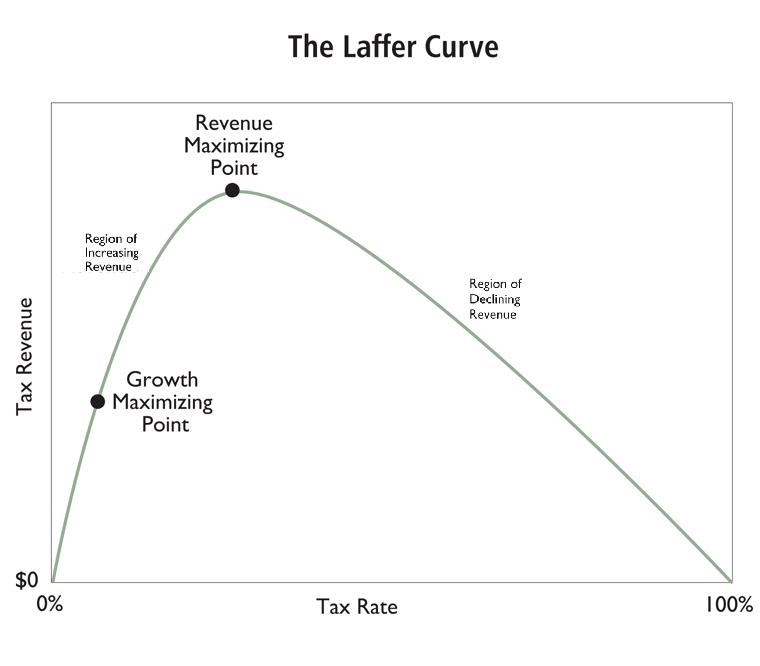
But it recently crossed my mind that maybe President Obama was born in Denmark. Not in a serious way, of course, but you’ll understand my thought process when you read this passage from a report by the government-appointed Danish Economic Council. It doesn’t mention the Laffer Curve, but the report openly states that an increase in the top tax rate would lose revenue because of changes in taxpayer behavior.
…increased taxation on high income earners in Denmark at best is revenue neutral, and may even reduce total tax revenue. This result applies whether one considers the top 10, the top 5 or the top 1 per cent income group. …Using the base estimate of the elasticity of taxable labour income of 0.2, the conclusion is thus that the existing Danish tax system implies an effective tax rate on high income earners that is above – though close to – the tax rate that generates the highest tax revenue. …As an example, the revenue effect of an increase in the marginal tax rate by 6 percentage points for high-income earners is calculated. Using the base estimate of the behavioural response to taxation, this leads to a revenue loss of about ½ billion DKK. …Overall, the scope for acquiring extra tax revenue from high income earners in Denmark is very limited.
Yet there are some politicians in Denmark who want to raise tax rates, even though the damage to the economy will be so significant that the government loses revenue!
By the way, the Danish study probably understates how much revenue the government would lose. Their base estimate about the elasticity of taxable labor income (economist jargon for how sensitive labor income is to changes in tax rates) is much lower than Alan Reynolds reported in his recent Wall Street Journal column.
I’m constantly amazed – in a bad way – that politicians and bureaucrats have been so successful in resisting the insights of the Laffer Curve. The U.S. Treasury Department, for instance, is to the left of the Danish Economic Council and basically assumes that tax policy has no impact on economic performance. The same can be said about the Joint Committee on Taxation on Capitol Hill.
This has to be a case of leftist ideology trumping reality, because the evidence for the Laffer Curve is quite powerful – some of it even being produced by international bureaucracies.
None of this is to suggest that “all tax cuts pay for themselves.” That only happens in unusual cases where a group of taxpayers – such as wealthy entrepreneurs and investors – have considerable flexibility in their economic affairs.
In most cases, the government will collect more revenue when tax rates increase. This is because the impact of the change in the tax rate is larger than the impact of the change in taxable income.
But the real question is whether it is ever a good idea to reduce private economic output in order to give politicians more money to spend. To sensible people, that’s the most important insight of the Laffer Curve.
P.S. While this discussion has focused on the foolishness of setting tax rates so high that the government loses revenue, this does not mean politicians should seek the revenue-maximizing tax rate. The ideal point on the Laffer Curve is the growth-maximizing tax rate.
________
Thank you so much for your time. I know how valuable it is. I also appreciate the fine family that you have and your commitment as a father and a husband.
Sincerely,
Everette Hatcher III, 13900 Cottontail Lane, Alexander, AR 72002, ph 501-920-5733, lowcostsqueegees@yahoo.com
This video is from Adrian Roger’s Memorial Service held at Bellevue Baptist Church in Memphis, TN in 2005. He was one of the greatest preachers of the past century and I praise God for the impact he has had on my life and ministry. To learn more about Adrian Rogers and his continuing ministry, visit: www.lwf.org
CORDOVA, Tenn. (BP)–Two longtime friends of Adrian Rogers were among those who stepped up to the pulpit at his funeral, in their case, to voice the admiration of fellow pastors for his influence in their lives.
“Let us pray that a double portion of Adrian Rogers’ spirit shall be upon us all,” said Jerry Vines, pastor of First Baptist Church in Jacksonville, Fla., and a former Southern Baptist Convention president -– as was Rogers, who died Nov. 15 at the age of 74 after a battle with cancer and pneumonia.
“He taught us preachers, ‘Holiness is not the way to Jesus, but Jesus is the way to holiness,’” Ken Whitten, pastor of Idlewild Baptist Church in Tampa, Fla., told the crowd at Rogers’ Nov. 18 funeral at Bellevue Baptist Church in suburban Memphis.
A transcript of their remarks follows:
KEN WHITTEN
“I believe it was a little boy in the fellowship of this church that best summarized Adrian Rogers’ life. It was a time when Dr. Rogers walked into the activities building and when he walked in, the little boy looked at him and said, ‘Hello Jesus.’ An assistant minister of activities said to him, ‘Michael, that’s not Jesus. That is Dr. Rogers. You know that’s Dr. Rogers and not Jesus, don’t you?’ He said, ‘Well, I don’t know. Every Sunday he holds out his hands and says, “Come to Jesus.”’
“I’m here tonight to tell you that it wasn’t just little boys that thought Dr. Rogers reminded them of Jesus. It was preacher boys, and grown men and women as well. And I am honored to stand here and represent thousands of pastors who are in the ministry today because of the life and the ministry of Adrian Rogers. His life was as much like the Lord Jesus Christ to me as any man I’ve ever met. I loved Adrian Rogers, maybe at times too much, because his voice in my life always sounded like God’s voice. And because of that he guarded the counsel he gave me, fearing that I might follow him and not the Lord.
“I’m sure there were moments in his life he didn’t act like Jesus Christ, but I never saw any. He spoke like Jesus. He lived like Jesus. And he even died at 3:00 like Jesus. I found it very interesting the man that he and Miss Joyce read every morning in the devotional book, ‘My Utmost For His Highest,’ Oswald Chambers, and Dr. Rogers would look at the book and pick it up and say, ‘O.C., what do you say?’ I found it interesting that Oswald Chambers also died on Nov. 15.
“I felt safe as a pastor knowing he was alive. Safe as a denomination. Safe as a pastor who could call for counsel at any time. I know many pastors tonight would echo, he took time for them too. And we all wondered what it was like to be the senior pastor of the world. There are some things he taught us that will forever be etched into our being. Sadly he will no longer speak to our life, but he will forever speak in our life.
“He spoke with authority and his authority was the inspired, inerrant, infallible word of God. Hardly a night would go by that he would not meditate on a verse or a passage of Scripture before he went to bed. He taught us to love God’s word and preach God’s word. And when asked why he used God’s word, he would say, ‘I’m not smart enough to preach anything else. And then again, I’m too smart to preach anything else.’
“He taught us preachers, ‘Holiness is not the way to Jesus, but Jesus is the way to holiness.’ He would say that what’s down in the well comes up in the bucket, that God pays for what he orders, and then he would say, ‘That man, he’s hurting in one place and grunting in another.’ And then he would say, ‘Your problem is you got shot and blamed for limping.’
“He taught us that a faith that fizzles before the finish had a flaw from the first. He would say prophecy is history pre-written, that salvation is not a plan, it’s a man, that where God does not rule, he will overrule. And when he would preach, he would say to know Him is to love Him, to love Him is to trust Him, to trust Him is to obey Him and to obey Him is to be blessed by Him. He taught us preachers that character’s what you are in the dark. He taught us to love God and to hate sin. He showed us preachers how to love your wife and how to honor her, as he demonstrated publicly and unashamed that he loved his childhood sweetheart, his favorite singer, precious Joyce.
“Dr. Rogers and Miss Joyce have taught us that all of our children are individuals, and they taught their children to think, and they raised them according to their own bent. He taught us to look people in the eye when you talk to them and never be distracted when others are waiting in line. He taught us to return the correspondence of every letter sent to you. And so when I am in my pulpit chair and I sit leaning forward, with my back straight, I’ll think of Adrian Rogers. When I throw my shoulders back, as I walk to the pulpit, I’ll think of Adrian Rogers. He was the epitome of graciousness, and when I practice grace, I’ll think of Adrian Rogers. Others adore and idolize athletes. My hero was Adrian Rogers.
“When Jonathan and Saul died, David said, ‘How the mighty are fallen.’ When I think of Dr. Bill Bright, and Dr. Stephen Olford, and now Dr. Adrian Rogers, I echo those words tonight. My fellow pastors, we can no longer tell him how special he is to us, but we can show others –- by imitating his character, honoring his convictions and heeding his counsel.
“I was with my son this week, and he said, ‘Dad, I know you’re hurting.’ And I reminded him that I named him after Dr. Rogers –- Phillip Adrian Whitten. And he said, ‘Dad, I’ll try to live up to that name.’ And I would also like to say to Miss Joyce and this family, thank you for allowing me to tell others tonight of the profound impact Dr. Rogers has had on my life. I want you to know, I will try to live up to that name as well.
“Lastly I’d like to say to Dr. Rogers, thank you for letting me be on your staff. I am not only better for it, the entire Whitten family is better, but Idlewild Church and the city of Tampa are far better off tonight because of your life. I love you. I will miss you. You are right. God is love. Jesus is wonderful. He is a love worth finding, and you have come to Jesus.”
–30–
(My pastor growing up was Adrian Rogers and he died 7 years ago today. He would have been 82 if he was still living. ) I love the Book of Proverbs and every day I read one chapter of Proverbs. Since there are 31 chapters, I start the 1st of ever month and read chapter […]
The Long War against God-Henry Morris, part 1 of 6 Uploaded by FLIPWORLDUPSIDEDOWN3 on Aug 30, 2010 _________ Do you think the theory of evolution is true? Check out this short article by Adrian Rogers: “O Timothy, keep that which is committed to thy trust, avoiding profane and vain babblings, and oppositions of science falsely so called: which […]
7 years ago on November 15, 2005 Adrian Rogers passed away. This is a series of posts about the life and ministry of Adrian Rogers. Adrian Rogers Memorial – Come To Jesus Uploaded by jonwhisner on Jan 20, 2011 This video is from Adrian Roger’s Memorial Service held at Bellevue Baptist Church in Memphis, TN in […]
7 years ago on November 15, 2005 Adrian Rogers passed away. This is a series of posts about the life and ministry of Adrian Rogers. Adrian Rogers Memorial – Come To Jesus Uploaded by jonwhisner on Jan 20, 2011 This video is from Adrian Roger’s Memorial Service held at Bellevue Baptist Church in Memphis, TN in […]
Johnny Cash was remembered for how his music “sang the faith” in an article published on Sunday in the Italian Bishops’ Conference’s newspaper Avvenire. Without his faith, the article said, “the voice of Cash would not have been the same,” reports Catholic News Agency.
The bishops’ newspaper remembered the man who, though he “knew” prison and nearly died of a drug overdose, “still … at a certain point in his life, took from it a possible Meaning, with a capital letter.” Cash dedicated the last of his songs, the paper noted, “to sorrowful, moving hymns to man, inserted within his own faith in a God that gives horizons and hopes to man.”
Avvenire also looked at Cash’s work by reviewing the album “Ain’t No Grave,” which it called an “ulterior and touching witness of art imbued with faith and humanity.”
Looking at the recently released book “The Man in Black—Commentated Texts”, Avvenire saw Cash as a ” young country singer that was educated to respect the earth and believe that there is Someone that governs it.”
Later, the paper recalled, he became a “spokesperson of the rejects” in playing concerts for and representing those in jail, “interpreting their repentances and hardships.”
Distancing himself from the American dream, the newspaper wrote, he highlights the injustices and tragedies, shedding light on his true personality as a man “for the poor” and “for those who’ve never read or listened to the words that Jesus said.”
Citing the authors of the book, Valter and Francesco Binaghi, who note that Cash’s inheritance for the 21st century man is a “voice, guitar and faith,” Avvenire asserted that “without faith, the voice of Cash would not have been the same and we would have an example less of how much, (when) wanting to do so, even a guitar can help (us) to live.”
Cash, known as the “Man in Black,” died of diabetes-associated complications after a prolific singing and songwriting career in Sept. 2003. In his lifetime, he also released an series called “The Johnny Cash Spoken Word New Testament,” released on cassette in 1989 and later on CD in 2003.
About the spoken word recordings, he wrote that he approached each session “with fear, respect, awe and reverence for the subject matter. I also did it with a great deal of joy, because I love the Word.”
There are a few slight confusions that I would like deal with briefly within the scope of my first few paragraphs. Weather permitting, I would then like to take just a short space to address the central point which you have (again) missed. The remainder of my time will be spent on your claim concerning the origin of ethical imperatives. I would like to do all this in order to set the stage for our unfolding discussion of the central reason why Christianity is good for the world— it is good for the world because Jesus died for the life of the world.
First, the confusions. The point of citing Psalm 14:1 was not to infer that I thought you were “dumb.” In the wisdom literature of the Old Testament, folly is a moral question, not a matter of intelligence. I am quite prepared to cheerfully grant (and not for the sake of the argument) that you are my intellectual superior. But our discussion is not about who has more horsepower under his intellectual hood—the point of discussion is whether your superior car is on the right road. A fast car can be a real detriment on a dark night when the bridge is out. And you insist on continuing to wear the sunglasses of atheism.
Now the second confusion concerns your citation of the parable of the Good Samaritan. The popular name for the parable should have been a giveaway—you acknowledge that the protagonist of the story was “from Samaria,” but you miss that this was an ethnic and racial issue and not a question of where he happened to live. The man beat up by the side of the road was a Jew, the priest and Levite who passed by on the other side were Jews, and the man who stopped was a despised half-breed, a Samaritan. But you say that it was probable that the Samaritan was a Jew, which inverts the whole story and indicates to me that you have not really been reading the text very closely (Luke 10:27-37). But to answer your point in even bringing the story up, the Samaritan did not need the teaching of Jesus to do what God desired here. Jesus cited the story as an exposition of the second greatest commandment, which is to love your neighbor as yourself. A certain lawyer had asked Jesus to “define neighbor” in order to justify himself, and Jesus then told this story to illustrate the point of an ancient law. So the duty to love our neighbor was revealed to Old Testament writers about a millennium and a half before the Samaritan fulfilled it in his charitable act.
You say, incidentally, that this kind of law was bringing coals to Newcastle—Moses came down from the mount and told people that murder, theft, and perjury were wrong, and all the assembled rolled their collective eyes. “We already knew that!” But the problem is that ancient man didn’t know that, and modern man still doesn’t know it. To state some of the issues that are subsumed under just one of the three categories you mention is to point to controversies that continue down to this day. Consider some of the issues clustered under the easiest of these three to condemn—murder. We have abortion, infanticide, partial-birth abortion, euthanasia, genocide, stem-cell research, capital punishment, and unjust war. Murder is the big E on the eye chart, and we still can’t see it that clearly.
Man, both ancient and modern, certainly knows the entire law of God if it is his own ox being gored, but the purpose of a law code is to have one standard in place for all parties when individuals want to set aside the standards of civilized life to suit themselves. And we need as much help with that as ancient man ever did.
Now we really need to address the point you continue to miss. I am not talking about whether atheists must do evil, or if they can do evil. I have denied the former, and you have now granted the latter. But that is not the point. We are not talking about whether your atheism compels you to run downtown this evening to shoot out the street lights. I grant that it does not. And we are not talking about whether atheists can do vile things. You grant that they can. We are talking about (or, more accurately, I am trying to talk about) whether or not atheism provides any rational basis for rational condemnation when others decide to misbehave this way. You keep saying, “I have come to my ethical position.” I keep asking, “Yes, quite. But why did you do so?”
So the point is not whether we could rustle up some nice places governed by atheists or some hellholes governed by Christians. If given a choice between living in a Virginia governed by Jefferson and living in a Russia under the czars, I would opt to live under your beloved Jefferson.
Fine. But this is not a concession, because it is not the point.
Take the vilest atheist you ever heard of. Imagine yourself sitting at his bedside shortly before he passes away. He says, following Sinatra, “I did it my way.” And then he adds, chuckling, “Got away with it too.” In our thought experiment, the one rule is that you must say something to him, and whatever you say, it must flow directly from your shared atheism—and it must challenge the morality of his choices. What can you possibly say? He did get away with it. There is a great deal of injustice behind him, which he perpetrated, and no justice in front of him. You have no basis for saying anything to him other than to point to your own set of personal prejudices and preferences. You mention this to him, and he shrugs. “Tomayto, tomahto.”
I am certainly willing to take the same thought experiment. I can imagine some pretty vile Christians, and if I couldn’t, I am sure you could help me. The difference between us is that I have a basis for condemning evil in its Christian guise. You have no basis for confronting evil in its atheist guise, or in its Christian guise, either. When you say that a certain practice is evil, you have to be prepared to tell us why it is evil. And this brings us to the last point—you make the first glimmer of an attempt to provide a basis for ethics.
You say in passing that ethical imperatives are “derived from innate human solidarity.” A host of difficult questions immediately arise, which is perhaps why atheists are generally so coy about trying to answer this question. Derived by whom? Is this derivation authoritative? Do the rest of us ever get to vote on which derivations represent true, innate human solidarity? Do we ever get to vote on the authorized derivers? On what basis is innate human solidarity authoritative? If someone rejects innate human solidarity, are they being evil, or are they just a mutation in the inevitable changes that the evolutionary process requires? What is the precise nature of human solidarity? What is easier to read, the book of Romans or innate human solidarity? Are there different denominations that read the book of innate human solidarity differently? Which one is right? Who says?
And last, does innate human solidarity believe in God?
Christopher Hitchens – Against Abortion Uploaded by BritishNeoCon on Dec 2, 2010 An issue Christopher doesn’t seem to have addressed much in his life. He doesn’t explicitly say that he is against abortion in this segment, but that he does believe that the ‘unborn child’ is a real concept. ___________________________ I was suprised when I […]
Max Brantley in the Arkansas Times Blog reports that Ron Paul is leading in Iowa. Maybe it is time to take a closer look at his views. In the above clip you will see Chistopher Hitchens discuss Ron Paul’s views. In the clip below you will find Ron Paul’s latest commercial. Below is a short […]
DEBATE William Lane Craig vs Christopher Hitchens Does God Exist 07 Below are some reactions of evangelical leaders to the news of Christopher Hitchens’ death: Christian leaders react to Hitchens’ death Posted on Dec 16, 2011 | by Michael Foust DEBATE William Lane Craig vs Christopher Hitchens Does God Exist 08 Author and […]
DEBATE William Lane Craig vs Christopher Hitchens Does God Exist 04 Below are some reactions of evangelical leaders to the news of Christopher Hitchens’ death: Christian leaders react to Hitchens’ death Posted on Dec 16, 2011 | by Michael Foust DEBATE William Lane Craig vs Christopher Hitchens Does God Exist 05 Author and speaker Christopher […]
DEBATE William Lane Craig vs Christopher Hitchens Does God Exist 01 Below are some reactions of evangelical leaders to the news of Christopher Hitchens’ death: Christian leaders react to Hitchens’ death Posted on Dec 16, 2011 | by Michael Foust Author and speaker Christopher Hitchens, a leader of an aggressive form of atheism that eventually […]




 The Daily Hatch