Monthly Archives: June 2012

Q/A: Marco Rubio on His Faith of Many Colors

Good interview:

Q & A: Marco Rubio on His Faith of Many Colors

Interview by Sarah Pulliam Bailey
[ posted 6/19/2012 10:31AM ]
Q & A: Marco Rubio on His Faith of Many Colors


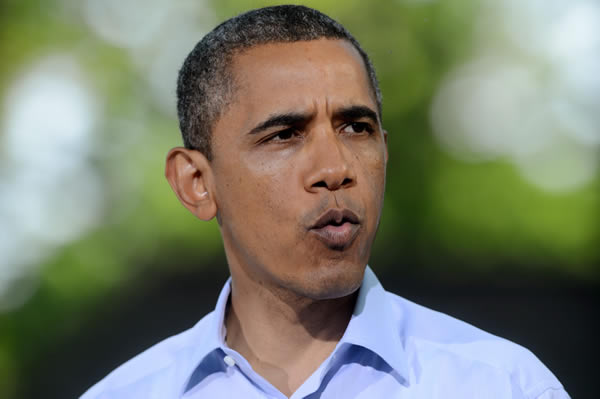
Photo by Susana Raab

As speculation has grown over who Mitt Romney will pick as his running mate, Florida Senator Marco Rubio has topped nearly every list. Rubio has also drawn attention with the release of his memoir, An American Son, as well as his brief time in the Church of Jesus Christ of Latter-day Saints, his baptism into the Roman Catholic Church, and his ties to an evangelical church. Christianity Today online editor Sarah Pulliam Bailey spoke with Rubio about his diverse faith background, how his faith influences his policy positions, and why Christians should be involved in the public square.You were baptized as a Mormon and then as a Roman Catholic. Can you describe your faith journey?My mother desperately wanted to give her kids a wholesome environment, and we were born into a traditional Catholic family. We had extended family members who were and remain active members of the LDS church, which does provide a very wholesome environment. We joined the church for a little less than three years when I was very young, after we moved to Las Vegas in 1979. I’m not sure my mom ever fully understood the church theologically. As a family we were never fully immersed in it because my father didn’t buy in, so there are many intricacies to the faith that we never really got involved in. By the time I was in sixth grade, we had left the Mormon Church and gone back to Catholicism, and I did my First Communion on Christmas Day 1984.And you attended an evangelical church for a period of time?Sometime in 2000, I unfortunately got really busy with my political stuff. I perhaps didn’t do a good job of spiritually leading my family, which is one of the roles I play alongside my wife. In the meantime, my wife and my sister found an excellent local church, Christ Fellowship. It does a phenomenal job on two fronts: bringing people to Jesus, and teaching the written Word through phenomenal preachers. And it has a fantastic children’s program. For a period of time, it became our church home almost exclusively. I felt called back to Catholicism around 2004, but have maintained the relationship with Christ Fellowship and attend their services often or listen to the podcasts.

‘I really don’t endorse criticisms of the President’s faith.’ -Marco Rubio

Did you have a conversion moment when you acknowledged your sins and Jesus’ death on the cross?

There has never been a moment when faith hasn’t been an important part of my life. There have been moments when I’ve been more alive in my faith than others. There have been times when I’ve been more involved in my faith, dedicating more to it, and giving it more importance. Like everybody else, unfortunately, it’s usually in time of need that we tend to turn to our faith.

It would be unfair to say I had a moment of conversion. But one moment when my faith journey took on a different aspect was when my children became a bit older. I recognized that perhaps the most important part of my job in raising them is that I have only a handful of years to influence them and to inspire in them the knowledge of Jesus, Christianity, and what it means for salvation. If I fail in that regard, everything else becomes less meaningful.

Would you describe yourself as an evangelical?

I’m a Roman Catholic. I’m theologically in line with the Roman Catholic Church. I believe in the authority of the church, but I also have tremendous respect for my brothers and sisters in other Christian faiths. I recognize, as the Catholic Church does, that there are excellent teachings of the Word throughout other denominations. The elements of salvation are found in these churches as well. Some unifying principles bind all Christians: that God became a man and died for our sins, and that without that sacrifice, all of us would be doomed.

Since your faith has come up on occasion as a political issue, what would you say to those who suggest President Obama is a Muslim or not a “real Christian”?

I really don’t endorse criticisms of the President’s faith. I don’t think they are fair, to be honest. One key thing about Christianity is that it requires voluntary acceptance of faith. If someone says he is a Christian, it is a sign of Christianity in and of itself. Christianity calls us to our salvation, and it also calls parents to contribute to their children’s salvation. It calls us to be a light in the world. It doesn’t call us to go around pointing other people out, saying so and so is deficient in their faith. It does call us to hold each other accountable. It’s really asking us to look at ourselves, and that’s really the only responsibility of Christianity. We’re responsible for our own response to God’s call in our life, and our own family’s response.

When Obama uses his faith to defend same-sex marriage or other policies, do you think he’s misinterpreting it?

I certainly don’t reach the same conclusions he does. I’ve never criticized anyone for having their faith influence their public-policy decisions. If your faith is real, burning inside of you, it’s going to influence the way you view everything. That belief influences your job and the responsibilities you have.

Are Christians who oppose gay marriage fighting a losing battle?

In terms of the Bible’s interpretation of marriage, what our faith teaches is pretty straightforward. There’s not much debate about that. The debate is about what society should tolerate, and what society should allow our laws to be. I believe marriage is a unique and specific institution that is the result of thousands of years of wisdom, which concluded that the ideal—not the only way but certainly the ideal—situation to raise children to become productive and healthy humans is in a home with a father and mother married to each other. Does that mean people who are not in that circumstance cannot be successful? Of course not.

It’s not a discriminatory thing. I’m not angry at anyone because of it, but I also have to be honest about what I believe marriage should be in our laws.

Republican leaders seem to be shying away from the issue. Is that a strategic move, or should they address gay marriage more directly?

In the short term, the number-one issue threatening our country is the economy. We have to remain focused on the primary issue before us, the fact that millions of Americans have been out of work and that’s what they look for their next President to help lead the way out of. That said, culture always matters. You can’t have a strong economy or a strong country without strong people. Just like the issue of life, it will always be important, but because the President has presided over such failed economic policies, he is deliberately looking to have a debate about anything other than the economy. From a strategic point of view, we need to be cognizant of that. After all, our faith teaches us to be as gentle as lambs but as wise as serpents.

You proposed legislation on whether employers should have to provide contraception. Do you see the Obama administration as hostile to religious freedom?

In order to make that kind of decision, you have to believe that somehow the wisdom of the government and what you believe government should do is more important than the constitutional protection of religious liberty and religious expression. They’re basically saying they believe it’s such a good and important idea that they think it is more important than what the Constitution protects. To me, it’s not even a religious argument but a constitutional one. If it were any other constitutional principle being violated, I’d be just as adamant about it.

You have also proposed legislation on immigration. From a policy perspective, should Christians emphasize compassion or the rule of law?

I don’t think they’re mutually exclusive. You can do both. At no time does our faith call us to violate legal principles—on the contrary. We have to recognize that when we’re talking about immigration, we’re not talking about statistics. We’re talking about human beings, the vast majority of whom, the ones who are here legally, are here in search of jobs and a better life. That’s where the debate comes in:how do we balance those two things? That’s what I hope any future conversation about immigration reform will be balanced by—the balance between our compassion for our fellowman and the need to have rules that are followed.

As we see banks take high risks, how should the government be involved? Is market regulation a moral issue?

It certainly calls into question why the government was involved in bailing out these institutions that a couple years later are making the same risky decisions they were before. On the other hand, it reminds us that while J. P. Morgan lost $2 billion, the federal government this year will spend close to $1.5 trillion more than it takes in.

Given Christians’ view of human nature and depravity, is regulation a necessary part of policy? Can corporations be trusted to create optimal outcomes?

We want to make sure people cannot harm others by their irresponsible behavior. We have regulations on everything from how you treat your workers to how people should drive on the streets, regulations that say we can’t dump poison into our water system or pollute the air. My individual rights end where other people’s rights begin. I can’t exercise my rights to hurt other people.

Like everything else, there has to be balance, and that balance is usually in the form of a cost-benefit analysis. What is the benefit of the regulation, and what is the cost of the regulation? Sometimes the costs of the regulation are economic; sometimes there’s a cost to our personal freedom. People are willing to sacrifice a certain level of personal freedom in exchange for a public good, but there are limits to that. While government regulations are necessary, they’re not always necessary, and they’re not always good.

In this cost-benefit balance, how should the United States promote international religious freedom? What happens if it conflicts with our strategic interests?

We need to be clear that we stand for these principles. Any time America looks the other way for short-term economic or political benefit when these principles are being violated somewhere in the world, we lose a little bit of who we are and what makes us special. There’s always a temptation to make some pragmatic decision that we should tolerate some decision in some country because they’re an ally, or that we should look the other way because they’re too big and powerful and we need them for business. From the long-term perspective, we can’t afford to do that. We need to be consistent in what we stand for, principles that all men are given by our Creator.

I have to ask about your possible vice presidential nomination.

I’m not going to discuss the vice presidential nomination process. I know Mitt Romney is right now going through a process with the people he’s considering, and I am in no way going to comment on that, because it wouldn’t be fair to them.

Some have cited irregularities in your record as reasons you might not be asked to be vice president. What would you say to those who claim you have made financial slip-ups?

I’m not above criticism. I’m sure people will find fault with what I’ve done or failed to do. I would be the first to recognize that I’m not perfect. Sometimes these things are exaggerated. There are things I wish I had done differently because of perceptions. Most of these issues have been talked about extensively during my campaign in Florida. I confronted those issues and answered questions repeatedly, and I’d be more than happy to answer them again if people want to ask them specifically. Ultimately, I’ve lived a life with real mistakes and real successes. I’m proud of what we’ve been able to accomplish thanks to the opportunities this country has given me and the sacrifices my parents made.

In preparation for the 2012 election, how should Christians engage in the public sphere?

Well, there’s the spiritual activism, which saints are called to and which is separate from the political realm. If you’re living out your faith, it influences every aspect of your life. It teaches us to glorify God in everything we do. In everything we do in our lives, we’re called to bring glory to God, primarily by the way we live our lives and the things we do  so people will look to us and say, “That’s what it means to be a Christian; that’s what it means to be ambassadors of Christ.” If our faith influences every aspect of our lives, then if we decide to become politically active, it should influence that as well.

You distinguished spiritual activism from political activism. Do you see political activism as a ministry?

You can if that’s what you’re called to, for example, with how we treat the less fortunate. I believe in a safety net, not as a way of life, but as a way to help those who cannot help themselves. But I also believe the number one economic system that’s ever been created that allows people to rise above the circumstances of their birth and accomplish things beyond what they were born into is the American free enterprise system. My faith influences me in believing that. I don’t think everyone’s called to political engagement. No matter what we’re called to do, we are called to glorify God in what we do. For those of us who have been called to political action, we’re called by our faith to glorify God in the way we carry ourselves in these roles.
Federal spending continues to skyrocket

Government Spending Doesn’t Create Jobs

Uploaded by on Sep 7, 2011

Share this on Facebook: http://on.fb.me/qnjkn9 Tweet it: http://tiny.cc/o9v9t

In the debate of job creation and how best to pursue it as a policy goal, one point is forgotten: Government doesn’t create jobs. Government only diverts resources from one use to another, which doesn’t create new employment.

Video produced by Caleb Brown and Austin Bragg.

_____________

I have a lot of respect for Tea Party heroes like Tim Huelskamp , Idaho First District Congressman Raúl R. Labrador, and Justin Amash who are willing to vote against proposals that increase our spending. They all favor balancing the budget.   

It is a fact that we must balance the budget soon. I do not believe that we can wait to balance the budget at some distant time in the future. The financial markets will not allow us a long time to get our house in order. Look at how things have been going the last four years and no matter how anyone tries to spin it, we are going down the financial drain fast.

Brian Darling

May 24, 2012 at 2:51 pm

Spending has skyrocketed under President Obama, but of late some are claiming that the opposite is true. Case in point: MarketWatch columnist Rex Nutting wrote, “Obama spending binge never happened,” and Politifact rated this statement “mostly true.”

But Mitt Romney this week said that “Since President Obama assumed office three years ago, federal spending has accelrated at a pace without precedent in recent history.” So who has it right? Mitt Romney.

What Politifact must have missed is a very important data point: President Obama signed most of the spending attributed to President George W. Bush’s last year in office, which was assigned wrongly to Bush in Nutting’s piece. (Heritage’s Emily Goff and Alison Fraser set the record straight on The Foundry.)

Nutting argues that President G.W. Bush’s second term spending bills from Fiscal Year 2006-2009 averaged 8.1% and President Obama’s annualized growth averaged 1.4%.  The reason why Nutting included FY 2009 is because it was “the last of George W. Bush’s presidency — federal spending rose by 17.9% from $2.98 trillion to $3.52 trillion.”  This assumption is incorrect and dishonest.  This flaw in Nutting’s analysis is the reason why the Obama numbers are wrong and Nutting’s whole piece is based on flawed data.

Nutting operates under the flawed assumption that President Obama is not responsible for FY 2009 spending.  Under normal circumstances Nutting would be correct.  If Congress were a functioning body that passed appropriations bills on time, then this analysis would be correct.  The fact of the matter is that in recent history Congress has not done appropriations bills on time and in FY 2009, President Obama signed these spending bills into law that President Bush would have under different circumstances.

Usually, the president in office prior to a new president would have helped craft and sign into law government spending bills applied to the first 9 months of spending the next year and a president’s new term.  A fiscal year starts on October 1 of the year prior to the calendar year to September 30th of the calendar year.  In other words the fiscal year starts three months early.

In FY2009, Congress did not complete work by September 30, 2008.  President Bush did sign some appropriations bills and a continuing resolution to keep the government running into President Obama’s first term, yet a Democrat controlled Congress purposely held off on the big spending portions of the appropriations bills until Obama took office.  They did so for the purposes of jacking up spending.  President Obama signed the final FY2009 spending bills on March 11, 2009.

Congressional Quarterly (subscription required) maps out a history of the FY 2009 final appropriations bills (H.R. 1105 and PL 111-8), that would lead one to attribute most of the accelerated spending in FY 2009 to President Obama in a piece titled “2009 Legislative Summary: Fiscal 2009 Omnibus.” From CQ, “the omnibus provided a total of $1.05 trillion — $410 billion of it for discretionary programs — and included many of the domestic spending increases Democrats were unable to get enacted while George W. Bush was president.”  If accepted as true, this statement alone undercuts Nutting’s whole premise that FY 2009 is wholly Bush spending.

President Bush signed only three of the twelve appropriations bills for FY 2009:  Defense; Military Construction/Veterans Affairs; and, Homeland Security.  President Bush also signed a continuing resolution that kept the government running until March 6, 2009 that level of funding the remaining nine appropriations bills at FY 2008 levels.  President Bush and his spending should only be judged on these three appropriations bills and FY 2008 levels of funding for the remaining nine appropriations bills.  Bush never consented to the dramatic increase in spending for FY 2009 and he should not be blamed for that spending spree.

The Democrats purposely held off on the appropriations process because they hoped they could come into 2009 with a new Democrat-friendly Congress and a President who would sign bloated spending bills.  Remember, President Obama was in the Senate when these bills were crafted and he was part of this process to craft bloated spending bills.  CQ reported that “in delaying the nine remaining bills until 2009, Democrats gambled that they would come out of the November 2008 elections with bigger majorities in both chambers and a Democrat in the White House who would support more funding for domestic programs.”  And they did.

If you trust CQ’s reporting, and I do, then this is damning.  Democrats in Congress purposely held off on pushing bloated appropriations bills because they knew President Bush would not sign the bill and Republicans in the Senate would block consideration of it.  You have to remember that the Senate went from 51-49 Democrat control under President Bush’s last year to 59-41 in the early days of President Obama.  On April 28, 2009, Senator Arlen Specter switched parties from Republican to Democrat to give the Democrats a 60 vote filibuster proof majority in the Senate.  The House had a similar conversion from a 233-202 Democrat majority to 257-178 Democrat majority. Democrats were banking on a big enough majorities in the Senate and House that they could pass the bloated spending bill and they got it.

Bush issued a veto threat on the bloated spending bills pending in Congress in late 2008.  CQ estimated that the final spending bill “provided about $31 billion more in discretionary funding than was included in the fiscal 2008 versions of the nine bills” which is “about $19 billion more than Bush sought.”  I would argue that Obama gets credit for the whole $31 billion in new spending.  The most damning fact from the CQ piece is that “Bush had threatened to veto spending bills that exceeded his request.”

Now one can argue that even $31 billion is a drop in the bucket when one considers that spending went from $2.98 trillion to $3.52 trillion.  Much of the spike in increased spending is on the mandatory spending side, and much of it can be attributed to President Obama.  Look at OMB Tables on FY 2008 spending versus FY 2009 spending and you can see why the numbers spiked between those two years.

Overall spending, mandatory and discretionary spending went from $2.98 trillion in FY 2008 to $3.52 trillion in FY 2009.  There were two of the big spikes in spending from FY’08 to ’09.  One was in Federal Payments for Individuals not including Social Security and Medicare from $758 billion in FY’08 to 918 billion in FY’09.  President Obama’s Stimulus spending bill included an increase in food stamps and an extension of unemployment benefits that should not be attributable to President Bush.  Also, the category of “Other Federal” spending spiked from $261 billion to $540 billion.  This includes TARP spending that was recovered on the back end by President Obama further distorting the Nutting analysis.

So how can Nutting attribute spending to President Bush that he expressly vowed to veto?  Also, some of the mandatory spending has been wrongly attributed to President Bush in Nutting’s analysis.  Finally, TARP spending under Bush and the recovery of TARP money under Obama further distorts these numbers.

This is unethical and fuzzy math.  The Truth-O-Meter may want to consider these facts when further analyzing the complications and distortions in analysis used by Nutting to argue that Obama is more fiscally responsible than his predecessors.

“Woody Wednesday” Allen new movie

Stardust Memories (1980) 1/7

Uploaded by on Oct 24, 2010

Stardust Memories is a 1980 film written and directed by Woody Allen, who considers this to be one of his best films in addition to The Purple Rose of Cairo and Match Point.[1] The film is shot in black-and-white, particularly reminiscent of Federico Fellini’s 8½ (1963), which it parodies. It was nominated for a Writers Guild of America award for “Best Comedy written directly for screen”.

It is the story of a famous filmmaker Sandy Bates (Allen), who is plagued by fans who prefer his “earlier, funnier movies” to his more recent artistic efforts, while he tries to reconcile his conflicting attraction to two very different women: the earnest, intellectual Daisy (Jessica Harper), and the more maternal Isobel (Marie-Christine Barrault). Meanwhile, he is also haunted by memories of his ex-girlfriend, the mercurial Dorrie (Charlotte Rampling).

______________________

To Rome With Love – Official Trailer [HD]

 Woody Allen new movie is “To Rome with Love” and it reminds many of the 1980 Allen movie “Stardust Memories.”

Woody Allen plays out his psychology on screen

By Susan Wloszczyna, USA TODAY June 19, 2012

NEW YORK — Ozymandias melancholia.

It’s a psychological state that is mentioned by two characters in Woody Allen‘s latest film, To Rome With Love, which opens Friday: Alec Baldwin’s wistful architect and Ellen Page‘s self-absorbed actress, both of whom claim to be afflicted.

It is also a rare clue about what makes one of American cinema’s greatest and most prolific artists tick.

Borrowing from the title of Percy Bysshe Shelley’s 1818 poem about a broken statue of a once-mighty king that is found in a desert, the phrase refers to a depression over the realization that nothing is permanent.

Don’t look for the malady in any medical textbook, though. Instead, watch Allen’s Stardust Memories from 1980, a caustic portrait of a filmmaker looking back over his life and creative output that stylistically echoes Italian master Federico Fellini‘s similarly autobiographical from 1963.

“It is a phrase I coined and felt entitled to use again,” Allen says while seated in the dark velvet-lined womb of his office and screening room on Park Avenue. “It is a contemporary syndrome.”

Does he worry that his films won’t be remembered? “I don’t care about my work lasting. I would like to last. They can turn my movies into guitar picks. Nothing lasts. Nothing at all. Not even the sun.”

Given such disturbing insights, it is hard to know whether all those years Allen spent in therapy paid off — or just made his existential despair into fodder for future features.

Turns out the locale of his new comedy is the perfect place to experience this condition amid all the crumbling ancient ruins. “You get that feeling in Rome all the time,” he says. “You are surrounded by what would have been a grand palace or building or statue. Now, like Ozymandias in the poem, it’s nothing but a headless trunk.”

He did find some refuge in the city’s reliably delicious cuisine. “That is one of the great treats of being there,” Allen says of his first filmmaking foray in the Eternal City. Jesse Eisenberg, who plays Page’s admirer, observed firsthand as the director enjoyed a pizza. “He eats it like everyone else,” reports the star of The Social Network. “One leg at a time.”

At least Woody fans now know the reason why, after more than 40 films in nearly half a century, the 76-year-old director refuses to take a break from his pace of averaging a movie a year.

Basically, he doesn’t want to think about being a headless trunk someday.

It also explains why he is not overly impressed by the fact that he just achieved the biggest box-office hit of his career with last year’s dreamily romantic Midnight in Paris.

The most enthusiasm he can summon for the $60-million-grossing film that led to his record third Oscar for an original screenplay is to describe it as “a happy accident.”

“I try my best on all of them,” says Allen, who has had his fair share of misses — most recently, 2010’s You Will Meet aTall Dark Stranger landed with a tall dark thud — mingled among successes. “Some work out nicely. Some work out not as nicely. Some work out better than that. For some reason, people had a great affection for Midnight in Paris. Who knows why?”

Baldwin, who appeared in Allen’s Alice in 1990 and already has signed up for his third Woody vehicle — a yet-to-be-titled project that starts shooting in August in New York and San Francisco — is grateful that the movies keep on coming. “A lesser effort by Woody is better than most of what is out there. If only every third movie grabs you by the lapels, it’s worth sitting by with the other two and waiting. Like rings on a tree, there are so many levels to his work.”

The setting sets the tone

Allen rarely affords himself the luxury of pondering the public’s reception of his efforts, especially as he continues to explore shooting in places far beyond his Manhattan comfort zone. To Rome With Love, which reflects the major influence of Italian cinema on his work, serves up a quartet of humorous vignettes, peppered with unfaithful lovers and reflections on the nature of celebrity, with a soundtrack that is heavy on Volare and Arrivederci Roma.

Ever since he switched to European settings, starting with London in 2005’s Match Point, Allen has allowed the mood of each city to dictate the tone of the movie. And his version of comedy Italian-style is very much a farce, albeit with an undercurrent of dark satire.

“There are such strong personalities to these cities,” he says. “Rome is chaotic, hilarious, joyfully alive and full of farce. Paris has a romantic lovers’ feel, a nostalgic feeling. In Italy, you don’t think back to the earlier eras so much. It really came into its own post-World War II, and that is when Italian filmmakers began to define their country for Americans. It is very energetic and lusty.”

As usual, the cast features Allen veterans such as Baldwin and Penelope Cruz (who in 2009 won an Oscar for Allen’s Vicky Cristina Barcelona), along with newcomers such as Eisenberg, Page and indie darling Greta Gerwig. Homegrown performers include Roberto Benigni, an Oscar winner for 1998’s Life Is Beautiful, as an average man who is suddenly hounded by paparazzi.

But the most noteworthy participant on-screen might be Allen himself, showing up in one of his own films for the first time since 2006’s Scoop. The conversation turns bittersweet as he regrets that he can no longer pull off the wisecracking swain role that he perfected in 1977’s Annie Hall.

“I would have liked to have played Jesse Eisenberg’s part, but I am too old,” he says. “I was always the guy sitting opposite the girl in the café, pitching her and making jokes and trying to make her fall in love with me.”

Not that he minds Queens native Eisenberg, 28, as his substitute. In fact, he agrees that they seem to have been fated to collaborate. “He gets it right off,” Allen says. “He speaks at double my speed. He is in that scrapbook of characters that I could be.”

Instead, Allen plays an unhappily retired and somewhat neurotic opera director who pins a comeback attempt on his discovery of an Italian mortician who can sing like Pavarotti — but only in the shower.

Though he says the retirement angle is parenthetical to the humor of the segment, it once again underlines his need to maintain his continuing existence in the world.

“I don’t see myself not working,” Allen says. “Not because of any great contribution I have to make, but because I would be sitting at home, brooding and being depressed. When I work, it keeps my mind on stupid, solvable problems. I’m thinking of the third act and how I can make it work.”

Being cast in your first Woody Allen film has long been a rite of passage, and Eisenberg is no different from the rest of his generation in coveting such a chance. He was fascinated to watch one of his idols on the job.

“There is such efficiency on his set,” he says. “He is so adept at handling all the myriad things that can come up. He does it with such ease. It is intimidating to work with someone who is a million times more interesting as a performer than you are.”

No spotlight for him

As is his routine, Allen was a no-show at this year’s Oscar ceremony despite four nominations for Midnight in Paris, including best picture. He can’t even vote, because he isn’t a member of the academy.

“I’m not a joiner,” Allen explains while missing an opportunity to reference his hero Groucho Marx‘s infamous quip: “I don’t care to belong to any club that will have me as a member.”

Nor does the onetime stand-up comic who specialized in self-belittlement display his trophies — his directing win for Annie Hall brings his Oscar tally to four — in a place where others may admire them. “I hate to tell you where,” he says of the potential mini-Ozymandiases. “They’re in my closet on the top shelf. I’m not a person who has photographs around the house of movies that I’ve been in or people I’ve worked with or things I’ve won. It’s always embarrassed me.”

Besides, “I see them whenever I take my underwear out — which is every morning.”

Related posts:

Woody Allen’s movie “Midnight in Paris” wins an academy award (link to complete listing of all historical figures mentioned in “Midnight in Paris”)

Sleepers (1973)   Allen (left) wrote, directed and starred in this oddball love story, set 200 years in the future.  It was his first on-screen collaboration with Diane Keaton (second left), who went on to become one of the director’s muses in the early days of his career.   ___________ I have written more on […]

“Woody Wednesday” Allen new movie

Stardust Memories (1980) 1/7 Uploaded by ghostrepublic on Oct 24, 2010 Stardust Memories is a 1980 film written and directed by Woody Allen, who considers this to be one of his best films in addition to The Purple Rose of Cairo and Match Point.[1] The film is shot in black-and-white, particularly reminiscent of Federico Fellini’s […]

Review of “To Rome with Love”

Jesse Eisenberg – Press Conference “To Rome With Love” Published on Apr 21, 2012 by portugal888 Review: Allen’s ‘Rome’ delivers lackluster love Published: Tuesday, June 19 2012 11:06 a.m. MDT By David Germain View 4 photos » This film image released by Sony Pictures Classics shows, : Alec Baldwin as John, left, and Jesse Eisenberg […]

Woody Allen, ‘To Rome With Love’ Director, Talks ‘Midnight In Paris’ Success, Acting Career

How To Recover From a Break Up With Greta Gerwig Published on May 16, 2012 by younghollywood Young Hollywood is hanging out in NYC during the Tribeca film festival, where we chat with rising star Greta Gerwig about her hip slice-of-life movie, ‘Lola Versus’. Greta offers up some advice on how to get over a […]

Sam Tanenhaus on Woody Allen’s Black Magic

To Rome with Love Trailer Official 2012 [HD] – Alec Baldwin, Jesse Eisenberg To Rome with Love hits theaters on June 22nd, 2012. Cast: Woody Allen, Alec Baldwin, Penelope Cruz, Jesse Eisenberg, Greta Gerwig, Ellen Page, Judy Davis, Alison Pill, Roberto Benigni, Isabella Ferrari, Sergio Rubini, Antonio Albanese, Fabio Armiliata, Alessandra Mastronardi, Ornella Muti, Flavio […]

Review: Allen’s ‘Rome’ delivers lackluster love

Penelope Cruz at “To Rome with Love” premiere Published on Jun 15, 2012 by CBSNewsOnline The Los Angeles Film Festival kicked off with Woody Allen’s latest film starring Penelope Cruz. KCAL 9′s Suzanne Marques reports from downtown L.A. at the premiere of “To Rome With Love.” _______________ Review of “To Rome with Love.” Review: Allen’s […]

Woody Allen: “I’m Immune to Whether My Films Do Well or Not”

Voto 10 Web TV – To Rome with Love – Jesse Eisenberg Published on Apr 20, 2012 by voto10cinema Puntata speciale su To Rome with Love della Web TV di Voto 10. Direttamente dal red carpet con Sonia Serafini e Eva Carducci l’intervista a Jesse Eisenberg. ____________________________ I really like the fact that Woody Allen […]

Review: Penelope Cruz, Robert Benigni Make Woody Allen’s “Rome” Movie

Ellen Page with Craig Ferguson 13.06.12 (‘To Rome With Love’) 1080p HD Good review of Woody Allen’s latest movie: Review: Penelope Cruz, Robert Benigni Make Woody Allen’s “Rome” Movie <!– –> After “Midnight in Paris,” you’re not getting–we’re not getting –a sequel, so forget it. Woody Allen’s “To Rome with Love” opens June 22nd after […]

June 14, 2012 Wall Street Journal interview of Woody Allen and he is still talking about the meaninglessness of existence

TO ROME WITH LOVE – conferenza stampa con Allen, Benigni e Cruz http://WWW.RBCASTING.COM Published on Apr 18, 2012 by RBcasting http://www.rbcasting.com Conferenza stampa del film “To Rome With Love”, scritto e diretto da Woody Allen. Tra gli interpreti, lo stesso Allen, Alec Baldwin, Roberto Benigni, Penelope Cruz, Judy Davis, Jesse Eisenberg, Ellen Page e Greta […]

Woody Allen’s worldview as seen in his movies

  I love the movie Crimes and Misdemeanors and have written on it many times in the past. This quote below sums up Woody Allen’s worldview which I disagree with. In fact, the person who said this actually could not live with its conclusions in the movie and committed suicide.   Because Allen continues to […]

“Woody Wednesdays” Woody Allen on God and Death

Good website on Woody Allen How can I believe in God when just last week I got my tongue caught in the roller of an electric typewriter? If Jesus Christ came back today and saw what was being done in his name, he’d never stop throwing up. If only God would give me some clear […]

Woody Allen’s career in pictures “Woody Wednesday”

  Sleepers (1973)   Allen (left) wrote, directed and starred in this oddball love story, set 200 years in the future.  It was his first on-screen collaboration with Diane Keaton (second left), who went on to become one of the director’s muses in the early days of his career.   Bananas (1971)    en cast […]

Woody Allen on politics “Woody Wednesday”

Woody Allen on politics. Top political strategist Woody Allen thinks Obama would get much more done as dictator; No, really May 18, 2010 |  2:22 am The notorious and formerly funny movie director Woody Allen is apparently frustrated with the cumbersome operations of American democracy too. The one-time-father-now-husband-of-his-daughter tells the Spanish-language magazine La Vanguardia that the […]


Lowering taxes is the way to generate jobs

“Raise taxes now!” Thom has a rumble w/ JD Foster of the Heritage Foundation

The flat tax is the way to get the job creators in our nations geared up. Is there any better way to get job creation started?

Curtis Dubay

May 10, 2012 at 2:30 pm

There he goes again. It seems that President Obama just can’t help himself. He keeps pushing Congress to pass policies it has rejected in the past or has foolishly passed to little beneficial effect.

The latest recycling of policies comes from the President’s Post-It note to-do list for Congress. If only Congress’s actual to-do list was so small.

Besides leaving out the most pressing issues facing the country—reforming entitlement programs and full-scale tax reform—the President’s to-do list for Congress curiously leaves off the most urgent issue it needs to tackle right now. That would be Taxmageddon and the $494 billion tax hike that will slam the economy on January 1, 2013, unless Congress and President Obama act soon to stop it.

In addition to calling for an extension of the Wind Production Tax Credit and an expansion of the 30 percent tax credit for investments in clean energy manufacturing, the tax polices the to-do list contains are a credit for small businesses that hire new workers and the President’s misguided “insourcing” agenda.

Really? Again with this hiring tax credit stuff? We’ve been there, done that, and have no jobs to show for it. In 2010, Congress passed and President Obama signed into law a tax credit for businesses that added new workers. It failed to create jobs then, and repeating it will fail to create jobs now.

Hiring tax credits do not work, because businesses add new workers when those additional employees will increase profitability over the duration of their tenure. A temporary one-year credit does little to tip this basic calculation in favor of adding new positions, because most businesses expect to retain workers for longer than a year.

The President first proposed his insourcing plan earlier this year. It would take away tax deductions for businesses that supposedly move jobs overseas and reward businesses that move jobs here. The whole premise of the idea is fatally flawed, and his pushing this plan shows that President Obama fundamentally misunderstands how the global economy works.

U.S. businesses rarely pack up their operations here and move them overseas. Instead, they open new operations in other countries as a way to chase growing demand for their goods or services in new, emerging markets. This is nothing but good news for the U.S. An American business finding a new market for its product means more jobs created at the business’s U.S. headquarters and more income flowing back to America. Why would President Obama want to discourage this?

By punishing companies that seek opportunity abroad and rewarding those that happen to bring jobs back, Obama assumes that those businesses doing the latter are better for the economy and are creating more jobs. But he cannot possibly know which businesses are better or which create more jobs.

The government can never know which businesses are better at creating jobs, because it does not have access to the broad range of information available to the diffuse network of individuals and businesses that comprise the free market.

It is time for President Obama to stop rehashing and recycling old, failed tax policies for perceived narrow political benefit and focus on the tax policies that would be broadly beneficial to the economy. First, stop Taxmageddon right now. Second, implement fundamental tax reform along the lines of the New Flat Tax.

Now that fits neatly on a Post-It note.

Review of “To Rome with Love”

Jesse Eisenberg – Press Conference “To Rome With Love”

Published on Apr 21, 2012 by

Review: Allen’s ‘Rome’ delivers lackluster love

Published: Tuesday, June 19 2012 11:06 a.m. MDT

By David Germain

This film image released by Sony Pictures Classics shows, : Alec Baldwin as John, left, and Jesse Eisenberg as Jack in a scene from “To Rome With Love.”

Sony Pictures Classics, Philippe Antonello, Associated Press

INTERVIEW: Jesse Eisenberg on working with Woody Allen at the To Rome With Love Press Conference at Hotel Parco Dei Principi in Rome, Italy on April 13, 2012.

____________

Woody Allen’s “To Rome with Love” began with better titles. Yet despite the exquisite locations of the filmmaker’s first story of love, Italian style, this bland ensemble romance deserves the generic name rather than the clever working titles it started with.

Allen initially called it “Bop Decameron,” then changed it to “Nero Fiddled” before he and his distributor decided to slip in the name of the Eternal City.

Hey, it helped to have the City of Light mentioned in the title of last year’s Allen hit “Midnight in Paris.” So putting Rome in the name makes good marketing sense to hint that his latest continues the trend of light romance in a beautiful Old World capital.

Unfortunately, “To Rome with Love” lives up — or rather, lives down — to the superficial postcard sentiment of its title.

Weaving four stories of Italians and American visitors, the writer-director creates a lot of clever moments with his ensemble comedy that features Allen’s first on-screen appearance since 2006’s “Scoop.” In between the good times, the story and characters just drift about awkwardly, stuck on a walking tour of Rome that continually bumps up against dead ends, or worse, circles back so we wind up seeing the same things a few times too many.

It’s hard to even pick out a highlight among the four stories. Parts of each story work quite well, while other portions just weigh the scenarios down.

The film almost comes down to how well the actors inhabit their roles. Allen’s known for giving his cast plenty of leeway. That’s often resulted in Academy Award performances, and just as often has left Allen’s stars nervously milling around.

There are no Oscar prospects on screen in “To Rome with Love,” but Alec Baldwin conveys a sense of wistful nostalgia as an architect seemingly strolling into his own memories of Italy in his youth.

Baldwin’s a wry, omniscient commentator wafting in and out of a love triangle involving Jack (Jesse Eisenberg), Sally (Greta Gerwig) and her seductive pal Monica (Ellen Page). Gerwig’s sadly cast as a flavorless third wheel, but Eisenberg and Page are so tentative and cold in their supposedly impetuous fling that they seem like neutered pups alongside old hound Baldwin.

Roberto Benigni manages a few laughs as a dreary but contented family man hurled into notoriety after Rome’s press and paparazzi inexplicably choose him as a person of interest, shadowing him like an A-lister and hanging on his every word about what he had for breakfast. It’s a lightweight commentary on fleeting fame, and the gimmick quickly wears thin.

The weakest of the stories centers on naive newlyweds Antonio and Milly (Alessandro Tiberi and Alessandra Mastronardi), who come to Rome for a fresh start but end up separated and tossed into romantic misadventures with others. Antonio winds up with a bombshell hooker (Penelope Cruz, an Oscar winner for Allen’s “Vicky Cristina Barcelona”), Milly with an Italian movie star (Antonio Albanese).

Antonio and Milly’s meanderings are pointless and uninvolving. Cruz, however, knows how to play voluptuous in her sleep, so she makes her little corner of the scenario fun and sexy.

Allen co-stars as retired music producer Jerry, who comes to Rome with his wife, Phyllis (Allen veteran Judy Davis) to meet the Italian fiance of their daughter, Hayley (“Midnight in Paris” co-star Alison Pill).

After Jerry hears the sublime opera vocals of Hayley’s future father-in-law, Giancarlo (Italian tenor Fabio Armiliato) from the shower, he’s determined to make the humble undertaker into a star. Giancarlo insists he sings only for personal pleasure, and when he auditions at Jerry’s insistence, he discovers that his talent fails him outside the shower.

You can guess the rest. The scenes of Giancarlo performing on stage could have become as repetitious as the media’s pursuit of Benigni, but Allen shows enough restraint and gives the sequences enough diversity that they remain consistently funny.

The time away from the screen hasn’t helped Allen’s acting chops. He’s curiously listless as Jerry, and Davis, who was razor-sharp in Allen’s “Husbands and Wives,” rarely rises above dreary hen-pecking as his wife.

The ineffable magic that made “Midnight in Paris” click eludes Allen here. When in Paris, Allen’s gimmicks coalesced into a sly, engaging romantic fantasy.

When in Rome, though, it’s not Nero who’s fiddling, but Allen, bopping and dithering around the city like a tourist so desperate to cram in all the sights that he comes away only with a few crisp highlights and a lot of out-of-focus snapshots.

“To Rome with Love,” a Sony Pictures Classics release, is rated R for some sexual references. Running time: 112 minutes. Two stars out of four.

Related posts:

Woody Allen’s movie “Midnight in Paris” wins an academy award (link to complete listing of all historical figures mentioned in “Midnight in Paris”)

Sleepers (1973)   Allen (left) wrote, directed and starred in this oddball love story, set 200 years in the future.  It was his first on-screen collaboration with Diane Keaton (second left), who went on to become one of the director’s muses in the early days of his career.   ___________ I have written more on […]

“Woody Wednesday” Allen new movie

Stardust Memories (1980) 1/7 Uploaded by ghostrepublic on Oct 24, 2010 Stardust Memories is a 1980 film written and directed by Woody Allen, who considers this to be one of his best films in addition to The Purple Rose of Cairo and Match Point.[1] The film is shot in black-and-white, particularly reminiscent of Federico Fellini’s […]

Review of “To Rome with Love”

Jesse Eisenberg – Press Conference “To Rome With Love” Published on Apr 21, 2012 by portugal888 Review: Allen’s ‘Rome’ delivers lackluster love Published: Tuesday, June 19 2012 11:06 a.m. MDT By David Germain View 4 photos » This film image released by Sony Pictures Classics shows, : Alec Baldwin as John, left, and Jesse Eisenberg […]

Woody Allen, ‘To Rome With Love’ Director, Talks ‘Midnight In Paris’ Success, Acting Career

How To Recover From a Break Up With Greta Gerwig Published on May 16, 2012 by younghollywood Young Hollywood is hanging out in NYC during the Tribeca film festival, where we chat with rising star Greta Gerwig about her hip slice-of-life movie, ‘Lola Versus’. Greta offers up some advice on how to get over a […]

Sam Tanenhaus on Woody Allen’s Black Magic

To Rome with Love Trailer Official 2012 [HD] – Alec Baldwin, Jesse Eisenberg To Rome with Love hits theaters on June 22nd, 2012. Cast: Woody Allen, Alec Baldwin, Penelope Cruz, Jesse Eisenberg, Greta Gerwig, Ellen Page, Judy Davis, Alison Pill, Roberto Benigni, Isabella Ferrari, Sergio Rubini, Antonio Albanese, Fabio Armiliata, Alessandra Mastronardi, Ornella Muti, Flavio […]

Review: Allen’s ‘Rome’ delivers lackluster love

Penelope Cruz at “To Rome with Love” premiere Published on Jun 15, 2012 by CBSNewsOnline The Los Angeles Film Festival kicked off with Woody Allen’s latest film starring Penelope Cruz. KCAL 9′s Suzanne Marques reports from downtown L.A. at the premiere of “To Rome With Love.” _______________ Review of “To Rome with Love.” Review: Allen’s […]

Woody Allen: “I’m Immune to Whether My Films Do Well or Not”

Voto 10 Web TV – To Rome with Love – Jesse Eisenberg Published on Apr 20, 2012 by voto10cinema Puntata speciale su To Rome with Love della Web TV di Voto 10. Direttamente dal red carpet con Sonia Serafini e Eva Carducci l’intervista a Jesse Eisenberg. ____________________________ I really like the fact that Woody Allen […]

Review: Penelope Cruz, Robert Benigni Make Woody Allen’s “Rome” Movie

Ellen Page with Craig Ferguson 13.06.12 (‘To Rome With Love’) 1080p HD Good review of Woody Allen’s latest movie: Review: Penelope Cruz, Robert Benigni Make Woody Allen’s “Rome” Movie <!– –> After “Midnight in Paris,” you’re not getting–we’re not getting –a sequel, so forget it. Woody Allen’s “To Rome with Love” opens June 22nd after […]

June 14, 2012 Wall Street Journal interview of Woody Allen and he is still talking about the meaninglessness of existence

TO ROME WITH LOVE – conferenza stampa con Allen, Benigni e Cruz http://WWW.RBCASTING.COM Published on Apr 18, 2012 by RBcasting http://www.rbcasting.com Conferenza stampa del film “To Rome With Love”, scritto e diretto da Woody Allen. Tra gli interpreti, lo stesso Allen, Alec Baldwin, Roberto Benigni, Penelope Cruz, Judy Davis, Jesse Eisenberg, Ellen Page e Greta […]

Woody Allen’s worldview as seen in his movies

  I love the movie Crimes and Misdemeanors and have written on it many times in the past. This quote below sums up Woody Allen’s worldview which I disagree with. In fact, the person who said this actually could not live with its conclusions in the movie and committed suicide.   Because Allen continues to […]

“Woody Wednesdays” Woody Allen on God and Death

Good website on Woody Allen How can I believe in God when just last week I got my tongue caught in the roller of an electric typewriter? If Jesus Christ came back today and saw what was being done in his name, he’d never stop throwing up. If only God would give me some clear […]

Woody Allen’s career in pictures “Woody Wednesday”

  Sleepers (1973)   Allen (left) wrote, directed and starred in this oddball love story, set 200 years in the future.  It was his first on-screen collaboration with Diane Keaton (second left), who went on to become one of the director’s muses in the early days of his career.   Bananas (1971)    en cast […]

Woody Allen on politics “Woody Wednesday”

Woody Allen on politics. Top political strategist Woody Allen thinks Obama would get much more done as dictator; No, really May 18, 2010 |  2:22 am The notorious and formerly funny movie director Woody Allen is apparently frustrated with the cumbersome operations of American democracy too. The one-time-father-now-husband-of-his-daughter tells the Spanish-language magazine La Vanguardia that the […]


Milton Friedman’s best 10 quotes

Milton Friedman – Public Housing

Uploaded by on May 6, 2011

Professor Friedman looks at the destination of another road paved with good intentions.

_______________

10 great quotes from Milton Friedman below:

Nov 29, 2011

10 Of The Best Economics Quotes From Milton Friedman

Milton Friedman was an extraordinary Nobel Prize-winning economist whose ideas helped underpin modern conservative economic theory. His contributions to economics and the conservative movement cannot be underestimated. Sadly, Milton Friedman passed away a little more than five years ago at the ripe old age of 94. Although Friedman is no longer with us, his words, his ideas, and his legacy live on. In honor of Friedman, here are some of his best quotations.

10) “If you put the federal government in charge of the Sahara Desert, in 5 years there’d be a shortage of sand.”

9) “I am in favor of cutting taxes under any circumstances and for any excuse, for any reason, whenever it’s possible.”

8) “The most important single central fact about a free market is that no exchange takes place unless both parties benefit.”

7) “When everybody owns something, nobody owns it, and nobody has a direct interest in maintaining or improving its condition. That is why buildings in the Soviet Union — like public housing in the United States — look decrepit within a year or two of their construction…”

6) “There is all the difference in the world, however, between two kinds of assistance through government that seem superficially similar: first, 90 percent of us agreeing to impose taxes on ourselves in order to help the bottom 10 percent, and second, 80 percent voting to impose taxes on the top 10 percent to help the bottom 10 percent — William Graham Sumner’s famous example of B and C decided what D shall do for A. The first may be wise or unwise, an effective or ineffective way to help the disadvantaged — but it is consistent with belief in both equality of opportunity and liberty. The second seeks equality of outcome and is entirely antithetical to liberty.”

5) “When the United States was formed in 1776, it took 19 people on the farm to produce enough food for 20 people. So most of the people had to spend their time and efforts on growing food. Today, it’s down to 1% or 2% to produce that food. Now just consider the vast amount of supposed unemployment that was produced by that. But there wasn’t really any unemployment produced. What happened was that people who had formerly been tied up working in agriculture were freed by technological developments and improvements to do something else. That enabled us to have a better standard of living and a more extensive range of products.”

4) “Nobody spends somebody else’s money as carefully as he spends his own. Nobody uses somebody else’s resources as carefully as he uses his own. So if you want efficiency and effectiveness, if you want knowledge to be properly utilized, you have to do it through the means of private property.”

3) “Inflation is taxation without legislation.”

2) “The great danger to the consumer is the monopoly — whether private or governmental. His most effective protection is free competition at home and free trade throughout the world. The consumer is protected from being exploited by one seller by the existence of another seller from whom he can buy and who is eager to sell to him. Alternative sources of supply protect the consumer far more effectively than all the Ralph Naders of the world.”

1) “(T)he supporters of tariffs treat it as self-evident that the creation of jobs is a desirable end, in and of itself, regardless of what the persons employed do. That is clearly wrong. If all we want are jobs, we can create any number — for example, have people dig holes and then fill them up again, or perform other useless tasks. Work is sometimes its own reward. Mostly, however, it is the price we pay to get the things we want. Our real objective is not just jobs but productive jobs — jobs that will mean more goods and services to consume.”

Woody Allen, ‘To Rome With Love’ Director, Talks ‘Midnight In Paris’ Success, Acting Career

How To Recover From a Break Up With Greta Gerwig

Published on May 16, 2012 by

Young Hollywood is hanging out in NYC during the Tribeca film festival, where we chat with rising star Greta Gerwig about her hip slice-of-life movie, ‘Lola Versus’. Greta offers up some advice on how to get over a bad break up, as her character in the film does, and talks about all the other amazing projects she has in the works, including Woody Allen’s ‘To Rome With Love’.

_________________

Review on Woody Allen’s latest movie:

Woody Allen, ‘To Rome With Love’ Director, Talks ‘Midnight In Paris’ Success, Acting Career

The Huffington Post Posted: 06/19/2012 5:59 pm Updated: 06/19/2012 6:25 pm  |  By

Woody Allen

Woody Allen and the “To Rome With Love” cast in New York on Tuesday

Woody Allen has released a movie every year since 1982 (and 45 films total during his highly lauded career), but his latest feature, “To Rome With Love,” might have the highest pre-release expectations of them all. It follows last summer’s “Midnight in Paris,” Allen’s most financially successful offering yet. Is the director worried about living up to that success?

“To me, I try to make a good picture each time,” Allen said during a press conference in New York on Tuesday. “Either I make it or I don’t make it. [‘Midnight in Paris’] was a happy accident.”

The romantic comedy grossed just over $151 million around the globe, and earned Allen his third Best Original Screenplay Academy Award, and fourth Oscar overall. (He didn’t attend the ceremony to accept the trophy, as is his custom.)

“I have no idea why everyone embraced the picture so enthusiastically,” he said. “You make a movie and some pictures they like a little bit, some they like a lot, some they don’t like at all. It’s very capricious for the filmmaker.

“To me, it’s no more appealing than ‘Vicky Cristina Barcelona’ or ‘Match Point’ or ‘Annie Hall’ or ‘Husbands and Wives.’ To me, they all have the same appeal,” Allen said before quickly adding, “or lack of appeal.”

Regardless of the quality of Allen’s films, they continue to draw major acting talents. “To Rome With Love” stars Alec Baldwin, Jesse Eisenberg, Greta Gerwig, Penelope Cruz, Ellen Page, Judy Davis, Alison Pill, Roberto Benigni and — for the first time since 2006’s “Scoop” — Allen himself.

“I’ve always liked to act,” Allen said about his return to the screen. “When I write a script, I look at it and if there’s a part that I can play, then I play it. In the last half-dozen scripts that I’ve written, there hasn’t been anything I felt I could do. This script, I looked at it and thought I could do it.”

Allen plays a retired American music producer in “To Rome With Love,” who tries to get his daughter’s fiancee’s father (played by singer Fabio Armiliato) to use his operatic singing voice for financial gain. He’s also set to co-star in John Turturro’s “Fading Gigolo,” but — as he noted during the press conference — not as the titular gigolo.

The cast members at the press conference included Baldwin, Cruz, Gerwig, Page and Italian actress Alessandra Mastronardi, all of whom heaped praise upon the director, and not just for his acting prowess.

“With Woody Allen, you have someone who is responsible for more memorable moments, on every level — writing, producing, directing, acting — than any other person that has ever lived in film,” Baldwin told the assembled press. “Even Woody Allen’s less-successful efforts are better than most other films you see. When you see the greatest films he’s made, they’re some of the greatest films ever made. When he calls you and asks you to do this with him, you go. He’s on an island on his own in terms of filmmaking.”

While Allen runs a tight ship on set, the director said he’s often lost when the editing process begins.

“You start off with very great ambitions,” Allen said. “You want to make ‘Citizen Kane.’ Then when you get in the editing room you realize that you screwed up so irredeemably that you’ll edit the film in any configuration to avoid embarrassment. You put the beginning at the end, you take the middle out, you change things. The editing process becomes the floundering of a drowning man. That’s been it for me from the start of my career.”

Fortunately, “To Rome With Love,” with its four disconnected stories linked by the common setting of Rome, is the type of film that allowed Allen to play around with narrative structure.

“I couldn’t settle on one story. ‘It’s a funny story about a guy who could only sing in the shower. No, it’s funnier if a guy wakes up and is suddenly famous and doesn’t know why.’ Then I thought, ‘Why not just do them all in a cavalcade of stories? Just put them out there and the audience will follow.’ I was confident they would follow them,” he said. “I don’t think they’re too difficult to follow. I edited them logically, so when you left one story, you weren’t disappointed coming into a new one.”

Ultimately, that’s for audiences to decide, but it’s hard to argue with the strong work — and harsh criticism of the media — Allen offers in the section of the film devoted to the character played by Benigni (acting for the first time since 2005), an Italian businessman who unwittingly — and literally — becomes an overnight celebrity. In the film, Benigni fields questions as inane as his breakfast preferences (bread, toasted), perhaps Allen’s biting parody of press swarms such as Tuesday’s event.

Asked what were some of the dumbest questions he has ever gotten, Allen replied with a chuckle, “I don’t think we have enough time.”

“When I walk through those red-carpet things. The amount of times that I have been asked, ‘Is Scarlett Johansson your new muse? Is Penelope Cruz your new muse?’ Those questions are silly. If I make one picture with somebody they assume that I have a muse, that I want a muse, that that person wants to be my muse. That’s one of the millions of questions that are really, really stupid.”

Related posts:

Woody Allen’s movie “Midnight in Paris” wins an academy award (link to complete listing of all historical figures mentioned in “Midnight in Paris”)

Sleepers (1973)   Allen (left) wrote, directed and starred in this oddball love story, set 200 years in the future.  It was his first on-screen collaboration with Diane Keaton (second left), who went on to become one of the director’s muses in the early days of his career.   ___________ I have written more on […]

“Woody Wednesday” Allen new movie

Stardust Memories (1980) 1/7 Uploaded by ghostrepublic on Oct 24, 2010 Stardust Memories is a 1980 film written and directed by Woody Allen, who considers this to be one of his best films in addition to The Purple Rose of Cairo and Match Point.[1] The film is shot in black-and-white, particularly reminiscent of Federico Fellini’s […]

Review of “To Rome with Love”

Jesse Eisenberg – Press Conference “To Rome With Love” Published on Apr 21, 2012 by portugal888 Review: Allen’s ‘Rome’ delivers lackluster love Published: Tuesday, June 19 2012 11:06 a.m. MDT By David Germain View 4 photos » This film image released by Sony Pictures Classics shows, : Alec Baldwin as John, left, and Jesse Eisenberg […]

Woody Allen, ‘To Rome With Love’ Director, Talks ‘Midnight In Paris’ Success, Acting Career

How To Recover From a Break Up With Greta Gerwig Published on May 16, 2012 by younghollywood Young Hollywood is hanging out in NYC during the Tribeca film festival, where we chat with rising star Greta Gerwig about her hip slice-of-life movie, ‘Lola Versus’. Greta offers up some advice on how to get over a […]

Sam Tanenhaus on Woody Allen’s Black Magic

To Rome with Love Trailer Official 2012 [HD] – Alec Baldwin, Jesse Eisenberg To Rome with Love hits theaters on June 22nd, 2012. Cast: Woody Allen, Alec Baldwin, Penelope Cruz, Jesse Eisenberg, Greta Gerwig, Ellen Page, Judy Davis, Alison Pill, Roberto Benigni, Isabella Ferrari, Sergio Rubini, Antonio Albanese, Fabio Armiliata, Alessandra Mastronardi, Ornella Muti, Flavio […]

Review: Allen’s ‘Rome’ delivers lackluster love

Penelope Cruz at “To Rome with Love” premiere Published on Jun 15, 2012 by CBSNewsOnline The Los Angeles Film Festival kicked off with Woody Allen’s latest film starring Penelope Cruz. KCAL 9′s Suzanne Marques reports from downtown L.A. at the premiere of “To Rome With Love.” _______________ Review of “To Rome with Love.” Review: Allen’s […]

Woody Allen: “I’m Immune to Whether My Films Do Well or Not”

Voto 10 Web TV – To Rome with Love – Jesse Eisenberg Published on Apr 20, 2012 by voto10cinema Puntata speciale su To Rome with Love della Web TV di Voto 10. Direttamente dal red carpet con Sonia Serafini e Eva Carducci l’intervista a Jesse Eisenberg. ____________________________ I really like the fact that Woody Allen […]

Review: Penelope Cruz, Robert Benigni Make Woody Allen’s “Rome” Movie

Ellen Page with Craig Ferguson 13.06.12 (‘To Rome With Love’) 1080p HD Good review of Woody Allen’s latest movie: Review: Penelope Cruz, Robert Benigni Make Woody Allen’s “Rome” Movie <!– –> After “Midnight in Paris,” you’re not getting–we’re not getting –a sequel, so forget it. Woody Allen’s “To Rome with Love” opens June 22nd after […]

June 14, 2012 Wall Street Journal interview of Woody Allen and he is still talking about the meaninglessness of existence

TO ROME WITH LOVE – conferenza stampa con Allen, Benigni e Cruz http://WWW.RBCASTING.COM Published on Apr 18, 2012 by RBcasting http://www.rbcasting.com Conferenza stampa del film “To Rome With Love”, scritto e diretto da Woody Allen. Tra gli interpreti, lo stesso Allen, Alec Baldwin, Roberto Benigni, Penelope Cruz, Judy Davis, Jesse Eisenberg, Ellen Page e Greta […]

Woody Allen’s worldview as seen in his movies

  I love the movie Crimes and Misdemeanors and have written on it many times in the past. This quote below sums up Woody Allen’s worldview which I disagree with. In fact, the person who said this actually could not live with its conclusions in the movie and committed suicide.   Because Allen continues to […]

“Woody Wednesdays” Woody Allen on God and Death

Good website on Woody Allen How can I believe in God when just last week I got my tongue caught in the roller of an electric typewriter? If Jesus Christ came back today and saw what was being done in his name, he’d never stop throwing up. If only God would give me some clear […]

Woody Allen’s career in pictures “Woody Wednesday”

  Sleepers (1973)   Allen (left) wrote, directed and starred in this oddball love story, set 200 years in the future.  It was his first on-screen collaboration with Diane Keaton (second left), who went on to become one of the director’s muses in the early days of his career.   Bananas (1971)    en cast […]

Woody Allen on politics “Woody Wednesday”

Woody Allen on politics. Top political strategist Woody Allen thinks Obama would get much more done as dictator; No, really May 18, 2010 |  2:22 am The notorious and formerly funny movie director Woody Allen is apparently frustrated with the cumbersome operations of American democracy too. The one-time-father-now-husband-of-his-daughter tells the Spanish-language magazine La Vanguardia that the […]


Julia is a moocher

People need to try to better their own lives instead of asking the government to treat them like kids for the rest of their lives.

The Obama campaign’s “Life of Julia” ad is a disturbing sign. It suggests that political strategists, pollsters, and campaign advisers must think that the people living off government are getting to the point where they can out-vote the people paying for government.

If that’s true, America is doomed to become another Greece – which would be an appropriate fate since, for all intents and purposes, Julia is the fictional twin of a real-life Greek woman who thought it was government’s job to give her things.

In general, I think the best response to Julia is mockery, which is why I shared this Iowahawk parody and this Ramirez cartoon.

But we also need a serious discussion of why dependency is a bad thing, which is why I’m glad the Center for Freedom and Prosperity has produced this new “Economics 101″ video.

It’s narrated by Emily O’Neill, who contrasts the moocher mentality of Julia with how she wants her life to develop. To give away the message, she wants the kind of fulfillment that only exists when you earn things.

Emily’s view could be considered Randian libertarianism, conventional conservatism, or both. That’s because there’s a common moral belief in both philosophies that government-imposed coercion and redistribution erode the social capital of a people.

This is perhaps the key issue for America’s future, which is why I hope you’ll share this video widely. Otherwise, we my face a future where this Chuck Asay cartoon becomes reality. Speaking of Asay, this cartoon is a pretty good summary of what the Julia ad is really saying.

Sam Tanenhaus on Woody Allen’s Black Magic

To Rome with Love Trailer Official 2012 [HD] – Alec Baldwin, Jesse Eisenberg

To Rome with Love hits theaters on June 22nd, 2012.

Cast: Woody Allen, Alec Baldwin, Penelope Cruz, Jesse Eisenberg, Greta Gerwig, Ellen Page, Judy Davis, Alison Pill, Roberto Benigni, Isabella Ferrari, Sergio Rubini, Antonio Albanese, Fabio Armiliata, Alessandra Mastronardi, Ornella Muti, Flavio Parenti

“To Rome with Love” is a story about a number of people in Italy – some American, some Italian, some residents, some visitors – and the romances and adventures and predicaments they get into. The film stars Allen, Alec Baldwin, Roberto Benigni, Penelope Cruz, Judy Davis, Jesse Eisenberg, Greta Gerwig and Ellen Page.

To Rome with Love trailer courtesy Sony Pictures Classics.

_____________

A review of Woody Allen’s “To Rome with Love:”

Sam Tanenhaus on Woody Allen’s Black Magic

Jun 18, 2012 1:00 AM EDT


The legendary filmmaker returns to his old obsessions-sexual avarice and megalomaniacal control.

It’s the first Monday in June, 10 days before Woody Allen’s new movie, To Rome With Love, will open the Los Angeles Film Festival, and Allen, dressed as usual in brown, is perched on a chair in the screening room in his functional office on the ground floor of an anonymous Park Avenue building.

It used to be he strictly limited publicity for his films, even banning glowing quotes from newspaper ads, which instead were as stark as his signature black-and-white title cards (“Written and Directed by Woody Allen”). But times have changed for Woody, and for moviegoers, and he now acknowledges the need to hustle his product. He flew to Rome for the world premiere in April and now patiently holds still under the umbrella strobe, genially bantering with the photographer, Platon, who confesses he is uncommonly nervous. “I’ve learned so much about life from you,” he says. Allen deadpans his reply: “I’ve learned not to believe anyone who says that.”

Everyone chuckles, though it is not at all clear he’s joking. Allen’s fabled career has had exhilarating ups, but also abysmal downs, and praise has often been followed by attack. At one low point, in 2002, when he was locked in a bitter lawsuit with his onetime producer, Jean Doumanian, The New York Times, which in better days had consistently proclaimed Allen’s genius, counted a “grand total of eight people” in the seats of the Times Square discount house that was the sole local venue of his latest flop (Hollywood Ending) and speculated that “his long moment as cultural icon may be over.”

Since then Woody has stormed back, perhaps not bigger or better, but more popular than ever, with a sequence of solid hits filmed abroad. Midnight in Paris, released last year, won Allen his third Oscar for best original screenplay, along with a nomination (his seventh) for best director. More remarkably, it is Allen’s top all-time box-office success, earning well over $110 million worldwide.

The shoot finished, we move next door to Allen’s editing room and sit on facing chairs amid unopened cartons and cluttered surfaces, the space resembling the garage of an unhandy suburbanite rather than the atelier of a celebrated filmmaker. “This has always been such a little rathole,” he says. “I’ve been here 30 years or so, and it suffices. We edit in here. We take it in there. We look at it. We hate it.”

woody-allen-fe02-main-tease
Woody Allen (Platon for Newsweek)

At 76, he has aged with unholy grace: the mussed carrot-top, now the cloud tint of jiffy-bag innards, has scarcely thinned; the oblong face remains a mobile mask of amused perplexity; the wiry physique, thanks to daily exercise, still exudes the vigor of the athlete he once was—a skilled-enough boxer, in his teens, to have trained for the Golden Gloves competition. His one obvious debility, no joke for a master of spoken idioms, is defective hearing; his phone, keyed to ear-splitting volume, trilled six times before he asked, in puzzlement, “What’s that?” Unperturbed, he continues calmly, not bothering to raise his voice.

Allen in person is nothing like the nebbishy mess of phobias and insecurities he has been impersonating, on stage and screen, for half a century, dating back to his days doing stand-up in Greenwich Village clubs like The Bitter End. He has the reputation, in fact, for almost terrifying self-assurance and will brusquely dismiss established stars (casualties include Michael Keaton, Sam Shepard, and Christopher Walken) if they fail to meet his exacting standards on the set. But monomania has made him his era’s greatest comic presence, the one true heir of Charlie Chaplin and Buster Keaton. Allen, however, measures himself against stiffer competition. “I think I’ve now made almost 45 films,” he says. “Some nice ones. No masterpieces. I don’t kid myself. It’s not false modesty. If you look at Rashomon, The Bicycle Thief, The Grand Illusion, as masterpieces, [then] no: I don’t have a film I could show in a festival with those films.”

It is unlikely To Rome With Love will be shown beside them either, though its deft intermixing of four separate story lines, each a gentle farce about innocents beguiled into wrong or risky choices, is superbly executed by its all-star ensemble, which includes Roberto Benigni, Alec Baldwin, and Penélope Cruz. All worked for minimum fees, lest they bust Allen’s roughly $17 million budget, tiny by current standards. Italian critics noted diverting moments—for instance, the scene in which a late-blooming opera singer (the great tenor Fabio Armiliato) is wheeled onto the stage in a portable shower, where he scrubs himself while singing an aria from Pagliacci. But many were disappointed. They had come to the screening expecting a major statement—about Rome, about cinema, about life—from the “most European of American directors.” And they didn’t find one.

That a Brooklyn-born comic whose résumé includes boxing a kangaroo and singing to a dog, should be solemnly lionized in the culture capitals of the continent (since 2001 he has filmed in London and Barcelona along with Paris and Rome), might seem ludicrous, the premise of an Allen “mockumentary” à la Take the Money and Run or Zelig. But for Woody it is a simple fact of life—or rather, of cinema, and its awkward mingling of art and commerce. “For the last 25 years, maybe 30 years, I’ve been doing better in Europe and around the world than in the United States,” he says. “It’s hard for me to raise money here whereas in the European countries and in fact all over the world—China, Russia, Israel—they call me and say, ‘Please come here and we’ll finance.’”

woody-allen-fe02-2nd
‘Annie Hall’ (1977) marked his evolution from funny man to major artist. (Brian Hamill / United Artists-Photofest)

It is also, to a great extent, a chosen exile, a matter not only of money but of control. Allen insists on total autonomy—over scripts, casting, editing. Even the stars he recruits see only the pages in the script that contain their own parts. This imperiousness dates back to the brief golden period in American film, lasting from the late-’60s to the mid-’80s, when audiences greeted each new movie as an installment of its director’s commanding vision.

Woody began with slapstick romps (Bananas, Sleeper) that won a cult following on college campuses. Then came Annie Hall, a vehicle for his former girlfriend, Diane Keaton. Released in the spring of 1977, it was a sensation, with its up-to-the-minute news of prosperous, cultured people who sorted through their lives against a backdrop of well-upholstered uptown apartments. Fine as the movie was, the timing was even better. New York in the mid-’70s was in crisis. There was a threatened bankruptcy in 1975, a citywide blackout in 1977 that resulted in arson, lootings, riots, and mass arrests. A serial killer, “Son of Sam,” was stalking quiet neighborhoods in Brooklyn and Queens. The cinematic touchstone was Taxi Driver ( 1976 ), Martin Scorsese’s inferno of murder and vice, set in Times Square.

Annie Hall offered a countervision, hopeful and aspirational. So did Manhattan ( 1979 ), with its exquisite black-and-white panoramas of the island’s visual splendors, and Hannah and Her Sisters ( 1986 ), much of it shot in the sprawling, cozy Upper West Side apartment of Mia Farrow, Allen’s leading lady and off-screen companion. Together these films, each a “canto in [Allen’s] ongoing poem to love and New York City,” as the critic Pauline Kael wrote at the time, helped New Yorkers recover their high sense of self. Manhattan once again was Oz, and Woody its wizard, conjuring up its long-forgotten mystery and allure. For many, inside the city and beyond, he was New York. Almost overnight, the funnyman and gag writer was being mentioned in the same breath as Stanley Kubrick and Francis Ford Coppola.

woody-allen-feo2-3rd
The director with Penelope Cruz and Alessandro Tiberi on the set of ‘To Rome With Love’. (Massimo Percossi / EPA-Landov)

It helped that Woody was steeped in sophisticated homegrown influences: the biting subversive wit of Lenny Bruce and Mort Sahl, the pacing of Broadway technicians like George S. Kaufman and Garson Kanin, the bookish smarts of Philip Roth. All of this placed Woody not so much ahead of the competition as apart from it, playing a different game, in defiance of cheap movie-land thrills. Hollywood might love Woody, but he refused to love it back. The same fans who lined up at Manhattan cinemas when the latest Allen gem opened (after reading the predictable rave from Vincent Canby in the Times) exulted when Woody, nominated year after year for Oscars, declined to attend the ceremony or even to watch it on TV, instead keeping his Sunday-night gig at Michael’s Pub, where he played the clarinet with a Dixieland combo.

Then came the abrupt descent. In 1992 he and Farrow bitterly split over Allen’s affair with Farrow’s 21-year-old adopted daughter, Soon-Yi Previn (who is now his wife). The ensuing custody battle was a tabloid festival (“Mia Has Nude Pix,” “Tell It to the Judge”). The king of the one-liner was reduced to a punchline and worse, a kind of civic embarrassment. Sparkling Allen jests—“Don’t you see the rest of the country looks upon New York like we’re left-wing, communist, Jewish, homosexual pornographers? I think of us that way sometimes, and I live here.”—sounded tinny and smug. Many recalled Joan Didion’s scathing observation in 1979 that Allen and his audience dwelled together in a privileged “subworld,” adding, “the peculiar and hermetic self-regard in Annie Hall and Interiors and Manhattan would seem nothing with which large numbers of people would want to identify.”

Most shocked of all were Allen’s legions of female fans. Many had swooned for this most unlikely of leading men—undersized, sensitive, vulnerable, “in touch with his feelings.” Now they heard him insist, in a line that might have been lifted from one of his scripts, that “the heart wants what it wants”—in this instance a woman 35 years his junior. Seduced by Woody, his admirers had missed the deeper messages in his art, its tricky blurrings of fact and illusion. Growing up in Brooklyn, dreaming of a life in showbiz, he had learned magic, particularly sleight of hand, adept enough at age 14 to audition for television programs. This early history shaped his later art. Allen himself has labeled his technique “misdirection,” and once told the critic and film historian Richard Schickel, “I lead the audience to believe something, but the movie is really going to be about something else.”

He applies the formula most ingeniously in his subtle mixing of autobiography and invention, filtered through the roles played either by himself or various stand-ins. The schlumpy, childlike “Woody” character is in fact sexed-up and calculating, just like Chaplin’s randy “little fellow.” And like Chaplin, Allen favors young actresses. “People get the impression that these films are autobiographical in an acute way,” he told an interviewer in 1986. “In Manhattan they were completely convinced I wanted to marry a 17-year-old girl”—his costar, Mariel Hemingway. In that case he seems to have fooled himself.

woody-allen-fe02-4th
An affair with Soon-Yi Previn (left), adopted daughter of Mia Farrow (center), shocked Allen’s fans. (Ann Clifford / DMI-Time Life Pictures-Getty Images)

In other cases the message is more ambiguous. Annie Hall and Manhattan, though disguised as soulful, romantic “breakup” pictures, are in reality dark, Pygmalion-like tales of sexual avarice and narcissistic control. There is similar “misdirection” in Crimes and Misdemeanors—perhaps the last of Allen’s great New York films. The character most like him isn’t the glum, moralizing documentary filmmaker played by Woody. It’s the vulgar, preening, power-mad TV mogul played by Alan Alda, who barks “ideas” into the portable tape recorder he pulls out of his pocket, much as the young Woody Allen, his motor always running, would interrupt a conversation to scribble one-liners.

So too in To Rome With Love. Beneath the sunny surface, and the pretty-postcard images of the Piazza di Spagna, lurk hints of Allen’s black magic. In the best told of the four tales, a flirtatious, self-dramatizing actress (Ellen Page) comes to visit a happy young American couple (Jesse Eisenberg and Greta Gerwig) who are living in Rome. From the beginning it’s clear where the story is headed, but as the seduction unfolds, the lines gradually blur. Who is really at the center of this story, the earnest student abroad or the casual tourist, glibly quoting snippets from Ezra Pound and W.B. Yeats? And who is the actual stand-in for Woody?

Allen himself obliquely supplies an answer, when he remarks on his public persona. “People always have the mistaken impression that I was an intellectual when in fact I’m not,” he says. “I first started to read because the women that I liked when I was a teenager were always culture vultures and bluestockings. And I tried my best, and they had no time for me. I read so I could hold my own in conversation with them and not get written off.” Those women, he adds, were of a particular type: “The look that Jules Feiffer used to draw, the black-leather bag, hair down, that Greenwich Village look. No makeup.” If the description sounds familiar, that’s because it’s nearly identical to the fantasy woman in “The Whore of Mensa,” Allen’s classic New Yorker parody from 1974, with its rapier insight that for the culturally avid middle class, the great books had become a kind of aphrodisiac.

It is not surprising that Allen is still plumbing his earliest obsessions. Major artists have always done this, particularly as they age and begin to weigh facts of life expectancy against the drive to keep creating, to find new ways to answer old, haunting questions. In Allen’s case, the numbers look uncommonly good: his father lived to 100, his mother to 95.

And Woody, for his part, is already thinking about his next film. The script is completed, and he’s assembling the cast. He’ll be “shooting four or five weeks in San Francisco, and two weeks in New York.” Two weeks isn’t much of a homecoming, but it’s a start. “I try to sneak in an American picture when I can,” he says. Good to hear. His exile has lasted long enough.

Related posts:

Woody Allen’s movie “Midnight in Paris” wins an academy award (link to complete listing of all historical figures mentioned in “Midnight in Paris”)

Sleepers (1973)   Allen (left) wrote, directed and starred in this oddball love story, set 200 years in the future.  It was his first on-screen collaboration with Diane Keaton (second left), who went on to become one of the director’s muses in the early days of his career.   ___________ I have written more on […]

“Woody Wednesday” Allen new movie

Stardust Memories (1980) 1/7 Uploaded by ghostrepublic on Oct 24, 2010 Stardust Memories is a 1980 film written and directed by Woody Allen, who considers this to be one of his best films in addition to The Purple Rose of Cairo and Match Point.[1] The film is shot in black-and-white, particularly reminiscent of Federico Fellini’s […]

Review of “To Rome with Love”

Jesse Eisenberg – Press Conference “To Rome With Love” Published on Apr 21, 2012 by portugal888 Review: Allen’s ‘Rome’ delivers lackluster love Published: Tuesday, June 19 2012 11:06 a.m. MDT By David Germain View 4 photos » This film image released by Sony Pictures Classics shows, : Alec Baldwin as John, left, and Jesse Eisenberg […]

Woody Allen, ‘To Rome With Love’ Director, Talks ‘Midnight In Paris’ Success, Acting Career

How To Recover From a Break Up With Greta Gerwig Published on May 16, 2012 by younghollywood Young Hollywood is hanging out in NYC during the Tribeca film festival, where we chat with rising star Greta Gerwig about her hip slice-of-life movie, ‘Lola Versus’. Greta offers up some advice on how to get over a […]

Sam Tanenhaus on Woody Allen’s Black Magic

To Rome with Love Trailer Official 2012 [HD] – Alec Baldwin, Jesse Eisenberg To Rome with Love hits theaters on June 22nd, 2012. Cast: Woody Allen, Alec Baldwin, Penelope Cruz, Jesse Eisenberg, Greta Gerwig, Ellen Page, Judy Davis, Alison Pill, Roberto Benigni, Isabella Ferrari, Sergio Rubini, Antonio Albanese, Fabio Armiliata, Alessandra Mastronardi, Ornella Muti, Flavio […]

Review: Allen’s ‘Rome’ delivers lackluster love

Penelope Cruz at “To Rome with Love” premiere Published on Jun 15, 2012 by CBSNewsOnline The Los Angeles Film Festival kicked off with Woody Allen’s latest film starring Penelope Cruz. KCAL 9′s Suzanne Marques reports from downtown L.A. at the premiere of “To Rome With Love.” _______________ Review of “To Rome with Love.” Review: Allen’s […]

Woody Allen: “I’m Immune to Whether My Films Do Well or Not”

Voto 10 Web TV – To Rome with Love – Jesse Eisenberg Published on Apr 20, 2012 by voto10cinema Puntata speciale su To Rome with Love della Web TV di Voto 10. Direttamente dal red carpet con Sonia Serafini e Eva Carducci l’intervista a Jesse Eisenberg. ____________________________ I really like the fact that Woody Allen […]

Review: Penelope Cruz, Robert Benigni Make Woody Allen’s “Rome” Movie

Ellen Page with Craig Ferguson 13.06.12 (‘To Rome With Love’) 1080p HD Good review of Woody Allen’s latest movie: Review: Penelope Cruz, Robert Benigni Make Woody Allen’s “Rome” Movie <!– –> After “Midnight in Paris,” you’re not getting–we’re not getting –a sequel, so forget it. Woody Allen’s “To Rome with Love” opens June 22nd after […]

June 14, 2012 Wall Street Journal interview of Woody Allen and he is still talking about the meaninglessness of existence

TO ROME WITH LOVE – conferenza stampa con Allen, Benigni e Cruz http://WWW.RBCASTING.COM Published on Apr 18, 2012 by RBcasting http://www.rbcasting.com Conferenza stampa del film “To Rome With Love”, scritto e diretto da Woody Allen. Tra gli interpreti, lo stesso Allen, Alec Baldwin, Roberto Benigni, Penelope Cruz, Judy Davis, Jesse Eisenberg, Ellen Page e Greta […]

Woody Allen’s worldview as seen in his movies

  I love the movie Crimes and Misdemeanors and have written on it many times in the past. This quote below sums up Woody Allen’s worldview which I disagree with. In fact, the person who said this actually could not live with its conclusions in the movie and committed suicide.   Because Allen continues to […]

“Woody Wednesdays” Woody Allen on God and Death

Good website on Woody Allen How can I believe in God when just last week I got my tongue caught in the roller of an electric typewriter? If Jesus Christ came back today and saw what was being done in his name, he’d never stop throwing up. If only God would give me some clear […]

Woody Allen’s career in pictures “Woody Wednesday”

  Sleepers (1973)   Allen (left) wrote, directed and starred in this oddball love story, set 200 years in the future.  It was his first on-screen collaboration with Diane Keaton (second left), who went on to become one of the director’s muses in the early days of his career.   Bananas (1971)    en cast […]

Woody Allen on politics “Woody Wednesday”

Woody Allen on politics. Top political strategist Woody Allen thinks Obama would get much more done as dictator; No, really May 18, 2010 |  2:22 am The notorious and formerly funny movie director Woody Allen is apparently frustrated with the cumbersome operations of American democracy too. The one-time-father-now-husband-of-his-daughter tells the Spanish-language magazine La Vanguardia that the […]


Pro-life hero: Chen Guangcheng

Jane Roe’s prolife commercial

Uploaded by on Jun 18, 2008

“Jane Roe” or Roe v Wade is now a prolife Christian. She’s recently done a commercial about it.

___________

I sincerely hope that the world will continue to look upon Chen as the hero that he is. He has taken up for the ladies of China and their right to have their children.

Did you know that many in China when given the chance would abort unborn girls in order to have boys. This has created a huge problem.

Fox News reported, “Twenty-five million men in China currently can’t find brides because there is a shortage of women,” said Steven Mosher, president of the Population Research Institute in Washington, D.C. “The young men emigrate overseas to find brides.”

Of course, the real problem is the one child restriction that started this to begin with. I wish you would join me speak out in favor of China’s women’s rights.

Sarah Torre

May 16, 2012 at 3:00 pm

Chinese activist Chen Guangcheng called into a congressional hearing again yesterday, detailing reported abuse of his relatives and friends in the wake of his escape.

When lauded for his courage and tireless advocacy for victims of forced abortion and involuntary sterilization, Chen simply remarked, through translation: “I am not a hero. I’m just doing what my conscience asks me to do. I cannot be silent when facing these evils against women and children.”

Chen described to the committee how, shortly after his escape from house arrest last month, local government officials allegedly stormed a family member’s house, beating relatives and arresting Chen’s brother. When Chen’s nephew attempted to defend himself and his family, officials arrested him on what Chen calls “trumped up” charges of “homicide with intent.”

Reggie Littlejohn, president of Women’s Rights Without Frontiers, testified on the status of He Peirong, the woman who drove the rescue car for Chen. He, also known as “Pearl,” endured a week of confinement and interrogation in a hotel room by Chinese officials because of her involvement in Chen’s escape. Likewise, Jiang Tianyong, a human rights lawyer in China, was beaten to the point of possibly losing hearing in one ear after attempting to see Chen at the Beijing hospital, according to Littlejohn.

The actions reportedly taken against Chen’s supporters and family are just an extension of the coercive tactics used to enforce the country’s one-child policy. As panelists at yesterday’s hearing detailed, forced abortions, coerced sterilizations, and fines or physical abuse for neighbors and family members of women with unauthorized pregnancies remain a daily reality in China.

Mei Shunping, a victim of five forced abortions, described her time as a factory worker in China, where routine checkups for women were used to guard against unlawful pregnancy: “When discovered, pregnant women would be dragged to undergo forced abortions—there was no other choice. We had no dignity as potential child-bearers.”

Chai Ling, founder of All Girls Allowed, detailed just a few horrific stories of child abandonment, bride trafficking and prostitution, and forced abortions that have occurred because of the one-child policy. Just this past October, explained Ling, a woman reportedly died after a late-term, forced abortion procedure when she was discovered to be pregnant with an unauthorized child. Similar atrocities have been documented in U.S. congressional reports as well.

“I wish I could tell you that these stories were rare, but they are not,” remarked Ling. “They are mere glimpses into the dark environment that the One-Child Policy creates for women. This is the darkness into which Chen Guangcheng tried to shine a light.”

That light of respect for human dignity and individual liberty should be supported by the U.S. and other international leaders who claim to defend human rights. As Heritage’s director of domestic policy Jennifer Marshall writes in commentary this week:

U.S. policymakers have long expressed concern over China’s security and economic challenges to global stability. They ought to be equally concerned about the chilling long-term consequences of gross abuse of human dignity and the destruction of civil society. It’s time for China to end the barbarism of its One-Child Policy.

Denouncing the unjust treatment of Chen Guangcheng, his family, and fellow activists is important. But so too is condemning the coercive population control policies that strip women and men of fundamental rights and prohibit China from becoming a truly free and flourishing society.