Monthly Archives: February 2012

Cato Institute gives Bill Clinton credit

Cato Institute gives Bill Clinton credit

Spending Restraint, Part I: Lessons from Ronald Reagan and Bill Clinton

Uploaded by on Feb 14, 2011

Ronald Reagan and Bill Clinton both reduced the relative burden of government, largely because they were able to restrain the growth of domestic spending. The mini-documentary from the Center for Freedom and Prosperity uses data from the Historical Tables of the Budget to show how Reagan and Clinton succeeded and compares their record to the fiscal profligacy of the Bush-Obama years.

_____________________________

Over the years the liberals keep on calling for more spending but our solution is to restrain government growth. The funny thing is that BILL CLINTON BALANCED THE BUDGET BY RESTRAINING SPENDING BUT NOW DEMOCRATS ACT LIKE THEY HAVE FORGOTTEN THE RECIPE FOR SUCCESS.

Real-World Cases Prove: Spending Restraint Works

by Daniel J. Mitchell

Daniel Mitchell is a senior fellow at the Cato Institute in Washington, D.C.

Added to cato.org on March 4, 2011

This article appeared in Investor’s Business Daily on March 4, 2011.

Good fiscal policy doesn’t require miracles — or dramatic showdowns. All politicians have to do is limit the growth of the public sector. Combined with normal revenue growth, this approach eliminates red ink very quickly.

This is what happened in the U.S. during the Clinton-Gingrich years. Between 1994 and 1999, total government spending increased by an average of just 3% annually. The budget deficit, which was projected in early 1995 (18 months after the 1993 tax increase!) to remain above $200 billion for the rest of the century, quickly became a budget surplus once spending was restrained.

Fiscal discipline also works when it is tried in other nations. Data from the Economist Intelligence Unit reveal that four nations — Canada, Ireland, Slovakia and New Zealand — dramatically reduced budget deficits in recent decades by imposing strict limits on government spending.

Daniel Mitchell is a senior fellow at the Cato Institute in Washington, D.C.

More by Daniel J. Mitchell

Interestingly, these data also reveal that the tax burden was stable or falling during these periods of fiscal progress.

Canada, for instance, was in deep fiscal trouble. The burden of government spending had climbed above 53% of gross domestic product in 1992 and the deficit was more than 9% of economic output. Then lawmakers embarked on a new course. Government was put on a diet, and between 1992 and 1997 Canada’s budget rose from $374 billion Canadian to $391 billion, an average annual increase of less than 1%.

This period of frugality paid big dividends. The burden of government spending dropped to 44% of GDP. The budget deficit, meanwhile, completely disappeared. After five years of fiscal discipline, record levels of red ink were transformed into a small budget surplus.

Ireland was in a tailspin by the mid-1980s. The burden of government spending had skyrocketed to more than 60% of GDP and the nation’s deficit was consuming more than 12% of economic output. To avoid a crisis, Irish policy froze the budget. The Irish budget was 14.7 billion euros in 1985, and it was only 14.7 billion euros in 1989.

This four-year spending freeze was enormously successful. The burden of government spending plunged to less than 43% of GDP. The budget deficit also fell dramatically, consuming just 2.7% of economic output at the end of this period.

Slovakia, like many other nations that emerged from the collapse of the Soviet empire, was saddled with a large public sector. To solve the problem, policymakers restrained government. From 2000-03, the Slovakian budget grew from 11.5 billion euros to 11.8 billion euros, an average increase of 1.3%.

This modest period of fiscal discipline had a big impact. The burden of the public sector dropped from 36.9% of GDP down to 29.2% of economic output. During this time, the deficit fell from 8.7% of GDP to 2.0%. Combined with pro-growth policies such as the flat tax and personal retirement accounts, the nation has enjoyed robust growth.

Last but not least, let’s look at New Zealand. The burden of the public sector by the end of the 1980s had climbed to more than one-half of economic output. The Kiwis staged a turnaround by putting a clamp on public-sector spending. Between 1990 and 1995, the New Zealand Budget actually dropped from $39.3 billion New Zealand to $38.8 billion.

This five-year spending freeze put the nation in a much stronger position. The burden of government spending plummeted by more than 10 percentage points of GDP in New Zealand, dropping from 53.5% of economic output down to 43.1%. And a deficit of 4.5% of GDP was transformed during those five years to a surplus of 2.8% of GDP.

This pattern should not be a surprise. Restraining government spending generates good results because the private sector grows faster than the public sector.

Many self-proclaimed deficit hawks in Washington argue that deficit reduction is impossible without substantial tax increases. But American policymakers implemented a big tax cut, in 1997, during the period when the deficit became a surplus.

In other nations, the tax burden actually dropped by significant amounts during the relevant periods — falling by 8.1 percentage points of GDP in Ireland, 1.1 percentage points of GDP in Slovakia, and 3.1 percentage points of GDP in New Zealand. The overall tax burden did rise in Canada, but only by 0.3 percentage point of GDP.

The moral of the story is that limiting the growth of government spending is the right recipe. If the politicians in Washington replicated the spending discipline of these other nations, we would enjoy similar results.

Two percent annual spending increases would lead to fiscal balance by 2021. Limiting spending growth to 1% annually would balance the budget by 2019. A spending freeze would balance the budget by 2017.

Spending Restraint, Part II: Lessons from Canada, Ireland, Slovakia, and New Zealand

Uploaded by on Feb 22, 2011

Nations can make remarkable fiscal progress if policy makers simply limit the growth of government spending. This video, which is Part II of a series, uses examples from recent history in Canada, Ireland, Slovakia, and New Zealand to demonstrate how it is possible to achieve rapid improvements in fiscal policy by restraining the burden of government spending. Part I of the series examined how Ronald Reagan and Bill Clinton were successful in controlling government outlays — particularly the burden of domestic spending programs. http://www.freedomandprosperity.org

An open letter to President Obama (Part 2 of State of Union Speech 1-24-12)

President Obama’s state of the union speech Jan 24, 2012

Barack Obama  (Photo by Saul Loeb-Pool/Getty Images)

President Obama c/o The White House
1600 Pennsylvania Avenue NW
Washington, DC 20500

Feb 8, 2012

Dear Mr. President,

I know that you receive 20,000 letters a day and that you actually read 10 of them every day. I really do respect you for trying to get a pulse on what is going on out here.

The Heritage Foundation website (www.heritage.org ) has lots of good articles and one that caught my attention was concerning your State of Union Speech on January 24, 2012 and here is a short portion of that article:

Immigration Nowhere – James Carafano

No one expected real progress from Washington in dealing with our broken borders and deeply flawed immigration system during an election year. Tonight, Obama did not disappoint. “The opponents of action are out of excuses.  We should be working on comprehensive immigration reform right now.”  In Washington-speak, “comprehensive reform” is just another way of saying “amnesty.” Washington tried the amnesty approach in 1986. At the time there were about 3 million living unlawfully in the United States. After granting amnesty, the number grew to three to four times that.  The lesson learned was that amnesties just encourage more illegal immigration. That’s why the American people and Congress rejected amnesty when the Bush administration proposed it—and the Congress even refused to take the proposal up for a vote when Obama pushed for it—and his party controlled both houses of Congress.

Fixing the problems requires real solutions—working with Mexico to address that country’s challenges in security, economic freedom, and civil society; creating effective temporary worker programs that get employers the employees they need when they them to grow their businesses and grow jobs; common sense border security; enforcing immigration and workplace enforcement laws; and fixing the flaws in our legitimate immigration programs. None of these solutions require amnesty first. In throwing out bumper stickers rather than offering a real vision for keeping America a vibrant nation of immigrants that respects both our laws and our sovereignty—the president proved than when he bemoaned that election year politics are killing reform he is the worst offender.

Thank you so much for your time. I know how valuable it is. I also appreciate the fine family that you have and your committment as a father and a husband.

Sincerely,

Everette Hatcher III, 13900 Cottontail Lane, Alexander, AR 72002, ph 501-920-5733, lowcostsqueegees@yahoo.com

Remembering Francis Schaeffer at 100 (Part 1)


schaeffer

This year Francis Schaeffer would have turned 100 on Jan 30, 2012. I remember like yesterday when I first was introduced to his books. I was even more amazed when I first saw his films. I was so influenced by them that I bought every one of his 30 something books and his two film series. Here is a tribute that I got off the internet from Chuck Colson’s website www.breakpoint.org :

Remembering Francis Schaeffer
By T. M. Moore|Published Date: January 31, 2012

The summer of 1974 saw me deep into the first theological crisis of my life. I was in Lausanne, Switzerland, as a seminarian, participating in the Lausanne Congress on World Evangelization. My first year in seminary had convinced me that the Reformed faith was entirely correct and every other expression of Christianity was, if not altogether wrong, then at least sorely lacking.

I should have read Helmut Thielicke’s A Little Exercise for Young Theologians before heading to Switzerland, but, alas, I did not.I went to Lausanne determined to “reform” the whole crowd. The Lord had other ideas, however, concerning who needed the reforming. He boarded me with 36 African Pentecostals, most of whom spoke no English. I was the only Westerner in our dorm, but they welcomed me with love and friendliness and made me feel a part of their prayers and fellowship for the entire time we were together.

How could this be, I wondered, given that these folks aren’t “Reformed”?

During the course of that conference I met many lovely believers from a wide range of communions, and all of them seemed truly to love Jesus, to be happy to meet me, and to want above all else to see lost people come to faith. Now my struggle intensified. How could I be so theologically correct, and yet so inferior in devotion, conviction, and evangelical passion to everybody I met?

Worse, admitting that I had a lot to learn (to say the least), how could I connect with people who did not share my Reformed convictions so that I could actually learn from them and join in ministry with them – and still keep my “doctrine pure”?

I’d heard Francis Schaeffer at one of the seminars give a passionate plea for taking the Christian worldview to the unbelieving culture and its lost advocates. He seemed fairly to be weeping with conviction, yet there was tremendous power in his exhortation. Toward the end of the conference I arrived one evening at the lecture hall, at my wits end and as depressed as I’d ever been. I needed to sort out my confusion and overcome my pride so that I could get on with growing in the Lord and serving in His Kingdom. I sat in the back of the foyer musing, when suddenly the thought occurred to me, “If I could just chat with Francis Schaeffer, he could help me sort this out.”

At that precise moment, Dr. Schaeffer walked in the door. I may have been immature in my faith and arrogant in my theology, but I wasn’t stupid. I took this opportunity as from the Lord, walked up to Dr. Schaeffer and introduced myself, and asked if he had just a few minutes to talk with me about a matter.

He smiled and we went to a side room where, for the next hour – an hour! – Francis Schaeffer helped me understand the nature of the Body of Christ, the calling to ministry, and the importance of focusing on Jesus as I had never understood before. It is not an exaggeration to say that those 60 minutes changed my life forever.

So I’m very pleased, along with Chuck, to remember Francis Schaeffer in this the 100th anniversary of his birth. Check out the resources and activities below, and see what you can learn from this great leader of the previous generation.

Resources for this topic

Bing Davis, “Truth with Love: The Apologetics of Francis Schaeffer
Barry Hankins, “Francis Schaeffer and the Shaping of Evangelicals” (podcast)
Peggy J. Haslar, “Francis Schaeffer’s Double-edged Ethic
Todd Kappelman, “The Need to Read: Francis Schaeffer
Fred Sanders, “Come, Christian Triune God Who Lives

Francis Schaeffer was one of the great defenders of the faith of the previous generation. You can order this Trilogy of his most seminal works and discover the power of a reasonable faith all over again. 

Next steps:

1. Read the articles above. Do you think you would benefit from reading some of the works of Francis Schaeffer? Share a couple of the articles with a friend or two, and challenge them to join you in reading one of Schaeffer’s fundamental works. I would recommend either True Spirituality or Escape from Reason.

2. Have any of your church leaders read Francis Schaeffer? Ask around – pastors, elders, teachers. See if you can find some who have read him, and see what they’ve learned. For each one who has not read him, make a copy of a couple of the articles listed above and encourage them to read about this great apologist and worldview thinker.

3. Email today’s Talking Points column to several Christian friends. Challenge them to read some of the resources, watch the Two-Minute Warning, and take on one of the activities.

Related posts:

Francis Schaeffer would be 100 years old this year (Schaeffer Sunday)

Dr. Francis Schaeffer – Extra – Interview – Part 2 Francis Schaeffer had a big impact on me in the late 1970′s and I have been enjoying his books and films ever since. Here is great video clip of an interview and below is a fine article about him. Francis Schaeffer 1912-1984 Christian Theologian, Philosopher, […]

Francis Schaeffer’s “How should we then live?” Video and outline of episode 10 “Final Choices” (Schaeffer Sundays)

E P I S O D E 1 0 How Should We Then Live 10#1 FINAL CHOICES I. Authoritarianism the Only Humanistic Social Option One man or an elite giving authoritative arbitrary absolutes. A. Society is sole absolute in absence of other absolutes. B. But society has to be led by an elite: John Kenneth […]

Fellow admirer of Francis Schaeffer, Michele Bachmann quits presidential race

What Ever Happened to the Human Race? Bachmann was a student of the works of Francis Schaeffer like I am and I know she was pro-life because of it. (Observe video clip above and picture of Schaeffer.) I hated to see her go.  DES MOINES, Iowa — Last night, Minnesota Rep. Michele Bachmann vowed to […]

Francis Schaeffer’s “How should we then live?” Video and outline of episode 9 “The Age of Personal Peace and Affluence” (Schaeffer Sundays)

E P I S O D E 9 How Should We Then Live 9#1 T h e Age of Personal Peace and Afflunce I. By the Early 1960s People Were Bombarded From Every Side by Modern Man’s Humanistic Thought II. Modern Form of Humanistic Thought Leads to Pessimism Regarding a Meaning for Life and for Fixed […]

Francis Schaeffer’s “How should we then live?” Video and outline of episode 8 “The Age of Fragmentation” (Schaeffer Sundays)

E P I S O D E 8 How Should We Then Live 8#1 I saw this film series in 1979 and it had a major impact on me. T h e Age of FRAGMENTATION I. Art As a Vehicle Of Modern Thought A. Impressionism (Monet, Renoir, Pissarro, Sisley, Degas) and Post-Impressionism (Cézanne, Van Gogh, Gauguin, […]

Francis Schaeffer’s “How should we then live?” Video and outline of episode 7 “The Age of Non-Reason” (Schaeffer Sundays)

E P I S O D E 7 How Should We Then Live 7#1 I am thrilled to get this film series with you. I saw it first in 1979 and it had such a big impact on me. Today’s episode is where we see modern humanist man act on his belief that we live […]

Francis Schaeffer would be 100 years old this year (Schaeffer Sunday)

Dr. Francis Schaeffer – Extra – Interview – Part 2 Francis Schaeffer had a big impact on me in the late 1970′s and I have been enjoying his books and films ever since. Here is great video clip of an interview and below is a fine article about him. Francis Schaeffer 1912-1984 Christian Theologian, Philosopher, […]

Francis Schaeffer’s “How should we then live?” Video and outline of episode 6 “The Scientific Age” (Schaeffer Sundays)

E P I S O D E 6 How Should We Then Live 6#1 I am sharing with you a film series that I saw in 1979. In this film Francis Schaeffer asserted that was a shift in Modern Science. A. Change in conviction from earlier modern scientists.B. From an open to a closed natural system: […]

Francis Schaeffer’s “How should we then live?” Video and outline of episode 5 “The Revolutionary Age” (Schaeffer Sundays)

E P I S O D E 5 How Should We Then Live 5-1 I was impacted by this film series by Francis Schaeffer back in the 1970′s and I wanted to share it with you. Francis Schaeffer noted, “Reformation Did Not Bring Perfection. But gradually on basis of biblical teaching there was a unique improvement. A. […]

Francis Schaeffer’s “How should we then live?” Video and outline of episode 4 “The Reformation” (Schaeffer Sundays)

How Should We Then Live 4-1 I was impacted by this film series by Francis Schaeffer back in the 1970′s and I wanted to share it with you. Schaeffer makes three key points concerning the Reformation: “1. Erasmian Christian humanism rejected by Farel. 2. Bible gives needed answers not only as to how to be right with […]

Francis Schaeffer’s “How should we then live?” Video and outline of episode 3 “The Renaissance”

How Should We Then Live 3-1 I was impacted by this film series by Francis Schaeffer back in the 1970′s and I wanted to share it with you. Schaeffer really shows why we have so many problems today with this excellent episode. He noted, “Could have gone either way—with emphasis on real people living in […]

Francis Schaeffer’s “How should we then live?” Video and outline of episode 2 “The Middle Ages” (Schaeffer Sundays)

How Should We Then Live 2-1 I was impacted by this film series by Francis Schaeffer back in the 1970′s and I wanted to share it with you. Schaeffer points out that during this time period unfortunately we have the “Church’s deviation from early church’s teaching in regard to authority and the approach to God.” […]

Francis Schaeffer’s “How should we then live?” Video and outline of episode 1 “The Roman Age” (Schaeffer Sundays)

How Should We Then Live 1-1 Today I am starting a series that really had a big impact on my life back in the 1970′s when I first saw it. There are ten parts and today is the first. Francis Schaeffer takes a look at Rome and why it fell. It fell because of inward […]

Andy Rooney was an atheist

How Now Shall We LiveClick here to purchase Chuck Colson and Nancy Pearcey’s How Now Shall We Live?, dedicated to Francis Schaeffer.


Click here for a list of Francis Schaeffer’s greatest works, from the Colson Center store!
SchaefferBooks

A conversation starter

Here’s a conversation starter you can try out with some friends: “Francis Schaeffer was instrumental in the past generation in helping to promote the idea of a Christian worldview. Have any of you read anything by him? Would you like to join together and read one of his works?” 

How Now Shall We LiveClick here to purchase Chuck Colson and Nancy Pearcey’s How Now Shall We Live?, dedicated to Francis Schaeffer

Flat tax is all the over world but USA still has complicated tax code

It is amazing to me that Reagan put in only 3 levels of taxation before he left office but now we have made it complicated again. Take a look at this video from the Cato Institute.

Uploaded by on Apr 13, 2009

This video was produced by Caleb Brown ( http://www.twitter.com/cobrown ) and Austin Bragg ( http://www.twitter.com/habragg ).
The U.S. tax code gets more complex every year. It violates civil liberties and, left unchanged, will leave the United States at a powerful competitive disadvantage in years to come. Chris Edwards, Director of Tax Policy Studies, Senior Fellow Daniel J. Mitchell and Director of Information Policy Studies Jim Harper dissect the troubling aspects of our tax system.

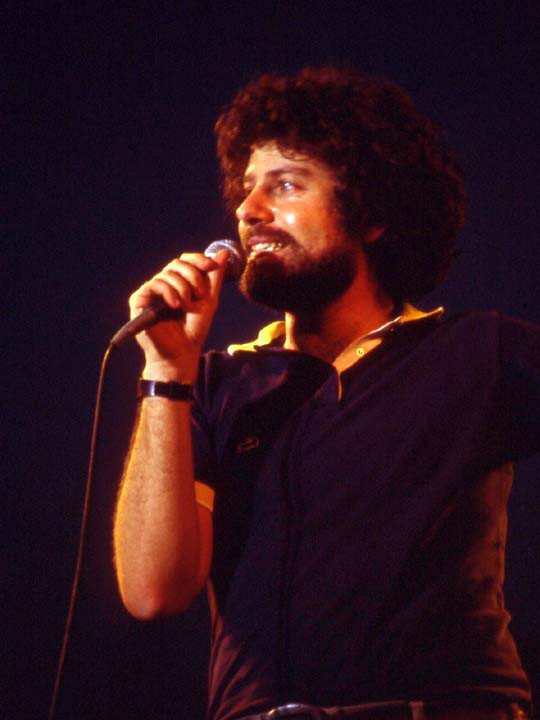
Keith Green Story (Part 9)

Keith Green – Easter Song (live)

Uploaded by on May 25, 2008

Keith Green performing “Easter Song” live from The Daisy Club — LA (1982)

____________________________

Keith Green was a great song writer and performer.  Here is his story below:

The Lord had taken Keith from concerts of 20 or less — to stadiums of 12,000 people.  At his concerts Keith always gave an altar call and led thousands upon thousands to the Lord, and just as many firmly recommitted their lives fully to serve the Lord.

KGPhotos-22

Keith began to appear on many television and radio programs. He talked about his walk with God and played a song or two. But his heart was to please the Lord.  His childhood dream of becoming a super star had been cleansed from his heart years before with something better – being a servant of God.  
Keith said, ”I only want to build God’s Kingdom and see it increase, not my own. If someone writes a great poem no one praises the pencil they used, they praise the one who created the poem.  Well, I’m just a pencil in the hands of the Lord.  Don’t praise me, praise Him!”

2nd Chapter Of Acts Easter Song

Uploaded by on Jul 19, 2009

2nd Chapter Of Acts Live In Concert

________________________

For Keith, meeting Jesus was one thing. Becoming more like Him was another. He struggled with the same things we all do – developing self discipline, deadlines, bad attitudes, selfishness, and ministry issues screaming for attention. He was also trying to disciple the 70 new believers who had come to be part of LDM, which by now had moved to East Texas. Besides all this, Keith still had music to write, articles to finish, and a growing family and wife to take care of.
After striving for years to measure up to God’s holiness, at times even questioning his own salvation, Keith came into a deeper understanding of the sacrifice Jesus made on the cross — both to forgive his sins, and to clothe him in His righteousness.  It was like a huge weight had been lifted off of his chest.
It wasn’t that Keith became less concerned with purity and holiness. But now he was more motivated by love and less by fear in His pursuit of Jesus. He learned so much more about God’s grace and the importance of pausing simply to behold His glory and enjoy His presence. That is perhaps, what Keith loved most.
In 1982 Keith and Melody took a trip to Europe, including Greece and the UK, and their hearts were stirred.. especially when they visited the ministry in the Red Light district of Amsterdam, the open drug use, and the lack of thriving churches where ever they went.  Kith asked every leader what we could do, they all said, “Please tell people we need them to come help us.”

2nd Chapter of Acts – Make My Life A Prayer to You

KGPhotos-40

So Keith decided that at his 1982 Fall Tour he would challenge the Christians in America to get out of their comfort zones, and into the the world to reach the hurting.. So in the last few months of his life, with his heart turned back to winning souls, LDM booked large arenas for the Fall Tour, Melody wrote some missions songs, and YWAM founder Loren Cunningham was going to come to talk about the needs in the world, and give an missions altar call.
Keith’s heart had fully turned back to those who probably wouldn’t show up at a concert or a church. Keith wanted to go back out into the streets and into the prisons the way he and Melody did as new believers. He wanted to go to the mission fields of the nations, and into secular clubs to reach people with his music. However, it was not to be.
On July 28, 1982, there was a small plane crash and Keith went home to be with Jesus. The crash also took the life of his three-year-old son Josiah, and his two year old daughter, Bethany. Melody was home with their one year old, Rebekah, and was also six weeks pregnant with their fourth child, Rachel. Keith was only 28 years old.
Although Keith is now with Jesus, his life and ministry is still making a huge impact around the world. His songs and passionate delivery are still changing lives. His writings are translated into many languages. Keith once said, “When I die I just want to be remembered as a Christian.” It’s safe to say he reached his goal, and perhaps, a bit more.
Keith Green was simply a man of conviction. When his convictions led him to an eternally worthy object in the person of Jesus he sold all that he had—ambitions, possessions, and dreams—to possess His love. In so doing he became a man of devotion. He also became a man remembered, and still missed, by millions around the world.

 “The only music minister to whom the Lord will say,

‘Well done, thy good and faithful servant,’ is the one

whose life proves what their lyrics are saying… 

And to whom music is the least important part of their life. 

Glorifying the only Worthy One

has to be a minister’s most important goal!”  

                                                                                           Keith Green

A review of Woody Allen’s latest movie “Midnight in Paris” (Woody Wednesday)

 
Not Dove Family Approved

Theatrical Release: 6/10/2011

Reviewer: Edwin L. Carpenter
Source: Theater
Writer: Woody Allen
Producer: Letty Aronson
Director: Woody Allen
Genre: Comedy
Runtime: 100 min.
MPAA Rating: PG-13
Starring: Owen Wilson, Rachel McAdams, Kurt Fuller, Kathy Bates

Synopsis:
Midnight in Paris is a romantic comedy that follows a family travelling to the city for business. The party includes a young engaged couple that has their lives transformed throughout the journey. The film celebrates a young man’s great love for Paris, and simultaneously explores the illusion people have that a life different from their own is better.

Dove Worldview:
This one has some funny moments for sure. You have to understand the plot to understand the humor though. In this one, Gil Pender is a romantic, a writer who dreams of living in Paris. In fact, he is there on business along with his fiance’, who spends more time with an old boyfriend named Paul then with Gil. She just can’t understand his desire to take walks in the rain and his dream of being a novelist instead of the successful screen writer that he is. She also can’t comprehend his daydreams of 1920s Paris. When he finds himself in a certain part of the city one night and the clock strikes twelve he soon is shocked to learn he has traveled back to his dream time, Paris in the 1920s. He meets Ernest Hemingway, F. Scott Fitzgerald and Zelda Fitzgerald as well as Gertrude Stein, Pablo Picasso, and a woman he could fall in love with.

He always winds up back in the present when morning breaks but on one occasion he and the woman he falls for winds up in another time frame, the 1890s. She longs to remain in that time frame but he points out that he might have to get dental work done, and they didn’t have proper pain medication back then!

Owen Wilson is likable in his role as Gil and the movie makes a point that no matter what time one lives in, there are always problems to deal with. Despite the nice themes including being true to one’s self, and the opening sequence which includes shots of the Moulin Rouge, Notre Dame, the Seine River and nice cafes, sadly there is use of strong language and the sex rating hits a three in content, due to some frank sexual comments. It should be noted that there are a few political comments too which some viewers will not appreciate. We are unable to award this movie our Dove “Family-Approved” Seal.

Content Chart & Description

Content ScaleSexLanguageViolenceDrugs & AlcoholNudityOther
SexLanguageViolenceDrugsNudityOther
Rating Descriptions

Sex: Frank sexual comments and a few innuendos; kissing; a woman talks about having moved in with her boyfriend; an unmarried couple live together and the woman admits to having an affair while in Paris with her old boyfriend.
Language: Chr*st-1; JC-1; For Chr*st Sake-1; G/OMG-10; H-3; D-1
Violence: A few disagreements.
Drugs: A lot of drinking scenes including wine and champagne and comments about wine tasting; cigarette smoking; a character admits to being drunk; a few scenes of characters riding in cars including a taxi and drinking; a character takes medicine for panic attacks; a comment about “coke” spoons.
Nudity: Cleavage; some hookers raise up skirts; a nude drawing of a woman nude from the waist up.
Other: Political comments about former President Bush and right wingers who are “air-heads” and “demented” and “fascists”.

Santorum shocks Romney and Newt in 3 primaries

Great night for Santorum supporters like me.

Santorum projected to win Minnesota, Missouri GOP Contests


Published February 07, 2012

| FoxNews.com


Rick Santorum is projected to win the Minnesota Republican presidential caucuses, after earlier winning the non-binding Missouri primary.

Santorum is also ahead in early returns out of Colorado. The former Pennsylvania senator could be looking at the best night of his campaign since Iowa, in which he was belatedly declared the winner. For the first time in weeks, he — and not Newt Gingrich — was posing the biggest challenge to frontrunner Mitt Romney.

With 37 percent of precincts reporting in Minnesota, Santorum was ahead with 46 percent. Ron Paul was pulling in second with 26 percent, followed by Romney and Gingrich.

Santorum was also leading in Colorado, followed by Gingrich in second, and Romney and Paul at the back. A total of 70 delegates are up for grabs in those two states Tuesday, though the caucuses are just the start of a lengthy delegate-allocating process.

In Missouri, the primary is effectively a statewide straw poll, as it sets the stage for the delegate-awarding caucuses a month from now. Still, Santorum cruised to a crushing victory. With 85 percent of precincts reporting, Santorum was leading with 55 percent of the vote. Romney had 25 percent, followed by Ron Paul with 12 percent. Gingrich was not on the ballot in that contest.

The returns appear to challenge assertions by Gingrich that the GOP presidential contest is a two-person race between him and Romney. Gingrich, though, hardly competed in the three states Tuesday, instead focusing his attention on other contests down the primary calendar. He campaigned Tuesday in Ohio, which holds its election on March 6, “Super Tuesday,” as the other candidates made last-minute appeals in Colorado and Minnesota.

Santorum, speaking in Colorado, urged caucus-goers earlier to do something Tuesday night that “no one was expecting.”

“Provide a little surprise to the inevitable march of Governor Romney,” Santorum said.

Tuesday’s contests were the first of the season in which multiple states were holding contests on one day. Up next, Maine concludes its caucuses this Saturday, and primaries will be held in Michigan and Arizona later in the month.

Romney so far has won three contests, in New Hampshire, Florida and Nevada. Gingrich has won one, in South Carolina.

Romney entered Tuesday’s competition with a healthy lead in the delegate count — at 101 delegates.

Gingrich trailed with 32 delegates, following by Santorum with 17 and Paul with nine. It takes 1,144 delegates to win the nomination.

Though Missouri’s primary Tuesday was largely symbolic, the contest was still expected to cost state taxpayers about $6 million.

World’s dumbest crook takes on Duggars

I have heard of some idiots before but this would be crook takes the cake.

Duggar Family Member Speaks Out on Extortion Plot

Amy Duggar from the show 19 Kids and Counting is setting the record straight after being targeted by a woman in Iowa who claimed to have compromising photos of Amy as part of an attempt to extort money from TLC.

Federal court documents show that Teresa Hunt was arrested Feb. 1 after she apparently sent TLC executives letters demanding that they cancel 19 Kids and Counting or pay her $10,000 in exchange for her not releasing to a magazine photos of Amy and a 56-year-old musician that were described as depicting “apparently intimate situations.”

Michelle Duggar Miscarries

Amy, an aspiring country singer and the 25-year-old niece of Jim Bob Duggar, told ET in a statement that there are no compromising photos of her with the musician, whom she has known for quite some time as a friend. “It’s totally untrue. He is a longtime family friend who has always been supportive of my music career.  He’s a good Christian and it’s upsetting that his generosity has been exploited like this.”

The TLC reality show focuses on the ups and downs of Jim Bob and Michelle Duggar as they raise their growing family of 19 children.

Related posts:

Duggars in Iowa to support Rick Santorum (video clip)

John David Duggar supports Rick Santorum in Iowa Uploaded by bubba2229 on Jan 2, 2012 John Duggar, 21, explains why he and his famous family are supporting Rick Santorum’s Republican presidential campaign. Recorded Jan. 2, 2012, in Boone, Iowa._____ _ Today Max Brantley of the Arkansas Times Blog commented: In some places, a Jim Bob […]

Duggars mourn miscarriage

I read  on the Arkansas Times Blog this morning this sad news about Duggar’s miscarriage. Michelle said, “I feel like my heart broke telling my children…” Below is the article from People Magazine: Michelle Duggar Miscarries By Alicia Dennis Update Thursday December 08, 2011 08:25 PM EST Originally posted Thursday December 08, 2011 04:30 PM […]

Duggars expecting another baby (related links to Duggars)

The Arkansas Times Blog reported today: EXPECTING 20th: Michelle Duggar People magazine reports that Jim Bob and Michelle Duggar are expecting their 20th child this spring. She’s 45 and had a rough time with her 19th, Josie, born prematurely weighing 22 ounces Link includes video to TLC, where the Duggar-based reality show airs. ______________________ Related […]

Duggar Family Member Speaks Out on Extortion Plot

Agriculture dept continues to grow as the number of people at farms has decreased

Agriculture: Downsizing The Federal Government

I got this info below from Cato Institute website:

Uploaded by on Dec 19, 2008

Agriculture is easily the most distorted sector, with high tariffs and, in developed countries at least, large amounts of government subsidies through price supports and direct payments. On the other hand, developing countries, who have a comparative advantage in these products, cannot afford to subsidize their agriculture sector and face prohibitive tariffs for their products abroad. The powerful agriculture lobby groups, particularly in the large developed countries, make reform politically difficult. Chris Edwards, Sallie James and Dan Ikenson discuss the inequities of American farm policies.

This video was produced by Caleb Brown ( http://www.twitter.com/cobrown ) and Austin Bragg ( http://www.twitter.com/habragg ).

Francis Schaeffer would have been 100 this year

Francis Schaeffer would have been 100 this year

___________

Two Minute Warning: How Then Should We Live?: Francis Schaeffer at 100

Uploaded by on Jan 31, 2012

Under Francis Schaeffer’s tutelage, Evangelicals like Chuck Colson learned to see life through the lens of a Christian worldview. Join Chuck as he celebrates a life well lived.

____________________________

BreakPoint this Week: The Legacy of Francis Schaeffer
By: Shane Morris|Published: February 4, 2012 12:00 AM
 

Francis Schaeffer would have turned 100 years old on January 30, 2012. He was one of the greatest Christian authors and apologists of all time — a man who insisted that Truth be taught, no matter what the consequences might be. His influence lives on today in the message and mission of the Christian worldview movement, especially in apologetics and in the work of ministry leaders like Chuck Colson.

schaeffer

In this eye-opening conversation, Chuck Colson and John Stonestreet take us on a tour of the incredible influence one man had on Christianity during the last century. This influence, as John Stonestreet notes, extends beyond theology and philosophy and into the hearts of men and women who have converted their worldview into action, including one ex Watergate felon-turned-Christian-commentator.

“Everyone that’s influenced me,” says John Stonestreet, “was influenced by this guy who had a little place in Switzerland where he talked about the world of ideas. The list of names that this man has influenced goes on and on, and you’re one of the guys on that list!”

“I think Francis Schaeffer was the greatest prophet of the latter half of the 20th Century,” says Chuck. “What Schaeffer did was to put intellectual content in context to see Christianity not just as a personal experience with Jesus, but as an overarching way of understanding all of the world and all of reality.”

For Chuck, whose personal experience with Schaeffer near the end of the theologian’s life molded his view of Christianity and culture, the central message of this champion of holistic faith was Truth.

“I will never forget being with Schaeffer on several occasions after he had contracted cancer and was getting weaker and weaker,” remembers Chuck. “He would still go to Christian audiences, he worked right up until dying. He died prematurely in my opinion — he hadn’t really finished his task here. But what he would say over and over in that squeaky, little voice and with that goatee as you described it and the knickers — he kept saying, “The issue is Truth, Truth, Truth! Flaming truth!” He was passionate — talking at the top of his lungs even when his health was failing, because he wanted us to know so badly that the issue of the day was Truth: is there something that is reality? Is there a moral order than we can know?”

As any listener or reader of BreakPoint’s resources will know, this flagship message of Schaeffer’s is the heart and soul of Chuck’s work. But what gives this message legs, and carries it into the culture to, as Abraham Kuyper said, claim everything “within the whole domain of human existence” for Christ, is another idea of Schaeffer’s — one which forever changed how Christians view the world. Chuck describes this idea:   

“It’s only now that we’re seeing people slowly, gradually but certainly embracing the fundamental idea that Christianity is not just Jesus and me. Christianity is Christ being the Logos — what the Greeks meant when they used “logos” was all Truth that could ever be known. The source of all ultimate reality is in Christ. You begin to understand that and suddenly you’re looking at things going on every day around you from a biblical perspective. This what I’ve spent the last twenty years preaching and teaching: you have to look at everything that’s happening through God’s eyes.”

Schaeffer did much more than introduce new ideas. He helped shift the conversation on faith and apologetics from one of personal experience to a universal imperative. In many ways, he made it possible for Christians to use the term “worldview” and understand what it means. Schaeffer reopened the eyes of Western Civilization to read its own biography — a legacy of Christian faith etched in its art, music, science, business, law and values. That, says Chuck, is what makes Schaeffer’s life not only a legacy worth remembering, but a mission worth continuing.

“He gave texture and intellectual depth to the Christian faith at a very critical time. Schaeffer got it. And the more we can talk about Schaeffer right now to put things in context of what Christianity really is and its impact on life, the better we’re going to be.”

Related posts:

Francis Schaeffer would be 100 years old this year (Schaeffer Sunday)

Dr. Francis Schaeffer – Extra – Interview – Part 2 Francis Schaeffer had a big impact on me in the late 1970′s and I have been enjoying his books and films ever since. Here is great video clip of an interview and below is a fine article about him. Francis Schaeffer 1912-1984 Christian Theologian, Philosopher, […]

Francis Schaeffer’s “How should we then live?” Video and outline of episode 10 “Final Choices” (Schaeffer Sundays)

E P I S O D E 1 0 How Should We Then Live 10#1 FINAL CHOICES I. Authoritarianism the Only Humanistic Social Option One man or an elite giving authoritative arbitrary absolutes. A. Society is sole absolute in absence of other absolutes. B. But society has to be led by an elite: John Kenneth […]

Fellow admirer of Francis Schaeffer, Michele Bachmann quits presidential race

What Ever Happened to the Human Race? Bachmann was a student of the works of Francis Schaeffer like I am and I know she was pro-life because of it. (Observe video clip above and picture of Schaeffer.) I hated to see her go.  DES MOINES, Iowa — Last night, Minnesota Rep. Michele Bachmann vowed to […]

Francis Schaeffer’s “How should we then live?” Video and outline of episode 9 “The Age of Personal Peace and Affluence” (Schaeffer Sundays)

E P I S O D E 9 How Should We Then Live 9#1 T h e Age of Personal Peace and Afflunce I. By the Early 1960s People Were Bombarded From Every Side by Modern Man’s Humanistic Thought II. Modern Form of Humanistic Thought Leads to Pessimism Regarding a Meaning for Life and for Fixed […]

Francis Schaeffer’s “How should we then live?” Video and outline of episode 8 “The Age of Fragmentation” (Schaeffer Sundays)

E P I S O D E 8 How Should We Then Live 8#1 I saw this film series in 1979 and it had a major impact on me. T h e Age of FRAGMENTATION I. Art As a Vehicle Of Modern Thought A. Impressionism (Monet, Renoir, Pissarro, Sisley, Degas) and Post-Impressionism (Cézanne, Van Gogh, Gauguin, […]

Francis Schaeffer’s “How should we then live?” Video and outline of episode 7 “The Age of Non-Reason” (Schaeffer Sundays)

E P I S O D E 7 How Should We Then Live 7#1 I am thrilled to get this film series with you. I saw it first in 1979 and it had such a big impact on me. Today’s episode is where we see modern humanist man act on his belief that we live […]

Francis Schaeffer would be 100 years old this year (Schaeffer Sunday)

Dr. Francis Schaeffer – Extra – Interview – Part 2 Francis Schaeffer had a big impact on me in the late 1970′s and I have been enjoying his books and films ever since. Here is great video clip of an interview and below is a fine article about him. Francis Schaeffer 1912-1984 Christian Theologian, Philosopher, […]

Francis Schaeffer’s “How should we then live?” Video and outline of episode 6 “The Scientific Age” (Schaeffer Sundays)

E P I S O D E 6 How Should We Then Live 6#1 I am sharing with you a film series that I saw in 1979. In this film Francis Schaeffer asserted that was a shift in Modern Science. A. Change in conviction from earlier modern scientists.B. From an open to a closed natural system: […]

Francis Schaeffer’s “How should we then live?” Video and outline of episode 5 “The Revolutionary Age” (Schaeffer Sundays)

E P I S O D E 5 How Should We Then Live 5-1 I was impacted by this film series by Francis Schaeffer back in the 1970′s and I wanted to share it with you. Francis Schaeffer noted, “Reformation Did Not Bring Perfection. But gradually on basis of biblical teaching there was a unique improvement. A. […]

Francis Schaeffer’s “How should we then live?” Video and outline of episode 4 “The Reformation” (Schaeffer Sundays)

How Should We Then Live 4-1 I was impacted by this film series by Francis Schaeffer back in the 1970′s and I wanted to share it with you. Schaeffer makes three key points concerning the Reformation: “1. Erasmian Christian humanism rejected by Farel. 2. Bible gives needed answers not only as to how to be right with […]

Francis Schaeffer’s “How should we then live?” Video and outline of episode 3 “The Renaissance”

How Should We Then Live 3-1 I was impacted by this film series by Francis Schaeffer back in the 1970′s and I wanted to share it with you. Schaeffer really shows why we have so many problems today with this excellent episode. He noted, “Could have gone either way—with emphasis on real people living in […]

Francis Schaeffer’s “How should we then live?” Video and outline of episode 2 “The Middle Ages” (Schaeffer Sundays)

How Should We Then Live 2-1 I was impacted by this film series by Francis Schaeffer back in the 1970′s and I wanted to share it with you. Schaeffer points out that during this time period unfortunately we have the “Church’s deviation from early church’s teaching in regard to authority and the approach to God.” […]

Francis Schaeffer’s “How should we then live?” Video and outline of episode 1 “The Roman Age” (Schaeffer Sundays)

How Should We Then Live 1-1 Today I am starting a series that really had a big impact on my life back in the 1970′s when I first saw it. There are ten parts and today is the first. Francis Schaeffer takes a look at Rome and why it fell. It fell because of inward […]

Andy Rooney was an atheist

How Now Shall We LiveClick here to purchase Chuck Colson and Nancy Pearcey’s How Now Shall We Live?, dedicated to Francis Schaeffer.


Click here for a list of Francis Schaeffer’s greatest works, from the Colson Center store!
SchaefferBooks