Monthly Archives: September 2011

Free to Choose by Milton Friedman: Episode “Created Equal” (Part 1 of transcript and video)

Image Detail

 Milton Friedman and Ronald Reagan

Liberals like President Obama (and John Brummett) want to shoot for an equality of outcome. That system does not work. In fact, our free society allows for the closest gap between the wealthy and the poor. Unlike other countries where free enterprise and other freedoms are not present.  This is a seven part series.

Created Equal [1/7]. Milton Friedman’s Free to Choose (1980)

Uploaded by on May 30, 2010

In this program, Milton Friedman visits India, the U.S., and Britain, examining the question of equality. He points out that our society traditionally has embraced two kinds of equality: equality before God and equality of opportunity. The first of these implies that human beings enjoy a certain dignity simply because they are members of the human community. The second suggests societies should allow the talents and inclinations of individuals to unfold, free from arbitrary barriers. Both of these concepts of equality are consistent with the goal of personal freedom.

In recent years, there has been growing support for a third type of equality, which Dr. Friedman calls “equality of outcome.” This concept of equality assumes that justice demands a more equal distribution of the economic fruits of society. While admitting the good intentions of those supporting the idea of equality of outcome, Dr. Friedman points out that government policies undertaken in support of this objective are inconsistent with the ideal of personal freedom. Advocates of equality of outcome typically argue that consumers must be protected by government from the insensitivities of the free market place.

Dr. Friedman demonstrates that in countries where governments have pursued the goal of equality of outcome, the differences in wealth and well being between the top and the bottom are actually much greater than in countries that have relied on free markets to coordinate economic activity. Indeed, says Dr. Friedman, it is the ordinary citizen who benefits most from the free market system. Dr. Friedman concludes that any society that puts equality ahead of freedom will end up with neither. But the society that puts freedom before equality will end up with both greater freedom and great equality.

___________________________

FREE TO CHOOSE 5: “Created Equal” (Milton Friedman)
Free to Choose ^ | 1980 | Milton Friedman

Posted on Friday, July 21, 2006 3:58:44 PM by Choose Ye This Day

FREE TO CHOOSE: Created Equal

Friedman: From the Victorian novelists to modern reformers, a favorite device to stir our emotions is to contrast extremes of wealth and of poverty. We are expected to conclude that the rich are responsible for the deprivations of the poor __ that they are rich at the expense of the poor.

Whether it is in the slums of New Delhi or in the affluence of Las Vegas, it simply isn’t fair that there should be any losers. Life is unfair __ there is nothing fair about one man being born blind and another man being born with sight. There is nothing fair about one man being born of a wealthy parent and one of an indigenous parent. There is nothing fair about Mohammed Ali having been born with a skill that enables him to make millions of dollars one night. There is nothing fair about Marleena Detrich having great legs that we all want to watch. There is nothing fair about any of that. But on the other hand, don’t you think a lot of people who like to look at Marleena Detrich’s legs benefited from nature’s unfairness in producing a Marleena Detrich. What kind of a world would it be if everybody was an absolute identical duplicate of anybody else. You might as well destroy the whole world and just keep one specimen left for a museum. In the same way, it’s unfair that Muhammed Ali should be a great fighter and should be able to earn millions. But would it not be even more unfair to the people who like to watch him if you said that in the pursuit of some abstract idea of equality we’re not going to let Muhammed Ali get more for one nights fight than the lowest man on the totem pole can get for a days unskilled work on the docks. You can do that but the result of that would be to deny people the opportunity to watch Mohammad Ali. I doubt very much he would be willing to subject himself to the kind of fights he’s gone through if he were to get the pay of an unskilled docker.

This beautiful estate, its manicured lawns, its trees, its shrubs, was built by men and women who were taken by force in Africa and sold as slaves in America. These kitchen gardens were planted and tended by them to furnish food for themselves and their master, Thomas Jefferson, the Squire of Monticello. It was Jefferson who wrote these words: We hold these truths to be self-evident that all men are created equal. That they are endowed by their creator with certain inalienable rights, that among these are life, liberty and the pursuit of happiness. These words penned by Thomas Jefferson at the age of 33 when he wrote the Declaration of Independence, have served to define a basic ideal of the United States throughout its history.

Much of our history has revolved about the definition and redefinition of the concept of equality, about the intent to translate it into practice. What did Thomas Jefferson mean by the words all men are created equal? He surely did not mean that they were equal and/or identical in what they could do and what they believed. After all, he was himself a most remarkable person. At the age of 26, he designed this beautiful house of Monticello, supervised its construction and indeed is said to have worked on it with his own hands. He was an inventor, a scholar, an author, a statesman, governor of Virginia, President of the United States, minister to France, he helped shape and create the United States. What he meant by the word “equal” can be seen in the phrase “endowed by their creator”. To Thomas Jefferson, all men are equal in the eyes of God. They all must be treated as individuals who have each separately a right to life, liberty and the pursuit of happiness.

Of course, practice did not conform to the ideals. In Jefferson’s life or in ours as a nation, he agonized repeatedly during his lifetime about the conflict between the institution of slavery and the fine words of the declaration. Yet, during his whole life, he was a slave owner.

This is the City Palace in Jaipur, the capitol of the Indian state of Rajasthan, is just one of the elegant houses that were built here 150 years ago by the prince who ruled this land. There are no more princes, no more Maharajas in India today. All titles were swept away by the government of India in its quest for equality. But as you can see, there are still some people here who live a very privileged life. The descendants of the Maharajas financed this kind of life partly by using other palaces as hotels for tourists __ tourists who come to India to see how the other half lives. This side of India, the exotic glamorous side, is still very real. Everywhere in the world there are gross inequalities of income and wealth. They offend most of us.

A myth has grown up that free market capitalism increases such inequalities, that the rich benefit at the expense of the poor. Nothing could be further from the truth. Wherever the free market has been permitted to operate, the ordinary man has been able to attain levels of living never dreamed of before. Nowhere is the gap between rich and poor. Nowhere are the rich richer and the poor poorer than in those societies that do not permit the free market to operate, whether they be feudal societies where status determines position, or modern, centrally-planned economies where access to government determines position.

Central planning was introduced in India in considerable part in the name of equality. The tragedy is that after 30 years, it is hard to see any significant improvement in the lot of the ordinary person.

__________________

Lloyd Carr speaks to Little Rock Touchdown Club

Yesterday I got to hear Lloyd Carr speak to the Little Rock Touchdown Club. Below is how the Arkansas Democrat Gazette covered it.

LITTLE ROCK — Lloyd Carr coached Tom Brady at the beginning of his 13-year tenure as Michigan’s head coach and Ryan Mallett at the end.

Now, Brady and Mallett are New England Patriots quarterbacks — Brady, the NFL superstar who has three Super Bowl rings, and Mallett, the rookie backup.

Carr spoke fondly of both quarterback during Monday’s Little Rock Touchdown Club luncheon at the Embassy Suites hotel.

“If I knew Ryan was going to leave Michigan, I wouldn’t have retired,” Carr, 66, said jokingly as he stepped in front of the audience, which included Mallett’s parents, Jim and Debbie. “I remember working very hard to recruit Ryan. I know our assistant coach Scott Loeffler must have made about 30 trips to Texarkana to see him and he was exactly what we needed to be a championship team at Michigan.”

Mallett played one season at Michigan before transferring to Arkansas after Rich Rodriguez replaced Carr, but Mallett left his mark as a true freshman, throwing for 892 yards with 7 touchdowns and 5 interceptions while seeing action in 11 games, including a 3-0 record as a starter in relief of an injured Chad Henne.

Carr talked about how Mallett took over after Michigan opened 2007 with a 34-32 loss to Appalachian State and a 39-7 loss to Oregon, during which Henne was injured.

“So the next week [against Notre Dame], we were starting a freshman in Ryan Mallett and he played well in a 38-0 victory,” Carr said. “A week later vs. Penn State, he made two or three plays to help us win the game.”

Carr said he is glad to see Mallett at New England, because he said he knows Mallett won’t have to be rushed into the lineup. “He’ll be everything that the Patriots need,” Carr said. Brady played behind Brian Griese— who led the Wolverines to the 1997 national championship — and had to split time with Drew Henson his last two years before becoming a sixth-round draft pick in the 2000 NFL draft.

Brady became New England’s starter when Drew Bledsoe was injured in the 2001 season.

“When Tom was a sophomore, he thought about transferring so I told him to talk to his dad and come back and see me tomorrow. When he came back, I thought he was going to leave, but he told me he was going to stay and prove he is a good quarterback,” Carr said. “He proved when you make up your mind, you can do a lot of good things.”

Brady led the Wolverines to a 45-31 victory over Arkansas in the 1999 Citrus Bowl.

This article was published today at 4:44 a.m.Sports, Pages 19 on 09/20/2011

Bobby Bowden at Little Rock Touchdown Club (Part 3) jh24

I really enjoyed hearing Bobby Bowden speak at the Little Rock Touchdown Club on September 12th and I wanted to put one more post up about it.

Below is an article by Harry King on the Bowden talk.

Punch lines on cue from Bowden

Posted on 13 September 2011

By Harry King

LITTLE ROCK — Some of his material could use an update, but Bobby Bowden’s timing and inflection are good enough for an opening act at a comedy club.

The 81-year-old former Florida State football coach evoked lots of yucks at the Little Rock Touchdown Club on Monday, although a couple of punch lines were familiar and his story about autographed pictures would have worked just as well in Alabama by subbing Nick Saban’s name for that of Bobby Petrino.

Bowden left me wanting more inside football. He talked briefly about how college realignment is driven by money, how winning football attracts students, and how the 25-scholarship limit plays a big role in the number of upsets. He said he could live without a playoff in college football — “It’s not going to get much better than Oregon-Auburn” — and that he didn’t think it would happen because a large majority of college presidents are against it.

Although Missouri and West Virginia are mentioned most often as possible partners with Texas A&M in a move to the Southeastern Conference, Florida State is often in the speculation. They could have joined Arkansas in the SEC 20 years ago, but chose the Atlantic Coast Conference where Bowden believes they will remain.

“People older like I am like tradition,” he said.

Bowden mentioned how he harped on enthusiasm when he was hired at Florida State in 1976 and how persistence might be the most valuable asset in football. He recalled losing two centers in one game early in the 1980 season and losing to Miami the next week when the snap was fumbled 10 times. A week later, the Seminoles were going to play at No. 3 Nebraska and the only two candidates at center had originally been scheduled to be redshirted.

A 185-pound walk-on won the job over a 235-pound scholarship player. At Nebraska, the Seminoles couldn’t do anything in the first half and trailed 14-3. In the second half, the FSU quarterback rolled out regularly to escape the noseman.

The center, he said, hasn’t blocked the Nebraska noseman yet, but the Seminoles did not have a turnover and the Cornhuskers had four in a loss that put FSU on the map.

His message, often delivered to business owners, is to get dependable people.

Bowden opened the comedy with a story about him speaking to a group of Methodists in Georgia. A Southern Baptist, Bowden was asked by a Methodist minister if he was comfortable addressing the audience.

Sure, Bowden said, adding that the two groups worship a bit differently. Asked again, Bowden said he explained, “Y’all continue to do it your way; we’ll continue to do it His.”

The one about trying to get rid of his 10 complimentary game tickets the first year he was at FSU was more predictable. He accommodated family and neighbors and still had two left. Even the school janitor turned him down so he drove to a mall in Tallahassee, put the tickets on the car windshield, and went for a haircut.

An hour later, he came out and there were six tickets on the windshield.

During the three years prior to Bowden’s arrival, the Seminoles won four games. From 1987 to 2000, FSU finished in the top five in The Associated Press poll.

Under Bowden, Florida State won two national championships. Given my druthers, he would have expounded on those teams and some of his others.

——-
Harry King is sports columnist for Stephens Media’s Arkansas News Bureau. His e-mail address is hking@arkansasnews.com.

Related posts:

Bobby Bowden’s health announcement Sept 13, 2011

Former Florida State coach Bobby Bowden By Coley Harvey, Orlando Sentinel7:13 a.m. EDT, September 13, 2011   TALLAHASSEE – According to USA Today, former Florida State coach Bobby Bowden is expected to tell ABC’s “Good Morning America” Tuesday morning that he had prostate cancerwhile he was coaching in 2007, and that he kept his medical […]

Bobby Bowden at Little Rock Touchdown Club (Part 2)

I went to the Little Rock Touchdown Club and heard Bobby Bowden of Florida State speak. It was outstanding. Here is an article below on his visit from the Arkansas Democrat-Gazette: LITTLE ROCK — Former Florida State Coach Bobby Bowden is familiar with pressure brought on by high expectations. Two years ago, after the Seminoles […]

Bobby Bowden named to Broyles Award Selection Committee

    The Broyles Award Trophy, made out of solid bronze, depicts Broyles (kneeling) and longtime University of Arkansas assistant coach Wilson Matthews (standing), watching over a Razorback football game or practice. Matthews was the coach of Little Rock Central High School before joining Broyles on the Razorback’s staff. ______________ Today at the Little Rock […]

Three points where Brummett misses the boat in discussion versus Charlie Collins

Five Key Reasons to Reject Class-Warfare Tax Policy

Uploaded by on Jun 15, 2009

President Obama and other politicians are advocating higher taxes, with a particular emphasis on class-warfare taxes targeting the so-called rich. This Center for Freedom and Prosperity Foundation video explains why fiscal policy based on hate and envy is fundamentally misguided. For more information please visit our web page: www.freedomandprosperity.org.

_______________________________

I was glad to hear that John Brummett was going to take place in a discussion with Charlie Collins in Fayetteville last Saturday. Sounds like some good points came out of it.

John Brummett in his recent article noted:

This forum lasted maybe 90 minutes. I can summarize as follows:

—The two of us varyingly left of center, an economics professor and labor historian named Michael Pierce and I, believe government has the responsibility and right to tax the top margins of high incomes at a higher rate and to spend for stimulus on the demand side to prime the pump of what is an otherwise dangerously idling economy. We find alarming and unsustainable the growing gap between the few rich and the many poor.

—The two wrong of center (or right, if you insist), Charlie Collins and affable local pizza mogul Rolf Wilkin, believe the economy will get better from the supply side. They believe it will do so by its own devices through the glories and innovations of the great American marketplace, but only if the government will cut taxes and reduce regulation. They believe the nation can best address the wealth gap by letting the marketplace work its natural and uninhibited magic.

 Let me address a few points where Brummett misses the boat.

 1. No where in the world is the wealth gap smaller than in the USA. It is true that our form of government has allowed even the poorest of our citizens the opportunity to advance in the income to the top. Countries that have limited freedoms have the poorest people for the most part and the largest wealth gap.

2. Cutting down on regulations is the way to go. Need I say more on this. Go into business for yourself and then write a paper on it.

3. Soaking the rich is really saying something else: “We need more tax revenue for the government to spend and we think the government can spend your money more wisely than you.” Taking all the money the rich have will not even come close to solving our budget woes. Lowering the taxes on job creators is the way to go. Why else do wealthy job creators leave Arkansas to go live in other states that do not have state income tax like us?

Let me submit this article below as further evidence.

Soak-the-Rich Taxes Soak Everyone

by Jim Powell

Jim Powell, a senior fellow at the Cato Institute, is the author of FDR’s Folly, Wilson’s War, Bully Boy, The Triumph of Liberty and other books.

Added to cato.org on September 9, 2011

This article appeared on Forbes.com on September 8, 2011.

Soak-the-rich taxes have a way of becoming people’s taxes, soaking those who never expected to pay.

This has been true from the very beginning. The first U.S. income tax was passed in 1861 to help pay the Union’s Civil War costs. Western farmers had little cash, so they favored an income tax that wouldn’t affect them. Initially the Civil War income tax was 3 percent of income over $800. Since there weren’t enough people making over $800 to finance war spending, the income tax was revised to include everyone making as little as $600, and the rate was nearly doubled.

This income tax ended in 1872, but farmers hoped to revive it so they could push the cost of government on somebody else. Another income tax was passed in 1894, and 99-9/10ths percent of the 65 million people in the United States paid nothing. A lyrical Missouri congressman exulted: “passage of the bill will mark the dawn of a brighter day, with more sunshine, more of the songs of birds, more of the sweetest music, the laughter of children well fed, well clothed, well housed.” Jubilation was short-lived, when the income tax was struck down by the U.S. Supreme Court.

Jim Powell, a senior fellow at the Cato Institute, is the author of FDR’s Folly, Wilson’s War, Bully Boy, The Triumph of Liberty and other books.


More by Jim Powell

The Spanish-American War (1898) spurred federal officials to scramble for more revenue. Progressives began dreaming about how to revive the income tax. Eventually, they decided their best option was the long process of amending the Constitution. In December 1906, President Theodore Roosevelt cheered them on, declaring that “there is every reason why, when next our system of taxation is revised, the National Government should impose a graduated inheritance tax, and, if possible, a graduated income tax.” It wasn’t clear what would be done with revenue generated by an income tax, since no country posed a military threat to the United States, and big-time social spending was many years away.

Following ratification by three-quarters of the states, Congress passed an income tax bill, and in 1913, President Woodrow Wilson signed it. Initially, the rates were low, and a reported 99 percent of the U.S. population paid nothing, presumably a key reason why people clamored for it.

But as Wilson maneuvered the United States into World War I, there were higher taxes for everyone. By 1918, the top rate hit 77 percent. “Never before, in the annals of civilization,” noted Columbia historian Edwin Seligman, “has any attempt been made to take that much of a man’s income by taxation.” A lot of ordinary folks found they were subject to the income tax, too.

Ordinary folks were soaked again during the New Deal years (1933-1940) when federal spending doubled. True, President Franklin Delano Roosevelt seemed to be soaking-the-rich when he raised income tax rates on job creators whom he denounced as “economic royalists.”

Yet only about 5 percent of the population paid federal income taxes. The biggest source of federal revenue throughout the New Deal was the excise tax on beer, cigarettes, soft drinks, chewing gum, radios and other cheap pleasures enjoyed disproportionately by middle class and poor people. Until 1936, the federal excise tax generated more revenue than the federal personal income tax and the federal corporate income tax combined. Moreover, New Deal subsidies for big farmers were financed by forcing the three quarters of Americans who weren’t farmers to pay higher food prices. The New Deal was mainly paid for by the middle class and the poor.

The Revenue Act of 1942, amidst World War II, doubled the tax base and clearly made the personal income tax a people’s tax — the biggest source of federal revenue. Although the income tax had been sold to soak-the-rich and give everyone else something for nothing, ordinary folks faced a 23 percent rate on income up to $2,000, plus the headache of maintaining detailed records, filling out forms, dealing with inquisitorial audits and possible seizures.

Soak-the-rich taxes are for suckers. President Obama, like so many politicians who came before, is singing the happy song that only millionaires and billionaires will have to pay. But runaway spending — whether because of war or entitlement programs — drives government to extract revenue from people with much lower incomes, like the nearly half the population that pays no federal income tax now. The violence in Europe suggests they will be shocked and outraged when that happens.

__

“Tip Tuesday” Advice for Gene Simmons (Part 11) Fellowship Bible Church July 24th

Gene Simmons and his son Nick (Refer to end of post for more on Nick and Gene)

28 July 2011
Gene Simmons has proposed to long-term girlfriend Shannon Tweed.

The Kiss bassist – who claims to have slept with over 2,000 women and has for a long time vowed never to marry – popped the question to the actress-and-former-Playboy model, in Belize recently.

In video footage for their reality show ‘Gene Simmons Family Jewels’, he asks Shannon: “I come with so much baggage, but you’re the only friend I’ve got, you’re the only one I’ve ever loved, you’re the only one I love, and the only one I ever will love. I’ve never said those words to anybody, and I don’t ever wanna…

“It’s funny, they used to watch movies where they say I can’t live without you but for me it’s true.”

He then gets down on one knee and says “will you marry me,” at which point Shannon is crying.

Gene, 61, and Shannon, 54, have been together for 27 years and have two children, Nicholas, 22, and Sophie, 19.

___________________________

Above you read that Gene Simmons has gone to bed with 2000 women. However, he is engaged to be married to the mother of his children. The point of contension in the past has been his infidelites. Will he be faithful to his wife? There is a strong warning from the Bible concerning this.

In the Fellowship Bible Church worship service on July 24th, Brandon Barnard read Proverbs chapters 5, 6, and 7 and when he finished he said that was strong and explicit. This warning that comes to us comes with power and intensity. I know when we talk about this, it is talking about the adulterous woman, and Proverbs is speaking to sons, but you have to take the universal context and that is that sexual pressures are coming on all of us. Men and women are engaging in pornography and affairs and romantic fantisies, but when you read Proverbs 5, 6, 7 so you there is the warning STAY AWAY FROM THIS. DEATH IS THERE AND TRAPPING IS THERE AND IT WILL TAKE YOUR LIFE. WE HAVE TO CHOOSE IF WE ARE GOING TO WALK THIS PATH OF IMPURITY OR THIS PATH OF PURITY. ALL OF US HAVE DEALT WITH THIS IN OUR LIVES MAYBE IN MORE WAYS THAN WE CARE TO ADMIT. We just can’t sweep everything under the carpet and go on doing life. We have to deal with it.

He started off the sermon by reading three chapters from Proverbs. Here are the verses:

Proverbs 5:1-23

English Standard Version (ESV)

Proverbs 5

Warning Against Adultery

1 My son, be attentive to my wisdom;
incline your ear to my understanding,
2that you may keep discretion,
and your lips may guard knowledge.
3For the lips of a forbidden[a] woman drip honey,
and her speech[b] is smoother than oil,
4but in the end she is bitter as wormwood,
sharp as a two-edged sword.
5Her feet go down to death;
her steps follow the path to[c] Sheol;
6she does not ponder the path of life;
her ways wander, and she does not know it. 7And now, O sons, listen to me,
and do not depart from the words of my mouth.
8Keep your way far from her,
and do not go near the door of her house,
9lest you give your honor to others
and your years to the merciless,
10lest strangers take their fill of your strength,
and your labors go to the house of a foreigner,
11and at the end of your life you groan,
when your flesh and body are consumed,
12and you say, “How I hated discipline,
and my heart despised reproof!
13I did not listen to the voice of my teachers
or incline my ear to my instructors.
14 I am at the brink of utter ruin
in the assembled congregation.”

15Drink water from your own cistern,
flowing water from your own well.
16Should your springs be scattered abroad,
streams of water in the streets?
17 Let them be for yourself alone,
and not for strangers with you.
18Let your fountain be blessed,
and rejoice in the wife of your youth,

19a lovely deer, a graceful doe.
Let her breasts fill you at all times with delight;
be intoxicated[d] always in her love.
20Why should you be intoxicated, my son, with a forbidden woman
and embrace the bosom of an adulteress?[e]
21For a man’s ways are before the eyes of the LORD,
and he ponders[f] all his paths.
22The iniquities of the wicked ensnare him,
and he is held fast in the cords of his sin.
23 He dies for lack of discipline,
and because of his great folly he is led astray.

Proverbs 6:20-35

English Standard Version (ESV)

Warnings Against Adultery

20 My son, keep your father’s commandment,
and forsake not your mother’s teaching.
21 Bind them on your heart always;
tie them around your neck.
22 When you walk, they[a] will lead you;
when you lie down, they will watch over you;
and when you awake, they will talk with you.
23For the commandment is a lamp and the teaching a light,
and the reproofs of discipline are the way of life,
24to preserve you from the evil woman,[b]
from the smooth tongue of the adulteress.[c]
25 Do not desire her beauty in your heart,
and do not let her capture you with her eyelashes;
26for the price of a prostitute is only a loaf of bread,[d]
but a married woman[e] hunts down a precious life.
27Can a man carry fire next to his chest
and his clothes not be burned?
28Or can one walk on hot coals
and his feet not be scorched?
29So is he who goes in to his neighbor’s wife;
none who touches her will go unpunished.
30People do not despise a thief if he steals
to satisfy his appetite when he is hungry,
31but if he is caught, he will pay sevenfold;
he will give all the goods of his house.
32He who commits adultery lacks sense;
he who does it destroys himself.
33He will get wounds and dishonor,
and his disgrace will not be wiped away.
34For jealousy makes a man furious,
and he will not spare when he takes revenge.
35He will accept no compensation;
he will refuse though you multiply gifts.

Proverbs 7:6-27

English Standard Version (ESV)

 6For at the window of my house
I have looked out through my lattice,
7and I have seen among the simple,
I have perceived among the youths,
a young man lacking sense,
8passing along the street near her corner,
taking the road to her house
9in the twilight, in the evening,
at the time of night and darkness.

10And behold, the woman meets him,
dressed as a prostitute, wily of heart.[a]
11She is loud and wayward;
her feet do not stay at home;
12now in the street, now in the market,
and at every corner she lies in wait.
13She seizes him and kisses him,
and with bold face she says to him,
14“I had to offer sacrifices,[b]
and today I have paid my vows;
15so now I have come out to meet you,
to seek you eagerly, and I have found you.
16I have spread my couch with coverings,
colored linens from Egyptian linen;
17I have perfumed my bed with myrrh,
aloes, and cinnamon.
18Come, let us take our fill of love till morning;
let us delight ourselves with love.
19For my husband is not at home;
he has gone on a long journey;
20he took a bag of money with him;
at full moon he will come home.”

21With much seductive speech she persuades him;
with her smooth talk she compels him.
22All at once he follows her,
as an ox goes to the slaughter,
or as a stag is caught fast[c]
23till an arrow pierces its liver;
as a bird rushes into a snare;
he does not know that it will cost him his life.

24And now, O sons, listen to me,
and be attentive to the words of my mouth.
25Let not your heart turn aside to her ways;
do not stray into her paths,
26for many a victim has she laid low,
and all her slain are a mighty throng.
27Her house is the way to Sheol,
going down to the chambers of death.

____________________________________

Pictured above is Gene with his son Nick. Does Gene want to follow what Proverbs says or not? If he doesn’t then will his son also fall down the same trap? It is a powerful question. That is why Solomon directed these warnings to his son!!!!

Dolores Hope, Bob’s wife of 69 years, passing away

Bob Hope and Dolores Hope in England 1994

Uploaded by on Feb 9, 2008

Here is the legendary Bob Hope at the age of 91, making his final appearance in the land of his birth in June 1994. He returned to England for a final show to commemorate the 50th anniversary of the Normandy D Day landings which took place on June 6th 1944. An added bonus is to hear his talented wife Delores who appears with him.

_____________________________

I will never forget seeing Bob Hope perform live in Memphis in 1982 with my grandfather. Bob Hope and my grandfather were born in 1903 and I remember that my grandfather used to say “What is that old man doing on tv at that old age.” Then when Bob Hope came to Memphis, I asked my grandfather to go see that “old man” in person and he was delighted to do so.

It is a sad day with the passing of Dolores Hope, Bob’s wife of 69 years.

Related Content

  • FILE - In this 1955 file photo, entertainer Bob Hope, right, and his wife Dolores attend the premiere of Hope's movie "The Seven Little Foys" at a Paramount Theater in Los Angeles. Dolores Hope, who was married to Bob Hope for 69 years and sang at his shows, died Monday, Sept. 19, 2011 of natural causes at home in Los Angeles. She was 102. (AP Photo, file)FILE – In this 1955 file photo, entertainer Bob Hope, right, and his wife Dolores …
  • FILE - In this May 27, 2009 file photo, Dolores Hope, the widow of legendary comedian Bob Hope, looks on as partygoers sing "Happy Birthday" to her during her 100th birthday party in Los Angeles. Hope, who was married to Bob Hope for 69 years and sang at his shows, died Monday, Sept. 19, 2011 of natural causes at home in Los Angeles. She was 102. (AP Photo/Chris Pizzello, file)FILE – In this May 27, 2009 file photo, Dolores Hope, the widow of legendary comedian …

LOS ANGELES (AP) — Dolores Hope, the sultry-voiced songstress who was married to Bob Hope for 69 years and sometimes sang on his shows for U.S. troops and on his television specials, has died at age 102.

Hope family spokesman Harlan Boll said Hope died Monday of natural causes at home in Los Angeles. He did not elaborate.

“Both the entertainment world and the church have lost a woman of profound faith, gifted musical talent and dedication,” said Los Angeles Archbishop Jose H. Gomez. “The death of Dolores Hope leaves a huge void in Southern California.”

Bob Hope died at age 100 on July 27, 2003.

At her 100th birthday party, Dolores Hope appeared little changed: Her white hair was richly coiffed, her skin smooth and her voice deep and warm. She was brought to the party in a wheelchair but was alert and happy as she greeted old friends and posed for photographs.

Hope mused, “I thought it was going to be just another birthday.”

In 1933, when Bob Hope was appearing in his first Broadway show, “Roberta,” his friend and fellow cast member George Murphy persuaded him to visit the Vogue Club to “hear a pretty girl sing.” She was Dolores Reade, a dark beauty whose singing of “It’s Only a Paper Moon” entranced the young comedian.

“I’ll never forget what a wonderful singer she was,” said Rip Taylor. “In fact, that’s how Bob and Dolores met. It seems to me that they were always laughing.”

Linda Hope and Bob Hope–What’s My Line

Linda Hope and her father, Bob Hope, as the mystery guests on the 24 June 1956 edition of WML.

_________________________________

Bob Hope–What’s My Line

Bob Hope as mystery guest on 12 December 1954 episode

___________________________

https://i0.wp.com/upload.wikimedia.org/wikipedia/commons/d/d8/Thatcher_with_Reagan_and_Bob_Hope.jpg

James Hardy – Pope AFB – President Reagan – Bob Hope

Uploaded by on Feb 28, 2011

Here is a clip from a show we did at Pope Air Force Base in North Carolina. President Reagan made an unscheduled visit to the set. The Secret Service worked with us to secure the venue and keep the cameras rolling. No matter how many times I work with them they never cease to impress me with their efficiency and professionalism. http://www.jhfilmco.com

Related posts:

Ronald Wilson Reagan (Part 94)

President Reagan attending the Bob Hope Salute to the United States Air Force 40th Anniversary celebration with Kirk Cameron, Phyllis Diller, Lucille Ball and Emmanuel Lewis at Pope Air Force base in Fayetteville, North Carolina. 5/10/87 7:40 PM EDT on November 6, 1984 from ABC7 WLS-TV Chicago. ABC News – The 84 Vote Peter Jennings, […]

Ronald Wilson Reagan (Part 93)

President Reagan and Bob Hope performing at the Bob Hope Salute to the United Sates Air Force 40th Anniversary Celebration at the Pope Air Force Base in Fayetteville, North Carolina. 5/10/87. the first presidential debate between Ronald Reagan and Walter Mondale in 1984 Lee Edwards of the Heritage Foundation wrote an excellent article on Ronald […]

Ronald Wilson Reagan (Part 84) (1981 Orsini McArthur murder case Part 8)

  For some, he was a paragon of conservative virtues, a man who re-established America’s supremacy in the world after a decade of decline and self-doubt. For others, he’s an emblem of lethal American meddling in other countries’ affairs (Grenada, El Salvador, Nicaragua) and a pseudo-populist whose “supply side” economic policies widened the divide between […]

Ronald Wilson Reagan Part 69

Bob Jordan / Associated Press No. 13: Duke ends UNLV’s perfect season Final Four, March 30, 1991 — The Runnin’ Rebs returned four starters from the 1990 champions and rolled through the ’90-91 season. They entered the Final Four 34-0 and faced Duke, a team the Rebs beat by 30 points in the ’90 title […]

Ronald Wilson Reagan Part 61 (British people know what it is to fight for their freedom in WWII)

HALT:HaltingArkansasLiberalswithTruth.com ASSOCIATED PRESS No. 21: Indiana’s perfect finish NCAA Championship game, March 29, 1976 — Bob Knight’s first NCAA title capped a 32-0 season, the last any men’s team has completed a season without a loss. Six teams had logged unbeaten season in 20 seasons before the Hoosiers did so. Yet in the more […]

Ronald Wilson Reagan Part 57 (Bad Actor?)

Former First Lady Nancy Reagan prepares to present the Ronald Reagan Presidential Medal of Freedom to Mr. Bob Hope during his 94th birthday celebration. July 1, 1997 Jane “legs a mile long” Russell, Bob Hope and Roy Rogers from Son of Paleface (1952) – and a treat at the very end! My grandfather, Everette Hatcher […]

Ronald Wilson Reagan Part 56 (Reagan’s humor)

  I have made no secret of the fact that Ronald Wilson Reagan was my favorite president. We named our son Wilson after him. He could be funny when the occasion called for it and be serious when he needed to. In the video clip below he talks about the sacrifice of those who died […]

Ronald Wilson Reagan Part 49 (Regimes planted by bayonets do not take root)

HALT:HaltingArkansasLiberalswithTruth.com President Reagan attending the Bob Hope Salute to the United States Air Force 40th Anniversary celebration with Kirk Cameron, Phyllis Diller, Lucille Ball and Emmanuel Lewis at Pope Air Force base in Fayetteville, North Carolina. 5/10/87. You will notice Kirk Cameron in the picture above. Cameron appeared in one of my favorite movies, “Fireproof.” […]

Ronald Wilson Reagan Part 48(England is our best friend)

HALT:HaltingArkansasLiberalswithTruth.com President Reagan and Bob Hope performing at the Bob Hope Salute to the United Sates Air Force 40th Anniversary Celebration at the Pope Air Force Base in Fayetteville, North Carolina. 5/10/87. The full “Doctor, Doctor” scene including classic cameo by Bob Hope at the end! I love Bob Hope movies. Hope came to play […]

Ronald Wilson Reagan Part 46

President Reagan meeting with Anatoly Shcharansky, released dissident from the Soviet Union USSR, in the Oval Office. 12/10/86. HALT:HaltingArkansasLiberalswithTruth.com Yesterday Jane Russell passed away. She was in two of my favorite movies {Paleface (1948) with Bob Hope and Son of Paleface (1952)}.  I did not know this until last Sunday, but Bob Hope was the […]

Ronald Wilson Reagan Part 40

HALT:HaltingArkansasLiberalswithTruth.com I was on a plane flying from St. Louis to Orlando last night and we took off 20 minutes late. Not to worry though because the pilot informed us that he will just do 600 mph and get there 20 minutes early. I was amazed to see so many baseball and tennis courts lit […]

Ronald Wilson Reagan Part 39

HALT:HaltingArkansasLiberalswithTruth.com President Reagan and Bob Hope laughing with George Shultz at the Kennedy Center Honors. Washington, DC 12/8/85. Reagan’s Surgeon General C. Everett Koop talks about “baby doe.” Discussing film series “Whatever happened to the human race?” You will notice in this above clip by C. Everett Koop that Ronald Reagan, Koop and Malcolm Muggeridge […]

Ronald Wilson Reagan Part 36

HALT:HaltingArkansasLiberalswithTruth.com Princess Diana dancing with John Travolta in the entrance hall at the White House. 11/9/85. Milton Friedman has been talking about wasteful government spending for years. Take a look at the clip below from the 1979 Phil Donahue Show. He was a great defender of freedom. I love his response to the question concerning […]

Ronald Wilson Reagan Part 29

HALT:HaltingArkansasLiberalswithTruth.com This is the second of 11 parts. In this segment, Lucille Ball receives a surprise on-air phone message from Gov. Ronald Reagan. This show was first broadcast in November 1973 My wife and I love to watch “I love Lucy.” The shows are priceless. Below you will see a picture of Lucy. The funny […]

Ronald Wilson Reagan Part 26(How to cure inflation)

HALT:HaltingArkansasLiberalswithTruth.com Pt 3 Friedman on how to cure inflation Tennessee Ernie Ford & Lucy video clip Below you will see a picture of Lucy with the Reagans. Last night my wife and I watched an episode of  ”I Love Lucy” with cousin Ernie. It was great. You will notice a clip from that show above. […]


David Barton: America’s Religious Heritage as demonstrated in Presidential Inaugurations (part 3)

David Barton: America’s Religious Heritage as demonstrated in Presidential Inaugurations (part 3)

David Barton on Glenn Beck – Part 3 of 5

Uploaded by  on Apr 9, 2010

Wallbuilders’ Founder and President David Barton joins Glenn Beck on the Fox News Channel for the full hour to discuss our Godly heritage and how faith was the foundational principle upon which America was built.

David Barton did a great job with this article America’s Religious Heritage As Demonstrated in Presidential Inaugurations :

David Barton – 01/2009
America’s Religious Heritage
As Demonstrated in Presidential InaugurationsReligious activities at presidential inaugurations have become the target of criticism in recent years, 1 with legal challenges being filed to halt activities as simple as inaugural prayers and the use of “so help me God” in the presidential oath. 2 These critics – evidently based on a deficient education – wrongly believe that the official governmental arena is to be aggressively secular and religion-free. The history of inaugurations provides some of the most authoritative proof of the fallacy of these modern arguments.

Subsequent presidents made similar acknowledgments:

HERBERT HOOVER: This occasion is not alone the administration of the most sacred oath which can be assumed by an American citizen. It is a dedication and consecration under God to the highest office in service of our people. 15

FRANKLIN DELANO ROOSEVELT: As I stand here today, having taken the solemn oath of office in the presence of my fellow countrymen – in the presence of our God . . . 16

JOHN F. KENNEDY: For I have sworn before you and Almighty God the same solemn oath our forebears prescribed nearly a century and three quarters ago. 17

RICHARD NIXON: I have taken an oath today in the presence of God and my countrymen to uphold and defend the Constitution of the United States. 18

There were others as well. 19 The taking of the presidential oath is a religious action – or what Founding Father John Witherspoon had called “an act of worship.” 20

Returning to Washington’s inauguration, following the taking of the oath on the Bible, Washington and the officials then departed the balcony and went inside Federal Hall to the Senate Chamber where Washington delivered his Inaugural Address. From the outset of that first-ever presidential address, Washington – as his first very official act – set a religious tone by expressing his own heartfelt prayer to God:

Such being the impressions under which I have – in obedience to the public summons – repaired to [arrived at] the present station, it would be peculiarly improper to omit in this first official act my fervent supplications to that Almighty Being Who rules over the universe, Who presides in the councils of nations, and Whose providential aids can supply every human defect – that His benediction may consecrate to the liberties and happiness of the people of the United States a government instituted by themselves for these essential purposes. 21

The remainder of Washington’s address was no less strongly religious; he even called on his listeners to remember and acknowledge God:

In tendering this homage [act of worship] to the Great Author of every public and private good, I assure myself that it expresses your sentiments not less than my own, nor those of my fellow-citizens at large less than either. No people can be bound to acknowledge and adore the Invisible Hand which conducts the affairs of men more than those of the United States. Every step by which they have advanced to the character of an independent nation seems to have been distinguished by some token of Providential Agency; and in the important revolution just accomplished in the system of their united government [i.e., the creation and adoption of the Constitution] . . . cannot be compared with the means by which most governments have been established without some return of pious gratitude. . . .

These reflections, arising out of the present crisis, have forced themselves too strongly on my mind to be suppressed. . . . [T]he foundation of our national policy will be laid in the pure and immutable principles of private morality . . . since there is no truth more thoroughly established than that there exists in the economy and course of nature an indissoluble union between virtue and happiness – between duty and advantage – between the genuine maxims of an honest and magnanimous policy and the solid rewards of public prosperity and felicity; since we ought to be no less persuaded that the propitious [favorable] smiles of Heaven can never be expected on a nation that disregards the eternal rules of order and right which Heaven itself has ordained. . . .

Having thus imparted to you my sentiments as they have been awakened by the occasion which brings us together, I shall take my present leave; but not without resorting once more to the benign Parent of the Human Race in humble supplication that . . . His divine blessing may be equally conspicuous in the enlarged views, the temperate consultations, and the wise measures on which the success of this government must depend. 22

Washington and the Members of Congress then marched in a procession to St. Paul’s Church for Divine Service. That Congress should have gone to church en masse as part of the inauguration was no surprise, for Congress had itself scheduled these inaugural services.

That is, while the new Constitution had established the presidency, it stipulated nothing specific about the inaugural activities. It was therefore within the authority of Congress to help direct those activities. The Senate therefore acted:

Resolved, That after the oath shall have been administered to the President, he – attended by the Vice-President and members of the Senate and House of Representatives – proceed to St. Paul’s Chapel to hear Divine service. 23

The House quickly approved the same resolution. 24 Once the presidential oath had been administered and the inaugural address delivered, according to official congressional records:

The President, the Vice-President, the Senate, and House of Representatives, &c., then proceeded to St. Paul’s Chapel, where Divine Service was performed by the chaplain of Congress. 25

The service at St. Paul’s was conducted by The Right Reverend Samuel Provoost – the Episcopal Bishop of New York, who had been chosen chaplain of the Senate the week preceding the inauguration. The service was performed according to The Book of Common Prayer, and included a number of prayers taken from Psalms 144-150 as well as Scripture readings and lessons from the book of Acts, I Kings, and the Third Epistle of John. 26

– – – ◊ ◊ ◊ – – –

The very first inauguration – conducted under the watchful eye of those who had framed our government and written its Constitution – incorporated numerous religious activities and expressions. That first inauguration set the constitutional precedent for all other inaugurations; and the activities from that original inauguration that have been repeated in whole or part in every subsequent inauguration include: (1) the use of the Bible to administer the oath; (2) the religious nature of the oath and including “So help me God”; (3) inaugural prayers by the president; (4) religious content in the inaugural addresses; (5) the president calling the people to pray or acknowledge God; (6) inaugural worship services; and (7) clergy-led inaugural prayers.


Endnotes

15. Public Papers of the Presidents, Herbert Hoover, 1929, p.1, March 4th, 1929. See also Herbert Hoover, “Inaugural Address,” The American Presidency Project, March 4, 1929 (at: http://www.presidency.ucsb.edu/ws/?pid=21804).(Return)

16. < i>Public Papers of the Presidents, F. D. Roosevelt, 1944, Item 7, January 20th, 1945. See also Franklin D. Roosevelt, “Inaugural Address,” The American Presidency Project, January 20, 1945 (at:http://www.presidency.ucsb.edu/ws/?pid=1660). (Return)

17. Public Papers of the Presidents, J. F. Kennedy, 1961, p.1, January 20th, 1961. See also John F. Kennedy, “Inaugural Address,” The American Presidency Project, January 20, 1961 (at:http://www.presidency.ucsb.edu/ws/?pid=8032). (Return)

18. Public Papers of the Presidents, Nixon, 1969, p.3-4, January 20th, 1969.See also Richard Nixon, “Inaugural Address,” The American Presidency Project, January 20, 1969 (at: http://www.presidency.ucsb.edu/ws/?pid=1941).(Return)

19. See, for example, Warren G. Harding, Inaugural Address, March 4, 1921; and Public Papers of the Presidents, Jimmy Carter, 1977, p.1, January 20th, 1977. See also Warren G. Harding, “Inaugural Address,” The American Presidency Project, March 4, 1921 (at: http://www.presidency.ucsb.edu/ws/?pid=25833); Jimmy Carter, “Inaugural Address,” The American Presidency Project, January 20, 1977 (at: http://www.presidency.ucsb.edu/ws/?pid=6575). (Return)

20. John Witherspoon, The Works of John Witherspoon (Edinburgh: J. Ogle, 1815), Vol. VII, p. 139, from his “Lectures on Moral Philosophy,” Lecture 16 on Oaths and Vows. (Return)

21. The Debates and Proceedings in the Congress of the United States, Joseph Gales, editor (Washington: Gales & Seaton, 1834), Vol. I, p. 27. See alsoGeorge Washington, Messages and Papers of the Presidents, James D. Richardson, editor (Washington, D.C.: 1899), Vol. 1, pp. 44-45, April 30, 1789. (Return)

22. Debates and Proceedings (1834) Vol. I, pp. 27-29, April 30, 1789. (Return)

23. Debates and Proceedings (1834), Vol. I, p. 25, April 27, 1789. (Return)

24. Debates and Proceedings (1834), Vol. I, p. 241, April 29, 1789. (Return)

25. Debates and Proceedings (1834) Vol. I, p. 29, April 30, 1789. (Return)

26. Book of Common Prayer (Oxford: W. Jackson & A. Hamilton, 1784), s.v., April 30th. (Return)

A better idea than the Obama job bill

A better idea than the Obama job bill

A lot better idea than President Obama’s job bill is below:

Morning Bell: The Tale of Two Jobs Plans

Mike Brownfield

September 15, 2011 at 9:51 am

It’s been one week since President Barack Obama announced his latest “stimulus” plan, and despite a cross-country road show aimed at selling his proposals to the American people, the commander in chief is finding that his message of more taxes and spending isn’t hitting home. Meanwhile, House Budget Committee Chairman Paul Ryan (R-WI) has outlined a markedly different way to help the U.S. economy get back on track.

According to a new National Journal/United Technologies poll, only one in six Americans think that the President’s plan will decrease unemployment “a lot,” while one-quarter doubted that the plan would affect unemployment at all. Then there are the 39 percent who think that the President’s policies have made unemployment even worse (twice as many as those who say he’s made unemployment better). Now The New York Times is raining on the President’s parade, too, reporting that Democrats are “balking at Obama’s jobs bill” and “say there is little chance they will be able to support the bill as a single entity, citing an array of elements they cannot abide.”

Though it might be surprising that the President is struggling even among his own party to garner support for the plan that he has demanded they pass, it’s no wonder that the country doubts his plan for job growth. After all, with its $447 billion sticker price and reliance on big government spending, it looks much like what he has tried and failed for the duration of his presidency. In short, it calls for more borrowing, spending and higher taxes–none of which is going to help America create more jobs.

Rather than take a stab at making government bigger, Ryan says in a new video that there’s a better path forward–pro-growth tax reform that makes the tax code fairer, competitive, and simpler, all of which will help unleash the creative power of America’s private sector. In an exclusive interview with The Heritage Foundation, Ryan explained why the tax code is so desperately in need of reform:

[The tax code] penalizes all those qualities that make us great and make our economy grow–saving, investing, risk taking. It penalizes those things.

It’s basically a crony capitalist creation, where Congress has decided to put itself in the role of picking and choosing winners and losers in the economy through the tax code.

When you carve out all these preferences to benefit one industry or business over others, you have to raise tax rates higher than you otherwise would have to, which makes it harder for the economy to grow, for businesses to become created.

Ryan says that the tax code has become “an economic incumbent protection plan” that ultimately leads to higher taxes across the board, leaving the United States less competitive in the global economy. His solution? Level the tax code playing field:

What we want to do is get all the social engineering and crony capitalism loopholes out, so we can lower the tax rates and let businesses keep their money in the first place–let people keep their money in the first place–and that way the determining factor of whether a business succeeds or fails will be based upon merit, will be based upon achievement, will be based about innovation, will be based upon whether they’re pleasing customers or not, and not whether they have access to people in Congress or the federal government.

Don’t confuse Ryan’s call for fairness in the tax code with President Obama’s calls for “shared sacrifice” — which for him means higher taxes on America’s job creators. Ryan says there is an inherent difference in aspiration and philosophy about the role of government in the economy:

I aspire to achieve a culture, an economy, a society where we promote equal opportunity, so people can prosper and make the most of their lives. I would argue with the President’s rhetoric and actions–he’s aspiring to a society where the government sees its role as equalizing the results of our lives. It’s a way of looking at the economy and the society as if the pie were fixed, and therefore the government has to have as its role redistributing the slices of the pie more equitably in the name of fairness or equality. That’s not how the world works. That’s not how the economy works.

Our goal is to grow the pie, not have the government figure out how to redistribute slices from some to others–which ends up putting a penalty or a hurdle on growth and innovation and prosperity–but grow the pie itself. I will grant the President that class warfare can make for really good politics, but it doesn’t make for good economics.

Ryan is on the right track. Whereas President Obama wants to keep increasing spending and paying for it with higher taxes, Ryan is advocating a much-needed revamp of the tax code. Whereas the President’s policies would permanently increase taxes, increase the size of government, and make America’s unemployment picture even worse, Ryan looks to make government smarter and fairer, allowing businesses to grow, compete, and thrive. The former is a recipe for continued failure; the latter offers some much-needed hope to a country that has been struggling for too long.

Sixty Six who resisted “Sugar-coated Satan Sandwich” Debt Deal (Part 48)

Sixty Six who resisted “Sugar-coated Satan Sandwich” Debt Deal (Part 48)

This post today is a part of a series I am doing on the 66 Republican Tea Party favorites that resisted eating the “Sugar-coated Satan Sandwich” Debt Deal. Actually that name did not originate from a representative who agrees with the Tea Party, but from a liberal.

Rep. Emanuel Clever (D-Mo.) called the newly agreed-upon bipartisan compromise deal to raise the  debt limit “a sugar-coated satan sandwich.”

“This deal is a sugar-coated satan sandwich. If you lift the bun, you will not like what you see,” Clever tweeted on August 1, 2011.

Washington, Aug 1 

Congressman Jim Jordan (R-Urbana) released the following statement regarding his vote against the debt limit deal agreed to by President Obama and Congressional leaders.

“At the beginning of the year, Democrats demanded a blank check increase in the debt limit with absolutely no spending cuts attached.  When that didn’t work, they demanded an upfront agreement for huge tax increases on America’s job creators.  Conservatives stood firm, and we succeeded in forcing Washington to begin addressing its spending-driven debt crisis.”

“When looking at the details of this deal, a few concerns in particular rise to the top.  The framework opens the door to dangerous national security cuts and raises the possibility that six Democrats and one misguided Republican could put tax increases on the table.”

“The requirement that Congress vote on a Balanced Budget Amendment is a positive step.  Unless we send a Balanced Budget Amendment to the states, however, promises to cut spending today can always disappear tomorrow.  It happens year after year, and it will happen again unless Americans remain vigilant.”

“Our AAA credit rating remains at risk because President Obama and his fellow tax-and-spend liberals refused to support the Cut, Cap, and Balance plan that could actually solve our debt problem and prevent a credit downgrade.  Supporters of the Balanced Budget Amendment have come a long way this year, but there’s still a lot of work to be done.”

Heritage Foundation Scholars respond to Obama debt reduction proposal (Part 1)

I love going to the Heritage Foundation website for articles like this:

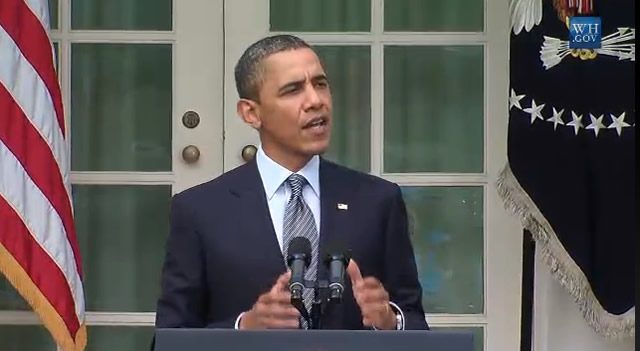
Obama’s Debt Reduction and Tax Proposal

Heritage Responds to Obama’s Debt Reduction and Tax Proposal

Mike Brownfield

September 19, 2011 at 11:16 am

Heritage’s experts watched President Barack Obama’s debt reduction and tax increase proposal. Here are their immediate reactions:

_______________

Obama’s Plan Is More Bad News for Defense

President Obama’s approach to deficit reduction, which he outlined in a Rose Garden statement today, means additional bad news for the defense budget and the nation’s security.  According to the fact sheet provided by the White House, accompanying his statement from the Rose Garden, the deficit reduction plan sees the continued application of $1.2 trillion in discretionary spending cuts already included in debt ceiling law that was enacted recently.  Office of Management and Budget Director, Jack Lew, released a blog on August 4th that estimated that this provision will cut roughly $350 billion from the defense budget over ten years.  The new deficit reduction plan would add $1.1 trillion in cuts from defense to come from funding for the military operations in Afghanistan and Iraq.  Finally, it would impose an unspecified level of spending reductions in benefits for military personnel.

Today’s statement, however, ignores the fact that President Obama had already proposed an inadequate five-year (FY 2012 through FY 2016) defense budget in February.  The news in this latest statement is the recommended cut in funding for the overseas operations.  While it is unclear what baseline the White House is using in advancing this proposal, the President’s own budget estimates spending only a bit more than half the amount of proposed cuts to the budget for such operations over a similar timeframe.  This not only repudiates a provision in the debt ceiling law to protect these operations through a special instrument for adjustments in the applicable spending ceiling, it implies that the President will apply additional cuts to the budget for the core defense program.

The greatest disappointment, however, is that the President’s deficit reduction proposal sidesteps the kind of structural reforms in the major entitlement programs that are necessary to avoid draconian cuts to the budget for the federal government’s most important constitutional obligation, which is to defend the nation and its vital interests.

Baker Spring

The President’s Disappointing Retreat on Medicare

During the Debt Ceiling negotiations, President Obama tentatively joined the large and growing consensus that the age of eligibility for Medicare enrollment should be raised from 65 to 67. Among serious advocates of entitlement reform, raising the age of normal eligibility has emerged as one of the few precious areas where there has been a   broad consensus. It was a position endorsed by analysts at both the American Enterprise Institute and the New America Foundation, and by former Democratic CBO Director Alice Rivlin and Republican Budget Chairman Paul Ryan. It would also result in significant savings. The Congressional Budget Office (CBO) projected that budget savings from the proposal would amount to $124 billion over the period 2012 to 2021.

The Medicare age of eligibility change is long overdue.  When Congress and the Johnson Administration enacted the Medicare program in 1965, the average life span had increased to 70.2 years. They made the decision to retain the normal retirement age at 65, which was enacted for enrollment in Social Security back in 1935. By 2009, the average life span had reached 78.2 years, and by 2030, when the Medicare population is projected to jump to approximately 80 million enrollees, the average life span is projected to top 80 years of age. At that time, there will be roughly 2 younger workers supporting each retiree. We’re doing it to the kids.

The President’s retreat is a disappointment. He must know that long-range structural reform of the Medicare program is necessary, since, in the estimate of the Medicare Actuary, it faces a long term unfunded liability of almost $37 trillion. In his deficit reduction program, he is proposing savings of $248 billion over ten years, and 90 percent of these savings will come from reducing “overpayments” in Medicare.  These include a number of “cats and dogs” in Medicare’s complex payment system, relating to such items as changes in payments to rural providers, payments for post acute care, payments for advanced imaging, earmarking penalties ($500 million)  for non-compliance to deficit reduction, applying the Medicaid rebate (kick-back, price control system) for drug payments to Medicare Part D (a terrible idea); and the old crackdown on Medicare waste, fraud and abuse, which is expected to save $5 billion over ten years. (According to a July 28, 2011 GAO report, there are estimated $48 billion in annual Medicare “improper” payments, representing about 38 percent of the total $125.4 billion estimate for the entire federal government.) The President wants to toughen Medicare payment caps to be enforced by the Independent Payment Advisory Board (IPAB), reducing the target from GDP plus 1 percent to GDP plus 0.5 percent.

The President is also proposing to increase Part B and D premiums for upper income retirees; increase the Part B deductible by $25 for new retirees; introduce a Part B “surcharge” for enrollees who buy Medigap coverage that provides “near first dollar” coverage. While these ideas have merit, they are substantially modest and don’t even kick in until 2017. In other words, the reform falls far short of what is needed, as embodied in Heritage’s Saving The American Dream, which delivers a balanced budget within ten years and guarantees the solvency of the Medicare program.

Robert Moffit