Monthly Archives: August 2011

Michele Bachmann voted against Debt Deal (House Roll Call)

Bachmann Explains “No” Vote on Raising the Debt Ceiling

Uploaded by on Aug 2, 2011

On Monday, August 1, 2011, Congresswoman Michele Bachmann appeared on “Hannity” to explain why she voted “no” on the plan to raise the debt ceiling.

_______________________________________

Full House roll call
By: Associated Press
August 1, 2011 08:46 PM EDT

The 269-161 roll call Monday by which the House passed the compromise bill to raise the debt ceiling and prevent a government default.

A “yes” vote is a vote to pass the measure.

Voting yes were 95 Democrats and 174 Republicans.

Voting no were 95 Democrats and 66 Republicans.

X denotes those not voting.

There are 2 vacancies in the 435-member House.

ALABAMA

Democrats – Sewell, Y.

Republicans – Aderholt, Y; Bachus, Y; Bonner, Y; Brooks, N; Roby, N; Rogers, Y.

ALASKA

Republicans – Young, Y.

ARIZONA

Democrats – Giffords, Y; Grijalva, N; Pastor, N.

Republicans – Flake, N; Franks, N; Gosar, Y; Quayle, N; Schweikert, N.

ARKANSAS

Democrats – Ross, Y.

Republicans – Crawford, Y; Griffin, Y; Womack, Y.

CALIFORNIA

Democrats – Baca, X; Bass, Y; Becerra, N; Berman, Y; Capps, Y; Cardoza, N; Chu, N; Costa, Y; Davis, Y; Eshoo, Y; Farr, N; Filner, N; Garamendi, Y; Hahn, N; Honda, N; Lee, N; Lofgren, Zoe, N; Matsui, N; McNerney, N; Miller, George, N; Napolitano, N; Pelosi, Y; Richardson, N; Roybal-Allard, N; Sanchez, Linda T., N; Sanchez, Loretta, Y; Schiff, Y; Sherman, Y; Speier, Y; Stark, N; Thompson, Y; Waters, N; Waxman, N; Woolsey, N.

Republicans – Bilbray, Y; Bono Mack, Y; Calvert, Y; Campbell, Y; Denham, Y; Dreier, Y; Gallegly, Y; Herger, Y; Hunter, N; Issa, Y; Lewis, Y; Lungren, Daniel E., Y; McCarthy, Y; McClintock, N; McKeon, Y; Miller, Gary, Y; Nunes, N; Rohrabacher, Y; Royce, Y.

COLORADO

Democrats – DeGette, N; Perlmutter, Y; Polis, Y.

Republicans – Coffman, Y; Gardner, Y; Lamborn, N; Tipton, N.

CONNECTICUT

Democrats – Courtney, Y; DeLauro, N; Himes, Y; Larson, N; Murphy, N.

DELAWARE

Democrats – Carney, Y.

FLORIDA

Democrats – Brown, N; Castor, Y; Deutch, Y; Hastings, N; Wasserman Schultz, Y; Wilson, Y.

Republicans – Adams, Y; Bilirakis, Y; Buchanan, Y; Crenshaw, Y; Diaz-Balart, Y; Mack, N; Mica, Y; Miller, Y; Nugent, Y; Posey, N; Rivera, Y; Rooney, Y; Ros-Lehtinen, Y; Ross, N; Southerland, N; Stearns, N; Webster, Y; West, Y; Young, Y.

GEORGIA

Democrats – Barrow, Y; Bishop, Y; Johnson, Y; Lewis, N; Scott, David, Y.

Republicans – Broun, N; Gingrey, N; Graves, N; Kingston, N; Price, Y; Scott, Austin, N; Westmoreland, N; Woodall, Y.

HAWAII

Democrats – Hanabusa, Y; Hirono, Y.

IDAHO

Republicans – Labrador, N; Simpson, Y.

ILLINOIS

Democrats – Costello, Y; Davis, Y; Gutierrez, Y; Jackson, N; Lipinski, Y; Quigley, Y; Rush, Y; Schakowsky, N.

Republicans – Biggert, Y; Dold, Y; Hultgren, N; Johnson, N; Kinzinger, Y; Manzullo, Y; Roskam, Y; Schilling, Y; Schock, Y; Shimkus, Y; Walsh, N.

INDIANA

Democrats – Carson, N; Donnelly, Y; Visclosky, N.

Republicans – Bucshon, Y; Burton, N; Pence, Y; Rokita, N; Stutzman, N; Young, Y.

IOWA

Democrats – Boswell, N; Braley, N; Loebsack, N.

Republicans – King, N; Latham, N.


KANSAS

Republicans – Huelskamp, N; Jenkins, Y; Pompeo, Y; Yoder, N.

KENTUCKY

Democrats – Chandler, Y; Yarmuth, N.

Republicans – Davis, N; Guthrie, Y; Rogers, Y; Whitfield, Y.

LOUISIANA

Democrats – Richmond, Y.

Republicans – Alexander, Y; Boustany, Y; Cassidy, Y; Fleming, N; Landry, N; Scalise, N.

MAINE

Democrats – Michaud, Y; Pingree, N.

MARYLAND

Democrats – Cummings, N; Edwards, N; Hoyer, Y; Ruppersberger, Y; Sarbanes, N; Van Hollen, Y.

Republicans – Bartlett, Y; Harris, N.

MASSACHUSETTS

Democrats – Capuano, N; Frank, N; Keating, Y; Lynch, Y; Markey, N; McGovern, N; Neal, N; Olver, N; Tierney, N; Tsongas, Y.

MICHIGAN

Democrats – Clarke, N; Conyers, N; Dingell, Y; Kildee, Y; Levin, Y; Peters, N.

Republicans – Amash, N; Benishek, Y; Camp, Y; Huizenga, Y; McCotter, Y; Miller, Y; Rogers, Y; Upton, Y; Walberg, Y.

MINNESOTA

Democrats – Ellison, N; McCollum, N; Peterson, Y; Walz, Y.

Republicans – Bachmann, N; Cravaack, N; Kline, Y; Paulsen, Y.

MISSISSIPPI

Democrats – Thompson, N.

Republicans – Harper, Y; Nunnelee, Y; Palazzo, Y.

MISSOURI

Democrats – Carnahan, Y; Clay, Y; Cleaver, N.

Republicans – Akin, N; Emerson, Y; Graves, Y; Hartzler, N; Long, Y; Luetkemeyer, Y.

MONTANA

Republicans – Rehberg, N.

NEBRASKA

Republicans – Fortenberry, Y; Smith, Y; Terry, Y.

NEVADA

Democrats – Berkley, Y.

Republicans – Heck, Y.

NEW HAMPSHIRE

Republicans – Bass, Y; Guinta, Y.

NEW JERSEY

Democrats – Andrews, Y; Holt, N; Pallone, N; Pascrell, Y; Payne, N; Rothman, Y; Sires, Y.

Republicans – Frelinghuysen, Y; Garrett, N; Lance, Y; LoBiondo, Y; Runyan, Y; Smith, Y.


NEW MEXICO

Democrats – Heinrich, Y; Lujan, N.

Republicans – Pearce, N.

NEW YORK

Democrats – Ackerman, N; Bishop, Y; Clarke, N; Crowley, N; Engel, N; Higgins, Y; Hinchey, X; Hochul, Y; Israel, Y; Lowey, Y; Maloney, N; McCarthy, Y; Meeks, Y; Nadler, N; Owens, Y; Rangel, N; Serrano, N; Slaughter, N; Tonko, N; Towns, N; Velazquez, N.

Republicans – Buerkle, N; Gibson, Y; Grimm, Y; Hanna, Y; Hayworth, Y; King, Y; Reed, Y.

NORTH CAROLINA

Democrats – Butterfield, N; Kissell, N; McIntyre, N; Miller, N; Price, N; Shuler, Y; Watt, N.

Republicans – Coble, Y; Ellmers, Y; Foxx, Y; Jones, N; McHenry, Y; Myrick, Y.

NORTH DAKOTA

Republicans – Berg, Y.

OHIO

Democrats – Fudge, N; Kaptur, N; Kucinich, N; Ryan, N; Sutton, N.

Republicans – Austria, Y; Boehner, Y; Chabot, Y; Gibbs, Y; Johnson, Y; Jordan, N; LaTourette, Y; Latta, Y; Renacci, Y; Schmidt, Y; Stivers, Y; Tiberi, Y; Turner, N.

OKLAHOMA

Democrats – Boren, Y.

Republicans – Cole, Y; Lankford, Y; Lucas, Y; Sullivan, Y.

OREGON

Democrats – Blumenauer, N; DeFazio, N; Schrader, Y; Wu, Y.

Republicans – Walden, Y.

PENNSYLVANIA

Democrats – Altmire, Y; Brady, Y; Critz, Y; Doyle, N; Fattah, Y; Holden, Y; Schwartz, Y.

Republicans – Barletta, Y; Dent, Y; Fitzpatrick, Y; Gerlach, Y; Kelly, Y; Marino, Y; Meehan, Y; Murphy, Y; Pitts, Y; Platts, Y; Shuster, Y; Thompson, Y.

RHODE ISLAND

Democrats – Cicilline, Y; Langevin, Y.

SOUTH CAROLINA

Democrats – Clyburn, Y.

Republicans – Duncan, N; Gowdy, N; Mulvaney, N; Scott, N; Wilson, N.

SOUTH DAKOTA

Republicans – Noem, Y.

TENNESSEE

Democrats – Cohen, N; Cooper, Y.

Republicans – Black, Y; Blackburn, Y; DesJarlais, N; Duncan, Y; Fincher, Y; Fleischmann, N; Roe, Y.

TEXAS

Democrats – Cuellar, Y; Doggett, Y; Gonzalez, N; Green, Al, N; Green, Gene, Y; Hinojosa, Y; Jackson Lee, Y; Johnson, E. B., Y; Reyes, N.

Republicans – Barton, Y; Brady, Y; Burgess, Y; Canseco, Y; Carter, Y; Conaway, Y; Culberson, Y; Farenthold, Y; Flores, Y; Gohmert, N; Granger, Y; Hall, N; Hensarling, Y; Johnson, Sam, Y; Marchant, Y; McCaul, Y; Neugebauer, N; Olson, Y; Paul, N; Poe, N; Sessions, Y; Smith, Y; Thornberry, Y.

UTAH

Democrats – Matheson, Y.

Republicans – Bishop, N; Chaffetz, N.

VERMONT

Democrats – Welch, N.

VIRGINIA

Democrats – Connolly, Y; Moran, N; Scott, N.

Republicans – Cantor, Y; Forbes, N; Goodlatte, Y; Griffith, N; Hurt, Y; Rigell, Y; Wittman, Y; Wolf, Y.

WASHINGTON

Democrats – Dicks, Y; Inslee, Y; Larsen, Y; McDermott, N; Smith, N.

Republicans – Hastings, Y; Herrera Beutler, Y; McMorris Rodgers, Y; Reichert, Y.

WEST VIRGINIA

Democrats – Rahall, Y.

Republicans – Capito, Y; McKinley, Y.

WISCONSIN

Democrats – Baldwin, N; Kind, Y; Moore, X.

Republicans – Duffy, Y; Petri, Y; Ribble, Y; Ryan, Y; Sensenbrenner, Y.

WYOMING

Republicans – Lummis, Y.
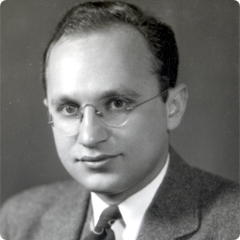
99th anniversary of Milton Friedman’s birth (Part 5)

99th anniversary of Milton Friedman’s birth (Part 5)


Milton Friedman was born on July 31, 1912 and he died November 16, 2006. I started posting tributes of him on July 31 and I hope to continue them until his 100th birthday.


Here is an essay written to honor the 99th anniversary of Milton Friedman’s birth:

An Ode to the Frie Market

By Elizabeth Ryan

Milton Friedman won a Nobel Memorial Prize in economics
But that isn’t all about this man; a lesson on him isn’t quick

Born in Brooklyn, New York in July of nineteen hundred twelve,
Milton Friedman was a brilliant economist; in this topic he deeply delved

For thirty years, teaching economic theory was his passion
At the University of Chicago he taught the youth of the nation

As “the most influential economist of the second half of the 20th century,”
His ideas spread like wildfire, to almost everyone, and were not elementary

Big government he said to shun,
Instead, free markets should have all the fun

The virtues of a free market system are so clear
Market intervention a nation should never have to bear

The government’s role in the economy should be greatly restricted.
Interference would only bring about poverty, depressions, and an economy constricted

A natural rate of unemployment he believed existed
No government could change this rate; it was healthy and should not be resisted

Though greatly opposed to the Federal Reserve,
Advice he still gives so the economy will be preserved

The advice: A small steady expansion of the money supply is the only way
If the central bank did otherwise, hyperinflation would never be kept at bay

Services offered by the government can be inefficient,
Should be performed by the private sector: that’s where they ought to be sent

One of these services is the production of money,
The private sector should produce it; and a gold base will lead to the highest stability

“Inflation is always and everywhere a monetary phenomenon,” he claimed
The relation between inflation and the money supply is close, he proclaimed

A monetarist at heart: Control of price inflation should be done with monetary deflation
In addition, price deflation is best controlled by only monetary inflation

An economic adviser to Ronald Reagan,
He predicted the policies of Keynes were bad, close to pagan

Not only would they cause high inflation
But minimal growth; later called stagflation

“Capitalism and Freedom,” a book he co-authored in nineteen sixty two
Speaks for policies like volunteer military and education vouchers, just to name a few

“A Monetary History of the United States,” which he published in nineteen sixty three
Investigates the role of money supply and economics in U.S. history

“Free to Choose,” another book that he and his wife did write,
Is where on monetary policy they shed much light

A staunch supporter of libertarian ideas, he took a chance,
When he fought for legalization of drugs and prostitution, not a popular stance

“Nothing is so permanent as a temporary government program” is his quote,
Noting: Once a program is started, participants will do everything to keep it afloat

He coined the phrase, “There’s no such thing as a free lunch.”
Someone always pays in the end, and will feel the punch

Milton Friedman taught many good economic lessons
Which if heeded, may have kept us out of horrid recessions

With a full life behind him and theories not previously in the mix,
Friedman died on November 16 of two thousand and six

Though he is gone, this week we honor the day Friedman was born
Today his advice to us would be, go free the market rather than mourn

Discretionary Spending Cuts Alone Are Not an Adequate Substitute for Entitlement Reform

Discretionary Spending Cuts Alone Are Not an Adequate Substitute for Entitlement Reform

Everyone wants to know more about the budget and here is some key information with a chart from the Heritage Foundation and a video from the Cato Institute.

Annual spending on entitlement programs is massive compared to other federal spending priorities. Cutting discretionary spending is a necessary step, but cuts to foreign aid alone or pulling out of Afghanistan will not close the deficit. Entitlement spending must be reined in.

ANNUAL SPENDING (2011)

 
Download

Discretionary Spending Cuts Alone Are Not an Adequate Substitute for Entitlement Reform

Source: White House Office of Management and Budget.

Chart 38 of 42

In Depth

  • Policy Papers for Researchers

  • Technical Notes

    The charts in this book are based primarily on data available as of March 2011 from the Office of Management and Budget (OMB) and the Congressional Budget Office (CBO). The charts using OMB data display the historical growth of the federal government to 2010 while the charts using CBO data display both historical and projected growth from as early as 1940 to 2084. Projections based on OMB data are taken from the White House Fiscal Year 2012 budget. The charts provide data on an annual basis except… Read More

  • Authors

    Emily GoffResearch Assistant
    Thomas A. Roe Institute for Economic Policy StudiesKathryn NixPolicy Analyst
    Center for Health Policy StudiesJohn FlemingSenior Data Graphics Editor

Ronald Wilson Reagan (Part 99 B)

The centennial of Ronald Reagan’s birth earlier this year brought an unusual sight: a round of press reports noting President Obama’s admiration for his predecessor, including one he penned for this newspaper.

Despite their stark differences on policy, Obama praised Reagan for how he led the nation “through an extremely difficult period, with economic hardship at home and very real threats beyond our borders.” And, lo and behold, many pundits are now comparing what they call Reagan’s willingness to compromise on taxes to what they say is the intransigence of today’s GOP.

A cautionary tale

Leading the nation through hard times wasn’t easy. We’d like to suggest that President Obama take a closer look at how President Reagan dealt with that “economic hardship,” and how he steered the nation toward what would turn into its longest peacetime economic expansion. It’s a cautionary tale — one that involves the greatest domestic error of his administration.

In 1981, President Reagan’s plan for revitalizing the economy was a four-fold one:

1) Reduce tax rates across the board.

2) Decrease unnecessary regulations.

3) Work with the Federal Reserve to maintain stable monetary policy.

4) Slow the growth of federal spending.

President Reagan got his tax-rate cuts through Congress later that year. But because they were being phased in gradually, the economic pain they were designed to alleviate lingered well into 1982. High deficits persisted, and he faced enormous pressure to raise taxes.

The president had no interest in increasing taxes, but he agreed to consider some kind of compromise with Congress. His representatives began meeting with members of House Speaker Tip O’Neill’s team to find some way to hammer out a deficit-reduction pact. So began what, in our opinion, became the “Debacle of 1982.”

From the outset, the basic idea of the GOP participants was to trade some kind of concessions on the tax front for a Democratic agreement on spending cutbacks. The negotiators knew that Ronald Reagan would be hard to sell on any tax hikes. So they included a ploy they felt might overcome his resistance: a large reduction in federal spending in return for a modest rise in business (but not individual) taxes.

The ratio in the final deal — the Tax Equity and Fiscal Responsibility Act of 1982 (TEFRA) — was $3 in spending cuts for every $1 in tax increases. It sounded persuasive at the time. Believing it to be the only way to get spending under control, most of the president’s colleagues signed on. He disliked the tax hikes, of course, but he agreed to it as well.

The cuts never came

You don’t have to be a Washington veteran to predict what happened next. The tax increases were promptly enacted — Congress had no problem accepting that part of the deal — but the promised budget cuts never materialized. After the tax bill passed, some legislators of both parties even claimed that there had been no real commitment to the 3-to-1 ratio.

In fact, spending for fiscal year 1983 was some $48 billion higher than the budget targets, and no progress was made in lowering the deficit. Even tax receipts for that year went down — a lingering effect of the recession, which the additional business taxes did nothing to redress.

Fortunately, the individual income tax-rate reductions that had been passed the year before remained intact. And as they took effect, the economy began its remarkable turnaround. The recovery of 1983-84 was strong enough that it paved the way for President Reagan’s landslide election to a second term.

More than two years into President Obama’s presidency, however, the prospects of Reagan-style recovery seem remote, to say the least. Rather than learning pro-growth lessons from President Reagan, he is creating another 1982 moment, seeking to lure Republicans into accepting another tax increase for illusory spending cuts.

Taxing our way to prosperity isn’t the answer. It never has been. If our children and grandchildren are to live in a free and prosperous America, congressional Republicans must not negotiate and accept a deal that raises taxes. That’s why The Heritage Foundation last year created Heritage Action for America — to ensure that members of Congress fight for the advance of freedom and are held to account.

President Reagan “had faith in the American promise,” President Obama notes. Reagan demonstrated that faith by trusting the American people to do the right thing, not by confiscating their wealth and subjecting them to myriad rules and regulations that stifle their creativity and sap their innovation.

“He recognized that each of us has the power — as individuals and as a nation — to shape our own destiny,” President Obama wrote this past January. That destiny, however, can be realized only in an atmosphere of freedom. Will the current president learn from the lessons of 1982?


Former U.S. attorney general Edwin Meese III holds the Ronald Reagan Chair in Public Policy at The Heritage Foundation. Michael Needham is chief executive officer of Heritage Action for America.

Dear Senator Pryor, why not pass the Balanced Budget Amendment? (Part 1 Thirsty Thursday, Open letter to Senator Pryor)

On August 4, 2011 John Brummett wrote:

The point is that we don’t need to choke our government — or, more to the point, ourselves — with such simplistic devices as balanced budget amendments. The point is that we need to make our often-essential deficit and debt more sustainable, more manageable, more responsible and less massive, and that we should do that by addressing both income and outgo.

You’re right, my tea party friend, about how government must change its ways. You’re not right, though, in the over-simplicity of your assessment or in the impractical, even drastic, nature of your remedies.

Brummett’s view used to be the majority view, but  in a recent poll by CNN over 70% now favor a Balanced Budget Amendment. I am starting a series today on the Balanced Budget Amendment!!!

Dear Senator Pryor,

Why not pass the Balanced Budget Amendment? As you know that federal deficit is at all time high (1.6 trillion deficit with revenues of 2.2 trillion and spending at 3.8 trillion).

On my blog www.HaltingArkansasLiberalswithTruth.com I took you at your word and sent you over 100 emails with specific spending cut ideas. However, I did not see any of them in the recent debt deal that Congress adopted. Now I am trying another approach. Every week from now on I will send you an email explaining different reasons why we need the Balanced Budget Amendment. It will appear on my blog on “Thirsty Thursday” because the government is always thirsty for more money to spend.

You are right to ask for ideas to cut spending because that is the real cause of the deficit. John Stossel rightly noted, “Milton Friedman always said taxes don’t tell the whole story. What counts is how much of our resources government spends, however it acquires them. The doubling of spending under Bush and Obama hasn’t gotten enough attention.”

Senator Pryor, you asked for spending cut advice. Here is some from John Stossel:

It’s not hard to balance the budget. On my show, we made enough cuts to create a $237 billion surplus. I cut whole departments, like Education and Commerce. I cut two-thirds of the Defense Department (which still leaves it much bigger than China’s). I indexed Medicare, Medicaid and Social Security to inflation, raised the retirement age, and took away benefits for rich people. But I don’t have to run for office. Congressmen do, and they can’t even manage to cut ridiculous tax breaks like those for ethanol.

Thank you again for your time.

Everette Hatcher, lowcostsqueegees@yahoo.com

Balancing the Budget

By John Stossel

8/3/2011


The political class predicted “disaster” if Congress didn’t raise its debt limit.

I think that was a scam to get more money. See, the poor politicians don’t have enough, and they need to borrow more. We taxpayers are cheap. This year we’ll give them only $2.2 trillion. They want to spend $3.8 trillion.

The president said if he didn’t get more money, Social Security checks wouldn’t go out. Why not?

With $2 trillion, they can pay Social Security, Medicare, the interest on the debt and still have billions left. It’s billions more than the government spent when President George W. Bush took office. What’s the problem?

The problem is that Republicans and Democrats under Bush and President Obama doubled spending. Now, Obama wants more taxes.

Taxes shouldn’t be the answer when spending is the problem.

Grover Norquist, who heads Americans for Tax Reform (ATR), leads the charge to keep the focus on spending. Norquist and ATR are famous for asking officeholders and candidates to sign a pledge not to raise taxes. Some say he is the reason the debt-ceiling debate was so drawn out.

“I think the reason there isn’t a tax increase on the table,” he told me, “is that 235 members of the House of Representatives signed a pledge never to raise taxes, a pledge to their voters, and 41 senators did. …

“Only if you take tax increases off the table do you even begin to … focus on spending, and that’s what Obama wants to keep our focus off of. He wants us to talk about the deficit, not spending.”

I pointed out that Obama might have scored points with the public because new revenues he sought — even though they wouldn’t do much to shrink the deficit — would come from closing unpopular tax “loopholes.”

Norquist said he favors that — if tax rates are lowered at the same time.

“(We) want to simplify the code,” he said. “(We) want to take a lot of the goodies that politicians have laced into that code … as long as you reduce tax rates and it’s not a hidden tax increase.”

Milton Friedman always said taxes don’t tell the whole story. What counts is how much of our resources government spends, however it acquires them. The doubling of spending under Bush and Obama hasn’t gotten enough attention.

“We need to ask what it is government should do,” Norquist said. “But it’s going to be knockdown, drag-out. All government overspending creates the constituency for its own perpetuation. … Weaning people off, that is very difficult.”

He’s right. When politicians make little cuts in the rate of spending growth, every interest group mobilizes to protect its little piece of the pie. That’s why you must cut government like you take off a Band-Aid: quickly and all at once.

It’s not hard to balance the budget. On my show, we made enough cuts to create a $237 billion surplus. I cut whole departments, like Education and Commerce. I cut two-thirds of the Defense Department (which still leaves it much bigger than China’s). I indexed Medicare, Medicaid and Social Security to inflation, raised the retirement age, and took away benefits for rich people. But I don’t have to run for office. Congressmen do, and they can’t even manage to cut ridiculous tax breaks like those for ethanol.

Obama predicted disaster if the debt ceiling wasn’t raised. Some predict disaster if the ratings agencies downgrade Treasury bonds. I’m dubious. In 1995, President Clinton and Republican Congress couldn’t agree on a budget, so the government shut down twice, the second time for three weeks.

Did the economy grind to a halt? No. During the first shutdown, the stock market went up. During the second, it dropped then recovered.

The alarmists screamed that the fight over the debt ceiling would discourage lenders. Wrong. Ten-year Treasury bonds sold for a measly 3 percent interest (versus 15 percent in 1981).

I wasn’t worried that Congress would fail to raise the debt ceiling. But I am worried that Congress will keep spending.

John Stossel

John Stossel is host of “Stossel” on the Fox Business Network. He’s the author of “Give Me a Break” and of “Myth, Lies, and Downright Stupidity.” To find out more about John Stossel, visit his site at johnstossel.com.

99th anniversary of Milton Friedman’s birth (Part 4)

99th anniversary of Milton Friedman’s birth (Part 4)

Stossel – “Free to Choose” (Milton Friedman) 1/6

Milton Friedman was born on July 31, 1912 and he died November 16, 2006. I started posting tributes of him on July 31 and I hope to continue them until his 100th birthday.

Here is another tribute actually written shortly after his death:

How Milton Friedman Influenced Michigan and the World

By Michael D. LaFaive | Nov. 20, 2006
 

(Note: This commentary appeared in The Detroit News on Nov. 16, 2006, just hours after it was announced that Milton Friedman had died).

Nobel Prize-winning economist Milton Friedman died today at the age of 94. He was an intellectual giant — helping mightily to shift policy and thought away from state economic intervention and toward free people and free-market alternatives.

Friedman’s many books, scholarly papers, speeches and television appearances inspired countless people to rigorously debate and articulate a vision of a truly free society. It was Friedman’s best-selling book and Public Broadcasting Service program, “Free to Choose,” that inspired me to earn two economics degrees and join the Mackinac Center.

Friedman was born to immigrant parents in Brooklyn, N.Y., in July 1912. He would earn degrees at Rutgers, the University of Chicago and Columbia. Friedman later said the Great Depression helped influence his decision to become an economist because he was intrigued by the causes and consequences of such economic misery. He would later answer one of the most important questions of all: Why had it occurred?

Friedman cut his professional teeth in 1945 when he co-published a paper arguing that government licensing laws for doctors artificially raise the cost of becoming one, restricting supply and raising prices for consumers.

He would continue to publish scholarly papers but began to make a name for himself in wider circles by publishing his book “Capitalism and Freedom” in 1962. Friedman persuasively argued for market competition in education, an all-volunteer army and greater trade among nations.

In 1963, Friedman and co-author Anna Schwartz published “A Monetary History of the United States,” which showed that the Great Depression was caused by flawed monetary policy by the Federal Reserve. According to the Fortune Encyclopedia of Economics, Federal Reserve officials were so unnerved by Friedman’s work that they “discontinued their policy of releasing minutes from the board’s meetings to the public.” They also hired a scholar to write a rebuttal, but it had little impact. Friedman’s analysis remains the standard on America’s monetary history.

Friedman was in Michigan on Oct. 14, 1976, when he learned he had won the Nobel Prize in Economics. Friedman was traveling from Chicago to a press conference at the Detroit Athletic Club to tout Proposal C, a ballot initiative to cap what the state of Michigan could spend in a given year, when the announcement was made from Stockholm, Sweden.

“When we got to the press center, I was surprised by the number of photographers and reporters in the parking lot,” Friedman wrote later. “I knew that Proposal C was important but didn’t think my campaigning for it deserved that much attention.” Friedman quickly learned of the honor from the reporters in attendance.

Proposal C would fail that year, but a version of it would later pass as the Headlee Amendment, which restricts state revenue to 9.49 percent of personal income from all state sources.

Throughout his life, Friedman advanced his ideas with both intelligence and wit. When addressing a crowd of academics, he spoke as a professor would speak to fellow scholars. When speaking to the public, he simplified his arguments. His ability to link abstract theory with concrete detail and wrap both in velvet for his audience made the man an irresistible draw.

Reportedly, while traveling by car during one of his many overseas travels, Friedman spotted scores of road builders moving earth with shovels. When he asked why powerful equipment wasn’t used instead of so many laborers, his host told him it was to keep unemployment low. If they used tractors, fewer people would have jobs was his host’s logic.

“Then why don’t you give them spoons?” Friedman inquired. It was quintessential Friedman: Employment doesn’t make us wealthy — production does.

Milton Friedman, a great friend of freedom, rewrote the way economists and others look at economics and the world around them. He will be missed.

#####

Michael D. LaFaive is director of the Morey Fiscal Policy Initiative at the Mackinac Center for Public Policy. Permission to reprint in whole or in part is hereby granted, provided that the author and the Center are properly cited.

“Woody Wednesday” Part 1 starts today, Complete listing of all posts on the historical people mentioned in “Midnight in Paris”

I have gone to see Woody Allen’s latest movie “Midnight in Paris” three times and taken lots of notes during the films. I have attempted since June 12th when I first started posting to give a historical rundown on every person mentioned in the film. Below are the results of my study. I welcome any comments you may have.

By the way I am starting Woody Wednesday today and every Wednesday after today will include a post about Woody Allen and his work.

Corey Stoll as Ernest Hemingway in "Midnight in Paris." 2011 Roger Arpajou / Sony Pictures Classics

Corey Stoll as Ernest Hemingway in “Midnight in Paris.”

The New York Times

Ernest Hemingway, around 1937

Other posts concerning Woody Allen’s latest movie “Midnight in Paris”

What can we learn from Woody Allen Films?, August 1, 2011 – 6:30 am

Movie Review of “Midnight in Paris” lastest movie by Woody Allen, July 30, 2011 – 6:52 am

Leo Stein and sister Gertrude Stein’s salon is in the Woody Allen film “Midnight in Paris”, July 28, 2011 – 6:22 am

Great review on Midnight in Paris with talk about artists being disatisfied, July 27, 2011 – 6:20 am

Critical review of Woody Allen’s latest movie “Midnight in Paris”, July 24, 2011 – 5:56 am

Not everyone liked “Midnight in Paris”, July 22, 2011 – 5:38 am

“Midnight in Paris” one of Woody Allen’s biggest movie hits in recent years, July 18, 2011 – 6:00 am

(Part 32, Jean-Paul Sartre)July 10, 2011 – 5:53 am

 (Part 29, Pablo Picasso) July 7, 2011 – 4:33 am

(Part 28,Van Gogh) July 6, 2011 – 4:03 am

(Part 27, Man Ray) July 5, 2011 – 4:49 am

(Part 26,James Joyce) July 4, 2011 – 5:55 am

(Part 25, T.S.Elliot) July 3, 2011 – 4:46 am

(Part 24, Djuna Barnes) July 2, 2011 – 7:28 am

(Part 23,Adriana, fictional mistress of Picasso) July 1, 2011 – 12:28 am

(Part 22, Silvia Beach and the Shakespeare and Company Bookstore) June 30, 2011 – 12:58 am

(Part 21,Versailles and the French Revolution) June 29, 2011 – 5:34 am

(Part 16, Josephine Baker) June 24, 2011 – 5:18 am

(Part 15, Luis Bunuel) June 23, 2011 – 5:37 am

(Part 1 William Faulkner) June 13, 2011 – 3:19 pm

I love Woody Allen’s latest movie “Midnight in Paris”, June 12, 2011 – 11:52 pm

https://i0.wp.com/www.awardsdaily.com/wp-content/uploads/2011/06/19.jpg

Alison Pill as Zelda Fitzgerald and Tom Hiddleston as F. Scott Fitzgerald in "Midnight in Paris." 2011 Roger Arpajou / Sony Pictures Classics

Alison Pill as Zelda Fitzgerald and Tom Hiddleston as F. Scott Fitzgerald in “Midnight in Paris.”

Owen Wilson as Gil in "Midnight in Paris." 2011 Roger Arpajou / Sony Pictures Classics

Owen Wilson as Gil in “Midnight in Paris.”

Marion Cotillard, Alison Pill, Owen Wilson and Director Woody Allen on the set of "Midnight in Paris." 2011 Roger Arpajou / Sony Pictures Classics

Marion Cotillard, Alison Pill, Owen Wilson and Director Woody Allen on the set of “Midnight in Paris.”

Associated Press

F. Scott Fitzgerald, center, with his daughter Scottie, left and his wife Zelda in Paris in 1925

Tea Party Governor

It is refreshing to read such an inspiring story about someone who overcame so much in his youth.

From the streets to the governor’s mansion, Paul LePage embraces fiscal conservatism for survival

By C.J. Ciaramella  12:07 AM 07/25/2011
ADVERTISEMENT

During the 2010 Maine gubernatorial election, Republican candidate Paul LePage told a local news outlet: “I’m more of a street fighter than an angry person. And when I go through the halls in Augusta, I’m going to float like a butterfly and sting like a bee.”

Six months after going from a small-town mayor to the governor’s mansion on a wave of anti-establishment fervor, LePage hasn’t pulled any punches.

The 62-year-old chief executive has rolled back business regulations, trimmed Maine’s welfare system, signed the biggest tax cuts in state history and annoyed just about every interest group along the way.

His first act as governor was an executive order ending Maine’s status as a sanctuary state for illegal immigrants. He also laughingly told the NAACP to “kiss my butt.”

Then there was the time when he removed a mural, depicting the history of Maine’s labor movement, from the lobby of the state department of labor, sparking protests from unions and art groups.

And the time, during his campaign, when he told an audience that when he became governor they could expect to see the newspaper headline: “LePage tells Obama to go to hell.”

Reading the news stories and seeing pictures of LePage — he’s bull-necked and has a mean-looking glower — one might think he’s some sort of angry partisan.

Sitting on a couch at the Capitol Hill Club lounge in D.C. for an interview with The Daily Caller, LePage was content to crack jokes and eat handfuls of popcorn rather than slam his shoe on the table. One gets the impression Paul LePage just says what Paul LePage thinks, for better or worse.

“There are two things that are important to me as an individual: honesty and integrity,” he said. “You don’t have to like what I say. You don’t have to agree with me. But whatever I say, I believe.”

Barry Hobbins, a Democratic state senator who has worked with six different governors, said LePage reminded him of another unconventional Maine politician — Jim Longley, the state’s first independent governor, elected in 1974.

“LePage isn’t an establishment Republican,” Hobbins said. “He’s not a pedigree. He’s tough as nails, and he can be gruff and rough. But he’s the governor. I’ve told my liberal and progressive friends we have to work with him.”

Of course, all politicians like to frame themselves as “not your average politician” — the straight-shooter, the maverick — but LePage’s bluntness seems less an affectation than a byproduct of his time in local politics and the private sector, and of his hardscrabble upbringing.

LePage was the oldest of 18 children in a dysfunctional family. At age 11, his father put him in the hospital with a broken nose and a dislocated jaw. When his dad showed up to the hospital, he flipped LePage a 50-cent piece and told him to say he’d fallen down the stairs.

Instead, LePage decided he’d had enough. He slipped out of the hospital and lived on the streets of Lewiston, Maine, for two years, sleeping where he could — cars, stairwells, hallways, even a brothel.

He’s kept that 50-cent piece in his pocket every day since 1960 as a reminder of where he came from. For LePage, fiscal conservatism wasn’t so much a political philosophy as a survival strategy.

“From then on, a dollar always meant something to me,” he said. “I had to save to get by. As governor I don’t feel I have the authority to raise taxes just because I feel [like] it.”

Two families took LePage in when he was 13. One of them was the family of Peter Snowe, the first husband of future U.S. Senator Olympia Snowe. The families helped get him through high school and into college.

He was accepted by Husson University, but only after Snowe convinced the school to allow LePage, a native French speaker, to take the entrance exam in French. After graduating from Husson, he earned his M.B.A. from the University of Maine.

Much to the ire of many conservative Republicans, he is supporting the centrist Olympia Snowe in the upcoming Senate election. In typical LePage fashion, he is completely up front about why, saying their relationship “transcends politics.”

“Am I enamored by all her votes? No,” Lepage said. “But I still love the lady, and I owe them a big debt for helping get me off the streets.”

In between leaving home and graduating from college, LePage held down a long list of odd jobs.

He shined shoes, worked in a rubber factory and a meat-packing plant, drove trucks, ran errands, cleaned horse stables at a racetrack, delivered newspapers (both morning and afternoon paper routes), washed dishes, delivered groceries, edited a college newspaper and bartended.

At one point, LePage dealt cards for a group of local card sharks who paid him 25 cents a hand because they didn’t trust each other to deal. The games started at 11 p.m. and then, when the bars closed at 2 a.m., often moved to a hotel.

“Sometimes I was dealing cards for 18 to 20 hours at a time,” LePage said.

After college, LePage went into business, first in the lumber industry, then as the general manager of Marden’s Surplus and Salvage, a chain of Maine discount stores. After LePage came on in 1996, Marden’s expanded in sales and size by 100 percent.

In 1998, he decided to get involved in local politics in Waterville, a central Maine town of about 15,000 people.

“I ran because the mayor was going to sell 14 acres of riverfront property for a dollar to a relative,” LePage said. “Sort of pissed me off.”

LePage served two terms on the Waterville City Council and three terms as mayor, running as a Republican in the heavily Democrat-leaning town. He lowered taxes 6 out of his 8 years as mayor and issued 13 vetoes. But he kept getting re-elected.

“One thing I found about human nature is if you allow people to put more money in their pocket, that’s a good way to get re-elected,” LePage said.

And then came the run for governor. As an outsider with little financial backing, LePage was seen as a long-shot at best in the crowded Republican field of seven. But 2010 was a year for outsiders.

LePage pushed a platform of hard-nosed fiscal conservatism — job creation, less regulations and spending cuts. He famously pledged to put a five-year cap on welfare benefits, and told Maine residents that if they didn’t like it he’d buy them a bus ticket to Massachusetts.

Although the Maine media and his opponents blanched at his language (his political consultant Brent Littlefield said the media didn’t get LePage’s “tongue-in-cheek” style), it resonated deeply with disaffected voters, especially those who identified with the Tea Party.

LePage won the Republican primary with 38 percent of the vote, despite being outspent 10 to 1 by his closest opponent. He spent just $190,000 on his primary campaign.

Littlefield said the campaign emphasized what they called “the three onlys”: LePage was the “only candidate with a dramatic personal story, the only candidate with successful business experience and the only candidate with executive experience.”

The campaign also specifically targeted Francophone voters, sending volunteers deep into rural Maine to hand-deliver large posters with a personal message from LePage.

“I told [LePage] when we started working together, I’m going to come up with a strategy, but it’s going to be so bizarre and unusual,” Littlefield said. “We’re either going to win, or we’re going to get crushed.”

LePage went on to win the general election with 38 percent of the vote in a four-way field, taking 14 of 16 counties and becoming the first Republican Maine governor elected since 1990.

For his work on the campaign, Littlefield won a Pollie Award from the American Association of Political Consultants.

It’s a long jump from mayor of Waterville to governor of the entire state, though. LePage had some trouble out of the gate — several staff problems, a minor scandal when he hired his daughter to a $41,000 per year position. The new legislature was still getting used to the new normal as well.

Hobbins said it “took a while for everyone to get their sea legs.”

Maine had not had a Republican governor since 1994, and it had not seen a Republican House since 1974. Everyone had to relearn the art of compromise, from the Republicans, who weren’t used to leading, to the Democrats, who weren’t used to being in the minority.

And there was LePage, who came in with no experience navigating the bicameral legislature. His touted tax cuts were part of a budget that needed approval from Democrats as well.

“We passed a two-thirds budget, and we were crossing our fingers that he wouldn’t veto it,” Hobbins said. “It could have been much worse, but we had a very responsible committee that worked hard and came up with a balanced approach.”

But old habits die hard. LePage scours budgets for business fees to lower and spending to cut, no matter how small.

For example, when LePage thought a $75 fee for temporary restaurant licenses was too high, he sent the entire bill that contained it back to the state legislature — House and Senate — where it had passed unanimously. The fee came back $50 lower.

He’ll talk at length about the amount of red tape he’s nixed — like a regulation prohibiting boats from putting their lobster traps on docks because the shadows cast by the cages allegedly killed seaweed. LePage commissioned a study proving the traps didn’t, in fact, kill seaweed.

Small but tangible victories for a man whose pocket has weighed heavy with a 50-cent piece since 1960.

“Most of state government is really an attitude,” LePage said. “We can do anything we want as American people if we sit down, put the plan out and move forward.”


Without Entitlement Reform, Federal Spending Could Consume One-Half of the Economy by 2056

Without Entitlement Reform, Federal Spending Could Consume One-Half of the Economy by 2056

Everyone wants to know more about the budget and here is some key information with a chart from the Heritage Foundation and a video from the Cato Institute.

The major entitlements—MedicareMedicaid, the Obamacare subsidy program, and Social Security— are on track to push spending to unsustainable levels. These programs must be reformed in order to improve the long-term budget outlook.

PERCENTAGE OF GDP


Download

Without Entitlement Reform, Federal Spending Could Consume One-Half of the Economy by 2056

Source: Congressional Budget Office (Alternative Fiscal Scenario).

Chart 33 of 42

In Depth

  • Policy Papers for Researchers

  • Technical Notes

    The charts in this book are based primarily on data available as of March 2011 from the Office of Management and Budget (OMB) and the Congressional Budget Office (CBO). The charts using OMB data display the historical growth of the federal government to 2010 while the charts using CBO data display both historical and projected growth from as early as 1940 to 2084. Projections based on OMB data are taken from the White House Fiscal Year 2012 budget. The charts provide data on an annual basis except… Read More

  • Authors

    Emily GoffResearch Assistant
    Thomas A. Roe Institute for Economic Policy StudiesKathryn NixPolicy Analyst
    Center for Health Policy StudiesJohn FlemingSenior Data Graphics Editor

Dan Mitchell on Debt Deal: drifting to Greek-style fiscal meltdown

It is sad that they passed this debt deal. They just kicked the can down the road.

Debt Deal: Politicians Win, Middle Class Loses

by Daniel J. Mitchell

Daniel J. Mitchell is a senior fellow at the Cato Institute, a libertarian think tank based in Washington.

Added to cato.org on August 2, 2011

This article appeared on CNN.com on August 2, 2011.

America is on a path to becoming a Greek-style welfare state. Thanks to the Bush-Obama spending binge, the burden of federal spending has climbed to about 25% of national economic output, up from only 18.2% of GDP when Bill Clinton left office.

But that’s just the tip of the iceberg. Because of a combination of demographic forces and poorly designed entitlement programs, federal spending could consume as much as 50% of economic output by the time the baby boom generation is fully retired.

One symptom of all this excessive spending is that Washington is awash in red ink. We’re now in our third consecutive year of trillion-dollar deficits and the politicians just had to increase the nation’s $14.3 trillion debt limit.

Daniel J. Mitchell is a senior fellow at the Cato Institute, a libertarian think tank based in Washington.


More by Daniel J. Mitchell

But it wasn’t easy getting there. Just as happened with the “government shutdown” debate in March, Republicans and Democrats had fierce disagreements over the right approach. They bickered until the last minute and then finally agreed to more than $900 billion of supposed spending cuts and the creation of a “supercommittee” charged with proposing another $1.5 trillion of deficit reduction.

So which side won this fight? Republicans are bragging that they got spending cuts today, a promise of spending cuts in the future, and no tax increases. Democrats, meanwhile, are chortling that they took the debt issue off the table until after the 2012 elections, protected their favorite programs and created a supercommittee that will seduce the GOP into a tax increase.

Ignore that bragging. The easy answer is that politicians of both parties were the victors and taxpayers are the ones left in the cold.

In other words, the budget deal was a victory for the political establishment.

Here’s why Republicans are winners. They get to tell their tea party activists that they forced Obama to cut spending. It doesn’t matter that federal spending will actually be higher every year and that the cuts were based on Washington math (a spending increase becomes a spending cut if outlays don’t climb as fast as some artificial benchmark).

They also get to tell their anti-tax activists that they held the line. Perhaps most important, the supercommittee must use the “current law” baseline, which assumes that the 2001 and 2003 tax cuts expire at the end of 2012. But why are GOPers happy about this, considering they want those tax cuts extended? For the simple reason that Democrats on the supercommittee therefore can’t use repeal of the “Bush tax cuts for the rich” as a revenue raiser.

This means that most Republican incumbents are well-positioned to win re-election.

Here’s why Democrats are winners. Thanks to the magic of government math, despite all the talk of budget cuts, discretionary spending will be more than $100 billion higher in 2021 than it is this year. And since defense spending in Iraq and Afghanistan presumably is winding down, this means even more money will be available for domestic programs.

In addition to telling the pro-spending lobbies that the gravy train is still on the tracks, they also get to tell the class-warfare crowd that there’s an improved likelihood of higher taxes for corporate jet owners and other “rich” people. Notwithstanding GOP assertions, nothing in the agreement precludes the supercommittee from meeting its $1.5 trillion target with tax revenue. The 2001 and 2003 tax legislation is not an option, but everything else is on the table.

This means that most Democratic incumbents are well-positioned to win re-election.

It’s worth pointing out that this doesn’t mean all Republicans and all Democrats are happy about the deal. The hard-core conservatives are upset that the deal is mostly smoke and mirrors on the spending side and that there may be a tax-increase trap on the revenue side.

The hard-core liberals, by contrast, are angry that there are any spending cuts, even ones based on Washington math. Moreover, they want higher tax rates on upper-income taxpayers today, not a supercommittee that may or may not follow through on soak-the-rich policies in the future.

One group of people, however, unambiguously got the short end of the stick in this budget deal. Ordinary Americans are caught in the middle. They’re not poor enough to benefit from the federal government’s plethora of income-redistribution programs. But they’re not rich enough to have the clever lobbyists and insider connections needed to benefit from the high-dollar handouts like ethanol subsidies and bank bailouts.

Instead, middle-class Americans play by the rules, pay ever-higher taxes, and struggle to make ends meet while the establishment of both parties engages in posturing as America slowly drifts toward a Greek-style fiscal meltdown.