Monthly Archives: April 2011

Easter Morning April 24, 2011,List of posts on series: Is the Bible historically accurate? (Updated 1 through 14C)

“In Christ Alone” music video featuring scenes from “The Passion of the Christ”. It is sung by Lou Fellingham of Phatfish and the writer of the hymn is Stuart Townend.

On this Easter Morning April 24, 2011 there is no other better time to take a look at the truth and accuracy of the Bible. 


Is the Bible historically accurate? Here are some of the posts I have done in the past on the subject:


1. 
The Babylonian Chronicle
of Nebuchadnezzars Siege of Jerusalem

This clay tablet is a Babylonian chronicle recording events from 605-594BC. It was first translated in 1956 and is now in the British Museum. The cuneiform text on this clay tablet tells, among other things, 3 main events: 1. The Battle of Carchemish (famous battle for world supremacy where Nebuchadnezzar of Babylon defeated Pharoah Necho of Egypt, 605 BC.), 2. The accession to the throne of Nebuchadnezzar II, the Chaldean, and 3. The capture of Jerusalem on the 16th of March, 598 BC.

2. Hezekiah’s Siloam Tunnel Inscription.

King Hezekiah of Judah ruled from 721 to 686 BC. Fearing a siege by the Assyrian king, Sennacherib, Hezekiah preserved Jerusalem’s water supply by cutting a tunnel through 1,750 feet of solid rock from the Gihon Spring to the Pool of Siloam inside the city walls (2 Kings 20; 2 Chron. 32). At the Siloam end of the tunnel, an inscription, presently in the archaeological museum at Istanbul, Turkey, celebrates this remarkable accomplishment.

3. Taylor Prism (Sennacherib Hexagonal Prism)

It contains the victories of Sennacherib himself, the Assyrian king who had besieged Jerusalem in 701 BC during the reign of king Hezekiah, it never mentions any defeats. On the prism Sennacherib boasts that he shut up “Hezekiah the Judahite” within Jerusalem his own royal city “like a caged bird.” This prism is among the three accounts discovered so far which have been left by the Assyrian king Sennacherib of his campaign against Israel and Judah.

4. Biblical Cities Attested Archaeologically.

In addition to Jericho, places such as Haran, Hazor, Dan, Megiddo, Shechem, Samaria, Shiloh, Gezer, Gibeah, Beth Shemesh, Beth Shean, Beersheba, Lachish, and many other urban sites have been excavated, quite apart from such larger and obvious locations as Jerusalem or Babylon. Such geographical markers are extremely significant in demonstrating that fact, not fantasy, is intended in the Old Testament historical narratives;

5. The Discovery of the Hittites

Most doubting scholars back then said that the Hittites were just a “mythical people that are only mentioned in the Bible.” Some skeptics pointed to the fact that the Bible pictures the Hittites as a very big nation that was worthy of being coalition partners with Egypt (II Kings 7:6), and these bible critics would assert that surely we would have found records of this great nation of Hittites.  The ironic thing is that when the Hittite nation was discovered, a vast amount of Hittite documents were found. Among those documents was the treaty between Ramesses II and the Hittite King.

6.Shishak Smiting His Captives

The Bible mentions that Shishak marched his troops into the land of Judah and plundered a host of cities including Jerusalem,  this has been confirmed by archaeologists. Shishak’s own record of his campaign is inscribed on the south wall of the Great Temple of Amon at Karnak in Egypt. In his campaign he presents 156 cities of Judea to his god Amon. 

7. Moabite Stone

The Moabite Stone also known as the Mesha Stele is an interesting story. The Bible says in 2 Kings 3:5 that Mesha the king of Moab stopped paying tribute to Israel and rebelled and fought against Israel and later he recorded this event. This record from Mesha has been discovered.

8Black Obelisk of Shalmaneser III

The tribute of Jehu, son of Omri, silver, gold, bowls of gold, chalices of gold, cups of gold, vases of gold, lead, a sceptre for the king, and spear-shafts, I have received.”

View from the dome of the Capitol!

9A Verification of places in Gospel of John and Book of Acts.

Sir William Ramsay, famed archaeologist, began a study of Asia Minor with little regard for the book of Acts. He later wrote:

I found myself brought into contact with the Book of Acts as an authority for the topography, antiquities and society of Asia Minor. It was gradually borne upon me that in various details the narrative showed marvelous truth.

9B Discovery of Ebla TabletsWhen I think of discoveries like the Ebla Tablets that verify  names like Adam, Eve, Ishmael, David and Saul were in common usage when the Bible said they were, it makes me think of what amazing confirmation that is of the historical accuracy of the Bible.

10. Cyrus Cylinder

There is a well preserved cylinder seal in the Yale University Library from Cyrus which contains his commands to resettle the captive nations.

11. Puru “The lot of Yahali” 9th Century B.C.E.

This cube is inscribed with the name and titles of Yahali and a prayer: “In his year assigned to him by lot (puru) may the harvest of the land of Assyria prosper and thrive, in front of the gods Assur and Adad may his lot (puru) fall.”  It provides a prototype (the only one ever recovered) for the lots (purim) cast by Haman to fix a date for the destruction of the Jews of the Persian Empire, ostensibly in the fifth century B.C.E. (Esther 3:7; cf. 9:26).

12. The Uzziah Tablet Inscription

The Bible mentions Uzziah or Azariah as the king of the southern kingdom of Judah in 2 Kings 15. The Uzziah Tablet Inscription is a stone tablet (35 cm high x 34 cm wide x 6 cm deep) with letters inscribed in ancient Hebrew text with an Aramaic style of writing, which dates to around 30-70 AD. The text reveals the burial site of Uzziah of Judah, who died in 747 BC.

13. The Pilate Inscription

The Pilate Inscription is the only known occurrence of the name Pontius Pilate in any ancient inscription. Visitors to the Caesarea theater today see a replica, the original is in the Israel Museum in Jerusalem. There have been a few bronze coins found that were struck form 29-32 AD by Pontius Pilate

14. Caiaphas Ossuary

This beautifully decorated ossuary found in the ruins of Jerusalem, contained the bones of Caiaphas, the first century AD. high priest during the time of Jesus.

14 B Pontius Pilate Part 2      

In June 1961 Italian archaeologists led by Dr. Frova were excavating an ancient Roman amphitheatre near Caesarea-on-the-Sea (Maritima) and uncovered this interesting limestone block. On the face is a monumental inscription which is part of a larger dedication to Tiberius Caesar which clearly says that it was from “Pontius Pilate, Prefect of Judea.”

14c. Three greatest American Archaeologists moved to accept Bible’s accuracy through archaeology.

Despite their liberal training, it was archaeological research that bolstered their confidence in the biblical text:Albright said of himself, “I must admit that I tried to be rational and empirical in my approach [but] we all have presuppositions of a philosophical order.” The same statement could be applied as easily to Gleuck and Wright, for all three were deeply imbued with the theological perceptions which infused their work.

Keith Green performing “Easter Song” live from The Daisy Club — LA (1982)

Senator Pryor asks for Spending Cut Suggestions! Here are a few!(Part 21)

Senator Mark Pryor wants our ideas on how to cut federal spending. Take a look at this video clip below:

My son Wilson experienced victory for the first time this year as his soccer team won 4 to 2 over the the Little Rock Football Club at the soccer fields off of Cantrell and Riverfront Road. The weather looked threatening but it turned out okay. Go team!!!!

Senator Pryor has asked us to send our ideas to him at cutspending@pryor.senate.gov and I have done so in the past and will continue to do so in the future. Here are a few more I just emailed to him myself at 3:30 CST today April 22, 2011.

I just read Paul Greenberg’s article “The dance of politics,” Arkansas Democrat Gazette, April 17, 2011 and in it he stated:

    The other day Mark Pryor took to the floor of the Senate to badmouth those politicians who, he said, were practicing the ”blame game.” No names mentioned, of course. That’s how Mark Pryor operates. He prefers not to attack those he’s criticizing openly; that would be entirely too direct and responsible.
    The senator did express his indignation, which we’re supposed to believe is righteous, at some length. “How in the world,” he demanded, “does having press conferences and pointing fingers at others resolve anything? One of the tests I use when I look at politicians is the louder they are, the more often they have press conferences to blame other people, that probably means they are more to blame for the problems we have today.”
    Goodness. That’s a little harsh on the president, isn’t it? Barack Obama is not only entitled to address the press in the White House briefing room in the midst of budget negotiations, even in the middle of the night, but he needs to. The public deserves an explanation from our leaders even if it can’t get leadership.
    If the president merits criticism on the basis of his press conferences, it’s for not having more of them to warn against the danger of federal deficits long before they triggered this year’s showdown over the national debt and almost-shutdown of the federal government. Which soon enough, like everything in Washington, became a political crisis.
    A chief executive should be exercising leadership all along, not just stepping in when the government of the United States is about to be shut down. Not for the first time, Mark Pryor has got things exactly backwards: There’s nothing wrong with a politician’s taking his case to the people. It’s the quality of his case that’s matters, not his daring to make it. Even a president should be able to speak his mind in a free country.
    Nor is there anything wrong with the leader of a political party making a partisan appeal to the faithful, or even trying to add to their number. Barack Obama needn’t apologize for going to New York in the midst of negotiations over the budget to make common political cause with the likes of Al Sharpton, dean of America’s race hustlers. The country’s No. 1 Democrat has every right, even a duty, to appeal to his party’s base, just as the Republicans have every right to appeal to theirs. That’s how a two-party system works, or at least should.
    But the junior senator from Arkansas now has come out foursquare against the partisan atmosphere in Washington.
    That’s not only an atmosphere, Senator, it’s how things get done, and have been getting done even before there was a Capitol in which to get them done. For the American two-party system goes back a ways. 
     Paul Greenberg is editorial page editor of the Arkansas Democrat-Gazette.

Since Senator Pryor is against playing politics then maybe he will take some spending cuts suggestions from a Republican like me.

In my past posts I could have been accused of giving just general ideas of where to cut. Now I am starting in with specifics that are taken from the article “How to cut $343 Billion from the federal budget,” by Brian Riedl, Heritage Foundation, October 28, 2010(Spending cuts in millions of dollars:

National Science Foundation

$1,700

Reduce National Science Foundation funding to 2008 levels.

$86

Eliminate National Science Foundation spending on elementary and secondary education.

Transportation

$45,000

Devolve the federal highway program and most transit spending to the rates.

$1,900

Privatize Amtrak.

$1,009

Eliminate grants to large and medium-sized hub airports.

$554

Eliminate the Maritime Administration.

$125

Eliminate the Essential Air Service Program.

Balanced Budget Amendment the answer? Boozman says yes, Pryor no (Part 14, Milton Friedman’s view is yes)(The Conspirator, Part 20)

Photo detail

In his book Free to Choose, Milton Friedman described four ways to spend money.

1. You spend your own money on yourself.
2. You spend your own money on someone else.
3. You spend someone else’s money on yourself.
4. You spend someone else’s money on someone else.

The graphic shown in the video that displays the four ways to spend money can be viewed at http://freedomchannel.blogspot.com/2008/09/4-ways-to-spend-money-by-milton.html

Steve Brawner in his article “Safer roads and balanced budgets,” Arkansas News Bureau, April 13, 2011, noted:

The disagreement is over the solutions — on what spending to cut; what taxes to raise (basically none ever, according to Boozman); whether or not to enact a balanced budget amendment (Boozman says yes; Pryor no); and on what policies would promote the kind of economic growth that would make this a little easier.

Steve Brawner in his article “Senators differ on constitutional change,” Arkansas News Bureau, April 20, 2011 noted:

Congress only recently passed the 2011 budget, which should have been done last year. Imagine if every annual budget had to work its way through the judiciary to the Supreme Court.

Finally, for some politicians, supporting a balanced budget amendment is a sleight of hand trick that allows them to avoid talking about the hard choices the nation must make on popular but costly obligations — Medicare, Social Security, Medicaid and national defense. It’s much easier to propose a balanced budget amendment, after all, then it is to propose a balanced budget.

My take? I have been a balanced budget amendment supporter in the past, but not now, even with the nation annually bleeding trillions of dollars of red ink. I think it’s a copout. I think it would be ignored. I think in some cases it would be harmful. And I certainly don’t want the court system to take over the budget process. I want Pryor and Boozman, the people I elect, to make tough, responsible choices, just as I do when I balance my budget at home.

Of course, after a few more years of these trillion dollar annual deficits, I might change my mind and decide that being ruled by unelected American judges is preferable to being ruled by the Chinese government.

In Feb of 1983 Milton Friedman wrote the article “Washington:Less Red Ink (An argument that the balanced-budget amendent would be a rare merging of public and private interests),” and here is a portion of that article:

The amendment is very much in the spirit of the first ten amendments–the Bill of Rights. Their purpose was to limit the government in order to free the people. Similarly, the purpose of the balanced-budget-and-tax-limitation amendment is to limit the government in order to free the people–this time from excessive taxation. Its passage would go a long way to remedy the defect that has developed in our budgetary process. By the same token, it would make it more difficult for supporters of ever-bigger government to attain their goals. 

It is no surprise, therefore, that a torrent of criticism has been loosed against the proposed amendment by people who believe that our problems arise not from excessive government but from our failure to give government enough power, enough control over us as individuals. It is no surprise that Tip O’Neill and his fellow advocates of big government tried to prevent a vote in the House on the amendment, and used all the pressure at their command to prevent its receiving a two-thirds majority. 

It is no surprise, either, that when the amendment did come to a vote in the House, a substantial majority voted for it. After all, in repeated opinion polls, more than three quarters of the public have favored such an amendment. Their representatives do not find it easy to disregard that sentiment in an open vote–which is why Democratic leaders tried to prevent the amendment from coming to a vote. When their hand was forced, they quickly introduced a meaningless substitute that was overwhelmingly defeated (346 to 77) but gave some representatives an opportunity to cast a recorded vote for a token budget-balancing amendment while at the same time voting against the real thing. 

I have been much more surprised, and dismayed, by the criticism that has been expressed by persons who share my basic outlook about the importance of limiting government in order to preserve and expand individual freedom–for example, the editors of The Wall Street Journal and a former editor and current columnist, Vermont Royster. They do not question the objectives of the amendment, but they doubt its necessity and potential effectiveness. 

Those doubts are presumably shared by many other thoughtful citizens of all shades of political opinion who are united by concern about the growth of government spending and deficits. 

I love the movie “The Conspirator” and here is a review of it below :

Arkansas Times Blog Review:

‘The Conspirator’ gets mired in its message

by Natalie Elliottclick to enlarge 'THE CONSPIRATOR': Robin Wright Penn stars.

  • ‘THE CONSPIRATOR’: Robin Wright Penn stars.

In his latest feature, director Robert Redford — actor, philanthropist, looker and liberal of much renown — leaves his knack for touchy-feely mom-preferred dramas and descends into the precarious world of American politics. “The Conspirator” focuses on President Lincoln’s brutal assassination and the dashing young Union-war-hero attorney Frederick Aiken (James McAvoy), charged with defending Mary Surratt (a funereal Robin Wright), the widow who runs the boarding house where John Wilkes Booth and his motley team of Confederate sympathizers (Surratt’s son among them) allegedly concocted their plot.

Aiken is given this unenviable task by his superior, Sen. Reverdy Johnson, played by the infallible Tom Wilkinson. Surratt is fingered, rather unnecessarily, by Secretary of War Edwin Stanton (Kevin Kline) and is called to appear before a jury of Stanton’s military tribunal cronies in what becomes an increasingly desperate attempt to hold someone, if not many people, accountable for the murder of the greatest American president.

At first one might be inclined to think this is merely an educational re-enactment, perhaps a bit top-heavy with its ensemble cast acting their faces off, as A-listers are so inclined. But historical dramas, like their deformed-twin genre science fiction, are seldom made without some purpose of thinly veiled commentary. “The Conspirator,” for all its earnest admiration of the American institution, lovingly employed period facial hair and handful of standout performances, does little to move beyond its battering ram of a message.

No doubt it takes a filmmaker of great confidence to painstakingly reproduce the murder — in graphic detail — of the Great Emancipator within the first 10 minutes of his picture. While it serves to heighten the drama, the result is a totally jarring opener that leaves the audience wobbly, and, frankly, the acting feels wobbly, too. McAvoy’s tottering performance makes one think he’s only a good actor when speaking in his native brogue. Kline’s Stanton is so flat and reptilian it feels like he belongs in a B movie. And I still have yet to figure out what The Mac Guy and Rory from “Gilmore Girls” are doing in their baffling minutes of screen time — providing a youth-minded anchor?

The brilliantly tense courtroom drama halfway through the film allows some of the actors to regain their footing. When Aiken counsels with Surratt in her spartan prison cell (the only woman held in the same facility as dozens of men) we are reminded of Robin Wright’s ability to destroy us. Evan Rachel Wood’s portrayal of Surratt’s weird daughter gives her a chance to nail the Southern accent she massacred in “Whatever Works.” Throw in a visit from everyone’s favorite character actor, Steven Root (“Newsradio,” “O Brother, Where Art Thou?”), and things feel comfortably back on track.

While the huge Hollywood ensemble cast might have felt like a good marketing strategy, the sheer heavy-handedness of Surratt’s prisoner-of-war martyrdom, alongside a few disappointing performances, smacks of a bunch of famous liberal bros joining together to make an op-ed flick as a favor to their friend — the kind of concept Fox News hounds lie in wait for. At best, we get to see Robin Wright killing it in a way we perhaps forgot she could, and take away a piece of American history we were probably embarrassingly unfamiliar with — this is absolutely a relevant, compelling story worth telling. And yes, Mr. Redford, Guantanamo — and the treatment and trial of our war prisoners anywhere — is a horrible bungle that our country needs to parse out. Perhaps we should be ashamed of ourselves — but a preachy, underwrought period film is too facile a vehicle for this scolding.

Senator Pryor asks for Spending Cut Suggestions! Here are a few!(Part 20)(The Conspirator, Part 19, Lewis Powell Part B)


Senator Mark Pryor wants our ideas on how to cut federal spending. Take a look at this video clip below:

Senator Pryor has asked us to send our ideas to him at cutspending@pryor.senate.gov and I have done so in the past and will continue to do so in the future. Here are a few more I just emailed to him myself at 10 am CST on April 21, 2011.

I just read Paul Greenberg’s article “The dance of politics,” Arkansas Democrat Gazette, April 17, 2011 and in it he stated:

  Mark Pryor, who is now our senior U.S. senator, is seldom so amusing, if unintentionally, as when he poses as being above the partisan fray. That is, when he’s not wading deep into it, as when he torpedoed the nomination of Miguel Estrada to the federal bench. That name from the past needs to be recalled every time Senator Pryor tries to paint himself as some kind of paragon of nonpartisan idealism.
    Miguel Estrada may have been the most promising nominee for the federal judiciary since the late Richard S. Arnold of Arkansas was being nominated to preside over ever higher federal courts.
    But the Estrada nomination never even got to the floor of the Senate thanks to partisan intrigues. For he was undeniably guilty of being (a) a conservative, (b) a Republican, (c) Hispanic, (d) intelligent and accomplished, and (e) all of the above—a grand slam that tends to drive Democrats bats. See their reaction to Marco Rubio, the new senator from Florida and the GOP’s Great Hispanic Hope. If only he weren’t so from-the-heart eloquent, he’d be a lot easier for Democrats to take.
    It’s the best of the best, like Miguel Estrada, who reduce the opposition to parliamentary maneuvers—because there was no attacking his qualifications, which were outstanding. So they resorted to low tricks, which is just what Senator Pryor and his happily former colleague, Blanche Lincoln, employed to bottle up Mr. Estrada’s much deserved nomination. Month after month after month after . . .
    In the end, the nominee withdrew his good name from consideration, realizing he would never get an even break from Mark Pryor, Blanche Lincoln and partisan company.
    But that was then. Now the no longer junior senator from Arkansas has decided to pose as some kind of statesman. He’s come out against partisanship, at least when he’s not practicing it. 
     
    Paul Greenberg is editorial page editor of the Arkansas Democrat-Gazette.

_________________

Here is a chance for Senator Pryor to look across party lines and take suggestions from a conservative Republican like me. He wants to get wasteful spending down and I am for that too.

In my past posts I could have been accused of giving just general ideas of where to cut. Now I am starting in with specifics that are taken from the article “How to cut $343 Billion from the federal budget,” by Brian Riedl, Heritage Foundation, October 28, 2010(Spending cuts in millions of dollars:         

Labor


 $4,300

 Eliminate failed federal job training programs.

 $2,000

 Eliminate the ineffective Job Corps.

 $576

 Eliminate the Senior Community Service Employment Program.

Name: The Conspirator
Release date: April 15, 2011
Director(s): Robert Redford
Cast: James McAvoy, Robin Wright, Justin Long, Evan Rachel Wood, Tom Wilkinson, Alexis Bledel, Kevin Kline, Jonathan Groff and Norman Reedus
Genre(s): Drama

I love the movie “The Conspirator” and I wanted to take a closer look at the people involved.

Powell was charged with conspiracy and attempted murder and was tried along with the others who had been charged by the government. Powell maintained that Mary Surratt was innocent. He was relaxed during the trial and slept well at night. According to The Abraham Lincoln Encyclopedia (p. 245), he didn’t have a bowel movement for 35 straight days. He was a stoic prisoner who handled his precarious situation with manliness. His lawyer, William E. Doster, argued in vain that Powell “at the time had no will of his own, but had surrendered his will completely to Booth.” He was found guilty and sentenced to hang.

Early in the afternoon of July 7, 1865, along with Mary Surratt, George Atzerodt, and David Herold, Powell walked to the scaffold. The executioner, after checking the noose on Powell’s neck, said, “Paine, I want you to die quick.” Powell replied, “You know best, Captain.” After a hood was placed over Powell’s head, he muttered, “I thank you. Good-bye.” Those were the last words Lewis Powell ever spoke. No one from Powell’s family in Florida ever came to Washington during the trial.

Until recently historians didn’t know what happened to Powell’s remains. They were not claimed by his family and were buried in Washington’s Holmead Cemetery in 1869. The cemetery was disbanded in the mid-1870’s, and there is no record of what happened with Powell’s body. However, his skull was discovered in 1992 in a collection of the Smithsonian Institution. The FBI confirmed the skull as Powell’s. On November 11, 1994, Powell’s skull was buried next to his mother’s grave in Geneva, Florida. Lincoln assassination experts Betty Ownsbey and Michael Kauffman participated in the burial. Pastor Daryl Permenter of the First Baptist Church of Geneva performed the services. The Geneva Cemetery is a very quaint cemetery.

Pictured below is a photo of Michael Kauffman and the skull of Lewis Powell. The photo was taken by anthropologist Stuart Speaker who made the discovery. The photo is presented exclusively on this web page with the permission of Michael Kauffman. It is not in the public domain.

The headstones of Lewis and his mother (who was born in 1811) are in a semi-shaded area. The headstones are pictured below the photo of Michael Kauffman and the skull.

NOTE: The first three photographs at the top of the page came from Alias “Paine” Lewis Thornton Powell, the Mystery Man of the Lincoln Conspiracy by Betty J. Ownsbey. Betty obtained the photos courtesy of Rufus Yent, a Powell relative. The fourth photo is from the Library of Congress. Anyone wishing to read the fascinating details of Powell’s military career can do so in Betty’s article entitled “The Military Career of An Assassin” in the November 1998 edition of North & South magazine.

** Verifying information about Booth’s March 17 kidnap plans was told by the late Lincoln assassination scholar, Dr. James O. Hall, during an interview published in the April, 1990, edition of the Journal of the Lincoln Assassination. Dr. Hall said that E.L. Davenport, an actor in the play at Campbell Hospital, recalled how Booth had arrived at the hospital and asked about Lincoln’s whereabouts on the afternoon of March 17.

WHY DID BOOTH WANT SEWARD ASSASSINATED? If Andrew Johnson had also been assassinated as Booth planned, Senate President Pro Tempore Lafayette S. Foster of Connecticut would have become acting president pending an election of a new president. The process of electing a new president could only be set in motion by the secretary of state; thus Booth felt Seward’s assassination would throw the Union government into “electoral chaos.” A Presidential Succession law passed on March 1, 1792, was still in effect in 1865. It provided that the president pro tempore of the Senate was third in line to the presidency and the Speaker of the House was fourth. This law didn’t make any succession provisions beyond the Speaker. For much more information see the article entitled “Why Seward?” by Michael Maione and James O. Hall in the Spring 1998 edition of the Lincoln Herald.

HIGHLY RECOMMENDED: There is an extremely detailed description of Powell’s attack at the Seward residence in the October 2010 edition of the Surratt Courier. Barry Cauchon and John Elliott, who are working on the upcoming book Inside The Walls, found Private George Foster Robinson’s account of the tragedy housed at the Pearce Museum at Navarro College in Corsicana, Texas. It is published in the Surratt Courier for the first time with permission from the college.

NOTE: Betty J. Ownsbey’s Alias “Paine” Lewis Thornton Powell, the Mystery Man of the Lincoln Conspiracy is an extremely well researched biography. Betty spent 17 years researching the man. CLICK HERE if you are interested in purchasing Betty’s book on Powell. To listen to an interview with Betty please CLICK HERE.

undefined

THE EXECUTION – JULY 7, 1865, AT 1:26 P.M.
Left to right: Mary Surratt, Lewis Powell, David Herold, and George Atzerodt

Balanced Budget Amendment the answer? Boozman says yes, Pryor no (Part 13, Milton Friedman’s view is yes)(The Conspirator Part 18, Lewis Powell Part A)

Dallas Fed president and CEO Richard W. Fisher sat down with economist Milton Friedman on October 19, 2005, as part of ongoing discussions with the Nobel Prize winner. In this clip, Friedman argues for a reduction in government spending.

Photo detail

I really wish that Senator Pryor would see the wisdom of supporting the Balanced Budget amendment. If he did then I think his chances of getting re-elected in Arkansas would rise considerably. What are the chances that Senator Pryor will be re-elected? They have greatly improved from 2% to about 40% since he now appears willing to work on the most serious out of control spending problem our federal government has ever had. See a post that I did yesterday concerning Pryor’s recent speech at the Political Animals’ Club in Little Rock.

Steve Brawner in his article “Safer roads and balanced budgets,” Arkansas News Bureau, April 13, 2011, noted:

The disagreement is over the solutions — on what spending to cut; what taxes to raise (basically none ever, according to Boozman); whether or not to enact a balanced budget amendment (Boozman says yes; Pryor no); and on what policies would promote the kind of economic growth that would make this a little easier.

Steve Brawner in his article “Senators differ on constitutional change,” Arkansas News Bureau, April 20, 2011 noted:

Now the government is running annual deficits in the $1.5 trillion range – much of it financed by foreign entities such as the Chinese government.

Meanwhile, Boozman and others can point to a state like Arkansas, where the Revenue Stabilization Act, the statutory equivalent of a balanced budget amendment, has helped the state remain relatively debt-free.

But opponents of the idea have compelling arguments of their own, starting with the fact that there are times when the government shouldn’t balance its budget. During World War II, for example, big annual deficits caused the national debt to reach 122 percent of gross domestic product, its highest percentage ever, but those deficits financed victory in Europe and the Pacific. Moreover, sometimes excess government spending can help keep a recession from becoming much worse.

Any balanced budget amendment therefore would include a clause allowing deficit spending under certain conditions. That would be a big – and often abused – loophole.

Opponents of a balanced budget amendment have other arguments on their side. One is that elected officials simply would work around it — by declaring certain expenditures “off budget,” for example.

Another is that the amendment would add a third branch of government, the judiciary, to a process that is messy enough involving two. Constitutionally requiring a balanced budget would open up each year’s spending decisions to all kinds of lawsuits, meaning that judges, many of them unelected, would be making the ultimate decisions about how tax dollars are spent.

In Feb of 1983 Milton Friedman wrote the article “Washington:Less Red Ink (An argument that the balanced-budget amendent would be a rare merging of public and private interests),” and here is a portion of that article:

Two national organizations have led this drive: the National Tax Limitation Committee (NTLC), founded in 1975 as a single-issue, nonpartisan organization to serve as a clearinghouse for information on attempts to limit taxes at a local, state, or federal level, and to assist such attempts; and the National Taxpayers Union (NTU), which led the drive to persuade state legislatures to pass resolutions calling for a constitutional convention to enact an amendment requiring the federal government to balance its budget. Thirty-one states have already passed resolutions calling for a convention. If three more pass similar resolutions, the Constitution requires Congress to call such a convention–a major reason Congress has been active in producing its own amendment. 

The amendment that was passed by the Senate last August 4, by a vote of 69 to 31 (two more than the two thirds required for approval of a constitutional amendment), had its origin in 1973 in a California proposition that failed at the time but passed in 1979 in improved form (not Proposition 13). A drafting committee organized by the NTLC produced a draft amendment applicable to the federal government in late 1978. The NTU contributed its own version. The Senate Judiciary Committee approved a final version on May 19, 1981, after lengthy hearings and with the cooperation of all the major contributors to the earlier work. In my opinion, the committee’s final version was better than any earlier draft. That version was adopted by the Senate except for the addition of section 6, proposed by Senator William Armstrong, of Colorado, a Republican. Approval by the Senate, like the sponsorship of the amendment, was bipartisan: forty-seven Republicans, twenty-one Democrats, and one Independent voted for the amendment. 

The House Democratic leadership tried to prevent a vote on the amendment in the House before last November’s elections. However, a discharge petition forced a vote on it on October 1, the last full day of the regular session. The amendment was approved by a majority (236 to 187), but not by the necessary two thirds. Again, the majority was bipartisan: 167 Republicans, 69 Democrats. In view of its near passage and the widespread public support for it, the amendment is sure to be reintroduced in the current session of Congress. Hence it remains a very live issue. 

The amendment as adopted by the Senate would achieve two related objectives: first, it would increase the likelihood that the federal budget would be brought into balance, not by prohibiting an unbalanced budget but by making it more difficult to enact a budget calling for a deficit; second, it would check the growth of government spending–again, not by prohibiting such growth but by making it more difficult.

Robert Redford brings his new film to the Toronto International Film Festival 2010, a film about a female charged as a co-conspirator in the assassination trial of Abraham Lincoln. As the whole nation turns against her, she is forced to rely on her reluctant lawyer to uncover the truth and save her life.

I love the movie “The Conspirator” and I wanted to take a closer look at the people involved.

LEWIS POWELL

undefined

From the left: Lewis with his mother when he was 2; Lewis at age 12; Lewis at age 16;
Lewis after his arrest (age 20, almost 21)


Lewis Thornton Powell (also known as Lewis Paine or Lewis Payne) was born April 22, 1844, in Randolph County, Alabama. Powell had eight brothers and sisters, and his father, George, was a Baptist preacher and missionary. As Lewis grew up, his siblings called him “Doc.” At age 12 he was kicked by a mule while playing in his back yard (resulting in a broken jaw and missing molar).

This injury led to the left side of his jaw being more prominent than the right, a fact noted by medical personnel who examined him during the conspiracy trial. It is likely young Lewis was educated by his parents at home. When he was 15, the family moved to a farm near Live Oak, Florida.

Pictured to the left is the Reverend George C. Powell, Lewis’s father.In 1861, when news of the Civil War’s outbreak reached Live Oak, Powell volunteered as a soldier for the Confederacy. On May 30, 1861, he was accepted for enlistment as a private. His father said this was the last time he ever saw Lewis. According to William E. Doster, Powell’s attorney at the conspiracy trial, while stationed in Richmond Powell attended a play and was particularly impressed by one of the actors.  The actor’s name was John Wilkes Booth. After the play, Powell introduced himself to Booth. An immediate friendship resulted. (This account of the initial meeting is very doubtful according to Betty Ownsbey in her book on Powell. It seems Booth’s stage engagements in Richmond ended in May, 1860.)

Powell fought in the Battle of Gettysburg and was shot in the right wrist and taken prisoner. Later he was transferred to the United States Army Hospital in Baltimore. Powell escaped and enlisted in Col. John Singleton Mosby’s Virginia cavalry in the fall of 1863. He was a very apt Ranger. Eventually, Powell departed from Mosby’s cavalry and took the Oath of Allegiance to the Union on January 13, 1865. (This document described Powell as being 6 feet 1 1/2 inches tall with black hair and blue eyes.) Lewis then went to live in Baltimore. He boarded at the Branson boardinghouse which was being used as a front by those involved in Confederate espionage.At some time Powell, probably through John Surratt, met with John Wilkes Booth. Dr. Samuel Mudd had previously introduced Surratt, a Confederate courier, to Booth. Booth saw Powell, tall and powerfully built, as an ideal and well-qualified co-conspirator in his plan to kidnap Abraham Lincoln. Powell was adept in the use of firearms. Booth took Powell “under his wing.”In late February of 1865 Powell showed up at Mary Surratt’s Washington boardinghouse using the alias “Reverend Wood.” On the night of March 15, 1865, Powell met with Booth and other conspirators at Gautier’s Restaurant on Pennsylvania Avenue to discuss the possible abduction of the president.

On Friday, March 17, 1865, Powell, Booth and other conspirators planned to kidnap President Lincoln as he rode in his carriage to attend a play at the Campbell Hospital located just outside Washington, D.C. The kidnap plot failed as Lincoln never arrived in his carriage. ** The president had remained in Washington. At about 4:00 P.M., standing on the balcony of the National Hotel, he spoke to the 140th Indiana Regiment and presented a captured flag to Indiana’s governor. The National Hotel was the same hotel where JWB stayed.

On April 14, 1865, after Booth heard of Lincoln’s plan to attend Ford’s Theatre, the conspirators held one final meeting. This was possibly in Powell’s rented room at the Herndon House. However, it could well have been at another location most likely at another location as Powell had checked out during the mid-afternoon. Booth assigned Powell to kill Secretary of State William Seward that night at approximately 10:15 P.M. to coincide with Booth’s attack at Ford’s Theatre. David Herold would accompany Powell. Another conspirator, George Atzerodt, was supposed to assassinate Vice-President Andrew Johnson at the Kirkwood House.

Shortly after 10:00 P.M. that evening, Powell and David Herold arrived at the Seward home, the Old Club House (pictured to the left; source of picture: United States Naval Historical Center; the building was torn down in 1895 and is now the site of the Court of Claims Building), located in Lafayette Park across from the White House. Powell gained entrance to the Secretary’s residence by telling the second waiter, William H. Bell, that he had medicine for Seward from Dr. Tullio Suzzaro Verdi. Seward, 63, was quite ill due to a carriage accident and was confined to his bed in his third floor bedroom. Powell was well armed. He carried an 1858 Whitney revolver which was a large, heavy, and popular gun during the Civil War. Additionally, he carried a huge silver-mounted bowie knife with an alligator motif and the engraving “The Hunter’s Companion – Real Life Defender.” After pistol-whipping Seward’s son, Frederick, Powell attacked the Secretary of State with his knife. He placed his left hand on Seward’s chest and then struck down with his knife several times. One stab wound went entirely through the Secretary’s right cheek. Seward was seriously injured in the attack. In all, Powell injured five people during his wild rampage in the Seward home.
undefined
The photograph to the left is a Library of Congress photograph of William Seward before Powell’s attack. To the right is a photograph of William Seward’s disfigured appearance after Powell’s attack. It is a University of Rochester Library photograph. It’s a rare picture in that Seward hardly ever allowed photos to be taken that showed the scarred right side of his face. Source of the University of Rochester Library photograph: p. 98 of the late Dr. John K. Lattimer’s Kennedy and Lincoln: Medical and Ballistic Comparisons of Their Assassinations.
SKETCH OF POWELL’S ATTACK
SOURCE: The Assassination and History of the Conspiracy (Cincinnati, J.R. Hawley & Co., 1865)

SEWARD’S MOUTH SPLINT

After Powell’s malicious attack a dentist, Dr. Thomas Brian Gunning, designed a mouth splint for William Seward. The splint was intended to keep Seward’s jaw fragments lined up. Seward had to wear the device for several months. (From Dr. John K. Lattimer, et al., Journal of the American Dental Association, January, 1968. Dr. Lattimer included the graphic on p. 101 of his Kennedy and Lincoln: Medical and Ballistic Comparisons of Their Assassinations.)

Powell ran out of the house and hid for three days in a wooded lot about a mile from the Navy Yard Bridge. He took shelter in the branches of a tree. Then, on the night of April 17, 1865, disguised as a laborer, he showed up at Mary Surratt’s home just as she was being placed under arrest. Powell was arrested and taken in for interrogation. Bell, the Secretary of State’s second waiter, identified Powell as Seward’s attacker.

WILLIAM BELL IDENTIFIED LEWIS POWELL
Source: National Park Service

Senator Pryor asks for Spending Cut Suggestions! Here are a few!(Part 19)(The Conspirator Part 17)


Senator Mark Pryor wants our ideas on how to cut federal spending. Take a look at this video clip below:

Senator Pryor has asked us to send our ideas to him at cutspending@pryor.senate.gov and I have done so in the past and will continue to do so in the future. Here are a few more I just emailed to him myself at 2pm CST on April 21, 2011.

In my past posts I could have been accused of giving just general ideas of where to cut. Now I am starting in with specifics that are taken from the article “How to cut $343 Billion from the federal budget,” by Brian Riedl, Heritage Foundation, October 28, 2010(Spending cuts in millions of dollars:        

Justice 

$7,334 

Eliminate all Justice Department grants except those from the Bureau of Justice Statistics and the National Institute of Justice,
thereby empowering states to finance their own justice programs. 

$398 

Eliminate the Legal Services Corporation. 

$32 

Eliminate the Justice Department’s Community Relations Service. 

$30 

Eliminate the duplicative Office of National Drug Control Policy. 

$26 

Reduce funding for the Justice Department’s Civil Rights Division by 20 percent
because of its policy against race-neutral enforcement of the law. 

$4 

Eliminate the State Justice Institute.

CBSNews.com’s Karina Mitchell speaks with James McAvoy, Robin Wright, Tom Wilkinson, and Kevin Kline about their new film, “The Conspirator,” directed by Robert Redford.

I loved the movie “The Conspirator” and here is a person from that movie:

Samuel Arnold

LEFT: Library of Congress photograph taken in 1865; RIGHT: photograph taken in 1902. Source: Samuel Bland Arnold: Memoirs of a Lincoln Conspirator edited by Michael W. Kauffman.
Samuel Arnold was born in the Georgetown section of Washington, D.C. on September 6, 1834. Later his family moved to Baltimore, and Samuel attended St. Timothy’s Hall, a military academy. He and John Wilkes Booth were schoolmates. Arnold joined the Confederate Army during the Civil War but was discharged for health reasons. He returned to Baltimore, and in the late summer of 1864, was recruited by Booth to be part of the plot to kidnap President Lincoln.
Being unemployed and bored, Arnold eagerly accepted the plan. On the night of Wednesday, March 15, 1865, Arnold met with Booth and other conspirators at Gautier’s Restaurant on Pennsylvania Avenue to discuss the possible abduction of the president. Two days later Arnold was involved in a plan to kidnap Lincoln on the road to the Campbell Hospital. There the president had planned to attend a performance of the play Still Waters Run Deep. Lincoln changed plans at the last minute, and this plan fell through. (It is likely John Surratt embellished the story of this kidnapping attempt in his 1870 lecture. In reality Lincoln remained in Washington to speak to the 140th Indiana Regiment from the balcony of the National Hotel.) After this failure, Arnold returned to Baltimore but ended up taking a clerk’s job in Old Point Comfort, Virginia. On March 27, he wrote Booth a letterrequesting that Booth desist from his plans and indicating, at least temporarily, he (Arnold) would be separating himself from Booth’s gang.Arnold was working at this job in Virginia when he was arrested on April 17, 1865. He admitted his part in the plot to kidnap Lincoln. However, his co-workers supported Arnold’s contention that he was in Virginia at the time of the assassination. Still, the U.S. Government charged him with conspiracy, and he went to trial along with Mary Surratt, Lewis Powell, David Herold, George Atzerodt, Edman ‘Ned’ Spangler, Dr. Samuel Mudd, and Michael O’Laughlen.Arnold was found guilty by the Military Commission and sentenced to life. With Mudd, Spangler, and O’Laughlen, he was sent to Ft. Jefferson in the Dry Tortugas.

Photograph of the conspirators’ cell at Fort Jefferson. Source: Samuel Bland Arnold: Memoirs of a Lincoln Conspirator edited by Michael W. Kauffman.

Arnold was pardoned by President Andrew Johnson on March 1, 1869. Arnold’s petition for release was signed by Maryland Governor Oden Bowie as well as Baltimore’s mayor, police commissioner and many others. In all over 200 people signed the request. Nowadays a copy of Arnold’s pardon is in the Maryland Historical Society.

After his release he wrote a long statement admitting his role in the plot to kidnap Lincoln. However, he denied playing any role whatsoever in the plot to assassinate him.

On September 21, 1906, Samuel Arnold died of pulmonary tuberculosis (at the time called “galloping consumption”). Arnold was 72 years old when he passed away. He had undergone surgery at Johns Hopkins Hospital but died two days later. Arnold was buried in Greenmount Cemetery in Baltimore. John Wilkes Booth and Michael O’Laughlen were also buried in the same cemetery.

For much more information on Samuel Arnold see the fascinating book Samuel Bland Arnold: Memoirs of a Lincoln Conspirator edited by Michael W. Kauffman.

Will Senator Pryor be re-elected in 2014? Part 3 (The Conspirator Part 16)

U.S. Sen. Mark Pryor at the 2009 Democratic Party Jefferson Jackson Dinner, Arkansas’s largest annual political event.

Mark Pryor is up for re-election to the Senate in 2014. It is my opinion that the only reason he did not have an opponent in 2008 was because the Republicans in Arkansas did not want to go up against him when the thought at the time was that Hillary Clinton would be the Democratic Presidential Candidate on the same ballot. Of course, what happened instead was Obama was the candidate and John McCain beat him badly in Arkansas. (President Obama received less than than 39% of the vote in Arkansas.)

Now Senator Pryor faces the prospect of being for the first time in the minority of the Arkansas delegation to Washington. In 2010 four Repubicans were elected and only one Democrat.

Peter Tucci wrote in his article for The Daily Caller, March 3, 2011:

In November, the GOP made major inroads into the South — a region the party already dominated. Republicans now control 9 of the South’s 11 governor’s mansions and 131 of its 155 Senate and House seats.(Original 11 Southern States from Confederacy)

In the article “Southern Democrat much closer to extinction after GOP wave,” (Washington Times, Nov 4, 2010), Ben Evans notes:

After this week’s elections, the Democratic Party barely holds a presence in the region outside of majority-black urban areas such as Atlanta and Memphis. The carnage for the party was particularly brutal in the Deep South, where just one white Democrat survived across Louisiana, Mississippi, Alabama, Georgia and South Carolina…

“Right now in most of Dixie it is culturally unacceptable to be a Democrat. It’s a damn shame, but that’s the way it is,” said Dave “Mudcat” Saunders, a campaign strategist for conservative Democrats such as Jim Webb of Virginia, one of the few remaining Southern Democratic senators.

What could save his job? The only thing I can think of is a change of his position concerning healthcare and his position on federal spending.

Above you see the clip above that Senator Pryor is a big fan of President Obama even though less than 39% of the people of Arkansas voted for the President. After President Obama’s liberal agenda passed in the first two years of his administration, I venture to guess that President Obama would be hard pressed to get 35% of the vote in 2012 in Arkansas. I wonder if Democrats like Pryor will line up to campaign for him like they did in 2008(see clip below).

The crowd freaks out as Bill Clinton arrives, and then Arkansas Senator Mark Pryor speaks at an Obama rally in North Little Rock on 10/24/08.

In a earlier post I noted that Mark Pryor said on Arkansas Week in Review which was broadcast on AETN on Dec 24th, “We owe the American people good government and to try and be productive. I think one reason why you saw the elections turn out the way they turned this November was because I think people all across America feel like the folks inside the beltway are  not listening. I try to listen and to be home as much as I possibly can.”

I take it as a hopeful sign that Senator Pryor is willing to be a part of a deal that includes a plan of meaningful cuts to the federal budget before he will will agree to vote for an increase in the debt ceiling.  That is a result of listening to what the people of Arkansas have to say on the matter!!!! His position on Obamacare is still a regrettable one.

The makeup of the Arkansas State Legislature has changed dramatically in the last few months. This  has been true of the states around Arkansas too. The number of Republican State Representatives in surrounding states outnumbers the Democrats 540 to 319 (MO, TN, TX, OK, MS, LA, and KS) while the Republican State Senators are 178 to 99. Only Mississippi’s State House of Representatives is controlled by the Democrats while the other 13 bodies are controlled by the Republicans.

What are the chances that Senator Pryor will be elected? They have greatly improved from 2% to about 40% since he now appears willing to work on the most serious out of control spending problem our federal government has ever had.

The Conspirator – Starring James McAvoy, Kevin Kline, Tom Wilkinson, Robin Wright, Evan Rachel Wood, Alexis Bledel, Justin Long, Norman Reedus, and Danny Huston

Release Date: April 15, 2011

I got so much out of the movie “The Conspirator” and I wanted to look at some of the people in the movie.

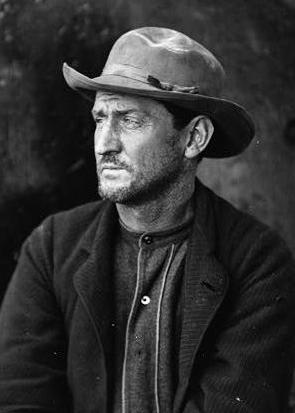
EDMAN SPANGLER


Library of Congress Photograph
Edman (Ned) Spangler was born on August 10, 1825. He was originally from York, Pennsylvania, but he spent the majority of his life in the Baltimore area. At one time he worked at the Booth family estate at Bel Air, Maryland. During the Civil War, he came to Washington and began working as a carpenter and sceneshifter at Ford’s Theatre. He was acquainted with John Wilkes Booth and often took care of Booth’s horse when he was at the theater. While working there, Spangler often slept in the theater itself or in a stable in back of the theater.
During the afternoon of Lincoln’s assassination, Spangler was asked by Harry Clay Ford to help prepare the State Box for the president. It was alleged at the conspiracy trial that Spangler talked negatively about Lincoln while working in the box. He helped bring in furniture and remove the partition that converted Boxes 7 and 8 into a single box. Later Booth showed up at the theater and invited Spangler and other Ford’s stagehands out for a drink. Booth indicated to the employees that he might come back for the evening’s performance.
About 9:30 P.M. Booth again appeared at the theater. He dismounted in the alley to the rear of Ford’s and shouted for Spangler. When Spangler came out, Booth asked him to hold his horse. Spangler explained he had work to do and asked Joseph Burroughs, another Ford’s employee, to do so. Burroughs, whose nickname was “Johnny Peanut,” agreed.Immediately after the assassination, there was a lot of commotion backstage. Jake Rittersback (spelled Jacob Ritterspaugh in many sources), who also worked at Ford’s, said he tried to chase after Booth, but that Spangler hit him in the face and said, “Don’t say which way he went.”Spangler was arrested on April 17 and booked as an accomplice to John Wilkes Booth. He was tried along with the other charged co-conspirators. Although the evidence against him was questionable, Spangler was found guilty and sentenced to six years in prison. Along with Dr. Samuel Mudd, Samuel Arnold, and Michael O’Laughlen, Spangler was sent to Ft. Jefferson in the Dry Tortugas off Key West, Florida.
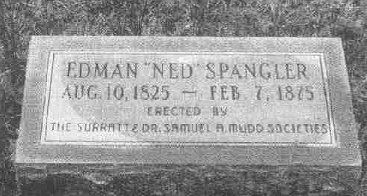
In 1869 Spangler was pardoned by President Andrew Johnson. Eventually Spangler traveled to Dr. Mudd’s home. The two men had become friends in prison. Mudd took Spangler in and gave him five acres of land to farm. Spangler performed carpentry chores in the neighborhood. However, Spangler was not in good health and died on February 7, 1875. He was buried in a graveyard connected with St. Peter’s Church that was about two miles from Dr. Mudd’s home. A grave marker was placed on his gravesite in 1983. (The photograph is from His name Was Mudd by Elden C. Weckesser.)

Nettie Mudd, daughter of Dr. Mudd, said of Spangler:

“He was a quiet, genial man, greatly respected by the members of our family and the people of the neighborhood. His greatest pleasure seemed to be found in extending kindness to others, and particularly to children, of whom he was very fond.”

Note: As Dr. Edward Steers, Jr. states on Page 328 of his book entitled Blood on the Moon: The Assassination of Abraham Lincoln there is confusion in many Lincoln assassination books about Spangler’s whereabouts from 1869-1875. It could be that Spangler returned to work for John Ford from 1869-1873 and then went to live at Dr. Mudd’s until his death in 1875. I also have a book that indicates Spangler probably spent the entire 1869-1875 period with the Mudds; yet another book indicates Spangler worked at several theaters between Baltimore and Richmond from 1869-1871, and then went to live with the Mudds in 1871.

Writing in American Brutus: John Wilkes Booth and the Lincoln Conspiracies author Michael W. Kauffman notes that many years later Harry Hawk, the actor on stage when Lincoln was shot, admitted in an interview that he actually said the words Rittersback (Ritterspaugh) attributed to Spangler. Hawk said that he was scared, dazed, and confused during the uproar and simply wanted to keep out of any trouble.

Regarding Spangler’s whereabouts during the 1869-1875 period, Kauffman states that Spangler worked at the Holliday Street Theatre in Baltimore from 1869-1873 before going to live at Dr. Mudd’s house after the theater burned down.

Shortly after Spangler’s death, Dr. Mudd found a statement in Spangler’s tool chest. It was a brief description of Spangler’s relationship with Booth. In it, he said he never heard Booth speak of politics, hatred of Lincoln, or Southern pride. He said he heard the shot when it was fired in the theater, and that a man he didn’t immediately recognize as Booth run across the stage. He denied aiding Booth in any manner whatsoever. The entire text of Spangler’s statement is as follows:

I was born in York County, Pennsylvania, and am about forty-three years of age, I am a house carpenter by trade, and became acquainted with J. Wilkes Booth when a boy. I worked for his father in building a cottage in Harford County, Maryland, in 1854. Since A. D. 1853, I have done carpenter work for the different theaters in the cities of Baltimore and Washington, to wit: The Holiday Street Theater and the Front Street Theater of Baltimore, and Ford’s Theater in the City of Washington. I have acted also as scene shifter in all the above named theaters, and had a favorable opportunity to become acquainted with the different actors. I have acted as scene shifter in Ford’s Theater, ever since it was first opened up, to the night of the assassination of President Lincoln. During the winter of A. D. 1862 and 1863, J. Wilkes Booth played a star engagement at Ford’s Theater for two weeks. At that time I saw him and conversed with him quite frequently. After completing his engagement he left Washington and I did not see him again until the winters of A. D. 1864 and 1865. I then saw him at various times in and about Ford’s Theater.Booth had free access to the theater at all times, and made himself very familiar with all persons connected with it. He had a stable in the rear of the theater where he kept his horses. A boy, Joseph Burroughs, commonly called “Peanut John,” took care of them whenever Booth was absent from the city. I looked after his horses, which I did at his request, and saw that they were properly cared for. Booth promised to pay me for my trouble, but he never did. I frequently had the horses exercised, during Booth’s absence from the city, by “Peanut John,” walking them up and down the alley. “Peanut John” kept the key to the stable in the theater, hanging upon a nail behind the small door, which opened into the alley at the rear of the theater. Booth usually rode out on horseback every afternoon and evening, but seldom remained out later than eight or nine o’clock. He always went and returned alone. I never knew of his riding out on horseback and staying out all night, or of any person coming to the stable with him, or calling there for him. He had two horses at the stable, only a short time. He brought them there some time in the month of December. A man called George and myself repaired and fixed the stable for him. I usually saddled the horse for him when “Peanut John” was absent. About the first of March Booth brought another horse and a buggy and harness to the stable, but in what manner I do not know; after that he used to ride out with his horse and buggy, and I frequently harnessed them up for him. I never saw any person ride out with him or return with him from these rides.On the Monday evening previous to the assassination, Booth requested me to sell the horse, harness, and buggy, as he said he should leave the city soon. I took them the next morning to the horse market, and had them put up at auction, with the instruction not to sell unless they would net two hundred and sixty dollars; this was in accordance with Booth’s orders to me. As no person bid sufficient to make them net that amount, they were not sold, and I took them back to the stable. I informed Booth of the result that same evening in front of the theater. He replied that he must then try and have them sold at private sale, and asked me if I would help him. I replied, “Yes.” This was about six o’clock in the evening, and the conversation took place in the presence of John F. Sleichman and others. The next day I sold them for two hundred and sixty dollars. The purchaser accompanied me to the theater. Booth was not in, and the money was paid to James J. Gifford, who receipted for it. I did not see Booth to speak to him, after the sale, until the evening of the assassination.Upon the afternoon of April 14 I was told by “Peanut John” that the President and General Grant were coming to the theater that night, and that I must take out the partition in the President’s box. It was my business to do all such work. I was assisted in doing it by Rittespaugh and “Peanut John.”In the evening, between five and six o’clock, Booth came into the theater and asked me for a halter. I was very busy at work at the time on the stage preparatory to the evening performance, and Rittespaugh went upstairs and brought one down. I went out to the stable with Booth and put the halter upon the horse. I commenced to take off the saddle when Booth said, “Never mind, I do not want it off, but let it and the bridle remain.” He afterward took the saddle off himself, locked the stable, and went back to the theater.Booth, Maddox, “Peanut John,” and myself immediately went out of the theater to the adjoining restaurant next door, and took a drink at Booth’s expense. I then went immediately back to the theatre, and Rittespaugh and myself went to supper. I did not see Booth again until between nine and ten o’clock. About that time Deboney called to me, and said Booth wanted me to hold his horse as soon as I could be spared. I went to the back door and Booth was standing in the alley holding a horse by the bridle rein, and requested me to hold it. I took the rein, but told him I could not remain, as Gifford was gone, and that all of the responsibility rested on me. Booth then passed into the theater. I called to Deboney to send ‘Peanut John’ to hold the horse. He came, and took the horse, and I went back to my proper place.In about a half hour afterward I heard a shot fired, and immediately saw a man run across the stage. I saw him as he passed by the center door of the scenery, behind which I then stood; this door is usually termed the center chamber door. I did not recognize the man as he crossed the stage as being Booth. I then heard some one say that the President was shot. Immediately all was confusion. I shoved the scenes back as quickly as possible in order to clear the stage, as many were rushing upon it. I was very much frightened, as I heard persons halloo, “Burn the theater!” I did not see Booth pass out; my situation was such that I could not see any person pass out of the back door. The back door has a spring attached to it, and would not shut of its own accord. I usually slept in the theater, but I did not upon the night of the assassination; I was fearful the theater would be burned, and I slept in a carpenter’s shop adjoining.I never heard Booth express himself in favor of the rebellion, or opposed to the Government, or converse upon political subjects; and I have no recollection of his mentioning the name of President Lincoln in any connection whatever. I know nothing of the mortise hole said to be in the wall behind the door of the President’s box, or of any wooden bar to fasten or hold the door being there, or of the lock being out of order. I did not notice any hole in the door. Gifford usually attended to the carpentering in the front part of the theater, while I did the work about the stage. Mr. Gifford was the boss carpenter, and I was under him.
SOURCE OF SPANGLER’S STATEMENT: pp. 322-326 of The Life of Dr. Samuel A. Mudd by Nettie Mudd (Linden, Tennessee, Continental Book Company, 1975).

Balanced Budget Amendment the answer? Boozman says yes, Pryor no (Part 12, Milton Friedman’s view is yes)(The Conspirator Part 15)

Photo detail

Professor Friedman examines the dynamics of “doing good” with other people’s money http://www.LlbertyPen.com

Steve Brawner in his article “Safer roads and balanced budgets,” Arkansas News Bureau, April 13, 2011, asserted:

The disagreement is over the solutions — on what spending to cut; what taxes to raise (basically none ever, according to Boozman); whether or not to enact a balanced budget amendment (Boozman says yes; Pryor no); and on what policies would promote the kind of economic growth that would make this a little easier.

Steve Brawner in his article “Senators differ on constitutional change,” Arkansas News Bureau, April 20, 2011 noted:

Enacting a balanced budget amendment is not a new idea. In 1995, a proposed amendment passed the House and almost passed the Senate, failing by one vote. The next step would have been ratification by 38 states.

Supporters have a very compelling common-sense argument on their side: The government apparently is unable to keep its books balanced without one. The last time the country was debt-free was in 1835, and while there have been peaks and valleys, the trajectory toward $14.3 trillion has been an upward one. Even during the peaceful and prosperous previous decade, the government actually managed to balance its budget only once, in 2000, without raiding the imaginary Social Security “trust fund.”

Now the government is running annual deficits in the $1.5 trillion range – much of it financed by foreign entities such as the Chinese government.

Meanwhile, Boozman and others can point to a state like Arkansas, where the Revenue Stabilization Act, the statutory equivalent of a balanced budget amendment, has helped the state remain relatively debt-free.

In Feb of 1983 Milton Friedman wrote the article “Washington:Less Red Ink (An argument that the balanced-budget amendent would be a rare merging of public and private interests),” and here is a portion of that article:

Our elected representatives in Congress have been voting larger expenditures year after year–larger not only in dollars but as a fraction of the national income. Tax revenue has been rising as well, but nothing like so rapidly. As a result, deficits have grown and grown. 

At the same time, the public has demonstrated increasing resistance to higher spending, higher taxes, and higher deficits. Every survey of public opinion shows a large majority that believes that government is spending too much money, and that the government budget should be balanced. 

How is it that a government of the majority produces results that the majority opposes? 

The paradox reflects a defect in our political structure. We are ruled by a majority–but it is a majority composed of a coalition of minorities representing special interests. A particular minority may lose more from programs benefiting other minorities than it gains from programs benefiting itself. It might be willing to give up its own programs as part of a package deal eliminating all programs–but, currently, there is no way it can express that preference. 

Similarly, it is not in the interest of a legislator to vote against a particular appropriation bill if that vote would create strong enemies while a vote in its favor would alienate few supporters. That is why simply electing the right people is not a solution. Each of us will be favorably inclined toward a legislator who has voted for a bill that confers a large benefit on us, as we perceive it. Yet who among us will oppose a legislator because he has voted for a measure that, while requiring a large expenditure, will increase the taxes on each of us by a few cents or a few dollars? When we are among the few who benefit, it pays us to keep track of the vote. When we are among the many who bear the cost, it does not pay us even to read about it. 

The result is a major defect in the legislative procedure whereby a budget is enacted: each measure is considered separately, and the final budget is the sum of the separate items, limited by no effective, overriding total. That defect will not be remedied by Congress itself–as the failure of one attempt after another at reforming the budget process has demonstrated. It simply is not in the self-interest of legislators to remedy it–at least not as they have perceived their self-interest. 

Dissatisfaction with ever-increasing spending and taxes first took the form of pressure on legislators to discipline themselves. When it became clear that they could not or would not do so, the dissatisfaction took the form of a drive for constitutional amendments at both the state and the federal levels. The drive captured national attention when Proposition 13, reducing property taxes, was passed in California; it has held public attention since, scoring successes in state after state. The constitutional route remains the only one by which the general interest of the public can be expressed, by which package deals, as it were, can be realized.

A sequence constructed from still photos of the execution by hanging of the Lincoln conspirators.

I love the movie “The Conspirator” and here is someone who was pictured in the movie:

DAVID EDGAR HEROLD
undefined
Library of Congress Photograph
David Edgar Herold was born on June 16, 1842, in Maryland. He was the sixth child born to Adam and Mary Porter Herold. Two brothers died very young leaving “Davey” the only boy in a family with seven sisters. The Herolds moved to Washington, D.C., and they lived in a large brick home at 636 Eighth Street near the Washington Navy Yard. The family was well off financially. David’s father was the chief clerk at the Navy Store at the Washington Navy Yard for more than 20 years. David liked to go bird hunting and spent several months every year engaged in that sport. Thus, he was very familiar with the Maryland countryside.
Image of David Herold’s House (source: George Eastman House)David had studied pharmacy at Georgetown College and had worked for several druggists in Washington. In 1863, while working for Thompson’s Pharmacy in the heart of Washington, Herold may have delivered a bottle of castor oil to the White House and personally given it to Abraham Lincoln.It is possible that Herold met Booth because of his friendship with John Surratt. It is also possible that the initial meeting took place in 1863 when Booth purchased drugs to treat a growth on his neck. Because Booth was involved in smuggling quinine to the South, it made sense to befriend Herold who had access to medicines. Additionally, it is likely that Herold was recruited by Booth because of his knowledge of lower Maryland which might be helpful in Booth’s plot to kidnap Lincoln and take him south. On the night of Wednesday, March 15, 1865, Herold met with Booth and other conspirators at Gautier’s Restaurant on Pennsylvania Avenue to discuss the possible abduction of the president. These plans never worked out.When Booth’s plans turned to assassination, “Davey” Herold was assigned to guide Lewis Powell (alias Lewis Paine or Payne) to the Secretary of State’s home so Powell could assassinate William Seward. Then Herold was to lead Powell as he escaped from Washington, D.C. When screams came from the Secretary’s home, Herold didn’t wait for Powell and rode off. He crossed the Navy Yard Bridge and escaped from the Washington area.Somewhere on the road to Surrattsville (now Clinton), Maryland, Herold met up with Booth (probably near Soper’s Hill). The two stopped at John Lloyd’s tavern and picked up a carbine, Booth’s field glasses, and whiskey. From there they road to Dr. Samuel Mudd’s home near Bryantown and arrived about 4:00 A.M. Mudd set Booth’s broken leg, and the two fugitives left Mudd’s on the afternoon of April 15th, 1865.

Until April 26th the two were on the run. On that date, they were surrounded by Union cavalry while sleeping in a tobacco barn on the farm of Richard Garrett near Port Royal, Virginia. Herold gave up, but Booth was shot and killed after the barn was set on fire.

During the trial Herold had no chance whatsoever. He had been seen with Booth during the 12 days after the assassination and was in the barn when Booth was captured and killed. He was found guilty and sentenced to hang along with Lewis Powell, Mary Surratt, and George Atzerodt. In jail he was visited by his mother and many of his seven sisters shortly before the execution. Often described as a half-wit, in reality he was not. Herold was hanged on July 7, 1865. Of the four who were executed, he is the only one for whom no last words were recorded.

David Herold was buried at the Congressional Cemetery, on the banks of the eastern branch of the Potomac River. The cemetery is located at 1801 East Street, SE Washington, D.C. A photograph of Herold’s grave is on the web. If interested CLICK HERE.

THE EXECUTION – JULY 7, 1865, AT 1:26 P.M.
Left to right: Mary Surratt, Lewis Powell, David Herold, and George Atzerodt.

Senator Pryor asks for Spending Cut Suggestions! Here are a few!(Part 18)(The Conspirator Part 14)


Senator Mark Pryor wants our ideas on how to cut federal spending. Take a look at this video clip below:

Senator Pryor has asked us to send our ideas to him at cutspending@pryor.senate.gov and I have done so in the past and will continue to do so in the future. Here are a few more I just emailed to him myself at 10:15 am CST on April 21, 2011.

In my past posts I could have been accused of giving just general ideas of where to cut. Now I am starting in with specifics that are taken from the article “How to cut $343 Billion from the federal budget,” by Brian Riedl, Heritage Foundation, October 28, 2010(Spending cuts in millions of dollars:       

International 

$2,636

 Eliminate the Development Assistance Program.

 $625

 Eliminate the State Department’s education and cultural exchange programs.

$321

Eliminate the International Trade Administration’s trade promotion activities or charge the beneficiaries.

$183

Eliminate the Democracy Fund.

$68

Eliminate the International Trade Commission and transfer oversight of intellectual property rights to the Treasury Department.

$56

Eliminate the Trade and Development Agency.

$29

Eliminate the Overseas Private Investment Corporation.

$19

Eliminate the East–West Center.

$17

Eliminate the United States Institute of Peace.

$2

Eliminate the Japan–United States Friendship Commission.

Robert Redford’s new film, “The Conspirator” began shooting in Savannah on October 12, 2009. The movie stars James McAvoy and Robin Wright Penn. The movie is based on the story of Mary Surrat and other conspirators who plotted to kill President Abraham Lincoln after the Civil War. Filming should wrap up in December.

I love watching historical movies like “The Conspirator” and I wanted to take a look at a person involved in the film:

MICHAEL O’LAUGHLEN
undefined
Library of Congress Photograph
Michael O’Laughlen was born in June 1840 in Baltimore, Maryland. He was one of John Wilkes Booth’s earliest friends as the Booth family lived across the street from the O’Laughlens. O’Laughlen learned the trade of manufacturing ornamental plasterwork. He also learned the art of engraving. At the outbreak of the Civil War O’Laughlen joined the Confederate Army but was discharged in June 1862. He returned to Baltimore and joined his brother in the feed and produce business.
O’Laughlen was one of Booth’s first recruits. In the fall of 1864 O’Laughlen agreed to become a co-conspirator in the plot to kidnap Abraham Lincoln. O’Laughlen began spending time in Washington with Booth picking up his expenses. On the night of March 15, 1865, O’Laughlen met with Booth and other conspirators at Gautier’s Restaurant on Pennsylvania Avenue to discuss the possible abduction of the president. Basically, the plan was to abduct Lincoln and take him to Richmond for the purpose of making the Union government exchange prisoners with the Confederacy.

Booth learned that Lincoln was scheduled to attend a matinee performance of the play Still Waters Run Deep at the Campbell Hospital on the outskirts of Washington on March 17, 1865. Booth, O’Laughlen, and the other co-conspirators planned on intercepting the president’s carriage. However, Lincoln changed plans at the last minute, and this plan fell through. O’Laughlen returned to Baltimore.

Late in March Booth proposed another kidnap plan. This time Lincoln was to be captured at Ford’s Theatre, handcuffed, and lowered by rope to the stage. Then the president would be taken to Richmond. O’Laughlen was assigned to put the gas lights out at the theatre. However, Booth was not able to convince his co-conspirators that this plan was feasible.

According to O’Laughlen, this was the end of his plotting with Booth. However, O’Laughlen did return to Washington, D.C. the day before the assassination. It is unclear whether this was due to the conspiracy or simply to spend time with friends in Washington which was in the midst of a large celebration due to the Union victory. At the trial, there was conflicting testimony about O’Laughlen’s movements on the day of the assassination. Whatever the case, O’Laughlen voluntarily surrendered on Monday, April 17th.

O’Laughlen was tried along with Mary Surratt, Lewis Powell, George Atzerodt, David Herold, Samuel Arnold, Edman ‘Ned’ Spangler, and Dr. Samuel Mudd. The government attempted to prove he had stalked Ulysses S. Grant on the nights of April 13 and April 14 with the intent to kill and murder. This was not proven, but there was no doubt O’Laughlen was a willing conspirator through late March. He was found guilty and sentenced to life in prison.

O’Laughlen was sent to Ft. Jefferson in the Dry Tortugas with Spangler, Arnold, and Mudd. He contracted yellow fever on September 19, 1867. Four days later, he seemed to be feeling better. He was up and about. But suddenly he collapsed, and Dr. Mudd tended to him most of the night. Dr. Mudd tried his best to save him, but O’Laughlen became yet another victim of the yellow fever outbreak that swept through the prison.

The photograph to the left is the conspirators’ cell at Fort Jefferson.

On February 13, 1869, President Andrew Johnson issued an order that O’Laughlen’s remains be turned over to his mother. His body was then sent north to Baltimore. He was buried in Baltimore in Greenmount Cemetery. John Wilkes Booth and Samuel Arnold were also buried in the same cemetery.

The photograph of the conspirators’ cell came from Samuel Bland Arnold: Memoirs of a Lincoln Conspirator edited by Michael W. Kauffman.

Ronald Wilson Reagan (Part 78)(1981 Orsini McArthur murder case part 3)(The Conspirator Part 13, Mary Surratt Part D)

Picture of Ronald Reagan as a baby with his older brother Neil (Moon) Reagan.


(Picture from the Ronald Reagan Library)

Ronald Reagan with his older brother Neil (Moon) Reagan. (Circa 1912)

Second Reagan-Mondale presidential debate 1984

October 21, 1984

The Second Reagan-Mondale Presidential Debate

MS. RIDINGS: Good evening from the Municipal Auditorium in Kansas City. I am Dorothy Ridings, the president of the League of Women Voters, the sponsor of this final Presidential debate of the 1984 campaign between Republican Ronald Reagan and Democrat Walter Mondale.

Our panelists for tonight’s debate on defense and foreign policy issues are Georgie Anne Geyer, syndicated columnist for Universal Press Syndicate; Marvin Kalb, chief diplomatic correspondent for NBC News; Morton Kondracke, executive editor of the New Republic magazine; and Henry Trewhitt, diplomatic correspondent for the Baltimore Sun. Edwin Newman, formerly of NBC News and now a syndicated columnist for King Features, is our moderator.

Ed.

MR. NEWMAN: Dorothy Ridings, thank you. A brief word about our procedure tonight. The first question will go to Mr. Mondale. He’ll have 2\1/2\ minutes to reply. Then the panel member who put the question will ask a followup. The answer to that will be limited to 1 minute. After that, the same question will be put to President Reagan. Again, there will be a followup. And then each man will have 1 minute for rebuttal. The second question will go to President Reagan first. After that, the alternating will continue. At the end there will be 4-minute summations, with President Reagan going last.

We have asked the questioners to be brief. Let’s begin. Ms. Geyer, your question to Mr. Mondale.
Central America

MS. GEYER: Mr. Mondale, two related questions on the crucial issue of Central America. You and the Democratic Party have said that the only policy toward the horrendous civil wars in Central America should be on the economic development and negotiations, with perhaps a quarantine of Marxist Nicaragua. Do you believe that these answers would in any way solve the bitter conflicts there? Do you really believe that there is no need to resort to force at all? Are not the solutions to Central America’s gnawing problems simply, again, too weak and too late?

MR. MONDALE: I believe that the question oversimplifies the difficulties of what we must do in Central America. Our objectives ought to be to strengthen the democracies, to stop Communist and other extremist influences, and stabilize the community in that area. To do that we need a three-pronged attack: one is military assistance to our friends who are being pressured; secondly, a strong and sophisticated economic aid program and human rights program that offers a better life and a sharper alternative to the alternative offered by the totalitarians who oppose us; and finally, a strong diplomatic effort that pursues the possibilities of peace in the area.

That’s one of the big disagreements that we have with the President — that they have not pursued the diplomatic opportunities either within El Salvador or as between the countries and have lost time during which we might have been able to achieve a peace

This brings up the whole question of what Presidential leadership is all about. I think the lesson in Central America, this recent embarrassment in Nicaragua where we are giving instructions for hired assassins, hiring criminals, and the rest — all of this has strengthened our opponents.

A President must not only assure that we’re tough, but we must also be wise and smart in the exercise of that power. We saw the same thing in Lebanon, where we spent a good deal of America’s assets. But because the leadership of this government did not pursue wise policies, we have been humiliated, and our opponents are stronger.

The bottom line of national strength is that the President must be in command, he must lead. And when a President doesn’t know that submarine missiles are recallable, says that 70 percent of our strategic forces are conventional, discovers 3 years into his administration that our arms control efforts have failed because he didn’t know that most Soviet missiles were on land — these are things a President must know to command.

A President is called the Commander in Chief. And he’s called that because he’s supposed to be in charge of the facts and run our government and strengthen our nation.

MS. GEYER: Mr. Mondale, if I could broaden the question just a little bit: Since World War II, every conflict that we as Americans have been involved with has been in non-conventional or irregular terms. And yet, we keep fighting in conventional or traditional military terms.

The Central American wars are very much in the same pattern as China, as Lebanon, as Iran, as Cuba, in their early days. Do you see any possibility that we are going to realize the change in warfare in our time, or react to it in those terms?

MR. MONDALE: We absolutely must, which is why I responded to your first question the way I did. It’s much more complex. You must understand the region; you must understand the politics in the area; you must provide a strong alternative; and you must show strength — and all at the same time.

That’s why I object to the covert action in Nicaragua. That’s a classic example of a strategy that’s embarrassed us, strengthened our opposition, and undermined the moral authority of our people and our country in the region. Strength requires knowledge, command. We’ve seen in the Nicaraguan example a policy that has actually hurt us, strengthened our opposition, and undermined the moral authority of our country in that region.

James McAvoy and Alexis Bledel were in Savannah filming their new movie, The Conspirator, when our cameras caught them locking lips. Bledel plays McAvoy’s wife in the film.

The film “The Conspirator” is an excellent film and I have been studying up on Mary Surratt ever since then:

* The undersigned members of the Military Commission detailed to try Mary E. Surratt and others for the conspiracy and the murder of Abraham Lincoln, late President of the United States, do respectively pray the President, in consideration of the sex and age of the said Mary E. Surratt, if he can upon all the facts in the case, find it consistent with his sense of duty to the country to commute the sentence of death to imprisonment in the penitentiary for life. **
In 1996 the Pelican Publishing Company published an excellent book on Mary Surratt’s life. It’s called Mary Surratt: An American Tragedy by Elizabeth Steger Trindal. Trindal’s book argues convincingly for Mary’s innocence. The picture of Louis Weichmann on this page came from p. 69 of Trindal’s book. The source of the picture is the David Rankin Barbee Papers, Georgetown University Library, Washington, D.C.In 2008 another excellent book on Mary was published. The book is entitled The Assassin’s Accomplice: Mary Surratt and the Plot to Kill Abraham Lincoln written by Kate Clifford Larson. Larson’s book argues convincingly for Mary’s complicity with Booth.I would like to say thank you to Laurie Verge, the Surratt House Museum Director, for her help with certain dates and other particulars on this page.CLICK HERE to listen to an online interview with Laurie Verge.

In the fall of 2009 production began on a historical drama entitled The Conspirator, the story of Mary Surratt. Robert Redford is the film’s director, and actress Robin Wright portrays Mary Surratt. Also in the cast are James McAvoy, Kevin Kline, Alexis Bledel, Evan Rachel Wood, Tom Wilkinson, Justin Long, and Toby Kebbell. The film debuted at the Toronto International Film Festival in September 2010. It will be in theaters in April 2011. Please visit the American Film Company’s website on The Conspirator.

In 2009 Watermark Films released a short film entitled The Killing of Mary Surratt. The film is receiving critical acclaim and has won several awards.

THE EXECUTION – JULY 7, 1865, AT 1:26 P.M.
Left to right: Mary Surratt, Lewis Powell, David Herold, and George Atzerodt.
 

It has been 150 years since the beginning of the Civil War that started in April of 1861 at Ft Sumter.

Civil War Drummer Boys

Today we feature a picture of Civil War drummer boys. The picture shows the Bealeton Virginia Drum corps, 93d New York Infantry. The picture was made in 1863. It always amazes me how children sometimes as young as 9 or 10 years old marched into combat in the Civil War.
________________________________________________
09 – Little Rock: The Politics of Murder   Who hired the hitman that killed Alice McArthur in Little Rock, Arkansas in 1982? Was it her husband, a criminal defense attorney, or his mistress Mary Lee Orsini? Bill McArthur met Orsini at the crime scene of her husband’s murder. Despite a flimsy alibi, she was never charged in the murder and retained Bill as her personal attorney. After Alice’s murder, Mary Lee and two other defendants were convicted…but Bill was never indicted. We probe the still hotly controversial case. Narrated by Paul Winfield.