Monthly Archives: March 2011

Abortionist Bernard Nathanson turned pro-life activist (part 4)

Richard Land on Abortion part 3

On the Arkansas Times Blog this morning I posted a short pro-life piece and it received this response:

We have been over this time and again SalineRepublican, and I think we all know the issue: when does the right of a woman to control her own body yield to the *potential* of life? If you continue to believe it is at conception, if you continue to believe a zygote or embryo has rights that society must elevate over the woman’s control over her health and body, we will continue to disagree.

we know that life begins at birth. We know that society has an interest in the potential of life at some point prior to birth. If you can identify a point that the balance shifts *prior* to viability, then you are staking out a position that likely will never be accepted by the broader society. And maybe that is what your faith compels you to do.

The rest of us will cede that determination to a woman and her conscience, her God and her physician.

Posted by Tap on March 29, 2011 at 1:16 AM | Report this comment

Meanwhile, Britain is engaged in a soul-searching moment. First came the release of images from the new 3D/4D ultrasound scans—one shows a 12-week-old child “walking” in its mother’s womb. Then came the shocking news of the abortion rate (up 3.2 percent from 2002), “cosmetic” abortions (at least a dozen babies have been aborted for cleft lips and palates, in probable violation of British law), and medical advances. The author of Britain’s 1967 Abortion Act, David Steel, said the law wrongly assumes fetuses can’t survive outside the womb before 28 weeks. “Since then,” he wrote in The Guardian newspaper, “medical science has continued to advance, recording survivals at 22 weeks of pregnancy.” In 1990, British pro-life groups pushed to move the law back to 22 weeks, but got 24. Now Steel wants it halved, to 12.

Viability supposedly matters here as well. World magazine recently reported, “Forty states and the District of Columbia have post-viability abortion bans that are currently enforceable.” Many of these state laws define viability too late: between 24 and 26 weeks. But in December, when Sen. Joseph Lieberman noted that the laws no longer reflect “extraordinary advances in medical science,” he was condemned for eroding “choice.”

Abortion advocates are increasingly abandoning science. “For a long time now, medicine has assumed too much importance in the abortion debate,” Marina Benjamin wrote in The Scotsman. “If medical advances keep lowering the bar, we’ll soon be faced with a situation where socially motivated abortions are legally discriminated against.”

But people seem fine with that. A January poll showed that 43 percent of Democrats believe abortion “destroys a human life and is manslaughter.” Those numbers will keep growing due to what The Wall Street Journal calls The Roe Effect: Pro-lifers can pass their values on to their children; those who abort their children can’t. Another good sign: Anti-abortion demonstrations are getting younger.

Little wonder, then, that Sen. John Kerry touted that he too believes that life (though not necessarily personhood) begins at conception and that abortion is an “incredibly important moral issue.”

For Kerry, the basis for keeping abortion legal isn’t based in science but in the “separation of church and state.” The change of rationale could be great news. It’s no Herculean task to explain why banning abortion doesn’t establish a government religion.

But abortion advocates aren’t rallying to Kerry’s view of conception, so they’re not arguing church-state separation, either. In summary, they have lost ground on science, emotional appeals, constitutional law … What’s left?

I wanted to pass along a portion of the excellent article “Bernard Nathanson: A Life Transformed by the Truth about Abortion.” (Feb 11, 2011)

LifeNews.com Note: Robert P. George is McCormick Professor of Jurisprudence and Director of the James Madison Program in American Ideals and Institutions at Princeton University. He is a member of the President’s Council on Bioethics and previously served on the United States Commission on Civil Rights. This article previously appeared in Public Discourse:

Nathanson, long an unbeliever, continued to profess atheism for several years after his defection from the pro-choice to the pro-life side. His argument against abortion was not, he insisted, religious; it was based on scientific facts and generally accepted principles of the rights and dignity of the human person. In this, his views were very much in line with those of the great pro-life convert Nat Hentoff, a distinguished civil libertarian and writer for the liberal and secularist newspaper The Village Voice. But unlike Hentoff, who remains unconvinced of the claims of religion, Nathanson was gradually drawn to faith in God and ultimately to Catholicism by the moral witness of the believers among his newfound comrades in the struggle for the unborn.

As Nathanson frequently observed, it was not that he became Catholic and then embraced the pro-life view because it was the Church’s teaching. If anything, it was the other way around. Having become persuaded of the truth of the pro-life position, he was drawn to Catholicism because of the Church’s witness–in the face of prejudice Nathanson himself had helped to whip up–to the inherent and equal value and dignity of human life in all stages and conditions.

Nathanson was baptized and received into the Catholic Church in 1996 by Archbishop Dolan’s predecessor John Cardinal O’Connor in a ceremony at St. Patrick’s Cathedral. He chose as his godmother Joan Andrews Bell, a woman revered among pro-lifers for her willingness to suffer more than a year of imprisonment for blockading abortion facilities. Reflecting on her godson’s conversion, she said that Nathanson was “like St. Paul, who was a great persecutor of the Church, yet when he saw the light of Christ, he was perhaps the greatest apostle for the Gospel. Dr. Nathanson was like that after his conversion. He went all around the world talking about the babies and the evils of abortion.”

The Silent Scream part 4


Ronald Wilson Reagan Part 69

Bob Jordan / Associated Press

No. 13: Duke ends UNLV’s perfect season

Final Four, March 30, 1991 — The Runnin’ Rebs returned four starters from the 1990 champions and rolled through the ’90-91 season. They entered the Final Four 34-0 and faced Duke, a team the Rebs beat by 30 points in the ’90 title game. Yet the Devils pulled off the stunner, 79-77, and went on to beat Kansas for their first NCAA title

Richard Land makes comparison between slavery and abortion at Denton Bible Church  on 10-14-2004 (part 1)

On the Arkansas Times Blog this morning I posted a short pro-life piece and it received this response:

We have been over this time and again SalineRepublican, and I think we all know the issue: when does the right of a woman to control her own body yield to the *potential* of life? If you continue to believe it is at conception, if you continue to believe a zygote or embryo has rights that society must elevate over the woman’s control over her health and body, we will continue to disagree.

we know that life begins at birth. We know that society has an interest in the potential of life at some point prior to birth. If you can identify a point that the balance shifts *prior* to viability, then you are staking out a position that likely will never be accepted by the broader society. And maybe that is what your faith compels you to do.

The rest of us will cede that determination to a woman and her conscience, her God and her physician.

Posted by Tap on March 29, 2011 at 1:16 AM | Report this comment
____________________________
Ronald Reagan:
“I have also said that anyone who doesn’t feel sure whether we are talking about a second human life should clearly give life the benefit of the doubt. If you don’t know whether a body is alive or dead, you would never bury it. I think this consideration itself should be enough for all of us to insist on protecting the unborn.”
Is this decision best decided between a lady and her doctor? Above you see the logical statement made by Ronald Reagan. He  did a great job of showing that we must determine first if the unborn child is just a blob or a real person. Until that has been determined how can we just say that this decision should be left to the mother and her doctor? Next I will post about the issue of viability  later today. “Tap” has brought up some legitimate concerns.

Picture of Ronald Reagan as a youth standing near a tree in Dixon, Illinois.
(Picture from the Ronald Reagan Library)

Ronald Reagan on the Eureka College Football Team. (1929)

I have a son named Wilson Daniel Hatcher and he is named after two of the most respected men I have ever read about : Daniel from the Old Testament and Ronald Wilson Reagan. I have studied that book of Daniel for years and have come to respect that author who was a saint who worked in two pagan governments but he never compromised. My favorite record was the album “No Compromise” by Keith Green and on the cover was a picture from the Book of Daniel.

One of the thrills of my life was getting to hear President Reagan speak in the beginning of November of 1984 at the State House Convention Center in Little Rock.  Immediately after that program I was standing outside on Markham with my girlfriend Jill Sawyer (now wife of 25 years) and we were alone on a corner and President was driven by and he waved at us and we waved back.

My former pastor from Memphis, Adrian Rogers, got the opportunity to visit with President Ronald Reagan on several occasions and my St Senator Jeremy Hutchinson got to meet him too. I am very jealous.

Take time to read this below and comment below and let me know what you thought of his words.

June 10, 2004, 10:30 a.m.
Abortion and the Conscience of the Nation
Ronald Reagan’s pro-life tract.

EDITOR’S NOTE: While president, Ronald Reagan penned this article for The Human Life Review, unsolicited. It ran in the Review‘s Spring 1983, issue and is reprinted here with permission.

The 10th anniversary of the Supreme Court decision in Roe v. Wade. Our nationwide policy of abortion-on-demand through all nine months of pregnancy was neither voted for by our people nor enacted by our legislators — not a single state had such unrestricted abortion before the Supreme Court decreed it to be national policy in 1973 is a good time for us to pause and reflect. But the consequences of this judicial decision are now obvious: since 1973, more than 15 million unborn children have had their lives snuffed out by legalized abortions. That is over ten times the number of Americans lost in all our nation’s wars…

Abortion concerns not just the unborn child, it concerns every one of us. The English poet, John Donne, wrote: “. . . any man’s death diminishes me, because I am involved in mankind; and therefore never send to know for whom the bell tolls; it tolls for thee.”

We cannot diminish the value of one category of human life — the unborn — without diminishing the value of all human life. We saw tragic proof of this truism last year when the Indiana courts allowed the starvation death of “Baby Doe” in Bloomington because the child had Down’s Syndrome.

Many of our fellow citizens grieve over the loss of life that has followed Roe v. Wade. Margaret Heckler, soon after being nominated to head the largest department of our government, Health and Human Services, told an audience that she believed abortion to be the greatest moral crisis facing our country today. And the revered Mother Teresa, who works in the streets of Calcutta ministering to dying people in her world-famous mission of mercy, has said that “the greatest misery of our time is the generalized abortion of children.”

Over the first two years of my Administration I have closely followed and assisted efforts in Congress to reverse the tide of abortion — efforts of Congressmen, Senators and citizens responding to an urgent moral crisis. Regrettably, I have also seen the massive efforts of those who, under the banner of “freedom of choice,” have so far blocked every effort to reverse nationwide abortion-on-demand.

Despite the formidable obstacles before us, we must not lose heart. This is not the first time our country has been divided by a Supreme Court decision that denied the value of certain human lives. The Dred Scott decision of 1857 was not overturned in a day, or a year, or even a decade. At first, only a minority of Americans recognized and deplored the moral crisis brought about by denying the full humanity of our black brothers and sisters; but that minority persisted in their vision and finally prevailed. They did it by appealing to the hearts and minds of their countrymen, to the truth of human dignity under God. From their example, we know that respect for the sacred value of human life is too deeply engrained in the hearts of our people to remain forever suppressed. But the great majority of the American people have not yet made their voices heard, and we cannot expect them to — any more than the public voice arose against slavery — until the issue is clearly framed and presented.

What, then, is the real issue? I have often said that when we talk about abortion, we are talking about two lives — the life of the mother and the life of the unborn child. Why else do we call a pregnant woman a mother? I have also said that anyone who doesn’t feel sure whether we are talking about a second human life should clearly give life the benefit of the doubt. If you don’t know whether a body is alive or dead, you would never bury it. I think this consideration itself should be enough for all of us to insist on protecting the unborn.

________________________________________________

I remember when President Carter and candidate Reagan debated in 1980 and the subject of abortion came up. Reagan said that if you were on a dusty area and you found someone laying down would you bury him without knowing for sure if he is alive or not? It is the same with the case of abortion.

Richard Land on abortion part 2 from Denton Bible Church

//
// ‘;
var PageContent= ‘
The stern of the grounded cargo ship Asia Symphony breaches the port wall and juts out onto a road in Kamaishi, Iwate Prefecture in northeastern Japan on 19 March 2011. The picturesque fishing town of Kamaishi was devastated when the tsunami hit less than 15 minutes after the 9.0 earthquake that rocked Japan on 11 March 2011.  EPA/STEPHEN MORRISON
The stern of the grounded cargo ship Asia Symphony breaches the port wall and juts out onto a road in Kamaishi, Iwate Prefecture in northeastern Japan on 19 March 2011. The picturesque fishing town of Kamaishi was devastated when the tsunami hit less than 15 minutes after the 9.0 earthquake that rocked Japan on 11 March 2011. EPA/STEPHEN MORRISON
page

// ]]>page

Volunteer firefighters (L) pour hot soup into foam bowls for a volunteer woman (R) to hand them out to evacuees at an evacuation center in coastal city of Rikuzentakata, Iwate prefecture, northeastern Japan, 19 March 2011. The number of estimated dead and missing persons kept rising on 19 March, adding another fear to evacuees who have already been spending their days in dire conditions as they hopelessly wait for a good news on their loved ones whereabouts since a 9.0-magnitude earthquake and subsequent tsunami hit Japan on 11 March 2011.  EPA/DAI KUROKAWA
Volunteer firefighters (L) pour hot soup into foam bowls for a volunteer woman (R) to hand them out to evacuees at an evacuation center in coastal city of Rikuzentakata, Iwate prefecture, northeastern Japan, 19 March 2011. The number of estimated dead and missing persons kept rising on 19 March, adding another fear to evacuees who have already been spending their days in dire conditions as they hopelessly wait for a good news on their loved ones whereabouts since a 9.0-magnitude earthquake and subsequent tsunami hit Japan on 11 March 2011. EPA/DAI KUROKAWA

‘; PrintArticle(); // –>
// ]]> 

A man tries out a trousers he was given as volunteers work in a room to distribute used clothings to evacuees at an evacuation center in coastal city of Rikuzentakata, Iwate prefecture, northeastern Japan, 19 March 2011. The number of estimated dead and missing person kept rising on 19 March, adding another fear to evacuees who have already been spending their days in dire conditions as they hopelessly wait for a good news on their loved ones whereabouts since a 9.0-magnitude earthquake and subsequent tsunami hit Japan on 11 March 2011.  EPA/DAI KUROKAWA
A man tries out a trousers he was given as volunteers work in a room to distribute used clothings to evacuees at an evacuation center in coastal city of Rikuzentakata, Iwate prefecture, northeastern Japan, 19 March 2011. The number of estimated dead and missing person kept rising on 19 March, adding another fear to evacuees who have already been spending their days in dire conditions as they hopelessly wait for a good news on their loved ones whereabouts since a 9.0-magnitude earthquake and subsequent tsunami hit Japan on 11 March 2011. EPA/DAI KUROKAWA


.

Abortionist Bernard Nathanson turned pro-life activist (part 3)


Vice Admiral C. Everett Koop, USPHS
Surgeon General of the United States

Francis Schaeffer

Author photo.

Francis Schaeffer and Dr. C. Everett Koop put together this wonderful film series “Whatever happened to the human race?” and my senior class teacher Mark Brink taught us a semester long course on it in 1979. I was so impacted by it that I returned the following two years to sit in and watch the series again even though I had graduated and was in college. I knew the impact this film series would have on the pro-life movement and I wanted to soak it all in.

We got to hear about Hunter and Wilson’s trip to California to help our friend Rev Sherwood Haisty and his street preaching ministry. They got to see a group of diverse people and they had the opportunity to interact with them concerning the gospel. I hope to put up some of the video clips soon.

I posted this on the Arkansas Times Blog and got a very strongly worded response from someone with the username “”Outlier” who was obviously very angry about my post.

Max, you are right to say that the economy is a very important issue. However, the sanctity of life is a big issue too. I just got finished reading about the life of Dr. Bernard Nathanson and his transformation from being a founder of NARAL to putting together the film “The Silent Scream.” Ronald Reagan rightly said that all Representatives and Senators should see this film and then it would be easy to pass pro-life laws. Want to know more then check outhttp://haltingarkansasliberalswithtruth.co…

(I know that President Reagan made the remark about our representatives in Washington needing to watch this pro-life film of Nathanson, but after reading Jason Tolbert’s recent article on our representatives in the Arkansas State Government, I think they need to watch it too.)

Posted by SalineRepublican on March 27, 2011 at 10:47 AM | Report this comment
 
Cecile Richards, president of Planned Parenthood and daughter of Anne Richards, former governor of Texas and Mollie Ivins cohort, is on C-Span Newsmakers talking about the consequences of defunding Planned Parenthood. The care women (and men since there is nothing like a case of the clap and no insurance to send one scurrying to their door) are receiving is essential. One in five women in America have used their services for birth control and health screening. Life saving screening for both women and men won’t be available through PP. And they are very cost effective compared to ERs. 

All these Republican a**holes and some cowardly dems would hie their daughters off to wherever for an abortion if it so happened that the father was not a suitable boy. Poor women get to go the coat hangar route, or die in back alleys.Posted by the outlier on March 27, 2011 at 10:49 AM | Report this comment_________________________________________

I think this post by “the outlier” overlooks the basic issue of the personhood of the unborn baby and Dr. Nathanson was forced by scientific advances to admit that the unborn baby is a person. “Poor women get to go the coat hanger route or die in back alleys” is the concern of “the outlier” but what about the unborn baby? Is there any consideration of the mass murder of these unborn babies?

I wanted to pass along a portion of the excellent article “Bernard Nathanson: A Life Transformed by the Truth about Abortion.” (Feb 11, 2011)

LifeNews.com Note: Robert P. George is McCormick Professor of Jurisprudence and Director of the James Madison Program in American Ideals and Institutions at Princeton University. He is a member of the President’s Council on Bioethics and previously served on the United States Commission on Civil Rights. This article previously appeared in Public Discourse:

Within a year after Roe v. Wade, however, Nathanson began to have moral doubts about the cause to which he had been so single-mindedly devoted. In a widely noticed 1974 essay in the prestigious New England Journal of Medicine, he revealed his growing doubts about the “pro-choice” dogma that abortion was merely the removal of an “undifferentiated mass of cells,” and not the killing of a developing human being. Referring to abortions that he had supervised or performed, he confessed to an “increasing certainty that I had in fact presided over 60,000 deaths.”

Still, he was not ready to abandon support for legal abortion. It was, he continued to insist, necessary to prevent the bad consequences of illegal abortions. But he was moving from viewing abortion itself as a legitimate solution to a woman’s personal problem, to seeing it as an evil that should be discouraged, even if for practical reasons it had to be tolerated. Over the next several years, while continuing to perform abortions for what he regarded as legitimate “health” reasons, Nathanson would be moved still further toward the pro-life position by the emergence of new technologies, especially fetoscopy and ultrasound, that made it increasingly difficult, and finally impossible, to deny that abortion is the deliberate killing of a unique human being–a child in the womb.

By 1980, the weight of evidence in favor of the pro-life position had overwhelmed Nathanson and driven him out of the practice of abortion. He had come to regard the procedure as unjustified homicide and refused to perform it. Soon he was dedicating himself to the fight against abortion and revealing to the world the lies he and his abortion movement colleagues had told to break down public opposition.

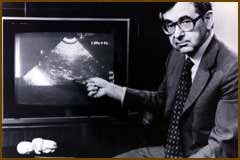
In 1985, Nathanson employed the new fetal imaging technology to produce a documentary film, “The Silent Scream,” which energized the pro-life movement and threw the pro-choice side onto the defensive by showing in graphic detail the killing of a twelve-week-old fetus in a suction abortion. Nathanson used the footage to describe the facts of fetal development and to make the case for the humanity and dignity of the child in the womb. At one point, viewers see the child draw back from the surgical instrument and open his mouth: “This,” Nathanson says in the narration, “is the silent scream of a child threatened imminently with extinction.”

Publicity for “The Silent Scream” was provided by no less a figure than President Ronald Reagan, who showed the film in the White House and touted it in speeches. Like Nathanson, Reagan, who had signed one of the first abortion-legalization bills when he was Governor of California, was a zealous convert to the pro-life cause. During his term as president, Reagan wrote and published a powerful pro-life book entitled Abortion and the Conscience of the Nation–a book that Nathanson praised for telling the truth about the life of the child in the womb and the injustice of abortion

The Silent Scream part 3


GOP response to Fayetteville Finger? (part 6)

I have often wondered if the Democrats will regret trying to suck Fayetteville into the 4th for two reasons. 1. The majority of voters in Fayetteville are Republicans. 2. The vast majority of people in Fayetteville (over 80%) oppose strongly this action to put them in the south part of the state as far as their representation goes (according to Jason Tolbert’s poll).

John Brummett makes a case for the Fayetteville Finger in his last article:

Slicing right up the gut of a Republican hotbed to take out the only Democratic boxes, then claiming you have no choice but to do it because the growing district must lose population — come on…

Still, I probably owe it to Democratic advocates to relay the case they make in seemingly serious tones for proposing to run the 4th Congressional District along a narrow swath right up that hill to gouge Fayetteville out of the 3rd District.

Next Brummett goes ahead and give 7 reasons for the Fayetteville Finger. I cover all 7 reasons in my previous post but today I want to give the GOP response. This is from an email I got from the Republican Party of Arkansas:

Top Reasons Why the “Pig Trail Gerrymander” is Bad for Arkansas

  • The State Democratic Party’s proposed congressional redistricting map Partisan Pig Trail Gerrymanderdubbed the “Pig Trail Gerrymander” ignores the traditional communities of interest in Arkansas. We have four regions: Ozarks, Northeast Delta, Central Arkansas and the Southern Timberlands.
  • The map splits these regions, especially the Ozarks and Southern Timberlands.
  • The map splits five counties in Arkansas.
  • The “Pig Trail Gerrymander” or “FayettevilleFinger” is the State Democratic Party’s desperate attempt to hold on to power in the face of a resounding defeat at the polls last November. The manipulated boundaries give Arkansas Democrats a path to continue 140 years of one-party rule in Arkansas.
  • Arkansas Democrats are more interested in power play politics than fairly representing the diverse people of Arkansas. Democrats have blocked other proposals in the House State Agencies Committee which stay truer to our current congressional makeup and split fewer than five counties.
  • The Fayetteville Chamber of Commerce opposes the capture of Fayetteville into the fourth. Fayetteville has been in the Third Congressional District for more than thirty years. Fayetteville Chamber of Commerce CEO and President Steve Clarksaid, “I believe this proposal is detrimental to the economic growth of Fayetteville and the economic growth of our region. This proposal is partisan and overly political.”
  • Congressman Steve Womack and former Rogers Mayor opposes the proposalstating, “it undermines 20 plus years of progress we made…and I don’t think for partisan reasons we should destroy that.” Congressman Womack is referring to the decades of efforts made between city governments to help Northwest Arkansas work as one area to improve economic development.

Is the Bible historically accurate? (Part 9B)

My sons got to go to Grace Community Church yesterday and hear John MacArthur speak on the tribulation. Here is a clip from “Larry King Live” with John MacArthur as a guest.

Dr Price, who directs excavations at the Qumran plateau in Israel, the site of the community that produced the dead sea scrolls some 2,000 years ago, expertly guides you through the latest archaeological finds that have changed the way we understand the world of the bible. (Part 3 of 6 in the film series The Stones Cry Out) HAVE YOU EVER WONDERED………

Did the Patriarchs of the Bible actually live?
Have the legendary cities of Sodom & Gomorrah been discovered?
Did the walls of Jericho really fall down?
Was King David a man or a myth?
Can we locate the tomb of Christ today?

The Stones Cry Out allows you to see and hear archaeologists who have made some of the most significant discoverires of our time and how the ancient evidence they unearthed confirmed the historical persons and events of the bible. Filmed on location in Israel and Jordan, this fascinating porgram will enable you to appreciate the living message of the bible.

My grandson was riding with me in the car the other day when the song “My God is greater” came on the radio. I was quite shocked that he sang every word correctly. It was quite thrilling to me to hear a four year old do that. When I think of discoveries like the Ebla Tablets that verify  names like Adam, Eve, Ishmael, David and Saul were in common usage when the Bible said they were, it makes me think of this song below by Chris Tomlin.

From time to time you will read articles in the Arkansas press by  such writers as  John Brummett, Max Brantley and Gene Lyons that poke fun at those that actually believe the Bible is historically accurate when in fact the Bible is backed up by many archaeological facts. The Book of Mormon is blindly accepted even though archaeology has disproven many of the facts that are claimed by it. For instance, sheep did not exist in North America when they said they did.

Sheep” are mentioned in the Book of Mormon as being raised in the Americas by the Jaredites between 2500 BC and 600 BC. Another verse mentions “lamb-skin” (~ AD 21)[51] However, Domestic sheep are known to have been first introduced to the Americas during the second voyage of Columbus in 1493.

____________________________________

Ancient Ebla was located in Northern Syria, approximately halfway between the modern cities
of Hamath and Aleppo. Excavations
at that site began in the 1960s, and in
the 1970s a series of extraordinary

tablets was discovered among the

ruins of an ancient palace. These

tablets became known as “The Ebla

Tablets”, and they were originally

discovered under the direction of two

professors from the University of

Rome – Dr. Paolo Matthiae and Dr.

Giovanni Petinato. At this point, about

17,000 tablets from the ancient Eblaite

Kingdom have been

recovered. These tablets appear to

have been written during the two last

generations of ancient Ebla. This

means that they probably come from

some time around 2300 to

2250 B.C. But what is remarkable

about the Ebla tablets is not how old

they are, but rather the

amazing parallels to the Bible that

they contain.

For example, one scholar was very

surprised at just how close much of

the language on the tablets is to

ancient Hebrew….

The vocabularies at Ebla were
distinctively Semitic: the word “to
write” is k-t-b (as in Hebrew), while that for “king” is “malikum,” and that for “man” is
“adamu.” The closeness to Hebrew is surprising.
In addition, a vast array of Biblical names that have not been found in any other ancient Near
Eastern languages have been reported to have been found in similar forms in Eblaite (one of the
two languages found on the tablets).
For instance, the names of Adam, Eve, Abarama/Abraham, Bilhah, Ishmael, Esau, Mika-el, Saul

and David have been found on the tablets. Now, it is important to note that the tablets are not

necessarily referring to those specific people. Rather, what it does demonstrate is that those

names were commonly used in ancient times.

In addition, quite a few ancient Biblical cities are also mentioned by name in the Ebla tablets.

25
For example, Ashtaroth, Sinai, Jerusalem, Hazor, Lachish, Megiddo, Gaza, Joppa, Ur, and
Damascus are all reportedly referred to by name in the tablets.
Giovanni Pettinato says that he also found references to the ancient cities of Sodom and
Gomorrah in the tablets. In fact, one key discovery appears to relate directly to Genesis

chapter 14. Some Bible skeptics have long tried to claim that the victory of Abraham over

Chedorlaomer and the Mesopotamian kings in Genesis 14 was fictional and that the five “cities

of the plain” (Sodom, Gomorrah, Admah, Zeboiim and Zoar) referred to in that chapter are

legendary. But it turns out that the Ebla tablets refer to all five of the “cities of the plain”, and on

one tablet the cities are listed in the exact same order that we find in Genesis chapter 14.

However, it is important to note that Ebla was primarily a pagan culture. Pagan gods such as
Dagan, Baal and Ishtar were very important to the people of that time. But the truth is that these
japan disatster: Residents  salvage goods in Sendai
Sendai residents try to salvage belongings from their destroyed homes

tablets do confirm quite a few historical details found in the Scriptures.

Amazing!

The Mystery Of The Ebla Tablets

Ronald Wilson Reagan Part 68

Haraz N. Ghanbari / AP

No. 14: George Mason’s Cinderella run

Washington Regional final, March 26, 2006 — Underdog usually finds a home in the NCAA tournament, but rarely in the later rounds. That changed in 2006. George Mason beat powerhouses Michigan State and North Carolina, ran past Wichita State in the Sweet 16 then shocked top-ranked Connecticut. “I can only imagine the feeling they must have on that campus, in that locker room,” said UConn coach Jim Calhoun. “It’s something they probably never imagined. We’ve imagined it, and we’ve done it. They could never have imagined it.”

If you liked that run by George Mason then what about that unbelievable game by VCU over Kansas? Now Butler and VCU will face each other in the Final Four. Who would have predicted that? Not President Obama, that is for sure. He predicted all four number one seeds to be in the final four. He is 0-4 on that pick.

Picture of Ronald Reagan as a youth standing near a tree in Dixon, Illinois.
(Picture from the Ronald Reagan Library)

Ronald Reagan in Dixon, Illinois. (Circa 1920s)

1980 Presidential Debate Carter v Reagan

Governor Reagan?

GOVERNOR REAGAN

I know the President’s supposed to be replying to me, but sometimes, I have a hard time in connecting what he’s saying with what I have said or what my positions are. I sometimes think he’s like the witch doctor that gets mad when a good doctor comes along with a cure that’ll work.

My point I have made already, Mr. President, with regard to negotiating. It does not call for nuclear superiority on the part of the United States; it calls for a mutual reduction of these weapons, as I say, that neither of us can represent a threat to the other. And to suggest that the SALT II treaty that your negotiators negotiated was just a continuation, and based on all of the preceding efforts by two previous Presidents, is just not true. It was a new negotiation, because, as I say, President Ford was within about 10 percent of having a solution that could be acceptable. And I think our allies would be very happy to go along with a fair and verifiable SALT agreement.

A evacuee woman (L) reacts as a volunteer worker gives her news on people she has been looking for at an evacuation center in coastal city of Rikuzentakata, Iwate prefecture, northeastern Japan, 19 March 2011. The number of estimated dead and missing person kept rising on 19 March, adding another fear to evacuees who have already been spending their days in dire conditions as they hopelessly wait for a good news on their loved ones whereabouts since a 9.0-magnitude earthquake and subsequent tsunami hit Japan on 11 March 2011.  EPA/DAI KUROKAWA 

A evacuee woman (L) reacts as a volunteer worker gives her news on people she has been looking for at an evacuation center in coastal city of Rikuzentakata, Iwate prefecture, northeastern Japan, 19 March 2011. The number of estimated dead and missing person kept rising on 19 March, adding another fear to evacuees who have already been spending their days in dire conditions as they hopelessly wait for a good news on their loved ones whereabouts since a 9.0-magnitude earthquake and subsequent tsunami hit Japan on 11 March 2011. EPA/DAI KUROKAWA

Abortionist Bernard Nathanson turned pro-life activist (part 2)

This is such a great video series “The Silent Scream.” I have never seen it until now and I wish I had seen it 30 years ago.  Take a look at the video clip below.

I wanted to pass along a portion of the excellent article “Bernard Nathanson: A Life Transformed by the Truth about Abortion.” (Feb 11, 2011)

LifeNews.com Note: Robert P. George is McCormick Professor of Jurisprudence and Director of the James Madison Program in American Ideals and Institutions at Princeton University. He is a member of the President’s Council on Bioethics and previously served on the United States Commission on Civil Rights. This article previously appeared in Public Discourse:

In the mid-1960s, with the sexual revolution roaring after Alfred Kinsey’s fraudulent but influential “scientific” studies of sex and sexuality in America, Hugh Hefner’s aggressive campaign to legitimize pornography and, perhaps above all, the wide distribution of the anovulant birth control pill, Nathanson became a leader in the movement to overturn laws prohibiting abortion. He co-founded the National Association for the Repeal of Abortion Laws (NARAL), which later became the National Abortion Rights Action League (NARAL) and is now NARAL Pro-Choice America. Its goal was to remove the cultural stigma on abortion, eliminate all meaningful legal restraints on it, and make it as widely available as possible across the nation and, indeed, the globe.

To achieve these goals, Nathanson would later reveal, he and fellow abortion crusaders pursued dubious and in some cases straightforwardly dishonest strategies.

First, they promoted the idea that abortion is a medical issue, not a moral one. This required persuading people of the rather obvious falsehood that a normal pregnancy is a natural and healthy condition if the mother wants her baby, and a disease if she does not. The point of medicine, to maintain and restore health, had to be recast as giving health care consumers what they happen to want; and the Hippocratic Oath’s explicit prohibition of abortion had to be removed. In the end, Nathanson and his collaborators succeeded in selling this propaganda to a small but extraordinarily powerful group of men: in the 1973 case of Roe v. Wade,seven Supreme Court justices led by Harry Blackmun, former counsel to the American Medical Association, invalidated virtually all state laws providing meaningful protection for unborn children on the ground that abortion is a “private choice” to be made by women and their doctors.

Second, Nathanson and his friends lied–relentlessly and spectacularly–about the number of women who died each year from illegal abortions. Their pitch to voters, lawmakers, and judges was that women are going to seek abortion in roughly equal numbers whether it is lawful or not. The only effect of outlawing it, they claimed, is to limit pregnant women to unqualified and often uncaring practitioners, “back alley butchers.” So, Nathanson and others insisted, laws against abortion are worse than futile: they do not save fetal lives; they only cost women’s lives.

Now some women did die from unlawful abortions, though factors other than legalization, especially the development of antibiotics such as penicillin, are mainly responsible for reducing the rate and number of maternal deaths. And of course, the number of unborn babies whose lives were taken shot up dramatically after Nathanson and his colleagues achieved their goals; and they achieved them, in part, by claiming that the number of illegal abortions was more than ten times higher than it actually was.

Third, the early advocates of abortion deliberately exploited anti-Catholic animus among liberal elites and (in those days) many ordinary Protestants to depict opposition to abortion as a “religious dogma” that the Catholic hierarchy sought to impose on others in violation of their freedom and the separation of church and state. Nathanson and his friends recognized that their movement needed an enemy–a widely suspected institution that they could make the public face of their opposition; a minority, but one large and potent enough for its detractors to fear.

Despite the undeniable historical fact that prohibitions of abortion were rooted in English common law and reinforced and expanded by statutes enacted across the United States by overwhelmingly Protestant majorities in the 19th century, Nathanson and other abortion movement leaders decided that the Catholic Church was perfect for the role of freedom-smothering oppressor. Its male priesthood and authority structure would make it easy for them to depict the Church’s opposition to abortion as misogyny, for which concern to protect unborn babies was a mere pretext. The Church’s real motive, they insisted, was to restrict women’s freedom in order to hold them in positions of subservience.

Fourth, the abortion movement sought to appeal to conservatives and liberals alike by promoting feticide as a way of fighting poverty. Why are so many people poor? It’s because they have more children than they can afford to care for. What’s the solution? Abortion. Why do we have to spend so much money on welfare? It’s because poor, mainly minority, women are burdening the taxpayer with too many babies. The solution? Abortion. Initially, Nathanson himself believed that legal abortion and its public funding would reduce out-of-wedlock childbearing and poverty, though (as he later admitted) he continued to promote this falsehood after the sheer weight of evidence forced him to disbelieve it.

______________________________

Nathanson later in his life became a pro-life advocate.In 1985, Nathanson employed the new fetal imaging technology to produce a documentary film, “The Silent Scream,” which energized the pro-life movement and threw the pro-choice side onto the defensive by showing in graphic detail the killing of a twelve-week-old fetus in a suction abortion. Nathanson used the footage to describe the facts of fetal development and to make the case for the humanity and dignity of the child in the womb. At one point, viewers see the child draw back from the surgical instrument and open his mouth: “This,” Nathanson says in the narration, “is the silent scream of a child threatened imminently with extinction.” 

Publicity for “The Silent Scream” was provided by no less a figure than President Ronald Reagan, who showed the film in the White House and touted it in speeches. 

The Silent Scream part 2


Abortionist Bernard Nathanson turned pro-life activist (part 1)

Sherwood Haisty is taking my sons Hunter and Wilson to Grace Community Church in the Los Angeles area this morning where Dr. John MacArthur is pastor. They will be attending both Sunday School and Worship.

I wanted to pass along a portion of the excellent article “Bernard Nathanson: A Life Transformed by the Truth about Abortion.”

LifeNews.com Note: Robert P. George is McCormick Professor of Jurisprudence and Director of the James Madison Program in American Ideals and Institutions at Princeton University. He is a member of the President’s Council on Bioethics and previously served on the United States Commission on Civil Rights. This article previously appeared in Public Discourse:

A man who made a career of death and lies became a hero for life and truth.

This morning in St. Patrick’s Cathedral, Archbishop Timothy Dolan will celebrate a Mass of Christian Burial for a giant of the pro-life movement: Dr. Bernard Nathanson.

Few people, if any, did more than Bernard Nathanson to undermine the right to life of unborn children by turning abortion from an unspeakable crime into a constitutionally protected liberty. Someday, when our law is reformed to honor the dignity and protect the right to life of every member of the human family, including children in the womb, historians will observe that few people did more than Bernard Nathanson to achieve that reversal.

Dr. Nathanson, the son of a distinguished medical practitioner and professor who specialized in obstetrics and gynecology, had his first involvement with abortion as a medical student at McGill University in Montreal. Having impregnated a girlfriend, he arranged and paid for her illegal abortion. Many years later, he would mark this episode as his “introductory excursion into the satanic world of abortion.”

In the meantime, however, Nathanson would become a nearly monomaniacal crusader for abortion and campaigner for its legalization. And he would himself become an abortionist.

By his own estimate, he presided over more than 60,000 abortions as Director of the Center for Reproductive and Sexual Health, personally instructed medical students and practitioners in the performance of about 15,000 more, and performed 5,000 abortions himself. In one of those abortions, he took the life of his own son or daughter–a child conceived with a girlfriend after he had established his medical practice. Writing with deep regret in his moving autobiography The Hand of God (1996), Nathanson confessed his own heartlessness in performing that abortion: “I swear to you, I had no feelings aside from the sense of accomplishment, the pride of expertise.”

_________________________________

Nathanson later in his life became a pro-life advocate.In 1985, Nathanson employed the new fetal imaging technology to produce a documentary film, “The Silent Scream,” which energized the pro-life movement and threw the pro-choice side onto the defensive by showing in graphic detail the killing of a twelve-week-old fetus in a suction abortion. Nathanson used the footage to describe the facts of fetal development and to make the case for the humanity and dignity of the child in the womb. At one point, viewers see the child draw back from the surgical instrument and open his mouth: “This,” Nathanson says in the narration, “is the silent scream of a child threatened imminently with extinction.” 

Publicity for “The Silent Scream” was provided by no less a figure than President Ronald Reagan, who showed the film in the White House and touted it in speeches.
The Silent Scream Part 1 – Abortion as Infanticide 

Dr. Bernard Nathanson’s classic video that shocked the world. He explains the procedure of a suction abortion, followed by an actual first trimester abortion as seen through ultrasound. The viewer can see the child’s pathetic attempts to escape the suction curette as her heart rate doubles, and a “silent scream” as her body is torn apart. A great tool to help people see why abortion is murder. The most important video on abortion ever made. This video changed opinion on abortion to many people.
Introduction by Dr. Bernard Nathanson, host. Describes the technology of ultrasound and how, for the first time ever, we can actually see inside the womb. Dr. Nathanson further describes the ultrasound technique and shows examples of babies in the womb. Three-dimensional depiction of the developing fetus, from 4 weeks through 28 weeks. Display and usage of the abortionists’ tools, plus video of an abortionist performing a suction abortion. Dr. Nathanson discusses the abortionist who agreed to allow this abortion to be filmed with ultrasound. The abortionist was quite skilled, having performed more than 10,000 abortions. We discover that the resulting ultrasound of his abortion so appalled him that he never again performed another abortion. The clip begins with an ultrasound of the fetus (girl) who is about to be aborted. The girl is moving in the womb; displays a heartbeat of 140 per minute; and is at times sucking her thumb. As the abortionist’s suction tip begins to invade the womb, the child rears and moves violently in an attempt to avoid the instrument. Her mouth is visibly open in a “silent scream.” The child’s heart rate speeds up dramatically (to 200 beats per minute) as she senses aggression. She moves violently away in a pathetic attempt to escape the instrument. The abortionist’s suction tip begins to rip the baby’s limbs from its body, ultimately leaving only her head in the uterus (too large to be pulled from the uterus in one piece). The abortionist attempts to crush her head with his forceps, allowing it to be removed. In an effort to “dehumanize” the procedure, the abortionist and anesthesiologist refer to the baby’s head as “number 1.” The abortionist crushes “number 1” with the forceps and removes it from the uterus. Abortion statistics are revealed, as well as who benefits from the enormously lucrative industry that has developed. Clinics are now franchised, and there is ample evidence that many are controlled by organized crime. Women are victims, too. They haven’t been told about the true nature of the unborn child or the facts about abortion procedures. Their wombs have been perforated, infected, destroyed, and sterilized. All as a result of an operation about which they they have had no true knowledge. Films like this must be made part of “informed consent.” NARAL (National Abortion Rights Action League) and Planned Parenthood are accused of a conspiracy of silence, of keeping women in the dark about the reality of abortion. Finally, Dr. Nathanson discusses his credentials. He is a former abortionist, having been the director of the largest clinic in the Western world.


Brummett:Reasons to put Fayetteville in South? (part 5)

John Brummet gave 7 reasons for the Fayetteville Finger in his recent article and here they are:

First, they argue — correctly — that congressional redistricting is inherently a partisan exercise. The political parties try to protect themselves. The party with the state legislative advantage gets to protect itself first.

Second, they argue — correctly — that this Fayetteville Finger is legal. It is a contiguous district. It largely adheres to adjoining state legislative districting, which, of course, must soon change as well…


Third, Democrats contend — again, correctly — that districtwide commonality is not a requirement, especially when a rural area loses so much population that it requires extensive geographic expansion….


Fourth, they say — and this is true as well — that their plan, in transferring for political purposes a few Democratic counties in the southeastern corner of the state from the 4th to the 1st District, actually has the concurrent advantage of consolidating the mutually interested Mississippi River Delta counties all the way to the Louisiana border.

Fifth, Democrats say that this Fayetteville-centered redistricting plan is less partisan than a plan of theirs might have been. This also is correct, if something of a straw-man argument.


Sixth, they assert that there is nothing that says our decennial congressional redistricting must be done in a way that disturbs the status quo as little as possible. We have done it that way in recent decades only because we were a one-party state with veteran congressmen and the prevailing objective was to shake things up as little as possible….

Seventh, they say a redistricting plan must be passed in the Legislature and that there is the potential for support for this plan in Fayetteville that does not exist in a more logical geographic area, such as Fort Smith and Sebastian County.

____________________________________

I would agree with one of Brummett’s earlier statements in the first part of his article: It is entirely too conspicuous a little gerrymander — too abrupt a departure from what we have always done — to escape critical attention. The Democratic desperation to stay competitive through meandering mapping instead of policy persuasion is a ripe target for ridicule.

Congressman Steve Womack is one that also jumps on board as far as ridiculing this idea.  He did so in the Arkansas Democrat Gazette on March 26th.

“I think it’s absurd,” he said. “I’ve said all along that it’s an absurd plan, a silly plan.”
“The fact that it’s got any legs at all in the Arkansas House, and perhaps in the Arkansas Senate, is a travesty,” he said.
This week, Chairman Doyle Webb discusses the State Democratic Party’s congressional redistricting proposal dubbed the “Pig Trail Gerrymander” or “Fayetteville Finger” for it’s suspicious meandering, creative carvings and raw partisanship.

Creation of wealth in this country based on “self interest or greed” helps ordinary folks too..

Yesterday I posted this on the Arkansas Times Blog:

The funny thing about Brantley calling Mike Huckabee a “tax fugative” is that liberals just can’t have it both ways. They praise Dale Bumpers for raising the state income tax to 7% and they get made when wealthy Arkansans leave the state for places like Texas, Tennessee and Florida that do not have a state income tax. Max, I called you on this before but you keep on doing it over and over. I guess it sounds good to your liberal friends, but being a being a liberal stinks when you run out of other people’s money to spend.

I got a quick response from the person going by the username “Vigilantejustice” and I answered:

“Vigilantejustice” does a great job of showing the difference between the liberal and conservative view concerning the creation of wealth and the use of that wealth.
“So, where did the rich people get it? Oh yeah, subsidies, the political buddy system, outsourcing, lying, cheating, preying on the less fortunate, fraud, their rich parents, and hiding from tax laws.”
My view is that people will always act in their self interest and the free enterprise system has been responsible for helping the poor more than any other system. I remember like yesterday when I saw Milton Friedman on the Phil Donahue Show. Donahue had thrown up one of those liberal accusations against the free enterprise system and against the rich people in the USA.
Below is the exchange that I saw that day:

Phil Donahue: When you see around the globe, the mal-distribution of wealth, a desperate plight of millions of people in underdeveloped countries. When you see so few “haves” and so many “have-nots.” When you see the greed and the concentration of power. Did you ever have a moment of doubt about capitalism and whether greed is a good idea to run on?

Milton Friedman: Well first of all tell me is there some society you know that doesn’t run on Greed? You think Russia doesn’t run on greed? You think China doesn’t run on greed? What is greed? Of course none of us are greedy, it’s only the other fellow who is greedy. The world runs on individuals pursuing their separate interests.The great achievements of civilization have not come from government bureaus. Einstein didn’t construct his theory under order from a bureaucrat. Henry Ford didn’t revolutionize the automobile industry that way.In the only cases in which the masses have escaped from the kind of grinding poverty you’re talking about – the only cases in recorded history – are where they have had capitalism and largely free trade.If you want to know where the masses are worst off, it’s exactly in the kinds of societies that depart from that. So that the record of history is absolutely crystal clear that there is no alternative way so far discovered of improving the lot of the ordinary people that can hold a candle to the productive activities that are unleashed by a free enterprise system.

Donahue: But it seems to reward not virtue as much as ability to manipulate the system…

Friedman:And what does reward virtue? You think the Communist commissar rewarded virtue? You think a Hitler rewarded virtue? You think – excuse me – if you’ll pardon me – do you think American Presidents reward virtue ?Do they choose their appointees on the basis of the virtue of the people appointed or on the basis of their political clout ?Is it really true that political self-interest is nobler somehow than economic self-interest ? You know, I think you’re taking a lot of things for granted. Just tell me where in the world you find these angels who are going to organize society for us ? Well, I don’t even trust you to do that.

Milton_friedman_1