Obama is citing his bailout of General Motors as proof that other industries should receive bailouts. Is Obama adopting the central planning principles of Joseph Stalin? Find out as Terry Jones of IBD and Doug Altner of the Ayn Rand Center discuss industrial policy and Obama’s plans for American industry.
_______________
The federal government needs to get out of the way it seems when it comes to making cars. No one can do any worse in my view.
General Motors Co sold a record number of Chevrolet Volt sedans in August — but that probably isn’t a good thing for the automaker’s bottom line. Nearly two years after the introduction of the path-breaking plug-in hybrid, GM is still losing as much as $49,000 on each Volt it builds, according to estimates provided to Reuters by industry analysts and manufacturing experts. Cheap Volt lease offers meant to drive more customers to Chevy showrooms this summer may have pushed that loss even higher. There are some Americans paying just $5,050 to drive around for two years in a vehicle that cost as much as $89,000 to produce. …The weak sales are forcing GM to idle the Detroit-Hamtramck assembly plant that makes the Chevrolet Volt for four weeks from September 17, according to plant suppliers and union sources. It is the second time GM has had to call a Volt production halt this year. GM acknowledges the Volt continues to lose money, and suggests it might not reach break even until the next-generation model is launched in about three years.
But not to worry, taxpayers are underwriting the costs. So if bigger subsidies are the price of buying support from the UAW and allowing fat-cat incompetent managers to stay on the job, that just means a bigger tab to pay for the rest of us.
How comforting.
P.S. If you’re a taxpayer and need to be cheered up, these cartoons may help.
P.P.P.S. Last but not least, Government Motors plans to build on the success of the Volt with the Obummer. It was due in 2011, but standard government incompetence has pushed back the release date.
Be first to receive our videos and other timely info about economic policy. Subscribe at http://www.bankruptingamerica.org
————————-
According to a recent poll, 74 percent of likely voters are extremely or very concerned about the current level of government spending. And 58 percent think the level of spending is unsustainable.
Is the public right? Is Washington bankrupting America? Some facts from the video:
Spending per household has risen over 40 percent in the last 10 years and is set to do so again in the next 10 pushing debt (and interest on the debt) to unprecedented levels. But that’s just a result of PAST spending…
Our government owes $106 trillion in FUTURE spending commitments – that cannot be paid for.
We can solve it, but politicians will have to make tough choices. Increasing taxes can’t do the trick ($106 trillion is equivalent to taking all of the taxable income from every American nine times over), nor is it fair to saddle taxpayers with a problem created by government irresponsibility.
We need real spending reform. Merely returning to the spending per household levels of the 1990s would balance the budget in three years.
___________
I wish we would eliminate several departments of the federal government and in the process get back to vision of founders. That is what the GOP Platform has done in 2012. Take a look at this article below by Dan Mitchell of the Cato Institute.
All federal spending should be reviewed to ensure powers reserved for the states are not given to the federal government, according to the GOP platform approved Tuesday. The platform language is meant to ensure all federal spending meets the requirements of the 10th amendment, which prohibits state powers from being given to the feds. “We support the review and examination of all federal agencies to eliminate wasteful spending, operational inefficiencies, or abuse of power to determine whether they are performing functions that are better performed by the States,” the platform reads. “These functions, as appropriate, should be returned to the States in accordance with the Tenth Amendment of the United States Constitution.”
For those of you who don’t have your Cato Institute pocket Constitutions handy, here’s what the 10th Amendment says.
The powers not delegated to the United States by the Constitution, nor prohibited by it to the States, are reserved to the States respectively, or to the people.
In other words, the 10th Amendment is basically a back-up plan to re-emphasize that the federal government was prohibited from exercising power in any area other than what is specified in the enumerated powers section of Article I, Section VIII.
That’s the good news. The bad news is that the Republican platform will have less impact on a potential Romney presidency than this blog. In other words, Republicans don’t intend to live up to this promise. Heck, they don’t even know that they have such a position. That’s why I included the asterisk in the title and must draw your attention to this fine print.
*Offer not good when GOP holds power.
But I suppose it’s good that they included this language in the platform, even if it’s merely empty political rhetoric
The Laffer Curve charts a relationship between tax rates and tax revenue. While the theory behind the Laffer Curve is widely accepted, the concept has become very controversial because politicians on both sides of the debate exaggerate. This video shows the middle ground between those who claim “all tax cuts pay for themselves” and those who claim tax policy has no impact on economic performance. This video, focusing on the theory of the Laffer Curve, is Part I of a three-part series. Part II reviews evidence of Laffer-Curve responses. Part III discusses how the revenue-estimating process in Washington can be improved. For more information please visit the Center for Freedom and Prosperity’s web site: http://www.freedomandprosperity.org
The left has been loudly asserting that the middle class would lose under Mitt Romney’s plan to cut tax rates by 20 percent and finance those reductions by closing loopholes.
That class-warfare accusation struck me as a bit sketchy because when I looked at the data a couple of years ago, I put together this chart showing that rich people, on average, enjoyed deductions that were seven times as large as the deductions of middle-income taxpayers.
And the chart includes only the big itemized deductions. There are dozens of other special tax preferences, as shown in this depressing image, and you can be sure that rich people are far more likely to have the lawyers, lobbyists, and accountants needed to exploit those provisions.
But this chart doesn’t disprove the leftist talking point, so I’m glad that Martin Feldstein addressed the issue in today’s Wall Street Journal. Here’s some of what he wrote.
The IRS data show that taxpayers with adjusted gross incomes over $100,000 (the top 21% of all taxpayers) made itemized deductions totaling $636 billion in 2009. Those high-income taxpayers paid marginal tax rates of 25% to 35%, with most $200,000-plus earners paying marginal rates of 33% or 35%. And what do we get when we apply a 30% marginal tax rate to the $636 billion in itemized deductions? Extra revenue of $191 billion—more than enough to offset the revenue losses from the individual income tax cuts proposed by Gov. Romney. …Additional revenue could be raised from high-income taxpayers by limiting the use of the “preferences” identified for the Alternative Minimum Tax (such as excess oil depletion allowances) or the broader list of all official individual “tax expenditures” (such as tax credits for energy efficiency improvements in homes), among other credits and exclusions. None of this base-broadening would require taxing capital gains or making other changes that would reduce the incentives for saving and investment. …Since broadening the tax base would produce enough revenue to pay for cutting everyone’s tax rates, it is clear that the proposed Romney cuts wouldn’t require any middle-class tax increase, nor would they produce a net windfall for high-income taxpayers. The Tax Policy Center and others are wrong to claim otherwise.
In other words, even with a very modest assumption about the Laffer Curve, it would be quite possible to implement something akin to what Romney’s proposing and not “lose” tax revenue.
This doesn’t mean, of course, that Romney seriously intends to push for good policy. I’m much more concerned, for instance, that he’ll wander in the wrong direction and propose something very bad such as a value-added tax.
But Romney certainly can do the right thing if he wins. Assuming that’s what he wants to do.
This video is second installment of a three-part series. Part I reviews theoretical relationship between tax rates, taxable income, and tax revenue. Part III discusses how the revenue-estimating process in Washington can be improved. For more information please visit the Center for Freedom and Prosperity’s web site: http://www.freedomandprosperity.org.
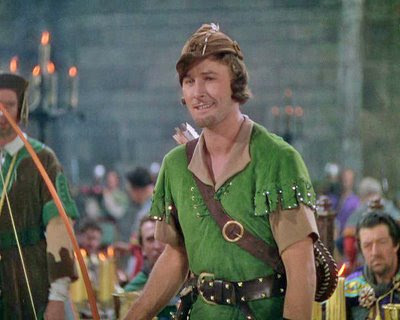
When I was a kid, I was a big fan of Robin Hood. I remember reading at least two books recounting the legend and I watched the Errol Flynn version of the movie several times.
And, as an adult, I saw both the Kevin Costner and Russell Crowe versions of Robin Hood.
“I’m not an occupy-Wall-Street moocher”
None of this makes me an expert, but it does allow me to state with some confidence that Robin Hood was not a left-wing hero who stole from the rich and redistributed to the poor.
Instead, he was a quasi-libertarian tax protestor. Okay, maybe it’s an exaggeration to claim he was a libertarian, but Robin Hood was on the side of ordinary people who were being exploited by incessant tax demands from the ruling class. His main enemies were Prince John and the Sheriff on Nottingham, not the medieval equivalents of Wall Street.
In the Russell Crowe version of the movie, Robin Hood even gives a speech about the importance of liberty.
So you can imagine how irked I get when statists agitate for things such as the “Robin Hood Tax” in this moronic video. But what motivated me today is a story in the Financial Times about a Cesar Chavez wannabee politician from Spain.
For Spain’s ruling politicians he is a criminal; for his supporters he is Robin Hood, stealing from supermarkets and redistributing the food to the poor. Juan Manuel Sánchez Gordillo, the mayor of Marinaleda, a southern town with a population of 2,600, has been catapulted to cult hero status in Spain after setting out this week on an anti-austerity march across Andalucia – occupying banks and stealing food… “We are fighting a war for the poor … going to jail is not important for me, it would be an honour,” Mr Sánchez Gordillo told the Financial Times. “We are going to occupy all of the banks and supermarkets we are able to in Andalucia. The robbers who have caused this crisis must pay the consequences for what they have done.”
But don’t hold your breath waiting for self-awareness from this clown.
Not surprisingly, unions are part of the protest. I’m guessing that Mr. Canamero represents government employees.
On Friday, the marchers, who plan to sleep in the open or in parks, occupied a branch of Banco Santander in the town of Mancha Real in the province of Jaén before leaving later in the day. Diego Canamero, head of the Andalucian Workers Union, was in the branch on Friday. He said critics of the protests were politicians protecting their own interests. “These are symbolic actions against an unsustainable economic situation,” he said. “The bankers rob us, and take our money to tax havens…”
The dig against tax havens is particularly laughable. Ordinary Spaniards should hope and pray that their deposits in the local banks are safely re-deposited in banks based in well-run and honest jurisdictions such as Switzerland, the Cayman Islands, or Singapore.
And if they’re smart, they already cut out the middleman and directly placed their savings in one of these low-tax jurisdictions. That way, they’re not only at much less risk of a bank collapse, but they also have greater ability to protect their assets from the venal and incompetent tax-hungry political elite.
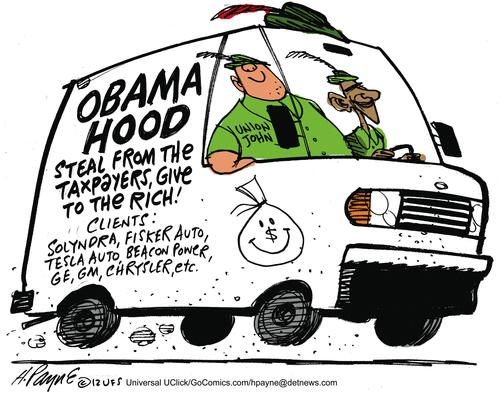
Returning to the mischaracterization of Robin Hood, this Payne cartoon does a good job of capturing my thoughts.
I especially like how Payne shows that the left-wing version of Robin Hood is all about a perniciously corrupt version of redistribution (though he should have included the Export-Import Bank on the side of the van). The genuine poor get crumbs while the well-connected interests make out like bandits.
Social Security is a Ponzi Scheme but Blake who is a blogger said I was off base. Ark Times reader says Social Security is not Ponzi Scheme Social Security Disaster Walter E. Williams Columnist, Townhall.com Politicians who are principled enough to point out the fraud of Social Security, referring to it as a lie and […]
We got to do something soon about Social Security. The Case for Social Security Personal Accounts Posted by Daniel J. Mitchell There are two crises facing Social Security. First the program has a gigantic unfunded liability, largely caused by demographics. Second, the program is a very bad deal for younger workers, making them pay record […]
Senator Obama’s Social Security Tax Plan Uploaded by afq2007 on Jul 23, 2008 In addition to several other tax increases, Senator Barack Obama wants to increase the Social Security payroll tax burden by imposing the tax on income above $250,000. This would be a sharp departure from current law, which only requires that the tax […]
Saving Social Security with Personal Retirement Accounts Uploaded by afq2007 on Jan 10, 2011 There are two crises facing Social Security. First the program has a gigantic unfunded liability, largely thanks to demographics. Second, the program is a very bad deal for younger workers, making them pay record amounts of tax in exchange for comparatively meager benefits. This […]
“Saving the American Dream: The Heritage Plan to Fix the Debt, Cut Spending, and Restore Prosperity,” Heritage Foundation, May 10, 2011 by Stuart Butler, Ph.D. , Alison Acosta Fraser and William Beach is one of the finest papers I have ever read. Over the next few days I will post portions of this paper, but […]
Is Social Security a Ponzi Scheme? I just started a series on this subject. In this article below you will see where the name “Ponzi scheme” came from and if it should be applied to the Social Security System. Ponzi! Ponzi! Ponzi! 9/14/2011 | Email John Stossel | Columnist’s Archive Ponzi! Ponzi! Ponzi! There, I […]
Uploaded by LibertyPen on Jan 8, 2009 Professor Williams explains what’s ahead for Social Security Dan Mitchell on Social Security I have said that Social Security is a Ponzi scheme and sometimes you will hear someone in the public say the same thing. Yes, It Is a Ponzi Scheme by Michael D. Tanner Michael Tanner […]
Be first to receive our videos and other timely info about economic policy. Subscribe at http://www.bankruptingamerica.org
————————-
According to a recent poll, 74 percent of likely voters are extremely or very concerned about the current level of government spending. And 58 percent think the level of spending is unsustainable.
Is the public right? Is Washington bankrupting America? Some facts from the video:
Spending per household has risen over 40 percent in the last 10 years and is set to do so again in the next 10 pushing debt (and interest on the debt) to unprecedented levels. But that’s just a result of PAST spending…
Our government owes $106 trillion in FUTURE spending commitments – that cannot be paid for.
We can solve it, but politicians will have to make tough choices. Increasing taxes can’t do the trick ($106 trillion is equivalent to taking all of the taxable income from every American nine times over), nor is it fair to saddle taxpayers with a problem created by government irresponsibility.
We need real spending reform. Merely returning to the spending per household levels of the 1990s would balance the budget in three years.
___________
When are we going to see REAL SPENDING CUTS? I am tired of this being talked about but not done.
And I emphasized that the fiscal problem in Europe is the size of government, not the fact that nations are having a hard time borrowing money. As explained in this video, spending is the disease and deficits are one of the symptoms.
This is also an issue in the United States, and Steve Moore of the Wall Street Journal is worried that the GOP ticket is debt-obsessed and doesn’t have sufficient enthusiasm for lower tax rates and tax reform.
Stylistically, Paul Ryan’s Republican convention speech last night was a grand slam. …But was it the growth message that supply-siders wanted to hear, or debt-clock obsession? There were clearly apocalyptic claims. “Before the math and the momentum overwhelm us all, we are going to solve this nation’s economic problems,” said Mr. Ryan in reference to the federal rea ink. “I’m going to level with you; we don’t have that much time.” …In fact, he talked about turning around the economy with “tax fairness.” Ugh, that’s an Obama term. …Larry Kudlow of CNBC and a former Reagan economist tells me, “Paul’s speech just didn’t have the growth, tax-cutting message. We didn’t even get the words tax reform. I don’t know what happened, but it worries me.” It’s a question of priorities. Are Mitt Romney and Paul Ryan signaling that they will put spending cuts ahead of pro-growth tax-rate cuts?
As a general rule, it is always good to do spending cuts (however defined). And it is always good to lower tax rates. And if you can do both at the same time, even better.
But since I have low expectations, I’ll be delighted if we “merely” manage to get entitlement reform during a Romney-Ryan Administration. That would mean some progress on the spending side and presumably reduce the risk of bad things (like a VAT!) on the revenue side.
Milton Friedman said that getting George Bush I to be Reagan’s vice president was his biggest mistake because he knew that Bush was not a true conservative and sure enough George Bush did raise taxes when he later became President. Below is a speech by George W. Bush honoring Milton Friedman:
Milton Friedman Honored for Lifetime Achievements 2002/5/9
_____________-
The USA’s grand economy was built by the free enterprise system and basically the government got out of the way most of the time. That is what works everywhere you have wealth built up. If socialists get their way then they will piggyback on the success the capitalists have created and many times when socialist policies take over things start to fall apart with the vast welfare states that are created. Take a look at this fine article by Dan Mitchell of the Cato Institute below.
To answer the question in the title, it means you need to read the fine print.
This is because we have a president who thinks the government shouldn’t confiscate more than 20 percent of a company’s income, but he only gives that advice when he’s in Ghana.
After the Greek elections, which saw the defeat of the pro-big government Syriza coalition and a victory for the supposedly conservative New Democracy Party, here’s some of what Politico reported.
President Barack Obama on Monday called the results of Greece’s election a “positive prospect” with the potential to form a government willing to cooperate with Europe. “I think the election in Greece yesterday indicates a positive prospect for not only them forming a government, but also them working constructively with their international partners in order that they can continue on the path of reform and do so in a way that also offers the prospects for the Greek people to succeed and prosper,” Obama said after a meeting with the G-20 Summit’s host, Mexican President Felipe Calderon.
In other words, it’s “positive” when other nations reject big government and vote for right-of-center parties, but Heaven forbid that this advice apply to the United States.
Interestingly, it’s not just Obama who is rejecting (when talking about other nations) the welfare-state vision of bigger government and higher taxes.
… it is far from clear, especially after the French election, that there is any kind of majority or even plurality support for responsible policies.
Remarkable. Larry Summers is dissing Francois Hollande and the French people by implying they want irresponsible policies, even though the Hollande’s views about Keynesian economics and soak-the-rich taxation are basically identical to the nonsense Summers was peddling while in the White House.
It’s almost enough to make you cynical about America’s political elite. Perish the thought!
They’re right, though they probably don’t realize the seriousness of that looming crisis.
Here’s what you need to know: America’s fiscal crisis is actually a spending crisis, and that spending crisis is driven by entitlements.
More specifically, the vast majority of the problem is the result of Medicaid, Medicare, and Social Security, programs that are poorly designed and unsustainable.
The Medicaid program imposes high costs while generating poor results. This Center for Freedom and Prosperity Foundation video explains how block grants, such as the one proposed by Congressman Paul Ryan, will save money and improve healthcare by giving states the freedom to innovate and compete.
This Center for Freedom and Prosperity Foundation video explains how a “premium-support” plan would solve Medicare’s fiscal crisis and improve the overall healthcare system. This voucher-based system also would protect seniors from bureaucratic rationing. http://www.freedomandprosperity.org
There are two crises facing Social Security. First the program has a gigantic unfunded liability, largely thanks to demographics. Second, the program is a very bad deal for younger workers, making them pay record amounts of tax in exchange for comparatively meager benefits. This video explains how personal accounts can solve both problems, and also notes that nations as varied as Australia, Chile, Sweden, and Hong Kong have implemented this pro-growth reform. www.freedomandprosperity.org
_______________________
Regular readers know I’m fairly gloomy about the future of liberty, but this is one area where there is a glimmer of hope.
The Chairman of the House Budget Committee actually put together a plan that addresses the two biggest problems (Medicare and Medicaid) and the House of Representatives actually adopted the proposal.
The Senate didn’t act, of course, and Obama would veto any good legislation anyhow, so I don’t want to be crazy optimistic. Depending on how things play out politically in the next six years, I’ll say there’s actually a 20 percent chance to save America.
Dan Mitchell of the Cato Institute wrote a very good article and I agree with most of it. However, I do take exception to just one part. He is right to get on to USA Today for calling this current Congress the most unproductive since they only passed 61 bills. Dan rightly pointed out that in the first two years of Obama’s term the Democratically controlled Congress turned out lots of law but they included some very bad laws like Obamacare.
How I differ with Mitchell on this one point. In 2011 the Republicans in Congress failed to block the debt ceiling proposal and only 66 brave Republicans in the House voted against it. As a result we have continued to run trillion dollar deficits which in my view (and Dan’s too) makes this Congress the dumbest and most unproductive ever. Dan has actually shown how government involvement in deficit spending can actually hinder economic growth. and Dan did an excellent video series on restraining spending in government and I have included the You Tube clips of those in this post.
Here below is a list of those 66 brave Republicans that voted against the debt ceiling increase listed below in August of 2011.
Although this line is attributed to many people, Wikiquote says that Gideon Tucker was the first to warn us that “No man’s life, liberty, or property are safe while the legislature is in session.”
But that’s not the point of this post. Instead, I want to focus on this grossly misleading headline in USA Today: “This Congress could be least productive since 1947.”
But it does blindly assume that it is productive to impose more laws. Was it productive to enact Obamacare? What about the faux stimulus? Or the Dodd-Frank bailout bill?
Wouldn’t the headline be more accurate if it read, “This Congress could be least destructive since 1947″?
Congress is on pace to make history with the least productive legislative year in the post World War II era. Just 61 bills have become law to date in 2012 out of 3,914 bills that have been introduced by lawmakers, or less than 2% of all proposed laws, according to a USA TODAY analysis of records since 1947 kept by the U.S. House Clerk’s office. In 2011, after Republicans took control of the U.S. House, Congress passed just 90 bills into law. The only other year in which Congress failed to pass at least 125 laws was 1995. …When Democrats controlled both chambers during the 111th Congress, 258 laws were enacted in 2010 and 125 in 2009, including President Obama’s health care law.
Social Security is a Ponzi Scheme but Blake who is a blogger said I was off base. Ark Times reader says Social Security is not Ponzi Scheme Social Security Disaster Walter E. Williams Columnist, Townhall.com Politicians who are principled enough to point out the fraud of Social Security, referring to it as a lie and […]
We got to do something soon about Social Security. The Case for Social Security Personal Accounts Posted by Daniel J. Mitchell There are two crises facing Social Security. First the program has a gigantic unfunded liability, largely caused by demographics. Second, the program is a very bad deal for younger workers, making them pay record […]
Senator Obama’s Social Security Tax Plan Uploaded by afq2007 on Jul 23, 2008 In addition to several other tax increases, Senator Barack Obama wants to increase the Social Security payroll tax burden by imposing the tax on income above $250,000. This would be a sharp departure from current law, which only requires that the tax […]
Saving Social Security with Personal Retirement Accounts Uploaded by afq2007 on Jan 10, 2011 There are two crises facing Social Security. First the program has a gigantic unfunded liability, largely thanks to demographics. Second, the program is a very bad deal for younger workers, making them pay record amounts of tax in exchange for comparatively meager benefits. This […]
“Saving the American Dream: The Heritage Plan to Fix the Debt, Cut Spending, and Restore Prosperity,” Heritage Foundation, May 10, 2011 by Stuart Butler, Ph.D. , Alison Acosta Fraser and William Beach is one of the finest papers I have ever read. Over the next few days I will post portions of this paper, but […]
Is Social Security a Ponzi Scheme? I just started a series on this subject. In this article below you will see where the name “Ponzi scheme” came from and if it should be applied to the Social Security System. Ponzi! Ponzi! Ponzi! 9/14/2011 | Email John Stossel | Columnist’s Archive Ponzi! Ponzi! Ponzi! There, I […]
Uploaded by LibertyPen on Jan 8, 2009 Professor Williams explains what’s ahead for Social Security Dan Mitchell on Social Security I have said that Social Security is a Ponzi scheme and sometimes you will hear someone in the public say the same thing. Yes, It Is a Ponzi Scheme by Michael D. Tanner Michael Tanner […]





 The Daily Hatch