Tag Archives: Dan Mitchell

The real truth about the financial condition of Social Security can be seen on the www.thedailyhatch.org

Uploaded by on Jan 8, 2009

Professor Williams explains what’s ahead for Social Security

If you want to know the real truth about the financial condition of Social Security then check out these links below:

Ark Times reader says Social Security is not Ponzi Scheme

Social Security is a Ponzi Scheme but Blake who is a blogger said I was off base. Ark Times reader says Social Security is not Ponzi Scheme Social Security Disaster Walter E. Williams Columnist, Townhall.com Politicians who are principled enough to point out the fraud of Social Security, referring to it as a lie and […]

Social Security is a Ponzi scheme that needs to be reformed

We got to do something soon about Social Security. The Case for Social Security Personal Accounts Posted by Daniel J. Mitchell There are two crises facing Social Security. First the program has a gigantic unfunded liability, largely caused by demographics. Second, the program is a very bad deal for younger workers, making them pay record […]

Senator Obama’s ideas on Social Security

Senator Obama’s Social Security Tax Plan Uploaded by afq2007 on Jul 23, 2008 In addition to several other tax increases, Senator Barack Obama wants to increase the Social Security payroll tax burden by imposing the tax on income above $250,000. This would be a sharp departure from current law, which only requires that the tax […]

Social Security is a Ponzi scheme (part 13)

Saving Social Security with Personal Retirement Accounts Uploaded by afq2007 on Jan 10, 2011 There are two crises facing Social Security. First the program has a gigantic unfunded liability, largely thanks to demographics. Second, the program is a very bad deal for younger workers, making them pay record amounts of tax in exchange for comparatively meager benefits. This […]

What does the Heritage Foundation have to say about saving Social Security:Study released May 10, 2011 (Part 7)

“Saving the American Dream: The Heritage Plan to Fix the Debt, Cut Spending, and Restore Prosperity,” Heritage Foundation, May 10, 2011 by  Stuart Butler, Ph.D. , Alison Acosta Fraser and William Beach is one of the finest papers I have ever read. Over the next few days I will post portions of this paper, but […]

Only difference between Ponzi scheme and Social Security is you can say no to Ponzi Scheme jh2d

Is Social Security  a Ponzi Scheme? I just started a series on this subject. In this article below you will see where the name “Ponzi scheme” came from and if it should be applied to the Social Security System. Ponzi! Ponzi! Ponzi! 9/14/2011 | Email John Stossel | Columnist’s Archive Ponzi! Ponzi! Ponzi! There, I […]

Social Security a Ponzi scheme?

Uploaded by LibertyPen on Jan 8, 2009 Professor Williams explains what’s ahead for Social Security Dan Mitchell on Social Security I have said that Social Security is a Ponzi scheme and sometimes you will hear someone in the public say the same thing. Yes, It Is a Ponzi Scheme by Michael D. Tanner Michael Tanner […]

Dan Mitchell on Social Security


Don’t inner city kids deserve a better education?

The public school system in the inner cities in the USA is appauling. Don’t our inner city kids a better chance of going up the economic ladder?

I’ve criticized union bosses for fighting school reform, and I’ve condemned the so-called civil rights establishment for opposing school choice.

And here’s a powerful video from Reason TV that combines those themes, noting the unholy alliance of teacher unions and the NAACP.

The spiritual leader of the teacher unions?

Fortunately, the statists seem to be losing this issue. Louisiana recently adopted school choice legislation that will give poor children an opportunity to escape failing government schools.

But the left isn’t losing gracefully. In a move that would make George Wallace proud, they are threatening schools that will participate in the new program.

Here’s some powerful criticism of their sleazy tactics from today’s Wall Street Journal.

In some parts of the antebellum South, it was illegal to teach blacks how to read. Are teachers unions in Louisiana trying to turn back the clock? Last week, lawyers for the Louisiana Association of Educators, one of the state’s two major teachers unions, threatened private and parochial schools with lawsuits if the schools accept students participating in a new school choice initiative that starts this year. Education reforms signed into law in April by Governor Bobby Jindal include a publicly funded voucher program that allows low-income families to send their children to private or parochial schools. …lawyers representing the unions faxed letters to about 100 of the 119 schools that are participating in the voucher program. “Our clients have directed us to take whatever means necessary,” the letter reads. Unless the school agrees to turn away voucher students, “we will have no alternative other than to institute litigation.” The letter demanded an answer in writing by the next day. Louisiana’s voucher program is adjusted for family income and is intended above all to give a shot at a decent education to underprivileged minorities, who are more likely to be relegated to the worst public schools. …Demand for vouchers has been overwhelming: There were 10,300 applications for 5,600 slots. Despite claims to the contrary by school-choice opponents, low-income parents can and do act rationally when it comes to the education of their children. State officials have rightly slammed the union’s tactics. A spokesman for the Governor said in a statement that union leaders are “stooping to new lows and trying to strong-arm schools to keep our kids from getting a quality education.” State Superintendent John White said it was “shameful” that the unions were “trying to prevent people from doing what’s right for their children.” The unions claim that vouchers don’t benefit students, but we know from school-choice programs in Washington, D.C., and elsewhere that voucher recipients attend safer schools and enjoy higher graduation rates than their peers in public schools.

As I note in this post (featuring a great column by Jeff Jacoby), I’ve always believed that the school choice issue exposes the dividing line between honest liberals and power-hungry liberals.

Regardless of ideology, any decent person will favor reforms that enable poor kids to escape horrible government schools. Lots of liberals are decent people. The ones who oppose school choice, by contrast, are…well, you can fill in the blank.

P.S. Here’s some wisdom on the issue of school choice from a former University of Georgia quarterback.

P.P.S. Not surprisingly, Thomas Sowell nails the issue, as does Walter Williams, with both criticizing the President for sacrificing the interests of minority children to protect the monopoly privileges of teacher unions.

P.P.P.S. Chile has reformed its education system with vouchers, as have Sweden and the Netherlands, and all those nations are getting good results.

The real truth about the financial condition of Social Security can be seen on the www.thedailyhatch.org

Uploaded by on Jan 8, 2009

Professor Williams explains what’s ahead for Social Security

If you want to know the real truth about the financial condition of Social Security then check out these links below:

Ark Times reader says Social Security is not Ponzi Scheme

Social Security is a Ponzi Scheme but Blake who is a blogger said I was off base. Ark Times reader says Social Security is not Ponzi Scheme Social Security Disaster Walter E. Williams Columnist, Townhall.com Politicians who are principled enough to point out the fraud of Social Security, referring to it as a lie and […]

Social Security is a Ponzi scheme that needs to be reformed

We got to do something soon about Social Security. The Case for Social Security Personal Accounts Posted by Daniel J. Mitchell There are two crises facing Social Security. First the program has a gigantic unfunded liability, largely caused by demographics. Second, the program is a very bad deal for younger workers, making them pay record […]

Senator Obama’s ideas on Social Security

Senator Obama’s Social Security Tax Plan Uploaded by afq2007 on Jul 23, 2008 In addition to several other tax increases, Senator Barack Obama wants to increase the Social Security payroll tax burden by imposing the tax on income above $250,000. This would be a sharp departure from current law, which only requires that the tax […]

Social Security is a Ponzi scheme (part 13)

Saving Social Security with Personal Retirement Accounts Uploaded by afq2007 on Jan 10, 2011 There are two crises facing Social Security. First the program has a gigantic unfunded liability, largely thanks to demographics. Second, the program is a very bad deal for younger workers, making them pay record amounts of tax in exchange for comparatively meager benefits. This […]

What does the Heritage Foundation have to say about saving Social Security:Study released May 10, 2011 (Part 7)

“Saving the American Dream: The Heritage Plan to Fix the Debt, Cut Spending, and Restore Prosperity,” Heritage Foundation, May 10, 2011 by  Stuart Butler, Ph.D. , Alison Acosta Fraser and William Beach is one of the finest papers I have ever read. Over the next few days I will post portions of this paper, but […]

Only difference between Ponzi scheme and Social Security is you can say no to Ponzi Scheme jh2d

Is Social Security  a Ponzi Scheme? I just started a series on this subject. In this article below you will see where the name “Ponzi scheme” came from and if it should be applied to the Social Security System. Ponzi! Ponzi! Ponzi! 9/14/2011 | Email John Stossel | Columnist’s Archive Ponzi! Ponzi! Ponzi! There, I […]

Social Security a Ponzi scheme?

Uploaded by LibertyPen on Jan 8, 2009 Professor Williams explains what’s ahead for Social Security Dan Mitchell on Social Security I have said that Social Security is a Ponzi scheme and sometimes you will hear someone in the public say the same thing. Yes, It Is a Ponzi Scheme by Michael D. Tanner Michael Tanner […]

Dan Mitchell on Social Security


Open letter to President Obama (Part 168.1)

Dan Mitchell Defending Tax Havens (and Mitt Romney) on Wall Street Journal Online TV

Published on Jul 13, 2012 by

No description available.

__________________

(This letter was mailed before September 1, 2012)

President Obama c/o The White House
1600 Pennsylvania Avenue NW
Washington, DC 20500

Dear Mr. President,

I know that you receive 20,000 letters a day and that you actually read 10 of them every day. I really do respect you for trying to get a pulse on what is going on out here.

It worries me more about how my tax dollars are being spent by you than what Mitt Romney did with his private money.

I’ve defended Mitt Romney for utilizing the efficient financial services sectors of so-called tax havens.

But I may have been focusing on the trees and missed the forest. By highlighting the perfectly legal nature of Romney’s investments and commenting on the valuable role of tax havens in the global economy, I’ve neglected the main argument, which is that people have a right to do whatever they want with their own money and it’s none of our damn business.

What is our business, by contrast, is what politicians are doing with the money they confiscate from us. This Lisa Benson cartoon helps to make that point, though it would be even better if she had written “Romney’s Stash for His Own Money” and “Obama’s Stash for Our Money.”

Obama, needless to say, is an expert at squandering other people’s money, as illustrated by money pits such as the faux stimulus and the green energy scam.

P.S. Lest anyone think I’m being partisan, the headline of this would be just as accurate if I added “How Bush Spent My Money” or “How Romney Would Spend My Money.” Bush, after all, followed the same fiscal agenda as Obama, and Romney’s track record suggests he will be similarly profligate.

P.P.S. Which makes me miss Bill Clinton, who was frugal by comparison. Or Ronald Reagan, who actually did the right things for the right reason.

P.P.P.S. You can find more Lisa Benson cartoons herehere, here, here, herehere, and here.

____________

Thank you so much for your time. I know how valuable it is. I also appreciate the fine family that you have and your commitment as a father and a husband.

Sincerely,

Everette Hatcher III, 13900 Cottontail Lane, Alexander, AR 72002, ph 501-920-5733, lowcostsqueegees@yahoo.com

Dan Mitchell looks at Obama’s tax record

Dan Mitchell’s article and the video from his organization takes a hard look at President Obama’s tax record.

The folks at the Center for Freedom and Prosperity have been on a roll in the past few months, putting out an excellent series of videos on Obama’s economic policies.

Now we have a new addition to the list. Here’s Mattie Duppler of Americans for Tax Reform, narrating a video that eviscerates the President’s tax agenda.

Obamanomics: Class Warfare vs Pro-Growth Tax Policy

Published on Oct 29, 2012 by

Even though he promised to bring Americans together, President Obama has used class-warfare tax policy to persecute and demonize successful entrepreneurs and investors. This mini-documentary from the Center for Freedom and Prosperity Foundation explains why the tax code shouldn’t be used for anything other than fairly and neutrally collecting a minimum amount of revenue to fund the legitimate functions of the federal government.

_______________

I like the entire video, as you can imagine, but certain insights and observations are particularly appealing.

1. The rich already pay a disproportionate share of the total tax burden – The video explains that the top-20 percent of income earners pay more than 67 percent of all federal taxes even though they earn only about 50 percent of total income. And, as I’ve explained, it would be very difficult to squeeze that much more money from them.

2. There aren’t enough rich people to fund big government – The video explains that stealing every penny from every millionaire would run the federal government for only three months. And it also makes the very wise observation that this would be a one-time bit of pillaging since rich people would quickly learn not to earn and report so much income. We learned in the 1980s that the best way to soak the rich is by putting a stop to confiscatory tax rates.

3. The high cost of the death tax – I don’t like double taxation, but the death tax is usually triple taxation and that makes a bad tax even worse. Especially since the tax causes the liquidation of private capital, thus putting downward pressure on wages. And even though the tax doesn’t collect much revenue, it probably does result in some upward pressure on government spending, thus augmenting the damage.

4. High taxes on the rich are a precursor to higher taxes on everyone else – This is a point I have made on several occasions, including just yesterday. I’m particularly concerned that the politicians in Washington will boost income tax rates for everybody, then decide that even more money is needed and impose a value-added tax.

The video also makes good points about double taxation, class warfare, and the Laffer Curve.

Please share widely.

Dan Mitchell of the Cato Institute takes on entitlement reform

It is the elephant in the room that nobody wants to talk about. Here Dan Mitchell takes it on.

Most people have a vague understanding that America has a huge long-run fiscal problem.

They’re right, though they probably don’t realize the seriousness of that looming crisis.

Here’s what you need to know: America’s fiscal crisis is actually a spending crisis, and that spending crisis is driven by entitlements.

More specifically, the vast majority of the problem is the result of Medicaid, Medicare, and Social Security, programs that are poorly designed and unsustainable.

America needs to fix these programs…or eventually become another Greece.

Fortunately, all of the problems can be solved, as these three videos demonstrate.

The first video explains how to fix Medicaid.

Promote Federalism and Replicate the Success of Welfare Reform with Medicaid Block Grants

Uploaded by on Jun 26, 2011

The Medicaid program imposes high costs while generating poor results. This Center for Freedom and Prosperity Foundation video explains how block grants, such as the one proposed by Congressman Paul Ryan, will save money and improve healthcare by giving states the freedom to innovate and compete.

The second video shows how to fix Medicare.

Saving Medicare: Free Market Reforms Are Better than Bureaucratic Rationing

Uploaded by on May 17, 2011

This Center for Freedom and Prosperity Foundation video explains how a “premium-support” plan would solve Medicare’s fiscal crisis and improve the overall healthcare system. This voucher-based system also would protect seniors from bureaucratic rationing. http://www.freedomandprosperity.org

And the final video shows how to fix Social Security.

Saving Social Security with Personal Retirement Accounts

Uploaded by on Jan 10, 2011

There are two crises facing Social Security. First the program has a gigantic unfunded liability, largely thanks to demographics. Second, the program is a very bad deal for younger workers, making them pay record amounts of tax in exchange for comparatively meager benefits. This video explains how personal accounts can solve both problems, and also notes that nations as varied as Australia, Chile, Sweden, and Hong Kong have implemented this pro-growth reform. www.freedomandprosperity.org

_______________________

Regular readers know I’m fairly gloomy about the future of liberty, but this is one area where there is a glimmer of hope.

The Chairman of the House Budget Committee actually put together a plan that addresses the two biggest problems (Medicare and Medicaid) and the House of Representatives actually adopted the proposal.

The Senate didn’t act, of course, and Obama would veto any good legislation anyhow, so I don’t want to be crazy optimistic. Depending on how things play out politically in the next six years, I’ll say there’s actually a 20 percent chance to save America.

In tonight’s debate I wish Romney would throw George W. Bush under the bus for his big spending!!

 Spending Restraint, Part I: Lessons from Ronald Reagan and Bill Clinton

Uploaded by on Feb 14, 2011

Ronald Reagan and Bill Clinton both reduced the relative burden of government, largely because they were able to restrain the growth of domestic spending. The mini-documentary from the Center for Freedom and Prosperity uses data from the Historical Tables of the Budget to show how Reagan and Clinton succeeded and compares their record to the fiscal profligacy of the Bush-Obama years.

______________

I noticed in the second presidential debate that there was a missed opportunity by Mitt Romney to throw former President George W. Bush under the bus for Bush’s big spending policies that turned President Clinton’s surplus into a large deficit (2001 to 2008). However, Romney did not take advantage of that opportunity to show people that he was serious about cutting spending and balancing the budget.

Supporters Urge Romney to Announce that He Intends to Reverse the Statist Policies of Obama…and Bush

October 19, 2012 by Dan Mitchell

People in the political world say that President Obama threw Secretary of State Clinton under the bus in an attempt to protect himself from political fallout from Libya.

I don’t follow those issues, so I can’t comment about the veracity of that charge, but I find it very interesting that some conservatives are urging Mitt Romney to throw former President George W. Bush under the bus.

More specifically, they’re urging him to condemn Bush’s statism and to attack Obama for continuing Bush’s failed policies.

Since I’ve attacked Bush for expanding the burden of government spending and reducing economic freedom, this resonates with me.

Phil Kerpen of American Commitment nails the issue in a column for Fox News.

Romney’s biggest missed opportunity in the second debate wasn’t on Libya…he should have connected the dots between Obama and Bush to illustrate the accurate point that on the most significant dimensions of economic policy, Obama has accelerated Bush’s policy errors rather than reversing them. In the crucible of the 2008 financial crisis, President Bush famously remarked that “I chucked aside my free-market principles .” He was referring to TARP, his infamous big bank bailout. Obama supported the bill and voted for it. …On government spending, it’s the same story. Bush racked up one of the most disastrous records of out-of-control spending and debt the country had ever seen. Every aspect of the federal budget jumped under Bush. …Obama came in and continued spending recklessly. Bush’s $152 billion stimulus bill failed and so did Obama’s $821 billion stimulus bill. Bush flushed $25 billion in bailout funds to Chrysler and General Motors, and Obama added another $20 billion before finally recognizing that the companies would inevitably file for bankruptcy. All of the pre-bankruptcy bailout dollars were lost. …On the biggest economic policy questions, the Bush/Geithner/Bernanke approach is almost indistinguishable from the Obama/Geithner/Bernanke approach. It hasn’t worked. Obama’s failed policies of the present are all too similar to Bush’s failed policies of the past.

Amen. Bush was a statist, period.

Peter Wallison of the American Enterprise Institute made similar points in an article for the Weekly Standard.

Obama’s claim that Bush’s policies caused the recession resonates with American voters. Almost four years after George W. Bush left office, polls show the American people continue to blame him—more than Obama—for the recession that created today’s dismal economic conditions. Throughout the fall and in their debates, it’s a sure thing that Obama will continue to argue that Romney is just another George W. Bush. How can Romney respond? …Romney should not deny Bush’s error. Although Clinton began the process of forcing low mortgage underwriting standards, Bush continued and enhanced it. Instead, Romney should point out that the government should never have been in the housing finance business, and that he will eliminate Fannie and Freddie to restore a functioning housing market—something Obama has failed to do in almost four years.

But here’s where I disagree with Kerpen and Wallison, or at least where I would add a big caveat to their analysis. What makes them think that Romney would be any different that Bush or Obama?

This post highlights a few of Romney’s policies that would undermine free markets and expand the public sector.

If all one cares about is whether politicians have an “R” or a “D” after their names, then my concerns don’t matter.

But if you’re actually interested in making America a better place, then policy matters a lot.

I’ll close with a final point. I have no idea whether Romney is a closet statist or a closet Reaganite. All I’m saying is that, if Romney wins, people who value limited government and freedom should begin working on November 7 to take whatever steps are necessary to prevent Romney from becoming another RINO such as Bush or Nixon.

We have to resist class warfare and lower taxes for everyone in order to grow our economy

Five Key Reasons to Reject Class-Warfare Tax Policy

Uploaded by on Jun 15, 2009

President Obama and other politicians are advocating higher taxes, with a particular emphasis on class-warfare taxes targeting the so-called rich. This Center for Freedom and Prosperity Foundation video explains why fiscal policy based on hate and envy is fundamentally misguided. For more information please visit our web page: http://www.freedomandprosperity.org.

_________

We got to lower tax rates so we can grow our economy and if the tax rates are raised on the wealthy then punishing the job creators in our country will hurt economic growth. We have to resist class warfare and lower taxes for everyone in order to grow our economy.

Every so often, I come across some statement by President Obama that is either jaw-droppingly misguided or unintentionally revealing, and I place it in my is-this-the-worst-thing-he-ever-said file.

His “spread the wealth” comment to Joe the Plumber is the most famous example, but that was before I started this blog. Previous entries on my list include.

But our Secretary of State also likes saying odd things.

Now we have another Hillary Clinton quote, as reported by the Guardian.

There are rich people everywhere, and yet they do not contribute to their growth of their own countries.

Wow, that’s remarkable. She’s actually claiming that rich people somehow get a lot of money without boosting growth, even though they obviously provided some value and benefit in order get people to voluntarily pay money for whatever it is that made the person wealthy.

But that’s not the most offensive part of her statement. What really stuns me is the assertion that growth will be enhanced if these successful people give a greater share of their money to a corrupt and venal political class.

For all intents and purposes, she is asserting that government in these nations is too small, even though the evidence from western nations shows that small governments were very conducive to growth. Moreover, we’re supposed to believe that high tax rates won’t discourage productive economic behavior.

Which leads me to ask a simple question: Can anybody show me a poor nation that became a rich nation while imposing high tax rates and having a bloated public sector?

P.S. Even though Mrs. Clinton wasn’t making any distinction, allow me to stipulate that there are some rich people who got money dishonestly. I addressed this issue in a post last year and I suspect that some politicians think rich people are sleazy crooks because the rich people they hang out with are sleazy crooks.

P.P.S. Click here to get the answer to the question about nations that became rich with high tax rates and big government.

The real truth about the financial condition of Social Security can be seen on the www.thedailyhatch.org

Uploaded by on Jan 8, 2009

Professor Williams explains what’s ahead for Social Security

If you want to know the real truth about the financial condition of Social Security then check out these links below:

Ark Times reader says Social Security is not Ponzi Scheme

Social Security is a Ponzi Scheme but Blake who is a blogger said I was off base. Ark Times reader says Social Security is not Ponzi Scheme Social Security Disaster Walter E. Williams Columnist, Townhall.com Politicians who are principled enough to point out the fraud of Social Security, referring to it as a lie and […]

Social Security is a Ponzi scheme that needs to be reformed

We got to do something soon about Social Security. The Case for Social Security Personal Accounts Posted by Daniel J. Mitchell There are two crises facing Social Security. First the program has a gigantic unfunded liability, largely caused by demographics. Second, the program is a very bad deal for younger workers, making them pay record […]

Senator Obama’s ideas on Social Security

Senator Obama’s Social Security Tax Plan Uploaded by afq2007 on Jul 23, 2008 In addition to several other tax increases, Senator Barack Obama wants to increase the Social Security payroll tax burden by imposing the tax on income above $250,000. This would be a sharp departure from current law, which only requires that the tax […]

Social Security is a Ponzi scheme (part 13)

Saving Social Security with Personal Retirement Accounts Uploaded by afq2007 on Jan 10, 2011 There are two crises facing Social Security. First the program has a gigantic unfunded liability, largely thanks to demographics. Second, the program is a very bad deal for younger workers, making them pay record amounts of tax in exchange for comparatively meager benefits. This […]

What does the Heritage Foundation have to say about saving Social Security:Study released May 10, 2011 (Part 7)

“Saving the American Dream: The Heritage Plan to Fix the Debt, Cut Spending, and Restore Prosperity,” Heritage Foundation, May 10, 2011 by  Stuart Butler, Ph.D. , Alison Acosta Fraser and William Beach is one of the finest papers I have ever read. Over the next few days I will post portions of this paper, but […]

Only difference between Ponzi scheme and Social Security is you can say no to Ponzi Scheme jh2d

Is Social Security  a Ponzi Scheme? I just started a series on this subject. In this article below you will see where the name “Ponzi scheme” came from and if it should be applied to the Social Security System. Ponzi! Ponzi! Ponzi! 9/14/2011 | Email John Stossel | Columnist’s Archive Ponzi! Ponzi! Ponzi! There, I […]

Social Security a Ponzi scheme?

Uploaded by LibertyPen on Jan 8, 2009 Professor Williams explains what’s ahead for Social Security Dan Mitchell on Social Security I have said that Social Security is a Ponzi scheme and sometimes you will hear someone in the public say the same thing. Yes, It Is a Ponzi Scheme by Michael D. Tanner Michael Tanner […]

Dan Mitchell on Social Security


Raising taxes because it is “fair” is not always good

As a leader you got to make good decisions and raising taxes may be hurtful for the nation at times.

I’m not a big fan of government conspiracy theories, largely because the people in Washington are too bloody incompetent to do anything effectively. Heck, sometimes they can’t even waste money properly even though they have lots of practice.

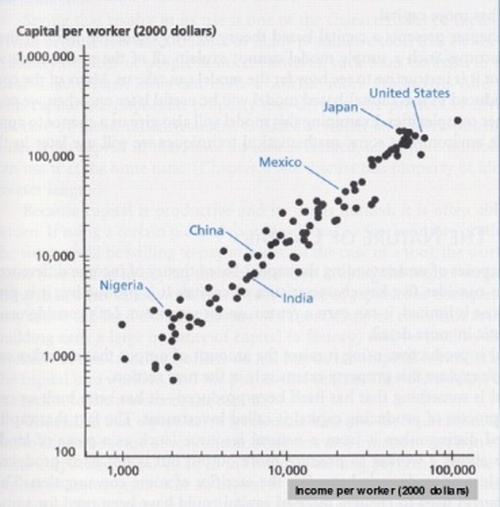
But it recently crossed my mind that maybe President Obama was born in Denmark. Not in a serious way, of course, but you’ll understand my thought process when you read this passage from a report by the government-appointed Danish Economic Council. It doesn’t mention the Laffer Curve, but the report openly states that an increase in the top tax rate would lose revenue because of changes in taxpayer behavior.

…increased taxation on high income earners in Denmark at best is revenue neutral, and may even reduce total tax revenue. This result applies whether one considers the top 10, the top 5 or the top 1 per cent income group. …Using the base estimate of the elasticity of taxable labour income of 0.2, the conclusion is thus that the existing Danish tax system implies an effective tax rate on high income earners that is above – though close to – the tax rate that generates the highest tax revenue. …As an example, the revenue effect of an increase in the marginal tax rate by 6 percentage points for high-income earners is calculated. Using the base estimate of the behavioural response to taxation, this leads to a revenue loss of about ½ billion DKK. …Overall, the scope for acquiring extra tax revenue from high income earners in Denmark is very limited.

Yet there are some politicians in Denmark who want to raise tax rates, even though the damage to the economy will be so significant that the government loses revenue!

If you’re thinking this sounds familiar, you probably remember President Obama’s infamous statement during the 2008 campaign that he wanted to raise the capital gains tax rate for reasons of “fairness” regardless of whether tax revenues decreased (if you think I’m somehow exaggerating or distorting his words, just go to the 4:20 mark of this video).

By the way, the Danish study probably understates how much revenue the government would lose. Their base estimate about the elasticity of taxable labor income (economist jargon for how sensitive labor income is to changes in tax rates) is much lower than Alan Reynolds reported in his recent Wall Street Journal column.

Rich people, unlike the rest of us, have tremendous ability to change the timing, composition, and level of their income, which is a big reason why upper-income taxpayers paid much more to the IRS in the 1980s after President Reagan slashed the top tax rate from 70 percent to 28 percent.

I’m constantly amazed – in a bad way – that politicians and bureaucrats have been so successful in resisting the insights of the Laffer Curve. The U.S. Treasury Department, for instance, is to the left of the Danish Economic Council and basically assumes that tax policy has no impact on economic performance. The same can be said about the Joint Committee on Taxation on Capitol Hill.

This has to be a case of leftist ideology trumping reality, because the evidence for the Laffer Curve is quite powerful – some of it even being produced by international bureaucracies.

None of this is to suggest that “all tax cuts pay for themselves.” That only happens in unusual cases where a group of taxpayers – such as wealthy entrepreneurs and investors – have considerable flexibility in their economic affairs.

In most cases, the government will collect more revenue when tax rates increase. This is because the impact of the change in the tax rate is larger than the impact of the change in taxable income.

But the real question is whether it is ever a good idea to reduce private economic output in order to give politicians more money to spend. To sensible people, that’s the most important insight of the Laffer Curve.

P.S. While this discussion has focused on the foolishness of setting tax rates so high that the government loses revenue, this does not mean politicians should seek the revenue-maximizing tax rate. The ideal point on the Laffer Curve is the growth-maximizing tax rate.