Below is an excellent plan to balance the budget through spending cuts from Chris Edwards of the Cato Institute written in April of 2011. Why not take advantage of this paper to help balance the budget? Here is the third part.
The federal government operates more than 2,000 separate subsidy programs, a doubling of subsidy programs since the mid-1980s.9 The scope of federal activities has greatly expanded in recent decades, along with the size of the federal budget. The federal government subsidizes farm businesses, retirees, school lunches, rural utilities, the energy industry, rental housing, public broadcasting, job training, foreign aid activities, foreign purchases of weapons, urban transit services, and many other types of activities and people.
Each subsidy program costs money, generates a bureaucracy, spawns lobby groups, and encourages more people to demand freebies from the government. Individuals, businesses, and nonprofit groups that become hooked on federal subsidies essentially become tools of the state. They lose their independence, they have less incentive to innovate, and they shy away from criticizing the government.
Table 1 includes cuts to subsidies in agriculture, commerce, energy, housing, foreign aid, and other areas. These cuts wouldn’t eliminate all of the unjustified subsidies in the federal budget, but they would be a good start. Government subsidies are like addictive drugs, undermining America’s traditions of individual reliance, voluntary charity, and entrepreneurialism.
Under the Constitution, the federal government was assigned specific limited powers, and most government functions were left to the states. To ensure that people understood the limits on federal power, the Framers added the Constitution’s Tenth Amendment: “The powers not delegated to the United States by the Constitution, nor prohibited by it to the States, are reserved to the States respectively, or to the people.” The amendment embodies federalism, the idea that federal and state governments have separate areas of activity and that federal responsibilities are supposed to be “few and defined,” as James Madison noted.
Unfortunately, policymakers and the courts have mainly discarded federalism in recent decades. Congress has undertaken many activities that were traditionally reserved to state and local governments through the mechanism of “grants-in-aid.” Grant programs are subsidies that are combined with federal regulatory controls to micromanage state and local activities. In fiscal 2011, federal aid to the states will total $625 billion, which will be distributed through more than 1,100 separate programs.10
The theory behind grants-in-aid is that the federal government can operate programs in the national interest to efficiently solve local problems. However, the federal aid system does not work that way in practice. Most federal politicians are consumed by the competitive scramble to maximize subsidies for their states, regardless of efficiency, fairness, or any appreciation of overall budget limitations.
Furthermore, federal aid stimulates overspending by state governments and creates a web of complex federal regulations that destroy state innovation. At all levels of the aid system, the focus is on regulatory compliance and spending, not on delivering quality public services. The aid system destroys government accountability because each level of government can blame the other levels when programs fail. It is a “triumph of expenditure without responsibility.”
The federal aid system is a roundabout funding system for state and local activities. It serves no important economic purpose. By federalizing state and local activities, we are asking Congress to do the impossible—to efficiently plan for the competing needs of a diverse country of more than 300 million people.
The grants-in-aid system should be dramatically cut. Policymakers need to revive federalism and begin to terminate grant programs. Table 1 includes cuts to grants in the areas of agriculture, education, health care, justice, and transportation. The justice grants, for example, are for funding such items as bulletproof vests for local police.11 There is no reason why such activities should not be funded at the city or county level.
Cato Institute defense experts Christopher Preble and Benjamin Friedman have proposed a lengthy list of cuts to U.S. military spending totaling $1.2 trillion over 10 years.12 Within 10 years, their proposal would reduce spending by about $150 billion annually, based on a strategy of restraint and reduced intervention abroad.
In proposing their plan, Preble and Friedman argue that the United States would be better off taking a wait-and-see approach to distant threats, while letting friendly nations bear more of the costs of their own defense. They note that U.S. policymakers support many extraneous missions for the military aside from the basic requirement to defend the nation. There is no doubt that America’s military budget is bloated. Even aside from the wars in Iraq and Afghanistan, Department of Defense spending roughly doubled between 2001 and 2011.13
___________
Thank you so much for your time. I know how valuable it is. I also appreciate the fine family that you have and your commitment as a father and a husband.
Sincerely,
Everette Hatcher III, 13900 Cottontail Lane, Alexander, AR 72002, ph 501-920-5733, lowcostsqueegees@yahoo.com
I have never read such a great overview of the pro-life movement as the one below. I learned a lot from it and wanted to pass it on to you.
I truly believe that many of the problems we have today in the USA are due to the advancement of humanism in the last few decades in our society. Ronald Reagan appointed the evangelical Dr. C. Everett Koop to the position of Surgeon General in his administration. He partnered with Dr. Francis Schaeffer in making the video below. It is very valuable information for Christians to have. Actually I have included a video below that includes comments from him on this subject.
___________
Francis Schaeffer: “Whatever Happened to the Human Race” (Episode 5) TRUTH AND HISTORY
Today more than 3,000 children will be murdered in the womb through surgical abortion. These dead children will be heaped on the more than 54 million others who have preceded them since the darkest day in American legal history which occurred when the Roe v. Wade decision was rendered by the U.S. Supreme Court. Forty years ago today, our nation’s highest court legally sanctioned the killing of the unborn.
As we consider this bloody slaughter, it behooves us to ask three key questions: How did Roe v. Wade come about? What has been the Church’s response over the last forty years? And, where do we go from here?
The Legal Backdrop for Roe: The Abandonment of Original Intent
In examining America’s legal history, it is clear that Roe v. Wade did not arise out of a vacuum. The decision flowed from a legal trend that had been in motion for more a hundred years in which the meaning of the U.S. Constitution was being increasingly redefined based on the view that it was an “evolving document.” Rather than defending its original intent as envisioned by the drafters of the Constitution, the black robed judges who presided over our nation’s courts were interpreting it to suit their own personal notions of what they deemed best for society.
This trend is pointedly illustrated in a seminal case that the Supreme Court handed down in 1965, eight years before Roe was decided — Griswold v. Connecticut.
Doug Phillips, a constitutional attorney and the founder of Vision Forum Ministries, notes the significance of this earlier landmark decision: “You cannot understand Roe unless you understand Griswold, and you cannot understand Griswold unless you understand the changing nature of judicial interpretation.”
In Griswold v. Connecticut, the Supreme Court struck down a law which forbade contraception use on the basis of “the right to privacy,” a doctrine found nowhere in the Constitution, yet one the justices derived from the “penumbras” and “emanations” of the document.
Phillips explains the Court’s strategy in invoking these terms in Griswold:
[The court] is speaking of little glowing halos around the broad-sweeping principles that are somehow emitted from the Constitution. In point of fact, they are telling us there is nothing in the Constitution that grants ‘the right to privacy,’ but it sure seems like it should be there. . . . What happened in Griswold laid the groundwork for Roe and the murder of unborn children.
The Hammer Falls: “Unborn Children are Not Persons”
The case of Roe v. Wade involved a suit made on behalf of Norma McCorvey (under the alias of “Jane Roe ”) who was unable to secure an abortion in Texas based on the state’s law at the time. While she had already given birth to her child by the time the case was heard, the Supreme Court ruled in favor of McCorvey on appeal in a 7-2 decision, invoking the “right of privacy” rationale that had been invented in Griswold.
While the Court was less than confident in defending the “right of privacy” doctrine from the Constitution itself, it nonetheless expanded it to include the right of a mother to murder her unborn child. In writing the majority opinion for the court, Justice Harry Blackmun stated:
[The] right of privacy, whether it be founded in the Fourteenth Amendment’s concept of personal liberty and restrictions upon state action, as we feel it is, or . . . in the Ninth Amendment’s reservation of rights to the people, is broad enough to encompass a woman’s decision whether or not to terminate her pregnancy.
Even as the justices in the majority invoked the Fourteenth Amendment as a purported “source” for the so-called “right to privacy,” the Supreme Court did an in-run around the Amendment’s Equal Protection Clause — which stipulates that “no state shall . . . deny to any person within its jurisdiction the equal protection of the laws” — by denying the personhood of children in the womb.
Blackmun wrote: “the word ‘person,’ as used in the Fourteenth Amendment, does not include the unborn.”
Justice Byron White and William Rehnquist — the two judges who opposed the decision — took the majority’s reasoning to task in their dissent:
I find nothing in the language or history of the Constitution to support the Court’s judgment. The Court simply fashions and announces a new constitutional right for pregnant women and, with scarcely any reason or authority for its action, invests that right with sufficient substance to override most existing state abortion statutes.
The Cultural Landscape: A Weak and Abdicated Church
Though the legal trends that lead to Roe v. Wade are important to examine, even more important is where the Church was during this time.
Dan Becker, President of Georgia Right to Life and Field Director of Personhood USA, puts the matter bluntly: “How did [Roe] come about? It came about because of the absence of the Church.”
Doug Phillips agrees:
The Church completely abdicated from speaking to the legal, ethical, and biblical principles that apply to culture and to law. When Roe was ultimately declared by the Court, many Evangelical Christians had nothing to say to it, because they didn’t have a biblical worldview. For more than a century, the Church had increasingly resorted to a form of religious pietism which had no practical application to life and important cultural issues. The result was lamentable — the withdraw of the Church from every area of society meant the demise of our culture and our law system.
Dr. George Grant, a pro-life advocate who has written prolifically in defense of the unborn, offers a similar view.
As the Church, Grant states, “we were not preaching the Word of God, we were not training and equipping disciples, we were not reinforcing and strengthening the family and the other spheres.”
This led, argues Grant, to “a Church that had so marginalized itself intellectually and culturally that it was constitutionally incapable of speaking to the problems [of the day] articulately. That set up Roe v. Wade.”
Delving deeper, Phillips points to the blights of social Darwinism, utilitarianism, and radical feminism as key cultural forces that paved the way for Roe.
While the Church, for example, has historically embraced the sanctity of life from conception to death and welcomed children as a blessing, American Evangelicals in the twentieth century forsook these roots for a selfish course rooted in humanistic, evolutionary theory. Phillips observes:
The Church embraced the basic tenets of Margaret Sanger’s vision for the eugenic age which said that some people life is not worth living; that men can lawfully manipulate their reproduction; and that some babies shouldn’t be brought into this world.
One result attending this shift was that, by the middle decades of the twentieth century, mainline evangelical churches had embraced contraceptive use as a legitimate practice. In 1960, the Church accepted use of the Pill, which is known to act as an abortifacient. This occurred despite the fact that, prior to the last century, the orthodox Church has universally condemned contraceptive use as a selfish perversion of God’s design for human intimacy between husband and wife.
To paraphrase Hosea’s indictment: We sowed the wind — and when Roe was handed down on January 22, 1973 — we reaped the worldwind.
The Church Awakes: Whatever Happened to the Human Race?
Though the pall of death loomed over America’s unborn with the Roedecision, the Evangelical Church was not quick to wake from its slumber. While Roman Catholics were faster on point in the battle over the sanctity of human life, Protestants throughout the ’70s largely stayed on the sidelines.
Many longstanding leaders in the pro-life movement who are still active today credit Francis Schaeffer as a key prod who prompted Protestants to enter the fight. Dr. George Grant notes the significance of Schaeffer’s 1979 book and accompanying video, Whatever Happened to the Human Race?, which confronted the issues of abortion, euthanasia, and infanticide; as well as Schaeffer’s best-selling book, A Christian Manifesto, released in 1981, as works that spurred many Evangelicals to engage the arena in defense of life.
Dan Becker of Georgia Right to Life offers these comments:
“Francis Schaeffer was the one who brought most of the evangelical church to the pro-life movement itself back in the early ’80s. It was totally absent from the culture completely, prior to anything having to do with the sanctity of life. It wasn’t on the radar of [most] churches” until Schaeffer brought it to their attention.
Jim Zes, a Reformed Baptist who has been fighting for the sanctity of life for many years in the St. Louis area, remembers a billboard Schaeffer took out in a major Florida city that said, in essence, “Abortions clinics are open with permission by the Church of Jesus Christ.”
Schaeffer’s salvo on the Church’s lethargy is a theme that has motivated Zes to remain engaged in this battle for the long haul.
The Roaring ’80s: Progress and Compromise
As the ’80s progressed, pro-life Evangelicals gained more traction, notoriety, and influence. 1988 was a particularly noteworthy year for the movement on several fronts. On the fifteenth anniversary of Roe, Dr. George Grant published Grand Illusions, an earth-shattering expose of the legacy of Planned Parenthood that became a best-seller which has since been reissued in numerous languages and editions.
Also that year, Operation Rescue, under Randall Terry’s leadership, staged a series of controversial abortion clinic blockades in Atlanta, Georgia, surrounding the Democratic National Convention which resulting in more than 1,200 arrests.
Yet while the pro-life movement gained remarkable ascendancy and public awareness at this time, it was during this same general period that the movement on the whole took a turn for the worse, in terms of its core commitments.
The derailment occurred in conjunction with proposed changes to the Hyde Amendment, which since 1976 had banned federal Medicaid funding for abortion. In 1981, pro-lifers strenuously fought for rape, incest, and health of the mother exceptions of the mother to be dropped from the Hyde Amendment and won. Throughout the ’80s, the advocacy of such exceptions was deemed unacceptable by the major pro-life organizations, both Catholic and Protestant.
However, as the ’80s were coming to a close, the debate over the Hyde Amendment was reopened on Capitol Hill, and the exceptions of rape and incest came to the fore of the discussion.
“This led to a debate within the [pro-life] movement about whether or not it would damage the underlying presupposition that all life is sacred and should be protected as an inalienable right,” notes Dan Becker.
In a radical departure, the U.S. Conference of Catholic Bishops, the National Right to Life Committee, and other leading pro-life organizations signed off on the changes and created a “new normal” of what it means to be pro-life — that a politician or other operative in the political arena can support the murder of one category of children and still be deemed “pro-life.”
Looking back on this titanic sea-change, Becker notes the fall-out that resulted: “By abandoning the basic Christian premise of imago Dei, we invited a pragmatism based on natural law. We compromised and capitulated to the point in the pro-life movement where it became ineffectual—both politically and as a preservative agent as salt.”
Becker explains the folly of the rape and incest exception according to God’s law, a principle long recognized in English common law:
Deuteronomy 24:16 says that a child shall not be put to death for the crimes of its father. That means that if a rapist commits an act of violence against a woman, and she conceives, we [must] protect that child, and we [must] advocate that that child should not pay the penalty for its father’s sin.
In assenting to the Hyde Amendment exceptions, a Pandora’s box of compromise was opened. From it came a broader unbiblical strategy that included support of parental notification laws, 24-hour waiting periods, and various other legislation that conceded the premise of the debate.
Pro-lifers were now supporting bills which said in so many words, “You can kill your child, so long as your parents approve; you can kill your child, so long as you wait 24 hours before the knife falls.”
Incrementalism: The Good and the Bad
Many critical of such compromises don’t suggest that incrementalism in the fight for of life is wrong in all cases, but that incrementalism should only be pursued when the core principles of the sanctity of all human life are maintained, not undermined.
Doug Phillips remarks: “If we can pass pro-life laws that don’t ratify the foundation of abortion’s ‘lawfulness,’ or reinforce the wickedness of abortion as a practice, this is something worth pursuing.”
Dan Becker notes that creating tension over competing legal precedents has warrant when done on the right terms: “You can identify a class of human life that you can protect, as long as you don’t name a physical class that you won’t protect, and therefore become complicit.”
In considering positive examples of incrementalism, Dr. Grant commends William Wilberforce for consideration: “When you look at the incrementalism strategies of someone like a Wilberforce . . . the incrementalism reforms were never couched in such a way as to concede the original premise.”
Grant also highlights the wrong approach to incrementalism that officials in Amsterdam took in response to prostitution, “They said we are not going to be able to ban prostitution, so we’ll isolate it and stigmatize it. So what happens then is that it becomes a tourist attraction. You can’t concede the premise of an opponent’s argument.”
Phillips warns of the danger of so-called “victories” that concede the foundation:
The idea that we are accomplishing a victory by ratifying the execution of children on the condition that the mother or father of the baby have sort of warning of the emotional or psychological effect that may occur if they murder their child, or that a cancerous effect may result — that it’s okay to kill as long as we “notify” — is simply horrific. It’s an ethical nightmare which reinforces the very thing we are fighting against.
Score-Card Gamesmanship: Pro-Death is the New Pro-Life
A prominent feature of the compromised political strategy employed by Evangelical pro-life groups is how they have score-carded candidates on the issues.
The National Right to Life Committee has been particularly notorious in this regard. The NRLC, for example, endorsed Republican presidential candidates Sen. John McCain and Gov. Mitt Romney as “pro-life” when their past track records as well as contemporary statements provided no defensible basis for such recognition. Both McCain and Romney have consistently supported the murder of children conceived by rape and incest, and have vocally advocated weakening the Republican Party Platform on abortion, among other troubling actions on their part that have threatened the sanctity of life.
But it’s not just presidential races where National Right to Life has gone askew. Last year, the NRLC got well-deserved blowback from the Boston Globe when they spent $45,000 sending out mailers in support of Sen. Scott Brown, who openly supports legalized abortion.
Globe columnist Yvonne Abraham leveled the boom on NRLC: “Even though Brown has been loudly proclaiming that he favors abortion rights, the antiabortion group gave him a 100 percent rating in his first year as a senator, and an 80 percent rating in his second. And it continues to shower him with paper roses.”[1]
The flier that the NRLC mailed in support of Sen. Brown showed a picture of a fetus, a little baby, and an older woman. The flier’s headline was hardly subtle: “It’s time to take America back. . . for LIFE!”[2]
When confronted on this hypocrisy, David O’Steen, executive director of the National Right to Life, admitted that the NRLC sometime supports candidates who favor legalized abortion.
“He is pro-choice,” O’Steen stated. But “if you look at the two candidates, Elizabeth Warren’s position is very extreme. She can only be characterized as pro-abortion.”[3]
Dr. George Grant comments on this trend which he has observed for more than two decades.
The reality is that Al Gore was never pro-life. When he was a [U.S.] rep and then a Senator [from Tennessee], he was never the pro-life, southern Conservative he was made out to be,” who then “converted” to become pro-choice when he was tagged to run as Bill Clinton’s running mate in 1992.
“It was the silly scorecards that took such a shallow representations of [Gore’s] voting record and declared him to be pro-life,” remarks Grant. “But he was always . . . rooted in Bismarkian, Nietzschean, real politick.”
The way a policy group scores candidates reveals their priorities, Grant maintains.
“Most scorecards emerge from institutions that have agendas, and the scorecards usually say more about the agenda of the organization than the candidates themselves,” he notes. “The onus is on pastors to inform their congregations that this is the case.”
This said, Grant does see some value in scorecards, but encourages them to be used only as a first to step getting an education about a particular candidate or candidates, as they have inherent limitations.“There are always hazards to any kind of shorthand, any kind of abbreviated declaration.”
Doug Phillips argues that policy groups should stop misleading others about candidates’ positions when life is at stake and simply tell the truth. “What we need to be saying is not, ‘This candidate is pro-life with exceptions; but this candidate is pro-death with exceptions. This person believes that it’s okay to kill some babies, but not all of them.’”
Appealing to the fundamentals, Phillips offers this as the benchmark in endorsing candidates for public office:
We should never support a candidate who supports the murder of any children through abortion. And until our candidates know that, they are going to keep saying and doing only as much as they have to in order to appease us.
Back on Track: Saving the 100, Not Just the 99
Despite negative trends among various leading pro-life groups, the leadership of a number of state organizations has openly repented of past compromise and purposed to return to biblical foundations and definitions in the battle for human life.
Among them is Georgia Right to Life who, in the year 2000, jettisoned the “rape and incest exception” as an acceptable “pro-life” position and has self-consciously sought to return the national debate back to the foundational argument of “personhood” that was a main focus of the pro-life movement prior to the Hyde Amendment compromise.
Tennessee and Alabama’s pro-life groups have followed suit in rejecting “rape and incest exception” in their candidate endorsement policy.
Dan Becker, who is the current president of Georgia Right to Life, notes the blessing that has occurred since GRL made this change twelve years ago.
“Georgia is the only state in the nation where all nine statewide offices that are elected by the voters statewide are pro-life without exception,” he observes. “We have gone from the 50th most protected state in the nation to the 9th.”
Becker adds this salvo: “No longer do we say, ‘We’re going to save the 99 and pray for the 1.’ We’re going to save all 100.”
While GRL’s position is not without major detractors in the movement, Becker is positive about the opportunities that their stand for principle has opened up for them.
“We are impacting the movement in ways that are exciting, new, and effective,” he remarks. “I’ve [now] been tasked to implement the Georgia model in other states. The [fight for personhood] is the new paradigm of pro-life activity for the 21st Century.”
Personhood Is the Battle: The Challenges that Lie Ahead
Becker’s insistence that “personhood” return to the center of the debate is based squarely on principle — yet it also anticipates the future horrors on the horizon that will come if this standard is not thoroughly defended and upheld. And the battleground, Becker maintains, is far broader than simply abortion.
“Because we’ve only been anti-abortion — instead of thoroughly defending the doctrine of imago Dei [in all that it entails] — we are only operating on one cylinder, while the culture is running on twelve cylinders,” Becker notes.
He then explains the implications:
We have ceded a lot of battleground in the emerging technologies and on the issue of personhood for the elderly. Because of the burgeoning [aging Baby Boomers], we will see the fight for personhood become increasing important for the elderly, as their personhood is denied through rationed healthcare decisions that define who is protected under the law and who is not.
Great challenges already exist in the field of genetics, as arguments for trans-humanism are being advanced by medical practitioners and ethicists who deny that man is created in God’s image with certain inherent limitations that he, as a creature, is not free to manipulate.
“’When are we human?’ is being debated — what is a human being? — the definition is up for grabs right now,” remarks Becker. “What if we’re okay with trans-genic animal/human hybrids, and we start tinkering with that in our law to allow for it?”
He also comments on the popularity of Spiderman, the Hulk, Ironman, etc. and states that the genetic-manipulation and “enhancements” of these Comic Book icons so popular on the big screen reflect part of a real, raging debate in academia that is hardly fiction.
As complicated and thorny as all of this is, Becker argues that the answer at its core is really quite simple.
“It’s the doctrine of imago Dei,” he says. “As a culture and as a political system . . . [we must call on all] to recognize what God has already granted — an inalienable right to life based on the doctrinal teaching we have understood that has shaped Western history two or three times over the last two thousand years.”
A Blueprint for Victory: Humble Repentance for Our Sins
The last forty years have been one of horror and bloodshed for the unborn.
The question now is: Where do we go from here?
Dr. George Grant asserts that the Evangelical Church must begin by getting its priorities straight.
Commenting on the recent Newtown massacre, he laments, “More Christians are concerned that their Second Amendment gun rights are being taken away than seeing the inconsistencies in this rhetoric, given the murder today of 3,300 children, and tomorrow of 3,300 children, and the next day of 3,300 children.”
Jim Zes emphasizes the need for the Church to not only focus on missions of mercy, such as crisis pregnancies centers and adoption — both of which play an important role in Christian outreach — but for the Church to reclaim its prophetic voice and, once again, call good, “good” and evil “evil” and to confront the culture courageously.
Zes says we must affirm God’s law as the standard as part of a clear Gospel message of repentance and hope.
Dr. Grant agrees with this assessment, but says our voice of confrontation to the culture should only sound once we as the Church confess our own sins and repent. “The need in our day is to not so much practice Jeremiads, but Nehemiads.”
He then explains the quandary. “There’s much to lament; there’s much to critique in our culture,” he confesses. “[Y]et the Church is in no position to give our culture Jeremiads because we are so compromised. We can’t give Jeremiads of substance because we are guilty of virtually anything we might lament.”
Our first step, Grant asserts, is for Christians “to come to the ruin and cry out to Almighty God in all humility, as Nehemiah does in Nehemiah 1, and get busy with the hard work of cleaning up the rubble.”
Grant’s main point is this: We can’t take our axe to the culture’s idols until we’ve cleaned up our own house.
Doug Phillips offers these sobering words in closing the discussion: “How can we possibly expect to win the battle for life when we are killing our own children in the womb through abortifacient contraception-when we’re refusing to take an uncompromising stand for all of life?”
Hosea’s pointed words are timely for today’s wayward Church:
Come, and let us return unto the LORD: for he hath torn, and he will heal us; he hath smitten, and he will bind us up. . . . Then shall we know, if we follow on to know the LORD: his going forth is prepared as the morning; and he shall come unto us as the rain, as the latter and former rain unto the earth.” (Hosea 6:1-3)
As we battle for the sanctity of all human life, we as the Church must forsake our wickedness, fall on our face in humility, and repent.
Only then should we expect God’s favor on our land.
[1] Yvonne Abraham, “Senator Brown trying to have it both ways,” Boston Globe, October 28, 2012. [2] Noah Bierman, “Antiabortion group sends out mailers for Scott Brown, who favors legalized abortion,” Boston Globe, October 25, 2012. [3]Ibid.
Francis Schaeffer: “Whatever Happened to the Human Race” (Episode 1) ABORTION OF THE HUMAN RACE Published on Oct 6, 2012 by AdamMetropolis The 45 minute video above is from the film series created from Francis Schaeffer’s book “Whatever Happened to the Human Race?” with Dr. C. Everett Koop. This book really helped develop my political views […]
E P I S O D E 1 0 Dr. Francis Schaeffer – Episode X – Final Choices 27 min FINAL CHOICES I. Authoritarianism the Only Humanistic Social Option One man or an elite giving authoritative arbitrary absolutes. A. Society is sole absolute in absence of other absolutes. B. But society has to be […]
E P I S O D E 9 Dr. Francis Schaeffer – Episode IX – The Age of Personal Peace and Affluence 27 min T h e Age of Personal Peace and Afflunce I. By the Early 1960s People Were Bombarded From Every Side by Modern Man’s Humanistic Thought II. Modern Form of Humanistic Thought Leads […]
E P I S O D E 8 Dr. Francis Schaeffer – Episode VIII – The Age of Fragmentation 27 min I saw this film series in 1979 and it had a major impact on me. T h e Age of FRAGMENTATION I. Art As a Vehicle Of Modern Thought A. Impressionism (Monet, Renoir, Pissarro, Sisley, […]
E P I S O D E 7 Dr. Francis Schaeffer – Episode VII – The Age of Non Reason I am thrilled to get this film series with you. I saw it first in 1979 and it had such a big impact on me. Today’s episode is where we see modern humanist man act […]
E P I S O D E 6 How Should We Then Live 6#1 Uploaded by NoMirrorHDDHrorriMoN on Oct 3, 2011 How Should We Then Live? Episode 6 of 12 ________ I am sharing with you a film series that I saw in 1979. In this film Francis Schaeffer asserted that was a shift in […]
E P I S O D E 5 How Should We Then Live? Episode 5: The Revolutionary Age I was impacted by this film series by Francis Schaeffer back in the 1970′s and I wanted to share it with you. Francis Schaeffer noted, “Reformation Did Not Bring Perfection. But gradually on basis of biblical teaching there […]
Dr. Francis Schaeffer – Episode IV – The Reformation 27 min I was impacted by this film series by Francis Schaeffer back in the 1970′s and I wanted to share it with you. Schaeffer makes three key points concerning the Reformation: “1. Erasmian Christian humanism rejected by Farel. 2. Bible gives needed answers not only as to […]
Francis Schaeffer’s “How should we then live?” Video and outline of episode 3 “The Renaissance” Francis Schaeffer: “How Should We Then Live?” (Episode 3) THE RENAISSANCE I was impacted by this film series by Francis Schaeffer back in the 1970′s and I wanted to share it with you. Schaeffer really shows why we have so […]
Francis Schaeffer: “How Should We Then Live?” (Episode 2) THE MIDDLE AGES I was impacted by this film series by Francis Schaeffer back in the 1970′s and I wanted to share it with you. Schaeffer points out that during this time period unfortunately we have the “Church’s deviation from early church’s teaching in regard […]
Francis Schaeffer: “How Should We Then Live?” (Episode 1) THE ROMAN AGE Today I am starting a series that really had a big impact on my life back in the 1970′s when I first saw it. There are ten parts and today is the first. Francis Schaeffer takes a look at Rome and why […]
Francis Schaeffer: “Whatever Happened to the Human Race” (Episode 5) TRUTH AND HISTORY Published on Oct 7, 2012 by AdamMetropolis This crucial series is narrated by the late Dr. Francis Schaeffer and former Surgeon General Dr. C. Everett Koop. Today, choices are being made that undermine human rights at their most basic level. Practices once […]
The opening song at the beginning of this episode is very insightful. Francis Schaeffer: “Whatever Happened to the Human Race” (Episode 4) THE BASIS FOR HUMAN DIGNITY Published on Oct 7, 2012 by AdamMetropolis This crucial series is narrated by the late Dr. Francis Schaeffer and former Surgeon General Dr. C. Everett Koop. Today, choices […]
Francis Schaeffer: “Whatever Happened to the Human Race” (Episode 3) DEATH BY SOMEONE’S CHOICE Published on Oct 6, 2012 by AdamMetropolis This crucial series is narrated by the late Dr. Francis Schaeffer and former Surgeon General Dr. C. Everett Koop. Today, choices are being made that undermine human rights at their most basic level. Practices […]
Francis Schaeffer: “Whatever Happened to the Human Race?” (Episode 2) SLAUGHTER OF THE INNOCENTS Published on Oct 6, 2012 by AdamMetropolis This crucial series is narrated by the late Dr. Francis Schaeffer and former Surgeon General Dr. C. Everett Koop. Today, choices are being made that undermine human rights at their most basic level. Practices […]
It is not possible to know where the pro-life evangelicals are coming from unless you look at the work of the person who inspired them the most. That person was Francis Schaeffer. I do care about economic issues but the pro-life issue is the most important to me. Several years ago Adrian Rogers (past president of […]
This essay below is worth the read. Schaeffer, Francis – “Francis Schaeffer and the Pro-Life Movement” [How Should We Then Live?, Whatever Happened to the Human Race?, A Christian Manifesto] Editor note: <p> </p> [The following essay explores the role that Francis Schaeffer played in the rise of the pro-life movement. It examines the place of […]
Great article on Schaeffer. Who was Dr. Francis A. Schaeffer? By Francis Schaeffer The unique contribution of Dr. Francis Schaeffer on a whole generation was the ability to communicate the truth of historic Biblical Christianity in a way that combined intellectual integrity with practical, loving care. This grew out of his extensive understanding of the Bible […]
At the rate the federal government spends, it runs out of money on July 31. What programs should be cut to balance the budget and fund the government for the remaining five months of the year? Cutting NASA might buy two days; cutting the Navy could buy fifteen. It seems that balancing the budget may require more than just cutting government programs. What should be done?
What’s more realistic: A unicorn, Bigfoot, the Loch Ness Monster, or a successful government program?
This isn’t a trick question. Even though I’ve presented both theoretical and empirical arguments against government spending, that doesn’t mean every government program is a failure.
I suppose the answer depends on the definition of success.
Government roads do enable me to get from Virginia to Washington every day. And the Post Office usually gets mail from one side of the country to another. By that standard, many government programs and activities yield positive results.
But if the question is whether government achieves anything in a cost-efficient manner, you’re probably better off searching under your bed for unicorns.
If you pose this question to someone on the left, however, don’t be surprised if they point to Head Start. The conventional wisdom in Washington is that this program gives low-income kids a critical leg up before they start school.
I would like this to be true. I may not be fond of big and bloated government, but the best interests of these kids are more important than my desire for a talking point against the welfare state.
So what does the evidence say?
Here’s what the Washington Examiner wrote about the program, starting with an explanation of what the program is supposed to accomplish.
There are few institutions more sacrosanct in Washington than President Johnson’s Head Start program. The federal government spent more than $7.9 billion on the program in 2012 alone to provide preschool services for nearly 1 million low-income Americans. The program represents everything that is supposedly great about the liberal welfare state. It redistributes resources from wealthy to poor. It uses the power of the federal government to combat inequality by giving poor and minority students an educational boost before they fall behind their wealthier peers. There’s just one problem: It doesn’t work.
Is that an empty assertion? Nope, it’s the evidence from the government’s own research.
The ongoing randomized study of Head Start was based on a nationally representative sample of 5,000 children who applied for the program in 2002. Approximately half of the subjects received Head Start services, while the other half did not. The students were then tested on their language, literacy, math and school performance skills. …the 2010 Head Start Impact Study report notes, “the benefits of access to Head Start at age four are largely absent by 1st grade for the program population as a whole.” Specifically, the language, literacy, math and school performance skills of the Head Start children all failed to improve. …Now, the HHS has finally published a follow-up to its 2010 study that follows the same children through the end of third grade. And again, the HHS has concluded that Head Start is ineffective, concluding that Heat Start resulted in “very few impacts … in any of the four domains of cognitive, social-emotional, health and parenting practices.” And those impacts that were found “did not show a clear pattern of favorable or unfavorable impacts for children.”
So what’s this costing the nation (above and beyond the failure to improve the lives of children)?
Since 1965, the federal government has spent $180 billion on Head Start. …Does that sound like a program you’d want to spend $8 billion on next year?
Now imagine the good things that would have happened if that money was left in the economy’s productive sector.
Or, if you like government, but at least want good results, imagine the good things that would have happened if state and local governments shifted $180 billion from the failed school monopoly into genuine school choice programs.
But let’s close on an optimistic note. As far as I know, there’s no evidence that Head Start actually damages children. It’s just wasted money.
On the Arkansas Times Blog the person using the username “Jake da Snake” noted, “Friedman also railed long and hard for school vouchers to be adopted, to little avail…” (June 11, 2011). Milton Friedman firmly believed, “competition is a way in which both public and private schools can be required to satisfy their customers.” Here […]
Everywhere school vouchers have been tried they have been met with great success. Why do you think President Obama got rid of them in Washington D.C.? It was a political disaster for him because the school unions had always opposed them and their success made Obama’s allies look bad. In 1980 when I first sat […]
The best way to destroy the welfare trap is to put in Milton Friedman’s negative income tax. A Picture of How Redistribution Programs Trap the Less Fortunate in Lives of Dependency I wrote last year about the way in which welfare programs lead to very high implicit marginal tax rates on low-income people. More specifically, they […]
Everywhere school vouchers have been tried they have been met with great success. Why do you think President Obama got rid of them in Washington D.C.? It was a political disaster for him because the school unions had always opposed them and their success made Obama’s allies look bad. In 1980 when I first sat […]
Broun Introduces Balanced Budget Amendment Uploaded by RepPaulBroun on Feb 23, 2010 No description available. _______________ Dear Senator Pryor, Why not pass the Balanced Budget Amendment? As you know that federal deficit is at all time high (1.6 trillion deficit with revenues of 2.2 trillion and spending at 3.8 trillion). On my blog http://www.HaltingArkansasLiberalswithTruth.com I took […]
Everywhere school vouchers have been tried they have been met with great success. Why do you think President Obama got rid of them in Washington D.C.? It was a political disaster for him because the school unions had always opposed them and their success made Obama’s allies look bad. In 1980 when I first sat […]
Below is an excellent plan to balance the budget through spending cuts from Chris Edwards of the Cato Institute written in April of 2011. I thought you might find these suggestions helpful. Here is the second part.
Table 1 lists the proposed annual cuts for the balanced budget plan. By 2021, these include $150 billion in defense cuts and $490 billion in cuts to Medicare, Medicaid, Social Security, and the 2010 health care law. The table also includes other discretionary and entitlement cuts valued at $445 billion in 2011. With the assumed revenues, all these spending cuts would be saving the government $260 billion in annual interest costs by 2021.7 All in all, total spending in 2021 under this plan would be about $1.4 trillion lower than under either the CBO baseline or the president’s budget.
As a technical note, most of the figures in Table 1 are outlays for fiscal 2011 from President Obama’s fiscal 2012 budget.8 These cuts are expressed in 2011 dollars, but I’ve assumed that the value of these cuts would grow over time at the same rate as discretionary spending in the CBO baseline. The cuts in Table 1 marked with an asterisk are expressed in 2021 dollars and are generally based on CBO estimates.
The reforms listed in the table are deeper than the “duplication” and “waste” items often mentioned by federal policymakers, such as earmarks. The reality is that the nation faces a fiscal emergency, and we need to cut hundreds of billions of dollars of “meat” from federal departments, not just the obvious “fat.” If the activities to be cut are useful to society, then state governments or private groups should fund them, and those entities would probably be more efficient at doing so.
The cuts in Table 1 are illustrative of how to begin getting the federal budget under control. Further reforms are needed in addition to these cuts, particularly structural changes to Medicare. But the important thing is to start cutting right away because the longer we wait, the deeper the pile of debt we will have to dig out from.
Table 1 includes cuts to individual and business subsidies, cuts to state aid, cuts to military expenses, cuts to the growth in entitlement programs, and privatization of federal activities. The sections following the table discuss these various types of cuts, and further analysis of the cuts is available at www.DownsizingGovernment.org.
Table 1
Proposed Federal Budget Cuts
Agency and Activity
Annual Savings
$ billion
Department of Agriculture
End farm subsidies
29.5
Cut food subsidies by 50 percent
52.7
End rural subsidies
4.2
Total cuts
86.4
Department of Commerce
End telecom subsidies
2.3
End economic development subsidies
0.6
Total cuts
2.9
Department of Defense
Enact Preble/Friedman reforms**
150.0
Department of Education
End K-12 education subsidies
52.7
End student aid and all other programs
33.1
Total cuts (terminate the department)
85.8
Department of Energy
End subsidies for energy efficiency
10.2
End subsidies for vehicle technologies
5.2
End the technology loan program
1.2
End electricity research subsidies
2.0
End fossil energy research
1.1
Privatize the power marketing administrations
0.5
End nuclear energy subsidies
0.6
Total cuts
20.8
Department of Health and Human Services
Block grant Medicaid and freeze spending**
226.0
Repeal 2010 health care law**
87.0
Increase Medicare premiums**
39.8
Cut non-Medicaid state/local grants by 50%
37.7
Cut Medicare payment error rate by 50%
28.6
Increase Medicare deductibles**
12.6
Tort reform
10.0
Total cuts
441.7
Department of Housing and Urban Development
End rental assistance
28.6
End community development subsidies
15.0
End public housing subsidies
8.9
End housing finance and all other programs
8.3
Total cuts (terminate the department)
60.8
Department of Justice
End state and local grants
5.0
Department of Labor
End employment and training services
4.8
End Job Corps
1.7
End Community Service for Seniors
0.8
End trade adjustment assistance
1.3
Total cuts
8.6
Social Security
Price index initial benefits**
41.1
Raise the normal retirement age**
31.4
Cut Social Security disability program by 10%
13.2
Total cuts
85.7
Department of Transportation
End urban transit grants (federal fund savings)
5.8
Privatize air traffic control (federal fund savings)
5.8
Privatize Amtrak and end rail subsidies
2.9
Total cuts
14.5
Department of the Treasury
Cut earned income tax credit by 50%
22.5
End refundable part of child tax credit
22.9
Total cuts
45.4
Other Savings
Cut federal civilian compensation costs 10%
29.6
Cut foreign development aid by 50%
5.2
Cut NASA spending by 50%
9.8
Privatize the Corps of Engineers (Civil Works)
10.6
Repeal Davis-Bacon labor rules
9.0
End EPA state and local grants
6.5
End foreign military financing
5.4
End subsidies for the Corp. for Nat. Comm. Srv.
0.6
End subsidies to the Corp. for Public Broadcasting
0.5
End the Neighborhood Reinvestment Corp.
0.2
Total cuts
77.4
Grand total annual spending cuts
$1,084.9
Note: Data items are outlays for fiscal 2011, but items with ** refer to the value of savings in 2021.
Thank you so much for your time. I know how valuable it is. I also appreciate the fine family that you have and your commitment as a father and a husband.
Sincerely,
Everette Hatcher III, 13900 Cottontail Lane, Alexander, AR 72002, ph 501-920-5733, lowcostsqueegees@yahoo.com
In the last few years the number of people receiving Food Stamps has skyrocketed. President Obama has not cut any federal welfare programs but has increased them, and he has used class warfare over and over the last few months and according to him equality at the finish line is the equality that we should all be talking about. However, socialism has never worked and it has always killed incentive to produce more. Milton Friedman shows in this film series below how so many people get caught in the “Welfare Trap.” Friedman also gives a great solution to this problem in the “negative income tax.” I am glad that I had the chance to be studying his work for over 30 years now.
In 1980 when I first sat down and read the book “Free to Choose” I was involved in Ronald Reagan’s campaign for president and excited about the race. Milton Friedman’s books and film series really helped form my conservative views. Take a look at one of my favorite films of his:
Friedman Friday:(“Free to Choose” episode 4 – From Cradle to Grave, Part 1 of 7)
Volume 4 – From Cradle to Grave
Abstract:
Since the Depression years of the 1930s, there has been almost continuous expansion of governmental efforts to provide for people’s welfare. First, there was a tremendous expansion of public works. The Social Security Act followed close behind. Soon other efforts extended governmental activities in all areas of the welfare sector. Growth of governmental welfare activity continued unabated, and today it has reached truly staggering proportions. Travelling in both Britain and the U.S., Milton Friedman points out that though many government welfare programs are well intentioned, they tend to have pernicious side effects. In Dr. Friedman’s view, perhaps the most serious shortcoming of governmental welfare activities is their tendency to strip away individual independence and dignity. This is because bureaucrats in welfare agencies are placed in positions of tremendous power over welfare recipients, exercising great influence over their lives. Because people never spend someone else’s money as carefully as they spend their own, inefficiency, waste, abuse, theft, and corruption are inevitable. In addition, welfare programs tend to be self-perpetuating because they destroy work incentives. Indeed, it is often in the welfare recipients’ best interests to remain unemployed. Dr. Friedman suggests a negative income tax as a way of helping the poor. The government would pay money to people falling below a certain income level. As they obtained jobs and earned money, they would continue to receive some payments from the government until their outside income reached a certain ceiling. This system would make people better off who sought work and earned income. This contrasts with many of today’s programs where one dollar earned means nearly one dollar lost in welfare payments.
Friedman: After the 2nd World War, New York City authorities retained rent control supposedly to help their poorer citizens. The intentions were good. This in the Bronx was one result.
By the 50’s the same authorities were taxing their citizens. Including those who lived in the Bronx and other devastated areas beyond the East River to subsidize public housing. Another idea with good intentions yet poor people are paying for this, subsidized apartments for the well-to-do. When government at city or federal level spends our money to help us, strange things happen.
The idea that government had to protect us came to be accepted during the terrible years of the Depression. Capitalism was said to have failed. And politicians were looking for a new approach.
Franklin Delano Roosevelt was a candidate for the presidency. He was governor of New York State. At the governor’s mansion in Albany, he met repeatedly with friends and colleagues to try to find some way out of the Depression. The problems of the day were to be solved by government action and government spending. The measures that FDR and his associates discussed here derived from a long line of past experience. Some of the roots of these measures go back to Bismark’s Germany at the end of the 19th Century. The first modern state to institute old age pensions and other similar measures on the part of government. In the early 20th Century Great Britain followed suit under Lloyd George and Churchill. It too instituted old age pensions and similar plans.
These precursors of the modern welfare state had little effect on practice in the United States. But they did have a very great effect on the intellectuals on the campus like those who gathered here with FDR. The people who met here had little personal experience of the horrors of the Depression but they were confident that they had the solution. In their long discussions as they sat around this fireplace trying to design programs to meet the problems raised by the worst Depression in the history of the United States, they quite naturally drew upon the ideas that were prevalent at the time. The intellectual climate had become one in which it was taken for granted that government had to play a major role in solving the problems in providing what came later to be called Security from Cradle to Grave.
Roosevelt’s first priority after his election was to deal with massive unemployment. A Public Works program was started. The government financed projects to build highways, bridges and dams. The National Recovery Administration was set up to revitalize industry. Roosevelt wanted to see America move into a new era. The Social Security Act was passed and other measures followed. Unemployment benefits, welfare payments, distribution of surplus food. With these measures, of course, came rules, regulations and red tape as familiar today as they were novel then. The government bureaucracy began to grow and it’s been growing ever since.
This is just a small part of the Social Security empire today. Their headquarters in Baltimore has 16 rooms this size. All these people are dispensing our money with the best possible intentions. But at what cost?
In the 50 years since the Albany meetings, we have given government more and more control over our lives and our income. In New York State alone, these government buildings house 11,000 bureaucrats. Administering government programs that cost New York taxpayers 22 billion dollars. At the federal level, the Department of Health, Education and Welfare alone has a budget larger than any government in the world except only Russia and the United States.
Yet these government measures often do not help the people they are supposed to. Richard Brown’s daughter, Helema, needs constant medical attention. She has a throat defect and has to be connected to a breathing machine so that she’ll survive the nights. It’s expensive treatment and you might expect the family to qualify for a Medicaid grant.
Richard Brown: No, I don’t get it, cause I’m not eligible for it. I make a few dollars too much and the salary that I make I can’t afford to really live and to save anything is out of the question. And I mean, I live, we live from payday to payday. I mean literally from payday to payday.
Friedman: His struggle isn’t made any easier by the fact that Mr. Brown knows that if he gave up his job as an orderly at the Harlem Hospital, he would qualify for a government handout. And he’d be better off financially.
Hospital Worker: Mr. Brown, do me a favor please? There is a section patient.
Friedman: It’s a terrible pressure on him. But he is proud of the work that he does here and he’s strong enough to resist the pressure.
Richard Brown: I’m Mr. Brown. Your fully dilated and I’m here to take you to the delivery. Try not to push, please. We want to have a nice sterile delivery.
Friedman: Mr. Brown has found out the hard way that welfare programs destroy an individual’s independence.
Richard Brown: We’ve considered welfare. We went to see, to apply for welfare but, we were told that we were only eligible for $5.00 a month. And, to receive this $5.00 we would have to cash in our son’s savings bonds. And that’s not even worth it. I don’t believe in something for nothing anyway.
Mrs. Brown: I think a lot of people are capable of working and are willing to work, but it’s just the way it is set up. It, the mother and the children are better off if the husband isn’t working or if the husband isn’t there. And this breaks up so many poor families.
Friedman: One of the saddest things is that many of the children whose parents are on welfare will in their turn end up in the welfare trap when they grow up. In this public housing project in the Bronx, New York, 3/4’s of the families are now receiving welfare payments.
Well Mr. Brown wanted to keep away from this kind of thing for a very good reason. The people who get on welfare lose their human independence and feeling of dignity. They become subject to the dictates and whims of their welfare supervisor who can tell them whether they can live here or there, whether they may put in a telephone, what they may do with their lives. They are treated like children, not like responsible adults and they are trapped in the system. Maybe a job comes up which looks better than welfare but they are afraid to take it because if they lose it after a few months it maybe six months or nine months before they can get back onto welfare. And as a result, this becomes a self-perpetuating cycle rather than simply a temporary state of affairs.
Things have gone even further elsewhere. This is a huge mistake. A public housing project in Manchester, England.
Well we’re 3,000 miles away from the Bronx here but you’d never know it just by looking around. It looks as if we are at the same place. It’s the same kind of flats, the same kind of massive housing units, decrepit even though they were only built 7 or 8 years ago. Vandalism, graffiti, the same feeling about the place. Of people who don’t have a great deal of drive and energy because somebody else is taking care of their day to day needs because the state has deprived them of an incentive to find jobs to become responsible people to be the real support for themselves and their families.
I am currently going through his film series “Free to Choose” which is one the most powerful film series I have ever seen. TEMIN: We don’t think the big capital arose before the government did? VON HOFFMAN: Listen, what are we doing here? I mean __ defending big government is like defending death and taxes. […]
I am currently going through his film series “Free to Choose” which is one the most powerful film series I have ever seen worked pretty well for a whole generation. Now anything that works well for a whole generation isn’t entirely bad. From the fact __ from that fact, and the undeniable fact that things […]
Uploaded by YAFTV on Aug 19, 2009 Nobel Laureate Dr. Milton Friedman discusses the principles of Ronald Reagan during this talk for students at Young America’s Foundation’s 25th annual National Conservative Student Conference MILTON FRIEDMAN ON RONALD REAGAN In Friday’s WSJ, Milton Friedman reflectedon Ronald Reagan’s legacy. (The link should work for a few more […]
I am currently going through his film series “Free to Choose” which is one the most powerful film series I have ever seen. PART 5 of 7 MCKENZIE: Ah, well, that’s not on our agenda actually. (Laughter) VOICE OFF SCREEN: Why not? MCKENZIE: I boldly repeat the question, though, the expectation having been __ having […]
Milton Friedman’s solution to limiting poverty Liberals just don’t get it. They should listen to Milton Friedman (who is quoted in this video below concerning the best way to limit poverty). New Video Shows the War on Poverty Is a Failure Posted by Daniel J. Mitchell The Center for Freedom and Prosperity has released another […]
I am currently going through his film series “Free to Choose” which is one the most powerful film series I have ever seen. PART 4 of 7 The massive growth of central government that started after the depression has continued ever since. If anything, it has even speeded up in recent years. Each year there […]
I am currently going through his film series “Free to Choose” which is one the most powerful film series I have ever seen. PART 3 OF 7 Worse still, America’s depression was to become worldwide because of what lies behind these doors. This is the vault of the Federal Reserve Bank of New York. Inside […]
I am currently going through his film series “Free to Choose” which is one the most powerful film series I have ever seen. For the past 7 years Maureen Ramsey has had to buy food and clothes for her family out of a government handout. For the whole of that time, her husband, Steve, hasn’t […]
Friedman Friday:(“Free to Choose” episode 4 – From Cradle to Grave, Part 1 of 7) Volume 4 – From Cradle to Grave Abstract: Since the Depression years of the 1930s, there has been almost continuous expansion of governmental efforts to provide for people’s welfare. First, there was a tremendous expansion of public works. The Social Security Act […]
Francis Schaeffer: “How Should We Then Live?” (Episode 3) THE RENAISSANCE
I was impacted by this film series by Francis Schaeffer back in the 1970’s and I wanted to share it with you. Schaeffer really shows why we have so many problems today with this excellent episode. He noted, “Could have gone either way—with emphasis on real people living in a real world which God had made, or humanism could take over with its emphasis on the individual things being autonomous…Humanism’s problem: What is the meaning of individual things, including Man, if there is no final thing to relate them to? And how do we know what is right or wrong if there is no absolute to give us certainty? Humanism ends with only statistical averages.” That is exactly where we are today in 2011. Just left with no final answers, but just wtih statistical averages.
E P I S O D E 3
T h e RENAISSANCE
I. The Art of the Renaissance Is One of Mankind’s Glories
A. The artists reflect their culture.
B. The artists often provide the way for the next step in culture.
1. Positive emphasis on nature in Giotto’s art.
2. Significance of work of Masaccio.
3. Perspective as a form of humanism.
4. Parallel and supportive developments in Low Countries. Van Eyck’s Adoration of the Lamb, the substitutionary work of the crucified and risen Christ. Also an example of landscape naturalism.
5. Dante’s life and work.
a) Following Aquinas, he mixed Christian and classical elements.
b) Dichotomy in Dante and other writers between sensual and idealized, spiritual love.
6. Brunelleschi’s architecture and the conquest of space.
7. Trend to autobiography and self-portraiture a mark of emphasis on Man.
C. Italian Renaissance music.
1. Invention of orchestration.
2. Invention of movable type for music.
II. Increased Drift Toward a Total Humanism
A. Could have gone either way—with emphasis on real people living in a real world which God had made, orhumanism could take over with its emphasis on the individual things being autonomous.
B. The die was cast: Man tried to make himself independent, autonomous.
C. A growing humanism sees what preceded the Renaissance as the “Dark Ages.”
D. Idea of a “Dark Age” and a “rebirth” in Renaissance.
E. Aquinas had opened the door for that which is the problem of humanism.
1. Illustrated by Raphael’s fresco in the Vatican:
The School of Athens.
2. Humanism’s problem: What is the meaning of individual things, including Man, if there is no final thing to relate them to? And how do we know what is right or wrong if there is no absolute to give us certainty? Humanism ends with only statistical averages.
F. Fouguet’s Red Virgin as an example.
1. At first, only religious values seemed threatened.
2. But gradually the threat spread to all of knowledge and all of life.
G. Man as hero: Michelangelo’s Prisoners and David . Change in his later work, however.
H. Leonardo da Vinci and the dilemma of humanism.
1. Logical conclusion of humanism as perceived by Leonardo.
2. Final pessimism of Leonardo an expression of inevitable progression of humanism towards pessimism.
III. Christianity’s Answer to Humanism’s Problem
Questions
1. In what ways is this treatment of the Renaissance different from other treatments with which you are familiar?
2. Attitudes toward nature and Man seem to be crucial to understanding the Renaissance. How far were these attitudes Christian and how far non-Christian?
3. Can you see any parallels between the evolution of humanism in the Renaissance—from hopeful dawn to ominous sunset–and the changing outlook on human and world problems during your own lifetime?
Key Events and Persons
Dante: 1265-1321
The Divine Comedy: 1300-1321
Giotto: c. 1267-1337
Brunelleschi: 1377-1446
Jan van Eyck: 1380-1441
Masaccio: 1401-1428
Fouquet: 1416-1480
Duomo, Cathedral of Florence: 1434
Leonardo da Vinci: 1452-1519
Michelangelo: 1475-1564
Michelangelo’s David: 1504
Francis I of France: 1494-1547
Further Study
There are so many good picture books of Renaissance art and architecture that, rather than try to select one or two, I will simply urge the importance of consulting some. With profit, one might also listen to
Renaissance music, such as the selection in The Seraphim Guide to Renaissance Music.
J. Burckhardt, The Civilization of the Renaissance in Italy, 2 vols. (1958).
Benvenuto Cellini, Autobiography (1966).
E. Gorin, Italian Humanism (1966).
E. Panofsky, Studies in Iconology (1962).
Georgio Vasari, The Lives of the Painters, Sculptors and Architects, 4 vols. (1963).
W.H.Woodward, Vittorino da Feltre and Other Humanist Educators (1963).
I truly believe that many of the problems we have today in the USA are due to the advancement of humanism in the last few decades in our society. Ronald Reagan appointed the evangelical Dr. C. Everett Koop to the position of Surgeon General in his administration. He partnered with Dr. Francis Schaeffer in making the video below. It is very valuable information for Christians to have. Actually I have included a video below that includes comments from him on this subject.
Francis Schaeffer pictured above. I really have so much respect for Francis Schaeffer and the way he taught so many people about the importance of getting involved in the pro-life movement.
This pastor, apologist and writer had a profound impact on evangelicalism in the second half of the twentieth century, and his impact is still very much felt today. Although he has been dead now for a quarter of a century (he died in 1984), this great Christian continues to influence believers around the world.Born in 1912, he studied under Cornelius Van Til and J. Gresham Machen at Westminster Theological Seminary. He became a Presbyterian pastor in the US. But his global impact took off when he went to Europe in 1948.In Holland he met art historian Hans Rookmaaker, and was introduced to the thinking of Abraham Kuyper and Dutch neo-Calvinism. Thus the presuppositional apologetics and worldview thinking he learned at Westminster was further augmented in Europe.He and his wife Edith soon settled in Switzerland, and established a ministry which would influence millions of people. In 1955 they started L’Abri (French for ’shelter’) in the Swiss Alps. There he taught Christian truths to anyone who would listen, and soon travellers worldwide were coming to the Swiss chalets to hear and learn and work.This ministry became especially vital during the counterculture of the 60s. Westerners seeking truth and gurus in the East would often travel along the “hippy trail”. From London and Amsterdam, Western young people would travel through Europe to India, Nepal and other exotic locations hoping to find truth in the wisdom of the East.
As they often stopped at L’Abri along the way, they were exposed to the truth about Jesus Christ and biblical Christianity. The routine there was fairly simple. They could stay at the chalets, do some work during the day, and study and listen to lectures by Schaeffer, Rookmaaker, Oz Guinness and others during evenings and weekends.
Edith Schaeffer especially developed a hospitality ministry (which she wrote up in Hidden Art and L’Abri). Sure, people would throw up on the carpets and cause other headaches for the Schaeffers, but they loved these young people and were intent on reaching them with the Gospel of Christ.
The evening lectures and debates were the highlight of life at L’Abri. Many young intellectuals and seekers were warmly yet forthrightly confronted with the logical contradictions of their own non-Christian thought systems, and the coherence and beauty of the Christian worldview. Many people were saved through this ministry, and countless others were strongly influenced by it.
The core of his thought appeared in his first three works: Escape from Reason (1968), The God Who is There (1968), and He is There and He is Not Silent (1972). This trilogy serves as the basis of all his other thought. In it he lays out the case for the biblical worldview, and offers penetrating critiques of non-Christian philosophies and worldviews.
His apologetic method was full-orbed, with many discussions of art, film, literature, culture, sociology, philosophy, theology and history along the way. He firmly believed that Christianity spoke to every area of life, and that believers must love God with their minds as well as the rest of their being.
He insisted that Christians develop a complete biblical worldview, and see how their faith impacts on all aspects of life. He said, “The basic problem of the Christians in this country in the last eighty years or so is that they have seen things in bits and pieces instead of totals.”
And his apologetics was not just about right thinking. He was a pastor, and he knew that right behaviour was also critical. This was a constant theme in his writings, especially in his The Mark of the Christian (1970) and True Spirituality (1971). He insisted that we not only defend the truthfulness of the Gospel, but that we live the truth of the Gospel as well.
As he said in his important 1976 volume How Should We Then Live?, “As Christians we are not only to know the right worldview, the worldview that tells us the truth of what is, but consciously to act upon that worldview so as to influence society in all its parts and facets across the whole spectrum of life, as much as we can.”
He was certainly no mere egghead. All his learning and brilliance was aimed only at one thing: to help people come to know Christ, and to make Christianity known as the sole answer to mankind’s problems. He engaged with all the important thinkers and philosophers of the day, not as a simple academic exercise, but so that he could effectively speak to them and their followers about the truth claims of Christianity.
Consider an illustration of his real heart on this: after delivering a learned lecture on a deep philosophical and apologetic topic, he said in the ensuing question time that he was ‘just a plain old evangelist’. The audience broke into laughter, trying to square this with his eloquent discourse. But deep down that was what Schaeffer was all about: an evangelist.
Schaeffer was greatly concerned that the church was just not doing its job in terms of having a holistic witness to the surrounding culture: “Our culture, society, government, and law are in the condition they are in, not because of a conspiracy, but because the church has forsaken its duty to be the salt of the culture.”
Thus he wrote books on a wide variety of themes, including Art and the Bible (1973), and Pollution and the Death of Man: The Christian View of Ecology (1970). Toward the latter part of his career he made two important series of videos dealing with contemporary issues: How Should We Then Live? and Whatever Happened to the Human Race?
His concerns especially moved in the direction of the life issues, and he became an outspoken critic of the culture of death, taking a strong stand against abortion and euthanasia at a time when few other evangelicals were concerned about such matters.
Indeed, he became increasingly concerned about the state of evangelical Christianity, and how it had in so many ways simply followed the dead-end paths of the surrounding culture. His last book, The Great Evangelical Disaster, written the year he died (1984), was a clarion call for the church to rouse from its slumbers, and become a true beacon of hope, truth and light in a dark and broken world.
He was greatly concerned about the erosion of truth and the collapse of moral absolutes, and offered a genuine prophetic voice to a dying world. His works and influence were enormous, and he was one of the great Christian apologists and activists of last century.
No committed Christian should be ignorant of his life and work. For those who want to go further with Schaeffer, his twenty or so books can still be found, but a 5-volume Complete Works of Francis Schaeffer came out in 1985 and is still widely available. It is well worth getting if you don’t have his original volumes.
Also, helpful works about Schaeffer include:
Scott Burson and Jerry Walls, CS Lewis & Francis Schaeffer (IVP, 1998).
Colin Duriez, Francis Schaeffer: An Authentic Life (IVP, 2008).
Bryan Follis, Truth and Love: The Apologetics of Francis Schaeffer. (Crossway, 2006).
Barry Hankins, Francis Schaeffer and the Shaping of Evangelical America. (Eerdmans, 2008).
Schaeffer was a prophetic voice, both to the non-Christian culture around him, and to the church as well. He took his faith seriously, and wanted all believers to engage with their culture in order to reach it for Christ and his Kingdom. We will all benefit greatly by reading – or re-reading – the works of this great Christian thinker, pastor, evangelist and apologist.
Francis Schaeffer: “Whatever Happened to the Human Race” (Episode 1) ABORTION OF THE HUMAN RACE Published on Oct 6, 2012 by AdamMetropolis The 45 minute video above is from the film series created from Francis Schaeffer’s book “Whatever Happened to the Human Race?” with Dr. C. Everett Koop. This book really helped develop my political views […]
E P I S O D E 1 0 Dr. Francis Schaeffer – Episode X – Final Choices 27 min FINAL CHOICES I. Authoritarianism the Only Humanistic Social Option One man or an elite giving authoritative arbitrary absolutes. A. Society is sole absolute in absence of other absolutes. B. But society has to be […]
E P I S O D E 9 Dr. Francis Schaeffer – Episode IX – The Age of Personal Peace and Affluence 27 min T h e Age of Personal Peace and Afflunce I. By the Early 1960s People Were Bombarded From Every Side by Modern Man’s Humanistic Thought II. Modern Form of Humanistic Thought Leads […]
E P I S O D E 8 Dr. Francis Schaeffer – Episode VIII – The Age of Fragmentation 27 min I saw this film series in 1979 and it had a major impact on me. T h e Age of FRAGMENTATION I. Art As a Vehicle Of Modern Thought A. Impressionism (Monet, Renoir, Pissarro, Sisley, […]
E P I S O D E 7 Dr. Francis Schaeffer – Episode VII – The Age of Non Reason I am thrilled to get this film series with you. I saw it first in 1979 and it had such a big impact on me. Today’s episode is where we see modern humanist man act […]
E P I S O D E 6 How Should We Then Live 6#1 Uploaded by NoMirrorHDDHrorriMoN on Oct 3, 2011 How Should We Then Live? Episode 6 of 12 ________ I am sharing with you a film series that I saw in 1979. In this film Francis Schaeffer asserted that was a shift in […]
E P I S O D E 5 How Should We Then Live? Episode 5: The Revolutionary Age I was impacted by this film series by Francis Schaeffer back in the 1970′s and I wanted to share it with you. Francis Schaeffer noted, “Reformation Did Not Bring Perfection. But gradually on basis of biblical teaching there […]
Dr. Francis Schaeffer – Episode IV – The Reformation 27 min I was impacted by this film series by Francis Schaeffer back in the 1970′s and I wanted to share it with you. Schaeffer makes three key points concerning the Reformation: “1. Erasmian Christian humanism rejected by Farel. 2. Bible gives needed answers not only as to […]
Francis Schaeffer’s “How should we then live?” Video and outline of episode 3 “The Renaissance” Francis Schaeffer: “How Should We Then Live?” (Episode 3) THE RENAISSANCE I was impacted by this film series by Francis Schaeffer back in the 1970′s and I wanted to share it with you. Schaeffer really shows why we have so […]
Francis Schaeffer: “How Should We Then Live?” (Episode 2) THE MIDDLE AGES I was impacted by this film series by Francis Schaeffer back in the 1970′s and I wanted to share it with you. Schaeffer points out that during this time period unfortunately we have the “Church’s deviation from early church’s teaching in regard […]
Francis Schaeffer: “How Should We Then Live?” (Episode 1) THE ROMAN AGE Today I am starting a series that really had a big impact on my life back in the 1970′s when I first saw it. There are ten parts and today is the first. Francis Schaeffer takes a look at Rome and why […]
Francis Schaeffer: “Whatever Happened to the Human Race” (Episode 5) TRUTH AND HISTORY Published on Oct 7, 2012 by AdamMetropolis This crucial series is narrated by the late Dr. Francis Schaeffer and former Surgeon General Dr. C. Everett Koop. Today, choices are being made that undermine human rights at their most basic level. Practices once […]
The opening song at the beginning of this episode is very insightful. Francis Schaeffer: “Whatever Happened to the Human Race” (Episode 4) THE BASIS FOR HUMAN DIGNITY Published on Oct 7, 2012 by AdamMetropolis This crucial series is narrated by the late Dr. Francis Schaeffer and former Surgeon General Dr. C. Everett Koop. Today, choices […]
Francis Schaeffer: “Whatever Happened to the Human Race” (Episode 3) DEATH BY SOMEONE’S CHOICE Published on Oct 6, 2012 by AdamMetropolis This crucial series is narrated by the late Dr. Francis Schaeffer and former Surgeon General Dr. C. Everett Koop. Today, choices are being made that undermine human rights at their most basic level. Practices […]
Francis Schaeffer: “Whatever Happened to the Human Race?” (Episode 2) SLAUGHTER OF THE INNOCENTS Published on Oct 6, 2012 by AdamMetropolis This crucial series is narrated by the late Dr. Francis Schaeffer and former Surgeon General Dr. C. Everett Koop. Today, choices are being made that undermine human rights at their most basic level. Practices […]
It is not possible to know where the pro-life evangelicals are coming from unless you look at the work of the person who inspired them the most. That person was Francis Schaeffer. I do care about economic issues but the pro-life issue is the most important to me. Several years ago Adrian Rogers (past president of […]
This essay below is worth the read. Schaeffer, Francis – “Francis Schaeffer and the Pro-Life Movement” [How Should We Then Live?, Whatever Happened to the Human Race?, A Christian Manifesto] Editor note: <p> </p> [The following essay explores the role that Francis Schaeffer played in the rise of the pro-life movement. It examines the place of […]
Great article on Schaeffer. Who was Dr. Francis A. Schaeffer? By Francis Schaeffer The unique contribution of Dr. Francis Schaeffer on a whole generation was the ability to communicate the truth of historic Biblical Christianity in a way that combined intellectual integrity with practical, loving care. This grew out of his extensive understanding of the Bible […]
Sometimes you can see evidences in someone’s life of how content they really are. I saw something like that on 2-8-13 when I confronted a blogger that goes by the name “AngryOldWoman” on the Arkansas Times Blog. See below.
I am not in Saline’s statistics. I had one 38 years ago and have had no regrets. It was a decision between me and God. Given the same circumstances I would do it again. The thing about the large majority of us ‘non nut job, non fundamentalist folks’ is that we just don’t speak up or out enough.
1. If you had no regrets about your abortion 38 years ago why do you go by the username “AngryOldWoman”?
2. AngryOldWoman had an abortion because she was selfish pure and simple. She should have given the child up for adoption. That child may have become a doctor and cured cancer.
3. You say, “If you are against abortion then don’t have one.” I am a Christian and the Bible instructs Christians:
“Open thy mouth for the dumb [unable to speak] in the cause of all such as are appointed to destruction. Open thy mouth, judge righteously, and plead the cause of the poor and needy.” (Proverbs 31:8-9)
“When the righteous are in authority, the people rejoice but when the wicked beareth rule, the people mourn.” Proverbs 29:2
This quote below from Adrian Rogers, past President of the Southern Baptist Convention was taken the late 1990”s.
_________
I was in Washington D.C. testifying before a Senate Committee on the subject of abortion, and I told Senator Orrin Hatch what I felt the Bible had to say about this matter. When I went out of that room, a woman met me in that hall. She put her hands on her hips and looked in my eyes. She was a lawyer. She said, “Mr. Rogers, I want to tell you something. You don’t understand what it is like for a woman to have an unwanted pregnancy. You don’t understand that trauma.”
I said, “Let me get you straight lady. What you are saying is this. If someone causes you trauma then you have the right to eliminate them.” I said, “Because you causing me trauma right now. Suppose I were to put both of my thumbs in your windpipe and began to throttle you? At least you could scream. At least you could run. At least you could cry for help.”
She backed away and I am sure she went somewhere and said that Baptist preacher threatened to throttle me, but you see these little ones, these babies in the womb can not speak for themselves and it is the king who must speak for them.
“Open thy mouth for the dumb [unable to speak] in the cause of all such as are appointed to destruction. Open thy mouth, judge righteously, and plead the cause of the poor and needy.” (Proverbs 31:8-9)
God is speaking to the leader and God says to the leader you speak up for these.
“Shall the throne of iniquity have fellowship with thee, which frameth mischief by a law?They gather themselves together against the soul of the righteous, and condemn the innocent blood.” (Psalm 94:20-21)
Somebody may say, “What if it is legal?” Just because it is legal doesn’t make it right. When Supreme Court justices degree that little preborn babies are no longer individuals then what they have done is “frame mischief by a law” and that is an abomination to God. I think is so clearly and graphically illustrated now by this thing of partial birth abortion. You hate to describe it, but they take a little baby in the birth chanel and the doctor arranges for a breach birth so the little feet will come out first and the hips and the chest and the arms and the baby is all born except for the head and then the doctor takes a pair of sharp sissors and then inserts those sissors at the base of the skull and then he takes a tube and sucks the brains out of that little child.
Somebody says it is legal. Friend learn this: EVERYTHING THAT IS LEGAL IS NOT RIGHT.
In Jeremiah 22, God says through Jeremiah to the king, “If you shed innocent blood, God swears by Himself that He is going to destroy your nation.”
“Woe unto him that builds a town with blood and establishes a city by iniquity.” (Habakkuk 2:12)
When I come to vote if that man or woman will not stand up for the unborn then they shall not have my vote period.
The Long War against God-Henry Morris, part 1 of 6 Uploaded by FLIPWORLDUPSIDEDOWN3 on Aug 30, 2010 _________ Do you think the theory of evolution is true? Check out this short article by Adrian Rogers: “O Timothy, keep that which is committed to thy trust, avoiding profane and vain babblings, and oppositions of science falsely so called: which […]
Same old story it seems. Kentucky pulls out another close victory over the Vols. This is not the only story I am talking about today. Kentucky’s Alex Poythress (22) shoots between Tennessee’s Josh Richardson, left, and Yemi Makanjuola during the first half of an NCAA college basketball game at Rupp Arena in Lexington, Ky., Tuesday, […]
7 years ago on November 15, 2005 Adrian Rogers passed away. This is a series of posts about the life and ministry of Adrian Rogers. Adrian Rogers Memorial – Come To Jesus Uploaded by jonwhisner on Jan 20, 2011 This video is from Adrian Roger’s Memorial Service held at Bellevue Baptist Church in Memphis, TN in […]
It pays to remember history. Today I am going to go through some of it and give an outline and quotes from the great Southern Baptist leader Adrian Rogers (1931-2005). Max Brantley of the Arkansas Times started this morning off with some comedy: From pro golfer John Daly’s Twitter account following last night’s Republican debate, […]
Adrian Rogers – [1/2] How to Come Back When You’re Down Adrian Rogers – [2/2] How to Come Back When You’re Down Here are 5 thoughts by Adrian Rogers: Many have asked how should Christians respond to what happened in America on September 11. And after much prayer and reading through God’s Word, I’d […]
In a friendly game of keep away, Barrett Jones demonstrates why he is a formidable opponent on the football field. The mission team he led in Nicaragua visited several schools to share the love of Christ with the children. Special to the Courier ______________ I have written about Barrett Jones several times before in 2011 […]
Dr Rogers was fond of this quote he got from Robert G. Lee: ”Sin will take you farther than you want to go, Sin will keep you longer than you want to stay, Sin will cost you more than you want to pay.“ _________________ Pay Day – Someday by Dr. R. G. Lee Uploaded by BereanBeacon on […]
We finally found a Top 25 in which the SEC is more dominant than the USA Today Coaches’ Poll: the post-Signing Day recruiting class rankings.
________
I have to say the SEC is really doing well these days. Everyone expects Alabama is going to be on top on most years and that was true again this year when they came in first again.
I also consider Florida (4), LSU (7), Georgia (12) and Texas A&M (10) as schools with tremendous recruiting advantages due to the population around them. Some people would say that Texas A&M only thrives when Texas is down but I don’t believe that because there are so many great players in Texas that there are plenty to go around.
Auburn (11) is a school that I can’t figure out. There is not a lot of population near the university but the school did a great job recruiting this year. I give Gus Malzahn a lot of credit for that.
Tennessee (25), Arkansas (22) and Auburn (11) did a great job of bouncing back after not having a returning set of coaches. They are probably the most amazing stories. However, the true test of these programs will be the performance of these coaches next year when they may be able to get into the top 10 in recruiting because they will have a whole year to develop relationships.
South Carolina (21) has done a great job of recruiting the last few years and I give their head coach a lot of credit for that and the same could be said for Hugh Freeze who probably deserves the most credit in the SEC for the performance of Ole Miss (6) this year in recruiting.
If grading the NFL Draft the day after it ends is a futile exercise, grading Signing Day before the players hit campus is practically impossible. Of course, that won’t prevent us from trying. Based on 247Sports’ composite ratings:
The rich get richer. Nick Saban, winner of three of the last four national championships, brought in 26 new recruits, including 6 of the 33 prospects given five stars. The Crimson Tide added the nation’s top inside linebacker recruit, Reuben Foster, despite the fact that he has an Auburn tattoo. They also received letters of intent from arguably the nation’s best wide receiver (Robert Foster), the nation’s best tight end (O.J. Howard), one of the country’s best outside linebackers (Jonathan Allen), and arguably the best offensive tackle (A’Shawn Robinson). When Alabama went slumming for four-star recruits, they landed quarterback Cooper Bateman, tackle Leon Brown, and running back Altee Tenpenny, who was widely considered the best prospect in Arkansas. At this point, Alabama doesn’t even reload. It simply maintains.
The Buckeyes didn’t match Alabama for five-star quality, but nearly made up for it in four-star quantity. Urban Meyer’s first full class as coach in Columbus features 25 players, including 19 four-star recruits. The crown jewel, safety Vonn Bell, appeared set for Tennessee until a Signing Day switch-up put him in scarlet and gray. The Buckeyes also signed the top recruit in Missouri (running back Ezekiel Elliott), the top recruit in Ohio (wide receiver Jalin Marshall), and the top recruit in New Jersey (cornerback Eli Apple). Outside linebacker Mike Mitchell is considered by some the best linebacker recruit in the country. And in dual threat quarterback J.T. Barrett, Meyer has an ideal trigger man for his run-heavy offensive attack.
Brian Kelly saw what elite talent can do in the BCS National Championship Game. Wednesday, he went about evening the playing field. The Irish landed the nation’s top outside linebacker (Jaylon Smith) out of their backyard and the nation’s top defensive tackle (Eddie Vanderdoes) from much further away. Notre Dame will always recruit nationally, but Kelly cast the net especially wide in 2013: the Fighting Irish’s 23 commitments come from 15 different states and the District of Columbia. Four-star offensive tackles Steven Elmer and Hunter Bivin could bookend the Irish offensive line for years.
The Gators had two of their three stars on campus long before Signing Day, as five-star outside linebacker Alex Anzalone and running back Kelvin Taylor enrolled a month ago. All that was left for Will Muschamp was to sign the nation’s best defensive back, the Tampa-based Vernon Hargreaves III, and a boatload of four-star talent across the board. Florida got three of the nation’s best defensive tackles (freshman Caleb Brantley and JUCO teammates Darious Cummings and Jarran Reed) and one of the best offensive tackle prospects (Trenton Brown). Aside from taking a project at quarterback (three-star prospect Max Staver), the Gators largely filled depth concerns across the roster.
It was an uneventful Signing Day in Ann Arbor, where head coach Brady Hoke had locked up 17 four-star commitments long before formal signatures were available. Hoke clearly addressed his desire to return Michigan to its pro-style past. Running back Derrick Green, widely considered one of the best running backs in the nation, should step in immediately to contribute in the Wolverines’ revamped backfield. Four-star quarterback Shane Morris will have to dethrone Devin Gardner, but should join Green by 2014. Cornerstone tackle Logan Tuley-Tillman is one of six offensive linemen in the class, four of which earned four-star grades. On the defensive side, Michigan stocked up inside with defensive tackles Henry Poggi and Maurice Hurst Jr., defensive end Taco Charlton, and inside linebacker Ben Gideon.
Anyone who disputes that a program can create momentum in recruiting and capitalize on Signing Day need only look to Oxford, where Ole Miss went from the middle of the SEC pack to the top six in one morning. The Rebels got the nation’s top recruit (defensive end Robert Nkemdiche), top offensive lineman (tackle Leremy Tunsil), and second-best safety (Tony Conner) to add to the country’s best receiver (Laquon Treadwell) and best JUCO recruit (defensive tackle Lavon Hooks). Hugh Freeze’s class is slightly top-heavy — 16 of Ole Miss’ 27 recruits have three-star ratings — but that top tier rivals Alabama for the nation’s best.
For the second consecutive year, LSU failed to land a five-star commit. However, the Bayou Bengals’ four-star-heavy haul of 28 commitments was enough to get them into the top 10. Cornerback Tre’Davious White is considered one of the nation’s best. He will be joined in the Tigers’ defensive backfield by four-star cornerbacks Jeryl Brazil and Rashard Robinson. LSU also stocked up in the trenches with defensive tackles Greg Gilmore and Maquedius Bain, defensive ends Frank Herron, Tashawn Bower, Michael Patterson, and Christian LaCouture, and offensive linemen Ethan Pocic, Josh Boutte, Andy Dodd, and Fehoko Fanakia. A pair of quarterbacks, Hayden Rettig and Anthony Jennings, round out a class light on skill position talent.
The Seminoles battled coaching changes throughout the 2013 recruiting season, but managed to get letters of intent from 22 players, including five-star linebacker Matthew Thomas and eight four-star recruits. Cornerback Jalen Ramsey is ranked as the top recruit in Tennessee, halfback Ryan Green may be the nation’s best running back, and DeMarcus Walker is one of the country’s five best defensive ends. Four-star wide receivers Levonte Whitfield and Isaiah Jones each received four stars, and wideout Jesus Wilson and tight end Jeremy Kerr also signed on with the Seminoles.
The Spartans have no real history from which to build a recruiting reputation and lost their coach, but SJSU needed to capitalize on an 11-win season and a bowl game. Instead of consolidating that success in recruiting, San Jose State landed a class of just 10 players, with only two of the 10 receiving a three-star rating.
4. Northern Illinois
The two-time MAC champion and Orange Bowl runner-up ran into many of the same problems that San Jose State had: A coaching change put recruiting on hold, and the new staff could not recover. The results: A BCS bowl team signs 14 recruits, with 10 holding one- or two-star ratings.
3. Stanford
The Cardinal only signed 12 players due in large part to a remarkably small number of graduations. Quarterback Ryan Burns, linebacker Peter Kalambayi, and wide receiver Francis Owusu look like early contributors, but the sheer lack of offers, coupled with Stanford’s academic limitations, brought the Cardinal class into the nation’s bottom half. On a per-player basis, however Stanford’s class is strong.
2. Boston College
The Eagles were truly terrible in 2012, going 2-10. They also replaced their coach. Neither of those is an excuse for a class that had just 15 signees, 11 of them with three-star ratings. Boston College’s class is ranked 91st, 11 spots behind the next-lowest BCS team. Steve Addazio has a lot of work to do, and not a lot of pieces to work with in his first year at the helm.
1. Georgia Tech
It was a banner year for talent in the state of Georgia. Yet, while the rest of the SEC and ACC got fat on the Peach State, Georgia was limited in its in-state recruiting and Georgia Tech was practically inept. The Yellow Jackets got one four-star in-state prospect in offensive tackle Shamire DeVine, a handful of three-star players from throughout the South and Mid-Atlantic, and little else. No quarterbacks in the class, no real help on defense, and just 14 commits, all despite beating USC in a bowl game.
___________________________
Any concerns that new coach Jim Mora Jr. wasn’t equipped for the college game were muted by his first full class. The Bruins, helped somewhat by scholarship reductions at Southern Cal, landed 18 four-star recruits in a class of 26 players. Safety Tahaan Goodman, inside linebacker Isaac Savaiinaea, and defensive end Kylie Fitts highlight the class, but U.S. Army All-American quarterback Asiantii Woulard was UCLA’s biggest prize on Signing Day. Woulard, who is a Florida native and was committed to South Florida until early January, announced his intent to play for the Bruins Wednesday. He joins a class heavy on interior linemen and defensive players.
The Aggies were the recipients of one of Signing Day’s biggest surprises, when four-star defensive end Daeshon Hall decommitted from Washington and signed a letter of intent with Texas A&M. Hall joins a class with a staggering 32 commitments, including five-star wide receiver Ricky Seals-Jones, four-star defensive tackles Justin Manning and Isaiah Golden, and quarterbacks Kohl Stewart and Kenny Hill. The Aggies went heavy in the passing game on both sides of the ball, signing seven wide receivers and five defensive backs.
Gus Malzahn may be an offensive coach, but Auburn focused on the defensive side of the ball Wednesday. The Tigers added two five-star prospects on the defensive front (defensive end Carl Lawson and defensive tackle Montravious Adams) and stole borderline five-star defensive end Elijah Daniel from Ole Miss. While the quality was on the defensive line, the quantity came on offense, where Malzahn signed a handful of receivers, a trio of halfbacks, and four-star quarterback Jeremy Johnson.
Mark Richt signed 32 recruits, including 18 four-star prospects, but the story might be the players Georgia wasn’t able to keep in the state. Just two of the state’s top 15 players — quarterback Brice Ramsey and safety Tray Matthews — signed with the Bulldogs. Alabama, Auburn, and Ohio State were as successful among Georgia’s home talent. The Bulldogs were able to land South Carolina’s best player (wide receiver Tramel Terry) and one of Virginia’s best prospects (defensive tackle John Atkins). A solid class that could have been much, much more if their in-state talent stayed home.
Even though the Tigers lost Robert Nkemdiche’s verbal commitment, head coach Dabo Swinney was able to land a five-star cornerback (Mackensie Alexander), a top defensive end (Shaq Lawson), and two top outside linebackers (Wayne Gallman and Dorian O’Daniel). Halfback Tyshon Dye is also among the nation’s best. Of Clemson’s 23 commitments, 11 are rated four-star or better.
The Trojans only signed 12 players due to scholarship restrictions and decommits, but managed to add four five-star commitments in pro-style quarterback Max Browne, defensive tackle Kenny Bigelow, and safeties Su’a Cravens and Leon McQuay III. Halfbacks Ty Isaac and Justin Davis could contribute quickly for Lane Kiffin.
Halfback Keith Ford, one of the best prospects in Texas, highlights the Sooners’ 2013 class. Bob Stoops left the Big 12 footprint in search for defensive backs, and came back with four-star safeties Ahmed Thomas and Hatrari Byrd and cornerback L.J. Moore. The Sooners also landed another pro-style quarterback out of Texas in Cody Thomas. The Sooners also got some help on the defensive line, with four-star defensive end D.J. Ward and tackles Quincy Russell and Kerrick Huggins.
The Longhorns took a demerit for signing a remarkably small class — just 15 players — and failing to match their usual in-state dominance. Texas got just one five-star commitment (offensive guard Darius James) and a boatload of additional help on the offensive line, with four additional linemen rated with four stars: Tackles Desmond Harrison and Kent Perkins, guard Rami Hammad, and center Jake Raulerson. There are strikingly few skill players in the class: No running backs, no quarterbacks, two wide receivers.
You have to hand it to Al Golden. Facing the possibility of sanctions for the last two seasons, Golden and his staff keep reeling in some of the ACC’s top talent. The Hurricanes signed 17 recruits Wednesday, including eight four-star prospects. Golden went to his old stomping grounds in the Northeast to get defensive end Alquadin Muhammad and quarterback Kevin Olsen. He farmed his home territory for much of the rest, signing four players with four-star ratings out of Florida.
The Huskies loaded up on skill position talent and defensive linemen. On offense, Washington added four-star wide receivers Darrell Daniels and Demorea Stringfellow, four-star quarterback Troy Williams, and three-star receiver John Ross and running back Lavon Coleman. Defensively, defensive tackle Elijah Qualls is the center of a cluster of three four-star defensive linemen. Steve Sarkisian also landed a pair of cornerbacks, Kevin King and Jermaine Kelly.
The Ducks were largely able to hold their class together despite Chip Kelly’s departure for the NFL. Five-star running back Thomas Tyner is the centerpiece, while wide receivers Darren Carrington and Tyree Robinson join the vaunted Oregon receiver corps. On the defensive side, four-star outside linebackers Tyrell Robinson and Danny Mattingly and defensive end Torrodney Prevot give the Ducks depth and pass rushing ability.
The Hokies did what the Hokies usually do: A handful of top talent, like five-star cornerback Kendall Fuller, four-star safety Holland Fisher, running back Drew Harris, and dual-threat quarterback Bucky Hodges, with 15 three-star projects, nearly all recruited from the mid-Atlantic. Tech also added depth on the offensive line, with three recruits signed.
South Carolina has officially returned from the stratosphere of 2010 and 2011, with a solid if unspectacular class. Outside linebacker Larenz Bryant, arguably the top player in North Carolina, joins linebacker Skai Moore and defensive tackle Kelsey Griffin at the core of the class. On the offensive side, quarterback Connor Mitch and running back David Williams should be the future Gamecock backfield.
Welcome to the SEC, Bret Bielema. Arkansas’ class of 23 commitments, including five-star running back Alex Collins, four-star quarterbacks Austin Allen and Damon Mitchell, tight end Hunter Henry, and interior linemen Denver Kirkland and Reeve Kohler, would put Bielema’s former team in the top of the Big Ten’s second tier. Instead, he’s in the SEC’s bottom half.
Bo Pelini addressed areas of need, landing two four-star linebackers (Marcus Newby and Josh Banderas), two four-star running backs (Terrell Newby and Adam Taylor), a pass rushing defensive end (Randy Gregory), and a quarterback for the inevitable graduation of Taylor Martinez (Johnny Stanton). It is not good enough to compete with the conference’s top two, but it’s precisely the class Nebraska needed.
The Bulldogs got the nation’s second-best defensive end, five-star-rated Chris Jones. They got two top safeties in Justin Cox and Ashton Shumpert. They got four-star wide receiver Fred Ross, four-star tackle Jake Thomas, and a dual-threat quarterback perfect for their system in Cord Sandberg. Yet, they look to be miles behind their in-state rival. A good class for a program on the rise, but not enough to keep up with the conference.
The Vols signed 21 commitments, including five players with four-star ratings. Quarterback Joshua Dobbs should find a home in new coach Butch Jones’ system, and receivers MarQuez North and Ryan Jenkins give him some targets. Tennessee was hurt when five-star safety Vonn Bell, long thought to be a probable Volunteer commit, went with Ohio State.
Look through SB Nation’s many excellent college football blogs to find your team’s community.
It is really troubling to me that my Arkansas Razorbacks are 14th in the SEC in football recruiting this year and there are only a couple of days left till signing day. Alabama came in and got our best running back from North Little Rock high and I was told yesterday that Hunter Henry of […]
America’s Game – 1962 Ole Miss Rebels National Champions – John Vaught I am doing a series on the “Ghosts of Ole Miss broadcast.” I enjoyed watching the Ghosts of Ole Miss broadcast on ESPN on 1-27-13 with my mother. She went to Ole Miss in the early 1960′s. Also living in Little Rock my […]
I am not so mad anymore about Arkansas being ranked number 64 in recruiting this year while Auburn is #20 and Tennessee is #30 and even Kentucky is doing better than us. That is because they racked up lots of players when they had coaches during the year while we had John L. Smith. What […]
Ole Miss Applauds 1962 Undefeated Rebels I am doing a series on the “Ghosts of Ole Miss broadcast.” I enjoyed watching the Ghosts of Ole Miss broadcast on ESPN on 1-27-13 with my mother. She went to Ole Miss in the early 1960′s. Also living in Little Rock my wife has relatives that were also […]
It is truly sad that Arkansas is ranked #62 in recruiting in the 2013 football class so far. The thing that troubles me the most is that there are 4 schools in the SEC that have brought in new coaches and Arkansas is one of them. However, what upsets me most is that the other […]
In a friendly game of keep away, Barrett Jones demonstrates why he is a formidable opponent on the football field. The mission team he led in Nicaragua visited several schools to share the love of Christ with the children. Special to the Courier ______________ I have written about Barrett Jones several times before in 2011 […]
I truly do wonder how smart our elected representatives are in Washington. I got up on 12-20-12 and read this article below from the Heritage Foundation with the reference to Charlie Brown getting fooled by Lucy again when he runs up and tries to kick the football and of course she moves it again. Liberals […]
Here are some articles that tell us a little about Bret Bielema the new Razorback football coach. Did leave for Arkansas because his grace period was running out at Wisconsin? The second article discusses the style of play that Bielema will bring to Arkansas and it is a positive article that predicts good things for […]
Matt Jones just said on 103.7 the buzz “Overtime” radio show at 1:49pm that Bret Bielema is the latest name to be linked to the Arkansas football coaching job. Matt Jones pointed out that Wisconsin has lost only 10 times in the last 3 years and only one loss was over 10 points and the […]



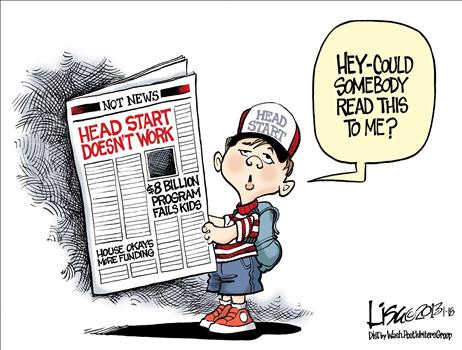


 Streeter Lecka


