Mark Pryor said on Arkansas Week in Review which was broadcast on AETN on Dec 24th
“We are in a perpetual debt cycle and a perpetual spending cycle that is unsustainable….We will put together a system or a formula where we will get our debt under control. We will get this ship turned around. We won’t do it overnight, but we get it turned around and in the next 10 or 20 years we will get back to a balanced budget.”
Liberals do not want you to know this secret: The budget would be balanced in 2016 if the current levels of spending were frozen, and the budget would be balanced in 2017 if a growth of 1% in federal spending was allowed.
Pryor and other liberals do not want to make the hard choices concerning the spending cuts that need to be made. Privatizing Social Security would have to be back on the table for instance.
Dan Mitchell from the Cato Institute elaborates:
Our fiscal policy goal should be smaller government, but here’s a video for folks who think that balancing the budget should be the main objective.
The main message is that restraining the growth of government is the right way to get rid of red ink, so there is no conflict between advocates of limited government and supporters of fiscal balance.
More specifically, the video shows that it is possible to quickly balance the budget while also making all the 2001 and 2003 tax cuts permanent and protecting taxpayers from the alternative minimum tax. All these good things can happen if politicians simply limit annual spending growth to 2 percent each year. And they’ll happen even faster if spending grows at an even slower rate.
This debunks the statist argument that there is no choice but to raise taxes.
“The budget should be balanced, the treasury refilled, public debt reduced, the arrogance of officialdom tempered and controlled, and the assistance to foreign lands curtailed, lest Rome become bankrupt.”
~Cicero 63 BC
He who thinks he knows it all proves how little he knows.
Anonymous
“War is an ugly thing, but not the ugliest of things. The decayed and degraded state of moral and patriotic feeling that thinks that nothing is worth war is much worse. The person who has nothing for which he is willing to fight, nothing which is more important than his own personal safety, is a miserable creature and has no chance of being free unless made and kept so by the exertions of better men than himself.” ….
John Stuart Mill.
* You cannot help the poor, by destroying the rich.
You cannot strengthen the weak, by weakening the strong.
* You cannot bring about prosperity, by discouraging thrift.
* You cannot lift the wage earner up, by pulling the wage payer down.
* You cannot further the brotherhood of man, by inciting class hatred.
* You cannot build character and courage, by taking away men’s initiative and independence.
* You cannot help men permanently, by doing for them what they could and should, do for themselves.
-found in an essay about Abraham Lincoln
-Anything worth doing is worth catching hell for.
Earl Warren
“Freedom is never more than one generation away from extinction. We didn’t pass it to our children in the bloodstream. It must be fought for, protected, and handed on for them to do the same, or one day we will spend our sunset years telling our children and our children’s children what it was once like in the United States where men were free.”
‘Here’s my strategy on the Cold War: We win, they lose.’
‘The most terrifying words in the English language are: I’m from the government and I’m here to help.’
‘The trouble with our liberal friends is not that they’re ignorant; it’s just that they know so much that isn’t so.’
‘Of the four wars in my lifetime, none came about because the U.S. Was too strong.’
‘I have wondered at times about what the Ten Commandments would have looked like if Moses had run them through the U.S. Congress.’
‘The taxpayer: That’s someone who works for the federal government but doesn’t have to take the civil service examination.’
‘Government is like a baby: An alimentary canal with a big appetite at one end and no sense of responsibility at the other.’
‘The nearest thing to eternal life we will ever see on this earth is a government program.’
‘It has been said that politics is the world’s second oldest profession. I’ve come to believe that it bears a striking resemblance to the first’
Ronald Reagan
About Me:
Poultry Farmer and small businessperson from Mena who wants to continue my service to the community by representing District 22 in the Arkansas legislature.
This video clip gives 6 reasons why the Capital Gains Tax should be abolished
Ernest Dumas in his article “Tax work not wealth,” (Arkansas Times, Nov 25, 2010) asserts, “The (capital gains) tax rate was raised in 1976 under President Gerald Ford and economic growth accelerated. President Jimmy Carter cut the top rate from 39 percent to 28 percent in 1978 and economic growth slowed. President Reagan’s sweeping tax cuts in 1981 lowered the top capital gains rate again to 20 percent, which was followed by the deepest recession since the 1930s. Needing to rein in the growing deficit, Reagan restored the 28 percent rate on capital gains in the tax reform act of 1986 and the economy and hiring sharply expanded over the next two years.”
Sounds like disaster occurred after Bush lowered the capital gains tax. Let’s look at the facts.
I am responding to these liberal assertions with a portion from an article published January 29, 2007 called, “Ten Myths About the Bush Tax Cuts” by Brian Riedl. Riedl is the Grover Hermann Fellow in Federal Budgetary Affairs at the Heritage Foundation and Riedl’s budget research has been featured in front-page stories and editorials in The New York Times, The Wall Street Journal, The Washington Post and The Los Angeles Times.
Myth #4: Capital gains tax cuts do not pay for themselves. Fact: Capital gains tax revenues doubled following the 2003 tax cut.
As previously stated, whether a tax cut pays for itself depends on how much people alter their behavior in response to the policy. Investors have been shown to be the most sensitive to tax policy, because capital gains tax cuts encourage enough new investment to more than offset the lower tax rate.
In 2003, capital gains tax rates were reduced from 20 percent and 10 percent (depending on income) to 15 percent and 5 percent. Rather than expand by 36 percent from the current $50 billion level to $68 billion in 2006 as the CBO projected before the tax cut, capital gains revenues more than doubled to $103 billion. Past capital gains tax cuts have shown similar results.
By encouraging investment, lower capital gains taxes increase funding for the technologies, businesses, ideas, and projects that make workers and the economy more productive. Such investment is vital for long-term economic growth.
Because investors are tax-sensitive, high capital gains tax rates are not only bad economic policy, but also bad budget policy.
_____________________________________________
I have been profiling State Lawmakers and today is David Meeks.
About David Meeks
David has a rich Arkansas heritage. He is proud of the fact his mom, grandfather, and great grandmother were all born right here in Arkansas. David himself grew up near Springhill and attended school in Greenbrier. During his junior year in high school, his dad got a job which moved them to Florida. Even though he moved away, he never forgot his Arkansas upbringing and always considered Greenbrier to be his hometown.
Shortly after graduation from high school in 1990, David joined the Army and for the next 5 years proudly served his country. He spent a year in South Korea in 1991. After the year-long deployment in South Korea, he went to Ft. Drum, NY. During his time at Ft. Drum, NY, David took part in the Hurricane Andrew, Somalia, and Haiti Humanitarian Relief efforts.
After David received an honorable discharge from the Army in 1995, he attended college where he earned a Bachelor�s degree in Pastoral Ministries. While attending college, he taught and mentored children which is something he continues to do to this day.
After college, David took a position as an associate pastor and then worked for an inner-city charter school in Jacksonville, FL. During his time at the school, he worked with middle school children to overcome a myriad of problems and become successful high school students.
In 2003, David took a job working as a Customer Service agent with Blue Cross and Blue Shield of Florida. It was there he got an insight to the problems that our healthcare industry faced. Because of his hard work and leadership skills, David was promoted to work as a project manger. As a project manager, he was able to help improve business processes saving the company time and money.
Even during this time away from Arkansas, David would come back and visit often with his grandparents and relatives who lived in Faulkner County.
He eventually had the opportunity to return to Arkansas in 2008. It was a great decision as shortly after he moved back, he met his future wife, Naomi. They were married at Bible Baptist Church on February 14th, 2009. They currently reside in Conway and attend Bible Baptist Church. They are both active in the Children�s ministry.
CONSERVATIVE VALUES. CONSERVATIVE VISION.
The Better Arkansas Plan
1) Create Jobs by Cutting Taxes
2) Curb Spending and Government Growth
3) Protect States Rights
For more details and to see where David stands on the issues please visit the issues page.
Endorsements:
Arkansas Right to Life
NRA
Police Benevolent Association
State Senator Gilbert Baker
Dr Chuck Harding, Fmr Deputy Commander for Diplomatic Security Service, US State Department
I do not think that “American exceptionalism is as example of “American chauvinism as Brummett contends. I have made it clear that in my two previous posts on this issue that I do not think that the USA has exceptional people, but has been the world’s best example of free enterprise. Let me give me an example that may seem strange at first.
Americans were given the opportunity to work in sweat shops in the end of the 1800’s, and the results of that experience has resulted in the children and grandchildren of those workers experiencing the American dream.
Read what Milton Friedman had to say about his mother’s experience in the sweat shop:
Of course she didn’t stay here a long time, she stayed here while she learned the language, while she developed some feeling for the country, and gradually she was able to make a better life for herself.
Similarly, the people who are here now, they are like my mother. Most of the immigrants from the distant countries __ they came here because they liked it here better and had more opportunities. A place like this gives them a chance to get started. They are not going to stay here very long or forever. On the contrary, they and their children will make a better life for themselves as they take advantage of the opportunities that a free market provides to them.
The irony is that this place violates many of the standards that we now regard as every worker’s right. It is poorly ventilated, it is over-crowded, the workers accept less than union rate __ it breaks every rule in the book. But if it were closed down, who would benefit? Certainly not the people here.Their life may seem pretty tough compared to our own, but that is only because our parents or grandparents went through that stage for us. We have been able to start at a higher point.
But in the past 50 years, we’ve been squandering that inheritance by allowing government to control more and more of our lives, instead of relying on ourselves. We need to rediscover the old truths that the immigrants knew in their bones; what economic freedom is and the role it plays in preserving personal freedom.
Is America going to be exceptional in the future? It all depends on our adherence to the principles that made us great in the first place.
Take a look at Milton Friedman’s film series Free to Choose and the episode The Power of the Market.
Today I have a State Lawmaker profile of Andy Mayberry who represents Saline County.
My mission is simple: To best represent the people of District 27 in the Arkansas House of Representatives.Like many of you, I have a growing concern about the overwhelming presence of government in our lives. I believe in smaller government, less bureaucracy, lower taxes, restrained spending, and those rights afforded to us by God as well as other liberties guaranteed to us by the Constitution.
I believe that good government starts on the local level, and we must continue building a solid foundational leadership in order for our communities, state and country to prosper. As you know, we face many challenges, and I believe now is a time for men and women of good conscience and common sense to take action. I would appreciate your vote and additional support in this endeavor.
Thank you and may God bless,
“… the longer I live, the more convincing proofs I see of this truth – that God governs in the affairs of men. And if a sparrow cannot fall to the ground without His notice, is it probable that an empire can rise without His aid?” – Benjamin Franklin
Paid for by the Andy Mayberry for State Rep Committee
________________________________________________________________
In the immortal words of Deputy Barney Fife, I’m going to “nip it … nip it in the bud.” If you’ve been chuckling to yourself since you first heard my name, that’s OK. Plenty of other folks laugh aloud, though others never make the connection. Yes … I am supposedly named for the sheriff in the 1960s classic television program, The Andy Griffith Show. And I’m proud of it!
So what exactly is “Mayberry” thinking?
In my opinion, The Andy Griffith Show was perhaps the best television show ever made. If one has to go through life associated by name with a TV program, I’m glad to be linked with that one. To me, it humorously demonstrates the great morals, ethics and sense of small-town values I hope my daughters grow up to learn.
People in Mayberry loved their family, community, country and God. They helped their friends as well as those who weren’t necessarily their friends. And they never – not once – asked whether you were a Democrat or Republican before they offered their assistance. Perhaps best of all, they used common sense and worked together to solve problems. They were decent, kind, and always tried to do what’s right. That’s precisely the kind of thinking and attitude I’d like to take with me to our state’s capitol. I’d appreciate your vote to help me do that very thing.
Mayberry receives endorsement of Arkansas Right to Life PAC
Andy Mayberry, the Republican nominee for the District 27 seat in the Arkansas House of Representatives, has received the endorsement of the Arkansas Right to Life Political Action Committee.
Mayberry, who is a board member of Arkansas Right to Life, is a long-time pro-life advocate. His wife, Julie Mayberry, is also a vocal opponent of abortion and has been a featured speaker at multiple Arkansas Right to Life events.
“Certainly I’m honored to receive the endorsement of the Arkansas Right to Life political action committee,” Andy Mayberry said. “It is encouraging for my campaign, and inspiring for me personally, to be one of the first two candidates in Arkansas to receive the ARTL endorsement in the 2010 general election. The fact that I join the select company of Congressman John Boozmanin his bid to become Arkansas’ next U.S. Senator makes the honor that much greater.”
Regarding the priority of pro-life issues, Mayberry said that in the grand scheme, there are none “any larger” than protecting life.
“The Bible is very clear that life is a precious gift from God, and that we are to value it,” Mayberry said. “It’s important how our society treats its most weak, vulnerable and innocent. Our Founding Fathers knew how important life is when they referenced it in the Declaration of Independence as an unalienable right endowed to us by our Creator, and I believe it is our duty to protect it. If we cannot trust an elected representative to defend the most basic and essential of our human rights — LIFE — how can we possibly trust that person with other daily issues we face such as the economy, jobs, safety and security, and education?”
Mayberry said that first and foremost, we have to work to change the hearts and minds of those who justify the killing of an unborn child.
“Regardless of the law,” he said, “unfortunately there will always be those who choose to kill and destroy. That said, I will work tirelessly with others in the pro-life movement to develop, sponsor, advocate and vote for legislation that will limit, reduce and – by the Grace of God, maybe one day eliminate – abortion.”
Francis Schaeffer points out how Communism is based on materialism which leads to repression while countries with a reformation base truly have a solid basis for law and the people enjoy freedom.
Max Brantley (Arkansas Times Blog, Dec 14) observes:
Is the U.S. “Special in the world, divinely blessed, better than the rest,” as Brummett defined the term? A reflexive yes ignores the reality of the specifics, however great a beacon of hope and freedom we have been, are and hope to be. Demonstrably — take education and health care — all the specific comparisons can’t be answered in the affirmative. After arrogance, this is the biggest problem with the exceptionalism argument. If you’re already perfect, what need is there to seek to improve or learn from others who might have a better idea?
My quick answer to the statement about the USA woeful education performance would be that our public schools have been a victim of a lack of free enterprise competition and an infiltration of humanism.
Third, the problem in the USA has not been the lack of funding. Caroline Hoxby, Ph.D., the Scott and Donya Bommer Professor of Economics at Stanford University has correctly noted:“The United States spends more money per pupil on public K-12 schooling than any other country in the world. Some of the school districts that are the most embarrassing for Americans like Newark, NJ or Washington D.C. are some of the most expensive in the world. So it is hard to make the case that the problem America has is just that it is not spending enough money… We have raised per pupil spending (in real inflation adjusted terms) every single year for the last 40 years… (Not having enough money) is not the source of the problem for American education.”
There are actually two reasons our public education in the USA has suffered. The first was because the free enterprise system has not been allowed to work its magic as shown above. The second was because of the humanistic elements that have been allowed into our schools. This goes back to the two principles that I talked about in the first installment of this series on “American Exceptionalism.
First, our country was founded on a reformation base.
Second, our country allowed free enterprise to flourish without excessive government controls.
Since I have already discussed this second point at length in regard to the schools, I will concentrate on this first point.
Notice in the video above is from the episode “The Revolutionary Age” from the film series “How Should We Then Live?” by Francis Schaeffer that a system like communism is based on a materialistic base, and must use internal repression to keep in power. Communism always comes in with promises, but what you end up with is a loss of freedom of the press and freedom of religion too. This can be seen even today in the 5 communist countries which exist.
However, when you contrast these communist countries to those countries that have a reformation base you find a large difference in protection of human rights. Francis Schaeffer has pointed out that in these countries (with the reformation base ) the biblical basis did give absolutes upon which to combat injustice. In contrast, the humanist has no way to say that certain things are right and certain things are wrong. This is because for the humanist the final thing that exists is the impersonal universe and that is silent and neutral about right and wrong and about cruelty and noncruelty.
Earlier I said that the schools in the USA are suffering because of a lack of competition, but they are also being hurt by the teaching of humanism in the area of moral choices. They are being taught that we all are a product of chance and there are no absolutes.
The Bible tells us, “{God} has also set eternity in the hearts of men…” (Ecclesiastes 3:11 NIV). The secularist calls this an illusion, but the Bible tells us that the idea that we will survive the grave was planted in everyone’s heart by God Himself. Romans 1:19-21 tells us that God has instilled a conscience in everyone that points each of them to Him and tells them what is right and wrong (also Romans 2:14 -15).
It’s no wonder, then, that a humanist would comment, “Certain moral truths — such as do not kill, do not steal, and do not lie — do have a special status of being not just ‘mere opinion’ but bulwarks of humanitarian action. I have no intention of saying, ‘I think Hitler was wrong.’ Hitler WAS wrong.” (Gloria Leitner, “A Perspective on Belief,” THE HUMANIST, May/June 1997, pp. 38-39)
Here Leitner is reasoning from her God-given conscience and not from humanist philosophy. However, I know how moral relativism works, and I expected that Mrs. Leitner would soon be challenged by her fellow humanists. It wasn’t long before she received criticism. Humanist Abigail Ann Martin responded, “Neither am I an advocate of Hitler; however, by whose criteria is he evil?” (THE HUMANIST, September/October 1997, p. 2)
Do you see where our moral relativism has taken us in the USA?
I had a chance back in 1991 to visit with a gentleman by the name of Robert Lester Mondale while he was retired in Missouri. He was born on May 28, 1904 and he died on August 19, 2003. He was an Unitarian minister and a humanist. In fact, he was the only person to sign all three of the Humanist Manifestos of 1933, 1973 and 2003. In my conversation with him he mentioned that he had the opportunity to correspond with John Dewey who was one of Mondale’s fellow signers of the 1933 Humanist Manifesto I.
I really believe that the influence of John Dewey’s humanistic philosophy has won the battle of the textbooks in the USA today (with evolution teaching being a key component). As a result, we have people like humanist Abigail Ann Martin who wrote, “Neither am I an advocate of Hitler; however, by whose criteria is he evil?”
I have been profiling State Lawmakers and today is Saline County’s Kim Hammer.
It is not a statement of rhetoric, but a statement of fact, that America is heading in the wrong direction. We are moving away from what our founding forefathers established this nation to be in principle, practice, and proper pride–all under the open practice of seeking God’s divine leadership. Without shame or apology, I openly state that I believe we as a nation have also drifted away from giving God His proper place in the decision-making process of the establishment of the laws that govern us. And we are reaping the consequences of our actions.
We who believe that “powers that be are ordained of God” (Romans 13:1) have a civic duty to come forward and help perpetuate what the founding fathers of America paid an ultimate price to birth.
We are at a crossroads in America’s history where those who believe in heart, not in lip service, that we are still “One Nation Under God” must rise to the occasion and not idly stand by and let America be dismantled one decision at a time. It is not so much a matter of party or person as it is a matter of principle and purpose. People and party affiliations have a tendency to be bartered away, but principles of value will withstand the test in the moment of decision and the end result will reflect that philosophy.
As citizens of Arkansas we must elect people into positions who are willing to stand by their convictions. Those convictions must rest in a belief that if we want to claim to be “One Nation Under God,” then we must allow God to be introduced into convictions that guide our decisions or else we have become a state and a nation where everyone does that which is right in his own eyes.
This is why I am asking you to vote for me to represent you in the Arkansas House of Representatives, District 28. I may not vote every way you want me to, but it’s not about you and me. It’s bigger than that. It’s about taking one issue at a time, weighing it out against how a decision will affect Arkansas and America emotionally, spiritually, and physically-one vote at a time.
I believe that there is still power in the vote and that this nation, one state at a time, one elected official at a time, can redirect America back onto the course that reflects we are “One Nation Under God”.
Respectfully,
Kim D. Hammer
Friday, 27 August 2010
Kim Hammer of Benton has worked his whole life helping people with their physical and spiritual needs. Now Hammer wants to help more people in the area by being a voice for District 28 in the state House of Repre-sentatives. He will face state Rep. Barbara Nix, D-Benton.
Hammer ran for the position in 2006 but did not make it, he said. Being that close to attaining the position has motivated him to run again, along with other incentives.
“I felt that for my life and where I am in my life and my convictions about the direction our country is going in, I felt like this was the right time to (run again),” he said.
Hammer spent the early years of his life working as an emergency medical technician and eventually earned the rank of being a nationally Registered EMT Intermediate — and he began only as a volunteer.
“I started because I wanted to give to the community. From there I had a conviction to keep doing it and I worked full time at MEMS in between churches. I let my license go in 1995, though.”
He now works full time as the chaplain at Saline Memorial Hospice House in Bryant. He is a graduate of Trinity College in Indiana and has served several churches throughout the state.
His Christian beliefs are something that he will not be afraid to bring into House discussions, he said.
“I think that there needs to be a conviction of appreciation for a place of God in government. I’m not an extermist, but I’m not going to apologize for what I believe in. I’m not going to apologize for thinking that God has been pushed out of the decision-making process,” Hammer said.
He added, “I have Christian convictions that I do not believe need to be imposed on anyone, but I do not believe it is right to back up from them. I believe there are Christian convictions that are represented in the decision-making process when it comes to the law, but that doesn’t mean I want to cram anything down anyone’s throat — but I’m tired of backing up.”
If elected, Hammer said he will take these beliefs to the House to help people in District 28, especially people with a palliative time of life and children in need. Hammer once worked for a school-based mental health firm and, as he said, “has a real conviction for helping children.”
If he wins the House seat, Hammer doesn’t have a firm agenda of things to get done, but he says he does have some ideals he will stand by firmly.
“I believe in strong, family values, beginning with protecting the definition of the union of marriage. I’m also strong on state sovereignty and believe that the state has to stand up against federal government that is going to impose hardships on us. We have to present a strong front as a state,” Hammer said.
One of his main objectives, he said, is to go through the checkbooks of the state government and see where money is not being spent wisely.
“There are a lot of good things that can be done with money that might be wasted. I want to scrutinize the budget and try to get funding for things such as non-profit and faith-based initiatives. I want to see where wasteful spending is happening and put it in the hands of those who need it,” he said.
Hammer plans to attend several local events, including the Salt Bowl Tailgate, the Saline County Fair and Old-Fashioned Day and would enjoy meeting any residents or answering questions. To find out more about Hammer, visit http://www.hammer4house.com.
(You will notice that today is the third time a state lawmaker has been profiled on this website. I have
taking the time to look this info up on the web and then post it. If any lawmaker from Arkansas would be
kind enough to just go ahead and email me the info then I would appreciate it. My
email is lowcostsqueegees@yahoo.com)
Ernest Dumas in his article “Budget Balancing,” (Arkansas Times, Nov 18, 2010) asserts “the public has been led to believe that their taxes have gone up and up and up, when the opposite is true, at least with federal income taxes.” Dumas would have us believe that our federal taxes are low. However, the fact is federal tax revenue is up now as compared to GDP after the Bush Tax cuts were put into affect.
I am responding to these liberal assertions with a portion from an article published January 29, 2007 called, “Ten Myths About the Bush Tax Cuts” by Brian Riedl. Riedl is the Grover Hermann Fellow in Federal Budgetary Affairs at the Heritage Foundation and Riedl’s budget research has been featured in front-page stories and editorials in The New York Times, The Wall Street Journal, The Washington Post and The Los Angeles Times.
Myth #1: Tax revenues remain low. Fact: Tax revenues are above the historical average, even after the tax cuts.
Tax revenues in 2006 were 18.4 percent of gross domestic product (GDP), which is actually above the 20-year, 40-year, and 60-year historical averages.The historical averages range between 17.9 percent and 18.3 percent of GDP, depending on the time horizon. The inflation-adjusted 20 percent tax revenue increase between 2004 and 2006 represents the largest two-year revenue surge since 1965-1967. Claims that Americans are undertaxed by historical standards are patently false.
Some critics of President George W. Bush’s tax policies concede that tax revenues exceed the historical average yet assert that revenues are historically low for economies in the fourth year of an expansion. Setting aside that some of these tax policies are partly responsible for that economic expansion, the numbers simply do not support this claim. Comparing tax revenues in the fourth fiscal year after the end of each of the past three recessions shows nearly equal tax revenues of:
18.4 percent of GDP in 1987,
18.5 percent of GDP in 1995, and
18.4 percent of GDP in 2006.
I am profiling State Lawmakers and today is Jake Files of Ft Smith.
I am Jake Files, a devoted husband, loving father, common sense conservative, and small business owner. I have a passion for politics because I honestly believe we can still make a difference, and it is time we elected people who will stand with us and for us. One of my favorite quotes is “The only thing needed for evil to prosper is for good men to do nothing.” (Edmund Burke) We live in a time where our most basic freedoms are being challenged, and I believe we must stand together and fight. The time is now.
FAITH & FAMILY
My faith is the catalyst for everything I do, and my family is the backbone of who I am. Michaela (Mitchell) and I have been married since 1998, and we have 3 little girls we are raising the best way we know how! Kate is a 1st grader at Immaculate Conception, Liz is in preschool at Hobson/First Presbyterian, and Bella is still in diapers at home with mom. Michaela is a RN and has made the choice to stay at home with them and help run our household…no easy task! We attend Eastside Baptist Church, where I sing and play guitar in the Worship Band, coach little league baseball, and help in the children’s choir.
EDUCATION
I attended Ouachita Baptist University on a track scholarship, and I graduated Cum Laude from Arkansas State through the University Center at UA-Fort Smith (then Westark College) with a bachelors in Accounting. My mom and sister are both teachers, and I have a tremendous respect for not only education, but also the role education plays in the opportunities we have in life.
The students in this generation will be the leaders of the next generation. Our future literally depends on them and the education they receive. WIth such a tremendous amount of our resources dedicated to education, we must insist that we are getting the best return possible in terms of educated young people who understand themselves and the world around them.
BUSINESS EXPERIENCE
As a 14 year old paperboy for the Southwest Times Record, I learned the value of a dollar, and more importantly, how quickly it went. After graduating from college, I accepted a position with Baldor Electric Company as part of the management team for their new flagship plant in Ozark, Arkansas. What a great company to work for and learn about excellence. It was there that I learned about manufacturing and what a vital role in plays in our economy and this region.
With a heart for young people, I moved to Fort Smith Christian School, where I later served as President and Superintendent of the Pre-K-12 accredited institution. While serving in that capacity, I was able to work with educators to shape curriculum and learn what was most important to the educational process. I also learned that education was not just about what was taught in the classroom, but that the investment we make in the lives of children pays dividends forever.
After seven years at FSC, I went to work for ERC Properties in Real Estate Development and grew immensely. I was able to work on and close several multi-million dollar deals, and I also obtained my Real Estate License during this time and became a Realtor. While working in this corporate environment, my entrepreneurial spirit pushed me to look at starting my own business.
In 2006, with much prayer and determination, Michaela and I ventured with two partners into the business we currently own and operate, which is a General Construction Firm and Real Estate Development company. We develop, build, own, and manage real estate and have been taught great lessons by making a payroll every week and seeing the demands on business owners as insurance and taxes threaten to limit our ability to make money, and in some cases, keep our doors open.
I can assure you that I can identify with you and will work hard to be a pro-business Senator who understands what you go through on a daily basis.
POLITICAL EXPERIENCE
Jake was elected to the House of Representatives in 1998, when he successfully won the primary and general election at the age of 26. He served two terms without being defeated, and he is very proud of his past legislative accomplishments. He was a leader and instrumental in the bill that transitioned Westark College to the University of Arkansas-Fort Smith, and he also worked hard to effectively represent Fort Smith in the Legislature while serving his terms. He announced for this state Senate position in 2002, but because of job obligations, he decided not to file for the office at that time. Since that time, he has started his own company to enable him to set his own schedule more freely and not be dictated by corporate obligations.
In Jake’s last legislative session, he was presented several awards by groups who appreciated his dedication, leadership, and work, and he also passed some substantial legislation. One of his greatest achievements was borne from a tragic accident that killed a close family friend. Determined to make something positive from this, Jake vigilantly fought for tougher safety seat laws and was successful in raising the requirement for children to be in safety seats and in seatbelts. Many lives have been saved since this legislation became law, and countless others will be saved in the future.
Jake also authored and led the fight to protect Arkansas school children against sexual predators with the “Arkansas School Children Protection Act” which kept our children safer by banning anyone convicted of a sexual offense from working in ANY capacity in a school.
He and then Senator Gunner Delay worked together to pass and fund the Tennis Center at Creekmore Park so that everyone could be afforded the opportunity to play in a first class park and facility. Jake also was able to secure funding for the Health Science building at Westark College which was a highlight with then Chancellor Joel Stubblefield. He worked with the legislative delegation in the early stages of Fort Chaffee being transitioned to the Trust and was able to help in the funding of $2 million dollars to the Trust as well.
Jake’s greatest satisfaction comes from being able to serve his constituents and help them get problems solved while interacting with governmental agencies. “Some of my best memories are not of seeing things happen in Little Rock, but hearing from people that I have been able to help find resolution with state government. To me, that is the essence of public service. Making a difference for someone every day,” added Files.
On May 18th, 2010, Jake won the Republican Primary with 40% of the vote over opponents Frank Glidewell and Jim Medley. Because no one received 50% of the vote, a Run-off between Jake Files and Frank Glidewell ensued. Files was victorious with nearly 58% of the vote on June 8th, 2010. There was no Democrat to file for the position, so Files will be the next Senator from Fort Smith on January 1, 2011 in District 13.
Arnold Schwarzenegger opens this clip of Milton Friedman’s film series “Free to Choose” with a statement that contrast the socialist country he came from to the freer society in the USA where he came to live in 1968. I am going to post several video clips from this film series that will demonstrate that our country allowed free enterprise to flourish without excessive government controls.
Jason Tolbert, Max Brantley and John Brummett all wrote interesting articles on the issue of American Exceptionalism during the fall after Tim Griffin and Joyce Elliott discussed the subject during the campaign.
I don’t think we are exceptional because of our people, land or resources. It must be because of two principles that have existed in this country for many years.
First, our country was founded on a reformation base. Francis Schaeffer pointed out in his film series, “How should we then live?” episode 5 on the Revolutionary Age: “As the reformation emphasis, that the Bible is the only final authority, took root the ordinary citizen was increasingly freed from arbitrary governmental power.”
Sadly our country has allowed humanism to take away many of the freedoms that our founding fathers meant for our country to have including prayer in schools. Did you know that 29 of the 56 signers of the Declaration of Independence had seminary degrees? Futhermore, over 90% of the 250 original founding fathers claimed to be Christians according to their own writings.
Second, our country allowed free enterprise to flourish without excessive government controls. That was because the founding fathers saw the government as a necessary evil and not a positive force to be interfering with our lives.
This article today is the beginning of a series that I will be starting on the true secret behind the American Exceptionalism in our past. There is no denying that it existed in the past. Take a look at page 976 of the book A History of the American People by Paul Johnson (1997):
It is appropriate to end this history of the American people on a note of success, because the story of American is essentially one of difficulties being overcome by intelligence and skill, by faith and strength of purpose, by courage and persistence. America today, with its 260 million people, its splendid cities, its vast wealth, and its unrivaled power, is a human achievement without parallel. That achievement–the transformation of a mostly uninhabited wilderness into the supreme national artifact of history–did not come about without heroic sacrifice and great sufferings stoically endured, many costly failures, huge disappointments, defeats, and tragedies. There have indeed been many setbacks in 400 years of American history. As we have seen, many unresolved problems, some of daunting size, remain. But the Americans are, above all, a problem-solving people. They do not believe that anything in this world is beyond human capacity to soar to and dominate. They will not give up. Full of essential goodwill to each other and to all, confident in their human decency and their democratic skills, they will attack again and again the ills in their society, until they are overcome or at least substantially redressed. So the ship of state sails on, and mankind still continues to watch its progress, with wonder and amazement and sometimes apprehension, as it moves into the unknown waters of the 21st century and the third millennium. The great American republican experiment is still the cynosure of the world’s eyes. It is still the first, best hope for the human race. Looking back on its past, and forward to its future, the auguries are that it will not disappoint an expectant humanity.
_____________________________________
I am taking a look at state lawmakers. The first one was Ann Clemmer, and the second one I want to share with you today is my own State Senator Jeremy Hutchinson:
Jeremy Hutchinson served in the Arkansas legislature from 2000 – 2007. Jeremy was term limited from serving further in the Arkansas General Assembly, but left as the most senior member of the Arkansas House of Representatives. He was elected to be the Assistant Minority Leader and served on Judiciary, Insurance and Commerce, and Joint Budget Committees. He also served on both the Retirement & Pension and Energy Committees.Jeremy was recognized as one of the most effective conservative legislators to serve in the Arkansas Legislature. He sponsored and PASSED controversial bills to require parental consent before performing abortions on a minor (HB 1033 of 2005), and to authorize state and local police to enforce our federal immigration laws (HB 1033 of 2005). Jeremy helped draft and co-sponsored the Partial Birth Abortion Ban of 2005. He also sponsored and passed legislation that granted a leave of absence to our veterans for treatment of military service-connected disabilities (HB 1254 of 2005), established a new tax deferred college saving plans (HB 1735 of 2003), and created the “Baby Sharon Children’s Catastrophic Illness Grant Program” to assist families whose children suffer from catastrophic illness to pay their mounting bills so the parents can focus on their child (HB 1039 of 2003).
Jeremy also has a strong commitment to protecting citizens from crime. As a member of the Judiciary Committee, he sponsored and PASSED legislation that made the murder of a child 12 years of age or younger an aggravating circumstance for purpose of imposing the death penalty (HB 1264 of 2001), extended the statute of limitations for rape (HB 1423 of 2001), created the criminal offense of exposing a child to a chemical substance or Methamphetamine (HB 1267 of 2003), and enhanced the penalty for offenses of domestic violence committed on a pregnant woman which recognizes the value of an unborn baby (HB 1540 of 2003).
Jeremy received his undergraduate degree (B.B.A. Economics) from Harding University and his law degree from the University of Arkansas at Little Rock Bowen School of Law. He is an attorney in private practice and a part time deputy Prosecutor in Saline County. Jeremy is also an adjunct professor at John Brown University and Harding University, teaching Employment Law and Economics. Named to Arkansas Business’ 40 under 40 in 2002, Jeremy was also voted one of the “Best Conservatives” by the readers of the Arkansas Times in 2005.
Jeremy is married to Stephanie Hutchinson and they have three kids: Jack (11) Hallie (8) and Abby (6). They attend Fellowship Bible Church.
_____________________________________
Francis Schaeffer does a great job in three 9 minute clips of showing how the USA was founded on a reformation base. Here is the first clip:
Wallbuilders’ Founder and President David Barton joins Glenn Beck on the Fox News Channel for the full hour to discuss our Godly heritage and how faith was the foundational principle upon which America was built.
Wallbuilders’ Founder and President David Barton joins Glenn Beck on the Fox News Channel for the full hour to discuss our Godly heritage and how faith was the foundational principle upon which America was built.
Wallbuilders’ Founder and President David Barton joins Glenn Beck on the Fox News Channel for the full hour to discuss our Godly heritage and how faith was the foundational principle upon which America was built.
Wallbuilders’ Founder and President David Barton joins Glenn Beck on the Fox News Channel for the full hour to discuss our Godly heritage and how faith was the foundational principle upon which America was built.
Wallbuilders’ Founder and President David Barton joins Glenn Beck on the Fox News Channel for the full hour to discuss our Godly heritage and how faith was the foundational principle upon which America was built.
In the next few weeks I will be looking at this issue of unconfirmed quotes that people think that the Founding Fathers actually said and the historical evidence concerning them. David Barton has collected these quotes and tried to confirm them over the last 20 years. These unconfirmed quotes are used every single day and unfortunately my group of conservatives have been guilty of using them more than the liberals have. This website HALT (HaltingArkansasLiberalswithTruth.com) includes the T for the word ‘truth.” I want to always tell it like it is and that includes this fact: Conservative Republicans will be more likely than their liberal counterparts to stand up today in state legislatures all across the country and use quotes that have not been confirmed with original sources linking them to the Founding Fathers.
I hear this quote below used quite often by conservative lawmakers.
Alexis de Tocqueville’s work, Democracy in America, should be required reading for all involved in the Church/state debates. He devoted a significant portion of his work to the religious element of American life, as the following thoughts indicate:
Moreover, almost all the sects of the United States are comprised within the great unity of Christianity, and Christian morality is everywhere the same.In the United States the sovereign authority is religious, and consequently hypocrisy must be common; but there is no country in the whole world in which the Christian religion retains a greater influence over the souls of men than in America, and there can be no greater proof of its utility, and of its conformity to human nature, than that its influence is most powerfully felt over the most enlightened and free nation of the earth.
The Americans combine the notions of Christianity and of liberty so intimately in their minds, that it is impossible to make them conceive the one without the other; and with them this conviction does not spring from that barren traditionary faith which seems to vegetate in the soul rather than to live.
There are certain populations in Europe whose unbelief is only equaled by their ignorance and their debasement, while in America one of the freest and most enlightened nations in the world fulfills all the outward duties of religion with fervor.
Upon my arrival in the United States, the religious aspect of the country was the first thing that struck my attention; and the longer I stayed there, the more did I perceive the great political consequences resulting from this state of things, to which I was unaccustomed. In France I had almost always seen the spirit of religion and the spirit of freedom pursuing courses diametrically opposed to each other; but in America I found that they were intimately united, and that they reigned in common over the same country.
While the Tocqueville quote is not in this book, it may be in some other writings of which we are unaware. The fact that there is no primary source for someone quoted so often causes us to view the words as unconfirmed.
In his article “Sizing up the new year,” (Arkansas Democrat-Gazette, December 27, 2010), Pat Lynch asserts,” Just so you understand, the federal deficit is somewhere just north of $13 trillion and the wealthiest taxpayers will not be even slightly inconvenienced as we pay down the national debt… Since the rich folks have been granted favored status by the continued Bush tax cuts and there is nothing to offset the revenue loss, slashing domestic spending is the preferred conservative option. Sooner or later, somebody is going to have to go after some real money.
The poor and elderly will pay off the budget shortfall.”
Mr Lynch assumes that raising tax rates is the best way to raise revenue. This is a myth. I am responding to these liberal assertions concerning the Bush Tax Cuts with a portion from an article published January 29, 2007 called, “Ten Myths About the Bush Tax Cuts” by Brian Riedl. Riedl is the Grover Hermann Fellow in Federal Budgetary Affairs at the Heritage Foundation and Riedl’s budget research has been featured in front-page stories and editorials in The New York Times, The Wall Street Journal, The Washington Post and The Los Angeles Times.
Myth #6: Raising tax rates is the best way to raise revenue. Fact: Tax revenues correlate with economic growth, not tax rates.
Many of those who desire additional tax revenues regularly call on Congress to raise tax rates, but tax revenues are a function of two variables: tax rates and the tax base. The tax base typically moves in the opposite direction of the tax rate, partially negating the revenue impact of tax rate changes. There is little correlation between tax rates and tax revenues. Since 1952, the highest marginal income tax rate has dropped from 92 percent to 35 percent, and tax revenues have grown in inflation-adjusted terms while remaining constant as a percent of GDP.
Despite major fluctuations in income tax rates, long-term tax revenues have grown at almost exactly the same rate as GDP, remaining between 17 percent and 20 percent of GDP for 46 of the past 50 years. The top marginal income tax rate topped 90 percent during the 1950s and that revenues averaged 17.2 percent of GDP. By the 1990s, the top marginal income tax rate averaged just 36 percent, and tax revenues averaged 18.3 percent of GDP. Regardless of the tax rate, tax revenues have almost always come in at approximately 18 percent of GDP (Office of Management and Budget, Historical Tables, pp. 25–26, Table 1.3, and Internal Revenue Service, “U.S. Individual Income Tax: Personal Exemptions and Lowest and Highest Bracket Tax Rates, and Tax Base for Regular Tax, Tax Years 1913– 2005,” at http://www.irs.gov/pub/irs-soi/histaba.pdf{January 16, 2007}).
Since revenues move with GDP, the common-sense way to increase tax revenues is to expand the GDP. This means that pro-growth policies such as low marginal tax rates (especially on work, savings, and investment), restrained federal spending, minimal regulation, and free trade would raise more tax revenues than would be raised by self-defeating tax increases. America cannot substantially increase tax revenue with policies that reduce national income.
He still is concerned that a sharply expanded Medicaid program will put a significant burden on the state, even if it is eight or nine years away.
“It would be easy for me to say that it will be fine until 2017 or later since I won’t be here,” Beebe said. “I may not be here next January and for sure I won’t be here in 2017. But I have a responsibility to look at the impact things will have long after I leave.”
Unlucky for Dumas just two months later the Associated Press reported on September 9, 2010 the verdict on the cost of the new health legislation according to a government forecast. The conclusion was that “the nation’s health care tab will go up–not down –as a result of President Barack Obama’s sweeping overhaul.” The Chicago Tribune went on to comment:
“Well, duh. You can’t expand coverage by 32 million Americans and figure that will hold costs down. The Democrats sold health care to Americans with a lot of fuzzy accounting and shaky assertions about how relatively inexpensive all this would be”( September 23, 2010).
That reminds me of a youtube video I saw of Milton Friedman in a speech he delivered at the Mayo Clinic back in 1978. In it he referred to a british study by a Dr Max Gammon.
Dr. Max Gammon worked in the British National Health Service (NHS), and his study of it, beginning in the 1960s, led him to enunciate what he called “the theory of bureaucratic displacement.” In his words in what later became known as Gammon’s Law:
“In a bureaucratic system, an increase in expenditure will be matched by a fall in production. Such systems act rather like ‘black holes’ in the economic universe, simultaneously sucking in resources and shrinking in terms of ‘emitted production’.”
Dr. Gammon measured the NHS’s productivity by comparing two simple variables: inputs (defined as the number of employees) and output (measured as the number of hospital beds). He found that while inputs had increased sharply, output had actually fallen.
In fact, from 1965 to 1973 the input went up with hospital staff going up by 28% and administrative staff by 41% but the output (measured by beds occupied daily) went down by 11%. It was not for a want of patients since there was during that time period an average waiting list of 600,000 people.
This video of Mark Pryor stumping for Obama for President just shows how out of touch he is with Arkansas voters. President Obama lost Arkansas in a landslide.
Mark Pryor said on Arkansas Week in Review which was broadcast on AETN on Dec 24th, “We owe the American people good government and to try and be productive. I think one reason why you saw the elections turn out the way they turned this November was because I think people all across America feel like the folks inside the beltway are not listening. I try to listen and to be home as much as I possibly can.”
You would think this would be sound advice for a politician to follow. However, didn’t Senator Mark Pryor ignore polls showing the American people did not want Obamacare?
Most Americans see no upside for their family in the health care reforms being considered in Washington and don’t believe President Obama when he says his plan won’t add “one dime” to the federal deficit. The majority of Americans believe they will have to make changes to their health care coverage if the president’s plan is passed.
These are just some of the findings of a new FOX News poll released Thursday.
More Americans would rather Congress do nothing than pass Obama’s plan: 46 percent to 37 percent of people polled say they prefer the current health care system to the one the president has proposed.
Similarly, more people oppose — 48 percent — the health care reform legislation being considered right now than favor it — 38 percent. While most Democrats — 65 percent — favor the reforms, majorities of Republicans — 79 percent — and independents (55 percent) oppose them.
This is not surprising given less than one in four Americans (22 percent) think they would be better off under the reforms, and many (60 percent) think they will probably have to make changes to their health coverage despite Obama’s assurances that they will not have to. In addition, a sizable majority (67 percent) thinks the president’s plan will increase the national deficit.
Democrats who voted for their party’s signature domestic achievement dropped like flies throughout the evening, adding credence to Republicans’ claim that the American public wants them to repeal healthcare reform.
The law’s proponents read the writing on the wall early on and acted quickly to pre-empt that impression.
“American voters’ focus during the elections was overwhelmingly on jobs and the economy, and this will remain the key public concern until the economy substantially improves,” Ron Pollack, executive director of Families USA, said in a 10:30 p.m. statement. “As pre-election polls reflect, calls to repeal the Patient Protection and Affordable Care Act are not supported by America’s voters — and they certainly were not the motivating factor in the elections.”
The evening started pretty well for Democrats who voted for healthcare reform, with Rep. John Yarmuth of Kentucky handily winning reelection with 54.5 percent of the vote. Yarmuth’s seat was listed as “likely Democratic” in the Nov. 1 edition of The Cook Political Report, one of 77 “yes” vote seats in play Tuesday evening.
Things quickly went downhill from there.
Within hours, a dozen members had lost reelection, including four freshmen elected in the 2008 Democratic wave: Reps. Tom Perriello and Glenn Nye of Virgina and Suzanne Kosmas and Alan Grayson of Florida.
They weren’t alone: Democratic Reps. Baron Hill (Ind.), Carol Shea-Porter (N.H.) and Allen Boyd (Fla.) quickly joined them. So did Pennsylvania Reps. Kathy Dahlkemper, Chris Carney and Paul Kanjorski, all of whom were main targets of the anti-abortion-rights group the Susan B. Anthony List.
Sen. Blanche Lincoln (D-Ark.), who voted for the bill when her vote was crucial but later voted no on reconciliation, was also defeated.
The trend is even worse when factoring in yes votes who weren’t running for reelection.
Retiring Rep. Bart Gordon (Tenn.) left Democratic candidate Brett Carter to get pulverized by Republican Diane Black, 29.3 percent to 67.5.
Democrats did, however, pick up Republican Rep. Joseph Cao’s seat in Louisiana. Cao had voted yes on the bill in November — the only Republican to do so — but changed his vote when the bill returned before the House in March.


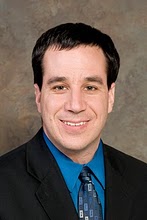


 We are at a crossroads in America’s history where those who believe in heart, not in lip service, that we are still “One Nation Under God” must rise to the occasion and not idly stand by and let America be dismantled one decision at a time. It is not so much a matter of party or person as it is a matter of principle and purpose. People and party affiliations have a tendency to be bartered away, but principles of value will withstand the test in the moment of decision and the end result will reflect that philosophy.
 This is why I am asking you to vote for me to represent you in the Arkansas House of Representatives, District 28. I may not vote every way you want me to, but it’s not about you and me. It’s bigger than that. It’s about taking one issue at a time, weighing it out against how a decision will affect Arkansas and America emotionally, spiritually, and physically-one vote at a time.


 Jeremy received his undergraduate degree (B.B.A. Economics) from Harding University and his law degree from the University of Arkansas at Little Rock Bowen School of Law. He is an attorney in private practice and a part time deputy Prosecutor in Saline County. Jeremy is also an adjunct professor at John Brown University and Harding University, teaching Employment Law and Economics. Named to Arkansas Business’ 40 under 40 in 2002, Jeremy was also voted one of the “Best Conservatives” by the readers of the Arkansas Times in 2005.


