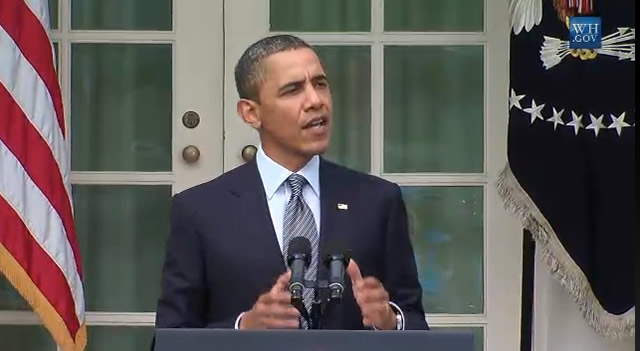
The ladies on “The View”sit down and talk about President Obama’s commencement speech at the University of Notre Dame and talk about how the crowd got a little riled over Abortion protesters. They then continue on the abortion subject which leads to a heated discussion between Joy Behar and Elisabeth Hasselbeck.
______________________
If you claim to be “pro-life” then you must allow the unborn baby to it’s chance at life. Answering the logic of the liberal ladies on “The View” is this video below:
Answering Those Who Are Only “Personally Pro-Life” – Quick Thought
Ana Benderas of Live Action addresses those who are personally against abortion but believe that others should be able to take the life on unborn children. Learn more about Live Action at: http://LiveAction.org
Demonstrators march through the streets of Little Rock on Saturday in a protest organized by Occupy Little Rock. (John Lyon photo) Occupy Arkansas got cranked up today in Little Rock with their first march and several hundred showed up. It was unlike the pro-life marches that I have been a part of that have had […]
The Arkansas Times blogger going by the username “Sound Policy” asserted, “…you do know there is a slight difference between fetal tissue and babies, don’t you? Don’t you?” My response was taken from the material below: Science Matters #2: Former supermodel Kathy Ireland tells Mike Huckabee about how she became pro-life after reading what the science […]
What Ever Happened to the Human Race? Jason Tolbert told a story about pro-life marchers and their tactic of prayer: OWNER TURNS SPRINKLERS ON PRO-LIFE PRAYER VIGIL In July, I wrote about a new movement springing up in Arkansas that seeks to combat abortion not with violent protest, but with peaceful prayer demonstrations. It is called “40 […]
Francis Schaeffer and C. Everett Koop were prophetic (jh29) What Ever Happened to the Human Race? I recently heard this Breakpoint Commentary by Chuck Colson and it just reminded me of how prophetic Francis Schaeffer and C. Everett Koop were in the late 1970′s with their book and film series “Whatever happened to the human […]
A Ronald Reagan radio address from 1975 addresses the topics of abortion and adoption. This comes from a collection of audio commentaries titled “Reagan in His Own Voice.” I just wanted to share with you one of the finest prolife papers I have ever read, and it is by President Ronald Wilson Reagan. I have […]
I have made it clear from day one when I started this blog that Francis Schaeffer, Milton Friedman, Ronald Reagan and Adrian Rogers had been the biggest influences on my political and religious views. Today I am responding to an unfair attack on Francis Schaeffer’s book “A Christian Manifesto.” As you can see on the […]
President and Nancy Reagan talking to Mother Teresa in the Oval Office. 6/20/85. Superbowl commercial with Tim Tebow and Mom. Jason Tolbert wrote a great article this week about a pro-life meeting. He mentons William Harrison who I have written about before on this blog. I used to write letters to the editor a whole […]
I wrote a response to an article on abortion on the Arkansas Times Blog and it generated more hate than enlightenment from the liberals on the blog. However, there was a few thoughtful responses. One is from spunkrat who really did identify the real issue. WHEN DOES A HUMAN LIFE BEGIN? _______________________________________ Posted by spunkrat […]
Superbowl commercial with Tim Tebow and Mom. The Arkansas Times article, “Putting the fetus first: Pro-lifers keep up attack on access, but pro-choice advocates fend off the end to abortion right” by Leslie Newell Peacock is very lengthy but I want to deal with all of it in this new series. click to enlarge ROSE MIMMS: […]
The Arkansas Times article, “Putting the fetus first: Pro-lifers keep up attack on access, but pro-choice advocates fend off the end to abortion right” by Leslie Newell Peacock is very lengthy but I want to deal with all of it in this new series. click to enlarge ROSE MIMMS: Arkansas Right to Life director unswayed by […]
“Jane Roe” or Roe v Wade is now a prolife Christian. She’s recently has done a commercial about it. _______________________________ I have often wondered why we got to this point in our country’s life and we allow abortion. The answer is found in the words of Schaffer. Philosopher and Theologian, Francis A. Schaeffer has […]
Modern man’s humanist thought has brought us to the point now that many people realize that they could not find final answers and that would lead to despair. Many people then took leaps into the area of non-reason to find some kind of meaning in life. Some people actually tried to look at communism and […]
Modern man’s humanist thought has brought us to the point now that many people realize that they could not find final answers and that would lead to despair. Many people then turned to trying to find answers in the area of non-reason. There were no fixed values and they just held on to the two […]
Richard Land on Abortion part 3 On the Arkansas Times Blog this morning I posted a short pro-life piece and it received this response: We have been over this time and again SalineRepublican, and I think we all know the issue: when does the right of a woman to control her own body yield to […]
Bob Jordan / Associated Press No. 13: Duke ends UNLV’s perfect season Final Four, March 30, 1991 — The Runnin’ Rebs returned four starters from the 1990 champions and rolled through the ’90-91 season. They entered the Final Four 34-0 and faced Duke, a team the Rebs beat by 30 points in the ’90 title […]
Vice Admiral C. Everett Koop, USPHS Surgeon General of the United States Francis Schaeffer Main page Francis Schaeffer and Dr. C. Everett Koop put together this wonderful film series “Whatever happened to the human race?” and my senior class teacher Mark Brink taught us a semester long course on it in 1979. I was so […]
This is such a great video series “The Silent Scream.” I have never seen it until now and I wish I had seen it 30 years ago. Take a look at the video clip below. I wanted to pass along a portion of the excellent article “Bernard Nathanson: A Life Transformed by the Truth about […]
Sherwood Haisty is taking my sons Hunter and Wilson to Grace Community Church in the Los Angeles area this morning where Dr. John MacArthur is pastor. They will be attending both Sunday School and Worship. I wanted to pass along a portion of the excellent article “Bernard Nathanson: A Life Transformed by the Truth about […]
I have been closely following the Simmons saga for several years now. In the story below Gene Simmons says that he does not know why he waited so long to get married. The real reason is that he did not want to be committed to Shannon which would mean forsaking all others. Here is an update followed by links to some of my past posts:
Posted Wed Oct 19, 2011 8:51am PDT by Joseph Brannigan Lynch
After 28 years, two adult children and plenty of drama together, Kiss frontman Gene Simmons wed former Playmate Shannon Tweed in a ceremony broadcast on last night’s “Gene Simmons Family Jewels.” How did the wild rocker feel about finding himself tied down for the first time in his life? “No idea what I’d been scared about all this time,” Simmons mused while talking to his 19-year-old daughter Sophie. “[It was] this stubborn guy thing… it was really stupid.” Smiling and nodding, his daughter simply said, “Yup.”
Simmons’ realization that the woman he’s spent 28 years with is, in fact, “The One” (i.e., life partner, not to be confused with Keanu Reeves’ character in “The Matrix”) was reflected in the no-nonsense, self-skewering wedding vows he wrote. “I always thought I was strong. You made me realize how arrogant, selfish and weak I was,” he admitted. “I’ve never said ‘I love you’ to anybody, but I love you, Shannon Tweed. With all my heart, for the rest of my life.”
Simmons’ 21-year-old son Nick was the best man and longtime pal and bandmate Paul Stanley pulled double duty, toasting Simmons as a groomsman and also rocking the wedding reception on guitar from the confines of his dapper tux (sadly, he left his “Starchild” makeup at home). Yes, Kiss (such as it is, since Ace Frehley and Peter Criss have long since been replaced by new members) actually played its lead singer’s wedding reception for a spell. Simmons took the stage at his own wedding to musically remind everyone that getting married won’t get in the way of his perennial desire to “Rock and Roll All Nite.”
Apparently, though, rocking all night has never meant consuming alcohol for Gene. Although his now-wife Shannon was intent on getting him drunk for the first time in his life, Simmons could barely stomach a small bit of champagne. During the cake-and-champagne toast, Simmons spit back his first sip of bubbly, later describing it as “bitter mouthwash” and asking “What is the matter” with people who enjoy an occasional drink.
(On last night’s episode on Oct 17, 2011, Gene Simmons admitted that he did not have a problem with his head or his heart but with his sexual desires that have been allowed to get what they want anytime they want it with whomever they desired. ) Gene Simmons and Shannon Tweed Shannon Tweed and […]
“Your disrespect for women, you got a daughter and how old is she? (He responds, “19.”) How many 19 yr olds have you slept with. How about some man like you, some rock star take her, what will you do? Do you want her to be treated like that? (Gene Simmons shakes his head no.) […]
Gene Simmons and Shannon Tweed People Magazine reported: You can’t always believe what you see on reality TV. Case in point: KISS bassist Gene Simmons finally proposed to longtime girlfriend Shannon Tweed. Turns out, the proposal scene in Tuesday night’s finale of A&E’s reality show Gene Simmons Family Jewels was taped “several months ago,” […]
Gene had a lot to deal with this in the opening. Gene had to commit to Shannon that he will be faithful and he did finally get around to making that verbal commitment. 30 years ago Gene should have stepped up and been faithful to Shannon or join the “he-man woman-haters club.” There is no […]
Gene Simmons and Shannon Tweed Gene, 61, and Shannon, 54, have been together for 27 years and have two children, Nicholas, 22, and Sophie, 19. The ‘Rock and Roll All Nite’ hitmaker has previously made his views on marriage very clear, saying in 2007: “The problem with marriage is somebody else has a right to […]
I have known Jerry and Sally Johnson since 1983 and they are some great people. Here is an article in today’s Arkansas Democrat-Gazette about them. RIGHT TIME RIGHT PLACE God, Uncle Sam in sync when plotting their future By KIMBERLY DISHONGH SPECIAL TO THE DEMOCRAT-GAZETTE LITTLE ROCK — Jerry Johnson joined the Army hoping for a […]
Some will find this next story hard to believe: Gene Simmons and Shannon Tweed have tied the knot in a lavish Beverly Hills ceremony. The wacky KISS rocker and his girlfriend of 28 years, Shannon Tweed, finally said “I do” Saturday night in front of friends and family at the Beverly Hills Hotel. The happy couple – who have their […]
Gene, 61, and Shannon, 54, have been together for 27 years and have two children, Nicholas, 22, and Sophie, 19. The ‘Rock and Roll All Nite’ hitmaker has previously made his views on marriage very clear, saying in 2007: “I don’t believe man is designed to be married. Marriage means nothing to me. Happiness means […]
Gene Simmons and his son Nick (Refer to end of post for more on Nick and Gene) 28 July 2011 Gene Simmons has proposed to long-term girlfriend Shannon Tweed. The Kiss bassist – who claims to have slept with over 2,000 women and has for a long time vowed never to marry – popped the question […]
Here is the video clip and transcript of the film series FREE TO CHOOSE episode “What is wrong with our schools?” Part 6 of 6.
Volume 6 – What’s Wrong with our Schools
Transcript:
FRIEDMAN: But I personally think it’s a good thing. But I don’t see that any reason whatsoever why I shouldn’t have been required to pay back that money. Individuals pursuing their separate individual interests also provide public benefits. Of course I think that the public benefited from my getting an education, but the primary beneficiary was me. I was the one who got the benefit from it. I was the one who had the higher income.
COONS: We know you benefited from it.
FRIEDMAN: I know I benefited, I don’t know about the public.
McKENZIE: I’d like others of you to react to the idea of moving from state education at the higher level, which is based upon low fees in state universities, in favor of a loan system. This has been hotly debated in many other countries, too. What’s your own feeling about that?
COONS: Being a tenured professor at a state university I suppose you’ve really put me on the spot. I hope none of my friends are listening. But I tend to agree in general with Milton Friedman that we ought to find a way to open up to all classes, all income classes the kinds of opportunities that the middle class have at my university. And I cannot give you __ we don’t have time to go through all of the kinds of ways in which we would do it, but I would just personally, it seems to me we ought to let people come free at the beginning and pay it back out of their income over their life span, so if they make a lot of money, they pay back a lot of money. Perhaps we can run the whole university in the future on their success, to which we contributed with our teaching. And if they don’t make any money, they don’t pay anything back, and that’s okay too.
FRIEDMAN: And you ought to share in the losses if they don’t.
SHANNON: I can’t think of anything __
COONS: Exactly.
SHANNON: I can’t think of anything that would frighten poor people more than the thought at the end of the four years or six or seven or eight years of higher education, they have this albatross around their neck __
COONS: Only if they’re rich. Only if they become rich.
FRIEDMAN: There’s no albatross __ would you say the same thing about people in this country who start private businesses every year. Many of them lose money. Many of them make money. Would you say that nobody is gonna start a business because he might end up with an albatross? You ought to let people decide that for themselves. What I really want to know is a very different thing. How do you justify taxing the people in Watts, to send the children from Beverly Hills to college? That’s a demagogic statement, but it happens to be empirically a correct statement. How do you justify it?
SHANKER: Well I don’t know how we justify taxing all the people of this country to send the GI’s under the GI Bill, but I’m very grateful that we did it. I don’t know what this country would have done in a postwar period without a huge number of educated people in a whole bunch of fields that opened up after that. I doubt very much that the GI’s would have come back at the age that they were and everything else, and would have decided that now they’re gonna take out loans in order to go to college.
VOICE OFF SCREEN: And a lot of them were poor.
SHANKER: Yes, they were poor, and they went because they had government support to go, and because basically there were a lot of state-supported low-tuition schools, and if you didn’t have the state schools, and if you didn’t have the government support we wouldn’t __ we would have been without those people, and I don’t know what would have happened either to our strength or to our economy.
FRIEDMAN: The history of this country goes back a little bit before 1945. It goes back 200 years. The state schools, universities, were a minor part of the total higher educational system for a long time. That educational system did generate a great many educated and schooled people, a great many people who made great contribution to this country.
SHANKER: What percentage of people went to college before World War II in this country?
FRIEDMAN: The percentage that was going to college was going up and rising. You know __ let me tell you one __ another statistic __ I hate to introduce statistics. But let me tell you one more. Do you know that the percentage of the students at private universities who come from low-income classes is higher than the percentage of students at state universities, at government universities that come from the lowest income families.
SHANKER: Because they are there with government assistance.
FRIEDMAN: Most cases they are there with __
SHANKER: They are there with government assistance which in many cases favors the private as against the public schools.
FRIEDMAN: In most cases they are there with private scholarships that have been contributed by people __
SHANKER: Some of them, some of them, yes.
FRIEDMAN: __ which is all to the good.
McKENZIE: Dr. Anrig on this.
ANRIG: We come back to the point that I tried to make earlier with Dartmouth, the reason the public higher education system developed, the reason that you have the UCLA’s and others is not simple that government went amuck or bureaucrats went that way; but because eight of those students were not getting into Dartmouth, and there was not a place for them. And it was public higher education that opened up its doors to those students. Those are the youngsters that now have an opportunity they wouldn’t have had before. I think on the issue of loans that it’s as with all complex human tasks, it’s not an either/or situation. You need a mix of strategies on the issue of alternatives for youngsters in schools. I think you can have, as indeed you do have, alternatives within public school systems. I think you can have alternatives within schools. I think you can have competition through open enrollment kinds of arrangements. I am fearful, however, always for those eight youngsters than can’t get in to something which is basically selective and exclusive. If you can assure us __
FRIEDMAN: Well, let’s go back __
ANRIG: __ that those eight youngsters all will be provided with equal attention, equal opportunity and equal rights. Then I would begin to be more interested in the alternative.
FRIEDMAN: But I want to suggest to you that we’re not proposing, neither Jack Coons nor I, to dismantle anything. We’re only saying, put up or shut up. Either show that you can produce the kind of education people are willing to go and get, or reduce your size, go out of business. We are only proposing that there be a wider range of alternatives. Now, it is not true __ let me put a different point to you. There are a small minority of people who are problems. Is it desirable to impose a straightjacket on a hundred percent of the people, or ninety percent of the people, in order to provide special assistance or special help to four or five or ten percent of the people? Not at all. I think that there’s a big difference between two kinds of systems. One kind of system in which the great bulk of parents have effective freedom to choose the kind of schools their children go to, whether it’s the lower or the higher level. And there are programs and provisions for a small minority. That’s one kind of a system. That isn’t what we have now. What people in the public school system, people like yourselves do, they do not want to give up the monopoly of the public school system any more than the Post Office want to give up the monopoly of delivering mail.
ANRIG: I think you attribute the monopoly desire to the bureaucrat. And I don’t think that’s right. The concern of the public school is for being sure that every youngster in this country gets access to a public education.
FRIEDMAN: Excuse me. You have had an attempt to introduce voucher experiments around the country. Every one of those attempts, as at Alamrock (phonics) and elsewhere, has been prevented by the opposition of the educational bureaucracy.
ANRIG: Oh, but, no, no, you can’t __ that’s a glittering generality.
FRIEDMAN: That was true in New Hampshire, it was true in Connecticut.
SHANKER: It was not true in Alamrock (phonics) because Alamrock was not what you might call a voucher system, it was a kind of a system of free choice within public schools.
FRIEDMAN: I agree, I agree.
SHANKER: And whether one school did better in its scores, others did worse, and when you measured the whole system when it was all over, the scores were exactly the same as they were before, except that some students had moved to other schools and the grades were better in one school as against another. We do very strongly oppose a voucher system which will end up with public schools being abandoned and thereby destroyed. largely. They will become the schools for those who can’t get in anywhere else, or who are expelled elsewhere.
VOICE OFF SCREEN: So if you had a voucher system __
SHANKER: Because if you compel public schools to educate all children, including the most difficult, and if you have other schools, that have _
FRIEDMAN: It isn’t compelling public schools, it’s compelling parents _
SHANKER: No, no, it’s public schools. The public school cannot say to a parent, “Your child is very difficult. Your child throws things. Your child screams & yells. Your child takes all the attention of the teacher, therefore, get out and go find a private school.” On the other hand, you have hundreds of private schools in this country where when they get a very disturbed child, out that child goes. And where does that child go? The public schools must take him.
FRIEDMAN: But look at __
SHANKER: And that’s what we have. We have one system of schools which cream, and which throw out the most difficult __ you know, it would be like the hospital throwing out all the sick patients and keeping the healthy ones.
McKENZIE: Well, there we leave this week’s discussion. We hope you’ll join us for the next episode of Free to Choose.
Following Tuesday night’s GOP debate in Las Vegas, Rep. Michele Bachmann picked up an endorsement from perhaps the Strip’s biggest star – Mr. Las Vegas himself, Wayne Newton.
During a post-debate interview with Fox’s Greta Van Susteren, Newton, who kept his arm around Bachmann’s shoulder for the entire spot, twice called the Minnesota congresswoman a “beautiful lady” and endorsed her candidacy.
“It looks like you’re on a date,” Van Susteren said of the pair.
“I am an entertainer but first of all, I’m an American and second of all, I’m a Nevadan, and third of all, I will support this beautiful lady as long as she wants to go,” Newton said.
“I watched the entire debate, and I don’t have to tell you how proud I was of this lady because not only did she hold her own, but she kind of stood alone, and I’m not talking about being female,” said Newton, who was in the hall where the debate took place. “I’m talking about the wonderful things and views that she has for America.”
“It’s going to take electing this beautiful lady as president for things to really change because what it means is we have to get everybody back to work and we have to get people back in their homes,” Newton said.
Asked if she’d be cruising the strip looking for additional celebrity endorsements, Bachmann said: “Hey, why not?” she said. “We’ll take support everywhere we can, and it doesn’t get better. This is a picture of America right here. This is like John Wayne, Wayne Newton, so I’m just thrilled.”
Francis Schaeffer and C. Everett Koop were prophetic (jh29) What Ever Happened to the Human Race? I recently heard this Breakpoint Commentary by Chuck Colson and it just reminded me of how prophetic Francis Schaeffer and C. Everett Koop were in the late 1970′s with their book and film series “Whatever happened to the human […]
The LA Times reported: As usual, there was nothing confrontational about Jay Leno’s interview with his political guest, in this case, Rep. Michele Bachmann (R-Minn.). She was on the West Coast on Friday to speak in Orange County and at the state Republican Convention in L.A. and, who knows? Maybe to schmooze some money from […]
Sixty Six who resisted “Sugar-coated Satan Sandwich” Debt Deal (Part 39) This post today is a part of a series I am doing on the 66 Republican Tea Party favorites that resisted eating the “Sugar-coated Satan Sandwich” Debt Deal. Actually that name did not originate from a representative who agrees with the Tea Party, but […]
Both Oppenneimer and Lizza have attacked Francis Schaeffer’s view, but the way to know his views best is to take time to watch his film series. I said that in my first post and I will continue to show all ten episodes of his film series “How should we then live?” This is a series of posts […]
Outstanding rebuttal by Michele Bachmann to President Obama’s speech of September 8, 2011: Unfortunately, it seems, every time the President speaks, his policies have cost the American people jobs and future prosperity. Tonight the President under the veil of one of the most sacred deliberative forums, a joint session of Congress, delivered another political speech […]
Below are several segments of the October 18, 2011 Republican Presidential Debate and the transcript:
pt 3
pt 4
pt 5
SANTORUM: Mitt, the governor of Massachusetts just is coming forward saying we have to pick up the job left undone by Romneycare, which is doing something about cutting health care costs.
What you did is exactly what Barack Obama did: focused on the wrong problem. Herman always says you’ve got to find the right problem. Well, the right problem is health care costs. What you did with a top-down, government-run program was focus on the problem of health care access. You expanded the pool of insurance without controlling costs. You’ve blown a hole in the budget up there. And you authored in Obamacare, which is going to blow a hole in the budget of this country.
COOPER: Governor Romney, I’m going to give you 30 seconds.
ROMNEY: I’m — I’m sorry, Rick, that you find so much to dislike in my plan, but I’ll tell you, the people in Massachusetts like it by about a 3-1 margin.
And we dealt with a challenge that we had, a lot of people that were expecting government to pay their way. And we said, you know what? If people have the capacity to care for themselves and pay their own way, they should.
Now, I can tell you this, it’s absolutely right that there’s a lot that needs to be done. And I didn’t get the job done in Massachusetts in getting the health care costs down in this country. It’s something I think we have got to do at the national level. I intend to do that.
But one thing is for sure. What Obama has done is imposed on the nation a plan that will not work, that must be repealed. And when it comes to knowledge about health care and how to get our health care system working, I may not be a doctor like this one right over here, but I sure understand how to bring the cost of health care down and how to also make sure that we have a system that works for the American people.
SANTORUM: It didn’t do it. It didn’t do it.
COOPER: Speaker Gingrich, you’ve also been very critical of Mitt Romney’s plan not only on Obamacare, but his plan to lower the capital gains tax only on those earning under $200,000.
GINGRICH: I want to say on health for a minute — OK, let’s just focus. “The Boston Herald” today reported that the state of Massachusetts is fining a local small business $3,000 because their $750-a-month insurance plan is inadequate, according to the bureaucrats in Boston.
Now, there’s a fundamental difference between trying to solve the problems of this country from the top down and trying to create environments in which doctors and patients and families solve the problem from the bottom up.
And candidly, Mitt, your plan ultimately, philosophically, it’s not Obamacare, and that’s not a fair charge. But your plan essentially is one more big government, bureaucratic, high-cost system, which candidly could not have been done by any other state because no other state had a Medicare program as lavish as yours, and no other state got as much money from the federal government under the Bush administration for this experiment. So there’s a lot as big government behind Romneycare. Not as much as Obamacare, but a heck of a lot more than your campaign is admitting.
(APPLAUSE)
COOPER: Governor Romney, 30 seconds.
ROMNEY: Actually, Newt, we got the idea of an individual mandate from you.
GINGRICH: That’s not true. You got it from the Heritage Foundation.
ROMNEY: Yes, we got it from you, and you got it from the Heritage Foundation and from you.
GINGRICH: Wait a second. What you just said is not true. You did not get that from me. You got it from the Heritage Foundation.
ROMNEY: And you never supported them?
GINGRICH: I agree with them, but I’m just saying, what you said to this audience just now plain wasn’t true.
(CROSSTALK)
ROMNEY: OK. Let me ask, have you supported in the past an individual mandate?
GINGRICH: I absolutely did with the Heritage Foundation against Hillarycare.
ROMNEY: You did support an individual mandate?
ROMNEY: Oh, OK. That’s what I’m saying. We got the idea from you and the Heritage Foundation.
GINGRICH: OK. A little broader.
ROMNEY: OK.
BACHMANN: Anderson?
COOPER: He still has time. Let him finish.
ROMNEY: I get a little time here.
Number two, we don’t have a government insurance plan. What we do is rely on private insurers, and people — 93 percent of our people who are already insured, nothing changed. For the people who didn’t have insurance, they get private insurance, not government insurance.
And the best way to make markets work is for people to be able to buy their own products from private enterprises. What we did was right for our state, according to the people in our state. And the great thing about a state solution to a state issue is, if people don’t like it, they could change it.
Now, there are a lot of things.
BACHMANN: Anderson?
COOPER: Congresswoman Bachmann.
BACHMANN: Anderson, I think it has to be stated that Obamacare is so flat-out unpopular, that even the Obama administration chose to reject part of Obamacare last Friday, when they tried to throw out the CLASS Act, which is the long-term care function.
Secretary Sebelius, who is the head of Health and Human Services, reported that the government can’t even afford that part and has to throw it out. And now the administration is arguing with itself.
When even the Obama administration wants to repeal this bill, I think we’re going to win this thing. We’re going to repeal it! And I will!
(APPLAUSE)
COOPER: We’ve got to take a quick break. We will continue this discussion on the other side.
We have a long way to go. We’ll be right back.
(COMMERCIAL BREAK)
COOPER: And welcome back to the continuing debate. We got a Twitter question. We ended talking about medicine, Obamacare. We actually have a Twitter question about it. It was a question left at CNN debate.
If Obama’s health plan is bad for the U.S., what is the alternative, and how will you implement it?
Congressman Paul, is there any aspect of Obamacare that you would like to keep, whether it’s keeping kids to stay on their parents’ insurance until they’re 26 or no pre-existing conditions?
PAUL: Really not, because he’s just adding on more government. There’s been a lot of discussion about medicine, but it seems to be talking about which kind of government management is best. Our problem is we have too much. We’ve had it for 30, 40 years. We have Medicare. We have prescription drug programs. We have Medicaid.
And what we need — I mean, there’s a pretty good support up here for getting rid of Obamacare, because it’s a Democratic proposal, and we want to opt out. I think we’d all agree on this.
But if you want better competition and better health care, you should allow the American people to opt out of government medicine. And… (APPLAUSE)
And the way to do this is to not de-emphasize the medical savings account, but let people opt out, pay their bills, get back to the doctor-patient relationship. There is inflation worked into it. When a government gets involved in an industry, prices always go up. We have tort laws to deal with. And we need more competition in medicine.
But the most important thing is letting the people have control of their money and getting it out of the hands of the third party. As soon as you go to the government, the lobbyists line up, the drug companies line up, these insurance companies line up. And even with Obamacare, the industries, the corporations get behind it and affect the outcome, and already insurance premiums are going up.
(APPLAUSE)
COOPER: Herman Cain, same question. Is there any aspect of so- called Obamacare that — that you would keep?
CAIN: No. I think we all agree that Obamacare must be repealed because it is a disaster. And the more we learn about it and the more time goes along, the more we see. We’re all in agreement with that.
But here’s where I would start in answering that question. It’s called H.R. 3400. This was introduced back in 2009, but you didn’t hear a lot of talk about it. Instead of government being imposed on — on our system, it imposes — it basically passes market-centered, market-driven, patient-centered sort of reforms to allow association health plans, to allow loser pay laws, to allow insurance products to be sold across state lines, and a whole list of other things. So that’s a great place to start.
It allows the patient and the doctors to make the decisions, not a bureaucrat. I’d start with HR-3400.
(APPLAUSE)
COOPER: Governor Perry, in the last debate, Governor Romney pointed out that Texas has one of the highest rates of uninsured children in the country, over one million kids. You did not get an opportunity to respond to that. What do you say? How do you explain that?
PERRY: Well, we’ve got one of the finest health care systems in the world in Texas. As a matter of fact, the Houston, Texas, Medical Center, there’s more doctors and nurses that go to work there every morning than any other place in America. But the idea that you can’t have access to health care, some of the finest health care in the world — but we have a 1,200-mile border with Mexico, and the fact is we have a huge number of illegals that are coming into this country.
And they’re coming into this country because the federal government has failed to secure that border. But they’re coming here because there is a magnet. And the magnet is called jobs. And those people that hire illegals ought to be penalized.
And Mitt, you lose all of your standing, from my perspective, because you hired illegals in your home and you knew about it for a year. And the idea that you stand here before us and talk about that you’re strong on immigration is on its face the height of hypocrisy.
(LAUGHTER)
COOPER: Governor Romney?
ROMNEY: Rick, I don’t think I’ve ever hired an illegal in my life. And so I’m afraid — I’m looking forward to finding your facts on that, because that just doesn’t –
PERRY: Well, I’ll tell you what the facts are.
ROMNEY: Rick, again — Rick, I’m speaking.
PERRY: You had the — your newspaper — the newspaper –
ROMNEY: I’m speaking. I’m speaking. I’m speaking.
(CROSSTALK)
ROMNEY: You get 30 seconds. This is the way the rules work here, is that I get 60 seconds and then you get 30 second to respond. Right?
Anderson?
PERRY: And they want to hear you say that you knew you had illegals working at your –
ROMNEY: Would you please wait? Are you just going to keep talking?
PERRY: Yes, sir.
ROMNEY: Would you let me finish with what I have to say?
(BOOING)
ROMNEY: Look, Rick –
COOPER: I thought Republicans follow the rules.
ROMNEY: This has been a tough couple of debates for Rick, and I understand that. And so you’re going to get testy.
(APPLAUSE)
ROMNEY: But let’s let — I’ll tell you what, let me take my time, and then you can take your time. All right?
PERRY: Great. Have at it.
ROMNEY: All right.
My time is this, which is I have in my state — when I was governor, I took the action of empowering our state police to enforce immigration laws. When you were governor, you said, I don’t want to build a fence. You put in place a magnet.
You talked about magnets. You put in place a magnet to draw illegals into the state, which was giving $100,000 of tuition credit to illegals that come into this country, and then you have states — the big states of illegal immigrants are California and Florida. Over the last 10 years, they’ve had no increase in illegal immigration.
Texas has had 60 percent increase in illegal immigrants in Texas. If there’s someone who has a record as governor with regards to illegal immigration that doesn’t stand up to muster, it’s you, not me.
(APPLAUSE)
COOPER: Governor Perry, you have 30 seconds.
PERRY: You stood here in front of the American people and did not tell the truth that you had illegals working on your property. And the newspaper came to you and brought it to your attention, and you still, a year later, had those individuals working for you.
The idea that you can sit here and talk about any of us having an immigration issue is beyond me. I’ve got a strong policy. I’ve always been against amnesty. You, on the other hand, were for amnesty.
COOPER: I’ve got 30 seconds, then we’ve got move on to another immigration question.
ROMNEY: OK.
You wrote an op-ed in the newspaper saying you were open to amnesty. That’s number one.
Number two, we hired a lawn company to mow our lawn, and they had illegal immigrants that were working there. And when that was pointed out to us, we let them go. And we went to them and said –
PERRY: A year later?
ROMNEY: You have a problem with allowing someone to finish speaking. And I suggest that if you want to become president of the United States, you have got to let both people speak. So first, let me speak.
(APPLAUSE)
ROMNEY: So we went to the company and we said, look, you can’t have any illegals working on our property. I’m running for office, for Pete’s sake, I can’t have illegals. It turns out that once question, they hired someone who had falsified their documents, had documents, and therefore we fired them. And let me tell you, it is hard in this country as an individual homeowner to know if people who are contractors working at your home, if they have hired people that are illegal. If I’m president, we’ll put in an E-Verify system, which you have opposed –
COOPER: Out of time.
ROMNEY: — to make sure that we can find out who’s here illegally and not, and crack down on people who come here illegally.
COOPER: All right. We’re going to stay on the topic of immigration.
(APPLAUSE)
COOPER: We’re going to stay on the topic of immigration. Everyone is going to get a chance to weigh in.
This is a question that was left at CNNPolitics.com. “As president, will you order completion of the physical border fence along the entire border between the U.S. and Mexico?” That’s from Marilyn L.
Herman Cain, let me start with you. Obviously, over the weekend, you got a lot of headlines by saying you would have an electrified fence. You then later said it was — you then later said it was a joke. And then last night, you said, “It might be electrified. I’m not walking away from that. I just don’t want to offend anyone.”
(LAUGHTER)
So…
(APPLAUSE)
So would you build an entire fence along the entire border, and would you have it be electrified?
(LAUGHTER)
CAIN: Allow me to give a serious answer. Yes, I believe we should secure the border for real, and it would be a combination of a fence, technology, as well as possibly boots on the ground for some of the more dangerous areas. I don’t apologize at all for wanting to protect the American citizens and to protect our agents on the border, no.
(APPLAUSE)
Secondly, the second thing that I would do — see, I believe in let’s solve the whole problem. We must shut the back door so people can come in the front door. Secondly, promote the existing path to citizenship by cleaning up the bureaucracy in Washington, D.C.
Thirdly, enforce the laws — the immigration laws that are already on the books. (APPLAUSE)
And here’s another one of these bold ideas by the non-politician up here. Empower the states to do what the federal government is not doing in terms of enforcing those laws.
(APPLAUSE)
COOPER: Governor Perry, you have — you have the — your state has the longest border with Mexico. Is it possible — to the question — is it possible to build a fence, an — across the entire border?
PERRY: Sure. You can — you can build a fence, but it takes anywhere between 10 and 15 years and $30 billion. There’s a better way, and that’s to build a virtual defense zone, if you will, along that border, which — not unlike what Herman’s talking about, and you can do it with strategic fencing in the obvious places where it matters.
But the way you really stop the activities along that border that are illegal, whether it’s the drug cartels or whether it’s bringing in illegal weapons or whether it’s illegal immigrants that are coming in, is to put boots on the ground.
I will tell you, Herman, you put a lot of boots on the ground. You use Predator drones that are being trained right up here at Creech Air Force Base in Nevada to use that real-time information to give those boots on the ground that information, and they can instantly move to those areas. And that is the way to shut that border down, to secure that border, and really make America safe from individuals, like those Iranians that are using the drug cartels to penetrate this country.
COOPER: Congresswoman Bachmann, do you agree with Governor Perry?
(APPLAUSE)
BACHMANN: Well, I think the person who really has a problem with illegal immigration in the country is President Obama. It’s his uncle and his aunt who are illegal aliens…
(APPLAUSE)
… who’ve been allowed to stay in this country, despite the fact that they’re illegal.
This last Saturday, I was the very first candidate that signed a pledge that said that, by a date certain, I will build a double-walled fence with — with an area of security neutrality in between. I will build that, because this is what we know. This is an economics issue and a jobs issue. Every year…
COOPER: You’re saying you would build a fence along the entire border? BACHMANN: I will build it on the entire border, and I’ll tell you why. Every year, it costs this country $113 billion in the costs that we put out to pay for illegal aliens. It costs the state and local government of that amount $82 billion. For every household of an American citizen, it costs us $1,000 a year. We are robbing the household of Americans who can’t afford that.
I will build the fence. I will enforce English as the official language of the United States government.
(APPLAUSE)
And every — every person who comes into this country will have to agree that they will not receive taxpayer-subsidized benefits of any American citizen…
COOPER: Time.
BACHMANN: Thank you.
COOPER: Governor Perry, does that — can you actually — does that make sense? She says she can build the — the fence along the entire border.
PERRY: As I said, you can build that fence, but by the time that fence gets built…
COOPER: She’s also talking about your taxpayer-subsidized benefits.
PERRY: But my — my point is that, by the time that fence gets built, there is a lot better way than to stand here and to — to play to some group of people somewhere and say, “We’re going to build a fence,” and then wipe our hands of it.
I’ve been dealing with this border for 10 years as the governor. And the reason that we have this issue is because the federal government has failed miserably to defend and secure that border.
BACHMANN: Which is why we build…
(CROSSTALK)
PERRY: You know, for someone that’s been in the United States Congress to — to lecture me on the issues that are going on, on that border is not right. Let me tell you, we’ve had to deal with that issue in the state of Texas. We’ve had to deal with the impact on our state. And I put $400 million on that border of Texas, taxpayers’ money, Texas Ranger recon teams there.
We know how to secure the border. I shared with you earlier how to do it. You put the boots on the ground, the aviation assets in the air, and you secure that border.
COOPER: Governor…
BACHMANN: Anderson, can I respond?
COOPER: He wasn’t talking about you directly.
BACHMANN: No, he did respond.
ROMNEY: Let’s step back. I think it’s important for us as Republicans on this stage to say something which hasn’t been said. And that is I think every single person here loves legal immigration. We respect people who come here legally.
(CHEERING AND APPLAUSE)
ROMNEY: And the reason we’re so animated about stopping illegal immigration is there are 4.5 million people who want to come here who are in line legally, we want that to happen in an orderly and legal process.
And in terms of how to secure the border, it’s really not that hard. You have a fence, you have enough Border Patrol agents to oversee the fence, and you turn off the magnets. And that’s employers that hire people who they know are here illegally.
That’s why you have an E-Verify system so they can know that. And, number two, you turn off the magnets like tuition breaks or other breaks that draw people into this country illegally. It is not that hard. We have to have the political will to get the job done.
And, Governor Perry, you say you have got the experience. It’s a bit like saying that, you know, the college coach that has lost 40 games in a row has the experience to go to the NFL.
But the truth is, California — I’ll say it again, California and Florida have both had no increase in illegal immigration and yours is up 60 percent…
COOPER: Time.
ROMNEY: … over the last 10 years.
COOPER: Governor Perry, 30 seconds to respond.
PERRY: Well, the bottom line is that we have a federal government that has failed. There is a clear problem here. And he hit the nail on the head a while ago. He said there was a magnet of people that will hire illegals. And you are number one on that list, sir.
And people need to understand that. You’re one of the problems, Mitt.
COOPER: I think we’ve been down that road.
ROMNEY: Yes…
(CROSSTALK)
ROMNEY: We’ve been down that road sufficiently. It sounds like the audience agrees with me.
COOPER: We are continuing on immigration. We have a question in the audience.
(CHEERING AND APPLAUSE)
ROBERT ZAVALA, LAS VEGAS RESIDENT: Good evening. Thank you for the opportunity to ask my question. We have 50 million Latinos and not all of us are illegal. What is the message from you guys to our Latino community?
COOPER: Speaker Gingrich? President Obama got I think 67 percent of the Latino vote last time around.
GINGRICH: Look, I think that there’s a very clear message to Americans of all backgrounds. Latinos, Korean-Americans, Vietnamese- Americans, there are hundreds of different groups who come to America.
As Governor Romney said, I think anybody who understands America has to be proud of our record as the country which has been the most open in history to legal immigration.
But the truth is most Latinos in the United States aren’t immigrants. Most Latinos in the United States now have been born in the United States. And the fact is they want virtually exactly what everyone else wants.
They want an economy that is growing. They want a job that has take home pay. They want access to health insurance that they can afford. They want a chance to get educated that is actually useful and worthwhile. They want to be able to know that their family is going to grow up in safety. And they want to have a chance that their country is going to work to give their children and their grandchildren a better future.
I think we have to have the same message for every American of every ethnic background that we want to make America work again. And you’ll know it’s working because you will have a job and you’ll have a chance to take care of your family.
(CHEERING AND APPLAUSE)
COOPER: Congressman Paul, there’s some Latino voters who believe that some of these strong anti-immigration laws — anti-illegal immigration laws are actually anti-Latino laws. What do you say to them?
PAUL: Well, I think some people do believe that. I think a fence is symbolic of that. And I can understand why somebody might look at that. But when we approach this immigration problem, we should look at the incentives and that — or the mandates from the federal government saying that you must educate, you must give them free education.
You have to remove these incentives. But I don’t think the answer is a fence whatsoever. But in order to attract Latino votes, I think, you know, too long this country has always put people in groups. They penalize people because they’re in groups, and then they reward people because they’re in groups.
But following up on what Newt was saying, we need a healthy economy, we wouldn’t be talking about this. We need to se everybody as an individual. And to me, seeing everybody as an individual means their liberties are protected as individuals and they’re treated that way and they’re never penalized that way.
So if you have a free and prosperous society, all of a sudden this group mentality melts away. As long as there’s no abuse — one place where there’s still a lot of discrimination in this country is in our court systems. And I think the minorities come up with a short hand in our court system.
COOPER: Herman Cain, the 14th Amendment allows that anybody born in the United States is an American citizen. Should that change?
CAIN: I want to go back and answer this question first, OK? And that is, my message to Latinos, blacks, whites, and all Americans is that we must first start with significantly boosting this economy, which is on life support.
This is why I have put forth a very bold plan, and I’m not afraid to try and sell it to the American people. I’m not afraid to fight for it when I become president of the United States of America. So that’s my message.
If we have this economy growing, people will be able to take care of their families and go after their American dream. And until we boost this economy, all of us are going to suffer for a long time.
COOPER: Then let me ask the question of Governor Perry.
Governor Perry, the 14th Amendment allows anybody. A child of illegal immigrants who is born here is automatically an American citizen. Should that change?
PERRY: Well, let me address Herman’s issue that he just talked about.
COOPER: Actually, I’d rather you answer that question.
PERRY: I understand that. You get to ask the questions, I get to answer like I want to. And Herman talked about –
COOPER: That’s actually a response, that’s not an answer, but go ahead.
PERRY: — the issue of how we get this country back working. And truly, the plan that I laid out last week, where we talk about the energy industry and this treasure trove that we have under this country, and we need to recognize that the administration that we have today is blocking mining that could be going on in the state of Nevada. I talked to Brian Sandoval before I came in here today. You have an administration that is killing jobs because they want to move us to a green energy. You have a secretary of energy who has basically said he wants to see gas prices up close to the European model. The president himself said electricity rates are necessarily going to skyrocket.
That’s what we’ve got to stop. That’s the reason we got to have a president of the United States that understands that if you get Americans working, and it addresses these issues that we have in this country, then the fastest way to do it is open up these federal –
COOPER: Time.
PERRY: — plants, to pull back those regulations, and get America working again.
COOPER: Time.
(COMMERCIAL BREAK)
COOPER: To the question on the 14th Amendment, do you support repealing the 14th Amendment?
PERRY: No.
COOPER: No, you do not?
PERRY: I do not.
COOPER: Congresswoman Bachmann, do you support it?
BACHMANN: I think there’s a very real issue with magnets in this country. And I think the issue that you’re referring to is the issue of anchor babies. And that’s an issue that — I was just in Arizona this last weekend, and the state is very concerned, because when someone comes illegally across the border, specifically for the purpose of utilizing American resources for having a baby here, then all of the welfare benefits then attach to that baby.
This is an issue that we don’t have to deal with the Constitution. This is an issue that we can deal with legislatively. And there are a lot of Americans that would like us to deal with this issue of anchor babies legislatively.
(APPLAUSE)
COOPER: Senator Santorum?
SANTORUM: I’d like to address the issue that the gentleman brought up, which is, what are we going to say to the Latino community? And not one person mentioned the issue of family, faith, marriage.
This is a community that is a faith-filled community, that family is at the center of that community. I disagree in some respects with Congressman Paul, who says the country is founded on the individual.
The basic building block of a society is not an individual. It’s the family. That’s the basic unit of society.
(APPLAUSE)
SANTORUM: And the Latino community understands that. They understand the importance of faith and marriage. They understand that bond that builds that solid foundation, and that inculcation of faith and religious freedom. And I think the Latino community knows that’s at stake in this country.
There’s a lot going on right now that’s eroding our religious freedom, that’s eroding the traditional values of marriage and family. And there’s one candidate up here who consistently sounds that theme.
Look, I’m for jobs, too. I have got an economic plan, and I agree with everything that’s been said. But we keep running roughshod over the fact that family in America and faith in America is being crushed by the courts and our government, and someone has stand up and fight for those institutions (ph).
(APPLAUSE)
COOPER: Time.
Congressman Paul, you were referenced directly. Thirty seconds.
PAUL: Well, I would like to explain that rights don’t come in bunches. Rights come as individuals, they come from a God, and they come as each individual has a right to life and liberty.
But I might add about the border control and the Latino vote, is we lack resources there. I think we should have more border guards on it, a more orderly transition, and run it much better. But where are our resources?
You know, we worry more about the border between Afghanistan and Pakistan. We need to bring the guard units home and the units back here so we can have more personnel on our border.
(APPLAUSE)
COOPER: We have a question in the audience.
QUESTION: My question for you is, do you support opening the national nuclear repository at Yucca Mountain?
COOPER: Speaker Gingrich, we’ll start with you.
(CROSSTALK)
COOPER: Sorry, go ahead.
GINGRICH: Look, we — we worked on this when I was speaker. I think that it has to be looked at scientifically. But I think at some point we have to find a safe method of taking care of nuclear waste. And today, because this has been caught up in a political fight, we have small units of nuclear waste all over this country in a way that is vastly more dangerous to the United States than finding a method of keeping it in a very, very deep place that would be able to sustain 10,000 or 20,000 and 30,000 years of geological safety.
COOPER: Is Yucca Mountain that place?
GINGRICH: I’m not a scientist. I mean, Yucca Mountain certainly was picked by the scientific community as one of the safest places in the United States. It has always had very deep opposition here in Nevada. And, frankly…
COOPER: You were for opening it in Congress, right?
GINGRICH: Huh?
COOPER: When you were in the Congress, you were…
(CROSSTALK)
GINGRICH: When I was in Congress, frankly, I worked with the Nevada delegation to make sure that there was time for scientific studies. But we have to find some method of finding a very geologically stable place, and most geologists believe that, in fact, Yucca Mountain is that.
COOPER: Congressman Paul, you oppose this?
PAUL: Yes. Yes, I’ve — I’ve opposed this. We’ve had votes in the Congress. There was a time when I voted with two other individuals, the two congressmen from Nevada. And I approach it from a state’s rights position. What right does 49 states have to punish one state and say, “We’re going to put our garbage in your state”? I think that’s wrong.
But I think it’s very serious. I think it’s very serious. But quite frankly, the government shouldn’t be in the business of subsidizing any form of energy. And nuclear energy, I think, is a good source of energy, but they still get subsidies. Then they assume this responsibility. Then we as politicians and the bureaucrats get involved in this. And then we get involved with which state’s going to get stuck with the garbage.
So I would say, the more the free market handles this and the more you deal with property rights and no subsidies to any form of energy, the easier this problem would be solved.
COOPER: Governor Romney, where do you stand on this?
(APPLAUSE)
ROMNEY: Congressman Paul was right on that.
(APPLAUSE) I don’t always agree with him, but I do on that. The — the idea that 49 states can tell Nevada, “We want to give you our nuclear waste,” doesn’t make a lot of sense. I think the people of Nevada ought to have the final say as to whether they want that, and my guess is that for them to say yes to something like that, someone’s going to have to offer them a pretty good deal, as opposed to having the federal government jam it down their throat.
(APPLAUSE)
And by the way, if — if Nevada says, “Look, we don’t want it,” then let other states make bids and say, hey, look, we’ll take it. Here’s a geological site that we’ve evaluated. Here’s the compensation we want for taking it. We want you electric companies around the country that are using nuclear fuel to compensate us a certain amount per kilowatt hour, a certain amount per ton of this stuff that comes.
Let — let the free market work. And on that basis, the places that are geologically safe, according to science, and where the people say the deal’s a good one will decide where we put this stuff. That’s the right course for America.
(APPLAUSE)
COOPER: Governor Perry?
PERRY: You know, from time to time, Mitt and I don’t agree. But on this one, he’s hit it, the nail, right on the head. And I’ll just add that when you think about France, who gets over 70 percent of their energy from nuclear power, the idea that they deal with this issue, that their glassification, and that the innovation — and, Congressman Paul, you’re correct when it comes to allowing the states to compete with each other. That is the answer to this.
We need to have a — a — a discussion in — in this country about our 10th Amendment and the appropriateness of it, as it’s been eroded by Washington, D.C., for all these many years, whether it’s health care, whether it’s education, or whether it’s dealing with energy. We don’t need to be subsidizing energy in any form or fashion, allow the states to make the decision. And some state out there will see the economic issue, and they will have it in their state.
Obama’s Budget Would Reduce National Defense Spending
Everyone wants to know more about the budget and here is some key information with a chart from the Heritage Foundation and a video from the Cato Institute.
Adequate funding for the core defense program is crucial for the military to fulfill its constitutional duty to provide for the common defense. Yet defense spending has fallen below its 45-year historical average despite ongoing operations in Iraq and Afghanistan.
DEFENSE SPENDING AS A PERCENTAGE OF GDP
Download
Source: White House Office of Management and Budget.
The charts in this book are based primarily on data available as of March 2011 from the Office of Management and Budget (OMB) and the Congressional Budget Office (CBO). The charts using OMB data display the historical growth of the federal government to 2010 while the charts using CBO data display both historical and projected growth from as early as 1940 to 2084. Projections based on OMB data are taken from the White House Fiscal Year 2012 budget. The charts provide data on an annual basis except… Read More
Authors
Emily GoffResearch Assistant
Thomas A. Roe Institute for Economic Policy StudiesKathryn NixPolicy Analyst
Center for Health Policy StudiesJohn FlemingSenior Data Graphics Editor
Heritage’s experts watched President Barack Obama’s debt reduction and tax increase proposal. Here are their immediate reactions:
_______________
Obama Vague on “Buffett Rule”
President Obama wants tax reform to adhere to his newly formulated “Buffett Rule” which states: Families and small businesses making more than $1 million should not pay a smaller share of their income in taxes than a middle income family.
But the Congressional Budget Office shows that Buffett Rule is already in effect. The highest earners pay more than double the amount of taxes as a share of their income than middle income earners. The top 1 percent of earners currently pays 29.5 percent of their income in all federal taxes while middle income families pay 14.3 percent.
The President and his staff surely know this so the Buffett Rule likely refers to something else. It is impossible to say for sure since, as usual, the President’s plan is light on details. One likely direction the President may propose when details come out is to equalize the taxation of capital gains with the taxation of income for millionaires. The President wants the top income tax rate to be 39.6 percent like it was before the Bush tax cuts. And that’s just for starters. Perhaps the Buffet Rule would then raise the capital gains rate to that level. This comes after three years of the President claiming he only wanted to raise the capital gains rate to 20 percent.
So kind of surtax on high earners is not a new idea. Then Speaker of the House Nancy Pelosi wanted one to pay for Obamacare. It went nowhere then when Democrats controlled both houses of Congress so it has no chance of passing now. The President proposes to further tax the rich not because he wants his class warfare policies to become law, but so he has a talking point for his re-election campaign.
Should the President’s misguided Buffett Rule become law who would lose more? Millionaires or the economy? The so-called coddled rich, or America’s workers? The cost of capital would rise considerably. This would make it harder to businesses to expand and add new workers. It would also hamper entrepreneurs looking to get their ideas off the ground. And even if President Obama and Warren Buffet can “afford to pay a little more” it’s not like this money is just lying around idly in mattresses – it’s already at work invested in some way in the economy, whether it’s cash in the banking system which keeps the nation’s finances moving, or invested in businesses which create jobs. Pulling money out and putting it into government spending will not help the economy. Ultimately the Buffett Rule would result in fewer jobs for American workers and lower wages for those employed. The punitive effect the rule would have on American workers is hard to reconcile with the President’s supposed new focus on job creation.
You may remember that some women’s groups attacked the pro-life Super Bowl ad he did with his mom, who had ignored doctors’ suggestions to abort him for health reasons. Tim has a new book out, “Through My Eyes.” Bill O’Reilly recently talked to Tim.
BILL O’REILLY, FOX NEWS HOST: So here’s what I want to know. I played football at a much lower level than you. In pro football, they have Christian athletes like you, all right? But it’s a secular society. There’s a lot of crazy guys doing a lot of, you know, strip clubs every night, drinking and all this kind of business. Does that impact on the locker room at all, your lifestyle as opposed to theirs?
TIM TEBOW, DENVER BRONCOS QUARTERBACK: To be able to influence someone or to be able to have a group of guys come together to have a successful team and to be together all the time every day for, you know, a year and longer together, you have to have a — find a common ground. And that common ground for us is football.
And when they realize that I go out there and I work as hard as I can every day, they have a respect for me for how I play. And then that respect grows to like. And that like grows to love. And then they’ll play for you. If you walk the walk, then when you say something that’s going to mean so much more. And I think that’s how I try to approach it on the field every day.
O’REILLY: Do you ever get offended by their behavior? I mean, the ones who do not believe the way you believe?
TEBOW: Very rarely, because we all, you know, have things that we’re trying to work on.
O’REILLY: So you don’t judge?
TEBOW: Absolutely not. Because I’m not perfect. I’m never going to be. And that’s the great thing about living the Christian life and trying to live by faith, is you’re trying to get better every day. You’re trying to improve.
O’REILLY: There are some evangelicals who witness, you know …
TEBOW: Absolutely and that is great. But — but the greatest way to witness is by walking that straight and narrow and also realizing that you’re going to mess up. That’s what grace is for. We’re going to fall, but we’ve got to get back up. And you’ve got to improve.
And that’s what I’m all about. It’s not trying to act like I do everything right because I’m going to screw up. I’m going to mess up. But I’m going to get back, you know, and get after it and try to do better the next day.
O’REILLY: Do you pray for victory?
TEBOW: You know, I think He honestly does care about how we play on the field, more than anything more than win or lose our hearts on the field. On the field I’m trying to play for the glory of God but then also I’m trying to give everything I have and win and compete. And so I think more than just winning or losing, I think He cares about where our hearts are when we’re playing.
O’REILLY: So you don’t say before the game with the Dallas Cowboys, “Hey, God, let me win by at least 10 points here to…”
TEBOW: To cover the spread. [Laughs]
O’REILLY: Right. I used to pray. This is absolutely true. I would say, “Please don’t let me break anything.” I want to, you know — I want to keep my head or my arm intact. I would pray for the safety of not only me but the team and let the chips fall where they may.
TEBOW: You know, what I share in this book, I think, more than anything is, you know, I pray that somehow through this game I will be able to honor him, be able to inspire someone, be able to…
O’REILLY: You can do that, sure, by your fame.
TEBOW: But just by how I play.
O’REILLY: The controversy that put you on the map, as far as spirituality is concerned, was the abortion commercial. Do you still get jazzed by that? People remember that and they…
TEBOW: They do remember it. I’ll get asked about it quite a bit.
PAM TEBOW, TIM’S MOTHER: I call him my miracle baby. He almost didn’t make it into this world. I can remember so many times when I almost lost him. It was so hard.
TEBOW: It was honestly — it wasn’t judging anyone or putting anyone down.
O’REILLY: No.
TEBOW: It was celebrating my mom’s decision.
O’REILLY: Right.
TEBOW: And honestly just telling a story and a special story. And, you know, I think we’re very blessed to have the opportunity to tell that story.
O’REILLY: You don’t seem to me like a guy that cares about money or fame that much.
TEBOW: You know, any time of the day that can pop up. You think, oh, this is a great deal. Let me think beyond that. What is — you know, what is the underlying factor? how can I influence someone with that?
And that’s why, more than anything, more than doing it as many doors open as I could all season, anything like that. My No. 1 focus was on my foundation, the Tim Tebow Foundation, to bring faith, hope and love to those needing a brighter day in the darkest hour of need.
O’REILLY: Do you ever get heckled? “Hey, you’re a Boy Scout,” all of that? They’re yelling at you?
Dodd and Frank are the real villians of the mortgage mess and I knew that 3 years ago after reading this article below. Who did the Democrats get to clean up this mess? You guessed it. What a joke.
In this current mess, one problem is identifying the heroes and villains in Congress. Many analysts conveniently dodge this question and instead make the rather novel claim that the turmoil in financial markets somehow is the result of deregulation. Yet the financial services industry is probably the most heavily regulated sector of the American economy, saddled with hundreds of laws, thousands of regulations and a plethora of government agencies. If red tape were the answer, this problem never would have happened.
Many lawmakers want more rules and regulation governing disclosure, ostensibly to protect consumers. But the existing policies already have created a jumble of legalese that even highly sophisticated borrowers have trouble grasping, so it is far from apparent how this would help. A far better approach would be sweeping deregulation, replacing all the current clutter with a simple, easy-to-understand disclosure form, such as the one proposed by Alex Pollock of the American Enterprise Institute (PDF).
Back to identifying the heroes and villains. To assign blame, it is first necessary to understand what caused the problem. At the risk of oversimplification, let’s touch on three main causes of the financial turmoil and identify the culprits in the political world:
Daniel J. Mitchell is a senior fellow specializing in tax issues and author of The Flat Tax: Freedom, Fairness, Jobs, and Growth.
Problem No. 1– easy-money policy from the Federal Reserve: In an ideal world, the Federal Reserve provides the liquidity needed to enable commerce but avoids excess liquidity to avoid either rising prices (which happens when excess money bids up consumer prices) or bubbles (which happens when excess money bids up asset prices). The Fed clearly failed in this regard, as evidenced by unsustainably low interest rates earlier this decade.
Culprits: Almost every single politician deserves a share of the blame. The political class likes easy money. In the early stages, inflation feels good. Voters feel like they have more money in their pockets and borrowers (who always outnumber lenders) like the artificially low interest rates. And that is why very few voices were raised against the Federal Reserve’s policy.
Problem No. 2 — corrupt subsidies from Fannie Mae and Freddie Mac: These government-sponsored enterprises were created explicitly to distort the flow of capital and encourage over-investment in residential real estate. Responding in part to campaign contributions (a clear conflict of interest), politicians dramatically expanded the power of Fannie and Freddie in recent years, thus creating widespread systemic risk because of the implicit (now explicit) government guarantee.
Culprits: Many politicians from both parties were recipients of campaign contributions from the Fannie and Freddie slush funds, though Democrats had their hands much deeper in the cookie jar. The Bush administration has a very dismal economic record, but the White House does deserve some credit for having tried to rein in Fannie and Freddie earlier this decade. Opponents, led by Democrats Barney Frank in the House and Chris Dodd in the Senate, blocked reforms that would have saved huge amounts of money for taxpayers.
Problem No. 3 — the Community Reinvestment Act: Politicians imposed numerous regulatory burdens on financial institutions, but “affordable lending” requirements such as those imposed as a result of the Community Reinvestment Act were among the most perverse. In effect, banks were extorted into making loans to people who were not credit worthy. This added to the bubble and expanded systemic risk. It’s also worth noting that poor people were victimized by this government policy, because many of them were lured into houses they could not afford.
Culprits: President Carter presumably deserves some of the blame because many of these policies were first imposed during his dismal reign, primarily with support from Democrats. But the so-called affordable-lending requirements were expanded during the Clinton and the current Bush administrations, so the GOP is not without blame.
I really like Rick Perry because he was right when he called Social Security a “Ponzi Scheme” which it is. How did he do in the last debate? You be the judge by watching his response above. Rick Perry’s Moment Posted by Roger Pilon Last night POLITICO Arena asked: Who won the Reagan debate? My […]
I am not too pleased with Mitt Romney and the article below shows one good reason to oppose him. Can Mitt Romney Escape His Romneycare Albatross? by Doug Bandow Doug Bandow is a senior fellow at the Cato Institute. A former special assistant to Ronald Reagan, he is the author of Foreign Follies: America’s New […]
Dodd and Frank are the real villians of the mortgage mess and I knew that 3 years ago after reading this article below. Who did the Democrats get to clean up this mess? You guessed it. What a joke. Who Are the Villains of the Mortgage Mess? by Daniel J. Mitchell Daniel J. Mitchell is […]
Reagan’s statement concerning 1982 tax increase is responded to by Republican Candidates in this clip below: Washington Could Learn a Lot from a Drug Addict Concerning spending cuts Reagan believed, that members of Congress “wouldn’t lie to him when he should have known better.” However, can you believe a drug addict when he tells you […]
Herman Cain’s 9-9-9 plan did steal the show at the Republican debate of October 11, 2011. Take a look at this article below: The Republican presidential debate in Hanover, N.H. (AP) There was one clear winner from Tuesday’s Republican presidential debate, based on the simple metrics of name recognition: businessman Herman Cain’s “9-9-9 Plan.” Virtually […]
Ron Paul speaking at Values Voter Summit In this speech above Ron Paul repeats his view that we should not have a Dept of Education and the article below does the same thing. Beating Back Big (Ed.) Brother? Posted by Neal McCluskey It certainly seems quixotic to try to reverse the federal invasion of American […]
This issue concerning Mitt Romney’s religion is heating up. Baptist pastor taken to task Russ Jones and Chad Groening – OneNewsNow – 10/10/2011 11:05:00 am Popular radio and television commentator Glenn Beck wrapped up the Values Voter Summit in Washington, DC, Sunday in a wave of anti-Mormonism comments lodged towards GOP presidential hopeful Mitt Romney. […]
Will the Republicans embrace an agenda that will get our country back on tract? Republicans need to cut spending as the video above says. I wish the Republican candidates for president will embrace these policy positions: A Republican Agenda for Real Change by Doug Bandow This article appeared in Forbes on October 3, 2011 The desperate search […]
I think that many evangelical Christians may have a problem with supporting Mitt Romney who is a Mormon. I think that Romney is a very good speaker and will beat President Obama easily. He is not my favorite candidate though. John Brummett rightly noted that this endorsement by Lt. Governor was sought after by Romney […]
I really like Ron Paul and Rick Perry. Only three Republican presidential candidates are worth any money _ campaign money, that is. Mitt Romney, Rick Perry and Ron Paul have banked millions. But the other GOP candidates are struggling or broke, putting their candidacies in question four months before the first nominating contests take place. […]
The Sixty Six who resisted “Sugar-coated Satan Sandwich” Debt Deal (Part 18)
This post today is a part of a series I am doing on the 66 Republican Tea Party favorites that resisted eating the “Sugar-coated Satan Sandwich” Debt Deal. Actually that name did not originate from a representative who agrees with the Tea Party, but from a liberal.
Rep. Emanuel Clever (D-Mo.) called the newly agreed-upon bipartisan compromise deal to raise the debt limit “a sugar-coated satan sandwich.”
“This deal is a sugar-coated satan sandwich. If you lift the bun, you will not like what you see,” Clever tweeted on August 1, 2011.
Graves Votes Against Deal To Raise Debt Limit
Washington, D.C., Aug 1 –
U.S. Rep. Tom Graves (R-GA-09) issued the following statement after voting against the deal President Obama and Congressional leaders reached to raise the debt limit:
“America’s call for sweeping change last November set the stage for this great debate over our debt burden. Washington has pushed its recklessness to the limit and violated the trust of the American people for far too long. A debt of $14 trillion isn’t an indictment; it’s a conviction.
“Unfortunately, the final deal before us today fails the match the magnitude of the crisis. In fact, it doesn’t come close. In exchange for giving President Obama the largest debt limit increase in United States history, the American people receive only $10 billion in savings over the next two years. The bill does seek out deeper spending cuts in the future, but if we’re to learn anything from history, that promise is bound to be broken. The fact is, by the end of next year our national debt will be near $17 trillion and will remain a serious threat to our economy.
“Ultimately, the voices of the Georgians I represent weren’t reflected in the final result, and I could not support the bill.
“Despite the legislation’s many flaws, I do want to commend Speaker Boehner for his hard work and critical victory on the issue of taxes. By preventing any job-destroying tax hikes from making their way into the deal, the Speaker protected a great many American jobs from being sacrificed for Washington’s bailout.
“I realize this debate has been long and very difficult, but if we intend to change a government as broken as ours, prepare for the road ahead to be even more challenging. This debate is far from over, and I’ll continue to work toward solving our debt crisis—even if it means going against the grain every time. We have made progress, and we will continue to fight for a brighter, more prosperous future for America.”


 Defense Spending Has Declined While Entitlement Spending Has Increased
 More Than Half of the President’s Budget Would Be Spent on Entitlement Programs