As far as Woody Allen philosophical thought experiments go, you could do a lot worse than his latest film, Irrational Man, which premiered out of competition at the Cannes Film Festival today. Working in a half-light, half-dark vein that’s a bit like Match Point (his best film of the past 10 years) with more jokes, Allen has made something that’s certainly entertaining, if not exactly enlightening. He’s working at dinner-party depth here, tossing out bits of Kant and Kierkegaard to add some intellectual padding to a swift little story about a college professor going nuts. I was pleasantly surprised by the film’s unexpected wicked edge, as I had steeled myself for the icky professor-student romantic comedy the trailers suggested. There is some of that in the film, but it’s not the primary focus.
I’m reluctant, though, to tell you what the film is actually about, seeing as the trailer is so careful not to reveal that. So, if you’d rather not know, stop reading now!
Joaquin Phoenix plays Abe Lucas, a depressed, alcoholic philosophy professor who arrives in Newport, Rhode Island, to teach a summer session at a fictional liberal-arts college. Known for his provocative writing on the futility of existence—and for an elaborately tragic backstory that keeps changing as people retell it, like a game of Telephone—Abe quickly catches the eye of a fellow professor named Rita (Parker Posey) and an eager student, Jill (Emma Stone). Dogged by rumors of past affairs with students, Abe is initially resistant to Jill’s obvious come-ons, and instead tries to make something work with Rita. He’s been having performance issues for the past year, though, so he’s not really able to “unblock” himself, as Rita puts it. At this point in the film, I settled in for a light, Philip Rothian comedy of conflicted virility, which didn’t seem terribly interesting.
But then, a twist. While having lunch with Jill one day, Abe overhears a woman bemoaning her sad situation to her friends: her lout of an ex-husband is trying to gain custody of their two kids, and the judge in the case is in cahoots with the guy’s lawyer. She feels utterly helpless, and says that she wishes the judge would get cancer and die. This puts a crazy, but, as he sees it, rational thought in Abe’s head: he should kill the judge. The judge is a bad man and this poor woman needs help, so getting rid of him would be a good, anonymous, morally defensible, even righteous, thing to do. Of course Abe is nuts to think this, buthe doesn’t know that. So he goes about plotting this man’s demise, suddenly invigorated and renewed by his new sense of purpose—his new philosophy for living. He gives into his attraction to Jill, a blissful if illicit love blooms, and, all told, things seem to have worked out quite well. Of course, they don’t stay that way.
As Irrational Man becomes a comedy about that murder, the film is infused with an intriguing jolt of seriousness, which is always welcome from Allen. Irrational Man doesn’t take on the deliciously unsettling nervous tingle of Match Point, nor the tricky moral dynamics of Crimes and Misdemeanors, but it does have genuine dramatic stakes, which mix discordantly, in a good way, with the film’s bouncy score and summery, sun-splashed setting. It makes for an odd film, but it works.
Phoenix hasn’t been asked to do a Woody impression like some actors in Allen’s past films, which is a good thing. This is one of the more low-key Phoenix performances to date, even though he’s playing a hard-drinking murderous lech. He’s funny, but ultimately doesn’t make much of an impression. In his defense, that might be because Stone commands such attention in her scenes, giving a lively, intelligent performance that puts her high up on the list of Allen’s best recurring actresses. She has a real understanding of Allen’s cadence and rhythm, and just about sells the silly notion that college students in 2015 talk like Woody Allen characters. (Irrational Man is alone worth a watch to see what Woody Allen thinks a college party is like.) I wish Allen would just write a real lead role for her next time. While he’s at it, maybe he could write something juicy for Parker Posey, too. She’s great here, but I wish she had a little more to do.
Stone, and the film’s terrific final two scenes, are the best things about Irrational Man, which plays like a slight but enjoyable short story. There’s nothing wrong with that—minor works can still be good—but if the film is, perhaps, trying to spark any deep thinking with its warmed-over philosophy, it doesn’t succeed. Still, thanks largely to Stone, I have a perhaps irrational affection for the movie, surprising and satisfying as it is.
Irrational Man: Is It Any Good? (Cannes 2015)
Cannes 2015 – IRRATIONAL MAN by Woody ALLEN (Press conference)
___________ Fifty Years Ago, Woody Allen PlottedMidnight in Paris in This Stand-up Routine By Kyle Buchanan Follow @kylebuchanan 341Shares Share254Tweet70Share8EmailPrint When Woody Allen won the Best Original Screenplay Oscar this year for writing Midnight in Paris, he set a record at age 76 as the oldest person to ever triumph in that category. Turns out, […]
_____ _______ Woody Allen Stand Up Comic 1964 1968 09 The Science Fiction Film Woody Allen’s stand-up comedy albums reissued in new box set BY JOSH TERRY ON DECEMBER 16, 2014, 12:10PM 1 COMMENT FACEBOOK TWITTER TUMBLR STUMBLEUPON REDDIT Before Woody Allen became the prolific director responsible for such classics as Manhattan and Annie Hall, he was a […]
Woody Allen Stand Up Comic 1964 1968 15 Brooklyn Separating The Art From the Artist With Woody Allen: The Stand-Up Years By Samantha Allen January 20, 2015 | 11:30am Share Tweet Share In the liner notes for Woody Allen: The Stand-Up Years 1964-1968, longtime director and producer Robert B. Weide (Curb Your Enthusiasm) waxes nostalgic […]
_ The first picture from Woody Allen’s new movie confirms that Joaquin Phoenix and Emma Stone are its stars. But what do we know about the bigger picture? Not saying much … Emma Stone and Joaquin Phoenix in Woody Allen’s Irrational Man. Photograph: PR Andrew Pulver @Andrew_Pulver Monday 13 April 2015 08.27 EDTLast modified on Monday […]
I love it when I find someone else who has a love for Woody Allen movies like I do. Evidently Paul Semel is person like that. Below is Paul Semel’s fine review: Woody Allen Stand Up Comic 1964 1968 01 The Vodka Ad JANUARY 12, 2015 Woody Allen The Stand-Up Years 1964-1968 Review Given that he’s […]
Woody Allen Stand Up Comic 1964 1968 05 Mechanical Objects Standing Up and Floating Out Our favorite things this week include Woody Allen’s “The Stand-Up Years,” “Inherent Vice” by Thomas Pynchon not Paul Thomas Anderson, and “Saga” by Brian K. Vaughan. MILK & HONEY Email this page Posted January 14, 2015 Allen’s Stand-Up Roots: On […]
____ Woody Allen’s past movies and the subject of the Meaning of Life examined!!! Out of the Past: Woody Allen, Nostalgia, the Meaning of Life, and Radio Days Kyle Turner Jul 25, 2014 Film, Twilight Time 1 Comment “I firmly believe, and I don’t say this as a criticism, that life is meaningless.” – Woody […]
Woody Allen Should Have Quoted Pascal: “Magic in the Moonlight” January 7, 2015 by Roger E. Olson 9 Comments Woody Allen Should Have Quoted Pascal: “Magic in the Moonlight” I am no Roger Ebert and don’t watch that many movies, but in my opinion, for what it’s worth, Woody Allen’s 2014 film “Magic in […]
______________ If anyone has read my blog for any length of time they know that I am the biggest Woody Allen fan of all time. No one except maybe Bergman has attacked the big questions in life as well as Woody Allen. Furthermore, Francis Schaeffer is my favorite Christian Philosopher and he spent a lot […]
___________ Woody Allen to make first TV series for Amazon Prime ‘I’m not sure where to begin,’ says 79-year-old Oscar-winner about his small screen debut, as streaming TV service seeks to gain march on rivals with exclusive content Comment: in signing Woody Allen, Amazon Prime has delivered a nuclear blast to the competition Woody […]
Irrational Man, the 45th film from the prolific Woody Allen, starts Joaquin Phoenix as Abe Lucas, a philosophy professor in a small town undergoing an “existential crisis.” You suffer from despair,” Emma Stone (who plays one of his students) tells him – and it appears she’s right. The professor has a drinking problem, suffers from “dizziness and anxiety,” and is tormented by a quest to commit a “meaningful act.”
Early reviews suggest that Irrational Man will go the way of Crimes and Misdemeanors and Match Point: Lucas’ meaningful act will be the perfect murder. The trailer’s lighthearted tone notwithstanding, a crazed Phoenix wandering through a park portends the kind of downward spiral we saw in Blue Jasmine.
All of this is familiar territory for Woody Allen fans – not only because of the murder plot, but also because of the emphasis on “the question of the meaning of being” that runs throughout his films. There was the neurotic character Mickey (Hannah and Her Sisters) who becomes convinced that he has a brain tumor, only to find out that he has something much worse: meaninglessness. Then there was that scene (one of my personal favorites) in Play It Again Sam, which – with sophisticated New Yorkers, an art museum, romantic attraction, and talk of suicide punctuated with a joke – is as good a minute-long summation of Allen’s movies as you could ever hope to find. In a word, Woody Allen has always been an existentialist.
In fact, Irrational Man takes its title verbatim from a 1958 book by existential philosopher William Barrett. As the Guardian notes, Barrett’s book – which was responsible for introducing existentialism to the English speaking world – “no doubt formed part of Allen’s self-taught intellectual life in the late 50s and early 60s.”
Barrett (following Matthew Arnold) argues that the West is divided into two competing impulses: Hebraism and Hellenism. The first, which we receive from the Jewish religious tradition, is a philosophy of action, moral law, and ontological finitude – in a word, the vital. The second, which we receive from the Greek philosophical tradition, is a philosophy of knowledge, theoretical science, and epistemological certitude – in a word, the rational. The first is earthy: it looks “down” on the concrete and particular, focusing on individual people and what they stake their lives on. The second is ethereal: it looks “up” to the abstract and timeless, focusing on universal ideas and what they demonstrate. The first gives us saints, mystics, and artists; the second gives us philosophers, scientists, and industrialists.
Barrett links the second impulse, Hellenism, with the modern philosophical tradition inaugurated by Descartes in the seventeenth century. With its removal of the spirit from nature, its method of detached observation, and its quest for mathematical certainty and industrial conquest, Cartesianism embedded a new Platonism in the heart of the West, one which severed its last connections to the vital by sloughing off the religious and ethical precepts that structured man’s intellectual life. (Barrett would wrestle with the history of modern philosophy right up until his last book, Death of the Soul.)
On the other hand, Barrett links the first impulse, Hebraism, with existentialism. “The features of Hebraic man,” he writes, “are those which existential philosophy has attempted to exhume and bring to the reflective consciousness of our time.” The philosophical figures that have haunted all of Woody Allen’s works – e.g., Nietzsche in Hannah and Her Sisters and Dostoevsky in Love and Death – are presented as exemplars of the concrete. Though widely divergent in their religious and moral outlooks, the existentialists countered the Enlightenment ideal of reason and science with matters that struck to the core of “the whole man” – matters like alienation, anxiety,freedom,suffering, finitude, and death.
This analysis is striking for three reasons. First, it presents itself as a comprehensive account of the history of ideas. Barrett obliterates the notion that existentialism was a mid-century French fashion or literary movement, and instead situates it at the heart of the West’s struggle to understand itself.
Second, unlike “subtraction” histories that divide the West “laterally” into a bygone age of faith and the present age of unbelief, Barrett’s “vertical” division accounts for the variety of religious beliefs across the philosophical spectrum. It’s true that he sees both Judaism and Christianity (especially the bloodline of Paul, Augustine, and Pascal) as basically existential. “Though strongly colored by Greek and Neo-Platonic influences,” Barrett writes, “Christianity belongs to the Hebraist rather than to the Hellenist side of man’s nature because Christianity bases itself above all on faith and sets the man of faith above the man of reason.” Still, Hellenists and Hebraists each have their figures of faith (Kant v. Kierkegaard) and unbelief (Hume v. Nietzsche), which is still very much the case today.
Third, Barrett doesn’t frame this division as inevitable. From the beginning, he admits that there is an innate disposition in Hebraism toward the rational:
“We have to insist on a noetic content in Hebraism: Biblical man too had his knowledge, though it is not the intellectual knowledge of the Greek. It is not the kind of knowledge that man can heave through reason alone, or perhaps not through reason at all; he has it rather through body and blood, bones and bowels, through trust and anger and confusion and love and fear; through his passionate adhesion in faith to the Being whom he can never intellectually know.”
He also sees an innate disposition in Hellenism toward the vital:
“While existential philosophy is a radical effort to break with this Platonic tradition, yet paradoxically there is an existential aspect to Plato’s thought…we have to see Plato’s rationalism, not as a cool scientific project such as a later century of the European Enlightenment might set for itself, but as a kind of passionately religious doctrine – a theory that promised man salvation from the things he had feared most from the earliest days, from death and time.”
The Hellenistic and Hebraic impulses then forged an “uneasy alliance” in Augustine, later cultivated by the “unbounded rationalism” of medieval thinkers for whom faith was “beyondreason, but never against, or in spite of it.” In short, Christendom gave us peacetime in the great battle of the vital and rational:
“St. Augustine saw faith and reason – the vital and the rational – as coming together in eventual harmony; and in this too he set the pattern of Christian thought for the thousand years of the Middle Ages that were to follow…dogmas were experienced as the vital psychic fluid in which reason itself moved and operated and were thus its secret wellspring and support…The moment of synthesis, when it came in the thirteenth and early fourteenth centuries, produced a civilization perhaps as beautiful as any man has ever forged, but like all mortal beauty a creature of time and insecurity…”
For Barrett, the medieval synthesis was shattered by a battle between intellectualism (the entrenchment of the rational) and voluntarism (a resurgence of the vital), part of a broader disagreement between Thomists and Scotists that helped launch both Protestantism and Rationalism. Protestantism “placed all the weight of its emphasis upon the irrational datum of faith, as against the imposing rational structures of medieval theology”. Rationalism, on the other hand, removed reason from the “psychic fluid” of the vital, leading us to the “bitter end of the century of Enlightenment” where “the limits of human reason had very radically shrunk”.
In the end, Barrett would take the fideism of a Kierkegaard over the rationalism of a Hume any day, and to understand Barrett’s rallying cry is to understand Woody Allen: “We have to establish a working pact between that segment [reason] and the whole of us; but a pact requires compromise, in which both sides concede something, and in this case particularly the rationalism of the Enlightenment will have to recognize that at the very heart of its light there is also a darkness.”
Still, if Barret is right – and I think he is – it goes both ways: a vitalism without reason is as blind as a rationalism without vitality is volatile. The existentialists are right that there’s more to life than rationality; but if pure reason leaves us cold, pure vitality burns us up. Both sides of our being long not just for a compromise but an integration. We long to be both fully vital and fully rational. For that reason I don’t think it’s a coincidence that Catholicism haunts so many of Woody Allen’s films. Following the logic of the Incarnation, Catholic Christianity has always striven to achieve a “both/and” with regard to the rational and suprarational, a kind of hypostatic union of the mind that – so long as we’re committed to defending it – will make us whole again.
Cannes 2015 – IRRATIONAL MAN by Woody ALLEN (Press conference)
___________ Fifty Years Ago, Woody Allen PlottedMidnight in Paris in This Stand-up Routine By Kyle Buchanan Follow @kylebuchanan 341Shares Share254Tweet70Share8EmailPrint When Woody Allen won the Best Original Screenplay Oscar this year for writing Midnight in Paris, he set a record at age 76 as the oldest person to ever triumph in that category. Turns out, […]
_____ _______ Woody Allen Stand Up Comic 1964 1968 09 The Science Fiction Film Woody Allen’s stand-up comedy albums reissued in new box set BY JOSH TERRY ON DECEMBER 16, 2014, 12:10PM 1 COMMENT FACEBOOK TWITTER TUMBLR STUMBLEUPON REDDIT Before Woody Allen became the prolific director responsible for such classics as Manhattan and Annie Hall, he was a […]
Woody Allen Stand Up Comic 1964 1968 15 Brooklyn Separating The Art From the Artist With Woody Allen: The Stand-Up Years By Samantha Allen January 20, 2015 | 11:30am Share Tweet Share In the liner notes for Woody Allen: The Stand-Up Years 1964-1968, longtime director and producer Robert B. Weide (Curb Your Enthusiasm) waxes nostalgic […]
_ The first picture from Woody Allen’s new movie confirms that Joaquin Phoenix and Emma Stone are its stars. But what do we know about the bigger picture? Not saying much … Emma Stone and Joaquin Phoenix in Woody Allen’s Irrational Man. Photograph: PR Andrew Pulver @Andrew_Pulver Monday 13 April 2015 08.27 EDTLast modified on Monday […]
I love it when I find someone else who has a love for Woody Allen movies like I do. Evidently Paul Semel is person like that. Below is Paul Semel’s fine review: Woody Allen Stand Up Comic 1964 1968 01 The Vodka Ad JANUARY 12, 2015 Woody Allen The Stand-Up Years 1964-1968 Review Given that he’s […]
Woody Allen Stand Up Comic 1964 1968 05 Mechanical Objects Standing Up and Floating Out Our favorite things this week include Woody Allen’s “The Stand-Up Years,” “Inherent Vice” by Thomas Pynchon not Paul Thomas Anderson, and “Saga” by Brian K. Vaughan. MILK & HONEY Email this page Posted January 14, 2015 Allen’s Stand-Up Roots: On […]
____ Woody Allen’s past movies and the subject of the Meaning of Life examined!!! Out of the Past: Woody Allen, Nostalgia, the Meaning of Life, and Radio Days Kyle Turner Jul 25, 2014 Film, Twilight Time 1 Comment “I firmly believe, and I don’t say this as a criticism, that life is meaningless.” – Woody […]
Woody Allen Should Have Quoted Pascal: “Magic in the Moonlight” January 7, 2015 by Roger E. Olson 9 Comments Woody Allen Should Have Quoted Pascal: “Magic in the Moonlight” I am no Roger Ebert and don’t watch that many movies, but in my opinion, for what it’s worth, Woody Allen’s 2014 film “Magic in […]
______________ If anyone has read my blog for any length of time they know that I am the biggest Woody Allen fan of all time. No one except maybe Bergman has attacked the big questions in life as well as Woody Allen. Furthermore, Francis Schaeffer is my favorite Christian Philosopher and he spent a lot […]
___________ Woody Allen to make first TV series for Amazon Prime ‘I’m not sure where to begin,’ says 79-year-old Oscar-winner about his small screen debut, as streaming TV service seeks to gain march on rivals with exclusive content Comment: in signing Woody Allen, Amazon Prime has delivered a nuclear blast to the competition Woody […]
Woody Allen in Familiar Territory with An Irrational Man
If you’re a Woody Allen fan you’ll recognize his dialogue immediately. Pretentious, lofty academics, vibrant worshipful female students coming on to their professors, the constant dialogue between morality and immorality – it is everything we’ve come to know about what occupies Allen’s inner world. The only difference this time around is that he mercifully cast a younger man, Joaquin Phoenix, in the part he would ordinarily either inhabit himself or give over to a much older actor.
Allen’s early short stories and plays echo through An Irrational Man. He would take a simple setup and inject a fifth business element that would send the characters on a funny, absurdist adventure replete with quirky characters. He doesn’t want to go much deeper or darker with his latest film though he clearly expresses lingering shock and grief over the war in Iraq, impotence, and man’s futility operating a constant hum in the background leading to insurmountable depression. His cure for this is to take action, even if it means committing a capital crime. Man taking action will drive him out of his feelings of futility, which helps to explain why terrorism exists. But an Irrational Man only hints at these themes. Allen seems more concerned with the romantic liaisons of his main character who chooses flavors of women like ice cream.
Phoenix is gifted with a repeating jazz score which mostly works in contrast to his downtrodden, morose personality. Naturally, Emma Stone’s character is drawn to the complicated man she longs to fix. Her boyfriend is a good guy and all but he’s not brilliant, he’s not worldly, he’s not dark, he’s not troubled.
Phoenix’s philosophy teacher has mostly had it with the great minds who talked a lot about the human condition but did nothing about it. When Phoenix and Stone happen to hear a story about a terrible judge, Phoenix sets out to commit the perfect murder. While not screwball like Manhattan Murder Mystery, and not quite a murder thriller like Crimes and Misdemeanors or Match Point, An Irrational Man is nonetheless in the same ballpark — murder mixed with affairs mixed with justice mixed with that ongoing debate Allen keeps having with himself as to whether it’s really a crime being committed if no one ever catches you.
The delight of this film and most every other she stars in, is Emma Stone. Parker Posey plays the older wife of a teacher who likewise throws herself at Phoenix and one wonders why she was cast in this part, which is all but a waste of her comic gifts. Why not just have Emma Stone in the film and leave it at that. Stone is handed the whole film, essentially, and she works well as a Woody Allen muse. She doesn’t have the explosive sexuality of Scarlett Johansson but exists somewhere in between Louise Lasser and Diane Keaton. That hits the sweet spot for what Allen is trying to do with her bright young student character.
Since we’ve gone over the morality of murder in two of his previous films, there doesn’t seem to be a point in rehashing it except that the funny and brilliant thing about this rumination on the issue is that Allen seems to have observed here that one crime can lead to another and another and another as one busily tries to cover it up.
By now, so much of what Woody Allen is doing with his films is putting all of the same pieces back in a can, shaking it up, and dumping them all back out in a slightly different order. In his later years with this film and Midnight in Paris, he is enjoying whimsy a bit more. Does that mean he’s a changed man? Has he found that happiness can indeed be achieved? There will always be that need to try to find out more about Woody by reading what he chooses to write about, a pursuit he rejects of course.
For his part, Phoenix doesn’t do a bad job doing a Woody Allen lead. He’s somewhat out of his comfort zone in a part seemingly better suited for someone like Michael Caine but it’s always a pleasure to see this actor attempt new things. That said, the sexual tension between Stone and Phoenix is non-existent. She’s a tough one to match when paired up with a male lead who is older than 30 since they come off inevitably like parent and child rather than lovers. Stone’s character shifts the dynamic by being the pursuer but there isn’t a lot of chemistry to spare between the two of them.
All in all, there is nothing to hate about An Irrational Man, nothing to passionately love, but it should hit the Woody demographic just fine and that demographic is shifting away from the film nerds and over to the senior citizens who turn out in droves to see this kind of delightful arthouse fare.
___________ Fifty Years Ago, Woody Allen PlottedMidnight in Paris in This Stand-up Routine By Kyle Buchanan Follow @kylebuchanan 341Shares Share254Tweet70Share8EmailPrint When Woody Allen won the Best Original Screenplay Oscar this year for writing Midnight in Paris, he set a record at age 76 as the oldest person to ever triumph in that category. Turns out, […]
_____ _______ Woody Allen Stand Up Comic 1964 1968 09 The Science Fiction Film Woody Allen’s stand-up comedy albums reissued in new box set BY JOSH TERRY ON DECEMBER 16, 2014, 12:10PM 1 COMMENT FACEBOOK TWITTER TUMBLR STUMBLEUPON REDDIT Before Woody Allen became the prolific director responsible for such classics as Manhattan and Annie Hall, he was a […]
Woody Allen Stand Up Comic 1964 1968 15 Brooklyn Separating The Art From the Artist With Woody Allen: The Stand-Up Years By Samantha Allen January 20, 2015 | 11:30am Share Tweet Share In the liner notes for Woody Allen: The Stand-Up Years 1964-1968, longtime director and producer Robert B. Weide (Curb Your Enthusiasm) waxes nostalgic […]
_ The first picture from Woody Allen’s new movie confirms that Joaquin Phoenix and Emma Stone are its stars. But what do we know about the bigger picture? Not saying much … Emma Stone and Joaquin Phoenix in Woody Allen’s Irrational Man. Photograph: PR Andrew Pulver @Andrew_Pulver Monday 13 April 2015 08.27 EDTLast modified on Monday […]
I love it when I find someone else who has a love for Woody Allen movies like I do. Evidently Paul Semel is person like that. Below is Paul Semel’s fine review: Woody Allen Stand Up Comic 1964 1968 01 The Vodka Ad JANUARY 12, 2015 Woody Allen The Stand-Up Years 1964-1968 Review Given that he’s […]
Woody Allen Stand Up Comic 1964 1968 05 Mechanical Objects Standing Up and Floating Out Our favorite things this week include Woody Allen’s “The Stand-Up Years,” “Inherent Vice” by Thomas Pynchon not Paul Thomas Anderson, and “Saga” by Brian K. Vaughan. MILK & HONEY Email this page Posted January 14, 2015 Allen’s Stand-Up Roots: On […]
____ Woody Allen’s past movies and the subject of the Meaning of Life examined!!! Out of the Past: Woody Allen, Nostalgia, the Meaning of Life, and Radio Days Kyle Turner Jul 25, 2014 Film, Twilight Time 1 Comment “I firmly believe, and I don’t say this as a criticism, that life is meaningless.” – Woody […]
Woody Allen Should Have Quoted Pascal: “Magic in the Moonlight” January 7, 2015 by Roger E. Olson 9 Comments Woody Allen Should Have Quoted Pascal: “Magic in the Moonlight” I am no Roger Ebert and don’t watch that many movies, but in my opinion, for what it’s worth, Woody Allen’s 2014 film “Magic in […]
______________ If anyone has read my blog for any length of time they know that I am the biggest Woody Allen fan of all time. No one except maybe Bergman has attacked the big questions in life as well as Woody Allen. Furthermore, Francis Schaeffer is my favorite Christian Philosopher and he spent a lot […]
___________ Woody Allen to make first TV series for Amazon Prime ‘I’m not sure where to begin,’ says 79-year-old Oscar-winner about his small screen debut, as streaming TV service seeks to gain march on rivals with exclusive content Comment: in signing Woody Allen, Amazon Prime has delivered a nuclear blast to the competition Woody […]
In his 45th feature, Woody Allen joins a long list of distinguished filmmakers, headed by Hitchcock, who have examined the issue of the “perfect” murder. Unfortunately, his film is more ambitious in conception than execution, and is not sufficiently grounded in any recognizable reality (I will explain later).
In its more serious theme and darker tone, “Irrational Man” continues Allen’s explorations in two previous–and better–pictures: “Crimes and Misdemeanors,” of 1989, and “Match Point,” a decade ago.
Commercial prospects are mediocre for a film that raises more questions than it can possibly answers, and is far less entertaining than recent comedies, such as “Midnight in Paris,” or the fabulously acted melodrama, “Blue Jasmine,” which was Woody Allen’s homage to Tennessee Williams’ “A Streetcar Named Desire.”
World premiering at the 2015 Cannes Film Fest, Irrational Man will be released on July 24 Sony Classics release as counterprogramming.
Joaquin Phoenix, who is quickly becoming a quintessential actor of his generation, having worked with Spike Jonze in “Her,” and more recently with Paul Thomas Anderson in “Inherent Vice,” is well cast as Abe Lucas, a philosophy professor who’s appointed to a small Rhode Island college.
I have been a university professor for over three decades but have never met anyone like Abe, an alcoholic academic, who drinks freely on campus grounds, and enjoys having affairs with his female students. Early on, we learn that Abe’s wife had recently left him for his best friend, and that he has observed the traumatic death of a friend killed by a land mine in Iraq.
The fictional Braylin College (actually Newport’s Salve Regina University) seems to be a liberal arts college so dormant and passive that it kind of eagerly awaits for (even expects) a man like Ave to arrive and stir some action and drama. And, boy, does Abe ever?
Behaving casually in the classroom, Abe tells his impressionable students that “much of philosophy is verbal masturbation.” Later on, he is seen playing Russian roulette in front of onlookers at an off-campus party.
Lacking the smooth flow of events in Allens’ good pictures, this tale relies not on one but on two voice-over narrations. Emotionally, I had arrived at Zabriskie Point,” Abe says, but it’s unclear whether he means what he says, or whether he understands the implications of his statement–if taken seriously.
Braylin’s female faculty and students seem sexually and/pr emotionally starved, judging by how they court and offer themselves to Abe. Take, for example, Jill Pollard (Emma Stone), a bright student in Abe’s summer “ethical strategies” class, who becomes more than intrigued by her professor, to the point of neglecting her own boyfriend.
Then there is the more mature (in age at least) Rita Richards (Parker Posey), an unhappily married professor who tries to seduce him over and over again until she succeeds. That Abe, who may suffer from impotence or depression (or both), is able to perform only after he commits murder, raises some unsettling issues about crime and (lack of) punishment.
The film’s livelier sessions are those depicting the growing affection between Abe and Jill, who ‘s trying to understand how and why a man who was once activist and relief worker Darfur and New Orleans, has lost interest not only in political activism but in life itself, reaching a point of unexplainable passivity.
The main stimulus that pulls Abe out of his depression is accidental, a random conversation in the local diner, in which a desperate woman discusses her custody battle with a creepy husband and corrupt judge. Out of the blue, Abe decides to dispose of the judge in a seemingly “perfect” murder, in broad daylight at a public park (no more can be revealed). His overt motivation is to make the world a better place to live, but there is something else going on a deeper, perhaps subconscious or unconscious level.
Unlike Hitchcock’s villainous murderers, Abe is inexperienced and makes a series of fatal mistakes, such as visiting he college’s lab to inquire about different kinds of poisons and getting spotted there by one of his students.
The movie is replete with references to Kierkegaard, Freud, Dostoevsky, Heidegger, Kant, Sartre and Simone de Beauvoir, most of which amount to name-dropping, contained in a rather shallow effort to explain or understand behavior in philosophically existential terms.
Spoiler Alert
The notion of murder arouses Abe not only intellectually but also emotionally and sexually. After the killing, which for a while goes well and undetected, there is no more creative block, no more erotic problems.
Allen has said that his movie’s title is inspired by a 1958 volume by philosopher and literary critic William Christopher Barrett, which sought to explain existentialism in simpler ways.
Credits
Running time: 94 Minutes.
Directed, written by Woody Allen.
Camera (Fotokem, Panavision widescreen), Darius Khondji
___________ Fifty Years Ago, Woody Allen PlottedMidnight in Paris in This Stand-up Routine By Kyle Buchanan Follow @kylebuchanan 341Shares Share254Tweet70Share8EmailPrint When Woody Allen won the Best Original Screenplay Oscar this year for writing Midnight in Paris, he set a record at age 76 as the oldest person to ever triumph in that category. Turns out, […]
_____ _______ Woody Allen Stand Up Comic 1964 1968 09 The Science Fiction Film Woody Allen’s stand-up comedy albums reissued in new box set BY JOSH TERRY ON DECEMBER 16, 2014, 12:10PM 1 COMMENT FACEBOOK TWITTER TUMBLR STUMBLEUPON REDDIT Before Woody Allen became the prolific director responsible for such classics as Manhattan and Annie Hall, he was a […]
Woody Allen Stand Up Comic 1964 1968 15 Brooklyn Separating The Art From the Artist With Woody Allen: The Stand-Up Years By Samantha Allen January 20, 2015 | 11:30am Share Tweet Share In the liner notes for Woody Allen: The Stand-Up Years 1964-1968, longtime director and producer Robert B. Weide (Curb Your Enthusiasm) waxes nostalgic […]
_ The first picture from Woody Allen’s new movie confirms that Joaquin Phoenix and Emma Stone are its stars. But what do we know about the bigger picture? Not saying much … Emma Stone and Joaquin Phoenix in Woody Allen’s Irrational Man. Photograph: PR Andrew Pulver @Andrew_Pulver Monday 13 April 2015 08.27 EDTLast modified on Monday […]
I love it when I find someone else who has a love for Woody Allen movies like I do. Evidently Paul Semel is person like that. Below is Paul Semel’s fine review: Woody Allen Stand Up Comic 1964 1968 01 The Vodka Ad JANUARY 12, 2015 Woody Allen The Stand-Up Years 1964-1968 Review Given that he’s […]
Woody Allen Stand Up Comic 1964 1968 05 Mechanical Objects Standing Up and Floating Out Our favorite things this week include Woody Allen’s “The Stand-Up Years,” “Inherent Vice” by Thomas Pynchon not Paul Thomas Anderson, and “Saga” by Brian K. Vaughan. MILK & HONEY Email this page Posted January 14, 2015 Allen’s Stand-Up Roots: On […]
____ Woody Allen’s past movies and the subject of the Meaning of Life examined!!! Out of the Past: Woody Allen, Nostalgia, the Meaning of Life, and Radio Days Kyle Turner Jul 25, 2014 Film, Twilight Time 1 Comment “I firmly believe, and I don’t say this as a criticism, that life is meaningless.” – Woody […]
Woody Allen Should Have Quoted Pascal: “Magic in the Moonlight” January 7, 2015 by Roger E. Olson 9 Comments Woody Allen Should Have Quoted Pascal: “Magic in the Moonlight” I am no Roger Ebert and don’t watch that many movies, but in my opinion, for what it’s worth, Woody Allen’s 2014 film “Magic in […]
______________ If anyone has read my blog for any length of time they know that I am the biggest Woody Allen fan of all time. No one except maybe Bergman has attacked the big questions in life as well as Woody Allen. Furthermore, Francis Schaeffer is my favorite Christian Philosopher and he spent a lot […]
___________ Woody Allen to make first TV series for Amazon Prime ‘I’m not sure where to begin,’ says 79-year-old Oscar-winner about his small screen debut, as streaming TV service seeks to gain march on rivals with exclusive content Comment: in signing Woody Allen, Amazon Prime has delivered a nuclear blast to the competition Woody […]
Mike Ragogna: So what is this fascination you’ve got with comedians?
Robert Weide: I remember being a kid and seeing the last couple of years of The Ed Sullivan Show, the Johnny Carson era of The Tonight Show, I just love both standup comedy and film comedy. I have certain tastes, it’s not that I love everything, but in the case of Albert Brooks and Woody and Mort Sahl and Kurt Vonnegut, you get to meet these people and hang with them and it’s very cool.
MR: Breakfast Of Champions was an essential when I was a teenager.
RW: You know what’s important to me? Lost In America.
MR: What a great movie, though I think the problem may be now that America might have taken a cue from that movie.
RW: Yeah, talk about prescient.
MR: Robert, what’s your opinion of Woody Allen being a pioneer in comedy?
RW: That’s an interesting question. I’m not the best one at essay questions like that although it’s very legitimate. Personally, I just dote on originality. He was a unique voice, an original voice when he emerged. I think maybe what he did that hadn’t quite been done before the way he did it was the neurotic New York Jew. They didn’t really have a voice in standup. The contemporary urban Jew. He gave voice to that. My criteria is just what makes me laugh. Like I said, when I was in junior high and high school watching Albert Brooks on The Tonight Show he really made me laugh. Steve Martin made me laugh, Woody Allen just made me laugh. I was nine years old whenTake The Money And Run came out, which was his first feature as a writer/director. There’s nothing about that film that a nine year-old can’t appreciate, so I saw it and I loved it and then the next year he did Bananas, which was a great movie for a kid and then Sleeper and Love & Death, so I grew up with his films. Annie Hall changed my life.
Once my interest in him accelerated to that next level, then I wanted to go back and learn about this guy and read about him and know other things that he did. This was before the internet, so back in those days, I would go to the library and they had The Readers’ Guide To Periodical Literature. But I didn’t just look him up. I looked up The Marx Brothers and Lenny Bruce, I was the kid in the library reading about all of these things. Around about that time I discovered that his standup albums were reissued, so I bought what were then the current issues of his standup material and I thought it was some of the funniest standup comedy that I’d ever heard. It really made me laugh. Now everything is digital, our music is very portable, but back then when you had vinyl I would invite my friends over and we would just put on a comedy album. That was a thing you did back then. All my friends loved the stuff, too. It was hysterical.
Once I really started to look at Woody’s full body of work, it was easy to see the connections between his standup bits and the bits that appear in his films and even his prose pieces from New Yorker and other magazines. There’s certainly jokes and situations that repeat themselves and I found it interesting to play connect the dots with all of those. I just thought his standup was great. What’s interesting about Woody is that he is very, very hard on himself in both his films and his standup–when he made Manhattan, he thought he’d botched it so badly that he offered to the studio to make another movie for them pro bono if they would not put out Manhattan. Who doesn’t consider Manhattan a classic? But that’s how he feels. He’s very hard on himself.
MR: You mentioned connect the dots. For Woody’s brand of comedy, where do the dots begin?
RW: The guy who changed it all was Mort Sahl, the subject of another of another one of my documentaries for American Masters. Mort just changed everyone who came after him. You could say that Will Rogers did political humor back in the thirties, but it didn’t quite have the fangs that Mort Had. When Mort came along it was really jokes about your mother-in-law or your wife’s cooking and woman drivers and the nightclub comedians all wore tuxedos and they were very polished and very brash. Mort just changed all that. Suddenly, he was doing not just political humor but all sorts of satire and looking at our daily lives and talking about things that really mattered. Mort created that wave, and on that wave came Lenny Bruce, Nichols & May and Second City. Then the next generation out of that was Woody and Bill Cosby and Joan Rivers and The Smothers Brothers, then the next wave was Robert Klein and David Steinberg.
There’s a line through all of that, but it really starts with Mort Sahl. It was sort of a double edge sword because on the one hand, Mort inspired Woody to do standup because he was so brilliant. It’s like what people say when they first hear Bob Dylan, “I didn’t know music could sound like that.” When Woody heard Mort it was like, “Oh, I had no idea that standup comedy could be this.” It inspired him but at the same time it intimidated him because he said, “I’ll never be as good as that guy.” I think in an odd way that’s still what holds Woody back from acknowledging how good his stuff is in the same way that with his movies he compares himself to the great world directors like Bergman and Fellini and others he admires so much.
MR: So like musicians, comedians, in general, are inspired by established comedians in a similar way?
RW: Yes. Mort was considered a political comedian and Woody did not do politics, but if you look at the early reviews of Woody when he first started to emerge in the early sixties, many of these reviews cite the Sahl influence in terms of delivery and pacing and phrasing and that kind of thing. I think Louise Lasser told me that at one point Woody’s manager Jack Rollins said, “Back off of the Mort thing a little bit, you’re starting to sound a little derivative.” We’re all an amalgamation of our various influences. When Woody was writing his early short pieces for the New Yorker he was very influenced by Robert Benchley and S. J. Perelman. If you’re going to be influenced by somebody, why not the best? I seem to recall he got a couple of very early pieces rejected by editors who said, “Can you make this a little less like Perelman?” But he certainly found his own voice eventually, to the point where other comics came along who started to sound like Woody. Every generation begets the next.
MR: It was almost like they took what he had but left his character. When you assembled this collection, did you come to any new revelations about Woody Allen?
RW: After such a great question I wish I had a great answer. I don’t know that I do. I guess the big revelation for me is simply how well the stuff holds up. I know this isn’t quite what you were getting at, but being a connoisseur of this thing I’m acutely aware that some comedy ages well and some doesn’t. Look at Seinfeld, you can watch that now and it’s as funny as it was, but if you watch other shows from the same era that were hugely popular then, Alf or something and you say, “Wow, people were really watching this not that long ago?”
A lot of standup and movie comedy dates very poorly. Again I say this just as somebody who takes the long overview of standup in general, I think Woody’s standup just holds up very well. I make the comparison in the liner notes. Woody would actually hate this because he’s no fan of sixties music at all, but I do make the comparison with The Beatles. Woody started his standup career in 1960, which is basically the same year that The Beatles started performing as a group with Pete Best and then Woody’s first standup record came out in ’64, which is when the Beatles came to America. Woody pretty much called it quits with standup around 1970, which is pretty much when The Beatles called it quits.
But the other comparison I make is that the work holds up. If you liked The Beatles music back in the sixties, chances are you’ll like it now. If you thought that Woody Allen’s work in the sixties was funny, chances are you’ll find it still holds up. That was the big revelation, how sharp stuff is. It’s both of its time and timeless. The things that he talks about are the sixties’ thinking about dating and your parents and growing up and yet it doesn’t feel dated at the same time. I should clarify, though: This wasn’t my project. I didn’t produce the record.
MR: No, but you had to focus on it for the assembly of the liner notes. Did you notice a growth across his three albums?
RW: I think basically you should jumble up the tracks from all three albums and pull them out at random and not really know what came from which album. I’d say he’s pretty consistent. This isn’t a long time, ’64 to ’68 is only four years, so it’s not like his movies where you can compare Bananas to Match Point and see over decades how he’s changed and evolved. I think if you really start to get into it you can hear in those later years that he’s just a little more relaxed. Woody has told me–and he’s said this elsewhere–he did not enjoy performing. He did not enjoy doing standup, he was pushed into it by his managers. He just wanted to be a writer but his managers thought he had a very funny stage presence and he would be great as a standup doing his own material instead of writing for others.
So they talked him into doing it but Woody was very, very hesitant. He finally got to the point where he was performing every night, but he said he would wake up in the morning and realize that he would have to go up on stage that night and it would just kill his whole day. He would have no appetite, he would be nauseated, he was not a born performer. He did say that once he got out on stage and the audience started laughing, then he was fine, but he still had all of this anxiety beforehand, pacing and even throwing up backstage.
As his movies became more successful he did less and less standup, but in around 1972 he had some contractual obligation to play Caeser’s Palace. Eric Lax, who has written a number of biographies on Woody Allen, was backstage with him before he went on and said Woody was as calm as he could be, playing solitaire or something and not fretting about his act at all. I asked Woody about this and he said that by that time, it was nothing. Also I think the fact that he wasn’t making his living as a standup anymore, the fact that he was making movies now sort of took the pressure off him.
MR: You’ve been looking at comedians doing standup and movies for years, where is comedy heading? Where is Woody heading?
RW: Professionally, he’s in a very, very rare situation. In fact, I can’t name you one other person who’s in this situation, at least in the United States, where he gets to do a movie a year, he’s got people lined up to finance the movies, he doesn’t have to answer to anybody creatively, the people who finance his movies don’t even see a finished script, which is outrageous. He doesn’t spend a lot on his movies, they’re all in the eighteen million dollar range which is peanuts by most standards, but it gives him creative freedom and year after year he knocks out a movie. If you saw the documentary you see he’s got a whole drawer full of ideas, he’ll never run out during his lifetime. Some movies come out great, some not so great, but he’s just relying on the law of averages. If you get to do a movie year after year eventually one will come out that’s pretty good. People made a big deal over this Amazon thing, I spoke to him subsequent to it, he said he doesn’t have any idea what he’s going to do, it’s just that Amazon pursued him and pursued him.
He doesn’t understand the whole concept of a miniseries. He watches very little, he really just watches movies and sports and news on TV, not serials. He didn’t even really understand quite what Amazon was, but they kept pursuing him and they said, “Look, you can do whatever you want, there’s no approval process, I think they threw a lot of money at him and typical of him he resisted. I think the people around him said, “Come on, what’s the harm? Do this.” He’s not an internet person, he’s never gone online or searched the web or anything, so all of this is quite confusing to him, but what’s funny is he finally agreed and there was all this press that said, “Woody Allen is signed to do something with Amazon” and he told me the really funny thing was that people were actually congratulating him. “Hey, congratulations on your series!” and he shrugs and says, “Thank you, but I don’t know what I’m doing.” I talked to him on set one time about his creative freedom and I said, “Even Martin Scorsese has to defend himself creatively,” and he said, “That’s because Marty does pictures that cost seventy or eighty million dollars. I do mine for fifteen to twenty, that’s why I don’t have to argue with anybody.” It puts him in an interesting situation, he’s a brand name now. It’s like if Chaplin was still alive and young enough to make movies. People wanted to be in the Chaplin business, people want to be in the Woody business. I just read yesterday that apparently Woody’s coming back to LA to direct another opera.
MR: I saw his last one, is it revival?
RW: I don’t know if he’s doing the same one again or something new, it’s just something that flew by me on the internet. But that’s what he does. He can’t sit still like a normal person and finish a movie and go on vacation or something. Once he finishes a movie, he’ll take a few days or maybe a week off to just putt around, but after that he gets eager to get working again. If he’s between movies, he’ll tour Europe or write a screenplay or whatever. He’s a guy who can’t not be working.
MR: What advice do you have for new artists, in this case, comedians.
RW: I guess the nice thing about doing standup is it’s like being a writer in that you can practice your craft without needing any money or other people. If you want to be an actor somebody’s got to hire you for your gig and do the audition process and all that, but for a writer all you need is some quiet. That doesn’t mean that anyone’s going to buy what you like, but you can practice your craft. I’ve been out of the scene for a long time, I used to live at the improv during the eighties, all of my friends were comedians and I would sit at the round table with them and it was my hangout. It’s been years and years since I’ve done that but I assume the process is still basically the same in places like The Comedy Store or The Improv or Gotham, you go up during an open mic night and get to practice your craft that way. You may only get five minutes but if you do well and you’re there consistently enough they might have you come back. I guess that’s still the route, but of course people get discovered on the internet now, too.
Back in the day when I first started making my films and documentaries, everything was film and it was expensive to buy the equipment and get film processed and edited and all that. Now you can spend a couple hundred dollars on a camera and edit something on your laptop, that’s the other way people can go. The problem is that it’s easier and easier to create something and put your work out there and it doesn’t cost a lot to do so the problem is everyone else is doing it too. When you tell people you’re going to make a video and put it on the internet, how do you make it pop out against the tens of thousands of other people doing the same thing? It’s not something I know much about because I’m an elder statesman now and I don’t have to worry about breaking in. I don’t know enough about the scene now to pretend to give anyone advice, but the old tenets still hold, stick with it and don’t let people shake your confidence or talk you out of it.
MR: If a Woody Allen had been born in the nineties, how would he or she stand out? Does anyone like that come to mind for you?
RW: Well, I do think the people who really make their mark, like a Woody or an Albert Brooks or a Bob Hope or a Mort Sahl, I think those people have something very, very special. I don’t think it’s just being able to write decent jokes and perform them decently, I think there is an element of something that you’re born with. I think that applies to writers and artists. A friend of mine made the analogy that it’s pretty much like tennis. Anybody can play tennis really, but only a few people can play tennis really well. I think that’s true of comedy or any sort of creative endeavor. Anybody can do it, but there are a few people with a so-called, God-given talent who are just born with the gift. I think it’s what Woody’s managers acknowledged about him when he came to see them to talk about hiring him as a writer. They said, “This guy is just inherently funny. He should be on stage performing this.” What you get with his standup is the early iteration of the screen persona which would eventually be so recognizable. That’s one thing that’s exciting about the standup, you see it forming, the earliest version of Woody Allen that we see in those first films, at least up throughAnnie Hall or even Manhattan.
MR: It seems like he’s hit another stride that includes Midnight In Paris and other recent films. If he’s not going on the internet, where does he get this inspiration to focus on subjects so currently relevant?
RW: I don’t know, he’s very old school. Everybody knows his wife is a few years younger than him, I think she keeps him plugged in a little bit. I know when he did Whatever Works, Soon-Yi suggested Evan Rachel Wood for that role. Woody’s got his casting director Juliet Taylor who keeps him tuned in to young performers. There are few actors working today worth their salt who wouldn’t love that call from Woody’s casting director. He gets the best and brightest, he’s now worked with Emma Stone twice, Joaquin Phoenix is in his new picture, I think he’s surrounded by people who keep him more plugged in to contemporary culture than he would on his own. I don’t think Woody knows anything about music post 1960 other than Sinatra. His music is jazz and classical, he’s never cared about contemporary pop music, he doesn’t stay on top of TV, I think he tries to see new movies every now and then, Diane Keaton is still very much a taste maker for Woody, she’ll say, “You’ve got to see this movie.” In his last collection of short stories, Mere Anarchy, there was a short story called, “This Nib For Hire.” I read it in a Starbucks and it had me laughing so hard that I became very self conscious of being the laughing guy in the room. I had to put my hand over my mouth to keep from laughing and then my eyes were tearing up. I told my wife, “You’ve got to read this piece of Woody’s, it’s the funniest thing I’ve ever read.”
That night, I was in my office working and I heard her in the bedroom, I thought she was crying or screaming or something. I go in there and she was reading the piece and screaming with laughter. The point I want to make in this is there’s actually a joke about the internet and it surprised me that Woody knew enough about the internet to even make the joke he did. I think of him as being sort of a luddite. He still types on that manual typewriter he bought when hew as sixteen years old, he’s never used a computer or word processor. On the one hand, he’s very, very old school, but on the other hand, I think he has enough people who can keep him plugged in to the current culture so that he doesn’t come off as one of those guys who are totally out of touch.
Transcribed by Galen Hawthorne
_________
Woody Allen Stand Up Comic 1964 1968 25 Summing Up
I have spent alot of time talking about Woody Allen films on this blog and looking at his worldview. He has a hopeless, meaningless, nihilistic worldview that believes we are going to turn to dust and there is no afterlife. Even though he has this view he has taken the opportunity to look at the weaknesses of his own secular view. I salute him for doing that. That is why I have returned to his work over and over and presented my own Christian worldview as an alternative.
-INCLUDES ALL THREE LIVE STAND-UP ALBUMS RECORDED BETWEEN 1964-1968
-REMASTERED AND AVAILABLE ON CD AND DIGITALLY
-BONUS MATERIAL INCLUDES: AUDIENCE Q&A AND OVER 20 MINUTES OF AUDIO EXCERPTS FROM WOODY ALLEN: A DOCUMENTARY
____ Woody Allen’s past movies and the subject of the Meaning of Life examined!!! Out of the Past: Woody Allen, Nostalgia, the Meaning of Life, and Radio Days Kyle Turner Jul 25, 2014 Film, Twilight Time 1 Comment “I firmly believe, and I don’t say this as a criticism, that life is meaningless.” – Woody […]
Woody Allen Should Have Quoted Pascal: “Magic in the Moonlight” January 7, 2015 by Roger E. Olson 9 Comments Woody Allen Should Have Quoted Pascal: “Magic in the Moonlight” I am no Roger Ebert and don’t watch that many movies, but in my opinion, for what it’s worth, Woody Allen’s 2014 film “Magic in […]
______________ If anyone has read my blog for any length of time they know that I am the biggest Woody Allen fan of all time. No one except maybe Bergman has attacked the big questions in life as well as Woody Allen. Furthermore, Francis Schaeffer is my favorite Christian Philosopher and he spent a lot […]
___________ Woody Allen to make first TV series for Amazon Prime ‘I’m not sure where to begin,’ says 79-year-old Oscar-winner about his small screen debut, as streaming TV service seeks to gain march on rivals with exclusive content Comment: in signing Woody Allen, Amazon Prime has delivered a nuclear blast to the competition Woody […]
______________________ Woody Allen: “the whole thing is tragic” July 20, 2012 Mr. Allen, do you truly believe that happiness in life is impossible? This is my perspective and has always been my perspective on life. I have a very grim, pessimistic view of it. I always have since I was a little boy; it hasn’t […]
______________ Dr. Jack Graham Challenges Agnostic Woody Allen’s ‘Hopeless State of Mind’ BY NICOLA MENZIE , CHRISTIAN POST REPORTER August 23, 2013|4:51 pm Prolific Hollywood filmmaker and religious skeptic Woody Allen maintains in a recent interview that human life on earth is “just an accident” filled with “silly little moments,” and the “best you can […]
________ Woody Allen Should Have Quoted Pascal: “Magic in the Moonlight” January 7, 2015 by Roger E. Olson 9 Comments Woody Allen Should Have Quoted Pascal: “Magic in the Moonlight” I am no Roger Ebert and don’t watch that many movies, but in my opinion, for what it’s worth, Woody Allen’s 2014 film “Magic […]
___________ Woody Allen to make first TV series for Amazon Prime ‘I’m not sure where to begin,’ says 79-year-old Oscar-winner about his small screen debut, as streaming TV service seeks to gain march on rivals with exclusive content Comment: in signing Woody Allen, Amazon Prime has delivered a nuclear blast to the competition Woody Allen […]
If anyone has read my blog for any length of time they know that I am the biggest Woody Allen fan of all time. No one except maybe Bergman has attacked the big questions in life as well as Woody Allen. Furthermore, Francis Schaeffer is my favorite Christian Philosopher and he spent a lot of […]
_______ Woody Allen’s New Film Is Called ‘Irrational Man’ Posted on Friday, January 30th, 2015 by Angie Han 85 SHARES TwitterFacebook Woody Allen‘s latest film finally has a release date and a studio. Irrational Man will be distributed by Sony Pictures Classics, as were Allen’s last six films.Emma Stone, Joaquin Phoenix, Parker Posey, and Jamie […]
“The Stand Up Years,” a new album of 1960s nightclub performances by Woody Allen, is the most complete anthology of Mr. Allen’s stand-up work so far. By including audio of recent interviews, it is a sort of mini-documentary, a worthy package for Woody fans and students of an explosive era in intellectual comedy.
The album offers recordings culled from the three comedy LPs that Mr. Allen released in 1964, 1965, and 1968. Tracks from those records have been collected in two prior double-album anthologies. Both of them (now out of print) used pared-down versions of routines from the original vinyl, with material edited out by Mr. Allen himself.
“The Stand Up Years” doesn’t deliver any previously unreleased comedy. But it adds back some material cut from the prior anthologies and supplements vintage recordings with 25 minutes of interviews Mr. Allen did with filmmaker Robert Weide for the 2012 film “Woody Allen: A Documentary” (some of it never used in the film). In these talks, Mr. Allen discusses his beginnings as a TV writer in the 1950s, his initial reluctance to perform on stage (he wanted to write Broadway shows), and the sensation he became as a comedian.
“I kept saying, ‘I’m not a comic,’” Mr. Allen explains in one interview. “I don’t like the hours. I’m shy. I don’t like standing in front of an audience. I mean, there was nothing about it I liked. I kept succeeding in spite of myself….I would go into a club, and they would want to book me in six other clubs.”
“The Stand Up Years” will be available on CD and by download on Jan. 13 ($11.99 from Razor & Tie). It won’t come with a ringing endorsement from Mr. Allen, who approved the project but remains “actively disinterested” in revisiting those stand-up years, Mr. Weide says.
“As uncomfortable as he is watching his old movies, he’s 10 times more uncomfortable with his old stand up,” says Mr. Weide. “It really pains him. To the point where when I did the documentary—a three and a half-hour documentary—all he asked was that I take out a couple of stand-up bits.” Mr. Allen declined to be interviewed.
The new album includes Mr. Allen’s legendary one-liners and neurotic urban tales, as well as material that hasn’t aged so well. There’s his line about getting kicked out of New York University for cheating on his metaphysics final (“I looked into the soul of the boy sitting next to me.”) There’s “The Moose,” a routine about strapping a hunted moose to his car, having it wake up in New York City, and dropping it off at a costume party.
“If you’ve never seen neurotics play softball,” he says in another bit, “I used to steal second base, and feel guilty and go back.”
There also are misfires where he gets too cute (one tale features a buddy named “Eggs Benedict” who suffers from pain in the “chestal area.”) Some of his spiteful jokes about women got laughter in the mid-1960s but seem wrong today (“I ran into my ex-wife, whom I did not recognize with her wrists closed.”) And there are hints of the silliness that would infuse early films like “Take the Money and Run” and “Bananas”—and influence generations of humorists. In the bit that closes the album, taken from a 1968 performance at a fundraiser for presidential candidate Eugene McCarthy, he says he dreamed he was being chased by a giant “NO,” kept trying to slow its pursuit with commas, and finally hid safely inside parentheses.
Mr. Allen was drafted into an NBC writer-development program at age 18. Around the same time, he changed his name from Allan Stewart Konigsberg to Heywood “Woody” Allen, in an era when “Allen” was a sort of brand name for comedy (Fred Allen, Gracie Allen, Steve Allen, Dayton Allen, Marty Allen). His NBC bosses urged him to check out comedian Mort Sahl at a Greenwich Village club, and Mr. Allen was floored.
“Everything about him was different,” Mr. Allen says in one of the interview tracks. “The way he dressed, the way he spoke, his vocabulary, the rhythm of jokes. The references were all literate. We weren’t really interested in the comic’s mother-in-law or his inability to find a parking space. We were interested in what Mort Sahl was talking about—the variables of women’s moods, artistic things, politics, the flourishing of psychotherapy. It was just dazzling.”
As a writer going on stage, Mr. Allen had assumed he could simply read funny material to the audience. Jack Rollins, his co-manager with Charles Joffe, encouraged him instead to develop a likable stage persona. The character that emerged, as Mr. Weide puts it in the album’s liner notes, was “the overwrought urban outsider (read ‘neurotic, New York Jew,’) partial to delusions of grandeur, constantly cut down to size by a hostile universe populated by sadistic bullies, indifferent women, and adversarial mechanical objects.”
“It is absolutely the beginning of what would be known as the Woody Allen film persona,” Mr. Weide says.
“A big thing I had to learn was to enjoy the moment…to have fun in the show,” Mr. Allen says in one of the interviews. “And I eventually almost did.”
____
Woody Allen Stand Up Comic 1964 1968 21 N Y U
I have spent alot of time talking about Woody Allen films on this blog and looking at his worldview. He has a hopeless, meaningless, nihilistic worldview that believes we are going to turn to dust and there is no afterlife. Even though he has this view he has taken the opportunity to look at the weaknesses of his own secular view. I salute him for doing that. That is why I have returned to his work over and over and presented my own Christian worldview as an alternative.
-INCLUDES ALL THREE LIVE STAND-UP ALBUMS RECORDED BETWEEN 1964-1968
-REMASTERED AND AVAILABLE ON CD AND DIGITALLY
-BONUS MATERIAL INCLUDES: AUDIENCE Q&A AND OVER 20 MINUTES OF AUDIO EXCERPTS FROM WOODY ALLEN: A DOCUMENTARY
____ Woody Allen’s past movies and the subject of the Meaning of Life examined!!! Out of the Past: Woody Allen, Nostalgia, the Meaning of Life, and Radio Days Kyle Turner Jul 25, 2014 Film, Twilight Time 1 Comment “I firmly believe, and I don’t say this as a criticism, that life is meaningless.” – Woody […]
Woody Allen Should Have Quoted Pascal: “Magic in the Moonlight” January 7, 2015 by Roger E. Olson 9 Comments Woody Allen Should Have Quoted Pascal: “Magic in the Moonlight” I am no Roger Ebert and don’t watch that many movies, but in my opinion, for what it’s worth, Woody Allen’s 2014 film “Magic in […]
______________ If anyone has read my blog for any length of time they know that I am the biggest Woody Allen fan of all time. No one except maybe Bergman has attacked the big questions in life as well as Woody Allen. Furthermore, Francis Schaeffer is my favorite Christian Philosopher and he spent a lot […]
___________ Woody Allen to make first TV series for Amazon Prime ‘I’m not sure where to begin,’ says 79-year-old Oscar-winner about his small screen debut, as streaming TV service seeks to gain march on rivals with exclusive content Comment: in signing Woody Allen, Amazon Prime has delivered a nuclear blast to the competition Woody […]
______________________ Woody Allen: “the whole thing is tragic” July 20, 2012 Mr. Allen, do you truly believe that happiness in life is impossible? This is my perspective and has always been my perspective on life. I have a very grim, pessimistic view of it. I always have since I was a little boy; it hasn’t […]
______________ Dr. Jack Graham Challenges Agnostic Woody Allen’s ‘Hopeless State of Mind’ BY NICOLA MENZIE , CHRISTIAN POST REPORTER August 23, 2013|4:51 pm Prolific Hollywood filmmaker and religious skeptic Woody Allen maintains in a recent interview that human life on earth is “just an accident” filled with “silly little moments,” and the “best you can […]
________ Woody Allen Should Have Quoted Pascal: “Magic in the Moonlight” January 7, 2015 by Roger E. Olson 9 Comments Woody Allen Should Have Quoted Pascal: “Magic in the Moonlight” I am no Roger Ebert and don’t watch that many movies, but in my opinion, for what it’s worth, Woody Allen’s 2014 film “Magic […]
___________ Woody Allen to make first TV series for Amazon Prime ‘I’m not sure where to begin,’ says 79-year-old Oscar-winner about his small screen debut, as streaming TV service seeks to gain march on rivals with exclusive content Comment: in signing Woody Allen, Amazon Prime has delivered a nuclear blast to the competition Woody Allen […]
If anyone has read my blog for any length of time they know that I am the biggest Woody Allen fan of all time. No one except maybe Bergman has attacked the big questions in life as well as Woody Allen. Furthermore, Francis Schaeffer is my favorite Christian Philosopher and he spent a lot of […]
_______ Woody Allen’s New Film Is Called ‘Irrational Man’ Posted on Friday, January 30th, 2015 by Angie Han 85 SHARES TwitterFacebook Woody Allen‘s latest film finally has a release date and a studio. Irrational Man will be distributed by Sony Pictures Classics, as were Allen’s last six films.Emma Stone, Joaquin Phoenix, Parker Posey, and Jamie […]
Woody Allen photographed in 1965. Daily Mail/Rex USA
The recordings Woody Allen made of his comedy routines in the mid-Sixties will once again be available at an affordable price. November 25th will see the release of a comprehensive two-disc set – The Stand-Up Years: 1964 – 1968 – which will contain everything from the three records Allen released in the Sixties, along with a previously unreleased routine and more bonus audio. The additional material comprises 25 minutes of excerpts from the 2012 film Woody Allen: A Documentary, in which he discusses how stand-up comedy changed his life, as well as liner notes by the documentary’s producer and director, Robert B. Weide.
The album contains Allen’s routines from the Chicago club Mr. Kelly’s in March 1964, the Washington D.C. venue the Shadows in April 1965 and the San Francisco club Eugene’s in August 1968. Previously, Allen’s three comedy LPs had been split between two compilations, Standup Comic and The Nightclub Years. Among the performances are the comic’s routines about everything from Brooklyn and marriage to a vodka ad and “The Moose,” a memorable bit about shooting a moose – and the repercussions he faced from doing so.
Allen embarked on his stand-up career after stints writing for shows like The Tonight Show, during its Steve Allen and Jack Paar days, and Sid Caesar’s Caesar’s Hour show in the Fifties. In the early Sixties, he began doing stand-up in New York nightclubs like the Blue Angel and the Duplex, where he developed his witty, nervous onstage persona.
“If you remember, there was a whole rush of comedians in the Sixties,” Allen told Rolling Stone in 1971. “[There was] Mike Nichols and Elaine May, Shelley Berman, Mort Sahl. Bill Cosby and I were on the tail end of it. Just like a lot of folk musicians, we got our start in small clubs that just don’t exist anymore.”
But even though he was doing stand-up on the regular, it took him awhile to feel comfortable with the term “comedian.” “I had great trepidation about calling myself that years ago, when I first switched from writing to comedy,” he told Rolling Stone in 1976. “But now unequivocally, I call myself a comedian.” When the magazine asked him if he felt like he was breaking ground as a comedian with the opportunity to make movies, he said no. “The only interest to me was making people laugh,” Allen said.
Woody Allen Stand Up Comic 1964 1968 05 Mechanical Objects
I have spent alot of time talking about Woody Allen films on this blog and looking at his worldview. He has a hopeless, meaningless, nihilistic worldview that believes we are going to turn to dust and there is no afterlife. Even though he has this view he has taken the opportunity to look at the weaknesses of his own secular view. I salute him for doing that. That is why I have returned to his work over and over and presented my own Christian worldview as an alternative.
-INCLUDES ALL THREE LIVE STAND-UP ALBUMS RECORDED BETWEEN 1964-1968
-REMASTERED AND AVAILABLE ON CD AND DIGITALLY
-BONUS MATERIAL INCLUDES: AUDIENCE Q&A AND OVER 20 MINUTES OF AUDIO EXCERPTS FROM WOODY ALLEN: A DOCUMENTARY
____ Woody Allen’s past movies and the subject of the Meaning of Life examined!!! Out of the Past: Woody Allen, Nostalgia, the Meaning of Life, and Radio Days Kyle Turner Jul 25, 2014 Film, Twilight Time 1 Comment “I firmly believe, and I don’t say this as a criticism, that life is meaningless.” – Woody […]
Woody Allen Should Have Quoted Pascal: “Magic in the Moonlight” January 7, 2015 by Roger E. Olson 9 Comments Woody Allen Should Have Quoted Pascal: “Magic in the Moonlight” I am no Roger Ebert and don’t watch that many movies, but in my opinion, for what it’s worth, Woody Allen’s 2014 film “Magic in […]
______________ If anyone has read my blog for any length of time they know that I am the biggest Woody Allen fan of all time. No one except maybe Bergman has attacked the big questions in life as well as Woody Allen. Furthermore, Francis Schaeffer is my favorite Christian Philosopher and he spent a lot […]
___________ Woody Allen to make first TV series for Amazon Prime ‘I’m not sure where to begin,’ says 79-year-old Oscar-winner about his small screen debut, as streaming TV service seeks to gain march on rivals with exclusive content Comment: in signing Woody Allen, Amazon Prime has delivered a nuclear blast to the competition Woody […]
______________________ Woody Allen: “the whole thing is tragic” July 20, 2012 Mr. Allen, do you truly believe that happiness in life is impossible? This is my perspective and has always been my perspective on life. I have a very grim, pessimistic view of it. I always have since I was a little boy; it hasn’t […]
______________ Dr. Jack Graham Challenges Agnostic Woody Allen’s ‘Hopeless State of Mind’ BY NICOLA MENZIE , CHRISTIAN POST REPORTER August 23, 2013|4:51 pm Prolific Hollywood filmmaker and religious skeptic Woody Allen maintains in a recent interview that human life on earth is “just an accident” filled with “silly little moments,” and the “best you can […]
________ Woody Allen Should Have Quoted Pascal: “Magic in the Moonlight” January 7, 2015 by Roger E. Olson 9 Comments Woody Allen Should Have Quoted Pascal: “Magic in the Moonlight” I am no Roger Ebert and don’t watch that many movies, but in my opinion, for what it’s worth, Woody Allen’s 2014 film “Magic […]
___________ Woody Allen to make first TV series for Amazon Prime ‘I’m not sure where to begin,’ says 79-year-old Oscar-winner about his small screen debut, as streaming TV service seeks to gain march on rivals with exclusive content Comment: in signing Woody Allen, Amazon Prime has delivered a nuclear blast to the competition Woody Allen […]
If anyone has read my blog for any length of time they know that I am the biggest Woody Allen fan of all time. No one except maybe Bergman has attacked the big questions in life as well as Woody Allen. Furthermore, Francis Schaeffer is my favorite Christian Philosopher and he spent a lot of […]
_______ Woody Allen’s New Film Is Called ‘Irrational Man’ Posted on Friday, January 30th, 2015 by Angie Han 85 SHARES TwitterFacebook Woody Allen‘s latest film finally has a release date and a studio. Irrational Man will be distributed by Sony Pictures Classics, as were Allen’s last six films.Emma Stone, Joaquin Phoenix, Parker Posey, and Jamie […]
Long before he morphed into one of the most celebrated American filmmakers in history, Woody Allen got his first taste of fame as a stand-up comedian working in the clubs in New York’s Greenwich Village in the 1960s. Those formative experiences are captured on the forthcoming The Stand Up Years, a two-disc set that captures some of Allen’s finest jokes and onstage moments.
It’s not only an incredible time capsule of top-shelf Allen humor, but the seeds of his approach to film also lie in his riffs on his youth, advertising, selling out, and Hollywood. A bunch of the material hasn’t been heard in decades, and there’s also some great bonus material—including the track below, which finds Allen reflecting on his early career and riffing on how loyal his longtime managers Jack Rollins and Charles Joffe were.
Woody Allen’s The Stand Up Years arrives in stores on Jan. 13. You can currently pre-order it at Amazon, Barnes & Noble, and iTunes. A pre-order will get you an instant download of a track from the album. It’s an absolute must for both completist Allen fans and anybody who appreciates the art of stand-up.
______
Woody Allen Stand Up Comic 1964 1968 17 Pets
I have spent alot of time talking about Woody Allen films on this blog and looking at his worldview. He has a hopeless, meaningless, nihilistic worldview that believes we are going to turn to dust and there is no afterlife. Even though he has this view he has taken the opportunity to look at the weaknesses of his own secular view. I salute him for doing that. That is why I have returned to his work over and over and presented my own Christian worldview as an alternative.
-INCLUDES ALL THREE LIVE STAND-UP ALBUMS RECORDED BETWEEN 1964-1968
-REMASTERED AND AVAILABLE ON CD AND DIGITALLY
-BONUS MATERIAL INCLUDES: AUDIENCE Q&A AND OVER 20 MINUTES OF AUDIO EXCERPTS FROM WOODY ALLEN: A DOCUMENTARY
____ Woody Allen’s past movies and the subject of the Meaning of Life examined!!! Out of the Past: Woody Allen, Nostalgia, the Meaning of Life, and Radio Days Kyle Turner Jul 25, 2014 Film, Twilight Time 1 Comment “I firmly believe, and I don’t say this as a criticism, that life is meaningless.” – Woody […]
Woody Allen Should Have Quoted Pascal: “Magic in the Moonlight” January 7, 2015 by Roger E. Olson 9 Comments Woody Allen Should Have Quoted Pascal: “Magic in the Moonlight” I am no Roger Ebert and don’t watch that many movies, but in my opinion, for what it’s worth, Woody Allen’s 2014 film “Magic in […]
______________ If anyone has read my blog for any length of time they know that I am the biggest Woody Allen fan of all time. No one except maybe Bergman has attacked the big questions in life as well as Woody Allen. Furthermore, Francis Schaeffer is my favorite Christian Philosopher and he spent a lot […]
___________ Woody Allen to make first TV series for Amazon Prime ‘I’m not sure where to begin,’ says 79-year-old Oscar-winner about his small screen debut, as streaming TV service seeks to gain march on rivals with exclusive content Comment: in signing Woody Allen, Amazon Prime has delivered a nuclear blast to the competition Woody […]
______________________ Woody Allen: “the whole thing is tragic” July 20, 2012 Mr. Allen, do you truly believe that happiness in life is impossible? This is my perspective and has always been my perspective on life. I have a very grim, pessimistic view of it. I always have since I was a little boy; it hasn’t […]
______________ Dr. Jack Graham Challenges Agnostic Woody Allen’s ‘Hopeless State of Mind’ BY NICOLA MENZIE , CHRISTIAN POST REPORTER August 23, 2013|4:51 pm Prolific Hollywood filmmaker and religious skeptic Woody Allen maintains in a recent interview that human life on earth is “just an accident” filled with “silly little moments,” and the “best you can […]
________ Woody Allen Should Have Quoted Pascal: “Magic in the Moonlight” January 7, 2015 by Roger E. Olson 9 Comments Woody Allen Should Have Quoted Pascal: “Magic in the Moonlight” I am no Roger Ebert and don’t watch that many movies, but in my opinion, for what it’s worth, Woody Allen’s 2014 film “Magic […]
___________ Woody Allen to make first TV series for Amazon Prime ‘I’m not sure where to begin,’ says 79-year-old Oscar-winner about his small screen debut, as streaming TV service seeks to gain march on rivals with exclusive content Comment: in signing Woody Allen, Amazon Prime has delivered a nuclear blast to the competition Woody Allen […]
If anyone has read my blog for any length of time they know that I am the biggest Woody Allen fan of all time. No one except maybe Bergman has attacked the big questions in life as well as Woody Allen. Furthermore, Francis Schaeffer is my favorite Christian Philosopher and he spent a lot of […]
_______ Woody Allen’s New Film Is Called ‘Irrational Man’ Posted on Friday, January 30th, 2015 by Angie Han 85 SHARES TwitterFacebook Woody Allen‘s latest film finally has a release date and a studio. Irrational Man will be distributed by Sony Pictures Classics, as were Allen’s last six films.Emma Stone, Joaquin Phoenix, Parker Posey, and Jamie […]
Woody Allen is 79 now, and he’s still working, still making movies of decent to marvelous quality every year, yet, one has to start wondering what he’ll be remembered most for when his time is done. It’s probably an obnoxious side effect of old age: existential evaluation. Amidst all the hype, legacy, and scandal surrounding Woody Allen as a brand-name writer, director, actor, neurotic, and potentially dubious family man, Allen above all has been a consummate joke maker. He’s just always been an incredibly funny guy.Listening to The Stand-Up Years 1964-1968 is a delightful timepiece and a fabulously constructed best-of portrait of Woody Allen.Stand-Up Years culls materials from Allen’s three albums in the ‘60s, along with previously unheard bits. The compilation’s a funny thing not just because of Allen’s sense of humor, but because Allen resisted doing stand-up for the longest time. Allen was only secondarily interested in stand-up; he’s admitted to always thinking of himself as a pure playwright. Yet, when he met with the likes of Jack Rollins and Charles Joffe, “the Rolls Royce of management,” as Allen brags in the album, he was provoked into being a comedian. Of course, Allen resisted at first and then went to work making the jokes with his typical nebbish fervor. Allen drops anecdotes about how Jack Rollins saw him as nothing but pure potential, the makings of a major star, and was incredibly supportive and willing to tap the comic’s unrealized gifts. Nice one, Rollins.Admittedly, much of The Stand-Up Years was already heard in the perfect 1999 collectionStandup. The last five tracks are just excerpts from Robert B. Weide’s phenomenal Woody Allen: A Documentary from 2012. Still, that doesn’t make Allen’s jokes any less funny or this package less intriguing. Everyone’s fully aware of his distinctly East Coast nasally aura, and it doesn’t jive with everyone. If you want shouty observations and Aziz Ansari-style parodies, there are hundreds of aggressive comedy podcasts out there right now ripe for the picking. If you want a shrewd, witty, and articulate misanthrope at the top of his game, then get in on this. Allen was not into the art of forbearance — he rushed through jokes with anxiously snide mastery.In a way, Stand-Up Years feels like the loving end of an era for certain comics: the Henny Youngman-style Catskill cats. The Borscht Belt punchliners. Woody Allen, while infatuated with the likes of Mort Sahl and Shelley Berman, brought his own take on comedy. He gave humor a new mode of personality-driven style. In Allen’s case, it was pure self-depreciation. Stand-Up Years gives us Allen talking about failed marriages (“Second Marriage”), his bumbling career (“The Vodka Ad”), his weird family (“My Grandfather”), and some of the finest awkward sexual encounters you’ll ever hear (“Vegas” tears down the house). But that’s not to say Allen doesn’t indulge in out-there scenarios about hypnosis or a sci-fi film about aliens in need of slacks. It’s like listening to and understanding the classical arts of telling a joke and having a voice. Woody’s presence was unmistakable. Still is. It becomes so amazingly clear while listening to this. The album takes on a complicated quality in how it plays the jokes, then ends with Allen’s self-evaluation of his live audience heyday. Still, and most importantly, the jokes play the rooms.Allen’s punchline summing up his artistic integrity losing out in the presence of money in his bit “The Vodka Ad” kills every time. “Down South” is still a blisteringly tense tale of Southern-fried phobias regarding the KKK and hangings, told tellingly by a Jewish, left-wing New Yorker, about a great, big mix-up when Allen dresses as a white ghost for a Halloween party and ends up at a Klan rally (“I must’a said ‘grits’ 50 times”). There’s even the “Lost Generation” bit here, which inspired Midnight in Paris many years later.Perhaps one of the funniest finds is over five minutes of mixed questions and answers he would do at the end of his sets. It’s the funniest and most telling part of the album. Allen talks about his “pro-Catholic pornographic musical” and his political status as a “registered pervert.” That last thing is an “independent party,” Allen nonplusses. During a show, a woman mortifyingly asks Allen if he’s ever “been picked up by a homosexual.” Allen coyly repeats the question, for clarity, then plainly replies, “No, sir.” Quintessential Allen: peerless, depraved, and self-conscious while getting the last, and best, laugh.Essential Tracks: “The Vodka Ad”, “Down South”, and “Vegas”____________
Woody Allen Stand Up Comic 1964 1968 19 My Marriage
I have spent alot of time talking about Woody Allen films on this blog and looking at his worldview. He has a hopeless, meaningless, nihilistic worldview that believes we are going to turn to dust and there is no afterlife. Even though he has this view he has taken the opportunity to look at the weaknesses of his own secular view. I salute him for doing that. That is why I have returned to his work over and over and presented my own Christian worldview as an alternative.
-INCLUDES ALL THREE LIVE STAND-UP ALBUMS RECORDED BETWEEN 1964-1968
-REMASTERED AND AVAILABLE ON CD AND DIGITALLY
-BONUS MATERIAL INCLUDES: AUDIENCE Q&A AND OVER 20 MINUTES OF AUDIO EXCERPTS FROM WOODY ALLEN: A DOCUMENTARY
____ Woody Allen’s past movies and the subject of the Meaning of Life examined!!! Out of the Past: Woody Allen, Nostalgia, the Meaning of Life, and Radio Days Kyle Turner Jul 25, 2014 Film, Twilight Time 1 Comment “I firmly believe, and I don’t say this as a criticism, that life is meaningless.” – Woody […]
Woody Allen Should Have Quoted Pascal: “Magic in the Moonlight” January 7, 2015 by Roger E. Olson 9 Comments Woody Allen Should Have Quoted Pascal: “Magic in the Moonlight” I am no Roger Ebert and don’t watch that many movies, but in my opinion, for what it’s worth, Woody Allen’s 2014 film “Magic in […]
______________ If anyone has read my blog for any length of time they know that I am the biggest Woody Allen fan of all time. No one except maybe Bergman has attacked the big questions in life as well as Woody Allen. Furthermore, Francis Schaeffer is my favorite Christian Philosopher and he spent a lot […]
___________ Woody Allen to make first TV series for Amazon Prime ‘I’m not sure where to begin,’ says 79-year-old Oscar-winner about his small screen debut, as streaming TV service seeks to gain march on rivals with exclusive content Comment: in signing Woody Allen, Amazon Prime has delivered a nuclear blast to the competition Woody […]
______________________ Woody Allen: “the whole thing is tragic” July 20, 2012 Mr. Allen, do you truly believe that happiness in life is impossible? This is my perspective and has always been my perspective on life. I have a very grim, pessimistic view of it. I always have since I was a little boy; it hasn’t […]
______________ Dr. Jack Graham Challenges Agnostic Woody Allen’s ‘Hopeless State of Mind’ BY NICOLA MENZIE , CHRISTIAN POST REPORTER August 23, 2013|4:51 pm Prolific Hollywood filmmaker and religious skeptic Woody Allen maintains in a recent interview that human life on earth is “just an accident” filled with “silly little moments,” and the “best you can […]
________ Woody Allen Should Have Quoted Pascal: “Magic in the Moonlight” January 7, 2015 by Roger E. Olson 9 Comments Woody Allen Should Have Quoted Pascal: “Magic in the Moonlight” I am no Roger Ebert and don’t watch that many movies, but in my opinion, for what it’s worth, Woody Allen’s 2014 film “Magic […]
___________ Woody Allen to make first TV series for Amazon Prime ‘I’m not sure where to begin,’ says 79-year-old Oscar-winner about his small screen debut, as streaming TV service seeks to gain march on rivals with exclusive content Comment: in signing Woody Allen, Amazon Prime has delivered a nuclear blast to the competition Woody Allen […]
If anyone has read my blog for any length of time they know that I am the biggest Woody Allen fan of all time. No one except maybe Bergman has attacked the big questions in life as well as Woody Allen. Furthermore, Francis Schaeffer is my favorite Christian Philosopher and he spent a lot of […]
_______ Woody Allen’s New Film Is Called ‘Irrational Man’ Posted on Friday, January 30th, 2015 by Angie Han 85 SHARES TwitterFacebook Woody Allen‘s latest film finally has a release date and a studio. Irrational Man will be distributed by Sony Pictures Classics, as were Allen’s last six films.Emma Stone, Joaquin Phoenix, Parker Posey, and Jamie […]
When Woody Allen won the Best Original Screenplay Oscar this year for writing Midnight in Paris, he set a record at age 76 as the oldest person to ever triumph in that category. Turns out, though, the inspiration for the movie came well before Allen’s twilight years: Jake Kroeger at The Nerdistdiscovered a stand-up routine Allen did as a young man where he basically describes much of the plot of Midnight in Paris, nearly 50 years before he actually made the movie. Comic time travel, Ernest Hemingway, Gertrude Stein, Scott and Zelda Fitzgerald … it’s all there, and it’s uncanny! Anybody know if the Woodman ever did any jokes about Copenhagen?
[13] Lost Generation — Woody Allen, Standup Comic: 1964-1968
_______________________
I have spent alot of time talking about Woody Allen films on this blog and looking at his worldview. He has a hopeless, meaningless, nihilistic worldview that believes we are going to turn to dust and there is no afterlife. Even though he has this view he has taken the opportunity to look at the weaknesses of his own secular view. I salute him for doing that. That is why I have returned to his work over and over and presented my own Christian worldview as an alternative.
-INCLUDES ALL THREE LIVE STAND-UP ALBUMS RECORDED BETWEEN 1964-1968
-REMASTERED AND AVAILABLE ON CD AND DIGITALLY
-BONUS MATERIAL INCLUDES: AUDIENCE Q&A AND OVER 20 MINUTES OF AUDIO EXCERPTS FROM WOODY ALLEN: A DOCUMENTARY
____ Woody Allen’s past movies and the subject of the Meaning of Life examined!!! Out of the Past: Woody Allen, Nostalgia, the Meaning of Life, and Radio Days Kyle Turner Jul 25, 2014 Film, Twilight Time 1 Comment “I firmly believe, and I don’t say this as a criticism, that life is meaningless.” – Woody […]
Woody Allen Should Have Quoted Pascal: “Magic in the Moonlight” January 7, 2015 by Roger E. Olson 9 Comments Woody Allen Should Have Quoted Pascal: “Magic in the Moonlight” I am no Roger Ebert and don’t watch that many movies, but in my opinion, for what it’s worth, Woody Allen’s 2014 film “Magic in […]
______________ If anyone has read my blog for any length of time they know that I am the biggest Woody Allen fan of all time. No one except maybe Bergman has attacked the big questions in life as well as Woody Allen. Furthermore, Francis Schaeffer is my favorite Christian Philosopher and he spent a lot […]
___________ Woody Allen to make first TV series for Amazon Prime ‘I’m not sure where to begin,’ says 79-year-old Oscar-winner about his small screen debut, as streaming TV service seeks to gain march on rivals with exclusive content Comment: in signing Woody Allen, Amazon Prime has delivered a nuclear blast to the competition Woody […]
______________________ Woody Allen: “the whole thing is tragic” July 20, 2012 Mr. Allen, do you truly believe that happiness in life is impossible? This is my perspective and has always been my perspective on life. I have a very grim, pessimistic view of it. I always have since I was a little boy; it hasn’t […]
______________ Dr. Jack Graham Challenges Agnostic Woody Allen’s ‘Hopeless State of Mind’ BY NICOLA MENZIE , CHRISTIAN POST REPORTER August 23, 2013|4:51 pm Prolific Hollywood filmmaker and religious skeptic Woody Allen maintains in a recent interview that human life on earth is “just an accident” filled with “silly little moments,” and the “best you can […]
________ Woody Allen Should Have Quoted Pascal: “Magic in the Moonlight” January 7, 2015 by Roger E. Olson 9 Comments Woody Allen Should Have Quoted Pascal: “Magic in the Moonlight” I am no Roger Ebert and don’t watch that many movies, but in my opinion, for what it’s worth, Woody Allen’s 2014 film “Magic […]
___________ Woody Allen to make first TV series for Amazon Prime ‘I’m not sure where to begin,’ says 79-year-old Oscar-winner about his small screen debut, as streaming TV service seeks to gain march on rivals with exclusive content Comment: in signing Woody Allen, Amazon Prime has delivered a nuclear blast to the competition Woody Allen […]
If anyone has read my blog for any length of time they know that I am the biggest Woody Allen fan of all time. No one except maybe Bergman has attacked the big questions in life as well as Woody Allen. Furthermore, Francis Schaeffer is my favorite Christian Philosopher and he spent a lot of […]
_______ Woody Allen’s New Film Is Called ‘Irrational Man’ Posted on Friday, January 30th, 2015 by Angie Han 85 SHARES TwitterFacebook Woody Allen‘s latest film finally has a release date and a studio. Irrational Man will be distributed by Sony Pictures Classics, as were Allen’s last six films.Emma Stone, Joaquin Phoenix, Parker Posey, and Jamie […]


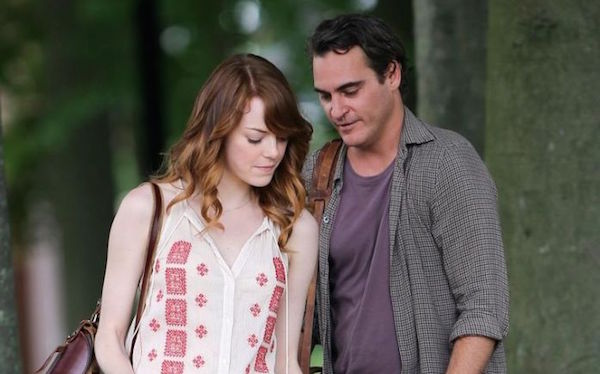


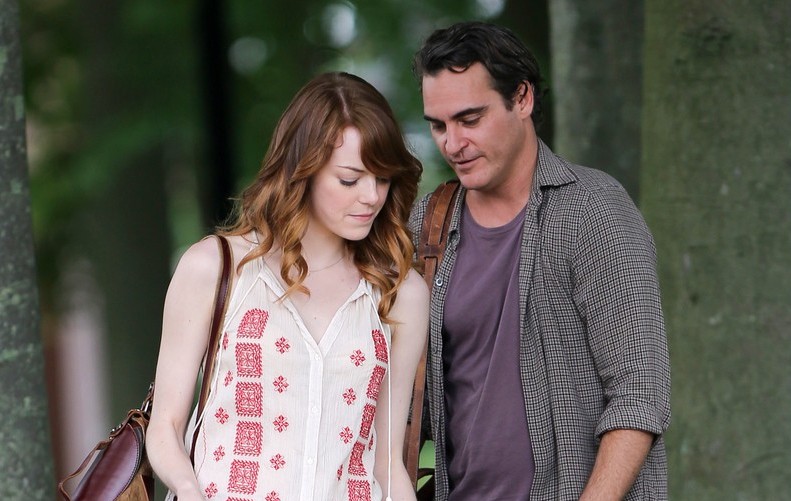

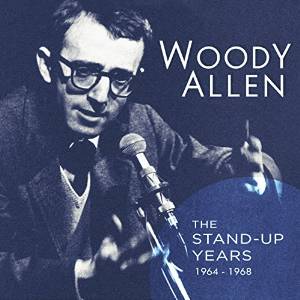


 The Daily Hatch