Category Archives: Taxes

Do the Republicans have the guts to cut spending?


Sometimes I truly wonder if the Republicans have the guts to cut spending? This is what I think when  I read articles like this one below. That is also the reason I wrote the series “The Sixty Six who resisted “Sugar-coated Satan Sandwich” series. Some links below.

Will Republicans Choose Sequester Savings or a Supercommittee Surrender?

Posted by Daniel J. Mitchell

The budget fights this year began with the “shutdown” battle, followed by the Ryan budget and then the debt limit. These fights have mostly led to uninspiring kiss-your-sister outcomes, which is hardly surprising given divided government.

Now the crowd in DC is squabbling over Obama’s latest stimulus/tax-the-rich scheme, though that’s really more of a test run by the White House to determine whether class warfare will be an effective theme for  the 2012 campaign.

The real budget fight, the one we should be closely monitoring, is what will happen with the so-called Supercommittee.

To refresh your memory, this is the 12-member entity created as part of the debt limit legislation. Split evenly between Democrats and Republicans, the Supercommittee is supposed to recommend $1.2 trillion-$1.5 trillion of deficit reduction over the next 10 years. Assuming, of course, that 7 out of the 12 members can agree on anything.

There are two critical things to understand about the Supercommittee.

With these points in mind, it doesn’t take a genius to realize that the Supercommittee is designed — at least from the perspective of the left — to seduce gullible Republicans into going along with a tax hike.

In other words, the likelihood that the Supercommittee will produce a good plan is about the same as seeing me in the outfield during the World Series (the real World Series, not this one).

Fortunately, there is a way to win this fight. All Republicans have to do is…(drum roll, please)…nothing.

To be more specific, if the Supercommittee can’t get a majority for a plan, then automatic budget cuts (a process known as sequestration) will go into effect. But don’t get too excited. We’re mostly talking about the DC version of spending cuts, which simply means that spending won’t rise as fast as previously planned.

But compared to an inside-the-beltway tax-hike deal, a sequester would be a great result.

You’re probably wondering if there’s a catch. After all, if Republicans can win a huge victory for taxpayers by simply rejecting the siren song of higher taxes, then isn’t victory a foregone conclusion?

It should be, but Republicans didn’t get the reputation of being the “Stupid Party” for nothing, and they are perfectly capable of snatching defeat from the jaws of victory.

There are three reasons why Republicans may fumble away victory, even though they have a first down on the opponent’s one-yard line.

If GOPers sell out for either of the first two reasons, then there’s really no hope. America will become Greece and we may as well stock up on canned goods, bottled water, and ammo.

The defense issue, though, is more challenging. Republicans instinctively want more defense spending, so Democrats are trying to exploit this vulnerability. They are saying — for all intents and purposes — that the defense budget will be cut unless GOPers agree to a tax hike.

Republicans should not give in to this budgetary blackmail.

I could make a conservative case for less defense spending, by arguing that the GOP should take a more skeptical view of nation building (the approach they had in the 1990s) and that they should reconsider the value of spending huge sums of money on an outdated NATO alliance.

But I’m going to make two other points instead, in hopes of demonstrating that a sequester is acceptable from the perspective of those who favor a strong national defense.

  • First, the sequester does not take place until January 2013, so defense hawks will have ample opportunity to undo the defense cuts – either through supplemental spending bills or because the political situation changes after the 2012 elections.
  • Second, the sequester is based on dishonest Washington budget math, so the defense budget would still grow, but not as fast as previously planned.

This chart shows what will happen to the defense budget over the next 10 years, based on Congressional Budget Office data comparing “baseline” outlays to spending under a sequester.

As you can see, even with a sequester, the defense budget climbs over the 10-year period by about $100 billion. And, as noted above, that doesn’t even factor in supplemental spending bills.

In other words, America’s national defense will not be eviscerated if there is a sequester.

Here’s the bottom line. The Supercommittee battle should be a no-brainer for the GOP.

They can capitulate on taxes, causing themselves political damage, undermining the economy, and enabling bigger government.

Or they can stick to their no-tax promise, generating significant budgetary savings with a sequester, and boosting economic performance by restraining the burden of government.

 
Related posts:

The Sixty Six who resisted “Sugar-coated Satan Sandwich” Debt Deal (Part 10)

The Sixty Six who resisted “Sugar-coated Satan Sandwich” Debt Deal (Part 10)   This post today is a part of a series I am doing on the 66 Republican Tea Party favorites that resisted eating the “Sugar-coated Satan Sandwich” Debt Deal. Actually that name did not originate from a representative who agrees with the Tea […]

The Sixty Six who resisted “Sugar-coated Satan Sandwich” Debt Deal (Part 9)

The Sixty Six who resisted “Sugar-coated Satan Sandwich” Debt Deal (Part 9) This post today is a part of a series I am doing on the 66 Republican Tea Party favorites that resisted eating the “Sugar-coated Satan Sandwich” Debt Deal. Actually that name did not originate from a representative who agrees with the Tea Party, […]

The Sixty Six who resisted “Sugar-coated Satan Sandwich” Debt Deal (Part 8)

The Sixty Six who resisted “Sugar-coated Satan Sandwich” Debt Deal (Part This post today is a part of a series I am doing on the 66 Republican Tea Party favorites that resisted eating the “Sugar-coated Satan Sandwich” Debt Deal. Actually that name did not originate from a representative who agrees with the Tea Party, but […]

The Sixty Six who resisted “Sugar-coated Satan Sandwich” Debt Deal (Part 7)

Duncan Hunter at San Diego Eagle Forum.MP4 The Sixty Six who resisted “Sugar-coated Satan Sandwich” Debt Deal (Part 7) This post today is a part of a series I am doing on the 66 Republican Tea Party favorites that resisted eating the “Sugar-coated Satan Sandwich” Debt Deal. Actually that name did not originate from a […]

The Sixty Six who resisted “Sugar-coated Satan Sandwich” Debt Deal (Part 6)

Rep Himes and Rep Schweikert Discuss the Debt and Budget Deal The Sixty Six who resisted “Sugar-coated Satan Sandwich” Debt Deal (Part 6) This post today is a part of a series I am doing on the 66 Republican Tea Party favorites that resisted eating the “Sugar-coated Satan Sandwich” Debt Deal. Actually that name did […]

The Sixty Six who resisted “Sugar-coated Satan Sandwich” Debt Deal (Part 5)

Rep. Quayle on Fox News with Neil Cavuto The Sixty Six who resisted “Sugar-coated Satan Sandwich” Debt Deal (Part 5) This post today is a part of a series I am doing on the 66 Republican Tea Party favorites that resisted eating the “Sugar-coated Satan Sandwich” Debt Deal. Actually that name did not originate from […]

The Sixty Six who resisted “Sugar-coated Satan Sandwich” Debt Deal (Part 4)

We Need a Balanced Budget! The Sixty Six who resisted “Sugar-coated Satan Sandwich” Debt Deal (Part 4) This post today is a part of a series I am doing on the 66 Republican Tea Party favorites that resisted eating the “Sugar-coated Satan Sandwich” Debt Deal. Actually that name did not originate from a representative who […]

The Sixty Six who resisted “Sugar-coated Satan Sandwich” Debt Deal (Part 3)

The Sixty Six who resisted “Sugar-coated Satan Sandwich” Debt Deal (Part 3) This post today is a part of a series I am doing on the 66 Republican Tea Party favorites that resisted eating the “Sugar-coated Satan Sandwich” Debt Deal. Actually that name did not originate from a representative who agrees with the Tea Party, […]

The current federal budget brought down to a level a family could understand

I got this off the internet. U.S. Tax revenue: $2,170,000,000,000 Fed budget: $3,820,000,000,000 New debt: $1,650,000,000,000 National debt: $14,271,000,000,000 Recent budget cut: $38,500,000,000 Now, remove 8 zeros and pretend it’s a household budget Annual family income: $21,700 Money the family spent: $38,200 New debt on the credit card: $16,500 Outstanding balance on credit card: $142,710 […]

The Sixty Six who resisted “Sugar-coated Satan Sandwich” Debt Deal (Part 2)

“What good is a debt limit that is always increased?” The Sixty Six who resisted “Sugar-coated Satan Sandwich” Debt Deal (Part 2) This post today is a part of a series I am doing on the 66 Republican Tea Party favorites that resisted eating the “Sugar-coated Satan Sandwich” Debt Deal. Actually that name did not […]
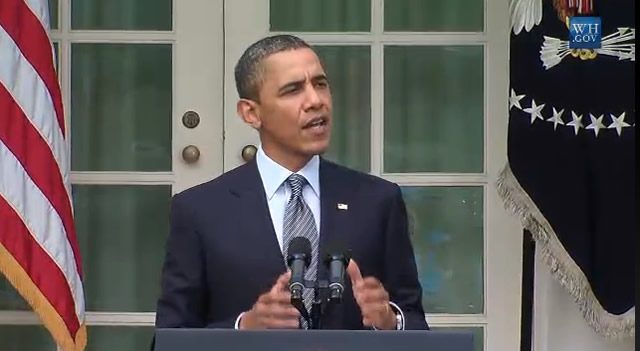
Heritage Foundation Scholars respond to Obama debt reduction proposal (Part 3)


I love going to the Heritage Foundation website for articles like this:

Obama’s Debt Reduction and Tax Proposal

Heritage Responds to Obama’s Debt Reduction and Tax Proposal

Mike Brownfield

September 19, 2011 at 11:16 am

Heritage’s experts watched President Barack Obama’s debt reduction and tax increase proposal. Here are their immediate reactions:

_______________

Raising Investment Uncertainty Will Prolong Economic Stagnation

One of the pillars of the President’s deficit reduction plan unveiled this morning is a new minimum tax rate for millionaires. Targeting American earners whose income often comes from investment profits, the President is proposing a special tax, the “Buffett Rule,” to increase the tax burden on investors.

Investment drives productivity and economic growth. Already, many investors are shying away from markets at this uncertain time, choosing instead to preserve their principal wealth in bonds and commodities such as gold. Proposing higher taxes on investment only increases uncertainty for investors and means that even less investment will occur. Even a little less investment leads to lower productivity, slower economic growth, weaker wages and salaries, and lower household wealth. This is the exact opposite of a jobs plan. It’s a plan to prolong the economic stagnation.

Holding necessary entitlement reforms hostage to higher taxation undermines debt reduction and economic recovery. According to the Heritage Foundation,

While it is currently popular to target high-income individuals for higher taxation, it is economic folly to target investment income. Raising the tax burden on investment income further damages the economy and ultimately affects all members of society. Investment income is highly elusive, as individuals and businesses can alter the timing of investment income and forego investment altogether if their returns fall below required levels. The current economic uncertainty, which increases risk premiums, is already causing many investments to be delayed or foregone. Policymakers are scrambling to encourage businesses and entrepreneurs to start investing again. Why they would then threaten to tax the income from these investments to pay for new entitlements is not clear.  […] Taxing investment income would […] reduce investment in the economy, which is dangerous during a period of recovery.

The President is correct in that our tax system is too complex. However, the President’s proposal to increase taxes on investors is the wrong way to reform our tax system.

Romina Boccia

Want to Tackle Spending? Obamacare Has Got to Go.

President Obama pointed to changes already enacted into law under Obamacare to reduce federal health spending, but the fact is, Obamacare will increase deficit spending significantly. To fix the health care system and restore fiscal responsibility in Washington, Obamacare has got to go.

The new health law relies on tax hikes and dubious savings from broken programs to cover the cost of a major Medicaid expansion and new health entitlement spending, despite the fact that serious reform is needed to rein in the cost of the health entitlements we already struggle to pay for (which the President rejected in his speech). New Obamacare entitlement spending includes a generous taxpayer-funded subsidy to offset the cost of coverage for several million Americans, and a new, government-run long-term care insurance program already acknowledged by independent experts to be unworkable and likely to require a taxpayer bailout (in other words, more deficit spending). Obamacare originally received a favorable CBO score only because of the budget gimmicks included in the legislation. Looking beyond the smoke and mirrors shows that not only will Obamacare fail to fix our health care system, but we simply cannot afford it. Repeal is the only solution.

The President also pointed to his signature health care legislation to control the cost of health, but the new law does not tackle the main drivers of runaway health care spending and will not control costs or make health care more affordable. It leaves in place a flawed system which insulates patients from the cost of their health care decisions and encourages unnecessary spending. It keeps health care consumers from choosing the health plan that best suits their needs and from seeking the best available value for the medical goods and services they require. Obamacare increases the role of government in every corner of the health care system and grows dependency on flawed government health care programs.

Kathryn Nix


Bill Clinton condemns class-warfare and engages in it in same speech

President Bill Clinton’s Speech Oct 1, 2011 with Joshua & Anna at Little Rock Arkansas

Uploaded by on Oct 2, 2011

_______________________________

Recently while being critical of Lt. Governor Mark Darr, the liberal columnist John Brummett asserted, “Partisan debate is good, indeed vital. Partisan obstruction is not. And not knowing what you’re talking about ought to warrant a demerit…”

Brummett’s criticism could have been leveled against Bill Clinton recently because he is involved in partisan politics for President Obama and in the very same speech he says two things that show that he doesn’t know what he is talking about. 1. He brags about bringing people together while attacking Republicans. 2. He says he did not engage in class-warfare in a speech where he engages in class-warfare. Of course, Brummett will omit pointing this out in his future columns.

In this speech in Little Rock on October 1, 2011 former President Bill Clinton noted:

There is no example of a country in the fix we are in that can balance the budget without a combination of spending cuts, the people who can afford it paying more and growing the economy.

What was the secret of the Clinton Presidency? Clinton tells us in the same speech:

We decided to stop the politics of pitting one American against another by race…income, by anything else.

_________-

President Obama and other politicians are advocating higher taxes, with a particular emphasis on class-warfare taxes targeting the so-called rich. This Center for Freedom and Prosperity Foundation video explains why fiscal policy based on hate and envy is fundamentally misguided. For more information please visit our web page: www.freedomandprosperity.org.

I just don’t understand how a politician can say two things in the same speech that cancel each other out? John Brummett and Max Brantley and  liberal bloggers like Blue Arkansas love to try to act like all of our problems would be solved if we could take the money from the rich guy. Below is an article that makes some great points concerning class-warfare:

Soaking the Rich Is Not Fair

by Jeffrey A. Miron

Jeffrey A. Miron is Senior Lecturer and Director of Undergraduate Studies at Harvard University and Senior Fellow at the Cato Institute. Miron blogs at JeffreyMiron.com and is the author of Libertarianism, from A to Z.

Added to cato.org on September 2, 2011

This article appeared on The Huffington Post on September 2, 2011.

What is the “fair” amount of taxation on high-income taxpayers?

To liberals, the answer is always “more.” Liberals view high income — meaning any income that exceeds their own — as the result of luck or anti-social behavior. Hence liberals believe “fairness” justifies government-imposed transfers from the rich to everyone else. Many conservatives accept this view implicitly. They oppose soak-the-rich policies because of concern over growth, but they do not dispute whether such policies are fair.

But high tax rates on the rich are not fair or desirable for any other reason; they are an expression of America’s worst instincts, and their adverse consequences go beyond their negatives for economic growth.

The liberal hatred of the rich is a minority view, not a widely shared American value.

Consider first the view that differences in income result from luck rather than hard work: some people are born with big trust funds or innate skill and talent, and these fortuitous differences explain much of why some people have higher incomes than others.

Never mind that such a characterization is grossly incomplete. Luck undoubtedly explains some income differences, but this is not the whole story. Many trust fund babies have squandered their wealth, and inborn skill or talent means little unless combined with hard work.

But even if all income differences reflect luck, why are government-imposed “corrections” fair? The fact that liberals assert this does not make it true, any more than assertions to the contrary make it false. Fairness is an ill-defined, infinitely malleable concept, readily tailored to suit the ends of those asserting fairness, independent of facts or reason.

Worse, if liberals can assert a right to the wealth of the rich, why cannot others assert the right to similar transfers, such as from blacks to whites, Catholics to Protestants, or Sunni to Shia? Government coercion based on one group’s view of fairness is a first step toward arbitrary transfers of all kinds.

Now consider the claim that income differences result from illegal, unethical, or otherwise inappropriate behavior. This claim has an element of truth: some wealth results from illegal acts, and policies that punish such acts are appropriate.

But most inappropriate wealth accumulations results from bad government policies: those that restrict competition, enable crony capitalism, and hand large tax breaks to politically connected interest groups. These differences in wealth are a social ill, but the right response is removing the policies that promote them, not targeting everyone with high income.

The claim that soaking the rich is fair, therefore, has no basis in logic or in generating desirable outcomes; instead, it represents envy and hatred.

Why do liberals hate the rich? Perhaps because liberals were the “smart” but nerdy and socially awkward kids in high school, the ones who aced the SATs but did not excel at sports and rarely got asked to the prom. Some of their “dumber” classmates, meanwhile, went on to make more money, marry better-looking spouses, and have more fun.

Liberals find all this unjust because it rekindles their emotional insecurities from long ago. They do not have the honesty to accept that those with less SAT smarts might have other skills that the marketplace values. Instead, they resent wealth and convince themselves that large financial gains are ill-gotten.

Jeffrey A. Miron is Senior Lecturer and Director of Undergraduate Studies at Harvard University and Senior Fellow at the Cato Institute. Miron blogs at JeffreyMiron.com and is the author of Libertarianism, from A to Z.


More by Jeffrey A. Miron

The liberal views on fairness and redistribution are far more defensible, of course, when it comes to providing for the truly needy. Reasonable people can criticize the structure of current anti-poverty programs, or argue that the system is overly generous, or suggest that private charity would be more effective at caring for the least vulnerable.

The desire to help the poor, however, represents a generous instinct: giving to those in desperate situations, where bad luck undoubtedly plays a major role. Soaking the rich is a selfish instinct, one that undermines good will generally.

And most Americans share this perspective. They are enthusiastic about public and private attempt to help the poor, but they do not agree that soaking the rich is fair. That is why U.S. policy has rarely embraced punitive income taxation or an aggressive estate tax. Instead, Americans are happy to celebrate well-earned success. The liberal hatred of the rich is a minority view, not a widely shared American value.

For America to restore its economic greatness, it must put aside the liberal hatred of the rich and embrace anew its deeply held respect for success. If it does, America will have enough for everyone.

Related posts:

Warren Buffett does not endorse Obama’s plan

Addington, McConaghy Debate Obama’s Jobs Plan Published on Sep 9, 2011 by Bloomberg Sept. 9 (Bloomberg) — David Addington, vice president at the Heritage Foundation, and Ryan McConaghy, economic director at Third Way, discuss President Barack Obama’s $447 billion jobs plan. They speak with Deirdre Bolton and Erik Schatzker on Bloomberg Television’s “InsideTrack.” (Source: Bloomberg) […]

Is soaking the rich fair?

Is soaking the rich fair? Five Key Reasons to Reject Class-Warfare Tax Policy Uploaded by afq2007 on Jun 15, 2009 President Obama and other politicians are advocating higher taxes, with a particular emphasis on class-warfare taxes targeting the so-called rich. This Center for Freedom and Prosperity Foundation video explains why fiscal policy based on hate […]

Is it class warfare? Brummett says no

Take a look above at this clip. In his article “Class Warfare versus Pay it forward,” Sept 26, 2011, Arkansas News Bureau, John Brummett tries to make the case that Obama is not involved in class warefare. He quotes Elizabeth Warren to prove his point. Unfortunately, logically this argument fails because although we all benefit […]

Obama’s tax plan would not work even if tried

The Flat Tax: How it Works and Why it is Good for America Uploaded by afq2007 on Mar 29, 2010 This Center for Freedom and Prosperity Foundation video shows how the flat tax would benefit families and businesses, and also explains how this simple and fair system would boost economic growth and eliminate the special-interest […]

Three points where Brummett misses the boat in discussion versus Charlie Collins

Five Key Reasons to Reject Class-Warfare Tax Policy Uploaded by afq2007 on Jun 15, 2009 President Obama and other politicians are advocating higher taxes, with a particular emphasis on class-warfare taxes targeting the so-called rich. This Center for Freedom and Prosperity Foundation video explains why fiscal policy based on hate and envy is fundamentally misguided. […]

President Obama and Alternative Minimum Tax

President Obama and Alternative Minimum Tax Dan Mitchell does it again. He is always right on the mark. CPAs Celebrate as Obama Proposes to Create a Turbo-Charged Alternative Minimum Tax Posted by Daniel J. Mitchell Wow, this is remarkable. The alternative minimum tax (AMT) is one of the most-hated features of the tax code. It […]

Buffett wants the rich soaked but that will not solve our problem in the budget

Max Brantley on the Arkansas Times Blog, August 15, 2011, asserted: Billionaire Warren Buffett laments, again, in a New York Times op-ed how the rich don’t share the sacrifices made by others in the U.S.. He notes his effectiie tax rate of 17 percent is lower than that of many of the working people in his office on account of preferences for […]

Brummett touts Buffett’s math, but it is wrong

Five Key Reasons to Reject Class-Warfare Tax Policy Max Brantley on the Arkansas Times Blog, August 15, 2011, asserted:   Billionaire Warren Buffett laments, again, in a New York Times op-ed how the rich don’t share the sacrifices made by others in the U.S.. He notes his effectiie tax rate of 17 percent is lower than […]

President Obama will hurt charities if he is given the chance

President Obama will hurt charities if he is given the chance

Is there any common sense with the Obama administration?

Ryan Messmore

September 14, 2011 at 11:45 am

President Barack Obama proposes to pay for his $447 billion jobs bill mainly by limiting tax deductions for wealthy Americans. Unfortunately, if enacted, this policy will likely dampen charitable giving and further shift perceived responsibility for social welfare from individual donors to the state.

The President’s plan calls for lowering the rate at which wealthy taxpayers can take itemized deductions—from the current rate of 35 percent down to 28 percent, beginning in 2013. The change would affect individuals making more than $200,000 (and families making more than $250,000) per year.

This isn’t the first time President Obama has suggested this approach. He did so in his proposed 2011 and 2012 federal budgets and in 2009 attempted it as a way to pay for his health care plan.

The result of President Obama’s proposal will likely be several billion dollars in decreased revenue each year for hospitals, educational institutions, and nonprofits that help the poor. While giving would probably drop only a small percentage, the anticipated amount would total more than the combined annual operating budgets of the Ameri­can Cancer Society, World Vision, St. Jude Chil­dren’s Research Hospital, Habitat for Humanity, and the American Heart Association.

Those who are served by these institutions aren’t the only ones who would be hurt by decreased giving. Many people’s jobs would also be threatened.

“If charities have less resources, they’ll be forced to choose between laying off employees or cutting needed services,” argues William C. Daroff of the Jewish Federations of North America. “Nonprofits employ almost 10 percent of the work force nationwide, and in many states nonprofits are the largest employers. In our view, cutting the deduction is like cutting your nose to spite your face.”

While it’s true that most donors don’t make gifts based solely on the charitable deduction, experts suggest that the deduction sometimes alters the manner and timing of giving as well as the number and size of gifts. This is especially true concerning large gifts from high-income Americans, the very taxpayers Obama’s plan targets. These high earners make up only a small percentage of total American households, but they contribute almost half of the donations claimed each year as charitable deductions.

Perhaps most importantly, Obama’s proposal sends the message that federal bureaucracy can deploy the resources of the wealthy more effectively than civil society can. Decreasing an incentive for charitable giving implies that the state should assume responsibility for people’s needs, even at the expense of vital nonprofit organizations. Churches, ministries, and other community-based institutions, however, are often better equipped to serve people in need. And they often do so at reduced costs.

At a time when charities most need resources to care for the hurting and hire more employees, President Obama should seek ways to encourage voluntary giving and protect nonprofit groups. Instead, his proposed jobs bill moves the dial of social responsibility one more notch in the direction of the state.

Tax increases are not the way to go

Tax increases are not the way to go, but the president doesn’t get that.

Liberals love tax increases.

Seven Reasons Why Tax Increases Are the Wrong Approach

Uploaded by on May 3, 2011

This Economics 101 video from the Center for Freedom and Prosperity gives seven reasons why the political elite are wrong to push for more taxes. If allowed to succeed, the hopelessly misguided pushing to raise taxes would only worsen our fiscal mess while harming the economy.

The seven reasons provided by the video against this approach are as follows:

1) Tax increases are not needed;
2) Tax increases encourage more spending;
3) Tax increases harm economic performance;
4) Tax increases foment social discord;
5) Tax increases almost never raise as much revenue as projected;
6) Tax increases encourage more loopholes; and,
7) Tax increases undermine competitiveness

________________________

The Real Budget Problem

by Michael D. Tanner 

Michael Tanner is a senior fellow at the Cato Institute and coauthor of Leviathan on the Right: How Big-Government Conservatism Brought Down the Republican Revolution.

Added to cato.org on June 15, 2011

This article appeared on National Review (Online) on June 15, 2011.

If you listen to the discussion of the deficit in the mainstream media or the talking points from leading Democrats on the Hill (but I repeat myself), the refrain is that tax increases must be part of any deficit fix.

There is a superficial moderation to that appeal, a sort of splitting the difference between Republicans who want to cut spending and Democrats who want to pay for popular programs. And, frankly, some tax breaks and loopholes should be eliminated — ethanol subsidies, for example — not as revenue raisers, but because they are such bad economic policies. 

But raising taxes to reduce the deficit would be bad policy for several reasons:

There’s not really a revenue problem. Democrats correctly point out that federal tax revenues are now just 16.5 percent of GDP, well below the post–World War II average of roughly 18 percent. This would have meant a bigger budget deficit than usual even if spending hadn’t exploded in recent years. But much of that decline is due to the economic slowdown, not to the Bush tax cuts or other policy changes. In fact, the Congressional Budget Office predicts that as economic growth returns, federal tax revenues will grow by an average of 7.3 percent annually over the next ten years. By the end of the decade, taxes will have pushed back through the 18 percent level, and be headed toward 20 percent — all without any changes in tax policy.

Government is too big, too intrusive, and too expensive. It doesn’t take more taxes to fix that.

There is a spending problem. Focusing on taxes implies that the problem is how to pay for spending — taxes or debt — not the spending itself. But, as Milton Friedman constantly pointed out, the real cost of government is the size of government. According to the CBO, the federal government is on track to consume 42 percent of GDP by 2050. (State and local governments will consume another 10 to 15 percent of GDP.) Would we really be better off if we raised taxes enough to pay for all that spending?

You can’t tax enough. The president keeps talking about solving our deficit problems by taxing millionaires and billionaires. Congressional Democrats throw in oil companies. But you could confiscate — not tax, confiscate — every penny belonging to every millionaire in America and cover barely one-tenth of our government’s total indebtedness (including the unfunded liabilities of Social Security and Medicare). Meanwhile the tax breaks for oil and gas companies amount to about $1.4 billion annually. Those tax breaks may or may not be defensible, but they amount to less than 1 percent of this year’s budget deficit.

Bait and switch.  If you look at most of the deficit-cutting proposals, including the president’s, they call for tax increases today in exchange for spending cuts somewhere in the future. I think we’ve seen that movie before. In fact, the president’s proposal actually makes the bait-and-switch game worse. His proposal says that if Congress didn’t actually make those spending cuts, there would be additional tax increases. So Republicans would be agreeing to tax increases today in exchange for . . . more tax increases tomorrow.

Tax hikes are bad for the economy and for freedom. Of course it’s an exaggeration to suggest that all tax cuts pay for themselves, but there is no doubt that high taxes discourage the type of investment and risk-taking necessary to grow the economy and create jobs. Every dollar that the federal government takes in taxes is one less dollar that the private sector can save, invest, or spend as it sees fit. Unless you believe that the government knows better than the private sector what to do with that money, this exchange hurts the economy. And unless you believe that our money really belongs to the government, it means we are less free to make use of the fruits of our labor as we see fit.

Republicans should not fall into the trap of reflexively defending every special-interest loophole in the tax code. But neither should they be seduced by the argument that we need a “balanced” approach to deficit reduction that includes tax increases. Government is too big, too intrusive, and too expensive. It doesn’t take more taxes to fix that.

The result of having lots of taxes is the mean IRS.

The result of having lots of taxes is the mean IRS.

The IRS: Even Worse Than You Think

Posted by Daniel J. Mitchell

Since it is tax-filing season and we all want to honor our wonderful tax system, let’s go into the archives and show this video from last year about the onerous compliance costs of the internal revenue code.

Narrated by Hiwa Alaghebandian of the American Enterprise Institute, the mini-documentary explains how needless complexity creates an added burden – sort of like a hidden tax that we pay for the supposed privilege of paying taxes.

__________

The Onerous Compliance Cost of the Internal Revenue Code

Uploaded by on Apr 12, 2010

The tax system is a complicated nightmare that forces taxpayers to devote ever-larger amounts of time, money, energy, and other resources in hopes of complying with the internal revenue code and avoiding IRS persecution. This CF&P Foundation video shows that this corrupt mess is the result of 97 years of social engineering and industrial policy that began almost immediately after that dark day in 1913 that the income tax was created. www.freedomandprosperity.org

______________________

Two things from the video are worth highlighting.

First, we should make sure to put most of the blame on Congress. As Ms. Alaghebandian notes, the IRS is in the unenviable position of trying to enforce Byzantine tax laws. Yes, there are examples of grotesque IRS abuse, but even the most angelic group of bureaucrats would have a hard time overseeing 70,000-plus pages of laws and regulations (by contrast, the Hong Kong flat tax, which has been in place for more than 60 years, requires less than 200 pages).

Second, we should remember that compliance costs are just the tip of the iceberg. The video also briefly mentions three other costs.

    1. The money we send to Washington, which is a direct cost to our pocketbooks and also an indirect cost since the money often is used to finance counterproductive programs that further damage the economy.
    2. The budgetary burden of the IRS, which is a staggering $12.5 billion. This is the money we spend to employ an army of tax bureaucrats that is larger than the CIA and FBI combined.
    3. The economic burden of the tax system, which measures the lost economic output from a tax system that penalizes productive behavior.

The way to fix this mess, needless to say, is to junk the entire tax code and start all over.

I’ve been a big proponent of the flat tax, which would mean one low tax rate, no double taxation of savings, and no corrupt loopholes. But I’m also a big fan of national sales tax proposals such as the Fair Tax, assuming we can amend the Constitution so that greedy politicians don’t pull a bait and switch and impose both an income tax and a sales tax.

But the most important thing we need to understand is that bloated government is our main problem. If we had a limited federal government, as our Founding Fathers envisioned, it would be almost impossible to have a bad tax system. But if we continue to move in the direction of becoming a European-style welfare state, it will be impossible to have a good tax system.

Federal Revenues Have More Than Tripled Since 1965

Federal Revenues Have More Than Tripled Since 1965

Overall tax revenues have risen despite a recent decline due to the recession. Congress cut income taxes and the death tax in 2001 and capital gains taxes and dividends in 2003, yet revenues continued to surge even after the tax cuts were passed.

INFLATION-ADJUSTED DOLLARS (2010)

Download

Federal Revenues Have More Than Tripled Since 1965

Source: White House Office of Management and Budget.

Chart 14 of 42

In Depth

  • Policy Papers for Researchers

  • Technical Notes

    The charts in this book are based primarily on data available as of March 2011 from the Office of Management and Budget (OMB) and the Congressional Budget Office (CBO). The charts using OMB data display the historical growth of the federal government to 2010 while the charts using CBO data display both historical and projected growth from as early as 1940 to 2084. Projections based on OMB data are taken from the White House Fiscal Year 2012 budget. The charts provide data on an annual basis except… Read More

  • Authors

    Emily GoffResearch Assistant
    Thomas A. Roe Institute for Economic Policy StudiesKathryn NixPolicy Analyst
    Center for Health Policy StudiesJohn FlemingSenior Data Graphics Edito

Will the Republicans embrace an agenda that will get our country back on tract?

Will the Republicans embrace an agenda that will get our country back on tract?

Republicans need to cut spending as the video above says. I wish the Republican candidates for president will embrace these policy positions:

A Republican Agenda for Real Change

by Doug Bandow

This article appeared in Forbes on October 3, 2011

The desperate search for an acceptable Republican Party presidential candidate continues. Republican leaders apparently are pushing New Jersey Gov. Chris Christie, who previously said no, to jump into the race.

The GOP’s frustration is palpable. Mitt Romney has been running for four years but generates little enthusiasm. Rick Perry was an instant front-runner before losing much of his support after unimpressive debate performances. Michelle Bachmann briefly streaked across the political firmament but now barely registers in the polls. Newt Gingrich committed political seppuku shortly after announcing his candidacy. Ron Paul’s support is fervent but limited.

However, the real Republican problem is positions, not candidates.

Doug Bandow is a senior fellow at the Cato Institute. A former special assistant to Ronald Reagan, he is the author of Foreign Follies: America’s New Global Empire(Xulon).

More by Doug Bandow

The Republican Party cheerfully ran up the national debt before surrendering the keys to Capitol Hill and the White House. President George W. Bush’s promiscuous war-making cost the U.S. thousands of lives and hundreds of billions of dollars, while making Americans less secure. The GOP centralized more power in Washington. Republican lawmakers managed to turn laudable opposition to tax hikes into a deplorable defense of the status quo.

Most of the GOP presidential candidates offer little new. Mitt Romney, the ultimate political weathervane, implemented ObamaCare in Massachusetts before there was ObamaCare. He now fervently defends Social Security, despite its design as a public Ponzi scheme. Gov. Perry talks of domestic budget cuts but on foreign policy appears to be Bush-lite, yet another hawk disconnected from reality. The sharpest dissent from big government conservatism comes from the candidates least likely to win the nomination: Rep. Paul, former Utah Gov. Jon Huntsman, and former New Mexico governor Gary Johnson, who has been excluded from most of the debates.

President Barack Obama obviously is vulnerable, as well he should be. The problem is not that he is responsible for all of America’s economic woes — no president “runs” the $15 trillion U.S. economy. But this president has no solution for slow growth and high unemployment other than spending more money, increasing the deficit, and running up the debt.

Unfortunately for the Republicans, simply denouncing President Obama for every ill known to man may not lead to victory. Voters dislike much current GOP orthodoxy. President Obama could win an election which turns into competitive political demonization and personal destruction.

Republicans should offer a positive agenda while addressing the party’s past failings. First, they should explain that current budget policy is unsustainable on both a short- and a long-term basis. Economist Larry Kotlikoff figures that America’s real public debt is $211 trillion, 15 times the nominal national debt. Public finance in states like California already looks a lot like that in Greece.

Unless Americans want to turn their entire incomes over to government, public spending must be cut, and cut sharply. And it must be cut across-the-board.

However, to regain lost credibility GOP politicians should lead with proposals to cut spending benefiting “their” interest groups. Corporate welfare should top any Republican Party list of budget cuts. Too often Republican apparatchiks have been pro-business rather than pro-free market, attacking financial transfers to the poor while endorsing subsidies for corporate America.

The GOP also needs to support significant reductions in military outlays. There is no more important responsibility for the U.S. government than protecting America. However, most of the Pentagon’s current activities have little to do with protecting America.

Instead, most U.S. forces currently defend prosperous, populous allies around the world. Europe has a larger GDP and population than America, yet continues to rely on Washington to provide most of NATO’s combat capability. Japan long had the world’s second largest economy but nevertheless relied on America for its protection. South Korea has 40 times the GDP of its northern adversary, but nearly 30,000 U.S. military personnel remain in the South, creating a “tripwire” for war.

Equally wasteful and far more costly in human terms have been nation-building exercises in Somalia, Bosnia, Kosovo, Iraq, Afghanistan, and more. Going to war in 2001 to punish the Taliban for hosting terrorist training camps made sense. Staying at war a decade later in an attempt to create a competent, honest centralized government in Kabul is foolish.

Also required is an honest discussion of Social Security’s and Medicare’s funding crises. Neither is financially sustainable and both risk triggering generational conflict. The longer Congress puts off addressing these issues the costlier will be any solution.

The GOP should reaffirm its opposition to tax hikes, but emphasize that taxes can be kept low only if outlays are reduced. Endless borrowing threatens a financial death spiral of increased debt, higher interest payments, slower economic growth, and lower investor confidence. The U.S. now is on the road to fiscal ruin.

Moreover, Republicans should endorse President Obama’s attack on special interest tax breaks. Not all tax preferences are equally bad, but the narrower the tax break the more it approaches a special interest subsidy. The GOP should push legislation that simultaneously kills dubious tax “loopholes” and reduces overall marginal tax rates. Republicans should similarly respond to tax proposals from President Obama or congressional Democrats. Rather than defend the undefendable, the GOP should challenge yet another form of corporate welfare.

With job creation at issue, Republicans should develop a list of regulations and taxes which interfere with a growing economy. Political candidates enjoy denouncing “over-regulation” in the abstract, but they would be more convincing if they targeted specific policies costing real jobs. The House GOP should follow the example of its earlier majority which held hearings on regulatory abuses.

Republicans should challenge politically popular public agencies. For instance, the government-sponsored enterprises Fannie Mae and Freddie Mac were at the epicenter of the housing and financial crises. The GOP rightly criticized Democrats for not including the two GSEs in last year’s financial “reform” bill. But so far House Republicans have done nothing to close Fannie and Freddie, which continue to lose money.

Deregulation should include proposals to make more market friendly controls which are necessary even in a free society. After all, few Americans want to breathe dirty air or swim in dirty water. And there is no simple market solution to such problems. But people don’t want to needlessly waste money and destroy jobs when cleaning up the environment.

The Republicans also should offer a more restrained foreign policy. Doing so is necessary to curtail military outlays — in effect, the defense budget is the price of a nation’s foreign policy, since the more Washington seeks to do in the world, the more military force it requires. So long as the U.S. government is determined to dominate every region of the globe against every power, it will have to spend as much on the military as the rest of the world combined. Indeed, real, inflation-adjusted military outlays have doubled over the last decade, and today are higher than at any point during the Cold War, Korean War, and Vietnam War.

But a more humble foreign policy also would be a better foreign policy. Rather than engage in social engineering abroad, Republican politicians should leave friendly states with responsibility for international problems. If there is a problem in the Balkans or North Africa, Europe should address it. Japan, South Korea, Australia, and other democratic nations should cooperate to restrain potential Chinese aggressiveness. Only the Afghans can create a sustainable political order, of whatever form, in Afghanistan.

The GOP should simultaneously support a globally engaged America and Americans. For instance, international cooperation can help meet humanitarian, environmental, and other problems which transcend national boundaries. Whatever U.S. policy toward illegal aliens, Americans should expand the legal immigration of entrepreneurial professionals.

Trade benefits Americans. Washington’s failure to ratify the free trade agreement with South Korea is beyond foolish. A commercial war with China would hurt Americans while poisoning the most important bilateral relationship of the 21st century.

Other issues also deserve attention — such as expanding educational opportunities for children stuck in poorly performing public schools. Even here, however, the GOP needs to break with recent Republican Party orthodoxy. President Bush and the Republican Congress centralized even more authority in Washington with the “No Child Left Behind” legislation.

Perhaps Chris Christie or some other late electoral entrant will revolutionize the GOP presidential sweepstakes. But without good ideas well-expressed, the GOP could still end up outside the White House looking in. The Republican Party deserves to win in 2012 only if it recognizes that it deserved to lose in 2008.

Heritage Foundation Scholars respond to Obama debt reduction proposal (Part 2)

I love going to the Heritage Foundation website for articles like this:

Obama’s Debt Reduction and Tax Proposal

Heritage Responds to Obama’s Debt Reduction and Tax Proposal

Mike Brownfield

September 19, 2011 at 11:16 am

Heritage’s experts watched President Barack Obama’s debt reduction and tax increase proposal. Here are their immediate reactions:

_______________

The President’s Debt Reduction Proposals: The Wrong Diagnosis

The President’s “debt reduction” proposals released today are a fine statement of liberal ideology, but a poor attempt at fiscal policy. His so-called “balanced approach” – using a mix of spending reductions and tax increases – is the wrong formulation to start with. It merely perpetuates a misunderstanding of the fundamental problem: deficits and debt are symptoms; the underlying illness is excessive and uncontrolled spending.

The federal government today is claiming roughly one-fourth of total economic output – about 25 percent of gross domestic product (GDP) – a post-World War II record. This is dead weight on the economy, because every dollar of spending gets paid for – through taxes, borrowing, fees, offsetting receipts, etc. – and hence is no longer available to growth producing activities in the economy. That is why spending is considered one of the best measures of the size and scope of government. As Professor Allen Schick has written, fundamentally government is what it spends.

But even more problematic than the level of spending is its trajectory – especially in federal entitlements. According to the latest figures by the Congressional Budget Office, entitlement spending is projected to rise at a rate of about 5.3 percent per year. That is faster than projected inflation, and faster than nominal GDP. So even if the gap between spending and revenue were closed, entitlements would immediately begin outrunning taxes again, resurrecting deficits.

As is well known, the problem is most acute in the Big Three entitlements: Social Security is growing at a rate of 5.8 percent per year, Medicare at 6.3 percent, and Medicaid at 9 percent. Clearly, these growth rates cannot be lowered by trimming around the edges of the programs, cutting wasteful spending and overpayments, and squeezing medical providers. It requires fundamental reforms that alter the incentives toward overutilization and inefficient delivery of medical services. But these are exactly the kinds of things the President has ruled out. He expressly rejects adjusting benefits or eligibility. He claims his proposal will save $248 billion in Medicare, of which 90 percent would come from reducing overpayments, not from restructuring the program. This is not a serious proposal for addressing the government’s spending and debt problems.

Similarly, he claims savings “that build on the Affordable Care Act” almost entirely from vague improvements in efficiency: “by reducing wasteful spending and erroneous payments, and supporting reforms that boost the quality of care.” Nevertheless, it is curious that his vaunted health care program – which was advertised as reducing deficits – is so inefficient that it is already projected to generate $320 billion in overspending over the next 10 years.

In addition to all these failings, the President takes credit for a whopping $2.3 trillion in spending reductions that either are already assumed, or are based on manufactured spending projections.

First he claims $1.2 trillion in savings (including debt service reduction) from the spending caps in the Budget Control Act. Those are not new savings.

Even more exotic is his $1.1 trillion in savings from drawing down military activities in Iraq and Afghanistan. The President’s budget proposed a total of just $576.5 billion over 10 years for Overseas Contingency Operations (OCO). This amount consists of a $126.5-billion request for fiscal year 2012, and then placeholders of $50 billion a year through 2021. In other words, the 10-year total is largely illusory. Even if it were real, however, it would be impossible to save $1.1 trillion in war spending when the President proposed to spend only about half that amount. It appears the savings are measured against a Congressional Budget Office (CBO) baseline hat assumed the peak, 2010 “surge” level for war spending, and then inflated it for subsequent years. This was an unreal figure to begin with – and one CBO removed in estimating discretionary savings in the Budget Control Act – and yet the President assumes the savings. This is emblematic of just how disingenuous his debt reduction plan truly is.

This is not a serious effort to address the government’s very real spending and deficit crisis – which has worsened significantly in the past two-and-a-half years. It is, to repeat, ideology, not policy.

Patrick Louis Knudsen
Grover M. Hermann Senior Fellow in Federal Budgetary Affairs

Tax Hikes Not the Answer, but Obama Wants Them to Be

President Obama seems intent on not solving our budget and debt crisis. Indeed, he seems almost fixated on making it worse.  His latest plan would immediately ramp up spending to “jolt” job creation in ways that have proven to fail. Once again, Obama is sticking to his strategy of ramping up spending thus “locking in” higher levels that make the job of budget cutters more difficult.  Somehow, he maintains, this is necessary and right for America, making it seem that this spending is inevitable and inexorable.  Thus, the only thing we can do is to hike taxes.

Riiiiiiight.

Tax hike are not the answer.  Plain and simple.  Unless we fundamentally tackle entitlement programs taxes will have to be perpetually raised to keep pace with dramatic growth in spending as Medicare, Medicaid and – yes Mr. President — Social Security grow like a giant tsunami blowing toxic red ink all over the budget and the economy.

Yes, the President did propose spending cuts.  Teeeeensie tiny ones.  $250 billion to Medicare and $72 billion to Medicaid likely over ten years. But bear in mind these are two of the biggest and fastest growing programs in the budget. Medicare this year alone is over $500 billion and over the next ten years will likely reach $7.5 trillion.  But here, the devil is in the details.  The small changes he may propose that would affect retirees will be backloaded – until after any possible second term.  And he abandons future retirees by taking any changes to Social Security off the table. He’s right that spending cuts alone aren’t the solution – the policies must be right too.

Obama is demanding a “balanced” approach as though somehow hiking taxes is both fair and necessary.  But this notion that he is pushing – half tax hikes and half spending cuts – is beyond the class warfare message it sends.  It is a tactic.  A tactic to stall the real reforms that our leaders in Washington must undertake now in order to avert a fiscal, economic and moral crisis.

The simple fact is that our budget and debt crisis can be solved without hiking taxes.   Saving the American Dream, the Heritage Plan to Fix the Debt, Cut Spending and Restore Prosperity is a bold, innovative plan that does just that.  It transforms our entitlement programs, rolls back wasteful and inefficient spending, protects the nation and overhauls our punitive, inefficient and uncompetitive tax code.

Federal Spending needs a complete do-over. We must return to our roots our founding fathers’ laid out – of a limited government. A low tax, low spending and fast growing nation.  One where our kids can enjoy the same kind of opportunity as their parents and grandparents.  One where our seniors know they can go into retirement with the economic security that they will be able to access quality health care that works for them, and a Social Security benefit that will protect them from poverty.

President Obama’s newest plan is simply his April speech cast under the lighting of the Super Committee with the election as a backdrop.  The nation needs more.

Alison Fraser

Letting Tax Cuts Expire Will Not Balance the Budget

Letting Tax Cuts Expire Will Not Balance the Budget

(This chart originally came out before the decision was made in Dec of 2010 to extend the tax cuts, but it is important now to look at this subject again since they will again expire at the end of 2012!!!)

Everyone wants to know more about the budget and here is some key information with a chart from the Heritage Foundation and a video from the Cato Institute about the Laffer Curve. In a year and half (end of 2012) the Bush Tax Cuts will expire. However, is that wise? Not if you understand the Laffer Curve.

Some argue for allowing the 2001 and 2003 tax cuts to expire, including subjecting the middle class to the alternative minimum tax in order to balance the budget. Under this scenario, unaffordable deficit spending would still continue, and economic growth and job creation would suffer.

PERCENTAGE OF GDP

Download

Letting Tax Cuts Expire Will Not Balance the Budget

Source: Congressional Budget Office.

Chart 34 of 42

In Depth

  • Policy Papers for Researchers

  • Technical Notes

    The charts in this book are based primarily on data available as of March 2011 from the Office of Management and Budget (OMB) and the Congressional Budget Office (CBO). The charts using OMB data display the historical growth of the federal government to 2010 while the charts using CBO data display both historical and projected growth from as early as 1940 to 2084. Projections based on OMB data are taken from the White House Fiscal Year 2012 budget. The charts provide data on an annual basis except… Read More

  • Authors

    Emily GoffResearch Assistant
    Thomas A. Roe Institute for Economic Policy StudiesKathryn NixPolicy Analyst
    Center for Health Policy StudiesJohn FlemingSenior Data Graphics Editor