Category Archives: Taxes

Ernie Dumas:Tax cuts explode deficit

Ernie Dumas in the Arkansas Times, Jan 18, 2012 argued:

A big majority of Americans are concerned about growing income inequality and government favor for the rich, and they understand that lower taxes do directly affect federal budget deficits, which Republican orthodoxy for 30 years has denied.

However, I like most Republicans would argue the problem is spending and not taxes. Take a look at this video and article from the Cato Institute concerning Illinios’ recent experience.

Illinois Downgrade: More Evidence that Higher Taxes Make Fiscal Problems Worse

Posted by Daniel J. Mitchell

I don’t blame Democrats for wanting to seduce Republicans into a tax-increase trap. Indeed, I completely understand why some Democrats said their top political goal was getting the GOP to surrender the no-tax-hike position.

I’m mystified, though, why some Republicans are willing to walk into such a trap. If you were playing chess against someone, and that person kept pleading with you to make a certain move, wouldn’t you be a tad bit suspicious that your opponent really wasn’t trying to help you win?

When I talk to the Republicans who are open to tax hikes, they sometimes admit that their party will suffer at the polls for agreeing to the hikes, but they say it’s the right thing to do because of all the government red ink.

I suppose that’s a noble sentiment, though I find that most GOPers who are open to tax hikes also tend to be big spenders, so I question their sincerity (with Senator Coburn being an obvious exception).

But even if we assume that all of them are genuinely motivated by a desire to control deficits and debt, shouldn’t they be asked to provide some evidence that higher taxes are an effective way of fixing the fiscal policy mess?

I’m not trying to score debating points. This is a serious question.

European nations, for instance, have been raising taxes for decades, almost always saying the higher taxes were necessary to balance budgets and control red ink. Yet that obviously hasn’t worked. Europe’s now in the middle of a fiscal crisis.

So why do some people think we should mimic the French and the Greeks?

But we don’t need to look overseas for examples. Look at what’s happened in Illinois, where politicians recently imposed a giant tax hike.

The Wall Street Journal opined this morning on the results. Here are the key passages:

Run up spending and debt, raise taxes in the naming of balancing the budget, but then watch as deficits rise and your credit-rating falls anyway. That’s been the sad pattern in Europe, and now it’s hitting that mecca of tax-and-spend government known as Illinois.

…Moody’s downgraded Illinois state debt to A2 from A1, the lowest among the 50 states. That’s worse even than California.

…This wasn’t supposed to happen. Only a year ago, Governor Pat Quinn and his fellow Democrats raised individual income taxes by 67% and the corporate tax rate by 46%. They did it to raise $7 billion in revenue, as the Governor put it, to “get Illinois back on fiscal sound footing” and improve the state’s credit rating. So much for that.

…And—no surprise—in part because the tax increases have caused companies to leave Illinois, the state budget office confesses that as of this month the state still has $6.8 billion in unpaid bills and unaddressed obligations.

In other words, higher taxes led to fiscal deterioration in Illinois, just as tax increases in Europe have been followed by bad outcomes.

Whenever any politician argues in favor of a higher tax burden, just keep these two points in mind:

1. Higher taxes encourage more government spending.

2. Higher taxes don’t raise as much money as politicians claim.

The combination of these two factors explains why higher taxes make things worse rather than better. And they explain why Europe is in trouble and why Illinois is in trouble.

The relevant issue is whether the crowd in Washington should copy those failed examples. As this video explains, higher taxes are not the solution.

Uploaded by on May 3, 2011

This Economics 101 video from the Center for Freedom and Prosperity gives seven reasons why the political elite are wrong to push for more taxes. If allowed to succeed, the hopelessly misguided pushing to raise taxes would only worsen our fiscal mess while harming the economy.

The seven reasons provided by the video against this approach are as follows:

1) Tax increases are not needed;
2) Tax increases encourage more spending;
3) Tax increases harm economic performance;
4) Tax increases foment social discord;
5) Tax increases almost never raise as much revenue as projected;
6) Tax increases encourage more loopholes; and,
7) Tax increases undermine competitiveness

_____________________

Heck, I’ve already explained that more than 100 percent of America’s long-fun fiscal challenge is government spending. So why reward politicians for overspending by letting them confiscate more of our income?
An open letter to President Obama (Part 50, A response to your budget)

On Bloomberg, Sessions Discusses Astounding Gimmicks In President’s Budget

Uploaded by on Feb 13, 2012

___

President Obama c/o The White House
1600 Pennsylvania Avenue NW
Washington, DC 20500

Dear Mr. President,

I know that you receive 20,000 letters a day and that you actually read 10 of them every day. I really do respect you for trying to get a pulse on what is going on out here.

You claim your budget reduces debt $4 trillion over the next 10 years? Let’s look at some facts from the Cato Institute:

Obama’s Busted Budget

by Michael D. Tanner

Michael Tanner is a senior fellow at the Cato Institute and author of Leviathan on the Right: How Big-Government Conservatism Brought Down the Republican Revolution.

Added to cato.org on February 15, 2012

This article appeared on National Review (Online) on February 15, 2012

In a town where bipartisan budget chicanery has been raised to an art form, President Obama’s latest budget proposal should be hailed as the da Vinci of fiscal obfuscation.

The president claims that his budget proposal reduces debt by $4 trillion over the next 10 years, combining $2.4 trillion in spending cuts with $1.6 trillion in tax hikes. Almost none of that is true.

Let’s start with the idea that the president’s budget would reduce the debt. That is true only using Washington math, under which a smaller increase is actually a decrease. In reality, the president’s budget adds $6.7 trillion to the national debt over the next 10 years, bringing it to nearly $25.5 trillion by 2022. That would be more than 100 percent of our GDP.

The president’s budget is dishonest and irresponsible.

And those spending cuts? The president actually counts $681 billion in cuts that were agreed to last year as part of the deal to raise the debt ceiling. Shouldn’t there be some sort of statute of limitations for how long you can claim credit for cuts that you have already made? And it should probably be shorter for cuts that you fought against every step of the way. The president also counts as a cut the $741 billion we will save from not occupying Iraq over the next 10 years, and from not being in Afghanistan a decade from now. Considering that we were never going to spend that money in the first place, that seems like slightly dishonest accounting. After all, think of all the savings we can claim by not invading Syria. And, finally, $595 billion of the claimed budget cuts is actually interest savings resulting from not having to borrow for the other phony cuts.

On the other hand, the president’s budget does include plenty of new spending. For example, there is $476 billion in new spending over 10 years for transportation projects, including the president’s favorite boondoggle, “high-speed rail.” There are also the usual bailouts for profligate state governments and teachers’ unions, including $30 billion to build more schools and $30 billion to hire teachers. Another stimulus anyone?

Overall, the president would increase federal spending from $3.8 trillion in 2013 to $5.82 trillion in 2022. That might not be as big an increase there might otherwise be, but in no way can it be called a cut.

The president isn’t even honest about his tax proposals. In the speech announcing his budget plan, President Obama devoted several paragraphs to a renewed push for the so-called Buffett rule, a new 30 percent minimum tax on the rich, based on the misleading claim that Warren Buffett pays a lower tax rate than his secretary. There is only one small problem: The president’s budget does not actually include any revenue from the Buffett rule. In fact, the budget provides no clue as to when or how such a tax might be implemented. The Buffett Rule isn’t even listed in the document’s summary of revenues and outlays. A cynic might believe that the Buffett Rule has more to do with campaign rhetoric than an actual budget plan.

Instead, what the budget does contain is a renewed call for tax increases on people and small businesses making as little as $200,000 per year. In addition, there’s the usual panoply of tax hikes on energy products, businesses, investment, and pretty much anything else the president can think of. The budget also helpfully points out that 2013 is the year in which most of the new taxes under Obamacare will take effect. Overall, the president would increase tax revenue to 20.1 percent of GDP. That’s a huge increase from the current 15.4 percent, and higher than the post–World War II average of 18.0 percent. Tax increases of that magnitude cannot help but slow economic growth and job creation.

But even if the president were to get every penny of the tax hikes he wants, his budget would never balance. The closest he would ever come would be in 2018, when the deficit would be only $575 billion. After that, deficits begin rising again, reaching $704 billion by 2022.

Fortunately for the president, he stops counting after 2022, about the time that the costs of entitlements such as Medicare and Social Security really begin to kick in, and his proposed budget does almost nothing to reform these troubled programs. One only has to look at the upward trajectory of both spending and taxes at the end of the budget window to see that president’s budget leaves us on the road to future bankruptcy.

Appearing last Sunday on Meet the Press, the president’s chief of staff — and former budget director — Jack Lew, declared that “The time for austerity is not now.” Judging by the president’s budget proposal, it’s not ever.

_____________

I don’t see any reductions in the debt but I do see a lot more tax and spend in your budget. Don’t you think we need to balance the budget now before we end up like Greece?

Thank you so much for your time. I know how valuable it is. I also appreciate the fine family that you have and your committment as a father and a husband.Sincerely,Everette Hatcher III, 13900 Cottontail Lane, Alexander, AR 72002, ph 501-920-5733, lowcostsqueegees@yahoo.com

Are there brave conservatives out there?

I wish there were more like those 66 brave conservatives that voted against the compromise that kept the government going (see links below). Now it seems that the Republicans could also stop this excessive regulations if they wanted to, but do they have the will power? I wish we had more like those 66!!!!

No More GOP Whining about Overregulation

by Richard W. Rahn

Richard W. Rahn is a senior fellow at the Cato Institute and chairman of the Institute for Global Economic Growth.

Added to cato.org on March 27, 2012

This article appeared in Washington Times on March 27, 2012

The Supreme Court last week ruled against the Environmental Protection Agency (EPA) in a unanimous decision. The EPA had charged a couple with violating the Clean Water Act. It claimed their property was a “wetland” and said it would fine them up to $75,000 per day — but there was no water on the property and there had been no judicial review of the charge. Where are the members of Congress whose funding enables the EPA to engage in this tyranny?

We are used to various government agencies overreaching and then seeing members of Congress go on TV and complain about what the government agencies are doing. The fact is, Congress (both parties are guilty) has failed in its oversight responsibilities and continues to fund agencies that ignore both the Constitution and the law.

Republicans whine that they cannot control spending because they only control one half of Congress. But the plain fact is that the Constitution is very specific. Any spending bill must be passed by both houses of Congress and signed into law by the president. Setting aside for the moment the budget agreements that House Republicans, Senate Democrats and the president made about the overall level of spending and funding of the entitlements, there is still much House Republicans can do through the appropriations process to prevent many of the excesses of government.

Richard W. Rahn is a senior fellow at the Cato Institute and chairman of the Institute for Global Economic Growth.


More by Richard W. Rahn


For instance, there is nothing to prevent the House Republicans from refusing to fund the EPA’s desired budget until the agency puts procedures in place to guarantee the basic constitutional rights of all Americans, including independent judicial review, before any fines or criminal charges are levied. These same rules also should apply to the Securities and Exchange Commission (well-known for its incompetence and overreaching), the Internal Revenue Service (IRS) and other agencies that have a record of abusing citizens.

Most federal agencies are required to do a cost-benefit analysis before issuing any major rule or regulation, normally defined as having an impact of $100 million. Many agencies only pay lip service to the requirement, rarely having truly independent and competent staff to do the required analysis. Another stunt used by bureaucrats to avoid doing cost-benefit studies is always to assume that the cost of the proposed regulation is under the $100 million threshold by ignoring many of the indirect costs of the regulation.

Some agencies claim they are not required to comply with the cost-benefit requirements — the IRS being one example. The IRS is now writing rules for the Foreign Account Tax Compliance Act (FATCA). The rules could drive out much of the more than $10 trillion foreign portfolio investment in the United States, which would cost millions of jobs. Has the IRS done an independent cost-benefit analysis of the regulation? No. Has the IRS looked at the impact of the regulation on Americans living abroad? No. Has the IRS done an assessment of the impact of the regulation on our relations with friendly foreign countries? No. Has the Republican House banned the IRS from spending funds on enforcing what is likely to be a very destructive regulation until a thorough and independent cost-benefit study on the regulation is done? No.

Wake up, congressional Republicans. When the foreign investments stop flowing freely next year and millions of Americans are losing jobs as a result, you are going to be blamed — and properly so — because you did nothing to stop it. You have the power to stop it and many other outrages. You don’t need Senate Majority Leader Harry Reid and Senate Democrats or the president to give you permission to stop this.

House Republicans, when are you going to find the guts to stop funding National Public Radio (NPR)? Much of its taxpayer-funded but liberally biased programming attacks only you and your base, but you sit there just waiting to be hit. The folks at NPR know that you are all talk and no action so they continue to misuse public funds to promote a Democrat-only agenda.

Many Republicans continue to vote for appropriations for international outfits such as the Organization for Economic Co-operation and Development, which has an anti-tax competition agenda and global minimum-tax agenda, and the International Monetary Fund, which indirectly helped fund the Greek bailout. Both organizations damage American interests. Members of Congress, please explain why U.S. taxpayers should have some of their hard-earned money spent to help the Greeks. The administration and members of Congress argue that no U.S. taxpayer money was directly used, but money is fungible. Just because it goes through several pockets does not mean that U.S. taxpayers did not contribute.

Tea Partyers and others who are concerned about the growth of abusive government need to pay attention and make it clear they will oppose those, including Republicans who call themselves fiscal conservatives, who vote to fund these abusive agencies and activities.

The Sixty Six who resisted “Sugar-coated Satan Sandwich” Debt Deal (Part 26)

The Sixty Six who resisted “Sugar-coated Satan Sandwich” Debt Deal (Part 26) This post today is a part of a series I am doing on the 66 Republican Tea Party favorites that resisted eating the “Sugar-coated Satan Sandwich” Debt Deal. Actually that name did not originate from a representative who agrees with the Tea Party, […]

The Sixty Six who resisted “Sugar-coated Satan Sandwich” Debt Deal (Part 25)

Uploaded by RepJoeWalsh on Jun 14, 2011 Our country’s debt continues to grow — it’s eating away at the American Dream. We need to make real cuts now. We need Cut, Cap, and Balance. The Sixty Six who resisted “Sugar-coated Satan Sandwich” Debt Deal (Part 25) This post today is a part of a series […]

The Sixty Six who resisted “Sugar-coated Satan Sandwich” Debt Deal (Part 23)

The Sixty Six who resisted “Sugar-coated Satan Sandwich” Debt Deal (Part 23) This post today is a part of a series I am doing on the 66 Republican Tea Party favorites that resisted eating the “Sugar-coated Satan Sandwich” Debt Deal. Actually that name did not originate from a representative who agrees with the Tea Party, […]

The Sixty Six who resisted “Sugar-coated Satan Sandwich” Debt Deal (Part 22)

The Sixty Six who resisted “Sugar-coated Satan Sandwich” Debt Deal (Part 22) This post today is a part of a series I am doing on the 66 Republican Tea Party favorites that resisted eating the “Sugar-coated Satan Sandwich” Debt Deal. Actually that name did not originate from a representative who agrees with the Tea Party, […]


Bill Clinton getting praise from Cato Institute

Spending Restraint, Part I: Lessons from Ronald Reagan and Bill Clinton

Uploaded by on Feb 14, 2011

Ronald Reagan and Bill Clinton both reduced the relative burden of government, largely because they were able to restrain the growth of domestic spending. The mini-documentary from the Center for Freedom and Prosperity uses data from the Historical Tables of the Budget to show how Reagan and Clinton succeeded and compares their record to the fiscal profligacy of the Bush-Obama years.

______________

I wish we could get a budget that did not spend away our children’s future. Dan Mitchell of the Cato Institute feels the same way about this issue and he actually praises Democratic President Bill Clinton from Arkansas for his efforts to keep spending down in the 1990’s. Take a look:

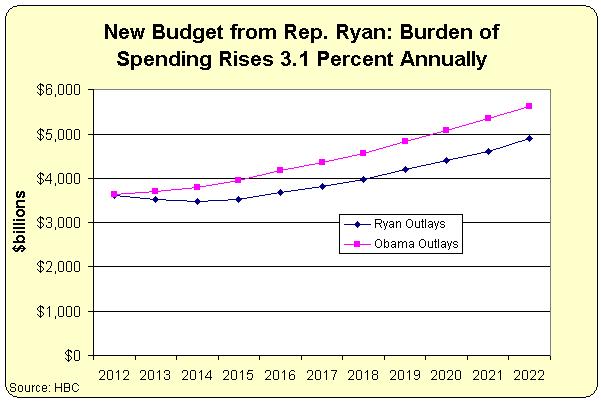
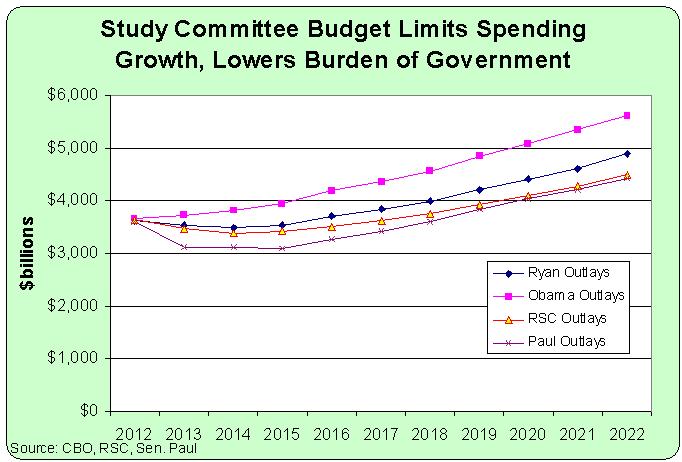
A couple of weeks ago, I offered some guarded praise for Paul Ryan’s budget, pointing out that it satisfies the most important requirement of fiscal policy by restraining spending – to an average of 3.1 percent per year over the next 10 years – so that government grows slower than the productive sector of the economy (I call this my Golden Rule).

I was more effusive in my comments about Senator Rand Paul’s budget, which limited the growth of the federal budget over the next 10 years to an average of 2.2 percent each year.

Now the Republican Study Committee from the House of Representatives has put forth a plan that also deserves considerable applause. Like Senator Paul, the RSC plan would impose immediate significant fiscal discipline such that spending in 2017 would be about the same level as it is this year.

Think of this as being similar to the very successful fiscal reforms of New Zealand and Canada in the 1990s.

After the initial period of spending restraint, the budget would be allowed to grow, but only about as fast as the private economy. This chart shows spending levels for the Obama budget, the Paul Ryan budget, the Rand Paul budget, and the RSC budget.

A couple of final points.

1. For all the whining and complaining from the pro-spending lobbies, the RSC budget is hardly draconian. Federal spending, measured as a share of GDP, would only drop to where it was when Bill Clinton left office.

2. One preferable feature of the Rand Paul budget is that the Kentucky Senator eliminates four needless and wasteful federal departments – Commerce, Education, Energy, and Housing and Urban Development. As far as I can tell, no departments are eliminated in the RSC plan. Also, Senator Paul’s plan is bolder on tax reform, scrapping the corrupt internal revenue code and replacing it with a simple and fair flat tax.

3. The RSC comes perilously close to winning a Bob Dole Award. The first chapter of their proposal fixates on symptoms of debt and deficits rather than the real problem of excessive government spending. Indeed, the first six charts all relate to deficits and debt, creating an easy opening for leftists to say they can solve the mis-defined problem with higher taxes.

There are lots of other details worth exploring, but the main lesson is that restraining spending is the key to good fiscal policy.

And that’s what’s happening.  Indeed, the good news is that policymakers have proposed several budget plans that would shrink the burden of spending as a share of GDP. It’s refreshing to debate the features of several good plans (rather than comparing the warts in the competing plans during the big-government Bush years).

The bad news is that Harry Reid and Barack Obama will succeed in blocking any progress this year, so America will move ever closer to becoming another Greece.

____________

Spending Restraint, Part II: Lessons from Canada, Ireland, Slovakia, and New Zealand

Uploaded by on Feb 22, 2011

Nations can make remarkable fiscal progress if policy makers simply limit the growth of government spending. This video, which is Part II of a series, uses examples from recent history in Canada, Ireland, Slovakia, and New Zealand to demonstrate how it is possible to achieve rapid improvements in fiscal policy by restraining the burden of government spending. Part I of the series examined how Ronald Reagan and Bill Clinton were successful in controlling government outlays — particularly the burden of domestic spending programs. www.freedomandprosperity.org

______________

Dan Mitchell of the Cato Institute takes on entitlement reform

It is the elephant in the room that nobody wants to talk about. Here Dan Mitchell takes it on.

Most people have a vague understanding that America has a huge long-run fiscal problem.

They’re right, though they probably don’t realize the seriousness of that looming crisis.

Here’s what you need to know: America’s fiscal crisis is actually a spending crisis, and that spending crisis is driven by entitlements.

More specifically, the vast majority of the problem is the result of Medicaid, Medicare, and Social Security, programs that are poorly designed and unsustainable.

America needs to fix these programs…or eventually become another Greece.

Fortunately, all of the problems can be solved, as these three videos demonstrate.

The first video explains how to fix Medicaid.

Promote Federalism and Replicate the Success of Welfare Reform with Medicaid Block Grants

Uploaded by on Jun 26, 2011

The Medicaid program imposes high costs while generating poor results. This Center for Freedom and Prosperity Foundation video explains how block grants, such as the one proposed by Congressman Paul Ryan, will save money and improve healthcare by giving states the freedom to innovate and compete.

The second video shows how to fix Medicare.

Saving Medicare: Free Market Reforms Are Better than Bureaucratic Rationing

Uploaded by on May 17, 2011

This Center for Freedom and Prosperity Foundation video explains how a “premium-support” plan would solve Medicare’s fiscal crisis and improve the overall healthcare system. This voucher-based system also would protect seniors from bureaucratic rationing. http://www.freedomandprosperity.org

And the final video shows how to fix Social Security.

Saving Social Security with Personal Retirement Accounts

Uploaded by on Jan 10, 2011

There are two crises facing Social Security. First the program has a gigantic unfunded liability, largely thanks to demographics. Second, the program is a very bad deal for younger workers, making them pay record amounts of tax in exchange for comparatively meager benefits. This video explains how personal accounts can solve both problems, and also notes that nations as varied as Australia, Chile, Sweden, and Hong Kong have implemented this pro-growth reform. www.freedomandprosperity.org

_______________________

Regular readers know I’m fairly gloomy about the future of liberty, but this is one area where there is a glimmer of hope.

The Chairman of the House Budget Committee actually put together a plan that addresses the two biggest problems (Medicare and Medicaid) and the House of Representatives actually adopted the proposal.

The Senate didn’t act, of course, and Obama would veto any good legislation anyhow, so I don’t want to be crazy optimistic. Depending on how things play out politically in the next six years, I’ll say there’s actually a 20 percent chance to save America.

HERITAGE FOUNDATION INTERVIEW:Sen. Mitch McConnell: Americans Don’t Approve of Anything Obama Has Done

Sen. Mitch McConnell: Americans Don’t Approve of Anything Obama Has Done

Uploaded by on Dec 8, 2011

In an exclusive interview at The Heritage Foundation, Senate Minority Leader Mitch McConnell (R-KY) sharply criticized President Obama for engaging in class warfare and accused him of shifting the focus away from his own failed policies in advance of next year’s election.

“My view is he’ll have a hard time convincing Americans he deserves four more years of this,” McConnell said. “There’s nothing he’s done the American people approve of, so of course, he’s trying to change the subject.”

HERITAGE FOUNDATION INTERVIEW:Sen. Rand Paul on Occupy Wall Street, Repealing No Child Left Behind

Sen. Rand Paul on Occupy Wall Street, Repealing No Child Left Behind

Uploaded by on Oct 18, 2011

The latest iteration of No Child Left Behind comes before a Senate committee tomorrow with bipartisan support. But if Sen. Rand Paul (R-KY) has anything to say about it, the bill won’t go anywhere fast.

Paul also addressed the ongoing Occupy Wall Street protest in New York and similar demonstrations taking place across America. He warned of the “mob mentality” on display and the “lurking danger” of the movement.

Paul, the Tea Party favorite who won election last November, has promised to introduce 100 amendments to No Child Left Behind which comes before a Senate committee tomorrow, including a complete repeal of the legislation.

Taxed too much polls say

Sen. Paul Delivers State of the Union Response – Jan. 24, 2012

Uploaded by on Jan 24, 2012

Sen. Rand Paul delivered the following Republican response to President Barack Obama’s State of the Union Address this evening

The problem is not that government does not have enough money but that spends too much. What would the Founding Fathers think if they were alive today?

Mike Brownfield

March 9, 2012 at 1:00 pm

More bad news for those who want to raise taxes in order to pay for another boatload of government spending: The vast majority of Americans say that the country is taxed enough already.

According to a new Rasmussen poll, 56% of likely U.S. voters believe America is overtaxed. Those numbers follow a poll last week that shows that the vast majority of likely voters want individuals and businesses to pay lower rates.

Of course, to hear liberals tell the story, you’d think Americans are clamoring for paying even more money to Uncle Sam. Meanwhile, the President is looking to higher taxes as a way of tackling America’s debt crisis. Last summer, he traveled America campaigning for higher taxes as part of Congress’ debt deal, saying “We can’t just cut our way out of this hole.” And in his FY 2013 budget released last month, the President’s tax hike proposal topped out at a whopping $2 trillion.

More taxes are part and parcel with the President’s plans to expand the size and scope of government — more spending for infrastructure, Obamacare, and green energy boondoggles, among them — paired up with a refusal to undertake serious, much-needed reforms for entitlement programs.

With the debt threat and the calls for more taxes, it’s no wonder the economy is stuck in a pattern of slow-motion growth. Businesses are sitting on the side, not knowing what taxes, fees, and regulations the future will hold. Meanwhile, the American people are saying “enough is enough” — it’s time to lower the tax burden.

Ryan’s plan better than Democrat’s plan but not as good as Rand Paul’s

Promote Federalism and Replicate the Success of Welfare Reform with Medicaid Block Grants

Uploaded by on Jun 26, 2011

The Medicaid program imposes high costs while generating poor results. This Center for Freedom and Prosperity Foundation video explains how block grants, such as the one proposed by Congressman Paul Ryan, will save money and improve healthcare by giving states the freedom to innovate and compete

__________

President Obama thinks the answer to our budget problem is to raise taxes. I disagree and think that we must restrain spending and reform entitlements.

Below is an article by Dan Mitchell of the Cato Institute on the Ryan plan.

The Chairman of the House Budget Committee has produced a new budget plan which contrasts very favorably with the tax-heavy, big-spending proposal submitted by the President last month.

Perhaps most important, Congressman Ryan’s plan restrains spending growth, allowing the private sector to grow faster than the burden of government, thus satisfying Mitchell’s Golden Rule so that spending falls as a share of GDP.

The most important detail in the proposal is that the federal budget, which currently consumes 24 percent of GDP, would fall to less than 20 percent of GDP beginning in 2016.

That’s the good news. There are three pieces of not-so-good news.

1. Ryan’s plan allows spending to grow by an average of 3.1 percent annually over the next 10 years, with is faster than the 2.8 percent average annual growth in last year’s budget.

2. His proposed Medicare reform, while far better than current law, also is not as good as what was proposed last year.

3. The federal budget would still consume a greater share of the economy’s output than it did when Bill Clinton left office.

I suppose it’s also worth mentioning that Ryan’s proposal isn’t as good as Rand Paul’s budget. Spending only climbs 2.2 percent yearly under the plan put together by the Kentucky Senator, and he also abolishes several useless cabinet-level departments.

But the very good shouldn’t be the enemy of the good. As noted already, Congressman Ryan’s plan meets the most important test, which is restraining spending so that the federal budget grows slower than the private economy. And, as the chart shows, he obviously imposes more fiscal restrain then President Obama.

Regular readers know that I generally show no mercy to jelly-spined Republicans, but I praised GOPers for approving last year’s Ryan budget. The same will be true if they approve this year’s version.

P.S. I am frustrated and nauseated by all the people who are fixating on whether Congressman Ryan’s plan balances the budget in 10 years, 20 years, or whenever. What matters is shrinking the burden of government. I hereby bestow the Bob Dole Award on all the people who are mistakenly focusing on the symptom of red ink rather than the underlying disease of bloated government.

P.P.S. I’m happy to report that there is no value-added tax in the revenue portion of Congressman Ryan’s budget. There is a VAT in his Roadmap plan, and I endlessly worry that this poison pill will re-emerge and ruin other good fiscal plans put forth by the Wisconsin lawmaker.

_______

Saving Medicare: Free Market Reforms Are Better than Bureaucratic Rationing

Uploaded by on May 17, 2011

This Center for Freedom and Prosperity Foundation video explains how a “premium-support” plan would solve Medicare’s fiscal crisis and improve the overall healthcare system. This voucher-based system also would protect seniors from bureaucratic rationing. http://www.freedomandprosperity.org


HERITAGE FOUNDATION INTERVIEW:Senator John Barrasso On the Fight Against Obamacare

Senator John Barrasso On the Fight Against Obamacare

Uploaded by on Mar 26, 2012

Sen. John Barrasso earned the nickname “Wyoming’s Doctor” after working for 24 years as an orthopedic surgeon in Casper. Today he represents the state in the U.S. Senate and is one of the leading critics of Obamacare.

More than two decades with patients gave Barrasso a firsthand glimpse of government’s involvement in medicine — at that was before President Obama signed his unpopular health care law in 2009. Last week Barrasso visited Heritage to share his concerns about the doctor-patient relationship and other side effects of Obamacare.