Category Archives: Taxes

Dan Mitchell: Republican Warfare, Part II: Supply-Side Economics and Government Spending

Republican Warfare, Part II: Supply-Side Economics and Government Spending

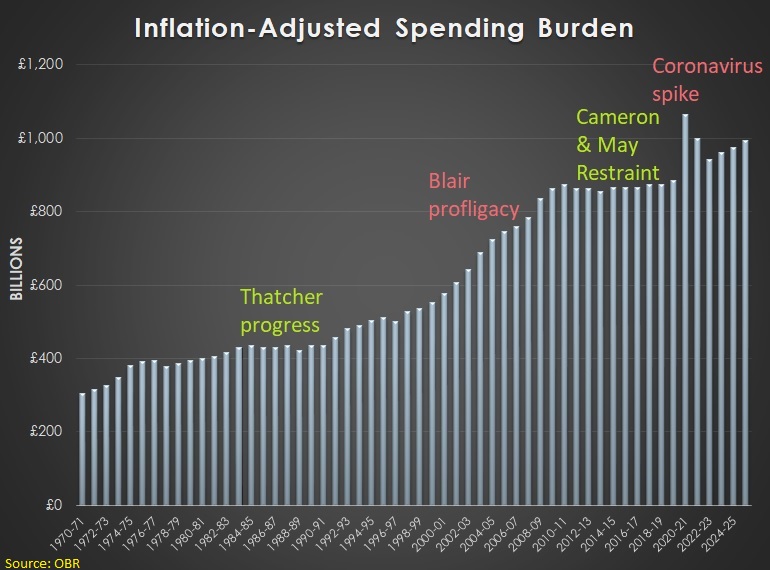
As part of a recent discussion at the Adam Smith Institute in London, I explained why advocates of sensible taxation in the U.S. and U.K. need to be serious about controlling government spending.

At the risk of stating the obvious, it will be almost impossible to achieve better tax policy if the spending burden continues to increase and we enter an era of endless deficits and debt.

We presumably won’t get needed policy reforms from the Democratic Party (the era of JFK is long gone, and Bill Clinton’s moderate approach also is a distant memory).
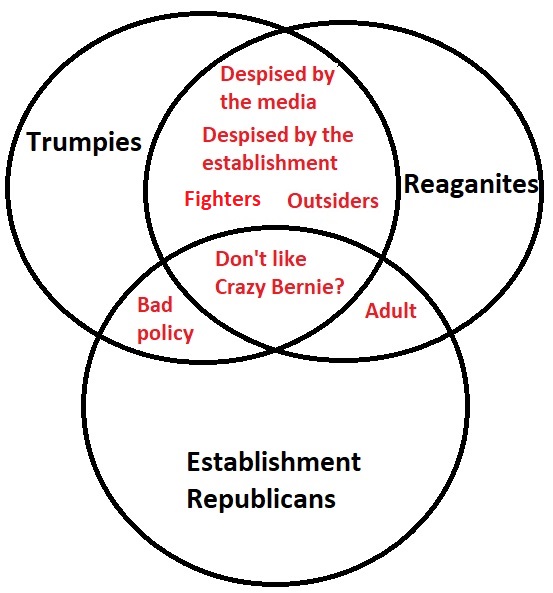
But what about Republicans?

In part I of this series, I argued that Trump’s big-government populism was bad politics as well as bad policy.

But I was not arguing for establishment Republicans such as Bush or Romney.

Instead, I think the GOP needs to return to the era of Reagan-style libertarianism.

That means some things that Trumpies want, such as lower tax rates, but it also means genuine spending restraint. Which we didn’t get during the Trump years.

In part II, let’s contemplate whether this is a realistic hope, at least once we get past the Biden years.

If history is any guide, the answer is yes. Here’s another video, from more than 10 years ago, that shows the fiscal discipline the nation enjoyed under both Reagan and Clinton.

If you want more recent evidence, we also had a five-year spending freeze after the so-called Tea Party Republicans took power in 2010.

What about today? Can Republicans sober up and once again become fiscal hawks,morphing into good supply-siders who want better tax policy and spending restraint?

Or are they the bad supply-siders, meaning they spout rhetoric about tax cuts but don’t take the tough steps (such as entitlement reform) that are needed to make lower tax rates realistic?

I’ll close with a very depressing observation. The current fiscal situation is bad, but remember that things will get much worse because of demographic changes such as population aging.

Those who oppose entitlement reform necessarily are embracing huge tax increases and perpetual economic stagnation. Not to mention handing more power to Democrats.

There is no alternative.

I enjoyed this article below because it demonstrates that the Laffer Curve has been working for almost 100 years now when it is put to the test in the USA. I actually got to hear Arthur Laffer speak in person in 1981 and he told us in advance what was going to happen the 1980’s and it all came about as he said it would when Ronald Reagan’s tax cuts took place. I wish we would lower taxes now instead of looking for more revenue through raised taxes. We have to grow the economy:

What Mitt Romney Said Last Night About Tax Cuts And The Deficit Was Absolutely Right. And What Obama Said Was Absolutely Wrong.

Mitt Romney repeatedly said last night that he would not allow tax cuts to add to the deficit.  He repeatedly said it because over and over again Obama blathered the liberal talking point that cutting taxes necessarily increased deficits.

Romney’s exact words: “I want to underline that — no tax cut that adds to the deficit.”

Meanwhile, Obama has promised to cut the deficit in half during his first four years – but instead gave America the highest deficits in the history of the entire human race.

I’ve written about this before.  Let’s replay what has happened every single time we’ve ever cut the income tax rate.

The fact of the matter is that we can go back to Calvin Coolidge who said very nearly THE EXACT SAME THING to his treasury secretary: he too would not allow any tax cuts that added to the debt.  Andrew Mellon – quite possibly the most brilliant economic mind of his day – did a great deal of research and determined what he believed was the best tax rate.  And the Coolidge administration DID cut income taxes and MASSIVELY increased revenues.  Coolidge and Mellon cut the income tax rate 67.12 percent (from 73 to 24 percent); and revenues not only did not go down, but they went UP by at least 42.86 percent (from $700 billion to over $1 billion).

That’s something called a documented fact.  But that wasn’t all that happened: another incredible thing was that the taxes and percentage of taxes paid actually went UP for the rich.  Because as they were allowed to keep more of the profits that they earned by investing in successful business, they significantly increased their investments and therefore paid more in taxes than they otherwise would have had they continued sheltering their money to protect themselves from the higher tax rates.  Liberals ignore reality, but it is simply true.  It is a fact.  It happened.

Then FDR came along and raised the tax rates again and the opposite happened: we collected less and less revenue while the burden of taxation fell increasingly on the poor and middle class again.  Which is exactly what Obama wants to do.

People don’t realize that John F. Kennedy, one of the greatest Democrat presidents, was a TAX CUTTER who believed the conservative economic philosophy that cutting tax rates would in fact increase tax revenues.  He too cut taxes, and he too increased tax revenues.

So we get to Ronald Reagan, who famously cut taxes.  And again, we find that Reagan cut that godawful liberal tax rate during an incredibly godawful liberal-caused economic recession, and he increased tax revenue by 20.71 percent (with revenues increasing from $956 billion to $1.154 trillion).  And again, the taxes were paid primarily by the rich:

“The share of the income tax burden borne by the top 10 percent of taxpayers increased from 48.0 percent in 1981 to 57.2 percent in 1988. Meanwhile, the share of income taxes paid by the bottom 50 percent of taxpayers dropped from 7.5 percent in 1981 to 5.7 percent in 1988.”

So we get to George Bush and the Bush tax cuts that liberals and in particular Obama have just demonized up one side and demagogued down the other.  And I can simply quote the New York Times AT the time:

Sharp Rise in Tax Revenue to Pare U.S. Deficit By EDMUND L. ANDREWS Published: July 13, 2005

WASHINGTON, July 12 – For the first time since President Bush took office, an unexpected leap in tax revenue is about to shrink the federal budget deficit this year, by nearly $100 billion.

A Jump in Corporate Payments On Wednesday, White House officials plan to announce that the deficit for the 2005 fiscal year, which ends in September, will be far smaller than the $427 billion they estimated in February.

Mr. Bush plans to hail the improvement at a cabinet meeting and to cite it as validation of his argument that tax cuts would stimulate the economy and ultimately help pay for themselves.

Based on revenue and spending data through June, the budget deficit for the first nine months of the fiscal year was $251 billion, $76 billion lower than the $327 billion gap recorded at the corresponding point a year earlier.

The Congressional Budget Office estimated last week that the deficit for the full fiscal year, which reached $412 billion in 2004, could be “significantly less than $350 billion, perhaps below $325 billion.”

The big surprise has been in tax revenue, which is running nearly 15 percent higher than in 2004. Corporate tax revenue has soared about 40 percent, after languishing for four years, and individual tax revenue is up as well
.

And of course the New York Times, as reliable liberals, use the adjective whenever something good happens under conservative policies and whenever something bad happens under liberal policies: ”unexpected.”   But it WASN’T ”unexpected.”  It was EXACTLY what Republicans had said would happen and in fact it was exactly what HAD IN FACT HAPPENED every single time we’ve EVER cut income tax rates.

The truth is that conservative tax policy has a perfect track record: every single time it has ever been tried, we have INCREASED tax revenues while not only exploding economic activity and creating more jobs, but encouraging the wealthy to pay more in taxes as well.  And liberals simply dishonestly refuse to acknowledge documented history.

Meanwhile, liberals also have a perfect record … of FAILUREThey keep raising taxes and keep not understanding why they don’t get the revenues they predicted.

The following is a section from my article, “Tax Cuts INCREASE Revenues; They Have ALWAYS Increased Revenues“, where I document every single thing I said above:

The Falsehood That Tax Cuts Increase The Deficit

Now let’s take a look at the utterly fallacious view that tax cuts in general create higher deficits.

Let’s take a trip back in time, starting with the 1920s.  From Burton Folsom’s book, New Deal or Raw Deal?:

In 1921, President Harding asked the sixty-five-year-old [Andrew] Mellon to be secretary of the treasury; the national debt [resulting from WWI] had surpassed $20 billion and unemployment had reached 11.7 percent, one of the highest rates in U.S. history.  Harding invited Mellon to tinker with tax rates to encourage investment without incurring more debt. Mellon studied the problem carefully; his solution was what is today called “supply side economics,” the idea of cutting taxes to stimulate investment.  High income tax rates, Mellon argued, “inevitably put pressure upon the taxpayer to withdraw this capital from productive business and invest it in tax-exempt securities. . . . The result is that the sources of taxation are drying up, wealth is failing to carry its share of the tax burden; and capital is being diverted into channels which yield neither revenue to the Government nor profit to the people” (page 128).

Mellon wrote, “It seems difficult for some to understand that high rates of taxation do not necessarily mean large revenue to the Government, and that more revenue may often be obtained by lower taxes.”  And he compared the government setting tax rates on incomes to a businessman setting prices on products: “If a price is fixed too high, sales drop off and with them profits.”

And what happened?

“As secretary of the treasury, Mellon promoted, and Harding and Coolidge backed, a plan that eventually cut taxes on large incomes from 73 to 24 percent and on smaller incomes from 4 to 1/2 of 1 percent.  These tax cuts helped produce an outpouring of economic development – from air conditioning to refrigerators to zippers, Scotch tape to radios and talking movies.  Investors took more risks when they were allowed to keep more of their gains.  President Coolidge, during his six years in office, averaged only 3.3 percent unemployment and 1 percent inflation – the lowest misery index of any president in the twentieth century.

Furthermore, Mellon was also vindicated in his astonishing predictions that cutting taxes across the board would generate more revenue.  In the early 1920s, when the highest tax rate was 73 percent, the total income tax revenue to the U.S. government was a little over $700 million.  In 1928 and 1929, when the top tax rate was slashed to 25 and 24 percent, the total revenue topped the $1 billion mark.  Also remarkable, as Table 3 indicates, is that the burden of paying these taxes fell increasingly upon the wealthy” (page 129-130).

Now, that is incredible upon its face, but it becomes even more incredible when contrasted with FDR’s antibusiness and confiscatory tax policies, which both dramatically shrunk in terms of actual income tax revenues (from $1.096 billion in 1929 to $527 million in 1935), and dramatically shifted the tax burden to the backs of the poor by imposing huge new excise taxes (from $540 million in 1929 to $1.364 billion in 1935).  See Table 1 on page 125 of New Deal or Raw Deal for that information.

FDR both collected far less taxes from the rich, while imposing a far more onerous tax burden upon the poor.

It is simply a matter of empirical fact that tax cuts create increased revenue, and that those [Democrats] who have refused to pay attention to that fact have ended up reducing government revenues even as they increased the burdens on the poorest whom they falsely claim to help.

Let’s move on to John F. Kennedy, one of the most popular Democrat presidents ever.  Few realize that he was also a supply-side tax cutter.

Kennedy said:

“It is a paradoxical truth that tax rates are too high and tax revenues are too low and the soundest way to raise the revenues in the long run is to cut the rates now … Cutting taxes now is not to incur a budget deficit, but to achieve the more prosperous, expanding economy which can bring a budget surplus.”

– John F. Kennedy, Nov. 20, 1962, president’s news conference


“Lower rates of taxation will stimulate economic activity and so raise the levels of personal and corporate income as to yield within a few years an increased – not a reduced – flow of revenues to the federal government.”

– John F. Kennedy, Jan. 17, 1963, annual budget message to the Congress, fiscal year 1964

“In today’s economy, fiscal prudence and responsibility call for tax reduction even if it temporarily enlarges the federal deficit – why reducing taxes is the best way open to us to increase revenues.”

– John F. Kennedy, Jan. 21, 1963, annual message to the Congress: “The Economic Report Of The President”


“It is no contradiction – the most important single thing we can do to stimulate investment in today’s economy is to raise consumption by major reduction of individual income tax rates.”

– John F. Kennedy, Jan. 21, 1963, annual message to the Congress: “The Economic Report Of The President”


“Our tax system still siphons out of the private economy too large a share of personal and business purchasing power and reduces the incentive for risk, investment and effort – thereby aborting our recoveries and stifling our national growth rate.”

– John F. Kennedy, Jan. 24, 1963, message to Congress on tax reduction and reform, House Doc. 43, 88th Congress, 1st Session.


“A tax cut means higher family income and higher business profits and a balanced federal budget. Every taxpayer and his family will have more money left over after taxes for a new car, a new home, new conveniences, education and investment. Every businessman can keep a higher percentage of his profits in his cash register or put it to work expanding or improving his business, and as the national income grows, the federal government will ultimately end up with more revenues.”

– John F. Kennedy, Sept. 18, 1963, radio and television address to the nation on tax-reduction bill

Which is to say that modern Democrats are essentially calling one of their greatest presidents a liar when they demonize tax cuts as a means of increasing government revenues.

So let’s move on to Ronald Reagan.  Reagan had two major tax cutting policies implemented: the Economic Recovery Tax Act (ERTA) of 1981, which was retroactive to 1981, and the Tax Reform Act of 1986.

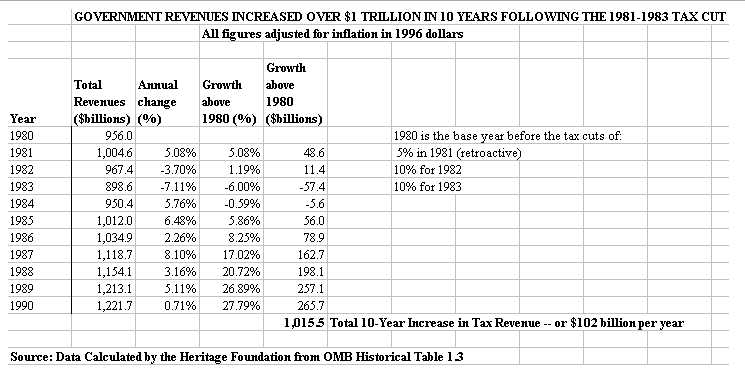
Did Reagan’s tax cuts decrease federal revenues?  Hardly:

We find that 8 of the following 10 years there was a surplus of revenue from 1980, prior to the Reagan tax cuts.  And, following the Tax Reform Act of 1986, there was a MASSIVE INCREASEof revenue.

So Reagan’s tax cuts increased revenue.  But who paid the increased tax revenue?  The poor?  Opponents of the Reagan tax cuts argued that his policy was a giveaway to the rich (ever heard that one before?) because their tax payments would fall.  But that was exactly wrong.  In reality:

“The share of the income tax burden borne by the top 10 percent of taxpayers increased from 48.0 percent in 1981 to 57.2 percent in 1988. Meanwhile, the share of income taxes paid by the bottom 50 percent of taxpayers dropped from 7.5 percent in 1981 to 5.7 percent in 1988.”

So Ronald Reagan a) collected more total revenue, b) collected more revenue from the rich, while c) reducing revenue collected by the bottom half of taxpayers, and d) generated an economic powerhouse that lasted – with only minor hiccups – for nearly three decades.  Pretty good achievement considering that his predecessor was forced to describe his own economy as a “malaise,” suffering due to a “crisis of confidence.” Pretty good considering that President Jimmy Carter responded to a reporter’s question as to what he would do about the problem of inflation by answering, “It would be misleading for me to tell any of you that there is a solution to it.”

Reagan whipped inflation.  Just as he whipped that malaise and that crisis of confidence.

________

The Laffer Curve, Part III: Dynamic Scoring

Dan Mitchell: The only thing Biden actually did was to preside over a period of rising prices!

Astounding Example of White House Chutzpah

While Donald Trump issued some inanely illiteratetweets to promote protectionism, Joe Biden has made a fool of himself with tweets on a wider range of issues.

The easy response to all this nonsense is to jump on the Biden-is-a-befuddled-old-man bandwagon.

That may be good for a few laughs, and I’m a big fanof political humor (even when it targets my side).

But the more accurate assessment is that Biden is a politician and he’s doing what comes naturally to politicians – which is to spin, lie, dissemble, and prevaricate.

And if you think I’m being too critical, we have a new tweet from the White House that breaks all records for chutzpah.

I don’t know what’s most galling about this tweet.

  • Is it that the White House is taking credit for Social Security’s automatic COLAs (cost of living adjustments) even though that’s been part of the law for 50 years?
  • Is is that the White House is trying to make it seem like good news that we’ve had very high inflation, which is the only reason why the COLAs are so large?

In either case, the only thing Biden actually did was to preside over a period of rising prices (which, in the interest of fairness, is mostly not his fault).

I’ll close with the observation that I would be happy if politicians basically did nothing other than make false claims of “leadership.” It’s when they start enacting new laws that things usually get worse (and that’s definitely been true during the Biden years).

P.S. We’ve also seen brassy tweets from the campaign arm for Democratic members of the House of Representatives.

Assessing the Biden Economy

According to polling data, President Biden is not getting good grades for economic policy.

Part of that is because of inflation, though I’ve repeatedly pointed out that the blame belongs with the Federal Reserve rather than Biden. And the big mistake from the Fed took place before Biden even took office.

Unfortunately, the President is not trying to make things better. His appointments to the Fed suggest he doesn’t understand the need for good monetary policy.

And all of his major legislative initiatives (the so-called stimulus, the misnamed Inflation Reduction Act, the pork-filled infrastructure legislation, and the cronyist handouts to the semiconductor industry) have increased the size and scope of government.

For what it’s worth, I think Biden’s big challenge – both politically and economically – is that Americans are losing ground. Simply stated, prices are increasing faster than incomes.

But that isn’t stopping the Administration from trying to turn a sow’s ear into a silk purse.

Alan Rappeport of the New York Times reported a few days ago that the Biden’s Treasury Secretary, Janet Yellen, is claiming that Bdenomics is a big success.

…the Biden administration is pivoting to recast its stewardship of the U.S. economy as a singular achievement. …The case was reinforced on Thursday by Treasury Secretary Janet L. Yellen… Ms. Yellen said the legislation that Mr. Biden signed this year to promote infrastructure investment, expand the domestic semiconductor industry and support the transition to electric vehicles represented what she called “modern supply-side economics.” …After months of being on the defensive in the face of criticism from Republicans who say Democrats fueled inflation by overstimulating the economy, the Biden administration is fully embracing the fruits of initiatives such as the $1.9 trillion American Rescue Plan of 2021.

The editors at the Wall Street Journal are not impressed.

Janet Yellen…tenure as Treasury Secretary hasn’t enhanced her reputation. …the White House is rolling her out in election season to portray the U.S. economy as a Valhalla of growth, fairness and optimism. …If you’re in a green business the White House likes, you’re in clover. If not, you’ll endure the costs of more regulation and taxes. In the Biden era, big government and big business are in political business together.…Ms. Yellen’s whoppers, …including a claim that “the causes of inflation are largely global.” …U.S. inflation has been substantially home-grown. …The Federal Reserve kept the money spigots open for too long, in part to finance the borrowing needed for all of the spending. …Ms. Yellen is also at pains to stress how much fairer the economy is since Mr. Biden took office… She fails to mention that the U.S. economy contracted by about 1% of GDP in the first six months of this year, even as real wages were falling. Real average hourly earnings declined 3% over the 12 months through July, and average weekly earnings by 3.6%. They’ve fallen 4.2% since Mr. Biden took office.

Meanwhile, the latest inflation data has not strengthened Biden’s case.

Jim Tankersley of the New York Times wrote aboutthe issue yesterday.

Hotter-than-expected inflation in August was unwelcome news for President Biden, who has sought to defuse Republican attacks over rising prices in the run-up to November’s midterm elections. …Mr. Biden has claimed progress in the fight against inflation, including with the signing last month of an energy, health care and tax bill that Democrats called the Inflation Reduction Act.…But polls continue to show inflation is hurting Mr. Biden and his party… Mr. Biden threw a belated celebration at the White House on Tuesday to mark his signing of the Inflation Reduction Act. …But the country’s economic reality remains more muddled, as the inflation report underscored. Food prices are continuing to spike, straining lower-income families in particular. …Most importantly — and perhaps most damaging for Mr. Biden and Democrats — Americans’ wages have struggled to keep pace with fast-rising prices, an uncomfortable truth for a president who promised to make real wage gains a centerpiece of his economic program.

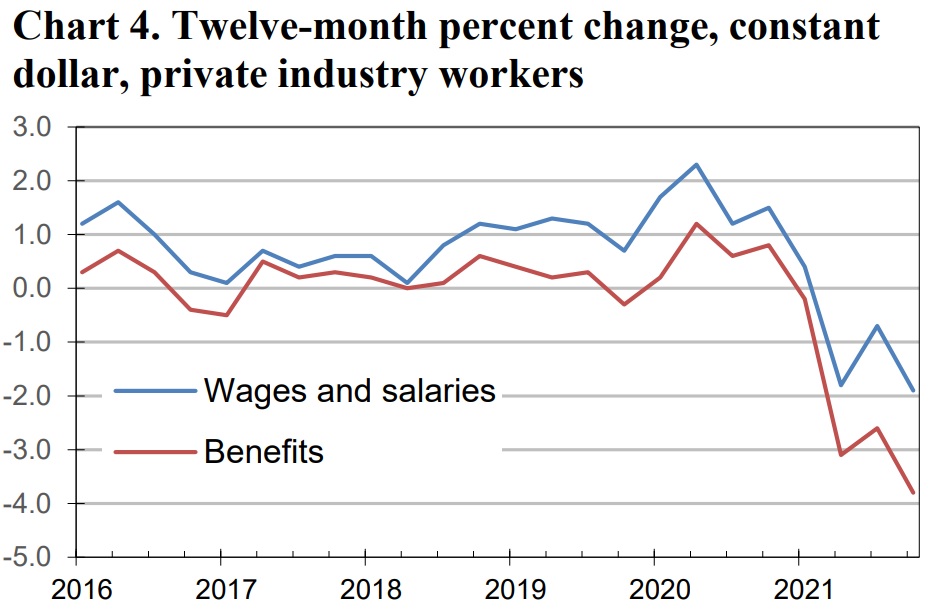
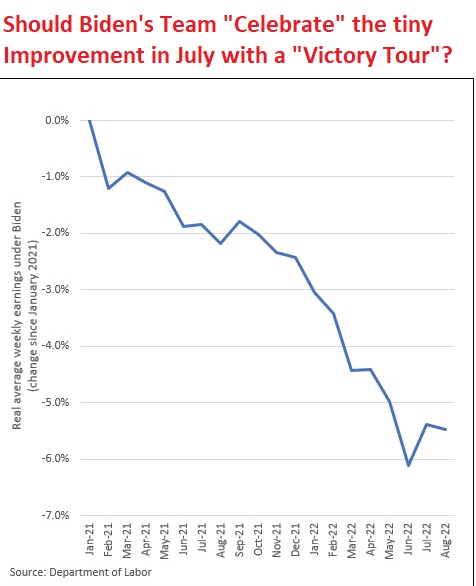
Let’s close with this chart, which shows what has happened to inflation-adjusted weekly earnings since Biden took office.

Yes, there was one recent month with good data, but that doesn’t seem like a big cause for celebration.

P.S. Paul Krugman’s defense of Bidenomics is just as weak as Janet Yellen’s (and his criticisms of good presidents are equally weak).

Dan Mitchell does a great job explaining the Laffer Curve

Free-market economics meets free-market policies at The Heritage Foundation’s Tenth Anniversary dinner in 1983. Nobel Laureate Milton Friedman and his wife Rose with President Ronald Reagan and Heritage President Ed Feulner.

Free-market economics meets free-market policies at The Heritage Foundation’s Tenth Anniversary dinner in 1983. Nobel Laureate Milton Friedman and his wife Rose with President Ronald Reagan and Heritage President Ed Feulner.

Since the passing of Milton Friedman who was my favorite economist, I have been reading the works of Daniel Mitchell and he quotes Milton Friedman a lot, and you can reach Dan’s website here.

Mitchell in February 2011.
Wikipedia noted concerning Dan:

Mitchell’s career as an economist began in the United States Senate, working for Oregon Senator Bob Packwood and the Senate Finance Committee. He also served on the transition team of President-Elect Bush and Vice President-Elect Quayle in 1988. In 1990, he began work at the Heritage Foundation. At Heritage, Mitchell worked on tax policy issues and began advocating for income tax reform.[1]

In 2007, Mitchell left the Heritage Foundation, and joined the Cato Institute as a Senior Fellow. Mitchell continues to work in tax policy, and deals with issues such as the flat tax and international tax competition.[2]

In addition to his Cato Institute responsibilities, Mitchell co-founded the Center for Freedom and Prosperity, an organization formed to protect international tax competition.[1]

President Biden c/o The White House
1600 Pennsylvania Avenue NW
Washington, DC 20500

Dear Mr. President,

I enjoyed this article below because it demonstrates that the Laffer Curve has been working for almost 100 years now when it is put to the test in the USA. I actually got to hear Arthur Laffer speak in person in 1981 and he told us in advance what was going to happen the 1980’s and it all came about as he said it would when Ronald Reagan’s tax cuts took place. I wish we would lower taxes now instead of looking for more revenue through raised taxes. We have to grow the economy:

What Mitt Romney Said Last Night About Tax Cuts And The Deficit Was Absolutely Right. And What Obama Said Was Absolutely Wrong.

Mitt Romney repeatedly said last night that he would not allow tax cuts to add to the deficit.  He repeatedly said it because over and over again Obama blathered the liberal talking point that cutting taxes necessarily increased deficits.

Romney’s exact words: “I want to underline that — no tax cut that adds to the deficit.”

Meanwhile, Obama has promised to cut the deficit in half during his first four years – but instead gave America the highest deficits in the history of the entire human race.

I’ve written about this before.  Let’s replay what has happened every single time we’ve ever cut the income tax rate.

The fact of the matter is that we can go back to Calvin Coolidge who said very nearly THE EXACT SAME THING to his treasury secretary: he too would not allow any tax cuts that added to the debt.  Andrew Mellon – quite possibly the most brilliant economic mind of his day – did a great deal of research and determined what he believed was the best tax rate.  And the Coolidge administration DID cut income taxes and MASSIVELY increased revenues.  Coolidge and Mellon cut the income tax rate 67.12 percent (from 73 to 24 percent); and revenues not only did not go down, but they went UP by at least 42.86 percent (from $700 billion to over $1 billion).

That’s something called a documented fact.  But that wasn’t all that happened: another incredible thing was that the taxes and percentage of taxes paid actually went UP for the rich.  Because as they were allowed to keep more of the profits that they earned by investing in successful business, they significantly increased their investments and therefore paid more in taxes than they otherwise would have had they continued sheltering their money to protect themselves from the higher tax rates.  Liberals ignore reality, but it is simply true.  It is a fact.  It happened.

Then FDR came along and raised the tax rates again and the opposite happened: we collected less and less revenue while the burden of taxation fell increasingly on the poor and middle class again.  Which is exactly what Obama wants to do.

People don’t realize that John F. Kennedy, one of the greatest Democrat presidents, was a TAX CUTTER who believed the conservative economic philosophy that cutting tax rates would in fact increase tax revenues.  He too cut taxes, and he too increased tax revenues.

So we get to Ronald Reagan, who famously cut taxes.  And again, we find that Reagan cut that godawful liberal tax rate during an incredibly godawful liberal-caused economic recession, and he increased tax revenue by 20.71 percent (with revenues increasing from $956 billion to $1.154 trillion).  And again, the taxes were paid primarily by the rich:

“The share of the income tax burden borne by the top 10 percent of taxpayers increased from 48.0 percent in 1981 to 57.2 percent in 1988. Meanwhile, the share of income taxes paid by the bottom 50 percent of taxpayers dropped from 7.5 percent in 1981 to 5.7 percent in 1988.”

So we get to George Bush and the Bush tax cuts that liberals and in particular Obama have just demonized up one side and demagogued down the other.  And I can simply quote the New York Times AT the time:

Sharp Rise in Tax Revenue to Pare U.S. Deficit By EDMUND L. ANDREWS Published: July 13, 2005

WASHINGTON, July 12 – For the first time since President Bush took office, an unexpected leap in tax revenue is about to shrink the federal budget deficit this year, by nearly $100 billion.

A Jump in Corporate Payments On Wednesday, White House officials plan to announce that the deficit for the 2005 fiscal year, which ends in September, will be far smaller than the $427 billion they estimated in February.

Mr. Bush plans to hail the improvement at a cabinet meeting and to cite it as validation of his argument that tax cuts would stimulate the economy and ultimately help pay for themselves.

Based on revenue and spending data through June, the budget deficit for the first nine months of the fiscal year was $251 billion, $76 billion lower than the $327 billion gap recorded at the corresponding point a year earlier.

The Congressional Budget Office estimated last week that the deficit for the full fiscal year, which reached $412 billion in 2004, could be “significantly less than $350 billion, perhaps below $325 billion.”

The big surprise has been in tax revenue, which is running nearly 15 percent higher than in 2004. Corporate tax revenue has soared about 40 percent, after languishing for four years, and individual tax revenue is up as well
.

And of course the New York Times, as reliable liberals, use the adjective whenever something good happens under conservative policies and whenever something bad happens under liberal policies: ”unexpected.”   But it WASN’T ”unexpected.”  It was EXACTLY what Republicans had said would happen and in fact it was exactly what HAD IN FACT HAPPENED every single time we’ve EVER cut income tax rates.

The truth is that conservative tax policy has a perfect track record: every single time it has ever been tried, we have INCREASED tax revenues while not only exploding economic activity and creating more jobs, but encouraging the wealthy to pay more in taxes as well.  And liberals simply dishonestly refuse to acknowledge documented history.

Meanwhile, liberals also have a perfect record … of FAILUREThey keep raising taxes and keep not understanding why they don’t get the revenues they predicted.

The following is a section from my article, “Tax Cuts INCREASE Revenues; They Have ALWAYS Increased Revenues“, where I document every single thing I said above:

The Falsehood That Tax Cuts Increase The Deficit

Now let’s take a look at the utterly fallacious view that tax cuts in general create higher deficits.

Let’s take a trip back in time, starting with the 1920s.  From Burton Folsom’s book, New Deal or Raw Deal?:

In 1921, President Harding asked the sixty-five-year-old [Andrew] Mellon to be secretary of the treasury; the national debt [resulting from WWI] had surpassed $20 billion and unemployment had reached 11.7 percent, one of the highest rates in U.S. history.  Harding invited Mellon to tinker with tax rates to encourage investment without incurring more debt. Mellon studied the problem carefully; his solution was what is today called “supply side economics,” the idea of cutting taxes to stimulate investment.  High income tax rates, Mellon argued, “inevitably put pressure upon the taxpayer to withdraw this capital from productive business and invest it in tax-exempt securities. . . . The result is that the sources of taxation are drying up, wealth is failing to carry its share of the tax burden; and capital is being diverted into channels which yield neither revenue to the Government nor profit to the people” (page 128).

Mellon wrote, “It seems difficult for some to understand that high rates of taxation do not necessarily mean large revenue to the Government, and that more revenue may often be obtained by lower taxes.”  And he compared the government setting tax rates on incomes to a businessman setting prices on products: “If a price is fixed too high, sales drop off and with them profits.”

And what happened?

“As secretary of the treasury, Mellon promoted, and Harding and Coolidge backed, a plan that eventually cut taxes on large incomes from 73 to 24 percent and on smaller incomes from 4 to 1/2 of 1 percent.  These tax cuts helped produce an outpouring of economic development – from air conditioning to refrigerators to zippers, Scotch tape to radios and talking movies.  Investors took more risks when they were allowed to keep more of their gains.  President Coolidge, during his six years in office, averaged only 3.3 percent unemployment and 1 percent inflation – the lowest misery index of any president in the twentieth century.

Furthermore, Mellon was also vindicated in his astonishing predictions that cutting taxes across the board would generate more revenue.  In the early 1920s, when the highest tax rate was 73 percent, the total income tax revenue to the U.S. government was a little over $700 million.  In 1928 and 1929, when the top tax rate was slashed to 25 and 24 percent, the total revenue topped the $1 billion mark.  Also remarkable, as Table 3 indicates, is that the burden of paying these taxes fell increasingly upon the wealthy” (page 129-130).

Now, that is incredible upon its face, but it becomes even more incredible when contrasted with FDR’s antibusiness and confiscatory tax policies, which both dramatically shrunk in terms of actual income tax revenues (from $1.096 billion in 1929 to $527 million in 1935), and dramatically shifted the tax burden to the backs of the poor by imposing huge new excise taxes (from $540 million in 1929 to $1.364 billion in 1935).  See Table 1 on page 125 of New Deal or Raw Deal for that information.

FDR both collected far less taxes from the rich, while imposing a far more onerous tax burden upon the poor.

It is simply a matter of empirical fact that tax cuts create increased revenue, and that those [Democrats] who have refused to pay attention to that fact have ended up reducing government revenues even as they increased the burdens on the poorest whom they falsely claim to help.

Let’s move on to John F. Kennedy, one of the most popular Democrat presidents ever.  Few realize that he was also a supply-side tax cutter.

Kennedy said:

“It is a paradoxical truth that tax rates are too high and tax revenues are too low and the soundest way to raise the revenues in the long run is to cut the rates now … Cutting taxes now is not to incur a budget deficit, but to achieve the more prosperous, expanding economy which can bring a budget surplus.”

– John F. Kennedy, Nov. 20, 1962, president’s news conference


“Lower rates of taxation will stimulate economic activity and so raise the levels of personal and corporate income as to yield within a few years an increased – not a reduced – flow of revenues to the federal government.”

– John F. Kennedy, Jan. 17, 1963, annual budget message to the Congress, fiscal year 1964

“In today’s economy, fiscal prudence and responsibility call for tax reduction even if it temporarily enlarges the federal deficit – why reducing taxes is the best way open to us to increase revenues.”

– John F. Kennedy, Jan. 21, 1963, annual message to the Congress: “The Economic Report Of The President”


“It is no contradiction – the most important single thing we can do to stimulate investment in today’s economy is to raise consumption by major reduction of individual income tax rates.”

– John F. Kennedy, Jan. 21, 1963, annual message to the Congress: “The Economic Report Of The President”


“Our tax system still siphons out of the private economy too large a share of personal and business purchasing power and reduces the incentive for risk, investment and effort – thereby aborting our recoveries and stifling our national growth rate.”

– John F. Kennedy, Jan. 24, 1963, message to Congress on tax reduction and reform, House Doc. 43, 88th Congress, 1st Session.


“A tax cut means higher family income and higher business profits and a balanced federal budget. Every taxpayer and his family will have more money left over after taxes for a new car, a new home, new conveniences, education and investment. Every businessman can keep a higher percentage of his profits in his cash register or put it to work expanding or improving his business, and as the national income grows, the federal government will ultimately end up with more revenues.”

– John F. Kennedy, Sept. 18, 1963, radio and television address to the nation on tax-reduction bill

Which is to say that modern Democrats are essentially calling one of their greatest presidents a liar when they demonize tax cuts as a means of increasing government revenues.

So let’s move on to Ronald Reagan.  Reagan had two major tax cutting policies implemented: the Economic Recovery Tax Act (ERTA) of 1981, which was retroactive to 1981, and the Tax Reform Act of 1986.

Did Reagan’s tax cuts decrease federal revenues?  Hardly:

We find that 8 of the following 10 years there was a surplus of revenue from 1980, prior to the Reagan tax cuts.  And, following the Tax Reform Act of 1986, there was a MASSIVE INCREASEof revenue.

So Reagan’s tax cuts increased revenue.  But who paid the increased tax revenue?  The poor?  Opponents of the Reagan tax cuts argued that his policy was a giveaway to the rich (ever heard that one before?) because their tax payments would fall.  But that was exactly wrong.  In reality:

“The share of the income tax burden borne by the top 10 percent of taxpayers increased from 48.0 percent in 1981 to 57.2 percent in 1988. Meanwhile, the share of income taxes paid by the bottom 50 percent of taxpayers dropped from 7.5 percent in 1981 to 5.7 percent in 1988.”

So Ronald Reagan a) collected more total revenue, b) collected more revenue from the rich, while c) reducing revenue collected by the bottom half of taxpayers, and d) generated an economic powerhouse that lasted – with only minor hiccups – for nearly three decades.  Pretty good achievement considering that his predecessor was forced to describe his own economy as a “malaise,” suffering due to a “crisis of confidence.” Pretty good considering that President Jimmy Carter responded to a reporter’s question as to what he would do about the problem of inflation by answering, “It would be misleading for me to tell any of you that there is a solution to it.”

Reagan whipped inflation.  Just as he whipped that malaise and that crisis of confidence.

________

Thank you so much for your time. I know how valuable it is. I also appreciate the fine family that you have and your commitment as a father and a husband.

Sincerely,

Everette Hatcher III, 13900 Cottontail Lane, Alexander, AR 72002, ph 501-920-5733

________

The Laffer Curve, Part III: Dynamic Scoring

Related posts:

Milton Friedman’s Free to Choose (1980), episode 3 – Anatomy of a Crisis. part 1

“The Power of the Market” episode of Free to Choose in 1990 by Milton Friedman (Part 5)

Milton Friedman The Power of the Market 5-5 How can we have personal freedom without economic freedom? That is why I don’t understand why socialists who value individual freedoms want to take away our economic freedoms.  I wanted to share this info below with you from Milton Friedman who has influenced me greatly over the […]

“The Power of the Market” episode of Free to Choose in 1990 by Milton Friedman (Part 4)

Milton Friedman The Power of the Market 4-5 How can we have personal freedom without economic freedom? That is why I don’t understand why socialists who value individual freedoms want to take away our economic freedoms.  I wanted to share this info below with you from Milton Friedman who has influenced me greatly over the […]

“The Power of the Market” episode of Free to Choose in 1990 by Milton Friedman (Part 3)

Milton Friedman The Power of the Market 3-5 How can we have personal freedom without economic freedom? That is why I don’t understand why socialists who value individual freedoms want to take away our economic freedoms.  I wanted to share this info below with you from Milton Friedman who has influenced me greatly over the […]

“The Power of the Market” episode of Free to Choose in 1990 by Milton Friedman (Part 2)

Milton Friedman The Power of the Market 2-5 How can we have personal freedom without economic freedom? That is why I don’t understand why socialists who value individual freedoms want to take away our economic freedoms.  I wanted to share this info below with you from Milton Friedman who has influenced me greatly over the […]

“The Power of the Market” episode of Free to Choose in 1990 by Milton Friedman (Part 1)

Milton Friedman The Power of the Market 1-5 How can we have personal freedom without economic freedom? That is why I don’t understand why socialists who value individual freedoms want to take away our economic freedoms.  I wanted to share this info below with you from Milton Friedman who has influenced me greatly over the […]

Open letter to President Obama (Part 282, How the Laffer Curve worked in the 20th century over and over again!!!)

Dan Mitchell does a great job explaining the Laffer Curve President Obama c/o The White House 1600 Pennsylvania Avenue NW Washington, DC 20500 Dear Mr. President, I know that you receive 20,000 letters a day and that you actually read 10 of them every day. I really do respect you for trying to get a […]

President Obama ignores warnings about Laffer Curve

The Laffer Curve – Explained Uploaded by Eddie Stannard on Nov 14, 2011 This video explains the relationship between tax rates, taxable income, and tax revenue. The key lesson is that the Laffer Curve is not an all-or-nothing proposition, where we have to choose between the exaggerated claim that “all tax cuts pay for themselves” […]

The Laffer Curve Wreaks Havoc in the United Kingdom

I got to hear Arthur Laffer speak back in 1981 and he predicted what would happen in the next few years with the Reagan tax cuts and he was right with every prediction. The Laffer Curve Wreaks Havoc in the United Kingdom July 1, 2012 by Dan Mitchell Back in 2010, I excoriated the new […]

Open letter to President Obama (Part 197)

  President Obama c/o The White House 1600 Pennsylvania Avenue NW Washington, DC 20500 Dear Mr. President, I know that you receive 20,000 letters a day and that you actually read 10 of them every day. I really do respect you for trying to get a pulse on what is going on out here. David […]

Open letter to President Obama (Part 123)

President Obama c/o The White House 1600 Pennsylvania Avenue NW Washington, DC 20500 Dear Mr. President, I know that you receive 20,000 letters a day and that you actually read 10 of them every day. I really do respect you for trying to get a pulse on what is going on out here. I got […]

Open letter to President Obama (Part 111)

President Obama c/o The White House 1600 Pennsylvania Avenue NW Washington, DC 20500 Dear Mr. President, I know that you receive 20,000 letters a day and that you actually read 10 of them every day. I really do respect you for trying to get a pulse on what is going on out here. If our […]

Open letter to President Obama (Part 103)

President Obama c/o The White House 1600 Pennsylvania Avenue NW Washington, DC 20500 Dear Mr. President, I know that you receive 20,000 letters a day and that you actually read 10 of them every day. I really do respect you for trying to get a pulse on what is going on out here. I personally […]

High taxes are self-defeating

We got to lower taxes in order to encourage job growth and if we go down the road of higher taxes then we will go further into a recession. Debating Whether States Should Impose Class-Warfare Tax Policy June 4, 2012 by Dan Mitchell I wrote last week about the destructive and self-defeating impact of high state […]

California has forgotten the lessons of Ronald Reagan

If our country is the grow the economy and get our budget balanced it will not be by raising taxes!!! The recipe for success was followed by Ronald Reagan in the 1980′s when he cut taxes and limited spending. As far as limiting spending goes only Bill Clinton (with his Republican Congress) were ability to […]

Some liberal economics want top tax rate above 70% but economy would be crushed

I got to see Arthur Laffer speak in 1981 in Memphis and he predicted what would happen the next few years with tax revenue as a result of the Reagan Tax Cuts and he was right on every prediction. Alan Reynolds Dismantles the Silly Claim that Top Tax Rates Should be 70 Percent (or Higher!) May […]

Spain raises tax rates and revenues fall!!!!

The way to grow the economy is to cut taxes. Last night in the State of the Union address President Obama said he wanted to close tax loopholes which is another way of saying that he is not through raising taxes yet. The Laffer Curve Strikes Again: Revenues Falling in Spite of (or Perhaps Because […]

Ronald Wilson Reagan Part 13

President Reagan and Nancy Reagan greeting Billy Graham at the National Prayer Breakfast held at the Washington Hilton Hotel. 2/5/81. HALT:HaltingArkansasLiberalswithTruth.com Recently on my series on Ronald Reagan (part 10), a gentleman by the name of Elwood who a regular on the Ark Times Blog site, rightly noted, “Ray-gun created the highest unemployment rate we […]

Dan Mitchell: European Fiscal Policy Week, Part V: The European Union, Centralization, and Redistribution

European Fiscal Policy Week, Part V: The European Union, Centralization, and Redistribution

The European Union started as a good idea (unfettered free trade between member nations) and has morphed into a troubling idea (a super-state based on centralization, harmonization, and bureaucratization).

And I fear it is heading further in the wrong direction since many European politicians want European-wide taxes and spending to facilitate more redistribution (on top of all the taxes and spendingby member nations!).

Even if it means breaking existing EU rules in order to make government bigger.

Today, as part of “European Fiscal Policy Week,” let’s assess whether the EU is a positive or negative force.

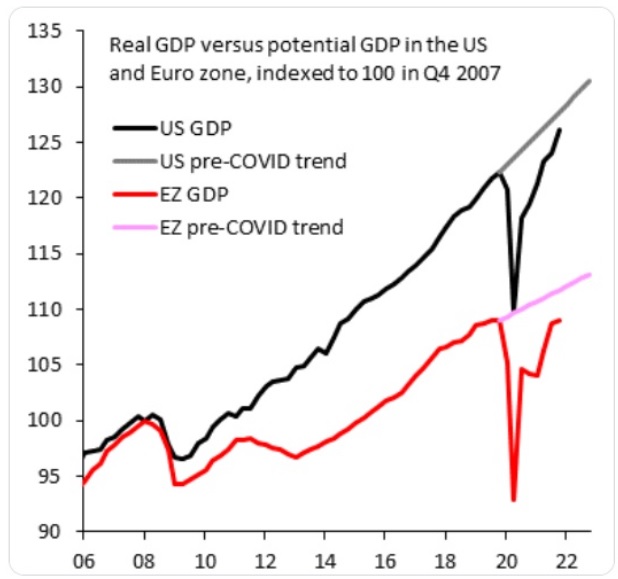
And I’ll start by observing that the economic data is unfavorable when compared to the United States. Not only are living standards lower in EU nations, but those countries also are continually falling further behind.

It’s possible, of course, that these countries would be even further behind if there was no European Union, but the academic evidence points in the other direction.

In an article for Law & Liberty, Douglas Carswell questions the very existence of the European Union.

Instead of asking if Europe can hold together, we should be asking if Europe should be held together at all. Why is it felt necessary to unify Europe’s disparate peoples in the first place? What is it that compels European leaders to support pan-European systems of governance at all? It is not as if European integration has been a success. …If the Euro was supposed to give Europe a competitive edge, how come the Eurozone lags behind the rest of the worldby almost every measure of output and innovation? …The urge to integrate came about, it is often suggested, to prevent Germany from becoming overbearing… Seriously? Does anyone really believe that if it was not for an army of bureaucrats in Brussels these past thirty years, Germany might have invaded France again? …Maastricht, and indeed the various subsequent EU treaties, need to be seen for what they are: a power grab by Europe’s political elites. …Thirty years after Maastricht, the European Union is no more capable of making the kind of reforms it needs to save itself than it was back then. Rather like the Habsburg Empire, to which it is in many ways the successor, the European Union will stumble on, lurching from crisis to crisis, bits of it breaking away from time to time, as a once-great civilization becomes a cultural and economic backwater.

In a way that appeals to me, Liam Warner explains in National Review that the European Union represents the wrong type of globalism.

The 1957 Treaty of Rome established the European Economic Community, for example, was a customs union by which member countries agreed to trade freely with one another and maintain common external tariffs. With the 1993 Treaty of Maastricht,which established the EU, and its subsequent amendments, European integration began to look less like a cooperation of equals and more like a submission to a supranational authority. …internationalism in its modern form has often been a means of…imposing on the world a stultifying monotony… The deep flaws of the present system having been exposed, European leaders must give up their dream…and revisit their ancestors’ healthier forms of globalism.

That “healthier form of globalism” should be based on jurisdictional competition and mutual recognition.

Is that remotely feasible?

A few European leaders realize that there’s too much centralization. Kai Weiss highlighted the views of the Dutch Prime Minster in a column for CapX.

In his Strasbourg speech on the future of Europe, Mark Rutte struck a markedly different tone and delivered an entirely different message to Macron and others. The Prime Minister of the Netherlands has recently come to the fore as one of Europe’s more sceptical voices. Speaking in front of the European Parliament, he once again made it clear that for him, more and more EU is simply not the answer to today’s problems. “For some, ‘ever closer union’ is still a goal in itself. Not for me,” Rutte said… Instead of finding ever new competences and tasks, Rutte argued that Brussels should hold onto the “original promise of Europe”, the “promise of sovereign member states working together to help each other achieve greater prosperity…” For Rutte, this means focusing on the core benefit of the EU: free trade. …the emergence of the Netherlands, as well as Nordic and Baltic states, as vocal critics of Macron’s federalist plans should be the source of much hope for Europe’s future.

I applaud that there are a few leaders and a few governments trying to block further centralization.

But I have three reasons for being a pessimist about the European Union.

  • First, I don’t think there’s any hope for achieving any decentralization. Indeed, the more sensible people in Europe will face endless battles to stop bad ideas.
  • Second, Europe’s demographics are terrible. And that will specifically mean lots of pressure for redistribution by imposing EU-wide taxes and spending.
  • Third, public policy is moving in the wrong direction at the national level. This compounds the damage of bad policies imposed by EU bureaucrats in Brussels.

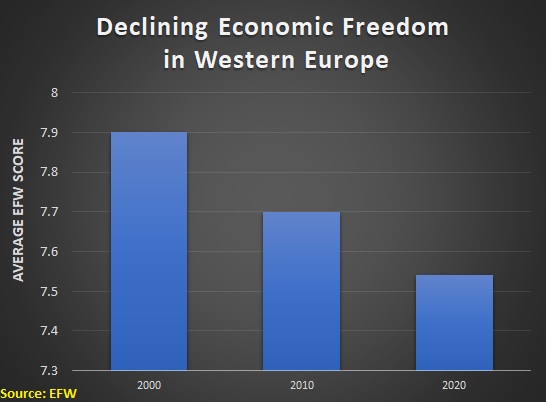
Here’s a chart, based on the latest edition of Economic Freedom of the World, showing how economic liberty is declining in the nations that dominate the European Union.

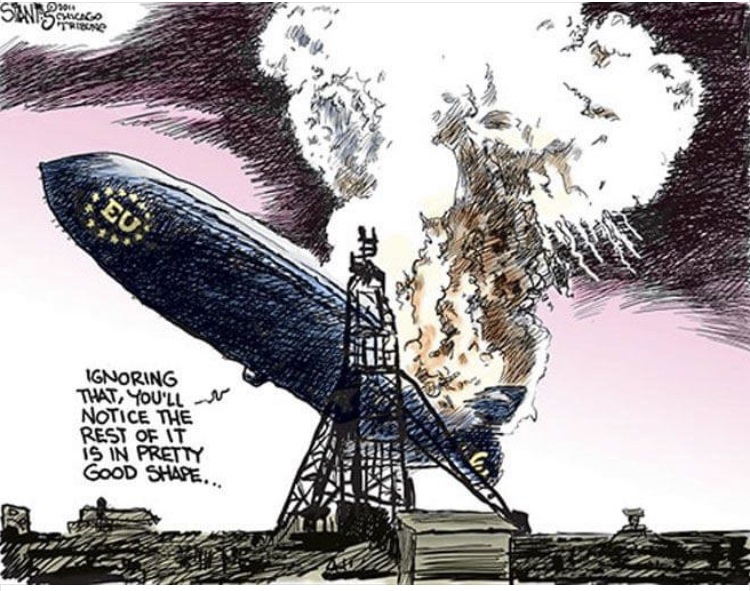
P.S. For amusement value, here’s a cartoon showing the future of the European Union.

P.P.S. If you like European-themed satire, click here, here, here, here, here, here, and here.

P.P.P.S. On a related note, Brexit-themed humor can be found here, here, here, and here.

Max Brantley and Paul Krugman are constantly being critical of the austerity in Europe but in most cases in Europe what we have is tax increases and fake spending cuts. Instead of destroying economic growth with tax increases the right method would be real spending cuts.

We need some austerity in the USA and I don’t mean tax increases. That never helps. However, just like many of the European countries we have run away federal government spending that needs to be cut. Why can’t we learn from others mistakes?

Looking at Austerity in Italy

Posted by Juan Carlos Hidalgo

The Italian economy contracted for a third quarter in a row, deepening the country’s recession and adding to the fire of the euro crisis. Italy is the third largest economy in the Eurozone, and many view it as the endgame of an eventual collapse of the common currency because it is too big to fail. Neither the EU nor the IMF have enough cash to rescue it. If the country defaults, that would probably spell the end of the euro.

Austerity is being blamed for Italy’s economic troubles. Chiara Corsa, an economist at UniCredit, wrote that “The key factor is austerity, which is weighing heavily on consumption and investment.” Recent local elections saw the rise of anti-austerity parties. Paul Krugman warned about this back in December when he described the austerity push of Prime Minister Mario Monti as “self-defeating” and “delusional.”

However, as is the case for Britain, France and Greece, commentators are unclear about what austerity means for Italy, although many seem to imply spending cuts. For example, if Krugman’s criticism about Italian austerity is consistent with his critiques about austerity elsewhere in Europe, we know he means spending cuts. So let’s take a look and see if there has been any:


* Using GDP deflator.
Source: European Commission, Economic and Financial Affairs.

Spending in nominal terms increased by a yearly average of 4.1% between 2000 and 2009, and then fell slightly the following year. In 2011 government spending was just 0.14% below its 2009 level. As for spending in real terms, there’s no cut whatsoever. And as a share of the economy, total spending reached a peak in 2009 at 51.6% of GDP, and it fell to 49.6% last year, a decline far from significant.

So what’s austerity all about in Italy so far? According to The Financial Times, the “government’s €30 billion austerity package, passed in December, was heavily oriented towards tax increases rather than spending cuts, an emphasis that is now widely recognized by ministers as having driven Italy deeper into recession.” The FT adds that the Monti administration is facing “intense pressure from business, politicians and the public to shift the burden of austerity away from heavy taxation towards cuts in public spending.” As a result, the Italian Prime Minister announced €4.2 billion in spending cuts starting in June, still less than 1% of total public spending. That doesn’t sound savage to me.

But it’s quite fascinating to see the hysteria surrounding non existent spending cuts and its supposedly negative impact on economic growth. For example, last December The Economist warned:

“But too great an emphasis on austerity in the short run risks sending the continent’s economy into a deep recession; the latest data on Italian industrial production showed an annual fall of 4.1% in October, even before budget cuts were introduced by the new government.”

Interestingly, according to The Economist, spending cuts were somehow responsible for a decline in economic output in Italy even before being implemented!

If austerity is to blame for Italy’s recession, we need to be clear that by austerity we mean mostly tax increases with almost no reduction in government spending.

Related posts:

Austerity has not happened in Italy yet

Max Brantley and Paul Krugman are constantly being critical of the austerity in Europe but in most cases in Europe what we have is tax increases and fake spending cuts. Instead of destroying economic growth with tax increases the right method would be real spending cuts. We need some austerity in the USA and I […]

Austerity not practiced in Britain yet

Uploaded by danmitchellcato on Feb 26, 2012 I wish we would put in real spending cuts in the USA instead of fake ones like the ones in the United Kingdom. Looking at ‘Austerity’ in Britain Posted by Juan Carlos Hidalgo I’m going to jump into the debate about austerity in Europe because it is being […]

Dan Mitchell of Cato Institute: low taxes best for creating jobs

Dan Mitchell on Soaking the Rich There are many economic approaches out there but the one that works best is the free market approach of low taxes and low amounts of government spending and intervention. Daniel in the Lion’s Den: Fighting for Liberty at the United Nations May 18, 2012 by Dan Mitchell I posted yesterday […]

Got to avoid raising taxes if we want the economy to grow and eventually balance the budget

Dan Mitchell on Austerity in Europe 2012 In order to balance the budget we must make deep cuts. Take a look at the study refers to below by Dan Mitchell of the Cato Institute in his fine article on the French mess. Raising taxes has not worked in the thirty countries studied. Some French Economic Humor […]

Obama brags of progress in USA on economy to G-8 audience

1,000 Days Without A Budget Uploaded by HeritageFoundation on Jan 24, 2012 http://blog.heritage.org | Today marks the 1,000th day since the United States Senate has passed a budget. While the House has put forth (and passed) its own budget, the Senate has failed to do the same. To help illustrate how extraordinary this failure has […]

If Europe follows Obama’s plan it would go broke even faster

U.S. President Barack Obama (R) waves as French President Francois Hollande looks on following their bilateral meeting in the Oval Office of the White House in Washington May 18, 2012. Hollande is in the United States to join other leaders of the major industrial economies and meet for a G8 Summit at Camp David this […]

France today: government spending is at 55 percent of GDP

The liberals in France do not want austerity but more spending but who will pay for their party? Morning Bell: Socialism Rises Again Mike Brownfield May 8, 2012 at 8:55 am Last weekend, the people of France took a sharp turn to the left, and the rest of Europe may be on the brink of […]

Europe has a bleak future because they don’t want austerity

The medicine for the sickness of spending is real budget cuts but no one in liberal europe wants to hear that. Sadly we are on the same road in the USA. Liberals (like my blogger opponent “the Outlier” and others) love to say that austerity has been tried in Europe and it doesn’t work but the truth […]

DAN MITCHELL ARTICLE Congratulations to Estonia (Again)

_________

Congratulations to Estonia (Again)

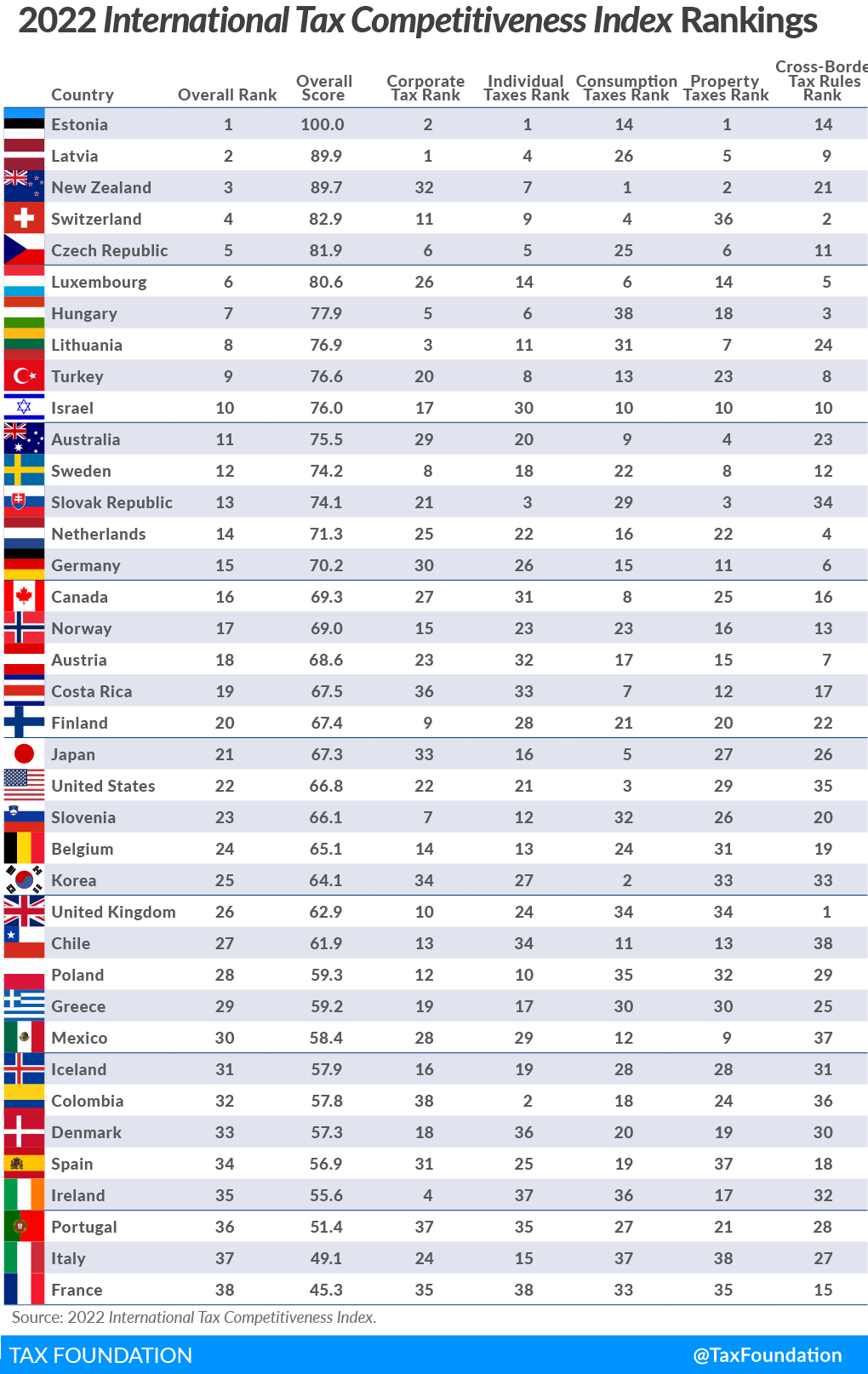
There is not a lot of suspense when the Tax Foundation releases its annual International Tax Competitiveness Index.

The “improbable success” of Estonia once again ranks #1. Just like in 2021, 2020, 2019, etc, etc.

Its Baltic neighbor Latvia is #2, followed by New Zealand and Switzerland.

It’s also worth noting that France is continuing its proud tradition of being in last place.

The United States, for what it is worth, has a mediocre #22 rank, dragged down by a horrible score – last among developed nations – for “cross-border tax rules” (but helped by a good score for consumption taxes since the U.S. has not made the mistake of imposing a value-added tax).

If you want to understand the Tax Foundation’s methodology, here’s a description from the report.

The structure of a country’s tax code is a determining factor of its economic performance. …The International Tax Competitiveness Index (ITCI) seeks to measure the extent to which a country’s tax system adheres to two important aspects of tax policy: competitiveness and neutrality.A competitive tax code is one that keeps marginal tax rates low. …businesses will look for countries with lower tax rates on investment to maximize their after-tax rate of return. If a country’s tax rate is too high, it will drive investment elsewhere, leading to slower economic growth. In addition, high marginal tax rates can impede domestic investment and lead to tax avoidance. …Separately, a neutral tax code…means that it doesn’t favor consumption over saving, as happens with investment taxes and wealth taxes. It also means few or no targeted tax breaks for specific activities carried out by businesses or individuals.

If you’re interested in which nations got better and worse over the past year, Greece and Turkey tied for the biggest improvement, both climbing four spots (easier for Greece since it started near the bottom of the rankings).

Ireland suffered the biggest decline, dropping seven spots, in part because of depreciation laws that penalize investment.

I’ll close with a wish that the report eventually gets expanded to include jurisdictions such Bermuda, Hong Kong, Monaco, Liechtenstein, Singapore, and the Cayman Islands. It would be very interesting to see if all of those places are ahead of Estonia.

It also would be interesting if the Tax Foundation augmented the report by speculating about potential big developments. For instance, how much would the U.S. score have declined if Biden’s tax plan had been adopted? And how much would the U.K. score have increased if Prime Minister Truss’ original tax plan was approved?

P.S. The Tax Foundation has very interesting comparative data showing international tax burdens on saving and investment.

The Feel-Good Map of 2022

I’ve already shared the “feel-good story” for 2022, so today I’m going to share this year’s feel-good map.

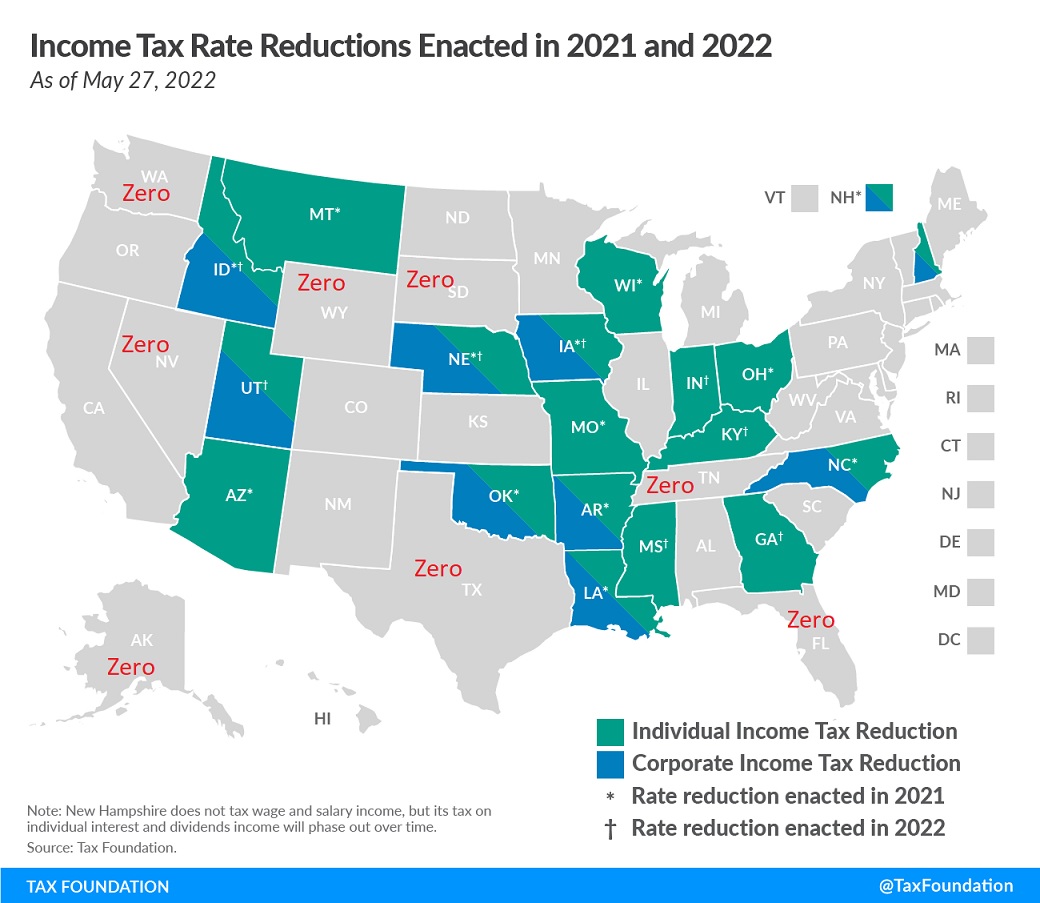
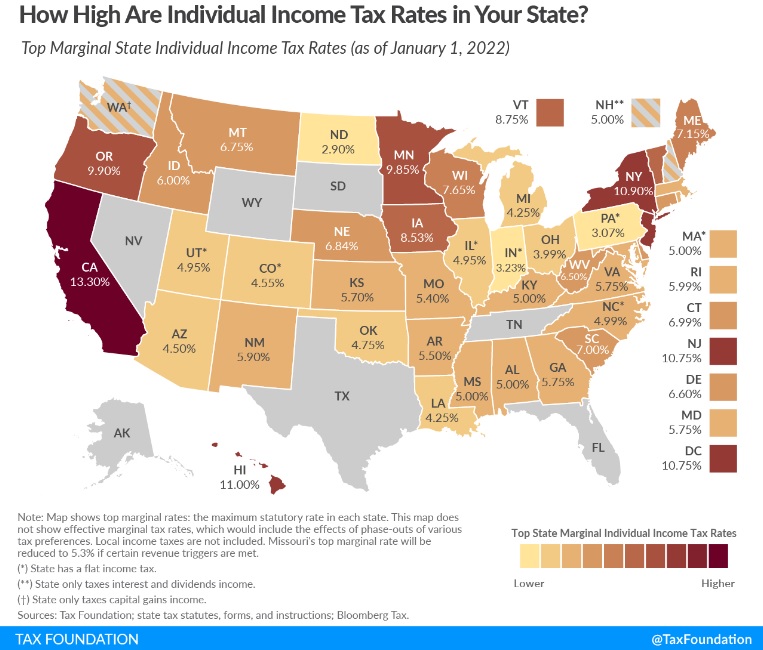
Courtesy of the Tax Foundation, here are the states that have lowered personal income tax rates and/or corporate income tax rates in 2021 and 2022. I’ve previously written about these reforms (both this year and last year), but more and more states and lowering tax burdens, giving us a new reason to write about this topic.

The map is actually even better than it looks because there are several states that don’t have any income taxes, so it’s impossible for them to lower rates. I’ve labelled them with a red zero.

And when you add together the states with no income tax with the states that are reducing income tax rates, more than half of them are either at the right destination (zero) or moving in that direction.

That’s very good news.

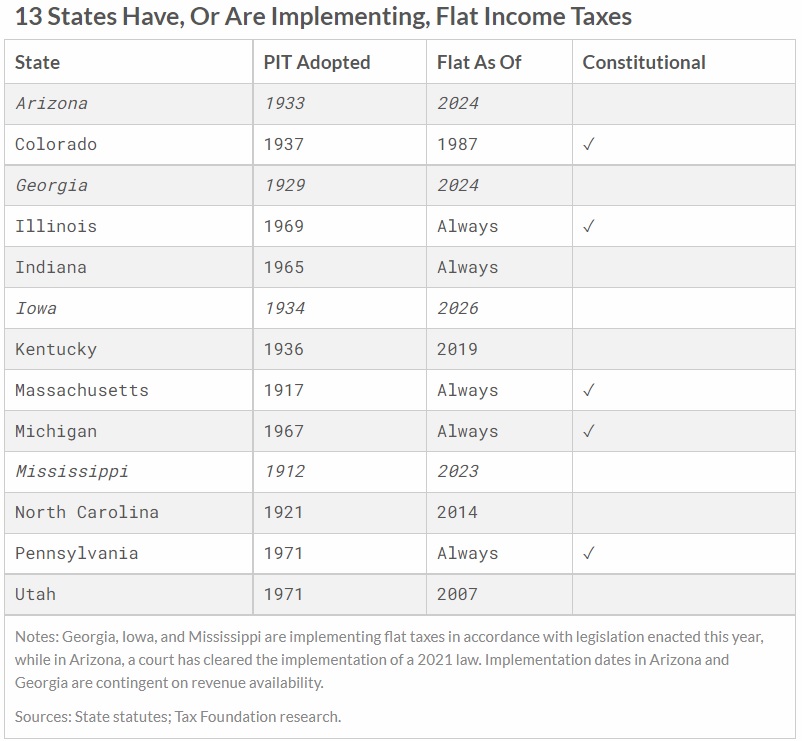
And here’s more good news from the Tax Foundation. The flat tax club is expanding.

I prefer the states with no income taxes, but low-rate flat taxes are the next best approach.

P.S. According to the Tax Foundation, New York and Washington, D.C. have moved in the wrong direction. Both increased income tax burdens in 2021. No wonder people are moving away.

P.P.S. If I had to pick the states with the best reforms, I think Iowa and Arizona belong at the top of the list.

Texas vs. California, Part VII

To begin the seventh edition of our series comparing policy in Texas and California (previous entries in March 2010, February 2013, April 2013, October 2018, June 2019, and December 2020), here’s a video from Prager University.

There will be a lot of information in today’s column, so if you’re pressed for time, here are three sentences that tell you what you need to know.

California has all sorts of natural advantages over Texas, especially endless sunshine and beautiful topography.

Texas has better government policy than California, most notably in areas such as taxation and regulation.

Since people are moving from the Golden State to the Lone Star State, public policy seems to matter more than natural beauty.

Now let’s look at a bunch of evidence to support those three sentences.

We’ll start with an article by Joel Kotkin of Chapman University.

If one were to explore the most blessed places on earth, California, my home for a half century, would surely be up there. …its salubrious climate, spectacular scenery, vast natural resources… President Biden recently suggested that he wants to “make America California again”. Yet…he should consider whether the California model may be better seen as a cautionary tale than a roadmap to a better future… California now suffers the highest cost-adjusted poverty rate in the country, and the widest gap between middle and upper-middle income earners. …the state has slowly morphed into a low wage economy. Over the past decade, 80% of the state’s jobs have paid under the median wage — half of which are paid less than $40,000…minorities do better today outside of California, enjoying far higher adjusted incomes and rates of homeownership in places like Atlanta and Dallas than in San Francisco and Los Angeles. Almost one-third of Hispanics, the state’s largest ethnic group, subsist below the poverty line, compared with 21% outside the state. …progressive…policies have not brought about greater racial harmony, enhanced upward mobility and widely based economic growth.

Next we have some business news from the San Francisco Chronicle.

Business leaders fear tech giant Oracle’s recent announcement that it is leaving the Bay Area for Austin, Texas, will lead to more exits unless some fundamental political and economic changes are made to keep the region attractive and competitive. “This is something that we have been warning people about for several years. California is not business friendly, we should be honest about it,” said Kenneth Rosen, chairman of the UC Berkeley Fisher Center for Real Estate and Urban Economics.Bay Area Council President Jim Wunderman said… “From consulting companies to tax lawyers to bankers and commercial real estate firms, every person I talk with who provides services to big Bay Area corporations are telling me that their clients are strategizing about leaving…” Charles Schwab, McKesson and Hewlett Packard Enterprise have all exited the high-cost, high-tax, high-regulation Bay Area for a less-expensive, less-regulated and business-friendlier political climate. All of them rode off to Texas. …the pace of the departures appears to be increasing. …A recent online survey of 2,325 California residents, taken between Nov. 4 and Nov. 23 by the Public Policy Institute of California, found 26% of residents have seriously considered moving out of state and that 58% say that the American Dream is harder to achieve in California than elsewhere.

Are California politicians trying to make things better, in hopes of stopping out-migration to places such as Texas?

Not according to this column by Hank Adler in the Wall Street Journal.

California’s Legislature is considering a wealth tax on residents, part-year residents, and any person who spends more than 60 days inside the state’s borders in a single year. Even those who move out of state would continue to be subject to the tax for a decade… Assembly Bill 2088 proposes calculating the wealth tax based on current world-wide net worth each Dec. 31. For part-year and temporary residents, the tax would be proportionate based on their number of days in California. The annual tax would be on current net worth and therefore would include wealth earned, inherited or obtained through gifts or estates long before and long after leaving the state. …The authors of the bill estimate the wealth tax will provide Sacramento $7.5 billion in additional revenue every year. Another proposal—to increase the top state income-tax rate to 16.8%—would annually raise another $6.8 billion. Today, California’s wealthiest 1% pay approximately 46% of total state income taxes. …the Legislature looks to the wealthiest Californians to fill funding gaps without considering the constitutionality of the proposals and the ability of people and companies to pick up and leave the state, which news reports suggest they are doing in large numbers. …As of this moment, there are no police roadblocks on the freeways trying to keep moving trucks from leaving California. If A.B. 2088 becomes law, the state may need to consider placing some.

The late (and great) Walter Williams actually joked back in 2012that California might set up East German-style border checkpoints. Let’s hope satire doesn’t become reality.

But what isn’t satire is that people are fleeing the state (along with other poorly governed jurisdictions).

Simply state, the blue state model of high taxes and big government is not working (just as it isn’t working in countries with high taxes and big government).

Interestingly, even the New York Times recognizes that there is a problem in the state that used to be a role model for folks on the left.

Opining for that outlet at the start of the month, Brett Stephens raised concerns about the Golden State.

…today’s Democratic leaders might look to the very Democratic state of California as a model for America’s future. You remember California: People used to want to move there, start businesses, raise families, live their American dream. These days, not so much. Between July 2019 and July 2020, more people — 135,400 to be precise — left the state than moved in… No. 1 destination: Texas, followed by Arizona, Nevada and Washington. Three of those states have no state income tax.

California, by contrast, has very high taxes. Not just an onerous income tax, but high taxes across the board.

Californians also pay some of the nation’s highest sales tax rates (8.66 percent) and corporate tax rates (8.84 percent), as well as the highest taxes on gasoline (63 cents on a gallon as of January, as compared with 20 cents in Texas).

Sadly, these high taxes don’t translate into good services from government.

The state ranks 21st in the country in terms of spending per public school pupil, but 27th in its K-12 educational outcomes. It ties Oregon for third place among states in terms of its per capita homeless rate. Infrastructure? As of 2019, the state had an estimated $70 billion in deferred maintenance backlog. Debt? The state’s unfunded pension liabilities in 2019 ran north of $1.1 trillion, …or $81,300 per household.

Makes you wonder whether the rest of the nation should copy that model?

Democrats hold both U.S. Senate seats, 42 of its 53 seats in the House, have lopsided majorities in the State Assembly and Senate, run nearly every big city and have controlled the governor’s mansion for a decade. If ever there was a perfect laboratory for liberal governance, this is it. So how do you explain these results? …If California is a vision of the sort of future the Biden administration wants for Americans, expect Americans to demur.

Some might be tempted to dismiss Stephens’ column because he is considered the token conservative at the New York Times.

But Ezra Klein also acknowledges that California has a problem, and nobody will accuse him of being on the right side of the spectrum.

Here’s some of what he wrote in his column earlier this month for the New York Times.

I love California. I was born and raised in Orange County. I was educated in the state’s public schools and graduated from the University of California system… But for that very reason, our failures of governance worry me. California has the highest poverty rate in the nation,when you factor in housing costs, and vies for the top spot in income inequality, too. …but there’s a reason 130,000 more people leave than enter each year. California is dominated by Democrats, but many of the people Democrats claim to care about most can’t afford to live there. …California, as the biggest state in the nation, and one where Democrats hold total control of the government, carries a special burden. If progressivism cannot work here, why should the country believe it can work anywhere else?

Kudos to Klein for admitting problems on his side (just like I praise the few GOPers who criticized Trump’s big-government policies).

But his column definitely had some quirky parts, such as when he wrote that, “There are bright spots in recent years…a deeply progressive plan to tax the wealthy.”

That’s actually a big reason for the state’s decline, not a “bright spot.”

I’m not the only one to recognize the limitations of his column.

Kevin Williamson wrote an entire rebuttal for National Review.

Who but Ezra Klein could survey the wreck left-wing Democrats have made of California and conclude that the state’s problem is its excessive conservatism? …Klein the rhetorician anticipates objections on this front and writes that he is not speaking of “the political conservatism that privatizes Medicare, but the temperamental conservatism that” — see if this formulation sounds at all familiar — “stands athwart change and yells ‘Stop!’”…California progressives have progressive policies and progressive power, and they like it that way. That is the substance of their conservatism. …Klein and others of his ilk like to present themselves as dispassionate pragmatists, enlightened empiricists who only want to do “what works.” …Klein mocks San Francisco for renaming schools (Begone, Abraham Lincoln!) while it has no plan to reopen them, but he cannot quite see that these are two aspects of a single phenomenon. …Klein…must eventually understand that the troubles he identifies in California are baked into the progressive cake. …That has real-world consequences, currently on display in California to such a spectacular degree that even Ezra Klein is able dimly to perceive them. Maybe he’ll learn something.

I especially appreciate this passage since it excoriates rich leftists for putting teacher unions ahead of disadvantaged children.

Intentions do not matter very much, and mere stated intentions matter even less. Klein is blind to that, which is why he is able to write, as though there were something unusual on display: “For all the city’s vaunted progressivism, [San Francisco] has some of the highest private school enrollment numbers in the country.” Rich progressives have always been in favor of school choice and private schools — for themselves. They only oppose choice for poor people, whose interests must for political reasons be subordinated to those of the public-sector unions from which Democrats in cities such as San Francisco derive their power.

Let’s conclude with some levity.

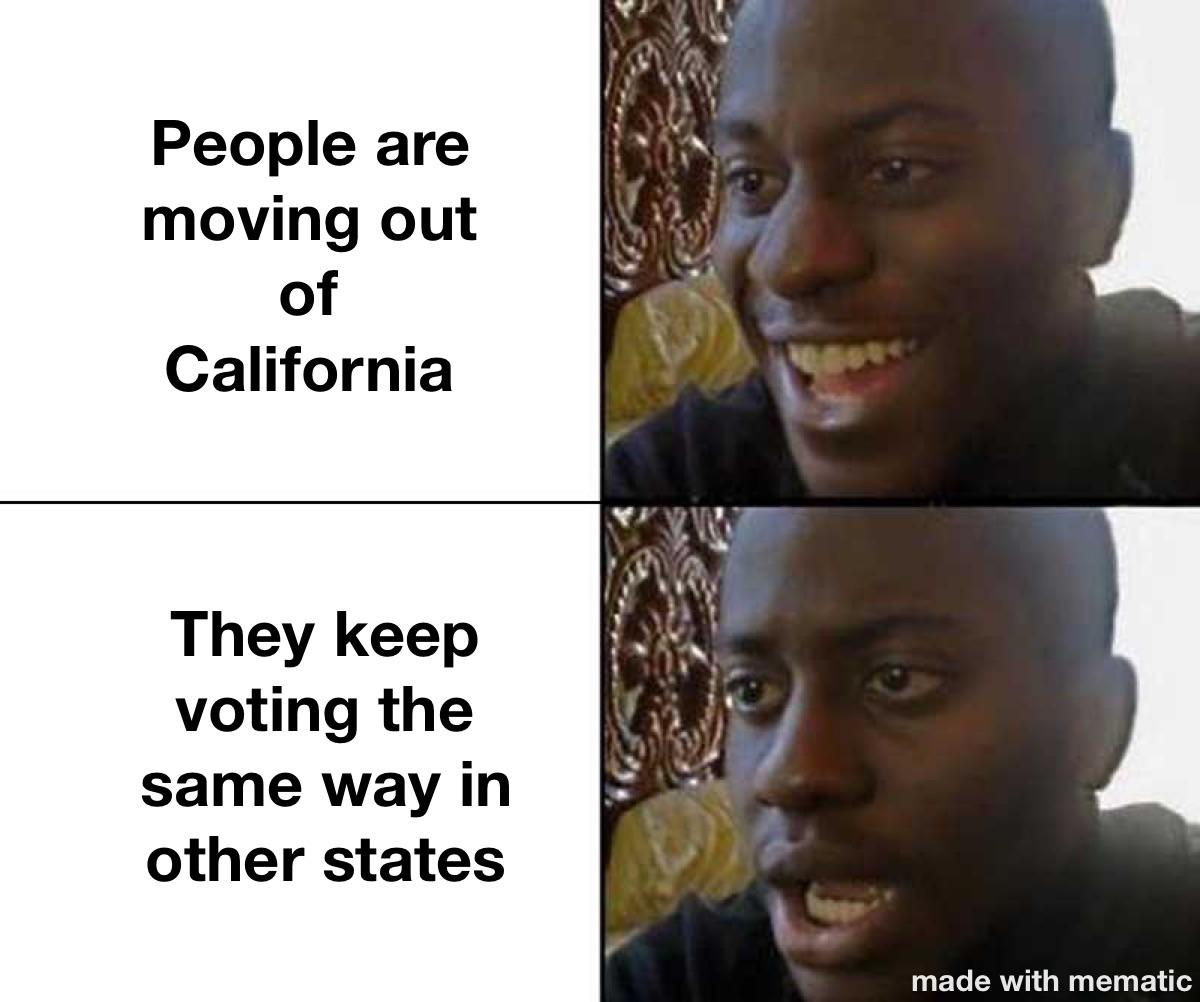
Here’s a meme that contemplates whether California emigrants bring bad voting habits with them.

Though that’s apparently more of a problem in Colorado rather than in Texas.

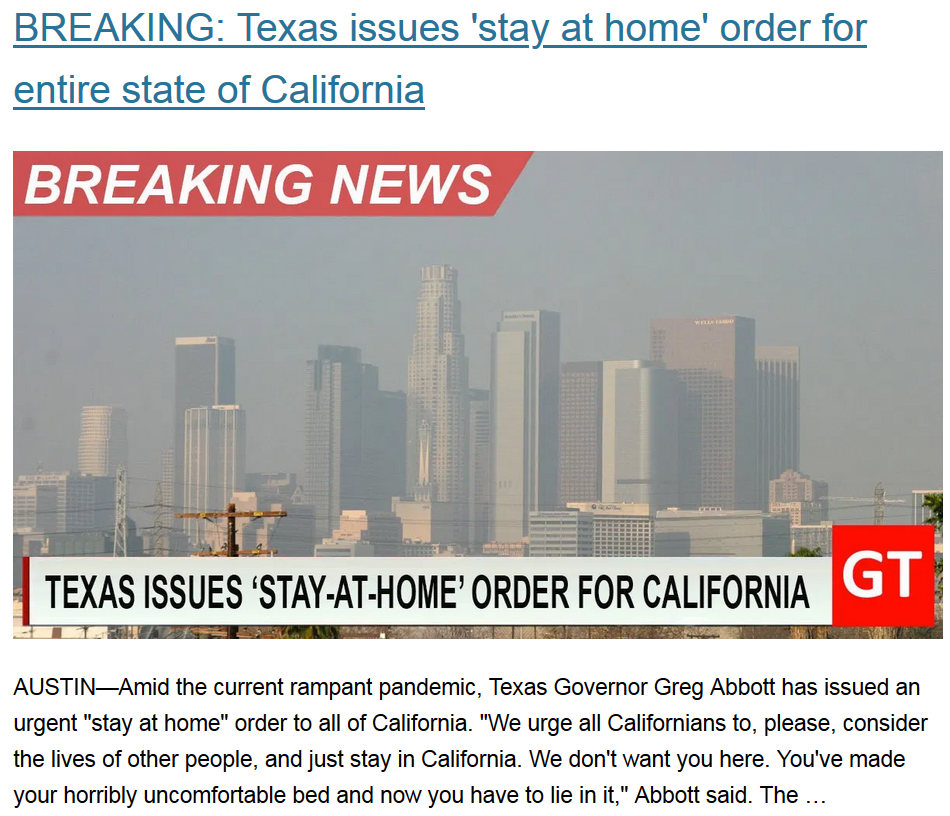
And here’s some clever humor from Genesius Times.

P.S. My favorite California-themed humor (not counting the state’s elected officials) can be found here, hereherehere, and here.

High-tax states are languishing but  zero-income-tax states such as Texas are growing rapidly!!!!

Much of my writing is focused on the real-world impact of government policy, and this is why I repeatedly look at the relative economic performance of big government jurisdictions and small government jurisdictions.

But I don’t just highlight differences between nations. Yes, it’s educational to look at North Korea vs. South Korea or Chile vs. Venezuela vs. Argentina, but I also think you can learn a lot by looking at what’s happening with different states in America.

So we’ve looked at high-tax states that are languishing, such as California and Illinois, and compared them to zero-income-tax states such as Texas.

With this in mind, you can understand that I was intrigued to see that even the establishment media is noticing that Texas is out-pacing the rest of the nation.

Here are some excerpts from a report by CNN Money on rapid population growth in Texas.

More Americans moved to Texas in recent years than any other state: A net gain of more than 387,000 in the latest Census for 2013. …Five Texas cities — Austin, Houston, San Antonio, Dallas and Fort Worth — were among the top 20 fastest growing large metro areas. Some smaller Texas metro areas grew even faster. In oil-rich Odessa, the population grew 3.3% and nearby Midland recorded a 3% gain.

But why is the population growing?

Well, CNN Money points out that low housing prices and jobs are big reasons.

And on the issue of housing, the article does acknowledge the role of “easy regulations” that enable new home construction.

But on the topic of jobs, the piece contains some good data on employment growth, but no mention of policy.

Jobs is the No. 1 reason for population moves, with affordable housing a close second. …Jobs are plentiful in Austin, where the unemployment rate is just 4.6%. Moody’s Analytics projects job growth to average 4% a year through 2015. Just as important, many jobs there are well paid: The median income of more than $75,000 is nearly 20% higher than the national median.

That’s it. Read the entire article if you don’t believe me, but the reporter was able to write a complete article about the booming economy in Texas without mentioning – not even once – that there’s no state income tax.

But that wasn’t the only omission.

The article doesn’t mention that Texas is the 4th-best state in the Tax Foundation’s ranking of state and local tax burdens.

The article doesn’t mention that Texas was the least oppressive state in the Texas Public Policy Foundation’s Soft Tyranny Index.

The article doesn’t mention that Texas was ranked #20 in a study of the overall fiscal condition of the 50 states.

The article doesn’t mention that Texas is in 4th place in a combined ranking of economic freedom in U.S. state and Canadian provinces.

The article doesn’t mention that Texas was ranked #11 in the Tax Foundation’s State Business Tax Climate Index.

The article doesn’t mention that Texas is in 14th place in the Mercatus ranking of overall freedom for the 50 states (and in 10th place for fiscal freedom).

By the way, I’m not trying to argue that Texas is the best state.

Indeed, it only got the top ranking in one of the measures cited above.

My point, instead, is simply to note that it takes willful blindness to write about the strong population growth and job performance of Texas without making at least a passing reference to the fact that it is a low-tax, pro-market state.

At least compared to other states. And especially compared to the high-tax states that are stagnating.

Such as California, as illustrated by this data and this data, as well as this Lisa Benson cartoon.

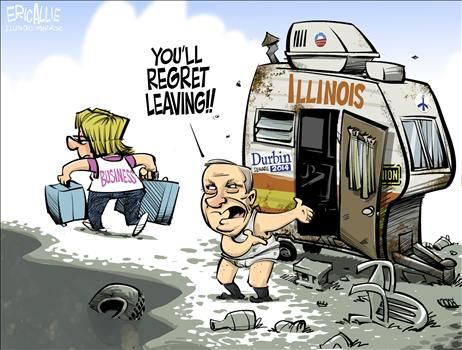
Such as Illinois, as illustrated by this data and this Eric Allie cartoon.

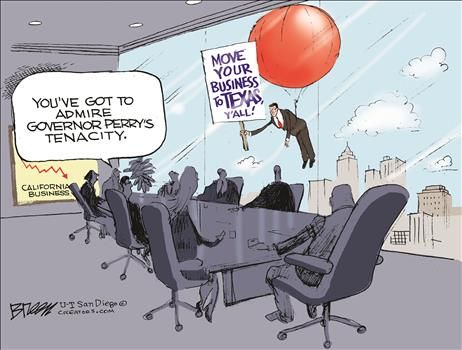
And I can’t resist adding this Steve Breen cartoon, if for no other reason that it reminds me of another one of his cartoons that I shared last year.

Speaking of humor, this Chuck Asay cartoon speculates on how future archaeologists will view California. And this joke about Texas, California, and a coyote is among my most-viewed blog posts.

All jokes aside, I want to reiterate what I wrote above. Texas is far from perfect. There’s too much government in the Lone Star state. It’s only a success story when compared to California.

P.S. Paul Krugman has tried to defend California, which has made him an easy target. I debunked him earlier this year, and I also linked to a superb Kevin Williamson takedown of Krugman at the bottom of this post.

P.P.S. Once again, I repeat the two-part challenge I’ve issued to the left. I’ll be happy if any statists can successfully respond to just one of the two questions I posed.

Related posts:

California is the Greece of the USA, but Texas is not perfect either!!!

California is the Greece of the USA, but Texas is not perfect either!!! Just Because California Is Terrible, that Doesn’t Mean Texas Is Perfect January 21, 2013 by Dan Mitchell Texas is in much better shape than California. Taxes are lower, in part because Texas has no state income tax. No wonder the Lone Star State […]

Dan Mitchell on Texas v. California (includes editorial cartoon)

We should lower federal taxes because jobs are going to states like Texas that have low taxes. (We should lower state taxes too!!) What Can We Learn by Comparing the Employment Situation in Texas vs. California? April 3, 2013 by Dan Mitchell One of the great things about federalism, above and beyond the fact that it […]

Ark Times blogger claims California is better than Texas but facts don’t bear that out (3 great political cartoons)

I got on the Arkansas Times Blog and noticed that a person on there was bragging about the high minimum wage law in San Francisco and how everything was going so well there. On 2-15-13 on the Arkansas Times Blog I posted: Couldn’t be better (the person using the username “Couldn’t be better)  is bragging […]

California burdensome government causing some of business community to leave for Texas

Does Government Have a Revenue or Spending Problem? People say the government has a debt problem. Debt is caused by deficits, which is the difference between what the government collects in tax revenue and the amount of government spending. Every time the government runs a deficit, the government debt increases. So what’s to blame: too […]

Arkansas Times blogger picks California business environment over Texas, proves liberals don’t live in real world(Part 2)

       Former California Governor Arnold Schwarzenegger with his family   I posted a portion of an article by John Fund of the Wall Street Journal that pointed out that many businesses are leaving California because of all of their government red tape and moving to Texas. My username is SalineRepublican and this is […]

John Fund’s talk in Little Rock 4-27-11(Part 4):Responding to liberals who criticize states like Texas that don’t have the red tape that California has

John Fund at Chamber Day, Part 1 Last week I got to attend the first ever “Conservative Lunch Series” presented by  KARN and Americans for Prosperity Foundation at the Little Rock Hilton on University Avenue. This monthly luncheon will be held the fourth Wednesday of every month. The speaker for today’s luncheon was John Fund. John […]

California and France have raised taxes so much that it has hurt economic growth!!!

___________ California and France have raised taxes so much that it has hurt economic growth!!! Mirror, Mirror, on the Wall, which Nation and State Punish Success Most of All? September 25, 2014 by Dan Mitchell I’ve shared some interested rankings on tax policy, including a map from the Tax Foundation showing which states have the earliest […]

Jerry Brown raised taxes in California and a rise in the minimum wage, but it won’t work like Krugman thinks!!!

___________   Jerry Brown raised taxes in California and a rise in the minimum wage, but it won’t work like Krugman thinks!!!! This cartoon below shows what will eventually happen to California and any other state that keeps raising taxes higher and higher.   Krugman’s “Gotcha” Moment Leaves Something to Be Desired July 25, 2014 by […]

Open letter to President Obama (Part 573) Are the states of Illinois and California going to join Detroit in Bankruptcy one day?

Open letter to President Obama (Part 573) (Emailed to White House on 7-29-13.) President Obama c/o The White House 1600 Pennsylvania Avenue NW Washington, DC 20500 Dear Mr. President, I know that you receive 20,000 letters a day and that you actually read 10 of them every day. I really do respect you for trying to get […]

Open letter to President Obama (Part 561) We should lower federal taxes because jobs are going to states like Texas that have low taxes

Open letter to President Obama (Part 561) (Emailed to White House on 6-25-13.) President Obama c/o The White House 1600 Pennsylvania Avenue NW Washington, DC 20500 Dear Mr. President, I know that you receive 20,000 letters a day and that you actually read 10 of them every day. I really do respect you for trying to get […]

Dan Mitchell: There were times when Reagan’s poll numbers were very bad. And the same is true for Thatcher. But because they pursued good policies, economic growth returned and they reaped political benefits!

The Big Question for Tories (and Republicans): What’s the Alternative to “Free-Market Fundamentalism”?

Because of her support for lower tax rates, I was excited when Liz Truss became Prime Minister of the United Kingdom.

Especially since her predecessor, Boris Johnson, turned out to be an empty-suit populist who supported higher taxes and a bigger burden of government spending.

But I’m not excited anymore.

Indeed, it’s more accurate to say that I’m despondent since the Prime Minister is abandoning (or is being pressured to abandon) key parts of her pro-growth agenda.

For details, check out this Bloomberg report, written by Julian Harris, about the (rapidly disappearing) tax-cutting agenda of the new British Prime Minister.

Westminster’s most hard-line advocates of free markets and lower taxes are looking on in despair as their agenda crumbles… When Liz Truss became prime minister just over five weeks ago, she promised to deliver a radical set of policies rooted in laissez-faire economics — an attempt to boost the UK‘s sluggish rate of growth. Yet her chancellor of the exchequer, Kwasi Kwarteng, faced a quick reality check when his mini-budget, packed with unfunded tax cuts and unaccompanied by independent forecasts, …triggered mayhem… Truss fired Kwarteng and replaced him with Jeremy Hunt as she was forced into a dramatic u-turn over her tax plans. …Truss conceded…and dropped her plan to freeze corporation tax. …Still, some believers are sticking by “Trussonomics”…Patrick Minford,..a professor at Cardiff University, said..“Liz Truss’s policies for growth are absolutely right, and to be thrown off them by a bit of market turbulence is insane.” …Eamonn Butler, co-founder of the Adam Smith Institute, similarly insisted that Truss “is not the source of the problem — she’s trying to cure the problem.”

Eamonn is right.

The United Kingdom faces serious economic challenges. But the problems are the result of bad government policies that already exist rather than the possibility of some future tax cuts.

In a column for the Telegraph, Allister Heath says the U.K.’s central bank deserves a big chunk of the blame.

Liz Truss and Kwasi Kwarteng have been doubly unlucky. While almost everybody else in Britain remained in denial, they correctly identified this absurd game for the con-trick that it truly was, warned that it was about to implode and pledged to replace it with a more honest system. Instead of a zombie economy based on rising asset prices and fake, debt-fuelled growth, their mission was to encourage Britain to produce more real goods and services, to work harder and invest more by reforming taxes and regulation.What happened next is dispiriting in the extreme. …Truss and her Chancellor moved too quickly and, paradoxically, given their warnings about the rottenness of the system, ended up pulling out the last block from the Jenga tower, sending all of the pieces tumbling down. …they didn’t crash the economy – it was about to come tumbling down anyway – but they had the misfortune of precipitating and accelerating the day of reckoning. …Andrew Bailey, the Governor of the Bank of England…, has been deeply unimpressive in all of this, helping to keep interest rates too low… The idea, now accepted so widely, that the price of money must be kept extremely low and quantitative easing deployed at every opportunity has undermined every aspect of the economy and society. …Too few people realise how terribly the easy money, high tax, high regulation orthodoxy has failed.

Allister closes with some speculation about possible alternatives. If the Tories in the U.K. decide to reject so-called “free-market fundamentalism,” what’s their alternative?

He thinks the Labour Party will take control, and with very bad results. Jeremy Corbyn will not be in charge, but his economic policies will get enacted.

If Truss is destroyed, the alternative won’t even be social democracy: it will be Labour, the hard Left, the full gamut of punitive taxation, including of wealth and housing, and even more spending, culminating rapidly in economic oblivion.

That is an awful scenario. Basically turning the United Kingdom into Greece.

I want to take a different approach, though, and contemplate what will happen if the Conservative Party rejects the Truss approach and embraces big-government conservatism.

Here are some questions I’d like them to answer:

  • Do you want improved competitiveness and more economic growth?
  • If you want more growth, which of your spending increases will lead to those outcomes?
  • Which of your tax increases will lead to more competitiveness or more prosperity?
  • Will you reform benefit programs to avert built-in spending increases caused by an aging population?
  • If you won’t reform entitlements, which taxes will you increase to keep debt under control?
  • If you don’t plan major tax increases, do you think the economy can absorb endless debt?

I’m asking these questions for two reasons. First, there are no good answers and I’d like to shame big-government Tories into doing the right thing.

Second, these questions are also very relevant in the United States. Even since the Reagan years, opponents of libertarian economic policies have flitted from one trendy idea to another (national conservatism, compassionate conservatism, kinder-and-gentler conservatismcommon-good capitalism, reform conservatism, etc).

To be fair, they usually don’t try to claim their dirigiste policies will produce higher living standards. Instead, they blindly assert that it will be easier to win elections if Republicans abandon Reaganism.

So I’ll close by observing that Ronald Reagan won two landslide elections and his legacy was strong enough that voters then elected another Republican (the same can’t be said for big-government GOPers like Nixon, Bush, Bush, or Trump).

Switching back to the United Kingdom, Margaret Thatcher repeatedly won election and her legacy was strong enough that voters then elected another Conservative.

The bottom line is that good policy can lead to good political outcomes, whereas bad policy generally leads to bad political outcomes.

P.S. To be sure, there were times when Reagan’s poll numbers were very bad. And the same is true for Thatcher. But because they pursued good policies, economic growth returned and they reaped political benefits. Sadly, it appears that Truss won’t have a chance to adopt good policy, so we will never know if she also would have benefited from a similar economic renaissance.

Tax Cartels Mean Ever-Higher Tax Rates

When President Biden proposed a “global minimum tax” for businesses, I immediately warned that would lead to ever-increasing tax rates.

Ross Kaminsky of KHOW and I discussed how this is already happening.

I hate being right, but it’s always safe to predict that politicians and bureaucrats will embrace policies that give more power to government.

Especially when they are very anxious to stifle tax competition.

For decades, people in government have been upset that the tax cuts implemented by Ronald Reagan and Margaret Thatchertriggered a four-decade trend of lower tax rates and pro-growth tax reform.

That’s the reason Biden and his Treasury Secretary proposed a 15 percent minimum tax rate for businesses.

And it’s the reason they now want the rate to be even higher.

Though even I’m surprised that they’re already pushing for that outcome when the original pact hasn’t even been approved or implemented.

Here are some passages from a report by Reuters.

Treasury Secretary Janet Yellen will press G20 counterparts this week for a global minimum corporate tax rate above the 15% floor agreed by 130 countries last week…the global minimum tax rate…is tied to the outcome of legislation to raise the U.S. minimum tax rate, a Treasury official said.The Biden administration has proposed doubling the U.S. minimum tax on corporations overseas intangible income to 21% along with a new companion “enforcement” tax that would deny deductions to companies for tax payments to countries that fail to adopt the new global minimum rate. The officials said several countries were pushing for a rate above 15%, along with the United States.

Other kleptocratic governments naturally want the same thing.

A G7 proposal for a global minimum tax rate of 15% is too low and a rate of at least 21% is needed, Argentina’s finance minister said on Monday, leading a push by some developing countries… “The 15% rate is way too low,” Argentine Finance Minister Martin Guzman told an online panel hosted by the Independent Commission for the Reform of International Corporate Taxation. …”The minimum rate being proposed would not do much to countries in Africa…,” Mathew Gbonjubola, Nigeria’s tax policy director, told the same conference.

Needless to say, I’m not surprised that Argentina is on the wrong side.

And supporters of class warfare also are agitating for a higher minimum rate. Here are some excerpts from a column in the New York Times by Gabriel Zucman and Gus Wezerek.

In the decades after World War II, close to 50 percent of American companies’ earnings went to state and federal taxes. …it was a golden period. …President Biden should be applauded for trying to end the race to the bottom on corporate tax rates. But even if Congress approves the 15 percent global minimum corporate tax, it won’t be enough. …the Biden administration to give working families a real leg up, it should push Congress to enact a 25 percent minimum tax, which would bring in about $200 billion in additional revenue each year. …With a 25 percent minimum corporate tax, the Biden administration would begin to reverse decades of growing inequality. And it would encourage other countries to do the same, replacing a race to the bottom with a sprint to the top.

I can’t resist making two observations about this ideological screed.

  1. Even the IMF and OECD agree that the so-called race to the bottom has not led to a decline in corporate tax revenues, even when measured as a share of economic output.
  2. Since companies legally avoid rather than illegally evade taxes, the headline of the column is utterly dishonest – but it’s what we’ve learned to expect from the New York Times.

The only good thing about the Zucman-Wezerek column is that it includes this chart showing how corporate tax rates have dramatically declined since 1980.

P.S. For those interested, the horizontal line at the bottom is for Bermuda, though other jurisdictions (such as Monaco and the Cayman Islands) also deserve credit for having no corporate income taxes.

P.P.S. If you want to know why high corporate tax rates are misguided, click here. And if you want to know why Biden’s plan to raise the U.S. corporate tax rate is misguided, click here. Or here. Or here.

P.P.P.S. And if you want more information about why Biden’s global tax cartel is bad, click here, here, and here.

I enjoyed this article below because it demonstrates that the Laffer Curve has been working for almost 100 years now when it is put to the test in the USA. I actually got to hear Arthur Laffer speak in person in 1981 and he told us in advance what was going to happen the 1980’s and it all came about as he said it would when Ronald Reagan’s tax cuts took place. I wish we would lower taxes now instead of looking for more revenue through raised taxes. We have to grow the economy:

What Mitt Romney Said Last Night About Tax Cuts And The Deficit Was Absolutely Right. And What Obama Said Was Absolutely Wrong.

Mitt Romney repeatedly said last night that he would not allow tax cuts to add to the deficit.  He repeatedly said it because over and over again Obama blathered the liberal talking point that cutting taxes necessarily increased deficits.

Romney’s exact words: “I want to underline that — no tax cut that adds to the deficit.”

Meanwhile, Obama has promised to cut the deficit in half during his first four years – but instead gave America the highest deficits in the history of the entire human race.

I’ve written about this before.  Let’s replay what has happened every single time we’ve ever cut the income tax rate.

The fact of the matter is that we can go back to Calvin Coolidge who said very nearly THE EXACT SAME THING to his treasury secretary: he too would not allow any tax cuts that added to the debt.  Andrew Mellon – quite possibly the most brilliant economic mind of his day – did a great deal of research and determined what he believed was the best tax rate.  And the Coolidge administration DID cut income taxes and MASSIVELY increased revenues.  Coolidge and Mellon cut the income tax rate 67.12 percent (from 73 to 24 percent); and revenues not only did not go down, but they went UP by at least 42.86 percent (from $700 billion to over $1 billion).

That’s something called a documented fact.  But that wasn’t all that happened: another incredible thing was that the taxes and percentage of taxes paid actually went UP for the rich.  Because as they were allowed to keep more of the profits that they earned by investing in successful business, they significantly increased their investments and therefore paid more in taxes than they otherwise would have had they continued sheltering their money to protect themselves from the higher tax rates.  Liberals ignore reality, but it is simply true.  It is a fact.  It happened.

Then FDR came along and raised the tax rates again and the opposite happened: we collected less and less revenue while the burden of taxation fell increasingly on the poor and middle class again.  Which is exactly what Obama wants to do.

People don’t realize that John F. Kennedy, one of the greatest Democrat presidents, was a TAX CUTTER who believed the conservative economic philosophy that cutting tax rates would in fact increase tax revenues.  He too cut taxes, and he too increased tax revenues.

So we get to Ronald Reagan, who famously cut taxes.  And again, we find that Reagan cut that godawful liberal tax rate during an incredibly godawful liberal-caused economic recession, and he increased tax revenue by 20.71 percent (with revenues increasing from $956 billion to $1.154 trillion).  And again, the taxes were paid primarily by the rich:

“The share of the income tax burden borne by the top 10 percent of taxpayers increased from 48.0 percent in 1981 to 57.2 percent in 1988. Meanwhile, the share of income taxes paid by the bottom 50 percent of taxpayers dropped from 7.5 percent in 1981 to 5.7 percent in 1988.”

So we get to George Bush and the Bush tax cuts that liberals and in particular Obama have just demonized up one side and demagogued down the other.  And I can simply quote the New York Times AT the time:

Sharp Rise in Tax Revenue to Pare U.S. Deficit By EDMUND L. ANDREWS Published: July 13, 2005

WASHINGTON, July 12 – For the first time since President Bush took office, an unexpected leap in tax revenue is about to shrink the federal budget deficit this year, by nearly $100 billion.

A Jump in Corporate Payments On Wednesday, White House officials plan to announce that the deficit for the 2005 fiscal year, which ends in September, will be far smaller than the $427 billion they estimated in February.

Mr. Bush plans to hail the improvement at a cabinet meeting and to cite it as validation of his argument that tax cuts would stimulate the economy and ultimately help pay for themselves.

Based on revenue and spending data through June, the budget deficit for the first nine months of the fiscal year was $251 billion, $76 billion lower than the $327 billion gap recorded at the corresponding point a year earlier.

The Congressional Budget Office estimated last week that the deficit for the full fiscal year, which reached $412 billion in 2004, could be “significantly less than $350 billion, perhaps below $325 billion.”

The big surprise has been in tax revenue, which is running nearly 15 percent higher than in 2004. Corporate tax revenue has soared about 40 percent, after languishing for four years, and individual tax revenue is up as well
.

And of course the New York Times, as reliable liberals, use the adjective whenever something good happens under conservative policies and whenever something bad happens under liberal policies: ”unexpected.”   But it WASN’T ”unexpected.”  It was EXACTLY what Republicans had said would happen and in fact it was exactly what HAD IN FACT HAPPENED every single time we’ve EVER cut income tax rates.

The truth is that conservative tax policy has a perfect track record: every single time it has ever been tried, we have INCREASED tax revenues while not only exploding economic activity and creating more jobs, but encouraging the wealthy to pay more in taxes as well.  And liberals simply dishonestly refuse to acknowledge documented history.

Meanwhile, liberals also have a perfect record … of FAILUREThey keep raising taxes and keep not understanding why they don’t get the revenues they predicted.

The following is a section from my article, “Tax Cuts INCREASE Revenues; They Have ALWAYS Increased Revenues“, where I document every single thing I said above:

The Falsehood That Tax Cuts Increase The Deficit

Now let’s take a look at the utterly fallacious view that tax cuts in general create higher deficits.

Let’s take a trip back in time, starting with the 1920s.  From Burton Folsom’s book, New Deal or Raw Deal?:

In 1921, President Harding asked the sixty-five-year-old [Andrew] Mellon to be secretary of the treasury; the national debt [resulting from WWI] had surpassed $20 billion and unemployment had reached 11.7 percent, one of the highest rates in U.S. history.  Harding invited Mellon to tinker with tax rates to encourage investment without incurring more debt. Mellon studied the problem carefully; his solution was what is today called “supply side economics,” the idea of cutting taxes to stimulate investment.  High income tax rates, Mellon argued, “inevitably put pressure upon the taxpayer to withdraw this capital from productive business and invest it in tax-exempt securities. . . . The result is that the sources of taxation are drying up, wealth is failing to carry its share of the tax burden; and capital is being diverted into channels which yield neither revenue to the Government nor profit to the people” (page 128).

Mellon wrote, “It seems difficult for some to understand that high rates of taxation do not necessarily mean large revenue to the Government, and that more revenue may often be obtained by lower taxes.”  And he compared the government setting tax rates on incomes to a businessman setting prices on products: “If a price is fixed too high, sales drop off and with them profits.”

And what happened?

“As secretary of the treasury, Mellon promoted, and Harding and Coolidge backed, a plan that eventually cut taxes on large incomes from 73 to 24 percent and on smaller incomes from 4 to 1/2 of 1 percent.  These tax cuts helped produce an outpouring of economic development – from air conditioning to refrigerators to zippers, Scotch tape to radios and talking movies.  Investors took more risks when they were allowed to keep more of their gains.  President Coolidge, during his six years in office, averaged only 3.3 percent unemployment and 1 percent inflation – the lowest misery index of any president in the twentieth century.

Furthermore, Mellon was also vindicated in his astonishing predictions that cutting taxes across the board would generate more revenue.  In the early 1920s, when the highest tax rate was 73 percent, the total income tax revenue to the U.S. government was a little over $700 million.  In 1928 and 1929, when the top tax rate was slashed to 25 and 24 percent, the total revenue topped the $1 billion mark.  Also remarkable, as Table 3 indicates, is that the burden of paying these taxes fell increasingly upon the wealthy” (page 129-130).

Now, that is incredible upon its face, but it becomes even more incredible when contrasted with FDR’s antibusiness and confiscatory tax policies, which both dramatically shrunk in terms of actual income tax revenues (from $1.096 billion in 1929 to $527 million in 1935), and dramatically shifted the tax burden to the backs of the poor by imposing huge new excise taxes (from $540 million in 1929 to $1.364 billion in 1935).  See Table 1 on page 125 of New Deal or Raw Deal for that information.

FDR both collected far less taxes from the rich, while imposing a far more onerous tax burden upon the poor.

It is simply a matter of empirical fact that tax cuts create increased revenue, and that those [Democrats] who have refused to pay attention to that fact have ended up reducing government revenues even as they increased the burdens on the poorest whom they falsely claim to help.

Let’s move on to John F. Kennedy, one of the most popular Democrat presidents ever.  Few realize that he was also a supply-side tax cutter.

Kennedy said:

“It is a paradoxical truth that tax rates are too high and tax revenues are too low and the soundest way to raise the revenues in the long run is to cut the rates now … Cutting taxes now is not to incur a budget deficit, but to achieve the more prosperous, expanding economy which can bring a budget surplus.”

– John F. Kennedy, Nov. 20, 1962, president’s news conference


“Lower rates of taxation will stimulate economic activity and so raise the levels of personal and corporate income as to yield within a few years an increased – not a reduced – flow of revenues to the federal government.”

– John F. Kennedy, Jan. 17, 1963, annual budget message to the Congress, fiscal year 1964

“In today’s economy, fiscal prudence and responsibility call for tax reduction even if it temporarily enlarges the federal deficit – why reducing taxes is the best way open to us to increase revenues.”

– John F. Kennedy, Jan. 21, 1963, annual message to the Congress: “The Economic Report Of The President”


“It is no contradiction – the most important single thing we can do to stimulate investment in today’s economy is to raise consumption by major reduction of individual income tax rates.”

– John F. Kennedy, Jan. 21, 1963, annual message to the Congress: “The Economic Report Of The President”


“Our tax system still siphons out of the private economy too large a share of personal and business purchasing power and reduces the incentive for risk, investment and effort – thereby aborting our recoveries and stifling our national growth rate.”

– John F. Kennedy, Jan. 24, 1963, message to Congress on tax reduction and reform, House Doc. 43, 88th Congress, 1st Session.


“A tax cut means higher family income and higher business profits and a balanced federal budget. Every taxpayer and his family will have more money left over after taxes for a new car, a new home, new conveniences, education and investment. Every businessman can keep a higher percentage of his profits in his cash register or put it to work expanding or improving his business, and as the national income grows, the federal government will ultimately end up with more revenues.”

– John F. Kennedy, Sept. 18, 1963, radio and television address to the nation on tax-reduction bill

Which is to say that modern Democrats are essentially calling one of their greatest presidents a liar when they demonize tax cuts as a means of increasing government revenues.

So let’s move on to Ronald Reagan.  Reagan had two major tax cutting policies implemented: the Economic Recovery Tax Act (ERTA) of 1981, which was retroactive to 1981, and the Tax Reform Act of 1986.

Did Reagan’s tax cuts decrease federal revenues?  Hardly:

We find that 8 of the following 10 years there was a surplus of revenue from 1980, prior to the Reagan tax cuts.  And, following the Tax Reform Act of 1986, there was a MASSIVE INCREASEof revenue.

So Reagan’s tax cuts increased revenue.  But who paid the increased tax revenue?  The poor?  Opponents of the Reagan tax cuts argued that his policy was a giveaway to the rich (ever heard that one before?) because their tax payments would fall.  But that was exactly wrong.  In reality:

“The share of the income tax burden borne by the top 10 percent of taxpayers increased from 48.0 percent in 1981 to 57.2 percent in 1988. Meanwhile, the share of income taxes paid by the bottom 50 percent of taxpayers dropped from 7.5 percent in 1981 to 5.7 percent in 1988.”

So Ronald Reagan a) collected more total revenue, b) collected more revenue from the rich, while c) reducing revenue collected by the bottom half of taxpayers, and d) generated an economic powerhouse that lasted – with only minor hiccups – for nearly three decades.  Pretty good achievement considering that his predecessor was forced to describe his own economy as a “malaise,” suffering due to a “crisis of confidence.” Pretty good considering that President Jimmy Carter responded to a reporter’s question as to what he would do about the problem of inflation by answering, “It would be misleading for me to tell any of you that there is a solution to it.”

Reagan whipped inflation.  Just as he whipped that malaise and that crisis of confidence.

________

The Laffer Curve, Part III: Dynamic Scoring
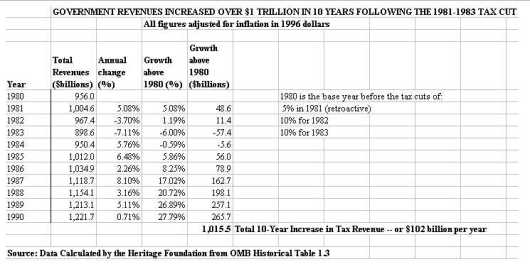
DAN MITCHELL ARTICLE America’s Best and Worst Governors

_________

America’s Best and Worst Governors

What’s the reward for a governor who replaces a discriminatory and punitive system with a simple and fair flat tax, particularly in a year when many other states also are enacting better tax policy?

The reward for Kim Reynolds of Iowa is the top score in the Fiscal Policy Report Card on America’s Governors 2022, authored by Chris Edwards.

But it’s not just pro-growth tax reform. Iowa’s governor also scored highly because “Iowa general fund spending has risen at just a 2.3 percent annual average rate under Reynolds.”

Chris Sununu of New Hampshire was in second place, followed by the governors of Nebraska, Idaho, and Arizona (which also enacted sweeping tax reform).

And what’s the penalty for being a tax-hiking big spender?

Well, if “general fund spending expanded at an annual average rate of 6.3 percent between 2013 and 2022” and you were governor during those years, then you deserve to be known as the worst of the worst.

Especially if you also pushed big tax increases and you routinely try to sabotage your state’s constitutional ban on income taxes.

So “congratulations” to Jay Inslee. The governor of Washington definitely deserves his F.

Gavin Newsom of California is the nation’s second-worst governor (hardly a surprise).

The governors of Oregon, New Jersey, Michigan, Illinois, Pennsylvania, and Minnesota also received failing grades (I am surprised anytime New Jerseyand Illinois avoid last place).

For those interested, here are the rest of the governors. Roy Cooper of North Carolina is the highest-scoring Democrat, followed by Michelle Lujan Grisham of New Mexco.

Bill Lee of Tennessee is the lowest-scoring Republican. Other Republicans with bad grades include the governors of Vermont, Alabama, and Missouri.

For those who follow high-profile officials, Governors Ron DeSantis, Kristi Noem, and Greg Abbott all received unremarkable C grades.

P.S. At the risk of stating the obvious, fiscal policy is not the only thing that matters. Readers who want to assess the overall level of economic liberty in different states should peruse Economic Freedom of North America and Freedom in the 50 States.

Texas vs. California, Part VII

To begin the seventh edition of our series comparing policy in Texas and California (previous entries in March 2010, February 2013, April 2013, October 2018, June 2019, and December 2020), here’s a video from Prager University.

There will be a lot of information in today’s column, so if you’re pressed for time, here are three sentences that tell you what you need to know.

California has all sorts of natural advantages over Texas, especially endless sunshine and beautiful topography.

Texas has better government policy than California, most notably in areas such as taxation and regulation.

Since people are moving from the Golden State to the Lone Star State, public policy seems to matter more than natural beauty.

Now let’s look at a bunch of evidence to support those three sentences.

We’ll start with an article by Joel Kotkin of Chapman University.

If one were to explore the most blessed places on earth, California, my home for a half century, would surely be up there. …its salubrious climate, spectacular scenery, vast natural resources… President Biden recently suggested that he wants to “make America California again”. Yet…he should consider whether the California model may be better seen as a cautionary tale than a roadmap to a better future… California now suffers the highest cost-adjusted poverty rate in the country, and the widest gap between middle and upper-middle income earners. …the state has slowly morphed into a low wage economy. Over the past decade, 80% of the state’s jobs have paid under the median wage — half of which are paid less than $40,000…minorities do better today outside of California, enjoying far higher adjusted incomes and rates of homeownership in places like Atlanta and Dallas than in San Francisco and Los Angeles. Almost one-third of Hispanics, the state’s largest ethnic group, subsist below the poverty line, compared with 21% outside the state. …progressive…policies have not brought about greater racial harmony, enhanced upward mobility and widely based economic growth.

Next we have some business news from the San Francisco Chronicle.

Business leaders fear tech giant Oracle’s recent announcement that it is leaving the Bay Area for Austin, Texas, will lead to more exits unless some fundamental political and economic changes are made to keep the region attractive and competitive. “This is something that we have been warning people about for several years. California is not business friendly, we should be honest about it,” said Kenneth Rosen, chairman of the UC Berkeley Fisher Center for Real Estate and Urban Economics.Bay Area Council President Jim Wunderman said… “From consulting companies to tax lawyers to bankers and commercial real estate firms, every person I talk with who provides services to big Bay Area corporations are telling me that their clients are strategizing about leaving…” Charles Schwab, McKesson and Hewlett Packard Enterprise have all exited the high-cost, high-tax, high-regulation Bay Area for a less-expensive, less-regulated and business-friendlier political climate. All of them rode off to Texas. …the pace of the departures appears to be increasing. …A recent online survey of 2,325 California residents, taken between Nov. 4 and Nov. 23 by the Public Policy Institute of California, found 26% of residents have seriously considered moving out of state and that 58% say that the American Dream is harder to achieve in California than elsewhere.

Are California politicians trying to make things better, in hopes of stopping out-migration to places such as Texas?

Not according to this column by Hank Adler in the Wall Street Journal.

California’s Legislature is considering a wealth tax on residents, part-year residents, and any person who spends more than 60 days inside the state’s borders in a single year. Even those who move out of state would continue to be subject to the tax for a decade… Assembly Bill 2088 proposes calculating the wealth tax based on current world-wide net worth each Dec. 31. For part-year and temporary residents, the tax would be proportionate based on their number of days in California. The annual tax would be on current net worth and therefore would include wealth earned, inherited or obtained through gifts or estates long before and long after leaving the state. …The authors of the bill estimate the wealth tax will provide Sacramento $7.5 billion in additional revenue every year. Another proposal—to increase the top state income-tax rate to 16.8%—would annually raise another $6.8 billion. Today, California’s wealthiest 1% pay approximately 46% of total state income taxes. …the Legislature looks to the wealthiest Californians to fill funding gaps without considering the constitutionality of the proposals and the ability of people and companies to pick up and leave the state, which news reports suggest they are doing in large numbers. …As of this moment, there are no police roadblocks on the freeways trying to keep moving trucks from leaving California. If A.B. 2088 becomes law, the state may need to consider placing some.

The late (and great) Walter Williams actually joked back in 2012that California might set up East German-style border checkpoints. Let’s hope satire doesn’t become reality.

But what isn’t satire is that people are fleeing the state (along with other poorly governed jurisdictions).

Simply state, the blue state model of high taxes and big government is not working (just as it isn’t working in countries with high taxes and big government).

Interestingly, even the New York Times recognizes that there is a problem in the state that used to be a role model for folks on the left.

Opining for that outlet at the start of the month, Brett Stephens raised concerns about the Golden State.

…today’s Democratic leaders might look to the very Democratic state of California as a model for America’s future. You remember California: People used to want to move there, start businesses, raise families, live their American dream. These days, not so much. Between July 2019 and July 2020, more people — 135,400 to be precise — left the state than moved in… No. 1 destination: Texas, followed by Arizona, Nevada and Washington. Three of those states have no state income tax.

California, by contrast, has very high taxes. Not just an onerous income tax, but high taxes across the board.

Californians also pay some of the nation’s highest sales tax rates (8.66 percent) and corporate tax rates (8.84 percent), as well as the highest taxes on gasoline (63 cents on a gallon as of January, as compared with 20 cents in Texas).

Sadly, these high taxes don’t translate into good services from government.

The state ranks 21st in the country in terms of spending per public school pupil, but 27th in its K-12 educational outcomes. It ties Oregon for third place among states in terms of its per capita homeless rate. Infrastructure? As of 2019, the state had an estimated $70 billion in deferred maintenance backlog. Debt? The state’s unfunded pension liabilities in 2019 ran north of $1.1 trillion, …or $81,300 per household.

Makes you wonder whether the rest of the nation should copy that model?

Democrats hold both U.S. Senate seats, 42 of its 53 seats in the House, have lopsided majorities in the State Assembly and Senate, run nearly every big city and have controlled the governor’s mansion for a decade. If ever there was a perfect laboratory for liberal governance, this is it. So how do you explain these results? …If California is a vision of the sort of future the Biden administration wants for Americans, expect Americans to demur.

Some might be tempted to dismiss Stephens’ column because he is considered the token conservative at the New York Times.

But Ezra Klein also acknowledges that California has a problem, and nobody will accuse him of being on the right side of the spectrum.

Here’s some of what he wrote in his column earlier this month for the New York Times.

I love California. I was born and raised in Orange County. I was educated in the state’s public schools and graduated from the University of California system… But for that very reason, our failures of governance worry me. California has the highest poverty rate in the nation,when you factor in housing costs, and vies for the top spot in income inequality, too. …but there’s a reason 130,000 more people leave than enter each year. California is dominated by Democrats, but many of the people Democrats claim to care about most can’t afford to live there. …California, as the biggest state in the nation, and one where Democrats hold total control of the government, carries a special burden. If progressivism cannot work here, why should the country believe it can work anywhere else?

Kudos to Klein for admitting problems on his side (just like I praise the few GOPers who criticized Trump’s big-government policies).

But his column definitely had some quirky parts, such as when he wrote that, “There are bright spots in recent years…a deeply progressive plan to tax the wealthy.”

That’s actually a big reason for the state’s decline, not a “bright spot.”

I’m not the only one to recognize the limitations of his column.

Kevin Williamson wrote an entire rebuttal for National Review.

Who but Ezra Klein could survey the wreck left-wing Democrats have made of California and conclude that the state’s problem is its excessive conservatism? …Klein the rhetorician anticipates objections on this front and writes that he is not speaking of “the political conservatism that privatizes Medicare, but the temperamental conservatism that” — see if this formulation sounds at all familiar — “stands athwart change and yells ‘Stop!’”…California progressives have progressive policies and progressive power, and they like it that way. That is the substance of their conservatism. …Klein and others of his ilk like to present themselves as dispassionate pragmatists, enlightened empiricists who only want to do “what works.” …Klein mocks San Francisco for renaming schools (Begone, Abraham Lincoln!) while it has no plan to reopen them, but he cannot quite see that these are two aspects of a single phenomenon. …Klein…must eventually understand that the troubles he identifies in California are baked into the progressive cake. …That has real-world consequences, currently on display in California to such a spectacular degree that even Ezra Klein is able dimly to perceive them. Maybe he’ll learn something.

I especially appreciate this passage since it excoriates rich leftists for putting teacher unions ahead of disadvantaged children.

Intentions do not matter very much, and mere stated intentions matter even less. Klein is blind to that, which is why he is able to write, as though there were something unusual on display: “For all the city’s vaunted progressivism, [San Francisco] has some of the highest private school enrollment numbers in the country.” Rich progressives have always been in favor of school choice and private schools — for themselves. They only oppose choice for poor people, whose interests must for political reasons be subordinated to those of the public-sector unions from which Democrats in cities such as San Francisco derive their power.

Let’s conclude with some levity.

Here’s a meme that contemplates whether California emigrants bring bad voting habits with them.

Though that’s apparently more of a problem in Colorado rather than in Texas.

And here’s some clever humor from Genesius Times.

P.S. My favorite California-themed humor (not counting the state’s elected officials) can be found here, hereherehere, and here.

High-tax states are languishing but  zero-income-tax states such as Texas are growing rapidly!!!!

Much of my writing is focused on the real-world impact of government policy, and this is why I repeatedly look at the relative economic performance of big government jurisdictions and small government jurisdictions.

But I don’t just highlight differences between nations. Yes, it’s educational to look at North Korea vs. South Korea or Chile vs. Venezuela vs. Argentina, but I also think you can learn a lot by looking at what’s happening with different states in America.

So we’ve looked at high-tax states that are languishing, such as California and Illinois, and compared them to zero-income-tax states such as Texas.

With this in mind, you can understand that I was intrigued to see that even the establishment media is noticing that Texas is out-pacing the rest of the nation.

Here are some excerpts from a report by CNN Money on rapid population growth in Texas.

More Americans moved to Texas in recent years than any other state: A net gain of more than 387,000 in the latest Census for 2013. …Five Texas cities — Austin, Houston, San Antonio, Dallas and Fort Worth — were among the top 20 fastest growing large metro areas. Some smaller Texas metro areas grew even faster. In oil-rich Odessa, the population grew 3.3% and nearby Midland recorded a 3% gain.

But why is the population growing?

Well, CNN Money points out that low housing prices and jobs are big reasons.

And on the issue of housing, the article does acknowledge the role of “easy regulations” that enable new home construction.

But on the topic of jobs, the piece contains some good data on employment growth, but no mention of policy.

Jobs is the No. 1 reason for population moves, with affordable housing a close second. …Jobs are plentiful in Austin, where the unemployment rate is just 4.6%. Moody’s Analytics projects job growth to average 4% a year through 2015. Just as important, many jobs there are well paid: The median income of more than $75,000 is nearly 20% higher than the national median.

That’s it. Read the entire article if you don’t believe me, but the reporter was able to write a complete article about the booming economy in Texas without mentioning – not even once – that there’s no state income tax.

But that wasn’t the only omission.

The article doesn’t mention that Texas is the 4th-best state in the Tax Foundation’s ranking of state and local tax burdens.

The article doesn’t mention that Texas was the least oppressive state in the Texas Public Policy Foundation’s Soft Tyranny Index.

The article doesn’t mention that Texas was ranked #20 in a study of the overall fiscal condition of the 50 states.

The article doesn’t mention that Texas is in 4th place in a combined ranking of economic freedom in U.S. state and Canadian provinces.

The article doesn’t mention that Texas was ranked #11 in the Tax Foundation’s State Business Tax Climate Index.

The article doesn’t mention that Texas is in 14th place in the Mercatus ranking of overall freedom for the 50 states (and in 10th place for fiscal freedom).

By the way, I’m not trying to argue that Texas is the best state.

Indeed, it only got the top ranking in one of the measures cited above.

My point, instead, is simply to note that it takes willful blindness to write about the strong population growth and job performance of Texas without making at least a passing reference to the fact that it is a low-tax, pro-market state.

At least compared to other states. And especially compared to the high-tax states that are stagnating.

Such as California, as illustrated by this data and this data, as well as this Lisa Benson cartoon.

Such as Illinois, as illustrated by this data and this Eric Allie cartoon.

And I can’t resist adding this Steve Breen cartoon, if for no other reason that it reminds me of another one of his cartoons that I shared last year.

Speaking of humor, this Chuck Asay cartoon speculates on how future archaeologists will view California. And this joke about Texas, California, and a coyote is among my most-viewed blog posts.

All jokes aside, I want to reiterate what I wrote above. Texas is far from perfect. There’s too much government in the Lone Star state. It’s only a success story when compared to California.

P.S. Paul Krugman has tried to defend California, which has made him an easy target. I debunked him earlier this year, and I also linked to a superb Kevin Williamson takedown of Krugman at the bottom of this post.

P.P.S. Once again, I repeat the two-part challenge I’ve issued to the left. I’ll be happy if any statists can successfully respond to just one of the two questions I posed.

Related posts:

California is the Greece of the USA, but Texas is not perfect either!!!

California is the Greece of the USA, but Texas is not perfect either!!! Just Because California Is Terrible, that Doesn’t Mean Texas Is Perfect January 21, 2013 by Dan Mitchell Texas is in much better shape than California. Taxes are lower, in part because Texas has no state income tax. No wonder the Lone Star State […]

Dan Mitchell on Texas v. California (includes editorial cartoon)

We should lower federal taxes because jobs are going to states like Texas that have low taxes. (We should lower state taxes too!!) What Can We Learn by Comparing the Employment Situation in Texas vs. California? April 3, 2013 by Dan Mitchell One of the great things about federalism, above and beyond the fact that it […]

Ark Times blogger claims California is better than Texas but facts don’t bear that out (3 great political cartoons)

I got on the Arkansas Times Blog and noticed that a person on there was bragging about the high minimum wage law in San Francisco and how everything was going so well there. On 2-15-13 on the Arkansas Times Blog I posted: Couldn’t be better (the person using the username “Couldn’t be better)  is bragging […]

California burdensome government causing some of business community to leave for Texas

Does Government Have a Revenue or Spending Problem? People say the government has a debt problem. Debt is caused by deficits, which is the difference between what the government collects in tax revenue and the amount of government spending. Every time the government runs a deficit, the government debt increases. So what’s to blame: too […]

Arkansas Times blogger picks California business environment over Texas, proves liberals don’t live in real world(Part 2)

       Former California Governor Arnold Schwarzenegger with his family   I posted a portion of an article by John Fund of the Wall Street Journal that pointed out that many businesses are leaving California because of all of their government red tape and moving to Texas. My username is SalineRepublican and this is […]

John Fund’s talk in Little Rock 4-27-11(Part 4):Responding to liberals who criticize states like Texas that don’t have the red tape that California has

John Fund at Chamber Day, Part 1 Last week I got to attend the first ever “Conservative Lunch Series” presented by  KARN and Americans for Prosperity Foundation at the Little Rock Hilton on University Avenue. This monthly luncheon will be held the fourth Wednesday of every month. The speaker for today’s luncheon was John Fund. John […]

California and France have raised taxes so much that it has hurt economic growth!!!

___________ California and France have raised taxes so much that it has hurt economic growth!!! Mirror, Mirror, on the Wall, which Nation and State Punish Success Most of All? September 25, 2014 by Dan Mitchell I’ve shared some interested rankings on tax policy, including a map from the Tax Foundation showing which states have the earliest […]

Jerry Brown raised taxes in California and a rise in the minimum wage, but it won’t work like Krugman thinks!!!

___________   Jerry Brown raised taxes in California and a rise in the minimum wage, but it won’t work like Krugman thinks!!!! This cartoon below shows what will eventually happen to California and any other state that keeps raising taxes higher and higher.   Krugman’s “Gotcha” Moment Leaves Something to Be Desired July 25, 2014 by […]

Open letter to President Obama (Part 573) Are the states of Illinois and California going to join Detroit in Bankruptcy one day?

Open letter to President Obama (Part 573) (Emailed to White House on 7-29-13.) President Obama c/o The White House 1600 Pennsylvania Avenue NW Washington, DC 20500 Dear Mr. President, I know that you receive 20,000 letters a day and that you actually read 10 of them every day. I really do respect you for trying to get […]

Open letter to President Obama (Part 561) We should lower federal taxes because jobs are going to states like Texas that have low taxes

Open letter to President Obama (Part 561) (Emailed to White House on 6-25-13.) President Obama c/o The White House 1600 Pennsylvania Avenue NW Washington, DC 20500 Dear Mr. President, I know that you receive 20,000 letters a day and that you actually read 10 of them every day. I really do respect you for trying to get […]

DAN MITCHELL ARTICLE Politician of the Year

_________

Politician of the Year

Because of their despicable tendency to buy voteswith our money, I view politicians with considerabledisdain. But when a politician goes above and beyond the call of duty by doing something laughably awful, I give them special recognition.

Here are some past winners of my “Politician of the Year” award.

Today’s column adds someone to this rogue’s gallery. Congratulations to the Mayor of New York City, Eric Adams.

In a story for the New York Post, Susan Edelman reveals a cozy and corrupt arrangement between the Mayor and one of his top appointees.

Schools Chancellor David Banks quietly promoted Mayor Adams’ girlfriend to a top job at the Department of Education, just months after Adams hired Banks’ girlfriend as a deputy mayor, The Post has learned. Banks named Tracey Collins — Adams’ longtime partner and NYC’s unofficial First Lady — the DOE’s “senior advisor to the deputy chancellor of school leadership,” Desmond Blackburn. She started the new job in July, and got a giant, 23% raise to $221,597 a year, records show. Hizzoner named Banks’ girlfriend, Sheena Wright, and four other women deputy mayors last Dec. 21. Deputy mayors made $251,982 in FY 21. …David Bloomfield, a Brooklyn College and CUNY Grad Center education professor, said, “It’s not only a bad look, smacking of favoritism and cronyism. It displays a degree of insularity and groupthink that’s adverse to organizational effectiveness.”

Needless to say, everyone involved claims that the appointments were based on merit.

DOE spokesman Nathaniel Styer said Collins, “a veteran educator with 30 years of experience,” replaced another senior advisor, Mariano Guzman, who retired. Styer said Collins “went through a rigorous process that did not include City Hall’s oversight. …City Hall spokesman Fabien Levy said, “Mayor Adams was not involved in the hiring for this position and has a strict firewall when it comes to any matters involving her employment.”

Needless to say, these claims don’t pass the laugh test. Anyone with an IQ above room temperature understands that Mayor Adams and Chancellor Banks are helping to enrich themselves at the expense of taxpayers.

But I want to make a different point.

If you paid close attention to the above excerpts, you noticed that the girlfriend of Mayor Adams is making more than $221K to serve as “senior advisor to the deputy chancellor of school leadership.”

I realize this is just a stab in the dark, but that job should not even exist, just like the job of “deputy chancellor of school leadership” should not exist (and the same is true if there’s a “chancellor of school leadership”).

In other words, all of these slots are sad examples of the self-serving bureaucuratization of government schools.

And let’s not forget about the girlfriend of Chancellor Banks, who is getting nearly $252K to be one of a plethora of deputy mayors.

Once again, I’m going to take a wild guess and assert that none of the deputy mayors serve any necessary function. These slots almost surely are patronage appointments that allow insiders to get fatter and richer at the expense of taxpayers.

That’s the real scandal, financed by you and me.

Texas vs. California, Part VII

To begin the seventh edition of our series comparing policy in Texas and California (previous entries in March 2010, February 2013, April 2013, October 2018, June 2019, and December 2020), here’s a video from Prager University.

There will be a lot of information in today’s column, so if you’re pressed for time, here are three sentences that tell you what you need to know.

California has all sorts of natural advantages over Texas, especially endless sunshine and beautiful topography.

Texas has better government policy than California, most notably in areas such as taxation and regulation.

Since people are moving from the Golden State to the Lone Star State, public policy seems to matter more than natural beauty.

Now let’s look at a bunch of evidence to support those three sentences.

We’ll start with an article by Joel Kotkin of Chapman University.

If one were to explore the most blessed places on earth, California, my home for a half century, would surely be up there. …its salubrious climate, spectacular scenery, vast natural resources… President Biden recently suggested that he wants to “make America California again”. Yet…he should consider whether the California model may be better seen as a cautionary tale than a roadmap to a better future… California now suffers the highest cost-adjusted poverty rate in the country, and the widest gap between middle and upper-middle income earners. …the state has slowly morphed into a low wage economy. Over the past decade, 80% of the state’s jobs have paid under the median wage — half of which are paid less than $40,000…minorities do better today outside of California, enjoying far higher adjusted incomes and rates of homeownership in places like Atlanta and Dallas than in San Francisco and Los Angeles. Almost one-third of Hispanics, the state’s largest ethnic group, subsist below the poverty line, compared with 21% outside the state. …progressive…policies have not brought about greater racial harmony, enhanced upward mobility and widely based economic growth.

Next we have some business news from the San Francisco Chronicle.

Business leaders fear tech giant Oracle’s recent announcement that it is leaving the Bay Area for Austin, Texas, will lead to more exits unless some fundamental political and economic changes are made to keep the region attractive and competitive. “This is something that we have been warning people about for several years. California is not business friendly, we should be honest about it,” said Kenneth Rosen, chairman of the UC Berkeley Fisher Center for Real Estate and Urban Economics.Bay Area Council President Jim Wunderman said… “From consulting companies to tax lawyers to bankers and commercial real estate firms, every person I talk with who provides services to big Bay Area corporations are telling me that their clients are strategizing about leaving…” Charles Schwab, McKesson and Hewlett Packard Enterprise have all exited the high-cost, high-tax, high-regulation Bay Area for a less-expensive, less-regulated and business-friendlier political climate. All of them rode off to Texas. …the pace of the departures appears to be increasing. …A recent online survey of 2,325 California residents, taken between Nov. 4 and Nov. 23 by the Public Policy Institute of California, found 26% of residents have seriously considered moving out of state and that 58% say that the American Dream is harder to achieve in California than elsewhere.

Are California politicians trying to make things better, in hopes of stopping out-migration to places such as Texas?

Not according to this column by Hank Adler in the Wall Street Journal.

California’s Legislature is considering a wealth tax on residents, part-year residents, and any person who spends more than 60 days inside the state’s borders in a single year. Even those who move out of state would continue to be subject to the tax for a decade… Assembly Bill 2088 proposes calculating the wealth tax based on current world-wide net worth each Dec. 31. For part-year and temporary residents, the tax would be proportionate based on their number of days in California. The annual tax would be on current net worth and therefore would include wealth earned, inherited or obtained through gifts or estates long before and long after leaving the state. …The authors of the bill estimate the wealth tax will provide Sacramento $7.5 billion in additional revenue every year. Another proposal—to increase the top state income-tax rate to 16.8%—would annually raise another $6.8 billion. Today, California’s wealthiest 1% pay approximately 46% of total state income taxes. …the Legislature looks to the wealthiest Californians to fill funding gaps without considering the constitutionality of the proposals and the ability of people and companies to pick up and leave the state, which news reports suggest they are doing in large numbers. …As of this moment, there are no police roadblocks on the freeways trying to keep moving trucks from leaving California. If A.B. 2088 becomes law, the state may need to consider placing some.

The late (and great) Walter Williams actually joked back in 2012that California might set up East German-style border checkpoints. Let’s hope satire doesn’t become reality.

But what isn’t satire is that people are fleeing the state (along with other poorly governed jurisdictions).

Simply state, the blue state model of high taxes and big government is not working (just as it isn’t working in countries with high taxes and big government).

Interestingly, even the New York Times recognizes that there is a problem in the state that used to be a role model for folks on the left.

Opining for that outlet at the start of the month, Brett Stephens raised concerns about the Golden State.

…today’s Democratic leaders might look to the very Democratic state of California as a model for America’s future. You remember California: People used to want to move there, start businesses, raise families, live their American dream. These days, not so much. Between July 2019 and July 2020, more people — 135,400 to be precise — left the state than moved in… No. 1 destination: Texas, followed by Arizona, Nevada and Washington. Three of those states have no state income tax.

California, by contrast, has very high taxes. Not just an onerous income tax, but high taxes across the board.

Californians also pay some of the nation’s highest sales tax rates (8.66 percent) and corporate tax rates (8.84 percent), as well as the highest taxes on gasoline (63 cents on a gallon as of January, as compared with 20 cents in Texas).

Sadly, these high taxes don’t translate into good services from government.

The state ranks 21st in the country in terms of spending per public school pupil, but 27th in its K-12 educational outcomes. It ties Oregon for third place among states in terms of its per capita homeless rate. Infrastructure? As of 2019, the state had an estimated $70 billion in deferred maintenance backlog. Debt? The state’s unfunded pension liabilities in 2019 ran north of $1.1 trillion, …or $81,300 per household.

Makes you wonder whether the rest of the nation should copy that model?

Democrats hold both U.S. Senate seats, 42 of its 53 seats in the House, have lopsided majorities in the State Assembly and Senate, run nearly every big city and have controlled the governor’s mansion for a decade. If ever there was a perfect laboratory for liberal governance, this is it. So how do you explain these results? …If California is a vision of the sort of future the Biden administration wants for Americans, expect Americans to demur.

Some might be tempted to dismiss Stephens’ column because he is considered the token conservative at the New York Times.

But Ezra Klein also acknowledges that California has a problem, and nobody will accuse him of being on the right side of the spectrum.

Here’s some of what he wrote in his column earlier this month for the New York Times.

I love California. I was born and raised in Orange County. I was educated in the state’s public schools and graduated from the University of California system… But for that very reason, our failures of governance worry me. California has the highest poverty rate in the nation,when you factor in housing costs, and vies for the top spot in income inequality, too. …but there’s a reason 130,000 more people leave than enter each year. California is dominated by Democrats, but many of the people Democrats claim to care about most can’t afford to live there. …California, as the biggest state in the nation, and one where Democrats hold total control of the government, carries a special burden. If progressivism cannot work here, why should the country believe it can work anywhere else?

Kudos to Klein for admitting problems on his side (just like I praise the few GOPers who criticized Trump’s big-government policies).

But his column definitely had some quirky parts, such as when he wrote that, “There are bright spots in recent years…a deeply progressive plan to tax the wealthy.”

That’s actually a big reason for the state’s decline, not a “bright spot.”

I’m not the only one to recognize the limitations of his column.

Kevin Williamson wrote an entire rebuttal for National Review.

Who but Ezra Klein could survey the wreck left-wing Democrats have made of California and conclude that the state’s problem is its excessive conservatism? …Klein the rhetorician anticipates objections on this front and writes that he is not speaking of “the political conservatism that privatizes Medicare, but the temperamental conservatism that” — see if this formulation sounds at all familiar — “stands athwart change and yells ‘Stop!’”…California progressives have progressive policies and progressive power, and they like it that way. That is the substance of their conservatism. …Klein and others of his ilk like to present themselves as dispassionate pragmatists, enlightened empiricists who only want to do “what works.” …Klein mocks San Francisco for renaming schools (Begone, Abraham Lincoln!) while it has no plan to reopen them, but he cannot quite see that these are two aspects of a single phenomenon. …Klein…must eventually understand that the troubles he identifies in California are baked into the progressive cake. …That has real-world consequences, currently on display in California to such a spectacular degree that even Ezra Klein is able dimly to perceive them. Maybe he’ll learn something.

I especially appreciate this passage since it excoriates rich leftists for putting teacher unions ahead of disadvantaged children.

Intentions do not matter very much, and mere stated intentions matter even less. Klein is blind to that, which is why he is able to write, as though there were something unusual on display: “For all the city’s vaunted progressivism, [San Francisco] has some of the highest private school enrollment numbers in the country.” Rich progressives have always been in favor of school choice and private schools — for themselves. They only oppose choice for poor people, whose interests must for political reasons be subordinated to those of the public-sector unions from which Democrats in cities such as San Francisco derive their power.

Let’s conclude with some levity.

Here’s a meme that contemplates whether California emigrants bring bad voting habits with them.

Though that’s apparently more of a problem in Colorado rather than in Texas.

And here’s some clever humor from Genesius Times.

P.S. My favorite California-themed humor (not counting the state’s elected officials) can be found here, hereherehere, and here.

High-tax states are languishing but  zero-income-tax states such as Texas are growing rapidly!!!!

Much of my writing is focused on the real-world impact of government policy, and this is why I repeatedly look at the relative economic performance of big government jurisdictions and small government jurisdictions.

But I don’t just highlight differences between nations. Yes, it’s educational to look at North Korea vs. South Korea or Chile vs. Venezuela vs. Argentina, but I also think you can learn a lot by looking at what’s happening with different states in America.

So we’ve looked at high-tax states that are languishing, such as California and Illinois, and compared them to zero-income-tax states such as Texas.

With this in mind, you can understand that I was intrigued to see that even the establishment media is noticing that Texas is out-pacing the rest of the nation.

Here are some excerpts from a report by CNN Money on rapid population growth in Texas.

More Americans moved to Texas in recent years than any other state: A net gain of more than 387,000 in the latest Census for 2013. …Five Texas cities — Austin, Houston, San Antonio, Dallas and Fort Worth — were among the top 20 fastest growing large metro areas. Some smaller Texas metro areas grew even faster. In oil-rich Odessa, the population grew 3.3% and nearby Midland recorded a 3% gain.

But why is the population growing?

Well, CNN Money points out that low housing prices and jobs are big reasons.

And on the issue of housing, the article does acknowledge the role of “easy regulations” that enable new home construction.

But on the topic of jobs, the piece contains some good data on employment growth, but no mention of policy.

Jobs is the No. 1 reason for population moves, with affordable housing a close second. …Jobs are plentiful in Austin, where the unemployment rate is just 4.6%. Moody’s Analytics projects job growth to average 4% a year through 2015. Just as important, many jobs there are well paid: The median income of more than $75,000 is nearly 20% higher than the national median.

That’s it. Read the entire article if you don’t believe me, but the reporter was able to write a complete article about the booming economy in Texas without mentioning – not even once – that there’s no state income tax.

But that wasn’t the only omission.

The article doesn’t mention that Texas is the 4th-best state in the Tax Foundation’s ranking of state and local tax burdens.

The article doesn’t mention that Texas was the least oppressive state in the Texas Public Policy Foundation’s Soft Tyranny Index.

The article doesn’t mention that Texas was ranked #20 in a study of the overall fiscal condition of the 50 states.

The article doesn’t mention that Texas is in 4th place in a combined ranking of economic freedom in U.S. state and Canadian provinces.

The article doesn’t mention that Texas was ranked #11 in the Tax Foundation’s State Business Tax Climate Index.

The article doesn’t mention that Texas is in 14th place in the Mercatus ranking of overall freedom for the 50 states (and in 10th place for fiscal freedom).

By the way, I’m not trying to argue that Texas is the best state.

Indeed, it only got the top ranking in one of the measures cited above.

My point, instead, is simply to note that it takes willful blindness to write about the strong population growth and job performance of Texas without making at least a passing reference to the fact that it is a low-tax, pro-market state.

At least compared to other states. And especially compared to the high-tax states that are stagnating.

Such as California, as illustrated by this data and this data, as well as this Lisa Benson cartoon.

Such as Illinois, as illustrated by this data and this Eric Allie cartoon.

And I can’t resist adding this Steve Breen cartoon, if for no other reason that it reminds me of another one of his cartoons that I shared last year.

Speaking of humor, this Chuck Asay cartoon speculates on how future archaeologists will view California. And this joke about Texas, California, and a coyote is among my most-viewed blog posts.

All jokes aside, I want to reiterate what I wrote above. Texas is far from perfect. There’s too much government in the Lone Star state. It’s only a success story when compared to California.

P.S. Paul Krugman has tried to defend California, which has made him an easy target. I debunked him earlier this year, and I also linked to a superb Kevin Williamson takedown of Krugman at the bottom of this post.

P.P.S. Once again, I repeat the two-part challenge I’ve issued to the left. I’ll be happy if any statists can successfully respond to just one of the two questions I posed.

Related posts:

California is the Greece of the USA, but Texas is not perfect either!!!

California is the Greece of the USA, but Texas is not perfect either!!! Just Because California Is Terrible, that Doesn’t Mean Texas Is Perfect January 21, 2013 by Dan Mitchell Texas is in much better shape than California. Taxes are lower, in part because Texas has no state income tax. No wonder the Lone Star State […]

Dan Mitchell on Texas v. California (includes editorial cartoon)

We should lower federal taxes because jobs are going to states like Texas that have low taxes. (We should lower state taxes too!!) What Can We Learn by Comparing the Employment Situation in Texas vs. California? April 3, 2013 by Dan Mitchell One of the great things about federalism, above and beyond the fact that it […]

Ark Times blogger claims California is better than Texas but facts don’t bear that out (3 great political cartoons)

I got on the Arkansas Times Blog and noticed that a person on there was bragging about the high minimum wage law in San Francisco and how everything was going so well there. On 2-15-13 on the Arkansas Times Blog I posted: Couldn’t be better (the person using the username “Couldn’t be better)  is bragging […]

California burdensome government causing some of business community to leave for Texas

Does Government Have a Revenue or Spending Problem? People say the government has a debt problem. Debt is caused by deficits, which is the difference between what the government collects in tax revenue and the amount of government spending. Every time the government runs a deficit, the government debt increases. So what’s to blame: too […]

Arkansas Times blogger picks California business environment over Texas, proves liberals don’t live in real world(Part 2)

       Former California Governor Arnold Schwarzenegger with his family   I posted a portion of an article by John Fund of the Wall Street Journal that pointed out that many businesses are leaving California because of all of their government red tape and moving to Texas. My username is SalineRepublican and this is […]

John Fund’s talk in Little Rock 4-27-11(Part 4):Responding to liberals who criticize states like Texas that don’t have the red tape that California has

John Fund at Chamber Day, Part 1 Last week I got to attend the first ever “Conservative Lunch Series” presented by  KARN and Americans for Prosperity Foundation at the Little Rock Hilton on University Avenue. This monthly luncheon will be held the fourth Wednesday of every month. The speaker for today’s luncheon was John Fund. John […]

California and France have raised taxes so much that it has hurt economic growth!!!

___________ California and France have raised taxes so much that it has hurt economic growth!!! Mirror, Mirror, on the Wall, which Nation and State Punish Success Most of All? September 25, 2014 by Dan Mitchell I’ve shared some interested rankings on tax policy, including a map from the Tax Foundation showing which states have the earliest […]

Jerry Brown raised taxes in California and a rise in the minimum wage, but it won’t work like Krugman thinks!!!

___________   Jerry Brown raised taxes in California and a rise in the minimum wage, but it won’t work like Krugman thinks!!!! This cartoon below shows what will eventually happen to California and any other state that keeps raising taxes higher and higher.   Krugman’s “Gotcha” Moment Leaves Something to Be Desired July 25, 2014 by […]

Open letter to President Obama (Part 573) Are the states of Illinois and California going to join Detroit in Bankruptcy one day?

Open letter to President Obama (Part 573) (Emailed to White House on 7-29-13.) President Obama c/o The White House 1600 Pennsylvania Avenue NW Washington, DC 20500 Dear Mr. President, I know that you receive 20,000 letters a day and that you actually read 10 of them every day. I really do respect you for trying to get […]

Open letter to President Obama (Part 561) We should lower federal taxes because jobs are going to states like Texas that have low taxes

Open letter to President Obama (Part 561) (Emailed to White House on 6-25-13.) President Obama c/o The White House 1600 Pennsylvania Avenue NW Washington, DC 20500 Dear Mr. President, I know that you receive 20,000 letters a day and that you actually read 10 of them every day. I really do respect you for trying to get […]

DAN MITCHELL If you’re wondering which economists are right, there’s a lot of evidence that taxpayers are sensitive to changes in tax rates, Especially upper-income taxpayers, in part because they have significant control over the timing, levels, and composition of their income.

_________

In a Tweet, Everything You Need to Know about Taxes and Incentives

A big division among economists is whether taxes have a big or small impact on incentives.

If taxpayers are very responsive, that means more economic damage (to use the profession’s jargon, a greater level of deadweight loss).

If you’re wondering which economists are right, there’s a lot of evidence that taxpayers are sensitive to changes in tax rates, Especially upper-income taxpayers, in part because they have significant control over the timing, levels, and composition of their income.

This is why entrepreneurs, innovators, inventors, and investors respond to difference in tax rates.

And athletes also make decisions based on tax policy. Here’s a tweet about Tyreek Hill, one of the best wide receivers in the National Football League. When deciding which team to sign with for this year, he picked the Miami Dolphins, located in a state with no income tax.

Mr. Hill also had the option to sign with the New York Jets.

But that would have meant letting greedy politicians in either New York or New Jersey (where the Jets play their home games) grab almost 11 percent of each additional dollar he earns.

According to this map, star athletes should be big fans of gray states and steer clear of dark-brown (or is that maroon?) states.

There’s research, incidentally, showing that teamsbased in low-tax states actually win more games.

P.S. I’ll close by reiterating my caveat about taxes being just one piece of the puzzle. After all, I speculated many years ago that taxes may have played a role in LeBron James going from Cleveland to Miami. But he then migrated to high-tax California. Though many pro athletes have moved away from the not-so-Golden States, so the general points is still accurate.

P.P.S. I feel sorry for Cam Newton, who paid a marginal tax rate of nearly 200 percent on his bonus for playing in the 2016 Super Bowl.

P.P.P.S. Taxes also impact choices on how often to box and where to box.

P.P.P.P.S. Needless to say, these principles also apply in other nations.

Texas vs. California, Part VII

To begin the seventh edition of our series comparing policy in Texas and California (previous entries in March 2010, February 2013, April 2013, October 2018, June 2019, and December 2020), here’s a video from Prager University.

There will be a lot of information in today’s column, so if you’re pressed for time, here are three sentences that tell you what you need to know.

California has all sorts of natural advantages over Texas, especially endless sunshine and beautiful topography.

Texas has better government policy than California, most notably in areas such as taxation and regulation.

Since people are moving from the Golden State to the Lone Star State, public policy seems to matter more than natural beauty.

Now let’s look at a bunch of evidence to support those three sentences.

We’ll start with an article by Joel Kotkin of Chapman University.

If one were to explore the most blessed places on earth, California, my home for a half century, would surely be up there. …its salubrious climate, spectacular scenery, vast natural resources… President Biden recently suggested that he wants to “make America California again”. Yet…he should consider whether the California model may be better seen as a cautionary tale than a roadmap to a better future… California now suffers the highest cost-adjusted poverty rate in the country, and the widest gap between middle and upper-middle income earners. …the state has slowly morphed into a low wage economy. Over the past decade, 80% of the state’s jobs have paid under the median wage — half of which are paid less than $40,000…minorities do better today outside of California, enjoying far higher adjusted incomes and rates of homeownership in places like Atlanta and Dallas than in San Francisco and Los Angeles. Almost one-third of Hispanics, the state’s largest ethnic group, subsist below the poverty line, compared with 21% outside the state. …progressive…policies have not brought about greater racial harmony, enhanced upward mobility and widely based economic growth.

Next we have some business news from the San Francisco Chronicle.

Business leaders fear tech giant Oracle’s recent announcement that it is leaving the Bay Area for Austin, Texas, will lead to more exits unless some fundamental political and economic changes are made to keep the region attractive and competitive. “This is something that we have been warning people about for several years. California is not business friendly, we should be honest about it,” said Kenneth Rosen, chairman of the UC Berkeley Fisher Center for Real Estate and Urban Economics.Bay Area Council President Jim Wunderman said… “From consulting companies to tax lawyers to bankers and commercial real estate firms, every person I talk with who provides services to big Bay Area corporations are telling me that their clients are strategizing about leaving…” Charles Schwab, McKesson and Hewlett Packard Enterprise have all exited the high-cost, high-tax, high-regulation Bay Area for a less-expensive, less-regulated and business-friendlier political climate. All of them rode off to Texas. …the pace of the departures appears to be increasing. …A recent online survey of 2,325 California residents, taken between Nov. 4 and Nov. 23 by the Public Policy Institute of California, found 26% of residents have seriously considered moving out of state and that 58% say that the American Dream is harder to achieve in California than elsewhere.

Are California politicians trying to make things better, in hopes of stopping out-migration to places such as Texas?

Not according to this column by Hank Adler in the Wall Street Journal.

California’s Legislature is considering a wealth tax on residents, part-year residents, and any person who spends more than 60 days inside the state’s borders in a single year. Even those who move out of state would continue to be subject to the tax for a decade… Assembly Bill 2088 proposes calculating the wealth tax based on current world-wide net worth each Dec. 31. For part-year and temporary residents, the tax would be proportionate based on their number of days in California. The annual tax would be on current net worth and therefore would include wealth earned, inherited or obtained through gifts or estates long before and long after leaving the state. …The authors of the bill estimate the wealth tax will provide Sacramento $7.5 billion in additional revenue every year. Another proposal—to increase the top state income-tax rate to 16.8%—would annually raise another $6.8 billion. Today, California’s wealthiest 1% pay approximately 46% of total state income taxes. …the Legislature looks to the wealthiest Californians to fill funding gaps without considering the constitutionality of the proposals and the ability of people and companies to pick up and leave the state, which news reports suggest they are doing in large numbers. …As of this moment, there are no police roadblocks on the freeways trying to keep moving trucks from leaving California. If A.B. 2088 becomes law, the state may need to consider placing some.

The late (and great) Walter Williams actually joked back in 2012that California might set up East German-style border checkpoints. Let’s hope satire doesn’t become reality.

But what isn’t satire is that people are fleeing the state (along with other poorly governed jurisdictions).

Simply state, the blue state model of high taxes and big government is not working (just as it isn’t working in countries with high taxes and big government).

Interestingly, even the New York Times recognizes that there is a problem in the state that used to be a role model for folks on the left.

Opining for that outlet at the start of the month, Brett Stephens raised concerns about the Golden State.

…today’s Democratic leaders might look to the very Democratic state of California as a model for America’s future. You remember California: People used to want to move there, start businesses, raise families, live their American dream. These days, not so much. Between July 2019 and July 2020, more people — 135,400 to be precise — left the state than moved in… No. 1 destination: Texas, followed by Arizona, Nevada and Washington. Three of those states have no state income tax.

California, by contrast, has very high taxes. Not just an onerous income tax, but high taxes across the board.

Californians also pay some of the nation’s highest sales tax rates (8.66 percent) and corporate tax rates (8.84 percent), as well as the highest taxes on gasoline (63 cents on a gallon as of January, as compared with 20 cents in Texas).

Sadly, these high taxes don’t translate into good services from government.

The state ranks 21st in the country in terms of spending per public school pupil, but 27th in its K-12 educational outcomes. It ties Oregon for third place among states in terms of its per capita homeless rate. Infrastructure? As of 2019, the state had an estimated $70 billion in deferred maintenance backlog. Debt? The state’s unfunded pension liabilities in 2019 ran north of $1.1 trillion, …or $81,300 per household.

Makes you wonder whether the rest of the nation should copy that model?

Democrats hold both U.S. Senate seats, 42 of its 53 seats in the House, have lopsided majorities in the State Assembly and Senate, run nearly every big city and have controlled the governor’s mansion for a decade. If ever there was a perfect laboratory for liberal governance, this is it. So how do you explain these results? …If California is a vision of the sort of future the Biden administration wants for Americans, expect Americans to demur.

Some might be tempted to dismiss Stephens’ column because he is considered the token conservative at the New York Times.

But Ezra Klein also acknowledges that California has a problem, and nobody will accuse him of being on the right side of the spectrum.

Here’s some of what he wrote in his column earlier this month for the New York Times.

I love California. I was born and raised in Orange County. I was educated in the state’s public schools and graduated from the University of California system… But for that very reason, our failures of governance worry me. California has the highest poverty rate in the nation,when you factor in housing costs, and vies for the top spot in income inequality, too. …but there’s a reason 130,000 more people leave than enter each year. California is dominated by Democrats, but many of the people Democrats claim to care about most can’t afford to live there. …California, as the biggest state in the nation, and one where Democrats hold total control of the government, carries a special burden. If progressivism cannot work here, why should the country believe it can work anywhere else?

Kudos to Klein for admitting problems on his side (just like I praise the few GOPers who criticized Trump’s big-government policies).

But his column definitely had some quirky parts, such as when he wrote that, “There are bright spots in recent years…a deeply progressive plan to tax the wealthy.”

That’s actually a big reason for the state’s decline, not a “bright spot.”

I’m not the only one to recognize the limitations of his column.

Kevin Williamson wrote an entire rebuttal for National Review.

Who but Ezra Klein could survey the wreck left-wing Democrats have made of California and conclude that the state’s problem is its excessive conservatism? …Klein the rhetorician anticipates objections on this front and writes that he is not speaking of “the political conservatism that privatizes Medicare, but the temperamental conservatism that” — see if this formulation sounds at all familiar — “stands athwart change and yells ‘Stop!’”…California progressives have progressive policies and progressive power, and they like it that way. That is the substance of their conservatism. …Klein and others of his ilk like to present themselves as dispassionate pragmatists, enlightened empiricists who only want to do “what works.” …Klein mocks San Francisco for renaming schools (Begone, Abraham Lincoln!) while it has no plan to reopen them, but he cannot quite see that these are two aspects of a single phenomenon. …Klein…must eventually understand that the troubles he identifies in California are baked into the progressive cake. …That has real-world consequences, currently on display in California to such a spectacular degree that even Ezra Klein is able dimly to perceive them. Maybe he’ll learn something.

I especially appreciate this passage since it excoriates rich leftists for putting teacher unions ahead of disadvantaged children.

Intentions do not matter very much, and mere stated intentions matter even less. Klein is blind to that, which is why he is able to write, as though there were something unusual on display: “For all the city’s vaunted progressivism, [San Francisco] has some of the highest private school enrollment numbers in the country.” Rich progressives have always been in favor of school choice and private schools — for themselves. They only oppose choice for poor people, whose interests must for political reasons be subordinated to those of the public-sector unions from which Democrats in cities such as San Francisco derive their power.

Let’s conclude with some levity.

Here’s a meme that contemplates whether California emigrants bring bad voting habits with them.

Though that’s apparently more of a problem in Colorado rather than in Texas.

And here’s some clever humor from Genesius Times.

P.S. My favorite California-themed humor (not counting the state’s elected officials) can be found here, hereherehere, and here.

High-tax states are languishing but  zero-income-tax states such as Texas are growing rapidly!!!!

Much of my writing is focused on the real-world impact of government policy, and this is why I repeatedly look at the relative economic performance of big government jurisdictions and small government jurisdictions.

But I don’t just highlight differences between nations. Yes, it’s educational to look at North Korea vs. South Korea or Chile vs. Venezuela vs. Argentina, but I also think you can learn a lot by looking at what’s happening with different states in America.

So we’ve looked at high-tax states that are languishing, such as California and Illinois, and compared them to zero-income-tax states such as Texas.

With this in mind, you can understand that I was intrigued to see that even the establishment media is noticing that Texas is out-pacing the rest of the nation.

Here are some excerpts from a report by CNN Money on rapid population growth in Texas.

More Americans moved to Texas in recent years than any other state: A net gain of more than 387,000 in the latest Census for 2013. …Five Texas cities — Austin, Houston, San Antonio, Dallas and Fort Worth — were among the top 20 fastest growing large metro areas. Some smaller Texas metro areas grew even faster. In oil-rich Odessa, the population grew 3.3% and nearby Midland recorded a 3% gain.

But why is the population growing?

Well, CNN Money points out that low housing prices and jobs are big reasons.

And on the issue of housing, the article does acknowledge the role of “easy regulations” that enable new home construction.

But on the topic of jobs, the piece contains some good data on employment growth, but no mention of policy.

Jobs is the No. 1 reason for population moves, with affordable housing a close second. …Jobs are plentiful in Austin, where the unemployment rate is just 4.6%. Moody’s Analytics projects job growth to average 4% a year through 2015. Just as important, many jobs there are well paid: The median income of more than $75,000 is nearly 20% higher than the national median.

That’s it. Read the entire article if you don’t believe me, but the reporter was able to write a complete article about the booming economy in Texas without mentioning – not even once – that there’s no state income tax.

But that wasn’t the only omission.

The article doesn’t mention that Texas is the 4th-best state in the Tax Foundation’s ranking of state and local tax burdens.

The article doesn’t mention that Texas was the least oppressive state in the Texas Public Policy Foundation’s Soft Tyranny Index.

The article doesn’t mention that Texas was ranked #20 in a study of the overall fiscal condition of the 50 states.

The article doesn’t mention that Texas is in 4th place in a combined ranking of economic freedom in U.S. state and Canadian provinces.

The article doesn’t mention that Texas was ranked #11 in the Tax Foundation’s State Business Tax Climate Index.

The article doesn’t mention that Texas is in 14th place in the Mercatus ranking of overall freedom for the 50 states (and in 10th place for fiscal freedom).

By the way, I’m not trying to argue that Texas is the best state.

Indeed, it only got the top ranking in one of the measures cited above.

My point, instead, is simply to note that it takes willful blindness to write about the strong population growth and job performance of Texas without making at least a passing reference to the fact that it is a low-tax, pro-market state.

At least compared to other states. And especially compared to the high-tax states that are stagnating.

Such as California, as illustrated by this data and this data, as well as this Lisa Benson cartoon.

Such as Illinois, as illustrated by this data and this Eric Allie cartoon.

And I can’t resist adding this Steve Breen cartoon, if for no other reason that it reminds me of another one of his cartoons that I shared last year.

Speaking of humor, this Chuck Asay cartoon speculates on how future archaeologists will view California. And this joke about Texas, California, and a coyote is among my most-viewed blog posts.

All jokes aside, I want to reiterate what I wrote above. Texas is far from perfect. There’s too much government in the Lone Star state. It’s only a success story when compared to California.

P.S. Paul Krugman has tried to defend California, which has made him an easy target. I debunked him earlier this year, and I also linked to a superb Kevin Williamson takedown of Krugman at the bottom of this post.

P.P.S. Once again, I repeat the two-part challenge I’ve issued to the left. I’ll be happy if any statists can successfully respond to just one of the two questions I posed.

Related posts:

California is the Greece of the USA, but Texas is not perfect either!!!

California is the Greece of the USA, but Texas is not perfect either!!! Just Because California Is Terrible, that Doesn’t Mean Texas Is Perfect January 21, 2013 by Dan Mitchell Texas is in much better shape than California. Taxes are lower, in part because Texas has no state income tax. No wonder the Lone Star State […]

Dan Mitchell on Texas v. California (includes editorial cartoon)

We should lower federal taxes because jobs are going to states like Texas that have low taxes. (We should lower state taxes too!!) What Can We Learn by Comparing the Employment Situation in Texas vs. California? April 3, 2013 by Dan Mitchell One of the great things about federalism, above and beyond the fact that it […]

Ark Times blogger claims California is better than Texas but facts don’t bear that out (3 great political cartoons)

I got on the Arkansas Times Blog and noticed that a person on there was bragging about the high minimum wage law in San Francisco and how everything was going so well there. On 2-15-13 on the Arkansas Times Blog I posted: Couldn’t be better (the person using the username “Couldn’t be better)  is bragging […]

California burdensome government causing some of business community to leave for Texas

Does Government Have a Revenue or Spending Problem? People say the government has a debt problem. Debt is caused by deficits, which is the difference between what the government collects in tax revenue and the amount of government spending. Every time the government runs a deficit, the government debt increases. So what’s to blame: too […]

Arkansas Times blogger picks California business environment over Texas, proves liberals don’t live in real world(Part 2)

       Former California Governor Arnold Schwarzenegger with his family   I posted a portion of an article by John Fund of the Wall Street Journal that pointed out that many businesses are leaving California because of all of their government red tape and moving to Texas. My username is SalineRepublican and this is […]

John Fund’s talk in Little Rock 4-27-11(Part 4):Responding to liberals who criticize states like Texas that don’t have the red tape that California has

John Fund at Chamber Day, Part 1 Last week I got to attend the first ever “Conservative Lunch Series” presented by  KARN and Americans for Prosperity Foundation at the Little Rock Hilton on University Avenue. This monthly luncheon will be held the fourth Wednesday of every month. The speaker for today’s luncheon was John Fund. John […]

California and France have raised taxes so much that it has hurt economic growth!!!

___________ California and France have raised taxes so much that it has hurt economic growth!!! Mirror, Mirror, on the Wall, which Nation and State Punish Success Most of All? September 25, 2014 by Dan Mitchell I’ve shared some interested rankings on tax policy, including a map from the Tax Foundation showing which states have the earliest […]

Jerry Brown raised taxes in California and a rise in the minimum wage, but it won’t work like Krugman thinks!!!

___________   Jerry Brown raised taxes in California and a rise in the minimum wage, but it won’t work like Krugman thinks!!!! This cartoon below shows what will eventually happen to California and any other state that keeps raising taxes higher and higher.   Krugman’s “Gotcha” Moment Leaves Something to Be Desired July 25, 2014 by […]

Open letter to President Obama (Part 573) Are the states of Illinois and California going to join Detroit in Bankruptcy one day?

Open letter to President Obama (Part 573) (Emailed to White House on 7-29-13.) President Obama c/o The White House 1600 Pennsylvania Avenue NW Washington, DC 20500 Dear Mr. President, I know that you receive 20,000 letters a day and that you actually read 10 of them every day. I really do respect you for trying to get […]

Open letter to President Obama (Part 561) We should lower federal taxes because jobs are going to states like Texas that have low taxes

Open letter to President Obama (Part 561) (Emailed to White House on 6-25-13.) President Obama c/o The White House 1600 Pennsylvania Avenue NW Washington, DC 20500 Dear Mr. President, I know that you receive 20,000 letters a day and that you actually read 10 of them every day. I really do respect you for trying to get […]

Dan Mitchell: A wealth tax is an extraordinarily destructive way for governments to generate revenue!


What Fiscal Policy Is Worse than a Wealth Tax?

A wealth tax is an extraordinarily destructive way for governments to generate revenue.

It violates the principles of sensible tax policy and it does a lot of damage since people have less incentive to save and invest. It’s unadulterated double taxation. Or, in some cases, triple or quadruple taxation.

And it’s unfair.

These factors explain why many nations in Europe have abolished their wealth taxes. This map from the Tax Foundation shows the holdouts that still pursue this senseless version of class warfare.

You’ll notice that Spain is one of the few countries that still has this punitive levy. And if you want to learn more about the Spanish version of this levy, you can click here and here for thorough summaries.

But one thing that everyone should understand is that politicians are always capable of making a bad situation worse.

And as you can see from this story by Grace Dean for Business Insider, that’s precisely what the Spanish government is doing by imposing a second wealth tax on the country.

Spain has introduced a second wealth tax amid soaring inflation, adding an extra 3.5% tax on top of wealth over $10 million. …To avoid people being double-taxed, the tax will only apply to the part of people’s assets not already taxed by their autonomous community,the government said. People will be taxed at a rate of 1.7% on assets between 3 and 5 million euros, 2.1% on assets between 5 and 10 million euros, and 3.5% on assets of more than 10 million euros (around $9.76 million). The government said that it was a temporary state tax for 2023 and 2024… The government is also raising taxes on companies with at least 200 million euros in annual income and expects to bring in an additional 200 million euros by increasing taxes on capital gains above 200,000 euros.

The title of today’s column asks “what fiscal policy is worse than a wealth tax”?

The obvious answer is two wealth taxes.

Though I’m not sure why people are referring to this levy as a second wealth tax when it could be considered an expansion of the existing wealth tax.

But semantics don’t matter. What is important is that this levy will backfire.

I explained back in 2019 that a wealth tax is basically a back-door way of increasing the tax burden on income that is saved and invested.

This is a very bad idea in theory, for reasons explained here and here, but most people do not realize how bad it is in practice.

It can result in effective tax rates of more than 100 percent.

That’s already happened to some French taxpayers.

And it almost surely will happen to some Spanish taxpayers, particularly since financial markets are not exactly enjoying a good year.

Hardly a recipe for improved competitiveness and faster growth.

But also hardly a surprise given the harsh ideological perspective of the leftist parties governing Spain.

P.S. I predict Andorra will be the big winner.

 I enjoyed this article below because it demonstrates that the Laffer Curve has been working for almost 100 years now when it is put to the test in the USA. I actually got to hear Arthur Laffer speak in person in 1981 and he told us in advance what was going to happen the 1980’s and it all came about as he said it would when Ronald Reagan’s tax cuts took place. I wish we would lower taxes now instead of looking for more revenue through raised taxes. We have to grow the economy:

What Mitt Romney Said Last Night About Tax Cuts And The Deficit Was Absolutely Right. And What Obama Said Was Absolutely Wrong.

Mitt Romney repeatedly said last night that he would not allow tax cuts to add to the deficit.  He repeatedly said it because over and over again Obama blathered the liberal talking point that cutting taxes necessarily increased deficits.

Romney’s exact words: “I want to underline that — no tax cut that adds to the deficit.”

Meanwhile, Obama has promised to cut the deficit in half during his first four years – but instead gave America the highest deficits in the history of the entire human race.

I’ve written about this before.  Let’s replay what has happened every single time we’ve ever cut the income tax rate.

The fact of the matter is that we can go back to Calvin Coolidge who said very nearly THE EXACT SAME THING to his treasury secretary: he too would not allow any tax cuts that added to the debt.  Andrew Mellon – quite possibly the most brilliant economic mind of his day – did a great deal of research and determined what he believed was the best tax rate.  And the Coolidge administration DID cut income taxes and MASSIVELY increased revenues.  Coolidge and Mellon cut the income tax rate 67.12 percent (from 73 to 24 percent); and revenues not only did not go down, but they went UP by at least 42.86 percent (from $700 billion to over $1 billion).

That’s something called a documented fact.  But that wasn’t all that happened: another incredible thing was that the taxes and percentage of taxes paid actually went UP for the rich.  Because as they were allowed to keep more of the profits that they earned by investing in successful business, they significantly increased their investments and therefore paid more in taxes than they otherwise would have had they continued sheltering their money to protect themselves from the higher tax rates.  Liberals ignore reality, but it is simply true.  It is a fact.  It happened.

Then FDR came along and raised the tax rates again and the opposite happened: we collected less and less revenue while the burden of taxation fell increasingly on the poor and middle class again.  Which is exactly what Obama wants to do.

People don’t realize that John F. Kennedy, one of the greatest Democrat presidents, was a TAX CUTTER who believed the conservative economic philosophy that cutting tax rates would in fact increase tax revenues.  He too cut taxes, and he too increased tax revenues.

So we get to Ronald Reagan, who famously cut taxes.  And again, we find that Reagan cut that godawful liberal tax rate during an incredibly godawful liberal-caused economic recession, and he increased tax revenue by 20.71 percent (with revenues increasing from $956 billion to $1.154 trillion).  And again, the taxes were paid primarily by the rich:

“The share of the income tax burden borne by the top 10 percent of taxpayers increased from 48.0 percent in 1981 to 57.2 percent in 1988. Meanwhile, the share of income taxes paid by the bottom 50 percent of taxpayers dropped from 7.5 percent in 1981 to 5.7 percent in 1988.”

So we get to George Bush and the Bush tax cuts that liberals and in particular Obama have just demonized up one side and demagogued down the other.  And I can simply quote the New York Times AT the time:

Sharp Rise in Tax Revenue to Pare U.S. Deficit By EDMUND L. ANDREWS Published: July 13, 2005

WASHINGTON, July 12 – For the first time since President Bush took office, an unexpected leap in tax revenue is about to shrink the federal budget deficit this year, by nearly $100 billion.

A Jump in Corporate Payments On Wednesday, White House officials plan to announce that the deficit for the 2005 fiscal year, which ends in September, will be far smaller than the $427 billion they estimated in February.

Mr. Bush plans to hail the improvement at a cabinet meeting and to cite it as validation of his argument that tax cuts would stimulate the economy and ultimately help pay for themselves.

Based on revenue and spending data through June, the budget deficit for the first nine months of the fiscal year was $251 billion, $76 billion lower than the $327 billion gap recorded at the corresponding point a year earlier.

The Congressional Budget Office estimated last week that the deficit for the full fiscal year, which reached $412 billion in 2004, could be “significantly less than $350 billion, perhaps below $325 billion.”

The big surprise has been in tax revenue, which is running nearly 15 percent higher than in 2004. Corporate tax revenue has soared about 40 percent, after languishing for four years, and individual tax revenue is up as well
.

And of course the New York Times, as reliable liberals, use the adjective whenever something good happens under conservative policies and whenever something bad happens under liberal policies: ”unexpected.”   But it WASN’T ”unexpected.”  It was EXACTLY what Republicans had said would happen and in fact it was exactly what HAD IN FACT HAPPENED every single time we’ve EVER cut income tax rates.

The truth is that conservative tax policy has a perfect track record: every single time it has ever been tried, we have INCREASED tax revenues while not only exploding economic activity and creating more jobs, but encouraging the wealthy to pay more in taxes as well.  And liberals simply dishonestly refuse to acknowledge documented history.

Meanwhile, liberals also have a perfect record … of FAILUREThey keep raising taxes and keep not understanding why they don’t get the revenues they predicted.

The following is a section from my article, “Tax Cuts INCREASE Revenues; They Have ALWAYS Increased Revenues“, where I document every single thing I said above:

The Falsehood That Tax Cuts Increase The Deficit

Now let’s take a look at the utterly fallacious view that tax cuts in general create higher deficits.

Let’s take a trip back in time, starting with the 1920s.  From Burton Folsom’s book, New Deal or Raw Deal?:

In 1921, President Harding asked the sixty-five-year-old [Andrew] Mellon to be secretary of the treasury; the national debt [resulting from WWI] had surpassed $20 billion and unemployment had reached 11.7 percent, one of the highest rates in U.S. history.  Harding invited Mellon to tinker with tax rates to encourage investment without incurring more debt. Mellon studied the problem carefully; his solution was what is today called “supply side economics,” the idea of cutting taxes to stimulate investment.  High income tax rates, Mellon argued, “inevitably put pressure upon the taxpayer to withdraw this capital from productive business and invest it in tax-exempt securities. . . . The result is that the sources of taxation are drying up, wealth is failing to carry its share of the tax burden; and capital is being diverted into channels which yield neither revenue to the Government nor profit to the people” (page 128).

Mellon wrote, “It seems difficult for some to understand that high rates of taxation do not necessarily mean large revenue to the Government, and that more revenue may often be obtained by lower taxes.”  And he compared the government setting tax rates on incomes to a businessman setting prices on products: “If a price is fixed too high, sales drop off and with them profits.”

And what happened?

“As secretary of the treasury, Mellon promoted, and Harding and Coolidge backed, a plan that eventually cut taxes on large incomes from 73 to 24 percent and on smaller incomes from 4 to 1/2 of 1 percent.  These tax cuts helped produce an outpouring of economic development – from air conditioning to refrigerators to zippers, Scotch tape to radios and talking movies.  Investors took more risks when they were allowed to keep more of their gains.  President Coolidge, during his six years in office, averaged only 3.3 percent unemployment and 1 percent inflation – the lowest misery index of any president in the twentieth century.

Furthermore, Mellon was also vindicated in his astonishing predictions that cutting taxes across the board would generate more revenue.  In the early 1920s, when the highest tax rate was 73 percent, the total income tax revenue to the U.S. government was a little over $700 million.  In 1928 and 1929, when the top tax rate was slashed to 25 and 24 percent, the total revenue topped the $1 billion mark.  Also remarkable, as Table 3 indicates, is that the burden of paying these taxes fell increasingly upon the wealthy” (page 129-130).

Now, that is incredible upon its face, but it becomes even more incredible when contrasted with FDR’s antibusiness and confiscatory tax policies, which both dramatically shrunk in terms of actual income tax revenues (from $1.096 billion in 1929 to $527 million in 1935), and dramatically shifted the tax burden to the backs of the poor by imposing huge new excise taxes (from $540 million in 1929 to $1.364 billion in 1935).  See Table 1 on page 125 of New Deal or Raw Deal for that information.

FDR both collected far less taxes from the rich, while imposing a far more onerous tax burden upon the poor.

It is simply a matter of empirical fact that tax cuts create increased revenue, and that those [Democrats] who have refused to pay attention to that fact have ended up reducing government revenues even as they increased the burdens on the poorest whom they falsely claim to help.

Let’s move on to John F. Kennedy, one of the most popular Democrat presidents ever.  Few realize that he was also a supply-side tax cutter.

Kennedy said:

“It is a paradoxical truth that tax rates are too high and tax revenues are too low and the soundest way to raise the revenues in the long run is to cut the rates now … Cutting taxes now is not to incur a budget deficit, but to achieve the more prosperous, expanding economy which can bring a budget surplus.”

– John F. Kennedy, Nov. 20, 1962, president’s news conference


“Lower rates of taxation will stimulate economic activity and so raise the levels of personal and corporate income as to yield within a few years an increased – not a reduced – flow of revenues to the federal government.”

– John F. Kennedy, Jan. 17, 1963, annual budget message to the Congress, fiscal year 1964

“In today’s economy, fiscal prudence and responsibility call for tax reduction even if it temporarily enlarges the federal deficit – why reducing taxes is the best way open to us to increase revenues.”

– John F. Kennedy, Jan. 21, 1963, annual message to the Congress: “The Economic Report Of The President”


“It is no contradiction – the most important single thing we can do to stimulate investment in today’s economy is to raise consumption by major reduction of individual income tax rates.”

– John F. Kennedy, Jan. 21, 1963, annual message to the Congress: “The Economic Report Of The President”


“Our tax system still siphons out of the private economy too large a share of personal and business purchasing power and reduces the incentive for risk, investment and effort – thereby aborting our recoveries and stifling our national growth rate.”

– John F. Kennedy, Jan. 24, 1963, message to Congress on tax reduction and reform, House Doc. 43, 88th Congress, 1st Session.


“A tax cut means higher family income and higher business profits and a balanced federal budget. Every taxpayer and his family will have more money left over after taxes for a new car, a new home, new conveniences, education and investment. Every businessman can keep a higher percentage of his profits in his cash register or put it to work expanding or improving his business, and as the national income grows, the federal government will ultimately end up with more revenues.”

– John F. Kennedy, Sept. 18, 1963, radio and television address to the nation on tax-reduction bill

Which is to say that modern Democrats are essentially calling one of their greatest presidents a liar when they demonize tax cuts as a means of increasing government revenues.

So let’s move on to Ronald Reagan.  Reagan had two major tax cutting policies implemented: the Economic Recovery Tax Act (ERTA) of 1981, which was retroactive to 1981, and the Tax Reform Act of 1986.

Did Reagan’s tax cuts decrease federal revenues?  Hardly:

We find that 8 of the following 10 years there was a surplus of revenue from 1980, prior to the Reagan tax cuts.  And, following the Tax Reform Act of 1986, there was a MASSIVE INCREASEof revenue.

So Reagan’s tax cuts increased revenue.  But who paid the increased tax revenue?  The poor?  Opponents of the Reagan tax cuts argued that his policy was a giveaway to the rich (ever heard that one before?) because their tax payments would fall.  But that was exactly wrong.  In reality:

“The share of the income tax burden borne by the top 10 percent of taxpayers increased from 48.0 percent in 1981 to 57.2 percent in 1988. Meanwhile, the share of income taxes paid by the bottom 50 percent of taxpayers dropped from 7.5 percent in 1981 to 5.7 percent in 1988.”

So Ronald Reagan a) collected more total revenue, b) collected more revenue from the rich, while c) reducing revenue collected by the bottom half of taxpayers, and d) generated an economic powerhouse that lasted – with only minor hiccups – for nearly three decades.  Pretty good achievement considering that his predecessor was forced to describe his own economy as a “malaise,” suffering due to a “crisis of confidence.” Pretty good considering that President Jimmy Carter responded to a reporter’s question as to what he would do about the problem of inflation by answering, “It would be misleading for me to tell any of you that there is a solution to it.”

Reagan whipped inflation.  Just as he whipped that malaise and that crisis of confidence.

________

The Laffer Curve, Part III: Dynamic Scoring

Dan Mitchell: Perhaps my prayers have finally been answered. After jettisoning Boris Johnson (albeit for scandal rather than bad policy), the Tories elected Liz Truss to lead the nation!

The Much-Needed Reincarnation of Thatchernomics

I strongly supported Brexit in part because I wanted the United Kingdom to have both the leeway and the incentive to adopt pro-market policies.

Imagine my disappointment, then, when subsequent Conservative Prime Ministers did nothing (Theresa May) or expanded the burden of government (Boris Johnson).

Where was the reincarnation of Margaret Thatcher? Didn’t the Tory Party understand the need to restrain big government?

Perhaps my prayers have finally been answered. After jettisoning Boris Johnson (albeit for scandal rather than bad policy), the Tories elected Liz Truss to lead the nation.

And she appointed Kwasi Kwarteng to be Chancellor of the Exchequer (akin to U.S. Treasury Secretary). The two of them have just unveiled some major changes in U.K. fiscal policy.

Allister Heath’s editorial for the Telegraph has a celebratory tone.

…the best Budget I have ever heard a British Chancellor deliver, by a massive margin. The tax cuts were so huge and bold, the language so extraordinary, that at times, listening to Kwasi Kwarteng, I had to pinch myself to make sure I wasn’t dreaming, that I hadn’t been transported to a distant land that actually believed in the economics of Milton Friedman and FA Hayek.…The neo-Brownite consensus of the past 20 years, the egalitarian, redistributionist obsession, the technocratic centrism, the genuflections at the altar of a bogus class war, the spreadsheet-wielding socialists: all were blown to smithereens by Kwarteng’s stunning neo-Reaganite peroration. …All the taboos have been defiled: the fracking ban, the performative 45pc tax rate, the malfunctioning bonus cap, the previous gang’s nihilistic corporation tax and national insurance raids. The basic rate of income tax is being cut, as is stamp duty, that dumbest of levies. …Reforms of this order of magnitude should really have happened after the referendum in 2016, or after Boris Johnson became Prime Minister in 2019… Truss..has a fighting chance to save Britain, and her party, from oblivion.

The Wall Street Journal‘s editorial has a similarly hopeful tone while also explaining the difference between good supply-side policies and failed Keynesian demand-side policies.

This is a pro-growth agenda that is very different than the tax-and spend Keynesianism that has dominated the West’s economic policies for nearly two decades. …Mr. Kwarteng axed the 2.5-percentage-point increase in the payroll tax imposed by former Prime Minister Boris Johnson, and canceled a planned increase in the corporate income tax rate to 26% from 19%. …Kwarteng also surprised by eliminating the 45% tax rate on incomes above £150,000. The top marginal rate now will be 40%… A frequent complaint is that there’s no evidence tax cuts for corporations or higher earners will boost demand. Maybe not, but that’s also not the point. Britain doesn’t need a Keynesian demand-side stimulus. It needs the supply-side jolt Ms. Truss is trying to deliver by changing incentives to work and invest. A parallel complaint from the same crowd is that Ms. Truss’s policies—which they just said won’t stimulate demand—will stimulate so much demand the policies will stoke inflation. This has been the experience with debt-fueled fiscal blowouts since the pandemic, but Ms. Truss’s plan is different. She’s not throwing around money to fund consumption. She’s using the tax code to spur production.

The editorial concludes with a key observations.

Britain has become the most important economic experiment in the developed world because Ms. Truss is the only leader willing to abandon a stale Keynesian policy consensus that has produced stagflation everywhere.

Here’s a tweet that captures the current approach, with “liberal” referring to pro-market classical liberalism.

This is the “Singapore-on-Thames” approach that I’ve been promoting for years. Finally!
In a column for Reason, Robert Jackman gives a relatively optimistic libertarian assessment of what to expect from Truss.

…will her arrival in Downing Street bring an end to the big-state, big-spending style of her predecessor? …Within the Westminster village, Truss has long been regarded as a torchbearer for liberty—a reputation that stretches back to her days working at various small-state think tanks. Since entering Parliament in 2010, she has been a member of the Free Enterprise Group… As trade secretary, Truss was responsible for delivering on the good bit of Brexit—jetting around the world to sign tariff-busting trade deals. She was good at it too, quickly securing ambitious agreements with Australia and Japan. …But will Liz Truss’ premiership put Britain back on track to a smaller state? Some things aren’t that simple. …Truss has long been an advocate of relaxing Britain’s punitive planning laws, which would make it easier to build much-needed homes and energy infrastructure.
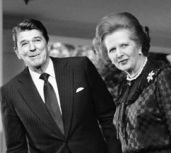
As you might expect, the analysis from the U.K.-based Economist left much to be desired.

Liz Truss, Britain’s new prime minister, is now implementing Reaganomics…comprising tax cuts worth perhaps £30bn ($34bn) per year (1.2% of gdp)… The fuel that fiscal stimulus will inject into the economy will almost certainly lead the boe to raise interest rates… No matter, say Ms Truss’s backers, because tax cuts will boost productivity.Didn’t inflation fall and growth surge under Reagan? …Ms Truss’s cheerleaders seem to have read only the first chapter of the history of Reaganomics. The programme’s early record was mixed. The tax cuts did not stop a deep recession, yet by March 1984 annual inflation had risen back to 4.8% and America’s ten-year bond yield was over 12%, reflecting fears of another upward spiral in prices. Inflation was anchored only after Congress had raised taxes. By 1987 America’s budget, excluding interest payments, was nearly balanced. By 1993 Congress had raised taxes by almost as much as it had cut them in 1981.

By the way, the article’s analysis of Reaganomics is laughably inaccurate.

Meanwhile, a report in the New York Times, writtten by Eshe Nelson, Stephen Castle and , also has a skeptical tone.

But I’m surprised and impressed that they admit Thatcher’s policies worked in the 1980s.

Britain’s new prime minister, Liz Truss, gambled on Friday that a heavy dose of tax cuts, deregulation and free-market economics would reignite her country’s growth — a radical shift in policy… the new chancellor of the Exchequer, Kwasi Kwarteng, abandoned a proposed rise in corporate taxation and, in a surprise move, also abolished the top rate of 45 percent of income tax applied to those earning more than 150,000 pounds, or about $164,000, a year. He also cut the basic rate for lower earners and cut taxes on house purchases. …It is hard to overstate the magnitude of the policy shift from Mr. Johnson’s government, which just one year ago had announced targeted tax increases to offset its increased public spending… The chancellor’s statement in Parliament on Friday underscored the free-market, small-state, tax-cutting instincts of Ms. Truss, who has modeled herself on Margaret Thatcher, who was prime minister from 1979 to 1990. Thatcher’s economic revolution in the 1980s turned the economy around.

The article includes 11 very worrisome words.

…so far there has been no indication of corresponding spending cuts.

Amen. Tax cuts are good for growth, but their effectiveness and durability will be in question if there is not a concomitant effort to restrain the burden of spending.

Truss and Kwarteng also should have announced a spending cap, modeled on either the Swiss Debt Brake or Colorado’s TABOR.

P.S. In addition to worrying about whether Truss will copy Thatcher’s track record on spending, I’m also worried about her support for misguided energy subsidies.

Tax Cartels Mean Ever-Higher Tax Rates

When President Biden proposed a “global minimum tax” for businesses, I immediately warned that would lead to ever-increasing tax rates.

Ross Kaminsky of KHOW and I discussed how this is already happening.

I hate being right, but it’s always safe to predict that politicians and bureaucrats will embrace policies that give more power to government.

Especially when they are very anxious to stifle tax competition.

For decades, people in government have been upset that the tax cuts implemented by Ronald Reagan and Margaret Thatchertriggered a four-decade trend of lower tax rates and pro-growth tax reform.

That’s the reason Biden and his Treasury Secretary proposed a 15 percent minimum tax rate for businesses.

And it’s the reason they now want the rate to be even higher.

Though even I’m surprised that they’re already pushing for that outcome when the original pact hasn’t even been approved or implemented.

Here are some passages from a report by Reuters.

Treasury Secretary Janet Yellen will press G20 counterparts this week for a global minimum corporate tax rate above the 15% floor agreed by 130 countries last week…the global minimum tax rate…is tied to the outcome of legislation to raise the U.S. minimum tax rate, a Treasury official said.The Biden administration has proposed doubling the U.S. minimum tax on corporations overseas intangible income to 21% along with a new companion “enforcement” tax that would deny deductions to companies for tax payments to countries that fail to adopt the new global minimum rate. The officials said several countries were pushing for a rate above 15%, along with the United States.

Other kleptocratic governments naturally want the same thing.

A G7 proposal for a global minimum tax rate of 15% is too low and a rate of at least 21% is needed, Argentina’s finance minister said on Monday, leading a push by some developing countries… “The 15% rate is way too low,” Argentine Finance Minister Martin Guzman told an online panel hosted by the Independent Commission for the Reform of International Corporate Taxation. …”The minimum rate being proposed would not do much to countries in Africa…,” Mathew Gbonjubola, Nigeria’s tax policy director, told the same conference.

Needless to say, I’m not surprised that Argentina is on the wrong side.

And supporters of class warfare also are agitating for a higher minimum rate. Here are some excerpts from a column in the New York Times by Gabriel Zucman and Gus Wezerek.

In the decades after World War II, close to 50 percent of American companies’ earnings went to state and federal taxes. …it was a golden period. …President Biden should be applauded for trying to end the race to the bottom on corporate tax rates. But even if Congress approves the 15 percent global minimum corporate tax, it won’t be enough. …the Biden administration to give working families a real leg up, it should push Congress to enact a 25 percent minimum tax, which would bring in about $200 billion in additional revenue each year. …With a 25 percent minimum corporate tax, the Biden administration would begin to reverse decades of growing inequality. And it would encourage other countries to do the same, replacing a race to the bottom with a sprint to the top.

I can’t resist making two observations about this ideological screed.

  1. Even the IMF and OECD agree that the so-called race to the bottom has not led to a decline in corporate tax revenues, even when measured as a share of economic output.
  2. Since companies legally avoid rather than illegally evade taxes, the headline of the column is utterly dishonest – but it’s what we’ve learned to expect from the New York Times.

The only good thing about the Zucman-Wezerek column is that it includes this chart showing how corporate tax rates have dramatically declined since 1980.

P.S. For those interested, the horizontal line at the bottom is for Bermuda, though other jurisdictions (such as Monaco and the Cayman Islands) also deserve credit for having no corporate income taxes.

P.P.S. If you want to know why high corporate tax rates are misguided, click here. And if you want to know why Biden’s plan to raise the U.S. corporate tax rate is misguided, click here. Or here. Or here.

P.P.P.S. And if you want more information about why Biden’s global tax cartel is bad, click here, here, and here.

I enjoyed this article below because it demonstrates that the Laffer Curve has been working for almost 100 years now when it is put to the test in the USA. I actually got to hear Arthur Laffer speak in person in 1981 and he told us in advance what was going to happen the 1980’s and it all came about as he said it would when Ronald Reagan’s tax cuts took place. I wish we would lower taxes now instead of looking for more revenue through raised taxes. We have to grow the economy:

What Mitt Romney Said Last Night About Tax Cuts And The Deficit Was Absolutely Right. And What Obama Said Was Absolutely Wrong.

Mitt Romney repeatedly said last night that he would not allow tax cuts to add to the deficit.  He repeatedly said it because over and over again Obama blathered the liberal talking point that cutting taxes necessarily increased deficits.

Romney’s exact words: “I want to underline that — no tax cut that adds to the deficit.”

Meanwhile, Obama has promised to cut the deficit in half during his first four years – but instead gave America the highest deficits in the history of the entire human race.

I’ve written about this before.  Let’s replay what has happened every single time we’ve ever cut the income tax rate.

The fact of the matter is that we can go back to Calvin Coolidge who said very nearly THE EXACT SAME THING to his treasury secretary: he too would not allow any tax cuts that added to the debt.  Andrew Mellon – quite possibly the most brilliant economic mind of his day – did a great deal of research and determined what he believed was the best tax rate.  And the Coolidge administration DID cut income taxes and MASSIVELY increased revenues.  Coolidge and Mellon cut the income tax rate 67.12 percent (from 73 to 24 percent); and revenues not only did not go down, but they went UP by at least 42.86 percent (from $700 billion to over $1 billion).

That’s something called a documented fact.  But that wasn’t all that happened: another incredible thing was that the taxes and percentage of taxes paid actually went UP for the rich.  Because as they were allowed to keep more of the profits that they earned by investing in successful business, they significantly increased their investments and therefore paid more in taxes than they otherwise would have had they continued sheltering their money to protect themselves from the higher tax rates.  Liberals ignore reality, but it is simply true.  It is a fact.  It happened.

Then FDR came along and raised the tax rates again and the opposite happened: we collected less and less revenue while the burden of taxation fell increasingly on the poor and middle class again.  Which is exactly what Obama wants to do.

People don’t realize that John F. Kennedy, one of the greatest Democrat presidents, was a TAX CUTTER who believed the conservative economic philosophy that cutting tax rates would in fact increase tax revenues.  He too cut taxes, and he too increased tax revenues.

So we get to Ronald Reagan, who famously cut taxes.  And again, we find that Reagan cut that godawful liberal tax rate during an incredibly godawful liberal-caused economic recession, and he increased tax revenue by 20.71 percent (with revenues increasing from $956 billion to $1.154 trillion).  And again, the taxes were paid primarily by the rich:

“The share of the income tax burden borne by the top 10 percent of taxpayers increased from 48.0 percent in 1981 to 57.2 percent in 1988. Meanwhile, the share of income taxes paid by the bottom 50 percent of taxpayers dropped from 7.5 percent in 1981 to 5.7 percent in 1988.”

So we get to George Bush and the Bush tax cuts that liberals and in particular Obama have just demonized up one side and demagogued down the other.  And I can simply quote the New York Times AT the time:

Sharp Rise in Tax Revenue to Pare U.S. Deficit By EDMUND L. ANDREWS Published: July 13, 2005

WASHINGTON, July 12 – For the first time since President Bush took office, an unexpected leap in tax revenue is about to shrink the federal budget deficit this year, by nearly $100 billion.

A Jump in Corporate Payments On Wednesday, White House officials plan to announce that the deficit for the 2005 fiscal year, which ends in September, will be far smaller than the $427 billion they estimated in February.

Mr. Bush plans to hail the improvement at a cabinet meeting and to cite it as validation of his argument that tax cuts would stimulate the economy and ultimately help pay for themselves.

Based on revenue and spending data through June, the budget deficit for the first nine months of the fiscal year was $251 billion, $76 billion lower than the $327 billion gap recorded at the corresponding point a year earlier.

The Congressional Budget Office estimated last week that the deficit for the full fiscal year, which reached $412 billion in 2004, could be “significantly less than $350 billion, perhaps below $325 billion.”

The big surprise has been in tax revenue, which is running nearly 15 percent higher than in 2004. Corporate tax revenue has soared about 40 percent, after languishing for four years, and individual tax revenue is up as well
.

And of course the New York Times, as reliable liberals, use the adjective whenever something good happens under conservative policies and whenever something bad happens under liberal policies: ”unexpected.”   But it WASN’T ”unexpected.”  It was EXACTLY what Republicans had said would happen and in fact it was exactly what HAD IN FACT HAPPENED every single time we’ve EVER cut income tax rates.

The truth is that conservative tax policy has a perfect track record: every single time it has ever been tried, we have INCREASED tax revenues while not only exploding economic activity and creating more jobs, but encouraging the wealthy to pay more in taxes as well.  And liberals simply dishonestly refuse to acknowledge documented history.

Meanwhile, liberals also have a perfect record … of FAILUREThey keep raising taxes and keep not understanding why they don’t get the revenues they predicted.

The following is a section from my article, “Tax Cuts INCREASE Revenues; They Have ALWAYS Increased Revenues“, where I document every single thing I said above:

The Falsehood That Tax Cuts Increase The Deficit

Now let’s take a look at the utterly fallacious view that tax cuts in general create higher deficits.

Let’s take a trip back in time, starting with the 1920s.  From Burton Folsom’s book, New Deal or Raw Deal?:

In 1921, President Harding asked the sixty-five-year-old [Andrew] Mellon to be secretary of the treasury; the national debt [resulting from WWI] had surpassed $20 billion and unemployment had reached 11.7 percent, one of the highest rates in U.S. history.  Harding invited Mellon to tinker with tax rates to encourage investment without incurring more debt. Mellon studied the problem carefully; his solution was what is today called “supply side economics,” the idea of cutting taxes to stimulate investment.  High income tax rates, Mellon argued, “inevitably put pressure upon the taxpayer to withdraw this capital from productive business and invest it in tax-exempt securities. . . . The result is that the sources of taxation are drying up, wealth is failing to carry its share of the tax burden; and capital is being diverted into channels which yield neither revenue to the Government nor profit to the people” (page 128).

Mellon wrote, “It seems difficult for some to understand that high rates of taxation do not necessarily mean large revenue to the Government, and that more revenue may often be obtained by lower taxes.”  And he compared the government setting tax rates on incomes to a businessman setting prices on products: “If a price is fixed too high, sales drop off and with them profits.”

And what happened?

“As secretary of the treasury, Mellon promoted, and Harding and Coolidge backed, a plan that eventually cut taxes on large incomes from 73 to 24 percent and on smaller incomes from 4 to 1/2 of 1 percent.  These tax cuts helped produce an outpouring of economic development – from air conditioning to refrigerators to zippers, Scotch tape to radios and talking movies.  Investors took more risks when they were allowed to keep more of their gains.  President Coolidge, during his six years in office, averaged only 3.3 percent unemployment and 1 percent inflation – the lowest misery index of any president in the twentieth century.

Furthermore, Mellon was also vindicated in his astonishing predictions that cutting taxes across the board would generate more revenue.  In the early 1920s, when the highest tax rate was 73 percent, the total income tax revenue to the U.S. government was a little over $700 million.  In 1928 and 1929, when the top tax rate was slashed to 25 and 24 percent, the total revenue topped the $1 billion mark.  Also remarkable, as Table 3 indicates, is that the burden of paying these taxes fell increasingly upon the wealthy” (page 129-130).

Now, that is incredible upon its face, but it becomes even more incredible when contrasted with FDR’s antibusiness and confiscatory tax policies, which both dramatically shrunk in terms of actual income tax revenues (from $1.096 billion in 1929 to $527 million in 1935), and dramatically shifted the tax burden to the backs of the poor by imposing huge new excise taxes (from $540 million in 1929 to $1.364 billion in 1935).  See Table 1 on page 125 of New Deal or Raw Deal for that information.

FDR both collected far less taxes from the rich, while imposing a far more onerous tax burden upon the poor.

It is simply a matter of empirical fact that tax cuts create increased revenue, and that those [Democrats] who have refused to pay attention to that fact have ended up reducing government revenues even as they increased the burdens on the poorest whom they falsely claim to help.

Let’s move on to John F. Kennedy, one of the most popular Democrat presidents ever.  Few realize that he was also a supply-side tax cutter.

Kennedy said:

“It is a paradoxical truth that tax rates are too high and tax revenues are too low and the soundest way to raise the revenues in the long run is to cut the rates now … Cutting taxes now is not to incur a budget deficit, but to achieve the more prosperous, expanding economy which can bring a budget surplus.”

– John F. Kennedy, Nov. 20, 1962, president’s news conference


“Lower rates of taxation will stimulate economic activity and so raise the levels of personal and corporate income as to yield within a few years an increased – not a reduced – flow of revenues to the federal government.”

– John F. Kennedy, Jan. 17, 1963, annual budget message to the Congress, fiscal year 1964

“In today’s economy, fiscal prudence and responsibility call for tax reduction even if it temporarily enlarges the federal deficit – why reducing taxes is the best way open to us to increase revenues.”

– John F. Kennedy, Jan. 21, 1963, annual message to the Congress: “The Economic Report Of The President”


“It is no contradiction – the most important single thing we can do to stimulate investment in today’s economy is to raise consumption by major reduction of individual income tax rates.”

– John F. Kennedy, Jan. 21, 1963, annual message to the Congress: “The Economic Report Of The President”


“Our tax system still siphons out of the private economy too large a share of personal and business purchasing power and reduces the incentive for risk, investment and effort – thereby aborting our recoveries and stifling our national growth rate.”

– John F. Kennedy, Jan. 24, 1963, message to Congress on tax reduction and reform, House Doc. 43, 88th Congress, 1st Session.


“A tax cut means higher family income and higher business profits and a balanced federal budget. Every taxpayer and his family will have more money left over after taxes for a new car, a new home, new conveniences, education and investment. Every businessman can keep a higher percentage of his profits in his cash register or put it to work expanding or improving his business, and as the national income grows, the federal government will ultimately end up with more revenues.”

– John F. Kennedy, Sept. 18, 1963, radio and television address to the nation on tax-reduction bill

Which is to say that modern Democrats are essentially calling one of their greatest presidents a liar when they demonize tax cuts as a means of increasing government revenues.

So let’s move on to Ronald Reagan.  Reagan had two major tax cutting policies implemented: the Economic Recovery Tax Act (ERTA) of 1981, which was retroactive to 1981, and the Tax Reform Act of 1986.

Did Reagan’s tax cuts decrease federal revenues?  Hardly:

We find that 8 of the following 10 years there was a surplus of revenue from 1980, prior to the Reagan tax cuts.  And, following the Tax Reform Act of 1986, there was a MASSIVE INCREASEof revenue.

So Reagan’s tax cuts increased revenue.  But who paid the increased tax revenue?  The poor?  Opponents of the Reagan tax cuts argued that his policy was a giveaway to the rich (ever heard that one before?) because their tax payments would fall.  But that was exactly wrong.  In reality:

“The share of the income tax burden borne by the top 10 percent of taxpayers increased from 48.0 percent in 1981 to 57.2 percent in 1988. Meanwhile, the share of income taxes paid by the bottom 50 percent of taxpayers dropped from 7.5 percent in 1981 to 5.7 percent in 1988.”

So Ronald Reagan a) collected more total revenue, b) collected more revenue from the rich, while c) reducing revenue collected by the bottom half of taxpayers, and d) generated an economic powerhouse that lasted – with only minor hiccups – for nearly three decades.  Pretty good achievement considering that his predecessor was forced to describe his own economy as a “malaise,” suffering due to a “crisis of confidence.” Pretty good considering that President Jimmy Carter responded to a reporter’s question as to what he would do about the problem of inflation by answering, “It would be misleading for me to tell any of you that there is a solution to it.”

Reagan whipped inflation.  Just as he whipped that malaise and that crisis of confidence.

________

The Laffer Curve, Part III: Dynamic Scoring