Federal Revenues Have More Than Tripled Since 1965
Overall tax revenues have risen despite a recent decline due to the recession. Congress cut income taxes and the death tax in 2001 and capital gains taxes and dividends in 2003, yet revenues continued to surge even after the tax cuts were passed.
INFLATION-ADJUSTED DOLLARS (2010)
Download
Source: White House Office of Management and Budget.
The charts in this book are based primarily on data available as of March 2011 from the Office of Management and Budget (OMB) and the Congressional Budget Office (CBO). The charts using OMB data display the historical growth of the federal government to 2010 while the charts using CBO data display both historical and projected growth from as early as 1940 to 2084. Projections based on OMB data are taken from the White House Fiscal Year 2012 budget. The charts provide data on an annual basis except… Read More
Authors
Emily GoffResearch Assistant
Thomas A. Roe Institute for Economic Policy StudiesKathryn NixPolicy Analyst
Center for Health Policy StudiesJohn FlemingSenior Data Graphics Edito
I wonder what the people would have said if Rutherford Hayes had spent 24.7% of GDP a year? You laughed at the thought of Rutherford on Mount Rushmore, but with the economic mess we have now I don’t there is much of a chance that you will end up on there EITHER UNLESS YOU START CUTTING SPENDING. Here is an excellent article by Dan Mitchell of the Cato Institute:
But I feel the need to rise to the defense of Rutherford B. Hayes, who was mocked recently by the current President. This Mark Steyn column is a deliciously vicious commentary on Obama’s speech, so no need for me to delve into the details.
Instead, I want to jump on the bandwagon and produce some posters comparing the 19th President and the 44th President (if you’re not aware, posters of Pres. Hayes with self-created captions have been all over the Internet).
You won’t be surprised to learn that I’m focused on the policy differences between Hayes and Obama.
Most important, Hayes largely was true to the Founding Fathers’ vision of a limited central government. Government spending averaged only about 6 percent of economic output during his tenure (probably less, the data are not very robust, so I took the worst-case numbers) and America was blessedly free of the income tax.
So which President would you prefer, Hayes or Obama?
_____________
Thank you so much for your time. I know how valuable it is. I also appreciate the fine family that you have and your commitment as a father and a husband.
Sincerely,
Everette Hatcher III, 13900 Cottontail Lane, Alexander, AR 72002, ph 501-920-5733, lowcostsqueegees@yahoo.com
Federal Revenues Have More Than Tripled Since 1965
Overall tax revenues have risen despite a recent decline due to the recession. Congress cut income taxes and the death tax in 2001 and capital gains taxes and dividends in 2003, yet revenues continued to surge even after the tax cuts were passed.
INFLATION-ADJUSTED DOLLARS (2010)
Download
Source: White House Office of Management and Budget.
The charts in this book are based primarily on data available as of March 2011 from the Office of Management and Budget (OMB) and the Congressional Budget Office (CBO). The charts using OMB data display the historical growth of the federal government to 2010 while the charts using CBO data display both historical and projected growth from as early as 1940 to 2084. Projections based on OMB data are taken from the White House Fiscal Year 2012 budget. The charts provide data on an annual basis except… Read More
Authors
Emily GoffResearch Assistant
Thomas A. Roe Institute for Economic Policy StudiesKathryn NixPolicy Analyst
Center for Health Policy StudiesJohn FlemingSenior Data Graphics Edito
And that was one of my main points in this CNBC debate about state governments and class-warfare tax policy with Jared Bernstein.
Since you never get the opportunity to make all your points in an interview, here are a few additional thoughts.
Jared admits that tax rates can get too high, but then he claims that the Laffer Curve only exists “in the heads of people like Dan and Arthur Laffer.” Those are mutually inconsistent statements.
Jared seems to think it’s important that big business is siding with big government in Oklahoma and supporting the income tax. But that’s hardly a surprise since large companies often prefer corporatism.
Jared actually cited Massachusetts and New Jersey as low-tax states, a point that even the host thought was a bit kooky. I guess this means France is a low-tax country in Jared’s fantasy world.
But I also think I made a mistake. When asked how states can get rid of their income taxes, I mentioned that sales taxes do less damage – per dollar raised – than income taxes. That’s true, but I should have stated first and foremost that states should reduce the burden of government spending.
One final point. This cartoon shows what eventually happens in a tax-and-spend society.
P.S. Jared was the co-author of the infamous study claiming that Obama’s so-called stimulus would keep the unemployment rate below 8 percent. Look at this chart and draw your own conclusions.
Total Tax Burden Is Rising to Highest Level in History
Everyone wants to know more about the budget and here is some key information with a chart from the Heritage Foundation and a video from the Cato Institute about the Laffer Curve. In a year and half (end of 2012) the Bush Tax Cuts will expire. However, is that wise? Not if you understand the Laffer Curve.
Taxes are projected to increase rapidly under various policy scenarios. If the 2001 and 2003 tax cuts expire and more middle-class Americans are required to pay the alternative minimum tax (AMT), taxes will reach unprecedented levels. The tax burden will climb even if those tax breaks are extended. President Obama’s budget, which cuts some taxes and raises others, also increases the overall tax burden.
PERCENTAGE OF GDP
Download
Source: Heritage Foundation calculations based on Congressional Budget Office and White House Office of Management and Budget data.
The charts in this book are based primarily on data available as of March 2011 from the Office of Management and Budget (OMB) and the Congressional Budget Office (CBO). The charts using OMB data display the historical growth of the federal government to 2010 while the charts using CBO data display both historical and projected growth from as early as 1940 to 2084. Projections based on OMB data are taken from the White House Fiscal Year 2012 budget. The charts provide data on an annual basis except… Read More
Authors
Emily GoffResearch Assistant
Thomas A. Roe Institute for Economic Policy StudiesKathryn NixPolicy Analyst
Center for Health Policy StudiesJohn FlemingSenior Data Graphics Editor
In the debate of job creation and how best to pursue it as a policy goal, one point is forgotten: Government doesn’t create jobs. Government only diverts resources from one use to another, which doesn’t create new employment.
Video produced by Caleb Brown and Austin Bragg.
___________________________
Keynesian Catastrophe: Big Money, Big Government & Big Lies
Based on a theory known as Keynesianism, politicians are resuscitating the notion that more government spending can stimulate an economy. This mini-documentary produced by the Center for Freedom and Prosperity Foundation examines both theory and evidence and finds that allowing politicians to spend more money is not a recipe for better economic performance.
___________________
Obama’s So-Called Stimulus: Good For Government, Bad For the Economy
President Obama wants Congress to dramatically expand the burden of government spending. This CF&P Foundation mini-documentary explains why such a policy, based on the discredited Keynesian theory of economics, will not be successful. Indeed, the video demonstrates that Obama is proposing – for all intents and purposes – to repeat Bush’s mistakes. Government will be bigger, even though global evidence shows that nations with small governments are more prosperous.
____________
Big Government Is Not Stimulus: Why Keynes Was Wrong (The Condensed Version)
The CF&P Foundation has released a condensed version of our successful mini-documentary explaining why so-called stimulus schemes do not work. Based on a theory known as Keynesianism, politicians are resuscitating the notion that more government spending can stimulate an economy. This mini-documentary produced by the Center for Freedom and Prosperity Foundation examines both theory and evidence and finds that allowing politicians to spend more money is not a recipe for better economic performance.
_________________
Eight Reasons Why Big Government Hurts Economic Growth
This Center for Freedom and Prosperity Foundation video analyzes how excessive government spending undermines economic performance. While acknowledging that a very modest level of government spending on things such as “public goods” can facilitate growth, the video outlines eight different ways that that big government hinders prosperity. This video focuses on theory and will be augmented by a second video looking at the empirical evidence favoring smaller government.
___________________
Keynesian Economics Is Wrong: Economic Growth Causes Consumer Spending, Not the Other Way
Politicians and journalists who fixate on consumer spending are putting the cart before the horse. Consumer spending generally is a consequence of growth, not the cause of growth. This Center for Freedom and Prosperity video helps explain how to achieve more prosperity by looking at the differences between gross domestic product and gross domestic income. www.freedomandprosperity.org
_____________
Deficits, Debts and Unfunded Liabilities: The Consequences of Excessive Government Spending
Huge budget deficits and record levels of national debt are getting a lot of attention, but this video explains that unfunded liabilities for entitlement programs are Americas real red-ink challenge. More important, this CF&P mini-documentary reveals that deficits and debt are symptoms of the real problem of an excessive burden of government spending. www.freedomandprosperity.org
___________
Now that I have been critical of the Democrat President, I wanted to show that I am not concerned about taking up for Republicans but looking at the facts. President Clinton did increase government spending at a slower rate than many other presidents. Here are two videos that praise both Reagan and Clinton for both accomplished this feat.
Spending Restraint, Part I: Lessons from Ronald Reagan and Bill Clinton
Ronald Reagan and Bill Clinton both reduced the relative burden of government, largely because they were able to restrain the growth of domestic spending. The mini-documentary from the Center for Freedom and Prosperity uses data from the Historical Tables of the Budget to show how Reagan and Clinton succeeded and compares their record to the fiscal profligacy of the Bush-Obama years.
______________
Spending Restraint, Part II: Lessons from Canada, Ireland, Slovakia, and New Zealand
Nations can make remarkable fiscal progress if policy makers simply limit the growth of government spending. This video, which is Part II of a series, uses examples from recent history in Canada, Ireland, Slovakia, and New Zealand to demonstrate how it is possible to achieve rapid improvements in fiscal policy by restraining the burden of government spending. Part I of the series examined how Ronald Reagan and Bill Clinton were successful in controlling government outlays — particularly the burden of domestic spending programs. www.freedomandprosperity.org
Lawmakers are considering extending temporary payroll tax cuts. But the policy is based on faulty Keynesian theories and misplaced confidence in the government’s ability to micromanage short-run growth.
In textbook Keynesian terms, federal deficits stimulate growth by goosing “aggregate demand,” or consumer spending. Since the recession began, we’ve had a lot of goosing — deficits were $459 billion in 2008, $1.4 trillion in 2009, $1.3 trillion in 2010, and $1.3 trillion in 2011. Despite that huge supposed stimulus, unemployment remains remarkably high and the recovery has been the slowest since World War II.
Policymakers should ignore the Keynesians and their faulty models, and instead focus on reforms to aid long-run growth…
Yet supporters of extending payroll tax cuts think that adding another $265 billion to the deficit next year will somehow spur growth. That “stimulus” would be on top of the $1 trillion in deficit spending that is already expected in 2012. Far from helping the economy, all this deficit spending is destabilizing financial markets, scaring businesses away from investing, and imposing crushing debt burdens on young people.
For three years, policymakers have tried to manipulate short-run economic growth, and they have failed. They have put too much trust in macroeconomists, who are frankly lousy at modeling the complex workings of the short-run economy. In early 2008, the Congressional Budget Office projected that economic growth would strengthen in subsequent years, and thus completely missed the deep recession that had already begun. And then there was the infamously bad projection by Obama’s macroeconomists that unemployment would peak at 8 percent and then fall steadily if the 2009 stimulus plan was passed.
Some of the same Keynesian macroeconomists who got it wrong on the recession and stimulus are now claiming that a temporary payroll tax break would boost growth. But as Stanford University economist John Taylor has argued, the supposed benefits of government stimulus have been “built in” or predetermined by the underlying assumptions of the Keynesian models.
Policymakers should ignore the Keynesians and their faulty models, and instead focus on reforms to aid long-run growth, which economists know a lot more about. Cutting the corporate tax rate, for example, is an overdue reform with bipartisan support that would enhance America’s long-run productivity and competitiveness.
If Congress is intent on cutting payroll taxes, it should do so within the context of long-run fiscal reforms. One idea is to allow workers to steer a portion of their payroll taxes into personal retirement accounts, as Chile and other nations have done. That reform would feel like a tax cut to workers because they would retain ownership of the funds, and it would begin solving the long-term budget crisis that looms over the economy.
Dan Mitchell discusses the effectiveness of the stimulus Uploaded by catoinstitutevideo on Nov 3, 2009 11-2-09 When I think of all our hard earned money that has been wasted on stimulus programs it makes me sad. It has never worked and will not in the future too. Take a look at a few thoughts from […]
Government Spending Doesn’t Create Jobs Uploaded by catoinstitutevideo on Sep 7, 2011 Share this on Facebook: http://on.fb.me/qnjkn9 Tweet it: http://tiny.cc/o9v9t In the debate of job creation and how best to pursue it as a policy goal, one point is forgotten: Government doesn’t create jobs. Government only diverts resources from one use to another, which doesn’t […]
In his recent article Ernie Dumas sticks to his guns that we should balance the budget without being forced to with a “Balanced Budget Amendment,” but I wonder how well that has worked so far? I have made this a key issue for this blog in the past as you can tell below: Dear Senator […]
(Picture from Arkansas Times Blog) When I think about all the anger and hate coming from the Occupy Wall Street crowd, I wonder if they have read this story below? Solyndra: Crooked Politics or Just Bad Economics? Posted by David Boaz Amy Harder has a good take on the Solyndra issue in National Journal Daily […]
Dear Senator Pryor, why not pass the Balanced Budget Amendment? (Part 13 Thirsty Thursday, Open letter to Senator Pryor) Office of the Majority Whip | Balanced Budget Amendment Video In 1995, Congress nearly passed a constitutional amendment mandating a balanced budget. The Balanced Budget Amendment would have forced the federal government to live within its […]
Andrew Demillo pointed this out and also Jason Tolbert noted: PRYOR OPPOSES THE OBAMA JOBS BILL THAT HE VOTED TO ADVANCE Sen. Mark Pryor has been traveling around the state touting a six-part jobs plan that he says “includes a number of bipartisan initiatives, is aimed at creating jobs by setting the table for growth, encouraging new […]
Is a lack of money the problem for our public schools? Everything You Need to Know About Public School Spending in Less Than 2½ Minutes Posted by Adam Schaeffer Neal McCluskey gutted the President’s new “Save the Teachers” American Jobs Act sales pitch a good while back, as did Andrew Coulson here. Thankfully, it seems […]
Let’s use an analogy to explain what I mean. Imagine you were playing a game of chess and your opponent openly stated that he wanted you to move your rook to a certain point on the board.
If your IQ was above room temperature, you would probably be suspicious that he wasn’t trying to help you win the game.
Well, the same thing happens in fiscal policy. I quoted the Hill newspaper last year when some Democrats admitted that their top political goal was to seduce the GOP into a tax increase.
The Democrats’ counter-strategy is a bit more subtle, but has essentially been to find ways to make it very uncomfortable for Republicans to maintain such a rigid anti-tax orthodoxy — to ultimately force Republicans to break their anti-tax pledges and badly splinter their party. That’s what the Buffett Rule is about; that why Dems insist they won’t dismantle the so-called “sequester” — big cuts to defense and even to Medicare — unless Republicans agree to tackle deficits in a balanced way, i.e. by supporting significant new tax revenues. The results have been mixed. They’ve won a small number of GOP votes here and there, and vulnerable members are nowadays more likely to trash or dismiss Grover Norquist in the press than they were last year. But at a very high level within the Democratic Party, there’s a recognition that breaking the GOP on taxes is an absolutely crucial strategic imperative for defending safety net programs over the long term.
That’s a pretty clear statement. We have folks on the left who say they want higher taxes both to prop up big government and to cause internal damage to the GOP.
Unless, of course, they’re motivated by a belief in bigger government (high likely) or a suicidal desire to harm their own electoral prospects (highly unlikely since even I don’t think GOPers are that stupid).
Social Security is currently unsustainable. It began running deficits in 2010 and its trust fund will be exhausted by 2036, which is when seniors will see about a 25 percent cut in benefits. This is the scenario we face if Congress and the President fail to enact meaningful entitlement reform and continue reckless fiscal policies. This course is reversible, however.
At a recent House Budget Committee hearing on the fiscal facts concerning Medicare and Social Security, Members were divided on how to save Social Security. Despite hearing from Steve Goss, Social Security’s chief actuary, that raising taxes is not a necessity, tax hikes remained the leading option among certain lawmakers. Both parties agree that Social Security is insolvent, but they disagree on what to do about it.
Raising taxes, however, is not an option. Amidst the greatest recession in three decades, higher payroll taxes threaten to damage the American economy. Heritage has a new plan for Social Security, as presented in Saving the American Dream. It promises to restore fiscal responsibility and protect Americans from unneeded tax hikes.
At present, workers and their employers each pay 6.2 percent for Social Security retirement and disability benefits, adding up to a 12.4 percent payroll tax that is levied on every single worker’s income. If the government were to increase this tax to pay for Social Security’s deficits, every American worker and his boss would split an increase of at least 2.2 percent. Raising these taxes will discourage employers from hiring new workers and exacerbate unemployment.
Tax-loving lawmakers then turn to the tax cap. Social Security taxes are currently deducted only from the first $106,800 each worker earns. But some lawmakers suggest that any money Americans don’t “need” is fair game for tax hikes. President Obama most recently revealed this philosophy, fundamentally at odds with America’s job creators, during a press conference on the debt limit. Similarly, certain members at the recent House Budget Committee hearing suggested lifting the cap on the Social Security payroll tax to pay for the program’s shortfall. But taking more money out of the private economy limits entrepreneurial exercise—the true source of wealth in any free-market economy.
The Heritage Foundation plan does not call for unnecessary tax increases. Instead, it restores Social Security to its original purpose of being a safeguard against senior poverty. The plan includes both a transition into a flat benefit for those who work more than 35 years, as well as phasing out Social Security benefits for those who have significant non-Social Security retirement income. The plan also contains incentives to encourage Americans to work beyond the age at which they would normally receive benefits. Because Americans are living longer than ever before, they are spending more years in retirement. Therefore, Saving the American Dreamcalls for gradually increasing the retirement age and then indexing it to life expectancy.
Unemployment remains high, and Social Security faces serious fiscal challenges. It simply cannot afford to pay all of the future benefits it has promised. Elected leaders must realize that tax hikes are not the answer and that there are different ways to save both Social Security and the economy. Saving both requires our attention now, and as Heritage’s David John writes, “ [I]nstead of just blindly defending the current program, both Congress and the Obama Administration should propose comprehensive programs that permanently fix Social Security.”
President Obama and other politicians are advocating higher taxes, with a particular emphasis on class-warfare taxes targeting the so-called rich. This Center for Freedom and Prosperity Foundation video explains why fiscal policy based on hate and envy is fundamentally misguided. For more information please visit our web page: www.freedomandprosperity.org.
_________________
President Obama really does stick to his view that the wealthy need to rescue the rest of us on everything, but that view does not work. There are not enough rich people out there to solve our budget woes. Actually what has happened in the past when the government wants more money it starts off going after the rich, but when that does not bring in much money then the only alternative is to go after the rest of us.
Max Brantley argues on the Arkansas Times Blog that most of us are taxed too much so we must tax the rich more but that will not come close to bringing us to a balanced budget. However, it will destroy job creation.
Like the villain in a horror movie, the many-lived millionaire tax is once again back from the dead. Senate Majority Leader Harry Reid (D–NV) dusted off this economically frightening tax hike that has repeatedly failed to pass Congress to pay for President Obama’s jobs plan (American Jobs Act of 2011, S. 1660) after Senate Democrats rejected the tax hikes the President proposed to pay for his bill.
This is the third time in the past two years that congressional Democrats have proposed a millionaire tax. The first time it was a 5.4 percent surtax to pay for health care reform. The second time was in “the People’s Budget” released by the Congressional Progressive Caucus. It failed to garner much support either time.
If the third time is the charm for the millionaire tax to become law, the economy would suffer lasting damage and reduced international competitiveness. And American workers would bear the brunt of the pain.
Permanent Tax Hike on Job Creators
The millionaire’s tax would be a 5.6 percent surtax on incomes of married filers earning over $1 million starting on January 1, 2013. The surtax would kick in at $500,000 for individual filers, so it cannot be called a true millionaire tax. It would take the place of several tax hikes President Obama proposed to pay for his jobs plan, the biggest of which was capping the deductions of high-income earners.[1] It would raise approximately $450 billion over 10 years.
The millionaire surtax is contradictory to the stated aim of the President’s jobs plan, which is to create jobs. The tax hike would fall squarely on the very job creators that the President wants to add jobs and reduce their incentive to add new workers.
Taxpayers earning more than $1 million per year are investors and businesses that are directly responsible for creating jobs. Investors provide the capital to existing businesses and startups so they can expand and add new workers. Raising their taxes would deprive them of resources they could invest in promising businesses that are looking to add employees. Raising their tax rate would deter them from taking the risk to invest.
The President and his allies say often that only a few businesses would pay higher taxes under their soak-the-rich policies. But a recent study from President Obama’s own Treasury Department shows that 50 percent of the income earned by businesses that pay their taxes through the individual income tax code and employ workers would pay the millionaire tax.[2]
The millionaire tax is a direct blow to the pass-through businesses that employ the most workers. Higher taxes would deprive these important job creators of resources they could use to add new workers or pay their workers higher wages, and it would reduce their incentive for adding new workers. These impediments to economic growth and job creation would plague the economy permanently, while the questionable jobs policies the millionaire tax would pay for are temporary.
More Job Destruction
The millionaire surtax would also apply to capital gains and dividends. This would be yet another surtax on investment income, as Obamacare already applied an extra 3.8 percent tax. Combined with that surtax and the President’s policy of increasing the capital gains and dividends rate to 20 percent from the current 15 percent rate, the millionaire surtax would raise the total rate to 29.4 percent—a 96 percent increase over the current rate.
Higher capital gains taxes would further impede job creation because it would increase the cost of new capital for businesses looking to grow or replace worn-out capital. This would make it more expensive for businesses to buy the equipment, tools, and other things they need to employ more workers and make their current workers more productive. The end result would be fewer jobs and lower wages for American workers.
The President frequently calls his tax hike plans “tax reform.” But one of the goals of tax reform is to lower the cost of capital to improve economic growth and enhance job creation. Higher taxes on capital are opposed to the aims of true tax reform.
Highest Tax Rates in the World
The U.S. is generally regarded as a low-tax nation compared to other industrialized countries. This is one of the main factors that has allowed the U.S. economy to grow at a faster rate than other developed countries for decades and has made it the envy of the world. If the millionaire surtax becomes law, the U.S. would no longer enjoy the advantages of being a low-tax country.
After adding state and local income tax rates, the 39.6 percent top federal income tax rate long fought for by President Obama and his congressional allies, the higher Medicare surtax from Obamacare, and the new millionaire surtax, the average top marginal income tax rate in the U.S. would be 55 percent. A rate at that level would leave the average U.S. rate as the third highest among developed nations in the 30-member Organization for Economic Cooperation and Development (OECD). It would be behind only Sweden and Denmark.
Taxpayers in states with above-average top marginal income tax rates would compare even worse. In fact, taxpayers in Oregon, Hawaii, and New York would pay the highest tax rates in the developed world. Taxpayers in California, Iowa, New Jersey, Vermont, Maine, Maryland, Minnesota, Idaho, North Carolina, Wisconsin, and Ohio would pay higher rates than every developed country except Denmark.
Taxpayers in the nine states without state income taxes—and therefore with the lowest income tax rates in the U.S.—would still be taxed at a higher rate than in all but seven other developed countries. Their rates would be higher than traditional high-tax countries such as France, Germany, Italy, and Spain.
In the global race for investment and capital, the millionaire tax would make almost every other developed country more competitive than the U.S.
Real Reform
The millionaire tax would end up costing the U.S. economy more jobs than the President’s jobs plan it is supposed to pay for would ever create. It would ruin American competitiveness among other developed countries.
The President and his congressional allies are better off spending their time pursuing true tax reform, which would repair the tax base and lower marginal tax rates. That would mean dropping their class warfare policies for the good of the economy and the country.
Curtis S. Dubay is a Senior Analyst in Tax Policy in the Thomas A. Roe Institute for Economic Policy Studies at The Heritage Foundation.
In your earlier debate with Hillary Clinton during the 2008 primary you answered the question concerning the drop in the capital tax by Bill Clinton and the resulting increase in revenues by saying that you would still would raise the capital gains tax on the 100,000 million Americans that owned stock because of the issue of fairness. That is counterproductive.
The corporate tax in the USA is almost double the world average and it should be reduced. In fact, Canada reduced theirs dramatically and still brought in about the same revenue. Take a look at this fine article below from the Cato Institute:
Chris Edwards is the director of tax policy studies at the Cato Institute and the editor of Downsizing Government.org.
Added to cato.org on March 13, 2012
This article appeared in Daily Caller on March 13, 2012.
The President Obama and most members of Congress agree that the U.S. corporate tax rate should be cut. Thankfully, it is finally sinking in that having a 40 percent corporate tax rate when the world average is just 23 percent is suicide in a globalized economy.
The sticking point on slashing the corporate tax rate has been the fear that the federal government might lose revenues under such a reform. To prevent an expected revenue loss, policymakers have searched for tax loopholes to close in order to “pay for” a corporate rate cut. The problem is that members never find any loophole closings that they can agree on.
I’ve concluded that the effort to close corporate loopholes is a big waste of time. It is simply blocking desperately needed reforms to the tax rate. If I was drafting a corporate tax reform bill, I’d match a tax rate cut with federal spending cuts, but that idea hasn’t caught on either.
The good news is that a corporate tax rate cut without any changes to the tax base probably wouldn’t lose the government any money over the long term. Good evidence comes from Canada’s corporate tax cuts of the 1980s and 2000s.
The chart shows Canada’s federal corporate tax revenues as a share of gross domestic product (GDP) and the federal corporate tax rate. The tax rate plunged from 38 percent in 1980 to just 15 percent by 2012. Amazingly, there has been no obvious drop in tax revenues over the period.
Canadian corporate tax revenues have fluctuated, but the changes are correlated with economic growth, not the tax rate. In the late 1980s, a tax rate cut was followed by three years of stable revenues. In the early 1990s, a plunge in revenues was caused by a recession, and then in the late 1990s revenues soared as the economy grew.
In 2000, Canadian policymakers enacted another round of corporate tax rate cuts, which were phased in gradually. Corporate tax revenues initially dipped, but then they rebounded strongly in the late 2000s.
The rate cuts enacted in 2000 were projected to cause substantial revenue losses to the Canadian government. That projection indicates that the reform didn’t have much in the way of legislated loophole closing. But the chart shows that the positive taxpayer response to the rate cut was apparently so large that the government did not lose much, if any, revenue at all.
In 2009, Canada was dragged into a recession by the elephant economy next door, and that knocked the wind out of corporate tax revenues. However, it is remarkable that even with a recession and a tax rate under 20 percent, tax revenues as a share of GDP have been roughly as high in recent years as they were during the 1980s, when there was a much higher rate. Jason Clemens of the Macdonald-Laurier Institute notes that Canadian corporate tax revenues have been correlated with corporate profits, not the tax rate.
If a corporate tax rate is high, there is a “Laffer effect” when the rate is cut, meaning that the tax base expands so much that the government doesn’t lose any money. Estimates from Jack Mintz and other tax experts show that cutting corporate tax rates when they are above about 25 percent won’t lose governments any revenues over the long run.
The overall Canadian rate this year is about 27 percent when the average provincial rate is included. By contrast, the average federal-state rate in the United States is 40 percent, which is roughly 15 points above the revenue-maximizing rate. That means that Congress can proceed with a corporate rate cut and everyone would win — taxpayers, the economy and even the government.
Corporate tax reform with loophole closing is a wild-goose chase. Congress never seems to agree on which loopholes to close, with the result that our economy continues to suffer under a super-high rate. If we matched Canada by cutting our federal corporate rate from 35 percent to 15 percent, it would generate a large increase in reported income as corporate investment boomed and tax avoidance fell. The tax base would automatically expand without Congress even legislating reductions to deductions, credits or other loopholes.
In 2012, Canada will collect about 1.9 percent of GDP in federal corporate income tax revenues with a 15 percent tax rate. The United States will collect about 1.6 percent of GDP with a 35 percent tax rate. Do we need any more evidence that our high corporate tax rate makes no sense?
____________
Thank you so much for your time. I know how valuable it is. I also appreciate the fine family that you have and your commitment as a father and a husband.
Sincerely,
Everette Hatcher III, 13900 Cottontail Lane, Alexander, AR 72002, ph 501-920-5733, lowcostsqueegees@yahoo.com


 The Top 10 Percent of Earners Paid 70 Percent of Federal Income Taxes
 Federal Revenues by Source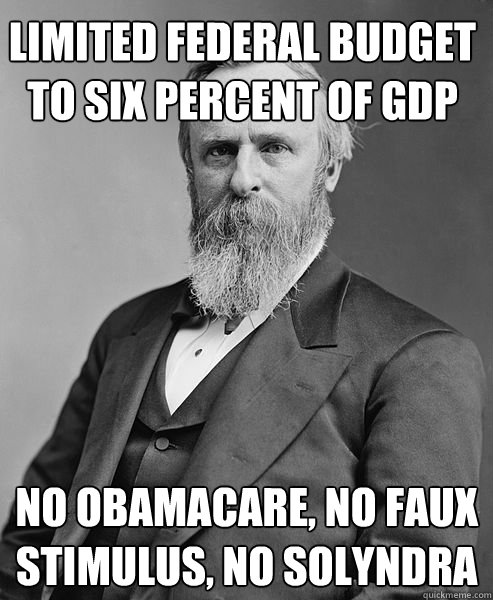


 U.S. Corporate Tax Rate Is Uncompetitive
 National Debt Set to Skyrocket

 Canadian corporate tax revenues have fluctuated, but the changes are correlated with economic growth, not the tax rate. In the late 1980s, a tax rate cut was followed by three years of stable revenues. In the early 1990s, a plunge in revenues was caused by a recession, and then in the late 1990s revenues soared as the economy grew.


 The Daily Hatch