Category Archives: Taxes

Dan Mitchell: “Romney is Right that You Can Lower Tax Rates and Reduce Tax Preferences without Hurting the Middle Class”

The Laffer Curve, Part I: Understanding the Theory

Uploaded by on Jan 28, 2008

The Laffer Curve charts a relationship between tax rates and tax revenue. While the theory behind the Laffer Curve is widely accepted, the concept has become very controversial because politicians on both sides of the debate exaggerate. This video shows the middle ground between those who claim “all tax cuts pay for themselves” and those who claim tax policy has no impact on economic performance. This video, focusing on the theory of the Laffer Curve, is Part I of a three-part series. Part II reviews evidence of Laffer-Curve responses. Part III discusses how the revenue-estimating process in Washington can be improved. For more information please visit the Center for Freedom and Prosperity’s web site: http://www.freedomandprosperity.org

________

We got to reduce taxes to grow our economy!!!

Even though I’m not a Romney fan, I sometimes feel compelled to defend him against leftist demagoguery.

But instead of writing about tax havens, as I’ve done in the past, today we’re going to look at incremental tax reform.

The left has been loudly asserting that the middle class would lose under Mitt Romney’s plan to cut tax rates by 20 percent and finance those reductions by closing loopholes.

That class-warfare accusation struck me as a bit sketchy because when I looked at the data a couple of years ago, I put together this chart showing that rich people, on average, enjoyed deductions that were seven times as large as the deductions of middle-income taxpayers.

And the chart includes only the big itemized deductions. There are dozens of other special tax preferences, as shown in this depressing image, and you can be sure that rich people are far more likely to have the lawyers, lobbyists, and accountants needed to exploit those provisions.

But that’s not a surprise since the internal revenue code has morphed into a 72,000-page monstrosity (this is why I sometimes try to convince honest leftists that a flat tax is a great way of reducing political corruption).

But this chart doesn’t disprove the leftist talking point, so I’m glad that Martin Feldstein addressed the issue in today’s Wall Street Journal. Here’s some of what he wrote.

The IRS data show that taxpayers with adjusted gross incomes over $100,000 (the top 21% of all taxpayers) made itemized deductions totaling $636 billion in 2009. Those high-income taxpayers paid marginal tax rates of 25% to 35%, with most $200,000-plus earners paying marginal rates of 33% or 35%. And what do we get when we apply a 30% marginal tax rate to the $636 billion in itemized deductions? Extra revenue of $191 billion—more than enough to offset the revenue losses from the individual income tax cuts proposed by Gov. Romney. …Additional revenue could be raised from high-income taxpayers by limiting the use of the “preferences” identified for the Alternative Minimum Tax (such as excess oil depletion allowances) or the broader list of all official individual “tax expenditures” (such as tax credits for energy efficiency improvements in homes), among other credits and exclusions. None of this base-broadening would require taxing capital gains or making other changes that would reduce the incentives for saving and investment. …Since broadening the tax base would produce enough revenue to pay for cutting everyone’s tax rates, it is clear that the proposed Romney cuts wouldn’t require any middle-class tax increase, nor would they produce a net windfall for high-income taxpayers. The Tax Policy Center and others are wrong to claim otherwise.

In other words, even with a very modest assumption about the Laffer Curve, it would be quite possible to implement something akin to what Romney’s proposing and not “lose” tax revenue.

This doesn’t mean, of course, that Romney seriously intends to push for good policy. I’m much more concerned, for instance, that he’ll wander in the wrong direction and propose something very bad such as a value-added tax.

But Romney certainly can do the right thing if he wins. Assuming that’s what he wants to do.

Just like he can fulfill his promise the reduce the burden of government spending by implementing Paul Ryan’s entitlement reforms. But don’t hold your breath waiting for that to happen.

______

The Laffer Curve, Part II: Reviewing the Evidence

This video is second installment of a three-part series. Part I reviews theoretical relationship between tax rates, taxable income, and tax revenue. Part III discusses how the revenue-estimating process in Washington can be improved. For more information please visit the Center for Freedom and Prosperity’s web site: http://www.freedomandprosperity.org.

The Laffer Curve, Part III: Dynamic Scoring

Videos by Dan Mitchell of the Cato Institute found here on www.thedailyhatch.org

Dan Mitchell of the Cato Institute has some great videos and I have posted lots of them on my blog. I like to go to Dan’s blog too. Take a look at some of them below and then the links to my blog.

It’s Simple to Balance The Budget Without Higher Taxes

Uploaded by on Oct 4, 2010

Politicians and interest groups claim higher taxes are necessary because it would be impossible to cut spending by enough to get rid of red ink. This Center for Freedom and Prosperity video shows that these assertions are nonsense. The budget can be balanced very quickly by simply limiting the annual growth of federal spending.

_______

Six Reasons Why the Capital Gains Tax Should Be Abolished

Uploaded by on May 3, 2010

The correct capital gains tax rate is zero because there should be no double taxation of income that is saved and invested. This is why all pro-growth tax reform plans, such as the flat tax and national sales tax, eliminate the capital gains tax. Unfortunately, the President wants to boost the official capital gains tax rate to 20 percent, and that is in addition to the higher tax rate on capital gains included in the government-run healthcare legislation. http://www.freedomandprosperity.org


______________

Keynesian Economics Is Wrong: Bigger Gov’t Is Not Stimulus

Uploaded by on Dec 15, 2008

Based on a theory known as Keynesianism, politicians are resuscitating the notion that more government spending can stimulate an economy. This mini-documentary produced by the Center for Freedom and Prosperity Foundation examines both theory and evidence and finds that allowing politicians to spend more money is not a recipe for better economic performance.

___________________

Obama’s So-Called Stimulus: Good For Government, Bad For the Economy

Uploaded by on Jan 26, 2009

President Obama wants Congress to dramatically expand the burden of government spending. This CF&P Foundation mini-documentary explains why such a policy, based on the discredited Keynesian theory of economics, will not be successful. Indeed, the video demonstrates that Obama is proposing – for all intents and purposes – to repeat Bush’s mistakes. Government will be bigger, even though global evidence shows that nations with small governments are more prosperous.

____________

Big Government Is Not Stimulus: Why Keynes Was Wrong (The Condensed Version)

Uploaded by on Jan 13, 2009

The CF&P Foundation has released a condensed version of our successful mini-documentary explaining why so-called stimulus schemes do not work. Based on a theory known as Keynesianism, politicians are resuscitating the notion that more government spending can stimulate an economy. This mini-documentary produced by the Center for Freedom and Prosperity Foundation examines both theory and evidence and finds that allowing politicians to spend more money is not a recipe for better economic performance.

_________________

Eight Reasons Why Big Government Hurts Economic Growth

Uploaded by on Aug 17, 2009

This Center for Freedom and Prosperity Foundation video analyzes how excessive government spending undermines economic performance. While acknowledging that a very modest level of government spending on things such as “public goods” can facilitate growth, the video outlines eight different ways that that big government hinders prosperity. This video focuses on theory and will be augmented by a second video looking at the empirical evidence favoring smaller government.

___________________

Now that I have been critical of the Democrat President, I wanted to show that I am not concerned about taking up for Republicans but looking at the facts. President Clinton did increase government spending at a slower rate than many other presidents. Here are two  videos that praise both Reagan and Clinton for both accomplished this feat.

Spending Restraint, Part I: Lessons from Ronald Reagan and Bill Clinton

Uploaded by on Feb 14, 2011

Ronald Reagan and Bill Clinton both reduced the relative burden of government, largely because they were able to restrain the growth of domestic spending. The mini-documentary from the Center for Freedom and Prosperity uses data from the Historical Tables of the Budget to show how Reagan and Clinton succeeded and compares their record to the fiscal profligacy of the Bush-Obama years.

______________

Spending Restraint, Part II: Lessons from Canada, Ireland, Slovakia, and New Zealand

Uploaded by on Feb 22, 2011

Nations can make remarkable fiscal progress if policy makers simply limit the growth of government spending. This video, which is Part II of a series, uses examples from recent history in Canada, Ireland, Slovakia, and New Zealand to demonstrate how it is possible to achieve rapid improvements in fiscal policy by restraining the burden of government spending. Part I of the series examined how Ronald Reagan and Bill Clinton were successful in controlling government outlays — particularly the burden of domestic spending programs. www.freedomandprosperity.org

Here are some posts that include videos from Dan Mitchell:

Videos by Cato Institute on failed stimulus plans

In this post I have gathered several videos from the Cato Institute concerning the subject of failed stimulus plans. _____ Government Spending Doesn’t Create Jobs Uploaded by catoinstitutevideo on Sep 7, 2011 Share this on Facebook: http://on.fb.me/qnjkn9 Tweet it: http://tiny.cc/o9v9t In the debate of job creation and how best to pursue it as a policy […]

Balanced Budget Amendment the answer? Boozman says yes, Pryor no, Part 28 (Input from Norm Coleman, former Republican Senator from MN)

  It’s Simple to Balance The Budget Without Higher Taxes Steve Brawner in his article “Safer roads and balanced budgets,” Arkansas News Bureau, April 13, 2011, noted: The disagreement is over the solutions — on what spending to cut; what taxes to raise (basically none ever, according to Boozman); whether or not to enact a […]

Obama’s plan is not too smart on taxes

Dan Mitchell did a great article concerning the affect of raising taxes in these two areas and horrible results: How Can Obama Look at these Two Charts and Conclude that America Should Have Higher Double Taxation of Dividends and Capital Gains? Posted by Daniel J. Mitchell As discussed yesterday, the most important number in Obama’s […]

______________

Open letters to President Obama displayed here on www.thedailyhatch.org

I have been writing letters to President Obama almost all of 2012. I have received several responses from the White House but none of the responses have been personal responses from the President.

Below is a letter I wrote to the President and a form letter response that I got followed by links to other letters I have written him.

KIreland.jpg 

Science Matters #2: Former supermodel Kathy Ireland tells Mike Huckabee about how she became pro-life after reading what the science books have to say.

President Obama c/o The White House
1600 Pennsylvania Avenue NW
Washington, DC 20500

Dear Mr. President,

I know that you receive 20,000 letters a day and that you actually read 10 of them every day. I really do respect you for trying to get a pulse on what is going on out here.

I wanted to talk to you today about your views on abortion. Everyone remembers Kathy Ireland from her Sports Illustrated days and actually she has became a very successful business person.  However, I wanted to talk about her pro-life views.

_____________

Back on April 27, 2009 Fox News ran a story by Hollie McKay(Supermodel Kathy Ireland Lashes Out Against Pro Choice,”) on  Ireland.

It’s no secret that the majority of Hollywood stars are strong advocates for a woman’s right to choose whether or not she wants to terminate a pregnancy, however former “Sports Illustrated” supermodel-turned-entrepreneur-turned-author Kathy Ireland has gone against the grain of the glitterati and spoken out against abortion.

“My entire life I was pro-choice — who was I to tell another woman what she could or couldn’t do with her body? But when I was 18, I became a Christian and I dove into the medical books, I dove into science,” Ireland told Tarts while promoting her insightful new book “Real Solutions for Busy Mom: Your Guide to Success and Sanity.”

“What I read was astounding and I learned that at the moment of conception a new life comes into being. The complete genetic blueprint is there, the DNA is determined, the blood type is determined, the sex is determined, the unique set of fingerprints that nobody has had or ever will have is already there.”

However Ireland admitted that she did everything she could to avoid becoming a believer in pro-life.

“I called Planned Parenthood and begged them to give me their best argument and all they could come up with that it is really just a clump of cells and if you get it early enough it doesn’t even look like a baby. Well, we’re all clumps of cells and the unborn does not look like a baby the same way the baby does not look like a teenager, a teenager does not look like a senior citizen. That unborn baby looks exactly the way human beings are supposed to look at that stage of development. It doesn’t suddenly become a human being at a certain point in time,” Ireland argued. “I’ve also asked leading scientists across our country to please show me some shred of evidence that the unborn is not a human being. I didn’t want to be pro-life, but this is not a woman’s rights issue but a human rights issue.”

My good friend Dr. Kevin R. Henke is a scientist and also an atheistic evolutionist. I had a lot of discussions with Kevin over religious views. I remember going over John 7:17 with him one day. It says:

John 7:17 (Amplified Bible)

17If any man desires to do His will (God’s pleasure), he will know (have the needed illumination to recognize, and can tell for himself) whether the teaching is from God or whether I am speaking from Myself and of My own accord and on My own authority.

I challenged Kevin to read a chapter a day of the Book of John and pray to God and ask God, “Dear God, if you are there then reveal yourself to me, and I pledge to serve you the rest of my life.”

Kevin did that and he even wrote down the thoughts that came to his mind and sent it to me and these thoughts filled a notebook.

Kevin did not become a Christian, but I am still praying for him. I do respect Kevin because he is an honest man. Interestingly enough he  told me that he was pro-life because the unborn baby has all the genetic code at  the time of conception that they will have for the rest of their life. Below are some other comments by other scientists:

Dr. Hymie Gordon (Mayo Clinic): “By all criteria of modern molecular biology, life is present from the moment of conception.”

Dr. Micheline Matthews-Roth (Harvard University Medical School): “It is scientifically correct to say that an individual human life begins at conception.”

Dr. Alfred Bongioanni (University of Pennsylvania): “I have learned from my earliest medical education that human life begins at the time of conception.”

Dr. Jerome LeJeune, “the Father of Modern Genetics” (University of Descartes, Paris): “To accept the fact that after fertilization has taken place a new human has come into being is no longer a matter of taste or opinion . . . it is plain experimental evidence.”

__

Thank you so much for your time. I know how valuable it is. I also appreciate the fine family that you have and your committment as a father and a husband.

Sincerely,

Everette Hatcher III, 13900 Cottontail Lane, Alexander, AR 72002, ph 501-920-5733, lowcostsqueegees@yahoo.com

_______________

I actually mailed this to President Obama about a week ago and got this email back:

The White House, Washington


April 16, 2012

Dear Everette:

Thank you for taking the time to share your views on abortion.  This is a heart-wrenching issue, and I appreciate your input and thoughts.

I am committed to making my Administration the most open and transparent in history, and part of delivering on that promise is hearing from people like you.  I take seriously your opinions and respect your point of view on this issue.  Please know that your concerns will be on my mind in the days ahead.

Thank you, again, for writing.  I encourage you to visit www.WhiteHouse.gov to learn more about my Administration or to contact me in the future.

Sincerely,

Barack Obama

An open letter to President Obama (Part 65)

Leader Cantor On CNN Responding To President Obama’s State of the Union Address Uploaded by EricCantor on Jan 25, 2012 ______________ President Obama c/o The White House 1600 Pennsylvania Avenue NW Washington, DC 20500 Dear Mr. President, I know that you receive 20,000 letters a day and that you actually read 10 of them every day. I […]


“Feedback Friday” Letter to White House generated form letter response March 7, 2011 (part 3)

I have been writing President Obama letters and have not received a personal response yet.  (He reads 10 letters a day personally and responds to each of them.) However, I did receive a form letter in the form of an email on March 7, 2011. I don’t know which letter of mine generated this response so I have […]


An open letter to President Obama (Part 58) “Our national debt threatens our security”

Liam Fox Issues a Warning to America Uploaded by HeritageFoundation on Feb 28, 2012 Britain’s Liam Fox has a warning for America: Fix the debt problem now or suffer the consequences of less power on the world stage. The former U.K. secretary of state for defense visited Heritage to explain why the America’s debt is […]

“Feedback Friday” Letter to White House generated form letter response Jan 27, 2011 (part 2)

I have been writing President Obama letters and have not received a personal response yet.  (He reads 10 letters a day personally and responds to each of them.) However, I did receive a form letter in the form of an email on January 27, 2011. I don’t know which letter of mine generated this response so I have […]

“Feedback Friday” Letter to White House generated form letter response Jan 25, 2011 (part 1)

I have been writing President Obama letters and have not received a personal response yet.  (He reads 10 letters a day personally and responds to each of them.) However, I did receive a form letter in the form of an email on January 25, 2011. I don’t know which letter of mine generated this response so I have […]

An open letter to President Obama (Part 48 of my response to State of Union Speech 1-24-12)

An open letter to President Obama (Part 48 of my response to State of Union Speech 1-24-12) Rep Michael Burgess response Uploaded by MichaelCBurgessMD on Jan 25, 2012 This week Dr. Burgess provides an update from Washington and responds to President Obama’s State of the Union address. President Obama’s state of the union speech Jan 24, 2012 […]

An open letter to President Obama (Part 47, A response to your budget)

Corker Says President’s 2012 Budget Proposal Shows “Lack of Urgency” on Spending Uploaded by senatorcorker on Feb 14, 2011 In remarks on the Senate floor today, U.S. Senator Bob Corker, R-Tenn., expressed disappointment in President Obama’s 2012 budget proposal, saying it displayed a “lack of urgency” to get federal spending under control. Corker has introduced […]

An open letter to President Obama (Part 1 of State of Union Speech 1-24-12)

President Obama’s state of the union speech Jan 24, 2012 Feb 6, 2012 President Obama c/o The White House 1600 Pennsylvania Avenue NW Washington, DC 20500 Dear Mr. President, I know that you receive 20,000 letters a day and that you actually read 10 of them every day. I really do respect you for trying […]

An open letter to President Obama

  January 25, 2012 President Obama c/o The White House 1600 Pennsylvania Avenue NW Washington, DC 20500 Dear Mr. President, I know that you receive 20,000 letters a day and that you actually read 10 of them every day. I really do respect you for trying to get a pulse on what is going on […]


Open letters to President Obama displayed here on www.thedailyhatch.org

I have been writing letters to President Obama almost all of 2012. I have received several responses from the White House but none of the responses have been personal responses from the President.

Below is a letter I wrote to the President and a form letter response that I got followed by links to other letters I have written him.

KIreland.jpg 

Science Matters #2: Former supermodel Kathy Ireland tells Mike Huckabee about how she became pro-life after reading what the science books have to say.

President Obama c/o The White House
1600 Pennsylvania Avenue NW
Washington, DC 20500

Dear Mr. President,

I know that you receive 20,000 letters a day and that you actually read 10 of them every day. I really do respect you for trying to get a pulse on what is going on out here.

I wanted to talk to you today about your views on abortion. Everyone remembers Kathy Ireland from her Sports Illustrated days and actually she has became a very successful business person.  However, I wanted to talk about her pro-life views.

_____________

Back on April 27, 2009 Fox News ran a story by Hollie McKay(Supermodel Kathy Ireland Lashes Out Against Pro Choice,”) on  Ireland.

It’s no secret that the majority of Hollywood stars are strong advocates for a woman’s right to choose whether or not she wants to terminate a pregnancy, however former “Sports Illustrated” supermodel-turned-entrepreneur-turned-author Kathy Ireland has gone against the grain of the glitterati and spoken out against abortion.

“My entire life I was pro-choice — who was I to tell another woman what she could or couldn’t do with her body? But when I was 18, I became a Christian and I dove into the medical books, I dove into science,” Ireland told Tarts while promoting her insightful new book “Real Solutions for Busy Mom: Your Guide to Success and Sanity.”

“What I read was astounding and I learned that at the moment of conception a new life comes into being. The complete genetic blueprint is there, the DNA is determined, the blood type is determined, the sex is determined, the unique set of fingerprints that nobody has had or ever will have is already there.”

However Ireland admitted that she did everything she could to avoid becoming a believer in pro-life.

“I called Planned Parenthood and begged them to give me their best argument and all they could come up with that it is really just a clump of cells and if you get it early enough it doesn’t even look like a baby. Well, we’re all clumps of cells and the unborn does not look like a baby the same way the baby does not look like a teenager, a teenager does not look like a senior citizen. That unborn baby looks exactly the way human beings are supposed to look at that stage of development. It doesn’t suddenly become a human being at a certain point in time,” Ireland argued. “I’ve also asked leading scientists across our country to please show me some shred of evidence that the unborn is not a human being. I didn’t want to be pro-life, but this is not a woman’s rights issue but a human rights issue.”

My good friend Dr. Kevin R. Henke is a scientist and also an atheistic evolutionist. I had a lot of discussions with Kevin over religious views. I remember going over John 7:17 with him one day. It says:

John 7:17 (Amplified Bible)

17If any man desires to do His will (God’s pleasure), he will know (have the needed illumination to recognize, and can tell for himself) whether the teaching is from God or whether I am speaking from Myself and of My own accord and on My own authority.

I challenged Kevin to read a chapter a day of the Book of John and pray to God and ask God, “Dear God, if you are there then reveal yourself to me, and I pledge to serve you the rest of my life.”

Kevin did that and he even wrote down the thoughts that came to his mind and sent it to me and these thoughts filled a notebook.

Kevin did not become a Christian, but I am still praying for him. I do respect Kevin because he is an honest man. Interestingly enough he  told me that he was pro-life because the unborn baby has all the genetic code at  the time of conception that they will have for the rest of their life. Below are some other comments by other scientists:

Dr. Hymie Gordon (Mayo Clinic): “By all criteria of modern molecular biology, life is present from the moment of conception.”

Dr. Micheline Matthews-Roth (Harvard University Medical School): “It is scientifically correct to say that an individual human life begins at conception.”

Dr. Alfred Bongioanni (University of Pennsylvania): “I have learned from my earliest medical education that human life begins at the time of conception.”

Dr. Jerome LeJeune, “the Father of Modern Genetics” (University of Descartes, Paris): “To accept the fact that after fertilization has taken place a new human has come into being is no longer a matter of taste or opinion . . . it is plain experimental evidence.”

__

Thank you so much for your time. I know how valuable it is. I also appreciate the fine family that you have and your committment as a father and a husband.

Sincerely,

Everette Hatcher III, 13900 Cottontail Lane, Alexander, AR 72002, ph 501-920-5733, lowcostsqueegees@yahoo.com

_______________

I actually mailed this to President Obama about a week ago and got this email back:

The White House, Washington


April 16, 2012

Dear Everette:

Thank you for taking the time to share your views on abortion.  This is a heart-wrenching issue, and I appreciate your input and thoughts.

I am committed to making my Administration the most open and transparent in history, and part of delivering on that promise is hearing from people like you.  I take seriously your opinions and respect your point of view on this issue.  Please know that your concerns will be on my mind in the days ahead.

Thank you, again, for writing.  I encourage you to visit www.WhiteHouse.gov to learn more about my Administration or to contact me in the future.

Sincerely,

Barack Obama

An open letter to President Obama (Part 65)

Leader Cantor On CNN Responding To President Obama’s State of the Union Address Uploaded by EricCantor on Jan 25, 2012 ______________ President Obama c/o The White House 1600 Pennsylvania Avenue NW Washington, DC 20500 Dear Mr. President, I know that you receive 20,000 letters a day and that you actually read 10 of them every day. I […]


“Feedback Friday” Letter to White House generated form letter response March 7, 2011 (part 3)

I have been writing President Obama letters and have not received a personal response yet.  (He reads 10 letters a day personally and responds to each of them.) However, I did receive a form letter in the form of an email on March 7, 2011. I don’t know which letter of mine generated this response so I have […]


An open letter to President Obama (Part 58) “Our national debt threatens our security”

Liam Fox Issues a Warning to America Uploaded by HeritageFoundation on Feb 28, 2012 Britain’s Liam Fox has a warning for America: Fix the debt problem now or suffer the consequences of less power on the world stage. The former U.K. secretary of state for defense visited Heritage to explain why the America’s debt is […]

“Feedback Friday” Letter to White House generated form letter response Jan 27, 2011 (part 2)

I have been writing President Obama letters and have not received a personal response yet.  (He reads 10 letters a day personally and responds to each of them.) However, I did receive a form letter in the form of an email on January 27, 2011. I don’t know which letter of mine generated this response so I have […]

“Feedback Friday” Letter to White House generated form letter response Jan 25, 2011 (part 1)

I have been writing President Obama letters and have not received a personal response yet.  (He reads 10 letters a day personally and responds to each of them.) However, I did receive a form letter in the form of an email on January 25, 2011. I don’t know which letter of mine generated this response so I have […]

An open letter to President Obama (Part 48 of my response to State of Union Speech 1-24-12)

An open letter to President Obama (Part 48 of my response to State of Union Speech 1-24-12) Rep Michael Burgess response Uploaded by MichaelCBurgessMD on Jan 25, 2012 This week Dr. Burgess provides an update from Washington and responds to President Obama’s State of the Union address. President Obama’s state of the union speech Jan 24, 2012 […]

An open letter to President Obama (Part 47, A response to your budget)

Corker Says President’s 2012 Budget Proposal Shows “Lack of Urgency” on Spending Uploaded by senatorcorker on Feb 14, 2011 In remarks on the Senate floor today, U.S. Senator Bob Corker, R-Tenn., expressed disappointment in President Obama’s 2012 budget proposal, saying it displayed a “lack of urgency” to get federal spending under control. Corker has introduced […]

An open letter to President Obama (Part 1 of State of Union Speech 1-24-12)

President Obama’s state of the union speech Jan 24, 2012 Feb 6, 2012 President Obama c/o The White House 1600 Pennsylvania Avenue NW Washington, DC 20500 Dear Mr. President, I know that you receive 20,000 letters a day and that you actually read 10 of them every day. I really do respect you for trying […]

An open letter to President Obama

  January 25, 2012 President Obama c/o The White House 1600 Pennsylvania Avenue NW Washington, DC 20500 Dear Mr. President, I know that you receive 20,000 letters a day and that you actually read 10 of them every day. I really do respect you for trying to get a pulse on what is going on […]


Robin Hood was not a left-wing hero who stole from the rich and redistributed to the poor

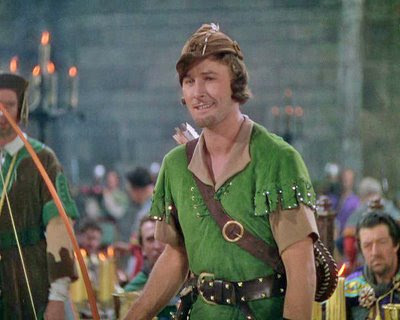
Not many people know the truth about Robin Hood. Robin Hood was not a left-wing hero who stole from the rich and redistributed to the poor.

When I was a kid, I was a big fan of Robin Hood. I remember reading at least two books recounting the legend and I watched the Errol Flynn version of the movie several times.

And, as an adult, I saw both the Kevin Costner and Russell Crowe versions of Robin Hood.

“I’m not an occupy-Wall-Street moocher”

None of this makes me an expert, but it does allow me to state with some confidence that Robin Hood was not a left-wing hero who stole from the rich and redistributed to the poor.

Instead, he was a quasi-libertarian tax protestor. Okay, maybe it’s an exaggeration to claim he was a libertarian, but Robin Hood was on the side of ordinary people who were being exploited by incessant tax demands from the ruling class. His main enemies were Prince John and the Sheriff on Nottingham, not the medieval equivalents of Wall Street.

In the Russell Crowe version of the movie, Robin Hood even gives a speech about the importance of liberty.

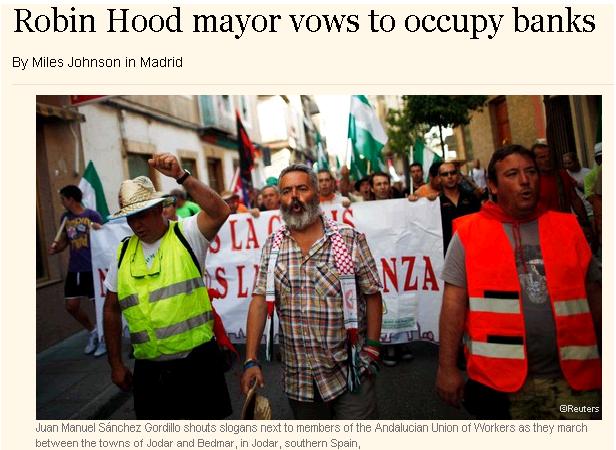
So you can imagine how irked I get when statists agitate for things such as the “Robin Hood Tax” in this moronic video. But what motivated me today is a story in the Financial Times about a Cesar Chavez wannabee politician from Spain.

For Spain’s ruling politicians he is a criminal; for his supporters he is Robin Hood, stealing from supermarkets and redistributing the food to the poor. Juan Manuel Sánchez Gordillo, the mayor of Marinaleda, a southern town with a population of 2,600, has been catapulted to cult hero status in Spain after setting out this week on an anti-austerity march across Andalucia – occupying banks and stealing food… “We are fighting a war for the poor … going to jail is not important for me, it would be an honour,” Mr Sánchez Gordillo told the Financial Times. “We are going to occupy all of the banks and supermarkets we are able to in Andalucia. The robbers who have caused this crisis must pay the consequences for what they have done.”

But if the Mayor really wants to make robbers pay, he should march straight to jail and turn himself in. Not for the empty publicity stunt of robbing grocery stores, but for being part of a political class that has dramatically increased the burden of government spending in Spain, from about 30 percent of GDP in 1980 to well over 40 percent today.

But don’t hold your breath waiting for self-awareness from this clown.

Not surprisingly, unions are part of the protest. I’m guessing that Mr. Canamero represents government employees.

On Friday, the marchers, who plan to sleep in the open or in parks, occupied a branch of Banco Santander in the town of Mancha Real in the province of Jaén before leaving later in the day. Diego Canamero, head of the Andalucian Workers Union, was in the branch on Friday. He said critics of the protests were politicians protecting their own interests. “These are symbolic actions against an unsustainable economic situation,” he said. “The bankers rob us, and take our money to tax havens…”

The dig against tax havens is particularly laughable. Ordinary Spaniards should hope and pray that their deposits in the local banks are safely re-deposited in banks based in well-run and honest jurisdictions such as Switzerland, the Cayman Islands, or Singapore.

And if they’re smart, they already cut out the middleman and directly placed their savings in one of these low-tax jurisdictions. That way, they’re not only at much less risk of a bank collapse, but they also have greater ability to protect their assets from the venal and incompetent tax-hungry political elite.

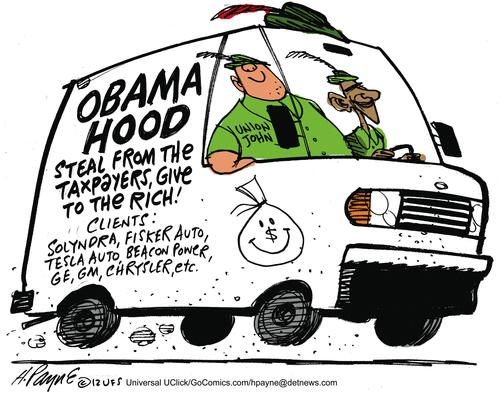
Returning to the mischaracterization of Robin Hood, this Payne cartoon does a good job of capturing my thoughts.

I especially like how Payne shows that the left-wing version of Robin Hood is all about a perniciously corrupt version of redistribution (though he should have included the Export-Import Bank on the side of the van). The genuine poor get crumbs while the well-connected interests make out like bandits.

P.S. Other good Payne cartoons can be seen here, here, herehereherehere, and here.

The real truth about the financial condition of Social Security can be seen on the www.thedailyhatch.org

Uploaded by on Jan 8, 2009

Professor Williams explains what’s ahead for Social Security

If you want to know the real truth about the financial condition of Social Security then check out these links below:

Ark Times reader says Social Security is not Ponzi Scheme

Social Security is a Ponzi Scheme but Blake who is a blogger said I was off base. Ark Times reader says Social Security is not Ponzi Scheme Social Security Disaster Walter E. Williams Columnist, Townhall.com Politicians who are principled enough to point out the fraud of Social Security, referring to it as a lie and […]

Social Security is a Ponzi scheme that needs to be reformed

We got to do something soon about Social Security. The Case for Social Security Personal Accounts Posted by Daniel J. Mitchell There are two crises facing Social Security. First the program has a gigantic unfunded liability, largely caused by demographics. Second, the program is a very bad deal for younger workers, making them pay record […]

Senator Obama’s ideas on Social Security

Senator Obama’s Social Security Tax Plan Uploaded by afq2007 on Jul 23, 2008 In addition to several other tax increases, Senator Barack Obama wants to increase the Social Security payroll tax burden by imposing the tax on income above $250,000. This would be a sharp departure from current law, which only requires that the tax […]

Social Security is a Ponzi scheme (part 13)

Saving Social Security with Personal Retirement Accounts Uploaded by afq2007 on Jan 10, 2011 There are two crises facing Social Security. First the program has a gigantic unfunded liability, largely thanks to demographics. Second, the program is a very bad deal for younger workers, making them pay record amounts of tax in exchange for comparatively meager benefits. This […]

What does the Heritage Foundation have to say about saving Social Security:Study released May 10, 2011 (Part 7)

“Saving the American Dream: The Heritage Plan to Fix the Debt, Cut Spending, and Restore Prosperity,” Heritage Foundation, May 10, 2011 by  Stuart Butler, Ph.D. , Alison Acosta Fraser and William Beach is one of the finest papers I have ever read. Over the next few days I will post portions of this paper, but […]

Only difference between Ponzi scheme and Social Security is you can say no to Ponzi Scheme jh2d

Is Social Security  a Ponzi Scheme? I just started a series on this subject. In this article below you will see where the name “Ponzi scheme” came from and if it should be applied to the Social Security System. Ponzi! Ponzi! Ponzi! 9/14/2011 | Email John Stossel | Columnist’s Archive Ponzi! Ponzi! Ponzi! There, I […]

Social Security a Ponzi scheme?

Uploaded by LibertyPen on Jan 8, 2009 Professor Williams explains what’s ahead for Social Security Dan Mitchell on Social Security I have said that Social Security is a Ponzi scheme and sometimes you will hear someone in the public say the same thing. Yes, It Is a Ponzi Scheme by Michael D. Tanner Michael Tanner […]

Dan Mitchell on Social Security


It is really simple after all to balance the budget according to Dan Mitchell of the Cato Institute

It is really simple after all to balance the budget according to Dan Mitchell of the Cato Institute.

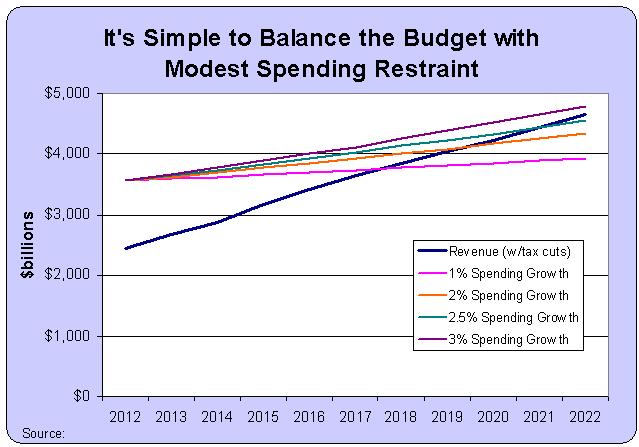
Now that new numbers have been released by the Congressional Budget Office, it’s time once again for me to show how easy it is to balance the budget with modest spending restraint (though please remember our goal should be smaller government, not fiscal balance).

  • I first did this back in September 2010, and showed that we could balance the budget in 10 years if federal spending was limited so it grew by 2 percent annually.
  • I repeated the exercise in January 2011 after new CBO numbers were released, and re-confirmed that a spending cap of 2 percent would eliminate red ink in just 10 years.
  • In August of that year, following the release of the CBO Update, I showed again that the budget could be balanced by limiting spending so it climbed by 2 percent per year.
  • Most recently, back in January after CBO produced the new Economic and Budget Outlook, I crunched the numbers again and showed how a spending cap of 2 percent would balance the budget.

I’m happy to say that the new numbers finally give me some different results. We can now balance the budget if spending grows 2.5 percent annually.

In other words, spending can grow faster than inflation and the budget can be balanced with no tax hikes.

And here’s the video I narrated almost two years ago on this topic. The numbers have changed a bit, but the analysis is exactly the same.

In other words, ignore the politicians, bureaucrats, lobbyists, and special interests when they say we have to raises taxes because otherwise the budget would have to be cut by trillions of dollars. They’re either stupid or lying (mostly the latter, deliberately using the dishonest version of Washington budget math).

Modest fiscal restraint is all that we need, though it would be preferable to make genuine cuts in the burden of government spending.

Open letter to President Obama (Part 138)

Milton Friedman – Public Housing

Uploaded by on May 6, 2011

Professor Friedman looks at the destination of another road paved with good intentions.

_______________

President Obama c/o The White House
1600 Pennsylvania Avenue NW
Washington, DC 20500

Dear Mr. President,

I know that you receive 20,000 letters a day and that you actually read 10 of them every day. I really do respect you for trying to get a pulse on what is going on out here.

I have a difference of opinion with you concerning how to best get out of this government deficit problem. You think the government best knows how to spend our money while I think more control should be given back to the people and less money should be taken from them. Milton Friedman put it best:

“Nobody spends somebody else’s money as carefully as he spends his own. Nobody uses somebody else’s resources as carefully as he uses his own. So if you want efficiency and effectiveness, if you want knowledge to be properly utilized, you have to do it through the means of private property.”

10 great quotes from Milton Friedman below:

Nov 29, 2011

10 Of The Best Economics Quotes From Milton Friedman

Milton Friedman was an extraordinary Nobel Prize-winning economist whose ideas helped underpin modern conservative economic theory. His contributions to economics and the conservative movement cannot be underestimated. Sadly, Milton Friedman passed away a little more than five years ago at the ripe old age of 94. Although Friedman is no longer with us, his words, his ideas, and his legacy live on. In honor of Friedman, here are some of his best quotations.

10) “If you put the federal government in charge of the Sahara Desert, in 5 years there’d be a shortage of sand.”

9) “I am in favor of cutting taxes under any circumstances and for any excuse, for any reason, whenever it’s possible.”

8) “The most important single central fact about a free market is that no exchange takes place unless both parties benefit.”

7) “When everybody owns something, nobody owns it, and nobody has a direct interest in maintaining or improving its condition. That is why buildings in the Soviet Union — like public housing in the United States — look decrepit within a year or two of their construction…”

6) “There is all the difference in the world, however, between two kinds of assistance through government that seem superficially similar: first, 90 percent of us agreeing to impose taxes on ourselves in order to help the bottom 10 percent, and second, 80 percent voting to impose taxes on the top 10 percent to help the bottom 10 percent — William Graham Sumner’s famous example of B and C decided what D shall do for A. The first may be wise or unwise, an effective or ineffective way to help the disadvantaged — but it is consistent with belief in both equality of opportunity and liberty. The second seeks equality of outcome and is entirely antithetical to liberty.”

5) “When the United States was formed in 1776, it took 19 people on the farm to produce enough food for 20 people. So most of the people had to spend their time and efforts on growing food. Today, it’s down to 1% or 2% to produce that food. Now just consider the vast amount of supposed unemployment that was produced by that. But there wasn’t really any unemployment produced. What happened was that people who had formerly been tied up working in agriculture were freed by technological developments and improvements to do something else. That enabled us to have a better standard of living and a more extensive range of products.”

4) “Nobody spends somebody else’s money as carefully as he spends his own. Nobody uses somebody else’s resources as carefully as he uses his own. So if you want efficiency and effectiveness, if you want knowledge to be properly utilized, you have to do it through the means of private property.”

3) “Inflation is taxation without legislation.”

2) “The great danger to the consumer is the monopoly — whether private or governmental. His most effective protection is free competition at home and free trade throughout the world. The consumer is protected from being exploited by one seller by the existence of another seller from whom he can buy and who is eager to sell to him. Alternative sources of supply protect the consumer far more effectively than all the Ralph Naders of the world.”

1) “(T)he supporters of tariffs treat it as self-evident that the creation of jobs is a desirable end, in and of itself, regardless of what the persons employed do. That is clearly wrong. If all we want are jobs, we can create any number — for example, have people dig holes and then fill them up again, or perform other useless tasks. Work is sometimes its own reward. Mostly, however, it is the price we pay to get the things we want. Our real objective is not just jobs but productive jobs — jobs that will mean more goods and services to consume

__________

Thank you so much for your time. I know how valuable it is. I also appreciate the fine family that you have and your commitment as a father and a husband.

Sincerely,

Everette Hatcher III, 13900 Cottontail Lane, Alexander, AR 72002, ph 501-920-5733, lowcostsqueegees@yahoo.com

Don’t we want to cut taxes in order to grow the economy?

Don’t we want to cut taxes in order to grow the economy?

I was a bit surprised couple of years ago to read that an American company re-located to Canada to benefit from better tax policy.

But I wasn’t totally shocked by the news because Canada has been lowering tax rates, reducing the burden of government spending, and taking other steps to make its economy more competitive.

But I am downright stunned to learn that America’s high corporate tax rate is such an outlier that companies are even moving to welfare states such as the United Kingdom.

Here are some excerpts from a story in the Wall Street Journal.

More big U.S. companies are reincorporating abroad despite a 2004 federal law that sought to curb the practice. One big reason: Taxes. Companies cite various reasons for moving, including expanding their operations and their geographic reach. But tax bills remain a primary concern. … Aon plc…relocated to the U.K. in April. Aon has told analysts it expects to reduce its tax rate, which averaged 28% over the past five years, by five percentage points over time, which could boost profits by about $100 million annually. Since 2009, at least 10 U.S. public companies have moved their incorporation address abroad or announced plans to do so, including six in the last year or so, according to a Wall Street Journal analysis of company filings and statements. …Eaton, a 101-year-old Cleveland-based maker of components and electrical equipment, announced in May that it would acquire Cooper Industries PLC, another electrical-equipment maker that had moved to Bermuda in 2002 and then to Ireland in 2009. It plans to maintain factories, offices and other operations in the U.S. while moving its place of incorporation—for now—to the office of an Irish law firm in downtown Dublin. …Eaton’s chief executive, Alexander Cutler, has been a vocal critic of the corporate tax code. “We have too high a domestic rate and we have a thoroughly uncompetitive international tax regime,” Mr. Cutler said on CNBC in January. …In moving from Dallas to the U.K. in 2009, Ensco followed rivals such as Transocean Ltd., Noble Corp. and Weatherford International Ltd. that had relocated outside the U.S. The company said the move would help it achieve “a tax rate comparable to that of some of Ensco’s global competitors.”

Wow. I can understand moving to Ireland, with its 12.5 percent corporate tax rate, but I wouldn’t have thought that the U.K.’s 24 percent rate was overly attractive.

But compared to the punitive 35 percent rate in the United States, I guess 24 percent doesn’t look that bad.

So what’s the solution? The obvious answer is to lower the corporate tax rate. But it also would help to eliminate worldwide taxation, as noted in the article.

Lawmakers of both parties have said the U.S. corporate tax code needs a rewrite and they are aiming to try next year. One shared source of concern is the top corporate tax rate of 35%—the highest among developed economies. By comparison, Ireland’s rate is 12.5%. …Critics of the tax code also say it puts U.S. companies at a disadvantage because it taxes their profits earned abroad. Most developed countries tax only domestic earnings. While executives would welcome a lower tax rate and an end to global taxation, some worry their tax bills could rise under other measures that could be included in a tax-overhaul package.

Both Obama and Romney have said that they favor a slightly lower corporate rate, but I’m skeptical about their true intentions. In any event, neither one of them is talking about a low rate, perhaps 15 percent of below.

For more information, here’s my video on corporate taxation.

And the issue of worldwide taxation may sound arcane, but this video explains why it also is important.

Let’s close by noting that there are two obstacles to pro-growth reform. First, any good reform will deprive politicians of tax revenue. And since they’ve spent the country into a fiscal ditch, that makes it very difficult to enact legislation that – at least on paper – means less money flowing to Washington.

Second, politicians are very reluctant to lower tax rates on groups that can be demagogued, such as “rich people” and “big corporations.” This is the destructive mentality that drives class-warfare tax policy.

So America faces a choice. Jobs, investment, and growth or big government, class warfare, and stagnation. The solution should be obvious…unless you’re a politicians interested in preserving power in Washington.

Paul Ryan followed F. A. Hayek’s belief in limited government

Hayek on Milton Friedman and Monetary Policy

Uploaded by on Aug 29, 2009

Friedrich Hayek discusses Milton Friedman’s Monetarism and monetary policy.

_____________________

Good article on Ryan and Hayek!!!!

Hayek Wasn’t a ‘Free Market Marxist’

Posted by Alberto Mingardi

Why can’t liberals provide a fair portrait of a thinker they disagree with? It was a reasonable prediction that Mitt Romney’s choice of Paul Ryan as his VP appointee would ignite a discussion over the first principles of politics and the role of government in society. So far, however, it hasn’t been much of a discussion: rather, we shall speak of a goofy attempt to graft the practice of smearing the enemy from day-to-day politics to the realm of political thinking.

David Boaz has wisely commented upon Adam Davidson’s piece on Hayek. Even more surprising is a blog post from historian Timothy Snyder in the New York Review of Books. Professor Snyder sees Mr. Ryan as aiming to revive an “outdated ideology”—as  “taking some of the worst from the twentieth century and presenting it as a plan for the twenty-first.”

What he finds outdated is, basically, Hayek’s allegiance to the principle of limited government. Revealingly, he maintains that “Austria became a prosperous democracy after World War II because its governments ignored Hayek’s advice and created a welfare state.” Linking the economic performance of Western democracies after WWII to the institutions of the welfare state (a national health care service, compulsory education, unemployment insurance et cetera) is at best naive.

Making “provisions for citizens in need” may be “an effective way to defend democracy” from the temptations of populism and authoritarianism but this doesn’t say much per se. Which provisions? Provided by whom? For the benefit of whom? The answers to these questions aren’t trivial.

What is most surprising in Snyder’s piece is how he portrays Hayekianism as the opposite of what it is. He writes:

Like Marxism, the Hayekian ideology is a theory of everything, which has an answer for everything. Like Marxism, it allows politicians who accept the theory to predict the future, using their purported total knowledge to create and to justify suffering among those who do not hold power.

You may wish to make a caricature of a thinker. A successful caricature should, however, resemble the subject, at least a little.

A cursory glance at the titles of Friedrich von Hayek’s books should be enough to understand that what he was preoccupied with was precisely the hubris of decision-makers who pretend to predict the future and manage it. Hayek’s best known paper is poignantly entitled “The Use of Knowledge in Society.” His last book was called The Fatal Conceit. His best work in history of ideas bore, as a subtitle, a reference to the “abuse of reason.”

Hayek was convinced that “no human mind can comprehend all the knowledge which guides the actions of society.” What he stressed, over and over and over, are the inherent limitations of our knowledge, that politicians and regulators, being human beings, share with the rest of us. He was skeptical even of the “purported total knowledge” of his own discipline, economics, as he claimed that “the curious task of economics is to demonstrate to men how little they really know about what they imagine they can design.”

Hayek defended individual liberty, precisely because the future is unpredictable.

The case for individual freedom rests chiefly on the recognition of the inevitable and universal ignorance of all of us concerning a great many of the factors on which the achievement of our ends and welfare depend. It is because every individual knows so little and, in particular, because we rarely know which of us knows best that we trust the independent and competitive efforts of many to induce the emergence of what we shall want when we see it.

For Hayek,

If man is not to do more harm than good in his efforts to improve the social order, he will have to learn that in this, as in all other fields where essential complexity of an organized kind prevails, he cannot acquire the full knowledge which would make mastery of the events possible. He will therefore have to use what knowledge he can achieve, not to shape the results as the craftsman shapes his handiwork, but rather to cultivate a growth by providing the appropriate environment, in the manner in which the gardener does this for his plants.

Does this sound like a man that had an answer for everything, or wanted to propose a grand plan for society as a whole? Hayek’s worldview does not have much of a following among intellectuals, not least because it doesn’t see “knowledge” as a monolith. For Hayek, knowledge is dispersed in society, it is by and large “know-how” hence it belongs as much to the little guy on the street than to the Yale professor. The free market economy is a process by which these different pieces of knowledge somehow are put together to the good of society. Professor Snyder portrays Hayek as a “reacting” against national socialism and communism. It is an elegant way to dismiss him, by claiming that “precisely because they [Hayek and Rand] were reacting, they flew to extreme interpretations.”

Reality fascinates profound thinkers, as it may either ignite or terrify common people too. But the economic calculation debate, in which Hayek and his mentor Ludwig von Mises were the main actors, was not a mere “reaction:” it was, as brainy socialists at the time acknowledged, a discussion over the possibility of economic planning. Hayek stumbled upon a more refined understanding of the role of knowledge in society, while participating in that debate—this is certainly true. But he was not a political copywriter, as Professor Snyder seems to believe.

As an Italian, I envy the fact that until next November Americans will be having a discussion over the fundamental pillars of their political state. Neither Obama-Biden nor Romney-Ryan are political thinkers: they are politicians, and the very fact they have (some) convictions is rare enough to be praised. But it is good and exciting that the electoral contest will bring people to go back to basics and, perhaps, try to make sense of what this Hayek guy or that Rawls guy actually meant.

It is, however, rather depressing to see such a systematic misrepresentation of Hayek’s ideas. Let’s assume it is due to genuine ignorance.  We shall then recommend some links to liberal chastisers of Mr. Ryan, so that they may know better what they disagree with.

  • The Universitad Francisco Marroquin has made available online this collection of interviews with Hayek.
  • This 1984 Cato Policy Report provides a quick introduction to some of the core themes in Hayek’s thinking.
  • Hayek’s Nobel lecture is a short but intriguing introduction to his thought.
  • Arch-liberal George Soros has a short appreciation of Hayek’s ideas, that was initially delivered in a conference at the Cato Institute.

I (and many others) would have quarrels with some of Soros’s points, but perhaps his article may suggest that critics of Hayek’s “free market Marxism” pause for a moment before rushing to their keyboard.

_______________
Milton Friedman on Hayek’s “Road to Serfdom” 1994 Interview 1 of 2

Uploaded by on Oct 25, 2011

Says Federal Reserve should be abolished, criticizes Keynes. One of Friedman’s best interviews, discussion spans Friedman’s career and his view of numerous political figures and public policy issues.

Milton Friedman on Hayek’s “Road to Serfdom” 1994 Interview 2 of 2