Category Archives: Taxes

People will move when you raise the taxes too much!!!!

People will move when you raise the taxes too much!!!!

I feel sorry for the people of California.  They’re in a state that faces a very bleak future.

And why does the Golden State have a not-so-golden outlook?

Because interest groups have effective control of state and local political systems and they use their power to engage in massive rip-offs of taxpayers. One of the main problems is that there’s a bloated government workforce that gets wildly overcompensated. Here are some staggering examples.

A state nurse getting $331,000 of annual compensation.

A county administrator getting $423,000 pensions.

A state psychiatrist getting $822,000 of annual compensation.

Cops that get $188,000 of annual compensation.

A city manager getting $800,000 of annual compensation.

But overpaid bureaucrats are not the only problem. California politicians are experts at wasting money in other ways, such as the supposedly high-speed rail boondoggle that was supposed to cost $33 billion and now has a price tag of $100 billion.

You may be thinking that I’ve merely provided a handful of anecdotes, so let’s recycle some numbers that I first shared back in 2010.

California state spending has outgrown the state’s tax base by 1.3 percentage points annually for 25 years. Simple arithmetic dictates that in lieu of constant tax increases, this perpetuates a deficit. From 1985 to 2009 state GDP in California grew by 5.5 percent per year, on average (not adjusted for inflation). Annual growth in state spending was 6.8 percent, on average.

In other words, California politicians have routinely violated my Golden Rule for good fiscal policy. And when government grows faster than the productive sector of the economy for an extended period of time, bad things are going to happen.

And those bad things can happen even faster when upper-income taxpayers can leave the state.

Walter Williams sarcastically suggested last year that California barricade the state to prevent emigration, reminiscent of the actions of totalitarian regimes such as East Germany.

But since state politicians fortunately don’t have that power, successful taxpayers can escape, and hundred of thousands of them have “voted with their feet” to flee to states such as Texas.

One recent example is NBA superstar, Dwight Howard, who left the Los Angeles Lakers for the Houston Rockets. There are probably several reasons that he decided to make the switch, but the Wall Street Journal opines on a very big reason why he’ll be happier in Texas. The WSJ starts by looking at Mr. Howard’s two options.

NBA labor agreement…allows the Lakers to offer Mr. Howard $117 million over five years, compared to a maximum of $88 million over four years in Houston.

That looks about even when you look at annual pay, with the Lakers offering $23.4 million per year and the Rockets offering $22 million per year, but there’s another very important factor.

…this picture looks a lot different once the tax man cometh: “Howard would pay nearly $12 million in California tax over the four years if he signs with the Lakers, but only $600,000 in state tax should he sign with Houston. This means that a four-year deal with Houston would actually yield an additional $8 million in after-tax income.” California has the highest top rate for personal income in the nation, while Texas has no state income tax.

Some of you may be thinking this is no big deal. After all, the Lakers will sign somebody to take Dwight Howard’s place and that person will also get a huge salary.

That’s true, though Lakers fans probably aren’t happy that they’re destined to be a middle-of-the-pack team. The bigger point, though, is that there are tens of thousands of other high-paid people who can leave the state and there’s no automatic replacement. And many of them already have escaped.

Including very well-paid Chevron workers.

Ramirez California Promised LandNow that California’s moochers and looters have imposed an even higher top tax rate of 13.3 percent, expect that exodus to continue. Other pro athletes are looking to escape, andeven famous leftists are thinking about fleeing.

In other words, Governor Jerry Brown can impose high tax rates, but he can’t force people to earn income in California. I don’t know whether to call this “the revenge of the Laffer Curve” or “a real life example of Atlas Shrugs,” but I know that California will be a very bleak place in 20 years.

P.S. Here’s the famous joke about California, Texas, and a coyote. And here’s an amusing picture of the California bureaucracy in (in)action.


Related posts:

Dan Mitchell on Texas v. California (includes editorial cartoon)

We should lower federal taxes because jobs are going to states like Texas that have low taxes. What Can We Learn by Comparing the Employment Situation in Texas vs. California? April 3, 2013 by Dan Mitchell One of the great things about federalism, above and beyond the fact that it both constrains the power of governments […]

Editorial cartoon from Dan Mitchell’s blog on California’s sorry state of affairs

I have put up lots of cartoons from Dan Mitchell’s blog before and they have got lots of hits before. Many of them have dealt with the sequester, economy, eternal unemployment benefits, socialism,  minimum wage laws, tax increases, social security, high taxes in California, Obamacare,  Greece,  welfare state or on gun control. President Obama’s favorite state must be California because […]

Cartoons from Dan Mitchell’s blog that demonstrate what Obama is doing to our economy (Teacher unions not good for the kids)

I have put up lots of cartoons from Dan Mitchell’s blog before and they have got lots of hits before. Many of them have dealt with the economy, eternal unemployment benefits, socialism,  Greece,  welfare state or on gun control. President Obama has always strongly supported the unions but these teacher unions don’t give a hoot about the […]

Cartoons from Dan Mitchell’s blog that demonstrate what Obama is doing to our economy (Obama’s out of control spending not helped by raising taxes on rich)

I have put up lots of cartoons from Dan Mitchell’s blog before and they have got lots of hits before. Many of them have dealt with the economy, eternal unemployment benefits, socialism,  Greece,  welfare state or on gun control. President Obama really does think that all his answers lie in raising taxes on the rich when the […]

IRS cartoons from Dan Mitchell’s blog

Get Ready to Be Reamed May 17, 2013 by Dan Mitchell With so many scandals percolating, there are lots of good cartoons being produced. But I think this Chip Bok gem deserves special praise. It manages to weave together both the costly Obamacare boondoggle with the reprehensible politicization of the IRS. So BOHICA, my friends. If […]

Dan Mitchell explains what happened in Cyprus

Dan Mitchell explains what happened in Cyprus.   What Really Happened in Cyprus? April 14, 2013 by Dan Mitchell Did Cyprus become an economic basket case because it is a tax haven, as some leftists have implied? Did it get in trouble because the government overspent, which I have suggested? The answers to those questions are […]

Dan Mitchell, Ron Paul, and Milton Friedman on Immigration Debate (includes editorial cartoon)

I like Milton Friedman’s comments on this issue of immigration   and Ron Paul and Dan Mitchell do well on the issue too. Question of the Week: What’s Your Take on the Immigration Debate? April 7, 2013 by Dan Mitchell A reader from overseas wonders about my views on immigration, particularly amnesty. I confess that this is one of […]

Dan Mitchell: Cartoonists React to the Senate Democratic Budget

I read that President Obama in his meetings with the Republicans would not even say that a balanced budget was a goal. According to the budget presented by the Democratic Senate he is in agreement with their approach. Cartoonists have taken the opportunity to poke fun at that below. I  have put up lots of cartoons […]

Cartoons from Dan Mitchell’s blog that demonstrate what Obama is doing to our economy Part 6

  I have put up lots of cartoons from Dan Mitchell’s blog before and they have got lots of hits before. Many of them have dealt with the sequester, economy, eternal unemployment benefits, socialism,  minimum wage laws, tax increases, social security, high taxes in California, Obamacare,  Greece,  welfare state or on gun control. Here is another one. This Cartoon Does […]

Dan Mitchell on the minimum wage law (includes two editorial cartoons)

  It seems that everything President Obama does to help the economy actually does the opposite. Minimum Wage, Maximum Foolishness March 7, 2013 by Dan Mitchell Should the federal government make life more difficult for low-skilled workers? I hope everyone will emphatically say “NO!” Heck, most people understandably will think you’re crazy for even asking such […]
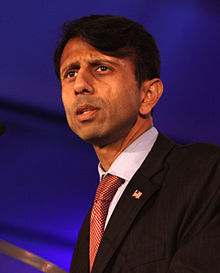
Governor Bobby Jindal of Louisiana trying to eliminate income tax!!!

Bobby Jindal is hoping to eventually eliminate Louisiana’s income tax and I hope he can pull it off. I got to hear speak when he was in Hot Springs.

I’m a big fan of the flat tax as a way of neutering the punitive and convoluted internal revenue code in Washington.

But I’m even more aggressive at the state level.

That’s why I’m very excited about a new proposal from Governor Bobby Jindal of Louisiana.

He’s already implemented some good school choice reform, notwithstanding wretched and predictable opposition from the state’s teachers’ union.

Now he wants to get rid of the state’s personal and corporate income taxes.

This would be a big and bold step, and I shared some evidence recently showing that states with no income tax grow faster and create more jobs.

I also discussed Jindal’s proposal last week on Fox Business News.

Some people probably think Jindal is pushing this agenda merely because he may run for President in 2016.

My attitude is “so what?”

Income Tax? The answer is NO

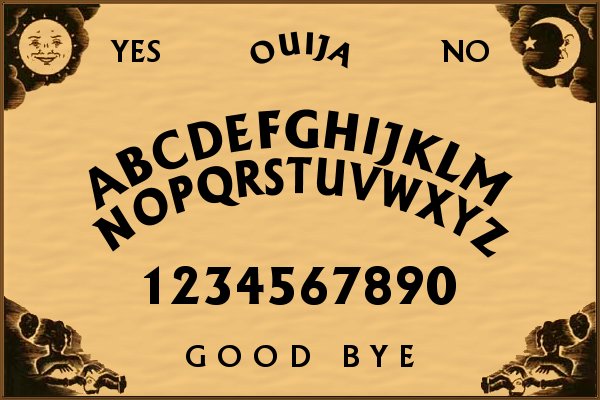
So long as he implements better policy, I don’t care if he’s motivated by a Ouija board.

But since he has a reputation for being a policy wonk, I suspect his motivations are to make Louisiana a more prosperous state.

And if bold reform also happens to increase his national stature, I’m sure he’s more than happy to reap any political benefits.

If he succeeds, Louisiana will enjoy more growth.

Equally important, as I stated in the interview, his success would show that Obama’s class-warfare agenda may have some appeal in basket-case states such as California, but it doesn’t have much support among people who understand that growth is the only effective (and moral) way of achieving a better life.

Related posts;

Founders Fathers were against welfare state

Why are we spending more and more on welfare every year?  What would the Founding Fathers have to say about this if they were still here today? We will look at that in a little bit. We need to cut Food Stamp program and not extend it. However, it seems that people tell the taxpayers back […]

The real truth about the financial condition of Social Security can be seen on the www.thedailyhatch.org

Uploaded by LibertyPen on Jan 8, 2009 Professor Williams explains what’s ahead for Social Security If you want to know the real truth about the financial condition of Social Security then check out these links below: Ark Times reader says Social Security is not Ponzi Scheme February 28, 2012 – 11:14 pm Social Security is a […]

Cutting tax rates may increase revenue

FIRST PRESIDENTIAL DEBATE – Barack Obama VS Mitt Romney (Part 1) Published on Oct 3, 2012 by LearnTVMore Barack Obama & Mitt Romney Full Presidential Debate __________ I heard Arthur Laffer speak in 1981 when he came to Memphis to speak to a group of students. He told exactly what was going to happen the […]

Open letter to President Obama (Part 226)

  President Obama c/o The White House 1600 Pennsylvania Avenue NW Washington, DC 20500 Dear Mr. President, I know that you receive 20,000 letters a day and that you actually read 10 of them every day. I really do respect you for trying to get a pulse on what is going on out here. If […]

Dear Senator Pryor, why not pass the Balanced Budget Amendment? (“Thirsty Thursday”, Open letter to Senator Pryor)

Rand Paul A balanced Budget Amendment is the only way (29-Jul-11)(GLOBAL FOCUS series – US) Uploaded by YouInformation on Jul 31, 2011 _______________ Dear Senator Pryor, Why not pass the Balanced  Budget Amendment? As you know that federal deficit is at all time high (1.6 trillion deficit with revenues of 2.2 trillion and spending at […]

Open letter to President Obama (Part 224)

Washington Could Learn a Lot from a Drug Addict Uploaded by WashingtonCouldLearn on Jul 8, 2011 Washington’s chronic overspending is just like a junkie’s addiction to drugs. Unless the cycle of addiction is broken, our economic and unemployment situation will continue to suffer. Washington is out of time. To avoid hitting rock bottom, Washington must […]

Heritage Foundation Videos and Interviews are displayed on www.thedailyhatch.org

Sen. Mitch McConnell: Americans Don’t Approve of Anything Obama Has Done Uploaded by HeritageFoundation on Dec 8, 2011 In an exclusive interview at The Heritage Foundation, Senate Minority Leader Mitch McConnell (R-KY) sharply criticized President Obama for engaging in class warfare and accused him of shifting the focus away from his own failed policies in […]

Is the no new tax pledge going to work?

Milton and Rose Friedman with President Bush. Milton Friedman on Donahue 1979 (2/5) I believe the “no new tax pledge” ultimately will work. Milton Friedman believed we should starve the beast and that is good enough for me. “If taxes are raised in order to keep down the deficit, the result is likely to be […]

Videos by Dan Mitchell of the Cato Institute found here on www.thedailyhatch.org

Dan Mitchell of the Cato Institute has some great videos and I have posted lots of them on my blog. I like to go to Dan’s blog too. Take a look at some of them below and then the links to my blog. It’s Simple to Balance The Budget Without Higher Taxes Uploaded by afq2007 […]

Reagan and Clinton put Obama to shame when it comes to creating jobs

Reagan and Clinton put Obama to shame when it comes to creating jobs. An Amusing Comparison: Obama vs Reagan and Clinton January 7, 2013 by Dan Mitchell I shared a remarkable chart last year exposing Obama’s terrible record on job creation. It showed that the economy enjoyed big employment increases during the Reagan and Clinton years, […]

Lessons from Canada:CUT SPENDING AND LOWER TAXES AND GIVE MORE CONTROL BACK TO THE LOCAL GOVERNMENTS!!!!

When Governments Cut Spending

Uploaded on Sep 28, 2011

Do governments ever cut spending? According to Dr. Stephen Davies, there are historical examples of government spending cuts in Canada, New Zealand, Sweden, and America. In these cases, despite popular belief, the government spending cuts did not cause economic stagnation. In fact, the spending cuts often accelerated economic growth by freeing up resources for the private sector.

DEBT LIMIT – A GUIDE TO AMERICAN FEDERAL DEBT MADE EASY.

Uploaded by on Nov 4, 2011

A satirical short film taking a look at the national debt and how it applies to just one family. Watch the guy from the Ferris Bueller Superbowl Spot! Produced by Seth William Meier, DP/Edited by Craig Evans, 1st AC Brian Andrews, Sound Mixer Gus Salazar, Written and Directed by Brian Stepanek. Help us spread the word by clicking ads or at http://www.debtlimitusa.org.

________

Is Canada moving in a conservative direction to tackle their fiscal problems while the USA is going over the fiscal cliff? I was impressed by this statement below from this article from www.heritage.org :

In Canada, federal spending has been trending downward since 1993, according to Cato’s Chris Edwards. Canadians have cut spending in virtually every area except health care. The federal government now accounts for only 38 percent of total government spending. In the U.S., by contrast, the federal government accounts for 71 percent of total government spending.

It seems to me that we need to learn this important lesson from our neighbor from the north: CUT SPENDING AND LOWER TAXES AND GIVE MORE CONTROL BACK TO THE LOCAL GOVERNMENTS!!!!

Paul Bremmer

November 26, 2012 at 10:30 am

Congressional lawmakers met last week to try to hammer out a deal to avert the fiscal cliff. Democrats insist on revenue increases as part of such a deal, saying new revenue is the only way to significantly reduce the national debt. However, it is not a lack of revenue that is driving U.S. debt; it is unrestrained federal spending. American lawmakers looking to solve America’s looming fiscal crisis need not look further than Canada.

Highlighted at a recent Cato Institute conference, our neighbor—and competitor—to the north serves as a good example of what it takes to return to a strong economy. The Great White North has turned around its fiscal situation and is now experiencing financial stability and economic growth.

In Canada, federal spending has been trending downward since 1993, according to Cato’s Chris Edwards. Canadians have cut spending in virtually every area except health care. The federal government now accounts for only 38 percent of total government spending. In the U.S., by contrast, the federal government accounts for 71 percent of total government spending.

The Canadian government, among other changes, altered benefit schedules for the Canadian Pension Plan to reduce the total amount of benefits paid.

In a similar vein, The Heritage Foundation suggests a variety of benefit changes to Social Security that would strengthen the program’s finances, for example, by raising the eligibility age slightly and replacing cost of living adjustments with the Chained Consumer Price Index for a more targeted measure of inflation in consumer goods. Bolder changes include gradually introducing a flat benefit that targets scarce resources to those seniors who need them the most and provides all seniors with protection from poverty in retirement.

Canada also cut corporate income tax rates. The U.S. has the highest rate among its competitors in the industrialized world. The combined federal and state corporate rate in the U.S. is over 39 percent. Canada now has a combined rate of only 25 percent.

Contrary to popular expectations, lower corporate tax rates have not resulted in significantly reduced corporate tax revenue in Canada. Instead, corporations based in Canada have reported more income since lower tax rates went into place. And Canada is experiencing low unemployment and a strong Canadian dollar.

The Heritage Foundation’s New Flat Tax would replace today’s complex tax system for individuals and business with a simple, neutral, and transparent tax system that would allow America to achieve its full economic potential.

Europe has not followed Canada’s example, and the resulting severe debt crises are sending people to the streets in an outbreak of violent protests. Out-of-control government spending and deficits have resulted in massive borrowing, which has led to bailouts for many European countries.

High levels of spending on social welfare programs are at the heart of the problem. Greece, for example, spent 42 percent of its federal budget on social benefits in 2009, according to Aristides Hatzis from the University of Athens. Spain is slated to spend 63 percent of its budget on social expenditures in fiscal year 2013, according to Pedro Schwartz from Universidad San Pablo CEU.

Here in the United States, we have all the ingredients necessary to create a similar debt crisis in the not-so-distant future. Over the past four decades, federal spending has increased 288 percent, nearly quadrupling in real terms. Thirty-two cents out of every dollar spent was borrowed in 2012. Debt held by the public is a staggering 73 percent of GDP, and our government has run trillion-dollar budget deficits four years in a row.

In less than 10 years, the U.S.’s publicly held debt will surpass the size of the entire U.S. economy and is projected to continue skyrocketing from there. (continues below chart)

To make matters worse, there is a dark demographic cloud on the horizon. In all Western nations, the proportion of older people as a share of the population is increasing. In the U.S., baby boomers are increasingly reaching retirement age, and in Europe, fertility rates are well below replacement level. As the populations of these countries age, entitlements will eat up an ever-increasing share of federal spending and place a greater strain on a smaller share of working-age taxpayers.

Solving America’s spending and debt challenges is possible. Canada’s example illustrates some of the steps this will take—including major cuts to federal spending, tax reform, and entitlement reform. If our leaders can find the courage to pursue this path, we can avoid an economic collapse and Save the American Dream.

Paul Bremmer is currently a member of the Young Leaders Program at The Heritage Foundation. For more information on interning at Heritage, please visit: http://www.heritage.org/about/departments/ylp.cfm.

Open letter to President Obama (Part 356)

Will Taxing the Rich Fix the Deficit?

Published on Jul 2, 2012

The government’s budget deficit in 2009 was $1.5 trillion. Many have suggested raising taxes on the rich to cover the difference between what the government collected in revenue and what it spent. Is that a realistic solution? Economics professor Antony Davies uses data to demonstrate why taxing the rich will not be sufficient to make the budget deficit disappear. He says, “The budget deficit is so large that there simply aren’t enough rich people to tax to raise enough to balance the budget.” Instead, it’s time to work on legitimate solutions, like cutting spending.

 ______________

(This letter was emailed to White House on 12-12-12.)

President Obama c/o The White House
1600 Pennsylvania Avenue NW
Washington, DC 20500

Dear Mr. President,

I know that you receive 20,000 letters a day and that you actually read 10 of them every day. I really do respect you for trying to get a pulse on what is going on out here.

Ignoring incentives is stupid. We can not ignore the fact that raising tax rates will cause people to change their behavior in many cases.

Lesson for Warren Buffett: British Millionaires’ Response to Tax Increases

Emily Goff

November 29, 2012 at 6:30 pm

As the fiscal cliff approaches, Congress and President Obama continue to debate tax increases, even though spending is the problem. Investor Warren Buffett recently opined that tax hikes on the wealthy would not curtail investments or hurt the economy. His logic, like President Obama’s, assumes that incentives don’t matter.

Oh really? News that Great Britain saw its number of millionaires decline by two-thirds due to a steep top tax rate tells a different story.

The year after former Labour Prime Minister Gordon Brown introduced a 50 percent top income tax rate, the number of people filing as millionaires dropped 63 percent, from 16,000 to 6,000. Tax revenue also declined by nearly £7 billion.

No single reason explains the drop. Some millionaires probably earned less money due to the slow-growing European economy, or they may have simply worked less. Others may have shifted the timing of their income or moved it to less-taxed forms. Still others might have physically left the country.

Here’s the bottom line: All these reasons are economically important and show that incentives matter.

That fact is so obvious it’s hardly newsworthy. When faced with a tax increase, Britain’s millionaires readily “voted with their feet.” Whether they actually fled the country or not doesn’t really matter. But the fact that their productivity level changed—and in such a drastic way—does.

As for Buffett’s claim that investors don’t change their decisions based on tax rates—who does he think the people who left Britain are? They are highly productive people who earn high incomes and invest their earnings. High earners are the most able to respond to changing incentives, and their response to a tax increase was loud and clear. Their change in behavior means there will be less investment in Great Britain and, therefore, fewer jobs.

America had better listen up. Highly productive workers here at home would respond to the incentives under Obama’s tax hike policy, which has a top tax rate of over 40 percent, factoring in the return to pre-Bush tax cut rates and the hospital insurance payroll tax rate increase in Obamacare.

Upper-income earners would certainly shift their income; they would also have less incentive to work more hours knowing that over 40 percent of their additional earnings would go straight to Washington—even before their state and local governments get into the act. What does Buffett think will happen to investment when these peoples’ incomes plummet and they have less to invest?

California’s unfriendly business climate also proves the point. In 2011, 254 companies took some or all of their businesses out of the state, a 26 percent increase from the previous year. This November, Californians approved a “temporary” income surtax on people making more than $250,000, as well as a sales tax increase. Such tax hikes will hardly compel businesses and investors to stick with the Golden State and may continue having the opposite effect.

Growing cities in low-tax states, such as Austin, Texas, will cheer the news, as they’ll continue to welcome refugees from California’s punishingly high taxes—especially high-skilled workers and cutting-edge tech companies.

Taxes do matter, because investors respond to incentives. Hardly surprising, but a good reminder—one that President Obama should heed.

____________

___________

Thank you so much for your time. I know how valuable it is. I also appreciate the fine family that you have and your commitment as a father and a husband.

Sincerely,

Everette Hatcher III, 13900 Cottontail Lane, Alexander, AR 72002, ph 501-920-5733, lowcostsqueegees@yahoo.com

Open letter to President Obama (Part 354)

Will Higher Tax Rates Balance the Budget?

Published on Apr 11, 2012

As the U.S. debt and deficit grows, some politicians and economist have called for higher tax rates in order to balance the budget. The question becomes: when the government raises taxes, does it actually collect a larger portion of the US economy?

Professor Antony Davies examines 50 years of economic data and finds that regardless of tax rates, the percentage of GDP that the government collects has remained relatively constant. In other words, no matter how high government sets tax rates, the government gets about the same portion. According to Davies, if we’re concerned about balancing the budget, we should worry less about raising tax revenue and more about growing the economy. The recipe for growth? Lower tax rates and a simplified tax code.

___________

(This letter was emailed to White House on 12-12-12.)

President Obama c/o The White House
1600 Pennsylvania Avenue NW
Washington, DC 20500

Dear Mr. President,

I know that you receive 20,000 letters a day and that you actually read 10 of them every day. I really do respect you for trying to get a pulse on what is going on out here.

Spending is out of control but some insist on just asking for more revenue.

Tax Increases Won’t Solve Washington’s Spending Problem

Emily Goff

December 11, 2012 at 5:45 pm

“We make some tough spending cuts on things that we don’t need; and then we ask the wealthiest Americans to pay a slightly higher tax rate. And that’s a principle I won’t compromise on.”

At yesterday’s fiscal cliff campaign stop in Redford, Michigan, President Obama delivered these remarks and hammered away at his “balanced” plan to avert the fiscal cliff. Balance, as defined in the President’s plan, consists of $4 in tax increases up front for every $1 in loosely defined spending cuts promised down the road. The balance scale at the White House, it seems, needs to be recalibrated.

Obama’s plan misses a crucial point: Washington does not have a problem of too little revenue. Its problem is too much spending. Though revenue has decreased during the recession, the nonpartisan Congressional Budget Office projects that revenues will return to their normal historical level once the economy fully recovers. Spending, however, is out of control. Instead of debating any variety of tax increases—hiking rates or limiting deductions—Congress and the President should be reducing spending. They can start with entitlement program reforms.

Raising taxes on more affluent Americans and businesses, as Obama’s plan would do, would not generate enough revenue to close our massive deficits. Doing so would require mathematically impossible tax rates. Any such attempt would also seriously hurt the economy and jeopardize job creation.

What if you stretched Obama’s version of balance a bit further, though, and let all current tax policy expire? Such massive tax increases—ignoring the certain economic damage that would occurwould STILL not balance the budget. Entitlement program spending would continue to rise dramatically, soaking up all available revenue and driving deficits deeper. (continues below chart)

Not even Obama is proposing this idea outright, but by virtue of Obama’s insistence on tax increases and unblushing silence on entitlement program reforms, he is leading the nation down this path.

A responsible solution exists to avoid the fiscal cliff without harming the economy. Bipartisan entitlement program reforms also exist that can begin to solve the country’s real fiscal crisis. President Obama insists on taxing his way to prosperity, dealing a blow to capital, investments, and small businesses. The only trouble is that he’s forgetting—or ignoring—that spending is the problem.

__________

___________

Thank you so much for your time. I know how valuable it is. I also appreciate the fine family that you have and your commitment as a father and a husband.

Sincerely,

Everette Hatcher III, 13900 Cottontail Lane, Alexander, AR 72002, ph 501-920-5733, lowcostsqueegees@yahoo.com

Economist Antony Davies’ video “Will Higher Tax Rates Balance the Budget?” (includes editorial cartoon)

Will Higher Tax Rates Balance the Budget?

Published on Apr 11, 2012

As the U.S. debt and deficit grows, some politicians and economist have called for higher tax rates in order to balance the budget. The question becomes: when the government raises taxes, does it actually collect a larger portion of the US economy?

Professor Antony Davies examines 50 years of economic data and finds that regardless of tax rates, the percentage of GDP that the government collects has remained relatively constant. In other words, no matter how high government sets tax rates, the government gets about the same portion. According to Davies, if we’re concerned about balancing the budget, we should worry less about raising tax revenue and more about growing the economy. The recipe for growth? Lower tax rates and a simplified tax code.

_____________

We are taxed too high and raising taxes at this point will not help.

I suppose I should write something serious about Obama’s class-warfare agenda, but I’m in Iceland and it’s almost time to head into Reykjavik for dinner. So let’s simply enjoy some humor that gets across the points I would make anyhow.

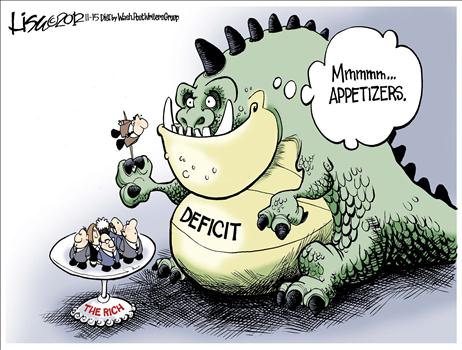
We’ll start with this great cartoon from Lisa Benson. In a perfect world, this monster would be named “Big Government.” But I’m not complaining too much since the obvious implication of the cartoon is that the soak-the-rich tax hikes will make the deficit worse – which implies that politicians will spend the money and/or that there will be a Laffer Curve response leading to less revenue than politicians predict.

You can see some of my favorite Benson cartoons here, herehereherehereherehere, hereherehere, and here.

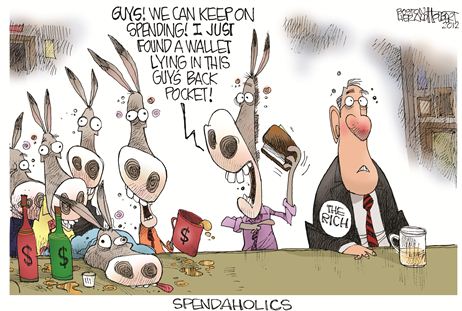
Here’s a similar cartoon. But instead of feeding a deficit monster, it shows that a tax hike will enable a bunch of politicians to continue their binging at our expense.

Holbert is relatively new to me. The only other cartoon of his that I’ve used (at least than I can remember) can be seen here.

Our final cartoon isn’t about Obama’s class-warfare proposal, but it does show where we’re going if we allow the politicians to continue down the path of tax-and-spend dependency.

You can see two additional Glenn Foden cartoons by clicking here and here.

I especially like the “spa” comment in the basket cartoon. Sort of reminds me of the “frog” story showing how it would be impossible to impose statism in one fell swoop. People would recognize the danger and immediately revolt, much as a frog would immediately hop out if you tried to drop it in boiling water. But just as you can lure a frog into danger by putting it in lukewarm water and slowing turning up the heat until it’s been too weakened to escape, you can also slowly but surely hook people on dependency by creating little programs and eventually turning them into big programs.

That’s sort of where we are today. The burden of government spending has exploded and will get even worse if we don’t enact serious entitlement reform. But too many people now can’t envision a world other than the status quo and they are fearful of change – even though inaction eventually means a Greek-style fiscal crisis.

P.S. Given the theme of this post, you will probably enjoy this Chuck Asay cartoon and this Henry Payne cartoon. Or perhaps you won’t enjoy them if you stop and think about what they’re really saying. But they are both gems, so try to focus only on the humor.

Antony Davies’ video “Will Higher Tax Rates Balance the Budget?” (includes editorial cartoon)

Will Higher Tax Rates Balance the Budget?

Published on Apr 11, 2012

As the U.S. debt and deficit grows, some politicians and economist have called for higher tax rates in order to balance the budget. The question becomes: when the government raises taxes, does it actually collect a larger portion of the US economy?

Professor Antony Davies examines 50 years of economic data and finds that regardless of tax rates, the percentage of GDP that the government collects has remained relatively constant. In other words, no matter how high government sets tax rates, the government gets about the same portion. According to Davies, if we’re concerned about balancing the budget, we should worry less about raising tax revenue and more about growing the economy. The recipe for growth? Lower tax rates and a simplified tax code.

______________

Obama’s position on tax policy made simple below:

I’ve already posted on Obama’s class-warfare approach to tax policy, and I’ve also posted about the pitfalls of a tax system that exempts 50 percent of the population.

Well, here’s a cartoon that cleverly combines both themes.

Not too smart on this.

Open letter to President Obama (Part 352)

Will Taxing the Rich Fix the Deficit?

Published on Jul 2, 2012

The government’s budget deficit in 2009 was $1.5 trillion. Many have suggested raising taxes on the rich to cover the difference between what the government collected in revenue and what it spent. Is that a realistic solution? Economics professor Antony Davies uses data to demonstrate why taxing the rich will not be sufficient to make the budget deficit disappear. He says, “The budget deficit is so large that there simply aren’t enough rich people to tax to raise enough to balance the budget.” Instead, it’s time to work on legitimate solutions, like cutting spending.

___________

(This letter was emailed to White House on 12-12-12.)

President Obama c/o The White House
1600 Pennsylvania Avenue NW
Washington, DC 20500

Dear Mr. President,

I know that you receive 20,000 letters a day and that you actually read 10 of them every day. I really do respect you for trying to get a pulse on what is going on out here.

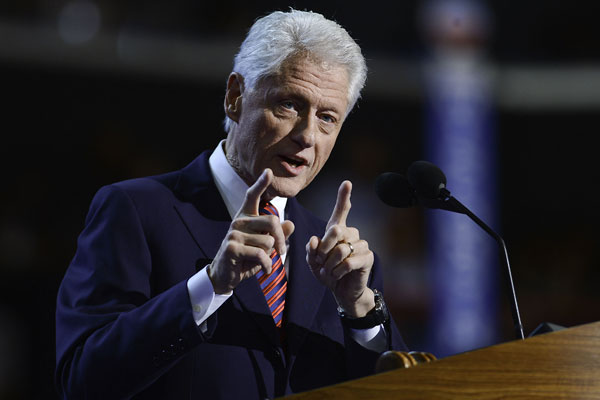
President Clinton is the favorite president that the Democrats want to talk about today but it seems they forget some of the details of what he actually did in office.

Fiscal Cliff: Clinton-Era Spending Levels, Anyone?

Romina Boccia

December 12, 2012 at 12:00 pm

Many are proposing that tax rates for upper-income earners go back to their levels during the Clinton Administration. What you don’t hear is how we can return to Clinton-era spending levels. That would be a real solution to the upcoming fiscal crisis, and the President could lead the way.

The President says he wants Clinton-era marginal tax levels for families and small businesses earning more than $250,000 a year ($200,000 for individuals). However, tax rates for these earners would actually go up much more because of Obamacare tax hikes already signed into law.

Never mind that this would slow growth and hurt job creation. And no, these tax hikes won’t balance the budget—not next year, not the year after, not ever. Under Obama’s budget, federal debt would continue growing by $7.7 trillion even if the President gets his favorite tax hikes.

The debate over tax hikes is just a distraction from what is really going on: Washington has a spending problem, not a revenue problem, and President Obama is at the helm. According to the White House Office of Management and Budget, President Obama’s two-term average spending level is projected at 23.4 percent of gross domestic product (GDP).

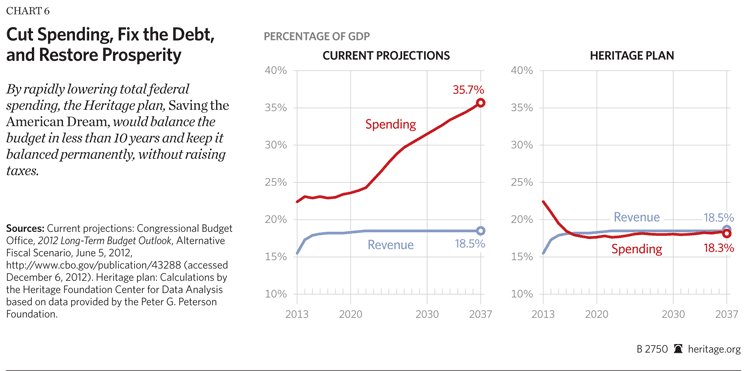
In comparison, President Clinton’s historical spending average was 19.9 percent of GDP. While revenues are set to return to historical average levels of over 18.1 percent as the economy slowly recovers, spending under current policy is projected to remain well above the historical average of 20.2 percent.

The solution to America’s spending-driven debt crisis is as clear as daylight: Lawmakers must cut spending today and in the future. The Heritage Foundation has a plan, Saving the American Dream, which shows how lawmakers can balance the budget in less than 10 years and reduce the debt by tackling the main drivers of federal spending—entitlements.

A recent paper by Heritage’s J. D. Foster and Alison Fraser draws upon the Heritage plan to present the President with some simple but profound common-sense reforms to programs such as Social Security and Medicare that he could pursue today:

[T]he President must adopt the mantle of leadership, rather than brinksmanship, to steer the nation away from the fiscal cliff and all that is set to follow, and he must start with spending. However, the critical silver lining is that simple, commonsense, and thoroughly vetted solutions…constitute a strong start on the journey to more complete programmatic reforms remedying acknowledged flaws in these programs, and they already enjoy broad support across the political spectrum.

Click here to see the full list of proposals to avoid the fiscal cliff and avert the upcoming fiscal crisis.

___________

Thank you so much for your time. I know how valuable it is. I also appreciate the fine family that you have and your commitment as a father and a husband.

Sincerely,

Everette Hatcher III, 13900 Cottontail Lane, Alexander, AR 72002, ph 501-920-5733, lowcostsqueegees@yahoo.com

Open letter to President Obama (Part 350)

(This letter was emailed to White House on 12-12-12.)

President Obama c/o The White House
1600 Pennsylvania Avenue NW
Washington, DC 20500

Dear Mr. President,

I know that you receive 20,000 letters a day and that you actually read 10 of them every day. I really do respect you for trying to get a pulse on what is going on out here.

Republicans seem to give in most of the time. I wish for the good of the country someone would step up and try to reverse the trend towards more spending and start cutting the budget for a change. We only had a budget deficit of about 161 billion in 2007 with income about where it is now. Then why do we have a budget deficit over one trillion today? It is because our problem is spending and not revenue!!!

For both Policy Reasons and Political Reasons, the Fiscal Cliff Is Better than Surrender

December 9, 2012 by Dan Mitchell

It’s never a good idea to display weakness during negotiations. Your opponent will sense your fear and up his demands.

That’s certainly what we’re seeing in Washington. The cartoon at this link captures the GOP’s wobbly attitude on taxes, and this interview is about the ever-increasing demands of the Obama Administration.

It’s rather galling, by the way, to be lectured on taxes by a tax cheat like Tim Geithner.

But my key point is that the GOP’s preemptive surrender emboldened the White House, and helped move the debate even further to the left.

Let me elaborate on two points from the interview.

  1. We don’t need a tax increase. We can balance the budget simply by limiting spending so that it grows by “only” 2.5 percent annually. As I say to Cavuto, the White House is pushing higher taxes in order to enable a bigger burden of government spending.
  2. It’s important to define austerity correctly. To provide an analogy, we have to drink liquid to survive, but that doesn’t mean it would be a good idea to guzzle paint thinner. Likewise, we need austerity, but that shouldn’t mean higher taxes. We need to be like Estonia and tighten the belts of the public sector, not the private sector.

It’s not my job to give Republicans political advice, but I also want to expand upon the arguments I made a couple of days ago, when I wrote a post giving five policy reasons and five political reasons why the GOP shouldn’t surrender on tax increases.

A couple of readers correctly pointed out that I forgot to mention that tax increases are political poison because middle-class voters turn against the GOP once “revenue” is on the table. They are completely right, and my oversight is inexplicable since I’ve actually made that point in the past. Here’s some of what I wrote last year.

If Republicans put tax increases on the table, however, the politics get turned upside down. Instead of being united against all tax increases, voters realize somebody is going to get mugged and they have an incentive to make sure they’re not the ones who get victimized. That’s when soak-the-rich taxes become very appealing. Democrats, for all intents and purposes, can appeal to average voters by targeting the so-called rich. And even though voters will be skeptical about what Democrats really want, they don’t want to be the primary target of the political predators in Washington. Think of it this way. You’re a wildebeest running away from a pack of hyenas, but you know one member of your herd will get caught and killed. You despise hyenas, but at that critical moment, you’re main goal is wanting another member of the herd to bite the dust. This is why surrendering to tax increases put Republicans in a no-win situation. They oppose class-warfare taxes because they understand the disproportionately damaging impact of higher top income tax rates and increased double taxation of dividends and capital gains. So when GOPers get bullied into agreeing to raise taxes, they want to target less destructive sources of revenue. But that usually means…taxes that are more likely to hit the middle class. Needless to say, Democrats almost always win if there is a fight on whether to tax the middle class or to tax the rich.

I have to pat myself on the back for that passage, particularly the analogy that equates politicians with hyenas (though in the past I’ve apologized to hyenas for that unfair comparison).

Let’s close with a very good cartoon, which points out the foolishness of the media for wanting to send more money to Washington when even they understand that the town is filled with clowns and buffoons. That’s actually a very serious point, as I note about halfway through the interview included in my five-political-reasons-five-policy-reasons post.

Cartoon Beat the Press Tax Hikes

But it’s hard to laugh when you contemplate what’s happening. Obama is bullying the GOP, and the Republicans are in the process of surrendering to his class-warfare demands.

That will lead to bad policy, but it will also result in an emasculated, compliant, and house-broken GOP for at least the next two years, and perhaps even Obama’s entire second term. So even though the fiscal cliff tax hike is bigger than what Obama’s currently demanding, the long-run policy damage of surrender almost surely will be far greater.

Republicans don’t have many options in this fight. But they can show some cojones and tell Obama that the only way he’ll get a tax hike is if he wants to take the nation over the cliff.

P.S. If you like the Henry Payne cartoon in this post, you can enjoy some of his other work here, here, here, herehereherehere, and here.

Cartoon GOP Reindeer

But what really makes the cartoon funny is the petulant stance of the elephants. Very effective artwork, mush as I praised Ramirez for the visual genius of his recent cartoon

___________

Thank you so much for your time. I know how valuable it is. I also appreciate the fine family that you have and your commitment as a father and a husband.

Sincerely,

Everette Hatcher III, 13900 Cottontail Lane, Alexander, AR 72002, ph 501-920-5733, lowcostsqueegees@yahoo.com

Open letter to President Obama (Part 348)

Does Government Have a Revenue or Spending Problem?

People say the government has a debt problem. Debt is caused by deficits, which is the difference between what the government collects in tax revenue and the amount of government spending. Every time the government runs a deficit, the government debt increases. So what’s to blame: too much spending, or too little tax revenue? Economics professor Antony Davies examines the data and concludes that the root cause of the debt is too much government spending.

Ronald Reagan on our ability to solve our problems

_________

(This letter was emailed to White House on 12-12-12.)

President Obama c/o The White House
1600 Pennsylvania Avenue NW
Washington, DC 20500

Dear Mr. President,

I know that you receive 20,000 letters a day and that you actually read 10 of them every day. I really do respect you for trying to get a pulse on what is going on out here.

Great article on what has happened in the past fiscal cliff deals. Patrick Louis Knudsen rightly points out, “… history shows that broad bipartisan compromises between the White House and Congress have typically just yielded higher taxes, while … deficit reduction have failed to materialize.”

It seems to me that we need to cut spending and avoid slowing the economy with tax increases. In the past we just raised taxes most of the time and never got around to cuttng spending.

The Fiscal Cliff and the Perils of Grand Budget Deals

By
December 10, 2012

One of the major complications in the current fiscal cliff debate is that both sides are overreaching, trying to tie a near-term resolution to a sweeping deficit reduction plan that would address the longer-term budgetary crisis looming in the years ahead. They see the cliff negotiations as a stage for a “grand bargain” on the budget between the President and Congress.

The tight time frame of the cliff’s approach makes such an aim increasingly impractical. Furthermore, history shows that broad bipartisan compromises between the White House and Congress have typically just yielded higher taxes, while the promised spending restraint (except in national defense) and deficit reduction have failed to materialize. Given the current state of divided government, these risks prevail today. More broadly, they also offer a warning to budget process reformers who seek to institutionalize regular budget negotiations between Capitol Hill and the President.

Experience of the Reagan Administration

After his inauguration in January 1981, President Ronald Reagan moved assertively to enact his budget plan, cutting taxes, boosting defense spending, and seeking to gain control of entitlements. With the economy still reeling from the prior years’ stagflation, however, deficits widened initially, leading Congress to push for a series of budget “summits,” as they were called then, to close the gap.

First came the 1982 Tax Equity and Fiscal Responsibility Act, “a $98 billion tax increase which supporters claimed would reduce the deficit from $128 billion in 1982 to $104 billion in 1983.” It did not. “Spending restraints never materialized…and the actual deficit jumped to $208 billion.”[1] (In today’s dollars, that tax hike would have totaled $204 billion and the deficit $432 billion—roughly a third of this year’s red ink.)

In 1984, the President agreed to yet another tax hike totaling $49 billion, which was supposed to reduce the deficit from $185 billion to $181 billion. Once again, however, the deficit increased—to $212 billion.[2]

The 1987 budget summit repeated the pattern. President Reagan swallowed a tax hike of $28 billion, but the result was the same: “The deficit, which was supposed to remain at $150 billion, jumped to $155 billion in 1988.”[3]

The 1990 Budget Agreement

Despite these failures, 1990 produced another major exercise in budget summitry. With deficits having swollen well beyond target amounts written in law at the time, the government by mid-year faced automatic spending cuts (called “sequestration”) that would slash defense spending by 42 percent and non-defense spending by 38 percent.[4] So President George H. W. Bush and the Democratic Congress agreed to a plan that was estimated to reduce deficits by $482 billion over five years.

Though the President had famously pledged never to raise taxes, his Administration by mid-1990 conceded to adding “revenue” as part of the deficit reduction plan. Predictably, this crack in the door widened during the arduous negotiations at Andrews Air Force Base. In the end, fully one-third of the package—$158 billion—consisted of tax hikes. The next largest savings came from cutting national defense by $91 billion over five years, which proponents rationalized by arguing that the Cold War had ended. Meanwhile, non-defense discretionary spending in the plan actually increased by $45 billion, offset by an empty promise of $144 billion in additional, unspecified discretionary cuts.[5]

The plan’s outcomes were no more satisfying. Even after the defense cuts, total outlays (excluding interest payments) increased by 13 percent from 1990 through 1993, and even with the tax hikes, the deficit worsened by 17 percent in the first two years of the plan.[6] When President Bill Clinton took office in January 1993, he promptly called for another deficit reduction plan, this one with $241 billion in tax increases over five years.[7]

The 1997 Balanced Budget Agreement

Even genuinely successful deficit reduction can lead to expanded government, allowing both parties to declare victory. Such was the case with the 1997 balanced budget agreement between a Republican Congress and President Clinton.

Although it cut taxes by $80 billion over five years—or perhaps because it did—the plan produced surpluses within a year of enactment. This was largely due to real growth in gross domestic product (GDP) that was greater than 4 percent per year from 1997 through 2000, which boosted tax revenue to 20.6 percent of GDP.

The problem was that the plan also increased spending. Though officially estimated to reduce outlays by $198 billion over five years,[8] the legislation contained a number of entitlement spending increases sought by President Clinton, including the creation of the State Children’s Health Insurance Program and expansions of food stamps, Supplemental Security Income, and welfare. Consequently, total “programmatic” spending (excluding interest) grew by nearly 3 percent to 4 percent per year faster than inflation and exploded by a total of nearly 14 percent from 1997 through 2001.[9] The effect was hidden because with the government running budget surpluses, interest payments declined, reducing the total spending increases.

Learn from History

The background outlined above should give pause to advocates of a grand budget deal between the President and Congress—especially those who are seeking to limit the size and scope of government. Such agreements tend to produce higher taxes and higher spending with little or no deficit reduction. Congress and the President should dispel any visions of a “grand bargain” and focus on the task at hand: avoiding the fiscal cliff.

This history also warns against budget process reforms that would institutionalize summitry by requiring the President to sign or veto the congressional budget resolution. Advocates argue that this change would create a forum for regular, early White House–congressional negotiations on broad budget levels, presumably making it easier to settle on specific spending and tax legislation later.

Some analysts, however, doubt whether the practice would actually produce agreements as often as its advocates think.[10] Equally important, the process could produce higher spending and higher taxes even more often. Thus, a reform aimed at budgeting more “efficiently” might only be more efficient at expanding government.

Patrick Louis Knudsen is the Grover M. Hermann Fellow in Federal Budgetary Affairs in the Thomas A. Roe Institute for Economic Policy Studies at The Heritage Foundation. Kaitlyn Evans and Paul Bremmer, members of the Young Leaders Program at Heritage, contributed to this report.

____________

___________

Thank you so much for your time. I know how valuable it is. I also appreciate the fine family that you have and your commitment as a father and a husband.

Sincerely,

Everette Hatcher III, 13900 Cottontail Lane, Alexander, AR 72002, ph 501-920-5733, lowcostsqueegees@yahoo.com