President Biden c/o The White House
1600 Pennsylvania Avenue NW
Washington, DC 20500
Dear Mr. President,
Please explain to me if you ever do plan to balance the budget while you are President? I have written these things below about you and I really do think that you don’t want to cut spending in order to balance the budget. It seems you ever are daring the Congress to stop you from spending more.
“The credit of the United States ‘is not a bargaining chip,’ Obama said on 1-14-13. However, President Obama keeps getting our country’s credit rating downgraded as he raises the debt ceiling higher and higher!!!!
Washington Could Learn a Lot from a Drug Addict
Just spend more, don’t know how to cut!!! Really!!! That is not living in the real world is it?
Making more dependent on government is not the way to go!!
Why is our government in over 16 trillion dollars in debt? There are many reasons for this but the biggest reason is people say “Let’s spend someone else’s money to solve our problems.” Liberals like Max Brantley have talked this way for years. Brantley will say that conservatives are being harsh when they don’t want the government out encouraging people to be dependent on the government. The Obama adminstration has even promoted a plan for young people to follow like Julia the Moocher.
Imagine standing a baby carrot up next to the 25-story Stephens building in Little Rock. That gives you a picture of the impact on the national debt that federal spending in Arkansas on Medicaid expansion would have, while here at home expansion would give coverage to more than 200,000 of our neediest citizens, create jobs, and save money for the state.
Here’s the thing: while more than a billion dollars a year in federal spending would represent a big-time stimulus for Arkansas, it’s not even a drop in the bucket when it comes to the national debt.
Currently, the national debt is around $16.4 trillion. In fiscal year 2015, the federal government would spend somewhere in the neighborhood of $1.2 billion to fund Medicaid expansion in Arkansas if we say yes. That’s about 1/13,700th of the debt.
It’s hard to get a handle on numbers that big, so to put that in perspective, let’s get back to the baby carrot. Imagine that the height of the Stephens building (365 feet) is the $16 trillion national debt. That $1.2 billion would be the length of a ladybug. Of course, we’re not just talking about one year if we expand. Between now and 2021, the federal government projects to contribute around $10 billion. The federal debt is projected to be around $25 trillion by then, so we’re talking about 1/2,500th of the debt. Compared to the Stephens building? That’s a baby carrot.
______________
Here is how it will all end if everyone feels they should be allowed to have their “baby carrot.”
How sad it is that liberals just don’t get this reality.
While living in Europe in the 1760s, Franklin observed: “in different countries … the more public provisions were made for the poor, the less they provided for themselves, and of course became poorer. And, on the contrary, the less was done for them, the more they did for themselves, and became richer.”
Alexander Fraser Tytler, Lord Woodhouselee(15 October 1747 – 5 January 1813) was a Scottish lawyer, writer, and professor. Tytler was also a historian, and he noted, “A democracy cannot exist as a permanent form of government. It can only exist until the majority discovers it can vote itself largess out of the public treasury. After that, the majority always votes for the candidate promising the most benefits with the result the democracy collapses because of the loose fiscal policy ensuing, always to be followed by a dictatorship, then a monarchy.”
[Jefferson affirms that the main purpose of society is to enable human beings to keep the fruits of their labor.— TGW]
To take from one, because it is thought that his own industry and that of his fathers has acquired too much, in order to spare to others, who, or whose fathers have not exercised equal industry and skill, is to violate arbitrarily the first principle of association, “the guarantee to every one of a free exercise of his industry, and the fruits acquired by it.” If the overgrown wealth of an individual be deemed dangerous to the State, the best corrective is the law of equal inheritance to all in equal degree; and the better, as this enforces a law of nature, while extra taxation violates it.
[From Writings of Thomas Jefferson, ed. Albert E. Bergh (Washington: Thomas Jefferson Memorial Association, 1904), 14:466.]
_______
Jefferson pointed out that to take from the rich and give to the poor through government is just wrong. Franklin knew the poor would have a better path upward without government welfare coming their way. Milton Friedman’s negative income tax is the best method for doing that and by taking away all welfare programs and letting them go to the churches for charity.
_____________
_________
Thank you so much for your time. I know how valuable it is. I also appreciate the fine family that you have and your commitment as a father and a husband.
Sincerely,
Everette Hatcher III, 13900 Cottontail Lane, Alexander, AR 72002, ph 501-920-5733
We got to act fast and get off this path of socialism. Morning Bell: Welfare Spending Shattering All-Time Highs Robert Rector and Amy Payne October 18, 2012 at 9:03 am It’s been a pretty big year for welfare—and a new report shows welfare is bigger than ever. The Obama Administration turned a giant spotlight […]
We need to cut Food Stamp program and not extend it. However, it seems that people tell the taxpayers back home they are going to Washington and cut government spending but once they get up there they just fall in line with everyone else that keeps spending our money. I am glad that at least […]
Government Must Cut Spending Uploaded by HeritageFoundation on Dec 2, 2010 The government can cut roughly $343 billion from the federal budget and they can do so immediately. __________ Liberals argue that the poor need more welfare programs, but I have always argued that these programs enslave the poor to the government. Food Stamps Growth […]
Milton Friedman – The Negative Income Tax Published on May 11, 2012 by LibertyPen In this 1968 interview, Milton Friedman explained the negative income tax, a proposal that at minimum would save taxpayers the 72 percent of our current welfare budget spent on administration. http://www.LibertyPen.com Source: Firing Line with William F Buckley Jr. ________________ Milton […]
Dan Mitchell Commenting on Obama’s Failure to Propose a Fiscal Plan Published on Aug 16, 2012 by danmitchellcato No description available. ___________ After the Welfare State Posted by David Boaz Cato senior fellow Tom G. Palmer, who is lecturing about freedom in Slovenia and Tbilisi this week, asked me to post this announcement of his […]
Is President Obama gutting the welfare reform that Bill Clinton signed into law? Morning Bell: Obama Denies Gutting Welfare Reform Amy Payne August 8, 2012 at 9:15 am The Obama Administration came out swinging against its critics on welfare reform yesterday, with Press Secretary Jay Carney saying the charge that the Administration gutted the successful […]
Thomas Sowell – Welfare Welfare reform was working so good. Why did we have to abandon it? Look at this article from 2003. The Continuing Good News About Welfare Reform By Robert Rector and Patrick Fagan, Ph.D. February 6, 2003 Six years ago, President Bill Clinton signed legislation overhauling part of the nation’s welfare system. […]
Uploaded by ForaTv on May 29, 2009 Complete video at: http://fora.tv/2009/05/18/James_Bartholomew_The_Welfare_State_Were_In Author James Bartholomew argues that welfare benefits actually increase government handouts by ‘ruining’ ambition. He compares welfare to a humane mousetrap. —– Welfare reform was working so good. Why did we have to abandon it? Look at this article from 2003. In the controversial […]
Thomas Sowell If the welfare reform law was successful then why change it? Wasn’t Bill Clinton the president that signed into law? Obama Guts Welfare Reform Robert Rector and Kiki Bradley July 12, 2012 at 4:10 pm Today, the Obama Department of Health and Human Services (HHS) released an official policy directive rewriting the welfare […]
I have been writing President Obama letters and have not received a personal response yet. (He reads 10 letters a day personally and responds to each of them.) However, I did receive a form letter in the form of an email on July 10, 2012. I don’t know which letter of mine generated this response so I have […]
But I’m getting a lot of requests to comment about Trump, especially in light of the recent protest/riot/insurrection and the ongoing political fallout (impeachment, etc).
So here are 10 observations (full disclosure: I didn’t vote for Trump in 2016 or 2020, but have never been part of the Never-Trump community).
Trump’s style is bluster and bullying – As I wrote way back before the 2016 election, Trump’s personal style is akin to a temperamental child. This can be entertaining (which is why CNN and other networks gave him so much attention during his initial campaign), but it also has limitations as an approach to governance (for instance, you don’t stop a virus by merely asserting it won’t come to the United States).
Trump is America’s “Crazy Uncle” – Early in his presidency, I happened to be in New Zealand and was asked about Trump in a TV interview. I basically said he’s like a grouchy and opinionated uncle who shows up on holidays and dominates the conversation with controversial statements. Given what’s happened over the past few years, that observation holds up well.
Republicans lawmakewrs in Washington never liked Trump – GOPers in the House and Senate like some of the things Trump has accomplished (tax reform and conservative judges), but they’ve never liked having him as president because he is too erratic and too self-centered. But most important, they’ve been afraid his simultaneous popularity (with core GOP primary voters) and unpopularity (with, say, suburbanites) is a threat to their ability to stay in power. In other words, it’s hard to win general elections in some places as a Trumpian populist but also hard to win GOP primaries in many places as a Never-Trumper.
Republican voters, by contrast, like Trump – One thing that surprised me over the past four yeas is that I found strong support for Trump from grassroots conservative Republicans. Yes, they didn’t like his fiscal profligacy and they mostly didn’t like his protectionism, but they did like the fact that he was a “fighter,” unlike so many (but not all) Republican politicians who get cozy with the DC establishment. They also figured he was worth supporting because he was so reviled by the establishment media (i.e., the enemy of my enemy is my friend).
Republican lawmakers generally have been in a no-win situation – Because of Trump’s popularity with GOP voters, Republican lawmakers have felt a lot of pressure to act as Trump loyalists even though many of them don’t like his behavior and disagree with some of his policies.
Be glad there were normal GOPers in the Trump Administration – Some people in the Never-Trump community want to create a blacklist of people who worked for Trump. This is misguided in the vast majority of cases. Most Trump appointees had nothing to do with Trump’s excesses and instead did good things (deregulation, for instance) in the various agencies and departments where they worked.
There are three GOP wings: Populist Trumpies, conservative Reaganites, and the establishment – Most pundits portray GOP infighting as a battles between Trumpist conservatives and the Republican establishment (symbolized, perhaps, by Sen. Romney). But that’s an insufficient description of what’s happening because it overlooks the fact that there are plenty of Reagan-style conservatives who definitely are not part of the establishment, yet don’t fit in with Trump’s big-government populism. It will be very interesting to see which anti-establishment strain wields more influence in the next few years.
Trump’s legacy to GOP: Total Democratic control of DC – On January 21, 2017, Republicans controlled the House, the Senate, and the White House. Four years later (a few days from now), Democrats will control the House, the Senate, and the White House. By way of background, one of the reasons I don’t like George W. Bush is that his failed polices paved the way for the left to have total control of Washington in 2009 and 2010. Shouldn’t Trump be judged similarly?
In spite of his many flaws, why did Trump win normally Democratic states? – While I just explained that Trump set the stage for the left to have total power in Washington, Republicans need to figure out how Trump managed to win some states in 2016 that historically have been unwinnable when contested by establishment Republicans (though he lost some traditionally GOP-leaning states in 2020).
In spite of his many flaws, why did Trump get more minority votes? – Similarly, Republicans need to figure out how a supposedly racist Trump managed to win a higher percentage of minority voters than recent GOP nominees such as John McCain and Mitt Romney. The bottom line is Republicans need to figure out if there are good parts of Trumpism once Trump is out of the picture.
I’ll close with a few statements:
It is perfectly okay to have voted for Trump because you liked some of his policies (whether they are ones I like, such as tax cuts, or ones I don’t like, such as protectionism).
It is perfectly okay to have voted against Trump for the same reason.
It is perfectly okay to have voted for Trump because you wanted to shake up the Washington establishment with unconventional behavior.
It is perfectly okay to have voted against Trump because his unconventional behavior was offensive.
It is perfectly okay to have been a Never-Trumper or a Trumpian populist.
What’s not okay, though, is to engage in political violence.
And what’s utterly awful is lying to supporters and creating the conditions for political violence.
P.S. While it’s worth spending some time to dissect and analyze the past four years, I hope that libertarians, Reagan conservatives, Trump populists, Never-Trumpers, establishment Republicans, etc, all join together to fight some of Biden’s awful ideas (the “public option” threat to private health insurance, class-warfare taxes, gun control, a blue-state bailout, etc).
But I doubt anyone cares about that. Let’s instead look at what happened last night (and, in some cases, what is still happening).
President
It appears that Biden will prevail in the battle for the White House when the dust settles, but you can see from this Washington Post map that the race was much closer than most people expected (Pennsylvania is expected to shift to Biden as mail-in votes are counted, and perhaps Georgia as well).
If that’s the final result, here are two obvious takeaways based on where a president has a lot of unilateral power.
Other policy areas generally require agreement between the executive branch and the legislative branch, so we can’t know the impact of a Biden presidency without perusing congressional results.
Senate
In my humble opinion, the big news of the night is that Republicans appear to have retained control of the Senate.
If true, that means some left-wing goals are now very unlikely.
There won’t be any court packing. There won’t be any serious effort to increase the number of Democratic senators by granting statehood to Washington, DC, and Puerto Rico.
But let’s focus on the economic issues. Here are some quick takeaways.
There will be another “stimulus,” but it won’t be nearly as profligate as would have been the case if Democrats had total control of Congress and the White House.
There won’t be any serious effort for forced unionization in right-to-work states.
The corporate tax rate will stay 21 percent (the best fiscal achievement of Trump’s presidency).
House of Representatives
It appears that Republicans will gain seats, which is contrary to all expectations.
That being said, there’s zero possibility of a GOP takeover, so Nancy Pelosi will remain in charge.
Ballot Initiatives
I wrote two weeks ago about this election’s six most important ballot initiatives.
The great news is that taxpayers scored a big victory by defeating the effort to get rid of the flat tax in Illinois an replace it with a so-called progressive tax. Winning that battle probably won’t rescue the Prairie State, but at least it will slow down its march to bankruptcy.
The other five battles mostly were decided correctly – at least based on the latest vote margins.
California voters rejected an initiative that would allow the state to engage in racial discrimination.
The California initiative to weaken limits on property taxes is trailing.
The Colorado initiative to lower the state’s flat tax appears prevailed.
The Colorado initiative to strengthen TABOR (the state’s spending cap) is leading.
The one clear piece of bad news is that an Arizona initiative to impose a big increase in the top income tax rate appears likely to prevail.
What’s the future for Trump and Trumpism?
Regular readers know I want the GOP to be the Party of Reaganrather than the Party of Trump.
So I will be very interested to see whether Trump’s apparent defeat means Republicans go back to (at least pretending to favor) conventional small-government conservatism.
That will have the be the topic of a future column.
A Silver Lining for Republicans
The party controlling the White House usually loses mid-term elections. For recent examples, Democrats won the House in 2018 and there were big victories for the GOP in 2010 and 2014during the Obama years.
In all likelihood, Republicans will now do much better in the 2022 midterm election with Biden in the White House instead of Trump.
A Silver Lining for Taxpayers
It’s not something that can be quantified, but congressional Republicans will now become much better on spending issues. They’ll no longer face pressure to go along with Trump’s profligacy and they’ll have a partisan incentive to oppose Biden’s profligate agenda.
P.S. Whether you’re happy or sad about the election results, remember that it’s always appropriate to laugh at the clowns and crooks in Washington.
President Reagan, Nancy Reagan, Tom Selleck, Dudley Moore, Lucille Ball at a Tribute to Bob Hope’s 80th birthday at the Kennedy Center. 5/20/83.
Below is a fine article and video from Dan Mitchell.
(R Row, from front to rear) Milton Friedman, George Shultz, Pres. Ronald Reagan, Arthur Burns, William Simon and Walter Wriston & unknown at a meeting of White House economic
But that video is only six minutes long, so I only skim the surface. For those of you who feel that you’re missing out, you can listen to me pontificate on public policy and growth for more than sixty minutes in this video of a class I taught at the Citadel in South Carolina (and if you’re a glutton for punishment, there’s also nearly an hour of Q&A).
Cato Institute Senior Fellow Daniel J. Mitchell
Published on Apr 2, 2012
Cato Institute Senior Fellow Daniel J. Mitchell speaks to cadets economics and conservatism. This is the 10th lecture in the seminar series titled “The Conservative Intellectual Tradition in America.”
_______________
There are two points that are worth some additional attention.
1. In my discussion of regulation, I mention that health and safety rules can actually cause needless deaths by undermining economic performance. Ielaborated on this topic when I waded into the election-season debateabout whether Obama supporters were right to accuse Romney of causing a worker’s premature death.
2. In my discussion of deficits and debt, I criticize the Congressional Budget Office for assuming that government fiscal balance is the key determinant of economic growth. And since CBO assumes you maximize growth by somehow having large surpluses, the bureaucrats actually argue that higher taxes are good for growth andtheir analysis implies that the growth-maximizing tax rate is 100 percent.
P.S. If you prefer much shorter doses of Dan Mitchell, you can watch myone-minute videos on tax reformthat were produced by the Heartland Institute.
What did we learn from the Laffer Curve in the 1980′s? Lowering top tax rate from 70% to 28% from 1980 to 1988 and those earning over $200,000 paid 99 billion in taxes instead of 19 billion!!!! A Lesson on the Laffer Curve for Barack Obama November 6, 2011 by Dan Mitchell One of my frustrating missions […]
Will Rogers has a great quote that I love. He noted, “Lord, the money we do spend on Government and it’s not one bit better than the government we got for one-third the money twenty years ago”(Paula McSpadden Love, The Will Rogers Book, (1972) p. 20.) Dan Mitchell praises Calvin Coolidge for keeping the federal government small. […]
President Obama c/o The White House 1600 Pennsylvania Avenue NW Washington, DC 20500 Dear Mr. President, I know that you receive 20,000 letters a day and that you actually read 10 of them every day. I really do respect you for trying to get a pulse on what is going on out here. The way […]
Dan Mitchell does a great job explaining the Laffer Curve President Obama c/o The White House 1600 Pennsylvania Avenue NW Washington, DC 20500 Dear Mr. President, I know that you receive 20,000 letters a day and that you actually read 10 of them every day. I really do respect you for trying to get a […]
I have put up lots of cartoons from Dan Mitchell’s blog before and they have got lots of hits before. Many of them have dealt with the economy, eternal unemployment benefits, socialism, Greece, welfare state or on gun control. Today’s cartoon deals with the Laffer curve. Revenge of the Laffer Curve…Again and Again and Again March 27, 2013 […]
Class Warfare just don’t pay it seems. Why can’t we learn from other countries’ mistakes? Class Warfare Tax Policy Causes Portugal to Crash on the Laffer Curve, but Will Obama Learn from this Mistake? December 31, 2012 by Dan Mitchell Back in mid-2010, I wrote that Portugal was going to exacerbate its fiscal problems by raising […]
The Laffer Curve – Explained Uploaded by Eddie Stannard on Nov 14, 2011 This video explains the relationship between tax rates, taxable income, and tax revenue. The key lesson is that the Laffer Curve is not an all-or-nothing proposition, where we have to choose between the exaggerated claim that “all tax cuts pay for themselves” […]
I enjoyed this article below because it demonstrates that the Laffer Curve has been working for almost 100 years now when it is put to the test in the USA. I actually got to hear Arthur Laffer speak in person in 1981 and he told us in advance what was going to happen the 1980′s […]
I got to hear Arthur Laffer speak back in 1981 and he predicted what would happen in the next few years with the Reagan tax cuts and he was right with every prediction. The Laffer Curve Wreaks Havoc in the United Kingdom July 1, 2012 by Dan Mitchell Back in 2010, I excoriated the new […]
Raising taxes will not work. Liberals act like the Laffer Curve does not exist. The Laffer Curve Shows that Tax Increases Are a Very Bad Idea – even if They Generate More Tax Revenue April 10, 2012 by Dan Mitchell The Laffer Curve is a graphical representation of the relationship between tax rates, tax revenue, and […]
President Biden c/o The White House
1600 Pennsylvania Avenue NW
Washington, DC 20500
Dear Mr. President,
Is our country learning from history? California keeps raising their taxes on the wealthy and people keep moving from California to Texas. What does our federal government do? They also have been raising taxes on the wealthy lately. Take a look at this excellent video below and then read a great article by Dan Mitchell of the Cato Institute on what is happening in California right now.
Will Higher Tax Rates Balance the Budget?
Published on Apr 11, 2012
As the U.S. debt and deficit grows, some politicians and economist have called for higher tax rates in order to balance the budget. The question becomes: when the government raises taxes, does it actually collect a larger portion of the US economy?
Professor Antony Davies examines 50 years of economic data and finds that regardless of tax rates, the percentage of GDP that the government collects has remained relatively constant. In other words, no matter how high government sets tax rates, the government gets about the same portion. According to Davies, if we’re concerned about balancing the budget, we should worry less about raising tax revenue and more about growing the economy. The recipe for growth? Lower tax rates and a simplified tax code.
Like most people, I’m a sucker for a heartwarming story around the holidays.
Sometimes, you get that nice feeling when good things happen to good people, like you find at the end of a classic movie like “It’s a Wonderful Life.”
But since I’m a bit of a curmudgeon, I also feel all warm and fuzzy when bad things happen to bad people.
That’s why I always smile when I read stories about taxpayers moving across borders, thus preventing greedy tax-hiking politicians from collecting more revenue.
I smile because I envision the moment when some budget geek tells these sleazy politicians that projected revenues aren’t materializing and they don’t have more money to spend.
So I wish I could be a fly on the wall when this moment of truth happens to California politicians. They convinced voters in the state to enact Prop 30, a huge tax increase targeting those evil, awful, bad rich people.
Governor Brown and his fellow kleptocrats in Sacramento doubtlessly are salivating at the thought of more money to waste.
But notwithstanding a satirical suggestion from Walter Williams, there aren’t guard towers and barbed-wire fences surrounding the state. Productive people can leave, and that’s happening every day. And they take their taxable income with them.
Usually in ways that don’t attract attention. But sometimes a bunch of them leave at the same times, and that is newsworthy. Here’s an example of that happening, as reported by the San Francisco Chronicle.
Chevron Corp. will move up to 800 jobs – about a quarter of its current headquarters staff – from the Bay Area to Houston over the next two years but will remain based in San Ramon, the oil company told employees Thursday. …The company already employs far more people in Houston – about 9,000 full-time employees and contractors – than it does in San Ramon.
We don’t know a lot of details, but these were positions at the company’s headquarters and they were “technical positions dealing with information and advanced energy technologies…tied to Chevron’s worldwide oil exploration and production business.”
Let’s assume these highly skilled employees earn an average of $250,000. I imagine that’s a low-ball estimate, but this is just for purposes of a thought experiment. Now multiply that average salary by 800 workers and you get $200 million of income.
And every penny of that $200 million no longer will be subject to tax by the kleptocrats in the state’s capital.
What’s happening in a big way with Chevron is happening in small ways every single day with investors, entrepreneurs, small business owners, and other “rich’ people.
That’s good for the people escaping. And it also will warm my heart when California’s despicable politicians discover next year that there’s an “unexpected” revenue shortfall.
Thank you so much for your time. I know how valuable it is. I also appreciate the fine family that you have and your commitment as a father and a husband.
Sincerely,
Everette Hatcher III, 13900 Cottontail Lane, Alexander, AR 72002, ph 501-920-5733
(Emailed to White House on 12-21-12.) President Obama c/o The White House 1600 Pennsylvania Avenue NW Washington, DC 20500 Dear Mr. President, I know that you receive 20,000 letters a day and that you actually read 10 of them every day. I really do respect you for trying to get a pulse on […]
(Emailed to White House on 12-21-12.) President Obama c/o The White House 1600 Pennsylvania Avenue NW Washington, DC 20500 Dear Mr. President, I know that you receive 20,000 letters a day and that you actually read 10 of them every day. I really do respect you for trying to get a pulse on what is […]
(Emailed to White House on 12-21-12) President Obama c/o The White House 1600 Pennsylvania Avenue NW Washington, DC 20500 Dear Mr. President, I know that you receive 20,000 letters a day and that you actually read 10 of them every day. I really do respect you for trying to get a pulse on what is […]
The federal government has a spending problem and Milton Friedman came up with the negative income tax to help poor people get out of the welfare trap. It seems that the government screws up about everything. Then why is President Obama wanting more taxes? _______________ Milton Friedman – The Negative Income Tax Published on […]
I was sad to read that the Speaker John Boehner has been involved in punishing tea party republicans. Actually I have written letters to several of these same tea party heroes telling them that I have emailed Boehner encouraging him to listen to them. Rep. David Schweikert (R-AZ),Justin Amash (R-MI), and Tim Huelskamp (R-KS). have been contacted […]
Michael Tanner of the Cato Institute in his article, “Hitting the Ceiling,” National Review Online, March 7, 2012 noted: After all, despite all the sturm und drang about spending cuts as part of last year’s debt-ceiling deal, federal spending not only increased from 2011 to 2012, it rose faster than inflation and population growth combined. […]
Michael Tanner of the Cato Institute in his article, “Hitting the Ceiling,” National Review Online, March 7, 2012 noted: After all, despite all the sturm und drang about spending cuts as part of last year’s debt-ceiling deal, federal spending not only increased from 2011 to 2012, it rose faster than inflation and population growth combined. […]
Some of the heroes are Mo Brooks, Martha Roby, Jeff Flake, Trent Franks, Duncan Hunter, Tom Mcclintock, Devin Nunes, Scott Tipton, Bill Posey, Steve Southerland and those others below in the following posts. THEY VOTED AGAINST THE DEBT CEILING INCREASE IN 2011 AND WE NEED THAT TYPE OF LEADERSHIP NOW SINCE PRESIDENT OBAMA HAS BEEN […]
I hated to see that Allen West may be on the way out. ABC News reported: Nov 7, 2012 7:20am What Happened to the Tea Party (and the Blue Dogs?) Some of the Republican Party‘s most controversial House members are clinging to narrow leads in races where only a few votes are left to count. […]
Rep Himes and Rep Schweikert Discuss the Debt and Budget Deal Michael Tanner of the Cato Institute in his article, “Hitting the Ceiling,” National Review Online, March 7, 2012 noted: After all, despite all the sturm und drang about spending cuts as part of last year’s debt-ceiling deal, federal spending not only increased from 2011 […]
President Biden c/o The White House
1600 Pennsylvania Avenue NW
Washington, DC 20500
Dear Mr. President,
Ronald Reagan was a firm believer in the Balanced Budget Amendment and Milton Friedman was a key advisor to Reagan. Friedman’s 1980 film series taught the lesson of restraining growth of the federal budget.
Vital changes needed to keep road to further reforms open
There is a problem brewing in the House of Representatives of which most conservatives in and outside Congress are largely unaware. It has to do with H.J. Res. 1 – the balanced budget amendment – soon to be voted on per the debt-ceiling “deal” struck by Congress and the president. While H.J. Res. 1 is a solid first effort – and we have urged support for it as a symbolic vote – it is possibly fatally flawed and should be revised.
After years of indifference to constitutional fiscal discipline, Congress is once again stirring. In 1982, then-President Ronald Reagan, convened a federal amendment drafting committee led by Milton Friedman, Jim Buchanan, Bill Niskanen, Walter Williams and many others, and fashioned Senate Joint Resolution 58, a tax limitation-balanced budget amendment, which garnered 67 votes in the Senate under the able leadership of Sen. Orrin G. Hatch, Utah Republican. After a successful discharge petition forced a House vote, the amendment failed to achieve the two-thirds vote necessary in a Tip O’Neill-Jim Wright-controlled House. In 1996, Newt Gingrich and company came within one vote of passing a fiscal amendment in the House.
Currently, H.J. Res. 1 is designed as a classic balanced budget amendment in which outlays can be as great as, but no more than, receipts for that year. However, it requires an estimate of receipts, which is notoriously faulty, and it does not necessarily produce surpluses with which to pay down our massive debt. Furthermore, it contains a second limit on outlays – “not more than 18 percent of the economic output of the United States” – without defining such output or resolving the inevitable conflict between the outlay calculations in the two provisions.
This could be fixed by restructuring the amendment as a spending or outlay limit based on prior year receipts or outlays (known numbers), adjusted only for inflation and population changes. This will produce surpluses in most years with which to pay down debts and will reduce government spending as a share of gross domestic product over time, right-sizing government and increasing the rate of economic growth for the benefit of all citizens, especially those least able to compete.
Section 4 of H.J. Res. 1 might best be described as a supreme example of the law of unintended consequences. This section imposes on the president a constitutional responsibility to present a balanced budget. Surely, the drafters were saying to themselves “We’ll fix that guy in the White House. Now he will have to fess up and either propose specific tax increases or specific spending cuts. He won’t be able to duck reality any longer.” The only problem is that this section is at odds with our Constitution in that it gives the president a constitutional power over fiscal matters never intended by the Founders.
For much of our history, the president did not propose a budget. In the Budget and Accounting Act of 1921, which established the Bureau of the Budget, now the Office of Management and Budget and the General Accounting Office, the president was statutorily authorized to propose a budget. Presidents have always shaped the budget and spending using their negotiating opportunities and veto pen. Wearing their chief administrator hat, earlier presidents sought to save money from the amounts appropriated by Congress, getting things done for less, impounding funds they did not think essential to spend. Congress‘ ceiling on an appropriation was not also the spending floor for the president, as it is now.
Section 4 appears to give the president co-equal power with Congress not only to present a budget but to shape it, in conflict with congressional budget authority. At a minimum, it is likely to create a conflict over the amount of allowed annual spending. The president surely will be guided by his own Office of Management and Budget, whose budget and receipts calculations will undoubtedly differ from the Congressional Budget Office’s numbers that will direct Congress. We should not start the budget process each year with this kind of conflict.
It would be better to restore the historic role of the president to impound and otherwise reduce expenditures by repealing and revising appropriate portions of the Congressional Budget and Impoundment Control Act of 1974 so a fiscally conservative president is a revitalized partner in cutting the size of government.
Section 5 requires a supermajority vote for “a bill to increase revenues.” Whether one agrees or disagrees with making tax increases more difficult, this language is troublesome because it requires some government bureaucrat or bureaucracy to make a calculation or estimate of the effect of tax law changes on revenues. Proponents of a bill to increase cash flow to the government will argue that their tax law changes are “revenue neutral” and will likely persuade the Joint Committee on Taxation or Congressional Budget Office to back them up. Once again, estimators would be in control.
If we ever expect to convert our income-based tax system to a consumption tax, better not to require a two-thirds vote as liberals will use such a supermajority voting rule to stymie tax system reform.
There are other issues, as well, with debt limit and national emergency supermajority votes and definitions. While this balanced budget amendment – H.J. Res. 1 – has deserved a “yes” vote as a demonstration of commitment to constitutional fiscal discipline, it can and must be revised before the showdown vote in the House this fall.
Lewis K. Uhler is president of the National Tax Limitation Committee.
_________________
Thank you so much for your time. I know how valuable it is. I also appreciate the fine family that you have and your commitment as a father and a husband.
Sincerely,
Everette Hatcher III, 13900 Cottontail Lane, Alexander, AR 72002, ph 501-920-5733
Dan Mitchell on Corporate Tax Rates and the Laffer Curve
—
At the risk of understatement, I represented a minority viewpoint in the documentary. Most of the people interviewed had a negative view of tax competition, considering it to be (as suggested by the title) a “race to the bottom.”
For purposes of today’s column, though, I want to focus on the narrower issue of the relationship between corporate tax rates and corporate tax revenue.
In the above video, I asserted that lower rates did not result in lower revenue. Indeed, I even made the bold statement that revenues increased.
Is that correct?
Fortunately, I don’t need to do any elaborate calculations to prove my point. I’ll simply direct readers to the work of two left-leaning international bureaucracies.
Back in 2017, I cited an article form the International Monetary Fund that included a graph clearly illustrating that the drop in tax rates has not been accompanied by a drop in tax revenue.
This was a remarkable admission considering that the article argued in favor of higher tax burdens.
Likewise, last year I cited a study from the Organization for Economic Cooperation and Development that also acknowledged that falling tax rates on companies did not translate into lower revenues.
Given that the OECD has a big project to increase business tax burdens, that also was a startling admission.
None of this means, by the way, that lower rates always lead to more revenue.
Indeed, most tax cuts cause revenue to decline (though not as much as predicted by static estimates).
Needless to say, I was right. Not that this required any special insight. After all, no nation has ever taxed its way to prosperity.
We’re now at the end of 2012 and Portugal is still saddled with a weak economy. And the higher taxes haven’t resulted in less red ink. Indeed, according to the Economist Intelligence Unit, government debt has jumped from 93 percent of GDP in 2010 to 124 percent of GDP this year.
Why did higher taxes backfire in Portugal? For the same reasons that higher taxes have failed in Greece, Spain, Bulgaria, France, Italy, the United Kingdom, and so many other nations.
Higher taxes undermine incentives for productive behavior, thus reducing an economy’s potential for growth. This means less economic output, which also means a smaller tax base. This Laffer Curve effect doesn’t necessarily mean less revenue, but it certainly means that tax increases rarely raise as much money as initially projected.
Higher taxes usually are a substitute for the real solution of spending restraint (i.e., Mitchell’s Golden Rule). Politicians oftentimes refuse to reduce the burden of government spending because of an expectation of additional tax revenue. Heck, in many cases, higher taxes trigger an increase in the size and scope of the public sector.
So did Portugal learn any lessons from this failed experiment in Obamanomics?
Hardly. Indeed, the government plans to double down on this approach – even though it’s increasingly apparent that higher tax burdens won’t translate into much – if any – additional tax revenue. Here are some excerpts from a report in the Financial Times.
Lisbon plans to lift income tax revenue by more than 30 per cent, raising the effective average rate by more than a third from 9.8 to 13.2 per cent. Anyone receiving more than the minimum wage of €485 a month, including pensioners, will also pay an extraordinary tax of 3.5 per cent on their income. …the steep tax increases facing many families have made the outlook for 2013 – the third consecutive year of austerity, recession and rising unemployment – the grimmest yet. Total tax revenue has fallen considerably below target this year, forcing the government to implement additional austerity measures… The coalition will be relying on increased state revenue to account for about 80 per cent of the fiscal adjustment required in 2013 – a reversal of the original bailout plan, in which consolidation was to be achieved mainly through spending cuts.
Amazing. The government imposes huge tax hikes, which don’t generate any positive results. Yet even though “tax revenue has fallen considerably below target,” confirming that there are significant Laffer Curve issues, the government chooses to repeat the snake-oil fiscal therapy of higher taxes.
Anybody want to guess what’s going to happen? The answer, of course, is that this will further dampen incentives to generate income and comply with the government’s fiscal demands.
The latest increases have stretched the tax system to the limit, says Carlos Loureiro, a tax partner at Deloitte. “The current model is exhausted. We need to do something different,” he says. “Any further increase in tax rates is unlikely to result in increased revenue.” Income from value added tax, the government’s biggest source of tax revenue representing about 36 per cent of the total, has been falling since 2008, despite a sharp increase in the rate – the main rate is now 23 per cent. Both the government and the European Commission have acknowledged the risks of depending on increased tax revenue, which is more growth sensitive, to meet fiscal targets and contingency spending cuts amounting to 0.5 per cent of national output have prepared in case of another tax shortfall.
I almost want to laugh at the part of the excerpt which notes that tax revenue “has been falling…despite a sharp increase in the rate.”
Maybe it’s time for these fiscal pyromaniacs to realize that revenues might be falling because rates are higher. In other words, Portugal not only isn’t at the ideal point on the Laffer Curve (collecting the amount of revenue needed to finance legitimate activities of government), it may even be past the revenue-maximizing part of the curve.
The one thing we can state with certainty, though, is that Portugal’s fiscal problem is too much government spending. The failure to address this problem then leads to very unpleasant symptoms, such as lots of red ink and self-destructive class-warfare tax policy.
This video explains the relationship between tax rates, taxable income, and tax revenue. The key lesson is that the Laffer Curve is not an all-or-nothing proposition, where we have to choose between the exaggerated claim that “all tax cuts pay for themselves” and the equally silly assumption that tax policy doesn’t effect the economy and there is never any revenue feedback. From http://www.freedomandprosperity.org 202-285-0244
__________________________________
__________
Thank you so much for your time. I know how valuable it is. I also appreciate the fine family that you have and your commitment as a father and a husband.
Sincerely,
Everette Hatcher III, 13900 Cottontail Lane, Alexander, AR 72002, ph 501-920-5733, lowcostsqueegees@yahoo.com
(Emailed to White House on 12-21-12.) President Obama c/o The White House 1600 Pennsylvania Avenue NW Washington, DC 20500 Dear Mr. President, I know that you receive 20,000 letters a day and that you actually read 10 of them every day. I really do respect you for trying to get a pulse on […]
(Emailed to White House on 12-21-12.) President Obama c/o The White House 1600 Pennsylvania Avenue NW Washington, DC 20500 Dear Mr. President, I know that you receive 20,000 letters a day and that you actually read 10 of them every day. I really do respect you for trying to get a pulse on what is […]
(Emailed to White House on 12-21-12) President Obama c/o The White House 1600 Pennsylvania Avenue NW Washington, DC 20500 Dear Mr. President, I know that you receive 20,000 letters a day and that you actually read 10 of them every day. I really do respect you for trying to get a pulse on what is […]
The federal government has a spending problem and Milton Friedman came up with the negative income tax to help poor people get out of the welfare trap. It seems that the government screws up about everything. Then why is President Obama wanting more taxes? _______________ Milton Friedman – The Negative Income Tax Published on […]
I was sad to read that the Speaker John Boehner has been involved in punishing tea party republicans. Actually I have written letters to several of these same tea party heroes telling them that I have emailed Boehner encouraging him to listen to them. Rep. David Schweikert (R-AZ),Justin Amash (R-MI), and Tim Huelskamp (R-KS). have been contacted […]
Michael Tanner of the Cato Institute in his article, “Hitting the Ceiling,” National Review Online, March 7, 2012 noted: After all, despite all the sturm und drang about spending cuts as part of last year’s debt-ceiling deal, federal spending not only increased from 2011 to 2012, it rose faster than inflation and population growth combined. […]
Michael Tanner of the Cato Institute in his article, “Hitting the Ceiling,” National Review Online, March 7, 2012 noted: After all, despite all the sturm und drang about spending cuts as part of last year’s debt-ceiling deal, federal spending not only increased from 2011 to 2012, it rose faster than inflation and population growth combined. […]
Some of the heroes are Mo Brooks, Martha Roby, Jeff Flake, Trent Franks, Duncan Hunter, Tom Mcclintock, Devin Nunes, Scott Tipton, Bill Posey, Steve Southerland and those others below in the following posts. THEY VOTED AGAINST THE DEBT CEILING INCREASE IN 2011 AND WE NEED THAT TYPE OF LEADERSHIP NOW SINCE PRESIDENT OBAMA HAS BEEN […]
I hated to see that Allen West may be on the way out. ABC News reported: Nov 7, 2012 7:20am What Happened to the Tea Party (and the Blue Dogs?) Some of the Republican Party‘s most controversial House members are clinging to narrow leads in races where only a few votes are left to count. […]
Rep Himes and Rep Schweikert Discuss the Debt and Budget Deal Michael Tanner of the Cato Institute in his article, “Hitting the Ceiling,” National Review Online, March 7, 2012 noted: After all, despite all the sturm und drang about spending cuts as part of last year’s debt-ceiling deal, federal spending not only increased from 2011 […]
Joe Biden said Thursday that paying more in taxes is the patriotic thing to do for wealthier Americans. …Biden said: “It’s time to be patriotic … time to jump in, time to be part of the deal, time to help get America out of the rut.”
I’m not sure how America’s Founding Fathers would have reacted to that statement, but I suspect that Washington, Jefferson, Franklin, Mason, and Paine would have had a different perspective.
But I’m not surprised that the Socialist candidate for President in France has the same mentality (and I’m referring to the official candidate of the Socialist Party, not the socialist currently running the country). Here’s a blurb from the BBC.
The Socialist favourite in France’s presidential election, Francois Hollande, has said top earners should pay 75% of their income in tax. …Mr Hollande himself renewed his call on Tuesday, saying the 75% rate on people earning more than one million euros a year was “a patriotic act”. …”It is patriotic to agree to pay a supplementary tax to get the country back on its feet.”
Isn’t this wonderful that politicians of different nationalities and from different continents can be united in the idea that it is “patriotic” to give the world’s least competent people more money?
Given their overt statism, I’ve mostly focused on the misguided policies being advocated by Bernie Sanders and Elizabeth Warren.
But that doesn’t mean Joe Biden’s platform is reasonable or moderate.
Ezra Klein of Vox unabashedly states that the former Vice President’s policies are “far to Obama’s left.”
This is an issue where folks on both ends of the spectrum agree.
In a column for the right-leaning American Spectator, George Neumayr also says Biden is not a moderate.
Biden likes to feed the mythology that he is still a moderate. …This is, after all, a pol who giddily whispered in Barack Obama’s ear that a massive government takeover of health care “was a big f—ing deal,”…and now pronouncing Obamacare only a baby step toward a more progressive future. It can’t be repeated enough that “Climate Change” Joe doesn’t give a damn about the ruinous consequences of extreme environmentalism for Rust Belt industries. His Climate Change plans read like something Al Gore might have scribbled to him in a note. …On issue after issue, Biden is taking hardline liberal stances. …“I have the most progressive record of anybody running.” …He is far more comfortable on the Ellen show than on the streets of Scranton. He has given up Amtrak for private jets, and, like his lobbyist brother and grifter son, has cashed in on his last name.
If you want policy details, the Wall Street Journalopined on his fiscal plan.
Mr. Biden has previously promised to spend $1.7 trillion over 10 years on a Green New Deal, $750 billion on health care, and $750 billion on higher education. To pay for it all, he’s set out $3.4 trillion in tax increases. This is more aggressive, for the record, than Hillary Clinton’s proposed tax increases in 2016, which totaled $1.4 trillion, per an analysis at the time from the left-of-center Tax Policy Center. In 2008 Barack Obama pledged to raise taxes on the rich while cutting them on net by $2.9 trillion. Twice as many tax increases as the last presidential nominee: That’s now the “moderate” Democratic position. …raising the top rate for residents of all states. …a huge increase on today’s top capital-gains rate of 23.8%… This would put rates on long-term capital gains at their highest since the 1970s. …Raise the corporate tax rate to 28% from 21%. This would…vault the U.S. corporate rate back to near the top in the developed world. …the bottom line is big tax increases on people, capital and businesses. There’s nothing pro-growth in the mix.
And the ever-rigorous Peter Suderman of Reason wrote about Biden’s statist agenda.
Biden released a proposal to raise a slew of new taxes, mostly on corporations and high earners. He would increase tax rates on capital gains, increase the tax rate for households earning more than $510,000 annually, double the minimum tax rate for multinational corporations,impose a minimum tax on large companies whose tax filings don’t show them paying a certain percentage of their earnings, and undo many of the tax cuts included in the 2017 tax law. …as The New York Times reports, Biden’s proposed tax hikes are more than double what Hillary Clinton called for during the 2016 campaign. …Hillary Clinton…pushed the party gently to the left. Four years later, before the campaign is even over, the party’s supposed moderates are proposing double or even quadruple the new taxes she proposed.
The former Veep isn’t just a fan of higher taxes and more spending.
Joe Biden says he is 100% in favor of banning plastic bags in the U.S. …let’s take a quick walk through the facts about single-use plastic bags at the retail level. …the plastic bags typically handed out by retailers make up only 0.6% of visible litter. Or put another way, for every 1,000 pieces of litter, only six are plastic bags. …They make up less than 1% of landfills by weight… 90% of the plastic bags found at sea streamed in from eight rivers in Asia and two in Africa. Only about 1% of all plastic in the ocean is from America. …Thicker plastic bags have to be used at least 11 times before they yield any environmental benefits. This is much longer than their typical lifespans. …Though it might seem almost innocuous, Biden’s support for a bag ban is symptom of a greater sickness in the Democratic Party. It craves unfettered political power.
Here are some excerpts from a Peter Schweizer column in the New York Post.
Political figures have long used their families to route power and benefits for their own self-enrichment. …one particular politician — Joe Biden — emerges as the king of the sweetheart deal, with no less than five family members benefiting from his largesse, favorable access and powerful position for commercial gain. …Joe Biden’s younger brother, James, has been an integral part of the family political machine…HillStone announced that James Biden would be joining the firm as an executive vice president. James appeared to have little or no background in housing construction, but…the firm was starting negotiations to win a massive contract in war-torn Iraq. Six months later, the firm announced a contract to build 100,000 homes. …A group of minority partners, including James Biden, stood to split about $735 million. …With the election of his father as vice president, Hunter Biden launched businesses fused to his father’s power that led him to lucrative deals with a rogue’s gallery of governments and oligarchs around the world. …Hunter’s involvement with an entity called Burnham Financial Group…Burnham became the center of a federal investigation involving a $60 million fraud scheme against one of the poorest Indian tribes in America, the Oglala Sioux. …the firm relied on his father’s name and political status as a means of both recruiting pension money into the scheme.
I only excerpted sections about Biden’s brother and son. You should read the entire article.
And even the left-leaning U.K.-based Guardian has the same perspective on Biden’s oleaginous behavior.
Biden has a big corruption problem and it makes him a weak candidate. …I can already hear the howls: But look at Trump! Trump is 1,000 times worse! You don’t need to convince me. …But here’s the thing: nominating a candidate like Biden will make it far more difficult to defeat Trump. It will allow Trump to muddy the water, to once again pretend he is the one “draining the swamp”, running against Washington culture. …With Biden, we are basically handing Trump a whataboutism playbook. …his record represents the transactional, grossly corrupt culture in Washington that long precedes Trump.
I’ll close by simply sharing some objective data about Biden’s voting behavior when he was a Senator.
According to the National Taxpayers Union, he finished his time on Capitol Hill with eleven-consecutive “F” scores (hey, at least he was consistent!).
And he also was the only Senator who got a lifetime rating of zero from the Club for Growth.
Though if you want to be generous, his lifetime rating was actually 0.025 percent.
Regardless, that was still worse than Barack Obama, Bernie Sanders, and Elizabeth Warren.
But I doubt anyone cares about that. Let’s instead look at what happened last night (and, in some cases, what is still happening).
President
It appears that Biden will prevail in the battle for the White House when the dust settles, but you can see from this Washington Post map that the race was much closer than most people expected (Pennsylvania is expected to shift to Biden as mail-in votes are counted, and perhaps Georgia as well).
If that’s the final result, here are two obvious takeaways based on where a president has a lot of unilateral power.
Other policy areas generally require agreement between the executive branch and the legislative branch, so we can’t know the impact of a Biden presidency without perusing congressional results.
Senate
In my humble opinion, the big news of the night is that Republicans appear to have retained control of the Senate.
If true, that means some left-wing goals are now very unlikely.
There won’t be any court packing. There won’t be any serious effort to increase the number of Democratic senators by granting statehood to Washington, DC, and Puerto Rico.
But let’s focus on the economic issues. Here are some quick takeaways.
There will be another “stimulus,” but it won’t be nearly as profligate as would have been the case if Democrats had total control of Congress and the White House.
There won’t be any serious effort for forced unionization in right-to-work states.
The corporate tax rate will stay 21 percent (the best fiscal achievement of Trump’s presidency).
House of Representatives
It appears that Republicans will gain seats, which is contrary to all expectations.
That being said, there’s zero possibility of a GOP takeover, so Nancy Pelosi will remain in charge.
Ballot Initiatives
I wrote two weeks ago about this election’s six most important ballot initiatives.
The great news is that taxpayers scored a big victory by defeating the effort to get rid of the flat tax in Illinois an replace it with a so-called progressive tax. Winning that battle probably won’t rescue the Prairie State, but at least it will slow down its march to bankruptcy.
The other five battles mostly were decided correctly – at least based on the latest vote margins.
California voters rejected an initiative that would allow the state to engage in racial discrimination.
The California initiative to weaken limits on property taxes is trailing.
The Colorado initiative to lower the state’s flat tax appears prevailed.
The Colorado initiative to strengthen TABOR (the state’s spending cap) is leading.
The one clear piece of bad news is that an Arizona initiative to impose a big increase in the top income tax rate appears likely to prevail.
What’s the future for Trump and Trumpism?
Regular readers know I want the GOP to be the Party of Reaganrather than the Party of Trump.
So I will be very interested to see whether Trump’s apparent defeat means Republicans go back to (at least pretending to favor) conventional small-government conservatism.
That will have the be the topic of a future column.
A Silver Lining for Republicans
The party controlling the White House usually loses mid-term elections. For recent examples, Democrats won the House in 2018 and there were big victories for the GOP in 2010 and 2014during the Obama years.
In all likelihood, Republicans will now do much better in the 2022 midterm election with Biden in the White House instead of Trump.
A Silver Lining for Taxpayers
It’s not something that can be quantified, but congressional Republicans will now become much better on spending issues. They’ll no longer face pressure to go along with Trump’s profligacy and they’ll have a partisan incentive to oppose Biden’s profligate agenda.
P.S. Whether you’re happy or sad about the election results, remember that it’s always appropriate to laugh at the clowns and crooks in Washington.
President Reagan, Nancy Reagan, Tom Selleck, Dudley Moore, Lucille Ball at a Tribute to Bob Hope’s 80th birthday at the Kennedy Center. 5/20/83.
Below is a fine article and video from Dan Mitchell.
(R Row, from front to rear) Milton Friedman, George Shultz, Pres. Ronald Reagan, Arthur Burns, William Simon and Walter Wriston & unknown at a meeting of White House economic
But that video is only six minutes long, so I only skim the surface. For those of you who feel that you’re missing out, you can listen to me pontificate on public policy and growth for more than sixty minutes in this video of a class I taught at the Citadel in South Carolina (and if you’re a glutton for punishment, there’s also nearly an hour of Q&A).
Cato Institute Senior Fellow Daniel J. Mitchell
Published on Apr 2, 2012
Cato Institute Senior Fellow Daniel J. Mitchell speaks to cadets economics and conservatism. This is the 10th lecture in the seminar series titled “The Conservative Intellectual Tradition in America.”
_______________
There are two points that are worth some additional attention.
1. In my discussion of regulation, I mention that health and safety rules can actually cause needless deaths by undermining economic performance. Ielaborated on this topic when I waded into the election-season debateabout whether Obama supporters were right to accuse Romney of causing a worker’s premature death.
2. In my discussion of deficits and debt, I criticize the Congressional Budget Office for assuming that government fiscal balance is the key determinant of economic growth. And since CBO assumes you maximize growth by somehow having large surpluses, the bureaucrats actually argue that higher taxes are good for growth andtheir analysis implies that the growth-maximizing tax rate is 100 percent.
P.S. If you prefer much shorter doses of Dan Mitchell, you can watch myone-minute videos on tax reformthat were produced by the Heartland Institute.
What did we learn from the Laffer Curve in the 1980′s? Lowering top tax rate from 70% to 28% from 1980 to 1988 and those earning over $200,000 paid 99 billion in taxes instead of 19 billion!!!! A Lesson on the Laffer Curve for Barack Obama November 6, 2011 by Dan Mitchell One of my frustrating missions […]
Will Rogers has a great quote that I love. He noted, “Lord, the money we do spend on Government and it’s not one bit better than the government we got for one-third the money twenty years ago”(Paula McSpadden Love, The Will Rogers Book, (1972) p. 20.) Dan Mitchell praises Calvin Coolidge for keeping the federal government small. […]
President Obama c/o The White House 1600 Pennsylvania Avenue NW Washington, DC 20500 Dear Mr. President, I know that you receive 20,000 letters a day and that you actually read 10 of them every day. I really do respect you for trying to get a pulse on what is going on out here. The way […]
Dan Mitchell does a great job explaining the Laffer Curve President Obama c/o The White House 1600 Pennsylvania Avenue NW Washington, DC 20500 Dear Mr. President, I know that you receive 20,000 letters a day and that you actually read 10 of them every day. I really do respect you for trying to get a […]
I have put up lots of cartoons from Dan Mitchell’s blog before and they have got lots of hits before. Many of them have dealt with the economy, eternal unemployment benefits, socialism, Greece, welfare state or on gun control. Today’s cartoon deals with the Laffer curve. Revenge of the Laffer Curve…Again and Again and Again March 27, 2013 […]
Class Warfare just don’t pay it seems. Why can’t we learn from other countries’ mistakes? Class Warfare Tax Policy Causes Portugal to Crash on the Laffer Curve, but Will Obama Learn from this Mistake? December 31, 2012 by Dan Mitchell Back in mid-2010, I wrote that Portugal was going to exacerbate its fiscal problems by raising […]
The Laffer Curve – Explained Uploaded by Eddie Stannard on Nov 14, 2011 This video explains the relationship between tax rates, taxable income, and tax revenue. The key lesson is that the Laffer Curve is not an all-or-nothing proposition, where we have to choose between the exaggerated claim that “all tax cuts pay for themselves” […]
I enjoyed this article below because it demonstrates that the Laffer Curve has been working for almost 100 years now when it is put to the test in the USA. I actually got to hear Arthur Laffer speak in person in 1981 and he told us in advance what was going to happen the 1980′s […]
I got to hear Arthur Laffer speak back in 1981 and he predicted what would happen in the next few years with the Reagan tax cuts and he was right with every prediction. The Laffer Curve Wreaks Havoc in the United Kingdom July 1, 2012 by Dan Mitchell Back in 2010, I excoriated the new […]
Raising taxes will not work. Liberals act like the Laffer Curve does not exist. The Laffer Curve Shows that Tax Increases Are a Very Bad Idea – even if They Generate More Tax Revenue April 10, 2012 by Dan Mitchell The Laffer Curve is a graphical representation of the relationship between tax rates, tax revenue, and […]
Dan Mitchell does a great job explaining the Laffer Curve
Free-market economics meets free-market policies at The Heritage Foundation’s Tenth Anniversary dinner in 1983. Nobel Laureate Milton Friedman and his wife Rose with President Ronald Reagan and Heritage President Ed Feulner.
Since the passing of Milton Friedman who was my favorite economist, I have been reading the works of Daniel Mitchell and he quotes Milton Friedman a lot, and you can reach Dan’s website here.
Mitchell in February 2011.
Wikipedia noted concerning Dan:
Mitchell’s career as an economist began in the United States Senate, working for Oregon Senator Bob Packwood and the Senate Finance Committee. He also served on the transition team of President-Elect Bush and Vice President-Elect Quayle in 1988. In 1990, he began work at the Heritage Foundation. At Heritage, Mitchell worked on tax policy issues and began advocating for income tax reform.[1]
In 2007, Mitchell left the Heritage Foundation, and joined the Cato Institute as a Senior Fellow. Mitchell continues to work in tax policy, and deals with issues such as the flat tax and international tax competition.[2]
In addition to his Cato Institute responsibilities, Mitchell co-founded the Center for Freedom and Prosperity, an organization formed to protect international tax competition.[1]
President Biden c/o The White House
1600 Pennsylvania Avenue NW
Washington, DC 20500
Dear Mr. President,
I enjoyed this article below because it demonstrates that the Laffer Curve has been working for almost 100 years now when it is put to the test in the USA. I actually got to hear Arthur Laffer speak in person in 1981 and he told us in advance what was going to happen the 1980’s and it all came about as he said it would when Ronald Reagan’s tax cuts took place. I wish we would lower taxes now instead of looking for more revenue through raised taxes. We have to grow the economy:
Mitt Romney repeatedly said last night that he would not allow tax cuts to add to the deficit. He repeatedly said it because over and over again Obama blathered the liberal talking point that cutting taxes necessarily increased deficits.
Romney’s exact words: “I want to underline that — no tax cut that adds to the deficit.”
The fact of the matter is that we can go back to Calvin Coolidge who said very nearly THE EXACT SAME THING to his treasury secretary: he too would not allow any tax cuts that added to the debt. Andrew Mellon – quite possibly the most brilliant economic mind of his day – did a great deal of research and determined what he believed was the best tax rate. And the Coolidge administration DID cut income taxes and MASSIVELY increased revenues. Coolidge and Mellon cut the income tax rate 67.12 percent (from 73 to 24 percent); and revenues not only did not go down, but they went UP by at least 42.86 percent (from $700 billion to over $1 billion).
That’s something called a documented fact. But that wasn’t all that happened: another incredible thing was that the taxes and percentage of taxes paid actually went UP for the rich. Because as they were allowed to keep more of the profits that they earned by investing in successful business, they significantly increased their investments and therefore paid more in taxes than they otherwise would have had they continued sheltering their money to protect themselves from the higher tax rates. Liberals ignore reality, but it is simply true. It is a fact. It happened.
Then FDR came along and raised the tax rates again and the opposite happened: we collected less and less revenue while the burden of taxation fell increasingly on the poor and middle class again. Which is exactly what Obama wants to do.
People don’t realize that John F. Kennedy, one of the greatest Democrat presidents, was a TAX CUTTERwho believed the conservative economic philosophy that cutting tax rates would in fact increase tax revenues. He too cut taxes, and he too increased tax revenues.
So we get to Ronald Reagan, who famously cut taxes. And again, we find that Reagan cut that godawful liberal tax rate during an incredibly godawful liberal-caused economic recession, and he increased tax revenue by 20.71 percent (with revenues increasing from $956 billion to $1.154 trillion). And again, the taxes were paid primarily by the rich:
“The share of the income tax burden borne by the top 10 percent of taxpayers increased from 48.0 percent in 1981 to 57.2 percent in 1988. Meanwhile, the share of income taxes paid by the bottom 50 percent of taxpayers dropped from 7.5 percent in 1981 to 5.7 percent in 1988.”
So we get to George Bush and the Bush tax cuts that liberals and in particular Obama have just demonized up one side and demagogued down the other. And I can simply quote the New York Times AT the time:
WASHINGTON, July 12 – For the first time since President Bush took office, an unexpected leap in tax revenue is about to shrink the federal budget deficit this year, by nearly $100 billion.
A Jump in Corporate Payments On Wednesday, White House officials plan to announce that the deficit for the 2005 fiscal year, which ends in September, will be far smaller than the $427 billion they estimated in February.
Mr. Bush plans to hail the improvement at a cabinet meeting and to cite it as validation of his argument that tax cuts would stimulate the economy and ultimately help pay for themselves.
Based on revenue and spending data through June, the budget deficit for the first nine months of the fiscal year was $251 billion, $76 billion lower than the $327 billion gap recorded at the corresponding point a year earlier.
The Congressional Budget Office estimated last week that the deficit for the full fiscal year, which reached $412 billion in 2004, could be “significantly less than $350 billion, perhaps below $325 billion.”
The big surprise has been in tax revenue, which is running nearly 15 percent higher than in 2004. Corporate tax revenue has soared about 40 percent, after languishing for four years, and individual tax revenue is up as well.
And of course the New York Times, as reliable liberals, use the adjective whenever something good happens under conservative policies and whenever something bad happens under liberal policies: ”unexpected.” But it WASN’T ”unexpected.” It was EXACTLY what Republicans had said would happen and in fact it was exactly what HAD IN FACT HAPPENED every single time we’ve EVER cut income tax rates.
The truth is that conservative tax policy has a perfect track record: every single time it has ever been tried, we have INCREASED tax revenues while not only exploding economic activity and creating more jobs, but encouraging the wealthy to pay more in taxes as well. And liberals simply dishonestly refuse to acknowledge documented history.
Now let’s take a look at the utterly fallacious view that tax cuts in general create higher deficits.
Let’s take a trip back in time, starting with the 1920s. From Burton Folsom’s book, New Deal or Raw Deal?:
In 1921, President Harding asked the sixty-five-year-old [Andrew] Mellon to be secretary of the treasury; the national debt [resulting from WWI] had surpassed $20 billion and unemployment had reached 11.7 percent, one of the highest rates in U.S. history. Harding invited Mellon to tinker with tax rates to encourage investment without incurring more debt. Mellon studied the problem carefully; his solution was what is today called “supply side economics,” the idea of cutting taxes to stimulate investment. High income tax rates, Mellon argued, “inevitably put pressure upon the taxpayer to withdraw this capital from productive business and invest it in tax-exempt securities. . . . The result is that the sources of taxation are drying up, wealth is failing to carry its share of the tax burden; and capital is being diverted into channels which yield neither revenue to the Government nor profit to the people” (page 128).
Mellon wrote, “It seems difficult for some to understand that high rates of taxation do not necessarily mean large revenue to the Government, and that more revenue may often be obtained by lower taxes.” And he compared the government setting tax rates on incomes to a businessman setting prices on products: “If a price is fixed too high, sales drop off and with them profits.”
And what happened?
“As secretary of the treasury, Mellon promoted, and Harding and Coolidge backed, a plan that eventually cut taxes on large incomes from 73 to 24 percent and on smaller incomes from 4 to 1/2 of 1 percent. These tax cuts helped produce an outpouring of economic development – from air conditioning to refrigerators to zippers, Scotch tape to radios and talking movies. Investors took more risks when they were allowed to keep more of their gains. President Coolidge, during his six years in office, averaged only 3.3 percent unemployment and 1 percent inflation – the lowest misery index of any president in the twentieth century.
Furthermore, Mellon was also vindicated in his astonishing predictions that cutting taxes across the board would generate more revenue. In the early 1920s, when the highest tax rate was 73 percent, the total income tax revenue to the U.S. government was a little over $700 million. In 1928 and 1929, when the top tax rate was slashed to 25 and 24 percent, the total revenue topped the $1 billion mark. Also remarkable, as Table 3 indicates, is that the burden of paying these taxes fell increasingly upon the wealthy” (page 129-130).
Now, that is incredible upon its face, but it becomes even more incredible when contrasted with FDR’s antibusiness and confiscatory tax policies, which both dramatically shrunk in terms of actual income tax revenues (from $1.096 billion in 1929 to $527 million in 1935), and dramatically shifted the tax burden to the backs of the poor by imposing huge new excise taxes (from $540 million in 1929 to $1.364 billion in 1935). See Table 1 on page 125 of New Deal or Raw Deal for that information.
FDR both collected far less taxes from the rich, while imposing a far more onerous tax burden upon the poor.
It is simply a matter of empirical fact that tax cuts create increased revenue, and that those [Democrats] who have refused to pay attention to that fact have ended up reducing government revenues even as they increased the burdens on the poorest whom they falsely claim to help.
Let’s move on to John F. Kennedy, one of the most popular Democrat presidents ever. Few realize that he was also a supply-side tax cutter.
“It is a paradoxical truth that tax rates are too high and tax revenues are too low and the soundest way to raise the revenues in the long run is to cut the rates now … Cutting taxes now is not to incur a budget deficit, but to achieve the more prosperous, expanding economy which can bring a budget surplus.”
– John F. Kennedy, Nov. 20, 1962, president’s news conference
“Lower rates of taxation will stimulate economic activity and so raise the levels of personal and corporate income as to yield within a few years an increased – not a reduced – flow of revenues to the federal government.”
– John F. Kennedy, Jan. 17, 1963, annual budget message to the Congress, fiscal year 1964
“In today’s economy, fiscal prudence and responsibility call for tax reduction even if it temporarily enlarges the federal deficit – why reducing taxes is the best way open to us to increase revenues.”
– John F. Kennedy, Jan. 21, 1963, annual message to the Congress: “The Economic Report Of The President”
“It is no contradiction – the most important single thing we can do to stimulate investment in today’s economy is to raise consumption by major reduction of individual income tax rates.”
– John F. Kennedy, Jan. 21, 1963, annual message to the Congress: “The Economic Report Of The President”
“Our tax system still siphons out of the private economy too large a share of personal and business purchasing power and reduces the incentive for risk, investment and effort – thereby aborting our recoveries and stifling our national growth rate.”
– John F. Kennedy, Jan. 24, 1963, message to Congress on tax reduction and reform, House Doc. 43, 88th Congress, 1st Session.
“A tax cut means higher family income and higher business profits and a balanced federal budget. Every taxpayer and his family will have more money left over after taxes for a new car, a new home, new conveniences, education and investment. Every businessman can keep a higher percentage of his profits in his cash register or put it to work expanding or improving his business, and as the national income grows, the federal government will ultimately end up with more revenues.”
– John F. Kennedy, Sept. 18, 1963, radio and television address to the nation on tax-reduction bill
Which is to say that modern Democrats are essentially calling one of their greatest presidents a liar when they demonize tax cuts as a means of increasing government revenues.
So let’s move on to Ronald Reagan. Reagan had two major tax cutting policies implemented: the Economic Recovery Tax Act (ERTA) of 1981, which was retroactive to 1981, and the Tax Reform Act of 1986.
Did Reagan’s tax cuts decrease federal revenues? Hardly:
We find that 8 of the following 10 years there was a surplus of revenue from 1980, prior to the Reagan tax cuts. And, following the Tax Reform Act of 1986, there was a MASSIVE INCREASEof revenue.
So Reagan’s tax cuts increased revenue. But who paid the increased tax revenue? The poor? Opponents of the Reagan tax cuts argued that his policy was a giveaway to the rich (ever heard that one before?) because their tax payments would fall. But that was exactly wrong. In reality:
“The share of the income tax burden borne by the top 10 percent of taxpayers increased from 48.0 percent in 1981 to 57.2 percent in 1988. Meanwhile, the share of income taxes paid by the bottom 50 percent of taxpayers dropped from 7.5 percent in 1981 to 5.7 percent in 1988.”
So Ronald Reagan a) collected more total revenue, b) collected more revenue from the rich, while c) reducing revenue collected by the bottom half of taxpayers, and d) generated an economic powerhouse that lasted – with only minor hiccups – for nearly three decades. Pretty good achievement considering that his predecessor was forced to describe his own economy as a “malaise,” suffering due to a “crisis of confidence.” Pretty good considering that President Jimmy Carter responded to a reporter’s question as to what he would do about the problem of inflation by answering,“It would be misleading for me to tell any of you that there is a solution to it.”
Reagan whipped inflation. Just as he whipped that malaise and that crisis of confidence.
________
Thank you so much for your time. I know how valuable it is. I also appreciate the fine family that you have and your commitment as a father and a husband.
Sincerely,
Everette Hatcher III, 13900 Cottontail Lane, Alexander, AR 72002, ph 501-920-5733
________
The Laffer Curve, Part III: Dynamic Scoring
Related posts:
Milton Friedman’s Free to Choose (1980), episode 3 – Anatomy of a Crisis. part 1
Milton Friedman The Power of the Market 5-5 How can we have personal freedom without economic freedom? That is why I don’t understand why socialists who value individual freedoms want to take away our economic freedoms. I wanted to share this info below with you from Milton Friedman who has influenced me greatly over the […]
Milton Friedman The Power of the Market 4-5 How can we have personal freedom without economic freedom? That is why I don’t understand why socialists who value individual freedoms want to take away our economic freedoms. I wanted to share this info below with you from Milton Friedman who has influenced me greatly over the […]
Milton Friedman The Power of the Market 3-5 How can we have personal freedom without economic freedom? That is why I don’t understand why socialists who value individual freedoms want to take away our economic freedoms. I wanted to share this info below with you from Milton Friedman who has influenced me greatly over the […]
Milton Friedman The Power of the Market 2-5 How can we have personal freedom without economic freedom? That is why I don’t understand why socialists who value individual freedoms want to take away our economic freedoms. I wanted to share this info below with you from Milton Friedman who has influenced me greatly over the […]
Milton Friedman The Power of the Market 1-5 How can we have personal freedom without economic freedom? That is why I don’t understand why socialists who value individual freedoms want to take away our economic freedoms. I wanted to share this info below with you from Milton Friedman who has influenced me greatly over the […]
Dan Mitchell does a great job explaining the Laffer Curve President Obama c/o The White House 1600 Pennsylvania Avenue NW Washington, DC 20500 Dear Mr. President, I know that you receive 20,000 letters a day and that you actually read 10 of them every day. I really do respect you for trying to get a […]
The Laffer Curve – Explained Uploaded by Eddie Stannard on Nov 14, 2011 This video explains the relationship between tax rates, taxable income, and tax revenue. The key lesson is that the Laffer Curve is not an all-or-nothing proposition, where we have to choose between the exaggerated claim that “all tax cuts pay for themselves” […]
I got to hear Arthur Laffer speak back in 1981 and he predicted what would happen in the next few years with the Reagan tax cuts and he was right with every prediction. The Laffer Curve Wreaks Havoc in the United Kingdom July 1, 2012 by Dan Mitchell Back in 2010, I excoriated the new […]
President Obama c/o The White House 1600 Pennsylvania Avenue NW Washington, DC 20500 Dear Mr. President, I know that you receive 20,000 letters a day and that you actually read 10 of them every day. I really do respect you for trying to get a pulse on what is going on out here. David […]
President Obama c/o The White House 1600 Pennsylvania Avenue NW Washington, DC 20500 Dear Mr. President, I know that you receive 20,000 letters a day and that you actually read 10 of them every day. I really do respect you for trying to get a pulse on what is going on out here. I got […]
President Obama c/o The White House 1600 Pennsylvania Avenue NW Washington, DC 20500 Dear Mr. President, I know that you receive 20,000 letters a day and that you actually read 10 of them every day. I really do respect you for trying to get a pulse on what is going on out here. If our […]
President Obama c/o The White House 1600 Pennsylvania Avenue NW Washington, DC 20500 Dear Mr. President, I know that you receive 20,000 letters a day and that you actually read 10 of them every day. I really do respect you for trying to get a pulse on what is going on out here. I personally […]
We got to lower taxes in order to encourage job growth and if we go down the road of higher taxes then we will go further into a recession. Debating Whether States Should Impose Class-Warfare Tax Policy June 4, 2012 by Dan Mitchell I wrote last week about the destructive and self-defeating impact of high state […]
If our country is the grow the economy and get our budget balanced it will not be by raising taxes!!! The recipe for success was followed by Ronald Reagan in the 1980′s when he cut taxes and limited spending. As far as limiting spending goes only Bill Clinton (with his Republican Congress) were ability to […]
I got to see Arthur Laffer speak in 1981 in Memphis and he predicted what would happen the next few years with tax revenue as a result of the Reagan Tax Cuts and he was right on every prediction. Alan Reynolds Dismantles the Silly Claim that Top Tax Rates Should be 70 Percent (or Higher!) May […]
The way to grow the economy is to cut taxes. Last night in the State of the Union address President Obama said he wanted to close tax loopholes which is another way of saying that he is not through raising taxes yet. The Laffer Curve Strikes Again: Revenues Falling in Spite of (or Perhaps Because […]
President Reagan and Nancy Reagan greeting Billy Graham at the National Prayer Breakfast held at the Washington Hilton Hotel. 2/5/81. HALT:HaltingArkansasLiberalswithTruth.com Recently on my series on Ronald Reagan (part 10), a gentleman by the name of Elwood who a regular on the Ark Times Blog site, rightly noted, “Ray-gun created the highest unemployment rate we […]
Does Government Have a Revenue or Spending Problem?
People say the government has a debt problem. Debt is caused by deficits, which is the difference between what the government collects in tax revenue and the amount of government spending. Every time the government runs a deficit, the government debt increases. So what’s to blame: too much spending, or too little tax revenue? Economics professor Antony Davies examines the data and concludes that the root cause of the debt is too much government spending.
____________
April 10, 2021
President Biden c/o The White House
1600 Pennsylvania Avenue NW
Washington, DC 20500
Dear Mr. President,
When you try and tax and spend too much then the business community will try and relocate to another state. That is exactly what is happening in California today. We need to lower taxes if we want to grow the economy.
The $822,000-per-Year Bureaucrat and the Death of California
Hopefully we’re all disgusted when insiders rig the system to rip off taxpayers. And I suspect you’re not surprised to see that the worst example on that list comes from California, which is in a race with Illinois to see which state can become the Greece of America.
The numbers are even larger in California, where a state psychiatrist was paid $822,000, a highway patrol officer collected $484,000 in pay and pension benefits and 17 employees got checks of more than $200,000 for unused vacation and leave. The best-paid staff in other states earned far less for the same work, according to the data.
Wow, $822,000 for a state psychiatrist. Not bad for government work. So what is Governor Jerry Brown doing to fix the mess? As you might expect, he’s part of the problem.
…the state’s highest-paid employees make far more than comparable workers elsewhere in almost all job and wage categories, from public safety to health care, base pay to overtime. …California has set a pattern of lax management, inefficient operations and out-of-control costs. …In California, Governor Jerry Brown hasn’t curbed overtime expenses that lead the 12 largest states or limited payments for accumulated vacation time that allowed one employee to collect $609,000 at retirement in 2011. …Last year, Brown waived a cap on accrued leave for prison guards while granting them additional paid days off. California’s liability for the unused leave of its state workers has more than doubled in eight years, to $3.9 billion in 2011, from $1.4 billion in 2003, according to the state’s annual financial reports. …The per-worker costs of delivering services in California vastly exceed those even in New York, New Jersey, Illinois and Ohio.
I suppose the silver lining to that dark cloud is that many bureaucrats now rank as part of the top 1 percent, so they’ll have to recycle some of their loot back to the political vultures in Sacramento.
But the biggest impact of the tax hike – as shown in the Ramirez cartoon – will be to accelerate the shift of entrepreneurs, investors, and small business owners to states that don’t steal as much. Indeed, a study from the Manhattan Institute looks at the exodus to lower-tax states.
The data also reveal the motives that drive individuals and businesses to leave California. One of these, of course, is work. …Taxation also appears to be a factor, especially as it contributes to the business climate and, in turn, jobs. Most of the destination states favored by Californians have lower taxes. States that have gained the most at California’s expense are rated as having better business climates. The data suggest that many cost drivers—taxes, regulations, the high price of housing and commercial real estate, costly electricity, union power, and high labor costs—are prompting businesses to locate outside California, thus helping to drive the exodus.
Thank you so much for your time. I know how valuable it is. I also appreciate the fine family that you have and your commitment as a father and a husband.
Sincerely,
Everette Hatcher III, 13900 Cottontail Lane, Alexander, AR 72002, ph 501-920-5733
Free-market economics meets free-market policies at The Heritage Foundation’s Tenth Anniversary dinner in 1983. Nobel Laureate Milton Friedman and his wife Rose with President Ronald Reagan and Heritage President Ed Feulner.
Since the passing of Milton Friedman who was my favorite economist, I have been reading the works of Daniel Mitchell and he quotes Milton Friedman a lot, and you can reach Dan’s website here.
Mitchell in February 2011.
Wikipedia noted concerning Dan:
Mitchell’s career as an economist began in the United States Senate, working for Oregon Senator Bob Packwood and the Senate Finance Committee. He also served on the transition team of President-Elect Bush and Vice President-Elect Quayle in 1988. In 1990, he began work at the Heritage Foundation. At Heritage, Mitchell worked on tax policy issues and began advocating for income tax reform.[1]
In 2007, Mitchell left the Heritage Foundation, and joined the Cato Institute as a Senior Fellow. Mitchell continues to work in tax policy, and deals with issues such as the flat tax and international tax competition.[2]
In addition to his Cato Institute responsibilities, Mitchell co-founded the Center for Freedom and Prosperity, an organization formed to protect international tax competition.[1]
January 27, 2021
President Biden, c/o The White House 1600 Pennsylvania Avenue NW Washington, DC 20500
What did we learn from the Laffer Curve in the 1980’s? Lowering top tax rate from 70% to 28% from 1980 to 1988 and those earning over $200,000 paid 99 billion in taxes instead of 19 billion!!!!
This means teaching folks on the left that tax policy affects incentives to earn and report taxable income. As such, I try to explain, this means it is wrong to assume a simplistic linear relationship between tax rates and tax revenue. If you double tax rates, for instance,you won’t double tax revenue.
But it also means teaching folks on the right that it is wildly wrong to claim that “all tax cuts pay for themselves” or that “tax increases always mean less revenue.” Those results occur in rare circumstances, but thereal lesson of the Laffer Curveis that some types of tax policy changes will result in changes to taxable income, and those shifts in taxable income will partially offset the impact of changes in tax rates.
However, even though both sides may need some education, it seems that the folks on the left are harder to teach – probably because the Laffer Curve is more of a threat to their core beliefs.
If you explain to a conservative politician that a goofy tax cut (such as a new loophole to help housing) won’t boost the economy and that the static revenue estimate from the bureaucrats at the Joint Committee on Taxation is probably right, they usually understand.
But liberal politicians get very agitated if you tell them that higher marginal tax rates on investors, entrepreneurs, and small business owners probably won’t generate much tax revenue because of incentives (and ability) to reduce taxable income.
To be fair, though, some folks on the left are open to real-world evidence. And thisIRS data from the 1980s is particularly effectiveat helping them understand the high cost of class-warfare taxation.
There’s lots of data here, but pay close attention to the columns on the right and see how much income tax was collected from the rich in 1980, when the top tax rate was 70 percent, and how much was collected from the rich in 1988, when the top tax rate was 28 percent.
The key takeaway is that the IRS collected fives times as much income tax from the rich when the tax rate was far lower. This isn’t just an example of the Laffer Curve. It’s the Laffer Curve on steroids and it’s one of those rare examples of a tax cut paying for itself.
Folks on the right, however, should be careful about over-interpreting this data. There were lots of factors that presumably helped generate these results, including inflation, population growth, and some of Reagan’s other policies. So we don’t know whether the lower tax rates on the rich caused revenues to double, triple, or quadruple. Ask five economists and you’ll get nine answers.
But we do know that the rich paid much more when the tax rate was much lower.
This is an important lesson because Obama wants to run this experiment in reverse. He hasn’t proposed to push the top tax rate up to 70 percent, thank goodness, but the combined effect of his class-warfare policies would mean a substantial increase in marginal tax rates.
To broaden the understanding of the Laffer Curve, share these three videos with your friends and colleagues.
This first video explains the theory of the Laffer Curve.
The Laffer Curve, Part I: Understanding the Theory
Uploaded onJan 28, 2008
The Laffer Curve charts a relationship between tax rates and tax revenue. While the theory behind the Laffer Curve is widely accepted, the concept has become very controversial because politicians on both sides of the debate exaggerate. This video shows the middle ground between those who claim “all tax cuts pay for themselves” and those who claim tax policy has no impact on economic performance. This video, focusing on the theory of the Laffer Curve, is Part I of a three-part series. Part II reviews evidence of Laffer-Curve responses. Part III discusses how the revenue-estimating process in Washington can be improved. For more information please visit the Center for Freedom and Prosperity’s web site: http://www.freedomandprosperity.org
This second video reviews some of the real-world evidence.
The Laffer Curve, Part II: Reviewing the Evidence
Uploaded onFeb 24, 2008
This video reviews real-world evidence showing that changes in marginal tax rates can have a significant impact on taxable income, thus leading to substantial amounts of revenue feedback. In a few cases, tax-rate reductions even “pay for themselves,” though the key lesson is the more modest point that pro-growth changes in tax policy will have a positive impact on economic performance and that good tax cuts therefore do not “cost” the government much in terms of foregone tax revenue.
This video is second installment of a three-part series. Part I reviews theoretical relationship between tax rates, taxable income, and tax revenue. Part III discusses how the revenue-estimating process in Washington can be improved. For more information please visit the Center for Freedom and Prosperity’s web site: http://www.freedomandprosperity.org.
___________________
And this video exposes the biased an inaccurate “static scoring” of the Joint Committee on Taxation.
The Laffer Curve, Part III: Dynamic Scoring
Uploaded onMay 28, 2008
A video by CF&P Foundation that builds on the discussion of theory in Part I and evidence in Part II, this concluding video in the series on the Laffer Curve explains how the Joint Committee on Taxation’s revenue-estimating process is based on the absurd theory that changes in tax policy – even dramatic reforms such as a flat tax – do not effect economic growth. In other words, the current system assumes the Laffer Curve does not exist. Because of congressional budget rules, this leads to a bias for tax increases and against tax cuts. The video explains that “static scoring” should be replaced with “dynamic scoring” so that lawmakers will have more accurate information when making decisions about tax policy. For more information please visit the Center for Freedom and Prosperity’s web site: http://www.freedomandprosperity.org.
Thank you so much for your time. I know how valuable it is. I also appreciate the fine family that you have and your commitment as a father and a husband.
Sincerely,
Everette Hatcher III, 13900 Cottontail Lane, Alexander, AR 72002, ph 501-920-5733,
Related posts:
Milton Friedman’s Free to Choose (1980), episode 3 – Anatomy of a Crisis. part 1
Milton Friedman The Power of the Market 5-5 How can we have personal freedom without economic freedom? That is why I don’t understand why socialists who value individual freedoms want to take away our economic freedoms. I wanted to share this info below with you from Milton Friedman who has influenced me greatly over the […]
Milton Friedman The Power of the Market 4-5 How can we have personal freedom without economic freedom? That is why I don’t understand why socialists who value individual freedoms want to take away our economic freedoms. I wanted to share this info below with you from Milton Friedman who has influenced me greatly over the […]
Milton Friedman The Power of the Market 3-5 How can we have personal freedom without economic freedom? That is why I don’t understand why socialists who value individual freedoms want to take away our economic freedoms. I wanted to share this info below with you from Milton Friedman who has influenced me greatly over the […]
Milton Friedman The Power of the Market 2-5 How can we have personal freedom without economic freedom? That is why I don’t understand why socialists who value individual freedoms want to take away our economic freedoms. I wanted to share this info below with you from Milton Friedman who has influenced me greatly over the […]
Milton Friedman The Power of the Market 1-5 How can we have personal freedom without economic freedom? That is why I don’t understand why socialists who value individual freedoms want to take away our economic freedoms. I wanted to share this info below with you from Milton Friedman who has influenced me greatly over the […]
President Obama c/o The White House 1600 Pennsylvania Avenue NW Washington, DC 20500 Dear Mr. President, I know that you receive 20,000 letters a day and that you actually read 10 of them every day. I really do respect you for trying to get a pulse on what is going on out here. The way […]
Dan Mitchell does a great job explaining the Laffer Curve President Obama c/o The White House 1600 Pennsylvania Avenue NW Washington, DC 20500 Dear Mr. President, I know that you receive 20,000 letters a day and that you actually read 10 of them every day. I really do respect you for trying to get a […]
I have put up lots of cartoons from Dan Mitchell’s blog before and they have got lots of hits before. Many of them have dealt with the economy, eternal unemployment benefits, socialism, Greece, welfare state or on gun control. Today’s cartoon deals with the Laffer curve. Revenge of the Laffer Curve…Again and Again and Again March 27, 2013 […]
Class Warfare just don’t pay it seems. Why can’t we learn from other countries’ mistakes? Class Warfare Tax Policy Causes Portugal to Crash on the Laffer Curve, but Will Obama Learn from this Mistake? December 31, 2012 by Dan Mitchell Back in mid-2010, I wrote that Portugal was going to exacerbate its fiscal problems by raising […]
The Laffer Curve – Explained Uploaded by Eddie Stannard on Nov 14, 2011 This video explains the relationship between tax rates, taxable income, and tax revenue. The key lesson is that the Laffer Curve is not an all-or-nothing proposition, where we have to choose between the exaggerated claim that “all tax cuts pay for themselves” […]
I enjoyed this article below because it demonstrates that the Laffer Curve has been working for almost 100 years now when it is put to the test in the USA. I actually got to hear Arthur Laffer speak in person in 1981 and he told us in advance what was going to happen the 1980′s […]
I got to hear Arthur Laffer speak back in 1981 and he predicted what would happen in the next few years with the Reagan tax cuts and he was right with every prediction. The Laffer Curve Wreaks Havoc in the United Kingdom July 1, 2012 by Dan Mitchell Back in 2010, I excoriated the new […]
Raising taxes will not work. Liberals act like the Laffer Curve does not exist. The Laffer Curve Shows that Tax Increases Are a Very Bad Idea – even if They Generate More Tax Revenue April 10, 2012 by Dan Mitchell The Laffer Curve is a graphical representation of the relationship between tax rates, tax revenue, and […]
(This letter was emailed to White House on 11-21-11.) President Obama c/o The White House 1600 Pennsylvania Avenue NW Washington, DC 20500 Dear Mr. President, I know that you receive 20,000 letters a day and that you actually read 10 of them every day. I really do respect you for trying to get a pulse […]
Will Rogers has a great quote that I love. He noted, “Lord, the money we do spend on Government and it’s not one bit better than the government we got for one-third the money twenty years ago”(Paula McSpadden Love, The Will Rogers Book, (1972) p. 20.) Dan Mitchell praises Calvin Coolidge for keeping the federal government small. […]
Given their overt statism, I’ve mostly focused on the misguided policies being advocated by Bernie Sanders and Elizabeth Warren.
But that doesn’t mean Joe Biden’s platform is reasonable or moderate.
Ezra Klein of Vox unabashedly states that the former Vice President’s policies are “far to Obama’s left.”
This is an issue where folks on both ends of the spectrum agree.
In a column for the right-leaning American Spectator, George Neumayr also says Biden is not a moderate.
Biden likes to feed the mythology that he is still a moderate. …This is, after all, a pol who giddily whispered in Barack Obama’s ear that a massive government takeover of health care “was a big f—ing deal,”…and now pronouncing Obamacare only a baby step toward a more progressive future. It can’t be repeated enough that “Climate Change” Joe doesn’t give a damn about the ruinous consequences of extreme environmentalism for Rust Belt industries. His Climate Change plans read like something Al Gore might have scribbled to him in a note. …On issue after issue, Biden is taking hardline liberal stances. …“I have the most progressive record of anybody running.” …He is far more comfortable on the Ellen show than on the streets of Scranton. He has given up Amtrak for private jets, and, like his lobbyist brother and grifter son, has cashed in on his last name.
If you want policy details, the Wall Street Journalopined on his fiscal plan.
Mr. Biden has previously promised to spend $1.7 trillion over 10 years on a Green New Deal, $750 billion on health care, and $750 billion on higher education. To pay for it all, he’s set out $3.4 trillion in tax increases. This is more aggressive, for the record, than Hillary Clinton’s proposed tax increases in 2016, which totaled $1.4 trillion, per an analysis at the time from the left-of-center Tax Policy Center. In 2008 Barack Obama pledged to raise taxes on the rich while cutting them on net by $2.9 trillion. Twice as many tax increases as the last presidential nominee: That’s now the “moderate” Democratic position. …raising the top rate for residents of all states. …a huge increase on today’s top capital-gains rate of 23.8%… This would put rates on long-term capital gains at their highest since the 1970s. …Raise the corporate tax rate to 28% from 21%. This would…vault the U.S. corporate rate back to near the top in the developed world. …the bottom line is big tax increases on people, capital and businesses. There’s nothing pro-growth in the mix.
And the ever-rigorous Peter Suderman of Reason wrote about Biden’s statist agenda.
Biden released a proposal to raise a slew of new taxes, mostly on corporations and high earners. He would increase tax rates on capital gains, increase the tax rate for households earning more than $510,000 annually, double the minimum tax rate for multinational corporations,impose a minimum tax on large companies whose tax filings don’t show them paying a certain percentage of their earnings, and undo many of the tax cuts included in the 2017 tax law. …as The New York Times reports, Biden’s proposed tax hikes are more than double what Hillary Clinton called for during the 2016 campaign. …Hillary Clinton…pushed the party gently to the left. Four years later, before the campaign is even over, the party’s supposed moderates are proposing double or even quadruple the new taxes she proposed.
The former Veep isn’t just a fan of higher taxes and more spending.
Joe Biden says he is 100% in favor of banning plastic bags in the U.S. …let’s take a quick walk through the facts about single-use plastic bags at the retail level. …the plastic bags typically handed out by retailers make up only 0.6% of visible litter. Or put another way, for every 1,000 pieces of litter, only six are plastic bags. …They make up less than 1% of landfills by weight… 90% of the plastic bags found at sea streamed in from eight rivers in Asia and two in Africa. Only about 1% of all plastic in the ocean is from America. …Thicker plastic bags have to be used at least 11 times before they yield any environmental benefits. This is much longer than their typical lifespans. …Though it might seem almost innocuous, Biden’s support for a bag ban is symptom of a greater sickness in the Democratic Party. It craves unfettered political power.
Here are some excerpts from a Peter Schweizer column in the New York Post.
Political figures have long used their families to route power and benefits for their own self-enrichment. …one particular politician — Joe Biden — emerges as the king of the sweetheart deal, with no less than five family members benefiting from his largesse, favorable access and powerful position for commercial gain. …Joe Biden’s younger brother, James, has been an integral part of the family political machine…HillStone announced that James Biden would be joining the firm as an executive vice president. James appeared to have little or no background in housing construction, but…the firm was starting negotiations to win a massive contract in war-torn Iraq. Six months later, the firm announced a contract to build 100,000 homes. …A group of minority partners, including James Biden, stood to split about $735 million. …With the election of his father as vice president, Hunter Biden launched businesses fused to his father’s power that led him to lucrative deals with a rogue’s gallery of governments and oligarchs around the world. …Hunter’s involvement with an entity called Burnham Financial Group…Burnham became the center of a federal investigation involving a $60 million fraud scheme against one of the poorest Indian tribes in America, the Oglala Sioux. …the firm relied on his father’s name and political status as a means of both recruiting pension money into the scheme.
I only excerpted sections about Biden’s brother and son. You should read the entire article.
And even the left-leaning U.K.-based Guardian has the same perspective on Biden’s oleaginous behavior.
Biden has a big corruption problem and it makes him a weak candidate. …I can already hear the howls: But look at Trump! Trump is 1,000 times worse! You don’t need to convince me. …But here’s the thing: nominating a candidate like Biden will make it far more difficult to defeat Trump. It will allow Trump to muddy the water, to once again pretend he is the one “draining the swamp”, running against Washington culture. …With Biden, we are basically handing Trump a whataboutism playbook. …his record represents the transactional, grossly corrupt culture in Washington that long precedes Trump.
I’ll close by simply sharing some objective data about Biden’s voting behavior when he was a Senator.
According to the National Taxpayers Union, he finished his time on Capitol Hill with eleven-consecutive “F” scores (hey, at least he was consistent!).
And he also was the only Senator who got a lifetime rating of zero from the Club for Growth.
Though if you want to be generous, his lifetime rating was actually 0.025 percent.
Regardless, that was still worse than Barack Obama, Bernie Sanders, and Elizabeth Warren.
But I doubt anyone cares about that. Let’s instead look at what happened last night (and, in some cases, what is still happening).
President
It appears that Biden will prevail in the battle for the White House when the dust settles, but you can see from this Washington Post map that the race was much closer than most people expected (Pennsylvania is expected to shift to Biden as mail-in votes are counted, and perhaps Georgia as well).
If that’s the final result, here are two obvious takeaways based on where a president has a lot of unilateral power.
Other policy areas generally require agreement between the executive branch and the legislative branch, so we can’t know the impact of a Biden presidency without perusing congressional results.
Senate
In my humble opinion, the big news of the night is that Republicans appear to have retained control of the Senate.
If true, that means some left-wing goals are now very unlikely.
There won’t be any court packing. There won’t be any serious effort to increase the number of Democratic senators by granting statehood to Washington, DC, and Puerto Rico.
But let’s focus on the economic issues. Here are some quick takeaways.
There will be another “stimulus,” but it won’t be nearly as profligate as would have been the case if Democrats had total control of Congress and the White House.
There won’t be any serious effort for forced unionization in right-to-work states.
The corporate tax rate will stay 21 percent (the best fiscal achievement of Trump’s presidency).
House of Representatives
It appears that Republicans will gain seats, which is contrary to all expectations.
That being said, there’s zero possibility of a GOP takeover, so Nancy Pelosi will remain in charge.
Ballot Initiatives
I wrote two weeks ago about this election’s six most important ballot initiatives.
The great news is that taxpayers scored a big victory by defeating the effort to get rid of the flat tax in Illinois an replace it with a so-called progressive tax. Winning that battle probably won’t rescue the Prairie State, but at least it will slow down its march to bankruptcy.
The other five battles mostly were decided correctly – at least based on the latest vote margins.
California voters rejected an initiative that would allow the state to engage in racial discrimination.
The California initiative to weaken limits on property taxes is trailing.
The Colorado initiative to lower the state’s flat tax appears prevailed.
The Colorado initiative to strengthen TABOR (the state’s spending cap) is leading.
The one clear piece of bad news is that an Arizona initiative to impose a big increase in the top income tax rate appears likely to prevail.
What’s the future for Trump and Trumpism?
Regular readers know I want the GOP to be the Party of Reaganrather than the Party of Trump.
So I will be very interested to see whether Trump’s apparent defeat means Republicans go back to (at least pretending to favor) conventional small-government conservatism.
That will have the be the topic of a future column.
A Silver Lining for Republicans
The party controlling the White House usually loses mid-term elections. For recent examples, Democrats won the House in 2018 and there were big victories for the GOP in 2010 and 2014during the Obama years.
In all likelihood, Republicans will now do much better in the 2022 midterm election with Biden in the White House instead of Trump.
A Silver Lining for Taxpayers
It’s not something that can be quantified, but congressional Republicans will now become much better on spending issues. They’ll no longer face pressure to go along with Trump’s profligacy and they’ll have a partisan incentive to oppose Biden’s profligate agenda.
P.S. Whether you’re happy or sad about the election results, remember that it’s always appropriate to laugh at the clowns and crooks in Washington.
President Reagan, Nancy Reagan, Tom Selleck, Dudley Moore, Lucille Ball at a Tribute to Bob Hope’s 80th birthday at the Kennedy Center. 5/20/83.
Below is a fine article and video from Dan Mitchell.
(R Row, from front to rear) Milton Friedman, George Shultz, Pres. Ronald Reagan, Arthur Burns, William Simon and Walter Wriston & unknown at a meeting of White House economic
But that video is only six minutes long, so I only skim the surface. For those of you who feel that you’re missing out, you can listen to me pontificate on public policy and growth for more than sixty minutes in this video of a class I taught at the Citadel in South Carolina (and if you’re a glutton for punishment, there’s also nearly an hour of Q&A).
Cato Institute Senior Fellow Daniel J. Mitchell
Published on Apr 2, 2012
Cato Institute Senior Fellow Daniel J. Mitchell speaks to cadets economics and conservatism. This is the 10th lecture in the seminar series titled “The Conservative Intellectual Tradition in America.”
_______________
There are two points that are worth some additional attention.
1. In my discussion of regulation, I mention that health and safety rules can actually cause needless deaths by undermining economic performance. Ielaborated on this topic when I waded into the election-season debateabout whether Obama supporters were right to accuse Romney of causing a worker’s premature death.
2. In my discussion of deficits and debt, I criticize the Congressional Budget Office for assuming that government fiscal balance is the key determinant of economic growth. And since CBO assumes you maximize growth by somehow having large surpluses, the bureaucrats actually argue that higher taxes are good for growth andtheir analysis implies that the growth-maximizing tax rate is 100 percent.
P.S. If you prefer much shorter doses of Dan Mitchell, you can watch myone-minute videos on tax reformthat were produced by the Heartland Institute.
What did we learn from the Laffer Curve in the 1980′s? Lowering top tax rate from 70% to 28% from 1980 to 1988 and those earning over $200,000 paid 99 billion in taxes instead of 19 billion!!!! A Lesson on the Laffer Curve for Barack Obama November 6, 2011 by Dan Mitchell One of my frustrating missions […]
Will Rogers has a great quote that I love. He noted, “Lord, the money we do spend on Government and it’s not one bit better than the government we got for one-third the money twenty years ago”(Paula McSpadden Love, The Will Rogers Book, (1972) p. 20.) Dan Mitchell praises Calvin Coolidge for keeping the federal government small. […]
President Obama c/o The White House 1600 Pennsylvania Avenue NW Washington, DC 20500 Dear Mr. President, I know that you receive 20,000 letters a day and that you actually read 10 of them every day. I really do respect you for trying to get a pulse on what is going on out here. The way […]
Dan Mitchell does a great job explaining the Laffer Curve President Obama c/o The White House 1600 Pennsylvania Avenue NW Washington, DC 20500 Dear Mr. President, I know that you receive 20,000 letters a day and that you actually read 10 of them every day. I really do respect you for trying to get a […]
I have put up lots of cartoons from Dan Mitchell’s blog before and they have got lots of hits before. Many of them have dealt with the economy, eternal unemployment benefits, socialism, Greece, welfare state or on gun control. Today’s cartoon deals with the Laffer curve. Revenge of the Laffer Curve…Again and Again and Again March 27, 2013 […]
Class Warfare just don’t pay it seems. Why can’t we learn from other countries’ mistakes? Class Warfare Tax Policy Causes Portugal to Crash on the Laffer Curve, but Will Obama Learn from this Mistake? December 31, 2012 by Dan Mitchell Back in mid-2010, I wrote that Portugal was going to exacerbate its fiscal problems by raising […]
The Laffer Curve – Explained Uploaded by Eddie Stannard on Nov 14, 2011 This video explains the relationship between tax rates, taxable income, and tax revenue. The key lesson is that the Laffer Curve is not an all-or-nothing proposition, where we have to choose between the exaggerated claim that “all tax cuts pay for themselves” […]
I enjoyed this article below because it demonstrates that the Laffer Curve has been working for almost 100 years now when it is put to the test in the USA. I actually got to hear Arthur Laffer speak in person in 1981 and he told us in advance what was going to happen the 1980′s […]
I got to hear Arthur Laffer speak back in 1981 and he predicted what would happen in the next few years with the Reagan tax cuts and he was right with every prediction. The Laffer Curve Wreaks Havoc in the United Kingdom July 1, 2012 by Dan Mitchell Back in 2010, I excoriated the new […]
Raising taxes will not work. Liberals act like the Laffer Curve does not exist. The Laffer Curve Shows that Tax Increases Are a Very Bad Idea – even if They Generate More Tax Revenue April 10, 2012 by Dan Mitchell The Laffer Curve is a graphical representation of the relationship between tax rates, tax revenue, and […]


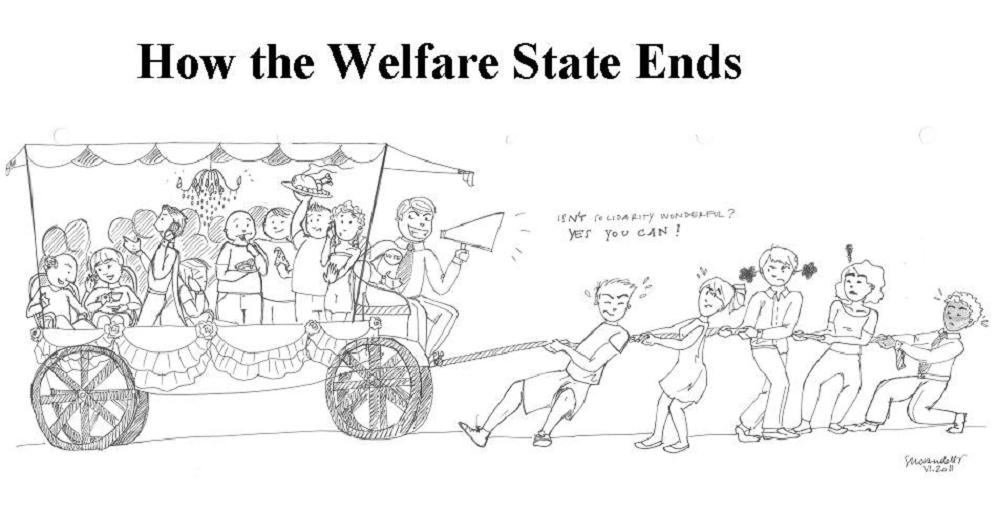





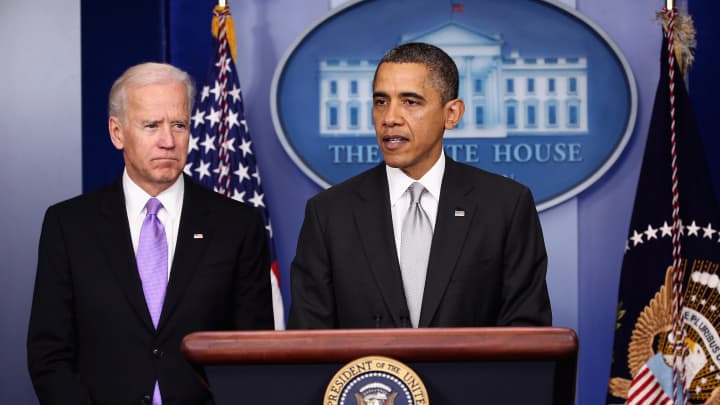


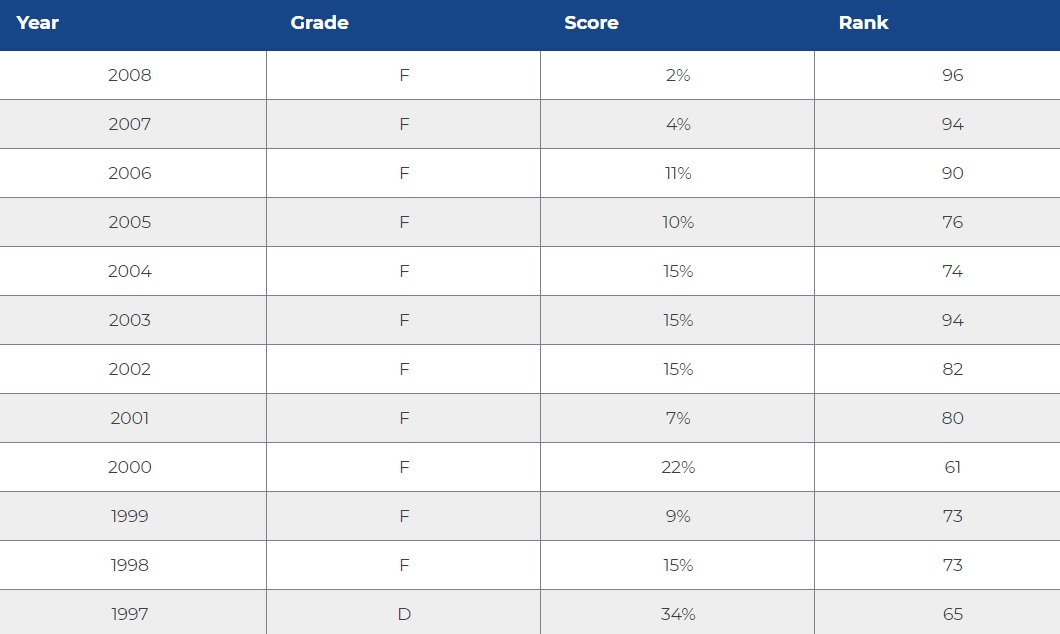
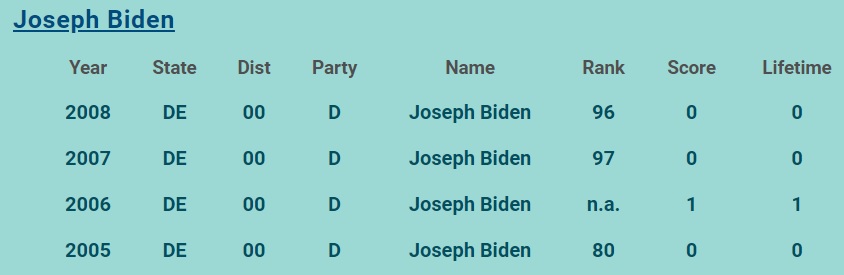


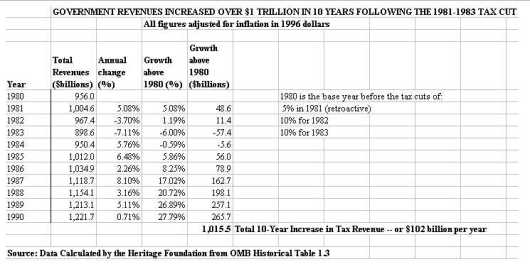
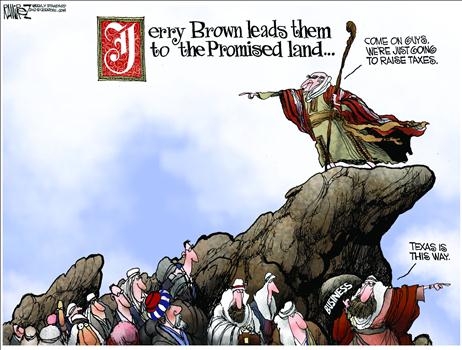
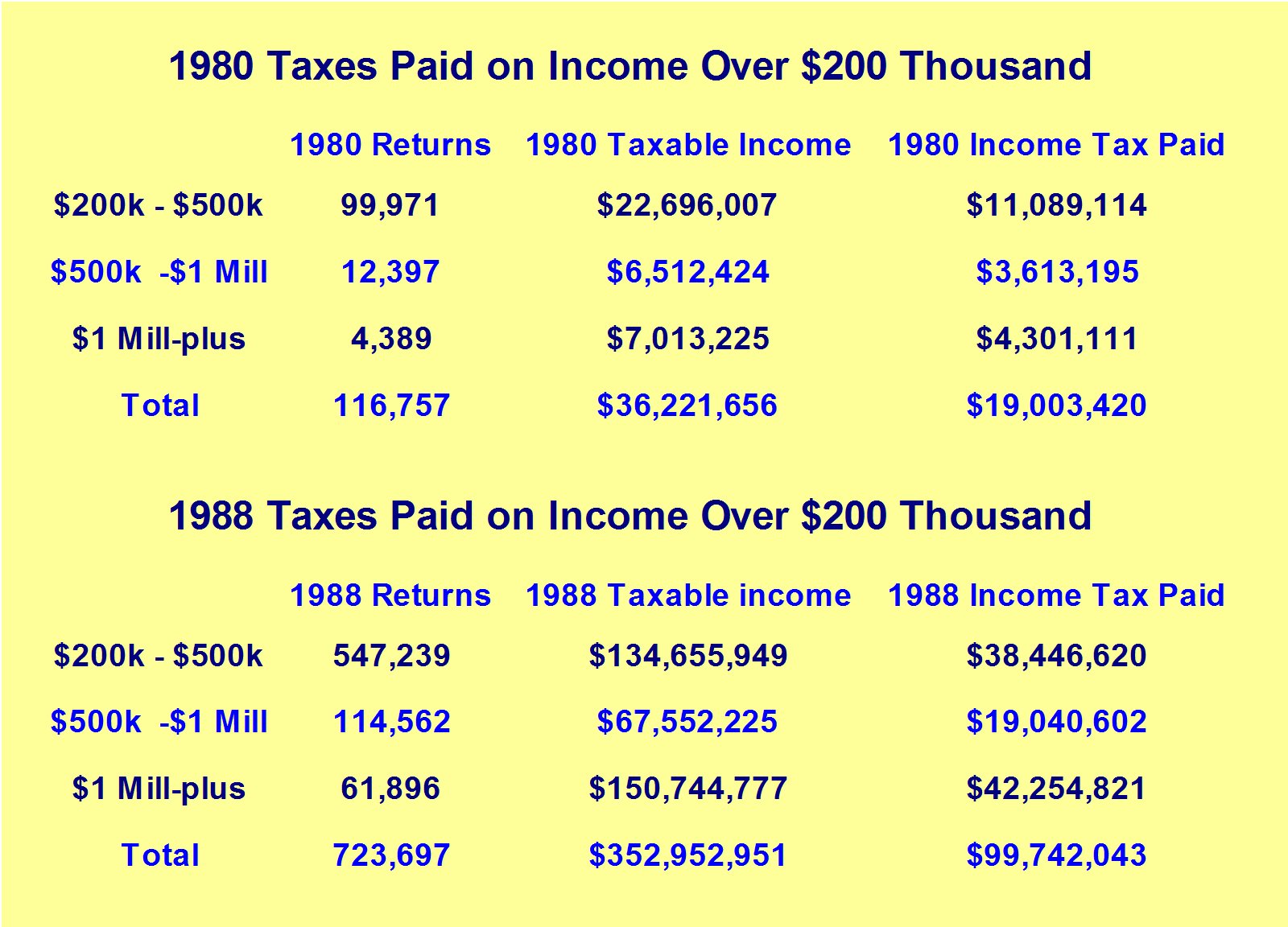


 The Daily Hatch