Category Archives: spending out of control

“THIRSTY THURSDAY” open letters to Senator Pryor displayed here on the www.thedailyhatch.org

For almost a year now I have been writing an open letter to Senator Mark Pryor every week in what I call “Thirsty Thursday” because the government is always thirsty for more of our money and the only way to stop it is to pass the BALANCED BUDGET AMENDMENT!!!!! I have electronically sent all of these letters to him before I post them on the blog. Below are some of the links. Check them out:

Dear Senator Pryor,

Why not pass the Balanced Budget Amendment? As you know that federal deficit is at all time high (1.6 trillion deficit with revenues of 2.2 trillion and spending at 3.8 trillion).

On my blog www.HaltingArkansasLiberalswithTruth.com I took you at your word and sent you over 100 emails with specific spending cut ideas. However, I did not see any of them in the recent debt deal that Congress adopted. Now I am trying another approach. Every week from now on I will send you an email explaining different reasons why we need the Balanced Budget Amendment. It will appear on my blog on “Thirsty Thursday” because the government is always thirsty for more money to spend.

In this paper below you will read:

America cannot raise taxes to continue overspending, because tax hikes shrink our economy and grow our government. America cannot borrow more to continue overspending, because borrowing puts an enormous financial burden on the American children of tomorrow. A BBA will help address this long-term problem because, after the multi-year process for securing ratification of the BBA by three-quarters of the states, the BBA will keep federal spending under control in subsequent years.

Washington has not been able to cut spending so the BBA is needed to force Washington to do the right thing. Your father David Pryor was the governor of Arkansas and he knew what it meant to have a balanced budget by mandate.

Thank you again for this opportunity to share my ideas with you.

Sincerely,

Everette Hatcher, lowcostsqueegees@yahoo.com

Balanced Budget Amendment: Cut Spending Later, Cut Spending Now

March 31, 2011


Two key principles should govern congressional consideration of an amendment to the U.S. Constitution that requires the federal government to balance its budget:

  • First Principle: A Balanced Budget Amendment (BBA) is important to help bring long-term fiscal responsibility to America’s future when the BBA takes effect after ratification by three-quarters of the state legislatures; it is equally important for Congress to cut spending nowto address the current overspending crisis.
  • Second Principle: An effective BBA will include three elements to: (a) control spending, taxation, and borrowing, (b) ensure the defense of America, and (c) enforce the requirement to balance the budget.

Cuts for the Future, Cuts for the Present

Federal spending is out of control—both obligations for the future and spending right now.

Congress must get spending under control in the long term. America cannot raise taxes to continue overspending, because tax hikes shrink our economy and grow our government. America cannot borrow more to continue overspending, because borrowing puts an enormous financial burden on the American children of tomorrow. A BBA will help address this long-term problem because, after the multi-year process for securing ratification of the BBA by three-quarters of the states, the BBA will keep federal spending under control in subsequent years.

Congress also must get spending under control in the short term. Federal overspending is not simply about the future, but also about the present. Under the President’s Fiscal Year 2012 Budget Submission, measured by the Congressional Budget Office, the federal government will spend $1.2 trillion more than it will take in, a gargantuan burden of additional debt forced on future generations to pay current bills.

Thus, America needs both a Balanced Budget Amendment for the long term and deep cuts in federal spending starting right now, without waiting for a BBA to take effect. As Congress considers budget resolutions, appropriations bills, appropriations continuing resolutions, and debt limit bills, Congress should take every opportunity now to cut federal spending, including for the biggest overspending problem: the ever-growing entitlement programs.

Congress should recognize that the best way to encourage state legislatures to ratify a BBA is to demonstrate, through consistent congressional cuts in spending, that the American people have the will to accept spending cuts to balance the budget.

Elements of a Successful Balanced Budget Amendment

A successful BBA will:

  • Control spending, taxing, and borrowing through a requirement to balance the budget.The BBA should cap annual spending at a level not exceeding either: (a) a specified percentage of the value of goods and services the economy produces in a year (known as gross domestic product, or GDP), or (b) the level of revenues. To ensure that Congress cannot simply balance the budget by continually raising taxes instead of cutting overspending, the BBA should require Congress to act by supermajority votes if Members wish to raise taxes. Any authority the BBA grants Congress to deal with economic slowdowns, by waiving temporarily the requirement that spending not exceed the GDP percentage or revenue level, should specify the amount of above-revenue spending allowed and require supermajority votes.
  • Defend America. The BBA should allow Congress by supermajority votes to waive temporarily compliance with the balanced budget requirement when waiver is essential to pay for the defense of Americans from attack.
  • Enforce the balanced budget requirement. The BBA should provide for its own enforcement, but must specifically exclude courts from any enforcement of the BBA, so unelected judges do not make policy decisions such as determining the appropriate level of funding for federal programs. A government that spends money in excess of its revenues must borrow to cover the difference. Therefore, to enforce the requirement to balance the budget, the BBA should prohibit government issuance of debt, except when necessary to finance a temporary deficit resulting from congressional supermajority votes discussed above.

America is in a fiscal crisis. Our government spends too much. Overspending must stop immediately. Overspending will stop only if Congress cuts spending now, including with respect to the ever-expanding entitlement programs. For the future, Congress and three-quarters of state legislatures can adopt and ratify a Balanced Budget Amendment to the U.S. Constitution to anchor the American willingness to live within a balanced budget.

David S. Addington is Vice President for Domestic and Economic Policy, and J. D. Foster, Ph.D., is Norman B. Ture Senior Fellow in the Economics of Fiscal Policy, at The Heritage Foundation.

Dear Senator Pryor, why not pass the Balanced Budget Amendment? (“Thirsty Thursday”, Open letter to Senator Pryor)

Dear Senator Pryor, Why not pass the Balanced  Budget amendment? As you know that federal deficit is at all time high (1.6 trillion deficit with revenues of 2.2 trillion and spending at 3.8 trillion). On my blog http://www.HaltingArkansasLiberalswithTruth.com I took you at your word and sent you over 100 emails with specific spending cut ideas. However, […]

Dear Senator Pryor, why not pass the Balanced Budget Amendment? (“Thirsty Thursday”, Open letter to Senator Pryor)

Dear Senator Pryor, Why not pass the Balanced  Budget Amendment? As you know that federal deficit is at all time high (1.6 trillion deficit with revenues of 2.2 trillion and spending at 3.8 trillion). On my blog http://www.HaltingArkansasLiberalswithTruth.com I took you at your word and sent you over 100 emails with specific spending cut ideas. However, […]

Dear Senator Pryor, why not pass the Balanced Budget Amendment? ( “Thirsty Thursday,” Open letter to Senator Pryor)

Dear Senator Pryor, Why not pass the Balanced Budget Amendment? As you know that federal deficit is at all time high (1.6 trillion deficit with revenues of 2.2 trillion and spending at 3.8 trillion). On my blog www.HaltingArkansasLiberalswithTruth.com I took you at your word and sent you over 100 emails with specific spending cut ideas. However, I did […]

Dear Senator Pryor, why not pass the Balanced Budget Amendment? ( “Thirsty Thursday,” Open letter to Senator Pryor)

Dear Senator Pryor, Why not pass the Balanced  Budget Amendment? As you know that federal deficit is at all time high (1.6 trillion deficit with revenues of 2.2 trillion and spending at 3.8 trillion). On my blog www.HaltingArkansasLiberalswithTruth.com I took you at your word and sent you over 100 emails with specific spending cut ideas. However, I did […]

Dear Senator Pryor, why not pass the Balanced Budget Amendment? ( “Thirsty Thursday,” Open letter to Senator Pryor)

Dear Senator Pryor,  Why not pass the Balanced Budget Amendment? As you know that federal deficit is at all time high (1.6 trillion deficit with revenues of 2.2 trillion and spending at 3.8 trillion). On my blog www.HaltingArkansasLiberalswithTruth.com I took you at your word and sent you over 100 emails with specific spending cut ideas. However, I did […]
Dear Senator Pryor, why not pass the Balanced Budget Amendment? (“Thirsty Thursday,” Open letter to Senator Pryor)

Dear Senator Pryor, Why not pass the Balanced Budget Amendment? As you know that federal deficit is at all time high (1.6 trillion deficit with revenues of 2.2 trillion and spending at 3.8 trillion). On my blog www.HaltingArkansasLiberalswithTruth.com I took you at your word and sent you over 100 emails with specific spending cut ideas. However, I did […]
Dear Senator Pryor, why not pass the Balanced Budget Amendment? ( “Thirsty Thursday,” Open letter to Senator Pryor)

Dear Senator Pryor, Why not pass the Balanced Budget Amendment? As you know that federal deficit is at all time high (1.6 trillion deficit with revenues of 2.2 trillion and spending at 3.8 trillion). On my blog www.HaltingArkansasLiberalswithTruth.com I took you at your word and sent you over 100 emails with specific spending cut ideas. However, I did […]
Dear Senator Pryor, why not pass the Balanced Budget Amendment? ( “Thirsty Thursday,” Open letter to Senator Pryor)

Dear Senator Pryor, Why not pass the Balanced Budget Amendment? As you know that federal deficit is at all time high (1.6 trillion deficit with revenues of 2.2 trillion and spending at 3.8 trillion). On my blog www.HaltingArkansasLiberalswithTruth.com I took you at your word and sent you over 100 emails with specific spending cut ideas. However, I did […]
Open letters to President Obama displayed here on www.thedailyhatch.org

I have been writing letters to President Obama almost all of 2012. I have received several responses from the White House but none of the responses have been personal responses from the President.

Below is a letter I wrote to the President and a form letter response that I got followed by links to other letters I have written him.

KIreland.jpg 

Science Matters #2: Former supermodel Kathy Ireland tells Mike Huckabee about how she became pro-life after reading what the science books have to say.

President Obama c/o The White House
1600 Pennsylvania Avenue NW
Washington, DC 20500

Dear Mr. President,

I know that you receive 20,000 letters a day and that you actually read 10 of them every day. I really do respect you for trying to get a pulse on what is going on out here.

I wanted to talk to you today about your views on abortion. Everyone remembers Kathy Ireland from her Sports Illustrated days and actually she has became a very successful business person.  However, I wanted to talk about her pro-life views.

_____________

Back on April 27, 2009 Fox News ran a story by Hollie McKay(Supermodel Kathy Ireland Lashes Out Against Pro Choice,”) on  Ireland.

It’s no secret that the majority of Hollywood stars are strong advocates for a woman’s right to choose whether or not she wants to terminate a pregnancy, however former “Sports Illustrated” supermodel-turned-entrepreneur-turned-author Kathy Ireland has gone against the grain of the glitterati and spoken out against abortion.

“My entire life I was pro-choice — who was I to tell another woman what she could or couldn’t do with her body? But when I was 18, I became a Christian and I dove into the medical books, I dove into science,” Ireland told Tarts while promoting her insightful new book “Real Solutions for Busy Mom: Your Guide to Success and Sanity.”

“What I read was astounding and I learned that at the moment of conception a new life comes into being. The complete genetic blueprint is there, the DNA is determined, the blood type is determined, the sex is determined, the unique set of fingerprints that nobody has had or ever will have is already there.”

However Ireland admitted that she did everything she could to avoid becoming a believer in pro-life.

“I called Planned Parenthood and begged them to give me their best argument and all they could come up with that it is really just a clump of cells and if you get it early enough it doesn’t even look like a baby. Well, we’re all clumps of cells and the unborn does not look like a baby the same way the baby does not look like a teenager, a teenager does not look like a senior citizen. That unborn baby looks exactly the way human beings are supposed to look at that stage of development. It doesn’t suddenly become a human being at a certain point in time,” Ireland argued. “I’ve also asked leading scientists across our country to please show me some shred of evidence that the unborn is not a human being. I didn’t want to be pro-life, but this is not a woman’s rights issue but a human rights issue.”

My good friend Dr. Kevin R. Henke is a scientist and also an atheistic evolutionist. I had a lot of discussions with Kevin over religious views. I remember going over John 7:17 with him one day. It says:

John 7:17 (Amplified Bible)

17If any man desires to do His will (God’s pleasure), he will know (have the needed illumination to recognize, and can tell for himself) whether the teaching is from God or whether I am speaking from Myself and of My own accord and on My own authority.

I challenged Kevin to read a chapter a day of the Book of John and pray to God and ask God, “Dear God, if you are there then reveal yourself to me, and I pledge to serve you the rest of my life.”

Kevin did that and he even wrote down the thoughts that came to his mind and sent it to me and these thoughts filled a notebook.

Kevin did not become a Christian, but I am still praying for him. I do respect Kevin because he is an honest man. Interestingly enough he  told me that he was pro-life because the unborn baby has all the genetic code at  the time of conception that they will have for the rest of their life. Below are some other comments by other scientists:

Dr. Hymie Gordon (Mayo Clinic): “By all criteria of modern molecular biology, life is present from the moment of conception.”

Dr. Micheline Matthews-Roth (Harvard University Medical School): “It is scientifically correct to say that an individual human life begins at conception.”

Dr. Alfred Bongioanni (University of Pennsylvania): “I have learned from my earliest medical education that human life begins at the time of conception.”

Dr. Jerome LeJeune, “the Father of Modern Genetics” (University of Descartes, Paris): “To accept the fact that after fertilization has taken place a new human has come into being is no longer a matter of taste or opinion . . . it is plain experimental evidence.”

__

Thank you so much for your time. I know how valuable it is. I also appreciate the fine family that you have and your committment as a father and a husband.

Sincerely,

Everette Hatcher III, 13900 Cottontail Lane, Alexander, AR 72002, ph 501-920-5733, lowcostsqueegees@yahoo.com

_______________

I actually mailed this to President Obama about a week ago and got this email back:

The White House, Washington


April 16, 2012

Dear Everette:

Thank you for taking the time to share your views on abortion.  This is a heart-wrenching issue, and I appreciate your input and thoughts.

I am committed to making my Administration the most open and transparent in history, and part of delivering on that promise is hearing from people like you.  I take seriously your opinions and respect your point of view on this issue.  Please know that your concerns will be on my mind in the days ahead.

Thank you, again, for writing.  I encourage you to visit www.WhiteHouse.gov to learn more about my Administration or to contact me in the future.

Sincerely,

Barack Obama

An open letter to President Obama (Part 65)

Leader Cantor On CNN Responding To President Obama’s State of the Union Address Uploaded by EricCantor on Jan 25, 2012 ______________ President Obama c/o The White House 1600 Pennsylvania Avenue NW Washington, DC 20500 Dear Mr. President, I know that you receive 20,000 letters a day and that you actually read 10 of them every day. I […]


“Feedback Friday” Letter to White House generated form letter response March 7, 2011 (part 3)

I have been writing President Obama letters and have not received a personal response yet.  (He reads 10 letters a day personally and responds to each of them.) However, I did receive a form letter in the form of an email on March 7, 2011. I don’t know which letter of mine generated this response so I have […]


An open letter to President Obama (Part 58) “Our national debt threatens our security”

Liam Fox Issues a Warning to America Uploaded by HeritageFoundation on Feb 28, 2012 Britain’s Liam Fox has a warning for America: Fix the debt problem now or suffer the consequences of less power on the world stage. The former U.K. secretary of state for defense visited Heritage to explain why the America’s debt is […]

“Feedback Friday” Letter to White House generated form letter response Jan 27, 2011 (part 2)

I have been writing President Obama letters and have not received a personal response yet.  (He reads 10 letters a day personally and responds to each of them.) However, I did receive a form letter in the form of an email on January 27, 2011. I don’t know which letter of mine generated this response so I have […]

“Feedback Friday” Letter to White House generated form letter response Jan 25, 2011 (part 1)

I have been writing President Obama letters and have not received a personal response yet.  (He reads 10 letters a day personally and responds to each of them.) However, I did receive a form letter in the form of an email on January 25, 2011. I don’t know which letter of mine generated this response so I have […]

An open letter to President Obama (Part 48 of my response to State of Union Speech 1-24-12)

An open letter to President Obama (Part 48 of my response to State of Union Speech 1-24-12) Rep Michael Burgess response Uploaded by MichaelCBurgessMD on Jan 25, 2012 This week Dr. Burgess provides an update from Washington and responds to President Obama’s State of the Union address. President Obama’s state of the union speech Jan 24, 2012 […]

An open letter to President Obama (Part 47, A response to your budget)

Corker Says President’s 2012 Budget Proposal Shows “Lack of Urgency” on Spending Uploaded by senatorcorker on Feb 14, 2011 In remarks on the Senate floor today, U.S. Senator Bob Corker, R-Tenn., expressed disappointment in President Obama’s 2012 budget proposal, saying it displayed a “lack of urgency” to get federal spending under control. Corker has introduced […]

An open letter to President Obama (Part 1 of State of Union Speech 1-24-12)

President Obama’s state of the union speech Jan 24, 2012 Feb 6, 2012 President Obama c/o The White House 1600 Pennsylvania Avenue NW Washington, DC 20500 Dear Mr. President, I know that you receive 20,000 letters a day and that you actually read 10 of them every day. I really do respect you for trying […]

An open letter to President Obama

  January 25, 2012 President Obama c/o The White House 1600 Pennsylvania Avenue NW Washington, DC 20500 Dear Mr. President, I know that you receive 20,000 letters a day and that you actually read 10 of them every day. I really do respect you for trying to get a pulse on what is going on […]


Robin Hood was not a left-wing hero who stole from the rich and redistributed to the poor

Not many people know the truth about Robin Hood. Robin Hood was not a left-wing hero who stole from the rich and redistributed to the poor.

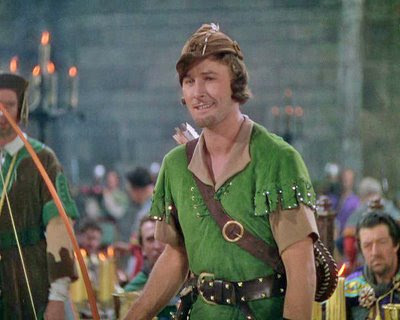
When I was a kid, I was a big fan of Robin Hood. I remember reading at least two books recounting the legend and I watched the Errol Flynn version of the movie several times.

And, as an adult, I saw both the Kevin Costner and Russell Crowe versions of Robin Hood.

“I’m not an occupy-Wall-Street moocher”

None of this makes me an expert, but it does allow me to state with some confidence that Robin Hood was not a left-wing hero who stole from the rich and redistributed to the poor.

Instead, he was a quasi-libertarian tax protestor. Okay, maybe it’s an exaggeration to claim he was a libertarian, but Robin Hood was on the side of ordinary people who were being exploited by incessant tax demands from the ruling class. His main enemies were Prince John and the Sheriff on Nottingham, not the medieval equivalents of Wall Street.

In the Russell Crowe version of the movie, Robin Hood even gives a speech about the importance of liberty.

So you can imagine how irked I get when statists agitate for things such as the “Robin Hood Tax” in this moronic video. But what motivated me today is a story in the Financial Times about a Cesar Chavez wannabee politician from Spain.

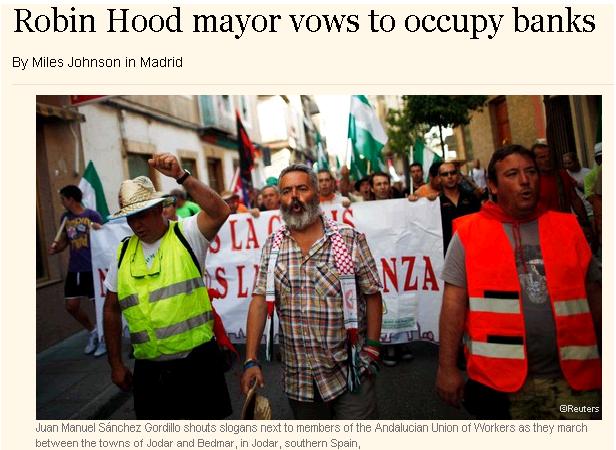
For Spain’s ruling politicians he is a criminal; for his supporters he is Robin Hood, stealing from supermarkets and redistributing the food to the poor. Juan Manuel Sánchez Gordillo, the mayor of Marinaleda, a southern town with a population of 2,600, has been catapulted to cult hero status in Spain after setting out this week on an anti-austerity march across Andalucia – occupying banks and stealing food… “We are fighting a war for the poor … going to jail is not important for me, it would be an honour,” Mr Sánchez Gordillo told the Financial Times. “We are going to occupy all of the banks and supermarkets we are able to in Andalucia. The robbers who have caused this crisis must pay the consequences for what they have done.”

But if the Mayor really wants to make robbers pay, he should march straight to jail and turn himself in. Not for the empty publicity stunt of robbing grocery stores, but for being part of a political class that has dramatically increased the burden of government spending in Spain, from about 30 percent of GDP in 1980 to well over 40 percent today.

But don’t hold your breath waiting for self-awareness from this clown.

Not surprisingly, unions are part of the protest. I’m guessing that Mr. Canamero represents government employees.

On Friday, the marchers, who plan to sleep in the open or in parks, occupied a branch of Banco Santander in the town of Mancha Real in the province of Jaén before leaving later in the day. Diego Canamero, head of the Andalucian Workers Union, was in the branch on Friday. He said critics of the protests were politicians protecting their own interests. “These are symbolic actions against an unsustainable economic situation,” he said. “The bankers rob us, and take our money to tax havens…”

The dig against tax havens is particularly laughable. Ordinary Spaniards should hope and pray that their deposits in the local banks are safely re-deposited in banks based in well-run and honest jurisdictions such as Switzerland, the Cayman Islands, or Singapore.

And if they’re smart, they already cut out the middleman and directly placed their savings in one of these low-tax jurisdictions. That way, they’re not only at much less risk of a bank collapse, but they also have greater ability to protect their assets from the venal and incompetent tax-hungry political elite.

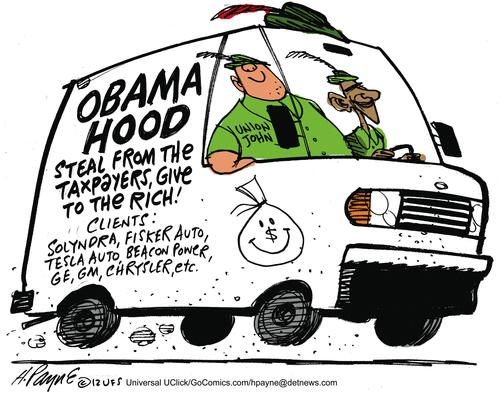
Returning to the mischaracterization of Robin Hood, this Payne cartoon does a good job of capturing my thoughts.

I especially like how Payne shows that the left-wing version of Robin Hood is all about a perniciously corrupt version of redistribution (though he should have included the Export-Import Bank on the side of the van). The genuine poor get crumbs while the well-connected interests make out like bandits.

P.S. Other good Payne cartoons can be seen here, here, herehereherehere, and here.

The real truth about the financial condition of Social Security can be seen on the www.thedailyhatch.org

Uploaded by on Jan 8, 2009

Professor Williams explains what’s ahead for Social Security

If you want to know the real truth about the financial condition of Social Security then check out these links below:

Ark Times reader says Social Security is not Ponzi Scheme

Social Security is a Ponzi Scheme but Blake who is a blogger said I was off base. Ark Times reader says Social Security is not Ponzi Scheme Social Security Disaster Walter E. Williams Columnist, Townhall.com Politicians who are principled enough to point out the fraud of Social Security, referring to it as a lie and […]

Social Security is a Ponzi scheme that needs to be reformed

We got to do something soon about Social Security. The Case for Social Security Personal Accounts Posted by Daniel J. Mitchell There are two crises facing Social Security. First the program has a gigantic unfunded liability, largely caused by demographics. Second, the program is a very bad deal for younger workers, making them pay record […]

Senator Obama’s ideas on Social Security

Senator Obama’s Social Security Tax Plan Uploaded by afq2007 on Jul 23, 2008 In addition to several other tax increases, Senator Barack Obama wants to increase the Social Security payroll tax burden by imposing the tax on income above $250,000. This would be a sharp departure from current law, which only requires that the tax […]

Social Security is a Ponzi scheme (part 13)

Saving Social Security with Personal Retirement Accounts Uploaded by afq2007 on Jan 10, 2011 There are two crises facing Social Security. First the program has a gigantic unfunded liability, largely thanks to demographics. Second, the program is a very bad deal for younger workers, making them pay record amounts of tax in exchange for comparatively meager benefits. This […]

What does the Heritage Foundation have to say about saving Social Security:Study released May 10, 2011 (Part 7)

“Saving the American Dream: The Heritage Plan to Fix the Debt, Cut Spending, and Restore Prosperity,” Heritage Foundation, May 10, 2011 by  Stuart Butler, Ph.D. , Alison Acosta Fraser and William Beach is one of the finest papers I have ever read. Over the next few days I will post portions of this paper, but […]

Only difference between Ponzi scheme and Social Security is you can say no to Ponzi Scheme jh2d

Is Social Security  a Ponzi Scheme? I just started a series on this subject. In this article below you will see where the name “Ponzi scheme” came from and if it should be applied to the Social Security System. Ponzi! Ponzi! Ponzi! 9/14/2011 | Email John Stossel | Columnist’s Archive Ponzi! Ponzi! Ponzi! There, I […]

Social Security a Ponzi scheme?

Uploaded by LibertyPen on Jan 8, 2009 Professor Williams explains what’s ahead for Social Security Dan Mitchell on Social Security I have said that Social Security is a Ponzi scheme and sometimes you will hear someone in the public say the same thing. Yes, It Is a Ponzi Scheme by Michael D. Tanner Michael Tanner […]

Dan Mitchell on Social Security


Open letter to President Obama (Part 138 B)

Real Time with Bill Maher March 16 2012 – Alexandra Pelosi Interviews Welfare Recipients in NYC

Published on Mar 18, 2012 by

Real Time with Bill Maher March 16 2012 – Alexandra Pelosi Interviews Welfare Recipients

__________

President Obama c/o The White House
1600 Pennsylvania Avenue NW
Washington, DC 20500

Dear Mr. President,

I know that you receive 20,000 letters a day and that you actually read 10 of them every day. I really do respect you for trying to get a pulse on what is going on out here.

Liberals like the idea of the welfare state while conservatives suggest charity through private organizations serve the poor better. I FIRMLY BELIEVE THAT PRIVATE CHARITIES WORK MUCH BETTER THAN GOVERNMENT WELFARE PROGRAMS. I ran across this attitude on the Arkansas Times Blog. The person using the username “Elwood” noted:

Indeed the Bible teaches us a lot about where our concerns should be:

Proverbs 29:7) The righteous is concerned with the poor: but the wicked regardeth them not.

Seeking the Welfare of the City

By
May 1, 2012


Conservatives are often portrayed as selfish scrooges who only care about their own bottom lines. But when it comes to truly meeting people’s needs, they’re the leaders of the pack.

Star Parker knew poverty personally. As a young drug addict in southern California, she lacked money, employment and hope. At one point, she was arrested for helping to rob a liquor store, and over the span of a few years, she had four abortions—all paid for by the government. Parker survived on welfare checks and free medical-care stickers, which she would sell to purchase illegal drugs.

The scriptural call to care for people such as Parker is clear: Loving our neighbor entails helping those in dire straits and working for the common good of their community.

In the biblical sense, seeking welfare has to do with promoting circumstances that allow people to flourish. It means helping people thrive in their homes, workplaces, neighborhoods, economies and political communities. This goal characterizes a true conservative political framework.

Now the president of a social policy research center focused on poverty issues, Parker testifies that a biblical view of human flourishing is at home in a conservative agenda—one focused on basic human dignity, strong families, a vibrant civil society, prosperous free markets and limited government.

Who Cares?

Many conservatives—and especially those motivated by faith—are on the front lines of caring for the poor. They’re the “street saints” who work quietly but tirelessly in the trenches, providing critical services in education, health, drug rehabilitation, prisoner re-entry, job training and disaster relief.

In fact, research shows conservatives actually give more to the poor than liberals. Syracuse University professor Arthur Brooks compiled this body of research in his 2006 book Who Really Cares: The Surprising Truth about Compassionate Conservatism. Brooks found that conservative-headed households tend to give about 30 percent more money to charity than liberal-headed households, even though liberal families earn an average of 6 percent more each year than conservative families. Conservatives also tend to volunteer more time and give more blood than do liberals.

Despite such data, conventional wisdom portrays liberals as being the ones intent on fighting poverty and conservatives as selfish scrooges. Sadly, the promotion of free markets and limited government is often mistakenly equated with a disregard for people in need. Meanwhile, support for government redistribution programs functions as a kind of litmus test for genuine care and compassion. (Never mind the paradoxical fact that, according to Brooks, Americans who favor income-redistribution policies are significantly less likely to behave charitably than those who do not.)

True compassion, though, isn’t measured by how much money the federal government spends. The real question is which approach actually helps people escape poverty and flourish over the long-run. Conservatives tend to answer that question differently than liberals, although they both share the goal of “seeking the welfare of the city.”

_____________

Thank you so much for your time. I know how valuable it is. I also appreciate the fine family that you have and your committment as a father and a husband.

Sincerely,

Everette Hatcher III, 13900 Cottontail Lane, Alexander, AR 72002, ph 501-920-5733, lowcostsqueegees@yahoo.com

It is really simple after all to balance the budget according to Dan Mitchell of the Cato Institute

It is really simple after all to balance the budget according to Dan Mitchell of the Cato Institute.

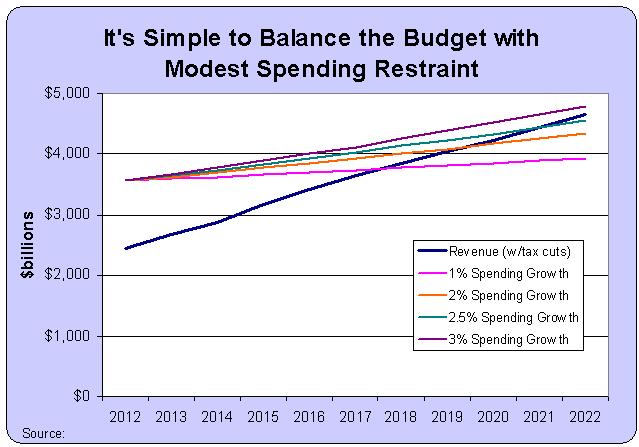
Now that new numbers have been released by the Congressional Budget Office, it’s time once again for me to show how easy it is to balance the budget with modest spending restraint (though please remember our goal should be smaller government, not fiscal balance).

  • I first did this back in September 2010, and showed that we could balance the budget in 10 years if federal spending was limited so it grew by 2 percent annually.
  • I repeated the exercise in January 2011 after new CBO numbers were released, and re-confirmed that a spending cap of 2 percent would eliminate red ink in just 10 years.
  • In August of that year, following the release of the CBO Update, I showed again that the budget could be balanced by limiting spending so it climbed by 2 percent per year.
  • Most recently, back in January after CBO produced the new Economic and Budget Outlook, I crunched the numbers again and showed how a spending cap of 2 percent would balance the budget.

I’m happy to say that the new numbers finally give me some different results. We can now balance the budget if spending grows 2.5 percent annually.

In other words, spending can grow faster than inflation and the budget can be balanced with no tax hikes.

And here’s the video I narrated almost two years ago on this topic. The numbers have changed a bit, but the analysis is exactly the same.

In other words, ignore the politicians, bureaucrats, lobbyists, and special interests when they say we have to raises taxes because otherwise the budget would have to be cut by trillions of dollars. They’re either stupid or lying (mostly the latter, deliberately using the dishonest version of Washington budget math).

Modest fiscal restraint is all that we need, though it would be preferable to make genuine cuts in the burden of government spending.

Open letter to President Obama (Part 138)

Milton Friedman – Public Housing

Uploaded by on May 6, 2011

Professor Friedman looks at the destination of another road paved with good intentions.

_______________

President Obama c/o The White House
1600 Pennsylvania Avenue NW
Washington, DC 20500

Dear Mr. President,

I know that you receive 20,000 letters a day and that you actually read 10 of them every day. I really do respect you for trying to get a pulse on what is going on out here.

I have a difference of opinion with you concerning how to best get out of this government deficit problem. You think the government best knows how to spend our money while I think more control should be given back to the people and less money should be taken from them. Milton Friedman put it best:

“Nobody spends somebody else’s money as carefully as he spends his own. Nobody uses somebody else’s resources as carefully as he uses his own. So if you want efficiency and effectiveness, if you want knowledge to be properly utilized, you have to do it through the means of private property.”

10 great quotes from Milton Friedman below:

Nov 29, 2011

10 Of The Best Economics Quotes From Milton Friedman

Milton Friedman was an extraordinary Nobel Prize-winning economist whose ideas helped underpin modern conservative economic theory. His contributions to economics and the conservative movement cannot be underestimated. Sadly, Milton Friedman passed away a little more than five years ago at the ripe old age of 94. Although Friedman is no longer with us, his words, his ideas, and his legacy live on. In honor of Friedman, here are some of his best quotations.

10) “If you put the federal government in charge of the Sahara Desert, in 5 years there’d be a shortage of sand.”

9) “I am in favor of cutting taxes under any circumstances and for any excuse, for any reason, whenever it’s possible.”

8) “The most important single central fact about a free market is that no exchange takes place unless both parties benefit.”

7) “When everybody owns something, nobody owns it, and nobody has a direct interest in maintaining or improving its condition. That is why buildings in the Soviet Union — like public housing in the United States — look decrepit within a year or two of their construction…”

6) “There is all the difference in the world, however, between two kinds of assistance through government that seem superficially similar: first, 90 percent of us agreeing to impose taxes on ourselves in order to help the bottom 10 percent, and second, 80 percent voting to impose taxes on the top 10 percent to help the bottom 10 percent — William Graham Sumner’s famous example of B and C decided what D shall do for A. The first may be wise or unwise, an effective or ineffective way to help the disadvantaged — but it is consistent with belief in both equality of opportunity and liberty. The second seeks equality of outcome and is entirely antithetical to liberty.”

5) “When the United States was formed in 1776, it took 19 people on the farm to produce enough food for 20 people. So most of the people had to spend their time and efforts on growing food. Today, it’s down to 1% or 2% to produce that food. Now just consider the vast amount of supposed unemployment that was produced by that. But there wasn’t really any unemployment produced. What happened was that people who had formerly been tied up working in agriculture were freed by technological developments and improvements to do something else. That enabled us to have a better standard of living and a more extensive range of products.”

4) “Nobody spends somebody else’s money as carefully as he spends his own. Nobody uses somebody else’s resources as carefully as he uses his own. So if you want efficiency and effectiveness, if you want knowledge to be properly utilized, you have to do it through the means of private property.”

3) “Inflation is taxation without legislation.”

2) “The great danger to the consumer is the monopoly — whether private or governmental. His most effective protection is free competition at home and free trade throughout the world. The consumer is protected from being exploited by one seller by the existence of another seller from whom he can buy and who is eager to sell to him. Alternative sources of supply protect the consumer far more effectively than all the Ralph Naders of the world.”

1) “(T)he supporters of tariffs treat it as self-evident that the creation of jobs is a desirable end, in and of itself, regardless of what the persons employed do. That is clearly wrong. If all we want are jobs, we can create any number — for example, have people dig holes and then fill them up again, or perform other useless tasks. Work is sometimes its own reward. Mostly, however, it is the price we pay to get the things we want. Our real objective is not just jobs but productive jobs — jobs that will mean more goods and services to consume

__________

Thank you so much for your time. I know how valuable it is. I also appreciate the fine family that you have and your commitment as a father and a husband.

Sincerely,

Everette Hatcher III, 13900 Cottontail Lane, Alexander, AR 72002, ph 501-920-5733, lowcostsqueegees@yahoo.com

Senator Pryor asks for Spending Cut Suggestions! Here are a few!(Part 161)

Senator Pryor asks for Spending Cut Suggestions! Here are a few!(Part 161)

Senator Mark Pryor wants our ideas on how to cut federal spending. Take a look at this video clip below:

Senator Pryor has asked us to send our ideas to him at cutspending@pryor.senate.gov and I have done so in the past and will continue to do so in the future.

On May 11, 2011,  I emailed to this above address and I got this email back from Senator Pryor’s office:

Please note, this is not a monitored email account. Due to the sheer volume of correspondence I receive, I ask that constituents please contact me via my website with any responses or additional concerns. If you would like a specific reply to your message, please visit http://pryor.senate.gov/contact. This system ensures that I will continue to keep Arkansas First by allowing me to better organize the thousands of emails I get from Arkansans each week and ensuring that I have all the information I need to respond to your particular communication in timely manner.  I appreciate you writing. I always welcome your input and suggestions. Please do not hesitate to contact me on any issue of concern to you in the future.

I just did. I went to the Senator’s website and sent this below:

Below is an excellent plan to balance the budget through spending cuts from Chris Edwards of the Cato Institute written in April of 2011. Here is the fourth part.

A Plan to Cut Spending and Balance the Federal Budget

by Chris Edwards, Cato Institute

Introduction
Reducing Spending over 10 Years
Spending Cut Details
Subsidies to Individuals and Businesses
Aid to State and Local Governments
Military Expenses
Medicare, Medicaid, and Social Security
Privatization
Conclusions

Medicare, Medicaid, and Social Security

The projected growth in Medicare, Medicaid, and Social Security is the main cause of America’s looming fiscal crisis. Budget experts and policymakers across the political spectrum understand the need to restructure these programs. The reforms listed in Table 1 include repealing the 2010 health care law and some initial efforts to control health care and Social Security costs.

For Social Security, the growth in initial benefits would be indexed to prices rather than wages, which would slow benefit growth over time. The proposal would save $41 billion annually by 2021 and growing amounts after that, according to the CBO.14 The plan also includes a CBO option to modestly raise the program’s normal retirement age.15

Medicaid should be converted from an open-ended matching grant program to a block grant, which would provide a fixed amount of funds to each state but allow state policymakers more program flexibility. That was the successful approach used for welfare reform in 1996. Converting Medicaid to a block grant would reduce federal costs, while encouraging innovation and cost reductions by the states. Setting the Medicaid block grant at the 2011 level of Medicaid spending would result in saving more than $200 billion annually within a decade.

The plan includes some modest Medicare changes based on CBO estimates, including increasing deductibles for services and increasing premiums for Part B to cover 35 percent of the program’s costs.16 The plan would repeal the 2010 health care law, including the higher revenues and spending. It further assumes that the Medicare improper payment rate, which is at least 10 percent, would be cut in half.

However, much larger reforms to the program are needed. Cato scholars have proposed moving to a system based on individual vouchers, personal savings, and consumer choice for elderly health care.17 The House Budget Committee has similarly proposed a plan to convert Medicare into a consumer-driven health system.18 Such reforms would create strong incentives for providers and patients to improve system quality and efficiency.
 

Privatization

In recent decades, governments around the world have sold off state-owned assets to private investors.19 Airports, railroads, electric utilities, post offices, and other assets have been privatized. Privatization generally leads to reduced costs, higher-quality services, and increased innovation in formerly moribund government industries.

There are many federal assets that should be privatized. Table 1 includes the privatization of Amtrak, the air traffic control system, and the Army Corps of Engineers. Such reforms would reduce federal budget deficits and help spur economic growth.

Consider the nation’s air traffic control system, which is run by the Federal Aviation Administration.20 The FAA has struggled to expand capacity and upgrade its technology, and its modernization efforts have often fallen behind schedule and gone over budget. A series of incidents in 2011 indicated that the agency has serious workforce management problems. The air traffic control system needs major improvements to meet rising travel demands, but the FAA may not be capable of meeting the challenge.

The good news is that a number of countries have restructured their air traffic control systems and provide good models for U.S. reforms. Canada privatized its air traffic control system in 1996, setting up a private, nonprofit corporation, Nav Canada. The company is self-supporting from charges on aviation users. The Canadian system has received high marks for sound finances, solid management, and investment in new technologies.21 Aside from those advantages, a privatized system in the United States would save about $6 billion a year in general fund taxpayer costs.
 

Conclusions

Official projections show that without reforms federal spending will soar to more than 40 percent of GDP by 2050, and even higher after that. State and local spending comes on top of that, with the result that governments would consume more than half of the entire U.S. economy.

However, it seems inconceivable that voters and taxpayers would let the government grow to anywhere near that large. Indeed, the results of the 2010 elections indicate that there is already widespread disapproval of big government. It is also unlikely that the government would be able to raise taxes much above current levels to support higher spending because of our increasingly globalized economy.22

The upshot is that we will have to make major spending cuts sooner or later, and it would be better to make them sooner before we accumulate even more debt. Policymakers can start with the menu of cuts presented here, and then they should pursue other reforms such as restructuring Medicare. Leaders of other industrial nations have pursued vigorous cost-cutting when their government debt got out of control, and there is no reason why our political leaders shouldn’t do the same.


2 Congressional Budget Office, “Preliminary Analysis of the President’s Budget for 2012,” March 2011.

3 For these estimates, see Congressional Budget Office, “The Budget and Economic Outlook: Fiscal Years 2011 to 2021,” January 2011, p. 22.

4 For estimates of these adjustments, see Congressional Budget Office, “The Budget and Economic Outlook: Fiscal Years 2011 to 2021,” January 2011, p. 22.

5 This is the president’s budget as estimated by the CBO. See Congressional Budget Office, “Preliminary Analysis of the President’s Budget for 2012,” March 2011.

6 I assume that discretionary spending cuts are phased-in over 10 years, one-tenth each year. The proposed changes to Medicaid, Medicare, and Social Security would begin right away, but the savings would increase over time.

7 I modeled interest costs using CBO baseline projections regarding interest rates. I adjusted for the fact that public debt is projected to grow faster than indicated by the compounding of annual deficits in coming years.

8 In particular, see Budget of the U.S. Government, Fiscal Year 2012, Analytical Perspectives (Washington: Government Printing Office, February 2011), Table 33-1.

10 Budget of the U.S. Government, Fiscal Year 2012, Analytical Perspectives (Washington: Government Printing Office, February 2011). See also Chris Edwards, “Federal Aid-to-State Programs Top 1,100,” Cato Institute Tax and Budget Bulletin no. 63, February 2011. Note that these state aid programs are a subset of the 2,000 total subsidy programs mentioned earlier.

13 Aside from the costs of the Iraq and Afghanistan wars, Department of Defense spending will be about $560 billion in fiscal 2011, up from $290 billion in fiscal 2001.

14 Congressional Budget Office, “Reducing the Deficit: Spending and Revenue Options,” March 2011.

15 Congressional Budget Office, “Reducing the Deficit: Spending and Revenue Options,” March 2011.

16 The savings for these options are from Congressional Budget Office, “Reducing the Deficit: Spending and Revenue Options,” March 2011.

18 House Committee on the Budget, “The Path to Prosperity,” April 2011. See also Rep. Paul Ryan (R-WI), “A Roadmap for America’s Future, Version 2.0,” January 2010.

21 For example, see Glen McDougall and Alasdair S. Roberts, “Commercializing Air Traffic Control: Have the Reforms Worked?” Suffolk University Law School, February 17, 2009.

22 This theme is explored in Chris Edwards and Daniel Mitchell, Global Tax Revolution (Washington: Cato Institute, 2008).

Open letter to President Obama (Part 137 B)

U.S. President Barack Obama waves as French President Francois Hollande looks on following their bilateral meeting at the  White House in Washington
U.S. President Barack Obama (R) waves as French President Francois Hollande looks on following their bilateral meeting in the Oval Office of the White House in Washington May 18, 2012. Hollande is in the United States to join other leaders of the major industrial economies and meet for a G8 Summit at Camp David this weekend to try to head off a full-blown financial crisis in Europe. REUTERS/Eric Feferberg/Pool(UNITED STATES – Tags: POLITICS BUSINESS)

President Obama c/o The White House
1600 Pennsylvania Avenue NW
Washington, DC 20500

Dear Mr. President,

I know that you receive 20,000 letters a day and that you actually read 10 of them every day. I really do respect you for trying to get a pulse on what is going on out here.

You do not want to cut spending and you only want more stimulus even though it has resulted in failure in the last three years in the USA. Now you are bragging about the results and telling your socialist friends in Europe to do the same.

Obama’s Pro-Growth Illusion

Barack Obama claims to be pro-growth. So does Greece, Spain, and almost everyone else. Why? Because admitting preference for the alternative—crushing, heavy-handed government interference that kills initiative and destroys wealth—is not attractive to any citizen of any country.

The problem lies in the meaning of “pro-growth”. As an unabashed capitalist, and as a supporter of free markets, I believe “pro-growth” means less government interference and more individual accountability where private sector businesses create the jobs and government pretty much stays out of the equation. But it’s increasingly clear that our president has a much different idea and defines “pro-growth” far differently.

Of course, Barack Obama often says he is “pro-growth”—but the question to ask is: growth of what?

After three years in office, it seems rather clear that Obama believes in the growth of government. At the core of all of his policies is a belief that government can allocate resources more efficiently than can the private sector.

According to Obama, only the government can make wise “investments”. According to Obama’s view, private money and private investors are simply not as capable or as wise as is government in choosing the kinds of investments that will lead to growth and job expansion.

Not too surprisingly, Obama’s strange definition of “growth” is actually a call for a growth of government, growth of debt, growth of bureaucracy, growth of taxes and growth of government regulations. Barack Obama simply believes that taxpayers should be required (or compelled) to send more money to Washington where the political class can then decide how best to “invest” the money.

The “growth” that Barack Obama seeks, ultimately, is growth in government’s control over the lives of all Americans. As we have already learned from three years of watching our president try to apply this tragic economic theory, we have seen our economy stagnate as entrepreneurs and small businesses get squeezed. The only “growth” in Obama’s economy has been the growth of economically harmful and dangerous trends.

Obama has overseen a growth in the price of gas at the pump, growth in the nation’s dependency on foreign oil, growth in unemployment, growth in the number of people receiving and the amount of dollars allocated to entitlements, growth in the number of Czars designed to evade oversight from congress, even growth in the number of foreclosures.

In general, after three and a half years of the Obama administration’s “pro-growth” efforts, Americans are poorer and more dependent on the federal government.

Is this really what Americans are endorsing when they hear the term “pro-growth”? This is certainly not what the Founding Fathers envisioned.

Under Obama federal spending has grown from $1 trillion dollars in 2008 to almost $4 trillion dollars in just three years, without any growth in the economy, without any reduction in unemployment and without any significant improvement in the quality of life or opportunities for the future of Americans.

Under Obama, the public debt has grown to the point where it exceeds our nation’s annual GDP. Nowhere and at no time has this kind of equation ever been a recipe for economic growth.

LUnder Obama, the number of regulations affecting all aspects of American lives has grown. In 2011, the Obama administration put into place over 2000 different rules, statues or regulations affecting everything from the environment to the kinds of paper used for filing federal reports.

Under Obama, the number of czars has increased, even as the number of senate-confirmed leaders has dwindled. Coinciding with the increase in czars comes an increase in the bureaucracy, and an increase in the staff to support the czars, all paid for with taxpayer dollars.

Under Obama there has been growth in the number of unemployed, with minorities and teens hit the hardest.

Under Obama, the regulations affecting small businesses has created an environment of uncertainty and increased cost which discourages, rather than encourages, job creation.

Under Obama, Americans have seen an increase in the frequency of fear-mongering and race-baiting as a Democrat political strategy, designed to intimidate anyone who questions or criticizes Democrats’ flawed policies.

There has been growth under Obama—it’s just the wrong kind of growth. Lots of fine sounding rhetoric that fosters the illusion of growth. One thing seems clear–while we all seem to be speaking the same language the meaning varies greatly between what Obama says and what Americans understand.

When Barack Obama talks about his “pro-growth” agenda, Americans should start to ask just exactly what Obama hopes to “grow”.

______________

Thank you so much for your time. I know how valuable it is. I also appreciate the fine family that you have and your committment as a father and a husband.

Sincerely,

Everette Hatcher III, 13900 Cottontail Lane, Alexander, AR 72002, ph 501-920-5733, lowcostsqueegees@yahoo.com

Related posts:

France today: government spending is at 55 percent of GDP

The liberals in France do not want austerity but more spending but who will pay for their party? Morning Bell: Socialism Rises Again Mike Brownfield May 8, 2012 at 8:55 am Last weekend, the people of France took a sharp turn to the left, and the rest of Europe may be on the brink of […]

Europe has a bleak future because they don’t want austerity

The medicine for the sickness of spending is real budget cuts but no one in liberal europe wants to hear that. Sadly we are on the same road in the USA. Liberals (like my blogger opponent “the Outlier” and others) love to say that austerity has been tried in Europe and it doesn’t work but the truth […]

Brantley and his liberal friends don’t want budget cuts but taxes raised on rich!!!!

Over and over in the past Max Brantley and his liberal friends have said that they don’t want budget cuts but they want taxes raised on the rich. In France their recipe for success is about to be tried and we will see how it works out. The Arkansas Times blogger going by the username […]

Stimulus programs never work

The stimulus did not work for the USA and it has never worked. Doubling Down on Failure: Former Obama Official Calls for U.S.-Financed Keynesian Spending Binge in Europe April 30, 2012 by Dan Mitchell There’s an old saying that insanity is doing the same thing over and over again while expecting different results. This certainly is a […]

Balancing the budget possible with socialist solutions?

I got this cartoon below from Dan Mitchell’s blog. Where can our government turn to get out of this socialist mess they have got themselves in? They have to realize what really creates wealth. Over in France they are facing the same problems we are because of the welfare state and they are about to […]

Obama’s stimulus was a failure like Dan Mitchell of the Cato Institute predicted

The stimulus was a huge failure and I hope everyone who voted for it will be defeated in their re-election attempts. Dan Mitchell of the Cato Institute predicted it would be a failure back in January of 2009!!!! Portuguese Finance Minister Admits Keynesian Stimulus Was a Flop, but Don’t Hold Your Breath Waiting for Obama […]

Open letter to President Obama (Part 136 B)

Real Time with Bill Maher March 16 2012 – Alexandra Pelosi Interviews Welfare Recipients in NYC

Published on Mar 18, 2012 by

Real Time with Bill Maher March 16 2012 – Alexandra Pelosi Interviews Welfare Recipients

____________

President Obama c/o The White House
1600 Pennsylvania Avenue NW
Washington, DC 20500

Dear Mr. President,

I know that you receive 20,000 letters a day and that you actually read 10 of them every day. I really do respect you for trying to get a pulse on what is going on out here.

It is truly sad to me that we have got to such a low point in our country that you have attempted to get votes by giving away things for votes.  How else do you describe what is going on here?

________________

The Arkansas Democrat-Gazette had an excellent aricle on this on May 20, 2012:

Government takes care of us

By Bradley R. Gitz

This article was published May 20, 2012 at 3:09 a.m

LITTLE ROCK — The Democratic Party campaign video “The Life of Julia” performs a public service by informing the public of the Obama administration’s vision of the ideal society.

It is not a pretty picture.

For those who haven’t seen it yet, the video traces the life of a fictional “Julia” from birth all the way into retirement, with government providing for her care and comfort (even her contraceptives) each step along the way.

As National Review’s Rich Lowry puts it, “Julia’s central relationship is to the state. It is her educator, banker, health-care provider, venture capitalist and retirement fund. And she is, fundamentally, a taker. Every benefit she gets is cut-rate or free. She apparently doesn’t worry about paying taxes.” The end result is a pathetic creature more closely resembling a whining infant in its cradle than a free, adult human being.

Implicit in this “cradle to grave” view of government is the goal of creating, in Lowry’s words, “a nation of Julias,” dependent, needy and forever being succored by the nanny state. The more people depend upon government for their sustenance, and the more extreme the level of typical dependence, the closer we will have moved toward the ideal political order.

Charles Krauthammer calls this “free-lunch egalitarianism.” Mitt Romney has referred to it as “the entitlement society.” By whatever term, it represents a radical shift in Americans’ understanding of the role of government in their lives.

Barack Obama may claim that these are “American values,” but they most certainly aren’t the values of our Founding Fathers; indeed, it might be difficult to identify any ideas further removed from those that influenced the delegates at Philadelphia back in1787.

Perhaps never before has an American political party more nakedly offered up a life on the dole as a morally desirable condition for able-bodied citizens.

Implicit in the “Julia Nation” is a number of sub-themes-that Americans have lost any sense of self reliance and can’t fend for themselves in even the most trivial ways; that government should always grow bigger because of this incapacity; and that there are no adverse social or fiscal consequences flowing from, or even logical limits to, the growth of government spending.

For those of us with an interest in political ideology, the cradle-to grave concept explicit in Julia’s life also represents the final extinguishing of any remaining differences between American “progressivism” and European social democracy.

Cradle-to-grave security has, of course, been the abiding promise of European social democratic parties since at least the end of World War II. A term first coined by British Labor Party leader Clement Attlee, “cradle to grave” would represent the fulfillment of the European socialist movement without all of the nasty “dictatorship of the proletariat” and violent revolutionary stuff. It was the logical ideological descendent of Eduard Bernstein and the Fabians, if not Vladimir Lenin and Joseph Stalin.

By so openly embracing this concept, American Democrats have now removed any doubt that they have become and have actually long been such a party.

Those who take umbrage at such claims are free to identify for the rest of us any fundamental differences between the program and aspirations of American Democrats and those of the British Labor Party, the German Social Democratic Party, or Francois Hollande’s Socialist Party in France.

Irrefutable logic tells us that, if the American Democratic Party is a social democratic party, and social democracy has long been understood as a strain of socialism, then the American Democratic Party, and its titular leader, President Obama, are clearly socialists of at least some sort, too.

They just won’t, until now-until “Julia”-admit it.

What this also means is that what we call American liberalism has come to have scant relation to the classical liberalism of America’s founding. The central tenet of liberalism historically is restraints upon the size and power of the state for the sake of individual liberty; the central tenet of both American progressivism and European social democracy is the creation of a huge and powerful state for the purpose of providing cradle-to-grave security. Understood properly, liberalism and socialism are antithetical, not complementary, propositions.

So we should thank Democrats for the “Life of Julia.” They might not have intended to be, but they are now finally being honest with the American people about what ideology they subscribe to and where they wish to take the nation under the slogan “forward.”

Thus, the central question that Obama’s re-election bid poses is whether we want the transformation of America into a full-fledged European-style social democracy to continue. It is that issue, not the Romney family dog, women’s contraceptive tab, or Obama’s “evolution” on gay marriage that matters most.

There was, once upon a time, not even all that long ago, something disgraceful about able-bodied citizens living off the labor of others (“going on the dole”). Obama and his party now unapologetically and enthusiastically invite all of us to do so.

———◊-

———

Freelance columnist Bradley R. Gitz, who lives and teaches in Batesville, received his Ph.D. in political science from the University of Illinois.

_____________

Thank you so much for your time. I know how valuable it is. I also appreciate the fine family that you have and your commitment as a father and a husband.

Sincerely,

Everette Hatcher III, 13900 Cottontail Lane, Alexander, AR 72002, ph 501-920-5733, lowcostsqueegees@yahoo.com