Category Archives: spending out of control

“THIRSTY THURSDAY” open letters to Senator Pryor displayed here on the www.thedailyhatch.org

For almost a year now I have been writing an open letter to Senator Mark Pryor every week in what I call “Thirsty Thursday” because the government is always thirsty for more of our money and the only way to stop it is to pass the BALANCED BUDGET AMENDMENT!!!!! I have electronically sent all of these letters to him before I post them on the blog. Below are some of the links. Check them out:

Dear Senator Pryor,

Why not pass the Balanced Budget Amendment? As you know that federal deficit is at all time high (1.6 trillion deficit with revenues of 2.2 trillion and spending at 3.8 trillion).

On my blog www.HaltingArkansasLiberalswithTruth.com I took you at your word and sent you over 100 emails with specific spending cut ideas. However, I did not see any of them in the recent debt deal that Congress adopted. Now I am trying another approach. Every week from now on I will send you an email explaining different reasons why we need the Balanced Budget Amendment. It will appear on my blog on “Thirsty Thursday” because the government is always thirsty for more money to spend.

In this paper below you will read:

America cannot raise taxes to continue overspending, because tax hikes shrink our economy and grow our government. America cannot borrow more to continue overspending, because borrowing puts an enormous financial burden on the American children of tomorrow. A BBA will help address this long-term problem because, after the multi-year process for securing ratification of the BBA by three-quarters of the states, the BBA will keep federal spending under control in subsequent years.

Washington has not been able to cut spending so the BBA is needed to force Washington to do the right thing. Your father David Pryor was the governor of Arkansas and he knew what it meant to have a balanced budget by mandate.

Thank you again for this opportunity to share my ideas with you.

Sincerely,

Everette Hatcher, lowcostsqueegees@yahoo.com

Balanced Budget Amendment: Cut Spending Later, Cut Spending Now

March 31, 2011


Two key principles should govern congressional consideration of an amendment to the U.S. Constitution that requires the federal government to balance its budget:

  • First Principle: A Balanced Budget Amendment (BBA) is important to help bring long-term fiscal responsibility to America’s future when the BBA takes effect after ratification by three-quarters of the state legislatures; it is equally important for Congress to cut spending nowto address the current overspending crisis.
  • Second Principle: An effective BBA will include three elements to: (a) control spending, taxation, and borrowing, (b) ensure the defense of America, and (c) enforce the requirement to balance the budget.

Cuts for the Future, Cuts for the Present

Federal spending is out of control—both obligations for the future and spending right now.

Congress must get spending under control in the long term. America cannot raise taxes to continue overspending, because tax hikes shrink our economy and grow our government. America cannot borrow more to continue overspending, because borrowing puts an enormous financial burden on the American children of tomorrow. A BBA will help address this long-term problem because, after the multi-year process for securing ratification of the BBA by three-quarters of the states, the BBA will keep federal spending under control in subsequent years.

Congress also must get spending under control in the short term. Federal overspending is not simply about the future, but also about the present. Under the President’s Fiscal Year 2012 Budget Submission, measured by the Congressional Budget Office, the federal government will spend $1.2 trillion more than it will take in, a gargantuan burden of additional debt forced on future generations to pay current bills.

Thus, America needs both a Balanced Budget Amendment for the long term and deep cuts in federal spending starting right now, without waiting for a BBA to take effect. As Congress considers budget resolutions, appropriations bills, appropriations continuing resolutions, and debt limit bills, Congress should take every opportunity now to cut federal spending, including for the biggest overspending problem: the ever-growing entitlement programs.

Congress should recognize that the best way to encourage state legislatures to ratify a BBA is to demonstrate, through consistent congressional cuts in spending, that the American people have the will to accept spending cuts to balance the budget.

Elements of a Successful Balanced Budget Amendment

A successful BBA will:

  • Control spending, taxing, and borrowing through a requirement to balance the budget.The BBA should cap annual spending at a level not exceeding either: (a) a specified percentage of the value of goods and services the economy produces in a year (known as gross domestic product, or GDP), or (b) the level of revenues. To ensure that Congress cannot simply balance the budget by continually raising taxes instead of cutting overspending, the BBA should require Congress to act by supermajority votes if Members wish to raise taxes. Any authority the BBA grants Congress to deal with economic slowdowns, by waiving temporarily the requirement that spending not exceed the GDP percentage or revenue level, should specify the amount of above-revenue spending allowed and require supermajority votes.
  • Defend America. The BBA should allow Congress by supermajority votes to waive temporarily compliance with the balanced budget requirement when waiver is essential to pay for the defense of Americans from attack.
  • Enforce the balanced budget requirement. The BBA should provide for its own enforcement, but must specifically exclude courts from any enforcement of the BBA, so unelected judges do not make policy decisions such as determining the appropriate level of funding for federal programs. A government that spends money in excess of its revenues must borrow to cover the difference. Therefore, to enforce the requirement to balance the budget, the BBA should prohibit government issuance of debt, except when necessary to finance a temporary deficit resulting from congressional supermajority votes discussed above.

America is in a fiscal crisis. Our government spends too much. Overspending must stop immediately. Overspending will stop only if Congress cuts spending now, including with respect to the ever-expanding entitlement programs. For the future, Congress and three-quarters of state legislatures can adopt and ratify a Balanced Budget Amendment to the U.S. Constitution to anchor the American willingness to live within a balanced budget.

David S. Addington is Vice President for Domestic and Economic Policy, and J. D. Foster, Ph.D., is Norman B. Ture Senior Fellow in the Economics of Fiscal Policy, at The Heritage Foundation.

Dear Senator Pryor, why not pass the Balanced Budget Amendment? (“Thirsty Thursday”, Open letter to Senator Pryor)

Dear Senator Pryor, Why not pass the Balanced  Budget amendment? As you know that federal deficit is at all time high (1.6 trillion deficit with revenues of 2.2 trillion and spending at 3.8 trillion). On my blog http://www.HaltingArkansasLiberalswithTruth.com I took you at your word and sent you over 100 emails with specific spending cut ideas. However, […]

Dear Senator Pryor, why not pass the Balanced Budget Amendment? (“Thirsty Thursday”, Open letter to Senator Pryor)

Dear Senator Pryor, Why not pass the Balanced  Budget Amendment? As you know that federal deficit is at all time high (1.6 trillion deficit with revenues of 2.2 trillion and spending at 3.8 trillion). On my blog http://www.HaltingArkansasLiberalswithTruth.com I took you at your word and sent you over 100 emails with specific spending cut ideas. However, […]

Dear Senator Pryor, why not pass the Balanced Budget Amendment? ( “Thirsty Thursday,” Open letter to Senator Pryor)

Dear Senator Pryor, Why not pass the Balanced Budget Amendment? As you know that federal deficit is at all time high (1.6 trillion deficit with revenues of 2.2 trillion and spending at 3.8 trillion). On my blog www.HaltingArkansasLiberalswithTruth.com I took you at your word and sent you over 100 emails with specific spending cut ideas. However, I did […]

Dear Senator Pryor, why not pass the Balanced Budget Amendment? ( “Thirsty Thursday,” Open letter to Senator Pryor)

Dear Senator Pryor, Why not pass the Balanced  Budget Amendment? As you know that federal deficit is at all time high (1.6 trillion deficit with revenues of 2.2 trillion and spending at 3.8 trillion). On my blog www.HaltingArkansasLiberalswithTruth.com I took you at your word and sent you over 100 emails with specific spending cut ideas. However, I did […]

Dear Senator Pryor, why not pass the Balanced Budget Amendment? ( “Thirsty Thursday,” Open letter to Senator Pryor)

Dear Senator Pryor,  Why not pass the Balanced Budget Amendment? As you know that federal deficit is at all time high (1.6 trillion deficit with revenues of 2.2 trillion and spending at 3.8 trillion). On my blog www.HaltingArkansasLiberalswithTruth.com I took you at your word and sent you over 100 emails with specific spending cut ideas. However, I did […]
Dear Senator Pryor, why not pass the Balanced Budget Amendment? (“Thirsty Thursday,” Open letter to Senator Pryor)

Dear Senator Pryor, Why not pass the Balanced Budget Amendment? As you know that federal deficit is at all time high (1.6 trillion deficit with revenues of 2.2 trillion and spending at 3.8 trillion). On my blog www.HaltingArkansasLiberalswithTruth.com I took you at your word and sent you over 100 emails with specific spending cut ideas. However, I did […]

Dear Senator Pryor, why not pass the Balanced Budget Amendment? ( “Thirsty Thursday,” Open letter to Senator Pryor)

Dear Senator Pryor, Why not pass the Balanced Budget Amendment? As you know that federal deficit is at all time high (1.6 trillion deficit with revenues of 2.2 trillion and spending at 3.8 trillion). On my blog www.HaltingArkansasLiberalswithTruth.com I took you at your word and sent you over 100 emails with specific spending cut ideas. However, I did […]

Dear Senator Pryor, why not pass the Balanced Budget Amendment? ( “Thirsty Thursday,” Open letter to Senator Pryor)

Dear Senator Pryor, Why not pass the Balanced Budget Amendment? As you know that federal deficit is at all time high (1.6 trillion deficit with revenues of 2.2 trillion and spending at 3.8 trillion). On my blog www.HaltingArkansasLiberalswithTruth.com I took you at your word and sent you over 100 emails with specific spending cut ideas. However, I did […]

Dear Senator Pryor, why not pass the Balanced Budget Amendment? (“Thirsty Thursday”, Open letter to Senator Pryor)

Remarks at a Rally Supporting the Proposed Constitutional Amendment for a Balanced Federal Budget

For more information on the ongoing works of President Reagan’s Foundation, please visit http://www.reaganfoundation.org

_______________

Dear Senator Pryor,

Why not pass the Balanced  Budget Amendment? As you know that federal deficit is at all time high (1.6 trillion deficit with revenues of 2.2 trillion and spending at 3.8 trillion).

On my blog www.HaltingArkansasLiberalswithTruth.com I took you at your word and sent you over 100 emails with specific spending cut ideas. However, I did not see any of them in the recent debt deal that Congress adopted. Now I am trying another approach. Every week from now on I will send you an email explaining different reasons why we need the Balanced Budget Amendment. It will appear on my blog on “Thirsty Thursday” because the government is always thirsty for more money to spend.

Ronald Reagan was a firm believer in the Balanced Budget Amendment and Milton Friedman was a key advisor to Reagan. Friedman’s 1980 film series taught the lesson of restraining growth of the federal budget.

UHLER: A better balanced budget amendment

Vital changes needed to keep road to further reforms open

There is a problem brewing in the House of Representatives of which most conservatives in and outside Congress are largely unaware. It has to do with H.J. Res. 1 – the balanced budget amendment – soon to be voted on per the debt-ceiling “deal” struck by Congress and the president. While H.J. Res. 1 is a solid first effort – and we have urged support for it as a symbolic vote – it is possibly fatally flawed and should be revised.

After years of indifference to constitutional fiscal discipline, Congress is once again stirring. In 1982, then-President Ronald Reagan, convened a federal amendment drafting committee led by Milton Friedman, Jim Buchanan, Bill Niskanen, Walter Williams and many others, and fashioned Senate Joint Resolution 58, a tax limitation-balanced budget amendment, which garnered 67 votes in the Senate under the able leadership of Sen. Orrin G. Hatch, Utah Republican. After a successful discharge petition forced a House vote, the amendment failed to achieve the two-thirds vote necessary in a Tip O’Neill-Jim Wright-controlled House. In 1996, Newt Gingrich and company came within one vote of passing a fiscal amendment in the House.

Currently, H.J. Res. 1 is designed as a classic balanced budget amendment in which outlays can be as great as, but no more than, receipts for that year. However, it requires an estimate of receipts, which is notoriously faulty, and it does not necessarily produce surpluses with which to pay down our massive debt. Furthermore, it contains a second limit on outlays – “not more than 18 percent of the economic output of the United States” – without defining such output or resolving the inevitable conflict between the outlay calculations in the two provisions.

This could be fixed by restructuring the amendment as a spending or outlay limit based on prior year receipts or outlays (known numbers), adjusted only for inflation and population changes. This will produce surpluses in most years with which to pay down debts and will reduce government spending as a share of gross domestic product over time, right-sizing government and increasing the rate of economic growth for the benefit of all citizens, especially those least able to compete.

Section 4 of H.J. Res. 1 might best be described as a supreme example of the law of unintended consequences. This section imposes on the president a constitutional responsibility to present a balanced budget. Surely, the drafters were saying to themselves “We’ll fix that guy in the White House. Now he will have to fess up and either propose specific tax increases or specific spending cuts. He won’t be able to duck reality any longer.” The only problem is that this section is at odds with our Constitution in that it gives the president a constitutional power over fiscal matters never intended by the Founders.

For much of our history, the president did not propose a budget. In the Budget and Accounting Act of 1921, which established the Bureau of the Budget, now the Office of Management and Budget and the General Accounting Office, the president was statutorily authorized to propose a budget. Presidents have always shaped the budget and spending using their negotiating opportunities and veto pen. Wearing their chief administrator hat, earlier presidents sought to save money from the amounts appropriated by Congress, getting things done for less, impounding funds they did not think essential to spend. Congress‘ ceiling on an appropriation was not also the spending floor for the president, as it is now.

Section 4 appears to give the president co-equal power with Congress not only to present a budget but to shape it, in conflict with congressional budget authority. At a minimum, it is likely to create a conflict over the amount of allowed annual spending. The president surely will be guided by his own Office of Management and Budget, whose budget and receipts calculations will undoubtedly differ from the Congressional Budget Office’s numbers that will direct Congress. We should not start the budget process each year with this kind of conflict.

It would be better to restore the historic role of the president to impound and otherwise reduce expenditures by repealing and revising appropriate portions of the Congressional Budget and Impoundment Control Act of 1974 so a fiscally conservative president is a revitalized partner in cutting the size of government.

Section 5 requires a supermajority vote for “a bill to increase revenues.” Whether one agrees or disagrees with making tax increases more difficult, this language is troublesome because it requires some government bureaucrat or bureaucracy to make a calculation or estimate of the effect of tax law changes on revenues. Proponents of a bill to increase cash flow to the government will argue that their tax law changes are “revenue neutral” and will likely persuade the Joint Committee on Taxation or Congressional Budget Office to back them up. Once again, estimators would be in control.

If we ever expect to convert our income-based tax system to a consumption tax, better not to require a two-thirds vote as liberals will use such a supermajority voting rule to stymie tax system reform.

There are other issues, as well, with debt limit and national emergency supermajority votes and definitions. While this balanced budget amendment – H.J. Res. 1 – has deserved a “yes” vote as a demonstration of commitment to constitutional fiscal discipline, it can and must be revised before the showdown vote in the House this fall.

Lewis K. Uhler is president of the National Tax Limitation Committee.

The nation’s founders would be horrified by today’s congressional spending that consumes 25 percent of our GDP

Balance the Budget: Now is the Time

Uploaded by on Jul 27, 2011

__________

I really wish we could pass a Balanced Budget Amendment and control the amount of money the federal government could spend. Milton Friedman in his 1980 film series “Free to Choose” got me thinking about this and in that same film series I got introduced to the brilliant Dr. Walter Williams. Take a look at this article below by him.

How To Control Congress

Let’s assume that each of our 535 congressmen cares about the destructive impact of deficits and debt on the future of our country. Regardless of party, congressmen face enormous lobbying pressures and awards to spend more and little or no pressure and awards to spend less. The nation’s founders would be horrified by today’s congressional spending that consumes 25 percent of our GDP. Contrast that to the years 1787 to the 1920s when federal government spending never exceeded 4 percent of our GDP except in wartime. Today, federal, state and local government consumes 43 percent of what Americans produce each year. The Washington, D.C.-based Tax Foundation computes that the average taxpayer is forced to work from Jan. 1 to mid-April to pay federal, state and local taxes. If he were taxed enough to pay the $1.5 trillion federal deficit, he’d be forced to work until mid-May.

Tax revenue is not the problem. The federal government has collected just about 20 percent of the nation’s GDP almost every year since 1960. Federal spending has exceeded revenue for most of that period and has taken an unprecedented leap since 2008 to produce today’s massive deficit. Since federal spending is the problem, that’s where our focus should be.

Cutting spending is politically challenging. Every spending constituency sees its handout as vital, whether it’s Social Security, Medicare and Medicaid recipients or farmers, poor people, educators or the military. It’s easy for congressmen to say yes to these spending constituencies because whether it’s Democrats or Republicans in control, they face no hard and fast bottom line.

The bottom line that Americans need is a constitutional amendment limiting congressional spending to some fraction, say 20 percent, of the GDP. That limit could be exceeded only if the president declared a state of emergency along with a two-thirds vote of approval in both houses of Congress.


Each year of a declared state of emergency would require another two-thirds vote in each house.

During the early ’80s, I was a member of the National Tax Limitation Committee’s distinguished blue-ribbon drafting committee that included notables such as Milton Friedman, James Buchanan, Paul McCracken, Bill Niskanen, Craig Stubblebine, Robert Bork, Aaron Wildavsky, Robert Nisbet, Robert Carleson and others. We drafted a Balanced Budget/Spending Limitation amendment to the U.S. Constitution. The U.S. Senate passed that amendment on Aug. 4, 1982, by a vote of 69 to 31, two more than the two-thirds vote required for approval of a constitutional amendment. The vote was bipartisan: 47 Republicans, 21 Democrats and 1 Independent voted for the amendment.

It was a different story in the House of Representatives. Its leadership, under Tip O’Neill tried to prevent a vote on the amendment; however, a discharge petition forced a vote on it. While the amendment was approved by a majority (236 to 187), it did not meet the two-thirds required by Article V of the Constitution. The vote was again bipartisan: 167 Republicans, 69 Democrats. The amendment can be found in Milton and Rose Friedman’s “Tyranny of the Status Quo.”

The benefit of a balanced budget/spending limitation amendment is that it would give Congress a bottom line just as we in the private sector have a bottom line. Congress would be forced to play one spending constituency off against another, rather than, as it does today, satisfy most spending constituents and pass the buck to the rest of us and future generations in the forms of federal deficits and debt.

The 1980s discussions settled on giving Congress a spending limit of 18 or 20 percent of our GDP. I thought a 10 percent limit was better. When queried by a reporter as to why 10 percent, I told him that if 10 percent is good enough for the Baptist Church, it ought to be good enough for Congress.

Walter E. Williams is a professor of economics at George Mason University. To find out more about Walter E. Williams and read features by other Creators Syndicate writers and cartoonists, visit the Creators Syndicate Web page at http://www.creators.com.

COPYRIGHT 2010 CREATORS.COM

Ryan is the shot in the arm that Romney needed.

Maybe Romney will focus on cutting spending now that Ryan is on board.

Is the American Electorate that Dumb?

Posted by Roger Pilon

Today POLITICO Arena asks:

Can Ryan boost Romney’s poll numbers?

My response:

Ryan is the shot in the arm that Romney needed. If last night’s “60 Minutes” interview of the two is any indication, Romney is finally focused on the big issues. It’s rare that a vice-presidential pick adds much to a ticket, but this case may be the exception. So, yes, Ryan can boost Romney’s poll numbers. Just look at the weekend crowds.

Ryan put it simply: The country’s going broke. You’d never know that from listening to the Democratic response to the pick. For that side, it’s all about what the Romney-Ryan team will take away from seniors, women, students, and the middle class — as if all of that ”stuff” were free from government. They’re counting on seniors being too senile, women being too emotional, young people being too uneducated, and the middle-class being too focused on their mortgages to understand the situation we’re in, where we borrow 40 percent of what we spend and add trillions to the national debt every year. The Ryan budget won’t push Granny over the cliff. The Obama team’s head-in-the-sand will.

And it isn’t as if the Obama team doesn’t know exactly what they’re doing. In Obama’s latest ad, run last night during the Olympics closing ceremonies, he himself states plainly that the nation faces two fundamentally different visions of where we’re going. But he talks only about government benefits, not about costs — the “Life of Julia” nonsense. It’s a cynical view of the American public — a view that this election, more than any in recent memory, will put to the test.

Where is Barry Goldwater when you need him?

On October 15, 1992 in the Presidential Debate this question was asked:

The focus of my work as a domestic mediator is meeting the needs of the children that I work with, by way of their parents, and not the wants of their parents. And I ask the three of you, how can we, as symbolically the children of the future president, expect the two of you, the three of you to meet our needs, the needs in housing and in crime and you name it, as opposed to the wants of your political spin doctors and your political parties?

I wish one of the three candidates would have  given a blunt answer. We don’t need more government but we need less. Why does anyone think that the government should try meet everyone’s needs? Why does anyone think that equality at the finish line is what we are seeking? We need the federal government to stop spending almost 25% of GDP. The people should be allowed to spend more of their own money.

Take a look at this fine article below and the great quote by Barry Goldwater:

In this modern era where we’re all supposed to share our innermost thoughts, I’ve openly discussed my fantasies.

I confessed to the world, for instance, that I have a fantasy that involves about one-half of the adults in America. And I’ve also admitted to a fantasy involving Gov. Rick Perry of Texas.

Now I’m fantasizing about something new, and it’s all the fault of the Cato Institute. In a violation of the Constitution’s prohibition against cruel and unusual punishment, I have to watch tonight’s presidential debate in order to add my two cents to Cato’s live-blogging of the clash between Obama and Romney.

That got me thinking about some of my least-favorite episodes from past debates, and this moment from 1992 is high on my list (I had to watch that debate because my then-wife worked for the Bush Administration and I had to offer some insincere moral support).

The clip is a bit over three minutes, but it will only take a minute or so to see why this was such an unpleasant segment.

Here’s my latest fantasy. If there’s a similar question tonight, I hope either Romney or Obama gives the following response:

I’m not your daddy and you’re not my child. I’m running to be the President of the United States in order to oversee the legitimate executive branch responsibilities of the federal government. And I hope to reduce the burden of government to give you opportunities, not to take care of your needs. You’re an able-bodied adult. Take responsibility for your own life and provide for your own needs.

But I don’t expect my fantasy to get fulfilled. If a question like this is asked, both Obama and Romney almost surely will express sympathy and support.

The good news is that there have been a few politicians in American’s history who have been willing to say the right thing. Here’s a quote from Barry Goldwater that warms my heart.

I have little interest in streamlining government or in making it more efficient, for I mean to reduce its size. I do not undertake to promote welfare, for I propose to extend freedom. My aim is not to pass laws, but to repeal them. …I will not attempt to discover whether legislation is “needed” before I have first determined whether it is constitutionally permissible. And if I should later be attacked for neglecting my constituents’ “interests,” I shall reply that I was informed that their main interest is liberty and that in that cause I am doing the very best I can.

The bad news is that he got his you-know-what kicked in the 1964 election.

On the other hand, America did elect a President who said during his inauguration that “government is not the solution to our problem, government is the problem.”

And a 2011 poll showed that Americans – unlike their European counterparts – do not believe it is government’s job to guarantee that “nobody is in need.”

In other words, Julia, the fictional moocher woman created by the Obama campaign, is not representative of America. At least not yet.

President Obama’s answer is always more government

Instead of letting the weaker car company go out of business so the others can benefit, President Obama comes in and messes everything up.

I’ve been against the auto bailout from the very beginning because it was a corrupt payoff to lazy corporate fat-cats and an ossified union.

And when folks on the left say the bailout is a success, I explain that any industry can be propped up with a sufficiently large injection of other people’s money.

Now we have new data on how much “other people’s money” has been diverted. It’s a big number, and it seems to get bigger each time there’s a new estimate. Here’s part of a Reuters report.

The U.S. Treasury Department has said the auto industry bailout will cost taxpayers $3.4 billion more than previously thought. Treasury now estimates the 2009 bailout will eventually cost the government $25.1 billion, according to a report sent to Congress on Friday. That is up from the last quarterly estimate of $21.7 billion.

Sort of reminds me of the old joke about the lousy businessman who says he loses money on every sale, but he makes up for it with high volume.

Well, that incompetent businessman has a kindred spirit in the White House. Here’s some of what Politico reported.

President Obama, while villifying Mitt Romney for opposing the auto industry bailout, bragged about the success of his decision to provide government assistance… he said. “Now I want to do the same thing with manufacturing jobs, not just in the auto industry, but in every industry…”

Well, we can’t say we haven’t been warned. He wants to do the same thing in “every industry.” Well, according to the Bureau of Economic Analysis, there are 60 industries in America. At $25 billion each, that means $1.5 trillion.

Stimulus in action

By the way, Mickey Kaus explains that the government’s numbers are incomplete and that the actual damage is significantly higher. And this Reason TV video exposes some of the government’s chicanery.

P.S. If you’re in the mood for some satire, here’s a bailout form showing how you can become a deadbeat and mooch off the government.

P.P.S. Just in case you’re new to this blog and don’t know my history, rest assured that I’m also against Wall Street bailouts.

P.P.P.S. Ethical people should boycott GM and Chrysler, particularly since these companies are now handmaidens of big government.

Open letter to President Obama (Part 155B)

Welfare Can And Must Be Reformed

Uploaded by on Jun 29, 2010

If America does not get welfare reform under control, it will bankrupt America. But the Heritage Foundation’s Robert Rector has a five-step plan to reform welfare while protecting our most vulnerable.

______________

President Obama c/o The White House
1600 Pennsylvania Avenue NW
Washington, DC 20500

Dear Mr. President,

I know that you receive 20,000 letters a day and that you actually read 10 of them every day. I really do respect you for trying to get a pulse on what is going on out here.

I don’t understand why liberals do not see that they are hurting and not helping the poor with these programs.

Rachel Sheffield

April 12, 2012 at 3:00 pm

A new report from the U.S. Department of Agriculture states that the Supplemental Nutrition Assistance Program (SNAP, more commonly known as food stamps) helps “alleviate” poverty.

Essentially, the report says that by including the dollar amount of food stamps as part of a family’s income, fewer families are considered poor—or at least not as poor.

No surprises here. Not even the federal government can spend over $70 billion on food stamps annually and have no impact on a family’s bottom line. (Of course, federal poverty calculations don’t include the value of food stamps or most of the benefits received from federal welfare programs as part of a household’s income, so it’s little wonder that federal poverty rates have remained nearly unchanged over the last several decades despite massive increases in welfare spending. But that’s another story.)

The report also notes that “SNAP’s contribution to reducing poverty increased between 2000 and 2009, a period when the SNAP caseload nearly doubled and total SNAP benefits more than quadrupled.”

In other words, the federal government seems to be saying that federal dependence translates to poverty relief.

If dependence on the federal government is the standard of success, then certainly the food stamps program is a smash hit. Not only is it the largest of the federal government’s roughly 10 food assistance programs, but it’s also one of the largest of all the federal government’s welfare programs.

And it’s been growing, recession or not. Since 2000, as the report points out, participation rates have skyrocketed from just 17.2 million to 44.7 million in 2011—an increase of roughly 260 percent. Naturally, this means that the federal government has “successfully” increased the program’s cost—in fact, more than tripled it—from approximately $20 billion in 2000 to a whopping $72 billion in fiscal year 2011.

While some of the program’s most recent “successes” in growth are no doubt partly attributed to the recession, roles were already steadily growing prior to 2008. In fact, food stamps has for the most part been continually growing since it began in the 1960s.

To what can such “accomplishment” be attributed? As the report notes, some of the growth is due to policy changes over the last decade “designed to increase SNAP participation among working poor households.” The report notes that states have “implemented a number of program changes to simplify the administrative process to apply for and remain on SNAP.”

So the secret of “success” is not only expanding eligibility but making sure people stay on food stamps.

Tragically, such a measure of success is completely counter to what the purpose of any good welfare program should be: to help individuals become independent and enjoy the fruits of their own labor—not dependent on government largesse.

Food stamps, along with just about every other of the federal government’s over 70 welfare assistance programs, fails to include any functional provisions to promote personal responsibility, such as work requirements and time limits. Rather than addressing the causes of poverty, the federal government’s method of operation has been to pour more taxpayer dollars into more welfare programs, edging near a cost of $1 trillion annually. Not only does this approach fail to help individuals, but it creates a growing burden on taxpayers.

Successfully helping the poor should mean promoting individual freedom through self-reliance, not promoting dependence through a government dole.

____________

Thank you so much for your time. I know how valuable it is. I also appreciate the fine family that you have and your commitment as a father and a husband.

Sincerely,

Everette Hatcher III, 13900 Cottontail Lane, Alexander, AR 72002, ph 501-920-5733, lowcostsqueegees@yahoo.com

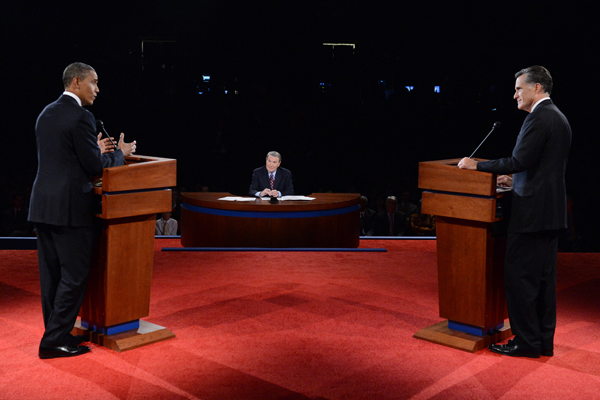
FIRST PRESIDENTIAL DEBATE – Barack Obama VS Mitt Romney (Part 7)

FIRST PRESIDENTIAL DEBATE – Barack Obama VS Mitt Romney (Part 7)

Published on Oct 3, 2012 by

Barack Obama & Mitt Romney Full Presidential Debate

__________

Related posts:

Open letter to President Obama (Part 147)

President Obama c/o The White House 1600 Pennsylvania Avenue NW Washington, DC 20500 Dear Mr. President, I know that you receive 20,000 letters a day and that you actually read 10 of them every day. I really do respect you for trying to get a pulse on what is going on out here. If you […]

Romney responds to my letter on abortion

Francis Schaeffer February 21, 1982 (Part 1) Uploaded by DeBunker7 on Feb 21, 2008 I sent Romney 12 letters on the prolife movement and many of these letters including the writings of Dr. Francis Schaeffer. Here are two clips from Schaeffer that sum up his views on abortion. _______________ Francis Schaeffer February 21, 1982 (Part […]

Open letter to President Obama (Part 142 B)

President Obama c/o The White House 1600 Pennsylvania Avenue NW Washington, DC 20500 Dear Mr. President, I know that you receive 20,000 letters a day and that you actually read 10 of them every day. I really do respect you for trying to get a pulse on what is going on out here. This excessive […]

Open letter to President Obama (Part 136 B)

Real Time with Bill Maher March 16 2012 – Alexandra Pelosi Interviews Welfare Recipients in NYC Published on Mar 18, 2012 by vclubscenedotcom Real Time with Bill Maher March 16 2012 – Alexandra Pelosi Interviews Welfare Recipients ____________ President Obama c/o The White House 1600 Pennsylvania Avenue NW Washington, DC 20500 Dear Mr. President, I […]

Open letter to Republican Presidential Candidate Mitt Romney on our pro-life views (Part 12)

To Mitt Romney, Box 96861, Washington, DC 20090-6861,  From Everette Hatcher of http://www.thedailyhatch.org 13900 Cottontail Lane, Alexander, AR 72002 Did we forgive George Bush in 1988 for being pro-choice originally in 1980? We sure did. In fact, my former pastor, Adrian Rogers, had a chance to visit with Bush several times. He told him that the […]

Open letter to Republican Presidential Candidate Mitt Romney on our pro-life views (Part 11)

To Mitt Romney, Box 96861, Washington, DC 20090-6861,  From Everette Hatcher of http://www.thedailyhatch.org 13900 Cottontail Lane, Alexander, AR 72002 Did we forgive George Bush in 1988 for being pro-choice originally in 1980? We sure did. In fact, my former pastor, Adrian Rogers, had a chance to visit with Bush several times. He told him that the […]

Open letter to Republican Presidential Candidate Mitt Romney on our pro-life views (Part 10)

A Ronald Reagan radio address from 1975 addresses the topics of abortion and adoption. This comes from a collection of audio commentaries titled “Reagan in His Own Voice.” To Mitt Romney, Box 96861, Washington, DC 20090-6861,  From Everette Hatcher of http://www.thedailyhatch.org 13900 Cottontail Lane, Alexander, AR 72002 Did we forgive George Bush in 1988 for being […]

Open letter to Republican Presidential Candidate Mitt Romney on our pro-life views (Part 9)

To Mitt Romney, Box 96861, Washington, DC 20090-6861,  From Everette Hatcher of http://www.thedailyhatch.org 13900 Cottontail Lane, Alexander, AR 72002 Did we forgive George Bush in 1988 for being pro-choice originally in 1980? We sure did. In fact, my former pastor, Adrian Rogers, had a chance to visit with Bush several times. He told him that the […]

Open letter to Republican Presidential Candidate Mitt Romney on our pro-life views (Part 8)

Superbowl commercial with Tim Tebow and Mom. To Mitt Romney, Box 96994, Washington, DC 20077-7556  From Everette Hatcher of http://www.thedailyhatch.org 13900 Cottontail Lane, Alexander, AR 72002 Did we forgive George Bush in 1988 for being pro-choice originally in 1980? We sure did. In fact, my former pastor, Adrian Rogers, had a chance to visit with Bush […]

Open letter to Republican Presidential Candidate Mitt Romney on our pro-life views (Part 7)

___________________________________________ Francis Schaeffer is a hero of mine and I want to honor him with a series of posts on Sundays called “Schaeffer Sundays” which will include his writings and clips from his film series. I have posted many times in the past using his material. Philosopher and Theologian, Francis A. Schaeffer has argued, “If […]

Open letter to Republican Presidential Candidate Mitt Romney on our pro-life views (Part 6)

A Christian Manifesto by Francis Schaeffer (Part 1) To Mitt Romney, Box 149756, Boston, MA 02114-9756  From Everette Hatcher of http://www.thedailyhatch.org 13900 Cottontail Lane, Alexander, AR 72002 Did we forgive George Bush in 1988 for being pro-choice originally in 1980? We sure did. In fact, my former pastor, Adrian Rogers, had a chance to visit with […]

Open letter to Republican Presidential Candidate Mitt Romney on our pro-life views (Part 5)

Part 1 Part 2 To Mitt Romney, Box 149756, Boston, MA 02114-9756  From Everette Hatcher of http://www.thedailyhatch.org 13900 Cottontail Lane, Alexander, AR 72002 Did we forgive George Bush in 1988 for being pro-choice originally in 1980? We sure did. In fact, my former pastor, Adrian Rogers, had a chance to visit with Bush several times. He […]

Open letter to Republican Presidential Candidate Mitt Romney on our pro-life views (Part 4)

Part 1 Part 2 To Mitt Romney, Box 149756, Boston, MA 02114-9756  From Everette Hatcher of http://www.thedailyhatch.org 13900 Cottontail Lane, Alexander, AR 72002 Did we forgive George Bush in 1988 for being pro-choice originally in 1980? We sure did. In fact, my former pastor, Adrian Rogers, had a chance to visit with Bush several times. He […]

Open letter to Republican Presidential Candidate Mitt Romney on our pro-life views (Part 3)

To Mitt Romney, Box 96994, Washington, DC 20077-7556  From Everette Hatcher of http://www.thedailyhatch.org 13900 Cottontail Lane, Alexander, AR 72002 Did we forgive George Bush in 1988 for being pro-choice originally in 1980? We sure did. In fact, my former pastor, Adrian Rogers, had a chance to visit with Bush several times. He told him that the […]

Open letter to President Obama (Part 125B)

Obama Calls GOP Budget Plan “Prescription for Decline” Uploaded by PBSNewsHour on Apr 3, 2012 In a blistering attack on the House-Passed Republican budget Tuesday, President Obama called the plan proposed by Rep. Paul Ryan a “Trojan Horse” and “a prescription for decline.” Judy Woodruff, Jared Bernstein of the Center on Budget and Policy Priorities […]

President Obama responds to Heritage Foundation critics on welfare reform waivers

Is President Obama gutting the welfare reform that Bill Clinton signed into law? Morning Bell: Obama Denies Gutting Welfare Reform Amy Payne August 8, 2012 at 9:15 am The Obama Administration came out swinging against its critics on welfare reform yesterday, with Press Secretary Jay Carney saying the charge that the Administration gutted the successful […]

Open letter to President Obama (Part 117.3)

A Taxing Distinction for ObamaCare Published on Jun 28, 2012 by catoinstitutevideo http://www.cato.org/publications/commentary/it-now-falls-congress http://www.cato.org/publications/commentary/taxing-decision http://www.cato-at-liberty.org/supreme-court-unlawfully-rewrites-obamacare-to… http://www.cato-at-liberty.org/congress-its-not-a-tax-scotus-yes-it-is/ The Cato Institute’s Roger Pilon, Ilya Shapiro, Michael F. Cannon, Michael D. Tanner and Trevor Burrus evaluate today’s ruling on ObamaCare at the Supreme Court. Video produced by Caleb O. Brown and Austin Bragg. ____________ President Obama c/o The […]

Cartoons about Obama’s class warfare

I have written a lot about this in the past and sometimes you just have to sit back and laugh. Laughing at Obama’s Bumbling Class Warfare Agenda July 13, 2012 by Dan Mitchell We know that President Obama’s class-warfare agenda is bad economic policy. We know high tax rates undermine competitiveness. And we know tax increases […]

“Feedback Friday” Letter to White House generated form letter response June 15, 2012 on Healthcare (part 8)

I have been writing President Obama letters and have not received a personal response yet.  (He reads 10 letters a day personally and responds to each of them.) However, I did receive a form letter in the form of an email on June 15, 2012. I don’t know which letter of mine generated this response so I have […]

Letter to White House generated form letter response April 3, 2011 (part 4)

I have been writing President Obama letters and have not received a personal response yet.  (He reads 10 letters a day personally and responds to each of them.) However, I did receive a form letter in the form of an email on April 3, 2011. I don’t know which letter of mine generated this response so I have linked […]

“Feedback Friday” Letter to White House generated form letter response (on how to jumpstart the economy) March 7, 2011 (part 3)

I have been writing President Obama letters and have not received a personal response yet.  (He reads 10 letters a day personally and responds to each of them.) However, I did receive a form letter in the form of an email on March 7, 2011. I don’t know which letter of mine generated this response so I have […]


Heritage Foundation looks at facts mentioned in first Presidential Debate (Part 3)

FIRST PRESIDENTIAL DEBATE – Barack Obama VS Mitt Romney (Part 5)

Published on Oct 3, 2012 by

Barack Obama & Mitt Romney Full Presidential Debate

__________

Setting the record straight on the first presidential debate is very easy if you are a reader of the Heritage Foundation website!!! Here are some examples below taken from Romina Boccia‘s excellent article from October 4, 2012:

Romina Boccia

October 4, 2012 at 5:41 pm

During last night’s presidential debate, claims were flying fast and furious. Some of these claims were true, others false. Here are the top 10—see which ones you can guess as either true or false.


7.      Natural gas production is up in spite of Obama’s policies, not because of them.

Romney: “[T]he President pointed out correctly that production of oil and gas in the U.S. is up. But not due to his policies. In spite of his policies. Mr. President, all of the increase in natural gas and oil has happened on private land, not on government land.”

True.Much of the increased oil and gas production is on private lands, over which the Administration has no control. According to a recent report from the Energy Information Administration, energy production decreased 13 percent on federal lands in fiscal year (FY) 2011 compared to FY 2010.

8.      Businesses can take a deduction for moving jobs overseas.

Obama: “I also want to close those loopholes that are giving incentives for companies that are shipping jobs overseas.”

False.President Obama falsely claimed businesses can take a deduction for moving jobs overseas. No such deduction exists. Moreover, President Obama demonstrates a fundamental misunderstanding of how the global economy works by suggesting that companies investing overseas destroy jobs at home. A U.S. business investing abroad is good for the U.S. economy because it makes the company more competitive at home and abroad in selling products into global markets, which often creates more jobs for Americans.

9.      America’s corporate tax rate is uncompetitive.

Obama: “When it comes to our tax code, Governor Romney and I both agree that our corporate tax rate is too high, so I want to lower it, particularly for manufacturing, taking it down to 25 percent.”

True. At over 39 percent, the U.S. has the highest corporate tax rate among industrialized nations. The average of all industrialized countries in the Organization for Economic Co-operation and Development (OECD), including the U.S. rate, is about 25 percent. To regain standing compared to competing nations, Congress should lower the rate so it is on par with the current OECD average. Despite this, President Obama has proposed to raise taxes on those firms with multinational operations. This would not insource jobs, but outsource ownership of U.S. firms.

10.  Social Security is structurally sound.

Obama: “Social Security is structurally sound. It’s going to have to be tweaked, [but] the basic structure is sound.”

False. Social Security is running permanent and growing deficits, threatening a 25 percent cut in Social Security benefits in 21 years. The Congressional Budget Office (CBO) recently confirmed that Social Security has been running deficits of about 4 percent for two years in a row and that these will only get worse over time. CBO projects that Social Security’s deficits will average 10 percent over the next decade and then exceed 20 percent by 2030 as more baby boomers retire.

FIRST PRESIDENTIAL DEBATE – Barack Obama VS Mitt Romney (Part 7)

Published on Oct 3, 2012 by

Barack Obama & Mitt Romney Full Presidential Debate

__________

The real truth about the financial condition of Social Security can be seen on the www.thedailyhatch.org

Uploaded by on Jan 8, 2009

Professor Williams explains what’s ahead for Social Security

If you want to know the real truth about the financial condition of Social Security then check out these links below:

Ark Times reader says Social Security is not Ponzi Scheme

Social Security is a Ponzi Scheme but Blake who is a blogger said I was off base. Ark Times reader says Social Security is not Ponzi Scheme Social Security Disaster Walter E. Williams Columnist, Townhall.com Politicians who are principled enough to point out the fraud of Social Security, referring to it as a lie and […]

Social Security is a Ponzi scheme that needs to be reformed

We got to do something soon about Social Security. The Case for Social Security Personal Accounts Posted by Daniel J. Mitchell There are two crises facing Social Security. First the program has a gigantic unfunded liability, largely caused by demographics. Second, the program is a very bad deal for younger workers, making them pay record […]

Senator Obama’s ideas on Social Security

Senator Obama’s Social Security Tax Plan Uploaded by afq2007 on Jul 23, 2008 In addition to several other tax increases, Senator Barack Obama wants to increase the Social Security payroll tax burden by imposing the tax on income above $250,000. This would be a sharp departure from current law, which only requires that the tax […]

Social Security is a Ponzi scheme (part 13)

Saving Social Security with Personal Retirement Accounts Uploaded by afq2007 on Jan 10, 2011 There are two crises facing Social Security. First the program has a gigantic unfunded liability, largely thanks to demographics. Second, the program is a very bad deal for younger workers, making them pay record amounts of tax in exchange for comparatively meager benefits. This […]

What does the Heritage Foundation have to say about saving Social Security:Study released May 10, 2011 (Part 7)

“Saving the American Dream: The Heritage Plan to Fix the Debt, Cut Spending, and Restore Prosperity,” Heritage Foundation, May 10, 2011 by  Stuart Butler, Ph.D. , Alison Acosta Fraser and William Beach is one of the finest papers I have ever read. Over the next few days I will post portions of this paper, but […]

Only difference between Ponzi scheme and Social Security is you can say no to Ponzi Scheme jh2d

Is Social Security  a Ponzi Scheme? I just started a series on this subject. In this article below you will see where the name “Ponzi scheme” came from and if it should be applied to the Social Security System. Ponzi! Ponzi! Ponzi! 9/14/2011 | Email John Stossel | Columnist’s Archive Ponzi! Ponzi! Ponzi! There, I […]

Social Security a Ponzi scheme?

Uploaded by LibertyPen on Jan 8, 2009 Professor Williams explains what’s ahead for Social Security Dan Mitchell on Social Security I have said that Social Security is a Ponzi scheme and sometimes you will hear someone in the public say the same thing. Yes, It Is a Ponzi Scheme by Michael D. Tanner Michael Tanner […]

Dan Mitchell on Social Security