That’s true in the U.S., it’s true in the U.K., and its true in every other nation.
If you want evidence, Phil Radford’s article for CapXexplains why the U.K.’s pharmaceutical industry has contracted while Ireland’s has expanded.
AstraZeneca’s plan to build a $350m pharmaceuticals factory in Ireland rather than the UK was 100% predictable. …the long-term failure of UK pharma highlights how UK policy discussion is light years behind our competitors when it comes to understanding what drives prosperity. …The trend kicked off back in 2011, when US-based Pfizer shifted its Viagra-making plant from Sandwich in Kent to Ringaskiddy, near Cork. This event marked the start of a five-year plunge in UK pharma manufacturing and exports…According to ONS, output in UK pharma manufacturing declined by roughly one-third from 2010 to 2015. Gross value added actually halved. Where did the manufacturing go? Ireland… What’s caused this malady? In a word: taxation. …corporate taxation levels appear to exert a dominating effect on where pharmaceuticals companies locate their factories. …Ireland’s corporate tax rate fell from 40% in 1996 to 12.5%n 2003, and it has stayed at that level for the past 19 years. Meanwhile, the UK’s corporate taxation rate was 30% 20 years ago, and from 2008 it began a gentle drift downwards to 19% where it will remain until April this year, when it will increase to 25%. This means, from AstraZeneca’s point of view, the investment equation is a no-brainer. Even if Ireland is forced to raise its rate to 15%, the country will shortly regain its general comparative level of between one-half and two-thirds the UK rate.
A few years ago, the corporate tax rate was 19 percent and expected to drop to 17 percent. Now, thanks to an unwillingness to control spending, the rate is jumping to 25 percent.
And, as noted in the article, the U.K. lost a $350 million factory. As well as all the jobs and taxable income that it would have generated.
The video clip is less than two minutes (taken from this longer discussion with Fergus Hodgson), but I can summarize my key point in just one very important sentence
Anybody who opposes entitlement reform is unavoidably in favor of big tax increases on lower-income and middle-class Americans.
There are three reasons for this bold (and bolded) statement.
There presumably is a limit to how much of this future spending burden can be financed by borrowing from the private sector (or with printing money by the Federal Reserve).
Many politicians claim that future spending on entitlements (as well spending on new entitlements!) can be financed with class-warfare taxes, but there are not enough rich people.
My left-leaning friends almost surely would agree with the first two points. But some of them (particularly the ones who don’t understand budget numbers) might argue with the third point.
To confirm the accuracy of the argument, let’s look at this chart from Brian Riedl’s famous Chartbook.
As you can see, even confiscatory 100-percent taxes on the rich (which obviously would cripple the economy) would not be nearly enough to eliminate America’s medium-term fiscal gap.
Heck, even if we look at just the next 10 years and include every possible tax hike, it’s obvious that a class-warfare agenda (which also would have negative economic effects) would not be enough to finance all the spending that is currently in the pipeline.
Here’s another Riedl chart (which even includes some proposals that would hit the middle class).
I’ll conclude with two further observations.
First, there are plenty of honest leftists (the ones who understand budget numbers, including Paul Krugman) who openly admit that big tax increases will be needed if the burden of government spending is allowed to increase.
Second, there are plenty of disingenuous (or perhaps naive) folks on the right who oppose entitlement reform while not admitting that their approach means massive tax increases on lower-income and middle-class taxpayers.
P.S. In the absence of entitlement reform, politicians will first choose class warfare taxes, of course, but that simply will be a precursor to higher taxes on the rest of us.
If our country is the grow the economy and get our budget balanced it will not be by raising taxes!!! The recipe for success was followed by Ronald Reagan in the 1980’s when he cut taxes and limited spending. As far as limiting spending goes only Bill Clinton (with his Republican Congress) were ability to control the growth of government better than Reagan.
I had the pleasure of hearing Arthur Laffer speak in 1981 and he predicted all the economic growth that we would see because of the Reagan tax cuts and he was right. Unfortunately in California today they have forgotten all of those lessons!!!
President Obama’s fiscal policy is a dismal mixture. On spending, he wants a European-style welfare state. On taxes, he is fixated on class-warfare tax policy.
If we want to know the consequences of that approach, we can look at the ongoing collapse of Greece. Or, if we don’t like overseas examples, we can look at California.
California Controller John Chiang reported last week that April tax collections were a gigantic 20.2%, or $2.44 billion, below 2012-13 budget projections. …Among the biggest surprises is a 21.5% or nearly $2 billion decline in personal income tax payments from what Governor Jerry Brown had anticipated. This reinforces the point that when states rely too heavily on the top 1% of taxpayers to pay the bills, fiscal policy is a roller coaster ride. California is suffering this tax drought even as most other states enjoy a revenue rebound. State tax collections were up nationally by 8.9% last year, according to the Census Bureau, and this year revenues are up by double digits in many states. The state comptroller reports that Texas is enjoying 10.9% growth in its sales taxes (it has no income tax), while California can’t seem to keep up despite one of the highest tax rates in the land.
The WSJ editorial suggests a supply-side response, but you won’t be surprised to learn that the state’s kleptomaniac governor is pushing an Obama-style soak-the-rich tax hike.
This would seem to suggest that California should try cutting tax rates to keep more people and business in the state, but Sacramento is intent on raising them again. Governor Brown and the public-employee unions are sponsoring a ballot initiative in November to raise the state sales tax by a quarter point to 7.5% and to raise the top marginal income-tax rate to 13.3% from 10.3%. This will make the state even more reliant on the fickle revenue streams provided by the rich. Meanwhile, an analysis by Joseph Vranich, who studies migration of businesses from one state to another, finds that since 2009 the flight of businesses out of California “has increased fivefold due to high taxes and regulatory costs.”
But while voters can impose higher taxes, they can’t repeal the laws of economics. So if California voters do the wrong thing, they will learn a hard lesson about the Laffer Curve.
The first four rounds of my New York vs. Florida contest (available here, here, here, and here) largely focused on Florida’s superior economic policies and superior economic results.
So you won’t be surprised to learn that Round #5 continues that tradition.
We’ll start today’s column with a remarkable comparison put together by the Wall Street Journal.
Notice that Florida now has more population (thanks in large part to interstate migration), yet New York’s budget is twice as big.
That means a much higher tax burden.
And New York’s onerous fiscal burden doubtlessly helps to explain why Florida has been growing so much faster, and also has a much lower unemployment rate.
The Wall Street Journal connected the dots as part of its editorial.
Comparative governance is a useful course of study, not least because bad governance is so costly to people and prosperity. We often write about the migration from the Northeast to Florida and other states, but sometimes the contrast is best illuminated with some data. …As recently as 2013 the two states had similar populations, but so many people have moved to the Sunshine State that it’s now roughly 2.6 million people larger.Yet, believe it or not, Florida’s state budget as measured in the latest proposals from the two governors, is only half the size of New York’s. This is in part a reflection of their tax burden, which in Florida is much smaller. …Florida has no state income tax, while New York’s top tax rate is 10.9%. In New York City, the top rate is 14.8%, while in Miami it’s zero. …Florida’s jobless rate was 2.5% in December, well below the January national 3.4% rate. New York’s rate was 4.3%, tied with Alaska and Michigan for fifth worst in the country… State GDP growth in Florida in 2012 dollars from 2016-2021 was more than double New York’s—17% to 8%. These comparative statistics…show that better governance yields better fiscal and economic results.
Amen.
I’ve written that there’s a link between national policy and national prosperity.
P.S. A reader sent me a fill-in-the-blanks essay generator for leaving New York. It focuses on quality of life rather than public policy, but I nonetheless made some choices.
The first four rounds of my New York vs. Florida contest (available here, here, here, and here) largely focused on Florida’s superior economic policies and superior economic results.
So you won’t be surprised to learn that Round #5 continues that tradition.
We’ll start today’s column with a remarkable comparison put together by the Wall Street Journal.
Notice that Florida now has more population (thanks in large part to interstate migration), yet New York’s budget is twice as big.
That means a much higher tax burden.
And New York’s onerous fiscal burden doubtlessly helps to explain why Florida has been growing so much faster, and also has a much lower unemployment rate.
The Wall Street Journal connected the dots as part of its editorial.
Comparative governance is a useful course of study, not least because bad governance is so costly to people and prosperity. We often write about the migration from the Northeast to Florida and other states, but sometimes the contrast is best illuminated with some data. …As recently as 2013 the two states had similar populations, but so many people have moved to the Sunshine State that it’s now roughly 2.6 million people larger.Yet, believe it or not, Florida’s state budget as measured in the latest proposals from the two governors, is only half the size of New York’s. This is in part a reflection of their tax burden, which in Florida is much smaller. …Florida has no state income tax, while New York’s top tax rate is 10.9%. In New York City, the top rate is 14.8%, while in Miami it’s zero. …Florida’s jobless rate was 2.5% in December, well below the January national 3.4% rate. New York’s rate was 4.3%, tied with Alaska and Michigan for fifth worst in the country… State GDP growth in Florida in 2012 dollars from 2016-2021 was more than double New York’s—17% to 8%. These comparative statistics…show that better governance yields better fiscal and economic results.
Amen.
I’ve written that there’s a link between national policy and national prosperity.
P.S. A reader sent me a fill-in-the-blanks essay generator for leaving New York. It focuses on quality of life rather than public policy, but I nonetheless made some choices.
I have a seven-part series (here, here, here, here, here, here and here) comparing Texas and California, mostly to demonstrate that the not-so-Golden State has hurt itself with excessive taxation and a bloated government.
Today, we’re going to augment our comparisons by looking at a very practical example of how California’s approach is much worse.
The National Association of State Budget Officers publishes an interesting document (at least if you’re a budget wonk) entitled State Expenditure Report.
And if you to to Table 2 of that report, you’ll find the most important measure of state fiscal policy, which shows how fast the burden of government spending increased over the past two years.
Lo and behold (but to no one’s surprise), California politicians increased the spending burden much faster than their Texas counterparts.
As you can see, both states were irresponsible the first year, thanks in large part to the all the pandemic-related handouts approved by Trump and Biden.
But California was twice as bad. Politicians in Sacramento used federal handouts to finance a grotesque spending binge (whereas the spending binge in Texas deserves a more mild adjective, such as massive).
Both states were better the second year, with California’s spending burden climbing by 2.2 percent in 2022 and Texas actually delivering a spending cut.
Remember, though, that the spending burden exploded between 2020 and 2021, so the 2022 numbers only look reasonable compared to the bloated trendline.
Now let’s consider whether California’s grotesque spending binge had negative consequences.
The answer is yes, according to a Wall Street Journaleditorial.
Gov. Gavin Newsom last year touted a $100 billion budget surplus as evidence of California’s progressive superiority. He was less triumphant…when announcing a $22.5 billion deficit in the coming year, a contrast to Texas’s record $32.7 billion surplus. …California’s problem, as usual, is that Democrats baked too much spending into their budget baseline. They expanded Medicaid to undocumented immigrants over the age of 50, enacted universal pre-school and school lunches, extended paid family leave by two weeks, and boosted climate spending by $10 billion. …Much of Texas’s surplus this year owes to surging sales-tax revenue from inflation and population growth—i.e., Californians moving to Texas and spending their tax savings. Mr. Newsom claimed Tuesday that California has a more “fair” tax system than the Lone Star State and that Texans pay more in taxes. This is disinformation. According to the Census Bureau, California’s per capita state tax collections ($6,325) were second highest in the country in 2021 after Vermont. Texas’s ($2,214) were second lowest after Alaska. …California’s budget problems will grow as more of its rich and middle class move to lower-tax states like Texas.
Per-capita state tax collections are the most striking numbers in the editorial. The average Californian is paying $6,325 for state government, nearly three times as much as the $2,214 that is paid by the average Texan.
Does anyone think that Californians are getting nearly three times as much value as their counterparts in the Lone Star State?
TRY BORROWING AT A BANK WITH A FINANCIAL CONDITION LIKE THE USA HAS:
The problem in Washington is not lack of revenue but our lack of spending restraint. This video below makes that point. WASHINGTON IS A SPENDING ADDICT!!!
——-
—
The Honorable John Barrasso of Wyoming United States Senate Washington, D.C. 20510
Dear Senator Barrasso,
On September 16, 2021 my post “46 REPUBLICAN SENATORS VOW NOT TO HELP DEMOCRATS RAISE THE DEBT CEILING (HERE WE GO AGAIN!!!!!)” and you were one of the 46 Senators who pledged not to raise the debt ceiling but you folded like a wet leaf just like I predicted:
I have written before about those heroes of mine that have resisted raising the debt ceiling but in the end I have always been disappointed and here we go again!
But first let me give you a taste of something I wrote about 10 years ago on this same issue!
What would happen if the debt ceiling was not increased? Yes President Obama would probably cancel White House tours and he would try to stop mail service or something else to get on our nerves but that is what the Republicans need to do.
All but four Republican senators have signed a pledge that they will not vote to raise the debt ceiling, sending another warning to Democrats that they are on their own on the pressing issue.
Sen. Ron Johnson (R-WI) circulated a letter during the chamber’s vote-a-rama on the $3.5 trillion budget resolution Wednesday, signing up a majority of his fellow Republicans in an effort to link the Democrats’ proposed spending package with the statutory debt limit imposed on the federal government by Congress, which covers spending that has already been approved and must be paid by the U.S. Treasury.
In the letter, which is addressed to “Our Fellow Americans,” the Republican signatories claim that Democrats are responsible for increased federal spending and so must be responsible for raising the debt limit. “We will not vote to increase the debt ceiling, whether that increase comes through a stand-alone bill, a continuing resolution, or any other vehicle,” the letter says. “Democrats, at any time, have the power through reconciliation to unilaterally raise the debt ceiling, and they should not be allowed to pretend otherwise.”
The Republicans who didn’t sign the letter are Sens. Susan Collins of Maine, John Kennedy of Louisiana, Lisa Murkowski of Alaska and Richard Shelby of Alabama.
Why now: A two-year suspension of the debt ceiling expired at the end of July, forcing the U.S. Treasury to begin taking “extraordinary measures” to keep paying its bills as it waits for Congress to either raise or suspend the limit before the country is forced to default. Democrats opted not to include an increase in the debt ceiling in their budget resolution, which would have made it possible to raise the limit without Republican support, though they still have the option of revising the resolution to include such a provision.
What Democrats say: Democrats point out that much of the increased debt in recent years was produced during former President Trump’s administration. “I cannot believe that Republicans would let the country default,” Senate Majority Leader Chuck Schumer (D-NY) said Wednesday. “It has always been bipartisan to deal with the debt ceiling. When Trump was president I believe the Democrats joined with him to raise it three times.”
President Biden told reporters Wednesday that trillions in debt were added “on the Republicans’ watch” but said he was confident that the GOP would act in time. “They are not going to let us default,” he said.
The bottom line: No one expects Congress to allow the U.S. to default, but it looks like we could be in for a high-stakes game of chicken in the coming weeks — and the markets are starting to notice. According to Reuters Wednesday, “Some U.S. Treasury bill yields are beginning to reflect concerns that lawmakers may wait until the last minute to increase or suspend the debt ceiling.”
Will you stand up against the Democrats in the future and make the Government ONLY SPEND WHAT IT BRINGS IN? We are becoming an entitlement society and we must stop this trend!!!!
PS: In 2010 we had a group of conservatives get elected in the House and many of them stood up to President Obama when he wanted to raise the debt limit and I praised these 66 heroes of mine on my blog in 2011 and Representative Andy Harris of Maryland was one of those. Here is what I wrote about him:
Sixty Six who resisted “Sugar-coated Satan Sandwich” Debt Deal (Part 37)
This post today is a part of a series I am doing on the 66 Republican Tea Party favorites that resisted eating the “Sugar-coated Satan Sandwich” Debt Deal. Actually that name did not originate from a representative who agrees with the Tea Party, but from a liberal.
Rep. Emanuel Clever (D-Mo.) called the newly agreed-upon bipartisan compromise deal to raise the debt limit “a sugar-coated satan sandwich.”
“This deal is a sugar-coated satan sandwich. If you lift the bun, you will not like what you see,” Clever tweeted on August 1, 2011.
Washington, DC – Today, Rep. Andy Harris voted against the debt ceiling increase. The plan did not require passage of a balanced budget amendment, which Rep. Harris feels is essential to bringing permanent common sense accountability to Washington.
“A balanced budget amendment is the only way to make sure the federal government spends what it takes in and lives within its means,” said Rep. Andy Harris. “Over the past few weeks I have repeatedly voted for reasonable proposals to raise the debt ceiling that included passage of a balanced budget amendment. But I didn’t come to Washington to continue writing blank checks. Maryland’s families and job creators sent me to Congress to permanently change the way Washington does business. I appreciate Speaker Boehner’s remarkable, historic efforts to craft a proposal to solve the debt ceiling issue. But today’s debt ceiling deal just doesn’t go far enough to build an environment for job creation by requiring passage of a balanced budget amendment to bring permanent common sense accountability to Washington.”
Currently, the U.S. Government has a national debt of $14.3 trillion and runs an annual deficit of $1.65 trillion.
Sixty Six who resisted “Sugar-coated Satan Sandwich” Debt Deal (Part 49) This post today is a part of a series I am doing on the 66 Republican Tea Party favorites that resisted eating the “Sugar-coated Satan Sandwich” Debt Deal. Actually that name did not originate from a representative who agrees with the Tea Party, but […]
Sixty Six who resisted “Sugar-coated Satan Sandwich” Debt Deal (Part 48) This post today is a part of a series I am doing on the 66 Republican Tea Party favorites that resisted eating the “Sugar-coated Satan Sandwich” Debt Deal. Actually that name did not originate from a representative who agrees with the Tea Party, but […]
Sixty Six who resisted “Sugar-coated Satan Sandwich” Debt Deal (Part 47) This post today is a part of a series I am doing on the 66 Republican Tea Party favorites that resisted eating the “Sugar-coated Satan Sandwich” Debt Deal. Actually that name did not originate from a representative who agrees with the Tea Party, but […]
Sixty Six who resisted “Sugar-coated Satan Sandwich” Debt Deal (Part 46) This post today is a part of a series I am doing on the 66 Republican Tea Party favorites that resisted eating the “Sugar-coated Satan Sandwich” Debt Deal. Actually that name did not originate from a representative who agrees with the Tea Party, […]
Sixty Six who resisted “Sugar-coated Satan Sandwich” Debt Deal (Part 45) This post today is a part of a series I am doing on the 66 Republican Tea Party favorites that resisted eating the “Sugar-coated Satan Sandwich” Debt Deal. Actually that name did not originate from a representative who agrees with the Tea Party, but […]
Sixty Six who resisted “Sugar-coated Satan Sandwich” Debt Deal (Part 44) This post today is a part of a series I am doing on the 66 Republican Tea Party favorites that resisted eating the “Sugar-coated Satan Sandwich” Debt Deal. Actually that name did not originate from a representative who agrees with the Tea Party, but […]
Sixty Six who resisted “Sugar-coated Satan Sandwich” Debt Deal (Part 43) This post today is a part of a series I am doing on the 66 Republican Tea Party favorites that resisted eating the “Sugar-coated Satan Sandwich” Debt Deal. Actually that name did not originate from a representative who agrees with the Tea Party, but […]
Sixty Six who resisted “Sugar-coated Satan Sandwich” Debt Deal (Part 42) This post today is a part of a series I am doing on the 66 Republican Tea Party favorites that resisted eating the “Sugar-coated Satan Sandwich” Debt Deal. Actually that name did not originate from a representative who agrees with the Tea Party, but […]
Sixty Six who resisted “Sugar-coated Satan Sandwich” Debt Deal (Part 41) This post today is a part of a series I am doing on the 66 Republican Tea Party favorites that resisted eating the “Sugar-coated Satan Sandwich” Debt Deal. Actually that name did not originate from a representative who agrees with the Tea Party, but […]
Sixty Six who resisted “Sugar-coated Satan Sandwich” Debt Deal (Part 40) This post today is a part of a series I am doing on the 66 Republican Tea Party favorites that resisted eating the “Sugar-coated Satan Sandwich” Debt Deal. Actually that name did not originate from a representative who agrees with the Tea Party, but […]
Sixty Six who resisted “Sugar-coated Satan Sandwich” Debt Deal (Part 39) This post today is a part of a series I am doing on the 66 Republican Tea Party favorites that resisted eating the “Sugar-coated Satan Sandwich” Debt Deal. Actually that name did not originate from a representative who agrees with the Tea Party, but […]
Sixty Six who resisted “Sugar-coated Satan Sandwich” Debt Deal (Part 38) This post today is a part of a series I am doing on the 66 Republican Tea Party favorites that resisted eating the “Sugar-coated Satan Sandwich” Debt Deal. Actually that name did not originate from a representative who agrees with the Tea Party, but […]
Sixty Six who resisted “Sugar-coated Satan Sandwich” Debt Deal (Part 37) This post today is a part of a series I am doing on the 66 Republican Tea Party favorites that resisted eating the “Sugar-coated Satan Sandwich” Debt Deal. Actually that name did not originate from a representative who agrees with the Tea Party, but […]
Sixty Six who resisted “Sugar-coated Satan Sandwich” Debt Deal (Part 36) This post today is a part of a series I am doing on the 66 Republican Tea Party favorites that resisted eating the “Sugar-coated Satan Sandwich” Debt Deal. Actually that name did not originate from a representative who agrees with the Tea Party, but […]
Sixty Six who resisted “Sugar-coated Satan Sandwich” Debt Deal (Part 35) This post today is a part of a series I am doing on the 66 Republican Tea Party favorites that resisted eating the “Sugar-coated Satan Sandwich” Debt Deal. Actually that name did not originate from a representative who agrees with the Tea Party, but […]
Sixty Six who resisted “Sugar-coated Satan Sandwich” Debt Deal (Part 34) This post today is a part of a series I am doing on the 66 Republican Tea Party favorites that resisted eating the “Sugar-coated Satan Sandwich” Debt Deal. Actually that name did not originate from a representative who agrees with the Tea Party, but […]
Sixty Six who resisted “Sugar-coated Satan Sandwich” Debt Deal (Part 33) This post today is a part of a series I am doing on the 66 Republican Tea Party favorites that resisted eating the “Sugar-coated Satan Sandwich” Debt Deal. Actually that name did not originate from a representative who agrees with the Tea Party, but […]
Sixty Six who resisted “Sugar-coated Satan Sandwich” Debt Deal (Part 32) This post today is a part of a series I am doing on the 66 Republican Tea Party favorites that resisted eating the “Sugar-coated Satan Sandwich” Debt Deal. Actually that name did not originate from a representative who agrees with the Tea Party, but […]
Congressmen Tim Huelskamp on the debt ceiling Sixty Six who resisted “Sugar-coated Satan Sandwich” Debt Deal (Part 31) This post today is a part of a series I am doing on the 66 Republican Tea Party favorites that resisted eating the “Sugar-coated Satan Sandwich” Debt Deal. Actually that name did not originate from a representative […]
Sixty Six who resisted “Sugar-coated Satan Sandwich” Debt Deal (Part 30) This post today is a part of a series I am doing on the 66 Republican Tea Party favorites that resisted eating the “Sugar-coated Satan Sandwich” Debt Deal. Actually that name did not originate from a representative who agrees with the Tea Party, but […]
Sixty Six who resisted “Sugar-coated Satan Sandwich” Debt Deal (Part 29) This post today is a part of a series I am doing on the 66 Republican Tea Party favorites that resisted eating the “Sugar-coated Satan Sandwich” Debt Deal. Actually that name did not originate from a representative who agrees with the Tea Party, but […]
The Sixty Six who resisted “Sugar-coated Satan Sandwich” Debt Deal (Part 28) This post today is a part of a series I am doing on the 66 Republican Tea Party favorites that resisted eating the “Sugar-coated Satan Sandwich” Debt Deal. Actually that name did not originate from a representative who agrees with the Tea Party, […]
The Sixty Six who resisted “Sugar-coated Satan Sandwich” Debt Deal (Part 27) This post today is a part of a series I am doing on the 66 Republican Tea Party favorites that resisted eating the “Sugar-coated Satan Sandwich” Debt Deal. Actually that name did not originate from a representative who agrees with the Tea Party, […]
The Sixty Six who resisted “Sugar-coated Satan Sandwich” Debt Deal (Part 26) This post today is a part of a series I am doing on the 66 Republican Tea Party favorites that resisted eating the “Sugar-coated Satan Sandwich” Debt Deal. Actually that name did not originate from a representative who agrees with the Tea Party, […]
Uploaded by RepJoeWalsh on Jun 14, 2011 Our country’s debt continues to grow — it’s eating away at the American Dream. We need to make real cuts now. We need Cut, Cap, and Balance. The Sixty Six who resisted “Sugar-coated Satan Sandwich” Debt Deal (Part 25) This post today is a part of a series […]
The Sixty Six who resisted “Sugar-coated Satan Sandwich” Debt Deal (Part 23) This post today is a part of a series I am doing on the 66 Republican Tea Party favorites that resisted eating the “Sugar-coated Satan Sandwich” Debt Deal. Actually that name did not originate from a representative who agrees with the Tea Party, […]
The Sixty Six who resisted “Sugar-coated Satan Sandwich” Debt Deal (Part 22) This post today is a part of a series I am doing on the 66 Republican Tea Party favorites that resisted eating the “Sugar-coated Satan Sandwich” Debt Deal. Actually that name did not originate from a representative who agrees with the Tea Party, […]
The Sixty Six who resisted “Sugar-coated Satan Sandwich” Debt Deal (Part 21) This post today is a part of a series I am doing on the 66 Republican Tea Party favorites that resisted eating the “Sugar-coated Satan Sandwich” Debt Deal. Actually that name did not originate from a representative who agrees with the Tea Party, […]
The Sixty Six who resisted “Sugar-coated Satan Sandwich” Debt Deal (Part 20) This post today is a part of a series I am doing on the 66 Republican Tea Party favorites that resisted eating the “Sugar-coated Satan Sandwich” Debt Deal. Actually that name did not originate from a representative who agrees with the Tea Party, […]
The Sixty Six who resisted “Sugar-coated Satan Sandwich” Debt Deal (Part 19) This post today is a part of a series I am doing on the 66 Republican Tea Party favorites that resisted eating the “Sugar-coated Satan Sandwich” Debt Deal. Actually that name did not originate from a representative who agrees with the Tea Party, […]
The Sixty Six who resisted “Sugar-coated Satan Sandwich” Debt Deal (Part 18) This post today is a part of a series I am doing on the 66 Republican Tea Party favorites that resisted eating the “Sugar-coated Satan Sandwich” Debt Deal. Actually that name did not originate from a representative who agrees with the Tea Party, […]
The Sixty Six who resisted “Sugar-coated Satan Sandwich” Debt Deal (Part 17) This post today is a part of a series I am doing on the 66 Republican Tea Party favorites that resisted eating the “Sugar-coated Satan Sandwich” Debt Deal. Actually that name did not originate from a representative who agrees with the Tea Party, […]
The Sixty Six who resisted “Sugar-coated Satan Sandwich” Debt Deal (Part 16) This post today is a part of a series I am doing on the 66 Republican Tea Party favorites that resisted eating the “Sugar-coated Satan Sandwich” Debt Deal. Actually that name did not originate from a representative who agrees with the Tea Party, […]
Neither of the techniques mentioned above is a very accurate way to measure each president’s impact on the national debtbecause the president doesn’t have much control over the national debt during their first year in office.
For example, President Donald Trump took office in January 2017. He submitted his first budget in May. It covered the 2018 fiscal year, which didn’t begin until October 1, 2017. Trump operated the first part of his term under President Barack Obama’s budget for fiscal year 2017, which ended on Sept. 30, 2017.2
fusing, Congress intentionally sets it up this way. An advantage of the federal fiscal year is that it gives the new president time to put together their budget during their first months in office.
The Best Way to Measure Debt by President
The best way to measure a president’s debt is to add up their budget deficits and compare that total to the debt level when they took office. A president’s budget reveals their administration’s priorities.
Note
Though they sound similar, deficit and debt are two different things. A deficit is a budget shortfall, whereas debt is the running total of all deficits and surpluses. Deficits add to the debt, while surpluses reduce it.
Top 5 Presidents Who Contributed to the Debt by Percentage
Franklin D. Roosevelt (1933-1945)
President Roosevelt added the largest percentage increase to the national debt. Although he only added $236 billion, this was an increase of about 1,048% from the $22.5 billion debt level left by President Herbert Hoover before him. The Great Depression and the New Deal contributed to FDR’s yearly deficits, but the biggest cost was World War II—it added $186.3 billion to the debt between 1942 and 1945.3
Woodrow Wilson (1913-1921)
President Wilson was the second-largest contributor to the debt, percentage-wise. He added about $21 billion, which was a 723% increase over the $2.9 billion debt of his predecessor. World War I contributed to the deficits that raised the national debt.3
Ronald Reagan (1981-1989)
President Reagan increased the debt by $1.86 trillion, or by 186%. Reagan’s supply-side economics didn’t grow the economy enough to offset the lost revenue from its tax cuts. Reagan also increased the defense budget by 35%.4
George W. Bush (2001-2009)
President Bush added $5.85 trillion to the national debt. That’s a 101% increase, putting him in fourth. Bush launched the War on Terror in response to the 9/11 attacks, which led to multi-trillion-dollar spending on the War in Afghanistan and the War in Iraq. Bush also dealt with the 2001 recession and the 2008 financial crisis.5
Barack Obama (2009-2017)
Under President Obama, the national debt grew the most in dollar terms ($8.6 trillion) and was fifth by percentage at 74%. Obama fought the Great Recession with an $831 billion economic stimulus package and added $858 billion through tax cuts. Even though the fiscal year 2009 budget was set by President Bush, Obama added to it with the Economic Stimulus Act in 2009.657
US Debt Increase by President Per Fiscal Year
The U.S. Treasury Department has historical tables that report the annual U.S. debt for each fiscal year (FY) since 1790. We’ve compiled this data from that source to create the figures used below.81
Joe Biden
In January 2023, the nation hit the $31.4 trillion debt limit Congress passed in 2021.9Republican lawmakers control the House of Representatives and said they won’t raise the debt limit unless Democrats, who control the Senate, agree to budget cuts.
On Oct. 1, 2021, at the end of fiscal year 2021, the national debt was $28.4 trillion. Between the end of fiscal year 2020 and the end of fiscal year 2021, the national debt grew $1.5 trillion, a 5.6% increase year over year. For fiscal year 2022, President Joe Biden’s budget included a deficit of $1.84 trillion, and by August 2022, the national debt had grown to $30.8 trillion.110
When Biden took office, the economy and household finances were still reeling from the pandemic, and Biden continued his predecessor’s policy of spending heavily to keep households afloat. In March 2021, Biden signed the American Rescue Plan, which showered taxpayers with pandemic relief cash in the form of stimulus checks and extra unemployment payments, and temporarily expanded child tax credits, plus other help. It all came with a cost to future budgets: The bill would add $1.9 trillion to the national debt by 2031, the Congressional Budget Office estimated.11
The bipartisan infrastructure bill, signed by Biden in November 2021, which provided new funding for highways, railways, broadband Internet expansion and other projects, added to the debt too, with estimates on its 10-year impact ranging from $374 billion to $400 billion, depending on how it’s calculated.1213
Some of Biden’s actions cut the other way. In August 2022, Biden signed the Inflation Reduction Act, an anti-climate change bill that spent money on new green energy programs and tax credits as well as to make drugs cheaper for patients, and paid for it by raising taxes on corporations and the ultra-wealthy. The bill should reduce the national debt by $102 billion by 2031, the CBO estimated.14
Biden followed up this bill with an executive action that forgave up to $10,000 of federal student loan debt per borrower, and $20,000 for those who received Pell Grants. He also proposed a new, cheaper income-driven student loan repayment program for future borrowers. However, he also announced that student loan interest and required payments, both of which had been frozen since the pandemic hit, would resume in January 2023.15
In August 2022, the government did not have an official estimate for how these measures would impact the national debt. One piece of it—forgiving $10,000 of debt per student loan borrower—would cost $329.7 billion over 10 years, according to an estimate by the Wharton School of Business.16
Donald Trump
At the end of fiscal year 2020, the debt was $26.9 trillion. Trump added $6.7 trillion to the debt between fiscal year 2017 and fiscal year 2020, a 33.1% increase, largely due to the effects of the coronavirus pandemic and 2020 recession.
In his FY 2021 budget, Trump’s budget included a $966 billion deficit.17 However, the national debt actually grew by $1.5 trillion between October 1, 2020, and October 1, 2021.
FY 2021: $1.5 trillion
FY 2020: $4.2 trillion
FY 2019: $1.2 trillion
FY 2018: $1.3 trillion
Barack Obama
President Obama added about $8.6 trillion, about a 74% increase, to the national debt at the end of President Bush’s last budget in 2009.
FY 2017: $671 billion
FY 2016: $1.42 trillion
FY 2015: $326 billion
FY 2014: $1.09 trillion
FY 2013: $672 billion
FY 2012: $1.28 trillion
FY 2011: $1.23 trillion
FY 2010: $1.65 trillion
FY 2009: $253 billion (Congress passed the Economic Stimulus Act, which spent $253 billion)18
George W. Bush
President Bush added $5.85 trillion to the national debt, a 101% increase from the $5.8 trillion debt at the end of Clinton’s last budget for fiscal year 2001.
FY 2009: $1.63 trillion (this was Bush’s deficit without the impact of the Economic Stimulus Act)
FY 2008: $1.02 trillion
FY 2007: $501 billion
FY 2006: $574 billion
FY 2005: $553 billion
FY 2004: $596 billion
FY 2003: $555 billion
FY 2002: $421 billion
Bill Clinton
President Clinton increased the national debt by almost $1.4 trillion, almost a 32% increase from the $4.4 trillion debt at the end of President H.W. Bush’s last budget.54
FY 2001: $133 billion
FY 2000: $18 billion
FY 1999: $130 billion
FY 1998: $113 billion
FY 1997: $189 billion
FY 1996: $251 billion
FY 1995: $281 billion
FY 1994: $281 billion
George H.W. Bush
President H.W. Bush added $1.55 trillion to the debt, a 54% increase from the $2.857 trillion debt at the end of Reagan’s last budget.4
FY 1993: $347 billion
FY 1992: $399 billion
FY 1991: $432 billion
FY 1990: $376 billion
Ronald Reagan
President Regan added $1.86 trillion to the national debt, a 186% increase from the $997.8 billion debt at the end of Carter’s last budget.4
FY 1989: $255 billion
FY 1988: $252 billion
FY 1987: $225 billion
FY 1986: $302 billion
FY 1985: $251 billion
FY 1984: $195 billion
FY 1983: $235 billion
FY 1982: $145 billion
Jimmy Carter
President Carter added $299 billion to the debt, a 42.7% increase from the $698.8 billion debt at the end of Ford’s last budget.4
FY 1981: $90.1 billion
FY 1980: $81.1 billion
FY 1979: $54.9 billion
FY 1978: $72.7 billion
Gerald Ford
President Ford added $223.7 billion to the debt.4
FY 1977: $78.4 billion
FY 1976: $87.2 billion
FY 1975: $58.1 billion
Richard Nixon
President Nixon added $121.1 billion to the national debt, a 34% increase from the $353.7 billion debt at the end of President Johnson’s last budget.4
FY 1974: $16.9 billion
FY 1973: $30.8 billion
FY 1972: $29.1 billion
FY 1971: $27.2 billion
FY 1970: $17.1 billion
Lyndon B. Johnson
President Johnson added $41.8 billion to the national debt, just a small 13% increase from the $312 billion debt at the end of President Kennedy’s time in office in 1964.4
FY 1969: $6.1 billion
FY 1968: $21.3 billion
FY 1967: $6.3 billion
FY 1966: $2.6 billion
FY 1965: $5.5 billion
John F. Kennedy
President Kennedy added $22.6 billion to the national debt.4
FY 1964: $5.8 billion
FY 1963: $7.6 billion
FY 1962: $9.2 billion
Dwight Eisenhower
President Eisenhower added $22.8 billion to the national debt.4
FY 1961: $2.6 billion
FY 1960: $1.6 billion
FY 1959: $8.3 billion
FY 1958: $5.8 billion
FY 1957: $2.2 billion surplus
FY 1956: $1.6 billion surplus
FY 1955: $3.1 billion
FY 1954: $5.1 billion
Harry Truman
President Truman added $7.3 billion to the national debt.43
FY 1953: $6.9 billion
FY 1952: $3.8 billion
FY 1951: $2.1 billion surplus
FY 1950: $4.5 billion
FY 1949: $478 million surplus
FY 1948: $6 billion surplus
FY 1947: $11 billion surplus
FY 1946: $10.7 billion
Franklin D. Roosevelt
President Roosevelt increased the national debt by $236 billion, a 1,048% increase from the $22.5 billion debt at the end of Hoover’s last budget.3
FY 1945: $57.7 billion
FY 1944: $64.3 billion
FY 1943: $64.2 billion
FY 1942: $23.5 billion
FY 1941: $6 billion
FY 1940: $2.5 billion
FY 1939: $3.2 billion
FY 1938: $740 million
FY 1937: $2.6 billion
FY 1936: $5 billion
FY 1935: $1.6 billion
FY 1934: $4.5 billion
Herbert Hoover
President Hoover added about $5.7 billion to the national debt.3
FY 1933: $3 billion
FY 1932: $2.8 billion
FY 1931: $616 million
FY 1930: $746 million surplus
Calvin Coolidge
President Coolidge reduced the national debt by about $5.3 billion.3
FY 1929: $673 million surplus
FY 1928: $907 million surplus
FY 1927: $1.1 billion surplus
FY 1926: $873 million surplus
FY 1925: $734.6 million surplus
FY 1924: $1 billion surplus
Warren G. Harding
President Harding reduced the national debt by about $1.6 billion thanks to budget surpluses.3
FY 1923: $614 million surplus
FY 1922: $1 billion surplus
Woodrow Wilson
President Wilson added about $21 billion to the national debt, a 723% increase from the $2.9 billion debt at the end of Taft’s last budget for fiscal year 1913.3
FY 1921: $1.9 billion surplus
FY 1920: $1.4 billion surplus
FY 1919: $12.8 billion
FY 1918: $9.8 billion
FY 1917: $2.1 billion
FY 1916: $551 million
FY 1915: $146 million
FY 1914: $0 (slight surplus)
Note
All presidents from 1790 to 1913 added a total of $2.8 billion to the national debt.8
Frequently Asked Questions (FAQ)
Which president has put the United States the most in debt?
President Joe Biden is on track to add the most to the budget deficit, largely due to the costs associated with continuing to battle the coronavirus pandemic. In late 2021, Congress voted to raise the debt ceiling.
Why does the United States owe so much debt?
Continued decreases in the amount of taxes paid by corporations and the wealthiest Americans have resulted in less money coming in. At the same time, spending on pandemic relief and the military continues to increase.
March 31, 2021
President Biden c/o The White House
1600 Pennsylvania Avenue NW
Washington, DC 20500
Dear Mr. President,
Please explain to me if you ever do plan to balance the budget while you are President? I have written these things below about you and I really do think that you don’t want to cut spending in order to balance the budget. It seems you ever are daring the Congress to stop you from spending more.
“The credit of the United States ‘is not a bargaining chip,’ Obama said on 1-14-13. However, President Obama keeps getting our country’s credit rating downgraded as he raises the debt ceiling higher and higher!!!!
Washington Could Learn a Lot from a Drug Addict
Just spend more, don’t know how to cut!!! Really!!! That is not living in the real world is it?
Making more dependent on government is not the way to go!!
Why is our government in over 16 trillion dollars in debt? There are many reasons for this but the biggest reason is people say “Let’s spend someone else’s money to solve our problems.” Liberals like Max Brantley have talked this way for years. Brantley will say that conservatives are being harsh when they don’t want the government out encouraging people to be dependent on the government. The Obama adminstration has even promoted a plan for young people to follow like Julia the Moocher.
Imagine standing a baby carrot up next to the 25-story Stephens building in Little Rock. That gives you a picture of the impact on the national debt that federal spending in Arkansas on Medicaid expansion would have, while here at home expansion would give coverage to more than 200,000 of our neediest citizens, create jobs, and save money for the state.
Here’s the thing: while more than a billion dollars a year in federal spending would represent a big-time stimulus for Arkansas, it’s not even a drop in the bucket when it comes to the national debt.
Currently, the national debt is around $16.4 trillion. In fiscal year 2015, the federal government would spend somewhere in the neighborhood of $1.2 billion to fund Medicaid expansion in Arkansas if we say yes. That’s about 1/13,700th of the debt.
It’s hard to get a handle on numbers that big, so to put that in perspective, let’s get back to the baby carrot. Imagine that the height of the Stephens building (365 feet) is the $16 trillion national debt. That $1.2 billion would be the length of a ladybug. Of course, we’re not just talking about one year if we expand. Between now and 2021, the federal government projects to contribute around $10 billion. The federal debt is projected to be around $25 trillion by then, so we’re talking about 1/2,500th of the debt. Compared to the Stephens building? That’s a baby carrot.
______________
Here is how it will all end if everyone feels they should be allowed to have their “baby carrot.”
How sad it is that liberals just don’t get this reality.
While living in Europe in the 1760s, Franklin observed: “in different countries … the more public provisions were made for the poor, the less they provided for themselves, and of course became poorer. And, on the contrary, the less was done for them, the more they did for themselves, and became richer.”
Alexander Fraser Tytler, Lord Woodhouselee(15 October 1747 – 5 January 1813) was a Scottish lawyer, writer, and professor. Tytler was also a historian, and he noted, “A democracy cannot exist as a permanent form of government. It can only exist until the majority discovers it can vote itself largess out of the public treasury. After that, the majority always votes for the candidate promising the most benefits with the result the democracy collapses because of the loose fiscal policy ensuing, always to be followed by a dictatorship, then a monarchy.”
[Jefferson affirms that the main purpose of society is to enable human beings to keep the fruits of their labor.— TGW]
To take from one, because it is thought that his own industry and that of his fathers has acquired too much, in order to spare to others, who, or whose fathers have not exercised equal industry and skill, is to violate arbitrarily the first principle of association, “the guarantee to every one of a free exercise of his industry, and the fruits acquired by it.” If the overgrown wealth of an individual be deemed dangerous to the State, the best corrective is the law of equal inheritance to all in equal degree; and the better, as this enforces a law of nature, while extra taxation violates it.
[From Writings of Thomas Jefferson, ed. Albert E. Bergh (Washington: Thomas Jefferson Memorial Association, 1904), 14:466.]
_______
Jefferson pointed out that to take from the rich and give to the poor through government is just wrong. Franklin knew the poor would have a better path upward without government welfare coming their way. Milton Friedman’s negative income tax is the best method for doing that and by taking away all welfare programs and letting them go to the churches for charity.
_____________
_________
Thank you so much for your time. I know how valuable it is. I also appreciate the fine family that you have and your commitment as a father and a husband.
Sincerely,
Everette Hatcher III, 13900 Cottontail Lane, Alexander, AR 72002, ph 501-920-5733
We got to act fast and get off this path of socialism. Morning Bell: Welfare Spending Shattering All-Time Highs Robert Rector and Amy Payne October 18, 2012 at 9:03 am It’s been a pretty big year for welfare—and a new report shows welfare is bigger than ever. The Obama Administration turned a giant spotlight […]
We need to cut Food Stamp program and not extend it. However, it seems that people tell the taxpayers back home they are going to Washington and cut government spending but once they get up there they just fall in line with everyone else that keeps spending our money. I am glad that at least […]
Government Must Cut Spending Uploaded by HeritageFoundation on Dec 2, 2010 The government can cut roughly $343 billion from the federal budget and they can do so immediately. __________ Liberals argue that the poor need more welfare programs, but I have always argued that these programs enslave the poor to the government. Food Stamps Growth […]
Milton Friedman – The Negative Income Tax Published on May 11, 2012 by LibertyPen In this 1968 interview, Milton Friedman explained the negative income tax, a proposal that at minimum would save taxpayers the 72 percent of our current welfare budget spent on administration. http://www.LibertyPen.com Source: Firing Line with William F Buckley Jr. ________________ Milton […]
Dan Mitchell Commenting on Obama’s Failure to Propose a Fiscal Plan Published on Aug 16, 2012 by danmitchellcato No description available. ___________ After the Welfare State Posted by David Boaz Cato senior fellow Tom G. Palmer, who is lecturing about freedom in Slovenia and Tbilisi this week, asked me to post this announcement of his […]
Is President Obama gutting the welfare reform that Bill Clinton signed into law? Morning Bell: Obama Denies Gutting Welfare Reform Amy Payne August 8, 2012 at 9:15 am The Obama Administration came out swinging against its critics on welfare reform yesterday, with Press Secretary Jay Carney saying the charge that the Administration gutted the successful […]
Thomas Sowell – Welfare Welfare reform was working so good. Why did we have to abandon it? Look at this article from 2003. The Continuing Good News About Welfare Reform By Robert Rector and Patrick Fagan, Ph.D. February 6, 2003 Six years ago, President Bill Clinton signed legislation overhauling part of the nation’s welfare system. […]
Uploaded by ForaTv on May 29, 2009 Complete video at: http://fora.tv/2009/05/18/James_Bartholomew_The_Welfare_State_Were_In Author James Bartholomew argues that welfare benefits actually increase government handouts by ‘ruining’ ambition. He compares welfare to a humane mousetrap. —– Welfare reform was working so good. Why did we have to abandon it? Look at this article from 2003. In the controversial […]
Thomas Sowell If the welfare reform law was successful then why change it? Wasn’t Bill Clinton the president that signed into law? Obama Guts Welfare Reform Robert Rector and Kiki Bradley July 12, 2012 at 4:10 pm Today, the Obama Department of Health and Human Services (HHS) released an official policy directive rewriting the welfare […]
I have been writing President Obama letters and have not received a personal response yet. (He reads 10 letters a day personally and responds to each of them.) However, I did receive a form letter in the form of an email on July 10, 2012. I don’t know which letter of mine generated this response so I have […]
Milton Friedman’s school choice philosophy benefits children, not unions
By Cal Thomas
When people speak of a legacy, they usually mean something other than what the late economist Milton Friedman and his wife, Rose, left behind, namely the Indianapolis-based Friedman Foundation for Educational Choice (edchoice.org).
The foundation has just released a small book titled “The ABCs of School Choice: The comprehensive guide to every private school choice program in America.”
The Friedman philosophy can be summed up in two sentences, which are posted on its web page: “School choice gives parents the freedom to choose their children’s education, while encouraging healthy competition among schools to better serve families’ needs. School choice lets parents use the public funds set aside for their children’s education to choose the schools — public or private, near or far, religious or secular — that work best for them.”
Choice, competition and what works best for them, not what works for unions and school administrators. Choice and competition work in business, politics and virtually every other area of life, but not in the monopolistic public education monstrosity where the lack of same limit educational achievement for many and often rob children of a brighter future.
One other benefit to school choice was mentioned in a column written by Friedman on Sept. 28, 2000, for The Wall Street Journal. About school voucher programs, Friedman said: “They also demonstrate the inefficiency of government schools by providing a superior education at less than half the per pupil cost.”
On more than one occasion Friedman has noted that modern public education remains based on a 19th-century model with children from different backgrounds brought together into a single melting pot. That doesn’t work in the 21st century. In The Wall Street Journal column, Friedman wrote, “Free market competition can do for education what it has already done for other areas, such as agriculture, transportation, power, communication and most recently, computers and the Internet. Only a truly competitive educational industry can empower the ultimate consumers of educational services — parents and their children.”
The only counter arguments to this are based on everything besides what benefits the children.
“ABC’s of School Choice” includes a list of the state of education choice from Alabama to Wisconsin. It’s a mixed bag, with some states offering vouchers and others alternatives such as Education Savings Accounts, tax-credit scholarships and individual tax credits/deductions.
These would be used at a parent’s discretion for private schools — secular or religious, charter public schools, homeschooling, or online learning.
While Friedman acknowledged that school choice would benefit poor and minority students, he maintained that all boats would be raised because competition would force every school — public and private — to compete for “customers.” When businesses compete for customers the quality of their products must improve in order for them to stay in business. Not so with the public school monopoly that gets taxpayer money with few requirements, except in a few states, that they improve their product.
Various studies have shown there is little difference so far between public and alternative schools when it comes to test scores, but these studies acknowledge that testing alone is not the only standard by which education success can be measured.
According to a 2006 report by the Public Policy Institute of California, which studied the San Diego Unified School District, “Black students were twice as likely as others to apply for an alternative school under one of four programs. And test scores were not the primary factor in influencing the decision to try an alternative school. Overall, the choice programs in San Diego are increasing the integration of whites and nonwhites, and decreasing very mildly the integration of students with low and high test scores.”
Minority parents have shown strong interest in transferring their children from failing public schools into schools that are safer and the academics stronger.
Parents want choice, students want choice. Only the unions and certain politicians stand in their way.
Thomas is a columnist for Tribune Content Agency. Email him at tcaeditors@tribune.com.
As our new School Choice Timeline shows, calls for public funding to follow students to a variety of educational options date back centuries. However, Nobel Prize‐winning economist Milton Friedman is often considered the father of the modern school choice movement.
In a 1955 essay, The Role of Government in Education, Friedman acknowledged some justifications for government mandates and funding when it comes to education. However, he said it’s difficult to justify government administration of education. He suggested governments could provide parents with vouchers worth a specified maximum sum per child per year to be spent on “approved” educational services.
Friedman would return to this idea repeatedly over the years in his writings and his popular Free to Choose television series. But he did more than just write and talk about his idea. In 1996, he and his wife Rose, who was also a noted economist, started the Milton and Rose D. Friedman Foundation for Educational Choice. Their original plan included the eventual removal of their name from the foundation, which happened in 2016; the organization is now known as EdChoice and is the go‐to source for up‐to‐date information on school choice in America.
Milton Friedman had a remarkable life. He was born in Brooklyn in 1912 to parents who emigrated to the U.S. from eastern Europe. His father died during his senior year in high school, leaving his mother and older sisters to support the family. He managed to attend Rutgers University through a combination of scholarships and various jobs. After earning a degree in economics, he was awarded a scholarship to pursue a graduate degree at the University of Chicago, where he met his future wife, Rose. The Friedmans had two children, a son and a daughter.
Friedman’s list of accomplishments is astonishingly long. In addition to his 1976 Nobel Prize for Economic Science, he was awarded the Presidential Medal of Freedom and the National Medal of Science in 1988. He was a Senior Research Fellow at Stanford University’s Hoover Institution from 1977 to 2006, a distinguished economics professor at the University of Chicago from 1946 to 1976, and a researcher at the National Bureau of Economic Research from 1937 to 1981. He was a prolific writer of newspaper and magazine columns, essays, and books.
Milton Friedman’s focus on education choice made perfect sense in light of his other work. He had a consistent focus on preserving and expanding individual freedom. He saw parental control and the ability to choose the environment that worked best for individual children as essential to a quality education. His 1962 book Capitalism and Freedom included chapters on economic and political freedom, trade, fiscal policy, occupational licenses, and poverty, along with his earlier essay on the role of government in education.
In 1980, Milton and Rose released Free to Choose, a discussion of economics and freedom, as a book and a television series. One segment/chapter asked, “What’s Wrong with Our Schools?” and then explained the importance of parents being able to choose what works for their individual children.
When the Friedman Foundation was launched, there were five education choice programs in the U.S. with fewer than 10,000 students participating. Today, according to EdChoice, there are 74 programs in 32 states, Washington, D.C., and Puerto Rico, with 670,000 students participating.
While there is a long and deep history of individuals and organizations calling for various forms of school choice, it is clear that Milton Friedman played an enormous role in its advance in the U.S. He helped lay the intellectual groundwork for the programs in place today, and his relatable writings and videos helped explain his ideas to parents, policymakers, and thought leaders. As we celebrate National School Choice Week—and Cato’s new School Choice Timeline—it’s a great time to commemorate Milton Friedman’s important contributions to the movement.
Now Utah has joined the club, with Governor Spencer Cox approving a new law that will give families greater freedom to choose the best educational options for their children.
Here are some details from Marjorie Cortez, reporting for the Deseret News.
The Utah Senate gave final passage to legislation that will provide $8,000 scholarships to qualifying families for private schools and other private education options…The bill passed by a two-thirds margin in each legislative house, which means it cannot be challenged by referendum. …The bill creates the Utah Fits All Scholarship, which can then be used for education expenses like curriculum, textbooks, education, software, tutoring services, micro-school teacher salaries and private school tuition.
…the Utah Education Association…opposed HB215… The bill was also opposed by the Utah State Board of Education, Utah PTA, school superintendents, business administrators and school boards. The Alliance for a Better Utah was pointed in its reaction… “Conservative lawmakers just robbed our neighborhood schools of $42 million. Private school vouchers have been and continue to be opposed by Utahns but these lawmakers are instead pursuing a national agenda to ‘destroy public education.’
The Wall Street Journalopined on this great development.
School choice is gaining momentum across the country, and this week Utah joined Iowa in advancing the education reform cause. …Utah’s bill, which the Senate passed Thursday, 20-8, makes ESAs of $8,000 available to every student. There’s no income cap on families who can apply, though lower-income families receive preference and the program is capped at $42 million. The funds can be used for private school tuition, home-schooling expenses, tutoring, and more.
But the best part of the editorial is the look at other states that may be poised to expand educational freedom.
About a dozen other state legislatures have introduced bills to create new ESA programs, and several want to expand the ones they have. In Florida a Republican proposal would extend the state’s already robust scholarship programs to any student in the state. The bill would remove income limits that are currently in place for families who want to apply, though lower-income applicants would receive priority. …South Carolina legislators are mulling a new ESA program for lower-income students. In Indiana, a Senate bill would make state ESAs available to more students. An Ohio bill would remove an income cap and other eligibility rules for the state’s school vouchers. Two Oklahoma Senate bills propose new ESA programs… ESA bills are in some stage of moving in Nebraska, New Hampshire, Texas and Virginia.
Let’s hope there is more progress.
School choice is a win-win for both students and taxpayers.
P.S. Here’s a must-see chart showing how more and more money for the government school monopoly has produced zero benefit.
P.P.P.S. Getting rid of the Department of Education would be a good idea, but the battle for school choice is largely going to be won and lost on the state and local level.
America’s public education system is failing. We’re spending more money on education but not getting better results for our children.
That’s because the machine that runs the K-12 education system isn’t designed to produce better schools. It’s designed to produce more money for unions and more donations for politicians.
For decades, teachers’ unions have been among our nation’s largest political donors. As Reason Foundation’s Lisa Snell has noted, the National Education Association (NEA) alone spent $40 million on the 2010 election cycle (source: http://reason.org/news/printer/big-education-and-big-labor-electio). As the country’s largest teachers union, the NEA is only one cog in the infernal machine that robs parents of their tax dollars and students of their futures.
Students, teachers, parents, and hardworking Americans are all victims of this political machine–a system that takes money out of taxpayers’ wallets and gives it to union bosses, who put it in the pockets of politicians.
No one did more to advance the cause of school vouchers than Milton and Rose Friedman. Friedman made it clear in his film series “Free to Choose” how sad he was that young people who live in the inner cities did not have good education opportunities available to them.
I have posted often about the voucher system and how it would solve our education problems. What we are doing now is not working. Milton Friedman’s idea of implementing school vouchers was hatched about 50 years ago.
Poor families are most affected by this lack of choice. As Friedman noted, “There is no respect in which inhabitants of a low-income neighborhood are so disadvantaged as in the kind of schooling they can get for their children.” It is a sad statement quantified by data on low levels of academic achievement and attainment. Take a look at this article below.
Reading scores on the SAT for the high school class of 2012 reached a four-decade low, putting a punctuation mark on a gradual decline in the ability of college-bound teens to read passages and answer questions about sentence structure, vocabulary and meaning on the college entrance exam.
The decline over the decades has been significant. The average reading (verbal) score is down 34 points since 1972. Sadly, the historically low SAT scores are only the latest marker of decline. Graduation rates have been stagnant since the 1970s, reading and math achievement has been virtually flat over the same time period, and American students still rank in the middle of the pack compared to their international peers.
On the heels of the news about the SAT score decline, President Obama filmed a segment with NBC’s Education Nation earlier today. The President notably praised the concept of charter schools and pay for performance for teachers.
But those grains of reform were dwarfed by his support of the status quo. During the course of the interview, President Obama suggested hiring 100,000 new math and science teachers and spending more money on preschool. He also stated that No Child Left Behind had good intentions but was “under-resourced.”
Efforts by the federal government to intervene in preschool, most notably through Head Start, have failed—despite a $160 billion in spending on the program since 1965. And No Child Left Behind is far from “under-resourced.” The $25 billion, 600-page law has been on the receiving end of significant new spending every decade since the original law was first passed nearly half a century ago.
President Obama was also pressed on the issue of education unions by host Savannah Guthrie:
Some people think, President Obama gets so much support from the teachers’ unions, he can’t possibly have an honest conversation about what they’re doing right or wrong. Can you really say that teachers’ unions aren’t slowing the pace of reform?
President Obama responded: “You know, I just really get frustrated when I hear teacher-bashing as evidence of reform.”
Criticizing education unions for standing in the way of reform should not be conflated with criticizing teachers, as the President does in the interview. The unions have blocked reforms such as performance pay and charter schools (which the President supports), have opposed alternative teacher certification that would help mid-career professionals enter the classroom, and have consistently fought the implementation of school choice options for children.
If we ever hope to move the needle on student achievement—or see SAT scores turn in the right direction again—we’ll need to implement many of those exact reforms, particularly school choice.
And as he has in the past, President Obama stated that his Administration wants to “use evidenced-based approaches and find out what works.” We know what works: giving families choices when it comes to finding schools that best meet their children’s needs. Instead of continuing to call for more spending and more Washington intervention in education, let’s try something new: choice and freedom.
I ran across this very interesting article about Milton Friedman from 2002: Friedman: Market offers poor better learningBy Tamara Henry, USA TODAY By Doug Mills, AP President Bush honors influential economist Milton Friedman for his 90th birthday earlier this month. About an economist Name:Milton FriedmanAge: 90Background: Winner of the 1976 Nobel Prize for economic science; […]
Milton Friedman videos and transcripts Part 11 On my blog http://www.thedailyhatch.org I have an extensive list of posts that have both videos and transcripts of MiltonFriedman’s interviews and speeches. Here below is just small list of those and more can be accessed by clicking on “Milton Friedman” on the side of this page or searching […]
Milton Friedman videos and transcripts Part 10 On my blog http://www.thedailyhatch.org I have an extensive list of posts that have both videos and transcripts of MiltonFriedman’s interviews and speeches. Here below is just small list of those and more can be accessed by clicking on “Milton Friedman” on the side of this page or searching […]
Milton Friedman videos and transcripts Part 9 On my blog http://www.thedailyhatch.org I have an extensive list of posts that have both videos and transcripts of MiltonFriedman’s interviews and speeches. Here below is just small list of those and more can be accessed by clicking on “Milton Friedman” on the side of this page or searching […]
Biography Part 2 In 1977, when I reached the age of 65, I retired from teaching at the University of Chicago. At the invitation of Glenn Campbell, Director of the Hoover Institution at Stanford University, I shifted my scholarly work to Hoover where I remain a Senior Research Fellow. We moved to San Francisco, purchasing […]
Milton Friedman at Hillsdale College 2006 July 2006 Free to Choose: A Conversation with Milton Friedman Milton Friedman Economist Milton Friedman is a senior research fellow at the Hoover Institution at Stanford University and a professor emeritus of economics at the University of Chicago, where he taught from 1946-1976. Dr. Friedman received the Nobel Memorial […]
Milton Friedman videos and transcripts Part 8 On my blog http://www.thedailyhatch.org I have an extensive list of posts that have both videos and transcripts of MiltonFriedman’s interviews and speeches. Here below is just small list of those and more can be accessed by clicking on “Milton Friedman” on the side of this page or searching […]
Testing Milton Friedman – Preview Uploaded by FreeToChooseNetwork on Feb 21, 2012 2012 is the 100th anniversary of Milton Friedman’s birth. His work and ideas continue to make the world a better place. As part of Milton Friedman’s Century, a revival of the ideas featured in the landmark television series Free To Choose are being […]
Charlie Rose interview of Milton Friedman My favorite economist: Milton Friedman : A Great Champion of Liberty by V. Sundaram Milton Friedman, the Nobel Prize-winning economist who advocated an unfettered free market and had the ear of three US Presidents – Nixon, Ford and Reagan – died last Thursday (16 November, 2006 ) in San Francisco […]
Free or Equal?: Johan Norberg Updates Milton & Rose Friedman’s Free to Choose I got this below from Reason Magazine: Swedish economist Johan Norberg is the host of the new documentary Free or Equal, which retraces and updates the 1980 classic Free to Choose, featuring Milton and Rose Friedman. Like the Friedmans, Norberg travels the globe […]
I must say that I have lots of respect for Reason Magazine and for their admiration of Milton Friedman. However, I do disagree with one phrase below. At the end of this post I will tell you what sentence it is. Uploaded by ReasonTV on Jul 28, 2011 There’s no way to appreciate fully the […]
Milton Friedman on Hayek’s “Road to Serfdom” 1994 Interview 1 of 2 Uploaded by PenguinProseMedia on Oct 25, 2011 Says Federal Reserve should be abolished, criticizes Keynes. One of Friedman’s best interviews, discussion spans Friedman’s career and his view of numerous political figures and public policy issues. ___________________ Two Lucky People by Milton and Rose Friedman […]
What a great man Milton Friedman was. The Legacy of Milton Friedman November 18, 2006 Alexander Tabarrok Great economist by day and crusading public intellectual by night, Milton Friedman was my hero. Friedman’s contributions to economics are profound, the permanent income hypothesis, the resurrection of the quantity theory of money, and his magnum opus with […]
Milton Friedman videos and transcripts Part 7 On my blog http://www.thedailyhatch.org I have an extensive list of posts that have both videos and transcripts of MiltonFriedman’s interviews and speeches. Here below is just small list of those and more can be accessed by clicking on “Milton Friedman” on the side of this page or searching […]
Below is a discussion from Milton Friedman on Bill Clinton and Ronald Reagan. February 10, 1999 | Recorded on February 10, 1999 audio, video, and blogs » uncommon knowledge PRESIDENTIAL REPORT CARD: Milton Friedman on the State of the Union with guest Milton Friedman Milton Friedman, Senior Research Fellow, Hoover Institution and Nobel Laureate in […]
Milton Friedman and Chile – The Power of Choice Uploaded by FreeToChooseNetwork on May 13, 2011 In this excerpt from Free To Choose Network’s “The Power of Choice (2006)”, we set the record straight on Milton Friedman’s dealings with Chile — including training the Chicago Boys and his meeting with Augusto Pinochet. Was the tremendous […]
Somewhere, the late Milton Friedman is beaming. The godfather of school choice and all-around genius had a vision in 1955 to extricate the government from administering education by giving parents vouchers that they could use for specified educational services.
It took a while to get off the ground, but today Friedman’s plan is flying high. According to EdChoice (formerly the Friedman Foundation for Educational Choice), 32 states, Washington, D.C., and Puerto Rico have some form of private school choice law in place.
At the same time that parental freedom is advancing, the naysayers are having conniptions. In The New Republic, David Marques fumes about the just completed National School Choice Week, referring to it as “that annual right-wing P.R. campaign to defund public schools that pretends to really just care about the children.”
His fulmination is loaded with all the usual bogus tropes – that private schools are “unaccountable” and “unregulated,” and that the goal of National School Choice Week is to “gut public education, destroy teachers’ unions, and enrich unregulated private education companies.”
Not to be outdone, former teacher and uber-grinch Peter Greene wrote a blog post in which he summarizes the move to parental choice in his final paragraph. “It’s all about the three D’s—disrupt, defund, and dismantle. Call the voucher system whatever you would like, but it is about reducing education from a public good and shared societal responsibility to a simple consumer good.”
In Oklahoma, Duncan school superintendent Tom Deighan said supporters of taxpayer-funded school choice aim to “dismantle all public schools.”
The belly-achers also insist that not only will school choice kill the government-run variety, but they also claim that choice is racist, and will lead to significant societal intolerance.
But study after study shows that the government monopolists are dead wrong. Researcher Greg Forster looked at 34 studies on the effects of school choice on government-run schools, and found that in 32, school choice improves academic outcomes in public schools affected by the program, while one saw no visible difference, and just one found a negative impact.
The prophets of gloom also claim that rural areas would be devastated by school choice measures. But in fact, rural families benefit from school choice like everyone else. When parents are given a choice, new private education providers emerge to meet demand.
Florida is a good case in point. Ron Matus, Director of Policy and Public Affairs at Florida’s Step Up For Students, explains, “Rural families in Florida are getting the best of both worlds. The overwhelming majority still choose traditional public schools, which in many cases have ably helped anchor rural communities. (Sixteen of the 30 rural districts earned A or B grades from the state this year; the rest earned C’s.) At the same time, families who need something different are able to access it.”
Perhaps the best endorsement for educational freedom of all comes from public school teachers. A survey released in 2016 by Education Next found that “no less than 20% of teachers with school-age children, but only 13% of non-teachers, have sent one or more of their children to private school.” And not surprisingly, 42% of teachers who don’t send their kids to a traditional public school back vouchers, compared to only 23% of the teachers who send their children to traditional public schools.
These results are similar to a 2004 Fordham Institute study that looked at 50 American cities and found that 21.5% of urban school teachers send their kids to private schools, while 17.5% of non-teachers do. Digging a little deeper, we learn that the disparity is considerably greater for larger urban areas. In Philadelphia, 44% of public school teachers’ kids attend a private school, Chicago 39%, San Francisco-Oakland 34%, and in New York City, 33%.
The new year bodes well for educational freedom. In Iowa, Gov. Kim Reynolds just signed the Students First Act, whereby parents can control the portion of education dollars the state appropriates, approximately $7,600 annually. The legislation sets some caps for the first two years but removes them in 2025-26, making the educational savings account (ESA) program available to anyone. (ESAs allow parents to receive a deposit of public funds into a government-authorized savings account with restricted, but multiple uses. Those funds can cover private school tuition and fees, online learning programs, private tutoring, community college costs, higher education expenses, and other approved customized learning services and materials.)
In Utah, Gov. Spencer Cox has just signed a law creating an ESA for all children in the state. Students are eligible to receive $8,000 per year for qualified education expenses, including private school tuition, therapies, tutors, and curriculum.
Additionally, just a month into the new year, ten states are gearing up to add choice programs or increase their existing ones. Idaho lawmakers are expected to introduce a bill to create a universal ESA in the state. In Florida, a Republican proposal would extend the state’s already extensive choice programs to any student in the state.
While educational freedom is typically a red state phenomenon, this could change. Democratic Pennsylvania Attorney General Josh Shapiro was elected governor after campaigning hard for school choice. Also, Illinois Democrat J.D. Pritzker supported his state’s tax credit scholarship program during his campaign.
Do you go to the government-run supermarket near your home to feed your family? Of course not. You find a local, privately-run store with the food you want at the best price. Just imagine if the government forced you to buy food from that awful government market down the street that sold contaminated meat, overripe fruit, and moldy bread, and was staffed by incompetent store employees.
We have had universal grocery choice forever. It is now time to implement educational freedom for all.
As our new School Choice Timeline shows, calls for public funding to follow students to a variety of educational options date back centuries. However, Nobel Prize‐winning economist Milton Friedman is often considered the father of the modern school choice movement.
In a 1955 essay, The Role of Government in Education, Friedman acknowledged some justifications for government mandates and funding when it comes to education. However, he said it’s difficult to justify government administration of education. He suggested governments could provide parents with vouchers worth a specified maximum sum per child per year to be spent on “approved” educational services.
Friedman would return to this idea repeatedly over the years in his writings and his popular Free to Choose television series. But he did more than just write and talk about his idea. In 1996, he and his wife Rose, who was also a noted economist, started the Milton and Rose D. Friedman Foundation for Educational Choice. Their original plan included the eventual removal of their name from the foundation, which happened in 2016; the organization is now known as EdChoice and is the go‐to source for up‐to‐date information on school choice in America.
Milton Friedman had a remarkable life. He was born in Brooklyn in 1912 to parents who emigrated to the U.S. from eastern Europe. His father died during his senior year in high school, leaving his mother and older sisters to support the family. He managed to attend Rutgers University through a combination of scholarships and various jobs. After earning a degree in economics, he was awarded a scholarship to pursue a graduate degree at the University of Chicago, where he met his future wife, Rose. The Friedmans had two children, a son and a daughter.
Friedman’s list of accomplishments is astonishingly long. In addition to his 1976 Nobel Prize for Economic Science, he was awarded the Presidential Medal of Freedom and the National Medal of Science in 1988. He was a Senior Research Fellow at Stanford University’s Hoover Institution from 1977 to 2006, a distinguished economics professor at the University of Chicago from 1946 to 1976, and a researcher at the National Bureau of Economic Research from 1937 to 1981. He was a prolific writer of newspaper and magazine columns, essays, and books.
Milton Friedman’s focus on education choice made perfect sense in light of his other work. He had a consistent focus on preserving and expanding individual freedom. He saw parental control and the ability to choose the environment that worked best for individual children as essential to a quality education. His 1962 book Capitalism and Freedom included chapters on economic and political freedom, trade, fiscal policy, occupational licenses, and poverty, along with his earlier essay on the role of government in education.
In 1980, Milton and Rose released Free to Choose, a discussion of economics and freedom, as a book and a television series. One segment/chapter asked, “What’s Wrong with Our Schools?” and then explained the importance of parents being able to choose what works for their individual children.
When the Friedman Foundation was launched, there were five education choice programs in the U.S. with fewer than 10,000 students participating. Today, according to EdChoice, there are 74 programs in 32 states, Washington, D.C., and Puerto Rico, with 670,000 students participating.
While there is a long and deep history of individuals and organizations calling for various forms of school choice, it is clear that Milton Friedman played an enormous role in its advance in the U.S. He helped lay the intellectual groundwork for the programs in place today, and his relatable writings and videos helped explain his ideas to parents, policymakers, and thought leaders. As we celebrate National School Choice Week—and Cato’s new School Choice Timeline—it’s a great time to commemorate Milton Friedman’s important contributions to the movement.
Now Utah has joined the club, with Governor Spencer Cox approving a new law that will give families greater freedom to choose the best educational options for their children.
Here are some details from Marjorie Cortez, reporting for the Deseret News.
The Utah Senate gave final passage to legislation that will provide $8,000 scholarships to qualifying families for private schools and other private education options…The bill passed by a two-thirds margin in each legislative house, which means it cannot be challenged by referendum. …The bill creates the Utah Fits All Scholarship, which can then be used for education expenses like curriculum, textbooks, education, software, tutoring services, micro-school teacher salaries and private school tuition.
…the Utah Education Association…opposed HB215… The bill was also opposed by the Utah State Board of Education, Utah PTA, school superintendents, business administrators and school boards. The Alliance for a Better Utah was pointed in its reaction… “Conservative lawmakers just robbed our neighborhood schools of $42 million. Private school vouchers have been and continue to be opposed by Utahns but these lawmakers are instead pursuing a national agenda to ‘destroy public education.’
The Wall Street Journalopined on this great development.
School choice is gaining momentum across the country, and this week Utah joined Iowa in advancing the education reform cause. …Utah’s bill, which the Senate passed Thursday, 20-8, makes ESAs of $8,000 available to every student. There’s no income cap on families who can apply, though lower-income families receive preference and the program is capped at $42 million. The funds can be used for private school tuition, home-schooling expenses, tutoring, and more.
But the best part of the editorial is the look at other states that may be poised to expand educational freedom.
About a dozen other state legislatures have introduced bills to create new ESA programs, and several want to expand the ones they have. In Florida a Republican proposal would extend the state’s already robust scholarship programs to any student in the state. The bill would remove income limits that are currently in place for families who want to apply, though lower-income applicants would receive priority. …South Carolina legislators are mulling a new ESA program for lower-income students. In Indiana, a Senate bill would make state ESAs available to more students. An Ohio bill would remove an income cap and other eligibility rules for the state’s school vouchers. Two Oklahoma Senate bills propose new ESA programs… ESA bills are in some stage of moving in Nebraska, New Hampshire, Texas and Virginia.
Let’s hope there is more progress.
School choice is a win-win for both students and taxpayers.
P.S. Here’s a must-see chart showing how more and more money for the government school monopoly has produced zero benefit.
P.P.P.S. Getting rid of the Department of Education would be a good idea, but the battle for school choice is largely going to be won and lost on the state and local level.
America’s public education system is failing. We’re spending more money on education but not getting better results for our children.
That’s because the machine that runs the K-12 education system isn’t designed to produce better schools. It’s designed to produce more money for unions and more donations for politicians.
For decades, teachers’ unions have been among our nation’s largest political donors. As Reason Foundation’s Lisa Snell has noted, the National Education Association (NEA) alone spent $40 million on the 2010 election cycle (source: http://reason.org/news/printer/big-education-and-big-labor-electio). As the country’s largest teachers union, the NEA is only one cog in the infernal machine that robs parents of their tax dollars and students of their futures.
Students, teachers, parents, and hardworking Americans are all victims of this political machine–a system that takes money out of taxpayers’ wallets and gives it to union bosses, who put it in the pockets of politicians.
No one did more to advance the cause of school vouchers than Milton and Rose Friedman. Friedman made it clear in his film series “Free to Choose” how sad he was that young people who live in the inner cities did not have good education opportunities available to them.
I have posted often about the voucher system and how it would solve our education problems. What we are doing now is not working. Milton Friedman’s idea of implementing school vouchers was hatched about 50 years ago.
Poor families are most affected by this lack of choice. As Friedman noted, “There is no respect in which inhabitants of a low-income neighborhood are so disadvantaged as in the kind of schooling they can get for their children.” It is a sad statement quantified by data on low levels of academic achievement and attainment. Take a look at this article below.
Reading scores on the SAT for the high school class of 2012 reached a four-decade low, putting a punctuation mark on a gradual decline in the ability of college-bound teens to read passages and answer questions about sentence structure, vocabulary and meaning on the college entrance exam.
The decline over the decades has been significant. The average reading (verbal) score is down 34 points since 1972. Sadly, the historically low SAT scores are only the latest marker of decline. Graduation rates have been stagnant since the 1970s, reading and math achievement has been virtually flat over the same time period, and American students still rank in the middle of the pack compared to their international peers.
On the heels of the news about the SAT score decline, President Obama filmed a segment with NBC’s Education Nation earlier today. The President notably praised the concept of charter schools and pay for performance for teachers.
But those grains of reform were dwarfed by his support of the status quo. During the course of the interview, President Obama suggested hiring 100,000 new math and science teachers and spending more money on preschool. He also stated that No Child Left Behind had good intentions but was “under-resourced.”
Efforts by the federal government to intervene in preschool, most notably through Head Start, have failed—despite a $160 billion in spending on the program since 1965. And No Child Left Behind is far from “under-resourced.” The $25 billion, 600-page law has been on the receiving end of significant new spending every decade since the original law was first passed nearly half a century ago.
President Obama was also pressed on the issue of education unions by host Savannah Guthrie:
Some people think, President Obama gets so much support from the teachers’ unions, he can’t possibly have an honest conversation about what they’re doing right or wrong. Can you really say that teachers’ unions aren’t slowing the pace of reform?
President Obama responded: “You know, I just really get frustrated when I hear teacher-bashing as evidence of reform.”
Criticizing education unions for standing in the way of reform should not be conflated with criticizing teachers, as the President does in the interview. The unions have blocked reforms such as performance pay and charter schools (which the President supports), have opposed alternative teacher certification that would help mid-career professionals enter the classroom, and have consistently fought the implementation of school choice options for children.
If we ever hope to move the needle on student achievement—or see SAT scores turn in the right direction again—we’ll need to implement many of those exact reforms, particularly school choice.
And as he has in the past, President Obama stated that his Administration wants to “use evidenced-based approaches and find out what works.” We know what works: giving families choices when it comes to finding schools that best meet their children’s needs. Instead of continuing to call for more spending and more Washington intervention in education, let’s try something new: choice and freedom.
I ran across this very interesting article about Milton Friedman from 2002: Friedman: Market offers poor better learningBy Tamara Henry, USA TODAY By Doug Mills, AP President Bush honors influential economist Milton Friedman for his 90th birthday earlier this month. About an economist Name:Milton FriedmanAge: 90Background: Winner of the 1976 Nobel Prize for economic science; […]
Milton Friedman videos and transcripts Part 11 On my blog http://www.thedailyhatch.org I have an extensive list of posts that have both videos and transcripts of MiltonFriedman’s interviews and speeches. Here below is just small list of those and more can be accessed by clicking on “Milton Friedman” on the side of this page or searching […]
Milton Friedman videos and transcripts Part 10 On my blog http://www.thedailyhatch.org I have an extensive list of posts that have both videos and transcripts of MiltonFriedman’s interviews and speeches. Here below is just small list of those and more can be accessed by clicking on “Milton Friedman” on the side of this page or searching […]
Milton Friedman videos and transcripts Part 9 On my blog http://www.thedailyhatch.org I have an extensive list of posts that have both videos and transcripts of MiltonFriedman’s interviews and speeches. Here below is just small list of those and more can be accessed by clicking on “Milton Friedman” on the side of this page or searching […]
Biography Part 2 In 1977, when I reached the age of 65, I retired from teaching at the University of Chicago. At the invitation of Glenn Campbell, Director of the Hoover Institution at Stanford University, I shifted my scholarly work to Hoover where I remain a Senior Research Fellow. We moved to San Francisco, purchasing […]
Milton Friedman at Hillsdale College 2006 July 2006 Free to Choose: A Conversation with Milton Friedman Milton Friedman Economist Milton Friedman is a senior research fellow at the Hoover Institution at Stanford University and a professor emeritus of economics at the University of Chicago, where he taught from 1946-1976. Dr. Friedman received the Nobel Memorial […]
Milton Friedman videos and transcripts Part 8 On my blog http://www.thedailyhatch.org I have an extensive list of posts that have both videos and transcripts of MiltonFriedman’s interviews and speeches. Here below is just small list of those and more can be accessed by clicking on “Milton Friedman” on the side of this page or searching […]
Testing Milton Friedman – Preview Uploaded by FreeToChooseNetwork on Feb 21, 2012 2012 is the 100th anniversary of Milton Friedman’s birth. His work and ideas continue to make the world a better place. As part of Milton Friedman’s Century, a revival of the ideas featured in the landmark television series Free To Choose are being […]
Charlie Rose interview of Milton Friedman My favorite economist: Milton Friedman : A Great Champion of Liberty by V. Sundaram Milton Friedman, the Nobel Prize-winning economist who advocated an unfettered free market and had the ear of three US Presidents – Nixon, Ford and Reagan – died last Thursday (16 November, 2006 ) in San Francisco […]
Free or Equal?: Johan Norberg Updates Milton & Rose Friedman’s Free to Choose I got this below from Reason Magazine: Swedish economist Johan Norberg is the host of the new documentary Free or Equal, which retraces and updates the 1980 classic Free to Choose, featuring Milton and Rose Friedman. Like the Friedmans, Norberg travels the globe […]
I must say that I have lots of respect for Reason Magazine and for their admiration of Milton Friedman. However, I do disagree with one phrase below. At the end of this post I will tell you what sentence it is. Uploaded by ReasonTV on Jul 28, 2011 There’s no way to appreciate fully the […]
Milton Friedman on Hayek’s “Road to Serfdom” 1994 Interview 1 of 2 Uploaded by PenguinProseMedia on Oct 25, 2011 Says Federal Reserve should be abolished, criticizes Keynes. One of Friedman’s best interviews, discussion spans Friedman’s career and his view of numerous political figures and public policy issues. ___________________ Two Lucky People by Milton and Rose Friedman […]
What a great man Milton Friedman was. The Legacy of Milton Friedman November 18, 2006 Alexander Tabarrok Great economist by day and crusading public intellectual by night, Milton Friedman was my hero. Friedman’s contributions to economics are profound, the permanent income hypothesis, the resurrection of the quantity theory of money, and his magnum opus with […]
Milton Friedman videos and transcripts Part 7 On my blog http://www.thedailyhatch.org I have an extensive list of posts that have both videos and transcripts of MiltonFriedman’s interviews and speeches. Here below is just small list of those and more can be accessed by clicking on “Milton Friedman” on the side of this page or searching […]
Below is a discussion from Milton Friedman on Bill Clinton and Ronald Reagan. February 10, 1999 | Recorded on February 10, 1999 audio, video, and blogs » uncommon knowledge PRESIDENTIAL REPORT CARD: Milton Friedman on the State of the Union with guest Milton Friedman Milton Friedman, Senior Research Fellow, Hoover Institution and Nobel Laureate in […]
Milton Friedman and Chile – The Power of Choice Uploaded by FreeToChooseNetwork on May 13, 2011 In this excerpt from Free To Choose Network’s “The Power of Choice (2006)”, we set the record straight on Milton Friedman’s dealings with Chile — including training the Chicago Boys and his meeting with Augusto Pinochet. Was the tremendous […]
Michelle: You are the grandfather of school vouchers. Do you feel victorious?
Mr. Friedman: Far from victorious, but very optimistic and hopeful. We are at the beginning of the task because as of the moment vouchers are available to only a very small amount of children. Our goal is to have a system in which every family in the U.S. will be able to choose for itself the school to which its children go. We are far from that ultimate result. If we had that, a system of free choice, we would also have a system of competition, innovation, which would change the character of education. You know our educational system is one of the most backwards things in our society in the way we teach people they did 200 years ago. There is a person in the front of the room. There are children sitting down at the bottom, and they are being talked to. Can you name any other industry in the U.S. which is as technologically backward? I can name one and only one: the legislature for the same reason. Both are monopolies. The elementary and secondary school system is the single most socialist industry in the U.S. leaving aside the military, but aside from the military it’s a major socialist industry; it is centralized and the control comes from the center and the difficulty of having a monopoly in which people cannot choose has been exacerbated by the fact that it has been largely taken over by teachers’ unions, the National Education Association and the American Federation of Teachers and the unions. Understandably, I do not blame them, but they are interested in the welfare of their members, not the welfare of the children, and the result is they have introduced a degree of rigidity, which makes it impossible to reform the public school system from within. Reform has to come through competition from the outside and the only way you can get competition is by making it possible for parents to have the ability to choose.
Michelle: Give to me a model, an example of how it would work.
Mr. Friedman: Very simple, take the extreme the government says we are willing to finance schooling for every child. The government compels children. If you look at the role of government in education there are three different levels. There is a level of compulsory. The government says every child must go to school until such and such and age. That is the equivalent of saying if you are going to drive a car you must have a license. The second stage is funding. Not only do we require you to have an education, but the government is willing to pay for that schooling. That would be equivalent to saying the government is willing to pay for your car that you drive. The third level is running the educational industry. That would be the equivalent of the government manufacturing the automobile or, to put it in a different image, consider food stamps today. Food stamps are funds provided by the government. But if that were to be runned (sic) like the schools, they would say everybody has to use these food stamps at a government grocery and each person with food stamps is assigned to a particular government grocer. So the only way you can get your food stamps is by going to that grocer. Do you think those groceries would be very good? We know what the situation is in schooling. People say why now and not 50-75 years ago? Well, when I went to high school that was a long time ago. In the 1920s there were 150,000 school districts in the U.S and the population was half what it is now. Today, there are fewer than 15,000 school districts. So it used to be that you really did have competition cause you had small school districts and parents had a good deal of control over those school districts, but increasingly we have shifted to very large school districts, to centralized control, to a system in which the governmental officials, in which the educational professionals control it. And like every socialist industry, it produces a product that is very expensive and of very low quality. Of course it is not uniform. There are some very good schools do not misunderstand me, but there are also some very bad ones.
Michelle: I interviewed some folks who are against school vouchers and they say that if you really want to help out a school what you should do is provide high-quality early childhood education, small classes, small schools, summer school available to children who want it. Put money to those items, which they claim would work.
Mr. Friedman: They don’t, we have been doing that. The amount of money spent per child adjusted for inflation has something like doubled or tripled over the last 20 years. Twenty years ago we had this report A Nation at Risk that pointed out all of the difficulties I just referred to and which pointed out this was a first generation that was going to be less schooled than its parents. We are now in the next generation and will be even less well schooled. We have had every possible effort you could have from reform from within. It is not just in schools; it is in any area. Reform has to come from outside. It has to come from competition. Let me illustrate that from within the school system. The United States from all accounts ranks number one in higher education. People from all over the world regard the United States’ colleges and universities the best and most varied. On the other hand in every other international comparison we rank near the bottom in elementary and secondary education. Why the difference? One word: choice. The elementary and secondary education, the school picks the child; it picks its customer. In higher education, the customer picks its school, you have choice that makes all the difference in the world. It means competition forces product. Look over the rest of the economy. Is there any area in the U.S. in which progress has not required progress from the outside? Look at the telephone industry when it was broken down into the little bells and opened up the competition. It started a period of rapid innovation and development. The key word is competition and the question is how can you get competition. Only by having the customer choosing.
Michelle: There is concern that money is going to religious schools. That the majority of the students in voucher programs that exist use them to attend schools with religious affiliation?
Mr. Friedman: Why? Because the vouchers are so small in some cases. It is true that of the private schools in the U.S. the great bulk of them are religious. That is for one simple reason. Here is someone selling something for nothing. Somebody down the street is giving away chocolate and you want to get into the business of selling chocolate. That is kind of tough isn’t it? Here at schools, children can attend them. They are not free. They are paying for it in the form of taxes, but there is no specific charge for going to that school. Somebody else is going to offer it. The churches, the religious organizations have had a real advantage in that they were the only ones around who were in a position to subsidize the education and keep the fees down low. If you open it wide, the most recent case was Ohio, Cleveland case. The voucher that they had had a max value of $2,500. Now it is not easy to provide a decent education at $2,500 and make money at it. Make it pay. At the same time the state of Ohio was spending something like over $7,000 per child on schooling. If that voucher had been $7,000 instead of $2,500 I have no doubt that there would have been a whole raft of new private, non-profit, both profit and non-profit schools. That is what has happened in Milwaukee. Milwaukee has a voucher system and today the fraction of the voucher users in Milwaukee going to religious schools is less than the fraction going to religious schools was before this system started because there have been new schools developed and some of them have been religious but many of them are not. In any event, the Supreme Court has settled that issue. They have said that if it is the choice of the parent, if there are alternatives available, there are government schools, charter schools, private non-denominational schools, private denominational schools, so long as the choice is in the hands of the parent that is not a violation of the First Amendment.
Michelle: You have a friend and an ally in the White House when it comes to vouchers.
Mr. Friedman: I should say. Mr. Bush has always been in favor. He is in favor of free choice. Remember vouchers are a means not an end. The purpose of vouchers is to enable parents to have free choice, and the purpose of having free choice is to provide competition and allow the educational industry to get out of the 17th century and get into the 21st century and have more innovation and more evolvement. There is no reason why you cannot have the same kind of change in the provision of education as you have had in industries like the computer industry, the television industry and other things.
Michelle: Is it refreshing to have a president that, Bill Clinton was firmly against vouchers.
Mr. Friedman: No, it is a case of circumstances. When he was governor of Arkansas, he was not against vouchers. He was in favor, but when he became president he came out against vouchers. I should say he did not oppose vouchers as governor and he did as president and that was for political reasons. People don’t recognize how powerful politically the teachers’ unions are. Something like a quarter of all the delegates at the Democratic National Convention are from the teachers’ union. They are probably the most powerful pressure group in the U.S., very large funds, very large number of people and very active politically.
Michelle: We talk in the office about how President Bush has some very Friedmanesqe ideas.
Mr. Friedman: They are not Freidmanesqe. They are just good ideas. I hope that is true anyway. I think very highly of President Bush, and I think in these areas, don’t misunderstand me, that is not a blanket statement. There are some things he has done that I disagree with, but taken as a whole he has been moving in the right direction of trying to move toward a smaller more limited government, trying to provide more freedom and more initiative in all areas. His philosophy on Medicare is the same as his philosophy in schools.
Michelle: Is that refreshing?
Mr. Friedman: It is an interesting thing, if you look at the facts, the one area, the area in which the low-income people of this country, the blacks and the minority, are most disadvantaged is with respect with the kinds of schools they can send their children to. The people who live in Harlem or the slums or the corresponding areas in LA or San Francisco, they can go to the same stores, shop in the same stores everybody else can, they can buy the same automobiles, they can go to supermarket, but they have very limited choice of schools. Everybody agrees that the schools in those areas are the worst. They are poor. Yet, here you have a Democrat who allege their interest is to help the poor and the low-income people. Here you have to take a different point. Every poll has shown that the strongest supporters of vouchers are the low-income blacks, and yet hardly a single black leader has been willing to come out for vouchers. There were some exceptions, Paul Williams in Milwaukee who was responsible for that, and a few others.
Michelle: Why do you think that is?
Mr. Friedman: For obvious reasons, political. It has been to the self interest to the leaders. The school system, as long as it’s governmental it’s a source of power and jobs to hand around and funds to dispose of. If it is privatized that disappears. And the other aspect of it is the power of the teachers’ unions. Right now those of us that are in the upper-income classes have freedom of choice for our children in various ways. We can decide where to live and we can choose places to live that have good schools or we can afford to pay twice for schooling once by taxes and once by paying tuition at a private school. It seems to me utterly unfair that those opportunities should not be open to everybody at all levels of income. If you had a system, the kind I would like to see, the government would say we require every child to get a certain number of years of schooling and in order to make that possible we are going to provide for every parent a voucher equal to a certain number of dollars, which they can use only for schooling, can’t use it for anything else. They can add to it, but they cannot subtract from it. Those will be, those can be used in government schools. Let the government run the school, but force them to be in competition so that all government schools charge tuition, but can be paid for by that voucher. But that same voucher can also be used in private schools of all kinds and then you would have an open; the teachers’ union complained and they insist they are doing a good job. If they are doing a good job then why are they so afraid of some competition?
As our new School Choice Timeline shows, calls for public funding to follow students to a variety of educational options date back centuries. However, Nobel Prize‐winning economist Milton Friedman is often considered the father of the modern school choice movement.
In a 1955 essay, The Role of Government in Education, Friedman acknowledged some justifications for government mandates and funding when it comes to education. However, he said it’s difficult to justify government administration of education. He suggested governments could provide parents with vouchers worth a specified maximum sum per child per year to be spent on “approved” educational services.
Friedman would return to this idea repeatedly over the years in his writings and his popular Free to Choose television series. But he did more than just write and talk about his idea. In 1996, he and his wife Rose, who was also a noted economist, started the Milton and Rose D. Friedman Foundation for Educational Choice. Their original plan included the eventual removal of their name from the foundation, which happened in 2016; the organization is now known as EdChoice and is the go‐to source for up‐to‐date information on school choice in America.
Milton Friedman had a remarkable life. He was born in Brooklyn in 1912 to parents who emigrated to the U.S. from eastern Europe. His father died during his senior year in high school, leaving his mother and older sisters to support the family. He managed to attend Rutgers University through a combination of scholarships and various jobs. After earning a degree in economics, he was awarded a scholarship to pursue a graduate degree at the University of Chicago, where he met his future wife, Rose. The Friedmans had two children, a son and a daughter.
Friedman’s list of accomplishments is astonishingly long. In addition to his 1976 Nobel Prize for Economic Science, he was awarded the Presidential Medal of Freedom and the National Medal of Science in 1988. He was a Senior Research Fellow at Stanford University’s Hoover Institution from 1977 to 2006, a distinguished economics professor at the University of Chicago from 1946 to 1976, and a researcher at the National Bureau of Economic Research from 1937 to 1981. He was a prolific writer of newspaper and magazine columns, essays, and books.
Milton Friedman’s focus on education choice made perfect sense in light of his other work. He had a consistent focus on preserving and expanding individual freedom. He saw parental control and the ability to choose the environment that worked best for individual children as essential to a quality education. His 1962 book Capitalism and Freedom included chapters on economic and political freedom, trade, fiscal policy, occupational licenses, and poverty, along with his earlier essay on the role of government in education.
In 1980, Milton and Rose released Free to Choose, a discussion of economics and freedom, as a book and a television series. One segment/chapter asked, “What’s Wrong with Our Schools?” and then explained the importance of parents being able to choose what works for their individual children.
When the Friedman Foundation was launched, there were five education choice programs in the U.S. with fewer than 10,000 students participating. Today, according to EdChoice, there are 74 programs in 32 states, Washington, D.C., and Puerto Rico, with 670,000 students participating.
While there is a long and deep history of individuals and organizations calling for various forms of school choice, it is clear that Milton Friedman played an enormous role in its advance in the U.S. He helped lay the intellectual groundwork for the programs in place today, and his relatable writings and videos helped explain his ideas to parents, policymakers, and thought leaders. As we celebrate National School Choice Week—and Cato’s new School Choice Timeline—it’s a great time to commemorate Milton Friedman’s important contributions to the movement.
Now Utah has joined the club, with Governor Spencer Cox approving a new law that will give families greater freedom to choose the best educational options for their children.
Here are some details from Marjorie Cortez, reporting for the Deseret News.
The Utah Senate gave final passage to legislation that will provide $8,000 scholarships to qualifying families for private schools and other private education options…The bill passed by a two-thirds margin in each legislative house, which means it cannot be challenged by referendum. …The bill creates the Utah Fits All Scholarship, which can then be used for education expenses like curriculum, textbooks, education, software, tutoring services, micro-school teacher salaries and private school tuition.
…the Utah Education Association…opposed HB215… The bill was also opposed by the Utah State Board of Education, Utah PTA, school superintendents, business administrators and school boards. The Alliance for a Better Utah was pointed in its reaction… “Conservative lawmakers just robbed our neighborhood schools of $42 million. Private school vouchers have been and continue to be opposed by Utahns but these lawmakers are instead pursuing a national agenda to ‘destroy public education.’
The Wall Street Journalopined on this great development.
School choice is gaining momentum across the country, and this week Utah joined Iowa in advancing the education reform cause. …Utah’s bill, which the Senate passed Thursday, 20-8, makes ESAs of $8,000 available to every student. There’s no income cap on families who can apply, though lower-income families receive preference and the program is capped at $42 million. The funds can be used for private school tuition, home-schooling expenses, tutoring, and more.
But the best part of the editorial is the look at other states that may be poised to expand educational freedom.
About a dozen other state legislatures have introduced bills to create new ESA programs, and several want to expand the ones they have. In Florida a Republican proposal would extend the state’s already robust scholarship programs to any student in the state. The bill would remove income limits that are currently in place for families who want to apply, though lower-income applicants would receive priority. …South Carolina legislators are mulling a new ESA program for lower-income students. In Indiana, a Senate bill would make state ESAs available to more students. An Ohio bill would remove an income cap and other eligibility rules for the state’s school vouchers. Two Oklahoma Senate bills propose new ESA programs… ESA bills are in some stage of moving in Nebraska, New Hampshire, Texas and Virginia.
Let’s hope there is more progress.
School choice is a win-win for both students and taxpayers.
P.S. Here’s a must-see chart showing how more and more money for the government school monopoly has produced zero benefit.
P.P.P.S. Getting rid of the Department of Education would be a good idea, but the battle for school choice is largely going to be won and lost on the state and local level.
America’s public education system is failing. We’re spending more money on education but not getting better results for our children.
That’s because the machine that runs the K-12 education system isn’t designed to produce better schools. It’s designed to produce more money for unions and more donations for politicians.
For decades, teachers’ unions have been among our nation’s largest political donors. As Reason Foundation’s Lisa Snell has noted, the National Education Association (NEA) alone spent $40 million on the 2010 election cycle (source: http://reason.org/news/printer/big-education-and-big-labor-electio). As the country’s largest teachers union, the NEA is only one cog in the infernal machine that robs parents of their tax dollars and students of their futures.
Students, teachers, parents, and hardworking Americans are all victims of this political machine–a system that takes money out of taxpayers’ wallets and gives it to union bosses, who put it in the pockets of politicians.
No one did more to advance the cause of school vouchers than Milton and Rose Friedman. Friedman made it clear in his film series “Free to Choose” how sad he was that young people who live in the inner cities did not have good education opportunities available to them.
I have posted often about the voucher system and how it would solve our education problems. What we are doing now is not working. Milton Friedman’s idea of implementing school vouchers was hatched about 50 years ago.
Poor families are most affected by this lack of choice. As Friedman noted, “There is no respect in which inhabitants of a low-income neighborhood are so disadvantaged as in the kind of schooling they can get for their children.” It is a sad statement quantified by data on low levels of academic achievement and attainment. Take a look at this article below.
Reading scores on the SAT for the high school class of 2012 reached a four-decade low, putting a punctuation mark on a gradual decline in the ability of college-bound teens to read passages and answer questions about sentence structure, vocabulary and meaning on the college entrance exam.
The decline over the decades has been significant. The average reading (verbal) score is down 34 points since 1972. Sadly, the historically low SAT scores are only the latest marker of decline. Graduation rates have been stagnant since the 1970s, reading and math achievement has been virtually flat over the same time period, and American students still rank in the middle of the pack compared to their international peers.
On the heels of the news about the SAT score decline, President Obama filmed a segment with NBC’s Education Nation earlier today. The President notably praised the concept of charter schools and pay for performance for teachers.
But those grains of reform were dwarfed by his support of the status quo. During the course of the interview, President Obama suggested hiring 100,000 new math and science teachers and spending more money on preschool. He also stated that No Child Left Behind had good intentions but was “under-resourced.”
Efforts by the federal government to intervene in preschool, most notably through Head Start, have failed—despite a $160 billion in spending on the program since 1965. And No Child Left Behind is far from “under-resourced.” The $25 billion, 600-page law has been on the receiving end of significant new spending every decade since the original law was first passed nearly half a century ago.
President Obama was also pressed on the issue of education unions by host Savannah Guthrie:
Some people think, President Obama gets so much support from the teachers’ unions, he can’t possibly have an honest conversation about what they’re doing right or wrong. Can you really say that teachers’ unions aren’t slowing the pace of reform?
President Obama responded: “You know, I just really get frustrated when I hear teacher-bashing as evidence of reform.”
Criticizing education unions for standing in the way of reform should not be conflated with criticizing teachers, as the President does in the interview. The unions have blocked reforms such as performance pay and charter schools (which the President supports), have opposed alternative teacher certification that would help mid-career professionals enter the classroom, and have consistently fought the implementation of school choice options for children.
If we ever hope to move the needle on student achievement—or see SAT scores turn in the right direction again—we’ll need to implement many of those exact reforms, particularly school choice.
And as he has in the past, President Obama stated that his Administration wants to “use evidenced-based approaches and find out what works.” We know what works: giving families choices when it comes to finding schools that best meet their children’s needs. Instead of continuing to call for more spending and more Washington intervention in education, let’s try something new: choice and freedom.
I ran across this very interesting article about Milton Friedman from 2002: Friedman: Market offers poor better learningBy Tamara Henry, USA TODAY By Doug Mills, AP President Bush honors influential economist Milton Friedman for his 90th birthday earlier this month. About an economist Name:Milton FriedmanAge: 90Background: Winner of the 1976 Nobel Prize for economic science; […]
Milton Friedman videos and transcripts Part 11 On my blog http://www.thedailyhatch.org I have an extensive list of posts that have both videos and transcripts of MiltonFriedman’s interviews and speeches. Here below is just small list of those and more can be accessed by clicking on “Milton Friedman” on the side of this page or searching […]
Milton Friedman videos and transcripts Part 10 On my blog http://www.thedailyhatch.org I have an extensive list of posts that have both videos and transcripts of MiltonFriedman’s interviews and speeches. Here below is just small list of those and more can be accessed by clicking on “Milton Friedman” on the side of this page or searching […]
Milton Friedman videos and transcripts Part 9 On my blog http://www.thedailyhatch.org I have an extensive list of posts that have both videos and transcripts of MiltonFriedman’s interviews and speeches. Here below is just small list of those and more can be accessed by clicking on “Milton Friedman” on the side of this page or searching […]
Biography Part 2 In 1977, when I reached the age of 65, I retired from teaching at the University of Chicago. At the invitation of Glenn Campbell, Director of the Hoover Institution at Stanford University, I shifted my scholarly work to Hoover where I remain a Senior Research Fellow. We moved to San Francisco, purchasing […]
Milton Friedman at Hillsdale College 2006 July 2006 Free to Choose: A Conversation with Milton Friedman Milton Friedman Economist Milton Friedman is a senior research fellow at the Hoover Institution at Stanford University and a professor emeritus of economics at the University of Chicago, where he taught from 1946-1976. Dr. Friedman received the Nobel Memorial […]
Milton Friedman videos and transcripts Part 8 On my blog http://www.thedailyhatch.org I have an extensive list of posts that have both videos and transcripts of MiltonFriedman’s interviews and speeches. Here below is just small list of those and more can be accessed by clicking on “Milton Friedman” on the side of this page or searching […]
Testing Milton Friedman – Preview Uploaded by FreeToChooseNetwork on Feb 21, 2012 2012 is the 100th anniversary of Milton Friedman’s birth. His work and ideas continue to make the world a better place. As part of Milton Friedman’s Century, a revival of the ideas featured in the landmark television series Free To Choose are being […]
Charlie Rose interview of Milton Friedman My favorite economist: Milton Friedman : A Great Champion of Liberty by V. Sundaram Milton Friedman, the Nobel Prize-winning economist who advocated an unfettered free market and had the ear of three US Presidents – Nixon, Ford and Reagan – died last Thursday (16 November, 2006 ) in San Francisco […]
Free or Equal?: Johan Norberg Updates Milton & Rose Friedman’s Free to Choose I got this below from Reason Magazine: Swedish economist Johan Norberg is the host of the new documentary Free or Equal, which retraces and updates the 1980 classic Free to Choose, featuring Milton and Rose Friedman. Like the Friedmans, Norberg travels the globe […]
I must say that I have lots of respect for Reason Magazine and for their admiration of Milton Friedman. However, I do disagree with one phrase below. At the end of this post I will tell you what sentence it is. Uploaded by ReasonTV on Jul 28, 2011 There’s no way to appreciate fully the […]
Milton Friedman on Hayek’s “Road to Serfdom” 1994 Interview 1 of 2 Uploaded by PenguinProseMedia on Oct 25, 2011 Says Federal Reserve should be abolished, criticizes Keynes. One of Friedman’s best interviews, discussion spans Friedman’s career and his view of numerous political figures and public policy issues. ___________________ Two Lucky People by Milton and Rose Friedman […]
What a great man Milton Friedman was. The Legacy of Milton Friedman November 18, 2006 Alexander Tabarrok Great economist by day and crusading public intellectual by night, Milton Friedman was my hero. Friedman’s contributions to economics are profound, the permanent income hypothesis, the resurrection of the quantity theory of money, and his magnum opus with […]
Milton Friedman videos and transcripts Part 7 On my blog http://www.thedailyhatch.org I have an extensive list of posts that have both videos and transcripts of MiltonFriedman’s interviews and speeches. Here below is just small list of those and more can be accessed by clicking on “Milton Friedman” on the side of this page or searching […]
Below is a discussion from Milton Friedman on Bill Clinton and Ronald Reagan. February 10, 1999 | Recorded on February 10, 1999 audio, video, and blogs » uncommon knowledge PRESIDENTIAL REPORT CARD: Milton Friedman on the State of the Union with guest Milton Friedman Milton Friedman, Senior Research Fellow, Hoover Institution and Nobel Laureate in […]
Milton Friedman and Chile – The Power of Choice Uploaded by FreeToChooseNetwork on May 13, 2011 In this excerpt from Free To Choose Network’s “The Power of Choice (2006)”, we set the record straight on Milton Friedman’s dealings with Chile — including training the Chicago Boys and his meeting with Augusto Pinochet. Was the tremendous […]
Salter: It’s time for Texas to embrace school choice
Lubbock Avalanche-Journal
The movement to give parents control over their childrens’ education is picking up steam. Iowa Gov. Kim Reynolds recently supported primary challengers to lawmakers from her own party because the incumbents opposed educational freedom. In Arizona, Gov. Doug Ducey just signed a transformative education bill, making all children K-12 eligible for $6,500 in scholarship funds. Now it’s Texas’s turn. Legislators should make funding students instead of systems a major goal in 2023.
School choice is a transformative policy that helps parents get a top-notch education for their children. By allowing funding to follow students, families can pick the options that best fit their unique circumstances. Vouchers and education savings accounts (ESAs) are good examples. Vouchers cover tuition at approved schools. ESAs are broader: The money can be used for a host of education-related expenses, such as tutoring and counseling. Either would be a welcome support for Texas families.
Direct student funding is not a new idea. Milton Friedman, the Nobel Prize-winning economist and one of the most influential thinkers of the 20th century, popularized school choice in the 1980s. Despite its potential, for a long time there was only limited experimentation with vouchers and other choice-enhancing projects, such as charter schools. Special interest groups, such as teachers’ unions, strongly opposed school choice. Good policy isn’t always good politics.
The coronavirus pandemic changed everything. Across the country, schools canceled in-person learning, placing huge burdens on children and working parents. Students suffered from diminished learning and social isolation. The remote lessons, which parents saw up-close for the first time, focused too much on cultural politics and not enough on core skills in reading, writing, and math. When families tried to voice their disapproval at school board meetings, they were often ridiculed. Small wonder they’re fed up with status-quo schooling.
In Virginia, Glenn Younkin unexpectedly won the governorship largely due to his opponent’s hostility to parents. Even in hyper-progressive San Francisco, three school board members were recalled by frustrated families. Everywhere the school choice movement picked up momentum. Flash forward to today: School choice is a winning issue for politicians, both right-wing and left-wing, who support a pro-family agenda.
School choice fits nicely with Texans’ support for educational equality. The Texas Constitution requires the government to provide free schooling, but not to build and run the schools itself. No less an authority than the Texas Supreme Court holds that the government satisfies its constitutional obligation by providing the necessary resources. Give parents the funds they need and all Texas schoolchildren can have a great education.
School choice is a fine idea in theory. But does it work in practice? The evidence is clear: It does. Researchers have published many studies on school choice over the years. When addressing policy-relevant questions, it’s important to consider the entire body of evidence, not just one or two papers in isolation. Anyone can cherry-pick studies to find results they like. What matters is the overall picture. And for school choice, the overall picture looks pretty good. Out of 17 important studies, 11 found school choice increased some or all students’ math and reading scores. Only two found a negative effect.
Educational achievement isn’t the only benefit of school choice. It also improves academic outcomes in existing public schools, saves taxpayers money, reduces crime, and bolsters racial integration. Each of these findings is supported by a preponderance of the evidence in a well-established scholarly literature.
Texans, don’t let the school choice movement pass us by. We have a once-in-a-generation opportunity to make sure all students get the education they deserve. The system we have now is discriminatory: the rich, who can afford private-school tuition, already have school choice, while the poor are trapped in underperforming schools. We can fix this by funding students directly. Here’s hoping legislators make school choice happen in 2023.
Alexander William Salter is the Georgie G. Snyder Associate Professor of Economics in the Rawls College of Business at Texas Tech University, the Comparative Economics Research Fellow at TTU’s Free Market Institute, and a community member of the Lubbock Avalanche-Journal’s editorial board. The views in this piece are solely his own.
As our new School Choice Timeline shows, calls for public funding to follow students to a variety of educational options date back centuries. However, Nobel Prize‐winning economist Milton Friedman is often considered the father of the modern school choice movement.
In a 1955 essay, The Role of Government in Education, Friedman acknowledged some justifications for government mandates and funding when it comes to education. However, he said it’s difficult to justify government administration of education. He suggested governments could provide parents with vouchers worth a specified maximum sum per child per year to be spent on “approved” educational services.
Friedman would return to this idea repeatedly over the years in his writings and his popular Free to Choose television series. But he did more than just write and talk about his idea. In 1996, he and his wife Rose, who was also a noted economist, started the Milton and Rose D. Friedman Foundation for Educational Choice. Their original plan included the eventual removal of their name from the foundation, which happened in 2016; the organization is now known as EdChoice and is the go‐to source for up‐to‐date information on school choice in America.
Milton Friedman had a remarkable life. He was born in Brooklyn in 1912 to parents who emigrated to the U.S. from eastern Europe. His father died during his senior year in high school, leaving his mother and older sisters to support the family. He managed to attend Rutgers University through a combination of scholarships and various jobs. After earning a degree in economics, he was awarded a scholarship to pursue a graduate degree at the University of Chicago, where he met his future wife, Rose. The Friedmans had two children, a son and a daughter.
Friedman’s list of accomplishments is astonishingly long. In addition to his 1976 Nobel Prize for Economic Science, he was awarded the Presidential Medal of Freedom and the National Medal of Science in 1988. He was a Senior Research Fellow at Stanford University’s Hoover Institution from 1977 to 2006, a distinguished economics professor at the University of Chicago from 1946 to 1976, and a researcher at the National Bureau of Economic Research from 1937 to 1981. He was a prolific writer of newspaper and magazine columns, essays, and books.
Milton Friedman’s focus on education choice made perfect sense in light of his other work. He had a consistent focus on preserving and expanding individual freedom. He saw parental control and the ability to choose the environment that worked best for individual children as essential to a quality education. His 1962 book Capitalism and Freedom included chapters on economic and political freedom, trade, fiscal policy, occupational licenses, and poverty, along with his earlier essay on the role of government in education.
In 1980, Milton and Rose released Free to Choose, a discussion of economics and freedom, as a book and a television series. One segment/chapter asked, “What’s Wrong with Our Schools?” and then explained the importance of parents being able to choose what works for their individual children.
When the Friedman Foundation was launched, there were five education choice programs in the U.S. with fewer than 10,000 students participating. Today, according to EdChoice, there are 74 programs in 32 states, Washington, D.C., and Puerto Rico, with 670,000 students participating.
While there is a long and deep history of individuals and organizations calling for various forms of school choice, it is clear that Milton Friedman played an enormous role in its advance in the U.S. He helped lay the intellectual groundwork for the programs in place today, and his relatable writings and videos helped explain his ideas to parents, policymakers, and thought leaders. As we celebrate National School Choice Week—and Cato’s new School Choice Timeline—it’s a great time to commemorate Milton Friedman’s important contributions to the movement.
Now Utah has joined the club, with Governor Spencer Cox approving a new law that will give families greater freedom to choose the best educational options for their children.
Here are some details from Marjorie Cortez, reporting for the Deseret News.
The Utah Senate gave final passage to legislation that will provide $8,000 scholarships to qualifying families for private schools and other private education options…The bill passed by a two-thirds margin in each legislative house, which means it cannot be challenged by referendum. …The bill creates the Utah Fits All Scholarship, which can then be used for education expenses like curriculum, textbooks, education, software, tutoring services, micro-school teacher salaries and private school tuition.
…the Utah Education Association…opposed HB215… The bill was also opposed by the Utah State Board of Education, Utah PTA, school superintendents, business administrators and school boards. The Alliance for a Better Utah was pointed in its reaction… “Conservative lawmakers just robbed our neighborhood schools of $42 million. Private school vouchers have been and continue to be opposed by Utahns but these lawmakers are instead pursuing a national agenda to ‘destroy public education.’
The Wall Street Journalopined on this great development.
School choice is gaining momentum across the country, and this week Utah joined Iowa in advancing the education reform cause. …Utah’s bill, which the Senate passed Thursday, 20-8, makes ESAs of $8,000 available to every student. There’s no income cap on families who can apply, though lower-income families receive preference and the program is capped at $42 million. The funds can be used for private school tuition, home-schooling expenses, tutoring, and more.
But the best part of the editorial is the look at other states that may be poised to expand educational freedom.
About a dozen other state legislatures have introduced bills to create new ESA programs, and several want to expand the ones they have. In Florida a Republican proposal would extend the state’s already robust scholarship programs to any student in the state. The bill would remove income limits that are currently in place for families who want to apply, though lower-income applicants would receive priority. …South Carolina legislators are mulling a new ESA program for lower-income students. In Indiana, a Senate bill would make state ESAs available to more students. An Ohio bill would remove an income cap and other eligibility rules for the state’s school vouchers. Two Oklahoma Senate bills propose new ESA programs… ESA bills are in some stage of moving in Nebraska, New Hampshire, Texas and Virginia.
Let’s hope there is more progress.
School choice is a win-win for both students and taxpayers.
P.S. Here’s a must-see chart showing how more and more money for the government school monopoly has produced zero benefit.
P.P.P.S. Getting rid of the Department of Education would be a good idea, but the battle for school choice is largely going to be won and lost on the state and local level.
America’s public education system is failing. We’re spending more money on education but not getting better results for our children.
That’s because the machine that runs the K-12 education system isn’t designed to produce better schools. It’s designed to produce more money for unions and more donations for politicians.
For decades, teachers’ unions have been among our nation’s largest political donors. As Reason Foundation’s Lisa Snell has noted, the National Education Association (NEA) alone spent $40 million on the 2010 election cycle (source: http://reason.org/news/printer/big-education-and-big-labor-electio). As the country’s largest teachers union, the NEA is only one cog in the infernal machine that robs parents of their tax dollars and students of their futures.
Students, teachers, parents, and hardworking Americans are all victims of this political machine–a system that takes money out of taxpayers’ wallets and gives it to union bosses, who put it in the pockets of politicians.
No one did more to advance the cause of school vouchers than Milton and Rose Friedman. Friedman made it clear in his film series “Free to Choose” how sad he was that young people who live in the inner cities did not have good education opportunities available to them.
I have posted often about the voucher system and how it would solve our education problems. What we are doing now is not working. Milton Friedman’s idea of implementing school vouchers was hatched about 50 years ago.
Poor families are most affected by this lack of choice. As Friedman noted, “There is no respect in which inhabitants of a low-income neighborhood are so disadvantaged as in the kind of schooling they can get for their children.” It is a sad statement quantified by data on low levels of academic achievement and attainment. Take a look at this article below.
Reading scores on the SAT for the high school class of 2012 reached a four-decade low, putting a punctuation mark on a gradual decline in the ability of college-bound teens to read passages and answer questions about sentence structure, vocabulary and meaning on the college entrance exam.
The decline over the decades has been significant. The average reading (verbal) score is down 34 points since 1972. Sadly, the historically low SAT scores are only the latest marker of decline. Graduation rates have been stagnant since the 1970s, reading and math achievement has been virtually flat over the same time period, and American students still rank in the middle of the pack compared to their international peers.
On the heels of the news about the SAT score decline, President Obama filmed a segment with NBC’s Education Nation earlier today. The President notably praised the concept of charter schools and pay for performance for teachers.
But those grains of reform were dwarfed by his support of the status quo. During the course of the interview, President Obama suggested hiring 100,000 new math and science teachers and spending more money on preschool. He also stated that No Child Left Behind had good intentions but was “under-resourced.”
Efforts by the federal government to intervene in preschool, most notably through Head Start, have failed—despite a $160 billion in spending on the program since 1965. And No Child Left Behind is far from “under-resourced.” The $25 billion, 600-page law has been on the receiving end of significant new spending every decade since the original law was first passed nearly half a century ago.
President Obama was also pressed on the issue of education unions by host Savannah Guthrie:
Some people think, President Obama gets so much support from the teachers’ unions, he can’t possibly have an honest conversation about what they’re doing right or wrong. Can you really say that teachers’ unions aren’t slowing the pace of reform?
President Obama responded: “You know, I just really get frustrated when I hear teacher-bashing as evidence of reform.”
Criticizing education unions for standing in the way of reform should not be conflated with criticizing teachers, as the President does in the interview. The unions have blocked reforms such as performance pay and charter schools (which the President supports), have opposed alternative teacher certification that would help mid-career professionals enter the classroom, and have consistently fought the implementation of school choice options for children.
If we ever hope to move the needle on student achievement—or see SAT scores turn in the right direction again—we’ll need to implement many of those exact reforms, particularly school choice.
And as he has in the past, President Obama stated that his Administration wants to “use evidenced-based approaches and find out what works.” We know what works: giving families choices when it comes to finding schools that best meet their children’s needs. Instead of continuing to call for more spending and more Washington intervention in education, let’s try something new: choice and freedom.
I ran across this very interesting article about Milton Friedman from 2002: Friedman: Market offers poor better learningBy Tamara Henry, USA TODAY By Doug Mills, AP President Bush honors influential economist Milton Friedman for his 90th birthday earlier this month. About an economist Name:Milton FriedmanAge: 90Background: Winner of the 1976 Nobel Prize for economic science; […]
Milton Friedman videos and transcripts Part 11 On my blog http://www.thedailyhatch.org I have an extensive list of posts that have both videos and transcripts of MiltonFriedman’s interviews and speeches. Here below is just small list of those and more can be accessed by clicking on “Milton Friedman” on the side of this page or searching […]
Milton Friedman videos and transcripts Part 10 On my blog http://www.thedailyhatch.org I have an extensive list of posts that have both videos and transcripts of MiltonFriedman’s interviews and speeches. Here below is just small list of those and more can be accessed by clicking on “Milton Friedman” on the side of this page or searching […]
Milton Friedman videos and transcripts Part 9 On my blog http://www.thedailyhatch.org I have an extensive list of posts that have both videos and transcripts of MiltonFriedman’s interviews and speeches. Here below is just small list of those and more can be accessed by clicking on “Milton Friedman” on the side of this page or searching […]
Biography Part 2 In 1977, when I reached the age of 65, I retired from teaching at the University of Chicago. At the invitation of Glenn Campbell, Director of the Hoover Institution at Stanford University, I shifted my scholarly work to Hoover where I remain a Senior Research Fellow. We moved to San Francisco, purchasing […]
Milton Friedman at Hillsdale College 2006 July 2006 Free to Choose: A Conversation with Milton Friedman Milton Friedman Economist Milton Friedman is a senior research fellow at the Hoover Institution at Stanford University and a professor emeritus of economics at the University of Chicago, where he taught from 1946-1976. Dr. Friedman received the Nobel Memorial […]
Milton Friedman videos and transcripts Part 8 On my blog http://www.thedailyhatch.org I have an extensive list of posts that have both videos and transcripts of MiltonFriedman’s interviews and speeches. Here below is just small list of those and more can be accessed by clicking on “Milton Friedman” on the side of this page or searching […]
Testing Milton Friedman – Preview Uploaded by FreeToChooseNetwork on Feb 21, 2012 2012 is the 100th anniversary of Milton Friedman’s birth. His work and ideas continue to make the world a better place. As part of Milton Friedman’s Century, a revival of the ideas featured in the landmark television series Free To Choose are being […]
Charlie Rose interview of Milton Friedman My favorite economist: Milton Friedman : A Great Champion of Liberty by V. Sundaram Milton Friedman, the Nobel Prize-winning economist who advocated an unfettered free market and had the ear of three US Presidents – Nixon, Ford and Reagan – died last Thursday (16 November, 2006 ) in San Francisco […]
Free or Equal?: Johan Norberg Updates Milton & Rose Friedman’s Free to Choose I got this below from Reason Magazine: Swedish economist Johan Norberg is the host of the new documentary Free or Equal, which retraces and updates the 1980 classic Free to Choose, featuring Milton and Rose Friedman. Like the Friedmans, Norberg travels the globe […]
I must say that I have lots of respect for Reason Magazine and for their admiration of Milton Friedman. However, I do disagree with one phrase below. At the end of this post I will tell you what sentence it is. Uploaded by ReasonTV on Jul 28, 2011 There’s no way to appreciate fully the […]
Milton Friedman on Hayek’s “Road to Serfdom” 1994 Interview 1 of 2 Uploaded by PenguinProseMedia on Oct 25, 2011 Says Federal Reserve should be abolished, criticizes Keynes. One of Friedman’s best interviews, discussion spans Friedman’s career and his view of numerous political figures and public policy issues. ___________________ Two Lucky People by Milton and Rose Friedman […]
What a great man Milton Friedman was. The Legacy of Milton Friedman November 18, 2006 Alexander Tabarrok Great economist by day and crusading public intellectual by night, Milton Friedman was my hero. Friedman’s contributions to economics are profound, the permanent income hypothesis, the resurrection of the quantity theory of money, and his magnum opus with […]
Milton Friedman videos and transcripts Part 7 On my blog http://www.thedailyhatch.org I have an extensive list of posts that have both videos and transcripts of MiltonFriedman’s interviews and speeches. Here below is just small list of those and more can be accessed by clicking on “Milton Friedman” on the side of this page or searching […]
Below is a discussion from Milton Friedman on Bill Clinton and Ronald Reagan. February 10, 1999 | Recorded on February 10, 1999 audio, video, and blogs » uncommon knowledge PRESIDENTIAL REPORT CARD: Milton Friedman on the State of the Union with guest Milton Friedman Milton Friedman, Senior Research Fellow, Hoover Institution and Nobel Laureate in […]
Milton Friedman and Chile – The Power of Choice Uploaded by FreeToChooseNetwork on May 13, 2011 In this excerpt from Free To Choose Network’s “The Power of Choice (2006)”, we set the record straight on Milton Friedman’s dealings with Chile — including training the Chicago Boys and his meeting with Augusto Pinochet. Was the tremendous […]
Opinion: Why 2023 Might Be the Year for Universal School Choice in Indiana
Andrea Neal
·4 min read
The Indiana General Assembly has an unprecedented opportunity to implement the most promising educational reform they’ve yet to try: universal school choice.
It’s time for Indiana to move beyond the limited choice program we have now and create a genuine free market in which schools compete for students, and parents choose what is best for their families, with options ranging from home schools to special needs and vocational programs to traditional college prep academies.
This is what Nobel Prize winning economist Milton Friedman pushed for in 1955 when he wrote, “The Role of Government in Education.” He observed, “Government has appropriately financed general education for citizenship, but in the process it has been led also to administer most of the schools that provide such education. Yet, as we have seen, the administration of schools is neither required by the financing of education nor justifiable in its own right in a predominantly free enterprise society.”
Friedman, writing prior to the modern educational reform movement, blamed lack of consumer choice for low achievement and declining test scores.
Much has happened in the years since, including the release in 1983 of A Nation at Risk, which bemoaned the state of America’s public schools. In response, federal and state legislators lurched from one reform idea to another in an effort to make the system work, and they have met with nothing but failure. The trends were exacerbated by the COVID pandemic’s closing of schools and shift to remote instruction:
Math and language arts scores on the ISTEP and ILEARN assessments have fallen precipitously since 2011, with only 28% of Hoosier students achieving proficiency in both.
At fourth grade and eighth grade levels, Indiana math and reading scores on the NAEP test — the nation’s so-called report card — not only dropped last year but have fallen from their highs. This is especially notable considering that math and reading have been a singular focus of elementary schools since Congress passed the No Child Left Behind Act in 2001, pushing performance-based evaluations of schools and teachers.
Only half of Indiana high school juniors tested as “college-ready” in reading and writing on the 2022 SAT test, and only one-third met readiness standards for math.
Model legislation for educational freedom can be found in Arizona, where parents choose between a public-sector school or an Educational Savings Account, worth about $7,000. Families can use that money for private school tuition, home school curriculum, online academies, and micro-schools. These are smaller learning communities, often created by parents and tailored to the specific needs of a student or group of students.
Indiana lawmakers could fund ESAs in the upcoming session using state dollars but eventually will need to address the fact that 30% of school funding continues to come from local property taxes ($3.7 billion in 2021). A reworking of the funding formula to ensure statewide equity is in order. Unlike our current voucher system, educational accounts should have few strings attached. A reasonable requirement for a school to qualify for ESA dollars would be proof of core curriculum, a condition similar to what Friedman recommended in his 1955 essay.
Indiana’s path
Indiana was a pioneer in school choice in the early 1990s when J. Patrick Rooney of Golden Rule Insurance funded scholarships for low-income Indianapolis children to attend private schools. Rooney died in 2008, but the success of his program led the legislature to adopt a variety of choice initiatives.
Today, 21% of Hoosier students take advantage of some form of choice: public charter or magnet schools, home schools, inter-district transfer, and vouchers to help pay private school tuition of students whose households meet certain income criteria. As of this year, Indiana also offers an Education Savings Account program, limited to students with special needs to be used to pay for private school tuition or individualized services. Unlike vouchers, which function as scholarships, ESAs allow parents to apply allocated state dollars to a variety of education expenses.
There has never been a better moment for educational freedom, said Robert C. Enlow, president and CEO of EdChoice. Under our current choice options, he noted, “Twenty percent are taking charge. Society is failing the other 80%.”
Indeed, parents’ satisfaction with their children’s education has dropped from 51% in 2019 to 42% today, according to Gallup.
With super majorities in both the Indiana House and Senate, a mandate from voters, and the infrastructure already in place for ESAs, Republican lawmakers should seize the moment and bring educational freedom to all Hoosier families.
Andrea Neal is an adjunct scholar with the Indiana Policy Review and a former member of the State Board of Education.
Indiana Capital Chronicle is part of States Newsroom, a network of news bureaus supported by grants and a coalition of donors as a 501c(3) public charity. Indiana Capital Chronicle maintains editorial independence. Contact Editor Niki Kelly for questions: info@indianacapitalchronicle.com. Follow Indiana Capital Chronicle on Facebook and Twitter.
As our new School Choice Timeline shows, calls for public funding to follow students to a variety of educational options date back centuries. However, Nobel Prize‐winning economist Milton Friedman is often considered the father of the modern school choice movement.
In a 1955 essay, The Role of Government in Education, Friedman acknowledged some justifications for government mandates and funding when it comes to education. However, he said it’s difficult to justify government administration of education. He suggested governments could provide parents with vouchers worth a specified maximum sum per child per year to be spent on “approved” educational services.
Friedman would return to this idea repeatedly over the years in his writings and his popular Free to Choose television series. But he did more than just write and talk about his idea. In 1996, he and his wife Rose, who was also a noted economist, started the Milton and Rose D. Friedman Foundation for Educational Choice. Their original plan included the eventual removal of their name from the foundation, which happened in 2016; the organization is now known as EdChoice and is the go‐to source for up‐to‐date information on school choice in America.
Milton Friedman had a remarkable life. He was born in Brooklyn in 1912 to parents who emigrated to the U.S. from eastern Europe. His father died during his senior year in high school, leaving his mother and older sisters to support the family. He managed to attend Rutgers University through a combination of scholarships and various jobs. After earning a degree in economics, he was awarded a scholarship to pursue a graduate degree at the University of Chicago, where he met his future wife, Rose. The Friedmans had two children, a son and a daughter.
Friedman’s list of accomplishments is astonishingly long. In addition to his 1976 Nobel Prize for Economic Science, he was awarded the Presidential Medal of Freedom and the National Medal of Science in 1988. He was a Senior Research Fellow at Stanford University’s Hoover Institution from 1977 to 2006, a distinguished economics professor at the University of Chicago from 1946 to 1976, and a researcher at the National Bureau of Economic Research from 1937 to 1981. He was a prolific writer of newspaper and magazine columns, essays, and books.
Milton Friedman’s focus on education choice made perfect sense in light of his other work. He had a consistent focus on preserving and expanding individual freedom. He saw parental control and the ability to choose the environment that worked best for individual children as essential to a quality education. His 1962 book Capitalism and Freedom included chapters on economic and political freedom, trade, fiscal policy, occupational licenses, and poverty, along with his earlier essay on the role of government in education.
In 1980, Milton and Rose released Free to Choose, a discussion of economics and freedom, as a book and a television series. One segment/chapter asked, “What’s Wrong with Our Schools?” and then explained the importance of parents being able to choose what works for their individual children.
When the Friedman Foundation was launched, there were five education choice programs in the U.S. with fewer than 10,000 students participating. Today, according to EdChoice, there are 74 programs in 32 states, Washington, D.C., and Puerto Rico, with 670,000 students participating.
While there is a long and deep history of individuals and organizations calling for various forms of school choice, it is clear that Milton Friedman played an enormous role in its advance in the U.S. He helped lay the intellectual groundwork for the programs in place today, and his relatable writings and videos helped explain his ideas to parents, policymakers, and thought leaders. As we celebrate National School Choice Week—and Cato’s new School Choice Timeline—it’s a great time to commemorate Milton Friedman’s important contributions to the movement.
Now Utah has joined the club, with Governor Spencer Cox approving a new law that will give families greater freedom to choose the best educational options for their children.
Here are some details from Marjorie Cortez, reporting for the Deseret News.
The Utah Senate gave final passage to legislation that will provide $8,000 scholarships to qualifying families for private schools and other private education options…The bill passed by a two-thirds margin in each legislative house, which means it cannot be challenged by referendum. …The bill creates the Utah Fits All Scholarship, which can then be used for education expenses like curriculum, textbooks, education, software, tutoring services, micro-school teacher salaries and private school tuition.
…the Utah Education Association…opposed HB215… The bill was also opposed by the Utah State Board of Education, Utah PTA, school superintendents, business administrators and school boards. The Alliance for a Better Utah was pointed in its reaction… “Conservative lawmakers just robbed our neighborhood schools of $42 million. Private school vouchers have been and continue to be opposed by Utahns but these lawmakers are instead pursuing a national agenda to ‘destroy public education.’
The Wall Street Journalopined on this great development.
School choice is gaining momentum across the country, and this week Utah joined Iowa in advancing the education reform cause. …Utah’s bill, which the Senate passed Thursday, 20-8, makes ESAs of $8,000 available to every student. There’s no income cap on families who can apply, though lower-income families receive preference and the program is capped at $42 million. The funds can be used for private school tuition, home-schooling expenses, tutoring, and more.
But the best part of the editorial is the look at other states that may be poised to expand educational freedom.
About a dozen other state legislatures have introduced bills to create new ESA programs, and several want to expand the ones they have. In Florida a Republican proposal would extend the state’s already robust scholarship programs to any student in the state. The bill would remove income limits that are currently in place for families who want to apply, though lower-income applicants would receive priority. …South Carolina legislators are mulling a new ESA program for lower-income students. In Indiana, a Senate bill would make state ESAs available to more students. An Ohio bill would remove an income cap and other eligibility rules for the state’s school vouchers. Two Oklahoma Senate bills propose new ESA programs… ESA bills are in some stage of moving in Nebraska, New Hampshire, Texas and Virginia.
Let’s hope there is more progress.
School choice is a win-win for both students and taxpayers.
P.S. Here’s a must-see chart showing how more and more money for the government school monopoly has produced zero benefit.
P.P.P.S. Getting rid of the Department of Education would be a good idea, but the battle for school choice is largely going to be won and lost on the state and local level.
America’s public education system is failing. We’re spending more money on education but not getting better results for our children.
That’s because the machine that runs the K-12 education system isn’t designed to produce better schools. It’s designed to produce more money for unions and more donations for politicians.
For decades, teachers’ unions have been among our nation’s largest political donors. As Reason Foundation’s Lisa Snell has noted, the National Education Association (NEA) alone spent $40 million on the 2010 election cycle (source: http://reason.org/news/printer/big-education-and-big-labor-electio). As the country’s largest teachers union, the NEA is only one cog in the infernal machine that robs parents of their tax dollars and students of their futures.
Students, teachers, parents, and hardworking Americans are all victims of this political machine–a system that takes money out of taxpayers’ wallets and gives it to union bosses, who put it in the pockets of politicians.
No one did more to advance the cause of school vouchers than Milton and Rose Friedman. Friedman made it clear in his film series “Free to Choose” how sad he was that young people who live in the inner cities did not have good education opportunities available to them.
I have posted often about the voucher system and how it would solve our education problems. What we are doing now is not working. Milton Friedman’s idea of implementing school vouchers was hatched about 50 years ago.
Poor families are most affected by this lack of choice. As Friedman noted, “There is no respect in which inhabitants of a low-income neighborhood are so disadvantaged as in the kind of schooling they can get for their children.” It is a sad statement quantified by data on low levels of academic achievement and attainment. Take a look at this article below.
Reading scores on the SAT for the high school class of 2012 reached a four-decade low, putting a punctuation mark on a gradual decline in the ability of college-bound teens to read passages and answer questions about sentence structure, vocabulary and meaning on the college entrance exam.
The decline over the decades has been significant. The average reading (verbal) score is down 34 points since 1972. Sadly, the historically low SAT scores are only the latest marker of decline. Graduation rates have been stagnant since the 1970s, reading and math achievement has been virtually flat over the same time period, and American students still rank in the middle of the pack compared to their international peers.
On the heels of the news about the SAT score decline, President Obama filmed a segment with NBC’s Education Nation earlier today. The President notably praised the concept of charter schools and pay for performance for teachers.
But those grains of reform were dwarfed by his support of the status quo. During the course of the interview, President Obama suggested hiring 100,000 new math and science teachers and spending more money on preschool. He also stated that No Child Left Behind had good intentions but was “under-resourced.”
Efforts by the federal government to intervene in preschool, most notably through Head Start, have failed—despite a $160 billion in spending on the program since 1965. And No Child Left Behind is far from “under-resourced.” The $25 billion, 600-page law has been on the receiving end of significant new spending every decade since the original law was first passed nearly half a century ago.
President Obama was also pressed on the issue of education unions by host Savannah Guthrie:
Some people think, President Obama gets so much support from the teachers’ unions, he can’t possibly have an honest conversation about what they’re doing right or wrong. Can you really say that teachers’ unions aren’t slowing the pace of reform?
President Obama responded: “You know, I just really get frustrated when I hear teacher-bashing as evidence of reform.”
Criticizing education unions for standing in the way of reform should not be conflated with criticizing teachers, as the President does in the interview. The unions have blocked reforms such as performance pay and charter schools (which the President supports), have opposed alternative teacher certification that would help mid-career professionals enter the classroom, and have consistently fought the implementation of school choice options for children.
If we ever hope to move the needle on student achievement—or see SAT scores turn in the right direction again—we’ll need to implement many of those exact reforms, particularly school choice.
And as he has in the past, President Obama stated that his Administration wants to “use evidenced-based approaches and find out what works.” We know what works: giving families choices when it comes to finding schools that best meet their children’s needs. Instead of continuing to call for more spending and more Washington intervention in education, let’s try something new: choice and freedom.
I ran across this very interesting article about Milton Friedman from 2002: Friedman: Market offers poor better learningBy Tamara Henry, USA TODAY By Doug Mills, AP President Bush honors influential economist Milton Friedman for his 90th birthday earlier this month. About an economist Name:Milton FriedmanAge: 90Background: Winner of the 1976 Nobel Prize for economic science; […]
Milton Friedman videos and transcripts Part 11 On my blog http://www.thedailyhatch.org I have an extensive list of posts that have both videos and transcripts of MiltonFriedman’s interviews and speeches. Here below is just small list of those and more can be accessed by clicking on “Milton Friedman” on the side of this page or searching […]
Milton Friedman videos and transcripts Part 10 On my blog http://www.thedailyhatch.org I have an extensive list of posts that have both videos and transcripts of MiltonFriedman’s interviews and speeches. Here below is just small list of those and more can be accessed by clicking on “Milton Friedman” on the side of this page or searching […]
Milton Friedman videos and transcripts Part 9 On my blog http://www.thedailyhatch.org I have an extensive list of posts that have both videos and transcripts of MiltonFriedman’s interviews and speeches. Here below is just small list of those and more can be accessed by clicking on “Milton Friedman” on the side of this page or searching […]
Biography Part 2 In 1977, when I reached the age of 65, I retired from teaching at the University of Chicago. At the invitation of Glenn Campbell, Director of the Hoover Institution at Stanford University, I shifted my scholarly work to Hoover where I remain a Senior Research Fellow. We moved to San Francisco, purchasing […]
Milton Friedman at Hillsdale College 2006 July 2006 Free to Choose: A Conversation with Milton Friedman Milton Friedman Economist Milton Friedman is a senior research fellow at the Hoover Institution at Stanford University and a professor emeritus of economics at the University of Chicago, where he taught from 1946-1976. Dr. Friedman received the Nobel Memorial […]
Milton Friedman videos and transcripts Part 8 On my blog http://www.thedailyhatch.org I have an extensive list of posts that have both videos and transcripts of MiltonFriedman’s interviews and speeches. Here below is just small list of those and more can be accessed by clicking on “Milton Friedman” on the side of this page or searching […]
Testing Milton Friedman – Preview Uploaded by FreeToChooseNetwork on Feb 21, 2012 2012 is the 100th anniversary of Milton Friedman’s birth. His work and ideas continue to make the world a better place. As part of Milton Friedman’s Century, a revival of the ideas featured in the landmark television series Free To Choose are being […]
Charlie Rose interview of Milton Friedman My favorite economist: Milton Friedman : A Great Champion of Liberty by V. Sundaram Milton Friedman, the Nobel Prize-winning economist who advocated an unfettered free market and had the ear of three US Presidents – Nixon, Ford and Reagan – died last Thursday (16 November, 2006 ) in San Francisco […]
Free or Equal?: Johan Norberg Updates Milton & Rose Friedman’s Free to Choose I got this below from Reason Magazine: Swedish economist Johan Norberg is the host of the new documentary Free or Equal, which retraces and updates the 1980 classic Free to Choose, featuring Milton and Rose Friedman. Like the Friedmans, Norberg travels the globe […]
I must say that I have lots of respect for Reason Magazine and for their admiration of Milton Friedman. However, I do disagree with one phrase below. At the end of this post I will tell you what sentence it is. Uploaded by ReasonTV on Jul 28, 2011 There’s no way to appreciate fully the […]
Milton Friedman on Hayek’s “Road to Serfdom” 1994 Interview 1 of 2 Uploaded by PenguinProseMedia on Oct 25, 2011 Says Federal Reserve should be abolished, criticizes Keynes. One of Friedman’s best interviews, discussion spans Friedman’s career and his view of numerous political figures and public policy issues. ___________________ Two Lucky People by Milton and Rose Friedman […]
What a great man Milton Friedman was. The Legacy of Milton Friedman November 18, 2006 Alexander Tabarrok Great economist by day and crusading public intellectual by night, Milton Friedman was my hero. Friedman’s contributions to economics are profound, the permanent income hypothesis, the resurrection of the quantity theory of money, and his magnum opus with […]
Milton Friedman videos and transcripts Part 7 On my blog http://www.thedailyhatch.org I have an extensive list of posts that have both videos and transcripts of MiltonFriedman’s interviews and speeches. Here below is just small list of those and more can be accessed by clicking on “Milton Friedman” on the side of this page or searching […]
Below is a discussion from Milton Friedman on Bill Clinton and Ronald Reagan. February 10, 1999 | Recorded on February 10, 1999 audio, video, and blogs » uncommon knowledge PRESIDENTIAL REPORT CARD: Milton Friedman on the State of the Union with guest Milton Friedman Milton Friedman, Senior Research Fellow, Hoover Institution and Nobel Laureate in […]
Milton Friedman and Chile – The Power of Choice Uploaded by FreeToChooseNetwork on May 13, 2011 In this excerpt from Free To Choose Network’s “The Power of Choice (2006)”, we set the record straight on Milton Friedman’s dealings with Chile — including training the Chicago Boys and his meeting with Augusto Pinochet. Was the tremendous […]
Op-Ed: Milton Friedman’s role of government in education
Carolyn Kaster / AP▲
By William Haupt III | The Center Square contributor
“It’s a disgrace that there is more illiteracy today than there was 100 years ago.” – Milton Friedman
For decades after the American Revolution, our parents were the drivers of how and where their children were educated. Parents chose from home schools and private schools to educate their children. The first state public-funded schools appeared in the 1840s. But it was not until the 1900s during the Progressive Era that government gained control of funding and regulating education.
As government took more control of education, parents became subordinate to central education manipulation. Government dictated everything in every classroom. When Jimmy Carter married the National Teachers Union with the Department of Education in 1979, government and unions took ownership of education. If parents did not like local education, they had to pay for private schools.
Milton Friedman was an economist that rejected Keynesianism, the theory that government could control the economy better than free markets. Friedman’s view was based on the concept of free markets and “rational expectations.” Friedman theorized that free market competition is the most powerful tool in our nation to surpass any and all expectations we can expect from government.
Following the second Great War in the 1950s, Communists in Eastern Europe proved what a dangerous tool education was in the hands of government. A young economist, Milton Friedman did not want to see that in America and penned his thesis, defining “The Role of Government in Education.”
“A student’s education should not be determined by government but their parents.” – Milton Friedman
Friedman felt it was necessary for government to fund education, but it had no right to administer it. He believed monopolized government control of public education empowered the government to indoctrinate young minds into thinking the way politicians want students to think, not their parents. He blamed federal and union control of education for stagnant and declining student test scores.
Pointing to the economic success of market consumer choice and competition, Friedman blamed the lack of consumer choice on our inferior education system.
“It is unjustified for any government to have absolute monopolistic control over any commodity in the free markets.” – Milton Friedman
Milton Friedman said lack of competition in a nation built and dependent on free market principles produces inferior products. If we apply these economic principles to a non-responsive government-administered education program, competition for education dollars would vastly improve education.
According to Friedman, to improve education we must find better methods to administer it and to finance it. He insisted, instead of government making the decisions how and where children are educated, they should provide education vouchers to parents to use for schools of their choice.
Friedman believed giving parents education vouchers would empower them to “improve education” though free market competition, which in turn would force the government’s inferior public school system to improve. As more and more parents choose private and chartered schools over failing public schools, the public-school systems would be responsive to parental concerns and improve.
“Most arguments against the free market is a lack of belief in freedom itself.” – Milton Friedman
Six decades later, we have living proof that Friedman’s “The Role of Government in Education” is the logical foundation of the modern American school-choice movement. People isolated from the academic world are seldom exposed to innovative ideas and concepts. So Friedman’s article went largely unnoticed in the public. But once those seeds were planted, over time they have blossomed.
In 1989, Wisconsin put Friedman’s ideas into practice when it approved the first voucher program allowing students to use vouchers to pay tuition at private schools. Shortly after, 18 states passed similar voucher programs. Vouchers remain the most attractive private school choice programs.
In 2003 during an education symposium, Friedman suggested there are many alternatives to public education. He cited education savings accounts would allow parents to use taxpayer funds to pay for tuition and other education expenses. In 2011, Arizona implemented the nation’s first education savings account option. Florida, Tennessee, Mississippi and North Carolina soon followed them.
A charter school is a tuition-free contract school, publicly funded, but independent from the public system. Friedman believed parents would support such a system. And this has come to fruition in over 40 states. According to the National Alliance for Public Charter Schools, many of the best-known charter school networks are run by nonprofit charter management organizations, or CMOs.
Private religious school choice was ruled constitutional when the Supreme Court ruled it was legal for Ohio’s Pilot Project Scholarship Program to provide vouchers for students to attend nonreligious and religious schools. The court held that the program neither advances nor inhibits religion at any school and that publicly funded school vouchers go to the parents rather than the private schools.
Milton Friedman and wife Rose founded the Friedman Foundation for Educational Choice in 1996 to promote freedom of choice in education. Today, it is simply called EdChoice. Although the name has changed, the mission lives on. There were only five education choice programs when it opened. Twenty years later, more than 400,000 students participate in 61 programs in 30 states.
Milton Friedman said, “Our mistake is to judge programs by their intentions not their results.” Our founders promised a quality education for every youth in the nation. But by the time this system was in place it was run by politicians not parents. A century later the system was in such disrepair Milton Friedman realized that the only way to repair it was to make it competitive in the free market.
The discussion of school choice stimulated by Friedman’s “The Role of Government in Education” has grown and has penetrated the broad public. Most parents and citizens now believe that more choice is needed and less government and union control. Giving parents the information about the deficiencies in public education and other education choices will result in better educated students.
The greatest flaw in public education is union run government schools. Proposed federal education reforms are the same as those that failed. They propose doing more of what we’ve already done: More money, smaller classes, increased teacher pay and benefits, more schools and expanded central control. “To the public union school system, school choice is a threat, not an improvement.”
“If we are really concerned that our children receive a quality education, we must empower parents and their children to have equal access to appropriate educational opportunities.” – Milton Friedman
As our new School Choice Timeline shows, calls for public funding to follow students to a variety of educational options date back centuries. However, Nobel Prize‐winning economist Milton Friedman is often considered the father of the modern school choice movement.
In a 1955 essay, The Role of Government in Education, Friedman acknowledged some justifications for government mandates and funding when it comes to education. However, he said it’s difficult to justify government administration of education. He suggested governments could provide parents with vouchers worth a specified maximum sum per child per year to be spent on “approved” educational services.
Friedman would return to this idea repeatedly over the years in his writings and his popular Free to Choose television series. But he did more than just write and talk about his idea. In 1996, he and his wife Rose, who was also a noted economist, started the Milton and Rose D. Friedman Foundation for Educational Choice. Their original plan included the eventual removal of their name from the foundation, which happened in 2016; the organization is now known as EdChoice and is the go‐to source for up‐to‐date information on school choice in America.
Milton Friedman had a remarkable life. He was born in Brooklyn in 1912 to parents who emigrated to the U.S. from eastern Europe. His father died during his senior year in high school, leaving his mother and older sisters to support the family. He managed to attend Rutgers University through a combination of scholarships and various jobs. After earning a degree in economics, he was awarded a scholarship to pursue a graduate degree at the University of Chicago, where he met his future wife, Rose. The Friedmans had two children, a son and a daughter.
Friedman’s list of accomplishments is astonishingly long. In addition to his 1976 Nobel Prize for Economic Science, he was awarded the Presidential Medal of Freedom and the National Medal of Science in 1988. He was a Senior Research Fellow at Stanford University’s Hoover Institution from 1977 to 2006, a distinguished economics professor at the University of Chicago from 1946 to 1976, and a researcher at the National Bureau of Economic Research from 1937 to 1981. He was a prolific writer of newspaper and magazine columns, essays, and books.
Milton Friedman’s focus on education choice made perfect sense in light of his other work. He had a consistent focus on preserving and expanding individual freedom. He saw parental control and the ability to choose the environment that worked best for individual children as essential to a quality education. His 1962 book Capitalism and Freedom included chapters on economic and political freedom, trade, fiscal policy, occupational licenses, and poverty, along with his earlier essay on the role of government in education.
In 1980, Milton and Rose released Free to Choose, a discussion of economics and freedom, as a book and a television series. One segment/chapter asked, “What’s Wrong with Our Schools?” and then explained the importance of parents being able to choose what works for their individual children.
When the Friedman Foundation was launched, there were five education choice programs in the U.S. with fewer than 10,000 students participating. Today, according to EdChoice, there are 74 programs in 32 states, Washington, D.C., and Puerto Rico, with 670,000 students participating.
While there is a long and deep history of individuals and organizations calling for various forms of school choice, it is clear that Milton Friedman played an enormous role in its advance in the U.S. He helped lay the intellectual groundwork for the programs in place today, and his relatable writings and videos helped explain his ideas to parents, policymakers, and thought leaders. As we celebrate National School Choice Week—and Cato’s new School Choice Timeline—it’s a great time to commemorate Milton Friedman’s important contributions to the movement.
Now Utah has joined the club, with Governor Spencer Cox approving a new law that will give families greater freedom to choose the best educational options for their children.
Here are some details from Marjorie Cortez, reporting for the Deseret News.
The Utah Senate gave final passage to legislation that will provide $8,000 scholarships to qualifying families for private schools and other private education options…The bill passed by a two-thirds margin in each legislative house, which means it cannot be challenged by referendum. …The bill creates the Utah Fits All Scholarship, which can then be used for education expenses like curriculum, textbooks, education, software, tutoring services, micro-school teacher salaries and private school tuition.
…the Utah Education Association…opposed HB215… The bill was also opposed by the Utah State Board of Education, Utah PTA, school superintendents, business administrators and school boards. The Alliance for a Better Utah was pointed in its reaction… “Conservative lawmakers just robbed our neighborhood schools of $42 million. Private school vouchers have been and continue to be opposed by Utahns but these lawmakers are instead pursuing a national agenda to ‘destroy public education.’
The Wall Street Journalopined on this great development.
School choice is gaining momentum across the country, and this week Utah joined Iowa in advancing the education reform cause. …Utah’s bill, which the Senate passed Thursday, 20-8, makes ESAs of $8,000 available to every student. There’s no income cap on families who can apply, though lower-income families receive preference and the program is capped at $42 million. The funds can be used for private school tuition, home-schooling expenses, tutoring, and more.
But the best part of the editorial is the look at other states that may be poised to expand educational freedom.
About a dozen other state legislatures have introduced bills to create new ESA programs, and several want to expand the ones they have. In Florida a Republican proposal would extend the state’s already robust scholarship programs to any student in the state. The bill would remove income limits that are currently in place for families who want to apply, though lower-income applicants would receive priority. …South Carolina legislators are mulling a new ESA program for lower-income students. In Indiana, a Senate bill would make state ESAs available to more students. An Ohio bill would remove an income cap and other eligibility rules for the state’s school vouchers. Two Oklahoma Senate bills propose new ESA programs… ESA bills are in some stage of moving in Nebraska, New Hampshire, Texas and Virginia.
Let’s hope there is more progress.
School choice is a win-win for both students and taxpayers.
P.S. Here’s a must-see chart showing how more and more money for the government school monopoly has produced zero benefit.
P.P.P.S. Getting rid of the Department of Education would be a good idea, but the battle for school choice is largely going to be won and lost on the state and local level.
America’s public education system is failing. We’re spending more money on education but not getting better results for our children.
That’s because the machine that runs the K-12 education system isn’t designed to produce better schools. It’s designed to produce more money for unions and more donations for politicians.
For decades, teachers’ unions have been among our nation’s largest political donors. As Reason Foundation’s Lisa Snell has noted, the National Education Association (NEA) alone spent $40 million on the 2010 election cycle (source: http://reason.org/news/printer/big-education-and-big-labor-electio). As the country’s largest teachers union, the NEA is only one cog in the infernal machine that robs parents of their tax dollars and students of their futures.
Students, teachers, parents, and hardworking Americans are all victims of this political machine–a system that takes money out of taxpayers’ wallets and gives it to union bosses, who put it in the pockets of politicians.
No one did more to advance the cause of school vouchers than Milton and Rose Friedman. Friedman made it clear in his film series “Free to Choose” how sad he was that young people who live in the inner cities did not have good education opportunities available to them.
I have posted often about the voucher system and how it would solve our education problems. What we are doing now is not working. Milton Friedman’s idea of implementing school vouchers was hatched about 50 years ago.
Poor families are most affected by this lack of choice. As Friedman noted, “There is no respect in which inhabitants of a low-income neighborhood are so disadvantaged as in the kind of schooling they can get for their children.” It is a sad statement quantified by data on low levels of academic achievement and attainment. Take a look at this article below.
Reading scores on the SAT for the high school class of 2012 reached a four-decade low, putting a punctuation mark on a gradual decline in the ability of college-bound teens to read passages and answer questions about sentence structure, vocabulary and meaning on the college entrance exam.
The decline over the decades has been significant. The average reading (verbal) score is down 34 points since 1972. Sadly, the historically low SAT scores are only the latest marker of decline. Graduation rates have been stagnant since the 1970s, reading and math achievement has been virtually flat over the same time period, and American students still rank in the middle of the pack compared to their international peers.
On the heels of the news about the SAT score decline, President Obama filmed a segment with NBC’s Education Nation earlier today. The President notably praised the concept of charter schools and pay for performance for teachers.
But those grains of reform were dwarfed by his support of the status quo. During the course of the interview, President Obama suggested hiring 100,000 new math and science teachers and spending more money on preschool. He also stated that No Child Left Behind had good intentions but was “under-resourced.”
Efforts by the federal government to intervene in preschool, most notably through Head Start, have failed—despite a $160 billion in spending on the program since 1965. And No Child Left Behind is far from “under-resourced.” The $25 billion, 600-page law has been on the receiving end of significant new spending every decade since the original law was first passed nearly half a century ago.
President Obama was also pressed on the issue of education unions by host Savannah Guthrie:
Some people think, President Obama gets so much support from the teachers’ unions, he can’t possibly have an honest conversation about what they’re doing right or wrong. Can you really say that teachers’ unions aren’t slowing the pace of reform?
President Obama responded: “You know, I just really get frustrated when I hear teacher-bashing as evidence of reform.”
Criticizing education unions for standing in the way of reform should not be conflated with criticizing teachers, as the President does in the interview. The unions have blocked reforms such as performance pay and charter schools (which the President supports), have opposed alternative teacher certification that would help mid-career professionals enter the classroom, and have consistently fought the implementation of school choice options for children.
If we ever hope to move the needle on student achievement—or see SAT scores turn in the right direction again—we’ll need to implement many of those exact reforms, particularly school choice.
And as he has in the past, President Obama stated that his Administration wants to “use evidenced-based approaches and find out what works.” We know what works: giving families choices when it comes to finding schools that best meet their children’s needs. Instead of continuing to call for more spending and more Washington intervention in education, let’s try something new: choice and freedom.
I ran across this very interesting article about Milton Friedman from 2002: Friedman: Market offers poor better learningBy Tamara Henry, USA TODAY By Doug Mills, AP President Bush honors influential economist Milton Friedman for his 90th birthday earlier this month. About an economist Name:Milton FriedmanAge: 90Background: Winner of the 1976 Nobel Prize for economic science; […]
Milton Friedman videos and transcripts Part 11 On my blog http://www.thedailyhatch.org I have an extensive list of posts that have both videos and transcripts of MiltonFriedman’s interviews and speeches. Here below is just small list of those and more can be accessed by clicking on “Milton Friedman” on the side of this page or searching […]
Milton Friedman videos and transcripts Part 10 On my blog http://www.thedailyhatch.org I have an extensive list of posts that have both videos and transcripts of MiltonFriedman’s interviews and speeches. Here below is just small list of those and more can be accessed by clicking on “Milton Friedman” on the side of this page or searching […]
Milton Friedman videos and transcripts Part 9 On my blog http://www.thedailyhatch.org I have an extensive list of posts that have both videos and transcripts of MiltonFriedman’s interviews and speeches. Here below is just small list of those and more can be accessed by clicking on “Milton Friedman” on the side of this page or searching […]
Biography Part 2 In 1977, when I reached the age of 65, I retired from teaching at the University of Chicago. At the invitation of Glenn Campbell, Director of the Hoover Institution at Stanford University, I shifted my scholarly work to Hoover where I remain a Senior Research Fellow. We moved to San Francisco, purchasing […]
Milton Friedman at Hillsdale College 2006 July 2006 Free to Choose: A Conversation with Milton Friedman Milton Friedman Economist Milton Friedman is a senior research fellow at the Hoover Institution at Stanford University and a professor emeritus of economics at the University of Chicago, where he taught from 1946-1976. Dr. Friedman received the Nobel Memorial […]
Milton Friedman videos and transcripts Part 8 On my blog http://www.thedailyhatch.org I have an extensive list of posts that have both videos and transcripts of MiltonFriedman’s interviews and speeches. Here below is just small list of those and more can be accessed by clicking on “Milton Friedman” on the side of this page or searching […]
Testing Milton Friedman – Preview Uploaded by FreeToChooseNetwork on Feb 21, 2012 2012 is the 100th anniversary of Milton Friedman’s birth. His work and ideas continue to make the world a better place. As part of Milton Friedman’s Century, a revival of the ideas featured in the landmark television series Free To Choose are being […]
Charlie Rose interview of Milton Friedman My favorite economist: Milton Friedman : A Great Champion of Liberty by V. Sundaram Milton Friedman, the Nobel Prize-winning economist who advocated an unfettered free market and had the ear of three US Presidents – Nixon, Ford and Reagan – died last Thursday (16 November, 2006 ) in San Francisco […]
Free or Equal?: Johan Norberg Updates Milton & Rose Friedman’s Free to Choose I got this below from Reason Magazine: Swedish economist Johan Norberg is the host of the new documentary Free or Equal, which retraces and updates the 1980 classic Free to Choose, featuring Milton and Rose Friedman. Like the Friedmans, Norberg travels the globe […]
I must say that I have lots of respect for Reason Magazine and for their admiration of Milton Friedman. However, I do disagree with one phrase below. At the end of this post I will tell you what sentence it is. Uploaded by ReasonTV on Jul 28, 2011 There’s no way to appreciate fully the […]
Milton Friedman on Hayek’s “Road to Serfdom” 1994 Interview 1 of 2 Uploaded by PenguinProseMedia on Oct 25, 2011 Says Federal Reserve should be abolished, criticizes Keynes. One of Friedman’s best interviews, discussion spans Friedman’s career and his view of numerous political figures and public policy issues. ___________________ Two Lucky People by Milton and Rose Friedman […]
What a great man Milton Friedman was. The Legacy of Milton Friedman November 18, 2006 Alexander Tabarrok Great economist by day and crusading public intellectual by night, Milton Friedman was my hero. Friedman’s contributions to economics are profound, the permanent income hypothesis, the resurrection of the quantity theory of money, and his magnum opus with […]
Milton Friedman videos and transcripts Part 7 On my blog http://www.thedailyhatch.org I have an extensive list of posts that have both videos and transcripts of MiltonFriedman’s interviews and speeches. Here below is just small list of those and more can be accessed by clicking on “Milton Friedman” on the side of this page or searching […]
Below is a discussion from Milton Friedman on Bill Clinton and Ronald Reagan. February 10, 1999 | Recorded on February 10, 1999 audio, video, and blogs » uncommon knowledge PRESIDENTIAL REPORT CARD: Milton Friedman on the State of the Union with guest Milton Friedman Milton Friedman, Senior Research Fellow, Hoover Institution and Nobel Laureate in […]
Milton Friedman and Chile – The Power of Choice Uploaded by FreeToChooseNetwork on May 13, 2011 In this excerpt from Free To Choose Network’s “The Power of Choice (2006)”, we set the record straight on Milton Friedman’s dealings with Chile — including training the Chicago Boys and his meeting with Augusto Pinochet. Was the tremendous […]
Celebrating School Choice? Thank Milton Friedman, too
by Dr. Robert Luebke
Director of the Center for Effective Education, John Locke Foundation
January 25, 2021
In the 1950s, a young Milton Friedman argued that free market principles of consumer choice and competition were needed to remedy the nonresponsive and monopolistic system that controlled and delivered public education
Friedman’s work provided the intellectual foundations of the modern school-choice movement
If Friedman were alive today and came to North Carolina, he’d see school choice flourishing
In the decades after the American Revolution, parents were the drivers of how and where their children were educated. Parents could choose from private schools, tutors, and home schools as ways to educate children. In the mid-1840s, Massachusetts became the first state to lead a push for state-controlled and -funded public education. A century later, the rise of the Progressive Era saw government gain control over how schools were financed, administered, and regulated.
Along with these changes came a weakening in the ability of parents to control their child’s education. Of course, if parents didn’t like their child’s school or didn’t think it was a good fit, they could choose a private school — if they could afford it. If not, children were forced to attend the local public school, whether parents liked it or not.
In the mid-1950s, a young economist at the University of Chicago laid out a case for the role of government in education for its citizens in an article given the unassuming title of The Role of Government in Education. In it Milton Friedman acknowledged there is a case for government subsidizing public education, but not for government administering the schools. Friedman believed increased centralization and government control of public schools had led to less freedom and efficiency in education and a decline in quality. For government not only to finance education, but also largely to deliver education services was an arrangement Friedman considered unnatural as well as unjustified.
In his article Friedman argued that free market principles of consumer choice and competition were needed to remedy the nonresponsive and monopolistic system that controlled and delivered public education.
Friedman sought nothing less than to upend how American education was financed and administered. Instead of government deciding how and where children are educated, government would provide vouchers to parents for education or educational services at approved schools.
Friedman believed giving parents the power to “vote with their feet” would force monopolistic public-school systems to be responsive to parental concerns. He also was convinced that the use of vouchers would infuse competition among schools and encourage them to innovate and be more effective, qualities conspicuously absent from most public-school systems. Moreover, Friedman also thought it critical to separate the funding of education from the delivery of education services.
Six and a half decades later, it’s not difficult to see how “The Role of Government in Education” provided the intellectual foundations of the modern school-choice movement. People don’t always hear what they need to hear, so Friedman’s article went largely unnoticed outside the policy world. Those seeds took time to grow.
In 1989, Wisconsin become the first state to put Friedman’s ideas into practice when it approved a statewide voucher program that allowed low-income students to use vouchers to pay tuition at a private school. In 2013, North Carolina approved the Opportunity Scholarship Program, a similar program that today provides over 14,000 students with scholarships of up to $4,200 to help pay tuition at a local private school.
School choice today
If Milton Friedman were alive today and came to North Carolina, he’d see school choice flourishing. Today parents can choose from a variety of public and private school-choice programs. They include public options such as charter or magnet schools as well as private options such as the Opportunity Scholarship Program or the Special Education Scholarship Grants for Children with Disabilities.
Regarding charter schools, the table below shows that the number of students enrolled in charter schools has increased dramatically from over 38,000 in 2010 to over 117,000 today. Enrollment in private schools in the Tar Heel state saw modest growth over the last 10 years, while the number of home schoolers increased by 83 percent.
Over the past decade, while the average daily membership (ADM) enrollment in traditional public schools increased by just one half of one percent, the school-choice population in North Carolina expanded by 71 percent. Today over 370,000 students attend charter, private, and home schools and have access to a better education. Ten years ago, only 13 percent of students were enrolled in choice schools. Today nearly 80 percent of students still attend traditional public schools, but the number of students enrolled in choice schools has increased to almost 21 percent, up significantly from ten years ago.
K-12 Enrollment in North Carolina, by Type of School, 2010 and 2020
Schools
2010 Enrollment
2020 Enrollment
Change, 2010–20
Traditional Public Schools (ADM)
1,402,269
1,409,391
0.5%
Charter Schools
38,449
117,264
204.9%
Home Schools
81,509
149,173
83.0%
Private Schools
96,421
103,959
7.8%
Total, Choice Schools
216,379
370,396
71.2%
Schools
2010 Enrollment
2020 Enrollment
Percentage Point Change
Percentage of Students in Traditional Public Schools
86.7%
79.2%
–7.5
Percentage of Students in
Choice Schools
13.3%
20.8%
+7.5
Source: Highlights of the North Carolina Public School Budget, Statistical Profile of North Carolina Public Schools, and North Carolina Office of Non-Public Education (for specific years).
Friedman’s legacy
Friedman’s ideas have helped to fuel an education revolution in North Carolina and across the country. Choice empowers parents to make educational decisions, challenges monopolies, and calls out bureaucracies. Choice expands personal freedom but also highlights that accountability comes in different forms. In so doing, choice has helped to shift the public discussion of education from a focus on how much money is spent to how well money is spent.
Let’s be clear: Milton Friedman got it right. Choice benefits students, families, schools, and our communities. Today school choice continues to thrive because it empowers parents and students and enriches our communities. That’s not to say there haven’t been mistakes and growing pains. Nevertheless, having choices in education is far preferable. Choice recognizes what too many of our public schools ignore: children are different and learn differently.
If we are really concerned that our children receive a quality education, we must allow parents and children to access appropriate educational opportunities. As more and more families are empowered to make these choices, we should thank Milton Friedman for laying the intellectual groundwork for many of the school choice programs we enjoy today.
As our new School Choice Timeline shows, calls for public funding to follow students to a variety of educational options date back centuries. However, Nobel Prize‐winning economist Milton Friedman is often considered the father of the modern school choice movement.
In a 1955 essay, The Role of Government in Education, Friedman acknowledged some justifications for government mandates and funding when it comes to education. However, he said it’s difficult to justify government administration of education. He suggested governments could provide parents with vouchers worth a specified maximum sum per child per year to be spent on “approved” educational services.
Friedman would return to this idea repeatedly over the years in his writings and his popular Free to Choose television series. But he did more than just write and talk about his idea. In 1996, he and his wife Rose, who was also a noted economist, started the Milton and Rose D. Friedman Foundation for Educational Choice. Their original plan included the eventual removal of their name from the foundation, which happened in 2016; the organization is now known as EdChoice and is the go‐to source for up‐to‐date information on school choice in America.
Milton Friedman had a remarkable life. He was born in Brooklyn in 1912 to parents who emigrated to the U.S. from eastern Europe. His father died during his senior year in high school, leaving his mother and older sisters to support the family. He managed to attend Rutgers University through a combination of scholarships and various jobs. After earning a degree in economics, he was awarded a scholarship to pursue a graduate degree at the University of Chicago, where he met his future wife, Rose. The Friedmans had two children, a son and a daughter.
Friedman’s list of accomplishments is astonishingly long. In addition to his 1976 Nobel Prize for Economic Science, he was awarded the Presidential Medal of Freedom and the National Medal of Science in 1988. He was a Senior Research Fellow at Stanford University’s Hoover Institution from 1977 to 2006, a distinguished economics professor at the University of Chicago from 1946 to 1976, and a researcher at the National Bureau of Economic Research from 1937 to 1981. He was a prolific writer of newspaper and magazine columns, essays, and books.
Milton Friedman’s focus on education choice made perfect sense in light of his other work. He had a consistent focus on preserving and expanding individual freedom. He saw parental control and the ability to choose the environment that worked best for individual children as essential to a quality education. His 1962 book Capitalism and Freedom included chapters on economic and political freedom, trade, fiscal policy, occupational licenses, and poverty, along with his earlier essay on the role of government in education.
In 1980, Milton and Rose released Free to Choose, a discussion of economics and freedom, as a book and a television series. One segment/chapter asked, “What’s Wrong with Our Schools?” and then explained the importance of parents being able to choose what works for their individual children.
When the Friedman Foundation was launched, there were five education choice programs in the U.S. with fewer than 10,000 students participating. Today, according to EdChoice, there are 74 programs in 32 states, Washington, D.C., and Puerto Rico, with 670,000 students participating.
While there is a long and deep history of individuals and organizations calling for various forms of school choice, it is clear that Milton Friedman played an enormous role in its advance in the U.S. He helped lay the intellectual groundwork for the programs in place today, and his relatable writings and videos helped explain his ideas to parents, policymakers, and thought leaders. As we celebrate National School Choice Week—and Cato’s new School Choice Timeline—it’s a great time to commemorate Milton Friedman’s important contributions to the movement.
Now Utah has joined the club, with Governor Spencer Cox approving a new law that will give families greater freedom to choose the best educational options for their children.
Here are some details from Marjorie Cortez, reporting for the Deseret News.
The Utah Senate gave final passage to legislation that will provide $8,000 scholarships to qualifying families for private schools and other private education options…The bill passed by a two-thirds margin in each legislative house, which means it cannot be challenged by referendum. …The bill creates the Utah Fits All Scholarship, which can then be used for education expenses like curriculum, textbooks, education, software, tutoring services, micro-school teacher salaries and private school tuition.
…the Utah Education Association…opposed HB215… The bill was also opposed by the Utah State Board of Education, Utah PTA, school superintendents, business administrators and school boards. The Alliance for a Better Utah was pointed in its reaction… “Conservative lawmakers just robbed our neighborhood schools of $42 million. Private school vouchers have been and continue to be opposed by Utahns but these lawmakers are instead pursuing a national agenda to ‘destroy public education.’
The Wall Street Journalopined on this great development.
School choice is gaining momentum across the country, and this week Utah joined Iowa in advancing the education reform cause. …Utah’s bill, which the Senate passed Thursday, 20-8, makes ESAs of $8,000 available to every student. There’s no income cap on families who can apply, though lower-income families receive preference and the program is capped at $42 million. The funds can be used for private school tuition, home-schooling expenses, tutoring, and more.
But the best part of the editorial is the look at other states that may be poised to expand educational freedom.
About a dozen other state legislatures have introduced bills to create new ESA programs, and several want to expand the ones they have. In Florida a Republican proposal would extend the state’s already robust scholarship programs to any student in the state. The bill would remove income limits that are currently in place for families who want to apply, though lower-income applicants would receive priority. …South Carolina legislators are mulling a new ESA program for lower-income students. In Indiana, a Senate bill would make state ESAs available to more students. An Ohio bill would remove an income cap and other eligibility rules for the state’s school vouchers. Two Oklahoma Senate bills propose new ESA programs… ESA bills are in some stage of moving in Nebraska, New Hampshire, Texas and Virginia.
Let’s hope there is more progress.
School choice is a win-win for both students and taxpayers.
P.S. Here’s a must-see chart showing how more and more money for the government school monopoly has produced zero benefit.
P.P.P.S. Getting rid of the Department of Education would be a good idea, but the battle for school choice is largely going to be won and lost on the state and local level.
America’s public education system is failing. We’re spending more money on education but not getting better results for our children.
That’s because the machine that runs the K-12 education system isn’t designed to produce better schools. It’s designed to produce more money for unions and more donations for politicians.
For decades, teachers’ unions have been among our nation’s largest political donors. As Reason Foundation’s Lisa Snell has noted, the National Education Association (NEA) alone spent $40 million on the 2010 election cycle (source: http://reason.org/news/printer/big-education-and-big-labor-electio). As the country’s largest teachers union, the NEA is only one cog in the infernal machine that robs parents of their tax dollars and students of their futures.
Students, teachers, parents, and hardworking Americans are all victims of this political machine–a system that takes money out of taxpayers’ wallets and gives it to union bosses, who put it in the pockets of politicians.
No one did more to advance the cause of school vouchers than Milton and Rose Friedman. Friedman made it clear in his film series “Free to Choose” how sad he was that young people who live in the inner cities did not have good education opportunities available to them.
I have posted often about the voucher system and how it would solve our education problems. What we are doing now is not working. Milton Friedman’s idea of implementing school vouchers was hatched about 50 years ago.
Poor families are most affected by this lack of choice. As Friedman noted, “There is no respect in which inhabitants of a low-income neighborhood are so disadvantaged as in the kind of schooling they can get for their children.” It is a sad statement quantified by data on low levels of academic achievement and attainment. Take a look at this article below.
Reading scores on the SAT for the high school class of 2012 reached a four-decade low, putting a punctuation mark on a gradual decline in the ability of college-bound teens to read passages and answer questions about sentence structure, vocabulary and meaning on the college entrance exam.
The decline over the decades has been significant. The average reading (verbal) score is down 34 points since 1972. Sadly, the historically low SAT scores are only the latest marker of decline. Graduation rates have been stagnant since the 1970s, reading and math achievement has been virtually flat over the same time period, and American students still rank in the middle of the pack compared to their international peers.
On the heels of the news about the SAT score decline, President Obama filmed a segment with NBC’s Education Nation earlier today. The President notably praised the concept of charter schools and pay for performance for teachers.
But those grains of reform were dwarfed by his support of the status quo. During the course of the interview, President Obama suggested hiring 100,000 new math and science teachers and spending more money on preschool. He also stated that No Child Left Behind had good intentions but was “under-resourced.”
Efforts by the federal government to intervene in preschool, most notably through Head Start, have failed—despite a $160 billion in spending on the program since 1965. And No Child Left Behind is far from “under-resourced.” The $25 billion, 600-page law has been on the receiving end of significant new spending every decade since the original law was first passed nearly half a century ago.
President Obama was also pressed on the issue of education unions by host Savannah Guthrie:
Some people think, President Obama gets so much support from the teachers’ unions, he can’t possibly have an honest conversation about what they’re doing right or wrong. Can you really say that teachers’ unions aren’t slowing the pace of reform?
President Obama responded: “You know, I just really get frustrated when I hear teacher-bashing as evidence of reform.”
Criticizing education unions for standing in the way of reform should not be conflated with criticizing teachers, as the President does in the interview. The unions have blocked reforms such as performance pay and charter schools (which the President supports), have opposed alternative teacher certification that would help mid-career professionals enter the classroom, and have consistently fought the implementation of school choice options for children.
If we ever hope to move the needle on student achievement—or see SAT scores turn in the right direction again—we’ll need to implement many of those exact reforms, particularly school choice.
And as he has in the past, President Obama stated that his Administration wants to “use evidenced-based approaches and find out what works.” We know what works: giving families choices when it comes to finding schools that best meet their children’s needs. Instead of continuing to call for more spending and more Washington intervention in education, let’s try something new: choice and freedom.
I ran across this very interesting article about Milton Friedman from 2002: Friedman: Market offers poor better learningBy Tamara Henry, USA TODAY By Doug Mills, AP President Bush honors influential economist Milton Friedman for his 90th birthday earlier this month. About an economist Name:Milton FriedmanAge: 90Background: Winner of the 1976 Nobel Prize for economic science; […]
Milton Friedman videos and transcripts Part 11 On my blog http://www.thedailyhatch.org I have an extensive list of posts that have both videos and transcripts of MiltonFriedman’s interviews and speeches. Here below is just small list of those and more can be accessed by clicking on “Milton Friedman” on the side of this page or searching […]
Milton Friedman videos and transcripts Part 10 On my blog http://www.thedailyhatch.org I have an extensive list of posts that have both videos and transcripts of MiltonFriedman’s interviews and speeches. Here below is just small list of those and more can be accessed by clicking on “Milton Friedman” on the side of this page or searching […]
Milton Friedman videos and transcripts Part 9 On my blog http://www.thedailyhatch.org I have an extensive list of posts that have both videos and transcripts of MiltonFriedman’s interviews and speeches. Here below is just small list of those and more can be accessed by clicking on “Milton Friedman” on the side of this page or searching […]
Biography Part 2 In 1977, when I reached the age of 65, I retired from teaching at the University of Chicago. At the invitation of Glenn Campbell, Director of the Hoover Institution at Stanford University, I shifted my scholarly work to Hoover where I remain a Senior Research Fellow. We moved to San Francisco, purchasing […]
Milton Friedman at Hillsdale College 2006 July 2006 Free to Choose: A Conversation with Milton Friedman Milton Friedman Economist Milton Friedman is a senior research fellow at the Hoover Institution at Stanford University and a professor emeritus of economics at the University of Chicago, where he taught from 1946-1976. Dr. Friedman received the Nobel Memorial […]
Milton Friedman videos and transcripts Part 8 On my blog http://www.thedailyhatch.org I have an extensive list of posts that have both videos and transcripts of MiltonFriedman’s interviews and speeches. Here below is just small list of those and more can be accessed by clicking on “Milton Friedman” on the side of this page or searching […]
Testing Milton Friedman – Preview Uploaded by FreeToChooseNetwork on Feb 21, 2012 2012 is the 100th anniversary of Milton Friedman’s birth. His work and ideas continue to make the world a better place. As part of Milton Friedman’s Century, a revival of the ideas featured in the landmark television series Free To Choose are being […]
Charlie Rose interview of Milton Friedman My favorite economist: Milton Friedman : A Great Champion of Liberty by V. Sundaram Milton Friedman, the Nobel Prize-winning economist who advocated an unfettered free market and had the ear of three US Presidents – Nixon, Ford and Reagan – died last Thursday (16 November, 2006 ) in San Francisco […]
Free or Equal?: Johan Norberg Updates Milton & Rose Friedman’s Free to Choose I got this below from Reason Magazine: Swedish economist Johan Norberg is the host of the new documentary Free or Equal, which retraces and updates the 1980 classic Free to Choose, featuring Milton and Rose Friedman. Like the Friedmans, Norberg travels the globe […]
I must say that I have lots of respect for Reason Magazine and for their admiration of Milton Friedman. However, I do disagree with one phrase below. At the end of this post I will tell you what sentence it is. Uploaded by ReasonTV on Jul 28, 2011 There’s no way to appreciate fully the […]
Milton Friedman on Hayek’s “Road to Serfdom” 1994 Interview 1 of 2 Uploaded by PenguinProseMedia on Oct 25, 2011 Says Federal Reserve should be abolished, criticizes Keynes. One of Friedman’s best interviews, discussion spans Friedman’s career and his view of numerous political figures and public policy issues. ___________________ Two Lucky People by Milton and Rose Friedman […]
What a great man Milton Friedman was. The Legacy of Milton Friedman November 18, 2006 Alexander Tabarrok Great economist by day and crusading public intellectual by night, Milton Friedman was my hero. Friedman’s contributions to economics are profound, the permanent income hypothesis, the resurrection of the quantity theory of money, and his magnum opus with […]
Milton Friedman videos and transcripts Part 7 On my blog http://www.thedailyhatch.org I have an extensive list of posts that have both videos and transcripts of MiltonFriedman’s interviews and speeches. Here below is just small list of those and more can be accessed by clicking on “Milton Friedman” on the side of this page or searching […]
Below is a discussion from Milton Friedman on Bill Clinton and Ronald Reagan. February 10, 1999 | Recorded on February 10, 1999 audio, video, and blogs » uncommon knowledge PRESIDENTIAL REPORT CARD: Milton Friedman on the State of the Union with guest Milton Friedman Milton Friedman, Senior Research Fellow, Hoover Institution and Nobel Laureate in […]
Milton Friedman and Chile – The Power of Choice Uploaded by FreeToChooseNetwork on May 13, 2011 In this excerpt from Free To Choose Network’s “The Power of Choice (2006)”, we set the record straight on Milton Friedman’s dealings with Chile — including training the Chicago Boys and his meeting with Augusto Pinochet. Was the tremendous […]

 Today, we’re going to look at why the United Kingdom should have a low corporate tax rate.
According to ONS, output in UK pharma manufacturing declined by roughly one-third from 2010 to 2015. Gross value added actually halved. Where did the manufacturing go? Ireland… What’s caused this malady? In a word: taxation. …corporate taxation levels appear to exert a dominating effect on where pharmaceuticals companies locate their factories. …Ireland’s corporate tax rate fell from 40% in 1996 to 12.5%n 2003, and it has stayed at that level for the past 19 years. Meanwhile, the UK’s corporate taxation rate was 30% 20 years ago, and from 2008 it began a gentle drift downwards to 19% where it will remain until April this year, when it will increase to 25%. This means, from AstraZeneca’s point of view, the investment equation is a no-brainer. Even if Ireland is forced to raise its rate to 15%, the country will shortly regain its general comparative level of between one-half and two-thirds the UK rate.
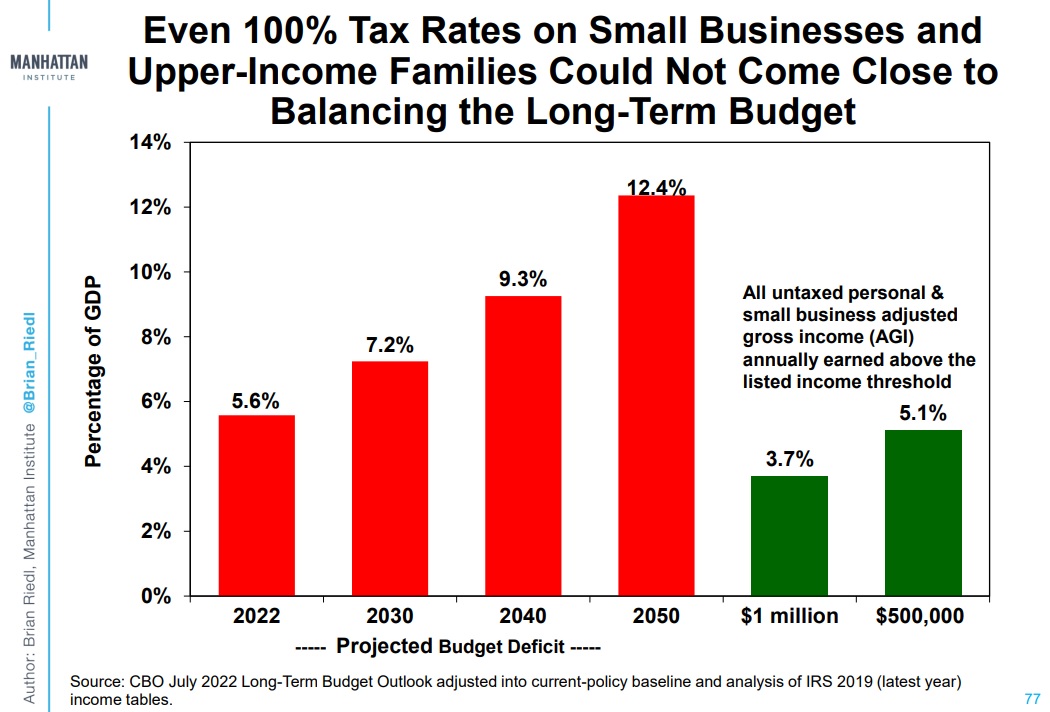
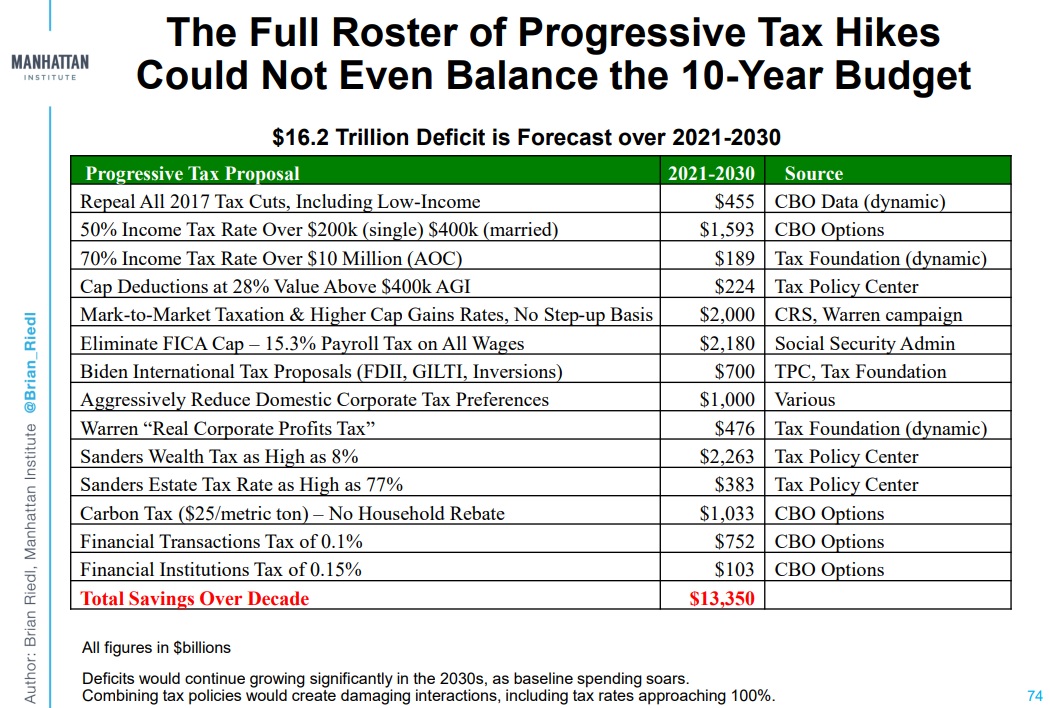
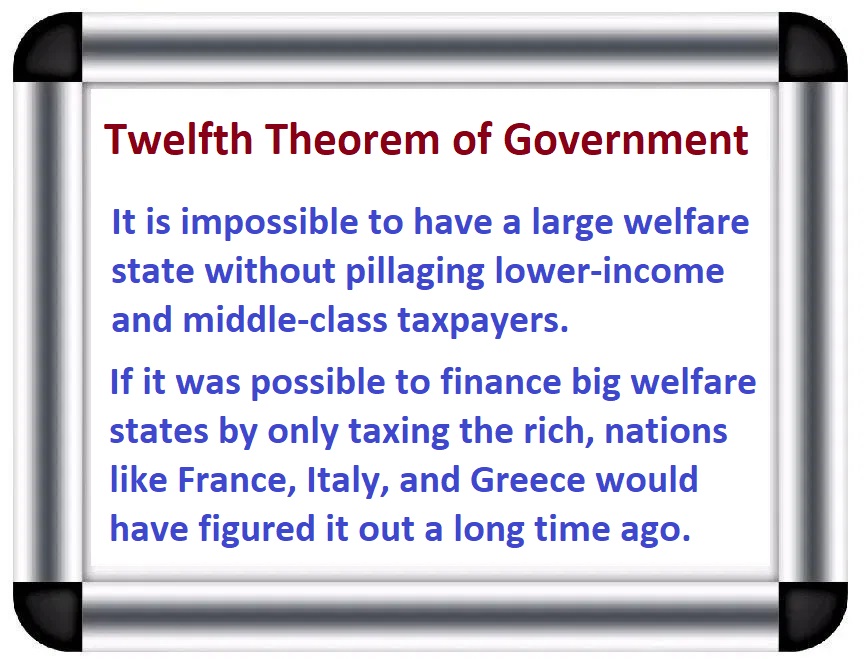 including Paul Krugman) who openly admit that big tax increases will be needed if the burden of government spending is allowed to increase.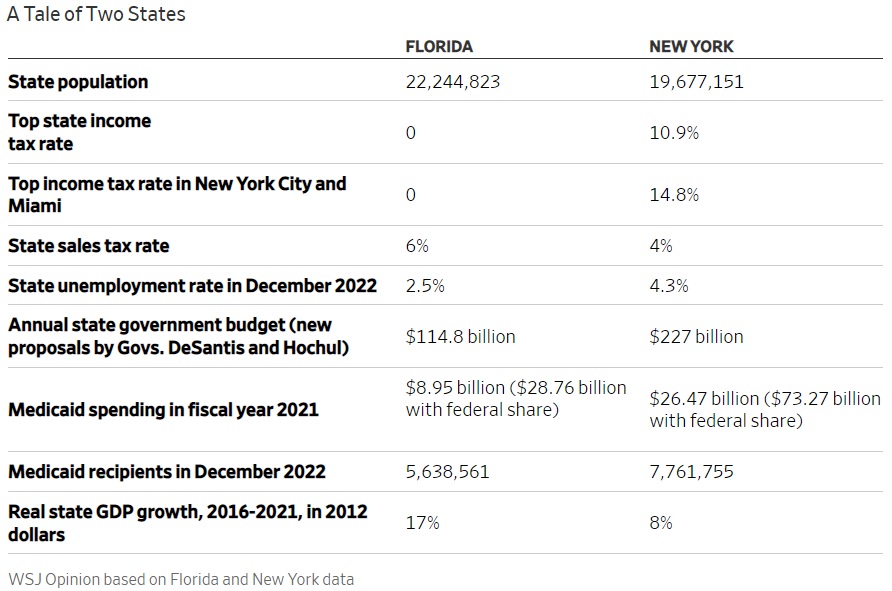

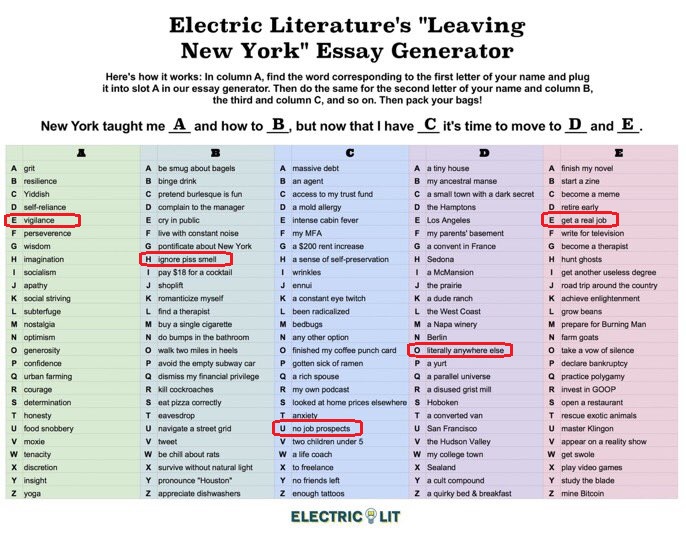
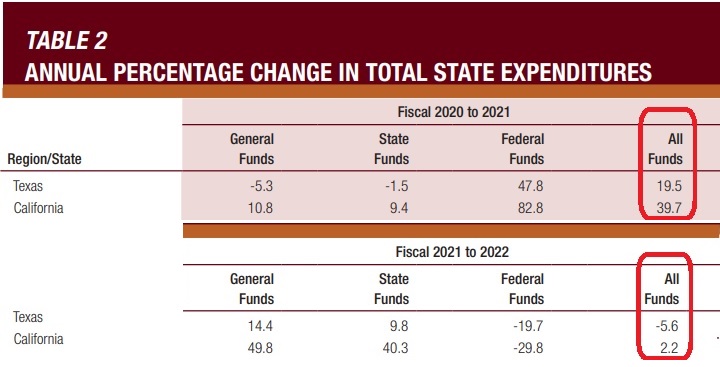


.jpg)
:max_bytes(150000):strip_icc()/usdebtbypresidentnewimage-9e919ca2f1344875a671e38b091cc49d.jpg)


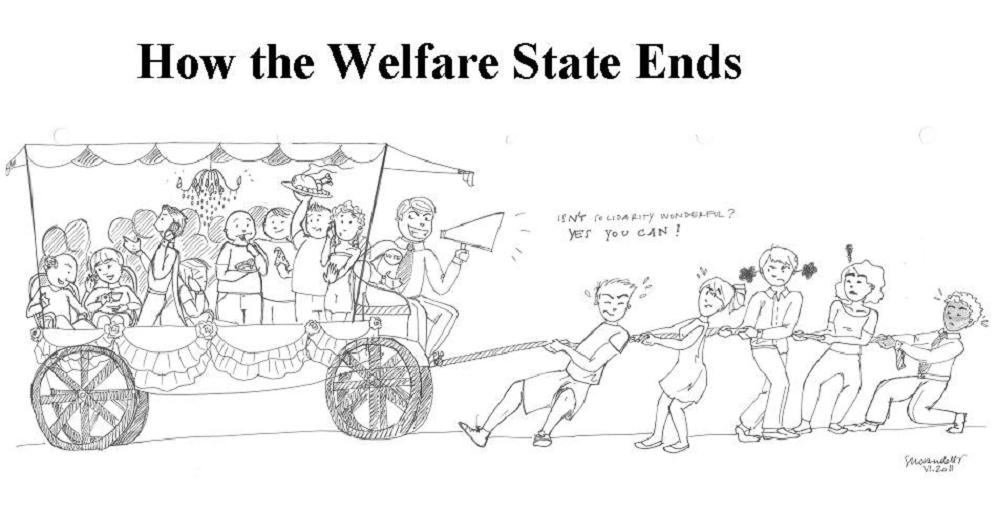



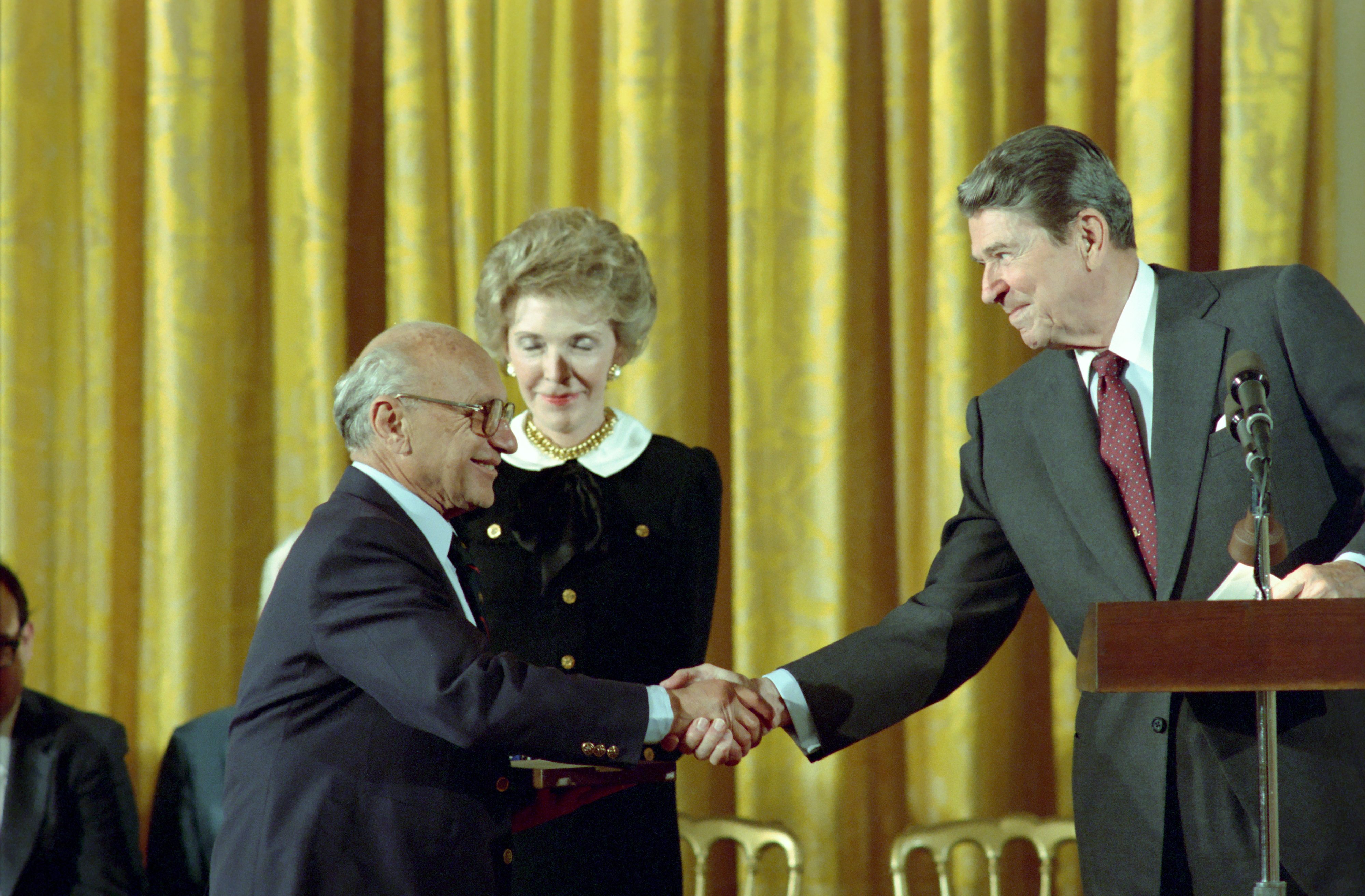
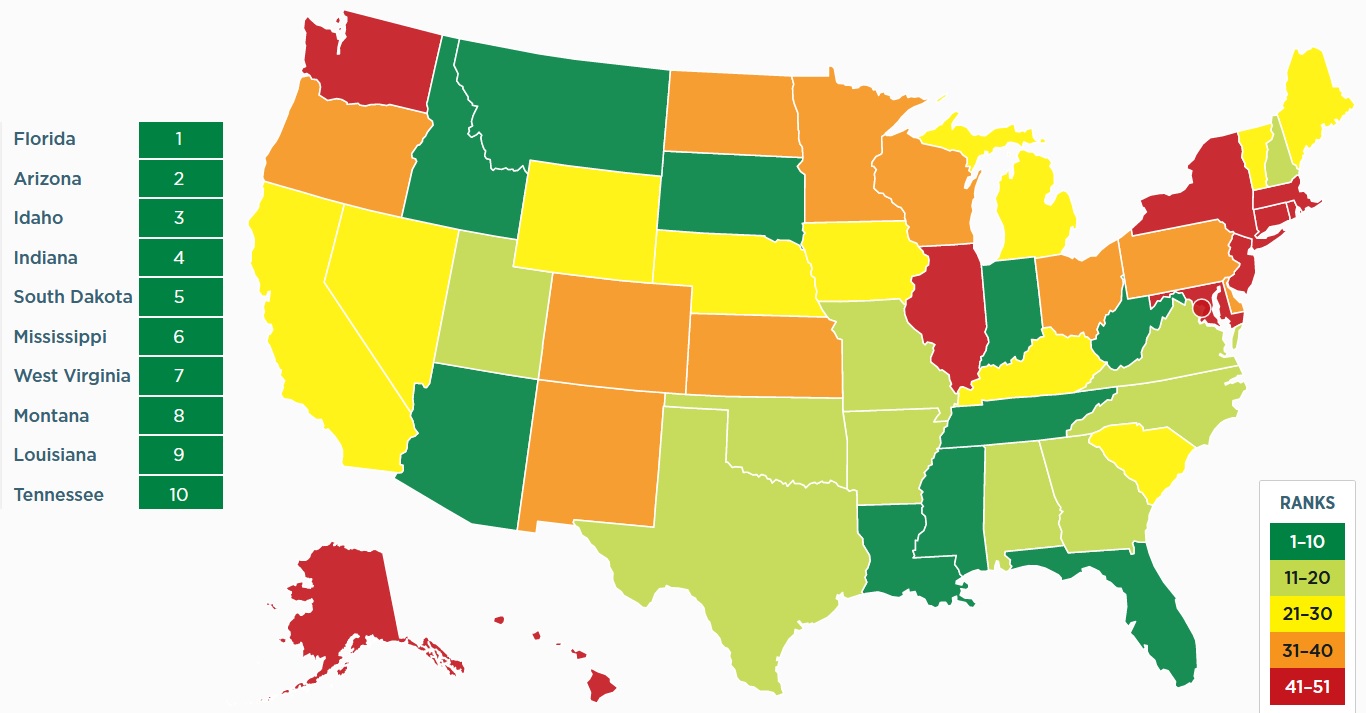

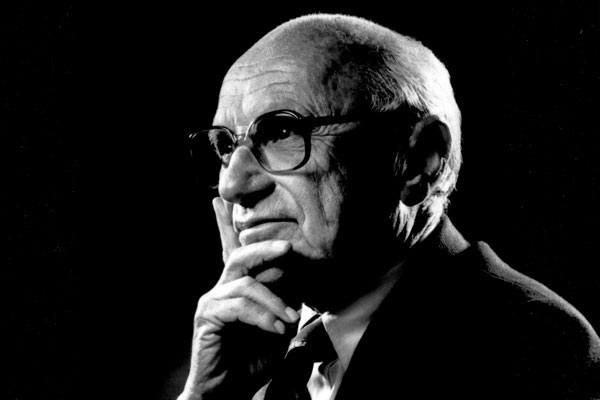



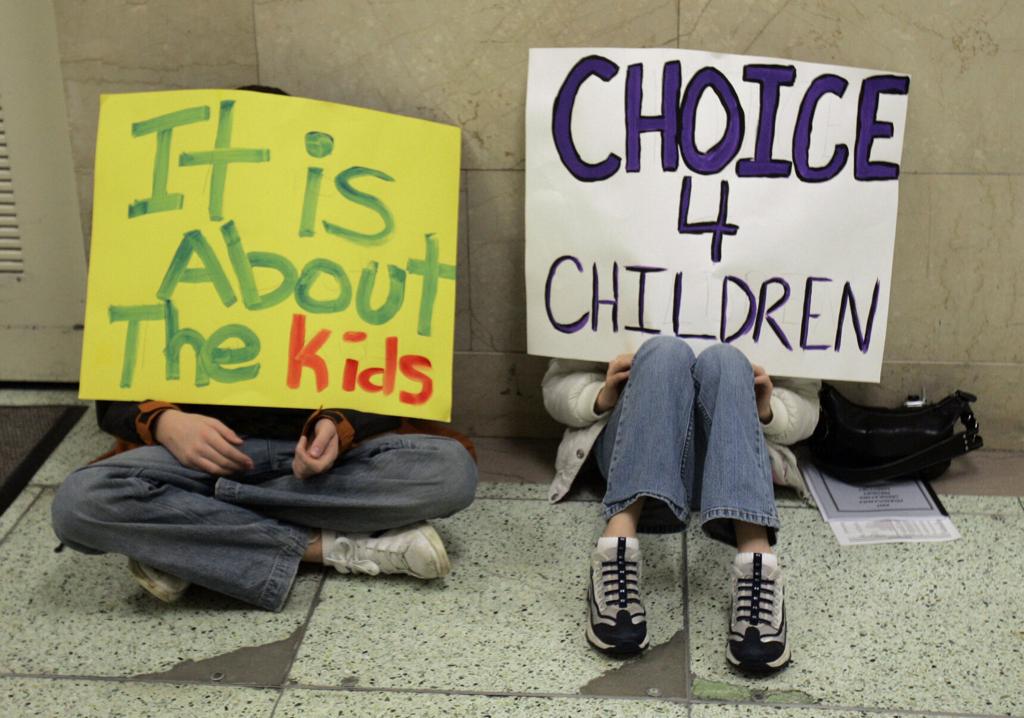


 The Daily Hatch