Category Archives: spending out of control

Letter to Senator Mark Pryor concerning debt ceiling debate July 26, 2011

Dear Senator Pryor,

The President asked us to contact those representing us in Washington and that is exactly what I am doing today. Let make a few points.

First, in the past few months I have responded to your request to provide SPECIFIC SPENDING CUT SUGGESTIONS to your office. I have done so over 100 times and I have also posted them one at a time on my blog www.HaltingArkansasLiberalswithTruth.com .

Second, I have also written many posts concerning your political views and many of these articles have got lots of hits on my blog. In fact, when I started in December of 2010 I was only getting a handful of hits every week, but now I have got over 60,000 hits in the first 7 months on my website and I have you to thank for a lot of those hits.

Third, Arkansas is turning conservative and I wonder if you will change with Arkansas. Just recently you went across the state saying that the Republicans wanted to push granny off the cliff. Does that sound like you are open to making changes to make sure that Medicare survives?

Fourth, you wanted me to give you specific suggestions to cut federal spending. I have an easy one for you: Eliminate the Dept of Education!! That would save over 100 billion right there!!!

Fifth, if you want to raise taxes on the job creators during this time then you will be guilty of  destroying the recovery. You have already been guilty of slowly down the recovery with the silly stimulus bill. Every prediction that President Obama made about the stimulus have proven to be incorrect!!! Everyone of them!!!

I have done my duty that my President asked me to do by contacting you. Below you will find a letter that says perfectly what I think about this current debt ceiling crisis. Recently I got to hear Ernest Istook the president of the Heritage Foundation speak in Little Rock. He did a great job.

Below is an excerpt from a letter that went out today from the Heritage Foundation:

Our nation is in the midst of a fiscal crisis, but it is one that has nothing to do with an August 2 “deadline” for a deal or President Obama and Secretary Geithner’s fear mongering over recent days and weeks. The crisis is one of over $62 trillion in unfunded obligations that are the loudest warning bell possible of the systemic problems plaguing our nation. Washington should not ignore or postpone dealing with this problem once again.

Twice already this year, the House of Representatives has voted for plans that would address our fiscal crisis and save our nation from a creditworthiness downgrade. In April, the House passed a bold budget, which would place our nation on a different, more sustainable and prosperous course. Last week, the House passed the Cut, Cap and Balance Act, which would force future Congresses to live within their means and rapidly bring down our nation’s debt-to-GDP ratio. Unfortunately, both of these responsible proposals were defeated by an ideological Senate, which has offered few ideas of its own.

Clearly, the most blame belongs to the President and the Senate – a President who comes up with no useful fiscal plan of his own and a Senate that refuses to pass meaningful legislation to save the American dream from a fiscal tsunami. We cannot, however, continue business as usual by raising the debt limit without substantively addressing our nation’s fiscal challenges. The entire purpose of the debt limit is to put an end to borrowing when it reaches a point that our nation finds unacceptable. There is no point in having a debt limit if the option of using it to address overspending and overborrowing is so intimidating that it is unilaterally taken off the table.


Speaker Boehner’s most recent proposal to raise the debt limit is regrettably insufficient to our times. Step one of the Speaker’s proposal would cut $1.2 trillion in discretionary spending. Assuming all of these cuts materialized, this would reduce our nation’s projected debt at the end of the decade from $24.9 trillion to $23.7 trillion. Step two would create a special committee, which has three major problems: (1) The “deficit reduction” of $1.8 trillion remains insufficient for our times; (2) “Deficit reduction” is a well-known codeword for “tax increases”; and (3) 17 blue-ribbon panels, commissions and the like since 1982 have gotten our nation into the mess we are in and there is no obvious reason as to why the 18th will get us out. Further, this proposal would outline a fast track proposal that unduly limits the rights of the congressional minority.

All in all, under a best case scenario where all of the cuts envisioned in the Boehner plan come to fruition, they would only reduce our nation’s projected debt-to-GDP ratio from 104% to 92% – a ratio far higher than its current 62 percent, which Moody’s has already said must come down to maintain our nation’s stable outlook.

Harry Reid’s proposal to raise the debt ceiling is equally unacceptable. It appears to be the latest in a line of proposals that began with the McConnell Proposal, morphed into the McConnell-Reid Proposal, further deteriorated into the Gang of Six Proposal, and has now resurfaced as the Reid Proposal. Each of these insufficiently bold ideas would lead to an increase in the debt limit in exchange for few, if any, actual cuts off existing spending levels. In normal times we might take these as one step toward a path of fiscal sanity.  But we do not have the luxury of taking that kind of small first step at this juncture.  The rating agencies are poised to downgrade us within months if we don’t pass something like the House of Representatives’ first two attempts . . .  The last thing our country needs is a clean debt limit increase with some fancy window dressing to try to fool the American people.

All in all, Heritage Action remains where we were at the start of the summer: absolutely convinced our nation is in fiscal crisis and certain that bold political leadership is necessary to save the American dream. Congress should drive down federal spending on the way to a balanced budget, while protecting America, and without raising taxes. Unfortunately, that does not appear to be what we will get from Washington, which has irresponsibly turned its back on the only real plans out there: The House Budget and the Cut, Cap and Balance Act. As such, Washington should be forced to live under the current debt limit until it’s ready to make tough choices – choices that it should make, and has time to make, this week.

Sincerely,

Michael A. Needham
Chief Executive Officer

___________________________________

Thank you for your time. I know that you are very busy.

From Everette Hatcher

Alexander, AR 72002

Related posts:

Brummett is fooled by Pryor’s assurance that gang of 6 offers real cuts now (Part 2)

  John Brummett in his article, “By Pryor prediction, gang of 6 emerges,” Arkansas News Bureau, July 21, 2011 asserts: So what’s in this great new plan from the Gang of Six? Only about $4 trillion in real deficit reduction achieved by deep defense cuts, commission-delegated reductions in spending for Medicare, Medicaid and Social Security, […]


Brummett is fooled by Pryor’s assurance that gang of 6 offers real cuts now

John Brummett in his article, “By Pryor prediction, gang of 6 emerges,” Arkansas News Bureau, July 21, 2011 asserts: So what’s in this great new plan from the Gang of Six? Only about $4 trillion in real deficit reduction achieved by deep defense cuts, commission-delegated reductions in spending for Medicare, Medicaid and Social Security, plugging […]


Mark Pryor and the liberal gang of six plan

Today I read in the article, “Pryor backing bipartisan debt reduction plan,” Arkansas News Bureau, July 20,2011 the following words: Sen. Mark Pryor said today he supports a $3.7 trillion deficit-reduction plan unveiled Tuesday by six Republican and Democrats as a “carefully crafted balanced” way to avert a looming financial crisis. The Arkansas Democrat was […]
Raising debt ceiling does not solve problem, Without strong structural changes in spending, our debt will balloon out of control

Steve Brawner in his article, “Uncle Sam: Deadbeat dad?” Arkansas News Bureau, July 20, 2011 noted:

That’s no way to get out of debt. Debtors — the government, you, me — don’t stop increasing debt simply by declaring they will stop doing so. The hole will keep getting dug unless hard choices are made about reducing the right expenditures and raising the right taxes. Congress, the president, and, indeed, the American people have not yet made those choices. Until that happens, the government will keep borrowing.

The question is, will it do so responsibly, or as a deadbeat dad?

There is good news. At least we’re talking about the debt instead of ignoring it.

The huge deficits are the problem. People want the debt ceiling raised, but if the huge deficits  continue then what is the use? The article below shows how our government will have their credit rating devalued UNLESS WE STOP RUNNING UP BIG DEFICTIS EVERY YEAR!!

Dueling Debt Ceiling Proposals vs. the Rating Agencies,” by Alison Acosta Fraser, July 25, 2011 at 10:16 pm:

As the day debt ceiling of reckoning fast approaches, dueling proposals are flurrying around Washington fast and furious.  The latest two are from House Speaker John Boehner (R-OH) and Senate Majority Leader Harry Reid (D-NV).

Americans, and global financial markets, are watching Washington nervously for a real plan—one that will put the nation squarely on a path to solving our twin crises of spending and debt.  Without strong structural changes in spending, our debt will balloon out of control.

At stake are two issues.  The short-term is obvious – will there be an increase in the debt limit before August 3?  Despite the President and his team practically begging Wall Street to collapse, the markets and the rating agencies believe that there will be an increase and the federal government can safely avoid the chaos of prioritizing its bills in order to service the debt.  Though they warn of the consequences if this doesn’t happen, Standard & Poor’s, has stated that

…the risk of a payment default is small, though increasing…Standard and Poor’s still anticipates that lawmakers will raise the debt ceiling by the end of July to avoid those outcomes.”

The second and even more crucial issue is whether Congress will take necessary action beyond the next year to bring our debt under control over the medium and long-term.  This is where the rating agencies really voice their strong concern.    Again, Standard & Poor’s:

Congress and the Administration might also settle for a smaller increase in the debt ceiling, or they might agree to a plan that, while avoiding a near-term default, might not, in our view, materially improve our base case expectation for the future path of the net general government debt-to-GDP ratio.”

Moody’s response is similar:

The outlook assigned at that time to the government bond rating would very likely be changed to negative at the conclusion of the review unless substantial and credible agreement is achieved on a budget that includes long-term deficit reduction. To retain a stable outlook, such an agreement should include a deficit trajectory that leads to stabilization and then decline in the ratios of federal government debt to GDP and debt to revenue beginning within the next few years.

What the rating agencies are saying is that Congress and the President must pass legislation that immediately begins to rein in deficits and bring our debt down to more acceptable levels, and either keeps it there or continues to drive it down further.

The Boehner proposal would cut $1.2 trillion in discretionary spending.  There is no assurance that these cuts will occur, but let’s assume they do.  Let’s even be generous and assume that they are – in the words of S&P– “enacted and maintained throughout the decade.”  This would cut debt held by the public from its projected $24.9 trillion in 2021 to $23.7 trillion, and when measured against the economy from 104% to 99.4%.  Certainly, this is an improvement, but it is hardly declining from today’s levels, nor would these cuts fundamentally restructure entitlements – the real driver of our deficits in the future.

Step two in the Boehner proposal would reduce deficits by an additional $1.8 trillion over ten years.  Even assuming these cuts all happen, and even assuming they were all spending cuts – a broad assumption given the President’s rhetoric surrounding tax hikes on the wealthy – this would bring publicly held debt down to 92% of GDP. Better, but not that much.  Even throwing in interest savings from deficit reduction would bring this down to 88%.  Again, not much improvement and far worse than today’s debt ratio.

The Reid proposal doesn’t move the ball forward enough either.  At best it falls somewhat short of Boehner’s $3 trillion by $800 billion ($1.2 trillion in discretionary and some confusing savings to be had from winding down operations in Iraq and Afghanistan of $1.0 trillion.)

Neither of this week’s dueling debt ceiling proposals would pass the test from Moody’s or Standard and Poor’s for a credible, firm and actionable plan that would turn the tide of our deficits to put our debt on a manageable track. And if that holds true, then a downgrade by the rating agencies could occur smack in the very election year the President is trying to scoot through.

Because spending is set to grow so significantly over the decade, the kind of onesie-twosie approach to cutting spending and increasing the debt limit is simply not adequate.  Net interest payments are projected to more than triple over the next decade. The longer Congress waits to seriously control spending, the more it will have to cut just to offset bourgeoning interest costs.  And if interest rates suddenly rise? Well, we have an even bigger problem on our hands.

And, as babyboomers flood into Social Security, Medicare and Medicaid swell in tandem, the kinds of changes necessary to rein in spending on these programs will be much more difficult.  Here again, the longer they duck the problem, the more likely a meltdown ahead.

The fact is, the only plan that could likely pass muster with Moody’s and Standard and Poor’s is House passed, Cut, Cap and Balance.  Why?  They tackle spending with firm caps that are enforceable, and before the end of the decade bring spending down to 19.9% of GDP and keep it there.  With the right spending changes it could fall, along with debt levels, from there.  Congress must act now to rein in spending and get our debt under control. It’s time for the dueling to end.

Conservative response to President Obama’s speech on July 25, 2011

On Monday July 25, 2011 at 2:17pm Max Brantley posted on the Arkansas Times Blog:

Looks like everyone may fold a bit, according to President Obama’s statement on a Senate-driven compromise. Rich people are held harmless in dealing with the U.S. budget. Big spending cuts will be made. The debt ceiling is lifted sufficiently to last through the 2012 election. Republicans give up on insistence on long-term solution. Sour tastes all around, except if the deal prevents U.S. defaults. Here’s a roundup.

However …. House Republicans seem determined to get their way or wreck the country.

_______________________

There is only two problems. First, there had been no deal cut. (Actually on Politico on Sunday afternoon they also reported a deal had been cut, but they jumped the gun like Max did here).

Second, the Republicans are right to protect the American job producers from any future tax increases that would kill our recovery.

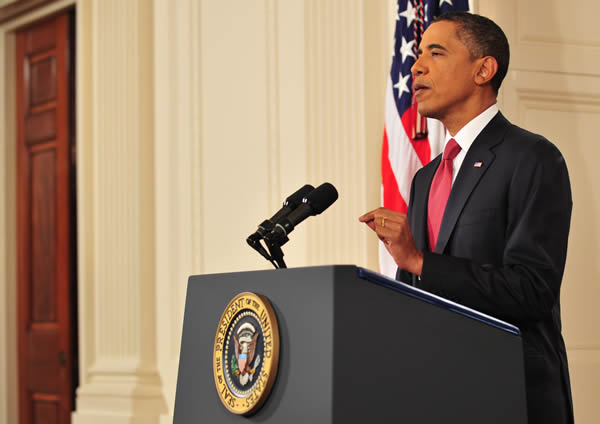
David Addington nails it below in his summary of President Obama’s speech:

David S. Addington

July 25, 2011 at 10:37 pm

http://www.facebook.com/extern/login_status.php?api_key=229592157056043&app_id=229592157056043&channel_url=http%3A%2F%2Fstatic.ak.fbcdn.net%2Fconnect%2Fxd_proxy.php%3Fversion%3D3%23cb%3Df299b30cbddf072%26origin%3Dhttp%253A%252F%252Fhaltingarkansasliberalswithtruth.wordpress.com%252Ff3f7f9740d0f1f4%26relation%3Dparent.parent%26transport%3Dpostmessage&display=hidden&extern=2&locale=en_US&next=http%3A%2F%2Fstatic.ak.fbcdn.net%2Fconnect%2Fxd_proxy.php%3Fversion%3D3%23cb%3Df1067b45af74eff%26origin%3Dhttp%253A%252F%252Fhaltingarkansasliberalswithtruth.wordpress.com%252Ff3f7f9740d0f1f4%26relation%3Dparent%26transport%3Dpostmessage%26frame%3Df39f160a8218526%26result%3D%2522xxRESULTTOKENxx%2522&no_session=http%3A%2F%2Fstatic.ak.fbcdn.net%2Fconnect%2Fxd_proxy.php%3Fversion%3D3%23cb%3Df2d46b4e2a65fb%26origin%3Dhttp%253A%252F%252Fhaltingarkansasliberalswithtruth.wordpress.com%252Ff3f7f9740d0f1f4%26relation%3Dparent%26transport%3Dpostmessage%26frame%3Df39f160a8218526&no_user=http%3A%2F%2Fstatic.ak.fbcdn.net%2Fconnect%2Fxd_proxy.php%3Fversion%3D3%23cb%3Df336111abe2f25c%26origin%3Dhttp%253A%252F%252Fhaltingarkansasliberalswithtruth.wordpress.com%252Ff3f7f9740d0f1f4%26relation%3Dparent%26transport%3Dpostmessage%26frame%3Df39f160a8218526&ok_session=http%3A%2F%2Fstatic.ak.fbcdn.net%2Fconnect%2Fxd_proxy.php%3Fversion%3D3%23cb%3Df4147d0b2eeac1%26origin%3Dhttp%253A%252F%252Fhaltingarkansasliberalswithtruth.wordpress.com%252Ff3f7f9740d0f1f4%26relation%3Dparent%26transport%3Dpostmessage%26frame%3Df39f160a8218526&sdk=joey&session_origin=1&session_version=3

It’s hard to understand why President Obama took to the airwaves tonight at prime time. He still has no plan for dealing with government overspending and overborrowing, and he  gave the nation very little except a repetition of his never-ending call for tax hikes.

In noting the risk of ever-increasing debt, President Obama said every family knows that “a little credit card debt is manageable.” The government has racked up $14.294 trillion in debt — thought of by no-one as a little credit card debt.  The spend-tax-and-borrow crowd, currently headed by President Obama, has been in charge in Washington too long.  They have mortgaged the futures of our children and grandchildren.  Our government is so deep in debt that the share of debt of a baby born today is $45,000.

It is time for the spend-tax-and-borrow crowd to stop.  As the President indicated, conservatives want deep spending cuts.  In contrast, President Obama wants more taxes, a terrible idea.  First, the government already takes too much money from the pockets of Americans in taxes.  Second, if Americans give the government more money in taxes, the government will just find ways to spend it, rather than using it to pay off the public debt.  Third,  raising taxes reduces investment, which cuts economic growth and kills jobs.

Americans sent a message in the election of 2010 — cut the size and cost of government.  Conservatives must act now to drive down spending on the way to a balanced budget, while protecting America, and without raising taxes.  Forget the McConnell, McConnell-Reid, Coburn, Gang-of-Six, Boehner, and Reid plans.  Go with the American plan — cut government spending, deeply and right now, for the good of the country.

Senator Pryor asks for Spending Cut Suggestions! Here are a few!(Part 101)

Senator Mark Pryor wants our ideas on how to cut federal spending. Take a look at this video clip below:

Senator Pryor has asked us to send our ideas to him at cutspending@pryor.senate.gov and I have done so in the past and will continue to do so in the future.

On May 11, 2011,  I emailed to this above address and I got this email back from Senator Pryor’s office:

Please note, this is not a monitored email account. Due to the sheer volume of correspondence I receive, I ask that constituents please contact me via my website with any responses or additional concerns. If you would like a specific reply to your message, please visit http://pryor.senate.gov/contact. This system ensures that I will continue to keep Arkansas First by allowing me to better organize the thousands of emails I get from Arkansans each week and ensuring that I have all the information I need to respond to your particular communication in timely manner.  I appreciate you writing. I always welcome your input and suggestions. Please do not hesitate to contact me on any issue of concern to you in the future.

I just did. I went to the Senator’s website and sent this below:

“Saving the American Dream: The Heritage Plan to Fix the Debt, Cut Spending, and Restore Prosperity,” Heritage Foundation, May 10, 2011 by  Stuart Butler, Ph.D. , Alison Acosta Fraser and William Beachis one of the finest papers I have ever read. Over the next few days I will post portions of this paper, but I will start off with the section on federal spending reform.

The Details

Returning Most Non-Defense Discretionary Spending to 2008 Levels.
Non-defense discretionary spending has expanded 21 percent faster than
inflation over the past three years. Returning to 2008 levels still leaves
typical programs nearly one-third larger than they were in 2000 (adjusted for inflation). Freezing this spending at 2008 levels through 2015 and then capping subsequent growth at the inflation rate would save more than $2 trillion in the first decade and even more thereafter.

Many of these savings are achieved by reducing the size of the federal
bureaucracy, overhauling the federal pay system, permanently eliminating many earmarked accounts, and consolidating duplicative functions. Yet not all programs are affected equally. For example, Coast Guard and other important security spending rises under the plan, while lower-priority spending, such as subsidies to public broadcasting, AmeriCorps, the National Endowment for the Arts, and the National Endowment for the Humanities, is left to the private sector.

Devolving or Privatizing Most Transportation Spending. Under the federal highway program, Washington collects the 18.3 cents-per-gallon gas tax from states, subtracts a large administrative fee, and returns the remaining funds to the states with numerous strings attached, including many requirements to spend the dollars on congressional earmarks and for specific uses that may not coincide with local needs. The Heritage plan reforms this inherently wasteful system by devolving the highway program and gas tax to the states, thereby eliminating the federal middleman and allowing states to retain the gas tax revenues and spend them on their own highway priorities, provided they maintain a minimum standard of interstate highway maintenance. 

The Heritage plan ends federal funding for passenger rail, saving money on
projects that invariably have ridership that is far below projections and costs that far exceed initial budgets. Amtrak subsidies are phased out over three years, the President’s costly high-speed rail program is terminated, and subsidies to for-profit freight railroads are ended. This relieves states of the upkeep and maintenance burdens associated with rail programs that Washington is currently pressuring them to undertake. The private sector and state governments can either take over or terminate these rail programs as they see fit.

Finally, all non-safety functions of the Federal Aviation Administration
(FAA) are transferred to the private sector, and most FAA fees are eliminated.
The air traffic control system will be transferred to the private sector, where it belongs, and financed by flight ticket user fees. The airport improvement program is also terminated, with airlines, state government, and private investment taking the place of the federal taxpayer.

Breaking down Senator Mark Pryor’s speech on debt ceiling (Part 3)

Mark Pryor’s support of the ultra liberal Obama is very clear in the video clip above. He voted for President Obama’s plan to nationalize healthcare and  Obama’s stimulus plan that wasted almost a trillion dollars. Now he is following President Obama down the path of raising taxes during the debt ceiling debate.

The Arkansas Times Blog reported on July 22, 2011:

Senator Mark Pryor on July 22  made the following statement on the Senate floor to encourage his colleagues to end the budget gimmicks and move forward with a comprehensive debt-reduction plan as part of a debt ceiling solution. A portion of his statement is below:

Mr. President, Abraham Lincoln once said, “I am a firm believer in the people. If given the truth, they can be depended upon to meet any national crisis. The great point is to bring them the real facts.”

We need to bring people the facts about our nation’s debt. People in my state see through the games being played in Washington. They want solutions, courage and leadership — the kind that puts us on a more secure fiscal path for the future.

Mr. Bryant of Hot Springs Village, Arkansas writes: “We know we have to increase the debt ceiling so let’s get serious about finding a solution….Why is this a problem for our politicians? The public expects responsible leadership not the demagoguery we are getting from both sides of the aisle.”

So here are the facts. For over 230 years, the United States government has honored its obligations. Even in the face of a Civil War, two World Wars and the Depression, America has paid its bills. Yet, now we stand on the brink of tarnishing the full faith and credit of the United States. And we stand here because Congress has failed to bring the American people the real facts. The easiest thing for a politician to do is to say they are for lower taxes and increased spending. This mind-set has rung up a $14.2 trillion debt. We now borrow 41 cents of every dollar we spend.

Now, under this debt, combined with the theatrics playing out in the House and Senate, the unthinkable could happen. The 80 million bills the federal government pays could come to a screeching halt. That means millions of seniors may not receive their Social Security checks in the mail, troops may not receive paychecks, Medicare patients could be denied care and the stock market could significantly drop.

Moreover, credit rating agencies have warned us that we will likely lose our AAA credit rating without immediate action. Interest rates would permanently rise, piling on additional costs for families. The cost of owning a home, buying food, filling a gas tank, sending kids to college and buying a car will become even more expensive.

There’s one more real fact I want to highlight. A default adds heavily to our deficit. For every 1 percent increase in the interest rates we pay, it adds $1.3 trillion to the debt. It is no wonder Chairman of the Joint Chiefs of Staff last summer said, “Our national debt is our biggest national security threat.

_____________________________

Mark Pryor has made several miscalculations concerning the debt ceiling problem. He thinks that the nationalizing of our healthcare will not affect the future deficits, and he doesn’t want to take a serious look at Medicare reform. Finally, although he says a lot about how serious the national debt is, he does not want to propose any serious cuts to federal spending. WHY NOT ELIMINATE THE DEPT OF EDUCATION? WOULDN’T THAT BE A BIG SAVINGS TO THE GOVERNMENT? JIMMY CARTER CREATED THAT AGENCY AND IT HAS DONE NOTHING TO HELP EDUCATION IMPROVE SINCE THEN DESPITE THE MASSIVE AMOUNT OF MONEY WE HAVE THROWN ITS WAY!!!!

Below I have put a portion of the article Principles for Lasting Federal Budget Reforms” by Jeffrey A. Miron:

Jeffrey A. Miron is senior lecturer and director of undergraduate studies at Harvard University and senior fellow at the Cato Institute. Miron is the author of Libertarianism, from A to Z.

Added to cato.org on July 22, 2011

This article appeared in The Philadelphia Inquireron July 22, 2011. 

As Democrats and Republicans debate the U.S. debt situation, both sides seem more concerned about pandering to their respective bases than reining in the debt. Worse, much of the discussion addresses only the debt per se, not the broader question of what policies are good for the economy. These conditions are likely to yield only cosmetic fixes, some of which will make things worse over the long haul.

The debt problem is substantial and pressing: Congressional Budget Office projections show America’s debt is exploding. Expenditures are growing much faster than the gross domestic product and tax revenues possibly could. Under the CBO’s most plausible projections, the debt would reach 109 percent of GDP by 2023, and 190 percent of GDP by 2035. This is not a problem we can ignore or address with minor adjustments.

The federal budget includes numerous programs that ought to be eliminated regardless of the deficit.

Raising tax rates is a bad idea: By reducing the income of households and the profits of businesses, higher tax rates discourage consumption and investment, slowing the economy in the short run. By reducing hiring, savings, and investment, they reduce economic growth in the long run. And higher tax rates are undermined by tax evasion and avoidance, making them an inefficient way to raise revenues.

Reducing tax “expenditures” is a good idea: When the tax code favors particular kinds of consumption or specific industries, it reduces productivity by distorting market forces, just as government spending can. Those who support economic efficiency should therefore oppose such tax expenditures, regardless of how they affect revenue or whether they are paired with reductions in tax rates. Important examples include the mortgage-interest deduction, special tax treatment of employer-paid health insurance premiums, and tax breaks for both conventional and green energy.

Health care is the greatest driver of expenses: The CBO’s analysis also indicates that rapidly increasing expenditures on Medicare, Medicaid, and insurance subsidies under Obamacare are the most important factors behind the exploding debt. Serious attempts to control the debt must reduce these programs’ growth rates.

Higher deductibles reduce health spending: Slowing the growth of health expenditures is crucial, but not all fixes are created equal. Price controls and rationing, for example, generate huge inefficiencies.

Higher deductibles are a better approach. They not only reduce spending directly; they also encourage consumers to economize and comparison shop, generating competition, efficiency, and lower costs. This moves Medicare toward insuring against catastrophic costs and away from reimbursing all expenses.

Mark Pryor supported the stimulus but did it work?

Mark Pryor has supported about every bill that President Obama has pushed. The stimulus was probably the biggest budget busting bill so far. Did that help get our economy going? Not according to Kathy Fettke:

President Obama is urging Congress to raise the $14.3T debt ceiling or else, he warns, the U.S. would be forced to default. Perhaps our representatives need a little lesson on good debt vs. bad debt.

Good debt gives the borrower the potential to create more money. Bad debt gives the borrower something he can’t afford but wants anyway.

In real estate, for example, good debt might be a loan used to purchase an investment property. The borrower acquires an asset that creates income. That income is used to pay off the debt. The borrower then owns an asset free & clear that continues to produce income, long after the original debt is gone.

Bad debt serves a need for instant gratification by borrowing income from the future.

An example of bad debt is getting a loan to purchase a new car. The car is worth less the moment it’s driven off the lot. From day 1, the borrower owes more than the car is worth, and the “asset” doesn’t create monthly income. It becomes a liability, unless it is used as a rental, trucking or any other profitable business use.

Is Obama asking for more good debt or more bad debt?

Politicians are expert wordsmiths who can spin facts into a slick campaigns designed for getting what they want. That’s why President Obama and the money magicians at the Federal Reserve are preaching that more debt would help the economy.

Has their plan worked so far? Let’s take a look:

During the past 5 years, the federal government has borrowed 4.5 trillion dollars to stimulate the economy. That’s a 40% increase in government debt! 

Did the stimulus work?

Political spin doctors say it did, claiming that US GDP climbed 1.9% in Q1 of 2011. But how much did that increase cost us?

We spent $4.5 Trillion over 5 years to create $690 Billion in GDP growth.  Doing the math, that means the US will receive 14 cents for every dollar of debt incurred to stimulate the economy.

With losses like this, the “stimulus” plan is really a bad debt deal – one in which borrowing results in more liabilities, not assets. And now our leaders are trying to talk us into more of it.

Just say “NO!” to raising the debt ceiling! It’s not just bad debt, it’s ugly debt.

The cure for bad debt is pretty simple and boring: cut spending and increase income. If you can’t do either, you default.

Borrowing just to keep up with interest payments and avoid default is reckless and only exacerbates the problem. It does not fix it.

Politicians must agree to cut spending. And they must avoid increasing income through taxation. As much as the general population would love to rob the rich, that method doesn’t work. Business owners who get punished for making money will stop producing and hiring.

Instead of taxing productive businesses to extended ugly government debt, offer businesses good debt so they can continue to grow.

Members of our society with solid business plans should be the ones borrowing – not the government.

Kathy Fettke is CEO of www.RealWealthNetwork.com, an educational resource for new and experienced real estate investors.

Breaking down Senator Mark Pryor’s speech on debt ceiling, Do the Republicans want to send granny over the cliff? (Part 2)

For Senator Mark Pryor it is time to get back to his liberal democratic roots. Blame the evil Republicans for wanting to end Medicare as we know it and push granny off the cliff. For heavens sake we better not cut a dime out of the government now, but maybe promise to cut 6 trillion out of it about 7 or 8 years from now and call that a 10 year plan.

The Arkansas Times Blog reported on July 22, 2011:

Senator Mark Pryor on July 22  made the following statement on the Senate floor to encourage his colleagues to end the budget gimmicks and move forward with a comprehensive debt-reduction plan as part of a debt ceiling solution. A portion of his statement is below:

Mr. President, Abraham Lincoln once said, “I am a firm believer in the people. If given the truth, they can be depended upon to meet any national crisis. The great point is to bring them the real facts.”

We need to bring people the facts about our nation’s debt. People in my state see through the games being played in Washington. They want solutions, courage and leadership — the kind that puts us on a more secure fiscal path for the future.

… Chairman of the Joint Chiefs of Staff last summer said, “Our national debt is our biggest national security threat.”

___________________

Mark Pryor is not going to lift a finger to cut down our national deficit. That is why he did not want to pass the “Cut, Cap and Balance” plan.

Pryor notes, “We need to bring people the facts about our nation’s debt.” However, he does not believe in a Balanced Budget Amendment. How does that make sense?

Then he complains, “People in my state see through the games being played in Washington.They want solutions, courage and leadership — the kind that puts us on a more secure fiscal path for the future.” Nevertheless, he will vote for a responsible plan like “Cut, Cap and Balance.”

Finally Pryor asserts, “… Chairman of the Joint Chiefs of Staff last summer said, “Our national debt is our biggest national security threat.” But Pryor’s inaction on cutting the deficit is speaking volumes. He just can’t break away from those old favorite tactics of the liberals. He travels across Arkansas screaming “The Republicans want to send granny over the cliff!!”

Abdication: Senate Votes to Do Nothing Unless It Can Hike Taxes for the President” by David S. Addington July 22, 2011 at 2:54 pm, seems to be perfectly describing Pryor’s own actions. Here is a portion of that article:

Earlier this week, the House of Representatives passed the Cut, Cap and Balance Act, to get federal spending under control and balance the budget.  That legislation passed with 234 votes in the House.  The House is a legislative body, and it has legislated.  The House has done its job.

In contrast, the Senate is a legislative body that has failed to do its job.  So far, the Senate has come up with lots of bad plans, but no votes.  The Senate plans that have cropped up in the last week — the McConnell-Reid “Just Borrow More” Plan, the Coburn Plan with its tax hikes, and the Gang-of-Six Plan with its tax hikes — have among them exactly zero votes, because the Senate has not voted on any of them.

Today, the Senate voted 51 to 46 to not even consider the House-passed Cut, Cap and Balance bill, even though two-thirds of Americans, according to the CNN Poll dated July 21, support such legislation.  The Obama Administration chimed in that, even if the Senate passed the bill, the President would veto it anyway.  Therefore, if, ten days from now, America fails temporarily to meet its obligations because the Treasury lacks sufficient money to pay them when due, the responsibility for that failure falls squarely upon President Obama and the Senate liberals, who let it happen because they wanted to raise taxes.  Conservatives have commendably pursued legislation to ensure that the government pays its most important obligations first when the Treasury has a shortage of money to pay all its bills, but even on that liberals have been no help.

President Obama and the Senate liberals may represent well that ever-shrinking tax-spend-and-borrow crowd of liberal special interests, but most of the American people want to cut government spending, cut the size and scope of government, and cut up and throw away the national credit card.

So far, only the House conservatives have acted responsibly.

A week is still plenty of time to pass legislation to get the spending-cut job done.  The time to put America on the path to driving down federal spending and borrowing, while preserving our ability to protect America, and without raising taxes, is now.

newscasters debt ceiling

Brummett: Congress abdicates political responsibility to make wise cuts, but we don’t need balanced budget amendment (Part 6)

Senator Conrad calls Balanced Budget Amendment is laughable, but I think it is laughable when you look at the lack of resolve of Congress to make the necessary cuts!!!

John Brummett in his article “It may get personal in debt-limit end game,” Arkansas News Bureau, July 19, 2011 noted:

The White House is quietly encouraging the Reid-McConnell talks.

Meantime, there is talk of pandering to the tea party radicals in the unwieldy House by letting them pursue referral of a balanced-budget amendment to the Constitution.

Ratification would take years. If enacted, such an amendment would amount to the same abdication of political responsibility to make wise and responsible cuts in spending as has been evident in the debt-ceiling debate.

It is obvious to me that the Balanced Budget Amendment is needed because of the “abdication of political responsibility to make wise and responsible cuts in spending” that Brummett is talking about and we have all seen for decades.

The real debate in my view should be which variety of amendment should we pass. This is a series of posts I am doing on that subject. They come from Brian Darling’s excellent article, ” The House and Senate Balanced Budget Amendments: Not All Balanced Budget Amendments Are Created Equal,” Heritage Foundation, July 14, 2011. 

Abstract: Republicans in the House and Senate have announced that they will force votes on balanced budget constitutional amendments. While the Senate and House versions of the current BBA are similar, there are some important differences that Members of Congress and the American people need to understand. For example, the Senate version makes it more difficult to enact revenue-neutral tax reform, while the House version would waive its tax limitation in times of military conflict. How Congress resolves these differences could determine whether future Congresses and Presidents balance the budget without increasing taxes.

Conclusion

These proposed balanced budget amendments differ on some fundamental issues that would dramatically affect the way Congress attempts to balance the budget. The House version, for example, is easier to waive. There is a lower threshold to declare military conflict in the House version that would allow for an easier waiver. Also, the tax limitation—forcing a two-thirds vote to increase taxes—would be waived in times of military conflict in the House version. The House version allows a lower supermajority threshold to pass an unbalanced budget than the Senate version does.

The Senate version makes it more difficult to enact revenue-neutral tax reform. The provision that forces a two-thirds vote to raise any tax would make it more difficult to modify the tax code in a revenue-neutral manner to implement a flat tax. For a flat tax to work, some Americans might have their tax rates increased as a means to make every American pay the same rate.

Also, neither version contains the complete ban on judicial enforcement that is necessary to prevent activist judges from setting budget priorities, which is a job reserved for the political branches of government.

The differences between the House and Senate BBAs may seem small to those who are not steeped in the budget process, but they will have a dramatic impact on the lives of all Americans. Ultimately, these differences would need to be reconciled in a manner that leads to a balanced budget without jeopardizing U.S. military interests or punishing taxpayers.

Brummett: Congress abdicates political responsibility to make wise cuts, but we don’t need balanced budget amendment (Part 5)

Uploaded by on Oct 4, 2010

Politicians and interest groups claim higher taxes are necessary because it would be impossible to cut spending by enough to get rid of red ink. This Center for Freedom and Prosperity video shows that these assertions are nonsense. The budget can be balanced very quickly by simply limiting the annual growth of federal spending.

_________________________________

Below in the clip you can see President Reagan asking for a balanced budget amendment back in the 1980’s. How much heartache would we have avoided if we had one back then?

John Brummett in his article “It may get personal in debt-limit end game,” Arkansas News Bureau, July 19, 2011 noted:

The White House is quietly encouraging the Reid-McConnell talks.

Meantime, there is talk of pandering to the tea party radicals in the unwieldy House by letting them pursue referral of a balanced-budget amendment to the Constitution.

Ratification would take years. If enacted, such an amendment would amount to the same abdication of political responsibility to make wise and responsible cuts in spending as has been evident in the debt-ceiling debate.

It is obvious to me that the Balanced Budget Amendment is needed because of the “abdication of political responsibility to make wise and responsible cuts in spending” that Brummett is talking about and we have all seen for decades.

The real debate in my view should be which variety of amendment should we pass. This is a series of posts I am doing on that subject. They come from Brian Darling’s excellent article, ” The House and Senate Balanced Budget Amendments: Not All Balanced Budget Amendments Are Created Equal,” Heritage Foundation, July 14, 2011. 

Abstract: Republicans in the House and Senate have announced that they will force votes on balanced budget constitutional amendments. While the Senate and House versions of the current BBA are similar, there are some important differences that Members of Congress and the American people need to understand. For example, the Senate version makes it more difficult to enact revenue-neutral tax reform, while the House version would waive its tax limitation in times of military conflict. How Congress resolves these differences could determine whether future Congresses and Presidents balance the budget without increasing taxes.

Enforcing Legislation

The House and Senate versions differ on the authorization for legislation to enforce the BBA. Section 7 of the House version allows Congress to enforce and implement the BBA “by appropriate legislation, which may rely on estimates of outlays and receipts.” Section 10 of the Senate version, however, allows enforcement “by appropriate legislation, which may rely on estimates of outlays, receipts, and gross domestic product.” The Senate’s version specifically references GDP, whereas the House version is silent on this point.

Brian Darling is Senior Fellow for Government Studies in the Department of Government Studies at The Heritage Foundation

Brummett: Congress abdicates political responsibility to make wise cuts, but we don’t need balanced budget amendment (Part 4)

uploaded by on Jun 7, 2011

President Obama and Congress have agreed to cut $38 billion in federal spending, right? If you go by so-called “budget authority,” that may be true. But real spending cuts come when you actually cut real spending, not “budget authority.” Outlays in fiscal year 2011 will likely be considerably higher than last year’s outlays. That means the spending cuts advertised by President Obama and House Speaker John Boehner are laughably fraudulent.

http://www.downsizinggovernment.org/

Downsizing the Federal Government (PDF)
By Chris Edwards, Director of Tax Policy Studies, Cato Institute
http://www.cato.org/downsizing-government/Downsizing-the-Federal-Government.pdf

The federal government is running massive budget deficits, spending too much, and heading toward a financial crisis. Without a change of direction in Washington, average working families will be faced with huge tax increases and a lower standard of living. In Downsizing the Federal Government, Cato Institute budget expert Chris Edwards provides policymakers with solutions to the growing federal budget mess. Edwards identifies more than 100 federal programs that should be terminated, transferred to the states, or privatized in order to balance the budget and save hundreds of billions of dollars. Edwards proposes a balanced reform package of cuts to entitlements, domestic programs, and excess defense spending. He argues that these cuts would not only eliminate the deficit, but also strengthen the economy, enlarge personal freedom, and leave a positive fiscal legacy for the next generation.

http://www.usdebtclock.org/up

____________________________________

John Brummett in his article “It may get personal in debt-limit end game,” Arkansas News Bureau, July 19, 2011 noted:

The White House is quietly encouraging the Reid-McConnell talks.

Meantime, there is talk of pandering to the tea party radicals in the unwieldy House by letting them pursue referral of a balanced-budget amendment to the Constitution.

Ratification would take years. If enacted, such an amendment would amount to the same abdication of political responsibility to make wise and responsible cuts in spending as has been evident in the debt-ceiling debate.

It is obvious to me that the Balanced Budget Amendment is needed because of the “abdication of political responsibility to make wise and responsible cuts in spending” that Brummett is talking about and we have all seen for decades.

The real debate in my view should be which variety of amendment should we pass. This is a series of posts I am doing on that subject. They come from Brian Darling’s excellent article, ” The House and Senate Balanced Budget Amendments: Not All Balanced Budget Amendments Are Created Equal,” Heritage Foundation, July 14, 2011. 

Abstract: Republicans in the House and Senate have announced that they will force votes on balanced budget constitutional amendments. While the Senate and House versions of the current BBA are similar, there are some important differences that Members of Congress and the American people need to understand. For example, the Senate version makes it more difficult to enact revenue-neutral tax reform, while the House version would waive its tax limitation in times of military conflict. How Congress resolves these differences could determine whether future Congresses and Presidents balance the budget without increasing taxes.

The President’s Budget

The House and Senate BBAs require that the President submit a balanced budget to Congress. This provision is subject to waiver during time of military conflict or war, but during times of peace, the President would be bound by the Constitution to submit balanced budgets to Congress each fiscal year.

The House and Senate versions differ on the constitutional requirements for the content of the President’s budget. Section 3 of the Senate version provides that two conditions must be met by the President’s submission to Congress. First, “total outlays do not exceed total receipts.” This provision is identical to the condition in Section 4 of the House version. Second, the Senate version adds a condition not included in the House version that “outlays do not exceed 18 percent of the gross domestic product of the United States for the calendar year ending before the beginning of such fiscal year.” The Senate version references “gross domestic product,” but the House version is silent on GDP.

There is one other significant difference. Section 2 of the House version caps spending at “18 percent of the economic output of the United States,” whereas the Senate version states (also in Section 2) that spending is capped at “18 percent of the gross domestic product of the United States” for the prior calendar, not fiscal, year. This provision will allow for different calculations with regard to how the 18 percent number is reached in both approaches.

In truth, both the House and Senate versions may become problematic. The House version is vague in that it does not explain who calculates “18 percent of the economic output of the United States.” The Senate version may not be transparent. Limiting growth in gross domestic product to the prior calendar year may essentially limit spending to less than 18 percent of GDP.

On average, growth in GDP has historically been at about 3 percent to 4 percent, which means that spending is capped closer to 17 percent of GDP for the current fiscal year. While capping spending at 17 percent of GDP might be desirable, it must be understood that “18 percent” calculated by looking back at a prior year’s GDP would result in a figure that is actually lower than 18 percent.

Tax Increases

The House and Senate BBAs are designed to make it difficult for Congress to use tax increases as a means to balance the budget. Once amended, the Constitution would contain a provision that would force a supermajority in both chambers to raise taxes on the American people in order to balance the budget, with certain exemptions in one version.

The House and Senate versions differ significantly on what measures would be subject to the tax limitation provision in the amendments. Section 4 of the Senate version subjects any measure that “imposes a new tax or increases the statutory rate of any tax or the aggregate amount of revenue” to a two-thirds vote of both chambers. Section 5 of the House version, however, merely states that “a bill to increase revenue” would trigger a constitutionally mandated two-thirds vote. The Senate language would encompass far more legislation and subject that legislation to a supermajority vote.

For example, if a measure were to create a new tax yet cut taxes commensurately in another area of the tax code, the Senate version would subject that to a two-thirds vote; the House version would allow that measure to go forward under the regular order of the House and Senate. The same would happen if one tax rate was increased and another was to be decreased in a revenue-neutral manner.

The Senate version would make revenue-neutral tax reform much more difficult to pass with a two-thirds vote, but it would be a strong deterrent for Members to cut taxes on one sector of society while raising taxes on another.

Making it more difficult to conduct revenue-neutral tax reform is a big concern for many conservatives. Consequently, some conservatives may need to rethink the specifics of this provision. Conservative revenue-neutral tax reform would raise taxes on those taxpayers who lose exemption and deductions and impose one rate that would initially take in the same amount of revenue.

The Senate language may deter using the tax code as a means to forward the cause of class warfare, but conservatives would be effectively abandoning revenue-neutral tax reform if they allowed the language in the Senate BBA to be sent to the states. There are serious trade-offs in this debate and consequences for the specific working of the House versus the Senate provision imposing supermajorities to raise revenues or taxes.

Also, if the provisions relating to a declaration of war or military conflict are satisfied by the House version, then the Congress may increase taxes through the regular order. The Senate version specifically makes the tax increase provision subject to a two-thirds vote waiver during time of war or military conflict. The waiver of a BBA during time of war or “military conflict” under the Senate version does not affect the application of the supermajority requirement to raise taxes; there is no such exemption in the House version.