Category Archives: spending out of control

Dan Mitchell of the Cato Institute takes on entitlement reform

It is the elephant in the room that nobody wants to talk about. Here Dan Mitchell takes it on.

Most people have a vague understanding that America has a huge long-run fiscal problem.

They’re right, though they probably don’t realize the seriousness of that looming crisis.

Here’s what you need to know: America’s fiscal crisis is actually a spending crisis, and that spending crisis is driven by entitlements.

More specifically, the vast majority of the problem is the result of Medicaid, Medicare, and Social Security, programs that are poorly designed and unsustainable.

America needs to fix these programs…or eventually become another Greece.

Fortunately, all of the problems can be solved, as these three videos demonstrate.

The first video explains how to fix Medicaid.

Promote Federalism and Replicate the Success of Welfare Reform with Medicaid Block Grants

Uploaded by on Jun 26, 2011

The Medicaid program imposes high costs while generating poor results. This Center for Freedom and Prosperity Foundation video explains how block grants, such as the one proposed by Congressman Paul Ryan, will save money and improve healthcare by giving states the freedom to innovate and compete.

The second video shows how to fix Medicare.

Saving Medicare: Free Market Reforms Are Better than Bureaucratic Rationing

Uploaded by on May 17, 2011

This Center for Freedom and Prosperity Foundation video explains how a “premium-support” plan would solve Medicare’s fiscal crisis and improve the overall healthcare system. This voucher-based system also would protect seniors from bureaucratic rationing. http://www.freedomandprosperity.org

And the final video shows how to fix Social Security.

Saving Social Security with Personal Retirement Accounts

Uploaded by on Jan 10, 2011

There are two crises facing Social Security. First the program has a gigantic unfunded liability, largely thanks to demographics. Second, the program is a very bad deal for younger workers, making them pay record amounts of tax in exchange for comparatively meager benefits. This video explains how personal accounts can solve both problems, and also notes that nations as varied as Australia, Chile, Sweden, and Hong Kong have implemented this pro-growth reform. www.freedomandprosperity.org

_______________________

Regular readers know I’m fairly gloomy about the future of liberty, but this is one area where there is a glimmer of hope.

The Chairman of the House Budget Committee actually put together a plan that addresses the two biggest problems (Medicare and Medicaid) and the House of Representatives actually adopted the proposal.

The Senate didn’t act, of course, and Obama would veto any good legislation anyhow, so I don’t want to be crazy optimistic. Depending on how things play out politically in the next six years, I’ll say there’s actually a 20 percent chance to save America.

We got to control spending or we will end up like Europe

Great article below:

Europe’s Disaster Is Headed Our Way

Nov 14, 2011 12:00 AM EST


As an author who has just published a book on the crisis of Western civilization, I couldn’t really have asked for more: simultaneous crises in Athens and Rome, the cradles of the West’s law, languages, politics, and philosophy.

So why should Americans care about any of this? The first reason is that, with American consumers still in the doldrums of deleveraging, the United States badly needs buoyant exports if its economy is to grow at anything other than a miserably low rate. And despite all the hype about trade with the Chinese, U.S. exports to the European Union are nearly three times larger than to China.

Until March, it seemed as if exports to Europe were on an upward trajectory. But the euro-zone crisis has stopped that. Governments that ran up excessive debts have seen their borrowing costs explode. Unable to devalue their currencies, they’ve been forced to adopt austerity measures—cutting spending or hiking taxes—in a vain effort to reduce their deficits. The result has been Depression economics: shrinking economies and unemployment rates approaching 20 percent.

As a result, according to the new president of the European Central Bank, Mario Draghi, a “double dip” recession in Europe is now all but inevitable. And that’s lousy news for U.S. exporters targeting the EU market.

But there’s more. Europe’s problem is not just that governments are overborrowed. There are an unknown number of European banks that are effectively insolvent if their holdings of government bonds are “marked to market”—in other words, valued at their current rock-bottom market prices. In our interconnected financial world, it would be very odd indeed if no U.S. institutions were affected by this. Just as European institutions once loaded up on assets backed with subprime U.S. mortgages, so most big U.S. banks have at least some exposure to euro-zone bonds or banks. One institution—MF Global, run by former Goldman Sachs CEO Jon Corzine—just blew up because of its highly levered euro bets. Others are biting their fingernails because it is suddenly far from clear that the credit-default swaps they have bought as insurance against, say, a Greek default are worth the paper they are written on.

But the third reason Americans should care about Europe is more important even than the risk of a renewed financial crisis. It is the danger that what is happening in Europe today could ultimately happen here. Just a few months ago, almost nobody was worried about Italy’s vast debt, which amounts to 121 percent of GDP. Then suddenly panic set in, and Italy’s borrowing costs exploded from 3.5 percent to 7.5 percent.

Today the U.S. gross federal debt stands at around 100 percent of GDP. Four years ago it was 62 percent. By 2016 the International Monetary Fund forecasts it will be 115 percent. Economists who should know better insist that this is not a problem because, unlike Italy, the United States can print its own money at will. All that means is that the U.S. reserves the right to inflate or depreciate away its debt. If I were a foreign investor—and half the debt in public hands is held by foreigners—I would not find that terribly reassuring. At some point I might demand some compensation for that risk in the form of … higher rates.

Athens, Rome, Washington … The shortest route from imperial capital to tourist destination is precisely this death spiral of debt.

Like The Daily Beast on Facebook and follow us on Twitter for updates all day long.

Niall Ferguson is a professor of history at Harvard University and a professor of business administration at Harvard Business School. He is also a senior research fellow at Jesus College, Oxford University, and a senior fellow at the Hoover Institution, Stanford University. His Latest book, Civilization: The West and the Rest, will be published in November.

For inquiries, please contact The Daily Beast at editorial@thedailybeast.com.

Dan Mitchell of the Cato Institute:Unemployment check or a job

The private sector does such a better job than the public sector at everything. We need to seriously consider looking at every aspect of the philosophy of our government. It is my view that we can no longer have programs that give incentives to people not to work.

The continuing weakness in the job market, which I wrote about this morning, means that the debate over unemployment benefits will get more heated.

I’ve already noted that even left-wing academics like Paul Krugman and Larry Summers have admitted that you get more unemployment when you subsidize joblessness.

And I’ve cited some good research on the topic from the San Francisco Federal Reserve Bank, as well as other studies by academic economists.

But none of this evidence seems to matter, as I discovered in this debate with a former Obama Labor Department official.

Published on Jun 1, 2012 by

No description available.

To better understand the points I was making, here are two good anecdotes from Ohio and Michigan.

Last but not least, this cartoon does a very good who of teaching about the economics of unemployment insurance. And if you want to understand the absurdity of the left, this post shows Nancy Pelosi is a train wreck of economic illiteracy.

Too many riding in the wagon and not enough pulling

Too many riding in the wagon and not enough pulling the wagon. Is the USA heading down the same path as Greece?

U.S. Should Learn from Europe’s Welfare State Mistakes

by Daniel J. Mitchell

Daniel J. Mitchell is a top expert on tax reform and supply-side tax policy at the Cato Institute.

Added to cato.org on November 8, 2011

This article appeared in US News and World Report on November 7, 2011.

Our long-run outlook is grim, but at least we still have time to reform the entitlement programs and save America from Greek-style fiscal collapse.

The conventional wisdom among economists is that a nation gets in deep trouble when government debt reaches 90 percent of GDP. That’s generally true, but it would be much more accurate to say that a nation gets in deep trouble when debt approaches 90 percent of GDP and the fiscal outlook shows even more red ink.

But this distinction doesn’t really matter much for the United States and Europe. Thanks to a combination of entitlement programs and aging populations, both face a bleak fiscal future. A 2010 study from the Bank for International Settlement shows that government debt in most industrialized nations will soar above 200 percent of GDP (in some cases, much higher) within the next few decades.

At some point, investors are going to realize that the United States is on an unsustainable path.

The only major difference is that European nations are farther down the path to fiscal collapse. The welfare state was adopted earlier in Europe and government spending among euro nations now consumes a staggering 49 percent of economic output. This heavy fiscal burden, especially when combined with onerous tax systems, helps explain why growth is anemic.

But the United States is only a couple of decades behind. According to long-run forecasts from the Congressional Budget Office, the burden of federal spending will reach European levels as the baby boom generation retires.

At some point, investors are going to realize that the United States is on an unsustainable path. Whether that’s 10 years from now or 20 years from now is anybody’s guess.

Daniel J. Mitchell is a top expert on tax reform and supply-side tax policy at the Cato Institute.

More by Daniel J. Mitchell

What we do know, however, is that Greece, Portugal, and Ireland already have stuck their snouts in the bailout trough, and it’s probably just a matter of time before Italy, Spain, and Belgium are in the same category. Heck, they’re already receiving indirect bailouts from the European Central Bank, which is buying up their dodgy debt in hopes of postponing the day of reckoning.

The one silver lining to this dark cloud is that the United States still can turn things around. Greece, Italy, and other welfare states have probably passed the point of no return, but it’s still possible for American lawmakers to fix the entitlement crisis by turning Medicaid over to the states , modernizing Medicare into a premium-support system, and transitioning to a system of personal retirement accounts for younger workers.

If those reforms don’t take place, the consequences won’t be pleasant. To be blunt, there won’t be an IMF to bail out the United States.

Senator Pryor asks for Spending Cut Suggestions! Here are a few!(Part 151)

Senator Mark Pryor wants our ideas on how to cut federal spending. Take a look at this video clip below:

Senator Pryor has asked us to send our ideas to him at cutspending@pryor.senate.gov and I have done so in the past and will continue to do so in the future.

On May 11, 2011,  I emailed to this above address and I got this email back from Senator Pryor’s office:

Please note, this is not a monitored email account. Due to the sheer volume of correspondence I receive, I ask that constituents please contact me via my website with any responses or additional concerns. If you would like a specific reply to your message, please visit http://pryor.senate.gov/contact. This system ensures that I will continue to keep Arkansas First by allowing me to better organize the thousands of emails I get from Arkansans each week and ensuring that I have all the information I need to respond to your particular communication in timely manner.  I appreciate you writing. I always welcome your input and suggestions. Please do not hesitate to contact me on any issue of concern to you in the future.

Here are a few more I just emailed to Senator Pryor myself:

Government auditors spent the past five years examining all federal programs and found that 22 percent of them—costing taxpayers a total of $123 billion annually—fail to show any positive impact on the populations they serve.

  • The stimulus set aside $350 millionfor a national broadband coverage map—even though one private firm stated it could create one for $3.5 million.
  • Fannie Mae—now backed up by taxpayers—paid $6.3 million in legal defense costs for ousted executives such as Franklin Raines. An additional $16.8 millionwas spent defending Fannie Mae’s regulators in litigation against the former executives.
  • The Census Bureau spent $2.5 millionon Super Bowl ads, and on-air mentions by sportscasters.
  • New documents reveal that the Department of Homeland Security (DHS) lost 1,000 computersin 2008. Not to be outdone, Homeland Security officers lost nearly 200 guns in places like restaurant restrooms, convenience stores, and bowling alleys. Several of the guns ended up in the hands of criminals.

Our giving federal government (“Where’s my payout?”)

Now the federal government spends over 25% of our total GDP. It seems everybody is getting money from the federal government except me. Boo Who!!!! Sometimes you just have to laugh at it all.

Arlo Sings Bailouts

Posted by David Boaz

Only days after the president declared, “No more bailouts, no more handoutss,” I see that Arlo Guthrie is touring the South in February and March. What’s the connection? If you have the good fortune to see him, be sure to ask for “I’m Changing My Name to Fannie Mae.” That 2008 song was itself a new version of Tom Paxton’s classic song “I’m Changing My Name to Chrysler,” sung here by Arlo: “When they hand a million grand out, I’ll be standing with my hand out….If you’re a corporate titanic and your failure is gigantic, Down in Congress there’s a safety net for you.”

The 2008 version is sung here by Arlo and here by Paxton. Besides the name of the company, they had to make a few other changes in the lyrics, like “When they hand a trillion grand out, I’ll be standing with my hand out.”

But that was October 2008. By the end of December, I was noting that it was a Merry Christmas for GMAC, which learned on Christmas Eve that the Federal Reserve had approved its application to become a bank holding company. That gave GMAC “access to new sources of funding, including a potential infusion of taxpayer dollars from the Treasury Department and loans from the Fed itself,” as the Washington Post explained. GMAC wasn’t the only company that suddenly became a “bank holding company” in order to cash in on the $700 billion financial bailout. Late one night in November, American Express was granted the same privilege, along with Morgan Stanley, Goldman Sachs, and CIT. Which was why I suggested then that Tom and Arlo needed a new version: “I’m Changing My Name to Bank Holding Company.”

For now, enjoy “I’m Changing My Name to Fannie Mae”:

Uploaded by on Oct 12, 2008

Arlo “updates” Tom Paxton’s “I’m Changing My Name To Chrysler” for these times. Live at The Guthrie Center!

When Arlo performed “Fannie Mae” at Farm Aid, I got tons of requests to post it…

BTW,this is without drummer, Terry a la Berry. He had a gig in Texas.

Abe Guthrie, keyboards,
The Burns Sisters, (Marie, Annie & Jeannie),vocals, Jody Lampro, bass & Bobby Sweet, guitar!

Live at The Guthrie Center Church October 11, 2008.

Arlo is on tour now, titled “Lost World Tour” with this band and Terry a la Berry! Terry has played drums for Arlo for decades. For more information go to:

www.risingsonrecords.com

_____________________________

The Heritage Plan Keeps Spending Low and Ends Deficits Without Raising Taxes

The Heritage Plan Keeps Spending Low and Ends Deficits Without Raising Taxes

Everyone wants to know more about the budget and here is some key information with a chart from the Heritage Foundation and a video from the Cato Institute.

Bold, transformational reforms are needed to solve America’s spending crisis. The Heritage Plan achieves this through spending, entitlement, and tax reforms. It reduces the size of government, encourages personal fiscal responsibility, and fosters economic growth. It balances the federal budget by 2021 and keeps revenue at 18.5 percent of the economy.

REVENUE AND SPENDING AS A PERCENTAGE OF GDP

Download

The Heritage Plan Keeps Spending Low and Ends Deficits Without Raising Taxes

Source: Current projections: Congressional Budget Office (Alternative Fiscal Scenario). Heritage Plan: Calculations by the Center for Data Analysis based on data provided by the Peter G. Peterson Foundation. For more information, go to savingthedream.org.

Chart 42 of 42

In Depth

Federal Budget Deficits Will Reach Levels Never Seen Before in the U.S.

Federal Budget Deficits Will Reach Levels Never Seen Before in the U.S.

Everyone wants to know more about the budget and here is some key information with a chart from the Heritage Foundation and a video from the Cato Institute.

Recent budget deficits have reached unprecedented levels, but the future will be much worse. Unlessentitlements are reformed, spending on MedicareMedicaid, and Social Security will drive deficits to unmanageable levels.

PERCENTAGE OF GDP

Download

Federal Budget Deficits Will Reach Levels Never Seen Before in the U.S.

Source: Congressional Budget Office (Alternative Fiscal Scenario).

Chart 25 of 42

In Depth

  • Policy Papers for Researchers

  • Technical Notes

    The charts in this book are based primarily on data available as of March 2011 from the Office of Management and Budget (OMB) and the Congressional Budget Office (CBO). The charts using OMB data display the historical growth of the federal government to 2010 while the charts using CBO data display both historical and projected growth from as early as 1940 to 2084. Projections based on OMB data are taken from the White House Fiscal Year 2012 budget. The charts provide data on an annual basis except… Read More

  • Authors

    Emily GoffResearch Assistant
    Thomas A. Roe Institute for Economic Policy StudiesKathryn NixPolicy Analyst
    Center for Health Policy StudiesJohn FlemingSenior Data Graphics Editor

Max Brantley gives Republicans credit for once

Milton Friedman’s Free to Choose – Ep.4 (1/7) – From Cradle to Grave

Max Brantley of the Arkansas Times said on Arkansas Week on AETN on 6-8-12:

I give republicans credit for they are not really mincing words anymore.  They have decided that cutting government and cutting taxes even in one of the poorest states even if it means devastng impact on people that have been lifted out of poverty by these programs is to say that you need to take this tough bitter medicine we think it is better for you and a lot of people have responded to it. That is what the election is about. If that works then they win, and people will reap that harvest.

I have a couple of  points to make about this statement. First, I was impressed that Brantley gave Republicans credit for shooting straight with the people what their strategy is.

Second, I do not agree that cutting welfare will have a “devastng impact on people that have been lifted out of poverty by these programs” as Brantley contends. What we have now in the USA is a welfare trap that must be eliminated. The first step is to remove all welfare programs and replace them with the negative income tax program that Milton Friedman first suggested.

Milton Friedman points out that though many government welfare programs are well intentioned, they tend to have pernicious side effects. In Dr. Friedman’s view, perhaps the most serious shortcoming of governmental welfare activities is their tendency to strip away individual independence and dignity. This is because bureaucrats in welfare agencies are placed in positions of tremendous power over welfare recipients, exercising great influence over their lives. In addition, welfare programs tend to be self-perpetuating because they destroy work incentives. Dr. Friedman suggests a negative income tax as a way of helping the poor. The government would pay money to people falling below a certain income level. As they obtained jobs and earned money, they would continue to receive some payments from the government until their outside income reached a certain ceiling. This system would make people better off who sought work and earned income.

Here are some previous posts that I made that show how that should be done in greater detail.

We can no longer afford the welfare state (Part 7)

Ep. 4 – From Cradle to Grave [7/7]. Milton Friedman’s Free to Choose (1980) With the national debt increasing faster than ever we must make the hard decisions to balance the budget now. If we wait another decade to balance the budget then we will surely risk our economic collapse. The first step is to […]

We can no longer afford the welfare state (Part 6)

Ep. 4 – From Cradle to Grave [6/7]. Milton Friedman’s Free to Choose (1980) With the national debt increasing faster than ever we must make the hard decisions to balance the budget now. If we wait another decade to balance the budget then we will surely risk our economic collapse. The first step is to […]

We can no longer afford the welfare state (Part 5)

Ep. 4 – From Cradle to Grave [5/7]. Milton Friedman’s Free to Choose (1980) With the national debt increasing faster than ever we must make the hard decisions to balance the budget now. If we wait another decade to balance the budget then we will surely risk our economic collapse. The first step is to […]

We can no longer afford the welfare state (Part 4)

 Ep. 4 – From Cradle to Grave [4/7]. Milton Friedman’s Free to Choose (1980) With the national debt increasing faster than ever we must make the hard decisions to balance the budget now. If we wait another decade to balance the budget then we will surely risk our economic collapse. The first step is to […]

We can no longer afford the welfare state (Part 3)

Ep. 4 – From Cradle to Grave [3/7]. Milton Friedman’s Free to Choose (1980) With the national debt increasing faster than ever we must make the hard decisions to balance the budget now. If we wait another decade to balance the budget then we will surely risk our economic collapse. The first step is to […]

We can no longer afford the welfare state (Part 2)

With the national debt increasing faster than ever we must make the hard decisions to balance the budget now. If we wait another decade to balance the budget then we will surely risk our economic collapse. The first step is to remove all welfare programs and replace them with the negative income tax program that […]

We can no longer afford the welfare state (Part 1)

Milton Friedman’s Free to Choose – Ep.4 (1/7) – From Cradle to Grave   With the national debt increasing faster than ever we must make the hard decisions to balance the budget now. If we wait another decade to balance the budget then we will surely risk our economic collapse. The first step is to […]

 Ep. 4 – From Cradle to Grave [4/7]. Milton Friedman’s Free to Choose (1980)


Got to hold down spending but are we serious about it?

Senator Tom Coburn on the “Debt Bomb”

Published on May 24, 2012 by

http://www.foundry.org |

_____________

I have a lot of respect for Tea Party heroes like Tim Huelskamp , Idaho First District Congressman Raúl R. Labrador, and Justin Amash who are willing to vote against proposals that increase our spending,  and they want to pass the Balanced Budget Amendment.    

It is a fact that we must balance the budget soon. I do not believe that we can wait to balance the budget at some distant time in the future. The financial markets will not allow us a long time to get our house in order. Look at how things have been going the last four years and no matter how anyone tries to spin it, we are going down the financial drain fast and headed to Greece!!!

J.D. Foster, Ph.D.

May 24, 2012 at 6:13 pm

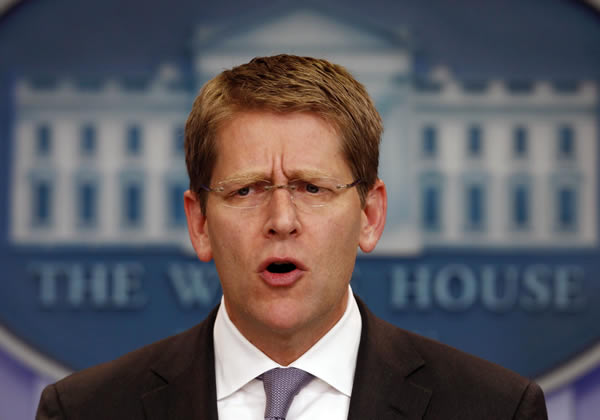
White House Press Secretary Jay Carney

It’s hardly rare for politicians in Washington to say things that make one wonder what color the sky is in their world. Vice President Joe Biden has offered a steady stream of examples, demonstrating again that sometimes an old dog can’t unlearn old tricks. But in the press gaggle yesterday, White House spokesperson Jay Carney dropped a doozy, suggesting anew that the Obama Administration is living in a fantasyland all its own.

Carney broke off answering a question about Baghdad to insert the following: The rate at which spending has increased is lower under President Obama than all of his predecessors since Dwight Eisenhower.

Carney went on to observe that “this President has been—has demonstrated significant fiscal restraint and acted with great fiscal responsibility.”

Well, well, let’s just look at the figures. Federal spending as a share of the economy will average over 24 percent during Obama’s term, and each and every year of that term will see a higher share than during any year since the Second World War. That apparently qualifies as “significant fiscal restraint” Obama-style.

Fiscal responsibility? Obama has had by far the largest budget deficits, driven in large part by the eruption in spending.

Obama’s Budget Continues Unprecedented Deficits

The President is responsible for submitting an annual budget to Congress and has the authority to veto legislation, including irresponsible spending. Most Administrations have run small but manageable deficits, but President Obama’s unprecedented budget deficits pose serious economic risks.

BUDGET DEFICITS AS A PERCENTAGE OF GDP, BY ADMINISTRATION

Obama's Budget Continues Unprecedented Deficits


Source: Office of Management and Budget.

It is, of course, the job of the chief White House flak to spin answers in response to questions. But in this case, there was no question. There was only the flak attempting to inject utter nonsense into the national debate. More Kool-Aid, Mr. Carney?