Category Archives: Ronald Reagan

Ronald Reagan Part 69F (30 yrs after assassination attempt)

Susan Ragan / ASSOCIATED PRESS

No. 9: Chris Webber calls time out

NCAA Championship game, April 5, 1993 — “I cost our team the game.” Chris Webber’s fabulous performance against North Carolina – 23 points, 11 rebounds, 3 blocks – will forever be overshadowed by his late mistake. Michigan trailed 73-71 when Webber snatched a rebound, dribbled upcourt and called timeout. Except the Wolverines didn’t have any left. Technical foul. The Heels sunk the free throws and walked away winners.

__________________________________________

More Michigan fans care about football anyway. They ended up getting rid of their coach Steve Fischer and that was a big mistake. Look at what he has done at San Diego State!!!

I have been slowly watching some of the 8 hours of film that my sons Wilson and Hunter brought home last Sunday night from their 7 day trip to California March 21 to 27. Last night I saw them driving on the snow covered mountains near Yosemite National Park. They stopped the car several times and took filmed the beautiful snow covered mountains. At one point they walked up to a couple of deer and almost pet them.

The highlight of the clips for me was the site of the Sequoia trees. They actually walked through the base of one of the trees. Wilson commented, “This is a neat cave,” but actually it was a tree that he was walking through.

__________________________________________

The gun below was used in the assassination attempt on President Reagan.

Image: John Hinckley's gun, a .22 caliber Rohm RG-14

Network coverage of President Ronald Reagan being shot March 30, 1981. Part 6 of 11

William Browning wrote the article “Ronald Reagan Assassination Attempt Key Players” (March 26, 2011) for Yahoo News. Browning is a research librarian. Below is a portion of that article.

The assassination attempt on President Ronald Reagan occurred a mere 69 days into his administration March 30, 1981. He is the only president to survive taking a bullet thanks to surgeons at George Washington University Hospital.

Many key people were involved in the shooting that day. Had the assassination attempt never happened, many of the key figures surrounding the event would not be known today.

President Ronald Reagan

Reagan finished giving a speech to the AFL-CIO at the Washington Hilton. Just before 1:45 p.m., a man brandishing a gun called out to Reagan and then fired six bullets, four of which found their marks on four separate individuals. Reagan spent nearly two weeks in the hospital recovering at George Washington University Hospital.

James Brady

Press Secretary James Brady was shot in the head by Hinckley’s first bullet and survived although he was paralyzed and confined to a wheelchair for the rest of his life. President Bill Clinton signed a gun control law in 1993 named the Brady Handgun Violence Protection Act or the “Brady Bill.” The press room of the White House is named after him in his honor. Brady currently serves on the Board of Trustees of the Brady Center to Prevent Gun Violence.

Thomas Delahanty

Thomas Delahanty was a Washington, D.C. police officer who was shot in the back by one of Hinckley’s bullets. He tried to return to normal duty but was forced to retire shortly after the assassination attempt.

Network coverage of President Ronald Reagan being shot March 30, 1981. Part 7 of 11.

Ronald Reagan Part 69E (30 yrs after assassination attempt)


No. 10: Keith Smart sinks the Orangemen, March 30, 1987

It only makes sense the movie “Hoosiers” was released during the 1986-87 season. The Hoosiers staged some Hollywood-style drama of their own to beat Syracuse for the NCAA title. Keith Smart scored 12 of Indiana’s final 15 points, including a feathery 16-foot jumper from the left side in the final seconds that capped a 74-73 win. Smart play, magical finish.


_______________________________________________


The funny comment I heard from the Syracuse coach Jim Boeheim who said that after this game mentioned above, Bobby Knight told jim that he would get his national championship. Boeheim said he didn’t think at the time it would take 21 years later to do it.

Image: President Ronald Reagan waves before John Hinckley opens fire

See remarkable video of John Hinckley Jr.’s assassination attempt and go behind the scenes to see how the White House managed a crisis that lifted the president to new heights of public approval.


  Network coverage of President Ronald Reagan being shot March 30, 1981. Part 4 of 11.

William Browning wrote the article “Ronald Reagan Assassination Attempt Key Players” (March 26, 2011) for Yahoo News. Browning is a research librarian. Below is a portion of that article.

The assassination attempt on President Ronald Reagan occurred a mere 69 days into his administration March 30, 1981. He is the only president to survive taking a bullet thanks to surgeons at George Washington University Hospital.

Many key people were involved in the shooting that day. Had the assassination attempt never happened, many of the key figures surrounding the event would not be known today.

President Ronald Reagan

Reagan finished giving a speech to the AFL-CIO at the Washington Hilton. Just before 1:45 p.m., a man brandishing a gun called out to Reagan and then fired six bullets, four of which found their marks on four separate individuals. Reagan spent nearly two weeks in the hospital recovering at George Washington University Hospital.

John W. Hinckley, Jr.

John W. Hinckley, Jr. was determined to get the attention of actress Jodie Foster. After failing to get to know her at Yale University when she attended classes, the young man’s obsession took on a psychotic twist. He checked into a Washington, D.C., hotel the day before he attempted to kill Reagan after writing a letter to Foster. Hinckley hit four people by his bullets. A jury found him not guilty by reason of insanity over a year later. He currently resides at St. Elizabeth Hospital in Washington and has limited freedom.

Network coverage of President Ronald Reagan being shot March 30, 1981. Part 5 of 11.


Ronald Reagan Part 69D (30 yrs after assassination attempt)

Associated Press

No. 11: N.C. State ends UCLA’s title run

Final Four, March 23, 1974 — For years, UCLA was unbeatable. The Bruins had won 7 straight titles and appeared poised for an 8th. But when an 88-game win streak was snapped in January, it opened the door for a new NCAA champ. North Carolina State, behind AP player of the year David Thompson, officially ended the Bruins’ reign with an 80-77 overtime win. The Wolfpack claimed the title two days later, but that was the easy part.

2nd OVT, final 14 mins. of the game and i added the famous hard dunk of David Thompson over 7’0’s Bill Walton (first 38 secs.).

___________________________________

Wikipedia notes: Following his NBA career, Thompson continued a downward spiral with drugs and alcohol. With encouragement from a pastor, he became a committed Christian and put his life back in order. Thompson now devotes his time to working with young basketball players, helping them to aspire to his achievements and avoid his mistakes. His autobiography, Skywalker, charts the highs and lows of his eventful life.

Thompson was enshrined in the Basketball Hall of Fame as a player on May 6, 1996.

Thompson eventually returned to school at North Carolina State, and in 2003 nearly 30 years after his last game for the Wolfpack he finished his degree in sociology. In 2004 David helped make a movie about his life called “Skywalker”. Much of the movie was filmed at the Boys and Girls Club in Gastonia, NC with the assistance of Scott Jimison, a long time friend of David.

On September 7, 2009, It was announced that Michael Jordan had chosen Thompson to introduce him for his Basketball Hall of Fame induction.[1]

Check out the Top 10 plays from the career of David Thompson.


Network coverage of President Ronald Reagan being shot March 30, 1981. Part 2 of 11.

I have included the report from Fox News in Washington DC from reporter Paul Wagner:

 30 years ago in March, surgeons at George Washington University Hospital ended up saving the life of the leader of the free world. A gunman shot President Ronald Reagan in the chest.

His condition on arrival so dire, doctors thought they might lose him. The minute-by-minute account of the trauma team in action is included in a new book called “Rawhide Down,” a play on the President’s Secret Service code name.

What follows is the account of the doctor who headed that team.

It took just three to four seconds after John Hinckley started firing his gun for Secret service agents to shove President Reagan into the armored limousine and roar off for the White House.

Although the President looked okay, Jerry Parr, the agent in charge of the Presidential Detail, began examining Reagan from head to toe.

“About Dupont Circle down here, maybe thirty seconds into the run, we’re moving pretty fast then, he started spitting up this bright red frothy blood,” Parr said.

Parr then made the split second decision to turn right on Pennsylvania Avenue and head directly to George Washington University Hospital.

As the president walked inside, he collapsed. It had only been three minutes or so since the shooting.

“In retrospect he was pretty close to, we have a term, he was pretty close to crashing, in other words his blood pressure would have dropped down to zero, he is a seventy year old man, that would have been a significantly serious event”.

Dr. Joseph Giordano was called to the trauma bay that day having no idea what was going on.

“The first time I knew it was the president I saw him lying on the gurney.”

Dr. Giordano headed up the trauma team and supervised the care the President was receiving.

“Initially he looked very concerned as you would expect, I mean here he is lying on this gurney with a bunch of four or five people looking over him, people totally unknown to him, but he handled himself extraordinarily well and as things began to improve, the blood pressure got better and so forth like that he relaxed a little bit more,” said Dr. Giordano.

That’s when Reagan began talking with the doctors.

“He was communicating with us. We asked him how he was feeling, what was going on, he said he was a little short of breath, that sort of stuff,” said Dr. Giordano.

But the X-rays showed there was a projectile in his chest and the decision was made to operate.

By then, feeling a little bit better, the President started joking.

“He was relaxed as could be and that was the time he looked at me and he said, “I hope you are all Republicans,” a quip you know, and I said, “Yes we are all Republicans,” but you know it’s amazing, how, what presence he had.”

Dr. Giordano says he stayed in the operating room and watched as Dr. Benjamin Aaron removed the bullet.

“Dr. Aaron could feel it and I always thought it was fortuitous to remove it because as you know it was a devastator bullet, not exactly sure of the name but it’s a bullet that on impact will explode, it has a charge in it.”

The minute- by- minute account is included in a riveting new book called “Rawhide Down,” written by Washington Post reporter Del Wilbur.

All these years later, Dr. Giordano still marvels at the split second decisions made that day to save the President’s life.

He gives all the credit to Secret Service agent Jerry Parr for changing course and heading to the hospital.

___________________________________

Network coverage of President Ronald Reagan being shot March 30, 1981. Part 3 of 11.

Ronald Reagan Part 69C (30 yrs after assassination attempt)

Eric Gay / AP

No. 12: Mario’s Miracle

NCAA Championship game, April 7, 2008 — It all happened so fast. Down 9 with 2:12 left, Kansas cut into Memphis’ lead and had a chance to tie. Kansas junior Mario Chalmers took the ball from teammate Sherron Collins at the top of the 3-point line and, with two seconds remaining, shot over two Memphis defenders. Tie game, Kansas wins in overtime. “Ten seconds to go, we’re thinking we’re national champs, all of a sudden a kid makes a shot, and we’re not,” Memphis coach John Calipari said.

_________________________________________

Calipari is back in the final four again. He is the second coach to take three programs to the final four (UMass 96, Memphis 2008, Kentucky 2008). The first coach to do that was Rick Pitino (Providence, Kentucky and Louisville).

The Kansas Jayhawks are the 2008 NCAA men’s basketball champions after beating the Memphis Tigers in a thrilling overtime game. (NCAA March Madness 2008 highlights)

___________________________________

Michael Levy on his blog posts this on the Reagan assassination attempt:

Thirty years ago today, on March 30, 1981, tragedy almost befell the American government when John Hinckley, a deranged drifter trying to impress actress Jodie Foster, on whom he had developed an obsession after seeing her in Taxi Driver, fired six shots from a .22-caliber revolver at President Ronald Reagan as the president left a speech he had given to the National Conference of Building and Construction Trades Department of the AFL-CIO at the Washington Hilton.

As Reagan left the Hilton, he waved to those gathered outside. Almost immediately thereafter, Hinckley fired. One bullet entered Reagan’s chest, puncturing a lung and lodging one inch from his heart. Reagan, shoved into the presidential limousine by Secret Service agent Jerry Parr, was quickly rushed to George Washington University Hospital for emergency surgery after he realized he had been shot. Despite serious bleeding, Reagan walked into the hospital. Always one for timing, Reagan joked with doctors as he was being wheeled into the operating room: “I hope you’re all Republicans.” To try to comfort his wife, Nancy, Reagan also told her “Honey, I forgot to duck.”

James Brady and police officer Thomas Delahanty (bottom) lie wounded on the ground

More seriously wounded was Press Secretary James Brady, who was shot in the head and was permanently disabled. Brady went on, with his wife, Sarah, to champion gun control through the Brady Center to Prevent Gun Violence (and, hence, the Brady Bill was named in his honor when it was passed in 1993). Also wounded were Thomas K. Delahanty, who was hit in the neck by one of the shots and fell to the ground, and Timothy J. McCarthy, who leapt in front of Reagan, taking a bullet in the right chest.

As chaos ensued, and with Vice President George H.W. Bush aboard Air Force Two, Secretary of State Alexander Haig famously declared “I’m in control here.” (Years later, I happened to sit next to Haig on a flight from Fort Lauderdale to Atlanta, and it took all I had not to ask him about that line.)

Coming just 18 years after the assassination of John F. Kennedy, and 13 years after the assassinations of Martin Luther King, Jr., and Robert F. Kennedy, many once again wondered about the safety of any occupant of the Oval Office as Reagan convalesced at George Washington hospital.

Ronald Reagan and Nancy Reagan in George Washington hospital four days after the shooting

Just 12 day after the shooting, however, Reagan was released. The president subsequently made a series of carefully staged public appearances designed to give the impression that he was recovering quickly, though in fact he remained seriously weakened for months and his workload was sharply curtailed.


Reagan leaving the hospital with his wife and daughter Patti Davis, April 11, 1981

Ronald Reagan Part 69B (30 years after assassination attempt)


I remember getting finished with my college classes for the day and turning on my car. Then I felt a cold feeling go through my whole body when I realized immediately that  special report on the radio was reporting  there had been an assassination attempt on the president.

Picture of Ronald Reagan waving to the crowd immediately before being shot in an assassination attempt.
(Picture from the Ronald Reagan Library)

President Reagan waves to crowd immediately before being shot in an assassination attempt, Washington Hilton Hotel. (March 30, 1981)

I still remember today the exact place that I parked that day, and I did not even leave that space for the next few minutes as I wanted to find out exactly what had happened before I started moving down the road. 

Reflecting back on this always makes me think of all the people that told me that they had remembered where they were when they heard the news about President Kennedy’s assassination.

Today is 30 years after that event. Below is a portion of an article by Paul Wagner of the Washington DC Fox News affiliate that was published on their website on March 11, 2011.

 30 years ago in March, John Hinckley tried to assassinate President Ronald Reagan as he walked to his limousine outside the Washington Hilton Hotel.

The chaotic and tragic moments were preserved forever by photographers who were there that day.

It is a day in history that is now the subject of a book titled “Rawhide Down.” The book is a riveting minute-by-minute account of what happened to President Reagan on March 30, 1981.

It is a shooting experienced first hand by Jerry Parr, the head of the President’s Secret Service detail. What follows is Parr’s recollections of the day’s tragic events.

At 2:27 pm, March 30, 1981, President Reagan walked out of the VIP entrance of the Washington Hilton Hotel. Waiting for him with a loaded .22 caliber revolver was Hinckley, standing amongst of group of reporters, photographers and people who just wanted to catch a glimpse of the president.

“There’s two shots, ‘Bang, bang,’” said Parr in an interview outside the Hilton Monday. “Then there is a gap in time, but very, very miniscule and then I hear four more shots, but I’m already moving on that first shot.”

Parr is standing just behind the President as the shots ring out. As Head of the Secret Service Presidential Detail, Parr assigned himself to work with Reagan that day in hopes of bonding with the President. By then, Reagan had been in office for just over two months.

Parr agreed to go back to the Hilton where we talked to him about the shooting and the decisions he made.

“Shattick (Ray Shaddick, another agent on the detail) sees our feet hanging out and he throws my feet and the President’s feet and slams the door and I told the driver to leave. That door is shut in three seconds from the first shot to the door being shut,” Parr said.

As the limousine roars off, Parr notices an unusual mark on the bulletproof glass of the rear door.

“I saw two things when I left as we pulled out of here. One is the bullet hole in the window that didn’t penetrate at all. It dimpled out. It’s got this glass and then a film in between it and then they pack it together. But I could see that it had been hit there and I could see three bodies on the sidewalk as we pulled away,” he said.

By now, other agents had wrestled Hinckley to the ground. Later, they would say he was still pulling the trigger.

Fearful someone would harm Hinckley, the agents left behind hustled the would-be assassin into a police cruiser for the short ride to D.C. Police headquarters.

At the same time, Parr was examining the President to see if he was hurt.

“Kneeling in front of him, I ran my hands up under his coat, in the belt area and then I ran my hands up his back, up under his arm and his armpit area and his neck and I ran my hands through his hair and the back of his neck and looked for any wounds,” said Parr. “I looked for blood on my hands and there wasn’t any. So that’s when I told Ray Shaddick I think we are going to the White House and I used the word ‘Crown’ in those days. About Dupont Circle down here, maybe 30 seconds into the run, we were moving pretty fast then, he started spitting up this bright red frothy blood.”

“Crown” was the Secret Service code word for the White House.

As the limousine approached 17th Street and Pennsylvania Avenue, it made a hard right turn for the hospital. It was a decision many believe saved the President’s life.

As Reagan’s limo pulled up to the hospital’s front entrance, Parr says he was surprised to see no one waiting there.

“Shaddick opened the door and I backed out. I put my hand out, but he didn’t want to take it. He had a habit of hitching his pants up, so he hitches his pants up and we walked in. I’m on the left-hand side of him and Shaddick is on the right. I go in and maybe 20 or 30 feet and he collapses. I mean he is dead weight,” Parr said.

What happens next is explained in a riveting minute-by-minute account of a trauma team in action.

“Rawhide Down,” written by Washington Post Reporter Del Quentin Wilber, tells the story of Reagan’s brush with death and how some doctors, nurses and even Parr thought the President might die.

“Eventually they put Brady (White House Press Secretary Jim Brady) right beside him with a drape between us and Tim McCarthy (wounded Secret Service Agent) was there. Delahanty (wounded D.C. Police Officer) went to the Washington Hospital Center and I was concerned he would pass away because I knew what it meant to the Secret Service to lose a President,” said Parr.

He stayed with the President as the doctors and nurses scrambled to find out why Reagan couldn’t breath.

“They told him they were going to operate because blood was coming out faster then they put it in, so I walked over to him and I said, ‘God save your life’ or something like that. I don’t know now, but I said something like that. It’s about all I could do,” Parr said.

Picture of chaos outside the Washington Hilton Hotel after the assassination attempt on President Reagan.  James Brady and police officer Thomas Delahanty lie wounded on the ground.
(Picture from the Ronald Reagan Library)
 

Chaos outside the Washington Hilton Hotel after the assassination attempt on President Reagan. James Brady and police officer Thomas Delahanty lie wounded on the ground. (March 30, 1981)

Ronald Wilson Reagan Part 69

Bob Jordan / Associated Press

No. 13: Duke ends UNLV’s perfect season

Final Four, March 30, 1991 — The Runnin’ Rebs returned four starters from the 1990 champions and rolled through the ’90-91 season. They entered the Final Four 34-0 and faced Duke, a team the Rebs beat by 30 points in the ’90 title game. Yet the Devils pulled off the stunner, 79-77, and went on to beat Kansas for their first NCAA title

Richard Land makes comparison between slavery and abortion at Denton Bible Church  on 10-14-2004 (part 1)

On the Arkansas Times Blog this morning I posted a short pro-life piece and it received this response:

We have been over this time and again SalineRepublican, and I think we all know the issue: when does the right of a woman to control her own body yield to the *potential* of life? If you continue to believe it is at conception, if you continue to believe a zygote or embryo has rights that society must elevate over the woman’s control over her health and body, we will continue to disagree.

we know that life begins at birth. We know that society has an interest in the potential of life at some point prior to birth. If you can identify a point that the balance shifts *prior* to viability, then you are staking out a position that likely will never be accepted by the broader society. And maybe that is what your faith compels you to do.

The rest of us will cede that determination to a woman and her conscience, her God and her physician.

Posted by Tap on March 29, 2011 at 1:16 AM | Report this comment
____________________________
Ronald Reagan:
“I have also said that anyone who doesn’t feel sure whether we are talking about a second human life should clearly give life the benefit of the doubt. If you don’t know whether a body is alive or dead, you would never bury it. I think this consideration itself should be enough for all of us to insist on protecting the unborn.”
Is this decision best decided between a lady and her doctor? Above you see the logical statement made by Ronald Reagan. He  did a great job of showing that we must determine first if the unborn child is just a blob or a real person. Until that has been determined how can we just say that this decision should be left to the mother and her doctor? Next I will post about the issue of viability  later today. “Tap” has brought up some legitimate concerns.

Picture of Ronald Reagan as a youth standing near a tree in Dixon, Illinois.
(Picture from the Ronald Reagan Library)

Ronald Reagan on the Eureka College Football Team. (1929)

I have a son named Wilson Daniel Hatcher and he is named after two of the most respected men I have ever read about : Daniel from the Old Testament and Ronald Wilson Reagan. I have studied that book of Daniel for years and have come to respect that author who was a saint who worked in two pagan governments but he never compromised. My favorite record was the album “No Compromise” by Keith Green and on the cover was a picture from the Book of Daniel.

One of the thrills of my life was getting to hear President Reagan speak in the beginning of November of 1984 at the State House Convention Center in Little Rock.  Immediately after that program I was standing outside on Markham with my girlfriend Jill Sawyer (now wife of 25 years) and we were alone on a corner and President was driven by and he waved at us and we waved back.

My former pastor from Memphis, Adrian Rogers, got the opportunity to visit with President Ronald Reagan on several occasions and my St Senator Jeremy Hutchinson got to meet him too. I am very jealous.

Take time to read this below and comment below and let me know what you thought of his words.

June 10, 2004, 10:30 a.m.
Abortion and the Conscience of the Nation
Ronald Reagan’s pro-life tract.

EDITOR’S NOTE: While president, Ronald Reagan penned this article for The Human Life Review, unsolicited. It ran in the Review‘s Spring 1983, issue and is reprinted here with permission.

The 10th anniversary of the Supreme Court decision in Roe v. Wade. Our nationwide policy of abortion-on-demand through all nine months of pregnancy was neither voted for by our people nor enacted by our legislators — not a single state had such unrestricted abortion before the Supreme Court decreed it to be national policy in 1973 is a good time for us to pause and reflect. But the consequences of this judicial decision are now obvious: since 1973, more than 15 million unborn children have had their lives snuffed out by legalized abortions. That is over ten times the number of Americans lost in all our nation’s wars…

Abortion concerns not just the unborn child, it concerns every one of us. The English poet, John Donne, wrote: “. . . any man’s death diminishes me, because I am involved in mankind; and therefore never send to know for whom the bell tolls; it tolls for thee.”

We cannot diminish the value of one category of human life — the unborn — without diminishing the value of all human life. We saw tragic proof of this truism last year when the Indiana courts allowed the starvation death of “Baby Doe” in Bloomington because the child had Down’s Syndrome.

Many of our fellow citizens grieve over the loss of life that has followed Roe v. Wade. Margaret Heckler, soon after being nominated to head the largest department of our government, Health and Human Services, told an audience that she believed abortion to be the greatest moral crisis facing our country today. And the revered Mother Teresa, who works in the streets of Calcutta ministering to dying people in her world-famous mission of mercy, has said that “the greatest misery of our time is the generalized abortion of children.”

Over the first two years of my Administration I have closely followed and assisted efforts in Congress to reverse the tide of abortion — efforts of Congressmen, Senators and citizens responding to an urgent moral crisis. Regrettably, I have also seen the massive efforts of those who, under the banner of “freedom of choice,” have so far blocked every effort to reverse nationwide abortion-on-demand.

Despite the formidable obstacles before us, we must not lose heart. This is not the first time our country has been divided by a Supreme Court decision that denied the value of certain human lives. The Dred Scott decision of 1857 was not overturned in a day, or a year, or even a decade. At first, only a minority of Americans recognized and deplored the moral crisis brought about by denying the full humanity of our black brothers and sisters; but that minority persisted in their vision and finally prevailed. They did it by appealing to the hearts and minds of their countrymen, to the truth of human dignity under God. From their example, we know that respect for the sacred value of human life is too deeply engrained in the hearts of our people to remain forever suppressed. But the great majority of the American people have not yet made their voices heard, and we cannot expect them to — any more than the public voice arose against slavery — until the issue is clearly framed and presented.

What, then, is the real issue? I have often said that when we talk about abortion, we are talking about two lives — the life of the mother and the life of the unborn child. Why else do we call a pregnant woman a mother? I have also said that anyone who doesn’t feel sure whether we are talking about a second human life should clearly give life the benefit of the doubt. If you don’t know whether a body is alive or dead, you would never bury it. I think this consideration itself should be enough for all of us to insist on protecting the unborn.

________________________________________________

I remember when President Carter and candidate Reagan debated in 1980 and the subject of abortion came up. Reagan said that if you were on a dusty area and you found someone laying down would you bury him without knowing for sure if he is alive or not? It is the same with the case of abortion.

Richard Land on abortion part 2 from Denton Bible Church

//
// ‘;
var PageContent= ‘
The stern of the grounded cargo ship Asia Symphony breaches the port wall and juts out onto a road in Kamaishi, Iwate Prefecture in northeastern Japan on 19 March 2011. The picturesque fishing town of Kamaishi was devastated when the tsunami hit less than 15 minutes after the 9.0 earthquake that rocked Japan on 11 March 2011.  EPA/STEPHEN MORRISON
The stern of the grounded cargo ship Asia Symphony breaches the port wall and juts out onto a road in Kamaishi, Iwate Prefecture in northeastern Japan on 19 March 2011. The picturesque fishing town of Kamaishi was devastated when the tsunami hit less than 15 minutes after the 9.0 earthquake that rocked Japan on 11 March 2011. EPA/STEPHEN MORRISON
page

// ]]>page

Volunteer firefighters (L) pour hot soup into foam bowls for a volunteer woman (R) to hand them out to evacuees at an evacuation center in coastal city of Rikuzentakata, Iwate prefecture, northeastern Japan, 19 March 2011. The number of estimated dead and missing persons kept rising on 19 March, adding another fear to evacuees who have already been spending their days in dire conditions as they hopelessly wait for a good news on their loved ones whereabouts since a 9.0-magnitude earthquake and subsequent tsunami hit Japan on 11 March 2011.  EPA/DAI KUROKAWA
Volunteer firefighters (L) pour hot soup into foam bowls for a volunteer woman (R) to hand them out to evacuees at an evacuation center in coastal city of Rikuzentakata, Iwate prefecture, northeastern Japan, 19 March 2011. The number of estimated dead and missing persons kept rising on 19 March, adding another fear to evacuees who have already been spending their days in dire conditions as they hopelessly wait for a good news on their loved ones whereabouts since a 9.0-magnitude earthquake and subsequent tsunami hit Japan on 11 March 2011. EPA/DAI KUROKAWA

‘; PrintArticle(); // –>
// ]]> 

A man tries out a trousers he was given as volunteers work in a room to distribute used clothings to evacuees at an evacuation center in coastal city of Rikuzentakata, Iwate prefecture, northeastern Japan, 19 March 2011. The number of estimated dead and missing person kept rising on 19 March, adding another fear to evacuees who have already been spending their days in dire conditions as they hopelessly wait for a good news on their loved ones whereabouts since a 9.0-magnitude earthquake and subsequent tsunami hit Japan on 11 March 2011.  EPA/DAI KUROKAWA
A man tries out a trousers he was given as volunteers work in a room to distribute used clothings to evacuees at an evacuation center in coastal city of Rikuzentakata, Iwate prefecture, northeastern Japan, 19 March 2011. The number of estimated dead and missing person kept rising on 19 March, adding another fear to evacuees who have already been spending their days in dire conditions as they hopelessly wait for a good news on their loved ones whereabouts since a 9.0-magnitude earthquake and subsequent tsunami hit Japan on 11 March 2011. EPA/DAI KUROKAWA


.

Abortionist Bernard Nathanson turned pro-life activist (part 3)


Vice Admiral C. Everett Koop, USPHS
Surgeon General of the United States

Francis Schaeffer

Author photo.

Francis Schaeffer and Dr. C. Everett Koop put together this wonderful film series “Whatever happened to the human race?” and my senior class teacher Mark Brink taught us a semester long course on it in 1979. I was so impacted by it that I returned the following two years to sit in and watch the series again even though I had graduated and was in college. I knew the impact this film series would have on the pro-life movement and I wanted to soak it all in.

We got to hear about Hunter and Wilson’s trip to California to help our friend Rev Sherwood Haisty and his street preaching ministry. They got to see a group of diverse people and they had the opportunity to interact with them concerning the gospel. I hope to put up some of the video clips soon.

I posted this on the Arkansas Times Blog and got a very strongly worded response from someone with the username “”Outlier” who was obviously very angry about my post.

Max, you are right to say that the economy is a very important issue. However, the sanctity of life is a big issue too. I just got finished reading about the life of Dr. Bernard Nathanson and his transformation from being a founder of NARAL to putting together the film “The Silent Scream.” Ronald Reagan rightly said that all Representatives and Senators should see this film and then it would be easy to pass pro-life laws. Want to know more then check outhttp://haltingarkansasliberalswithtruth.co…

(I know that President Reagan made the remark about our representatives in Washington needing to watch this pro-life film of Nathanson, but after reading Jason Tolbert’s recent article on our representatives in the Arkansas State Government, I think they need to watch it too.)

Posted by SalineRepublican on March 27, 2011 at 10:47 AM | Report this comment
 
Cecile Richards, president of Planned Parenthood and daughter of Anne Richards, former governor of Texas and Mollie Ivins cohort, is on C-Span Newsmakers talking about the consequences of defunding Planned Parenthood. The care women (and men since there is nothing like a case of the clap and no insurance to send one scurrying to their door) are receiving is essential. One in five women in America have used their services for birth control and health screening. Life saving screening for both women and men won’t be available through PP. And they are very cost effective compared to ERs. 

All these Republican a**holes and some cowardly dems would hie their daughters off to wherever for an abortion if it so happened that the father was not a suitable boy. Poor women get to go the coat hangar route, or die in back alleys.Posted by the outlier on March 27, 2011 at 10:49 AM | Report this comment_________________________________________

I think this post by “the outlier” overlooks the basic issue of the personhood of the unborn baby and Dr. Nathanson was forced by scientific advances to admit that the unborn baby is a person. “Poor women get to go the coat hanger route or die in back alleys” is the concern of “the outlier” but what about the unborn baby? Is there any consideration of the mass murder of these unborn babies?

I wanted to pass along a portion of the excellent article “Bernard Nathanson: A Life Transformed by the Truth about Abortion.” (Feb 11, 2011)

LifeNews.com Note: Robert P. George is McCormick Professor of Jurisprudence and Director of the James Madison Program in American Ideals and Institutions at Princeton University. He is a member of the President’s Council on Bioethics and previously served on the United States Commission on Civil Rights. This article previously appeared in Public Discourse:

Within a year after Roe v. Wade, however, Nathanson began to have moral doubts about the cause to which he had been so single-mindedly devoted. In a widely noticed 1974 essay in the prestigious New England Journal of Medicine, he revealed his growing doubts about the “pro-choice” dogma that abortion was merely the removal of an “undifferentiated mass of cells,” and not the killing of a developing human being. Referring to abortions that he had supervised or performed, he confessed to an “increasing certainty that I had in fact presided over 60,000 deaths.”

Still, he was not ready to abandon support for legal abortion. It was, he continued to insist, necessary to prevent the bad consequences of illegal abortions. But he was moving from viewing abortion itself as a legitimate solution to a woman’s personal problem, to seeing it as an evil that should be discouraged, even if for practical reasons it had to be tolerated. Over the next several years, while continuing to perform abortions for what he regarded as legitimate “health” reasons, Nathanson would be moved still further toward the pro-life position by the emergence of new technologies, especially fetoscopy and ultrasound, that made it increasingly difficult, and finally impossible, to deny that abortion is the deliberate killing of a unique human being–a child in the womb.

By 1980, the weight of evidence in favor of the pro-life position had overwhelmed Nathanson and driven him out of the practice of abortion. He had come to regard the procedure as unjustified homicide and refused to perform it. Soon he was dedicating himself to the fight against abortion and revealing to the world the lies he and his abortion movement colleagues had told to break down public opposition.

In 1985, Nathanson employed the new fetal imaging technology to produce a documentary film, “The Silent Scream,” which energized the pro-life movement and threw the pro-choice side onto the defensive by showing in graphic detail the killing of a twelve-week-old fetus in a suction abortion. Nathanson used the footage to describe the facts of fetal development and to make the case for the humanity and dignity of the child in the womb. At one point, viewers see the child draw back from the surgical instrument and open his mouth: “This,” Nathanson says in the narration, “is the silent scream of a child threatened imminently with extinction.”

Publicity for “The Silent Scream” was provided by no less a figure than President Ronald Reagan, who showed the film in the White House and touted it in speeches. Like Nathanson, Reagan, who had signed one of the first abortion-legalization bills when he was Governor of California, was a zealous convert to the pro-life cause. During his term as president, Reagan wrote and published a powerful pro-life book entitled Abortion and the Conscience of the Nation–a book that Nathanson praised for telling the truth about the life of the child in the womb and the injustice of abortion

The Silent Scream part 3


Ronald Wilson Reagan Part 68

Haraz N. Ghanbari / AP

No. 14: George Mason’s Cinderella run

Washington Regional final, March 26, 2006 — Underdog usually finds a home in the NCAA tournament, but rarely in the later rounds. That changed in 2006. George Mason beat powerhouses Michigan State and North Carolina, ran past Wichita State in the Sweet 16 then shocked top-ranked Connecticut. “I can only imagine the feeling they must have on that campus, in that locker room,” said UConn coach Jim Calhoun. “It’s something they probably never imagined. We’ve imagined it, and we’ve done it. They could never have imagined it.”

If you liked that run by George Mason then what about that unbelievable game by VCU over Kansas? Now Butler and VCU will face each other in the Final Four. Who would have predicted that? Not President Obama, that is for sure. He predicted all four number one seeds to be in the final four. He is 0-4 on that pick.

Picture of Ronald Reagan as a youth standing near a tree in Dixon, Illinois.
(Picture from the Ronald Reagan Library)

Ronald Reagan in Dixon, Illinois. (Circa 1920s)

1980 Presidential Debate Carter v Reagan

Governor Reagan?

GOVERNOR REAGAN

I know the President’s supposed to be replying to me, but sometimes, I have a hard time in connecting what he’s saying with what I have said or what my positions are. I sometimes think he’s like the witch doctor that gets mad when a good doctor comes along with a cure that’ll work.

My point I have made already, Mr. President, with regard to negotiating. It does not call for nuclear superiority on the part of the United States; it calls for a mutual reduction of these weapons, as I say, that neither of us can represent a threat to the other. And to suggest that the SALT II treaty that your negotiators negotiated was just a continuation, and based on all of the preceding efforts by two previous Presidents, is just not true. It was a new negotiation, because, as I say, President Ford was within about 10 percent of having a solution that could be acceptable. And I think our allies would be very happy to go along with a fair and verifiable SALT agreement.

A evacuee woman (L) reacts as a volunteer worker gives her news on people she has been looking for at an evacuation center in coastal city of Rikuzentakata, Iwate prefecture, northeastern Japan, 19 March 2011. The number of estimated dead and missing person kept rising on 19 March, adding another fear to evacuees who have already been spending their days in dire conditions as they hopelessly wait for a good news on their loved ones whereabouts since a 9.0-magnitude earthquake and subsequent tsunami hit Japan on 11 March 2011.  EPA/DAI KUROKAWA 

A evacuee woman (L) reacts as a volunteer worker gives her news on people she has been looking for at an evacuation center in coastal city of Rikuzentakata, Iwate prefecture, northeastern Japan, 19 March 2011. The number of estimated dead and missing person kept rising on 19 March, adding another fear to evacuees who have already been spending their days in dire conditions as they hopelessly wait for a good news on their loved ones whereabouts since a 9.0-magnitude earthquake and subsequent tsunami hit Japan on 11 March 2011. EPA/DAI KUROKAWA

Abortionist Bernard Nathanson turned pro-life activist (part 2)

This is such a great video series “The Silent Scream.” I have never seen it until now and I wish I had seen it 30 years ago.  Take a look at the video clip below.

I wanted to pass along a portion of the excellent article “Bernard Nathanson: A Life Transformed by the Truth about Abortion.” (Feb 11, 2011)

LifeNews.com Note: Robert P. George is McCormick Professor of Jurisprudence and Director of the James Madison Program in American Ideals and Institutions at Princeton University. He is a member of the President’s Council on Bioethics and previously served on the United States Commission on Civil Rights. This article previously appeared in Public Discourse:

In the mid-1960s, with the sexual revolution roaring after Alfred Kinsey’s fraudulent but influential “scientific” studies of sex and sexuality in America, Hugh Hefner’s aggressive campaign to legitimize pornography and, perhaps above all, the wide distribution of the anovulant birth control pill, Nathanson became a leader in the movement to overturn laws prohibiting abortion. He co-founded the National Association for the Repeal of Abortion Laws (NARAL), which later became the National Abortion Rights Action League (NARAL) and is now NARAL Pro-Choice America. Its goal was to remove the cultural stigma on abortion, eliminate all meaningful legal restraints on it, and make it as widely available as possible across the nation and, indeed, the globe.

To achieve these goals, Nathanson would later reveal, he and fellow abortion crusaders pursued dubious and in some cases straightforwardly dishonest strategies.

First, they promoted the idea that abortion is a medical issue, not a moral one. This required persuading people of the rather obvious falsehood that a normal pregnancy is a natural and healthy condition if the mother wants her baby, and a disease if she does not. The point of medicine, to maintain and restore health, had to be recast as giving health care consumers what they happen to want; and the Hippocratic Oath’s explicit prohibition of abortion had to be removed. In the end, Nathanson and his collaborators succeeded in selling this propaganda to a small but extraordinarily powerful group of men: in the 1973 case of Roe v. Wade,seven Supreme Court justices led by Harry Blackmun, former counsel to the American Medical Association, invalidated virtually all state laws providing meaningful protection for unborn children on the ground that abortion is a “private choice” to be made by women and their doctors.

Second, Nathanson and his friends lied–relentlessly and spectacularly–about the number of women who died each year from illegal abortions. Their pitch to voters, lawmakers, and judges was that women are going to seek abortion in roughly equal numbers whether it is lawful or not. The only effect of outlawing it, they claimed, is to limit pregnant women to unqualified and often uncaring practitioners, “back alley butchers.” So, Nathanson and others insisted, laws against abortion are worse than futile: they do not save fetal lives; they only cost women’s lives.

Now some women did die from unlawful abortions, though factors other than legalization, especially the development of antibiotics such as penicillin, are mainly responsible for reducing the rate and number of maternal deaths. And of course, the number of unborn babies whose lives were taken shot up dramatically after Nathanson and his colleagues achieved their goals; and they achieved them, in part, by claiming that the number of illegal abortions was more than ten times higher than it actually was.

Third, the early advocates of abortion deliberately exploited anti-Catholic animus among liberal elites and (in those days) many ordinary Protestants to depict opposition to abortion as a “religious dogma” that the Catholic hierarchy sought to impose on others in violation of their freedom and the separation of church and state. Nathanson and his friends recognized that their movement needed an enemy–a widely suspected institution that they could make the public face of their opposition; a minority, but one large and potent enough for its detractors to fear.

Despite the undeniable historical fact that prohibitions of abortion were rooted in English common law and reinforced and expanded by statutes enacted across the United States by overwhelmingly Protestant majorities in the 19th century, Nathanson and other abortion movement leaders decided that the Catholic Church was perfect for the role of freedom-smothering oppressor. Its male priesthood and authority structure would make it easy for them to depict the Church’s opposition to abortion as misogyny, for which concern to protect unborn babies was a mere pretext. The Church’s real motive, they insisted, was to restrict women’s freedom in order to hold them in positions of subservience.

Fourth, the abortion movement sought to appeal to conservatives and liberals alike by promoting feticide as a way of fighting poverty. Why are so many people poor? It’s because they have more children than they can afford to care for. What’s the solution? Abortion. Why do we have to spend so much money on welfare? It’s because poor, mainly minority, women are burdening the taxpayer with too many babies. The solution? Abortion. Initially, Nathanson himself believed that legal abortion and its public funding would reduce out-of-wedlock childbearing and poverty, though (as he later admitted) he continued to promote this falsehood after the sheer weight of evidence forced him to disbelieve it.

______________________________

Nathanson later in his life became a pro-life advocate.In 1985, Nathanson employed the new fetal imaging technology to produce a documentary film, “The Silent Scream,” which energized the pro-life movement and threw the pro-choice side onto the defensive by showing in graphic detail the killing of a twelve-week-old fetus in a suction abortion. Nathanson used the footage to describe the facts of fetal development and to make the case for the humanity and dignity of the child in the womb. At one point, viewers see the child draw back from the surgical instrument and open his mouth: “This,” Nathanson says in the narration, “is the silent scream of a child threatened imminently with extinction.” 

Publicity for “The Silent Scream” was provided by no less a figure than President Ronald Reagan, who showed the film in the White House and touted it in speeches. 

The Silent Scream part 2


Abortionist Bernard Nathanson turned pro-life activist (part 1)

Sherwood Haisty is taking my sons Hunter and Wilson to Grace Community Church in the Los Angeles area this morning where Dr. John MacArthur is pastor. They will be attending both Sunday School and Worship.

I wanted to pass along a portion of the excellent article “Bernard Nathanson: A Life Transformed by the Truth about Abortion.”

LifeNews.com Note: Robert P. George is McCormick Professor of Jurisprudence and Director of the James Madison Program in American Ideals and Institutions at Princeton University. He is a member of the President’s Council on Bioethics and previously served on the United States Commission on Civil Rights. This article previously appeared in Public Discourse:

A man who made a career of death and lies became a hero for life and truth.

This morning in St. Patrick’s Cathedral, Archbishop Timothy Dolan will celebrate a Mass of Christian Burial for a giant of the pro-life movement: Dr. Bernard Nathanson.

Few people, if any, did more than Bernard Nathanson to undermine the right to life of unborn children by turning abortion from an unspeakable crime into a constitutionally protected liberty. Someday, when our law is reformed to honor the dignity and protect the right to life of every member of the human family, including children in the womb, historians will observe that few people did more than Bernard Nathanson to achieve that reversal.

Dr. Nathanson, the son of a distinguished medical practitioner and professor who specialized in obstetrics and gynecology, had his first involvement with abortion as a medical student at McGill University in Montreal. Having impregnated a girlfriend, he arranged and paid for her illegal abortion. Many years later, he would mark this episode as his “introductory excursion into the satanic world of abortion.”

In the meantime, however, Nathanson would become a nearly monomaniacal crusader for abortion and campaigner for its legalization. And he would himself become an abortionist.

By his own estimate, he presided over more than 60,000 abortions as Director of the Center for Reproductive and Sexual Health, personally instructed medical students and practitioners in the performance of about 15,000 more, and performed 5,000 abortions himself. In one of those abortions, he took the life of his own son or daughter–a child conceived with a girlfriend after he had established his medical practice. Writing with deep regret in his moving autobiography The Hand of God (1996), Nathanson confessed his own heartlessness in performing that abortion: “I swear to you, I had no feelings aside from the sense of accomplishment, the pride of expertise.”

_________________________________

Nathanson later in his life became a pro-life advocate.In 1985, Nathanson employed the new fetal imaging technology to produce a documentary film, “The Silent Scream,” which energized the pro-life movement and threw the pro-choice side onto the defensive by showing in graphic detail the killing of a twelve-week-old fetus in a suction abortion. Nathanson used the footage to describe the facts of fetal development and to make the case for the humanity and dignity of the child in the womb. At one point, viewers see the child draw back from the surgical instrument and open his mouth: “This,” Nathanson says in the narration, “is the silent scream of a child threatened imminently with extinction.” 

Publicity for “The Silent Scream” was provided by no less a figure than President Ronald Reagan, who showed the film in the White House and touted it in speeches.
The Silent Scream Part 1 – Abortion as Infanticide 

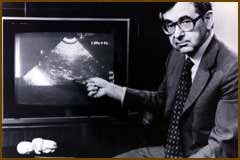
Dr. Bernard Nathanson’s classic video that shocked the world. He explains the procedure of a suction abortion, followed by an actual first trimester abortion as seen through ultrasound. The viewer can see the child’s pathetic attempts to escape the suction curette as her heart rate doubles, and a “silent scream” as her body is torn apart. A great tool to help people see why abortion is murder. The most important video on abortion ever made. This video changed opinion on abortion to many people.
Introduction by Dr. Bernard Nathanson, host. Describes the technology of ultrasound and how, for the first time ever, we can actually see inside the womb. Dr. Nathanson further describes the ultrasound technique and shows examples of babies in the womb. Three-dimensional depiction of the developing fetus, from 4 weeks through 28 weeks. Display and usage of the abortionists’ tools, plus video of an abortionist performing a suction abortion. Dr. Nathanson discusses the abortionist who agreed to allow this abortion to be filmed with ultrasound. The abortionist was quite skilled, having performed more than 10,000 abortions. We discover that the resulting ultrasound of his abortion so appalled him that he never again performed another abortion. The clip begins with an ultrasound of the fetus (girl) who is about to be aborted. The girl is moving in the womb; displays a heartbeat of 140 per minute; and is at times sucking her thumb. As the abortionist’s suction tip begins to invade the womb, the child rears and moves violently in an attempt to avoid the instrument. Her mouth is visibly open in a “silent scream.” The child’s heart rate speeds up dramatically (to 200 beats per minute) as she senses aggression. She moves violently away in a pathetic attempt to escape the instrument. The abortionist’s suction tip begins to rip the baby’s limbs from its body, ultimately leaving only her head in the uterus (too large to be pulled from the uterus in one piece). The abortionist attempts to crush her head with his forceps, allowing it to be removed. In an effort to “dehumanize” the procedure, the abortionist and anesthesiologist refer to the baby’s head as “number 1.” The abortionist crushes “number 1” with the forceps and removes it from the uterus. Abortion statistics are revealed, as well as who benefits from the enormously lucrative industry that has developed. Clinics are now franchised, and there is ample evidence that many are controlled by organized crime. Women are victims, too. They haven’t been told about the true nature of the unborn child or the facts about abortion procedures. Their wombs have been perforated, infected, destroyed, and sterilized. All as a result of an operation about which they they have had no true knowledge. Films like this must be made part of “informed consent.” NARAL (National Abortion Rights Action League) and Planned Parenthood are accused of a conspiracy of silence, of keeping women in the dark about the reality of abortion. Finally, Dr. Nathanson discusses his credentials. He is a former abortionist, having been the director of the largest clinic in the Western world.