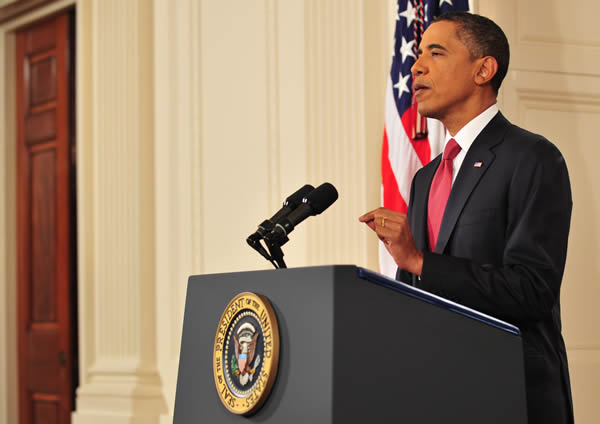
John Brummett in his article “It is a crafty deal — good too,” Arkansas News Bureau, August 2, 2011 asserted, “…this increase would extend past the next election so that we can keep paying on our debt without enduring this kind of juvenile nonsense in election season, when even the kind of last-gasp sanity we’re now seeing would not be likely.”
What kind of “juvenile nonsense” is Brummett referring to? He is talking about the Tea Party which is the main group that kept shouting in the streets that WE ARE HEADING DOWN THE PATH TO GREECE!!! WE NEED SIGNIFICANT CUTS NOW TO AVOID DOWNGRADING OF OUR CREDIT STATUS!!!
This debt ceiling deal is the coward’s way out because we are still heading straight to Greece. Take a look at this article, “Budget Deal Doesn’t Cut Spending,” by Chris Edwards, Cato Institute, August 1, 2011:
Republicans and Democrats have come together on a “historic” budget deal that cuts federal spending by more than $2 trillion over 10 years. The Washington Post’s lead story calls the cuts “sharp” and “severe.”
However, the budget deal doesn’t cut federal spending at all.
House Speaker John Boehner’s bullet points on the deal say that it cuts discretionary spending by $917 billion over 10 years, as “certified by CBO.” These discretionary “cuts” appear to be the same as those in Boehner’s plan from last week. The chart shows CBO’s scoring of those spending cuts (see here and here).
Wait a minute, those bars are rising! Spending isn’t being cut at all. The “cuts” in the deal are only cuts from the CBO “baseline,” which is a Washington construct of ever-rising spending. And even these “cuts” from the baseline include $156 billion of interest savings, which are imaginary because the underlying cuts are imaginary.
No program or agency terminations are identified in the deal. None of the vast armada of federal subsidies are targeted for elimination. Old folks will continue to gorge themselves on inflated benefits paid for by young families and future generations. None of Senator Tom Coburn’s or Senator Rand Paul’s specific cuts were included.
The federal government will still run a deficit of $1 trillion next year. This deal will “cut” the 2012 budget of $3.6 trillion by just $22 billion, or less than 1 percent.
The legislation does create a “Joint Committee” to design a second round of at least $1.2 trillion in spending cuts by November. Presumably, interest savings will be included in those “cuts” as well, reducing the amount of actual program cuts needed to about $1 trillion.
Will these Joint Committee cuts be real? This deal’s immediate cuts aren’t real, nor were many of the cuts in the 2011 budget deal earlier this year. It won’t be hard by the Joint Committee to manufacture $1 trillion in pretend savings in coming months.
Politicians last night announced the framework of a deal to increase the debt limit. In addition to authorizing about $900 billion more red ink right away, it would require immediate budget cuts of more than $900 billion, though “immediate” means over 10 years and “budget cuts” means spending still goes up (but not as fast as previously planned).
But that’s the relatively uncontroversial part. The fighting we’re seeing today revolves around a “super-committee” that’s been created to find $1.5 trillion of additional “deficit reduction” over the next 10 years (based on Washington math, of course).
And much of the squabbling deals with whether the super-committee is a vehicle for higher taxes. As with all kiss-your-sister budget deals, both sides can point to something they like.
Here’s what Republicans like:
The super-committee must use the “current law” baseline, which assumes that the 2001 and 2003 tax cuts expire at the end of 2012. But why are GOPers happy about this, considering they want those tax cuts extended? For the simple reason that Democrats on the super-committee therefore can’t use repeal of the “Bush tax cuts for the rich” as a revenue raiser.
Here’s what Democrats like:
There appears to be nothing in the agreement to preclude the super-committee from meeting its $1.5 trillion target with tax revenue. The 2001 and 2003 tax legislation is not an option, but everything else is on the table (notwithstanding GOP claims that it is “impossible for Joint Committee to increase taxes”).
In other words, there is a risk of tax hikes, just as I warned last week. Indeed, the five-step scenario I outlined last week needs to be modified because now a tax-hike deal would be “vital” to not only “protect” the nation from alleged default, but also to forestall the “brutal” sequester that might take place in the absence of an agreement.
This doesn’t mean there will be tax increases, of course, and this doesn’t mean Boehner and McConnell gave up more than Obama, Reid and Pelosi.
But as someone who assumes politicians will do the wrong thing whenever possible, it’s always good to identify the worst-case scenario and then prepare to explain why it’s not a good idea.
I am not too happy with the budget deal because I WANT TO SEE REAL CUTS. I knew when I heard President Obama say yesterday that there would be no cuts during this sensitive time that meant till after his Presidency was over. That means these are mythical cuts that are scheduled for 2013 and may never happen.
Michael Tanner notes, “those cuts would not go into effect until 2013, after the next election. Since the current Congress cannot bind future Congresses, it’s entirely possible – even likely – that those cuts will be rewritten, reduced, or done away with altogether.”
Michael Tanner sums up my views in his article, “A Deal, Not a Solution, August 1, 2011, Cato Institute:
The deal that President Obama and congressional leaders may well be the best deal that Republicans could get – and any deal that makes Paul Krugman this apoplectic can’t be all bad – but it should not be considered a solution to our fiscal problems.
In the face of a $1.1 trillion budget deficit, a $14.3 trillion official debt, and a real indebtedness of more than $120 trillion, the deal would reduce the baseline increase in planned spending initially by about $1 trillion, or an average of roughly $100 billion per year – less than the federal government will borrow this month. Moreover, the cuts are unspecific – apparently Congress still can’t find actual programs to eliminate – raising the specter that it will employ the same budgetary gimmicks as the Continuing Resolution last May, that promised $61 billion in cuts and delivered less than $8 billion.Any cuts that do occur are simply reductions in baseline increases, not actual year-over-year reductions. And most cuts are pushed far out into the future when they may or may not materialize.
The plan also creates a “”supercommittee – there’s an original idea – to propose an additional $1.2-1.7 trillion in spending cuts or tax increases, but few Washington observers expect it to be able to reach an agreement that could actually pass Congress. Of course, in theory, if that happens, there would be automatic cuts of about $1.2 trillion, split equally between domestic programs and defense. However, those cuts would not go into effect until 2013, after the next election. Since the current Congress cannot bind future Congresses, it’s entirely possible – even likely – that those cuts will be rewritten, reduced, or done away with altogether. Certainly there is no reason why we should count on them occurring.
The net result of this deal is that – if every penny of the proposed cuts actually occurs – our official national debt will rise to about $20 trillion by 2020. That it otherwise would have reached $23 trillion is scant comfort. With our country careening toward a fiscal cliff, Congress has chosen to tap on the breaks, not change direction.
More troubling, the deal fails to deal with entitlement reform. It is Medicare, Medicaid and Social Security that are driving this country towards insolvency, but this plan does not include any structural reform of these programs. They are exempt from the first round of cuts, and the level of cuts that can be proposed by the supercommittee are far too small to encompass anything like the Medicare reforms that Paul Ryan proposed early this year. And both Social Security and Medicaid are exempt from the across-the-board cuts that kick in if the committee’s cuts do not occur. In that case Medicare would be trimmed, but only in terms of further reductions in reimbursements to providers.
Certainly, this deal could have been worse. There are no tax increases (yet). There are at least theoretical cuts in spending. We’ve moved a long way from when President Obama proposed an increase in spending as part of his 2012 budget. But no one should pretend that we’ve put our fiscal house in order.
I got a lot of useful information out of this article from the Wall Street Wall Street Journal The DebtCeiling ‘Skirmish‘
MONDAY, JULY 25, 2011
The Debt Ceiling ‘Skirmish’
We couldn’t help but be impressed with a column by Arthur C. Brooks, President of the American Enterprise Institute which is appearing in the Wall Street Journal. The column, The Debt Ceiling and the Pursuit of Happiness, probably won’t appear in the local daily but it sure spells out the reality of the current fight and what is at stake. With that said we suggest the following is mandatory reading for our conservative and liberal friends:
_________________________
“The battle over the debt ceiling is only the latest skirmish in what promises to be an ongoing, exhausting war over budget issues. Americans can be forgiven for seeing the whole business as petty, selfish and tiresome. Conservatives in particular are beginning to worry that public patience will wear thin over their insistence that our nation’s government-spending problem must be remedied through spending cuts, not by raising more revenues.
But before they succumb to too much caution, budget reformers need to remember three things. First, this is not a political fight between Republicans and Democrats; it is a fight against 50-year trends toward statism. Second, it is a moral fight, not an economic one. Third, this is not a fight that anyone can win in the 15 months from now to the presidential election. It will take hard work for at least a decade.Consider a few facts. The Bureau of Economic Analysis tells us that total government spending at all levels has risen to 37% of gross domestic product today from 27% in 1960—and is set to reach 50% by 2038.
The Tax Foundation reports that between 1986 and 2008, the share of federal income taxes paid by the top 5% of earners has risen to 59% from 43%. Between 1986 and 2009, the percentage of Americans who pay zero or negative federal income taxes has increased to 51% from 18.5%. And all this is accompanied by an increase in our national debt to 100% of GDP today from 42% in 1980.
Where will it all lead? Some despairing souls have concluded there are really only two scenarios. In one, we finally hit a tipping point where so few people actually pay for their share of the growing government that a majority become completely invested in the social welfare state, which stabilizes at some very high level of taxation and government social spending. (Think Sweden.)
In the other scenario, our welfare state slowly collapses under its weight, and we get some kind of permanent austerity after the rest of the world finally comprehends the depth of our national spending disorder and stops lending us money at low interest rates. (Think Greece.)
In other words: Heads, the statists win; tails, we all lose.
Anyone who seeks to provide serious national political leadership today—those elected in 2010 or who seek national office in 2012—owe Americans a plan to escape having to make this choice. We need tectonic changes, not minor fiddling.
Rep. Paul Ryan’s (R., Wis.) budget plan is the kind of model necessary. But structural change will only succeed if it’s accompanied by a moral argument—an unabashed cultural defense of the free enterprise system that helps Americans remember why they love their country and its exceptional culture. America’s Founders knew the importance of moral language, which is why they asserted our unalienable right to the pursuit of happiness, not to the possession of property. Similarly, Adam Smith, the father of free-market economics, had a philosophy that transcended the mere wealth of nations. His greatest book was “The Theory of Moral Sentiments,” a defense of a culture that could support true freedom and provide the greatest life satisfaction.
Yet today, it is progressives, not free marketeers, who use the language of morality. President Obama was not elected because of his plans about the taxation of repatriated profits, or even his ambition to reform health care. He was elected largely on the basis of language about hope and change, and a “fairer” America.
The irony is that statists have a more materialistic philosophy than free-enterprise advocates. Progressive solutions to cultural problems always involve the tools of income redistribution, and call it “social justice.”
Free-enterprise advocates, on the other hand, speak privately about freedom and opportunity for everybody—including the poor. Most support a limited safety net, but also believe that succeeding on our merits, doing something meaningful, and having responsibility for our own affairs are what give us the best life. Sadly, in public, they always seem stuck in the language of economic efficiency.
The result is that year after year we slip further down the redistributionist road, dissatisfied with the growing welfare state, but with no morally satisfying arguments to make a change that entails any personal sacrifice.
Examples are all around us. It is hard to find anyone who likes our nation’s current health-care policies. But do you seriously expect grandma to sit idly by and let Republicans experiment with her Medicare coverage so her great-grandchildren can get better treatment for carried interest? Not a chance. If reformers want Americans to embrace real change, every policy proposal must be framed in terms of self-realization, meritocratic fairness and the promise of a better future. Why do we want to lower taxes for entrepreneurs? Because we believe in earned success. Why do we care about economic growth? To make individual opportunity possible, not simply to increase wealth. Why do we need entitlement reform? Because it is wrong to steal from our children.
History shows that big moral struggles can be won, but only when they are seen as decade-long fights and not just as a way to prevail in the next election. Welfare reform was first proposed in 1984 and regarded popularly as a nonstarter. Twelve years of hard work by scholars at my own institution and others helped make it a mainstream idea (signed into law by a Democratic president) and perhaps the best policy for helping the poor to escape poverty in our nation’s history. Political consultants would have abandoned welfare reform as unworkably audacious and politically suicidal. Real leaders understood that its moral importance transcended short-term politics. No one deserves our political support today unless he or she is willing to work for as long as it takes to win the moral fight to steer our nation back toward enterprise and self-governance. This fight will not be easy or politically safe. But it will be a happy one: to share the values that make us proud to be Americans.”
Mr. Brooks is president of the American Enterprise Institute and author of “The Battle: How the Fight Between Free Enterprise and Big Government Will Shape America’s Future” (Basic Books, 2010).
BOEHNER: Screaming “Hell no you can’t!” Ah, the good old days.
Slate has a running update of the debt ceiling debate in Washington. So far it looks like Speaker of the House John Boehner will have the votes in the House to pass his plan. Sen. Harry Reidhas said the bill will be defeated when considered in the Senate.
“As soon as the House completes its vote tonight, the Senate will move to take up that bill,” Reid said on the Senate floor. “It will be defeated. No Democrat will vote for a short-term Band-Aid that would put our economy at risk and put the nation back in this untenable situation a few short months from now.”
_____________________________
Harry Reid and the Democrats have not lifted a finger to cut federal spending and the markets know it. I am disappointed in Boehner’s recent attempt to get a bill together. It really does not cut spending much either. Chris Edwards of the Cato Institute takes us through the figures.
House Speaker John Boehner has revised his budget plan in response to an unfavorable analysis by the CBO. The CBO has examined Boehner’s new plan and finds that it would cut spending by $917 billion over 10 years. Of the total, only $761 billion would be cuts to programs. The rest of the savings would be from reduced interest costs.
Actually, the revised Boehner plan doesn’t cut spending at all. The chart shows the discretionary spending caps in the new Boehner plan. Spending increases every year—from $1.043 trillion in 2012 to $1,234 trillion in 2021. (These figures exclude the costs of wars in Iraq and Afghanistan).
The “cuts” in the Boehner plan are only cuts from the CBO baseline, which is an assumed path of constantly rising spending. If Congress wanted to, it could require CBO to increase its “baseline” spending by, say, $5 trillion over the next decade. Then Boehner could claim that he was “cutting” spending by $5.9 trillion, even though his plan hadn’t changed. You can see that discretionary “cuts” against baselines don’t mean anything.
The way to make real spending cuts is to abolish programs and agencies. But it’s been eight months since a landslide election that focused on the issue of spending cuts, and the Republican leadership hasn’t proposed any major terminations.
Senator Tom Coburn told us exactly where he wants to cut spending in this 620-page report. Senator Rand Paul has detailed $500 billion in specific cuts. Where are the spending cut plans of the other fiscal conservatives in Congress?
Members need to step up to the plate and tell us where they would cut the budget. (For help, they can look here). The reality of ongoing $1 trillion deficits is that Congress has to start abolishing programs, privatizing activities, and making other lasting reforms. Promising to reduce spending growth a bit from projected baseline increases won’t do the job.
Politico notes that Democratic Sen. Harry Reid’s budget plan cuts spending more than Republican John Boehner’s plan. Boehner’s two-step plan is calculated on providing a highly politicized two-step plan for raising the debt ceiling.
____________________
After a closer look at Harry Reid’s plan, it is evident that his “austerity” turns out to be fiction. I do admit that the Republican plan is not much better, but it is false to claim that the Reid plan cuts more. “Some Austerity” by Michael D. Tanner of the Cato Institute examines Harry Reid’s plan closely:
Michael Tanner is a senior fellow at the Cato Institute and coauthor of Leviathan on the Right: How Big-Government Conservatism Brought Down the Republican Revolution.
“It is clear we must enter an age of austerity,” House minority leader Nancy Pelosi mourned as she endorsed Harry Reid’s proposal for raising the debt ceiling. Austerity? Really?
The Reid plan would theoretically cut spending by $2.7 trillion over ten years. Even if that were true, it would still allow our national debt to increase by some $10 trillion over the next decade. But, of course, the $2.7 trillion figure is mostly fiction.About $1 trillion of the savings would come from the eventual end of the wars in Iraq and Afghanistan, savings that were going to occur anyway. Senator Reid might just as well have added another $1 trillion in savings by not invading Pakistan.
Another $400 billion comes not from cuts but from assuming reduced interest payments. And, of course, there are $40 billion in unspecified “program-integrity savings,” meaning the “waste, fraud, and abuse” that is the last refuge of every phony budget cutter. The plan rejects any changes to Medicare and Social Security, despite the fact that the unfunded liabilities from those two programs could run as high as $110 trillion. But those liabilities generally fall outside the ten-year budget window, so Reid — unlike our children and grandchildren — doesn’t have to worry about them.
[U]nder both the Reid and Boehner plans, actual federal spending will continue to rise.
That leaves about $1.2 trillion in discretionary and defense spending reductions over the next ten years. Let’s put that in perspective. This year the federal government will spend $3.8 trillion. Our deficit is roughly $1.6 trillion. Our national debt exceeds $14.3 trillion, not counting unfunded entitlement liabilities. We are talking about raising the debt ceiling to $16.9 trillion. This month alone the federal government will borrow $134 billion. Reid’s cuts would average roughly $120 billion per year.
This is austerity?
Of course, the House Republican plan as announced by Speaker John Boehner is only marginally more austere.
Boehner proposes a two-stage increase in the debt ceiling, with each stage accompanied by spending cuts. The first $1 trillion debt increase would be accompanied by $1.2 trillion in spending cuts over ten years, pretty much the same as Senator Reid’s plan. The big difference is that instead of Sen. Reid’s phony Iraq and Afghanistan savings, the speaker’s plan would appoint a commission — now there’s an exciting new idea — to propose $1.8 trillion in savings from entitlement programs. To be fair, Senator Reid would also appoint a commission — because that’s what Washington does — to recommend additional deficit reductions, presumably including entitlement changes. The difference is that the Boehner commission has teeth. If Congress rejects its recommendations, the president doesn’t get a second $1.6 trillion hike in the debt ceiling.
But $1.8 trillion in entitlement savings over ten years is still too small to encompass real structural reforms of the type envisioned by Rep. Paul Ryan and others. It is much more likely to simply be more tweaking around the edges, perhaps raising the eligibility age or changing the way the cost-of-living formula is calculated. True, changes such as these will have a real impact out beyond the ten-year budget window, but they fall far short of what is necessary to deal with the shortfalls to come.
Making matters worse, both Reid and Boehner are using the time-honored Washington dodge of “baseline budgeting,” meaning that the proposed cuts are not actual reductions in spending from year to year, but cuts from projected future increases. Thus, under both the Reid and Boehner plans, actual federal spending will continue to rise.
With the clock running out, we are now down to fifth- or sixth-best options. But let’s not pretend that this is austerity.
Is there a better voice for moderation, compromise and legislative solutions than Gov. Mike Beebe? His legislative career contains few policy monuments, but a warehouse full of settlements of pitched legislative battles.
So he’s a good spokesman against the current impasse created in Congress by Republicans like 2nd District U.S. Rep. Tim Griffin intent on holding the U.S. hostage to debilitating budget cuts and absolute protection of the wealthy from even a small increase in the lowest tax burden in half a century. Good for Beebe.
“They are apparently so entrenched that they’re ready to allow this country to default, with all of the economic consequences that that brings with it,” Beebe told reporters. “They’re up to the licklog, and they’d better sit down and figure out how they solve this problem.”
Beebe said both sides in the debate deserve criticism, but “it sounds to me like it’s the Republican majority in the House that has just drawn a line in the sand.”
Beebe claims it the Republicans who want to default, but is the Democrats who are refusing to cut the budget in a way we can lower this 1.7 trillion deficit for this year!!!!
The huge deficits are the problem. People want the debt ceiling raised, but if the huge deficits continue then what is the use? The article below shows how our government will have their credit rating devalued UNLESS WE STOP RUNNING UP BIG DEFICTIS EVERY YEAR!!
Americans, and global financial markets, are watching Washington nervously for a real plan—one that will put the nation squarely on a path to solving our twin crises of spending and debt. Without strong structural changes in spending, our debt will balloon out of control.
At stake are two issues. The short-term is obvious – will there be an increase in the debt limit before August 3? Despite the President and his team practically begging Wall Street to collapse, the markets and the rating agencies believe that there will be an increase and the federal government can safely avoid the chaos of prioritizing its bills in order to service the debt. Though they warn of the consequences if this doesn’t happen, Standard & Poor’s, has stated that
…the risk of a payment default is small, though increasing…Standard and Poor’s still anticipates that lawmakers will raise the debt ceiling by the end of July to avoid those outcomes.”
The second and even more crucial issue is whether Congress will take necessary action beyond the next year to bring our debt under control over the medium and long-term. This is where the rating agencies really voice their strong concern. Again, Standard & Poor’s:
Congress and the Administration might also settle for a smaller increase in the debt ceiling, or they might agree to a plan that, while avoiding a near-term default, might not, in our view, materially improve our base case expectation for the future path of the net general government debt-to-GDP ratio.”
Moody’s response is similar:
The outlook assigned at that time to the government bond rating would very likely be changed to negative at the conclusion of the review unless substantial and credible agreement is achieved on a budget that includes long-term deficit reduction. To retain a stable outlook, such an agreement should include a deficit trajectory that leads to stabilization and then decline in the ratios of federal government debt to GDP and debt to revenue beginning within the next few years.
What the rating agencies are saying is that Congress and the President must pass legislation that immediately begins to rein in deficits and bring our debt down to more acceptable levels, and either keeps it there or continues to drive it down further.
The Boehner proposal would cut $1.2 trillion in discretionary spending. There is no assurance that these cuts will occur, but let’s assume they do. Let’s even be generous and assume that they are – in the words of S&P– “enacted and maintained throughout the decade.” This would cut debt held by the public from its projected $24.9 trillion in 2021 to $23.7 trillion, and when measured against the economy from 104% to 99.4%. Certainly, this is an improvement, but it is hardly declining from today’s levels, nor would these cuts fundamentally restructure entitlements – the real driver of our deficits in the future.
Step two in the Boehner proposal would reduce deficits by an additional $1.8 trillion over ten years. Even assuming these cuts all happen, and even assuming they were all spending cuts – a broad assumption given the President’s rhetoric surrounding tax hikes on the wealthy – this would bring publicly held debt down to 92% of GDP. Better, but not that much. Even throwing in interest savings from deficit reduction would bring this down to 88%. Again, not much improvement and far worse than today’s debt ratio.
The Reid proposal doesn’t move the ball forward enough either. At best it falls somewhat short of Boehner’s $3 trillion by $800 billion ($1.2 trillion in discretionary and some confusing savings to be had from winding down operations in Iraq and Afghanistan of $1.0 trillion.)
Neither of this week’s dueling debt ceiling proposals would pass the test from Moody’s or Standard and Poor’s for a credible, firm and actionable plan that would turn the tide of our deficits to put our debt on a manageable track. And if that holds true, then a downgrade by the rating agencies could occur smack in the very election year the President is trying to scoot through.
Because spending is set to grow so significantly over the decade, the kind of onesie-twosie approach to cutting spending and increasing the debt limit is simply not adequate. Net interest payments are projected to more than triple over the next decade. The longer Congress waits to seriously control spending, the more it will have to cut just to offset bourgeoning interest costs. And if interest rates suddenly rise? Well, we have an even bigger problem on our hands.
And, as babyboomers flood into Social Security, Medicare and Medicaid swell in tandem, the kinds of changes necessary to rein in spending on these programs will be much more difficult. Here again, the longer they duck the problem, the more likely a meltdown ahead.
The fact is, the only plan that could likely pass muster with Moody’s and Standard and Poor’s is House passed, Cut, Cap and Balance. Why? They tackle spending with firm caps that are enforceable, and before the end of the decade bring spending down to 19.9% of GDP and keep it there. With the right spending changes it could fall, along with debt levels, from there. Congress must act now to rein in spending and get our debt under control. It’s time for the dueling to end.
That’s no way to get out of debt. Debtors — the government, you, me — don’t stop increasing debt simply by declaring they will stop doing so. The hole will keep getting dug unless hard choices are made about reducing the right expenditures and raising the right taxes. Congress, the president, and, indeed, the American people have not yet made those choices. Until that happens, the government will keep borrowing.
The question is, will it do so responsibly, or as a deadbeat dad?
There is good news. At least we’re talking about the debt instead of ignoring it.
The huge deficits are the problem. People want the debt ceiling raised, but if the huge deficits continue then what is the use? The article below shows how our government will have their credit rating devalued UNLESS WE STOP RUNNING UP BIG DEFICTIS EVERY YEAR!!
Americans, and global financial markets, are watching Washington nervously for a real plan—one that will put the nation squarely on a path to solving our twin crises of spending and debt. Without strong structural changes in spending, our debt will balloon out of control.
At stake are two issues. The short-term is obvious – will there be an increase in the debt limit before August 3? Despite the President and his team practically begging Wall Street to collapse, the markets and the rating agencies believe that there will be an increase and the federal government can safely avoid the chaos of prioritizing its bills in order to service the debt. Though they warn of the consequences if this doesn’t happen, Standard & Poor’s, has stated that
…the risk of a payment default is small, though increasing…Standard and Poor’s still anticipates that lawmakers will raise the debt ceiling by the end of July to avoid those outcomes.”
The second and even more crucial issue is whether Congress will take necessary action beyond the next year to bring our debt under control over the medium and long-term. This is where the rating agencies really voice their strong concern. Again, Standard & Poor’s:
Congress and the Administration might also settle for a smaller increase in the debt ceiling, or they might agree to a plan that, while avoiding a near-term default, might not, in our view, materially improve our base case expectation for the future path of the net general government debt-to-GDP ratio.”
Moody’s response is similar:
The outlook assigned at that time to the government bond rating would very likely be changed to negative at the conclusion of the review unless substantial and credible agreement is achieved on a budget that includes long-term deficit reduction. To retain a stable outlook, such an agreement should include a deficit trajectory that leads to stabilization and then decline in the ratios of federal government debt to GDP and debt to revenue beginning within the next few years.
What the rating agencies are saying is that Congress and the President must pass legislation that immediately begins to rein in deficits and bring our debt down to more acceptable levels, and either keeps it there or continues to drive it down further.
The Boehner proposal would cut $1.2 trillion in discretionary spending. There is no assurance that these cuts will occur, but let’s assume they do. Let’s even be generous and assume that they are – in the words of S&P– “enacted and maintained throughout the decade.” This would cut debt held by the public from its projected $24.9 trillion in 2021 to $23.7 trillion, and when measured against the economy from 104% to 99.4%. Certainly, this is an improvement, but it is hardly declining from today’s levels, nor would these cuts fundamentally restructure entitlements – the real driver of our deficits in the future.
Step two in the Boehner proposal would reduce deficits by an additional $1.8 trillion over ten years. Even assuming these cuts all happen, and even assuming they were all spending cuts – a broad assumption given the President’s rhetoric surrounding tax hikes on the wealthy – this would bring publicly held debt down to 92% of GDP. Better, but not that much. Even throwing in interest savings from deficit reduction would bring this down to 88%. Again, not much improvement and far worse than today’s debt ratio.
The Reid proposal doesn’t move the ball forward enough either. At best it falls somewhat short of Boehner’s $3 trillion by $800 billion ($1.2 trillion in discretionary and some confusing savings to be had from winding down operations in Iraq and Afghanistan of $1.0 trillion.)
Neither of this week’s dueling debt ceiling proposals would pass the test from Moody’s or Standard and Poor’s for a credible, firm and actionable plan that would turn the tide of our deficits to put our debt on a manageable track. And if that holds true, then a downgrade by the rating agencies could occur smack in the very election year the President is trying to scoot through.
Because spending is set to grow so significantly over the decade, the kind of onesie-twosie approach to cutting spending and increasing the debt limit is simply not adequate. Net interest payments are projected to more than triple over the next decade. The longer Congress waits to seriously control spending, the more it will have to cut just to offset bourgeoning interest costs. And if interest rates suddenly rise? Well, we have an even bigger problem on our hands.
And, as babyboomers flood into Social Security, Medicare and Medicaid swell in tandem, the kinds of changes necessary to rein in spending on these programs will be much more difficult. Here again, the longer they duck the problem, the more likely a meltdown ahead.
The fact is, the only plan that could likely pass muster with Moody’s and Standard and Poor’s is House passed, Cut, Cap and Balance. Why? They tackle spending with firm caps that are enforceable, and before the end of the decade bring spending down to 19.9% of GDP and keep it there. With the right spending changes it could fall, along with debt levels, from there. Congress must act now to rein in spending and get our debt under control. It’s time for the dueling to end.
Looks like everyone may fold a bit, according to President Obama’s statement on a Senate-driven compromise. Rich people are held harmless in dealing with the U.S. budget. Big spending cuts will be made. The debt ceiling is lifted sufficiently to last through the 2012 election. Republicans give up on insistence on long-term solution. Sour tastes all around, except if the deal prevents U.S. defaults. Here’s a roundup.
However …. House Republicans seem determined to get their way or wreck the country.
_______________________
There is only two problems. First, there had been no deal cut. (Actually on Politico on Sunday afternoon they also reported a deal had been cut, but they jumped the gun like Max did here).
Second, the Republicans are right to protect the American job producers from any future tax increases that would kill our recovery.
David Addington nails it below in his summary of President Obama’s speech:
It’s hard to understand why President Obama took to the airwaves tonight at prime time. He still has no plan for dealing with government overspending and overborrowing, and he gave the nation very little except a repetition of his never-ending call for tax hikes.
In noting the risk of ever-increasing debt, President Obama said every family knows that “a little credit card debt is manageable.” The government has racked up $14.294 trillion in debt — thought of by no-one as a little credit card debt. The spend-tax-and-borrow crowd, currently headed by President Obama, has been in charge in Washington too long. They have mortgaged the futures of our children and grandchildren. Our government is so deep in debt that the share of debt of a baby born today is $45,000.
It is time for the spend-tax-and-borrow crowd to stop. As the President indicated, conservatives want deep spending cuts. In contrast, President Obama wants more taxes, a terrible idea. First, the government already takes too much money from the pockets of Americans in taxes. Second, if Americans give the government more money in taxes, the government will just find ways to spend it, rather than using it to pay off the public debt. Third, raising taxes reduces investment, which cuts economic growth and kills jobs.
Americans sent a message in the election of 2010 — cut the size and cost of government. Conservatives must act now to drive down spending on the way to a balanced budget, while protecting America, and without raising taxes. Forget the McConnell, McConnell-Reid, Coburn, Gang-of-Six, Boehner, and Reid plans. Go with the American plan — cut government spending, deeply and right now, for the good of the country.
Mark Pryor’s support of the ultra liberal Obama is very clear in the video clip above. He voted for President Obama’s plan to nationalize healthcare and Obama’s stimulus plan that wasted almost a trillion dollars. Now he is following President Obama down the path of raising taxes during the debt ceiling debate.
Senator Mark Pryor on July 22 made the following statement on the Senate floor to encourage his colleagues to end the budget gimmicks and move forward with a comprehensive debt-reduction plan as part of a debt ceiling solution. A portion of his statement is below:
Mr. President, Abraham Lincoln once said, “I am a firm believer in the people. If given the truth, they can be depended upon to meet any national crisis. The great point is to bring them the real facts.”
We need to bring people the facts about our nation’s debt. People in my state see through the games being played in Washington. They want solutions, courage and leadership — the kind that puts us on a more secure fiscal path for the future.
Mr. Bryant of Hot Springs Village, Arkansas writes: “We know we have to increase the debt ceiling so let’s get serious about finding a solution….Why is this a problem for our politicians? The public expects responsible leadership not the demagoguery we are getting from both sides of the aisle.”
So here are the facts. For over 230 years, the United States government has honored its obligations. Even in the face of a Civil War, two World Wars and the Depression, America has paid its bills. Yet, now we stand on the brink of tarnishing the full faith and credit of the United States. And we stand here because Congress has failed to bring the American people the real facts. The easiest thing for a politician to do is to say they are for lower taxes and increased spending. This mind-set has rung up a $14.2 trillion debt. We now borrow 41 cents of every dollar we spend.
Now, under this debt, combined with the theatrics playing out in the House and Senate, the unthinkable could happen. The 80 million bills the federal government pays could come to a screeching halt. That means millions of seniors may not receive their Social Security checks in the mail, troops may not receive paychecks, Medicare patients could be denied care and the stock market could significantly drop.
Moreover, credit rating agencies have warned us that we will likely lose our AAA credit rating without immediate action. Interest rates would permanently rise, piling on additional costs for families. The cost of owning a home, buying food, filling a gas tank, sending kids to college and buying a car will become even more expensive.
There’s one more real fact I want to highlight. A default adds heavily to our deficit. For every 1 percent increase in the interest rates we pay, it adds $1.3 trillion to the debt.It is no wonder Chairman of the Joint Chiefs of Staff last summer said, “Our national debt is our biggest national security threat. “
_____________________________
Mark Pryor has made several miscalculations concerning the debt ceiling problem. He thinks that the nationalizing of our healthcare will not affect the future deficits, and he doesn’t want to take a serious look at Medicare reform. Finally, although he says a lot about how serious the national debt is, he does not want to propose any serious cuts to federal spending. WHY NOT ELIMINATE THE DEPT OF EDUCATION? WOULDN’T THAT BE A BIG SAVINGS TO THE GOVERNMENT? JIMMY CARTER CREATED THAT AGENCY AND IT HAS DONE NOTHING TO HELP EDUCATION IMPROVE SINCE THEN DESPITE THE MASSIVE AMOUNT OF MONEY WE HAVE THROWN ITS WAY!!!!
Jeffrey A. Miron is senior lecturer and director of undergraduate studies at Harvard University and senior fellow at the Cato Institute. Miron is the author of Libertarianism, from A to Z.
As Democrats and Republicans debate the U.S. debt situation, both sides seem more concerned about pandering to their respective bases than reining in the debt. Worse, much of the discussion addresses only the debt per se, not the broader question of what policies are good for the economy. These conditions are likely to yield only cosmetic fixes, some of which will make things worse over the long haul.
The debt problem is substantial and pressing: Congressional Budget Office projections show America’s debt is exploding. Expenditures are growing much faster than the gross domestic product and tax revenues possibly could. Under the CBO’s most plausible projections, the debt would reach 109 percent of GDP by 2023, and 190 percent of GDP by 2035. This is not a problem we can ignore or address with minor adjustments.
The federal budget includes numerous programs that ought to be eliminated regardless of the deficit.
Raising tax rates is a bad idea: By reducing the income of households and the profits of businesses, higher tax rates discourage consumption and investment, slowing the economy in the short run. By reducing hiring, savings, and investment, they reduce economic growth in the long run. And higher tax rates are undermined by tax evasion and avoidance, making them an inefficient way to raise revenues.
Reducing tax “expenditures” is a good idea: When the tax code favors particular kinds of consumption or specific industries, it reduces productivity by distorting market forces, just as government spending can. Those who support economic efficiency should therefore oppose such tax expenditures, regardless of how they affect revenue or whether they are paired with reductions in tax rates. Important examples include the mortgage-interest deduction, special tax treatment of employer-paid health insurance premiums, and tax breaks for both conventional and green energy.
Health care is the greatest driver of expenses: The CBO’s analysis also indicates that rapidly increasing expenditures on Medicare, Medicaid, and insurance subsidies under Obamacare are the most important factors behind the exploding debt. Serious attempts to control the debt must reduce these programs’ growth rates.
Higher deductibles reduce health spending: Slowing the growth of health expenditures is crucial, but not all fixes are created equal. Price controls and rationing, for example, generate huge inefficiencies.
Higher deductibles are a better approach. They not only reduce spending directly; they also encourage consumers to economize and comparison shop, generating competition, efficiency, and lower costs. This moves Medicare toward insuring against catastrophic costs and away from reimbursing all expenses.