Category Archives: President Obama

An open letter to President Obama (Part 62)

Rep Michael Burgess response

Uploaded by on Jan 25, 2012

This week Dr. Burgess provides an update from Washington and responds to President Obama’s State of the Union address.

Sen. Toomey responds to State of the Union address 2012

President Obama c/o The White House
1600 Pennsylvania Avenue NW
Washington, DC 20500

Dear Mr. President,

I know that you receive 20,000 letters a day and that you actually read 10 of them every day. I really do respect you for trying to get a pulse on what is going on out here. Here is an excellent piece from the Heritage Foundation:

 What Would Obama Do? Insights from his budget – J.D. Foster What is President Obama’s vision for America, truly? What would he intend in a second term if re-elected? We need not wait for yet another soaring presidential speech to illuminate and clarify. We now have much of the answer to these questions in black and white from his own Administration. The answer is provided in the budget he released this morning. The answer, in short, is more of the same—only more, and less. In summary, Obama’s vision for America according to his own budget is: To add about $3 trillion more in national debt to the roughly $5.5 trillion he added in his first term. To increase federal spending by half a trillion dollars between 2012 and 2016, from $3.8 trillion to $4.3 trillion. To ignore the 2012 budget deficit (projected at $1.3 trillion), allow spending to grow substantially in the years immediately following, and then take sterner measures in some distant future—read: He intends to leave the pending fiscal disaster to his successor. To step up his economy-defeating and self-delusional ideological tax hike war. To hope Congress ignores his tax policies and the economy somehow continues to strengthen on its own. Ultimately, to live up to the moniker of tax-and-spend liberal. There is more, like a tax plan to turn the ownership of America’s largest companies over to foreign ownership. Once again the President has trotted out the liberals’ favorite lines about “investment” when referring to huge jumps in infrastructure spending. The budget also includes a smattering of public-relations-oriented micro policies like a community college proposal that give the President a chance to talk about something on the campaign trail, indeed anything, except the real issues facing America. There is also some good news in the budget. While spending goes up rapidly over time, there are at least no new efforts to pump up the economy and waste taxpayer dollars with another debt-based stimulus. Has the Obama Administration learned this will never work, or is the deficit now simply too large for them to try it again? In truth, a President’s second term is rarely a time of bold initiative and action. For the most part, it’s a time of marking time and continuing and completing policies laid out in a first term. It is also an exercise of denying the opposition power. But there have been notable exceptions. In his second term, President Reagan managed to slow the growth of spending substantially and to sign into law in 1986, the last great tax reform effort. President Clinton signed the landmark welfare reform into law, somewhat begrudgingly perhaps and at the point of a Republican policy bayonet perhaps, but he signed it nevertheless. President Bush tried mightily and failed spectacularly to turn Social Security from a fiscal disaster to a sustainable program for generations to come, but at least he tried. President Obama’s budget lays bare and strips away any pretense that a second Obama term would be marked by bold leadership to address problems like high unemployment, massive budget deficits, and vital entitlement programs headed for financial disaster of Greek-like proportions. As this message sinks in, the Administration will no doubt try to establish an alternative narrative of fear-mongering leavened with promised leadership. But the true picture is painted in black and white in his own budget.

______________

I am glad there is no more efforts in this budget to try another stimulus effort like before, but the sharp cuts that are necessary to balance the budget are not in this budget. Instead of adding 5.5 trillion to the debt like we did in the last three years we will add around 8 trillion.

Thank you so much for your time. I know how valuable it is. I also appreciate the fine family that you have and your committment as a father and a husband.

Sincerely,

Everette Hatcher III, 13900 Cottontail Lane, Alexander, AR 72002, ph 501-920-5733, lowcostsqueegees@yahoo.com

Dan Mitchell of the Cato Institute takes on liberals on PBS

You want the rich to pay more? Dan Mitchell observed:I explained that “rich” taxpayers declared much more income and paid much higher taxes after Reagan reduced the top tax rate from 70 percent to 28 percent.

Liberals don’t understand good tax policies.

With the clock ticking ever closer to the tax-filing deadline, this is the time of year we should be especially cognizant of America’s awful tax system.

Disdain for the corrupt tax code certainly motivates me. As such, even though the panel was stacked against me with three proponents of Obama’s class warfare approach, I hope I did a decent job of defending good tax policy against the statists in this debate on government-subsidized TV.

___________

Dan Mitchell Battling against Tax Hikes and Class Warfare on PBS

Published on Apr 12, 2012 by

No description available.

____________

My most effective moment (I think) was when I explained that “rich” taxpayers declared much more income and paid much higher taxes after Reagan reduced the top tax rate from 70 percent to 28 percent.

I also had a couple of good lines when discussing the value-added tax.

Nonetheless, I think I was disadvantaged by the editing process since many of my comments from our hour-long taping got cut out. If you are sufficiently masochistic, you can listen to the entire program at this link.

I’ll close with an observation. If you support freedom and liberty and work in public policy, you better get used to being outnumbered. When I testified to the Ways & Means Committee about the VAT, I was a lone voice against this pernicious tax while the other four witnesses supported making America more like Greece.

And when I appeared on an English-language French TV program to debate tax havens, I had to battle three statists.

But at least I have truth on my side, so that compensates.

“Feedback Friday” Letter to White House generated form letter response (on how to jumpstart the economy) March 7, 2011 (part 3)

I have been writing President Obama letters and have not received a personal response yet.  (He reads 10 letters a day personally and responds to each of them.) However, I did receive a form letter in the form of an email on March 7, 2011. I don’t know which letter of mine generated this response so I have linked several of the letters I sent to him below with the email that I received. However, if I had to guess which letter it was then it probably be this one below.

Government Spending Doesn’t Create Jobs

Uploaded by on Sep 7, 2011

Share this on Facebook: http://on.fb.me/qnjkn9 Tweet it: http://tiny.cc/o9v9t

In the debate of job creation and how best to pursue it as a policy goal, one point is forgotten: Government doesn’t create jobs. Government only diverts resources from one use to another, which doesn’t create new employment.

Video produced by Caleb Brown and Austin Bragg.

___________________________

President Obama c/o The White House
1600 Pennsylvania Avenue NW
Washington, DC 20500

Dear Mr. President,

I know that you receive 20,000 letters a day and that you actually read 10 of them every day. I really do respect you for trying to get a pulse on what is going on out here.

I have a son named Wilson Daniel Hatcher and he is named after two of the most respected men I have ever read about : Daniel from the Old Testament and Ronald Wilson Reagan.

One of the thrills of my life was getting to hear President Reagan speak in the beginning of November of 1984 at the State House Convention Center in Little Rock.  Immediately after that program I was standing outside on Markham with my girlfriend Jill Sawyer (now wife of 25 years) and we were alone on a corner and the President was driven by and he waved at us and we waved back.

My former pastor from Memphis, Adrian Rogers, got the opportunity to visit with President Ronald Reagan on several occasions and my St Senator Jeremy Hutchinson got to meet him too. I am very jealous.

Today we are going to compare Reagan’s record to that of Obama:

On this day last year, I posted two charts that I developed using the Minneapolis Federal Reserve Bank’s interactive website.

Those two charts showed that the current recovery was very weak compared to the boom of the early 1980s.

But perhaps that was an unfair comparison. Maybe the Reagan recovery started strong and then hit a wall. Or maybe the Obama recovery was the economic equivalent of a late bloomer.

So let’s look at the same charts, but add an extra year of data. Does it make a difference?

Meh…not so much.

Let’s start with the GDP data. The comparison is striking. Under Reagan’s policies, the economy skyrocketed.  Heck, the chart prepared by the Minneapolis Fed doesn’t even go high enough to show how well the economy performed during the 1980s.

Under Obama’s policies, by contrast, we’ve just barely gotten back to where we were when the recession began. Unlike past recessions, we haven’t enjoyed a strong bounce. And this means we haven’t recovered the output that was lost during the downturn.

This is a damning indictment of Obamanomics

Indeed, I made this point several months ago when analyzing some work by Nobel laureate Robert Lucas. And it’s been highlighted more recently by James Pethokoukis of the American Enterprise Institute and the news pages of the Wall Street Journal.

Unfortunately, the jobs chart is probably even more discouraging. As you can see, employment is still far below where it started.

This is in stark contrast to the jobs boom during the Reagan years.

So what does this mean? How do we measure the human cost of the foregone growth and jobs that haven’t been created?

Writing in today’s Wall Street Journal, former Senator Phil Gramm and budgetary expert Mike Solon compare the current recovery to the post-war average as well as to what happened under Reagan.

If in this “recovery” our economy had grown and generated jobs at the average rate achieved following the 10 previous postwar recessions, GDP per person would be $4,528 higher and 13.7 million more Americans would be working today. …President Ronald Reagan’s policies ignited a recovery so powerful that if it were being repeated today, real per capita GDP would be $5,694 higher than it is now—an extra $22,776 for a family of four. Some 16.9 million more Americans would have jobs.

By the way, the Gramm-Solon column also addresses the argument that this recovery is anemic because the downturn was caused by a financial crisis. That’s certainly a reasonable argument, but they point out that Reagan had to deal with the damage caused by high inflation, which certainly wreaked havoc with parts of the financial system. They also compare today’s weak recovery to the boom that followed the financial crisis of 1907.

But I want to make a different point. As I’ve written before, Obama is not responsible for the current downturn. Yes, he was a Senator and he was part of the bipartisan consensus for easy money, Fannie/Freddie subsidies, bailout-fueled moral hazard, and a playing field tilted in favor of debt, but his share of the blame wouldn’t even merit an asterisk.

My problem with Obama is that he hasn’t fixed any of the problems. Instead, he has kept in place all of the bad policies – and in some cases made them worse. Indeed, I challenge anyone to identify a meaningful difference between the economic policy of Obama and the economic policy of Bush.

  • Bush increased government spending. Obama has been increasing government spending.
  • Bush adopted Keynesian “stimulus” policies. Obama adopted Keynesian “stimulus” policies.
  • Bush bailed out politically connected companies. Obama has been bailing out politically connected companies.
  • Bush supported the Fed’s easy-money policy. Obama has been supporting the Fed’s easy-money policy.
  • Bush created a new healthcare entitlement. Obama created a new healthcare entitlement.
  • Bush imposed costly new regulations on the financial sector. Obama imposed costly new regulations on the financial sector.

I could continue, but you probably get the  point. On economic issues, the only real difference is that Bush cut taxes and Obama is in favor of higher taxes. Though even that difference is somewhat overblown since Obama’s tax policies – up to this point – haven’t had a big impact on the overall tax burden (though that could change if his plans for higher tax rates ever go into effect).

This is why I always tell people not to pay attention to party labels. Bigger government doesn’t work, regardless of whether a politician is a Republican or Democrat. The problem isn’t Obamanomics, it’s Bushobamanomics. But since that’s a bit awkward, let’s just call it statism.

__________

Thank you so much for your time. I know how valuable it is. I also appreciate the fine family that you have and your commitment as a father and a husband.

Sincerely,

Everette Hatcher III, 13900 Cottontail Lane, Alexander, AR 72002, ph 501-920-5733, lowcostsqueegees@yahoo.com

The White House, Washington March 7, 2012
  Dear Friend:

Thank you for writing.  President Obama has heard from many Americans concerned about inaction and gridlock in Washington, and we want to make sure you are aware of some of the executive actions this Administration has taken to strengthen the economy and move our country forward.

In October 2011, President Obama declared that as a Nation, we can’t wait for Congress to resolve their differences and start passing legislation that will jump-start the economy.  Since then, the President has taken a series of executive actions to support America’s middle class and create jobs.  He has launched new initiatives to boost travel and tourism in the United States, created the Summer Jobs+ program to provide employment opportunities for young people, ensured small businesses contracting with the Federal Government can get paid faster so they can start hiring more people, and made it easier for veterans to get jobs and put their skills to work.  These actions have also helped families whose home values have fallen refinance their mortgages, sped up the loan process for companies that want to rebuild our roads and bridges, and appointed Richard Cordray to be America’s consumer watchdog and to protect working Americans from financial abuse.

President Obama knows this is a make-or-break moment for our country.  He is committed to working with Congress, States, and leaders in the private sector to find ways to move our Nation forward.  But when Congress refuses to act, it hurts our economy and puts our people at risk, and the President is committed to doing what he can without them on behalf of the American people. 

Thank you, again, for writing.  President Obama is grateful to hear from thousands of Americans each day, and we appreciate your taking the time to write.


Sincerely,


The White House


An open letter to President Obama (Part 42 of my response to State of Union Speech 1-24-12)

Congressman Rick Crawford State of the Union Response 2012 Uploaded by RepRickCrawford on Jan 24, 2012 Rep. Rick Crawford responds to the State of the Union address January 24, 2012 President Obama’s state of the union speech Jan 24, 2012 President Obama c/o The White House 1600 Pennsylvania Avenue NW Washington, DC 20500 Dear Mr. […]

An open letter to President Obama (Part 41, A response to your budget)

1,000 Days Without A Budget Uploaded by HeritageFoundation on Jan 24, 2012 http://blog.heritage.org | Today marks the 1,000th day since the United States Senate has passed a budget. While the House has put forth (and passed) its own budget, the Senate has failed to do the same. To help illustrate how extraordinary this failure has […]

An open letter to President Obama (Part 40 of State of Union Speech and Mitch Daniels response 1-24-12)

An open letter to President Obama (Part 40 of State of Union Speech and Mitch Daniels response 1-24-12) President Obama’s state of the union speech Jan 24, 2012 President Obama c/o The White House 1600 Pennsylvania Avenue NW Washington, DC 20500 Dear Mr. President, I know that you receive 20,000 letters a day and that you […]

An open letter to President Obama (Part 39 of my response to State of Union Speech 1-24-12)

President Obama’s state of the union speech Jan 24, 2012 President Obama c/o The White House 1600 Pennsylvania Avenue NW Washington, DC 20500 Dear Mr. President, I know that you receive 20,000 letters a day and that you actually read 10 of them every day. I really do respect you for trying to get a […]

Dear Senator Pryor, why not pass the Balanced Budget Amendment? (“Thirsty Thursday”, Open letter to Senator Pryor)

Dear Senator Pryor, Why not pass the Balanced  Budget amendment? As you know that federal deficit is at all time high (1.6 trillion deficit with revenues of 2.2 trillion and spending at 3.8 trillion). On my blog http://www.HaltingArkansasLiberalswithTruth.com I took you at your word and sent you over 100 emails with specific spending cut ideas. However, […]

An open letter to President Obama (Part 38 of my response to State of Union Speech 1-24-12)

President Obama’s state of the union speech Jan 24, 2012 President Obama c/o The White House 1600 Pennsylvania Avenue NW Washington, DC 20500 Dear Mr. President, I know that you receive 20,000 letters a day and that you actually read 10 of them every day. I really do respect you for trying to get a […]

An open letter to President Obama (Part 37 of my response to State of Union Speech 1-24-12)

Congressman Rick Crawford State of the Union Response 2012 Uploaded by RepRickCrawford on Jan 24, 2012 Rep. Rick Crawford responds to the State of the Union address January President Obama’s state of the union speech Jan 24, 2012 President Obama c/o The White House 1600 Pennsylvania Avenue NW Washington, DC 20500 Dear Mr. President, I […]

An open letter to President Obama (Part 36 of my response to State of Union Speech 1-24-12)

Sen. Toomey responds to State of the Union address 2012 President Obama’s state of the union speech Jan 24, 2012 President Obama c/o The White House 1600 Pennsylvania Avenue NW Washington, DC 20500 Dear Mr. President, I know that you receive 20,000 letters a day and that you actually read 10 of them every day. […]

An open letter to President Obama (Part 35 of my response to State of Union Speech 1-24-12)

Rep Michael Burgess response Uploaded by MichaelCBurgessMD on Jan 25, 2012 This week Dr. Burgess provides an update from Washington and responds to President Obama’s State of the Union address. _________________ President Obama’s state of the union speech Jan 24, 2012 President Obama c/o The White House 1600 Pennsylvania Avenue NW Washington, DC 20500 Dear […]

An open letter to President Obama (Part 34 of State of Union Speech 1-24-12)

President Obama’s state of the union speech Jan 24, 2012 President Obama c/o The White House 1600 Pennsylvania Avenue NW Washington, DC 20500 Dear Mr. President, I know that you receive 20,000 letters a day and that you actually read 10 of them every day. I really do respect you for trying to get a […]

An open letter to President Obama (Part 33 of my response to State of Union Speech 1-24-12)

Sen. Paul Delivers State of the Union Response – Jan. 24, 2012 Uploaded by SenatorRandPaul on Jan 24, 2012 Sen. Rand Paul delivered the following Republican response to President Barack Obama’s State of the Union Address this evening Congressman Rick Crawford State of the Union Response 2012 Uploaded by RepRickCrawford on Jan 24, 2012 Rep. […]

An open letter to President Obama (Part 32 of my response to State of Union Speech 1-24-12)

Rep Michael Burgess response Uploaded by MichaelCBurgessMD on Jan 25, 2012 This week Dr. Burgess provides an update from Washington and responds to President Obama’s State of the Union address. Sen. Toomey responds to State of the Union address 2012 Leader Cantor On CNN Responding To President Obama’s State of the Union Address Uploaded by […]

An open letter to President Obama (Part 31 of my response to State of Union Speech 1-24-12)

Leader Cantor On CNN Responding To President Obama’s State of the Union Address Uploaded by EricCantor on Jan 25, 2012 President Obama’s state of the union speech Jan 24, 2012 President Obama c/o The White House 1600 Pennsylvania Avenue NW Washington, DC 20500 Dear Mr. President, I know that you receive 20,000 letters a day […]

An open letter to President Obama (Part 29 of my response to State of Union Speech 1-24-12)

Congressman Rick Crawford State of the Union Response 2012 Uploaded by RepRickCrawford on Jan 24, 2012 Rep. Rick Crawford responds to the State of the Union address January 24, 2012 President Obama’s state of the union speech Jan 24, 2012 President Obama c/o The White House 1600 Pennsylvania Avenue NW Washington, DC 20500 Dear Mr. […]

An open letter to President Obama (Part 28 of my response to State of Union Speech 1-24-12)

Sen. Toomey responds to State of the Union address 2012 _____________________ Rep Michael Burgess response Uploaded by MichaelCBurgessMD on Jan 25, 2012 This week Dr. Burgess provides an update from Washington and responds to President Obama’s State of the Union address. _________________________ President Obama’s state of the union speech Jan 24, 2012 President Obama c/o […]


An open letter to President Obama (Part 27 of my response to State of Union Speech 1-24-12)

Leader Cantor On CNN Responding To President Obama’s State of the Union Address Uploaded by EricCantor on Jan 25, 2012 President Obama’s state of the union speech Jan 24, 2012 President Obama c/o The White House 1600 Pennsylvania Avenue NW Washington, DC 20500 Dear Mr. President, I know that you receive 20,000 letters a day […]

An open letter to President Obama (Part 26 of my response to State of Union Speech 1-24-12)

Congressman Rick Crawford State of the Union Response 2012 Uploaded by RepRickCrawford on Jan 24, 2012 Rep. Rick Crawford responds to the State of the Union address January 24, 2012 Sen. Paul Delivers State of the Union Response – Jan. 24, 2012 Uploaded by SenatorRandPaul on Jan 24, 2012 Sen. Rand Paul delivered the following […]

An open letter to President Obama (Part 25 of my response to State of Union Speech 1-24-12)

Sen. Paul Delivers State of the Union Response – Jan. 24, 2012 Uploaded by SenatorRandPaul on Jan 24, 2012 Sen. Rand Paul delivered the following Republican response to President Barack Obama’s State of the Union Address this evening   President Obama’s state of the union speech Jan 24, 2012 President Obama c/o The White House 1600 Pennsylvania […]

An open letter to President Obama (Part 24 of my response to State of Union Speech 1-24-12)

Leader Cantor On CNN Responding To President Obama’s State of the Union Address Uploaded by EricCantor on Jan 25, 2012 President Obama’s state of the union speech Jan 24, 2012 President Obama c/o The White House 1600 Pennsylvania Avenue NW Washington, DC 20500 Dear Mr. President, I know that you receive 20,000 letters a day and that […]

An open letter to President Obama (Part 23 of my response to State of Union Speech 1-24-12)

Sen. Toomey responds to State of the Union address 2012 President Obama’s state of the union speech Jan 24, 2012 President Obama c/o The White House 1600 Pennsylvania Avenue NW Washington, DC 20500 Dear Mr. President, I know that you receive 20,000 letters a day and that you actually read 10 of them every day. […]

Projected Federal spending caused U.S. credit downgrade

Everyone wants to blame the Tea Party for the downgrade, but a Tea party approach is needed to get on the right tract.


The Debt Ceiling and the Balanced Budget Amendment

Posted by David Boaz

The Washington Post editorializes:

A balanced-budget amendment would deprive policymakers of the flexibility they need to address national security and economic emergencies.

A fair point. Statesmen should have the ability to “address national security and economic emergencies.” But the same day’s paper included this graphic on the growth of the national debt:

National Debt

Does this look like the record of policymakers making sensible decisions, running surpluses in good year and deficits when they have to “address national security and economic emergencies”? Of course not. Once Keynesianism gave policymakers permission to run deficits, they spent with abandon year after year. And that’s why it makes sense to impose rules on them, even rules that leave less flexibility than would be ideal if you had ideal statesmen. Indeed, the debt ceiling itself should be that kind of rule, one that limits the amount of debt policymakers can run up. But it has obviously failed.

We’ve become so used to these stunning, incomprehensible, unfathomable levels of deficits and debt — and to the once-rare concept of trillions of dollars — that we forget how new all this debt is. In 1980, after 190 years of federal spending, the national debt was “only” $1 trillion. Now, just 30 years later, it’s sailing past $14 trillion.

Historian John Steele Gordon points out how unnecessary our situation is:

There have always been two reasons for adding to the national debt. One is to fight wars. The second is to counteract recessions. But while the national debt in 1982 was 35% of GDP, after a quarter century of nearly uninterrupted economic growth and the end of the Cold War the debt-to-GDP ratio has more than doubled.

It is hard to escape the idea that this happened only because Democrats and Republicans alike never said no to any significant interest group. Despite a genuine economic emergency, the stimulus bill is more about dispensing goodies to Democratic interest groups than stimulating the economy. Even Sen. Charles Schumer (D., N.Y.) — no deficit hawk when his party is in the majority — called it “porky.”

Annual federal spending rose by a trillion dollars when Republicans controlled the government from 2001 to 2007. It has risen another trillion during the Bush-Obama response to the financial crisis. So spending every year is now twice what it was when Bill Clinton left office. Republicans and Democrats alike should be able to find wasteful, extravagant, and unnecessary programs to cut back or eliminate. They could find some of them here in this report by Chris Edwards.

In the Kentucky Resolutions, Thomas Jefferson wrote, “In questions of power, then, let no more be heard of confidence in man, but bind him down from mischief by the chains of the Constitution.” Just so. When it becomes clear that Congress as a body cannot be trusted with the management of the public fisc, then bind them down with the chains of the Constitution, even — or especially — chains that deny them the flexibility they have heretofore abused.

President Obama’s Statement on Credit Downgrade

Uploaded by on Aug 8, 2011

The President assures Americans that, “we will always be a triple-A country.” August 8, 2011.

______________________________________

“People sitting on the couch waiting for their next government check”

Milton Friedman – The Welfare Establishment

Uploaded by on Apr 22, 2011

Professor Friedman looks at the dynamics of the welfare state.
http://www.LibertyPen.com

Source: Milton Friedman Speaks
Buy it: http://www.freetochoose.net/store/product_info.php?products_id=152

_______________

Are we heading to Greece? It seems that a lot of people in Greece just sit around and wait for their government check to come in.

Christie the Prophet

by Michael D. Tanner

Michael Tanner is a senior fellow at the Cato Institute and author of Leviathan on the Right: How Big-Government Conservatism Brought Down the Republican Revolution.

Added to cato.org on April 18, 2012

This article appeared in National Review (Online) on April 18, 2012.

New Jersey governor Chris Christie recently warned that America is in danger of becoming a country of “people sitting on the couch waiting for their next government check.” Predictably, the Left was outraged, but Governor Christie wasn’t far off the mark.

During the 2011 debate over raising the debt ceiling, President Obama reminded Americans that the federal government sends out 70 million checks every month. That is probably an underestimate. According to the Washington Post, the president’s number included Social Security, veterans’ benefits, and spending on non-defense contractors and vendors, but not reimbursements to Medicare providers and vendors or electronic transfers to the 21 million households receiving food stamps. (Nor did he include most spending by the Defense Department, which has a payroll of 6.4 million active and retired employees and, on average, cuts checks for nearly 1 million invoices and 660,000 travel-expense claims per month.) The actual number might be closer to 200 million checks every month.

Of course it would be unfair to lump everyone who receives a check from the government in with the people Governor Christie was talking about (though it does say something about the size of government) but, nonetheless, we are becoming a society that relies on government to care for us.

[T]oday, every problem in society prompts calls for government action, response, or funding.

In 1965, just 22 percent of all federal spending was transfer payments. Today it has doubled to 44 percent. That means that nearly half of all federal spending is simply government taking money from one person and giving it to another.

Or look at it another way: In 1965, transfer payments from the federal government made up less than 10 percent of wages and salaries. As recently as 2000, that percentage was just 21 percent. Today, transfer payments are more than a third of salary and wages. Worse, if one includes salaries from government employment, more than half of Americans receive a substantial portion of their income from the government.

Conservatives often criticize transfer payments to the poor, and for good reason. At the federal and state levels combined, we spend nearly $1 trillion per year on anti-poverty or means-tested programs that do more to promote a permanent underclass than to eliminate poverty. But the modern welfare state is much more than programs for the poor. It includes middle-class welfare, such as Social Security and Medicare, which are the real drivers of our future national insolvency. We think of Medicaid as health care for the poor, but as much as two-thirds of Medicaid spending goes to pay for long-term care such as nursing homes for the elderly, much of it for middle-class people sheltering assets. And the modern welfare state also includes corporate welfare, the military-industrial complex, and others living off the taxpayer’s dime. The Export-Import Bank is as much welfare as TANF.

This is the road we are now on. The welfare state started with small programs targeted toward a small number of genuinely needy people. But as politicians figured out the electoral benefits of expanding programs and people realized they could let others work on their behalf, those programs grew until the point at which, today, every problem in society prompts calls for government action, response, or funding.

At the same time, as Governor Christie also noted, this implicitly tells people, “stop dreaming, stop striving.” We demonize those who do succeed, damning them as part of the evil “1 percent.”

This is the real danger of the welfare state. It’s not that it will bankrupt us — though it will. It is that it slowly and insidiously destroys our national character, saps our will to be great, and makes us content with the way things are rather than how they could be. We have seen where this road ends. As Governor Christie warns, it “will not just bankrupt us financially, it will bankrupt us morally.”

Biblical exegesis tells us that the Israelites needed to wander for 40 years in the desert after being released from bondage in Egypt because they couldn’t begin to build a new nation until a new generation grew up that hadn’t been raised in bondage. Those raised in slavery were not trained to think for themselves; they had become dependent on their masters to provide for them. Indeed, when they encountered hardships, many cried for a return to bondage.

Just look to Europe today. The welfare states of Europe are imploding, collapsing under the weight of promises that can no longer be met. Their citizens riot in the streets at the prospect that their government benefits might be reduced.

If anyone wants to know what this next election is really about, Governor Christie just told us.

Is a lack of money the problem for our public schools?

Is a lack of money the problem for our public schools?

Everything You Need to Know About Public School Spending in Less Than 2½ Minutes

Posted by Adam Schaeffer

Neal McCluskey gutted the President’s new “Save the Teachers” American Jobs Act sales pitch a good while back, as did Andrew Coulson here. Thankfully, it seems a lot of senators agree it’s a bad idea.

Last week, a $35 Billion piece of the president’s new “stimulus” plan, which included $30 Billion to bail out government schools—againwent down in the Senate:

Our public education problem is huge; we’re spending far too much and getting way too little. But most people don’t know the basic details. They still think we need to spend more on education.

So, for all of you who want to get the details but don’t have much time, or have family and friends who need to be introduced to reality, I present to you . . . Everything you need to know about public school spending in less than 2½ minutes.

Watch it, “like” it, post it on Facebook, email it around, comment, and generally get the word out . . . because we really do need to get the word out.

Public School Spending in Less than 2½ Minutes

Uploaded by on Oct 21, 2011

Everything you need to know about public school spending in less than 2½ minutes.

______________________

Adam Schaeffer • October 25, 2011 @ 10:54 am
Filed under: Education and Child Policy; Government and Politics; Tax and Budget Policy
Tags: , ,

An open letter to President Obama (Part 61)

Rep. James Lankford Responds to President Obama’s $3.8 Trillion Budget

Uploaded by  on Feb 13, 2012

Rep. James Lankford (R-OK) responded to President Obama’s FY 2013 budget proposal that fails to cut the deficit in half by the end of his first term as promised. The budget also delayed the tough decisions to cut spending and reform entitlements that are needed to avoid a debt crisis.

_______________________

President Obama c/o The White House
1600 Pennsylvania Avenue NW
Washington, DC 20500

Dear Mr. President,

I know that you receive 20,000 letters a day and that you actually read 10 of them every day. I really do respect you for trying to get a pulse on what is going on out here.

I really am offended when I hear that you claim that your budget cuts 4 trillion in the next 10 years but it really adds to the deficit many trillions of dollars. What kind of funny math is that? Take a look at this article below:

Feb 13 2012

Boozman Comments on President Obama’s Budget Proposal

WASHINGTON D.C. – U.S. Senator John Boozman (R-AR) issued the following statement on the release of President Obama’s budget proposal:

“America deserves better than a collection of tax hikes, phony savings and additional debt.  The President’s budget proposal is bad for seniors as it takes no steps to protect and strengthen Medicare and Social Security, will hurt chances of an economic recovery through tax hikes and will add $11 trillion more to our already staggering national debt in a 10-year period.”

“This is clearly an election year proposal.  Rather than a serious attempt to outline a direction for our economic future, the President is trying to be all for everyone with this plan.  Just as the President’s previous proposals have been voted down, I would not expect this one to pass should it come up for a vote in the Senate.”

“This budget proposal from the White House is stark reminder that we need to pass the Honest Budget Act that I have cosponsored.  The President’s budget is loaded with gimmicks and accounting tricks that our bill would put an end to so that the American people would have an opportunity to weigh in on a real budget that would get our fiscal house in order.”

“When it comes to our country’s budget, Americans have a right to expect accountability, honesty and responsibility.  This proposal has none of those.”

Thank you so much for your time. I know how valuable it is. I also appreciate the fine family that you have and your committment as a father and a husband.Sincerely,Everette Hatcher III, 13900 Cottontail Lane, Alexander, AR 72002, ph 501-920-5733, lowcostsqueegees@yahoo.com

Obama is wrong about about Buffett Rule

Matt Welch Discusses the Buffett Rule and His Favorite Beatles Songs on Varney & Co.

Here he goes again with the class warfare.

NPR, Obama, and the Misleading ‘Buffett Rule’

Posted by David Boaz

NPR says that President Obama will propose that millionaires pay income taxes “at the same rates as average working Americans.” On the 9:00 a.m. hourly news.)

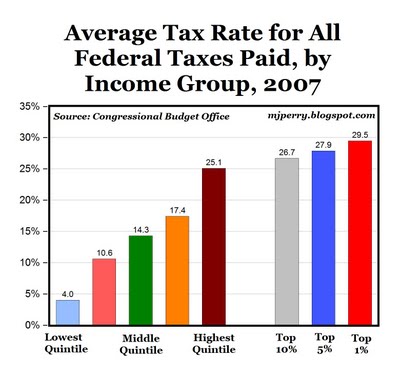
That would be good news for most millionaires:

To be sure, NPR’s longer stories on Obama and the “Buffett rule” are more precise, as in Tuesday’s story that said the proposed law “would require anyone making a million dollars a year or more to pay at least 30 percent in taxes.” Even there, though, the sentence went on to say “- about twice what some millionaires pay now.” And as the charts above show, that’s quite misleading. The Congressional Budget Office reported in 2010,

The overall federal tax system is progressive—that is, average tax rates generally rise with income. Households in the bottom quintile (fifth) of the income distribution paid 4 percent of their income in federal taxes, while the middle quintile paid 14 percent, and the highest quintile paid 25 percent. Average rates continued to rise within the top quintile, with the top 1 percent facing an average rate of close to 30 percent.

An open letter to President Obama (Part 60)

_________________________

Corker Says President’s 2012 Budget Proposal Shows “Lack of Urgency” on Spending

Uploaded by  on Feb 14, 2011

In remarks on the Senate floor today, U.S. Senator Bob Corker, R-Tenn., expressed disappointment in President Obama’s 2012 budget proposal, saying it displayed a “lack of urgency” to get federal spending under control. Corker has introduced the CAP Act to dramatically cut federal spending over the next decade.

_________________________________________

President Obama c/o The White House
1600 Pennsylvania Avenue NW
Washington, DC 20500

Dear Mr. President,

I know that you receive 20,000 letters a day and that you actually read 10 of them every day. I really do respect you for trying to get a pulse on what is going on out here.

Below are some comments that might interest you.

Feb 15 2012

Boozman Urges America to Reject the President’s Reckless Budget

WASHINGTON D.C. – U.S. Senator John Boozman (R-AR) took to the Senate floor today to urge America to reject President Obama’s reckless budget proposal and focus on passing a fiscally responsible budget.

“When you get down to it, President Obama was never serious about his pledge to cut the deficit in half by the end of his first term.  Like every budget this administration has proposed, this one was written with red ink.  The deficit spending proposed in the President’s FY13 budget topped a trillion once again.  This is an unsustainable rate of spending,” Boozman said in his speech.

The full text of the speech can be found here:

Madam President: On Monday morning, the country was presented with President Obama’s budget proposal for the fiscal year.

If you were to only listen to the President and his surrogates, you would think this proposal is great for the nation.

The acting budget director says the President’s budget “makes the right investments.”

The head of the President’s National Economic Council used a litany of sports metaphors to make the case that “the president has very much stepped up to the plate.”

And the President himself said his budget makes “some tough choices in order to put this country back on a more sustainable fiscal path.”

The reason they are so excited about this proposal is that, they believe, in an election year, they have offered every ally something to woe their support.  This budget proposal truly does try to be everything for everyone.  The problem is, however, no one wins with it.

When you scratch the surface of this proposal, the shine quickly wears off.

The deficit reduction claims that the administration throws out to defend this proposal don’t hold water.

You can’t claim $1 trillion in cuts that Congress pushed through during the debt ceiling debate as new cuts.

Nor can you say with all honesty that $850 billion in war savings are real cuts.  This money was never going to be spent in the first place.

When you get down to it, President Obama was never serious about his pledge to cut the deficit in half by the end of his first term.  Like every budget this administration has proposed, this one was written with red ink.  The deficit spending proposed in the President’s FY13 budget topped a trillion once again.  This is an unsustainable rate of spending.

On Monday, the President’s team was doing a full-scale PR push for this budget.  At one point during the rollout, a reporter asked the President’s top economic aides whatever happened to that pledge the President had made to the American people.

Gone from their answers was the tough talk of making “difficult decisions” and facing “challenges we’ve long neglected.”  Instead, his advisors were left to pull out the old standby excuse that the President and his team simply “didn’t realize how bad” the economy actually is when they first took over.

Clearly, they still don’t realize it now.

Not only does the President’s budget ignore the very real disarray our fiscal house is in, it makes the mess worse.

Since President Obama took office, our national debt has shot up 42%.   Under President Obama’s watch, the national debt has jumped to a jaw-dropping $15.1 trillion.

This is the fourth year in a row that the budget would run a deficit above $1.29 trillion.  When it comes to fiscal responsibility, this is not a record to be proud of.

America deserves better than a collection of tax hikes, phony savings and additional debt.

The President’s budget proposal is bad for seniors as it takes no steps to protect and strengthen Medicare and Social Security, will hurt chances of an economic recovery through tax hikes and will add $11 trillion more to our already staggering national debt in a 10-year period.

We cannot continue to keep going down this road.   America’s fiscal health is at stake.  We’ve got to stop spending more than we take in.  If not, we risk going the direction of Greece, Portugal, Italy and other European countries that have spent their way to the brink of default.

As we head into the final year of President Obama’s first term, we have already witnessed the most rapid increase in debt under any U.S. President.  With our national debt already the size of our entire economy, the President has proposed a budget that calls for hundreds of billions of dollars in new spending.

If we followed through with this budget, deficit spending would exceed $600 billion every year but one over the next decade.  Our national debt would grow to $18.7 trillion.

President Obama would like you to believe that if we simply raise taxes we can solve all of our fiscal problems. A recent CBO report shows that spending is the primary cause of our fiscal crisis and supports spending cuts rather than tax increases to reverse this trend.  But the President is holding steadfast to his desire to raise taxes as an answer.

The President’s failed policy of borrowing, spending and taxing is just what the CBO is warning us to avoid.   It hasn’t worked in the past and it won’t work in the future.

Washington does not have a revenue problem, it has a spending problem.  The fact that President Obama still believes we can tax our way out of the problem reveals a huge disconnect with the American people.

Madam President, when it comes to our country’s budget, Americans have a right to expect accountability, honesty and responsibility.  This proposal has none of those.

If President Obama refuses to acknowledge and address the very real economic crisis facing our country, let’s show America that we will.  We can do so by rejecting the White House’s proposal and passing a responsible budget that puts our nation back on a fiscally responsible path. 

___________________

We got to start making major cuts in our budget or we will never balance the budget and we will end up like Greece.

Thank you so much for your time. I know how valuable it is. I also appreciate the fine family that you have and your committment as a father and a husband.Sincerely,Everette Hatcher III, 13900 Cottontail Lane, Alexander, AR 72002, ph 501-920-5733, lowcostsqueegees@yahoo.com

An open letter to President Obama (Part 59)


President Obama c/o The White House
1600 Pennsylvania Avenue NW
Washington, DC 20500

Dear Mr. President,

I know that you receive 20,000 letters a day and that you actually read 10 of them every day. I really do respect you for trying to get a pulse on what is going on out here.

Dan Mitchell of the Cato Institute shows why your plan to tax the rich will not solve our deficit problem.  

Explaining in the New York Post Why Obama’s Soak-the-Rich Tax Policy Is Doomed to Failure

April 17, 2012 by Dan Mitchell

I think high tax rates on certain classes of citizens are immoral and discriminatory. If the government is going to collect revenue, all taxpayers should be treated equally, with something akin to a simple flat tax.

But most people don’t seem to care about having the law apply the same to all people, so I make a strictly utilitarian case for low tax rates in today’s New York Post. Here some of what I wrote.

Whether it’s through the Buffett Rule, higher income-tax rates or double taxation of dividends and capital gains, President Obama often demands that “rich” taxpayers and big corporations send more money to Washington. But…trying to get more money from upper-income taxpayers is like playing whack-a-mole. So long as tax rates are high, rich people will figure out ways to protect their income.It doesn’t take a tax genius; any rich person can make a phone call or hit a few computer keys and shift his or her investments to tax-free municipal bonds. It’s not good for the economy when capital gets diverted to help finance the excess spending of Detroit or California, but it’s an effective way of stiff-arming the IRS. Or the rich can play the green-energy scam, getting all sorts of credits to offset their tax liabilities. …Even if lawmakers abolished the various tax-code distortions, they might still be disappointed. The one sure way for rich people to lower their tax bills is by generating less income. …This isn’t some sort of modern-day revelation. Andrew Mellon, a Treasury secretary during the 1920s, noted that “the history of taxation shows that taxes which are inherently excessive are not paid. The high rates inevitably put pressure upon the taxpayer to withdraw his capital from productive business.”

I then provide a specific example, looking at how Reagan’s lower tax rates resulted in a lot more revenue from the rich.

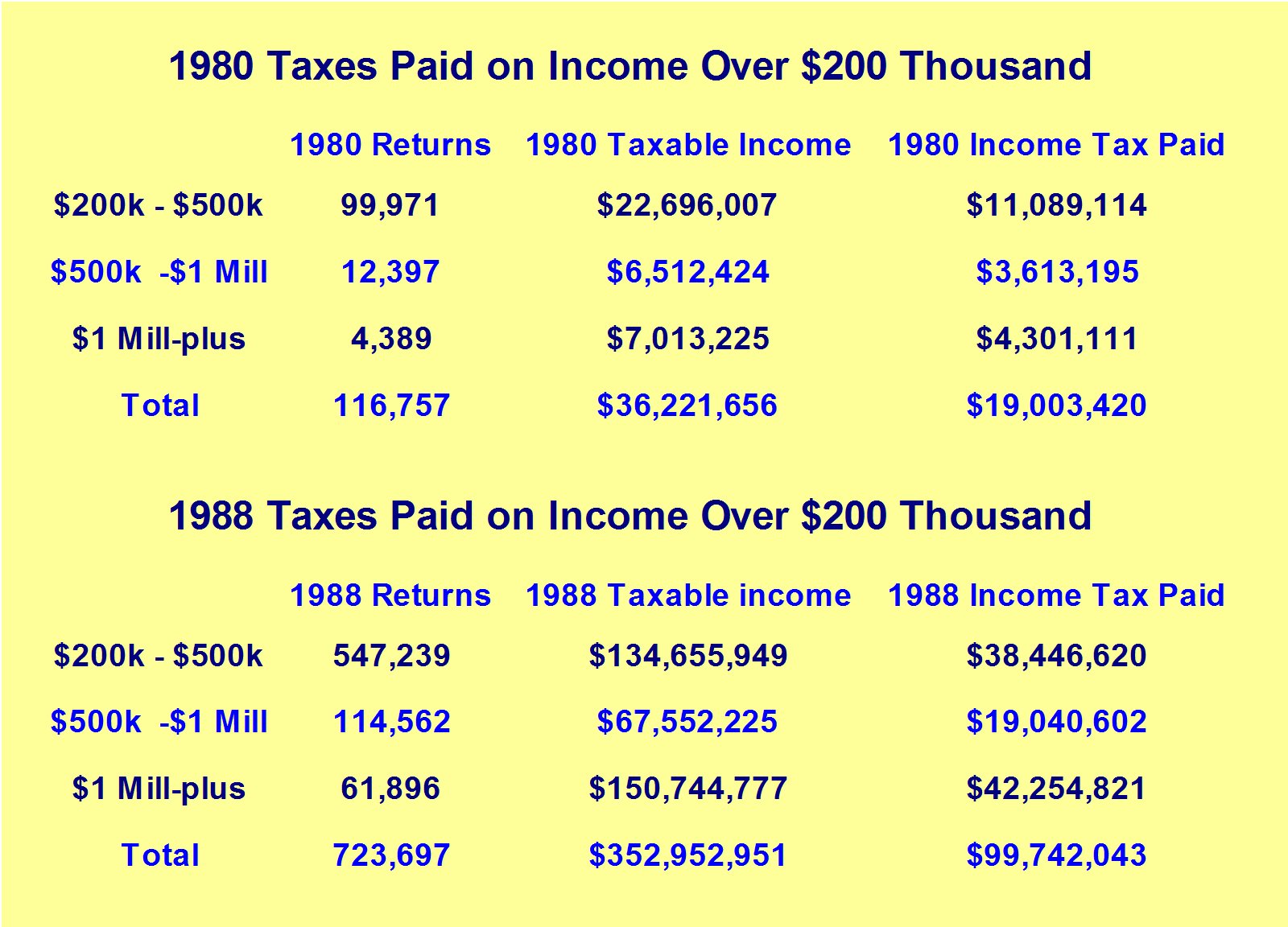
Unlike the rest of us, the rich have a great ability to alter the timing, amount and composition of their income. That’s because, according to IRS data, those with more than $1 million of adjusted gross income get only 33 percent of it from wages and salaries. The super-rich (those with income above $10 million) rely on wages and salaries for only 19 percent of their income. In 1980, when the top tax rate was 70 percent, rich people (those with incomes of more than $200,000) reported about $36 billion of income; the IRS collected about $19 billion of that amount. So what happened when President Ronald Reagan lowered the top tax rate to 28 percent by 1988? Did revenue fall proportionately, to about $8 billion? Folks on the left thought that would happen, complaining that Reagan’s “tax cuts for the rich” would starve the government of revenue and give upper-income taxpayers a free ride. But if we look at the 1988 IRS data, rich people paid more than $99 billion to Uncle Sam. That is, because rich taxpayers were willing to earn and report much more income, the government collected five times as much revenue with a lower rate.

I also included above, for readers of this blog, a table with the raw numbers from the IRS. Feel free to click for a larger image and see how the “rich” responded to better tax policy.

I then close with a warning about Obama’s class warfare policy.

Obama wants to run the experiment in reverse. He hasn’t proposed to push the top tax rate up to 70 percent, thank goodness, but the combined effect of his class-warfare policies would mean a big increase in marginal tax rates. That might be good for workers in China, India or Ireland, because American jobs and investment would migrate to those places. But it’s not the right policy for the United States.

In other words, even if you’re a leftist and your main goal is giving the government more revenue, higher tax rates are a bad idea. The rich will simply figure out ways to protect their earnings while the rest of us suffer because the economy loses some of its dynamism.

______________

Thank you so much for your time. I know how valuable it is. I also appreciate the fine family that you have and your committment as a father and a husband.

Sincerely,

Everette Hatcher III, 13900 Cottontail Lane, Alexander, AR 72002, ph 501-920-5733, lowcostsqueegees@yahoo.com