Category Archives: Milton Friedman

Dear Senator Pryor, why not pass the Balanced Budget Amendment? (“Thirsty Thursday”, Open letter to Senator Pryor)

Friedman on Reagan

Uploaded by on Aug 19, 2009

Nobel Laureate Dr. Milton Friedman discusses the principles of Ronald Reagan during this talk for students at Young America’s Foundation’s 25th annual National Conservative Student Conference

_______________

Dear Senator Pryor,

Why not pass the Balanced  Budget Amendment? As you know that federal deficit is at all time high (1.6 trillion deficit with revenues of 2.2 trillion and spending at 3.8 trillion).

On my blog www.HaltingArkansasLiberalswithTruth.com I took you at your word and sent you over 100 emails with specific spending cut ideas. However, I did not see any of them in the recent debt deal that Congress adopted. Now I am trying another approach. Every week from now on I will send you an email explaining different reasons why we need the Balanced Budget Amendment. It will appear on my blog on “Thirsty Thursday” because the government is always thirsty for more money to spend.

Passing the Balanced Budget Amendment would be what the founding fathers would have wanted. Look at what my favorite economist once said.

“The amendment is very much in the spirit of the first 10 amendments — the Bill of Rights. Their purpose was to limit the government in order to free the people. Similarly, the purpose of the balanced-budget-and-tax-limitation amendment is to limit the government in order to free the people — this time from excessive taxation.”

The Return of the Balanced Budget Amendment

By: jmattera
3/7/2011 03:01 AM

“The balanced budget amendment has good aspects, but it is simply not good enough in dealing with fundamental constitutional change for our country.” And thus with that 23-word statement in 1997, Democrat Sen. Robert Torricelli of New Jersey sunk conservative spirits. No longer did the U.S. Senate have the two-thirds it needed to enshrine a fundamental principle of governing into the highest law of the land: that politicians should pay for what they spend.

Controversial, I know. Pfft.

Due to Democrat Torricelli’s jellyfish backbone, the 1997 Balanced Budget Amendment fell one vote short of hitting the needed threshold, which was the same margin of failure as just one year before. And liberals couldnt have been happier. Their penchant for obligating the taxpayers of tomorrow to pay for the spending binges of today remained unbroken.

Not that the dissenting senators worded their objections that way. Nope. To Vermont’s incorrigible leftist Sen. Patrick Leahy, inserting a mechanism into the Constitution that would enable our government’s books to mirror the realities American businesses and families face daily was “bumper sticker politics” and “sloganeering.” The way toward rectifying Uncle Sam’s balance sheet was, according to Leahy, “political courage,” not tinkering with the Constitution. Thirty-three of Leahy’s Democratic colleagues agreed.

Mind-Boggling Debt

Of course, by “political courage,” Leahy didnt mean reforming our insolvent entitlement systems or abolishing many of the improvident, senseless, and unconstitutional government bureaucracies and programs in existence. Nah. He meant tax increases on the rich. You know the drill, people.

Prescience, however, is not a valued commodity in Washington, D.C., as lawmakers pursue policies that are in the best interest of their reelection, not of the republic.

When the balanced budget amendment failed in 1997, the federal deficit stood at just $22 billion and the national debt hovered around 5.5 trillion — meager compared with today’s obscene figures, where we have a deficit topping $1.6 trillion this year alone accompanied by a mind-boggling debt of $14 trillion and growing.

To put our debt in perspective, Kobe Bryant makes $25 million playing for the Los Angeles Lakers. Any guesses on how many seasons Kobe would have to play in order to pay off today’s national debt? How about a whopping 560,000. That’s chilling, and quite frankly, incomprehensible.

Heck, we’ve run deficits in 54 of the last 60 years, as the National Taxpayer Union points out. That’s a figure that would make Keynes himself blink.

Ironically, Leahy was on the right track when he spoke of the need for political courage. This country desperately needs it, but it must manifest itself in the form of politicians who will defend the property rights of all Americans as opposed to the current lawmaking that treats this nation’s treasury as a personal ATM card.

The brute political courage we need is for politicians to plug Congress’s desire to ransack the appropriations process to engineer winners and losers in the marketplace and thus perpetuate a class of constituents whose inspiration to vote is driven by keeping the government gravy train on a track straight to their bank accounts.

Thanks to the midterm elections, the time for real political courage is now: The balanced budget amendment is making a comeback thanks to one veteran and one freshman senator.

“The people are calling for it. They are clamoring for it. They’re demanding it,” said newly elected Utah Sen. Mike Lee, who has 19 of his colleagues, including Jim DeMint and Rand Paul, rallying in support of his balanced budget amendment. “The American people overwhelmingly demand it, and if members of Congress value their jobs, they are going to vote for it,” he told Human Events in an exclusive interview.

Lee’s a Tea Party faithful who believes his job boils down to this bare-bones task: produce a government in the original mold of the Constitution, which is to say, one whose legislative reach is restricted and clearly defined. In other words, a federal government that looks absolutely nothing like what we have today.

Opportune Time Needed

Lee is so intent on getting a vote on his balanced budget amendment that he’s ready to filibuster the vote on whether or not to raise the debt ceiling as a tactical move.

“I can tell you that there are a lot of people who will not even consider it [a vote on the debt limit] without a balanced budget amendment first being proposed by Congress,” he said emphatically.

That’s certainly one approach — to hold the Senate hostage until real, austere statutory spending limits are adopted.

Utah’s senior Sen. Orrin Hatch doesnt see it that way. He’s looking for a vote on his balanced budget amendment too, but at a time believed to be the most opportune for passage. He hasn’t set firm timetables or made any strict demands.

“You have to have a bipartisan vote. You have to have a President that does care, and you have to have a setting in time where people can’t do anything but vote for it,” Hatch explained. “Right now, I don’t think we have that.”

If youre keeping score, the two senators from Utah both have competing balanced budget amendments floating around the Senate. In some ways, these jockeying amendments are a reflection of the Tea Party being a big kid on the block within the GOP.

Hatch, though, has been in the Senate for more than three decades, and is confident that he can get a balanced budget amendment through, which is why he’s taking a softer tone and insisting on waiting for the best moment to accomplish that.

And there’s something to be said for Hatch’s, well, “political,” approach. He’s shepherded the balanced budget amendment since 1982, when it was approved in the Senate, but torpedoed in the House by then-Speaker Tip O’Neill. And, as noted above, Hatch came painstakingly close twice in the Senate, both in 1996 and 1997.

“It’s every bit as difficult now, but it’s important that we bring it up and that we make all the strides we can,” he said.

The long-serving senator has 32 co-sponsors for his bill, including Chuck Grassley of Iowa, who is the ranking member on the Judiciary Committee.

When it comes down to it, both Hatch and Lee’s amendments have the same goal: ending profligate spending. In fact, as Nobel Laureate James Buchanan said, “The balanced budget norm is ultimately based on the acceptance of the classic principles of public finance, meaning that politicians shouldn’t spend more than they are willing to generate in tax revenues, except during periods of extreme and temporary emergency.”

Wait, why is this concept controversial again? Because it handcuffs Big Government believers from exerting influence over our personal decision making, thats why.


Courts Involved

There are notable differences between the balanced budget amendments of Hatch and Lee, which we lay out in detail in the accompanying chart. While Mike Lee would restrict government spending to 18% of the gross domestic product (GDP), Hatch’s limits the figure to 20%. The 40-year average of tax receipts to GDP is around 18%, and Hatch knows this to be the case, but, to quote him, “If you get it too low, then you lose any chance with the Democrats.” And that, right there, encapsulates the internal friction the GOP will face with this budding Tea Party caucus going head-to-head with those who are willing to work with Democrats to deliver a final product.

But there’s more: Hatch’s proposal allows a simple majority vote to waive the balanced budget requirement when there’s a declaration of war or a designated military conflict, whereas Lee’s amendment provides no such exception. His threshold is much higher — a two-thirds vote.

When aren’t we in a military conflict? Lee quips.

There are also differences in the enforcement mechanism. Lee would grant standing in federal court to members of Congress if flagrant violations of the amendment occur. Hatch doesnt want the courts anywhere near enforcement, believing that public pressure placed on politicians instead provides the best form of accountability. Plus, “Who wants the courts doing it?” asked Hatch, alluding to their predilection toward activism.

Lee himself acknowledges that court intervention would be rare, but that the mere possibility that it could occur would add some additional incentive to Congress to make sure that it stays within their restrictions.

So far, so good.

But procedurally, how would our gargantuan budget ever get balanced? We’re dealing with trillions of dollars here, after all, a highly complex web of arithmetic. Congress must make a good-faith effort, say Hatch and Lee, to use the best possible projections of spending and receipts. Even with the accurate projections, economic conditions change throughout the year that may inhibit the Feds’ budget from being balanced, such as underestimating costs, which happens more frequently than not these days. If such a scenario plays out, and a fiscal year does end with a deficit, such spending cuts can be incorporated into the next fiscal year’s budget and make up the difference on the back end. Under both plans, by the way, two-thirds of Congress would be needed to raise taxes, so it would be more likely than not that the budget would be balanced by spending cuts, not tax increases.

Hey, were all game for that.

Naturally, getting a balanced budget amendment adopted as part of the Constitution will not be an easy feat. And not because of the numerical hurdles and multiple steps needed to get any amendment through the Constitution (the process should be difficult). It’s because Democrats will kick and scream over the severe cuts to spending that would ensue after the adoption of a balanced budget amendment.

Heck, Senate Majority Leader Harry Reid and his left-wing posse went apoplectic at a proposed spending reduction of $61 billion over the next seven months, calling it “extreme” and “draconian.” Just $61 billion. Thats it. To realize just how absurd such objections were, $61 billion is only a one-third of the money needed to cover the interest payments for U.S. bondholders this year alone.

Imagine when formal debate begins on the need to cut trillions in spending to rein in our deficit? Democrats may cut off their right arms in protest.

“This is exhibit A for why we need a balanced budget amendment,” responded Lee. “Politicians have reached the conclusion that they are the bad guys unless they say ‘yes’ to more spending, and it’s in light of that aspect of human nature that particularly tends to affect politicians, and that’s why we need a constitutional amendment.”

Unified GOP Caucus

“If this is going to get passed in the next two years,” says Hatch, “President Obama will have to step to the plate. Ultimately you’ll need presidential leadership because everybody knows that you’re not going to get spending under control until we take on entitlements as well. You cannot do it without presidential leadership.”

Remider: There’s always new presidential leadership come 2012. Well, we hope so anyway.

In the end, expect the GOP to have a unified caucus on a merger of the Hatch and Lee balanced budget amendments. It’s hard enough (almost impossible) to get one through when Democrats are in control of the Senate and the presidency, so the Republicans will need a unified front like they’ve had in the past.

A balanced budget amendment restricts the power of lawmakers, and that’s why the left despises it, and will work vigorously to defeat it. Get ready.

In the end, it is exactly what the Constitution needs. And esteemed economist Milton Friedman identified why two decades ago.

Said Friedman: “The amendment is very much in the spirit of the first 10 amendments — the Bill of Rights. Their purpose was to limit the government in order to free the people. Similarly, the purpose of the balanced-budget-and-tax-limitation amendment is to limit the government in order to free the people — this time from excessive taxation.”

If we cannot cut the Welfare State under these distressing economic conditions, then we’ll never do it. Now’s the time.
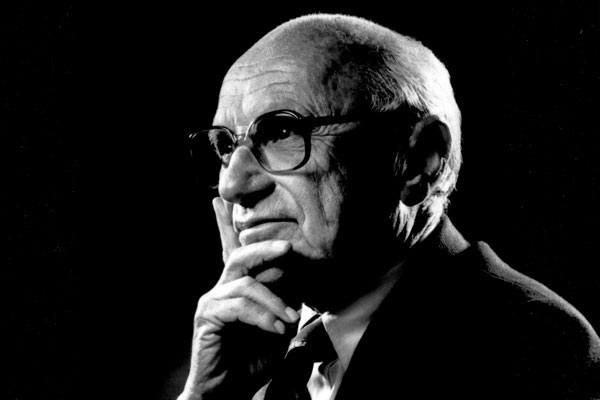

The answer to the education problem is the voucher system

Milton Friedman – Public Schools / Voucher System

Published on May 9, 2012 by

The Machine: The Truth Behind Teachers Unions

Published on Sep 4, 2012 by

America’s public education system is failing. We’re spending more money on education but not getting better results for our children.

That’s because the machine that runs the K-12 education system isn’t designed to produce better schools. It’s designed to produce more money for unions and more donations for politicians.

For decades, teachers’ unions have been among our nation’s largest political donors. As Reason Foundation’s Lisa Snell has noted, the National Education Association (NEA) alone spent $40 million on the 2010 election cycle (source: http://reason.org/news/printer/big-education-and-big-labor-electio). As the country’s largest teachers union, the NEA is only one cog in the infernal machine that robs parents of their tax dollars and students of their futures.

Students, teachers, parents, and hardworking Americans are all victims of this political machine–a system that takes money out of taxpayers’ wallets and gives it to union bosses, who put it in the pockets of politicians.

Our kids deserve better.

“The Machine” is 4:17 minutes.

Written and narrated by Evan Coyne Maloney. Produced by the Moving Picture Institute in partnership with Reason TV.

Visit http://www.MovingPictureInstitute.org to learn more.

No one did more to advance the cause of school vouchers than Milton and Rose Friedman. Friedman made it clear in his film series “Free to Choose” how sad he was that young people who live in the inner cities did not have good education opportunities available to them.

I have posted often about the voucher system and how it would solve our education problems. What we are doing now is not working. Milton Friedman’s idea of implementing school vouchers was hatched about 50 years ago.

Poor families are most affected by this lack of choice. As Friedman noted, “There is no respect in which inhabitants of a low-income neighborhood are so disadvantaged as in the kind of schooling they can get for their children.” It is a sad statement quantified by data on low levels of academic achievement and attainment. Take a look at this article below.

Lindsey Burke

September 25, 2012 at 5:46 pm

SAT scores among the nation’s test-takers are at a 40-year low.

As The Washington Post reports:

Reading scores on the SAT for the high school class of 2012 reached a four-decade low, putting a punctuation mark on a gradual decline in the ability of college-bound teens to read passages and answer questions about sentence structure, vocabulary and meaning on the college entrance exam.

The decline over the decades has been significant. The average reading (verbal) score is down 34 points since 1972. Sadly, the historically low SAT scores are only the latest marker of decline. Graduation rates have been stagnant since the 1970s, reading and math achievement has been virtually flat over the same time period, and American students still rank in the middle of the pack compared to their international peers.

On the heels of the news about the SAT score decline, President Obama filmed a segment with NBC’s Education Nation earlier today. The President notably praised the concept of charter schools and pay for performance for teachers.

But those grains of reform were dwarfed by his support of the status quo. During the course of the interview, President Obama suggested hiring 100,000 new math and science teachers and spending more money on preschool. He also stated that No Child Left Behind had good intentions but was “under-resourced.”

Efforts by the federal government to intervene in preschool, most notably through Head Start, have failed—despite a $160 billion in spending on the program since 1965. And No Child Left Behind is far from “under-resourced.” The $25 billion, 600-page law has been on the receiving end of significant new spending every decade since the original law was first passed nearly half a century ago.

President Obama was also pressed on the issue of education unions by host Savannah Guthrie:

Some people think, President Obama gets so much support from the teachers’ unions, he can’t possibly have an honest conversation about what they’re doing right or wrong. Can you really say that teachers’ unions aren’t slowing the pace of reform?

President Obama responded: “You know, I just really get frustrated when I hear teacher-bashing as evidence of reform.”

Criticizing education unions for standing in the way of reform should not be conflated with criticizing teachers, as the President does in the interview. The unions have blocked reforms such as performance pay and charter schools (which the President supports), have opposed alternative teacher certification that would help mid-career professionals enter the classroom, and have consistently fought the implementation of school choice options for children.

If we ever hope to move the needle on student achievement—or see SAT scores turn in the right direction again—we’ll need to implement many of those exact reforms, particularly school choice.

And as he has in the past, President Obama stated that his Administration wants to “use evidenced-based approaches and find out what works.” We know what works: giving families choices when it comes to finding schools that best meet their children’s needs. Instead of continuing to call for more spending and more Washington intervention in education, let’s try something new: choice and freedom.

Related posts:

Milton Friedman remembered at 100 years from his birth (Part 4)

I ran across this very interesting article about Milton Friedman from 2002: Friedman: Market offers poor better learningBy Tamara Henry, USA TODAY By Doug Mills, AP President Bush honors influential economist Milton Friedman for his 90th birthday earlier this month. About an economist Name:Milton FriedmanAge: 90Background: Winner of the 1976 Nobel Prize for economic science; […]

Milton Friedman videos and transcripts Part 11

Milton Friedman videos and transcripts Part 11 On my blog http://www.thedailyhatch.org I have an extensive list of posts that have both videos and transcripts of MiltonFriedman’s interviews and speeches. Here below is just small list of those and more can be accessed by clicking on “Milton Friedman” on the side of this page or searching […]

Open letter to President Obama (Part 117.3)

A Taxing Distinction for ObamaCare Published on Jun 28, 2012 by catoinstitutevideo http://www.cato.org/publications/commentary/it-now-falls-congress http://www.cato.org/publications/commentary/taxing-decision http://www.cato-at-liberty.org/supreme-court-unlawfully-rewrites-obamacare-to… http://www.cato-at-liberty.org/congress-its-not-a-tax-scotus-yes-it-is/ The Cato Institute’s Roger Pilon, Ilya Shapiro, Michael F. Cannon, Michael D. Tanner and Trevor Burrus evaluate today’s ruling on ObamaCare at the Supreme Court. Video produced by Caleb O. Brown and Austin Bragg. ____________ President Obama c/o The […]

Milton Friedman videos and transcripts Part 10

Milton Friedman videos and transcripts Part 10 On my blog http://www.thedailyhatch.org I have an extensive list of posts that have both videos and transcripts of MiltonFriedman’s interviews and speeches. Here below is just small list of those and more can be accessed by clicking on “Milton Friedman” on the side of this page or searching […]

Milton Friedman videos and transcripts Part 9

Milton Friedman videos and transcripts Part 9 On my blog http://www.thedailyhatch.org I have an extensive list of posts that have both videos and transcripts of MiltonFriedman’s interviews and speeches. Here below is just small list of those and more can be accessed by clicking on “Milton Friedman” on the side of this page or searching […]

Milton Friedman’s biography (Part 2)(Interview by Charlie Rose of Milton Friedman part 3)

Biography Part 2 In 1977, when I reached the age of 65, I retired from teaching at the University of Chicago. At the invitation of Glenn Campbell, Director of the Hoover Institution at Stanford University, I shifted my scholarly work to Hoover where I remain a Senior Research Fellow. We moved to San Francisco, purchasing […]

Milton Friedman at Hillsdale College 2006 (part 2)

Milton Friedman at Hillsdale College 2006 July 2006 Free to Choose: A Conversation with Milton Friedman Milton Friedman Economist Milton Friedman is a senior research fellow at the Hoover Institution at Stanford University and a professor emeritus of economics at the University of Chicago, where he taught from 1946-1976. Dr. Friedman received the Nobel Memorial […]

Milton Friedman videos and transcripts Part 8

Milton Friedman videos and transcripts Part 8 On my blog http://www.thedailyhatch.org I have an extensive list of posts that have both videos and transcripts of MiltonFriedman’s interviews and speeches. Here below is just small list of those and more can be accessed by clicking on “Milton Friedman” on the side of this page or searching […]

Milton Friedman remembered at 100 years from his birth (Part 2)

Testing Milton Friedman – Preview Uploaded by FreeToChooseNetwork on Feb 21, 2012 2012 is the 100th anniversary of Milton Friedman’s birth. His work and ideas continue to make the world a better place. As part of Milton Friedman’s Century, a revival of the ideas featured in the landmark television series Free To Choose are being […]

Milton Friedman believed in liberty (Interview by Charlie Rose of Milton Friedman part 1)

Charlie Rose interview of Milton Friedman My favorite economist: Milton Friedman : A Great Champion of Liberty  by V. Sundaram   Milton Friedman, the Nobel Prize-winning economist who advocated an unfettered free market and had the ear of three US Presidents – Nixon, Ford and Reagan – died last Thursday (16 November, 2006 ) in San Francisco […]

Free or equal? 30 years after Milton Friedman’s Free to Choose (Part 1)

Free or Equal?: Johan Norberg Updates Milton & Rose Friedman’s Free to Choose I got this below from Reason Magazine: Swedish economist Johan Norberg is the host of the new documentary Free or Equal, which retraces and updates the 1980 classic Free to Choose, featuring Milton and Rose Friedman. Like the Friedmans, Norberg travels the globe […]

Reason Magazine’s rightly praises Milton Friedman but makes foolish claim along the way

I must say that I have lots of respect for Reason Magazine and for their admiration of Milton Friedman. However, I do disagree with one phrase below. At the end of this post I will tell you what sentence it is. Uploaded by ReasonTV on Jul 28, 2011 There’s no way to appreciate fully the […]

Video clip:Milton Friedman discusses his view of numerous political figures and policy issues in (Part 1)

Milton Friedman on Hayek’s “Road to Serfdom” 1994 Interview 1 of 2 Uploaded by PenguinProseMedia on Oct 25, 2011 Says Federal Reserve should be abolished, criticizes Keynes. One of Friedman’s best interviews, discussion spans Friedman’s career and his view of numerous political figures and public policy issues. ___________________ Two Lucky People by Milton and Rose Friedman […]

Milton Friedman remembered at 100 years from his birth (Part 1)

What a great man Milton Friedman was. The Legacy of Milton Friedman November 18, 2006 Alexander Tabarrok Great economist by day and crusading public intellectual by night, Milton Friedman was my hero. Friedman’s contributions to economics are profound, the permanent income hypothesis, the resurrection of the quantity theory of money, and his magnum opus with […]

Milton Friedman videos and transcripts Part 7

Milton Friedman videos and transcripts Part 7 On my blog http://www.thedailyhatch.org I have an extensive list of posts that have both videos and transcripts of MiltonFriedman’s interviews and speeches. Here below is just small list of those and more can be accessed by clicking on “Milton Friedman” on the side of this page or searching […]

Transcript and video of Milton Friedman on Bill Clinton and Ronald Reagan (Part 1)

Below is a discussion from Milton Friedman on Bill Clinton and Ronald Reagan. February 10, 1999 | Recorded on February 10, 1999 audio, video, and blogs » uncommon knowledge PRESIDENTIAL REPORT CARD: Milton Friedman on the State of the Union with guest Milton Friedman Milton Friedman, Senior Research Fellow, Hoover Institution and Nobel Laureate in […]

Dan Mitchell’s article on Chili and video clip on Milton Friedman’s influence

Milton Friedman and Chile – The Power of Choice Uploaded by FreeToChooseNetwork on May 13, 2011 In this excerpt from Free To Choose Network’s “The Power of Choice (2006)”, we set the record straight on Milton Friedman’s dealings with Chile — including training the Chicago Boys and his meeting with Augusto Pinochet. Was the tremendous […]


In Free to Choose, Milton Friedman and his wife, Rose, argued for a constitutional amendment requiring a balanced budget.

Broun Introduces Balanced Budget Amendment

Uploaded by on Feb 23, 2010

No description available.

_______________


When I think about the life work of Milton Friedman two issues keep coming up. Private vouchers for schools and lowering federal government spending. Those two issues were very close to his heart. I am hoping in the future our leaders will see that after increasing spending every year for the last 40 years and at the same time our test results have dropped that we must gave private vouchers a chance.

Also as our national debt keep rising we must adopt the Balanced Budget Amendment which was also close to Friedman’s heart.

The US Needs Milton Friedman More Than Ever


In compiling a list of the greatest economists of all time, Milton Friedman’s name will surely be one of the first to come to mind.  There is of course his technical work, such as his famous Monetary History of the United States (co-authored with Anna Schwartz), that established him as the chief architect of the theory of monetarism. More important was his ability to explain in clear layman’s terms the basic principles of our economic system, how it creates wealth for all members of society, and the importance to a successful society of individual liberty.  If one were to pick two books that our country’s leaders should read, they would be his Capitalism and Freedom and Free to Choose.  They are a treasure trove of solutions to the social problems of today.

Freidman wrote the first of these in 1962.  In a period where we were about to launch The Great Society, as is the case today, people were looking to the federal government to improve their lives. Friedman offered an alternative based upon market forces and individual liberty. His cogent examination of the effect of incentives on people’s behavior led him to offer solutions to societal problems that were both insightful and effective.  He offered ideas such as allowing individuals to invest in the education of others, so poor children would be able to obtain funding for high school and college in return for the investor receiving a fraction of their future earnings.  This innovative idea would be much more successful than Pell Grants in encouraging and enabling students to finish high school and graduate from college.  

Today we are more than ever in need of a resurgence and rediscovery of Milton Friedman’s ideas. Examples of this need abound.  The stimulus package was supposed to keep the unemployment rate below 8 percent. Instead we have unemployment between 9.5 and 10 percent and $800 billion added to the federal debt.  The Obama administration is now pushing for a second stimulus package. Thirty years ago Friedman explained that fiscal policy is not an effective method of reducing unemployment.  Had we followed Friedman’s advice, we would be less burdened in debt and further along in economic recovery. 

His argument for vouchers as a mechanism of moving public education from a socialist system to a market system has found traction in the last decade.  Nonetheless, voucher proposals are very difficult to pass due to the power of the teachers unions.  As a consequence of not following Friedman’s advice thousands of children in our urban schools have lost their chance for a good education.   

Due to a massive 2000 page health care bill, the federal government is now managing the entire health care and health insurance industry.  Freidman explained in a cogent article in The Public Interest, that health care costs are so high and customer satisfaction with the system is so low because government intervention has pushed us into an employer and government-based third party payment system.  In typical Friedman fashion he forces us to observe that advances in technology in every area other than health care have led to reduced costs and increased satisfaction with the product or service and to ask why this is so.  He asks why we single out medical care for tax-free status.  Food is more important than medical care and yet we do not exempt the cost of food if provided by the employer. He must be surely rolling over in his grave the new health care legislation will compound the problem of third-party payment.

The President recently signed a 2300 page bill granting the federal government control over the entire financial industry.  Professor Friedman wrote famously of how the Federal Reserve was not capable of determining how to manipulate the credit markets effectively due to its inability to know the information necessary to conduct effective monetary policy, and thus argued that the Federal Reserve should be constrained by rules. He certainly would have argued strenuously against giving the Federal Reserve and Securities and Exchange Commission the enormous powers that they received under the financial regulation legislation.

In Free to Choose, Friedman and his wife, Rose, argued for a constitutional amendment requiring a balanced budget.  As we see deficits of nearly $1.5 trillion staring us in the face for at least the next few years, this suggestion too has gained new relevance.

Concluding Free to Choose, he wrote:

“The two ideas of human freedom and economic freedom working together cane to their greatest fruition in the United States.  Those ideas are still very much with us. But we have been straying from them.  We have been forgetting the basic truth that the greatest threat to human freedom is the concentration of power, whether in the hands of government or anyone else.  We have persuaded ourselves that it is safe to grant power, provided it is for good purposes.”

Some thirty years later those words again ring true.  Our hope should be that his final statement also is true:

“Fortunately, we are waking up….Fortunately, also, we are as a people still free to choose which way we should go—whether to continue along the road we have been following to ever bigger government, or to call a halt and change direction.”

This post originally appeared at The Business and Media Insitute’s Balance Sheet of July 28, 2010

Must keep spending down

Got to get rid of all the huge increases in spending. Milton Friedman believed the Balanced Budget Amendment would be the best way to slow down government spending as long as it is tied to a percentage of GDP.

Below is an excellent article by Dan Mitchell on this issue of keeping government spending down.

I have many frustrations in my life, and near the top of the list is the conservative fixation about balancing the budget.

This view is very misguided. Red ink isn’t good, but the fiscal problem in America (as well as Europe, Japan, etc) is that the public sector is too big. Milton Friedman was right when he wrote, “I would rather have government spend one trillion dollars with a deficit of a half a trillion dollars than have government spend two trillion dollars with no deficit.”

To put it in simple terms, government spending is the disease and deficits and debt are the symptoms.

But even that analogy is inadequate. When politicians focus on borrowing rather than spending, it opens a door allowing the left to argue that tax increases are a solution.

Yet we know from historical experience that higher taxes encourage more spending and slow economic growth, and the combination of those two factors leads to more red ink.

Consider, for example, the experience in Europe. Beginning about 20 years ago with the adoption of the Maastricht Treaty, all members of the European Union agreed to limit annual budget deficits to 3 percent of GDP and total national debt to 60 percent of GDP.

And what happened after these rules were instituted? Well, according to data from the OECD, government got bigger, the tax burden rose, and there was more red ink.

Heck, the Europeans are in the middle of a fiscal crisis, so their rules to limit deficits and debt obviously haven’t been very successful.

Seems like maybe it’s time for them to realize that the problem is too much spending. But, no, that would make too much sense.

Amazingly, but not surprisingly, the Europeans now want to double-down on their failed policies by imposing, as part of a new fiscal pact, even more rules to supposedly control deficits and debt.

The EU Observer reports that: “Countries must introduce a ‘debt brake’ into their constitutions or at an “equivalent” legal level, requiring balanced budgets, which are defined as not exceeding deficits of 0.5 percent of GDP.” Furthermore, another EU Observer report says that “rules will have to include automatic correction mechanisms.” Knowing the mindset of the Euro-crats, this probably means automatic tax increases.

The obvious problem, of course, is that the Europeans have adopted the wrong measuring stick. When they talk about a “golden rule,” they mean limits on deficits and debt. Instead, they should be following Mitchell’s Golden Rule, which requires that government spending grow slower than the private economy.

This video is less than six minutes, but it provides all the key arguments about why the goal should be smaller government rather than fiscal balance.

Deficits are Bad, but the Real Problem is Spending

Uploaded by on Dec 15, 2009

Huge deficits and skyrocketing debt levels are creating considerable worry. This Center for Freedom and Prosperity Foundation video explains that that government borrowing is excessive – and will get worse in coming decades. But this mini-documentary explains that deficits and debt are merely the symptoms, and a rising burden of government spending is the real problem.

____________

Last but not least, it’s worth noting that Europe’s new fiscal agreement (assuming it ever gets implemented) is bound to fail. In part, this is because they are targeting red ink, which is the wrong variable.

But it’s also because the supposed enforcement mechanisms won’t work. The tentative pact assumes that European Commission bureaucrats in Brussels somehow will impose fiscal discipline.

To be more specific, a report in the EU Observer says: “The European Commission will carry a big stick: it will look at national budgets before national MPs and make demands.” Does anyone believe this will have any impact on Italian politicians?

And another story in the EU Observer notes: “Under the proposals, almost all fiscal policy-making would be taken out of the hands of national assemblies and delivered up to European civil servants.” Good luck with that. Does anyone think Spanish parliamentarians will cede budget authority to Brussels?

This is why I stand by my original arguments that bailouts won’t work and that a tough-love policy of benign neglect is the only feasible solution.

Ron Paul quotes Milton Friedman concerning Balanced Budget Amendment

Rand Paul A balanced Budget Amendment is the only way (29-Jul-11)(GLOBAL FOCUS series – US)

Uploaded by on Jul 31, 2011

_______________

The main reason we need a Balanced Budget Amendment is to control spending. Milton Friedman was right about that. Notice below that Ron Paul quotes Friedman on this issue.

Ron Paul: Constitutional Amendment Needed to Limit Taxes and Spending

Submitted by bobbyw24 on Wed, 07/20/2011– 07:09

Congressman Ron Paul (R-Texas) says merely scaling back to 2008 spending levels is nowhere near enough to fix the massive government debt problems.

“As Milton Friedman famously argued, what we really need is a constitutional amendment to limit taxes and spending, not simply to balance the budget,” Paul said in a speech to the House of Representatives made prior to the vote on the “Cut, Cap and Balance” bill. The bill is expected to pass the House tonight, but President Barack Obama has said he will veto it if it clears the Senate and reaches his desk.

What is needed is a dramatically smaller federal government, says Paul. “If we achieve this, a balanced budget will take care of itself,” he says. “We need to cut back at least to where spending was a decade ago.”

Many in communist countries longed for the freedom that Milton Friedman and Ronald Reagan talked about

People all the world love freedom and those that had to live under the rule of communism hungered for freedom. When I think about the actions of Ronald Reagan and Milton Friedman during the 1980’s I am grateful for their love of freedom. Ronald Reagan is responsible for bringing down the Russian communist state and the ones in Eastern Europe.

Below you will read how the 1980 book and film series “Free to Choose” was being smuggled into these countries and was giving the people a hunger for freedom. I wish the USA would reduce the size of our federal government spending and regulations and return more freedom to our people too. Below is an article that talks about the making of that film series.

Celebrating Milton Friedman

by Andrew J. Coulson

Andrew Coulson directs the Cato Institute’s Center for Educational Freedom and is the author of Market Education: The Unknown History.

Added to cato.org on July 31, 2012

This article appeared in Cato.org on July 31, 2012.

For us, who lived in the communist world, Milton Friedman was the greatest champion of freedom, of limited and unobtrusive government and of free markets. Because of him I became a true believer in the unrestricted market economy.

Those are the words of Czech President Vaclav Klaus. Both Friedman’s writings and his landmark 1980 documentary series “Free to Choose”were smuggled into totalitarian communist states, inspiring a generation of future scholars, activists, and politicians.

July 31st, 2012 is the 100th anniversary of Friedman’s birth. To commemorate that occasion, the Cato Institute has put together a video interview with Bob Chitester, producer of “Free to Choose,” recounting how it came to be, its impact, and what it was like working with Milton Friedman.

Bob Chitester Discusses Milton Friedman and ‘Free to Choose’

Published on Jul 30, 2012 by

“There are very few people over the generations who have ideas that are sufficiently original to materially alter the direction of civilization. Milton is one of those very few people.”

That is how former Federal Reserve Chairman Alan Greenspan described the Nobel laureate economist Milton Friedman. But it is not for his technical work in monetary economics that Friedman is best known. Like mathematician Jacob Bronowski and astronomer Carl Sagan, Friedman had a gift for communicating complex ideas to a general audience.

It was this gift that brought him to the attention of filmmaker Bob Chitester. At Chitester’s urging, Friedman agreed to make a 10 part documentary series explaining the power of economic freedom. It was called “Free to Choose,” and became one of the most watched documentaries in history.

The series not only reached audiences in liberal democracies, but was smuggled behind the iron curtain where it played, in secret, to large audiences.

__________

Aside from those who lived under communism, there is another group for whom Friedman was and is a colossal figure: advocates of educational freedom. At a time when state-run schooling had been the norm for nearly a century, and had long ceased to be questioned by America’s elites, Friedman offered a modest observation: there was no good reason for the government of a free society to actually run schools and many good reasons for it not to do so.

He made this case in his essay “On the Role of Government in Education,” first published in 1955. The idea had been floated by others, including Adam Smith and Thomas Paine, but Friedman eloquently and powerfully introduced it to the American policy debate. In so doing, he, more than any other individual, can be credited with giving rise to the modern school choice movement.

Not only did Friedman spark the creation of this movement, he helped to fan the flame of educational freedom, writing popular commentaries and book chapters, speaking with and encouraging activists, founding a leading school choice institution, and dedicating the entire sixth episode of “Free to Choose” to this subject.

I had the good fortune to speak and correspond with Milton occasionally, starting in the late 1990s, and what struck me most about him was his personal integrity. He once told me that he never said anything negative about a person in private that he would not be willing to say openly in that person’s presence. So far as I know, he never violated that principle. And while he staunchly defended his conclusions as long as he remained convinced of their correctness, he would amend them if the weight of evidence shifted.

Indeed the rigorous empiricism that Friedman applied in his scholarly work is generally regarded as one of his most influential contributions to the field of economics—for a long time controversial but eventually the norm, at least in principle. His view, published in the 1953 collection Essays in Positive Economics, was that

the ultimate test of the validity of a theory is… the ability to deduce facts that have not yet been observed, that are capable of being contradicted by observation, and that subsequent observation does not contradict. [p. 300]

Equally wise, though not yet as widely accepted, is the long time horizon against which Friedman measured policy outcomes. Economist and philosopher of science James R. Wible notes that Friedman’s greatest contribution “may be his constant reminder not to forget the long run consequences of short run policies.”

In the 1982 edition of his book Capitalism and Freedom, Friedman observed that scholars cannot single-handedly bring about change. Their real role, he wrote, is to “keep the lights on”—to remind us which policies work and which do not, and to show us how to advance our understanding even further. His own unfailing empiricism and concern for the long term remain valuable beacons today, both for advocates of educational freedom and the broader policy community.

Every Friday you need to click on www.theDailyHatch.org for “Friedman Friday”

Every Friday you need to click on www.theDailyHatch.org if you would like to see a video clip of Milton Friedman as he shares his common sense conservative economic views. Many of his articles are posted too. I remember growing up and reading those great articles every week in Newsweek. They are just as relevant today as they were then.

So many points brought up by liberals sound so good at first but really are easy to answer logically. Take the example below.

I remember like yesterday when I saw Milton Friedman on the Phil Donahue Show. Donahue had thrown up one of those liberal accusations against the free enterprise system. Below is the exchange that I saw that day:

Phil Donahue: When you see around the globe, the mal-distribution of wealth, a desperate plight of millions of people in underdeveloped countries. When you see so few “haves” and so many “have-nots.” When you see the greed and the concentration of power. Did you ever have a moment of doubt about capitalism and whether greed is a good idea to run on?

Milton Friedman: Well first of all tell me is there some society you know that doesn’t run on Greed? You think Russia doesn’t run on greed? You think China doesn’t run on greed? What is greed? Of course none of us are greedy, it’s only the other fellow who is greedy. The world runs on individuals pursuing their separate interests.

The great achievements of civilization have not come from government bureaus. Einstein didn’t construct his theory under order from a bureaucrat. Henry Ford didn’t revolutionize the automobile industry that way.

In the only cases in which the masses have escaped from the kind of grinding poverty you’re talking about – the only cases in recorded history – are where they have had capitalism and largely free trade.

If you want to know where the masses are worst off, it’s exactly in the kinds of societies that depart from that. So that the record of history is absolutely crystal clear that there is no alternative way so far discovered of improving the lot of the ordinary people that can hold a candle to the productive activities that are unleashed by a free enterprise system.

Donahue: But it seems to reward not virtue as much as ability to manipulate the system…

Friedman: And what does reward virtue? You think the Communist commissar rewarded virtue? You think a Hitler rewarded virtue? You think – excuse me – if you’ll pardon me – do you think American Presidents reward virtue ?

Do they choose their appointees on the basis of the virtue of the people appointed or on the basis of their political clout ?

Is it really true that political self-interest is nobler somehow than economic self-interest ? You know, I think you’re taking a lot of things for granted. Just tell me where in the world you find these angels who are going to organize society for us ? Well, I don’t even trust you to do that.

Below are links to some of the past posts:

Discussion on Equality from Milton Friedman and Bradley Gitz

Milton Friedman – Redistribution of Wealth Uploaded by LibertyPen on Feb 12, 2010 Milton Friedman clears up misconceptions about wealth redistribution, in general, and inheritance tax, in particular. http://www.LibertyPen.com __________________ Check out this excellent article below on equality from today’s Arkansas Democrat-Gazette (paywall): What is equality? By Bradley Gitz This article was published today at 3:00 […]

“Friedman Friday” Tribute to Milton Friedman (Part 5)

 Milton Friedman: Life and ideas – Part 05 99th anniversary of Milton Friedman’s birth (Part 13) Milton Friedman was born on July 31, 1912 and he died November 16, 2006. I started posting tributes of him on July 31 and I hope to continue them until his 100th birthday. Here is another tribute below: Sheldon […]

Famous Milton Friedman Quotes(“Friedman Friday” Part 4)

Milton Friedman on the Causes of Inflation (“Friedman Friday” Part 4) FRIEDMAN FRIDAY APPEARS EVERY FRIDAY AND IS HONOR OF THE NOBEL PRIZE WINNING ECONOMIST MILTON FRIEDMAN Famous Friedman Quotes By John Beagle Milton Friedman – University of Chicago School of Economics Professor As I read the comments by Milton Friedman, I can’t help but think […]

Milton Friedman on the power of choice (“Friedman Friday” Part 3)

FRIEDMAN FRIDAY APPEARS EVERY FRIDAY AND IS HONOR OF THE NOBEL PRIZE WINNING ECONOMIST MILTON FRIEDMAN. The Power Of Choice By John Beagle An interesting compilation of Milton Freeman as an economic freedom philosopher. Milton makes the case for economic freedom as a precondition for political freedom. The title of this video, The Power of Choice […]

The stimulus did not work, Milton Friedman knew that 40 yrs ago (“Friedman Friday” Part 2)

Happy Birthday, Milton Friedman! Author: Jonathan Wood Milton Friedman, one of the greatest minds of the 20th century, would have turned 99 on Sunday.  Though few individuals have been as deserving of praise, Milton Friedman was “much more interested in having people thinking about the ideas” than the person having them.  In that spirit, we […]

John Fund’s talk in Little Rock 4-27-11(Part 2):Arkansas is a right to work state and gets new businesses because of it, Obama does not get that, but Milton Friedman does!!!(Royal Wedding Part 18)

Ep. 8 – Who Protects the Worker [1/7]. Milton Friedman’s Free to Choose (1980) Speakers at the First Richmond Tea Party, October 8-9, 2010 John Fund   John Fund is a columnist for The Wall Street Journal and its OpinionJournal.com and an on-air contributor to 24-hour cable news networks CNBC and MSNBC. He is the […]

Balanced Budget Amendment the answer? Boozman says yes, Pryor no (Part 13, Milton Friedman’s view is yes)(The Conspirator Part 18, Lewis Powell Part A)

Dallas Fed president and CEO Richard W. Fisher sat down with economist Milton Friedman on October 19, 2005, as part of ongoing discussions with the Nobel Prize winner. In this clip, Friedman argues for a reduction in government spending. I really wish that Senator Pryor would see the wisdom of supporting the Balanced Budget amendment. […]

Senator Pryor asks for Spending Cut Suggestions! Here are a few!(Part 14)(“The Conspirator” movie, part 1)

  Senator Mark Pryor wants our ideas on how to cut federal spending. Take a look at this video clip below: Senator Pryor has asked us to send our ideas to him at cutspending@pryor.senate.gov and I have done so in the past and will continue to do so in the future. Here are a few […]


“Friedman Friday” Video Clip:Milton Friedman – The Robber Baron Myth

Milton Friedman – The Robber Baron Myth

Uploaded by on Mar 15, 2010

Professor Friedman explodes the myth that America’s 19th century industrialists exploited the ordinary man

Dear Senator Pryor, why not pass the Balanced Budget Amendment? (“Thirsty Thursday”, Open letter to Senator Pryor)

Ronald Reagan Describes Milton Friedman

Uploaded by on Oct 2, 2011

_____________

Dear Senator Pryor,

Why not pass the Balanced  Budget Amendment? As you know that federal deficit is at all time high (1.6 trillion deficit with revenues of 2.2 trillion and spending at 3.8 trillion).

On my blog www.HaltingArkansasLiberalswithTruth.com I took you at your word and sent you over 100 emails with specific spending cut ideas. However, I did not see any of them in the recent debt deal that Congress adopted. Now I am trying another approach. Every week from now on I will send you an email explaining different reasons why we need the Balanced Budget Amendment. It will appear on my blog on “Thirsty Thursday” because the government is always thirsty for more money to spend.

My hero Milton Friedman was a big supporter of the Balanced Budget Amendment and in an article on this subject in 1983 he wrote:

“The key problem is not deficits but the size of government spending. […] I have never supported an amendment directed solely at a balanced budget. I have written repeatedly that while I would prefer that the budget be balanced, I would rather have government spend $500 billion and run a deficit of $100 billion than have it spend $800 billion with a balanced budget. It matters greatly how the budget is balanced, whether by cutting spending or by raising taxes.”

A Balanced Budget Amendment Should Make Tax & Debt Increases Difficult

As a member of the Conservative Action Project, CEO Susan Carleson and leaders of 28 other organizations, representing a broad cross section of the conservative movement, are united in supporting a Balanced Budget Amendment that actually reins in national spending and increasing our national debt – without raising taxes.

MEMO FOR THE MOVEMENT: A Balanced Budget Amendment — in addition to balancing the budget — should make it difficult to raise taxes, tough to increase the debt, and prohibit any court from ordering a tax increase or deciding budget priorities.

“I wish it were possible to obtain a single amendment to our Constitution. I would be willing to depend on that alone for the reduction of the administration of our government; I mean an additional article taking from the Federal Government the power of borrowing.”
Thomas Jefferson, 1798

RE: In accordance with the Budget Control Act of 2011, sometime between October 1 and December 31, 2011 both houses of Congress must vote on a balanced budget amendment (BBA) to the U.S. Constitution. It is important that any such amendment must protect taxpayers by not forcing automatic tax increases to keep revenues in line with rising expenditures. Our fiscal problems are caused not by under taxation–but by over-spending.

ISSUE-IN-BRIEF: Not all balanced budget Amendments were created equal. The most comprehensive BBA proposed is S.J. Resolution 10 co-sponsored by all 47 Republican members of the United States Senate. It caps spending at 18% of GDP; requires a 2/3 vote of congress to raise taxes; requires a 3/5 vote of congress to increase the debt ceiling; and prohibits any court from ordering an increase in taxes. Proposed BBA’s that do less can have the unintended effect of managing a tax increase instead of limiting spending and would be counter-productive and must be opposed.

A STRONG BBA MUST BE EASY TO UNDERSTAND AND NOT HAVE LOOPHOLES:

  • Require a Balanced Budget every year: The federal debt is on track to consume our country’s entire Gross Domestic Product. The BBA would force Washington to live within its means.
  • Prohibit Perpetual Deficit Spending: Deficit spending is a tax on future earnings.
  • A debt ceiling will actually be a ceiling: The debt ceiling has been raised 11 times in the past decade. S.J. 10–co-sponsored by 47 members of the U.S. Senate– would require a three-fifths majority in both chambers to raise the debt ceiling. This is also an important provision to prevent cheating and other budget gimmicks because actual spending cannot exceed actual revenue for long without hitting the debt limit.
  • Congress may waive BBA requirement by simple majority if a declaration of war is in effect; and it would require a three-fifths majority to waive if the country is engaged in a military conflict that causes an imminent and serious military threat to our national security.
  • Courts setting any budget priorities would be a problem. Court-ordered military cuts or activist “declaratory judgments” requiring increased welfare spending would also be intolerable. S.J. 10 can be improved with an explicit ban on courts exercising jurisdiction on any of these essential political questions.

A “Weak” BBA will increase the size of Government and pave the way for Tax Increases:

  • Unlike other proposals, such as a “Weak” BBA, not only should a BBA have a supermajority requirement to raise taxes, there should be no loopholes for creative accounting.
  • Without a limitation on tax increases and a specific prohibition on courts ordering revenue increases a “Weak” BBA would allow judges the power to implement higher taxes to bring the budget into balance.
  • A “Weak” BBA would allow a simple majority of Members of Congress to raise the federal debt ceiling and continue to borrow against future generations. That’s why there is a three-fifths majority requirement to raise the debt ceiling in S.J. 10

Why the Tax Hike Limitation Component is Important to any BBA:

As Milton Friedman wrote in defense of the Balanced Budget Amendment in 1983 in response to skepticism from the Wall Street Journal editorial board: http://www.theatlantic.com/magazine/archive/1983/02/washington-less-red-ink/5450/

“The key problem is not deficits but the size of government spending. […] I have never supported an amendment directed solely at a balanced budget. I have written repeatedly that while I would prefer that the budget be balanced, I would rather have government spend $500 billion and run a deficit of $100 billion than have it spend $800 billion with a balanced budget. It matters greatly how the budget is balanced, whether by cutting spending or by raising taxes.”

Americans Support a Balanced Budget Amendment:

Americans have always overwhelmingly support a balanced budget amendment. A Fox News poll (June 30), shows support is 72-20.

On Message, Inc., on behalf of Let Freedom Ring, shows 81% of the American people (including 74% of Democrats) support Congress balancing their budget every year. In addition 66% of Americans favor capping federal spending at the historically average 18% of GDP.

“Of course, the best way to permanently reduce spending would be to enact a balanced-budget amendment to the Constitution requiring a supermajority in both houses of Congress to run an annual deficit, raise tax rates, or increase the debit ceiling.”
James A. Baker III, Ronald Reagan’s Secretary of the Treasury from 1985-1988

Listing of transcripts and videos of “Free to Choose” episode 4 – From Cradle to Grave on www.theDailyHatch.org

In the last few years the number of people receiving Food Stamps has skyrocketed. President Obama has not cut any federal welfare programs but has increased them, and he  has used class warfare over and over the last few months and according to him equality at the finish line is the equality that we should all be talking about. However, socialism has never worked and it has always killed incentive to produce more. Milton Friedman shows in this film series below how so many people get caught in the “Welfare Trap.” Friedman also gives a great solution to this problem in the “negative income tax.” I am glad that I had the chance to be studying his work for over 30 years now.

In 1980 when I first sat down and read the book “Free to Choose” I was involved in Ronald Reagan’s campaign for president and excited about the race. Milton Friedman’s books and film series really helped form my conservative views. Take a look at one of my favorite films of his:

Friedman Friday:(“Free to Choose” episode 4 – From Cradle to Grave, Part 1 of 7)

Volume 4 – From Cradle to Grave
Abstract:

Since the Depression years of the 1930s, there has been almost continuous expansion of governmental efforts to provide for people’s welfare. First, there was a tremendous expansion of public works. The Social Security Act followed close behind. Soon other efforts extended governmental activities in all areas of the welfare sector. Growth of governmental welfare activity continued unabated, and today it has reached truly staggering proportions. Travelling in both Britain and the U.S., Milton Friedman points out that though many government welfare programs are well intentioned, they tend to have pernicious side effects. In Dr. Friedman’s view, perhaps the most serious shortcoming of governmental welfare activities is their tendency to strip away individual independence and dignity. This is because bureaucrats in welfare agencies are placed in positions of tremendous power over welfare recipients, exercising great influence over their lives. Because people never spend someone else’s money as carefully as they spend their own, inefficiency, waste, abuse, theft, and corruption are inevitable. In addition, welfare programs tend to be self-perpetuating because they destroy work incentives. Indeed, it is often in the welfare recipients’ best interests to remain unemployed. Dr. Friedman suggests a negative income tax as a way of helping the poor. The government would pay money to people falling below a certain income level. As they obtained jobs and earned money, they would continue to receive some payments from the government until their outside income reached a certain ceiling. This system would make people better off who sought work and earned income. This contrasts with many of today’s programs where one dollar earned means nearly one dollar lost in welfare payments.

Volume 4 – From Cradle to Grave
Transcript:
Friedman: After the 2nd World War, New York City authorities retained rent control supposedly to help their poorer citizens. The intentions were good. This in the Bronx was one result.
By the 50’s the same authorities were taxing their citizens. Including those who lived in the Bronx and other devastated areas beyond the East River to subsidize public housing. Another idea with good intentions yet poor people are paying for this, subsidized apartments for the well-to-do. When government at city or federal level spends our money to help us, strange things happen.
The idea that government had to protect us came to be accepted during the terrible years of the Depression. Capitalism was said to have failed. And politicians were looking for a new approach.
Franklin Delano Roosevelt was a candidate for the presidency. He was governor of New York State. At the governor’s mansion in Albany, he met repeatedly with friends and colleagues to try to find some way out of the Depression. The problems of the day were to be solved by government action and government spending. The measures that FDR and his associates discussed here derived from a long line of past experience. Some of the roots of these measures go back to Bismark’s Germany at the end of the 19th Century. The first modern state to institute old age pensions and other similar measures on the part of government. In the early 20th Century Great Britain followed suit under Lloyd George and Churchill. It too instituted old age pensions and similar plans.
These precursors of the modern welfare state had little effect on practice in the United States. But they did have a very great effect on the intellectuals on the campus like those who gathered here with FDR. The people who met here had little personal experience of the horrors of the Depression but they were confident that they had the solution. In their long discussions as they sat around this fireplace trying to design programs to meet the problems raised by the worst Depression in the history of the United States, they quite naturally drew upon the ideas that were prevalent at the time. The intellectual climate had become one in which it was taken for granted that government had to play a major role in solving the problems in providing what came later to be called Security from Cradle to Grave.
Roosevelt’s first priority after his election was to deal with massive unemployment. A Public Works program was started. The government financed projects to build highways, bridges and dams. The National Recovery Administration was set up to revitalize industry. Roosevelt wanted to see America move into a new era. The Social Security Act was passed and other measures followed. Unemployment benefits, welfare payments, distribution of surplus food. With these measures, of course, came rules, regulations and red tape as familiar today as they were novel then. The government bureaucracy began to grow and it’s been growing ever since.
This is just a small part of the Social Security empire today. Their headquarters in Baltimore has 16 rooms this size. All these people are dispensing our money with the best possible intentions. But at what cost?
In the 50 years since the Albany meetings, we have given government more and more control over our lives and our income. In New York State alone, these government buildings house 11,000 bureaucrats. Administering government programs that cost New York taxpayers 22 billion dollars. At the federal level, the Department of Health, Education and Welfare alone has a budget larger than any government in the world except only Russia and the United States.
Yet these government measures often do not help the people they are supposed to. Richard Brown’s daughter, Helema, needs constant medical attention. She has a throat defect and has to be connected to a breathing machine so that she’ll survive the nights. It’s expensive treatment and you might expect the family to qualify for a Medicaid grant.
Richard Brown: No, I don’t get it, cause I’m not eligible for it. I make a few dollars too much and the salary that I make I can’t afford to really live and to save anything is out of the question. And I mean, I live, we live from payday to payday. I mean literally from payday to payday.
Friedman: His struggle isn’t made any easier by the fact that Mr. Brown knows that if he gave up his job as an orderly at the Harlem Hospital, he would qualify for a government handout. And he’d be better off financially.
Hospital Worker: Mr. Brown, do me a favor please? There is a section patient.
Friedman: It’s a terrible pressure on him. But he is proud of the work that he does here and he’s strong enough to resist the pressure.
Richard Brown: I’m Mr. Brown. Your fully dilated and I’m here to take you to the delivery. Try not to push, please. We want to have a nice sterile delivery.
Friedman: Mr. Brown has found out the hard way that welfare programs destroy an individual’s independence.
Richard Brown: We’ve considered welfare. We went to see, to apply for welfare but, we were told that we were only eligible for $5.00 a month. And, to receive this $5.00 we would have to cash in our son’s savings bonds. And that’s not even worth it. I don’t believe in something for nothing anyway.
Mrs. Brown: I think a lot of people are capable of working and are willing to work, but it’s just the way it is set up. It, the mother and the children are better off if the husband isn’t working or if the husband isn’t there. And this breaks up so many poor families.
Friedman: One of the saddest things is that many of the children whose parents are on welfare will in their turn end up in the welfare trap when they grow up. In this public housing project in the Bronx, New York, 3/4’s of the families are now receiving welfare payments.
Well Mr. Brown wanted to keep away from this kind of thing for a very good reason. The people who get on welfare lose their human independence and feeling of dignity. They become subject to the dictates and whims of their welfare supervisor who can tell them whether they can live here or there, whether they may put in a telephone, what they may do with their lives. They are treated like children, not like responsible adults and they are trapped in the system. Maybe a job comes up which looks better than welfare but they are afraid to take it because if they lose it after a few months it maybe six months or nine months before they can get back onto welfare. And as a result, this becomes a self-perpetuating cycle rather than simply a temporary state of affairs.
Things have gone even further elsewhere. This is a huge mistake. A public housing project in Manchester, England.
Well we’re 3,000 miles away from the Bronx here but you’d never know it just by looking around. It looks as if we are at the same place. It’s the same kind of flats, the same kind of massive housing units, decrepit even though they were only built 7 or 8 years ago. Vandalism, graffiti, the same feeling about the place. Of people who don’t have a great deal of drive and energy because somebody else is taking care of their day to day needs because the state has deprived them of an incentive to find jobs to become responsible people to be the real support for themselves and their families.

Other segments:

Milton Friedman Friday:(“Free to Choose” episode 4 – From Cradle to Grave, Part 7 of 7)

I am currently going through his film series “Free to Choose” which is one the most powerful film series I have ever seen. TEMIN: We don’t think the big capital arose before the government did? VON HOFFMAN: Listen, what are we doing here? I mean __ defending big government is like defending death and taxes. […]

Milton Friedman Friday:(“Free to Choose” episode 4 – From Cradle to Grave, Part 6 of 7)

I am currently going through his film series “Free to Choose” which is one the most powerful film series I have ever seen worked pretty well for a whole generation. Now anything that works well for a whole generation isn’t entirely bad. From the fact __ from that fact, and the undeniable fact that things […]

Milton Friedman discusses Reagan and Reagan discusses Friedman

Uploaded by YAFTV on Aug 19, 2009 Nobel Laureate Dr. Milton Friedman discusses the principles of Ronald Reagan during this talk for students at Young America’s Foundation’s 25th annual National Conservative Student Conference MILTON FRIEDMAN ON RONALD REAGAN In Friday’s WSJ, Milton Friedman reflectedon Ronald Reagan’s legacy. (The link should work for a few more […]

Milton Friedman Friday:(“Free to Choose” episode 4 – From Cradle to Grave, Part 5 of 7)

 I am currently going through his film series “Free to Choose” which is one the most powerful film series I have ever seen. PART 5 of 7 MCKENZIE: Ah, well, that’s not on our agenda actually. (Laughter) VOICE OFF SCREEN: Why not? MCKENZIE: I boldly repeat the question, though, the expectation having been __ having […]

War on poverty is a failure in USA

Milton Friedman’s solution to limiting poverty Liberals just don’t get it. They should listen to Milton Friedman (who is quoted in this video below concerning the best way to limit poverty). New Video Shows the War on Poverty Is a Failure Posted by Daniel J. Mitchell The Center for Freedom and Prosperity has released another […]

Milton Friedman Friday: (“Free to Choose” episode 4 – From Cradle to Grave, Part 4 of 7)

 I am currently going through his film series “Free to Choose” which is one the most powerful film series I have ever seen. PART 4 of 7 The massive growth of central government that started after the depression has continued ever since. If anything, it has even speeded up in recent years. Each year there […]

Milton Friedman Friday: (“Free to Choose” episode 4 – From Cradle to Grave, Part 3 of 7)

 I am currently going through his film series “Free to Choose” which is one the most powerful film series I have ever seen. PART 3 OF 7 Worse still, America’s depression was to become worldwide because of what lies behind these doors. This is the vault of the Federal Reserve Bank of New York. Inside […]


Milton Friedman Friday:(“Free to Choose” episode 4 – From Cradle to Grave, Part 2 of 7)

 I am currently going through his film series “Free to Choose” which is one the most powerful film series I have ever seen. For the past 7 years Maureen Ramsey has had to buy food and clothes for her family out of a government handout. For the whole of that time, her husband, Steve, hasn’t […]

Friedman Friday:(“Free to Choose” episode 4 – From Cradle to Grave, Part 1 of 7)

Friedman Friday:(“Free to Choose” episode 4 – From Cradle to Grave, Part 1 of 7) Volume 4 – From Cradle to Grave Abstract: Since the Depression years of the 1930s, there has been almost continuous expansion of governmental efforts to provide for people’s welfare. First, there was a tremendous expansion of public works. The Social Security Act […]