In that post, I noted that Chile was a pioneer in the shift from unsustainable tax-and-transfer entitlement schemes to savings-based personal retirement accounts. And with good reason. That system, which has been in place for more than three decades, is hugely successful.
But Chile’s success is driven by more than just pension reform. And I want to mention something remarkable about what’s happening with school choice in that country.
Jose Pinera – Freedom Fighter
First, some background. I’m currently at a Cato Institute donor retreat, where I had the chance to talk to Jose Pinera, who is now the Co-chairman of Cato’s Project on Social Security Choice, but who also was the person who implemented the pension reforms in his home country of Chile.
Jose thinks that it is just a matter of time before more than 80 percent of Chilean kids are in private schools. Why? Because people like freedom and choice.
He often brags – and rightly so – that more than 95 percent of workers chose personal retirement accounts when given the option of staying with the old government-run pension system. So it shouldn’t be a surprise that parents also choose wisely when deciding how to get the best possible education option for their kids.
Thank you so much for your time. I know how valuable it is. I also appreciate the fine family that you have and your commitment as a father and a husband.
Sincerely,
Everette Hatcher III, 13900 Cottontail Lane, Alexander, AR 72002, ph 501-920-5733, lowcostsqueegees@yahoo.com
Ronald Reagan said, “We will never compromise our principles and standards.”
Are the Republicans in Arkansas true Tea Party Ronald Reagan Republicans?
According to Americans for Prosperity in the last 5 years Arkansas’ current Medicaid program has run a deficit of a billion dollars. Why expand it willingly with Obama? The “Do Nothing” expansion plan increases spending by 5.9 billion with 158,000 new recipients when the Gov. Beebe Expansion plan increases spending by 21.99 billion with 247,000 new recipients.
Let me give you several reasons that Max Brantley of the Arkansas Times Blog may be right about the Arkansas Republicans giving in and expanding the failed medicaid program in Arkansas.
1. The Arkansas Republicans are becoming convinced that if you expand a failed program then it will work better.
Milton Friedman puts it this way:
Suppose a private group undertakes the project. Suppose it starts to lose money. The only way that they can keep it going is by digging into their own pockets. They have to bear the costs. That enterprise will not last long; people will shut it down. They will go on to something else.
Suppose government undertakes the same project and its initial experience is the same: it starts to lose money. What happens? The government officials could shut it down, but they have a very different alternative. With the best of intentions, they can believe that the only reason it has not done well is because it has not been operating on a large enough scale. They do not have to dig into their own pockets to finance an expansion. They can dig into the pockets of the taxpayers.
Indeed, financing an expansion will enable them to keep lucrative jobs. All they need to do is to persuade the taxpayer, or the legislators who control the purse that their project is a good one. And they are generally able to do so because, in turn, the people who vote on the expansion are not voting their own money; they are spending somebody else’s money. And nobody spends somebody else’s money as carefully as he spends his own.
The end result is that when a private enterprise fails, it is closed down; when a government enterprise fails, it is expanded.
Did I fail to mention that the current Medicaid program is running a deficit of a billion dollars in Arkansas, and some lawmakers in Arkansas want to expand this program?
2. The Arkansas Republicans came into office to cut the size of government but now they are joining all the 49 Democrats in the House in thinking that spending Washington’s money is spending someone else’s money when it really is expanding government and sticking it to the taxpayer ultimately.
Milton Friedman observed, “Nobody spends somebody else’s money as carefully as he spends his own.”
3. If the Arkansas Republicans line up with the Democrats and vote for expansion today then they have bought into the socialist policies the Democrats are pushing but ultimately this expansion of socialism will come crashing down and we will not even be able to meet the obligations to the sick and most vulnerable that we already are serving.
Milton Friedman’s final conclusion in this speech below is this, “There’s a general rule in government and bureaucratic enterprises: the more you put in, the less you get out.”
When John Fund of the Wall Street Journal came to Little Rock on 4-27-11 to speak he quoted Ronald Reagan in a speech to his campaign workers in 1976. Reagan said concerning socialism, “Whenever and wherever liberalism has been tried, it has always failed.”
This expansion of socialism in Arkansas is supported by the Democrats in Arkansas 100%. I never thought I would see the day that Republicans in Arkansas would consider expanding government with “somebody else’s money.” The sad fact is that is the taxpayer’s money!!!!!
By any reasonable measure, the United States today is a little over fifty percent socialist. That is to say, more than fifty percent of the total resources in the country, of the total input, is directly or indirectly controlled by governmental institutions at all levels-federal, state, and local. Yet we in the United States have the highest standard of living of any country in the world. We are a very rich and prosperous country. It is an extraordinary tribute to the productivity of the market system that, with less than fifty percent of the resources, it can produce the kind of standard of living and the kind of society we have.
You are working from January 1 to close to June 30, or maybe somewhere after June 30, to pay for the direct and indirect cost of government. What fraction of your well-being comes from those government-controlled expenditures? Is it anything like fifty percent? I doubt very much that many of you would say it is.
The question that my puzzle raises is why is it that private enterprises are successful and government enterprises are not? One common answer is that the difference is in the incentive, that somehow the incentive of profit is stronger than the incentive of public service. In one sense, that’s night; but in another, it’s wrong.
The people who run our private enterprises and the people who run our government enterprises have exactly the same incentive. In both cases, they want to promote their private interests. The people who go into our government, who operate our government, are the same kind of people as those who are in the private sector. They are just as smart, in general. They have just as much integrity. They have just as many altruistic and selfless interests. There is no difference in that way. But as Armen Alchian, an economist at UCLA, once put it, “The one thing you can depend on everybody to do is to put his interest above yours.” That is a very insightful comment. The Chinese who are on the mainland are not different people from the Chinese who are in Hong Kong. Yet, the Mainland is a morass of poverty and Hong Kong has been an oasis of relative well being. The people who occupied West Germany and East Germany before they were reunited had the same background, the same culture. They were the same people, but the results were drastically different.
The problem is not in the kind of people who run our governmental institutions versus those who run our private institutions. The trouble, as the Marxists used to say, is in the system. The system is what is at fault.
The difference is that the private interest of people is served in a different way in the private and the governmental spheres. Consider the bottom line they face.
Here’s a project that might be suggested, to begin with, by somebody in the private sector or by somebody in the government sphere, and appears equally promising in either case. However, all good ideas are conjectures; they are experiments. Most are going to fail. What happens? Suppose a private group undertakes the project. Suppose it starts to lose money. The only way that they can keep it going is by digging into their own pockets. They have to bear the costs. That enterprise will not last long; people will shut it down. They will go on to something else.
Suppose government undertakes the same project and its initial experience is the same: it starts to lose money. What happens? The government officials could shut it down, but they have a very different alternative. With the best of intentions, they can believe that the only reason it has not done well is because it has not been operating on a large enough scale. They do not have to dig into their own pockets to finance an expansion. They can dig into the pockets of the taxpayers.
Indeed, financing an expansion will enable them to keep lucrative jobs. All they need to do is to persuade the taxpayer, or the legislators who control the purse that their project is a good one. And they are generally able to do so because, in turn, the people who vote on the expansion are not voting their own money; they are spending somebody else’s money. And nobody spends somebody else’s money as carefully as he spends his own.
The end result is that when a private enterprise fails, it is closed down; when a government enterprise fails, it is expanded. Isn’t that exactly what has been happening with drugs? With schooling? With medical care?
We are all aware of the deterioration in schooling. But are you aware that we are now spending per pupil, on the average, three times as much as we were thirty years ago, after adjustment for inflation? There’s a general rule in government and bureaucratic enterprises: the more you put in, the less you get out.
CATO Institute Michael Cannon on the OReilly Factor Published on Mar 19, 2013 The CATO Institute’s Michael Cannon spoke at the Arkansas Conservative Caucus on Tuesday March 19th. Several conservatives were present. Cannon talked about how to defeat Obamacare in Arkansas & how the states can stop Obamacare on a national level. __________________ CATO Institute […]
Jacque Martin asks CATO Institute Michael Cannon about Obamacare Published on Mar 19, 2013 The CATO Institute’s Michael Cannon spoke at the Arkansas Conservative Caucus on Tuesday March 19th. Several conservatives were present. Cannon talked about how to defeat Obamacare in Arkansas & how the states can stop Obamacare on a national level. Jacque Martin […]
After a visit to Arkansas on March 19, 2013 the Cato Institute’s Michael Cannon published another article claiming that “To date, 34 states, accounting for roughly two-thirds of the U.S. population, have refused to create Exchanges. Under the statute, this shields employers in those states from a $2,000 per worker tax that will apply […]
Representative Doug House asks CATO Institute Michael Cannon about Obamacare Published on Mar 19, 2013 The CATO Institute’s Michael Cannon spoke at the Arkansas Conservative Caucus on Tuesday March 19th. Several conservatives were present. Cannon talked about how to defeat Obamacare in Arkansas & how the states can stop Obamacare on a national level. Representative […]
Representative Bollinger asks CATO Institute Michael Cannon about Obamacare Published on Mar 19, 2013 The CATO Institute’s Michael Cannon spoke at the Arkansas Conservative Caucus on Tuesday March 19th. Several conservatives were present. Cannon talked about how to defeat Obamacare in Arkansas & how the states can stop Obamacare on a national level. Representative Bollinger […]
An ObamaCare Debate Challenge (Michael F. Cannon) CATO Institute Michael Cannon at the Arkansas Conservative Caucus Published on Mar 19, 2013 The CATO Institute’s Michael Cannon spoke at the Arkansas Conservative Caucus on Tuesday March 19th. Several conservatives were present. Cannon talked about how to defeat Obamacare in Arkansas & how the states can stop […]
Max Brantley of the Ark Times takes on Michael Cannon of the Cato Institute today concerning Obamacare. I have posted many links to Cannon’s articles in the past on my blog and on the Arkansas Times liberal blog. The finest article written in my estimation was written on Nov 20, 2012 and here is a […]
Cato’s Michael F. Cannon Discusses ObamaCare’s Individual Mandate Is Michael Cannon of the Cato Institute right about states blocking Obamacare, factchecker says he is wrong. I Have Been False* Posted by Michael F. Cannon *According to PolitiFact. In an unconscious parody of everything that’s wrong with the “fact-checker” movement in journalism, PolitiFact Georgia (a project of […]
Obamacare is a poorly written and because of that the majority of states may never have to put into practice. February 28, 2013 2:13PM ObamaCare Debate Challenge: Lawrence Wasden Edition By Michael F. Cannon Share Tweet Like Google+1 Congress empowered states to block major provisions of ObamaCare, including its subsidies and employer mandate. All […]
I was glad to see that the true Tea Party Conservatives won the first round in the medicaid expansion debate. According to AFP in the last 5 years Arkansas’ current Medicaid program has run a deficit of a billion dollars. Why expand it willingly with Obama? The “Do Nothing” expansion plan increases spending by […]
Sanders v Greenberg on KARN Published on Apr 12, 2013 Sen. David Sanders takes on former Rep. Dan Greenberg on the private option health care plan – audio from KARN Newsradio 102.9 FM in Little Rock ____________ Here is what Jason Tolbert had to say about it. If you missed KARN’s Dave Elswick Show on Friday […]
Some very good points by Dan Mitchell of the Cato Institute on Obamacare: Why We Should Be Optimistic about Repealing Obamacare and Fixing the Healthcare System April 10, 2013 by Dan Mitchell I’m going to make an assertion that seems utterly absurd. The enactment of Obamacare may have been good news. Before sending a team of medical […]
CATO Institute Michael Cannon on the OReilly Factor Published on Mar 19, 2013 The CATO Institute’s Michael Cannon spoke at the Arkansas Conservative Caucus on Tuesday March 19th. Several conservatives were present. Cannon talked about how to defeat Obamacare in Arkansas & how the states can stop Obamacare on a national level. Max Brantley of […]
Nic Horton Medicaid Expansion will “Cost Almost Double than Doing Nothing” part II _______ I am hopeful that the Arkansas Republican state lawmakers will not expand the broken medicaid program. Evidently Congressman Rick Crawford feels strongly about this too. Crawford: Even With Arkansas Plan, ObamaCare Is Unaffordable Crawford urges state legislators to reject ObamaCare, because […]
Mike Maharrey talks AR Medicaid Expansion on the PHP ______________ This article from the Heritage Foundation mentions that the lawmakers in Arkansas are getting ready to make a big mistake if they think they will get flexibility from Obamacare on Medicaid expansion. Administration Rules Out “Deals” on Medicaid Expansion Edmund Haislmaier April 3, 2013 at […]
Medicaid Expansion in AR Nic Horton Talks on Paul Harrell Program Chicago style politics from the Obama administration. If I was an Arkansas lawmaker I would not believe a word out of his mouth. March 27, 2013 10:15AM Issa: IRS Is Violating ObamaCare by Illegally Taxing Employers in 33 States By Michael F. Cannon […]
Nic Horton Medicaid Expansion will “Cost Almost Double than Doing Nothing” part I It is amazing to me that Repubican lawmakers are considering taking President Obama’s advice on anything in light of this article below. March 25, 2013 4:26PM Here’s Your Free Health Care. Would You Care to Vote? By Michael F. Cannon Share Tweet […]
Nic Horton Medicaid Expansion will “Cost Almost Double than Doing Nothing” part II ______________ I am hoping that Arkansas lawmakers don’t fall into Obama’s trap and believe any of his empty promises, and I really think that the Republicans are making a mistake if they think a failed government program that doesn’t work should […]
A Red-Ink Train Wreck: The Real Fiscal Cost of Government-Run Healthcare Uploaded on Nov 9, 2009 This CF&P Foundation video explains why healthcare proposals in Washington will result in bloated government and higher deficits. This mini-documentary exposes the pervasive inaccuracy of congressional forecasts and succinctly lists 12 reasons why Obamacare will be a budget […]
A Red-Ink Train Wreck: The Real Fiscal Cost of Government-Run Healthcare Uploaded on Nov 9, 2009 This CF&P Foundation video explains why healthcare proposals in Washington will result in bloated government and higher deficits. This mini-documentary exposes the pervasive inaccuracy of congressional forecasts and succinctly lists 12 reasons why Obamacare will be a budget buster. […]
A Red-Ink Train Wreck: The Real Fiscal Cost of Government-Run Healthcare Uploaded on Nov 9, 2009 This CF&P Foundation video explains why healthcare proposals in Washington will result in bloated government and higher deficits. This mini-documentary exposes the pervasive inaccuracy of congressional forecasts and succinctly lists 12 reasons why Obamacare will be a budget buster. […]
Enlarge image Credit Nathan Vandiver / KUAR Michael Cannon of the Cato Institute told lawmakers March 19, 2013 that abandoning plans to partner with the federal government on a health insurance exchange would both benefit the state and reduce the power of the Affordable Care Act. __________________ I am very pleased with the Republican lawmakers in […]
2012 is the 100th anniversary of Milton Friedman’s birth. His work and ideas continue to make the world a better place. As part of Milton Friedman’s Century, a revival of the ideas featured in the landmark television series Free To Choose are being revisited in a new 3-part PBS broadcast.
To learn more visit: miltonfriedmanscentury(dot)org
Milton Friedman and his wife Rose, the pair of them — diminutive octogenarians from Chicago — were like a couple of fresh-fallen teen-aged lovers, doting and inseparable, often holding hands. Even in their mid-eighties, they left an impression of guileless youth.
Rose and Milton Friedman
After Friedrich Hayek, I think he was the 20th-century economist in whom I reposed most trust: one of the few who rise above the surface noise of economic events to see a large, essentially moral, landscape.
He was part of our inheritance from Adam Smith and the Scottish Enlightenment; for if you consult The Wealth of Nations (a book more praised and damned than read), you will be reminded that the man who “discovered” the first principles of capitalism did so out of a native curiosity about why human societies work at all. Adam Smith, and his legitimate descendents, were men capable of bold, and very acute, generalizations; not mere statistical wizards. See especially the earlier sections in Book V of The Wealth of Nations, which deal with defence, justice, education — on e.g. the need to inculcate such virtues as courage in the body politic.
Friedman was a man in that tradition, and like his ultimate intellectual master, never an ideologist, nor a front man. He followed an argument wherever it led, and spent more of his time lobbying against the old military draft in the U.S., or later in favour of school-voucher programmes, than he ever spent advising three Presidents on the macroeconomic facts of life. Friedman held, for instance, that anti-drug laws were effectively a government subsidy on organized crime. He was hardly a Republican party hack.
He espoused, to my mind, the sort of libertarianism that is worth engaging, the kind that insists on looking at the evidence from human affairs, and analysing real institutions, rather than prescribing by rote from principle. He had no lasting interest in grand theory, made all his own preferences and assumptions perfectly plain, and never wrote the sort of chef-d’oeuvre by which we remember most dead white males.
To my taste, Friedman took this insistence on what I’ll pretentiously call “the priority of the visible” a little too far — and I prefer Hayek’s more European sense of things under, as well as on, the table. Hayek, though he rejected the label “conservative”, had the old Tory’s indulgence for long-established customs, that may answer to the deepest needs in men and women. He appreciated things that remain invisible in daylight, but whose shapes become apparent in the dark. Friedman, an American optimist, didn’t believe in goblins.
The pair of them — diminutive octogenarians from Chicago — were like a couple of fresh-fallen teen-aged lovers, doting and inseparable, often holding hands. Even in their mid-eighties, they left an impression of guileless youth.
I spent an afternoon with Milton Friedman, and his wife Rose, and Michael Walker (the founder of the Fraser Institute), in a tea shop in Whistler, B.C., almost a decade ago. The pair of them — diminutive octogenarians from Chicago — were like a couple of fresh-fallen teen-aged lovers, doting and inseparable, often holding hands. Even in their mid-eighties, they left an impression of guileless youth. Both were economists, both passionate, seemingly naive idealists for free markets and free men. But with a wonderful ability to pull paradoxical ideas out of the air, that followed from the simple ones they started with.
Incredibly generous with their time, and humour; humble to a fault. Happy people. When Michael or I would mention something horrible happening in the world, there’d be a moment of hesitation, then one or the other of them would pipe up to mention all the new and positive opportunities created by that latest disaster — in the course of which they’d show they had already discussed between them in detail, and from alternative angles, something we had only spotted in a newspaper. They also seemed to know almost everything there was to know about Canada, and about Whistler, B.C. But wanted to know the rest.
When I would come up with one of my more fanciful suggestions for turning the world inside out, they would praise it before charitably ripping it to pieces, quoting statistics by the yard. They would make excuses for their worst enemies; they would explain the intellectual milieux from which each idiot had emerged; and always accept the idiot’s right to an opinion. They were just the most cheerful, decent people you could imagine, tingling with alert intelligence.
And exemplars of the broadest “family values”: maternal and paternal, respectively, towards even the servers replenishing our tea. Rose had one of the waitresses showing her pictures of her family. Americans, in the most beautiful way. And Jewish: wonderfully Jewish.
A very great man and his very great wife. One thinks at such times of the human dimension; and I think of Rose. She will have a million messages from well-wishers, but no Milton to share them with.
ACKNOWLEDGEMENT
David Warren. “A great man.” Ottawa Citizen(November 19, 2006).
This article reprinted with permission from David Warren.
THE AUTHOR
David Warren, once editor of the Idler Magazine, is widely travelled — especially in the Middle and Far East. He has been writing for the Ottawa Citizen since 1996. His commentaries on international affairs appear Wednesdays & Saturdays; on Sundays he writes a general essay on the editorial page. Read more from David Warren at David Warren Online.
Milton Friedman on the American Economy (4 of 6) Uploaded by donotswallow on Aug 9, 2009 THE OPEN MIND Host: Richard D. Heffner Guest: Milton Friedman Title: A Nobel Laureate on the American Economy VTR: 5/31/77 _____________________________________ Below is a transcipt from a portion of an interview that Milton Friedman gave on 5-31-77: Friedman: […]
Milton Friedman’s negative income tax explained by Friedman in 1968: We need to cut back on the Food Stamp program and not try to increase it. What really upsets me is that when the government gets involved in welfare there is a welfare trap created for those who become dependent on the program. Once they […]
Milton Friedman on the American Economy (3 of 6) Uploaded by donotswallow on Aug 9, 2009 THE OPEN MIND Host: Richard D. Heffner Guest: Milton Friedman Title: A Nobel Laureate on the American Economy VTR: 5/31/77 _____________________________________ Below is a transcipt from a portion of an interview that Milton Friedman gave on 5-31-77: Friedman: Now […]
Milton Friedman The Power of the Market 5-5 How can we have personal freedom without economic freedom? That is why I don’t understand why socialists who value individual freedoms want to take away our economic freedoms. I wanted to share this info below with you from Milton Friedman who has influenced me greatly over the […]
Milton Friedman The Power of the Market 4-5 How can we have personal freedom without economic freedom? That is why I don’t understand why socialists who value individual freedoms want to take away our economic freedoms. I wanted to share this info below with you from Milton Friedman who has influenced me greatly over the […]
Milton Friedman on the American Economy (2 of 6) Uploaded by donotswallow on Aug 9, 2009 THE OPEN MIND Host: Richard D. Heffner Guest: Milton Friedman Title: A Nobel Laureate on the American Economy VTR: 5/31/77 _____________________________________ Below is a transcipt from a portion of an interview that Milton Friedman gave on 5-31-77: Friedman: General […]
Milton Friedman The Power of the Market 3-5 How can we have personal freedom without economic freedom? That is why I don’t understand why socialists who value individual freedoms want to take away our economic freedoms. I wanted to share this info below with you from Milton Friedman who has influenced me greatly over the […]
Milton Friedman The Power of the Market 2-5 How can we have personal freedom without economic freedom? That is why I don’t understand why socialists who value individual freedoms want to take away our economic freedoms. I wanted to share this info below with you from Milton Friedman who has influenced me greatly over the […]
Milton Friedman on the American Economy (1 of 6) Uploaded by donotswallow on Aug 9, 2009 THE OPEN MIND Host: Richard D. Heffner Guest: Milton Friedman Title: A Nobel Laureate on the American Economy VTR: 5/31/77 _____________________________________ Below is a transcipt from a portion of an interview that Milton Friedman gave on 5-31-77: THE OPEN […]
Milton Friedman The Power of the Market 1-5 How can we have personal freedom without economic freedom? That is why I don’t understand why socialists who value individual freedoms want to take away our economic freedoms. I wanted to share this info below with you from Milton Friedman who has influenced me greatly over the […]
Milton Friedman – Public Housing Uploaded by LibertyPen on May 6, 2011 Professor Friedman looks at the destination of another road paved with good intentions. _______________ 10 great quotes from Milton Friedman below: Nov 29, 2011 10 Of The Best Economics Quotes From Milton Friedman John Hawkins John Hawkins is a professional blogger who runs […]
Myth:Conservative Herbert Hoover responsible for Depression When I grew up I always heard that the conservative Herbert Hoover was responsible for the depression. Is that true? The Hoover Myth Marches On Posted by David Boaz In the New York Times today, columnist Joseph Nocera quotes a book published in 1940 on Herbert Hoover and the Great Depression: […]
Milton Friedman: Free To Choose – The Failure Of Socialism With Ronald Reagan (Full) Published on Mar 19, 2012 by NoNationalityNeeded Milton Friedman’s writings affected me greatly when I first discovered them and I wanted to share with you. Abstract: Ronald Reagan introduces this program, and traces a line from Adam Smith’s “The Wealth of […]
Milton Friedman – Redistribution of Wealth Uploaded by LibertyPen on Feb 12, 2010 Milton Friedman clears up misconceptions about wealth redistribution, in general, and inheritance tax, in particular. http://www.LibertyPen.com _______________________________ Many times in the past our government has tried to even the playing field but the rich and poor will always be with us as […]
A reader from overseas wonders about my views on immigration, particularly amnesty.
I confess that this is one of those issues where I’m conflicted.
On the general topic of immigration, I think the United States has benefited in the past – and can benefit in the future – from newcomers. And I express that position in this interview for Fox Business News.
But the real issue, which isn’t addressed in the interview, is magnitude. I assume almost nobody wants zero immigration. On the other hand, I also assume that very few people favor totally open borders.
So where do we draw the line? I think we should welcome lots of immigration, particularly people with skills, education, and money. This is the approach that is used to varying degrees by nations such as Australia, Canada, and Switzerland, and I wrote favorably about a similar proposal by Congressman Jared Polis, a Democrat from Colorado.
And I think substantial numbers of low-skilled people who want to work also should be welcome, but I don’t think everybody in the world who wants to come to America should have that right. I haven’t met more than a tiny handful of folks who disagree with Walter Williams’ assertion that, “not…everyone on the planet had a right to live in the U.S.”
Particularly since politicians have redistribution systems that can lure people into a life of dependency. Which is presumably why Milton Friedman warned, to the dismay of some other libertarians, “You cannot simultaneously have free immigration and a welfare state.”
Even the Wall Street Journal, which is a leading voice for both increased immigration and amnesty for existing illegals, also is concerned that a growing welfare state could attract immigrants for the wrong reasons.
Speaking of amnesty, I suppose I should answer the question of how I would deal with people who are in the country illegally? And my response probably depends whether I answer with my heart or my head.
My heart tells me to give these people the benefit of the doubt. Every illegal I’ve met seems to be a good person. And I know if I lived someplace like Mexico, Somalia, or Honduras, I almost certainly would want to improve my family’s position by getting to America, legally or illegally.
On the other hand, I believe in the rule of law and I’m a bit uncomfortable rewarding those who jumped the line at the expense of those who followed the rules.
And to be perfectly honest, I also worry about the political implications of any policy that increases the number of people who – on net – will vote for redistribution. I could do without the partisan implications, but this Chuck Asay cartoon captures my concerns.
I also think that people respond to incentives. Another round of amnesty almost surely will encourage further illegal immigration. Putting myself in the position of a poor person in the developing world, I would logically conclude that it would just be a matter of time, so I would sneak across the border in order to take advantage of that future amnesty.
That doesn’t strike me as a good approach. Far better to figure out how to genuinely reform the system.
By the way, a senior staffer on Capitol Hill floated to me the idea of a new status that enables illegals to stay in the country, but bars them from citizenship unless they get in line and follow the rules. I’m definitely not familiar with the fault lines on these issues, but perhaps that could be a good compromise.
And it goes without saying that I want the strictest possible limits on access to welfare programs and other government handouts for immigrants, regardless of their status.
So, like everybody else, I want border security and some form of legalization as part of a new system that brings people to America for the right reason. See, I’m the epitome of reasonableness.
Back in 1980 I read the book “Free to Choose” by Milton and Rose Friedman. I noticed that Milton made it clear both in the book and in the film series of the same name that immigration was good for America in the past. However, since the USA changed to a welfare state, we could no longer have a tremendous amount of legal immigration because it was overload the welfare state!!!!
Milton Friedman in a lecture at Stanford asserted:
“I’ve always been amused by a kind of a paradox. Suppose you go around and ask people: ‘The United States before 1914, as you know, had completely free immigration. Anybody could get in a boat and come to these shores and if landed at Ellis Island he was an immigrant. Was that a good thing or a bad thing?”
You will find that hardly a soul who will say that it was a bad thing. Almost everybody will say it was a good thing. ‘But what about today? Do you think we should have free immigration?’ ‘Oh, no,’ they’ll say, ‘We couldn’t possibly have free immigration today. Why, that would flood us with immigrants from India, and God knows where. We’d be driven down to a bare subsistence level.’
What’s the difference? How can people be so inconsistent? Why is it that free immigration was a good thing before 1914 and free immigration is a bad thing today? Well, there is a sense in which that answer is right. There’s a sense in which free immigration, in the same sense as we had it before 1914 is not possible today. Why not?
Because it is one thing to have free immigration to jobs. It is another thing to have free immigration to welfare. And you cannot have both. If you have a welfare state, if you have a state in which every resident is promises a certain minimal level of income, or a minimum level of subsistence, regardless of whether he works or not, produces it or not. Then it really is an impossible thing.
I was perplexed at the time that Friedman’s ideology had to take a backseat to the real world that liberals had taken over!!! That is exactly the case here.
Milton Friedman – Illegal Immigration – PT 2
(2 of 2) Professor Friedman fields a question on the dynamics of illegal immigration. http://LibertyPen.com
Paul considers it a “boondoggle” for the U.S. to spend much money policing other countries’ borders (such as the Iraq–Syria border) while leaving its own borders porous and unpatrolled;[32] he argues the U.S.–Mexico border can be crossed by anyone, including potential terrorists.[52] During the Cold War, he supported Reagan’s Strategic Defense Initiative,[53] intended to replace the “strategic offense” doctrine of mutual assured destruction with strategic defense.
Paul believes illegal aliens take a toll on welfare and Social Security and would end such benefits, concerned that uncontrolled immigration makes the U.S. a magnet for illegal aliens, increases welfare payments, and exacerbates the strain on an already highly unbalanced federal budget.[54]
Paul believes that illegal immigrants should not be given an “unfair advantage” under law.[55] He has advocated for a “coherent immigration policy”, and has spoken strongly against amnesty for illegal aliens because he believes it undermines the rule of law, grants pardons to lawbreakers,[56] and subsidizes more illegal immigration.[57] Paul voted for the Secure Fence Act of 2006, authorizing an additional 700 miles (1100 kilometers) of double-layered fencing between the U.S. and Mexico mainly because he wanted enforcement of the law and opposed amnesty, not because he supported the construction of a border fence.[58]
Paul believes that mandated hospital emergency treatment for illegal aliens should be ceased and that assistance from charities should instead be sought because there should be no federal mandates on providing health care for illegal aliens.[58]
Paul also believes children born in the U.S. to illegal aliens should not be granted automatic birthright citizenship.[59] He has called for a new Constitutional amendment to revise fourteenth amendment principles and “end automatic birthright citizenship”,[60] and believes that welfare issues are directly tied to the illegal immigration problem.[61]
We should lower federal taxes because jobs are going to states like Texas that have low taxes. What Can We Learn by Comparing the Employment Situation in Texas vs. California? April 3, 2013 by Dan Mitchell One of the great things about federalism, above and beyond the fact that it both constrains the power of governments […]
Third-Party Payer is the Biggest Economic Problem With America’s Health Care System Published on Jul 10, 2012 This mini-documentary from the Center for Freedom and Prosperity Foundation explains that “third-party payer” is the main problem with America’s health care system. This is why undoing Obamacare, while desirable, is just a small first step if we […]
I have put up lots of cartoons from Dan Mitchell’s blog before and they have got lots of hits before. Many of them have dealt with the economy, eternal unemployment benefits, socialism, Greece, welfare state or on gun control. The funniest cartoon is the one with “Nurse Sebelius” stuffing the huge capsule down the kid’s throat!!! Obamacare […]
I have put up lots of cartoons from Dan Mitchell’s blog before and they have got lots of hits before. Many of them have dealt with the sequester, economy, eternal unemployment benefits, socialism, minimum wage laws, tax increases, social security, high taxes in California, Obamacare, Greece, welfare state or on gun control. President Obama’s favorite state must be California because […]
You want a suggestion on how to cut the government then start at HUD. I would prefer to eliminate all of it. Here are Dan Mitchell’s thoughts below: Sequestration’s Impact on HUD: Just 358 More Days and Mission Accomplished March 12, 2013 by Dan Mitchell As part of my “Question of the Week” series, I had […]
I read that President Obama in his meetings with the Republicans would not even say that a balanced budget was a goal. According to the budget presented by the Democratic Senate he is in agreement with their approach. Cartoonists have taken the opportunity to poke fun at that below. I have put up lots of cartoons […]
I have put up lots of cartoons from Dan Mitchell’s blog before and they have got lots of hits before. Many of them have dealt with the sequester, economy, eternal unemployment benefits, socialism, minimum wage laws, tax increases, social security, high taxes in California, Obamacare, Greece, welfare state or on gun control. Here is another one. This Cartoon Does […]
I have put up lots of cartoons from Dan Mitchell’s blog before and they have got lots of hits before. Many of them have dealt with the economy, eternal unemployment benefits, socialism, Greece, welfare state or on gun control. The Perverse Unintended Consequences of Anti-Discrimination Laws February 23, 2013 by Dan Mitchell I recently wrote about the pinheads […]
I have taken the time to write President Obama on this issue of gun control several times and have even got a letter back from the White House on it. Plus a friend of mine by the name of Charlie Collins has even put forth bills in the Arkansas State House of Representatives concerning […]
I have put up lots of cartoons from Dan Mitchell’s blog before and they have got lots of hits before. Many of them have dealt with the economy, eternal unemployment benefits, socialism, Greece, welfare state or on gun control. As Humorously Explained by Henry Payne, the World Amazingly Didn’t End When Uncle Sam Got Put on a […]
Friedman: Market offers poor better learningBy Tamara Henry, USA TODAY
By Doug Mills, AP
President Bush honors influential economist Milton Friedman for his 90th birthday earlier this month.
About an economist
Name:Milton FriedmanAge: 90Background: Winner of the 1976 Nobel Prize for economic science; senior research fellow, Hoover Institution at Stanford University since 1977; adviser to presidents Richard Nixon and Ronald Reagan; awarded the Presidential Medal of Freedom and the National Medal of Science in 1988.He’s in the news because an idea Friedman proposed in 1955 is the subject of a pending U.S. Supreme Court ruling. Friedman’s idea: to give low-income parents tax money, in the form of vouchers, so they have the option of sending their children to private or religious schools.Education: B.A. in 1932, Rutgers University; M.A. in 1933, University of Chicago; Ph.D. in 1946, Columbia University.
WASHINGTON — Milton Friedman is a Nobel Prize-winning economist who rubs elbows with the rich and powerful and was recently feted on his 90th birthday by President Bush. But few people know that Friedman is also a champion of poor families who want a better education for their kids.
Friedman is considered “the father of vouchers,” the controversial idea that low-income parents should get tax-supported vouchers to send their kids to private and religious schools.
“Look, what is this all about? Who is it that suffers most from our present school system?” he asks. “It’s the low-income, particularly the blacks. There’s no doubt they’re the great victims. Here’s a program that will help them tremendously.”
Friedman proposed the idea 47 years ago and says he never imagined that the debate would become so intense that the U.S. Supreme Court would have to offer a definitive ruling on the issue. A high court decision is expected soon on the constitutionality of a program in Cleveland, where the majority of the students getting $2,250 a year in vouchers use the funds to attend religious schools. Opponents say this violates the constitutionally mandated separation of church and state. But Friedman says most parents will have limited school choices as long as the government controls public education.
Private-school vouchers were “such a profoundly insightful idea that it stunned me with its clarity and how sensible it was, but yet how radical it was,” says William “Chip” Mellor, president of the Institute for Justice, a libertarian public-interest law firm that favors vouchers. He first read about the idea while in law school and says he’s known Friedman more than 15 years and considers him “a hero.”
Friedman’s slight, 5-foot frame belies his stature. He was a member of President Reagan’s Economic Policy Advisory board, and even now, when his pal Alan Greenspan and the U.S. Federal Reserve Board adjust interest rates, experts look for Friedman’s reaction. His memoirs, written with his wife, Rose, in 1998, recall how in Europe in 1950, he wrote the draft for his classic essay, “The Case for Flexible Exchange Rates,” as part of his contribution to the rehabilitation of Germany after World War II.
Five years later, education hit Friedman’s radar screen.
In 1955, he wrote a paper on the role the federal government should play in various areas: monetary matters, international trade and education. A professor at the University of Chicago at the time, Friedman published a separate article questioning why government wanted to run schools. He proposed vouchers as a way to separate government financing of education from government administration of schools.
Now, nearly a half-century later, he remains just as energetic about his idea — although no program has come close to what he first proposed.
Vouchers are not just an academic interest. Friedman and his wife, a constant companion for 63 years, created the Milton & Rose D. Friedman Foundation to fund research and support the voucher issue. “We set up the foundation because we were getting to an age in which we weren’t going to be able to do very much ourselves,” he says.
The spry nonagenarian lives in San Francisco and still works as a senior researcher at the conservative Hoover Institution, a position he has held since 1977.
Why would a wealthy economist focus so much effort on black kids from the inner city? Friedman bows his head and knits his fingers together. “What are we here for?” he asks. “We’re here to try to make the world a little better than we found it.”
He appears ill at ease with any compliment. Asked about the “father of vouchers” title, he flicks his hand and says, “Movements have lots of fathers.” He cites writings of Adam Smith and Thomas Paine in 1776 as hinting at the idea of competition and choice in education.
“Yes, it was a radical idea in its day,” Friedman says. But he frowns at today’s view of radicals as rabble-rousers who lead marches and protests. Friedman’s radicalism focuses mainly on voicing unorthodox views.
“I was not unaccustomed to having people disagree with me. To begin with, (the voucher idea) took up very rapidly. But every time people would gather strongly in favor of it, they would come up against the teachers’ unions and the educational bureaucracy, the government civil service.”
New Hampshire was the first state to express an interest in the 1970s, and five of its cities were willing to try an experiment drafted by a group at Dartmouth College, Friedman says. But he notes the teachers unions worked diligently to kill the plan before it got off the ground. A similar situation occurred in Connecticut. Milwaukee was the first city to try a voucher experiment in 1990, followed by Cleveland in 1995. Florida has the nation’s first statewide program, enacted in 1999.
Friedman says the key flaw with all the programs is that government continues to call the shots. Also, he says, voucher amounts are too low to interest entrepreneurs in opening new schools.
Friedman gives unfavorable reviews even to President Bush’s new, highly touted education law, allowing children in failing schools to receive vouchers. The problem: The bureaucracy is allowed to set the definition of a failing school.
Refundable tax credits, viewed by many as a back-door voucher, are not popular with Friedman, either. He sees them as a political game.
“Why fool around? I’d prefer to do it straightforwardly, as a voucher. We want competition. We want diversity, variety. But we want it free, not controlled or directed by any third party.”
However, Bob Chase, president of the National Education Association, the nation’s largest teachers’ union, says Friedman’s theories counter America’s concept of public education.
“When Americans first developed the concept of public education, it was conceived as a community effort — supported by taxpayers, governed by local citizens, and involving parents and others in nurturing children.
“Milton Friedman would turn this long-standing American success story on its head, creating a system that is essentially ‘every man for himself.’ ”
Chase says the “most significant obstacle” to vouchers is “parents who have clearly said, in polls and at the ballot box, that they would prefer to see improvements in existing schools.”
Friedman, who attended public schools in Rahway, N.J., remains undaunted in his mission and only chuckles when asked why his influence in economics doesn’t extend to education. “It’s hard to sell any idea. That’s not a bad thing. It’s a good thing that it’s hard to sell ideas. The government does enough harm as it is.”
True market-driven education will come, he says. “It will be by accident, absolutely. Somewhere everything will fit together. It will be a place where teachers unions aren’t very strong or have fallen out of favor, where both the governor and legislature are in sync.”
Will Friedman, who admits he’s a quintessential optimist, live to see the day? “I would hope so, but I don’t have that much optimism, no.”
Milton Friedman on the American Economy (4 of 6) Uploaded by donotswallow on Aug 9, 2009 THE OPEN MIND Host: Richard D. Heffner Guest: Milton Friedman Title: A Nobel Laureate on the American Economy VTR: 5/31/77 _____________________________________ Below is a transcipt from a portion of an interview that Milton Friedman gave on 5-31-77: Friedman: […]
Milton Friedman’s negative income tax explained by Friedman in 1968: We need to cut back on the Food Stamp program and not try to increase it. What really upsets me is that when the government gets involved in welfare there is a welfare trap created for those who become dependent on the program. Once they […]
Milton Friedman on the American Economy (3 of 6) Uploaded by donotswallow on Aug 9, 2009 THE OPEN MIND Host: Richard D. Heffner Guest: Milton Friedman Title: A Nobel Laureate on the American Economy VTR: 5/31/77 _____________________________________ Below is a transcipt from a portion of an interview that Milton Friedman gave on 5-31-77: Friedman: Now […]
Milton Friedman The Power of the Market 5-5 How can we have personal freedom without economic freedom? That is why I don’t understand why socialists who value individual freedoms want to take away our economic freedoms. I wanted to share this info below with you from Milton Friedman who has influenced me greatly over the […]
Milton Friedman The Power of the Market 4-5 How can we have personal freedom without economic freedom? That is why I don’t understand why socialists who value individual freedoms want to take away our economic freedoms. I wanted to share this info below with you from Milton Friedman who has influenced me greatly over the […]
Milton Friedman on the American Economy (2 of 6) Uploaded by donotswallow on Aug 9, 2009 THE OPEN MIND Host: Richard D. Heffner Guest: Milton Friedman Title: A Nobel Laureate on the American Economy VTR: 5/31/77 _____________________________________ Below is a transcipt from a portion of an interview that Milton Friedman gave on 5-31-77: Friedman: General […]
Milton Friedman The Power of the Market 3-5 How can we have personal freedom without economic freedom? That is why I don’t understand why socialists who value individual freedoms want to take away our economic freedoms. I wanted to share this info below with you from Milton Friedman who has influenced me greatly over the […]
Milton Friedman The Power of the Market 2-5 How can we have personal freedom without economic freedom? That is why I don’t understand why socialists who value individual freedoms want to take away our economic freedoms. I wanted to share this info below with you from Milton Friedman who has influenced me greatly over the […]
Milton Friedman on the American Economy (1 of 6) Uploaded by donotswallow on Aug 9, 2009 THE OPEN MIND Host: Richard D. Heffner Guest: Milton Friedman Title: A Nobel Laureate on the American Economy VTR: 5/31/77 _____________________________________ Below is a transcipt from a portion of an interview that Milton Friedman gave on 5-31-77: THE OPEN […]
Milton Friedman The Power of the Market 1-5 How can we have personal freedom without economic freedom? That is why I don’t understand why socialists who value individual freedoms want to take away our economic freedoms. I wanted to share this info below with you from Milton Friedman who has influenced me greatly over the […]
Milton Friedman – Public Housing Uploaded by LibertyPen on May 6, 2011 Professor Friedman looks at the destination of another road paved with good intentions. _______________ 10 great quotes from Milton Friedman below: Nov 29, 2011 10 Of The Best Economics Quotes From Milton Friedman John Hawkins John Hawkins is a professional blogger who runs […]
Myth:Conservative Herbert Hoover responsible for Depression When I grew up I always heard that the conservative Herbert Hoover was responsible for the depression. Is that true? The Hoover Myth Marches On Posted by David Boaz In the New York Times today, columnist Joseph Nocera quotes a book published in 1940 on Herbert Hoover and the Great Depression: […]
Milton Friedman: Free To Choose – The Failure Of Socialism With Ronald Reagan (Full) Published on Mar 19, 2012 by NoNationalityNeeded Milton Friedman’s writings affected me greatly when I first discovered them and I wanted to share with you. Abstract: Ronald Reagan introduces this program, and traces a line from Adam Smith’s “The Wealth of […]
Milton Friedman – Redistribution of Wealth Uploaded by LibertyPen on Feb 12, 2010 Milton Friedman clears up misconceptions about wealth redistribution, in general, and inheritance tax, in particular. http://www.LibertyPen.com _______________________________ Many times in the past our government has tried to even the playing field but the rich and poor will always be with us as […]
America’s public education system is failing. We’re spending more money on education but not getting better results for our children.
That’s because the machine that runs the K-12 education system isn’t designed to produce better schools. It’s designed to produce more money for unions and more donations for politicians.
For decades, teachers’ unions have been among our nation’s largest political donors. As Reason Foundation’s Lisa Snell has noted, the National Education Association (NEA) alone spent $40 million on the 2010 election cycle (source: http://reason.org/news/printer/big-education-and-big-labor-electio). As the country’s largest teachers union, the NEA is only one cog in the infernal machine that robs parents of their tax dollars and students of their futures.
Students, teachers, parents, and hardworking Americans are all victims of this political machine–a system that takes money out of taxpayers’ wallets and gives it to union bosses, who put it in the pockets of politicians.
If you want to change this nation in a big way then you will at the fact that in the last 40 years we have increased our educational spending every year and our test scores have dropped. The problem is not money but education competition. We don’t need to spend over $29,000 per kid in the Washington D.C. district when we could give vouchers out (under $9000 per kid) and have better results. Take a look at this article from Milton Friedman.
Michelle: you are the grandfather of school vouchers do you feel victorious?
Mr. Friedman: Far from victorious, but very optimistic and hopeful. We are at the beginning of the task because as of the moment vouchers are available to only a very small amount of children. Our goal is to have a system in which every family in the U.S. will be able to choose for itself the school to which its children go we are far from that ultimate result. If we had that a system of free choice we would also have a system of competition, innovation which would change the character of education. You know our educational system is one of the most backwards things in our society in the may we teach people they did 200 years ago there is a person in the front of the room there are children sitting down at the bottom and they are being talked to can you name any other industry in the U.S. which is as technologically backward I can name one and only one..the legislature for the same reason. Both are monopolies the elementary and secondary school system is the single most Socialist industry in the U.S. leaving aside the military, but aside from the military its a major socialist industry, it is centralized and the control comes from the center and the difficulty of having a monopoly in which people cannot choose has been exacerbated by the fact that it has been largely taken over by teachers unions, the national education association and the american federation of teachers and the unions. Understandably I do not blame them but they are interested in the welfare of their members not the welfare of the children and the result is they have introduced a degree of rigidity which makes it impossible to reform the public school system from within. Reform has to come through competition from the outside and the only way you can get competition is by making it possible for parents to have the ability to choose.
Michelle: Give to me a model, an example of how it would work
Mr. Friedman: Very simple, take the extreme the government says we are willing to finance schooling for every child. The government compels children. If you look at the role of government in education there are 3 different levels there is a level of compulsory the government says every child must go to school until such and such and age. That is the equivalent of saying if you are going to drive a car you must have a license. The second stage is funding not only do we require you to have an education but the government is willing to pay for that schooling. That would be equivalent to saying the government is willing to pay for your car that you drive. The third level is running the educational industry that would be the equivalent of the government manufacturing the automobile or to put it in a different image consider food stamps today. Food stamps are funds provided by the government but if that were to be runned like the schools they would say everybody has to use these food stamps at a government grocery and each person with food stamps is assigned to a particular government grocers so the only way you can get your food stamps is by going to that grocer do you think those groceries would be very good? We know what the situation is in schooling people say why now and not 50-75 years ago? Well, when I went to high school t hat was a long time ago in the 1920s there were a 150,000 school districts in the U.S and the population was half what it is now. Today, there are fewer than 15,000 school districts. So it used to be that you really did have competition cause you had small school districts and parents had a good deal of control over those school districts, but increasingly we have shifted to very large school districts, to centralized control, to a system in which the governmental officials in which the educational professionals control it and like every socialist industry it produces a product that is very expensive and of very low quality. Of course it is not uniform there are some very good schools do not misunderstand me, but there are also some very bad ones.
Michelle: I interviewed some folks who are against school vouchers and they say that if you really want to help out a school what you should do is provide high quality early childhood education, small classes, small schools, summer school available to children who want it. Put money to those items which they claim would work.
Mr. Friedman: They don’t, we have been doing that. The amount of money spent per child adjusted for inflation has something like doubled or tripled over the last 20 years. Twenty years ago we had this report A Nation at Risk that pointed out all of the difficulties I just referred to and which pointed out this was a first generation that was going to be less schooled then its parents. We are now in the next generation and will be even less well schooled. We have had every possible effort you could have from reform from within. It is not just in schools it is in any area reform has to come from outside it has to come from competition. Let me illustrate that from within the school system. the united states from all accounts ranks #1 in higher education people from all over the world regard the United States colleges and universities the best and most varied. On the other hand in every other international comparison we rank near the bottom in elementary and secondary education why the difference?…one word..choice. The elementary and secondary education the school picks the child it picks its customer. In higher education the customer picks its school, you have choice that makes all the difference in the world. It means competition forces product. Look over the rest of the economy is there any area in the u.s. in which progress has not required progress from the outside. Look at the telephone industry when it was broken down into the little bells and opened up the competition it started a period of rapid innovation and development the key word is competition and the question is how can you get competition. only by having the customer choosing.
Michelle: There is concern that money is going to religious schools. That the majority of the students in voucher programs that exist use them to attend schools with religious affiliation?
Mr. Friedman: Why? Because the vouchers are so small in some cases. It is true that of the private schools in the u.s the great bulk of them are religious. that is for one simple reason here is someone selling something for nothing somebody down the street is giving away chocolate and you want to get into the business of selling chocolate that is kind of tough isn’t it here at schools children can attend them they are not free they are paying for it in the form of taxes but there is no specific charge for going to that school somebody else is going to offer it. The churches, the religious organizations have had a real advantage in that they were the only ones around who were in a position to subsidize the education and keep the fees down low. If you open it wide the most recent case was Ohio, cleveland case. The voucher that they had had a max value of $2,500 now it is not easy to provide a decent education at $2,500 and make money at it make it pay at the same time the state of Ohio was spending something like over $7,000 per child on schooling if that voucher had been $7,000 instead of $2,500 I have no doubt that there would have been a whole raft of new private, non-profit both profit and non-profit schools. That is what has happened in Milwaukee. Milwaukee has a voucher system and today the fraction of the voucher users in Milwaukee going to religious schools is less than the fraction going to religious schools was before this system started because there have been new schools developed and some of them have been religious but many of them are not. In any event, the Supreme Court has settled that issue they have said that if it is the choice of the parent if there are alternatives available there are government schools, charter schools, private non-denominational schools, private denominational schools so long as the choice is in the hands of the parent that is not a violation of the 1st amendment.
Michelle: You have a friend and an ally in the White House when it comes to vouchers
Mr. Friedman: I should say. Mr. Bush has always been in favor. He is in favor of free choice. Remember vouchers are a means not an end the purpose of vouchers is to enable parents to have free choice and the purpose of having free choice is to provide competition and allow the educational industry to get out of the 17th century and get into the 21st century and have more innovation and more evolvement. There is no reason why you cannot have the same kind of change in the provision of education as you have had in industries like the computer industry, the television industry and other things.
Michelle: Is it refreshing to have a President that, Bill Clinton was firmly against vouchers.
Mr. Friedman: No, it is a case of circumstances when he was Governor of Arkansas he was not against vouchers. He was in favor, but when he became President he came out against vouchers. I should say he did not oppose vouchers as Governor and he did as President and that was for political reasons. People don’t recognize how powerful politically the teachers unions are. Something like a quarter of all the delegates at the democratic national convention are from the teachers union. They are probably the most powerful pressure group in the U.S… very large funds, very large number of people and very active politically.
Michelle: We talk in the office about how President Bush has some very Friedmanesq ideas.
Mr. Friedman: They are not freidmanesq they are just good ideas. I hope that is true anyway. I think very highly of President Bush and I think in these areas don’t misunderstand me that is not a blanket statement there are some things he has done that I disagree with, but taken as a whole he has been moving in the right direction of trying to move toward a smaller more limited government trying to provide more freedom and more initiative in all areas. His philosophy on Medicare is the same as his philosophy in schools.
Michelle: Is that refreshing?
Mr. Friedman: It is an interesting thing, if you look at the facts the one area the area in which the low income people of this country, the blacks and the minority are most disadvantaged is with respect with the kinds of schools they can send their children to. The people who live in Harlem or the slums or the corresponding areas in LA or San Francisco they can go to the same stores, shop in the same stores everybody else can, they can buy the same automobiles, they can go to supermarket but they have very limited choice of schools everybody agrees that the schools in those areas are the worst they are poor. Yet, here you have a Democrat who allege their interest is to help the poor and the low income people here you have to take a different point every poll has shown that the strongest supporters of vouchers are the low income blacks and yet hardly a single black leader has been willing to come out for vouchers there were some exceptions Paul Williams in Milwaukee who was responsible for that…and a few others
Michelle: Why do you think that is?
Mr. Friedman: For obvious reasons, political. It has been to the self interest to the leaders the school system as long as its governmental its a source of power and jobs to hand around and funds to dispose of. If it is privatized that disappears and the other aspect of it is the power of the teachers unions. Right now those of us that are in the upper income classes have freedom of choice for our children in various ways we can decide where to live and we can choose places to live that have good schools or we can afford to pay twice for schooling once by taxes and once by paying tuition at a private school. It seems to me utterly unfair that those opportunities should not be open to everybody at all levels of income. If you had a system the kind I would like to see the government would say we require every child to get a certain number of years of schooling and in order to make that possible we are going to provide for every parent a voucher equal to a certain number of dollars which they can use only for schooling can’t use it for anything else. They can add to it, but they cannot subtract from it. Those will be those can be used in government schools let the government run the school but force them to be in competition so that all government schools charge tuition, but can be paid for by that voucher but that same voucher can also be used in private schools of all kinds and then you would have an open the teachers union complained and they insist they are doing a good job. if they are doing a good job then why are they so afraid of some competition?
No one did more to advance the cause of school vouchers than Milton and Rose Friedman. Friedman made it clear in his film series “Free to Choose” how sad he was that young people who live in the inner cities did not have good education opportunities available to them. Remembering Milton Friedman’s School Choice Legacy […]
Everywhere school vouchers have been tried they have been met with great success. Why do you think President Obama got rid of them in Washington D.C.? It was a political disaster for him because the school unions had always opposed them and their success made Obama’s allies look bad. In 1980 when I first sat […]
I ran across this very interesting article about Milton Friedman from 2002: Friedman: Market offers poor better learningBy Tamara Henry, USA TODAY By Doug Mills, AP President Bush honors influential economist Milton Friedman for his 90th birthday earlier this month. About an economist Name:Milton FriedmanAge: 90Background: Winner of the 1976 Nobel Prize for economic science; […]
Milton Friedman and Chile – The Power of Choice Uploaded by FreeToChooseNetwork on May 13, 2011 In this excerpt from Free To Choose Network’s “The Power of Choice (2006)”, we set the record straight on Milton Friedman’s dealings with Chile — including training the Chicago Boys and his meeting with Augusto Pinochet. Was the tremendous […]
The True Cost of Public Education Uploaded by catoinstitutevideo on Mar 5, 2010 What is the true cost of public education? According to a new study by the Cato Institute, some of the nation’s largest public school districts are underreporting the true cost of government-run education programs. http://www.cato.org/pub_display.php?pub_id=11432 Cato Education Analyst Adam B. Schaeffer explains […]
Max Brantley of the Arkansas Times Blog reports today that Mitt Romney is for school vouchers. I am glad to hear that. Over and over we hear that the reason private schools are better is because they don’t have to keep the troubling making kids. It reminds me of this short film that I saw many […]
John Brummett (10-26-11, Arkansas Democrat-Gazette online edition) does not want charter schools to put public schools out of business but he wants them to show public schools how to do it. (Paywall) I seek in these matters a kind of Clintonian third-way finesse: I support charter schools only to the extent that they should be […]
“There are very few people over the generations who have ideas that are sufficiently original to materially alter the direction of civilization. Milton is one of those very few people.”
That is how former Federal Reserve Chairman Alan Greenspan described the Nobel laureate economist Milton Friedman. But it is not for his technical work in monetary economics that Friedman is best known. Like mathematician Jacob Bronowski and astronomer Carl Sagan, Friedman had a gift for communicating complex ideas to a general audience.
It was this gift that brought him to the attention of filmmaker Bob Chitester. At Chitester’s urging, Friedman agreed to make a 10 part documentary series explaining the power of economic freedom. It was called “Free to Choose,” and became one of the most watched documentaries in history.
The series not only reached audiences in liberal democracies, but was smuggled behind the iron curtain where it played, in secret, to large audiences. Reflecting on its impact, Czech president Vaclav Klaus has said: “For us, who lived in the communist world, Milton Friedman was the greatest champion of freedom, of limited and unobtrusive government and of free markets. Because of him I became a true believer in the unrestricted market economy.”
July 31st, 2012 is the 100th anniversary of Friedman’s birth. To commemorate that occasion, we’d like to share an interview with “Free to Choose” producer Bob Chitester. Like this interview, the entire series can now be viewed on-line at no cost at http://www.freetochoose.tv/, thanks to the incredible technological progress brought about by the economic freedom that Milton Friedman celebrated.
Produced by Andrew Coulson, Caleb O. Brown, Austin Bragg, and Lou Richards, with help from the Free to Choose Network.
_____________
President Obama c/o The White House
1600 Pennsylvania Avenue NW
Washington, DC 20500
We got to stop spending so much money on the federal level. It will bankrupt us. I remember back in 1980 when I really started getting into the material of Milton Friedman as a result of reading his articles in Newsweek and reading his book “Free to Choose,” I really did get facts and figures to back on the view that we need more freedom giving back to us and the government needs to spend less.
As a result of Friedman’s writings I was able to discuss these issues with my fellow students at the university and by the time the 1980 election came around I had been attending political rallies and went out and worked hard for Ronald Reagan’s election. In this article below Dr. Thomas Sowell (who was featured twice in the film “Free to Choose”) notes how much influence Milton Friedman had on the election outcome in 1980:
Thomas Sowell is a senior fellow at the Hoover Institute in Stanford, California.
Added to cato.org on July 25, 2002
This article originally appeared on TownHall.com, July 25, 2002.
Milton Friedman’s 90th birthday on July 31st provides an occasion to think back on his role as the pre-eminent economist of the 20th century. To those of us who were privileged to be his students, he also stands out as a great teacher.
When I was a graduate student at the University of Chicago, back in 1959, one day I was waiting outside Professor Friedman’s office when another graduate student passed by. He noticed my exam paper on my lap and exclaimed: “You got a B?”
“Yes,” I said. “Is that bad?”
Thomas Sowell is a senior fellow at the Hoover Institute in Stanford, California.
“There were only two B’s in the whole class,” he replied.
“How many A’s?” I asked.
“There were no A’s!”
Today, this kind of grading might be considered to represent a “tough love” philosophy of teaching. I don’t know about love, but it was certainly tough.
Professor Friedman also did not let students arrive late at his lectures and distract the class by their entrance. Once I arrived a couple of minutes late for class and had to turn around and go back to the dormitory.
All the way back, I thought about the fact that I would be held responsible for what was said in that lecture, even though I never heard it. Thereafter, I was always in my seat when Milton Friedman walked in to give his lecture.
On a term paper, I wrote that either (a) this would happen or (b) that would happen. Professor Friedman wrote in the margin: “Or (c) your analysis is wrong.”
“Where was my analysis wrong?” I asked him.
“I didn’t say your analysis was wrong,” he replied. “I just wanted you to keep that possibility in mind.”
Perhaps the best way to summarize all this is to say that Milton Friedman is a wonderful human being — especially outside the classroom. It has been a much greater pleasure to listen to his lectures in later years, after I was no longer going to be quizzed on them, and a special pleasure to appear on a couple of television programs with him and to meet him on social occasions.
Milton Friedman’s enduring legacy will long outlast the memories of his students and extends beyond the field of economics. John Maynard Keynes was the reigning demi-god among economists when Friedman’s career began, and Friedman himself was at first a follower of Keynesian doctrines and liberal politics.
Yet no one did more to dismantle both Keynesian economics and liberal welfare-state thinking. As late as the 1950s, those with the prevailing Keynesian orthodoxy were still able to depict Milton Friedman as a fringe figure, clinging to an outmoded way of thinking. But the intellectual power of his ideas, the fortitude with which he persevered, and the ever more apparent failures of Keynesian analyses and policies, began to change all that, even before Professor Friedman was awarded the Nobel Prize in economics in 1976.
A towering intellect seldom goes together with practical wisdom, or perhaps even common sense. However, Milton Friedman not only excelled in the scholarly journals but also on the television screen, presenting the basics of economics in a way that the general public could understand.
His mini-series “Free to Choose” was a classic that made economic principles clear to all with living examples. His good nature and good humor also came through in a way that attracted and held an audience.
Although Friedrich Hayek launched the first major challenge to the prevailing thinking behind the welfare state and socialism with his 1944 book “The Road to Serfdom,” Milton Friedman became the dominant intellectual force among those who turned back the leftward tide in what had seemed to be the wave of the future.
Without Milton Friedman’s role in changing the minds of so many Americans, it is hard to imagine how Ronald Reagan could have been elected president.
Nor was Friedman’s influence confined to the United States. His ideas reached around the world, not only among economists, but also in political circles which began to understand why left-wing ideas that sounded so good produced results that were so bad.
Milton Friedman rates a 21-gun salute on his birthday. Or perhaps a 90-gun salute would be more appropriate.
________
Thank you so much for your time. I know how valuable it is. I also appreciate the fine family that you have and your commitment as a father and a husband.
Sincerely,
Everette Hatcher III, 13900 Cottontail Lane, Alexander, AR 72002, ph 501-920-5733, lowcostsqueegees@yahoo.com
I was at the New Orleans Investment Conference when I learned that free-market economist extraordinaire Milton Friedman, died on November 16. He was a dear friend. I was probably the last person to go out to lunch with Milton. We met at his favorite restaurant in San Francisco, where I showed him a picture of him standing next to John Kenneth Galbraith, the premier Keynesian and welfare statist of the 20th century. Galbraith towered over the diminutive Friedman. Beneath the picture was a funny line by George Stigler: “All great economists are tall. There are two exceptions: John Kenneth Galbraith and Milton Friedman.” Milton was so pleased with the photo and caption that he sent it to all his friends only two weeks before his passing.
“All great economists are tall. There are two exceptions: John Kenneth Galbraith and Milton Friedman.” –George J. Stigler
George Stigler, Milton Friedman and John Kenneth Galbraith
(Left to right: George Stigler, Milton Friedman, John Kenneth Galbraith.
Creation of Mark Skousen. Technical assistance by James Durham.)
Milton had just turned 94, yet his mind was sharp. We discussed the latest Nobel Prize in economics. He said, “We’re running out of good names.” What about the new field of behavior economics that Richard Thaler (Chicago), Robert Shiller (Yale), and Jeremy Siegel (Wharton)? “Yes,” he agreed. “They are making an important contribution. Siegel worked with me at Chicago in the 1970s and is doing brilliant work.”
I asked Milton if he wouldn’t mind giving me a blurb for my next book, “The Big Three in Economics.” He loved my previous history, “The Making of Modern Economics,” and agreed to give me a quote. It saddens me to know he never got to it.
For the past few years, he walked with a cane. He suffered from pain in his legs, a weak heart (after two heart surgeries in the 1980s), and was losing his eye sight. As we left, I asked him, “Do you think you’ll live to be 100?” He answered quickly, “I hope not!”
A few days later he fell and was taken to the hospital. He died a couple weeks later of a heart attack.
Friedman was not only a great economist, but a memorable quotesmith. Besides the standard bearers, such as “Inflation is always and everywhere a monetary phenomenon” and “There’s no such thing as a free lunch,” here are some others less well known:
“Competition is a tough weed, but freedom is a rare and delicate flower.” — (with George J. Stigler)
“If a tax cut increases government revenues, you haven’t cut taxes enough.”
“I favor tax reductions under any circumstances, for any excuse, for any reason, at any time.”
“A society that puts equality ahead of freedom will end up with neither equality or freedom.”
“Nothing is so permanent as a temporary government program.”
“Inflation is taxation without legislation.”
“The economy and the stock market are two different things.”
“If government is to exercise power, better in the county than in the state, better in the state than in Washington.”
“The great advances of civilization, whether in architecture or painting, in science or in literature, in industry or agriculture, have never come from centralized government.”
“The minimum wage law is one of the most, if not the most, anti-black laws on the statute books.”
“Nobody spends somebody else’s money as carefully as he spends his own.”
“The government solution to a problem is usually as bad as the problem.”
I will miss our lunches and dinners together. He was one of the most unforgettable people I ever met.
In liberty, AEIOU, Mark
P. S. At our luncheon last month, Milton Friedman and I also talked about the upcoming FreedomFest. He was a big fan and was looking forward to it. He wrote me this statement to all freedom lovers: “FreedomFest is a great place to talk, argue, listen, celebrate the triumphs of liberty, assess the dangers to liberty, and provide that eternal vigilance that is the price of liberty. We have so much to celebrate but also much to be concerned about.” We are going to have a special tribute to Milton Friedman at FreedomFest 2007, set for July 5-7, 2007, at Bally’s in Las Vegas. For more information, go to www.freedomfest.com.
Nobel Laureate Dr. Milton Friedman discusses the principles of Ronald Reagan during this talk for students at Young America’s Foundation’s 25th annual National Conservative Student Conference
_______________
President Obama c/o The White House
1600 Pennsylvania Avenue NW
Washington, DC 20500
Passing the Balanced Budget Amendment would be what the founding fathers would have wanted. Look at what my favorite economist once said.
“The amendment is very much in the spirit of the first 10 amendments — the Bill of Rights. Their purpose was to limit the government in order to free the people. Similarly, the purpose of the balanced-budget-and-tax-limitation amendment is to limit the government in order to free the people — this time from excessive taxation.”
“The balanced budget amendment has good aspects, but it is simply not good enough in dealing with fundamental constitutional change for our country.” And thus with that 23-word statement in 1997, Democrat Sen. Robert Torricelli of New Jersey sunk conservative spirits. No longer did the U.S. Senate have the two-thirds it needed to enshrine a fundamental principle of governing into the highest law of the land: that politicians should pay for what they spend.
Controversial, I know. Pfft.
Due to Democrat Torricelli’s jellyfish backbone, the 1997 Balanced Budget Amendment fell one vote short of hitting the needed threshold, which was the same margin of failure as just one year before. And liberals couldnt have been happier. Their penchant for obligating the taxpayers of tomorrow to pay for the spending binges of today remained unbroken.
Not that the dissenting senators worded their objections that way. Nope. To Vermont’s incorrigible leftist Sen. Patrick Leahy, inserting a mechanism into the Constitution that would enable our government’s books to mirror the realities American businesses and families face daily was “bumper sticker politics” and “sloganeering.” The way toward rectifying Uncle Sam’s balance sheet was, according to Leahy, “political courage,” not tinkering with the Constitution. Thirty-three of Leahy’s Democratic colleagues agreed.
Mind-Boggling Debt
Of course, by “political courage,” Leahy didnt mean reforming our insolvent entitlement systems or abolishing many of the improvident, senseless, and unconstitutional government bureaucracies and programs in existence. Nah. He meant tax increases on the rich. You know the drill, people.
Prescience, however, is not a valued commodity in Washington, D.C., as lawmakers pursue policies that are in the best interest of their reelection, not of the republic.
When the balanced budget amendment failed in 1997, the federal deficit stood at just $22 billion and the national debt hovered around 5.5 trillion — meager compared with today’s obscene figures, where we have a deficit topping $1.6 trillion this year alone accompanied by a mind-boggling debt of $14 trillion and growing.
To put our debt in perspective, Kobe Bryant makes $25 million playing for the Los Angeles Lakers. Any guesses on how many seasons Kobe would have to play in order to pay off today’s national debt? How about a whopping 560,000. That’s chilling, and quite frankly, incomprehensible.
Heck, we’ve run deficits in 54 of the last 60 years, as the National Taxpayer Union points out. That’s a figure that would make Keynes himself blink.
Ironically, Leahy was on the right track when he spoke of the need for political courage. This country desperately needs it, but it must manifest itself in the form of politicians who will defend the property rights of all Americans as opposed to the current lawmaking that treats this nation’s treasury as a personal ATM card.
The brute political courage we need is for politicians to plug Congress’s desire to ransack the appropriations process to engineer winners and losers in the marketplace and thus perpetuate a class of constituents whose inspiration to vote is driven by keeping the government gravy train on a track straight to their bank accounts.
Thanks to the midterm elections, the time for real political courage is now: The balanced budget amendment is making a comeback thanks to one veteran and one freshman senator.
“The people are calling for it. They are clamoring for it. They’re demanding it,” said newly elected Utah Sen. Mike Lee, who has 19 of his colleagues, including Jim DeMint and Rand Paul, rallying in support of his balanced budget amendment. “The American people overwhelmingly demand it, and if members of Congress value their jobs, they are going to vote for it,” he told Human Events in an exclusive interview.
Lee’s a Tea Party faithful who believes his job boils down to this bare-bones task: produce a government in the original mold of the Constitution, which is to say, one whose legislative reach is restricted and clearly defined. In other words, a federal government that looks absolutely nothing like what we have today.
Opportune Time Needed
Lee is so intent on getting a vote on his balanced budget amendment that he’s ready to filibuster the vote on whether or not to raise the debt ceiling as a tactical move.
“I can tell you that there are a lot of people who will not even consider it [a vote on the debt limit] without a balanced budget amendment first being proposed by Congress,” he said emphatically.
That’s certainly one approach — to hold the Senate hostage until real, austere statutory spending limits are adopted.
Utah’s senior Sen. Orrin Hatch doesnt see it that way. He’s looking for a vote on his balanced budget amendment too, but at a time believed to be the most opportune for passage. He hasn’t set firm timetables or made any strict demands.
“You have to have a bipartisan vote. You have to have a President that does care, and you have to have a setting in time where people can’t do anything but vote for it,” Hatch explained. “Right now, I don’t think we have that.”
If youre keeping score, the two senators from Utah both have competing balanced budget amendments floating around the Senate. In some ways, these jockeying amendments are a reflection of the Tea Party being a big kid on the block within the GOP.
Hatch, though, has been in the Senate for more than three decades, and is confident that he can get a balanced budget amendment through, which is why he’s taking a softer tone and insisting on waiting for the best moment to accomplish that.
And there’s something to be said for Hatch’s, well, “political,” approach. He’s shepherded the balanced budget amendment since 1982, when it was approved in the Senate, but torpedoed in the House by then-Speaker Tip O’Neill. And, as noted above, Hatch came painstakingly close twice in the Senate, both in 1996 and 1997.
“It’s every bit as difficult now, but it’s important that we bring it up and that we make all the strides we can,” he said.
The long-serving senator has 32 co-sponsors for his bill, including Chuck Grassley of Iowa, who is the ranking member on the Judiciary Committee.
When it comes down to it, both Hatch and Lee’s amendments have the same goal: ending profligate spending. In fact, as Nobel Laureate James Buchanan said, “The balanced budget norm is ultimately based on the acceptance of the classic principles of public finance, meaning that politicians shouldn’t spend more than they are willing to generate in tax revenues, except during periods of extreme and temporary emergency.”
Wait, why is this concept controversial again? Because it handcuffs Big Government believers from exerting influence over our personal decision making, thats why.
Courts Involved
There are notable differences between the balanced budget amendments of Hatch and Lee, which we lay out in detail in the accompanying chart. While Mike Lee would restrict government spending to 18% of the gross domestic product (GDP), Hatch’s limits the figure to 20%. The 40-year average of tax receipts to GDP is around 18%, and Hatch knows this to be the case, but, to quote him, “If you get it too low, then you lose any chance with the Democrats.” And that, right there, encapsulates the internal friction the GOP will face with this budding Tea Party caucus going head-to-head with those who are willing to work with Democrats to deliver a final product.
But there’s more: Hatch’s proposal allows a simple majority vote to waive the balanced budget requirement when there’s a declaration of war or a designated military conflict, whereas Lee’s amendment provides no such exception. His threshold is much higher — a two-thirds vote.
When aren’t we in a military conflict? Lee quips.
There are also differences in the enforcement mechanism. Lee would grant standing in federal court to members of Congress if flagrant violations of the amendment occur. Hatch doesnt want the courts anywhere near enforcement, believing that public pressure placed on politicians instead provides the best form of accountability. Plus, “Who wants the courts doing it?” asked Hatch, alluding to their predilection toward activism.
Lee himself acknowledges that court intervention would be rare, but that the mere possibility that it could occur would add some additional incentive to Congress to make sure that it stays within their restrictions.
So far, so good.
But procedurally, how would our gargantuan budget ever get balanced? We’re dealing with trillions of dollars here, after all, a highly complex web of arithmetic. Congress must make a good-faith effort, say Hatch and Lee, to use the best possible projections of spending and receipts. Even with the accurate projections, economic conditions change throughout the year that may inhibit the Feds’ budget from being balanced, such as underestimating costs, which happens more frequently than not these days. If such a scenario plays out, and a fiscal year does end with a deficit, such spending cuts can be incorporated into the next fiscal year’s budget and make up the difference on the back end. Under both plans, by the way, two-thirds of Congress would be needed to raise taxes, so it would be more likely than not that the budget would be balanced by spending cuts, not tax increases.
Hey, were all game for that.
Naturally, getting a balanced budget amendment adopted as part of the Constitution will not be an easy feat. And not because of the numerical hurdles and multiple steps needed to get any amendment through the Constitution (the process should be difficult). It’s because Democrats will kick and scream over the severe cuts to spending that would ensue after the adoption of a balanced budget amendment.
Heck, Senate Majority Leader Harry Reid and his left-wing posse went apoplectic at a proposed spending reduction of $61 billion over the next seven months, calling it “extreme” and “draconian.” Just $61 billion. Thats it. To realize just how absurd such objections were, $61 billion is only a one-third of the money needed to cover the interest payments for U.S. bondholders this year alone.
Imagine when formal debate begins on the need to cut trillions in spending to rein in our deficit? Democrats may cut off their right arms in protest.
“This is exhibit A for why we need a balanced budget amendment,” responded Lee. “Politicians have reached the conclusion that they are the bad guys unless they say ‘yes’ to more spending, and it’s in light of that aspect of human nature that particularly tends to affect politicians, and that’s why we need a constitutional amendment.”
Unified GOP Caucus
“If this is going to get passed in the next two years,” says Hatch, “President Obama will have to step to the plate. Ultimately you’ll need presidential leadership because everybody knows that you’re not going to get spending under control until we take on entitlements as well. You cannot do it without presidential leadership.”
Remider: There’s always new presidential leadership come 2012. Well, we hope so anyway.
In the end, expect the GOP to have a unified caucus on a merger of the Hatch and Lee balanced budget amendments. It’s hard enough (almost impossible) to get one through when Democrats are in control of the Senate and the presidency, so the Republicans will need a unified front like they’ve had in the past.
A balanced budget amendment restricts the power of lawmakers, and that’s why the left despises it, and will work vigorously to defeat it. Get ready.
In the end, it is exactly what the Constitution needs. And esteemed economist Milton Friedman identified why two decades ago.
Said Friedman: “The amendment is very much in the spirit of the first 10 amendments — the Bill of Rights. Their purpose was to limit the government in order to free the people. Similarly, the purpose of the balanced-budget-and-tax-limitation amendment is to limit the government in order to free the people — this time from excessive taxation.”
If we cannot cut the Welfare State under these distressing economic conditions, then we’ll never do it. Now’s the time.
____________
Thank you so much for your time. I know how valuable it is. I also appreciate the fine family that you have and your commitment as a father and a husband.
Sincerely,
Everette Hatcher III, 13900 Cottontail Lane, Alexander, AR 72002, ph 501-920-5733, lowcostsqueegees@yahoo.com
2012 is the 100th anniversary of Milton Friedman’s birth. His work and ideas continue to make the world a better place. As part of Milton Friedman’s Century, a revival of the ideas featured in the landmark television series Free To Choose are being revisited in a new 3-part PBS broadcast.
To learn more visit: miltonfriedmanscentury(dot)org
Amidst continuing nervousness about the Eurozone and slower global growth, political debate in the U.S. is centered around the best path forward to return to sustainable prosperity. The Wall Street Journal reminded us this past weekend of similar tough times 32 years ago, and the group of economic advisors led by 1976 Nobel Laureate Milton Friedman who steeled a new President’s nerves to “stay the course” on a pro-growth and pro-investment policy mix — exactly what needs to happen again today.
The Global Backdrop Compared to 1980
This past week the continuing stream of data about the global economy was not good around the globe but, we hasten to add, “not bad” for the United States. Manufacturing is contracting in the Eurozone and in China (for the seventh straight month in the latter), and slowing in the U.S., along with orders for durable goods including aircraft, computers, and heavy machinery (though still all positive growth here). Both the OECD and IMF have cut their 2012 forecast for global growth, now below the 3.9% seen in 2011. The Morgan Stanley MSCI Index for global equities is off 9% since mid-March, and the price of crude oil, the leading globally-traded industrial commodity – and hence indicator of commercial appetites – is down 15% since the beginning of May alone. Worries about Greece and its possible-to-likely exit (or forced eviction) from the Eurozone after its June 17 elections have only added to investor nervousness on a global scale: Greece is of course a small country, but its Euro-exit and debt repudiation could be a harbinger for the other heavily-indebted member states in the Eurozone, beginning with the 4th largest economy in the union, Spain, whose banking system is increasingly stressed.
Thus, Greece has an outsized influence on global markets as we head into June. While in more “normal” times a Greek default and currency reconstruction would be absorbed in a global economy with $60 trillion in GDP, these are not normal times: in the current environment, the play-out of tragedy in Greece sends out echoes to Italy, Portugal, Spain, and elsewhere, threatening a general depression if devalued currency warfare stunts global trade, as per its potential.
The economy in the United States continues to show amazing resilience, even as equity markets traded flat last week and are down 7% since peaking in April. Indeed some of the performance metrics in the U.S. are nothing short of outstanding: retail sales are now up for 21 of the previous 22 months, during a 26-month span when 4.2 million private sector jobs have been created since the unemployment peak. Consumer spending is up 4% in real terms from a year ago, exemplified by a preferred leading indicator for us, auto sales, up 10% year-on-year to a new annual run rate of 14.3 million vehicles.
Work hours are continuing a two-year rise as well, and business (nonresidential fixed) investment, while still way off its 2006 peak and well-below long term trend, is recovering smartly as well, up 12% year-on-year.
Meanwhile data out in the past week reinforces the positive “spin” on the U.S., even in the case of declining durable goods orders mentioned above. New single-family home sales increased 3.3% in April, to a 343,000 annual rate (up nearly 10% from a year earlier), continuing a three year recovery that is on track to double from existing production levels in the next four years based on demographic needs (in contrast to Japan and most all of Europe, the United States is actually getting younger). Sales were up in the Northeast, West, and Midwest, as the supply of new homes fell to 5.1 months’ inventory from 5.2 the prior month. Further, the median price of new homes sold was $235,700 in April, up 4.9% from a year ago; the average price was $282,600, up 5.1% from 2011; this is very positive data that casts doubt on the recent gloom contained in the Case-Shiller data (all homes’ pricing is also up, by 2.7% from year-earlier levels).
Data on existing home sales matched that of new product: volumes of existing home sales rose 3.4% in April, to an annual rate of 4.62 million units; sales of these homes are also up 10.0% versus a year ago, and are up in all four regions of the U.S. including the South. Median prices for existing homes are up 10.1% from a year ago, with average prices up 7.4% in that time. New orders for durable goods were positive, too: they increased 0.2% in April, and are up 6.9% year on year (and orders excluding the volatile transport sector are still up 6.3%). While there was a severe decline in core capital goods production (viz., excluding aircraft and defense-related), the continuing rise in capacity utilization (nearing 80% for the first time in four years) and home-building should lead to a rebound in capital equipment production of all types in the months ahead.
What Reagan Faced
Considering the turmoil elsewhere, as well as the uncertainty around near term conditions here in the U.S., the continuing relative buoyancy here, and intrepid resourcefulness of American producers, is nothing short of astounding. And related to this, how heartening it was, too, to see the reprint of portions of a famous memo on economic growth strategy appearing in the Wall Street Journal this past weekend. Written to then President-Elect Reagan within two weeks of his election victory, the memo, signed by a committee including George Schultz, Milton Friedman, William E. Simon, and the incoming Chair of the Council of Economic Advisors Murray Weidenbaum, outlined the serious challenges facing the U.S. economy, and the priorities to meet them.
The committee did not mince words at a time of nearly 8% unemployment, 13% inflation, and 21% interest rates. The core concepts of a new plan, indeed, governing paradigm, for sustainable growth, included the following:
You have identified in the campaign the key issues and lines of policy necessary to restore hope and confidence in a better economic future:
• Reestablish stability in the purchasing power of the dollar.
• Achieve a widely-shared prosperity through real growth in jobs, investment, and productivity.
• Devote the resources needed for a strong defense, and accomplish the goal of releasing the creative forces of entrepreneurship, management, and labor by:
• Restraining government spending.
• Reducing the burden of taxation and regulation.
• Conducting monetary policy in a steady manner, directed toward eliminating inflation.
This amounts to emphasis on fundamentals for the full four years, as the key to a flourishing economy.
Reading the document in its entirety is an eerie experience because the solutions proffered mirror almost precisely what needs to happen today. The leading influence in the memo’s production, which was itself a compendium of several economic policy position papers developed during the campaign, was Milton Friedman. Professor Friedman, born 100 years ago this summer, went on to serve all eight years on President Reagan’s economic policy advisory committee, later joined by such luminaries as Thomas Sowell — it was a group Mr. Reagan described in his memoirs as enjoying immensely throughout his two terms, and a group whose 6-8 meetings per year he never missed. Indeed, in one of the understated circumstances of history, it was this group that provided encouragement to Mr. Reagan to steel his courage to “stay the course” on this 1981 Economic Recovery and Tax Act, which in the horrible economy of 1982 he was repeatedly encouraged to abandon — by his own people. In spite of electoral thrashing that November, he did exactly that, and engendered the 1983-89 seven year boom, with three million new jobs per year and a steadily declining debt-to-GDP ratio across his term.
The entire document is worth reading, but for our purposes, it is fascinating to see the items for action listed — and their priority in emphasis — as laid out by Professor Friedman. At the top of the list was restoring a sound dollar, followed by the need to promote productivity-enhancing investment. This was followed by building up the national defense in conjunction with a roll-back in spending and burdensome regulations. The Committee knew that growth in the public sector — in both taxes and spending — had led to a fiscal “crowding out” of resources available for the private sector, including defense spending. The committee advised the incoming President that his tax cuts, lessened government spending, and fewer regulations would unleash an entrepreneurial boom, and ignite the U.S. economy’s natural propensity for being the global drive-train of growth. 21 million jobs soon followed.
For those old enough to remember, it will be recalled that 1979-80 were miserable times in the U.S.: gas lines, high unemployment, stagnant real wages, increasing global trade tensions, high inflation, and an era of diminshed expectations as encouraged by the incumbent President. Mr. Reagan would have none of it, and encouraged by Milton Friedman and his confreres, applied the wisdom of Adam Smith to that era’s troubles. The resulting 25-year boom, in which the U.S. economy effectively added new growth the size of the German economy, can be re-ignited once again, and indeed could be transposed around the world to all troubled economies, including that of Greece. To do so only requires the will to implement anew the policies followed then.
For information on Alhambra Investment Partners’ money management services and global portfolio approach to capital preservation, John Chapman can be reached at john.chapman@alhambrapartners.com. The views expressed here are solely those of the author, and do not necessarily reflect that of colleagues at Alhambra Partners or any of its affiliates.
Milton Friedman on the American Economy (4 of 6) Uploaded by donotswallow on Aug 9, 2009 THE OPEN MIND Host: Richard D. Heffner Guest: Milton Friedman Title: A Nobel Laureate on the American Economy VTR: 5/31/77 _____________________________________ Below is a transcipt from a portion of an interview that Milton Friedman gave on 5-31-77: Friedman: […]
Milton Friedman’s negative income tax explained by Friedman in 1968: We need to cut back on the Food Stamp program and not try to increase it. What really upsets me is that when the government gets involved in welfare there is a welfare trap created for those who become dependent on the program. Once they […]
Milton Friedman on the American Economy (3 of 6) Uploaded by donotswallow on Aug 9, 2009 THE OPEN MIND Host: Richard D. Heffner Guest: Milton Friedman Title: A Nobel Laureate on the American Economy VTR: 5/31/77 _____________________________________ Below is a transcipt from a portion of an interview that Milton Friedman gave on 5-31-77: Friedman: Now […]
Milton Friedman The Power of the Market 5-5 How can we have personal freedom without economic freedom? That is why I don’t understand why socialists who value individual freedoms want to take away our economic freedoms. I wanted to share this info below with you from Milton Friedman who has influenced me greatly over the […]
Milton Friedman The Power of the Market 4-5 How can we have personal freedom without economic freedom? That is why I don’t understand why socialists who value individual freedoms want to take away our economic freedoms. I wanted to share this info below with you from Milton Friedman who has influenced me greatly over the […]
Milton Friedman on the American Economy (2 of 6) Uploaded by donotswallow on Aug 9, 2009 THE OPEN MIND Host: Richard D. Heffner Guest: Milton Friedman Title: A Nobel Laureate on the American Economy VTR: 5/31/77 _____________________________________ Below is a transcipt from a portion of an interview that Milton Friedman gave on 5-31-77: Friedman: General […]
Milton Friedman The Power of the Market 3-5 How can we have personal freedom without economic freedom? That is why I don’t understand why socialists who value individual freedoms want to take away our economic freedoms. I wanted to share this info below with you from Milton Friedman who has influenced me greatly over the […]
Milton Friedman The Power of the Market 2-5 How can we have personal freedom without economic freedom? That is why I don’t understand why socialists who value individual freedoms want to take away our economic freedoms. I wanted to share this info below with you from Milton Friedman who has influenced me greatly over the […]
Milton Friedman on the American Economy (1 of 6) Uploaded by donotswallow on Aug 9, 2009 THE OPEN MIND Host: Richard D. Heffner Guest: Milton Friedman Title: A Nobel Laureate on the American Economy VTR: 5/31/77 _____________________________________ Below is a transcipt from a portion of an interview that Milton Friedman gave on 5-31-77: THE OPEN […]
Milton Friedman The Power of the Market 1-5 How can we have personal freedom without economic freedom? That is why I don’t understand why socialists who value individual freedoms want to take away our economic freedoms. I wanted to share this info below with you from Milton Friedman who has influenced me greatly over the […]
Milton Friedman – Public Housing Uploaded by LibertyPen on May 6, 2011 Professor Friedman looks at the destination of another road paved with good intentions. _______________ 10 great quotes from Milton Friedman below: Nov 29, 2011 10 Of The Best Economics Quotes From Milton Friedman John Hawkins John Hawkins is a professional blogger who runs […]
Myth:Conservative Herbert Hoover responsible for Depression When I grew up I always heard that the conservative Herbert Hoover was responsible for the depression. Is that true? The Hoover Myth Marches On Posted by David Boaz In the New York Times today, columnist Joseph Nocera quotes a book published in 1940 on Herbert Hoover and the Great Depression: […]
Milton Friedman: Free To Choose – The Failure Of Socialism With Ronald Reagan (Full) Published on Mar 19, 2012 by NoNationalityNeeded Milton Friedman’s writings affected me greatly when I first discovered them and I wanted to share with you. Abstract: Ronald Reagan introduces this program, and traces a line from Adam Smith’s “The Wealth of […]
Milton Friedman – Redistribution of Wealth Uploaded by LibertyPen on Feb 12, 2010 Milton Friedman clears up misconceptions about wealth redistribution, in general, and inheritance tax, in particular. http://www.LibertyPen.com _______________________________ Many times in the past our government has tried to even the playing field but the rich and poor will always be with us as […]

 Jose Pinera – Freedom Fighter

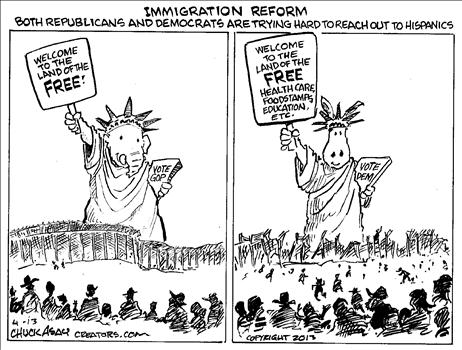


 To put our debt in perspective, Kobe Bryant makes $25 million playing for the Los Angeles Lakers. Any guesses on how many seasons Kobe would have to play in order to pay off today’s national debt? How about a whopping 560,000. That’s chilling, and quite frankly, incomprehensible.
 Utah’s senior Sen. Orrin Hatch doesnt see it that way. He’s looking for a vote on his balanced budget amendment too, but at a time believed to be the most opportune for passage. He hasn’t set firm timetables or made any strict demands.
 “If this is going to get passed in the next two years,” says Hatch, “President Obama will have to step to the plate. Ultimately you’ll need presidential leadership because everybody knows that you’re not going to get spending under control until we take on entitlements as well. You cannot do it without presidential leadership.”


 The Daily Hatch