Free-market economics meets free-market policies at The Heritage Foundation’s Tenth Anniversary dinner in 1983. Nobel Laureate Milton Friedman and his wife Rose with President Ronald Reagan and Heritage President Ed Feulner.
Today, on what would have been Milton Friedman’s 101st birthday, we celebrate the enduring insights of an economist and thinker whose ideas have served as the guiding light for visionary leaders around the world.
The practical policies inspired by Friedman have allowed countless individuals to realize their dreams through participation in the free-market capitalist system. Friedman advocated for “the role of competitive capitalism—the organization of the bulk of economic activity through private enterprise operating in a free market—as a system of economic freedom.”
Indeed, many around the world are indebted to Friedman’s role in championing economic freedom. That effort lives on in The Heritage Foundation/Wall Street Journal’s annual Index of Economic Freedom.
Friedman’s monumental Capitalism and Freedom was highlighted in The Economist magazine as “ideal reading for politicians of either party in this country, not because it would convince them, but because it challenges the reader to sort out his own ideas more fundamentally.”
Friedman’s legacy will only endure as long as we as a people remain committed “to build an America where freedom, opportunity, prosperity, and civil society flourish.” As Heritage Foundation President Jim DeMint has reminded us:
It is our job to make [conservative] ideas…irresistible to the politicians.… Milton Friedman explained it this way when he said: “I do not believe that the solution to our problem is simply to elect the right people. The important thing is to establish a political climate of opinion which will make it politically profitable for the wrong people to do the right thing. Unless it is politically profitable for the wrong people to do the right thing, the right people will not do the right thing either, or, if they try, they will shortly be out of office.”
As we celebrate Friedman’s 101st birthday, it is time to renew America’s commitment to the principles of economic freedom that have been, throughout our history, the proven path to prosperity.
On the Arkansas Times Blog the person using the username “Jake da Snake” noted, “Friedman also railed long and hard for school vouchers to be adopted, to little avail…” (June 11, 2011). Milton Friedman firmly believed, “competition is a way in which both public and private schools can be required to satisfy their customers.” Here […]
Johan Norberg – Free or Equal – Free to Choose 30 years later 4/5 Published on Jun 10, 2012 by BasicEconomics In 1980 economist and Nobel laureate Milton Friedman inspired market reform in the West and revolutions in the East with his celebrated television series “Free To Choose.” Thirty years later, in this one-hour documentary, […]
Johan Norberg – Free or Equal – Free to Choose 30 years later 3/5 Published on Jun 10, 2012 by BasicEconomics In 1980 economist and Nobel laureate Milton Friedman inspired market reform in the West and revolutions in the East with his celebrated television series “Free To Choose.” Thirty years later, in this one-hour documentary, […]
Johan Norberg – Free or Equal – Free to Choose 30 years later 2/5 Published on Jun 10, 2012 by BasicEconomics In 1980 economist and Nobel laureate Milton Friedman inspired market reform in the West and revolutions in the East with his celebrated television series “Free To Choose.” Thirty years later, in this one-hour documentary, […]
_____________________________________ Milton Friedman On Charlie Rose (Part One) The late Milton Friedman discusses economics and otherwise with Charlie Rose. _________________________________________ Milton Friedman: Life and ideas – Part 01 Milton Friedman: Life and ideas A brief biography of Milton Friedman _____________________________________ Stossel – “Free to Choose” (Milton Friedman) 1/6 6-10-10. pt.1 of 6. Stossel discusses Milton […]
Free or Equal?: Johan Norberg Updates Milton & Rose Friedman’s Free to Choose I got this below from Reason Magazine: Swedish economist Johan Norberg is the host of the new documentary Free or Equal, which retraces and updates the 1980 classic Free to Choose, featuring Milton and Rose Friedman. Like the Friedmans, Norberg travels the globe […]
______________________________________ Milton Friedman On Charlie Rose (Part One) The late Milton Friedman discusses economics and otherwise with Charlie Rose. _________________________________________ Milton Friedman: Life and ideas – Part 01 Milton Friedman: Life and ideas A brief biography of Milton Friedman _____________________________________ Stossel – “Free to Choose” (Milton Friedman) 1/6 6-10-10. pt.1 of 6. Stossel discusses Milton […]
Milton Friedman and Chile – The Power of Choice Uploaded on May 13, 2011 In this excerpt from Free To Choose Network’s “The Power of Choice (2006)”, we set the record straight on Milton Friedman’s dealings with Chile — including training the Chicago Boys and his meeting with Augusto Pinochet. Was the tremendous prosperity unleashed […]
Milton Friedman was a great economist and a fine speaker. ___________________ I have written before about Milton Friedman’s influence on the economy of Chile. Now I saw this fine article below from http://www.heritage.org and below that article I have included an article from the Wall Street Journal that talks about Milton Friedman’s influence on Chile. I […]
Biography Part 2 In 1977, when I reached the age of 65, I retired from teaching at the University of Chicago. At the invitation of Glenn Campbell, Director of the Hoover Institution at Stanford University, I shifted my scholarly work to Hoover where I remain a Senior Research Fellow. We moved to San Francisco, purchasing […]
In this first episode Milton Friedman asserts, “Adam Smith’s flash of genius was to see how prices that emerged in the market, the prices of goods, the wages of labor, the cost of transport, could coordinate the activities of millions of independent people, strangers to one another, without anybody telling them what to do. His key idea was that self-interest could produce an orderly society benefiting everybody. It was as though there were an invisible hand at work. The invisible hand is a phrase that was introduced by Adam Smith in his great book, The Wealth of Nations, in which he talked about the way in which individuals, who intended only to pursue their own interests, were led by an invisible hand to promote the public welfare which was no part of their intention. He was talking about the economic market. About the market in which people buy and sell. He was pointing out that in order for a butcher or a baker or a candlestick maker to make an income, he had to produce something that somebody wanted to buy. Therefore, in the process of promoting his own interests and looking to his own profit, he ended up serving the interests of his customers.”
Milton Friedman’s Free to Choose – Ep.2 (1/7) – The Tyranny of Control
Last week in this film series the distinguished economist Milton Friedman took us to Hong Kong to see a free market system in which he had a great deal of confidence and faith. This week he takes us traveling again to India, Japan and to Europe to see what happens in his view when governments think they can plan and control the economic activities of their peoples.
FREE TO CHOOSE 2: “Tyranny of Control” (Milton Friedman)Free to Choose ^ | 1980 | Milton Friedman
Posted on Tuesday, July 18, 2006 3:02:09 PM by Choose Ye This Day
FREE TO CHOOSE: Tyranny of Control
Friedman: It is harvest time and Japanese farmers gather their crops for the rice market in Kyoto. Of course, they will try to get as much for it as possible and the buyer’s will try to buy it as cheaply as possible. That is how markets are supposed to work. That is what Adam Smith, the Scotsman who turned economics into a modern science, observed 200 years ago. He observed something else too.
Adam Smith: In every country it is always and must be in the interest of the great body of people to buy whatever they want of those who set it cheapest. The proposition is so very manifest that it seems ridiculous to take any pains to prove it. Nor could it ever have been called in question had not the interested sophistry of merchants and manufacturers, confounded common sense of mankind. Their interest is, in this respect, directly opposite to that of the great body of people.
Friedman: Adam Smith’s flash of genius was to see how prices that emerged in the market, the prices of goods, the wages of labor, the cost of transport, could coordinate the activities of millions of independent people, strangers to one another, without anybody telling them what to do.
His key idea was that self-interest could produce an orderly society benefiting everybody. It was as though there were an invisible hand at work.
The invisible hand is a phrase that was introduced by Adam Smith in his great book, The Wealth of Nations, in which he talked about the way in which individuals, who intended only to pursue their own interests, were led by an invisible hand to promote the public welfare which was no part of their intention. He was talking about the economic market. About the market in which people buy and sell. He was pointing out that in order for a butcher or a baker or a candlestick maker to make an income, he had to produce something that somebody wanted to buy. Therefore, in the process of promoting his own interests and looking to his own profit, he ended up serving the interests of his customers.
When Adam Smith published The Wealth Of Nations, Britain was still a largely rural and placid place. But the Industrial Revolution was already getting started and standards of life were beginning to rise. One obstacle was that trade with other nations was still tightly controlled. Merchants in the home market had persuaded the government of the day to impose heavy duties and taxes on all foreign imports in order to insure themselves a protected market.
One of the results was to turn Britain into a nation of lawbreakers. Smuggling was a national past time: brandy, wines, tobacco, anything with a heavy customs duty on it. For years, the revenue men fought a losing battle along the shores and inlets of the British Isles.
In 1846, after years of argument and partial success, the followers of Adam Smith finally persuaded the British Parliament to remove all duties on goods imported from abroad. Britain embarked on complete free trade, giving a further push to the rising standard of life.
What happened in Britain as a consequence of releasing the tremendous force of self-interest, had the unintended effect of benefiting millions of people all over the world, and by 1851 the evidence was proudly on show at the great Crystal Palace Exhibition.
Free trade enabled Britain to become the work place of the world. But was it all an accident? I don’t think it was. Consider what happened in 1868 on the other side of the world in Japan. For the preceding 300 years, the Japanese had lived in almost complete isolation. They had discouraged visitors from other nations, especially from the West. The result was that by the standards of the West, Japan was backward. It was a feudal society with lords and serfs and woe betide anyone who tried to change the order of things. Women were third class citizens.
In 1868, a new generation of rulers decided that the time had come for Japan to make contact with the outside world. And with the arrival of the first foreign traders from the West, things began to change. The Japanese followed the British trading pattern because Britain was a leading nation of the world. So free trade came to Japan. Japan became a magnet for other people’s ideas and developments.
One of the first traditional industries to feel the effects was weaving. From Europe, the Japanese imported the jacquard method __ a way of programming a loom to control the accuracy of the weave, and so the standardized output. Workers did well in the new atmosphere and so did their employers. The adoption of mass production techniques meant that workers were able to move out of the traditional industries and into the new industries, which all added to the trade boom. None of us can help being effected by the intellectual atmosphere that we breathe. In the middle of the 19th century, when Japan ended her self-imposed isolation and entered the modern age, it never occurred to her leaders to follow any other course than that of free enterprise and free markets. That was the intellectual atmosphere of the time, created by Britain’s success in applying the principles of Adam Smith.
In 1948, when India achieved independence, her leaders had all been trained in Great Britain. They had sat at the feet of Harold Laski and his associates at the London School of Economics, or of their counterparts at Oxford and Cambridge. It never occurred to them to follow any other course than that of central planning and government control. That was the intellectual atmosphere of the time. The intellectual seed took root. As it grew, it needed to be honored, even worshiped.
Every year on the anniversary of Gandhi’s birth, people all over India do just that __ in homage to the great Mahatma, they sit and spin using methods handed down through the centuries.
_________________
In this episode Milton Friedman asserted, “Central planning, in practice, has condemned India’s masses to poverty and misery. We know what has happened in Japan. Free trade set off a process that revolutionized Japan and the lives of its people. Improvements in material well-being went hand in hand with the elimination of the rigid social structure of a century ago. It’s no accident. As always, economic freedom promotes human freedom.”
Milton Friedman’s Free to Choose – Ep.2 (2/7) – The Tyranny of Control
But it is more than just a symbol of honoring the past. It typifies the policy that they are actually following.
The new government in 1948 decided that India’s traditional weaving industry and its workers should be protected from 20th century industrialization. What were the consequences of that policy? This is India today, 30 years after winning independence. These are scenes of a very typical Indian community __ one of thousands. It is called “Anicaputar” and it is about 1,000 miles south of the capital, New Delhi. This is not the kind of life the government intended to perpetuate. But it is one result of their policy. By subsidizing the cotton that the villagers spin and the cloth that they weave, they made it difficult for modern industry to develop.
This is sizing. It’s an essential technique in cloth production where the yarn is smoothed clean. A modern machine could do the same thing in a hundredth of the time. The result of government planning to modernize industry is that the number of hand looms roughly doubled in the first thirty years after India’s independence. Today, in thousands of villages throughout India, the sound of hand looms can be heard from early in the morning until late at night. In this village alone, there are more than 3,000 hand looms in operation.
Since 1948, three generations of villagers have sat at these looms making cloth with patterns that never vary, using methods that never change. There is nothing wrong with this activity, provided it survives the test of the market, provided it is the way in which these people can use their abilities and their energies most effectively. After all, in Japan, where the government has not specially encouraged the hand loom industry, there remains a very small, but very productive hand loom segment. The trouble here is that this industry exists only because the government has subsidized and supported it because it has in effect imposed taxes, direct and indirect, on the rest of the people of India, people who are no better off than these people are in order to enable this activity to continue.
Other industries, both textile industries and industries of a variety of kinds, have been restricted, explicitly kept back, prevented from providing more productive employment in order to make room for this industry. The effect has been to inhibit the development, to prevent the growth, to prevent the dynamic activity that could otherwise develop out of the energies and the abilities to the people of India. This looks like a factory, but it is also home for the people who work here. When they are not sitting at their looms, they eat and sleep in a corner of this hut.
Throughout the world, governments always profess to be forward-looking. In practice, they are always backward-looking. Either protecting the industries that exist, or making sure that whatever ventures they have decided to undertake, are encouraged and developed. This occurs at the expense of the kind of healthy development of new, dynamic, adapted industries that would surely occur if the market were allowed to operate freely. If it were allowed to separate out the unsuccessful ventures from the successful ones. Discouraging the unsuccessful and encouraging the successful.
India has tremendous economic and human potential, every bit as much as Japan had a century ago. The human tragedy is that in India, that potential has been stifled by the straightjacket imposed by an all-wise and paternalistic government.
Central planning, in practice, has condemned India’s masses to poverty and misery. We know what has happened in Japan. Free trade set off a process that revolutionized Japan and the lives of its people. Improvements in material wellbeing went hand in hand with the elimination of the rigid social structure of a century ago. It’s no accident. As always, economic freedom promotes human freedom.
And in the meantime, what has happened to the Japanese weaving industry? This is how textiles start life in a Japanese weaving shed today. A design for cloth is placed on a drum. As it revolves, it is scanned by an electric eye. Each color, each variation in the pattern and texture is transmitted faithfully to a computer. It’s all that the modern loom of Japan requires. This loom is fitted with electronics that make it one of the most sophisticated of its sort in the world. The fabric that it produces is the best silk of its kind.
Thanks to the speed and efficiency of these machines, the price of the silk is competitive. The workers are highly skilled and well paid. With the new technology, there is very little __ a loom like this cannot produce. This piece will become the sash of a traditional bridal gown. These are machine-made products. But by any standards, they are beautiful. They can stand comparison with the very finest work of the hand loom. And it’s not merely the end product itself that is remarkable. The sophisticated technology which was developed to make all of this possible, has been adapted to other processes. Part of the self-generating development under free enterprise, and it all stems from an ancient, traditional industry __ weaving __ that imported a new method for controlling its looms when Japan turned to free trade more than a century ago.
Yet, believe it or not, many still maintain today that markets cannot be left to operate freely. That they must be controlled by government. This dockside is in Scotland, a British government, a socialist government decided that its role was to protect the workers here from competition. So down there in governed shipyards, they are building these vessels for the Polish government. To get the order, the British government is using the money of British taxpayers to subsidize the work. In other words, British people are making these ships in order to sell them at a loss to the Poles. Not only the Poles, but we also in America benefit from this kind of philanthropy.
The steel industry in the United States makes a fine profit. Other countries do too. And their steel is often cheaper, sometimes because their taxpayers subsidize it. So, why shouldn’t the American consumer buy steel wherever he can get it cheapest __ at home or abroad. The American steel industry works very hard trying to persuade us that it’s not in our self-interest to buy in the cheapest market. They urge the government to restrict what they call unfair competition, though, of course, they recognize that there are dangers in this.
_______________________
In this episode Milton Friedman asserts, “When anyone complains about unfair competition, consumers beware. That is really a cry for special privilege always at the expense of the consumer. What we needed in this country is free competition. As consumers, buying in an international market, the more unfair the competition the better. That means lower prices and better quality for us. If foreign governments want to use their taxpayers money to sell people in the United States goods below cost, why should we complain? Their own taxpayers will complain soon enough and it will not last for very long.”
_______________________________________
Milton Friedman’s Free to Choose – Ep.2 (3/7) – The Tyranny of Control
Richard P. Simmons, Industry Specializing Steel Committee: The dilemma of asking our government for assistance in this problem of unfair competition bothers many of us because the sword does cut both ways. But we believe that what we have attempted to do is far different than the kinds of direct government involvement that occur in many of the foreign nations around the world where the governments provide direct financial assistance in the form of either ownership or loans or subsidies in some fashion or another.
What we have attempted to do is simply to get our government to enforce the United States laws against unfair competition that have been on the United States’ books. We draw clear distinction between that and, for example, the several hundred million dollars that the French government has granted to the French steel companies, or that the British Steel Corporation has received $1.3 billion for capital investment this year. So that while we are uneasy in any way interfacing with our government in what we traditionally believe are the free enterprise prerogatives, yet what we are only asking for is that the government enforce the laws that our Congress has passed. I’m not sure that’s really any different than asking someone to arrest someone that commits a crime. I don’t think we would be accused of being reactionary if we reported somebody who was stealing, to the police if it were in violation of a U.S. law. We think that we’re doing exactly the same thing when we bring cases against foreign producers who we believe are violating U.S. laws.
Friedman: The fallacy with that argument is that it begs the real question. Why should there be laws that in effect prevent you and me from buying in the cheapest market?
When anyone complains about unfair competition, consumers beware. That is really a cry for special privilege always at the expense of the consumer. What we needed in this country is free competition. As consumers, buying in an international market, the more unfair the competition the better. That means lower prices and better quality for us. If foreign governments want to use their taxpayers money to sell people in the United States goods below cost, why should we complain? Their own taxpayers will complain soon enough and it will not last for very long.
History provides lots of evidence on what happens when government protected industries compete with industries who have the operate in an open and free market. It’s almost always the government protected industries that come out second best.
Ask Sir Freddy Laker, the Englishman who introduced low cost air traffic across the Atlantic. Who were his chief competitors? They were all government protected, government financed, government regulated airlines. He came out very well, made a mint of money. And you and I have gotten cheaper travel across the Atlantic.
Nothing would promote the long run health of the steel industry, make it into a more efficient, profitable and productive industry than for the U.S. government to keep its hands off, neither providing special privileges, nor imposing special restraints. And what is true for the steel industry is true for every other industry in the country.
These women work in an industry that so far hasn’t asked for special protection __ the silicon chip industry. Every one of these small squares on this disk is a highly complicated and integrated micro circuit. An American technician examines them for defects. It is highly skilled work and she’s had a lot of training. When she has done her job, the rejects will be separated from the rest and the good circuits will be packed up and sent half way around the world to Malaysia. The product of American technological skills returns looking like this. Each micro circuit has been enclosed in ceramic by a Malaysian worker who is highly productive at this sort of work. But, the Malaysians are not able to test their product so back they come here to America to be fed into these machines.
American engineers are good at producing sophisticated machines. In an operation that lasts a fraction of a second, these machines can test every circuit, can grade it for quality, and then can sort it into one of six different categories of reliability. The invisible hand in this free market has done wonders for both the American girls and their Malaysian counterparts. And that’s not the end yet because American silicon chips are exported to many countries where foreign workers assemble them. The final product is then returned to our stores so that you and I, the consumers, can benefit from $10.00 calculators, as well as from a lot of other electronic devices that not long ago simply did not exist. When this Hi-Fi equipment first came on the market, only the rich could afford it.
But even when the international market and labor seem to work to everyone’s advantage, people still put up arguments against it. The usual argument against complete free trade is that cheap labor from abroad will take jobs away from workers at home. Well, what is cheap? A Japanese worker is paid in yen and American workers paid in dollars. How do we compare the yen with the dollars? We need some way of transforming the one into the other. That is where the exchange rate enters in __ the price of yen in terms of the dollar.
Suppose that some exchange rate, Japanese goods are in general cheaper than American goods, and we will be buying much from Japan and selling little to them. But what will the Japanese do with the extra dollars they earn? They don’t want to buy American goods. By assumption, those are all dear. They want to buy Japanese goods. But to buy Japanese goods, they need yen. Calls will come in from all over the world to places like this, offering to buy yen for dollars. But there will be more offers to buy yen than to sell yen. In order to get customers, those offering to buy will have to raise the price. The price of yen in terms of dollars will go up.
As you remember, that is what happened in 1977 and 1978. By late 1978, it took 50% more dollars to buy a given amount of yen than it had taken a year earlier. But what happens when the price of yen in terms of dollars goes up? Japanese labor is no longer so cheap. Japanese goods are no longer so attractive to American consumers. On the other hand, American labor is no longer so dear to Japanese. American goods are more attractive to the Japanese. We will export more to them. We will import less from them. New jobs will be created in export industries to replace any jobs that might have been lost in industries competing with imports. That is how a free market and foreign exchange balances trade around the world when it is permitted to operate. The problem is that more often than not free market is not permitted to operate. For reasons that seem to make sense if you don’t examine them carefully, government insists on interfering, but when they do it’s not possible to hide the harmful effects for very long.
________________
In this episode Milton Friedman asserts, ” What we need are constitutional restraints on the power of government to interfere with free markets in foreign exchange, in foreign trade, and in many other aspects of our lives.”
Milton Friedman’s Free to Choose – Ep.2 (4/7) – The Tyranny of Control
The main reason why the Japanese yen went up so sharply in price in 1977 and 1978 was because the Japanese government had been trying to prevent the yen from going up in price. In the process what might have been small disturbances were allowed to accumulate into a major gap in trade. As a result when market forces were finally permitted to operate, as sooner or later they must be, it took a major change in the yen exchange rate to bring things back into life. Why don’t governments learn, because governments never learn, only people learn, and the people who learn today may not be the people in charge of economic policy tomorrow.
As you contemplate this, you may come to agree with me, that what we need are constitutional restraints on the power of government to interfere with free markets in foreign exchange, in foreign trade, and in many other aspects of our lives.
DISCUSSION
Participants: Robert McKenzie, Moderator; Milton Friedman; Richard Deason, International Brotherhood of Electrical Workers; Donald Rumsfeld, President, G.D. Searle & Company; Helen Hughes, Director of Economic Studies, World Bank; Jagdish Bhagwati, Professor of Economics, MIT
McKENZIE: Now, here in Chicago, the special guests who have been watching that film have their say.
DEASON: This film has set me on edge. There is political, social, ethical considerations which do not reflect in the economic philosophy put out. There is a pervading feeling in this that the individual worker is to be totally sacrificed for the overall good of society. I see __ I don’t see how possibly you can sacrifice individuals’ for overall good of society because society is nothing but those millions and millions of individuals, put together. And nowhere is there any consideration given to the social and the ethical aspects of the free trade formula that you advocate.
McKENZIE: Let’s get other views now, around the group. What’s your reaction, Don Rumsfeld, as a businessman, to the idea that Milton Friedman’s advanced, that America ought to buy in the cheapest markets, the cheapest goods, without protecting against them?
RUMSFELD: I swore I would never even try to defend Milton Friedman. And I won’t. But let me comment, first, on Dick’s comment. It bothers me to hear social and moral arguments invoked in an issue like this, because it seems to me the measure is what actually happens to human beings. Each individual ought to be concerned about humanity. For a single individual who is unemployed, that’s a hundred percent unemployment.
DEASON: Absolutely.
RUMSFELD: And we recognize that. I recognize that. But the real world is, if you, as the film did, go to India, if you want to see things that one can describe as inhumane, and poverty, and problems of human beings, they exist. And the test ought to be, what works? What, in fact, will provide a circumstance that will be more than dynamic, and more productive in the world?
HUGHES: It is true that in the long run we would all be better off with free trade. I agree with Milton. But it’s the short run that matters, and in the short run there are serious adjustment problems. Now there’s no question that the developing countries need access to markets such as American markets. And America needs them to export so that they can export more to developing countries. American exports to developing countries have moved from something like twenty percent of total exports to thirty percent over the last ten years. But the adjustment is important, because what is happening at present is that it’s not just a random group of workers that is affected by this trade, it’s the most disadvantaged and underprivileged workers in America which are being affected; and they are, by and large, women, and members of minorities; in garments, in electronics. And I think that the adjustment consists of action on both the developing and the developed country sides. From the __ let’s take the American side. On the American side, the unions and industry, I think, have to get off discussion about moral issues and get their act in order.
BHAGWATI: I couldn’t agree more with Helen. I think there is a very valid income distributional problem involved here. Certainly society gets better off, consumers get better off as a result of cheaper imports, and I’m all for that, and there I agree completely with Milton. But if the incidence of the adjustment falls on disadvantaged groups, then you would want to do something about it, if this really becomes an ethical issue. But the other thing which I think Milton does bring up, which I disagree sharply with is: Suppose the foreign governments do subsidize and actively promote exports to you. Should you just sit back and just say, “Well, we’re going to be better off as a result of this”? I don’t think that takes into account the fact of the whole international system can break down as a result of what people perceive in pluralist economics as unfair competition emerging. And I think this is really what you’re beginning to see. So we do need some sanctions. I mean, I may receive stolen property, and I’m better off. Of course I’m better off. But if, as a result of this, I encourage theft, I think few people would agree that was something one did want to worry about.
McKENZIE: Before I call in Milton Friedman on this, a reaction to the comments?
DEASON: Yes. Really to Don and to Helen. Don, you choose to set aside, or you appear to choose to set aside the social and the ethical considerations. And __
RUMSFELD: Not at all, what I said was: You have to put the fact on a scale, that there are social and ethical considerations with a free market or without one. And the tendency is for people to invoke morality only on their side, and not to recognize that there are problems of human beings in this world that are going to occur in each case. And the measure, or the test ought to be, what actually happens out there and address that question.
DEASON: But you must, you must also very much consider the social aspect of this situation. Helen’s comment, the short-term displacement. I have a question for Milton at this point: How long do you put as a timetable on the displacement of these people, of these workers? Five years, ten years, a generation? How long will it be before overall society, you know, balances itself out and the individual is no longer hurt?
FRIEDMAN: Let me take your first __ your last question first and then go to your basic question. I have always been in favor of phasing out tariffs over a five year period, a twenty percent reduction a year for five years to give people time to adjust. Now to your fundamental issue. I thought I had heard every objection to my views imaginable, but you are the first one who has ever accused me of putting the interests of society as a whole ahead of the interests of individuals. If there is one element in my social philosophy, in my ethical philosophy that’s predominant, it is that the ultimate unit is the human being, the individual, and that society is a means whereby we jointly achieve our objectives. I would argue that the social and moral issues are all on the side of free trade, that it is you, and people like you, who introduce protection, who are the ones who are violating fundamental social and moral issues. Tell me, what trade union represents the workers who are displaced because high tariffs reduce exports from this country? Because high tariffs make steel, for example, or other goods, more expensive, as a result, those industries which use steel have fewer __ have to charge higher prices, they have fewer employees, the export industries that would grow up to balance the imports __ tell me, what union represents them? What moral and ethical view do you have about their interests?
McKENZIE: Richard Deason.
DEASON: You still haven’t answered my basic question: How long of a time period, how long of a frame __ five years, ten years, a generation? You still haven’t answered it.
FRIEDMAN: I said __ I said five years.
DEASON: Five years __
McKENZIE: Could we be clear, Milton, on this point. You’re saying, though, that tariffs should be phased out over five years regardless of the action of other countries. It’s not a sort of negotiation or anything else?
FRIEDMAN: Regardless. Regardless of the actions of other countries. So far, obviously, I would prefer to have other countries reduce their tariffs __
McKENZIE: But if they don’t move, America should move?
FRIEDMAN: Absolutely.
McKENZIE: Do you go along with that, Don Rumsfeld?
RUMSFELD: In others words, you’re against reciprocal __
FRIEDMAN: I’m not against __
RUMSFELD: __ you favor getting to truly reciprocal trade, but you’re willing to get there unilaterally?
FRIEDMAN: Yeah.
RUMSFELD: Yeah. It seems to me that it’s probably worth moving in that direction. I don’t know where I would stop. I am not __
McKENZIE: Well, it’s a five year program. Will you buy that?
RUMSFELD: Well, it seems to me that you get action, reaction. To the extent you’re doing something that makes sense for human beings, presumably, that would be persuasive with others. Presumably there would be a logical sequence where other countries would begin to sense that had a certain degree of validity in the world.
McKENZIE: Will that happen, Helen Hughes?
HUGHES: Providing you do something for the displaced workers in the country in which they’re displaced. Because if you don’t do something, if you don’t take some action, and it’s generally got to be government action, you will get such a backlash that you’ll be back in the thirties with the sort of thing that happened with high unemployment.”
_____________________________
In this episode Milton Friedman asserts, “The best way to limit the control of a few is free trade on a worldwide basis. There is no measure whatsoever that would do more to prevent private monopoly development than complete free trade. It would do __ be far more effective than all the antitrust suite in the world.
Milton Friedman’s Free to Choose – Ep.2 (5/7) – The Tyranny of Control
McKENZIE: Could we go __ Milton. There’s a direct challenge. What would you do about displaced workers, or let the slack be taken up by other __
FRIEDMAN: I believe that you have to separate, and should separate sharply the issue of what you do about people in distress, from how you handle the industrial system. I do not believe you ought to have a special program for displaced workers. What you ought to have, and what all societies do have, is some mechanism, voluntary or governmental, which will assist people in distress. We have another program in this series which deals with exactly that issue, in which I come out, as you know, in favor of a negative income tax as a way to do it. But I think it’s a great mistake to try to link it directly with tariffs. And the reason is that many people who are displaced are not in trouble. Many of those have good alternatives. Some of them will benefit from it. There are some who will be in distress, of course, but there are always people who are in distress for all sorts of reasons. In a dynamic society, demands are going up here, demands are going up there, there is no more reason in my opinion to have a special program for those who are displaced because of the changes in demand and supply in the international scene, than because of the changes on the domestic scene.
McKENZIE: A quick reaction to that __
DEASON: Why would you want to return to a concept that this country exists, you know, had in 1900? Why would you want to return to where a few control the economic destiny of every working man and woman?
FRIEDMAN: It’s exactly the other way, Mr. Deason. The best way to limit the control of a few is free trade on a worldwide basis. There is no measure whatsoever that would do more to prevent private monopoly development than complete free trade. It would do __ be far more effective than all the antitrust suite in the world.
DEASON: I totally disagree. You would wind up with a situation like in the movie Rollerball, where corporations carved out their spheres of economic influence throughout the world, and controlled everything. It would be controlled by corporations __
FRIEDMAN: You saw the __
DEASON: __ in its entirety.
FRIEDMAN: Excuse me. You saw the picture of Hong Kong, didn’t you?
DEASON: Yes.
FRIEDMAN: Where are those corporations there?
McKENZIE: We might get down that alley and have difficulty in finding our way out of it. Could we move to another big theme in the film: that is, that the third world countries have, broadly speaking, made a very serious error in moving into planned economies, from beginning to end, and you use a phrase in the case of India, “Central planning has condemned the Indian masses to poverty and misery.” Now, what’s your reaction to that, sir?
BHAGWATI: I partly agree with Milton as well as I largely disagree with him. I think it is true that the invisible hand ought to be seen more in the poor countries, (Laughter) than it is, and I would like to see the iron fist disappear. Unfortunately, it’s the other way around. On the other hand, I think it cannot be maintained that laissez faire is the answer, either that it’s a necessary or a sufficient condition for development. Let me go to Milton’s examples and, you know, refer to Japan. Japan is a prime example, actually, of where the visible hand is invisible to everybody who is outside of Japan. But it’s writ large on the wall for the Japanese. The Japanese government, right from the major restoration, has taken a very active interest in the development of the country. It has regulated technology and imports. Even to this date the government and business have a strong symbiotic relationship. I think it’s just __
McKENZIE: Highly paternalistic.
BHAGWATI: __ and business is highly paternalistic. I don’t think it’s a valid example at all of what I believe was the implication of Milton’s program.
McKENZIE: Let’s bring in Helen Hughes. On this theme, has the third world made a disastrous mistake in almost unanimously moving into planned economies rather than the free market?
HUGHES: Well, first of all, it hasn’t almost unanimously moved into planned economies.
McKENZIE: Overwhelmingly so.
HUGHES: Not even overwhelmingly. I mean, India is a large country, but the majority of developing countries are not centrally planned. They have some sort of planning, and secondly, some of the countries which have been most successful have had the highest government intervention. The best examples are Taiwan, Korea, Brazil, Singapore. And even in Hong Kong, which is often held up as an example of no government intervention, I mean this is just not true. The Hong Kong government has provided the infrastructure. It has provided the roads and the ports and schools. And it’s been very important. But when you move to a country like Malawi or Papua New Guinea, you can’t do without government intervention. There is nothing there. There are no entrepreneurs in place, and the American entrepreneurs are not interested in small places like that.
FRIEDMAN: I’m not in favor of no government intervention. I never have been. I point out in the film that what the government did in Hong Kong was very important. The question is: What kind of intervention? And in the states you’ve described, in the places you have described where you’ve had success, governmental intervention has been of a rather special kind. It has provided infrastructure. It has not tried to determine the outline of industrial production, the areas in which industry should go, exactly what the allocation of __ it has not gone in for central planning.
HUGHES: Well that’s just not true in Korea. I mean, you are factually wrong because in Korea the government has actually __
FRIEDMAN: Oh, it is true in Taiwan.
HUGHES: It’s fairly true in Taiwan, but not in Korea, which has grown faster than any other country. Where Korean exports have been determined to a very large extent, by direct government intervention. I think your point is, what sort of government intervention, what for, and what are the tradeoffs between government intervention and the free market. These are the relevant issues.
McKENZIE: What is the role of government in relation to the market economy? How do you see it performing, Don Rumsfeld, do you want to see government, as it were, enforcing competition by chasing down monopoly, restrictive practices, and all the rest of it in the society?
RUMSFELD: The record’s clear that they don’t do it well. They can’t manage the __
McKENZIE: But does that mean they shouldn’t do it at all, or do it better?
RUMSFELD: Take the wage price controls in the United States of America, I happen to have been involved, and I don’t say it with any great pride. The real world is __ I don’t care about good intentions, I don’t care about brains, I don’t care about integrity, the fact of the matter is they’re not smart enough to manage the wages and prices of every American, 215 million strong. They can’t do it well. They do it poorly. And the weight of that is harmful. It’s graphically shown in every document issued by the Council of Economic Advisors in the United States.
McKENZIE: But what about the additional question, though, does the government properly, in this or elsewhere, insure competition by other devices. I’m not talking now about price control, wage control, but insuring competition rather than permitting price fixing or agreements and monopoly. What do you feel about it?
DEASON: I feel the government properly acts in that area. It must __ the government must be there to insure competition.
RUMSFELD: The government’s not smart enough __ look at the Antitrust Law. You talk about a patch __ the implementation of antitrust regulations in the United States, between the Department of Justice and the FTC. It’s a __ it’s a patchwork mess. There isn’t any logic to it. People don’t know what to do. They don’t __ they can’t get answers. They’re inhibited from mergers and consolidations that would make a lot of sense from the standpoint of the consumer.
DEASON: And would make even more sense from the point of multinational corporations.
HUGHES: I think that one of the points you’re making is that it’s very hard for the government to intervene in a very large country, like India or the United States. But compare government intervention in some of the small, homogenous countries of Europe or Singapore, and I think that’s very important. Switzerland has a great deal of government intervention. Sweden, Denmark, Norway __ I’ve just quoted you the four highest income countries in the world. They do have intervention to try and protect the functioning of the market system, and to make it more efficient.
BHAGWATI: Milton is absolutely right, that if you’re talking about central planning that has been disastrous. Absolutely, in terms of having targeted industrial allocations and so on; I mean there’s absolutely no doubt in anybody’s mind who has studied the problem over the last twenty years.
McKENZIE: Disasters in India, too.
BHAGWATI: In India as well, very definitely.
McKENZIE: You advised on that, didn’t you?
BHAGWATI: No, not on centralized planning, no. (Laughing)
RUMSFELD: That wasn’t a clear question anyway. (Laughter)
FRIEDMAN: That’s all right. I was over there as an advisor, too.
BHAGWATI: I’m on the side of the angels on that. For a number of years __ I’m supposed to be a friend of Milton’s there, which is disastrous. (Laughing)
DEASON: To give advice is one thing. To have it taken is a different one.
FRIEDMAN: I agree very much with what Helen Hughes has said, that the more homogenous the country, the less harm the government will do by intervening. I don’t believe it does positive good. I just simply believe it does less harm. But, as to antitrust __
McKENZIE: Yeah.
FRIEDMAN: I am in favor of the laws which make agreements and restraint of trade illegal.
McKENZIE: Yes.
FRIEDMAN: Most of the rest of the antitrust apparatus has promoted monopoly instead of hindered monopoly. If you look at where there are monopolistic elements in the world, and in the United States, including the multinationals you want to refer to, in almost every case that monopoly derived from a special grant by government. And therefore, the problem is not how does government enforce competition, how do you keep government from setting up monopolies? That’s the real problem, if you look at the real world, and not at the preamble, the language, of antitrust measures and similar laws.
___________________-
In this episode Milton Friedman asserts:
I think the United States would prosper in a way that is hardly imaginable today. It would be an example and a beacon to the rest of the world. What kind of sense does it make, here we are supposedly the leaders of the world. We are the ones who promote freedom, and free enterprise, and individual initiative. And what do we do? We force puny little Hong Kong to impose limits, restrictions on its exports at tariffs, in order to protect our textile workers. We go to Japan, and we say to Japan, “For God sakes, you got to limit the number of television sets you come out.” Instead of doing that, we ought to be setting an example to the world, and if we set the kind of an example to the world that Great Britain set to the world in the 19th century, it would be a tremendous __ it would have a tremendous impact, it would strengthen our moral position in the world, it would strengthen our ethical position in the world.
________________________________
Milton Friedman’s Free to Choose – Ep.2 (6/7) – The Tyranny of Control
McKENZIE: How close are you to what Deason was saying a moment ago in this area? He would seem to be arguing with you that there was a responsibility to make competition work.
FRIEDMAN: The responsibility is to set up a framework of laws and of arrangements, under which competition will flourish. And the most __
McKENZIE: Inevitably flourish? I mean, or __
FRIEDMAN: Well, so far as I know, I don’t know of any case in history in which monopolies have been able to maintain themselves for very long without having government assistance directly come in on their side. The trade union monopolies that Mr. Deason represents would never have the kind of power they do now if it weren’t for the special privileges which government has granted to them. I can perfectly well understand his being in favor of such action, of antitrust action by the government, because it really is pro-monopoly action, in the main.
DEASON: Why were those exemptions to monopoly laws given to unions?
FRIEDMAN: Because of the political power of unions, of course. I’m not questioning that.
DEASON: and because __ and because of the tremendous imbalance of power of companies at the time that unions were getting their start.
McKENZIE: There’s one concluding idea toward the end of your script that I’d like to look at, because it seemed to me to be most provocative. You talked about the need for constitutional restraints on governments to prevent them interfering in foreign exchange free markets, and in foreign trade. Now what have you in mind, Milton, when you say “constitutional restraints”?
FRIEDMAN: I __ no doubt what I have in mind if I, if I could persuade the public, I would like it to adopt a constitutional amendment strictly parallel to the constitutional prohibition in the text of the constitution, against the central government __ I’m sorry, against state governments imposing tariffs on imports. I would like to have a constitutional amendment which would read, “The Congress shall not impose any taxes, any taxes on imports, or give any subsidies to exports, except such as may be necessary,” I think the wording of the constitution is that the states are permitted to do it if it’s necessary for inspection. That’s the excuse under which California inspects you every time you drive past to see whether you’re carrying any plants or fruits or vegetables.
DEASON: Milton, let me ask you a question: How long do you think that the United States would survive if the United States enacted what you would like to have?
FRIEDMAN: I think the United States would prosper in a way that is hardly imaginable today. It would be an example and a beacon to the rest of the world. What kind of sense does it make, here we are supposedly the leaders of the world. We are the ones who promote freedom, and free enterprise, and individual initiative. And what do we do? We force puny little Hong Kong to impose limits, restrictions on its exports at tariffs, in order to protect our textile workers. We go to Japan, and we say to Japan, “For God sakes, you got to limit the number of television sets you come out.” Instead of doing that, we ought to be setting an example to the world, and if we set the kind of an example to the world that Great Britain set to the world in the 19th century, it would be a tremendous __ it would have a tremendous impact, it would strengthen our moral position in the world, it would strengthen our ethical position in the world. Instead of giving money to underdeveloped countries to produce products which we then refuse to buy and don’t let them export to us, we would be saying to the rest of the world, “If you produce anything, if you can produce anything and have a market here, come, we’re delighted to buy it, and we’ll produce things for you to buy.” That’s the kind of a pattern I would like to see the United States establish.
McKENZIE: Would your members buy that?
DEASON: Never. That’s a __
FRIEDMAN: Never is a long word, sir.
DEASON: Yes, you’re right.
FRIEDMAN: __ and you must distinguish between __
DEASON: And one should never say never.
FRIEDMAN: Your union officials would not buy it. But I am not sure your members wouldn’t.
DEASON: My members would not. No. My members would never buy it either. I cannot conceive of the United States setting itself up to become a target for the rest of the world.
FRIEDMAN: It’s not a target.
DEASON: There would be absolutely nothing that would require or compel any other country to enact any reciprocal agreements relative to tariffs__
FRIEDMAN: That’s right.
DEASON: __ and until such time as they have succeeded in dumping in the United States __ and I used dumping in the broadest sense of the word __ any and every product, either government subsidized by a foreign government, either put there because of multinational corporations manufacturing facilities in a foreign country, until they have succeeded in absolutely draining us dry __
FRIEDMAN: Draining us dry of what?
DEASON: Of every __ of every asset.
FRIEDMAN: How?
DEASON: Of every __
FRIEDMAN: What would they do with the dollars they got?
DEASON: They’d probably buy up, as they are now, as they __
FRIEDMAN: If they bought up __
RUMSFELD: The choice farmland.
FRIEDMAN: Yes. Yes.
McKENZIE: Let’s broaden this. On this very argument, now and a constitutional amendment argument. We’ve learned from our union friend he would __ can’t sell it and won’t sell it. Would business buy it?
RUMSFELD: Oh, no! They __ speaking __ (Several people talking at once.)
RUMSFELD: I’m not saying whether I’d buy it. No, no, but if business would help, which is the question. No, when I __ I speak not as a businessman, but as an ex-government employee, whenever proposals like that came up, one of the first things people see happen is government __ business and labor come in in lockstep, saying, “Horrors, horrors, the sky is falling.” There’s a commonality of interests there and people get used to what is, they get terribly conservative, and they know how to work the system the way it exists, and particularly the big unions and the big business, and they get very satisfied with it, they can manage it pretty well, and any time you try to unravel any kind of regulation or restriction or government intrusion, they’re philosophically for it, but in the practical world, they don’t want you to change the drill, they just figured out how to work this. Why should you then change it and make it all the more complicated. No, I think you’d get a good deal of reaction, just like you did out of the steel company in your television show.
McKENZIE: And what would the international reaction, do you think, as an international economist. Supposing Milton got his amendment, constitutional amendment, which had that effect, how would other countries react to it?
_____________________________
In this episode Milton Friedman asserts, “I’m not pro business. I’m pro free enterprise, which is a very different thing, and the reason I’m pro free enterprise.”
Milton Friedman’s Free to Choose – Ep.2 (7/7) – The Tyranny of Control
HUGHES: Well, I think Milton’s fundamental example of why not be like Britain in the 19th century is wrong. Britain in the 19th century was THE industrialized country; it was well ahead of everybody else __
McKENZIE: Many decades ahead.
HUGHES: __ many decades ahead of everybody else, and it was making larger profits, larger economic rents on its production, and it was doing it at very great cost to the workers in Britain. The workers in Britain were greatly exploited under those circumstances, and we don’t want to go back to that. The international situation is much more complex, and countries __ there are countries at different levels of development, countries with different social systems, and countries with different social objectives, so I think that the solution, you know, is wrongly founded, and it’s millenarian, it’s utopian. I think that we have to think of a much more realistic process of discussions, negotiation, such as has taken place through that, to get to where we’re going, without hurting the people who pay for the adjustment, and that is basically the workers, not the economists.
RUMSFELD: Could I just comment briefly?
McKENZIE: Yeah.
RUMSFELD: I worry about the argument that because of the complexities of international relations, that therefore they must be planned and managed. By definition, we’re not capable of managing the world economy. Each instance when we try to do it, it doesn’t work out quite the way we intended.
FRIEDMAN: I don’t apologize for a moment for setting __ for being millenarian; because I think unless we know where we want to go, the timid steps that we take in that direction will go in the wrong direction. And if we’re gonna go in the right direction, we ought to have a view. But I want to be sure to get down on the record a very strong objection to the statement of fact by Helen Hughes about 19th century Britain. I believe it is simply wrong. The workers were not exploited. The studies that have been done recently have shown over and over again that the 19th century was a period in which the ordinary English worker experienced a very rapid and very substantial rise in his standard of life. England did not stand alone. Japan had complete free trade for thirty years after the major restoration. Japan in more recent years has not. Japan in more recent years is not an example I would cite. But in its early years it had complete free trade. So I don’t believe England stands alone. Now on the more __
McKENZIE: Politics of it.
FRIEDMAN: On the politics of it, of course it’s not politically feasible, why? Because it’s only in the general interest and in nobody’s special interest. Each of us is fundamentally __ has more concern with our role as a producer of one product than we have as a consumer of a thousand and one products. The benefits of a tariff are visible. Mr. Deason can see that his workers are quote “protected.” The harm which a tariff does is invisible. It’s spread widely. There are people who don’t have jobs because of the tariff, but they don’t know they don’t have jobs. There’s nobody who can organize them. Consumers all over are paying a little more for this, that and the other thing. They don’t recognize that the reason they’re paying for it is because of the tariff. The businessmen? I have never been in __ I’m not pro business. I’m pro free enterprise, which is a very different thing, and the reason I’m pro free enterprise __
RUMSFELD: Don’t point at me when you say that. (Laughter)
FRIEDMAN: No, no. I don’t mean to point to you, Don. I point to the business community, because you are an exception. Because that __
McKENZIE: But he conceded there was a tacit alliance because that way __
FRIEDMAN: Oh there’s __
McKENZIE: __to prevent you from achieving your purpose.
FRIEDMAN: Oh, there’s no doubt that there’s such an alliance. In my opinion, the strongest argument for free enterprise is that it prevents anybody from having too much power. Whether that person is a government official, a trade union official, or a business executive. It forces them to put up or shut up. They either have to deliver the goods, produce something that people are willing to pay for, willing to buy, or else they have to go into a different business.
McKENZIE: Well, there we must leave the argument for this week, and I hope you’ll join us again for the next episode of Free to Choose.
Milton Friedman The Power of the Market 1-5 How can we have personal freedom without economic freedom? That is why I don’t understand why socialists who value individual freedoms want to take away our economic freedoms. I wanted to share this info below with you from Milton Friedman who has influenced me greatly over the […]
Milton Friedman: Free To Choose – The Failure Of Socialism With Ronald Reagan (Full) Published on Mar 19, 2012 by NoNationalityNeeded Milton Friedman’s writings affected me greatly when I first discovered them and I wanted to share with you. We must not head down the path of socialism like Greece has done. Abstract: Ronald Reagan […]
Worse still, America’s depression was to become worldwide because of what lies behind these doors. This is the vault of the Federal Reserve Bank of New York. Inside is the largest horde of gold in the world. Because the world was on a gold standard in 1929, these vaults, where the U.S. gold was stored, […]
George Eccles: Well, then we called all our employees together. And we told them to be at the bank at their place at 8:00 a.m. and just act as if nothing was happening, just have a smile on their face, if they could, and me too. And we have four savings windows and we […]
Milton Friedman’s Free to Choose (1980), episode 3 – Anatomy of a Crisis. part 1 FREE TO CHOOSE: Anatomy of Crisis Friedman Delancy Street in New York’s lower east side, hardly one of the city’s best known sites, yet what happened in this street nearly 50 years ago continues to effect all of us today. […]
Friedman Friday” Free to Choose by Milton Friedman: Episode “What is wrong with our schools?” (Part 3 of transcript and video) Here is the video clip and transcript of the film series FREE TO CHOOSE episode “What is wrong with our schools?” Part 3 of 6. Volume 6 – What’s Wrong with our Schools Transcript: If it […]
Here is the video clip and transcript of the film series FREE TO CHOOSE episode “What is wrong with our schools?” Part 2 of 6. Volume 6 – What’s Wrong with our Schools Transcript: Groups of concerned parents and teachers decided to do something about it. They used private funds to take over empty stores and they […]
Here is the video clip and transcript of the film series FREE TO CHOOSE episode “What is wrong with our schools?” Part 1 of 6. Volume 6 – What’s Wrong with our Schools Transcript: Friedman: These youngsters are beginning another day at one of America’s public schools, Hyde Park High School in Boston. What happens when […]
Friedman Friday” Free to Choose by Milton Friedman: Episode “Created Equal” (Part 3 of transcript and video) Liberals like President Obama want to shoot for an equality of outcome. That system does not work. In fact, our free society allows for the closest gap between the wealthy and the poor. Unlike other countries where free enterprise and other […]
Free to Choose by Milton Friedman: Episode “Created Equal” (Part 2 of transcript and video) Liberals like President Obama want to shoot for an equality of outcome. That system does not work. In fact, our free society allows for the closest gap between the wealthy and the poor. Unlike other countries where free enterprise and other freedoms are […]
Milton Friedman and Ronald Reagan Liberals like President Obama (and John Brummett) want to shoot for an equality of outcome. That system does not work. In fact, our free society allows for the closest gap between the wealthy and the poor. Unlike other countries where free enterprise and other freedoms are not present. This is a seven part series. […]
I am currently going through his film series “Free to Choose” which is one the most powerful film series I have ever seen. PART 3 OF 7 Worse still, America’s depression was to become worldwide because of what lies behind these doors. This is the vault of the Federal Reserve Bank of New York. Inside […]
I am currently going through his film series “Free to Choose” which is one the most powerful film series I have ever seen. For the past 7 years Maureen Ramsey has had to buy food and clothes for her family out of a government handout. For the whole of that time, her husband, Steve, hasn’t […]
Friedman Friday:(“Free to Choose” episode 4 – From Cradle to Grave, Part 1 of 7) Volume 4 – From Cradle to Grave Abstract: Since the Depression years of the 1930s, there has been almost continuous expansion of governmental efforts to provide for people’s welfare. First, there was a tremendous expansion of public works. The Social Security Act […]
_________________________ Pt3 Nowadays there’s a considerable amount of traffic at this border. People cross a little more freely than they use to. Many people from Hong Kong trade in China and the market has helped bring the two countries closer together, but the barriers between them are still very real. On this side […]
Aside from its harbor, the only other important resource of Hong Kong is people __ over 4_ million of them. Like America a century ago, Hong Kong in the past few decades has been a haven for people who sought the freedom to make the most of their own abilities. Many of them are […]
“FREE TO CHOOSE” 1: The Power of the Market (Milton Friedman) Free to Choose ^ | 1980 | Milton Friedman Posted on Monday, July 17, 2006 4:20:46 PM by Choose Ye This Day FREE TO CHOOSE: The Power of the Market Friedman: Once all of this was a swamp, covered with forest. The Canarce Indians […]
Milton Friedman: Free To Choose – The Failure Of Socialism With Ronald Reagan (Full) Published on Mar 19, 2012 by NoNationalityNeeded Milton Friedman’s writings affected me greatly when I first discovered them and I wanted to share with you. We must not head down the path of socialism like Greece has done. Abstract: Ronald Reagan […]
In 1980 economist and Nobel laureate Milton Friedman inspired market reform in the West and revolutions in the East with his celebrated television series “Free To Choose.”
Thirty years later, in this one-hour documentary, the young Swedish writer, analyst and Cato Institute Fellow Johan Norberg travels in Friedman’s footsteps to see what has
actually happened in the places Friedman’s ideas helped transform. In location after location Norberg examines the contemporary relevance of Friedman’s ideas in the 2011 world of globalization and financial crisis. Central to his examination are the perennial questions concerning power and prosperity, and the trade-offs between individual liberty and income equality.
___________
I have enjoyed reading this series of reviews by T. Kurt Jaros on Milton and Rose Friedman’s book “Free to Choose.” I hope you enjoy it as much as I did.
T. Kurt Jaros is currently a Master’s student studying Systematic Theology at King’s College in London. He holds a B.A. in Philosophy and Political Science cum laude and an M.A. in Christian Apologetics high honors from Biola University, an evangelical Christian university outside of Los Angeles.
He enjoys learning and thinking about theology, specifically historical theology, philosophical theology and philosophy of religion, and issues pertaining to monergism and synergism. Additionally, he enjoys learning and thinking about political philosophy, economics, American political history, and campaigns.
This is part of a series on Milton Friedman’s “Free to Choose.”
In my previous post I explained why the government should not regulate tariffs due to their harmful consequences toward consumers and innovation. This is part five of a series on Free to Choose by Milton Friedman. In the second chapter, Friedman writes on the role of government as it relates to trade. He makes a strong case for free trade, and specifically focuses on international trade.
Economic arrangements are attached to political arrangements among countries. “International free trade fosters harmonious relations among nations that differ in culture and institutions,” just as the same thing happens domestically at a smaller scale. Cooperation among the countries is the rule, and both sides end up happy if they believe they benefit. Otherwise the trade would not take place.
However, once government intervenes, problems begin to rise. If regulation occurs within a country, there is fierce lobbying between businesses to gain exemptions to regulations or for subsidies. The matter only gets worse when you consider trade agreements between two nations. If the government stayed out of regulation, there would be peace and harmony between the two businesses trading. Yet, instead, “high government officials jet around the world to trade conferences” and tension is developed. Instead of a completely private agreement between two companies, the collectivist bureaucrats of their countries represent the businesses.
It is then that the economic matters become political ones, and may even lead to deadly consequences: trade becomes a political weapon. Consider how our federal government uses trade agreements as leverage between Asian or South American countries. In my humble opinion, this just gives politicians another thing to keep busy about. They take time to have “hearings” that include irrelevant sources, use staffers to print up more paperwork and take time to find more politicians that can vote for their bill, etc. If there are no regulations, then there are no politicians wasting time and money harming the economy and diplomatic relations.
Friedman uses the section “Central Economic Planning” to provide historical evidence that wherever there is central economic planning, “ordinary citizens are in political fetters, have a low standard of living, and have little power to control their own destiny.” Consider the stark contrast between East and West Germany. These people were of the same heritage, same skills and same knowledge. But one side had to build a wall not to stop people from coming in, but to stop people from leaving. As Friedman was writing this book, the wall still existed!
“Which [side] must man it today with armed guards, assisted by fierce dogs, minefields, and similar devices of devilish ingenuity in order to frustrate brace and desperate citizens who are willing to risk their lives to leave their communist paradise for the capitalist hell on the other side of the wall?”
We know too well where socialism and communism lead. Why can’t we see the reality that these philosophies are taking over our own country? In schools we’re taught that FDR’s New Deal was that great thing to help people get through the Great Depression. In reality, he was responsible for extending it. We’re taught that LBJ had this great vision for the Great Society and his war on poverty. In reality, he’s extended it. We think the Department of Education (signed into law by Jimmy Carter) is well intentioned. Yet it is still central economic planning. That is socialism.
On the other side of the Berlin wall, there were brightly lit, not dull, stores. The streets were filled with cheerful people, not empty and quiet. The newspapers provided all sorts of opinions, not one. The buildings were nicely built, unlike on the other side, where “wartime destruction ha[d] not yet been repaired after more than three decades.” The beauty of our system of government is that we have something to say and can change the way our government regulates the economy. Although we may have to work through the political corruption, it’s possible to bring real change to the path of statism with an irate minority or by having that minority grow to become a majority.
I must say that I have lots of respect for Reason Magazine and for their admiration of Milton Friedman. However, I do disagree with one phrase below. At the end of this post I will tell you what sentence it is. Uploaded by ReasonTV on Jul 28, 2011 There’s no way to appreciate fully the […]
Milton Friedman on Hayek’s “Road to Serfdom” 1994 Interview 1 of 2 Uploaded by PenguinProseMedia on Oct 25, 2011 Says Federal Reserve should be abolished, criticizes Keynes. One of Friedman’s best interviews, discussion spans Friedman’s career and his view of numerous political figures and public policy issues. ___________________ Two Lucky People by Milton and Rose Friedman […]
What a great man Milton Friedman was. The Legacy of Milton Friedman November 18, 2006 Alexander Tabarrok Great economist by day and crusading public intellectual by night, Milton Friedman was my hero. Friedman’s contributions to economics are profound, the permanent income hypothesis, the resurrection of the quantity theory of money, and his magnum opus with […]
Milton Friedman videos and transcripts Part 7 On my blog http://www.thedailyhatch.org I have an extensive list of posts that have both videos and transcripts of MiltonFriedman’s interviews and speeches. Here below is just small list of those and more can be accessed by clicking on “Milton Friedman” on the side of this page or searching […]
Milton Friedman at Hillsdale College 2006 July 2006 Free to Choose: A Conversation with Milton Friedman Milton Friedman Economist Milton Friedman is a senior research fellow at the Hoover Institution at Stanford University and a professor emeritus of economics at the University of Chicago, where he taught from 1946-1976. Dr. Friedman received the Nobel Memorial […]
Milton Friedman said that getting George Bush I to be his vice president was his biggest mistake because he knew that Bush was not a true conservative and sure enough George Bush did raise taxes when he later became President. Below is a speech by George W. Bush honoring Milton Friedman: Milton Friedman Honored for […]
Below is a discussion from Milton Friedman on Bill Clinton and Ronald Reagan. February 10, 1999 | Recorded on February 10, 1999 audio, video, and blogs » uncommon knowledge PRESIDENTIAL REPORT CARD: Milton Friedman on the State of the Union with guest Milton Friedman Milton Friedman, Senior Research Fellow, Hoover Institution and Nobel Laureate in […]
Milton Friedman and Chile – The Power of Choice Uploaded by FreeToChooseNetwork on May 13, 2011 In this excerpt from Free To Choose Network’s “The Power of Choice (2006)”, we set the record straight on Milton Friedman’s dealings with Chile — including training the Chicago Boys and his meeting with Augusto Pinochet. Was the tremendous […]
Milton Friedman’s negative income tax explained by Friedman in 1968: President Obama c/o The White House 1600 Pennsylvania Avenue NW Washington, DC 20500 Dear Mr. President, I know that you receive 20,000 letters a day and that you actually read 10 of them every day. I really do respect you for trying to get a […]
Milton Friedman on the American Economy (5 of 6) Uploaded by donotswallow on Aug 9, 2009 THE OPEN MIND Host: Richard D. Heffner Guest: Milton Friedman Title: A Nobel Laureate on the American Economy VTR: 5/31/77 _____________________________________ Below is a transcipt from a portion of an interview that Milton Friedman gave on 5-31-77: Friedman: […]
I watched the video by the Democrat National Convention on 9-6-12 that showed your beautiful wife saying about your family: “We sit around the dinner table (with our kids) and he is he last to be asked, ‘Oh yeah, how was your day Dad?’ You know really he is an afterthought.”
As a father and a husband I want to thank you for demonstrating to others that men need to keep their priorities straight.
It is time for us to admit that Social Security has been set up like a Ponzi scheme.
I have enjoyed reading this series of reviews by T. Kurt Jaros on Milton and Rose Friedman’s book “Free to Choose.” I hope you enjoy it as much as I did.
T. Kurt Jaros is currently a Master’s student studying Systematic Theology at King’s College in London. He holds a B.A. in Philosophy and Political Science cum laude and an M.A. in Christian Apologetics high honors from Biola University, an evangelical Christian university outside of Los Angeles.
He enjoys learning and thinking about theology, specifically historical theology, philosophical theology and philosophy of religion, and issues pertaining to monergism and synergism. Additionally, he enjoys learning and thinking about political philosophy, economics, American political history, and campaigns.
This is part of a series on Milton Friedman’s “Free to Choose.”
In my previous post I began to discuss the shift of public perception about the role of government in America from one that merely protects the individuals to one that also provides for the individuals.
Although he does not use the term, Friedman considers Social Security to be a Ponzi scheme. He writes that if Social Security were a private company “that engaged in such labeling and advertising would doubtless be severely castigated by the Federal Trade Commission.” It is “Orwellian doublethink” to actually believe that people receive the “benefits” from their own labor during their time in the workforce. The fact that, today, we speak of the “trust fund” running out by the 2030s illustrates this truth. If Social Security was what it advertised itself to be, it would mean that the trust fund is continually replenished from people’s own labor for their own retirement. There would never actually be even the talk of it running out. Yet here we are, having to address that issue.
Three other topics that Friedman picks apart are the public assistance programs, housing subsidies and medical care. All three are instances where the government is ultimately doing more harm than good. So why have all of these well-intentioned programs been failures? Friedman points to four ways you can spend money. You can A) spend your own money on yourself, B) spend your money on someone else, C) spend someone else’s money on yourself, and D) spend someone else’s money on someone else. The order of efficiency is A, B, C and D. Watch this clip for Friedman’s explanation:
Thank you so much for your time. I know how valuable it is. I also appreciate the fine family that you have and your commitment as a father and a husband.
Sincerely,
Everette Hatcher III, 13900 Cottontail Lane, Alexander, AR 72002, ph 501-920-5733, lowcostsqueegees@yahoo.com
In 1980 economist and Nobel laureate Milton Friedman inspired market reform in the West and revolutions in the East with his celebrated television series “Free To Choose.”
Thirty years later, in this one-hour documentary, the young Swedish writer, analyst and Cato Institute Fellow Johan Norberg travels in Friedman’s footsteps to see what has
actually happened in the places Friedman’s ideas helped transform. In location after location Norberg examines the contemporary relevance of Friedman’s ideas in the 2011 world of globalization and financial crisis. Central to his examination are the perennial questions concerning power and prosperity, and the trade-offs between individual liberty and income equality.
___________
I have enjoyed reading this series of reviews by T. Kurt Jaros on Milton and Rose Friedman’s book “Free to Choose.” I hope you enjoy it as much as I did.
T. Kurt Jaros is currently a Master’s student studying Systematic Theology at King’s College in London. He holds a B.A. in Philosophy and Political Science cum laude and an M.A. in Christian Apologetics high honors from Biola University, an evangelical Christian university outside of Los Angeles.
He enjoys learning and thinking about theology, specifically historical theology, philosophical theology and philosophy of religion, and issues pertaining to monergism and synergism. Additionally, he enjoys learning and thinking about political philosophy, economics, American political history, and campaigns.
This is part of a series on Milton Friedman’s “Free to Choose.”
In my previous post I explained the role of government in the marketplace. This is part four of a book series on Free to Choose by Milton Friedman.
In the second chapter, Friedman writes on the role of government as it relates to trade. He makes a strong case for free trade, and specifically focuses on international trade. However, the same principles ought to be applied to domestic trade.
Friedman believes that the restrictions on economic freedom have “also affected our freedom of speech, of press, and of religion.” This is evident through the examples he uses throughout the chapter and even in instances we can think of right now. Consider the hated Stamp Act that the British imposed upon the American colonies. This was a tax placed upon legal documents, contracts, newspapers and even play cards. Also consider the more recent example of how economic regulations have affected our freedom of religion (in four words): Sandra Fluke, birth control.
Bureaucrats like to think that economic regulations are helpful to the American people. But in reality, protectionism exploits consumers. Friedman even sites consumers as “major victims of such measures.” In the attempt to secure American jobs, bureaucrats hold off consumers from saving money because the nation is, as Adam Smith pointed out, unable to get the largest volume of imports as possible for as little as it can pay.
Friedman recognizes that without tariffs, workers may be harmed through a cut in wages or even laid off, if a foreign nation can produce products more cheaply. But this happens anyway in the domestic marketplace. Yet this would allow workers to look for work in industries where there might be a need for innovation. Put another way: why do we want to support inefficient businesses when we can save consumers money? Without the tariffs, we “might very well produce a stronger and more efficient” industry.
There are four arguments in favor of tariffs that Friedman rejects (two of which are explained here). First, the government should protect against foreign trade because of national security. Consider the steel industry. Friedman thinks this is foolish because we could just stockpile steel. And even still, the U.S. steel industry would not be completely destroyed because of the low transportation costs. Second, the “infant industry” argument is used to defend baby companies who would fail unless otherwise protected. But this happens anyway; “most firms experience losses in their early years.” In reality, this is just a smokescreen for more government regulation and serving the special interests. This argument is hardly ever used to support companies that have yet to come into existence. After all, such hypothetical companies have no spokesmen or lobbyists.
We need to follow the suggestions of Friedman and take certain measures to promote freedom. Instead of giving foreign aid and then imposing restrictions on trade,
“We could say to the rest of the world: we believe in freedom and intend to practice it. We cannot force you to be free. But we can offer full cooperation on equal terms to all. Our market is open to you without tariffs or other restrictions. Sell here what you can and wish to. Buy whatever you can and wish to. In that way cooperation among individuals can be worldwide and free.”
I must say that I have lots of respect for Reason Magazine and for their admiration of Milton Friedman. However, I do disagree with one phrase below. At the end of this post I will tell you what sentence it is. Uploaded by ReasonTV on Jul 28, 2011 There’s no way to appreciate fully the […]
Milton Friedman on Hayek’s “Road to Serfdom” 1994 Interview 1 of 2 Uploaded by PenguinProseMedia on Oct 25, 2011 Says Federal Reserve should be abolished, criticizes Keynes. One of Friedman’s best interviews, discussion spans Friedman’s career and his view of numerous political figures and public policy issues. ___________________ Two Lucky People by Milton and Rose Friedman […]
What a great man Milton Friedman was. The Legacy of Milton Friedman November 18, 2006 Alexander Tabarrok Great economist by day and crusading public intellectual by night, Milton Friedman was my hero. Friedman’s contributions to economics are profound, the permanent income hypothesis, the resurrection of the quantity theory of money, and his magnum opus with […]
Milton Friedman videos and transcripts Part 7 On my blog http://www.thedailyhatch.org I have an extensive list of posts that have both videos and transcripts of MiltonFriedman’s interviews and speeches. Here below is just small list of those and more can be accessed by clicking on “Milton Friedman” on the side of this page or searching […]
Milton Friedman at Hillsdale College 2006 July 2006 Free to Choose: A Conversation with Milton Friedman Milton Friedman Economist Milton Friedman is a senior research fellow at the Hoover Institution at Stanford University and a professor emeritus of economics at the University of Chicago, where he taught from 1946-1976. Dr. Friedman received the Nobel Memorial […]
Milton Friedman said that getting George Bush I to be his vice president was his biggest mistake because he knew that Bush was not a true conservative and sure enough George Bush did raise taxes when he later became President. Below is a speech by George W. Bush honoring Milton Friedman: Milton Friedman Honored for […]
Below is a discussion from Milton Friedman on Bill Clinton and Ronald Reagan. February 10, 1999 | Recorded on February 10, 1999 audio, video, and blogs » uncommon knowledge PRESIDENTIAL REPORT CARD: Milton Friedman on the State of the Union with guest Milton Friedman Milton Friedman, Senior Research Fellow, Hoover Institution and Nobel Laureate in […]
Milton Friedman and Chile – The Power of Choice Uploaded by FreeToChooseNetwork on May 13, 2011 In this excerpt from Free To Choose Network’s “The Power of Choice (2006)”, we set the record straight on Milton Friedman’s dealings with Chile — including training the Chicago Boys and his meeting with Augusto Pinochet. Was the tremendous […]
Milton Friedman’s negative income tax explained by Friedman in 1968: President Obama c/o The White House 1600 Pennsylvania Avenue NW Washington, DC 20500 Dear Mr. President, I know that you receive 20,000 letters a day and that you actually read 10 of them every day. I really do respect you for trying to get a […]
Milton Friedman on the American Economy (5 of 6) Uploaded by donotswallow on Aug 9, 2009 THE OPEN MIND Host: Richard D. Heffner Guest: Milton Friedman Title: A Nobel Laureate on the American Economy VTR: 5/31/77 _____________________________________ Below is a transcipt from a portion of an interview that Milton Friedman gave on 5-31-77: Friedman: […]
I truly do wonder how smart our elected representatives are in Washington. Mr President I know you are a Harvard graduate and these comments I guess are really aimed at my Republican friends mostly.I got up on 12-20-12 and read this article below from the Heritage Foundation with the reference to Charlie Brown getting fooled by Lucy again when he runs up and tries to kick the football and of course she moves it again.
Liberals in Congress have always tried to fool conservatives by promising future cuts if they provide higher taxes now. (This article below appeared on www.heritage.org on 12-20-12.)
Obama’s “Lucy Move the Football” Fiscal Cliff Plan Still Not Balanced
Volleys of negotiating counter-offers are coming in faster now that Christmas break and the looming fiscal cliff are just around the corner.
While there is much unsatisfactory with Speaker of the House John Boehner’s (R–OH) Sunday night proposal, let us not forget that the reason we are watching this needless, high stakes drama unfold is due to President Obama’s intractable insistence on tax increases on America’s high earners. After all, he and Congress could simply and quickly pass a bill to extend all current policies and avoid the fiscal cliff entirely—if he wanted to. No, this is really about hiking taxes on high earners. Thus the charade of deficit reduction continues.
Obama’s latest counteroffer is no more acceptable than his first offer. Short on details concerning actual spending reductions, especially on entitlements, it is replete with his requisite tax hikes and (we are shocked) new stimulus spending. The cherry on top is an extension of the debt limit for two years, essentially handing over authority to raise it to the President.
Right.
The President originally called for around $800 billion in tax hikes on America’s “highest” earners—those earning $250,000 and up. A ridiculous demand when the economy is still struggling under his big spending and regulatory policies, and one which would squarely hit smaller businesses. You know, the ones who actually create jobs.
Yet, just like Lucy and the football, when Boehner and company offered up $800 billion in tax hikes, Obama quickly doubled his demand to $1.5 trillion in tax hikes—again, all from the highest earners. They, he tells us, can afford to pay a little more. Never mind, of course, that the top 1 percent of earners already pay 37 percent of all income taxes. Somehow we are to believe this is a “balanced approach.”
Obama pitches all this on the pretext that we can simply go back to the tax rates we had under Clinton. Wrong! His dirty little tax secret is that he has already hiked taxes on high earners under Obamacare. First the law added a surtax of 0.9 percent in addition to the Medicare payroll tax on those earning over $250,000. For the first time ever, Obamacare will apply this higher rate of 3.8 percent to investment income on January 1. Obama won’t tell you that going back to Clinton-era tax rates will actually result in higher taxes on wages, dividends, and capital gains.
They say if you want less of something, then tax it. For Obama, this works fine on financial transactions, carbon emissions, driving, and junk food. But evidently, for him, not so much on a strong vibrant economy. And those Clinton boom years? They weren’t ushered in after the Clinton tax hike—only after the Clinton–Gingrich tax cut!
Rather than working with Republicans on tax proposals that will actually grow the economy, Obama is now simply fighting over his definition of “high income” while we are left to wonder how much this $1.2 trillion tax hike will slow the economy.
As for the $1.2 trillion spending reductions, the only reason they are there is because Boehner insisted on them. But $100 billion in cuts would whack the defense budget, which is already reeling from earlier budget cuts. Yet the real spending and debt crisis comes from unaffordable entitlement programs. While Obama is insisting on balance on the tax side, he is sorely lacking in leadership here. As a recent Washington Post editorial opined:
Elections do have consequences, and Mr. Obama ran on a clear platform of increasing taxes on the wealthy. But he was clear on something else, too: Deficit reduction must be “balanced,” including spending cuts as well as tax increases. Since 60 percent of the federal budget goes to entitlement programs such as Medicare, Medicaid and Social Security, there’s no way to achieve balance without slowing the rate of increase of those programs.
We know Obama is open to changing the inflation calculation and slowing the benefit growth in Social Security. But what else? What about the proposals in his own budget, which would increase premiums on Medicare? He could easily broaden his proposals with additional uncontroversial steps to begin the process of strengthening and reining in Social Security and Medicare. All he needs to do is lead.
Some polls may show that Americans think taxes should be part of a deficit deal; but what the polls do not always show is their utter distrust that Washington would use new revenues to actually reduce the deficit. Here, Obama does not let them down. He reportedly wants $80 billion in new spending on infrastructure and unemployment benefits.
In exchange for all of this, he wants to raise the debt limit by enough to fuel his big spending goals for two years. This is utterly unacceptable. Americans know you cannot reduce the deficit when you plan to actually spend more. Americans also know that when Washington lifts the debt limit, it will not control spending. The debt limit puts the very pressure lawmakers need to account for out-of-control spending and make vital course corrections to bring spending under control, lest we face a Euro-style debt crisis in the future.
White House Press Secretary Jay Carney is actually insisting that “[t]he President’s proposal is the only proposal we have seen that achieves the balance that is so necessary.” Balance, evidently, is in the eyes of the beholder. As the Post noted, 60 percent of the budget stems from entitlements.
In just 13 short years—by the time today’s kindergarteners enter college—entitlements and interest on the debt will eat up all tax revenues. A truly balanced approach must start where the problem starts—with substantive reforms to entitlements. While the President maintains that you cannot cut your way to prosperity, you certainly cannot tax your way there.
_______________
Below is a speech by George W. Bush honoring Milton Friedman:
Milton Friedman Honored for Lifetime Achievements 2002/5/9
Milton Friedman said that getting George Bush I to be his vice president was his biggest mistake because he knew that Bush was not a true conservative and sure enough George Bush did raise taxes when he later became President. I wonder if Jeb Bush has the same genes as his father.
What we need is some people in Washington that are brave enough to say that we have taken too much of the american people’s money and we have to make the painful spending cuts in order to balance the budget and not ask for any more tax increases!!!! Arkansas’ congressman Rick Crawford has also made the Charlie Brown mistake.
But I then pointed out that all of those scenarios were total fantasies and that it would be more realistic to envision me playing center field for the New York Yankees.
That’s why I like the anti-tax pledge of Americans for Tax Reform. You don’t solve America’s fiscal problems by saying no to all tax increases, but at least you don’t move in the wrong direction at a faster rate.
Notwithstanding the principled and pragmatic arguments against putting tax increases on the table, some Republicans – in a triumph of hope over experience – are preemptively acquiescing to tax hikes.
Jeb Bush, the former Florida governor, said Friday that he could back a broad deficit plan that increased taxes, a stance that puts him at odds with other prominent Republicans. Bush told a House panel he could get behind a plan that combined 10 dollars in spending cuts for every dollar of new revenue… “The problem is the 10 never materializes,” [Congressman Paul] Ryan said after Bush said he could support a revenue-increasing deficit deal. Norquist also has criticized deficit deals crafted in 1982 and 1990 – the latter agreed to by then-President George H.W. Bush, Jeb’s father – for failing to deliver on the spending side.
Kudos to Paul Ryan for making the obvious point about make-believe spending cuts. And Grover is correct about the failure of previous budget deals.
Indeed, I cited a New York Times column that inadvertently revealed that the only budget deal that worked was the 1997 pact that cut taxes rather than raised them.
Sen. Lindsey Graham (R-S.C.) said Tuesday he believed Republicans should consider eliminating loopholes in the tax code even if they aren’t replaced by additional tax cuts, a move that would break with an anti-tax pledge many GOP lawmakers have signed with activist Grover Norquist. “When you eliminate a deduction, it’s OK with me to use some of that money to get us out of debt. That’s where I disagree with the pledge,” Graham told ABC News. …”I’m willing to move my party, or try to, on the tax issue. I need someone on the Democratic side being willing to move their party on structural changes to entitlements.” Graham said, for instance, he would support a plan that included $4 in spending cuts for every $1 in tax increases. During a Republican debate last August, all eight Republican candidates in attendance said they would reject a proposal to trade $10 in spending cuts for even $1 in tax increases.
In some sense, Senator Graham’s comments are reasonable. With real spending cuts and less-damaging forms of tax hikes, an acceptable deal is possible. But only in Fantasia, not in Washington.
In the real world, all that Senator Graham has done is to move the debate slightly to the left.
But I do have nightmares about government getting even bigger, and that’s why I don’t want tax increases on the table. I don’t even want them in the room. Or the house. Or the neighborhood.
That’s why Jeb Bush and Lindsey Graham are the newest winners of the Charlie Brown Award. They’ve put blood in the water. I wonder if they’ll act surprised when hungry sharks show up looking for a meal?
_____________
In 1982 the Democrats promised future spending cuts if Ronald Reagan would agree to a tax increase, but you guessed it, the taxes were increased and the spending cuts never came. THE REAL PROBLEM IS NOT THAT WE DON’T HAVE ENOUGH TAXES BUT WE DON’T WANT TO CUT SPENDING!!!
Washington Could Learn a Lot from a Drug Addict
Concerning spending cuts Reagan believed, that members of Congress “wouldn’t lie to him when he should have known better.” However, can you believe a drug addict when he tells you he is not ever going to do his habit again? Congress is addicted to spending too much money. Lee Edwards wrote in his article “Golden Years” about Ronald Reagan:
Sometimes Reagan went along with a pragamatist like chief of staff James Baker, who persuaded the president to accept the Tax Equity and Fiscal Responsibility Act of 1982 (TEFRA), which turned out to be the great tax increase of 1982 — $98 billion over the next three years. That was too much for eighty-nine House Republicans (including second-term Congressman Newt Gingrich of Georgia) or for prominent conservative organizations from the American Conservative Union like the Conservative Caucus and the U.S. Chamber of Commerce, which all opposed the measure.
Baker assured his boss that Congress would approve three dollars in spending cuts for every dollar of tax increase. To Reagan, TEFRA looked like a pretty good “70 percent” deal. But Congress wound up cutting less than twenty-seven cents for every new tax dollar. What had seemed to be an acceptable 70-30 compromise turned out to be a 30-70 surrender. Ed Meese described TEFRA as “the greatest domestic error of the Reagan administration,” although it did leave untouched the individual tax rate reductions approved the previous year. (TEFRA was built on a series of business and excise taxes plus the removal of business tax deductions.)[xxx]
The basic problem was that Reagan believed, as Lyn Nofziger put it, that members of Congress “wouldn’t lie to him when he should have known better.”[xxxi] As a result of TEFRA, Reagan learned to “trust but verify,” whether he was dealing with a Speaker of the House or a president of the Soviet Union.
______________
_____________
Thank you so much for your time. I know how valuable it is. I also appreciate the fine family that you have and your commitment as a father and a husband.
Sincerely,
Everette Hatcher III, 13900 Cottontail Lane, Alexander, AR 72002, ph 501-920-5733, lowcostsqueegees@yahoo.com
In his book “Capitalism and Freedom” (1962) Milton Friedman (1912-2006) advocated minimizing the role of government in a free market as a means of creating political and social freedom.
An excerpt from an interview with Phil Donahue in 1979.
“Well first of all, tell me: Is there some society you know that doesn’t run on greed? You think Russia doesn’t run on greed? You think China doesn’t run on greed? What is greed? Of course, none of us are greedy, it’s only the other fellow who’s greedy. The world runs on individuals pursuing their separate interests. The great achievements of civilization have not come from government bureaus. Einstein didn’t construct his theory under order from a bureaucrat. Henry Ford didn’t revolutionize the automobile industry that way. In the only cases in which the masses have escaped from the kind of grinding poverty you’re talking about, the only cases in recorded history, are where they have had capitalism and largely free trade. If you want to know where the masses are worse off, worst off, it’s exactly in the kinds of societies that depart from that. So that the record of history is absolutely crystal clear, that there is no alternative way so far discovered of improving the lot of the ordinary people that can hold a candle to the productive activities that are unleashed by the free-enterprise system.”
― Milton Friedman
Friedman states that the basic essential functions of government are to: (1) to defend the nation from coercion from the outside and to defend individuals from coercion by others within the country; (2) to enable the free market by establishing rules for exchange and by providing the medium of exchange; and (3) to respond to neighborhood effects. He says that the government should do only what markets cannot do and should enforce the “rules of the game.” Specifically, the government should maintain law, order, and policy to prevent coercion; preserve the peace and provide for national defense; adjudicate disputes and enforce contracts voluntarily entered into; define the meaning of property rights and provide the means for modifying them and the other “rules of the game”; provide a monetary framework; foster competitive markets and overcome technical monopolies; and address neighborhood effects which are actions affecting others (e.g., pollution) where it is not feasible to charge or reward them. Friedman explains that where the actions of one person affect another, and where the range and value of the effects can be controlled and determined, those involved should pay the price or receive the benefits or compensation for the actions.
Milton Friedman – Power of Choice (Biography) Part 3 Published on May 21, 2012 by BasicEconomics Tribute to Milton Friedman English Pages, 8. 9. 2008 Dear colleagues, dear friends, (1) It is a great honor for me to be asked to say a few words to this distinguished and very knowledgeable audience about one of our greatest […]
Milton Friedman – Power of Choice (Biography) Part 2 Published on May 21, 2012 by BasicEconomics My Tribute to Milton Friedman: The Little Giant of Free Market Economics By: admin- 11/17/2006 09:49 AM RESIZE: AAA Milton Friedman, the intellectual architect of the free-market reforms of the post-World War II era, was a dear friend. I […]
Milton Friedman – Power of Choice – Biography (Part 1) Published on May 20, 2012 by BasicEconomics David R. Henderson The Pursuit of Happiness ~ Milton Friedman: A Personal Tribute May 2007 • Volume: 57 • Issue: 4 David Henderson (davidrhenderson1950@gmail.com) is a research fellow with the Hoover Institution and an economics professor at […]
Milton Friedman and Chile – The Power of Choice Uploaded on May 13, 2011 In this excerpt from Free To Choose Network’s “The Power of Choice (2006)”, we set the record straight on Milton Friedman’s dealings with Chile — including training the Chicago Boys and his meeting with Augusto Pinochet. Was the tremendous prosperity unleashed […]
RARE Friedman Footage – On Keys to Reagan and Thatcher’s Success Margaret Thatcher and Milton Friedman were two of my heroes. Thatcher praises Friedman, her freedom fighter By George Jones, Political Editor 12:01AM GMT 17 Nov 2006 A tireless champion of the free market Let’s not get misty eyed over the Friedman legacy Milton Friedman, […]
Milton Friedman was a great economist and a fine speaker. ___________________ I have written before about Milton Friedman’s influence on the economy of Chile. Now I saw this fine article below from http://www.heritage.org and below that article I have included an article from the Wall Street Journal that talks about Milton Friedman’s influence on Chile. I […]
December 06, 2011 03:54 PM Milton Friedman Explains The Negative Income Tax – 1968 0 comments By Gordonskene enlarge Milton Friedman and friends.DOWNLOADS: 36 PLAYS: 35 Embed The age-old question of Taxes. In the early 1960′s Economist Milton Friedman adopted an idea hatched in England in the 1950′s regarding a Negative Income Tax, to […]
RARE Friedman Footage – On Keys to Reagan and Thatcher’s Success Margaret Thatcher and Milton Friedman were two of my heroes. Milton Friedman on How Francois Mitterrand (and Failed Lefty Economics) Helped Re-elect Margaret Thatcher Matt Welch|Apr. 10, 2013 9:37 am Yesterday I wrote a column about how Margaret Thatcher liberated Western Europe from the […]
I have written about the tremendous increase in the food stamp program the last 9 years before and that means that both President Obama and Bush were guilty of not trying to slow down it’s growth. Furthermore, Republicans have been some of the biggest supporters of the food stamp program. Milton Friedman had a […]
Milton Friedman, Ronald Reagan And William F. Buckley Jr. Peter Robinson, 12.12.08, 12:01 AM EST In a time of crisis, don’t forget what they had to say. As the federal deficit surpasses $1 trillion, Congress debates a bailout for the Detroit automakers and President-elect Barack Obama draws up plans for a vast new stimulus package, […]
In 1980 economist and Nobel laureate Milton Friedman inspired market reform in the West and revolutions in the East with his celebrated television series “Free To Choose.”
Thirty years later, in this one-hour documentary, the young Swedish writer, analyst and Cato Institute Fellow Johan Norberg travels in Friedman’s footsteps to see what has
actually happened in the places Friedman’s ideas helped transform. In location after location Norberg examines the contemporary relevance of Friedman’s ideas in the 2011 world of globalization and financial crisis. Central to his examination are the perennial questions concerning power and prosperity, and the trade-offs between individual liberty and income equality.
___________
I have enjoyed reading this series of reviews by T. Kurt Jaros on Milton and Rose Friedman’s book “Free to Choose.” I hope you enjoy it as much as I did.
T. Kurt Jaros is currently a Master’s student studying Systematic Theology at King’s College in London. He holds a B.A. in Philosophy and Political Science cum laude and an M.A. in Christian Apologetics high honors from Biola University, an evangelical Christian university outside of Los Angeles.
He enjoys learning and thinking about theology, specifically historical theology, philosophical theology and philosophy of religion, and issues pertaining to monergism and synergism. Additionally, he enjoys learning and thinking about political philosophy, economics, American political history, and campaigns.
This is part of a series on Milton Friedman’s “Free to Choose.”
A couple weeks ago I wrote about the introduction to Free to Choose by Milton and Rose Friedman. In this post, I will explore some of the points from the first chapter, “The Power of the Market.”
Friedman begins the chapter by explaining the difference between a command and a voluntary economy. Like a military, there is a chain of commands that take place. Yet the general cannot be entirely accountable for everything that a private does. That is why “commands must be supplemented by voluntary cooperation,” which is a more fundamental technique of coordinating activities. Friedman argues that there is no society that operates entirely on the command method or the voluntary method. Even in the Soviet Union there were moonlighters who would take extra pay to fix a household problem same day than for the homeowner to wait months for the government.
The market functions in not-so-obvious ways. Leonard E. Read wrote a story about how a pencil is made, from the forests of northwestern America to the factories in Indonesia. Yet at the store, we exchange some of our money for some pencils. Astoundingly, “no one sitting in a central office gave orders to these thousands of people” and “no military police enforced the orders that were not given.” How could this be? Adam Smith understood this clearly: “if an exchange between two parties is voluntary, it will not take place unless both believe they will benefit from it.” Smith observed that in a free market, buyers and sellers would coordinate together voluntarily to make everyone better off. Economic order emerges from individuals seeking their own interest.
The price system that forms helps to naturally regulate the market in three ways: transmits information, incentivizes price efficiency and distributes income.
1. Transmits information: Only necessary information is transmitted between buyer and sellers. This includes information of changes in demand and supply but not causes of the changes. “A major problem in transmitting information efficiently is to make sure that everyone who can use the information gets it without clogging the ‘in’ baskets of those who have no use for it.” The price system naturally solves the problem because the people who are looking for the information search it out to better their situation. From the consumer’s perspective, this explains why I spend so much time looking for good deals between different grocery stores! However, the government can also me a major source of interference with the natural market when it sets tariffs on international trade, fixes wages and prices, regulates certain industries, and produces erratic inflation.
2. Incentivizes price efficiency: Understanding incentives was the easiest of the three natural regulations for me to grasp. As consumers, if there is a high price for an item, we tend to economize as much as we can to get our money’s worth. My wife is always getting on to me for trying to penny-pinch, and that’s more true for the larger purchases we make. But producers also have incentives when it comes to running a business. They want to run a business as cheaply as possible to maximize their profit. Additionally, workers consider incentives. “Satisfaction in a job may compensate for low wages. On the other hand, higher wages may compensate for a disagreeable job.”
3. Distributes income: Lastly, the market redistributes wealth in a natural way. Some people are unhappy with the distribution of wealth and so look to where they think the grass is greener. “In a command system envy and dissatisfaction are directed at the rulers. In a free market system they are directed at the markets.” However, “fixing” the free market causes disincentives and leads to inefficiencies of wealth growth. The command system is worse. Workers are unhappy when bureaucracies tell them what to do and when the government builds things, nobody takes responsibility for them: “when everybody owns something, nobody owns it, and nobody has a direct interest in maintaining or improving its condition.” The command system does not transmit information or incentivize as efficiently as the free market, and it distorts the incentives for various income distributions.
Next time I’ll explain the role of a government in a free market.
Johan Norberg vs. Naomi Klein and The Shock Doctrine
Swedish author Johan Norberg sits down with reason.tv’s Michael C. Moynihan to discuss Naomi Klein’s diastrous yet popular polemic against the great free market economist Milton Friedman.
I must say that I have lots of respect for Reason Magazine and for their admiration of Milton Friedman. However, I do disagree with one phrase below. At the end of this post I will tell you what sentence it is. Uploaded by ReasonTV on Jul 28, 2011 There’s no way to appreciate fully the […]
Milton Friedman on Hayek’s “Road to Serfdom” 1994 Interview 1 of 2 Uploaded by PenguinProseMedia on Oct 25, 2011 Says Federal Reserve should be abolished, criticizes Keynes. One of Friedman’s best interviews, discussion spans Friedman’s career and his view of numerous political figures and public policy issues. ___________________ Two Lucky People by Milton and Rose Friedman […]
What a great man Milton Friedman was. The Legacy of Milton Friedman November 18, 2006 Alexander Tabarrok Great economist by day and crusading public intellectual by night, Milton Friedman was my hero. Friedman’s contributions to economics are profound, the permanent income hypothesis, the resurrection of the quantity theory of money, and his magnum opus with […]
Milton Friedman videos and transcripts Part 7 On my blog http://www.thedailyhatch.org I have an extensive list of posts that have both videos and transcripts of MiltonFriedman’s interviews and speeches. Here below is just small list of those and more can be accessed by clicking on “Milton Friedman” on the side of this page or searching […]
Milton Friedman at Hillsdale College 2006 July 2006 Free to Choose: A Conversation with Milton Friedman Milton Friedman Economist Milton Friedman is a senior research fellow at the Hoover Institution at Stanford University and a professor emeritus of economics at the University of Chicago, where he taught from 1946-1976. Dr. Friedman received the Nobel Memorial […]
Milton Friedman said that getting George Bush I to be his vice president was his biggest mistake because he knew that Bush was not a true conservative and sure enough George Bush did raise taxes when he later became President. Below is a speech by George W. Bush honoring Milton Friedman: Milton Friedman Honored for […]
Below is a discussion from Milton Friedman on Bill Clinton and Ronald Reagan. February 10, 1999 | Recorded on February 10, 1999 audio, video, and blogs » uncommon knowledge PRESIDENTIAL REPORT CARD: Milton Friedman on the State of the Union with guest Milton Friedman Milton Friedman, Senior Research Fellow, Hoover Institution and Nobel Laureate in […]
Milton Friedman and Chile – The Power of Choice Uploaded by FreeToChooseNetwork on May 13, 2011 In this excerpt from Free To Choose Network’s “The Power of Choice (2006)”, we set the record straight on Milton Friedman’s dealings with Chile — including training the Chicago Boys and his meeting with Augusto Pinochet. Was the tremendous […]
Milton Friedman’s negative income tax explained by Friedman in 1968: President Obama c/o The White House 1600 Pennsylvania Avenue NW Washington, DC 20500 Dear Mr. President, I know that you receive 20,000 letters a day and that you actually read 10 of them every day. I really do respect you for trying to get a […]
Milton Friedman on the American Economy (5 of 6) Uploaded by donotswallow on Aug 9, 2009 THE OPEN MIND Host: Richard D. Heffner Guest: Milton Friedman Title: A Nobel Laureate on the American Economy VTR: 5/31/77 _____________________________________ Below is a transcipt from a portion of an interview that Milton Friedman gave on 5-31-77: Friedman: […]
The government’s budget deficit in 2009 was $1.5 trillion. Many have suggested raising taxes on the rich to cover the difference between what the government collected in revenue and what it spent. Is that a realistic solution? Economics professor Antony Davies uses data to demonstrate why taxing the rich will not be sufficient to make the budget deficit disappear. He says, “The budget deficit is so large that there simply aren’t enough rich people to tax to raise enough to balance the budget.” Instead, it’s time to work on legitimate solutions, like cutting spending.
___________
(This letter was emailed to White House on 12-12-12.)
President Obama c/o The White House
1600 Pennsylvania Avenue NW
Washington, DC 20500
Can you blame the rich for moving when you raise taxes up too high? Milton Friedman rightly noted that people will seek their own self interest. He asked, “Is it really true that political self-interest is nobler somehow than economic self-interest?” The obvious answer is no. Take a look at this exchange between Friedman and Phil Donahue and then look at this article below that discusses what is going on now in France. No wonder that people are fleeing California for Texas too.
Phil Donohue: When you see around the globe the maldistribution of wealth, the desperate plight of millions of people in underdeveloped countries, when you see so few haves and so many have-nots, when you see the greed and the concentration of power, did you ever have a moment of doubt about capitalism? And whether greed is a good idea to run on?Milton Friedman: Well first of all tell me, is there some society you know that doesn’t run on greed? You think Russia doesn’t run on greed? You think China doesn’t run on greed? What is greed? Of course none of us are greedy. It’s only the other fella that’s greedy. The world runs on individuals pursuing their separate interests. The greatest achievements of civilization have not come from government bureaus. Einstein didn’t construct his theory under order from a bureaucrat. Henry Ford didn’t revolutionize the automobile industry that way. In the only cases in which the masses have escaped from the kind of grinding poverty that you are talking about, the only cases in recorded history are where they have had capitalism and largely free trade. If you want to know where the masses are worst off, it’s exactly in the kind of societies that depart from that. So that the record of history is absolutely crystal clear, there is no alternative way, so far discovered, of improving the lot of the ordinary people that can hold a candle to the productive activities that are unleashed by a free enterprise system.
Phil Donohue: Seems to reward not virtue as much as the ability to manipulate the system.
Milton Friedman: And what does reward virtue? You think the Communist commissar rewards virtue? You think a Hitler rewards virtue? Do you think… American presidents reward virtue? Do they choose their appointees on the basis of the virtue of the people appointed or on the basis of political clout? Is it really true that political self-interest is nobler somehow than economic self-interest? You know I think you are taking a lot of things for granted. And just tell me where in the world you find these angels that are going to organize society for us? Well, I don’t even trust you to do that.
I predicted back in May that well-to-do French taxpayers weren’t fools who would meekly sit still while the hyenas in the political class confiscated ever-larger shares of their income.
But the new President of France, Francois Hollande, doesn’t seem overly concerned by economic rationality and decided (Obama must be quite envious) that a top tax rate of 75 percent is fair.” And patriotic as well!
French Prime Minister: “I’m upset that the wildebeest aren’t remaining still for their disembowelment.”
But he’s not the only one. The nation’s top actor also decided that he doesn’t want to be a fatted calf. Indeed, it appears that there are entire communities of French tax exiles living just across the border in Belgium.
Best of all, the greedy politicians are throwing temper tantrums that the geese have found a better place for their golden eggs.
France’s prime minister has slammed wealthy citizens fleeing the country’s punitive tax on high incomes as greedy profiteers seeking to “become even richer”. Jean-Marc Ayrault’s outburst came after France’s best-known actor, Gerard Dépardieu, took up legal residence in a small village just over the border in Belgium, alongside hundreds of other wealthy French nationals seeking lower taxes. “Those who are seeking exile abroad are not those who are scared of becoming poor,” the prime minister declared after unveiling sweeping anti-poverty measures to help those hit by the economic crisis. These individuals are leaving “because they want to get even richer,” he said. “We cannot fight poverty if those with the most, and sometimes with a lot, do not show solidarity and a bit of generosity,” he added.
In the interests of accuracy, let’s re-write Monsieur Ayrault’s final quote from the excerpt. What he’s really saying is: “We cannot buy votes and create dependency if those that produce, and sometimes produce a lot, do not act like morons and let us rape and pillage without consequence.”
So as France gets ever-closer to fiscal collapse, part of me gets a bit of perverse pleasure from the news. Not because of dislike for the French. The people actually are very nice, in my experience, and France is a very pleasant place to visit. And it was even listed as the best place in the world to live, according to one ranking.
But it helps to have bad examples. And just as I’ve used Greece to help educate American lawmakers about the dangers of statism, I’ll also use France as an example of what not to do.
Thank you so much for your time. I know how valuable it is. I also appreciate the fine family that you have and your commitment as a father and a husband.
Sincerely,
Everette Hatcher III, 13900 Cottontail Lane, Alexander, AR 72002, ph 501-920-5733, lowcostsqueegees@yahoo.com

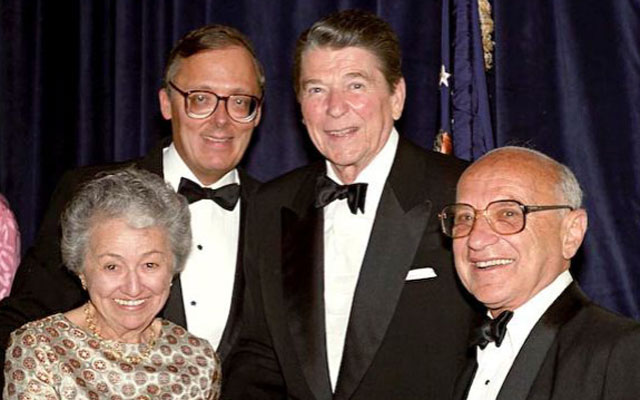


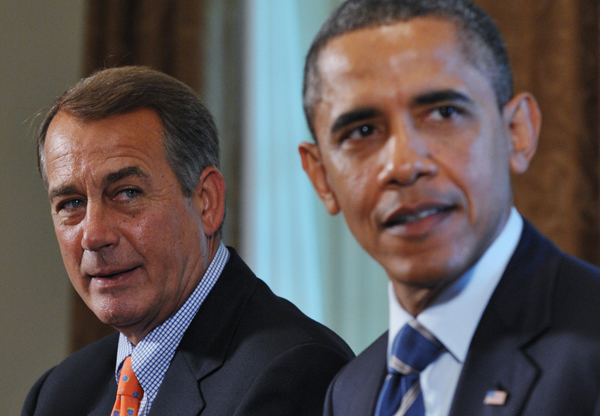
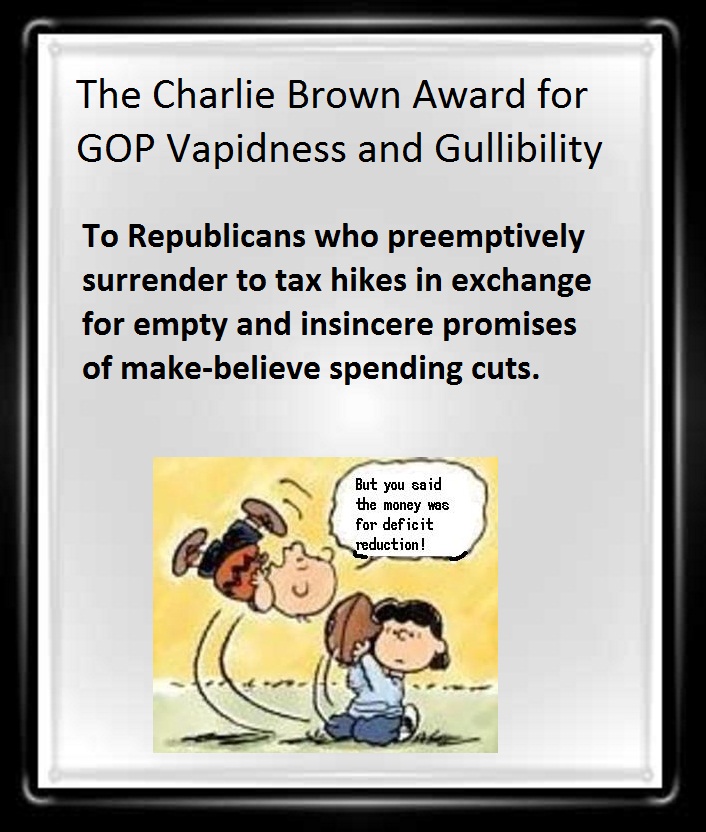




 The Daily Hatch