The world lost one of its greatest champions of freedom in Lady Margaret Thatcher. Ed Feulner, Edwin Meese III, and Becky Norton Dunlop remember her contributions as a great leader and friend of The Heritage Foundation.
________________
Great post from the Heritage Foundation on Margaret Thatcher’s legacy. She truly believed in freedom and a limited government.
Margaret Thatcher — a woman of character, leadership and a convicted spirit. A woman dedicated to individual freedom. The Heritage Foundation is proud of our special friendship with Lady Thatcher.
At a time when the Soviet Empire was still a powerful force, oppressing millions of people, Lady Thatchertackled communism head onas prime minister of Great Britain.
She believed in the crucial need for America to exert international leadership in the cause of freedom and partnered with conservative American leaders like Ronald Reagan and The Heritage Foundation to ensure individual liberty.
Her commitment to the principles of free enterprise,limited government,and individual freedom lace the eternal friendship between The Heritage Foundation and Lady Thatcher.
Lady Thatcher visited Heritage several times throughout her life and received theClare Boothe Luce Award, Heritage’s highest honor for contributions to the conservative movement.
She often referred to Heritage as the leader for conservative principles and said Heritage flew “the flag for conservatism over this last quarter-century with pride and distinction” during a1997 visit.
When Lady Thatcher chose Heritage to house theThatcher Center for Freedom, an institution faithful to carrying forward her legacy in the United States, Heritage was honored.
In anopen letterto Heritage members, Lady Thatcher said she selected Heritage because of its commitment “to defending and restoring sound conservative principles.”
In 2006, Lady Thatcher became the “patron” of Heritage. Her new title recognized Lady Thatcher’s “singular contributions as a leader of the free world and to the improvement of the life of her nation and people.”
Through blog posts, reports, videos, lectures and special events, Heritage remains a strong support system for the important lessons to be learned from Lady Thatcher and her legacy.
We’ve compiled some of our favorite moments of the Heritage–Lady Thatcher friendship. Read, watch and learn more below.
Thank you so much for your time. I know how valuable it is. I also appreciate the fine family that you have and your commitment as a father and a husband.
Sincerely,
Everette Hatcher III, 13900 Cottontail Lane, Alexander, AR 72002, ph 501-920-5733, lowcostsqueegees@yahoo.com
They come from taxpayers—certainly not from family farms. Yet the “farm” bill, a recurring subsidy-fest in Congress, is actually 80 percent food stamps and other government nutrition programs.
The food stamps sweeten the farm deal for lawmakers, who admit that the combination works for their political purposes. As Heritage experts Daren Bakst and Diane Katz explain:
The food stamp portion creates a reason for urban representatives to support farm subsidies, and for farm-state lawmakers to support food stamps.
Talk of de-politicizing agriculture programs and welfare policy is met with stiff resistance. For example, Senator Thad Cochran (R–MS), ranking Republican on the Senate Agriculture Committee, recently told the North American Agricultural Journalists group that food stamps should continue to be included in the farm bill “purely from a political perspective. It helps get the farm bill passed.”
Food stamps are there to help “get the farm bill passed.” And the relation of the rest of the farm bill to farming is also questionable. Bakst and Katz note that “Congress has expanded the farm bill over time into a costly compilation of disparate programs. Along with agriculture and food stamps, the legislation includes dozens of forestry, conservation, energy, and rural development programs.”
It has become the norm that Congress lumps billions—even trillions—of dollars in taxpayer-funded programs together into huge bills. This allows them to sneak in plenty of special-interest pork.
Each of these programs deserves to be evaluated on its own, and taxpayers deserve transparency from Congress about how it plans to spend our money.
For example, food stamps are a massive program that needs a careful look. Food stamp spending has doubled under the Obama Administration, and participation is at historic highs. Recruiters hold bingo games and other “parties” to try to get more people on the food stamp rolls.
Farm commodity programs are also a major concern and in dire need of reform. Congress may eliminate the egregious direct payment program, which pays farmers for doing nothing. However, instead of stopping there, both the House and Senate farm bills would replace direct payments with programs that could wind up being even costlier.
Food stamps and farming ultimately have to do with food, but that’s about all they have in common. Making the farm bill 80 percent food stamps just doesn’t make sense.
_______________________
Thank you so much for your time. I know how valuable it is. I also appreciate the fine family that you have and your commitment as a father and a husband.
Sincerely,
Everette Hatcher III, 13900 Cottontail Lane, Alexander, AR 72002, ph 501-920-5733, lowcostsqueegees@yahoo.com
Welfare Can And Must Be Reformed Uploaded on Jun 29, 2010 If America does not get welfare reform under control, it will bankrupt America. But the Heritage Foundation’s Robert Rector has a five-step plan to reform welfare while protecting our most vulnerable. __________________________ We got to slow down the growth of Food Stamps. One […]
Eight Reasons Why Big Government Hurts Economic Growth __________________ We got to cut spending and we must first start with food stamp program and we need some Senators that are willing to make the tough cuts. Food Stamp Republicans Posted by Chris Edwards Newt Gingrich had fun calling President Obama the “food stamp president,” but […]
Milton Friedman’s negative income tax explained by Friedman in 1968: We need to cut back on the Food Stamp program and not try to increase it. What really upsets me is that when the government gets involved in welfare there is a welfare trap created for those who become dependent on the program. Once they […]
Welfare Can And Must Be Reformed Uploaded by HeritageFoundation on Jun 29, 2010 If America does not get welfare reform under control, it will bankrupt America. But the Heritage Foundation’s Robert Rector has a five-step plan to reform welfare while protecting our most vulnerable. __________________________ If welfare increases as much as it has in the […]
I am glad that my state of Arkansas is not the leader in food stamps!!! Mirror, Mirror, on the Wall, Which State Has the Highest Food Stamp Usage of All? March 19, 2013 by Dan Mitchell The food stamp program seems to be a breeding ground of waste, fraud, and abuse. Some of the horror stories […]
Government Must Cut Spending Uploaded by HeritageFoundation on Dec 2, 2010 The government can cut roughly $343 billion from the federal budget and they can do so immediately. __________ We are becoming a country filled with people that dependent on the federal government when we should be growing our economy by lowering taxes and putting […]
Uploaded by oversightandreform on Mar 6, 2012 Learn More at http://oversight.house.gov The Oversight Committee is examining reports of food stamp merchants previously disqualified who continue to defraud the program. According to a Scripps Howard News Service report, food stamp fraud costs taxpayers hundreds of millions every year. Watch the Oversight hearing live tomorrow at 930 […]
Welfare state may drag England down the tubes!!!! Very Funny but Very Un-PC British Video on Welfare and Immigration May 19, 2013 by Dan Mitchell I’ve shared this bit of political incorrect terrorism humor from England, as well asthis somewhat un-PC bit of tax humor. But perhaps motivated by the scandal of giving welfare to terrorists, this new video is […]
Government Must Cut Spending Uploaded by HeritageFoundation on Dec 2, 2010 The government can cut roughly $343 billion from the federal budget and they can do so immediately. __________ President Obama c/o The White House 1600 Pennsylvania Avenue NW Washington, DC 20500 Dear Mr. President, I know that you receive 20,000 letters a day […]
Agriculture: Downsizing The Federal Government Uploaded on Dec 19, 2008 Agriculture is easily the most distorted sector, with high tariffs and, in developed countries at least, large amounts of government subsidies through price supports and direct payments. On the other hand, developing countries, who have a comparative advantage in these products, cannot afford to subsidize […]
Ronald Reagan introduces this program, and traces a line from Adam Smith’s “The Wealth of Nations” to Milton Friedman’s work, describing Free to Choose as “a survival kit for you, for our nation and for freedom.” Dr. Friedman travels to Hungary and Czechoslovakia to learn how Eastern Europeans are rebuilding their collapsed economies. His conclusion: they must accept the verdict of history that governments create no wealth. Economic freedom is the only source of prosperity. That means free, private markets. Attempts to find a “third way” between socialism and free markets are doomed from the start. If the people of Eastern Europe are given the chance to make their own choices they will achieve a high level of prosperity. Friedman tells us individual stories about how small businesses struggle to survive against the remains of extensive government control. Friedman says, “Everybody knows what needs to be done. The property that is now in the hands of the state, needs to be gotten into the hands of private people who can use it in accordance with their own interests and values.” Eastern Europe has observed the history of free markets in the United States and wants to copy our success. After the documentary, Dr. Friedman talks further about government and the economy with Gary Becker of the University of Chicago and Samuel Bowles of the University of Massachusetts. In a wide-ranging discussion, they disagree about the results of economic controls in countries around the world, with Friedman defending his thesis that the best government role is the smallest one.
___________
Below is a portion of the transcript of the program and above you will find the complete video of the program:
DISCUSSIONHello, I am Linda Chavez and welcome to Free to Choose. Joining Dr. Friedman for a discussion of the failure of socialism are Gary Becker from the University of Chicago and Samuel Bowles of the University of Massachusetts. Dr. Bowles, I think we can all agree that socialism has failed Eastern Europe. Dr. Friedman believes that the path out of that is the free market and I think he thinks there are lessons for the United States. What do you think?Chavez: I would like to bring this discussion back to the United States for a moment. What about socialism in the United States. There has been one area where we have tried to redistribute wealth. We have done that through our welfare policies and social security. Has that worked?
Bowles: Well, there is much to celebrate in Eastern Europe __ not only the elimination of dictatorial rule. I go back on that a long time. I was in the Soviet Union in the late 50’s (1958 and 1959) as a musician and I met many Russian musicians and made friends with a lot of Russian people who found themselves harassed and victimized by the police. In fact, my own musical group was prevented from singing a couple of times by the police. That is all on the way out and I hope it is gone for good. Equally welcome is the end of this myth of a centrally planned society. That is gone too and I hope that basically the lesson is learned. But Milton seems to think that we have to choose between either a centrally planned society or a society in which we have markets which are basically unregulated. So the choice is really between all or nothing.
I don’t think that is the choice. I think what Milton is posing for us is a model which is as unrealistic as a centrally planned model. It is outdated, it won’t work, it is extreme, and I think it is undemocratic. I think that we have choices in between, what Milton called the third way, a way that he said wouldn’t work, has been shown to work around the world. I think that Eastern Europe would be very ill-advised to take Milton’s advise on this. Yet, the last time anybody took Milton’s advise on economic policy was Ronald Reagan and Ronald Reagan has put the U.S. economy into a situation where it can’t pay its bills and is facing mounting economic instability and difficulties.
Chavez: Dr. Friedman, what about this midway path?
Friedman: First of all, I utterly reject what Sam says about the results of Ronald Reagan’s changes. We had a decade of extraordinary growth, increased employment in which inflation was brought down sharply. Ronald Reagan came into office at a period of very high inflation, and so on. But this program is not about the Reagan administration. This program is about Eastern Europe and I want to go to Eastern Europe.
I believe Sam is completely wrong in saying that the model I propose is outdated. I believe that what he calls obsolete is something very different. You have had the third way __ you have had it in the United States; you have had it in Sweden; you have had it in Britain; you’ve had it elsewhere. In every case it has been built on the foundation of a long period of what I call the first way. The United States had 150 years of essentially a free private market before it launched on this period of the welfare state. The same thing was true in Britain, the same thing was true in Sweden. I believe he will find it very difficult to site any example of a country which started from a very low level and immediately adopted that combination of policies.
Becker: Let me add something on that. I think the lesson that we learned from what happened in Eastern Europe goes beyond simply that central planning doesn’t work. I think we all agree that it doesn’t work. But it is more than that __ it is the role of private property in the system and the incentives provided by private property.
I don’t know what socialism means anymore, but I remember when I was in Poland I asked the head of the ideology department is private property consistent with socialism? He said, it may be. Then I asked him, well what is the difference between socialism and capitalism. His answer was, we are still working on that. I think what we have seen is a rejection of the ideas associated with traditional socialism which are suppression of private property, government ownership of property, and so on.
Now, how far should we move in the other direction? I think that is question you are asking Sam, and is there a middle way. I think the middle ways that have been successful have all been largely reliant on private property, private ownership, private incentives. The difficult question is one that Milton raised in the documentary. How far can you redistribute income and make it consistent with effective incentives?
I don’t think we know the boundary point, whether 30% of the income being redistributed is too much, 40%, 50% __ my own feeling is that we have gone much too far in Sweden and some of the other Scandinavian countries, and they are beginning to step back from this. They are lowering maximum tax rates to 50% now __ they were up to 80%. So I think there is a third way, but that third way is going to be a lot closer to unregulated market than toward a socialist organization of resources and a suppression of private property.
Bowles: Let’s get back to the particulars though. You talk about Sweden and you talk about the third way failing, and Milton says nobody has ever really gotten rich on the third way __ they have only benefited from that. Let’s talk about the United States. The period you described included a very long period in which the United States was a highly protectionist country in which our industrial base was developed from Alexander Hamilton on for some time, and then during the late 19th and early 20th century. To call that a free market solution would be against everything you have taught. Or, if one wants to go back into the 19th century, the huge subsidies of the railroads were, of course, an intervention in the market.
In the case of England that you talk about, the same is true. The role of the British Navy and for example the Parliament in actually establishing the private property which is what you favor. This was done by a government intervention. We talk about the other cases. Talk about Sweden or about Korea. These are two countries which I think are justly admired for their economic performance. Both countries have income distributions far more equal than the United States.
In Sweden, over the half the GNP is taxed. Now, people in this country would say that obviously they have gone too far. But let’s look at the test of the market. Sweden and Korea have been defeating the United States in world markets. Exports have grown five percent per year during the Reagan/Bush years in Sweden. In the United States, they have grown one percent per year. In Korea we know they have grown much better. If you want to go on to Norway, where much of the investing is done by the government, they have grown their exports even faster than Sweden. Meanwhile, we can’t compete in world markets.
So the lesson of these countries is if you look at the facts Milton, a combination of government regulation and the market works. I agree with Gary. I think private property is extremely important because the incentives associated with owning the results of your work is essential. But private property does not mean that we have to let the market go unregulated and all the evidence says that the countries that are beating us in the world market today don’t do it. They are not that dumb. Japan doesn’t do it; Korea doesn’t do it; Sweden doesn’t do it.
Friedman: Let’s not throw straw men around. Obviously I am not in favor of no government. Government has some very important roles to play. Those are very limited. You take the case of the United States during the 19th century and of Britain in the 19th century. At the time of Queen Victoria’s jubilee in 1899, total government spending in Britain was 10% of the national income. Up until 1929 in the United States, except for periods of great war, total government spending in the United States was about 10% of national income. Now that is a very far cry from a government which spends over half of the national income . . . . and a little less than half in the United States.
Bowles: You are opposed to capital controls. You are opposed to telling people they can’t move their money internationally. That is what Korea does. You are opposed to . . .
Friedman: I think Korea makes a mistake by doing it.
Bowles: Korea has beaten us by exactly the policies you are posing.
Friedman: So has Hong Kong. Hong Kong has beaten us by the policies I am proposing.
Bowles: . . . if Korea is not a middle way and if Sweden is not a middle way, then I would like to know what you call it.
Becker: Korea is a lot closer to a market-oriented economy than any of the economies we have been talking about.
Bowles: The government approves the heads of the banks in Korea. They have nationalized their steel industry and have one of the most efficient plants in the world at Palhang. If you call that a private economy . . .
Becker: What fraction of resources in Korea goes through the government?
Bowles: A tremendous fraction if you take account of the fact that the banks are centrally run and they control the credit allocations there and they don’t let people take their money out of the . . .
From the original Free To Choose series Milton asks: “Who Protects the Consumer?”. Many government agencies have been created for this purpose, yet they do so by restricting freedom and stifling beneficial innovation, and eventually become agents for the groups they have been created to regulate.
Milton Friedman noted how the government usually messes up things when they start regulating: “When governments do intervene in business, innovation is stifled. Railroads have been regulated for nearly a century and they are one of our most backward industries.”
Part 2
When governments do intervene in business, innovation is stifled. Railroads have been regulated for nearly a century and they are one of our most backward industries. The railroad story shows what so often results from the good intentions of consumer protection groups. In the 1860’s railroad rates were lower in the United States than anywhere else in the world. Yet many customers thought they were too high. They complained bitterly about the profits of the railroads.
Now the railway men of the time had their problems too. Problems that arose out of the fierce competitiveness among them. Many railroads all trying to get their share of the market, all trying to make a name for themselves. If you want to see what their problems were as they saw them, come and have a look at this.
From inside this private railroad car it may not look as if the people who ran the railroads had any real problems. Some, like the owner of this private car, had done very well. This was the equivalent of the private jet of today’s business tycoons. But for each one who succeeded, many didn’t survive the cutthroat competition.
What we have here is a railroad map of the United States for the year 1882. It shows every railroad then in existence. The country was literally crisscrossed with railroads going to every remote hamlet and covering the nation from coast to coast. Between points far distant like for example New York and Chicago, there might be a half a dozen lines that would be running between those two points. Each of the half dozen trying to get business would cut rates and rates would get very low. The people who benefited most from this competition were the customers shipping goods on a long trip.
On the other hand, between some segments of that trip, say for example, Harrisburg and Pittsburgh, there might be only a single line that was running and that line would take full advantage of its monopoly position. It would charge all that the traffic would bear. The result was that the sum of the fares charged for the short haul was typically larger than the total sum charged for the long haul between the two distant points. Of course, none of the consumers complained about the low price for the long haul, but the consumer certainly did complain about the higher prices for the short hauls. And that was one of the major sources of agitation leading ultimately to the establishment of the Interstate Commerce Commission.
The cartoonists of the day delighted in pointing out that railroads had tremendous political instinct. As indeed they did. They used the consumer’s complaints to get the government to establish a commission that would protect the railroad’s interest. It took about a decade to get the commission into full operation. By that time, needless to say, the consumer advocates had moved on to their next crusade. But the railway men were still there. They had soon learned how to use the commission to their own advantage. They solved the long haul/short haul problem, by raising the long haul rates. The customers ended up paying more, some protection. The first commissioner was Thomas Cooley, a lawyer who had represented the railroads for many years. The railroads continued to dominate the Commission.
In the 1920’s and 30’s when trucks emerged as serious competitors for long distance hauling, the railroads induced the Commission to extend control over trucking. Truckers, in their turn, learned how to use the Commission to protect themselves from competition. This firm carries freight to and from the Dayton, Ohio International Airport. Its the only one serving some routes and its customers depend on it. But Dayton Airfreight has real problems. Its ICC license only permits it to carry freight from Dayton to Detroit. To serve other routes it’s had to buy rights from other ICC license holders including one who doesn’t own a single truck. It’s paid as much as $100,000 a year for the privilege.
Secretary: Our company is in the process of trying to get rights to go there now. Yes, we’ll do that and thank you for calling sir.
The owners of the firm have been trying for years to get their license extended to cover more routes.
Air freight company: Now I don’t have any argument with the people who already have ICC permits except for the fact that this is a big country and since the inception of the ICC in 1936, there has been very few entrants into the business. They do not allow new entrants to come in and compete with those who are already in.
Unnamed individual: Of course, Dayton Airfreight suffers but so do the customers who pay higher freight charges. Quite frankly, I don’t know why the ICC is sitting on its hands doing nothing. This is the third time to my knowledge that we’ve support the application of Dayton Airfreight to help us save money, help free enterprise, help the country save energy, help, help, help. It all comes down to consumers ultimately going to pay for all of this and they are the blame. The ICC has to be the blame.
Friedman: Dayton Airfreight now has many of its trucks lying idle. Trucks that could be providing a valuable service. Far from protecting consumers, the ICC has ended up making them worse off.
As far as I’m concerned, there is no free enterprise in interstate commerce. It no longer exists in this country. You have to pay the price and you have to pay the price very dearly and I don’t mean we have to pay the price, it means that the consumer is paying that price.
The price consumers pay when it comes to medicine could be their lives. In the 19th Century pharmacies contained an impressive array of pills and potions. Most were ineffective and some were deadly. There was an outcry about drugs that maimed or killed. The Food and Drug Administration in response to consumer pressure succeeded in banning a whole range of medicines. The tonics and lotions with their excessive claims disappeared from the market. In 1962 the Kefauver Amendment gave the FDA power to regulate all drugs for effectiveness as well as for safety. Today, every drug marketed in the United States must pass the FDA. It’s clear that this has protected us from some drugs with horrific side effects like thalidomide. And we all know of people who have benefited from modern drugs. What we don’t hear much about however, are the beneficial drugs that the FDA has prohibited.
Well, if you examine the therapeutic benefits of significant drugs that haven’t arrived in the U.S. but are available somewhere in the rest of the world, such as in Britain, you can come across numerous examples where the patient has suffered. For example, there are one or two drugs called beta blockers which now can prevent death after heart attack, we call it secondary prevention of coronary death after myocardial infarction, which if available here, could be saving about 10,000 lives a year in the United States. In the ten years after the 1962 amendments no drug was approved for hypertension. That’s for the control the blood pressure in the United States, where as several were approve in Britain. In the entire cardiovascular area, only one drug was approved in the five year period from 67 to 72. And this can be correlated with known organizational problems at FDA.
These carts are taking to an FDA official the documents required to get just one drug approved.
Worker: Well, hi there, must be the new one they called me about.
Friedman: It took six years work by the drug company to get this drug passed.
Worker: This one right here, all 119 volumes.
____________
Thank you so much for your time. I know how valuable it is. I also appreciate the fine family that you have and your commitment as a father and a husband.
Sincerely,
Everette Hatcher III, 13900 Cottontail Lane, Alexander, AR 72002, ph 501-920-5733, lowcostsqueegees@yahoo.com
Milton Friedman The Power of the Market 1-5 How can we have personal freedom without economic freedom? That is why I don’t understand why socialists who value individual freedoms want to take away our economic freedoms. I wanted to share this info below with you from Milton Friedman who has influenced me greatly over the […]
Milton Friedman: Free To Choose – The Failure Of Socialism With Ronald Reagan (Full) Published on Mar 19, 2012 by NoNationalityNeeded Milton Friedman’s writings affected me greatly when I first discovered them and I wanted to share with you. We must not head down the path of socialism like Greece has done. Abstract: Ronald Reagan […]
Worse still, America’s depression was to become worldwide because of what lies behind these doors. This is the vault of the Federal Reserve Bank of New York. Inside is the largest horde of gold in the world. Because the world was on a gold standard in 1929, these vaults, where the U.S. gold was stored, […]
George Eccles: Well, then we called all our employees together. And we told them to be at the bank at their place at 8:00 a.m. and just act as if nothing was happening, just have a smile on their face, if they could, and me too. And we have four savings windows and we […]
Milton Friedman’s Free to Choose (1980), episode 3 – Anatomy of a Crisis. part 1 FREE TO CHOOSE: Anatomy of Crisis Friedman Delancy Street in New York’s lower east side, hardly one of the city’s best known sites, yet what happened in this street nearly 50 years ago continues to effect all of us today. […]
Friedman Friday” Free to Choose by Milton Friedman: Episode “What is wrong with our schools?” (Part 3 of transcript and video) Here is the video clip and transcript of the film series FREE TO CHOOSE episode “What is wrong with our schools?” Part 3 of 6. Volume 6 – What’s Wrong with our Schools Transcript: If it […]
Here is the video clip and transcript of the film series FREE TO CHOOSE episode “What is wrong with our schools?” Part 2 of 6. Volume 6 – What’s Wrong with our Schools Transcript: Groups of concerned parents and teachers decided to do something about it. They used private funds to take over empty stores and they […]
Here is the video clip and transcript of the film series FREE TO CHOOSE episode “What is wrong with our schools?” Part 1 of 6. Volume 6 – What’s Wrong with our Schools Transcript: Friedman: These youngsters are beginning another day at one of America’s public schools, Hyde Park High School in Boston. What happens when […]
Friedman Friday” Free to Choose by Milton Friedman: Episode “Created Equal” (Part 3 of transcript and video) Liberals like President Obama want to shoot for an equality of outcome. That system does not work. In fact, our free society allows for the closest gap between the wealthy and the poor. Unlike other countries where free enterprise and other […]
Free to Choose by Milton Friedman: Episode “Created Equal” (Part 2 of transcript and video) Liberals like President Obama want to shoot for an equality of outcome. That system does not work. In fact, our free society allows for the closest gap between the wealthy and the poor. Unlike other countries where free enterprise and other freedoms are […]
Milton Friedman and Ronald Reagan Liberals like President Obama (and John Brummett) want to shoot for an equality of outcome. That system does not work. In fact, our free society allows for the closest gap between the wealthy and the poor. Unlike other countries where free enterprise and other freedoms are not present. This is a seven part series. […]
I am currently going through his film series “Free to Choose” which is one the most powerful film series I have ever seen. PART 3 OF 7 Worse still, America’s depression was to become worldwide because of what lies behind these doors. This is the vault of the Federal Reserve Bank of New York. Inside […]
I am currently going through his film series “Free to Choose” which is one the most powerful film series I have ever seen. For the past 7 years Maureen Ramsey has had to buy food and clothes for her family out of a government handout. For the whole of that time, her husband, Steve, hasn’t […]
Friedman Friday:(“Free to Choose” episode 4 – From Cradle to Grave, Part 1 of 7) Volume 4 – From Cradle to Grave Abstract: Since the Depression years of the 1930s, there has been almost continuous expansion of governmental efforts to provide for people’s welfare. First, there was a tremendous expansion of public works. The Social Security Act […]
_________________________ Pt3 Nowadays there’s a considerable amount of traffic at this border. People cross a little more freely than they use to. Many people from Hong Kong trade in China and the market has helped bring the two countries closer together, but the barriers between them are still very real. On this side […]
Aside from its harbor, the only other important resource of Hong Kong is people __ over 4_ million of them. Like America a century ago, Hong Kong in the past few decades has been a haven for people who sought the freedom to make the most of their own abilities. Many of them are […]
“FREE TO CHOOSE” 1: The Power of the Market (Milton Friedman) Free to Choose ^ | 1980 | Milton Friedman Posted on Monday, July 17, 2006 4:20:46 PM by Choose Ye This Day FREE TO CHOOSE: The Power of the Market Friedman: Once all of this was a swamp, covered with forest. The Canarce Indians […]
Milton Friedman: Free To Choose – The Failure Of Socialism With Ronald Reagan (Full) Published on Mar 19, 2012 by NoNationalityNeeded Milton Friedman’s writings affected me greatly when I first discovered them and I wanted to share with you. We must not head down the path of socialism like Greece has done. Abstract: Ronald Reagan […]
Milton Friedman: Free To Choose – The Failure Of Socialism With Ronald Reagan (Full) Published on Mar 19, 2012 by NoNationalityNeeded Milton Friedman’s writings affected me greatly when I first discovered them and I wanted to share with you. We must not head down the path of socialism like Greece has done. Abstract: Ronald Reagan […]
Milton Friedman in 1999 interview, “The one thing that’s missing, but that will soon be developed, is a reliable e-cash, a method whereby on the Internet you can transfer funds from A to B without A knowing B or B knowing A, the way I can take a $20 bill hand it over to you and then there’s no record of where it came from”
In 2008, Bitcoin was mysteriously introduced to the world in an obscure, technical paper written under the pseudonym Satoshi Nakamoto. By late 2013, the financial press was filled with reportage on Bitcoin and its dramatic price increase.
Well ahead of Satoshi Nakamoto, Nobelist Milton Friedman, champion of free market economics and noted expert on money and banking, anticipated the coming of digital currencies, and foresaw the potential impacts that they would have on finance and economics.
I think that the Internet is going to be one of the major forces for reducing the role of government. The one thing that’s missing, but that will soon be developed, is a reliable e-cash, a method whereby on the Internet you can transfer funds from A to B without A knowing B or B knowing A. The way I can take a $20 bill hand it over to you and then there’s no record of where it came from.
You may get that without knowing who I am. That kind of thing will develop on the Internet and that will make it even easier for people using the Internet. Of course, it has its negative side. It means the gangsters, the people who are engaged in illegal transactions, will also have an easier way to carry on their business.
Prof. Friedman’s anticipation of Bitcoin is truly remarkable. He even understood the concept well enough to anticipate something like the Silk Road scandal involving illegal Bitcoin transactions.
In April 2013, Nathaniel Popper of The New York Times reported on Bitcoin in an article titled “Digital Money is Gaining Champions in the Real World”. In his reportage, Popper asked me if I thought Bitcoin had the makings of a speculative mania like the 17th century Dutch tulip bulb frenzy. My response was clear and unambiguous: “To say highly speculative would be the understatement of the century.”
Subsequently, the price action in Bitcoin confirms my diagnosis (see the following chart). In January 2013, one could buy a Bitcoin for about $13. By late November, one Bitcoin would have set a buyer back over $1100. And what about Bitcoin’s price volatility? As shown in the chart, Bitcoin’s volatility is truly fantastic.
While the price currently fluctuates around $600, Bitcoin remains far from secure. Serious discrepancies in price exist even between exchanges. For example, the price of a Bitcoin on the Mt. Gox exchange has fallen by over 50% in the past week, while the price of the exact same Bitcoin on the BitStamp exchange has fallen by only 3% in the same time period.
The federal government is not doing a good job at almost anything that it does. When it expands then it just takes away our freedom and our money more than it has in the past. This trend must stop. Below are some wise words and warnings from Milton Friedman Below are some videos and quotes […]
Stearns Speaks on House Floor in Support of Balanced Budget Amendment Uploaded by RepCliffStearns on Nov 18, 2011 Speaking on House floor in support of Balanced Budget Resolution, 11/18/2011 ___________ Below are some of the main proposals of Milton Friedman. I highly respected his work. David J. Theroux said this about Milton Friedman’s view concerning […]
The 4 Ways to Spend Money by Milton Friedman Uploaded by Sidewinder77 on Aug 26, 2006 1. You spend your own money on yourself. 2. You spend your own money on someone else. 3. You spend someone else’s money on yourself. 4. You spend someone else’s money on someone else. ___________ Will Rogers has a […]
In 1980 I read the book FREE TO CHOOSE by Milton Friedman and it really enlightened me a tremendous amount. I suggest checking out these episodes and transcripts of Milton Friedman’s film series FREE TO CHOOSE: “The Failure of Socialism” and “What is wrong with our schools?” and “Created Equal” and From Cradle to Grave, […]
In 1980 I read the book FREE TO CHOOSE by Milton Friedman and it really enlightened me a tremendous amount. I suggest checking out these episodes and transcripts of Milton Friedman’s film series FREE TO CHOOSE: “The Failure of Socialism” and “What is wrong with our schools?” and “Created Equal” and From Cradle to Grave, […]
In 1980 I read the book FREE TO CHOOSE by Milton Friedman and it really enlightened me a tremendous amount. I suggest checking out these episodes and transcripts of Milton Friedman’s film series FREE TO CHOOSE: “The Failure of Socialism” and “What is wrong with our schools?” and “Created Equal” and From Cradle to Grave, […]
In 1980 I read the book FREE TO CHOOSE by Milton Friedman and it really enlightened me a tremendous amount. I suggest checking out these episodes and transcripts of Milton Friedman’s film series FREE TO CHOOSE: “The Failure of Socialism” and “What is wrong with our schools?” and “Created Equal” and From Cradle to Grave, […]
In 1980 I read the book FREE TO CHOOSE by Milton Friedman and it really enlightened me a tremendous amount. I suggest checking out these episodes and transcripts of Milton Friedman’s film series FREE TO CHOOSE: “The Failure of Socialism” and “What is wrong with our schools?” and “Created Equal” and From Cradle to Grave, […]
Friedman on Reagan Uploaded by YAFTV on Aug 19, 2009 Nobel Laureate Dr. Milton Friedman discusses the principles of Ronald Reagan during this talk for students at Young America’s Foundation’s 25th annual National Conservative Student Conference _______________ Passing the Balanced Budget Amendment would be what the founding fathers would have wanted. Look at what my […]
In 1980 I read the book FREE TO CHOOSE by Milton Friedman and it really enlightened me a tremendous amount. I suggest checking out these episodes and transcripts of Milton Friedman’s film series FREE TO CHOOSE: “The Failure of Socialism” and “What is wrong with our schools?” and “Created Equal” and From Cradle to Grave, […]
His theory that inflation resulted from too much money chasing too few goods inspired a generation of central bankers and played a pivotal role in forming the governing philosophies of Lady Thatcher and President Ronald Reagan in the US.
Lady Thatcher said last night: “Milton Friedman revived the economics of liberty when it had been all but forgotten. He was an intellectual freedom fighter. Never was there a less dismal practitioner of a dismal science.
“I shall greatly miss my old friend’s lucid wisdom and mordant humour.”
Mr Friedman, winner of a 1976 Nobel Prize, died in hospital in San Francisco of heart failure, according to his family. He was born in Brooklyn on July 31 1912, the son of a merchant and a seamstress who were immigrants from Austria-Hungary.
His teachings at the University of Chicago helped foster the “Chicago School” of economics, known for theories associated with free-market libertarianism.
When he first came to prominence in the late 1940s, he was one of a tiny minority who ventured to question the prevailing wisdom of Keynesianism, that economies could and should be managed by manipulation of taxes and government spending.
But by the mid-1970s — as inflation took off and state-dominated economies slid into decline — Friedman’s ideas influenced Sir Keith Joseph, who advised the new Tory leader, Margaret Thatcher, to reject the interventionist policies of her predecessor Edward Heath.
He served as an adviser to the Thatcher government from 1979 to 1990 as it developed a free-market economy, low taxation, and the sale of state-owned industries.
Mr Friedman believed that tax-funded government spending was appropriate only to the most limited set of “public goods”, such as national defence.
_________________
Thank you so much for your time. I know how valuable it is. I also appreciate the fine family that you have and your commitment as a father and a husband.
Sincerely,
Everette Hatcher III, 13900 Cottontail Lane, Alexander, AR 72002, ph 501-920-5733, lowcostsqueegees@yahoo.com
Remembering Margaret Thatcher, 1925-2013 Published on Apr 8, 2013 The world lost one of its greatest champions of freedom in Lady Margaret Thatcher. Ed Feulner, Edwin Meese III, and Becky Norton Dunlop remember her contributions as a great leader and friend of The Heritage Foundation. ________________ Great post from the Heritage Foundation on Margaret Thatcher’s legacy. […]
The stimulus program was a failure here in America and President Obama should have known better than to try that. He should have been a better student of history like Margaret Thatcher was. APRIL 9, 2013 3:24PM Margaret Thatcher and the Battle of the 364 Keynesians By STEVE H. HANKE SHARE With the death of Margaret […]
Margaret Thatcher was right about socialism when she said, “The problem with socialism is that you eventually run out of other people’s money.” That is exactly what we are seeing in Europe now and it will happen to the USA too if we don’t cut back on excessive government spending. April 8, 2013 12:32PM Thatcher: Anecdotes From […]
Very well said by Dan Mitchell. A Tribute to Margaret Thatcher April 8, 2013 by Dan Mitchell The woman who saved the United Kingdom has died. A Great Woman I got to meet Margaret Thatcher a couple of times and felt lucky each time that I was in the presence of someone who put her nation’s […]
Margaret Thatcher was a great lady. Jim DeMint on Margaret Thatcher: “The World Has Lost One of Its Greatest Champions of Freedom” Jim DeMint April 8, 2013 at 9:05 am Heritage has lost one of her greatest friends, and the world has lost one of its greatest champions of freedom. Margaret Thatcher led Great […]
Great speech by Margaret Thatcher on socialism. It was not helpful to the people of eastern europe and it will not be helpful to us today. Defining Socialism Marion Smith December 10, 2012 at 5:25 pm Margaret Thatcher on Socialism For those who failed to recognize the ideological stakes of the recent election, […]
Uploaded by mynameiswhatever on Jan 18, 2009 Margaret Thatcher’s last House of Commons Speech on November 22, 1990. ________________ Prime Minister Margaret Thatcher: People on all levels of income are better off than they were in 1979. The hon. Gentleman is saying that he would rather that the poor were poorer, provided that the rich […]
Unfortunately Hollywood has their own agenda many times. Great article from the Heritage Foundation. Morning Bell: The Real ‘Iron Lady’ Theodore Bromund January 11, 2012 at 9:24 am Streep referred to the challenge of portraying Lady Thatcher as “daunting and exciting,” and as requiring “as much zeal, fervour and attention to detail as the real […]
Margaret Thatcher is one of my heroes and I have a three part series on her I am posting. “What We Can Learn from Margaret Thatcher,”By Sir Rhodes Boyson and Antonio Martino, Heritage Foundation, November 24, 1999, is an excellent article and here is a portion of it below: What Can We Learn from Thatcher? […]
Margaret Thatcher is one of my heroes and I have a three part series on her I am posting. “What We Can Learn from Margaret Thatcher,”By Sir Rhodes Boyson and Antonio Martino, Heritage Foundation, November 24, 1999, is an excellent article and here is a portion of it below: Thatcher This was the background […]
Margaret Thatcher is one of my heroes and I have a three part series on her I am posting. “What We Can Learn from Margaret Thatcher,”By Sir Rhodes Boyson and Antonio Martino, Heritage Foundation, November 24, 1999, is an excellent article and here is a portion of it below: The Role of Ideas 6 The […]
Margaret Thatcher (Part 2) Margaret Thatcher is one of my heroes and I have a three part series on her I am posting. “What We Can Learn from Margaret Thatcher,”By Sir Rhodes Boyson and Antonio Martino, Heritage Foundation, November 24, 1999, is an excellent article and here is a portion of it below: Foreign Policy […]
Margaret Thatcher (Part 1) Margaret Thatcher is one of my heroes and I have a three part series on her I am posting. “What We Can Learn from Margaret Thatcher,”By Sir Rhodes Boyson and Antonio Martino, Heritage Foundation, November 24, 1999, is an excellent article and here is a portion of it below: Margaret Thatcher […]
Charlie Rose interview of Milton Friedman My favorite economist: Milton Friedman : A Great Champion of Liberty by V. Sundaram Milton Friedman, the Nobel Prize-winning economist who advocated an unfettered free market and had the ear of three US Presidents – Nixon, Ford and Reagan – died last Thursday (16 November, 2006 ) in San Francisco […]
Stearns Speaks on House Floor in Support of Balanced Budget Amendment Uploaded by RepCliffStearns on Nov 18, 2011 Speaking on House floor in support of Balanced Budget Resolution, 11/18/2011 ___________ Below are some of the main proposals of Milton Friedman. I highly respected his work. David J. Theroux said this about Milton Friedman’s view concerning […]
Milton Friedman: Free To Choose – The Failure Of Socialism With Ronald Reagan (Full) Published on Mar 19, 2012 by NoNationalityNeeded Milton Friedman’s writings affected me greatly when I first discovered them and I wanted to share with you. We must not head down the path of socialism like Greece has done. Abstract: Ronald Reagan […]
What a great defense of Milton Friedman!!!! Defaming Milton Friedman by Johan Norberg This article appeared in Reason Online on September 26, 2008 PRINT PAGE CITE THIS Sans Serif Serif Share with your friends: ShareThis In the future, if you tell a student or a journalist that you favor free markets and limited government, there is […]
Milton Friedman on Hayek’s “Road to Serfdom” 1994 Interview 2 of 2 Uploaded by PenguinProseMedia on Oct 26, 2011 2nd half of 1994 interview. ________________ I have a lot of respect for the Friedmans.Two Lucky People by Milton and Rose Friedman reviewed by David Frum — October 1998. However, I liked this review below better. It […]
Milton Friedman on Hayek’s “Road to Serfdom” 1994 Interview 1 of 2 Uploaded by PenguinProseMedia on Oct 25, 2011 Says Federal Reserve should be abolished, criticizes Keynes. One of Friedman’s best interviews, discussion spans Friedman’s career and his view of numerous political figures and public policy issues. ___________________ Here is a review of “Two Lucky People.” […]
Charlie Rose interview of Milton Friedman My favorite economist: Milton Friedman : A Great Champion of Liberty by V. Sundaram Milton Friedman, the Nobel Prize-winning economist who advocated an unfettered free market and had the ear of three US Presidents – Nixon, Ford and Reagan – died last Thursday (16 November, 2006 ) in San Francisco […]
Milton Friedman: Free To Choose – The Failure Of Socialism With Ronald Reagan (Full) Published on Mar 19, 2012 by NoNationalityNeeded Milton Friedman’s writings affected me greatly when I first discovered them and I wanted to share with you. We must not head down the path of socialism like Greece has done. Abstract: Ronald Reagan […]
If America does not get welfare reform under control, it will bankrupt America. But the Heritage Foundation’s Robert Rector has a five-step plan to reform welfare while protecting our most vulnerable.
__________________________
Will Rogers has a great quote that I love. He noted, “Lord, the money we do spend on Government and it’s not one bit better than the government we got for one-third the money twenty years ago”(Paula McSpadden Love, The Will Rogers Book, (1972) p. 20.)
We got to slow down the growth of Food Stamps. One way to do it is to tell the 48 million food stamps users to eat more broccoli!!!!
The federal food stamp program—now called SNAP—is attracting a lot of media coverage. One reason for this is that the program’s costs have exploded—spending more than quadrupled during the Bush-Obama years to $82 billion in 2013 (see here and here p. 16). The Clinton, Bush, and Obama administrations all took steps to loosen the purse strings on food stamp eligibility, and those changes have led to the ballooning costs of recent years during the stagnant economy.
Aside from the rising costs, two other aspects of SNAP have garnered interest. One is food stamp fraud. The other is the program’s “Twinkie problem”: taxpayers are paying for billions of dollars of junk food, which seems like a huge waste of money to most people.
These two issues have come together in a high-profile effort by a group of media organizations that is demanding greater transparency in SNAP operations. The organizations—led by the Association of Health Care Journalists (AHCJ)—have sent a letter to Agriculture Secretary Tom Vilsack (whose agency oversees SNAP) asking for full disclosure about where food stamps are being spent and what they are being spent on. The Daily Caller reports on the issue here.
Let’s look at the fraud issue. The government claims that the food stamp trafficking rate is just 1 percent and the general overpayment rate is just 4 percent. I suspect that the real rates are much higher, for three reasons: First, the overall costs of SNAP and the number of beneficiaries have skyrocketed. Second, SNAP is ideally suited for abuse: the USDA has few investigators to police the roughly 200,000 SNAP retailers, any of whom could be scamming the system. Third, overpayment rates on other federal subsidy programs are often around 10 percent. Medicare and Medicaid overpayments are in that range, for example, and overpayments have long been around 20 percent in the EITC program.
The AHCJ-led effort is asking the USDA to release data on food stamp purchases by retail outlet. This would be a very useful resource for investigators across the nation to help the government reduce waste and fraud. Are food stamps being cashed in at liquor stores? Which corner stores have unusually high food stamp usage? Let’s get detailed SNAP data on the Internet and allow journalists and the public to help answer these questions. After all, scandal after scandal illustrate that the federal government is lousy at policing programs itself.
The journalists are also asking the USDA to provide detailed breakdowns of the types of food being purchased with SNAP money. It’s remarkable that in an era of Bloomberg-style efforts to restrict private food choices, the government itself runs a giant $82 billion program that subsidizes junk food. How much junk food? We don’t know, and that’s what many journalists want to find out.
Food stamps can be used to purchase just about any edible item other than alcohol, hot food, restaurant meals, and live animals. The USDA explains the rules here and specifically notes that “soft drinks, candy, cookies, snack crackers, and ice cream” are allowed.
Many health experts would like to ban junk food purchases in the food stamp program because they want Americans to eat more nutritious food. I’m a libertarian, so I don’t want the government telling people what to eat. But I think banning junk food in SNAP would be a good step for a different reason: it would greatly reduce demand for the program and thus cut taxpayer costs. If we told the 48 million users of food stamps that they could only use their electronic subsidy cards to buy items like spinach and broccoli, a lot fewer people would use the program and they would buy less stuff.
Why has the USDA been stonewalling journalists on providing SNAP program data? I’m guessing that federal officials don’t want to be embarrassed about: 1) how much taxpayer money goes toward junk food, and 2) the endless series of stories about SNAP fraud that would likely be generated if journalists could explore the program’s operational details.
Optimally, SNAP should be terminated altogether and food subsidy activities left to the states—or better, to private charities. But until that reform happens, the current effort to pry open the workings of this giant hand-out program would be big step in the right direction.
Some links of interest:
A leaked database of food stamp usage in Massachusetts. This is the type of data that should be released nationally by the USDA.
A study on the corporate lobbying surrounding food stamps. This liberal group doesn’t want to cut spending, but it provides an excellent summary of the junk food issue, transparency, and the benefits of SNAP to the banking industry.
Thank you so much for your time. I know how valuable it is. I also appreciate the fine family that you have and your commitment as a father and a husband.
Sincerely,
Everette Hatcher III, 13900 Cottontail Lane, Alexander, AR 72002, ph 501-920-5733, lowcostsqueegees@yahoo.com
Eight Reasons Why Big Government Hurts Economic Growth __________________ We got to cut spending and we must first start with food stamp program and we need some Senators that are willing to make the tough cuts. Food Stamp Republicans Posted by Chris Edwards Newt Gingrich had fun calling President Obama the “food stamp president,” but […]
Milton Friedman’s negative income tax explained by Friedman in 1968: We need to cut back on the Food Stamp program and not try to increase it. What really upsets me is that when the government gets involved in welfare there is a welfare trap created for those who become dependent on the program. Once they […]
Welfare Can And Must Be Reformed Uploaded by HeritageFoundation on Jun 29, 2010 If America does not get welfare reform under control, it will bankrupt America. But the Heritage Foundation’s Robert Rector has a five-step plan to reform welfare while protecting our most vulnerable. __________________________ If welfare increases as much as it has in the […]
I am glad that my state of Arkansas is not the leader in food stamps!!! Mirror, Mirror, on the Wall, Which State Has the Highest Food Stamp Usage of All? March 19, 2013 by Dan Mitchell The food stamp program seems to be a breeding ground of waste, fraud, and abuse. Some of the horror stories […]
Uploaded by oversightandreform on Mar 6, 2012 Learn More at http://oversight.house.gov The Oversight Committee is examining reports of food stamp merchants previously disqualified who continue to defraud the program. According to a Scripps Howard News Service report, food stamp fraud costs taxpayers hundreds of millions every year. Watch the Oversight hearing live tomorrow at 930 […]
Testing Milton Friedman – Preview Uploaded by FreeToChooseNetwork on Feb 21, 2012 2012 is the 100th anniversary of Milton Friedman’s birth. His work and ideas continue to make the world a better place. As part of Milton Friedman’s Century, a revival of the ideas featured in the landmark television series Free To Choose are being […]
I ran across this very interesting article about Milton Friedman from 2002: Friedman: Market offers poor better learningBy Tamara Henry, USA TODAY By Doug Mills, AP President Bush honors influential economist Milton Friedman for his 90th birthday earlier this month. About an economist Name:Milton FriedmanAge: 90Background: Winner of the 1976 Nobel Prize for economic science; […]
Testing Milton Friedman – Preview Uploaded by FreeToChooseNetwork on Feb 21, 2012 2012 is the 100th anniversary of Milton Friedman’s birth. His work and ideas continue to make the world a better place. As part of Milton Friedman’s Century, a revival of the ideas featured in the landmark television series Free To Choose are being […]
Milton Friedman’s writings affected me greatly when I first discovered them and I wanted to share with you. We must not head down the path of socialism like Greece has done.
Ronald Reagan introduces this program, and traces a line from Adam Smith’s “The Wealth of Nations” to Milton Friedman’s work, describing Free to Choose as “a survival kit for you, for our nation and for freedom.” Dr. Friedman travels to Hungary and Czechoslovakia to learn how Eastern Europeans are rebuilding their collapsed economies. His conclusion: they must accept the verdict of history that governments create no wealth. Economic freedom is the only source of prosperity. That means free, private markets. Attempts to find a “third way” between socialism and free markets are doomed from the start. If the people of Eastern Europe are given the chance to make their own choices they will achieve a high level of prosperity. Friedman tells us individual stories about how small businesses struggle to survive against the remains of extensive government control. Friedman says, “Everybody knows what needs to be done. The property that is now in the hands of the state, needs to be gotten into the hands of private people who can use it in accordance with their own interests and values.” Eastern Europe has observed the history of free markets in the United States and wants to copy our success. After the documentary, Dr. Friedman talks further about government and the economy with Gary Becker of the University of Chicago and Samuel Bowles of the University of Massachusetts. In a wide-ranging discussion, they disagree about the results of economic controls in countries around the world, with Friedman defending his thesis that the best government role is the smallest one.
___________
Below is a portion of the transcript of the program and above you will find the complete video of the program:
Ronald Reagan: In 1980, a friend of mine did something of rare importance that some historians might miss. Dr. Milton Friedman, a scientist, a careful thinker, and a great teacher first presented his TV series Free to Choose. His TV series was about choices, risks, freedom, equality, and making a better future for all of us.
In 1976, the 200th birth of our nation, Milton Friedman won the Nobel Peace Prize in economics. Two hundred years earlier, in the same year as the Declaration of Independence, Adam Smith, the Scotsman, published a book entitled The Wealth Of Nations. The United States was the first country to apply the ideas in Adam Smith’s book. Those ideas have led to our prosperity and given us our freedom.
In Free to Choose, Milton Friedman shows us how those ideas can help us today. In this program, Milton and his wife Rose, take us on a brief tour of Eastern Europe. They wanted to see if the Czechs, Hungarians and Poles were taking the steps needed to achieve prosperity and a lasting freedom. In fact, a member of the Polish Parliament has said that Milton Friedman’s Free to Choose was a major influence on the Polish drive for freedom.
I find it exciting to watch the rebirth of freedom in Eastern Europe. Being free to choose should be every person’s birthright. Everywhere in the world, and especially here in the United States, we need to keep government on the sidelines. Let the people develop their own skills, solve their own problems, better their own lives. I don’t think it is an exaggeration to call Milton Friedman’s Free to Choose, a survival kit for you, for our nation and for freedom.
Friedman: Those are the parliament buildings. This is the river Danube and I am in Budapest, the capitol of Hungary. Over there somewhere is Czechoslovakia, over there Poland, and farther away yet, the Soviet Union. Socialist states that started out with the very best of intentions, intending only to improve the lots of their citizens, they all ended up making the people poor, miserable and into slaves. And every one of them has been learning that lesson that socialism is a failure. They are all trying to move in the direction of a free, private market.
What happened here in Eastern Europe was a major event. The first time in history that the totalitarian countries decided to move toward free markets. Will they succeed? That is a question that brought my wife Rose and me here. As economists, we wanted to witness the most exciting experiment in political and economic organization that is likely to occur in our lifetime.
In the center of Prague, there is a famous cafe, a relic from the days when Czechoslovakia was one of the wealthiest countries in the world. Today, we find only faded elegance, a pale echo of a productive past that was created by market incentives. What happened? Communist central control __ that is what happened. The same culture, the same people, the same resources who wanted different outcomes of vastly lower standard of living, the result of substituting orders from the top for incentives from below. Who says economic institutions don’t matter?
A year ago, right outside that cafe, hundreds of thousands of Czechs massed in Wensisloss Square to demand their freedom. This is where it all happened. In three days they got political freedom. The hopes were high. They thought economic miracles would follow quickly. Yet now it is a year later and almost nothing has happened. Political freedom can be achieved rapidly; economic freedom and prosperity is a very different thing. That’s what is beginning to dawn on these people. In reality they are not yet free. They are still the victims of thousands of controls the communists put in place.
If the newly elected governments are going to keep the support of the people, they must give them real freedom and they’ve got to do it fast. That was the secret of Margaret Thatcher’s success in England. She had a well worked out program and she put it into effect right after coming into office. It was the secret of Ronald Reagan’s program. On the other hand, Manahem Began in Israel came in without any plans whatsoever, and he ended up a failure. If Czechoslovakia is going to achieve the objectives of its revolution, it must move rapidly to put into effect the economic institutions which alone can convert political freedom into economic and human freedom. Those institutions are the institutions of free, private markets.
There are examples all over the place of both the opportunities and the problems. Yuri Malick wants to publish a magazine for people who are trying to set up their own private businesses in Czechoslovakia. He runs it from his living room. It’s a small family enterprise. The magazine is packed with information for would-be businessmen on how to thread their way through the jungle of bureaucratic regulations that still exist. The irony is that some of those very regulations are preventing him from getting his business off the ground. For a start, he needs to obtain 15 separate government licenses before he can distribute the magazine. After nearly a year, he still hasn’t got them. He has had to come here again and again to this government licensing bureau to try to persuade a bureaucrat to allow him to do business.
Yet again, it’s not his lucky day. Yuri Malick doesn’t give in easily, but things are not looking too hopeful. The man he has got to see is not available and no one else is interested in his problem. The Cheque government owns all the newsstands, the book shops, the nationwide distribution system which is controlled from here. There is one way, and only one way, to put an end to all this nonsense, the government must get out of business and stay out. It must transfer these assets into private hands.
These are the kinds of forms you have to fill out in this country in a place like that if you want to start a business or get anything done. But if you think that only happens here, tell me when was the last time you stood in line to get a driver’s license or a registration plate, or do you know anybody in Britain, France, Germany or the United States who has built a house sometime in the last 10 years. Ask him what he went through.
From the original Free To Choose series Milton asks: “Who Protects the Consumer?”. Many government agencies have been created for this purpose, yet they do so by restricting freedom and stifling beneficial innovation, and eventually become agents for the groups they have been created to regulate.
Allowing the free market to work is the best thing for consumers. Milton Friedman noted, “Over a quarter of a century ago, I bought, second hand, a desk calculator for which I paid $300. One of these little calculators today which I can buy for $10 or so, will do everything that did and more besides. What produced this tremendous improvement in technology? It was self-interest or if your prefer, greed. The greed of producers who wanted it to produce something that they can made a dollar on. The greed of consumers who wanted to buy things as cheaply as they could. Did government play a role in this? Very little. Only by keeping the road clear for human greed and self-interest to promote the welfare of the consumer.”
Volume 7 – Who Protects the Consumer?
Abstract:
Do consumers need protection? Increasingly the public answer to this question has been “yes.” Increasingly, too, the Federal government has been identified as the source of this protection. Milton Friedman disputes the views that (1) consumers are in dire need of governmental protection against the wiles of the business community and that (2) governmental actions tend to make consumers better off. He argues that consumers’ problems more frequently than not can be attributed to failures of government rather than to failures of free markets. The best protection for the consumer, in Dr. Friedman’s view, is the free market. Despite popular mythology, business interests do not have the power to make people purchase something they do not want. Consider, for example, the failure of the highly touted Edsel, a product that was heavily promoted by the best advertising brains at the Ford Motor Company and its advertising agencies.When people have alternatives, they will not accept products they do not want. In a competitive market system, business people’s recognition that consumers have alternatives provides a powerful stimulus to keep product quality high. Fear of losing business to competitors provides a strong protective shield for the consumer. Armed with the protection offered by the free market, the consumer, says Dr. Friedman, really needs very little protection by the government. Indeed, many government attempts to protect consumers have made them worse off than they were beforehttp://www.youtube.com/watch?v=KgVvUz6mUkY
Volume 7 – Who Protects the Consumer?
Transcript:
Friedman: The 1960’s Corvair, condemned by Ralph Nader as unsafe at any speed. Since Nader’s attack it is being increasingly accepted that we need government protection in the marketplace. Today there are agencies all over Washington where bureaucrats decide what’s good for us. Agencies to control the prices we pay, the quality of goods we can buy, the choice of products available. It’s already costing us more than $5 billion a year. Since the attack on the Corvair the government has been spending more and more money in the name of protecting the consumer. This is hardly what the 3rd president of the United States, Thomas Jefferson, whose monument this is, had in mind when he defined a wise and frugal government as, one, which restrains men from injuring each other and leaves them otherwise free to regulate their own pursuits of industry and improvement. Ever since the Corvair affair the U.S. government has been increasingly been muscling in between buyer and seller in the marketplaces of America. By Thomas Jefferson’s standards, what we have today is not a wise and frugal government but a spendthrift and snooping government.
The federal regulations that govern our lives are available in many place. One set is here, in the Library of Congress in Washington, D.C. In 1936, the Federal Government established the Federal Register to record all of the regulations, hearings and other materials connected with the agencies in Washington. This is volume 1, number 1. In 1936 it took three volumes like this to record all these matters. In 1937 it took four and then it grew and grew and grew. At first rather slowly and gradually, but even so, year by year it took a bigger and bigger pile to hold all the regulations and hearings for that year. Then around 1970 came a veritable explosion so that one pile is no longer enough to hold the regulations for that year. It takes two and then three piles. Until on one day in 1977, September 28, the Federal Register had no fewer than 1,754 pages and these aren’t exactly what you’d call small pages either.
Many of those regulations come from this building.
Worker: Consumer Protection Safety hotline _ can you hold please?
Friedman: The Consumer Product Safety Commission is one of the newest agencies set up on our behalf. One of its jobs is to give advice to consumers.
Workers: The clue that gave it away….. What has been done about the flammability of children’s garments?
Friedman: But its main function is to produce rules and regulations. Hundreds and hundreds of them. Designed to assure safety of products on the market. It’s hard to escape the invisible hand of the Consumer Product Safety Commission except for food and drugs, ammunition and automobiles that are covered by other agencies. It has power to regulate just about anything you can imagine. Already it costs $41 million a year to test and regulate all these products on our behalf and that’s just the beginning. The Commission employees highly trained technicians to carry out tests like this, checking the brakes on a bike. But the fact is that 80% of bike accidents are caused by human error. These tests may one day lead to safer brakes, but even that isn’t sure. The one thing that is sure is that the regulations that come out of here will make bikes more expensive and will reduce the variety available. Yes, they really are testing how matches strike. And the tests are very precise. The pressure must be exactly one pound, the match exactly at right angles.
No matter how many tests are done, children’s swings are never going to be totally safe. You cannot outlaw accidents. If you try, you end up with ludicrous results. It hardly seems possible but they really do use highly skilled people to devise regulations that will prevent toy guns from making to big of a bang.
The Commission, in effect, is deciding what they think is good for us. They are taking away our freedom to choose.
Consumers don’t have to be hemmed in by rules and regulations. They’re protected by the market itself. They want the best possible products at the lowest price. And the self-interest of the producer leaves him to provide those products in order to keep customers satisfied. After all, if they bring goods of low quality here, your not going to keep coming back to buy. If they bring goods that don’t serve your needs, you’re not going to buy them. And therefore, they search out all over the world, the products that might meet your needs and might appeal to you. And they stand in back of them because if they don’t they’re going to go out of business. You see the difference between the market and the political action, the governmental agencies. Here nobody forces you, your free, you do what you want to. There’s no policemen to take money out of your pocket or to make sure that you do what you’re told to. Over a quarter of a century ago, I bought, second hand, a desk calculator for which I paid $300. One of these little calculators today which I can buy for $10 or so, will do everything that did and more besides. What produced this tremendous improvement in technology? It was self-interest or if your prefer, greed. The greed of producers who wanted it to produce something that they can made a dollar on. The greed of consumers who wanted to buy things as cheaply as they could. Did government play a role in this? Very little. Only by keeping the road clear for human greed and self-interest to promote the welfare of the consumer.
_________________
Thank you so much for your time. I know how valuable it is. I also appreciate the fine family that you have and your commitment as a father and a husband.
Sincerely,
Everette Hatcher III, 13900 Cottontail Lane, Alexander, AR 72002, ph 501-920-5733, lowcostsqueegees@yahoo.com
Milton Friedman The Power of the Market 1-5 How can we have personal freedom without economic freedom? That is why I don’t understand why socialists who value individual freedoms want to take away our economic freedoms. I wanted to share this info below with you from Milton Friedman who has influenced me greatly over the […]
Milton Friedman: Free To Choose – The Failure Of Socialism With Ronald Reagan (Full) Published on Mar 19, 2012 by NoNationalityNeeded Milton Friedman’s writings affected me greatly when I first discovered them and I wanted to share with you. We must not head down the path of socialism like Greece has done. Abstract: Ronald Reagan […]
Worse still, America’s depression was to become worldwide because of what lies behind these doors. This is the vault of the Federal Reserve Bank of New York. Inside is the largest horde of gold in the world. Because the world was on a gold standard in 1929, these vaults, where the U.S. gold was stored, […]
George Eccles: Well, then we called all our employees together. And we told them to be at the bank at their place at 8:00 a.m. and just act as if nothing was happening, just have a smile on their face, if they could, and me too. And we have four savings windows and we […]
Milton Friedman’s Free to Choose (1980), episode 3 – Anatomy of a Crisis. part 1 FREE TO CHOOSE: Anatomy of Crisis Friedman Delancy Street in New York’s lower east side, hardly one of the city’s best known sites, yet what happened in this street nearly 50 years ago continues to effect all of us today. […]
Friedman Friday” Free to Choose by Milton Friedman: Episode “What is wrong with our schools?” (Part 3 of transcript and video) Here is the video clip and transcript of the film series FREE TO CHOOSE episode “What is wrong with our schools?” Part 3 of 6. Volume 6 – What’s Wrong with our Schools Transcript: If it […]
Here is the video clip and transcript of the film series FREE TO CHOOSE episode “What is wrong with our schools?” Part 2 of 6. Volume 6 – What’s Wrong with our Schools Transcript: Groups of concerned parents and teachers decided to do something about it. They used private funds to take over empty stores and they […]
Here is the video clip and transcript of the film series FREE TO CHOOSE episode “What is wrong with our schools?” Part 1 of 6. Volume 6 – What’s Wrong with our Schools Transcript: Friedman: These youngsters are beginning another day at one of America’s public schools, Hyde Park High School in Boston. What happens when […]
Friedman Friday” Free to Choose by Milton Friedman: Episode “Created Equal” (Part 3 of transcript and video) Liberals like President Obama want to shoot for an equality of outcome. That system does not work. In fact, our free society allows for the closest gap between the wealthy and the poor. Unlike other countries where free enterprise and other […]
Free to Choose by Milton Friedman: Episode “Created Equal” (Part 2 of transcript and video) Liberals like President Obama want to shoot for an equality of outcome. That system does not work. In fact, our free society allows for the closest gap between the wealthy and the poor. Unlike other countries where free enterprise and other freedoms are […]
Milton Friedman and Ronald Reagan Liberals like President Obama (and John Brummett) want to shoot for an equality of outcome. That system does not work. In fact, our free society allows for the closest gap between the wealthy and the poor. Unlike other countries where free enterprise and other freedoms are not present. This is a seven part series. […]
I am currently going through his film series “Free to Choose” which is one the most powerful film series I have ever seen. PART 3 OF 7 Worse still, America’s depression was to become worldwide because of what lies behind these doors. This is the vault of the Federal Reserve Bank of New York. Inside […]
I am currently going through his film series “Free to Choose” which is one the most powerful film series I have ever seen. For the past 7 years Maureen Ramsey has had to buy food and clothes for her family out of a government handout. For the whole of that time, her husband, Steve, hasn’t […]
Friedman Friday:(“Free to Choose” episode 4 – From Cradle to Grave, Part 1 of 7) Volume 4 – From Cradle to Grave Abstract: Since the Depression years of the 1930s, there has been almost continuous expansion of governmental efforts to provide for people’s welfare. First, there was a tremendous expansion of public works. The Social Security Act […]
_________________________ Pt3 Nowadays there’s a considerable amount of traffic at this border. People cross a little more freely than they use to. Many people from Hong Kong trade in China and the market has helped bring the two countries closer together, but the barriers between them are still very real. On this side […]
Aside from its harbor, the only other important resource of Hong Kong is people __ over 4_ million of them. Like America a century ago, Hong Kong in the past few decades has been a haven for people who sought the freedom to make the most of their own abilities. Many of them are […]
“FREE TO CHOOSE” 1: The Power of the Market (Milton Friedman) Free to Choose ^ | 1980 | Milton Friedman Posted on Monday, July 17, 2006 4:20:46 PM by Choose Ye This Day FREE TO CHOOSE: The Power of the Market Friedman: Once all of this was a swamp, covered with forest. The Canarce Indians […]
Milton Friedman: Free To Choose – The Failure Of Socialism With Ronald Reagan (Full) Published on Mar 19, 2012 by NoNationalityNeeded Milton Friedman’s writings affected me greatly when I first discovered them and I wanted to share with you. We must not head down the path of socialism like Greece has done. Abstract: Ronald Reagan […]
Milton Friedman: Free To Choose – The Failure Of Socialism With Ronald Reagan (Full) Published on Mar 19, 2012 by NoNationalityNeeded Milton Friedman’s writings affected me greatly when I first discovered them and I wanted to share with you. We must not head down the path of socialism like Greece has done. Abstract: Ronald Reagan […]
America’s public education system is failing. We’re spending more money on education but not getting better results for our children.
That’s because the machine that runs the K-12 education system isn’t designed to produce better schools. It’s designed to produce more money for unions and more donations for politicians.
For decades, teachers’ unions have been among our nation’s largest political donors. As Reason Foundation’s Lisa Snell has noted, the National Education Association (NEA) alone spent $40 million on the 2010 election cycle (source: http://reason.org/news/printer/big-education-and-big-labor-electio). As the country’s largest teachers union, the NEA is only one cog in the infernal machine that robs parents of their tax dollars and students of their futures.
Students, teachers, parents, and hardworking Americans are all victims of this political machine–a system that takes money out of taxpayers’ wallets and gives it to union bosses, who put it in the pockets of politicians.
If you want to change this nation in a big way then you will at the fact that in the last 40 years we have increased our educational spending every year and our test scores have dropped. The problem is not money but education competition. We don’t need to spend over $29,000 per kid in the Washington D.C. district when we could give vouchers out (under $9000 per kid) and have better results. Take a look at this article from Milton Friedman.
Michelle: you are the grandfather of school vouchers do you feel victorious?
Mr. Friedman: Far from victorious, but very optimistic and hopeful. We are at the beginning of the task because as of the moment vouchers are available to only a very small amount of children. Our goal is to have a system in which every family in the U.S. will be able to choose for itself the school to which its children go we are far from that ultimate result. If we had that a system of free choice we would also have a system of competition, innovation which would change the character of education. You know our educational system is one of the most backwards things in our society in the may we teach people they did 200 years ago there is a person in the front of the room there are children sitting down at the bottom and they are being talked to can you name any other industry in the U.S. which is as technologically backward I can name one and only one..the legislature for the same reason. Both are monopolies the elementary and secondary school system is the single most Socialist industry in the U.S. leaving aside the military, but aside from the military its a major socialist industry, it is centralized and the control comes from the center and the difficulty of having a monopoly in which people cannot choose has been exacerbated by the fact that it has been largely taken over by teachers unions, the national education association and the american federation of teachers and the unions. Understandably I do not blame them but they are interested in the welfare of their members not the welfare of the children and the result is they have introduced a degree of rigidity which makes it impossible to reform the public school system from within. Reform has to come through competition from the outside and the only way you can get competition is by making it possible for parents to have the ability to choose.
Michelle: Give to me a model, an example of how it would work
Mr. Friedman: Very simple, take the extreme the government says we are willing to finance schooling for every child. The government compels children. If you look at the role of government in education there are 3 different levels there is a level of compulsory the government says every child must go to school until such and such and age. That is the equivalent of saying if you are going to drive a car you must have a license. The second stage is funding not only do we require you to have an education but the government is willing to pay for that schooling. That would be equivalent to saying the government is willing to pay for your car that you drive. The third level is running the educational industry that would be the equivalent of the government manufacturing the automobile or to put it in a different image consider food stamps today. Food stamps are funds provided by the government but if that were to be runned like the schools they would say everybody has to use these food stamps at a government grocery and each person with food stamps is assigned to a particular government grocers so the only way you can get your food stamps is by going to that grocer do you think those groceries would be very good? We know what the situation is in schooling people say why now and not 50-75 years ago? Well, when I went to high school t hat was a long time ago in the 1920s there were a 150,000 school districts in the U.S and the population was half what it is now. Today, there are fewer than 15,000 school districts. So it used to be that you really did have competition cause you had small school districts and parents had a good deal of control over those school districts, but increasingly we have shifted to very large school districts, to centralized control, to a system in which the governmental officials in which the educational professionals control it and like every socialist industry it produces a product that is very expensive and of very low quality. Of course it is not uniform there are some very good schools do not misunderstand me, but there are also some very bad ones.
Michelle: I interviewed some folks who are against school vouchers and they say that if you really want to help out a school what you should do is provide high quality early childhood education, small classes, small schools, summer school available to children who want it. Put money to those items which they claim would work.
Mr. Friedman: They don’t, we have been doing that. The amount of money spent per child adjusted for inflation has something like doubled or tripled over the last 20 years. Twenty years ago we had this report A Nation at Risk that pointed out all of the difficulties I just referred to and which pointed out this was a first generation that was going to be less schooled then its parents. We are now in the next generation and will be even less well schooled. We have had every possible effort you could have from reform from within. It is not just in schools it is in any area reform has to come from outside it has to come from competition. Let me illustrate that from within the school system. the united states from all accounts ranks #1 in higher education people from all over the world regard the United States colleges and universities the best and most varied. On the other hand in every other international comparison we rank near the bottom in elementary and secondary education why the difference?…one word..choice. The elementary and secondary education the school picks the child it picks its customer. In higher education the customer picks its school, you have choice that makes all the difference in the world. It means competition forces product. Look over the rest of the economy is there any area in the u.s. in which progress has not required progress from the outside. Look at the telephone industry when it was broken down into the little bells and opened up the competition it started a period of rapid innovation and development the key word is competition and the question is how can you get competition. only by having the customer choosing.
Michelle: There is concern that money is going to religious schools. That the majority of the students in voucher programs that exist use them to attend schools with religious affiliation?
Mr. Friedman: Why? Because the vouchers are so small in some cases. It is true that of the private schools in the u.s the great bulk of them are religious. that is for one simple reason here is someone selling something for nothing somebody down the street is giving away chocolate and you want to get into the business of selling chocolate that is kind of tough isn’t it here at schools children can attend them they are not free they are paying for it in the form of taxes but there is no specific charge for going to that school somebody else is going to offer it. The churches, the religious organizations have had a real advantage in that they were the only ones around who were in a position to subsidize the education and keep the fees down low. If you open it wide the most recent case was Ohio, cleveland case. The voucher that they had had a max value of $2,500 now it is not easy to provide a decent education at $2,500 and make money at it make it pay at the same time the state of Ohio was spending something like over $7,000 per child on schooling if that voucher had been $7,000 instead of $2,500 I have no doubt that there would have been a whole raft of new private, non-profit both profit and non-profit schools. That is what has happened in Milwaukee. Milwaukee has a voucher system and today the fraction of the voucher users in Milwaukee going to religious schools is less than the fraction going to religious schools was before this system started because there have been new schools developed and some of them have been religious but many of them are not. In any event, the Supreme Court has settled that issue they have said that if it is the choice of the parent if there are alternatives available there are government schools, charter schools, private non-denominational schools, private denominational schools so long as the choice is in the hands of the parent that is not a violation of the 1st amendment.
Michelle: You have a friend and an ally in the White House when it comes to vouchers
Mr. Friedman: I should say. Mr. Bush has always been in favor. He is in favor of free choice. Remember vouchers are a means not an end the purpose of vouchers is to enable parents to have free choice and the purpose of having free choice is to provide competition and allow the educational industry to get out of the 17th century and get into the 21st century and have more innovation and more evolvement. There is no reason why you cannot have the same kind of change in the provision of education as you have had in industries like the computer industry, the television industry and other things.
Michelle: Is it refreshing to have a President that, Bill Clinton was firmly against vouchers.
Mr. Friedman: No, it is a case of circumstances when he was Governor of Arkansas he was not against vouchers. He was in favor, but when he became President he came out against vouchers. I should say he did not oppose vouchers as Governor and he did as President and that was for political reasons. People don’t recognize how powerful politically the teachers unions are. Something like a quarter of all the delegates at the democratic national convention are from the teachers union. They are probably the most powerful pressure group in the U.S… very large funds, very large number of people and very active politically.
Michelle: We talk in the office about how President Bush has some very Friedmanesq ideas.
Mr. Friedman: They are not freidmanesq they are just good ideas. I hope that is true anyway. I think very highly of President Bush and I think in these areas don’t misunderstand me that is not a blanket statement there are some things he has done that I disagree with, but taken as a whole he has been moving in the right direction of trying to move toward a smaller more limited government trying to provide more freedom and more initiative in all areas. His philosophy on Medicare is the same as his philosophy in schools.
Michelle: Is that refreshing?
Mr. Friedman: It is an interesting thing, if you look at the facts the one area the area in which the low income people of this country, the blacks and the minority are most disadvantaged is with respect with the kinds of schools they can send their children to. The people who live in Harlem or the slums or the corresponding areas in LA or San Francisco they can go to the same stores, shop in the same stores everybody else can, they can buy the same automobiles, they can go to supermarket but they have very limited choice of schools everybody agrees that the schools in those areas are the worst they are poor. Yet, here you have a Democrat who allege their interest is to help the poor and the low income people here you have to take a different point every poll has shown that the strongest supporters of vouchers are the low income blacks and yet hardly a single black leader has been willing to come out for vouchers there were some exceptions Paul Williams in Milwaukee who was responsible for that…and a few others
Michelle: Why do you think that is?
Mr. Friedman: For obvious reasons, political. It has been to the self interest to the leaders the school system as long as its governmental its a source of power and jobs to hand around and funds to dispose of. If it is privatized that disappears and the other aspect of it is the power of the teachers unions. Right now those of us that are in the upper income classes have freedom of choice for our children in various ways we can decide where to live and we can choose places to live that have good schools or we can afford to pay twice for schooling once by taxes and once by paying tuition at a private school. It seems to me utterly unfair that those opportunities should not be open to everybody at all levels of income. If you had a system the kind I would like to see the government would say we require every child to get a certain number of years of schooling and in order to make that possible we are going to provide for every parent a voucher equal to a certain number of dollars which they can use only for schooling can’t use it for anything else. They can add to it, but they cannot subtract from it. Those will be those can be used in government schools let the government run the school but force them to be in competition so that all government schools charge tuition, but can be paid for by that voucher but that same voucher can also be used in private schools of all kinds and then you would have an open the teachers union complained and they insist they are doing a good job. if they are doing a good job then why are they so afraid of some competition?
No one did more to advance the cause of school vouchers than Milton and Rose Friedman. Friedman made it clear in his film series “Free to Choose” how sad he was that young people who live in the inner cities did not have good education opportunities available to them. Remembering Milton Friedman’s School Choice Legacy […]
Everywhere school vouchers have been tried they have been met with great success. Why do you think President Obama got rid of them in Washington D.C.? It was a political disaster for him because the school unions had always opposed them and their success made Obama’s allies look bad. In 1980 when I first sat […]
I ran across this very interesting article about Milton Friedman from 2002: Friedman: Market offers poor better learningBy Tamara Henry, USA TODAY By Doug Mills, AP President Bush honors influential economist Milton Friedman for his 90th birthday earlier this month. About an economist Name:Milton FriedmanAge: 90Background: Winner of the 1976 Nobel Prize for economic science; […]
Milton Friedman and Chile – The Power of Choice Uploaded by FreeToChooseNetwork on May 13, 2011 In this excerpt from Free To Choose Network’s “The Power of Choice (2006)”, we set the record straight on Milton Friedman’s dealings with Chile — including training the Chicago Boys and his meeting with Augusto Pinochet. Was the tremendous […]
The True Cost of Public Education Uploaded by catoinstitutevideo on Mar 5, 2010 What is the true cost of public education? According to a new study by the Cato Institute, some of the nation’s largest public school districts are underreporting the true cost of government-run education programs. http://www.cato.org/pub_display.php?pub_id=11432 Cato Education Analyst Adam B. Schaeffer explains […]
Max Brantley of the Arkansas Times Blog reports today that Mitt Romney is for school vouchers. I am glad to hear that. Over and over we hear that the reason private schools are better is because they don’t have to keep the troubling making kids. It reminds me of this short film that I saw many […]
John Brummett (10-26-11, Arkansas Democrat-Gazette online edition) does not want charter schools to put public schools out of business but he wants them to show public schools how to do it. (Paywall) I seek in these matters a kind of Clintonian third-way finesse: I support charter schools only to the extent that they should be […]

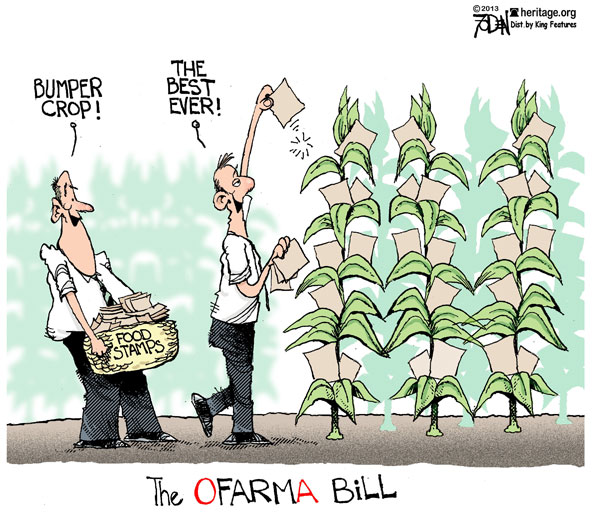


 While the price currently fluctuates around $600, Bitcoin remains far from secure. Serious discrepancies in price exist even between exchanges. For example, the price of a Bitcoin on the Mt. Gox exchange has fallen by over 50% in the past week, while the price of the exact same Bitcoin on the BitStamp exchange has fallen by only 3% in the same time period.


 The Daily Hatch