As Major Garrett perceptively noted, the manner in which the President carried out the equal pay push reflected former advisor David Plouffe’s ingenious strategy of “stray voltage”:
“The theory goes like this: Controversy sparks attention, attention provokes conversation, and conversation embeds previously unknown or marginalized ideas in the public consciousness. This happens, Plouffe theorizes, even when—and sometimes especially when—the White House appears defensive, besieged, or off-guard.”
While this post itself is perhaps reflective of the effectiveness of Plouffe’s strategy, nevertheless we thought it worth pointing out a video uncovered by George Mason University Professor Don Boudreaux over at Cafe Hayek. The video, which comes from a series of lectures delivered by Milton Friedman from 1977-1978, which were intended to serve as content for the “Free to Choose” video series (which preceded his best-selling book of the same name), deals with the substance of “equal pay” for “equal work” legislation.
Here is the clip:
Below are a couple of Friedman’s most compelling arguments:
“Over and over we have to look at the actual consequences of policies, not the names of them. The immediate occasion that we’re talking about now…”equal pay for equal work,” is a claim for people supposedly for the feminist cause. Now I believe that’s an anti-feminist slogan. It will hurt the feminists. It will not help them. Why? I believe that every individual man, woman, or child should have an opportunity to get a job if he wants to and can do it. But now, if there are some people who are prejudiced — if Mr. Jones is a male chauvinist — and he would prefer to have a man rather than a woman; or a Mr. Smith is a believer in feminine rights, and would prefer to have a woman rather than a man, it doesn’t matter. But take the male chauvinist pig: If you have a law that he must pay the woman and the man the same, and if he can find some way around having to hire the woman, he gets away free. He doesn’t have to pay for his prejudice. On the other hand, suppose he has the prejudice, but we let people compete. Then the woman at least has the weapon of offering to work for less. And he has to pay for his prejudice. The free market, by enabling people to compete openly, is the most effective device that has ever been invented for making people pay for their prejudices, and thus for making it costly for them to exercise it. And what you do when you impose the equal pay for equal work law, is that you make the expression of prejudice costless. And as a result you harm the people you intend to help.”
“I do not believe that it is desirable that we move in the direction of having a government bureaucrat decide whether A may hire B or not, whoever A and B are…and in consequence I think programs of this kind are both reducing our freedom and reducing equality. And they will…disadvantage…the very groups [which the policymakers and their supporters] intended to help.”
Also of note, Friedman recommends W.H. Hutt’s “The Economics of the Colour Bar,” a book we have discussed before, in which Hutt argues that apartheid in South Africa began with a trade union push for “equal pay” for “equal work” legislation.
Milton Friedman – Power of Choice (Biography) Part 3 Published on May 21, 2012 by BasicEconomics Tribute to Milton Friedman English Pages, 8. 9. 2008 Dear colleagues, dear friends, (1) It is a great honor for me to be asked to say a few words to this distinguished and very knowledgeable audience about one of our greatest […]
Milton Friedman – Power of Choice (Biography) Part 2 Published on May 21, 2012 by BasicEconomics My Tribute to Milton Friedman: The Little Giant of Free Market Economics By: admin- 11/17/2006 09:49 AM RESIZE: AAA Milton Friedman, the intellectual architect of the free-market reforms of the post-World War II era, was a dear friend. I […]
Milton Friedman – Power of Choice – Biography (Part 1) Published on May 20, 2012 by BasicEconomics David R. Henderson The Pursuit of Happiness ~ Milton Friedman: A Personal Tribute May 2007 • Volume: 57 • Issue: 4 David Henderson (davidrhenderson1950@gmail.com) is a research fellow with the Hoover Institution and an economics professor at […]
Milton Friedman and Chile – The Power of Choice Uploaded on May 13, 2011 In this excerpt from Free To Choose Network’s “The Power of Choice (2006)”, we set the record straight on Milton Friedman’s dealings with Chile — including training the Chicago Boys and his meeting with Augusto Pinochet. Was the tremendous prosperity unleashed […]
RARE Friedman Footage – On Keys to Reagan and Thatcher’s Success Margaret Thatcher and Milton Friedman were two of my heroes. Thatcher praises Friedman, her freedom fighter By George Jones, Political Editor 12:01AM GMT 17 Nov 2006 A tireless champion of the free market Let’s not get misty eyed over the Friedman legacy Milton Friedman, […]
Milton Friedman was a great economist and a fine speaker. ___________________ I have written before about Milton Friedman’s influence on the economy of Chile. Now I saw this fine article below from http://www.heritage.org and below that article I have included an article from the Wall Street Journal that talks about Milton Friedman’s influence on Chile. I […]
December 06, 2011 03:54 PM Milton Friedman Explains The Negative Income Tax – 1968 0 comments By Gordonskene enlarge Milton Friedman and friends.DOWNLOADS: 36 PLAYS: 35 Embed The age-old question of Taxes. In the early 1960′s Economist Milton Friedman adopted an idea hatched in England in the 1950′s regarding a Negative Income Tax, to […]
RARE Friedman Footage – On Keys to Reagan and Thatcher’s Success Margaret Thatcher and Milton Friedman were two of my heroes. Milton Friedman on How Francois Mitterrand (and Failed Lefty Economics) Helped Re-elect Margaret Thatcher Matt Welch|Apr. 10, 2013 9:37 am Yesterday I wrote a column about how Margaret Thatcher liberated Western Europe from the […]
I have written about the tremendous increase in the food stamp program the last 9 years before and that means that both President Obama and Bush were guilty of not trying to slow down it’s growth. Furthermore, Republicans have been some of the biggest supporters of the food stamp program. Milton Friedman had a […]
While Barack Obama’s economics team hammers out its $800 billion fiscal stimulus plan, the commentariat is battling over the effectiveness of what some consider the prototype stimulus package, the New Deal.* The suppressed (and problematic) conclusion to all this punditry seems to be: Because government spending under the New Deal helped/didn’t helpto end the Great Depression, the Obama stimulus plan will/won’t help to end the current recession.
One of the opening salvos was this exchange between George Will (anti-New Deal) and Paul Krugman (pro). More recently, New York Times editorial board member Adam Cohen (pro) wrote this column, responding to an op-ed by former Business Week bureau chief Andrew Wilson (anti) in the Wall Street Journal.
So who’s right? Did New Deal government spending “help,” as Cohen puts it?
To answer that, we first have to define Cohen’s term — what would it mean to say that government spending under the New Deal “helped”? Two possibilities come to mind:
New Deal spending boosted consumption, thereby increasing production, reducing unemployment, and ending the Depression.
New Deal spending aided people who would have otherwise been destitute during the Depression.
The first sense considers the New Deal as a stimulus program to revive the economy; the second considers it as a welfare program to aid the poor. The two notions are far from equivalent. My reading of the literature suggests that the New Deal did little as an economic stimulus, but it did provide welfare benefits.
The figure below sketches U.S. GDP and government spending (all levels) for the Great Depression era. The wildly fluctuating GDP line clearly marks the Great Contraction of 1929-1932, the Recession within the Depression of 1937–1938, and the return of GDP to pre-crash levels in 1940. In contrast, government spending has only a very mild upward slope over the period (until the 1941 ramping-up for World War II). In 1930, the second year of Herbert Hoover’s administration, government spending totaled $10 billion; at the height of the New Deal spending boom in 1936, government spending reached $13.1 billion. (In comparison, that rate of government spending growth is just below the average for the entire post-WWII era.) This raises the question of whether there was much New Deal fiscal stimulus at all.
We get a somewhat different view if we consider the federal budget surplus/deficit. Much of the benefit of fiscal stimulus is supposed to come from the fact that it’s deficit spending. In essence, government borrowing moves future consumption to the present and hopefully boosts the economy to a permanently higher level. As the figure below shows, the federal government dramatically ramped up deficit spending in the last year of Hoover’s administration, as tax receipts sagged and Hoover enacted his own emergency programs. FDR continued the borrowing to fund components of the New Deal.
However, this borrowing was not dramatic by today’s standards. As a share of GDP, the New Deal deficit peaked at 5.4 percent of GDP ($3.6 billion) in 1934; in dollar terms, it peaked at $5.1 billion (4.3 percent of GDP) in 1936. In contrast, President-elect Obama recently announced that he expects “trillion-dollar deficits for years to come,” even without the $800 billion stimulus package that his administration is preparing. With a U.S. GDP of roughly $13.8 trillion, the Obama-projected deficit (not counting the stimulus package) represents 7.2 percent of GDP.
Does the New Deal experience thus suggest that, when it comes to fiscal stimulus, just a little bit can have large effects? Interestingly, economic research suggests the opposite. Long before she was named chair of Obama’s Council of Economic Advisers, Christina Romer wrote a short paper for the Journal of Economic History titled “What Ended the Great Depression?” The paper provides empirical evidence that FDR’s fiscal policy provided little stimulus during the Great Depression. As shown in the figure below (reproduced from Romer’s article), the results of the New Deal’s fiscal stimulus (solid line) were little different from what she projects would have resulted from “normal fiscal policy” (dotted line). Both the deficit spending and the multiplier effect from that spending were too small to budge GDP.
What did end the Great Depression? Romer argues that another FDR policy — doubling the fixed exchange rate for the dollar relative to gold — did the trick, though the New Dealers seem to have lucked into that result rather than planned it. The rate change worked as a monetary stimulus, inducing large gold flows into the United States, where they could now buy twice as many dollars. That buttressed bank deposits and increased bank willingness to lend, encouraging investment. The lending resulted in a sharp increase in the money supply, pushing against the Depression’s price deflation and encouraging consumption. From the moment the exchange rate changed, the United States began to climb out of the Depression — albeit slowly; more slowly than many other countries.
Romer’s explanation dovetails with Milton Friedman and Anna Schwartz’s work on the root cause of the Depression: the Federal Reserve’s sharp reduction of the money supply in the late 1920s, in order to moderate the stock market boom and return the United States to the pre-WWI dollar-gold exchange rate. It also dovetails withevidencethat other nations’ recoveries from the Great Contraction began soon after they abandoned efforts to return their currencies to pre-war gold exchange rates. My reading of the economic literature indicates that the “monetary policy did it” thesis has been generally accepted by economic historians (contra Cohen’s graf 9).
So it was FDR’s monetary policy that ended the Great Depression, not such New Deal initiatives as the WPA, the CCC, NIRA, and the rest of the alphabet soup. This follows the findings of a later paper that Romer co-authored with husband David Romer on U.S. recessions in the post-WWII era, which found that monetary stimulus proved superior to discretionary fiscal stimulus in restoring the economy.
What, then, to make of our warring pundits? In the fight between Krugman and Will over the stimulatory effects of the New Deal, it seems that opposing sides can both be wrong. Will was incorrect to argue that economic conditions grew worse during the New Deal era — conditions did improve, albeit slowly, and were temporarily reversed by the Recession within the Depression. Krugman, on the other hand, was wrong to argue that FDR’s fiscal stimulus helped to remedy the Depression and that only the large fiscal stimulus of WWII ended the Depression — in fact, GDP had returned to pre-Crash trend (as calculated by Romer) by 1940. And both mischaracterize the 1937–1938 Recession in the Depression. Although federal deficit spending did decrease along with the economy, the recession appears to have been largely the product of onerous new banking regulations that weakened the monetary stimulus (a point that today’s eager-to-regulate Congress should bear in mind).
Concerning Wilson and Cohen, Wilson goes too far in claiming that FDR (and Hoover) “were jointly responsible for turning a panic into the worst depression of modern times.” If anyone merits that distinction, it is the Federal Reserve for its pre-Crash contractionary monetary policy. Cohen is wrong to claim that “as a matter of economics … F.D.R’s spending programs did help the economy.” However, he does have a point that the various New Deal jobs programs provided income for many people who would have otherwise been destitute. As indicated in the figure below, at their height, the programs provided “emergency jobs” to just over 40 percent of laborers who likely would have otherwise been jobless. As state unemployment insurance and federal safety net programs largely did not exist at the time of the Crash, the New Deal jobs programs were likely a godsend for those who got the jobs (though they did little for the millions more who didn’t). Today, however, several government programs provide income and other benefits to the jobless and the poor, so the welfare benefits of the New Deal do not need to be replicated.
Where does all of this leave us in evaluating policy responses to the current recession?
First, the economic history of the New Deal and the rest of the 20th century raises serious doubts about the effectiveness of discretionary fiscal stimulus packages in reversing an economic downturn. Monetary stimulus has a far better track record (which is not to say that we shouldn’t have concerns about such policy — but that is a discussion for another blog post). And though there is no longer a fixed gold exchange rate for the dollar and the Fed has dropped nominal short-term interest rates to near zero, the Fed has other monetary weapons that it can use to fight this recession. Second, the helpful welfare benefits of the New Deal are now carried out automatically by other government programs.
This leaves us with an important question that has so far gone unasked by the commentariat: Given the above, is $800 billion in new government deficit spending worthwhile?
* As Tyler Cowen points out, it’s wrong to think of the New Deal as a comprehensive, unified set of fiscal initiatives; FDR tried many different policies, and sometimes changed approaches, to fight the Depression.
___________ Milton Friedman rightly pointed out that the crisis of the Great Depression was not a failure of the free market system but of government and Dan Mitchell concurs!!! Statist Policy and the Great Depression September 17, 2014 by Dan Mitchell It’s difficult to promote good economic policy when some policy makers have a deeply flawed […]
Milton Friedman – The Great Depression Myth Uploaded by LibertyPen on Mar 25, 2010 Milton Friedman explodes the myth that the Great Depression was produced by a failure of private enterprise. _______________ Milton Friedman is right about the cause of the Great Depression. Ivan Pongracic Jr. The Great Depression According to Milton Friedman The Great […]
In 1980 I read the book FREE TO CHOOSE by Milton Friedman and it really enlightened me a tremendous amount. I suggest checking out these episodes and transcripts of Milton Friedman’s film series FREE TO CHOOSE: “The Failure of Socialism” and “What is wrong with our schools?” and “Created Equal” and From Cradle to Grave, […]
Open letter to President Obama (Part 693) (Emailed to White House on July 29, 2013) President Obama c/o The White House 1600 Pennsylvania Avenue NW Washington, DC 20500 Dear Mr. President, I know that you receive 20,000 letters a day and that you actually read 10 of them every day. I really do respect you […]
Open letter to President Obama (Part 692) (Emailed to White House on July 29, 2013) President Obama c/o The White House 1600 Pennsylvania Avenue NW Washington, DC 20500 Dear Mr. President, I know that you receive 20,000 letters a day and that you actually read 10 of them every day. I really do respect you […]
In 1980 I read the book FREE TO CHOOSE by Milton Friedman and it really enlightened me a tremendous amount. I suggest checking out these episodes and transcripts of Milton Friedman’s film series FREE TO CHOOSE: “The Failure of Socialism” and “What is wrong with our schools?” and “Created Equal” and From Cradle to Grave, […]
Open letter to President Obama (Part 688) (Emailed to White House on July 29, 2013) President Obama c/o The White House 1600 Pennsylvania Avenue NW Washington, DC 20500 Dear Mr. President, I know that you receive 20,000 letters a day and that you actually read 10 of them every day. I really do respect you […]
In 1980 I read the book FREE TO CHOOSE by Milton Friedman and it really enlightened me a tremendous amount. I suggest checking out these episodes and transcripts of Milton Friedman’s film series FREE TO CHOOSE: “The Failure of Socialism” and “What is wrong with our schools?” and “Created Equal” and From Cradle to Grave, […]
Open letter to President Obama (Part 684) (Emailed to White House on July 29, 2013) President Obama c/o The White House 1600 Pennsylvania Avenue NW Washington, DC 20500 Dear Mr. President, I know that you receive 20,000 letters a day and that you actually read 10 of them every day. I really do respect you […]
Open letter to President Obama (Part 680) (Emailed to White House on July 29, 2013) President Obama c/o The White House 1600 Pennsylvania Avenue NW Washington, DC 20500 Dear Mr. President, I know that you receive 20,000 letters a day and that you actually read 10 of them every day. I really do respect you […]
The Great Depression. A row of out of work men at the New York City docks in 1930s. (Photo: Newscom)
“What is history but a fable agreed upon?” as Napoleon once put it, and never has that been more true than the story of the Great Depression and its aftermath. With liberals again pitching more government spending “stimulus” in Washington, it’s critical we get this history right.
In a previous column I unmasked the historical lie that Franklin Roosevelt’s New Deal programs ended the Great Depression. After seven years of New Deal-era explosions in federal debt and spending, the U.S. economy was still flat on its back, and misery could be seen on the street corners. By 1940, unemployment still averaged a sky-high 14.6 percent. That’s some recovery.
However, I’ve been deluged with the same question from readers: Ok, what did end the Great Depression? Again, the history books get this chapter of history wrong. Most history books tell us that it was government spending on steroids to mobilize for World War II after the Japanese attacks on Pearl Harbor on Dec. 7, 1941.
Well, it is true that the economic output surged and unemployment fell, but periods of all-out war are very different than periods of peace. Is it any surprise that unemployment fell dramatically when nearly 12 million Americans joined the military?
My mother, a teenager in that period, used to tell me that during the war, when fuel was scarce and needed for the military, you wouldn’t be caught dead driving to the movie theater or a party. It was regarded as unpatriotic and selfish. People continued to produce even with high tax rates (94 percent during the war) when their tax dollars were financing the fight against the Nazis and the Japanese.
For nearly four years — from 1942 to 1945 — America was not a free-market economy. We were an all-out wartime economy — with the normal laws of economics suspended.
However, a war is no way to fix an economy — obviously. Countering terrorist acts of the Islamic State is not a jobs program. During World War II, when we built ships, tanks, fighter planes, dropped bombs and sent our troops into harm’s way, we weren’t creating wealth. A war is no more stimulating to the economy than a burglar stealing your money, the Japanese tsunami in 2011, Hurricane Katrina in 2005, or a tornado that levels an entire town. Without such calamity, the resources spent reconstructing (or destroying in the case of war) would be spent either purchasing useful, life-enhancing products for consumption or investing in technology and capital equipment requisite to increasing economic output.
War in self-defense might be necessary to protect our families, but any economic growth derived from it is far less beneficial than growth derived from free people making individual decisions on what to consume and in what to invest.
In the 1940s, government spending did indeed surge. The federal share of gross domestic product (GDP) rose from less than 12 percent in 1941 to more than 40 percent in 1943-45. In other words, almost half of everything that was produced in the nation was to fight the war. Domestic spending on many FDR New Deal programs in education, training and social services dropped more than 90 percent.
The real issue is what caused the economy to surge after the war was over.
This story is also not covered in the history books. Shortly after his third re-election in 1944, and at a time when the outcome of the war was no longer in question, FDR and his domestic advisers plotted a “new” New Deal with such spending items as national health insurance. The Keynesians were sure that the massive reduction in government spending would catastrophically tank the economy.
Paul Samuelson, the dean of neo-Keynesians at that time, warned in 1943 that unless wartime spending and controls were extended, there would be “the greatest period of unemployment and industrial dislocation which any economy has ever faced.” Business Week predicted unemployment would hit 14 percent with the postwar cutbacks.
Here’s what happened. Government spending collapsed from 41 percent of GDP in 1945 to 24 percent in 1946 to less than 15 percent by 1947. And there was no “new” New Deal. This was by far the biggest cut in government spending in U.S. history. Tax rates were cut and wartime price controls were lifted. There was a very short, eight-month recession, but then the private economy surged.
Here are the numbers on the private economy. Personal consumption grew by 6.2 percent in 1945 and 12.4 percent in 1946 even as government spending crashed. At the same time, private investment spending grew by 28.6 percent and 139.6 percent.
The less the feds spent, the more people spent and invested. Keynesianism was turned on its head. Milton Friedman’s free markets were validated.
In 1946, the unemployment rate averaged below 4 percent, and it stayed that low for the better part of a decade. This all happened during the biggest reduction in government spending in American history under President Truman.
In sum, it wasn’t government spending, but the shrinkage of government that finally ended the Great Depression. That’s what should be in every history book — but isn’t.
___________ Milton Friedman rightly pointed out that the crisis of the Great Depression was not a failure of the free market system but of government and Dan Mitchell concurs!!! Statist Policy and the Great Depression September 17, 2014 by Dan Mitchell It’s difficult to promote good economic policy when some policy makers have a deeply flawed […]
Milton Friedman – The Great Depression Myth Uploaded by LibertyPen on Mar 25, 2010 Milton Friedman explodes the myth that the Great Depression was produced by a failure of private enterprise. _______________ Milton Friedman is right about the cause of the Great Depression. Ivan Pongracic Jr. The Great Depression According to Milton Friedman The Great […]
In 1980 I read the book FREE TO CHOOSE by Milton Friedman and it really enlightened me a tremendous amount. I suggest checking out these episodes and transcripts of Milton Friedman’s film series FREE TO CHOOSE: “The Failure of Socialism” and “What is wrong with our schools?” and “Created Equal” and From Cradle to Grave, […]
Open letter to President Obama (Part 693) (Emailed to White House on July 29, 2013) President Obama c/o The White House 1600 Pennsylvania Avenue NW Washington, DC 20500 Dear Mr. President, I know that you receive 20,000 letters a day and that you actually read 10 of them every day. I really do respect you […]
Open letter to President Obama (Part 692) (Emailed to White House on July 29, 2013) President Obama c/o The White House 1600 Pennsylvania Avenue NW Washington, DC 20500 Dear Mr. President, I know that you receive 20,000 letters a day and that you actually read 10 of them every day. I really do respect you […]
In 1980 I read the book FREE TO CHOOSE by Milton Friedman and it really enlightened me a tremendous amount. I suggest checking out these episodes and transcripts of Milton Friedman’s film series FREE TO CHOOSE: “The Failure of Socialism” and “What is wrong with our schools?” and “Created Equal” and From Cradle to Grave, […]
Open letter to President Obama (Part 688) (Emailed to White House on July 29, 2013) President Obama c/o The White House 1600 Pennsylvania Avenue NW Washington, DC 20500 Dear Mr. President, I know that you receive 20,000 letters a day and that you actually read 10 of them every day. I really do respect you […]
In 1980 I read the book FREE TO CHOOSE by Milton Friedman and it really enlightened me a tremendous amount. I suggest checking out these episodes and transcripts of Milton Friedman’s film series FREE TO CHOOSE: “The Failure of Socialism” and “What is wrong with our schools?” and “Created Equal” and From Cradle to Grave, […]
Open letter to President Obama (Part 684) (Emailed to White House on July 29, 2013) President Obama c/o The White House 1600 Pennsylvania Avenue NW Washington, DC 20500 Dear Mr. President, I know that you receive 20,000 letters a day and that you actually read 10 of them every day. I really do respect you […]
Open letter to President Obama (Part 680) (Emailed to White House on July 29, 2013) President Obama c/o The White House 1600 Pennsylvania Avenue NW Washington, DC 20500 Dear Mr. President, I know that you receive 20,000 letters a day and that you actually read 10 of them every day. I really do respect you […]
Have you ever wondered why, in a hypothetical match-up, the American people would elect Ronald Reagan over Barack Obama in a landslide?
And have you ever wondered why Americans rate Reagan as the best post-WWII President and put Obama in last place?
There are probably a couple of reasons for these polling numbers, but I suspect one reason for the gap is that Reaganomics generated much better results than Obamanomics.
He points out that both Reagan and Obama inherited very weak economies. But that’s where the similarity ends. Reagan pushed an agenda of free markets and small government while Obama doubled down on Bush’s statism.
The results, he explains, confirm that big government is the problem rather than solution.
Obama’s economic policy, with the help of a pliant Federal Reserve, has been built on the notion that massive deficit spending and easy money would bring the economy roaring back and “stimulate” job growth. The former strategy was tried during the 1930s. It only succeeded in lengthening the Great Depression, as the nation’s unemployment rate never fell below 12 percent. The fact that Team Obama insisted on making the same mistakes, while at the same time unleashing the federal government’s regulatory apparatus to harass the economy’s productive participants, is enough to make reasonable people question whether this president and his administration have ever truly wanted to see a genuine recovery occur. On the other hand, five years of strong, solid and uninterrupted economic performance following a serious recession is how you create a positive economic legacy. Ronald Reagan’s post-recession economy — an economy which faced arguably greater challenges when he took office, particularly double-digit inflation and a prime interest rate of 20 percent — did just that.
Those are strong words, but I think the accompanying graphics are even more persuasive.
Here’s a chart comparing post-recession growth for both Presidents.
And here’s the data on jobs, including breakdown of private-sector employment gains.
And here are the numbers for median household income. Once again, Obama is presiding over dismal numbers, particularly when compared to the Gipper.
What’s especially ironic, as I explained back in March, is that rich people are the only ones who have experienced income gains during the Obama years.
So Obama claims that his class-warfare policy is designed to hurt the wealthy, but the rest of us are the ones actually paying the price.
Let’s look at one final chart.
These poverty numbers weren’t included in the article, but I think they’re worth sharing because you can see that both the poverty rate and the number of Americans in poverty fell once Reagan’s policies took effect in the early 1980s. Under Obama, by contrast, the best we can say is that the numbers aren’t getting worse.
One final point, I imagine that some leftists will argue that Mr. Blumer is being unfair by looking only at Reagan’s post-1982-recession numbers.
That’s a fair point…but only if you think that the recession was caused by Reagan’s policies. Like most economists, I disagree with that accusation. The recession almost certainly was an unavoidable consequences of inflationary monetary policy in the 1970s.
President Reagan’s Remarks at The Annual National Prayer Breakfast on February 4, 1984 (discusses prayer) President Reagan’s Remarks at an Ecumenical Prayer Breakfast in Dallas, Texas on August 23, 1984 (Compares US founding to French Revolution and shows different results) Uploaded on Jan 4, 2011 President Reagan’s Remarks at an Ecumenical Prayer Breakfast in […]
Bob Chitester Discusses Milton Friedman and ‘Free to Choose’ Published on Jul 30, 2012 by LibertarianismDotOrg “There are very few people over the generations who have ideas that are sufficiently original to materially alter the direction of civilization. Milton is one of those very few people.” That is how former Federal Reserve Chairman Alan Greenspan […]
Some people doubt that Ronald Reagan conservatism still works today like it did in the 1980’s and that those kind of conservatives can still win today but they can!!!! Question of the Week: What’s My Take on “Reform Conservatism”? June 2, 2013 by Dan Mitchell Among the right-leaning policy wonks and intellectuals in Washington, there’s a lot […]
Ronald Reagan said, “We will never compromise our principles and standards.” Are the Republicans in Arkansas true Tea Party Ronald Reagan Republicans? According to Americans for Prosperity in the last 5 years Arkansas’ current Medicaid program has run a deficit of a billion dollars. Why expand it willingly with Obama? The “Do Nothing” expansion plan increases […]
Barack Obama would lose badly to Ronald Reagan!!! The Spirit of Reagan Is Still With Us: The Gipper Crushes Obama in Hypothetical Matchup April 13, 2013 by Dan Mitchell Barack Obama has stated that he wants to be like Reagan, at least in the sense of wanting to be a transformational figure. But almost certainly he has […]
Below is a discussion from Milton Friedman on Bill Clinton and Ronald Reagan. February 10, 1999 | Recorded on February 10, 1999 audio, video, and blogs » uncommon knowledge PRESIDENTIAL REPORT CARD: Milton Friedman on the State of the Union with guest Milton Friedman Milton Friedman, Senior Research Fellow, Hoover Institution and Nobel Laureate in […]
Below is a discussion from Milton Friedman on Bill Clinton and Ronald Reagan. February 10, 1999 | Recorded on February 10, 1999 audio, video, and blogs » uncommon knowledge PRESIDENTIAL REPORT CARD: Milton Friedman on the State of the Union with guest Milton Friedman Milton Friedman, Senior Research Fellow, Hoover Institution and Nobel Laureate in […]
I really enjoyed this article. A Constitutional President: Ronald Reagan and the Founding By Edwin Meese III , Lee Edwards, Ph.D. , James C. Miller III and Steven Hayward January 26, 2012 Abstract: Throughout his presidency, Ronald Reagan was guided by the principles of the American founding, especially the idea of ordered liberty. In the opening of his first inaugural address in 1981, […]
Ronald Reagan was the greatest pro-life president ever. He appointed Dr. C. Everett Koop to his administration and Dr. Koop was responsible for this outstanding pro-life film below: I was thinking about the March for Life that is coming up on Jan 20, 2013 in Little Rock and that is why I posted this today. […]
1/30/84 Part 1 of a speech to the National Religious Broadcasters. June 10, 2004, 10:30 a.m. Abortion and the Conscience of the Nation Ronald Reagan’s pro-life tract. EDITOR’S NOTE: While president, Ronald Reagan penned this article for The Human Life Review, unsolicited. It ran in the Review‘s Spring 1983, issue and is reprinted here with permission. The case […]
Milton Friedman rightly pointed out that the crisis of the Great Depression was not a failure of the free market system but of government and Dan Mitchell concurs!!!
It’s difficult to promote good economic policy when some policy makers have a deeply flawed grasp of history.
This is why I’ve tried to educate people, for instance, that government intervention bears the blame for the 2008 financial crisis, not capitalism or deregulation.
But one of the biggest challenges is correcting the mythology that capitalism caused the Great Depression and that government pulled the economy out of its tailspin.
Now, to augment that analysis, we have a video from Learn Liberty. Narrated by Professor Stephen Davies, it punctures several of the myths about government policy in the 1930s.
Top Three Myths about the Great Depression and the New Deal
Uploaded on Jun 17, 2011
Historian Stephen Davies names three persistent myths about the Great Depression. Myth #1: Herbert Hoover was a laissez-faire president, and it was his lack of action that lead to an economic collapse. Davies argues that in fact, Hoover was a very interventionist president, and it was his intervening in the economy that made matters worse. Myth #2: The New Deal ended the Great Depression. Davies argues that the New Deal actually made matters worse. In other countries, the Great Depression ended much sooner and more quickly than it did in the United States. Myth #3: World War II ended the Great Depression. Davies explains that military production is not real wealth.; wars destroy wealth, they do not create wealth. In fact, examination of the historical data reveals that the U.S. economy did not really start to recover until after WWII was over.
Professors Davies is right on the mark in every case.
And I’m happy to pile on with additional data and evidence.
Myth #1: Herbert Hoover was a laissez-faire President – Hoover was a protectionist. He was an interventionist. He raised tax rates dramatically. And, as I had to explain when correcting Andrew Sullivan, he was a big spender. Heck, FDR’s people privately admitted that their interventionist policies were simply more of the same since Hoover already got the ball rolling in the wrong direction. Indeed, here’s another video on the Great Depression and it specifically explains how Hoover was a big-government interventionist.
Myth #3: World War II ended the depression – I have a slightly different perspective than Professor Davies. He’s right that wars destroy wealth and that private output suffers as government vacuums up resources for the military. But most people define economic downturns by what happens to overall output and employment. By that standard, it’s reasonable to think that WWII ended the depression. That’s why I think the key lesson is that private growth rebounded after World War II ended and government shrank, when all the Keynesians were predicting doom.
By the way, Reagan understood this important bit of knowledge about post-WWII economic history. And if you want more evidence about how you can rejuvenate an economy by reducing the fiscal burden of government, check out what happened in the early 1920s.
P.S. If you want to see an economically illiterate President in action, watch this video and you’ll understand why I think Obama will never be as bad as FDR.
P.P.S. Since we’re looking at the economic history of the 1930s, I strongly urge you to watch the Hayek v Keynes rap videos, both Part I and Part II. This satirical commercial for Keynesian Christmas carols also is very well done.
TEMIN: We don’t think the big capital arose before the government did? VON HOFFMAN: Listen, what are we doing here? I mean __ defending big government is like defending death and taxes. When was the last time you met anybody that was in favor of big government? FRIEDMAN: Today, today I met Bob Lekachman, I […]
worked pretty well for a whole generation. Now anything that works well for a whole generation isn’t entirely bad. From the fact __ from that fact, and the undeniable fact that things are working poorly now, are we to conclude that the Keynesian sort of mixed regulation was wrong __ FRIEDMAN: Yes. LEKACHMAN: __ or […]
MCKENZIE: Ah, well, that’s not on our agenda actually. (Laughter) VOICE OFF SCREEN: Why not? MCKENZIE: I boldly repeat the question, though, the expectation having been __ having been raised in the public mind, can you reverse this process where government is expected to produce the happy result? LEKACHMAN: Oh, no way. And it would […]
The massive growth of central government that started after the depression has continued ever since. If anything, it has even speeded up in recent years. Each year there are more buildings in Washington occupied by more bureaucrats administering more laws. The Great Depression persuaded the public that private enterprise was a fundamentally unstable system. That […]
Worse still, America’s depression was to become worldwide because of what lies behind these doors. This is the vault of the Federal Reserve Bank of New York. Inside is the largest horde of gold in the world. Because the world was on a gold standard in 1929, these vaults, where the U.S. gold was stored, […]
George Eccles: Well, then we called all our employees together. And we told them to be at the bank at their place at 8:00 a.m. and just act as if nothing was happening, just have a smile on their face, if they could, and me too. And we have four savings windows and we […]
Milton Friedman’s Free to Choose (1980), episode 3 – Anatomy of a Crisis. part 1 FREE TO CHOOSE: Anatomy of Crisis Friedman Delancy Street in New York’s lower east side, hardly one of the city’s best known sites, yet what happened in this street nearly 50 years ago continues to effect all of us today. […]
In this excerpt from Free To Choose Network’s “The Power of Choice (2006)”, we set the record straight on Milton Friedman’s dealings with Chile — including training the Chicago Boys and his meeting with Augusto Pinochet. Was the tremendous prosperity unleashed after the Chicago Boys reforms worth the free-market therapy Friedman suggested? You be the judge. But when doing so, just remember the policies leading up to liberalization (land seizures, industry nationalizations and price controls).
_______________
I have discussed Milton Friedman and Chile before and it an amazing story. Evidently what Milton Friedman’s Chicago Boys started many years ago in the 1970’s is still working today.
He shared a chart that conclusively shows why good economic policy makes a difference.
Wow. Look at how much faster the economy has grown since the communists were ousted in 1975 and replaced by a pro-market government.* And the poverty rate has plummeted from 50 percent to 11 percent!
Simply stated, economic reform has been hugely beneficial to poor and middle-class people in Chile. Something to remember as we try to rein in the welfare state in America.
Let’s look at some more data. A couple of years ago, I shared this chart showing how Chile had out-paced Argentina and Venezuela. In other words, Chile’s performance is ultra-impressive, whether examined in isolation or in comparison with other nations in the region.
The reason for all this success is that Chile didn’t just reform its pension system. As you can see from this Economic Freedom of the World data, Chile has made improvements in virtually all areas of public policy.
*The Pinochet government that took power in the 1970s may have been pro-economic liberty, but it also was authoritarian. Fortunately, Chile made a successful and peaceful transition to democracy in the late 1980s and has generally continued on a pro-free market path.
Milton Friedman was a great economist and a fine speaker. ___________________ I have written before about Milton Friedman’s influence on the economy of Chile. Now I saw this fine article below from http://www.heritage.org and below that article I have included an article from the Wall Street Journal that talks about Milton Friedman’s influence on Chile. I […]
Milton Friedman – Public Schools / Voucher System (Q&A) Part 1 Published on May 7, 2012 by BasicEconomics ___________ President Obama c/o The White House 1600 Pennsylvania Avenue NW Washington, DC 20500 Dear Mr. President, I know that you receive 20,000 letters a day and that you actually read 10 of them every day. I […]
The Machine: The Truth Behind Teachers Unions Published on Sep 4, 2012 by ReasonTV America’s public education system is failing. We’re spending more money on education but not getting better results for our children. That’s because the machine that runs the K-12 education system isn’t designed to produce better schools. It’s designed to produce more […]
Below is a discussion from Milton Friedman on Bill Clinton and Ronald Reagan. February 10, 1999 | Recorded on February 10, 1999 audio, video, and blogs » uncommon knowledge PRESIDENTIAL REPORT CARD: Milton Friedman on the State of the Union with guest Milton Friedman Milton Friedman, Senior Research Fellow, Hoover Institution and Nobel Laureate in […]
Stearns Speaks on House Floor in Support of Balanced Budget Amendment Uploaded by RepCliffStearns on Nov 18, 2011 Speaking on House floor in support of Balanced Budget Resolution, 11/18/2011 ___________ Below are some of the main proposals of Milton Friedman. I highly respected his work. David J. Theroux said this about Milton Friedman’s view concerning […]
Johan Norberg – Free or Equal – Free to Choose 30 years later 5/5 Published on Jun 10, 2012 by BasicEconomics In 1980 economist and Nobel laureate Milton Friedman inspired market reform in the West and revolutions in the East with his celebrated television series “Free To Choose.” Thirty years later, in this one-hour documentary, […]
Johan Norberg – Free or Equal – Free to Choose 30 years later 4/5 Published on Jun 10, 2012 by BasicEconomics In 1980 economist and Nobel laureate Milton Friedman inspired market reform in the West and revolutions in the East with his celebrated television series “Free To Choose.” Thirty years later, in this one-hour documentary, […]
When I think about the life work of Milton Friedman two issues keep coming up. Private vouchers for schools and lowering federal government spending. Those two issues were very close to his heart. I am hoping in the future our leaders will see that after increasing spending every year for the last 40 years and at the same time our test results have dropped that we must gave private vouchers a chance.
Also as our national debt keep rising we must adopt the Balanced Budget Amendment which was also close to Friedman’s heart.
In compiling a list of the greatest economists of all time, Milton Friedman’s name will surely be one of the first to come to mind. There is of course his technical work, such as his famous Monetary History of the United States (co-authored with Anna Schwartz), that established him as the chief architect of the theory of monetarism. More important was his ability to explain in clear layman’s terms the basic principles of our economic system, how it creates wealth for all members of society, and the importance to a successful society of individual liberty. If one were to pick two books that our country’s leaders should read, they would be his Capitalism and Freedom and Free to Choose. They are a treasure trove of solutions to the social problems of today.
Freidman wrote the first of these in 1962. In a period where we were about to launch The Great Society, as is the case today, people were looking to the federal government to improve their lives. Friedman offered an alternative based upon market forces and individual liberty. His cogent examination of the effect of incentives on people’s behavior led him to offer solutions to societal problems that were both insightful and effective. He offered ideas such as allowing individuals to invest in the education of others, so poor children would be able to obtain funding for high school and college in return for the investor receiving a fraction of their future earnings. This innovative idea would be much more successful than Pell Grants in encouraging and enabling students to finish high school and graduate from college.
Today we are more than ever in need of a resurgence and rediscovery of Milton Friedman’s ideas. Examples of this need abound. The stimulus package was supposed to keep the unemployment rate below 8 percent. Instead we have unemployment between 9.5 and 10 percent and $800 billion added to the federal debt. The Obama administration is now pushing for a second stimulus package. Thirty years ago Friedman explained that fiscal policy is not an effective method of reducing unemployment. Had we followed Friedman’s advice, we would be less burdened in debt and further along in economic recovery.
His argument for vouchers as a mechanism of moving public education from a socialist system to a market system has found traction in the last decade. Nonetheless, voucher proposals are very difficult to pass due to the power of the teachers unions. As a consequence of not following Friedman’s advice thousands of children in our urban schools have lost their chance for a good education.
Due to a massive 2000 page health care bill, the federal government is now managing the entire health care and health insurance industry. Freidman explained in a cogent article in The Public Interest, that health care costs are so high and customer satisfaction with the system is so low because government intervention has pushed us into an employer and government-based third party payment system. In typical Friedman fashion he forces us to observe that advances in technology in every area other than health care have led to reduced costs and increased satisfaction with the product or service and to ask why this is so. He asks why we single out medical care for tax-free status. Food is more important than medical care and yet we do not exempt the cost of food if provided by the employer. He must be surely rolling over in his grave the new health care legislation will compound the problem of third-party payment.
The President recently signed a 2300 page bill granting the federal government control over the entire financial industry. Professor Friedman wrote famously of how the Federal Reserve was not capable of determining how to manipulate the credit markets effectively due to its inability to know the information necessary to conduct effective monetary policy, and thus argued that the Federal Reserve should be constrained by rules. He certainly would have argued strenuously against giving the Federal Reserve and Securities and Exchange Commission the enormous powers that they received under the financial regulation legislation.
In Free to Choose, Friedman and his wife, Rose, argued for a constitutional amendment requiring a balanced budget. As we see deficits of nearly $1.5 trillion staring us in the face for at least the next few years, this suggestion too has gained new relevance.
Concluding Free to Choose, he wrote:
“The two ideas of human freedom and economic freedom working together cane to their greatest fruition in the United States. Those ideas are still very much with us. But we have been straying from them. We have been forgetting the basic truth that the greatest threat to human freedom is the concentration of power, whether in the hands of government or anyone else. We have persuaded ourselves that it is safe to grant power, provided it is for good purposes.”
Some thirty years later those words again ring true. Our hope should be that his final statement also is true:
“Fortunately, we are waking up….Fortunately, also, we are as a people still free to choose which way we should go—whether to continue along the road we have been following to ever bigger government, or to call a halt and change direction.”
This post originally appeared at The Business and Media Insitute’s Balance Sheet of July 28, 2010
FRIEDMAN: In the first course in economics at the University of Chicago in 1932. We took the same course. It was Jacob Viner’s Economic Theory, and, as it happened, Jacob Viner seated his students alphabetically in order to be able to remember their names, and so Rose Director, which was her name, sat next to Milton Friedman. In addition, as Rose always says, she was the only girl in the class at the time.
LAMB: When did you decide to write books together, and how did you separate the responsibility?
FRIEDMAN: Well, that’s very hard to answer. We were married in 1938, six years after we first met, and then we had children. Rose did a wonderful job in really taking care of the house, raising children and being an inspiration to me. But she had a professional career before that. She had written some things and worked in research organizations before that. But it wasn’t until the kids were grown up and off to college that she was able, really, to spend the time working with me. Capitalism and Freedom was based on a series of lectures that I had given at a kind of summer school, and she took those lectures and reworked them into the book, so really she should have been a joint author on that as well.
LAMB: Janet and David?
FRIEDMAN: They’re my children.
LAMB: You dedicate Capitalism and Freedom to them. Where are they?
FRIEDMAN: Janet’s at Davis, Calif. She’s a lawyer, but her husband is a computer specialist who teaches at the Davis Branch of the University of California. My son David is now — well, he’s had a checkered career in the sense that he got a degree in physics, a Ph.D. in physics, but he’s become an economist. He never took a course in economics except over the dinner table.
LAMB: Where is he?
FRIEDMAN: He’s at the University of Chicago in the law school where he does research in law and economics.
LAMB: When did you win the Nobel Prize and for what?
FRIEDMAN: I won the Nobel Prize in 1976, and I won it for none of those things, but for Monetary History of the United States and an earlier book of mine called A Theory of the Consumption Function, which, I may say, are funny things. A Theory of the Consumption Function is, in my mind, the best thing I ever did as a piece of science. Monetary History is undoubtedly the most influential, and Free to Choose is the best selling, so they are not similarly characterized.
LAMB: I’m going to take it even a step lower, if you will. I want you to tell a little bit of the pencil story.
FRIEDMAN: Oh, sure. I’d be delighted to.
LAMB: Your picture on this book has you with a pencil in your hand.
FRIEDMAN: That didn’t originate with me. I got it from Leonard Read, who was the head of the Foundation for Economic Education. It’s used to tell how the market works, and it’s used to tell how people can work together without knowing one another, without being of the same religion or anything. The story starts like this: Leonard Read and I held up a lead pencil — so-called, one of these yellow pencils — and we said, “Nobody knows how to make a pencil. There’s not a single person in the world who knows how to make a pencil.” In order to make a pencil, you have to get wood for the outside. In order to get wood, you have to have logging; you have to have somebody who can manufacture saws. No single person knows how to do all that. What’s called lead inside isn’t lead. It’s graphite. It comes from some mines in Latin America. In order to be able to make a pencil, you’d have to be able to get the lead. The rubber at the tip isn’t really. Nowadays it isn’t even natural rubber, but at the time I was talking, it was natural rubber. It comes from Malaysia, although the rubber tree is not native to Malaysia but was imported into Malaysia by some English botanists. So in order to know how to make a pencil, you would have to be able to do all of these things. There are probably thousands of people who have cooperated together to make that pencil. Somehow or other, the people in South America who dug out the graphite cooperated with the people in Malaysia who tapped the rubber trees, cooperated with maybe the people in Oregon who cut down the trees. These thousands of people don’t know one another. They speak different languages. They come from different religions. They might hate one another if they saw them. What is it that enabled them to cooperate together? The answer is the existence of a market. The answer is the people in Latin America were led to dig out the graphite because somebody was willing to pay them. They didn’t have to know who was paying them; they didn’t have to know what it was going to be used for. All they had to know was somebody was going to pay them. Indeed, going back to Hayek, one of the most important articles he ever wrote — it doesn’t show up in the book — was about the way in which prices are an information mechanism, the role of prices in transmitting information. Let’s suppose there’s a great increase in the demand for graphite. How do people find out about that? Because the people who want more graphite offer a higher price for it. The price of graphite tends to go up. The people in Latin America don’t have to know anything about why the demand went up. Who is it who’s willing to pay the higher price? The price itself transmits the information that graphite is scarcer than it was and more in demand. If you go back to the pencil thing, what brought all these people together was an enormous complex structure of prices — the price of graphite, the price of lumber, the price of rubber, the wages paid to the laborer who did this and so on. It’s a marvelous example of how you can get a complex structure of cooperation and coordination which no individual planned. There was nobody who sat in a central office and sent an order out to Malaysia, “Produce one more thimble of rubber,” or sent a signal. It was the market that coordinated all of this without anybody having to know all of the people involved.
LAMB: How many times have you told that pencil story?
FRIEDMAN: Well, I really haven’t told it that many times. I told it in the TV program and then I told it in the book, but I think this is the third time.
LAMB: You’re living in San Francisco, where we are. What brought you here?
FRIEDMAN: When I reached the age of 65 — I was at that time living in Chicago and teaching in Chicago — I decided I had graded all the exam papers I was going to grade. My wife grew up in Portland, Ore., and she was in love with San Francisco. She tried to move us out here many times during our life together, but she never succeeded until I decided I was going to retire from active teaching. Fortunately, the Hoover Institution at Stanford University offered me the opportunity to be a fellow at Hoover so I could continue my research and writing without doing any teaching.
LAMB: Peter Robinson, who is a “Booknotes” that people will see at another time, said that he got an MBA from Stanford and never once did anybody bring up Adam Smith or Milton Friedman.
FRIEDMAN: I can believe that.
LAMB: Why would that be?
FRIEDMAN: Because you still have, although it’s not the same as it was in 1963 — there’s more tolerance for the kind of ideas I am in favor of. The general academic community is very much socialist in the sense in which Hayek speaks of the socialists. The general academic community, nowadays it’s labeled political correctness. The ideas of Adam Smith, the ideas of Friedrich Hayek, of Milton Friedman are not very congenial to those who believe that the way in which you get things done is by having government come in and do them.
LAMB: You said earlier that you’re an old man. Do you feel like an old man?
FRIEDMAN: Physically at the moment I do, but not intellectually.
LAMB: Why physically?
FRIEDMAN: I recently had an operation on my back, which had some side effects from which I’ve been very slow in recovering.
LAMB: How old are you now?
FRIEDMAN: I’m 82 years old.
LAMB: Other than this operation, do you think differently because you’re an older person?
FRIEDMAN: No, no.
LAMB: Do you have things you want to accomplish?
FRIEDMAN: Absolutely. My wife and I are in the process of trying to write our memoirs.
LAMB: What in that process are you finding? Is it hard?
FRIEDMAN: Yes, because when you start digging back into your past, you find that you’ve forgotten so much and there’s so much to dig out.
LAMB: What’s the purpose of the memoir?
FRIEDMAN: Well, that’s hard to answer. The purpose of the memoirs is we have been very fortunate people. In fact, our tentative title for it is Two Lucky People. We’ve been very fortunate in our life. We’ve had a great deal of activity. We’ve spent a long time. We’ve been able to be at the center. For example, we spent years with the New Deal in Washington. I was involved in wartime research during the war. We’ve lived through and been associated with a lot that has gone on, and we believe that people have forgotten that story. We’re not mostly interested in telling about ourselves, but we want to tell about the world in which we grew up and the world which enabled us, both of whom came from families which by any standard of today would have been regarded as below the poverty level, but neither her family nor mine ever thought of themselves as poor. They weren’t poor. They didn’t have a very high level of income, but they weren’t poor. Unfortunately, the world is moving in a way in which that is no longer likely to be the case. We think maybe we have a story to tell that will be of interest to the public people at large.
LAMB: How are you going about it?
FRIEDMAN: By writing it.
LAMB: Separately, together? Do you dictate?
FRIEDMAN: No, no. In a word processor mostly. Sometimes by hand, but mostly in a word processor. But the way we’ve always done it. We each write parts of it, and then we share it and so on. I don’t believe the problem of collaboration is a very difficult one.
LAMB: How far away are you from completing it?
FRIEDMAN: We’re about halfway through.
LAMB: What size will it be when it’s finished?
FRIEDMAN: I don’t know. At the moment, it’s about their big, but how big it’ll be, I don’t know. We’re up into the 1950s.
LAMB: As you look around today and watch the world move, where are the influences in the society today? Do books influence? Newspapers? Television?
FRIEDMAN: I would say the television has a tremendous influence, but I think books also have an influence. It’s not easy to answer that question. That’s a very sophisticated and subtle question, and I don’t have an easy answer to it. I think experience plays an enormous role. The collapse of the Berlin Wall, for example, was undoubtedly the most influential action for the last hundred years because it put finis to an attitude. The general attitude had been that the future was the future of government, that the way in which you got good things done was by having government do it. I believe the collapse of the Berlin Wall and the exposure of what was happening in Russia, the contrast between East Germany and West Germany has been made a lesson; more recently, the experience of East Asia, of Hong Kong, of Singapore. Today people may not behave in accordance with their knowledge, but everybody knows that the way to develop and to improve the lot of people is through private markets, free enterprise and small government. We’re not practicing what we should be preaching. I’ve been saying that the former communist states are trying as hard as they can to go to where we were 50 years ago, whereas we’re trying as hard as we can to go to where they were 10 years ago.
LAMB: Why?
FRIEDMAN: Because of the inertia and the drive for power. It’s very hard to turn things around. The big problem with government, as Hayek points out, is that once you start doing something, you establish vested interests, and it’s extremely difficult to stop and turn that around. Look at our school system. How is it our school system is worse today than it was 50 years ago? Look at the welfare state. We’ve spent trillions of dollars without any success. But unsuccessful experiments in government — I’ve said if an experiment in private enterprise is unsuccessful, people lose money and they have to close it down. If an experiment in government is unsuccessful, it’s always expanded.
LAMB: What is it that government does that you like?
FRIEDMAN: I would like government to enforce law and order. I would like government to provide the rules, effectively, that guide our life, that determine what’s proper and to do very little other than that.
LAMB: What kind of a grade do you give to the American system of government today? How is it working?
FRIEDMAN: As it was in 1928 or as it is in 1994? It’s a great system. The fundamental system is great, but it hasn’t been working in the last 30 years.
LAMB: Why not?
FRIEDMAN: Because we’ve been departing from its fundamental principles. The founders of country believed in individual freedom, believed in leaving people be, letting them be alone to do whatever they wanted to do. But our government has been increasingly departing from those constitutional principles. You know, there’s a provision in the constitution that Congress shall not interfere with interstate commerce. That provision had some meaning at one time, but it has no meaning now at all. Our courts have ruled that anything you can think of is interstate commerce, and so the government exercises extensive control over things that it has no business interfering with.
LAMB: What do you think of the Federal Reserve Board today?
FRIEDMAN: I’ve long been in favor of abolishing it. There’s no institution in the United States that has such a high public standing and such a poor record of performance.
LAMB: What did Arthur Burns think of that?
FRIEDMAN: He didn’t like that very much, but, needless to say, I didn’t hesitate to say it to him. Look, the federal reserve system was established in 1914, started operation in 1914. It presided over a doubling of prices during World War I. It produced a major collapse in 1921. It had a good period from about 1922 to about 28. Then it undertook actions which led to a recession in 1929 and 30, and it converted that recession by its actions into the Great Depression. The major villain in the Great Depression was, in my opinion, unquestionably the federal reserve system. Since that time, it presided over a doubling of prices during World War II. It financed the inflation of the 1970s. On the whole, it has a very poor record. It’s done far more harm than good.
LAMB: What do you say to the people who say and write that it’s just a matter of time until it all comes tumbling down, meaning the tremendous debt we have in this country will catch up with us.
FRIEDMAN: The debt is not the problem. The debt is not the problem. You’ve got to compare a debt with the assets which correspond to it. It need not come tumbling down. Whether it comes tumbling down will depend on what we do. If we continue to expand the role of government, if we let government grow beyond limit, it will come tumbling down. But that isn’t going to happen. The attitudes of the American people have changed, and they’ve become aware of the fact that government is too big, too intrusive, too extensive, and I have a great deal of confidence in the American people that they’re going to see to it that doesn’t happen.
LAMB: But if you were sitting around with experts in a room and they said, “Let’s look at the future,” where are the problems? We listen every day on the radio and read in the newspapers that it’s just a matter of time.
FRIEDMAN: I think that’s wrong. Fundamentally, what’s been happening is that in the period I talked about from 1928 to now, we have been starving the successful part of our society, namely, the free private enterprise system, and we have been feeding the failure. Government controls over 50 percent of the output of the country, but thank God government is not efficient. Most of that is wasted.
LAMB: Another one of our “Booknotes” guests in this series is John Kenneth Galbraith. If you put the two of you in a room together, which one’s the happiest with what’s happened over the last 50 years?
FRIEDMAN: Ken would be much happier than I would be.
LAMB: Why would he be?
FRIEDMAN: Because he’s a socialist.
LAMB: Why do you think he’s happier and why do you think his side’s been more successful?
FRIEDMAN: Because the story they tell is a very simple story, easy to sell. If there’s something bad, it must be an evil person who’s done it. If you want something done, you’ve got to do it. You’ve got to have government step in and do it. The story Hayek and I want to tell is a much more sophisticated and complicated story, that somehow or other there exists this subtle system in which, without any individual trying to control it, there is a system under which people in seeking to promote their own interests will also promote the well-being of the country — Adam Smith’s invisible hand. Now, that’s a very sophisticated story. It’s hard to understand how you can get a complex interrelated system without anybody controlling it. Moreover, the benefits from government tend to be concentrated; the costs tend to be disbursed. To each farmer, the subsidy he gets from the government means a great deal. To each of a much larger number of consumers, it costs very little. Consequently, those who feed at the trough of government tend to be politically much more powerful than those who provide it with the wherewithal.
LAMB: During your lifetime, who are the leaders you think have been the most loyal to their beliefs and have done the best job?
FRIEDMAN: I would certainly put Ronald Reagan high on that list.
LAMB: What do you say to David Frum’s thesis? Have you read Dead Right?
FRIEDMAN: Yes. He’s quite right. I agree with it.
LAMB: That conservatives basically buy off now . . .
FRIEDMAN: I’m not a conservative. I never have been a conservative. Hayek was not a conservative. The book that follows this one in Hayek’s list was The Constitution of Liberty, a great book, and he has an appendix to it entitled “Why I Am not a Conservative.” We are radicals. We want to get to the root of things. We are liberals in the true meaning of that term — of and concerned with freedom. We are not liberals in the current distorted sense of the term — people who are liberal with other people’s money.
LAMB: You write about Thomas Jefferson. What was he?
FRIEDMAN: I would certainly put him very high on the list. He was a great man. There’s no question about that, and he was certainly a believer in freedom. He was not a conservative.
LAMB: Would he have been a liberal?
FRIEDMAN: Yes, in my sense, not in the corrupted sense of today.
LAMB: But what’s confusing as you watch today’s people who embrace him, you have the Jefferson-Jackson dinners every year for the Democratic Party, and Lincoln is embraced by both sides. What was he?
FRIEDMAN: He’s much more difficult to characterize because his role in our history had to do with the Civil War, and that’s not something to be characterized in terms of socialist or liberal or conservative.
LAMB: Is Thomas Jefferson a Democrat as we know the Democratic Party today?
FRIEDMAN: No, he would not.
LAMB: What would he be today?
FRIEDMAN: He would be a libertarian.
LAMB: A member of the Libertarian Party?
FRIEDMAN: Not necessarily. See, I’m a libertarian in philosophy, but, as I say, I’m a libertarian with a small “l” and a Republican with a capital “r.”
LAMB: You supported and were close to Barry Goldwater.
FRIEDMAN: Yes, I was.
LAMB: What was he?
FRIEDMAN: A libertarian in philosophy, not in party.
LAMB: What is Bill Clinton?
FRIEDMAN: Oh, he’s a socialist.
LAMB: Defined as being what?
FRIEDMAN: As somebody who believes that the way to achieve good things is to have government do it. You can’t think of a more socialist program than the health care program that he tried to get us to adopt.
LAMB: You said earlier in the discussion when we were talking about Rutgers that the worst way to go is to take care of the bottom up. Explain that.
FRIEDMAN: Not to take care of them in the sense of giving them a minimum income, but to believe that the progress of society is going to come from the bottom.
LAMB: So how do you take care of someone who is in the lower third?
FRIEDMAN: In my book Capitalism and Freedom I propose something called a negative income tax, of getting rid of all of the welfare programs we now have, but replace them by essentially a minimum income.
LAMB: But you also say that’s not going to happen very quickly.
FRIEDMAN: Well, we’re moving toward that. The earned income credit is in that line.
LAMB: What will that do?
FRIEDMAN: What we’re not going to move toward, the place we’re wrong is with all of the special welfare programs we have — food stamps, aid to families with dependent children. There are probably a hundred such programs, and what I’ve argued is that we ought to replace that whole ragbag of programs with a single negative income tax.
LAMB: In your lifetime, have you ever had a theory that proved to be wrong? Do you ever go back and say, “I was wrong”?
FRIEDMAN: Oh, yes, sure.
LAMB: What was it?
FRIEDMAN: During World War II when I was at the Treasury, I was essentially a Keynesian, as I believed that the way to control inflation was by controlling government spending. I paid very little attention to money. Only after World War II when I started to work in the field of money did I come to a different conclusion. Now, I believe Keynes was a great man. He was a great economist, but I think his theory is wrong.
LAMB: And his theory, basically stated, is?
FRIEDMAN: Basically stated, the fundamental element of it, is that what matters is spending and what matters in particular is government spending and that government must play a major role in guiding the society. He was a liberal in the 19th century sense, but he was also an elitist, and he believed that there was a group of able public-spirited intellectuals who should be given charge of society.
LAMB: When people look at Milton Friedman 25 years from now — you’ll probably still be here . . .
FRIEDMAN: I won’t be here.
LAMB: What do you want them to remember? Do you want them to remember you as a writer, as a teacher, as a philosopher, as an economist?
FRIEDMAN: Again, I want them to remember me as an economist.
LAMB: And what principle do you want them to remember the most?
FRIEDMAN: That’s hard to say because there are quite a number. I mentioned The Theory of the Consumption Function, which is a very technical book but which yet, I believe, has had a good deal of influence within the discipline of economics. But I really don’t know how to answer that question. I think that people 25 years from now will have to answer it, not me.
LAMB: Milton Friedman has been our guest, and he wrote the introduction of this 50th anniversary edition of F. A. Hayek’s book The Road to Serfdom, and he has a few books of his own. We thank you very much for joining us.
Milton Friedman The Power of the Market 5-5 How can we have personal freedom without economic freedom? That is why I don’t understand why socialists who value individual freedoms want to take away our economic freedoms. I wanted to share this info below with you from Milton Friedman who has influenced me greatly over […]
Open letter to President Obama (Part 578) (Emailed to White House on 6-10-13.) President Obama c/o The White House 1600 Pennsylvania Avenue NW Washington, DC 20500 Dear Mr. President, I know that you receive 20,000 letters a day and that you actually read 10 of them every day. I really do respect you for trying to get […]
Milton Friedman The Power of the Market 4-5 How can we have personal freedom without economic freedom? That is why I don’t understand why socialists who value individual freedoms want to take away our economic freedoms. I wanted to share this info below with you from Milton Friedman who has influenced me greatly over the […]
Milton Friedman The Power of the Market 3-5 How can we have personal freedom without economic freedom? That is why I don’t understand why socialists who value individual freedoms want to take away our economic freedoms. I wanted to share this info below with you from Milton Friedman who has influenced me greatly over the […]
Milton Friedman The Power of the Market 2-5 How can we have personal freedom without economic freedom? That is why I don’t understand why socialists who value individual freedoms want to take away our economic freedoms. I wanted to share this info below with you from Milton Friedman who has influenced me greatly over the […]
Milton Friedman The Power of the Market 1-5 How can we have personal freedom without economic freedom? That is why I don’t understand why socialists who value individual freedoms want to take away our economic freedoms. I wanted to share this info below with you from Milton Friedman who has influenced me greatly over the […]
Milton Friedman: Free To Choose – The Failure Of Socialism With Ronald Reagan (Full) Published on Mar 19, 2012 by NoNationalityNeeded Milton Friedman’s writings affected me greatly when I first discovered them and I wanted to share with you. Abstract: Ronald Reagan introduces this program, and traces a line from Adam Smith’s “The Wealth of […]
Milton Friedman: Free To Choose – The Failure Of Socialism With Ronald Reagan (Full) Published on Mar 19, 2012 by NoNationalityNeeded Milton Friedman’s writings affected me greatly when I first discovered them and I wanted to share with you. Abstract: Ronald Reagan introduces this program, and traces a line from Adam Smith’s “The Wealth of […]
In 1980 I read the book FREE TO CHOOSE by Milton Friedman and it really enlightened me a tremendous amount. I suggest checking out these episodes and transcripts of Milton Friedman’s film series FREE TO CHOOSE: “The Failure of Socialism” and “What is wrong with our schools?” and “Created Equal” and From Cradle to Grave, […]
Friedman on Reagan Uploaded by YAFTV on Aug 19, 2009 Nobel Laureate Dr. Milton Friedman discusses the principles of Ronald Reagan during this talk for students at Young America’s Foundation’s 25th annual National Conservative Student Conference _______________ Passing the Balanced Budget Amendment would be what the founding fathers would have wanted. Look at what my […]
In 1980 I read the book FREE TO CHOOSE by Milton Friedman and it really enlightened me a tremendous amount. I suggest checking out these episodes and transcripts of Milton Friedman’s film series FREE TO CHOOSE: “The Failure of Socialism” and “What is wrong with our schools?” and “Created Equal” and From Cradle to Grave, […]
In 1980 I read the book FREE TO CHOOSE by Milton Friedman and it really enlightened me a tremendous amount. I suggest checking out these episodes and transcripts of Milton Friedman’s film series FREE TO CHOOSE: “The Failure of Socialism” and “The Anatomy of a Crisis” and “What is wrong with our schools?” and “Created […]
In 1980 I read the book FREE TO CHOOSE by Milton Friedman and it really enlightened me a tremendous amount. I suggest checking out these episodes and transcripts of Milton Friedman’s film series FREE TO CHOOSE: “The Failure of Socialism” and “The Anatomy of a Crisis” and “What is wrong with our schools?” and “Created […]
In 1980 I read the book FREE TO CHOOSE by Milton Friedman and it really enlightened me a tremendous amount. I suggest checking out these episodes and transcripts of Milton Friedman’s film series FREE TO CHOOSE: “The Failure of Socialism” and “The Anatomy of a Crisis” and “What is wrong with our schools?” and “Created […]
Bob Chitester Discusses Milton Friedman and ‘Free to Choose’ Published on Jul 30, 2012 by LibertarianismDotOrg “There are very few people over the generations who have ideas that are sufficiently original to materially alter the direction of civilization. Milton is one of those very few people.” That is how former Federal Reserve Chairman Alan Greenspan […]
published Tuesday, July 31st, 2012 Chattanooga Times Free Press Milton Friedman at 100 Milton Friedman Photo by Associated Press /Chattanooga Times Free Press. enlarge photo One hundred years ago today, the most powerful defender of economic liberty in American history was born in Brooklyn to poor Jewish immigrants. Though he stood barely five […]
FREE TO CHOOSE “Who protects the worker?” Video and Transcript Part 3 of 7 In 1980 I read the book FREE TO CHOOSE by Milton Friedman and it really enlightened me a tremendous amount. I suggest checking out these episodes and transcripts of Milton Friedman’s film series FREE TO CHOOSE: “The Failure of Socialism” and […]
BRIAN LAMB, HOST: Dr. Milton Friedman, why did you choose or why did they ask you to write the introduction to the F. A. Hayek Road to Freedom 50th anniversary . . .
FRIEDMAN: Road to Serfdom.
LAMB: Yes, that’s your title on your book. Why did you do it?
FRIEDMAN: The reason they asked me was very clear, because Hayek and I had been associated for a very long time, in particular in an organization called the Mont Pelerin Society that he founded. The charter meeting was in 1947 in Switzerland. Hans Morgenthau, who was a professor at the University of Chicago when I was there, a political scientist, when I came back from the meeting, he asked me where I had been, and I told him that I had been to a meeting that had been called by Hayek to try to bring together the believers in a free, open society and enable them to have some interchange, one with another. He said, “Oh, a meeting of the veterans of the wars of the 19th century!” I thought that was a wonderful description of the Mont Pelerin Society. Well, Hayek and I worked together in the Mont Pelerin Society and we were fostering essentially the same set of ideas. His Road to Serfdom book, the one you have there, which was published 50 years ago, was really an amazing event when it came out. It’s very hard to remember now what the attitude was in 1944-45. Throughout the Western world, the movement was toward centralization, planning, government control. That movement had started already before World War II. It started, really with the Fabian Society back in the late 19th century-George Bernard Shaw, the Webbs and so on. But the war itself and the fact that in war you do have to have an enormous amount of government control greatly strengthened the idea that after the war what you needed was to have a rational, planned, organized, centralized society and that you had to get rid of the wastes of competition. That was the atmosphere. Those of us who didn’t agree believed in what we would call a liberal society, a free society — 19th century liberalism. There were quite a number of us in the United States and in Britain, but in the rest of the world they were very isolated, indeed. Hayek’s idea was to bring them together and enable them to get comfort and encouragement from one another without having to look around to see who was trying to stab them in the back, which was the situation in their home countries.
LAMB: The New York Times put on the op-ed page your introduction to this edition. Do you know why they did that? What got their attention?
FRIEDMAN: I can’t answer that. You’d have to ask the people at the New York Times. On the whole, they have in the past not been very favorable to these ideas — quite the contrary — but they’ve been changing. About two or three years ago, they published — they’ve turned many an op-ed piece from me, which I subsequently published in the Wall Street Journal or somewhere else. But a couple of years ago, they did publish an op-ed piece from me about the situation after the fall of the Berlin Wall, in which my thesis was a very simple one. Everybody agrees, as a result of the experience in the West, that socialism has been a failure. Everybody agrees that capitalism has been a success, that wherever you have had an improvement in the conditions of the ordinary people over any lengthy time, it’s been in a capitalist society, and yet everybody is extending socialism. After the fall of the Berlin Wall, there were no summits in Washington about how we cut down government. The lesson from the fall of the Berlin Wall was that we have too extensive a government and we ought to cut it down. Everybody agrees, but yet wherever you go, we have to extend socialism. The summit in Washington was about how you enable government to get more revenue in order for government to be more important, which is exactly the opposite. So socialism guides our behavior in strict contrast to what we believe to be the facts of the world.
LAMB: Let me ask you a little bit more about Friedrich Hayek. Who was he?
FRIEDMAN: Fritz Hayek was an economist. He was born in Vienna. He started his professional career in Vienna. In the late 1920s, some people in Britain at the London School of Economics were very greatly impressed with the book he had written and with the work he had done, and they invited him to come to the London School. At a relatively young age, he became a professor at the London School of Economics. He spent the 30s and most of the 40s there. Early in the 1950s, he left London and came to the University of Chicago where he was a professor for about 10 years, and then he went back to Germany. He essentially retired to the University of Freiberg in Germany.
LAMB: How long has he been dead?
FRIEDMAN: He’s been dead about two years now, I think. He lived to be 90, and he has an enormous list of books and articles and so on he has published. The Road to Serfdom, the one we’re showing here, was a sort of manifesto and a call to arms to prevent the accumulation of a totalitarian state. One of the interesting things about that book is whom it’s dedicated to. It’s dedicated “to the socialists of all parties,” because the thesis of the book is that socialism is paving the way toward totalitarianism and that Socialist Russia, at the time, is not different from Nazi Germany. Indeed, it was national socialism — that’s where “nazi” comes from. This was a kind of manifesto and had a very unexpected effect. It was turned down by several publishers in the United States before the University of Chicago published it, and both in Britain and the United States, it created something of a sensation. It was a best-seller. The Reader’s Digest published a condensation of it and distributed 600,000 copies. You had a big argument raising about people who were damning it as reactionary against all the good things of the world and people who were praising it and showing what the real status was. It’s a book well worth reading by anybody because there’s a very subtle analysis of why it is that well-meaning people who intend only to improve the lot of their fellows tend to favor courses of action which have exactly the opposite effect. I think from my point of view the most interesting chapter in that book is one labeled “Why the Worst Get on Top.” It’s, in a way, another example of the famous statement of Lord Acton that “power corrupts and absolute power corrupts absolutely.”
LAMB: Lord Acton’s quoted several times in the book.
FRIEDMAN: Oh, sure. Lord Acton was a great defender of a free society. The way the worst rise to the top is that if you’re given power and you have to exercise it, you are driven by that necessity to do things that many people really would object to doing. Only those people who are willing to behave in a public capacity differently than they would behave in their private capacity are ever going to make it to the top.
LAMB: Who was Lord Acton? G: Lord Acton was an English Catholic who was a great historian. He was a professor at Oxford. He had a named professorship, which I’ve forgotten. He wrote A History of Liberty, which was very famous and very important. He also was very much involved — this has nothing to do with this, really — in the dispute within the Catholic church about the infallibility of the pope. What do they call it when they call one of these . . .
LAMB: Encyclical?
FRIEDMAN: It’s a meeting which establishes a policy.
LAMB: Like Vatican II?
FRIEDMAN: Right. One of those in the end of the 19th century was the one at which they declared the doctrine of the infallibility of the pope, and he fought very hard against that because he was a believer in liberty and freedom and tolerance and did not believe that you should declare any man to be infallible.
LAMB: Why is it that so many conservatives today will cite you but also cite Hayek?
FRIEDMAN: Because, as I said in that introduction, over the years I’ve gone around and asked people who had shifted from a belief in central government and socialism and what today goes by the name of liberalism what led them to shift, what led them to an understanding that that was a wrong road. Over and over again, the answer has been The Road to Serfdom.
LAMB: You wrote an introduction in 1971?
FRIEDMAN: I wrote an introduction to a German edition 25 years ago. It was the 25th anniversary. My introduction here is primarily the same one. It’s just as applicable now as it was then. The really troublesome thing is what I mentioned earlier. Everybody is persuaded that socialism is a failure, and yet in practice we keep moving down the socialist road. When Hayek’s book was published in 1944 — or let’s take not 44, but take 46 or 50 just after the end of the war — government was much smaller in the United States than it is today. If I remember the numbers, government spending at all levels, for federal, state and local, was about 25 percent of the national income. Today it’s 45 percent. That doesn’t allow for the effect, not of spending, but of regulations — the Clean Air Act, the Aid to Disabilities Act and so on — so that, in fact, we are more than half socialist today; that is, more than half of the total output of the country is being distributed in a way that is determined by the government. That’s the regulations. We pride ourselves on being a free society and having a great deal of liberty. We do, compared to many countries of the world. But just consider the limitations on our freedom. You can’t choose what profession to go into. You can’t become a lawyer just because you want to become a lawyer. You have to get approval from the government. You have to get a license. That’s true for beauticians; it’s true for plumbers. It’s true in New York City and most big cities for taxicab drivers. There are enormous limitations on what we can do, and this goes much beyond the direct economic sphere. Consider the question of freedom of speech. During the 1950s, 60s and 70s when there was a big problem of inflation, the government was making a big push about selling savings bonds. They were a gyp. The amount you paid for the savings bond you would never get back in purchasing power. If you held a savings bond for 25 years, at the end of the time when you turned it in, not only was the purchasing power because of inflation less than it had been, but to add insult to injury, you had to pay a tax on the so-called income from it. At the same time, leading bankers would join in advertisements in the newspapers telling everybody to buy savings bonds. I went around and asked bank presidents that I knew why they did that. I asked them first, “Do you buy savings bonds for yourself?” “Oh, no.” “Is it a good investment?” “No.” “Why do you tell the public it is?” “Because the Treasury wouldn’t like it if we didn’t.” They’re not free to speak. I know from experience — I happen to be opposed to tenure in universities. But the only academics who are free to speak that way are people who have permanent tenure and on the verge of retirement. If you look at it from that point of view, there are enormous restrictions on what we can do and say, all imposed by the government. That doesn’t count the loss of freedom from the fact that they take money away from hard-working, productive people who are producing this national income and give it to people who are out of work, who are on welfare, or in prisons for that matter. It doesn’t include the corruption in our personal property rights that arises through the attempt to prohibit drugs, which has led to tremendous invasions on our liberty. You can have a drug enforcement person come to your door and knock on you because some unknown person has said you’re dealing with drugs. There are many absolutely heartbreaking cases of innocent people whose rights have been violated in this way, whose property has been taken away and who have been unable to regain it. I’m a very old man, and I was graduated from high school in 1928. That’s a long time ago. Now, if you look at the situation in 1928, we were much poorer in terms of physical goods. We didn’t have microwave, we didn’t have washing machines — you can go down the line. There’s no question that we’re enormously wealthier today in that sense and enormously have a higher standard of living from that point of view. On the other hand, we were safer, more secure, freer in 1928 than we are now. As of that time, government was spending something like 10 to 15 percent of the national income; the private sector, 85 to 90. Today, government controls over half the national income and private enterprise controls only the rest. Where have all these good things come from? Can you name any of those additions to our well-being that have come from government? It wasn’t government that produced the microwave. It wasn’t government that produced the improved automobiles. It wasn’t government that produced computers that led to the information age. On the other hand, consider our problems. Our major problems are not economic. Our major problems are social. Our major problems are the underclass in the center cities, the development of crime so that today we’re much less safe than we were when I graduated high school. We have much less feeling of security, much less optimism about what the future’s going to be like, and all of the problems have been produced but government. Consider the schools. The quality of schooling I got in a public high school in 1928 was almost surely a great deal higher than you can get in any but a small number of schools now. You have the dropouts, you have the decline in scores on SAT and the like. Why? Because education is the most socialized industry in the United States. Ninety percent of our kids are in public schools, ten percent in private, and education is a completely centralized, socialized system, and it behaves just the way every other socialized system does. It produces a low-quality output, benefits a small number of people — currently mostly those who are associated with the National Education Association, the American Federation of Teachers — and does a great deal of harm to a lot of people.
LAMB: Let me ask you about your own beginning. Where were you born?
FRIEDMAN: I was born in Brooklyn, but I had sense enough to move out when I was 13 months old.
LAMB: What did your parents do then?
FRIEDMAN: My parents moved to Rahway, N.J., and they were small-scale businessmen who never had an income and by today’s standard would have exceeded the poverty standard. They moved to Rahway, N.J., where they at first had a small textile factory, and then that wasn’t very successful and so they opened a small retail store and that was the source of their income.
LAMB: What influence did they have on what you decided to do for college?
FRIEDMAN: Very little, except for the fact that they encouraged me to want to go to college. As it happened, my father died before I had graduated from high school. I had three sisters and myself. I was the youngest, and I was the only one of the four who went to college.
LAMB: Where did you go?
FRIEDMAN: Rutgers University.
LAMB: A state school.
FRIEDMAN: No, at that time it was not. Rutgers is a very old institution that was established before the Revolution by the Dutch Reform Church, and at the time I went to it, it was really entirely a private school. Only subsequently was it converted into one of the mega state universities.
LAMB: What did you study?
FRIEDMAN: Hold on. However, I was able to go to it because of an action of the state. The state of New Jersey at that time offered scholarships on a competitive basis. Had a series of exams, and the people who succeeded in those exams and who could demonstrate financial need received free tuition at Rutgers. It was because of that that I was able to go to Rutgers. Now, the tragedy. At the time, that was a very valuable thing. The tragedy is that the state of New Jersey in their new incarnation now has a similar program, but the qualification for getting a scholarship is below average academic quality. It’s a program to raise the lesser qualified. It typifies what’s happened in our society. Instead of emphasizing strengthening the opportunities open to the able, we have tended increasingly to shift into a state of victims in which the emphasis is on raising the people at the bottom. Now, no social progress has ever come from the bottom up. It’s always come from the top small number pulling up the society as a whole and raising it.
LAMB: When did you first get into economics?
FRIEDMAN: I went to Rutgers and I did a joint major at the time in economics and mathematics.
LAMB: Why did you pick it? Do you remember?
FRIEDMAN: No. I liked mathematics and I was good at mathematics and I wanted to be able to earn an income. I may say, I worked my way through school, of course. I earned my own income. I wanted to be able to earn an income. As an innocent youth, the only way I knew that you could use mathematics to earn an income was in actuarial work for insurance companies, and so that was my initial objective. How I got into economics, I don’t know, but somehow or other I did get into economics. Now, by the time I graduated in 1932, the situation was very different. We were in the midst of the worst depression we’ve ever had. The major problems of the country were economic, and it’s natural that I would have been interested. As it happened, I was very lucky. When I graduated in 32, I was able to get the offer of two tuition scholarships, one from Brown University in applied mathematics and one from University of Chicago in economics, and it’s easy to know why I took the economics at that time.
LAMB: How many books have you written?
FRIEDMAN: Oh, I don’t know, 15.
LAMB: The best seller?
FRIEDMAN: The best seller is undoubtedly Free To Choose, which was written by myself and my wife. It was based on the TV program of the same title. It was a 10-part TV program that was shown in 1980 on PBS. In reverse of the usual procedure, the TV program wasn’t based on the book; the book was based on the TV program, because I insisted that I was not going to talk to a written script for the TV program but I was just going to talk. Then from the transcript of the TV program, we developed the book. It’s undoubtedly the best seller, although the other you have there, Capitalism and Freedom — again, this is a very interesting contrast. That back was published in 1963. At the time it was published, it was so out of favor, so much outside the intellectual atmosphere of the time that it was not reviewed in any major paper or magazine, other than the Economist in London. It was not reviewed by the New York Times, by the then Herald Tribune, Time, Newsweek. None of them reviewed it, and yet over the subsequent 30 years, it has sold something like a half a million copies.
LAMB: The tie you have on . . .
FRIEDMAN: That’s Adam Smith’s tie.
LAMB: Adam Smith comes up in all your books.
FRIEDMAN: Oh, of course. Adam Smith was the founder of modern economics.
LAMB: When did he live?
FRIEDMAN: In the 18th century. Adam Smith’s great book The Wealth of Nations was published in 1776, the same year as the Declaration of Independence.
LAMB: When did you first read it?
FRIEDMAN: In college as an undergraduate.
LAMB: Is he the guy who’s most important in your education?
FRIEDMAN: Well, that’s very hard to say. He certainly had a major influence on all of us, but after all, I think the influence when you get an education comes from people who are living people, not from books. Books influence you. There’s no doubt about it. They make a great difference. But the person who is probably most important in my education — there are several. One is Arthur Burns, who was subsequently chairman of the Federal Reserve System and so on. He was at Rutgers, and he taught me as an undergraduate and he was really my mentor for a large part of my professional career. I owe a great deal to Arthur. But then I went to the University of Chicago and there was a group of teachers at the University of Chicago — Jacob Viner, Frank Knight, Henry Simons — who played a major influence in shaping my views and attitudes.
LAMB: When did you think you had enough independent thought to start writing books like Free to Choose and Capitalism and Freedom?
FRIEDMAN: That was very late. Up until that point, prior to that, my writings were scientific. See, these books give a misleading impression of my publications. Most of my publications are technical, scientific, economic publications, which really do not have any great interest to the public at large. That’s a best-seller, Free to Choose, but there’s no question that the most influential book I’ve written is not Free to Choose, but a book that sold probably one-twentieth as many, 5 percent as many copies, namely A Monetary History of the United States, which I wrote jointly with Anna Schwartz. So I really had a fairly large body of technical economic literature before I started writing on public policy.
Milton Friedman The Power of the Market 5-5 How can we have personal freedom without economic freedom? That is why I don’t understand why socialists who value individual freedoms want to take away our economic freedoms. I wanted to share this info below with you from Milton Friedman who has influenced me greatly over […]
Open letter to President Obama (Part 578) (Emailed to White House on 6-10-13.) President Obama c/o The White House 1600 Pennsylvania Avenue NW Washington, DC 20500 Dear Mr. President, I know that you receive 20,000 letters a day and that you actually read 10 of them every day. I really do respect you for trying to get […]
Milton Friedman The Power of the Market 4-5 How can we have personal freedom without economic freedom? That is why I don’t understand why socialists who value individual freedoms want to take away our economic freedoms. I wanted to share this info below with you from Milton Friedman who has influenced me greatly over the […]
Milton Friedman The Power of the Market 3-5 How can we have personal freedom without economic freedom? That is why I don’t understand why socialists who value individual freedoms want to take away our economic freedoms. I wanted to share this info below with you from Milton Friedman who has influenced me greatly over the […]
Milton Friedman The Power of the Market 2-5 How can we have personal freedom without economic freedom? That is why I don’t understand why socialists who value individual freedoms want to take away our economic freedoms. I wanted to share this info below with you from Milton Friedman who has influenced me greatly over the […]
Milton Friedman The Power of the Market 1-5 How can we have personal freedom without economic freedom? That is why I don’t understand why socialists who value individual freedoms want to take away our economic freedoms. I wanted to share this info below with you from Milton Friedman who has influenced me greatly over the […]
Milton Friedman: Free To Choose – The Failure Of Socialism With Ronald Reagan (Full) Published on Mar 19, 2012 by NoNationalityNeeded Milton Friedman’s writings affected me greatly when I first discovered them and I wanted to share with you. Abstract: Ronald Reagan introduces this program, and traces a line from Adam Smith’s “The Wealth of […]
Milton Friedman: Free To Choose – The Failure Of Socialism With Ronald Reagan (Full) Published on Mar 19, 2012 by NoNationalityNeeded Milton Friedman’s writings affected me greatly when I first discovered them and I wanted to share with you. Abstract: Ronald Reagan introduces this program, and traces a line from Adam Smith’s “The Wealth of […]
In 1980 I read the book FREE TO CHOOSE by Milton Friedman and it really enlightened me a tremendous amount. I suggest checking out these episodes and transcripts of Milton Friedman’s film series FREE TO CHOOSE: “The Failure of Socialism” and “What is wrong with our schools?” and “Created Equal” and From Cradle to Grave, […]
Friedman on Reagan Uploaded by YAFTV on Aug 19, 2009 Nobel Laureate Dr. Milton Friedman discusses the principles of Ronald Reagan during this talk for students at Young America’s Foundation’s 25th annual National Conservative Student Conference _______________ Passing the Balanced Budget Amendment would be what the founding fathers would have wanted. Look at what my […]
In 1980 I read the book FREE TO CHOOSE by Milton Friedman and it really enlightened me a tremendous amount. I suggest checking out these episodes and transcripts of Milton Friedman’s film series FREE TO CHOOSE: “The Failure of Socialism” and “What is wrong with our schools?” and “Created Equal” and From Cradle to Grave, […]
In 1980 I read the book FREE TO CHOOSE by Milton Friedman and it really enlightened me a tremendous amount. I suggest checking out these episodes and transcripts of Milton Friedman’s film series FREE TO CHOOSE: “The Failure of Socialism” and “The Anatomy of a Crisis” and “What is wrong with our schools?” and “Created […]
In 1980 I read the book FREE TO CHOOSE by Milton Friedman and it really enlightened me a tremendous amount. I suggest checking out these episodes and transcripts of Milton Friedman’s film series FREE TO CHOOSE: “The Failure of Socialism” and “The Anatomy of a Crisis” and “What is wrong with our schools?” and “Created […]
In 1980 I read the book FREE TO CHOOSE by Milton Friedman and it really enlightened me a tremendous amount. I suggest checking out these episodes and transcripts of Milton Friedman’s film series FREE TO CHOOSE: “The Failure of Socialism” and “The Anatomy of a Crisis” and “What is wrong with our schools?” and “Created […]
Bob Chitester Discusses Milton Friedman and ‘Free to Choose’ Published on Jul 30, 2012 by LibertarianismDotOrg “There are very few people over the generations who have ideas that are sufficiently original to materially alter the direction of civilization. Milton is one of those very few people.” That is how former Federal Reserve Chairman Alan Greenspan […]
published Tuesday, July 31st, 2012 Chattanooga Times Free Press Milton Friedman at 100 Milton Friedman Photo by Associated Press /Chattanooga Times Free Press. enlarge photo One hundred years ago today, the most powerful defender of economic liberty in American history was born in Brooklyn to poor Jewish immigrants. Though he stood barely five […]
FREE TO CHOOSE “Who protects the worker?” Video and Transcript Part 3 of 7 In 1980 I read the book FREE TO CHOOSE by Milton Friedman and it really enlightened me a tremendous amount. I suggest checking out these episodes and transcripts of Milton Friedman’s film series FREE TO CHOOSE: “The Failure of Socialism” and […]
Moreover, I’ve quoted him many times (here, here, here, here, here, and here) to help explain why higher taxes simply lead to more government spending rather than deficit reduction.
But I’ve never once shared an interview of Friedman, which is a big oversight because of his incredible ability to advocate for economic liberty.
So let’s rectify this mistake. A reader emailed me this video, which purports to show Professor Friedman jousting with a young Michael Moore (yes, supposedly that Michael Moore, though I don’t know if it’s actually him).
But the identity of the questioner isn’t what’s important. Listen to Friedman explain the merits of cost-benefit analysis and consumer choice
Amen. I love what he said about letting people make their own decisions about how much risk they wish to accept given relative prices.
P.S. I do have one small disagreement with Milton Friedman. He supported the notion of a negative income tax/guaranteed annual income. His goal was noble, to replace the plethora of counterproductive welfare programs run from Washington, but I think a better approach is to get the federal government totally out of the business of income redistribution.
P.P.S. As I already stated, I don’t know if that was the (in)famous Michael Moore jousting with Friedman, but I can say that the Michael Moore of today is a big hypocrite when it comes to inequality.
In 1980 I read the book FREE TO CHOOSE by Milton Friedman and it really enlightened me a tremendous amount. I suggest checking out these episodes and transcripts of Milton Friedman’s film series FREE TO CHOOSE: “The Failure of Socialism” and “The Anatomy of a Crisis” and “What is wrong with our schools?” and “Created […]
In 1980 I read the book FREE TO CHOOSE by Milton Friedman and it really enlightened me a tremendous amount. I suggest checking out these episodes and transcripts of Milton Friedman’s film series FREE TO CHOOSE: “The Failure of Socialism” and “The Anatomy of a Crisis” and “What is wrong with our schools?” and “Created […]
In 1980 I read the book FREE TO CHOOSE by Milton Friedman and it really enlightened me a tremendous amount. I suggest checking out these episodes and transcripts of Milton Friedman’s film series FREE TO CHOOSE: “The Failure of Socialism” and “The Anatomy of a Crisis” and “What is wrong with our schools?” and “Created […]
In 1980 I read the book FREE TO CHOOSE by Milton Friedman and it really enlightened me a tremendous amount. I suggest checking out these episodes and transcripts of Milton Friedman’s film series FREE TO CHOOSE: “The Failure of Socialism” and “The Anatomy of a Crisis” and “What is wrong with our schools?” and “Created […]
In 1980 I read the book FREE TO CHOOSE by Milton Friedman and it really enlightened me a tremendous amount. I suggest checking out these episodes and transcripts of Milton Friedman’s film series FREE TO CHOOSE: “The Failure of Socialism” and “The Anatomy of a Crisis” and “What is wrong with our schools?” and “Created […]
In 1980 I read the book FREE TO CHOOSE by Milton Friedman and it really enlightened me a tremendous amount. I suggest checking out these episodes and transcripts of Milton Friedman’s film series FREE TO CHOOSE: “The Failure of Socialism” and “The Anatomy of a Crisis” and “What is wrong with our schools?” and “Created […]
In 1980 I read the book FREE TO CHOOSE by Milton Friedman and it really enlightened me a tremendous amount. I suggest checking out these episodes and transcripts of Milton Friedman’s film series FREE TO CHOOSE: “The Failure of Socialism” and “What is wrong with our schools?” and “Created Equal” and From Cradle to Grave, […]
In 1980 I read the book FREE TO CHOOSE by Milton Friedman and it really enlightened me a tremendous amount. I suggest checking out these episodes and transcripts of Milton Friedman’s film series FREE TO CHOOSE: “The Failure of Socialism” and “What is wrong with our schools?” and “Created Equal” and From Cradle to Grave, […]
The blog http://www.thedailyhatch.org has more links to Milton Friedman articles, pictures and videos than anyone else does!!! Milton Friedman is the short one!!! Milton Friedman’s Free to Choose (1980), episode 3 – Anatomy of a Crisis. part 1 “The Power of the Market” episode of Free to Choose in 1990 by Milton Friedman (Part 5) July […]
In 1980 I read the book FREE TO CHOOSE by Milton Friedman and it really enlightened me a tremendous amount. I suggest checking out these episodes and transcripts of Milton Friedman’s film series FREE TO CHOOSE: “The Failure of Socialism” and “What is wrong with our schools?” and “Created Equal” and From Cradle to Grave, […]


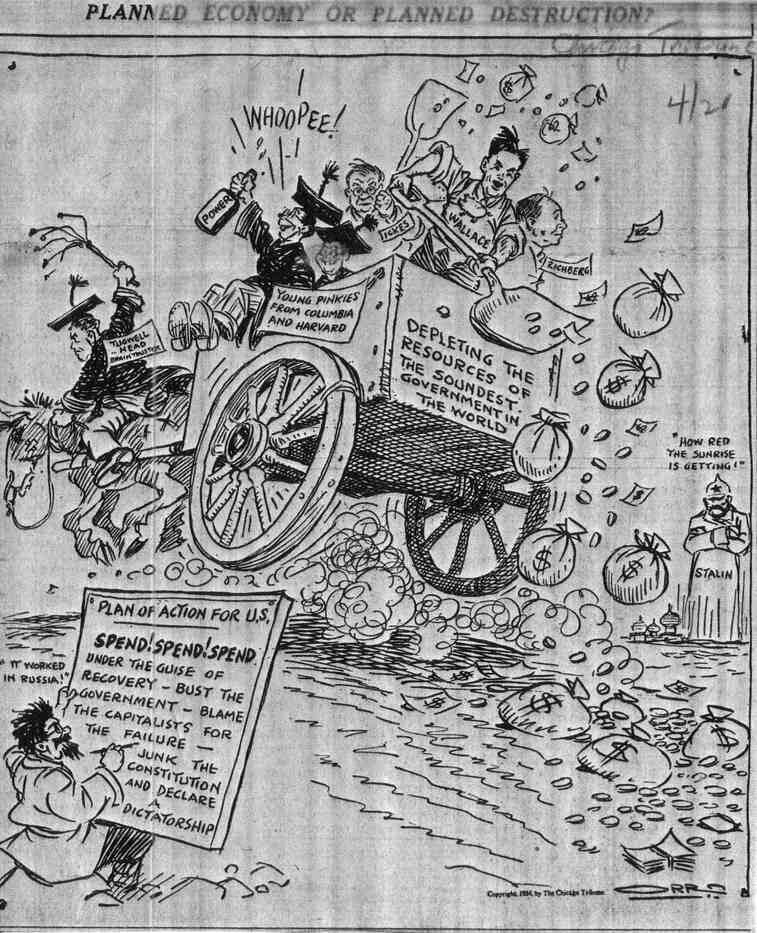
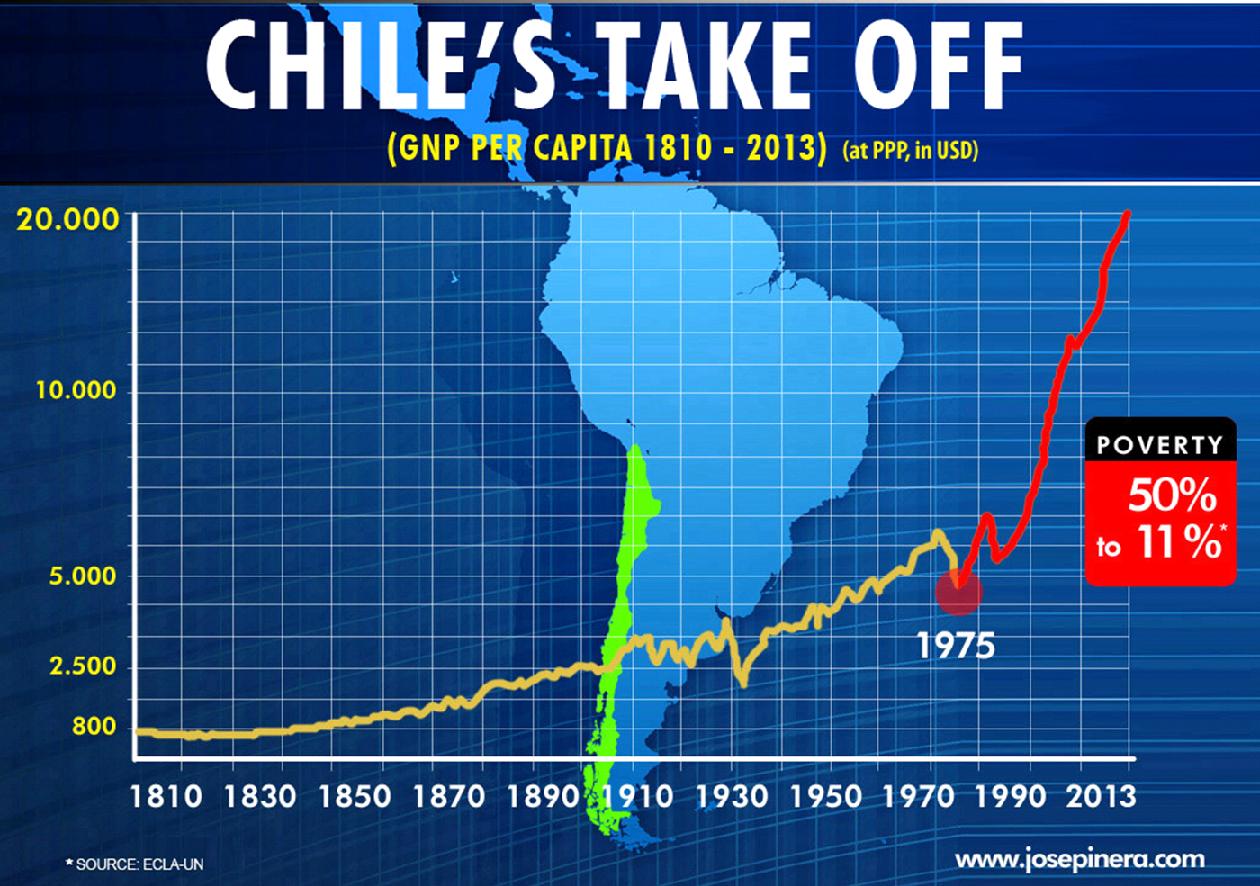


 The Daily Hatch
“What is history but a fable agreed upon?” as Napoleon once put it, and never has that been more true than the story of the Great Depression and its aftermath. With liberals again pitching more government spending “stimulus” in Washington, it’s critical we get this history right.
In a previous column I unmasked the historical lie that Franklin Roosevelt’s New Deal programs ended the Great Depression. After seven years of New Deal-era explosions in federal debt and spending, the U.S. economy was still flat on its back, and misery could be seen on the street corners. By 1940, unemployment still averaged a sky-high 14.6 percent. That’s some recovery.
However, I’ve been deluged with the same question from readers: Ok, what did end the Great Depression? Again, the history books get this chapter of history wrong. Most history books tell us that it was government spending on steroids to mobilize for World War II after the Japanese attacks on Pearl Harbor on Dec. 7, 1941.
Well, it is true that the economic output surged and unemployment fell, but periods of all-out war are very different than periods of peace. Is it any surprise that unemployment fell dramatically when nearly 12 million Americans joined the military?
My mother, a teenager in that period, used to tell me that during the war, when fuel was scarce and needed for the military, you wouldn’t be caught dead driving to the movie theater or a party. It was regarded as unpatriotic and selfish. People continued to produce even with high tax rates (94 percent during the war) when their tax dollars were financing the fight against the Nazis and the Japanese.
For nearly four years — from 1942 to 1945 — America was not a free-market economy. We were an all-out wartime economy — with the normal laws of economics suspended.
However, a war is no way to fix an economy — obviously. Countering terrorist acts of the Islamic State is not a jobs program. During World War II, when we built ships, tanks, fighter planes, dropped bombs and sent our troops into harm’s way, we weren’t creating wealth. A war is no more stimulating to the economy than a burglar stealing your money, the Japanese tsunami in 2011, Hurricane Katrina in 2005, or a tornado that levels an entire town. Without such calamity, the resources spent reconstructing (or destroying in the case of war) would be spent either purchasing useful, life-enhancing products for consumption or investing in technology and capital equipment requisite to increasing economic output.
War in self-defense might be necessary to protect our families, but any economic growth derived from it is far less beneficial than growth derived from free people making individual decisions on what to consume and in what to invest.
In the 1940s, government spending did indeed surge. The federal share of gross domestic product (GDP) rose from less than 12 percent in 1941 to more than 40 percent in 1943-45. In other words, almost half of everything that was produced in the nation was to fight the war. Domestic spending on many FDR New Deal programs in education, training and social services dropped more than 90 percent.
The real issue is what caused the economy to surge after the war was over.
This story is also not covered in the history books. Shortly after his third re-election in 1944, and at a time when the outcome of the war was no longer in question, FDR and his domestic advisers plotted a “new” New Deal with such spending items as national health insurance. The Keynesians were sure that the massive reduction in government spending would catastrophically tank the economy.
Paul Samuelson, the dean of neo-Keynesians at that time, warned in 1943 that unless wartime spending and controls were extended, there would be “the greatest period of unemployment and industrial dislocation which any economy has ever faced.” Business Week predicted unemployment would hit 14 percent with the postwar cutbacks.
Here’s what happened. Government spending collapsed from 41 percent of GDP in 1945 to 24 percent in 1946 to less than 15 percent by 1947. And there was no “new” New Deal. This was by far the biggest cut in government spending in U.S. history. Tax rates were cut and wartime price controls were lifted. There was a very short, eight-month recession, but then the private economy surged.
Here are the numbers on the private economy. Personal consumption grew by 6.2 percent in 1945 and 12.4 percent in 1946 even as government spending crashed. At the same time, private investment spending grew by 28.6 percent and 139.6 percent.
The less the feds spent, the more people spent and invested. Keynesianism was turned on its head. Milton Friedman’s free markets were validated.
In 1946, the unemployment rate averaged below 4 percent, and it stayed that low for the better part of a decade. This all happened during the biggest reduction in government spending in American history under President Truman.
In sum, it wasn’t government spending, but the shrinkage of government that finally ended the Great Depression. That’s what should be in every history book — but isn’t.
Originally appeared in the Washington Times.