Category Archives: Milton Friedman

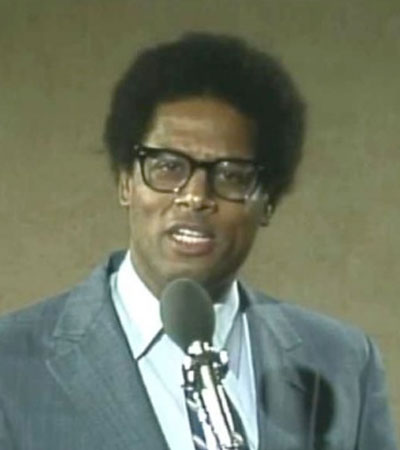
2021 Democrats should remember Walter Williams’ words, “Suppose I saw a homeless, hungry elderly woman huddled on a heating grate in the dead of winter. To help the woman, I ask somebody for a $200 donation to help her out. If the person refuses, I then use intimidation, threats and coercion to take the person’s money. I then purchase food and shelter for the needy woman. My question to you: Have I committed a crime? I hope that most people would answer yes. It’s theft to take the property of one person to give to another”

 Sadly last night the Democrats won control of Senate!

2021 Democrats should remember Walter Williams’ words, “Suppose I saw a homeless, hungry elderly woman huddled on a heating grate in the dead of winter. To help the woman, I ask somebody for a $200 donation to help her out. If the person refuses, I then use intimidation, threats and coercion to take the person’s money. I then purchase food and shelter for the needy woman. My question to you: Have I committed a crime? I hope that most people would answer yes. It’s theft to take the property of one person to give to another”

Immorality and the Redistributive State

Back in 2012, I shared a sadly amusing image about how the modern political process has degenerated into two wolves and a sheep voting what to have for lunch.

I was making an argument in that column against majoritarianism (and that is a critical issue, as explained in this video), but there’s also a very important moral component to this debate.

Walter Williams addresses this issue in his latest column. He starts by asking a hypothetical question.

Suppose I saw a homeless, hungry elderly woman huddled on a heating grate in the dead of winter. To help the woman, I ask somebody for a $200 donation to help her out. If the person refuses, I then use intimidation, threats and coercion to take the person’s money. I then purchase food and shelter for the needy woman. My question to you: Have I committed a crime? I hope that most people would answer yes. It’s theft to take the property of one person to give to another.

In other words, it doesn’t matter how Person A wants to spend money, it’s wrong for Person A to steal from Person B.

Walter than asks some critical follow-up questions, all of which are designed to make readers realize that theft doesn’t magically become acceptable simply because several people want to take Person B’s money.

Would it be theft if I managed to get three people to agree that I should take the person’s money to help the woman? What if I got 100, 1 million or 300 million people to agree to take the person’s $200? Would it be theft then? What if instead of personally taking the person’s $200, I got together with other Americans and asked Congress to use Internal Revenue Service agents to take the person’s $200? The bottom-line question is: Does an act that’s clearly immoral when done privately become moral when it is done collectively and under the color of law? Put another way, does legality establish morality?

Amen. Walter is exactly right.

And this is a point I need to internalize.

I’m often writing about the economic evidence for smaller government, but I suspect advocates of economic liberty and smaller government won’t win the debate unless we augment our arguments by also making the moral case against government-sanctioned theft.

And perhaps one way of getting this point across is to educate people about the fact that we used to have a very small federal government with little or no redistribution. Walter elaborates.

For most of our history, Congress did a far better job of limiting its activities to what was both moral and constitutional. As a result, federal spending was only 3 to 5 percent of the gross domestic product from our founding until the 1920s… James Madison, the acknowledged father of our Constitution, said, “Charity is no part of the legislative duty of the government.” In 1794, when Congress appropriated $15,000 to assist some French refugees, Madison stood on the floor of the House of Representatives to object, saying, “I cannot undertake to lay my finger on that article of the Constitution which granted a right to Congress of expending, on objects of benevolence, the money of their constituents.”

Here’s the bottom line according to Professor Williams.

We’ve become an immoral people demanding that Congress forcibly use one American to serve the purposes of another. Deficits and runaway national debt are merely symptoms of that larger problem.

Though I would slightly disagree with the way Walter phrased it.

I would argue that a bloated government is the symptom of growing immorality. Deficits and debt are then symptoms of that problem.

P.S. I want to quickly address another issue.

When I quote Art Laffer, I’m almost always going to be in agreement with what he says.

But, as I wrote last year, we’re in disagreement on the issue of whether states should be allowed to tax sales that take place outside their borders.

And now Art has a short video that rubbed me the wrong way.

He endorses legislation that would create a sales tax cartel and says – right at the start of this video – that this is because “states should have the right to be able to tax whatever they want to within their state.”

I agree, but this is why I’m against the so-called Marketplace Fairness Act. That legislation would allow state governments to tax outside their borders.

Simply stated, a merchant in one state should not be forced to collect taxes for a government in another state.

P.P.S. This also explains why FATCA is such horrible legislation. It is an effort by the U.S. government to coerce banks in other nations to enforce bad IRS law.

If we care about liberty, we should make sure the power of government is constrained by borders.


Milton Friedman – A Conversation On Minimum Wage

Published on Oct 4, 2013

A debate on whether the minimum wage hurts or helps the working class. http://www.LibertyPen.com

Friedman would say, “IF A DOLLAR MORE RAISE IN THE MINIMUM WAGE WOULD HELP THEN WHY NOT RAISE EVERYONE UP TO $100 AN HOUR?” Of course, that exposes that fallacy of liberals’ argument and that is by raising up the minimum wage at some point will further limit access to the market to the most needy of our citizens would like to gain employment and cause massive layoffs!!!!!!

While economists are famous for their disagreements (and their incompetent forecasts), there is universal consensus in the profession that demand curves slope downward. That may be meaningless jargon to non-economists, but it simply means that people buy less of something when it becomes more expensive.
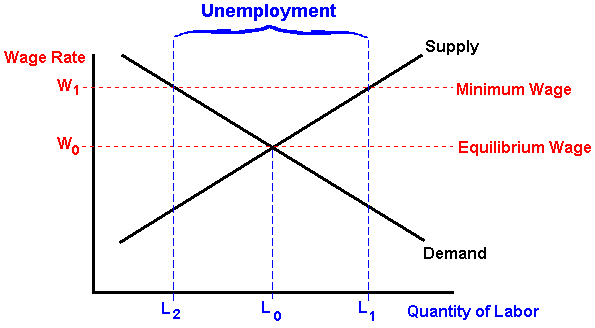
And this is why it makes no senseto impose minimum wage requirements, or to increase mandated wages where such laws already exist.

If you don’t understand this, just do a thought experiment and imagine what would happen if the minimum wage was $100 per hour. The answer is terrible unemployment, of course, which means it’s a very bad idea.

So why, then, is it okay to throw a “modest” number of people into the unemployment line with a “small” increase in the minimum wage?

Yet some politicians can’t resist pushing such policies because it makes them seem like Santa Claus to low-information voters. Vote for me, they assert, because I’ll get you a pay raise!

All of this sounds good, and it may even be the final result for some workers. But there’s overwhelming evidence that you get more unemployment when politicians boost the minimum wage.

There are no “magic boats.” In the real world, businesses only hire workers when they expect that additional employees will generate more than enough revenue to offset their costs. So when politicians artificially increase the cost of hiring workers, there will be some workers (particularly those with low skills) who become redundant.

And that’s exactly what we’re seeing in cities that have chosen to mandate higher minimum wages.

The Wall Street Journal opines on Seattle’s numbers.

Seattle’s increase last year seems to be reducing employment. That’s the finding of a new report by researchers at the University of Washington. The study compared nine months of 2015 in Seattle, where the wage is ticking up gradually and hit $13 an hour in January, with similar areas elsewhere in Washington. …The researchers found that the ordinance decreased the low-wage employment rate by about one-percentage point. …The ordinance “modestly held back” employment of low-wage earners, and hours worked “lagged behind” regional trends, on average four hours each quarter (or 19 minutes a week). Many such individuals moved to take jobs outside the city at “an elevated rate compared to historical patterns,” says the report. …None of this will surprise anyone who understands that increasing the cost of something will reduce the demand for it. Then again, that concept seems to elude both major presidential candidates, who have floated national minimum-wage increases.

By the way, it’s not just Trump and Clinton supporting this destructive policy. Mitt Romney also was on the wrong side back in 2012.
And it goes without saying that Obama has been a demagogue on the issue.

Sigh.

Let’s examine evidence from another city. Mark Perry of the American Enterprise Institute looks at what has been happening in Washington, DC.

Since the DC minimum wage increased in July 2015 to $10.50 an hour, restaurant employment in the city has increased less than 1% (and by 500 jobs), while restaurant jobs in the surrounding suburbs increased 4.2% (and by 7,300 jobs). An even more dramatic effect has taken place since the start of this year – DC restaurant jobs fell by 1,400 jobs (and by 2.7%) in the first six months of 2016 between January and July – that’s the largest loss of District food jobs during a 6-month period in 15 years. Perhaps some of those job losses were related to the $1 an hour minimum wage hike on July 1, bringing the city’s new minimum wage to $11.50 an hour. In contrast, restaurant employment outside the city grew at a 1.6% rate in the suburbs (and by 2,900 jobs) during the January to July period. …While it might take several more years to assess the full impact, the preliminary evidence so far suggests that DC’s minimum wage law is having a negative effect on staffing levels at the city’s restaurants. At the same time that suburban restaurants have increased employment levels by nearly 3,000 new positions since January, restaurants in the District have shed jobs in five out of the last six months, with a total loss of 1,400 jobs during that period (an average of nearly 8 jobs lost every day). The last time DC experienced restaurant job losses in five out of six consecutive months was 25 years ago in 1991, and the last time 1,400 jobs were lost over any six-month period was 15 years ago during the 2001 recession.

Here’s a chart looking at how restaurant employment in DC and the suburbs used to be closely correlated, but how there’s been a divergence since the city hiked the minimum wage.

As Mark noted, we’ll know even more as time passes, but the net result so far is predictably negative.

For additional background info, this video is a succinct explanation of why minimum-wage mandates are such a bad idea.

Let’s close with something rather amusing. It turns out that the State Department, during Hillary Clinton’s tenure, actually understood that higher minimum wages destroy jobs. Indeed, her people were even willing to fight against such job-killing measures.

But in Haiti rather than America, as Politifact reports.

Memos from 2008 and 2009 obtained by Wikileaks strongly suggest…that the State Department helped block the proposed minimum wage increase. The memos show that U.S. Embassy officials in Haiti clearly opposed the wage hike and met multiple times with factory owners who directly lobbied against it to the Haitian president. …media outlets assessed the cables and found, among many other revelations, that the “U.S. Embassy in Haiti worked closely with factory owners contracted by Levi’s, Hanes, and Fruit of the Loom to aggressively block a paltry minimum wage increase” for workers in apparel factories. …Deputy Chief of Mission David Lindwall put it most bluntly, when he said the minimum wage law “did not take economic reality into account but that appealed to the unemployed and underpaid masses.” …The U.S. Embassy, meanwhile, continued to lament the hike… USAID studies found that a 200 gourdes minimum wage “would make the sector economically unviable and consequently force factories to shut down.”

Hmmm…., I wonder if some of those textile companies made contributions to theClinton Foundation?

P.S. People in Switzerland obviously understand this issue, overwhelmingly voting against a minimum-wage mandate in 2014.

P.P.S. As Walter Williams has explained, minimum wage laws are especially harmful for blacks.

Related posts:

FRIEDMAN FRIDAY February 13, 2013 1:07PM Obama’s Minimum Wage Plan By Chris Edwards

____ February 13, 2013 1:07PM Obama’s Minimum Wage Plan By Chris Edwards Share Economic research has only a tenuous relationship to economic policymaking in Washington. President Obama’s new proposal to raise the federal minimum wage from $7.25 to $9.00 is a case in point. It would bad for workers and the economy, but the administration […]

February 13, 2013 1:07PM Obama’s Minimum Wage Plan By Chris Edwards

_______ February 13, 2013 1:07PM Obama’s Minimum Wage Plan By Chris Edwards Share Economic research has only a tenuous relationship to economic policymaking in Washington. President Obama’s new proposal to raise the federal minimum wage from $7.25 to $9.00 is a case in point. It would bad for workers and the economy, but the administration […]

A Little Café shows the USA the real cost of the Minimum Wage Increase!!!!

________ A Little Café shows the USA the real cost of the Minimum Wage Increase!!!! A Little Cafe That Sparked a Big Minimum Wage Debate Eric Boehm / @Watchdogorg / August 15, 2014 / 0 comments STILLWATER, Minn.—With its waitress and single cook, its retro-style booths with pale green cushions and its stainless steel wrap-around […]

Jerry Brown raised taxes in California and a rise in the minimum wage, but it won’t work like Krugman thinks!!!

___________   Jerry Brown raised taxes in California and a rise in the minimum wage, but it won’t work like Krugman thinks!!!! This cartoon below shows what will eventually happen to California and any other state that keeps raising taxes higher and higher.   Krugman’s “Gotcha” Moment Leaves Something to Be Desired July 25, 2014 by […]

Open letter to President Obama (Part 513) (Minimum Wage, Maximum Foolishness)

Open letter to President Obama (Part 513) (Emailed to White House on 5-4-13.) President Obama c/o The White House 1600 Pennsylvania Avenue NW Washington, DC 20500 Dear Mr. President, I know that you receive 20,000 letters a day and that you actually read 10 of them every day. I really do respect you for trying to get […]

Open letter to President Obama (Part 468) (Minimum Wage Laws includes editorial cartoon)

Open letter to President Obama (Part 468) (Emailed to White House on 4-9-13.) President Obama c/o The White House 1600 Pennsylvania Avenue NW Washington, DC 20500 Dear Mr. President, I know that you receive 20,000 letters a day and that you actually read 10 of them every day. I really do respect you for trying […]

Milton Friedman observed: “The real tragedy of minimum wage laws is that they are supported by well-meaning groups who want to reduce poverty. But the people who are hurt most by higher minimums are the most poverty stricken (includes editorial cartoon)

State of the Union 2013 Published on Feb 13, 2013 Cato Institute scholars Michael Tanner, Alex Nowrasteh, Julian Sanchez, Simon Lester, John Samples, Pat Michaels, Jagadeesh Gokhale, Michael F. Cannon, Jim Harper, Malou Innocent, Juan Carlos Hidalgo, Ilya Shapiro, Trevor Burrus and Neal McCluskey respond to President Obama’s 2013 State of the Union Address. Video […]

Cartoons from Dan Mitchell’s blog that demonstrate what Obama is doing to our economy (Minimum wage humor)

I have put up lots of cartoons from Dan Mitchell’s blog before and they have got lots of hits before. Many of them have dealt with the economy, eternal unemployment benefits, socialism,  Greece,  welfare state or on gun control. Funny…but Sad…Look at How the Minimum Wage Destroys Opportunity July 2, 2011 by Dan Mitchell My Cato colleague, Mark […]

Dan Mitchell on the minimum wage law (includes two editorial cartoons)

  It seems that everything President Obama does to help the economy actually does the opposite. Minimum Wage, Maximum Foolishness March 7, 2013 by Dan Mitchell Should the federal government make life more difficult for low-skilled workers? I hope everyone will emphatically say “NO!” Heck, most people understandably will think you’re crazy for even asking such […]

Why do the liberals want to increase unemployment more by increasing minimum wage?

Williams with Sowell – Minimum Wage Why do the liberals want to increase unemployment more by increasing minimum wage? With Unemployment Already High, Why Are Leftists Pushing for an Increase in the Minimum Wage? September 3, 2012 by Dan Mitchell The unemployment rate has been stuck above 8 percent ever since Obama pushed through his ill-fated […]
My rough draft letter to President Elect Biden that will be mailed on March 20, 2021! (Part 60) FREE TO CHOOSE “Who protects the worker?” Video and Transcript Part 6 of 7 “The source of the prosperity of this country was freedom of enterprise, freedom of employers to hire, of workers to work for whom they wanted to; and insofar as unions have played a role, they have protected some workers at the expense of others, and have retarded the prosperity of this country”

March 20, 2021

President Biden c/o The White House
1600 Pennsylvania Avenue NW
Washington, DC 20500

Dear Mr. President,

______________________________

FREE TO CHOOSE “Who protects the worker?” Video and Transcript Part 6 of 7

In 1980 I read the book FREE TO CHOOSE by Milton Friedman and it really enlightened me a tremendous amount.  I suggest checking out these episodes and transcripts of Milton Friedman’s film series FREE TO CHOOSE: “The Failure of Socialism” and “What is wrong with our schools?”  and “Created Equal”  and  From Cradle to Grave, and – Power of the Market. Milton Friedman shows in this episode how the worker is best protected and it is not by the government!!!!!!!

The best point made in this part of the debate in this episode of “Free to Choose” was made by the economist Walter Williams when he stated:

“Yes. Okay, well, at least form the standpoint of teenagers, particularly minority teenagers, the minimum wage law has acted to destroy a number of employment opportunities. For example, back in 1948, the black youth between 16 and 18 had an unemployment rate of 9.4 percent and white youth was 10.4 percent or 10.2 percent. The labor force participation rates of blacks was considerably higher than that of whites. And with each increase in the minimum wage law, we had the dramatic reversal that we have now. And so the minimum wage law has the effect of saying that if you cannot produce $2.90 worth of goods an hour, you don’t deserve a job….The point is, is that, I think that both these gentlemen, we all should recognize is that unions in the United States support the minimum wage. They are the major supporters. They spend millions and millions of dollars in lobbying for the minimum wage law. They do it out of the name of concern and being in the interest of people. Now, in South Africa the unions are far more honest. That is those white racist unions over there they say we support minimum wages and equal pay for equal work so as to protect white jobs. That is to protect white jobs__”

Pt 6

MCKENZIE: Let’s raise the question, which certainly is dealt with in the film: have minimum wages __ which is a form of government intervention __ served the interests of the poor and indeed of the working class generally? Now I know you’ve spent a good deal of time looking at this __

W. WILLIAMS: Yes. Okay, well, at least form the standpoint of teenagers, particularly minority teenagers, the minimum wage law has acted to destroy a number of employment opportunities. For example, back in 1948, the black youth between 16 and 18 had an unemployment rate of 9.4 percent and white youth was 10.4 percent or 10.2 percent. The labor force participation rates of blacks was considerably higher than that of whites. And with each increase in the minimum wage law, we had the dramatic reversal that we have now. And so the minimum wage law has the effect of saying that if you cannot produce $2.90 worth of goods an hour, you don’t deserve a job.

GREEN: I don’t think __ you can’t look just at the minimum wages __

W. WILLIAMS: But __

GREEN: __ you’ve got to look at the relocation of firms. You’ve got to __ you’ve got to look at the movement of people. You’ve __ I mean you can’t __ you can’t do that.

W. WILLIAMS: Well, can’t we just __ well you look at the relocation of firms. A lot of people try to say a lot of jobs move out to the suburbs. Well, you find black an white unemployment ratios the same in the suburbs as you find in the cities. So it’s __ I mean, it’s the minimum wages.

L. WILLIAMS: Yes, but taking one element __ you’re taking one element out of a long historic development and you start comparing 1920 __

GREEN: Even if you hold constant __ if you hold constant __

(Several people talking at once.)

MCKENZIE: Lynn is next, Lynn and then Ernest Green. Come on now.

GREEN: I understand the law of educational achievement.

MCKENZIE: Lynn and then Ernest Green.

GREEN: You get a differential between black and white unemployment rates __

MCKENZIE: I’ll bang the gavel. Come on. Lynn.

L. WILLIAMS: Well you’re taking __ you’re taking one element, years ago in a situation that’s entirely different that we’re in today and drawing some conclusions__

W. WILLIAMS: Minimum wage. That’s what’s different.

L. WILLIAMS: No, no. There are many other things that are different. The enormous movement of black people in this country between 1948 and now. You can’t just wipe that out. And you can’t say that’s __

W. WILLIAMS: White people move too.

L. WILLIAMS: __ you certainly can’t say that’s the minimum wage. But you know __

MCKENZIE: Wait now. I want this case made. Has the minimum wage served the interests of the working people in this country?

L. WILLIAMS: I don’t think there’s any question __ I don’t think there’s any question that the working people of this country would be much worse off than they are today, the youth of this country would be much worse off than they are today if we didn’t have minimum wage.

MCKENZIE: All right, now, Bill Brady. You __ come on.

BRADY: No, it’s I __

MCKENZIE: On minimum wages __ good idea or not? You’re an industrialist.

BRADY: No. It’s a bad idea. It is patently one of the, one of the worst things that can __ that we can do to our youth. We prevent them from __

GREEN: Bill, how many kids do you have?

BRADY: __ we prevent __what’s that?

GREEN: How many kids do you have?

BRADY: I have two.

VOICE OFF SCREEN: It’s not important how many kids you have.

GREEN: But it is. Minimum wage doesn’t affect his industry. His wages are far above the minimum wage.

FRIEDMAN: Minimum wage doesn’t affect a single one of his members.

(Several people talking at once.)

MCKENZIE: Hold it. Hold it. Hold it. Milton has the floor.

L. WILLIAMS: We have not gone to support minimum wage legislation in this country __

MCKENZIE: Gentlemen, hold it a moment.

L. WILLIAMS: __ simply to look after our own interests in something as you describe.

MCKENZIE: Hold it a moment.

(Several people talking at once.)

MCKENZIE: Hold it a moment now. Milton __

L. WILLIAMS: Of course we have not. We are a people’s organization __

MCKENZIE: Lynn __ the Chairman has said the floor is Milton’s.

FRIEDMAN: I was saying that there is not a single one, I suspect, of the members of your union who is affected by the minimum wage. They are much higher.

L. WILLIAMS: As a matter of fact that is a deduction.

FRIEDMAN: You say that you are a public service organization.

L. WILLIAMS: I say we’re a people’s organization.

FRIEDMAN: You’re an organization of your workers. And if you aren’t representing the interests of your workers they ought to fire you.

L. WILLIAMS: And we’re out __

FRIEDMAN: If you tell us that you are going against the interests of your workers and you are simultaneously saying to your workers __ I’m not doing what you hired me for.

L. WILLIAMS: Oh, come on. This is, this is pure sophistry. I’m not __

FRIEDMAN: It’s not sophistry in the slightest.

L. WILLIAMS: __ I am not talking __

FRIEDMAN: I’m just trying to __

L. WILLIAMS: I am not talking about representing the interests of our workers. Our union represents a lot of people.

FRIEDMAN: Right. Right. It does.

L. WILLIAMS: And some of the people are the ones that you’re probably aware of, the people who work in big steel mills __

FRIEDMAN: That’s right.

L. WILLIAMS: __ and all the rest of that.

FRIEDMAN: Absolutely.

L. WILLIAMS: But we also go out and organize workers all the time and win certification votes despite Bill Brady’s comment about that and many of the workers we organize are workers who are affected by minimum wage. And the result of our organizing them is that we’re able to bring them above the minimum wage.

MCKENZIE: Yes.

W. WILLIAMS: The point is, is that, I think that both these gentlemen, we all should recognize is that unions in the United States support the minimum wage. They are the major supporters. They spend millions and millions of dollars in lobbying for the minimum wage law. They do it out of the name of concern and being in the interest of people. Now, in South Africa the unions are far more honest. That is those white racist unions over there they say we support minimum wages and equal pay for equal work so as to protect white jobs. That is to protect white jobs__

L. WILLIAMS: Are you implying __

W. WILLIAMS: __ from low price competition.

L. WILLIAMS: Are you now implying, wait, that we’re white racists?

W. WILLIAMS: No, I’m not saying that. I’m saying that it doesn’t make any difference about the intent. The effects are __ the effects are __

GREEN: Walter, the Urban League supports minimum wage the __ Ben Hooks at NAACP supports minimum wage.

MCKENZIE: The floor belongs to Ernest.

W. WILLIAMS: They have very good reasons to support minimum wage.

GREEN: Why?

W. WILLIAMS: Their group that they represent __

GREEN: Why __

W. WILLIAMS: They represent middle class blacks.

GREEN: No, no, no.

W. WILLIAMS: They don’t represent the poor blacks on the streets.

GREEN: The membership of the NAACP probably has as many __

W. WILLIAMS: And they’re owned by them. They’re owned by the AFL-CIO.

L. WILLIAMS: They aren’t owned by the AFL-CIO.

MCKENZIE: Order. Order.

L. WILLIAMS: That is a conservative’s view __

MCKENZIE: Order. Order.

L. WILLIAMS: That is a conservative’s view __

(Several people talking at once.)

MCKENZIE: Order! I’m going to __ I’m going to __ I’m going to __ I’m going to turn to Milton now. Are you saying, then, that you would advocate the repeal of minimum wage legislation?

FRIEDMAN: Of course.

MCKENZIE: You would.

FRIEDMAN: Of course I would.

MCKENZIE: Bill Brady, Bill Brady.

BRADY: I should like to ask Ernest and Lynn why they want to restrict a minimum price to labor. Why don’t you let me have a minimum price on the products that we manufacture?

L. WILLIAMS: Well we aren’t hare, as I understand it, to discuss your problems at the moment in terms of the owners __

BRADY: Is there a difference why a minimum amount of profit ___

L. WILLIAMS: Well, you’re the people I assume who are so anxious to have the free market system and to compete with each other and all the rest of it, we’re talking about the needs of the workers and we’re talking about the needs of the people who come into a society which isn’t providing enough employment for them; which clearly doesn’t seem to be able to provide enough employment for them and what are we going to do? And I think this notion that somehow if we just let every guy who is running a hamburg stand or whatever, we just let all these people exploit the young people of this nation in any way they chose, pay them any little rate they could get away with, that everybody would then go to work, would everybody then have a job, is absolute nonsense.

MCKENZIE: I want to bring Milton to one of the final stages of his film, which is Spartanburg, South Carolina.

FRIEDMAN: Sure.

MCKENZIE: And I want to know what your __ what conclusion you’re drawing from that. Would you, in effect, like to see the whole of the United States become as it were, Spartanburg writ large?

FRIEDMAN: Absolutely.

MCKENZIE: Yeah. What would that mean? And then we’ll get their reaction to it.

FRIEDMAN: It would mean a widening of the opportunity for everybody. It would mean an opportunity for employers all over to compete with one another for workers. It would mean an opportunity for workers to find jobs which can make the greatest use of their own skills and their own capacities. It would mean that consumers would be able to get better products at lower prices. You know, consumers enter into this situation, too. You might think that somehow or other, you know __one of the things that’s always a mystery to me, if a $2.90 minimum wage benefits people why wouldn’t a $6 minimum wage be better? Wouldn’t a $10 minimum wage be better? Why don’t these people come out for a $200 figure minimum wage? If all you had to do to make a country __

VOICE OFF SCREEN: You’re pretty smart __

FRIEDMAN: Two hundred dollars an hour.

W. WILLIAMS: Or extend it to babysitters.

FRIEDMAN: Yeah. If all you need to improve the lot and the conditions of people is to legislate a higher __

MCKENZIE: You’re back on minimum wages. I want to know how Spartanburg __

FRIEDMAN: All right. Spartanburg improves matters because it introduces a wider range of competition and the real thing that protects the worker is the existence of alternative employers seeking his services, just as what protects the consumer is alternative sellers.

BRADY: Milton, you omit one thing that it would do. And it would result in a very substantial increase in capital investment.

FRIEDMAN: Absolutely. It would.

BRADY: And capital is the worker’s second best friend.

___________________________

Thank you so much for your time. I know how valuable it is. I also appreciate the fine family that you have and your commitment as a father and a husband.

Sincerely,

Everette Hatcher III, 13900 Cottontail Lane, Alexander, AR 72002, ph 501-920-5733,

Williams with Sowell – Minimum Wage

Thomas Sowell

Thomas Sowell – Reducing Black Unemployment

By WALTER WILLIAMS

—-

Ronald Reagan with Milton Friedman
Milton Friedman The Power of the Market 2-5

____________________________________

Related posts:

“The Power of the Market” episode of Free to Choose in 1990 by Milton Friedman (Part 1)

Milton Friedman The Power of the Market 1-5 How can we have personal freedom without economic freedom? That is why I don’t understand why socialists who value individual freedoms want to take away our economic freedoms.  I wanted to share this info below with you from Milton Friedman who has influenced me greatly over the […]

“Friedman Friday,” EPISODE “The Failure of Socialism” of Free to Choose in 1990 by Milton Friedman (Part 1)

Milton Friedman: Free To Choose – The Failure Of Socialism With Ronald Reagan (Full) Published on Mar 19, 2012 by NoNationalityNeeded Milton Friedman’s writings affected me greatly when I first discovered them and I wanted to share with you. We must not head down the path of socialism like Greece has done. Abstract: Ronald Reagan […]

________________

“Friedman Friday” (“Free to Choose” episode 3 – Anatomy of a Crisis. part 3 of 7)

Worse still, America’s depression was to become worldwide because of what lies behind these doors. This is the vault of the Federal Reserve Bank of New York. Inside is the largest horde of gold in the world. Because the world was on a gold standard in 1929, these vaults, where the U.S. gold was stored, […]

“Friedman Friday” (Part 16) (“Free to Choose” episode 3 – Anatomy of a Crisis. part 2 of 7)

  George Eccles: Well, then we called all our employees together. And we told them to be at the bank at their place at 8:00 a.m. and just act as if nothing was happening, just have a smile on their face, if they could, and me too. And we have four savings windows and we […]

“Friedman Friday” (“Free to Choose” episode 3 – Anatomy of a Crisis. part 1of 7)

Milton Friedman’s Free to Choose (1980), episode 3 – Anatomy of a Crisis. part 1 FREE TO CHOOSE: Anatomy of Crisis Friedman Delancy Street in New York’s lower east side, hardly one of the city’s best known sites, yet what happened in this street nearly 50 years ago continues to effect all of us today. […]

By Everette Hatcher III | Also posted in Current Events | Edit | Comments (0)

____________________________

_____________


________________________________________________

_____________________________________________

Friedman Friday” Free to Choose by Milton Friedman: Episode “What is wrong with our schools?” (Part 3 of transcript and video)

Friedman Friday” Free to Choose by Milton Friedman: Episode “What is wrong with our schools?” (Part 3 of transcript and video) Here is the video clip and transcript of the film series FREE TO CHOOSE episode “What is wrong with our schools?” Part 3 of 6.   Volume 6 – What’s Wrong with our Schools Transcript: If it […]

Friedman Friday” Free to Choose by Milton Friedman: Episode “What is wrong with our schools?” (Part 2 of transcript and video)

Here is the video clip and transcript of the film series FREE TO CHOOSE episode “What is wrong with our schools?” Part 2 of 6.   Volume 6 – What’s Wrong with our Schools Transcript: Groups of concerned parents and teachers decided to do something about it. They used private funds to take over empty stores and they […]

By Everette Hatcher III | Also posted in Vouchers | Edit | Comments (1)

Friedman Friday” Free to Choose by Milton Friedman: Episode “What is wrong with our schools?” (Part 1 of transcript and video)

Here is the video clip and transcript of the film series FREE TO CHOOSE episode “What is wrong with our schools?” Part 1 of 6.   Volume 6 – What’s Wrong with our Schools Transcript: Friedman: These youngsters are beginning another day at one of America’s public schools, Hyde Park High School in Boston. What happens when […]

By Everette Hatcher III | Also posted in Vouchers | Tagged , , , , | Edit | Comments (0)

Friedman Friday” Free to Choose by Milton Friedman: Episode “Created Equal” (Part 3 of transcript and video)

Friedman Friday” Free to Choose by Milton Friedman: Episode “Created Equal” (Part 3 of transcript and video) Liberals like President Obama want to shoot for an equality of outcome. That system does not work. In fact, our free society allows for the closest gap between the wealthy and the poor. Unlike other countries where free enterprise and other […]

Free to Choose by Milton Friedman: Episode “Created Equal” (Part 2 of transcript and video)

Free to Choose by Milton Friedman: Episode “Created Equal” (Part 2 of transcript and video) Liberals like President Obama want to shoot for an equality of outcome. That system does not work. In fact, our free society allows for the closest gap between the wealthy and the poor. Unlike other countries where free enterprise and other freedoms are […]

Free to Choose by Milton Friedman: Episode “Created Equal” (Part 1 of transcript and video)

 Milton Friedman and Ronald Reagan Liberals like President Obama (and John Brummett) want to shoot for an equality of outcome. That system does not work. In fact, our free society allows for the closest gap between the wealthy and the poor. Unlike other countries where free enterprise and other freedoms are not present.  This is a seven part series. […]

Milton Friedman Friday: (“Free to Choose” episode 4 – From Cradle to Grave, Part 3 of 7)

 I am currently going through his film series “Free to Choose” which is one the most powerful film series I have ever seen. PART 3 OF 7 Worse still, America’s depression was to become worldwide because of what lies behind these doors. This is the vault of the Federal Reserve Bank of New York. Inside […]

By Everette Hatcher III | Edit | Comments (0)

Milton Friedman Friday:(“Free to Choose” episode 4 – From Cradle to Grave, Part 2 of 7)

 I am currently going through his film series “Free to Choose” which is one the most powerful film series I have ever seen. For the past 7 years Maureen Ramsey has had to buy food and clothes for her family out of a government handout. For the whole of that time, her husband, Steve, hasn’t […]

Friedman Friday:(“Free to Choose” episode 4 – From Cradle to Grave, Part 1 of 7)

Friedman Friday:(“Free to Choose” episode 4 – From Cradle to Grave, Part 1 of 7) Volume 4 – From Cradle to Grave Abstract: Since the Depression years of the 1930s, there has been almost continuous expansion of governmental efforts to provide for people’s welfare. First, there was a tremendous expansion of public works. The Social Security Act […]

By Everette Hatcher III | Edit | Comments (0)

“Friedman Friday” (“Free to Choose” episode 1 – Power of the Market. part 3 of 7)

  _________________________   Pt3  Nowadays there’s a considerable amount of traffic at this border. People cross a little more freely than they use to. Many people from Hong Kong trade in China and the market has helped bring the two countries closer together, but the barriers between them are still very real. On this side […]

“Friedman Friday” (“Free to Choose” episode 1 – Power of the Market. part 2 of 7)

  Aside from its harbor, the only other important resource of Hong Kong is people __ over 4_ million of them. Like America a century ago, Hong Kong in the past few decades has been a haven for people who sought the freedom to make the most of their own abilities. Many of them are […]

“Friedman Friday” (“Free to Choose” episode 1 – Power of the Market. part 1of 7)

“FREE TO CHOOSE” 1: The Power of the Market (Milton Friedman) Free to Choose ^ | 1980 | Milton Friedman Posted on Monday, July 17, 2006 4:20:46 PM by Choose Ye This Day FREE TO CHOOSE: The Power of the Market Friedman: Once all of this was a swamp, covered with forest. The Canarce Indians […]

By Everette Hatcher III | Posted in Current Events, Milton Friedman | Edit | Comments (0)

“Friedman Friday,” EPISODE “The Failure of Socialism” of Free to Choose in 1990 by Milton Friedman (Part 1)

Milton Friedman: Free To Choose – The Failure Of Socialism With Ronald Reagan (Full) Published on Mar 19, 2012 by NoNationalityNeeded Milton Friedman’s writings affected me greatly when I first discovered them and I wanted to share with you. We must not head down the path of socialism like Greece has done. Abstract: Ronald Reagan […]

By Everette Hatcher III | Posted in Milton FriedmanPresident Obama | Edit | Comments (1)

“The Failure of Socialism” episode of Free to Choose in 1990 by Milton Friedman (Part 1)

Milton Friedman: Free To Choose – The Failure Of Socialism With Ronald Reagan (Full) Published on Mar 19, 2012 by NoNationalityNeeded Milton Friedman’s writings affected me greatly when I first discovered them and I wanted to share with you. We must not head down the path of socialism like Greece has done. Abstract: Ronald Reagan […]

Joe Biden swings and misses in swipe at Milton Friedman By Walter Block

Joe Biden swings and misses in swipe at Milton Friedman

  • PUBLISHED: | UPDATED:
  • Categories:Opinion

Joe Biden came out of his hibernation basement and launched a blistering attack on a public figure.

Guess who! Donald Trump? No. Mike Pence? Try again. Mitch McConnell? Not even close. Any other Republican politician? No way. A Democratic office holder, maybe one who is not progressive enough to suit his new-found sharp leftism? Nope.

You had better be sitting down for this one, or you’re going to keel right over. None other than Milton Friedman is Joe Biden’s target.

Here is what the possible next president of these United States has snarked: “When did Milton Friedman die and become king?” Nor was this a one-off; instead, doubling down, Biden promised that under his administration should he be elected: “Milton Friedman isn’t running the show anymore …”

Say what?

Milton Friedman never “ran the show” nor “became king” of the economy.

Lord knows he valiantly tried to promote economic freedom, and did indeed to some degree change public policy, both by his own eloquence, his logic, his scholarly demeanor, the vast amount of empirical evidence he offered, and, also, indirectly, via his many, many students.

America would be a much different place if Milton Friedman was ever in charge.

If Milton Friedman were in charge, the U.S. would never have entered into flawed international trade agreements. Instead, our country would have made a unilateral declaration of free trade with every other jurisdiction on the planet.

That is, U.S. policy would be, with respect to all other nations, essentially: “If you are stupid or malevolent enough to impose tariffs, quantity restrictions on our exports or any other constraints on full free trade, that is your business; good luck to you. But we will not shoot yet another hole in the row boat that supports the world economy. There will be no taxes on imports to the U.S. despite your foolish protectionism.”

If Milton Friedman were in charge, the IRS would be disbanded, and replaced with a 10 percent flat tax on all incomes. The very limited U.S. government would have to live within those financial bounds, since deficits would be a thing of the past, and a 3 percent monetary increase rule would be imposed upon the Fed. His goal was no more inflation, quantitative easing, etc. No more topsy-turvy ups and downs.

If Milton Friedman were in charge, health care would truly operate in a free market system. Doctors would no longer be licensed. Instead, they would be certified by a competitive industry in charge of evaluating their skills and abilities. Think certified public accountant as the model. This in one fell swoop would have eliminated the supposed felt need for socialized medicine, for it was Friedman’s analysis that the present system limits the supply of physicians, catapulting their salaries into the stratosphere.

With more modest competitive compensation for them, medical services would be far cheaper. No one calls for car socialism, clothing socialism, not even Bernie. These are relatively competitive industries with low costs. So would this apply to health care, if Friedman had “run things.”

If Milton Friedman were in charge, there would be no subsidies for higher education. True, in his book, “Capitalism and Freedom” this author once supported that precise policy. He did so on the ground that universities offered positive spillover or neighborhood effects, which benefited the entire society, but could not charge for them. But later in an act of great courage Friedman changed his mind on this matter; he saw that colleges morphed into breeding grounds for far-left ideological fixations.

Milton Friedman was a staunch opponent of the minimum wage law, reasoning that it hurt those at the bottom of the economic pyramid the most: the young, the poor, the unskilled, and in particular members of the Black community. Yet, instead of this malevolent legislation being repealed, it is now being raised, enhanced and strengthened.

Here are some other “failures” of Friedman. Government budgets have gone up, not down both in absolute terms and as a proportion of the GDP. Similarly, the total number of pages in the U.S. Code of Federal Regulations have blown up, not receded. Government spending on health care has risen, not fallen. Apart from monetarism, one of the most heart-felt passions of his was education. Yet, charter schools comprise less than 5 percent of total enrollment, and even fewer are enrolled in voucher plans. So much for Milton Friedman running things.

There is no doubt that this one-man band for capitalism made enormous contributions in the direction of freeing up the economy. Thanks in great part to his good works, airline deregulation has occurred and we no long have a military draft. It is only a slight exaggeration to say that the Fed is a totally owned subsidiary of Milton Friedman’s. Due to his sterling efforts, tariffs and the minimum wage are lower than they otherwise would have been, and rent controls are less onerous and oppressive. Quite an accomplishment for any one person. But to say that he is “running the show” or being a “king” is a wild-eyed overestimate of his achievements.

Milton Friedman is hated with a purple passion in part because he once had the audacity to address the Chilean dictator, Augusto Pinochet. The University of Chicago professor’s message: If you want to end poverty and attain prosperity, here is what you should do: lower taxes, respect private property rights and the rule of law, free the economy of regulations. Oh, the horror.

But this long-time economist gave the same advice to scores of other countries, including China. Not a peep of criticism was ever made of his visits to these other nations by our friends on the left, although they then seethed with anger at the substance of his advice, and as this latest episode attests, still do.

I do not agree with every stance taken by this splendid scholar. To wit, he and I part company with his support for anti-trust law, school vouchers, the Fed, his critique of anarchism, of the gold standard; but these are relatively minor points.

We would all be far better off in a free market economy of the sort favored by Milton Friedman than anything else likely to occur. If Biden had even a modicum of good sense, he would embrace these policies, not sneeringly reject them out of hand.

Walter E. Block is the Harold E. Wirth Eminent Scholar Endowed Chair and Professor of Economics at Loyola University New Orleans. He is a libertarian and a member of the Austrian School of Economics.

—-
March 7, 2021

President Biden  c/o The White House 1600 Pennsylvania Avenue NW Washington, DC 20500

Dear Mr. President,

The federal government debt is growing so much that it is endangering us because if things keep going like they are now we will not have any money left for the national defense because we are so far in debt as a nation. We have been spending so much on our welfare state through food stamps and other programs that I am worrying that many of our citizens are becoming more dependent on government and in many cases they are losing their incentive to work hard because of the welfare trap the government has put in place. Other nations in Europe have gone down this road and we see what mess this has gotten them in. People really are losing their faith in big government and they want more liberty back. It seems to me we have to get back to the founding  principles that made our country great.  We also need to realize that a big government will encourage waste and corruptionThe recent scandals in our government have proved my point. In fact, the jokes you made at Ohio State about possibly auditing them are not so funny now that reality shows how the IRS was acting more like a monster out of control. Also raising taxes on the job creators is a very bad idea too. The Laffer Curve clearly demonstrates that when the tax rates are raised many individuals will move their investments to places where they will not get taxed as much.

I have written about 66 heroes of mine in the House of Representatives that voted “no” on the Obama/Biden  debt ceiling increase request in 2011. I believe we must have representatives that will vote to restore our freedom and that means voting to cut spending and lower taxes like the Patriots of long ago wanted. Today the Tea Party represented my views the most closely.  Lord knows I have written a lot about that in the past. . I have praised over and over and over the 66 House Republicans that voted no on that before. If they did not raise the debt ceiling then we would have a balanced budget instantly.  I agree that the Tea Party has made a difference and I have personally posted 49 posts on my blog on different Tea Party heroes of mine.

I have written and emailed Senator Pryor over, and over again with spending cut suggestions but he has ignored all of these good ideas in favor of keeping the printing presses going as we plunge our future generations further in debt. I am convinced if he does not change his liberal voting record that he will no longer be our senator in 2014.

I have written hundreds of letters and emails to President Obama in the past, and I must say that I have been impressed that he has  had the White House staff answer so many of my letters. The White House answered concerning Social Security (two times), Green Technologieswelfaresmall businessesObamacare (twice),  federal overspendingexpanding unemployment benefits to 99 weeks,  gun controlnational debtabortionjumpstarting the economy, and various other  issues.   However, the Obama/Biden policies have not changed, and by the way the White House after answering over 50 of my letters before November of 2012 has not answered one since.    The Obama/Biden administration was  committed to cutting nothing from the budget that I can tell. I am hoping your administration,  President  Biden, will be more open minded and look at the facts.

 I have praised over and over and over the 66 House Republicans that voted no on that before. If they did not raise the debt ceiling then we would have a balanced budget instantly.  I agree that the Tea Party has made a difference and I have personally posted 49 posts on my blog on different Tea Party heroes of mine.

THIS BRINGS ME TO ONE OF MY BIGGEST ECONOMIC HEROES AND IT IS THE LATE MILTON FRIEDMAN. Friedman had such revolutionary policies such as eliminating welfare and instituting the negative income tax and putting in school vouchers.

The problem in Washington is not lack of revenue but our lack of spending restraint. This video below makes that point.

Milton Friedman on School Vouchers

Great article.

March 8, 2013 6:40PM

The Continuing Debate Over Scholarship Tax Credits

Though there are currently more students participating in scholarship tax credit (STC) programs than voucher programs nationwide (about 151,000 to 104,000), the former have not received nearly as much attention as the latter. That has begun to change in recent years as growth in the number of STC programs has outpaced growth in voucher programs.

Over the past week, I have enjoyed engaging in a spirited debate over STC programs with Professor Kevin Welner of the University of Colorado at Boulder. The debate was sparked by Valerie Strauss’ blog post at the Washington Post, which contained several significant errors that I addressed here. Welner then responded at Strauss’ blog and we continued to spar here and here. It is my sincere hope that readers who have followed the debate have found it illuminating.

Though I suspect that Welner might not share my aspiration for universal educational choice, we have a least found common ground in the belief that, given limited resources, such programs should first aid those most in need. I also agree that our three primary areas of contention are: 1) the differences between STC programs and vouchers and their significance; 2) the fiscal impact of STC programs; and 3) who receives tax-credit scholarships. I will address Welner’s latest arguments on these matters below.

First, however, I must make two important corrections to Welner’s last post. In explaining why he did not provide context for some of his remarks, Welner wrote: “Much of this change happened in the aftermath of the 2010 midterm elections, when Republicans swept into state offices in very large numbers.” Actually, only five out of the fourteen STC programs (in Louisiana, New Hampshire, Oklahoma, Virginia and one of the two in Pennsylvania) were adopted in the wake of the 2010 midterm elections. Moreover, there was strong support among Democrats in two of those states. Pennsylvania’s 2012 STC legislation passed with the support of 15 of 20 Democrats in the Senate and unanimous support in the House. In Louisiana, the legislation passed with the support of 11 of 15 Senate Democrats (32-7 total) and 32 of 45 House Democrats (66-37 total).

Scholarship Tax Credits vs. Vouchers

Welner wonders why I did not use the term he invented to describe scholarship tax credit programs. “Neovouchers” is a confusing term that appears nowhere in any of the fourteen STC laws. It also blurs the distinctions between STCs and vouchers, which I have described previously. I have likewise avoided the term “opportunity scholarships” because it is essentially meaningless as well. The terms “scholarship tax credits” or “education tax credits” accurately describe a program in which individuals or corporations receive tax credits for donating to scholarship organizations that fund low- and middle-income students attending nonpublic schools. I don’t begrudge Welner for using the term that shares a name with his book, but I also don’t see why he should expect that others should adopt.

In my previous posts, I argued that these two policies have similar ends but very different means and therefore should be called by different names. I then explained how the means are different, particularly their funding (public vs. private money) and administration (government-run/centralized/uniform vs. privately-run/decentralized/diverse). Welner then responds, essentially, “Yes, but their ends are nearly identical!” I would suggest that he misses the point.

Welner also takes issue with the examples I gave of courts that decided the question of whether tax credits constitute public or private money. Welner noted correctly that some of those cases did not pertain directly to scholarship tax credit programs. What he misses is that this fact strengthens my point. State courts have ruled that tax credits do not constitute “public funds” both with regard to STC programs and other forms of tax credits. This consistency shows that STC programs are not merely a legal loophole or “money laundering”, as Welner called it. The freedom of citizens to direct their own money makes such tax credit programs qualitatively different in policy terms and this difference is reflected in the law, not arbitrarily invented by it.

Credible Evidence of Savings

Welner points out that I overinterpreted his statement that he would not be surprised if Florida’s STC program generates savings. Instead, he holds that the available evidence does not support that conclusion. He argues that we do not have all the data necessary for a conclusive determination so he throws up his hands. In fact, there is credible evidence of savings.

The best available estimate of any STC program’s fiscal impact is from Florida’s Office of Program Policy Analysis and Government Accountability (OPPAGA). This is important since Florida’s STC program is the least likely candidate for realizing savings (with the possible exception of Georgia’s). Florida offers the maximum possible tax credit (100%) whereas programs in seven of the other ten states offer only partial credits, as low as 50% in Indiana and Oklahoma. Florida has the largest average scholarship size and the highest ratio of scholarship size to average public school operating per pupil expenditures, as shown in the table below. (Note that the National Center for Education Statistics’ calculation of total per pupil expenditures excludes unfunded pension liabilities. Moreover, low-income students generally cost the state more money than average to educate.)

State

Average scholarship size

Public school average per pupil expenditures

Scholarship size compared to PPE

Arizona (corporate)

$1,861

$9,641

19.3%

Arizona (individual)

$2,077

$9,641

21.5%

Florida

$3,664

$11,626

31.5%

Georgia

$3,494

$11,498

30.4%

Indiana

$880

$10,040

8.9%

Iowa

$1,031

$11,126

9.3%

Pennsylvania (individual)

$990

$13,712

7.2%

Rhode Island

$2,727

$14,897

18.3%

[This chart excludes Arizona’s STC program for special needs students and the STC programs in Louisiana, New Hampshire, Oklahoma, Virginia and Pennsylvania’s corporate program, which were only recently launched or have yet to launch. Table includes the most recent data available in each category.]

Now Welner is certainly correct that savings depend on the ratio of switchers to stayers, but the data I’ve provided thus far indicates that the percentage of switchers does not have to be very high to realize savings in most states. Welner was rightly skeptical of OPPAGA’s 2008 report, which made an educated guess that 90% of scholarship recipients were switchers. However, OPPAGA’s 2010 report and 2012 revenue estimating conference relied on U.S. Census data and found that their previous estimate of switchers had been too low, since 94.6% of scholarship-eligible low-income students were attending public schools in the year before the STC program took effect. As Jon East explained in RedefinED, “The estimating conference went even further, combining American Community Survey data from 2005-09 with private school enrollment data to make projections about the actual number of low-income students enrolled in each grade level in private schools in 2012.” The more recent report projected savings of $57.9 million for Florida in 2012-13.

Welner is also correct that the analysis of the total fiscal impact of STC programs should not stop there. States that offer less than Florida’s 100% tax credit should also account for the impact of the deduction of non-credit eligible portion of the donation, as well as the caps on deductions. A complete fiscal analysis would also have to include other government programs or tax credits that are available in a given state. I agree with Welner that in most states, we need more data. However, the evidence of savings in Florida is strong, even accounting for Welner’s caveats. And if there are savings in the least likeliest of states, then there are likely savings elsewhere.

Clear Benefit to Low-Income Families

In my previous posts, I criticized Strauss for claiming that low-income families do not benefit from tax-credit scholarships. Welner admits that STC programs “provide financial assistance to many lower-income families” but says that he “didn’t read [Strauss’] statement to be saying that zero low-income families receive neovouchers. ” Once again, Strauss correctly noted that tax-credit scholarships do not cover the full cost of tuition, then incorrectly concluded: “Poor families can’t make up the difference. Guess who can.” That’s a fairly unambiguous statement. Strauss didn’t even qualify her claim by referring to “most” or “some” low-income families, let alone provide any evidence to support her claim. If she wants to be taken seriously as a responsible commentator, she should correct the record.

Likewise, Strauss has not yet rescinded her fallacious charge that STC programs are “welfare for the rich” because the donors somehow benefit from the tax credits. As I have demonstrated, the donors break even at most. Even Welner abandoned that line of argument in his latest post. Again, Strauss has a duty to correct the record.

In his latest post, Welner conceded that all of the STC programs are means-tested but for Georgia’s and one of Arizona’s two programs. However, Welner expressed skepticism about the organization that issued the study showing that two-thirds of scholarship recipients in Arizona fall under 185% of the federal poverty line. He also noted correctly that the income thresholds in some states allow some middle-income families to qualify as well. That said, it is unclear why he ignored the evidence I provided from state governments showing that the average income of scholarship recipients is far below the means-testing thresholds. For example, the average income of recipient families in Pennsylvania was only $29,000, just under half of the state’s income threshold at the time. Welner has not explained why we should assume that recipients in other states look significantly different, especially when there is evidence of similar patterns.

Welner calls for more a more comprehensive state-level reporting system. I am sympathetic to this suggestion, though I believe that states should proceed with caution. Scholarship organizations are already more regulated than ordinary nonprofits, like the Salvation Army or Red Cross. While regulations vary by state, STC programs generally have more stringent accounting standards, reporting requirements, and some states even require background checks for employees. Every STC program requires that scholarship organizations spend no more than 10% on administrative costs, the exceptions being Florida’s 3% maximum and Pennsylvania’s unnecessarily high 20% maximum. (It’s important to note that a government study found that 62% of Pennsylvania scholarship organizations disbursed 100% of their collected funds while only 5% used the maximum administrative expenses.)

Our education system should empower families to choose the education that best meets their kids’ individual needs. Scholarship tax credit programs move our education system toward that goal. As with all government programs, we should constantly reassess whether STC programs are achieving their desired ends and make any necessary changes. I would like to thank Professor Welner for taking the time to discuss this important matter.

[Update: An earlier version of this post incorrectly labeled total per pupil expenditures as operating per pupil expenditures.]

Thank you so much for your time. I know how valuable it is. I also appreciate the fine family that you have and your commitment as a father and a husband.

Sincerely,

Everette Hatcher III, 13900 Cottontail Lane, Alexander, AR 72002, ph 501-920-5733,

Williams with Sowell – Minimum Wage

Thomas Sowell

Thomas Sowell – Reducing Black Unemployment

By WALTER WILLIAMS

—-

Ronald Reagan with Milton Friedman
Milton Friedman The Power of the Market 2-5

Related posts:

Sixty Six who resisted “Sugar-coated Satan Sandwich” Debt Deal (Part 49)

Sixty Six who resisted “Sugar-coated Satan Sandwich” Debt Deal (Part 49) This post today is a part of a series I am doing on the 66 Republican Tea Party favorites that resisted eating the “Sugar-coated Satan Sandwich” Debt Deal. Actually that name did not originate from a representative who agrees with the Tea Party, but […]

Sixty Six who resisted “Sugar-coated Satan Sandwich” Debt Deal (Part 48)

Sixty Six who resisted “Sugar-coated Satan Sandwich” Debt Deal (Part 48) This post today is a part of a series I am doing on the 66 Republican Tea Party favorites that resisted eating the “Sugar-coated Satan Sandwich” Debt Deal. Actually that name did not originate from a representative who agrees with the Tea Party, but […]

Sixty Six who resisted “Sugar-coated Satan Sandwich” Debt Deal (Part 47)

Sixty Six who resisted “Sugar-coated Satan Sandwich” Debt Deal (Part 47) This post today is a part of a series I am doing on the 66 Republican Tea Party favorites that resisted eating the “Sugar-coated Satan Sandwich” Debt Deal. Actually that name did not originate from a representative who agrees with the Tea Party, but […]

Sixty Six who resisted “Sugar-coated Satan Sandwich” Debt Deal (Part 46)

  Sixty Six who resisted “Sugar-coated Satan Sandwich” Debt Deal (Part 46) This post today is a part of a series I am doing on the 66 Republican Tea Party favorites that resisted eating the “Sugar-coated Satan Sandwich” Debt Deal. Actually that name did not originate from a representative who agrees with the Tea Party, […]

Sixty Six who resisted “Sugar-coated Satan Sandwich” Debt Deal (Part 45)

Sixty Six who resisted “Sugar-coated Satan Sandwich” Debt Deal (Part 45) This post today is a part of a series I am doing on the 66 Republican Tea Party favorites that resisted eating the “Sugar-coated Satan Sandwich” Debt Deal. Actually that name did not originate from a representative who agrees with the Tea Party, but […]

Sixty Six who resisted “Sugar-coated Satan Sandwich” Debt Deal (Part 44)

Sixty Six who resisted “Sugar-coated Satan Sandwich” Debt Deal (Part 44) This post today is a part of a series I am doing on the 66 Republican Tea Party favorites that resisted eating the “Sugar-coated Satan Sandwich” Debt Deal. Actually that name did not originate from a representative who agrees with the Tea Party, but […]

Sixty Six who resisted “Sugar-coated Satan Sandwich” Debt Deal (Part 43)

Sixty Six who resisted “Sugar-coated Satan Sandwich” Debt Deal (Part 43) This post today is a part of a series I am doing on the 66 Republican Tea Party favorites that resisted eating the “Sugar-coated Satan Sandwich” Debt Deal. Actually that name did not originate from a representative who agrees with the Tea Party, but […]

Sixty Six who resisted “Sugar-coated Satan Sandwich” Debt Deal (Part 42)

Sixty Six who resisted “Sugar-coated Satan Sandwich” Debt Deal (Part 42) This post today is a part of a series I am doing on the 66 Republican Tea Party favorites that resisted eating the “Sugar-coated Satan Sandwich” Debt Deal. Actually that name did not originate from a representative who agrees with the Tea Party, but […]

Sixty Six who resisted “Sugar-coated Satan Sandwich” Debt Deal (Part 41)

Sixty Six who resisted “Sugar-coated Satan Sandwich” Debt Deal (Part 41) This post today is a part of a series I am doing on the 66 Republican Tea Party favorites that resisted eating the “Sugar-coated Satan Sandwich” Debt Deal. Actually that name did not originate from a representative who agrees with the Tea Party, but […]

Sixty Six who resisted “Sugar-coated Satan Sandwich” Debt Deal (Part 40)

Sixty Six who resisted “Sugar-coated Satan Sandwich” Debt Deal (Part 40) This post today is a part of a series I am doing on the 66 Republican Tea Party favorites that resisted eating the “Sugar-coated Satan Sandwich” Debt Deal. Actually that name did not originate from a representative who agrees with the Tea Party, but […]

Sixty Six who resisted “Sugar-coated Satan Sandwich” Debt Deal (Part 39)

Sixty Six who resisted “Sugar-coated Satan Sandwich” Debt Deal (Part 39) This post today is a part of a series I am doing on the 66 Republican Tea Party favorites that resisted eating the “Sugar-coated Satan Sandwich” Debt Deal. Actually that name did not originate from a representative who agrees with the Tea Party, but […]

Sixty Six who resisted “Sugar-coated Satan Sandwich” Debt Deal (Part 38)

Sixty Six who resisted “Sugar-coated Satan Sandwich” Debt Deal (Part 38) This post today is a part of a series I am doing on the 66 Republican Tea Party favorites that resisted eating the “Sugar-coated Satan Sandwich” Debt Deal. Actually that name did not originate from a representative who agrees with the Tea Party, but […]

Sixty Six who resisted “Sugar-coated Satan Sandwich” Debt Deal (Part 37)

Sixty Six who resisted “Sugar-coated Satan Sandwich” Debt Deal (Part 37) This post today is a part of a series I am doing on the 66 Republican Tea Party favorites that resisted eating the “Sugar-coated Satan Sandwich” Debt Deal. Actually that name did not originate from a representative who agrees with the Tea Party, but […]

Sixty Six who resisted “Sugar-coated Satan Sandwich” Debt Deal (Part 36)

Sixty Six who resisted “Sugar-coated Satan Sandwich” Debt Deal (Part 36) This post today is a part of a series I am doing on the 66 Republican Tea Party favorites that resisted eating the “Sugar-coated Satan Sandwich” Debt Deal. Actually that name did not originate from a representative who agrees with the Tea Party, but […]

Sixty Six who resisted “Sugar-coated Satan Sandwich” Debt Deal (Part 35)

Sixty Six who resisted “Sugar-coated Satan Sandwich” Debt Deal (Part 35) This post today is a part of a series I am doing on the 66 Republican Tea Party favorites that resisted eating the “Sugar-coated Satan Sandwich” Debt Deal. Actually that name did not originate from a representative who agrees with the Tea Party, but […]

Sixty Six who resisted “Sugar-coated Satan Sandwich” Debt Deal (Part 34)

Sixty Six who resisted “Sugar-coated Satan Sandwich” Debt Deal (Part 34) This post today is a part of a series I am doing on the 66 Republican Tea Party favorites that resisted eating the “Sugar-coated Satan Sandwich” Debt Deal. Actually that name did not originate from a representative who agrees with the Tea Party, but […]

Sixty Six who resisted “Sugar-coated Satan Sandwich” Debt Deal (Part 33)

Sixty Six who resisted “Sugar-coated Satan Sandwich” Debt Deal (Part 33) This post today is a part of a series I am doing on the 66 Republican Tea Party favorites that resisted eating the “Sugar-coated Satan Sandwich” Debt Deal. Actually that name did not originate from a representative who agrees with the Tea Party, but […]

Sixty Six who resisted “Sugar-coated Satan Sandwich” Debt Deal (Part 32)

Sixty Six who resisted “Sugar-coated Satan Sandwich” Debt Deal (Part 32) This post today is a part of a series I am doing on the 66 Republican Tea Party favorites that resisted eating the “Sugar-coated Satan Sandwich” Debt Deal. Actually that name did not originate from a representative who agrees with the Tea Party, but […]

Sixty Six who resisted “Sugar-coated Satan Sandwich” Debt Deal (Part 31)

Congressmen Tim Huelskamp on the debt ceiling Sixty Six who resisted “Sugar-coated Satan Sandwich” Debt Deal (Part 31) This post today is a part of a series I am doing on the 66 Republican Tea Party favorites that resisted eating the “Sugar-coated Satan Sandwich” Debt Deal. Actually that name did not originate from a representative […]

Sixty Six who resisted “Sugar-coated Satan Sandwich” Debt Deal (Part 30)

Sixty Six who resisted “Sugar-coated Satan Sandwich” Debt Deal (Part 30) This post today is a part of a series I am doing on the 66 Republican Tea Party favorites that resisted eating the “Sugar-coated Satan Sandwich” Debt Deal. Actually that name did not originate from a representative who agrees with the Tea Party, but […]

The Sixty Six who resisted “Sugar-coated Satan Sandwich” Debt Deal (Part 29)

 Sixty Six who resisted “Sugar-coated Satan Sandwich” Debt Deal (Part 29) This post today is a part of a series I am doing on the 66 Republican Tea Party favorites that resisted eating the “Sugar-coated Satan Sandwich” Debt Deal. Actually that name did not originate from a representative who agrees with the Tea Party, but […]

The Sixty Six who resisted “Sugar-coated Satan Sandwich” Debt Deal (Part 28)

The Sixty Six who resisted “Sugar-coated Satan Sandwich” Debt Deal (Part 28) This post today is a part of a series I am doing on the 66 Republican Tea Party favorites that resisted eating the “Sugar-coated Satan Sandwich” Debt Deal. Actually that name did not originate from a representative who agrees with the Tea Party, […]

The Sixty Six who resisted “Sugar-coated Satan Sandwich” Debt Deal (Part 27)

The Sixty Six who resisted “Sugar-coated Satan Sandwich” Debt Deal (Part 27) This post today is a part of a series I am doing on the 66 Republican Tea Party favorites that resisted eating the “Sugar-coated Satan Sandwich” Debt Deal. Actually that name did not originate from a representative who agrees with the Tea Party, […]

The Sixty Six who resisted “Sugar-coated Satan Sandwich” Debt Deal (Part 26)

The Sixty Six who resisted “Sugar-coated Satan Sandwich” Debt Deal (Part 26) This post today is a part of a series I am doing on the 66 Republican Tea Party favorites that resisted eating the “Sugar-coated Satan Sandwich” Debt Deal. Actually that name did not originate from a representative who agrees with the Tea Party, […]

The Sixty Six who resisted “Sugar-coated Satan Sandwich” Debt Deal (Part 25)

Uploaded by RepJoeWalsh on Jun 14, 2011 Our country’s debt continues to grow — it’s eating away at the American Dream. We need to make real cuts now. We need Cut, Cap, and Balance. The Sixty Six who resisted “Sugar-coated Satan Sandwich” Debt Deal (Part 25) This post today is a part of a series […]

The Sixty Six who resisted “Sugar-coated Satan Sandwich” Debt Deal (Part 24)

The Sixty Six who resisted “Sugar-coated Satan Sandwich” Debt Deal (Part 24) This post today is a part of a series I am doing on the 66 Republican Tea Party favorites that resisted eating the “Sugar-coated Satan Sandwich” Debt Deal. Actually that name did not originate from a representative who agrees with the Tea Party, […]

The Sixty Six who resisted “Sugar-coated Satan Sandwich” Debt Deal (Part 23)

The Sixty Six who resisted “Sugar-coated Satan Sandwich” Debt Deal (Part 23) This post today is a part of a series I am doing on the 66 Republican Tea Party favorites that resisted eating the “Sugar-coated Satan Sandwich” Debt Deal. Actually that name did not originate from a representative who agrees with the Tea Party, […]

The Sixty Six who resisted “Sugar-coated Satan Sandwich” Debt Deal (Part 22)

The Sixty Six who resisted “Sugar-coated Satan Sandwich” Debt Deal (Part 22) This post today is a part of a series I am doing on the 66 Republican Tea Party favorites that resisted eating the “Sugar-coated Satan Sandwich” Debt Deal. Actually that name did not originate from a representative who agrees with the Tea Party, […]

The Sixty Six who resisted “Sugar-coated Satan Sandwich” Debt Deal (Part 21)

The Sixty Six who resisted “Sugar-coated Satan Sandwich” Debt Deal (Part 21) This post today is a part of a series I am doing on the 66 Republican Tea Party favorites that resisted eating the “Sugar-coated Satan Sandwich” Debt Deal. Actually that name did not originate from a representative who agrees with the Tea Party, […]

The Sixty Six who resisted “Sugar-coated Satan Sandwich” Debt Deal (Part 20)

The Sixty Six who resisted “Sugar-coated Satan Sandwich” Debt Deal (Part 20) This post today is a part of a series I am doing on the 66 Republican Tea Party favorites that resisted eating the “Sugar-coated Satan Sandwich” Debt Deal. Actually that name did not originate from a representative who agrees with the Tea Party, […]

The Sixty Six who resisted “Sugar-coated Satan Sandwich” Debt Deal (Part 19)

The Sixty Six who resisted “Sugar-coated Satan Sandwich” Debt Deal (Part 19) This post today is a part of a series I am doing on the 66 Republican Tea Party favorites that resisted eating the “Sugar-coated Satan Sandwich” Debt Deal. Actually that name did not originate from a representative who agrees with the Tea Party, […]

The Sixty Six who resisted “Sugar-coated Satan Sandwich” Debt Deal (Part 18)

The Sixty Six who resisted “Sugar-coated Satan Sandwich” Debt Deal (Part 18) This post today is a part of a series I am doing on the 66 Republican Tea Party favorites that resisted eating the “Sugar-coated Satan Sandwich” Debt Deal. Actually that name did not originate from a representative who agrees with the Tea Party, […]

The Sixty Six who resisted “Sugar-coated Satan Sandwich” Debt Deal (Part 17)

The Sixty Six who resisted “Sugar-coated Satan Sandwich” Debt Deal (Part 17) This post today is a part of a series I am doing on the 66 Republican Tea Party favorites that resisted eating the “Sugar-coated Satan Sandwich” Debt Deal. Actually that name did not originate from a representative who agrees with the Tea Party, […]

The Sixty Six who resisted “Sugar-coated Satan Sandwich” Debt Deal (Part 16)

The Sixty Six who resisted “Sugar-coated Satan Sandwich” Debt Deal (Part 16) This post today is a part of a series I am doing on the 66 Republican Tea Party favorites that resisted eating the “Sugar-coated Satan Sandwich” Debt Deal. Actually that name did not originate from a representative who agrees with the Tea Party, […]

The Sixty Six who resisted “Sugar-coated Satan Sandwich” Debt Deal (Part 15)

Sen Obama in 2006 Against Raising Debt Ceiling The Sixty Six who resisted “Sugar-coated Satan Sandwich” Debt Deal (Part 15) This post today is a part of a series I am doing on the 66 Republican Tea Party favorites that resisted eating the “Sugar-coated Satan Sandwich” Debt Deal. Actually that name did not originate from […]

By Everette Hatcher III | Posted in spending out of control | Edit | Comments (0)

______________________

My rough draft letter to President Elect Biden that will be mailed on March 18, 2021! (Part 58) FREE TO CHOOSE “Who protects the worker?” Video and Transcript Part 5 of 7 “With a welfare system of the kind we have, you have the problem that people immigrate in order to get welfare, not in order to get employment”

March 18, 2021

President Biden c/o The White House
1600 Pennsylvania Avenue NW
Washington, DC 20500

Dear Mr. President,

______________________________

FREE TO CHOOSE “Who protects the worker?” Video and Transcript Part

In 1980 I read the book FREE TO CHOOSE by Milton Friedman and it really enlightened me a tremendous amount.  I suggest checking out these episodes and transcripts of Milton Friedman’s film series FREE TO CHOOSE: “The Failure of Socialism” and “What is wrong with our schools?”  and “Created Equal”  and  From Cradle to Grave, and – Power of the Market. Milton Friedman shows in this episode how the worker is best protected and it is not by the government!!!!!!!

The essence of what Milton Friedman is saying in this episode is found in this statement:

“The situation of immigration restrictions really has to do with the question of a welfare state. As I say in the film, I would favor completely free immigration in a society which does not have a welfare system. With a welfare system of the kind we have, you have the problem that people immigrate in order to get welfare, not in order to get employment. You know, it’s a very interesting thing, if you would ask anybody before 1914 the U.S. had no immigration restrictions whatsoever, I’m exaggerating a little bit, there were some immigration restrictions on orientals, but it was essentially, mainly free. If you ask anybody, any American economic historian was that a good thing for America, everybody will say yes it was a wonderful thing for America that we had free immigration. If you ask anybody today, should we have free immigration today, everybody will __ almost everybody will say no. What’s the difference? I think there’s only one difference and that is that when we had free immigration it was immigration of jobs in which everybody benefited. The people who were already here benefited because they got complementary workers, workers who could work with them, make their productivity better, enable them to develop and use the resources of the country better, but today, if you have a system under which you have essentially a governmental guarantee of relief in case of distress, you have a very, very real problem.”

Pt 5

L. WILLIAMS: Dr. Friedman and Walter Williams go back in history and they take a look at a situation where America was empty, where we didn’t have anything like the sophisticated industrial economy we have today, but had a much more agricultural and rural kind of economy and of course when the __ when the impoverished peasants of Europe, my ancestors and most of our ancestors, except for the slaves, which is another situation, but when these people came from Europe and came to a wide open continent with the most fertile soil then available to anyone in the world, naturally there was progress; and I or any of us would be mad to deny progress. But as that developed and as population increased and as we moved into a much more sophisticated industrial economy, we moved then into the situation in the 1930s, or earlier than that , at the end of the century. As some of the more skilled jobs came along, the labor movement didn’t happen by accident. Didn’t happen because there wasn’t a need there. The results of this development, even with all the wealth available in America, the results of this development was that many working people were not having anything like, by standards of civilization or whatever, anything like their fair share in this progress.

MCKENZIE: Now you’re arguing that in a free market, for labor, everyone benefits. Does that mean that you would favor abolition of all immigration restrictions?

FRIEDMAN: The situation of immigration restrictions really has to do with the question of a welfare state. As I say in the film, I would favor completely free immigration in a society which does not have a welfare system. With a welfare system of the kind we have, you have the problem that people immigrate in order to get welfare, not in order to get employment. You know, it’s a very interesting thing, if you would ask anybody before 1914 the U.S. had no immigration restrictions whatsoever, I’m exaggerating a little bit, there were some immigration restrictions on orientals, but it was essentially, mainly free. If you ask anybody, any American economic historian was that a good thing for America, everybody will say yes it was a wonderful thing for America that we had free immigration. If you ask anybody today, should we have free immigration today, everybody will __ almost everybody will say no. What’s the difference? I think there’s only one difference and that is that when we had free immigration it was immigration of jobs in which everybody benefited. The people who were already here benefited because they got complementary workers, workers who could work with them, make their productivity better, enable them to develop and use the resources of the country better, but today, if you have a system under which you have essentially a governmental guarantee of relief in case of distress, you have a very, very real problem.

MCKENZIE: But this is true of every western industrialized country.

FRIEDMAN: That’s right and that’s why today __

MCKENZIE: Yeah.

FRIEDMAN: __ under current circumstances you cannot, unfortunately have free immigration. Not because there’s anything wrong with free immigration, but because we have other policies which make it impossible to adopt free immigration.

MCKENZIE: Well I’d like other reactions. Is it at all feasible to open the door of the labor market internationally now? Bill Brady?

BRADY: I would __ I would say yes providing they open the door to us. I think that the door to not only the labor market, the door to all markets should be __ should be open. That is the product markets.

W. WILLIAMS: My feelings about the undocumented workers of Mexican-Americans are inscribed at the foot of the Statue of Liberty. I think that the people should have the right to come to this country. Now, those who would say, you know, I hear a number of people saying that, well the immigrants are contributing to our unemployment problem. And I point this out to some people, I said, “look, you know, this is the same rhetoric that the Irish used when the blacks were coming up from the north, ” you know, they’re using blacks as scapegoats. They’re saying, “get those people back where they came from so that our members can get jobs, ” you know. Unions were as well doing this, you know, they called them scabs, strikebreakers, etcetera, etcetera. So I do not wish for Mexican-Americans to become the new scapegoats of our particular national problems. They are not the problem, and our nation benefits to the extent that these people come here and work. And to that extent __ to that extent__ so it’s kind of good for them to remain illegal aliens as opposed to being legal aliens where they’re subject to our welfare programs, so that we don’t want them to come here to __

(Several people talking at once.)

GREEN: I think that this country cannot have a group of workers to remain outside the framework of our laws and our protection. And as long as we have workers who are attracted to the United States because of the standards of living; and I think minimum wages play a part in that as part of that attraction. But it seems to me to have undocumented workers without providing either a means of protection for them and it seems to me that we’ve got to go to the question of providing the amnesty for those generations of workers who have come here over a period of time, now two, three, maybe four generations. We have to see that they have the same rights and protection of all other workers. And as it stands now, large numbers of them live outside the framework of the laws and statutes that we have on the __ on our books.

MCKENZIE: Comment Milton.

FRIEDMAN: They do and the tragedy of the situation, as what Walter Williams point out, that as long as they are undocumented and illegal they are a clear net gain, the nation benefits and they benefit. They wouldn’t be here if they didn’t. The tragedy is that we’ve adopted all these other policies so that if we convert them into legal residents it’s no longer clear that we benefit. They may benefit, but it’s no longer clear that we do. What Lynn Williams said before is again a travesty on what was actually going on. The real boost to the trade union movement came after the Great Depression of the 1930s; that Great Depression was not a failure of capitalism; it was not a failure of the private market system as we pointed out in another one of the programs in this series; it was a failure of government. It was not the case that somehow or other there was a decline in the conditions of the working class that produced a great surge of unionism. On the contrary __ unions have never accounted for more than one out of four or one out of five of American workers. The American worker benefited not out of unions, he benefited in spite of unions. He benefited because there was greater opportunity because there were people who were willing to invest their money because there was an opportunity for people to work, to save, to invest. That’s still the case today. You say, we have to provide them with something or other Ernest. Who are the “we”?

GREEN: We the people.

FRIEDMAN: How do we the people __ but how do we the people do it?

GREEN: And it seems __ we the people provide them the protection by seeing that their safety __

MCKENZIE: You’re talking about the immigration population now.

GREEN: __ and occupational health codes that protects the environment that they work in, see that they have civil rights laws that protect their own person. See that they have civil liberties laws that protect them further. We the people of this country provide that protection.

W. WILLIAMS: Why are they coming here it’s so bad? If they don’t have, you know, you’re kind of painting an image, you know. Why are these people coming? We’re not pulling them here by chains.

GREEN: It’s obvious why people come here; it’s one of the wealthiest nations in the world.

(Several talking at once.)

MCKENZIE: Gentlemen, don’t all talk at once. Lynn, and then __

W. WILLIAMS: So what are you talking about protecting them?

GREEN: Why did you leave Little Rock, Arkansas to go to Philadelphia? It seems to point__

L. WILLIAMS: It seems to me that it’s obvious __

W. WILLIAMS: Would you extend the courtesy to finish. Look, look, first thing, look, let me say the following things: There’s some basic things that we need to know.

L. WILLIAMS: Well now are you going to say the thing I was interrupting and then say five more things. I mean there isn’t all afternoon.

W. WILLIAMS: You know, labor unions, and minimum wages for that case cannot improve the condition of the working people of the country.

L. WILLIAMS: We do it everyday.

W. WILLIAMS: Because if__ are you suggesting __

L. WILLIAMS: We improve the working conditions of working people in countries all around the world, everyday.

W. WILLIAMS: Well you know this __ you know what you’re telling the audience, you’re saying that you can solve the problems in Bangladesh. You can make them a rich country if you tell them to unionize like we are __

L. WILLIAMS: I didn’t say that.

W. WILLIAMS: __and demand high wages.

L. WILLIAMS: No, I didn’t say anything remotely like that.

W. WILLIAMS: It’s productivity that keeps income low.

MCKENZIE: Lynn, let him finish.

BRADY: I come back to my initial question: why are so many leaving the union?

L. WILLIAMS: There aren’t very many leaving the union.

BRADY: Oh, there are too. I’ve given you the statistics.

L. WILLIAMS: Ah, now, do you think I’m __ you grind off some percentages. I live in the labor movement.

BRADY: You __ do you have other percentages?

FRIEDMAN: In or on?

L. WILLIAMS: In, with and on. And of course they pay me, of course, and I don’t have any objection to that at all.

FRIEDMAN: Neither do I.

L. WILLIAMS: At least we got you a few minutes ago __ we got you to get the labor movement up into this century. And I agree with the observation you made __

(Laughter)

L. WILLIAMS: I agree with the observation you made that the industrial union movement __ that there was a union movement came out of the, out of the dirty ’30s and out of the depression and grew and that was essentially and industrial union movement. But I wonder if __ I wonder when I hear your commentary on the film and so on about unions and restricting practices and restricting access to industry and all of this, I really __ I don’t mean it disrespectfully, but I really wonder __

FRIEDMAN: Don’t mind being disrespectful, it’s all right. I’m used to it.

L. WILLIAMS: I really wonder if you, if you do understand how the industrial union movement, which is __ the more recent part of the union, how it really operates. We’re not telling anybody who they have to hire.

FRIEDMAN: (Laughing)

___________________________

Thank you so much for your time. I know how valuable it is. I also appreciate the fine family that you have and your commitment as a father and a husband.

Sincerely,

Everette Hatcher III, 13900 Cottontail Lane, Alexander, AR 72002, ph 501-920-5733,

Williams with Sowell – Minimum Wage

Thomas Sowell

Thomas Sowell – Reducing Black Unemployment

By WALTER WILLIAMS

—-

Ronald Reagan with Milton Friedman
Milton Friedman The Power of the Market 2-5

Related posts:

“The Power of the Market” episode of Free to Choose in 1990 by Milton Friedman (Part 1)

Milton Friedman The Power of the Market 1-5 How can we have personal freedom without economic freedom? That is why I don’t understand why socialists who value individual freedoms want to take away our economic freedoms.  I wanted to share this info below with you from Milton Friedman who has influenced me greatly over the […]

“Friedman Friday,” EPISODE “The Failure of Socialism” of Free to Choose in 1990 by Milton Friedman (Part 1)

Milton Friedman: Free To Choose – The Failure Of Socialism With Ronald Reagan (Full) Published on Mar 19, 2012 by NoNationalityNeeded Milton Friedman’s writings affected me greatly when I first discovered them and I wanted to share with you. We must not head down the path of socialism like Greece has done. Abstract: Ronald Reagan […]

________________

“Friedman Friday” (“Free to Choose” episode 3 – Anatomy of a Crisis. part 3 of 7)

Worse still, America’s depression was to become worldwide because of what lies behind these doors. This is the vault of the Federal Reserve Bank of New York. Inside is the largest horde of gold in the world. Because the world was on a gold standard in 1929, these vaults, where the U.S. gold was stored, […]

“Friedman Friday” (Part 16) (“Free to Choose” episode 3 – Anatomy of a Crisis. part 2 of 7)

  George Eccles: Well, then we called all our employees together. And we told them to be at the bank at their place at 8:00 a.m. and just act as if nothing was happening, just have a smile on their face, if they could, and me too. And we have four savings windows and we […]

“Friedman Friday” (“Free to Choose” episode 3 – Anatomy of a Crisis. part 1of 7)

Milton Friedman’s Free to Choose (1980), episode 3 – Anatomy of a Crisis. part 1 FREE TO CHOOSE: Anatomy of Crisis Friedman Delancy Street in New York’s lower east side, hardly one of the city’s best known sites, yet what happened in this street nearly 50 years ago continues to effect all of us today. […]

By Everette Hatcher III | Also posted in Current Events | Edit | Comments (0)

____________________________

_____________


________________________________________________

_____________________________________________

Friedman Friday” Free to Choose by Milton Friedman: Episode “What is wrong with our schools?” (Part 3 of transcript and video)

Friedman Friday” Free to Choose by Milton Friedman: Episode “What is wrong with our schools?” (Part 3 of transcript and video) Here is the video clip and transcript of the film series FREE TO CHOOSE episode “What is wrong with our schools?” Part 3 of 6.   Volume 6 – What’s Wrong with our Schools Transcript: If it […]

Friedman Friday” Free to Choose by Milton Friedman: Episode “What is wrong with our schools?” (Part 2 of transcript and video)

Here is the video clip and transcript of the film series FREE TO CHOOSE episode “What is wrong with our schools?” Part 2 of 6.   Volume 6 – What’s Wrong with our Schools Transcript: Groups of concerned parents and teachers decided to do something about it. They used private funds to take over empty stores and they […]

By Everette Hatcher III | Also posted in Vouchers | Edit | Comments (1)

Friedman Friday” Free to Choose by Milton Friedman: Episode “What is wrong with our schools?” (Part 1 of transcript and video)

Here is the video clip and transcript of the film series FREE TO CHOOSE episode “What is wrong with our schools?” Part 1 of 6.   Volume 6 – What’s Wrong with our Schools Transcript: Friedman: These youngsters are beginning another day at one of America’s public schools, Hyde Park High School in Boston. What happens when […]

By Everette Hatcher III | Also posted in Vouchers | Tagged , , , , | Edit | Comments (0)

Friedman Friday” Free to Choose by Milton Friedman: Episode “Created Equal” (Part 3 of transcript and video)

Friedman Friday” Free to Choose by Milton Friedman: Episode “Created Equal” (Part 3 of transcript and video) Liberals like President Obama want to shoot for an equality of outcome. That system does not work. In fact, our free society allows for the closest gap between the wealthy and the poor. Unlike other countries where free enterprise and other […]

Free to Choose by Milton Friedman: Episode “Created Equal” (Part 2 of transcript and video)

Free to Choose by Milton Friedman: Episode “Created Equal” (Part 2 of transcript and video) Liberals like President Obama want to shoot for an equality of outcome. That system does not work. In fact, our free society allows for the closest gap between the wealthy and the poor. Unlike other countries where free enterprise and other freedoms are […]

Free to Choose by Milton Friedman: Episode “Created Equal” (Part 1 of transcript and video)

 Milton Friedman and Ronald Reagan Liberals like President Obama (and John Brummett) want to shoot for an equality of outcome. That system does not work. In fact, our free society allows for the closest gap between the wealthy and the poor. Unlike other countries where free enterprise and other freedoms are not present.  This is a seven part series. […]

Milton Friedman Friday: (“Free to Choose” episode 4 – From Cradle to Grave, Part 3 of 7)

 I am currently going through his film series “Free to Choose” which is one the most powerful film series I have ever seen. PART 3 OF 7 Worse still, America’s depression was to become worldwide because of what lies behind these doors. This is the vault of the Federal Reserve Bank of New York. Inside […]

By Everette Hatcher III | Edit | Comments (0)

Milton Friedman Friday:(“Free to Choose” episode 4 – From Cradle to Grave, Part 2 of 7)

 I am currently going through his film series “Free to Choose” which is one the most powerful film series I have ever seen. For the past 7 years Maureen Ramsey has had to buy food and clothes for her family out of a government handout. For the whole of that time, her husband, Steve, hasn’t […]

Friedman Friday:(“Free to Choose” episode 4 – From Cradle to Grave, Part 1 of 7)

Friedman Friday:(“Free to Choose” episode 4 – From Cradle to Grave, Part 1 of 7) Volume 4 – From Cradle to Grave Abstract: Since the Depression years of the 1930s, there has been almost continuous expansion of governmental efforts to provide for people’s welfare. First, there was a tremendous expansion of public works. The Social Security Act […]

By Everette Hatcher III | Edit | Comments (0)

“Friedman Friday” (“Free to Choose” episode 1 – Power of the Market. part 3 of 7)

  _________________________   Pt3  Nowadays there’s a considerable amount of traffic at this border. People cross a little more freely than they use to. Many people from Hong Kong trade in China and the market has helped bring the two countries closer together, but the barriers between them are still very real. On this side […]

“Friedman Friday” (“Free to Choose” episode 1 – Power of the Market. part 2 of 7)

  Aside from its harbor, the only other important resource of Hong Kong is people __ over 4_ million of them. Like America a century ago, Hong Kong in the past few decades has been a haven for people who sought the freedom to make the most of their own abilities. Many of them are […]

“Friedman Friday” (“Free to Choose” episode 1 – Power of the Market. part 1of 7)

“FREE TO CHOOSE” 1: The Power of the Market (Milton Friedman) Free to Choose ^ | 1980 | Milton Friedman Posted on Monday, July 17, 2006 4:20:46 PM by Choose Ye This Day FREE TO CHOOSE: The Power of the Market Friedman: Once all of this was a swamp, covered with forest. The Canarce Indians […]

By Everette Hatcher III | Posted in Current Events, Milton Friedman | Edit | Comments (0)

“Friedman Friday,” EPISODE “The Failure of Socialism” of Free to Choose in 1990 by Milton Friedman (Part 1)

Milton Friedman: Free To Choose – The Failure Of Socialism With Ronald Reagan (Full) Published on Mar 19, 2012 by NoNationalityNeeded Milton Friedman’s writings affected me greatly when I first discovered them and I wanted to share with you. We must not head down the path of socialism like Greece has done. Abstract: Ronald Reagan […]

By Everette Hatcher III | Posted in Milton FriedmanPresident Obama | Edit | Comments (1)

“The Failure of Socialism” episode of Free to Choose in 1990 by Milton Friedman (Part 1)

Milton Friedman: Free To Choose – The Failure Of Socialism With Ronald Reagan (Full) Published on Mar 19, 2012 by NoNationalityNeeded Milton Friedman’s writings affected me greatly when I first discovered them and I wanted to share with you. We must not head down the path of socialism like Greece has done. Abstract: Ronald Reagan […]

My rough draft letter to President Elect Biden that will be mailed on March 14, 2021! (Part 54) balanced budget amendment

Remarks at a Rally Supporting the Proposed Constitutional Amendment for a Balanced Federal Budget

For more information on the ongoing works of President Reagan’s Foundation, please visit http://www.reaganfoundation.org

_______________
March 14, 2021

President Biden c/o The White House
1600 Pennsylvania Avenue NW
Washington, DC 20500

Dear Mr. President,

Ronald Reagan was a firm believer in the Balanced Budget Amendment and Milton Friedman was a key advisor to Reagan. Friedman’s 1980 film series taught the lesson of restraining growth of the federal budget.

UHLER: A better balanced budget amendment

Vital changes needed to keep road to further reforms open

There is a problem brewing in the House of Representatives of which most conservatives in and outside Congress are largely unaware. It has to do with H.J. Res. 1 – the balanced budget amendment – soon to be voted on per the debt-ceiling “deal” struck by Congress and the president. While H.J. Res. 1 is a solid first effort – and we have urged support for it as a symbolic vote – it is possibly fatally flawed and should be revised.

After years of indifference to constitutional fiscal discipline, Congress is once again stirring. In 1982, then-President Ronald Reagan, convened a federal amendment drafting committee led by Milton Friedman, Jim Buchanan, Bill Niskanen, Walter Williams and many others, and fashioned Senate Joint Resolution 58, a tax limitation-balanced budget amendment, which garnered 67 votes in the Senate under the able leadership of Sen. Orrin G. Hatch, Utah Republican. After a successful discharge petition forced a House vote, the amendment failed to achieve the two-thirds vote necessary in a Tip O’Neill-Jim Wright-controlled House. In 1996, Newt Gingrich and company came within one vote of passing a fiscal amendment in the House.

Currently, H.J. Res. 1 is designed as a classic balanced budget amendment in which outlays can be as great as, but no more than, receipts for that year. However, it requires an estimate of receipts, which is notoriously faulty, and it does not necessarily produce surpluses with which to pay down our massive debt. Furthermore, it contains a second limit on outlays – “not more than 18 percent of the economic output of the United States” – without defining such output or resolving the inevitable conflict between the outlay calculations in the two provisions.

This could be fixed by restructuring the amendment as a spending or outlay limit based on prior year receipts or outlays (known numbers), adjusted only for inflation and population changes. This will produce surpluses in most years with which to pay down debts and will reduce government spending as a share of gross domestic product over time, right-sizing government and increasing the rate of economic growth for the benefit of all citizens, especially those least able to compete.

Section 4 of H.J. Res. 1 might best be described as a supreme example of the law of unintended consequences. This section imposes on the president a constitutional responsibility to present a balanced budget. Surely, the drafters were saying to themselves “We’ll fix that guy in the White House. Now he will have to fess up and either propose specific tax increases or specific spending cuts. He won’t be able to duck reality any longer.” The only problem is that this section is at odds with our Constitution in that it gives the president a constitutional power over fiscal matters never intended by the Founders.

For much of our history, the president did not propose a budget. In the Budget and Accounting Act of 1921, which established the Bureau of the Budget, now the Office of Management and Budget and the General Accounting Office, the president was statutorily authorized to propose a budget. Presidents have always shaped the budget and spending using their negotiating opportunities and veto pen. Wearing their chief administrator hat, earlier presidents sought to save money from the amounts appropriated by Congress, getting things done for less, impounding funds they did not think essential to spend. Congress‘ ceiling on an appropriation was not also the spending floor for the president, as it is now.

Section 4 appears to give the president co-equal power with Congress not only to present a budget but to shape it, in conflict with congressional budget authority. At a minimum, it is likely to create a conflict over the amount of allowed annual spending. The president surely will be guided by his own Office of Management and Budget, whose budget and receipts calculations will undoubtedly differ from the Congressional Budget Office’s numbers that will direct Congress. We should not start the budget process each year with this kind of conflict.

It would be better to restore the historic role of the president to impound and otherwise reduce expenditures by repealing and revising appropriate portions of the Congressional Budget and Impoundment Control Act of 1974 so a fiscally conservative president is a revitalized partner in cutting the size of government.

Section 5 requires a supermajority vote for “a bill to increase revenues.” Whether one agrees or disagrees with making tax increases more difficult, this language is troublesome because it requires some government bureaucrat or bureaucracy to make a calculation or estimate of the effect of tax law changes on revenues. Proponents of a bill to increase cash flow to the government will argue that their tax law changes are “revenue neutral” and will likely persuade the Joint Committee on Taxation or Congressional Budget Office to back them up. Once again, estimators would be in control.

If we ever expect to convert our income-based tax system to a consumption tax, better not to require a two-thirds vote as liberals will use such a supermajority voting rule to stymie tax system reform.

There are other issues, as well, with debt limit and national emergency supermajority votes and definitions. While this balanced budget amendment – H.J. Res. 1 – has deserved a “yes” vote as a demonstration of commitment to constitutional fiscal discipline, it can and must be revised before the showdown vote in the House this fall.

Lewis K. Uhler is president of the National Tax Limitation Committee.

_________________

Thank you so much for your time. I know how valuable it is. I also appreciate the fine family that you have and your commitment as a father and a husband.

Sincerely,

Everette Hatcher III, 13900 Cottontail Lane, Alexander, AR 72002, ph 501-920-5733

Williams with Sowell – Minimum Wage

Thomas Sowell

Thomas Sowell – Reducing Black Unemployment

By WALTER WILLIAMS

—-

Ronald Reagan with Milton Friedman
Milton Friedman The Power of the Market 2-5

Dan Mitchell’s article “The Poisonous Economics of Wealth Taxation”

—-

The Poisonous Economics of Wealth Taxation

I don’t like higher taxes, whether looking at levies on income, capital gains, payroll, death, or consumption. But if asked to identify the worst way of hiking taxes, the wealth tax might lead the list because of the economic damage caused per dollar collected.

If you don’t want to spend two minutes watching the video, which is excerpted from an online debate organized by my left-leaning friends at TaxCOOP, everything I said can be boiled down to the following four points.

  1. A wealth tax might reduce inequality, but only because the rich would suffer even greater losses than the poor.
  2. Punishing saving and investing is a bad idea since all economic theories agree capital formation is key to long-run prosperity.
  3. A wealth tax is a huge tax increase on saving and investment, perhaps equal to a 50 percent or 100 percent marginal tax rate.
  4. A wealth tax would be an administrative nightmare, requiring a bigger IRS, since many assets are difficult to measure.

I first addressed the issue back in 2012 and 2014, but I’m now writing more often about the wealth tax because it’s evolved from being a bad idea to being a real threat.

Joe Biden didn’t include a wealth tax in his class-warfare campaign manifesto, but Bernie Sanders and Elizabeth Warrenboth pushed for the idea. And there are plenty of other Democrats in Congress who also support this punitive levy.

So let’s add to our arguments.

In a report for the Manhattan Institute, Allison Schrager and Beth Akers summarize why a wealth tax is misguided.

Wealth taxes are inefficient and ineffective because wealth is inherently more difficult to measure. Privately held companies, for example, are not traded in public markets, which means that there are no stock prices by which one can objectively gauge their value. Also, financial assets can be hidden or moved abroad with the click of a mouse or converted into other assets that are hard to value. A dozen European countries had a wealth tax in 1990, but most abandoned them because they were ineffective and expensive to administer. In part, the taxes failed to raise much revenue because wealthy individuals easily moved their assets across borders to avoid taxation. …Wealth taxes distort behavior in a way that is harmful to economic growth and national prosperity. By taking a fraction of people’s wealth each year, the tax reduces the return to investing and discourages saving. This can reduce growth because investing and capital accumulation are critical to innovation. …think of it as a tax on capital income. And when you put the tax in income terms, 2% can be enormous. For example, if your assets return 4%, a 2% wealth tax is equivalent to a 50% tax on capital income!

Writing for National Review, Philip Cross highlights why a wealth tax is economic malpractice.

The temptation to adopt a wealth tax will grow in the aftermath of record budget deficits resulting from the pandemic-induced recession. …However, the case for a wealth tax rests on questionable or unfounded assumptions. …Proponents argue that wealth taxes generate substantial net revenues… However, Europe’s experiment with wealth taxes yielded little revenue. …wealth taxes raised only 1.0 percent of GDP in Spain and Switzerland, 0.4 percent in Norway, and 0.2 percent in France in 2017, not enough to significantly affect either government finances or wealth distribution.As a result, most European nations abandoned wealth taxes years ago. …A wealth tax is rife with administrative problems because it creates the incentive to minimize reported wealth. …Besides, taxpayers can easily circumvent a wealth tax. Canada’s former Prime Minister Jean Chretien warned that “there is nothing more nervous than a million dollars — it moves very fast, and it doesn’t speak any language.” …Compounding the mobility of capital is the willingness of people to move to avoid or minimize taxes. One study of estate taxes found that 21.4 percent of the 400 richest Americans moved from states levying an estate tax to a state without one, while only 1.2 percent did the reverse. …A wealth tax also distorts economic incentives, encouraging consumption while penalizing the savings and investments that foster higher long-term growth. This is especially true when wealth taxes are layered on top of taxes on the capital income that wealth generates.

Even folks who might otherwise be sympathetic are throwing cold water on the idea of a wealth tax.

In a column for Bloomberg, Ferdinando Giugliano points out that it would be foolish to impose big taxes on coronavirus-weakened economies.

A growing number of economists are recommending a one-off wealth tax… In its latest World Economic Outlook, the International Monetary Fund has…recommended higher taxes on richer individuals — including taxing high-end property, capital gains and wealth — to reduce public debt.…I can see why a government would want to introduce a one-off levy on the rich after an extraordinary shock such as a pandemic or a war. …The main problem right now is that it’s too soon to be talking about a wealth tax. …A wealth tax would simply depress spending at a time of shrinking economic output. …There will be a time for redistribution. But…governments must focus on…growth now — and come back to that wealth tax later.

Mr. Giugliano is wrong, of course, to imply or think that there’s ever a good time for a wealth tax.

And he’s also wrong to make the Keynesian argument (that a wealth tax would depress spending), when the correct argument is that it would depress savings and investment, which then leads to foregone wages and lower living standards.

But I wanted to cite his column largely to give me an excuse to criticize the International Monetary Fund.

It galls me that a bunch of bureaucrats recommend tax increases on the rest of us – particularly since they are not only lavishly compensated, but also because they get tax-free salaries.

—-

Part III: Poverty Is a Problem, not Inequality

Ethical people, regardless of ideology, should be motivated by an empathetic desire to help the poor rather than a spiteful thirst to punish the rich.

That was the message in Part I and Part II of this series. That’s also today’s message, and we’ll start with this video

There’s a lot of information in this video, broken down into five thematic points.

  1. Profit (earned through voluntary exchange) is good, while plunder (obtained through government coercion) is bad.
  2. Because people are different, it is important to distinguish between equality of opportunity and equality of outcomes.
  3. People don’t understand inequality, and that leads many of them to overlook the important problem of poverty.
  4. We are getting richer over time, meaning that the middle class is only disappearing because some are becoming rich.
  5. Thanks to the spread of pro-market policies, the entire world is becoming more prosperous with better life outcomes.

For today’s column, let’s focus on item #3 and I want to specifically take this opportunity to explain why we should be aware of how a type of data known as the “Gini coefficient” is used (and sometimes misused).

By way of background, the Gini coefficient measures the distribution of income in a society. As seen in this illustration from Wikipedia, a high coefficient means some people have a lot more income than others and a low coefficient means most people have similar levels of income.

I’ve never been a big fan of the Gini coefficient for three reasons.

First, it’s often used by folks on the left who want higher taxes and more redistribution. Though that’s actually an indictment of how the coefficient is misused.

Second, it doesn’t tell us whether inequality is the result of something good (some people getting rich by providing especially valuable goods and services) or the result of something bad (some people grabbing undeserved loot thanks because of bailouts, subsidies, protectionism, industrial policy, and cronyism).

Third, it does not tell us whether a society is poor or prosperous.

Regarding that final point, Professor Davies pointed out in the video that the most equal nations in the world are Sweden and Afghanistan.

But having similar Gini coefficients is utterly meaningless because it turns out that the similar scores are for radically different reasons – i.e., people in Afghanistan are equally impoverished and people in Sweden are equally prosperous.

And I can’t resist pointing out that Sweden’s superior results are surely correlated with the fact that Swedes enjoy far higher levels of economic liberty (Sweden is #22 and Afghanistan is #136 according to the Heritage Foundation’s Index of Economic Freedom).

You could also do a comparison between nations with very different Gini coefficients.

The United States, for instance, is much more “unequal” than Afghanistan. But I can’t imagine anyone in America wanting to trade places. After all, almost everyone in the U.S. is far richer than almost everyone in Afghanistan.

Or, if you prefer comparing developed nations, I’ve previously noted that poor people in the United States have the same amount of income as middle-class people in nations with lower levels of inequality.

I’ll close with one final bit of data that shows why Gini coefficients should be viewed with caution. Here’s another visual from the Wikipedia page, this one showing how world inequality increased substantially between 1820 and 2002.

Was that increase in inequality a bad outcome?

Of course not. It was simply a result of the Western world becoming rich because of limited government and the rule of law.

And now that developing nations are finally shifting to market-oriented policies, their incomes also are increasing (which, as a side effect, means global inequality is decreasing).

In other words, we should pay attention to the recipe for growth and prosperity, not the Gini coefficient.

P.S. While I’m not a fan of the Gini coefficient, the so-called trade deficit will always be my least favorite statistic.

——

Part II: Poverty Is a Problem, not Inequality

I began yesterday’s column with a short clip of me explaining why we should focus on reducing poverty, not reducing inequality.

Here’s a more thorough discussion of the same topic.

The video makes three central points, all of which are very sound.

  1. The economy is not a fixed pie, the rest of us don’t become poor when someone else becomes rich.
  2. In a free society, there will be unequal outcomes because we have all make different choices in life.
  3. Fixating on the irrelevant issue of inequality distracts from addressing the real problem of poverty.

I want to focus on #3 because it’s very distressing that some folks on the left are more interested in hurting the rich rather than helping the poor.

Indeed, some of them are so motivated by spite that they even advocate for policies that will hurt poor people so long as rich people are hurt even more.

I normally try to avoid sounding judgemental, but that’s morally reprehensible.

The decent thing to do is figure out the policies that will help people climb the economic ladder.

With that in mind, here are some highlights from a recent FEE column by Gonzalo Schwarz. He begins with the common-sense observation that it’s best to focus on upward mobility.

…economic mobility, poverty, and income inequality…are not the same, and the policy responses to address them vary. …the income inequality narrativehas come to dominate our current public policy discourse, especially in the United States. …The rich are getting richer, but the poor are getting richer too… Policies that aim to remove the barriers faced by people looking to climb the income ladder should be rigorously discussed and pursued.

He then points out that policies to reduce inequality often backfire.

Schwarz cites the minimum wage as an obvious example since it is a recipe for joblessness when politicians mandate pay levels that exceed the value of many low-skill workers.

But my interest in public finance leads me to share this excerpt.

Policy solutions aimed at reducing income inequality will not necessarily positively impact those looking to escape poverty… Quite often, these goals can come into conflict. …A…popular public policy “solution” to address income inequality is to raise the corporate income tax (CIT) and use the proceeds to fund government programs… A recent Harvard Business School working paper…find that a reduction in state corporate income taxes increases real investment, a key driver of economic growth. This is consistent with data from the Organisation for Economic Cooperation and Development (OECD), which published a wide-ranging 2008 paper that found that taxes on income tend to hamper economic growth significantly more than other tax instruments.

Schwarz’s conclusion is spot on.

Pursuing an agenda focused on boosting upward social mobility is more conducive to the discovery of the barriers in the way of human flourishing and wealth creation. Breaking down these barriers, both artificial and natural, is the best way to ensure that each and every person has the opportunity to achieve their American Dream. Certainly, we don’t need more income inequality to achieve broader prosperity but chasing the inequality red herring puts that goal at risk.

I’ll add my two cents to this discussion by noting that President John F. Kennedy was right to observe that a rising tide lifts all boats.

Data from the Census Bureau shows that all income groups tend to rise and fall together.

In other words, if you’re hurting the rich, you’re probably hurting the poor as well. And vice-versa.

And if you’re enacting policies that help the rich, then incomes for everyone else are probably rising as well.

P.S. Regular readers already know this, but I’ll make the should-be obvious point for any new readers that there are some types of government policy (bailouts, subsidies, protectionism, industrial policy, cronyism, etc) that produce unjust forms of inequality.

In other words, it’s good when people become rich by providing the rest of us with goods and services we value, but it’s not good for them to get rich by climbing into bed with politicians.

——

Part I: Poverty Is a Problem, not Inequality

I have a couple of cameos in a new left-leaning documentary film, Race to the Bottom. I shared a clip two day ago with my views on corporate tax and the Laffer Curve.

Today, here’s what I said about the left’s mistaken views on inequality.

The fundamental problem is that I think some of our friends on the left are primarily motivated by disdain for the rich.

Indeed, their envy and resentment is so strong that they’re happy to support policies that hurt the poor, so long as the rich suffer a disproportionate amount of harm.

Consider this sarcastic visual.

I hope this visual greatly exaggerates the problem, but I’ve previously shared substantive research suggesting that the folks on the left are fixated on punishing success.

That agenda does not produce good results.

In a thorough article for Reason, David Henderson of the Hoover Institution explores the issues of poverty and inequality.

Most of what is framed as a problem of inequality is better conceived as either a problem of poverty or a problem of unjustly acquired wealth. …It’s important to distinguish the concepts of inequality and poverty. …Many people who worry about income inequality want to tax higher-income people more. Given what economists know about the harmful effects from raising already high marginal tax rates even higher, tax increases could certainly reduce measured inequality—because they would cause higher-income people to reduce their taxable income by working less, by taking more pay in the form of untaxed fringe benefits, or by investing more in municipal bonds, whose interest is not taxable by the feds. Of course, none of this would make lower-income people better off. Indeed, to the extent that higher taxes discourage capital accumulation, they slow the growth of worker productivity. One of the main ways to increase worker productivity is to increase the amount of capital per worker. With a slower growth rate of capital, worker productivity will grow more slowly—and so will real wages. This makes lower-income people worse off than they would have been.

Henderson uses Lydon Johnson as an example of how some people use government favoritism to line their pockets.

But he wisely notes that any inequality that arises from “unjustly acquired wealth” is a symptom of the real problem of cronyism.

Great wealth, meanwhile, is a problem only to the extent that it is unjustly extracted. Government favoritism to politically powerful people may increase income and wealth inequality, as it did in the case of Lyndon Johnson and his wife. But it is the government favoritism, not inequality per se, that is the true problem.

As a quick aside, Lyndon Johnson almost certainly ranks as one of America’s worst presidents (along with failures such as Hoover, Roosevelt, Nixon, and Wilson).

And, having read Henderson’s article, I now have an additional reason to despise LBJ.

I’ll close by recycling my Eighth Theorem of Government, which is simply another way of expressing my oft-made point that we should try to improve life for the poor rather than worsen life for the rich.

Indeed, I sometimes think this theorem is a good way of discerning who is a good person and who is a bad person.

Regarding the latter, we should recognize that some people are simply misguided. These are the folks who actually think that there’s a fixed amount of income and wealth, so they mistakenly believe that if someone like Bill Gates gets rich, the rest of us somehow lose.

Smart folks on the left know that’s not true, so I give them credit for that, but I also think they are reprehensible for being motivated by a desire to hurt the rich, even when that means the rest of us suffer as well.

The bottom line is that market-driven growth is good for everyone, especially the poor.

P.S. The most accurate political analysis of inequality came from Margaret Thatcher.

P.P.S. Here’s the world’s best-ever tweet about inequality.

P.P.P.S. For more wonky readers, I suggest this data and this data about China and this data about the world.

—-
Milton Friedman in his series “Free to Choose” used a pencil as a simple example to should have the “invisible hand” of the freemarket works (phrase originally used by Adam Smith).
Milton Friedman congratulated by President Ronald Reagan. © 2008 Free To Choose Media, courtesy of the Power of Choice press kit

Here are some great quotes about Milton Friedman:

“Milton Friedman is a scholar of first rank whose original contributions to economic science have made him one of the greatest thinkers in modern history.”
President Ronald Reagan

“How grateful I have been over the years for the cogency of Friedman’s ideas which have influenced me. Cherishers of freedom will be indebted to him for generations to come.”
Alan Greenspan, former Chairman, Federal Reserve System

“Right at this moment there are people all over the land, I could put dots on the map, who are trying to prove Milton wrong. At some point, somebody else is trying to prove he’s right That’s what I call influence.”
Paul Samuelson, Nobel Laureate in Economic Science

“Friedman’s influence reaches far beyond the academic community and the world of economics. Rather than lock himself in an ivory tower, he has joined the fray to fight for the survival of this great country of ours.”
William E. Simon, former Secretary of the Treasury

“Milton Friedman is the most original social thinker of the era.”
John Kenneth Galbraith, former Professor of Economics, Harvard University

Perhaps Friedman’s greatest success began in 1979 when he and his wife Rose authored the book, Free to Choose, based on the famous ten-part TV series for PBS by the same title. Both the TV program and the book were drawn from an earlier series of lectures presented by Friedman. Because it aired during a period of critical economic distress during the Carter Administration and in the aftermath of the Vietnam War, Watergate scandal, and Richard Nixon’s resignation as President, the program is widely regarded as being a major factor in shifting American public opinion toward appreciating the need to dismantle government largess. The series was shown in England, Japan, Italy, Australia, Germany, Canada, and many other countries, and the book was translated for distribution around the world, selling more than one million copies.

__________

No other issue is more misunderstood today than equality. President Obama has used class warfare over and over the last few months and according to him equality at the finish line is the equality that we should all be talking about. However, socialism has never worked and it has always killed incentive to produce more. Milton Friedman expressed the conversative’s best and I am glad that I had the chance to be studying his work for over 30 years now.

In 1980 when I first sat down and read the book “Free to Choose” I was involved in Ronald Reagan’s campaign for president and excited about the race. Milton Friedman’s books and film series really helped form my conservative views. Take a look at one of my favorite films of his:

Created Equal [1/7]. Milton Friedman’s Free to Choose (1980)

Uploaded by on May 30, 2010

In this program, Milton Friedman visits India, the U.S., and Britain, examining the question of equality. He points out that our society traditionally has embraced two kinds of equality: equality before God and equality of opportunity. The first of these implies that human beings enjoy a certain dignity simply because they are members of the human community. The second suggests societies should allow the talents and inclinations of individuals to unfold, free from arbitrary barriers. Both of these concepts of equality are consistent with the goal of personal freedom.

In recent years, there has been growing support for a third type of equality, which Dr. Friedman calls “equality of outcome.” This concept of equality assumes that justice demands a more equal distribution of the economic fruits of society. While admitting the good intentions of those supporting the idea of equality of outcome, Dr. Friedman points out that government policies undertaken in support of this objective are inconsistent with the ideal of personal freedom. Advocates of equality of outcome typically argue that consumers must be protected by government from the insensitivities of the free market place.

Dr. Friedman demonstrates that in countries where governments have pursued the goal of equality of outcome, the differences in wealth and well being between the top and the bottom are actually much greater than in countries that have relied on free markets to coordinate economic activity. Indeed, says Dr. Friedman, it is the ordinary citizen who benefits most from the free market system. Dr. Friedman concludes that any society that puts equality ahead of freedom will end up with neither. But the society that puts freedom before equality will end up with both greater freedom and great equality.

___________________________

FREE TO CHOOSE 5: “Created Equal” (Milton Friedman)
Free to Choose ^ | 1980 | Milton Friedman

Posted on Friday, July 21, 2006 3:58:44 PM by Choose Ye This Day

FREE TO CHOOSE: Created Equal

Friedman: From the Victorian novelists to modern reformers, a favorite device to stir our emotions is to contrast extremes of wealth and of poverty. We are expected to conclude that the rich are responsible for the deprivations of the poor __ that they are rich at the expense of the poor.

Whether it is in the slums of New Delhi or in the affluence of Las Vegas, it simply isn’t fair that there should be any losers. Life is unfair __ there is nothing fair about one man being born blind and another man being born with sight. There is nothing fair about one man being born of a wealthy parent and one of an indigenous parent. There is nothing fair about Mohammed Ali having been born with a skill that enables him to make millions of dollars one night. There is nothing fair about Marleena Detrich having great legs that we all want to watch. There is nothing fair about any of that. But on the other hand, don’t you think a lot of people who like to look at Marleena Detrich’s legs benefited from nature’s unfairness in producing a Marleena Detrich. What kind of a world would it be if everybody was an absolute identical duplicate of anybody else. You might as well destroy the whole world and just keep one specimen left for a museum. In the same way, it’s unfair that Muhammed Ali should be a great fighter and should be able to earn millions. But would it not be even more unfair to the people who like to watch him if you said that in the pursuit of some abstract idea of equality we’re not going to let Muhammed Ali get more for one nights fight than the lowest man on the totem pole can get for a days unskilled work on the docks. You can do that but the result of that would be to deny people the opportunity to watch Mohammad Ali. I doubt very much he would be willing to subject himself to the kind of fights he’s gone through if he were to get the pay of an unskilled docker.

This beautiful estate, its manicured lawns, its trees, its shrubs, was built by men and women who were taken by force in Africa and sold as slaves in America. These kitchen gardens were planted and tended by them to furnish food for themselves and their master, Thomas Jefferson, the Squire of Monticello. It was Jefferson who wrote these words: We hold these truths to be self-evident that all men are created equal. That they are endowed by their creator with certain inalienable rights, that among these are life, liberty and the pursuit of happiness. These words penned by Thomas Jefferson at the age of 33 when he wrote the Declaration of Independence, have served to define a basic ideal of the United States throughout its history.

Much of our history has revolved about the definition and redefinition of the concept of equality, about the intent to translate it into practice. What did Thomas Jefferson mean by the words all men are created equal? He surely did not mean that they were equal and/or identical in what they could do and what they believed. After all, he was himself a most remarkable person. At the age of 26, he designed this beautiful house of Monticello, supervised its construction and indeed is said to have worked on it with his own hands. He was an inventor, a scholar, an author, a statesman, governor of Virginia, President of the United States, minister to France, he helped shape and create the United States. What he meant by the word “equal” can be seen in the phrase “endowed by their creator”. To Thomas Jefferson, all men are equal in the eyes of God. They all must be treated as individuals who have each separately a right to life, liberty and the pursuit of happiness.

Of course, practice did not conform to the ideals. In Jefferson’s life or in ours as a nation, he agonized repeatedly during his lifetime about the conflict between the institution of slavery and the fine words of the declaration. Yet, during his whole life, he was a slave owner.

This is the City Palace in Jaipur, the capitol of the Indian state of Rajasthan, is just one of the elegant houses that were built here 150 years ago by the prince who ruled this land. There are no more princes, no more Maharajas in India today. All titles were swept away by the government of India in its quest for equality. But as you can see, there are still some people here who live a very privileged life. The descendants of the Maharajas financed this kind of life partly by using other palaces as hotels for tourists __ tourists who come to India to see how the other half lives. This side of India, the exotic glamorous side, is still very real. Everywhere in the world there are gross inequalities of income and wealth. They offend most of us.

A myth has grown up that free market capitalism increases such inequalities, that the rich benefit at the expense of the poor. Nothing could be further from the truth. Wherever the free market has been permitted to operate, the ordinary man has been able to attain levels of living never dreamed of before. Nowhere is the gap between rich and poor. Nowhere are the rich richer and the poor poorer than in those societies that do not permit the free market to operate, whether they be feudal societies where status determines position, or modern, centrally-planned economies where access to government determines position.

Central planning was introduced in India in considerable part in the name of equality. The tragedy is that after 30 years, it is hard to see any significant improvement in the lot of the ordinary person.

__________________

Other segments:

Free to Choose by Milton Friedman: Episode “Created Equal” (Part 7 of transcript and video)

Liberals like President Obama want to shoot for an equality of outcome. That system does not work. In fact, our free society allows for the closest gap between the wealthy and the poor. Unlike other countries where free enterprise and other freedoms are not present.  This is a seven part series. Created Equal [7/7]. Milton Friedman’s Free to Choose […]

Liberals’ solution for the poor is more welfare, but that will not work

Milton Friedman’s solution to limiting poverty Liberals like Michael Cook just don’t get it. They should listen to Milton Friedman (who is quoted in this video below concerning the best way to limit poverty). New Video Shows the War on Poverty Is a Failure Posted by Daniel J. Mitchell The Center for Freedom and Prosperity has […]

Free to Choose by Milton Friedman: Episode “Created Equal” (Part 6 of transcript and video)

Liberals like President Obama want to shoot for an equality of outcome. That system does not work. In fact, our free society allows for the closest gap between the wealthy and the poor. Unlike other countries where free enterprise and other freedoms are not present.  This is a seven part series. Created Equal [6/7]. Milton Friedman’s Free to Choose […]

“Friedman Friday” Free to Choose by Milton Friedman: Episode “Created Equal” (Part 5 of transcript and video)

Liberals like President Obama want to shoot for an equality of outcome. That system does not work. In fact, our free society allows for the closest gap between the wealthy and the poor. Unlike other countries where free enterprise and other freedoms are not present.  This is a seven part series. Created Equal [5/7]. Milton Friedman’s Free to Choose […]

Republican debate Oct 18, 2011 (last part) with video clips and transcript

Republican debate Oct 18, 2011 (last part) with video clips and transcript Below are video clips and the transcript. pt 5 pt 6 pt 7 COOPER: We’re going to move on to an issue very important here in the state of Nevada and throughout the West. We have a question from the hall. QUESTION: Yeah, […]

Milton Friedman discusses Reagan and Reagan discusses Friedman

Uploaded by YAFTV on Aug 19, 2009 Nobel Laureate Dr. Milton Friedman discusses the principles of Ronald Reagan during this talk for students at Young America’s Foundation’s 25th annual National Conservative Student Conference MILTON FRIEDMAN ON RONALD REAGAN In Friday’s WSJ, Milton Friedman reflectedon Ronald Reagan’s legacy. (The link should work for a few more […]

Free to Choose by Milton Friedman: Episode “Created Equal” (Part 4 of transcript and video)

Liberals like President Obama want to shoot for an equality of outcome. That system does not work. In fact, our free society allows for the closest gap between the wealthy and the poor. Unlike other countries where free enterprise and other freedoms are not present.  This is a seven part series. Created Equal [4/7]. Milton Friedman’s Free to Choose […]

Friedman Friday” Free to Choose by Milton Friedman: Episode “Created Equal” (Part 3 of transcript and video)

Friedman Friday” Free to Choose by Milton Friedman: Episode “Created Equal” (Part 3 of transcript and video) Liberals like President Obama want to shoot for an equality of outcome. That system does not work. In fact, our free society allows for the closest gap between the wealthy and the poor. Unlike other countries where free enterprise and other […]

Free to Choose by Milton Friedman: Episode “Created Equal” (Part 2 of transcript and video)

Free to Choose by Milton Friedman: Episode “Created Equal” (Part 2 of transcript and video) Liberals like President Obama want to shoot for an equality of outcome. That system does not work. In fact, our free society allows for the closest gap between the wealthy and the poor. Unlike other countries where free enterprise and other freedoms are […]

Free to Choose by Milton Friedman: Episode “Created Equal” (Part 1 of transcript and video)

 Milton Friedman and Ronald Reagan Liberals like President Obama (and John Brummett) want to shoot for an equality of outcome. That system does not work. In fact, our free society allows for the closest gap between the wealthy and the poor. Unlike other countries where free enterprise and other freedoms are not present.  This is a seven part series. […]

My rough draft letter to President Elect Biden that will be mailed on March 7, 2021! (Part 47) Milton Friedman and the School Voucher System

March 7, 2021

President Biden  c/o The White House 1600 Pennsylvania Avenue NW Washington, DC 20500

Dear Mr. President,

The federal government debt is growing so much that it is endangering us because if things keep going like they are now we will not have any money left for the national defense because we are so far in debt as a nation. We have been spending so much on our welfare state through food stamps and other programs that I am worrying that many of our citizens are becoming more dependent on government and in many cases they are losing their incentive to work hard because of the welfare trap the government has put in place. Other nations in Europe have gone down this road and we see what mess this has gotten them in. People really are losing their faith in big government and they want more liberty back. It seems to me we have to get back to the founding  principles that made our country great.  We also need to realize that a big government will encourage waste and corruptionThe recent scandals in our government have proved my point. In fact, the jokes you made at Ohio State about possibly auditing them are not so funny now that reality shows how the IRS was acting more like a monster out of control. Also raising taxes on the job creators is a very bad idea too. The Laffer Curve clearly demonstrates that when the tax rates are raised many individuals will move their investments to places where they will not get taxed as much.

I have written about 66 heroes of mine in the House of Representatives that voted “no” on the Obama/Biden  debt ceiling increase request in 2011. I believe we must have representatives that will vote to restore our freedom and that means voting to cut spending and lower taxes like the Patriots of long ago wanted. Today the Tea Party represented my views the most closely.  Lord knows I have written a lot about that in the past. . I have praised over and over and over the 66 House Republicans that voted no on that before. If they did not raise the debt ceiling then we would have a balanced budget instantly.  I agree that the Tea Party has made a difference and I have personally posted 49 posts on my blog on different Tea Party heroes of mine.

I have written and emailed Senator Pryor over, and over again with spending cut suggestions but he has ignored all of these good ideas in favor of keeping the printing presses going as we plunge our future generations further in debt. I am convinced if he does not change his liberal voting record that he will no longer be our senator in 2014.

I have written hundreds of letters and emails to President Obama in the past, and I must say that I have been impressed that he has  had the White House staff answer so many of my letters. The White House answered concerning Social Security (two times), Green Technologieswelfaresmall businessesObamacare (twice),  federal overspendingexpanding unemployment benefits to 99 weeks,  gun controlnational debtabortionjumpstarting the economy, and various other  issues.   However, the Obama/Biden policies have not changed, and by the way the White House after answering over 50 of my letters before November of 2012 has not answered one since.    The Obama/Biden administration was  committed to cutting nothing from the budget that I can tell. I am hoping your administration,  President  Biden, will be more open minded and look at the facts.

 I have praised over and over and over the 66 House Republicans that voted no on that before. If they did not raise the debt ceiling then we would have a balanced budget instantly.  I agree that the Tea Party has made a difference and I have personally posted 49 posts on my blog on different Tea Party heroes of mine.

THIS BRINGS ME TO ONE OF MY BIGGEST ECONOMIC HEROES AND IT IS THE LATE MILTON FRIEDMAN. Friedman had such revolutionary policies such as eliminating welfare and instituting the negative income tax and putting in school vouchers.

The problem in Washington is not lack of revenue but our lack of spending restraint. This video below makes that point.

Milton Friedman on School Vouchers

Great article.

March 8, 2013 6:40PM

The Continuing Debate Over Scholarship Tax Credits

Though there are currently more students participating in scholarship tax credit (STC) programs than voucher programs nationwide (about 151,000 to 104,000), the former have not received nearly as much attention as the latter. That has begun to change in recent years as growth in the number of STC programs has outpaced growth in voucher programs.

Over the past week, I have enjoyed engaging in a spirited debate over STC programs with Professor Kevin Welner of the University of Colorado at Boulder. The debate was sparked by Valerie Strauss’ blog post at the Washington Post, which contained several significant errors that I addressed here. Welner then responded at Strauss’ blog and we continued to spar here and here. It is my sincere hope that readers who have followed the debate have found it illuminating.

Though I suspect that Welner might not share my aspiration for universal educational choice, we have a least found common ground in the belief that, given limited resources, such programs should first aid those most in need. I also agree that our three primary areas of contention are: 1) the differences between STC programs and vouchers and their significance; 2) the fiscal impact of STC programs; and 3) who receives tax-credit scholarships. I will address Welner’s latest arguments on these matters below.

First, however, I must make two important corrections to Welner’s last post. In explaining why he did not provide context for some of his remarks, Welner wrote: “Much of this change happened in the aftermath of the 2010 midterm elections, when Republicans swept into state offices in very large numbers.” Actually, only five out of the fourteen STC programs (in Louisiana, New Hampshire, Oklahoma, Virginia and one of the two in Pennsylvania) were adopted in the wake of the 2010 midterm elections. Moreover, there was strong support among Democrats in two of those states. Pennsylvania’s 2012 STC legislation passed with the support of 15 of 20 Democrats in the Senate and unanimous support in the House. In Louisiana, the legislation passed with the support of 11 of 15 Senate Democrats (32-7 total) and 32 of 45 House Democrats (66-37 total).

Scholarship Tax Credits vs. Vouchers

Welner wonders why I did not use the term he invented to describe scholarship tax credit programs. “Neovouchers” is a confusing term that appears nowhere in any of the fourteen STC laws. It also blurs the distinctions between STCs and vouchers, which I have described previously. I have likewise avoided the term “opportunity scholarships” because it is essentially meaningless as well. The terms “scholarship tax credits” or “education tax credits” accurately describe a program in which individuals or corporations receive tax credits for donating to scholarship organizations that fund low- and middle-income students attending nonpublic schools. I don’t begrudge Welner for using the term that shares a name with his book, but I also don’t see why he should expect that others should adopt.

In my previous posts, I argued that these two policies have similar ends but very different means and therefore should be called by different names. I then explained how the means are different, particularly their funding (public vs. private money) and administration (government-run/centralized/uniform vs. privately-run/decentralized/diverse). Welner then responds, essentially, “Yes, but their ends are nearly identical!” I would suggest that he misses the point.

Welner also takes issue with the examples I gave of courts that decided the question of whether tax credits constitute public or private money. Welner noted correctly that some of those cases did not pertain directly to scholarship tax credit programs. What he misses is that this fact strengthens my point. State courts have ruled that tax credits do not constitute “public funds” both with regard to STC programs and other forms of tax credits. This consistency shows that STC programs are not merely a legal loophole or “money laundering”, as Welner called it. The freedom of citizens to direct their own money makes such tax credit programs qualitatively different in policy terms and this difference is reflected in the law, not arbitrarily invented by it.

Credible Evidence of Savings

Welner points out that I overinterpreted his statement that he would not be surprised if Florida’s STC program generates savings. Instead, he holds that the available evidence does not support that conclusion. He argues that we do not have all the data necessary for a conclusive determination so he throws up his hands. In fact, there is credible evidence of savings.

The best available estimate of any STC program’s fiscal impact is from Florida’s Office of Program Policy Analysis and Government Accountability (OPPAGA). This is important since Florida’s STC program is the least likely candidate for realizing savings (with the possible exception of Georgia’s). Florida offers the maximum possible tax credit (100%) whereas programs in seven of the other ten states offer only partial credits, as low as 50% in Indiana and Oklahoma. Florida has the largest average scholarship size and the highest ratio of scholarship size to average public school operating per pupil expenditures, as shown in the table below. (Note that the National Center for Education Statistics’ calculation of total per pupil expenditures excludes unfunded pension liabilities. Moreover, low-income students generally cost the state more money than average to educate.)

State

Average scholarship size

Public school average per pupil expenditures

Scholarship size compared to PPE

Arizona (corporate)

$1,861

$9,641

19.3%

Arizona (individual)

$2,077

$9,641

21.5%

Florida

$3,664

$11,626

31.5%

Georgia

$3,494

$11,498

30.4%

Indiana

$880

$10,040

8.9%

Iowa

$1,031

$11,126

9.3%

Pennsylvania (individual)

$990

$13,712

7.2%

Rhode Island

$2,727

$14,897

18.3%

[This chart excludes Arizona’s STC program for special needs students and the STC programs in Louisiana, New Hampshire, Oklahoma, Virginia and Pennsylvania’s corporate program, which were only recently launched or have yet to launch. Table includes the most recent data available in each category.]

Now Welner is certainly correct that savings depend on the ratio of switchers to stayers, but the data I’ve provided thus far indicates that the percentage of switchers does not have to be very high to realize savings in most states. Welner was rightly skeptical of OPPAGA’s 2008 report, which made an educated guess that 90% of scholarship recipients were switchers. However, OPPAGA’s 2010 report and 2012 revenue estimating conference relied on U.S. Census data and found that their previous estimate of switchers had been too low, since 94.6% of scholarship-eligible low-income students were attending public schools in the year before the STC program took effect. As Jon East explained in RedefinED, “The estimating conference went even further, combining American Community Survey data from 2005-09 with private school enrollment data to make projections about the actual number of low-income students enrolled in each grade level in private schools in 2012.” The more recent report projected savings of $57.9 million for Florida in 2012-13.

Welner is also correct that the analysis of the total fiscal impact of STC programs should not stop there. States that offer less than Florida’s 100% tax credit should also account for the impact of the deduction of non-credit eligible portion of the donation, as well as the caps on deductions. A complete fiscal analysis would also have to include other government programs or tax credits that are available in a given state. I agree with Welner that in most states, we need more data. However, the evidence of savings in Florida is strong, even accounting for Welner’s caveats. And if there are savings in the least likeliest of states, then there are likely savings elsewhere.

Clear Benefit to Low-Income Families

In my previous posts, I criticized Strauss for claiming that low-income families do not benefit from tax-credit scholarships. Welner admits that STC programs “provide financial assistance to many lower-income families” but says that he “didn’t read [Strauss’] statement to be saying that zero low-income families receive neovouchers. ” Once again, Strauss correctly noted that tax-credit scholarships do not cover the full cost of tuition, then incorrectly concluded: “Poor families can’t make up the difference. Guess who can.” That’s a fairly unambiguous statement. Strauss didn’t even qualify her claim by referring to “most” or “some” low-income families, let alone provide any evidence to support her claim. If she wants to be taken seriously as a responsible commentator, she should correct the record.

Likewise, Strauss has not yet rescinded her fallacious charge that STC programs are “welfare for the rich” because the donors somehow benefit from the tax credits. As I have demonstrated, the donors break even at most. Even Welner abandoned that line of argument in his latest post. Again, Strauss has a duty to correct the record.

In his latest post, Welner conceded that all of the STC programs are means-tested but for Georgia’s and one of Arizona’s two programs. However, Welner expressed skepticism about the organization that issued the study showing that two-thirds of scholarship recipients in Arizona fall under 185% of the federal poverty line. He also noted correctly that the income thresholds in some states allow some middle-income families to qualify as well. That said, it is unclear why he ignored the evidence I provided from state governments showing that the average income of scholarship recipients is far below the means-testing thresholds. For example, the average income of recipient families in Pennsylvania was only $29,000, just under half of the state’s income threshold at the time. Welner has not explained why we should assume that recipients in other states look significantly different, especially when there is evidence of similar patterns.

Welner calls for more a more comprehensive state-level reporting system. I am sympathetic to this suggestion, though I believe that states should proceed with caution. Scholarship organizations are already more regulated than ordinary nonprofits, like the Salvation Army or Red Cross. While regulations vary by state, STC programs generally have more stringent accounting standards, reporting requirements, and some states even require background checks for employees. Every STC program requires that scholarship organizations spend no more than 10% on administrative costs, the exceptions being Florida’s 3% maximum and Pennsylvania’s unnecessarily high 20% maximum. (It’s important to note that a government study found that 62% of Pennsylvania scholarship organizations disbursed 100% of their collected funds while only 5% used the maximum administrative expenses.)

Our education system should empower families to choose the education that best meets their kids’ individual needs. Scholarship tax credit programs move our education system toward that goal. As with all government programs, we should constantly reassess whether STC programs are achieving their desired ends and make any necessary changes. I would like to thank Professor Welner for taking the time to discuss this important matter.

[Update: An earlier version of this post incorrectly labeled total per pupil expenditures as operating per pupil expenditures.]

Thank you so much for your time. I know how valuable it is. I also appreciate the fine family that you have and your commitment as a father and a husband.

Sincerely,

Everette Hatcher III, 13900 Cottontail Lane, Alexander, AR 72002, ph 501-920-5733,

Williams with Sowell – Minimum Wage

Thomas Sowell

Thomas Sowell – Reducing Black Unemployment

By WALTER WILLIAMS

—-

Ronald Reagan with Milton Friedman
Milton Friedman The Power of the Market 2-5

Related posts:

Sixty Six who resisted “Sugar-coated Satan Sandwich” Debt Deal (Part 49)

Sixty Six who resisted “Sugar-coated Satan Sandwich” Debt Deal (Part 49) This post today is a part of a series I am doing on the 66 Republican Tea Party favorites that resisted eating the “Sugar-coated Satan Sandwich” Debt Deal. Actually that name did not originate from a representative who agrees with the Tea Party, but […]

Sixty Six who resisted “Sugar-coated Satan Sandwich” Debt Deal (Part 48)

Sixty Six who resisted “Sugar-coated Satan Sandwich” Debt Deal (Part 48) This post today is a part of a series I am doing on the 66 Republican Tea Party favorites that resisted eating the “Sugar-coated Satan Sandwich” Debt Deal. Actually that name did not originate from a representative who agrees with the Tea Party, but […]

Sixty Six who resisted “Sugar-coated Satan Sandwich” Debt Deal (Part 47)

Sixty Six who resisted “Sugar-coated Satan Sandwich” Debt Deal (Part 47) This post today is a part of a series I am doing on the 66 Republican Tea Party favorites that resisted eating the “Sugar-coated Satan Sandwich” Debt Deal. Actually that name did not originate from a representative who agrees with the Tea Party, but […]

Sixty Six who resisted “Sugar-coated Satan Sandwich” Debt Deal (Part 46)

  Sixty Six who resisted “Sugar-coated Satan Sandwich” Debt Deal (Part 46) This post today is a part of a series I am doing on the 66 Republican Tea Party favorites that resisted eating the “Sugar-coated Satan Sandwich” Debt Deal. Actually that name did not originate from a representative who agrees with the Tea Party, […]

Sixty Six who resisted “Sugar-coated Satan Sandwich” Debt Deal (Part 45)

Sixty Six who resisted “Sugar-coated Satan Sandwich” Debt Deal (Part 45) This post today is a part of a series I am doing on the 66 Republican Tea Party favorites that resisted eating the “Sugar-coated Satan Sandwich” Debt Deal. Actually that name did not originate from a representative who agrees with the Tea Party, but […]

Sixty Six who resisted “Sugar-coated Satan Sandwich” Debt Deal (Part 44)

Sixty Six who resisted “Sugar-coated Satan Sandwich” Debt Deal (Part 44) This post today is a part of a series I am doing on the 66 Republican Tea Party favorites that resisted eating the “Sugar-coated Satan Sandwich” Debt Deal. Actually that name did not originate from a representative who agrees with the Tea Party, but […]

Sixty Six who resisted “Sugar-coated Satan Sandwich” Debt Deal (Part 43)

Sixty Six who resisted “Sugar-coated Satan Sandwich” Debt Deal (Part 43) This post today is a part of a series I am doing on the 66 Republican Tea Party favorites that resisted eating the “Sugar-coated Satan Sandwich” Debt Deal. Actually that name did not originate from a representative who agrees with the Tea Party, but […]

Sixty Six who resisted “Sugar-coated Satan Sandwich” Debt Deal (Part 42)

Sixty Six who resisted “Sugar-coated Satan Sandwich” Debt Deal (Part 42) This post today is a part of a series I am doing on the 66 Republican Tea Party favorites that resisted eating the “Sugar-coated Satan Sandwich” Debt Deal. Actually that name did not originate from a representative who agrees with the Tea Party, but […]

Sixty Six who resisted “Sugar-coated Satan Sandwich” Debt Deal (Part 41)

Sixty Six who resisted “Sugar-coated Satan Sandwich” Debt Deal (Part 41) This post today is a part of a series I am doing on the 66 Republican Tea Party favorites that resisted eating the “Sugar-coated Satan Sandwich” Debt Deal. Actually that name did not originate from a representative who agrees with the Tea Party, but […]

Sixty Six who resisted “Sugar-coated Satan Sandwich” Debt Deal (Part 40)

Sixty Six who resisted “Sugar-coated Satan Sandwich” Debt Deal (Part 40) This post today is a part of a series I am doing on the 66 Republican Tea Party favorites that resisted eating the “Sugar-coated Satan Sandwich” Debt Deal. Actually that name did not originate from a representative who agrees with the Tea Party, but […]

Sixty Six who resisted “Sugar-coated Satan Sandwich” Debt Deal (Part 39)

Sixty Six who resisted “Sugar-coated Satan Sandwich” Debt Deal (Part 39) This post today is a part of a series I am doing on the 66 Republican Tea Party favorites that resisted eating the “Sugar-coated Satan Sandwich” Debt Deal. Actually that name did not originate from a representative who agrees with the Tea Party, but […]

Sixty Six who resisted “Sugar-coated Satan Sandwich” Debt Deal (Part 38)

Sixty Six who resisted “Sugar-coated Satan Sandwich” Debt Deal (Part 38) This post today is a part of a series I am doing on the 66 Republican Tea Party favorites that resisted eating the “Sugar-coated Satan Sandwich” Debt Deal. Actually that name did not originate from a representative who agrees with the Tea Party, but […]

Sixty Six who resisted “Sugar-coated Satan Sandwich” Debt Deal (Part 37)

Sixty Six who resisted “Sugar-coated Satan Sandwich” Debt Deal (Part 37) This post today is a part of a series I am doing on the 66 Republican Tea Party favorites that resisted eating the “Sugar-coated Satan Sandwich” Debt Deal. Actually that name did not originate from a representative who agrees with the Tea Party, but […]

Sixty Six who resisted “Sugar-coated Satan Sandwich” Debt Deal (Part 36)

Sixty Six who resisted “Sugar-coated Satan Sandwich” Debt Deal (Part 36) This post today is a part of a series I am doing on the 66 Republican Tea Party favorites that resisted eating the “Sugar-coated Satan Sandwich” Debt Deal. Actually that name did not originate from a representative who agrees with the Tea Party, but […]

Sixty Six who resisted “Sugar-coated Satan Sandwich” Debt Deal (Part 35)

Sixty Six who resisted “Sugar-coated Satan Sandwich” Debt Deal (Part 35) This post today is a part of a series I am doing on the 66 Republican Tea Party favorites that resisted eating the “Sugar-coated Satan Sandwich” Debt Deal. Actually that name did not originate from a representative who agrees with the Tea Party, but […]

Sixty Six who resisted “Sugar-coated Satan Sandwich” Debt Deal (Part 34)

Sixty Six who resisted “Sugar-coated Satan Sandwich” Debt Deal (Part 34) This post today is a part of a series I am doing on the 66 Republican Tea Party favorites that resisted eating the “Sugar-coated Satan Sandwich” Debt Deal. Actually that name did not originate from a representative who agrees with the Tea Party, but […]

Sixty Six who resisted “Sugar-coated Satan Sandwich” Debt Deal (Part 33)

Sixty Six who resisted “Sugar-coated Satan Sandwich” Debt Deal (Part 33) This post today is a part of a series I am doing on the 66 Republican Tea Party favorites that resisted eating the “Sugar-coated Satan Sandwich” Debt Deal. Actually that name did not originate from a representative who agrees with the Tea Party, but […]

Sixty Six who resisted “Sugar-coated Satan Sandwich” Debt Deal (Part 32)

Sixty Six who resisted “Sugar-coated Satan Sandwich” Debt Deal (Part 32) This post today is a part of a series I am doing on the 66 Republican Tea Party favorites that resisted eating the “Sugar-coated Satan Sandwich” Debt Deal. Actually that name did not originate from a representative who agrees with the Tea Party, but […]

Sixty Six who resisted “Sugar-coated Satan Sandwich” Debt Deal (Part 31)

Congressmen Tim Huelskamp on the debt ceiling Sixty Six who resisted “Sugar-coated Satan Sandwich” Debt Deal (Part 31) This post today is a part of a series I am doing on the 66 Republican Tea Party favorites that resisted eating the “Sugar-coated Satan Sandwich” Debt Deal. Actually that name did not originate from a representative […]

Sixty Six who resisted “Sugar-coated Satan Sandwich” Debt Deal (Part 30)

Sixty Six who resisted “Sugar-coated Satan Sandwich” Debt Deal (Part 30) This post today is a part of a series I am doing on the 66 Republican Tea Party favorites that resisted eating the “Sugar-coated Satan Sandwich” Debt Deal. Actually that name did not originate from a representative who agrees with the Tea Party, but […]

The Sixty Six who resisted “Sugar-coated Satan Sandwich” Debt Deal (Part 29)

 Sixty Six who resisted “Sugar-coated Satan Sandwich” Debt Deal (Part 29) This post today is a part of a series I am doing on the 66 Republican Tea Party favorites that resisted eating the “Sugar-coated Satan Sandwich” Debt Deal. Actually that name did not originate from a representative who agrees with the Tea Party, but […]

The Sixty Six who resisted “Sugar-coated Satan Sandwich” Debt Deal (Part 28)

The Sixty Six who resisted “Sugar-coated Satan Sandwich” Debt Deal (Part 28) This post today is a part of a series I am doing on the 66 Republican Tea Party favorites that resisted eating the “Sugar-coated Satan Sandwich” Debt Deal. Actually that name did not originate from a representative who agrees with the Tea Party, […]

The Sixty Six who resisted “Sugar-coated Satan Sandwich” Debt Deal (Part 27)

The Sixty Six who resisted “Sugar-coated Satan Sandwich” Debt Deal (Part 27) This post today is a part of a series I am doing on the 66 Republican Tea Party favorites that resisted eating the “Sugar-coated Satan Sandwich” Debt Deal. Actually that name did not originate from a representative who agrees with the Tea Party, […]

The Sixty Six who resisted “Sugar-coated Satan Sandwich” Debt Deal (Part 26)

The Sixty Six who resisted “Sugar-coated Satan Sandwich” Debt Deal (Part 26) This post today is a part of a series I am doing on the 66 Republican Tea Party favorites that resisted eating the “Sugar-coated Satan Sandwich” Debt Deal. Actually that name did not originate from a representative who agrees with the Tea Party, […]

The Sixty Six who resisted “Sugar-coated Satan Sandwich” Debt Deal (Part 25)

Uploaded by RepJoeWalsh on Jun 14, 2011 Our country’s debt continues to grow — it’s eating away at the American Dream. We need to make real cuts now. We need Cut, Cap, and Balance. The Sixty Six who resisted “Sugar-coated Satan Sandwich” Debt Deal (Part 25) This post today is a part of a series […]

The Sixty Six who resisted “Sugar-coated Satan Sandwich” Debt Deal (Part 24)

The Sixty Six who resisted “Sugar-coated Satan Sandwich” Debt Deal (Part 24) This post today is a part of a series I am doing on the 66 Republican Tea Party favorites that resisted eating the “Sugar-coated Satan Sandwich” Debt Deal. Actually that name did not originate from a representative who agrees with the Tea Party, […]

The Sixty Six who resisted “Sugar-coated Satan Sandwich” Debt Deal (Part 23)

The Sixty Six who resisted “Sugar-coated Satan Sandwich” Debt Deal (Part 23) This post today is a part of a series I am doing on the 66 Republican Tea Party favorites that resisted eating the “Sugar-coated Satan Sandwich” Debt Deal. Actually that name did not originate from a representative who agrees with the Tea Party, […]

The Sixty Six who resisted “Sugar-coated Satan Sandwich” Debt Deal (Part 22)

The Sixty Six who resisted “Sugar-coated Satan Sandwich” Debt Deal (Part 22) This post today is a part of a series I am doing on the 66 Republican Tea Party favorites that resisted eating the “Sugar-coated Satan Sandwich” Debt Deal. Actually that name did not originate from a representative who agrees with the Tea Party, […]

The Sixty Six who resisted “Sugar-coated Satan Sandwich” Debt Deal (Part 21)

The Sixty Six who resisted “Sugar-coated Satan Sandwich” Debt Deal (Part 21) This post today is a part of a series I am doing on the 66 Republican Tea Party favorites that resisted eating the “Sugar-coated Satan Sandwich” Debt Deal. Actually that name did not originate from a representative who agrees with the Tea Party, […]

The Sixty Six who resisted “Sugar-coated Satan Sandwich” Debt Deal (Part 20)

The Sixty Six who resisted “Sugar-coated Satan Sandwich” Debt Deal (Part 20) This post today is a part of a series I am doing on the 66 Republican Tea Party favorites that resisted eating the “Sugar-coated Satan Sandwich” Debt Deal. Actually that name did not originate from a representative who agrees with the Tea Party, […]

The Sixty Six who resisted “Sugar-coated Satan Sandwich” Debt Deal (Part 19)

The Sixty Six who resisted “Sugar-coated Satan Sandwich” Debt Deal (Part 19) This post today is a part of a series I am doing on the 66 Republican Tea Party favorites that resisted eating the “Sugar-coated Satan Sandwich” Debt Deal. Actually that name did not originate from a representative who agrees with the Tea Party, […]

The Sixty Six who resisted “Sugar-coated Satan Sandwich” Debt Deal (Part 18)

The Sixty Six who resisted “Sugar-coated Satan Sandwich” Debt Deal (Part 18) This post today is a part of a series I am doing on the 66 Republican Tea Party favorites that resisted eating the “Sugar-coated Satan Sandwich” Debt Deal. Actually that name did not originate from a representative who agrees with the Tea Party, […]

The Sixty Six who resisted “Sugar-coated Satan Sandwich” Debt Deal (Part 17)

The Sixty Six who resisted “Sugar-coated Satan Sandwich” Debt Deal (Part 17) This post today is a part of a series I am doing on the 66 Republican Tea Party favorites that resisted eating the “Sugar-coated Satan Sandwich” Debt Deal. Actually that name did not originate from a representative who agrees with the Tea Party, […]

The Sixty Six who resisted “Sugar-coated Satan Sandwich” Debt Deal (Part 16)

The Sixty Six who resisted “Sugar-coated Satan Sandwich” Debt Deal (Part 16) This post today is a part of a series I am doing on the 66 Republican Tea Party favorites that resisted eating the “Sugar-coated Satan Sandwich” Debt Deal. Actually that name did not originate from a representative who agrees with the Tea Party, […]

The Sixty Six who resisted “Sugar-coated Satan Sandwich” Debt Deal (Part 15)

Sen Obama in 2006 Against Raising Debt Ceiling The Sixty Six who resisted “Sugar-coated Satan Sandwich” Debt Deal (Part 15) This post today is a part of a series I am doing on the 66 Republican Tea Party favorites that resisted eating the “Sugar-coated Satan Sandwich” Debt Deal. Actually that name did not originate from […]

By Everette Hatcher III | Posted in spending out of control | Edit | Comments (0)

______________________

Dan Mitchell’s article “Part III: Poverty Is a Problem, not Inequality”


—-

Part III: Poverty Is a Problem, not Inequality

Ethical people, regardless of ideology, should be motivated by an empathetic desire to help the poor rather than a spiteful thirst to punish the rich.

That was the message in Part I and Part II of this series. That’s also today’s message, and we’ll start with this video

There’s a lot of information in this video, broken down into five thematic points.

  1. Profit (earned through voluntary exchange) is good, while plunder (obtained through government coercion) is bad.
  2. Because people are different, it is important to distinguish between equality of opportunity and equality of outcomes.
  3. People don’t understand inequality, and that leads many of them to overlook the important problem of poverty.
  4. We are getting richer over time, meaning that the middle class is only disappearing because some are becoming rich.
  5. Thanks to the spread of pro-market policies, the entire world is becoming more prosperous with better life outcomes.

For today’s column, let’s focus on item #3 and I want to specifically take this opportunity to explain why we should be aware of how a type of data known as the “Gini coefficient” is used (and sometimes misused).

By way of background, the Gini coefficient measures the distribution of income in a society. As seen in this illustration from Wikipedia, a high coefficient means some people have a lot more income than others and a low coefficient means most people have similar levels of income.

I’ve never been a big fan of the Gini coefficient for three reasons.

First, it’s often used by folks on the left who want higher taxes and more redistribution. Though that’s actually an indictment of how the coefficient is misused.

Second, it doesn’t tell us whether inequality is the result of something good (some people getting rich by providing especially valuable goods and services) or the result of something bad (some people grabbing undeserved loot thanks because of bailouts, subsidies, protectionism, industrial policy, and cronyism).

Third, it does not tell us whether a society is poor or prosperous.

Regarding that final point, Professor Davies pointed out in the video that the most equal nations in the world are Sweden and Afghanistan.

But having similar Gini coefficients is utterly meaningless because it turns out that the similar scores are for radically different reasons – i.e., people in Afghanistan are equally impoverished and people in Sweden are equally prosperous.

And I can’t resist pointing out that Sweden’s superior results are surely correlated with the fact that Swedes enjoy far higher levels of economic liberty (Sweden is #22 and Afghanistan is #136 according to the Heritage Foundation’s Index of Economic Freedom).

You could also do a comparison between nations with very different Gini coefficients.

The United States, for instance, is much more “unequal” than Afghanistan. But I can’t imagine anyone in America wanting to trade places. After all, almost everyone in the U.S. is far richer than almost everyone in Afghanistan.

Or, if you prefer comparing developed nations, I’ve previously noted that poor people in the United States have the same amount of income as middle-class people in nations with lower levels of inequality.

I’ll close with one final bit of data that shows why Gini coefficients should be viewed with caution. Here’s another visual from the Wikipedia page, this one showing how world inequality increased substantially between 1820 and 2002.

Was that increase in inequality a bad outcome?

Of course not. It was simply a result of the Western world becoming rich because of limited government and the rule of law.

And now that developing nations are finally shifting to market-oriented policies, their incomes also are increasing (which, as a side effect, means global inequality is decreasing).

In other words, we should pay attention to the recipe for growth and prosperity, not the Gini coefficient.

P.S. While I’m not a fan of the Gini coefficient, the so-called trade deficit will always be my least favorite statistic.

——

Part II: Poverty Is a Problem, not Inequality

I began yesterday’s column with a short clip of me explaining why we should focus on reducing poverty, not reducing inequality.

Here’s a more thorough discussion of the same topic.

The video makes three central points, all of which are very sound.

  1. The economy is not a fixed pie, the rest of us don’t become poor when someone else becomes rich.
  2. In a free society, there will be unequal outcomes because we have all make different choices in life.
  3. Fixating on the irrelevant issue of inequality distracts from addressing the real problem of poverty.

I want to focus on #3 because it’s very distressing that some folks on the left are more interested in hurting the rich rather than helping the poor.

Indeed, some of them are so motivated by spite that they even advocate for policies that will hurt poor people so long as rich people are hurt even more.

I normally try to avoid sounding judgemental, but that’s morally reprehensible.

The decent thing to do is figure out the policies that will help people climb the economic ladder.

With that in mind, here are some highlights from a recent FEE column by Gonzalo Schwarz. He begins with the common-sense observation that it’s best to focus on upward mobility.

…economic mobility, poverty, and income inequality…are not the same, and the policy responses to address them vary. …the income inequality narrativehas come to dominate our current public policy discourse, especially in the United States. …The rich are getting richer, but the poor are getting richer too… Policies that aim to remove the barriers faced by people looking to climb the income ladder should be rigorously discussed and pursued.

He then points out that policies to reduce inequality often backfire.

Schwarz cites the minimum wage as an obvious example since it is a recipe for joblessness when politicians mandate pay levels that exceed the value of many low-skill workers.

But my interest in public finance leads me to share this excerpt.

Policy solutions aimed at reducing income inequality will not necessarily positively impact those looking to escape poverty… Quite often, these goals can come into conflict. …A…popular public policy “solution” to address income inequality is to raise the corporate income tax (CIT) and use the proceeds to fund government programs… A recent Harvard Business School working paper…find that a reduction in state corporate income taxes increases real investment, a key driver of economic growth. This is consistent with data from the Organisation for Economic Cooperation and Development (OECD), which published a wide-ranging 2008 paper that found that taxes on income tend to hamper economic growth significantly more than other tax instruments.

Schwarz’s conclusion is spot on.

Pursuing an agenda focused on boosting upward social mobility is more conducive to the discovery of the barriers in the way of human flourishing and wealth creation. Breaking down these barriers, both artificial and natural, is the best way to ensure that each and every person has the opportunity to achieve their American Dream. Certainly, we don’t need more income inequality to achieve broader prosperity but chasing the inequality red herring puts that goal at risk.

I’ll add my two cents to this discussion by noting that President John F. Kennedy was right to observe that a rising tide lifts all boats.

Data from the Census Bureau shows that all income groups tend to rise and fall together.

In other words, if you’re hurting the rich, you’re probably hurting the poor as well. And vice-versa.

And if you’re enacting policies that help the rich, then incomes for everyone else are probably rising as well.

P.S. Regular readers already know this, but I’ll make the should-be obvious point for any new readers that there are some types of government policy (bailouts, subsidies, protectionism, industrial policy, cronyism, etc) that produce unjust forms of inequality.

In other words, it’s good when people become rich by providing the rest of us with goods and services we value, but it’s not good for them to get rich by climbing into bed with politicians.

——

Part I: Poverty Is a Problem, not Inequality

I have a couple of cameos in a new left-leaning documentary film, Race to the Bottom. I shared a clip two day ago with my views on corporate tax and the Laffer Curve.

Today, here’s what I said about the left’s mistaken views on inequality.

The fundamental problem is that I think some of our friends on the left are primarily motivated by disdain for the rich.

Indeed, their envy and resentment is so strong that they’re happy to support policies that hurt the poor, so long as the rich suffer a disproportionate amount of harm.

Consider this sarcastic visual.

I hope this visual greatly exaggerates the problem, but I’ve previously shared substantive research suggesting that the folks on the left are fixated on punishing success.

That agenda does not produce good results.

In a thorough article for Reason, David Henderson of the Hoover Institution explores the issues of poverty and inequality.

Most of what is framed as a problem of inequality is better conceived as either a problem of poverty or a problem of unjustly acquired wealth. …It’s important to distinguish the concepts of inequality and poverty. …Many people who worry about income inequality want to tax higher-income people more. Given what economists know about the harmful effects from raising already high marginal tax rates even higher, tax increases could certainly reduce measured inequality—because they would cause higher-income people to reduce their taxable income by working less, by taking more pay in the form of untaxed fringe benefits, or by investing more in municipal bonds, whose interest is not taxable by the feds. Of course, none of this would make lower-income people better off. Indeed, to the extent that higher taxes discourage capital accumulation, they slow the growth of worker productivity. One of the main ways to increase worker productivity is to increase the amount of capital per worker. With a slower growth rate of capital, worker productivity will grow more slowly—and so will real wages. This makes lower-income people worse off than they would have been.

Henderson uses Lydon Johnson as an example of how some people use government favoritism to line their pockets.

But he wisely notes that any inequality that arises from “unjustly acquired wealth” is a symptom of the real problem of cronyism.

Great wealth, meanwhile, is a problem only to the extent that it is unjustly extracted. Government favoritism to politically powerful people may increase income and wealth inequality, as it did in the case of Lyndon Johnson and his wife. But it is the government favoritism, not inequality per se, that is the true problem.

As a quick aside, Lyndon Johnson almost certainly ranks as one of America’s worst presidents (along with failures such as Hoover, Roosevelt, Nixon, and Wilson).

And, having read Henderson’s article, I now have an additional reason to despise LBJ.

I’ll close by recycling my Eighth Theorem of Government, which is simply another way of expressing my oft-made point that we should try to improve life for the poor rather than worsen life for the rich.

Indeed, I sometimes think this theorem is a good way of discerning who is a good person and who is a bad person.

Regarding the latter, we should recognize that some people are simply misguided. These are the folks who actually think that there’s a fixed amount of income and wealth, so they mistakenly believe that if someone like Bill Gates gets rich, the rest of us somehow lose.

Smart folks on the left know that’s not true, so I give them credit for that, but I also think they are reprehensible for being motivated by a desire to hurt the rich, even when that means the rest of us suffer as well.

The bottom line is that market-driven growth is good for everyone, especially the poor.

P.S. The most accurate political analysis of inequality came from Margaret Thatcher.

P.P.S. Here’s the world’s best-ever tweet about inequality.

P.P.P.S. For more wonky readers, I suggest this data and this data about China and this data about the world.

—-
Milton Friedman in his series “Free to Choose” used a pencil as a simple example to should have the “invisible hand” of the freemarket works (phrase originally used by Adam Smith).
Milton Friedman congratulated by President Ronald Reagan. © 2008 Free To Choose Media, courtesy of the Power of Choice press kit

Here are some great quotes about Milton Friedman:

“Milton Friedman is a scholar of first rank whose original contributions to economic science have made him one of the greatest thinkers in modern history.”
President Ronald Reagan

“How grateful I have been over the years for the cogency of Friedman’s ideas which have influenced me. Cherishers of freedom will be indebted to him for generations to come.”
Alan Greenspan, former Chairman, Federal Reserve System

“Right at this moment there are people all over the land, I could put dots on the map, who are trying to prove Milton wrong. At some point, somebody else is trying to prove he’s right That’s what I call influence.”
Paul Samuelson, Nobel Laureate in Economic Science

“Friedman’s influence reaches far beyond the academic community and the world of economics. Rather than lock himself in an ivory tower, he has joined the fray to fight for the survival of this great country of ours.”
William E. Simon, former Secretary of the Treasury

“Milton Friedman is the most original social thinker of the era.”
John Kenneth Galbraith, former Professor of Economics, Harvard University

Perhaps Friedman’s greatest success began in 1979 when he and his wife Rose authored the book, Free to Choose, based on the famous ten-part TV series for PBS by the same title. Both the TV program and the book were drawn from an earlier series of lectures presented by Friedman. Because it aired during a period of critical economic distress during the Carter Administration and in the aftermath of the Vietnam War, Watergate scandal, and Richard Nixon’s resignation as President, the program is widely regarded as being a major factor in shifting American public opinion toward appreciating the need to dismantle government largess. The series was shown in England, Japan, Italy, Australia, Germany, Canada, and many other countries, and the book was translated for distribution around the world, selling more than one million copies.

__________

No other issue is more misunderstood today than equality. President Obama has used class warfare over and over the last few months and according to him equality at the finish line is the equality that we should all be talking about. However, socialism has never worked and it has always killed incentive to produce more. Milton Friedman expressed the conversative’s best and I am glad that I had the chance to be studying his work for over 30 years now.

In 1980 when I first sat down and read the book “Free to Choose” I was involved in Ronald Reagan’s campaign for president and excited about the race. Milton Friedman’s books and film series really helped form my conservative views. Take a look at one of my favorite films of his:

Created Equal [1/7]. Milton Friedman’s Free to Choose (1980)

Uploaded by on May 30, 2010

In this program, Milton Friedman visits India, the U.S., and Britain, examining the question of equality. He points out that our society traditionally has embraced two kinds of equality: equality before God and equality of opportunity. The first of these implies that human beings enjoy a certain dignity simply because they are members of the human community. The second suggests societies should allow the talents and inclinations of individuals to unfold, free from arbitrary barriers. Both of these concepts of equality are consistent with the goal of personal freedom.

In recent years, there has been growing support for a third type of equality, which Dr. Friedman calls “equality of outcome.” This concept of equality assumes that justice demands a more equal distribution of the economic fruits of society. While admitting the good intentions of those supporting the idea of equality of outcome, Dr. Friedman points out that government policies undertaken in support of this objective are inconsistent with the ideal of personal freedom. Advocates of equality of outcome typically argue that consumers must be protected by government from the insensitivities of the free market place.

Dr. Friedman demonstrates that in countries where governments have pursued the goal of equality of outcome, the differences in wealth and well being between the top and the bottom are actually much greater than in countries that have relied on free markets to coordinate economic activity. Indeed, says Dr. Friedman, it is the ordinary citizen who benefits most from the free market system. Dr. Friedman concludes that any society that puts equality ahead of freedom will end up with neither. But the society that puts freedom before equality will end up with both greater freedom and great equality.

___________________________

FREE TO CHOOSE 5: “Created Equal” (Milton Friedman)
Free to Choose ^ | 1980 | Milton Friedman

Posted on Friday, July 21, 2006 3:58:44 PM by Choose Ye This Day

FREE TO CHOOSE: Created Equal

Friedman: From the Victorian novelists to modern reformers, a favorite device to stir our emotions is to contrast extremes of wealth and of poverty. We are expected to conclude that the rich are responsible for the deprivations of the poor __ that they are rich at the expense of the poor.

Whether it is in the slums of New Delhi or in the affluence of Las Vegas, it simply isn’t fair that there should be any losers. Life is unfair __ there is nothing fair about one man being born blind and another man being born with sight. There is nothing fair about one man being born of a wealthy parent and one of an indigenous parent. There is nothing fair about Mohammed Ali having been born with a skill that enables him to make millions of dollars one night. There is nothing fair about Marleena Detrich having great legs that we all want to watch. There is nothing fair about any of that. But on the other hand, don’t you think a lot of people who like to look at Marleena Detrich’s legs benefited from nature’s unfairness in producing a Marleena Detrich. What kind of a world would it be if everybody was an absolute identical duplicate of anybody else. You might as well destroy the whole world and just keep one specimen left for a museum. In the same way, it’s unfair that Muhammed Ali should be a great fighter and should be able to earn millions. But would it not be even more unfair to the people who like to watch him if you said that in the pursuit of some abstract idea of equality we’re not going to let Muhammed Ali get more for one nights fight than the lowest man on the totem pole can get for a days unskilled work on the docks. You can do that but the result of that would be to deny people the opportunity to watch Mohammad Ali. I doubt very much he would be willing to subject himself to the kind of fights he’s gone through if he were to get the pay of an unskilled docker.

This beautiful estate, its manicured lawns, its trees, its shrubs, was built by men and women who were taken by force in Africa and sold as slaves in America. These kitchen gardens were planted and tended by them to furnish food for themselves and their master, Thomas Jefferson, the Squire of Monticello. It was Jefferson who wrote these words: We hold these truths to be self-evident that all men are created equal. That they are endowed by their creator with certain inalienable rights, that among these are life, liberty and the pursuit of happiness. These words penned by Thomas Jefferson at the age of 33 when he wrote the Declaration of Independence, have served to define a basic ideal of the United States throughout its history.

Much of our history has revolved about the definition and redefinition of the concept of equality, about the intent to translate it into practice. What did Thomas Jefferson mean by the words all men are created equal? He surely did not mean that they were equal and/or identical in what they could do and what they believed. After all, he was himself a most remarkable person. At the age of 26, he designed this beautiful house of Monticello, supervised its construction and indeed is said to have worked on it with his own hands. He was an inventor, a scholar, an author, a statesman, governor of Virginia, President of the United States, minister to France, he helped shape and create the United States. What he meant by the word “equal” can be seen in the phrase “endowed by their creator”. To Thomas Jefferson, all men are equal in the eyes of God. They all must be treated as individuals who have each separately a right to life, liberty and the pursuit of happiness.

Of course, practice did not conform to the ideals. In Jefferson’s life or in ours as a nation, he agonized repeatedly during his lifetime about the conflict between the institution of slavery and the fine words of the declaration. Yet, during his whole life, he was a slave owner.

This is the City Palace in Jaipur, the capitol of the Indian state of Rajasthan, is just one of the elegant houses that were built here 150 years ago by the prince who ruled this land. There are no more princes, no more Maharajas in India today. All titles were swept away by the government of India in its quest for equality. But as you can see, there are still some people here who live a very privileged life. The descendants of the Maharajas financed this kind of life partly by using other palaces as hotels for tourists __ tourists who come to India to see how the other half lives. This side of India, the exotic glamorous side, is still very real. Everywhere in the world there are gross inequalities of income and wealth. They offend most of us.

A myth has grown up that free market capitalism increases such inequalities, that the rich benefit at the expense of the poor. Nothing could be further from the truth. Wherever the free market has been permitted to operate, the ordinary man has been able to attain levels of living never dreamed of before. Nowhere is the gap between rich and poor. Nowhere are the rich richer and the poor poorer than in those societies that do not permit the free market to operate, whether they be feudal societies where status determines position, or modern, centrally-planned economies where access to government determines position.

Central planning was introduced in India in considerable part in the name of equality. The tragedy is that after 30 years, it is hard to see any significant improvement in the lot of the ordinary person.

__________________

Other segments:

Free to Choose by Milton Friedman: Episode “Created Equal” (Part 7 of transcript and video)

Liberals like President Obama want to shoot for an equality of outcome. That system does not work. In fact, our free society allows for the closest gap between the wealthy and the poor. Unlike other countries where free enterprise and other freedoms are not present.  This is a seven part series. Created Equal [7/7]. Milton Friedman’s Free to Choose […]

Liberals’ solution for the poor is more welfare, but that will not work

Milton Friedman’s solution to limiting poverty Liberals like Michael Cook just don’t get it. They should listen to Milton Friedman (who is quoted in this video below concerning the best way to limit poverty). New Video Shows the War on Poverty Is a Failure Posted by Daniel J. Mitchell The Center for Freedom and Prosperity has […]

Free to Choose by Milton Friedman: Episode “Created Equal” (Part 6 of transcript and video)

Liberals like President Obama want to shoot for an equality of outcome. That system does not work. In fact, our free society allows for the closest gap between the wealthy and the poor. Unlike other countries where free enterprise and other freedoms are not present.  This is a seven part series. Created Equal [6/7]. Milton Friedman’s Free to Choose […]

“Friedman Friday” Free to Choose by Milton Friedman: Episode “Created Equal” (Part 5 of transcript and video)

Liberals like President Obama want to shoot for an equality of outcome. That system does not work. In fact, our free society allows for the closest gap between the wealthy and the poor. Unlike other countries where free enterprise and other freedoms are not present.  This is a seven part series. Created Equal [5/7]. Milton Friedman’s Free to Choose […]

Republican debate Oct 18, 2011 (last part) with video clips and transcript

Republican debate Oct 18, 2011 (last part) with video clips and transcript Below are video clips and the transcript. pt 5 pt 6 pt 7 COOPER: We’re going to move on to an issue very important here in the state of Nevada and throughout the West. We have a question from the hall. QUESTION: Yeah, […]

Milton Friedman discusses Reagan and Reagan discusses Friedman

Uploaded by YAFTV on Aug 19, 2009 Nobel Laureate Dr. Milton Friedman discusses the principles of Ronald Reagan during this talk for students at Young America’s Foundation’s 25th annual National Conservative Student Conference MILTON FRIEDMAN ON RONALD REAGAN In Friday’s WSJ, Milton Friedman reflectedon Ronald Reagan’s legacy. (The link should work for a few more […]

Free to Choose by Milton Friedman: Episode “Created Equal” (Part 4 of transcript and video)

Liberals like President Obama want to shoot for an equality of outcome. That system does not work. In fact, our free society allows for the closest gap between the wealthy and the poor. Unlike other countries where free enterprise and other freedoms are not present.  This is a seven part series. Created Equal [4/7]. Milton Friedman’s Free to Choose […]

Friedman Friday” Free to Choose by Milton Friedman: Episode “Created Equal” (Part 3 of transcript and video)

Friedman Friday” Free to Choose by Milton Friedman: Episode “Created Equal” (Part 3 of transcript and video) Liberals like President Obama want to shoot for an equality of outcome. That system does not work. In fact, our free society allows for the closest gap between the wealthy and the poor. Unlike other countries where free enterprise and other […]

Free to Choose by Milton Friedman: Episode “Created Equal” (Part 2 of transcript and video)

Free to Choose by Milton Friedman: Episode “Created Equal” (Part 2 of transcript and video) Liberals like President Obama want to shoot for an equality of outcome. That system does not work. In fact, our free society allows for the closest gap between the wealthy and the poor. Unlike other countries where free enterprise and other freedoms are […]

Free to Choose by Milton Friedman: Episode “Created Equal” (Part 1 of transcript and video)

 Milton Friedman and Ronald Reagan Liberals like President Obama (and John Brummett) want to shoot for an equality of outcome. That system does not work. In fact, our free society allows for the closest gap between the wealthy and the poor. Unlike other countries where free enterprise and other freedoms are not present.  This is a seven part series. […]

Dan Mitchell article “Part II: Poverty Is a Problem, not Inequality”


—-

Part II: Poverty Is a Problem, not Inequality

I began yesterday’s column with a short clip of me explaining why we should focus on reducing poverty, not reducing inequality.

Here’s a more thorough discussion of the same topic.

The video makes three central points, all of which are very sound.

  1. The economy is not a fixed pie, the rest of us don’t become poor when someone else becomes rich.
  2. In a free society, there will be unequal outcomes because we have all make different choices in life.
  3. Fixating on the irrelevant issue of inequality distracts from addressing the real problem of poverty.

I want to focus on #3 because it’s very distressing that some folks on the left are more interested in hurting the rich rather than helping the poor.

Indeed, some of them are so motivated by spite that they even advocate for policies that will hurt poor people so long as rich people are hurt even more.

I normally try to avoid sounding judgemental, but that’s morally reprehensible.

The decent thing to do is figure out the policies that will help people climb the economic ladder.

With that in mind, here are some highlights from a recent FEE column by Gonzalo Schwarz. He begins with the common-sense observation that it’s best to focus on upward mobility.

…economic mobility, poverty, and income inequality…are not the same, and the policy responses to address them vary. …the income inequality narrativehas come to dominate our current public policy discourse, especially in the United States. …The rich are getting richer, but the poor are getting richer too… Policies that aim to remove the barriers faced by people looking to climb the income ladder should be rigorously discussed and pursued.

He then points out that policies to reduce inequality often backfire.

Schwarz cites the minimum wage as an obvious example since it is a recipe for joblessness when politicians mandate pay levels that exceed the value of many low-skill workers.

But my interest in public finance leads me to share this excerpt.

Policy solutions aimed at reducing income inequality will not necessarily positively impact those looking to escape poverty… Quite often, these goals can come into conflict. …A…popular public policy “solution” to address income inequality is to raise the corporate income tax (CIT) and use the proceeds to fund government programs… A recent Harvard Business School working paper…find that a reduction in state corporate income taxes increases real investment, a key driver of economic growth. This is consistent with data from the Organisation for Economic Cooperation and Development (OECD), which published a wide-ranging 2008 paper that found that taxes on income tend to hamper economic growth significantly more than other tax instruments.

Schwarz’s conclusion is spot on.

Pursuing an agenda focused on boosting upward social mobility is more conducive to the discovery of the barriers in the way of human flourishing and wealth creation. Breaking down these barriers, both artificial and natural, is the best way to ensure that each and every person has the opportunity to achieve their American Dream. Certainly, we don’t need more income inequality to achieve broader prosperity but chasing the inequality red herring puts that goal at risk.

I’ll add my two cents to this discussion by noting that President John F. Kennedy was right to observe that a rising tide lifts all boats.

Data from the Census Bureau shows that all income groups tend to rise and fall together.

In other words, if you’re hurting the rich, you’re probably hurting the poor as well. And vice-versa.

And if you’re enacting policies that help the rich, then incomes for everyone else are probably rising as well.

P.S. Regular readers already know this, but I’ll make the should-be obvious point for any new readers that there are some types of government policy (bailouts, subsidies, protectionism, industrial policy, cronyism, etc) that produce unjust forms of inequality.

In other words, it’s good when people become rich by providing the rest of us with goods and services we value, but it’s not good for them to get rich by climbing into bed with politicians.

——

Part I: Poverty Is a Problem, not Inequality

I have a couple of cameos in a new left-leaning documentary film, Race to the Bottom. I shared a clip two day ago with my views on corporate tax and the Laffer Curve.

Today, here’s what I said about the left’s mistaken views on inequality.

The fundamental problem is that I think some of our friends on the left are primarily motivated by disdain for the rich.

Indeed, their envy and resentment is so strong that they’re happy to support policies that hurt the poor, so long as the rich suffer a disproportionate amount of harm.

Consider this sarcastic visual.

I hope this visual greatly exaggerates the problem, but I’ve previously shared substantive research suggesting that the folks on the left are fixated on punishing success.

That agenda does not produce good results.

In a thorough article for Reason, David Henderson of the Hoover Institution explores the issues of poverty and inequality.

Most of what is framed as a problem of inequality is better conceived as either a problem of poverty or a problem of unjustly acquired wealth. …It’s important to distinguish the concepts of inequality and poverty. …Many people who worry about income inequality want to tax higher-income people more. Given what economists know about the harmful effects from raising already high marginal tax rates even higher, tax increases could certainly reduce measured inequality—because they would cause higher-income people to reduce their taxable income by working less, by taking more pay in the form of untaxed fringe benefits, or by investing more in municipal bonds, whose interest is not taxable by the feds. Of course, none of this would make lower-income people better off. Indeed, to the extent that higher taxes discourage capital accumulation, they slow the growth of worker productivity. One of the main ways to increase worker productivity is to increase the amount of capital per worker. With a slower growth rate of capital, worker productivity will grow more slowly—and so will real wages. This makes lower-income people worse off than they would have been.

Henderson uses Lydon Johnson as an example of how some people use government favoritism to line their pockets.

But he wisely notes that any inequality that arises from “unjustly acquired wealth” is a symptom of the real problem of cronyism.

Great wealth, meanwhile, is a problem only to the extent that it is unjustly extracted. Government favoritism to politically powerful people may increase income and wealth inequality, as it did in the case of Lyndon Johnson and his wife. But it is the government favoritism, not inequality per se, that is the true problem.

As a quick aside, Lyndon Johnson almost certainly ranks as one of America’s worst presidents (along with failures such as Hoover, Roosevelt, Nixon, and Wilson).

And, having read Henderson’s article, I now have an additional reason to despise LBJ.

I’ll close by recycling my Eighth Theorem of Government, which is simply another way of expressing my oft-made point that we should try to improve life for the poor rather than worsen life for the rich.

Indeed, I sometimes think this theorem is a good way of discerning who is a good person and who is a bad person.

Regarding the latter, we should recognize that some people are simply misguided. These are the folks who actually think that there’s a fixed amount of income and wealth, so they mistakenly believe that if someone like Bill Gates gets rich, the rest of us somehow lose.

Smart folks on the left know that’s not true, so I give them credit for that, but I also think they are reprehensible for being motivated by a desire to hurt the rich, even when that means the rest of us suffer as well.

The bottom line is that market-driven growth is good for everyone, especially the poor.

P.S. The most accurate political analysis of inequality came from Margaret Thatcher.

P.P.S. Here’s the world’s best-ever tweet about inequality.

P.P.P.S. For more wonky readers, I suggest this data and this data about China and this data about the world.

—-
Milton Friedman in his series “Free to Choose” used a pencil as a simple example to should have the “invisible hand” of the freemarket works (phrase originally used by Adam Smith).
Milton Friedman congratulated by President Ronald Reagan. © 2008 Free To Choose Media, courtesy of the Power of Choice press kit

Here are some great quotes about Milton Friedman:

“Milton Friedman is a scholar of first rank whose original contributions to economic science have made him one of the greatest thinkers in modern history.”
President Ronald Reagan

“How grateful I have been over the years for the cogency of Friedman’s ideas which have influenced me. Cherishers of freedom will be indebted to him for generations to come.”
Alan Greenspan, former Chairman, Federal Reserve System

“Right at this moment there are people all over the land, I could put dots on the map, who are trying to prove Milton wrong. At some point, somebody else is trying to prove he’s right That’s what I call influence.”
Paul Samuelson, Nobel Laureate in Economic Science

“Friedman’s influence reaches far beyond the academic community and the world of economics. Rather than lock himself in an ivory tower, he has joined the fray to fight for the survival of this great country of ours.”
William E. Simon, former Secretary of the Treasury

“Milton Friedman is the most original social thinker of the era.”
John Kenneth Galbraith, former Professor of Economics, Harvard University

Perhaps Friedman’s greatest success began in 1979 when he and his wife Rose authored the book, Free to Choose, based on the famous ten-part TV series for PBS by the same title. Both the TV program and the book were drawn from an earlier series of lectures presented by Friedman. Because it aired during a period of critical economic distress during the Carter Administration and in the aftermath of the Vietnam War, Watergate scandal, and Richard Nixon’s resignation as President, the program is widely regarded as being a major factor in shifting American public opinion toward appreciating the need to dismantle government largess. The series was shown in England, Japan, Italy, Australia, Germany, Canada, and many other countries, and the book was translated for distribution around the world, selling more than one million copies.

__________

No other issue is more misunderstood today than equality. President Obama has used class warfare over and over the last few months and according to him equality at the finish line is the equality that we should all be talking about. However, socialism has never worked and it has always killed incentive to produce more. Milton Friedman expressed the conversative’s best and I am glad that I had the chance to be studying his work for over 30 years now.

In 1980 when I first sat down and read the book “Free to Choose” I was involved in Ronald Reagan’s campaign for president and excited about the race. Milton Friedman’s books and film series really helped form my conservative views. Take a look at one of my favorite films of his:

Created Equal [1/7]. Milton Friedman’s Free to Choose (1980)

Uploaded by on May 30, 2010

In this program, Milton Friedman visits India, the U.S., and Britain, examining the question of equality. He points out that our society traditionally has embraced two kinds of equality: equality before God and equality of opportunity. The first of these implies that human beings enjoy a certain dignity simply because they are members of the human community. The second suggests societies should allow the talents and inclinations of individuals to unfold, free from arbitrary barriers. Both of these concepts of equality are consistent with the goal of personal freedom.

In recent years, there has been growing support for a third type of equality, which Dr. Friedman calls “equality of outcome.” This concept of equality assumes that justice demands a more equal distribution of the economic fruits of society. While admitting the good intentions of those supporting the idea of equality of outcome, Dr. Friedman points out that government policies undertaken in support of this objective are inconsistent with the ideal of personal freedom. Advocates of equality of outcome typically argue that consumers must be protected by government from the insensitivities of the free market place.

Dr. Friedman demonstrates that in countries where governments have pursued the goal of equality of outcome, the differences in wealth and well being between the top and the bottom are actually much greater than in countries that have relied on free markets to coordinate economic activity. Indeed, says Dr. Friedman, it is the ordinary citizen who benefits most from the free market system. Dr. Friedman concludes that any society that puts equality ahead of freedom will end up with neither. But the society that puts freedom before equality will end up with both greater freedom and great equality.

___________________________

FREE TO CHOOSE 5: “Created Equal” (Milton Friedman)
Free to Choose ^ | 1980 | Milton Friedman

Posted on Friday, July 21, 2006 3:58:44 PM by Choose Ye This Day

FREE TO CHOOSE: Created Equal

Friedman: From the Victorian novelists to modern reformers, a favorite device to stir our emotions is to contrast extremes of wealth and of poverty. We are expected to conclude that the rich are responsible for the deprivations of the poor __ that they are rich at the expense of the poor.

Whether it is in the slums of New Delhi or in the affluence of Las Vegas, it simply isn’t fair that there should be any losers. Life is unfair __ there is nothing fair about one man being born blind and another man being born with sight. There is nothing fair about one man being born of a wealthy parent and one of an indigenous parent. There is nothing fair about Mohammed Ali having been born with a skill that enables him to make millions of dollars one night. There is nothing fair about Marleena Detrich having great legs that we all want to watch. There is nothing fair about any of that. But on the other hand, don’t you think a lot of people who like to look at Marleena Detrich’s legs benefited from nature’s unfairness in producing a Marleena Detrich. What kind of a world would it be if everybody was an absolute identical duplicate of anybody else. You might as well destroy the whole world and just keep one specimen left for a museum. In the same way, it’s unfair that Muhammed Ali should be a great fighter and should be able to earn millions. But would it not be even more unfair to the people who like to watch him if you said that in the pursuit of some abstract idea of equality we’re not going to let Muhammed Ali get more for one nights fight than the lowest man on the totem pole can get for a days unskilled work on the docks. You can do that but the result of that would be to deny people the opportunity to watch Mohammad Ali. I doubt very much he would be willing to subject himself to the kind of fights he’s gone through if he were to get the pay of an unskilled docker.

This beautiful estate, its manicured lawns, its trees, its shrubs, was built by men and women who were taken by force in Africa and sold as slaves in America. These kitchen gardens were planted and tended by them to furnish food for themselves and their master, Thomas Jefferson, the Squire of Monticello. It was Jefferson who wrote these words: We hold these truths to be self-evident that all men are created equal. That they are endowed by their creator with certain inalienable rights, that among these are life, liberty and the pursuit of happiness. These words penned by Thomas Jefferson at the age of 33 when he wrote the Declaration of Independence, have served to define a basic ideal of the United States throughout its history.

Much of our history has revolved about the definition and redefinition of the concept of equality, about the intent to translate it into practice. What did Thomas Jefferson mean by the words all men are created equal? He surely did not mean that they were equal and/or identical in what they could do and what they believed. After all, he was himself a most remarkable person. At the age of 26, he designed this beautiful house of Monticello, supervised its construction and indeed is said to have worked on it with his own hands. He was an inventor, a scholar, an author, a statesman, governor of Virginia, President of the United States, minister to France, he helped shape and create the United States. What he meant by the word “equal” can be seen in the phrase “endowed by their creator”. To Thomas Jefferson, all men are equal in the eyes of God. They all must be treated as individuals who have each separately a right to life, liberty and the pursuit of happiness.

Of course, practice did not conform to the ideals. In Jefferson’s life or in ours as a nation, he agonized repeatedly during his lifetime about the conflict between the institution of slavery and the fine words of the declaration. Yet, during his whole life, he was a slave owner.

This is the City Palace in Jaipur, the capitol of the Indian state of Rajasthan, is just one of the elegant houses that were built here 150 years ago by the prince who ruled this land. There are no more princes, no more Maharajas in India today. All titles were swept away by the government of India in its quest for equality. But as you can see, there are still some people here who live a very privileged life. The descendants of the Maharajas financed this kind of life partly by using other palaces as hotels for tourists __ tourists who come to India to see how the other half lives. This side of India, the exotic glamorous side, is still very real. Everywhere in the world there are gross inequalities of income and wealth. They offend most of us.

A myth has grown up that free market capitalism increases such inequalities, that the rich benefit at the expense of the poor. Nothing could be further from the truth. Wherever the free market has been permitted to operate, the ordinary man has been able to attain levels of living never dreamed of before. Nowhere is the gap between rich and poor. Nowhere are the rich richer and the poor poorer than in those societies that do not permit the free market to operate, whether they be feudal societies where status determines position, or modern, centrally-planned economies where access to government determines position.

Central planning was introduced in India in considerable part in the name of equality. The tragedy is that after 30 years, it is hard to see any significant improvement in the lot of the ordinary person.

__________________

Other segments:

Free to Choose by Milton Friedman: Episode “Created Equal” (Part 7 of transcript and video)

Liberals like President Obama want to shoot for an equality of outcome. That system does not work. In fact, our free society allows for the closest gap between the wealthy and the poor. Unlike other countries where free enterprise and other freedoms are not present.  This is a seven part series. Created Equal [7/7]. Milton Friedman’s Free to Choose […]

Liberals’ solution for the poor is more welfare, but that will not work

Milton Friedman’s solution to limiting poverty Liberals like Michael Cook just don’t get it. They should listen to Milton Friedman (who is quoted in this video below concerning the best way to limit poverty). New Video Shows the War on Poverty Is a Failure Posted by Daniel J. Mitchell The Center for Freedom and Prosperity has […]

Free to Choose by Milton Friedman: Episode “Created Equal” (Part 6 of transcript and video)

Liberals like President Obama want to shoot for an equality of outcome. That system does not work. In fact, our free society allows for the closest gap between the wealthy and the poor. Unlike other countries where free enterprise and other freedoms are not present.  This is a seven part series. Created Equal [6/7]. Milton Friedman’s Free to Choose […]

“Friedman Friday” Free to Choose by Milton Friedman: Episode “Created Equal” (Part 5 of transcript and video)

Liberals like President Obama want to shoot for an equality of outcome. That system does not work. In fact, our free society allows for the closest gap between the wealthy and the poor. Unlike other countries where free enterprise and other freedoms are not present.  This is a seven part series. Created Equal [5/7]. Milton Friedman’s Free to Choose […]

Republican debate Oct 18, 2011 (last part) with video clips and transcript

Republican debate Oct 18, 2011 (last part) with video clips and transcript Below are video clips and the transcript. pt 5 pt 6 pt 7 COOPER: We’re going to move on to an issue very important here in the state of Nevada and throughout the West. We have a question from the hall. QUESTION: Yeah, […]

Milton Friedman discusses Reagan and Reagan discusses Friedman

Uploaded by YAFTV on Aug 19, 2009 Nobel Laureate Dr. Milton Friedman discusses the principles of Ronald Reagan during this talk for students at Young America’s Foundation’s 25th annual National Conservative Student Conference MILTON FRIEDMAN ON RONALD REAGAN In Friday’s WSJ, Milton Friedman reflectedon Ronald Reagan’s legacy. (The link should work for a few more […]

Free to Choose by Milton Friedman: Episode “Created Equal” (Part 4 of transcript and video)

Liberals like President Obama want to shoot for an equality of outcome. That system does not work. In fact, our free society allows for the closest gap between the wealthy and the poor. Unlike other countries where free enterprise and other freedoms are not present.  This is a seven part series. Created Equal [4/7]. Milton Friedman’s Free to Choose […]

Friedman Friday” Free to Choose by Milton Friedman: Episode “Created Equal” (Part 3 of transcript and video)

Friedman Friday” Free to Choose by Milton Friedman: Episode “Created Equal” (Part 3 of transcript and video) Liberals like President Obama want to shoot for an equality of outcome. That system does not work. In fact, our free society allows for the closest gap between the wealthy and the poor. Unlike other countries where free enterprise and other […]

Free to Choose by Milton Friedman: Episode “Created Equal” (Part 2 of transcript and video)

Free to Choose by Milton Friedman: Episode “Created Equal” (Part 2 of transcript and video) Liberals like President Obama want to shoot for an equality of outcome. That system does not work. In fact, our free society allows for the closest gap between the wealthy and the poor. Unlike other countries where free enterprise and other freedoms are […]

Free to Choose by Milton Friedman: Episode “Created Equal” (Part 1 of transcript and video)

 Milton Friedman and Ronald Reagan Liberals like President Obama (and John Brummett) want to shoot for an equality of outcome. That system does not work. In fact, our free society allows for the closest gap between the wealthy and the poor. Unlike other countries where free enterprise and other freedoms are not present.  This is a seven part series. […]

My rough draft letter to President Elect Biden that will be mailed on March 5, 2021! (Part 45) Milton Friedman and Education

March 5, 2021

President Biden c/o The White House 1600 Pennsylvania Avenue NW Washington, DC 20500

Dear Mr. President,

The federal government debt is growing so much that it is endangering us because if things keep going like they are now we will not have any money left for the national defense because we are so far in debt as a nation. We have been spending so much on our welfare state through food stamps and other programs that I am worrying that many of our citizens are becoming more dependent on government and in many cases they are losing their incentive to work hard because of the welfare trap the government has put in place. Other nations in Europe have gone down this road and we see what mess this has gotten them in. People really are losing their faith in big government and they want more liberty back. It seems to me we have to get back to the founding  principles that made our country great.  We also need to realize that a big government will encourage waste and corruptionThe recent scandals in our government have proved my point. In fact, the jokes you made at Ohio State about possibly auditing them are not so funny now that reality shows how the IRS was acting more like a monster out of control. Also raising taxes on the job creators is a very bad idea too. The Laffer Curve clearly demonstrates that when the tax rates are raised many individuals will move their investments to places where they will not get taxed as much.

I have written about 66 heroes of mine in the House of Representatives that voted “no” on the Obama/Biden debt ceiling increase request in 2011. I believe we must have representatives that will vote to restore our freedom and that means voting to cut spending and lower taxes like the Patriots of long ago wanted. Today the Tea Party represented my views the most closely.  Lord knows I have written a lot about that in the past. . I have praised over and over and over the 66 House Republicans that voted no on that before. If they did not raise the debt ceiling then we would have a balanced budget instantly.  I agree that the Tea Party has made a difference and I have personally posted 49 posts on my blog on different Tea Party heroes of mine.

I have written and emailed Senator Pryor over, and over again with spending cut suggestions but he has ignored all of these good ideas in favor of keeping the printing presses going as we plunge our future generations further in debt. I am convinced if he does not change his liberal voting record that he will no longer be our senator in 2014.

I have written hundreds of letters and emails to President Obama in the past, and I must say that I have been impressed that he has  had the White House staff answer so many of my letters. The White House answered concerning Social Security (two times), Green Technologieswelfaresmall businessesObamacare (twice),  federal overspendingexpanding unemployment benefits to 99 weeks,  gun controlnational debtabortionjumpstarting the economy, and various other  issues.   However, the Obama/Biden policies have not changed, and by the way the White House after answering over 50 of my letters before November of 2012 has not answered one since.    The Obama/Biden administration was  committed to cutting nothing from the budget that I can tell. I am hoping your administration,  President  Biden, will be more open minded and look at the facts.

 I have praised over and over and over the 66 House Republicans that voted no on that before. If they did not raise the debt ceiling then we would have a balanced budget instantly.  I agree that the Tea Party has made a difference and I have personally posted 49 posts on my blog on different Tea Party heroes of mine.

THIS BRINGS ME TO ONE OF MY BIGGEST ECONOMIC HEROES AND IT IS THE LATE MILTON FRIEDMAN. Friedman had such revolutionary policies such as eliminating welfare and instituting the negative income tax and putting in school vouchers.

The problem in Washington is not lack of revenue but our lack of spending restraint. This video below makes that point.

Sooner or later we are going to find out that the school voucher system that Milton Friedman came up with around 1960 is the best way to lower the costs in the schools and get our kids a better education through pure competition. Ronald Reagan believed in Milton Friedman’s ideas but was unable to get much done in this area while he was president. Here is a great paper by Friedman on the voucher system from June 9, 2005:

Milton Friedman

Little did I know when I published an article in 1955 on “The Role of Government in Education” that it would lead to my becoming an activist for a major reform in the organization of schooling, and indeed that my wife and I would be led to establish a foundation to promote parental choice. The original article was not a reaction to a perceived deficiency in schooling. The quality of schooling in the United States then was far better than it is now, and both my wife and I were satisfied with the public schools we had attended. My interest was in the philosophy of a free society. Education was the area that I happened to write on early. I then went on to consider other areas as well. The end result was “Capitalism and Freedom,” published seven years later with the education article as one chapter.

With respect to education, I pointed out that government was playing three major roles: (1) legislating compulsory schooling, (2) financing schooling, (3) administering schools. I concluded that there was some justification for compulsory schooling and the financing of schooling, but “the actual administration of educational institutions by the government, the ‘nationalization,’ as it were, of the bulk of the ‘education industry’ is much more difficult to justify on [free market] or, so far as I can see, on any other grounds.” Yet finance and administration “could readily be separated. Governments could require a minimum of schooling financed by giving the parents vouchers redeemable for a given sum per child per year to be spent on purely educational services. . . . Denationalizing schooling,” I went on, “would widen the range of choice available to parents. . . . If present public expenditure were made available to parents regardless of where they send their children, a wide variety of schools would spring up to meet the demand. . . . Here, as in other fields, competitive enterprise is likely to be far more efficient in meeting consumer demand than either nationalized enterprises or enterprises run to serve other purposes.”

Though the article, and then “Capitalism and Freedom,” generated some academic and popular attention at the time, so far as we know no attempts were made to introduce a system of educational vouchers until the Nixon administration, when the Office of Economic Opportunity took up the idea and offered to finance the actual experiments. One result of that initiative was an ambitious attempt to introduce vouchers in the large cities of New Hampshire, which appeared to be headed for success until it was aborted by the opposition of the teachers unions and the educational administrators — one of the first instances of the oppositional role they were destined to play in subsequent decades. Another result was an experiment in California’s Alum Rock school system involving a choice of schools within a public system.

What really led to increased interest in vouchers was the deterioration of schooling, dating in particular from 1965 when the National Education Association converted itself from a professional association to a trade union. Concern about the quality of education led to the establishment of the National Commission of Excellence in Education, whose final report, “A Nation at Risk,” was published in 1983. It used the following quote from Paul Copperman to dramatize its own conclusion:

“Each generation of Americans has outstripped its parents in education, in literacy, and in economic attainment. For the first time in the history of our country, the educational skills of one generation will not surpass, will not equal, will not even approach, those of their parents.”
“A Nation at Risk” stimulated much soul-searching and a whole series of major attempts to reform the government educational system. These reforms, however extensive or bold, have, it is widely agreed, had negligible effect on the quality of the public school system. Though spending per pupil has more than doubled since 1970 after allowing for inflation, students continue to rank low in international comparisons; dropout rates are high; scores on SATs and the like have fallen and remain flat. Simple literacy, let alone functional literacy, in the United States is almost surely lower at the beginning of the 21st century than it was a century earlier. And all this is despite a major increase in real spending per student since “A Nation at Risk” was published.

* * *

One result has been experimentation with such alternatives as vouchers, tax credits, and charter schools. Government voucher programs are in effect in a few places (Wisconsin, Ohio, Florida, the District of Columbia); private voucher programs are widespread; tax credits for educational expenses have been adopted in at least three states and tax credit vouchers (tax credits for gifts to scholarship-granting organizations) in three states. In addition, a major legal obstacle to the adoption of vouchers was removed when the Supreme Court affirmed the legality of the Cleveland voucher in 2002. However, all of these programs are limited; taken together they cover only a small fraction of all children in the country.

Throughout this long period, we have been repeatedly frustrated by the gulf between the clear and present need, the burning desire of parents to have more control over the schooling of their children, on the one hand, and the adamant and effective opposition of trade union leaders and educational administrators to any change that would in any way reduce their control of the educational system.

We have been involved in two initiatives in California to enact a statewide voucher system (in 1993 and 2000). In both cases, the initiatives were carefully drawn up, and the voucher sums moderate. In both cases, nine months or so before the election, public opinion polls recorded a sizable majority in favor of the initiative. In addition, of course, there was a sizable group of fervent supporters, whose hopes ran high of finally getting control of their children’s schooling. In each case, about six months before the election, the voucher opponents launched a well-financed and thoroughly unscrupulous campaign against the initiative. Television ads blared that vouchers would break the budget, whereas in fact they would reduce spending since the proposed voucher was to be only a fraction of what government was spending per student. Teachers were induced to send home with their students misleading propaganda against the initiative. Dirty tricks of every variety were financed from a very deep purse. The result was to convert the initial majority into a landslide defeat. This has also occurred in Washington state, Colorado and Michigan. Opposition like this explains why progress has been so slow in such a good cause.

The good news is that, despite these setbacks, public interest in and support for vouchers and tax credits continues to grow. Legislative proposals to channel government funds directly to students rather than to schools are under consideration in something like 20 states. Sooner or later there will be a breakthrough; we shall get a universal voucher plan in one or more states. When we do, a competitive private educational market serving parents who are free to choose the school they believe best for each child will demonstrate how it can revolutionize schooling.

*Mr. Friedman, chairman of the Milton and Rose D. Friedman Foundation, is a senior research fellow at the Hoover Institution and a Nobel laureate in economics.

Thank you so much for your time. I know how valuable it is. I also appreciate the fine family that you have and your commitment as a father and a husband.

Sincerely,

Everette Hatcher III, 13900 Cottontail Lane, Alexander, AR 72002, ph 501-920-5733,

Williams with Sowell – Minimum Wage

Thomas Sowell

Thomas Sowell – Reducing Black Unemployment

By WALTER WILLIAMS

—-

Ronald Reagan with Milton Friedman
Milton Friedman The Power of the Market 2-5