“Jane Roe” or Roe v Wade is now a prolife Christian. She’s recently has done a commercial about it.
_______________________________
I have often wondered why we got to this point in our country’s life and we allow abortion. The answer is found in the words of Schaffer.
Philosopher and Theologian, Francis A. Schaeffer has argued, “If there are no absolutes by which to judge society, then society is absolute.” Francis Schaeffer, How Shall We Then Live? (Old Tappan NJ: Fleming H Revell Company, 1976), p. 224.
Below is a clip from the film series “How Then Shall We Live?”
Silent Scream, The Hand of God is “semi-autobiographical…for the study of…the…demise of one system of morality…and the painful acquisition of another more coherent, more reliable [morality]…[with] the backdrop …of abortion. p. 3.
“We live in an age of fulsome nihilism; an age of death; an age in which, as author Walker Percy (a fellow physician, a pathologist who specializes in autopsying Western civilization) argued, “compassion leads to the gas chamber,” or the abortion clinic, or the euthanist’s office.” p. 4.
“I worked hard to make abortion legal, affordable, and available on demand. In 1968, I was one of the three founders of the National Abortion Rights Action League. I ran the largest abortion clinic …and oversaw tens of thousands of abortions. I have performed thousands myself.” p. 5.
“The Hippocratic Oath states the following,
I will give no deadly medicine to anyone if asked, nor suggest any such counsel; and in like manner, I will not give to a woman a pessary [a device inserted in the vagina, thought erroneously to initiate an abortion] to produce an abortion.
The oath is unambiguous on these matters.” p. 48.
“The World Medical Association meeting at Geneva, in 1948, in the aftermath of the revelations of the Nazi medical experiments, revised the oath marginally to include the pledge, “I will retain the utmost respect for Human Life from conception.”…in 1964 restated the theme : “The health of my patient will be my first consideration.” p.50. The unborn baby in an abortion procedure is not considered a patient.
Modern man’s humanist thought has brought us to the point now that many people realize that they could not find final answers and that would lead to despair. Many people then took leaps into the area of non-reason to find some kind of meaning in life. Some people actually tried to look at communism and somehow they think that will bring meaning to their lives even though EVERYWHERE COMMUNISM HAS BEEN TRIED, OPPRESSION HAS BEEN INSTALLED.
Below is a clip from the film series “How Then Shall We Live?” Of course, there is an answer to this nihilistic point of view and it is found in the Christian Worldview.
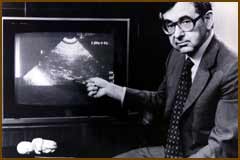
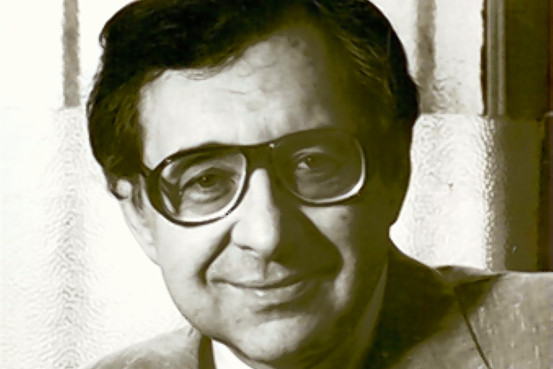
The news that former abortion practitioner turned pro-life educator and hero Bernard Nathanson has passed away has been tough for the many pro-life leaders who knew him well and respected his work. Today we feature a sample of some of the heartfelt statements LifeNews.com received about him.
Nathanson, 84, died early Monday morning after a long battle with cancer.
As a fellow New Yorker, Jeanne Head, NRLC Vice President for International Affairs and United Nations Representative, knew Dr. Nathanson first as a foe and then as a friend.
“Dr. Nathanson was probably one of the individuals most responsible for Roe v. Wade and, once he realized his error, he dedicated the rest of his life to reversing it,” Head said.
She explained that she heard about “Aborting America” when it was in galley form and may have been the first pro-lifer to speak to him after he had finished co-writing the book with Richard Ostling.
Head added, “It would be difficult to exaggerate the importance of his book, “The Silent Scream,” and his later video, “Eclipse of Reason” in driving home the sheer horror and brutality of abortion.”
Christopher Slattery, the head of a collection of pregnancy center sin New York City, told LifeNews.com, “a great advocate of Life, who was a foremost abortion doctor in the late 60s and early 70s in NYC, passed away in Manhattan.”
“I worked very closely with him in the 80s and 90s. He helped us with Expectant Mother Care, providing pre-natal care, looking after my wife’s pregnancy with our third child, running a fundraiser for us in his home, and even graciously asking me to be his confirmation sponsor into the Catholic Church, at St. Patrick’s Cathedral,” he said. “His films, books and talks have inspired many of us in the pro-life movement.”
Fr. Frank Pavone, the national director of Priests for Life, also remembered the converted pro-life leader.
“My own life has intersected with his since the mid-80’s, and our last time together was just last week,” he explained to LifeNews. “Years ago, Dr. Nathanson said, ‘I uncaged the abortion monster in the United States,’ and then he told us priests that he and his former colleagues ‘would never have gotten away with what we did if you had been united, purposeful and strong.’ That assertion is at the core of our ministry of Priests for Life.”
Fr. Pavone continued, “I will never forget the workshop at which I introduced him at the 1994 Human Life International Conference in Irvine, CA. He was supposed to talk about chemical abortion, but at the last minute decided instead to speak of his spiritual journey. At the end of the talk, he said that he was standing on the brink of conversion to the Catholic Church. The room exploded. People were leaping into the air. He said that he hoped God could forgive him, and I said, ‘Dr. Nathanson, he already has.’ And I reminded him of that exchange just last week.”
“He called Priests for Life the ‘Paul Revere’ of the pro-life movement, and said that he was always immensely grateful for our work, because though he caught the Church asleep on the abortion issue in the late 60’s, he believed the Church could be re-activated to build the Culture of Life. In memory of Dr. Nathanson, we will redouble our efforts to do just that,” Pavone concluded.
Kristan Hawkins of Students for Life added, “Today the pro-life movement mourns the death of Dr. Bernard Nathanson, a true pro-life hero. I’m saddened by that fact that this generation of pro-life activists will never get to meet Dr. Nathanson, but inspired to know that because of his work this generation has been filled with the truth and will help end abortion in America.”
And Stephen Phelan of Human Life International responded, “Human Life International — and indeed, the entire pro-life movement — will sorely miss Dr. Bernard Nathanson. He was our good friend for many years.”
“He spoke at many of our conferences, and our founder, Fr. Paul Marx, attended his baptism by Cardinal O’Connor in New York City’s St. Patrick’s Cathedral. We still constantly use his groundbreaking pro-life films “The Silent Scream” and “Eclipse of Reason,” especially overseas. His courage, knowledge and humor brought light to a difficult struggle, and his knowledge of the inner workings of the abortion industry were priceless,” he said.
For many years, Dr. Nathanson described himself as a Jewish atheist; but, in 1996, Nathanson was baptized a Catholic by Cardinal John O’Connor.
Modern man’s humanist thought has brought us to the point now that many people realize that they could not find final answers and that would lead to despair. Many people then turned to trying to find answers in the area of non-reason. There were no fixed values and they just held on to the two values of “personal peace” and “affluence.” Below is a clip from the film series “How Then Shall We Live?” Of course, there is an answer to this nihilistic point of view and it is found in the Christian Worldview.
Without a Christian worldview people are left with nihilism. Take a look at this song which was written by Kerry Livgren of the group “Kansas.”
Shortly after Kerry wrote this song he sought answers in several places but about 18 months later became a Christian.
Dave Hope (another member of Kansas) also put his faith in Christ.
LifeNews.com Note: Robert P. George is McCormick Professor of Jurisprudence and Director of the James Madison Program in American Ideals and Institutions at Princeton University. He is a member of the President’s Council on Bioethics and previously served on the United States Commission on Civil Rights. This article previously appeared in Public Discourse:
There are many lessons in Bernard Nathanson’s life for those of us who recognize the worth and dignity of all human lives and who seek to win hearts and change laws. Two in particular stand out for me.
First is the luminous power of truth. As I have written elsewhere, and as Nathanson’s own testimony confirms, the edifice of abortion is built on a foundation of lies. Nathanson told those lies; indeed, he helped to invent them. But others witnessed to truth. And when he was exposed to their bold, un-intimidated, self-sacrificial witness, the truth overcame the darkness in Nathanson’s heart and convicted him in the court of his own conscience.
Bernie and I became friends in the early 1990s, shortly after my own pro-life writings came to his attention. Once during the question-and-answer session following a speech he gave at Princeton, I asked him: “When you were promoting abortion, you were willing to lie in what you regarded as a good cause. Now that you have been converted to the cause of life, would you be willing to lie to save babies? How do those who hear your speeches and read your books and articles know that you are not lying now?” It was, I confess, an impertinently phrased question, but also, I believe, an important one. He seemed a bit stunned by it, and after a moment said, very quietly, “No, I wouldn’t lie, even to save babies.” At the dinner he and I had with students afterward, he explained himself further: “You said that I was converted to the cause of life; and that’s true. But you must remember that I was converted to the cause of life only because I was converted to the cause of truth. That’s why I wouldn’t lie, even in a good cause.”
The second lesson is this: We in the pro-life movement have no enemies to destroy. Our weapons are chaste weapons of the spirit: truth and love. Our task is less to defeat our opponents than to win them to the cause of life. To be sure, we must oppose the culture and politics of death resolutely and with a determination to win. But there is no one–no one–whose heart is so hard that he or she cannot be won over. Let us not lose faith in the power of our weapons to transform even the most resolute abortion advocates. The most dedicated abortion supporters are potential allies in the cause of life. It is the loving, prayerful, self-sacrificing witness of Joan Bell Andrews and so many other dedicated pro-life activists that softens the hearts and changes the lives of people like Dr. Bernard Nathanson.
Francis Schaeffer points out how Communism is based on materialism which leads to repression while countries with a reformation base truly have a solid basis for law and the people enjoy freedom.
Series on young people’s attitudes towards Socialism and Communism part 1
On the Arkansas Times Blog on April 1, 2010 the Arkansas Times staff noted that the Tea Party group in Little Rock were made up of “angry people who were there took turns bulling on a bullhorn and carried signs with messages like Just Say No To Socialism.”
Today, many people like to picture conservatives that oppose socialism as angry and ignorant nuts. Today in our colleges you will find that image put forth by many professors. Socialism and even at times Communism is put in a good light.
I am going to start a series today that will attempt to explain why communism and socialism is very appealing to young people, but today I also wanted to talk also about the reformation base that our country was built on.
Bradley Gitz had an excellent article “Socialist Comeback,” Arkansas Democrat-Gazette, January 30, 2011. Here is what he had to say:
The collapse of the Soviet Union was assumed to have meant the end of socialism as a viable political ideology.
That obituary appears to have been premature. Socialism not only didn’t die but it continues to exert a powerful appeal, particularly among the young and idealistic (an overlapping constituency).
The source of that appeal is not difficult to identify, residing as it does in socialism’s promise to satisfy basic human needs and usher in a classless utopia of equality and plenty.
Socialism appeals today for the same reasons it appealed in the time of Marx and Engels-because it suggests a better world. Capitalism might be the superior system in terms of generating wealth, but its dependence upon profits and self-interest means it will never be able to occupy the moral high ground.
In some respects, the virtual disappearance of communism as the logical extrapolation of the socialist ideal may have saved other forms of socialism. Few could have plausibly argued that communist societies were superior to capitalist democracies at the time the Berlin Wall was falling and Chinese demonstrators were erecting their papier-mâché statue of liberty in Tiananmen Square.
No one on the left wanted to compare East Germany to West Germany or North Korea to South Korea, let alone America to the Soviet Union. The failed Soviet experiment was a giant millstone around the neck of the left, dragging down the original vision of socialism as “the future that works.”
Gitz brings up the issue of oppression. How you ever wondered why communist countries have to operate on that basis?Let’s first take a look at the foundation that our country was built on and see if we can find any differences.
Our country was founded on a reformation base.
Notice in the video above is from the episode “The Revolutionary Age” from the film series “How Should We Then Live?” by Francis Schaeffer that a system like communism is based on a materialistic base, and must use internal repression to keep in power. Communism always comes in with promises, but what you end up with is a loss of freedom of the press and freedom of religion too. This can be seen even today in the 5 communist countries which exist. However, when you contrast these communist countries to those countries that have a reformation base you find a large difference in protection of human rights.
Francis Schaeffer has pointed out that in these countries (with the reformation base ) the biblical basis did give absolutes upon which to combat injustice. In contrast, the humanist has no way to say that certain things are right and certain things are wrong. This is because for the humanist the final thing that exists is the impersonal universe and that is silent and neutral about right and wrong and about cruelty and noncruelty.
However, our public schools in the USA are just as humanistic as they are in communist countries. This is seen by the teaching of humanism in the area of moral choices. Our students are being taught that we all are a product of chance and there are no absolutes.
The Bible tells us, “{God} has also set eternity in the hearts of men…” (Ecclesiastes 3:11 NIV). The secularist calls this an illusion, but the Bible tells us that the idea that we will survive the grave was planted in everyone’s heart by God Himself. Romans 1:19-21 tells us that God has instilled a conscience in everyone that points each of them to Him and tells them what is right and wrong (also Romans 2:14 -15).
It’s no wonder, then, that a humanist would comment, “Certain moral truths — such as do not kill, do not steal, and do not lie — do have a special status of being not just ‘mere opinion’ but bulwarks of humanitarian action. I have no intention of saying, ‘I think Hitler was wrong.’ Hitler WAS wrong.” (Gloria Leitner, “A Perspective on Belief,” THE HUMANIST, May/June 1997, pp. 38-39)
Here Leitner is reasoning from her God-given conscience and not from humanist philosophy. However, I know how moral relativism works, and I expected that Mrs. Leitner would soon be challenged by her fellow humanists. It wasn’t long before she received criticism. Humanist Abigail Ann Martin responded, “Neither am I an advocate of Hitler; however, by whose criteria is he evil?” (THE HUMANIST, September/October 1997, p. 2)
Do you see where our moral relativism has taken us in the USA?
I had a chance back in 1991 to visit with a gentleman by the name of Robert Lester Mondale while he was retired in Missouri. He was born on May 28, 1904 and he died on August 19, 2003. He was an Unitarian minister and a humanist. In fact, he was the only person to sign all three of the Humanist Manifestos of 1933, 1973 and 2003. In my conversation with him he mentioned that he had the opportunity to correspond with John Dewey who was one of Mondale’s fellow signers of the 1933 Humanist Manifesto I.
I really believe that the influence of John Dewey’s humanistic philosophy has won the battle of the textbooks in the USA today (with evolution teaching being a key component). As a result, we have people like humanist Abigail Ann Martin who wrote, “Neither am I an advocate of Hitler; however, by whose criteria is he evil?”
Socialism and Communism do have lots of promises that entice young people, but eventually the freedoms of people may be compromised down the road, and those promises are not fulfilled.
Ravi Zacharias, Christian apologist, discusses atheism. Pt 3
In my last post which was about Ronald Reagan, I mentioned that I was jealous of Jeremy Hutchinson because he got to meet Reagan. Now I must admit that I am jealous of my sister Vicki Parks because she got to have dinner with Ravi Zacharias when he was visiting Memphis to speak at Bellevue Baptist several years ago. I think Ravi Zacharias is the best the evangelical community has to offer since Francis Schaeffer.
In the first post on this subject I quoted from Brummett’s article “Athiesm’s Big Night in Little Rock,” (The Morning News, April 27, 2007), John Brummett stated: I’d asked Skip Rutherford, dean of the Clinton School, if he expected trouble — a shouting demonstration from zealous religious believers, perhaps. “Could be,” he said.
The atheist scientist Richard Dawkins was the speaker that night in Little Rock and he had a haughty attitude towards Christians because he felt they did not want to recognize science. Kerby Anderson answered this concern in his commentary “Answering the New Atheists.” He observed:
The New Atheists believe that science and Christianity are in conflict with one another. They trust science and the scientific method, and therefore reject religion in general and Christianity in particular.
Sam Harris says, “The conflict between religion and science is unavoidable. The success of science often comes at the expense of religious dogma; the maintenance of religious dogma always comes at the expense of science.”{25}
Richard Dawkins believes religion is anti-intellectual. He says: “I am hostile to fundamentalist religion because it actively debauches the scientific enterprise . . . . It subverts science and saps the intellect.”{26}
Are science and Christianity at odds with one another? Certainly there have been times in the past when that has been the case. But to only focus on those conflicts is to miss the larger point that modern science grew out of a Christian world view. In a previous radio program based upon the book Origin Science by Dr. Norman Geisler and me, I explain Christianity’s contribution to the rise of modern science.{27}
Sean McDowell and Jonathan Morrow also point out in their book that most scientific pioneers were theists. This includes such notable as Nicolas Copernicus, Robert Boyle, Isaac Newton, Blaise Pascal, Johannes Kepler, Louis Pasteur, Francis Bacon, and Max Planck. Many of these men actually pursued science because of their belief in the Christian God.
Alister McGrath challenges this idea that science and religion are in conflict with one another. He says, “Once upon a time, back in the second half of the nineteenth century, it was certainly possible to believe that science and religion were permanently at war. . . . This is now seen as a hopelessly outmoded historical stereotype that scholarship has totally discredited.”{28}
The New Atheists believe they have an answer to this argument. Christopher Hitchens discounts the religious convictions of their scientific pioneers. He argues that belief in God was the only option for a scientist at the time.{29} But if religious believers get no credit for the positive contributions to science (e.g., developing modern science) because “everyone was religious,” then why should their negative actions (e.g., atrocities done in the name of religion) discredit them? It is a double standard. The argument actually ignores how a biblical worldview shaped the scientific enterprise.{30}
The arguments of the New Atheists may sound convincing, but once you strip away the hyperbole and false charges, there isn’t much left.
If you would like to know how to answer the arguments of the New Atheists, I suggest you visit the Probe Web page at www.probe.org/radio and also consider getting a copy of the book by Sean McDowell and Jonathan Morrow. You will be able to answer the objections of atheists and be better equipped to defend your faith.
Ravi Zacharias, Christian apologist, discusses atheism. Pt 4
Francis Schaeffer points out how Communism is based on materialism which leads to repression while countries with a reformation base truly have a solid basis for law and the people enjoy freedom.
Max Brantley (Arkansas Times Blog, Dec 14) observes:
Is the U.S. “Special in the world, divinely blessed, better than the rest,” as Brummett defined the term? A reflexive yes ignores the reality of the specifics, however great a beacon of hope and freedom we have been, are and hope to be. Demonstrably — take education and health care — all the specific comparisons can’t be answered in the affirmative. After arrogance, this is the biggest problem with the exceptionalism argument. If you’re already perfect, what need is there to seek to improve or learn from others who might have a better idea?
My quick answer to the statement about the USA woeful education performance would be that our public schools have been a victim of a lack of free enterprise competition and an infiltration of humanism.
Third, the problem in the USA has not been the lack of funding. Caroline Hoxby, Ph.D., the Scott and Donya Bommer Professor of Economics at Stanford University has correctly noted:“The United States spends more money per pupil on public K-12 schooling than any other country in the world. Some of the school districts that are the most embarrassing for Americans like Newark, NJ or Washington D.C. are some of the most expensive in the world. So it is hard to make the case that the problem America has is just that it is not spending enough money… We have raised per pupil spending (in real inflation adjusted terms) every single year for the last 40 years… (Not having enough money) is not the source of the problem for American education.”
There are actually two reasons our public education in the USA has suffered. The first was because the free enterprise system has not been allowed to work its magic as shown above. The second was because of the humanistic elements that have been allowed into our schools. This goes back to the two principles that I talked about in the first installment of this series on “American Exceptionalism.
First, our country was founded on a reformation base.
Second, our country allowed free enterprise to flourish without excessive government controls.
Since I have already discussed this second point at length in regard to the schools, I will concentrate on this first point.
Notice in the video above is from the episode “The Revolutionary Age” from the film series “How Should We Then Live?” by Francis Schaeffer that a system like communism is based on a materialistic base, and must use internal repression to keep in power. Communism always comes in with promises, but what you end up with is a loss of freedom of the press and freedom of religion too. This can be seen even today in the 5 communist countries which exist.
However, when you contrast these communist countries to those countries that have a reformation base you find a large difference in protection of human rights. Francis Schaeffer has pointed out that in these countries (with the reformation base ) the biblical basis did give absolutes upon which to combat injustice. In contrast, the humanist has no way to say that certain things are right and certain things are wrong. This is because for the humanist the final thing that exists is the impersonal universe and that is silent and neutral about right and wrong and about cruelty and noncruelty.
Earlier I said that the schools in the USA are suffering because of a lack of competition, but they are also being hurt by the teaching of humanism in the area of moral choices. They are being taught that we all are a product of chance and there are no absolutes.
The Bible tells us, “{God} has also set eternity in the hearts of men…” (Ecclesiastes 3:11 NIV). The secularist calls this an illusion, but the Bible tells us that the idea that we will survive the grave was planted in everyone’s heart by God Himself. Romans 1:19-21 tells us that God has instilled a conscience in everyone that points each of them to Him and tells them what is right and wrong (also Romans 2:14 -15).
It’s no wonder, then, that a humanist would comment, “Certain moral truths — such as do not kill, do not steal, and do not lie — do have a special status of being not just ‘mere opinion’ but bulwarks of humanitarian action. I have no intention of saying, ‘I think Hitler was wrong.’ Hitler WAS wrong.” (Gloria Leitner, “A Perspective on Belief,” THE HUMANIST, May/June 1997, pp. 38-39)
Here Leitner is reasoning from her God-given conscience and not from humanist philosophy. However, I know how moral relativism works, and I expected that Mrs. Leitner would soon be challenged by her fellow humanists. It wasn’t long before she received criticism. Humanist Abigail Ann Martin responded, “Neither am I an advocate of Hitler; however, by whose criteria is he evil?” (THE HUMANIST, September/October 1997, p. 2)
Do you see where our moral relativism has taken us in the USA?
I had a chance back in 1991 to visit with a gentleman by the name of Robert Lester Mondale while he was retired in Missouri. He was born on May 28, 1904 and he died on August 19, 2003. He was an Unitarian minister and a humanist. In fact, he was the only person to sign all three of the Humanist Manifestos of 1933, 1973 and 2003. In my conversation with him he mentioned that he had the opportunity to correspond with John Dewey who was one of Mondale’s fellow signers of the 1933 Humanist Manifesto I.
I really believe that the influence of John Dewey’s humanistic philosophy has won the battle of the textbooks in the USA today (with evolution teaching being a key component). As a result, we have people like humanist Abigail Ann Martin who wrote, “Neither am I an advocate of Hitler; however, by whose criteria is he evil?”
I have been profiling State Lawmakers and today is Saline County’s Kim Hammer.
It is not a statement of rhetoric, but a statement of fact, that America is heading in the wrong direction. We are moving away from what our founding forefathers established this nation to be in principle, practice, and proper pride–all under the open practice of seeking God’s divine leadership. Without shame or apology, I openly state that I believe we as a nation have also drifted away from giving God His proper place in the decision-making process of the establishment of the laws that govern us. And we are reaping the consequences of our actions.
We who believe that “powers that be are ordained of God” (Romans 13:1) have a civic duty to come forward and help perpetuate what the founding fathers of America paid an ultimate price to birth.
We are at a crossroads in America’s history where those who believe in heart, not in lip service, that we are still “One Nation Under God” must rise to the occasion and not idly stand by and let America be dismantled one decision at a time. It is not so much a matter of party or person as it is a matter of principle and purpose. People and party affiliations have a tendency to be bartered away, but principles of value will withstand the test in the moment of decision and the end result will reflect that philosophy.
As citizens of Arkansas we must elect people into positions who are willing to stand by their convictions. Those convictions must rest in a belief that if we want to claim to be “One Nation Under God,” then we must allow God to be introduced into convictions that guide our decisions or else we have become a state and a nation where everyone does that which is right in his own eyes.
This is why I am asking you to vote for me to represent you in the Arkansas House of Representatives, District 28. I may not vote every way you want me to, but it’s not about you and me. It’s bigger than that. It’s about taking one issue at a time, weighing it out against how a decision will affect Arkansas and America emotionally, spiritually, and physically-one vote at a time.
I believe that there is still power in the vote and that this nation, one state at a time, one elected official at a time, can redirect America back onto the course that reflects we are “One Nation Under God”.
Respectfully,
Kim D. Hammer
Friday, 27 August 2010
Kim Hammer of Benton has worked his whole life helping people with their physical and spiritual needs. Now Hammer wants to help more people in the area by being a voice for District 28 in the state House of Repre-sentatives. He will face state Rep. Barbara Nix, D-Benton.
Hammer ran for the position in 2006 but did not make it, he said. Being that close to attaining the position has motivated him to run again, along with other incentives.
“I felt that for my life and where I am in my life and my convictions about the direction our country is going in, I felt like this was the right time to (run again),” he said.
Hammer spent the early years of his life working as an emergency medical technician and eventually earned the rank of being a nationally Registered EMT Intermediate — and he began only as a volunteer.
“I started because I wanted to give to the community. From there I had a conviction to keep doing it and I worked full time at MEMS in between churches. I let my license go in 1995, though.”
He now works full time as the chaplain at Saline Memorial Hospice House in Bryant. He is a graduate of Trinity College in Indiana and has served several churches throughout the state.
His Christian beliefs are something that he will not be afraid to bring into House discussions, he said.
“I think that there needs to be a conviction of appreciation for a place of God in government. I’m not an extermist, but I’m not going to apologize for what I believe in. I’m not going to apologize for thinking that God has been pushed out of the decision-making process,” Hammer said.
He added, “I have Christian convictions that I do not believe need to be imposed on anyone, but I do not believe it is right to back up from them. I believe there are Christian convictions that are represented in the decision-making process when it comes to the law, but that doesn’t mean I want to cram anything down anyone’s throat — but I’m tired of backing up.”
If elected, Hammer said he will take these beliefs to the House to help people in District 28, especially people with a palliative time of life and children in need. Hammer once worked for a school-based mental health firm and, as he said, “has a real conviction for helping children.”
If he wins the House seat, Hammer doesn’t have a firm agenda of things to get done, but he says he does have some ideals he will stand by firmly.
“I believe in strong, family values, beginning with protecting the definition of the union of marriage. I’m also strong on state sovereignty and believe that the state has to stand up against federal government that is going to impose hardships on us. We have to present a strong front as a state,” Hammer said.
One of his main objectives, he said, is to go through the checkbooks of the state government and see where money is not being spent wisely.
“There are a lot of good things that can be done with money that might be wasted. I want to scrutinize the budget and try to get funding for things such as non-profit and faith-based initiatives. I want to see where wasteful spending is happening and put it in the hands of those who need it,” he said.
Hammer plans to attend several local events, including the Salt Bowl Tailgate, the Saline County Fair and Old-Fashioned Day and would enjoy meeting any residents or answering questions. To find out more about Hammer, visit http://www.hammer4house.com.
Arnold Schwarzenegger opens this clip of Milton Friedman’s film series “Free to Choose” with a statement that contrast the socialist country he came from to the freer society in the USA where he came to live in 1968. I am going to post several video clips from this film series that will demonstrate that our country allowed free enterprise to flourish without excessive government controls.
Jason Tolbert, Max Brantley and John Brummett all wrote interesting articles on the issue of American Exceptionalism during the fall after Tim Griffin and Joyce Elliott discussed the subject during the campaign.
I don’t think we are exceptional because of our people, land or resources. It must be because of two principles that have existed in this country for many years.
First, our country was founded on a reformation base. Francis Schaeffer pointed out in his film series, “How should we then live?” episode 5 on the Revolutionary Age: “As the reformation emphasis, that the Bible is the only final authority, took root the ordinary citizen was increasingly freed from arbitrary governmental power.”
Sadly our country has allowed humanism to take away many of the freedoms that our founding fathers meant for our country to have including prayer in schools. Did you know that 29 of the 56 signers of the Declaration of Independence had seminary degrees? Futhermore, over 90% of the 250 original founding fathers claimed to be Christians according to their own writings.
Second, our country allowed free enterprise to flourish without excessive government controls. That was because the founding fathers saw the government as a necessary evil and not a positive force to be interfering with our lives.
This article today is the beginning of a series that I will be starting on the true secret behind the American Exceptionalism in our past. There is no denying that it existed in the past. Take a look at page 976 of the book A History of the American People by Paul Johnson (1997):
It is appropriate to end this history of the American people on a note of success, because the story of American is essentially one of difficulties being overcome by intelligence and skill, by faith and strength of purpose, by courage and persistence. America today, with its 260 million people, its splendid cities, its vast wealth, and its unrivaled power, is a human achievement without parallel. That achievement–the transformation of a mostly uninhabited wilderness into the supreme national artifact of history–did not come about without heroic sacrifice and great sufferings stoically endured, many costly failures, huge disappointments, defeats, and tragedies. There have indeed been many setbacks in 400 years of American history. As we have seen, many unresolved problems, some of daunting size, remain. But the Americans are, above all, a problem-solving people. They do not believe that anything in this world is beyond human capacity to soar to and dominate. They will not give up. Full of essential goodwill to each other and to all, confident in their human decency and their democratic skills, they will attack again and again the ills in their society, until they are overcome or at least substantially redressed. So the ship of state sails on, and mankind still continues to watch its progress, with wonder and amazement and sometimes apprehension, as it moves into the unknown waters of the 21st century and the third millennium. The great American republican experiment is still the cynosure of the world’s eyes. It is still the first, best hope for the human race. Looking back on its past, and forward to its future, the auguries are that it will not disappoint an expectant humanity.
_____________________________________
I am taking a look at state lawmakers. The first one was Ann Clemmer, and the second one I want to share with you today is my own State Senator Jeremy Hutchinson:
Jeremy Hutchinson served in the Arkansas legislature from 2000 – 2007. Jeremy was term limited from serving further in the Arkansas General Assembly, but left as the most senior member of the Arkansas House of Representatives. He was elected to be the Assistant Minority Leader and served on Judiciary, Insurance and Commerce, and Joint Budget Committees. He also served on both the Retirement & Pension and Energy Committees.Jeremy was recognized as one of the most effective conservative legislators to serve in the Arkansas Legislature. He sponsored and PASSED controversial bills to require parental consent before performing abortions on a minor (HB 1033 of 2005), and to authorize state and local police to enforce our federal immigration laws (HB 1033 of 2005). Jeremy helped draft and co-sponsored the Partial Birth Abortion Ban of 2005. He also sponsored and passed legislation that granted a leave of absence to our veterans for treatment of military service-connected disabilities (HB 1254 of 2005), established a new tax deferred college saving plans (HB 1735 of 2003), and created the “Baby Sharon Children’s Catastrophic Illness Grant Program” to assist families whose children suffer from catastrophic illness to pay their mounting bills so the parents can focus on their child (HB 1039 of 2003).
Jeremy also has a strong commitment to protecting citizens from crime. As a member of the Judiciary Committee, he sponsored and PASSED legislation that made the murder of a child 12 years of age or younger an aggravating circumstance for purpose of imposing the death penalty (HB 1264 of 2001), extended the statute of limitations for rape (HB 1423 of 2001), created the criminal offense of exposing a child to a chemical substance or Methamphetamine (HB 1267 of 2003), and enhanced the penalty for offenses of domestic violence committed on a pregnant woman which recognizes the value of an unborn baby (HB 1540 of 2003).
Jeremy received his undergraduate degree (B.B.A. Economics) from Harding University and his law degree from the University of Arkansas at Little Rock Bowen School of Law. He is an attorney in private practice and a part time deputy Prosecutor in Saline County. Jeremy is also an adjunct professor at John Brown University and Harding University, teaching Employment Law and Economics. Named to Arkansas Business’ 40 under 40 in 2002, Jeremy was also voted one of the “Best Conservatives” by the readers of the Arkansas Times in 2005.
Jeremy is married to Stephanie Hutchinson and they have three kids: Jack (11) Hallie (8) and Abby (6). They attend Fellowship Bible Church.
_____________________________________
Francis Schaeffer does a great job in three 9 minute clips of showing how the USA was founded on a reformation base. Here is the first clip:



 We are at a crossroads in America’s history where those who believe in heart, not in lip service, that we are still “One Nation Under God” must rise to the occasion and not idly stand by and let America be dismantled one decision at a time. It is not so much a matter of party or person as it is a matter of principle and purpose. People and party affiliations have a tendency to be bartered away, but principles of value will withstand the test in the moment of decision and the end result will reflect that philosophy.
 This is why I am asking you to vote for me to represent you in the Arkansas House of Representatives, District 28. I may not vote every way you want me to, but it’s not about you and me. It’s bigger than that. It’s about taking one issue at a time, weighing it out against how a decision will affect Arkansas and America emotionally, spiritually, and physically-one vote at a time.
 Jeremy received his undergraduate degree (B.B.A. Economics) from Harding University and his law degree from the University of Arkansas at Little Rock Bowen School of Law. He is an attorney in private practice and a part time deputy Prosecutor in Saline County. Jeremy is also an adjunct professor at John Brown University and Harding University, teaching Employment Law and Economics. Named to Arkansas Business’ 40 under 40 in 2002, Jeremy was also voted one of the “Best Conservatives” by the readers of the Arkansas Times in 2005.


