Wallbuilders’ Founder and President David Barton joins Glenn Beck on the Fox News Channel for the full hour to discuss our Godly heritage and how faith was the foundational principle upon which America was built.
America’s Religious Heritage As Demonstrated in Presidential Inaugurations
Religious activities at presidential inaugurations have become the target of criticism in recent years, 1 with legal challenges being filed to halt activities as simple as inaugural prayers and the use of “so help me God” in the presidential oath. 2 These critics – evidently based on a deficient education – wrongly believe that the official governmental arena is to be aggressively secular and religion-free. The history of inaugurations provides some of the most authoritative proof of the fallacy of these modern arguments.
Signer of the Constitution Rufus King similarly affirmed:
[B]y the oath which they [the laws] prescribe, we appeal to the Supreme Being so to deal with us hereafter as we observe the obligation of our oaths. The Pagan world were and are without the mighty influence of this principle which is proclaimed in the Christian system – their morals were destitute of its powerful sanction while their oaths neither awakened the hopes nor fears which a belief in Christianity inspires. 8
James Iredell, a ratifier of the Constitution and a U. S. Supreme Court justice appointed by George Washington, also confirmed:
According to the modern definition [1788] of an oath, it is considered a “solemn appeal to the Supreme Being for the truth of what is said by a person who believes in the existence of a Supreme Being and in a future state of rewards and punishments according to that form which would bind his conscience most.” 9
The great Daniel Webster – considered the foremost lawyer of his time 10 – also declared:
“What is an oath?” . . . [I]t is founded on a degree of consciousness that there is a Power above us that will reward our virtues or punish our vices. . . . [O]ur system of oaths in all our courts, by which we hold liberty and property and all our rights, are founded on or rest on Christianity and a religious belief. 11
Clearly, at the time the Constitution was written, an oath was a religious obligation. George Washington understood this, and at the beginning of his presidency had prayed “So help me God” with his oath; at the end of his presidency eight years later in 1796 in his “Farewell Address,” he reaffirmed that an oath was religious when he pointedly queried:
[W]here is the security for property, for reputation, for life, if the sense of religious obligation desert the oaths . . . ? 12
Numerous other authoritative sources affirm that oaths were inherently religious. 13
The evidence is clear: from a constitutional viewpoint, the administering of a presidential oath was the administering of a religious obligation – something that was often acknowledged during presidential inaugurations following Washington’s. For example, during his 1825 inauguration, John Quincy Adams declared:
I appear, my fellow-citizens, in your presence and in that of Heaven to bind myself by the solemnities of religious obligation to the faithful performance of the duties allotted to me in the station to which I have been called. 14
8. Reports of the Proceedings and Debates of the Convention of 1821, Assembled for the Purpose of Amending The Constitution of the State of New York (Albany: E. and E. Hosford, 1821), p. 575, Rufus King, October 30, 1821.(Return)
9. Jonathan Elliot, The Debates in the Several State Conventions, on the Adoption of the Federal Constitution (Washington: 1836), Vol. IV, p. 196, James Iredell, July 30, 1788. (Return)
10. Dictionary of American Biography, s. v. “Webster, Daniel.” (Return)
11. Daniel Webster, Mr. Webster’s Speech in Defense of the Christian Ministry and in Favor of the Religious Instruction of the Young, Delivered in the Supreme Court of the United States, February 10, 1844, in the Case of Stephen Girard’s Will (Washington: Gales and Seaton, 1844), pp. 43, 51. (Return)
12. George Washington, Address of George Washington, President of the United States . . . Preparatory to His Declination (Baltimore: George and Henry S. Keatinge, 1796), p. 23. (Return)
13. See, for example, James Coffield Mitchell, The Tennessee Justice’s Manual and Civil Officer’s Guide (Nashville: Mitchell and C. C. Norvell, 1834), pp. 457-458; see also City Council of Charleston v. S.A. Benjamin, 2 Strob. 508, 522-524 (Sup. Ct. S.C. 1846); and many other legal sources. (Return)
14. John Quincy Adams, Messages and Papers of the Presidents, James D. Richardson, editor (Washington, D.C.: 1900), Vol. 2, p. 860, March 4th 1825.(Return)
Wallbuilders’ Founder and President David Barton joins Glenn Beck on the Fox News Channel for the full hour to discuss our Godly heritage and how faith was the foundational principle upon which America was built.
Religious activities at presidential inaugurations have become the target of criticism in recent years, 1 with legal challenges being filed to halt activities as simple as inaugural prayers and the use of “so help me God” in the presidential oath. 2 These critics – evidently based on a deficient education – wrongly believe that the official governmental arena is to be aggressively secular and religion-free. The history of inaugurations provides some of the most authoritative proof of the fallacy of these modern arguments.
In fact, since America’s first inauguration in 1789 included seven distinct religious activities, that original inauguration is worthy of review. Every inauguration since 1789 has included numerous of those activities.
The First Inauguration
Constitutional experts abounded at America’s first inauguration. Not only was the first inauguree (George Washington) a signer of the Constitution but numerous drafters of the Constitution were serving in the Congress that organized and directed that first inauguration. In fact, just under one fourth of the members of the first Congress had been delegates to the Convention that wrote the Constitution. 3 Furthermore, the identical Congress that directed and oversaw these inaugural activities also penned the First Amendment. Having therefore produced both the Constitution and all of its clauses on religion, they clearly knew what types of religious activities were and were not constitutional. Clearly, then, the religious activities that occurred at the first inauguration may well be said to have the approval and imprimatur of the greatest collection of constitutional experts America has ever known. Therefore, a review of the religious activities acceptable in that first inauguration will provide guidance for citizens in general and critics in particular.
The first inauguration occurred in New York City. (New York City served as the nation’s capital for the first year of the new federal government; for the next ten, Philadelphia was the capital city; in 1800, the federal government moved to Washington, D. C. for its permanent home). George Washington had been at home at Mt. Vernon when Charles Thomson, Secretary of the Continental Congress, notified him that he had been unanimously elected as the nation’s first president.
On receiving this news, Washington departed from Mt. Vernon and began his trek toward New York City, stopping first at Fredericksburg, Virginia, to visit his mother, Mary¬ – the last time the two would see each other. Mary was eighty-two and suffering from incurable breast cancer. Mary parted with her son, giving him her blessings and offering him her prayers, telling him: “You will see me no more; my great age and the disease which is rapidly approaching my vitals, warn me that I shall not be long in this world. Go, George; fulfill the high destinies which Heaven appears to assign to you; go, my son, and may that Heaven’s and your mother’s blessing be with you always.” 4Washington did go, and he did indeed fulfill the high destinies assigned him by Heaven. A moving painting was made of her giving him her final charge; his mother passed away a few months after that final meeting.
Leaving his mother, Washington continued northward toward New York City. In town after town along the way, special dinners and celebrations were held – including in Alexandria, Georgetown, Baltimore, Philadelphia, Trenton, and other locations. Finally reaching Elizabethtown, New Jersey, Washington boarded a barge that carried him the rest of the way, where another celebration awaited him upon entering New York Harbor.
On April 30th, 1789, George Washington was to be inaugurated on the balcony outside Federal Hall. (Federal Hall was originally named Old Hall, but New York City – in an effort to convince the new federal government that the City was serious about becoming the national capital – remodeled the structure, renaming it Federal Hall. The House and Senate met in two chambers inside that Hall, and the inauguration took place on the remodeled building’s balcony.) Incidentally, religious activities had been planned to precede the inauguration, with the people of New York City being called to a time of prayer. The papers in the Capital City reported on that scheduled activity:
[O]n the morning of the day on which our illustrious President will be invested with his office, the bells will ring at nine o’clock, when the people may go up to the house of God and in a solemn manner commit the new government, with its important train of consequences, to the holy protection and blessing of the Most high. An early hour is prudently fixed for this peculiar act of devotion and . . . is designed wholly for prayer. 5
The preparations for the inauguration had been extensive; everything had been well planned; the event seemed to be proceeding smoothly. The parade carrying Washington by horse-drawn carriage to the swearing-in was nearing Federal Hall when it was realized that no Bible had been obtained for administering the oath. Parade Marshal Jacob Morton hurried to the nearby Masonic Lodge and grabbed its large 1767 King James Bible.
The Bible was laid upon a crimson velvet cushion (held by Samuel Otis, Secretary of the Senate) and, with a huge crowd gathered below watching the ceremony on the balcony, New York Chancellor Robert Livingston was to administer the oath of office. (Robert Livingston had been one of the five Founders who had drafted the Declaration of Independence; however, he was called back to New York to help his State through the Revolution before he could affix his signature to the very document he had helped write. As Chancellor, Livingston was the highest ranking judicial official in New York.) Beside Livingston and Washington stood several distinguished officials, including Vice President John Adams, original Supreme Court Chief Justice John Jay, Generals Henry Knox and Philip Schuyler, and a number of others. The Bible was opened at random to the latter part of Genesis; Washington placed his left hand upon the open Bible, raised his right, and then took the oath of office prescribed by the Constitution. Washington then bent over and kissed the Bible, reverently closed his eyes, and said, “So help me God!” Chancellor Livingston then proclaimed, “It is done!” Turning to the crowd assembled below, he shouted, “Long live George Washington – the first President of the United States!” That shout was echoed and re-echoed by the crowd below.
Critics today claim that George Washington never added “So help me God!” to his oath 6 – that associating religious intent with the oath is of recent origins. After all, the presidential oath of office as prescribed in Article II of the Constitution simply states:
I do solemnly swear (or affirm) that I will faithfully execute the office of President of the United States, and will to the best of my ability, preserve, protect and defend the Constitution of the United States.
But overlooked by many today is the fact that the Framers of our government considered an oath to be inherently religious – something George Washington affirmed when he appended the phrase “So help me God” to the end of the oath. In fact, it was universally acknowledged by every American legal scholar of that day that any legally-binding oath was overtly religious in nature. As signer of the Declaration John Witherspoon succinctly explained:
An oath is an appeal to God, the Searcher of Hearts, for the truth of what we say and always expresses or supposes an imprecation [a calling down] of His judgment upon us if we prevaricate [lie]. An oath, therefore, implies a belief in God and His Providence and indeed is an act of worship. . . . Persons entering on public offices are also often obliged to make oath that they will faithfully execute their trust. . . . In vows, there is no party but God and the person himself who makes the vow. 7
1. A number of legal authorities, university professors, and news writers have criticized inaugural religious activities. See, for example, Alan M. Dershowitz, “Bush Starts Off by Defying the Constitution,” Los Angeles Times, Wednesday, January 24, 2001 Metro section, Part B, p. 9; Larry Judkins, Religion Page Editor, Sacramento Valley Mirror, “Dershowitz Piece Misleading: All Presidents Flaunt Constitution,” in Positive Atheism Magazine, Thursday, January 25, 2001 (at: http://www.positiveatheism.org); “President Bush Announces Religious Agenda on Inauguration Day,” Americans United for Separation of Church and State, January 20, 2001 (at:http://www.au.org/site/News2?abbr=pr&page=NewsArticle&id=6095); et. Al.(Return)
2. Noted atheist Michael Newdow filed suit in federal court to have prayers barred from the Presidential Inauguration of 2001, 2005, and in 2009 to have inaugural prayers halted and to prevent the Chief-Justice of the U. S. Supreme Court from saying “So help me God” when administering the oath of office to the president. (Return)
3. Significantly, many of the U. S. Senators at the first Inauguration had been delegates to the Constitutional Convention that framed the Constitution including William Samuel Johnson, Oliver Ellsworth, George Read, Richard Bassett, William Few, Caleb Strong, John Langdon, William Paterson, Robert Morris, and Pierce Butler; and many members of the House had been delegates to the Constitutional Convention, including Roger Sherman, Abraham Baldwin, Daniel Carroll, Elbridge Gerry, Nicholas Gilman, Hugh Williamson, George Clymer, Thomas Fitzsimmons, and James Madison.(Return)
4. Benson J. Lossing, Our Country: A Household History for All Readers (New York: Henry J. Johnson, 1877), Vol. IV, p. 1121. (Return)
5. The Daily Advertiser, New York, Thursday, April 23, 1789, p. 2. (Return)
6. See, for example, Newdow v. Roberts, complaint filed by Newdow on December 29, 2008, pp. 20-21, par. 103-104 of the complaint. See also Cathy Lynn Grossman, “No proof Washington said ‘so help me God’ – will Obama,”USA Today, January 9, 2009 (at:http://www.usatoday.com/news/religion/2009-01-07-washington-oath_N.htm). (Return)
7. John Witherspoon, The Works of John Witherspoon (Edinburgh: J. Ogle, 1815), Vol. VII, pp. 139-140, 142, from his “Lectures on Moral Philosophy,” Lecture 16 on Oaths and Vows. (Return)
Speaking of incredibly ridiculous things, she said in another television interview that she had been right to assert that our founding fathers fought tirelessly against slavery. She cited John Quincy Adams, a little boy and teen in revolutionary days. Again, to extend the generosity of doubt: Perhaps she simply can’t admit when she is spectacularly wrong.
If there is any doubt about John Quincy Adams being one of the most amazing patriots our country has ever seen then take a moment and view the video clip above by David Barton. John Quincy Adams was the U.S. Ambassador to Russia at age 14!!! He was living in the White House with his father in 1801.
The inconsistency of the institution of domestic slavery with the principles of the Declaration of Independence was seen and lamented by all the southern patriots of the Revolution; by no one with deeper and more unalterable conviction than by the author of the Declaration himself [Jefferson]. No charge of insincerity or hypocrisy can be fairly laid to their charge. Never from their lips was heard one syllable of attempt to justify the institution of slavery. They universally considered it as a reproach fastened upon them by the unnatural step-mother country [Great Britain] and they saw that before the principles of the Declaration of Independence, slavery, in common with every other mode of oppression, was destined sooner or later to be banished from the earth. Such was the undoubting conviction of Jefferson to his dying day. In the Memoir of His Life, written at the age of seventy-seven, he gave to his countrymen the solemn and emphatic warning that the day was not distant when they must hear and adopt the general emancipation of their slaves. 5
Maybe Bachmann has been reading more American history than Brummett thinks.
In the Miyagi port city of Kesennuma, which has a population of 74,000, the waves smashed cars up against houses.
Steeling the Mind Bible Conference Pt 5 of 6 David Barton
In Washington’s own words:
In offering to you, my countrymen, these counsels of an old and affectionate friend I dare not hope they will make the strong and lasting impression I could wish – that they will control the usual current of the passions or prevent our nation from running the course which has hitherto marked the destiny of nations. But if I may even flatter myself that they may be productive of some partial benefit, some occasional good – that they may now and then recur to moderate the fury of party spirit, to warn against the mischiefs of foreign intrigue, to guard against the impostures of pretended patriotism – this hope will be a full recompense for the solicitude for your welfare by which they have been dictated.
How far in the discharge of my official duties I have been guided by the principles which have been delineated the public records and other evidences of my conduct must witness to you and to the world. To myself, the assurance of my own conscience is that I have at least believed myself to be guided by them.
In relation to the still subsisting war in Europe my proclamation of the 22d of April, 1793, is the index to my plan. Sanctioned by your approving voice and by that of your representatives in both Houses of Congress, the spirit of that measure has continually governed me, uninfluenced by any attempts to deter or divert me from it.
After deliberate examination, with the aid of the best lights I could obtain, I was well satisfied that our country, under all the circumstances of the case, had a right to take, and was bound in duty and interest to take, a neutral position. Having taken it, I determined as far as should depend upon me to maintain it with moderation, perseverance, and firmness.
The considerations which respect the right to hold this conduct it is not necessary on this occasion to detail. I will only observe, that, according to my understanding of the matter, that right, so far from being denied by any of the belligerent powers, has been virtually admitted by all.
The duty of holding a neutral conduct may be inferred, without any thing more, from the obligation which justice and humanity impose on every nation, in cases in which it is free to act, to maintain inviolate the relations of peace and amity towards other nations.
The inducements of interest for observing that conduct will best be referred to your own reflections and experience. With me a predominant motive has been to endeavor to gain time to our country to settle and mature its yet recent institutions, and to progress without interruption to that degree of strength and consistency which is necessary to give it, humanly speaking, the command of its own fortunes.
In the next few days I will post portions of the speech (which really was just a newspaper article) but since it is so long I will put an outline of the speech that is provided by David Barton of Wallbuilders.
Conclusion.
Washington hopes his counsel will:
“help moderate the fury of party spirit”
“warn against the mischiefs of foreign intrigue”
“guard against the impostures of pretended patriotism.”
He believes himself to be guided by the “principles which have been delineated” above.
A “neutral position” is the best course to take regarding the “subsisting war in Europe.”
that neutrality is the right course has been “admitted by all.”
our “motive has been to endeavor to gain time for our country to settle and mature” until America has “command of its own fortunes.”
I do not think that John Quincy Adams was a founding father in the same sense that his father was. However, I do think he was involved in the early days of our government working with many of the founding fathers.
ABC’s George Stephanopoulos asked Bachmann to defend that comment, given the fact that the U.S. founders helped enshrine slavery in the Constitution and allowed it to continue as an institution until the Civil War.
Bachmann responded by pointing to the career of John Quincy Adams, the abolitionist president who was not yet 9 years old when the Declaration of Independence was signed.
“If you look at one of our founding fathers, John Quincy Adams, that’s absolutely true,” Bachmann said. “He was a very young boy, but he was with his father, serving essentially as his father’s secretary. He tirelessly worked throughout his life to make sure that we did, in fact, one day eradicate slavery from our nation, and I’m so grateful for that work.”
Stephanopoulos responded: “He wasn’t one of the founding fathers. He was a president, he was a secretary of state. As a member of Congress, you’re right, he did work to end slavery decades later. But — so you’re standing by this comment that the founding fathers worked tirelessly to end slavery?”
“Well John Quincy Adams most certainly was part of the Revolutionary War era,” Bachmann said. “He was a young boy but he was actively involved.”
However, what Jeff omits is that during the Stephanopoulos interview, Michele Bachmann identified John Quincy Adams as a Founding Father. The Declaration of Independence was adopted a week shy of his ninth birthday. Now Bachmann is correct in saying that John Quincy Adams was actively involved during the Revolutionary War Era. In fact, he was given his first diplomatic posting in Europe at the tender age of ten. It would have been more accurate for Bachmann to describe John Quincy Adams as a Son of the American Revolution
In 1837, when
he was 69 years old, he delivered a Fourth of July speech at Newburyport,
Massachusetts. He began that address with a question: “Why is it, friends and
fellow citizens, that you are here assembled? Why is it that entering on the
62nd year of our national existence you have honored [me] with an invitation to
address you. . . ?”
The answer
was easy: they had asked him to address them because he was old enough to
remember what went on; they wanted an eye-witness to tell them of it! He next
asked them: “Why is it that, next to the birthday of the Savior of the world,
your most joyous and most venerated festival returns on this day [the Fourth of
July]?”
An
interesting question: why is it that in America the Fourth of July and Christmas
were our two top holidays? Note his answer: “Is it not that, in the chain of
human events, the birthday of the nation is indissolubly linked with the
birthday of the Savior? That it forms a leading event in the progress of the
Gospel dispensation? Is it not that the Declaration of Independence first
organized the social compact on the foundation of the Redeemer’s mission upon
earth? That it laid the cornerstone of human government upon the first precepts
of Christianity?”
According to
John Quincy Adams, Christmas and the Fourth of July were intrinsically
connected. On the Fourth of July, the Founders
simply took the precepts of Christ which came into the world through His birth
(Christmas) and incorporated those principles into civil government.
Have you ever
considered what it meant for those 56 men – an eclectic group of ministers,
business men, teachers, university professors, sailors, captains, farmers – to
sign the Declaration of Independence? This was a contract that began with the
reasons for the separation from Great Britain and closed in the final paragraph
stating “And for the support of this Declaration, with a firm reliance on the
protection of Divine Providence, we mutually pledge to each other our lives, our
fortunes, and our sacred honor.”
SIXTH PRESIDENT OF THE UNITED STATES; DIPLOMAT; SECRETARY OF STATE; U.
S. SENATOR; U. S. REPRESENTATIVE; “OLD MAN ELOQUENT”; “HELL-HOUND OF ABOLITION”
My hopes of a future life are all founded upon the Gospel of Christ and I
cannot cavil or quibble away [evade or object to]. . . . the whole tenor of His
conduct by which He sometimes positively asserted and at others countenances
[permits] His disciples in asserting that He was God.7
The hope of a Christian is inseparable from his faith. Whoever believes in
the Divine inspiration of the Holy Scriptures must hope that the religion of
Jesus shall prevail throughout the earth. Never since the foundation of the
world have the prospects of mankind been more encouraging to that hope than they
appear to be at the present time. And may the associated distribution of the
Bible proceed and prosper till the Lord shall have made “bare His holy arm in
the eyes of all the nations, and all the ends of the earth shall see the
salvation of our God” [Isaiah 52:10].8
In the chain of human events, the birthday of the nation is indissolubly
linked with the birthday of the Savior. The Declaration of Independence laid the
cornerstone of human government upon the first precepts of Christianity.9
The law given from Sinai was a civil and municipal as well as a
moral and religious code; it contained many statutes . . . of universal
application-laws essential to the existence of men in society, and most of which
have been enacted by every nation which ever professed any code of laws.
(Source: John Quincy Adams, Letters of John
Quincy Adams, to His Son, on the Bible and Its Teachings (Auburn: James M.
Alden, 1850), p. 61.)
There are three points of doctrine the belief of which forms the
foundation of all morality. The first is the existence of God; the second is the
immortality of the human soul; and the third is a future state of rewards and
punishments. Suppose it possible for a man to disbelieve either of these three
articles of faith and that man will have no conscience, he will have no other
law than that of the tiger or the shark. The laws of man may bind him in chains
or may put him to death, but they never can make him wise, virtuous, or
happy.
(Source: John Quincy Adams, Letters of John
Quincy Adams to His Son on the Bible and Its Teachings (Auburn: James M.
Alden, 1850), pp. 22-23.)
On an American history bus tour through New England that looked like a campaign forerunner, Palin fielded a dreaded impromptu question about Paul Revere.
She ended up saying via typically tortured syntax that Revere had ridden through town ringing bells to inform the British occupiers that they should not dare try to confiscate arms from the American colonists….
He had made arrangements for others to hang lanterns briefly in the Old North Church as messages denoting British troop movement — one if by land, two if by sea. But, alas, lanterns don’t ring.
Sarah Palin caused a colonial-era commotion last week with comments she made in Boston about Paul Revere’s famous ride. Melissa Block speaks with Robert Allison, a professor and historian at Suffolk University, about Palin’s comments to see just how historically accurate they were.
Sarah Palin is defending her knowledge of American history. Last week, after Palin visited Old North Church and Paul Revere’s house in Boston, a reporter asked her what she had seen and what she’d take away from her visit.
Ms. SARAH PALIN (Former Governor, Alaska): We saw where Paul Revere hung out as a teenager, which was something new to learn. And, you know, he who warned the British that they weren’t going to be taking away our arms by ringing those bells and making sure, as he is riding his horse through town, to send those warning shots and bells, that we were going to be secure and we were going to be free.
BLOCK: Well, after that generated howls of derision for historical inaccuracy, Palin amplified on “Fox News Sunday.” Here’s part of what she said.
(Soundbite of TV show, “Fox News Sunday”)
Ms. PALIN: Part of Paul Revere’s ride – and it wasn’t just one ride – he was a courier, he was a messenger. Part of his ride was to warn the British that we’re already there, that, hey, you’re not going to succeed. You’re not going to take American arms. You are not going to beat our own well-armed persons, individual, private militia that we have. He did warn the British.
BLOCK: We are going to fact-check Palin’s Paul Revere history now with Robert Allison. He’s chair of the history department at Suffolk University in Boston.
Professor Allison, welcome to the program.
Professor ROBERT ALLISON (Chairman, History Department, Suffolk University): Thanks, Melissa.
BLOCK: And let’s review Paul Revere’s midnight ride, April 18, 1775. He’s going to Lexington, Massachusetts. And according to Sarah Palin, he’s riding his horse through town sending warning shots and ringing those bells. True?
Prof. ALLISON: Well, he’s not firing warning shots. He is telling people so that they can ring bells to alert others. What he’s doing is going from house to house, knocking on doors of members of the Committees of Safety saying the regulars are out. That is, he knew that General Gage was sending troops out to Lexington and Concord, really Concord, to seize the weapons being stockpiled there, but also perhaps to arrest John Hancock and Samuel Adams, leaders of the Continental Congress, who were staying in the town of Lexington.
Remember, Gage was planning – this is a secret operation, that’s why he’s moving at night. He gets over to Cambridge, the troops start marching from Cambridge, and church bells are ringing throughout the countryside.
BLOCK: So Paul Revere was ringing those bells? He was a silversmith, right?
Prof. ALLISON: Well, he was – he also was a bell ringer. That is, he rang the bells at Old North Church as a boy. But he personally is not getting off his horse and going to ring bells. He’s telling other people – and this is their system before Facebook, before Twitter, before NPR, this was the way you get a message out is by having people ring church bells and everyone knows there is an emergency.
And by this time, of course, the various town Committees of Safety, militia knew what the signals were, so they knew something was afoot. So this is no longer a secret operation for the British.
Revere isn’t trying to alert the British, but he is trying to warn them. And in April of 1775, no one was talking about independence. We’re still part of the British Empire. We’re trying to save it. So this is a warning to the British Empire what will happen if you provoke Americans.
BLOCK: And Sarah Palin also was saying there that Paul Revere’s message to the British in his warning was: you’re not going to take American arms. You know, basically a Second Amendment argument, even though the Second Amendment didn’t exist then.
Prof. ALLISON: Yeah. She was making a Second Amendment case. But, in fact, the British were going out to Concord to seize colonists’ arms, the weapons that the Massachusetts Provincial Congress was stockpiling there.
So, yeah, she is right in that. I mean, and she may be pushing it too far to say this is a Second Amendment case. Of course, neither the Second Amendment nor the Constitution was in anyone’s mind at the time. But the British objective was to get the arms that were stockpiled in Concord.
BLOCK: So you think basically, on the whole, Sarah Palin got her history right.
Prof. ALLISON: Well, yeah, she did. And remember, she is a politician. She’s not an historian. And God help us when historians start acting like politicians, and I suppose when politicians start writing history.
BLOCK: Are there other historians, Professor, whom you’ve talked with who say you’re being entirely too charitable towards Sarah Palin here, and she really did misread American…
Prof. ALLISON: I haven’t talked to many – well, I don’t know. I mean, I haven’t talked to too many historians today. And, you know, Sarah Palin is a lightning rod. I just was thinking about how many times, you know, I’ve spoken about Paul Revere. I’ve organized events about the American Revolution. No one ever pays any attention. Suddenly, Sarah Palin comes to town, makes an off-the-cuff remark about what she learned, and suddenly, you’re calling me to find out what I think about Paul Revere and the American Revolution.
It’s a great honor to talk to you, Melissa.
(Soundbite of laughter)
Prof. ALLISON: I wish it didn’t take Sarah Palin coming to town to bring us together.
BLOCK: Well, we’ll have to do this again sometime.
Prof. ALLISON: I hope so.
BLOCK: Professor Allison, thanks so much.
Prof. ALLISON: Thanks. Take care.
BLOCK: Professor Robert Allison is chair of the history department at Suffolk University in Boston.
On an American history bus tour through New England that looked like a campaign forerunner, Palin fielded a dreaded impromptu question about Paul Revere.
She ended up saying via typically tortured syntax that Revere had ridden through town ringing bells to inform the British occupiers that they should not dare try to confiscate arms from the American colonists.
Invited days later by Fox News colleague Chris Wallace to admit she got that wrong, Palin reared up and said she had not been wrong and that she certainly knew American history.
Actually, Revere is said by historical accounts to have ridden out from Boston toward Lexington on assignment to warn American patriot stalwarts Samuel Adams and John Hancock that British troops were marching to arrest them.
This being a somewhat surreptitious mission, he is not described in conventional historical narratives as ringing any bells.
He had made arrangements for others to hang lanterns briefly in the Old North Church as messages denoting British troop movement — one if by land, two if by sea. But, alas, lanterns don’t ring.
Actually Paul Revere did “ring bells” at houses to warn them. Below are Paul Revere’s own words in a letter to Dr. Jeremy Belknap. In that letter Revere wrote:
…In Medford, I awaked the Captain of the minute men; and after that, I alarmed almost every house, till I got to Lexington.
(Next when taken captive by the British) I told him. He asked me if I was an express. I answered in the affirmative. He demanded what time I left Boston. I told him, and added that their troops had catched aground in passing the river, and that there would be five hundred Americans there in a short time, for I had alarmed the country all the way up.
Evidently Palin was right about warning both the patriots and the British and she was right about Revere ringing the bells at many houses along the way.
Talking about ringing the bell at houses reminds me of these words: “Someone’s knocking at the door, Somebody’s ringing the bell. Do me a favor. Open the door and let ’em in.” That’s the entirety of the lyrics to the cute little Paul McCartney song “Let ‘Em In,” from the 1976 album “Wings at the Speed of Sound.”
I just want to know how Brummett and other liberals can make fun of Palin concerning this when she did not make any mistakes at all and actually served the purpose of educating the public in the process?
In the fall of 1774 and the winter of 1775, I was one of upwards of thirty, chiefly mechanics, who formed ourselves into a committee for the purpose of watching the movements if the British soldiers, and gaining every intelligence of the movements of the Tories. We held our meetings at the Green Dragon tavern. We were so careful that our meetings be kept secret that every time we met, every person swore upon the Bible that they would not discover any of our transactions but to Messrs. Hancock, Adams, Doctors Warren, Church and one or two more.
…In the winter, towards the spring, we frequently took turns, two and two, to watch the soldiers by patrolling the streets all night. The Saturday night preceding the 19th of April, about 12 o’clock at night, the boats belonging to the transports were all launched and carried under the sterns of the men-of-war. (They had been previously hauled up and repaired.) We likewise found that the grenadiers and light infantry were all taken off duty.
From these movements we expected something serious was to be transacted. On Tuesday evening, the 18th, it was observed that a number of soldiers were marching towards the bottom of the Common. About 10 o’clock, Dr. Warren sent in great haste for me and begged that I immediately set off for Lexington, where Messrs. Hancock and Adams were, and acquaint them of the movement, and that it was thought they were the objects.
When I got to Dr. Warren’s house, I found he had sent an express by land to Lexington–a Mr. William Daws. The Sunday before, by desire of Dr. Warren, I had been to Lexington, to Messrs. Hancock and Adams, who were at the Rev. Mr. Clark’s. I returned at night through Charlestown; there I agreed Colonel Conant and some other gentlemen that if the British went out by water, we would show two lanthorns in the north church steeple; and if by land, one, as a signal; for we were apprehensive it would be difficult to cross the Charles River or to get over Boston Neck. I left Dr. Warren, called upon a friend and desired him to make the signals.
I then went home, took my boots and surtout, went to the north part of the town, where I had kept a boat; two friends rode me across the Charles River, a little to the eastward where the Somerset man-of-war lay. It was then young flood, the ship was winding, and the moon was rising. They landed me in the Charlestown side. When I got into town, I met Colonel Conant and several others; they said they had seen our signals. I told them what was acting, and went to get me a horse; I got a horse off Deacon Larkin. While the horse was preparing, Richard Devens, Esq., who was one of the Committee of Safety, came to me and told me that he came down the road from Lexington after sundown that evening; that he met ten British Officers, all well mounted, and armed, going up the road.
I set off upon a very good horse; it was then about eleven o’clock and very pleasant. After I had passed Charlestown Neck, I saw two men on horse back under a tree. When I got near them, I discovered they were British Officers. One tried to get ahead of me, and the other to take me. I turned my horse very quick and galloped towards Charlestown Neck, and then pushed for the Medford road. The one who chased me, endeavoring to cut me off, got into a clay pond where Mr. Russell’s Tavern in now built. I got clear of him, and went through Medford, over the bridge and up to Menotomy. In Medford, I awaked the Captain of the minute men; and after that, I alarmed almost every house, till I got to Lexington. I found Messrs. Hancock and Adams at the Reverend Mr. Clarks; I told them my errand and enquired for Mr. Daws; they said he had not been there; I related the story of the two officers, and supposed that he must have been stopped, as he ought to have been there before me.
After I had been there about a half an hour, Mr. Daws came; we refreshed ourselves, and set off for Concord. We were overtaken by a Dr. Prescott, whom we found to be a high Son of Liberty. I told of the ten officers that Mr. Devens met, and that it was probable we might be stopped before we got to Concord; for I suppose that after night they divided themselves, and that two of them fixed themselves in such passages as were most likely to stop any intelligence going to Concord. I likewise mentioned that had better alarm all the inhabitants till we got to Concord. The young doctor much approved of it and said he would stop with either of us, for the people between that and Concord knew him and would give the more credit to what we said.
We had got nearly half way. Mr. Daws and the doctor stopped to alarm the people of a house. I was about one hundred rods ahead when I saw two men in nearly the same situation as those officers were near Charlestown. I called for the doctor and Mr.Daws to come up. In an instant I was surrounded by four. They had placed themselves in a straight road that inclined each way; they had taken down a pair of bars on the north side of the road, and two of them were under a tree in the pasture. The doctor being foremost, he came up and we tried to get past them; but they being armed with pistols and swords, they forced us into the pasture. The doctor jumped his horse over a low stone wall and got to Concord.
I observed a wood at a small distance and made for that. When I got there, out started six officers on horseback and ordered me to dismount. One of them, who appeared to have the command, examined me, where I came from and what my name was. I told him. He asked me if I was an express. I answered in the affirmative. He demanded what time I left Boston. I told him, and added that their troops had catched aground in passing the river, and that there would be five hundred Americans there in a short time, for I had alarmed the country all the way up. He immediately rode towards those who stopped us, when all five of them came down upon a full gallop. One of them, whom I afterwards found to be a Major Mitchel, of the 5th Regiment, clapped his pistol to my head, called me by name and told me he was going to ask me some questions, and if I did not give him true answers, he would blow my brains out. He then asked me similar questions to those above. He then ordered me to mount my horse, after searching me for arms. He then ordered them to advance and to lead me in front. When we had got about one mile, the major rode up to the officer that was leading me, and told him to give me to the sergeant. As soon as he took me, the major ordered him, if I attempted to run, or anybody insulted them, to blow my brains out.
We rode till we got near Lexington meeting-house, when the militia fired a volley of guns, which appeared to alarm them very much. The major inquired of me how far it was to Cambridge, and if there were any other road. After some consultation, the major rode up to the sergeant and asked if his horse was tired. He answered him he was- he was a sergeant of grenadiers and had a small horse. “Then,” said he, “take that man’s horse.” I dismounted, and the sergeant mounted my horse, when they all rode towards Lexington meeting-house.
I went across the burying-ground and some pastures and came to the Rev. Mr. Clark’s house, where I found Messrs. Hancock and Adams. I told them of my treatment, and they concluded to go from that house towards Woburn. I went with them and a Mr. Lowell, who was a clerk to Mr. Hancock.
When we got to the house where they intended to stop, Mr. Lowell and myself returned to Mr. Clark’s, to find what was going on. When we got there, an elderly man came in; he said he had just come from the tavern, that a man had come from Boston who said there were no British troops coming. Mr. Lowell and myself went towards the tavern, when we met a man on a full gallop, who told us the troops were coming up the rocks. We afterwards met another, who said they were close by. Mr. Lowell asked me to go to the tavern with him, to get a trunk of papers belonging to Mr. Hancock. We went up chamber, and while we were getting the trunk, we saw the British very near, upon a full march. We hurried towards Mr. Clark’s house. In our way we passed through the militia. There were about fifty. When we had got about one hundred yards from the meeting-house, the British troops appeared on both sides of the meeting-house. In their front was an officer on horseback. They made a short halt; when I saw, and heard, a gun fired, which appeared to be a pistol. Then I could distinguish two guns, and then a continual roar of musketry; when we made off with the trunk.
Steeling the Mind Bible Conference pt 4 of 6 David Barton
In Washington’s own words:
The great rule of conduct for us, in regard to foreign nations, is, in extending our commercial relations to have with them as little political connection as possible. So far as we have already formed engagements, let them be fulfilled with perfect good faith. Here let us stop.
Europe has a set of primary interests which to us have none or a very remote relation. Hence she must be engaged in frequent controversies, the causes of which are essentially foreign to our concerns. Hence, therefore, it must be unwise in us to implicate ourselves by artificial ties in the ordinary vicissitudes of her politics or the ordinary combinations and collisions of her friendships or enmities.
Our detached and distant situation invites and enables us to pursue a different course. If we remain one people, under an efficient government, the period is not far off when we may defy material injury from external annoyance; when we may take such an attitude as will cause the neutrality we may at any time resolve upon to be scrupulously respected; when belligerent nations, under the impossibility of making acquisitions upon us, will not lightly hazard the giving us provocation; when we may choose peace or war, as our interest, guided by our justice, shall counsel.
Why forgo the advantages of so peculiar a situation? Why quit our own to stand upon foreign ground? Why, by interweaving our destiny with that of any part of Europe, entangle our peace and prosperity in the toils of European ambition, rivalship, interest, humor, or caprice?
It is our true policy to steer clear of permanent alliances with any portion of the foreign world, so far, I mean, as we are now at liberty to do it; for let me not be understood as capable of patronizing infidelity to existing engagements. I hold the maxim no less applicable to public than to private affairs that honesty is always the best policy. I repeat, therefore, let those engagements be observed in their genuine sense. But in my opinion it is unnecessary and would be unwise to extend them.
Taking care always to keep ourselves by suitable establishments on a respectable defensive posture, we may safely trust to temporary alliances for extraordinary emergencies.
Harmony, liberal intercourse with all nations are recommended by policy, humanity, and interest. But even our commercial policy should hold an equal and impartial hand, neither seeking nor granting exclusive favors or preferences; consulting the natural course of things; diffusing and diversifying by gentle means the streams of commerce, but forcing nothing; establishing with powers so disposed, in order to give trade a stable course, to define the rights of our merchants, and to enable the Government to support them, conventional rules of intercourse, the best that present circumstances and mutual opinion will permit, but temporary and liable to be from time to time abandoned or varied as experience and circumstances shall dictate; constantly keeping in view that it is folly in one nation to look for disinterested favors from another; that it must pay with a portion of its independence for whatever it may accept under that character; that by such acceptance it may place itself in the condition of having given equivalents for nominal favors, and yet of being reproached with ingratitude for not giving more. There can be no greater error than to expect or calculate upon real favors from nation to nation. It is an illusion which experience must cure, which a just pride ought to discard.
In the next few days I will post portions of George Washington’s farewell speech (which really was just a newspaper article) but since it is so long I will put an outline of the speech that is provided by David Barton of Wallbuilders.
“Foreign influence is one of the most baneful foes of Republican Government.”
“The great rule of conduct for us”: “as little political connection as possible.”
we should fulfill obligations, then stop
we should not get involved in Europe’s affairs.
Our “detached and distant situation . . . enables . . . a different course.”
“Steer clear of permanent alliances with any portion of the foreign world.”
However, we may have “temporary alliances, for extraordinary emergencies.”
Maintain “a liberal intercourse with all nations.”
n pictures: Japan earthquake and tsunami
In association with
Houses in Natori were caught as a wall of water up to 10m (33ft) high in some places swept inland.
Would you build the house of your dreams if you didn’t plan to live in it? I wouldn’t, either. But that’s exactly what would be happening if Mike Huckabee had any serious plans of running for president.
Huckabee, for whom I worked as a communications aide in 1997-99, is constructing a $2.2 million, 11,000-square-foot oceanfront mansion in Florida, according to a front page story in last Sunday’s statewide daily. That would seem to be a huge waste of money if he also were planning on spending the last half of this year and all of next slogging through Iowa, New Hampshire, and the rest of the country, and then the next eight years living in the White House…
Huckabee, by contrast, has too many reasons not to want it. Since leaving the Governor’s Mansion and running unsuccessfully for president in 2008, he has parlayed his likable media personality into lucrative book, TV and radio deals. He’s getting rich playing to his strengths.
Meanwhile, running for president means having to overcome his weaknesses, chief among them his inability to raise money. That will be a huge problem in an election cycle when even the losing major party candidate will raise and spend a billion dollars.
Moreover, Huckabee’s record as governor won’t play as well in 2012, when he would start the race as a contender, as it did in 2008, when he never really threatened to win it. In Arkansas, he raised taxes, created a big government-run health care program called ARKids First, and helped release a lot of convicts from prison, including two really bad guys, Wayne Dumond and Maurice Clemmons, who went on to kill people.
That’s not exactly a record that will win the support of the TEA Party – or of big business types who will back candidates like Romney…
Huckabee isn’t lying when he says that he won’t decide until this summer. There is still a part of him that hasn’t shut the door. But he’s leaning strongly enough against the idea that he is comfortable with building this big house.
KATV’s Scott Inman sat down for an extended segment with Gov. Huckabee today on which aired tonight in central Arkansas. In it, he sounds like he is inching closer to a decision to run.
I think Mike Huckabee is going to run for president, but I think he’s going to finesse the decision as long as possible to hang onto the money he makes as a non-candidate with his radio show (now on 560 stations) and his show on Fox News, which recently booted two commentators who’ve made not much more presidential noise than Huckabee.
Where do I stand on this? I think Huckabee will probably not run. I earlier thought that he would run and I knew that he could always come back to Fox later and get his job back.However, I heard John Fund of the Wall Street Journal speak the other day and he commented that when people like the liberal President Obama are in control, it makes his job so much more easy. The subjects for the articles are handed to him on a platter by Obama everyday. I think the same is true for Huckabee and his show. In other words, Huckabee is having too good of a time making fun of Obama and he knows he is serving the conservative cause by getting the truth out there on the air every week. Ronald Reagan said that liberalism has always failed whenever it is tried, and Huckabee has an abundance of Obama’s mistakes to make fun of everyday on his show. The comedy material is just too much to say no to!!!!
________________________________________
Taking a Rest
Britain’s Prince William and Kate Middleton at Westminster Abbey, London, during their wedding service. (AP Photo/Anthony Devlin, Pool)
British Prince William unexpectedly took a moment to speak to excited royal fans outside Clarence House in London on Thursday night, on the eve of his wedding to Kate Middleton. (April 28)
Steeling the Mind Bible Conference Pt 3 of 6 David Barton
In the next few days I will post portions of George Washington’s Farewell speech (which really was just a newspaper article) but since it is so long I will put an outline of the speech that is provided by David Barton of Wallbuilders.
Foreign “attachments” are “alarming” because they open the door to foreigners who might:
“tamper with domestic factions”
“practise the arts of seduction”
“mislead public opinion”
influence “Public Councils.”
Washington’s own words:
As avenues to foreign influence in innumerable ways, such attachments are particularly alarming to the truly enlightened and independent patriot. How many opportunities do they afford to tamper with domestic factions, to practise the arts of seduction, to mislead public opinion, to influence or awe the public councils! Such an attachment of a small or weak toward a great and powerful nation dooms the former to be the satellite of the latter. Against the insidious wiles of foreign influence (I conjure you to believe me, fellow-citizens), the jealousy of a free people ought to be constantly awake, since history and experience prove that foreign influence is one of the most baneful foes of republican government. But that jealousy, to be useful, must be impartial, else it becomes the instrument of the very influence to be avoided, instead of a defense against it. Excessive partiality for one foreign nation and excessive dislike of another cause those whom they actuate to see danger only on one side, and serve to veil and even second the arts of influence on the other. Real patriots who may resist the intrigues of the favorite are liable to become suspected and odious, while its tools and dupes usurp the applause and confidence of the people to surrender their interests.
Doyle (1930-1982) and Teddy (1931-2003) Born in Hardy, Arkansas, these brothers were child performers in an act called The Wilburn Family. They were brought to the Grand Ole Opry by Roy Acuff in the 1940s. Due to child labor laws, the Wilburns were forced to leave the Grand Ole Opry after only six months, however, continued to travel and were regulars on the Louisiana Hayride from 1948-51. They had their first hit record in 1954 titled “Sparkling Brown Eyes.” Other hits include “Go Away With Me” (1956), “Which One Is to Blame” (1959), “Trouble’s Back in Town” (1962), “It’s Another World” (1965), and “Hurt Her Once for Me” (1967). The Wilburn Brothers were Opry members from 1953 until Doyle’s death in 1982 and Teddy continued with the Opry as a solo artist until his own death in 2003.


 Washington departed from Mt. Vernon and began his trek toward New York City, stopping first at Fredericksburg, Virginia, to visit his mother, Mary¬ – the last time the two would see each other. Mary was eighty-two and suffering from incurable breast cancer. Mary parted with her son, giving him her blessings and offering him her prayers, telling him: “You will see me no more; my great age and the disease which is rapidly approaching my vitals, warn me that I shall not be long in this world. Go, George; fulfill the high destinies which Heaven appears to assign to you; go, my son, and may that Heaven’s and your mother’s blessing be with you always.”


 When we got to the house where they intended to stop, Mr. Lowell and myself returned to Mr. Clark’s, to find what was going on. When we got there, an elderly man came in; he said he had just come from the tavern, that a man had come from Boston who said there were no British troops coming. Mr. Lowell and myself went towards the tavern, when we met a man on a full gallop, who told us the troops were coming up the rocks. We afterwards met another, who said they were close by. Mr. Lowell asked me to go to the tavern with him, to get a trunk of papers belonging to Mr. Hancock. We went up chamber, and while we were getting the trunk, we saw the British very near, upon a full march. We hurried towards Mr. Clark’s house. In our way we passed through the militia. There were about fifty. When we had got about one hundred yards from the meeting-house, the British troops appeared on both sides of the meeting-house. In their front was an officer on horseback. They made a short halt; when I saw, and heard, a gun fired, which appeared to be a pistol. Then I could distinguish two guns, and then a continual roar of musketry; when we made off with the trunk.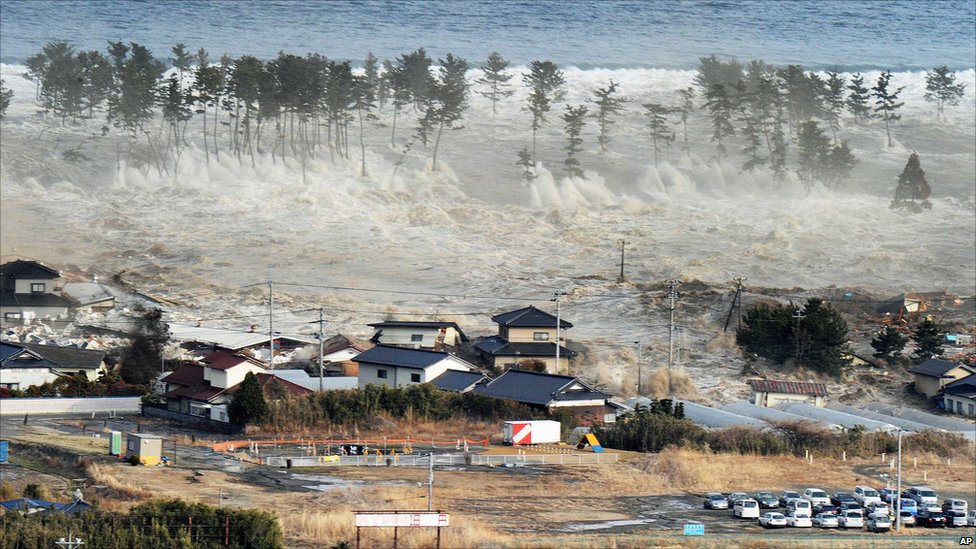


 The Daily Hatch