Today, let’s review some wise – and blunt – analysis from Steven Greenhut.
In an article for Reason, he connects the dots to show that the level of corruption is linked to the size and power of government.
Whenever some astounding corruption scandal explodes onto the front pages, the public is aghast and policymakers cobble together new reforms that promise to keep such outrages from occurring again. …Soon enough, however, we learn about new abuses—or some other scandal grabs the headlines. …corruption is inherent in a system where officials dole out public money and regulate almost everything we do. …The most corrupt nations are, of course, those where dictators, politburos, bureaucrats and security officials can do as they please—and where lowly citizens lack the right to free speech or due process. Our current government may be a far cry from the one the founders designed, but it attempts to limit government power, which is the main source of corruption. …corruption fundamentally is a problem of government power, as official actors use immense powers to help themselves and their allies. If we want less corruption, the solution is obvious: We need less government.
Amen. When government’s footprint is smaller, there’s less opportunity for graft.
As the chief financial officer of the nation’s second-largest state, even I have found it hard to get a handle on how much governments are spending, and how much debt they’re taking on. Every level of government is piling up incredible bills. And they’re coming due, whether we like it or not. Even in low-tax Texas, property taxes have risen three times faster than the inflation rate and four times faster than our population growth since 1992. Our local governments, meanwhile, more than doubled their debt load in the last decade, to more than $7,500 in debt for every man, woman and child in the state. In Houston alone, city-employee pension plans are facing an unfunded liability of $2.4 billion. But too many taxpayers aren’t given the information they need to make informed decisions when they vote debt issues. Recently I spent several months holding about 40 town-hall meetings with Texans across our state. Each time, I asked the attendees if they could tell me how much debt their local governments are carrying. Not a single person in a single town had this information.
In other words, taxpayers need to be eternally vigilant, regardless of where they live. Otherwise the corrupt rectangle of politicians, bureaucrats, lobbyists, and interest groups will figure out hidden ways of using the political process to obtain unearned wealth.
Neither of the techniques mentioned above is a very accurate way to measure each president’s impact on the national debtbecause the president doesn’t have much control over the national debt during their first year in office.
For example, President Donald Trump took office in January 2017. He submitted his first budget in May. It covered the 2018 fiscal year, which didn’t begin until October 1, 2017. Trump operated the first part of his term under President Barack Obama’s budget for fiscal year 2017, which ended on Sept. 30, 2017.2
fusing, Congress intentionally sets it up this way. An advantage of the federal fiscal year is that it gives the new president time to put together their budget during their first months in office.
The Best Way to Measure Debt by President
The best way to measure a president’s debt is to add up their budget deficits and compare that total to the debt level when they took office. A president’s budget reveals their administration’s priorities.
Note
Though they sound similar, deficit and debt are two different things. A deficit is a budget shortfall, whereas debt is the running total of all deficits and surpluses. Deficits add to the debt, while surpluses reduce it.
Top 5 Presidents Who Contributed to the Debt by Percentage
Franklin D. Roosevelt (1933-1945)
President Roosevelt added the largest percentage increase to the national debt. Although he only added $236 billion, this was an increase of about 1,048% from the $22.5 billion debt level left by President Herbert Hoover before him. The Great Depression and the New Deal contributed to FDR’s yearly deficits, but the biggest cost was World War II—it added $186.3 billion to the debt between 1942 and 1945.3
Woodrow Wilson (1913-1921)
President Wilson was the second-largest contributor to the debt, percentage-wise. He added about $21 billion, which was a 723% increase over the $2.9 billion debt of his predecessor. World War I contributed to the deficits that raised the national debt.3
Ronald Reagan (1981-1989)
President Reagan increased the debt by $1.86 trillion, or by 186%. Reagan’s supply-side economics didn’t grow the economy enough to offset the lost revenue from its tax cuts. Reagan also increased the defense budget by 35%.4
George W. Bush (2001-2009)
President Bush added $5.85 trillion to the national debt. That’s a 101% increase, putting him in fourth. Bush launched the War on Terror in response to the 9/11 attacks, which led to multi-trillion-dollar spending on the War in Afghanistan and the War in Iraq. Bush also dealt with the 2001 recession and the 2008 financial crisis.5
Barack Obama (2009-2017)
Under President Obama, the national debt grew the most in dollar terms ($8.6 trillion) and was fifth by percentage at 74%. Obama fought the Great Recession with an $831 billion economic stimulus package and added $858 billion through tax cuts. Even though the fiscal year 2009 budget was set by President Bush, Obama added to it with the Economic Stimulus Act in 2009.657
US Debt Increase by President Per Fiscal Year
The U.S. Treasury Department has historical tables that report the annual U.S. debt for each fiscal year (FY) since 1790. We’ve compiled this data from that source to create the figures used below.81
Joe Biden
In January 2023, the nation hit the $31.4 trillion debt limit Congress passed in 2021.9Republican lawmakers control the House of Representatives and said they won’t raise the debt limit unless Democrats, who control the Senate, agree to budget cuts.
On Oct. 1, 2021, at the end of fiscal year 2021, the national debt was $28.4 trillion. Between the end of fiscal year 2020 and the end of fiscal year 2021, the national debt grew $1.5 trillion, a 5.6% increase year over year. For fiscal year 2022, President Joe Biden’s budget included a deficit of $1.84 trillion, and by August 2022, the national debt had grown to $30.8 trillion.110
When Biden took office, the economy and household finances were still reeling from the pandemic, and Biden continued his predecessor’s policy of spending heavily to keep households afloat. In March 2021, Biden signed the American Rescue Plan, which showered taxpayers with pandemic relief cash in the form of stimulus checks and extra unemployment payments, and temporarily expanded child tax credits, plus other help. It all came with a cost to future budgets: The bill would add $1.9 trillion to the national debt by 2031, the Congressional Budget Office estimated.11
The bipartisan infrastructure bill, signed by Biden in November 2021, which provided new funding for highways, railways, broadband Internet expansion and other projects, added to the debt too, with estimates on its 10-year impact ranging from $374 billion to $400 billion, depending on how it’s calculated.1213
Some of Biden’s actions cut the other way. In August 2022, Biden signed the Inflation Reduction Act, an anti-climate change bill that spent money on new green energy programs and tax credits as well as to make drugs cheaper for patients, and paid for it by raising taxes on corporations and the ultra-wealthy. The bill should reduce the national debt by $102 billion by 2031, the CBO estimated.14
Biden followed up this bill with an executive action that forgave up to $10,000 of federal student loan debt per borrower, and $20,000 for those who received Pell Grants. He also proposed a new, cheaper income-driven student loan repayment program for future borrowers. However, he also announced that student loan interest and required payments, both of which had been frozen since the pandemic hit, would resume in January 2023.15
In August 2022, the government did not have an official estimate for how these measures would impact the national debt. One piece of it—forgiving $10,000 of debt per student loan borrower—would cost $329.7 billion over 10 years, according to an estimate by the Wharton School of Business.16
Donald Trump
At the end of fiscal year 2020, the debt was $26.9 trillion. Trump added $6.7 trillion to the debt between fiscal year 2017 and fiscal year 2020, a 33.1% increase, largely due to the effects of the coronavirus pandemic and 2020 recession.
In his FY 2021 budget, Trump’s budget included a $966 billion deficit.17 However, the national debt actually grew by $1.5 trillion between October 1, 2020, and October 1, 2021.
FY 2021: $1.5 trillion
FY 2020: $4.2 trillion
FY 2019: $1.2 trillion
FY 2018: $1.3 trillion
Barack Obama
President Obama added about $8.6 trillion, about a 74% increase, to the national debt at the end of President Bush’s last budget in 2009.
FY 2017: $671 billion
FY 2016: $1.42 trillion
FY 2015: $326 billion
FY 2014: $1.09 trillion
FY 2013: $672 billion
FY 2012: $1.28 trillion
FY 2011: $1.23 trillion
FY 2010: $1.65 trillion
FY 2009: $253 billion (Congress passed the Economic Stimulus Act, which spent $253 billion)18
George W. Bush
President Bush added $5.85 trillion to the national debt, a 101% increase from the $5.8 trillion debt at the end of Clinton’s last budget for fiscal year 2001.
FY 2009: $1.63 trillion (this was Bush’s deficit without the impact of the Economic Stimulus Act)
FY 2008: $1.02 trillion
FY 2007: $501 billion
FY 2006: $574 billion
FY 2005: $553 billion
FY 2004: $596 billion
FY 2003: $555 billion
FY 2002: $421 billion
Bill Clinton
President Clinton increased the national debt by almost $1.4 trillion, almost a 32% increase from the $4.4 trillion debt at the end of President H.W. Bush’s last budget.54
FY 2001: $133 billion
FY 2000: $18 billion
FY 1999: $130 billion
FY 1998: $113 billion
FY 1997: $189 billion
FY 1996: $251 billion
FY 1995: $281 billion
FY 1994: $281 billion
George H.W. Bush
President H.W. Bush added $1.55 trillion to the debt, a 54% increase from the $2.857 trillion debt at the end of Reagan’s last budget.4
FY 1993: $347 billion
FY 1992: $399 billion
FY 1991: $432 billion
FY 1990: $376 billion
Ronald Reagan
President Regan added $1.86 trillion to the national debt, a 186% increase from the $997.8 billion debt at the end of Carter’s last budget.4
FY 1989: $255 billion
FY 1988: $252 billion
FY 1987: $225 billion
FY 1986: $302 billion
FY 1985: $251 billion
FY 1984: $195 billion
FY 1983: $235 billion
FY 1982: $145 billion
Jimmy Carter
President Carter added $299 billion to the debt, a 42.7% increase from the $698.8 billion debt at the end of Ford’s last budget.4
FY 1981: $90.1 billion
FY 1980: $81.1 billion
FY 1979: $54.9 billion
FY 1978: $72.7 billion
Gerald Ford
President Ford added $223.7 billion to the debt.4
FY 1977: $78.4 billion
FY 1976: $87.2 billion
FY 1975: $58.1 billion
Richard Nixon
President Nixon added $121.1 billion to the national debt, a 34% increase from the $353.7 billion debt at the end of President Johnson’s last budget.4
FY 1974: $16.9 billion
FY 1973: $30.8 billion
FY 1972: $29.1 billion
FY 1971: $27.2 billion
FY 1970: $17.1 billion
Lyndon B. Johnson
President Johnson added $41.8 billion to the national debt, just a small 13% increase from the $312 billion debt at the end of President Kennedy’s time in office in 1964.4
FY 1969: $6.1 billion
FY 1968: $21.3 billion
FY 1967: $6.3 billion
FY 1966: $2.6 billion
FY 1965: $5.5 billion
John F. Kennedy
President Kennedy added $22.6 billion to the national debt.4
FY 1964: $5.8 billion
FY 1963: $7.6 billion
FY 1962: $9.2 billion
Dwight Eisenhower
President Eisenhower added $22.8 billion to the national debt.4
FY 1961: $2.6 billion
FY 1960: $1.6 billion
FY 1959: $8.3 billion
FY 1958: $5.8 billion
FY 1957: $2.2 billion surplus
FY 1956: $1.6 billion surplus
FY 1955: $3.1 billion
FY 1954: $5.1 billion
Harry Truman
President Truman added $7.3 billion to the national debt.43
FY 1953: $6.9 billion
FY 1952: $3.8 billion
FY 1951: $2.1 billion surplus
FY 1950: $4.5 billion
FY 1949: $478 million surplus
FY 1948: $6 billion surplus
FY 1947: $11 billion surplus
FY 1946: $10.7 billion
Franklin D. Roosevelt
President Roosevelt increased the national debt by $236 billion, a 1,048% increase from the $22.5 billion debt at the end of Hoover’s last budget.3
FY 1945: $57.7 billion
FY 1944: $64.3 billion
FY 1943: $64.2 billion
FY 1942: $23.5 billion
FY 1941: $6 billion
FY 1940: $2.5 billion
FY 1939: $3.2 billion
FY 1938: $740 million
FY 1937: $2.6 billion
FY 1936: $5 billion
FY 1935: $1.6 billion
FY 1934: $4.5 billion
Herbert Hoover
President Hoover added about $5.7 billion to the national debt.3
FY 1933: $3 billion
FY 1932: $2.8 billion
FY 1931: $616 million
FY 1930: $746 million surplus
Calvin Coolidge
President Coolidge reduced the national debt by about $5.3 billion.3
FY 1929: $673 million surplus
FY 1928: $907 million surplus
FY 1927: $1.1 billion surplus
FY 1926: $873 million surplus
FY 1925: $734.6 million surplus
FY 1924: $1 billion surplus
Warren G. Harding
President Harding reduced the national debt by about $1.6 billion thanks to budget surpluses.3
FY 1923: $614 million surplus
FY 1922: $1 billion surplus
Woodrow Wilson
President Wilson added about $21 billion to the national debt, a 723% increase from the $2.9 billion debt at the end of Taft’s last budget for fiscal year 1913.3
FY 1921: $1.9 billion surplus
FY 1920: $1.4 billion surplus
FY 1919: $12.8 billion
FY 1918: $9.8 billion
FY 1917: $2.1 billion
FY 1916: $551 million
FY 1915: $146 million
FY 1914: $0 (slight surplus)
Note
All presidents from 1790 to 1913 added a total of $2.8 billion to the national debt.8
Frequently Asked Questions (FAQ)
Which president has put the United States the most in debt?
President Joe Biden is on track to add the most to the budget deficit, largely due to the costs associated with continuing to battle the coronavirus pandemic. In late 2021, Congress voted to raise the debt ceiling.
Why does the United States owe so much debt?
Continued decreases in the amount of taxes paid by corporations and the wealthiest Americans have resulted in less money coming in. At the same time, spending on pandemic relief and the military continues to increase.
March 31, 2021
President Biden c/o The White House
1600 Pennsylvania Avenue NW
Washington, DC 20500
Dear Mr. President,
Please explain to me if you ever do plan to balance the budget while you are President? I have written these things below about you and I really do think that you don’t want to cut spending in order to balance the budget. It seems you ever are daring the Congress to stop you from spending more.
“The credit of the United States ‘is not a bargaining chip,’ Obama said on 1-14-13. However, President Obama keeps getting our country’s credit rating downgraded as he raises the debt ceiling higher and higher!!!!
Washington Could Learn a Lot from a Drug Addict
Just spend more, don’t know how to cut!!! Really!!! That is not living in the real world is it?
Making more dependent on government is not the way to go!!
Why is our government in over 16 trillion dollars in debt? There are many reasons for this but the biggest reason is people say “Let’s spend someone else’s money to solve our problems.” Liberals like Max Brantley have talked this way for years. Brantley will say that conservatives are being harsh when they don’t want the government out encouraging people to be dependent on the government. The Obama adminstration has even promoted a plan for young people to follow like Julia the Moocher.
Imagine standing a baby carrot up next to the 25-story Stephens building in Little Rock. That gives you a picture of the impact on the national debt that federal spending in Arkansas on Medicaid expansion would have, while here at home expansion would give coverage to more than 200,000 of our neediest citizens, create jobs, and save money for the state.
Here’s the thing: while more than a billion dollars a year in federal spending would represent a big-time stimulus for Arkansas, it’s not even a drop in the bucket when it comes to the national debt.
Currently, the national debt is around $16.4 trillion. In fiscal year 2015, the federal government would spend somewhere in the neighborhood of $1.2 billion to fund Medicaid expansion in Arkansas if we say yes. That’s about 1/13,700th of the debt.
It’s hard to get a handle on numbers that big, so to put that in perspective, let’s get back to the baby carrot. Imagine that the height of the Stephens building (365 feet) is the $16 trillion national debt. That $1.2 billion would be the length of a ladybug. Of course, we’re not just talking about one year if we expand. Between now and 2021, the federal government projects to contribute around $10 billion. The federal debt is projected to be around $25 trillion by then, so we’re talking about 1/2,500th of the debt. Compared to the Stephens building? That’s a baby carrot.
______________
Here is how it will all end if everyone feels they should be allowed to have their “baby carrot.”
How sad it is that liberals just don’t get this reality.
While living in Europe in the 1760s, Franklin observed: “in different countries … the more public provisions were made for the poor, the less they provided for themselves, and of course became poorer. And, on the contrary, the less was done for them, the more they did for themselves, and became richer.”
Alexander Fraser Tytler, Lord Woodhouselee(15 October 1747 – 5 January 1813) was a Scottish lawyer, writer, and professor. Tytler was also a historian, and he noted, “A democracy cannot exist as a permanent form of government. It can only exist until the majority discovers it can vote itself largess out of the public treasury. After that, the majority always votes for the candidate promising the most benefits with the result the democracy collapses because of the loose fiscal policy ensuing, always to be followed by a dictatorship, then a monarchy.”
[Jefferson affirms that the main purpose of society is to enable human beings to keep the fruits of their labor.— TGW]
To take from one, because it is thought that his own industry and that of his fathers has acquired too much, in order to spare to others, who, or whose fathers have not exercised equal industry and skill, is to violate arbitrarily the first principle of association, “the guarantee to every one of a free exercise of his industry, and the fruits acquired by it.” If the overgrown wealth of an individual be deemed dangerous to the State, the best corrective is the law of equal inheritance to all in equal degree; and the better, as this enforces a law of nature, while extra taxation violates it.
[From Writings of Thomas Jefferson, ed. Albert E. Bergh (Washington: Thomas Jefferson Memorial Association, 1904), 14:466.]
_______
Jefferson pointed out that to take from the rich and give to the poor through government is just wrong. Franklin knew the poor would have a better path upward without government welfare coming their way. Milton Friedman’s negative income tax is the best method for doing that and by taking away all welfare programs and letting them go to the churches for charity.
_____________
_________
Thank you so much for your time. I know how valuable it is. I also appreciate the fine family that you have and your commitment as a father and a husband.
Sincerely,
Everette Hatcher III, 13900 Cottontail Lane, Alexander, AR 72002, ph 501-920-5733
We got to act fast and get off this path of socialism. Morning Bell: Welfare Spending Shattering All-Time Highs Robert Rector and Amy Payne October 18, 2012 at 9:03 am It’s been a pretty big year for welfare—and a new report shows welfare is bigger than ever. The Obama Administration turned a giant spotlight […]
We need to cut Food Stamp program and not extend it. However, it seems that people tell the taxpayers back home they are going to Washington and cut government spending but once they get up there they just fall in line with everyone else that keeps spending our money. I am glad that at least […]
Government Must Cut Spending Uploaded by HeritageFoundation on Dec 2, 2010 The government can cut roughly $343 billion from the federal budget and they can do so immediately. __________ Liberals argue that the poor need more welfare programs, but I have always argued that these programs enslave the poor to the government. Food Stamps Growth […]
Milton Friedman – The Negative Income Tax Published on May 11, 2012 by LibertyPen In this 1968 interview, Milton Friedman explained the negative income tax, a proposal that at minimum would save taxpayers the 72 percent of our current welfare budget spent on administration. http://www.LibertyPen.com Source: Firing Line with William F Buckley Jr. ________________ Milton […]
Dan Mitchell Commenting on Obama’s Failure to Propose a Fiscal Plan Published on Aug 16, 2012 by danmitchellcato No description available. ___________ After the Welfare State Posted by David Boaz Cato senior fellow Tom G. Palmer, who is lecturing about freedom in Slovenia and Tbilisi this week, asked me to post this announcement of his […]
Is President Obama gutting the welfare reform that Bill Clinton signed into law? Morning Bell: Obama Denies Gutting Welfare Reform Amy Payne August 8, 2012 at 9:15 am The Obama Administration came out swinging against its critics on welfare reform yesterday, with Press Secretary Jay Carney saying the charge that the Administration gutted the successful […]
Thomas Sowell – Welfare Welfare reform was working so good. Why did we have to abandon it? Look at this article from 2003. The Continuing Good News About Welfare Reform By Robert Rector and Patrick Fagan, Ph.D. February 6, 2003 Six years ago, President Bill Clinton signed legislation overhauling part of the nation’s welfare system. […]
Uploaded by ForaTv on May 29, 2009 Complete video at: http://fora.tv/2009/05/18/James_Bartholomew_The_Welfare_State_Were_In Author James Bartholomew argues that welfare benefits actually increase government handouts by ‘ruining’ ambition. He compares welfare to a humane mousetrap. —– Welfare reform was working so good. Why did we have to abandon it? Look at this article from 2003. In the controversial […]
Thomas Sowell If the welfare reform law was successful then why change it? Wasn’t Bill Clinton the president that signed into law? Obama Guts Welfare Reform Robert Rector and Kiki Bradley July 12, 2012 at 4:10 pm Today, the Obama Department of Health and Human Services (HHS) released an official policy directive rewriting the welfare […]
I have been writing President Obama letters and have not received a personal response yet. (He reads 10 letters a day personally and responds to each of them.) However, I did receive a form letter in the form of an email on July 10, 2012. I don’t know which letter of mine generated this response so I have […]
Comedian Jerry Seinfeld waits for the next scene to be filmed for an episode of the program “Comedians in Cars Getting Coffee” near the Capitol in Washington on Dec. 6, 2015. All too many lawmakers under the Capitol dome think they have a no-spending-limits credit card of the sort Seinfeld joked about. (Photo: Matt McClain/The Washington Post/Getty Images)
As members of Congress debate the debt limit, some seem to think the government has an American Express “Black Card.”
In a 2018 episode of “Comedians in Cars Getting Coffee,” Jerry Seinfeld explained his version of how the Black Card came to be:
I was waiting for [the crew] to move some cameras, and the crew guy comes up to me, he says, ‘You got the Black Card?’ And I go, ‘No, what’s the Black Card?’ He says, ‘There’s only three in the world. The Sultan of Brunei has one, the president of American Express has one, and I thought you would have the third one.’ Next morning, I call the president of American Express. I go, ‘Is there a Black Card?’ He says, ‘It’s just a rumor. It doesn’t exist.’ He said, ‘But you know what? It’s not a bad idea.’ And so they developed it, and they gave me the first one.
The so-called Black Card—formally, the Centurion Card—is an exclusive, “no spending limit” credit card, available by invite only. While other companies also have their own versions of “no spending limit” credit cards, the reality is that none offers a blank check on spending.
The cards may have no preset spending limit, but they all limit cardholders’ purchasing power based on a rolling assessment of their creditworthiness and ability to repay.
And that makes sense because neither the Sultan of Brunei, nor Jerry Seinfeld, nor American politicians should be given a limitless line of credit.
America’s debt limit exists as a checkpoint, meant to protect Americans from the reckless accumulation of debt in their names, and those of their children and grandchildren. That’s why a majority of Americans oppose raising the debt limit unless policymakers also reduce spending.
Already, the U.S. has accumulated $31.4 trillion in federal debt—the equivalent of $242,000 per household.
If the federal government’s borrowing were subject to the same constraints as ordinary households, and it actually had to repay its borrowing, every household in America would suddenly have two mortgage or rent payments each month, instead of just one. (At $220,000 in 2021, average mortgage debt was slightly lower than each household’s share of the federal debt.)
But unlike ordinary households—and unlike even exclusive Black Card holders—the federal government can simply vote to raise or temporarily waive its debt limits.
Over the past decade, policymakers have frequently given lip service to the debt limit, choosing to “suspend” the debt limit for periods of time, instead of setting dollar limits, and usually failing to include meaningful measures to alter unsustainable federal spending.
The proof is in the pudding in the case against Congress granting itself unlimited spending periods. Over the course of 74 years, from the establishment of the first debt limit in 1939 (an amount equal to $968 billion in today’s dollars) to 2013, policymakers raised the debt limit by about $15.4 trillion.
In 2013, policymakers began the practice of “suspending” the debt limit instead of setting dollar limits and the consequence was $12 trillion in new debt over the following eight years, through 2021. That’s seven times the inflation-adjusted rate of expansion prior to the reckless practice of suspending the debt limit.
And the federal government blew through Democrats’ $2.5 trillion debt-limit increase enacted in December 2021, adding $19,200 in debt per household over the past 13 months.
Imposing an actual debt limit and enacting meaningful spending reforms is crucial, because if politicians don’t set their own limits, they’ll face the market’s limits.
At some point, investors will become unwilling to continue lending to the U.S. government at reasonable interest rates, and recent years of reckless spending have pushed us closer to that point. The consequences of a market-imposed federal debt limit will be far more severe than the short-term effects of modest fiscal restraints that should accompany any debt-limit increase.
For example, if markets soured on U.S. debt in 2025, balancing the federal budget in that year alone would require policymakers to take an extra $10,000 per household across the U.S.
If, however, policymakers were to agree to meaningful spending reductions and pro-growth policy reforms in exchange for a specified increase in the debt limit, they could help avoid a fiscal crisis and start reducing the second-mortgage equivalent of federal debt that looms over every household in America.
They might even start to get us out of the red—and into the black.
COPYRIGHT 2023 TRIBUNE CONTENT AGENCY LLC
Have an opinion about this article? To sound off, please email letters@DailySignal.com and we’ll consider publishing your edited remarks in our regular “We Hear You” feature. Remember to include the url or headline of the article plus your name and town and/or state.
Remember the debt? That $17 trillion problem? Some in Washington seem to think it’s gone away.
The Washington Post reported that “the national debt is no longer growing out of control.” Lawmakers and liberal inside-the-Beltway organizations are floating the notion that it’s not a high priority any more.
We beg to differ, so we came up with 17 reasons that $17 trillion in debt is still a big, bad deal.
Some families and businesses won’t be able to borrow money because of high interest rates on mortgages, car loans, and more – the dream of starting a business could be out of reach.
5.High debt and high spending won’t help the economy.
8. Jeopardizes the stability of Medicare, Social Security, and Medicaid.
Millions of people depend on Medicare, Medicaid, and Social Security, but these programs are also the main drivers of the growing debt. Congress has yet to take the steps needed to make these programs affordable and sustainable to preserve benefits for those who need them the most.
9. Washington collects a lot, and then spends a ton. Where are your tax dollars going?
In 2012, Washington collected $2.4 trillion in taxes—more than $20,000 per household. But it wasn’t enough for Washington’s spending habits. The federal government actually spent $3.5 trillion.
College students from all over the country got together in February at a “Millennial Meetup” to talk about how the national debt impacts their generation.
14. Makes us more vulnerable to the next economic crisis.
According to the Congressional Budget Office’s 2012 Long-Term Budget Outlook, “growing federal debt also would increase the probability of a sudden fiscal crisis.”
15. Washington racked up $300 billion in more debt in less than four months.
“The credit of the United States ‘is not a bargaining chip,’ Obama said on 1-14-13. However, President Obama keeps getting our country’s credit rating downgraded as he raises the debt ceiling higher and higher!!!! Washington Could Learn a Lot from a Drug Addict Just spend more, don’t know how to cut!!! Really!!! That is not […]
We got to stop all the red ink. New Video Is a Strong Indictment of Obama’s Dismal Record on Spending August 13, 2012 by Dan Mitchell The burden of federal spending in the United States was down to 18.2 percent of gross domestic product when Bill Clinton left office. But this progress didn’t last long. Thanks […]
In One Year, Spending on Interest on the National Debt Is Greater Than Funding for Most Programs Everyone wants to know more about the budget and here is some key information with a chart from the Heritage Foundation and a video from the Cato Institute. In 2010, the U.S. spent more on interest on the national debt than […]
National Debt Set to Skyrocket Everyone wants to know more about the budget and here is some key information with a chart from the Heritage Foundation and a video from the Cato Institute. In the past, wars and the Great Depression contributed to rapid but temporary increases in the national debt. Over the next few decades, runaway spending […]
Each American’s Share of National Debt Is Growing Everyone wants to know more about the budget and here is some key information with a chart from the Heritage Foundation and a video from the Cato Institute. As Washington continues to spend more than it can afford, future generations of taxpayers will be on the hook for increasing levels […]
I have been writing President Obama letters and have not received a personal response yet. (He reads 10 letters a day personally and responds to each of them.) However, I did receive a form letter in the form of an email on May 9, 2012. I don’t know which letter of mine generated this response so I have […]
Uploaded by PBS on Jan 4, 2008 Thousands of media outlets descended on Iowa, erecting a powerful wall of TV cameras and reporters between the voters and candidates. Bill Moyers talks with Ron Paul who knows well the power of the press to set expectations and transform the agenda. ____________________________ We should not be running […]
Liam Fox Issues a Warning to America Uploaded by HeritageFoundation on Feb 28, 2012 Britain’s Liam Fox has a warning for America: Fix the debt problem now or suffer the consequences of less power on the world stage. The former U.K. secretary of state for defense visited Heritage to explain why the America’s debt is […]
Liam Fox Issues a Warning to America Uploaded by HeritageFoundation on Feb 28, 2012 Britain’s Liam Fox has a warning for America: Fix the debt problem now or suffer the consequences of less power on the world stage. The former U.K. secretary of state for defense visited Heritage to explain why the America’s debt is […]
Each American’s Share of National Debt Is Growing Everyone wants to know more about the budget and here is some key information with a chart from the Heritage Foundation and a video from the Cato Institute. As Washington continues to spend more than it can afford, future generations of taxpayers will be on the hook for increasing levels […]
Rep. James Comer, R-Ky., the incoming chairman of the House Oversight and Reform Committee, is urging his Senate counterparts to reject the $1.85 trillion omnibus spending bill in order to strengthen GOP’s oversight authority for the next Congress.
Comer will ascend to chairman of the powerful House committee Jan. 3 with a range of investigations planned. Before he’s even able to get started, however, Senate Republicans who support the omnibus spending bill could strip Comer of important leverage—the power of the purse.
With 20 Republican senators already votingTuesday on a procedural motion to advance the bill, Senate Majority Leader Chuck Schumer, D-N.Y., appears to have enough GOP support to get the bill done this week.
That hasn’t stopped Comer and other House Republicans from warning about the consequences.
“It’s imperative that we stop the massive omnibusso that Republicans can use our majority power next Congress to conduct oversight of the federal government, hold the Biden Administration accountable, and enact good government reforms,” Comer told The Daily Signal in a statement.
Withholding money from the Biden administration is one tool House Republicans can use to exercise effective oversight—particularly if federal agencies and government officials are uncooperative or not forthcoming with information in the new year.
“The primary method that Congress can use to hold federal agencies accountable is via appropriations,” said Paul Winfree, former budget policy director for President Donald Trump and a distinguished fellow at The Heritage Foundation. “They should not be appropriating until they’ve figured out just how to use their oversight powers.” (The Daily Signal is the multimedia news organization of The Heritage Foundation.)
Passage of the omnibus spending bill would insulate the Biden administration from a spending fight for the next year. The bill making its way through the Senate funds the president’s agenda from through Sept. 30, 2023.
Comer was first elected to Congress in 2016 and served as ranking member on the House Oversight and Reform Committee while Democrats had the majority. He’ll ascend to the top spot once the 118th Congress starts in less than two weeks.
He’s among a vocal group of House Republicans who are warning about implications of passing the massive spending bill during the current lame-duck Congress rather than waiting until next year when Republicans have control of the House.
“It’s no surprise that Democrats are racing to use their waning days of power to force through trillions of dollars in new spending and a host of bad policies that will weaken our country,” Comer told The Daily Signal. “Democrats’ unhinged, inflation-inducing spending binge over the last two years caused 40-year high inflation that’s harming the pocketbooks of Americans and has allowed rampant government waste.”
In addition to Comer, 13 House Republicans are promising to oppose and stymie the legislative priorities of any Republican senator who votes in favor of the omnibus spending bill this week. They have the support of likely incoming House Speaker Kevin McCarthy, R-Calif., as well.
Schumer already has the support of Senate Minority Leader Mitch McConnell, R-Ky., and Sens. Richard Shelby, R-Ala., vice chairman of the Senate Appropriations Committee. They were among the 20 Senate Republicans who voted to move forward on the bill Tuesday.
Earlier this year, House Republicans outlined an ambitious oversight agenda. It includes an investigation of Homeland Security Alejandro Mayorkas’ failures leading to the border crisis, the government’s collusion with Big Tech to censor speech, the origins of COVID-19, Hunter Biden’s corrupt business dealings, the disastrous withdrawal from Afghanistan, politicization of the FBI, the administration’s promotion of critical race theory, and many other topics.
Have an opinion about this article? To sound off, please email letters@DailySignal.com and we’ll consider publishing your edited remarks in our regular “We Hear You” feature. Remember to include the url or headline of the article plus your name and town and/or state.
—
Incoming House Oversight Chairman: ‘Imperative’ to Stop Omnibus Spending Bill
“It’s imperative that we stop the massive omnibus so that Republicans can use our majority power next Congress to conduct oversight of the federal government, hold the Biden Administration accountable, and enact good government reforms,” Rep. James Comer, incoming chairman of the House Oversight and Reform Committee, said in a statement. (Photo by Anna Moneymaker/Getty Images)
Rep. James Comer, R-Ky., the incoming chairman of the House Oversight and Reform Committee, is urging his Senate counterparts to reject the $1.85 trillion omnibus spending bill in order to strengthen GOP’s oversight authority for the next Congress.
Comer will ascend to chairman of the powerful House committee Jan. 3 with a range of investigations planned. Before he’s even able to get started, however, Senate Republicans who support the omnibus spending bill could strip Comer of important leverage—the power of the purse.
With 20 Republican senators already votingTuesday on a procedural motion to advance the bill, Senate Majority Leader Chuck Schumer, D-N.Y., appears to have enough GOP support to get the bill done this week.
That hasn’t stopped Comer and other House Republicans from warning about the consequences.
“It’s imperative that we stop the massive omnibusso that Republicans can use our majority power next Congress to conduct oversight of the federal government, hold the Biden Administration accountable, and enact good government reforms,” Comer told The Daily Signal in a statement.
Withholding money from the Biden administration is one tool House Republicans can use to exercise effective oversight—particularly if federal agencies and government officials are uncooperative or not forthcoming with information in the new year.
“The primary method that Congress can use to hold federal agencies accountable is via appropriations,” said Paul Winfree, former budget policy director for President Donald Trump and a distinguished fellow at The Heritage Foundation. “They should not be appropriating until they’ve figured out just how to use their oversight powers.” (The Daily Signal is the multimedia news organization of The Heritage Foundation.)
Passage of the omnibus spending bill would insulate the Biden administration from a spending fight for the next year. The bill making its way through the Senate funds the president’s agenda from through Sept. 30, 2023.
Comer was first elected to Congress in 2016 and served as ranking member on the House Oversight and Reform Committee while Democrats had the majority. He’ll ascend to the top spot once the 118th Congress starts in less than two weeks.
He’s among a vocal group of House Republicans who are warning about implications of passing the massive spending bill during the current lame-duck Congress rather than waiting until next year when Republicans have control of the House.
“It’s no surprise that Democrats are racing to use their waning days of power to force through trillions of dollars in new spending and a host of bad policies that will weaken our country,” Comer told The Daily Signal. “Democrats’ unhinged, inflation-inducing spending binge over the last two years caused 40-year high inflation that’s harming the pocketbooks of Americans and has allowed rampant government waste.”
In addition to Comer, 13 House Republicans are promising to oppose and stymie the legislative priorities of any Republican senator who votes in favor of the omnibus spending bill this week. They have the support of likely incoming House Speaker Kevin McCarthy, R-Calif., as well.
Schumer already has the support of Senate Minority Leader Mitch McConnell, R-Ky., and Sens. Richard Shelby, R-Ala., vice chairman of the Senate Appropriations Committee. They were among the 20 Senate Republicans who voted to move forward on the bill Tuesday.
Earlier this year, House Republicans outlined an ambitious oversight agenda. It includes an investigation of Homeland Security Alejandro Mayorkas’ failures leading to the border crisis, the government’s collusion with Big Tech to censor speech, the origins of COVID-19, Hunter Biden’s corrupt business dealings, the disastrous withdrawal from Afghanistan, politicization of the FBI, the administration’s promotion of critical race theory, and many other topics.
By voting for the $1.7 trillion spending bill, Senate Republicans would strip their House counterparts of the leverage they need on all those investigations and more by giving Biden and Democrats exactly what they want—money to continue on, unaffected, for another year.
Have an opinion about this article? To sound off, please email letters@DailySignal.com and we’ll consider publishing your edited remarks in our regular “We Hear You” feature. Remember to include the url or headline of the article plus your name and town and/or state.
March 31, 2021
President Biden c/o The White House 1600 Pennsylvania Avenue NW Washington, DC 20500
Dear Mr. President,
Please explain to me if you ever do plan to balance the budget while you are President? I have written these things below about you and I really do think that you don’t want to cut spending in order to balance the budget. It seems you ever are daring the Congress to stop you from spending more.
“The credit of the United States ‘is not a bargaining chip,’ Obama said on 1-14-13. However, President Obama keeps getting our country’s credit rating downgraded as he raises the debt ceiling higher and higher!!!!
Washington Could Learn a Lot from a Drug Addict
Just spend more, don’t know how to cut!!! Really!!! That is not living in the real world is it?
Making more dependent on government is not the way to go!!
Why is our government in over 16 trillion dollars in debt? There are many reasons for this but the biggest reason is people say “Let’s spend someone else’s money to solve our problems.” Liberals like Max Brantley have talked this way for years. Brantley will say that conservatives are being harsh when they don’t want the government out encouraging people to be dependent on the government. The Obama adminstration has even promoted a plan for young people to follow like Julia the Moocher.
Imagine standing a baby carrot up next to the 25-story Stephens building in Little Rock. That gives you a picture of the impact on the national debt that federal spending in Arkansas on Medicaid expansion would have, while here at home expansion would give coverage to more than 200,000 of our neediest citizens, create jobs, and save money for the state.
Here’s the thing: while more than a billion dollars a year in federal spending would represent a big-time stimulus for Arkansas, it’s not even a drop in the bucket when it comes to the national debt.
Currently, the national debt is around $16.4 trillion. In fiscal year 2015, the federal government would spend somewhere in the neighborhood of $1.2 billion to fund Medicaid expansion in Arkansas if we say yes. That’s about 1/13,700th of the debt.
It’s hard to get a handle on numbers that big, so to put that in perspective, let’s get back to the baby carrot. Imagine that the height of the Stephens building (365 feet) is the $16 trillion national debt. That $1.2 billion would be the length of a ladybug. Of course, we’re not just talking about one year if we expand. Between now and 2021, the federal government projects to contribute around $10 billion. The federal debt is projected to be around $25 trillion by then, so we’re talking about 1/2,500th of the debt. Compared to the Stephens building? That’s a baby carrot.
______________
Here is how it will all end if everyone feels they should be allowed to have their “baby carrot.”
How sad it is that liberals just don’t get this reality.
While living in Europe in the 1760s, Franklin observed: “in different countries … the more public provisions were made for the poor, the less they provided for themselves, and of course became poorer. And, on the contrary, the less was done for them, the more they did for themselves, and became richer.”
Alexander Fraser Tytler, Lord Woodhouselee(15 October 1747 – 5 January 1813) was a Scottish lawyer, writer, and professor. Tytler was also a historian, and he noted, “A democracy cannot exist as a permanent form of government. It can only exist until the majority discovers it can vote itself largess out of the public treasury. After that, the majority always votes for the candidate promising the most benefits with the result the democracy collapses because of the loose fiscal policy ensuing, always to be followed by a dictatorship, then a monarchy.”
[Jefferson affirms that the main purpose of society is to enable human beings to keep the fruits of their labor.— TGW]
To take from one, because it is thought that his own industry and that of his fathers has acquired too much, in order to spare to others, who, or whose fathers have not exercised equal industry and skill, is to violate arbitrarily the first principle of association, “the guarantee to every one of a free exercise of his industry, and the fruits acquired by it.” If the overgrown wealth of an individual be deemed dangerous to the State, the best corrective is the law of equal inheritance to all in equal degree; and the better, as this enforces a law of nature, while extra taxation violates it.
[From Writings of Thomas Jefferson, ed. Albert E. Bergh (Washington: Thomas Jefferson Memorial Association, 1904), 14:466.]
_______
Jefferson pointed out that to take from the rich and give to the poor through government is just wrong. Franklin knew the poor would have a better path upward without government welfare coming their way. Milton Friedman’s negative income tax is the best method for doing that and by taking away all welfare programs and letting them go to the churches for charity.
_____________
_________
Thank you so much for your time. I know how valuable it is. I also appreciate the fine family that you have and your commitment as a father and a husband.
Sincerely,
Everette Hatcher III, 13900 Cottontail Lane, Alexander, AR 72002, ph 501-920-5733
We got to act fast and get off this path of socialism. Morning Bell: Welfare Spending Shattering All-Time Highs Robert Rector and Amy Payne October 18, 2012 at 9:03 am It’s been a pretty big year for welfare—and a new report shows welfare is bigger than ever. The Obama Administration turned a giant spotlight […]
We need to cut Food Stamp program and not extend it. However, it seems that people tell the taxpayers back home they are going to Washington and cut government spending but once they get up there they just fall in line with everyone else that keeps spending our money. I am glad that at least […]
Government Must Cut Spending Uploaded by HeritageFoundation on Dec 2, 2010 The government can cut roughly $343 billion from the federal budget and they can do so immediately. __________ Liberals argue that the poor need more welfare programs, but I have always argued that these programs enslave the poor to the government. Food Stamps Growth […]
Milton Friedman – The Negative Income Tax Published on May 11, 2012 by LibertyPen In this 1968 interview, Milton Friedman explained the negative income tax, a proposal that at minimum would save taxpayers the 72 percent of our current welfare budget spent on administration. http://www.LibertyPen.com Source: Firing Line with William F Buckley Jr. ________________ Milton […]
Dan Mitchell Commenting on Obama’s Failure to Propose a Fiscal Plan Published on Aug 16, 2012 by danmitchellcato No description available. ___________ After the Welfare State Posted by David Boaz Cato senior fellow Tom G. Palmer, who is lecturing about freedom in Slovenia and Tbilisi this week, asked me to post this announcement of his […]
Is President Obama gutting the welfare reform that Bill Clinton signed into law? Morning Bell: Obama Denies Gutting Welfare Reform Amy Payne August 8, 2012 at 9:15 am The Obama Administration came out swinging against its critics on welfare reform yesterday, with Press Secretary Jay Carney saying the charge that the Administration gutted the successful […]
Thomas Sowell – Welfare Welfare reform was working so good. Why did we have to abandon it? Look at this article from 2003. The Continuing Good News About Welfare Reform By Robert Rector and Patrick Fagan, Ph.D. February 6, 2003 Six years ago, President Bill Clinton signed legislation overhauling part of the nation’s welfare system. […]
Uploaded by ForaTv on May 29, 2009 Complete video at: http://fora.tv/2009/05/18/James_Bartholomew_The_Welfare_State_Were_In Author James Bartholomew argues that welfare benefits actually increase government handouts by ‘ruining’ ambition. He compares welfare to a humane mousetrap. —– Welfare reform was working so good. Why did we have to abandon it? Look at this article from 2003. In the controversial […]
Thomas Sowell If the welfare reform law was successful then why change it? Wasn’t Bill Clinton the president that signed into law? Obama Guts Welfare Reform Robert Rector and Kiki Bradley July 12, 2012 at 4:10 pm Today, the Obama Department of Health and Human Services (HHS) released an official policy directive rewriting the welfare […]
I have been writing President Obama letters and have not received a personal response yet. (He reads 10 letters a day personally and responds to each of them.) However, I did receive a form letter in the form of an email on July 10, 2012. I don’t know which letter of mine generated this response so I have […]
What’s especially galling is when budget increases are used to hire more bureaucrats, yet taxpayers get nothing of value in exchanges.
That’s certainly the case in the United States, where education bureaucracies (and education spending) have dramatically increased, yet there has been no concomitant increase in educational outcomes.
Another examples come from the United Kingdom where the government-run National Health Service gets more money and more bureaucrats every year, as explained in CapX by Fiona Bulmer, yet there’s never an improvement in health outcomes.
Indeed, these five sentences are a perfect example of government bureaucracies in action.
…the NHS in England employs the full time equivalent of 1.2 million people, nearly 200,000 more than they did in 2012.
…in 2021, the NHS was around 16% less productive than before the pandemic.
…one of the managers lamented to me that he could schedule a maximum of four knee operations a day but in the private sector they manage eight a day.
…7m people on NHS waiting lists.
The NHS, like all organisations where users have no choice defaults to accommodating the providers not the consumers.
I’m left with two conclusions after reading those depressing numbers.
President Biden c/o The White House 1600 Pennsylvania Avenue NW Washington, DC 20500
Dear Mr. President,
Please explain to me if you ever do plan to balance the budget while you are President? I have written these things below about you and I really do think that you don’t want to cut spending in order to balance the budget. It seems you ever are daring the Congress to stop you from spending more.
“The credit of the United States ‘is not a bargaining chip,’ Obama said on 1-14-13. However, President Obama keeps getting our country’s credit rating downgraded as he raises the debt ceiling higher and higher!!!!
Washington Could Learn a Lot from a Drug Addict
Just spend more, don’t know how to cut!!! Really!!! That is not living in the real world is it?
Making more dependent on government is not the way to go!!
Why is our government in over 16 trillion dollars in debt? There are many reasons for this but the biggest reason is people say “Let’s spend someone else’s money to solve our problems.” Liberals like Max Brantley have talked this way for years. Brantley will say that conservatives are being harsh when they don’t want the government out encouraging people to be dependent on the government. The Obama adminstration has even promoted a plan for young people to follow like Julia the Moocher.
Imagine standing a baby carrot up next to the 25-story Stephens building in Little Rock. That gives you a picture of the impact on the national debt that federal spending in Arkansas on Medicaid expansion would have, while here at home expansion would give coverage to more than 200,000 of our neediest citizens, create jobs, and save money for the state.
Here’s the thing: while more than a billion dollars a year in federal spending would represent a big-time stimulus for Arkansas, it’s not even a drop in the bucket when it comes to the national debt.
Currently, the national debt is around $16.4 trillion. In fiscal year 2015, the federal government would spend somewhere in the neighborhood of $1.2 billion to fund Medicaid expansion in Arkansas if we say yes. That’s about 1/13,700th of the debt.
It’s hard to get a handle on numbers that big, so to put that in perspective, let’s get back to the baby carrot. Imagine that the height of the Stephens building (365 feet) is the $16 trillion national debt. That $1.2 billion would be the length of a ladybug. Of course, we’re not just talking about one year if we expand. Between now and 2021, the federal government projects to contribute around $10 billion. The federal debt is projected to be around $25 trillion by then, so we’re talking about 1/2,500th of the debt. Compared to the Stephens building? That’s a baby carrot.
______________
Here is how it will all end if everyone feels they should be allowed to have their “baby carrot.”
How sad it is that liberals just don’t get this reality.
While living in Europe in the 1760s, Franklin observed: “in different countries … the more public provisions were made for the poor, the less they provided for themselves, and of course became poorer. And, on the contrary, the less was done for them, the more they did for themselves, and became richer.”
Alexander Fraser Tytler, Lord Woodhouselee(15 October 1747 – 5 January 1813) was a Scottish lawyer, writer, and professor. Tytler was also a historian, and he noted, “A democracy cannot exist as a permanent form of government. It can only exist until the majority discovers it can vote itself largess out of the public treasury. After that, the majority always votes for the candidate promising the most benefits with the result the democracy collapses because of the loose fiscal policy ensuing, always to be followed by a dictatorship, then a monarchy.”
[Jefferson affirms that the main purpose of society is to enable human beings to keep the fruits of their labor.— TGW]
To take from one, because it is thought that his own industry and that of his fathers has acquired too much, in order to spare to others, who, or whose fathers have not exercised equal industry and skill, is to violate arbitrarily the first principle of association, “the guarantee to every one of a free exercise of his industry, and the fruits acquired by it.” If the overgrown wealth of an individual be deemed dangerous to the State, the best corrective is the law of equal inheritance to all in equal degree; and the better, as this enforces a law of nature, while extra taxation violates it.
[From Writings of Thomas Jefferson, ed. Albert E. Bergh (Washington: Thomas Jefferson Memorial Association, 1904), 14:466.]
_______
Jefferson pointed out that to take from the rich and give to the poor through government is just wrong. Franklin knew the poor would have a better path upward without government welfare coming their way. Milton Friedman’s negative income tax is the best method for doing that and by taking away all welfare programs and letting them go to the churches for charity.
_____________
_________
Thank you so much for your time. I know how valuable it is. I also appreciate the fine family that you have and your commitment as a father and a husband.
Sincerely,
Everette Hatcher III, 13900 Cottontail Lane, Alexander, AR 72002, ph 501-920-5733
We got to act fast and get off this path of socialism. Morning Bell: Welfare Spending Shattering All-Time Highs Robert Rector and Amy Payne October 18, 2012 at 9:03 am It’s been a pretty big year for welfare—and a new report shows welfare is bigger than ever. The Obama Administration turned a giant spotlight […]
We need to cut Food Stamp program and not extend it. However, it seems that people tell the taxpayers back home they are going to Washington and cut government spending but once they get up there they just fall in line with everyone else that keeps spending our money. I am glad that at least […]
Government Must Cut Spending Uploaded by HeritageFoundation on Dec 2, 2010 The government can cut roughly $343 billion from the federal budget and they can do so immediately. __________ Liberals argue that the poor need more welfare programs, but I have always argued that these programs enslave the poor to the government. Food Stamps Growth […]
Milton Friedman – The Negative Income Tax Published on May 11, 2012 by LibertyPen In this 1968 interview, Milton Friedman explained the negative income tax, a proposal that at minimum would save taxpayers the 72 percent of our current welfare budget spent on administration. http://www.LibertyPen.com Source: Firing Line with William F Buckley Jr. ________________ Milton […]
Dan Mitchell Commenting on Obama’s Failure to Propose a Fiscal Plan Published on Aug 16, 2012 by danmitchellcato No description available. ___________ After the Welfare State Posted by David Boaz Cato senior fellow Tom G. Palmer, who is lecturing about freedom in Slovenia and Tbilisi this week, asked me to post this announcement of his […]
Is President Obama gutting the welfare reform that Bill Clinton signed into law? Morning Bell: Obama Denies Gutting Welfare Reform Amy Payne August 8, 2012 at 9:15 am The Obama Administration came out swinging against its critics on welfare reform yesterday, with Press Secretary Jay Carney saying the charge that the Administration gutted the successful […]
Thomas Sowell – Welfare Welfare reform was working so good. Why did we have to abandon it? Look at this article from 2003. The Continuing Good News About Welfare Reform By Robert Rector and Patrick Fagan, Ph.D. February 6, 2003 Six years ago, President Bill Clinton signed legislation overhauling part of the nation’s welfare system. […]
Uploaded by ForaTv on May 29, 2009 Complete video at: http://fora.tv/2009/05/18/James_Bartholomew_The_Welfare_State_Were_In Author James Bartholomew argues that welfare benefits actually increase government handouts by ‘ruining’ ambition. He compares welfare to a humane mousetrap. —– Welfare reform was working so good. Why did we have to abandon it? Look at this article from 2003. In the controversial […]
Thomas Sowell If the welfare reform law was successful then why change it? Wasn’t Bill Clinton the president that signed into law? Obama Guts Welfare Reform Robert Rector and Kiki Bradley July 12, 2012 at 4:10 pm Today, the Obama Department of Health and Human Services (HHS) released an official policy directive rewriting the welfare […]
I have been writing President Obama letters and have not received a personal response yet. (He reads 10 letters a day personally and responds to each of them.) However, I did receive a form letter in the form of an email on July 10, 2012. I don’t know which letter of mine generated this response so I have […]
My views on gridlock were fully captured in the title of a 2015 column, which stated that divided government was “Better than the Alternative of Expanding Government.”
And I followed up with a 2020 column that showed that spending restraint was more likely when the two parties were forced to share power.
To be sure, divided government also can produce very bad results (the country suffered a big expansion in the burden of government during the Nixon years, for instance).
But J.D. Tuccille from Reason explains why Americans should feel happy about gridlock starting in 2023.
…the election results stand as an expression of overwhelming lack of confidence in the major parties, with a resulting breather for the country resulting from the split decision’s ensuing, and quite welcome, gridlock. …The Wall Street Journal‘s Brody Mullins and John D. McKinnon noted last week. “…Washington overall isn’t expected to do much for the next two years.”That’s good news for Americans baffled by Democrats’ insistence on treating the U.S. economy as something between a laboratory experiment and a toy train set, with lawmakers indulging their whims through serial rounds of life-altering policy moves. …Republicans didn’t exactly convince the country that they were the cavalry riding to the rescue. Their main selling point seems to have been that they weren’t Democrats. …gridlock, with all of its faults and instability, is what we have, and we should be thankful for that. …gridlock can give us a bit of a national breather, and that may be the best we can hope for from a destructive political system.
But there are two reasons why gridlock is not a long-run solution.
First, Tuccille points out that we now have presidents claiming autocratic powers.
The gridlock…isn’t total. The increasingly autocratic nature of the presidency allows enormous room for the nation’s chief executive to act unilaterally. Through executive orders and memoranda, presidents enact policy changes that should go through Congress (if they’re permissible at all) in a manner befitting elective monarchs. The only real check on that power is the willingness of the courts to remind the country that, while rule-by-decree is a form of government, it’s not one permitted by the Constitution.
I’ll close with a depressing observation about what to expect from politics. Simply stated, politicians generally have incentives to maximize their short-run status, not to maximize the nation’s long-run health.
So, whether we have gridlock or not, it’s not easy to be optimistic.
When the monthly job numbers are released, most people focus on the unemployment rate.
On many occasions, I’ve cited that number, usually to point out that the unemployment rate is far higher than the Obama Administration promised it would be if the so-called stimulus was enacted.
But that’s not the issue we should be worrying about now. Instead, our concern should be what appears to be a permanent reduction in the share of the working-age population that is employed.
As I explain in this interview for Blaze TV, our ability to produce is governed by the quality and quantity of labor and capital in the economy. Unfortunately, it appears that the Bush-Obama policies of bigger government have had a negative impact.
Should we be surprised that the employment-population ratio is grim?
___________
Thank you so much for your time. I know how valuable it is. I also appreciate the fine family that you have and your commitment as a father and a husband.
Sincerely,
Everette Hatcher III, 13900 Cottontail Lane, Alexander, AR 72002, ph 501-920-5733, lowcostsqueegees@yahoo.com
Very well said by Dan Mitchell. A Tribute to Margaret Thatcher April 8, 2013 by Dan Mitchell The woman who saved the United Kingdom has died. A Great Woman I got to meet Margaret Thatcher a couple of times and felt lucky each time that I was in the presence of someone who put her nation’s […]
I like Milton Friedman’s comments on this issue of immigration and Ron Paul and Dan Mitchell do well on the issue too. Question of the Week: What’s Your Take on the Immigration Debate? April 7, 2013 by Dan Mitchell A reader from overseas wonders about my views on immigration, particularly amnesty. I confess that this is one of […]
We should lower federal taxes because jobs are going to states like Texas that have low taxes. What Can We Learn by Comparing the Employment Situation in Texas vs. California? April 3, 2013 by Dan Mitchell One of the great things about federalism, above and beyond the fact that it both constrains the power of governments […]
Third-Party Payer is the Biggest Economic Problem With America’s Health Care System Published on Jul 10, 2012 This mini-documentary from the Center for Freedom and Prosperity Foundation explains that “third-party payer” is the main problem with America’s health care system. This is why undoing Obamacare, while desirable, is just a small first step if we […]
I have put up lots of cartoons from Dan Mitchell’s blog before and they have got lots of hits before. Many of them have dealt with the economy, eternal unemployment benefits, socialism, Greece, welfare state or on gun control. The funniest cartoon is the one with “Nurse Sebelius” stuffing the huge capsule down the kid’s throat!!! Obamacare […]
I have put up lots of cartoons from Dan Mitchell’s blog before and they have got lots of hits before. Many of them have dealt with the sequester, economy, eternal unemployment benefits, socialism, minimum wage laws, tax increases, social security, high taxes in California, Obamacare, Greece, welfare state or on gun control. President Obama’s favorite state must be California because […]
You want a suggestion on how to cut the government then start at HUD. I would prefer to eliminate all of it. Here are Dan Mitchell’s thoughts below: Sequestration’s Impact on HUD: Just 358 More Days and Mission Accomplished March 12, 2013 by Dan Mitchell As part of my “Question of the Week” series, I had […]
I read that President Obama in his meetings with the Republicans would not even say that a balanced budget was a goal. According to the budget presented by the Democratic Senate he is in agreement with their approach. Cartoonists have taken the opportunity to poke fun at that below. I have put up lots of cartoons […]
I have put up lots of cartoons from Dan Mitchell’s blog before and they have got lots of hits before. Many of them have dealt with the sequester, economy, eternal unemployment benefits, socialism, minimum wage laws, tax increases, social security, high taxes in California, Obamacare, Greece, welfare state or on gun control. Here is another one. This Cartoon Does […]
I have put up lots of cartoons from Dan Mitchell’s blog before and they have got lots of hits before. Many of them have dealt with the economy, eternal unemployment benefits, socialism, Greece, welfare state or on gun control. The Perverse Unintended Consequences of Anti-Discrimination Laws February 23, 2013 by Dan Mitchell I recently wrote about the pinheads […]
Looking at reforms at the state level, the past two years have produced very good news on education policy and tax policy.
Regarding the latter, many states have lowered tax rates and several of them have junked so-called progressive tax systems and replaced them with simple and fair flat taxes.
But I’m greedy for even bigger improvements.
I want to see some states move not just to Column 2 in my ranking of state tax policy. I want them to be in Column 1.
And that means they need to get rid of income taxes.
The good news is that some states are having that discussion.
Here are some excerpts from an Associated Pressreport from Mississippi, written by Michael Goldberg.
Mississippi Gov. Tate Reeves promised to push for a full elimination of the state’s income tax during the 2023 legislative session. The move would make Mississippi the 10th state with no income tax. …Mississippi’s Republican-controlled legislature passed legislation in 2022 that will eliminate the state’s 4% income tax bracketstarting in 2023. In the following three years, the 5% bracket will be reduced to 4%. …Supporters of the 2022 Mississippi tax cut said it would spur economic growth and attract new residents to Mississippi. …Republican House speaker Philip Gunn has said full elimination of the state income tax is “achievable,” though he hasn’t committed to doing so in the 2023 session. …Tax-cut proposals are a direct effort to compete with states that don’t tax earnings, including Texas, Florida and Tennessee.
And here are portions of an article in National Review about Colorado, authored by Ben Murrey, which also notes that the TABOR spending limit will need to be strengthened if lawmakers are serious about getting rid of the state’s income tax.
When an interviewer recently asked Colorado’s Democratic governor Jared Polis what the state’s income-tax rate should be, he answered without hesitation: “It should be zero.” …The effort to chisel away at the income tax has already gained steam in the state.Last year, voters reduced the tax with Proposition 116 — a ballot initiative that brought the rate from 4.63 percent to 4.55 percent. …Eliminating the tax would provide an enormous direct windfall to Colorado households. …every reduction in income tax will allow Coloradans to keep more of every dollar they earn, and it invites more jobs and opportunities for residents. …To eliminate the income tax entirely, the state would probably need to begin lowering the revenue limit along with the rate reductions in the future. …these two reforms would put the state on a road to zero.
By the way, Colorado voters once again just cut the state’s flat tax in a referendum earlier this month.
Would Mississippi and Colorado be doing the right thing if they joined the zero-income-tax club?
The nine states without an individual income tax are Alaska, Florida, Nevada, New Hampshire, South Dakota, Tennessee, Texas, Washington, and Wyoming. …What they have in common is providing needed state‐local services to their residents without complex, anti‐freedom, and anti‐growth individual income taxes. Most of the nine run leaner and more efficient governments than most other states. They only partly make up for the income tax revenue gap with other revenues. In terms of overall tax burdens, eight of the nine states are toward the bottom of the 50 states and Washington is in the middle. …Total taxes in the seven states average 8.1 percent of income. The average in the 40 other states is 9.6 percent. Thus, the lack of individual income tax restrains the overall tax burden. …Repealing state individual income taxes is a good goal. …Residents get the state‐local services they need, but at lower cost.
Here’s the chart that accompanied Chris’ article. He separates Alaska and Wyoming because they get so much money from energy taxes and are not realistic role models for other states.
The bottom line is that states without an income tax tend to have smaller government.
This is especially true for Florida, Tennessee, South Dakota, and New Hampshire. And Texas may join those states now that it has strengthened its spending cap.
One should-be-obvious conclusion from this data is that states with no income taxes should not make the mistake of adopting that punitive levy. Unless, of course, they want to repeat Connecticut’s unhappy experience.
But now I’ll share some good news. No matter how bad California gets, the Golden State probably won’t have to worry about people and businesses fleeing to Illinois.
But the state’s productive people have a different point of view. More and more of them have been escaping.
And they are now being joined by the state’s most-famous company, as Matt Paprocki of the Illinois Policy Institute explains in a column for the Washington Post.
When Boeing announced last month that it was moving its headquarters from Chicago to Arlington, Va., it sent shudders through the Illinois business community and state capital.But last week, when the heavy-equipment manufacturer Caterpillar said it was moving its headquarters to Texas, it felt more like a bulldozer ramming into the news. …If you’re an Illinois business owner or resident, as I am, the economics of staying are tough and the enticements to move away are many. …According to the U.S. Census Bureau, last year the state had the third-largest loss of residents due to domestic migration in the nation (-122,460), trailing only California and New York.
It’s easy to understand why people and businesses are leaving.
In 2017, Illinois lawmakers raised the personal income tax rate to 4.95 percent, from 3.75 percent, and hiked the corporate rate to 7 percent, from 5.25 percent. When J.B. Pritzker took office as governor in 2019, he passed another 24 tax and fee hikes costing taxpayers over $5 billion. …With 278,475 regulatory restrictions and requirements — double the national average — Illinois has the third most heavily regulated environment in the country. …Illinois owes over $139 billion in state pension debt as of last year, and local governments owe about $75 billion, which is the primary driver for Illinois’ spiraling property taxes, second-highest in the nation.
Mr. Paprocki offers all sorts of suggestions for reform, including a spending cap.
But the chances of pro-growth reform are effectively zero. The governor is a hard-core leftist (as well as a hypocrite) and the state legislature is controlled by government employee unions.
As the chief financial officer of the nation’s second-largest state, even I have found it hard to get a handle on how much governments are spending, and how much debt they’re taking on. Every level of government is piling up incredible bills. And they’re coming due, whether we like it or not. Even in low-tax Texas, property taxes have risen three times faster than the inflation rate and four times faster than our population growth since 1992. Our local governments, meanwhile, more than doubled their debt load in the last decade, to more than $7,500 in debt for every man, woman and child in the state. In Houston alone, city-employee pension plans are facing an unfunded liability of $2.4 billion. But too many taxpayers aren’t given the information they need to make informed decisions when they vote debt issues. Recently I spent several months holding about 40 town-hall meetings with Texans across our state. Each time, I asked the attendees if they could tell me how much debt their local governments are carrying. Not a single person in a single town had this information.
In other words, taxpayers need to be eternally vigilant, regardless of where they live. Otherwise the corrupt rectangle of politicians, bureaucrats, lobbyists, and interest groups will figure out hidden ways of using the political process to obtain unearned wealth.
According to the Fraser Institute’s Economic Freedom of the World, New Hampshire was the most economically free state in America in 2017, 2018, and 2019.
But the state famous for “Live Free or Die” has now been replaced by the Sunshine State.
The most-recent edition, which is based on 2020 data, informs us that Florida now enjoys more economic liberty than any other state.
New Hampshire still is ranked very high, coming in at #2, followed by South Dakota at #3. Texas and Tennessee are tied for #4.
What’s the one thing they all have in common? No state income tax.
Meanwhile, the report also highlights the states that (predictably) dominate the bottom of the rankings.
For the purpose of comparing jurisdictions within the same country, the subnational indices are the appropriate choice. …In the United States, the most economically free state was Florida at 7.94, followed by New Hampshire at 7.84, South Dakota at 7.75, and Texas and Tennessee at 7.66.(Note that since the indexes were calculated separately for each country, the numeric scores on the subnational indices are not directly comparable across countries.) The least-free state was again New York at 4.25, following California at 4.59, Hawaii at 4.65, Vermont at 4.70, and Oregon at 4.92. For the first time, we have made a preliminary attempt to include the US territory of Puerto Rico in the US subnational index. It came in with a score of 2.04. The next lowest score was more than twice as high.
Here are the full rankings at the subnational level (i.e., measuring the policies that are under the control of state lawmakers).
For the first time, the report assesses Puerto Rico. Hardly a surprise to see where it ranks.
The report also has an “all-government” ranking, which includes the effect of both national and subnational governments.
On that basis, New Hampshire is in first place.
The all-government index includes…comparisons among Canadian, Mexican, and US subnational jurisdictions that take into account national policies affecting all jurisdictions within each country. …The top jurisdiction is New Hampshire at 8.10, followed by Florida (8.05), Utah (8.03), and then Idaho and South Carolina, tied for fourth (8.02).
The all-government scores allow comparison of all the state and provinces in the US, Canada, and Mexico.
The one clear takeaway is that Mexico desperately needs pro-market reforms.
I’ll close by observing that almost every US state ranks above every Canadian province.
As the chief financial officer of the nation’s second-largest state, even I have found it hard to get a handle on how much governments are spending, and how much debt they’re taking on. Every level of government is piling up incredible bills. And they’re coming due, whether we like it or not. Even in low-tax Texas, property taxes have risen three times faster than the inflation rate and four times faster than our population growth since 1992. Our local governments, meanwhile, more than doubled their debt load in the last decade, to more than $7,500 in debt for every man, woman and child in the state. In Houston alone, city-employee pension plans are facing an unfunded liability of $2.4 billion. But too many taxpayers aren’t given the information they need to make informed decisions when they vote debt issues. Recently I spent several months holding about 40 town-hall meetings with Texans across our state. Each time, I asked the attendees if they could tell me how much debt their local governments are carrying. Not a single person in a single town had this information.
In other words, taxpayers need to be eternally vigilant, regardless of where they live. Otherwise the corrupt rectangle of politicians, bureaucrats, lobbyists, and interest groups will figure out hidden ways of using the political process to obtain unearned wealth.
Last week, I explained that “supply siders” need to be ardent advocates of spending restraint. After all, there is no chance of good tax policy in the future if the burden of federal spending continues to expand.
In an article for National Review, Philip Klein speculates whether there is any appetite for spending restraint, even among self-described conservatives.
For much of the history of the American conservative movement, limiting the size and scope of government has stood as one of its central goals. …In 2022, such messages were barely anywhere to be found on the campaign trail…conservatives have largely moved on from making the case for reducing the size and power of Washington. In some cases, this shift has been passive. …It has become popular in some circles on the right to mock “zombie Reaganism” and insist that while it may have made sense back in the 1980s to argue for smaller government, such a message is now outdated. …the argument that the battle to limit government has already been lost also neglects to recognize that things could always get worse. That is, even though the federal government has gone through extraordinary growth since the New Deal, it would have grown even larger had there been no conservative movement to push back. One need only look at Europe, where conservative parties long ago made their peace with the welfare state, to see how government agencies have crowded out civil society… There is no way in which a nation with…a ballooning welfare state will be an accommodating place for conservatives in the long run, no matter how much some may fantasize about seizing the dragon and precisely aiming its fire at their enemies during the relatively brief windows in which Republicans have power. Conservatives…should not abandon the fight for limited government.
Those are easy columns to write since it is the same argument I’ve been making my entire life. But what is depressing now is that there is opposition from Republicans as well as Democrats.
Maybe they should all be forced to watch my video series on the economics of government spending.
In the Wall Street Journal, Andy Kessler explains that smaller government is the recipe for more growth.
Winston Churchill…said: “We contend that for a nation to try to tax itself into prosperity is like a man standing in a bucketand trying to lift himself up by the handle.” The U.S. should heed that advice… economic growth is going to come from efficient supply chains and productivity in manufacturing in the U.S. Tax andspending cuts are the cure. …Republicans must resist the urge to subsidize higher energy costs and instead help slay inflation and bring back a strong, productive economy.
Let’s look at some new academic research bolstering Kessler’s argument.
Megha JainAishwarya Nagpal, and Abhay Jain published a study last year in the South Asia Journal of Macroeconomics and Public Finance.
The key findings deal with the Armey-Rahn Curveand can be found in the abstract.
The current study attempts to examine the linkage between government (public) spending and economic growth in the broader framework of selected South Asian Nations (SANs), BRICS and other emerging nations by using two sets of empirical modelling over the period 2007–2016 by using inverted U-shaped hypothesis, propounded by Armey curve (1995).…The key findings signify the existence of an inverted U-shaped relationship for the selected data set of emerging nations and, therefore, support the Armey curve hypothesis. The projected threshold (tipping) levels (as a percentage of GDP) are 24.31% for the government total expenditures (GTotExp), 12.92% for consumption spending (GConExp) and 7.11% for investment spending (GInvExp). It has been observed that a rise in the public spending (size) resulted in a substantial…decrease…in the growth rate when the public spending was…after…the optimal threshold level, indicating a non-monotonic association.
For what it’s worth, I think the study is wrong and that the growth-maximizing level of government spending is much lower than 24.3 percent of economic output.
But since total government spending in the United States now consumes about 40 percent of GDP, at least we can all agree that there will be more prosperity if America’s fiscal burden is dramatically reduced.
If we ever bring the spending burden back down to 24.3 percent of economic output, we can then figure out whether the ultimate goal is even lower (as it was for much of America’s history).
There is one point from the study that merits further attention. The authors estimated not only the growth-maximizing level of total spending, but also how much the government should spend on “consumption” and “investment” outlays (an issue I addressed last month).
Here’s a chart from the study showing that consumption outlays should be less than 13 percent of economic output.
P.S. If you want to watch videos that address the growth-maximizing size of government, click here, here, here, here, and here.
P.P.S. Ironically, the case for smaller government is bolstered by research from normally left-leaning international bureaucracies such as the OECD, World Bank, ECB, and IMF.
March 31, 2021
President Biden c/o The White House
1600 Pennsylvania Avenue NW
Washington, DC 20500
Dear Mr. President,
Please explain to me if you ever do plan to balance the budget while you are President? I have written these things below about you and I really do think that you don’t want to cut spending in order to balance the budget. It seems you ever are daring the Congress to stop you from spending more.
“The credit of the United States ‘is not a bargaining chip,’ Obama said on 1-14-13. However, President Obama keeps getting our country’s credit rating downgraded as he raises the debt ceiling higher and higher!!!!
Washington Could Learn a Lot from a Drug Addict
Just spend more, don’t know how to cut!!! Really!!! That is not living in the real world is it?
Making more dependent on government is not the way to go!!
Why is our government in over 16 trillion dollars in debt? There are many reasons for this but the biggest reason is people say “Let’s spend someone else’s money to solve our problems.” Liberals like Max Brantley have talked this way for years. Brantley will say that conservatives are being harsh when they don’t want the government out encouraging people to be dependent on the government. The Obama adminstration has even promoted a plan for young people to follow like Julia the Moocher.
Imagine standing a baby carrot up next to the 25-story Stephens building in Little Rock. That gives you a picture of the impact on the national debt that federal spending in Arkansas on Medicaid expansion would have, while here at home expansion would give coverage to more than 200,000 of our neediest citizens, create jobs, and save money for the state.
Here’s the thing: while more than a billion dollars a year in federal spending would represent a big-time stimulus for Arkansas, it’s not even a drop in the bucket when it comes to the national debt.
Currently, the national debt is around $16.4 trillion. In fiscal year 2015, the federal government would spend somewhere in the neighborhood of $1.2 billion to fund Medicaid expansion in Arkansas if we say yes. That’s about 1/13,700th of the debt.
It’s hard to get a handle on numbers that big, so to put that in perspective, let’s get back to the baby carrot. Imagine that the height of the Stephens building (365 feet) is the $16 trillion national debt. That $1.2 billion would be the length of a ladybug. Of course, we’re not just talking about one year if we expand. Between now and 2021, the federal government projects to contribute around $10 billion. The federal debt is projected to be around $25 trillion by then, so we’re talking about 1/2,500th of the debt. Compared to the Stephens building? That’s a baby carrot.
______________
Here is how it will all end if everyone feels they should be allowed to have their “baby carrot.”
How sad it is that liberals just don’t get this reality.
While living in Europe in the 1760s, Franklin observed: “in different countries … the more public provisions were made for the poor, the less they provided for themselves, and of course became poorer. And, on the contrary, the less was done for them, the more they did for themselves, and became richer.”
Alexander Fraser Tytler, Lord Woodhouselee(15 October 1747 – 5 January 1813) was a Scottish lawyer, writer, and professor. Tytler was also a historian, and he noted, “A democracy cannot exist as a permanent form of government. It can only exist until the majority discovers it can vote itself largess out of the public treasury. After that, the majority always votes for the candidate promising the most benefits with the result the democracy collapses because of the loose fiscal policy ensuing, always to be followed by a dictatorship, then a monarchy.”
[Jefferson affirms that the main purpose of society is to enable human beings to keep the fruits of their labor.— TGW]
To take from one, because it is thought that his own industry and that of his fathers has acquired too much, in order to spare to others, who, or whose fathers have not exercised equal industry and skill, is to violate arbitrarily the first principle of association, “the guarantee to every one of a free exercise of his industry, and the fruits acquired by it.” If the overgrown wealth of an individual be deemed dangerous to the State, the best corrective is the law of equal inheritance to all in equal degree; and the better, as this enforces a law of nature, while extra taxation violates it.
[From Writings of Thomas Jefferson, ed. Albert E. Bergh (Washington: Thomas Jefferson Memorial Association, 1904), 14:466.]
_______
Jefferson pointed out that to take from the rich and give to the poor through government is just wrong. Franklin knew the poor would have a better path upward without government welfare coming their way. Milton Friedman’s negative income tax is the best method for doing that and by taking away all welfare programs and letting them go to the churches for charity.
_____________
_________
Thank you so much for your time. I know how valuable it is. I also appreciate the fine family that you have and your commitment as a father and a husband.
Sincerely,
Everette Hatcher III, 13900 Cottontail Lane, Alexander, AR 72002, ph 501-920-5733
We got to act fast and get off this path of socialism. Morning Bell: Welfare Spending Shattering All-Time Highs Robert Rector and Amy Payne October 18, 2012 at 9:03 am It’s been a pretty big year for welfare—and a new report shows welfare is bigger than ever. The Obama Administration turned a giant spotlight […]
We need to cut Food Stamp program and not extend it. However, it seems that people tell the taxpayers back home they are going to Washington and cut government spending but once they get up there they just fall in line with everyone else that keeps spending our money. I am glad that at least […]
Government Must Cut Spending Uploaded by HeritageFoundation on Dec 2, 2010 The government can cut roughly $343 billion from the federal budget and they can do so immediately. __________ Liberals argue that the poor need more welfare programs, but I have always argued that these programs enslave the poor to the government. Food Stamps Growth […]
Milton Friedman – The Negative Income Tax Published on May 11, 2012 by LibertyPen In this 1968 interview, Milton Friedman explained the negative income tax, a proposal that at minimum would save taxpayers the 72 percent of our current welfare budget spent on administration. http://www.LibertyPen.com Source: Firing Line with William F Buckley Jr. ________________ Milton […]
Dan Mitchell Commenting on Obama’s Failure to Propose a Fiscal Plan Published on Aug 16, 2012 by danmitchellcato No description available. ___________ After the Welfare State Posted by David Boaz Cato senior fellow Tom G. Palmer, who is lecturing about freedom in Slovenia and Tbilisi this week, asked me to post this announcement of his […]
Is President Obama gutting the welfare reform that Bill Clinton signed into law? Morning Bell: Obama Denies Gutting Welfare Reform Amy Payne August 8, 2012 at 9:15 am The Obama Administration came out swinging against its critics on welfare reform yesterday, with Press Secretary Jay Carney saying the charge that the Administration gutted the successful […]
Thomas Sowell – Welfare Welfare reform was working so good. Why did we have to abandon it? Look at this article from 2003. The Continuing Good News About Welfare Reform By Robert Rector and Patrick Fagan, Ph.D. February 6, 2003 Six years ago, President Bill Clinton signed legislation overhauling part of the nation’s welfare system. […]
Uploaded by ForaTv on May 29, 2009 Complete video at: http://fora.tv/2009/05/18/James_Bartholomew_The_Welfare_State_Were_In Author James Bartholomew argues that welfare benefits actually increase government handouts by ‘ruining’ ambition. He compares welfare to a humane mousetrap. —– Welfare reform was working so good. Why did we have to abandon it? Look at this article from 2003. In the controversial […]
Thomas Sowell If the welfare reform law was successful then why change it? Wasn’t Bill Clinton the president that signed into law? Obama Guts Welfare Reform Robert Rector and Kiki Bradley July 12, 2012 at 4:10 pm Today, the Obama Department of Health and Human Services (HHS) released an official policy directive rewriting the welfare […]
I have been writing President Obama letters and have not received a personal response yet. (He reads 10 letters a day personally and responds to each of them.) However, I did receive a form letter in the form of an email on July 10, 2012. I don’t know which letter of mine generated this response so I have […]
In the Wall Street Journal, Andy Kessler explains that smaller government is the recipe for more growth.
Winston Churchill…said: “We contend that for a nation to try to tax itself into prosperity is like a man standing in a bucketand trying to lift himself up by the handle.” The U.S. should heed that advice… economic growth is going to come from efficient supply chains and productivity in manufacturing in the U.S. Tax andspending cuts are the cure. …Republicans must resist the urge to subsidize higher energy costs and instead help slay inflation and bring back a strong, productive economy.
Let’s look at some new academic research bolstering Kessler’s argument.
Megha JainAishwarya Nagpal, and Abhay Jain published a study last year in the South Asia Journal of Macroeconomics and Public Finance.
The key findings deal with the Armey-Rahn Curveand can be found in the abstract.
The current study attempts to examine the linkage between government (public) spending and economic growth in the broader framework of selected South Asian Nations (SANs), BRICS and other emerging nations by using two sets of empirical modelling over the period 2007–2016 by using inverted U-shaped hypothesis, propounded by Armey curve (1995).…The key findings signify the existence of an inverted U-shaped relationship for the selected data set of emerging nations and, therefore, support the Armey curve hypothesis. The projected threshold (tipping) levels (as a percentage of GDP) are 24.31% for the government total expenditures (GTotExp), 12.92% for consumption spending (GConExp) and 7.11% for investment spending (GInvExp). It has been observed that a rise in the public spending (size) resulted in a substantial…decrease…in the growth rate when the public spending was…after…the optimal threshold level, indicating a non-monotonic association.
For what it’s worth, I think the study is wrong and that the growth-maximizing level of government spending is much lower than 24.3 percent of economic output.
But since total government spending in the United States now consumes about 40 percent of GDP, at least we can all agree that there will be more prosperity if America’s fiscal burden is dramatically reduced.
If we ever bring the spending burden back down to 24.3 percent of economic output, we can then figure out whether the ultimate goal is even lower (as it was for much of America’s history).
There is one point from the study that merits further attention. The authors estimated not only the growth-maximizing level of total spending, but also how much the government should spend on “consumption” and “investment” outlays (an issue I addressed last month).
Here’s a chart from the study showing that consumption outlays should be less than 13 percent of economic output.
P.S. If you want to watch videos that address the growth-maximizing size of government, click here, here, here, here, and here.
P.P.S. Ironically, the case for smaller government is bolstered by research from normally left-leaning international bureaucracies such as the OECD, World Bank, ECB, and IMF.
March 31, 2021
President Biden c/o The White House
1600 Pennsylvania Avenue NW
Washington, DC 20500
Dear Mr. President,
Please explain to me if you ever do plan to balance the budget while you are President? I have written these things below about you and I really do think that you don’t want to cut spending in order to balance the budget. It seems you ever are daring the Congress to stop you from spending more.
“The credit of the United States ‘is not a bargaining chip,’ Obama said on 1-14-13. However, President Obama keeps getting our country’s credit rating downgraded as he raises the debt ceiling higher and higher!!!!
Washington Could Learn a Lot from a Drug Addict
Just spend more, don’t know how to cut!!! Really!!! That is not living in the real world is it?
Making more dependent on government is not the way to go!!
Why is our government in over 16 trillion dollars in debt? There are many reasons for this but the biggest reason is people say “Let’s spend someone else’s money to solve our problems.” Liberals like Max Brantley have talked this way for years. Brantley will say that conservatives are being harsh when they don’t want the government out encouraging people to be dependent on the government. The Obama adminstration has even promoted a plan for young people to follow like Julia the Moocher.
Imagine standing a baby carrot up next to the 25-story Stephens building in Little Rock. That gives you a picture of the impact on the national debt that federal spending in Arkansas on Medicaid expansion would have, while here at home expansion would give coverage to more than 200,000 of our neediest citizens, create jobs, and save money for the state.
Here’s the thing: while more than a billion dollars a year in federal spending would represent a big-time stimulus for Arkansas, it’s not even a drop in the bucket when it comes to the national debt.
Currently, the national debt is around $16.4 trillion. In fiscal year 2015, the federal government would spend somewhere in the neighborhood of $1.2 billion to fund Medicaid expansion in Arkansas if we say yes. That’s about 1/13,700th of the debt.
It’s hard to get a handle on numbers that big, so to put that in perspective, let’s get back to the baby carrot. Imagine that the height of the Stephens building (365 feet) is the $16 trillion national debt. That $1.2 billion would be the length of a ladybug. Of course, we’re not just talking about one year if we expand. Between now and 2021, the federal government projects to contribute around $10 billion. The federal debt is projected to be around $25 trillion by then, so we’re talking about 1/2,500th of the debt. Compared to the Stephens building? That’s a baby carrot.
______________
Here is how it will all end if everyone feels they should be allowed to have their “baby carrot.”
How sad it is that liberals just don’t get this reality.
While living in Europe in the 1760s, Franklin observed: “in different countries … the more public provisions were made for the poor, the less they provided for themselves, and of course became poorer. And, on the contrary, the less was done for them, the more they did for themselves, and became richer.”
Alexander Fraser Tytler, Lord Woodhouselee(15 October 1747 – 5 January 1813) was a Scottish lawyer, writer, and professor. Tytler was also a historian, and he noted, “A democracy cannot exist as a permanent form of government. It can only exist until the majority discovers it can vote itself largess out of the public treasury. After that, the majority always votes for the candidate promising the most benefits with the result the democracy collapses because of the loose fiscal policy ensuing, always to be followed by a dictatorship, then a monarchy.”
[Jefferson affirms that the main purpose of society is to enable human beings to keep the fruits of their labor.— TGW]
To take from one, because it is thought that his own industry and that of his fathers has acquired too much, in order to spare to others, who, or whose fathers have not exercised equal industry and skill, is to violate arbitrarily the first principle of association, “the guarantee to every one of a free exercise of his industry, and the fruits acquired by it.” If the overgrown wealth of an individual be deemed dangerous to the State, the best corrective is the law of equal inheritance to all in equal degree; and the better, as this enforces a law of nature, while extra taxation violates it.
[From Writings of Thomas Jefferson, ed. Albert E. Bergh (Washington: Thomas Jefferson Memorial Association, 1904), 14:466.]
_______
Jefferson pointed out that to take from the rich and give to the poor through government is just wrong. Franklin knew the poor would have a better path upward without government welfare coming their way. Milton Friedman’s negative income tax is the best method for doing that and by taking away all welfare programs and letting them go to the churches for charity.
_____________
_________
Thank you so much for your time. I know how valuable it is. I also appreciate the fine family that you have and your commitment as a father and a husband.
Sincerely,
Everette Hatcher III, 13900 Cottontail Lane, Alexander, AR 72002, ph 501-920-5733
We got to act fast and get off this path of socialism. Morning Bell: Welfare Spending Shattering All-Time Highs Robert Rector and Amy Payne October 18, 2012 at 9:03 am It’s been a pretty big year for welfare—and a new report shows welfare is bigger than ever. The Obama Administration turned a giant spotlight […]
We need to cut Food Stamp program and not extend it. However, it seems that people tell the taxpayers back home they are going to Washington and cut government spending but once they get up there they just fall in line with everyone else that keeps spending our money. I am glad that at least […]
Government Must Cut Spending Uploaded by HeritageFoundation on Dec 2, 2010 The government can cut roughly $343 billion from the federal budget and they can do so immediately. __________ Liberals argue that the poor need more welfare programs, but I have always argued that these programs enslave the poor to the government. Food Stamps Growth […]
Milton Friedman – The Negative Income Tax Published on May 11, 2012 by LibertyPen In this 1968 interview, Milton Friedman explained the negative income tax, a proposal that at minimum would save taxpayers the 72 percent of our current welfare budget spent on administration. http://www.LibertyPen.com Source: Firing Line with William F Buckley Jr. ________________ Milton […]
Dan Mitchell Commenting on Obama’s Failure to Propose a Fiscal Plan Published on Aug 16, 2012 by danmitchellcato No description available. ___________ After the Welfare State Posted by David Boaz Cato senior fellow Tom G. Palmer, who is lecturing about freedom in Slovenia and Tbilisi this week, asked me to post this announcement of his […]
Is President Obama gutting the welfare reform that Bill Clinton signed into law? Morning Bell: Obama Denies Gutting Welfare Reform Amy Payne August 8, 2012 at 9:15 am The Obama Administration came out swinging against its critics on welfare reform yesterday, with Press Secretary Jay Carney saying the charge that the Administration gutted the successful […]
Thomas Sowell – Welfare Welfare reform was working so good. Why did we have to abandon it? Look at this article from 2003. The Continuing Good News About Welfare Reform By Robert Rector and Patrick Fagan, Ph.D. February 6, 2003 Six years ago, President Bill Clinton signed legislation overhauling part of the nation’s welfare system. […]
Uploaded by ForaTv on May 29, 2009 Complete video at: http://fora.tv/2009/05/18/James_Bartholomew_The_Welfare_State_Were_In Author James Bartholomew argues that welfare benefits actually increase government handouts by ‘ruining’ ambition. He compares welfare to a humane mousetrap. —– Welfare reform was working so good. Why did we have to abandon it? Look at this article from 2003. In the controversial […]
Thomas Sowell If the welfare reform law was successful then why change it? Wasn’t Bill Clinton the president that signed into law? Obama Guts Welfare Reform Robert Rector and Kiki Bradley July 12, 2012 at 4:10 pm Today, the Obama Department of Health and Human Services (HHS) released an official policy directive rewriting the welfare […]
I have been writing President Obama letters and have not received a personal response yet. (He reads 10 letters a day personally and responds to each of them.) However, I did receive a form letter in the form of an email on July 10, 2012. I don’t know which letter of mine generated this response so I have […]

 This is true for tax policy.
…corruption is inherent in a system where officials dole out public money and regulate almost everything we do. …The most corrupt nations are, of course, those where dictators, politburos, bureaucrats and security officials can do as they please—and where lowly citizens lack the right to free speech or due process. Our current government may be a far cry from the one the founders designed, but it attempts to limit government power, which is the main source of corruption. …corruption fundamentally is a problem of government power, as official actors use immense powers to help themselves and their allies. If we want less corruption, the solution is obvious: We need less government.
 The moral of the story is that Washington’s revolving door of legal corruption needs to be welded shut.
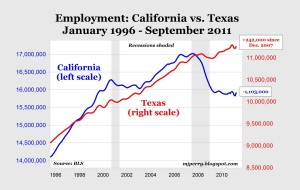 No wonder the Lone Star State is growing faster and creating more jobs.
:max_bytes(150000):strip_icc()/usdebtbypresidentnewimage-9e919ca2f1344875a671e38b091cc49d.jpg)


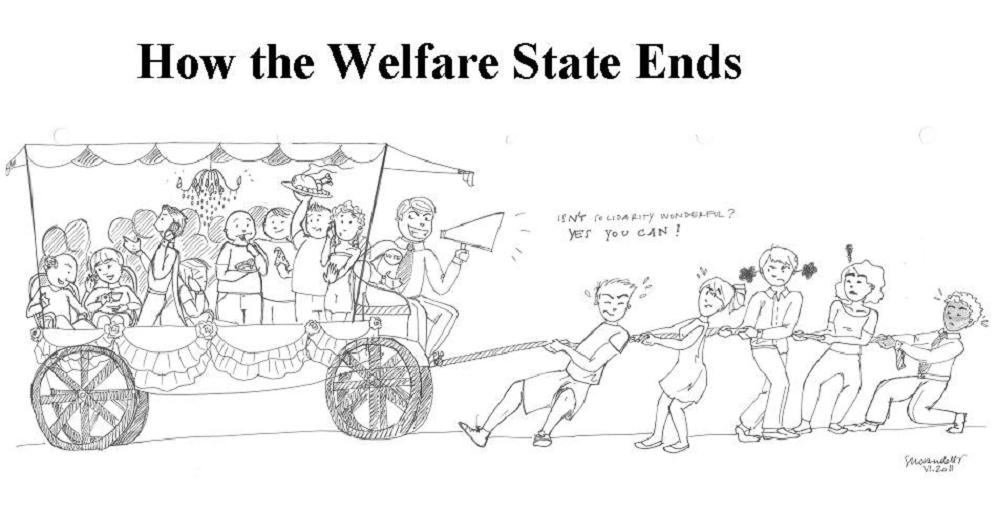




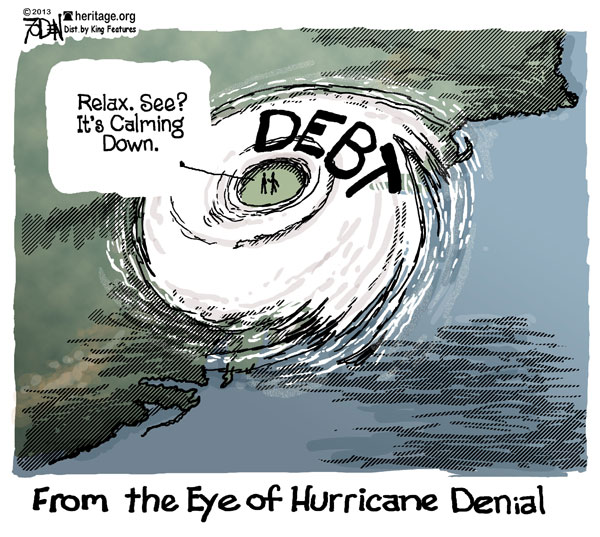
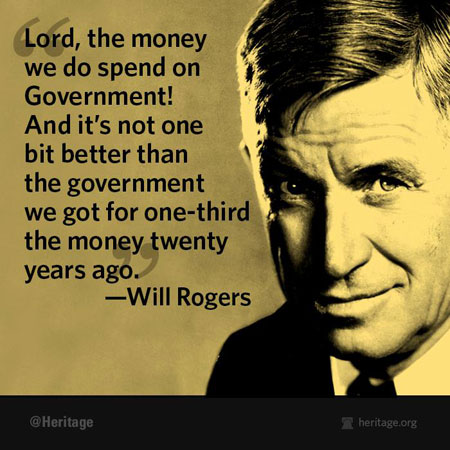
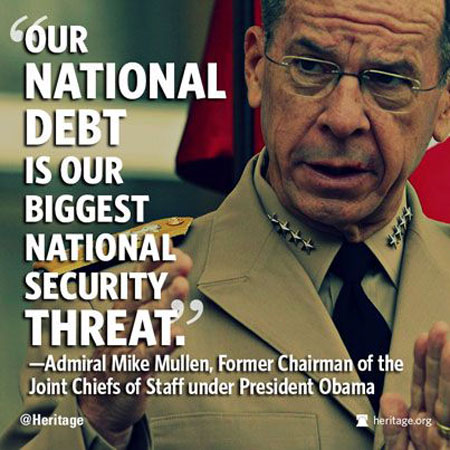

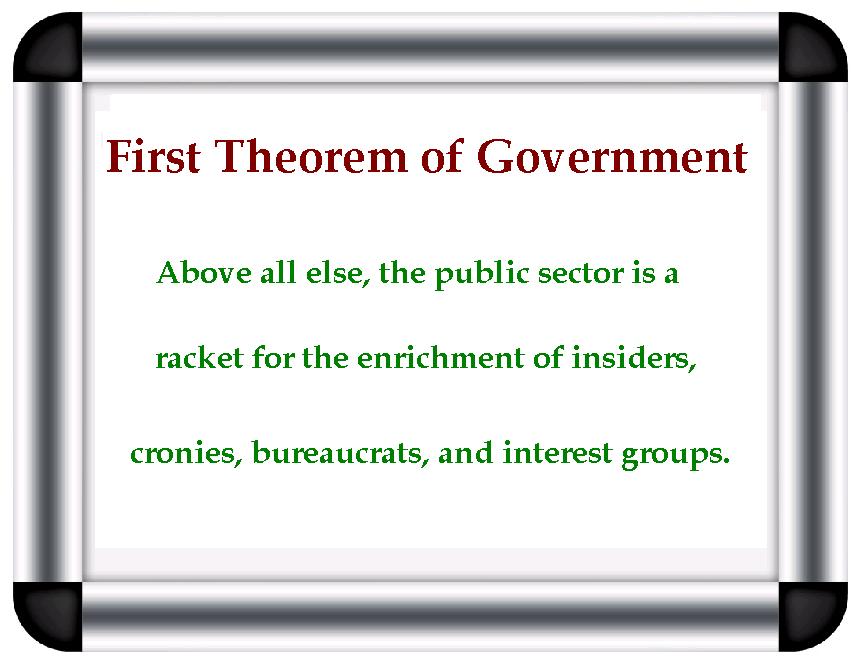


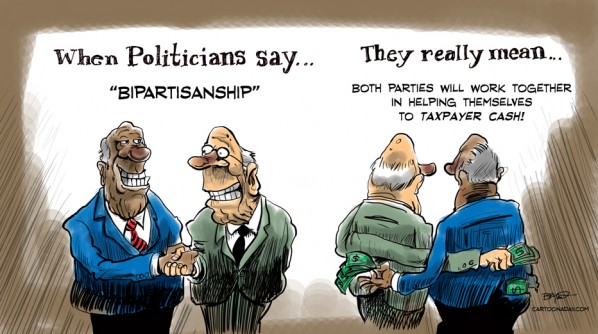

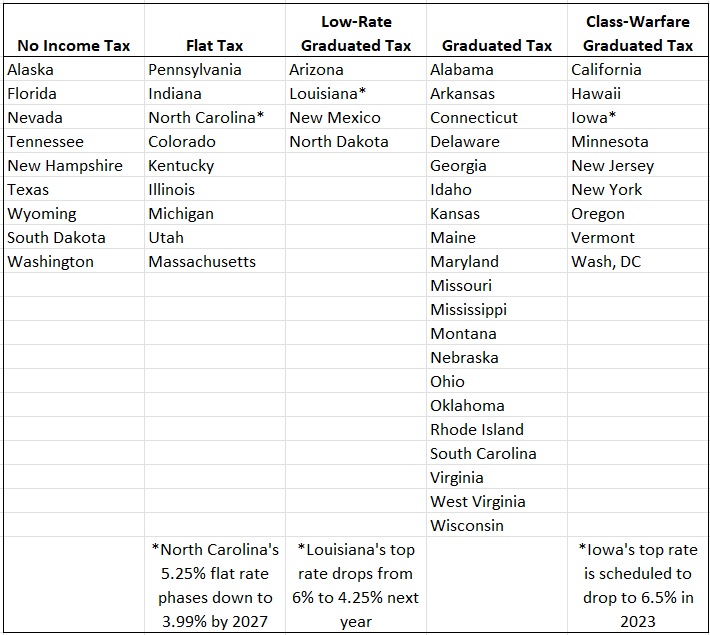


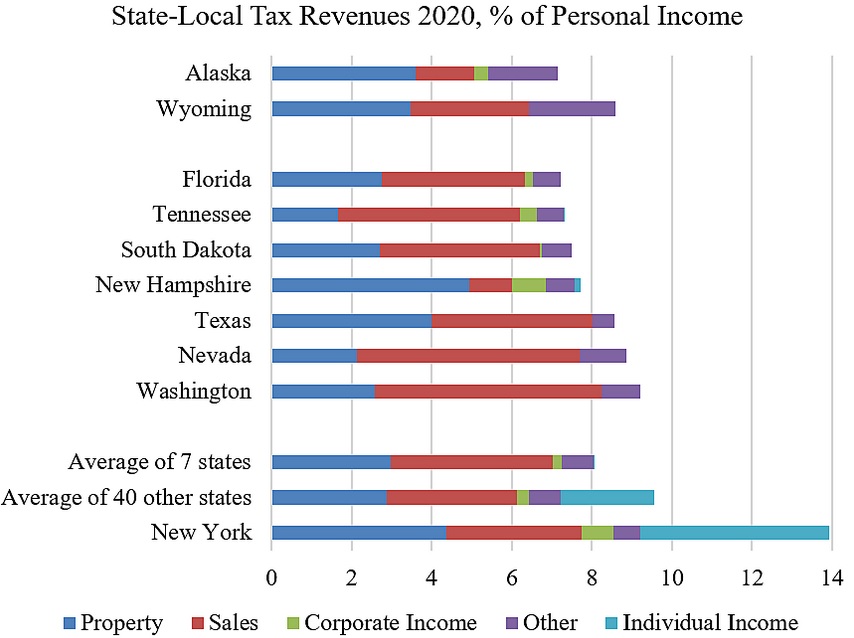


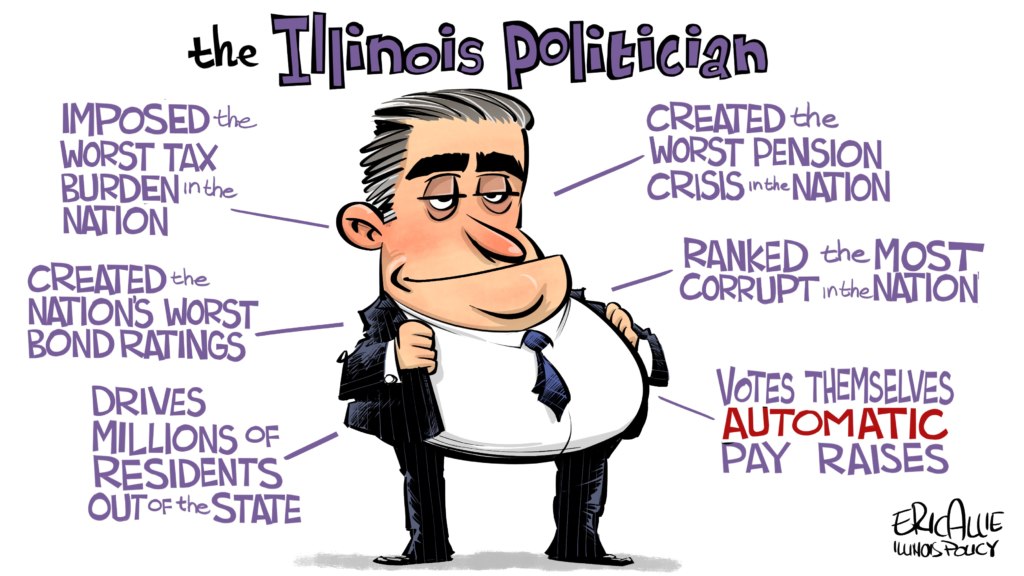
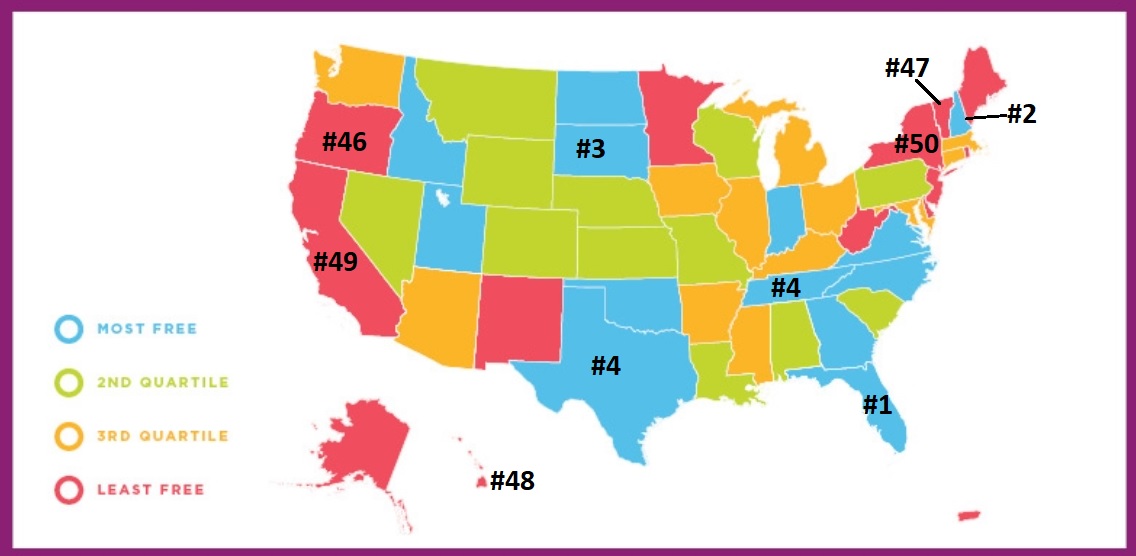

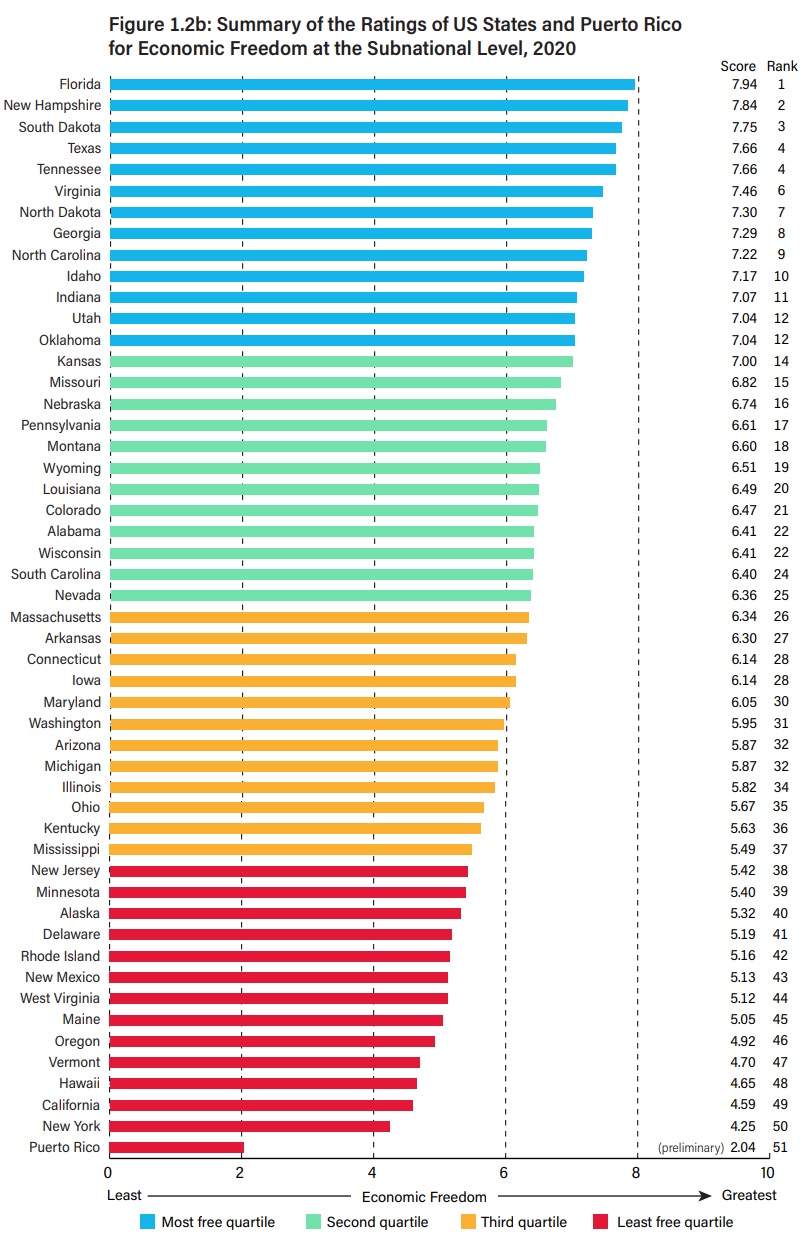
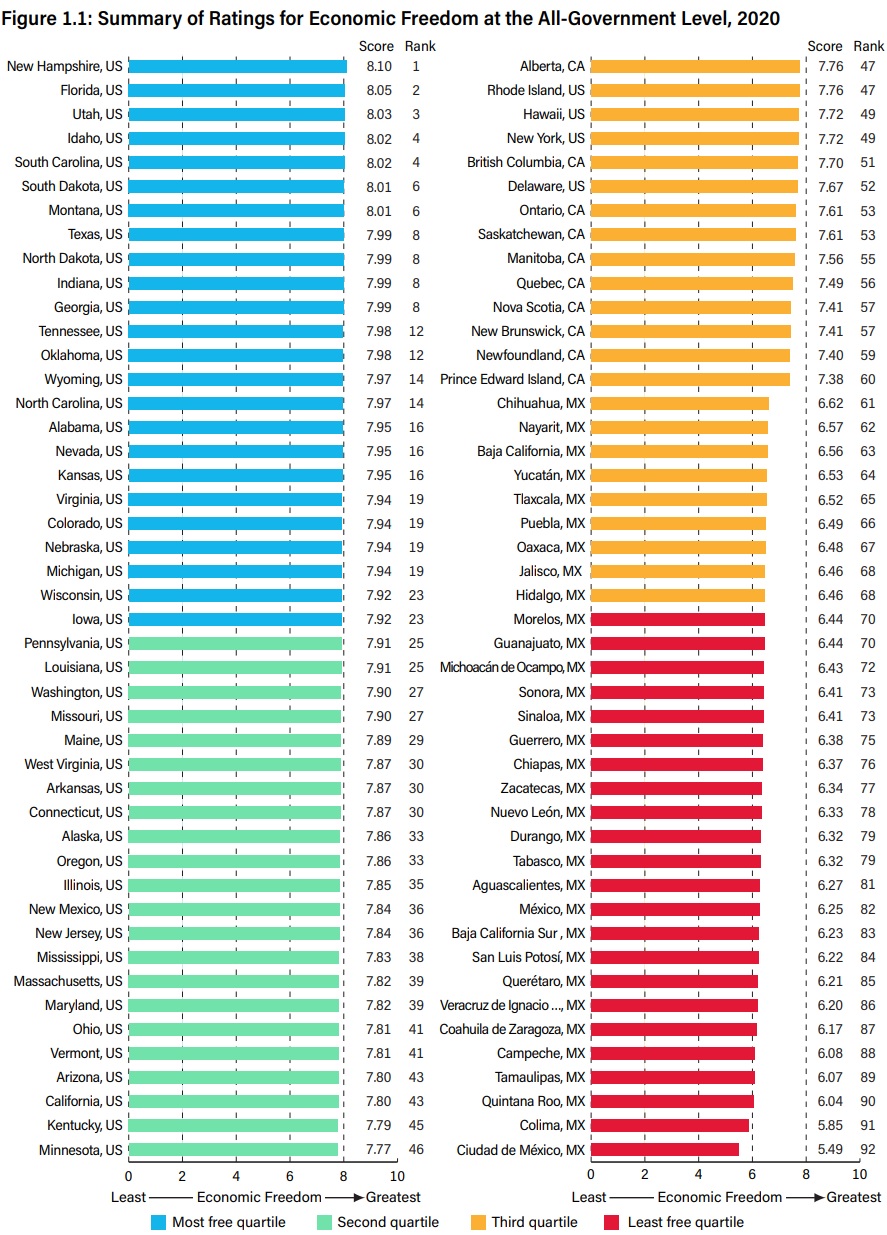
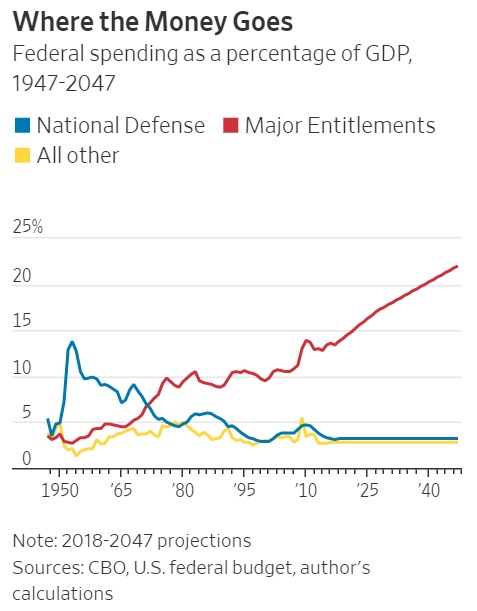
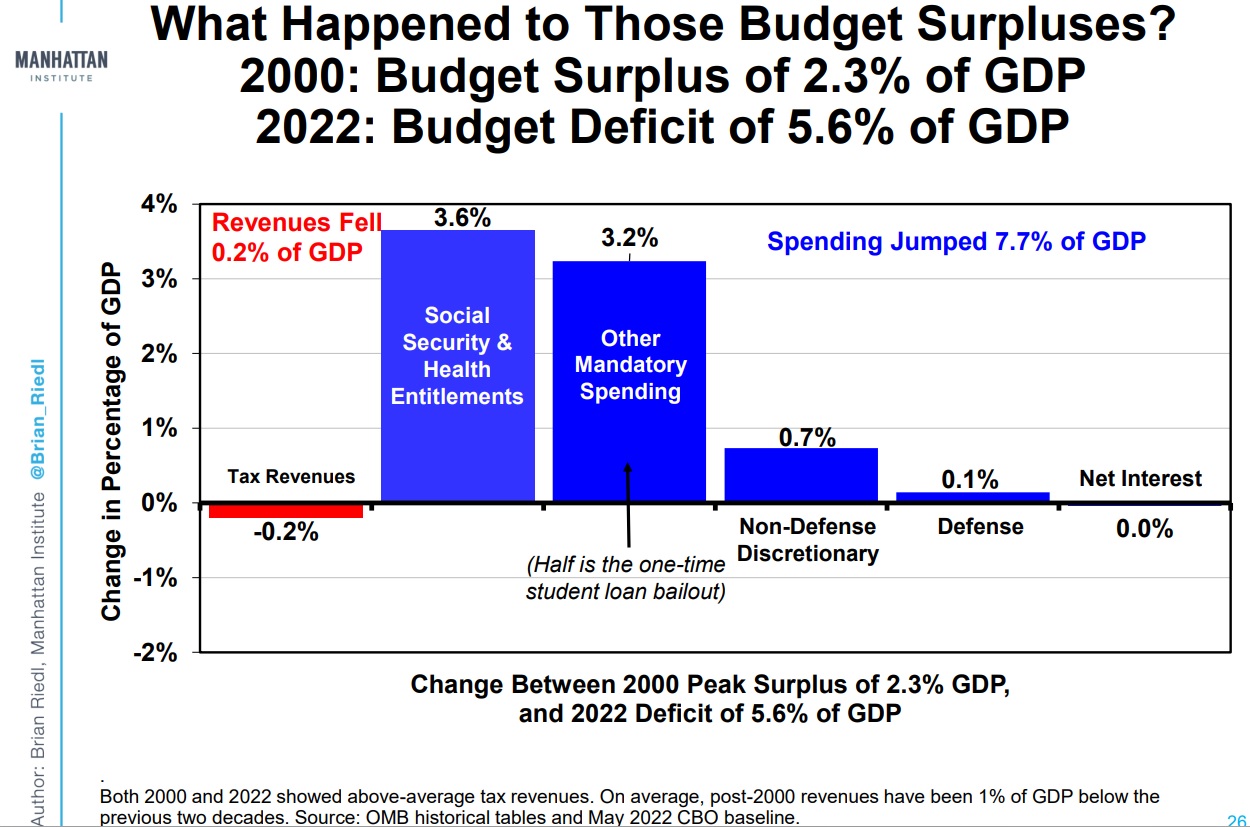

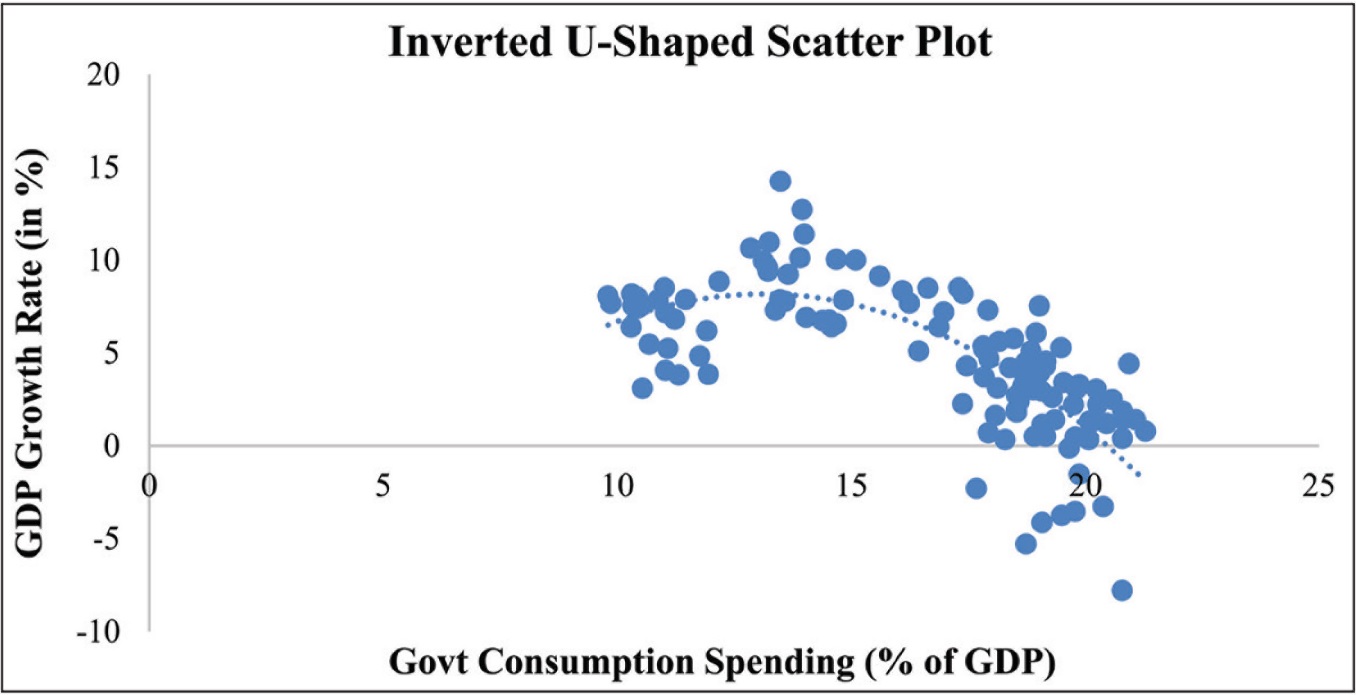


 The Daily Hatch