Category Archives: Cato Institute

Once the baby boomers are finished getting on Social Security (2011 to 2030) there will be nothing left.

Uploaded by on Jun 21, 2011

Senator Kay Bailey Hutchison delivered remarks regarding her landmark proposal on entitlement reform, the Defend and Save Social Security Act at the Heritage Foundation’s “Saving Social Security” event. Sen. Hutchison announced that Senator Jon Kyl (R-AZ), member of Biden’s budget working group, has lent his support of her bill as the original cosponsor. At her press conference last week, Sen. Hutchison unveiled her Social Security proposal, and today she reiterated the urgency of putting Social Security on the table in the Biden budget group discussions. Sen. Hutchison sent a letter to Vice President Joe Biden last week urging him to incorporate Social Security reform in the ongoing deficit reduction debates that he is leading.

____________________

Once the baby boomers are finished getting on Social Security (2011 to 2030) there will be nothing left.

There are two serious problems with America’s Social Security system. Almost everyone knows about the first problem, which is that the system is bankrupt, with huge unfunded liabilities of about $30 trillion.

The other crisis is that the system gives workers a lousy level of retirement income compared to the amount of taxes they pay during their working years. Younger workers are particularly disadvantaged, as are African-Americans because of lower life expectancy.

These are critical issues, but perhaps looking at a couple of charts is the best way to illustrate why the Social Security system is inadequate.

Let’s start by looking at some numbers from Australia, where workers set aside 9 percent of their income in personal retirement accounts.

This system, which was made universal by the Labor Party beginning in the 1980s, has turned every Australian worker into a capitalist and generated private wealth of nearly 100 percent of GDP. Here’s a chart, based on data from the Australian Prudential Regulation Authority.

Now let’s look at one of the key numbers generated by America’s tax-and-transfer entitlement system. Here’s a chart showing the projected annual cash-flow deficits for the Social Security system, based on the just-released Trustees’ Report.

By the way, the chart shows inflation-adjusted 2012 dollars. The numbers would look far worse if I used the nominal numbers.

The two charts aren’t analogous, of course, but that’s because there’s nothing to compare. The Social Security system has no savings. Indeed, it discourages people from setting aside income.

And Australia’s superannuation system doesn’t have anything akin to America’s unfunded liabilities. The closest thing to an analogy would be the safety net provision guaranteeing a basic pension to people with limited savings (presumably because of a spotty employment record).

So now ask yourself whether Australia should copy America or America should copy Australia? Seems like a no-brainer.

Get people off of government support and get them in the private market place!!!!(great cartoon too)

Dan Mitchell hits the nail on the head and sometimes it gets so sad that you just have to laugh at it like Conan does. In order to correct this mess we got to get people off of government support and get them in the private market place!!!!

The third-most viewed post in the history of this blog, with more than 22,000 views, is this set of cartoons showing how the welfare state begins and how it ends.

A similar theme can be found in this great new cartoon from Chuck Asay.

And just in case you think Asay is being unfair, keep in mind that folks like Obama and Pelosi actually have claimed that more unemployment benefits is “stimulus.” Yes, you read correctly. Subsidizing unemployment is good for growth to these strange ideologues.

Asay’s cartoon is so good that it may dethrone my previous top choice. Though sometimes I am most impressed by this one showing why parasites shouldn’t kill their host animal.

I’d be curious to know which one all of you think is most effective.

And since Asay’s work is almost always worth sharing, you can find more of my top picks hereherehere, and here.

Sometimes it is tragic that you got to laugh about it.

Brandon Stewart

August 10, 2011 at 7:31 pm

Late-night comedian Conan O’Brien’s blog has a new post parodying Washington’s excessive spending. “Team Coco has found out why our government is so broke,” the blog explains, “They’ve been spending all our hard earned tax dollars on some pretty ridiculous programs.” The post contains a list of humorous fake programs and encourages readers submit their own.

But sadly, there’s no need to turn to a crack team of comedy writers to gin up examples of ridiculous government spending. Instead, one need only look to the shenanigans on Capitol Hill to find a list of absurd expenditures of taxpayer dollars. As Heritage has reported, in addition to long-term, substantive reforms$343 billion of wasteful government spending could be cut immediately. And while Conan’s list is populated by a number of outlandish (but fake) programs, there are plenty of REAL government programs that are just as ridiculous. Conan, try these on for size:

  • Washington will spend $2.6 million training Chinese prostitutes to drink more responsibly on the job.
  • Because of overstaffing, the U.S. Postal Service selects 1,125 employees per day to sit in empty rooms. They are not allowed to work, read, play cards, watch television, or do anything. This costs $50 million annually.
  • Stimulus dollars have been spent on mascot costumes, electric golf carts, and a university study examining how much alcohol college freshmen women require before agreeing to casual sex.
  • Washington will spend $615,175 on an archive honoring the Grateful Dead.
  • The Securities and Exchange Commission spent $3.9 million rearranging desks and offices at its Washington, D.C., headquarters.
  • Congress recently gave Alaska Airlines $500,000 to paint a Chinook salmon on a Boeing 737.
  • Washington spends $25 billion annually maintaining unused or vacant federal properties.
  • The Federal Communications Commission spent $350,000 to sponsor NASCAR driver David Gilliland.
  • Washington has spent $3 billion re-sanding beaches—even as this new sand washes back into the ocean.
  • Taxpayers are funding paintings of high-ranking government officials at a cost of up to $50,000 apiece.
  • The Conservation Reserve program pays farmers $2 billion annually not to farm their land.

And the list goes on and on. When it comes to government spending, the truth is often stranger than fiction.

Obama’s budget versus Paul Ryan’s budget

Obama Calls GOP Budget Plan “Prescription for Decline”

Uploaded by on Apr 3, 2012

In a blistering attack on the House-Passed Republican budget Tuesday, President Obama called the plan proposed by Rep. Paul Ryan a “Trojan Horse” and “a prescription for decline.” Judy Woodruff, Jared Bernstein of the Center on Budget and Policy Priorities and the CATO Institute’s Daniel Mitchell discuss the GOP budget plan.

_______

President Obama was really hard on Paul Ryan for his plan, but Obama’s plan will NEVER LEAD TO A BALANCED BUDGET.

Obama’s And Paul Ryan’s Conflicting Budget Visions

by Michael D. Tanner

Michael Tanner is a senior fellow at the Cato Institute and author of Leviathan on the Right: How Big-Government Conservatism Brought Down the Republican Revolution.

Added to cato.org on April 6, 2012

This article appeared in Fiscal Times on April 6, 2012.

With his speech to news editors and executives this week, President Obama has made it clear that he plans to run a starkly ideological campaign, contrasting his vision for the future of the country with that of his Republican opponents. And, he plans to make the Republican budget, written by rising GOP star Rep. Paul Ryan of Wisconsin and embraced by presumptive Republican nominee Mitt Romney, exhibit one in that contrast. It would be worthwhile therefore to actually compare that budget with the one proposed by the president.

Deficits and Debt
The president’s budget proposal would reduce future deficits — at least until 2018 — but would never achieve balance. By 2018, the president projects deficits to fall to only $575 billion. After that, they begin rising again, reaching $704 billion by 2022. Overall, the president’s budget would add an additional $6.7 trillion to the national debt over the next 10 years.

Paul Ryan does better when it comes to deficit reduction, but only because the president has set such a low bar. Unlike the president, Ryan would eventually balance the budget — but not until 2040 or so. He does, however, generally run much lower annual deficits than the president would, and adds $3.3 trillion less to the national debt over the next 10 years.

Obama and Ryan have presented two distinct visions of the future.

Over the longer-term, the differences are much more pronounced. By 2050, for instance, Ryan would be running a surplus equal to as much as 3 percent of GDP. The president’s budget, in contrast, projects that we would still face budget deficits in excess of 6 percent of GDP.

Government Spending
Neither President Obama nor Paul Ryan actually cuts government spending. Rather, both are playing the time-honored game of calling a reduction in the rate of increase a “cut.” Thus, the president would increase federal spending from $3.8 trillion in 2013 to $5.82 trillion in 2022. That might not be as big an increase there might otherwise be, but in no way can it be called a cut. Meanwhile, Ryan, who is being accused of “thinly veiled Social Darwinism,” would actually increase spending from $3.53 trillion in 2013 to $4.88 trillion in 2022.

The president warns that Ryan’s spending “cuts” would “gut” the social safety net. And, it is true that Ryan’s budget knife falls more heavily on domestic discretionary spending than does the president’s — but only relatively. Over the next 10 years, Ryan would spend $352 billion less on those programs than would Obama, an average of just $35.2 billion per year in additional cuts. Given that domestic discretionary spending under the president’s budget will total more than $4 trillion over the next decade, Ryan’s cuts look less than draconian.

One area where the president appears to have the better argument is on defense spending. Ryan would undo the defense spending sequester agreed to under last year’s debt-ceiling compromise, and would spend $203 billion more over 10 years than was agreed to. Obama would cut defense by an additional $240 billion. Given our budget problems and the lack of a conventional military threat, Ryan’s plan to spare defense seems shortsighted.

Taxes
The president would increase tax revenue to 20.1 percent of GDP. That’s a huge increase from the current 15.4 percent, and higher than the post-World War II average of 18 percent. His budget includes tax hikes on people and small businesses making as little as $200,000 per year, as well as the usual panoply of tax hikes on energy products, businesses, investment and pretty much anything else the president can think of.

The president also continues to push for the so-called Buffet Rule, a new 30 percent minimum tax on the rich, based on the misleading claim that Warren Buffett pays a lower tax rate than his secretary. The Buffett Rule would raise very little revenue — less than $3.2 billion per year on average according to the Congressional Budget Office — but the president is pushing it as a matter of fairness.

Ryan would also allow taxes to increase as a percentage of GDP, returning to roughly their historical average around 18 percent of GDP. However, he is also calling for a major reform of the U.S. tax code. Ryan would replace the current four tax rates with two: 15 and 25 percent. He would also lower the current 38 percent corporate tax rate, the world’s highest, to 25 percent. At the same time, he would broaden the taxable base by eliminating many current deductions and loopholes. Unfortunately, Ryan has ducked the unpopular task of actually spelling out which loopholes would be eliminated.

Entitlement Reform
Perhaps the biggest disagreement between the president and Ryan is over how to reform the entitlement programs that are driving this country toward bankruptcy. Ryan would restructure Medicare for those under age 55 to give recipients a choice between the traditional program and a voucher that would allow them to purchase private insurance. That plan, drafted together with Democratic Sen. Ron Wyden of Oregon, would have little impact in the short-term — in 2022, it would spend just $21 billion less than the president’s budget — but over the longer term would reduce Medicare’s unfunded liability, which the Medicare trustees put at $24.6 trillion, by trillions of dollars.

The president makes no significant changes to Medicare, relying instead on expansion of changes contained in the new health care law to save a projected $364 billion over the next 10 years.

Ryan would also turn the current Medicaid program to the states in the form of a federal block grant, while reducing spending by $810 billion over 10 years. States would have far more freedom to experiment with ways to reform the system, but would likely receive less federal funds over the long term. Obama, by contrast, leaves the program unchanged, while significantly expanding eligibility under the health care law.

Unsurprisingly in an election year, both Ryan and the president punt on Social Security reform. Neither offers any reform of the troubled retirement system, despite its $21 trillion in unfunded liabilities.

Two Visions
The United States is teetering on the edge of Greek-style bankruptcy. Our total indebtedness, including the unfunded liabilities of Social Security and Medicare, could run as high as $130 trillion, more than 900 percent of GDP. In the face of this looming crisis, Obama and Ryan have presented two distinct visions of the future. The president offers a bigger government, paid for with more debt and higher taxes. Ryan’s vision may be maddeningly timid and vague in places, but it takes important steps toward a smaller, less costly, and less intrusive government.

If that’s the debate that President Obama wants to have, let’s do it.

Christians welcome nonbelievers like Dan Mitchell in their criticism of Ayn Rand’s view of altruism

Nonbelievers like Rand really do not have an answer to the question “What is the meaning of life?”

Ayn Rand on the Purpose of Life

Christians are commanded to help others by Christ. However, many Christians do believe in the free market and think that system best suits the ideas that flow from Christianity. (Doug Douma wrote a fine article on this.)

Ayn Rand was very critical of altruism and she said it was evil. I have a four part series on that and I have posted the links below. Many nonbelievers like Dan Mitchell of the Cato Institute also have been critical of Rand’s attack on altruism and below is his recent article.

I’m in Monaco for the 10th forum of the Convention of Independent Financial Advisors, a Swiss-based NGO that focuses on promoting an ethical and productive environment for private investment. I moderated a couple of panels on interesting topics, including the European fiscal crisis.

Matthieu Ricard

But I want to focus on the comments of another speaker, Monsieur Matthieu Ricard, a French-born Buddhist monk. As you can see from his Wikipedia entry, he’s a very impressive individual. In addition to his other accomplishments, he serves as the French translator for the Dalai Lama.

During one of the dinners, we got into a fascinating conversation about the Buddhist concept of altruism (or at least one strain of that tradition) and Ayn Rand’s concept of selfishness, both as general ideas and as they relate to happiness.

At the risk of sounding un-libertarian, I’m siding with the monk.

Even though I’m a big fan of Ayn Rand and periodically give away copies of Atlas Shrugged to unwary young people, I’ve always been puzzled by the Randian hostility to altruism.

Yes, coercive altruism is wrong. Indeed, it’s not even altruism, particularly if you think (like Michael Gerson or Barack Obama) it’s noble or selfless to forcibly give away other people’s money.

But Rand seemed to think (and some Randians definitely think) that voluntary acts of charity and compassion are somehow wrong. In some sense, these folks take an ultra-homo economicus view that people are relentless utility maximizers based on self interest.

If this is a correct interpretation of Randianism (perhaps I should say Objectivism?), then I think it is inadequate. Yes, people want money, and almost everybody would like more money, but I’m guessing that it is non-monetary things that make people happiest.

I don’t want to sound too warm and fuzzy and ruin my image, but aren’t children, friends, family, and love the things that make the world go ’round for most of us? Yes, we also value achievement, but even that can be unrelated to pecuniary considerations.

These are amateur ramblings on my part, and I’ve probably done a poor job of describing the views of Randians and Monsieur Ricard. Moreover, I’m sure that very intelligent people have examined this issue in a much more sophisticated fashion.

For a fiscal policy wonk like me, though, this conference and this encounter forced me to give some thought to how you can be a big fan of Ayn Rand while also feeling good about holding open doors for little old ladies.

Uploaded by on Jul 17, 2009

Questioned by Mike Wallace, Ayn Rand explains her philosophy of objective reality and contrasts it with altruism.

Related posts:

Christian view versus Ayn Rand on altruism (Part 4)

Ayn Rand on the Purpose of Life Uploaded by prosumption on Apr 27, 2010 Ayn Rand on the Purpose of Life _________________ I ran across a fine article that takes a look at Ayn Rand’s view of capitalism and selfishness and compares it to the Christian view found in the Bible. I have decided to […]

Christians welcome nonbelievers like Dan Mitchell in their criticism of Ayn Rand’s view of altruism

Nonbelievers like Rand really do not have an answer to the question “What is the meaning of life?” Ayn Rand on the Purpose of Life Christians are commanded to help others by Christ. However, many Christians do believe in the free market and think that system best suits the ideas that flow from Christianity. Ayn […]

Christian view versus Ayn Rand on altruism (Part 3)

Uploaded by MetrazolElectricity on Oct 30, 2010 Talking to Rose, patron-saint of the conservative movement , Bill buckley chats about ayn and her magnum opus atlas shrugged. On atlas shrugged, WFB:”I had to flog myself to read it.” On ayn, WFB : “Her scorn for charity,for altruism was such as to build up an unfeeling […]

Christian view versus Ayn Rand on altruism (Part 2)

Uploaded by LibertyPen on Jul 17, 2009 Questioned by Mike Wallace, Ayn Rand explains her philosophy of objective reality and contrasts it with altruism. _________________ I ran across a fine article that takes a look at Ayn Rand’s view of capitalism and selfishness and compares it to the Christian view found in the Bible. I […]

Christian view versus Ayn Rand on altruism (Part 1)

Uploaded by LibertyPen on Oct 26, 2009 Ayn Rand makes the case that altruism is evil. ___________________  I ran across a fine article that takes a look at Ayn Rand’s view of capitalism and selfishness and compares it to the Christian view found in the Bible. I have decided to start a series on this […]


Reagan and Clinton had good fiscal policies according to Cato Institute

Uploaded by on Dec 16, 2010

http://blog.heritage.org/2010/12/16/new-video-pork-filled-spending-bill-just-… Despite promises from President Obama last year and again last month that he opposed reckless omnibus spending bills and earmarks, the White House and members of Congress are now supporting a reckless $1.1 trillion spending bill reportedly stuffed with roughly 6,500 earmarks.

________________________

Below you see an article and videos by Dan Mitchell of the Cato Institute concerning Reagan and Clinton. First lets look at where we are now with Obama.

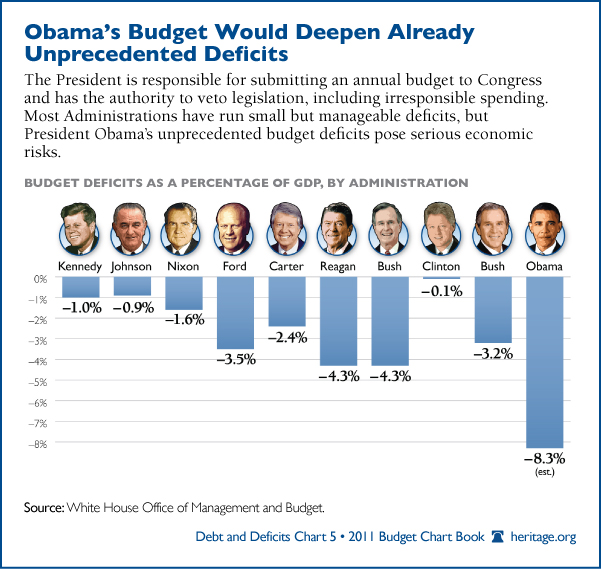
Over the last 10 presidents was have had 16.9% of GDP of deficits total from five Republican presidents and 12.7% total from Democratic presidents. However, what is most disturbing is that 8.3% of the 12.7% comes from the Obama administration who is currently in power and we are no longer in the cold war era. That is almost double the total of all the other four Democratic presidents combined under just one president. Take a look at the chart below from the Heritage Foundation:

Rob Bluey

January 1, 2012 at 9:56 am

Over the past 50 years, 10 U.S. presidents have made annual budget requests to Congress, projecting deficits both big and small. But no other president compares to Barack Obama when it comes to the size and scale of the current budget deficit facing the United States.

The country is facing an 8.3 percent estimated average national deficit of a two-term Obama administration — the biggest of the past 50 years. By comparison, the current estimate for Obama is nearly double the percentage under Presidents Ronald Reagan and George H.W. Bush — and they were fighting the Cold War.

Political party doesn’t tell the whole story, however. President Bill Clinton leads the pack of presidents since 1961, according to data from the White House Office of Management and Budget. Heritage put together this graphic as part of our Budget Chart Book.

So what does the current trajectory mean for the United States? We’re certainly no longer looking at a continuation of manageable deficits in the years to come. This is a dramatic change in the magnitude of annual shortfalls at the federal level. That’s one reason Heritage came up with a plan to fix the debt crisis.

If you have a suggestion for a chart we should feature in the future, please post a comment below, email us at scribe@heritage.org, or send me at tweet @RobertBluey.

_______________________
Here is a perspective from Dan Mitchell of the Cato Institute:

To Fix the Budget, Bring Back Reagan…or Even Clinton

Posted by Daniel J. Mitchell

President Obama unveiled his fiscal year 2012 budget today, and there’s good news and bad news. The good news is that there’s no major initiative such as the so-called stimulus scheme or the government-run healthcare proposal. The bad news, though, is that government is far too big and Obama’s budget does nothing to address this problem.

But perhaps the folks on Capitol Hill will be more responsible and actually try to save America from becoming a big-government, European-style welfare state. The solution may not be easy, but it is simple. Lawmakers merely need to restrain the growth of government spending so that it grows slower than the private economy.

Actual spending cuts would be the best option, of course, but limiting the growth of spending is all that’s needed to slowly shrink the burden of government spending relative to gross domestic product.

Fortunately, we have two role models from recent history that show it is possible to control the federal budget. This video from the Center for Freedom and Prosperity uses data from the Historical Tables of the Budget to demonstrate the fiscal policy achievements of both Ronald Reagan and Bill Clinton.

Spending Restraint, Part I: Lessons from Ronald Reagan and Bill Clinton

Uploaded by on Feb 14, 2011

Ronald Reagan and Bill Clinton both reduced the relative burden of government, largely because they were able to restrain the growth of domestic spending. The mini-documentary from the Center for Freedom and Prosperity uses data from the Historical Tables of the Budget to show how Reagan and Clinton succeeded and compares their record to the fiscal profligacy of the Bush-Obama years.

_____________________


Some people will want to argue about who gets credit for the good fiscal policy of the 1980s and 1990s.

Bill Clinton’s performance, for instance, may not have been so impressive if he had succeeded in pushing through his version of government-run healthcare or if he didn’t have to deal with a Republican Congress after the 1994 elections. But that’s a debate for partisans. All that matters is that the burden of government spending fell during Bill Clinton’s reign, and that was good for the budget and good for the economy. And there’s no question he did a much better job than George W. Bush.

Indeed, a major theme in this new video is that the past 10 years have been a fiscal disaster. Both Bush and Obama have dramatically boosted the burden of government spending — largely because of rapid increases in domestic spending.

This is one of the reasons why the economy is weak. For further information, this video looks at the theoretical case for small government and this video examines the empirical evidence against big government.

Another problem is that many people in Washington are fixated on deficits and debt, but that’s akin to focusing on symptoms and ignoring the underlying disease. To elaborate, this video explains that America’s fiscal problem is too much spending rather than too much debt.

Last but not least, this video reviews the theory and evidence for the “Rahn Curve,” which is the notion that there is a growth-maximizing level of government outlays. The bad news is that government already is far too big in the United States. This is undermining prosperity and reducing competitiveness.

Spending Restraint, Part II: Lessons from Canada, Ireland, Slovakia, and New Zealand

Uploaded by on Feb 22, 2011

Nations can make remarkable fiscal progress if policy makers simply limit the growth of government spending. This video, which is Part II of a series, uses examples from recent history in Canada, Ireland, Slovakia, and New Zealand to demonstrate how it is possible to achieve rapid improvements in fiscal policy by restraining the burden of government spending. Part I of the series examined how Ronald Reagan and Bill Clinton were successful in controlling government outlays — particularly the burden of domestic spending programs. http://www.freedomandprosperity.org


Obama rule apply to vouchers?

Introducing the ‘Obama Rule’

Posted by Neal McCluskey

In his latest weekly radio address, President Obama featured what will no doubt be a mainstay of his reelection campaign: the “Buffett Rule,” which says that rich people should pay at least the same tax rate as middle-class folks. It’s named after mega-investor Warren Buffett, who famously declared that he pays a lower tax rate than his secretary. President Obama and his supporters have run with that, and are employing it to convince the public that such is the norm for the despised “rich.”

Of course that’s not the norm: Buffett is the rare taxpayer who makes almost all his income through investments, and top earners have much higher tax rates than people earning $200,000 and below. So this is clearly not about fairness — it’s about politics.

Two, though, can play at this game. If the President can engage in class warfare he’s also a fair target of it. So why not implement something called the “Obama Rule,” which demands that lower-income people get at least the same educational options as the President? That only seems fair, right, like the Buffett Rule? Indeed, the President himself noted in his weekly address that “ we…have to pay for investments that will help our economy grow and keep our country safe [such as] education.” So why, then, does the President’s 2013 budget zero-out funding for the DC Opportunity Scholarship Program while his daughters go to Sidwell Friends? Shouldn’t other kids in Washington have access to the same excellent private schools as the President’s daughters?

Class envy is hardly the right reason to demand school choice — the right reasons are freedom, competition, innovation, and specialization – but of course all kids should have the same options as President Obama’s daughters! As the President concluded in his weekly address (though, obviously, he wasn’t talking about school choice): “That’s how we’ll make this country a little fairer, a little more just, and a whole lot stronger.” So let’s invoke the Obama Rule, and give lower-income families the same educational choices as the President! It’s simply the fair thing to do.

Here is the video clip and transcript of the film series FREE TO CHOOSE episode “What is wrong with our schools?” Part 1 of 6.

 
Volume 6 – What’s Wrong with our Schools
Transcript:
Friedman: These youngsters are beginning another day at one of America’s public schools, Hyde Park High School in Boston. What happens when they pass through those doors is a vivid illustration of some of the problems facing America’s schools.
They have to pass through metal detectors. They are faced by security guards looking for hidden weapons. They are watched over by armed police. Isn’t that awful. What a way for kids to have to go to school, through metal detectors and to be searched. What can they conceivably learn under such circumstances. Nobody is happy with this kind of education. The taxpayers surely aren’t. This isn’t cheap education. After all, those uniformed policemen, those metal detectors have to be paid for.
What about the broken windows, the torn school books, and the smashed school equipment. The teachers who teach here don’t like this kind of situation. The students don’t like to come here to go to school, and most of all, the parents __ they are the ones who get the worst deal __ they pay taxes like the rest of us and they are just as concerned about the kind of education that their kids get as the rest of us are. They know their kids are getting a bad education but they feel trapped. Many of them can see no alternative but to continue sending their kids to schools like this.
To go back to the beginning, it all started with the fine idea that every child should have a chance to learn his three R’s. Sometimes in June when it gets hot, the kids come out in the yard to do their lessons, all 15 of them, ages 5 to 13, along with their teacher. This is the last one-room schoolhouse still operating in the state of Vermont. That is the way it used to be. Parental control, parents choosing the teacher, parents monitoring the schooling, parents even getting together and chipping in to paint the schoolhouse as they did here just a few weeks ago. Parental concern is still here as much in the slums of the big cities as in Bucolic, Vermont. But control by parents over the schooling of their children is today the exception, not the rule.
Increasingly, schools have come under the control of centralized administration, professional educators deciding what shall be taught, who shall do the teaching, and even what children shall go to what school. The people who lose most from this system are the poor and the disadvantaged in the large cities. They are simply stuck. They have no alternative.
Of course, if you are well off you do have a choice. You can send your child to a private school or you can move to an area where the public schools are excellent, as the parents of many of these students have done. These students are graduating from Weston High School in one of Boston’s wealthier suburbs. Their parents pay taxes instead of tuition and they certainly get better value for their money than do the parents in Hyde Park. That is partly because they have kept a good deal of control over the local schools, and in the process, they have managed to retain many of the virtues of the one-room schoolhouse.
Students here, like Barbara King, get the equivalent of a private education. They have excellent recreational facilities. They have a teaching staff that is dedicated and responsive to parents and students. There is an atmosphere which encourages learning, yet the cost per pupil here is no higher than in many of our inner city schools. The difference is that at Weston, it all goes for education that the parents still retain a good deal of control.
Unfortunately, most parents have lost control over how their tax money in spent. Avabelle goes to Hyde Park High. Her parents too want her to have a good education, but many of the students here are not interested in schooling, and the teachers, however dedicated, soon lose heart in an atmosphere like this. Avabelle’s parents are certainly not getting value for their tax money.
Caroline Bell, Parent: I think it is a shame, really, that parents are being ripped off like we are. I am talking about parents like me that work every day, scuffle to try to make ends meet. We send our kids to school hoping that they will receive something that will benefit them in the future for when they go out here and compete in the job market. Unfortunately, none of that is taking place at Hyde Park.
Friedman: Children like Ava are being shortchanged by a system that was designed to help. But there are ways to help give parents more say over their children’s schooling.
This is a fundraising evening for a school supported by a voluntary organization, New York’s Inner City Scholarship Fund. The prints that have brought people here have been loaned by wealthy Japanese industrialist. Events like this have helped raise two million dollars to finance Catholic parochial schools in New York. The people here are part of a long American tradition. The results of their private voluntary activities have been remarkable.
This is one of the poorest neighborhoods in New York City: the Bronx. Yet this parochial school, supported by the fund, is a joy to visit. The youngsters here from poor families are at Saint John Christians because their parents have picked this school and their parents are paying some of the costs from their own pockets. The children are well behaved, eager to learn, the teachers are dedicated. The cost per pupil here is far less than in the public schools, yet on the average the children are two grades ahead. That is because teachers and parents are free to choose how the children shall be taught. Private money has replaced the tax money and so control has been taken away from the bureaucrats and put back where it belongs.
This doesn’t work just for younger children. In the 60’s, Harlem was devastated by riots. It was a hot bed of trouble. Many teenagers dropped out of school.

Free to Choose by Milton Friedman: Episode “What is wrong with our schools?” (Part 1 of transcript and video)

Here is the video clip and transcript of the film series FREE TO CHOOSE episode “What is wrong with our schools?” Part 1 of 6.   Volume 6 – What’s Wrong with our Schools Transcript: Friedman: These youngsters are beginning another day at one of America’s public schools, Hyde Park High School in Boston. What happens when […]


Free to Choose by Milton Friedman: Episode “What is wrong with our schools?” (Part 4 of transcript and video)

Free to Choose by Milton Friedman: Episode “What is wrong with our schools?” (Part 4 of transcript and video) Here is the video clip and transcript of the film series FREE TO CHOOSE episode “What is wrong with our schools?” Part 4 of 6.   Volume 6 – What’s Wrong with our Schools Transcript: It seems to me […]

Free to Choose by Milton Friedman: Episode “What is wrong with our schools?” (Part 3 of transcript and video) Here is the video clip and transcript of the film series FREE TO CHOOSE episode “What is wrong with our schools?” Part 3 of 6.   Volume 6 – What’s Wrong with our Schools Transcript: If it doesn’t, they […]

Free to Choose by Milton Friedman: Episode “What is wrong with our schools?” (Part 2 of transcript and video)

Free to Choose by Milton Friedman: Episode “What is wrong with our schools?” (Part 2 of transcript and video) Here is the video clip and transcript of the film series FREE TO CHOOSE episode “What is wrong with our schools?” Part 2 of 6.   Volume 6 – What’s Wrong with our Schools Transcript: Groups of concerned parents […]

Free to Choose by Milton Friedman: Episode “What is wrong with our schools?” (Part 6 of transcript and video)

Here is the video clip and transcript of the film series FREE TO CHOOSE episode “What is wrong with our schools?” Part 6 of 6.   Volume 6 – What’s Wrong with our Schools Transcript: FRIEDMAN: But I personally think it’s a good thing. But I don’t see that any reason whatsoever why I shouldn’t have been required […]


Free to Choose by Milton Friedman: Episode “What is wrong with our schools?” (Part 5 of transcript and video)

Here is the video clip and transcript of the film series FREE TO CHOOSE episode “What is wrong with our schools?” Part 5 of 6.   Volume 6 – What’s Wrong with our Schools Transcript: Are your voucher schools  going to accept these tough children? COONS: You bet they are. (Several talking at once.) COONS: May I answer […]


Federal government should not be involved with post office

I really wish that President Obama would have not had the federal government buy up General Motors. We need to keep the federal government out of the private market as much as possible. This goes for the post office too. It should be in private hands.

Senators voted recently to hold off closing some post offices but I wish we had radical changes being voted on.

Postal Problems: the Role of Government Micromanagement

Posted by Tad DeHaven

Postal expert Michael Schuyler has released a follow-up to his January paper that compared the recent financial performance of the U.S. Postal Service to foreign postal service providers. Not surprisingly, the USPS has fared relatively poorly in comparison to its foreign counterparts. In his new paper, Schuyler looks at the role government micromanagement plays and finds that “Foreign posts have much more flexibility than USPS to adjust operations to keep costs in line with revenue.”

The following are some key points:

  • Foreign governments intervene in their postal markets, but “foreign governments often temper their demands and grant their postal services substantial operational discretion, in order that they not undermine their posts’ financial viability.”
  • The USPS has reduced headcount by 29 percent since 1999, but in comparison to foreign operators, it has less flexibility when it comes to managing labor costs. For instance, “there have been few layoffs because contracts with postal unions contain no-layoff provisions that protect the jobs of most career postal workers…Although the reduction the Service accomplished through attrition and buyouts has been skillful, it has not been sufficient to bring the workforce into balance with reduced mail volume.”
  • While many foreign operators have moved to five-day mail delivery, Congress continues to insist that the USPS deliver mail six days a week. Given the continuing – and permanent – decline in the demand for mail, the case for cutting back on delivery is getting stronger. Regardless of whether the USPS should move to five day delivery, the “requirement shows how the U.S. Postal Service is hamstrung in its ability to rein in costs through operational adjustments, compared to many foreign posts.”
  • Congressional meddling makes it harder for the USPS to downsize its retail network to better reflect financial reality. When the USPS tries to close post offices and other facilities, “members of Congress often object vigorously to proposed closings within their jurisdictions and occasionally threaten to introduce legislation to block proposed changes.” As a result, the USPS usually backs down.

I’ll conclude by making my standard pitch for liberalization of the U.S. postal market, which would ideally lead to privatization of the USPS. The word “privatization” scares a lot of people, but it shouldn’t. If one were to spend a couple of years working in the U.S. Senate, as I have, there’s a good chance that he or she will conclude that continuing to allow 535 politicians to manage a business is a whole lot scarier.

 
Related posts:

Private entrepreneurs can solve our post office problem

When you look at how good the private enterprise does with deliveries and then compare it to how bad the federal government does with the same duties it is laughable. The answer to the federal post office problem is to encourage private entrepreneurs to fill the gap and provide competition for the post office in […]

Senator Pryor asks for Spending Cut Suggestions! Here are a few!(Part 131)

Senator Mark Pryor wants our ideas on how to cut federal spending. Take a look at this video clip below: Senator Pryor has asked us to send our ideas to him at cutspending@pryor.senate.gov and I have done so in the past and will continue to do so in the future. On May 11, 2011,  I emailed to […]

Privatize the post office

The Arkansas Times rightly jumped on Republicans for whining about the local post office branches that were closing.  (It is sad to me that Republican Presidential Candidates are not very brave about offering any spending cuts.) The real answer is privatizing the post office. Here is a good article from the Cato Institute:   The USPS […]

We need to close U.S.Post Office

We need to close U.S.Post Office There is only one option in my view. We can not keep on losing money every year like the U.S.Postal Service (7 billion this year). Closing Post Offices   PrintThe U.S. Postal Service just posted a $3.1 billion loss for the third quarter and the outlook for the rest […]


Is there a limiting principle in Obamacare?

Randy Barnett Discusses ObamaCare at the Supreme Court

Uploaded by on Mar 26, 2012

http://www.cato.org/event.php?eventid=9074

Cato Institute Senior Fellow and Georgetown University law professor Randy E. Barnett discusses the arguments to be presented to the Supreme Court beginning March 26.

There are some constitution problems with this power grab of Obamacare . This article below from the Cato Institute makes this point:

That’s Not a Limiting Principle, Noah Feldman Edition

Posted by Michael F. Cannon

Harvard law professor Noah Feldman opines that U.S. Solicitor General Don Verrilli ”faltered” yesterday when Supreme Court justices asked whether the Obama administration’s claim that the Constitution empowers Congress to force people to purchase health insurance contains any limiting principle. Put differently, if the power “To regulate commerce…among the several States” allows the government to force you to buy health insurance, can the government also force you to buy broccoli?

Feldman laments that Verrilli’s “failure to offer a sharp distinction could be disastrous for the government’s case,” but assures us, “There is a good, sharp answer to this wholly reasonable question.” Here is the preface to Feldman’s answer:

[W]hen it comes to the strange and unusual case of health insurance, inaction causes the whole market to break down. By not buying health insurance, the healthiest person is depriving everyone of a public good. By sitting on their hands — and acting rationally — people who do not purchase insurance are unintentionally causing the market to fail.

One problem here is that if Congress can compel you to buy something whenever not buying it would deprive someone else of a public good, then Congress can also force you to purchase — not just tax and provide to you, but force you to purchase — tanks, fighter jets, and military bases; lighthouses; software; fireworks displays; e-books; comparative-effectiveness research (or really any type of research); a subscription to Consumer Reports; landscaping services; parks; rare and endangered species; street lights; et cetera ad nauseam. That isn’t much of a limiting principle.

Another problem is that economists use the term ”market failure” to describe a situation where one or more features of a free market cause that market to fall short of the efficiency-maximizing outcome. Feldman misuses it to mean, “This market isn’t doing what I want.” That is not market failure. Nor is it much of a limiting principle. If the Commerce Clause empowered Congress to force people to buy things to correct every perceived shortcoming in every market, Congress’ powers would be without limit. Even worse, Feldman doesn’t even bother identify whether the outcome he deplores is caused by some feature of a free market or government intervention (see below).

But that was just preface to Feldman’s supposed limiting principle. Here’s the meat of it:

The government can penalize inaction only when that inaction deprives everyone else of a public good…There must be an asymmetry of information about the relevant facts governing insurance — like the difference between my knowledge of how healthy I am and the insurance company’s ability to suss it out. And the market must be one in which that information asymmetry leads to adverse selection.

Though Feldman begins by stating government can force you to purchase any public good – another economic concept he seems to misunderstand — by the end of the paragraph he narrows his limiting principle to situations where asymmetric information causes market failures in insurance. Sorry, but that’s still not much of a limiting principle. For one thing, it would enable Congress to force Americans to purchase basically any type of insurance.

Asymmetries of information, in the absence of regulation, lead to adverse selection in all insurance markets. Insurers typically remedy this problem by adjusting premiums to reflect the risk posed by the purchaser, but there will always be situations where some purchasers know they pose a greater risk of filing claims than carriers realize. Fortunately, the risk-aversion of other purchasers acts as a counterweight and prevents those markets from collapsing.  But since all adverse selection causes at least some mutually beneficial insurance purchases not to occur — the sort of welfare loss that constitutes an actual market failure — Feldman’s so-called limiting principle would allow Congress to force you to buy any type of insurance it wants, so long as Congress finds even a sliver of adverse selection. That opens to door for Congress to mandate that everyone purchase life, auto, disability, flood, mortgage, renter’s, terrorism, earthquake, deposit, pet, earthquake, divorce, and long-term care insurance. Congress could even require you to purchase reinsurance — i.e., insurance against the that risk that your other insurance policies won’t pay. No doubt adverse selection prevents some unfortunate professional athletes and performers from insuring against the failure of their hair, legs, hands, teeth, vocal chords, fingers, ankles, tongues, and entire bodies. Ditto the threat of a paternity suit. If so, then Feldman’s “limiting principle” would let Congress mandate that everyone purchase those insurance policies, too.

Feldman’s limiting principle would even allow Congress to force Americans to purchase types of insurance that currently don’t exist. What if adverse selection so bedevils the markets for BAC-level insurance, positive-drug-test insurance, short-term-suicide insurance, overgrown-grass insurance, and oversleeping insurance that no carriers even offer such policies? Under Feldman’s rule, Congress could fix that by forcing carriers to offer such insurance and forcing you to buy it.

And that’s only what Congress could do in the presence of whatever scant adverse selection exists in unregulated insurance markets. But regulation typically encourages adverse selection–a point that Feldman elides, as if the catastrophic adverse selection that ObamaCare’s “community rating” price controls will cause were the market’s fault rather than Congress’. So what Feldman is actually saying is that Congress can force you to purchase insurance even if Congress itself caused the adverse selection. Which brings us back to broccoli.

Remember broccoli? Feldman writes, “If I choose not to buy broccoli, others can still buy it at a market price.” Perhaps that is true today. But let’s assume Feldman subscribes to the Obama administration’s argument that the Commerce Power enables Congress to regulate the timing and method of payment for a good that moves in interstate commerce. That would mean that Feldman believes Congress could pass a law stating that all broccoli purchasers must henceforth purchase it through a new method of payment called “broccoli insurance,” where all purchasers pay broccoli insurers a flat fee based on average broccoli consumption within the insurer’s pool of customers, regardless of how much broccoli an individual customer may consume. What would happen if Congress did that?

Well, those who consume the most broccoli would be thrilled. They could eat as much broccoli as they want — they could even stucco or decorate their houses with it — while paying much less than they did before. Those who rarely buy broccoli, on the other hand, would see their broccoli bills skyrocket. They may decide not to buy broccoli at all. When they leave the broccoli market, average consumption by those in the market will rise, as will broccoli premiums. That will cause more low-end broccoli consumers to leave the market, and the cycle will repeat itself.

Feldman will recognize this process as — you guessed it — adverse selection caused by asymmetric information. Which, under his limiting principle, means that Congress can swoop down and mandate that Americans purchase broccoli insurance. After all, those people choosing not to buy broccoli are “depriving everyone of [what Feldman calls] a public good.” In sum, Feldman’s limiting principle would allow Congress to force all Americans to buy broccoli. Which is to say, it’s not a limiting principle at all.

Like every other so-called limiting principle offered by ObamaCare’s defenders, Feldman’s has no basis in the Constitution or any other law. It is a post hoc rationalization, made by people who are shocked to find themselves before the Supreme Court, defending the constitutionality of their desire to bully others into submission.

Lord only knows where these guys get all their self-assuredness. Maybe it’s part of Harvard’s employee benefits package.

Update: Prof. Feldman commits another error that I did not initially catch, and therefore perpetuated. It is not asymmetric information that leads to adverse selection in the markets for health/broccoli insurance and causes those markets to collapse. It is the fact that the government’s “community rating” price controls prevent insurance carriers from using information they possess to set premiums in a way that prevents adverse selection. HT: Me.

Obama’s stimulus was a failure like Dan Mitchell of the Cato Institute predicted

The stimulus was a huge failure and I hope everyone who voted for it will be defeated in their re-election attempts. Dan Mitchell of the Cato Institute predicted it would be a failure back in January of 2009!!!!

President Obama imposed a big-spending faux stimulus program on the economy back in 2009, claiming that the government needed to squander about $800 billion to keep the unemployment rate from rising above 8 percent.

How did that work out? One possible description is that the so-called stimulus became a festering pile of manure. About three years have passed, and the joblessness rate hasn’t dropped below 8 percent. But the White House has been sprinkling perfume on that pile of you-know-what and claiming that the Keynesian spending binge was good policy.

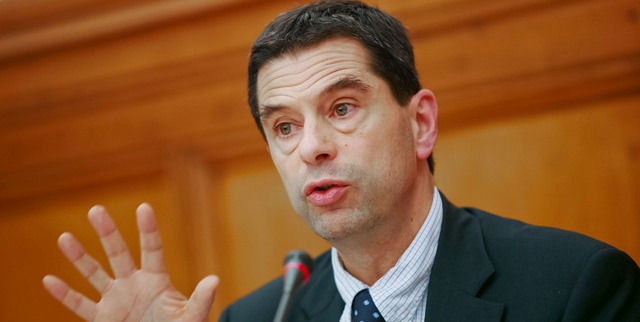
But not every politician is blindly ideological like Obama. Vitor Gaspar, Portugal’s Finance Minister, is willing to admit error. Here are some relevant excerpts from a New York Times report.

Unlike Obama, willing to admit mistakes

Mr. Gaspar, speaking to The New York Times last week, has a message for observers who say Europe needs to substantially relax its austerity approach: We tried stimulus and it backfired. Like some other European countries, Portugal tried what Mr. Gaspar called “a Keynesian style expansion” in 2008, referring to a theory by economist John Maynard Keynes. But it didn’t turn things around, and may have made things worse.

Why does the Portuguese Finance Minister have this view? Well, for the simple reason that the economy got worse and more spending put his country in a deeper fiscal ditch.

The yield on Portuguese government bonds – more than 11 percent on longer-term bonds — is substantially higher than the yields on debt issued by Ireland, Spain or Italy. …The main fear among investors is that Portugal is going to have to ask for a second bailout from the International Monetary Fund and the European Union, which committed $103 billion of financial aid in 2011.

Maybe the big spenders in Portugal should import some of the statist bureaucrats at Congressional Budget Office. The CBO folks could then regurgitate the moving-goalposts argument that they’ve used in the United States and claim that the economy would be even weaker if the government hadn’t wasted more money.

But perhaps the Portuguese left doesn’t think that will pass the laugh test.

Amazingly, the Germans, who have a disturbing affinity for powerful government, decided against Keynesianism and that’s paid dividends for their economy.

In any event, some of us can say we were right from the beginning about this issue.

_________________

Obama’s So-Called Stimulus: Good For Government, Bad For the Economy

Uploaded by on Jan 26, 2009

President Obama wants Congress to dramatically expand the burden of government spending. This CF&P Foundation mini-documentary explains why such a policy, based on the discredited Keynesian theory of economics, will not be successful. Indeed, the video demonstrates that Obama is proposing – for all intents and purposes – to repeat Bush’s mistakes. Government will be bigger, even though global evidence shows that nations with small governments are more prosperous.

_________________

Not that being right required any keen insight. Keynesian policies failed for Hoover and Roosevelt in the 1930s. So-called stimulus policies also failed for Japan in 1990s. And Keynesian proposals failed for Bush in 2001 and 2008.

Just in case any politicians are reading this post, I’ll make a point that normally goes without saying: Borrowing money from one group of people and giving it to another group of people does not increase prosperity.

But since politicians probably aren’t capable of dealing with a substantive argument, let’s keep it simple and offer three very insightful cartoons: here, here, and here.

Dan Mitchell of the Cato Institute: How to balance the budget

It’s Simple to Balance The Budget Without Higher Taxes

Uploaded by on Oct 4, 2010

Politicians and interest groups claim higher taxes are necessary because it would be impossible to cut spending by enough to get rid of red ink. This Center for Freedom and Prosperity video shows that these assertions are nonsense. The budget can be balanced very quickly by simply limiting the annual growth of federal spending.

____________________

People are being told that radical spending cuts are a must if we are to balance the budget, but maybe that is not true.

Even though I favor radical reductions in the burden of government, I’ve made the point that good fiscal policy merely requires that government spending grow slower than the private sector – what I call Mitchell’s Golden Rule.

And if lawmakers simply cap the growth of spending, so that it grows by about 2 percent annually, the budget deficit disappears in a decade.

It’s even better to impose more restraint, of course, which is why I’ve said favorable things about Senator Rand Paul’s plan.

There’s also a “Penny Plan” that would reduce primary spending (non-interest spending) by 1 percent each year. As James Carter and Jason Fichtner explain, this degree of fiscal restraint would reduce the burden of government spending to about 18 percent of economic output.

Any viable solution must cut spending growth. Sen. Mike Enzi of Wyoming and Rep. Connie Mack of Florida have introduced legislation in their respective chambers to do just that. Their “Penny Plan” – recently updated to reflect the latest budget developments – calls for reducing federal spending (excluding interest payments) 1 percent a year for five years, balancing the budget in the fifth year. To maintain balance once it’s reached, Mr. Enzi and Mr. Mack would cap federal spending at 18 percent of GDP. By no small coincidence, 18 percent of GDP roughly matches the U.S. long-run average level of taxation since World War II. Is it realistic to think Congress could limit federal spending to 18 percent of GDP? Actually, there is precedent. Federal spending fell as a share of GDP for nine consecutive years before bottoming out at 18.2 percent of GDP in fiscal 2000 and 2001. The Penny Plan would return federal spending, expressed as a share of GDP, near the level achieved during the last two years of the Clinton administration.

The various interest groups that infest Washington would complain about this degree of spending discipline, but Carter and Fichtner make a good point when they say that this simply means the same size government – as a share of GDP – that we had when Bill Clinton left office.

I realize I’m getting old and my memory may not be what it used to be, but I don’t recall people starving in the streets and grannies being ejected from hospitals during the Clinton years. Am I missing something?