Category Archives: Cato Institute

Do Americans still believe in limited government, self-reliance and personal responsibility?

Dan Mitchell discusses tax hikes on FOX

Uploaded by on Jul 14, 2009

7-13-09

_________

I am a firm believer that our country was built on the ideas of limited government, self-reliance and personal responsibility. I hope these values win out. Ronald Reagan believed in growing the economy and putting people to work. I think we need to cut government spending and end the welfare trap but requiring work out of those who recieve like Bill Clinton believed. We must change the direction the our country is heading (which is to Greece).

I’m part of a just-posted online Debate Club sponsored by U.S. News & World Report which asks “Is the United States a Nation of ‘Makers and Takers?’”

My contribution to the discussion is basically a reworked version of what I wrote last week about Romney and the infamous 47 percent remark, so there’s no need to regurgitate those remarks. Suffice to say that I gave an answer of “No” because Americans don’t (yet!) share the European belief that it is government’s responsibility to provide the basics of life.

What’s interesting is that the two other participants in the debate (Phil Kerpen and Scott Winship) who are closest to my views answered “Yes,” while the three leftists sided with me and voted “No.”

But not because the leftists agreed with me on policy, or because I disagreed with Phil or Scott. I think the strange divergence is a result of me being very literal (some would say pedantic) about the question that was asked while the rest of the participants addressed the broader issue of whether there’s too much or too little means-tested redistribution.

So allow me to take a moment to elaborate on my remarks. My answer was driven by my belief that American exceptionalism – limited government, self reliance, and personal responsibility – is still real. I linked above to one poll comparing American and European attitudes, but I also invite you to review very important polling data here and here.

But I’m not under any illusions that this is a permanent feature of the U.S. political landscape. People can be lulled into dependency. Indeed, some leftists are very honest about admitting their desire to turn more and more Americans into wards of the state. Bill Clinton’s pollster wrote a book in the 1990s in which he explicitly acknowledged that part of the debate over Hillarycare was about the degree to which the middle class would have to rely on the federal government.

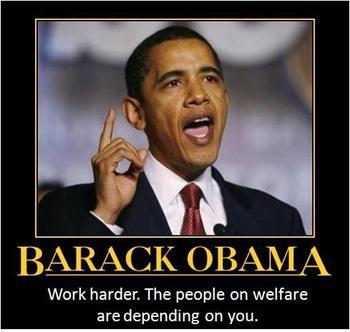
And a recording of Barack Obama from 1998 has recently surfaced, and it reveals both an ideological and a political desire to expand government dependency. Here’s an excerpt from the Daily Caller.

The Daily Caller has obtained a complete audio recording of the October 19, 1998 Loyola College forum on community organizing and policymaking during which a future President Barack Obama said he favored the government redistribution of wealth. …Obama also said he viewed welfare recipients and “the working poor” as “a majority coalition” that could be mobilized to help advance progressive policies and elect their champions. …The full recording reveals that Obama saw welfare recipients and the working poor in Chicago as a “majority coalition” who could be leveraged politically.“What I think will re-engage people in politics is if we’re doing significant, serious policy work around what I will label the ‘working poor,’” he said… “They are struggling. And to the extent that we are doing research figuring out what kinds of government action would successfully make their lives better, we are then putting together a potential majority coalition to move those agendas forward.”

Set aside the policy arguments here about redistribution undermining progress in the fight against poverty and making it difficult for the less fortunate to climb the economic ladder.

What’s significant is the extent to which Clinton’s pollster and Obama both explicitly talk about redistribution as a political tool. Take money from a minority (i.e., class-warfare tax policy) and give it to enough voters to create a political majority.

I hate to admit it, but the evidence from Europe shows this can be a successful political strategy.
The only downside – as shown in this parable about beer and this great Chuck Asay cartoon – is that the scam only works so long as there are people willing to get fleeced.

I once argued on TV that leftists should be careful not to be too greedy because it doesn’t make sense for parasites to kill their host animals. And Michael Barone made the same point in a more eloquent fashion.

But I think this analysis is flawed. The Greek politicians who created the welfare state were very successful in buying votes. They’re now out of office, either dead or retired with fat pensions, as the house of cards is collapsing.

So if you’re Obama or some other current-day politician (and assuming you don’t care about the future), what’s the downside of expanding the burden of government spending?

P.S. You can vote for who had the best Debate Club argument, so please don’t hesitate to click the up arrow. Presumably thanks to readers of International Liberty, I’ve prevailed in previous debates on double taxation, European fiscal policy, flat tax, Internet taxation, and Obamanomics.
Raising taxes because it is “fair” is not always good

As a leader you got to make good decisions and raising taxes may be hurtful for the nation at times.

I’m not a big fan of government conspiracy theories, largely because the people in Washington are too bloody incompetent to do anything effectively. Heck, sometimes they can’t even waste money properly even though they have lots of practice.

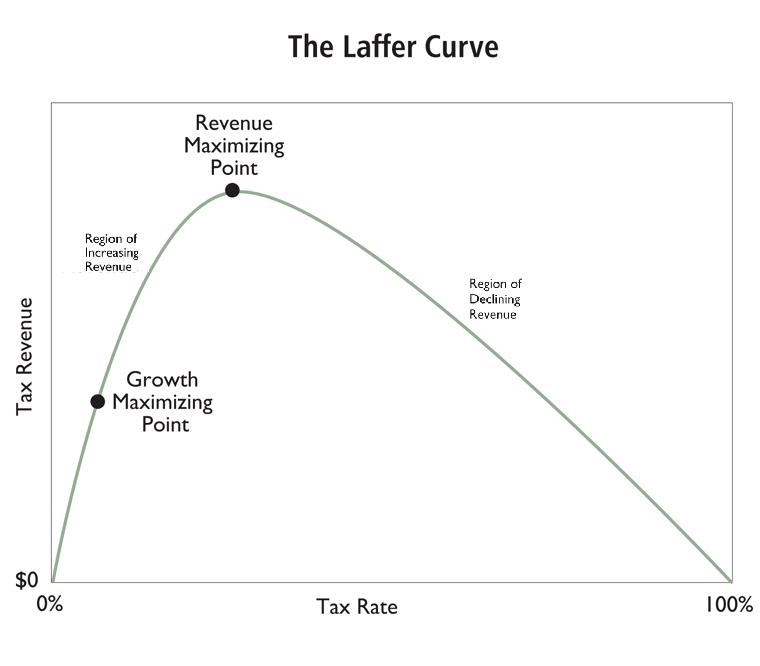
But it recently crossed my mind that maybe President Obama was born in Denmark. Not in a serious way, of course, but you’ll understand my thought process when you read this passage from a report by the government-appointed Danish Economic Council. It doesn’t mention the Laffer Curve, but the report openly states that an increase in the top tax rate would lose revenue because of changes in taxpayer behavior.

…increased taxation on high income earners in Denmark at best is revenue neutral, and may even reduce total tax revenue. This result applies whether one considers the top 10, the top 5 or the top 1 per cent income group. …Using the base estimate of the elasticity of taxable labour income of 0.2, the conclusion is thus that the existing Danish tax system implies an effective tax rate on high income earners that is above – though close to – the tax rate that generates the highest tax revenue. …As an example, the revenue effect of an increase in the marginal tax rate by 6 percentage points for high-income earners is calculated. Using the base estimate of the behavioural response to taxation, this leads to a revenue loss of about ½ billion DKK. …Overall, the scope for acquiring extra tax revenue from high income earners in Denmark is very limited.

Yet there are some politicians in Denmark who want to raise tax rates, even though the damage to the economy will be so significant that the government loses revenue!

If you’re thinking this sounds familiar, you probably remember President Obama’s infamous statement during the 2008 campaign that he wanted to raise the capital gains tax rate for reasons of “fairness” regardless of whether tax revenues decreased (if you think I’m somehow exaggerating or distorting his words, just go to the 4:20 mark of this video).

By the way, the Danish study probably understates how much revenue the government would lose. Their base estimate about the elasticity of taxable labor income (economist jargon for how sensitive labor income is to changes in tax rates) is much lower than Alan Reynolds reported in his recent Wall Street Journal column.

Rich people, unlike the rest of us, have tremendous ability to change the timing, composition, and level of their income, which is a big reason why upper-income taxpayers paid much more to the IRS in the 1980s after President Reagan slashed the top tax rate from 70 percent to 28 percent.

I’m constantly amazed – in a bad way – that politicians and bureaucrats have been so successful in resisting the insights of the Laffer Curve. The U.S. Treasury Department, for instance, is to the left of the Danish Economic Council and basically assumes that tax policy has no impact on economic performance. The same can be said about the Joint Committee on Taxation on Capitol Hill.

This has to be a case of leftist ideology trumping reality, because the evidence for the Laffer Curve is quite powerful – some of it even being produced by international bureaucracies.

None of this is to suggest that “all tax cuts pay for themselves.” That only happens in unusual cases where a group of taxpayers – such as wealthy entrepreneurs and investors – have considerable flexibility in their economic affairs.

In most cases, the government will collect more revenue when tax rates increase. This is because the impact of the change in the tax rate is larger than the impact of the change in taxable income.

But the real question is whether it is ever a good idea to reduce private economic output in order to give politicians more money to spend. To sensible people, that’s the most important insight of the Laffer Curve.

P.S. While this discussion has focused on the foolishness of setting tax rates so high that the government loses revenue, this does not mean politicians should seek the revenue-maximizing tax rate. The ideal point on the Laffer Curve is the growth-maximizing tax rate.

President Obama’s car manufacturing company

Published on Sep 3, 2012 by

Obama is citing his bailout of General Motors as proof that other industries should receive bailouts. Is Obama adopting the central planning principles of Joseph Stalin? Find out as Terry Jones of IBD and Doug Altner of the Ayn Rand Center discuss industrial policy and Obama’s plans for American industry.

_______________

The federal government needs to get out of the way it seems when it comes to making cars. No one can do any worse in my view.

While I often complain about government waste and stupidity, I’m not even sure what to say about this grim bit of news from Reuters.

General Motors Co sold a record number of Chevrolet Volt sedans in August — but that probably isn’t a good thing for the automaker’s bottom line. Nearly two years after the introduction of the path-breaking plug-in hybrid, GM is still losing as much as $49,000 on each Volt it builds, according to estimates provided to Reuters by industry analysts and manufacturing experts. Cheap Volt lease offers meant to drive more customers to Chevy showrooms this summer may have pushed that loss even higher. There are some Americans paying just $5,050 to drive around for two years in a vehicle that cost as much as $89,000 to produce. …The weak sales are forcing GM to idle the Detroit-Hamtramck assembly plant that makes the Chevrolet Volt for four weeks from September 17, according to plant suppliers and union sources. It is the second time GM has had to call a Volt production halt this year. GM acknowledges the Volt continues to lose money, and suggests it might not reach break even until the next-generation model is launched in about three years.

Gee, it’s almost as if everything that critics have said all along is right.

But not to worry, taxpayers are underwriting the costs. So if bigger subsidies are the price of buying support from the UAW and allowing fat-cat incompetent managers to stay on the job, that just means a bigger tab to pay for the rest of us.

How comforting.

P.S. If you’re a taxpayer and need to be cheered up, these cartoons may help.

P.P.S. This spoof video on the Volt may be even funnier.

P.P.P.S. Last but not least, Government Motors plans to build on the success of the Volt with the Obummer. It was due in 2011, but standard government incompetence has pushed back the release date.

Videos by Cato Institute on failed stimulus plans

In this post I have gathered several videos from the Cato Institute concerning the subject of failed stimulus plans.

_____

Government Spending Doesn’t Create Jobs

Uploaded by on Sep 7, 2011

Share this on Facebook: http://on.fb.me/qnjkn9 Tweet it: http://tiny.cc/o9v9t

In the debate of job creation and how best to pursue it as a policy goal, one point is forgotten: Government doesn’t create jobs. Government only diverts resources from one use to another, which doesn’t create new employment.

Video produced by Caleb Brown and Austin Bragg.

___________________________

Keynesian Catastrophe: Big Money, Big Government & Big Lies

Uploaded by on Jan 19, 2012

The Cato Institute’s Dan Mitchell explains why Obama’s stimulus was a flop! With Glenn Reynolds.

See more at http://www.pjtv.com and http://www.cato.org

___________________

Keynesian Economics Is Wrong: Bigger Gov’t Is Not Stimulus

Uploaded by on Dec 15, 2008

Based on a theory known as Keynesianism, politicians are resuscitating the notion that more government spending can stimulate an economy. This mini-documentary produced by the Center for Freedom and Prosperity Foundation examines both theory and evidence and finds that allowing politicians to spend more money is not a recipe for better economic performance.

___________________

Obama’s So-Called Stimulus: Good For Government, Bad For the Economy

Uploaded by on Jan 26, 2009

President Obama wants Congress to dramatically expand the burden of government spending. This CF&P Foundation mini-documentary explains why such a policy, based on the discredited Keynesian theory of economics, will not be successful. Indeed, the video demonstrates that Obama is proposing – for all intents and purposes – to repeat Bush’s mistakes. Government will be bigger, even though global evidence shows that nations with small governments are more prosperous.

____________

Big Government Is Not Stimulus: Why Keynes Was Wrong (The Condensed Version)

Uploaded by on Jan 13, 2009

The CF&P Foundation has released a condensed version of our successful mini-documentary explaining why so-called stimulus schemes do not work. Based on a theory known as Keynesianism, politicians are resuscitating the notion that more government spending can stimulate an economy. This mini-documentary produced by the Center for Freedom and Prosperity Foundation examines both theory and evidence and finds that allowing politicians to spend more money is not a recipe for better economic performance.

_________________

Eight Reasons Why Big Government Hurts Economic Growth

Uploaded by on Aug 17, 2009

This Center for Freedom and Prosperity Foundation video analyzes how excessive government spending undermines economic performance. While acknowledging that a very modest level of government spending on things such as “public goods” can facilitate growth, the video outlines eight different ways that that big government hinders prosperity. This video focuses on theory and will be augmented by a second video looking at the empirical evidence favoring smaller government.

___________________

Keynesian Economics Is Wrong: Economic Growth Causes Consumer Spending, Not the Other Way

Uploaded by on Nov 29, 2010

Politicians and journalists who fixate on consumer spending are putting the cart before the horse. Consumer spending generally is a consequence of growth, not the cause of growth. This Center for Freedom and Prosperity video helps explain how to achieve more prosperity by looking at the differences between gross domestic product and gross domestic income. www.freedomandprosperity.org

_____________

Deficits, Debts and Unfunded Liabilities: The Consequences of Excessive Government Spending

Uploaded by on May 10, 2010

Huge budget deficits and record levels of national debt are getting a lot of attention, but this video explains that unfunded liabilities for entitlement programs are Americas real red-ink challenge. More important, this CF&P mini-documentary reveals that deficits and debt are symptoms of the real problem of an excessive burden of government spending. www.freedomandprosperity.org

___________

Now that I have been critical of the Democrat President, I wanted to show that I am not concerned about taking up for Republicans but looking at the facts. President Clinton did increase government spending at a slower rate than many other presidents. Here are two  videos that praise both Reagan and Clinton for both accomplished this feat.

Spending Restraint, Part I: Lessons from Ronald Reagan and Bill Clinton

Uploaded by on Feb 14, 2011

Ronald Reagan and Bill Clinton both reduced the relative burden of government, largely because they were able to restrain the growth of domestic spending. The mini-documentary from the Center for Freedom and Prosperity uses data from the Historical Tables of the Budget to show how Reagan and Clinton succeeded and compares their record to the fiscal profligacy of the Bush-Obama years.

______________

Spending Restraint, Part II: Lessons from Canada, Ireland, Slovakia, and New Zealand

Uploaded by on Feb 22, 2011

Nations can make remarkable fiscal progress if policy makers simply limit the growth of government spending. This video, which is Part II of a series, uses examples from recent history in Canada, Ireland, Slovakia, and New Zealand to demonstrate how it is possible to achieve rapid improvements in fiscal policy by restraining the burden of government spending. Part I of the series examined how Ronald Reagan and Bill Clinton were successful in controlling government outlays — particularly the burden of domestic spending programs. www.freedomandprosperity.org

______________

It seems that liberals will never wake up. On 3-8-12 a Arkansas Times blogger pointed out that Obama’s stimulus in 2009 was not made up of just increased but also tax cuts. That is true but the real truth is that there have been about 1/2 dozen stimulus efforts by President Obama and all of them have failed.  Over and over they have tried stimulus plans but they don’t work. Take a look at this excellent article from the Cato Institute:

Keynesian Policies Have Failed

by Chris Edwards

Chris Edwards is the director of tax policy studies at the Cato Institute and the editor of Downsizing Government.org.

Added to cato.org on December 2, 2011

This article appeared on U.S. News & World Report Online on December 2, 2011

Lawmakers are considering extending temporary payroll tax cuts. But the policy is based on faulty Keynesian theories and misplaced confidence in the government’s ability to micromanage short-run growth.

In textbook Keynesian terms, federal deficits stimulate growth by goosing “aggregate demand,” or consumer spending. Since the recession began, we’ve had a lot of goosing — deficits were $459 billion in 2008, $1.4 trillion in 2009, $1.3 trillion in 2010, and $1.3 trillion in 2011. Despite that huge supposed stimulus, unemployment remains remarkably high and the recovery has been the slowest since World War II.

Policymakers should ignore the Keynesians and their faulty models, and instead focus on reforms to aid long-run growth…

Yet supporters of extending payroll tax cuts think that adding another $265 billion to the deficit next year will somehow spur growth. That “stimulus” would be on top of the $1 trillion in deficit spending that is already expected in 2012. Far from helping the economy, all this deficit spending is destabilizing financial markets, scaring businesses away from investing, and imposing crushing debt burdens on young people.

For three years, policymakers have tried to manipulate short-run economic growth, and they have failed. They have put too much trust in macroeconomists, who are frankly lousy at modeling the complex workings of the short-run economy. In early 2008, the Congressional Budget Office projected that economic growth would strengthen in subsequent years, and thus completely missed the deep recession that had already begun. And then there was the infamously bad projection by Obama’s macroeconomists that unemployment would peak at 8 percent and then fall steadily if the 2009 stimulus plan was passed.

Chris Edwards is the director of tax policy studies at the Cato Institute and the editor of Downsizing Government.org.


More by Chris Edwards

Some of the same Keynesian macroeconomists who got it wrong on the recession and stimulus are now claiming that a temporary payroll tax break would boost growth. But as Stanford University economist John Taylor has argued, the supposed benefits of government stimulus have been “built in” or predetermined by the underlying assumptions of the Keynesian models.

Policymakers should ignore the Keynesians and their faulty models, and instead focus on reforms to aid long-run growth, which economists know a lot more about. Cutting the corporate tax rate, for example, is an overdue reform with bipartisan support that would enhance America’s long-run productivity and competitiveness.

If Congress is intent on cutting payroll taxes, it should do so within the context of long-run fiscal reforms. One idea is to allow workers to steer a portion of their payroll taxes into personal retirement accounts, as Chile and other nations have done. That reform would feel like a tax cut to workers because they would retain ownership of the funds, and it would begin solving the long-term budget crisis that looms over the economy.

Related posts:

Stimulus plans do not work (part 2)

Dan Mitchell discusses the effectiveness of the stimulus Uploaded by catoinstitutevideo on Nov 3, 2009 11-2-09 When I think of all our hard earned money that has been wasted on stimulus programs it makes me sad. It has never worked and will not in the future too. Take a look at a few thoughts from […]

Stimulus plans do not work (Part 1)

Government Spending Doesn’t Create Jobs Uploaded by catoinstitutevideo on Sep 7, 2011 Share this on Facebook: http://on.fb.me/qnjkn9 Tweet it: http://tiny.cc/o9v9t In the debate of job creation and how best to pursue it as a policy goal, one point is forgotten: Government doesn’t create jobs. Government only diverts resources from one use to another, which doesn’t […]

Dumas thinks we don’t need Balanced Budget Amendment but should balance it on our own

In his recent article Ernie Dumas sticks to his guns that we should balance the budget without being forced to with a “Balanced Budget Amendment,” but I wonder how well that has worked so far? I have made this a key issue for this blog in the past as you can tell below: Dear Senator […]

Maybe the “Occupy Wall Street” crowd should be angry at Obama

(Picture from Arkansas Times Blog) When I think about all the anger and hate coming from the Occupy Wall Street crowd, I wonder if they have read this story below? Solyndra: Crooked Politics or Just Bad Economics? Posted by David Boaz Amy Harder has a good take on the Solyndra issue in National Journal Daily […]

Dear Senator Pryor, why not pass the Balanced Budget Amendment? (Part 13 Thirsty Thursday, Open letter to Senator Pryor)

Dear Senator Pryor, why not pass the Balanced Budget Amendment? (Part 13 Thirsty Thursday, Open letter to Senator Pryor) Office of the Majority Whip | Balanced Budget Amendment Video In 1995, Congress nearly passed a constitutional amendment mandating a balanced budget. The Balanced Budget Amendment would have forced the federal government to live within its […]

Mark Pryor not for President’s job bill even though he voted for it

Andrew Demillo pointed this out  and also Jason Tolbert noted: PRYOR OPPOSES THE OBAMA JOBS BILL THAT HE VOTED TO ADVANCE  Sen. Mark Pryor has been traveling around the state touting a six-part jobs plan that he says “includes a number of bipartisan initiatives, is aimed at creating jobs by setting the table for growth, encouraging new […]

Is a lack of money the problem for our public schools?

Is a lack of money the problem for our public schools? Everything You Need to Know About Public School Spending in Less Than 2½ Minutes Posted by Adam Schaeffer Neal McCluskey gutted the President’s new “Save the Teachers” American Jobs Act sales pitch a good while back, as did Andrew Coulson here. Thankfully, it seems […]

Videos by Dan Mitchell of the Cato Institute found here on www.thedailyhatch.org

Dan Mitchell of the Cato Institute has some great videos and I have posted lots of them on my blog. I like to go to Dan’s blog too. Take a look at some of them below and then the links to my blog.

It’s Simple to Balance The Budget Without Higher Taxes

Uploaded by on Oct 4, 2010

Politicians and interest groups claim higher taxes are necessary because it would be impossible to cut spending by enough to get rid of red ink. This Center for Freedom and Prosperity video shows that these assertions are nonsense. The budget can be balanced very quickly by simply limiting the annual growth of federal spending.

_______

Six Reasons Why the Capital Gains Tax Should Be Abolished

Uploaded by on May 3, 2010

The correct capital gains tax rate is zero because there should be no double taxation of income that is saved and invested. This is why all pro-growth tax reform plans, such as the flat tax and national sales tax, eliminate the capital gains tax. Unfortunately, the President wants to boost the official capital gains tax rate to 20 percent, and that is in addition to the higher tax rate on capital gains included in the government-run healthcare legislation. http://www.freedomandprosperity.org


______________

Keynesian Economics Is Wrong: Bigger Gov’t Is Not Stimulus

Uploaded by on Dec 15, 2008

Based on a theory known as Keynesianism, politicians are resuscitating the notion that more government spending can stimulate an economy. This mini-documentary produced by the Center for Freedom and Prosperity Foundation examines both theory and evidence and finds that allowing politicians to spend more money is not a recipe for better economic performance.

___________________

Obama’s So-Called Stimulus: Good For Government, Bad For the Economy

Uploaded by on Jan 26, 2009

President Obama wants Congress to dramatically expand the burden of government spending. This CF&P Foundation mini-documentary explains why such a policy, based on the discredited Keynesian theory of economics, will not be successful. Indeed, the video demonstrates that Obama is proposing – for all intents and purposes – to repeat Bush’s mistakes. Government will be bigger, even though global evidence shows that nations with small governments are more prosperous.

____________

Big Government Is Not Stimulus: Why Keynes Was Wrong (The Condensed Version)

Uploaded by on Jan 13, 2009

The CF&P Foundation has released a condensed version of our successful mini-documentary explaining why so-called stimulus schemes do not work. Based on a theory known as Keynesianism, politicians are resuscitating the notion that more government spending can stimulate an economy. This mini-documentary produced by the Center for Freedom and Prosperity Foundation examines both theory and evidence and finds that allowing politicians to spend more money is not a recipe for better economic performance.

_________________

Eight Reasons Why Big Government Hurts Economic Growth

Uploaded by on Aug 17, 2009

This Center for Freedom and Prosperity Foundation video analyzes how excessive government spending undermines economic performance. While acknowledging that a very modest level of government spending on things such as “public goods” can facilitate growth, the video outlines eight different ways that that big government hinders prosperity. This video focuses on theory and will be augmented by a second video looking at the empirical evidence favoring smaller government.

___________________

Now that I have been critical of the Democrat President, I wanted to show that I am not concerned about taking up for Republicans but looking at the facts. President Clinton did increase government spending at a slower rate than many other presidents. Here are two  videos that praise both Reagan and Clinton for both accomplished this feat.

Spending Restraint, Part I: Lessons from Ronald Reagan and Bill Clinton

Uploaded by on Feb 14, 2011

Ronald Reagan and Bill Clinton both reduced the relative burden of government, largely because they were able to restrain the growth of domestic spending. The mini-documentary from the Center for Freedom and Prosperity uses data from the Historical Tables of the Budget to show how Reagan and Clinton succeeded and compares their record to the fiscal profligacy of the Bush-Obama years.

______________

Spending Restraint, Part II: Lessons from Canada, Ireland, Slovakia, and New Zealand

Uploaded by on Feb 22, 2011

Nations can make remarkable fiscal progress if policy makers simply limit the growth of government spending. This video, which is Part II of a series, uses examples from recent history in Canada, Ireland, Slovakia, and New Zealand to demonstrate how it is possible to achieve rapid improvements in fiscal policy by restraining the burden of government spending. Part I of the series examined how Ronald Reagan and Bill Clinton were successful in controlling government outlays — particularly the burden of domestic spending programs. www.freedomandprosperity.org

Here are some posts that include videos from Dan Mitchell:

Videos by Cato Institute on failed stimulus plans

In this post I have gathered several videos from the Cato Institute concerning the subject of failed stimulus plans. _____ Government Spending Doesn’t Create Jobs Uploaded by catoinstitutevideo on Sep 7, 2011 Share this on Facebook: http://on.fb.me/qnjkn9 Tweet it: http://tiny.cc/o9v9t In the debate of job creation and how best to pursue it as a policy […]

Balanced Budget Amendment the answer? Boozman says yes, Pryor no, Part 28 (Input from Norm Coleman, former Republican Senator from MN)

  It’s Simple to Balance The Budget Without Higher Taxes Steve Brawner in his article “Safer roads and balanced budgets,” Arkansas News Bureau, April 13, 2011, noted: The disagreement is over the solutions — on what spending to cut; what taxes to raise (basically none ever, according to Boozman); whether or not to enact a […]

Obama’s plan is not too smart on taxes

Dan Mitchell did a great article concerning the affect of raising taxes in these two areas and horrible results: How Can Obama Look at these Two Charts and Conclude that America Should Have Higher Double Taxation of Dividends and Capital Gains? Posted by Daniel J. Mitchell As discussed yesterday, the most important number in Obama’s […]

______________

Canada has made some good moves lately (plus several clips from movie “Canadian Bacon”)

Born in The USA – John Candy – Canadian Bacon

Canadian Bacon – there it is men toronto

Canada has some major problems but it has made some  conservative changes recently that the USA should follow too.

Back in 2010, I wrote about the Free State Project, which is based on the idea that libertarians should all move to New Hampshire and turn the state into a free market experiment.

I was impressed when I spoke at one of their conferences and gave them a plug, but more recently I’m running into people who are so discouraged about America’s fiscal outlook that they’re thinking of moving to some other nation.

Wealthy people seem to prefer Switzerland and the Cayman Islands, while middle-class people mostly talk about Australia and Latin America (mainly Costa Rica or Panama).

But maybe Canada is the place to go. It’s now the 5th-freest economy in the world, while the United States has dropped to 18th place.

I’m a big fan of Canada’s fiscal reforms. On several occasions, I’ve explained how Canadian lawmakers boosted economic and fiscal performance by restraining the growth of government spending.

Indeed, Canada is my main example when I explain why the United States should follow my Golden Rule of fiscal policy.

By allowing the private sector to grow faster than the government, Canada has also been able to implement big tax cuts. Heck, they even privatized their air traffic control system.

Canada’s reforms got some positive attention in today’s Wall Street Journal from Mary Anastasia O’Grady.

Former Canadian Prime Minister Paul Martin has a stern warning for the U.S. political class: Get real about the gap between federal revenues and spending, or get ready for disaster. Mr. Martin knows of what he speaks. In 1993, when he was Canada’s finance minister, his country faced a daunting fiscal crisis. …When the Liberal Party government of Prime Minister Jean Chrétien took power in October 1993, Mr. Martin was charged with pulling his nation out of the fiscal death spiral. He did it with deep cuts in federal spending over two years that amounted to 10% of the budget, excluding interest costs. Nothing was spared. Even federal transfers to the provinces to fund Canada’s sacred national health-care system got hit. The federal government also cut and block-granted money for welfare programs to the provinces, giving them almost full control over how the money would be spent. In the 1997 election, the Liberals increased their majority in parliament. The Chrétien government followed with tax cuts starting in 1998 and one of the largest tax cuts—both corporate and personal—in the history of the country in 2000. The Liberals won again in 2000.

In the U.S., by contrast, we’ve degenerated to the point where the central bank is now financing a disturbingly large share of the deficit.

 Market discipline doesn’t exist in Washington, which has the “privilege” of an accommodating central bank issuing the world’s reserve currency. The big spenders don’t need to pay attention to pesky numbers. …the Fed bought 77% of all new federal debt last year. It is doing so at rock-bottom interest rates. By holding the short-term fed-funds rate low while it buys up long-term securities, Mr. Bernanke is helping our political class ignore the real cost of rising federal indebtedness.

This doesn’t mean we’re at near-term risk of becoming another Argentina or Zimbabwe, but I definitely don’t like the trend. No wonder the Canadian dollar is now stronger than the dollar.

But that’s a separate issue. This post is mostly about fiscal policy and Canada’s outlook.

In the short run, Canada’s a good bet. Reforms have been implemented, and they happened under a left-of-center government and have been continued more recently by a right-of-center government.

We’ve had bipartisanship in the United States as well, but the wrong kind. For the past 12 years, we’ve endured big spenders from both parties. No wonder Canada now ranks higher.

In the long run, though, I’m not sure Canada’s the right choice. I joke about the cold weather, but I’m more concerned about the fact that the burden of government spending remains too high, consuming about 42 percent of economic output. And even though Canada has implemented some pension reforms, it has a government-run healthcare system that will become a greater burden on taxpayers as the population ages.

This doesn’t mean I’m optimistic about the long-run outlook in the United States. Yes, we can fix our fiscal problems if we cap the growth of spending and implement entitlement reform to address the long-run problem, but I’m not holding my breath expecting those policies.

So I’m back to my original plan of finding somebody to give me millions of dollars so I can escape to the Cayman Islands.

P.S. If you’re thinking of sending me a big check, give me some advance notice. To avoid nasty headaches with the IRS, I should go to the Cayman Islands first and then have somebody give me millions of dollars.

P.P.S. On a more serious note, here’s my video highlighting nations – including Canada – that successfully restrained government spending.

P.P.P.S. The Canadian government also deserves praise for resisting global schemes to raise taxes on the banking sector.

P.P.P.P.S. But there are bad people in Canada, such as the politician who escaped to the U.S. for surgery while leaving ordinary Canadians stuck in long waiting lines.

P.P.P.P.P.S. To close on a light note, here’s a satirical article about American leftists trying to escape to Canada after the 2010 elections.

Prominent Democrats routinely utilize tax havens for business and investment purposes, including as Bill Clinton, John Kerry, John Edwards, Robert Rubin, Peter Orszag, and Richard Blumenthal

Interesting article by Dan Mitchell.

Since I’m probably the foremost defender of tax havens in the United States, I tend to get a lot of press inquiries whenever something happens that brings attention to these low-tax jurisdictions.

In recent months, almost all of the media calls have been because (gasp!) Mitt Romney engaged in sound business practices and used tax havens to boost earnings while also legally minimizing the amount of money siphoned off by the buffoons in Washington.

I’ve explained that prominent Democrats routinely utilize tax havens for business and investment purposes, including as Bill Clinton, John Kerry, John Edwards, Robert Rubin, Peter Orszag, and Richard Blumenthal. I’ve also discussed the issue for the Wall Street Journal’s online interview program, and I slammed ABC News for empty and biased reporting on the issue.

Most recently, I got interviewed by NBC’s big station in New York City. They inexplicably seemed to think it was a big scoop that they were able to form a company in Nevis, though at least they gave me an opportunity to explain that taxpayers benefited from tax havens and tax competition.

Dan Mitchell Defending Tax Havens on WNBC

Published on Sep 23, 2012 by

No description available.

_______________________

« .

But I don’t want to focus on my rather generic comments. Instead, I want to address the explicit assumption in the story that it is bad for Nevis (or any other jurisdiction) to have a simple and efficient process for forming companies.

Notwithstanding the news report, this is a good thing, a practice that should be applauded rather than condemned. Indeed, the World Bank highlights the importance of easy company formation in their important “Doing Business” project.

Moreover, there’s an implicit assumption in the story that not only is company formation somehow a sketchy thing, but that it’s only an issue for small Caribbean islands in the “offshore” world.

That’s completely inaccurate. Indeed, even leftists have acknowledged that Delaware is one of the premiere jurisdictions in the world for company formation, and I’ve explained that the U.S. has very attractive laws for international investors that have attracted trillions of dollars to the American economy.

Interestingly, we now have some very good evidence from three academics that the “offshore” world is much stricter about enforcing laws than the “onshore” world. Here’s what they did.

This paper reports the results of an experiment soliciting offers for these prohibited anonymous shell corporations. Our research team impersonated a variety of low- and high-risk customers, including would-be money launderers, corrupt officials, and terrorist financiers when requesting the anonymous companies. Evidence is drawn from more than 7,400 email solicitations to more than 3,700 Corporate Service Providers that make and sell shell companies in 182 countries. The experiment allows us to test whether international rules are actually effective when they mandate that those selling shell companies must collect identity documents from their customers.

And here’s what they found about so-called tax havens compared to high-tax nations. As you can see, the rules are much more likely to be obeyed in the low-tax jurisdictions that are always getting smeared.

A finding that runs directly counter to the conventional wisdom is that rich countries in the Organization of Economic Cooperation and Development (OECD) are worse at enforcing the rules on corporate transparency than are poor countries (see Figure 2). For developing countries the Dodgy Shopping Count is 12, while for developed countries it is 7.8 (and tax havens are much higher at 25.2, as discussed below). The significance of this finding is that it does not seem to be particularly expensive to enforce the rules on shell companies, given that poor nations do better than rich countries. This suggests that the relatively lackluster performance in rich countries reflects a simple unwillingness to enforce the rules, rather than any incapacity. One of the biggest surprises of the project was the relative performance of rich, developed states compared with poorer, developing countries and tax havens (see Figure 3). The overwhelming policy consensus, strongly articulated in G20 communiqués and by many NGOs, is that tax havens provide strict secrecy and lax regulation, especially when it comes to shell companies. This consensus is wrong. The Dodgy Shopping Count for tax havens is 25.2, which is in fact much higher than the score for rich, developed countries at 7.8 – meaning it is more than three times harder to obtain an untraceable shell company in tax havens than in developed countries. Some of the top-ranked countries in the world are tax havens such as Jersey, the Cayman Islands and the Bahamas, while some developed countries like the United Kingdom, Australia, Canada and the United States rank near the bottom of the list. It is easier to obtain an untraceable shell company from incorporation services (though not law firms) in the United States than in any other country save Kenya.

These are remarkable findings, but now let me take a moment to explain the correct interpretation of these results. Some people will argue that this data shows that there should be harsher rules imposed on the “onshore”  company formation business.

Au contraire. The goal should be to ease the regulatory burden everywhere. Simply stated, it is foolish to fight terrorism, corruption, and money laundering with costly rules that require the monitoring of countless legal actions.

Indeed, I’ve already explained how anti-money laundering rules are ineffective – or perhaps even counterproductive – in the fight against crime, largely because they generate a haystack of information, thus putting law enforcement in the unenviable position of searching for needles.

From a cost-benefit perspective, law enforcement should focus on actual criminal behavior. It wouldn’t make sense, after all, to have the government spy on everyone who buys a car merely because some people use autos when committing crime.

But that’s pretty much a good description of the mentality behind rules and regulations that target the company formation business.

P.S. For more information on the beneficial impact of so-called tax havens, Pierre Bessard wrote a great column about the topic for the New York Times.

P.P.S. I don’t want to overlook my statist friends. Here are a couple of short anti-tax haven videos from left wingers. The first one is tedious and amateurish, but I found the second one reasonably entertaining.

GOP want to eliminate several Depts of Federal Government to get back to vision of founders?

Is Washington Bankrupting America?

Uploaded by on Apr 20, 2010

Be first to receive our videos and other timely info about economic policy. Subscribe at http://www.bankruptingamerica.org
————————-
According to a recent poll, 74 percent of likely voters are extremely or very concerned about the current level of government spending. And 58 percent think the level of spending is unsustainable.

Is the public right? Is Washington bankrupting America? Some facts from the video:

Spending per household has risen over 40 percent in the last 10 years and is set to do so again in the next 10 pushing debt (and interest on the debt) to unprecedented levels. But that’s just a result of PAST spending…

Our government owes $106 trillion in FUTURE spending commitments – that cannot be paid for.

We can solve it, but politicians will have to make tough choices. Increasing taxes can’t do the trick ($106 trillion is equivalent to taking all of the taxable income from every American nine times over), nor is it fair to saddle taxpayers with a problem created by government irresponsibility.

We need real spending reform. Merely returning to the spending per household levels of the 1990s would balance the budget in three years.

___________

I wish we would eliminate several departments of the federal government  and in the process get back to vision of founders. That is what the GOP Platform has done in 2012. Take a look at this article below by Dan Mitchell of the Cato Institute.

I wish the Republican Platform was binding.

Too bad it’s meaningless fluff

Why? Because the GOP, for all intents and purposes, has just proposed to eliminate the Department of Education, the Department of Housing and Urban Development, the Department of Energy, the Department of Agriculture, the Department of Transportation, the Department of Health and Human Services, along with a host of other government programs, agencies, and departments.

More specifically, they endorsed the 10th Amendment to the U.S. Constitution, which means they put themselves on record in favor of getting rid of all federal spending and intervention that is inconsistent with the Founding Fathers’ vision of a limited central government.

Here’s some of the story, as reported by The Hill,

All federal spending should be reviewed to ensure powers reserved for the states are not given to the federal government, according to the GOP platform approved Tuesday. The platform language is meant to ensure all federal spending meets the requirements of the 10th amendment, which prohibits state powers from being given to the feds. “We support the review and examination of all federal agencies to eliminate wasteful spending, operational inefficiencies, or abuse of power to determine whether they are performing functions that are better performed by the States,” the platform reads. “These functions, as appropriate, should be returned to the States in accordance with the Tenth Amendment of the United States Constitution.”

For those of you who don’t have your Cato Institute pocket Constitutions handy, here’s what the 10th Amendment says.

The powers not delegated to the United States by the Constitution, nor prohibited by it to the States, are reserved to the States respectively, or to the people.

In other words, the 10th Amendment is basically a back-up plan to re-emphasize that the federal government was prohibited from exercising power in any area other than what is specified in the enumerated powers section of Article I, Section VIII.

And if you look at those enumerated powers, that pretty much invalidates much of what happens in Washington.

That’s the good news. The bad news is that the Republican platform will have less impact on a potential Romney presidency than this blog.  In other words, Republicans don’t intend to live up to this promise. Heck, they don’t even know that they have such a position. That’s why I included the asterisk in the title and must draw your attention to this fine print.

*Offer not good when GOP holds power.

But I suppose it’s good that they included this language in the platform, even if it’s merely empty political rhetoric

P.S. If they did abide by the 10th Amendment, it means that Obamacare also would be repealed.

P.P.S. Yes, this implies limits on democracy. Our Founding Fathers, contrary to E.J. Dionne’s superficial analysis, were opposed to untrammeled majoritarianism and wanted to make sure 51 percent of the people couldn’t vote to rape and pillage 49 percent of the people.

We must change the upward trend of spending in our country now or entitlement debt will bankrupt us

Federal Spending by the Numbers

Uploaded by on Jun 10, 2010

http://blog.heritage.org/2010/06/10/new-video-federal-spending-by-the-numbers The Federal Government is addicted to spending. Watch this video from the Heritage Foundation to learn about the trouble we are in and where to find solutions.

_______

We must change the upward trend of spending in our country now or entitlement debt will bankrupt us.

Back in 2010, I posted a fascinating map from the Economist website, showing debt burdens (as a share of GDP) for nations around the world. This data showed lots of red ink, with Western Europe generally being more indebted than the United States.

In 2011, I posted some charts from a study by the Bank for International Settlements, revealing that the long-run fiscal outlook for the United States is worse than the outlook for European nations.

In other words, our politicians to date haven’t over-spent as much as their counterparts in Europe, but it appears that – if government is left on auto-pilot – America will suffer more from excessive government than European nations in the future.

Here’s some new evidence about the perilous long-term state of public finances in America. According to the Organization for Economic Cooperation and Development, the United States has to do more than almost every other nation to avoid becoming another Greece.

If this data is correct, the United States isn’t just in danger of becoming Greece. It’s actually in worse shape than Greece. Not just Greece, but every other European welfare state as well. That doesn’t bode well.

But time for some caveats. The OECD research mistakenly focuses on debt levels and what needs to happen to reduce red ink to a certain level. This isn’t a meaningless issue, but it puts the cart before the horse. What matters most is the size of government and the total burden of government spending – not whether it is financed with borrowing rather than taxes.

This doesn’t mean the long-run estimates are wrong. But if the focus is on the real problem of government spending, then it is much more apparent that the only feasible solution is to restrain the growth of government spending.

If the burden of government spending grows slower than the economy’s productive sector (i.e., Mitchell’s Golden Rule), then deficits and debt fall. To be blunt, if you cure the disease, the symptoms automatically disappear.

Which helps explain why I’m a fan of the Ryan budget, particularly his reforms to Medicare and Medicaid.

P.S. Regular readers know I’m not a fan of the OECD (for many reasons), but the economists at the Paris-based bureaucracy generally are competent at putting together good data. It goes without saying, of course, that this doesn’t justify raping taxpayers to subsidize economists.

Dan Mitchell: “Romney is Right that You Can Lower Tax Rates and Reduce Tax Preferences without Hurting the Middle Class”

The Laffer Curve, Part I: Understanding the Theory

Uploaded by on Jan 28, 2008

The Laffer Curve charts a relationship between tax rates and tax revenue. While the theory behind the Laffer Curve is widely accepted, the concept has become very controversial because politicians on both sides of the debate exaggerate. This video shows the middle ground between those who claim “all tax cuts pay for themselves” and those who claim tax policy has no impact on economic performance. This video, focusing on the theory of the Laffer Curve, is Part I of a three-part series. Part II reviews evidence of Laffer-Curve responses. Part III discusses how the revenue-estimating process in Washington can be improved. For more information please visit the Center for Freedom and Prosperity’s web site: http://www.freedomandprosperity.org

________

We got to reduce taxes to grow our economy!!!

Even though I’m not a Romney fan, I sometimes feel compelled to defend him against leftist demagoguery.

But instead of writing about tax havens, as I’ve done in the past, today we’re going to look at incremental tax reform.

The left has been loudly asserting that the middle class would lose under Mitt Romney’s plan to cut tax rates by 20 percent and finance those reductions by closing loopholes.

That class-warfare accusation struck me as a bit sketchy because when I looked at the data a couple of years ago, I put together this chart showing that rich people, on average, enjoyed deductions that were seven times as large as the deductions of middle-income taxpayers.

And the chart includes only the big itemized deductions. There are dozens of other special tax preferences, as shown in this depressing image, and you can be sure that rich people are far more likely to have the lawyers, lobbyists, and accountants needed to exploit those provisions.

But that’s not a surprise since the internal revenue code has morphed into a 72,000-page monstrosity (this is why I sometimes try to convince honest leftists that a flat tax is a great way of reducing political corruption).

But this chart doesn’t disprove the leftist talking point, so I’m glad that Martin Feldstein addressed the issue in today’s Wall Street Journal. Here’s some of what he wrote.

The IRS data show that taxpayers with adjusted gross incomes over $100,000 (the top 21% of all taxpayers) made itemized deductions totaling $636 billion in 2009. Those high-income taxpayers paid marginal tax rates of 25% to 35%, with most $200,000-plus earners paying marginal rates of 33% or 35%. And what do we get when we apply a 30% marginal tax rate to the $636 billion in itemized deductions? Extra revenue of $191 billion—more than enough to offset the revenue losses from the individual income tax cuts proposed by Gov. Romney. …Additional revenue could be raised from high-income taxpayers by limiting the use of the “preferences” identified for the Alternative Minimum Tax (such as excess oil depletion allowances) or the broader list of all official individual “tax expenditures” (such as tax credits for energy efficiency improvements in homes), among other credits and exclusions. None of this base-broadening would require taxing capital gains or making other changes that would reduce the incentives for saving and investment. …Since broadening the tax base would produce enough revenue to pay for cutting everyone’s tax rates, it is clear that the proposed Romney cuts wouldn’t require any middle-class tax increase, nor would they produce a net windfall for high-income taxpayers. The Tax Policy Center and others are wrong to claim otherwise.

In other words, even with a very modest assumption about the Laffer Curve, it would be quite possible to implement something akin to what Romney’s proposing and not “lose” tax revenue.

This doesn’t mean, of course, that Romney seriously intends to push for good policy. I’m much more concerned, for instance, that he’ll wander in the wrong direction and propose something very bad such as a value-added tax.

But Romney certainly can do the right thing if he wins. Assuming that’s what he wants to do.

Just like he can fulfill his promise the reduce the burden of government spending by implementing Paul Ryan’s entitlement reforms. But don’t hold your breath waiting for that to happen.

______

The Laffer Curve, Part II: Reviewing the Evidence

This video is second installment of a three-part series. Part I reviews theoretical relationship between tax rates, taxable income, and tax revenue. Part III discusses how the revenue-estimating process in Washington can be improved. For more information please visit the Center for Freedom and Prosperity’s web site: http://www.freedomandprosperity.org.

The Laffer Curve, Part III: Dynamic Scoring