Category Archives: Cato Institute

Don’t inner city kids deserve a better education?

The public school system in the inner cities in the USA is appauling. Don’t our inner city kids a better chance of going up the economic ladder?

I’ve criticized union bosses for fighting school reform, and I’ve condemned the so-called civil rights establishment for opposing school choice.

And here’s a powerful video from Reason TV that combines those themes, noting the unholy alliance of teacher unions and the NAACP.

The spiritual leader of the teacher unions?

Fortunately, the statists seem to be losing this issue. Louisiana recently adopted school choice legislation that will give poor children an opportunity to escape failing government schools.

But the left isn’t losing gracefully. In a move that would make George Wallace proud, they are threatening schools that will participate in the new program.

Here’s some powerful criticism of their sleazy tactics from today’s Wall Street Journal.

In some parts of the antebellum South, it was illegal to teach blacks how to read. Are teachers unions in Louisiana trying to turn back the clock? Last week, lawyers for the Louisiana Association of Educators, one of the state’s two major teachers unions, threatened private and parochial schools with lawsuits if the schools accept students participating in a new school choice initiative that starts this year. Education reforms signed into law in April by Governor Bobby Jindal include a publicly funded voucher program that allows low-income families to send their children to private or parochial schools. …lawyers representing the unions faxed letters to about 100 of the 119 schools that are participating in the voucher program. “Our clients have directed us to take whatever means necessary,” the letter reads. Unless the school agrees to turn away voucher students, “we will have no alternative other than to institute litigation.” The letter demanded an answer in writing by the next day. Louisiana’s voucher program is adjusted for family income and is intended above all to give a shot at a decent education to underprivileged minorities, who are more likely to be relegated to the worst public schools. …Demand for vouchers has been overwhelming: There were 10,300 applications for 5,600 slots. Despite claims to the contrary by school-choice opponents, low-income parents can and do act rationally when it comes to the education of their children. State officials have rightly slammed the union’s tactics. A spokesman for the Governor said in a statement that union leaders are “stooping to new lows and trying to strong-arm schools to keep our kids from getting a quality education.” State Superintendent John White said it was “shameful” that the unions were “trying to prevent people from doing what’s right for their children.” The unions claim that vouchers don’t benefit students, but we know from school-choice programs in Washington, D.C., and elsewhere that voucher recipients attend safer schools and enjoy higher graduation rates than their peers in public schools.

As I note in this post (featuring a great column by Jeff Jacoby), I’ve always believed that the school choice issue exposes the dividing line between honest liberals and power-hungry liberals.

Regardless of ideology, any decent person will favor reforms that enable poor kids to escape horrible government schools. Lots of liberals are decent people. The ones who oppose school choice, by contrast, are…well, you can fill in the blank.

P.S. Here’s some wisdom on the issue of school choice from a former University of Georgia quarterback.

P.P.S. Not surprisingly, Thomas Sowell nails the issue, as does Walter Williams, with both criticizing the President for sacrificing the interests of minority children to protect the monopoly privileges of teacher unions.

P.P.P.S. Chile has reformed its education system with vouchers, as have Sweden and the Netherlands, and all those nations are getting good results.

Is President Obama going to bankrupt our country by going from 10 trillion to 22 trillion in debt? (part 10)

Dan Mitchell explains in the above video that Europe can grow and prosper, but only if politicians are willing to reduce the burden of government spending and lower tax rates.

_____________

These posts are all dealing with issues that President Obama did not help on in his first term. I am hopeful that he will continue to respond to my letters that I have written him and that he will especially reconsider his view on the following import issue which deals with holding down federal spending!!! Is President Obama going to bankrupt our country by going from 10 trillion to 22 trillion in debt?

I have a lot of respect for Tea Party heroes like Tim Huelskamp and Justin Amash who are willing to propose deep spending cuts so we can eventually balance our budget.  

It is a fact that we must balance the budget soon. I do not believe that we can wait to balance the budget at some distant time in the future. The financial markets will not allow us a long time to get our house in order. Look at how things have been going the last four years and no matter how anyone tries to spin it, we are going down the financial drain fast. Dan Mitchell of the Cato Institute showed in an article that I posted earlier about how much spending has exploded the last four years.

John Brummett wrote in the online addition of the Arkansas Democrat-Gazette on May 30, 2012:

Obama did indeed run up the deficit with a stimulus measure to keep the economy from collapsing as he entered office…But in regard to budgets that he actually has proposed as president, beginning with the one for the fiscal year starting nearly a year after his election, Obama has raised spending at a slower rate than Clinton…

Republicans simply are more effective than Democrats at declaring a simple untruth loudly and repetitively through a pliable and powerful echo chamber of talk radio and cable news, thus embedding that untruth beneath the superficial consciousness of people otherwise disengaged.

__________

Now the truth of the matter is that Obama has spent around 25% of GDP when Clinton and most of the other presidents spent 20% or less. This fact allow disproves Brummett’s assertions listed above.

Dan Mitchell of the Cato Institute sets the record straight concerning Obama’s spending:

Last week, I jumped into the surreal debate about whether Obama has been the most fiscally conservative president in recent history.

I sliced the historical data from the Office of Management and Budget a couple of ways, showing that overall spending has grown at a relatively slow rate during the Obama years. Adjusted for inflation, both total spending and primary spending (total spending minus interest payments) have been restrained.

So does this make Obama a fiscal conservative?

And how can these numbers make sense when the President saddled the nation with the faux stimulus and Obamacare?

Good questions. It turns out that Obama supposed frugality is largely the result of how TARP is measured in the federal budget. To put it simply, TARP pushed spending up in Bush’s final fiscal year (FY2009, which began October 1, 2008) and then repayments from the banks (which count as “negative spending”) artificially reduced spending in subsequent years.

The combination of those two factors made a big difference in the numbers. Here’s another table from my prior post, looking at how the presidents rank when you subtract both defense and the fiscal impact of deposit insurance and TARP.

All of a sudden, Obama drops down to the second-to-last position, sandwiched between two of the worst presidents in American history. Not exactly a ringing endorsement.

But this ranking is incomplete. At that point, I was trying to gauge Obama’s record on domestic spending, and the numbers certainly provide some evidence that he is a stereotypical big-spending liberal.

But the main debate is about which president was the biggest overall spender. So I’ve run through the numbers again, and here’s a new table looking at the rankings based on average annual changes in inflation-adjusted primary spending, minus the distorting impact of deposit insurance and TARP.

Obama is still in the second-to-last position, but spending is increasing by “only” 5.5 percent per year rather than 7.0 percent annually. This is obviously because defense spending is not growing as fast as domestic spending.

Reagan remains in first place, though his score drops now that his defense buildup is part of the calculations. Clinton, conversely, stays in second place but his score jumps because he benefited from the peace dividend after Reagan’s policies led to the collapse of the Soviet Empire.

Let’s now look at these numbers from a policy perspective. Rahn Curve research shows that government is far too big today, so the goal of fiscal policy should be to restrain the burden of government spending relative to economic output.

This means that policy moves in the right direction when government grows more slowly than the private sector, as it did under Reagan and Clinton.

But if government spending is growing faster than the productive sector of the economy, as has been the case during the Bush-Obama years, then a nation eventually will become Greece.

Obama will have to go after middle class if he wants meaningful revenue increases

President Obama will have to go after middle class if he wants meaningful revenue increases.

Obama has staked out a very dogmatic and inflexible position on class-warfare tax hikes and he obviously wants all of us to think only the “rich” will be impacted.

I think it’s foolish to penalize investors, entrepreneurs, small business owners and other upper-income taxpayers. What nation, after all, has ever prospered by placing obstacles in front of those who create jobs? France? Don’t make me laugh.

But I’m also amazed that anyone believes Obama isn’t going to screw the middle class as well. The simple reality is that there aren’t enough rich people to finance big government.

There are some honest folks on the left who admit that they want ordinary people on the chopping block.

Now we can add another honest statist to the list. I debated some guy from a left-wing think tank and he wants Obama to push all of us off the fiscal cliff.

Dan Mitchell Talking about the Fiscal Cliff and Tax HIkes on CNBC

I think this was a civilized debate, by the way. We both got equal time, and we both had a chance to make our points.

I’m hoping that viewers heard – and understood – these two points.

  1. We don’t need higher taxes since we can balance the budget merely by restraining government spending so that it grows by an average of 2.5 percent per year.
  2. The only budget deal that succeeded (as the New York Times accidentally admitted) was the one in 1997 that cut taxes rather than increasing them.

P.S. If I had to guess, I would say that Obama’s ultimate goal for hurting the middle class is a value-added tax. Notwithstanding the fiscal crisis in Europe, he actually said the VAT is “something that has worked for other countries.”

Open letter to President Obama (Part 168.8)

Uploaded by on May 29, 2009

Complete video at: http://fora.tv/2009/05/18/James_Bartholomew_The_Welfare_State_Were_In

Author James Bartholomew argues that welfare benefits actually increase government handouts by ‘ruining’ ambition. He compares welfare to a humane mousetrap.

—–

In the controversial book The Welfare State We’re In, James Bartholomew argues that the welfare state in Britain has resulted in a generation of badly educated and dependent citizens, leading to lives of deprivation for thousands and undermining the original intent behind its creation in the 1940s.

Has the welfare state really led to more harm than good? What does this imply for the ever-expanding welfare state in the United States? – Cato Institute

James Bartholomew trained as a banker in the City of London before moving into journalism with the Financial Times and the Far Eastern Economic Review, for whom he worked in Hong Kong and Tokyo. Returning to England on the Trans-Siberian Railway through communist China and the Soviet Union an experience which influenced his political outlook he subsequently became a leader writer on The Daily Telegraph and the Daily Mail.

_______________


President Obama c/o The White House
1600 Pennsylvania Avenue NW
Washington, DC 20500

Dear Mr. President,

I know that you receive 20,000 letters a day and that you actually read 10 of them every day. I really do respect you for trying to get a pulse on what is going on out here.

Productivity should be rewarded and those who do not wish to work should not be rewarded like those who are working.

In previous posts, I’ve shared the PC version of the story about the ant and the grasshopper, as well as the modern fable about bureaucracy, featuring an ant and a lion. And I’ve also posted a revised version of Green Eggs and Ham.

Now we have a nursery rhyme about the little red hen. But not the old-fashioned version. Here’s the modernized version the President reads to his kids.

=====================================================

“Who will help me plant my wheat?” asked the little red hen.
“Not I,” said the cow.
“Not I,” said the duck.
“Not I,” said the pig.
“Not I,” said the goose.
“Then I will do it by myself.” She planted her crop and the wheat grew and ripened.

“Who will help me reap my wheat?” asked the little red hen.
“I’m on disability,” said the duck.
“Out of my classification,” said the pig.
“I’d lose my seniority,” said the cow.
“I’d lose my unemployment compensation,” said the goose.
“Then I will do it by myself,” said the little red hen, and so she did.

“Who will help me bake the bread?” asked the little red hen.
“That would be overtime for me,” said the cow.
“I’d lose my welfare benefits,” said the duck.
“I’m a dropout and never learned how,” said the pig.
“If I’m to be the only helper, that’s discrimination,” said the goose.
“Then I will do it by myself,” said the little red hen, and so she did.

The smell of fresh-baked bread attracted all her neighbors. They saw the bread and wanted some. In fact, they demanded a share.

But the little red hen said, “No, I shall eat all the loaves.”

“Excess profits!” cried the cow.
“Capitalist leech!” screamed the duck.
“I demand equal rights!” yelled the goose.
“Share with the 99 percent,” grunted the pig.
And they all painted ‘Unfair!’ picket signs and marched around and around the little red hen, shouting obscenities.

Then the farmer came He said to the little red hen, “You must not be so greedy.”

“But I earned the bread,” said the little red hen.

“Exactly,” said the farmer. “That is what makes our free enterprise system so wonderful. Anyone in the barnyard can earn as much as he wants. But under our modern government regulations, the productive workers must divide the fruits of their labor with those who are idle.”

And they all lived happily ever after.

=====================================================

But only in the President’s fairy tale. In a real-world version, the little red hen never again baked bread and the farmyard suffered Greek-style chaos when the animals riding in the wagon suddenly discovered there was nobody left to pull the wagon.

If this fable seems familiar, you may be thinking about the post that used beer to explain the tax system. And if you prefer your irony on the 5th-grade level instead of the 3rd-grade level, here’s a post using two cows to explain various economic and political systems.

__________________

Thank you so much for your time. I know how valuable it is. I also appreciate the fine family that you have and your commitment as a father and a husband.

Sincerely,

Everette Hatcher III, 13900 Cottontail Lane, Alexander, AR 72002, ph 501-920-5733, lowcostsqueegees@yahoo.com

Open letter to President Obama (Part 168.7)

President Obama c/o The White House
1600 Pennsylvania Avenue NW
Washington, DC 20500

Dear Mr. President,

I know that you receive 20,000 letters a day and that you actually read 10 of them every day. I really do respect you for trying to get a pulse on what is going on out here.

As a leader you got to make good decisions and raising taxes may be hurtful for the nation at times.

I’m not a big fan of government conspiracy theories, largely because the people in Washington are too bloody incompetent to do anything effectively. Heck, sometimes they can’t even waste money properly even though they have lots of practice.

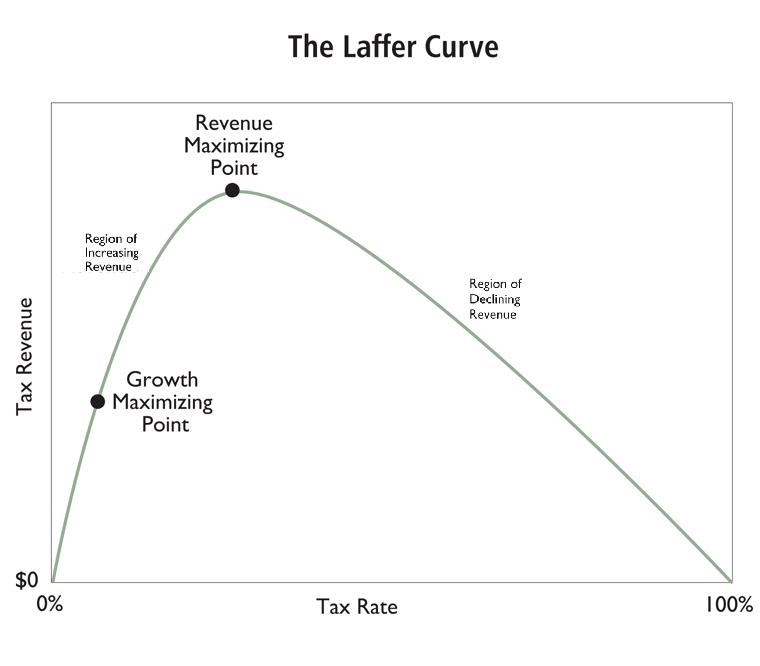
But it recently crossed my mind that maybe President Obama was born in Denmark. Not in a serious way, of course, but you’ll understand my thought process when you read this passage from a report by the government-appointed Danish Economic Council. It doesn’t mention the Laffer Curve, but the report openly states that an increase in the top tax rate would lose revenue because of changes in taxpayer behavior.

…increased taxation on high income earners in Denmark at best is revenue neutral, and may even reduce total tax revenue. This result applies whether one considers the top 10, the top 5 or the top 1 per cent income group. …Using the base estimate of the elasticity of taxable labour income of 0.2, the conclusion is thus that the existing Danish tax system implies an effective tax rate on high income earners that is above – though close to – the tax rate that generates the highest tax revenue. …As an example, the revenue effect of an increase in the marginal tax rate by 6 percentage points for high-income earners is calculated. Using the base estimate of the behavioural response to taxation, this leads to a revenue loss of about ½ billion DKK. …Overall, the scope for acquiring extra tax revenue from high income earners in Denmark is very limited.

Yet there are some politicians in Denmark who want to raise tax rates, even though the damage to the economy will be so significant that the government loses revenue!

If you’re thinking this sounds familiar, you probably remember President Obama’s infamous statement during the 2008 campaign that he wanted to raise the capital gains tax rate for reasons of “fairness” regardless of whether tax revenues decreased (if you think I’m somehow exaggerating or distorting his words, just go to the 4:20 mark of this video).

By the way, the Danish study probably understates how much revenue the government would lose. Their base estimate about the elasticity of taxable labor income (economist jargon for how sensitive labor income is to changes in tax rates) is much lower than Alan Reynolds reported in his recent Wall Street Journal column.

Rich people, unlike the rest of us, have tremendous ability to change the timing, composition, and level of their income, which is a big reason why upper-income taxpayers paid much more to the IRS in the 1980s after President Reagan slashed the top tax rate from 70 percent to 28 percent.

I’m constantly amazed – in a bad way – that politicians and bureaucrats have been so successful in resisting the insights of the Laffer Curve. The U.S. Treasury Department, for instance, is to the left of the Danish Economic Council and basically assumes that tax policy has no impact on economic performance. The same can be said about the Joint Committee on Taxation on Capitol Hill.

This has to be a case of leftist ideology trumping reality, because the evidence for the Laffer Curve is quite powerful – some of it even being produced by international bureaucracies.

None of this is to suggest that “all tax cuts pay for themselves.” That only happens in unusual cases where a group of taxpayers – such as wealthy entrepreneurs and investors – have considerable flexibility in their economic affairs.

In most cases, the government will collect more revenue when tax rates increase. This is because the impact of the change in the tax rate is larger than the impact of the change in taxable income.

But the real question is whether it is ever a good idea to reduce private economic output in order to give politicians more money to spend. To sensible people, that’s the most important insight of the Laffer Curve.

P.S. While this discussion has focused on the foolishness of setting tax rates so high that the government loses revenue, this does not mean politicians should seek the revenue-maximizing tax rate. The ideal point on the Laffer Curve is the growth-maximizing tax rate.

________

Thank you so much for your time. I know how valuable it is. I also appreciate the fine family that you have and your commitment as a father and a husband.

Sincerely,

Everette Hatcher III, 13900 Cottontail Lane, Alexander, AR 72002, ph 501-920-5733, lowcostsqueegees@yahoo.com

Open letter to President Obama (Part 168.6)

Dan Mitchell Explaining Why “Taxing the Rich” Is a Precursor for Going after the Middle Class

Published on Apr 13, 2012 by

_________________


President Obama c/o The White House
1600 Pennsylvania Avenue NW
Washington, DC 20500

Dear Mr. President,

I know that you receive 20,000 letters a day and that you actually read 10 of them every day. I really do respect you for trying to get a pulse on what is going on out here.

Raising taxes is not the answer but we must lower spending in order to balance the budget. That is the lesson from history too.

This should be a lesson for Obama and any Republican out there that wants  to raise taxes:

Tax Hikes Are Economically Destructive, Politically Poisonous, and Completely Ineffective at Reducing Red Ink

July 3, 2012 by Dan Mitchell

Back in April, I explained that I would accept a tax increase if “the net long-run effect is more freedom, liberty, and prosperity.”

I even outlined several specific scenarios where that might occur, including giving the politicians more money in exchange for a flat tax or giving them additional revenue in exchange for real entitlement reform.

But I then pointed out that all of those options are unrealistic. And I’ve expanded on that thesis in a new article. Here’s some of what I wrote for The Blaze.

The no-tax pledge of Americans for Tax Reform generates a lot of controversy. With record levels of red ink, the political elite incessantly proclaims that all options must be “on the table.” This sounds reasonable. And when some Republicans say no tax hikes under any circumstances, there’s a lot of criticism about dogmatism. Theoretically, I agree with the elitists.

So does that make me a squish, the fiscal equivalent of Chief Justice John Roberts?

Nope, because I’m tethered to the real world. I know that there is zero chance of getting a good agreement. Once you put taxes “on the table,” any impetus for spending restraint evaporates.

But even though I’m theoretically open to a tax hike, I am a de facto opponent of tax increases for the simple reason that we will never get a good deal. We won’t get sustainable spending cuts. Not even in our dreams. We won’t get real entitlement reforms. Even if we hold our breath ‘til we turn blue. And we won’t get the “Simpson-Bowles” tax reform swap, where taxpayers give up $2 of deductions in exchange for $1 of lower tax rates. Let’s not kid ourselves. In other words, reality trumps theory. Yes, there are tax-hike deals that would be good, but they’re about as realistic as me speculating on whether I’d be willing to play for the New York Yankees, but only if they guarantee me $5 million per year.

I then point out that a budget deal inevitably would lead to bad policy – just as we saw in 1982 and 1990.

Here’s the bottom line: There is no practical way to get a good deal from either the Democrats in the Senate or the Obama Administration. Notwithstanding the good intentions of some people, any grand bargain would be a failure that leads to higher spending and more red ink, just as we saw after the 1982 and 1990 budget deals. The tax increases would not be relatively benign loophole closers. Instead, the economy would be hit by higher marginal tax rates on work, savings, investment, and entrepreneurship. And the entitlement reform would be unsustainable gimmicks rather than structural changes to fix the underlying programs. Ironically, when a columnist for the New York Times complained that Republicans were being unreasonable for opposing tax hikes, she inadvertently revealed that the only successful budget deal was the one in 1997 – the one that had no tax hikes!

The last sentence is worth some additional commentary. As I explained in a previous post, the only bipartisan budget agreement that generated a balanced budget was the 1997 pact – and that deal lowered taxes rather than increasing them.

Some people try to argue that Bill Clinton’s 1993 tax hike deserves some of the credit, but I previously showed that the Administration’s Office of Management and Budget admitted – 18 months later! – that the nation would have triple-digit budget deficits for the foreseeable future.

What changed (and this is where Bill Clinton deserves credit) is that the nation enjoyed a multi-year period of spending restraint in the mid-1990s.

And when policy makers addressed the underlying disease of too much government spending, they solved the symptom of red ink.

____________

Thank you so much for your time. I know how valuable it is. I also appreciate the fine family that you have and your commitment as a father and a husband.

Sincerely,

Everette Hatcher III, 13900 Cottontail Lane, Alexander, AR 72002, ph 501-920-5733, lowcostsqueegees@yahoo.com

Open letter to President Obama (Part 168.5)


President Obama c/o The White House
1600 Pennsylvania Avenue NW
Washington, DC 20500

Dear Mr. President,

I know that you receive 20,000 letters a day and that you actually read 10 of them every day. I really do respect you for trying to get a pulse on what is going on out here.

Why not be wise with your money like Romney has done? Why is that a bad thing?

Since Mitt Romney Won’t Defend Himself, I Guess It’s Up to Me to Debunk the Left’s Tax Haven Demagoguery

July 14, 2012 by Dan Mitchell

Earlier this year, I defended Mitt Romney and Bain Capital from the absurd accusation that they did something wrong by utilizing low-tax jurisdictions.

So-called tax havens, as I’ve explained on many occasions, play a valuable role in the world economy. Indeed, they should be emulated rather than persecuted.

In a follow-up post, I mocked ABC News for a ridiculous non-story as they tried to make Romney appear guilty for following good business practices.

The issue has become hot again, so I talked about Romney and tax havens with Jason Riley at the Wall Street Journal.

Dan Mitchell Defending Tax Havens (and Mitt Romney) on Wall Street Journal Online TV

Published on Jul 13, 2012 by

No description available.

_____________

Since nobody has claimed that Romney violated U.S. tax law, this kerfuffle only exists because the left wants to create the impression that tax havens are bad and then tar the GOP’s presumptive nominee with guilt by association.

Brian Garst of the Center for Freedom and Prosperity nails the issue in his column for the Daily Caller.

People who invest or bank overseas do not hate America. Oftentimes, they are simply banking where their money is earned to avoid the hassle of exchange rate and wire transfer fees. …It’s also smart practice to diversify. …Mitt Romney should not be cowed into shame over his banking practices just because he doesn’t strictly park his after-tax earnings in American banks, but should instead seize the opportunity to more aggressively defend against populist attacks on financial privacy and explain the benefits of jurisdictional tax competition.

That’s good advice, but I’m not holding my breath waiting for Romney to defend Switzerland and other jurisdictions with good policy. That would require an underlying belief in freedom and liberty, which seems to be lacking.

But you would think that he might respond by noting that many top Democrats directly invest in tax havens, and that presumably all of them – as I noted in my WSJ interview – are indirectly invested in these financial centers.

P.S. It’s probably a lost cause, but I’m an old-fashioned guy who thinks that people shouldn’t blatantly lie, so here’s my obligatory complaint that many politicians, journalists, and policy folks are repeating the debunked assertion that so-called tax havens deprive the U.S. Treasury of $100 billion per year. Obama threw around that make-believe number in the 2008 campaign, as seen in this video. But as shown in the final video of this post, the $100 billion figure was concocted out of thin air by a former John Kerry staffer, who confessed he made up the number when the Congressional Research Service asked for his methodology.

_______________

Thank you so much for your time. I know how valuable it is. I also appreciate the fine family that you have and your commitment as a father and a husband.

Sincerely,

Everette Hatcher III, 13900 Cottontail Lane, Alexander, AR 72002, ph 501-920-5733, lowcostsqueegees@yahoo.com

The real truth about the financial condition of Social Security can be seen on the www.thedailyhatch.org

Uploaded by on Jan 8, 2009

Professor Williams explains what’s ahead for Social Security

If you want to know the real truth about the financial condition of Social Security then check out these links below:

Ark Times reader says Social Security is not Ponzi Scheme

Social Security is a Ponzi Scheme but Blake who is a blogger said I was off base. Ark Times reader says Social Security is not Ponzi Scheme Social Security Disaster Walter E. Williams Columnist, Townhall.com Politicians who are principled enough to point out the fraud of Social Security, referring to it as a lie and […]

Social Security is a Ponzi scheme that needs to be reformed

We got to do something soon about Social Security. The Case for Social Security Personal Accounts Posted by Daniel J. Mitchell There are two crises facing Social Security. First the program has a gigantic unfunded liability, largely caused by demographics. Second, the program is a very bad deal for younger workers, making them pay record […]

Senator Obama’s ideas on Social Security

Senator Obama’s Social Security Tax Plan Uploaded by afq2007 on Jul 23, 2008 In addition to several other tax increases, Senator Barack Obama wants to increase the Social Security payroll tax burden by imposing the tax on income above $250,000. This would be a sharp departure from current law, which only requires that the tax […]

Social Security is a Ponzi scheme (part 13)

Saving Social Security with Personal Retirement Accounts Uploaded by afq2007 on Jan 10, 2011 There are two crises facing Social Security. First the program has a gigantic unfunded liability, largely thanks to demographics. Second, the program is a very bad deal for younger workers, making them pay record amounts of tax in exchange for comparatively meager benefits. This […]

What does the Heritage Foundation have to say about saving Social Security:Study released May 10, 2011 (Part 7)

“Saving the American Dream: The Heritage Plan to Fix the Debt, Cut Spending, and Restore Prosperity,” Heritage Foundation, May 10, 2011 by  Stuart Butler, Ph.D. , Alison Acosta Fraser and William Beach is one of the finest papers I have ever read. Over the next few days I will post portions of this paper, but […]

Only difference between Ponzi scheme and Social Security is you can say no to Ponzi Scheme jh2d

Is Social Security  a Ponzi Scheme? I just started a series on this subject. In this article below you will see where the name “Ponzi scheme” came from and if it should be applied to the Social Security System. Ponzi! Ponzi! Ponzi! 9/14/2011 | Email John Stossel | Columnist’s Archive Ponzi! Ponzi! Ponzi! There, I […]

Social Security a Ponzi scheme?

Uploaded by LibertyPen on Jan 8, 2009 Professor Williams explains what’s ahead for Social Security Dan Mitchell on Social Security I have said that Social Security is a Ponzi scheme and sometimes you will hear someone in the public say the same thing. Yes, It Is a Ponzi Scheme by Michael D. Tanner Michael Tanner […]

Dan Mitchell on Social Security


Open letter to President Obama (Part 168.2)


President Obama c/o The White House
1600 Pennsylvania Avenue NW
Washington, DC 20500

Dear Mr. President,

I know that you receive 20,000 letters a day and that you actually read 10 of them every day. I really do respect you for trying to get a pulse on what is going on out here.

Obamacare would be a huge tax if ever became law.

I’ve often complained that government-created third-party payer is the main problem with America’s healthcare system, and I was making that point well before Obamacare was imposed upon the country.

Simply stated, people won’t be smart consumers and providers won’t compete to keep costs low when the vast majority of expenses are paid for either by government programs or by insurance companies.

That’s why I want to see reforms to Medicare and Medicaid, not only to save money for taxpayers, but also because that’s one of the steps that is needed if we want market forces to bring down the cost of healthcare.

And I want to see a flat tax, not only for the pro-growth impact of lower tax rates, but also because it gets rid of the internal revenue code’s healthcare exclusion, thus ending the distortion that encourages over-insurance.

With all that in mind, I’m obviously a big fan of this new video from the Center for Freedom and Prosperity.

__________

Third-Party Payer is the Biggest Economic Problem With America’s Health Care System

Published on Jul 10, 2012 by

This mini-documentary from the Center for Freedom and Prosperity Foundation explains that “third-party payer” is the main problem with America’s health care system. This is why undoing Obamacare, while desirable, is just a small first step if we want to reduce costs and boost efficiency

_____________–

Narrated by Julie Borowski from FreedomWorks, the video explains that third-party payer has been a growing problem for decades and that it would have required fixing even if the Supreme Court hadn’t botched the Obamacare decision.

And now that we’re stuck with Obamacare, at least temporarily, it’s more important than ever to deal with this underlying problem.

P.S. This new video expands upon the analysis provided in a previous CF&P video.

P.P.S. Setting aside the debate about whether it’s right or wrong, the abortion market also is an interesting case study of how prices don’t rise when consumers pay out of pocket.

P.P.P.S. Government-created third-party payer also is screwing up the market for higher education.

___________

Thank you so much for your time. I know how valuable it is. I also appreciate the fine family that you have and your commitment as a father and a husband.

Sincerely,

Everette Hatcher III, 13900 Cottontail Lane, Alexander, AR 72002, ph 501-920-5733, lowcostsqueegees@yahoo.com

Dan Mitchell’s solution to the “Fiscal Cliff”

Dan Mitchell of the Cato Institute has a simple good solution to our fiscal cliff problem right now in Washington. I agree it is a serious problem right now. There are not many people in our corner either. There were 66 brave Republicans that voted against the debt ceiling increase in August of 2011 and I have written posts about 49 of them. Again today we have newly re-elected President Obama coming back for another debt ceiling increase and we need more brave Republicans who will not give in.  

Below is Mitchell’s solution.

Augmented by some amusing cartoons, I’ve already warned that the hysteria about the fiscal cliff is basically a ploy by the politicians to extract more revenue to finance bigger government.

Obama Fiscal Manual

Elaborating on this concern, I wrote a column for today’s New York Daily News. I started with a description of the three issues that are getting lumped together.

…we face the threat of higher tax rates for some or all taxpayers on Jan. 1. …there’s also a possibility of a “sequester” — automatic budget cuts that also are scheduled to take place on Jan. 1. And politicians have been spending so much money that we’re about to bump up against the nation’s debt limit. So it’s likely that all these issues will get joined as President Obama and congressional leaders attempt to negotiate a deal.

I then outlined what might happen if the 2001 and 2003 tax cuts expire.

The higher tax rate portion of the fiscal cliff exists because 2001 and 2003 tax cuts are scheduled to expire at the end of the year. All taxpayers would see more of their earnings confiscated by the IRS beginning in January if Washington fails to act. All tax brackets would increase, taxes on dividends and capital gains would rise… The total yearly hike would be in the range of $400 billion. This could have profound implications, both because of immediate reductions in take-home pay and the negative long-run impact of economic stagnation.

And I explained how the problem should be solved, but warned that the biggest stumbling block is President Obama’s fixation on class-warfare tax policy.

Many are worried about these potential changes, with Congressional Budget Director Doug Elmendorf warning that Americans should expect a “significant recession” and the loss of some 2 million jobs. From my point of view, all the tax cuts should be made permanent. The bad news, to me, is that Obama wants to raise rates on investors, entrepreneurs, small business owners and other “rich” taxpayers. The sequester should be replaced by a more targeted set of fiscal reforms to restrain the growth of the entitlement state. Finally, the debt limit should be raised in exchange for a workable and enforceable cap on government spending.

I originally included an explanation of why the CBO estimate is flawed because of Keynesian methodology, but those sentences fell victim to space constraints. Nonetheless, it’s worth noting that even folks on the left think big tax hikes aren’t a good idea (though they’re perfectly happy to have a series of small tax hikes that get you to the same Greek destination).

But set that aside. Is there any chance of seeing my solution adopted? Well, there’s no chance of a spending cap. The sequester will be stopped, but it won’t be replaced by better reforms.

The great unknown is what will happen on the tax side. I fear GOPers will surrender, even though they won the very same battle back in 2010 when they didn’t even control the House and had fewer seats in the Senate.