Category Archives: Cato Institute

Open letter to President Obama (Part 229)


President Obama c/o The White House
1600 Pennsylvania Avenue NW
Washington, DC 20500

Dear Mr. President,

I know that you receive 20,000 letters a day and that you actually read 10 of them every day. I really do respect you for trying to get a pulse on what is going on out here.

One thing that stands out about Dan Mitchell is that is not a Democrat or a Republican but a lover of freedom like Milton Friedman was. Don’t you want to take up for freedom like Dan does? Don’t you think we should attempt to grow the private sector more than the public sector? Take a look at this article of his below.

Posted by Ryan Minto on August 16, 2012

By DANIEL J. MITCHELL

Thanks to several years of fiscal restraint during the 1990s, the burden of federal spending dropped to 18.2% of gross domestic product by the time Bill Clinton left office. The federal budget today consumes more than 24% of economic output, a one-third increase since 2001 in the share of the U.S. economy allocated by politics rather than market forces. That makes the Republican House budget, which would reverse this trend, extremely important for the economic health of the country.

Both political parties deserve blame for the spending spree that’s put America in a fiscal ditch. President George W. Bush was a big spender and President Obama has compounded the damage with his stimulus spending and other programs.

But the era of bipartisan big government may have come to an end. Largely thanks to Rep. Paul Ryan and the fiscal blueprint he prepared as chairman of the House Budget Committee earlier this year, the GOP has begun climbing back on the wagon of fiscal sobriety and has shown at least some willingness to restrain the growth of government.

The Ryan budget has generated considerable controversy in Washington, and it will become even more of an issue now that Mr. Ryan is Mitt Romney’s running mate. So it’s an appropriate time to analyze the plan and consider what it would mean for America.

image

Chad Crowe

The most important headline about the Ryan budget is that it limits the growth rate of federal spending, with outlays increasing by an average of 3.1% annually over the next 10 years. If spending is left on autopilot, by contrast, it would grow by 4.3% (or nearly 39% faster). If President Obama is re-elected, the burden of spending presumably will climb more rapidly.

This comes as a surprise to many people since the press is filled with stories about the Ryan budget imposing trillions of dollars of “savage” and “draconian” spending cuts. All of these stories, however, are based on Washington’s misleading budget process that automatically assumes an ever-expanding government. The 4.3% “base line” increase is the benchmark for measuring “cuts”—even though spending is rising rather than falling, and it’s only the rate of spending growth that is being slowed.

Even limiting spending so it grows by 3.1% per year, as Mr. Ryan proposes, quickly leads to less red ink. This is because federal tax revenues are projected by the House Budget Committee to increase 6.6% annually over the next 10 years if the House budget is approved (and this assumes the Bush tax cuts are made permanent). Since revenues would climb more than twice as fast as spending, the deficit would drop to about 1% of gross domestic product by the end of the 10-year budget window.

To balance the budget within 10 years would require that outlays grow by about 2% each year. Spending in the Ryan budget means the federal budget reaches balance in 2040. There are many who would prefer that the deficit come down more quickly, but from a jobs and growth perspective, it isn’t the deficit that matters.

Rather, what matters for prosperity and living standards is the degree to which labor and capital are used productively. This is why policy makers should focus on reducing the burden of government spending as a share of GDP—leaving more resources in the private economy.

The simple way of making this happen is to follow what I’ve been calling the golden rule of good fiscal policy: The private sector should grow faster than the government. This is what happens with the Ryan budget. The Congressional Budget Office expects nominal economic output (before inflation) to grow about 5% each year over the next decade. So if federal spending grows 3.1% annually, the burden of federal spending slowly shrinks as a share of GDP.

According to the House Budget Committee, the federal budget would consume slightly less than 20% of economic output if the Ryan budget remained in place for 10 years. This would be remarkable progress considering that the federal government is now consuming 24% of GDP vs. Mr. Clinton’s 18.2% in 2001. If Paul Ryan’s policies are social Darwinism, as Mr. Obama and his allies allege, one can only speculate where Bill Clinton ranks in their estimation.

Spending restraint also creates more leeway for good tax policy. Regardless of what you think about deficits, the political reality is that it is difficult to lower tax rates if government borrowing remains at high or rising levels. If deficit spending continues at current levels, then higher tax rates are almost sure to follow. And higher tax rates can’t create an environment conducive to more investment and jobs.

The Ryan budget avoids this unpleasant outcome by addressing the problem of excessive government spending. This makes it possible to extend the 2001 and 2003 tax-rate reductions. It also clears the way for other pro-growth reforms, such as Gov. Romney’s proposed across-the-board 20% income tax cut, a more competitive 25% corporate tax rate, and less double-taxation of dividends and capital gains.

One of the best features of the Ryan budget is that he reforms the two big health entitlements instead of simply trying to save money. Medicaid gets block-granted to the states, building on the success of welfare reform in the 1990s. And Medicare is modernized by creating a premium-support option for people retiring in 2022 and beyond.

This is much better than the traditional Beltway approach of trying to save money with price controls on health-care providers and means testing on health-care consumers. Price controls are notoriously ineffective—because health-care providers adapt by ordering more tests and procedures—and politically unsustainable due to lobbying pressure. Means testing imposes an indirect penalty on people who save and invest during their working years. That should be a nonstarter for a political party that seeks to encourage productive behavior and discourage dependency.

But good entitlement policy also is a godsend for taxpayers, particularly in the long run. Without reform, the burden of federal spending will jump to 35% of GDP by 2040, compared to 18.75% of output under the Ryan budget.

Assuming the GOP ticket prevails in November, Mitt Romney will make the big decisions on fiscal policy. But there is no escaping the fiscal math. If Mr. Romney intends to keep his no-tax-hike promise, he has to restrain the growth of spending. This doesn’t mean he has to go with every detail of the Ryan budget—but it’s certainly a good place to start.

Mr. Mitchell is a senior fellow at the Cato Institute.

A version of this article appeared August 16, 2012, on page A11 in the U.S. edition of The Wall Street Journal, with the headline: What’s Really in the Ryan Budget.

__________

Thank you so much for your time. I know how valuable it is. I also appreciate the fine family that you have and your commitment as a father and a husband.

Sincerely,

Everette Hatcher III, 13900 Cottontail Lane, Alexander, AR 72002, ph 501-920-5733, lowcostsqueegees@yahoo.com

Open letter to President Obama (Part 228)


President Obama c/o The White House
1600 Pennsylvania Avenue NW
Washington, DC 20500

Dear Mr. President,

I know that you receive 20,000 letters a day and that you actually read 10 of them every day. I really do respect you for trying to get a pulse on what is going on out here.

I hate that so many times in the history of the USA our national leader will not cut the federal budget and attempt to balance it like everyone else has to balance their family budget at home. Why not you be the first since Bill Clinton to attempt and balance the budget?

I feel like a pendulum this election season. Something will happen that makes me want to eviscerate Obama’s statist policies and I’ll write a foaming-at-the-mouth post warning that the President is turning America into Greece.

But then Romney will do something odious and I’ll sound the warning sign with a we-don’t-need-another-big-spender-like-Bush post.

Today, it’s Obama’s turn on the chopping block. I went on Neil Cavuto’s Fox Business News program and commented on the fact that the President doesn’t have a fiscal plan.

We started by discussing the President’s failure to embrace the findings of his own Fiscal Commission and then shifted to the big-picture issue of whether the American people have become ensnared by the dependency mindset and are willing to vote for Greek-style fiscal policy.

Published on Aug 16, 2012 by

No description available.

________________

One thing I should have added is that Obama actually does have a fiscal plan. He’s just not willing to be as honest as the leftists who have admitted that you need to screw the middle class with higher taxes to fund big government.

My own personal guess is that he would impose a value-added tax if he thought it was politically feasible. Not that I’m showing any great insight. After all, Obama already has made the ridiculous statement that a VAT is “something that has worked for other countries.”

But because he’s running for reelection, he’d rather just demagogue the Ryan plan rather than show his own cards.

P.S. Even the cartoonist for the Washington Post doesn’t think the VAT is something that is working for other countries. This cartoon is a classic and definitely worth sharing. And you can enjoy other VAT cartoons here and here.

_______________

Thank you so much for your time. I know how valuable it is. I also appreciate the fine family that you have and your commitment as a father and a husband.

Sincerely,

Everette Hatcher III, 13900 Cottontail Lane, Alexander, AR 72002, ph 501-920-5733, lowcostsqueegees@yahoo.com

Arkansas should not take the federal Medicaid deal because the money is not free but we pay for it!!!

The Medicaid deals being presented by the federal government seem like great deals until you realize that the taxpayer will end up paying the bill and the taxpayer is us!!!!

January 25, 2013 5:09PM

Federal Money to the States Isn’t ‘Free’

Richmond Times-Dispatch columnist A. Barton Hinkle recently made what should be a simple point to understand, but it’s unfortunately one that few people seem to appreciate. Writing about the supposed win-win situation whereby states expand Medicaid coverage and the federal government foots most of the bill, Hinkle reminds readers that the “free” federal money isn’t really free: 

In Virginia, officials estimate expanding Medicaid would cost the state $137.5 million over nine years, while the state would receive $23 billion from Washington.

Other states report similar figures. California expects to enroll up to 910,000 residents for a cost beginning at only $46 million a year, while collecting $44 billion in federal funds over a six-year period. An Illinois study estimates that state would spend about $2 billion on expanded Medicaid over the next decade, while reaping $22 billion in federal funds. According to Danielle Holohan, who is in charge of New York’s insurance exchange, Medicaid expansion “actually works out to be an enormous savings” for the Empire State. And so on.

This all sounds great—if you are a state official. But if you are a lowly taxpayer, it leaves out one rather significant point: Where is all that federal money coming from?

No great mystery: Most of that money would come from taxpayers who live in the very states that are looking forward to these supposed windfalls. According to the Kaiser Family Foundation, if every state signed up for Medicaid expansion, then the federal government would spend nearly $1 trillion over the next nine years—paid for by you.

So you don’t have to wait for Medicaid expansion to reap this sort of “windfall.” Just take 5 bucks out of your left pocket and put it in your right. As far as your right pocket is concerned, you’re 5 bucks richer. It’s free money!

In addition to not being free, federal subsidization of state spending makes it harder for taxpayers to understand and appreciate where their money is going and how it’s being spent. A Cato essay on fiscal federalism explains:

The three layers of government in the United States no longer resemble the tidy layer cake that existed in the 19th century. Instead, they are like a jumbled marble cake with responsibilities fragmented across multiple layers. Federal aid has made it difficult for citizens to figure out which level of government is responsible for particular policy outcomes. All three levels of government play big roles in such areas as transportation and education, thus making accountability difficult. Politicians have become skilled at pointing fingers of blame at other levels of government, as was evident in the aftermath of Hurricane Katrina. When every government is responsible for an activity, no government is responsible.

As we’ve been arguing over at Downsizing Government, it is well past time that the trend toward greater centralization of power in Washington is reversed. With the country bouncing from manufactured fiscal crisis to manufactured fiscal crisis, the need for a return to fiscal federalism has never been greater.

Of course, getting federal policymakers to give up power is like asking a starving pit bull to part with a slab of beef. And even though state policymakers often complain when the feds get heavy-handed, their attitude is different when it comes to taking federal money. Why ask your state’s taxpayers to pony up the funds to feed your spending appetite when Uncle Sam can do the dirty work (or just use his credit card)?

Open letter to President Obama (Part 227)

Milton Friedman – Socialism is Force

Uploaded by on May 21, 2010

Milton Friedman discusses the moral values encouraged by economic systems and explains that a primary difference between capitalism and socialism is the difference between free choice and compulsory force.


________________

President Obama c/o The White House
1600 Pennsylvania Avenue NW
Washington, DC 20500

Dear Mr. President,

I know that you receive 20,000 letters a day and that you actually read 10 of them every day. I really do respect you for trying to get a pulse on what is going on out here.

Do we want freedom or may we don’t?  It seems to me those who want more of our private money to be given over to government control are limiting our freedom greatly.

Every so often, you read something so ridiculously stupid and absurd that you assume that you’re being pranked. So you look to the date of the article to see if it says April 1. Or you look at the Internet address to see if it’s a parody of a real website.

So when I read a column suggesting that the United States should become more like Italy, I thought this must be some sort of practical joke. After all, Italy is teetering on the edge of bankruptcy, kept afloat by bailouts and subsidies. Its economy is in the toilet, with pervasively high unemployment, almost no growth for a decade, and living standards that are only about two-thirds of U.S. levels.

The Italian government is also famously incompetent (naming the wrong people to high-level posts), with stifling levels of regulation, a dysfunctional fiscal system, and a corrupt legal system (and when it’s not crooked, it’s inane).

Notwithstanding all these crippling flaws, Italy has something akin to catnip for the left. It has a punitive tax burden, and that means it must be a nation worth emulating.

Here’s some of what Eduardo Porter wrote for the New York Times.

Italy may be in a funk, with a shrinking economy and a high unemployment rate, but the United States can learn a lot from it, and not just about the benefits of public health care. Italians live longer. Their poverty rate is much lower than ours. If they lose their jobs or suffer some other misfortune, they can turn to a more generous social safety net. …The reason is not difficult to figure out: rich though we are, we can’t afford the policies needed to improve our record. …But though the nation’s fiscal challenge has taken center stage in the presidential election campaign, raising more taxes from American families remains stubbornly off the table.

I’m willing to believe Italians live longer, but every other assertion in that passage is upside down. Yes, they have more subsidies for joblessness, but that’s one of the reasons they have higher unemployment (as even Paul Krugman and Larry Summers have acknowledged).

And the claim about less poverty is laughable. I’m guessing the author naively relied upon the slipshod analysis from the statists at the Organization for Economic Cooperation and Development. Those bureaucrats put together a moving-goalposts measure of income distribution and falsely categorized it as a tool for measuring poverty.

Setting aside these mistakes, the column is designed to convince people that we should give more money to Washington.

Citizens of most industrial countries have demanded more public services as they have become richer. And they have been by and large willing to pay more taxes to finance them. Since 1965, tax revenue raised by governments in the developed world have risen to 34 percent of their gross domestic product from 25 percent, on average. The big exception has been the United States. …the United States raises less tax revenue, as a share of the economy, than every other industrial country. No wonder we can’t afford to keep more children alive. In 2007, the most recent year for which figures are available, the United States government spent about 16 percent of its output on social programs — things like public health, food and housing for the poor. In Italy, that figure was 25 percent. …Every other industrial country has a national consumption tax, which can be used to raise a lot of money.

I will give the author credit. If you read the entire column, it’s clear he wants all Americans to pay higher taxes, not just the so-called rich. So at least he’s being honest, unlike a lot of statists (click here for a list of honest leftists who admit you can’t finance big government without screwing the middle class).

But honesty about goals doesn’t mean desirability of policy. If America becomes more like Italy, it will mean Italian-style stagnation and joblessness.

And it’s particularly worrisome to see that the author wants a value-added tax, which is a sure-fire way of giving politicians a big pile of money that will be used to expand the burden of government spending.

I have nothing against copying other nations, either when they get one policy right (such as Estonia’s flat tax or Australia’s system of personal retirement accounts), or when they get a bunch of policies right and routinely rank at the top for economic freedom and prosperity (such as Hong Kong and Singapore).

But I’m mystified by those who look at failure and conclude America should do likewise.

P.S. The Italians have a bad tax system, but they don’t meekly comply. Whether they’re firebombing tax offices or sailing yachts to other countries, they are a powerful example of the Laffer Curve insight that higher tax rates don’t necessarily translate into higher tax revenues.

_________

Thank you so much for your time. I know how valuable it is. I also appreciate the fine family that you have and your commitment as a father and a husband.

Sincerely,

Everette Hatcher III, 13900 Cottontail Lane, Alexander, AR 72002, ph 501-920-5733, lowcostsqueegees@yahoo.com

Related posts:

Open letter to President Obama (Part 201)Tea Party favorite Representative links article “Prescott and Ohanian: Taxes Are Much Higher Than You Think”

    (Emailed to White House on 12-21-12.) President Obama c/o The White House 1600 Pennsylvania Avenue NW Washington, DC 20500 Dear Mr. President, I know that you receive 20,000 letters a day and that you actually read 10 of them every day. I really do respect you for trying to get a pulse on […]

Open letter to President Obama (Part 200.2)Tea Party Republican Representative takes on the President concerning fiscal cliff

(Emailed to White House on 12-21-12.) President Obama c/o The White House 1600 Pennsylvania Avenue NW Washington, DC 20500 Dear Mr. President, I know that you receive 20,000 letters a day and that you actually read 10 of them every day. I really do respect you for trying to get a pulse on what is […]

Open letter to President Obama (Part 200.1)Tea Party favorite Representative shares link on facebook

 (Emailed to White House on 12-21-12) President Obama c/o The White House 1600 Pennsylvania Avenue NW Washington, DC 20500 Dear Mr. President, I know that you receive 20,000 letters a day and that you actually read 10 of them every day. I really do respect you for trying to get a pulse on what is […]

Open letter to President Obama (Part 199) Tea Party favorite takes on President

  The federal government has a spending problem and Milton Friedman came up with the negative income tax to help poor people get out of the welfare trap. It seems that the government screws up about everything. Then why is President Obama wanting more taxes? _______________ Milton Friedman – The Negative Income Tax Published on […]

Tea Party Heroes Rep. David Schweikert (R-AZ),Justin Amash (R-MI), Tim Huelskamp (R-KS) have been punished by Boehner

I was sad to read that the Speaker John Boehner has been involved in punishing tea  party republicans. Actually I have written letters to several of these same tea party heroes telling them that I have emailed Boehner encouraging him to listen to them. Rep. David Schweikert (R-AZ),Justin Amash (R-MI), and Tim Huelskamp (R-KS). have been contacted […]

Some Tea Party heroes (Part 10)

Michael Tanner of the Cato Institute in his article, “Hitting the Ceiling,” National Review Online, March 7, 2012 noted: After all, despite all the sturm und drang about spending cuts as part of last year’s debt-ceiling deal, federal spending not only increased from 2011 to 2012, it rose faster than inflation and population growth combined. […]


The real truth about the financial condition of Social Security can be seen on the www.thedailyhatch.org

Uploaded by on Jan 8, 2009

Professor Williams explains what’s ahead for Social Security

If you want to know the real truth about the financial condition of Social Security then check out these links below:

Ark Times reader says Social Security is not Ponzi Scheme

Social Security is a Ponzi Scheme but Blake who is a blogger said I was off base. Ark Times reader says Social Security is not Ponzi Scheme Social Security Disaster Walter E. Williams Columnist, Townhall.com Politicians who are principled enough to point out the fraud of Social Security, referring to it as a lie and […]

Social Security is a Ponzi scheme that needs to be reformed

We got to do something soon about Social Security. The Case for Social Security Personal Accounts Posted by Daniel J. Mitchell There are two crises facing Social Security. First the program has a gigantic unfunded liability, largely caused by demographics. Second, the program is a very bad deal for younger workers, making them pay record […]

Senator Obama’s ideas on Social Security

Senator Obama’s Social Security Tax Plan Uploaded by afq2007 on Jul 23, 2008 In addition to several other tax increases, Senator Barack Obama wants to increase the Social Security payroll tax burden by imposing the tax on income above $250,000. This would be a sharp departure from current law, which only requires that the tax […]

Social Security is a Ponzi scheme (part 13)

Saving Social Security with Personal Retirement Accounts Uploaded by afq2007 on Jan 10, 2011 There are two crises facing Social Security. First the program has a gigantic unfunded liability, largely thanks to demographics. Second, the program is a very bad deal for younger workers, making them pay record amounts of tax in exchange for comparatively meager benefits. This […]

What does the Heritage Foundation have to say about saving Social Security:Study released May 10, 2011 (Part 7)

“Saving the American Dream: The Heritage Plan to Fix the Debt, Cut Spending, and Restore Prosperity,” Heritage Foundation, May 10, 2011 by  Stuart Butler, Ph.D. , Alison Acosta Fraser and William Beach is one of the finest papers I have ever read. Over the next few days I will post portions of this paper, but […]

Only difference between Ponzi scheme and Social Security is you can say no to Ponzi Scheme jh2d

Is Social Security  a Ponzi Scheme? I just started a series on this subject. In this article below you will see where the name “Ponzi scheme” came from and if it should be applied to the Social Security System. Ponzi! Ponzi! Ponzi! 9/14/2011 | Email John Stossel | Columnist’s Archive Ponzi! Ponzi! Ponzi! There, I […]

Social Security a Ponzi scheme?

Uploaded by LibertyPen on Jan 8, 2009 Professor Williams explains what’s ahead for Social Security Dan Mitchell on Social Security I have said that Social Security is a Ponzi scheme and sometimes you will hear someone in the public say the same thing. Yes, It Is a Ponzi Scheme by Michael D. Tanner Michael Tanner […]

Dan Mitchell on Social Security


Open letter to President Obama (Part 226)


President Obama c/o The White House
1600 Pennsylvania Avenue NW
Washington, DC 20500

Dear Mr. President,

I know that you receive 20,000 letters a day and that you actually read 10 of them every day. I really do respect you for trying to get a pulse on what is going on out here.

If we want the economy to grow then we should look closely at a flat tax, and since you want to close the tax loopholes for the wealthy then you should be excited about adopting this as a way to do that.

In previous posts, I put together tutorials on the Laffer Curve, tax competition, and the economics of government spending.

Today, we’re going to look at the issue of tax reform. The focus will be the flat tax, but this analysis applies equally to national sales tax systems such as the Fair Tax.

There are three equally important features of tax reform.

  1. A low tax rate – This is the best-known feature of tax reform. A low tax rate is designed to minimize the penalty of work, entrepreneurship, and productive behavior.
  2. No double taxation of saving and investment – All major tax reform plans, such as the flat tax and national sales tax, get rid of the tax bias against income that is saved and invested. The capital gains tax, double tax on dividends, and death tax are all abolished. Shifting to a system that taxes economic activity only one time will boost capital formation, thus facilitating an increase in productivity and wages.
  3. No distorting loopholes – With the exception of a family-based allowance designed to protect lower-income people, the main tax reform plans get rid of all deductions, exemptions, shelters, preference, exclusions, and credits. By creating a neutral tax system, this ensures that decisions are made on the basis of economic fundamentals, not tax distortions.

All three features are equally important, sort of akin to the legs of a stool. Using the flat tax as a model, this video provides additional details.

One thing I don’t mention in the video is that a flat tax is “territorial,” meaning that only income earned in the United States is taxed. This common-sense rule is the good-fences-make-good-neighbors approach. If income is earned by an American in, say, Canada, then the Canadian government gets to decide how it’s taxed. And if income is earned by a Canadian in America, then the U.S. government gets a slice.

It’s also worth emphasizing that the flat tax protects low-income Americans from the IRS. All flat tax plans include a fairly generous “zero-bracket amount,” which means that a family of four can earn (depending on the specific proposal) about $25,000-$35,000 before the flat tax takes effect.

Proponents of tax reform explain that there are many reasons to junk the internal revenue code and adopt something like a flat tax.

  • Improve growth – The low marginal tax rate, the absence of double taxation, and the elimination of distortions combine to create a system that minimizes the penalties on productive behavior.
  • Boost competitiveness – In a competitive global economy, it is easy for jobs and investment to cross national borders. The right kind of tax reform can make America a magnet for money from all over the world.
  • Reduce corruption – Tax preferences and penalties are bad for growth, but they are also one of the main sources of political corruption in Washington. Tax reform takes away the dumpster, which means fewer rats and cockroaches.
  • Promote simplicity – Good policy has a very nice side effect in that the tax system becomes incredibly simple. Instead of the hundreds of forms required by the current system, both households and businesses would need only a single postcard-sized form.
  • Increase privacy – By getting rid of double taxation and taxing saving, investment, and profit at the business level, there no longer is any need for people to tell the government what assets they own and how much they’re worth.
  • Protect civil liberties – A simple and fair tax system eliminates almost all sources of conflict between taxpayers and the IRS.

All of these benefits also accrue if the internal revenue code is abolished and replaced with some form of national sales tax. That’s because the flat tax and sales tax are basically different sides of the same coin. Under a flat tax, income is taxed one time at one low rate when it is earned. Under a sales tax, income is taxed one time at one low rate when it is spent.

Neither system has double taxation. Neither system has corrupt loopholes. And neither system requires the nightmarish internal revenue service that exists to enforce the current system.

This video has additional details – including the one caveat that a national sales tax shouldn’t be enacted unless the 16th Amendment is repealed so there’s no threat that politicians could impose both an income tax and sales tax.

Last but not least, let’s deal with the silly accusation that the flat tax is a risky and untested idea. This video is a bit dated (some new nations are in the flat tax club and a few have dropped out), but is shows that there are more than two dozen jurisdictions with this simple and fair tax system.

P.S. Fundamental tax reform is also the best way to improve the healthcare system. Under current law, compensation in the form of fringe benefits such as health insurance is tax free. Not only is it deductible to employers and non-taxable to employees, it also isn’t hit by the payroll tax. This creates a huge incentive for gold-plated health insurance policies that cover routine costs and have very low deductibles. This is a principal cause (along with failed entitlement programs such as Medicare and Medicaid) of the third-party payer crisis. Shifting to a flat tax means that all forms of employee compensation are taxed at the same low rate, a reform that presumably over time will encourage both employers and employees to migrate away from the inefficient over-use of insurance that characterizes the current system. For all intents and purposes, the health insurance market presumably would begin to resemble the vastly more efficient and consumer-friendly auto insurance and homeowner’s insurance markets.

P.P.S. If you want short and sweet descriptions of the major tax reform plans, here are four highly condensed descriptions of the flat tax, national sales tax, value-added tax, and current system.

__________

Thank you so much for your time. I know how valuable it is. I also appreciate the fine family that you have and your commitment as a father and a husband.

Sincerely,

Everette Hatcher III, 13900 Cottontail Lane, Alexander, AR 72002, ph 501-920-5733, lowcostsqueegees@yahoo.com

Bailouts are legal corruption

There is no free money out there. Somebody has to always pay.

Bailout Nation

January 13, 2013 by Dan Mitchell

I have a serious question for readers. What’s worse, bailouts for government or bailouts for the private sector?

Yes, both are bad, but is it worse to bail out a bankrupt entitlement program, such as Social Security, or it is worse to bail out an industry, such as the financial sector?

Bailout gravy train cartoonTo bail out the housing sector, or to bail out Medicare? Fannie and Freddie, or GM and Chrysler?

All these examples involve huge amounts of money, and both private-sector and public-sector bailouts have perverse long-run effects, but which is worse?

And don’t forget there are lots of other bailouts in our future, as discussed on this interview for Fox Business News.

The interview took place before Christmas, but the topic is even more relevant today since the budget season is about to begin.

Most of the discussion was about government agencies and programs that may get more handouts, though bailouts for the Federal Housing Administration and the Pension Benefit Guaranty Corporation would be indirect bailouts for big business and housing.

So we’d get the worst of all worlds, more government spending and more cronyism.

Or, as they call it in Washington, a win-win situation.

But I call it legal corruption.

Open letter to President Obama (Part 224)

Washington Could Learn a Lot from a Drug Addict

Uploaded by on Jul 8, 2011

Washington’s chronic overspending is just like a junkie’s addiction to drugs. Unless the cycle of addiction is broken, our economic and unemployment situation will continue to suffer. Washington is out of time. To avoid hitting rock bottom, Washington must cut spending today. To spread this message, Washington Could Learn a Lot has created this video. Learn more at washingtoncouldlearnalot.com.

Update: Now, our economic situation has deteriorated even further. We are now approaching $15 trillion in debt and Congress has raised the debt ceiling 11 times in the past ten years.

Washington Could Learn a Lot is a project of Public Notice Research & Education Fund (PNREF). PNREF is an independent non-profit dedicated to educating the American people about economic policy and the principles of economic freedom.

Through our education and awareness projects, PNREF will explore the future consequences of public policies being enacted today.

_________________


President Obama c/o The White House
1600 Pennsylvania Avenue NW
Washington, DC 20500

Dear Mr. President,

I know that you receive 20,000 letters a day and that you actually read 10 of them every day. I really do respect you for trying to get a pulse on what is going on out here.

We got to lower spending and not raise taxes. It is sad to me that the left acts like they are taking up for the middle class but they know that the largest amount of money they can raise is from the middle class and they will eventually get around to raising taxes on them.

While I disagree with statists, I sometimes admire their discipline. They are very good at staying “on message.”

I am 100 percent confident, for instance, that they intend big tax hikes on the middle class, even though they would piously swear an oath to the contrary. Indeed, I suspect more than 90 percent of them secretly would like a value-added tax.

It’s not that they necessarily dislike ordinary people, but privately they understand that you can’t finance big government by taxing rich people.

Simply stated, there aren’t enough of the “1 percent.” Moreover, rich people have significant control over the timing, composition, and level of their income, so class-warfare tax hikes inevitably will fail to generate much revenue (yes, the Laffer Curve exists).

So it makes sense that they want to screw the middle class, but it’s also obvious that they don’t want to admit this is their goal. As such, it’s always interesting and revealing when folks on the left slip up and admit their true intentions.

In recent days, more leftists have come out of the we-only-want-to-tax-the-rich closet.

Here’s some of what Jared Bernstein, former economist for Vice President Biden, just wrote for the U.K.’s Financial Times.

That plan will have to include tax increases beyond just the wealthiest households, although that is the right place to start. But what should happen next? …The best thing to do, once the economic recovery is solidly under way, is to simply let the Bush tax cuts expire and return to the tax structure that prevailed under Bill Clinton. …I’d urge Democrats to be forthright with the fact that we’re way below where we need to be in terms of revenue collection.

Bernstein, by the way, was a co-author of the infamous prediction that enacting Obama’s stimulus would keep the unemployment rate below 8 percent.

The Washington Post also is on board with the idea of big tax hikes on ordinary folks.

…it’s impossible to tackle the federal debt by taxing only the wealthy. …the middle class is going to have to pay more…the only way to achieve tax reform with a reasonable increase in revenue is to reset everyone’s rates at Clinton-era levels.

Keep in mind, by the way, that these proposals are just the tip of the iceberg. Once tax rates are pushed back to 2000 levels, then the drumbeat will sound for additional tax hikes.

“The middle class is an easy target”

And, sooner or later, the left will push for its big goal of a value-added tax.

This is not a trivial threat. Obama, for instance, already has expressed support, saying that the VAT is “something that has worked for other countries.” Romney’s also untrustworthy on the issue, having left the door open to this European-style national sales tax.

But the main point of this post is to explain that class-warfare taxes on the rich are a real threat, but they’re also just the camel’s nose under the tent. The left’s real goal is to fleece the middle class.

There’s no way to boost the burden of government spending to European levels without mimicking European tax policies.

And the dirty little secret about European tax policy is that taxes on the rich are about the same on both sides of the Atlantic. The reason government is so much bigger in Europe is that they ransack the middle class.

______________

Thank you so much for your time. I know how valuable it is. I also appreciate the fine family that you have and your commitment as a father and a husband.

Sincerely,

Everette Hatcher III, 13900 Cottontail Lane, Alexander, AR 72002, ph 501-920-5733, lowcostsqueegees@yahoo.com

What was most tragic policy development of 2012 in USA?

Not much accomplished in the area of liberty and freedom in the USA in 2012. If the founding fathers were here today that would be horrified that their idea of limited government had been transformed into what the federal government is today.

I’m not sure I could pick out a significant victory for human freedom in 2012.

Maybe I’m missing something, but the only good policy that’s even worth mentioning was the decision in Wisconsin to rein in the special privileges and excessive compensation for government workers.

But there definitely have been lots of sad developments.

The hard part is picking the most disappointing story.

1. Was it the craven decision by John Roberts to put politics before the Constitution and cast the deciding vote for Obamacare? This certainly could be the most disappointing event of the year, but technically it didn’t represent a step in the wrong direction since the Supreme Court basically gave a green light to unlimited federal power back in the 1930s and 1940s. The Obamacare case is best characterized as a failure to do the right thing. A very tragic decision, to be sure, but it maintained the status quo.

2. Was it the lawless decision by the Internal Revenue Service to impose a horrible regulation that forces American banks to put foreign law above U.S. law? This was a very bad development in the battle for tax competition, financial privacy, and fiscal sovereignty. But in the grand scheme of things, it’s just another in a long line of policies (such as FATCA) designed to increase the power of governments to impose and enforce bad tax policy.

3. Was it the Japanese government’s decision to double the value-added tax? I’m definitely not a fan of adding a VAT on top of the income tax, but Japan made that mistake years ago. The choice to increase the tax rate just shows why it’s dangerous to give politicians any new source of revenue. So this isn’t the worst policy development of 2012, particularly since the new Japanese government may suspend the tax hike.

4. Was it the delusional decision by 54 percent of California voters to impose a big, class-warfare tax hike? I thought the vote for Prop 30 was a very troubling development since it signaled that voters could be tricked into enacting class-warfare tax policy, even though they should have realized that more revenue for the state’s politicians would simply exacerbate the eventual fiscal collapse. But since I think this will be a learning experience on what not to do, I can’t put this at the top of my list.

5. Was it the French government’s punitive decision to impose a 75-percent top tax rate? This is a spectacularly misguided policy, and it’s already resulting in an exodus of entrepreneurs and other successful people. But just as I enjoy have California as a negative role model, I like using France as an example of bad policy. So it would be a bit hypocritical for me to list this as the worst policy of 2012.

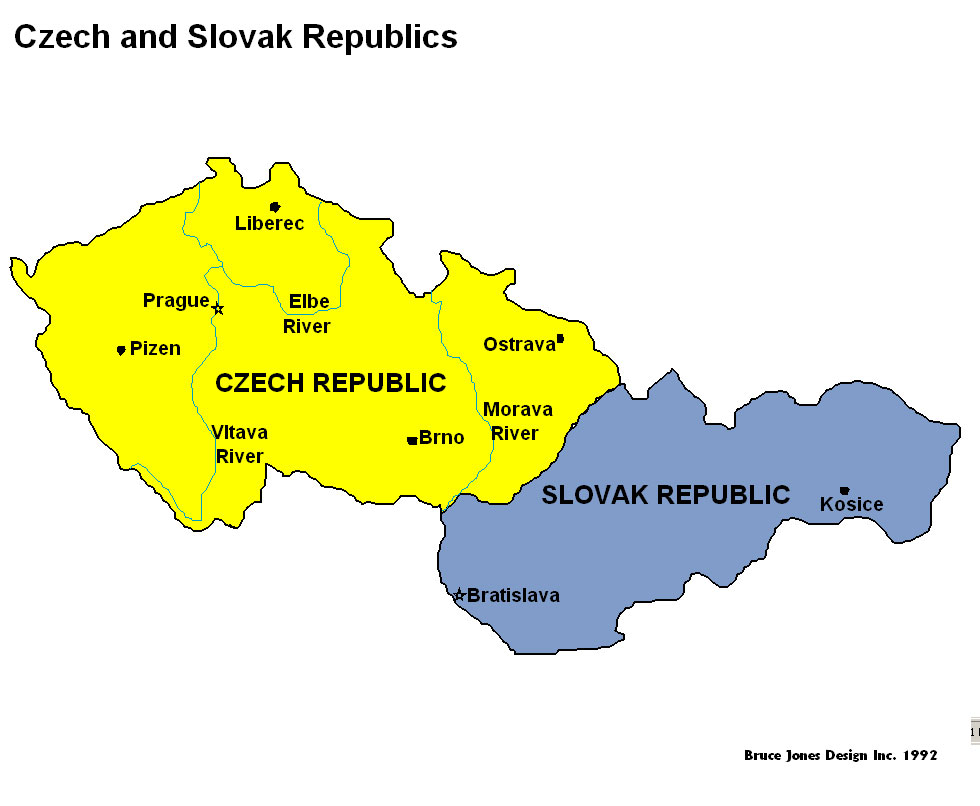
6. Or was it the envy-motivated decisions by politicians in both Slovakia and the Czech Republic to replace flat tax systems with so-called progressive tax regimes? This is a strong candidate for the worst policy of the year. It’s very rare to see governments do the right thing, so it’s really tragic when politicians implement good reforms and later decide to reinstate class-warfare policies.

All things considered, I think this last option is the worst policy development of 2012. To be sure, I’m a bit biased since my work focuses on public finance issues and I’ve spent 20 years advocating for tax reform.

But I think there’s a strong case to be made, by anyone who believes in freedom, that politicians from Slovakia and the Czech Republic deserve the booby prize for worst public policy development of 2012.

Alvin Rabushka, sometimes referred to as the Father of the Flat Tax , summarizes the grim news.

On December 4, 2013, the center-left parliament of Slovakia modified the country’s historic 19% flat-rate tax…  Effective January 1, 2013, the income tax rate for corporations was raised from 19% to 23%, while that on individuals earning more than €39,600 (€1=$1.30) a year was raised to 25%, thereby creating two brackets of 19% and 25%. …On November 7, 2012, the lower house (Chamber of Deputies) of the national parliament approved a proposal to impose a second higher rate of 22% on annual income exceeding Czech Koruna (CZK) 100,000 ($5,200) per month.  President Vaclav Klaus signed the bill on December 22, 2012, which will take effect on January 1, 2013.

What’s especially depressing about these two defeats is that the supposedly right-wing parties deserve the blame.

Two nations filled with brain-dead conservative politicians

In Slovakia, all but one of the right-leaning parties in the old government decided to support the Greek bailout, leading to the collapse of the government and the election of a new socialist government that then sabotaged tax reform.

And in the Czech Republic, the current right-of-center government decided to scrap the flat tax for “fairness” reasons. I’m sure that will really be comforting to the Czech people as the economy suffers from less growth.

To understand what the people of those nations are losing, here’s my video on the flat tax.

Now for a bit of good news. There are still more than 25 flat tax jurisdictions in the world, including two of my favorite places – Hong Kong and Estonia.

So there are still some pockets of rationality. It’s just very unfortunate that the scope of human liberty is getting smaller every year.

P.S. The absolute worst thing that happened in 2012, if we look beyond public policy, was Georgia falling 4 yards short of beating Alabama in the Southeastern Conference Championship.

P.P.S. Speaking of sports, the best thing about 2012 occurred in Virginia Beach back in October.

Greece going broke before the USA?

Federal Spending by the Numbers

Uploaded by on Jun 10, 2010

http://blog.heritage.org/2010/06/10/new-video-federal-spending-by-the-numbers The Federal Government is addicted to spending. Watch this video from the Heritage Foundation to learn about the trouble we are in and where to find solutions.

_______

Greece going broke before the USA? We got to control the entitlement mentality.

I wrote yesterday that the United Kingdom is doomed because there isn’t a political party with the vision or courage to restrain the welfare state.

At various points, I’ve also expressed pessimism about the future of France, Germany, Italy, Spain, Ireland, and even the United States.

Simply stated, almost all western nations suffer from the same toxic combination of dependency, demographic decline, and poorly structured entitlement programs.

But some nations are heading in the wrong direction more rapidly than others, and Greece is best example (perhaps I should say worst example?) of a country that is careening toward catastrophe.

It’s such a basket case that I’m not sure whether the politicians or the people deserve the lion’s share of the blame.

  •  The politicians deserve blame because they treat public office as a tool for self-enrichment and self-aggrandizement, largely by steering taxpayer money to friends, cronies, contributors, and supporters. Sometimes they do this in a search for votes. Sometimes in a search for cash.
  •  The people deserve blame because they view the state as a magical source of freebies and they see no economic or moral problem with using a coercive government to steal from fellow citizens. They realize the system is corrupt, which is why they seek to evade taxes, but that doesn’t stop them from trying to live at the expense of others.

In a best-case scenario, this type of dysfunctional system reduces prosperity. But when the number of people mooching off the state reaches a critical mass (as illustrated by these two cartoons), then you get societal meltdown.

Which is a good description of what’s happening in Greece.

And even when the government is on the verge of collapse and there’s pressure for reform, the political elite somehow figure out how to screw things up.

The latest example is the possible creation of “special economic zones.” When I first glanced at the story excerpted below, I thought this meant the Greek government was going to create something akin to “enterprise zones” featuring lower tax rates and less red tape.

Because I’m a supporter of the law applying equally to everybody, I’m not a big fan of such policies. I want to reduce the burden of government, of course, but I want that approach for entire countries, not just a handful of areas selected by politicians.

But at least the concept is good, right?

Not when Greek politicians are involved. They have taken the worst features of enterprise zones and combined them with the worst features of redistributionism. Here’s some of the story from Ekathimerini.

The government is paving the way for negotiations with the European Commission regarding the creation of special economic zones (SEZ) in Greece, Development Minister Costis Hatzidakis confirmed on Tuesday in Athens. …“SEZ will give a boost to the basis of the real economy,” said Hatzidakis, reiterating that the existing labor legislation will be fully respected. ..This forms part of the 10-point priority plan Hatzidakis announced yesterday aimed at boosting growth. Changes to the investment incentives law and the fast-track regulations will be completed within the next 15 days. The bill to be prepared will include subsidies of up to 80 percent for smaller companies… Public-private partnerships will be used for bolstering regional growth.

So the zones will keep all the bad labor laws, but provide big subsidies and create “public-private partnerships” (i.e., cronyism).

I hate to sound negative all the time, but that sounds precisely like the kind of nonsense that put Greece in a ditch to begin with.

To be fair, the article does talk about targeted tax relief and accelerated procedures for dealing with red tape. But that’s not exactly good news. Targeted tax cuts are a form of discrimination and they create an environment favorable to lobbying and corruption. And while it seems like good news to approve licenses more quickly, why not just get rid of bureaucratic hurdles? After all, this is the country (this is not a joke) that requires stool samples from entrepreneurs seeking to set up online companies.

It’s very hard to have any optimism after reading this type of story. Greece surely is an example of statism run amok, but let’s return to the point I made above about almost all other western nations heading in the same direction. Greece may be closest to the fiscal cliff, but the rest of us are driving in the same direction.

And if you think this is overheated rhetoric (yes, I’m prone to hyperbole), check out these dismal numbers from the Bank for International Settlements and the Organization for Economic Cooperation and Development.

P.S. The BIS and OECD numbers show that the United States is in worse shape – in the long run – than every European welfare state. I assume this is largely based on assumptions of health care spending rising more rapidly in America. The bad news is that this is a reasonable assumption (thanks to our third-party payer problem). The good news is that we can easily solve the problem with a combination of entitlement reform (which deals with a direct cause of third-party payer) and tax reform (which deals with an indirect cause of third-party payer).