Monthly Archives: February 2021

A New Look at Thomas Sowell, ‘Great Black Intellectual’ Ignored by Left
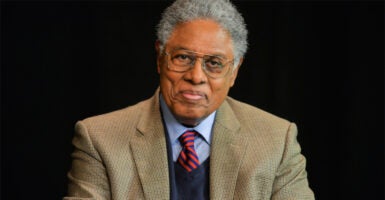
The new documentary “Thomas Sowell: Common Sense in a Senseless World” tells the story of Sowell’s life and how his penetrating intellect has influenced society. (Photo: Rod Searcy)

Thomas Sowell is considered by many to be one of the most influential and brilliant minds of the past half-century. He is most famous for his work as an economist, but is also a bestselling author, syndicated columnist, historian, and academic.

Yet he hasn’t received much recognition. “When people talk about the great black intellectuals today, you hear names like Henry Louis Gates at Harvard or Cornel West … or today you hear Ta-Nehisi Coates and Ibram X. Kendi,” says Jason Riley, a journalist, scholar, and member of The Wall Street Journal’s editorial board.

“But in my view, Tom has written circles around those guys and is much broader in subjects that he’s covered as well as much deeper and his analysis is much more rigorous than those guys’,” Riley says.

A new documentary, “Thomas Sowell: Common Sense in a Senseless World,” tells the story of Sowell’s life and how his logic and intellect have impacted society.

The Left has declared war on our culture, but we should never back down, nor compromise our principles. Learn more now >>

Riley, who narrates the film, joins the show to discuss the documentary and the personal impact Sowell has had on his own life.

https://youtu.be/WFxtJNK0HH8

—-

You can watch the full-length documentary hereor by visiting SowellFilm.com.

Plus, John Cooper, associate director of institute communications at The Heritage Foundation and a big football fan, joins us to talk about what we can expect to see during Super Bowl LV this weekend.

We also cover these stories:

  • Democrats urge President Joe Biden to cancel up to $50,000 in debt for student loan borrowers.
  • Biden addresses the National Prayer Breakfast.
  • Former Vice President Mike Pence is joining The Heritage Foundation as a distinguished fellow.

Listen to the podcast below or read the lightly edited transcript.

The Daily Signal Podcast” is available on Ricochet, Apple PodcastsPippaGoogle Play, and Stitcher. All of our podcasts can be found at DailySignal.com/podcasts. If you like what you hear, please leave a review. You also can write to us at letters@dailysignal.com.

Virginia Allen: Many consider Thomas Sowell to be one of the greatest minds of our day. Sowell is most well-known for his groundbreaking work as an economist, but is also a bestselling author, a photographer, syndicated columnist, historian, and academic. He is a man in pursuit of truth, and when he finds it, he stands by it, even when that truth may not be popular.

Free To Choose Media has just produced a one-hour documentary on the life and work of Thomas Sowell. The film is called “Thomas Sowell: Common Sense in a Senseless World.” …

“Thomas Sowell, one of the greatest minds of the past half-century,” says Jason Riley. And Mr. Riley, who narrated the film, is here with us today to discuss the documentary. Mr. Riley, welcome to the show.

Jason Riley: Thank you for having me.

Allen: You narrated this one-hour documentary on Thomas Sowell. I watched it last week and was just completely captivated by the film. I’ve known a little bit about Thomas Sowell, but I learned so much watching this documentary.

What you’ve really done here in this film is essentially take viewers through the life of Thomas Sowell and really show the impact that he has had on people and across so many areas of our world.

So I want to begin by asking you just to share a little bit of your own personal story of how Thomas Sowell—his writings, his rhetoric, his logic, and his honesty—has really impacted you personally.

Riley: Well, I discovered Tom Sowell in college in the early 1990s. I was working on the school paper and having a conversation with my fellow students about affirmative action one day and someone piped in and said, “Jason, you sound like Tom Sowell.” And I said, “Tom, who?”

And the person wrote down the name of a book on a piece of paper and I went to the school library that evening and checked it out and read it in one sitting that evening and went back to school the next morning and checked out everything else they had by Tom Sowell and was pretty much hooked on him by then.

While I was working at The Wall Street Journal on the editorial board in the mid-’90s is when I first got to meet Tom Sowell.

He was at the Hoover Institution at Stanford University then, still is, and he would travel through New York on book tours and meet with various editorial boards. So that’s when I first got to meet him.

I later went out to Stanford to write a profile of him for the newspaper, that would have been in the mid-2000s. And that’s when we sort of struck up a friendship that has sort of endured since then.

Allen: So when you learned, “OK, there’s this film project,” I mean, yourself being a journalist, a scholar, a member of The Wall Street Journal editorial board, what made you say, “This is a film project that is something that I have to be a part of”?

Riley: Well, they came to me, the Free To Choose folks came to me. I had been working on a biography of Sowell—that’ll be out in May—and when they found out that I was working on this biography, they approached me and said, “We want to do a film, a documentary about Tom’s life. Would you care to narrate it?” And I did not hesitate.

Allen: Share a little bit about your book that’s coming out. And what did give you kind of that passion and drive to say, “You know what? I appreciate his work so much that I am going to take on this challenge and not only be a part of this film, but also write this book”?

Riley: Sure. Well, the book is titled “Maverick: A Biography of Thomas Sowell.” It’s available for pre-order on Amazon now. It will be out on May 25.

And it is the first ever biography of Tom. He has no other biographer. He’s written a memoir himself and he’s written about his personal life in his many columns over the years, but this was the first a biography of Tom.

It’s primarily an intellectual biography. I don’t focus much on his personal life, although there is a bit of that in there, but I do focus on his ideas, the scholarship, how he’s distinguished himself as an intellectual over the past half-century and sort of what his legacy will be, how he’ll be remembered.

I was sort of trying to get him to cooperate with the biography. He’s a very private person for a while, for more than a decade, actually, and I think he’s 90 years old now, so maybe I just wore him down. But he did cooperate, he sat for a bunch of long interviews for the book.

I also interviewed a bunch of colleagues of his, acquaintances, and people who are familiar with his work over the years. So it was a lot of fun. It was a lot of fun to write.

He’s meant a lot to me in terms of my own intellectual development over the decades. And so I wanted to introduce him and his work to a new generation. And I don’t think that Tom has gotten the exposure that he sort of deserves.

When people talk about the great black intellectuals today, you hear names like Henry Louis Gates at Harvard or Cornel West and people like that, or today you hear Ta-Nehisi Coates and Ibram X. Kendi. But in my view, Tom has written circles around those guys and is much broader in subjects that he’s covered as well as much deeper and his analysis is much more rigorous than those guys.

I don’t think that Thomas would have gotten the attention and the exposure he deserves. So I’m hoping the film will wet people’s appetite and get them to pick up some books by Tom, as well as the biography I hope does the same thing, gets more people interested in Tom and his scholarship.

Allen: You mentioned Thomas Sowell’s legacy, and I think that the film does a great job of really explaining what that legacy is, and I’m sure your book does the same, but could you just give us a little bit of a teaser of, in your opinion, what is the legacy that Thomas Sowell has already left and will leave?

Riley: I think in a number of areas he’s really made his mark.

Very broadly speaking though, he’s made his mark as a sort of honest intellectual, someone who is much more interested in being right than in being popular, and following the facts where they lead and reporting his findings, even if they happen to be politically incorrect.

And he feels that is the real duty of a scholar, to follow the facts and not fall for trendy thinking or fashionable thinking. … This isn’t a popularity contest. That’s not what true scholarship calls for. So I think that is one of his legacies.

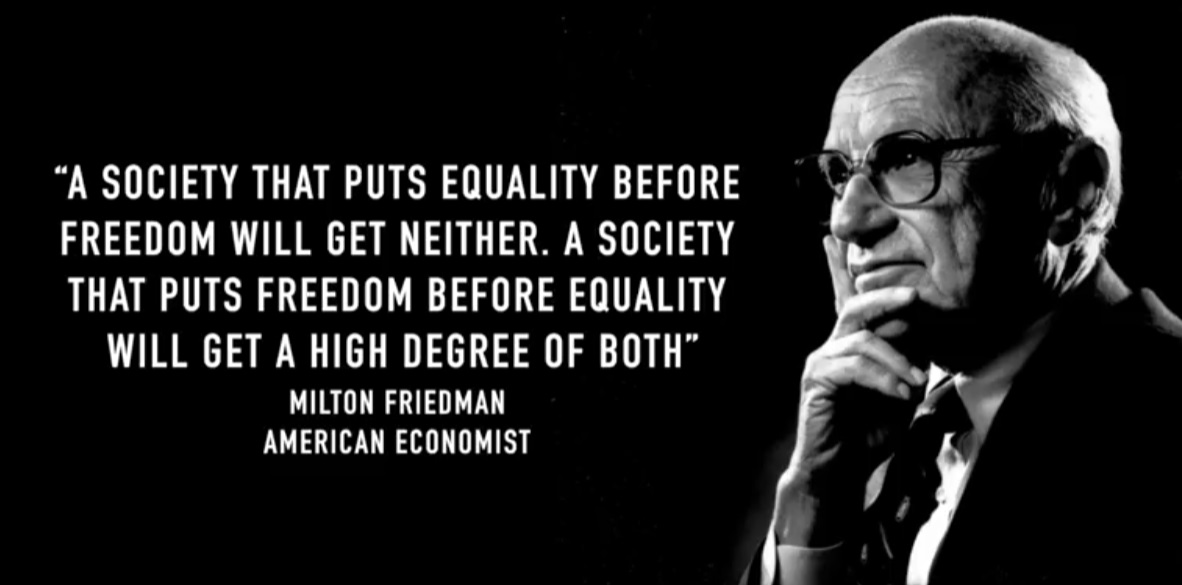
Another is … I think he modeled himself after Milton Friedman, one of his mentors at the University of Chicago, where he earned his Ph.D. in the early 1960s.

Friedman was someone who felt that intellectuals shouldn’t spend all their time simply talking to one another, that they should seek a wider audience and speak to non-experts, explain themselves and their work to the general public.

And after Friedman left teaching in the 1970s, that’s what he did. In fact, one of the things he did was a television program that was produced by the same company that produced this one, the Free To Choose Network. And that was Friedman’s way of speaking to the general public about economics.

So when Sowell left teaching in the 1970s, I think he set about a type of public intellectualism that was very similar to Friedman’s. He wrote his popular column for general interest readers. Most of Tom’s books are written for non-academics and he takes great pride in explaining economics and these ideas to non-experts.

He’s most known for his writings on race, but his bestselling book is “Basic Economics,” which is essentially an economics textbook without any graphs or equations in it. And I think Tom, although he left the campus teaching, he still sort of continued to teach through these books and columns over the decades.

Allen: One of the things that I was most fascinated to learn about in the film is that Thomas Sowell, he actually used to be a Marxist. But what really cured him, he says of that, was working for the government, when he realized these Marxist ideas, they would never actually work.

Could you just share a little bit about Thomas Sowell’s journey out of Marxism, because I really find that so fascinating?

Riley: Yes. Well, it’s not that uncommon. If you look at a lot of leading conservatives in the 20th century, many of them started on the left.

Milton Friedman started on the left. George Stigler started on the left. Walter Williams, the late Walter Williams, who passed away last year and was a friend of Tom’s for more than 50 years, started out on the left. Clarence Thomas started out on the left. So it’s not that uncommon.

But yes, Tom was a Marxist through his 20s. And then it was working in the government and seeing how some of these ideas he had about how the capitalist system works, seeing that in practice and seeing incentives in place and the intentions of some of these policies versus the actual results, that all had an effect on Tom changing his mind about free markets and their power in shaping people’s lives for the better.

So that’s what it was, it was real-life experience and just less reliance on theories and what’s supposed to happen and paying more attention to what actually comes to pass.

Allen: You did interview Walter Williams for the documentary, which, as you mentioned, Mr. Williams did pass away this past December. So it really is a treasure to have these recorded conversations of him sharing about the work of Thomas Sowell, his relationship with Thomas Sowell.

But one of the things that Walter Williams said is that the media really, they stopped covering Thomas Sowell a long time ago because they knew that they couldn’t debate him. And this is just a sad commentary, in my mind, on really the state of our media.

Why do you think the media has chosen to so often ignore Sowell’s work?

Riley: Well, I think they’ve taken the side of the black left, broadly speaking, and the black left has ignored Tom for a long time. And the media continues to run to black intellectuals, academics, civil rights organizations, and so forth to speak on behalf of black people.

They tell the media, “Don’t pay attention to Tom. Anyone who thinks like that or says those things is a sellout or an Uncle Tom or someone who should not be taken seriously. They’re simply doing the bidding of white people.”

So they’ve responded with these sort of ad hominem attacks on Tom and the media has largely bought that argument.

And the types of people that give out economics awards and those types of things are controlled by the left, generally. And so that has worked against Tom and his exposure over the decades—one of the things I’m hoping that the book and the film will help correct.

Allen: One of the things that I was also really fascinated [by] in the film was just how far-reaching Thomas Sowell’s work really is. That despite the media not giving him the attention that he so deserves, he has impacted so many individuals in so many different areas of our world.

You all interviewed a rap musician for the film who says that Thomas Sowell has inspired many of his lyrics. What did you learn in those conversations with individuals who have been so impacted by Thomas Sowell’s work?

Riley: Well, a lot of them speak about the clarity of his writing. He breaks things down in a way that’s very understandable and digestible and witty and people admire that.

Tom, in the early part of his career, did write more academic books speaking to his peers in the academy, but he could also write for a wider audience.

And editors at newspapers love this because they had this serious rigorous thinker who could write 800-word pieces on the topics of the day for their general interest readers to understand.

So they were getting the depth, this depth of knowledge, in sort of more easily digestible bites. And they really appreciated that and fans of Sowell all seemed to come back to the clarity of his writing and his thinking, how he puts things. He’s a wonderful storyteller.

Also, one of the things he’s known for is his international perspectives. And so he likes to talk about trends, not only within the United States, but in other countries, and what’s going on over there.

I think … sometimes in America, you have people who live in a bit of a bubble, an American bubble, a U.S. bubble. And Tom says, “A lot of these policies that are being pushed here have been tried in other places at other times, and here’s what’s happened over there. And we should keep that in mind when we think about how those policies might affect life here in this country.”

So those international perspectives, which is something he specialized in in many of his books, is something people also appreciate.

Allen: Making a documentary is no small undertaking. It’s a complicated process. A lot of time, a lot of work. What, for you, was the greatest challenge of working so closely with the team of individuals who were producing this film?

Riley: I just wanted to make sure we were doing justice to Sowell. I really see him as this towering intellectual figure. I’m a journalist by training. I’m not an intellectual, I’m not an academic. I spent a life as a print journalist, basically. And I really wanted to make sure both in the book and in the documentary that we were just doing him justice.

I said before that no one else has written a biography of Tom, but I hope someone else does come along, a real scholar comes along, someone who can really grapple with Tom’s ideas at his level and lay them out for people. I hope someone comes and does that.

I hope my book can be a little placeholder until that comes along and do what I intended it to do, which is, again, wet people’s appetite about Tom.

But that’s my biggest concern. I just want to do him justice because I think he is one of the great social theorists of the 20th century of any color and his writings on political philosophy, his writings on social theory, his writings on education and law and history and culture, they are quite broad. And I think that Tom is someone people will be reading for generations to come.

Allen: I know that you said that Thomas Sowell is quite a private man, but you did have the privilege of speaking with him a little bit throughout the course of making the film. Do you know if he has seen the documentary yet and what his thoughts are on it?

Riley: I don’t know. I haven’t had any contact with Tom since it’s been out so I don’t know if he’s seen it yet. He is at Hoover, the Hoover Institution at Stanford, and I know that Hoover’s aware of the film, so perhaps they’ve reached out to him. But no, I can’t say for certain whether he’s seen it.

Allen: Well, I have no doubt that he’ll feel incredibly honored by it. It really is a beautiful documentary and so informative. Would you just tell our listeners both where they can find and watch the documentary, and then also again, share with us when and where your book will be out?

Riley: Sure. The documentary information can be found at SowellFilm.com. … And it was made for public television so there you can find where it will appear on your local public television station. In addition to that, it’s being streamed on Vimeo and Amazon and YouTube, and you can find links to stream it as well at SowellFilm.com.

In terms of my book, again, it’ll be out in May, May 25 to be exact, and it can be pre-ordered on Amazon right now.

Allen: Great. We will be sure to leave links for both the documentary and to pre-order your book in the show notes today. Mr. Riley, thank you so much for your time.

Riley: Thank you.

Thomas Sowell: Common Sense in a Senseless World – Full Video

Explore Economist Thomas Sowell’s Remarkable Life In New Documentary

Despite writing more than 50 books on economics, race, and history, there’s a good chance Thomas Sowell is the national treasure you’ve never heard of.

The past ten months have proved we live in a senseless world. There are large groups of people on both sides of the aisle who have no regard for reality, or what were once considered the normal and expected rules of polite society. One man, however, has never been swayed by the prevailing winds of the political moment over his illustrious 50-year career, keeping himself grounded in empiricism, fact, and logic: economist Thomas Sowell.

While he has published more than 50 books on subjects such as economics, race, and history, there is still a good chance that Sowell is the national treasure you’ve never heard of. The recently released documentary, “Thomas Sowell: Common Sense in a Senseless World,” successfully introduces Sowell both to those who’ve never heard of him and dives deep into the lesser-known aspects of his life for those who are already avid fans.

Narrated by Wall Street Journal columnist Jason Riley, the documentary takes the audience through Sowell’s life from his birth in North Carolina to his time as a senior fellow at the Hoover Institution, where he still works today. For the most underappreciated public intellectual of our time, this film is a well-deserved tribute to a magnificent career.

Sowell and Education

“Thomas Sowell: Common Sense in a Senseless World” appropriately begins with Sowell’s childhood. He was born in Gastonia, North Carolina, in 1930, and both of his parents died by the time he was only a few years old. He was adopted by his great aunt and raised by her, as well as her two adult daughters. When Sowell was eight, they moved to Harlem to gain access to greater opportunities than were available in the Jim Crow South.

While none of the women who raised Sowell ever graduated high school, he says they were “interested in education and they were interested in me.” He did not grow up with any semblance of material wealth — his family did not have a telephone in the house until he was well into his teen years, and they never had a television — but Sowell did grow up with the cultural value of education: something that was able to eventually propel him to great heights.

Education has long been a road to success in America. It is for this reason the two highest-earning religious groups in America — Hindus and Jews — also happen to have the most education out of all religious groups. Today, the tragic reality is that, for many low-income students, the chance to acquire a quality education is significantly diminished by the conditions of the failing public schools they are required to attend.

Having benefited from the option to transfer to a better school when he was young, Sowell now advocates the same policy for the disadvantaged families of today. While Sowell has been writing about education for decades, arguably his deepest dive into the subject came just last year when he wrote “Charter Schools and Their Enemies,” a book that deserves to be remembered as one of his finest works.

The film spends a commendable amount of time emphasizing the role and importance of education, as well as introducing the audience to the various alternatives to the traditional public school monopoly, such as charter schools.

Eva Moskowitz, founder of Success Academy Charter School, correctly points out that the benefits of school choice are concentrated within the most vulnerable communities, despite the fact people with Sowell’s political persuasion are so often maligned as “uncaring” and “unempathetic” towards those who are disadvantaged. By correctly framing the issue in a way that highlights the communities the policy is helping, it allows conservatives and libertarians to begin reclaiming the moral high ground.

Sowell’s Intellectual Influences

Sowell was drafted into the military in 1951. Afterward, he attended Howard University as an undergraduate, then transferred to Harvard University, where he procured a degree in economics. He earned his master’s at the University of Columbia, then went on to the University of Chicago for his Ph.D.

During his college years, Sowell was a Marxist, and he remained so even after taking a class taught by Milton Friedman. Yet all it took was one summer interning in the federal government for him to be exposed to government’s inefficiencies and perverse incentives.

In detailing Sowell’s journey from Marxism to capitalism, the film strikes a chord with those paying attention to the current condition of higher education. Many college students today have a similar disposition to Sowell when he was in college. They believe capitalism has proved to be corrupt at its core, as evidenced by things like climate change, increasing income inequality, and decreasing income mobility.

While people can debate about the merits of these various concerns for hours on end, the real thing these students miss is the efficacy (or lack thereof) of government control of the economy. Sowell’s personal experience in the government opened his eyes to the truth about capitalism, but that should leave all of us wondering what the wake-up call to many in my generation will be.

Sowell credits the Chicago School of Economics with teaching him the importance of gathering hard data. That lesson has stuck with him throughout the years, as his data gathering and usage remains one of his strong suits. Although empiricism and objective truth have largely been replaced by intuition among today’s college students, Sowell never argues based on feelings, but backs up his assertions with facts — and a lot of them at that.

Sowell Today

In 1980, Sowell became a fellow at the Hoover Institution at Stanford University, where they essentially offered to “pay him to be Tom Sowell” by allowing him to choose what and when he writes. Riley explains, “thousands of students would miss out on having Professor Sowell as a teacher, but millions of intellectually curious readers would benefit from Thomas Sowell’s work here [at the Hoover Institution].”

Among the best aspects of “Thomas Sowell: Common Sense in a Senseless World” is the extent it explains Sowell’s enduring popularity. Arguably the key reason Sowell is so beloved is that he fearlessly makes his argument no matter the fashionable sentiment at the time. Whether it be on the perverse incentives attached to the welfare state, his critique of the idea that every disparity signals discrimination, or the idea of human capital as the chief necessity for group advancement, Sowell takes on the intellectual establishment.

At a time people are increasingly afraid to speak their minds for fear of being “canceled,” Sowell is a refreshing presence — a presence that lets people know that there are other people who approach the questions of the day with simple common sense. As Riley describes him, “[Sowell is] that rarest of species: an honest intellectual. He spent a career putting truth over popularity. He’s explored the answers to questions others were afraid to even ask.”

Bringing Sowell to the Next Generation

One would not be blamed for believing that a 90-year-old economist would not be particularly popular among a younger audience. Yet, make no mistake, Sowell’s work has proved to be timeless, and he’s gaining a large following among the next generation. On Instagram, the unofficial Thomas Sowell account has more than 150,000 followers, while on Twitter, Sowell’s followers number more than 650,000, and his reach continues to grow.

A documentary such as “Thomas Sowell: Common Sense in a Senseless World helps widen that reach. Garnering more than 2.1 million views on YouTube in the first week since its release, there is no doubt that it has done its part in keeping the work of Sowell alive and in the minds of the next generation of students, thinkers, and leaders.

Without a doubt, the world has been lucky to benefit from Sowell’s insights. We can only hope that with the help of films like this, we can adequately extend those insights to those who will be next in line to influence our world.

Jack Elbaum is a freshman at George Washington University. His writing has been featured in the Wall Street Journal, Newsweek, and the Washington Examiner. You can contact him at jackelbaum16@gmail.com and follow him on Twitter @Jack_Elbaum.


Bob Chitester Discusses Milton Friedman and ‘Free to Choose’

Published on Jul 30, 2012 by

“There are very few people over the generations who have ideas that are sufficiently original to materially alter the direction of civilization. Milton is one of those very few people.”

That is how former Federal Reserve Chairman Alan Greenspan described the Nobel laureate economist Milton Friedman. But it is not for his technical work in monetary economics that Friedman is best known. Like mathematician Jacob Bronowski and astronomer Carl Sagan, Friedman had a gift for communicating complex ideas to a general audience.

It was this gift that brought him to the attention of filmmaker Bob Chitester. At Chitester’s urging, Friedman agreed to make a 10 part documentary series explaining the power of economic freedom. It was called “Free to Choose,” and became one of the most watched documentaries in history.

The series not only reached audiences in liberal democracies, but was smuggled behind the iron curtain where it played, in secret, to large audiences. Reflecting on its impact, Czech president Vaclav Klaus has said: “For us, who lived in the communist world, Milton Friedman was the greatest champion of freedom, of limited and unobtrusive government and of free markets. Because of him I became a true believer in the unrestricted market economy.”

July 31st, 2012 is the 100th anniversary of Friedman’s birth. To commemorate that occasion, we’d like to share an interview with “Free to Choose” producer Bob Chitester. Like this interview, the entire series can now be viewed on-line at no cost at http://www.freetochoose.tv/, thanks to the incredible technological progress brought about by the economic freedom that Milton Friedman celebrated.

Produced by Andrew Coulson, Caleb O. Brown, Austin Bragg, and Lou Richards, with help from the Free to Choose Network.

_____________

April 4, 2021

President Biden  c/o The White House
1600 Pennsylvania Avenue NW
Washington, DC 20500

Dear Mr. President,

We got to stop spending so much money on the federal level. It will bankrupt us. I remember back in 1980 when I really started getting into the material of Milton Friedman as a result of reading his articles in Newsweek and reading his book “Free to Choose,” I really did get facts and figures to back on the view that we need more freedom giving back to us and the government needs to spend less.

As a result of Friedman’s writings I was able to discuss these issues with my fellow students at the university and by the time the 1980 election came around I had been attending political rallies and went out and worked hard for Ronald Reagan’s election. In this article below Dr. Thomas Sowell (who was featured twice in the film “Free to Choose”) notes how much influence Milton Friedman had on the election outcome in 1980:

Milton Friedman at 90

by Thomas Sowell

Thomas Sowell is a senior fellow at the Hoover Institute in Stanford, California.

Added to cato.org on July 25, 2002

This article originally appeared on TownHall.com, July 25, 2002.

Milton Friedman’s 90th birthday on July 31st provides an occasion to think back on his role as the pre-eminent economist of the 20th century. To those of us who were privileged to be his students, he also stands out as a great teacher.

When I was a graduate student at the University of Chicago, back in 1959, one day I was waiting outside Professor Friedman’s office when another graduate student passed by. He noticed my exam paper on my lap and exclaimed: “You got a B?”

“Yes,” I said. “Is that bad?”

Thomas Sowell is a senior fellow at the Hoover Institute in Stanford, California.

“There were only two B’s in the whole class,” he replied.

“How many A’s?” I asked.

“There were no A’s!”

Today, this kind of grading might be considered to represent a “tough love” philosophy of teaching. I don’t know about love, but it was certainly tough.

Professor Friedman also did not let students arrive late at his lectures and distract the class by their entrance. Once I arrived a couple of minutes late for class and had to turn around and go back to the dormitory.

All the way back, I thought about the fact that I would be held responsible for what was said in that lecture, even though I never heard it. Thereafter, I was always in my seat when Milton Friedman walked in to give his lecture.

On a term paper, I wrote that either (a) this would happen or (b) that would happen. Professor Friedman wrote in the margin: “Or (c) your analysis is wrong.”

“Where was my analysis wrong?” I asked him.

“I didn’t say your analysis was wrong,” he replied. “I just wanted you to keep that possibility in mind.”

Perhaps the best way to summarize all this is to say that Milton Friedman is a wonderful human being — especially outside the classroom. It has been a much greater pleasure to listen to his lectures in later years, after I was no longer going to be quizzed on them, and a special pleasure to appear on a couple of television programs with him and to meet him on social occasions.

Milton Friedman’s enduring legacy will long outlast the memories of his students and extends beyond the field of economics. John Maynard Keynes was the reigning demi-god among economists when Friedman’s career began, and Friedman himself was at first a follower of Keynesian doctrines and liberal politics.

Yet no one did more to dismantle both Keynesian economics and liberal welfare-state thinking. As late as the 1950s, those with the prevailing Keynesian orthodoxy were still able to depict Milton Friedman as a fringe figure, clinging to an outmoded way of thinking. But the intellectual power of his ideas, the fortitude with which he persevered, and the ever more apparent failures of Keynesian analyses and policies, began to change all that, even before Professor Friedman was awarded the Nobel Prize in economics in 1976.

A towering intellect seldom goes together with practical wisdom, or perhaps even common sense. However, Milton Friedman not only excelled in the scholarly journals but also on the television screen, presenting the basics of economics in a way that the general public could understand.

His mini-series “Free to Choose” was a classic that made economic principles clear to all with living examples. His good nature and good humor also came through in a way that attracted and held an audience.

Although Friedrich Hayek launched the first major challenge to the prevailing thinking behind the welfare state and socialism with his 1944 book “The Road to Serfdom,” Milton Friedman became the dominant intellectual force among those who turned back the leftward tide in what had seemed to be the wave of the future.

Without Milton Friedman’s role in changing the minds of so many Americans, it is hard to imagine how Ronald Reagan could have been elected president.

Nor was Friedman’s influence confined to the United States. His ideas reached around the world, not only among economists, but also in political circles which began to understand why left-wing ideas that sounded so good produced results that were so bad.

Milton Friedman rates a 21-gun salute on his birthday. Or perhaps a 90-gun salute would be more appropriate.

________

Thank you so much for your time. I know how valuable it is. I also appreciate the fine family that you have and your commitment as a father and a husband.

Sincerely,

Everette Hatcher III, 13900 Cottontail Lane, Alexander, AR 72002, ph 501-920-5733

Williams with Sowell – Minimum Wage
Thomas Sowell

Thomas Sowell – Reducing Black Unemployment

By WALTER WILLIAMS

—-

Ronald Reagan with Milton Friedman
Milton Friedman The Power of the Market 2-5

Explore Economist Thomas Sowell’s Remarkable Life In New Documentary

Thomas Sowell: Common Sense in a Senseless World – Full Video

Explore Economist Thomas Sowell’s Remarkable Life In New Documentary

Despite writing more than 50 books on economics, race, and history, there’s a good chance Thomas Sowell is the national treasure you’ve never heard of.

The past ten months have proved we live in a senseless world. There are large groups of people on both sides of the aisle who have no regard for reality, or what were once considered the normal and expected rules of polite society. One man, however, has never been swayed by the prevailing winds of the political moment over his illustrious 50-year career, keeping himself grounded in empiricism, fact, and logic: economist Thomas Sowell.

While he has published more than 50 books on subjects such as economics, race, and history, there is still a good chance that Sowell is the national treasure you’ve never heard of. The recently released documentary, “Thomas Sowell: Common Sense in a Senseless World,” successfully introduces Sowell both to those who’ve never heard of him and dives deep into the lesser-known aspects of his life for those who are already avid fans.

Narrated by Wall Street Journal columnist Jason Riley, the documentary takes the audience through Sowell’s life from his birth in North Carolina to his time as a senior fellow at the Hoover Institution, where he still works today. For the most underappreciated public intellectual of our time, this film is a well-deserved tribute to a magnificent career.

Sowell and Education

“Thomas Sowell: Common Sense in a Senseless World” appropriately begins with Sowell’s childhood. He was born in Gastonia, North Carolina, in 1930, and both of his parents died by the time he was only a few years old. He was adopted by his great aunt and raised by her, as well as her two adult daughters. When Sowell was eight, they moved to Harlem to gain access to greater opportunities than were available in the Jim Crow South.

While none of the women who raised Sowell ever graduated high school, he says they were “interested in education and they were interested in me.” He did not grow up with any semblance of material wealth — his family did not have a telephone in the house until he was well into his teen years, and they never had a television — but Sowell did grow up with the cultural value of education: something that was able to eventually propel him to great heights.

Education has long been a road to success in America. It is for this reason the two highest-earning religious groups in America — Hindus and Jews — also happen to have the most education out of all religious groups. Today, the tragic reality is that, for many low-income students, the chance to acquire a quality education is significantly diminished by the conditions of the failing public schools they are required to attend.

Having benefited from the option to transfer to a better school when he was young, Sowell now advocates the same policy for the disadvantaged families of today. While Sowell has been writing about education for decades, arguably his deepest dive into the subject came just last year when he wrote “Charter Schools and Their Enemies,” a book that deserves to be remembered as one of his finest works.

The film spends a commendable amount of time emphasizing the role and importance of education, as well as introducing the audience to the various alternatives to the traditional public school monopoly, such as charter schools.

Eva Moskowitz, founder of Success Academy Charter School, correctly points out that the benefits of school choice are concentrated within the most vulnerable communities, despite the fact people with Sowell’s political persuasion are so often maligned as “uncaring” and “unempathetic” towards those who are disadvantaged. By correctly framing the issue in a way that highlights the communities the policy is helping, it allows conservatives and libertarians to begin reclaiming the moral high ground.

Sowell’s Intellectual Influences

Sowell was drafted into the military in 1951. Afterward, he attended Howard University as an undergraduate, then transferred to Harvard University, where he procured a degree in economics. He earned his master’s at the University of Columbia, then went on to the University of Chicago for his Ph.D.

During his college years, Sowell was a Marxist, and he remained so even after taking a class taught by Milton Friedman. Yet all it took was one summer interning in the federal government for him to be exposed to government’s inefficiencies and perverse incentives.

In detailing Sowell’s journey from Marxism to capitalism, the film strikes a chord with those paying attention to the current condition of higher education. Many college students today have a similar disposition to Sowell when he was in college. They believe capitalism has proved to be corrupt at its core, as evidenced by things like climate change, increasing income inequality, and decreasing income mobility.

While people can debate about the merits of these various concerns for hours on end, the real thing these students miss is the efficacy (or lack thereof) of government control of the economy. Sowell’s personal experience in the government opened his eyes to the truth about capitalism, but that should leave all of us wondering what the wake-up call to many in my generation will be.

Sowell credits the Chicago School of Economics with teaching him the importance of gathering hard data. That lesson has stuck with him throughout the years, as his data gathering and usage remains one of his strong suits. Although empiricism and objective truth have largely been replaced by intuition among today’s college students, Sowell never argues based on feelings, but backs up his assertions with facts — and a lot of them at that.

Sowell Today

In 1980, Sowell became a fellow at the Hoover Institution at Stanford University, where they essentially offered to “pay him to be Tom Sowell” by allowing him to choose what and when he writes. Riley explains, “thousands of students would miss out on having Professor Sowell as a teacher, but millions of intellectually curious readers would benefit from Thomas Sowell’s work here [at the Hoover Institution].”

Among the best aspects of “Thomas Sowell: Common Sense in a Senseless World” is the extent it explains Sowell’s enduring popularity. Arguably the key reason Sowell is so beloved is that he fearlessly makes his argument no matter the fashionable sentiment at the time. Whether it be on the perverse incentives attached to the welfare state, his critique of the idea that every disparity signals discrimination, or the idea of human capital as the chief necessity for group advancement, Sowell takes on the intellectual establishment.

At a time people are increasingly afraid to speak their minds for fear of being “canceled,” Sowell is a refreshing presence — a presence that lets people know that there are other people who approach the questions of the day with simple common sense. As Riley describes him, “[Sowell is] that rarest of species: an honest intellectual. He spent a career putting truth over popularity. He’s explored the answers to questions others were afraid to even ask.”

Bringing Sowell to the Next Generation

One would not be blamed for believing that a 90-year-old economist would not be particularly popular among a younger audience. Yet, make no mistake, Sowell’s work has proved to be timeless, and he’s gaining a large following among the next generation. On Instagram, the unofficial Thomas Sowell account has more than 150,000 followers, while on Twitter, Sowell’s followers number more than 650,000, and his reach continues to grow.

A documentary such as “Thomas Sowell: Common Sense in a Senseless World helps widen that reach. Garnering more than 2.1 million views on YouTube in the first week since its release, there is no doubt that it has done its part in keeping the work of Sowell alive and in the minds of the next generation of students, thinkers, and leaders.

Without a doubt, the world has been lucky to benefit from Sowell’s insights. We can only hope that with the help of films like this, we can adequately extend those insights to those who will be next in line to influence our world.

Jack Elbaum is a freshman at George Washington University. His writing has been featured in the Wall Street Journal, Newsweek, and the Washington Examiner. You can contact him at jackelbaum16@gmail.com and follow him on Twitter @Jack_Elbaum.


Bob Chitester Discusses Milton Friedman and ‘Free to Choose’

Published on Jul 30, 2012 by

“There are very few people over the generations who have ideas that are sufficiently original to materially alter the direction of civilization. Milton is one of those very few people.”

That is how former Federal Reserve Chairman Alan Greenspan described the Nobel laureate economist Milton Friedman. But it is not for his technical work in monetary economics that Friedman is best known. Like mathematician Jacob Bronowski and astronomer Carl Sagan, Friedman had a gift for communicating complex ideas to a general audience.

It was this gift that brought him to the attention of filmmaker Bob Chitester. At Chitester’s urging, Friedman agreed to make a 10 part documentary series explaining the power of economic freedom. It was called “Free to Choose,” and became one of the most watched documentaries in history.

The series not only reached audiences in liberal democracies, but was smuggled behind the iron curtain where it played, in secret, to large audiences. Reflecting on its impact, Czech president Vaclav Klaus has said: “For us, who lived in the communist world, Milton Friedman was the greatest champion of freedom, of limited and unobtrusive government and of free markets. Because of him I became a true believer in the unrestricted market economy.”

July 31st, 2012 is the 100th anniversary of Friedman’s birth. To commemorate that occasion, we’d like to share an interview with “Free to Choose” producer Bob Chitester. Like this interview, the entire series can now be viewed on-line at no cost at http://www.freetochoose.tv/, thanks to the incredible technological progress brought about by the economic freedom that Milton Friedman celebrated.

Produced by Andrew Coulson, Caleb O. Brown, Austin Bragg, and Lou Richards, with help from the Free to Choose Network.

_____________

April 4, 2021

President Biden  c/o The White House
1600 Pennsylvania Avenue NW
Washington, DC 20500

Dear Mr. President,

We got to stop spending so much money on the federal level. It will bankrupt us. I remember back in 1980 when I really started getting into the material of Milton Friedman as a result of reading his articles in Newsweek and reading his book “Free to Choose,” I really did get facts and figures to back on the view that we need more freedom giving back to us and the government needs to spend less.

As a result of Friedman’s writings I was able to discuss these issues with my fellow students at the university and by the time the 1980 election came around I had been attending political rallies and went out and worked hard for Ronald Reagan’s election. In this article below Dr. Thomas Sowell (who was featured twice in the film “Free to Choose”) notes how much influence Milton Friedman had on the election outcome in 1980:

Milton Friedman at 90

by Thomas Sowell

Thomas Sowell is a senior fellow at the Hoover Institute in Stanford, California.

Added to cato.org on July 25, 2002

This article originally appeared on TownHall.com, July 25, 2002.

Milton Friedman’s 90th birthday on July 31st provides an occasion to think back on his role as the pre-eminent economist of the 20th century. To those of us who were privileged to be his students, he also stands out as a great teacher.

When I was a graduate student at the University of Chicago, back in 1959, one day I was waiting outside Professor Friedman’s office when another graduate student passed by. He noticed my exam paper on my lap and exclaimed: “You got a B?”

“Yes,” I said. “Is that bad?”

Thomas Sowell is a senior fellow at the Hoover Institute in Stanford, California.

“There were only two B’s in the whole class,” he replied.

“How many A’s?” I asked.

“There were no A’s!”

Today, this kind of grading might be considered to represent a “tough love” philosophy of teaching. I don’t know about love, but it was certainly tough.

Professor Friedman also did not let students arrive late at his lectures and distract the class by their entrance. Once I arrived a couple of minutes late for class and had to turn around and go back to the dormitory.

All the way back, I thought about the fact that I would be held responsible for what was said in that lecture, even though I never heard it. Thereafter, I was always in my seat when Milton Friedman walked in to give his lecture.

On a term paper, I wrote that either (a) this would happen or (b) that would happen. Professor Friedman wrote in the margin: “Or (c) your analysis is wrong.”

“Where was my analysis wrong?” I asked him.

“I didn’t say your analysis was wrong,” he replied. “I just wanted you to keep that possibility in mind.”

Perhaps the best way to summarize all this is to say that Milton Friedman is a wonderful human being — especially outside the classroom. It has been a much greater pleasure to listen to his lectures in later years, after I was no longer going to be quizzed on them, and a special pleasure to appear on a couple of television programs with him and to meet him on social occasions.

Milton Friedman’s enduring legacy will long outlast the memories of his students and extends beyond the field of economics. John Maynard Keynes was the reigning demi-god among economists when Friedman’s career began, and Friedman himself was at first a follower of Keynesian doctrines and liberal politics.

Yet no one did more to dismantle both Keynesian economics and liberal welfare-state thinking. As late as the 1950s, those with the prevailing Keynesian orthodoxy were still able to depict Milton Friedman as a fringe figure, clinging to an outmoded way of thinking. But the intellectual power of his ideas, the fortitude with which he persevered, and the ever more apparent failures of Keynesian analyses and policies, began to change all that, even before Professor Friedman was awarded the Nobel Prize in economics in 1976.

A towering intellect seldom goes together with practical wisdom, or perhaps even common sense. However, Milton Friedman not only excelled in the scholarly journals but also on the television screen, presenting the basics of economics in a way that the general public could understand.

His mini-series “Free to Choose” was a classic that made economic principles clear to all with living examples. His good nature and good humor also came through in a way that attracted and held an audience.

Although Friedrich Hayek launched the first major challenge to the prevailing thinking behind the welfare state and socialism with his 1944 book “The Road to Serfdom,” Milton Friedman became the dominant intellectual force among those who turned back the leftward tide in what had seemed to be the wave of the future.

Without Milton Friedman’s role in changing the minds of so many Americans, it is hard to imagine how Ronald Reagan could have been elected president.

Nor was Friedman’s influence confined to the United States. His ideas reached around the world, not only among economists, but also in political circles which began to understand why left-wing ideas that sounded so good produced results that were so bad.

Milton Friedman rates a 21-gun salute on his birthday. Or perhaps a 90-gun salute would be more appropriate.

________

Thank you so much for your time. I know how valuable it is. I also appreciate the fine family that you have and your commitment as a father and a husband.

Sincerely,

Everette Hatcher III, 13900 Cottontail Lane, Alexander, AR 72002, ph 501-920-5733

Williams with Sowell – Minimum Wage

Thomas Sowell

Thomas Sowell – Reducing Black Unemployment

By WALTER WILLIAMS

—-

Ronald Reagan with Milton Friedman
Milton Friedman The Power of the Market 2-5

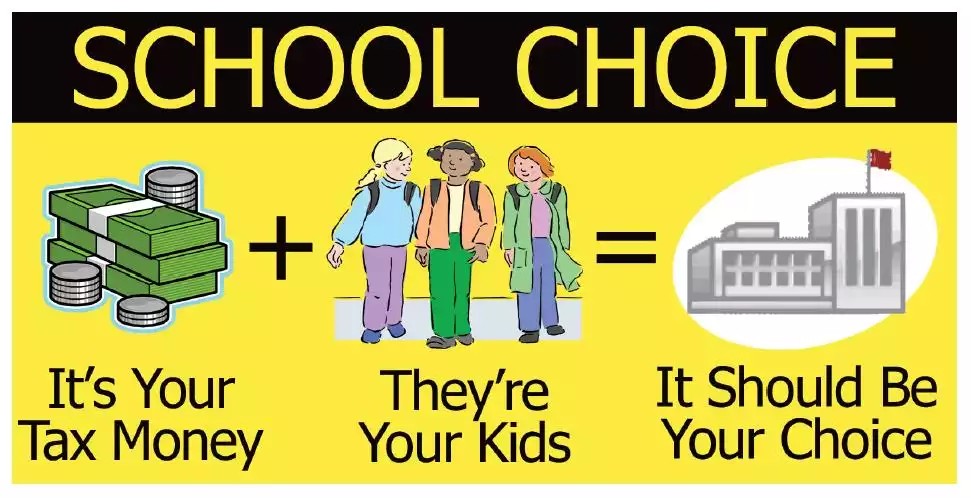
FRIEDMAN FRIDAY “MILTON FRIEDMAN ON VOUCHERS”

—-

MILTON FRIEDMAN ON VOUCHERS

Michelle: You are the grandfather of school vouchers. Do you feel victorious?

Mr. Friedman: Far from victorious, but very optimistic and hopeful. We are at the beginning of the task because as of the moment vouchers are available to only a very small amount of children. Our goal is to have a system in which every family in the U.S. will be able to choose for itself the school to which its children go. We are far from that ultimate result. If we had that, a system of free choice, we would also have a system of competition, innovation, which would change the character of education. You know our educational system is one of the most backwards things in our society in the way we teach people they did 200 years ago. There is a person in the front of the room. There are children sitting down at the bottom, and they are being talked to. Can you name any other industry in the U.S. which is as technologically backward? I can name one and only one: the legislature for the same reason. Both are monopolies. The elementary and secondary school system is the single most socialist industry in the U.S. leaving aside the military, but aside from the military it’s a major socialist industry; it is centralized and the control comes from the center and the difficulty of having a monopoly in which people cannot choose has been exacerbated by the fact that it has been largely taken over by teachers’ unions, the National Education Association and the American Federation of Teachers and the unions. Understandably, I do not blame them, but they are interested in the welfare of their members, not the welfare of the children, and the result is they have introduced a degree of rigidity, which makes it impossible to reform the public school system from within. Reform has to come through competition from the outside and the only way you can get competition is by making it possible for parents to have the ability to choose.

Michelle: Give to me a model, an example of how it would work.

Mr. Friedman: Very simple, take the extreme the government says we are willing to finance schooling for every child. The government compels children. If you look at the role of government in education there are three different levels. There is a level of compulsory. The government says every child must go to school until such and such and age. That is the equivalent of saying if you are going to drive a car you must have a license. The second stage is funding. Not only do we require you to have an education, but the government is willing to pay for that schooling. That would be equivalent to saying the government is willing to pay for your car that you drive. The third level is running the educational industry. That would be the equivalent of the government manufacturing the automobile or, to put it in a different image, consider food stamps today. Food stamps are funds provided by the government. But if that were to be runned (sic) like the schools, they would say everybody has to use these food stamps at a government grocery and each person with food stamps is assigned to a particular government grocer. So the only way you can get your food stamps is by going to that grocer. Do you think those groceries would be very good? We know what the situation is in schooling. People say why now and not 50-75 years ago? Well, when I went to high school that was a long time ago. In the 1920s there were 150,000 school districts in the U.S and the population was half what it is now. Today, there are fewer than 15,000 school districts. So it used to be that you really did have competition cause you had small school districts and parents had a good deal of control over those school districts, but increasingly we have shifted to very large school districts, to centralized control, to a system in which the governmental officials, in which the educational professionals control it. And like every socialist industry, it produces a product that is very expensive and of very low quality. Of course it is not uniform. There are some very good schools do not misunderstand me, but there are also some very bad ones.

Michelle: I interviewed some folks who are against school vouchers and they say that if you really want to help out a school what you should do is provide high-quality early childhood education, small classes, small schools, summer school available to children who want it. Put money to those items, which they claim would work.

Mr. Friedman: They don’t, we have been doing that. The amount of money spent per child adjusted for inflation has something like doubled or tripled over the last 20 years. Twenty years ago we had this report A Nation at Risk that pointed out all of the difficulties I just referred to and which pointed out this was a first generation that was going to be less schooled than its parents. We are now in the next generation and will be even less well schooled. We have had every possible effort you could have from reform from within. It is not just in schools; it is in any area. Reform has to come from outside. It has to come from competition. Let me illustrate that from within the school system. The United States from all accounts ranks number one in higher education. People from all over the world regard the United States’ colleges and universities the best and most varied. On the other hand in every other international comparison we rank near the bottom in elementary and secondary education. Why the difference? One word: choice. The elementary and secondary education, the school picks the child; it picks its customer. In higher education, the customer picks its school, you have choice that makes all the difference in the world. It means competition forces product. Look over the rest of the economy. Is there any area in the U.S. in which progress has not required progress from the outside? Look at the telephone industry when it was broken down into the little bells and opened up the competition. It started a period of rapid innovation and development. The key word is competition and the question is how can you get competition. Only by having the customer choosing.

Michelle: There is concern that money is going to religious schools. That the majority of the students in voucher programs that exist use them to attend schools with religious affiliation?

Mr. Friedman: Why? Because the vouchers are so small in some cases. It is true that of the private schools in the U.S. the great bulk of them are religious. That is for one simple reason. Here is someone selling something for nothing. Somebody down the street is giving away chocolate and you want to get into the business of selling chocolate. That is kind of tough isn’t it? Here at schools, children can attend them. They are not free. They are paying for it in the form of taxes, but there is no specific charge for going to that school. Somebody else is going to offer it. The churches, the religious organizations have had a real advantage in that they were the only ones around who were in a position to subsidize the education and keep the fees down low. If you open it wide, the most recent case was Ohio, Cleveland case. The voucher that they had had a max value of $2,500. Now it is not easy to provide a decent education at $2,500 and make money at it. Make it pay. At the same time the state of Ohio was spending something like over $7,000 per child on schooling. If that voucher had been $7,000 instead of $2,500 I have no doubt that there would have been a whole raft of new private, non-profit, both profit and non-profit schools. That is what has happened in Milwaukee. Milwaukee has a voucher system and today the fraction of the voucher users in Milwaukee going to religious schools is less than the fraction going to religious schools was before this system started because there have been new schools developed and some of them have been religious but many of them are not. In any event, the Supreme Court has settled that issue. They have said that if it is the choice of the parent, if there are alternatives available, there are government schools, charter schools, private non-denominational schools, private denominational schools, so long as the choice is in the hands of the parent that is not a violation of the First Amendment.

Michelle: You have a friend and an ally in the White House when it comes to vouchers.

Mr. Friedman: I should say. Mr. Bush has always been in favor. He is in favor of free choice. Remember vouchers are a means not an end. The purpose of vouchers is to enable parents to have free choice, and the purpose of having free choice is to provide competition and allow the educational industry to get out of the 17th century and get into the 21st century and have more innovation and more evolvement. There is no reason why you cannot have the same kind of change in the provision of education as you have had in industries like the computer industry, the television industry and other things.

Michelle: Is it refreshing to have a president that, Bill Clinton was firmly against vouchers.

Mr. Friedman: No, it is a case of circumstances. When he was governor of Arkansas, he was not against vouchers. He was in favor, but when he became president he came out against vouchers. I should say he did not oppose vouchers as governor and he did as president and that was for political reasons. People don’t recognize how powerful politically the teachers’ unions are. Something like a quarter of all the delegates at the Democratic National Convention are from the teachers’ union. They are probably the most powerful pressure group in the U.S., very large funds, very large number of people and very active politically.

Michelle: We talk in the office about how President Bush has some very Friedmanesqe ideas.

Mr. Friedman: They are not Freidmanesqe. They are just good ideas. I hope that is true anyway. I think very highly of President Bush, and I think in these areas, don’t misunderstand me, that is not a blanket statement. There are some things he has done that I disagree with, but taken as a whole he has been moving in the right direction of trying to move toward a smaller more limited government, trying to provide more freedom and more initiative in all areas. His philosophy on Medicare is the same as his philosophy in schools.

Michelle: Is that refreshing?

Mr. Friedman: It is an interesting thing, if you look at the facts, the one area, the area in which the low-income people of this country, the blacks and the minority, are most disadvantaged is with respect with the kinds of schools they can send their children to. The people who live in Harlem or the slums or the corresponding areas in LA or San Francisco, they can go to the same stores, shop in the same stores everybody else can, they can buy the same automobiles, they can go to supermarket, but they have very limited choice of schools. Everybody agrees that the schools in those areas are the worst. They are poor. Yet, here you have a Democrat who allege their interest is to help the poor and the low-income people. Here you have to take a different point. Every poll has shown that the strongest supporters of vouchers are the low-income blacks, and yet hardly a single black leader has been willing to come out for vouchers. There were some exceptions, Paul Williams in Milwaukee who was responsible for that, and a few others.

Michelle: Why do you think that is?

Mr. Friedman: For obvious reasons, political. It has been to the self interest to the leaders. The school system, as long as it’s governmental it’s a source of power and jobs to hand around and funds to dispose of. If it is privatized that disappears. And the other aspect of it is the power of the teachers’ unions. Right now those of us that are in the upper-income classes have freedom of choice for our children in various ways. We can decide where to live and we can choose places to live that have good schools or we can afford to pay twice for schooling once by taxes and once by paying tuition at a private school. It seems to me utterly unfair that those opportunities should not be open to everybody at all levels of income. If you had a system, the kind I would like to see, the government would say we require every child to get a certain number of years of schooling and in order to make that possible we are going to provide for every parent a voucher equal to a certain number of dollars, which they can use only for schooling, can’t use it for anything else. They can add to it, but they cannot subtract from it. Those will be, those can be used in government schools. Let the government run the school, but force them to be in competition so that all government schools charge tuition, but can be paid for by that voucher. But that same voucher can also be used in private schools of all kinds and then you would have an open; the teachers’ union complained and they insist they are doing a good job. If they are doing a good job then why are they so afraid of some competition?

Copyright: MSNBC, Inc. 2003

Milton Friedman

Related posts:

“Friedman Friday” (“Free to Choose” episode 1 – Power of the Market. part 7 of 7)

March 16, 2012 – 12:25 am

  Michael Harrington:  If you don’t have the expertise, the knowledge technology today, you’re out of the debate. And I think that we have to democratize information and government as well as the economy and society. FRIEDMAN: I am sorry to say Michael Harrington’s solution is not a solution to it. He wants minority rule, I […] By Everette Hatcher III | Posted in Current Events, Milton Friedman | Edit | Comments (0)

“Friedman Friday” (“Free to Choose” episode 1 – Power of the Market. part 6 of 7)

March 9, 2012 – 12:29 am

PETERSON: Well, let me ask you how you would cope with this problem, Dr. Friedman. The people decided that they wanted cool air, and there was tremendous need, and so we built a huge industry, the air conditioning industry, hundreds of thousands of jobs, tremendous earnings opportunities and nearly all of us now have air […] By Everette Hatcher III | Posted in Current Events, Milton Friedman | Edit | Comments (0)

“Friedman Friday” (“Free to Choose” episode 1 – Power of the Market. part 5 of 7)

March 2, 2012 – 12:26 am

Part 5 Milton Friedman: I do not believe it’s proper to put the situation in terms of industrialist versus government. On the contrary, one of the reasons why I am in favor of less government is because when you have more government industrialists take it over, and the two together form a coalition against the ordinary […] By Everette Hatcher III | Posted in Current Events, Milton Friedman | Edit | Comments (0)

“Friedman Friday” (“Free to Choose” episode 1 – Power of the Market. part 4 of 7)

February 24, 2012 – 12:21 am

The fundamental principal of the free society is voluntary cooperation. The economic market, buying and selling, is one example. But it’s only one example. Voluntary cooperation is far broader than that. To take an example that at first sight seems about as far away as you can get __ the language we speak; the words […] By Everette Hatcher III | Posted in Current Events, Milton Friedman | Edit | Comments (0)

“Friedman Friday” (“Free to Choose” episode 1 – Power of the Market. part 3 of 7)

February 17, 2012 – 12:12 am

  _________________________   Pt3  Nowadays there’s a considerable amount of traffic at this border. People cross a little more freely than they use to. Many people from Hong Kong trade in China and the market has helped bring the two countries closer together, but the barriers between them are still very real. On this side […] By Everette Hatcher III | Posted in Current Events, Milton Friedman | Edit | Comments (0)

“Friedman Friday” (“Free to Choose” episode 1 – Power of the Market. part 2 of 7)

February 10, 2012 – 12:09 am

  Aside from its harbor, the only other important resource of Hong Kong is people __ over 4_ million of them. Like America a century ago, Hong Kong in the past few decades has been a haven for people who sought the freedom to make the most of their own abilities. Many of them are […] By Everette Hatcher III | Posted in Current Events, Milton Friedman | Edit | Comments (0)

“Friedman Friday” (“Free to Choose” episode 1 – Power of the Market. part 1of 7)

February 3, 2012 – 12:07 am

“FREE TO CHOOSE” 1: The Power of the Market (Milton Friedman) Free to Choose ^ | 1980 | Milton Friedman Posted on Monday, July 17, 2006 4:20:46 PM by Choose Ye This Day FREE TO CHOOSE: The Power of the Market Friedman: Once all of this was a swamp, covered with forest. The Canarce Indians […]

Milton Friedman The Power of the Market 1-5

Debate on Milton Friedman’s cure for inflation

September 29, 2011 – 7:24 am

If you would like to see the first three episodes on inflation in Milton Friedman’s film series “Free to Choose” then go to a previous post I did. Ep. 9 – How to Cure Inflation [4/7]. Milton Friedman’s Free to Choose (1980) Uploaded by investbligurucom on Jun 16, 2010 While many people have a fairly […]

By Everette Hatcher III | Also posted in Current Events | Tagged dr friedman, expansion history, income tax brackets, political courage, www youtube | Edit | Comments (0)

“Friedman Friday” Milton Friedman believed in liberty (Interview by Charlie Rose of Milton Friedman part 1)

April 19, 2013 – 1:14 am

Charlie Rose interview of Milton Friedman My favorite economist: Milton Friedman : A Great Champion of Liberty  by V. Sundaram   Milton Friedman, the Nobel Prize-winning economist who advocated an unfettered free market and had the ear of three US Presidents – Nixon, Ford and Reagan – died last Thursday (16 November, 2006 ) in San Francisco […] By Everette Hatcher III | Posted in Milton Friedman | Edit | Comments (0)

What were the main proposals of Milton Friedman?

February 21, 2013 – 1:01 am

Stearns Speaks on House Floor in Support of Balanced Budget Amendment Uploaded by RepCliffStearns on Nov 18, 2011 Speaking on House floor in support of Balanced Budget Resolution, 11/18/2011 ___________ Below are some of the main proposals of Milton Friedman. I highly respected his work. David J. Theroux said this about Milton Friedman’s view concerning […] By Everette Hatcher III | Posted in Milton Friedman | Edit | Comments (0)

“Friedman Friday,” EPISODE “The Failure of Socialism” of Free to Choose in 1990 by Milton Friedman (Part 1)

December 7, 2012 – 5:55 am

Milton Friedman: Free To Choose – The Failure Of Socialism With Ronald Reagan (Full) Published on Mar 19, 2012 by NoNationalityNeeded Milton Friedman’s writings affected me greatly when I first discovered them and I wanted to share with you. We must not head down the path of socialism like Greece has done. Abstract: Ronald Reagan […] By Everette Hatcher III | Posted in Milton FriedmanPresident Obama | Edit | Comments (1)

Defending Milton Friedman

July 31, 2012 – 6:45 am

What a great defense of Milton Friedman!!!!   Defaming Milton Friedman by Johan Norberg This article appeared in Reason Online on September 26, 2008  PRINT PAGE  CITE THIS      Sans Serif      Serif Share with your friends: ShareThis In the future, if you tell a student or a journalist that you favor free markets and limited government, there is […]

OPEN LETTER TO BARACK OBAMA ON HIS AUTOBIOGRAPHY “A PROMISED LAND” Part 76 PRESIDENT OBAMA THANK YOU FOR ENCOURAGING OUR WOUNDED WARRIORS!! “Double or even triple amputees were not uncommon, nor were severe cranial trauma, spinal injuries, disfiguring facial wounds, or the loss of eyesight, hearing, or any number of basic bodily functions. The service members I met were adamant that they had no regrets about sacrificing so much for their country and were understandably offended by anyone who viewed them with even a modicum of pity”

Timothy Payne, who provided this image, visited with Mr. Obama and shared a laugh.

President Obama Speaks at the Wounded Warrior Project Soldier Ride Event

Former President George W. Bush gives a tour of his gallery of Warrior Warrir paintings

https://youtu.be/34mx9lRXobk

President surprises wounded warrior

February 5, 2021

Office of Barack and Michelle Obama
P.O. Box 91000
Washington, DC 20066

Dear President Obama,

I wrote you over 700 letters while you were President and I mailed them to the White House and also published them on my blog http://www.thedailyhatch.org .I received several letters back from your staff and I wanted to thank you for those letters. 

There are several issues raised in your book that I would like to discuss with you such as the minimum wage law, the liberal press, the cause of 2007 financial meltdown, and especially your pro-choice (what I call pro-abortion) view which I strongly object to on both religious and scientific grounds, Two of the most impressive things in your book were your dedication to both the National Prayer Breakfast (which spoke at 8 times and your many visits to the sides of wounded warriors!!

I have been reading your autobiography A PROMISED LAND and I have been enjoying it. 

Let me make a few comments on it, and here is the first quote of yours I want to comment on:

ONE AFTERNOON a couple of months after the Af-Pak announcement, I walked alone across the South Lawn—trailed by a military aide carrying the football and my veterans affairs staffer, Matt Flavin—to board the Marine One helicopter and make the brief flight to Maryland for the first of what would be regular visits to Bethesda Naval Hospital and Walter Reed Army Medical Center. On arrival, I was greeted by commanders of the facility, who gave me a quick overview of the number and condition of wounded warriors on-site before leading me through a maze of stairs, elevators, and corridors to the main patients’ ward.
     For the next hour, I proceeded from room to room, sanitizing my hands and donning scrubs and surgical gloves where necessary, stopping in the hallway to get some background on the recovering service member from hospital staffers before knocking softly on the door.
     Though patients at the hospitals came from every branch of the military, many who were there during my first few years in office were members of the U.S. Army and Marine Corps that patrolled the insurgent-dominated areas of Iraq and Afghanistan and had been injured by gunfire or IEDs. Almost all were male and working-class: whites from small rural towns or fading manufacturing hubs, Blacks and Hispanics from cities like Houston or Trenton, Asian Americans and Pacific Islanders from California. Usually they had family members sitting with them—mostly parents, grandparents, and siblings, though if the service member was older, there would be a wife and kids too—toddlers squirming in laps, five-year-olds with toy cars, teenagers playing video games. As soon as I entered the room, everyone would shift around, smiling shyly, appearing not quite sure what to do. For me, this was one of the vagaries of the job, the fact that my presence reliably caused a disruption and a bout of nervousness among those I was meeting. I tried always to lighten the mood, doing what I could to put people at ease.
     Unless fully incapacitated, the service members would usually raise their bed upright, sometimes pulling themselves to a seated position by reaching for the sturdy metal handle on the bedpost. Several insisted on hopping out of bed, often balancing on their good leg to salute and shake my hand. I‘d ask them about their hometown and how long they’d been in the service. I’d ask them how they got their injury and how soon they might be starting rehab or be getting fitted for a prosthetic. We often talked sports, and some would ask me to sign a unit flag hung on the wall, and I’d give each service member a commemorative challenge coin. Then we’d all position ourselves around the bed as Pete Souza took pictures with his camera and with their phones, and Matt would give out business cards so they could call him personally at the White House if they needed anything at all.
     How those men inspired me! Their courage and determination, their insistence that they’d be back at it in no time, their general lack of fuss. It made so much of what passes for patriotism—the gaudy rituals at football games, the desultory flag waving at parades, the blather of politicians—seem empty and trite. The patients I met had nothing but praise for the hospital teams responsible for their treatment—the doctors, nurses, and orderlies, most of them service members themselves but some of them civilians, a surprising number of them foreign-born, originally from places like Nigeria, El Salvador, or the Philippines. Indeed, it was heartening to see how well these wounded warriors were cared for, beginning with the seamless, fast-moving chain that allowed a Marine injured in a dusty Afghan village to be medevaced to the closest base, stabilized, then transported to Germany and onward to Bethesda or Walter Reed for state-of-the-art surgery, all in a matter of days.
     Because of that system—a melding of advanced technology, logistical precision, and highly trained and dedicated people, the kind of thing that the U.S. military does better than any other organization on earth—many soldiers who would have died from similar wounds during the Vietnam era were now able to sit with me at their bedside, debating the merits of the Bears versus the Packers. Still, no level of precision or care could erase the brutal, life-changing nature of the injuries these men had suffered. Those who had lost a single leg, especially if the amputation was below the knee, often described themselves as being lucky. Double or even triple amputees were not uncommon, nor were severe cranial trauma, spinal injuries, disfiguring facial wounds, or the loss of eyesight, hearing, or any number of basic bodily functions. The service members I met were adamant that they had no regrets about sacrificing so much for their country and were understandably offended by anyone who viewed them with even a modicum of pity. Taking their cues from their wounded sons, the parents I met were careful to express only the certainty of their child’s recovery, along with their deep wells of pride.
     And yet each time I entered a room, each time I shook a hand, I could not ignore how incredibly young most of these service members were, many of them barely out of high school. I couldn’t help but notice the rims of anguish around the eyes of the parents, who themselves were often younger than me. I wouldn’t forget the barely suppressed anger in the voice of a father I met at one point, as he explained that his handsome son, who lay before us likely paralyzed for life, was celebrating his twenty-first birthday that day, or the vacant expression on the face of a young mother who sat with a baby cheerfully gurgling in her arms, pondering a life with a husband who was probably going to survive but would no longer be capable of conscious thought.
     Later, toward the end of my presidency, The New York Times would run an article about my visits to the military hospitals. In it, a national security official from a previous administration opined that the practice, no matter how well intentioned, was not something a commander in chief should do—that visits with the wounded inevitably clouded a president’s capacity to make clear-eyed, strategic decisions. I was tempted to call that man and explain that I was never more clear-eyed than on the flights back from Walter Reed and Bethesda. Clear about the true costs of war, and who bore those costs. Clear about war’s folly, the sorry tales we humans collectively store in our heads and pass on from generation to generation—abstractions that fan hate and justify cruelty and force even the righteous among us to participate in carnage. Clear that by virtue of my office, I could not avoid responsibility for lives lost or shattered, even if I somehow justified my decisions by what I perceived to be some larger good.
     Looking through the helicopter window at the tidy green landscape below, I thought about Lincoln during the Civil War, his habit of wandering through makeshift infirmaries not so far from where we were flying, talking softly to soldiers who lay on flimsy cots, bereft of antiseptics to stanch infections or drugs to manage pain, the stench of gangrene everywhere, the clattering and wheezing of impending death.
     I wondered how Lincoln had managed it, what prayers he said afterward. He must have known it was a necessary penance. A penance I, too, had to pay.

President Obama threw a shaka sign at the Wounded Warrior Project bike ride

By Katie ZezimaReporterApril 17, 2014 at 3:04 p.m. EDT

President Obama, Vice President Biden and Veterans Affairs Secretary Eric Shinsheki welcomed participants of the annual soldier ride, a nearly 60-mile bike ride that benefits the Wounded Warrior Project, to the White House on Thursday. “Biking nearly 60 miles in three days would be a challenge for anybody, but for all of you this is a lot more than a bike ride — this is a mark of how far you’ve come,” Obama said.Support our journalism. Subscribe today.

The Soldier Ride was started by Chris Carney, a civilian bartender from Long Island, NY, who wanted to raise awareness about troops returning from Afghanistan and Iraq. Carney couldn’t make it to the White House Thursday. He now owns a gym. “I think you all inspired him to trade the bar in for some barbells,” Obama said. Soldier Rides now take place nationwide.

“Many of you are recovering from devastating injuries, Obama said. “Some of you have had to learn the basics all over again — how to stand again, how to walk again, how to run again.  And now you’re here today because that’s what Soldier Ride is all about — seeing each other through the finish line.”

(Photo by Chip Somodevilla/Getty Images)
(Photo by Chip Somodevilla/Getty Images) 

Obama singled out a number of riders this year, including Master Sgt. Louis Alfonso Ramirez, who lost friends in an ambush in Afghanistan and was later diagnosed with post-traumatic stress disorder. He is doing his fourth ride and credits the Wounded Warriors Project with helping him heal. Lt. Commander John Jae Terry lost his leg after being hit by an IED on patrol in Afghanistan. He was participating in his first ride.

(Photo by Chip Somodevilla/Getty Images)
(Photo by Chip Somodevilla/Getty Images) 

“Every day I have the honor of serving as this country’s Commander-in-Chief,” Obama said. “And as long as I have that honor, I will keep fighting to make sure you and your families get the care and treatment and benefits that you have earned and deserve.”

WASHINGTON, DC - APRIL 17: U.S. President Barack Obama greets Marines during the kickoff of the seventh annual Wounded Warrior Project's Soldier Ride on the driveway of the South Lawn.  (Photo by Chip Somodevilla/Getty Images)
WASHINGTON, DC – APRIL 17: U.S. President Barack Obama greets Marines during the kickoff of the seventh annual Wounded Warrior Project’s Soldier Ride on the driveway of the South Lawn.  (Photo by Chip Somodevilla/Getty Images) 

And Obama threw a shaka. Hang loose, man.

Sincerely,

Everette Hatcher III, 13900 Cottontail Lane, Alexander, AR 72002, ph 501-920-5733 everettehatcher@gmail.com

Lt. Cmdr. John Terry doing lunges with President Obama at Walter Reed National Military Medical Center. Commander Terry, who provided the image, said, “I will remember that day until I die.”

Lt. Cmdr. John Terry doing lunges with President Obama at Walter Reed National Military Medical Center. Commander Terry, who provided the image, said, “I will remember that day until I die.”

Related posts:

Open letter to President Obama (Part 293) (Founding Fathers’ view on Christianity, Elbridge Gerry of MA)

April 10, 2013 – 7:02 am

President Obama c/o The White House 1600 Pennsylvania Avenue NW Washington, DC 20500 Dear Mr. President, I know that you receive 20,000 letters a day and that you actually read 10 of them every day. I really do respect you for trying to get a pulse on what is going on out here. There have […]By Everette Hatcher III | Posted in David BartonFounding FathersPresident Obama | Edit |Comments (0)

The Founding Fathers views concerning Jesus, Christianity and the Bible (Part 5, John Hancock)

May 8, 2012 – 1:48 am

There have been many articles written by evangelicals like me who fear that our founding fathers would not recognize our country today because secular humanism has rid our nation of spiritual roots. I am deeply troubled by the secular agenda of those who are at war with religion in our public life. Lillian Kwon quoted somebody […]By Everette Hatcher III | Posted in David BartonFounding Fathers | Edit | Comments (0)

The Founding Fathers views concerning Jesus, Christianity and the Bible (Part 4, Elbridge Gerry)

May 7, 2012 – 1:46 am

There have been many articles written by evangelicals like me who fear that our founding fathers would not recognize our country today because secular humanism has rid our nation of spiritual roots. I am deeply troubled by the secular agenda of those who are at war with religion in our public life. Lillian Kwon quoted somebody […]By Everette Hatcher III | Posted in David BartonFounding Fathers | Edit | Comments (0)

The Founding Fathers views concerning Jesus, Christianity and the Bible (Part 3, Samuel Adams)

May 4, 2012 – 1:45 am

There have been many articles written by evangelicals like me who fear that our founding fathers would not recognize our country today because secular humanism has rid our nation of spiritual roots. I am deeply troubled by the secular agenda of those who are at war with religion in our public life. Lillian Kwon quoted somebody […]By Everette Hatcher III | Posted in David BartonFounding Fathers | Edit | Comments (0)

The Founding Fathers views concerning Jesus, Christianity and the Bible (Part 2, John Quincy Adams)

May 3, 2012 – 1:42 am

There have been many articles written by evangelicals like me who fear that our founding fathers would not recognize our country today because secular humanism has rid our nation of spiritual roots. I am deeply troubled by the secular agenda of those who are at war with religion in our public life. Lillian Kwon quoted somebody […]By Everette Hatcher III | Posted in David BartonFounding Fathers | Edit | Comments (0)

The Founding Fathers views concerning Jesus, Christianity and the Bible (Part 1, John Adams)

May 2, 2012 – 1:13 am

There have been many articles written by evangelicals like me who fear that our founding fathers would not recognize our country today because secular humanism has rid our nation of spiritual roots. I am deeply troubled by the secular agenda of those who are at war with religion in our public life. Lillian Kwon quoted somebody […]By Everette Hatcher III | Posted in Founding Fathers | Edit | Comments (0)

President Obama and the Founding Fathers

May 8, 2013 – 9:20 am

President Obama Speaks at The Ohio State University Commencement Ceremony Published on May 5, 2013 President Obama delivers the commencement address at The Ohio State University. May 5, 2013. You can learn a lot about what President Obama thinks the founding fathers were all about from his recent speech at Ohio State. May 7, 2013, […]By Everette Hatcher III | Posted in Founding FathersPresident Obama | Edit | Comments (0)

Francis Schaeffer’s own words concerning the founding fathers and their belief in inalienable rights

December 5, 2012 – 12:38 am

Dr. C. Everett Koop with Bill Graham. Francis Schaeffer: “Whatever Happened to the Human Race” (Episode 4) THE BASIS FOR HUMAN DIGNITY Published on Oct 7, 2012 by AdamMetropolis The 45 minute video above is from the film series created from Francis Schaeffer’s book “Whatever Happened to the Human Race?” with Dr. C. Everett Koop. This […]By Everette Hatcher III | Posted in Founding FathersFrancis SchaefferProlife | Edit |Comments (1)

David Barton: In their words, did the Founding Fathers put their faith in Christ? (Part 4)

May 30, 2012 – 1:35 am

America’s Founding Fathers Deist or Christian? – David Barton 4/6 There have been many articles written by evangelicals like me who fear that our founding fathers would not recognize our country today because secular humanism has rid our nation of spiritual roots. I am deeply troubled by the secular agenda of those who are at […]By Everette Hatcher III | Posted in David BartonFounding Fathers | Tagged governor of connecticutjohn witherspoonjonathan trumbull | Edit | Comments (1)

Were the founding fathers christian?

May 23, 2012 – 7:04 am

3 Of 5 / The Bible’s Influence In America / American Heritage Series / David Barton There were 55 gentlemen who put together the constitution and their church affliation is of public record. Greg Koukl notes: Members of the Constitutional Convention, the most influential group of men shaping the political foundations of our nation, were […]By Everette Hatcher III | Posted in Founding Fathers | Edit | Comments (0)

John Quincy Adams a founding father?

June 29, 2011 – 3:58 pm

I do  not think that John Quincy Adams was a founding father in the same sense that his  father was. However, I do think he was involved in the  early days of our government working with many of the founding fathers. Michele Bachmann got into another history-related tussle on ABC’s “Good  Morning America” today, standing […]By Everette Hatcher III | Posted in David BartonFounding Fathers | Edit | Comments (0)

“Sanctity of Life Saturday” Taking on Ark Times Bloggers on various issues Part E “Moral absolutes and abortion” Francis Schaeffer Quotes part 5(includes the film SLAUGHTER OF THE INNOCENTS) (editorial cartoon)

July 6, 2013 – 1:26 am

I have gone back and forth and back and forth with many liberals on the Arkansas Times Blog on many issues such as abortion, human rights, welfare, poverty, gun control  and issues dealing with popular culture. Here is another exchange I had with them a while back. My username at the Ark Times Blog is Saline […]By Everette Hatcher III | Posted in Arkansas TimesFrancis SchaefferProlife | Edit |Comments (0)

Article from Adrian Rogers, “Bring back the glory”

June 11, 2013 – 12:34 am

I truly believe that many of the problems we have today in the USA are due to the advancement of humanism in the last few decades in our society. Ronald Reagan appointed the evangelical Dr. C. Everett Koop to the position of Surgeon General in his administration. He partnered with Dr. Francis Schaeffer in making the […]By Everette Hatcher III | Posted in Adrian RogersFrancis Schaeffer | Edit | Comments (0)

“Schaeffer Sundays” Francis Schaeffer’s own words concerning the possibility that minorities may be mistreated under 51% rule

June 9, 2013 – 1:21 am

Francis Schaeffer: “Whatever Happened to the Human Race” (Episode 4) THE BASIS FOR HUMAN DIGNITY Published on Oct 7, 2012 by AdamMetropolis ____________ The 45 minute video above is from the film series created from Francis Schaeffer’s book “Whatever Happened to the Human Race?” with Dr. C. Everett Koop. This book  really helped develop my political […]By Everette Hatcher III | Posted in Francis Schaeffer | Edit | Comments (0)

—-

MY OPEN LETTER TO VICE PRESIDENT KAMALA HARRIS PART 3 “Do you support charter schools like President Obama did?”

Kamala Harris official photo (cropped2).jpg


February 3, 2021

Honorable Vice President Kamala Harris c/o The White House

1600 Pennsylvania Avenue NW
Washington, DC 20500

Dear Mrs. Vice President,

Do you support charter schools like President Obama did?

What Matters More to Biden: Union Bosses or Poor Children?

I have a Bureaucrat Hall of Fame to highlight government employees who have turned sloth and overcompensation into an art form, and I have a Moocher Hall of Fame to illustrate the destructive entitlement mindset that exists when politicians pay people to do nothing.

I’m now thinking we also need another Hall of Fame to bring attention to the despicable people who oppose school choice because currying favor with teacher unions is more importantthan giving poor children an opportunityfor a good education.

Some of the charter members would include:

And we many need to include Joe Biden on this tawdry list.

We’ll know soon enough. There’s a federally funded school choice program in Washington, DC, and time will tell whether the President intends to kill it.

In a column for the Wall Street Journal, Virginia Walden Ford expresses hope that President Biden won’t sacrifice the needs of minority children in the nation’s capital.

I hope his administration doesn’t tear down a program that has brought hope to thousands of African-American childrenin the District of Columbia. In 2004, Congress created the D.C. Opportunity Scholarship Program. …In 2020-21, 82% of scholarship recipients identified as African-American and another 12% as Hispanic. While scholarships for poor children of color should hold bipartisan appeal, the…2020 Biden-Sanders “unity” platform went out of its way to recommend defunding the program.

Ms. Ford isn’t opposed to government schools, but she does want poor kids to have the same opportunity as Joe Biden’s kids.

I strongly support both public education and school choice. I attended public schools, and my father served as the first African-American school administratorin Little Rock, Ark.—for which my family received a burning cross on our front yard. …What really undermines public education is attempts from elites to keep good education for themselves… Mr. Biden’s children went to private schools. Why shouldn’t my former neighbors in Southeast Washington have the opportunity to do so too?

I’ll close by observing that many of the people opposing school choice are total hypocrites. They send their kids to private schools while fighting to deny hope and opportunity for children from poor families.

Including Senator Elizabeth Warren and Obama’s Education Secretary, both of whom also would be charter members of a new Hall of Fame for policy makers who care more about union bosses than poor kids.

There are folks on the left who have genuine integrity on this issue, including the editors at the Washington Post.

P.S. At the risk of stating the obvious, the solution is not dumping more money into government-run schools. We’ve tried that and tried that and tried that, over and over again, and it never works.

P.P.S. For example, Bush’s No Child Left Behind (which I call No Bureaucrat Left Behind) was a failure, as was Obama’s Common Core.

P.P.P.S. Instead of throwing good money after bad and imposing more centralization, getting rid of the Department of Education in Washingtonwould be a far-preferable approach (we’d be copying Canada with that approach).

P.P.P.P.S. If you want evidence on the benefits of school choice, click here, here, here, here, here, and here.

P.P.P.P.P.S. There’s also international evidence from SwedenChileCanada, and the Netherlands, all of which shows superior results when competition replaces government education monopolies.

I have put up lots of cartoons from Dan Mitchell’s blog before and they have got lots of hits before. Many of them have dealt with the economy, eternal unemployment benefits, socialism,  Greece,  welfare state or on gun control.

I thought it was great when the Republican Congress and Bill Clinton put in welfare reform but now that has been done away with and no one has to work anymore it seems. In fact, over 40% of the USA is now on the government dole. What is going to happen when that figure gets over 50%? Maybe this cartoon below will be true.

The all-time, most-viewed post on this blog is this set of cartoons showing how the welfare state begins and how it eventually becomes an unsustainable mess.

The great Chuck Asay has a cartoon that takes the next step, showing what happens when the looters and moochers who ride in the wagon get pitted against those who are pulling the wagon.

Since I’m not a Romney fan (for a bunch of reasons outlined here), I would have preferred if the cartoon didn’t imply anything about the current election and instead focused on the rhetorical question of what happens to a society when those living off the government outnumber those who get stuck picking up the tab.

It also would have been more accurate to have the two slave drivers somehow identified as “politicians” and the “IRS.”

But it’s a very clever cartoon, so it’s worth sharing even if I’m nitpicking.

You can see my favorite Asay cartoons here, here, herehere, here, here, here, here, here, here, herehereherehere, and here.

I must say I share your love for the LION, WITCH AND THE WARDROBE by C.S. Lewis. Sadly he died on the same day as two other notable gentleman (JFK and Aldous Huxley). Just like you I have a love for books!

Thank you so much for your time.

Sincerely,

Everette Hatcher III, 13900 Cottontail Lane, Alexander, AR 72002, ph 501-920-5733

Related posts:

Milton Friedman’s Free to Choose (1980), episode 3 – Anatomy of a Crisis. part 1

“The Power of the Market” episode of Free to Choose in 1990 by Milton Friedman (Part 5)

Milton Friedman The Power of the Market 5-5 How can we have personal freedom without economic freedom? That is why I don’t understand why socialists who value individual freedoms want to take away our economic freedoms.  I wanted to share this info below with you from Milton Friedman who has influenced me greatly over the […]

“The Power of the Market” episode of Free to Choose in 1990 by Milton Friedman (Part 4)

Milton Friedman The Power of the Market 4-5 How can we have personal freedom without economic freedom? That is why I don’t understand why socialists who value individual freedoms want to take away our economic freedoms.  I wanted to share this info below with you from Milton Friedman who has influenced me greatly over the […]

“The Power of the Market” episode of Free to Choose in 1990 by Milton Friedman (Part 3)

Milton Friedman The Power of the Market 3-5 How can we have personal freedom without economic freedom? That is why I don’t understand why socialists who value individual freedoms want to take away our economic freedoms.  I wanted to share this info below with you from Milton Friedman who has influenced me greatly over the […]

“The Power of the Market” episode of Free to Choose in 1990 by Milton Friedman (Part 2)

Milton Friedman The Power of the Market 2-5 How can we have personal freedom without economic freedom? That is why I don’t understand why socialists who value individual freedoms want to take away our economic freedoms.  I wanted to share this info below with you from Milton Friedman who has influenced me greatly over the […]

“The Power of the Market” episode of Free to Choose in 1990 by Milton Friedman (Part 1)

Milton Friedman The Power of the Market 1-5 How can we have personal freedom without economic freedom? That is why I don’t understand why socialists who value individual freedoms want to take away our economic freedoms.  I wanted to share this info below with you from Milton Friedman who has influenced me greatly over the […]

“Friedman Friday” EPISODE “The Failure of Socialism” of Free to Choose in 1990 by Milton Friedman (Part 5)

Milton Friedman: Free To Choose – The Failure Of Socialism With Ronald Reagan (Full) Published on Mar 19, 2012 by NoNationalityNeeded Milton Friedman’s writings affected me greatly when I first discovered them and I wanted to share with you. Abstract: Ronald Reagan introduces this program, and traces a line from Adam Smith’s “The Wealth of […]

“Friedman Friday” EPISODE “The Failure of Socialism” of Free to Choose in 1990 by Milton Friedman (Part 4)

Milton Friedman: Free To Choose – The Failure Of Socialism With Ronald Reagan (Full) Published on Mar 19, 2012 by NoNationalityNeeded Milton Friedman’s writings affected me greatly when I first discovered them and I wanted to share with you. Abstract: Ronald Reagan introduces this program, and traces a line from Adam Smith’s “The Wealth of […]

“Friedman Friday” EPISODE “The Failure of Socialism” of Free to Choose in 1990 by Milton Friedman (Part 3)

Milton Friedman: Free To Choose – The Failure Of Socialism With Ronald Reagan (Full) Published on Mar 19, 2012 by NoNationalityNeeded Milton Friedman’s writings affected me greatly when I first discovered them and I wanted to share with you. Abstract: Ronald Reagan introduces this program, and traces a line from Adam Smith’s “The Wealth of […]

“Friedman Friday” EPISODE “The Failure of Socialism” of Free to Choose in 1990 by Milton Friedman (Part 2)

Milton Friedman: Free To Choose – The Failure Of Socialism With Ronald Reagan (Full) Published on Mar 19, 2012 by NoNationalityNeeded Milton Friedman’s writings affected me greatly when I first discovered them and I wanted to share with you. Abstract: Ronald Reagan introduces this program, and traces a line from Adam Smith’s “The Wealth of […]

“Friedman Friday,” EPISODE “The Failure of Socialism” of Free to Choose in 1990 by Milton Friedman (Part 1)

Milton Friedman: Free To Choose – The Failure Of Socialism With Ronald Reagan (Full) Published on Mar 19, 2012 by NoNationalityNeeded Milton Friedman’s writings affected me greatly when I first discovered them and I wanted to share with you. We must not head down the path of socialism like Greece has done. Abstract: Ronald Reagan […]

Williams with Sowell – Minimum Wage

Thomas Sowell

Thomas Sowell – Reducing Black Unemployment

By WALTER WILLIAMS

—-

Ronald Reagan with Milton Friedman
Milton Friedman The Power of the Market 2-5

Daniel Mitchell OF CENTER FOR FREEDOM AND PROSPERITY article A Case Study of Sloppy Research and Media Bias

—-

A Case Study of Sloppy Research and Media Bias

periodically criticize pro-statism stories and columns in outlets such as the New York Times and Washington Post.

But I’ve only written one column specifically on the topic of whether the press is slanted. In that article, I pointed out that media bias rarely is based on lies.

Even when stories are overtly misleading (as is often the case with reports about poverty, for instance), journalists almost always are clever enough to avoid crossing a line to outright dishonesty.

In practice, media bias is largely about what gets covered and what doesn’t.

Media bias very rarely involves dishonesty. Deception yes, but not inaccuracies. It’s almost always about story selection and what gets emphasized.

Today, I want to share an example of this phenomenon.

A left-leaning group called the International Equalities Instituterecently published a report claiming that lower tax rates on upper-income taxpayers don’t lead to faster growth.

The London-based group isn’t well known and neither are the two authors (David Hope and Julian Limberg), yet this study received a massive amount of attention.

To cite just a few examples, it got major coverage from the Washington Post.

It received a fawning write-up from CBS.

It was featured by Bloomberg.

Bloomberg liked it so much that there was a second story.

Many other news outlets also publicized the story, in many cases by simply republishing the stories from the above outlets.

Here’s the report from Al Jazeera.

Esquire even ran a puff piece on the study.

Here’s the headline from MSN.

Various CBS local stations recycled the network report.

Here’s an example from Oklahoma.

And an example from North Carolina.

The Gulf News wrote about the study.

And Business Insider also gave it lots of attention.

Even the New York Post featured the study.

The reason this report got so all this attention, in my humble opinion, is that it gave reporters an excuse to advance a pro-statism message.

And that meant writing press releases about the report rather than practicing real journalism. They praised the study as “comprehensive” and “sophisticated,” though presumably none of them know anything about its methodology.

And they certainly didn’t seek out any contrary views.

So allow me to point out a few problems with the Hope-Limberg report. Feel free to read the entire study, but I think these passages fairly summarize the two main arguments (tax cuts help the rich and tax cuts don’t help the economy) in the publication.

…it remains an open empirical question how cutting taxes on the rich affects economic outcomes. In this paper, we use data from 18 OECD countries covering the last fifty years to investigate the effects of major tax cuts for the richon income inequality, economic growth, and unemployment. …Our results show that…major tax cuts for the rich increase the top 1% share of pre-tax national income in the years following the reform… The magnitude of the effect is sizeable; on average, each major reform leads to a rise in top 1% share of pre-tax national income of 0.8 percentage points. The results also show that economic performance, as measured by real GDP per capita and the unemployment rate, is not significantly affected by major tax cuts for the rich.

Regarding the two arguments, I’m not sure what point Hope and Limberg think they’re making with their first point about lower tax rates leading the rich to earn more income.

At the risk of stating the obvious, that’s one of the main selling points for better tax policy. Supporters of lower tax rates explicitly want entrepreneurs, investors, business owners, and other successful people to have better incentives to earn and report taxable income.

So the Hope-Limberg data actually confirm that lower tax rates on upper-income taxpayers are a great way of getting them to be more productive. Art Laffer would give them an A+ if they were students.

But what about the second argument? Is it true that there’s no positive impact when tax rates are reduced on work, saving, investment, risk-taking, and entrepreneurship?

Let’s examine their conclusions. Here’s the chart showing when selected nations reduced tax rates (in red). Hope and Limberg then calculated whether those countries enjoyed a bump in jobs and growth over the following five years and want us to accept their argument that there was no positive impact.

Since the report doesn’t include the underlying data or the model used to generate the results, we’re supposed to accept their results at face value.

At the risk of being the skunk at the garden party, I’m unconvinced. Hope and Limberg are political scientists rather than economists, but it seems like they overlooked some very important issues.

Most important, why didn’t they factor in the impact of other government policies (traderegulationgovernment spendingmonetary policy, etc)? Taxation is just one small piece of the economic policy puzzle. Maybe they covered these concerns in their undisclosed model and data, but estimating economic performance by looking solely at tax policy is like trying to figure out the score of a baseball game by just comparing the performance of shortstops.

And there are a couple of other concerns I have, such as why did they pick these 18 countries and ignore other nations? And why not examine economic performance beyond five years?

I’ll conclude by also noting that their study doesn’t pass the smell test.

The bottom line is that better tax policy isn’t some sort of elixir that guarantees prosperity. Especially if other policies in a nation are misguided.

That being said, lower tax rates are better for prosperity than higher tax rates (as illustrated by academic studies from economists). And since even small differences in economic performance can lead to big long-run benefits, the main takeaway is that it’s a good idea to enact policies to expand the economic pie.

The Case Against Biden’s Class-Warfare Tax Policy, Part IV

I’ve shared three reasons why Biden’s tax plan is misguided (the tax code is biased against rich taxpayers, the tax hike would have Laffer-Curve implications, and it would saddle America with the world’s highest corporate tax burden).

For Part IV of the series, let’s explain why every piece of his plan will backfire.

There are three main arguments for higher taxes, though I don’t find any of them convincing.

  1. Spite and envy against successful entrepreneurs, investors, innovators, and business owners.
  2. Bringing more money to Washington to finance a larger burden of government spending.
  3. Bringing more money to Washington to ostensibly lower the burden of deficits and debt.

For what it’s worth, Biden’s proposed spending increases are far larger than his proposed tax increases, so we can rule out reason #3.

So we have to ask ourselves whether reasons #1 and #2 are compelling.

And when considering those two arguments, we also should ask whether those reasons are sufficiently compelling to justify throwing millions of Americans into unemployment and reducing the nation’s competitiveness.

The answer should be a resounding no.

In a column in the Wall Street Journal from last July, Philip DeMuth elaborated on the damage that would be inflicted by Biden’s class-warfare agenda.

Mr. Biden has proposed to reinstate the Obama tax rates for top earners while simultaneously imposing an unlimited 12.4% Social Security payroll tax on earnings over $400,000. …Mr. Biden proposes to eliminate the capital gains reset to fair market value at death. For long-term holdings, much of that gain is merely inflation, created by the government’s failure to maintain price stability, so this is effectively a tax on a tax.The remaining gains are usually from corporate earnings, which were already taxed once, when they came in the door. It will be difficult to keep your business or farm in the family if the Biden scheme forces it to be liquidated to pay the death taxes. …If a President Biden has his way, the top capital-gains tax rate will be 39.6%—the same as for ordinary income. This could be a triple whammy: cutting the estate tax exemption in half, eliminating the capital gains reset to fair market value, and then doubling the capital-gains tax rate. A small step for the government, a giant loss for the American family. …The former vice president’s ambitious spending programs would more than offset any new revenue from his tax proposals. …This isn’t a debate between growing the pie vs. redistributing the pie; it is about everyone settling for a smaller pie.

The final two sentences deserve extra attention.

First, nobody should be deluded that tax increases will be used to reduce red ink. Yes, Biden is proposing to collect a lot more money, but he’s proposing about $2 of new spending for every $1 of projected tax revenue.

Brian Riedl’s Chartbook has the grim details on Biden’s spending agenda.

Second, the point about “growing the pie” is critically important since even a very small reduction in long-run growth will have a surprisingly large impact on household finances within a few decades.

The bottom line is that living standards in the United States are significantly higher than living standards in Europe, in large part because fiscal burdens are not as onerous in America.

Biden’s plan to make America more like FranceItaly, and Greece is not a good idea.

Rate this:

The Case Against Biden’s Class-Warfare Tax Policy, Part III

In Part I of this series, I explained that President-Elect Biden’s soak-the-rich agenda didn’t make sense because the internal revenue code already is very biased against upper-income taxpayers. Indeed, the U.S. tax system is even more weighted against the rich than the tax codes of nations such as France and Sweden.

In Part II of this series, I explained that Biden’s proposed reincarnation of Obamanomics would not be a recipe for increased federal revenues. Simply stated, higher tax rates on productive behavior will lead to macro-economic and micro-economic responses that have the effect of producing lower-than-expected revenues.

For today’s addition to the series, I want to focus on how Biden’s tax agenda will discourage investment and undermine competitiveness by saddling the United States with the developed world’s highest effective tax rate on corporate income – as measured by the combined burden of the corporate income tax and the additional layer of tax when dividends are paid to shareholders.

Everything you need to know is captured by this new data from the Tax Foundation.

Needless to say, American policy makers should be striving to make our business tax system more like the one in Estonia.

Instead, Biden wants to go from America being worse than average to America being the absolute worst.

When faced with this data, my friends on the left usually respond in one of two ways.

Some of them simply assert that there is no double taxation. I don’t know if they are ignorant or if they are dishonest.

The others (either more honest or more knowledgeable) will agree with the numbers but assert it is okay because any economic damage will be modest and the benefits of new spending will be significant.

But if higher taxes and more spending are somehow beneficial, why is the United States so much more prosperous than the nations that do have higher taxes and more spending?

P.S. While Biden’s proposals, if enacted, will result in the United States having a very bad tax system for companies, the U.S. will still have some big fiscal advantages over other nations.

P.P.S. Adding everything together, the biggest differencebetween the United States and other developed nations is that lower-income and middle-class taxpayers in America enjoy far lower tax burdens.

——

The Case Against Biden’s Class-Warfare Tax Policy, Part II

In Part I of this series, I expressed some optimism that Joe Biden would not aggressively push his class-warfare tax plan, particularly since Republicans almost certainly will wind up controlling the Senate.

But the main goal of that column was to explain that the internal revenue code already is heavily weighted against investors, entrepreneurs, business owners and other upper-income taxpayers.

And to underscore that point, I shared two charts from Brian Riedl’s chartbook to show that the “rich” are now paying a much larger share of the tax burden – notwithstanding the Reagan tax cuts, Bush tax cuts, and Trump tax cuts – than they were 40 years ago.

Not only that, but the United States has a tax system that is more “progressive” than all other developed nations (all of whom also impose heavy tax burdens on upper-income taxpayers, but differ from the United States in that they also pillage lower-income and middle-class residents).

In other words, Biden’s class-warfare tax plan is bad policy.

Today’s column, by contrast, will point out that his tax increases are impractical. Simply stated, they won’t collect much revenue because people change their behavior when incentives to earn and report income are altered.

This is especially true when looking at upper-income taxpayers who – compared to the rest of us – have much greater ability to change the timing, level, and composition of their income.

This helps to explain why rich people paid five times as much tax to the IRS during the 1980s when Reagan slashed the top tax rate from 70 percent to 28 percent.

When writing about this topic, I normally use the Laffer Curve to help people understand why simplistic assumptions about tax policy are wrong (that you can double tax revenue by doubling tax rates, for instance). And I point out that even folks way on the left, such as Paul Krugman, agree with this common-sense view (though it’s also worth noting that some people on the right discredit the concept by making silly assertions that “all tax cuts pay for themselves”).

But instead of showing the curve again, I want to go back to Brian Riedl’s chartbook and review his data on of revenue changes during the eight years of the Obama Administration.

It shows that Obama technically cut taxes by $822 billion (as further explained in the postscript, most of that occurred when some of the Bush tax cuts were made permanent by the “fiscal cliff” deal in 2012) and raised taxes by $1.32 trillion (most of that occurred as a result of the Obamacare legislation).

If we do the math, that means Obama imposed a cumulative net tax increase of about $510 billion during his eight years in office

But, if you look at the red bar on the chart, you’ll see that the government didn’t wind up with more money because of what the number crunchers refer to as “economic and technical reestimates.”

Indeed, those reestimates resulted in more than $3.1 trillion of lost revenue during the Obama years.

don’t want the politicians and bureaucrats in Washington to have more tax revenue, but I obviously don’t like it when tax revenues shrink simply because the economy is stagnant and people have less taxable income.

Yet that’s precisely what we got during the Obama years.

To be sure, it would be inaccurate to assert that revenues declined solely because of Obama’s tax increase. There were many other bad policies that also contributed to taxable income falling short of projections.

Heck, maybe there was simply some bad luck as well.

But even if we add lots of caveats, the inescapable conclusion is that it’s not a good idea to adopt policies – such as class-warfare tax rates – that discourage people from earning and reporting taxable income.

The bottom line is that we should hope Biden’s proposed tax increases die a quick death.

P.S. The “fiscal cliff” was the term used to describe the scheduled expiration of the 2001 and 2003 Bush tax cuts. According to the way budget data is measured in Washington, extending some of those provisions counted as a tax cut even though the practical impact was to protect people from a tax increase.

P.P.S. Even though Biden absurdly asserted that paying higher taxes is “patriotic,” it’s worth pointing out that he engaged in very aggressive tax avoidance to protect his family’s money.

President Joe Biden Will Be Bad, but a President Kamala Harris Would Be Worse

Joe Biden has a very misguided economic agenda. I’m especially disturbed by his class-warfare tax agenda, which will be bad news for American workers and American competitiveness.

The good news, as I wrote earlier this year, is that he probably isn’t serious about some of his worst ideas.

Biden is a statist, but not overly ideological. His support for bigger government is largely a strategy of catering to the various interest groups that dominate the Democratic Party. The good news is that he’s an incrementalist and won’t aggressively push for a horrifying FDR-style agenda if he gets to the White House.

But what if Joe Biden’s health deteriorates and Kamala Harris – sooner or later – winds up in charge?

That’s rather troubling since her agenda was far to the left of Biden’s when they were competing for the Democratic nomination.

And it doesn’t appear that being Biden’s choice for Vice President has led her to moderate her views. Consider this campaign ad, where she openly asserted that “equitable treatment means we all end up at the same place.”

The notion that we should strive for equality of outcomes rather than equality of opportunity is horrifying.

For all intents and purposes,Harris has embraced a harsh version of redistributionism where everyone above average is punished and everyone below average is rewarded.

This goes way beyond a safety net and it’s definitely a recipe for economic misery since people on both sides of the equationhave less incentive to be productive.

I’m not the only one to be taken aback by Harris’ dogmatic leftism.

Robby Soave, writing for Reason, is very critical of her radical outlook.

Harris gives voice to a leftist-progressive narrative about the importance of equity—equal outcomes—rather than mere equality before the law. …Harris contrasted equal treatment—all people getting the same thing—with equitable treatment,which means “we all end up at the same place.” …This may seem like a trivial difference, but when it comes to public policy, the difference matters. A government shouldbe obligated to treat all citizens equally, giving them the same access to civil rights and liberties like voting, marriage, religious freedom, and gun ownership. …A mandate to foster equity, though, would give the government power to violate these rights in order to achieve identical social results for all people. 

And, in a column for National Review, Brad Polumbo expresses similar reservations about her views.

Whether she embraces the label “socialist” or not, Harris’s stated agenda and Senate record both reveal her to be positioned a long way to the left on matters of economic policy. From health care to the environment to housing, Harris thinks the answer to almost every problem we face is simply more government and more taxpayer money — raising taxes and further indebting future generations in the process.…Harris…supports an astounding $40 trillion in new spending over the next decade. In a sign of just how far left the Democratic Party has shifted on economics, Harris backs more than 20 times as much spending as Hillary Clinton proposed in 2016. …And this is not just a matter of spending. During her failed presidential campaign, Harris supported a federal-government takeover of health care… The senator jumped on the “Green New Deal” bandwagon as well. She co-sponsored the Green New Deal resolution in the Senate that called for a “new national, social, industrial, and economic mobilization on a scale not seen since World War II and the New Deal era.” …she supports enacting price controls on housing across the country. …The left-wing group Progressive Punch analyzed Harris’s voting record and found that she is the fourth-most liberal senator, more liberal even than Massachusetts senator Elizabeth Warren. Similarly, the nonpartisan organization GovTrack.us deemed Harris the furthest-left member of the Senate for the 2019 legislative year. (Spoiler alert: If your voting record is to the left of Bernie Sanders, you might be a socialist.)

To be fair, Harris is simply a politician, so we have no idea what she really believes. Her hard-left agenda might simply be her way of appealing to Democratic voters, much as Republicans who run for president suddenly decide they support big tax cuts and sweeping tax reform.

But whether she’s sincere or insincere, it’s troubling that she actually says it’s the role of government to make sure we all “end up at the same place.”

Let’s close with a video clip from Milton Friedman. At the risk of understatement, he has a different perspective than Ms. Harris.

Since we highlighted Harris’ key quote, let’s also highlight the key quote from Friedman.

Amen.

P.S. It appears Republicans will hold the Senate, which presumably (hopefully?) means that any radical proposals would be dead on arrival, regardless of whether they’re proposed by Biden or Harris.

P.P.S. Harris may win the prize for the most economically illiterate proposal of the 2020 campaign.

——

Will Biden’s Class-Warfare Tax Plan Lead to an Exodus of Job Creators?

After Barack Obama took office (and especially after he was reelected), there was a big uptick in the number of rich people who chose to emigrate from the United States. 

There are many reasons wealthy people choose to move from one nation to another, but Obama’s embrace of class-warfare tax policy (including FATCA) was seen as a big factor.

Joe Biden’s tax agenda is significantly more punitive than Obama’s, so we may see something similar happen if he wins the 2020 election.

Given the economic importance of innovatorsentrepreneurs, and inventors, this would be not be good news for the American economy.

The New York Times reported late last year that the United States could be shooting itself in the foot by discouraging wealthy residents.

…a different group of Americans say they are considering leaving — people of both parties who would be hit by the wealth tax… Wealthy Americans often leave high-tax states like New York and California for lower-tax ones like Florida and Texas. But renouncing citizenship is a far more permanent, costly and complicated proposition. …“America’s the most attractive destination for capital, entrepreneurs and people wanting to get a great education,” said Reaz H. Jafri, a partner and head of the immigration practice at Withers, an international law firm. “But in today’s world, when you have other economic centers of excellence — like Singapore, Switzerland and London — people don’t view the U.S. as the only place to be.” …now, the price may be right to leave. While the cost of expatriating varies depending on a person’s assets, the wealthiest are betting that if a Democrat wins…, leaving now means a lower exit tax. …The wealthy who are considering renouncing their citizenship fear a wealth tax less than the possibility that the tax on capital gains could be raised to the ordinary income tax rate, effectively doubling what a wealthy person would pay… When Eduardo Saverin, a founder of Facebook…renounced his United States citizenship shortly before the social network went public, …several estimates said that renouncing his citizenship…saved him $700 million in taxes.

The migratory habits of rich people make a difference in the global economy.

Here are some excerpts from a 2017 Bloomberg story.

Australia is luring increasing numbers of global millionaires, helping make it one of the fastest growing wealthy nations in the world… Over the past decade, total wealth held in Australia has risen by 85 percent compared to 30 percent in the U.S. and 28 percent in the U.K… As a result, the average Australian is now significantly wealthier than the average American or Briton. …Given its relatively small population, Australia also makes an appearance on a list of average wealth per person. This one is, however, dominated by small tax havens.

Here’s one of the charts from the story.

As you can see, Australia is doing very well, though the small tax havens like Monaco are world leaders.

I’m mystified, however, that the Cayman Islands isn’t listed.

But I’m digressing.

Let’s get back to our main topic. It’s worth noting that even Greece is seeking to attract rich foreigners.

The new tax law is aimed at attracting fresh revenues into the country’s state coffers – mainly from foreigners as well as Greeks who are taxed abroad – by relocating their tax domicile to Greece, as it tries to woo “high-net-worth individuals” to the Greek tax register.The non-dom model provides for revenues obtained abroad to be taxed at a flat amount… Having these foreigners stay in Greece for at least 183 days a year, as the law requires, will also entail expenditure on accommodation and everyday costs that will be added to the Greek economy. …most eligible foreigners will be able to considerably lighten their tax burden if they relocate to Greece…nevertheless, the amount of 500,000 euros’ worth of investment in Greece required of foreigners and the annual flat tax of 100,000 euros demanded (plus 20,000 euros per family member) may keep many of them away.

The system is too restrictive, but it will make the beleaguered nation an attractive destination for some rich people. After all, they don’t even have to pay a flat tax, just a flat fee.

Italy has enjoyed some success with a similar regime to entice millionaires.

Last but not least, an article published last year has some fascinating details on the where rich people move and why they move.

The world’s wealthiest people are also the most mobile. High net worth individuals (HNWIs) – persons with wealth over US$1 million – may decide to pick up and move for a number of reasons. In some cases they are attracted by jurisdictions with more favorable tax laws… Unlike the middle class, wealthy citizens have the means to pick up and leave when things start to sideways in their home country. An uptick in HNWI migration from a country can often be a signal of negative economic or societal factors influencing a country. …Time-honored locations – such as Switzerland and the Cayman Islands – continue to attract the world’s wealthy, but no country is experiencing HNWI inflows quite like Australia. …The country has a robust economy, and is perceived as being a safe place to raise a family. Even better, Australia has no inheritance tax

Here’s a map from the article.

The good news is that the United States is attracting more millionaires than it’s losing (perhaps because of the EB-5 program).

The bad news is that this ratio could flip after the election. Indeed, it may already be happening even though recent data on expatriation paints a rosy picture.

The bottom line is that the United States should be competing to attract millionaires, not repel them. Assuming, of course, politicians care about jobs and prosperity for the rest of the population.

P.S. American politicians, copying laws normally imposed by the world’s most loathsome regimes, have imposed an “exit tax” so they can grab extra cash from rich people who choose to become citizens elsewhere.

P.P.S. I’ve argued that Australia is a good place to emigrate even for those of us who aren’t rich.

—-


Question of the Week: Which Department of the Federal Government Should Be the First to Be Abolished?

I was asked last week which entitlement program is most deserving of reform.

While acknowledging that Social Security and Medicare also are in desperate need of modernization, I wrote that Medicaid reformshould be the first priority.

But I’d be happy if we made progress on any type of entitlement reform, so I don’t think there are right or wrong answers to this kind of question.

We have the same type of question this week. A reader sent an email to ask “Which federal department should be abolished first?”

I guess this is what is meant when people talk about a target-rich environment. We have an abundance of candidates:

But if I have to choose, I think the Department of Housing and Urban Development should be first on the chopping block.

Raze the building and put a layer of salt over the earth to make sure it can never spring back to life

I’ve already argued that there should be no federal government involvement in the housing sector and made the same argument on TV. And I’ve also shared some horror stories about HUD waste and incompetence.

Heck, I even made HUD the background image for my video on the bloated and overpaid bureaucracy in Washington.

It’s also worth noting that there’s nothing about housing in Article I, Section VIII, of the Constitution. For those of us who have old-fashioned values about playing by the rules, that means much of what takes place in Washington – including housing handouts – is unconstitutional.

Simply stated, there is no legitimate argument for HUD. And I think there would be the least political resistance.

As with the answer to the question about entitlements, this is a judgment call. I’d be happy to be proven wrong if it meant that politicians were aggressively going after another department. Anything that reduces the burden of government spending is a step in the right direction


Milton Friedman on Spending

October 3, 2020 by Dan Mitchell

I identified four heroes from the “Battle of Ideas” video I shared in late August – Friedrich Hayek, Milton Friedman, Ronald Reagan, and Margaret Thatcher. Here’s one of those heroes, Milton Friedman, explaining what’s needed to control big government.

Why Milton Friedman Saw School Choice as a First Step, Not a Final One

On his birthday, let’s celebrate Milton Friedman’s vision of enabling parents, not government, to be in control of a child’s education.

Wednesday, July 31, 2019
Kerry McDonald
Kerry McDonald

EducationMilton FriedmanSchool ChoiceSchooling

Libertarians and others are often torn about school choice. They may wish to see the government schooling monopoly weakened, but they may resist supporting choice mechanisms, like vouchers and education savings accounts, because they don’t go far enough. Indeed, most current choice programs continue to rely on taxpayer funding of education and don’t address the underlying compulsory nature of elementary and secondary schooling.

Skeptics may also have legitimate fears that taxpayer-funded education choice programs will lead to over-regulation of previously independent and parochial schooling options, making all schooling mirror compulsory mass schooling, with no substantive variation.

Milton Friedman had these same concerns. The Nobel prize-winning economist is widely considered to be the one to popularize the idea of vouchers and school choice beginning with his 1955 paper, “The Role of Government in Education.” His vision continues to be realized through the important work of EdChoice, formerly the Friedman Foundation for Education Choice, that Friedman and his economist wife, Rose, founded in 1996.

July 31 is Milton Friedman’s birthday. He died in 2006 at the age of 94, but his ideas continue to have an impact, particularly in education policy.

Friedman saw vouchers and other choice programs as half-measures. He recognized the larger problems of taxpayer funding and compulsion, but saw vouchers as an important starting point in allowing parents to regain control of their children’s education. In their popular book, Free To Choose, first published in 1980, the Friedmans wrote:

We regard the voucher plan as a partial solution because it affects neither the financing of schooling nor the compulsory attendance laws. We favor going much farther. (p.161)

They continued:

The compulsory attendance laws are the justification for government control over the standards of private schools. But it is far from clear that there is any justification for the compulsory attendance laws themselves. (p. 162)

The Friedmans admitted that their “own views on this have changed over time,” as they realized that “compulsory attendance at schools is not necessary to achieve that minimum standard of literacy and knowledge,” and that “schooling was well-nigh universal in the United States before either compulsory attendance or government financing of schooling existed. Like most laws, compulsory attendance laws have costs as well as benefits. We no longer believe the benefits justify the costs.” (pp. 162-3)

Still, they felt that vouchers would be the essential starting point toward chipping away at monopoly mass schooling by putting parents back in charge. School choice, in other words, would be a necessary but not sufficient policy approach toward addressing the underlying issue of government control of education.

In their book, the Friedmans presented the potential outcomes of their proposed voucher plan, which would give parents access to some or all of the average per-pupil expenditures of a child enrolled in public school. They believed that vouchers would help create a more competitive education market, encouraging education entrepreneurship. They felt that parents would be more empowered with greater control over their children’s education and have a stronger desire to contribute some of their own money toward education. They asserted that in many places “the public school has fostered residential stratification, by tying the kind and cost of schooling to residential location” and suggested that voucher programs would lead to increased integration and heterogeneity. (pp. 166-7)

To the critics who said, and still say, that school choice programs would destroy the public schools, the Friedmans replied that these critics fail to

explain why, if the public school system is doing such a splendid job, it needs to fear competition from nongovernmental, competitive schools or, if it isn’t, why anyone should object to its “destruction.” (p. 170)

What I appreciate most about the Friedmans discussion of vouchers and the promise of school choice is their unrelenting support of parents. They believed that parents, not government bureaucrats and intellectuals, know what is best for their children’s education and well-being and are fully capable of choosing wisely for their children—when they have the opportunity to do so.

They wrote:

Parents generally have both greater interest in their children’s schooling and more intimate knowledge of their capacities and needs than anyone else. Social reformers, and educational reformers in particular, often self-righteously take for granted that parents, especially those who are poor and have little education themselves, have little interest in their children’s education and no competence to choose for them. That is a gratuitous insult. Such parents have frequently had limited opportunity to choose. However, U.S. history has demonstrated that, given the opportunity, they have often been willing to sacrifice a great deal, and have done so wisely, for their children’s welfare. (p. 160).

Sign-Up: Receive Kerry’s Weekly Parenting and Education Newsletter!

Today, school voucher programs exist in 15 states plus the District of Columbia. These programs have consistently shown that when parents are given the choice to opt-out of an assigned district school, many will take advantage of the opportunity. In Washington, D.C., low-income parents who win a voucher lottery send their children to private schools.

The most recent three-year federal evaluationof voucher program participants found that while student academic achievement was comparable to achievement for non-voucher students remaining in public schools, there were statistically significant improvements in other important areas. For instance, voucher participants had lower rates of chronic absenteeism than the control groups, as well as higher student satisfaction scores. There were also tremendous cost-savings.

In Wisconsin, the Milwaukee Parental Choice Program has served over 28,000 low-income students attending 129 participating private schools.

According to Corey DeAngelis, Director of School Choice at the Reason Foundation and a prolific researcher on the topic, the recent analysis of the D.C. voucher program “reveals that private schools produce the same academic outcomes for only a third of the cost of the public schools. In other words, school choice is a great investment.”

In Wisconsin, the Milwaukee Parental Choice Program was created in 1990 and is the nation’s oldest voucher program. It currently serves over 28,000 low-income students attending 129 participating private schools. Like the D.C. voucher program, data on test scores of Milwaukee voucher students show similar results to public school students, but non-academic results are promising.

Recent research found voucher recipients had lower crime rates and lower incidences of unplanned pregnancies in young adulthood. On his birthday, let’s celebrate Milton Friedman’s vision of enabling parents, not government, to be in control of a child’s education.

According to Howard Fuller, an education professor at Marquette University, founder of the Black Alliance for Educational Options, and one of the developers of the Milwaukee voucher program, the key is parent empowerment—particularly for low-income minority families.

In an interview with NPR, Fuller said: “What I’m saying to you is that there are thousands of black children whose lives are much better today because of the Milwaukee parental choice program,” he says. 
“They were able to access better schools than they would have without a voucher.”

Putting parents back in charge of their child’s education through school choice measures was Milton Friedman’s goal. It was not his ultimate goal, as it would not fully address the funding and compulsion components of government schooling; but it was, and remains, an important first step. As the Friedmans wrote in Free To Choose:

The strong American tradition of voluntary action has provided many excellent examples that demonstrate what can be done when parents have greater choice. (p. 159).

On his birthday, let’s celebrate Milton Friedman’s vision of enabling parents, not government, to be in control of a child’s education.

Kerry McDonald

Milton Friedman

Related posts:

“Friedman Friday” (“Free to Choose” episode 1 – Power of the Market. part 7 of 7)

March 16, 2012 – 12:25 am

  Michael Harrington:  If you don’t have the expertise, the knowledge technology today, you’re out of the debate. And I think that we have to democratize information and government as well as the economy and society. FRIEDMAN: I am sorry to say Michael Harrington’s solution is not a solution to it. He wants minority rule, I […] By Everette Hatcher III | Posted in Current Events, Milton Friedman | Edit | Comments (0)

“Friedman Friday” (“Free to Choose” episode 1 – Power of the Market. part 6 of 7)

March 9, 2012 – 12:29 am

PETERSON: Well, let me ask you how you would cope with this problem, Dr. Friedman. The people decided that they wanted cool air, and there was tremendous need, and so we built a huge industry, the air conditioning industry, hundreds of thousands of jobs, tremendous earnings opportunities and nearly all of us now have air […] By Everette Hatcher III | Posted in Current Events, Milton Friedman | Edit | Comments (0)

“Friedman Friday” (“Free to Choose” episode 1 – Power of the Market. part 5 of 7)

March 2, 2012 – 12:26 am

Part 5 Milton Friedman: I do not believe it’s proper to put the situation in terms of industrialist versus government. On the contrary, one of the reasons why I am in favor of less government is because when you have more government industrialists take it over, and the two together form a coalition against the ordinary […] By Everette Hatcher III | Posted in Current Events, Milton Friedman | Edit | Comments (0)

“Friedman Friday” (“Free to Choose” episode 1 – Power of the Market. part 4 of 7)

February 24, 2012 – 12:21 am

The fundamental principal of the free society is voluntary cooperation. The economic market, buying and selling, is one example. But it’s only one example. Voluntary cooperation is far broader than that. To take an example that at first sight seems about as far away as you can get __ the language we speak; the words […] By Everette Hatcher III | Posted in Current Events, Milton Friedman | Edit | Comments (0)

“Friedman Friday” (“Free to Choose” episode 1 – Power of the Market. part 3 of 7)

February 17, 2012 – 12:12 am

  _________________________   Pt3  Nowadays there’s a considerable amount of traffic at this border. People cross a little more freely than they use to. Many people from Hong Kong trade in China and the market has helped bring the two countries closer together, but the barriers between them are still very real. On this side […] By Everette Hatcher III | Posted in Current Events, Milton Friedman | Edit | Comments (0)

“Friedman Friday” (“Free to Choose” episode 1 – Power of the Market. part 2 of 7)

February 10, 2012 – 12:09 am

  Aside from its harbor, the only other important resource of Hong Kong is people __ over 4_ million of them. Like America a century ago, Hong Kong in the past few decades has been a haven for people who sought the freedom to make the most of their own abilities. Many of them are […] By Everette Hatcher III | Posted in Current Events, Milton Friedman | Edit | Comments (0)

“Friedman Friday” (“Free to Choose” episode 1 – Power of the Market. part 1of 7)

February 3, 2012 – 12:07 am

“FREE TO CHOOSE” 1: The Power of the Market (Milton Friedman) Free to Choose ^ | 1980 | Milton Friedman Posted on Monday, July 17, 2006 4:20:46 PM by Choose Ye This Day FREE TO CHOOSE: The Power of the Market Friedman: Once all of this was a swamp, covered with forest. The Canarce Indians […]

Milton Friedman The Power of the Market 1-5

Debate on Milton Friedman’s cure for inflation

September 29, 2011 – 7:24 am

If you would like to see the first three episodes on inflation in Milton Friedman’s film series “Free to Choose” then go to a previous post I did. Ep. 9 – How to Cure Inflation [4/7]. Milton Friedman’s Free to Choose (1980) Uploaded by investbligurucom on Jun 16, 2010 While many people have a fairly […]

By Everette Hatcher III | Also posted in Current Events | Tagged dr friedman, expansion history, income tax brackets, political courage, www youtube | Edit | Comments (0)

“Friedman Friday” Milton Friedman believed in liberty (Interview by Charlie Rose of Milton Friedman part 1)

April 19, 2013 – 1:14 am

Charlie Rose interview of Milton Friedman My favorite economist: Milton Friedman : A Great Champion of Liberty  by V. Sundaram   Milton Friedman, the Nobel Prize-winning economist who advocated an unfettered free market and had the ear of three US Presidents – Nixon, Ford and Reagan – died last Thursday (16 November, 2006 ) in San Francisco […] By Everette Hatcher III | Posted in Milton Friedman | Edit | Comments (0)

What were the main proposals of Milton Friedman?

February 21, 2013 – 1:01 am

Stearns Speaks on House Floor in Support of Balanced Budget Amendment Uploaded by RepCliffStearns on Nov 18, 2011 Speaking on House floor in support of Balanced Budget Resolution, 11/18/2011 ___________ Below are some of the main proposals of Milton Friedman. I highly respected his work. David J. Theroux said this about Milton Friedman’s view concerning […] By Everette Hatcher III | Posted in Milton Friedman | Edit | Comments (0)

“Friedman Friday,” EPISODE “The Failure of Socialism” of Free to Choose in 1990 by Milton Friedman (Part 1)

December 7, 2012 – 5:55 am

Milton Friedman: Free To Choose – The Failure Of Socialism With Ronald Reagan (Full) Published on Mar 19, 2012 by NoNationalityNeeded Milton Friedman’s writings affected me greatly when I first discovered them and I wanted to share with you. We must not head down the path of socialism like Greece has done. Abstract: Ronald Reagan […] By Everette Hatcher III | Posted in Milton FriedmanPresident Obama | Edit | Comments (1)

Defending Milton Friedman

July 31, 2012 – 6:45 am

What a great defense of Milton Friedman!!!!   Defaming Milton Friedman by Johan Norberg This article appeared in Reason Online on September 26, 2008  PRINT PAGE  CITE THIS      Sans Serif      Serif Share with your friends: ShareThis In the future, if you tell a student or a journalist that you favor free markets and limited government, there is […]

FRANCIS SCHAEFFER ANALYZES ART AND CULTURE Part 357 “Darwin Explains How We Got Here Without God?” (Schaeffer v. Richard Dawkins) Featured artist is Mark Grotjahn

_

Bill Maher and Richard Dawkins

Image result for richard dawkins obama

__

Image result for francis schaeffer

__

Image result for richard dawkins peter singer

__

Image result for francis schaeffer

Francis and Edith Schaeffer at their home in Switzerland with some visiting friends

__

Image result for richard dawkins young

Schaeffer with his wife Edith in Switzerland.


Image result for john lennox and richard dawkins

Richard Dawkins and John Lennox

_

DawkinsWard

_

Image result for francis schaeffer c. everett koop whatever happened to human race?

_

Dawkins, Hitchens, Dennett, Harris 

Image result for four horsemen richard dawkins

Canary Islands 2014: Harold Kroto and Richard Dawkins

Image result for harry kroto richard dawkins

__

Francis Schaeffer pictured below:

The Basis of Human Dignity by Francis Schaeffer

Richard Dawkins, founder of the Richard Dawkins Foundation for Reason and Science. Credit: Don Arnold Getty Images

Francis Schaeffer in 1984

Christian Manifesto by Francis Schaeffer

Francis Schaeffer in 1982

—-

Whatever Happened to the Human Race? Episode 1

Image result for richard dawkins brief candle in the dark

Garik Israelian, Stephen Hawking, Alexey Leonov, Brian May, Richard Dawkins and Harry Kroto

—-

—-

—-

—-

March 10, 2018

Richard Dawkins c/o Richard Dawkins Foundation, 
Washington, DC 20005

Dear Mr. Dawkins,

No other better document has been written from the skeptics view than your book   The God Delusion  and I have read it several times. In the last few letters I have written you I mentioned that I recently read the article Can Dawkins Disprove God in 5 Steps?by Ken Ham which was originally published on December 16, 2015. This article started off by stating, “Can the idea of a Creator God be easily dismissed in just five steps? Well, atheist and anti-theist Richard Dawkins certainly thinks so!” Then the article goes through the five assertions and here below we will examine one of them:

Darwin Explains How We Got Here Without God?

Dawkins then explains that Darwin shows how everything got here without the need for God. But Darwin was simply wrong because everything we see in observational science confirms the history of the universe from God’s Word, not Darwin’s ideas—kinds reproduce according to their kinds; we don’t see new genetic information being added to produce brand-new features; life only comes from other life, never from non-life. Life did not originate by itself; it was created by our all-wise Creator.

Francis Schaeffer has correctly argued:

The universe was created by an infinite personal God and He brought it into existence by spoken word and made man in His own image. When man tries to reduce [philosophically in a materialistic point of view] himself to less than this [less than being made in the image of God] he will always fail and he will always be willing to make these impossible leaps into the area of nonreason even though they don’t give an answer simply because that isn’t what he is. He himself testifies that this infinite personal God, the God of the Old and New Testament is there. 

Instead of making a leap into the area of nonreason the better choice would be to investigate the claims that the Bible is a historically accurate book and that God created the universe and reached out to humankind with the Bible. Below is a piece of that evidence given by Francis Schaeffer concerning the accuracy of the Bible.

TRUTH AND HISTORY (chapter 5 of WHATEVER HAPPENED TO THE HUMAN RACE?, under footnote #94)

We looked earlier at the city of Lachish. Let us return to the same period in Israel’s history when Lachich was besieged and captured by the Assyrian King Sennacherib. The king of Judah at the time was Hezekiah.

Perhaps you remember the story of how Jesus healed a blind man and told him to go and wash in the Pool of Siloam. It is the same place known by King Hezekiah, approximately 700 years earlier. One of the remarkable things about the flow of the Bible is that historical events separated by hundreds of years took place in the same geographic spots, and standing in these places today, we can feel that flow of history about us. The crucial archaeological discovery which relates the Pool of Siloam is the tunnel which lies behind it.

One day in 1880 a small Arab boy was playing with his friend and fell into the pool. When he clambered out, he found a small opening about two feet wide and five feet high. On examination, it turned out to be a tunnel reaching  back into the rock. But that was not all. On the side of the tunnel an inscribed stone (now kept in the museum in Istanbul) was discovered, which told how the tunnel had been built originally. The inscription in classical Hebrew reads as follows:

The boring through is completed. And this is the story of the boring: while yet they plied the pick, each toward his fellow, and while there were yet three cubits [4 14 feet] to be bored through, there was heard the voice of one calling to the other that there was a hole in the rock on the right hand and on the left hand. And on the day of the boring through the workers on the tunnel struck each to meet his fellow, pick upon pick. Then the water poured from the source to the Pool 1,200 cubits [about 600 yards] and a 100 cubits was the height of the rock above the heads of the workers in the tunnel. 

We know this as Hezekiah’s Tunnel. The Bible tells us how Hezekiah made provision for a better water supply to the city:Now the rest of the acts of Hezekiah and all his might, and how he made the pool and the conduit and brought water into the city, are they not written in the Book of the Chronicles of the Kings of Judah?(II Kings 20:20). We know here three things: the biblical account, the tunnel itself of which the Bible speaks, and the original stone with its inscription in classical Hebrew.

From the Assyrian side, there is additional confirmation of the incidents mentioned in the Bible. There is a clay prism in the British Museum called the Taylor Prism (British Museum, Ref. 91032). It is only fifteen inches high and was discovered in the Assyrian palace at Nineveh. This particular prism dates from about 691 B.C. and tells about Sennacherib’s exploits. A section from the prism reads, “As for Hezekiah,  the Jew, who did not submit to my yoke, forty-six of his strong walled cities, as well as small cities  in their neighborhood I have besieged and took…himself like a caged bird, I shut up in Jerusalem, his royal city. Earthworks I threw up against him,” Thus, there is a three-way confirmation concerning Hezekiah’s tunnel from the Hebrew side and this amazing confirmation from the Assyrian side.

The answer to find meaning in life is found in putting your faith and trust in Jesus Christ. The Bible is true from cover to cover and can be trusted.

Thank you again for your time and I know how busy you are.

Everette Hatcher, everettehatcher@gmail.comhttp://www.thedailyhatch.org, cell ph 501-920-5733, Box 23416, LittleRock, AR 72221, United States

Featured artist is Mark Grotjahn

Mark Grotjahn

Mark Grotjahn was born in 1968 in Pasadena, CA, he went on to attend the University of Colorado Boulder and later received an MFA from the University of California Berkeley. Mark Grotjahn is an American artist. 

The artist is known for his abstract paintings. Mark Grotjahn ‘s work explores the vanishing point of perspective. He uses it as a catalyst to create expressive and brightly colored paintings. Mark Grotjahn is also known for his mask sculptures. He works with bronze sheets and cardboard boxes. In 2008, he had a solo exhibition “Dancing Black Butterflies” at the Gagosian Gallery in New York. Grotjahn lives and works in Los Angeles, CA. 

His works are held in the collections of the Hammer Museum in Los Angeles, The Museum of Modern Art in New York, the Stedelijk Museum in Amsterdam.

—-

Related posts:

RESPONDING TO HARRY KROTO’S BRILLIANT RENOWNED ACADEMICS!! Part 48 Nobel Prize Winner and Global Warming Denier Ivar Giaever “I think religion is to blame for a lot of the ills in this world!”

October 20, 2015 – 5:20 am

  On November 21, 2014 I received a letter from Nobel Laureate Harry Kroto and it said: …Please click on this URL http://vimeo.com/26991975 and you will hear what far smarter people than I have to say on this matter. I agree with them. Harry Kroto _________________ Below you have picture of 1996 Chemistry Nobel Prize Winner […]

FRANCIS SCHAEFFER ANALYZES ART AND CULTURE PART 78 THE BEATLES (Breaking down the song TOMORROW NEVER KNOWS) Featured musical artist is Stuart Gerber

September 24, 2015 – 5:42 am

The Beatles were “inspired by the musique concrète of German composer and early electronic music pioneer Karlheinz Stockhausen…”  as SCOTT THILL has asserted. Francis Schaeffer noted that ideas of  “Non-resolution” and “Fragmentation” came down German and French streams with the influence of Beethoven’s last Quartets and then the influence of Debussy and later Schoenberg’s non-resolution which is in total contrast […]

RESPONDING TO HARRY KROTO’S BRILLIANT RENOWNED ACADEMICS!! Part 42 Peter Singer, Professor of Bioethics at Princeton University, THE PROBLEM OF EVIL

September 8, 2015 – 5:10 am

  _______ On November 21, 2014 I received a letter from Nobel Laureate Harry Kroto and it said: …Please click on this URL http://vimeo.com/26991975 and you will hear what far smarter people than I have to say on this matter. I agree with them. Harry Kroto _________________ Below you have picture of 1996 Chemistry Nobel Prize […]

RESPONDING TO HARRY KROTO’S BRILLIANT RENOWNED ACADEMICS!! Bart Ehrman “Why should one think that God performed the miracle of inspiring the words in the first place if He didn’t perform the miracle of preserving the words?”

September 2, 2015 – 8:42 am

On November 21, 2014 I received a letter from Nobel Laureate Harry Kroto and it said: …Please click on this URL http://vimeo.com/26991975 and you will hear what far smarter people than I have to say on this matter. I agree with them. Harry Kroto ____________________ Below you have picture of 1996 Chemistry Nobel Prize Winner Dr. […]

MY OPEN LETTER TO VICE PRESIDENT KAMALA HARRIS PART 2 “Do you and President want measures put in to help safeguard fair elections?”

Kamala Harris official photo (cropped2).jpg


February 2, 2021

Honorable Vice President Kamala Harris c/o The White House

1600 Pennsylvania Avenue NW
Washington, DC 20500

Dear Mrs. Vice President,

I was hoping that you agree with the idea of legal and fair elections and I hope you like this article below:

9 Election Reforms States Can Implement to Prevent Mistakes and Vote Fraud

Hans von Spakovsky @HvonSpakovsky / February 02, 2021

All voters nationwide should be required to validate his or her identity with a government-issued photo ID to vote in person or by absentee ballot. Pictured: Signs greet voters arriving at the Ruckersville Volunteer Fire Company polling station in Ruckersville, Va., on Election Day, Nov. 3. (Photo: Bill Clark/CQ-Roll Call/Getty Images)

REPORT THIS AD

Hans von Spakovsky@HvonSpakovsky

Hans von Spakovsky is an authority on a wide range of issues—including civil rights, civil justice, the First Amendment, immigration, the rule of law and government reform—as a senior legal fellow in The Heritage Foundation’s Edwin Meese III Center for Legal and Judicial Studies and manager of the think tank’s Election Law Reform Initiative. Read his research.

Election fraud is real.

The Heritage Foundation’s Election Fraud Database, which has chronicled more than 1,300 cases of election fraud, proves that election fraud does occur in American elections.

Errors and omissions by election officials and careless, shoddy election practices and procedures or lack of training can also cause and have caused problems for voters and candidates alike.

But it doesn’t have to be this way. States can, and should, take action to restore integrity to our elections.

The Left has declared war on our culture, but we should never back down, nor compromise our principles. Learn more now >>

Here’s a list of best practices states should adopt for elections.

  1. Verify the accuracy of voter registration lists. Computerized statewide voter-registration lists should be designed to be interoperable so that they can communicate seamlessly with other state record databases to allow frequent exchanges and comparisons of information.

For example, when an individual changes the residence address on his or her driver’s license, that information should be sent to state election officials so that the voter-registration address of the individual is also changed to his or her new Department of Motor Vehicles residence address.

2. Verify citizenship of voters. Only lawful citizens can vote in federal elections. States should, therefore, require proof of citizenship to register to vote, as well as verify the citizenship of registered voters with the records of the Department of Homeland Security, including access to the E-Verify system.

3. Require voter ID. A voter should be required to validate his or her identity with government-issued photo ID to vote in-person or by absentee ballot (as states such as Alabama and Kansas require). Government-issued IDs should be free for those who cannot afford one.

4. Limit absentee ballots. Absentee ballotsshould be reserved for those individuals who are too disabled to vote in person or who will be out of town on Election Day and all early-voting days.

5. Prevent vote trafficking. Vote-trafficking (also called “vote harvesting”) by third parties should be banned. That would ensure that candidates, campaign staffers, party activists, and political consultants are prohibited from picking up and potentially mishandling or changing absentee ballots and pressuring or coercing vulnerable voters in their homes. In other words, a political group can’t offer to pick up ballots and then bring them to the polling place and/or mail them, with no third party supervising that group’s behavior in the interim.

6. Allow election observers complete access to the election process. Political parties, candidates, and third-party organizations should all be allowed to have observers in every aspect of the election process, because transparency is essential to a fair and secure system. The only limitation on such observers is that they cannot interfere with the voting and counting process.

However, a representative of the election office should be present to answer the questions of the observers. They should be legally allowed to be in a position—exactly like election officials—to observe everything going on, other than the actual voting by individuals. Election officials should be prohibited from stationing observers so far away that they cannot observe the process, including such procedures as the opening of absentee ballots and the verification process.

7. Provide voting assistance. Any individuals providing assistance to a voter in a voting booth because the voter is illiterate, disabled, or otherwise requires assistance should be required to complete a form, to be filed with poll election officials, providing their name, address, contact information, and the reason they are providing assistance. They should also be required to provide a photo ID.

8. Prohibit early vote counting. To avoid premature release of election results, the counting of ballots, including absentee and early votes, should not begin until the polls close at the end of Election Day. However, if a state insists on beginning the count before Election Day, it should ban the release of results until the evening of Election Day, subject to criminal penalties.

9. Provide state legislatures with legal standing. State legislatures must ensure that they have legal standing—either through a specific state law or through a constitutional amendment if that is required—to sue other state officials, such as governors or secretaries of state, who make or attempt to make unauthorized changes in state election laws.

For example, if a secretary of state extends the deadline set by state law for the receipt of absentee ballots, legislatures should have legal standing to contest that unilateral change that overrides state law. They should be classified as a necessary party in any lawsuit. And voters should be provided by state law with the ability to file a writ of mandamus against any state or local official who fails to abide by, or enforce, a state election-law requirement.

In 2020, Pennsylvania Secretary of State Kathy Boockvar made changes to election law unilaterally. We need to ensure that can’t happen again in other states or in future elections.

Along with these nine (and other) reforms, there are specific measures states shouldn’t take.

For instance, there should be no same-day registration for voting. Registration should be required before Election Day to give election officials sufficient time to verify the accuracy of the registration information contained on a registration form and to confirm the eligibility of the potential voter.

There also shouldn’t be automatic voter registration. States should comply with the National Voter Registration Act and provide registration opportunities at state agencies. However, all individuals should be asked at the time of the state agency transaction, such as the application for a driver’s license, whether they want to register to vote.

No one should be automatically registered without their consent or knowledge, since this can lead to multiple registrations by the same individual, as well as the registration of ineligible individuals, such as noncitizens.

As we all know, elections have consequences. That’s why it’s crucial to ensure that every vote counts and isn’t diluted by election fraud and other problems. It’s time for states to implement these reforms to ensure voters will have faith in our elections.

This op-ed has been adapted from a Heritage Foundation report. To learn more, read the full report, “The Facts About Election Integrity and the Need for States to Fix Their Election Systems.”

Have an opinion about this article? To sound off, please email letters@DailySignal.com and we will consider publishing your remarks in our regular “We Hear You” feature.

I must say I share your love for the LION, WITCH AND THE WARDROBE by C.S. Lewis. Sadly he died on the same day as two other notable gentleman (JFK and Aldous Huxley). Just like you I have a love for books!

Thank you so much for your time.

Sincerely,

Everette Hatcher III, 13900 Cottontail Lane, Alexander, AR 72002, ph 501-920-5733

Related posts:

Milton Friedman’s Free to Choose (1980), episode 3 – Anatomy of a Crisis. part 1

“The Power of the Market” episode of Free to Choose in 1990 by Milton Friedman (Part 5)

Milton Friedman The Power of the Market 5-5 How can we have personal freedom without economic freedom? That is why I don’t understand why socialists who value individual freedoms want to take away our economic freedoms.  I wanted to share this info below with you from Milton Friedman who has influenced me greatly over the […]

“The Power of the Market” episode of Free to Choose in 1990 by Milton Friedman (Part 4)

Milton Friedman The Power of the Market 4-5 How can we have personal freedom without economic freedom? That is why I don’t understand why socialists who value individual freedoms want to take away our economic freedoms.  I wanted to share this info below with you from Milton Friedman who has influenced me greatly over the […]

“The Power of the Market” episode of Free to Choose in 1990 by Milton Friedman (Part 3)

Milton Friedman The Power of the Market 3-5 How can we have personal freedom without economic freedom? That is why I don’t understand why socialists who value individual freedoms want to take away our economic freedoms.  I wanted to share this info below with you from Milton Friedman who has influenced me greatly over the […]

“The Power of the Market” episode of Free to Choose in 1990 by Milton Friedman (Part 2)

Milton Friedman The Power of the Market 2-5 How can we have personal freedom without economic freedom? That is why I don’t understand why socialists who value individual freedoms want to take away our economic freedoms.  I wanted to share this info below with you from Milton Friedman who has influenced me greatly over the […]

“The Power of the Market” episode of Free to Choose in 1990 by Milton Friedman (Part 1)

Milton Friedman The Power of the Market 1-5 How can we have personal freedom without economic freedom? That is why I don’t understand why socialists who value individual freedoms want to take away our economic freedoms.  I wanted to share this info below with you from Milton Friedman who has influenced me greatly over the […]

“Friedman Friday” EPISODE “The Failure of Socialism” of Free to Choose in 1990 by Milton Friedman (Part 5)

Milton Friedman: Free To Choose – The Failure Of Socialism With Ronald Reagan (Full) Published on Mar 19, 2012 by NoNationalityNeeded Milton Friedman’s writings affected me greatly when I first discovered them and I wanted to share with you. Abstract: Ronald Reagan introduces this program, and traces a line from Adam Smith’s “The Wealth of […]

“Friedman Friday” EPISODE “The Failure of Socialism” of Free to Choose in 1990 by Milton Friedman (Part 4)

Milton Friedman: Free To Choose – The Failure Of Socialism With Ronald Reagan (Full) Published on Mar 19, 2012 by NoNationalityNeeded Milton Friedman’s writings affected me greatly when I first discovered them and I wanted to share with you. Abstract: Ronald Reagan introduces this program, and traces a line from Adam Smith’s “The Wealth of […]

“Friedman Friday” EPISODE “The Failure of Socialism” of Free to Choose in 1990 by Milton Friedman (Part 3)

Milton Friedman: Free To Choose – The Failure Of Socialism With Ronald Reagan (Full) Published on Mar 19, 2012 by NoNationalityNeeded Milton Friedman’s writings affected me greatly when I first discovered them and I wanted to share with you. Abstract: Ronald Reagan introduces this program, and traces a line from Adam Smith’s “The Wealth of […]

“Friedman Friday” EPISODE “The Failure of Socialism” of Free to Choose in 1990 by Milton Friedman (Part 2)

Milton Friedman: Free To Choose – The Failure Of Socialism With Ronald Reagan (Full) Published on Mar 19, 2012 by NoNationalityNeeded Milton Friedman’s writings affected me greatly when I first discovered them and I wanted to share with you. Abstract: Ronald Reagan introduces this program, and traces a line from Adam Smith’s “The Wealth of […]

“Friedman Friday,” EPISODE “The Failure of Socialism” of Free to Choose in 1990 by Milton Friedman (Part 1)

Milton Friedman: Free To Choose – The Failure Of Socialism With Ronald Reagan (Full) Published on Mar 19, 2012 by NoNationalityNeeded Milton Friedman’s writings affected me greatly when I first discovered them and I wanted to share with you. We must not head down the path of socialism like Greece has done. Abstract: Ronald Reagan […]

Williams with Sowell – Minimum Wage

Thomas Sowell

Thomas Sowell – Reducing Black Unemployment

By WALTER WILLIAMS

—-

Ronald Reagan with Milton Friedman
Milton Friedman The Power of the Market 2-5

OPEN LETTER TO BARACK OBAMA ON HIS AUTOBIOGRAPHY “A PROMISED LAND” Part 75 OBAMA LOVES RAISING MINIMUM WAGE, but Milton Friedman observed: “The real tragedy of minimum wage laws is that they are supported by well-meaning groups who want to reduce poverty. But the people who are hurt most by higher minimums are the most poverty stricken.”

Milton Friedman – A Conversation On Minimum Wage FREE TO CHOOSE

February 4, 2021

Office of Barack and Michelle Obama
P.O. Box 91000
Washington, DC 20066

Dear President Obama,

I wrote you over 700 letters while you were President and I mailed them to the White House and also published them on my blog http://www.thedailyhatch.org .I received several letters back from your staff and I wanted to thank you for those letters. 

There are several issues raised in your book that I would like to discuss with you such as the minimum wage law, the liberal press, the cause of 2007 financial meltdown, and especially your pro-choice (what I call pro-abortion) view which I strongly object to on both religious and scientific grounds, Two of the most impressive things in your book were your dedication to both the National Prayer Breakfast (which spoke at 8 times and your many visits to the sides of wounded warriors!!

I have been reading your autobiography A PROMISED LAND and I have been enjoying it. 

Let me make a few comments on it, and here is the first quote of yours I want to comment on:

The financial system was in a meltdown and taking the American economy with it.
 As I saw it, the combination of globalization and revolutionary new technologies had been fundamentally altering the American economy for at least two decades…. By 2007, the American economy was not only producing greater inequality than almost every other wealthy nation but also delivering less upward mobility.
     I believed that these outcomes weren’t inevitable, but rather were the result of political choices dating back to Ronald Reagan. Under the banner of economic freedom—an “ownership society” was the phrase President Bush used—Americans had been fed a steady diet of tax cuts for the wealthy and seen collective bargaining laws go unenforcedThere had been efforts to privatize or cut the social safety net, and federal budgets had consistently underinvested in everything from early childhood education to infrastructure. All this further accelerated inequality, leaving families ill-equipped to navigate even minor economic turbulence.
     I was campaigning to push the country in the opposite direction. I didn’t think America could roll back automation or sever the global supply chain (though I did think we could negotiate stronger labor and environmental provisions in our trade agreements). But I was certain we could adapt our laws and institutions, just as we’d done in the past, to make sure that folks willing to work could get a fair shake. At every stop I made, in every city and small town, my message was the same. I promised to raise taxes on high-income Americans to pay for vital investments in education, research, and infrastructure. I promised to strengthen unions and raise the minimum wage as well as to deliver universal healthcare and make college more affordable.
     I wanted people to understand that there was a precedent for bold government action. FDR had saved capitalism from itself, laying the foundation for a post–World War II boom.

—-

Clinton and not Reagan was responsible for the 2008 housing bubble crisis because of home buying subsidies! Take a look at this quote from the article below:

The sordid tale begins in 1994, with President Bill Clinton and his National Partners in Homeownership. U.S. politicians long have sought to win votes with homebuying subsidies, but Mr. Clinton took the strategy to new levels. “It was unheard‐​of for regulators to team up this closely with those they were charged with policing,” observe the authors.

_____________

Nobel laureate economist Milton Friedman observed: “The real tragedy of minimum wage laws is that they are supported by well-meaning groups who want to reduce poverty. But the people who are hurt most by higher minimums are the most poverty stricken.”February 13, 2013 1:07PM

Obama’s Minimum Wage Plan

ByChris EdwardsShare

Economic research has only a tenuous relationship to economic policymaking in Washington. President Obama’s new proposal to raise the federal minimum wage from $7.25 to $9.00 is a case in point. It would bad for workers and the economy, but the administration seems to be ignoring the large body of theory and evidence on the issue.

Labor economist Mark Wilson discusses the economics of the minimum wage in an essay on Downsizing Government. Here are a few highlights:

There is no free lunch when the government mandates a minimum wage. If the government requires that certain workers be paid higher wages, then businesses make adjustments to pay for the added costs, such as reducing hiring, cutting employee work hours, reducing benefits, and charging higher prices.

The main finding of economic theory and empirical research over the past 70 years is that minimum wage increases tend to reduce employment. The higher the minimum wage relative to competitive-market wage levels, the greater the employment loss that occurs. While minimum wages ostensibly aim to improve the economic well-being of the working poor, the disemployment effects of a minimum wages have been found to fall disproportionately on the least skilled and on the most disadvantaged individuals, including the disabled, youth, lower-skilled workers, immigrants, and ethnic minorities.

Nobel laureate economist Milton Friedman observed: ‘The real tragedy of minimum wage laws is that they are supported by well-meaning groups who want to reduce poverty. But the people who are hurt most by higher minimums are the most poverty stricken.’

In the American economy, low wages are usually paid to entry-level workers, but those workers usually do not earn these wages for extended periods of time. Indeed, research indicates that nearly two-thirds of minimum wage workers move above that wage within one year.

While they are often low-paid, entry-level jobs are vitally important for young and low-skill workers because they allow people to establish a track record, to learn skills, and to advance over time to a better-paying job. Thus, in trying to fix a perceived problem with minimum wage laws, policymakers cause collateral damage by reducing the number of entry-level jobs.

As Milton Friedman noted, ‘The minimum wage law is most properly described as a law saying employers must discriminate against people who have low skills.’

I have put up lots of cartoons from Dan Mitchell’s blog before and they have got lots of hits before. Many of them have dealt with the economy, eternal unemployment benefits, socialism,  Greece,  welfare state or on gun control.

Funny…but Sad…Look at How the Minimum Wage Destroys Opportunity

July 2, 2011 by Dan Mitchell

My Cato colleague, Mark Calabria, recently explained how the minimum wage destroys jobs, and I’ve written on several occasions why government-mandated wages can create unemployment by making it unprofitable to hire people with low work skills and/or poor work histories. And I’ve attacked Republicans for going along with these job-killing policies, and also pointed out the racist impact of such intervention.

But this cartoon may be a more effective argument for getting government out of the business of interfering with market forces. It’s simple, direct, and gets the point across. I’m not sure that always happens with my writing.

My

Sincerely,

Everette Hatcher III, 13900 Cottontail Lane, Alexander, AR 72002, ph 501-920-5733 everettehatcher@gmail.com

Related posts:

Open letter to President Obama (Part 293) (Founding Fathers’ view on Christianity, Elbridge Gerry of MA)

April 10, 2013 – 7:02 am

President Obama c/o The White House 1600 Pennsylvania Avenue NW Washington, DC 20500 Dear Mr. President, I know that you receive 20,000 letters a day and that you actually read 10 of them every day. I really do respect you for trying to get a pulse on what is going on out here. There have […]By Everette Hatcher III | Posted in David BartonFounding FathersPresident Obama | Edit |Comments (0)

The Founding Fathers views concerning Jesus, Christianity and the Bible (Part 5, John Hancock)

May 8, 2012 – 1:48 am

There have been many articles written by evangelicals like me who fear that our founding fathers would not recognize our country today because secular humanism has rid our nation of spiritual roots. I am deeply troubled by the secular agenda of those who are at war with religion in our public life. Lillian Kwon quoted somebody […]By Everette Hatcher III | Posted in David BartonFounding Fathers | Edit | Comments (0)

The Founding Fathers views concerning Jesus, Christianity and the Bible (Part 4, Elbridge Gerry)

May 7, 2012 – 1:46 am

There have been many articles written by evangelicals like me who fear that our founding fathers would not recognize our country today because secular humanism has rid our nation of spiritual roots. I am deeply troubled by the secular agenda of those who are at war with religion in our public life. Lillian Kwon quoted somebody […]By Everette Hatcher III | Posted in David BartonFounding Fathers | Edit | Comments (0)

The Founding Fathers views concerning Jesus, Christianity and the Bible (Part 3, Samuel Adams)

May 4, 2012 – 1:45 am

There have been many articles written by evangelicals like me who fear that our founding fathers would not recognize our country today because secular humanism has rid our nation of spiritual roots. I am deeply troubled by the secular agenda of those who are at war with religion in our public life. Lillian Kwon quoted somebody […]By Everette Hatcher III | Posted in David BartonFounding Fathers | Edit | Comments (0)

The Founding Fathers views concerning Jesus, Christianity and the Bible (Part 2, John Quincy Adams)

May 3, 2012 – 1:42 am

There have been many articles written by evangelicals like me who fear that our founding fathers would not recognize our country today because secular humanism has rid our nation of spiritual roots. I am deeply troubled by the secular agenda of those who are at war with religion in our public life. Lillian Kwon quoted somebody […]By Everette Hatcher III | Posted in David BartonFounding Fathers | Edit | Comments (0)

The Founding Fathers views concerning Jesus, Christianity and the Bible (Part 1, John Adams)

May 2, 2012 – 1:13 am

There have been many articles written by evangelicals like me who fear that our founding fathers would not recognize our country today because secular humanism has rid our nation of spiritual roots. I am deeply troubled by the secular agenda of those who are at war with religion in our public life. Lillian Kwon quoted somebody […]By Everette Hatcher III | Posted in Founding Fathers | Edit | Comments (0)

President Obama and the Founding Fathers

May 8, 2013 – 9:20 am

President Obama Speaks at The Ohio State University Commencement Ceremony Published on May 5, 2013 President Obama delivers the commencement address at The Ohio State University. May 5, 2013. You can learn a lot about what President Obama thinks the founding fathers were all about from his recent speech at Ohio State. May 7, 2013, […]By Everette Hatcher III | Posted in Founding FathersPresident Obama | Edit | Comments (0)

Francis Schaeffer’s own words concerning the founding fathers and their belief in inalienable rights

December 5, 2012 – 12:38 am

Dr. C. Everett Koop with Bill Graham. Francis Schaeffer: “Whatever Happened to the Human Race” (Episode 4) THE BASIS FOR HUMAN DIGNITY Published on Oct 7, 2012 by AdamMetropolis The 45 minute video above is from the film series created from Francis Schaeffer’s book “Whatever Happened to the Human Race?” with Dr. C. Everett Koop. This […]By Everette Hatcher III | Posted in Founding FathersFrancis SchaefferProlife | Edit |Comments (1)

David Barton: In their words, did the Founding Fathers put their faith in Christ? (Part 4)

May 30, 2012 – 1:35 am

America’s Founding Fathers Deist or Christian? – David Barton 4/6 There have been many articles written by evangelicals like me who fear that our founding fathers would not recognize our country today because secular humanism has rid our nation of spiritual roots. I am deeply troubled by the secular agenda of those who are at […]By Everette Hatcher III | Posted in David BartonFounding Fathers | Tagged governor of connecticutjohn witherspoonjonathan trumbull | Edit | Comments (1)

Were the founding fathers christian?

May 23, 2012 – 7:04 am

3 Of 5 / The Bible’s Influence In America / American Heritage Series / David Barton There were 55 gentlemen who put together the constitution and their church affliation is of public record. Greg Koukl notes: Members of the Constitutional Convention, the most influential group of men shaping the political foundations of our nation, were […]By Everette Hatcher III | Posted in Founding Fathers | Edit | Comments (0)

John Quincy Adams a founding father?

June 29, 2011 – 3:58 pm

I do  not think that John Quincy Adams was a founding father in the same sense that his  father was. However, I do think he was involved in the  early days of our government working with many of the founding fathers. Michele Bachmann got into another history-related tussle on ABC’s “Good  Morning America” today, standing […]By Everette Hatcher III | Posted in David BartonFounding Fathers | Edit | Comments (0)

“Sanctity of Life Saturday” Taking on Ark Times Bloggers on various issues Part E “Moral absolutes and abortion” Francis Schaeffer Quotes part 5(includes the film SLAUGHTER OF THE INNOCENTS) (editorial cartoon)

July 6, 2013 – 1:26 am

I have gone back and forth and back and forth with many liberals on the Arkansas Times Blog on many issues such as abortion, human rights, welfare, poverty, gun control  and issues dealing with popular culture. Here is another exchange I had with them a while back. My username at the Ark Times Blog is Saline […]By Everette Hatcher III | Posted in Arkansas TimesFrancis SchaefferProlife | Edit |Comments (0)

Article from Adrian Rogers, “Bring back the glory”

June 11, 2013 – 12:34 am

I truly believe that many of the problems we have today in the USA are due to the advancement of humanism in the last few decades in our society. Ronald Reagan appointed the evangelical Dr. C. Everett Koop to the position of Surgeon General in his administration. He partnered with Dr. Francis Schaeffer in making the […]By Everette Hatcher III | Posted in Adrian RogersFrancis Schaeffer | Edit | Comments (0)

“Schaeffer Sundays” Francis Schaeffer’s own words concerning the possibility that minorities may be mistreated under 51% rule

June 9, 2013 – 1:21 am

Francis Schaeffer: “Whatever Happened to the Human Race” (Episode 4) THE BASIS FOR HUMAN DIGNITY Published on Oct 7, 2012 by AdamMetropolis ____________ The 45 minute video above is from the film series created from Francis Schaeffer’s book “Whatever Happened to the Human Race?” with Dr. C. Everett Koop. This book  really helped develop my political […]By Everette Hatcher III | Posted in Francis Schaeffer | Edit | Comments (0)

—-

Time Is Ours to Win War on Government Waste

A man waits at a bus stop in Washington, D.C., that displays the national debt of the United States, June 19, 2020. (Photo: Olivier Douliery/AFP/Getty Images)

In the last 20 years, our country’s national debt has exploded.

In 2001, when George W. Bush took office, the national debt was $5.8 trillion. It took around 225 years—booms, busts, depressions, wars, etc.—to amass that much national debt. In just eight years, Bush and a compliant Congress doubled the number to $11.7 trillion. In Barack Obama’s two terms, another $8.6 trillion was added.

During the past four years, Donald Trump and Congress fought many battles, but not over this: In that time, America’s future was mortgaged to the tune of another $6.7 trillion.

Today, the national debt is around $27 trillion, a fourfold increase in the last two decades. That doesn’t count unfunded mandates. And there is no end in sight.

The Left has declared war on our culture, but we should never back down, nor compromise our principles. Learn more now >>

Whenever human beings gather to accomplish a task, any task, without strong and effective oversight, a natural evolution takes place. Whether it be in business, academia, philanthropy, or government, every activity morphs from the original goal to self-aggrandizement.

In government, this process is particularly toxic. There are no profits, let alone a profit motive. No concern with productivity. No incentive to turn off the proverbial lights. No measure of success. No motivation to end counterproductive activities.

Add to this mix the influence of public employee unions. Franklin Delano Roosevelt and Harry Truman were opposed to them for reasons that long ago became apparent. The goal of all unions is self-preservation—just as management’s is to maximize profits.

But public employee unions add two other noxious elements to the mix: (1) defending job incompetence and (2) heavy-handed involvement in the electoral process in a search for pliant politicians who can help them achieve their objectives by spending ever more of the public’s money.

Now, out of the blue, the experts-for-hire have a new scheme to justify continued fiscal irresponsibility: modern monetary theory. It holds that so long as interest rates are lower than inflation rates, politicians can spend away. That is not a theory. It is idle wordplay, and the victim of such sophistry is the American taxpayer—and future generations of American taxpayers.

Never in our history has fiscal soundness been more important. The exploding annual deficits of the last 20 years have produced a national debt as a percentage of the gross domestic product that is as high as it was during World War II even though our nation is at peace.

Moreover, many severely underfunded programs such as Social Security and Medicaid are not included in today’s debt calculations, although they should be.

The passage of a 5,593-page must-pass-quickly bill in December was indisputable evidence that the national debt will never be addressed from the top down. That legislation was sent to the Senate two hours before the vote. Who can read 2,800 pages per hour, 47 pages per minute? How can responsible lawmakers vote on bills they have not read?

While our political leaders have repeatedly told us how important this bill was to the survival of so many Americans, they delayed the bill for months for political reasons.

A crucial-to-the-survival-of-so-many-Americans pork-filled bill? Some $10 million to Pakistan for “gender programs”? Another $700 million to Sudan for Lord knows what? And on and on and on.

History has a clear and repeated message: If we do not address this exploding debt, it will bring to life all-knowing leaders, leaders who Friedrich Hayek said possessed the “fatal conceit.” They think they know more than is knowable. Leaders who have all the answers for everything they define as a problem: more regulations, more government control, more taxes.

This is a noxious cure that has never succeeded, one that has left country after country in economic tatters.

Fortunately, the world in changing. Today, we have the means to address this financial irresponsibility, this threat to our country, as our Founders envisioned it. We are immersed in the Information Age, the Big Data world, the Cloud world, the Bitcoin world.

The cost of communications is close to zero. Smartphones, iPads, and computers are a crucial part of everyday life. With the touch of a finger, one click, information on every topic is available 24 hours a day.

Buy anything. Sell anything. Today, instant access to information is embedded in our culture. Why should government expenditures be exempt?

Transparency has always been the best antidote to rein in profligate government spending. Having instant information at our fingertips gives fiscally responsible Americans a powerful new weapon in the War on Waste.

Today, there is no reason why every local, state, and federal government expenditure is not online, in real time, available to every citizen. Taxpayers should be able to attend a school board meeting and pull up school expenses on their phones.

Open the Books has a formidable weapon to unleash the voting public’s ability to address this exploding national debt, this lack of transparency, this threat to our democracy—the Open the Books Government Expenditure Library, which contains over 5 billion (and growing) local, state, and federal government expenditures.

Last year, we filed 41,500 Freedom of Information Act requests. We sued several government entities to encourage them to provide us the same information we collect from other states.

The Open the Books Government Expenditure Library is open to everyone: citizens, politicians, students, academics, scholars, journalists, think tanks—everyone, 24-hours a day, seven days a week.

Transparency can be as revolutionary as the internet has been for the economic well-being of the world. Transparency cannot only enhance the odds of the survival of this, the greatest country in the history of the world, but, over time, it will contribute to our prosperity, our health, and our happiness.

Wasted taxpayer dollars are not just nonproductive. Waste allowed to exist encourages more waste. Fraud allowed to exist encourages more fraud. A financially sound economy, one that works to remove waste, fraud, duplication, and incompetence, will increase respect for government, for the rule of law.

Open the Books places the future of this great country more firmly in the hands of the voters. To ensure our elected officials realize this, we have to communicate continuously with them what we expect and how we will vote.

I suggest we begin with one clear public statement: “I will never vote for anyone who has voted for a bill they have not read.” Register that statement at OpenTheBooks.com/READTHEBILL.

Obviously, our elected officials are unwilling to address this explosive, increasingly crucial national debt problem. Fortunately, we the taxpaying voters today have a weapon at our fingertips to successfully wage a War on Waste. Successful because our political leaders will quickly recognize that if they want to be reelected, they will have to respond accordingly.

The Daily Signal publishes a variety of perspectives. Nothing written here is to be construed as representing the views of The Heritage Foundation.

Have an opinion about this article? To sound off, please email letters@DailySignal.com and we will consider publishing your remarks in our regular “We Hear You” feature.

Originally published by RealClearPolitics

https://youtu.be/-978MiDt_Ww

March 31, 2021

President Biden  c/o The White House
1600 Pennsylvania Avenue NW
Washington, DC 20500

Dear Mr. President,

Please explain to me if you ever do plan to balance the budget while you are President? I have written these things below about you and I really do think that you don’t want to cut spending in order to balance the budget. It seems you ever are daring the Congress to stop you from spending more.

President Barack Obama speaks about the debt limit in the East Room of the White House in Washington. | AP Photo

“The credit of the United States ‘is not a bargaining chip,’ Obama said on 1-14-13. However, President Obama keeps getting our country’s credit rating downgraded as he raises the debt ceiling higher and higher!!!!

Washington Could Learn a Lot from a Drug Addict

Just spend more, don’t know how to cut!!! Really!!! That is not living in the real world is it?

Making more dependent on government is not the way to go!!

Why is our government in over 16 trillion dollars in debt? There are many reasons for this but the biggest reason is people say “Let’s spend someone else’s money to solve our problems.” Liberals like Max Brantley have talked this way for years. Brantley will say that conservatives are being harsh when they don’t want the government out encouraging people to be dependent on the government. The Obama adminstration has even promoted a plan for young people to follow like Julia the Moocher.  

David Ramsey demonstrates in his Arkansas Times Blog post of 1-14-13 that very point:

Arkansas Politics / Health Care Arkansas’s share of Medicaid expansion and the national debt

Posted by on Mon, Jan 14, 2013 at 1:02 PM

Baby carrot Arkansas Medicaid expansion image

Imagine standing a baby carrot up next to the 25-story Stephens building in Little Rock. That gives you a picture of the impact on the national debt that federal spending in Arkansas on Medicaid expansion would have, while here at home expansion would give coverage to more than 200,000 of our neediest citizens, create jobs, and save money for the state.

Here’s the thing: while more than a billion dollars a year in federal spending would represent a big-time stimulus for Arkansas, it’s not even a drop in the bucket when it comes to the national debt.

Currently, the national debt is around $16.4 trillion. In fiscal year 2015, the federal government would spend somewhere in the neighborhood of $1.2 billion to fund Medicaid expansion in Arkansas if we say yes. That’s about 1/13,700th of the debt.

It’s hard to get a handle on numbers that big, so to put that in perspective, let’s get back to the baby carrot. Imagine that the height of the Stephens building (365 feet) is the $16 trillion national debt. That $1.2 billion would be the length of a ladybug. Of course, we’re not just talking about one year if we expand. Between now and 2021, the federal government projects to contribute around $10 billion. The federal debt is projected to be around $25 trillion by then, so we’re talking about 1/2,500th of the debt. Compared to the Stephens building? That’s a baby carrot.
______________

Here is how it will all end if everyone feels they should be allowed to have their “baby carrot.”

How sad it is that liberals just don’t get this reality.

Here is what the Founding Fathers had to say about welfare. David Weinberger noted:

While living in Europe in the 1760s, Franklin observed: “in different countries … the more public provisions were made for the poor, the less they provided for themselves, and of course became poorer. And, on the contrary, the less was done for them, the more they did for themselves, and became richer.”

Alexander Fraser Tytler, Lord Woodhouselee (15 October 1747 – 5 January 1813) was a Scottish lawyer, writer, and professor. Tytler was also a historian, and he noted, “A democracy cannot exist as a permanent form of government. It can only exist until the majority discovers it can vote itself largess out of the public treasury. After that, the majority always votes for the candidate promising the most benefits with the result the democracy collapses because of the loose fiscal policy ensuing, always to be followed by a dictatorship, then a monarchy.”

Thomas Jefferson to Joseph Milligan

April 6, 1816

[Jefferson affirms that the main purpose of society is to enable human beings to keep the fruits of their labor. — TGW]

To take from one, because it is thought that his own industry and that of his fathers has acquired too much, in order to spare to others, who, or whose fathers have not exercised equal industry and skill, is to violate arbitrarily the first principle of association, “the guarantee to every one of a free exercise of his industry, and the fruits acquired by it.” If the overgrown wealth of an individual be deemed dangerous to the State, the best corrective is the law of equal inheritance to all in equal degree; and the better, as this enforces a law of nature, while extra taxation violates it.

[From Writings of Thomas Jefferson, ed. Albert E. Bergh (Washington: Thomas Jefferson Memorial Association, 1904), 14:466.]

_______

Jefferson pointed out that to take from the rich and give to the poor through government is just wrong. Franklin knew the poor would have a better path upward without government welfare coming their way. Milton Friedman’s negative income tax is the best method for doing that and by taking away all welfare programs and letting them go to the churches for charity.

_____________

_________

Thank you so much for your time. I know how valuable it is. I also appreciate the fine family that you have and your commitment as a father and a husband.

Sincerely,

Everette Hatcher III, 13900 Cottontail Lane, Alexander, AR 72002, ph 501-920-5733

Williams with Sowell – Minimum Wage

Thomas Sowell

Thomas Sowell – Reducing Black Unemployment

By WALTER WILLIAMS

—-

Ronald Reagan with Milton Friedman
Milton Friedman The Power of the Market 2-5

Related posts:

Welfare Spending Shattering All-Time Highs

  We got to act fast and get off this path of socialism. Morning Bell: Welfare Spending Shattering All-Time Highs Robert Rector and Amy Payne October 18, 2012 at 9:03 am It’s been a pretty big year for welfare—and a new report shows welfare is bigger than ever. The Obama Administration turned a giant spotlight […]

We need more brave souls that will vote against Washington welfare programs

We need to cut Food Stamp program and not extend it. However, it seems that people tell the taxpayers back home they are going to Washington and cut government spending but once they get up there they just fall in line with  everyone else that keeps spending our money. I am glad that at least […]

Welfare programs are not the answer for the poor

Government Must Cut Spending Uploaded by HeritageFoundation on Dec 2, 2010 The government can cut roughly $343 billion from the federal budget and they can do so immediately. __________ Liberals argue that the poor need more welfare programs, but I have always argued that these programs enslave the poor to the government. Food Stamps Growth […]

Private charities are best solution and not government welfare

Milton Friedman – The Negative Income Tax Published on May 11, 2012 by LibertyPen In this 1968 interview, Milton Friedman explained the negative income tax, a proposal that at minimum would save taxpayers the 72 percent of our current welfare budget spent on administration. http://www.LibertyPen.com Source: Firing Line with William F Buckley Jr. ________________ Milton […]

The book “After the Welfare State”

Dan Mitchell Commenting on Obama’s Failure to Propose a Fiscal Plan Published on Aug 16, 2012 by danmitchellcato No description available. ___________ After the Welfare State Posted by David Boaz Cato senior fellow Tom G. Palmer, who is lecturing about freedom in Slovenia and Tbilisi this week, asked me to post this announcement of his […]

President Obama responds to Heritage Foundation critics on welfare reform waivers

Is President Obama gutting the welfare reform that Bill Clinton signed into law? Morning Bell: Obama Denies Gutting Welfare Reform Amy Payne August 8, 2012 at 9:15 am The Obama Administration came out swinging against its critics on welfare reform yesterday, with Press Secretary Jay Carney saying the charge that the Administration gutted the successful […]

Welfare reform part 3

Thomas Sowell – Welfare Welfare reform was working so good. Why did we have to abandon it? Look at this article from 2003. The Continuing Good News About Welfare Reform By Robert Rector and Patrick Fagan, Ph.D. February 6, 2003 Six years ago, President Bill Clinton signed legislation overhauling part of the nation’s welfare system. […]

Welfare reform part 2

Uploaded by ForaTv on May 29, 2009 Complete video at: http://fora.tv/2009/05/18/James_Bartholomew_The_Welfare_State_Were_In Author James Bartholomew argues that welfare benefits actually increase government handouts by ‘ruining’ ambition. He compares welfare to a humane mousetrap. —– Welfare reform was working so good. Why did we have to abandon it? Look at this article from 2003. In the controversial […]

Why did Obama stop the Welfare Reform that Clinton put in?

Thomas Sowell If the welfare reform law was successful then why change it? Wasn’t Bill Clinton the president that signed into law? Obama Guts Welfare Reform Robert Rector and Kiki Bradley July 12, 2012 at 4:10 pm Today, the Obama Department of Health and Human Services (HHS) released an official policy directive rewriting the welfare […]

“Feedback Friday” Letter to White House generated form letter response July 10,2012 on welfare, etc (part 14)

I have been writing President Obama letters and have not received a personal response yet.  (He reads 10 letters a day personally and responds to each of them.) However, I did receive a form letter in the form of an email on July 10, 2012. I don’t know which letter of mine generated this response so I have […]