I have spent alot of time talking about Woody Allen films on this blog and looking at his worldview. He has a hopeless, meaningless, nihilistic worldview that believes we are going to turn to dust and there is no afterlife. Even though he has this view he has taken the opportunity to look at the weaknesses of his own secular view. I salute him for doing that. That is why I have returned to his work over and over and presented my own Christian worldview as an alternative.
July 26, 2013One of this summer’s most unlikely dynamite acting duke-outs comes courtesy of Woody Allen‘s latest, “Blue Jasmine,” a bicoastal drama with flashes of humor and transparent undertones of “A Streetcar Named Desire” that features the latest in the director’s long line of compelling yet complicated leading ladies.In this corner, joining the ranks of such delightfully difficult divas as Penelope Cruz (“Vicky Cristina Barcelona“) and Judy Davis (“Husbands and Wives“), is that thespian thunder from Down Under, Cate Blanchett. Swank and svelte in increasingly rumpled Chanel, she plays a disgraced, displaced and utterly delusional Manhattan socialite whose designer-brand lifestyle implodes after moving into her sister’s downscale San Francisco home. In the opposite corner is Brooklyn-bred Andrew Dice Clay, that ’80s-vintage foul-mouthed Fonzie, as Jasmine’s burly blue-collar ex-brother-in-law. When Clay’s Augie eventually crushes the hopes of Blanchett’s Jasmine—much as her investment schemer husband, Hal (Alec Baldwin, at home in slick slimeball mode), ruined Augie’s financial dreams—it’s as if you’re watching Blanche DuBois and Stanley Kowalski spar in an Almodovar film inspired by the travails of Ruth Madoff, wife of the infamous swindler to the stars.Such oddball casting—heavy on big-galoot types, with an appearance by comic-of-the-moment Louis C.K.—is just one of the intoxicating reasons that Allen’s latest annual offering to the cinema gods feels more substantial (a pet word tossed around by Blanchett’s character) than some of his recent work. “Blue Jasmine” might have some disconnects in the plotting department, but its focus on the lies we tell ourselves and others just to get through each day packs a relevant punch.Blanchett fabulously goes above and beyond her duties as the wilting faux flower of the title. From her sweat-drenched underarms during a particularly intense meltdown to her mesmerizing slit-eyed sensuality whenever Jasmine gets her way, the actress is a tour-de-force tinted-blonde tornado that elevates her every encounter with a member of the movie’s estimable ensemble.Basically, the Aussie Oscar winner, who just may get a chance at another trophy with this electric performance that makes an essentially despicable woman utterly fascinating as she sidesteps reality at every turn, does what few other Allen leads are able to do: Break through the artifice that often hangs over the director’s films, much of it having to do with the distinctive comic cadence of his dialogue. It almost makes you forget you are watching a Woody Allen film, especially when the San Francisco scenes depict the dingy areas of the city beyond the realm of tourist traps.The initial situation will prove irresistible for those who like a good culture clash between the classes. Fortified by fists full of Xanax, guzzles of vodka and an impressive set of Louis Vuitton luggage, a now-penniless Jasmine (formerly known as Janette) relies on the kindness not of strangers but of relatives: primarily, her forgiving and upbeat sister Ginger (Sally Hawkins). Ginger is a grocery store clerk with two young sons who gladly allows her snobbish sibling to swan around her cramped quarters as if she were visiting royalty. A lesser actress might be crushed by Blanchett, but the bouncy Brit also scores some triumphs as Ginger begins to question her own choices after Jasmine’s arrival.Meanwhile, mentally unstable Jasmine is haunted by the past and so is the film. As her muddled mind flashes back to her luxurious East Coast existence, she realizes that she regularly turned a blind eye to her husband’s flaws as a relentless skirt-chaser as well as a heartless crook.Eventually, Jasmine must lower her standards—she thinks she has the right stuff to be an interior designer, but can barely make it through a computer class so she can sign up for online courses—and takes a job as a dental receptionist, tacky posy-splattered smock included. That setup allows the director to provide the film’s most horrifyingly amusing Allen-esque sequence: A repelled Blanchett squirming out of the sweaty embrace of her employer, a creep played to the hilt by Michael Stuhlbarg, who tries to romance Jasmine with an offer of nitrous oxide.Allen sometimes fills in too many of the blanks. We are reminded again and again that Ginger and Jasmine are adopted children from different birth parents because they look nothing alike.And sometimes not enough. Wouldn’t a smooth operator like Peter Sarsgaard’s dashing diplomat with political ambitions who falls for Jasmine’s fabricated stories of her upscale lifestyle better investigate the woman he is dating?No matter. A good Woody Allen flick is a thing of joy these days and, at times, “Blue Jasmine” is even a great one, close to being an equal to 2005’s “Match Point.” Let us hope he never stops trying.‘Blue Jasmine’: Movie reviewWoody Allen’s latest is a sharp portrait of a woman’s breakdown with a searing performance by Cate BlanchettComments (2)NEW YORK DAILY NEWSRelated posts:\love the movie “Midnight in Paris” by Woody Allen and I have done over 30 posts on the historical characters mentioned in the film. Take a look below:
In 1980 I read the book FREE TO CHOOSE by Milton Friedman and it really enlightened me a tremendous amount. I suggest checking out these episodes and transcripts of Milton Friedman’s film series FREE TO CHOOSE: “The Failure of Socialism” and “What is wrong with our schools?” and “Created Equal” and From Cradle to Grave, and – Power of the Market.“If we could just stop the printing presses, we would stop inflation,” Milton Friedman says in “How to Cure Inflation” from the Free To Choose series. Now as then, there is only one cause of inflation, and that is when governments print too much money. Milton explains why it is that politicians like inflation, and why wage and price controls are not solutions to the problem.
In this episode Friedman noted, “The job of the Federal Reserve is not to run government spending; it’s not to run government taxation. The job of the Federal Reserve is to control the money supply and I believe, frankly, I have always believed as you know, that these are excuses and not reasons for the performance.”
DISCUSSION
Participants: Robert McKenzie, Moderator; Milton Friedman; Congressman Clarence J. Brown; William M. Martin, Chairman of Federal Reserve 1951_1970; Beryl W. Sprinkel, Executive Vice President, Harris Bank, Chicago; Otmar Emminger, President, Ieutsche Bundesbank, Frankfurt West Germany
MCKENZIE: And here at the Harper Library of the University of Chicago, our distinguished guests have their own ideas, too. So, lets join them now.
BROWN: If you could control the money supply, you can certainly cut back or control the rate of inflation. I’d have to say that that prescription is a little bit easier to write than it is to fill. I think there are some other ways to do it and I would relate the money supply __ I think inflation is a measure of the relationship between money and the goods and services that money is meant to cover. And so if you can stimulate the goods, the production of goods and services, it’s helpful. It’s a little tougher to control the money supply, although I think it can be done, than just saying that you should control it, because we’ve got the growth of credit cards, which is a form of money; created, in effect, by the free enterprise system. It isn’t all just printed in Washington, but that may sound too defensive. I think he was right in saying that the inflation is Washington based.
MCKENZIE: Mr. Martin, nobody has been in the firing line longer than you, 17 years head of the Fed. Could you briefly comment on that and we’ll go around the group.
MARTIN: I want to say 19 years.
(Laughter)
MARTIN: I wouldn’t be out here if it weren’t for Milton Friedman, today. He came down and gave us advice from time to time.
FRIEDMAN: You’ve never taken it.
(Laughter)
MCKENZIE: He’s going to do some interviewing later, I warn you.
MARTIN: And I’m rather glad we didn’t take it __
(Laughter)
MARTIN: __ all the time.
SPRINKEL: In your 19 years as Chairman of the Federal Reserve, Bill, the average growth in the money supply was 3.1 percent per year. The inflation rate was 2.2 percent. Since you left, the money supply has exactly doubled. The inflation rate is average over 7 percent, and, of course, in recent times the money supply has been growing in double-digit territory as has our inflation rate.
EMMINGER: May I, first of all, confirm two facts which have been so vividly brought out in the film of Professor Friedman; namely, that at the basis of the relatively good performance of Western Germany were really two events. One, the establishment of a new sound money which we try to preserve sound afterwards. And, secondly, the jump overnight into a free market economy without any controls over prices and wages. These are the two fundamental facts. We have tried to preserve monetary stability by just trying to follow this prescription of Professor Friedman; namely, monetary discipline. Keeping monetary growth relatively moderate. I must, however, warn you it’s not so easy as it looks. If you just say, governments have to have the courage to persist in that course.
FRIEDMAN: Nobody does disagree with the proposition that excessive growth in money supply is an essential element in the inflationary process and that the real problem is not what to do, but how to have the courage and the will to do it. And I want to go and start, if I may, on that subject; because I think that’s what we ought to explore. Why is it we haven’t had the courage and don’t, and under what circumstances will we? And I want to start with Bill Martin because his experience is a very interesting experience. His 19 years was divided into different periods. In the first period, that average that Beryl Sprinkel spoke about, averaged two very different periods. An early period of very slow growth and slow inflation; a later period of what at the time was regarded as creeping inflation __ now we’d be delighted to get back to it. People don’t remember that at the time that Mr. Nixon introduced price and wage controls in 1971 to control an outrageous inflation, the rate of inflation was four-and-a-half percent per year. Today we’d regard that as a major achievement; but the part of the period when you were Chairman, was a period when the inflation rate was starting to creep up and money growth rate was also creeping up. Now if I go from your period, you were eloquent in your statements to the public, to the press, to everyone, about the evils of inflation, and about the determination on the Federal Reserve not to be the architect of inflation. Your successor, Arthur Burns, was just as eloquent. Made exactly the same kinds of statements as effectively, and again over and over again said the Federal Reserve will not be the architect of inflation. His successor, Mr. G. William Miller, made the same speeches, and the same statements, and the same protestations. His successor, Paul Volcker, he is making the same statements. Now my question to you is: Why is it that there has been such a striking difference between the excellent pronouncements of all Chairmen of the Fed, therefore it’s not personal on you. You have a lot of company, unfortunately for the country. Why is it that there has been such a wide diversion between the excellent pronouncements on the one hand and what I regard as a very poor performance on the other?
MARTIN: Because monetary policy is not the only element. Fiscal policy is equally important.
FRIEDMAN: You’re shifting the buck to the Treasury.
MARTIN: Yes.
FRIEDMAN: To the Congress. We’ll get to Mr. Brown, don’t worry.
MARTIN: Yeah, that’s right.
(Laughter)
MARTIN: The relationship of fiscal policy to monetary policy is one of the important things.
MCKENZIE: Would you remind us, the general audience, when you say “fiscal policy”, what you mean in distinction to “monetary policy”?
MARTIN: Well, taxation.
MCKENZIE: Yeah.
MARTIN: The raising revenue.
FRIEDMAN: And spending.
MARTIN: And spending.
FRIEDMAN: And deficits.
MARTIN: And deficits, yes, exactly. And I think that you have to realize that when I’ve talked for a long time about the independence of the Federal Reserve. That’s independence within the government, not independence of the government. And I’ve worked consistently with the Treasury to try to see that the government is financed. Now this gets back to spending. The government says they’re gonna spend a certain amount, and then it turns out they don’t spend that amount. It doubles.
FRIEDMAN: The job of the Federal Reserve is not to run government spending; it’s not to run government taxation. The job of the Federal Reserve is to control the money supply and I believe, frankly, I have always believed as you know, that these are excuses and not reasons for the performance.
MARTIN: Well that’s where you and I differ, because I think we would be irresponsible if we didn’t take into account the needs and what the government is saying and doing. I think if we just went on our own, irresponsibly, I say it on this, because I was in the Treasury before I came to this __
FRIEDMAN: I know. I know.
MARTIN: __ go to the Fed; and I know the other side of the picture. I think we’d be rightly condemned by the American people and by the electorate.
FRIEDMAN: Every central bank in this world, including the German Central Bank, including the Federal Reserve System, has the technical capacity to make the money supply do over a period of two or three or four months, not daily, but over a period, has the technical capacity to control it.
(Several people talking at once.)
FRIEDMAN: I cannot explain the kind of excessive money creation that has occurred, in terms of the technical incapacity of the Federal Reserve System or of the German Central Bank, or of the Bank of England, or any other central bank in the world.
EMMINGER: I wouldn’t say technically we are incapable of doing that, although we have never succeeded in controlling the money supply month that way. But I would say we can, technically, control it half yearly, from one half-year period to the next and that would be sufficient __
FRIEDMAN: That would be sufficient.
EMMINGER: __ for controlling inflation. But however I __
VOICE OFF SCREEN: It doesn’t move.
FRIEDMAN: I’m an economic scientist, and I’m trying to observe phenomena, and I observe that every Federal Reserve Chairman says one thing and does another. I don’t mean he does, the system does.
MCKENZIE: Yeah. How different is your setup in Germany? You’ve heard this problem of governments getting committed to spending and the Fed having, one way or the other, to accommodate itself to it. Now what’s your position on this very interesting problem?
EMMINGER: We are very independent of the government, from the government, but, on the other hand, we are an advisor of the government. Also on the budget deficits and they would not easily go before Parliament with a deficit which much of it is openly criticized and disapproved by the same bank. Why because we have a tradition in our country that we can also publicly criticize the government on his account. And second, as if happened in our case too, the government goes beyond what is tolerable for the sake of moral equilibrium. We have let it come through in the capital markets. That is to say they have enough interest rates that has drawn public criticism and that has had some effect on their attitude.
Milton Friedman The Power of the Market 1-5 How can we have personal freedom without economic freedom? That is why I don’t understand why socialists who value individual freedoms want to take away our economic freedoms. I wanted to share this info below with you from Milton Friedman who has influenced me greatly over the […]
Milton Friedman: Free To Choose – The Failure Of Socialism With Ronald Reagan (Full) Published on Mar 19, 2012 by NoNationalityNeeded Milton Friedman’s writings affected me greatly when I first discovered them and I wanted to share with you. We must not head down the path of socialism like Greece has done. Abstract: Ronald Reagan […]
Worse still, America’s depression was to become worldwide because of what lies behind these doors. This is the vault of the Federal Reserve Bank of New York. Inside is the largest horde of gold in the world. Because the world was on a gold standard in 1929, these vaults, where the U.S. gold was stored, […]
George Eccles: Well, then we called all our employees together. And we told them to be at the bank at their place at 8:00 a.m. and just act as if nothing was happening, just have a smile on their face, if they could, and me too. And we have four savings windows and we […]
Milton Friedman’s Free to Choose (1980), episode 3 – Anatomy of a Crisis. part 1 FREE TO CHOOSE: Anatomy of Crisis Friedman Delancy Street in New York’s lower east side, hardly one of the city’s best known sites, yet what happened in this street nearly 50 years ago continues to effect all of us today. […]
Friedman Friday” Free to Choose by Milton Friedman: Episode “What is wrong with our schools?” (Part 3 of transcript and video) Here is the video clip and transcript of the film series FREE TO CHOOSE episode “What is wrong with our schools?” Part 3 of 6. Volume 6 – What’s Wrong with our Schools Transcript: If it […]
Here is the video clip and transcript of the film series FREE TO CHOOSE episode “What is wrong with our schools?” Part 2 of 6. Volume 6 – What’s Wrong with our Schools Transcript: Groups of concerned parents and teachers decided to do something about it. They used private funds to take over empty stores and they […]
Here is the video clip and transcript of the film series FREE TO CHOOSE episode “What is wrong with our schools?” Part 1 of 6. Volume 6 – What’s Wrong with our Schools Transcript: Friedman: These youngsters are beginning another day at one of America’s public schools, Hyde Park High School in Boston. What happens when […]
Friedman Friday” Free to Choose by Milton Friedman: Episode “Created Equal” (Part 3 of transcript and video) Liberals like President Obama want to shoot for an equality of outcome. That system does not work. In fact, our free society allows for the closest gap between the wealthy and the poor. Unlike other countries where free enterprise and other […]
Free to Choose by Milton Friedman: Episode “Created Equal” (Part 2 of transcript and video) Liberals like President Obama want to shoot for an equality of outcome. That system does not work. In fact, our free society allows for the closest gap between the wealthy and the poor. Unlike other countries where free enterprise and other freedoms are […]
Milton Friedman and Ronald Reagan Liberals like President Obama (and John Brummett) want to shoot for an equality of outcome. That system does not work. In fact, our free society allows for the closest gap between the wealthy and the poor. Unlike other countries where free enterprise and other freedoms are not present. This is a seven part series. […]
I am currently going through his film series “Free to Choose” which is one the most powerful film series I have ever seen. PART 3 OF 7 Worse still, America’s depression was to become worldwide because of what lies behind these doors. This is the vault of the Federal Reserve Bank of New York. Inside […]
I am currently going through his film series “Free to Choose” which is one the most powerful film series I have ever seen. For the past 7 years Maureen Ramsey has had to buy food and clothes for her family out of a government handout. For the whole of that time, her husband, Steve, hasn’t […]
Friedman Friday:(“Free to Choose” episode 4 – From Cradle to Grave, Part 1 of 7) Volume 4 – From Cradle to Grave Abstract: Since the Depression years of the 1930s, there has been almost continuous expansion of governmental efforts to provide for people’s welfare. First, there was a tremendous expansion of public works. The Social Security Act […]
_________________________ Pt3 Nowadays there’s a considerable amount of traffic at this border. People cross a little more freely than they use to. Many people from Hong Kong trade in China and the market has helped bring the two countries closer together, but the barriers between them are still very real. On this side […]
Aside from its harbor, the only other important resource of Hong Kong is people __ over 4_ million of them. Like America a century ago, Hong Kong in the past few decades has been a haven for people who sought the freedom to make the most of their own abilities. Many of them are […]
“FREE TO CHOOSE” 1: The Power of the Market (Milton Friedman) Free to Choose ^ | 1980 | Milton Friedman Posted on Monday, July 17, 2006 4:20:46 PM by Choose Ye This Day FREE TO CHOOSE: The Power of the Market Friedman: Once all of this was a swamp, covered with forest. The Canarce Indians […]
Milton Friedman: Free To Choose – The Failure Of Socialism With Ronald Reagan (Full) Published on Mar 19, 2012 by NoNationalityNeeded Milton Friedman’s writings affected me greatly when I first discovered them and I wanted to share with you. We must not head down the path of socialism like Greece has done. Abstract: Ronald Reagan […]
But this is a much bigger and more serious issue. Earlier this morning, I took part in a joint Brooking Institution/American Enterprise Institute/Secretary’s Innovation Group conference on the disability insurance program.
I only had a minor role, posing question to Mark Duggan of the University of Pennsylvania and Stephen Goss of the Social Security Administration, but it was a very useful exercise because I was exposed to some sobering details about the program.
Let’s review a couple of Professor Duggan’s charts, starting with a look at how the disability rate has exploded in the past 22 years.
And here is some very disturbing data showing that much of the increase is in the areas that are most subject to abuse because of subjective judgements about “bad backs” and “depression.”
Hmmm…, I’m a bit depressed about the ever-rising burden of government. Maybe I should get a check from the government!
Joking aside, I briefly touched on this issue in a recent CNBC interview. Here’s the segment dealing with the disability program and the disturbing rise in dependency.
I’m not overly impressed by the counter-argument from Christian Weller. Does he really want us to believe that the service sector jobs of today are more disabling than the manufacturing jobs of 20-plus years ago?
This is a depressing topic, so let’s close with a couple of cartoons, starting with this gem from Chip Bok.
It’s amusing, but keep in mind that we have an unusually high joblessness rate right now, but it would be even higher if we counted the people who shifted to this other form of unemployment dependency.
And here’s a Chuck Asay cartoon that I really like because he augments my argument in the interview that it hurts the economy when you lure workers out of the job market and make them wards of the state.
Asay takes it one step farther and shows the lifeboat sinking. That’s basically what will happen if we don’t adopt the entitlement reforms that are needed to rein in the welfare state.
Thank you so much for your time. I know how valuable it is. I also appreciate the fine family that you have and your commitment as a father and a husband.
Sincerely,
Everette Hatcher III, 13900 Cottontail Lane, Alexander, AR 72002, ph 501-920-5733, lowcostsqueegees@yahoo.com
Some very good points by Dan Mitchell of the Cato Institute on Obamacare: Why We Should Be Optimistic about Repealing Obamacare and Fixing the Healthcare System April 10, 2013 by Dan Mitchell I’m going to make an assertion that seems utterly absurd. The enactment of Obamacare may have been good news. Before sending a team of medical […]
I have put up lots of cartoons from Dan Mitchell’s blog before and they have got lots of hits before. Many of them have dealt with the economy, eternal unemployment benefits, socialism, Greece, welfare state or on gun control. I’ve Obtained a Secret Pre-Release Copy of Obama’s Budget April 9, 2013 by Dan Mitchell The President is supposed to release […]
Very well said by Dan Mitchell. A Tribute to Margaret Thatcher April 8, 2013 by Dan Mitchell The woman who saved the United Kingdom has died. A Great Woman I got to meet Margaret Thatcher a couple of times and felt lucky each time that I was in the presence of someone who put her nation’s […]
I like Milton Friedman’s comments on this issue of immigration and Ron Paul and Dan Mitchell do well on the issue too. Question of the Week: What’s Your Take on the Immigration Debate? April 7, 2013 by Dan Mitchell A reader from overseas wonders about my views on immigration, particularly amnesty. I confess that this is one of […]
We should lower federal taxes because jobs are going to states like Texas that have low taxes. What Can We Learn by Comparing the Employment Situation in Texas vs. California? April 3, 2013 by Dan Mitchell One of the great things about federalism, above and beyond the fact that it both constrains the power of governments […]
Third-Party Payer is the Biggest Economic Problem With America’s Health Care System Published on Jul 10, 2012 This mini-documentary from the Center for Freedom and Prosperity Foundation explains that “third-party payer” is the main problem with America’s health care system. This is why undoing Obamacare, while desirable, is just a small first step if we […]
I have put up lots of cartoons from Dan Mitchell’s blog before and they have got lots of hits before. Many of them have dealt with the economy, eternal unemployment benefits, socialism, Greece, welfare state or on gun control. The funniest cartoon is the one with “Nurse Sebelius” stuffing the huge capsule down the kid’s throat!!! Obamacare […]
I have put up lots of cartoons from Dan Mitchell’s blog before and they have got lots of hits before. Many of them have dealt with the sequester, economy, eternal unemployment benefits, socialism, minimum wage laws, tax increases, social security, high taxes in California, Obamacare, Greece, welfare state or on gun control. President Obama’s favorite state must be California because […]
You want a suggestion on how to cut the government then start at HUD. I would prefer to eliminate all of it. Here are Dan Mitchell’s thoughts below: Sequestration’s Impact on HUD: Just 358 More Days and Mission Accomplished March 12, 2013 by Dan Mitchell As part of my “Question of the Week” series, I had […]
I read that President Obama in his meetings with the Republicans would not even say that a balanced budget was a goal. According to the budget presented by the Democratic Senate he is in agreement with their approach. Cartoonists have taken the opportunity to poke fun at that below. I have put up lots of cartoons […]
After reaching an agreement to spend nearly $45 billion more in 2014 than allowed under the sequestration spending caps, Congress still needs to pass the now over $1 trillion discretionary spending bill into law. As congressional appropriators are adding the final touches to the omnibus bill expected the week of January 6, they would be wise to eliminate any and all of the following 10 programs:
The U.S. Department of Housing and Urban Development Community Development Block Grant (CDBG) program Savings[1]: $3.1 billion[2]
The CDBG program duplicates other federal housing and economic development programs, and has deviated from its original purpose of providing housing assistance and economic development to low-income communities. Instead, the grants have been diverted to wasteful parochial projects, which include funding a pet-shampoo company and issuing risky business loans. Congress should eliminate the CDBG program and devolve the activities it funds to the states.[3]
The Department of Education competitive grant programs under the Elementary and Secondary Education Act (ESEA) Savings: $2 billion
The bulk of spending authorized under No Child Left Behind (NCLB) comes via formula grant programs such as Title I (funding for low-income school districts). However, there are numerous niche competitive grant programs, which have multiplied as federal government intervention into education has grown over the decades. These programs—of which there are roughly 60—range from federal art education programs and “Ready-to-Learn Television” to “Smaller Learning Communities.” Most recently, the Race to the Top program gave preference for grant applications to those states that agreed to adopt national education standards and tests, an area regarded by tradition and law as a state and local matter. Many competitive grant programs under NCLB are duplicative or ineffective, and should be terminated. Congress should eliminate the majority of these competitive grant programs.
Job Corps Savings: $1.6 billion
Job Corps is a residential job-training program that seeks to serve disadvantaged youths ages 16 to 24, and has an abysmal record.[4] Numerous studies have found Job Corps to be ineffective at substantially increasing participants’ wages and moving them into full-time employment. Even worse, as The Heritage Foundation’s David Muhlhausen testified before the House Ways and Means Subcommittee on Human Resources on July 17, 2013, Job Corps has been shown to have negative effects. Based on a multisite experimental evaluation, Job Corps participants were less likely to earn a high school diploma than non-participants in a control group. Participants in the program also worked fewer weeks and worked fewer hours per week than similar teens and tweens in the control group.[5]
U.S. Department of Agriculture Food for Peace Title II grants Savings: $1.5 billion
Food for Peace Title II grants make up the largest part of the federal food aid budget. The legal requirements binding the program make it inefficient and unnecessarily costly. Food must be purchased in the U.S. and then shipped across oceans in U.S.-flagged vessels, adding unnecessary logistical challenges to already-higher costs. In 2013, the Obama Administration proposed shifting the funding from the U.S. Department of Agriculture (USDA) Food for Peace program to the U.S. Agency for International Development (USAID), and reducing purchase and shipping restrictions. Congress should eliminate the purchase and shipping restrictions; Congress should also eliminate USDA funding for the program and require USAID to support the program with existing development funding.[6]
The Department of Transportation’s Transportation Alternatives Program (TAP) Savings: $800 million[7]
The Transportation Alternatives Program (TAP) funds bicycle paths, sidewalks and nature paths, community preservation and landscaping, despite the fact that such projects are purely local matters. Therefore they should be funded using local funds, by those who will benefit from the infrastructure. Federal funding for the TAP program comes from federal gas tax dollars deposited into the Highway Trust Fund—money that is intended for highway and bridge programs that benefit the motorists who pay the gas tax that funds the program. If the states and localities were responsible for managing and funding TAP activities, they would be free to spend money on projects that they value and, because they bear the full costs, would have an incentive to avoid funding low-value projects when higher-value priorities exist. Congress should eliminate this program and focus federal transportation dollars on national projects.[8]
The U.S. Department of Agriculture Conservation Technical Assistance program Savings: $730 million[9]
The Natural Resources Conservation Service (NRCS) runs a costly technical-assistance program to help landowners maintain private land, enhance recreational opportunities for landowners, and improve the aesthetic character of private land. Private landowners are the best stewards of their land without government assistance, and can seek out private solutions if technical assistance is necessary. Taxpayers should not be forced to subsidize advice on how private landowners can best use their land or improve its visual appearance. The Ryan–Murray budget authorizes the NRCS to collect up to $150 per conservation plan to cover some of the costs provided to recipients of the technical assistance. If these user fees were employed to offset the taxpayer funding of technical assistance, rather than to increase discretionary spending in other areas, they would be a sound way to lessen the burden on taxpayers. Better yet, Congress should eliminate all funding for the program.
The Department of Transportation Essential Air Service (EAS) program Savings: $200 million[10]
Following airline deregulation in 1978, Congress started subsidizing commercial flights in rural communities through the supposedly temporary Essential Air Service (EAS) program. Over three decades later, federal taxpayers are still funding these subsidies through the program. It is not federal taxpayers’ responsibility to subsidize the flights of rural passengers who opt for air travel when cheaper or unsubsidized travel alternatives, such as ferries, are often available. Any subsidies for these flights should come from the local or state level, which are benefitting from the service—not from the federal government.
The Department of Energy’s Advanced Manufacturing Program Savings: $120 million
The Department of Energy’s Advanced Manufacturing Program subsidizes activities leading to greater energy efficiency in American manufacturing processes with the goal of helping American manufacturers better compete globally. Manufacturers are well aware that energy represents a significant input cost, and face sufficient incentives to find ways to lower costs and gain a competitive advantage. American manufacturers will make energy-efficiency upgrades if they consider available technology promising, worth the risk, and the best use of their investment dollars. Congress should eliminate all funding for this corporate welfare program.[11]
The Rural Business Program Account Savings: $100 million
The Rural Business Program Account deals with business and industry-guaranteed loans and rural business enterprise grants. Private capital will find its way to worthy rural investments. The federal government should not play venture capitalist with taxpayer money, including trying to serve allegedly underserved areas. Private actors will serve the area if it makes sound business sense. Congress should eliminate all funding for the Rural Business Program Account.
All State Department funding for the United Nations Population Fund (UNFPA) Savings: $35 million
The United Nations Population Fund (UNFPA) faces continued allegations that it has been complicit in China’s coercive one-child policy, which is often enforced through forced abortions and forced sterilizations.[12] Development assistance is in many cases better provided on a decentralized, private level with stakeholders demanding transparency and seeking the best ways to assist populations in need. Congress has previously deniedfunding for UNFPA, or stipulated that no funds shall be spent in China. Congress should eliminate all funding for UNFPA.
Total Savings: $10.2 Billion. These savings represent merely a small subset of program eliminations[13] and spending cuts[14] that are necessary to cut the government down to size. First and foremost, Congress should not boost the budget from the current, extended FY 2013, appropriation level of $988 billion to above $1 trillion, and instead should reduce the budget to below the FY 2014 sequestration spending level of $967 billion—as House appropriators accomplished in their spending bills.[15] The House appropriations bill also moved in the right direction in four of the mentioned areas: (1) cutting funding for the USDA international food aid program, (2) prohibiting funding for Race to the Top and other competitive education grants, (3) cutting funding for community development block grants, (4) and prohibiting funding for UNFPA.
Yet more effective than reducing funds temporarily is to eliminate programs that are better suited for management at a state, local, or private level permanently. Doing so would save American taxpayers money in the long run and reduce the size and scope of the federal government—saving even more money, and reducing federal intervention in local government and market functions.
—Romina Boccia is the Grover M. Hermann Fellow in Federal Budgetary Affairs in the Thomas A. Roe Institute for Economic Policy Studies at The Heritage Foundation.
[5] David B. Muhlhausen, “Evaluating Federal Social Programs: Finding Out What Works and What Does Not,” testimony before the Subcommittee on Human Resources, Committee on Ways and Means, U.S. House of Representatives, July 17, 2013, http://waysandmeans.house.gov/uploadedfiles/david_muhlhausen_testimony_071713.pdf (accessed December 31, 2013).
[9] Megan Stubbs, “Agricultural Conservation: A Guide to Programs,” Congressional Research Service, February 5, 2013, http://www.fas.org/sgp/crs/misc/R40763.pdf (accessed December 31, 2013).
______________ If you want to cut government waste then stop allowing people to get addicted to government programs!!!! November 3, 2013 1:07PM Lindbeck’s Law: The Self-Destructive Nature of Expanding Government Benefits By Alan Reynolds Share Relevant foresight from Swedish economist Assar Lindbeck, “Hazardous Welfare State Dynamics,” American Economic Review, May 1995: The basic dilemma of […]
We got to shutdown government waste now!!! October 2, 2013 11:16AM Shutdown Could Shut Down Waste By Chris Edwards Share A benefit of the government shutdown may be that it slows the stream of waste and bad behavior flowing from the federal bureaucracy. Catching up on my reading, I noticed these items in just the […]
(Emailed to White House on 3-15-13.) President Obama c/o The White House 1600 Pennsylvania Avenue NW Washington, DC 20500 Dear Mr. President, I know that you receive 20,000 letters a day and that you actually read 10 of them every day. I really do respect you for trying to get a pulse on what is […]
(Emailed to White House on 3-15-13.) President Obama c/o The White House 1600 Pennsylvania Avenue NW Washington, DC 20500 Dear Mr. President, I know that you receive 20,000 letters a day and that you actually read 10 of them every day. I really do respect you for trying to get a pulse on what is […]
(Emailed to White House on 3-15-13.) President Obama c/o The White House 1600 Pennsylvania Avenue NW Washington, DC 20500 Dear Mr. President, I know that you receive 20,000 letters a day and that you actually read 10 of them every day. I really do respect you for trying to get a pulse on what is […]
(Emailed to White House on 3-15-13.) President Obama c/o The White House 1600 Pennsylvania Avenue NW Washington, DC 20500 Dear Mr. President, I know that you receive 20,000 letters a day and that you actually read 10 of them every day. I really do respect you for trying to get a pulse on what is […]
(Emailed to White House on 3-15-13.) President Obama c/o The White House 1600 Pennsylvania Avenue NW Washington, DC 20500 Dear Mr. President, I know that you receive 20,000 letters a day and that you actually read 10 of them every day. I really do respect you for trying to get a pulse on what is […]
(Emailed to White House on 3-15-13.) President Obama c/o The White House 1600 Pennsylvania Avenue NW Washington, DC 20500 Dear Mr. President, I know that you receive 20,000 letters a day and that you actually read 10 of them every day. I really do respect you for trying to get a pulse on what is […]
We need to stop wasteful government spending by privatizing the post office!! Postal Service Won’t Shut Down but Will Default on Its Debt James Gattuso October 1, 2013 at 9:30 am Newscom The U.S. Postal Service (USPS) defaulted on its debt last night. No, it has nothing to do with the partial shutdown of the […]
I wish President Obama would try to cut spending instead of increasing spending and our debt. Two Very Good GSA Waste Cartoons April 21, 2012 by Dan Mitchell One of my first blog posts back in 2009 featured a column about the Social Security Administration squandering $750,000 on a “conference” at a fancy golf resort in […]
President Obama c/o The White House 1600 Pennsylvania Avenue NW Washington, DC 20500
Dear Mr. President,
I know that you receive 20,000 letters a day and that you actually read 10 of them every day. I really do respect you for trying to get a pulse on what is going on out here. I have a pro-life point of view because I am a Christian and I base my views on an interpretation of the Bible. Francis Schaeffer’s teachings probably influenced me more in this area than any other person. In 1979 he teamed up with Dr. C. Everett Koop and put together the film series WHATEVER HAPPENED TO THE HUMAN RACE? and here is the first episode with covers the issue of abortion. Since you are also a Christian Mr. President I thought would take a great interest in what they had to say.
Francis Schaeffer Whatever Happened to the Human Race (Episode 1) ABORTION
Francis Schaeffer: What Ever Happened to the Human Race? (Full-Length Documentary)
Part 1 on abortion runs from 00:00 to 39:50, Part 2 on Infanticide runs from 39:50 to 1:21:30, Part 3 on Youth Euthanasia runs from 1:21:30 to 1:45:40, Part 4 on the basis of human dignity runs from 1:45:40 to 2:24:45 and Part 5 on the basis of truth runs from 2:24:45 to 3:00:04
Below you will see more about my pro-life views.
____________________
Episode VII – The Age of Non Reason
____________________
Episode 8: The Age Of Fragmentation
Published on Jul 24, 2012
Dr. Schaeffer’s sweeping epic on the rise and decline of Western thought and Culture
Probably the most troubling comments below are these:
________________
As Os Guinness put it in The American Hour (Free Press, 1992), post-Christian Western culture is in the throes of a “crisis of moral authority.” Without a transcendent source for meaning and law, societies move into either anarchy or authoritarianism, such as Marxism. In spite of this dire situation, many in the West (including many Christians) opt for pursuing “personal peace and affluence” above any passion for justice and goodness that honor God. Schaeffer thus warns of “sociological law” that is cut off from any stable source of meaning and authority, and instead relies on either the assertion of “arbitrary absolutes” based on a fifty-one percent majority vote or the dictates of a statist government that is unaccountable to either the people or to God. If the state declares the unborn (or anyone else) to possess no rights, their rights are taken away by legal fiat. (Schaeffer elaborated on this point in Whatever Happened to the Human Race, co-authored with C. Everett Koop in 1979.)
Schaeffer also warned that modern culture is susceptible to manipulation through the media, especially through television. “Television manipulates viewers just by its normal way of operating,” because its images seem so compelling. The truth, however, is otherwise because the viewer is not granted a pristine receipt of objective reality, but an “edited symbol or an edited image of the event” (240).
What Schaeffer warned about is happening in our midst today. While America’s Declaration of Independence declares that “all men are created equal” and “endowed by our Creator with certain inalienable rights,” society allows abortion on demand at any stage of pregnancy. In April of 2005, the world watched as a severely disabled but not terminally ill woman, Terry Schiavo, was dehydrated to death—simply because her legal guardian husband and his lawyer did not want her to live.
Francis A. Schaeffer, How Should We Then Live? The Rise and Decline of Western Thought and Culture. L’Abri 50th Anniversary Edition. Wheaton, IL: Crossway Books, 2005. Original publication, 1976. 288 pages.
We should be grateful to Crossway publishers for recently reissuing several important works by Francis A. Schaeffer (1912-1984). At once an evangelist, apologist, theologian, and social critic, Schaeffer’s work inspired a generation of evangelicals to adopt a robust and well-integrated Christian worldview and to live out its convictions courageously. It is a shame and a scandal that some postmodernist-leaning evangelicals have dismissed Schaeffer as an outmoded “rationalist” or “modernist.” There is, in truth, nothing outmoded about this remarkable man’s passion or vision.
I first encountered Schaeffer’s writings a few months after my conversion in the summer of 1976. At the time I was intellectually adrift, unsure of how my faith related to the world of ideas. By reading The God Who is There (InterVarsity Press, 1968) a new, refreshing, and inviting world unfolded before me. Christianity, Schaeffer explained, is not merely something that is personally meaningful and instructive for individual behavior. Christianity is, rather, “true to what is.” It speaks credibly to all the things that matter most. Nothing should be shunted aside as merely “secular,” since Jesus Christ is Lord of all. The Christian has nothing to fear from the world of ideas because the Christian worldview is sufficient to meet the intellectual challenges posed by secular philosophy or by other religions. Moreover, Christianity offers the world “true truth” (as Schaeffer put it) that cannot be found by any other means. Without this revelation, men and women are lost, both philosophically (they do not know who they are) and morally (they do not know how to live).
Schaeffer’s message was heady stuff to young Christian thinkers in the 1970s and early 1980s. He confidently, but not arrogantly, ranged over literature, music, painting, philosophy, theology, and ethics—and seemed to bring it all together conceptually and historically for Christian critique. He painted with a broad and colorful brush, despite his rather lackluster prose. (In his book In Philosophy and Christian Faith [InterVarsity, 1968], Colin Brown referred to his approach as “swashbuckling.”) Despite his lack of professorial status or an earned doctorate, Schaeffer became one of evangelicalism’s most influential thinkers. To borrow a Quaker phrase, he “spoke to the condition” of many searching people. Furthermore, he lived out his convictions about reaching the lost. He considered himself an evangelist above all. His books, which came later in his life, were forged through conversations with young believers and unbelievers who were trying to make sense of intellectual trends sweeping Europe and the United States, such as existentialism, Marxism, and Eastern thought. These conversations were carried on at a retreat center in the Swiss Alps called L’Abri (meaning “shelter”), founded by Schaeffer and his wife Edith (also an author). The Schaeffers lived out a radical theology of community long before the subject became popular among evangelicals.
In this ambitious book, Schaeffer canvasses nothing less than the history of Western civilization up until the time of his writing. (The book was paired with a film series of the same name that is still available.) On one level, scholars might say that the whole project is pretentious. How could this feat be accomplished in one medium-sized volume, especially when written by someone lacking bona fide academic credentials? But Schaeffer did not attempt an encyclopedic effort, as he makes clear in his “Author’s Note.” He focused on how worldviews affect cultures, beginning with ancient Rome, whose polytheistic worldview could not support its civilization. I first read this volume and saw the films while in college in the middle to late 1970s. Schaeffer was covering wide swaths of ground, but what he claimed made sense, given my knowledge as a philosophy major who had taken Western Civilization. (Since most universities stopped requiring Western Civilization courses some years ago, it becomes all the more imperative for those so deprived to study this volume.) Reading the book recently, I was impressed by its clarity, insights, and its qualifications and lack of grandiosity.
Schaeffer argued that there is a flow to biblical history (see his Joshua and the Flow of Biblical History) and a flow to extra-biblical history. As Schaeffer states it in the opening sentences of the book, “There is a flow to history and culture. This flow is rooted and has its wellspring in the thoughts of people. People are unique in the inner life of the mind—what they are in their thought world determines how they act. This is true of their value systems and it is true of their creativity. It is true of their corporate actions, such as political decisions, and it is true of their personal lives” (19).
Schaeffer spends one chapter each on ancient Rome and the Middle Ages, then moves to the Renaissance, which introduced significant themes into the modern West such as the rediscovery of nature as valuable in itself (seen in its art) and, more auspiciously, the sense of human autonomy from Christian claims on reality as expressed in Scripture. As a man of the Reformation, Schaeffer devotes two chapters to that period, explaining both its history and theological convictions clearly and cogently. He notes that the Reformation worldview was felicitous not only for the church, but for culture as a whole. This is because it challenged ecclesiastical authoritarianism and opened the doors to freedom of religion and representative forms of government—not that this was achieved all at once.
The Enlightenment further developed the Renaissance themes of autonomy from received religious authority and gave anchorage to a more secular worldview. While modern science was inspired by an essentially Christian worldview, which taught that nature was knowable and valuable because created by a good and rational God, secularized science removed God from the picture. This made nature a self-enclosed system, the received view of the institutions of science in the West today. Post-Enlightenment philosophy also lost the sense of unity and purpose given by a Christian worldview and struggled to find any objective meaning in human affairs or the universe as a whole. This was especially evident in existentialism, which heralded the meaninglessness of life as well as the need to assert personal meaning in spite of it all (and for no objective reason whatsoever). While the blush is off the rose of existentialism today, secular postmodernists offer similar answers. They too have escaped from reason into a world of nonsense posing as profundity. (On this see my book, Truth Decay: Defending Christianity Against the Challenges of Postmodernism [InterVarsity, 2000].)
A veteran of the Fundamentalist-Modernist split, Schaeffer also warns of the dangers of theological liberalism, a theology drained of biblical content but replete with traditional theological words. Schaeffer rightly exposes this as little more than naturalism in religious garb. The Bible is not a record of humans groping about in hopes of encountering the unnamable sacred. It is, rather, God’s true and rational propositional revelation. Schaeffer further explores the “breakdown” of modern art and culture in general, never without strong feeling for the “lostness of modern man,” as he put it.
The last three chapters lament that modern Western society has lost its worldview moorings; it has largely forfeited the Reformation base that helped constitute its greatness. As such, it is imperiled. As Os Guinness put it in The American Hour (Free Press, 1992), post-Christian Western culture is in the throes of a “crisis of moral authority.” Without a transcendent source for meaning and law, societies move into either anarchy or authoritarianism, such as Marxism. In spite of this dire situation, many in the West (including many Christians) opt for pursuing “personal peace and affluence” above any passion for justice and goodness that honor God. Schaeffer thus warns of “sociological law” that is cut off from any stable source of meaning and authority, and instead relies on either the assertion of “arbitrary absolutes” based on a fifty-one percent majority vote or the dictates of a statist government that is unaccountable to either the people or to God. If the state declares the unborn (or anyone else) to possess no rights, their rights are taken away by legal fiat. (Schaeffer elaborated on this point in Whatever Happened to the Human Race, co-authored with C. Everett Koop in 1979.)
Schaeffer also warned that modern culture is susceptible to manipulation through the media, especially through television. “Television manipulates viewers just by its normal way of operating,” because its images seem so compelling. The truth, however, is otherwise because the viewer is not granted a pristine receipt of objective reality, but an “edited symbol or an edited image of the event” (240).
What Schaeffer warned about is happening in our midst today. While America’s Declaration of Independence declares that “all men are created equal” and “endowed by our Creator with certain inalienable rights,” society allows abortion on demand at any stage of pregnancy. In April of 2005, the world watched as a severely disabled but not terminally ill woman, Terry Schiavo, was dehydrated to death—simply because her legal guardian husband and his lawyer did not want her to live.
One can take issue with Schaeffer at some points. One who paints with a broad bush may blur some themes and obscure others, but the strengths of this book greatly outnumber its weaknesses. How Should We Then Live remains an incisive and prophetic work that should not be ignored. We need big-picture thinkers (or generalists) to help us orient ourselves historically, theologically, and ethically. Francis Schaeffer was such a thinker. Let us give him the last word. “This book is written in the hope that this generation may turn from the greatest wickedness, the placing of any created thing in the place of the Creator, and that this generation may get its feet out of the paths of death and may live” (258).
Douglas Groothuis, Ph.D.
Professor of Philosophy
Denver Seminary
June 2005
__________________
______________________
Thank you so much for your time. I know how valuable it is. I also appreciate the fine family that you have and your commitment as a father and a husband.
Sincerely,
Everette Hatcher III, 13900 Cottontail Lane, Alexander, AR 72002, ph 501-920-5733, lowcostsqueegees@yahoo.com
The Francis and Edith Schaeffer Story Pt.1 – Today’s Christian Videos The Francis and Edith Schaeffer Story – Part 3 of 3 Francis Schaeffer: “Whatever Happened to the Human Race” (Episode 1) ABORTION OF THE HUMAN RACE Published on Oct 6, 2012 by AdamMetropolis ________________ Picture of Francis Schaeffer and his wife Edith from the […]
THE MARK OF A CHRISTIAN – CLASS 1 – Introduction Published on Mar 7, 2012 This is the introductory class on “The Mark Of A Christian” by Francis Schaeffer. The class was originally taught at Redeemer Presbyterian Church in Overland Park, KS by Dan Guinn from FrancisSchaefferStudies.org as part of the adult Sunday School hour […]
The Francis and Edith Schaeffer Story Pt.1 – Today’s Christian Videos The Francis and Edith Schaeffer Story – Part 3 of 3 Francis Schaeffer: “Whatever Happened to the Human Race” (Episode 1) ABORTION OF THE HUMAN RACE Published on Oct 6, 2012 by AdamMetropolis ________________ Picture of Francis Schaeffer and his wife Edith from the […]
The Francis and Edith Schaeffer Story Pt.1 – Today’s Christian Videos The Francis and Edith Schaeffer Story – Part 3 of 3 Francis Schaeffer: “Whatever Happened to the Human Race” (Episode 1) ABORTION OF THE HUMAN RACE Published on Oct 6, 2012 by AdamMetropolis ________________ Picture of Francis Schaeffer and his wife Edith from the […]
The Francis and Edith Schaeffer Story Pt.1 – Today’s Christian Videos The Francis and Edith Schaeffer Story – Part 3 of 3 Francis Schaeffer: “Whatever Happened to the Human Race” (Episode 1) ABORTION OF THE HUMAN RACE Published on Oct 6, 2012 by AdamMetropolis ________________ Picture of Francis Schaeffer and his wife Edith from the […]
The Francis and Edith Schaeffer Story Pt.1 – Today’s Christian Videos The Francis and Edith Schaeffer Story – Part 3 of 3 Francis Schaeffer: “Whatever Happened to the Human Race” (Episode 1) ABORTION OF THE HUMAN RACE Published on Oct 6, 2012 by AdamMetropolis ________________ Picture of Francis Schaeffer and his wife Edith from the […]
Francis Schaeffer: “Whatever Happened to the Human Race?” (Episode 2) SLAUGHTER OF THE INNOCENTS Published on Oct 6, 2012 by AdamMetropolis The 45 minute video above is from the film series created from Francis Schaeffer’s book “Whatever Happened to the Human Race?” with Dr. C. Everett Koop. This book really helped develop my political views concerning […]
Francis Schaeffer: “Whatever Happened to the Human Race” (Episode 1) ABORTION OF THE HUMAN RACE Published on Oct 6, 2012 by AdamMetropolis The 45 minute video above is from the film series created from Francis Schaeffer’s book “Whatever Happened to the Human Race?” with Dr. C. Everett Koop. This book really helped develop my political views […]
I have gone back and forth and back and forth with many liberals on the Arkansas Times Blog on many issues such as abortion, human rights, welfare, poverty, gun control and issues dealing with popular culture. Here is another exchange I had with them a while back. My username at the Ark Times Blog is Saline […]
Francis Schaeffer: “Whatever Happened to the Human Race” (Episode 5) TRUTH AND HISTORY Published on Oct 7, 2012 by AdamMetropolis The 45 minute video above is from the film series created from Francis Schaeffer’s book “Whatever Happened to the Human Race?” with Dr. C. Everett Koop. This book really helped develop my political views concerning abortion, […]
Others profiled in the Q Legacy Series include Carl F.H. Henry,Fred Rogers and C.S. Lewis.
—–In March of 2005, World Magazine editor Marvin Olasky asked, “Who’s the major figure behind the election and re-election of George W. Bush?” His answer? Francis Schaeffer. Olasky went on to argue that Schaeffer’s film, How Should We Then Live?, and book, A Christian Manifesto, helped push many evangelicals into political action, convincing them that if Christians did not get involved “Western civilization would go down the drain.”Newsweek religion editor Kenneth Woodward meant pretty much the same thing when he referred to Schaeffer in 1982 as “The Guru of Fundamentalism.” Woodward coined that phrase in the wake of Schaeffer’s book A Christian Manifesto, which was a blueprint for Jerry Falwell’s Moral Majority and other organizations that make up what we now call the Christian Right. Ironically, Schaeffer’s first coverage in a major news magazine came in 1960 when TIME did a brief article on him entitled “Mission to Intellectuals.” Many in the secular media might think it logical that Schaeffer was both “guru of fundamentalism” and “the major figure behind the election of George Bush.” But how could those be reconciled with Schaeffer as a missionary to intellectuals?The answer lies in Schaeffer’s having been a complex individual with a wacky son. Schaeffer began his career in the 1930s as a fundamentalist pastor. His primary aims were to evangelize the lost and militantly defend orthodox Protestant theology. He spoke often of the need to separate from theological liberals, sinful culture, and even from more moderate Christians who would not separate. One of his mentors was fundamentalist firebrand Carl McIntire, one of the most irascible fundamentalists of the 20th century.
But a funny thing on the way to his mid-life. Schaeffer and his family moved to Europe as missionaries. There, he found Europeans not much impressed with American fundamentalist heresy hunting. Rather, the teenagers Schaeffer’s kids brought home wanted to know if Christianity made any sense intellectually. Schaeffer responded by breaking with his fundamentalist brethren back in the States and launching L’Abri, a community in the Swiss Alps where he and his wife Edith provided Christian hospitality to young people from Europe and eventually America. Their goal at L’Abri was to love and argue young people into the Kingdom of God. At first many of these young people were disillusioned countercultural types, proto-hippies in search of truth (or a good high) they could not find in modernity’s consumer culture. Overtime, however, as Schaeffer’s lectures were turned into books, L’Abri became a pilgrimage site for American evangelicals.
Schaeffer’s first three books made him an Christian celebrity. The God Who is There, Escape from Reason, and He is There and is not Silent became known collectively as the trilogy. In these Schaeffer provided a pop interpretation of western intellectual history, explaining in Jeremiad fashion how a Christian culture gave way to the secularism and despair that marked modern existential thought. More important than the details of his analysis was the fact that an evangelical was making such an argument at all. American evangelicalism in the fifties and sixties suffered from a fundamentalist hangover that included the very separatism Schaeffer had advocated back in his fundamentalist days. Schaeffer hit the Christian college lecture circuit arguing that rather than avoiding all things secular Christians should study ideas, films, works of art, and even rock n roll. They should be conversant in the ways of the world in order to present a compelling and coherent defense of the faith. This was exhilarating news for many evangelicals who had grown up being taught that the best way to witness for Christ was to avoid all things secular, especially dancing, drinking, and going to movies.
Schaeffer’s career took another dramatic turn in 1974 when his twenty-two year-old son Franky talked him into making their first film, Whatever Happened to the Human Race?. Franky was an aspiring artist, and by his own admission an undisciplined, rambunctious, and spoiled zealot—“crazy for God,” as he puts it today. Franky’s view of himself is corroborated by those who lived at L’Abri. The film translated Schaeffer’s history of western decline into documentary form and was mildly successful. More important than the film itself was the shift in Schaeffer’s tone. Whereas previously he had couched his message in the form of Christian apologetics that would lead to successful evangelism, in the first film he began to identify the enemy of Christian civilization—“secular humanism.”
Moreover, Schaeffer began to call for the defeat of secular humanists, not their conversion. This message was amplified in the second film in the series. With Franky once again at the helm and future U.S. Surgeon General C. Everett Koop on board, the film did more than any single event to turn evangelicals toward a pro-life movement that had been almost exclusively Catholic.
Essentially, Franky pushed his father from cultural engagement to culture war. Now known as Frank instead of Franky, he acknowledges all this in his recent autobiography Crazy for God: How I Grew Up as One of the Elect, Helped Found the Religious Right, and Lived to Take All (or Almost All) of It Back. The final step in Francis Schaeffer’s transformation was A Christian Manifesto. The book was virtually authored by evangelical lawyer and activist John Whitehead and appeared just before Whitehead’s own The Second American Revolution. Together these two books played a major role in shaping the Christian Right.
Given all the above Schaeffer is remembered today as a major influence on Christian Right culture warriors as well as Christian scholars. The culture warriors like his later career, directed as it was by Franky. The scholars, by contrast, are inspired by Schaeffer’s L’Abri period and his triology.
To say there is tension between the world of Christian Right culture war and the world of Christian scholarship, particularly on Schaeffer’s legacy, is something of an understatement. Many Christian scholars still credit him with helping move American evangelicalism toward cultural engagement, especially intellectually. At the same time many of these Christian scholars, and many who lived at L’Abri before the first film, believe that Schaeffer’s later career as a culture warrior was an unfortunate to mistake. Many Christian Right activists, on the other hand, have little use for the scholarly world of ideas unless those ideas can be put in the service of defeating the forces Schaeffer identified as secular humanism.
As is often the case with influential, complex people, Schaeffer’s legacy is contested. There is even a third group of evangelicals who were influenced by neither his intellectual work nor his Christian Right activism. Instead, they look to books such as The Mark of a Christian and cherish the model of L’Abri with its emphasis on Christian love and community. Whichever Schaefferite influence one claims, the argument here is that the diversity of his legacy, and the tension it arouses, makes Schaeffer second only to Billy Graham in terms of evangelical importance in the late 20th century.
I have gone back and forth and back and forth with many liberals on the Arkansas Times Blog on many issues such as abortion, human rights, welfare, poverty, gun control and issues dealing with popular culture. Here is another exchange I had with them a while back. My username at the Ark Times Blog is Saline […]
It is not possible to know where the pro-life evangelicals are coming from unless you look at the work of the person who inspired them the most. That person was Francis Schaeffer. I do care about economic issues but the pro-life issue is the most important to me. Several years ago Adrian Rogers (past president of […]
I got this off a Christian blog spot. This person makes some good points and quotes my favorite Christian philosopher Francis Schaeffer too. Prostitution, Chaos, and Christian Art The newest theatrical release of Victor Hugo’s 1862 novel “Les Miserables” was released on Christmas, but many Christians are refusing to see the movie. The reason simple — […]
Francis Schaeffer was truly a great man and I enjoyed reading his books. A theologian #2: Rev. Francis Schaeffer Duriez, Colin. Francis Schaeffer: An Authentic Life. Wheaton, IL: Crossway Books, 2008. Pp. 240. Francis Schaeffer is one of the great evangelical theologians of our modern day. I was already familiar with some of his books and his […]
Francis Schaeffer: “Whatever Happened to the Human Race?” (Episode 2) SLAUGHTER OF THE INNOCENTS Published on Oct 6, 2012 by AdamMetropolis ___________ The 45 minute video above is from the film series created from Francis Schaeffer’s book “Whatever Happened to the Human Race?” with Dr. C. Everett Koop. This book really helped develop my political views […]
The Francis and Edith Schaeffer Story Pt.1 – Today’s Christian Videos The Francis and Edith Schaeffer Story – Part 3 of 3 Francis Schaeffer: “Whatever Happened to the Human Race” (Episode 1) ABORTION OF THE HUMAN RACE Published on Oct 6, 2012 by AdamMetropolis ________________ Picture of Francis Schaeffer and his wife Edith from the […]
THE MARK OF A CHRISTIAN – CLASS 1 – Introduction Published on Mar 7, 2012 This is the introductory class on “The Mark Of A Christian” by Francis Schaeffer. The class was originally taught at Redeemer Presbyterian Church in Overland Park, KS by Dan Guinn from FrancisSchaefferStudies.org as part of the adult Sunday School hour […]
Francis Schaeffer: “Whatever Happened to the Human Race?” (Episode 2) SLAUGHTER OF THE INNOCENTS Published on Oct 6, 2012 by AdamMetropolis The 45 minute video above is from the film series created from Francis Schaeffer’s book “Whatever Happened to the Human Race?” with Dr. C. Everett Koop. This book really helped develop my political views concerning […]
Francis Schaeffer: “Whatever Happened to the Human Race” (Episode 1) ABORTION OF THE HUMAN RACE Published on Oct 6, 2012 by AdamMetropolis The 45 minute video above is from the film series created from Francis Schaeffer’s book “Whatever Happened to the Human Race?” with Dr. C. Everett Koop. This book really helped develop my political views […]
I have gone back and forth and back and forth with many liberals on the Arkansas Times Blog on many issues such as abortion, human rights, welfare, poverty, gun control and issues dealing with popular culture. Here is another exchange I had with them a while back. My username at the Ark Times Blog is Saline […]
Francis Schaeffer: “Whatever Happened to the Human Race” (Episode 5) TRUTH AND HISTORY Published on Oct 7, 2012 by AdamMetropolis The 45 minute video above is from the film series created from Francis Schaeffer’s book “Whatever Happened to the Human Race?” with Dr. C. Everett Koop. This book really helped develop my political views concerning abortion, […]
Follow the day-to-day office life of a federal agency trying desperately to spend their way to a bigger budget.
_________________________
Many people know that the federal government is very bad about wasting money and here is another illustration of where they waste it. Why are we paying deceased farmers?
A new report from the Government Accountability Office says that although the USDA has gotten better at not paying out farm subsidies to dead farmers, it’s still forking out millions of dollars to the dearly taxpayer-dependent departed:
…GAO did a data review for fiscal year 2008 to April 2012, and estimates that [the USDA’s Natural Resources Conservation Service] $10.6 million payments on behalf of 1,103 deceased individuals 1 year or more after their death. Some of these payments may have been proper, but NRCS cannot be certain because it neither identifies which of its payments were made to deceased individuals, nor reviews each of these payments.
…GAO matched every policyholder’s Social Security number in [the USDA’s Risk Management Agency’s] crop insurance subsidy and administrative allowance data for crop insurance years 2008 to 2012 with SSA’s master list of deceased individuals and found that $22 million in subsidies and allowances may have been provided on behalf of an estimated 3,434 program policyholders 2 or more years after death. Many of these subsidies and allowances may have been proper, but without reviewing each subsidy and allowance made on behalf of deceased individuals, RMA cannot be certain that these subsidies and allowances are proper.
Galling as it is, the volume of handouts going to the deceased is trivial compared to the amount (around $20 billion annually) going to the living. So let’s keep in mind that the real outrage continues to be the very existence of these reverse Robin Hood agriculture subsidy programs. Dead or alive, theft is theft.
We don’t need to recruit people to be on food stamps but kick people off!!! Seven Reasons to Reform Food Stamps T. Elliot Gaiser July 4, 2013 at 12:00 pm Newscom Food stamps were a popular topic of conversation last month as Congress debated the farm bill. This decades-old Great Society program is in much […]
If the increase in food stamps was just because of the recession then why did the spending go from $19.8 billion in 2000 to $37.9 billion in 2007? The Facts about Food Stamps Everyone Should Hear Rachel Sheffield and T. Elliot Gaiser May 27, 2013 at 12:00 pm (7) Newscom A recent US News & […]
Welfare Can And Must Be Reformed Uploaded on Jun 29, 2010 If America does not get welfare reform under control, it will bankrupt America. But the Heritage Foundation’s Robert Rector has a five-step plan to reform welfare while protecting our most vulnerable. __________________________ We got to slow down the growth of Food Stamps. One […]
Eight Reasons Why Big Government Hurts Economic Growth __________________ We got to cut spending and we must first start with food stamp program and we need some Senators that are willing to make the tough cuts. Food Stamp Republicans Posted by Chris Edwards Newt Gingrich had fun calling President Obama the “food stamp president,” but […]
Milton Friedman’s negative income tax explained by Friedman in 1968: We need to cut back on the Food Stamp program and not try to increase it. What really upsets me is that when the government gets involved in welfare there is a welfare trap created for those who become dependent on the program. Once they […]
Welfare Can And Must Be Reformed Uploaded by HeritageFoundation on Jun 29, 2010 If America does not get welfare reform under control, it will bankrupt America. But the Heritage Foundation’s Robert Rector has a five-step plan to reform welfare while protecting our most vulnerable. __________________________ If welfare increases as much as it has in the […]
Lawmakers need to encourage self-sufficiency and work through food assistance programs and not laziness. 101 Million Americans Received Food Aid Last Year T. Elliot Gaiser July 18, 2013 at 5:35 pm Newscom Nearly one-third of Americans received government-funded food aid in 2012, according to a new report from the U.S. Department of Agriculture (USDA). As […]
Why can’t we cut the Food Stamp budget? Should Food Stamps Be in Farm Bill? Congressman Seeks to Split Legislation Kelsey Harris June 17, 2013 at 10:38 pm Bill Clark/Roll Call Photos/Newscom Representative Marlin Stutzman (R-IN), a fourth-generation farmer, is asking his House colleagues to separate the food stamp program from the “farm” bill. Stutzman […]
The sad fact is that Food stamp spending has doubled under the Obama Administration. A Bumper Crop of Food Stamps Amy Payne May 21, 2013 at 7:01 am Tweet this Where do food stamps come from? They come from taxpayers—certainly not from family farms. Yet the “farm” bill, a recurring subsidy-fest in Congress, is actually […]
I am glad that my state of Arkansas is not the leader in food stamps!!! Mirror, Mirror, on the Wall, Which State Has the Highest Food Stamp Usage of All? March 19, 2013 by Dan Mitchell The food stamp program seems to be a breeding ground of waste, fraud, and abuse. Some of the horror stories […]
I got to hear Andrae Crouch at the Billy Graham crusade in Memphis in 1978 and also a full concert at Memphis State University in 1981. The concert in 1981 was in front of a crowd of around 800 in a small room and I was on the 3rd row. The Billy Graham crusade was in front of over 35,000 people at the Liberty Bowl Stadium.
Andrae Crouch & The Disciples “Jesus Is The Answer” 1975
Uploaded on Feb 2, 2012
Good old classic by Andrae Crouch & The Disciples
_______________________
Documentary Andrae Crouch, Pastor Marvin Winans The Journey Behind the scene
Uploaded on Jan 30, 2012
In studio…Andrae Crouch, Pastor Marvin Winans, Rance Allen, Kim Burrel, Shelia E, Chaka Khan, Mark Kibble…featured on The Journey album Behind the scenes The making of Let The Church Say Amen….
andrae crouch “Satisfied”rare footage.mov
Uploaded on Jan 18, 2012
This is rare footage from 1971 of Andrae Crouch & the Disciples in Ft. Worth, Texas. I filmed them singing, “Satisfied” at the sound check before their concert at a local church. It was for a story on the evening news. Just found an old reel of 16mm film that had this one take on it. Don’t know what happend to the story or the rest of the footage but thought this version was worth posting even though the sound is a little funky in the begining and you don’t see Bili. You do hear his bass and singing.
___________________
Andrae Crouch Medley on PTL Club
Uploaded on Dec 16, 2007
This is Andrae and group in the mid 80s on PTL Club. A truly great moment!
__________________
Uploaded on Jul 24, 2007
Multi Gospel Grammy winner Andrae Crouch singing *My Tribute* (To God Be The Glory) at one of the “Great American Gospel Sound” concert Starring Tennessee Ernie Ford. All Rights Reserved to the “Great American Gospel Sound”, Tennessee Ernie Ford, and Andrae Crouch.
*My Tribute* How can I say thanks For the things you’ve done for me Things so undeserved Yet You gave to prove your love to me And the voices of a million angels Could not express my gratitude All that I am and ever hope to be I owe it all to Thee
To God be the glory, to God be the glory To God be the glory, For the things He has done With His blood He has saved me And with His power He reached down and raised me Oh To God be the glory, For the things He has done
Just let me live my life And let it be pleasing Lord to Thee And should I gain any praise Let it go to Calvary
With His blood He has saved me And with His power He reached down and raised me To God be the glory For the things He has done
This great song is written by Andraè Crouch! Hope you enjoy it in the name of our Savior Jesus Christ.
Keith Green – Asleep In The Light (live) Uploaded on May 25, 2008 Keith Green performing “Asleep In The Light” live from Estes Park ’78 Russ Taff – Praise The Lord 1983 (Live) For Those Tears I Died – Children of the Day Uploaded on Apr 22, 2007 Children of the Day singing For […]
My favorite Christian music artist of all time is Keith Green. Sunday, May 5, 2013 You Are Celled To Go – Keith Green Keith Green – (talks about) Jesus Commands Us To Go! (live) Uploaded on May 26, 2008 Keith Green talks about “Jesus Commands Us To Go!” live at Jesus West Coast ’82 You can find […]
AMY GRANT tekstovi 800 x 533 | 127KB | tekstovi-pesama.com Michael W. Smith & Amy Grant – El Shaddai – (Live) Uploaded on Feb 15, 2011 MICHAEL W. SMITH with AMY GRANT – EL SHADDAI – (LIVE) — From the album “LIVE IN CONCERT – A 20 YEAR CELEBRATION 2004″ — The View Chatting with Amy Grant in […]
Don Francisco – He’s Alive Adam Where Are You w/ASl & Lyrics – Don Francisco Gotta Tell Somebody Don Francisco In South Africa – “Jehoshaphat” I Could Never Promise You w/ASL – Don Francisco Dolly Parton – He´s alive (Full song) I saw Don Francisco in concert in Memphis in the late 70′s with my good […]
RISE AGAIN – DALLAS HOLM Dallas Holm Harvest Interview 2008 Come unto Jesus My friend David Rogers invited to a concert at First Assembly of God church in Memphis in the late 1970′s and we got to hear Dallas Holm sing and David Wilkerson speak. Here is some info on Dallas Holm from his website: […]
I saw Petra in concert in North Little Rock in the 1980′s. Here is the link for the bio. Classic Petra – 2011 – DVD Documentary Uploaded on Sep 17, 2011 The videos published here are for pure enjoyment, these videos are very inferior quality to the quality of the original DVD, please let us bless […]
In 1980 I read the book FREE TO CHOOSE by Milton Friedman and it really enlightened me a tremendous amount. I suggest checking out these episodes and transcripts of Milton Friedman’s film series FREE TO CHOOSE: “The Failure of Socialism” and “What is wrong with our schools?” and “Created Equal” and From Cradle to Grave, and – Power of the Market.“If we could just stop the printing presses, we would stop inflation,” Milton Friedman says in “How to Cure Inflation” from the Free To Choose series. Now as then, there is only one cause of inflation, and that is when governments print too much money. Milton explains why it is that politicians like inflation, and why wage and price controls are not solutions to the problem.
In this episode Friedman notes, “Inflation is just like alcoholism. In both cases when you start drinking or when you start printing too much money, the good effects come first. The bad effects only come later.
That’s why in both cases there is a strong temptation to overdo it. To drink too much and to print too much money. When it comes to the cure, it’s the other way around. When you stop drinking or when you stop printing money, the bad effects come first and the good effects only come later.”
Pt 3
Germany, 1945, a devastated country. A nation defeated in war. The new governing body was the Allied Control Commission, representing the United States, Britain, France and the Soviet Union. They imposed strict controls on practically every aspect of life including wages and prices. Along with the effects of war, the results were tragic. The basic economic order of the country began to collapse. Money lost its value. People reverted to primitive barter where they used cameras, fountain pens, cigarettes, whiskey as money. That was less than 40 years ago.
This is Germany as we know it today. Transformed into a place a lot of people would like to live in. How did they achieve their miraculous recovery? What did they know that we don’t know?
Early one Sunday morning, it was June 20, 1948, the German Minister of Economics, Ludwig Earhardt, a professional economist, simultaneously introduced a new currency, today’s Deutsche Mark, and in one fell swoop, abolished almost all controls on prices and wages. Why did he do it on a Sunday morning? It wasn’t as you might suppose because the Stock Markets were closed on that day, it was, as he loved to confess, because the offices of the American, the British, and the French occupation authorities were closed that day. He was sure that if he had done it when they open they would have countermanded the order. It worked like a charm. Within days, the shops were full of goods. Within months, the German economy was humming along at full steam. Economists weren’t surprised at the results, after all, that’s what a price system is for. But to the rest of the world it seemed an economic miracle that a defeated and devastated country could in little more than a decade become the strongest economy on the continent of Europe.
In a sense this city, West Berlin, is something of a unique economic test tube. Set as it is deep in Communist East Germany. Two fundamentally different economic systems collide here in Europe. Ours and theirs, separated by political philosophies, definitions of freedom and a steel and concrete wall.
To digress from inflation, economic freedom does not stand alone. It is part of a wider order. I wanted to show you how much difference it makes by letting you see how the people live on the other side of that Berlin Wall. But the East German authorities wouldn’t let us. The people over there speak the same language as the people over here. They have the same culture. They have the same for bearers. They are the same people. Yet you don’t need me to tell you how differently they live. There is one simple explanation. The political system over there cannot tolerate economic freedom. The political system over here could not exist without it.
But political freedom cannot be preserved unless inflation is kept in bounds. That’s the responsibility of government which has a monopoly over places like this. The reason we have inflation in the United States or for that matter anywhere in the world is because these pieces of paper and the accompanying book entry or their counterparts in other nations are growing more rapidly than the quantity of goods and services produced. The truth is inflation is made in one place and in one place only. Here in Washington. This is the only place were there are presses like this that turn out these pieces of paper we call money. This is the place where the power resides to determine how rapidly the amount of money shall increase.
What happened to all that noise? That’s what would happen to inflation if we stop letting the amount of money grow so rapidly. This is not a new idea. It’s not a new cure. It’s not a new problem. It’s happened over and over again in history. Sometimes inflation has been cured this way on purpose. Sometimes it’s happened by accident. During the Civil War the North, late in the Civil War, overran the place in the South where the printing presses were sitting up, where the pieces of paper were being turned out. Prior to that point, the South had a very rapid inflation. If my memory serves me right, something like 4% a month. It took the Confederacy something over two weeks to find a new place where they could set up their printing presses and start them going again. During that two week period, inflation came to a halt. After the two week period, when the presses started running again, inflation started up again. It’s that clear, that straightforward. More recently, there’s another dramatic example of the only effective way to deal with rampant inflation.
In 1973, Japanese housewives going to market were faced with an unpleasant fact. The cash in their purses seemed to be losing its value. Prices were starting to sore as the awful story of inflation began to unfold once again. The Japanese government knew what to do. What’s more, they were prepared to do it. When it was all over, economists were able to record precisely what had happened. In 1971 the quantity of money started to grow more rapidly. As always happens, inflation wasn’t affected for a time. But by late 1972 it started to respond. In early 73 the government reacted. It started to cut monetary growth. But inflation continued to soar for a time. The delayed reaction made 1973 a very tough year of recession. Inflation tumbled only when the government demonstrated its determination to keep monetary growth in check. It took five years to squeeze inflation out of the system. Japan attained relative stability. Unfortunately, there’s no way to avoid the difficult road the Japanese had to follow before they could have both low inflation and a healthy economy. First they had to live through a recession until slow monetary growth had its delayed effect on inflation.
Inflation is just like alcoholism. In both cases when you start drinking or when you start printing too much money, the good effects come first. The bad effects only come later.
That’s why in both cases there is a strong temptation to overdo it. To drink too much and to print too much money. When it comes to the cure, it’s the other way around. When you stop drinking or when you stop printing money, the bad effects come first and the good effects only come later. That’s why it’s so hard to persist with the cure. In the United States, four times in the 20 years after 1957, we undertook the cure. But each time we lacked the will to continue. As a result, we had all the bad effects and none of the good effects. Japan on the other hand, by sticking to a policy of slowing down the printing presses for five years, was by 1978 able to reap all the benefits, low inflation and a recovering economy. But there is nothing special about Japan. Every country that has had the courage to persist in a policy of slow monetary growth has been able to cure inflation and at the same time achieve a healthy economy.
Milton Friedman The Power of the Market 1-5 How can we have personal freedom without economic freedom? That is why I don’t understand why socialists who value individual freedoms want to take away our economic freedoms. I wanted to share this info below with you from Milton Friedman who has influenced me greatly over the […]
Milton Friedman: Free To Choose – The Failure Of Socialism With Ronald Reagan (Full) Published on Mar 19, 2012 by NoNationalityNeeded Milton Friedman’s writings affected me greatly when I first discovered them and I wanted to share with you. We must not head down the path of socialism like Greece has done. Abstract: Ronald Reagan […]
Worse still, America’s depression was to become worldwide because of what lies behind these doors. This is the vault of the Federal Reserve Bank of New York. Inside is the largest horde of gold in the world. Because the world was on a gold standard in 1929, these vaults, where the U.S. gold was stored, […]
George Eccles: Well, then we called all our employees together. And we told them to be at the bank at their place at 8:00 a.m. and just act as if nothing was happening, just have a smile on their face, if they could, and me too. And we have four savings windows and we […]
Milton Friedman’s Free to Choose (1980), episode 3 – Anatomy of a Crisis. part 1 FREE TO CHOOSE: Anatomy of Crisis Friedman Delancy Street in New York’s lower east side, hardly one of the city’s best known sites, yet what happened in this street nearly 50 years ago continues to effect all of us today. […]
Friedman Friday” Free to Choose by Milton Friedman: Episode “What is wrong with our schools?” (Part 3 of transcript and video) Here is the video clip and transcript of the film series FREE TO CHOOSE episode “What is wrong with our schools?” Part 3 of 6. Volume 6 – What’s Wrong with our Schools Transcript: If it […]
Here is the video clip and transcript of the film series FREE TO CHOOSE episode “What is wrong with our schools?” Part 2 of 6. Volume 6 – What’s Wrong with our Schools Transcript: Groups of concerned parents and teachers decided to do something about it. They used private funds to take over empty stores and they […]
Here is the video clip and transcript of the film series FREE TO CHOOSE episode “What is wrong with our schools?” Part 1 of 6. Volume 6 – What’s Wrong with our Schools Transcript: Friedman: These youngsters are beginning another day at one of America’s public schools, Hyde Park High School in Boston. What happens when […]
Friedman Friday” Free to Choose by Milton Friedman: Episode “Created Equal” (Part 3 of transcript and video) Liberals like President Obama want to shoot for an equality of outcome. That system does not work. In fact, our free society allows for the closest gap between the wealthy and the poor. Unlike other countries where free enterprise and other […]
Free to Choose by Milton Friedman: Episode “Created Equal” (Part 2 of transcript and video) Liberals like President Obama want to shoot for an equality of outcome. That system does not work. In fact, our free society allows for the closest gap between the wealthy and the poor. Unlike other countries where free enterprise and other freedoms are […]
Milton Friedman and Ronald Reagan Liberals like President Obama (and John Brummett) want to shoot for an equality of outcome. That system does not work. In fact, our free society allows for the closest gap between the wealthy and the poor. Unlike other countries where free enterprise and other freedoms are not present. This is a seven part series. […]
I am currently going through his film series “Free to Choose” which is one the most powerful film series I have ever seen. PART 3 OF 7 Worse still, America’s depression was to become worldwide because of what lies behind these doors. This is the vault of the Federal Reserve Bank of New York. Inside […]
I am currently going through his film series “Free to Choose” which is one the most powerful film series I have ever seen. For the past 7 years Maureen Ramsey has had to buy food and clothes for her family out of a government handout. For the whole of that time, her husband, Steve, hasn’t […]
Friedman Friday:(“Free to Choose” episode 4 – From Cradle to Grave, Part 1 of 7) Volume 4 – From Cradle to Grave Abstract: Since the Depression years of the 1930s, there has been almost continuous expansion of governmental efforts to provide for people’s welfare. First, there was a tremendous expansion of public works. The Social Security Act […]
_________________________ Pt3 Nowadays there’s a considerable amount of traffic at this border. People cross a little more freely than they use to. Many people from Hong Kong trade in China and the market has helped bring the two countries closer together, but the barriers between them are still very real. On this side […]
Aside from its harbor, the only other important resource of Hong Kong is people __ over 4_ million of them. Like America a century ago, Hong Kong in the past few decades has been a haven for people who sought the freedom to make the most of their own abilities. Many of them are […]
“FREE TO CHOOSE” 1: The Power of the Market (Milton Friedman) Free to Choose ^ | 1980 | Milton Friedman Posted on Monday, July 17, 2006 4:20:46 PM by Choose Ye This Day FREE TO CHOOSE: The Power of the Market Friedman: Once all of this was a swamp, covered with forest. The Canarce Indians […]
Milton Friedman: Free To Choose – The Failure Of Socialism With Ronald Reagan (Full) Published on Mar 19, 2012 by NoNationalityNeeded Milton Friedman’s writings affected me greatly when I first discovered them and I wanted to share with you. We must not head down the path of socialism like Greece has done. Abstract: Ronald Reagan […]
Nor is there any evidence that he has fundamentally changed the attitudes of the American people.
That may sound like a bold – and overly optimistic – assertion, but check out the amazing results from a new poll. According to a survey of 1,000 adults, Reagan would kick the you-know-what out of Obama, winning a hypothetical contest by a staggering 58-42 margin.
By the way, the margin might be even bigger than I’m reporting. As you can see from this press excerpt, all we know is that 58 percent of respondents said they would vote for Reagan. I’m assuming that 42 percent would vote for Obama, but it’s possible there was also a “don’t know” or “other” category, so maybe Obama would be under 40 percent!
…just about everything about the era — from the politics, leaders and safety to the music, TV shows and blockbuster movies — are seen as being better than they are today. In fact, 3 in 4 Americans (74%) thought that our country was better off then and even safer (76%). The same amount (76%) believe that government ran better in the 1980s than it does today. And if a presidential election were held today, 58 percent would vote for Ronald Reagan over Barack Obama. Americans ages 18 to 34 were evenly split, with 51 percent favoring Reagan and 49 percent Obama.
Even young people preferred Reagan over Obama, which is remarkable since they didn’t experience the Reagan years and largely have learned about the Gipper from the media and schools, both of which are very hostile to Reagan.
We shouldn’t be too surprised by these polling results. Just take a look at this amazing infographic, which shows Obama’s horrible record on jobs compared to Reagan and other Presidents. Michael Ramirez makes the same point in this very funny cartoon.
In other words, good policy leads to good outcomes, and good outcomes yield political rewards. That simple lesson has been lost on the weak gaggle of big-government GOPers who followed Reagan.
But our hypothetical polling results show that Americans today are still ready to rally behind a candidate who offers a compelling message of freedom and prosperity. That’s yet another reason why I’m still optimistic about the fight for liberty.
P.P.S. If you want to be inspired, click here and here to see two short clips of Reagan in action.
______________________
Thank you so much for your time. I know how valuable it is. I also appreciate the fine family that you have and your commitment as a father and a husband.
Below is a discussion from Milton Friedman on Bill Clinton and Ronald Reagan. February 10, 1999 | Recorded on February 10, 1999 audio, video, and blogs » uncommon knowledge PRESIDENTIAL REPORT CARD: Milton Friedman on the State of the Union with guest Milton Friedman Milton Friedman, Senior Research Fellow, Hoover Institution and Nobel Laureate in […]
Below is a discussion from Milton Friedman on Bill Clinton and Ronald Reagan. February 10, 1999 | Recorded on February 10, 1999 audio, video, and blogs » uncommon knowledge PRESIDENTIAL REPORT CARD: Milton Friedman on the State of the Union with guest Milton Friedman Milton Friedman, Senior Research Fellow, Hoover Institution and Nobel Laureate in […]
I really enjoyed this article. A Constitutional President: Ronald Reagan and the Founding By Edwin Meese III , Lee Edwards, Ph.D. , James C. Miller III and Steven Hayward January 26, 2012 Abstract: Throughout his presidency, Ronald Reagan was guided by the principles of the American founding, especially the idea of ordered liberty. In the opening of his first inaugural address in 1981, […]
Ronald Reagan was the greatest pro-life president ever. He appointed Dr. C. Everett Koop to his administration and Dr. Koop was responsible for this outstanding pro-life film below: I was thinking about the March for Life that is coming up on Jan 20, 2013 in Little Rock and that is why I posted this today. […]
1/30/84 Part 1 of a speech to the National Religious Broadcasters. June 10, 2004, 10:30 a.m. Abortion and the Conscience of the Nation Ronald Reagan’s pro-life tract. EDITOR’S NOTE: While president, Ronald Reagan penned this article for The Human Life Review, unsolicited. It ran in the Review‘s Spring 1983, issue and is reprinted here with permission. The case […]
President Reagan, Nancy Reagan, Bill Clinton and Hillary Clinton attending the Dinner Honoring the Nation’s Governors. 2/22/87. Ronald Reagan is my favorite president and I have devoted several hundred looking at his ideas. Take a look at these links below: President Reagan and Nancy Reagan attending “All Star Tribute to Dutch Reagan” at NBC Studios(from […]
Ronald Reagan Talks About Balancing the Budget on “The Tonight Show” Uploaded by johnnycarson on Jul 30, 2011 Ronald Reagan talks about balancing the budget on “The Tonight Show” in 1975. _____________ Ronald Reagan was one of my favorite presidents. Mike Lee is one of my favorite lawmakers of today!!! Look at what he says about […]
I always liked both Robert Bork and Ronald Reagan. They had a lot in common. Lee Edwards noted concerning Bork and Reagan: Reagan’s most dramatic defeat came in 1987 when he nominated Judge Robert Bork to the Supreme Court.[xli] Bork’s confirmation became an ugly battle against liberal organizations like the American Civil Liberties Union, the […]
Obama finds himself answering for a vote he made back in the Illinois state Senate. See Barack Obama’s exclusive interview with CBN New’s David Brody, and what he says about his views on abortion and the Born Alive Infant Protection Act. June 10, 2004, 10:30 a.m. Abortion and the Conscience of the Nation Ronald Reagan’s […]


 Related posts:\


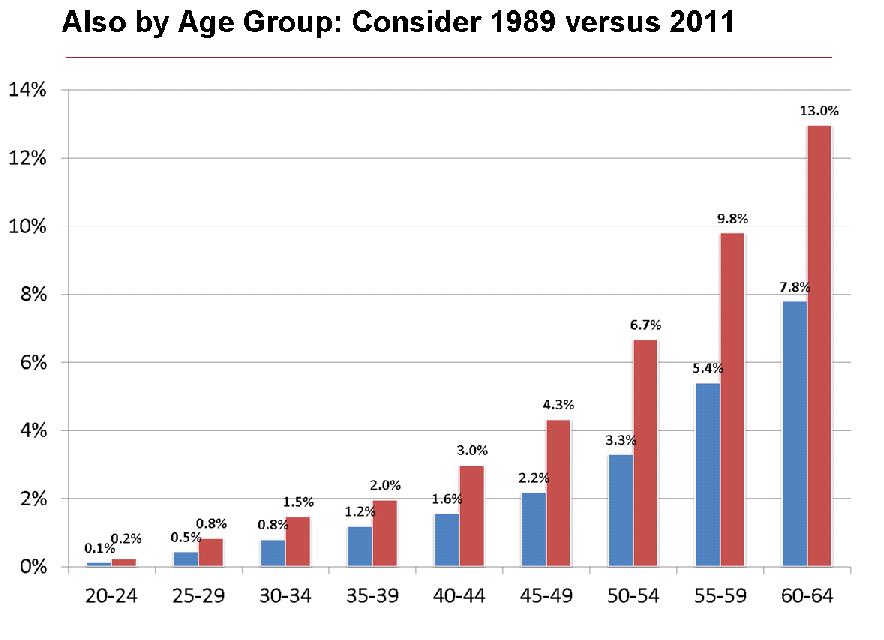
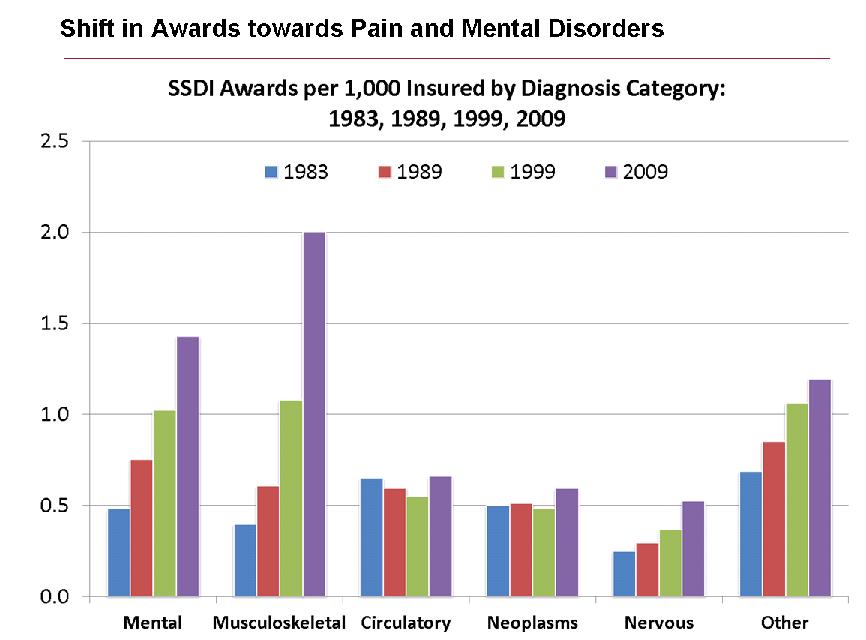


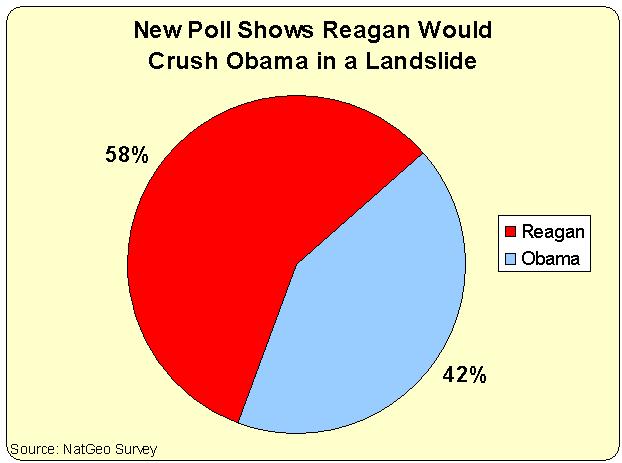


 The Daily Hatch