Monthly Archives: February 2013

“Sanctity of Life Saturday”:Derek Melleby’s review of the book “Francis Schaeffer: An Authentic Life” (includes film THE BASIS FOR HUMAN DIGNITY)


I truly believe that many of the problems we have today in the USA are due to the advancement of humanism in the last few decades in our society. Ronald Reagan appointed the evangelical Dr. C. Everett Koop to the position of Surgeon General in his administration. He partnered with Dr. Francis Schaeffer in making the video below. It is very valuable information for Christians to have.  Actually I have included a video below that includes comments from him on this subject.

In the film series “WHATEVER HAPPENED TO THE HUMAN RACE?” the arguments are presented  against abortion (Episode 1),  infanticide (Episode 2),   euthenasia (Episode 3), and then there is a discussion of the Christian versus Humanist worldview concerning the issue of “the basis for human dignity” in Episode 4 and then in the last episode a close look at the truth claims of the Bible

Francis Schaeffer: “Whatever Happened to the Human Race” (Episode 4) THE BASIS FOR HUMAN DIGNITY

Published on Oct 7, 2012 by

FRIDAY, SEPTEMBER 26, 2008

No one had a bigger impact on the pro-life movement then Francis Schaeffer.

Francis Schaeffer: An Authentic Life
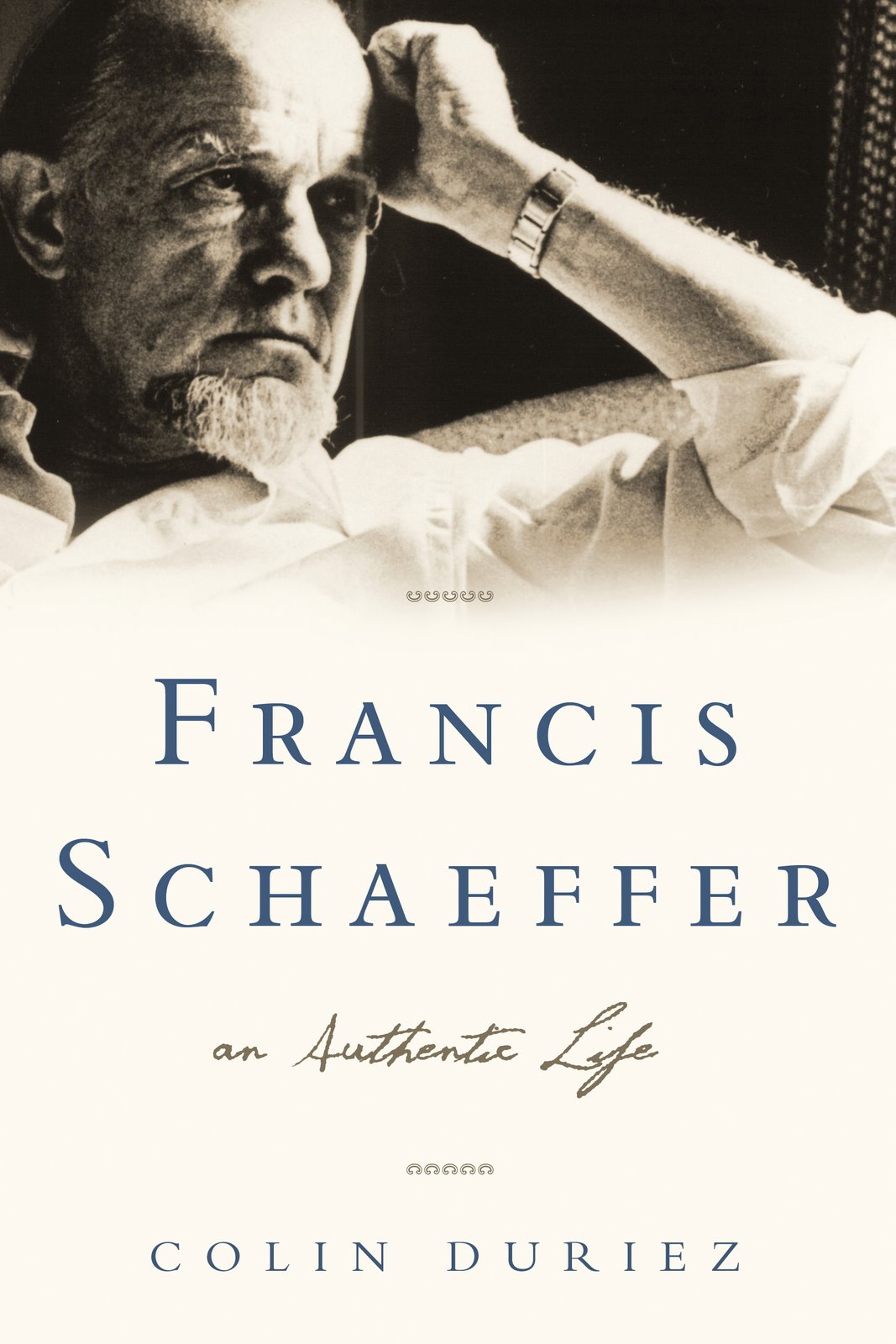
 
Francis Schaeffer: An Authentic Life, Colin Duriez (Crossway, 2008)Reviewed by Derek Melleby“Who is Francis Schaeffer?” The question came from a young, bright, Christian college student who over heard me talking about the new biography Francis Schaeffer: An Authentic Lifeby Colin Duriez. “Are you serious? You don’t know who Francis Schaeffer is?” I responded. It was as if someone from a far-off tribe had asked me “Who is this Jesus of Nazareth that you speak of?” My heart began to beat a little faster, and I had the privilege of introducing this young student to the giver of Christian intellectual life, my savior, I mean, my hero, Francis Schaeffer.There was irony in this conversation, of course. I was talking to a young, Christian student, who is passionate about developing a Christian approach to sustainable agriculture, linking it to deeper, local community life. We have had numerous conversations about the church in the 21st century, the kingdom of God, and environmental concerns. She was beginning to make connections with her deepest convictions about the environment and the Gospel and was living them out at a summer internship on an organic farm. Connecting what she believed about the world with how she lived in the world, was being manifested (incarnated) in tangible ways, and she had a plethora of resources to draw from: books, conferences, mentors and MP3 lectures. Here’s the irony: while she had no idea who Francis Schaeffer was, he had pioneered a movement of Christians to not only think more deeply about the Christian faith and how it sustains the attacks of modernity and the scientific revolution, but he also pleaded with believers to live-out faith in ways that showed the world the “Truth” of the Gospel. My guess, and it’s only a guess, is that if this same college student would have had similar convictions 50 years ago, the only place on the planet where she could have had an opportunity to wrestle with these questions, network with like-minded people and seek a Christian understanding of her concerns would have been under the teaching of Francis Schaeffer at his L’Abri ministry in Switzerland.I don’t want to overstate this. Certainly Francis Schaeffer wasn’t the only “thinking Christian” in the 20th Century. But it did dawn on me that while this student didn’t know who Francis Schaeffer was, she was certainly living in his legacy. Francis Schaeffer (1912-1984) was a Presbyterian pastor who became a missionary in Europe to expand a children’s ministry that he had started with his wife Edith. He was also deeply concerned with the “liberalization” of the church, especially the “higher criticism” approach to scripture. Not only did Schaeffer travel from city to city starting children’s ministries, but he would also lecture on the contemporary challenges to biblical, evangelical faith. In 1955, the Schaeffers started L’Abri (French for shelter), a place for “truth-seekers” to come and ask questions, wrestle with faith, and study Christianity more deeply. People came from all over the world, many converting to Christianity and many being energized to live-out their faith in powerful ways. You can learn more about this amazing ministry in Edith Schaeffer’s book L’Abri.Colin Duriez’s biography is an excellent place to start to learn more about this remarkable man. I recommend it highly, not only for those wanting to learn more about Schaeffer but for anyone who is interested in a deeper engagement with the Christian faith and culture. Schaeffer’s story needs to be known for generations to come and Duriez has told his story beautifully. Instead of retelling his story here, I’d rather discuss what I learned. What follows are three important things that I learned about Schaeffer through reading this book, and why I think each one is vital for the church today:First, Schaeffer was not afraid to ask tough questions about his faith. Before starting L’Abri, Schaeffer went through a grueling period of doubt and reconsideration of the Christian worldview. In fact, his wife thought that there was a chance that he was going to walk away from his faith altogether. Fortunately, this crisis of faith led Schaeffer to an even deeper commitment to the Truth of the gospel and to starting one of the most influential ministries of the 20th century. Probably the most significant aspect of Schaeffer’s legacy is his belief in the Christian faith for the sole reason that it is True. Because of this, he wasn’t afraid to meet intellectual challenges head on, even opening himself up to the possibility that he could be wrong. Humility became one of his defining characteristics. What a legacy for the church to consider. Do we, as the body of Christ, welcome times of questions and doubts? Do we take the time to fully understand opposing viewpoints? Is humility one of our defining characteristics? In order to engage the culture around us in effective ways, we can learn much from Schaeffer’s approach.

Second, Schaeffer was not only concerned with a “thinking” faith, but also a “living” faith. Schaeffer thought that too many Christians were not living out what they believed. Following his faith crisis, Schaeffer was determined to live in a way that revealed the Gospel to be true. If there truly was a God who was present, working in history and in our lives, then we should live in a way that conformed to this reality. We should expect God to meet our needs, provide opportunities to minister and make Himself known to others. In many ways, L’Abri could almost be seen as Schaeffer forcing God’s hand, making Him be true to his word. And the story of L’Abri is, itself, confirmation of the Truth of the Christian faith. Do we live in ways that require the Gospel to be true? Or do we simply live out an American, Western lifestyle and hope God is there to bless us? I think Schaeffer would challenge us to evaluate our lives to see if we really live as if the Biblical story is the True story of the world. Schaeffer’s words from an interview in 1980:

“I think there are many Christians – I mean, real Christians, real brothers and sisters in Christ, people I’m really fond of – who believe that certain things in the Christian faith are true, and yet, somehow or other, never relate this to truth. I don’t know if it comes across, what I’m trying to say, but I believe it’s truth – and not just religious truth, but the truth of what is. This gives you a different perspective.” (p. 189)

Third, Schaeffer was willing to partner with people outside of the evangelical Christian faith who supported a common cause. While not wavering on his personal convictions regarding evangelical faith and the authority of Scripture, he had no problem joining others who had similar concerns regarding public policy and social justice. This is certainly more widespread today, but in Schaeffer’s day, as a reformed Presbyterian pastor, it was almost unheard of to work along side Catholics or Mormons or agnostics who were united to confront injustices in the world. The church today should glean needed wisdom from Schaeffer’s willingness to work with and learn from others outside of his Christian tradition.Schaeffer’s story is one that needs to be told and retold. Thanks to this new biography, more people can learn about this important person in Christian history. Christian college students, especially, need to be reminded of the coherence and Truth of the Gospel and how it applies to all areas of life. Duriez’s biography reminds us that the life and writings of Francis Schaeffer is a good model for how to put this into practice.
 
Posted by Derek Melleby at 9/26/2008
Related posts:

Francis Schaeffer’s prayer for us in USA

 Francis Schaeffer: “Whatever Happened to the Human Race” (Episode 1) ABORTION OF THE HUMAN RACE Published on Oct 6, 2012 by AdamMetropolis The 45 minute video above is from the film series created from Francis Schaeffer’s book “Whatever Happened to the Human Race?” with Dr. C. Everett Koop. This book  really helped develop my political views […]


Francis Schaeffer’s “How should we then live?” Video and outline of episode 10 “Final Choices” (Schaeffer Sundays)

E P I S O D E 1 0   Dr. Francis Schaeffer – Episode X – Final Choices 27 min FINAL CHOICES I. Authoritarianism the Only Humanistic Social Option One man or an elite giving authoritative arbitrary absolutes. A. Society is sole absolute in absence of other absolutes. B. But society has to be […]

Francis Schaeffer’s “How should we then live?” Video and outline of episode 9 “The Age of Personal Peace and Affluence” (Schaeffer Sundays)

E P I S O D E 9 Dr. Francis Schaeffer – Episode IX – The Age of Personal Peace and Affluence 27 min T h e Age of Personal Peace and Afflunce I. By the Early 1960s People Were Bombarded From Every Side by Modern Man’s Humanistic Thought II. Modern Form of Humanistic Thought Leads […]

Francis Schaeffer’s “How should we then live?” Video and outline of episode 8 “The Age of Fragmentation” (Schaeffer Sundays)

E P I S O D E 8 Dr. Francis Schaeffer – Episode VIII – The Age of Fragmentation 27 min I saw this film series in 1979 and it had a major impact on me. T h e Age of FRAGMENTATION I. Art As a Vehicle Of Modern Thought A. Impressionism (Monet, Renoir, Pissarro, Sisley, […]

Francis Schaeffer’s “How should we then live?” Video and outline of episode 7 “The Age of Non-Reason” (Schaeffer Sundays)

E P I S O D E 7 Dr. Francis Schaeffer – Episode VII – The Age of Non Reason I am thrilled to get this film series with you. I saw it first in 1979 and it had such a big impact on me. Today’s episode is where we see modern humanist man act […]

Francis Schaeffer’s “How should we then live?” Video and outline of episode 6 “The Scientific Age” (Schaeffer Sundays)

E P I S O D E 6 How Should We Then Live 6#1 Uploaded by NoMirrorHDDHrorriMoN on Oct 3, 2011 How Should We Then Live? Episode 6 of 12 ________ I am sharing with you a film series that I saw in 1979. In this film Francis Schaeffer asserted that was a shift in […]

Francis Schaeffer’s “How should we then live?” Video and outline of episode 5 “The Revolutionary Age” (Schaeffer Sundays)

E P I S O D E 5 How Should We Then Live? Episode 5: The Revolutionary Age I was impacted by this film series by Francis Schaeffer back in the 1970′s and I wanted to share it with you. Francis Schaeffer noted, “Reformation Did Not Bring Perfection. But gradually on basis of biblical teaching there […]

Francis Schaeffer’s “How should we then live?” Video and outline of episode 4 “The Reformation” (Schaeffer Sundays)

Dr. Francis Schaeffer – Episode IV – The Reformation 27 min I was impacted by this film series by Francis Schaeffer back in the 1970′s and I wanted to share it with you. Schaeffer makes three key points concerning the Reformation: “1. Erasmian Christian humanism rejected by Farel. 2. Bible gives needed answers not only as to […]

“Schaeffer Sundays” Francis Schaeffer’s “How should we then live?” Video and outline of episode 3 “The Renaissance”

Francis Schaeffer’s “How should we then live?” Video and outline of episode 3 “The Renaissance” Francis Schaeffer: “How Should We Then Live?” (Episode 3) THE RENAISSANCE I was impacted by this film series by Francis Schaeffer back in the 1970′s and I wanted to share it with you. Schaeffer really shows why we have so […]

Francis Schaeffer’s “How should we then live?” Video and outline of episode 2 “The Middle Ages” (Schaeffer Sundays)

  Francis Schaeffer: “How Should We Then Live?” (Episode 2) THE MIDDLE AGES I was impacted by this film series by Francis Schaeffer back in the 1970′s and I wanted to share it with you. Schaeffer points out that during this time period unfortunately we have the “Church’s deviation from early church’s teaching in regard […]

Francis Schaeffer’s “How should we then live?” Video and outline of episode 1 “The Roman Age” (Schaeffer Sundays)

Francis Schaeffer: “How Should We Then Live?” (Episode 1) THE ROMAN AGE   Today I am starting a series that really had a big impact on my life back in the 1970′s when I first saw it. There are ten parts and today is the first. Francis Schaeffer takes a look at Rome and why […]

Francis Schaeffer: “Whatever Happened to the Human Race” (Episode 5) TRUTH AND HISTORY

Francis Schaeffer: “Whatever Happened to the Human Race” (Episode 5) TRUTH AND HISTORY Published on Oct 7, 2012 by AdamMetropolis This crucial series is narrated by the late Dr. Francis Schaeffer and former Surgeon General Dr. C. Everett Koop. Today, choices are being made that undermine human rights at their most basic level. Practices once […]

Francis Schaeffer: “Whatever Happened to the Human Race” (Episode 4) THE BASIS FOR HUMAN DIGNITY

The opening song at the beginning of this episode is very insightful. Francis Schaeffer: “Whatever Happened to the Human Race” (Episode 4) THE BASIS FOR HUMAN DIGNITY Published on Oct 7, 2012 by AdamMetropolis This crucial series is narrated by the late Dr. Francis Schaeffer and former Surgeon General Dr. C. Everett Koop. Today, choices […]

Francis Schaeffer: “Whatever Happened to the Human Race” (Episode 3) DEATH BY SOMEONE’S CHOICE

Francis Schaeffer: “Whatever Happened to the Human Race” (Episode 3) DEATH BY SOMEONE’S CHOICE Published on Oct 6, 2012 by AdamMetropolis This crucial series is narrated by the late Dr. Francis Schaeffer and former Surgeon General Dr. C. Everett Koop. Today, choices are being made that undermine human rights at their most basic level. Practices […]

Francis Schaeffer: “Whatever Happened to the Human Race?” (Episode 2) SLAUGHTER OF THE INNOCENTS

Francis Schaeffer: “Whatever Happened to the Human Race?” (Episode 2) SLAUGHTER OF THE INNOCENTS Published on Oct 6, 2012 by AdamMetropolis This crucial series is narrated by the late Dr. Francis Schaeffer and former Surgeon General Dr. C. Everett Koop. Today, choices are being made that undermine human rights at their most basic level. Practices […]


Francis Schaeffer: “Whatever Happened to the Human Race” (Episode 1) ABORTION OF THE HUMAN RACE

It is not possible to know where the pro-life evangelicals are coming from unless you look at the work of the person who inspired them the most. That person was Francis Schaeffer.  I do care about economic issues but the pro-life issue is the most important to me. Several years ago Adrian Rogers (past president of […]

The following essay explores the role that Francis Schaeffer played in the rise of the pro-life movement. It examines the place of How Should We Then Live?, Whatever Happened to the Human Race?, and A Christian Manifesto in that process.

This essay below is worth the read. Schaeffer, Francis – “Francis Schaeffer and the Pro-Life Movement” [How Should We Then Live?, Whatever Happened to the Human Race?, A Christian Manifesto] Editor note: <p> </p> [The following essay explores the role that Francis Schaeffer played in the rise of the pro-life movement.  It examines the place of […]

Who was Francis Schaeffer? by Udo Middelmann

Great article on Schaeffer. Who was Dr. Francis A. Schaeffer? By Francis Schaeffer The unique contribution of Dr. Francis Schaeffer on a whole generation was the ability to communicate the truth of historic Biblical Christianity in a way that combined intellectual integrity with practical, loving care. This grew out of his extensive understanding of the Bible […]

.

There are five major policy areas, each of which counts for 20 percent of a nation’s grade

Spending Restraint, Part I: Lessons from Ronald Reagan and Bill Clinton

Uploaded by on Feb 14, 2011

Ronald Reagan and Bill Clinton both reduced the relative burden of government, largely because they were able to restrain the growth of domestic spending. The mini-documentary from the Center for Freedom and Prosperity uses data from the Historical Tables of the Budget to show how Reagan and Clinton succeeded and compares their record to the fiscal profligacy of the Bush-Obama years.

________________

If we want to get on the right track again in this country then we must lower taxes for the job creators.  Dan Mitchell points out that tax policy is not the only policy you need to pay attention to:

There are five major policy areas, each of which counts for 20 percent of a nation’s grade.

  1. Size of government
  2. Regulation
  3. Monetary Policy
  4. Trade
  5. Rule of Law/Property Rights

I’m a big fan of fundamental tax reform, in part because I believe in fairness and want to reduce corruption.

But I also think the flat tax will boost the economy’s performance, largely because lower tax rates are the key to good tax policy.

There are four basic reasons that I cite when explaining why lower rates improve growth.

  1. They lower the price of work and production compared to leisure.
  2. They lower the price of saving and investment relative to consumption.
  3. They increase the incentive to use resources efficiently rather than seek out loopholes.
  4. They attract jobs and investment from other nations.

As you can see, there’s nothing surprising or unusual on my list. Just basic microeconomic analysis.

Yet some people argue that lower tax rates don’t make a difference. And if lower tax rates don’t help an economy, then presumably there is no downside if Obama’s class-warfare tax policy is implemented.

Many of these people are citing David Leonhardt’s column in Saturday’s New York Times. The basic argument is that Bush cut tax rates, but the economy stunk, while Clinton increased tax rates and the economy did well.

The defining economic policy of the last decade, of course, was the Bush tax cuts. President George W. Bush and Congress, including Mr. Ryan, passed a large tax cut in 2001, sped up its implementation in 2003 and predicted that prosperity would follow. The economic growth that actually followed — indeed, the whole history of the last 20 years — offers one of the most serious challenges to modern conservatism. Bill Clinton and the elder George Bush both raised taxes in the early 1990s, and conservatives predicted disaster. Instead, the economy boomed, and incomes grew at their fastest pace since the 1960s. Then came the younger Mr. Bush, the tax cuts, the disappointing expansion and the worst downturn since the Depression. Today, Mitt Romney and Mr. Ryan are promising another cut in tax rates and again predicting that good times will follow. …Mr. Romney and Mr. Ryan would do voters a service by explaining why a cut in tax rates would work better this time than last time.

While I’ll explain below why I think he’s wrong, Leonhardt’s column is reasonably fair. He gives some space to both Glenn Hubbard and Phil Swagel, both of whom make good points.

“To me, the Bush tax cuts get too much attention,” said R. Glenn Hubbard, who helped design them as the chairman of Mr. Bush’s Council of Economic Advisers and is now a Romney adviser. “The pro-growth elements of the tax cuts were fairly modest in size,” he added, because they also included politically minded cuts like the child tax credit. Phillip L. Swagel, another former Bush aide, said that even a tax cut as large as Mr. Bush’s “doesn’t translate quickly into higher growth.” Why not? The main economic argument for tax cuts is simple enough. In the short term, they put money in people’s pockets. Longer term, people will presumably work harder if they keep more of the next dollar they earn. They will work more hours or expand their small business. This argument dominates the political debate.

I hope, by the way, that neither Hubbard nor Swagel made the Keynesian argument that tax cuts are pro-growth because “they put money in people’s pockets.” Leonhardt doesn’t directly attribute that argument to either of them, so I hope they’re only guilty of proximity to flawed thinking.

But that’s besides the point. Several people have asked my reaction to the column, so it’s time to recycle something I wrote back in February. It was about whether a nation should reform its tax system, but the arguments are the same if we replace “a flat tax” with “lower tax rates.”

…even though I’m a big advocate for better tax policy, the lesson from the Economic Freedom of the World Index…is that adopting a flat tax won’t solve a nation’s economic problems if politicians are doing the wrong thing in other areas.

There are five major policy areas, each of which counts for 20 percent of a nation’s grade.

  1. Size of government
  2. Regulation
  3. Monetary Policy
  4. Trade
  5. Rule of Law/Property Rights

Now let’s pick Ukraine as an example. As a proponent of tax reform, I like that lawmakers have implemented a 15 percent flat tax.

But that doesn’t mean Ukraine is a role model. When looking at the mix of all policies, the country gets a very poor score from Economic Freedom of the World Index, ranking 125 out of 141 nations.

Conversely, Denmark has a very bad tax system, but it has very free market policies in other areas, so it ranks 15 out of 141 countries.

In other words, tax policy isn’t some sort of magical elixir. The “size of government” variable accounts for just one-fifth on a country’s grade, and keep in mind that this also includes key sub-variables such as the burden of government spending.

Yes, lower tax rates are better for economic performance, just as wheels matter for a car’s performance. But if a car doesn’t have an engine, transmission, steering wheel, and brakes, it’s not going to matter how nice the wheels are.

Not let’s shift from theory to reality. Here’s the historical data for the United States from Economic Freedom of the World. As you can see, overall economic policy moved in the right direction during the Clinton years and in the wrong direction during the Bush-Obama years.

To be more specific, the bad policy of higher tax rates in the 1990s was more than offset by good reforms such as lower trade barriers, a lower burden of government spending, and less regulation.

Similarly, the good policy of lower tax rates last decade was more than offset by bad developments such as a doubling of the federal budget, imposition of costly regulations, and adoption of two new health entitlements.

This is why I have repeatedly challenged leftists by stating that I would be willing to go back to Bill Clinton’s tax rates if it meant I could also go back to the much lower levels of spending and regulation that existed when he left office.

Open letter to President Obama (Part 246)


President Obama c/o The White House
1600 Pennsylvania Avenue NW
Washington, DC 20500

Dear Mr. President,

I know that you receive 20,000 letters a day and that you actually read 10 of them every day. I really do respect you for trying to get a pulse on what is going on out here.

Sadly, “The U.S. is now on the verge of a symbolic threshold: the point at which more than half of all American households receive and accept transfer benefits from the government.” I really do hate it because it affects so many people’s attitudes towards hard work and government dependency. However, after reading this article below I am very aware of that sad fact. Mr. President you need to reverse this trend!!!

I wrote a celebratory post last November about the dramatic difference between Americans and Europeans. There truly is American exceptionalism in that Europeans are much more likely to think it is government’s responsibility to provide the basics of life.

Another poll in 2010 showed Americans, by a 20-percentage point margin, want smaller government and lower taxes. A 2011 poll revealed negative views, by an almost 2-1 margin, of the federal government. And it’s not scientific, or even a poll, but I also enjoyed this Mark Steyn column  describing how Americans were the only people in the world to protest for less government when the financial crisis hit.

Perhaps most impressive is this data from late last year showing that Americans overwhelmingly view big government as the greatest threat to the nation’s future.

But self reliance and individualism are not necessarily a permanent part of American DNA, and some left wingers openly argue that they want to create an entitlement mindset.

Based on what’s already happened, Nicholas Eberstadt of the American Enterprise Institute is worried that the narcotic of dependency may be diluting American exceptionalism.

Here are some key passages from Eberstadt’s column, beginning with a look at what makes America special.

From the founding of our nation until quite recently, the U.S. and its citizens were regarded, at home and abroad, as exceptional in a number of deep and important respects. One of these was their fierce and principled independence, which informed not only the design of the political experiment that is the U.S. Constitution but also their approach to everyday affairs. The proud self-reliance that struck Alexis de Tocqueville in his visit to the U.S. in the early 1830s extended to personal finances. The American “individualism” about which he wrote did not exclude social cooperation—the young nation was a hotbed of civic associations and voluntary organizations. But in an environment bursting with opportunity, American men and women viewed themselves as accountable for their own situation through their own achievements—a novel outlook at that time, markedly different from the prevailing attitudes of the Old World (or at least the Continent). The corollaries of this American ethos were, on the one hand, an affinity for personal enterprise and industry and, on the other, a horror of dependency and contempt for anything that smacked of a mendicant mentality. Although many Americans in earlier times were poor, even people in fairly desperate circumstances were known to refuse help or handouts as an affront to their dignity and independence. People who subsisted on public resources were known as “paupers,” and provision for them was a local undertaking. Neither beneficiaries nor recipients held the condition of pauperism in high regard.

That’s the good news. Now for the bad news.

The U.S. is now on the verge of a symbolic threshold: the point at which more than half of all American households receive and accept transfer benefits from the government. From cradle to grave, a treasure chest of government-supplied benefits is there for the taking for every American citizen—and exercising one’s legal rights to these many blandishments is now part of the American way of life. …Citizens have become ever more broad-minded about the propriety of tapping new sources of finance for supporting their appetite for more entitlements. The taker mentality has thus ineluctably gravitated toward taking from a pool of citizens who can offer no resistance to such schemes: the unborn descendants of today’s entitlement-seeking population. …The U.S. is a very wealthy society. If it so chooses, it has vast resources to squander. And internationally, the dollar is still the world’s reserve currency; there remains great scope for financial abuse of that privilege. Such devices might well postpone the day of fiscal judgment: not so the day of reckoning for American character, which may be sacrificed long before the credibility of the U.S. economy. Some would argue that it is an asset already wasting away before our very eyes.

If you think Eberstadt is being needlessly pessimistic, you may change your mind if you read this and this.

To be sure, it’s possible to reverse this trend if we implement entitlement reform. But how likely is that given the short-sighted outlook and self-interested attitude of the political class.

P.S. You can enjoy some cartoons about dependency here, here, and here. If you need some more humor, this cartoon looks at the issue from the government’s perspective, and here’s a great Ramirez cartoon about Julia, a.k.a., the poster child of dependency.

P.P.S. Redistribution is bad for prosperity because you’re paying some people not to produce and you’re penalizing some people who do produce. To get a better idea of how the former kills incentives, look at this amazing chart.

_________

Thank you so much for your time. I know how valuable it is. I also appreciate the fine family that you have and your commitment as a father and a husband.

Sincerely,

Everette Hatcher III, 13900 Cottontail Lane, Alexander, AR 72002, ph 501-920-5733, lowcostsqueegees@yahoo.com

“Friedman Friday” Milton Friedman at Hillsdale College 2006 (part 2)

Milton Friedman at Hillsdale College 2006

July 2006

Free to Choose: A Conversation with Milton Friedman

Milton Friedman
Economist

Milton Friedman is a senior research fellow at the Hoover Institution at Stanford University and a professor emeritus of economics at the University of Chicago, where he taught from 1946-1976. Dr. Friedman received the Nobel Memorial Prize for Economic Science in 1976, and the National Medal of Science and the Presidential Medal of Freedom in 1988. He served as an unofficial adviser to presidential candidate Barry Goldwater and Presidents Nixon and Reagan. He is the author of numerous books, including Two Lucky People (with Rose Friedman).

The following is an edited transcript of a conversation between Hillsdale College President Larry Arnn and Milton Friedman, which took place on May 22, 2006, at the Ritz-Carlton Hotel in San Francisco, California, during a two-day Hillsdale College National Leadership Seminar celebrating the 25th anniversary of Milton and Rose Friedman’s book, Free to Choose: A Personal Statement.

_______

LA: In Free to Choose you discuss Abraham Lincoln’s “House Divided” speech, which you relate to the great task that the American people face. Like Lincoln, you argue that a house divided against itself cannot stand: America is going to be a government intervention country or it’s going to be a free market country, but it cannot continue indefinitely as a mixture of both. Do you still believe that?

MF: Yes, I very much believe that, and I believe that we’ve been making some headway since Free to Choose appeared. However, even though it is real headway compared to what was happening before, we are mostly holding ground.

LA: What do you think are the major factors behind the economic growth we have experienced since the publication of Free to Choose?

MF: Economic growth since that time has been phenomenal, which has very little to do with most of what we’ve been talking about in terms of the conflict between government and private enterprise. It has much more to do with the technical problem of establishing sound monetary policy. The economic situation during the past 20 years has been unprecedented in the history of the world. You will find no other 20-year period in which prices have been as stable—relatively speaking—in which there has been as little variability in price levels, in which inflation has been so well-controlled, and in which output has gone up as regularly. You hear all this talk about economic difficulties, when the fact is we are at the absolute peak of prosperity in the history of the world. Never before have so many people had as much as they do today. I believe a large part of that is to be attributed to better monetary policy. The improved policy is a result of the acceptance of the view that inflation is a monetary phenomenon, not a real phenomenon. We have accepted the view that central banks are primarily responsible for maintaining stable prices and nothing else.

LA: Do you think the Great Depression was triggered by bad monetary policy at a crucial moment?

MF: Absolutely. Unfortunately, it is still the case that if you ask people what caused the Great Depression, nine out of ten will probably tell you it was a failure of business. But it’s absolutely clear that the Depression was a failure of government and not a failure of business.

LA: You don’t think the Smoot-Hawley tariff caused the Depression?

MF: No. I think the Smoot-Hawley tariff was a bad law. I think it did harm. But the Smoot-Hawley tariff by itself would not have made one quarter of the labor force unemployed. However, reducing the quantity of money by one third did make a quarter of the labor force unemployed. When I graduated from undergraduate college in 1932, I was baffled by the fact that there were idle machines and idle men and you couldn’t get them together. Those men wanted to cooperate; they wanted to work; they wanted to produce what they wore; and they wanted to produce the food they ate. Yet something had gone wrong: The government was mismanaging the money supply.

LA: Do you think our government has learned its lesson about how to manage the money supply?

MF: I think that the lesson has been learned, but I don’t think it will last forever. Sooner or later, government will want to raise funds without imposing taxes. It will want to spend money it does not have. So I hesitate to join those who are predicting two percent inflation for the next 20 years. The temptation for government to lay its hands on that money is going to be very hard to resist. The fundamental problem is that you shouldn’t have an institution such as the Federal Reserve, which depends for its success on the abilities of its chairman. My first preference would be to abolish the Federal Reserve, but that’s not going to happen.

LA: I want to talk now about education and especially about vouchers, because I know they are dear to your heart. Why do you think teachers unions oppose vouchers?

MF: The president of the National Education Association was once asked when his union was going to do something about students. He replied that when the students became members of the union, the union would take care of them. And that was a correct answer. Why? His responsibility as president of the NEA was to serve the members of his union, not to serve public purposes. I give him credit: The trade union has been very effective in serving its members. However, in the process, they’ve destroyed American education. But you see, education isn’t the union’s function. It’s our fault for allowing the union to pursue its agenda. Consider this fact: There are two areas in the United States that suffer from the same disease—education is one and health care is the other. They both suffer from the disease that takes a system that should be bottom-up and converts it into a system that is top-down. Education is a simple case. It isn’t the public purpose to build brick schools and have students taught there. The public purpose is to provide education. Think of it this way: If you want to subsidize the production of a product, there are two ways you can do it. You can subsidize the producer or you can subsidize the consumer. In education, we subsidize the producer—the school. If you subsidize the student instead—the consumer—you will have competition. The student could choose the school he attends and that would force schools to improve and to meet the demands of their students.

LA: Although you discuss many policy issues in Free to Choose, you have turned much of your attention to education, and to vouchers as a method of education reform. Why is that your focus?

MF: I don’t see how we can maintain a decent society if we have a world split into haves and have-nots, with the haves subsidizing the have-nots. In our current educational system, close to 30 percent of the youngsters who start high school never finish. They are condemned to low-income jobs. They are condemned to a situation in which they are going to be at the bottom. That leads in turn to a divisive society; it leads to a stratified society rather than one of general cooperation and general understanding. The effective literacy rate in the United States today is almost surely less than it was 100 years ago. Before government had any involvement in education, the majority of youngsters were schooled, literate, and able to learn. It is a disgrace that in a country like the United States, 30 percent of youngsters never graduate from high school. And I haven’t even mentioned those who drop out in elementary school. It’s a disgrace that there are so many people who can’t read and write. It’s hard for me to see how we can continue to maintain a decent and free society if a large subsection of that society is condemned to poverty and to handouts.

LA: Do you think the voucher campaign is going well?

MF: No. I think it’s going much too slowly. What success we have had is almost entirely in the area of income-limited vouchers. There are two kinds of vouchers: One is a charity voucher that is limited to people below a certain income level. The other is an education voucher, which, if you think of vouchers as a way of transforming the educational industry, is available to everybody. How can we make vouchers available to everybody? First, education ought to be a state and local matter, not a federal matter. The 1994 Contract with America called for the elimination of the Department of Education. Since then, the budget for the Department of Education has tripled. This trend must be reversed. Next, education ought to be a parental matter. The responsibility for educating children is with parents. But in order to make it a parental matter, we must have a situation in which parents are Free to Choose the schools their children attend. They aren’t free to do that now. Today the schools pick the children. Children are assigned to schools by geography—by where they live. By contrast, I would argue that if the government is going to spend money on education, the money ought to travel with the children. The objective of such an expenditure ought to be educated children, not beautiful buildings. The way to accomplish this is to have a universal voucher. As I said in 1955, we should take the amount of money that we’re now spending on education, divide it by the number of children, and give that amount of money to each parent. After all, that’s what we’re spending now, so we might as well let parents spend it in the form of vouchers.

LA: I have one more question for you. You describe a society in which people look after themselves because they know the most about themselves, and they will flourish if you let them. You, however, are a crusader for the rights of others. For example, you say in Free to Choose—and it’s a very powerful statement—a tiny minority is what matters. So is it one of the weaknesses of the free market that it requires certain extremely talented and disinterested people who can defend it?

MF: No, that’s not right. The self-interest of the kind of people you just described is promoting public policy. That’s what they’re interested in doing. For example, what was my self-interest in economics? My self-interest to begin with was to understand the real mystery and puzzle that was the Great Depression. My self-interest was to try to understand why that happened, and that’s what I enjoyed doing—that was my self-interest. Out of that I grew to learn some things—to have some knowledge. Following that, my self-interest was to see that other people understood the same things and took appropriate action.

LA: Do you define self-interest as what the individual wants?

MF: Yes, self-interest is what the individual wants. Mother Teresa, to take one example, operated on a completely self-interested basis. Self-interest does not mean narrow self-interest. Self-interest does not mean monetary self-interest. Self-interest means pursuing those things that are valuable to you but which you can also persuade others to value. Such things very often go beyond immediate material interest.

LA: Does that mean self-interest is a synonym for self-sacrifice?

MF: If you want to see how pervasive this sort of self-interest is that I’m describing, look at the enormous amount of money contributed after Hurricane Katrina. That was a tremendous display of self-interest: The self-interest of people in that case was to help others. Self-interest, rightly understood, works for the benefit of society as a whole.


Open letter to President Obama (Part 245)

Williams with Sowell – Minimum Wage

President Obama c/o The White House
1600 Pennsylvania Avenue NW
Washington, DC 20500

Dear Mr. President,

I know that you receive 20,000 letters a day and that you actually read 10 of them every day. I really do respect you for trying to get a pulse on what is going on out here.

Why do the liberals want to increase unemployment more by increasing minimum wage? The result is anything but compassionate to the poor. Let the young black youth that suffer under the high minimum wage law get a chance to get into the workforce. Thomas Sowell and Walter Williams have written about this over and over. Here is a piece below from Dan Mitchell.

The unemployment rate has been stuck above 8 percent ever since Obama pushed through his ill-fated stimulus scheme to increase the burden of government spending.

This high level of joblessness presumably reduces Obama’s chances of getting reelected, so you would think that Democrats would be very leery of proposals that increase the cost of job creation.

Yet they’ve relentlessly pushed to subsidize unemployment, even though Paul Krugman and Larry Summers have acknowledged that unemployment insurance reduces the incentive to find a job.

Now there’s talk of pushing for a higher minimum wage. Here are some details from a report in The Hill.

Advocates pushing for a minimum wage increase are looking to turn it into an election-year issue as the campaign season heats up this fall. Such a hike is expected to be included in the Democrats’ 2012 platform — which will be presented to delegates at the party’s convention in Charlotte, N.C., next week — a member of the drafting committee told The Hill. …In the eyes of labor unions, consumer advocates and liberal Democrats, the strategy is a no-brainer in an election season that’s featured the birth of the Occupy Wall St. movement, questions about Mitt Romney’s financial practices and a highly partisan debate over which class of workers deserve an extended tax break next year. …A minimum wage hike is not without political risks, however, as Republicans and business groups are warning that such a move would burden small businesses amid an employment crisis when Congress is urging them to hire.

Regarding the last sentence in the excerpt, I agree that a minimum wage hike entails risk, but I fear those risks are to the economy rather than to politicians. Much to my dismay, a majority of voters generally support this misguided policy.

In my attempts to educate these misguided souls, I try to figure out why they favor certain policies. In the case of the minimum wage, this is my rough-draft list of why some people support this perverse form of government intervention.

1. They understand low-income people will suffer if the minimum wage is increased, but that is acceptable collateral damage in the quest for political power.

2. They understand low-income people will suffer in the short run, but they rationalize this harm because there will be more redistribution in the long run if they obtain political power.

3. They understand low-income people will suffer, but that is an acceptable price to pay since it means unions will have more negotiating leverage once low-income workers are priced out of the market.

4. They think low-income people will benefit because the economy is a fixed pie and a mandate to pay more to low-income workers will merely result in less income for the rich.

5. They think low-income people will benefit because of the magic of Keynesian economics – i.e., beneficiaries will have more income, which will then get spent, thus stimulating the economy.

6. They are impervious to evidence and instead are motivated solely by a sense that there should be a minimum income in a “fair” and “compassionate” society.

It’s quite possible, of course, for someone to support higher minimum wages for more than just one reason. Indeed, I suspect  supporters of the minimum wage can be divided into two groups. The politicians and union bosses tend to believe in higher minimum wages for reasons 1, 2, and 3, while ordinary people are likely to support intervention for reasons 4, 5, and 6.

But regardless of what they believe, they’re wrong. This Cato study has all the evidence you could possibly want. But if you don’t have time to read the paper, this video is well worth a few minutes of your time.

Uploaded by on Jun 14, 2010

Minimum wage laws seem like a good idea, but arbitrarily mandating a certain wage can have terrible consequences. This CF&P Foundation mini-documentary reveals that business are not charities, so if the minimum wage is set above the market level, this eliminates job opportunities — particularly for the less fortunate members of society. Since employees and employers should have freedom of contract, the right minimum wage is zero. http://www.freedomandprosperity.org

____________

Walter Williams also has weighed in on this issue, noting specifically the negative impact of higher minimum wages on minorities.

Sadly, this is one of those issues where it might not make a difference which party wins in November. Romney already has said he favors not only an increase in the minimum wage, but also indexing, which means automatic increases in the future.

P.S. Here’s a very good cartoon showing the impact of raising the minimum wage.

_________

Thank you so much for your time. I know how valuable it is. I also appreciate the fine family that you have and your commitment as a father and a husband.

Sincerely,

Everette Hatcher III, 13900 Cottontail Lane, Alexander, AR 72002, ph 501-920-5733, lowcostsqueegees@yahoo.com

Thomas Sowell – Reducing Black Unemployment

Robert Dick Wilson’s talk “Is the Higher Criticism Scholarly?” (part 6 of transcript)

The Bible and Archaeology (3/5)

For many more archaeological evidences in support of the Bible, see Archaeology and the Bible . (There are some great posts on this too at the bottom of this post.)

Robert Dick Wilson at the Grove City Bible Conference in 1909.


IS THE HIGHER CRITICISM SCHOLARLY?Clearly attested facts showing that thedestructive “assured results of modern scholarship” are indefensible

By Robert Dick Wilson, Ph.D., D.D.

Professor of Semitic Philology in Princeton Theological Seminary[Originally Published in 1922]


Ewald Utterly Refuted in the Argument Regarding the Title “King of Persia”

Second, the critics affirm that Ezra, Nehemiah, and Chronicles were put together in their present form by the same redactor [reviser] and that this redactor must have lived in the Greek period, because he calls the kings of Persia by the title “king of Persia.” The great German critic, Ewald, said it was “unnecessary and contrary to contemporary usage” to call the kings of Persia by the title “king of Persia” during the time that the kings of Persia actually ruled; and that consequently the presence of this title in a document shows that the document must have been written after the Persian empire had ceased to exist. The present writer has shown by a complete induction of all the titles of the kings of Egypt, Babylon, Assyria, Greece, and all other nations of that part of the world including the Hebrews themselves, from 4000 B. C. down to Augustus, that it was the custom in all times, languages, and kingdoms to use titles similar to this. Further, he has shown that the title “king of Persia” was given by Nabunaid, king of Babylon, to Cyrus in 546 B. C., seven years before the first use of it in the Bible, and that it is used by Xenophon in 365 B.C., probably forty years after it is used for the last time in the Bible. Further, he has shown that, between 546 and 365 B. C., it was used thirty-eight different times by eighteen different authors, in nineteen different documents, in six different languages, and in five or six different countries; and that it is used in letters and dates in Scripture just as it is used in the extra-Biblical documents. Lastly he has shown that it was not unusual for the Greek authors after the Persian period to employ the title.

Inexcusable Ignorance of Evidence on the Part of Notable Critics Exposed

Thus, with regard to this title, by a mass of incontestable evidence, the writers of Chronicles and Ezra, and of Daniel, also, are shown to be in harmony with the contemporaneous usage of documents written in the Persian period and to be out of harmony with the common usage in Greek times. The Bible is right, and professor Ewald of Gottingen, the greatest German Old Testament scholar of his time, and Professors Driver and Gray of Oxford, the writers of many books and of many articles in the Encyclopedia Britannica, Hastings, and the expository Times, are proved to be wrong. They all might have read that part of the evidence which is found in Herodotus, Thucydides, Aeschylus, Xenophon, and other Greek authors. Drs. Driver and Gray ought, also to have read for themselves, or to have had Professor Sayce, or Dr. King, or Dr. Budge, read or gather from them the evidence on the subject to be found in the Babylonian, Persian, Susian, and Egyptian. Unless on has sufficiently mastered the languages in which the texts containing the evidence on such subjects as the titles of the kings of Persia are written, he cannot be called an expert witness and should be ruled out of court.

Having read carefully and repeatedly what these critics have to say on this title, I have failed to find any hint indicating that they have ever appealed for their information to any original sources outside of Greek, Hebrew, and Aramaic; and as to these, they pay no attention to the great Greek writers mentioned above. If they are so careless and unreliable where their assertions can be investigated, what ground have they for expecting us to rely upon them where their assertions cannot be tested? If the statements of the Biblical writers are found to be confirmed when they can be tested by outside evidence, is it right to presume that they are correct when no evidence for, or against, their statements is within our knowledge?

Variations in Numbers Will be Better Understood When Israel’s

Numerical Signs Are Discovered

The other objections to the trustworthiness of the records of Chronicles are mostly purely subjective in character, utterly devoid of any objective evidence in their favor; or they are based upon interpretations which are impossible to prove. Are we driven to conclude, for example, that a thousand of thousands means exactly one million, neither more nor less? May it not mean many, or countless, thousands, just as a generation of generations means many generations? And are the critics who find the account that the Chronicler gives of the conspiracy against Athaliah inconsistent with that given in Kings quite sure that the captain and the guard of Kings cannot have been priests and Levites? Besides, how can we expect to explain satisfactorily all seeming incongruities in documents that are thousands of years old?

As to the variations in numbers in the different sources, they are probably due to different readings of the original signs. But we do not know what signs the Hebrews used; and so we cannot at present discuss intelligently the reasons for the variations, and never shall until the system of numerical signs used by the Israelites has been discovered. And everybody knows how difficult it is to copy numerical signs correctly. There is nothing usually in the context to help us determine just how many men were in an army, or how many were killed in a given battle. The important thing is, who won the fight.

I once inquired what was the population of a certain Southern city. One told me  40,000; another, 120,000. When I asked for an explanation of the discrepancy, I was told that there were 40,000 whites and 80,000 Negroes. Both estimates were true; but had they been written down in two different documents what charges of inconsistency might not have been made by future scientific historians!

The Chronicler Need Not Have Copied From Kings

Again, in their criticism of Chronicles, the critics proceed on the presumption that, in the portions that are parallel to kings, the author has merely copied from Kings, and that he has no further sources of reliable information. The author of Chronicles himself states that he had a number of such sources. Can the critics give any good reason to show that he did not have these sources? Since the critics admit that the Chronicles of the kings of Israel were not destroyed by Sargon when Samaria was overthrown, and Hosea, Amos, the so-called Jehovist and Elohistic parts of the Pentateuch, Deuteronomy, and other works of the Hebrews were not destroyed at the time of the destruction of Jerusalem by Nebuchadnezzar, why should we suppose that the records of the kings of Israel and Judah were not in existence when the writers of Kings and Chronicles composed their works?

And why since many hundreds of works of the ancient Greeks, such as those mentioned by Pliny, have since utterly disappeared, are we to suppose that the Jews of Ezra’s time did not also possess many works that have long since been obliterated? The Aramaic recension of the Behistun Inscription of Darius Hystaspis and the Aramaic work of Ahikar were buried at Elephantine for twenty-three hundred years, but now have been unearthed and show that the Aramaic-speaking Jews of the sixth and fifth centuries B. C. had produced some literary documents at least in addition to the Aramaic portions of Ezra and Daniel. How many more of such works may have been possessed by them both in Hebrew and Aramaic we cannot say, but the probability is that they were numerous. We cannot see that there is sufficient reason for doubting the claim of the Chronicler to have had access to sources extending from the time of David down to his own time. He says that he did have such sources. How can the critics know that he did not?

One of the most unjustifiable of the assaults upon the Old Testament Scriptures lies in the assumption that the larger part of the great poetical and legal productions and some of the finest prophesies were produced during the period of Judah’s political and linguistic decay, which followed the year 500 B. C. The only time after the end of the captivity at which we might naturally have expected a recrudescence of such literary activity was the period from 200 B. C. to the time of Pompey. And here in fact are to be placed the apocryphal and pseudepigraphical works of Ecclesiasticus, Wisdom, First Maccabees, Jubilees, parts of Enoch, and many other works of greater or less value.

The only one of these that has been preserved in Hebrew is Ecclesiasticus; and its Hebrew has no word that is certainly Greek, and not one of Persian origin that is not found in the Old Testament.

Many traces of Persian influence are visible in the Chronicles, Ester, Ezra, and Nehemiah. When, however, we come to the Hebrew of the Psalms, of which so many are placed by the critics in this period, of Ecclesiastes, and of the Hebrew part of Daniel, we find that the language differs markedly from Ecclesiasticus both in vocabulary and forms.

The use of the conjunction “and” with the perfect, which is said to be the mark of the lateness of Ecclesiastes, is not found in Ecclesiasticus. Ecclesiastes is devoid of any words that are certainly Babylonian, Persian, or Aramaic. The so-called Maccabean Psalms have no Persian or Greek words and few if any that are certainly Babylonian; and only a few that are even alleged to have Aramaic vocables or forms.

The period between 500 and 164 B. C. was one in which the Israelites were subservient to the government of Persia and the Greeks. The only reliable information from this time about a revival of national feeling and semi-independence among the Jews is that to be found in Ezra-Nehemiah, and Chronicles. As we would expect, they are all characterized by Persian, Babylonian, and Aramaic words, and Ezra is nearly half composed in Aramaic.

__________

Is the Bible historically accurate? Here are some of the posts I have done in the past on the subject:


1. 
The Babylonian Chronicle
of Nebuchadnezzars Siege of Jerusalem

This clay tablet is a Babylonian chronicle recording events from 605-594BC. It was first translated in 1956 and is now in the British Museum. The cuneiform text on this clay tablet tells, among other things, 3 main events: 1. The Battle of Carchemish (famous battle for world supremacy where Nebuchadnezzar of Babylon defeated Pharoah Necho of Egypt, 605 BC.), 2. The accession to the throne of Nebuchadnezzar II, the Chaldean, and 3. The capture of Jerusalem on the 16th of March, 598 BC.

2. Hezekiah’s Siloam Tunnel Inscription.

King Hezekiah of Judah ruled from 721 to 686 BC. Fearing a siege by the Assyrian king, Sennacherib, Hezekiah preserved Jerusalem’s water supply by cutting a tunnel through 1,750 feet of solid rock from the Gihon Spring to the Pool of Siloam inside the city walls (2 Kings 20; 2 Chron. 32). At the Siloam end of the tunnel, an inscription, presently in the archaeological museum at Istanbul, Turkey, celebrates this remarkable accomplishment.

3. Taylor Prism (Sennacherib Hexagonal Prism)

It contains the victories of Sennacherib himself, the Assyrian king who had besieged Jerusalem in 701 BC during the reign of king Hezekiah, it never mentions any defeats. On the prism Sennacherib boasts that he shut up “Hezekiah the Judahite” within Jerusalem his own royal city “like a caged bird.” This prism is among the three accounts discovered so far which have been left by the Assyrian king Sennacherib of his campaign against Israel and Judah.

4. Biblical Cities Attested Archaeologically.

In addition to Jericho, places such as Haran, Hazor, Dan, Megiddo, Shechem, Samaria, Shiloh, Gezer, Gibeah, Beth Shemesh, Beth Shean, Beersheba, Lachish, and many other urban sites have been excavated, quite apart from such larger and obvious locations as Jerusalem or Babylon. Such geographical markers are extremely significant in demonstrating that fact, not fantasy, is intended in the Old Testament historical narratives;

5. The Discovery of the Hittites

Most doubting scholars back then said that the Hittites were just a “mythical people that are only mentioned in the Bible.” Some skeptics pointed to the fact that the Bible pictures the Hittites as a very big nation that was worthy of being coalition partners with Egypt (II Kings 7:6), and these bible critics would assert that surely we would have found records of this great nation of Hittites.  The ironic thing is that when the Hittite nation was discovered, a vast amount of Hittite documents were found. Among those documents was the treaty between Ramesses II and the Hittite King.

6.Shishak Smiting His Captives

The Bible mentions that Shishak marched his troops into the land of Judah and plundered a host of cities including Jerusalem,  this has been confirmed by archaeologists. Shishak’s own record of his campaign is inscribed on the south wall of the Great Temple of Amon at Karnak in Egypt. In his campaign he presents 156 cities of Judea to his god Amon. 

7. Moabite Stone

The Moabite Stone also known as the Mesha Stele is an interesting story. The Bible says in 2 Kings 3:5 that Mesha the king of Moab stopped paying tribute to Israel and rebelled and fought against Israel and later he recorded this event. This record from Mesha has been discovered.

8Black Obelisk of Shalmaneser III

The tribute of Jehu, son of Omri, silver, gold, bowls of gold, chalices of gold, cups of gold, vases of gold, lead, a sceptre for the king, and spear-shafts, I have received.”

View from the dome of the Capitol!9A Verification of places in Gospel of John and Book of Acts.

Sir William Ramsay, famed archaeologist, began a study of Asia Minor with little regard for the book of Acts. He later wrote:

I found myself brought into contact with the Book of Acts as an authority for the topography, antiquities and society of Asia Minor. It was gradually borne upon me that in various details the narrative showed marvelous truth.

9B Discovery of Ebla TabletsWhen I think of discoveries like the Ebla Tablets that verify  names like Adam, Eve, Ishmael, David and Saul were in common usage when the Bible said they were, it makes me think of what amazing confirmation that is of the historical accuracy of the Bible.

10. Cyrus Cylinder

There is a well preserved cylinder seal in the Yale University Library from Cyrus which contains his commands to resettle the captive nations.

11. Puru “The lot of Yahali” 9th Century B.C.E.

This cube is inscribed with the name and titles of Yahali and a prayer: “In his year assigned to him by lot (puru) may the harvest of the land of Assyria prosper and thrive, in front of the gods Assur and Adad may his lot (puru) fall.”  It provides a prototype (the only one ever recovered) for the lots (purim) cast by Haman to fix a date for the destruction of the Jews of the Persian Empire, ostensibly in the fifth century B.C.E. (Esther 3:7; cf. 9:26).

12. The Uzziah Tablet Inscription

The Bible mentions Uzziah or Azariah as the king of the southern kingdom of Judah in 2 Kings 15. The Uzziah Tablet Inscription is a stone tablet (35 cm high x 34 cm wide x 6 cm deep) with letters inscribed in ancient Hebrew text with an Aramaic style of writing, which dates to around 30-70 AD. The text reveals the burial site of Uzziah of Judah, who died in 747 BC.

13. The Pilate Inscription

The Pilate Inscription is the only known occurrence of the name Pontius Pilate in any ancient inscription. Visitors to the Caesarea theater today see a replica, the original is in the Israel Museum in Jerusalem. There have been a few bronze coins found that were struck form 29-32 AD by Pontius Pilate

14. Caiaphas Ossuary

This beautifully decorated ossuary found in the ruins of Jerusalem, contained the bones of Caiaphas, the first century AD. high priest during the time of Jesus.

14 B Pontius Pilate Part 2      

In June 1961 Italian archaeologists led by Dr. Frova were excavating an ancient Roman amphitheatre near Caesarea-on-the-Sea (Maritima) and uncovered this interesting limestone block. On the face is a monumental inscription which is part of a larger dedication to Tiberius Caesar which clearly says that it was from “Pontius Pilate, Prefect of Judea.”

14c. Three greatest American Archaeologists moved to accept Bible’s accuracy through archaeology.

Despite their liberal training, it was archaeological research that bolstered their confidence in the biblical text:Albright said of himself, “I must admit that I tried to be rational and empirical in my approach [but] we all have presuppositions of a philosophical order.” The same statement could be applied as easily to Gleuck and Wright, for all three were deeply imbued with the theological perceptions which infused their work.

Dear Senator Pryor, why not pass the Balanced Budget Amendment? (“Thirsty Thursday”, Open letter to Senator Pryor)

Sadly Senator Pryor has voted against the Balanced Budget Amendment over and over in his long time in the Senate. Senator Pryor: “There are a lot of people who think a balanced-budget amendment solves all the fiscal problems. I completely disagree.” (Peter Urban, Pryor Tilts Balanced Budget, Southwest Times Record, 11/17/11)

Dear Senator Pryor,

Why not pass the Balanced  Budget Amendment? As you know that federal deficit is at all time high (1.6 trillion deficit with revenues of 2.2 trillion and spending at 3.8 trillion).

On my blog www.HaltingArkansasLiberalswithTruth.com I took you at your word and sent you over 100 emails with specific spending cut ideas. However, I did not see any of them in the recent debt deal that Congress adopted. Now I am trying another approach. Every week from now on I will send you an email explaining different reasons why we need the Balanced Budget Amendment. It will appear on my blog on “Thirsty Thursday” because the government is always thirsty for more money to spend.

Congressman Walsh Introduces Balanced Budget Amendment

04/07/11

 Washington, D.C. –  As part of his ongoing effort to restore fiscal responsibility in Washington, Congressman Joe Walsh (R-IL) today introduced H.J.Res.54, a Balanced Budget Amendment to the United States Constitution that provides a framework for putting our country on a path economic stability. This amendment is the House-companion to the Senate amendment that all 47 Republicans unanimously introduced last week, which would require the President to submit a balanced budget to Congress prior to each fiscal year.

“The federal government cannot continue to burden our children with this crushing deficit,” said Congressman Walsh. “American families have been working through a recession for the past three years by spending less and saving more, yet the federal government continues to spend money it simply does not have. Congress has neglected the real root cause and continues to be part of the problem, not part of the solution.”

“This amendment is the solution. If the average American family has to find a way to balance their checkbook each year and live within their means, there is no reason that the federal government can’t do the same.”

“It was important to me that my first piece of legislation as a United States Congressman serves the American people by easing the burden of the government in their daily lives.A key provision to this amendment is to ensure that the budget is not balanced on the backs of hard working Americans, and thus H.J.Res.54 would require a 2/3 super-majority in both Houses for any tax increase.”

“Most importantly, this amendment shows families and businesses across America that Congress is serious about stabilizing our economy long-term. It’s time to bring our country out of the red.”

The Balanced Budget Amendment resolution features the following key provisions:

  • Presidential requirement to submit a balanced budget and Congressional requirement to pass a balanced budget;
  • Federal spending cap that Congress must limit outlays to no more than 18 percent of GDP, in line with the historical average of revenues over the last 40 years (this year, the federal government is projected to spend close to 25% of GDP);
  • Prohibits the courts from ordering revenue increases.

What were the main proposals of Milton Friedman?

Stearns Speaks on House Floor in Support of Balanced Budget Amendment

Uploaded by on Nov 18, 2011

Speaking on House floor in support of Balanced Budget Resolution, 11/18/2011

___________

Below are some of the main proposals of Milton Friedman. I highly respected his work.

David J. Theroux said this about Milton Friedman’s view concerning the Balanced Budget Amendment:

Balancing the Budget: Since deficit spending is simply a device for hiding tax increases, thereby lowering taxpayer resistance to government spending and impairing economic growth, all government spending should be handled according to the merits of each specific proposal in a pay-as-you-go basis. Fiscal policy should never be used to affect business cycles, and the Balanced Budget Amendment should be adopted.

Here is some more about Friedman’s life:

Milton Friedman (1912-2006)
By David J. Theroux  |  Posted: Sat. November 18, 2006

“Milton Friedman is a scholar of first rank whose original contributions to economic science have made him one of the greatest thinkers in modern history.”
President Ronald Reagan

“How grateful I have been over the years for the cogency of Friedman’s ideas which have influenced me. Cherishers of freedom will be indebted to him for generations to come.”
Alan Greenspan, former Chairman, Federal Reserve System

“Right at this moment there are people all over the land, I could put dots on the map, who are trying to prove Milton wrong. At some point, somebody else is trying to prove he’s right That’s what I call influence.”
Paul Samuelson, Nobel Laureate in Economic Science

“Friedman’s influence reaches far beyond the academic community and the world of economics. Rather than lock himself in an ivory tower, he has joined the fray to fight for the survival of this great country of ours.”
William E. Simon, former Secretary of the Treasury

“Milton Friedman is the most original social thinker of the era.”
John Kenneth Galbraith, former Professor of Economics, Harvard University

“There are various ways to describe Friedman’s influence. But one way is to ask, ‘Has he helped many people—poor people in the world?’ And I would just take India and China, 37% of the world’s population. Hundreds of millions of people in these two countries, who used to live on less than one dollar a day or two dollars a day, are now able to live at a much more decent standard of living as a result of the reform of their economic policies toward more free-market policies, less regulation, less government and the like. There was one person who they are more indebted to than anybody else for their great improvement in their situation. In my judgment, that person is Milton Friedman.”
Gary S. Becker, Nobel Laureate in Economic Science

Economist and former Newsweek columnist Henry Wallich has credited Milton Friedman with having “almost single-handedly” changed economic thinking on the subject of money.1 Indeed, Milton Friedman, the 1976 Nobel Laureate in Economic Science, was a world-renowned economist and an academician of the finest caliber. But he was much more. He was an articulate and persuasive advocate of individual freedom, and the private property, voluntary exchange economy, which is based upon and sustains that freedom. British Prime Minister Margaret Thatcher has stated, “Professor Friedman is usually referred to as a monetarist, but his basic belief is not in money. It’s in people’s inherent right and ability to choose how they will live.”

Among his proposals were the following:

Negative Income Tax: To eliminate the massive welfare system’s disincentives and enormous waste, abolish all welfare programs and replace them with a program of direct cash payments to those actually in need simply by adding a new income tax bracket (one for negative values of taxable income) to the tax code.

Educational Vouchers: To provide a competitive climate for public and private education, all parents of primary and secondary school children would be issued government vouchers to be spent at the school of their choice. Government’s only role would be to provide the vouchers; competition for clients would assure quality and innovation.

Flat Income Tax: To streamline the tax system and to lower its enormous direct costs to the general public and the indirect inefficiencies imposed on the economy, abolish the corporate income tax. In addition, tax individuals only at a non-progressive, low, flat rate, raising personal exemptions to some minimum income level, and ending all loopholes.

Stable Money Growth: To eliminate the recurring problems of inflation, unemployment, and decreased productivity, abolish the Federal Reserve System, legalize private monies, and peg the increase of the government money supply to the growth in GNP, perhaps 0 to 3 percent per year.

Floating Exchange Rates: To solve the nation’s balance-of-payments problems and to open the possibility of unilaterally eliminating anti-consumer protectionist measures, abolish exchange controls and let national and private currencies seek their own price levels in the market.

Balancing the Budget: Since deficit spending is simply a device for hiding tax increases, thereby lowering taxpayer resistance to government spending and impairing economic growth, all government spending should be handled according to the merits of each specific proposal in a pay-as-you-go basis. Fiscal policy should never be used to affect business cycles, and the Balanced Budget Amendment should be adopted.

Volunteer Army: To create a more efficient, better motivated, and morally tenable defense system, abolish the compulsory servitude of the draft and draft registration and maintain a voluntary system of enlistment based on competitive benefits and professional, career-oriented training.

No Victimless Crime Laws: To direct limited police and legal resources to the problems of violent crime, eliminate all laws creating “crimes with no victims.” More specifically, where consent is present between two or more adults no criminal injustice can be possible; hence, for Friedman government has no place in proscribing or regulating such areas as prostitution, profanity, pornography, drugs, and so forth. In this regard, Friedman was not condoning any such behavior, but instead noting that these and all non-invasive matters are best regulated by property owners via private-property agreements and institutions, as opposed to government command-and-control. Moreover, Friedman agreed with the late Harvard philosopher Robert Nozick’s position that such practices should be equally legal along with all “capitalist acts between consenting adults.”13

As a result of his devotion to individual freedom, Friedman was an early and vocal supporter of California’s Proposition 13 to reduce property taxes across-the-board, as well as President Ronald Reagan’s original proposal to cut individual and corporate income tax rates. He was opposed to price controls, farm subsidies, securities and exchange controls, tariffs, and, in fact, all government interventions into the peaceful pursuits of individuals. To Friedman, government’s role should be stringently restricted to defending the nation from foreign enemies, defending persons from force and fraud, providing a forum for decisions of the general rules determining property and similar rights, and providing a means to mediate disputes about the rules.

Perhaps Friedman’s greatest success began in 1979 when he and his wife Rose authored the book, Free to Choose, based on the famous ten-part TV series for PBS by the same title. Both the TV program and the book were drawn from an earlier series of lectures presented by Friedman. Because it aired during a period of critical economic distress during the Carter Administration and in the aftermath of the Vietnam War, Watergate scandal, and Richard Nixon’s resignation as President, the program is widely regarded as being a major factor in shifting American public opinion toward appreciating the need to dismantle government largess. The series was shown in England, Japan, Italy, Australia, Germany, Canada, and many other countries, and the book was translated for distribution around the world, selling more than one million copies.

As a result of his impact on academic and public opinion, Friedman was an economic advisor to 1964 Republican presidential candidate Barry Goldwater; Presidents Ronald Reagan, Gerald Ford, and Richard Nixon; as well as British Prime Minister Margaret Thatcher. But throughout this time, he consistently turned down full-time positions in government, preferring to continue his scientific work and leave public activities to full-time policymakers.

In addition, Friedman’s ideas were critically influential in the economic liberalization reforms in such countries as Estonia, Chile, Ireland, China, New Zealand, Czech Republic, and India. In the process, he was accused of complicity in the repressive regimes of Chilean dictator Augusto Pinochet and in Communist China. However, Friedman maintained that in advising any government, in no way was he supporting any policies that run counter to the principles of individual liberty. Indeed, he indicated that he instead sought to end all policies of oppression.

In short, Friedman believed that government’s sole functions should be to provide civil policing and justice plus national defense. For the latter however, he went further than merely supporting the protection of national borders from invaders. In the aftermath of World War II, Friedman became a supporter of the Cold War and the Wilsonian legacy of U.S. military interventionism around the world. This led him to support the Vietnam War and other overt and covert U.S. policies. However, in the process, he noted that, “I’m anti-interventionist, but I’m not an isolationist,”14 and upon reading the 1987 landmark book by Independent Institute Senior Fellow Robert Higgs, Crisis and Leviathan, which shows that war “crises” are the major engine of the very neo-mercantilism and Big Government he long opposed, Friedman became an increasing critic of “wars of choice,” including the war in Iraq.

The Friedman’s were married for 68 years and had two children: David, who teaches law and economics at Santa Clara University, and Janet, who practices law in California.

To recognize the enormous contributions of this man, I had the distinct pleasure and privilege to organize the gala National Dinner to Honor Milton Friedman on October 4, 1983, at the Fairmont Hotel in San Francisco, at which then struggling actor Arnold Schwarzenegger, who had been inspired by the “Free to Choose” TV series, first met Friedman in person.

In addition to the Nobel Prize, Friedman was the recipient of the Grand Cordon of the First Class Order of the Sacred Treasure of Japan (1987), National Medal of Science (1988), and Presidential Medal of Freedom (1988), and he was a member of the American Philosophical Society and the National Academy of Sciences.

In 1998, Milton and Rose Friedman penned their autobiography, Two Lucky People: Memoirs, which traces their remarkable personal journey and life experiences, and they both spent recent years working together pursuing their dream of educational choice for all parents throughout the U.S.

Milton Friedman died on November 16, 2006, from heart failure, in San Francisco. Unlike any other intellectual figure of the twentieth century, he transformed public debate away from the suicidal path of command economies and toward economies based on individual choice, free markets, and personal responsibility. Friedman was brilliant, creative, resilient, and effective. In his career, including the thirty years that I had the pleasure of knowing him, he was a champion who sought to facilitate greater opportunity for all, especially those most in need. In economics, education, finance, business, civil liberties, welfare, and a host of other areas, he has left a powerful legacy for the benefit of humanity.

Notes

1. John Davenport. “The Radical Economics of Milton Friedman,” Fortune, 1 June 1967, p. 131.

2. “Milton Friedman,” Current Biography 1969 (Bronx, NY: H.W. Wilson Company), p. 151.

3. “Milton Friedman,” Les Prix Nobel en 1976 (Stockholm: The Nobel Foundation, 1977), p. 239.

4. Karl Brunner. “The 1976 Nobel Prize in Economics,” Science 194 (November 5, 1976), p. 595.

5. Current Biography, p. 152.

6. Les Prix Nobel en 1976, pp. 240-41.

7. Current Biography, p. 152.

8. Les Prix Nobel en 1976, p. 241.

9. Ibid.

10. Current Biography, p. 152.

11. Milton Friedman. “He Has Set a Standard.” Wall Street Journal (June 31, 2006).

12. Milton Friedman. “Introduction.” New Individualist Review (Indianapolis: Liberty Press, 1981), pp. ix-xiv.

13. “Portrait: Milton Friedman,” Challenge (May-June 1978), p. 69; Milton Friedman, Capitalism and Freedom (Chicago: University of Chicago Press, 1962); and Milton and Rose Friedman, Free to Choose (New York: Harcourt Brace Jovanovich, 1980).

14. “Best of Both Worlds: Milton Friedman reminisces about his career as an economist and his lifetime ‘avocation’ as a spokesman for freedom,” Reason (June 1995).


David J. Theroux is the Founder, President and Chief Executive Officer of The Independent Institute and Publisher of The Independent Review.

“Woody Wednesday” In 2009 interview Woody Allen talks about the lack of meaning of life and the allure of younger women

Ecclesiastes 1

Published on Sep 4, 2012

Calvary Chapel Spring Valley | Sunday Evening | September 2, 2012 | Pastor Derek Neider

_____________________

Ecclesiastes 2-3

Published on Sep 19, 2012

Calvary Chapel Spring Valley | Sunday Evening | September 16, 2012 | Derek Neider

_____________________________

I have spent alot of time talking about Woody Allen films on this blog and looking at his worldview. He has a hopelessmeaningless, nihilistic worldview that believes we are going to turn to dust and there is no afterlife. Even though he has this view he has taken the opportunity to look at the weaknesses of his own secular view. I salute him for doing that. That is why I have returned to his work over and over and presented my own Christian worldview as an alternative. Take a moment and read again a good article on Woody Allen below. There are some links below to some other posts about him.

________

This interview came out in 2009.

Interview: Woody Allen on Whatever Works, The Meaning of Life (or Lack Thereof), and the Allure of Younger Women

woodyallen-whateverworks2.jpg

The new Woody Allen film, Whatever Works — his 40th for those keeping count — signals a return for the filmmaker in more ways than one. For starters, it is his first film to shoot on location in New York since Melinda and Melinda in 2004, interrupting a half-decade European vacation during which the 73-year-old Allen has directed three films in London and one in Spain. It also marks the realization of a project he first conceived in the 1970s as a vehicle for Zero Mostel, then set aside following the actor’s untimely death. The result is a light comic burlesque — a minor key but eminently pleasurable Allen confection — starring Seinfeld and Curb Your Enthusiasm mastermind Larry David as Boris Yellnikoff, an atheistic, egotistical, misanthropic physics professor whose contempt for the entire human race is lessened by his chance meeting with the ditzy Southern belle (Evan Rachel Wood) he finds squatting underneath his backstairs.

Allen is running late on the sunny May afternoon, when I show up at his Upper East Side editing room, tucked away inconspicuously behind a door labeled “Manhattan Film Center” on the ground floor of an otherwise residential building. It’s here that Allen cuts all his films, screens them (and others) in a soundproof, green velour screening room, auditions actors for his upcoming projects (and there is always an upcoming project), and otherwise holds court. On the two previous occasions I have come here to interview him, the results have never been less than surprising, Allen holding forth with unexpected candor and ease about his films and about the cosmic matters that weigh heavy on his soul. And today is no exception, as Allen enters in his signature attire of pastel button-down, khaki trousers and well-worn brown lace-ups, apologizes for his lateness, and proceeds to talk at length about the meaning of life (or lack thereof), the trouble with actors, and the allure of younger women.


The title Whatever Works suggests a philosophy of life but also a work ethic. In other words, if you make a film a year, as you do, you can’t afford to sit around waiting for the muses to descend.

I’ve never been someone who’s waited for the muses, because my background is in television. When I came up, we used to write shows, and if you were writing for Gary Moore or Sid Caesar — whoever it was — you had to have a show. It was live. When you came in on a Monday morning, you had to think of something. You couldn’t wait for inspiration; you just had to do it. So I got used to that, and I can do it to this day. I can go into a room and — it doesn’t always come out good — but I can produce something. I do think it’s an ethic. It keeps you out of mischief. If you work, it keeps you distracted. It keeps you from thinking about yourself too much, about how terrible you are, about how great you are. It’s certainly humbling.

I’ve often used this comparison: With mental patients in an institution, they give them basket weaving, finger painting and things like that to do, because the very act of working with your hands is healthful and therapeutic. It’s the same thing with making a film, which is a handmade product. You have to write it, you have to go out and shoot it, then we come here and we put the film together and put the music in. For a period of time, you get two rewards: You get the reward of distraction — you don’t think about the outside world, and you’re faced with solvable problems, and if they’re not solvable, you don’t die because of it. And then, if it’s the right film, you get to live in a fake reality for a number of months. So if I’m making a picture like The Purple Rose of Cairo or Bullets Over Broadway or Everyone Says I Love You, for several months, I get to live with very beautiful women and very witty men and they have costumes, and the sets are beautiful. It’s a very pleasant way to waste your life.

It’s funny that you mention those three films in particular because, like them, Whatever Works seems like a fantasy. The characters and the story all have a heightened, exaggerated feel.

Right, it’s a cartoon tale. The mother, the father — everyone in the movie is cartoonlike.

I was also reminded of two of your more recent films, Match Point and Cassandra’s Dream, both of which also concern luck, chance and the randomness of life, even though Whatever Works is actually a script you wrote more than 30 years ago. When we spoke at the time of the release of Match Point, you said, “You’re always searching for control, and in the end, you’re at the mercy of the hoisted piano not falling on your head.” And here there is a scene in which a person falls from a window onto another person’s head!

The same obsessions I had when I first started, I have now. I’ve been in psychoanalysis, I’ve been successful, I’ve had ups, I’ve had downs. I’ve had some hit movies, movies that failed. But with everything that’s happened to me, all of my experiences, I’ve never been able to solve the real problems of life that have plagued every playwright since Euripides and Aristophanes. No progress has been made on the existential themes and the subject of interpersonal relations, which are still brutal and painful and fragile and very hard to make work, and which cause everybody an enormous amount of suffering and grief. Why are we here? What is the point of it all?

Take Camus’ question [in The Myth of Sisyphus] of whether or not to commit suicide. Now, even the most grim people come to rationalizations where, in Camus’ case, he feels that pushing the rock up the hill, the doing of it, is worth it and you don’t have to succeed. But I feel — in answer to the question of why should we not kill ourselves given a meaningless, godless existence — that it’s a pre-intellectual question, and that your body answers it for you. Your mind will never be able to give you a convincing justification for living your life, because from a logical point of view, if your life is indeed meaningless — which it is — and there’s nothing out there, what is the point of it? Well, the point of it is only that you’re too scared to terminate it because you’re hard-wired, it’s in your blood, to live and to want to live and to want to protect yourself. So, while I’m home babbling about how meaningless life is and how cruel and brutal and without any purpose, if there’s a fire in my house, I’ll go to extreme measures to save my life. And then when I’ve saved my life, I’ll say to myself, “Why did you bother to do that?”

Even by the standards of some of the antisocial, unlikable characters you’ve written in the past, including the ones you yourself played in Anything Else and Deconstructing Harry, Boris seems a step beyond.

You know, at one point I was going to call this film, when I first wrote it for Zero, The Worst Man in the World. I thought it would be a funny character — a guy who is the quintessence of misanthropy and who can’t fit in, doesn’t want to fit in, rejects everything, just isn’t someone who can deal with life or wants to deal with it. He doesn’t accept it: He finds the fact that he’s mortal to be unacceptable. He cannot agree to the rules of life. The characters I’ve played in those other movies were certainly in that direction but not as extreme as I wanted to make the character of Boris.

Did you, at any point in the past three decades, consider playing the role yourself?

No, because when I thought of it for Zero, I thought of it as a part for a fat man. I thought of him as a big, aggressive physicist, a Russian chess genius who had no time for “microbes” and “earthworms.” And I can’t do that. My source of comedy is more victim — I find myself frightened when I hear the noise in the other room, that sort of thing. This guy was grandiose. It was hard to think of people who could play him now, and then [casting director] Juliet Taylor mentioned Larry, whom I had worked with very briefly before and whom I knew from Curb Your Enthusiasm. But it seemed to me that he could do it, because on his television show he’s very authentic. He’s not an overacter or a fake posturer. Of course, he told me up and down the line how he couldn’t do it, how he’s not an actor and this and that, and then I knew he’d be great. Because it’s the ones like Diane Keaton, who tell you how bad they are, who always come through. It’s the ones who tell you how great they are who never come through.

People who can act are naturals. Over the years, I’ve met and worked with people who studied all over the place, and if they had natural talent, it was great. If they didn’t, the fact that they had studied didn’t mean anything. I’ve gotten guys off the street — literally off the street — who come in here and, when they speak, they’re un-self-conscious and authentic. Whereas, with a lot of professional actors, they come in to meet for a part and we’ll be chatting like we’re chatting now, and they’re just fine. Then, they read the part and they go into their acting mode, and everything about them suddenly becomes inauthentic. They feel they have to do something to the material or they’re not justifying their paycheck. So they start acting it, and you don’t want them to act it; you want them to just say it. If they’re supposed to be a salesman, you want them to be a salesman like you’d experience a salesman. But they don’t. They start playing a salesman.

The real revelation in the film, I think, is Evan Rachel Wood, who has been very strong in a number of movies but who hasn’t had an opportunity to play this sort of 1930s screwball ingenue.

I had never heard of her, and my wife said you should look at this girl Evan Rachel Wood, because I saw her in one or two movies and she’s just great. Then a few days after that, [production designer] Santo Loquasto was talking to me and he said the exact same thing. So I checked her out and saw that she was a remarkable actress — complicated and dark, really exceptional. I didn’t know if she could do comedy or not. I thought she could, and she agreed to do it, so I assumed she wouldn’t agree to do it if she didn’t think she could. And so she did it and she was incredibly good. I said to her, “It’s a Southern girl, you’re going to have to do a Southern accent,” and she wouldn’t do it for me, wouldn’t show me her Southern accent until we shot. Now, I can empathize with that. It’s risky, because if she couldn’t do it, I would have been in very serious trouble. But she did it, and she just did it great.

On the other hand, Ed Begley Jr. [who plays Wood’s father] had no idea he was going to be required to do a Southern accent. He came to New York, got into costume, came to the set. The first shot we shot in the movie was with him, and he had no idea. I said, “You know you’re going to have to play this with a Southern accent. You do do a Southern accent, right?” He said, “Well, I think I can.” I said, “Okay, because I assumed you knew that when you read it.” But he didn’t, and he just simply did it. So much for all this meticulous preparing.

So much for The Method.

I was with a Japanese lady yesterday, who was in town doing interviews because Vicky Cristina Barcelona is opening in Japan. She asked me what pictures I’ve liked [recently] and I mentioned Rachel Getting Married, which was a picture I liked very much. She said she had interviewed Jonathan Demme and he had said it was the first time he shot a picture without rehearsals, and of course everyone in it was great and it was a wonderful picture. I, on the other hand, have never done rehearsals. I just don’t think they’re necessary. And yet, there are directors — great directors, like Ingmar Bergman — who would rehearse and rehearse. I wouldn’t know what to do at a rehearsal. When I was in Paul Mazursky’s Scenes From a Mall, he did extensive rehearsing, and he’s a wonderful guy and a wonderful director, but I thought it was nuts at the time. I thought, “How do you have the patience for this?” But that’s how he works. I just never put a minute’s thought into it beforehand, to the point where an actor will come to the set not even knowing he’s got to do a Southern accent. And yes, I could have been very traumatized if he had said, “Oh, I can’t do a Southern accent. I just can’t do one. If you need British, fine, but I can’t do Southern.” So I’ve been lucky that way, that I haven’t run into a catastrophe. It’s the same thing if there’s a scene with a lot of physical action. I work it out with the cameraman and bring in the actor with no rehearsal and say, “Start over here and go over there and pick up a cigarette and then come over here,” and 99 percent of the time that’s exactly what they do and it looks fine. Once in a great while, someone will say, “I don’t know what I’m doing over there. I’d feel better walking over to the window.” And I always say, “So, walk to the window.”

The film suggests that Boris is redeemed, humanized in a way by his encounter with this much younger woman, and you yourself have said that you’ve found a happiness with your wife, Soon-Yi, that you never imagined you would find with a younger Korean woman who has no connection to the film industry.

In fiction, that was even a theme as far back as Manhattan, that in this presumably more innocent, younger person — before they get spoiled by the world — that one can find a certain happiness. Mine was very good luck, personally, that way, but that has always been an idea of mine going back quite far. Even Annie Hall, when you think of it, was kind of a naive girl from Chippewa Falls, who was young and came to New York and knew nothing and was a real hick, a rube, with all her colloquial expressions but with the thought that she would become a mature woman. At that time, she represented for me the same kind of freshness.

When we spoke last year, you were just about to come to Los Angeles to direct your first opera, Puccini’s Gianni Schicchi, and you joked that you were going to skip town quickly before anyone had the chance to tar and feather you for it.

It turned out in the end to be quite a pleasant experience, because I was surrounded by gifted people. The cast was wonderful; I didn’t cast them, they gave me the cast. The conductor was wonderful. It was just a pleasure. And, of course, I was working with a piece of material that’s great. It was the first time I directed anything that wasn’t mine, and so I could devote myself strictly to directing. I didn’t have to write and constantly patch up bad writing. This is what I’m doing all the time in my own films. They’re always an original script, and they’re all full of mistakes. It’s not like it’s a Broadway show, where I take it out of town and iron the kinks out. With a movie, this is it, so I’m rewriting all the time and fixing and helping and adjusting. Here, Puccini has a little masterpiece both musically and in terms of the story, so all I had to do was mount it. Now, it’s a short opera, and I don’t think I could do Aida with the elephants.

Is there anything you can say about the film you are preparing to shoot this summer, other than that it takes place in London again and stars Naomi Watts?

You know the full cast, right? Anthony Hopkins, Freida Pinto, Josh Brolin, Antonio Banderas. The cast is great. It’s a comedy-drama, I can tell you that. It’s a comic film but comic in the way that either Vicky Cristina or Hannah and Her Sisters was. It’s not comic like Bananas. This is real, with a serious side to it but hopefully a reasonable amount of laughs. Hopefully.

Here is a complete list of all the posts I did on the film “Midnight in Paris”

What can we learn from Woody Allen Films?, August 1, 2011 – 6:30 am

Movie Review of “Midnight in Paris” lastest movie by Woody Allen, July 30, 2011 – 6:52 am

Leo Stein and sister Gertrude Stein’s salon is in the Woody Allen film “Midnight in Paris”, July 28, 2011 – 6:22 am

Great review on Midnight in Paris with talk about artists being disatisfied, July 27, 2011 – 6:20 am

Critical review of Woody Allen’s latest movie “Midnight in Paris”, July 24, 2011 – 5:56 am

Not everyone liked “Midnight in Paris”, July 22, 2011 – 5:38 am

“Midnight in Paris” one of Woody Allen’s biggest movie hits in recent years, July 18, 2011 – 6:00 am

(Part 32, Jean-Paul Sartre)July 10, 2011 – 5:53 am

 (Part 29, Pablo Picasso) July 7, 2011 – 4:33 am

(Part 28,Van Gogh) July 6, 2011 – 4:03 am

(Part 27, Man Ray) July 5, 2011 – 4:49 am

(Part 26,James Joyce) July 4, 2011 – 5:55 am

(Part 25, T.S.Elliot) July 3, 2011 – 4:46 am

(Part 24, Djuna Barnes) July 2, 2011 – 7:28 am

(Part 23,Adriana, fictional mistress of Picasso) July 1, 2011 – 12:28 am

(Part 22, Silvia Beach and the Shakespeare and Company Bookstore) June 30, 2011 – 12:58 am

(Part 21,Versailles and the French Revolution) June 29, 2011 – 5:34 am

(Part 16, Josephine Baker) June 24, 2011 – 5:18 am

(Part 15, Luis Bunuel) June 23, 2011 – 5:37 am

“Woody Wednesday” The heart wants what it wants”jh67

I read this on http://www.crosswalk.com which is one of my favorite websites. Life Lessons from Woody Allen Stephen McGarvey I confess I am a huge film buff. But I’ve never really been a Woody Allen fan, even though most film critics consider him to be one of the most gifted and influential filmmakers of our […]

“Music Monday”:Coldplay’s best songs of all time (Part 6)

  “Music Monday”:Coldplay’s best songs of all time (Part 6) This is “Music Monday” and I always look at a band with some of their best music. I am currently looking at Coldplay’s best songs. Here are a few followed by another person’s preference: My son Hunter Hatcher’s 15th favorite song is “trouble.” Even though […]

“Woody Wednesday” Allen once wrote these words: “Do you realize what a thread were all hanging by? Can you understand how meaningless everything is? Everything. I gotta get some answers.” jh31

Woody Allen, the film writer, director, and actor, has consistently populated his scripts with characters who exchange dialogue concerning meaning and purpose. In Hannah and Her Sisters a character named Mickey says, “Do you realize what a thread were all hanging by? Can you understand how meaningless everything is? Everything. I gotta get some answers.”{7} […]

“Music Monday”:Coldplay’s best songs of all time (Part 5)

“Music Monday”:Coldplay’s best songs of all time (Part 5) This is “Music Monday” and I always look at a band with some of their best music. I am currently looking at Coldplay’s best songs. Here are a few followed by another person’s preference: Hunter picked “Don’t Panic,” as his number 16 pick of Coldplay’s best […]

Steve Jobs’ view of death and what the Bible has to say about it jh55

(If you want to check out other posts I have done about about Steve Jobs:Some say Steve Jobs was an atheist , Steve Jobs and Adoption , What is the eternal impact of Steve Jobs’ life? ,Steve Jobs versus President Obama: Who created more jobs? ,Steve Jobs’ view of death and what the Bible has to say about it ,8 things you might not know about Steve Jobs ,Steve […]

“Woody Wednesday” A review of some of the past Allen films jh32

I am a big Woody Allen fan. Not all his films can be recommended but he does look at some great issues and he causes the viewer to ask the right questions. My favorite is “Crimes and Misdemeanors” but the recent film “Midnight in Paris” was excellent too. Looking at the (sometimes skewed) morality of […]

Good without God?

(The signs are up on the buses in Little Rock now and the leader of the movement to put them up said on the radio today that he does not anticipate any physical actions against the signs by Christians. He noted that the Christians that he knows would never stoop to that level.) Debate: Christianity […]

“Music Monday”:Coldplay’s best songs of all time (Part 4)

Dave Hogan/ Getty Images This is “Music Monday” and I always look at a band with some of their best music. I am currently looking at Coldplay’s best songs. Here are a few followed by another person’s preference: For the 17th best Coldplay song of all-time, Hunter picks “42.” He notes, “You thought you might […]

Do higher taxes hurt growth?

I have never been a fan of big government and the welfare state and I really think we need to lower taxes and cut the size of the government and get back to what the founders thought it should be doing. I have tried to contact the White House about this over and over and over.

Because of Obama’s class-warfare tax hike and additional tax increases by kleptocrats at the state level, many successful taxpayers will now lose more than 50 percent of any additional income they generate for the American economy.

I discuss the implications of this punitive tax policy in this CNBC interview.

Normally, this is the section where I highlight certain points I made, or bemoan the fact that I failed to mention an important fact or overlooked a key argument. Today, though, I want to address the do-taxes-impact-growth issue raised by Robert Frank.

More specifically, I want to debunk the Congressional Research Service study that he indirectly mentioned about two minutes into the segment. This is the report that asserted that it doesn’t matter if we impose high tax rates on investors, entrepreneurs, small business owners, and other “rich” taxpayers.

The results of the analysis suggest that changes over the past 65 years in the top marginal tax rate and the top capital gains tax rate do not appear correlated with economic growth. The reduction in the top tax rates appears to be uncorrelated with saving, investment, and productivity growth. The top tax rates appear to have little or no relation to the size of the economic pie.

The good news is that I don’t really need to debunk this CRS study because Steve Entin already has undertaken that unpleasant task. Writing for the Tax Foundation, Steve points out some rather fatal flaws in the CRS study.

The study makes no effort to determine the channels through which the tax changes ought to work to affect the economy, looks at the wrong measure of progress over the wrong time frame, and takes inadequate account of what other tax or economic events are occurring at the same time that might mask the results. …Other changes in taxes and other influences on the economy occurring at the same time can easily hide or counteract the effect of the top tax rate changes alone. It is often impossible to hold other things constant to allow one to see the impact of the single item one wants to assess. When these other influences are omitted from the model, the “missing variables” problem poisons the results. …one should look at the long-term change in the capital stock and the ultimate level of output, not the short-term rise in investment and the short-term change in the growth rate. If one looks only at the growth rate, and not at the level of GDP, one could conclude that the tax rate change has only a temporary benefit, when in fact it is permanently helpful. …Looking only at the amount of investment triggered in the year following the tax change misses the point. The same holds true in the opposite direction for a tax increase. It takes years to retire through attrition the excess capital made redundant by a tax increase. Looking only at the change in investment in the year after the tax cut, rather than the cumulative increase in the stock of capital over time, misses about 95 percent of the impact. You can’t predict this fall’s apple crop by counting the number of seedlings planted this spring. The CRS study omits important variables and poisons its results by not holding other factors constant. The variables it does examine are indirectly related to the relationship one should be studying, but the study does not follow them for long enough to get the whole picture. The study is as weak now as it was when it was first issued. Grade: F.

By the way, the Wall Street Journal pointed out that the author of the CRS study is not exactly dispassionate and neutral on these matters.

You won’t be surprised to learn that Mr. Hungerford has donated to the Obama campaign and Senate Democrats and worked as an economist at the White House budget office under Bill Clinton.

In closing, I did address the taxes-growth issue last year. I wasn’t debunking the CRS study, but I was exposing the errors in some very similar analysis by a writer for the New York Times.

Here’s the key passage from that post.

Yes, lower tax rates are better for economic performance, just as wheels matter for a car’s performance. But if a car doesn’t have an engine, transmission, steering wheel, and brakes, it’s not going to matter how nice the wheels are.

In other words, I was focusing on the fact that you can’t accurately and honestly examine tax policy without looking at the impact of other public policy issues.

I made that point in the CNBC interview, of course, though it’s unclear whether the message got through.

But I think the Clinton years and Bush years make my point. Bill Clinton was bad on tax policy in 1993, but was good on almost everything else (including a cut in the capital gains tax rate in 1997), whereas George W. Bush was okay on tax policy, but was bad on just about everything else.

So here are a couple of very simple questions.

  1. Given what we now know about the increase in economic freedom under Clinton and the loss in economic freedom under Bush, is anybody surprised that the economy did better under Clinton than it did under Bush?
  2. Does anybody think that the economy prospered under Clinton because he raised tax rates in 1993?
  3. Does anybody think the economy was anemic under Bush because he lowered taxes in 2001 and 2003?

Depending on how you answer those questions, you may be qualified to work at the Congressional Research Service.

But if you understand that it’s important to look at the overall burden of government when measuring the impact of public policy on economic performance, then…well, I’m not sure whether I can promise anything other than you’ll have the satisfaction of knowing that you’re intellectually honest and economically literate.

Founders Fathers were against welfare state

Why are we spending more and more on welfare every year?  What would the Founding Fathers have to say about this if they were still here today? We will look at that in a little bit. We need to cut Food Stamp program and not extend it. However, it seems that people tell the taxpayers back […]

The real truth about the financial condition of Social Security can be seen on the www.thedailyhatch.org

Uploaded by LibertyPen on Jan 8, 2009 Professor Williams explains what’s ahead for Social Security If you want to know the real truth about the financial condition of Social Security then check out these links below: Ark Times reader says Social Security is not Ponzi Scheme February 28, 2012 – 11:14 pm Social Security is a […]

Cutting tax rates may increase revenue

FIRST PRESIDENTIAL DEBATE – Barack Obama VS Mitt Romney (Part 1) Published on Oct 3, 2012 by LearnTVMore Barack Obama & Mitt Romney Full Presidential Debate __________ I heard Arthur Laffer speak in 1981 when he came to Memphis to speak to a group of students. He told exactly what was going to happen the […]

Open letter to President Obama (Part 226)

  President Obama c/o The White House 1600 Pennsylvania Avenue NW Washington, DC 20500 Dear Mr. President, I know that you receive 20,000 letters a day and that you actually read 10 of them every day. I really do respect you for trying to get a pulse on what is going on out here. If […]

Dear Senator Pryor, why not pass the Balanced Budget Amendment? (“Thirsty Thursday”, Open letter to Senator Pryor)

Rand Paul A balanced Budget Amendment is the only way (29-Jul-11)(GLOBAL FOCUS series – US) Uploaded by YouInformation on Jul 31, 2011 _______________ Dear Senator Pryor, Why not pass the Balanced  Budget Amendment? As you know that federal deficit is at all time high (1.6 trillion deficit with revenues of 2.2 trillion and spending at […]

Open letter to President Obama (Part 224)

Washington Could Learn a Lot from a Drug Addict Uploaded by WashingtonCouldLearn on Jul 8, 2011 Washington’s chronic overspending is just like a junkie’s addiction to drugs. Unless the cycle of addiction is broken, our economic and unemployment situation will continue to suffer. Washington is out of time. To avoid hitting rock bottom, Washington must […]

Heritage Foundation Videos and Interviews are displayed on www.thedailyhatch.org

Sen. Mitch McConnell: Americans Don’t Approve of Anything Obama Has Done Uploaded by HeritageFoundation on Dec 8, 2011 In an exclusive interview at The Heritage Foundation, Senate Minority Leader Mitch McConnell (R-KY) sharply criticized President Obama for engaging in class warfare and accused him of shifting the focus away from his own failed policies in […]

Is the no new tax pledge going to work?

Milton and Rose Friedman with President Bush. Milton Friedman on Donahue 1979 (2/5) I believe the “no new tax pledge” ultimately will work. Milton Friedman believed we should starve the beast and that is good enough for me. “If taxes are raised in order to keep down the deficit, the result is likely to be […]

Videos by Dan Mitchell of the Cato Institute found here on www.thedailyhatch.org

Dan Mitchell of the Cato Institute has some great videos and I have posted lots of them on my blog. I like to go to Dan’s blog too. Take a look at some of them below and then the links to my blog. It’s Simple to Balance The Budget Without Higher Taxes Uploaded by afq2007 […]

Reagan and Clinton put Obama to shame when it comes to creating jobs

Reagan and Clinton put Obama to shame when it comes to creating jobs. An Amusing Comparison: Obama vs Reagan and Clinton January 7, 2013 by Dan Mitchell I shared a remarkable chart last year exposing Obama’s terrible record on job creation. It showed that the economy enjoyed big employment increases during the Reagan and Clinton years, […]