We need to pass a Balanced Budget Amendment!!!! It is obvious to me that if President Obama gets his hands on more money then he will continue to spend away our children’s future. He has already taken the national debt from 11 trillion to 16 trillion in just 4 years. Over, and over, and over, and over, and over and over I have written Speaker Boehner and the Congressmen (Griffin, Womack, Crawford) in Arkansas concerning this. I am hoping they will stand up against this reckless spending that our federal government has done and will continue to do if given the chance.
Sen. Mike Lee (R-Utah) is aiming to force lawmakers to spend within the means of the tax-paying public by introducing a balanced budget amendment to the Constitution that puts strict limits on the ability of Congress to run deficits and increase the national debt.
Introduction of Lee’s bill comes on the heels of House action on Wednesday to suspend the $16.4 trillion debt ceiling until May 19 rather than increasing the level, and in turn requires Congress to pass a budget by April 15 – a task that has not been accomplished in several years.
“Washington’s insatiable need to borrow and spend has put off difficult decisions and threatened the prosperity of future generations,” Lee said. “It is unconscionable and immoral. We have an obligation to correct course and put the country on a responsible path to fiscal sustainability. Families, businesses, and state and local governments are all expected to live within their means, the federal government should do the same.”
Lee’s bill would also limit spending to 18 percent of the gross national product, and requires a two-thirds vote of Congress to run a deficit, raise taxes, or increase the debt limit.
“All past efforts of Congress to limit spending have utterly failed. None of the existing restraints – the Budget Act, spending caps, the debt limit, the sequester – have gotten spending under control, and we have $16.4 trillion of debt to prove it. Only a balanced budget amendment to the Constitution will permanently bind Congress and force both parties to live within the nation’s means. Anything less will simply maintain our dysfunctional and unsustainable status quo,” Lee said.
Although a popular idea with the public, a balanced budget amendment to the Constitution has failed past legislative attempts by Republican lawmakers.
The closest the bill has come to being law was 15 years ago, when it passed the House with bipartisan support but was defeated in the Senate by one vote.
The last time Congress voted on a balanced budget amendment was in 2011 as part of an agreement to raise the debt ceiling. It was rejected in both the House and Senate. The chances of Lee’s legislation passing in the Democratic-controlled Senate this session look equally slim.
Robert Dick Wilson at the Grove City Bible Conference in 1909.
(Part 5 of 5 film series on archaeology)
IS THE HIGHER CRITICISM SCHOLARLY?Clearly attested facts showing that thedestructive “assured results of modern scholarship” are indefensible
By Robert Dick Wilson, Ph.D., D.D.
Professor of Semitic Philology in Princeton Theological Seminary[Originally Published in 1922]
Prophecies That Contain No Persian or Greek Word
But how about Jonah, Joel, Isaiah 24-27, the Priest Codex, the Song of Songs, and the multitude of Psalms, which the critics arbitrarily place in this period? There is not in them one certainly Persian word, nor a single Greek word. Not a Babylonian word, not already found in earlier literature, appears in any one of them, and scarcely a word that the critics can even allege to be an Aramaism. In language, style, and thought, no greater contrast can be found in the whole literature of the Old Testament than there is between the books that purport to have been written and those which the critics allege to have been written in this period.
It is to be hoped that the reader appreciates the value and the bearing of these facts. The Higher Criticism, as Dr. Driver affirms in the Preface to his “Introduction to the Literature of the Old Testament,” is based upon “a comparative study of the writings.” No one will object to this method of investigation. Only, let us abide by the results. Let us not bring in our subjective views and make them outweigh the obvious facts.
Nothing in 1800 Years of History to Invalidate the Old Testament
Last of all we must cast a glance at the history of the religion of Israel. It must be admitted that, before we can attempt such a history, we must determine two great facts; the dates of the documents on which the history is based; and, secondly, the attitude we are going to take with regard to miracle and prophesy. As to the first of these facts, I have already given a number of the reasons for holding that there is no sufficient ground for believing that the Pentateuch did not originate with Moses, or that David did not write many of the Psalms; and there is every reason in language and history for supposing that all but a few of the books were written before 500 B. C. I have not attempted to fix the exact dates of composition, or final redaction, of the books composed before that time, preferring rather to show that there is nothing in the history of the world from 2000 to 164 B. C. that militates against the possibility, nor even against the probability, of the trustworthiness of the history of Israel as recorded in the Old Testament. Nor, in spite of some alleged inconsistencies and of many passages difficult to explain satisfactorily, owing to our ignorance of all the facts, is there anything in the history of Israel as recorded in the Old Testament that makes it appear unbelievable or untrue. No one knows enough to affirm with confidence that any one of the prophetic books was not written by the man whose name it bears. No one knows enough to assert that the kings and others mentioned did not do and say what is ascribed to them.
If, then, we can accept the documents of the Old Testament as substantially correct, we come to the further question of weather the presentment of the Israelitish religion, as we find it described in the Old Testament, is true. But there is no use of discussing this subject until at least the possibility of God’s making known His will to man is admitted. Whoever admits this possibility is in a fair way to become a Christian. So long as one denies this, he cannot possibly become a Christian nor even a Theist. For those who believe in the resurrection of Jesus and what it implies as to the person and work of the Son of God and of His apostles under the guidance of the Holy Ghost, the question of the history of the religion of Israel assumes an entirely different character and purpose. It becomes part of the plan of God for the world’s redemption. They who accept the statements of the New Testament writers and of the Lord as true will accept what they say about the Old Testament as true. And if the Old Testament is shown not to agree with what Christ and the apostles say, it will be presumed that the text has not been rightly transmitted or correctly interpreted.
The Plan, Purpose, and People of the History of Redemption Offer a Reasonable Basis for Belief
The attitude of one who believes that God spoke to man through the prophets to whom He gave a message for His people is also fundamentally different from that of one who disbelieves this hundred times repeated statement of the Old Testament. A believer in Theism can accept the statements of the Old Testament books, especially in the light of the New, as being what they appear on the face of them to be. For he is convinced that the Bible is the revelation of the divine plan for the redemption of humanity from sin unto holiness and everlasting life. All that he wants, or needs, to have established, is that this plan has been handed down to us in a sufficiently reliable form to insure the purpose of the divine author. The reasonable Christian can rejoice and believe that the Bible has thus been handed down. The plan is there in the documents of the Old Testament and of the New, as clear as day. The purpose is there. The Jewish people existed and exist, according to the Scripture, as an ever-present evidence that the plan and purpose were of God.
The Christian church in like manner exists as an evidence that the Gospel of salvation was really meant for the whole world. This gospel has met and satisfied the need and the hope of human nature for pardon and communion with God, and it is meeting them today. Millions exalt in their present faith and die in peace and in hope of a blessed and everlasting life. The Bible and the church are the foundation of this faith and peace and hope. The history of Israel is continued in the history of the Christian church. He who attacks one attacks both. United they stand; divided they fall. Unitedly they present a reasonable foundation for the belief that God has never left Himself without a witness that He loves mankind and will have all men to believe and to come to a knowledge of the truth. Looked at in the light of the whole world’s history from the beginning until now, the history of the religion of the Old Testament as given in the books themselves, unrevised and fairly interpreted, is rational and worthy of trust. In this faith we live; in this faith let us die.
A Parallel Monstrosity to the Denial of Old Testament History Imagined
Notwithstanding this evident plan and purpose of a divine redemption which runs through the Scriptures, there are today many professedly Christian writers who treat the Israelitish religion as if it were a purely natural development. They diligently pick out every instance of a superstitious observance, or of a departure from the law, or of a disobedience to the divine commands, as if these represented the true religion of ancient Israel. The cut up the books and doctor the documents and change the text and wrest the meaning, to suit the perverted view of their own fancy. They seem to think that they know better what the Scriptures ought to have been than the prophets and apostles and even the Lord Himself! They tell us when revelations must have been made, and how and where they must have been given, and what their contents could have been, as if they knew more about such matters than God himself. Imagine a man’s writing the history of the last eighteen hundred years and denying that the New Testament had been in existence during all that time, denying that the Christian church with all its saving doctrines and benevolent institutions and beneficent social system derived from the New Testament had been active and, in a sense, triumphant for at least fifteen hundred years, simply because he could select thousands of examples of superstitious customs, and hellish deeds, and impious words, and avowed agnostics, and heaven-defying atheists, that have disgraced the pages of history during this time!
Grovel for beetles, — or Pluck Violets?
Let us not grovel for the beetles and the earth worms of almost forgotten faiths which may perchance be discovered beneath the stones and sod of the Old Testament, while the violets and the lilies- of-the-valley of a sweet and lowly faith are in bloom on every page and every oracle revealed within the Word of God is jubilant with songs of everlasting joy. The true religion of Israel came down from God arrayed in the beautiful garments of righteousness and life. We cannot substitute for this heaven made apparel a robe of human manufacture, however fine it be.
The Book of Mormon vs The Bible, Part 6 of an indepth study of Latter Day Saints Archeology The Book of Mormon verses The Bible, Part 6 of an indepth study With the great vast amounts of evidence we find in the Bible through archeology, why is there no evidence for anything writte in the Book […]
The Book of Mormon vs The Bible, Part 5 of an indepth study of Latter Day Saints Archeology The Book of Mormon verses The Bible, Part 5 of an indepth study With the great vast amounts of evidence we find in the Bible through archeology, why is there no evidence for anything writte in the […]
The Book of Mormon vs The Bible, Part 3 of an indepth study of Latter Day Saints Archeology The Book of Mormon verses The Bible, Part 1 of an indepth study With the great vast amounts of evidence we find in the Bible through archeology, why is there no evidence for anything writte in the […]
Denver quarterback Tim Tebow reacts after Broncos running back Lance Ball scored a touchdown against the New England Patriots on Sunday, Dec. 18, 2011. (Associated Press/Jack Dempsey) I think Tebow is fine Christian man who believes in telling others about Christ and he lives a morally pure life unlike many others in our society. Therefore, […]
I was saddened that SNL proclaimed Mormonism true in a skit Saturday. The archaeological record is obvious that Joseph Smith was wrong in many of the details he put in the Book of Mormon and he assumed that the Indians in the North America had the same surroundings that the Jews did in the middle east 2000 years […]
I knew this day would come soon. I was asked this morning if I thought God was pulling for the Broncos and I responded, “No I do not. Many think that and for them it will be said that that devil Tom Brady brings the Tebow winning streak to a halt.” Sure enough New England […]
Another good article I read on Tebow: By PATTON DODD On a brisk Thursday evening in mid-November, I sat high in the stands at a Denver Broncos home game, covering the ears of my 4-year-old son as the fans around us launched f-bombs at Tim Tebow, the Broncos’ struggling second-year quarterback. Mr. Tebow was ineffective […]
Everyone is wondering if this amazing fourth quarter comeback streak will end for the Denver Broncos and their quarterback Tim Tebow. At the December 11, 2011 early service at Fellowship Bible Church, pastor Mark Henry noted: How many of you have been watching the drama behind Tim Tebow. Tim Tebow is the starting quarterback for […]
On Tuesday, the U.S. Senate Judiciary Committee Subcommittee on the Constitution, Civil Rights and Human Rights will hold a hearing “Proposals to Reduce Gun Violence: Protecting Our Communities While Respecting the Second Amendment.” Senator Dick Durbin (D-Ill.) is Chair of the Subcommittee, and Senator Ted Cruz (R-Texas) is the Ranking Member. The Subcommittee has solicited letters from the public. My letter is below.
—–
Feb. 8, 2013
Dear Senator Cruz:
I am submitting this letter for the Feb. 12, 2013, Senate Judiciary Committee Subcommittee on the Constitution, Civil Rights and Human Rights hearing “Proposals to Reduce Gun Violence: Protecting Our Communities While Respecting the Second Amendment.”
To begin with, the Subcommittee should acknowledge that crime reduction policy has been a great success in the United States in recent decades. For example, in the early 1980s, the U.S. homicide rate was more than 10 per 100,000 population. Today, that rate has fallen by over half, to under 5. This is comparable to the early 1960s. Overall rates of violent crime have also fallen sharply since their peak of several decades ago.[1]
There are many causes for this progress. Perhaps one of them is that today, 41 of the 50 states respect the constitutional right to bear arms, so that a law-abiding adult can obtain a permit to carry a concealed firearm for lawful protection, or even carry without a permit in a few states. In contrast, in the early 1980s, only about half a dozen medium or small states provided a fair system for licensing the carrying of firearms.
Second, the exploitation of the Newtown murders as an occasion to impose a plethora of new anti-gun laws is unwise. Professor Gary Kleck, of Florida State University, is by far the most eminent worldwide scholar on quantitative data about firearms, and the effect of firearms laws. His book Point Blank: Guns and Violence in America was the winner of the Michael J. Hindelang Award of the American Society of Criminology, for “the most outstanding contribution to criminology” in a three-year period.
Kleck’s 2009 article “The worst possible case for gun control: mass shootings in schools” [American Behavioral Scientist 52(10):1447-1464] explains why gun control laws enacted as part of an inchoate desire to “do something” after an atrocious crime such as a mass murder in a school are particularly unlikely to prevent future such crimes. Rather, the “do something” anti-gun laws typically amount to an expression of rage against guns or gun owners, and fail to make children safer.
Regarding some particular proposals that have been raised, as alleged responses to Newtown:
The “assault weapons” issue is one of the most long-standing hoaxes in American politics. The guns suggested for prohibition do not fire faster, nor do they fire more powerful ammunition, than guns which are not singled out for prohibition. External features such as telescoping stocks, or forward grips, make it easier for a user to control the firearm, to shoot it accurately, and to hold it properly. Features which make a firearm more accurate are not a rational basis for prohibition.[2]
Magazines holding more than 10 rounds are not “high capacity.” Semi-automatic handguns constitute over 82% of new handguns manufactured in the United States.[3] A large percentage of them have standard, factory capacity magazines of 11 to 19 rounds. The AR-15 type rifle has for years been the best-selling rifle in the United States. The factory standard magazine for an AR-15 rifle is 30 rounds.
Assertions by some prohibitionists that the aforesaid common guns and common magazines are only made for mass murder are a malicious libel against the millions of peaceable Americans who own these self-defense and sporting tools.
Pursuant to District of Columbia v. Heller, such firearms and magazines may not be prohibited, because they are “typically possessed by law-abiding citizens for lawful purposes.” 554 U.S. 570, 625 (2008). As Heller explained, the Second Amendment prohibits prohibition of “an entire class of ‘arms’ that is overwhelmingly chosen by American society for that lawful purpose” of self-defense. Id. at 628.
Senator Feinstein’s prohibition bill targets an enormous class of arms. Taking into account the at least 4 million AR-15 rifles, plus everything else, the Feinstein ban would likely apply to at least 10 million firearms.
As for the magazines, the Feinstein ban does not focus solely on genuinely “high capacity,” non-standard magazines (e.g. 75 or 100 rounds) but instead bans common magazines holding 11 or more rounds; the gigantic class of what she would ban probably numbers at least several tens of millions, and perhaps much more.
That in itself is sufficient, according to Heller, to make prohibition unconstitutional.
The conclusion is reinforced by Heller’s observation that handgun prohibition was unconstitutional “Under any of the standards of scrutiny that we have applied to enumerated constitutional rights.” Id. at 628. For substantive rights (as opposed to procedural ones), the two main standards are Strict Scrutiny and Intermediate Scrutiny. The former is for most situations of racial discrimination by government, and for most types of content-based restrictions on speech. The latter is used for government discrimination based on sex, as well as for most “time, place, and manner” regulations of speech in public places.
So we know that handgun prohibition fails Strict Scrutiny and also fails Intermediate Scrutiny. Although formulations of Intermediate Scrutiny vary from case to case, the general approach is that to pass Intermediate Scrutiny, a law must involve “an important government interest” and must “substantially” further that interest.
Now consider Intermediate Scrutiny as applied to handguns. Handguns constitute approximately one-third of the U.S. gun supply. They are used in about half of all homicides.[4]
And yet, a handgun ban fails Intermediate Scrutiny. If a handgun ban fails, then the bans on magazines and on so-called “assault weapons” must also fail.
The large majority of firearms banned by Sen. Feinstein’s bill are rifles. Rifles constitute about a third of the American gun supply. But rifles account for fewer than 3% of U.S. homicides—fewer than blunt objects such as clubs or hammers. The rifles covered by the Feinstein bill would account for even less.
Because handguns (very frequently used in crime) cannot be banned under Intermediate Scrutiny, rifles, or a subset of rifles (rarely used in crime) cannot be banned either.
There are no solid national statistics about the current use of 11+ magazines in crime. Given that 11-19 round magazines are standard for a large fraction of modern handguns, one might guess that 11+ round magazines would be used in some crimes. Even so, such magazines would be used less often in crime than handguns in general. Thus, a magazine ban also fails Intermediate Scrutiny.
It is important to remember that when applying Intermediate Scrutiny to a Second Amendment question, Heller’s methodology (by announcing that a handgun ban fails Intermediate Scrutiny) is that one must not consider solely the criminal uses of an arm. One must also consider the frequency of an arm’s use by “law-abiding citizens for lawful purposes.” The sheer quantity of what Senator Feinstein would ban is itself evidence that the banned firearms and magazines are “typically possessed by law-abiding citizens for lawful purposes.”
Heller makes it clear that some non-prohibitory controls are permissible. Because the Heller case was about a gun ban, the Court did not deeply explore the contours of legitimate non-prohibitory controls. However, the Court has said enough to at least raise questions about the constitutionality of “universal background checks.”
It is often said, by anti-gun lobbyists, that 40% of firearms sales take place today without checks. Notably, the study on which this claim is based was conducted before the National Instant Criminal Background Check System became operational.
Besides that, a great many private transfers of firearms take place between family members, or other persons who have known each other for many years.
More fundamentally, private transfers are not with the proper scope of Congress’s power to regulate “Commerce . . . among the several States.” Pursuant to federal law since 1968, private sales may only take place intra-state. 18 U.S.C. §922(a). They are not interstate commerce. Nor, indeed, are they necessarily commerce of any sort, no matter how broadly defined, since many such transfers are gifts.
In Printz v. United States (1997), Justice Thomas’s concurring opinion suggested that a mandatory federal check on “purely intrastate sale or possession of firearms” might violate the Second Amendment. 521 U.S. 898, 938 (2007).
This view is supported by the Supreme Court’s opinion in District of Columbia v. Heller. There the Court provided a list of “longstanding” laws which were permissible gun controls. Heller at 626-27. The inclusion of each item on the list, as an exception to the right to keep and bear arms, provides guidance about the scope of the right itself.
Thus, the Court affirmed “prohibitions on the possession of firearms by felons and the mentally ill.” Felons and the mentally are exceptions to the general rule that individual Americans have a right to possess arms. The exception only makes sense if the general rule is valid. After all, if no-one has a right to possess arms, then there is no need for a special rule that felons and the mentally ill may be barred from possessing arms.
The second exception to the right to keep and bear arms is in favor of “laws forbidding the carrying of firearms in sensitive places such as schools and government buildings.” This exception proves another rule: Americans have a general right to carry firearms. If the Second Amendment only applied to the keeping of arms at home, and not to the bearing of arms in public places, then there would be no need to specify the exception for carrying arms in “sensitive places.”
The third Heller exception is “laws imposing conditions and qualifications on the commercial sale of arms.” The word “commercial” does not appear because the Supreme Court was trying to use extra ink. Once again, the exception proves the rule. The Second Amendment allows “conditions and qualifications” on the commercial sale of arms. The Second Amendment does not allow Congress to impose “conditions and qualifications” on non-commercial transactions.
Federal law has long defined what constitutes “commercial sale” of arms. A person is required to obtain a Federal Firearms License (and become subject to many conditions and qualifications when selling arms) if the person is “engaged in the business” of selling firearms. This means:
a person who devotes time, attention, and labor to dealing in firearms as a regular course of trade or business with the principal objective of livelihood and profit through the repetitive purchase and resale of firearms, but such term shall not include a person who makes occasional sales, exchanges, or purchases of firearms for the enhancement of a personal collection or for a hobby, or who sells all or part of his personal collection of firearms;
18 U.S.C. §921(a)(21)(D). Of course a person who is “engaged in the business,” but who does not have a FFL, is guilty of a federal felony every time he sells a firearm. 18 U.S.C. §§922(a), 924.
Currently, the federal NICS law matches the constitutional standard set forth in Heller. NICS applies to all sales by persons who are “engaged in the business” (FFLs) and does not apply to transfers by persons who are not “engaged in the business.”
President Obama has already ordered the Bureau of Alcohol, Tobacco, Firearms and Explosives to inform FFLs about how they can perform a NICS check for private persons who would like such a check. On a voluntary basis, this is legitimate, but it would be constitutionally dubious to mandate it.
Finally, there has been talk of new federal laws against gun trafficking and against straw purchases. Fortunately, gun trafficking and straw purchases are already illegal, and there are many people who have the federal felony convictions to prove it.
Allegedly, federal prosecutors will be more willing to enforce the already-existing bans on trafficking and straw purchases if the laws are restated by enacting new legislation. A simpler approach would be for the President or the Attorney General to order U.S. Attorneys to give greater attention to the enforcement of the existing laws. Moreover, new statutes, especially when drafted in a “do something” crisis atmosphere may turn out to be highly overbroad, and to impose harsh new penalties on persons who were not the intended targets of the new statutes. The poorly-named “USA PATRIOT Act” should provide a cautionary example.
Below are some articles which might be interest to the Subcommittee.
“A Principal and his Gun.” How Vice Principal Joel Myrick used his handgun to stop the school shooter in Pearl, Mississippi. By Wayne Laugesen. Boulder Weekly. Oct. 15, 1999. http://davekopel.org/2A/OthWr/principal&gun.htm.
Pretend “Gun-free” School Zones: A Deadly Legal Fiction. 42 Connecticut Law Review 515 (2009). http://ssrn.com/abstract=1369783.
Data as far back as 1960 are available via the FBI’s UCR Data Tool. http://www.ucrdatatool.gov/. The tool can provide total crime data, and U.S. population, from which rates can be calculated. In 1980, the violent crime rate was 597. The homicide rate was 10.2. In 1962, the violent crime rate was 162, and the homicide rate was 4.6.
[2]See David B. Kopel, Rational Basis Analysis of “Assault Weapon” Prohibition, 20 Journal of Contemporary Law 381 (1994), http://davekopel.org/2A/LawRev/rational.htm. Cited in Kasler v. Lungren, 72 Cal. Rptr. 2d 260, 265 (Cal. App. 1998)
[4] In 2011, there were 12,664 murders in the U.S. Handguns accounted for 6,220; shotguns for 356; rifles for 323; “other guns” for 97; and “firearms, type not stated” for 1,587. (Total of 8,583 firearms homicides). Knives were 1,694, and “Blunt objects (clubs, hammers, etc.)” were 496.
Gun Free Zones???? Stalin and gun control On 1-31-13 ”Arkie” on the Arkansas Times Blog the following: “Remember that the biggest gun control advocate was Hitler and every other tyrant that every lived.” Except that under Hitler, Germany liberalized its gun control laws. __________ After reading the link from Wikipedia that Arkie provided then I responded: […]
On 1-31-13 I posted on the Arkansas Times Blog the following: I like the poster of the lady holding the rifle and next to her are these words: I am compensating for being smaller and weaker than more violent criminals. __________ Then I gave a link to this poster below: On 1-31-13 also I posted […]
Will “CARRYING HANDGUN IS PROHIBITED” poster work? Dan Mitchell of the Cato Institute on gun control On 1-13-13 on the Arkansas Times Blog the person with the username “ArkDemocrat” stated, “I visited a church in another state that allows guns, and there was a sign similar to the “No Smoking” signs (i.e. smoking cigarette with […]
Poster for November 2008 benefit for Pressly family, held at Peabody Hotel in Little Rock. ______________ Max Brantley of the Ark Times Blog often attacks those on my side of the gun control debate and that makes me argue even harder for the 2nd amendment. Several months ago Lindsey Miller and Max Brantley were talking […]
I have posted some cartoons featured on Dan Mitchell’s blog before and they are very funny. An Amusing Look at Gun-Free Zones September 26, 2012 by Dan Mitchell I’ve shared a very clever Chuck Asay cartoon about gun-free zones, so let’s now enjoy four posters on the topic. Let’s begin with a good jab at one […]
The recent killing by a mad gunman in CT is not indicating a trend. School killings have gone down and probably peaked in 1929. Nick Gillespie reported in the below video, “Across the board, schools are less dangerous than they used be. Over the past 20 years, the rate of theft per 1,000 students dropped […]
Pretty shocking admissions from the liberal Jeffrey Goldberg on gun control. An Honest Liberal Writes about Gun Control December 16, 2012 by Dan Mitchell I wrote earlier this month about an honest liberal who acknowledged the problems created by government dependency. Well, it happened again. First, some background. Like every other decent person, I was horrified […]
Despite what Max Brantley of the Arkansas Times Blog (1-9-13) would have you believe gun control does not make since unless you suspend your reasoning ability. There are so many examples that show how silly gun control is. Mocking Gun Control Fanatics October 18, 2012 by Dan Mitchell Last month, I shared some very amusing images […]
It seems to me that most of the gun control arguments I have heard are not very logical. Deciphering How Statists Think about Gun Control September 9, 2012 by Dan Mitchell Even though I don’t own that many guns, I’m an unyielding supporter of the 2nd Amendment. Indeed, I use gun control as a quick and […]
John Stossel report “Myth: Gun Control Reduces Crime After this horrible shooting in the school the other day it seems the gun control debate has fired up again. Max Brantley of the Arkansas Times jumped on Charlie Collins concerning his position on concealed weapons but I think that would lower gun crimes and not raise […]
I asked yesterday for readers to weigh in on why they support (or don’t support) the Second Amendment. The poll is getting lots of responses, though some folks have complained that I should have included more answers, such as “To protect the rights of hunters.”
And I even had a few left-wing friends tell me I should have included more options for them, such as “The Second Amendment doesn’t mean military-style weapons” or “The Second Amendment doesn’t guarantee individual gun ownership.”
Speaking of our friends on the left, Vice President Joe Biden is overseeing an Administration effort to concoct new gun laws. In the interests of being helpful, I suggest the Veep’s team look at these four videos.
Gun Free Zones???? Stalin and gun control On 1-31-13 ”Arkie” on the Arkansas Times Blog the following: “Remember that the biggest gun control advocate was Hitler and every other tyrant that every lived.” Except that under Hitler, Germany liberalized its gun control laws. __________ After reading the link from Wikipedia that Arkie provided then I responded: […]
On 1-31-13 I posted on the Arkansas Times Blog the following: I like the poster of the lady holding the rifle and next to her are these words: I am compensating for being smaller and weaker than more violent criminals. __________ Then I gave a link to this poster below: On 1-31-13 also I posted […]
Will “CARRYING HANDGUN IS PROHIBITED” poster work? Dan Mitchell of the Cato Institute on gun control On 1-13-13 on the Arkansas Times Blog the person with the username “ArkDemocrat” stated, “I visited a church in another state that allows guns, and there was a sign similar to the “No Smoking” signs (i.e. smoking cigarette with […]
Poster for November 2008 benefit for Pressly family, held at Peabody Hotel in Little Rock. ______________ Max Brantley of the Ark Times Blog often attacks those on my side of the gun control debate and that makes me argue even harder for the 2nd amendment. Several months ago Lindsey Miller and Max Brantley were talking […]
I have posted some cartoons featured on Dan Mitchell’s blog before and they are very funny. An Amusing Look at Gun-Free Zones September 26, 2012 by Dan Mitchell I’ve shared a very clever Chuck Asay cartoon about gun-free zones, so let’s now enjoy four posters on the topic. Let’s begin with a good jab at one […]
The recent killing by a mad gunman in CT is not indicating a trend. School killings have gone down and probably peaked in 1929. Nick Gillespie reported in the below video, “Across the board, schools are less dangerous than they used be. Over the past 20 years, the rate of theft per 1,000 students dropped […]
Pretty shocking admissions from the liberal Jeffrey Goldberg on gun control. An Honest Liberal Writes about Gun Control December 16, 2012 by Dan Mitchell I wrote earlier this month about an honest liberal who acknowledged the problems created by government dependency. Well, it happened again. First, some background. Like every other decent person, I was horrified […]
Despite what Max Brantley of the Arkansas Times Blog (1-9-13) would have you believe gun control does not make since unless you suspend your reasoning ability. There are so many examples that show how silly gun control is. Mocking Gun Control Fanatics October 18, 2012 by Dan Mitchell Last month, I shared some very amusing images […]
It seems to me that most of the gun control arguments I have heard are not very logical. Deciphering How Statists Think about Gun Control September 9, 2012 by Dan Mitchell Even though I don’t own that many guns, I’m an unyielding supporter of the 2nd Amendment. Indeed, I use gun control as a quick and […]
John Stossel report “Myth: Gun Control Reduces Crime After this horrible shooting in the school the other day it seems the gun control debate has fired up again. Max Brantley of the Arkansas Times jumped on Charlie Collins concerning his position on concealed weapons but I think that would lower gun crimes and not raise […]
Yes, I realize that the politicians and interest groups structured the measure so that the majority of voters would be unaffected. It was basically a class-warfare proposal, with a small fraction of the population being targeted to generate (at least in theory) a bunch of revenue that could be used to maintain a bloated and over-compensated state bureaucracy.
But I was nonetheless surprised because I figured voters would realize that upper-income taxpayers aren’t fatted calves idly awaiting slaughter. They can easily move to other states (particularly nearby zero-income tax states such as Washington and Nevada).
In other words, I thought Oregon voters understood that you shouldn’t drive away the geese that lay the golden eggs. A state isn’t like the old Soviet Empire, with an “Iron Curtain” of watchtowers and guard dogs to keep a population under control.
I was wrong about Oregon, so I shouldn’t be too surprised that California voters basically just made the same mistake.
Yesterday, the looters and moochers of the Golden State voted for Prop 30, a measure to significantly boost both the state sales tax and also hike income tax rates on investors, entrepreneurs, and small business owners.
I’m generally reluctant to make predictions, but I feel safe in stating that this measure is going to accelerate California’s economic decline. Some successful taxpayers are going to tunnel under the proverbial Berlin Wall and escape to states with better (or less worse) fiscal policy. And that will mean fewer jobs and lower wages than otherwise would be the case.
It goes without saying, of course, that California’s politicians will respond to Prop 30 by increasing the burden of government spending. They then will act surprised when revenues fall short of projections because of the Laffer Curve.
The bottom line is that the state will remain in the fiscal ditch and I expect a Greek-style fiscal crisis. When that happens, I’ll be tempted to point and laugh and make snarky comments such as “you broke it, you bought it.” But my long-run worry is that Obama may push for a federal bailout.
I said the two most important measures were Prop 30 in California and Prop 2 in Michigan. Well, we know things went the wrong way in the Golden State on Prop 30, but it seems the voters in the Wolverine State are a bit more rational.
Prop 2, which would have permanently rigged the rules even further in favor of government workers, was soundly defeated by a 58-42 margin. Taxpayers presumably recognized that it wouldn’t be a good idea to dig the hole even deeper.
Here’s a quick breakdown of the other ballot measures. A majority of them went the right way. I’ve underlined good votes.
Prop 38 and Prop 39 – Two additional tax hike measures, the first targeting individual taxpayers and the second targeting businesses. Rejected 73-27 and approved 60-40.
Prop 204 in Arizona – Renewing a one-cent increase in the state sales tax, ostensibly for the education bureaucracy. Rejected 65-35.
Issue 1 in Arkansas – Imposing a half-cent increase in the state sales tax, supposedly for highway spending. Approved 58-42.
Prop 5 in Michigan – Would require a two-thirds vote of both the state house and state senate to raise any tax. Rejected 69-31.
Prop B in Missouri – Raise the cigarette tax by 73 cents per pack. Rejected 51-49.
Constitutional Amendment Concurrent Resolution 13 in New Hampshire – A constitutional amendment to prohibit enactment of an income tax. Received 57 percent of the vote, but needed a super-majority for approval.
Measure 84 in Oregon – Would repeal the state’s death tax. Rejected 53-47.
Initiated Measure 15 in South Dakota – Increases the state sales tax from 4 percent to 5 percent. Rejected 57-43.
Initiative 1185 in Washington – Reaffirms the state’s two-thirds supermajority requirement before the state legislature can increase taxes. Approved 65-35.
Prop 114 in Arizona – Protects crime victims from being sued if they injure or kill criminals. Approved 80-20.
Amendment 2 in Louisiana – Strengthens right to keep and bear arms. Approved 73-27.
Amendment 64 in Colorado, Measure 80 in Oregon, and Initiative 502 in Washington – All of these ballot measures end marijuana prohibition to varying degrees. Approved 55-45 in Colorado. Rejected 55-45 in Oregon. Approved in Washington.
Prop 1 in Idaho – This measure would overturn recent legislative reforms to end tenure in government schools. Rejected 57-43.
Prop 3 in Michigan – Require 25 percent of electricity to come from renewables. Rejected 63-37.
Question 1 in Virginia – Limits eminent domain to public purposes. Approved 75-25.
Amendment 6 in Alabama, Amendment 1 in Florida, Prop E in Missouri, Legislative Referendum 122 in Montana, and Amendment A in Wyoming – These are all anti-Obamacare initiatives in some form or fashion. Approved 60-40 in Alabama. Rejected 51-49 in Florida. Approved 62-38 in Missouri. Approved 67-33 in Montana. Approved 77-23 in Wyoming.
Is there a single lesson or theme we can discern from all these results? Other than the fact that people in California and Oregon are downright crazy?
Rep. Terry Rice. Terry Rice quoted my political hero Ronald Wilson Reagan in his speech last week. I have a son named Wilson Daniel Hatcher and he is named after two of the most respected men I have ever read about : Daniel from the Old Testament and Ronald Wilson Reagan. One of the thrills […]
Former California Governor Arnold Schwarzenegger with his family I posted a portion of an article by John Fund of the Wall Street Journal that pointed out that many businesses are leaving California because of all of their government red tape and moving to Texas. My username is SalineRepublican and this is […]
I posted a portion of an article by John Fund of the Wall Street Journal that pointed out that many businesses are leaving California because of all of their government red tape and moving to Texas. My username is SalineRepublican and this is how “Couldn’tBeBetter” responded this morning: Saline, if Texas is so great, don’t […]
John Fund at Chamber Day, Part 1 Last week I got to attend the first ever “Conservative Lunch Series” presented by KARN and Americans for Prosperity Foundation at the Little Rock Hilton on University Avenue. This monthly luncheon will be held the fourth Wednesday of every month. The speaker for today’s luncheon was John Fund. John […]
Milton Friedman served as economic advisor for two American Presidents – Richard Nixon and Ronald Reagan. Although Friedman was inevitably drawn into the national political spotlight, he never held public office. Milton Friedman’s Free to Choose (1980), episode 1 – Power of the Market. part 1 Mike Huckabee recently moved to Florida? Why? The answer […]
There is no doubt that Hitler took away guns from those he wanted to persecute and kill and he gave weapons to those on his side. Therefore, I stand by this article below although many liberals will try to lead you to believe that Hitler backed off of the gun control measures that were previously in place in Germany.
Gun Free Zones???? Stalin and gun control On 1-31-13 ”Arkie” on the Arkansas Times Blog the following: “Remember that the biggest gun control advocate was Hitler and every other tyrant that every lived.” Except that under Hitler, Germany liberalized its gun control laws. __________ After reading the link from Wikipedia that Arkie provided then I responded: […]
On 1-31-13 I posted on the Arkansas Times Blog the following: I like the poster of the lady holding the rifle and next to her are these words: I am compensating for being smaller and weaker than more violent criminals. __________ Then I gave a link to this poster below: On 1-31-13 also I posted […]
Will “CARRYING HANDGUN IS PROHIBITED” poster work? Dan Mitchell of the Cato Institute on gun control On 1-13-13 on the Arkansas Times Blog the person with the username “ArkDemocrat” stated, “I visited a church in another state that allows guns, and there was a sign similar to the “No Smoking” signs (i.e. smoking cigarette with […]
Poster for November 2008 benefit for Pressly family, held at Peabody Hotel in Little Rock. ______________ Max Brantley of the Ark Times Blog often attacks those on my side of the gun control debate and that makes me argue even harder for the 2nd amendment. Several months ago Lindsey Miller and Max Brantley were talking […]
I have posted some cartoons featured on Dan Mitchell’s blog before and they are very funny. An Amusing Look at Gun-Free Zones September 26, 2012 by Dan Mitchell I’ve shared a very clever Chuck Asay cartoon about gun-free zones, so let’s now enjoy four posters on the topic. Let’s begin with a good jab at one […]
The recent killing by a mad gunman in CT is not indicating a trend. School killings have gone down and probably peaked in 1929. Nick Gillespie reported in the below video, “Across the board, schools are less dangerous than they used be. Over the past 20 years, the rate of theft per 1,000 students dropped […]
Pretty shocking admissions from the liberal Jeffrey Goldberg on gun control. An Honest Liberal Writes about Gun Control December 16, 2012 by Dan Mitchell I wrote earlier this month about an honest liberal who acknowledged the problems created by government dependency. Well, it happened again. First, some background. Like every other decent person, I was horrified […]
Despite what Max Brantley of the Arkansas Times Blog (1-9-13) would have you believe gun control does not make since unless you suspend your reasoning ability. There are so many examples that show how silly gun control is. Mocking Gun Control Fanatics October 18, 2012 by Dan Mitchell Last month, I shared some very amusing images […]
It seems to me that most of the gun control arguments I have heard are not very logical. Deciphering How Statists Think about Gun Control September 9, 2012 by Dan Mitchell Even though I don’t own that many guns, I’m an unyielding supporter of the 2nd Amendment. Indeed, I use gun control as a quick and […]
John Stossel report “Myth: Gun Control Reduces Crime After this horrible shooting in the school the other day it seems the gun control debate has fired up again. Max Brantley of the Arkansas Times jumped on Charlie Collins concerning his position on concealed weapons but I think that would lower gun crimes and not raise […]
America’s birthday is also that of Calvin Coolidge, the only President to be born on the Fourth of July. This is altogether fitting, as the man remembered as “Silent Cal” is one of the most eloquent voices for the great and enduring principles expressed in our Declaration of Independence.
There are many half-truths about Coolidge. His official White House biography characterizes him as almost blindly preserving the past in the face of changed circumstances, “determined to preserve old moral and economic precepts amid the material prosperity Americans were enjoying. He refused to use the Federal economic power to check the growing boom or ameliorate the depressed condition of agriculture and certain industries,” and he “pledged to maintain the status quo.”[1]
To be sure, economic prosperity flourished under Coolidge, but it was a consequence of tax cuts and smart financial policy rather than mere inattentiveness.[2] Despite his nickname, Coolidge was far from silent in his biweekly press conferences and (years before FDR’s fireside chats) regular radio addresses to the American people.[3]
Many also remember Coolidge for saying that “the business of America is business.” This is also misunderstood. When he said “after all, the chief business of the American people is business,” Coolidge did not mean that Americans consider wealth to be the highest accomplishment. Rather, he argued that “the accumulation of wealth can not be justified as the chief end of existence…. And there never was a time when wealth was so generally regarded as a means, or so little regarded as an end, as today.”[4]
An experienced public servant, Coolidge served as a city councilman, city solicitor, mayor of Northampton, state senator, lieutenant governor, and governor of Massachusetts before joining presidential candidate Warren G. Harding’s quest to return the country to “normalcy.” Calvin Coolidge took the presidential oath in the early morning on August 3, 1923, following Harding’s death. Under Coolidge, normalcy would not simply mean the absence of a world war; it would mean a return to the principles of America’s Founding.
How did Coolidge understand the Founders and the principles they articulated? Were America’s principles good because they were old? Would these principles serve as placeholders until newer, better principles could be discovered?
Coolidge saw the Founders and their principles as simultaneously conservative and revolutionary. They were conservative insofar as many of their ideas were expressed earlier in Western political philosophy and the religious writings of the American colonists.[5] They were revolutionary insofar as they established a nation based on principles of individual rights, liberty, equality, and self-government.
Coolidge understood that the Founders did not invent the principles contained within the Declaration of Independence: “Great ideas do not burst upon the world unannounced. They are reached by a gradual development over a length of time usually proportionate to their importance. This is especially true of the principles laid down in the Declaration of Independence.”[6] The Declaration of Independence did not emerge simply from a revolution of “the oppressed and downtrodden. It brought no scum to the surface, for the reason that colonial society had developed no scum.”[7] Far from being a document to benefit solely the landed elite or the oppressed, the Declaration of Independence was a document for a self-governing people.
Coolidge argued that the principles of equality, liberty, and consent were related. If there were no natural rulers, then all men were free to govern themselves. Since no rights can “be bartered away nor taken from them by any earthly power, it follows as a matter of course that the practical authority of the Government has to rest on the consent of the governed.”[8] Coolidge adhered to these principles consistently: It was Coolidge, for instance, who ended the practice of segregation in federal employment, a practice instituted by Progressive icon Woodrow Wilson.[9]
Coolidge saw the Declaration of Independence as “the product of the spiritual insight of the people.” Americans were idealistic. While Americans were “profoundly concerned with producing, buying, selling, investing and prospering in the world,” their highest aim was not material success. Americans, he said, “make no concealment of the fact that we want wealth, but there are many other things that we want very much more. We want peace and honor, and that charity which is so strong an element of all civilization.”[10]
In order to prioritize the spiritual things over material goods, Coolidge encouraged Americans to “cultivate the reverence which they had for the things that are holy. We must follow the spiritual and moral leadership which [our Founders] showed. We must keep replenished, that they may glow with a more compelling flame, the altar fires before which they worshipped.”[11] Americans could not take the principles of the Declaration for granted and still maintain material success.
Calvin Coolidge did not believe that the principles of the Declaration would evolve with each new generation. His views differed from those of the Progressives who dominated politics before and after the 1920s and who “asserted that the world has made a great deal of progress since 1776, that we have had new thoughts and new experiences which have given us a great advance over the people of that day, and that we may therefore very well discard [the Founders’] conclusions for something more modern.”[12]
Coolidge understood that there is a finality to the Declaration of Independence. “If all men are created equal, that is final. If they are endowed with inalienable rights, that is final. If governments derive their just powers from the consent of the governed, that is final. No advance, no progress can be made beyond these propositions.”[13] There could be no progress by moving away from the Declaration.
As we prepare to celebrate the Fourth of July, let us not only remember the principles of America, but also commemorate the birthday of the man who so eloquently articulated and defended America’s enduring principles and noble heritage of freedom.
Julia Shaw is Program Coordinator in the B. Kenneth Simon Center for American Studies at The Heritage Foundation.
Words from Calvin Coolidge
To live under the American Constitution is the greatest political privilege that was ever accorded to the human race.
–At the White House, December 12, 1924
Some principles are so constant and so obvious that we do not need to change them, but we need rather to observe them.
–At Convention of the National Education Association, Washington, D.C., July 4, 1924
Human nature is a very constant quality. While there is justification for hoping and believing that we are moving toward perfection, it would be idle and absurd to assume that we have already reached it.
–At Arlington National Cemetery, May 30,1924
The rights which are so clearly asserted in the Declaration of Independence are the rights of the individual. The wrongs of which that instrument complains, and which it asserts it is the purpose of its signers to redress, are the wrongs of the individual.
–At Convention of the National Education Association, Washington, DC, July 4, 1924
About the Declaration there is a finality that is exceedingly restful. It is often asserted that the world has made a great deal of progress since 1776, that we have had new thoughts and new experiences which have given us a great advance over the people of that day, and that we may therefore very well discard their conclusions for something more modern. But that reasoning can not be applied to this great charter. If all men are created equal, that is final. If they are endowed with inalienable rights, that is final. If governments derive their just powers from the consent of the governed, that is final. No advance, no progress can be made beyond these propositions.
–“The Inspiration of the Declaration of Independence,” July 5, 1926
We live in an age of science and of abounding accumulation of material things. These did not create our Declaration. Our Declaration created them. The things of the spirit come first. Unless we cling to that, all our material prosperity, overwhelming though it may appear, will turn to a barren scepter in our grasp. If we are to maintain the great heritage which has been bequeathed to us, we must be like minded as the fathers who created it. We must not sink into a pagan materialism. We must cultivate the reverence which they had for the things that are holy. We must follow the spiritual and moral leadership which they showed. We must keep replenished, that they may glow with a more compelling flame, the altar fires before which they worshipped.
–“The Inspiration of the Declaration of Independence,” July 5, 1926
Send this report to a friend
Your Information Yes, I’d like to receive news about Heritage via email Your Friend’s Information
[2] Robert Novak, “Coolidge’s Legacy,” presented at conference on “Calvin Coolidge: Examining the Evidence,” John F. Kennedy Presidential Library and Museum, Boston, Massachusetts, July 30-31, 1998, at http://www.calvin-coolidge.org/html/coolidge_s_legacy.html (June 30, 2009).
[3] Peter Schramm, “Calvin Coolidge Is Back,” On Principle, Vol. 6, Issue 4 (August 1998).
[9] See Alvin S. Felzenberg, “Calvin Coolidge and Race: His Record in Dealing with the Racial Tensions of the 1920s,” presented at conference on “Calvin Coolidge: Examining the Evidence,” John F. Kennedy Presidential Library and Museum, Boston, Massachusetts, July 30-31, 1998, at http://www.calvin-coolidge.org/html/calvin_coolidge_and_race.html (June 30, 2009).
[10] Coolidge, “The Press Under a Free Government.”
[11] Coolidge, “The Inspiration of the Declaration of Independence.”
[12]Ibid. For a more in-depth discussion of the Progressive movement, see Thomas G. West and William A. Schambra, “The Progressive Movement and the Transformation of American Politics,” Heritage Foundation First Principles No. 12, July 18, 2007, at http://www.
heritage.org/Research/Thought/fp12.cfm; Ronald J. Pestritto, “The Birth of the Administrative State: Where It Came From and What It Means for Limited Government,” Heritage Foundation First Principles No. 16, November 20, 2007, at http://www.heritage.org/Research/Thought/
fp16.cfm; and Gary S. Lawson, “Limited Government, Unlimited Administration: Is It Possible to Restore Constitutionalism?” Heritage Foundation First Principles No. 23, January 27, 2009, at http://www.
heritage.org/Research/Thought/fp0023.cfm.
[13] Coolidge, “The Inspiration of the Declaration of Independence.”
The Laffer Curve – Explained Uploaded by Eddie Stannard on Nov 14, 2011 This video explains the relationship between tax rates, taxable income, and tax revenue. The key lesson is that the Laffer Curve is not an all-or-nothing proposition, where we have to choose between the exaggerated claim that “all tax cuts pay for themselves” […]
I enjoyed this article below because it demonstrates that the Laffer Curve has been working for almost 100 years now when it is put to the test in the USA. I actually got to hear Arthur Laffer speak in person in 1981 and he told us in advance what was going to happen the 1980′s […]
The Laffer Curve, Part I: Understanding the Theory Uploaded by afq2007 on Jan 28, 2008 The Laffer Curve charts a relationship between tax rates and tax revenue. While the theory behind the Laffer Curve is widely accepted, the concept has become very controversial because politicians on both sides of the debate exaggerate. This video shows […]
If our country is the grow the economy and get our budget balanced it will not be by raising taxes!!! The recipe for success was followed by Ronald Reagan in the 1980′s when he cut taxes and limited spending. As far as limiting spending goes only Bill Clinton (with his Republican Congress) were ability to […]
President Reagan and Nancy Reagan greeting Billy Graham at the National Prayer Breakfast held at the Washington Hilton Hotel. 2/5/81. HALT:HaltingArkansasLiberalswithTruth.com Recently on my series on Ronald Reagan (part 10), a gentleman by the name of Elwood who a regular on the Ark Times Blog site, rightly noted, “Ray-gun created the highest unemployment rate we […]
FIRST PRESIDENTIAL DEBATE – Barack Obama VS Mitt Romney (Part 1) Published on Oct 3, 2012 by LearnTVMore Barack Obama & Mitt Romney Full Presidential Debate __________ I heard Arthur Laffer speak in 1981 when he came to Memphis to speak to a group of students. He told exactly what was going to happen the […]
December 17, 2012 Congressman Tim Griffin, c/o Little Rock Office, 1501 N. University, Suite 150, Little Rock, AR 72207 Dear Congressman Griffin, This is the second time I have written you on this subject. I have met you several times and I have always enjoyed visiting with you. I got to hear you speak […]
MILTON FRIEDMAN: THE MIND BEHIND THE REPUBLICAN TAX REVOLT Jack Roberts | Jul 22, 2011 | 0 comments The on-going debate over raising the debt ceiling has focused on many areas of disagreement between Democrats and Republicans but none bigger than the Republican determination not to raise taxes. Many pundits credit this to the […]
President Obama c/o The White House 1600 Pennsylvania Avenue NW Washington, DC 20500 Dear Mr. President, I know that you receive 20,000 letters a day and that you actually read 10 of them every day. I really do respect you for trying to get a pulse on what is going on out here. If our […]
Milton Friedman’s Free to Choose (1980), episode 1 – Power of the Market. part 1 January 29, 2012 President Obama c/o The White House 1600 Pennsylvania Avenue NW Washington, DC 20500 Dear Mr. President, I know that you receive 20,000 letters a day and that you actually read 10 of them every day. I really […]
PLAYLIST: http://www.youtube.com/view_play_list?p=C20E954A7632DCFD
Jonah Goldberg discusses his new book, “Liberal Fascism: The Secret History of the American Left, From Mussolini to the Politics of Meaning”, at The Heritage Foundation on C-SPAN2. 09 JAN 08.
What follows is a slightly edited transcript of our conversation.
Before we really get started, give us the Jonah Goldberg definition of fascism.
A short definition would simply be — there’s a longer definition in the book — it’s one word we give for a totalitarian, religious impulse, where everything has to go together, where the state has to govern every aspect of society or at least direct every aspect of society towards some Utopian end. Something like that. It’s a hard thing to (define) which is why it’s important to define it better on paper, which I do in the book.
I think one of the things we get caught up with, when we talk about fascism, is that we think it is this incredibly unique thing and really, it’s just another name for a kind of socialism. Fascism is socialism, Mussolini was a socialist, the National Socialists — duh — were socialists.
Instead, what we’ve done is turn fascism into this shorthand for evil. Nazism was obviously evil and Italian fascism was really, really bad, but fascism meant something else as well.
…Take the word socialism. More people were rounded up, put in camps, and murdered in the name of socialism than were ever killed in the name of Nazism or fascism and that’s not even counting the National Socialists of Germany. Mao killed 65 million people in the name of socialism. Stalin killed, minimum, 20 million people in the name of socialism. But, if I call you a socialist, that’s like I’m saying you’re misguided, Utopian, idealistic, or goofy, but it doesn’t mean I am calling you a genocidal murderer. But, we do that with fascism, where we just say it’s sort of a codeword for evil. So, part of the book explains that fascism isn’t as exotic as you think it is, it’s really just a flowering of a different kind of socialism.
Liberal Fascism (2) – Jonah Goldberg ** UNEDITED **
PLAYLIST: http://www.youtube.com/view_play_list?p=C20E954A7632DCFD
Jonah Goldberg discusses his new book, “Liberal Fascism: The Secret History of the American Left, From Mussolini to the Politics of Meaning”, at The Heritage Foundation on C-SPAN2. 09 JAN 08.
____________
One of the common arguments you see on the net between conservatives and liberals is whether the Nazis were creatures of the Left or Right. What do you say?
I say, they were indisputably a phenomenon of the Left. Now, that said, they certainly talked about themselves in ways, that to the ear of a person living in 2008, sounds confusing.
Mussolini referred to himself as being on the Right…but what he meant by Right, was a right-wing socialist. You have to remember, Stalin was calling Trotsky a right-winger back in those days. Bukharin was put in one of Stalin’s show trials for being a Right-Wing deviationist. He was a hard core left-wing socialist.
Beyond that, if you were a Martian and you came to planet Earth with a clipboard and you observed politics and history, and you defined the Left as statism, collectivism, hostility to classical liberalism, hostility to traditional Christianity and tradition generally and you defined the Right, at least in the Anglo-American sense, as both traditionalism and limited government — right? I mean to me, that seems to be a pretty good anatomical description of Left and Right.
I have never, ever, ever heard anybody make a credible argument that by those standards, Nazism wasn’t on the Left. It’s obviously so. I think we get too caught up in intellectual labels and buzzwords when it’s obvious, if you step back from the painting far enough, where on the canvas the Nazis belong.Well, if someone said to you, “Jonah, I’m not sure I buy that, so give me some of the most striking similarities between modern liberals and Fascists like Hitler and Mussolini,” what would you tell them?
Well, I want to be careful and say up front…
I understand they’re not Hitler…we’re not comparing Hillary to Goering…
Right. I am not playing the game that the Left does.
That said, where to start…putting aside the stuff like, they’re socialists, Hitler is lured into the German Worker’s Party by a speech called, “By What Means Shall Capitalism Be Destroyed,” putting aside the Nazi Party platform of 1920, which Adolph Hitler co-writes, which includes socialized medicine, universal health care, universal education, guaranteed wages, appropriation of the wealth of the rich, an “Anti- Wal Mart” plank essentially, where they go after big department stores, putting aside all of the obvious economic similarities, there is also the populism. The Nazis insisted on speaking out for the little guy, what FDR called the “forgotten man.” At any rally, if there was ever going to be an aristocrat or a wealthy person on the stage or anywhere near it, they insisted on having at least one peasant farmer or factory hand on the stage, too. They were deeply populist, plus there are philosophical similarities which we still have.
One of the central points of fascism is the cult of unity. This idea that — and this is what I was getting at in the beginning with my definition of fascism — that if everybody gets together, if everybody holds hands and agrees to the national program, to the progressive cause, to what the movement dictates is right and good, then we will be able to be delivered from history, we will be delivered to a promised land, a Thousand Year Reich, a Communist world, a perfect society, a utopia, the kingdom of heaven on earth — that notion still runs straight through the heart of contemporary liberalism today.
Barack Obama says on the stump that we can create a kingdom of heaven on earth. Hillary Clinton talks about how, if we can just create this idealized village of hers, that everyone will feel like they belong, everything will be in the village, nothing outside of the village. When Barack Obama is on the stump, his whole point is that if we can just be unified, public policy issues don’t really matter, what really matters is unity — that sort of thing.
There’s also a sort of contempt for Democratic values that also comes out of this unity thing. One of the most fascistic things that kids on college campuses say is that, “If you’re not part of the solution, you’re part of the problem.” In other words, there is no safe harbor. Either you agree with where the movement wants to go or you are a problem and problems need to be solved by definition.
You hear Al Gore say the time for discussion is over. You hear Hillary Clinton say constantly, we need to move beyond our ideological disagreements, beyond our partisan disagreements, beyond political labels — and the thing is, in 15 years in conservative punditry I have never heard someone say, “I don’t believe in labels, I think we need to move beyond our ideological differences, and therefore I am going to abandon everything I believe and agree with you, for the sake of unity.” People only say we need to move beyond ideology, we need to put partisanship aside, or the time for discussion is over, when they want to tell you to shut up and get with their program. That is a fundamentally undemocratic, quasi-fascistic way of talking about politics.
…A lot of people get confused about how fascism was supposed to be militarism and militaristic, well, there’s a lot of truth to that obviously, but I think they misunderstand the point of militarism to a certain extent. What fascinated progressives and fascists alike about militarism was that it provided a means of mobilizing society. One of the central aspects of fascism is the need to create crisis, so that everyone drops their opposition to any program and rallies around the state in unity. That’s what militarism was useful for. Now, I flatly concede that today’s liberals are not militaristic in the slightest, but they are still calling for moral equivalents of war…they want to call for a war on poverty, a war on inequality, the war on cancer…
The Republican National Convention of 1924 nominated Calvin Coolidge as its candidate for a full four-year term as President. You’ll recall that Coolidge had assumed the presidency following the death of Warren Harding.
As one who has covered and commented on several political conventions, that 1924 convention in Cleveland did not yield many good stories.
It is generally remembered as the most uninteresting convention in Republican history. Delegates didn’t bother showing up at many of the sessions. The most popular drink was a keep-cool-with-Coolidge highball, composed of raw eggs and fruit juice. Will Rogers suggested that the city of Cleveland “open up the churches to liven things up a bit.”
But this is a reminder that politics, in the end, is not about drama but about principle, not about charisma but about character. I doubt Republicans will get a nominee out of San Diego with so many wise and principled things to say about the deficit, about tax cuts, and about welfare dependence as they had in 1924. And I very much doubt he will beat this opponent by a landslide of 54 percent to 28 percent.
A CERTAIN STYLE
I have always had a particular respect for the 30th President, not entirely explained by the ties of family.
Calvin Coolidge had a certain style and attitude toward public service. He seemed immune to the pretensions of politics. When asked his goals as Governor of Massachusetts, he explained, “to walk humbly and discharge my obligations.” It is hard to imagine a better definition of public service. When one woman admirer asked if the burdens of the presidency were more than a man could endure, Coolidge replied, “Oh, I don’t know. There are only so many hours in the day, and one can do the best he can in the time he’s got. When I was mayor of Northampton I was pretty busy most of the time, and I don’t seem to be much busier here.” There is something profoundly refreshing about a leader with that kind of perspective on life and politics. When Coolidge left the presidency he told reporters, “Perhaps one of the most important accomplishments of my administration has been minding my own business.”
I have always admired Coolidge’s political courage. He came to national prominence, of course, by breaking the 1919 police strike. Some people don’t understand that this was controversial even in his own party. When he was about to sign the order calling out the National Guard, some colleagues warned him that it might destroy the Republican Party in Massachusetts and end his political career. Governor Coolidge took the pen and said quietly, “Perhaps you are right,” then signed the document. No grandstanding. Just quiet strength.
Coolidge also showed real humanity beneath his inflexible exterior. I’ve always been moved by the story of how Coolidge, in the summer of 1924, crawled on his hands and knees to catch a rabbit to show his dying son. He later said, “When he was suffering he begged me to help him. I could not.” In that tragedy, he provided a model of dignified grief.
And Coolidge, of course, was always a source of great stories. Everyone has his favorites. Once a man, riding with Coolidge through Vermont, commented, “See how closely they have shaved those sheep?” “At least on this side,” said the President.
At another point, a rude, combative man came up to Coolidge and said, “I didn’t vote for you.” The President immediately replied: “Someone did.”
In some ways, I think that Calvin Coolidge misled people into thinking he was less thoughtful and astute than he actually was. He never set out to impress — a quality of character almost unique in politics. He would have liked the praise of one country shopkeeper, “That young chap Coolidge certainly has more stuff on the shelves and outs less in the show-window than any fellow I’ve ever seen.”
You would think that a President with this kind of character and personality would be widely respected and fondly remembered. In fact, in his own time, he was one of the most popular men ever to occupy the White House.
But the attempts to malign Coolidge — the historical slander — began early. H. L. Menken called him “petty and dull.” Franklin Roosevelt never tired of attacking the “Coolidge Prosperity,” as though it were false and empty.
The history books quickly took up the cause. Historian Henry Steele Commanger wrote:
The idealism of the Wilson era was in the past; the Rooseveltian passion for humanitarian reform was in the future. The decade of the twenties was dull, bourgeois and ruthless. “The business of America is business,” said President Coolidge succinctly, and the observation was apt if not profound…never before, not even in the McKinley era, had American society been so materialistic.
Historian Arthur Schlesinger, Jr., wrote in The Crisis of the Old Order, “But, for Coolidge, business was more than business; it was a religion; and to it he committed all the passion of his arid nature…as he worshipped business, so he detested government. Economy was his self-confessed obsession.”
None of this venom can be explained by the real-world results of the Coolidge Administration. The federal budget shrank. The national debt was cut almost in half. Unemployment stood at 3.6 percent. Consumer prices rose at just 0.4 percent. During his term, there was a remarkable 17.5 percent increase in the nation’s wealth. Total education spending in the United States rose fourfold. In the 1920s, illiteracy fell nearly in half. This was a golden age, by any standard.
There must be some other reason that Coolidge is controversial. He has not been forgotten — like Chester Arthur or Millard Fillmore — he has been actively vilified by certain historians. In my view, this is not because he was “dull” or “arid,” but because his ideas were important — and even threatening to some. He is attacked precisely because he is a figure who speaks beyond his time.
Calvin Coolidge, known for his reticence, was actually the most articulate conservative who ever served as President. He was, as British historian Paul Johnson comments, “internally consistent and single-minded.” If his views are right, much of modern political thinking — from FDR to Bill Clinton — is profoundly wrong. This is why he continues to be relevant.
Coolidge was sometimes criticized for stating and restating the obvious. It was he who said, “When a great many people are unable to find work, unemployment results.” Actually Calvin Coolidge was in a constant search for foundational principles — the bedrock convictions that explain everything else. His points were not simply obvious, they were fundamental. Johnson concludes, “No public man carried into modern times more comprehensively the founding principles of Americanism: hard work, frugality, freedom of conscience, freedom from government, respect for serious culture.”
“They criticize me,” Coolidge said, “for harping on the obvious. Perhaps someday I’ll write On the Importance of the Obvious. If all the folks in the United States would do the few simple things they know they ought to do, most of our big problems would take care of themselves.”
PROVEN PRINCIPLES
Our nation is constantly in search of new ideas and new solutions. It is desperate for answers and obsessed with innovation. But Coolidge’s message was very different. He urged his fellow citizens to examine the basics of their beliefs. He called their attention to the proven principles of our political tradition. This is the reason his views, opinions, and advice seem so current. Those who set out to be “new” and “modern” are quickly outdated. Those who call attention to the permanent things are always fresh.
The 1990s would be wise to listen to this voice for the 1920s, speaking about principles that never age.
Coolidge talked honestly about the nature of wealth and of individual responsibility.He told the Massachusetts Senate in 1914, “Government cannot relieve from toil. The normal must take care of themselves. Self-government means self-support…. Ultimately property rights and personal rights are the same thing…. History reveals no civilized people among whom there was not a highly educated class and large aggregations of wealth. Large profits mean large payrolls.”The goal of public policy, in Coolidge’s view, was not to redistribute wealth, but to create it. “After all,” he said, “there is but a fixed quantity of wealth in this country at any fixed time. The only way that we can all secure more of it is to create more.”
Coolidge also saw that there is a tie between wealth, individual character, and social progress. “Wealth is the product of industry, ambition, character and untiring effort. In all experience, the accumulation of wealth means the multiplication of schools, the increase of knowledge, the dissemination of intelligence, the encouragement of science, the broadening of outlook, the expansion of liberty, the widening of culture.”
Coolidge spoke to a society struggling under the weight of federal debt.“I favor the policy of economy,” he said, “not because I wish to save money, but because I wish to save people. The men and women of this country who toil are the ones who bear the cost of the government. Every dollar we carelessly waste means that their life will be so much the more meager. Every dollar that we prudently save means that their life will be so much the more abundant. Economy is idealism in its most practical form.”
President Coolidge was opposed to the easy, false promise that we can pay for larger government by taxing “the rich” — the temptation of class warfare we still see today.He argued,
The fallacy of the claim that the costs of government are borne by the rich cannot be too often exposed. No system has been devised, I do not think any system could be devised, under which any person living in this country could escape being affected by the cost of our government. It has a direct effect both upon the rate and the purchasing power of wages. It is felt in the price of those prime necessities of existence, food, clothing, fuel and shelter…the continuing costs of public administration can be met in only one way — by the work of the people. The higher they become, the more the people must work for the government. The less they are, the more the people can work for themselves.
In some ways, President Coolidge was a supply-sider before his time. He understood that high tax rates do not always mean higher tax revenues. Taxes can constrict economic activity, leaving less profit and income to tax. “The method of raising revenue,” he argued,
ought not to impede the transition of business; it ought to encourage it. I am opposed to extremely high rates, because they produce little or no revenue, because they are bad for the country, and, finally, because they are wrong. We cannot finance the country, we cannot improve social conditions, through any system of injustice, even if we attempt to influence it upon the rich…. The wise and correct course to follow in taxation and in all other economic legislation is not to destroy those who have already secured success but to create conditions under which every one will have a better chance to be successful.
That is sound, practical, principled advice for any time. In his own time, it was dramatically effective. The Revenue Act of 1926 — engineered along with Treasury Secretary Andrew Mellon — was a stunning success. In 1922, the effective tax rate on the wealthy was 50 percent, who paid a total of $77 million into the Treasury. By 1927, Coolidge had cut their tax rate to 20 percent — but the same group paid $230 million in taxes. Meanwhile, the total tax burden on people making less than $10,000 fell from $130 million in 1923 to less than $20 million in 1929.
Calvin Coolidge talked with eloquence about human nature and limits on social engineering.He believed it was impossible to change the world suddenly because it was impossible to suddenly change human behavior. In his inaugural address, he said, “We must realize that human nature is about the most constant thing in the universe and that the essentials of human relationship do not change. We must frequently take our bearings from these fixed stars of our political firmament if we expect to hold a true course.”
And Calvin Coolidge was also convinced that the ultimate strength of a government, an economy and a society depends on moral and religious values.In no way was Coolidge a materialist. In the same speech in which he famously said, “The chief business of the American people is business,” Coolidge also argued, “The accumulation of wealth cannot be justified as the chief end of existence.” Elsewhere he noted, “Industry, thrift and self-control are not sought because they create wealth, but because they create character.”No society, he believed, can be prosperous or successful in the absence of moral conviction. In essence, the common good requires that goodness be common. “Mere intelligence,” he said, “is not enough. Enlightenment must be accompanied by that moral power which is the product of home and religion. Real education and true welfare for the people rest inevitably on this foundation, which the government can approve and command, but which the people themselves must create.”
Coolidge was committed to religious freedom, stating that the “fundamental precept of liberty is toleration.” But he also noted, “The foundations of our society and our government rest so much on the teachings of the Bible that it would be difficult to support them if faith in these teachings would cease to be practically universal in our country.”
American society is just now learning how difficult that task is.
CONSISTENT WORLD VIEW
These ideas represent more than a practical political approach. They are a coherent, consistent view of the world, rooted in a philosophy about God, man, and government. This is something rare in an American President — something we see only in figures like Jefferson and Lincoln.
I think it can be argued that the two seminal, symbolic figures in America during the early twentieth century were Calvin Coolidge and Franklin Roosevelt. They represented visions larger than their own lives — fundamentally different directions for our national experiment.
Roosevelt spoke of the need for “bold, persistent experimentation.” He established a tradition of liberal tinkering with American society that reaches through history to our current administration. A health care plan that attempted to nationalize one-seventh of the U.S. economy is a clear descendant of this approach.
Calvin Coolidge is the polar opposite. His philosophy of government and of life is summarized in an extraordinary speech, given in 1926 at the 150th anniversary of the Declaration of Independence. It may be the finest, richest speech given by an American President in this century. “Under a system of popular government,” he said,
there will always be those who will seek for political preferment by clamoring for reform. While there is very little of this which is not sincere, there is a large portion that is not well-informed. In my opinion very little of just criticism can attach to the theories and principles of our institutions. There is far more danger of harm than there is hope of good in any radical changes.
What we need instead, Coolidge contended, is a “better knowledge of the foundations of government in general.” Once again, he was talking about foundations — always the basics.
Those foundations, in the history of our country, were not material, but spiritual. Our nation’s founders “were a people who came under the influence of a great spiritual development and acquired a great moral power.”
“No other theory is adequate to explain or comprehend the Declaration of Independence,” he said.
It is the product of the spiritual insight of the people. We live in an age of science and of abounding accumulation of material things. These did not create our Declaration. Our Declaration created them. The things of the spirit come first. Unless we cling to that, all our material prosperity, overwhelming though it may appear, will turn to a barren scepter in our grasp. If we are to maintain the great heritage which has been bequeathed to us, we must be like-minded as the fathers who created it. We must not sink into pagan materialism. We must cultivate the reverence which they had for the things which are holy. We must follow the spiritual and moral leadership which they showed.
For Coolidge this was not empty patriotism. It was a continual challenge, reissued in every generation:
Equality, liberty, popular sovereignty, the rights of man — these are not elements which we can see and touch. They are ideals. They have their source and their roots in religious convictions. They belong to the unseen world. Unless the faith of the American people in these religious convictions is to endure, the principles of our Declaration will perish. We cannot continue to enjoy the result if we neglect and abandon the cause.
Coolidge concluded that our first, most important task as a nation is not to seek new ideas, but to return to old ideals:
It is often asserted that the world has made a great deal of progress since 1776, that we have had new thoughts and new experiences which have given us a great advance of the people of that day, and that we may therefore very well discard their conclusions for something more modern. But that reasoning cannot be applied to [the Declaration of Independence]. If all men are created equal, that is final. If they are endowed with inalienable rights, that is final. If governments derive their just power from the consent of the governed, that is final. No advance, no progress can be made beyond these propositions. If anyone wishes to deny their truth and their soundness, the only direction in which he can proceed historically is not forward, but backward toward the time when there was not equality, not rights of the individual, no rule of the people. Those who wish to proceed in that direction cannot lay claim to progress. They are reactionary.
CONCLUSION
Our century has proven Coolidge to be exactly right. The greatest revolution of our time — defeating a totalitarian empire — was the ringing reaffirmation of ideas familiar in Philadelphia in 1776. It is socialism — which claimed history as its own — that now seems reactionary. It is American liberalism that seems old and tired.
In the 1940s, Arthur Schlesinger wrote, “There seems no inherent obstacle to the gradual advance of socialism in the United States through a series of New Deals.” But, with the perspective of history, they have advanced toward exhaustion — toward dependence and spiritual decay. We forgot about the nature of man and the limits of government. We neglected that the “things of the spirit come first.” Calvin Coolidge would have found these things obvious. If only they had been obvious to us.
Let me conclude with a statement by Coolidge that has never been more current and relevant.
We do not need more intellectual power, we need more moral power. We do not need more knowledge, we need more character. We do not need more government, we need more culture. We do not need more law, we need more religion. We do not need more of the things that are seen, we need more of the things that are unseen. If the foundation be firm, the foundation will stand.
I would add only that we also need to be graced by leaders of Calvin Coolidge’s stature again.
The Laffer Curve – Explained Uploaded by Eddie Stannard on Nov 14, 2011 This video explains the relationship between tax rates, taxable income, and tax revenue. The key lesson is that the Laffer Curve is not an all-or-nothing proposition, where we have to choose between the exaggerated claim that “all tax cuts pay for themselves” […]
I enjoyed this article below because it demonstrates that the Laffer Curve has been working for almost 100 years now when it is put to the test in the USA. I actually got to hear Arthur Laffer speak in person in 1981 and he told us in advance what was going to happen the 1980′s […]
The Laffer Curve, Part I: Understanding the Theory Uploaded by afq2007 on Jan 28, 2008 The Laffer Curve charts a relationship between tax rates and tax revenue. While the theory behind the Laffer Curve is widely accepted, the concept has become very controversial because politicians on both sides of the debate exaggerate. This video shows […]
If our country is the grow the economy and get our budget balanced it will not be by raising taxes!!! The recipe for success was followed by Ronald Reagan in the 1980′s when he cut taxes and limited spending. As far as limiting spending goes only Bill Clinton (with his Republican Congress) were ability to […]
President Reagan and Nancy Reagan greeting Billy Graham at the National Prayer Breakfast held at the Washington Hilton Hotel. 2/5/81. HALT:HaltingArkansasLiberalswithTruth.com Recently on my series on Ronald Reagan (part 10), a gentleman by the name of Elwood who a regular on the Ark Times Blog site, rightly noted, “Ray-gun created the highest unemployment rate we […]
FIRST PRESIDENTIAL DEBATE – Barack Obama VS Mitt Romney (Part 1) Published on Oct 3, 2012 by LearnTVMore Barack Obama & Mitt Romney Full Presidential Debate __________ I heard Arthur Laffer speak in 1981 when he came to Memphis to speak to a group of students. He told exactly what was going to happen the […]
December 17, 2012 Congressman Tim Griffin, c/o Little Rock Office, 1501 N. University, Suite 150, Little Rock, AR 72207 Dear Congressman Griffin, This is the second time I have written you on this subject. I have met you several times and I have always enjoyed visiting with you. I got to hear you speak […]
MILTON FRIEDMAN: THE MIND BEHIND THE REPUBLICAN TAX REVOLT Jack Roberts | Jul 22, 2011 | 0 comments The on-going debate over raising the debt ceiling has focused on many areas of disagreement between Democrats and Republicans but none bigger than the Republican determination not to raise taxes. Many pundits credit this to the […]
President Obama c/o The White House 1600 Pennsylvania Avenue NW Washington, DC 20500 Dear Mr. President, I know that you receive 20,000 letters a day and that you actually read 10 of them every day. I really do respect you for trying to get a pulse on what is going on out here. If our […]
Milton Friedman’s Free to Choose (1980), episode 1 – Power of the Market. part 1 January 29, 2012 President Obama c/o The White House 1600 Pennsylvania Avenue NW Washington, DC 20500 Dear Mr. President, I know that you receive 20,000 letters a day and that you actually read 10 of them every day. I really […]
“Without You” is a song written by Pete Ham and Tom Evans of British rock group Badfinger, and first released on their 1970 album No Dice. The song has been recorded by over 180 artists,[1] and versions released as singles by Harry Nilsson (1971) and Mariah Carey (1994) became international best-sellers. Paul McCartney once described the ballad as “…the killer song of all time.”[2]




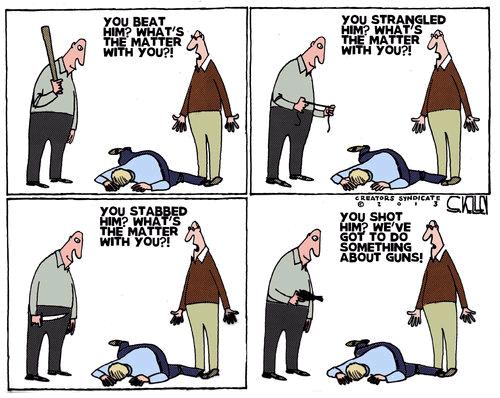

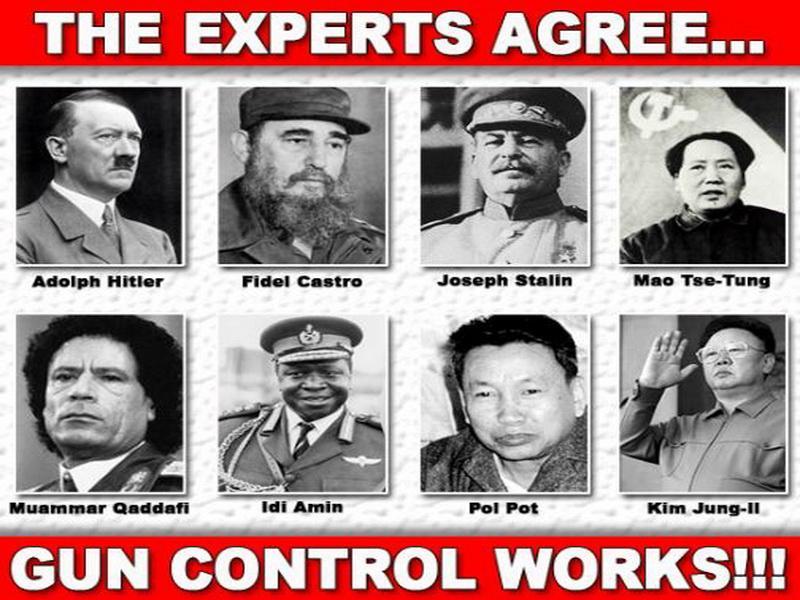


 The Daily Hatch