The folks at the Center for Freedom and Prosperity have been on a roll in the past few months, putting out an excellent series of videos on Obama’s economic policies.
Now we have a new addition to the list. Here’s Mattie Duppler of Americans for Tax Reform, narrating a video that eviscerates the President’s tax agenda.
Obamanomics: Class Warfare vs Pro-Growth Tax Policy
Even though he promised to bring Americans together, President Obama has used class-warfare tax policy to persecute and demonize successful entrepreneurs and investors. This mini-documentary from the Center for Freedom and Prosperity Foundation explains why the tax code shouldn’t be used for anything other than fairly and neutrally collecting a minimum amount of revenue to fund the legitimate functions of the federal government.
_______________
I like the entire video, as you can imagine, but certain insights and observations are particularly appealing.
1. The rich already pay a disproportionate share of the total tax burden – The video explains that the top-20 percent of income earners pay more than 67 percent of all federal taxes even though they earn only about 50 percent of total income. And, as I’ve explained, it would be very difficult to squeeze that much more money from them.
2. There aren’t enough rich people to fund big government – The video explains that stealing every penny from every millionaire would run the federal government for only three months. And it also makes the very wise observation that this would be a one-time bit of pillaging since rich people would quickly learn not to earn and report so much income. We learned in the 1980s that the best way to soak the rich is by putting a stop to confiscatory tax rates.
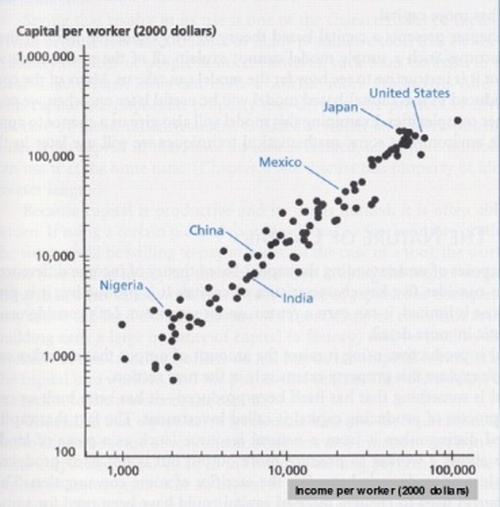
3. The high cost of the death tax – I don’t like double taxation, but the death tax is usually triple taxation and that makes a bad tax even worse. Especially since the tax causes the liquidation of private capital, thus putting downward pressure on wages. And even though the tax doesn’t collect much revenue, it probably does result in some upward pressure on government spending, thus augmenting the damage.
4. High taxes on the rich are a precursor to higher taxes on everyone else – This is a point I have made on several occasions, including just yesterday. I’m particularly concerned that the politicians in Washington will boost income tax rates for everybody, then decide that even more money is needed and impose a value-added tax.
I wish Romney had reworded his comment on the 47%. It is true that our country is getting too dependent on the government, but it could have been handled differently.
Mitt Romney is catching a lot of flak for his surreptitiously recorded remarks about 47 percent of voters automatically being in the Obama column because they don’t pay federal income tax and thus see themselves as beneficiaries of big government.
To augment on those remarks, here’s where Romney was wrong.
Yes, we have almost half of households not paying federal income tax, and I recognize that there’s a risk on an unhealthy political dynamic if people begin to think they get government for free, but those people are not necessarily looking for freebies from government. Far from it. Many of them have private sector jobs and believe in self reliance and individual responsibility. Or they’re students, retirees, or others who don’t happen to have enough income to pay taxes, but definitely don’t see themselves as wards of the state.
If Romney wanted to be more accurate, he should have cited the share of households receiving goodies from the government. That number also is approaching 50 percent and it probably is much more correlated with the group of people in the country who see the state as a means of living off their fellow citizens. But even that correlation is likely to be very imprecise since some government beneficiaries – such as Social Security recipients – spent their lives in the private sector and are taking benefits simply because they had no choice but to participate in the system.
Moreover, there are some people who pay tax and don’t receive programmatic benefits, yet are part of the proverbial moocher class. Many government bureaucrats obviously would be on that list, as would some union members, trial lawyers, etc.
However, even though Romney picked the wrong statistic and overstated the implications, he indirectly stumbled on a key issue. As seen in both BIS and OECD data, the U.S. is at risk of Greek-style fiscal chaos at some point in the not-too-distant future because of a rising burden of government spending.
I have no idea what share of the population today actually is part of the dependency class that Mitt Romney inarticulately described, but I don’t think I’m going out on limb to say that it has grown during the Bush-Obama years and it will continue to expand.
President Barack Obama speaks in the Rose Garden of the White House in Washington, Thursday, Oct. 20, 2011, to comment on the death of Libyan leader Moammar Gadhafi. (AP Photo/Pablo Martinez Monsivais)
Secretary of State Hillary Rodham Clinton speaking ondeadly attack in Libya, during a speech to the Center for Strategic and International Studies in Washington, Friday, Oct. 12, 2012. (Credit: AP)
Know The TRUTH ~ Step By Step ~ Bret Baier’s ~ ‘Death and Deceit in Benghazi’
With just 21 days to go until the presidential election in the United States, President Obama and his challenger Governor Romney meet for their second debate at Hofstra University in Hempstead, New York.
________________________
(This letter was mailed before Oct 31, 2012.)
President Obama c/o The White House
1600 Pennsylvania Avenue NW
Washington, DC 20500
In the second presidential debate which I watched on 10-18-12, I was very sad that the administration did not come out in the first week and say that this was a terrorist attack instead of talking about a youtube video that HAD NO PLACE IN THE CONVERSATION SINCE THIS WAS A PLANNED ATTACK!!!!! I don’t understand why you talked about this youtube video for about two weeks and I am hoping you will respond to this letter or I am going to keep writing you about this till you do.
Monica Crowley, Ph.D., is a Fox News Contributor, host of the nationally syndicated “Monica Crowley Show,” and the author of What the (Bleep)
_____
In late winter of this year, I put the finishing touches on my new book, ”What The (Bleep) Just Happened?” This is how I concluded the chapter on Libya:
“The Libyan operation was sold as a mission on behalf of human rights of an aggrieved people. It ended with a U.S. partner murdered by a wild-eyed Islamist mob, the rise of al Qaeda and other terrorist and militia groups, and an emerging violently anti-American Islamist regime. If that’s what Obama had intended all along, then his motives for the Libyan war were sinister. If it wasn’t what he intended, then his policy has been an abject failure, with U.S. interests far more threatened than they had been before.
“The answer may be found in what was flying over Benghazi within days of Gadhafi’s death: the al Qaeda flag.”
I wrote all of this at the beginning of this year. The fact that al Qaeda and other Islamists were running the show in Benghazi and elsewhere in Libya
was not a surprise. And yet, the Obama Team’s lies about the terrorist attack in Benghazi have flowed relentlessly since it occurred on September 11.
Their lies: It wasn’t a “pre-planned, pre-meditated attack.” It was some sort of “mob action” that got out of control. It was provoked by an obscure video. They didn’t see it coming.
All lies.
As reported immediately after the overthrow of Gadhafi and in my book, al Qaeda controlled Benghazi. Everybody knew this. Al Qaeda and its
affiliates had attacked our consulate there repeatedly and attempted to assassinate the British ambassador. The pattern of planned terror attacks was well-known. The new head of al Qaeda, Ayman al-Zawahiri, had called for attacks on U.S. interests in Libya after a drone strike had killed a top Libyan al Qaeda operative. Our now-dead Ambassador to Libya, Christopher Stevens, and his team had repeatedly reported the escalating violence and had repeatedly requested more security. They were denied.
They were even denied in death, because as we now know, the White House and intelligence agencies were made aware of the attack that killed him IN REAL TIME, AS IT WAS HAPPENING…..AND THEY DID NOTHING. NOTHING. We even had a drone overhead monitoring and reporting the attack, and still they did NOTHING. They waited seven hours before they moved.
According to three newly released emails dispatched on the afternoon of September 11—as the attack was underway—the State Department Operations
Center alerted multiple government offices, including the Pentagon, the CIA and other intelligence agencies, and the White House Situation Room
(including the Director of National Intelligence, James Clapper) that the assault was happening. Reuters reported this morning
“The first email, timed at 4:05 p.m. Washington time – or 10:05 p.m. Benghazi time, 20-30 minutes after the attack on the U.S. diplomatic mission allegedly began – carried the subject line ‘U.S. Diplomatic Mission in Benghazi Under Attack’ and the notation ‘SBU,’ meaning ‘Sensitive But Unclassified.’
“The text said the State Department’s regional security office had reported that the diplomatic mission in Benghazi was ‘under attack.Embassy in Tripoli reports approximately 20 armed people fired shots; explosions have been heard as well.’
“The message continued: ‘Ambassador Stevens, who is currently in Benghazi, and four … personnel are in the compound safe haven. The 17th of February militia is providing security support.’
“A second email, headed ‘Update 1: U.S. Diplomatic Mission in Benghazi’ and timed 4:54 p.m. Washington time, said that the Embassy in Tripoli had reported that “the firing at the U.S. Diplomatic Mission in Benghazi had stopped and the compound had been cleared.’ It said a ‘response team’ was at the site attempting to locate missing personnel.”
Here is the smoking gun: “A third email, also marked SBU and sent at 6:07 p.m. Washington time, carried the subject line: ‘Update 2: Ansar al-Sharia
Claims Responsibility for Benghazi Attack.’
“The message reported: ‘Embassy Tripoli reports the group claimed responsibility on Facebook and Twitter and has called for an attack on
Embassy Tripoli.’”
So, in real time, hundreds of top national security personnel and advisers to the president were made aware that it was, in fact, an organized
terrorist attack. They KNEW it wasn’t a mob action gone awry. They KNEW it had nothing to do with some obscure video.
And yet for weeks, Obama and those top advisers fanned out to spread a Big Lie. Fourteen hours after the attack, Obama sat down with Steve Kroft of
“60 Minutes” and babbled about the video being the cause. Most infamously, UN Ambassador Susan Rice went on five Sunday morning talk shows–five days later!–and claimed it was all about the video. Hillary Clinton–whose own Department sent the original emails reporting the terror attack–kept
blaming it on the video. She and Obama actually spent a few million taxpayer dollars on making their OWN video to tell the people of Pakistan that
the U.S. government had nothing to do with the video. White House Press Secretary Jay Carney was sent out to perpetuate the lie.
Four Americans are dead: our Ambassador, two former Navy SEALs, and a longtime foreign service officer. Obama and his team DID NOTHING while our compound was under attack and our fellow Americans were being slaughtered. Then they spent weeks lying about it. And all of these professional liars still have their jobs. Incredible.
To add even more outrage to the mountain of lies, Obama and his team of liars went to sleep that night not knowing the location of our Ambassador or whether he was alive or dead. And the next day, even after he knew that Stevens had been killed, Obama jetted off for a fundraiser. Vegas, baby.
This is worse than Watergate. Much worse. Watergate involved a cover-up of a third-rate burglary in which nobody died. Small potatoes compared to
this. Here, we’ve got a serious body count…and an avalanche of lies to cover-up a major national security scandal (did Obama authorize the sale of
weapons to al Qaeda? Is that what he’s actually trying to cover up? Hello, reporters??).
Did the Commander-in-Chief allow his personal representative in Libya and three others to die needlessly? What did he know and when did he know it? Follow the money.
These three emails are the smoking gun. This is the stained blue dress.
Stick a fork in Obama, because he’s done.
________
Thank you so much for your time. I know how valuable it is. I also appreciate the fine family that you have and your commitment as a father and a husband.
Sincerely,
Everette Hatcher III, 13900 Cottontail Lane, Alexander, AR 72002, ph 501-920-5733, lowcostsqueegees@yahoo.com
I have emailed and written the President over 200 times in the last year and I have received over 20 emails and 5 letters back from the White House. However, I have been most urgent in my emails and letter writing concerning this issue about the youtube video being blamed for the attack in Libya. […]
Second Presidential Debate 2012- Obama and Romney on Foreign Policy Published on Oct 16, 2012 by AussieNews1 With just 21 days to go until the presidential election in the United States, President Obama and his challenger Governor Romney meet for their second debate at Hofstra University in Hempstead, New York. ________________________ President Obama c/o The […]
Second Presidential Debate 2012- Obama and Romney on Foreign Policy Published on Oct 16, 2012 by AussieNews1 With just 21 days to go until the presidential election in the United States, President Obama and his challenger Governor Romney meet for their second debate at Hofstra University in Hempstead, New York. ________________________ President Obama c/o The […]
Second Presidential Debate 2012- Obama and Romney on Foreign Policy Published on Oct 16, 2012 by AussieNews1 With just 21 days to go until the presidential election in the United States, President Obama and his challenger Governor Romney meet for their second debate at Hofstra University in Hempstead, New York. ________________________ President Obama c/o The […]
The White House Disinformation Campaign on Libya Published on Oct 7, 2012 by HeritageFoundation New evidence shows there were security threats in Libya in the months prior to the deadly September 11 attack that killed U.S. Ambassador Christopher Stevens and three other Americans. Despite these threats, the State Department left its personnel there to fend […]
The White House Disinformation Campaign on Libya Published on Oct 7, 2012 by HeritageFoundation An Incriminating Timeline: http://herit.ag/WMfTr6 | New evidence shows there were security threats in Benghazi, Libya, in the months prior to the deadly September 11, 2012, attack that killed U.S. Ambassador Christopher Stevens and three other Americans. Despite these threats, the Obama […]
Francis Schaeffer discussed modern films and how they showed the state of man. That is why I like Woody Allen’s films so much. He knows what the big issues are in life and even though he present the right answers he does grapple with the right questions. Michelangelo Antonioni heavily influenced Allen and below is a picture from one of his best well known films.
<The Kobal Collection
Blow-Up (1966). Michelangelo Antonioni created waves with his first English-language film when he turned his camera on swinging London as personified by a cocky fashion photographer (David Hemmings) who believes his lens has accidentally captured a murder.
Allen’s observation: “Not in the same class as the other films, but interesting to see.”
Learning to Cry for the Culture Let’s remember Francis Schaeffer’s most crucial legacy–tears.
John FischerMarch 19, 2007He was a small man—barely five feet in his knickers, knee socks, and ballooning white shirts. For two weeks, first as a freshman and then again as a senior, I sat in my assigned seat at Wheaton College’s chapel and heard him cry. He was the evangelical conscience at the end of the 20th century, weeping over a world that most of his peers dismissed as not worth saving, except to rescue a few souls in the doomed planet’s waning hours. While Hal Lindsey was disseminating an exit strategy in The Late Great Planet Earth, Francis Schaeffer was trying to understand and care for people still trapped on the planet in The God Who Is There.Francis Schaeffer was hard to listen to. His voice grated. It was a high-pitched scream that, when mixed with his eastern Pennsylvania accent, sounded something like Elmer Fudd on speed. As freshmen, unfamiliar with the thought and works of modern man, we thought it was funny. As seniors, it wasn’t funny any more. After we had studied Kant, Hegel, Sartre, and Camus, the voice sounded more like an existential shriek. If Edvard Munch’s The Scream had a voice, it would have sounded like Francis Schaeffer. Schaeffer, who died in 1984, understood the existential cry of humanity trapped in a prison of its own making. He was the closest thing to a “man of sorrows” I have seen.
I grew up with a Christianity that was predisposed against sorrow. To be sad was to deny your faith or your salvation. Jesus had made us happy, and we had an obligation to always show that happiness. Then Francis Schaeffer came along. He could not allow himself to be happy when most of the world was desperately lost and he knew why. He was the first Christian I found who could embrace faith and the despair of a lost humanity at the same time. Though he had been found, he still knew what it was to be lost.
How different from the perception of conservative Christians held by so many people today! Today, the Religious Right is caricatured in society as a theocratic movement with no concern for the poor and downtrodden. Of course, such an ugly stereotype, presented as fact in a spate of pre-election books ranging from American Theocracy to Thy Kingdom Come, overlooks crisis pregnancy centers, humanitarian work, and generous giving to causes sacred and secular by members of the Christian Right.
Schaeffer’s Way
However, like most stereotypes, this one of politically engaged conservative Christians contains a painful element of truth. Too often we confuse our agendas with God’s agenda and demonize our opponents in a desperate attempt to score political points. What’s ironic is that many of today’s culture warriors look to Schaeffer as the man who fired the first shot.
Yes, in two of Schaeffer’s later works, How Should We Then Live? (1976) and A Christian Manifesto (1981), he took a strong stand against abortion and euthanasia and even called for serious measures, including political intervention, to stop what he saw as impending cultural suicide. But to conclude that this invocation to war was Schaeffer’s crowning achievement is to truncate the man and his work.
Though his last words may have resounded like a battle cry to the next generation of Christians locked in a culture war, everything leading up to them said something else. Schaeffer’s work is ultimately not a call to arms, but a call to care. Those who have taken up arms and claimed him as their champion have gotten only part of his message.
Schaeffer never meant for Christians to take a combative stance in society without first experiencing empathy for the human predicament that brought us to this place. Those who go back only as far as A Christian Manifesto—without also understanding Escape from Reason (1968), The God Who Is There (1968), and Death in the City (1970)—are doing Schaeffer’s life and work a great disservice. The later Schaeffer cannot be divorced from the former.
Weeping over the World
Schaeffer was the first Christian leader who taught me to weep over the world instead of judging it. Schaeffer modeled a caring and thoughtful engagement with the history of philosophy and its influence through movies, novels, plays, music, and art. Schaeffer was teaching at Wheaton College about the existential dilemma expressed in Michelangelo Antonioni’s 1966 film, Blowup, when movies were still forbidden to students. He didn’t bat an eye. He ignored our legalism and went on teaching, because he had been personally gripped by the desperation of such cultural statements.
Death in the City is the book of Lamentations in the Old Testament applied to America. It is all about weeping over the death of a culture. Schaeffer saw the most brilliant thinkers and artists of his day as trapped under what he called a line of despair—in a lower-story hopelessness without any access to upper-story revelation. Schaeffer taught his followers not to sneer at or dismiss the dissonance in modern art. He showed how these artists were merely expressing the outcome of the presuppositions of the modern era that did away with God and put all conclusions on a strictly human, rational level. Instead of shaking our heads at a depressing, dark, abstract work of art, the true Christian reaction should be to weep for the lost person who created it. Schaeffer was a rare Christian leader who advocated understanding and empathizing with non-Christians instead of taking issue with them.
Francis Schaeffer was not afraid to ask why, and he did not rest until he had an answer. Why are our most brilliant thinkers in despair? Why is our art so dark? Why have abortion and euthanasia become so easy on the conscience of a generation? What process of thinking has led to this ultimate denial of the value of human life? Though some may disagree with his answers, no one can gainsay the passion with which he sought them.
The normal human reaction is to hate what we don’t understand. This is the stuff of prejudice and the cause of hate crimes and escalating social evil. It is much more Christ-like to identify with those we don’t understand—to discover why people do what they do, because we care about them, even if they are our ideological enemies.
Jesus asked us to love our enemies. Part of loving is learning to understand. Too few Christians today seek to understand why their enemies think in ways that we find abhorrent. Too many of us are too busy bashing feminists, secular humanists, gay activists, and political liberals to consider why they believe what they do. It’s difficult to sympathize with people we see as threats to our children and our neighborhoods. It’s hard to weep over those whom we have declared enemies.
Perhaps a good beginning would be to more fully grasp the depravity of our own souls and the depth to which God’s grace had to go to reach us. I doubt we can cry over the world if we’ve never cried over ourselves.
To be sure, Francis Schaeffer’s influence has declined in recent years, as postmodernism has supplanted the modernity he dissected for so long. Schaeffer is not without his critics, even among Christians. But perhaps, in the end, his greatest influence on the church will not be his words as much as his tears. The same things that made Francis Schaeffer cry in his day should make us cry in ours.
Singer-songwriter John Fischer has recorded 12 albums and is the author of 15 books.
In 1955, Schaeffer founded L’Abri fellowship, “where individuals have the opportunity to seek answers to honest questions about God and the significance of human life.”
The Dissatisfaction of Francis Schaeffer (Parts 1 and 2) | Thirteen years after his death, Schaeffer’s vision and frustrations continue to haunt evangelicalism. (March 1997)
Here is an episode of Schaeffer’s film series that discusses the philosophic movies that show man’s desperation:
E P I S O D E 8
How Should We Then Live 8#1
I saw this film series in 1979 and it had a major impact on me.
T h e Age of FRAGMENTATION
I. Art As a Vehicle Of Modern Thought
A. Impressionism (Monet, Renoir, Pissarro, Sisley, Degas) and Post-Impressionism (Cézanne, Van Gogh, Gauguin, Seurat): appearance and reality.
1. Problem of reality in Impressionism: no universal.
2. Post-Impression seeks the universal behind appearances.
3. Painting expresses an idea in its own terms as a work of art; to discuss the idea in a painting is not to intellectualize art.
4. Parallel search for universal in art and philosophy; Cézanne.
B. Fragmentation.
1. Extremes of ultra-naturalism or abstraction: Wassily Kandinsky.
2. Picasso leads choice for abstraction: relevance of this choice.
3. Failure of Picasso (like Sartre, and for similar reasons) to be fully consistent with his choice.
C. Retreat to absurdity.
1. Dada , and Marcel Duchamp: art as absurd.
2. Art followed philosophy but came sooner to logical end.
3. Chance in his art technique as an art theory impossible to practice: Pollock.
II. Music As a Vehicle of Modern Thought
A. Non-resolution and fragmentation: German and French streams.
1. Influence of Beethoven’s last Quartets.
2. Direction and influence of Debussy.
3. Schoenberg’s non-resolution; contrast with Bach.
4. Stockhausen: electronic music and concern with the element of change.
B. Cage: a case study in confusion.
1. Deliberate chance and confusion in Cage’s music.
2. Cage’s inability to live the philosophy of his music.
C. Contrast of music-by-chance and the world around us.
1. Inconsistency of indulging in expression of chaos when we acknowledge order for practical matters like airplane design.
2. Art as anti-art when it is mere intellectual statement, divorced from reality of who people are and the fullness of what the universe is.
III. General Culture As the Vehicle of Modern Thought
A. Propagation of idea of fragmentation in literature.
1. Effect of Eliot’s Wasteland and Picasso’s Demoiselles d’ Avignon
compared; the drift of general culture.
2. Eliot’s change in his form of writing when he became a Christian.
3. Philosophic popularization by novel: Sartre, Camus, de Beauvoir.
B. Cinema as advanced medium of philosophy.
1. Cinema in the 1960s used to express Man’s destruction: e.g. Blow-up.
2. Cinema and the leap into fantasy:
The Hour of the Wolf, Belle de Jour, Juliet of the Spirits, The Last Year at Marienbad.
3. Bergman’s inability to live out his philosophy (see Cage): Silence and The Hour of the Wolf.
IV. Only on Christian Base Can Reality Be Faced Squarely
Questions
1. Explain what “fragmentation” means, as discussed by Dr. Schaeffer. What does it result from? Give examples of it.
2. Apart from the fact that modern printing and recording processes made the art and music of the past more accessible than ever before, do you think that the preference of many people for the art and music of the past is related to the matters discussed by Dr. Schaeffer? If so, how?
3. “A foolish consistency is the hobgoblin of little minds… With consistency a great soul has simply nothing to do.” Emerson wrote this over a century ago. Debate.
4. How far do you think that the opinion of some Christians that one should have nothing to do with philosophy, art and novels is a manifestation of the very fragmentation which is characteristic of modern secular thought? Discuss.
Key Events and Persons
Beethoven’s last Quartets: 1825-26
Claude Monet: 1840-1926
Poplars at Giverny, Sunrise: 1885
Paul Cézanne: 1839-1906
The Bathers: c.1905
Claude Debussy: 1862-1918
Wassily Kandinsky: 1866-1944
Arnold Schoenberg: 1874-1951
Picasso: 1881-1973
Les Demoiselles d’Avignon: 1906-7
Marcel Duchamp: 1887-1969
Nude Descending a Staircase: 1912
T.S. Eliot: 1888-1965
The Wasteland: 1922
John Cage: 1912-1992
Music for Marcel Duchamp: 1947
Jackson Pollock: 1912-1956
Karlheinz Stockhausen: 1928-
Sartre’s Nausea: 1938
Beauvoir’s L’Invitée: 1943
Camus’ The Stranger: 1942
Camus’ The Plague: 1947
Resnais’ The Last Year at Marienbad: 1961
Bergman’s The Silence: 1963
Fellini’s Juliet of the Spirits: 1965
Antonioni’s Blow-Up: 1966
Bergman’s The Hour of the Wolf: 1967
Buñel’s Belle de Jour: 1967
Further Study
Perhaps you have seen some of the films mentioned. You should try to see them if you haven’t.Watch for them in local art-film festivals, on TV, or in campus film series. They rarely return nowadays to the commercial circuit. The sex and violence which they treated philosophically have now taken over the screen in a more popular and crude form! Easier of access are the philosophic novels of Sartre, Camus and de Beauvoir. Read the titles Dr. Schaeffer mentions. Again, for the artwork and music mentioned, consult libraries and record shops. But spend time here—let the visual images and the musical sounds sink in.
Listening patiently to Cage and Webern, for example, will tell you more than volumes of musicology.
They’re right, though they probably don’t realize the seriousness of that looming crisis.
Here’s what you need to know: America’s fiscal crisis is actually a spending crisis, and that spending crisis is driven by entitlements.
More specifically, the vast majority of the problem is the result of Medicaid, Medicare, and Social Security, programs that are poorly designed and unsustainable.
The Medicaid program imposes high costs while generating poor results. This Center for Freedom and Prosperity Foundation video explains how block grants, such as the one proposed by Congressman Paul Ryan, will save money and improve healthcare by giving states the freedom to innovate and compete.
This Center for Freedom and Prosperity Foundation video explains how a “premium-support” plan would solve Medicare’s fiscal crisis and improve the overall healthcare system. This voucher-based system also would protect seniors from bureaucratic rationing. http://www.freedomandprosperity.org
There are two crises facing Social Security. First the program has a gigantic unfunded liability, largely thanks to demographics. Second, the program is a very bad deal for younger workers, making them pay record amounts of tax in exchange for comparatively meager benefits. This video explains how personal accounts can solve both problems, and also notes that nations as varied as Australia, Chile, Sweden, and Hong Kong have implemented this pro-growth reform. www.freedomandprosperity.org
_______________________
Regular readers know I’m fairly gloomy about the future of liberty, but this is one area where there is a glimmer of hope.
The Chairman of the House Budget Committee actually put together a plan that addresses the two biggest problems (Medicare and Medicaid) and the House of Representatives actually adopted the proposal.
The Senate didn’t act, of course, and Obama would veto any good legislation anyhow, so I don’t want to be crazy optimistic. Depending on how things play out politically in the next six years, I’ll say there’s actually a 20 percent chance to save America.
How Should We Then Live? Episode 5: The Revolutionary Age
I was impacted by this film series by Francis Schaeffer back in the 1970’s and I wanted to share it with you. Francis Schaeffer noted, “Reformation Did Not Bring Perfection. But gradually on basis of biblical teaching there was a unique improvement. A. With Bible the ordinary citizen could say that majority was wrong. B. Tremendous freedom without chaos because Bible gives a base for law.”
Another great point that Schaeffer makes in this series is that Communism has NEVER EXISTED WITHOUT BRINGING REPRESSION. A few months ago a young person said to me, “I think that Marx was misunderstood and that true communism has not been really tried yet.” I responded that there are a hand full of Communist countries today and they all have several similar conditions: NO FREEDOM OF PRESS, NO POLITICAL FREEDOM, NO FREEDOM OF RELIGION AND NO ECONOMIC FREEDOM. I noted that Schaeffer has rightly said that Communism is basically based on materialism and a result it must fail. It does not have a Reformation base.
T h e
REVOLUTIONARY AGE
I. Bible as Absolute Base for Law
A. Paul Robert’s mural in Lausanne.
B. Rutherford’s Lex Rex (Law Is King): Freedom without chaos; government by law rather than arbitrary government by men.
C. Impact of biblical political principles in America.
1. Rutherford’s influence on U.S. Constitution: directly through Witherspoon; indirectly through Locke’s secularized version of biblical politics.
2. Locke’s ideas inconsistent when divorced from Christianity.
3. One can be personally non-Christian, yet benefit from Christian foundations: e.g. Jefferson and other founders.
II. The Reformation and Checks and Balances
A. Humanist and Reformation views of politics contrasted.
B. Sin is reason for checks and balances in Reformed view: Calvin’s position at Geneva examined.
C. Checks and balances in Protestant lands prevented bloody resolution of tensions.
D. Elsewhere, without this biblically rooted principle, tensions had to be resolved violently.
III. Contrast Between English and French Political Experience
A. Voltaire’s admiration of English conditions.
B. Peaceful nature of the Bloodless Revolution of 1688 in England related to Reformation base.
C. Attempt to achieve political change in France on English lines, but on Enlightenment base, produced a bloodbath and a dictatorship.
1. Constructive change impossible on finite human base.
2. Declaration of Rights of Man, the rush to extremes, and the Goddess of Reason.
3. Anarchy or repression: massacres, Robespierre, the Terror.
4. Idea of perfectibility of Man maintained even during the Terror.
IV. Anglo-American Experience Versus Franco-Russian
A. Reformation experience of freedom without chaos contrasts with that of Marxist-Leninist Russia.
B. Logic of Marxist-Leninism.
1. Marxism not a source of freedom.
2. 1917 Revolution taken over, not begun, by Bolsheviks.
3. Logic of communism: elite dictatorship, suppression of freedoms, coercion of allies.
V. Reformation Christianity and Humanism: Fruits Compared
A. Reformation gave absolutes to counter injustices; where Christians failed they were untrue to their principles.
B. Humanism has no absolute way of determining values consistently.
C. Differences practical, not just theoretical: Christian absolutes give limited government; denial of absolutes gives arbitrary rule.
VI. Weaknesses Which Developed Later in Reformation Countries
A. Slavery and race prejudice.
1. Failure to live up to biblical belief produces cruelty.
2. Hypocritical exploitation of other races.
3. Church’s failure to speak out sufficiently against this hypocrisy.
B. Noncompassionate use of accumulated wealth.
1. Industrialism not evil in itself, but only through greed and lack of compassion.
2. Labor exploitation and gap in living standards.
3. Church’s failure to testify enough against abuses.
C. Positive face of Reformation Christianity toward social evil.
1. Christianity not the only influence on consensus.
a) Church’s silence betrayed; did not reflect what it said it believed.
b) Non-Christian influences also important at that time; and many so-called Christians were “social” Christians only.
2. Contributions of Christians to social reform.
a) Varied efforts in slave trade, prisons, factories.
(1) Wesley, Newton, Clarkson, Wilberforce, and abolition of slavery.
(2) Howard, Elizabeth Fry, and prison reforms.
(3) Lord Shaftesbury and reform in the factories.
b) Impact of Whitefield-Wesley revivals on society.
VII. Reformation Did Not Bring Perfection
But gradually on basis of biblical teaching there was a unique improvement.
A. With Bible the ordinary citizen could say that majority was wrong.
B. Tremendous freedom without chaos because Bible gives a base for law.
Questions
1. What has been the role of biblical principles in the legal and political history of the countries studied?
2. Is it true that lands influenced by the Reformation escaped political violence because biblical concepts were acted upon?
3. What are the core distinctions, in terms of ideology and results, between English and American Revolutions on the one hand, and the French and Russian on the other hand?
4. What were the weaknesses which developed at a later date in countries which had a Reformation history?
5. Dr. Schaeffer believes that basic to action is an idea, and that the history of the West in the last two or three centuries has been marked by a humanism pressed to its tragic conclusions and by a Christianity insufficiently applied to the totality of life. How should Christians then approach participation in social and political affairs?
Key Events and Persons
Calvin: 1509-1564
Samuel Rutherford: 1600-1661
Rutherford’s Lex Rex: 1644
John Locke: 1631-1704
John Wesley: 1703-1791
Voltaire: 1694-1778
Letters on the English Nation: 1733
George Whitefield: 1714-1770
John Witherspoon: 1723-1794
John Newton: 1725-1807
John Howard: 1726-1790
Jefferson: 1743-1826
Robespierre: 1758-1794
Wilberforce: 1759-1833
Clarkson: 1760-1846
Napoleon: 1769-1821
Elizabeth Fry: 1780-1845
Declaration of Rights of Man: 1789
National Constituent Assembly: 1789-1791
Second French Revolution and Revolutionary Calendar: 1792
The Reign of Terror: 1792-1794
Lord Shaftesbury: 1801-1855
English slave trade ended: 1807
Slavery ended in Great Britain and Empire: 1833
Karl Marx: 1818-1883
Lenin: 1870-1924
Trotsky: 1879-1940
Stalin: 1879-1953
February and October Russian Revolutions: 1917
Berlin Wall: 1961
Czechoslovakian repression: 1968
Further Study
Charles Breunig, The Age of Revolution and Reaction: 1789-1850 (1970).
R.N. Carew Hunt, The Theory and Practice of Communism (1963).
Charles Dickens, A Tale of Two Cities (1957).
Peter Gay, ed., Deism: An Anthology (1968).
John McManners, The French Revolution and the Church (1970).
Karl Marx and Friedrich Engels, Manifesto of the Communist Party (1957).
Louis L. Snyder, ed., The Age of Reason (1955).
David B. Davis, The Problem of Slavery in Western Culture (1975).
J. Kuczynski, The Rise of the Working Class (1971).
Edmund S. Morgan, The Puritan Dilemma (1958).
John Newton, Out of the Depths. An Autobiography.
John Wesley, Journal (1 vol. abridge).
C. Woodham-Smith, The Great Hunger, Ireland, 1845-1849 (1964).
Did you know that President Obama is responsible for the loss of more U.S. jobs than any other person? Did you know that Sen. John F. Kerry and his wife are three to four times as rich as Mitt and Ann Romney, according to the New York Times, yet paid a lower tax rate than the Romneys in 2003, the year before Mr. Kerry ran for president? Do you know how to lower your tax rate? Read on.
Mr. Romney is being criticized in the mainstream media for having paid just about 14 percent of his income in federal income taxes and having some of his money in places like Switzerland and Cayman (even though he appears to have paid all of the taxes on interest and dividends that were due to the United States). Yet, eight years ago, when the far richer Mr. Kerry and his wife paid a slightly lower tax rate and also had their money dispersed globally, as sensible rich people do, they were lauded by many of the same folks who are now in a tizzy about Mr. Romney’s finances. Note: Mr. Kerry’s wife inherited her money, while Mr. Romney earned his by building real businesses.
Rich people usually employ others to manage their money. Presidents and presidential candidates put their money in blind trusts, as have Mr. Romney and Mr. Obama. When people hire money managers, they expect them to make the highest after-tax returns commensurate with the level of safety those people desire, and the managers have a fiduciary responsibility to do so. Diversification, by type of investment (stock, bonds and real estate) and by geography, is considered prudent financial management.
Richard W. Rahn is a senior fellow at the Cato Institute and chairman of the Institute for Global Economic Growth.
Mr. Romney’s opponents are asking why anyone needs a Swiss bank account (except for the rich Democrats who have them). Three reasons come to mind: safety, better returns and better service. When Mr. Obama took office, the Swiss franc, in dollar terms, was about 20 percent cheaper than it is today and almost 50 percent cheaper than 10 years ago. Some of the Swiss private banks have been around for more than 200 years and are managed prudently because the owners are totally at risk (unlike U.S. banks). Alas, ordinary Americans are being prevented from protecting themselves from U.S. economic mismanagement by having Swiss and other foreign bank accounts because of new Internal Revenue Service regulations. Some, such as the Foreign Account Tax Compliance Act (FATCA), are so costly and complex that foreign institutions increasingly are refusing to open accounts for Americans. (Note: Sen. Carl Levin, Michigan Democrat, is the primary proponent of these destructive and oppressive regulations. He demands transparency for everyone else’s financial accounts, but he is one of the senators who has refused to release his own tax returns.) The attacks on Switzerland by the Obama campaign in its attempts to stigmatize Mr. Romney have become so vicious and inaccurate that the Swiss government has protested.
The Gawker Media Group hit Mr. Romney last week by “exposing” that some of the funds in which he had invested were registered in the Cayman Islands, and some of those funds had been invested in companies that had gambling and other such allegedly naughty but legal operations. It then was uncovered by an enterprising financial blogger that Gawker Media Group Inc. was a Cayman Islands company. If you own mutual funds, there is a high probability that some of them will be registered in Cayman, which has more funds than any other jurisdiction because of regulatory efficiency, not tax evasion. I expect that almost every major media company — including the owners of MSNBC — has some of its legal entities in Cayman. I also expect that most people who own mutual funds — including Mr. Obama and Mr. Romney — have no idea about all of the activities of the businesses in which the funds invest.
The United States has the highest corporate tax rate in the world at 35 percent, which puts U.S. companies at a competitive disadvantage with other countries that have lower rates (e.g. Canada at 15 percent, Ireland at 12 percent, Bulgaria at 10 percent and so on). As a result, U.S. companies are forced to move some of their operations into other countries in order to remain competitive. If they bring the profits back to the United States, they are taxed at the full U.S. rate. So Mr. Obama and others who resist allowing companies to bring back the money to the U.S. at a lower rate are basically forcing them to invest their profits and create jobs outside America. Mr. Levin and other economic know-nothings want to penalize U.S. companies for not bringing their profits back to the United States. Such restrictions would backfire by driving more companies to move their place of incorporation and head offices outside the U.S. The correct solution is to reduce the corporate tax rate to make U.S. businesses internationally competitive.
Many people lower their tax rates by donating substantial portions of their incomes to charity, as Mr. Romney does, or buying tax-free state and municipal bonds — even though they provide a lower rate of return than many taxable investments. If you look carefully at those who are attacking “the rich” for not paying high enough tax rates and having some of their money outside the United States, you will find people who are economically ignorant, hypocritical or just making silly arguments.
America’s public education system is failing. We’re spending more money on education but not getting better results for our children.
That’s because the machine that runs the K-12 education system isn’t designed to produce better schools. It’s designed to produce more money for unions and more donations for politicians.
For decades, teachers’ unions have been among our nation’s largest political donors. As Reason Foundation’s Lisa Snell has noted, the National Education Association (NEA) alone spent $40 million on the 2010 election cycle (source: http://reason.org/news/printer/big-education-and-big-labor-electio). As the country’s largest teachers union, the NEA is only one cog in the infernal machine that robs parents of their tax dollars and students of their futures.
Students, teachers, parents, and hardworking Americans are all victims of this political machine–a system that takes money out of taxpayers’ wallets and gives it to union bosses, who put it in the pockets of politicians.
No one did more to advance the cause of school vouchers than Milton and Rose Friedman. Friedman made it clear in his film series “Free to Choose” how sad he was that young people who live in the inner cities did not have good education opportunities available to them.
I have posted often about the voucher system and how it would solve our education problems. What we are doing now is not working. Milton Friedman’s idea of implementing school vouchers was hatched about 50 years ago.
Poor families are most affected by this lack of choice. As Friedman noted, “There is no respect in which inhabitants of a low-income neighborhood are so disadvantaged as in the kind of schooling they can get for their children.” It is a sad statement quantified by data on low levels of academic achievement and attainment. Take a look at this article below.
Reading scores on the SAT for the high school class of 2012 reached a four-decade low, putting a punctuation mark on a gradual decline in the ability of college-bound teens to read passages and answer questions about sentence structure, vocabulary and meaning on the college entrance exam.
The decline over the decades has been significant. The average reading (verbal) score is down 34 points since 1972. Sadly, the historically low SAT scores are only the latest marker of decline. Graduation rates have been stagnant since the 1970s, reading and math achievement has been virtually flat over the same time period, and American students still rank in the middle of the pack compared to their international peers.
On the heels of the news about the SAT score decline, President Obama filmed a segment with NBC’s Education Nation earlier today. The President notably praised the concept of charter schools and pay for performance for teachers.
But those grains of reform were dwarfed by his support of the status quo. During the course of the interview, President Obama suggested hiring 100,000 new math and science teachers and spending more money on preschool. He also stated that No Child Left Behind had good intentions but was “under-resourced.”
Efforts by the federal government to intervene in preschool, most notably through Head Start, have failed—despite a $160 billion in spending on the program since 1965. And No Child Left Behind is far from “under-resourced.” The $25 billion, 600-page law has been on the receiving end of significant new spending every decade since the original law was first passed nearly half a century ago.
President Obama was also pressed on the issue of education unions by host Savannah Guthrie:
Some people think, President Obama gets so much support from the teachers’ unions, he can’t possibly have an honest conversation about what they’re doing right or wrong. Can you really say that teachers’ unions aren’t slowing the pace of reform?
President Obama responded: “You know, I just really get frustrated when I hear teacher-bashing as evidence of reform.”
Criticizing education unions for standing in the way of reform should not be conflated with criticizing teachers, as the President does in the interview. The unions have blocked reforms such as performance pay and charter schools (which the President supports), have opposed alternative teacher certification that would help mid-career professionals enter the classroom, and have consistently fought the implementation of school choice options for children.
If we ever hope to move the needle on student achievement—or see SAT scores turn in the right direction again—we’ll need to implement many of those exact reforms, particularly school choice.
And as he has in the past, President Obama stated that his Administration wants to “use evidenced-based approaches and find out what works.” We know what works: giving families choices when it comes to finding schools that best meet their children’s needs. Instead of continuing to call for more spending and more Washington intervention in education, let’s try something new: choice and freedom.
I ran across this very interesting article about Milton Friedman from 2002: Friedman: Market offers poor better learningBy Tamara Henry, USA TODAY By Doug Mills, AP President Bush honors influential economist Milton Friedman for his 90th birthday earlier this month. About an economist Name:Milton FriedmanAge: 90Background: Winner of the 1976 Nobel Prize for economic science; […]
Milton Friedman videos and transcripts Part 11 On my blog http://www.thedailyhatch.org I have an extensive list of posts that have both videos and transcripts of MiltonFriedman’s interviews and speeches. Here below is just small list of those and more can be accessed by clicking on “Milton Friedman” on the side of this page or searching […]
Milton Friedman videos and transcripts Part 10 On my blog http://www.thedailyhatch.org I have an extensive list of posts that have both videos and transcripts of MiltonFriedman’s interviews and speeches. Here below is just small list of those and more can be accessed by clicking on “Milton Friedman” on the side of this page or searching […]
Milton Friedman videos and transcripts Part 9 On my blog http://www.thedailyhatch.org I have an extensive list of posts that have both videos and transcripts of MiltonFriedman’s interviews and speeches. Here below is just small list of those and more can be accessed by clicking on “Milton Friedman” on the side of this page or searching […]
Biography Part 2 In 1977, when I reached the age of 65, I retired from teaching at the University of Chicago. At the invitation of Glenn Campbell, Director of the Hoover Institution at Stanford University, I shifted my scholarly work to Hoover where I remain a Senior Research Fellow. We moved to San Francisco, purchasing […]
Milton Friedman at Hillsdale College 2006 July 2006 Free to Choose: A Conversation with Milton Friedman Milton Friedman Economist Milton Friedman is a senior research fellow at the Hoover Institution at Stanford University and a professor emeritus of economics at the University of Chicago, where he taught from 1946-1976. Dr. Friedman received the Nobel Memorial […]
Milton Friedman videos and transcripts Part 8 On my blog http://www.thedailyhatch.org I have an extensive list of posts that have both videos and transcripts of MiltonFriedman’s interviews and speeches. Here below is just small list of those and more can be accessed by clicking on “Milton Friedman” on the side of this page or searching […]
Testing Milton Friedman – Preview Uploaded by FreeToChooseNetwork on Feb 21, 2012 2012 is the 100th anniversary of Milton Friedman’s birth. His work and ideas continue to make the world a better place. As part of Milton Friedman’s Century, a revival of the ideas featured in the landmark television series Free To Choose are being […]
Charlie Rose interview of Milton Friedman My favorite economist: Milton Friedman : A Great Champion of Liberty by V. Sundaram Milton Friedman, the Nobel Prize-winning economist who advocated an unfettered free market and had the ear of three US Presidents – Nixon, Ford and Reagan – died last Thursday (16 November, 2006 ) in San Francisco […]
Free or Equal?: Johan Norberg Updates Milton & Rose Friedman’s Free to Choose I got this below from Reason Magazine: Swedish economist Johan Norberg is the host of the new documentary Free or Equal, which retraces and updates the 1980 classic Free to Choose, featuring Milton and Rose Friedman. Like the Friedmans, Norberg travels the globe […]
I must say that I have lots of respect for Reason Magazine and for their admiration of Milton Friedman. However, I do disagree with one phrase below. At the end of this post I will tell you what sentence it is. Uploaded by ReasonTV on Jul 28, 2011 There’s no way to appreciate fully the […]
Milton Friedman on Hayek’s “Road to Serfdom” 1994 Interview 1 of 2 Uploaded by PenguinProseMedia on Oct 25, 2011 Says Federal Reserve should be abolished, criticizes Keynes. One of Friedman’s best interviews, discussion spans Friedman’s career and his view of numerous political figures and public policy issues. ___________________ Two Lucky People by Milton and Rose Friedman […]
What a great man Milton Friedman was. The Legacy of Milton Friedman November 18, 2006 Alexander Tabarrok Great economist by day and crusading public intellectual by night, Milton Friedman was my hero. Friedman’s contributions to economics are profound, the permanent income hypothesis, the resurrection of the quantity theory of money, and his magnum opus with […]
Milton Friedman videos and transcripts Part 7 On my blog http://www.thedailyhatch.org I have an extensive list of posts that have both videos and transcripts of MiltonFriedman’s interviews and speeches. Here below is just small list of those and more can be accessed by clicking on “Milton Friedman” on the side of this page or searching […]
Below is a discussion from Milton Friedman on Bill Clinton and Ronald Reagan. February 10, 1999 | Recorded on February 10, 1999 audio, video, and blogs » uncommon knowledge PRESIDENTIAL REPORT CARD: Milton Friedman on the State of the Union with guest Milton Friedman Milton Friedman, Senior Research Fellow, Hoover Institution and Nobel Laureate in […]
Milton Friedman and Chile – The Power of Choice Uploaded by FreeToChooseNetwork on May 13, 2011 In this excerpt from Free To Choose Network’s “The Power of Choice (2006)”, we set the record straight on Milton Friedman’s dealings with Chile — including training the Chicago Boys and his meeting with Augusto Pinochet. Was the tremendous […]
With just 21 days to go until the presidential election in the United States, President Obama and his challenger Governor Romney meet for their second debate at Hofstra University in Hempstead, New York.
________________________
(This letter was mailed before Oct 31, 2012.)
President Obama c/o The White House
1600 Pennsylvania Avenue NW
Washington, DC 20500
In the second presidential debate which I watched on 10-18-12, I was very sad that the administration did not come out in the first week and say that this was a terrorist attack instead of talking about a youtube video that HAD NO PLACE IN THE CONVERSATION SINCE THIS WAS A PLANNED ATTACK!!!!! I don’t understand why you talked about this youtube video for about two weeks and I am hoping you will respond to this letter or I am going to keep writing you about this till you do.
PALM BEACH, Fla. – New information suggesting the Obama administration was fully aware of the terror attack at the U.S. consulate in Benghazi, Libya, within two hours of the breakout of violence is being blasted as a cover-up of major proportions, with the help of national media who are ignoring the revelation.
“This dwarfs Watergate, weapons of mass destruction, whatever,” said radio host Rush Limbaugh Wednesday afternoon.
“This dwarfs Iran-Contra, about which the media spent three solid years trying to take out Ronald Reagan. The latest shoe to drop in the Benghazi disaster is the news that the State Department was e-mailing about the attack on the consulate and the terrorists who they thought were behind it within two hours, and the e-mails went to the Situation Room of the White House. Obama knew.”
For weeks after the Sept. 11 attack in Benghazi, Obama and his surrogates proffered that the violence was merely an improptu response to an anti-Muslim video.
But reports today from several agencies including Reuters and CBS News reveal the administration knew precisely what was going on almost immediately, courtesy of emails.
Sharyl Attkisson at CBS says: “At 4:05 p.m. Eastern time, on September 11, an alert from the State Department Operations Center was issued to a number government and intelligence agencies. Included were the White House Situation Room, the office of the Director of National Intelligence, and the FBI.
“‘US Diplomatic Mission in Benghazi Under Attack” — “approximately 20 armed people fired shots; explosions have been heard as well. Ambassador Stevens, who is currently in Benghazi, and four COM (Chief of Mission/embassy) personnel are in the compound safe haven.’”
And Reuters reports the emails specifically mention the Libyan group called Ansar al-Sharia had asserted responsibility for the attacks.
Limbaugh said for the administration to keep claiming it was reaction to a video was worse than misleading.
“They lied, folks. I don’t know how else to say it,” he said. “They knew exactly what happened and who was responsible for it and they knew what was happening. They knew it was not a video, they knew it was not a protest that had gotten out of hand … . It was a preplanned terror attack. There was real-time video of it.”
Limbaugh also scorched Obama for not sending in U.S. military to help the Americans at the consulate:
“The president may not have been aware that he had aircraft carriers in the region that planes land on and take off from and they go out and complete missions and they come back and they land. And we got these things they call submarines. They go under the water so the bad guys can’t see ‘em. They’re in the region, too. We got some naval assets in that region that could have been used.
“They could have been authorized to take action to save the lives of Americans. Remember: Four dead in a seven-hour attack, two of them died in the final hours. This government made not one move, with full knowledge of what was going on, to protect those Americans. We had hundreds of people watching in real time, folks, as 30 Americans were being attacked for seven hours. Nobody rode to their rescue.”
Limbaugh says most of the national media is now ignoring the revelations from the emails.
“What we’re watching here today is the equivalent of Woodward and Bernstein helping Nixon cover up Watergate,” he said. “The mainstream media is Woodward and Bernstein. Watergate is Benghazi. Except this time, Woodward and Bernstein are helping Nixon cover it up.”
“It’s just maddening,” he continued, “and to have the story basically ignored and covered up today is evidence to me of just how devastating it is. I think the regime is barely holding its campaign together. I think this campaign is leaking. Imagine a dike with all the holes in it, and the holes are the states, and the regime has got people plugging the holes with fingers and doing everything they can to stop the flow. I think they’re very close here to being swept away by a tidal wave. I think everybody involved knows it.”
He suggested several theories as to why the events have transpired as they have, including “gross, unbelievable, incalculable incompetence;” “bald-faced lying;” and a political calculation since Obama has been claiming al-Qaida terrorists have been decimated under his watch.
“There’s another possibility here,” added Limbaugh. “It could be very simple. Obama simply wasn’t engaged when this was going on. He wasn’t around. He didn’t want to be engaged. He didn’t want to be told. He didn’t want to have to do anything. And therefore, they were paralyzed. Nobody knew what to do because he didn’t care.”
________
Thank you so much for your time. I know how valuable it is. I also appreciate the fine family that you have and your commitment as a father and a husband.
Sincerely,
Everette Hatcher III, 13900 Cottontail Lane, Alexander, AR 72002, ph 501-920-5733, lowcostsqueegees@yahoo.com
I have emailed and written the President over 200 times in the last year and I have received over 20 emails and 5 letters back from the White House. However, I have been most urgent in my emails and letter writing concerning this issue about the youtube video being blamed for the attack in Libya. […]
Second Presidential Debate 2012- Obama and Romney on Foreign Policy Published on Oct 16, 2012 by AussieNews1 With just 21 days to go until the presidential election in the United States, President Obama and his challenger Governor Romney meet for their second debate at Hofstra University in Hempstead, New York. ________________________ President Obama c/o The […]
Second Presidential Debate 2012- Obama and Romney on Foreign Policy Published on Oct 16, 2012 by AussieNews1 With just 21 days to go until the presidential election in the United States, President Obama and his challenger Governor Romney meet for their second debate at Hofstra University in Hempstead, New York. ________________________ President Obama c/o The […]
Second Presidential Debate 2012- Obama and Romney on Foreign Policy Published on Oct 16, 2012 by AussieNews1 With just 21 days to go until the presidential election in the United States, President Obama and his challenger Governor Romney meet for their second debate at Hofstra University in Hempstead, New York. ________________________ President Obama c/o The […]
The White House Disinformation Campaign on Libya Published on Oct 7, 2012 by HeritageFoundation New evidence shows there were security threats in Libya in the months prior to the deadly September 11 attack that killed U.S. Ambassador Christopher Stevens and three other Americans. Despite these threats, the State Department left its personnel there to fend […]
The White House Disinformation Campaign on Libya Published on Oct 7, 2012 by HeritageFoundation An Incriminating Timeline: http://herit.ag/WMfTr6 | New evidence shows there were security threats in Benghazi, Libya, in the months prior to the deadly September 11, 2012, attack that killed U.S. Ambassador Christopher Stevens and three other Americans. Despite these threats, the Obama […]
When I think about the life work of Milton Friedman two issues keep coming up. Private vouchers for schools and lowering federal government spending. Those two issues were very close to his heart. I am hoping in the future our leaders will see that after increasing spending every year for the last 40 years and at the same time our test results have dropped that we must gave private vouchers a chance.
Also as our national debt keep rising we must adopt the Balanced Budget Amendment which was also close to Friedman’s heart.
In compiling a list of the greatest economists of all time, Milton Friedman’s name will surely be one of the first to come to mind. There is of course his technical work, such as his famous Monetary History of the United States (co-authored with Anna Schwartz), that established him as the chief architect of the theory of monetarism. More important was his ability to explain in clear layman’s terms the basic principles of our economic system, how it creates wealth for all members of society, and the importance to a successful society of individual liberty. If one were to pick two books that our country’s leaders should read, they would be his Capitalism and Freedom and Free to Choose. They are a treasure trove of solutions to the social problems of today.
Freidman wrote the first of these in 1962. In a period where we were about to launch The Great Society, as is the case today, people were looking to the federal government to improve their lives. Friedman offered an alternative based upon market forces and individual liberty. His cogent examination of the effect of incentives on people’s behavior led him to offer solutions to societal problems that were both insightful and effective. He offered ideas such as allowing individuals to invest in the education of others, so poor children would be able to obtain funding for high school and college in return for the investor receiving a fraction of their future earnings. This innovative idea would be much more successful than Pell Grants in encouraging and enabling students to finish high school and graduate from college.
Today we are more than ever in need of a resurgence and rediscovery of Milton Friedman’s ideas. Examples of this need abound. The stimulus package was supposed to keep the unemployment rate below 8 percent. Instead we have unemployment between 9.5 and 10 percent and $800 billion added to the federal debt. The Obama administration is now pushing for a second stimulus package. Thirty years ago Friedman explained that fiscal policy is not an effective method of reducing unemployment. Had we followed Friedman’s advice, we would be less burdened in debt and further along in economic recovery.
His argument for vouchers as a mechanism of moving public education from a socialist system to a market system has found traction in the last decade. Nonetheless, voucher proposals are very difficult to pass due to the power of the teachers unions. As a consequence of not following Friedman’s advice thousands of children in our urban schools have lost their chance for a good education.
Due to a massive 2000 page health care bill, the federal government is now managing the entire health care and health insurance industry. Freidman explained in a cogent article in The Public Interest, that health care costs are so high and customer satisfaction with the system is so low because government intervention has pushed us into an employer and government-based third party payment system. In typical Friedman fashion he forces us to observe that advances in technology in every area other than health care have led to reduced costs and increased satisfaction with the product or service and to ask why this is so. He asks why we single out medical care for tax-free status. Food is more important than medical care and yet we do not exempt the cost of food if provided by the employer. He must be surely rolling over in his grave the new health care legislation will compound the problem of third-party payment.
The President recently signed a 2300 page bill granting the federal government control over the entire financial industry. Professor Friedman wrote famously of how the Federal Reserve was not capable of determining how to manipulate the credit markets effectively due to its inability to know the information necessary to conduct effective monetary policy, and thus argued that the Federal Reserve should be constrained by rules. He certainly would have argued strenuously against giving the Federal Reserve and Securities and Exchange Commission the enormous powers that they received under the financial regulation legislation.
In Free to Choose, Friedman and his wife, Rose, argued for a constitutional amendment requiring a balanced budget. As we see deficits of nearly $1.5 trillion staring us in the face for at least the next few years, this suggestion too has gained new relevance.
Concluding Free to Choose, he wrote:
“The two ideas of human freedom and economic freedom working together cane to their greatest fruition in the United States. Those ideas are still very much with us. But we have been straying from them. We have been forgetting the basic truth that the greatest threat to human freedom is the concentration of power, whether in the hands of government or anyone else. We have persuaded ourselves that it is safe to grant power, provided it is for good purposes.”
Some thirty years later those words again ring true. Our hope should be that his final statement also is true:
“Fortunately, we are waking up….Fortunately, also, we are as a people still free to choose which way we should go—whether to continue along the road we have been following to ever bigger government, or to call a halt and change direction.”
This post originally appeared at The Business and Media Insitute’s Balance Sheet of July 28, 2010

 Especially since the tax causes the liquidation of private capital, thus putting downward pressure on wages. And even though the tax doesn’t collect much revenue, it probably does result in some upward pressure on government spending, thus augmenting the damage.





 The Daily Hatch